
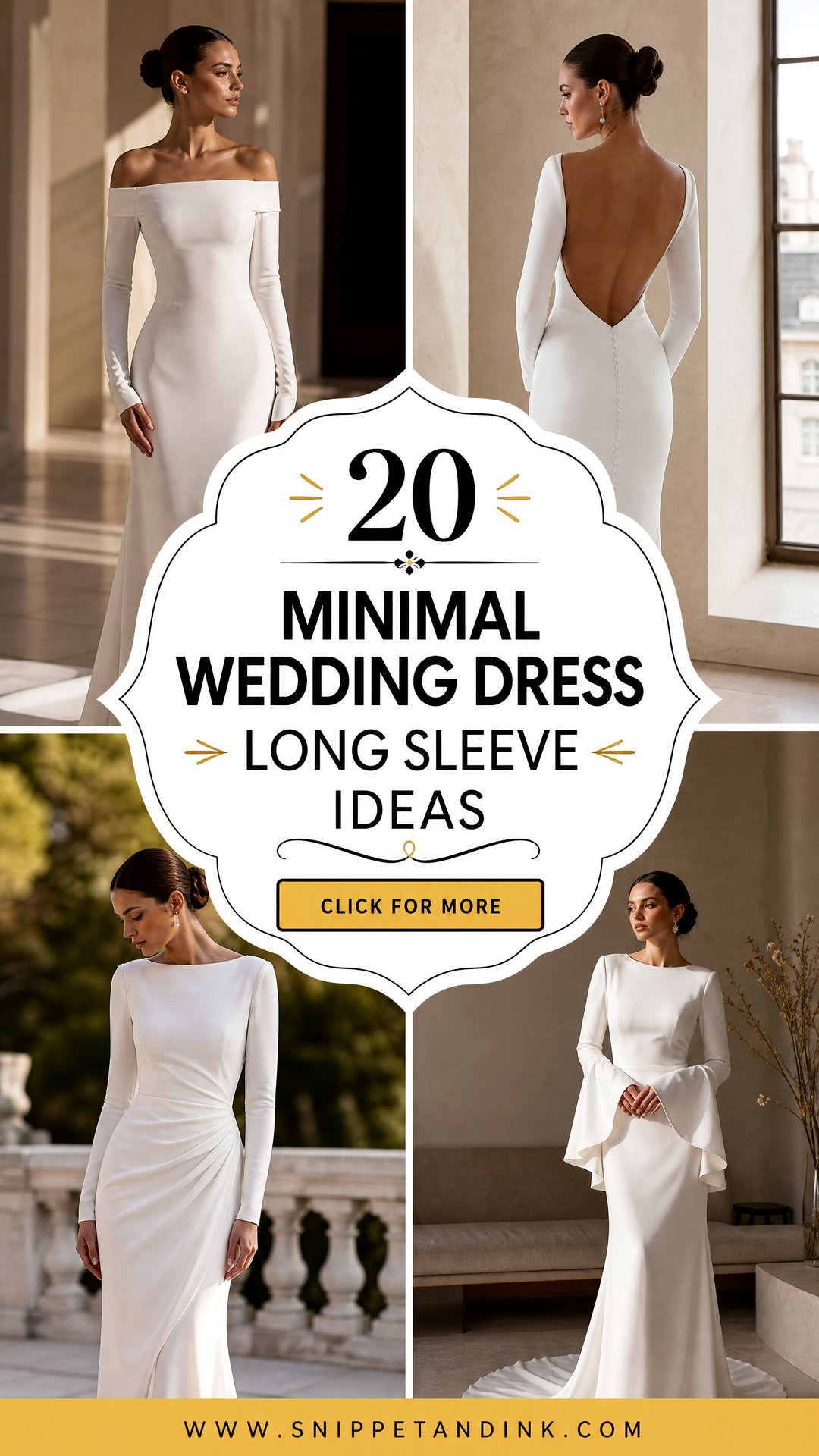
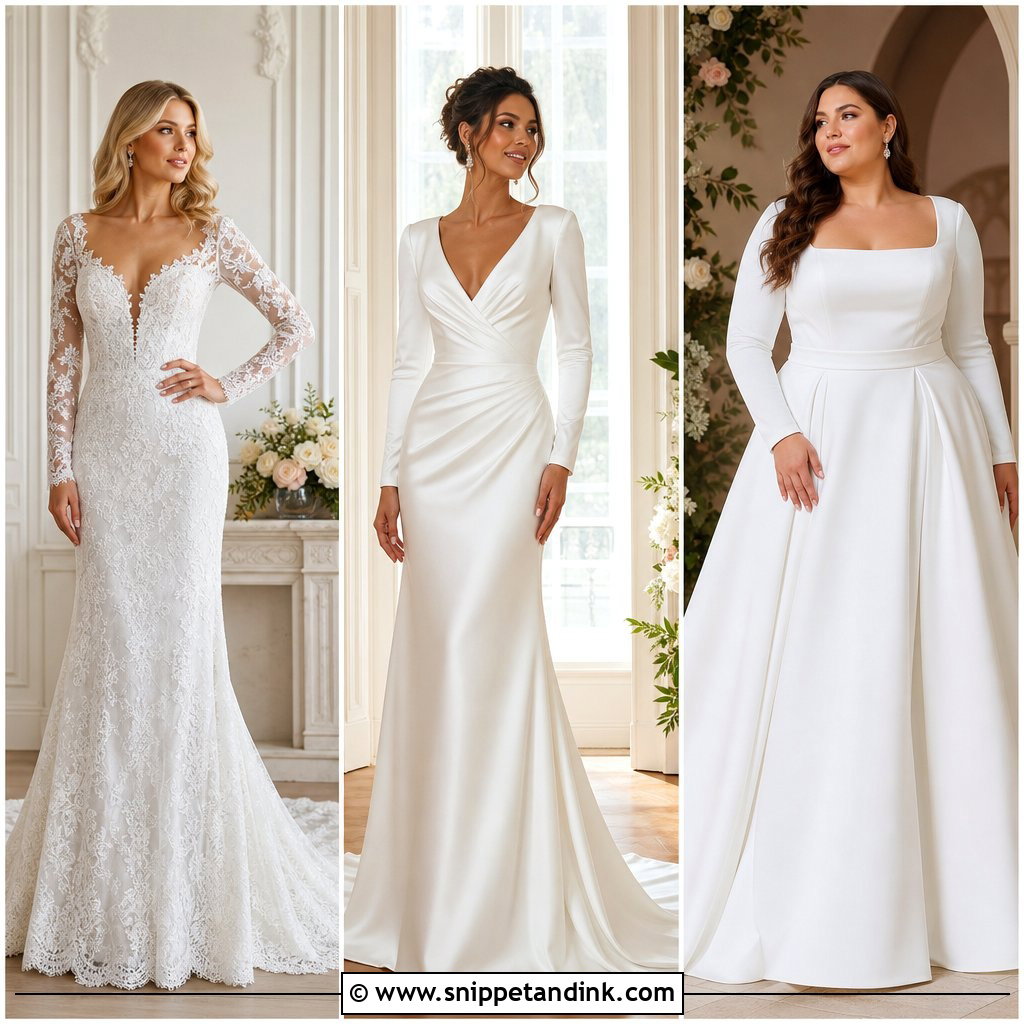
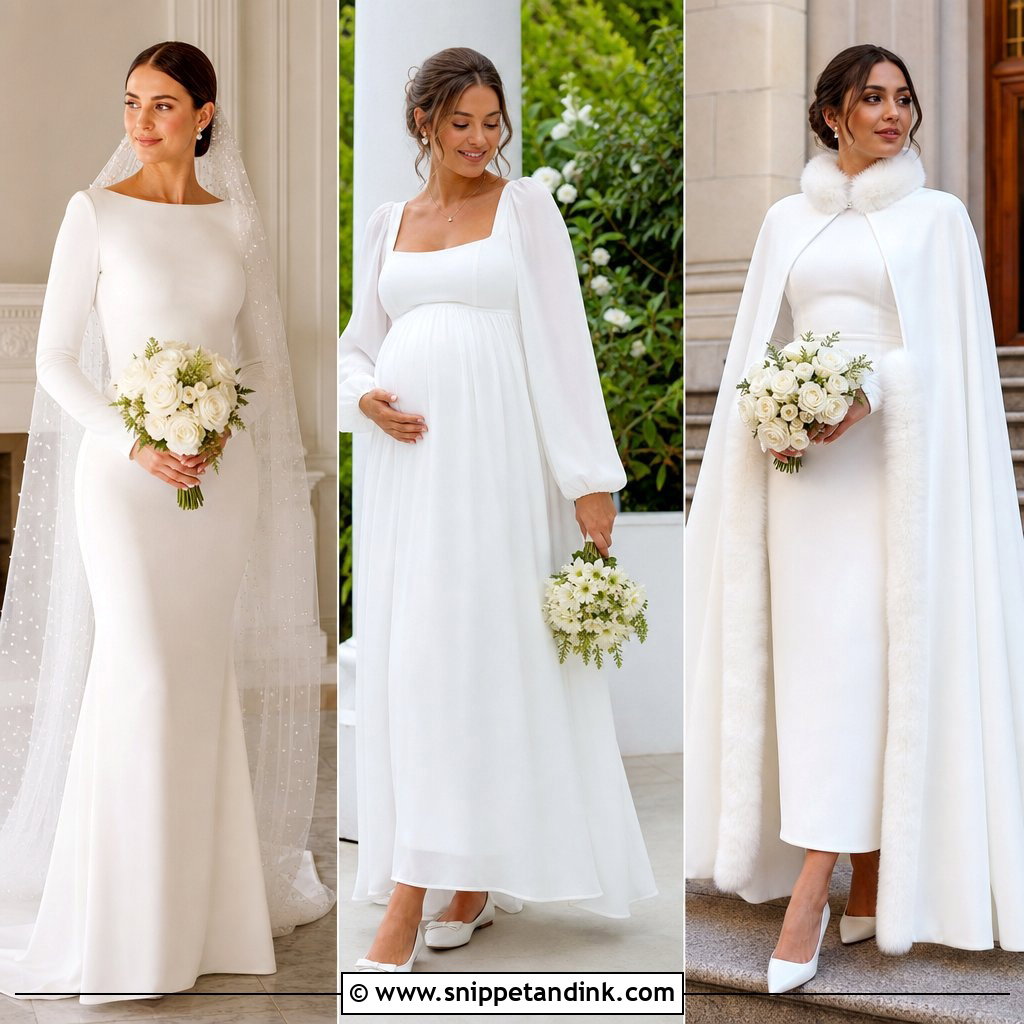
A plain gown has nowhere to hide, which is exactly why I love styling one. Without lace or beading, the cut, the fabric and the fit do all the work, so a minimal dress with long sleeves either looks impeccable or looks unfinished. Smooth satin, fluid crepe, a clean neckline and a well-shaped sleeve can carry a whole look. Sleeves add comfortable coverage for city ceremonies, religious venues and cooler months. The twenty shapes below run from fitted columns to full skirts, and for each one I’ve noted the fitting detail I’d watch, plus the veil, earrings and shoes that keep it quiet without making it dull.
The Fit Details Plain Fabric Never Hides
With no lace to distract the eye, a minimal gown shows three things very clearly: the sleeve, the seams and what’s underneath. I look at each one before I look at anything decorative.
Sleeves You Can Actually Lift Your Arms In
A long sleeve’s comfort depends less on the sleeve itself than on the armhole. A higher, closer armhole lets you raise your arms without the whole bodice lifting; a low, wide one looks roomy but restricts movement. At your fitting, reach forward as if hugging, raise one hand as if waving, and hold a bouquet at waist height. If the sleeve pulls across the back or the waist rides up, ask your seamstress about the armhole before she touches the sleeve length.
Undergarments and Lining
Bring your actual wedding underwear to every fitting, because a different bra changes the bust line and the fit of the whole bodice. Smooth, skin-toned pieces disappear under satin and crepe far better than white ones do. Ask whether the gown is lined and with what: a silk or soft polyester lining stops crepe clinging to tights or legs, and an extra layer under thin silk prevents the dress turning sheer in bright sunlight.
1. Satin Column Long Sleeve Wedding Dress
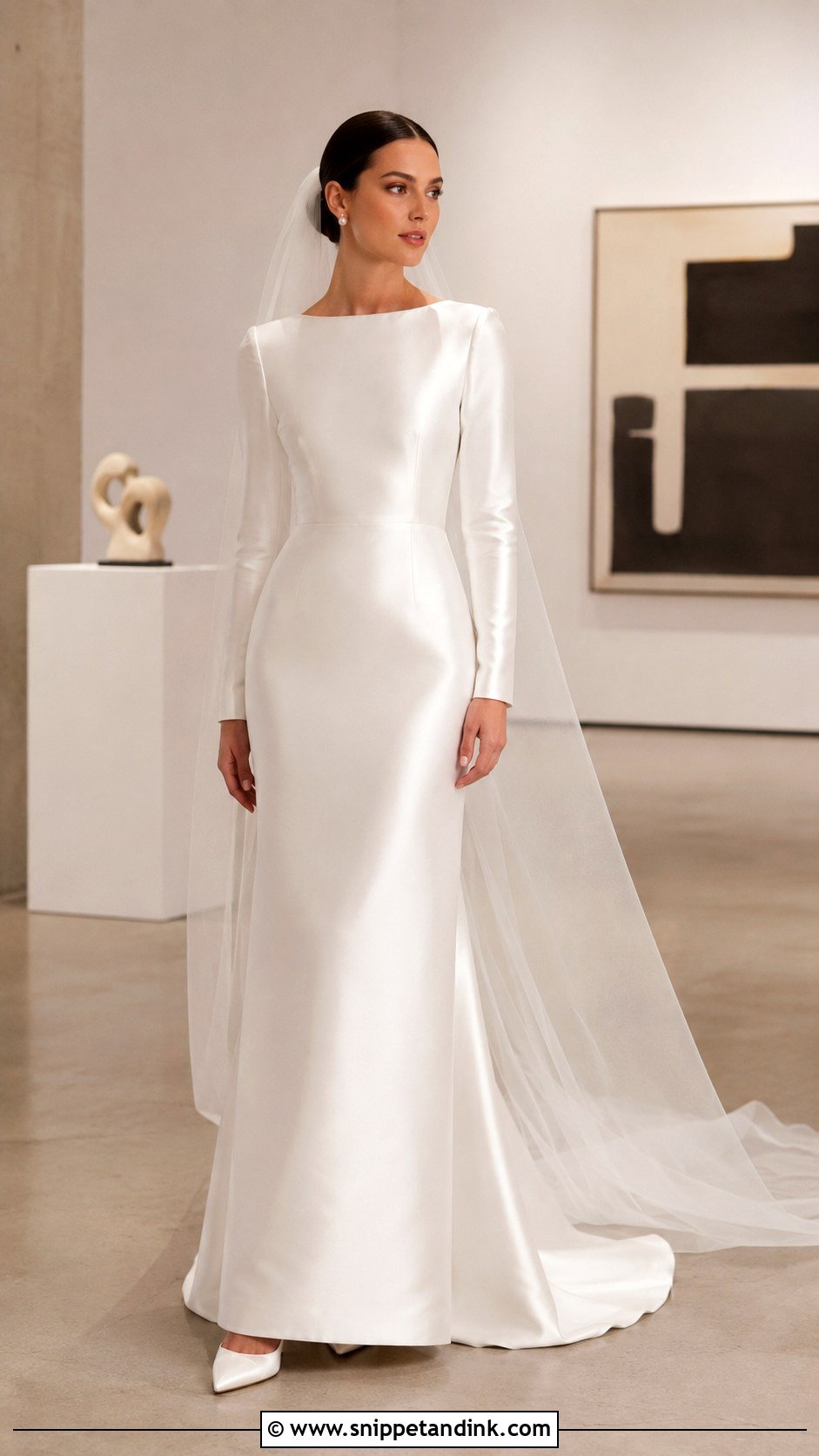
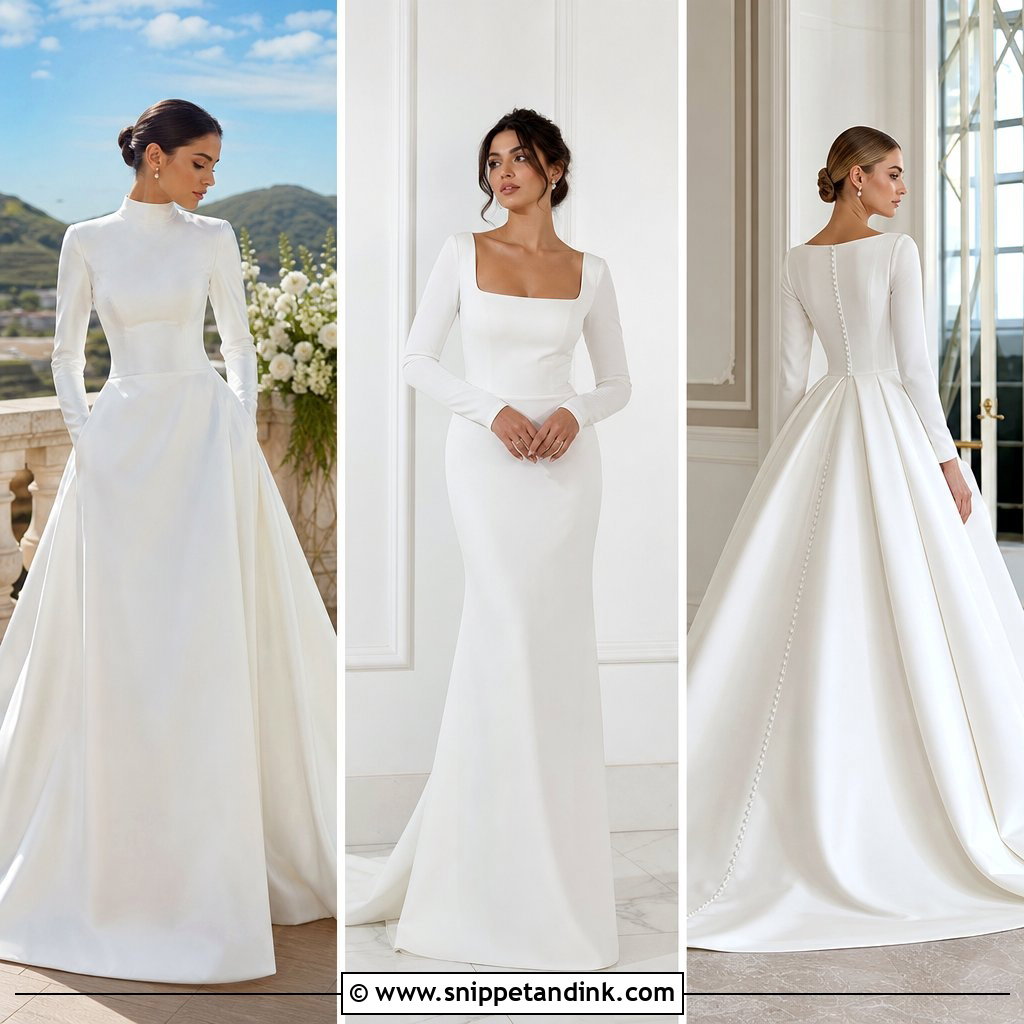
Satin is the most honest fabric in bridal; it shows every seam, ripple and undergarment line. A column gown in satin with fitted sleeves, a lightly structured bodice and a skirt falling straight from the hip looks polished only when the waist, shoulders and sleeve length fit precisely, so budget for professional alterations. A soft ivory or natural white gives satin its glow without extra decoration. Pointed pumps, pearl studs and a low chignon suit it, and a long, plain veil adds ceremony drama while keeping the minimal aesthetic. It suits galleries, modern ballrooms and city venues.
2. Crepe A-Line Long Sleeve Wedding Dress
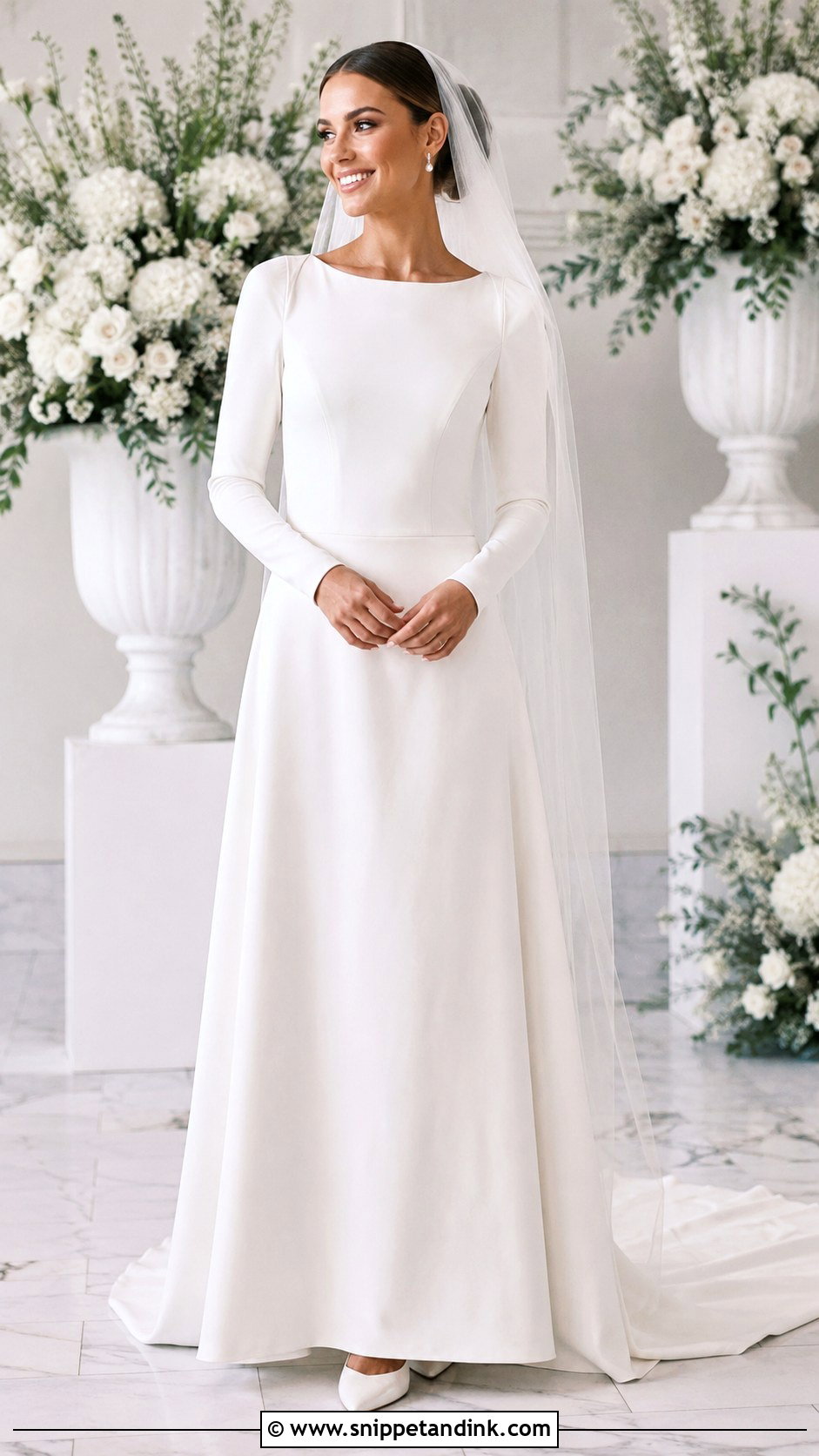
Crepe is my first suggestion for brides who dislike shine. It’s matte, it moves, and it forgives a long day of sitting better than satin. A crepe A-line with a fitted bodice, slim sleeves and a modest train gives enough formality for the ceremony and lets you walk freely. Ivory heels, small drops and a sleek bun or pinned waves keep it simple. A fingertip veil feels lighter; a cathedral veil adds impact in a formal space. The one weakness of crepe is that it can look flat in dim rooms, so a slightly heavier, double-faced crepe holds its shape and catches more light.
3. Boat Neck Minimal Long Sleeve Wedding Dress
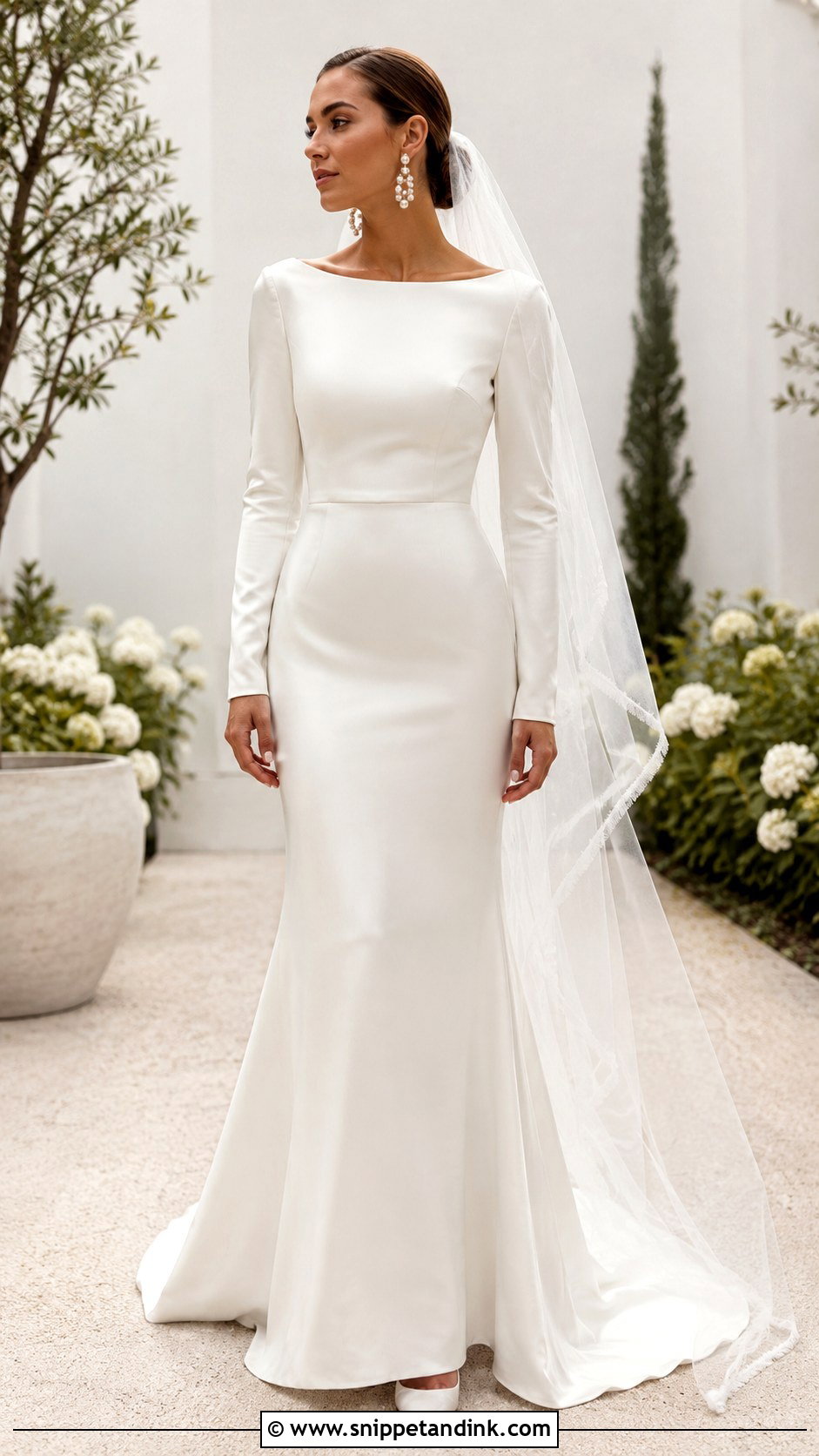
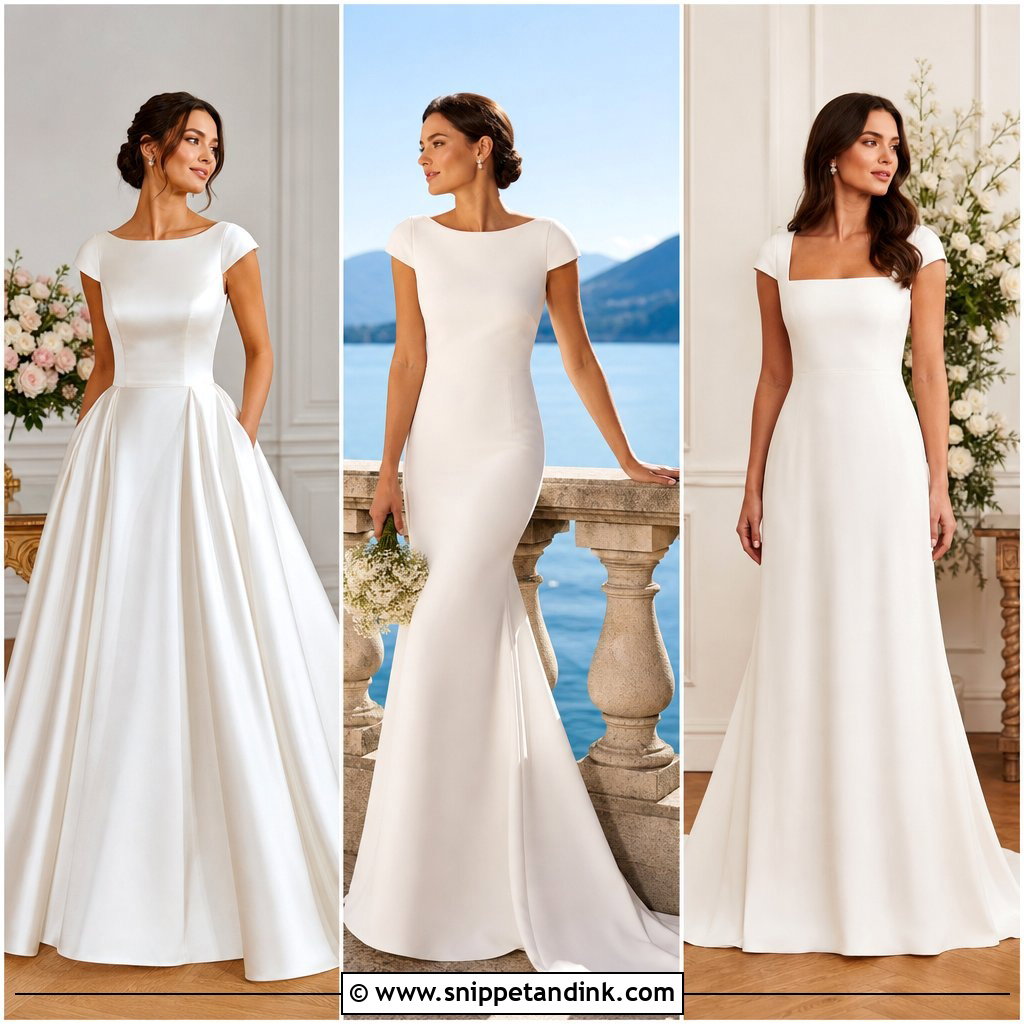
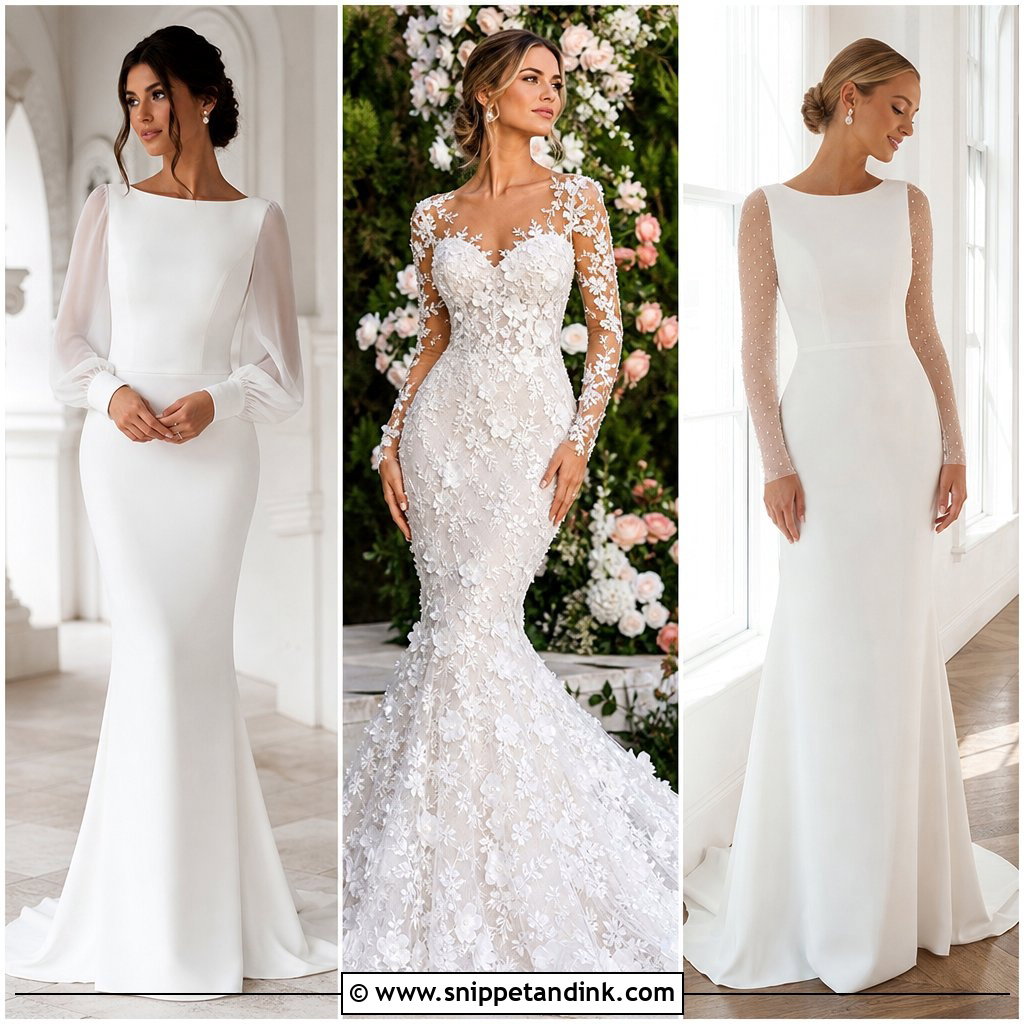
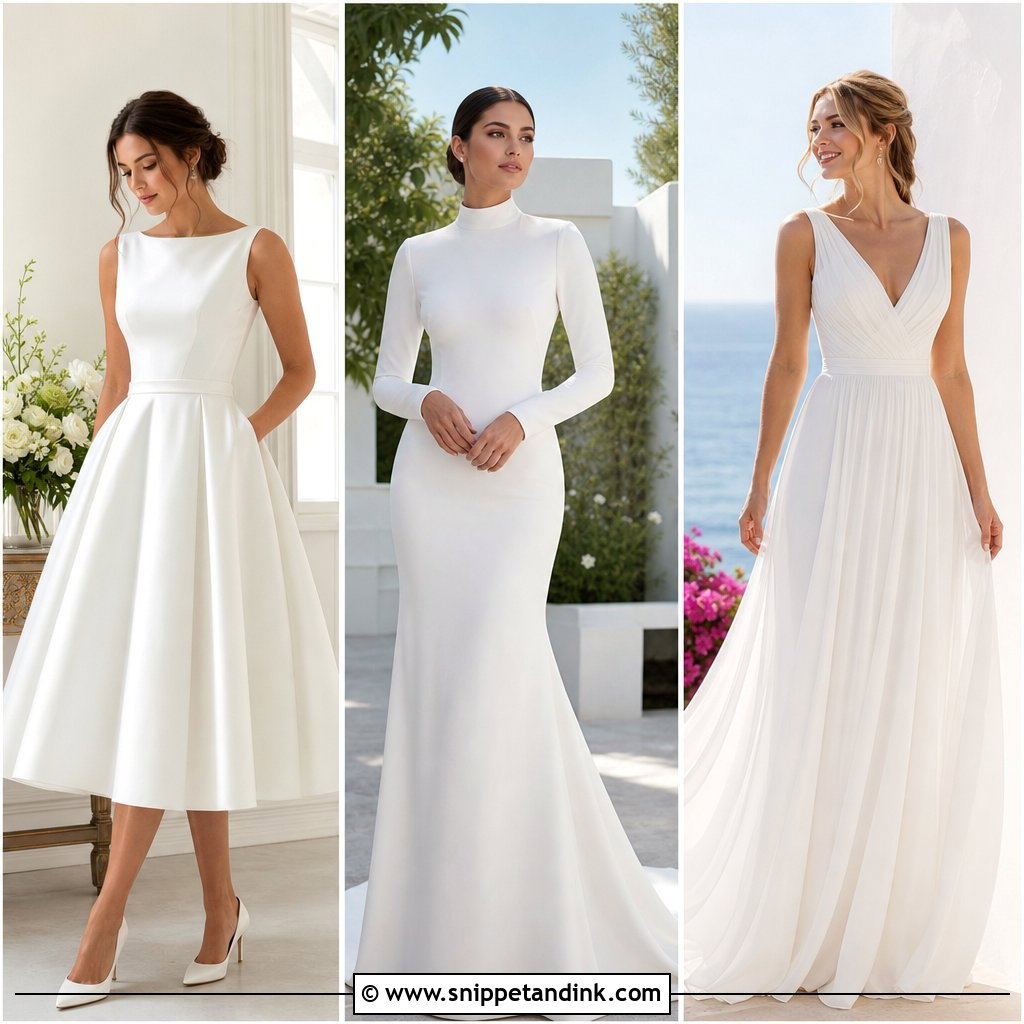
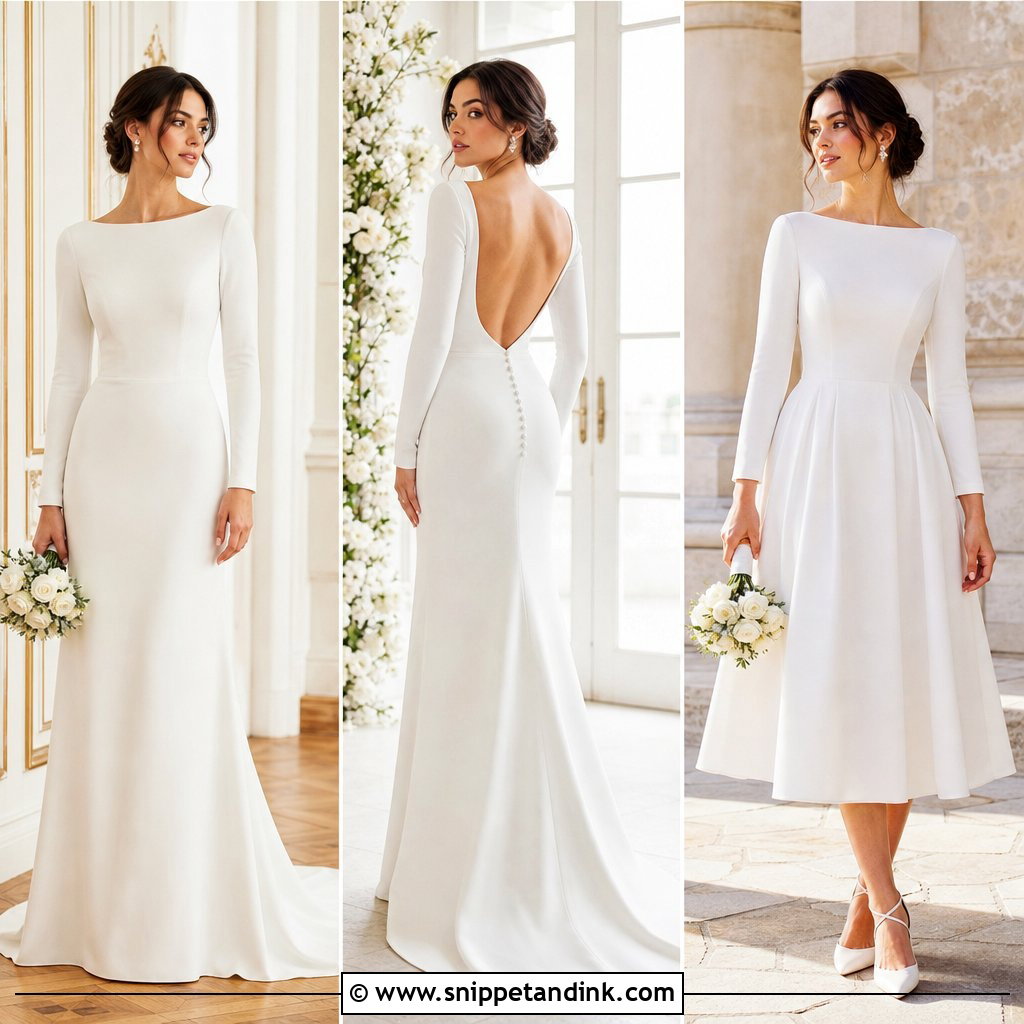
A boat neckline runs straight across the collarbones and widens the shoulders a little, which balances narrow shoulders or a fuller hip. It looks best with a fitted bodice and either a straight or softly flared skirt. Keep the sleeves slim and plain so the neckline leads. A boat neck can gape at the sides if it’s cut wide, so I pin it at the first fitting with your arms down and then raised. Skip the necklace and wear sculptural pearl earrings, with a smooth updo or low bun. Satin pumps and a plain veil set beneath the hair finish it. A low back adds contrast to the covered front.
4. High Neck Minimal Long Sleeve Wedding Dress
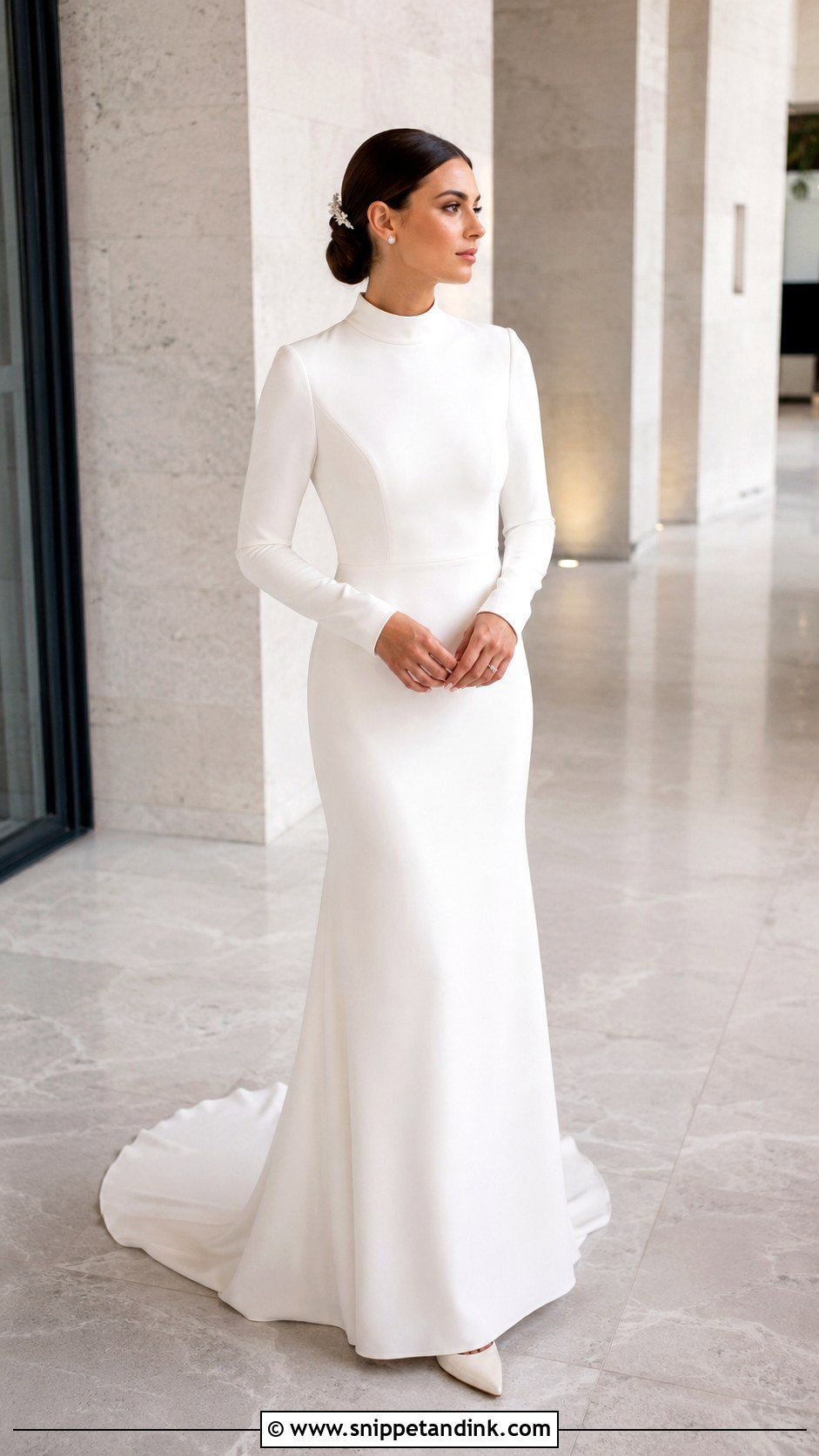
A high neck gives full coverage, and in a lightweight crepe, silk or matte satin it looks architectural rather than heavy. The neckline is the fitting point I’m strictest about: it must clear the throat by a finger when you swallow and turn your head, or you’ll feel it all day. A fitted column skirt stresses the vertical line, and a small train keeps it bridal. Wear a neat bun or a modern ponytail so the collar isn’t crowded, and stud earrings are enough. Closed-toe heels and a structured bouquet of one or two flower types match the clean lines. A veil is optional; a simple bow or comb works just as well.
5. Square Neck Minimal Long Sleeve Wedding Dress
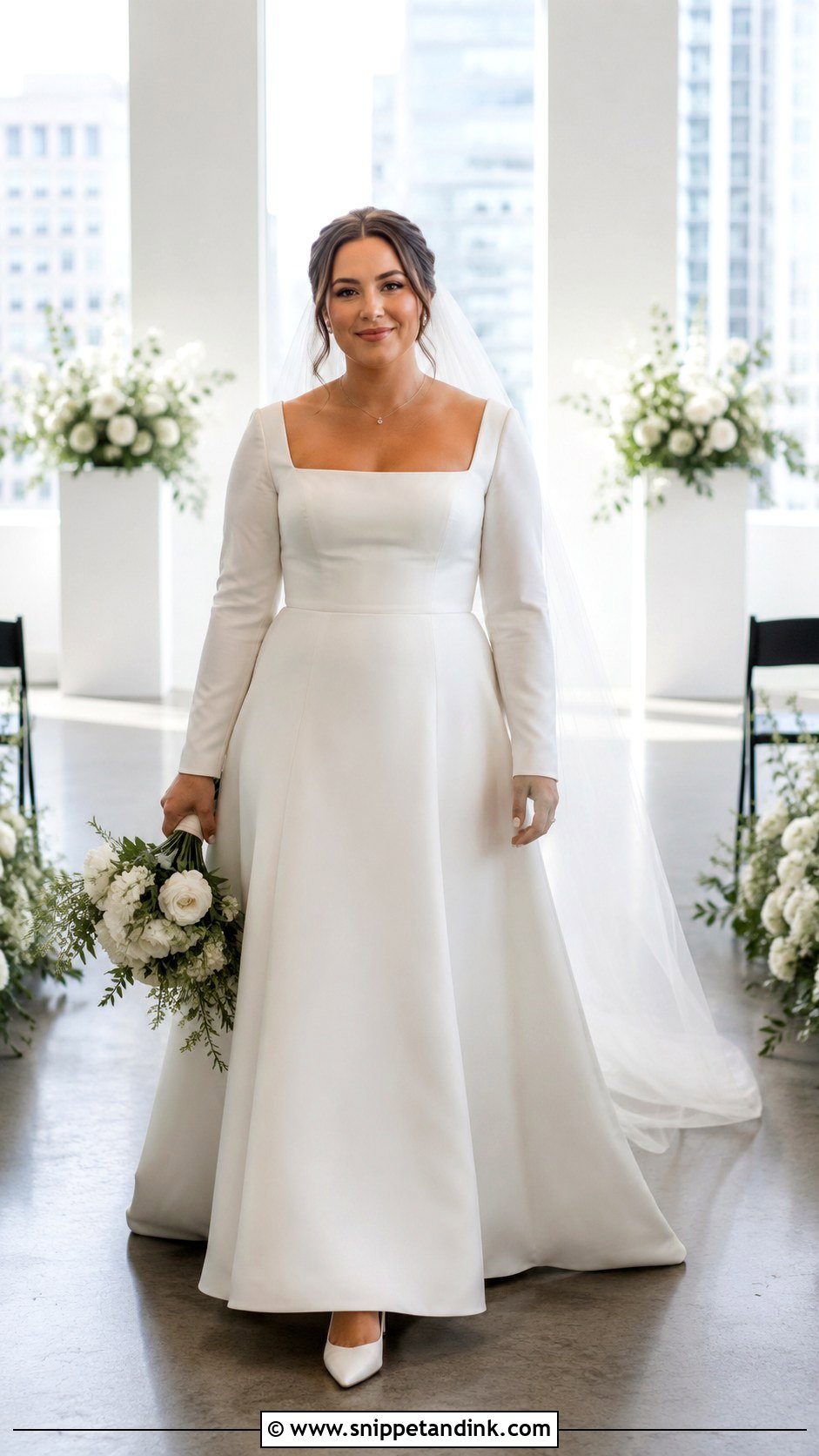
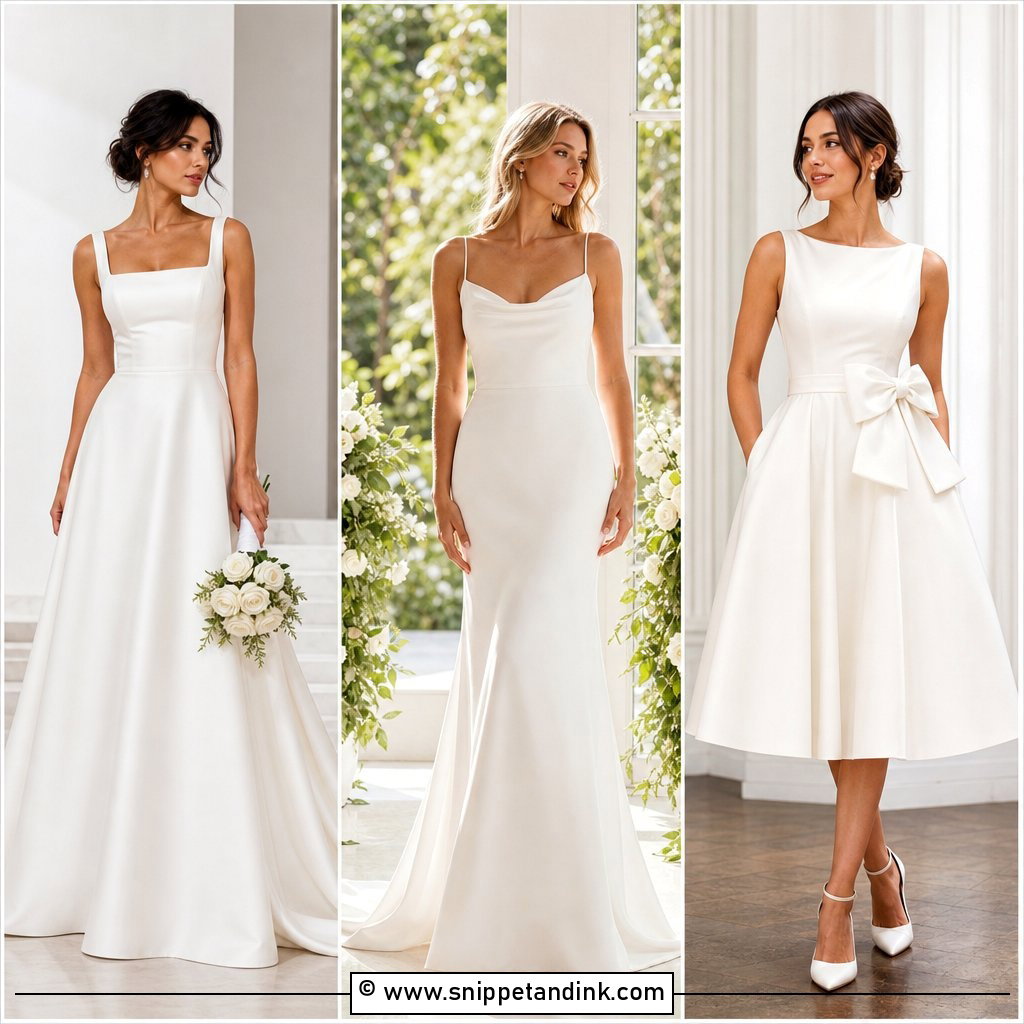
A square neckline frames the face with straight lines, which pair naturally with fitted sleeves and a structured bodice. Choose an A-line skirt for softness or a narrow column for a sharper look. To keep the surface clean, I ask for structure built inside, a supportive inner bodice, rather than visible corsetry. The corners of a square neck should sit flat; if they lift when you move, the straps need shortening. A delicate pendant, small earrings and low pointed heels suit it, with a centre-parted bun or controlled waves. A plain tulle veil with raw edges adds gentle movement. It’s contemporary and still classic enough to age well in your photos.
6. Scoop Neck Minimal Long Sleeve Wedding Dress
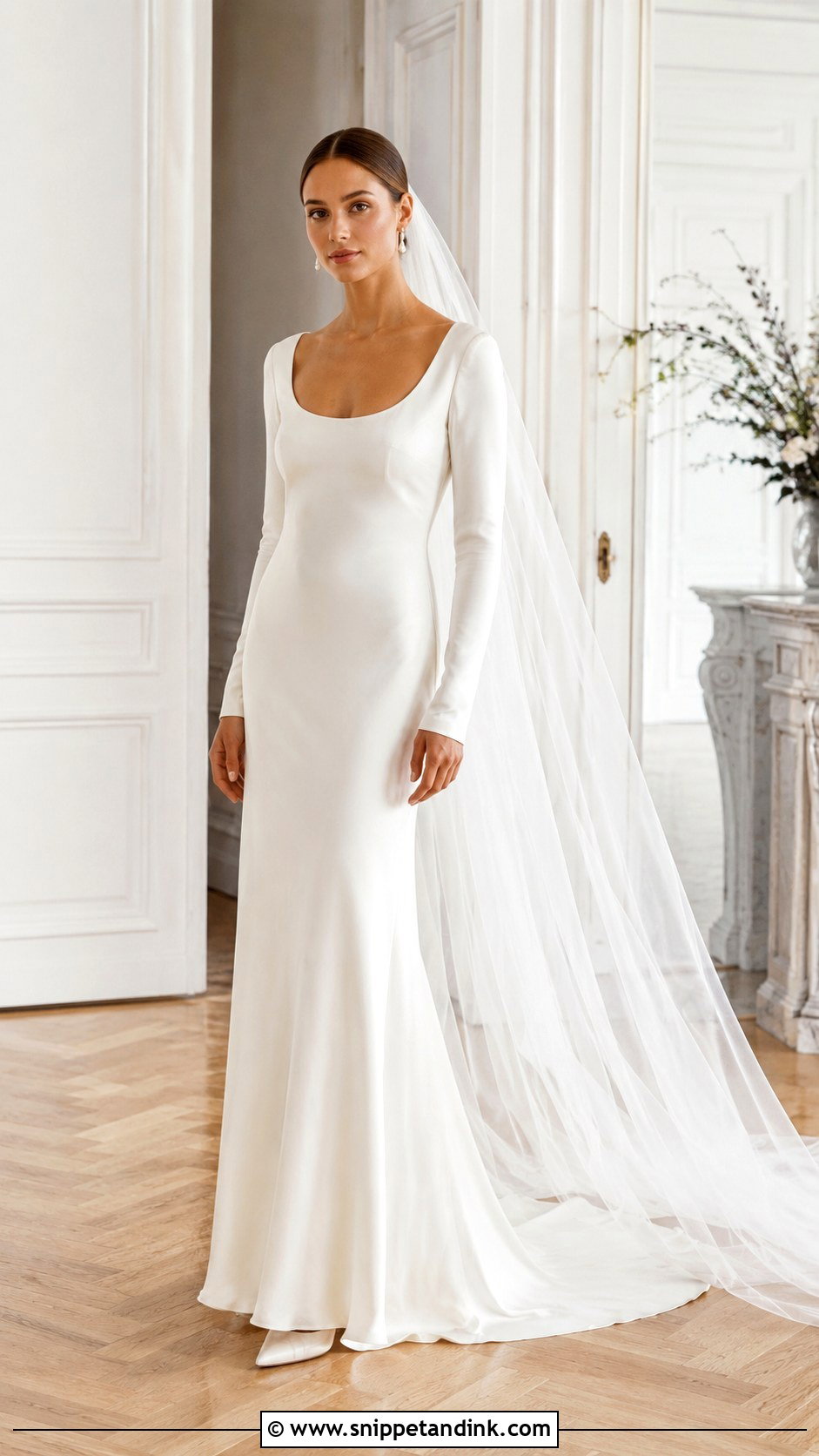
Scoop necks soften minimalism. A medium-depth curve opens the upper body without exposing much, and fitted sleeves keep everything sleek. Fabric choice depends on what you want the skirt to do: silk jersey and bias-cut crepe follow the body closely, while a subtle A-line in smooth satin gives more room through the hips. I check that the scoop lies flat against the chest when you lean forward to sign the register; if it gapes, a small dart or inner tape fixes it. Pearl drops, neutral pumps and a light veil finish the look. Brushed waves or a low twisted bun echo the curve of the neckline.
7. Off Shoulder Minimal Long Sleeve Wedding Dress
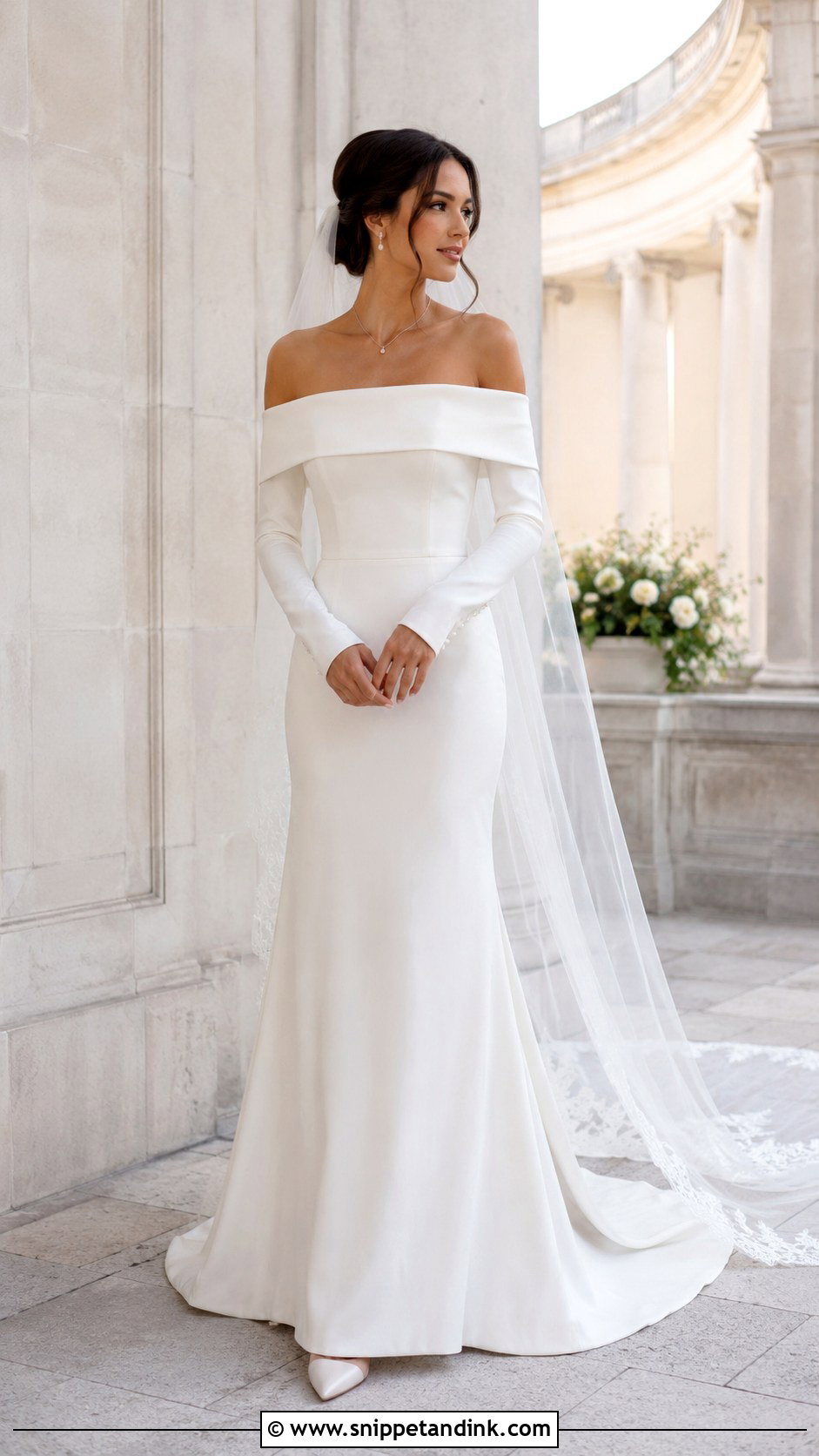
Long sleeves with an open neckline balance coverage and skin. A folded satin band or a clean crepe edge keeps it minimal. Off-the-shoulder sleeves have one real limitation: they pin the upper arm, so raising your arms to hug or dance pulls the whole bodice up. Ask for a little ease in the sleeve at the bicep and test reaching overhead at every fitting. A fitted waist and gently flared skirt keep the silhouette graceful. A collarbone-length necklace, understated earrings and a sleek updo suit the bare shoulders, with pointed pumps and a plain cathedral veil. It works in bright indoor venues and refined outdoor settings.
8. V Neck Minimal Long Sleeve Wedding Dress
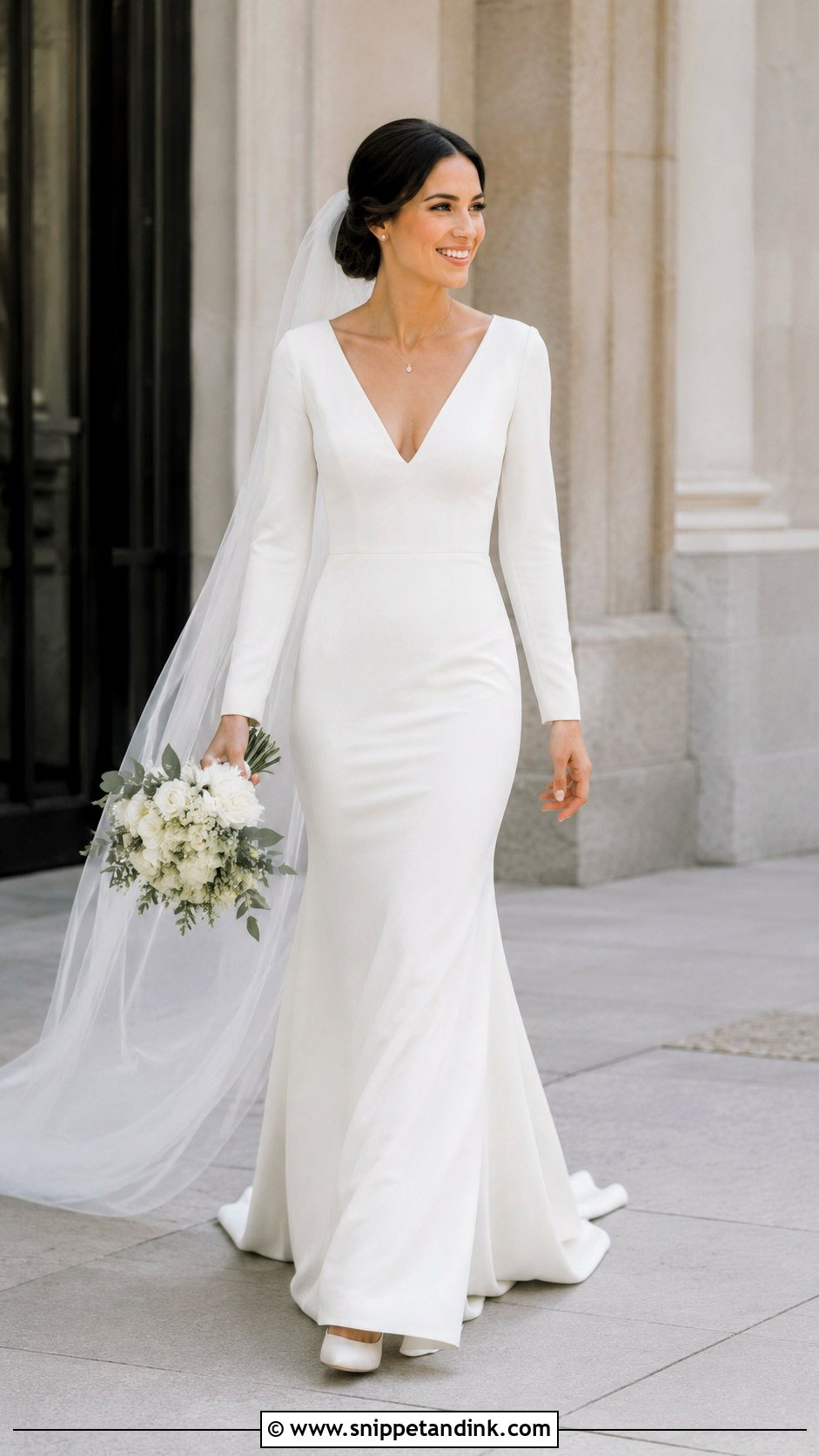
A V-neck lengthens the torso and keeps the design simple, as long as the V stays moderate rather than an extremely deep plunge. Fitted sleeves, a natural waist and a fluid skirt complete the shape. Matte crepe looks quiet; silk satin is more luminous. A fine pendant that follows the line of the V, small studs and closed-toe heels suit it, with a low bun or side-parted waves that leave the front visible. If the V feels insecure, illusion mesh set inside the neckline holds it without changing how it looks from a few feet away. On a narrow silhouette, a long plain veil adds movement.
9. Open Back Minimal Long Sleeve Wedding Dress
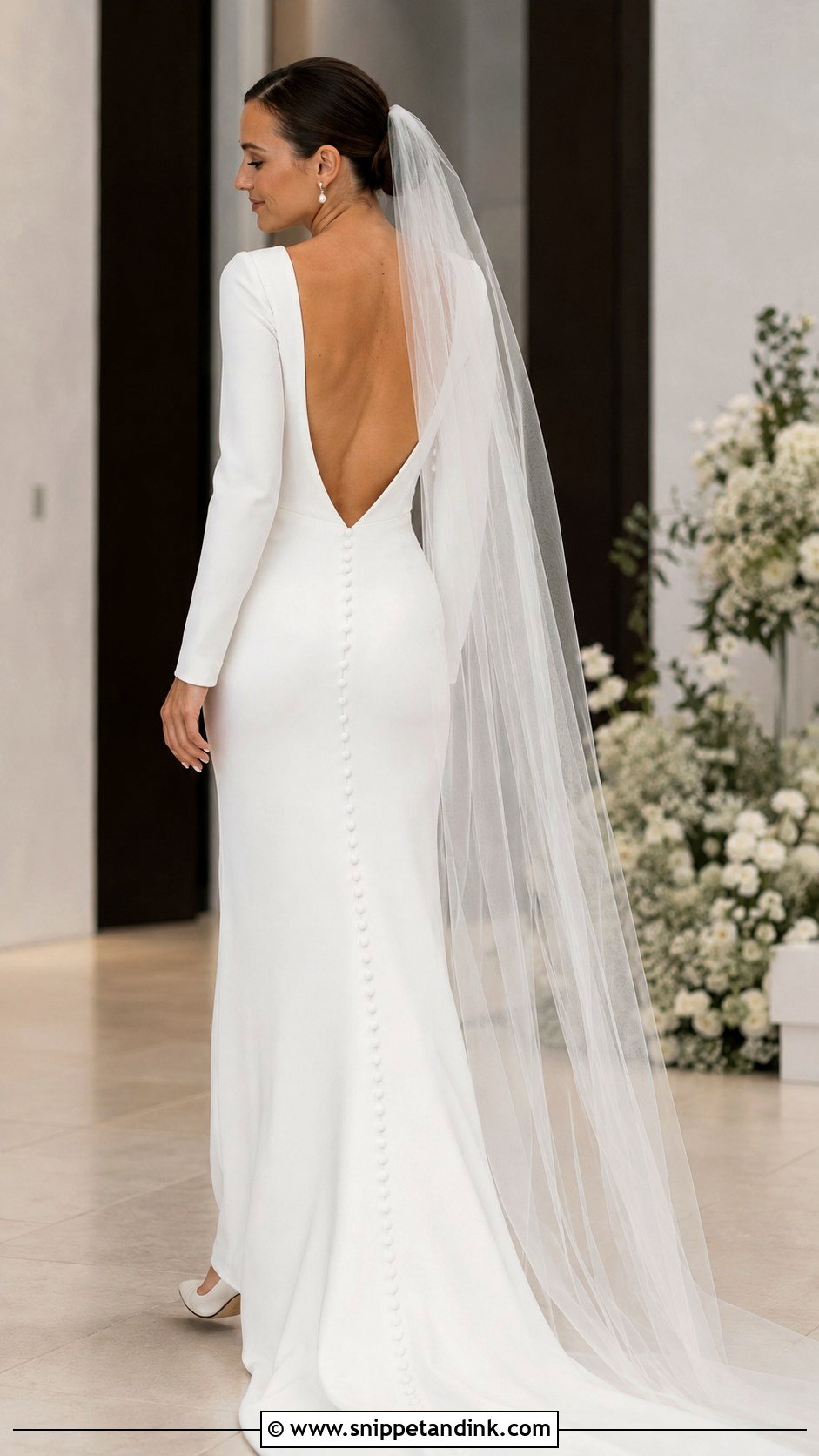
Turn around and a modest long-sleeve front can reveal an open back. Rounded, square or low V openings all work, provided the edges stay clean. Support is the real question here: with no back band, a bra is out, so the gown needs built-in cups and internal structure, and that should be discussed at the first alterations appointment, not the last. A slim crepe or satin cut with covered buttons below the opening looks tailored. Wear your hair up so the back stays visible, with refined earrings and a plain veil attached beneath the bun. Elegant pumps and a narrow bouquet finish it.
10. Button Back Minimal Long Sleeve Wedding Dress
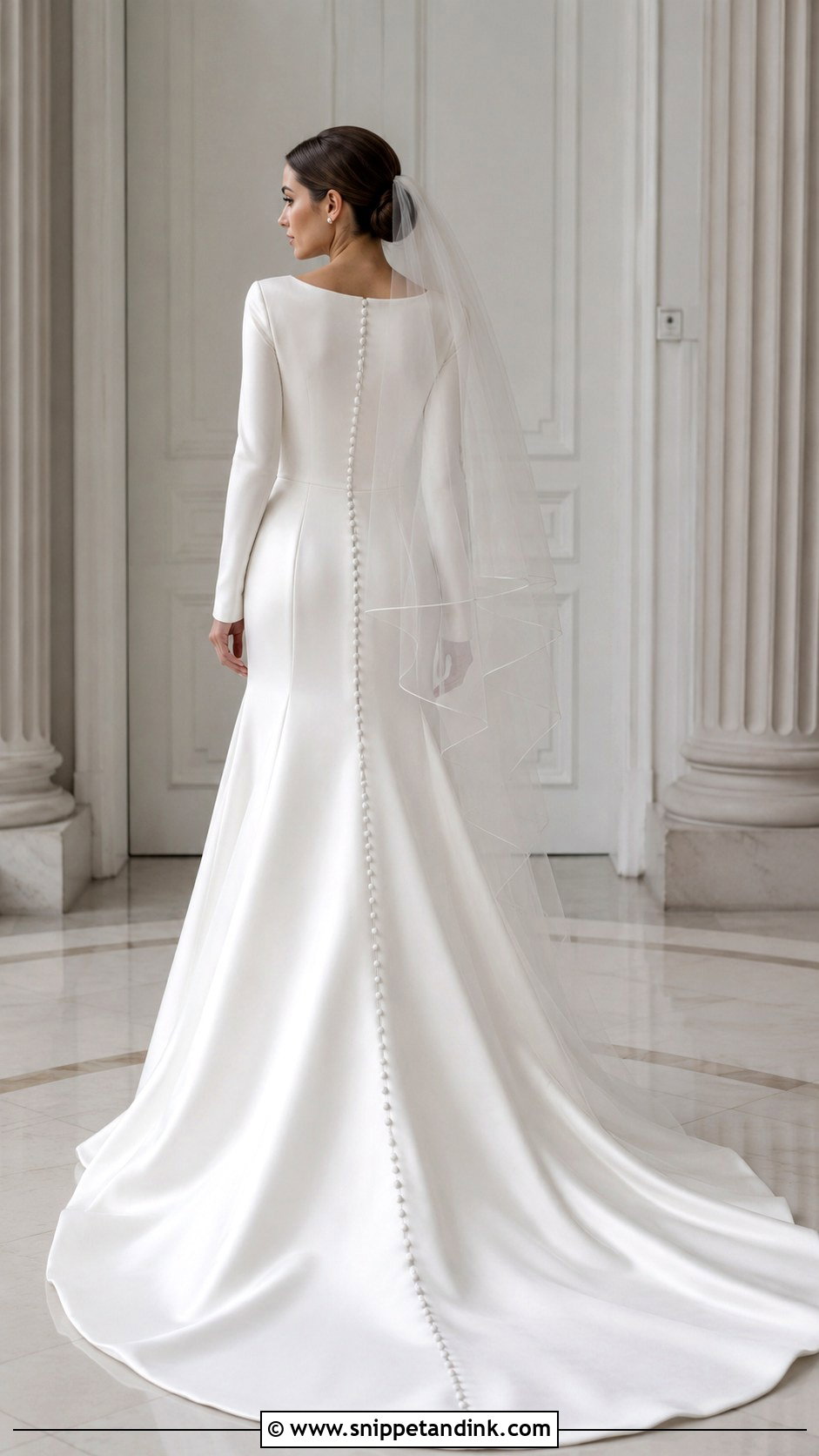
A row of covered buttons is traditional detail that doesn’t break a minimalist line. They can run from neckline to train in one long vertical stripe. Satin or structured crepe makes the best background. Real buttons with loops look best but take time to fasten, so whoever dresses you should allow ten minutes and a crochet hook; many gowns hide a zip under the buttons for exactly this reason. Keep the front plain with a bateau, scoop or high neck and fitted sleeves. A low chignon shows the top buttons, pearl studs and pointed pumps echo them, and a sheer veil without lace edging lets them show through. Check the back lies flat between each loop.
11. Mermaid Minimal Long Sleeve Wedding Dress
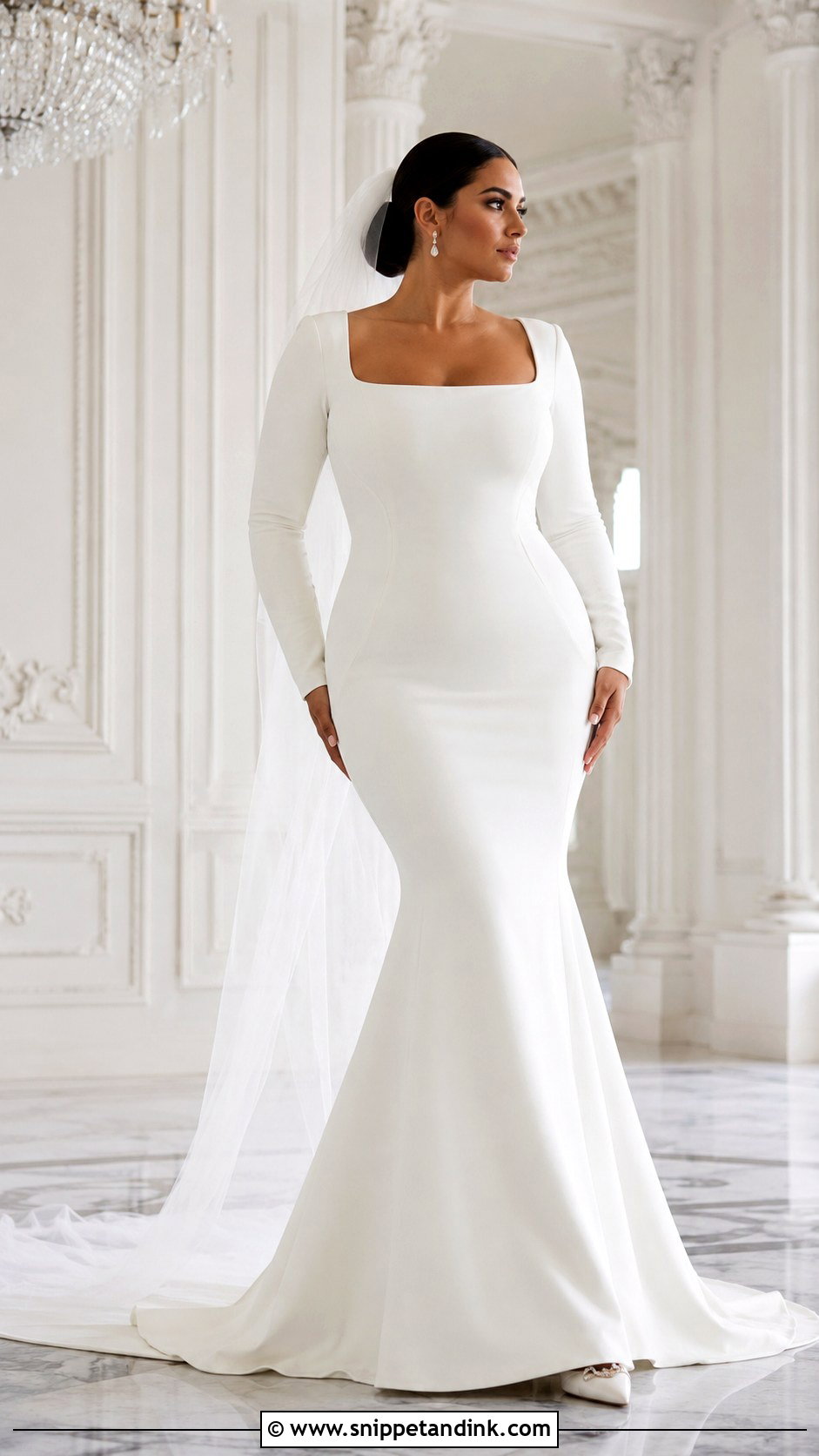
A minimal mermaid relies entirely on the fit through the hips, because pulling or bunching shows instantly on plain crepe. Smooth crepe that follows the torso and widens near the knee, with long slim sleeves to balance the flare, looks refined. A square, boat or gentle scoop neckline adds structure. I set the flare point with you walking, not standing: too low and you’ll shuffle down the aisle. Wear the heels you’ll actually wear at every fitting so the hem is right. Simple drop earrings, a sleek bun and a single-layer veil or modern comb keep the attention on the shape.
12. Sheath Minimal Long Sleeve Wedding Dress
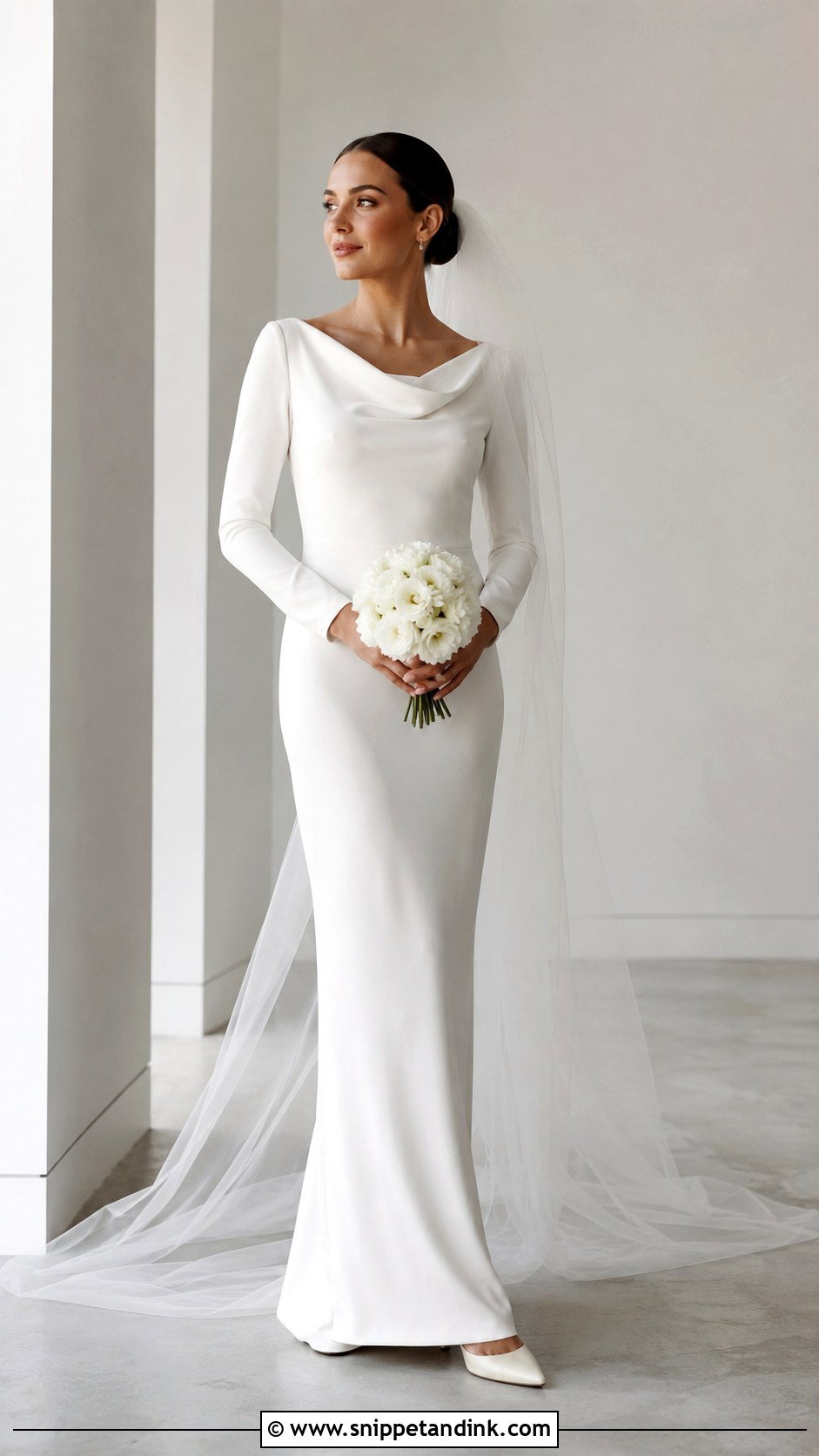
A sheath wedding dress follows the body without a mermaid’s flare, and it’s the easiest silhouette to move, sit and dance in. Fluid crepe, silk or light satin with slim sleeves and minimal seaming suits it. A softly draped neckline adds dimension; a straight bateau looks more structured. Because the fabric lies close, undergarments and the hem need checking from every angle, including from behind in a three-way mirror. Kitten heels, delicate earrings and a compact bouquet keep it light, and a chapel-length veil adds movement without overwhelming the narrow skirt. It’s a natural for courthouse ceremonies and restaurant receptions.
13. Ball Gown Minimal Long Sleeve Wedding Dress
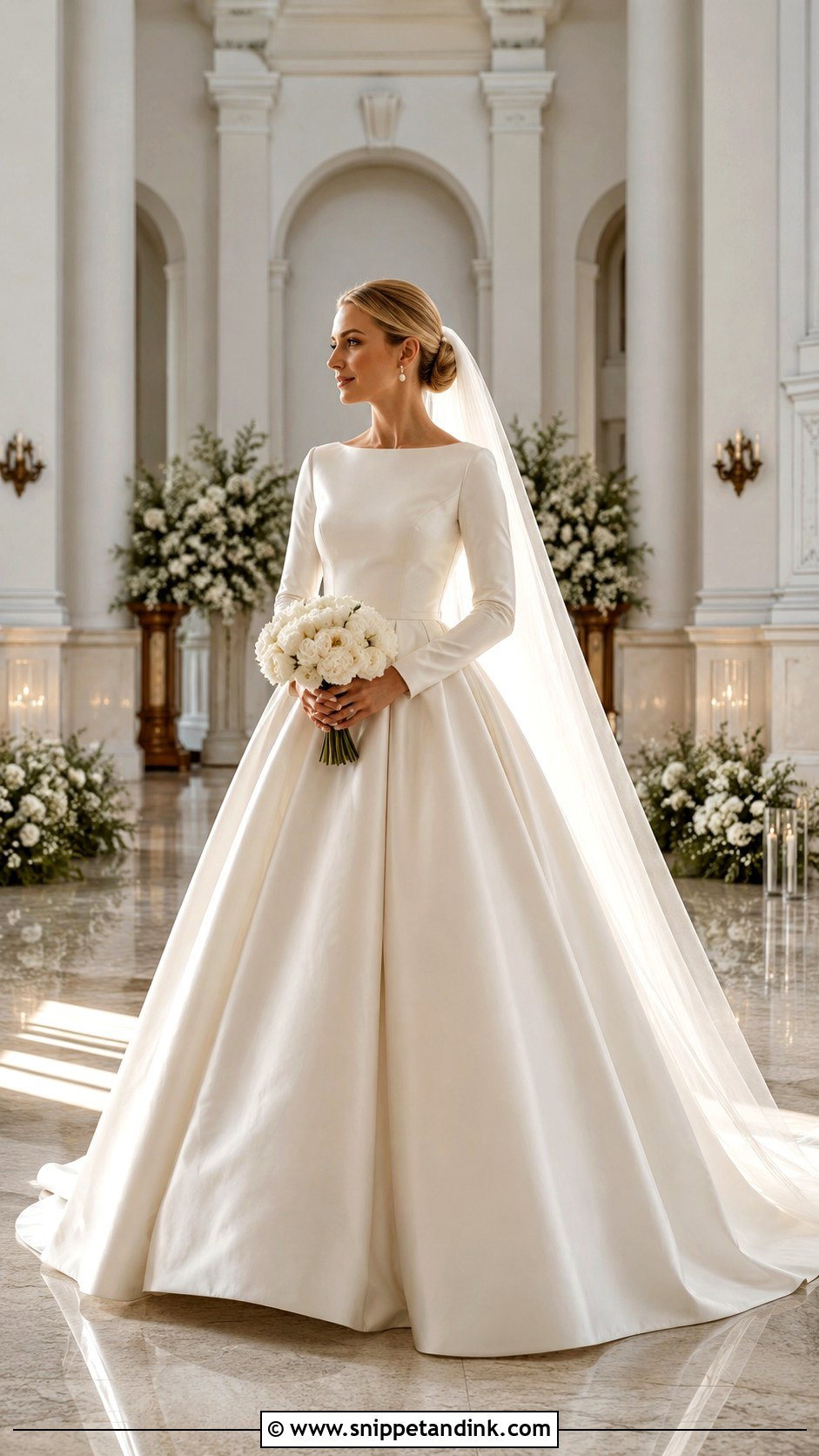
Can a ball gown be minimal? It can, if the drama comes from proportion instead of decoration. A smooth satin gown with a fitted long-sleeve bodice and a full, uninterrupted skirt, with pleats at the waist controlling the volume, does exactly that. Leave out crystals, appliqués and contrasting textures. Big satin skirts are heavy, so I check the internal support; a horsehair hem and a light petticoat hold the shape better than layers of stiff net. Hidden pockets are worth asking for. Pearl earrings, a structured bun and pumps under the skirt keep it calm, and a long plain veil suits the scale in a wide ceremony space.
14. Slip Minimal Long Sleeve Wedding Dress
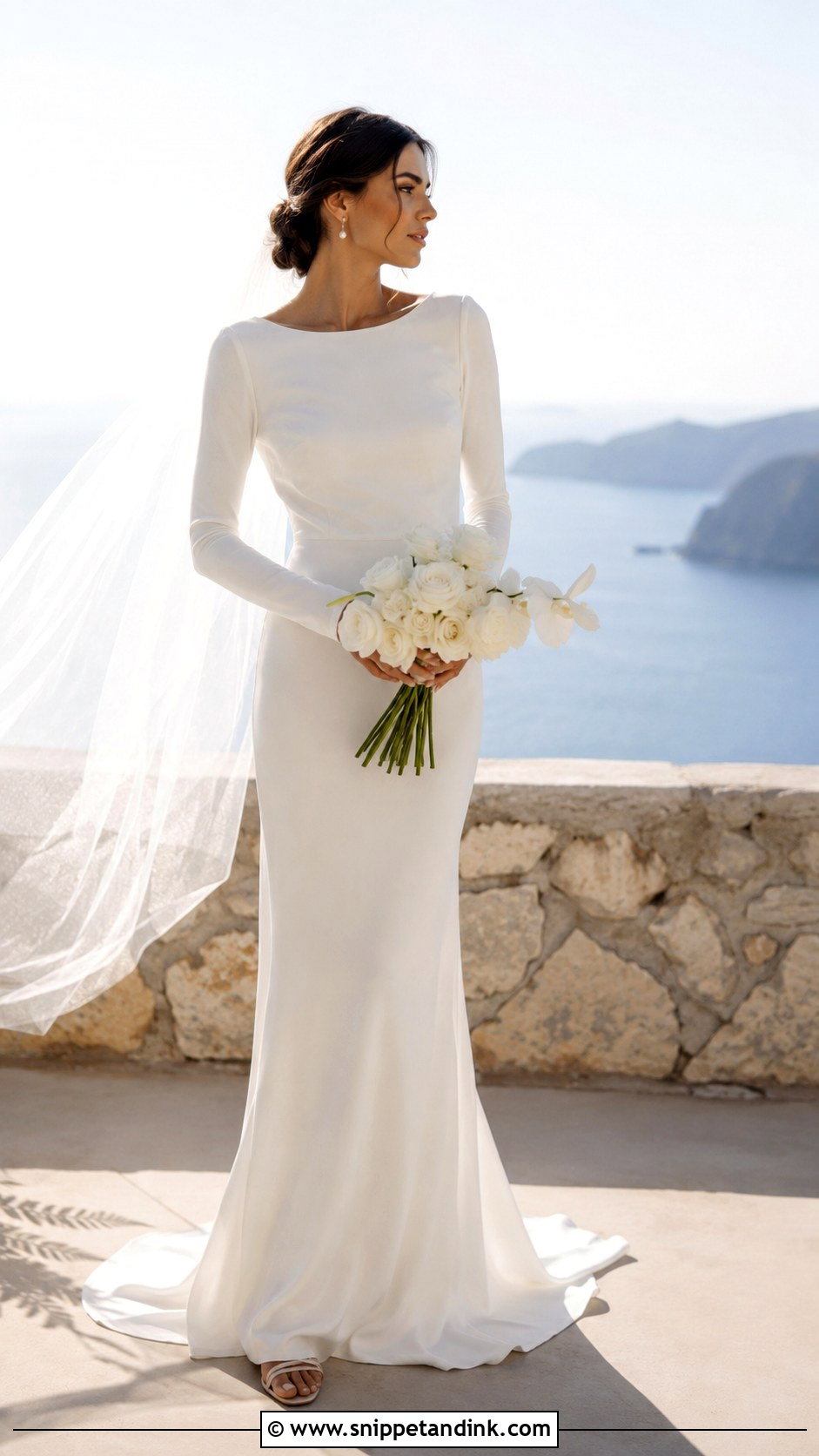
Fluid silk makes a long-sleeve slip gown feel relaxed and polished at once. Narrow fitted sleeves and a skimming bodice add coverage the classic sleeveless slip doesn’t have, and a bias-cut skirt follows your curves without rigid structure. Bias-cut silk is unforgiving, though: it clings to anything underneath and shows every line, so plan smooth, no-show undergarments and discuss lining with your seamstress early. Slim heeled sandals, pearl earrings and a loose low bun suit it. A short veil keeps the look light; a sheer floor-length one makes it more ceremonial. It shines at small city venues and coastal weddings.
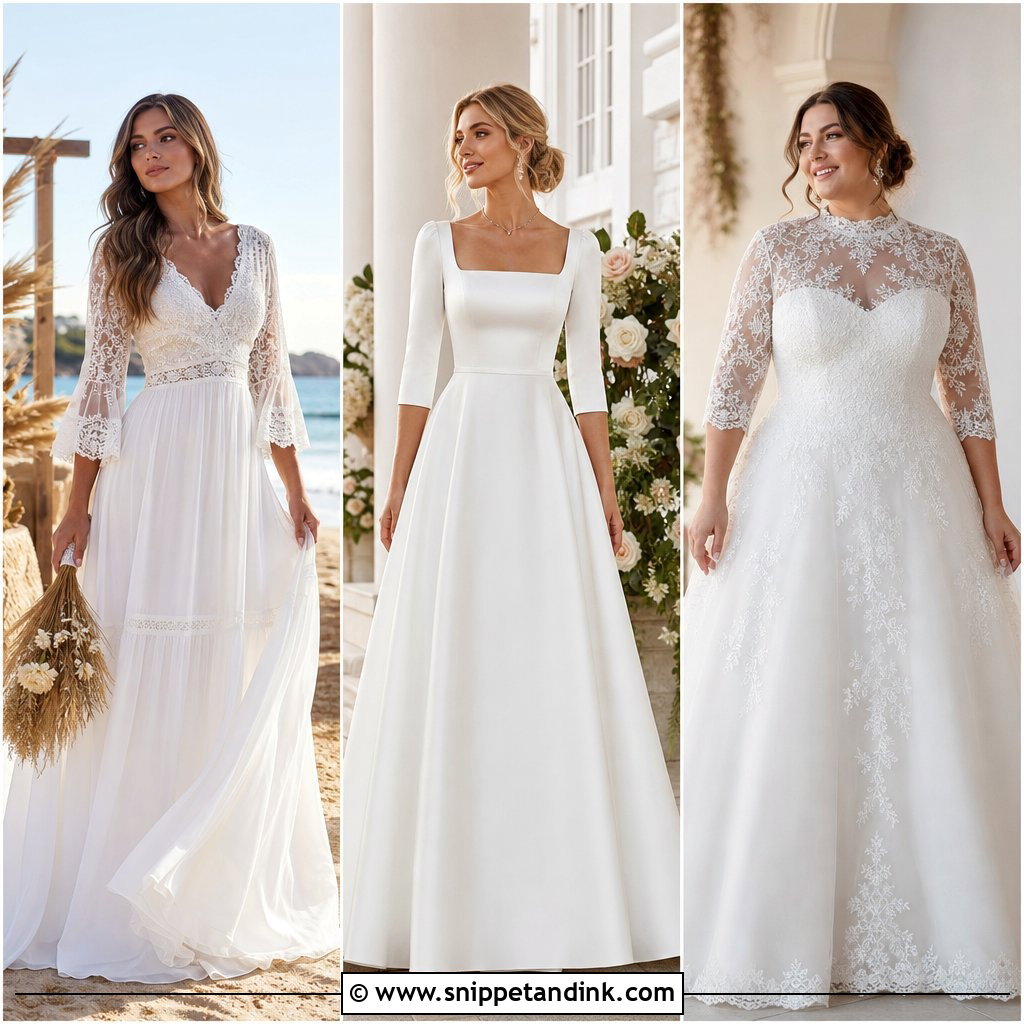
15. Draped Waist Minimal Long Sleeve Wedding Dress
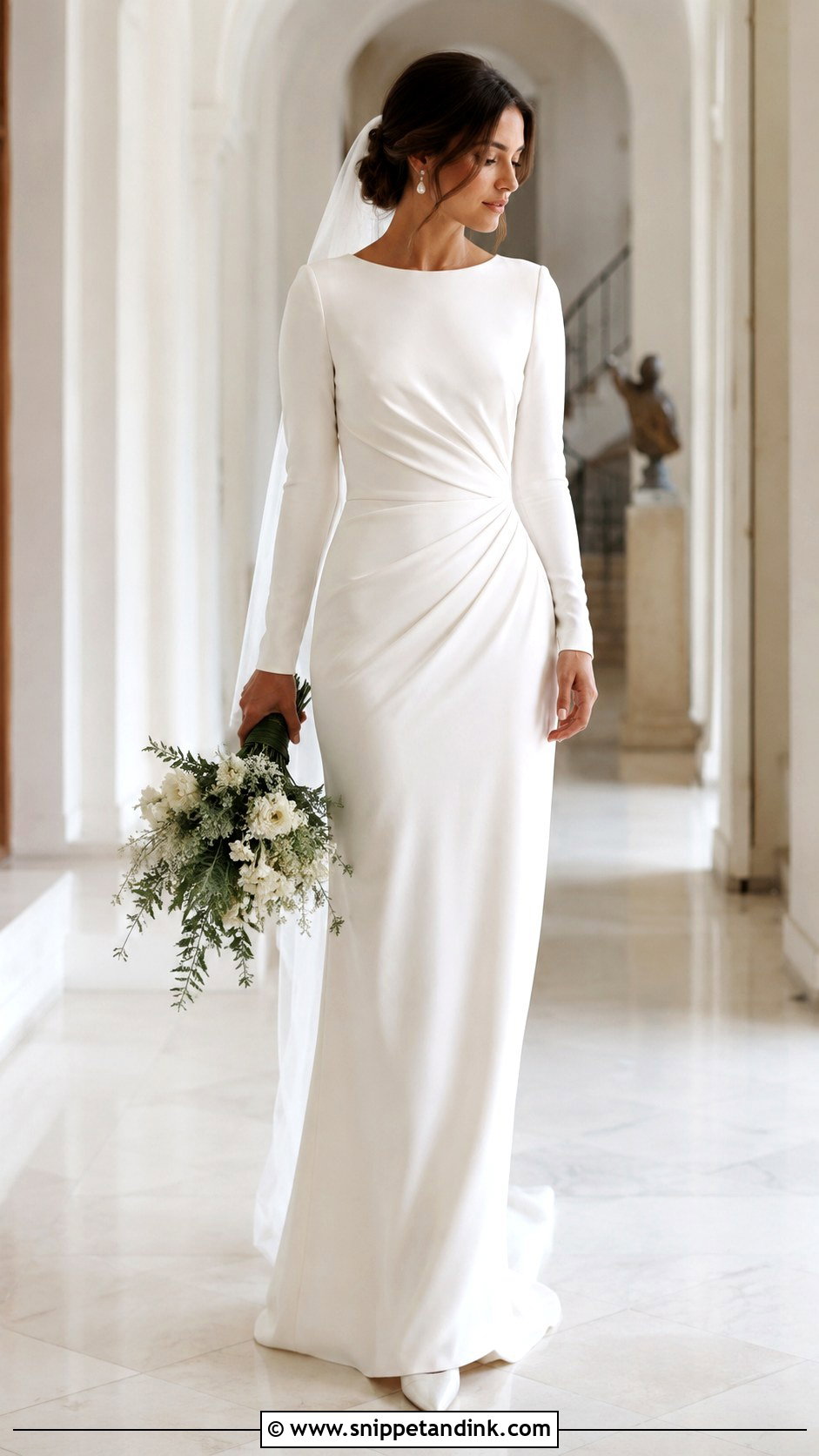
A little draping defines the waist without adding decoration. Soft folds placed diagonally across the bodice or gathered at one side, with the rest of the dress smooth, fitted sleeves and a column or narrow A-line skirt, is the clean version. Crepe and silk jersey drape naturally; stiffer fabrics fold into awkward ridges. Draping also flexes as you breathe and eat, which brides tend to appreciate by dinner. In fittings I watch the folds while you sit, because they should fall the same way every time rather than bunch. Refined earrings, pointed pumps and a low textured bun suit it. Skip a belt, which only competes with the folds.
16. Bishop Sleeve Minimal Wedding Dress
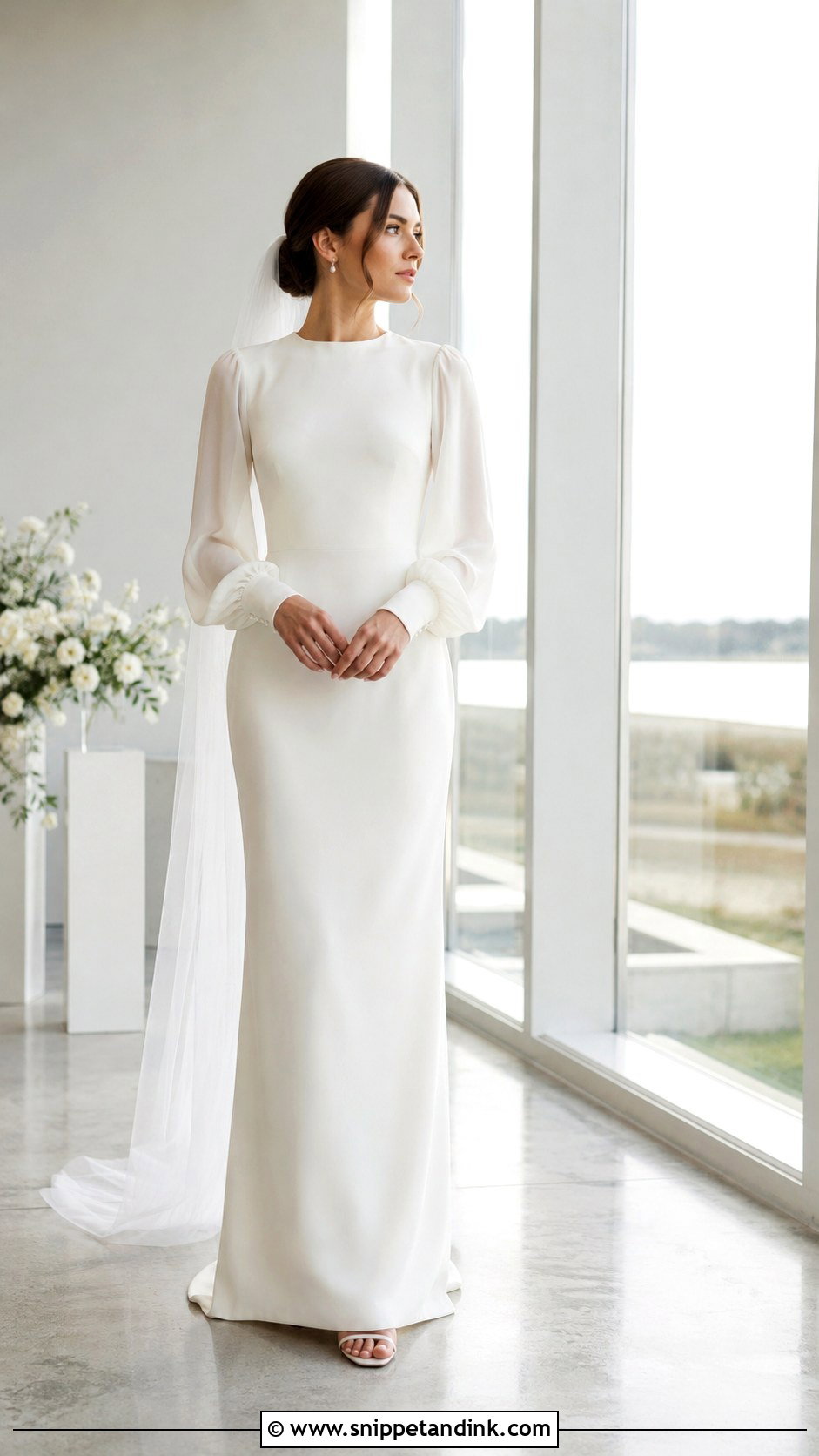
Bishop sleeves add volume at the forearm while leaving the bodice and skirt clean. They should sit narrow at the shoulder, widen gently through the lower arm and gather into a fitted cuff. Lightweight silk, chiffon or crepe keeps them airy; heavy fabric makes them droop like curtains. The cuff needs to fit snugly but leave room for your hand to slide through without unbuttoning, or you’ll rely on someone to fasten them. A simple column with a high or modest V-neckline gives the sleeves space. Sleek heels, small earrings and a low bun complete it, with a plain, narrow veil. Covered buttons on the cuffs are a nice quiet detail.
17. Bell Sleeve Minimal Wedding Dress
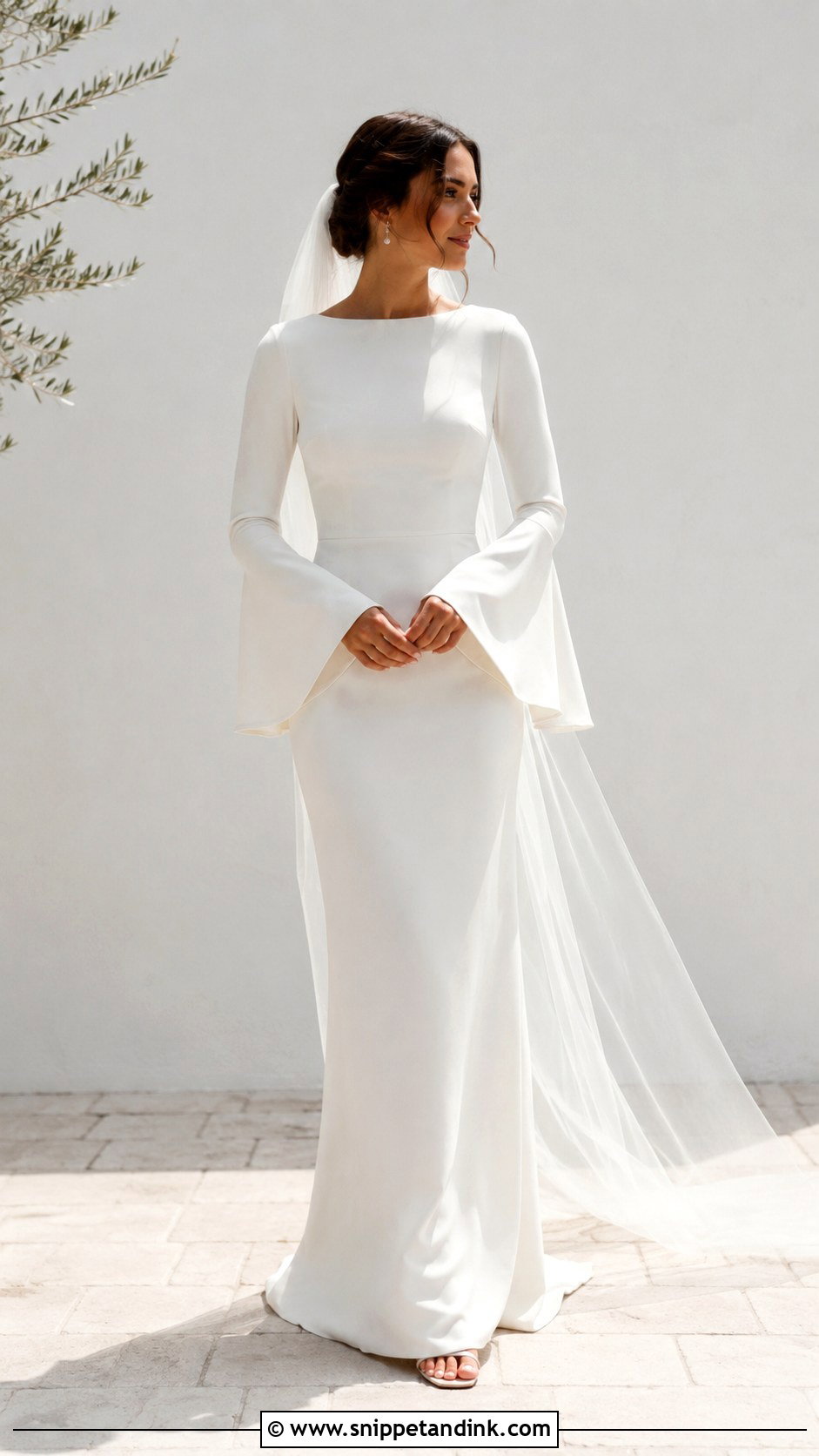
A clean gown with bell sleeves makes its statement through shape alone. The sleeve should fit smoothly above the elbow and widen toward the wrist. I steer brides toward a restrained flare, because a wide bell drags through cake, catches on chair backs and gets tangled in the bouquet. Pair it with a slim sheath or a softly flowing A-line. Matte crepe looks modern, light silk moves more. Simple heeled sandals, small hoops or drops and softly pinned hair are enough, with a narrow veil or a minimal comb. Try eating with a fork in it at the fitting; small wrist loops can hold the sleeve back during dinner.
18. Detachable Long Sleeve Wedding Dress
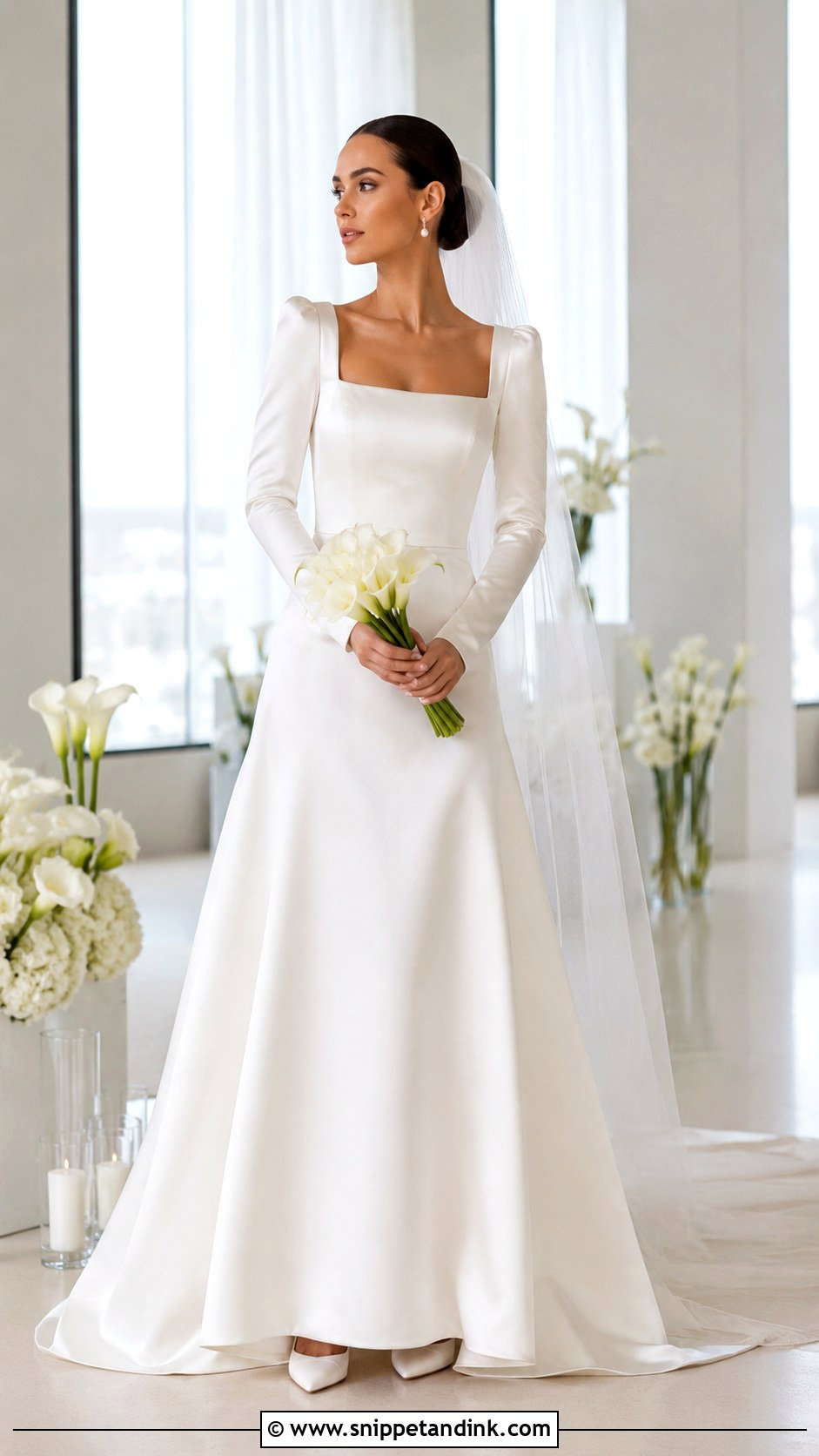
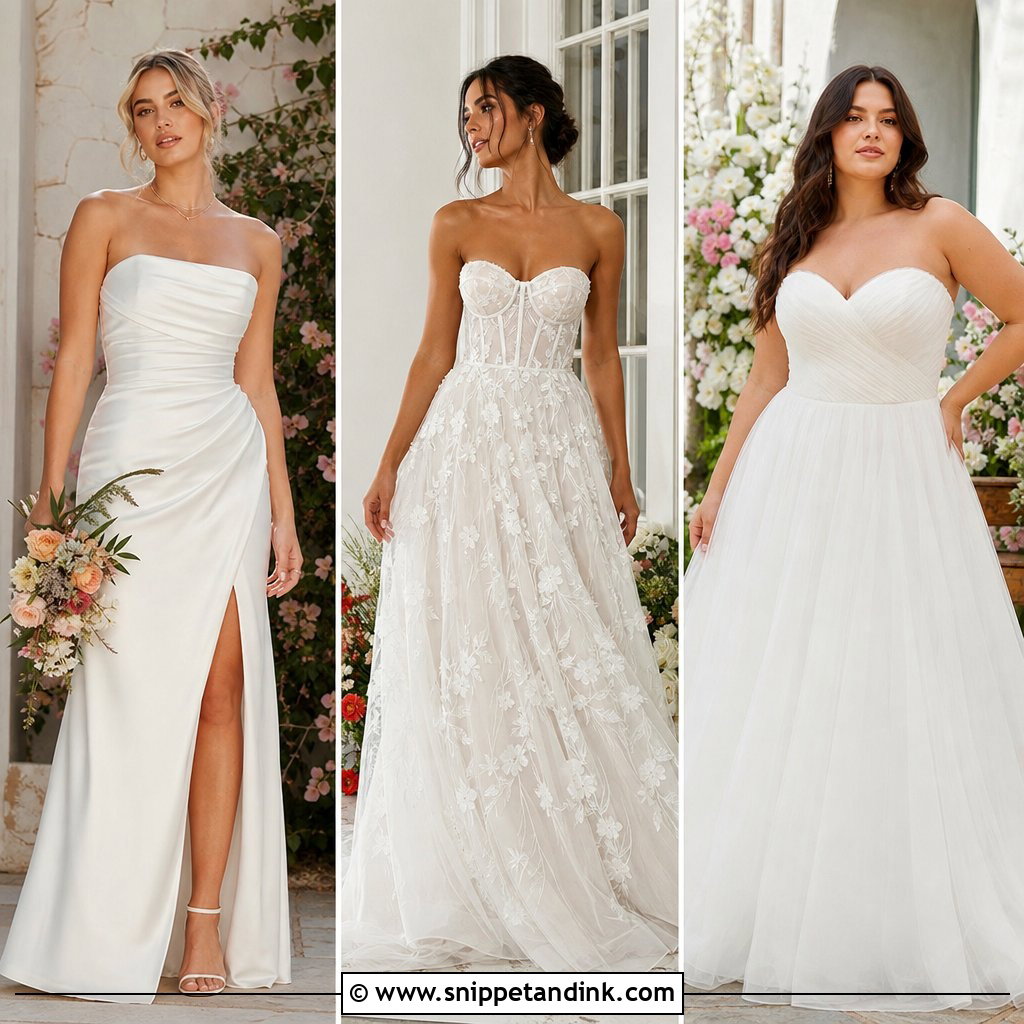
Detachable sleeves give one minimal gown two looks. Start with a clean strapless, square-neck or off-the-shoulder dress in satin or crepe, then add fitted sleeves for the ceremony and remove them for the reception. Order the sleeves with the dress whenever possible, because satin and crepe vary slightly between dye lots, and a mismatched ivory shows instantly against plain fabric. Attachment points should be discreet and secure; small snaps under the bodice edge are common. Keep the same pointed pumps, earrings and sleek hair for both versions. A plain veil suits the sleeved look, and a pearl hair accessory takes over when the veil comes off.
19. Mini Minimal Long Sleeve Wedding Dress
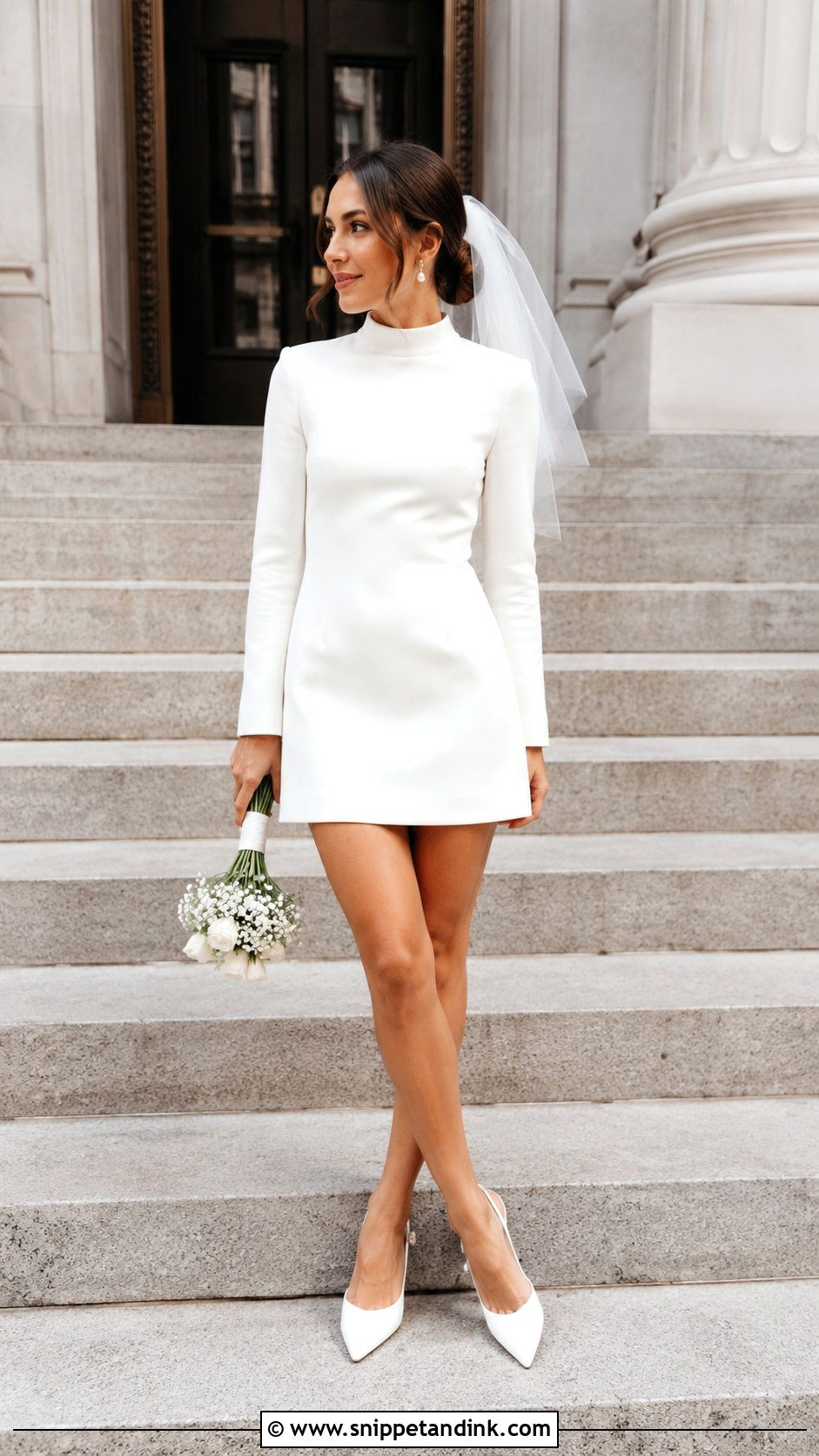
A long-sleeve mini suits a courthouse ceremony, a reception change or a second look. Keep it sophisticated with structured crepe or smooth satin and a clean straight or lightly fitted shape. A high, boat or square neckline balances the shorter hem. Sit down in it before you buy: a mini that looks right standing can ride up several inches when you sit, and that’s when photographers are shooting the signing. Pointed pumps, slingbacks or low block heels depend on how much walking you’ll do. Pearl earrings, a compact bouquet and a short veil or bow finish it, with sheer tights for winter.

20. Midi Minimal Long Sleeve Wedding Dress
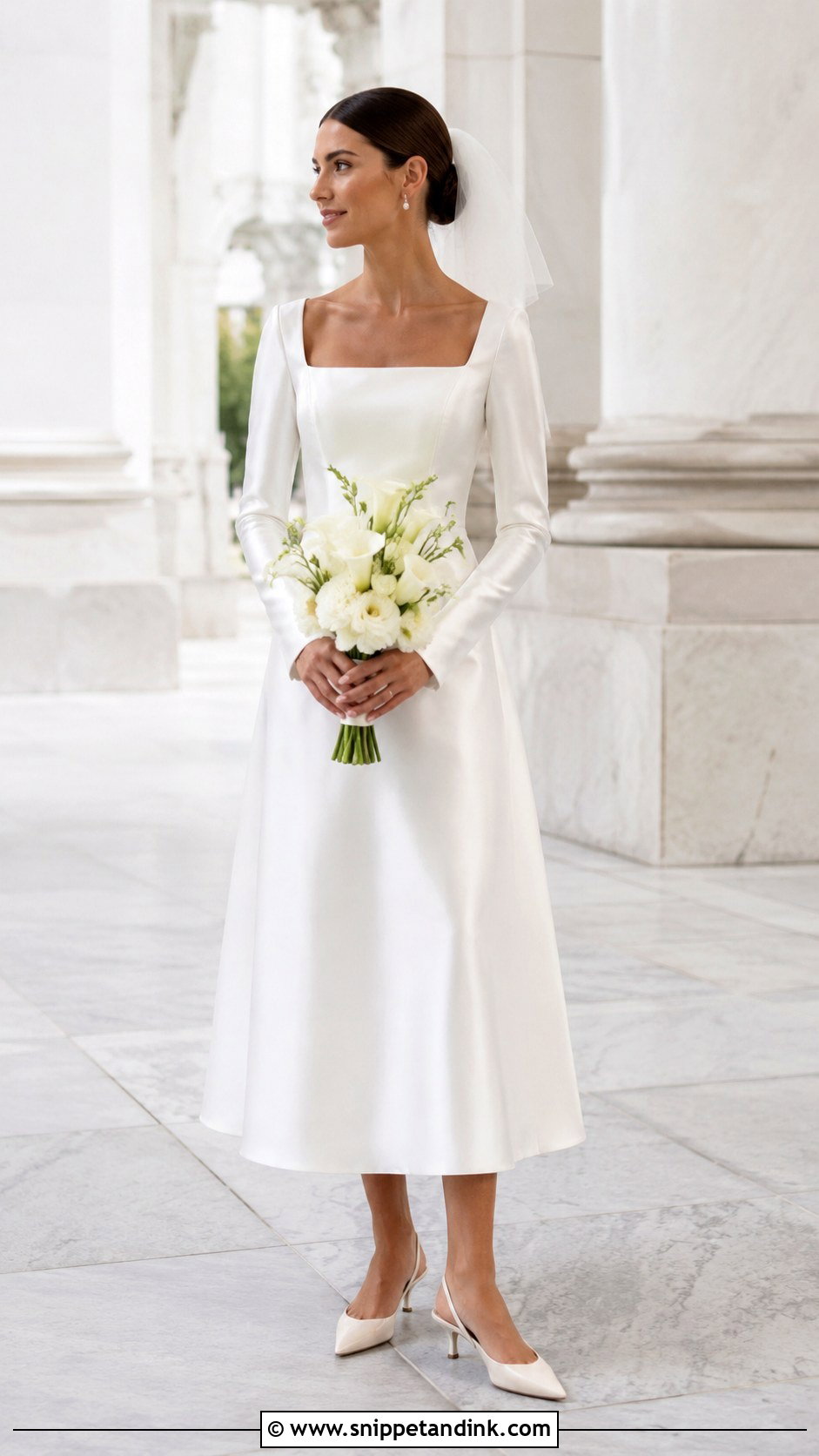
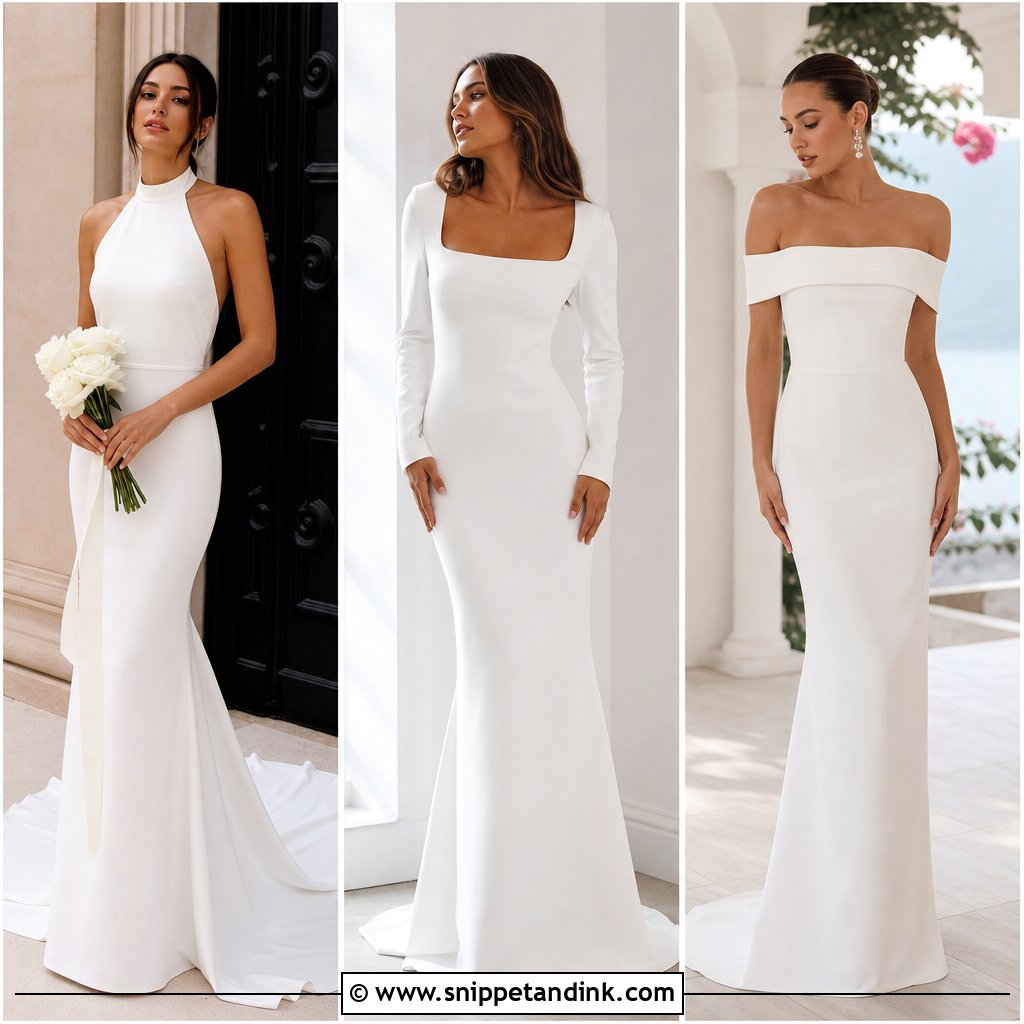
A midi sits between a traditional gown and a bridal cocktail dress. An A-line or softly fitted design ending below the knee or at the lower calf, in smooth crepe or satin with fitted sleeves, keeps the mood minimal. Hem placement makes or breaks a midi; a skirt that stops at the widest part of the calf shortens the leg, so I adjust it to the slimmer point just above or below. Your shoes are on show, so choose slingbacks, pointed pumps or ankle-strap heels with care. Small earrings, a structured bouquet and a short veil complete it, and a square or boat neckline gives it a classic finish.
Wearing Long Sleeves at a Summer Wedding
Long sleeves aren’t only for winter. Many brides choose them for religious ceremonies, family expectations or simply because they like the coverage, and that includes July weddings. Fabric choice makes the difference between comfortable and miserable.
- Choose light silk, silk georgette, chiffon or fine crepe for the sleeves, even if the bodice is heavier.
- Ask for unlined or sheer sleeves; a lined sleeve doubles the warmth on your arms.
- Avoid polyester satin for an outdoor summer ceremony. It doesn’t breathe and shows sweat marks under the arms.
- Consider detachable sleeves, so you can take them off after the ceremony when the room heats up.
- Plan shade for portraits, because standing in direct sun in any long sleeve gets hot fast.
On a cold day the opposite applies. A crepe or satin sleeve gives some warmth, but I still suggest a faux fur stole or a tailored coat in ivory for the walk between car and venue, since long sleeves on their own won’t keep a bride warm outside in winter.
Sleeve hems and cuffs pick up makeup and food more than any other part of a plain gown. Keep a stain pen and white chalk in your kit, and turn the cuffs back slightly while you eat.
Let the Cut Carry the Whole Look
A minimal long-sleeve gown comes down to silhouette, fabric, coverage and how it feels after hours of wear. Satin brings soft shine, crepe gives modern structure and silk adds fluid movement. Necklines, sleeve shapes and back details supply the personality that beading usually would. Keep the rest just as considered: shoes you can stand in, one piece of jewelry that matters, a veil in proportion and alterations done properly. Then move in it at your fittings, sit, reach, hug, and trust the dress that still looks clean when you do.
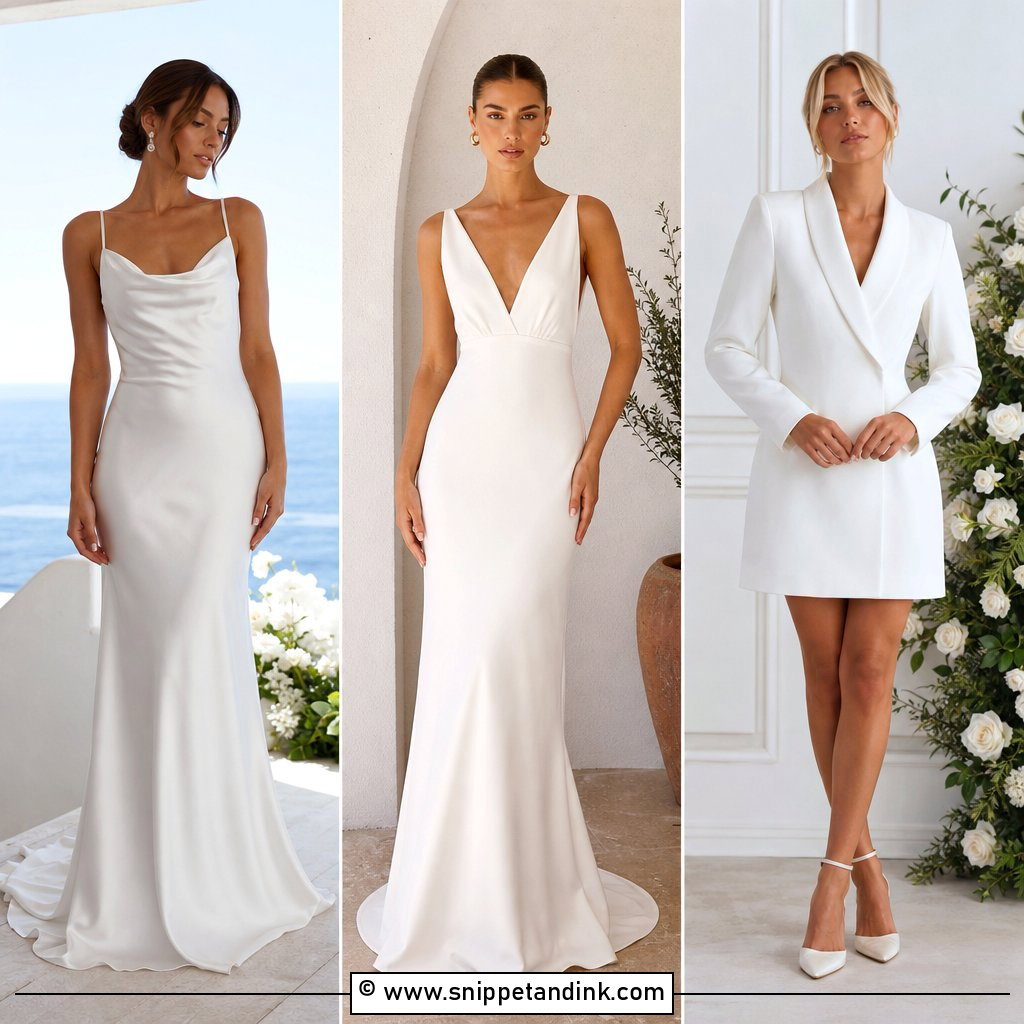
You'll Like These Ideas:




Leave a Reply