
Sleeve length changes how a gown moves and photographs more than almost any other detail. Three-quarter sleeves stop between elbow and wrist, which covers the upper arm while leaving the wrist free for a bracelet, short gloves or a bouquet wrapped in ribbon. Designers now put them on nearly every silhouette, from lace A-lines and full ball gowns to fitted mermaids and vintage tea-length hems. In crepe, satin, chiffon or tulle, they work in any season as long as the lining suits the weather. The catch is fit: a sleeve that’s a touch tight at the elbow becomes the thing you notice all day. Below are twenty ways to wear the length, with what I check on each one.
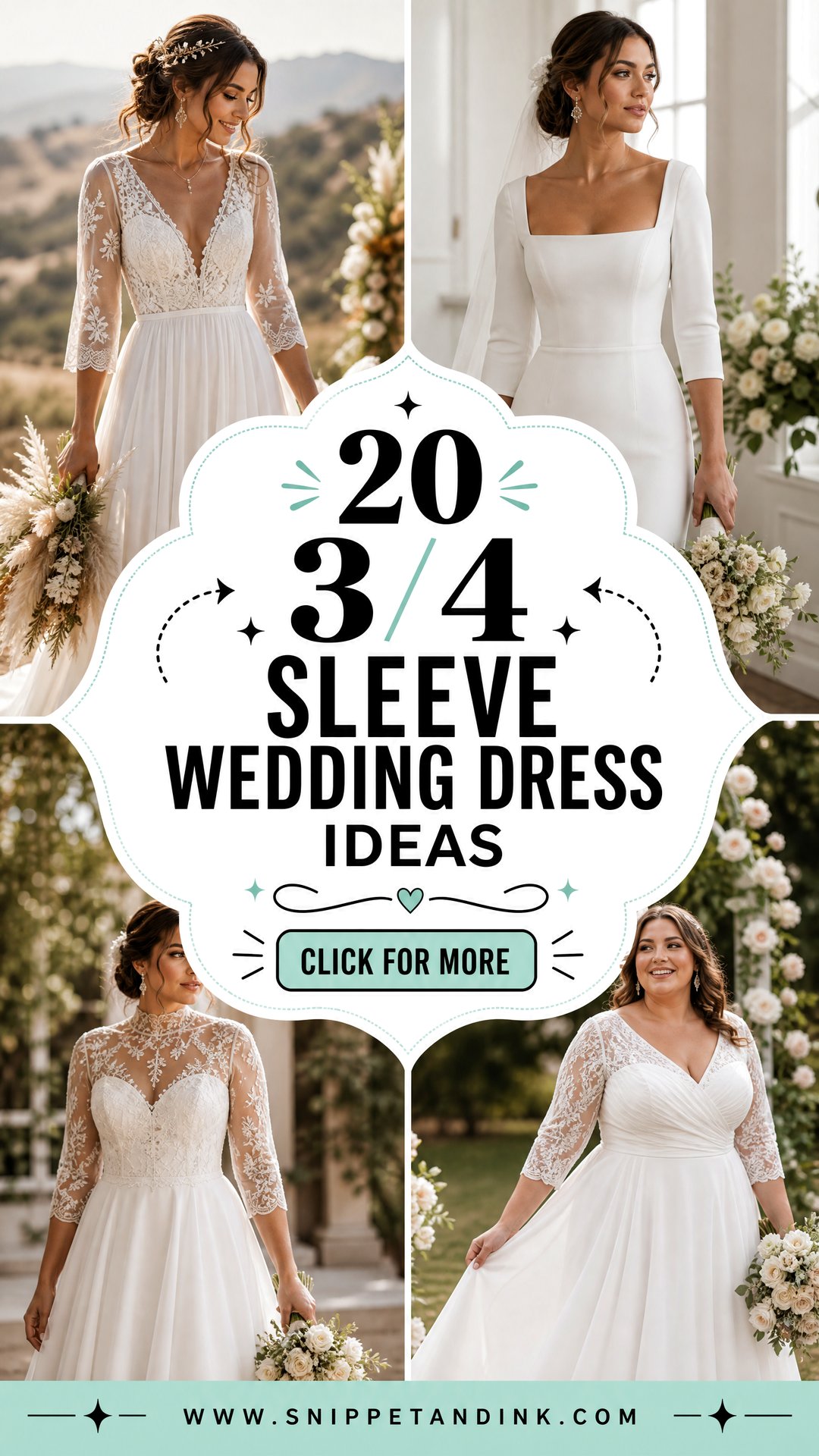
Where Exactly a Three-Quarter Sleeve Should Stop
Three-quarter is a range, not a measurement. Depending on the maker, the cuff can land just below the elbow or a few inches above the wrist, and that difference changes the whole look. On most women, the most flattering point is the narrowest part of the forearm, which visually slims the arm and leaves room for a bracelet.
The fitting room tests I always run
- Bend both elbows fully, as if lifting a glass. If the sleeve cuts in at the crease, it needs more ease.
- Raise your arms above your head. A low-set armhole lifts the whole bodice when you do this, which shows in every dancing photo.
- Hug someone. If the back seam strains, the sleeve or the bodice back is too narrow.
- Hold your bouquet at your waist for a minute. Tight sleeves get uncomfortable faster than you’d think in this pose, and it’s the one you’ll hold for most of the ceremony.
Fitted, illusion or relaxed?
Fitted lace sleeves look the most tailored but need the most precise fit, and they’re where I spend the longest at fittings. Illusion tulle sleeves are lighter and cooler, with the detail sitting on top of a near-invisible mesh. Relaxed sleeves, with a little fullness and a gathered cuff, suit chiffon and outdoor weddings and are by far the most comfortable for a long day. If you’re between two, choose the one you can move in.
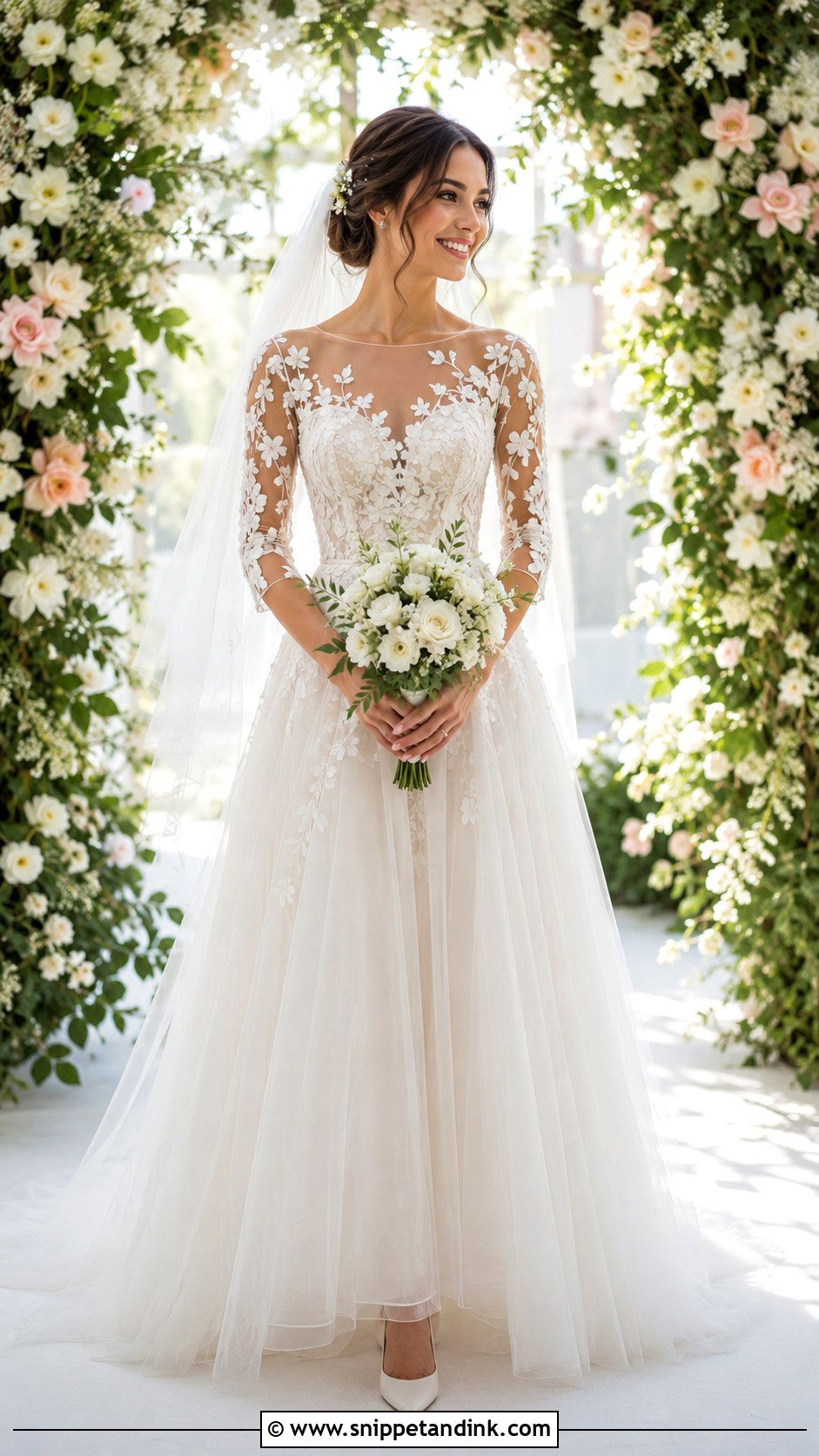
1. Lace A-Line 3/4 Sleeve Wedding Dress
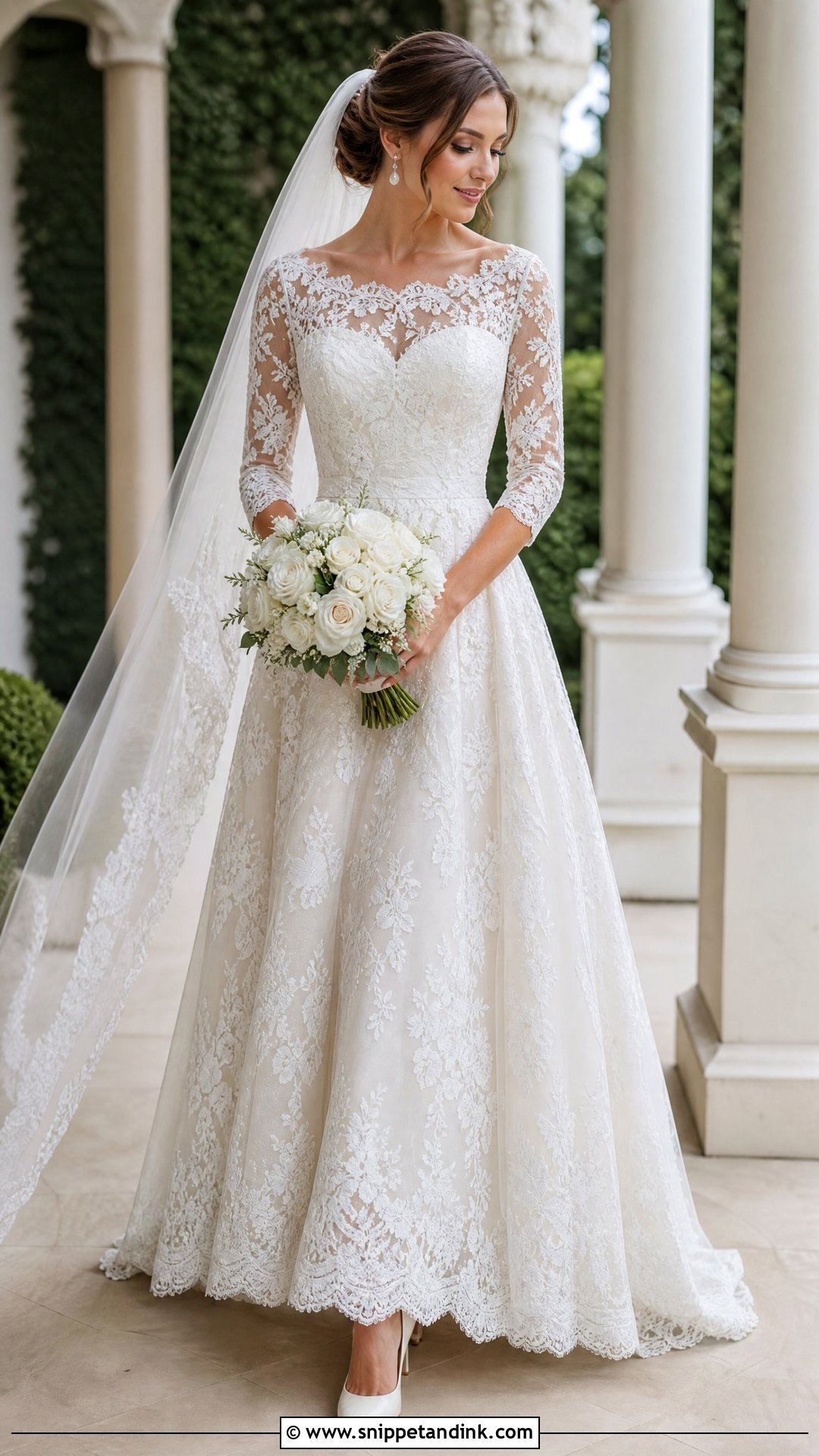
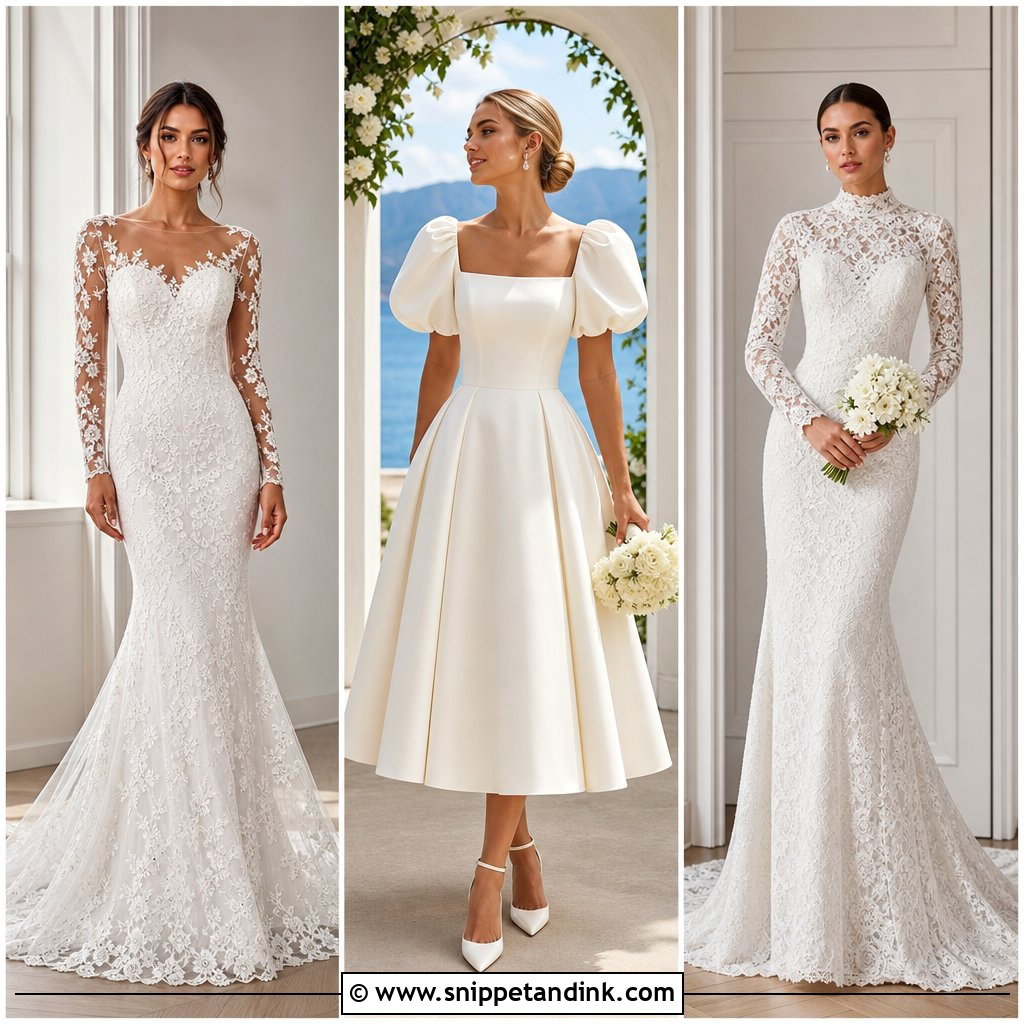
Floral lace on an A-line skirt is the most forgiving starting point. Look for fitted sleeves finished with a scalloped cuff, which draws the eye to the narrowest part of the forearm, and a bodice that follows you to the waist before the skirt opens out. A sweetheart lining beneath an illusion lace neckline gives shape while keeping the coverage. Pointed ivory pumps, pearl drops and a fingertip veil edged in matching lace pull it together, with roses and greenery in hand. Make sure the lace on the sleeves and the lace on the veil edging come from the same maker, or the motifs and ivory shades won’t line up.
2. Satin Ball Gown 3/4 Sleeve Wedding Dress
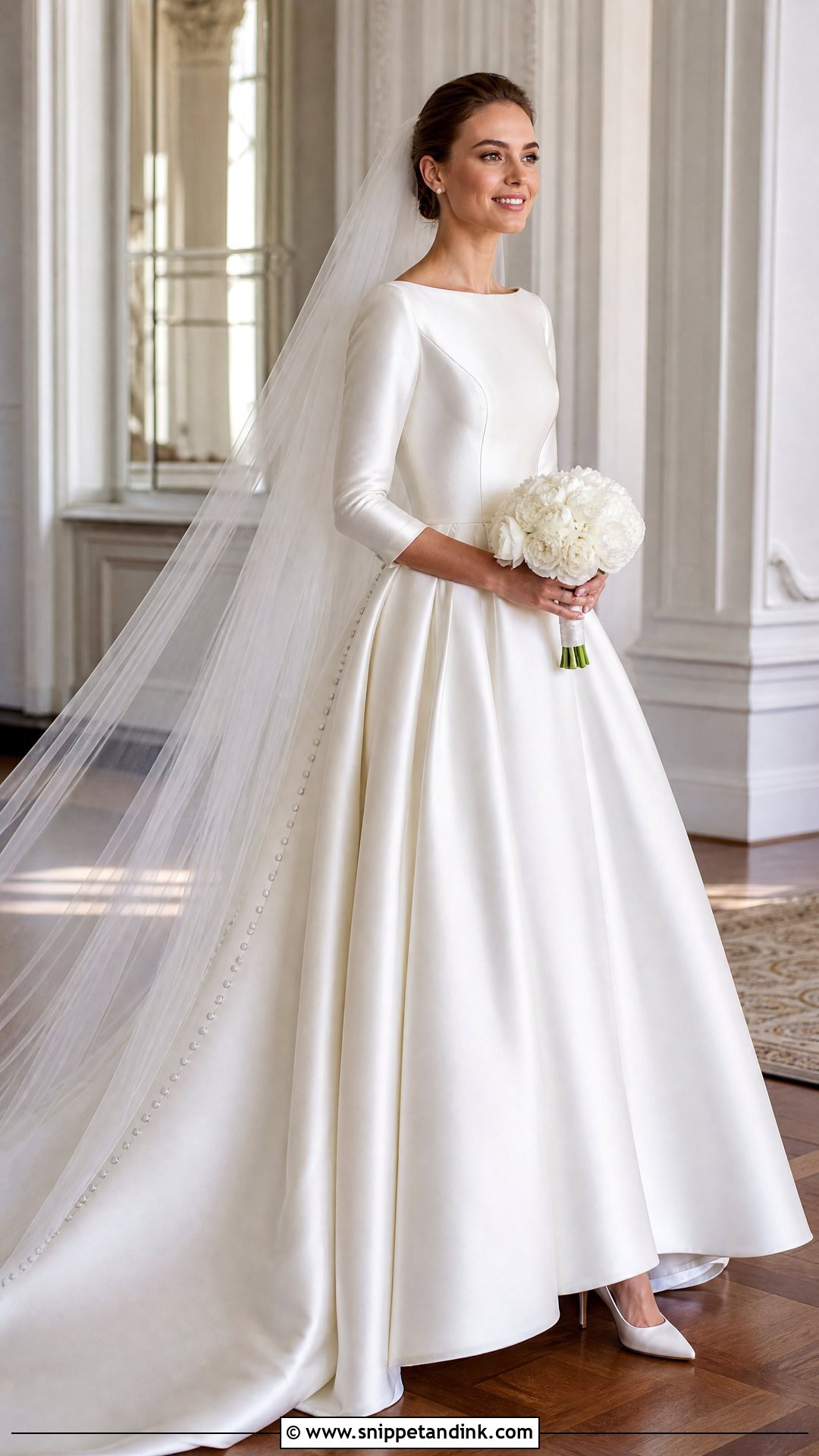
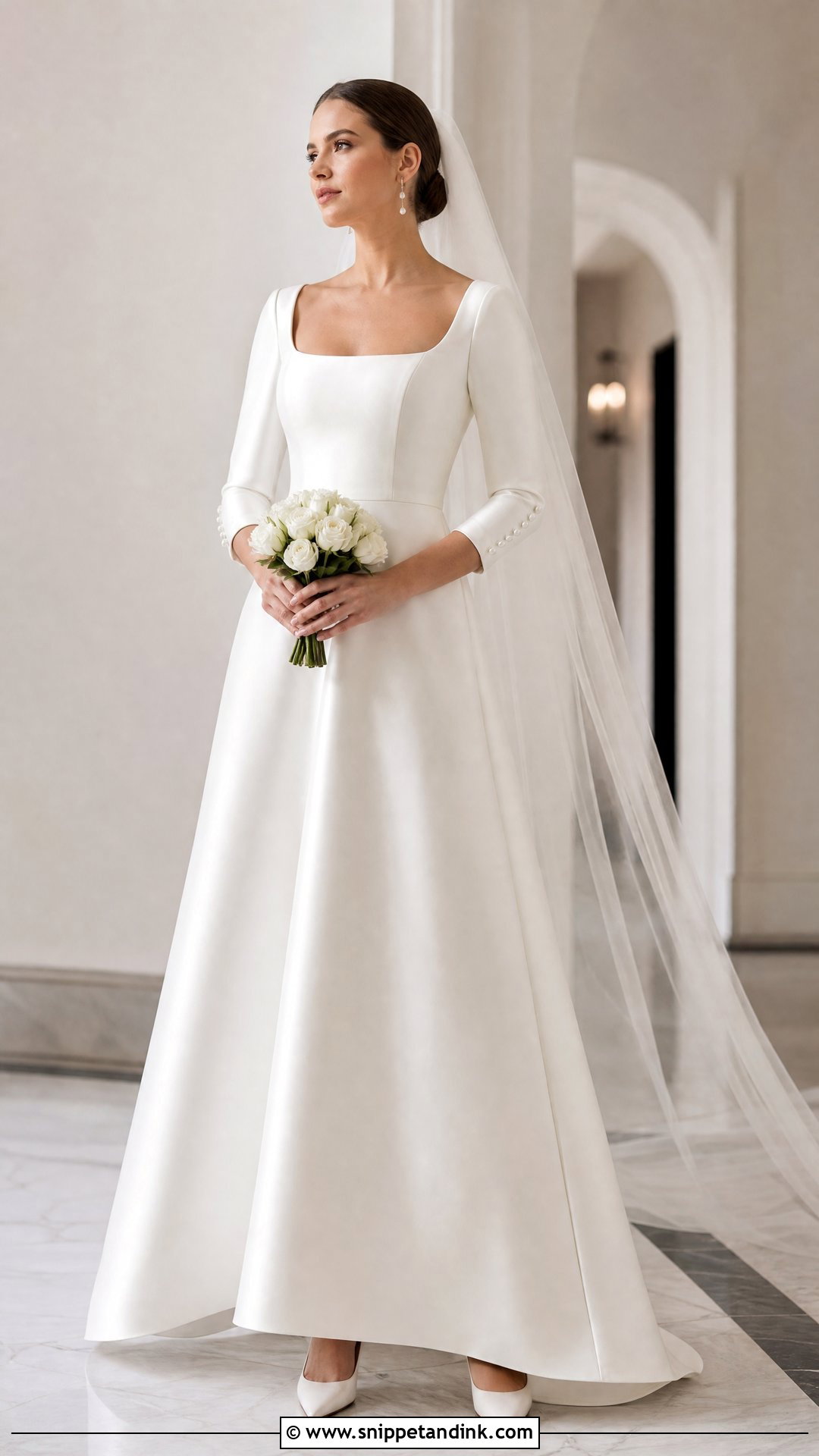
Smooth satin, a structured bodice and a full skirt that catches the light: this is the formal option for brides who don’t want lace. A bateau, square or softly curved neckline balances the volume below. Covered buttons at the cuffs and down the back give a quiet finish. Satin and Mikado hold a shape well, which is exactly why they suit a defined skirt and crisp details. Pearl studs, satin pumps and a cathedral veil with a raw edge are enough. Keep the bouquet compact. Satin sleeves are less forgiving than lace, so I always ask brides to bend their elbows fully in the fitting; stiff satin cut close can pinch in the crease.
3. Tea-Length Lace 3/4 Sleeve Wedding Dress
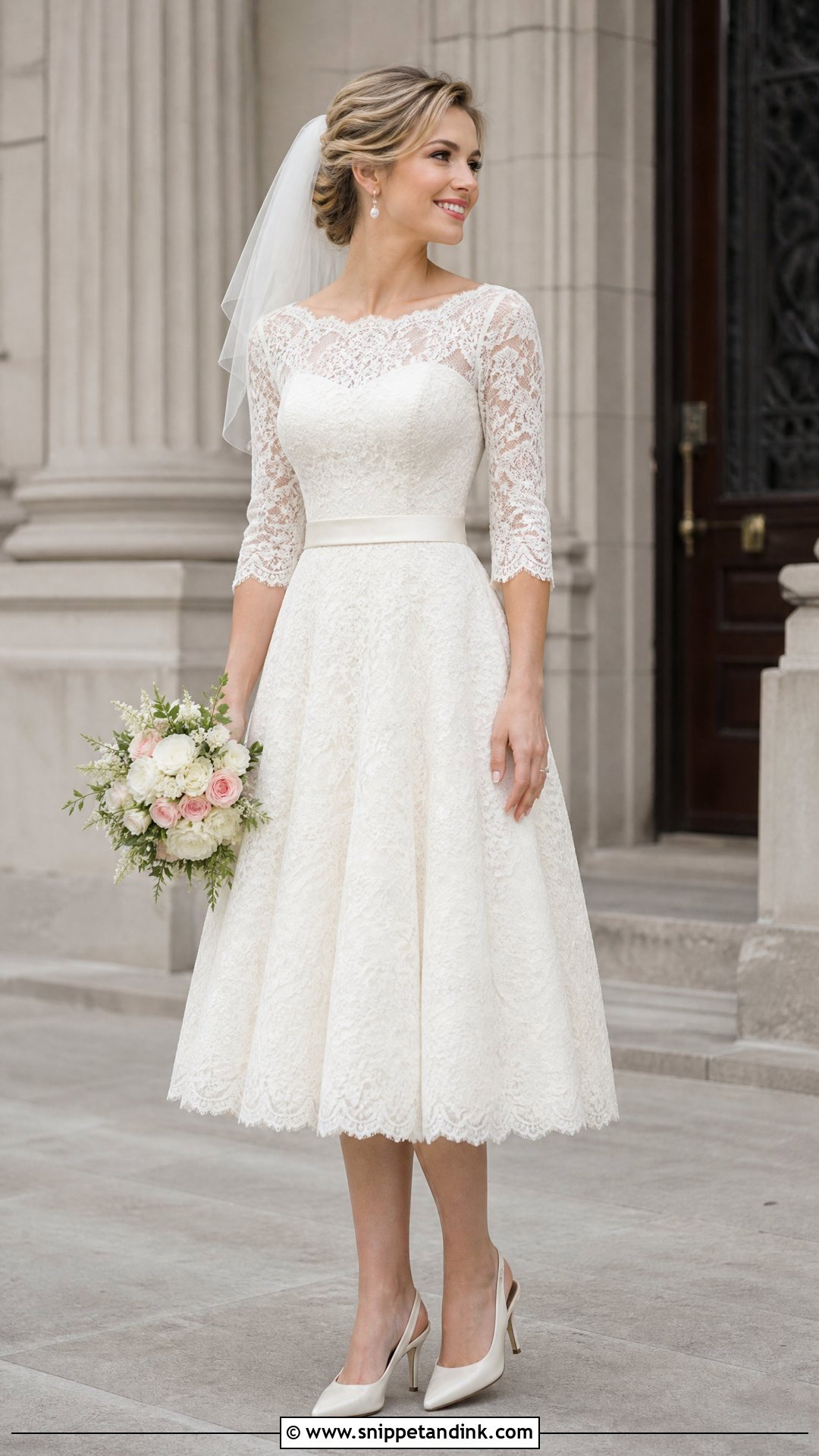
Tea length gives your shoes a starring role. Choose a fitted lace bodice, a natural waist and a softly flared skirt ending between knee and ankle; lace three-quarter sleeves balance the shorter hem. Ivory slingbacks, pearl earrings and a birdcage or shoulder-length veil suit it, and a narrow satin belt marks the waist without clutter. It’s practical for courthouses, restaurant receptions and daytime parties. Bring the petticoat and the shoes to every fitting. A full tea-length skirt changes height depending on the petticoat underneath, and the hem should be set with both in place.
4. Mermaid Lace 3/4 Sleeve Wedding Dress
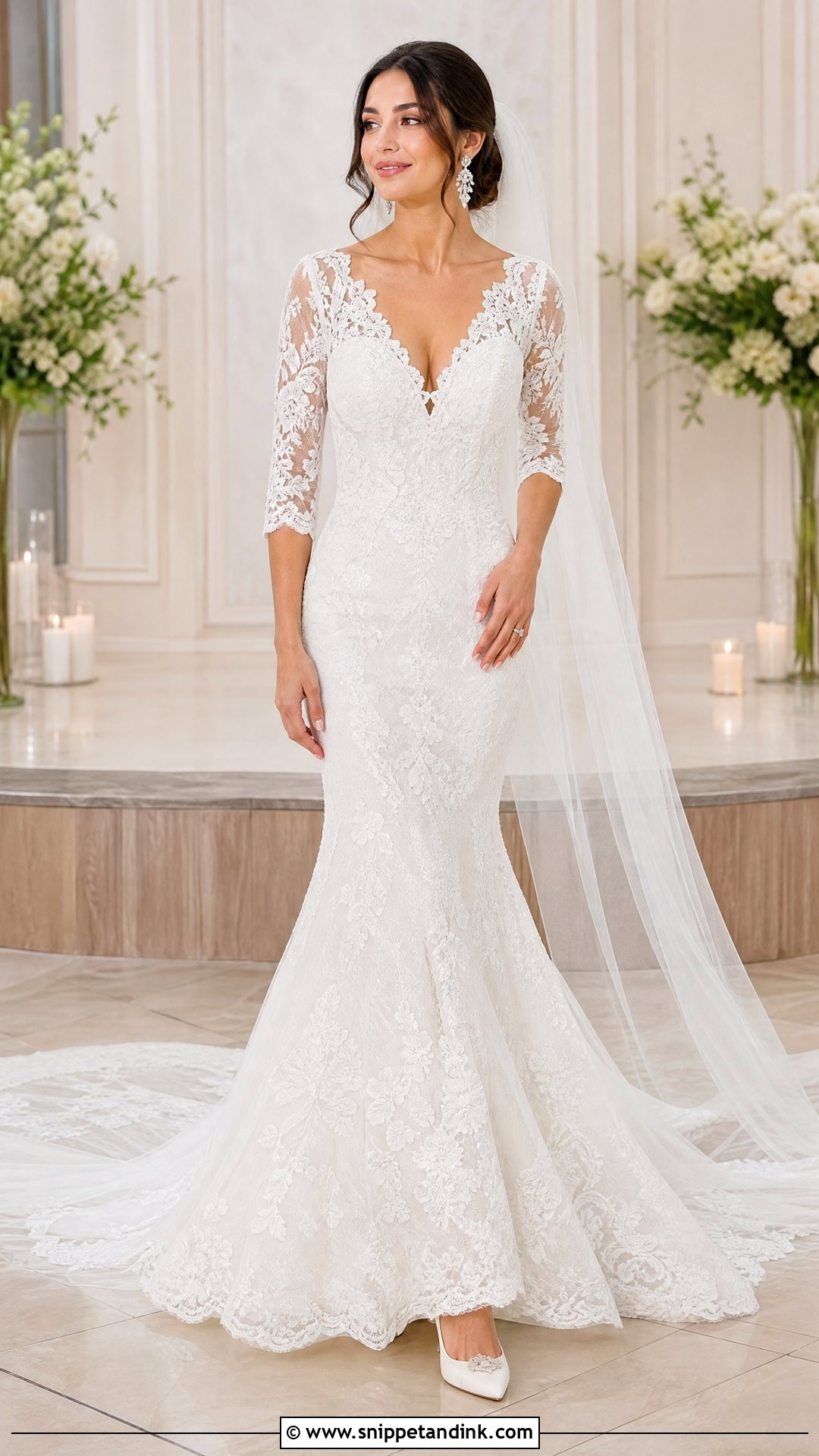
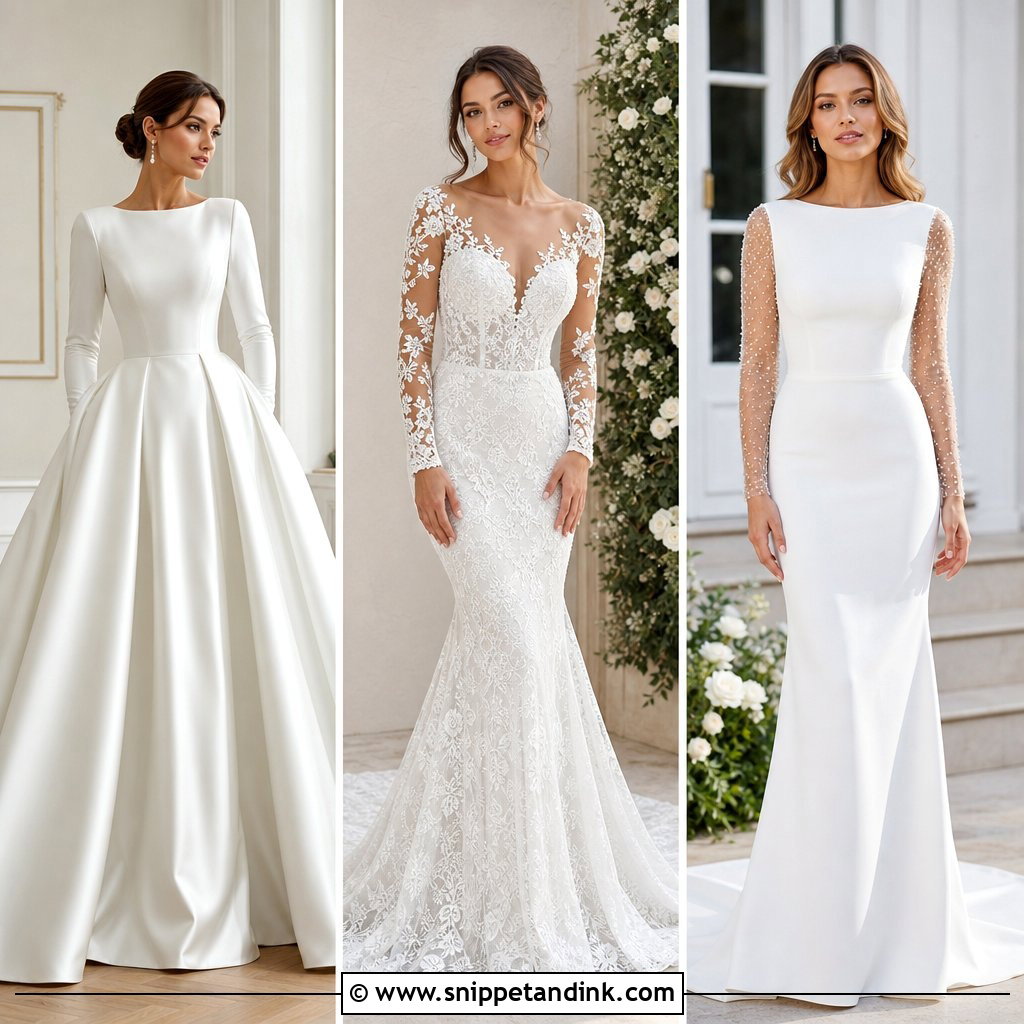
Mermaid gowns follow the torso and hips before flaring near the knee, and lace softens what can otherwise feel very sculpted. Fitted three-quarter sleeves balance a V-neck or illusion neckline with a little coverage. Crystal earrings, pointed pumps and a narrow chapel veil that follows the train finish it, with a low chignon to keep the lace visible. Sit, walk and climb stairs in the fitting room before you buy. If you can only shuffle, ask about raising the flare point a few inches or adding a stretch lining; both keep the shape while giving your knees room.
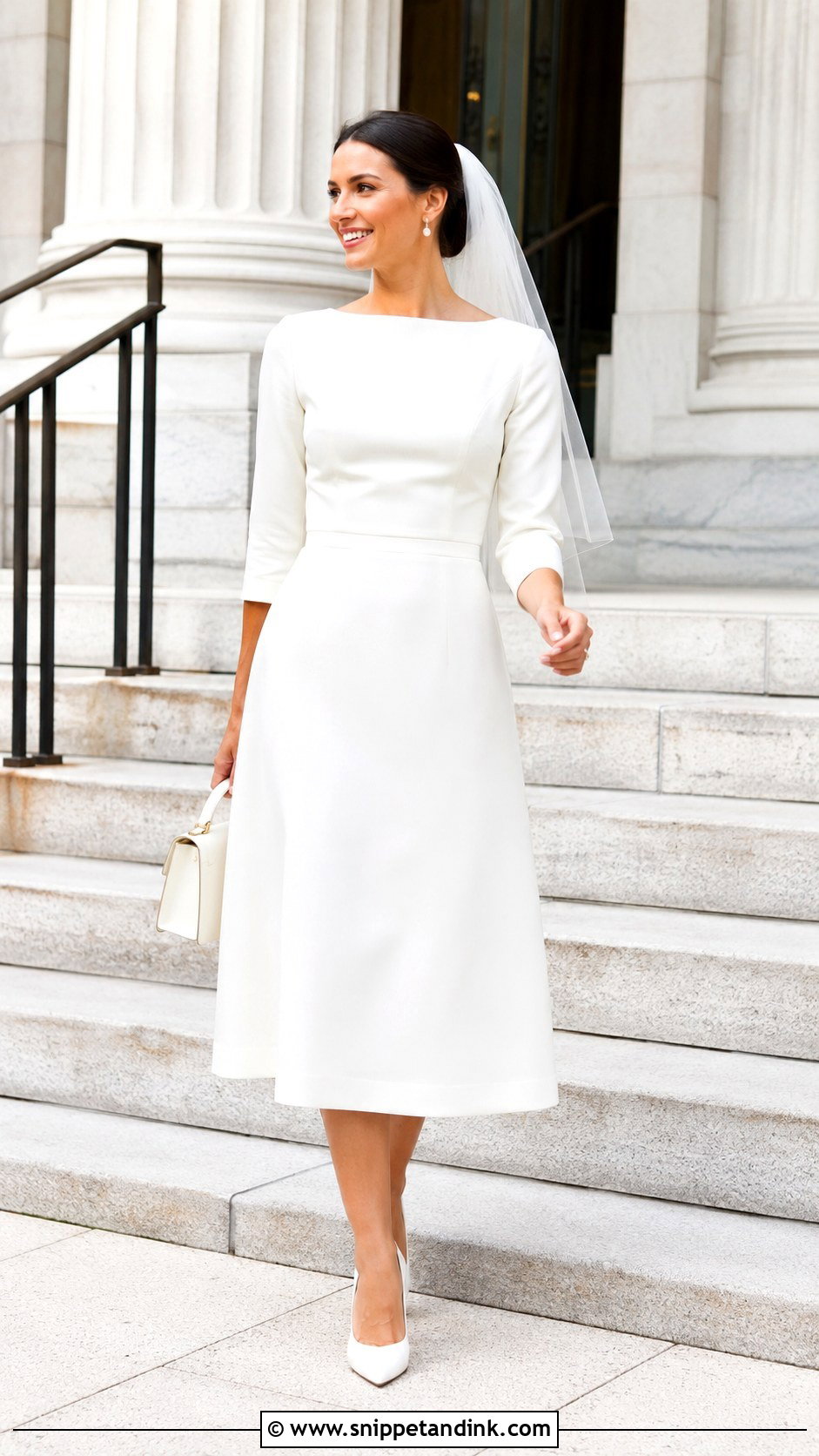
5. Simple Crepe 3/4 Sleeve Wedding Dress
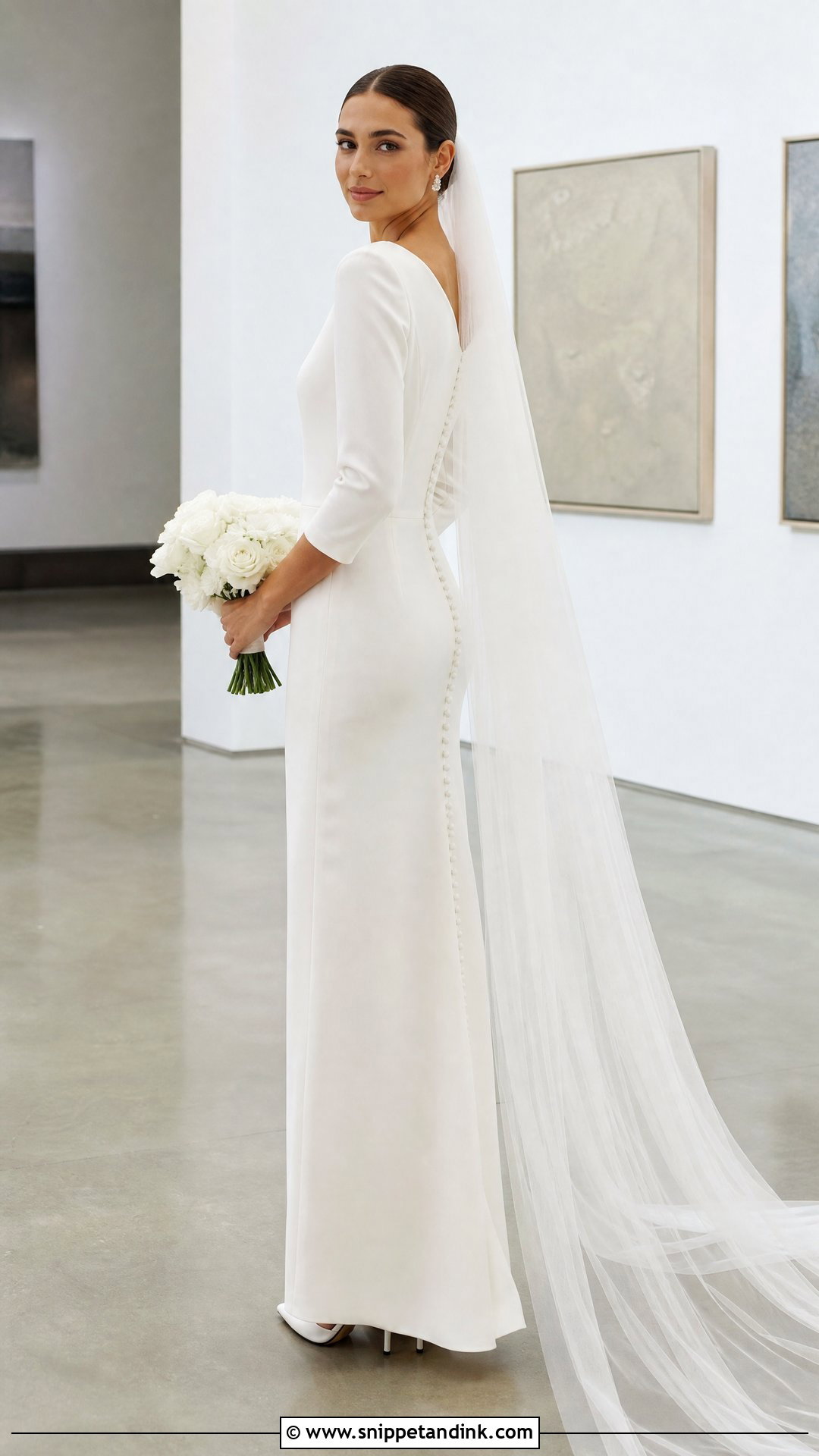
A plain crepe sheath with fitted sleeves is my pick when a bride tells me she wants nothing fussy. Crepe has a matte surface that photographs smoothly, but it also shows everything underneath. Look for a shaped waist seam, covered back buttons or a little ruching so the dress doesn’t fall flat. Minimal pointed heels, small studs and a sleek low bun suit it, and a long plain veil adds drama without clutter. Carry one flower variety. Have it fitted by someone experienced with crepe; uneven seams and pulling show more on this fabric than any other on the list.
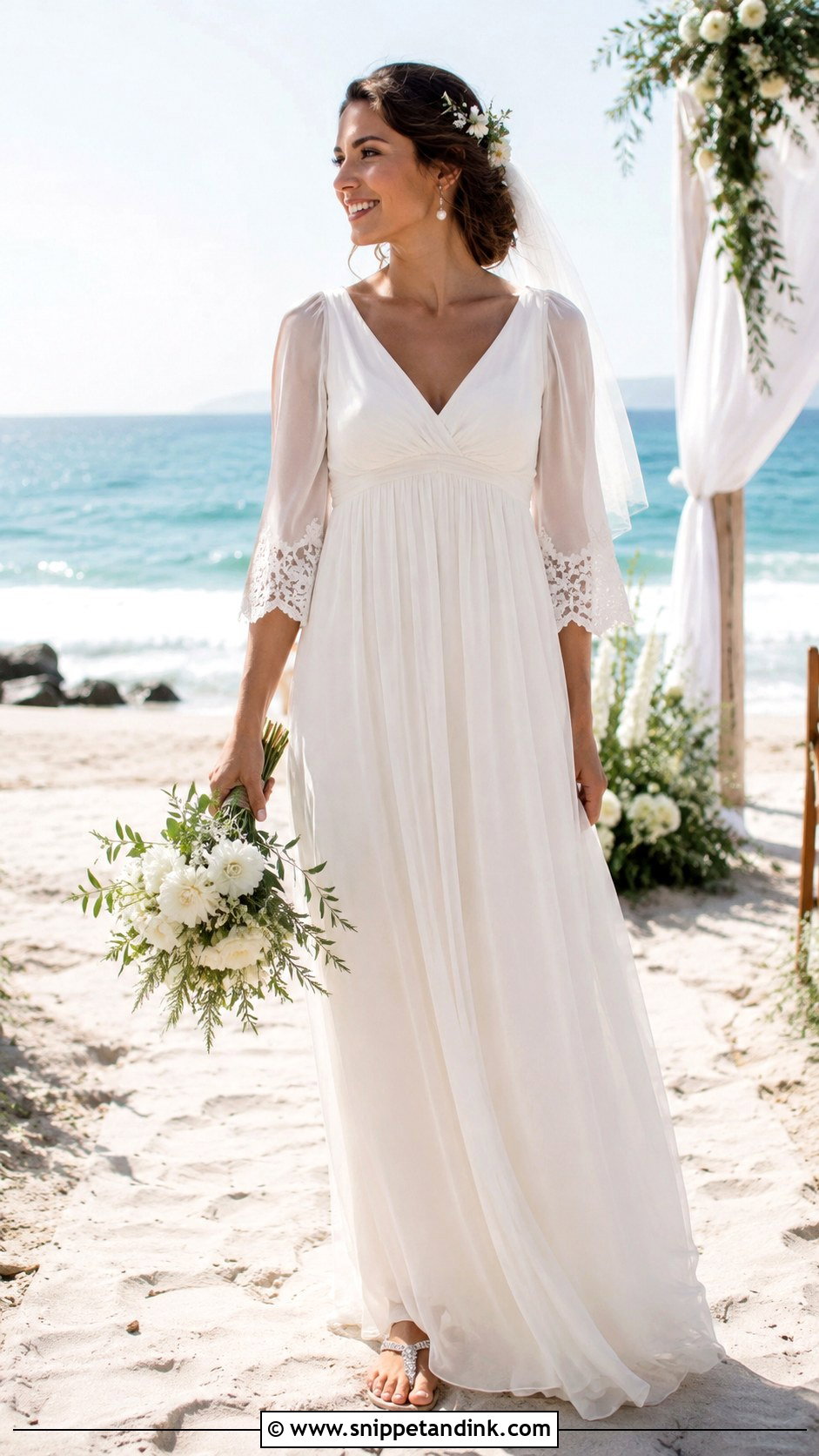
6. Boho Chiffon 3/4 Sleeve Wedding Dress
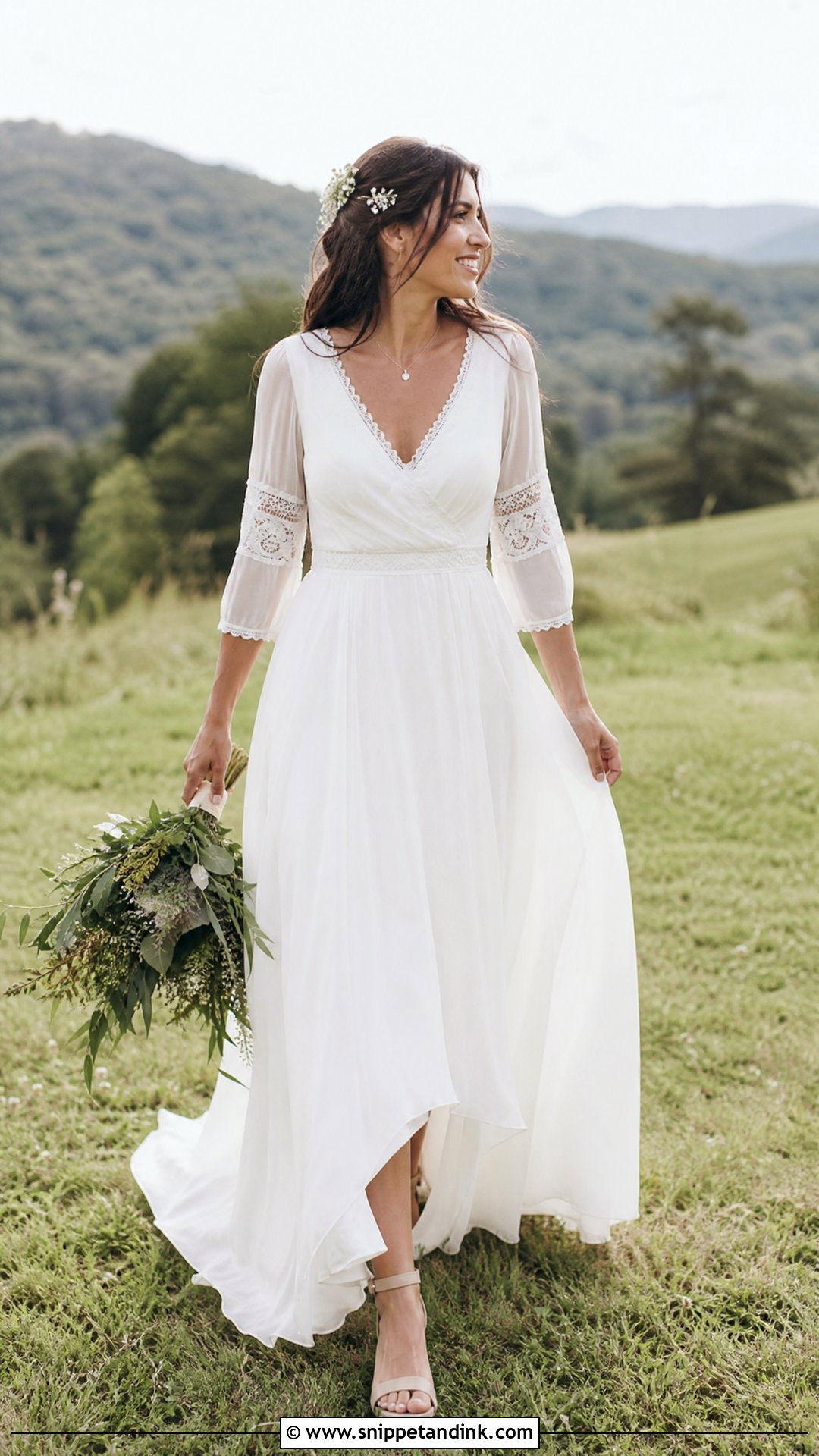
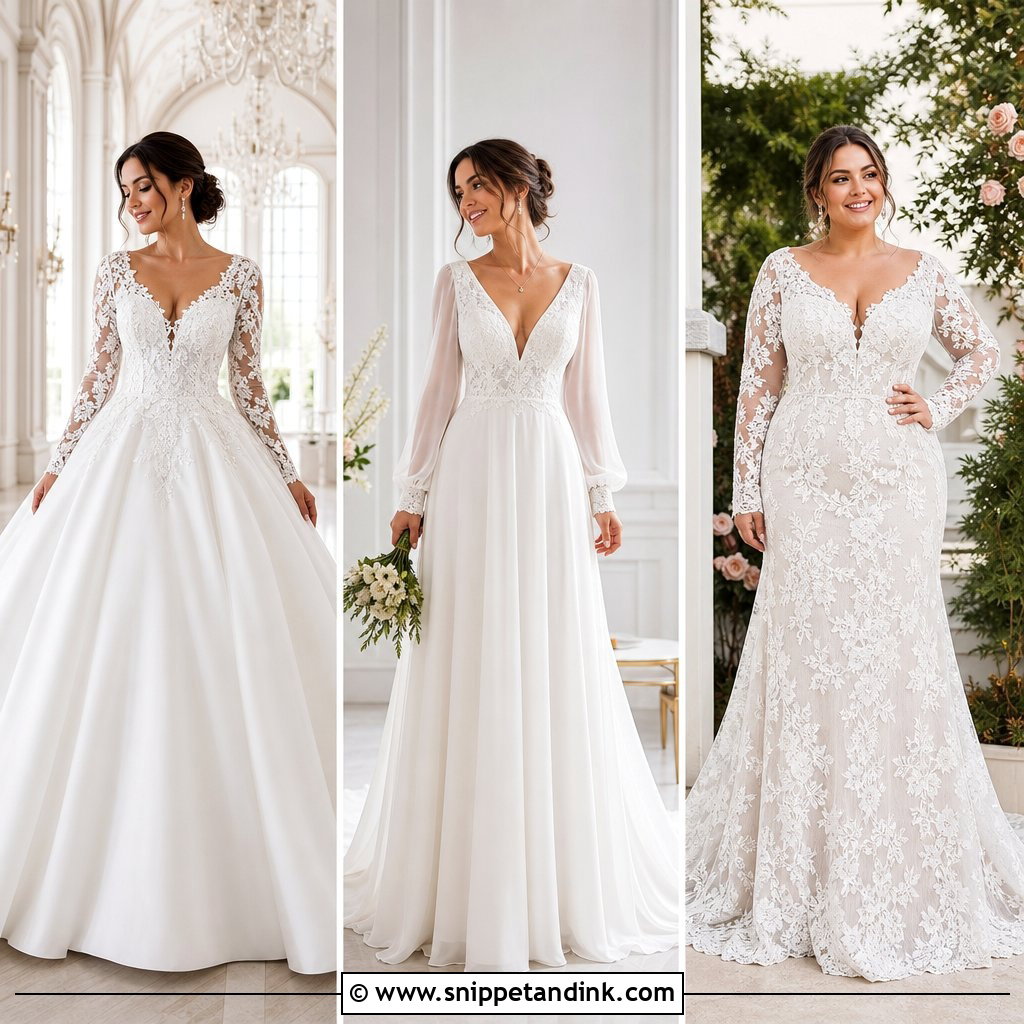
Chiffon moves in the slightest breeze, which makes it the obvious fabric for outdoor ceremonies. A flowing A-line or empire-waist gown with a gathered skirt, lace-trimmed cuffs and a comfortable V-neck bodice works well. Here the sleeves can be slightly loose instead of tightly fitted, which keeps you cooler and lets the fabric float. Block-heel sandals, a fine pendant and small floral pins in loose waves suit the mood, plus a chapel veil or light tulle cape. I’d keep beading minimal. Heavy embellishment drags chiffon down and spoils the drape.
7. Bateau Neck 3/4 Sleeve Wedding Dress
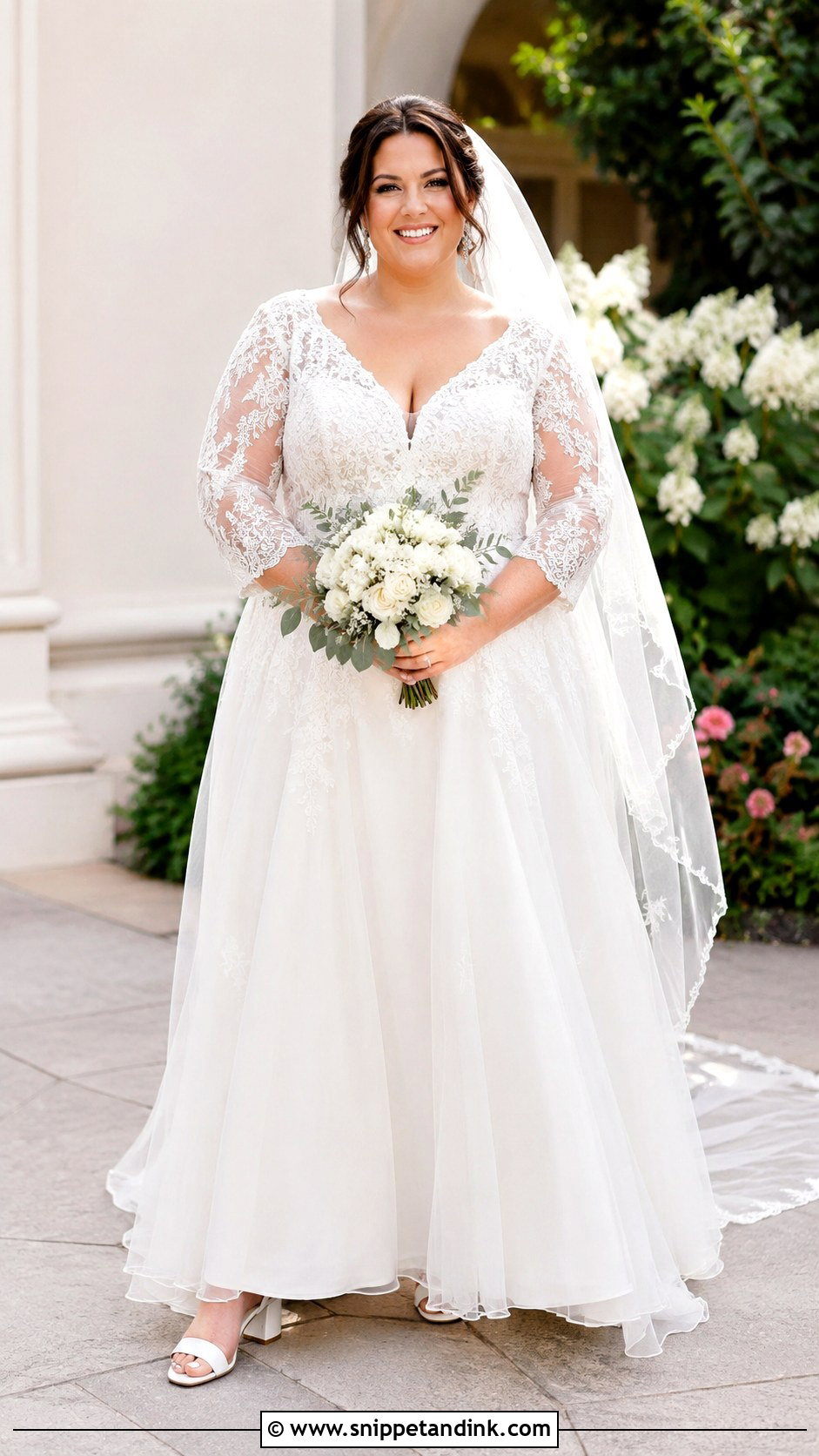
A bateau neckline runs straight across the collarbones, and with three-quarter sleeves it gives the most balanced coverage on this list. It suits a lace-and-satin A-line or a structured dress with a softly pleated skirt. Keep the bodice fitted and the waist clearly defined, or all that coverage can make a petite frame look boxy. Wear pearl earrings, an elegant bun and a bracelet sitting just below the cuff. If the front feels too reserved, put the interest at the back with an illusion panel, a shallow V or a row of covered buttons, which guests see during the whole ceremony.
8. V-Neck 3/4 Sleeve Wedding Dress
A V-neck opens up the upper body, which matters when the arms are covered. The neckline doesn’t need to plunge; a moderate V still draws a long line. Choose a lace or chiffon A-line with a supportive bodice and fitted sleeves, then add a small pendant, teardrop earrings and a low textured bun. Pointed ivory shoes and a soft tulle veil are enough. Bend, sit and dance in the fitting room. If the V gapes when you lean forward, a seamstress can add hidden mesh, reposition lace appliqués or take in the neckline edge to keep it secure.
9. Off-Shoulder 3/4 Sleeve Wedding Dress
Off-shoulder sleeves frame the collarbones and shoulders in a romantic way, but they can’t hold the dress up on their own. The bodice needs internal support so the sleeves simply rest where they are. A fitted lace bodice with a tulle skirt feels traditional; smooth satin is cleaner. Wear a collarbone-length necklace or skip it for statement earrings, plus classic pumps, a low bun and a veil anchored under the hair. At fittings, raise your arms, hug someone and sit down. Off-shoulder three-quarter sleeves restrict how high you can lift your arms, so make sure you can still reach your partner’s shoulders for the first dance.
10. Square-Neck 3/4 Sleeve Wedding Dress
Square necklines feel fresh and structured. They pair well with a fitted satin bodice, a clean A-line skirt or a simple crepe shape. Keep the sleeves streamlined with covered buttons at the cuffs. The neckline is already a strong frame, so stick to fine jewelry: a thin chain, pearl drops or small crystal studs. Pointed pumps, a compact bouquet and a long plain veil suit it, and swept-back hair leaves the chest and shoulders clear. The corners are the tricky part. Ask your tailor to check they lie flat, because square necks gape at the corners if the bodice is even slightly loose.
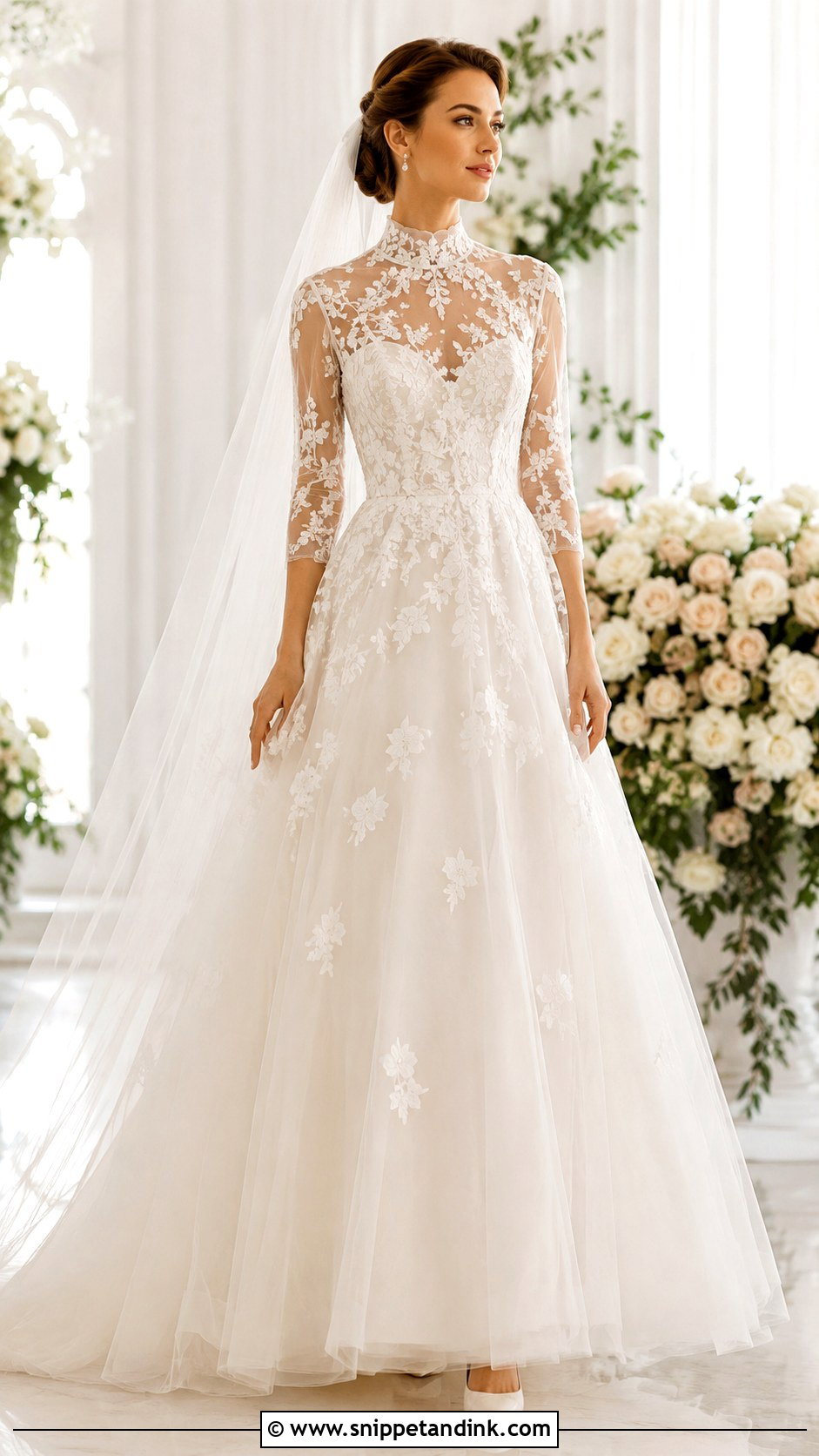
11. High-Neck Illusion 3/4 Sleeve Wedding Dress
Delicate illusion tulle gives a high neckline without weight. Look for a sweetheart or scoop lining under sheer fabric decorated with lace appliqués, pearls or subtle embroidery, with the same detail continuing onto the sleeves so the bodice reads as one piece. A tulle skirt is softer; a satin A-line adds structure. Small earrings, a polished updo and closed-toe heels are enough, with no necklace and a plain fingertip veil. I always hold the mesh against the bride’s skin in daylight. Illusion tulle comes in several skin tones, and a mismatched shade looks like a gray band at the neck in photos. Run a finger along the neckline edge too; it should feel smooth, not scratchy.
12. Plus-Size A-Line 3/4 Sleeve Wedding Dress
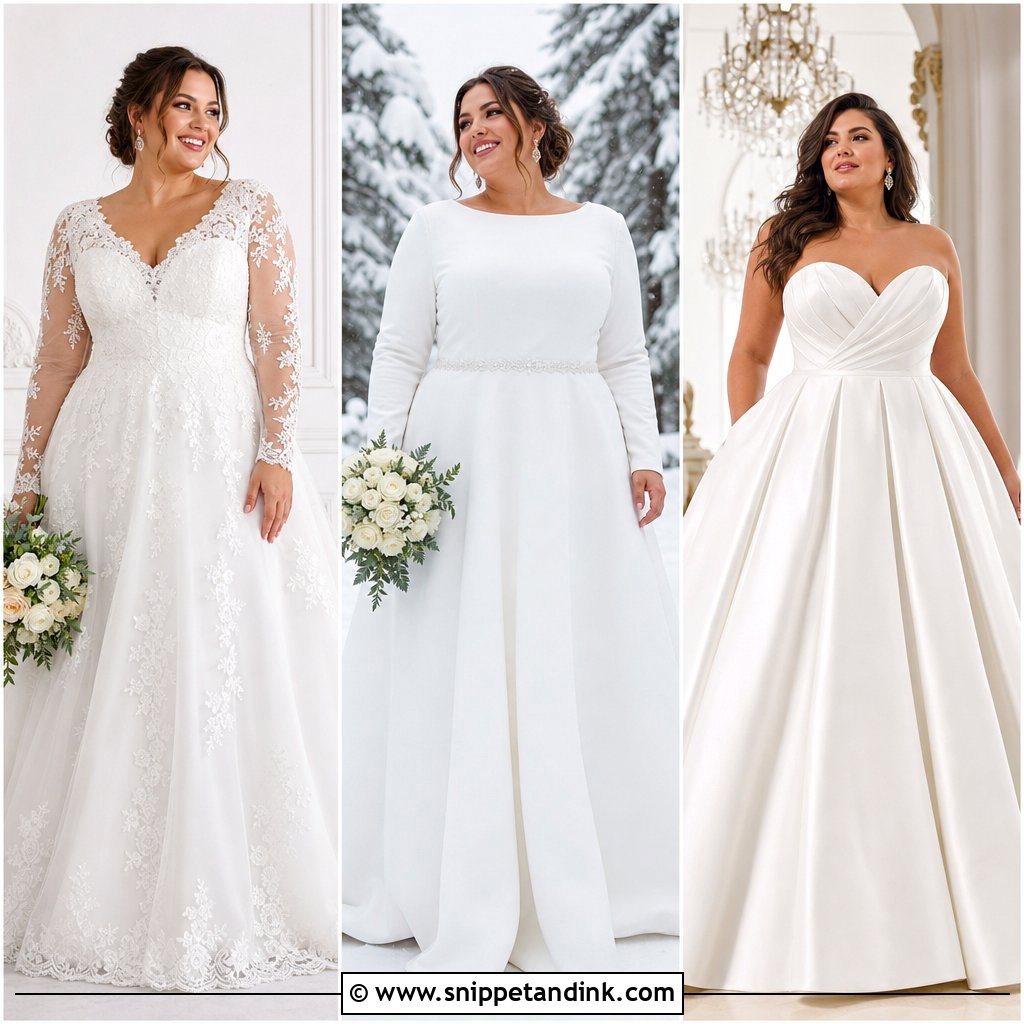
A supportive A-line moves well at any size, and the details make the difference. Look for real bodice structure, a waistline set where you’re most comfortable and sleeves that don’t dig into the upper arm. Stretch lace or lined illusion sleeves move more easily than stiff appliqués. Choose a V-neck, scoop or softly shaped sweetheart lining for the support you want. Stable block heels, statement earrings and a light veil suit it. Hold your bouquet slightly below the waist so the bodice stays visible in photos. Pick the silhouette you love rather than following body-shape rules, and remember bridal sizes run small; the tailoring matters far more than the label.
13. Modest Satin 3/4 Sleeve Wedding Dress
Satin with fuller coverage can look completely modern. Choose a bateau, scoop, or high rounded neckline with fitted sleeves and a softly structured A-line skirt. Princess seams, waist pleats or a narrow waistband give shape without a low neckline or sheer panels. Closed-toe pumps, pearl earrings and a fingertip or floor veil keep it composed, with a neat chignon. Satin-covered buttons along the back and cuffs add quiet interest. In fittings, check that you can bend your elbows comfortably and that the bodice stays smooth when you sit, since heavy satin creases sharply at the waist.
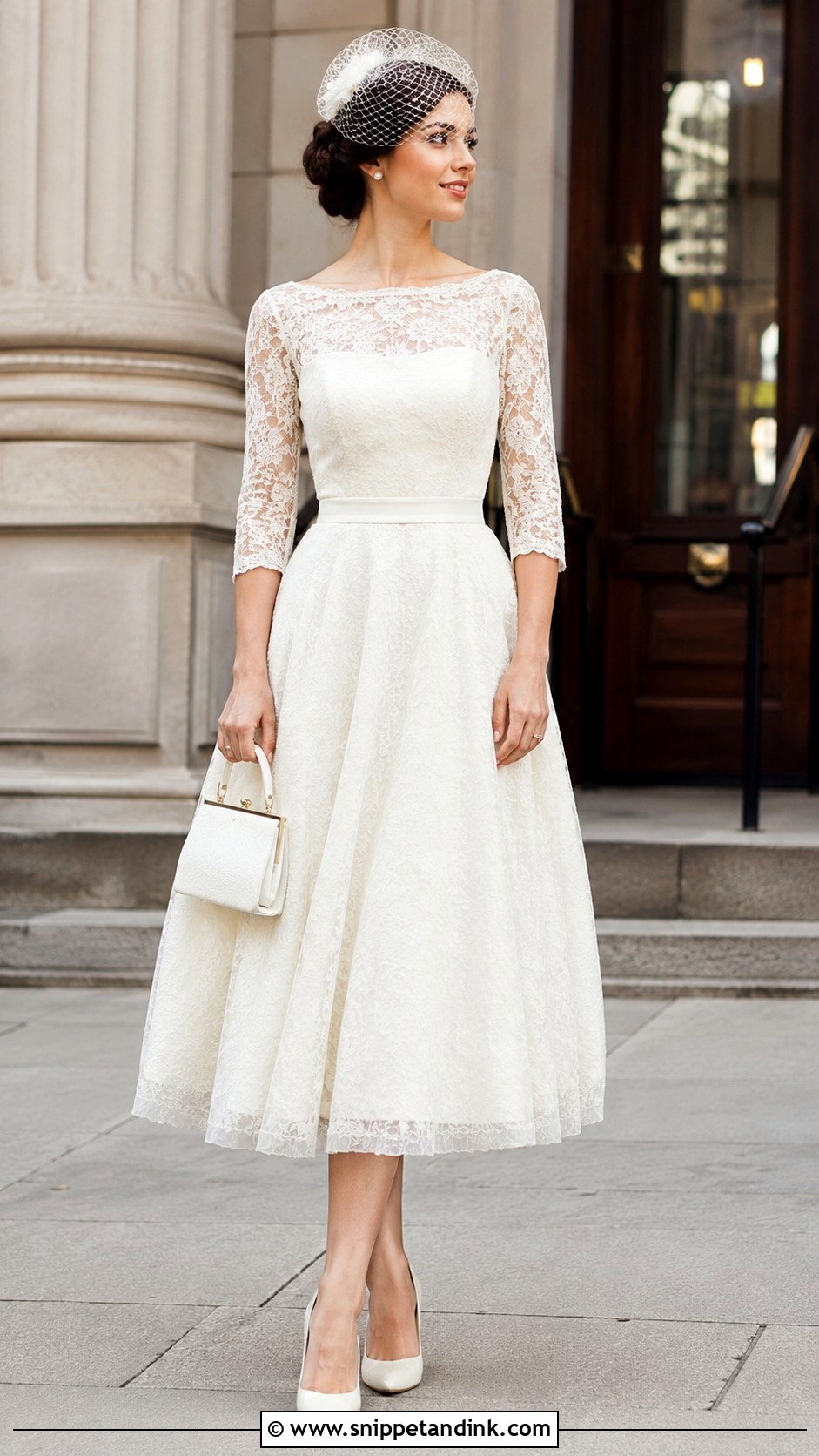
14. Vintage Tea-Length 3/4 Sleeve Wedding Dress
A vintage tea-length gown pairs a fitted top with a skirt that swings on the dance floor. Floral lace sleeves, a bateau neckline and a natural waist give the mid-century look. A soft petticoat creates volume, but if it’s too stiff the dress tips into costume. Ivory pumps or low block heels, pearl studs and a birdcage veil suit it, with a small structured bag for portraits. A red, blush or pale blue shoe is a fun accent if you want one. Keep the hair polished, perhaps soft waves, a low roll or a simple bun.
15. Beach Chiffon 3/4 Sleeve Wedding Dress
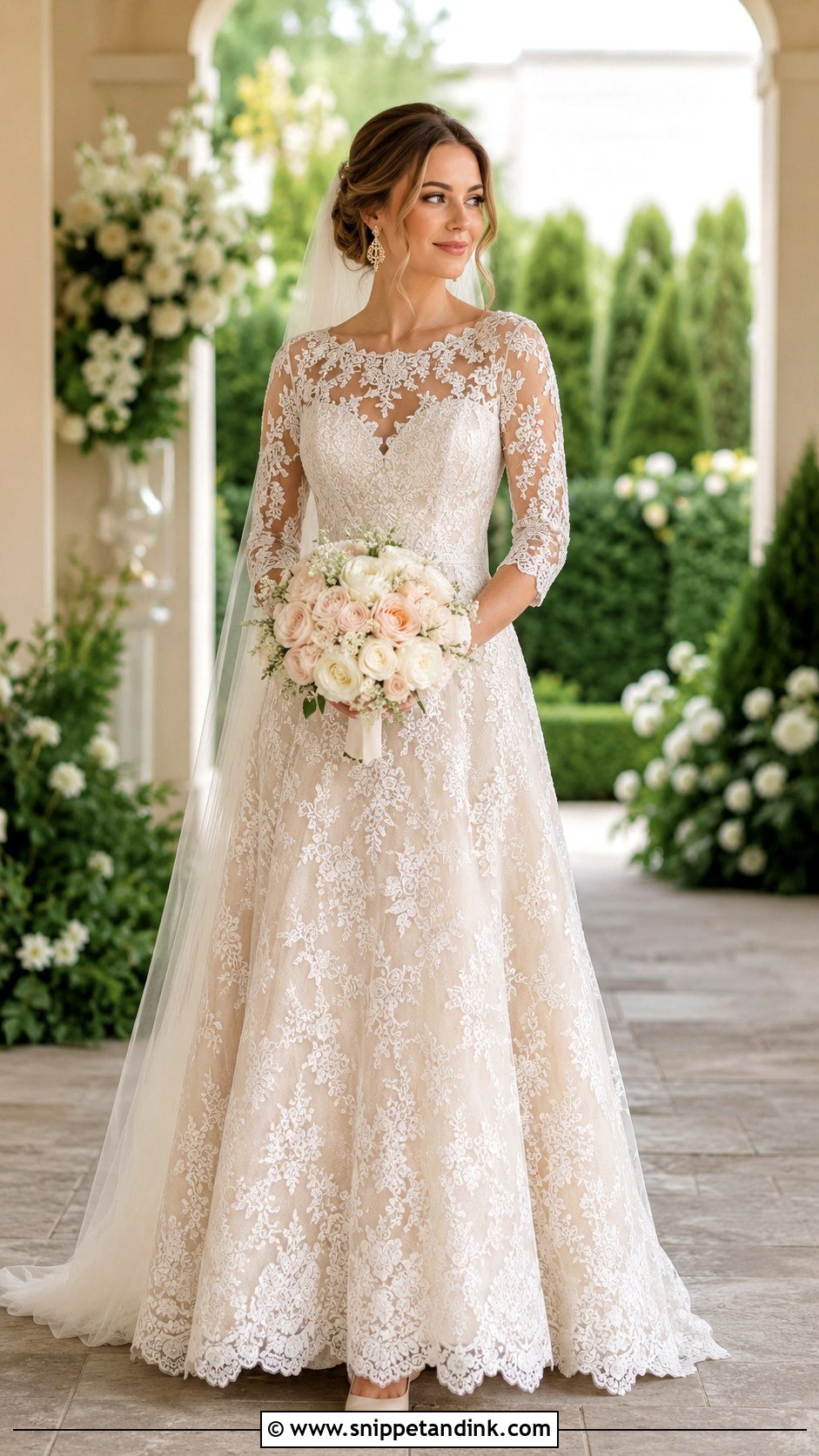
On a beach, the gown needs to be light, secure and easy to walk in on sand. Chiffon over a soft lining in an A-line or empire shape moves naturally with the wind. Slightly relaxed sleeves with lace cuffs keep your arms covered without trapping heat. Skip a long train, which collects sand. Flat embellished sandals, small pearl earrings and a light fingertip veil or floral hair piece are plenty, and a loose low bun stops wind tangles. If you can, I’d have you stand outside in bright sun wearing the dress before the wedding. Strong backlight shows straight away whether the lining is opaque enough.
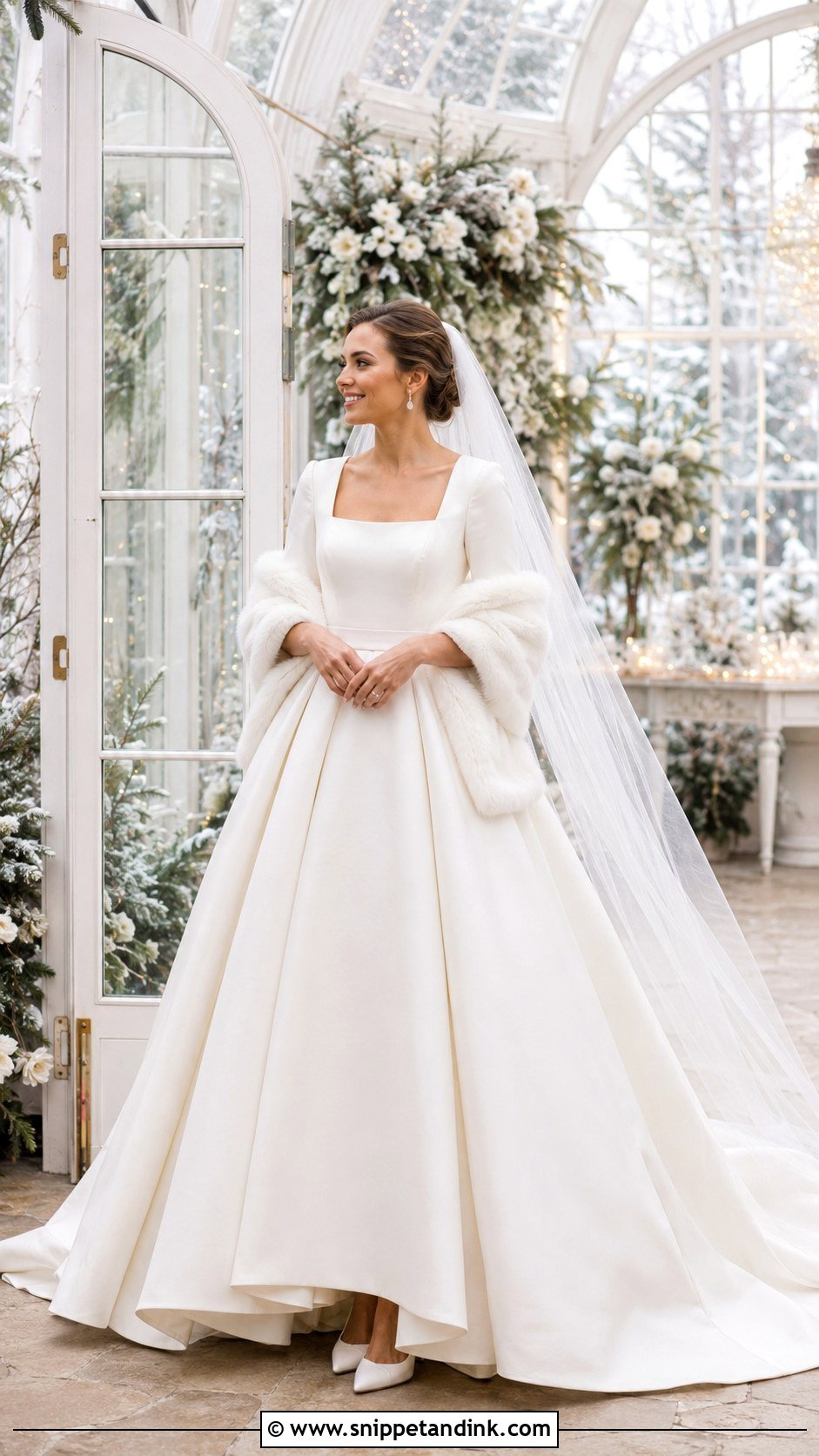
16. Winter Mikado 3/4 Sleeve Wedding Dress
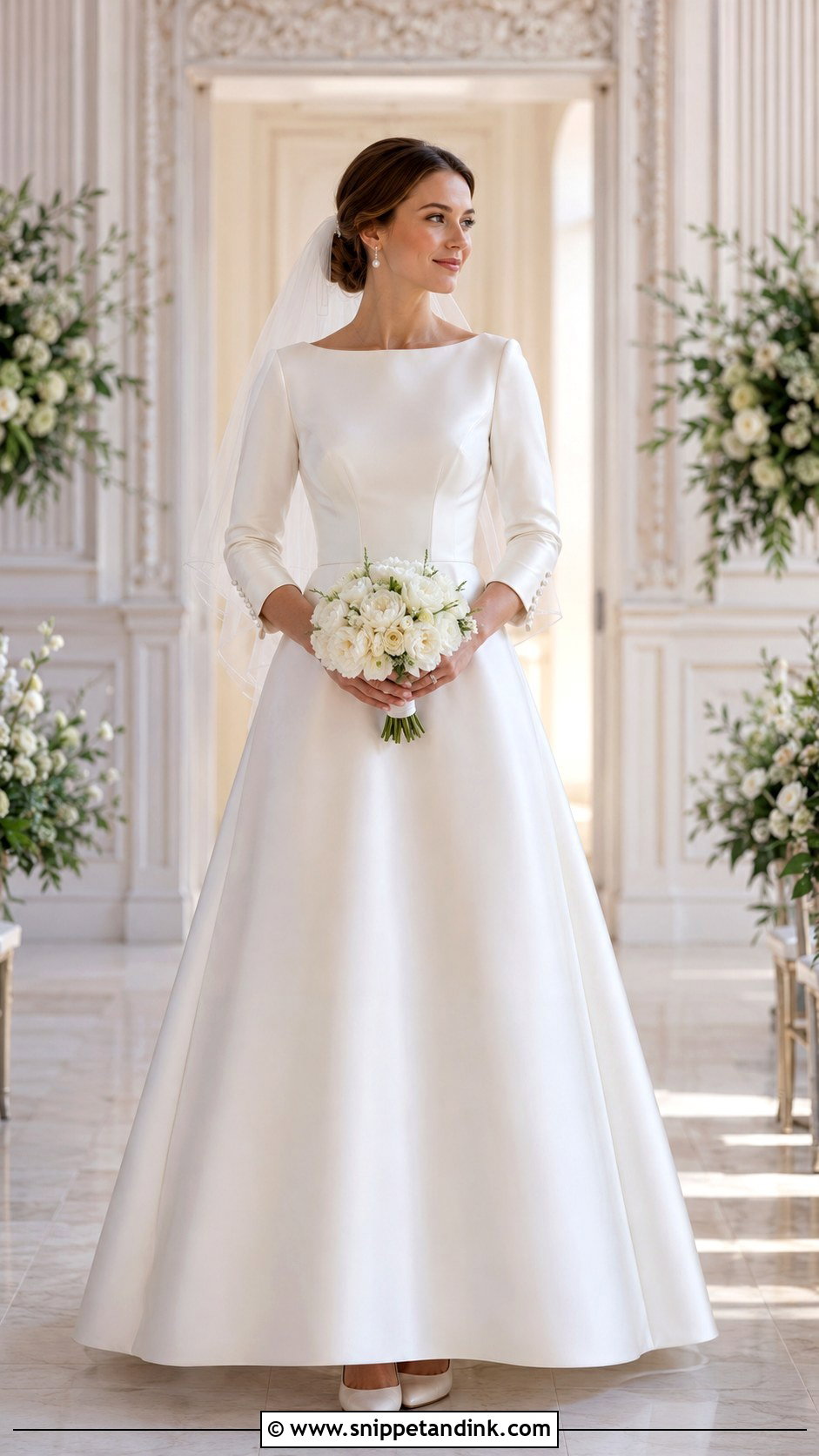
Mikado is crisp, slightly lustrous and made for winter structure. Choose a three-quarter sleeve ball gown or A-line with a fitted bodice, deep box pleats and a sweeping train. A bateau or square neckline keeps it clean, with covered buttons at the cuffs and back. Satin pumps, crystal earrings and a cathedral veil suit the weight, and a faux-fur wrap or bridal coat handles outdoor portraits. Mikado doesn’t stretch at all, so the sleeves must be fully lined and cut with enough room at the elbow. If they’re narrow, you’ll feel it every time you lift a glass.
17. Floral Appliqué 3/4 Sleeve Wedding Dress
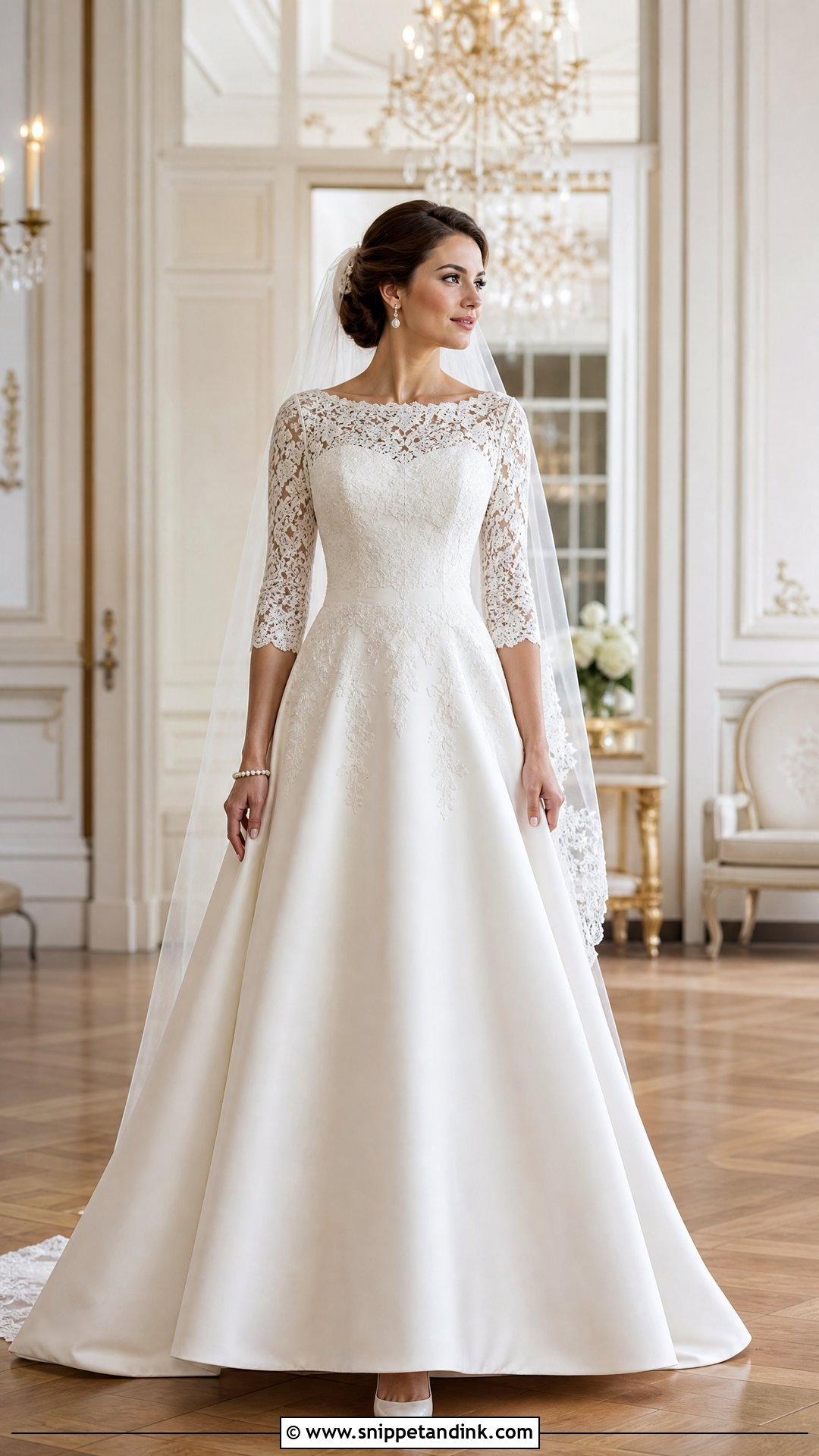
Raised appliqués add dimension, especially when they travel from the bodice onto illusion sleeves. Choose an A-line or soft ball gown where the flowers spread gradually across waist and skirt instead of bunching in one heavy patch. A little beading can catch light, but the flowers should lead. Simple pumps, tiny crystal earrings and a plain veil keep the focus there, with one or two floral pins in a loose updo. It suits spring and garden weddings, and a warmer lining adapts it to cooler months. Check the appliqué edges at the shoulders and back. Raised petals snag fine tulle veils more often than brides expect.
18. Courthouse Midi 3/4 Sleeve Wedding Dress
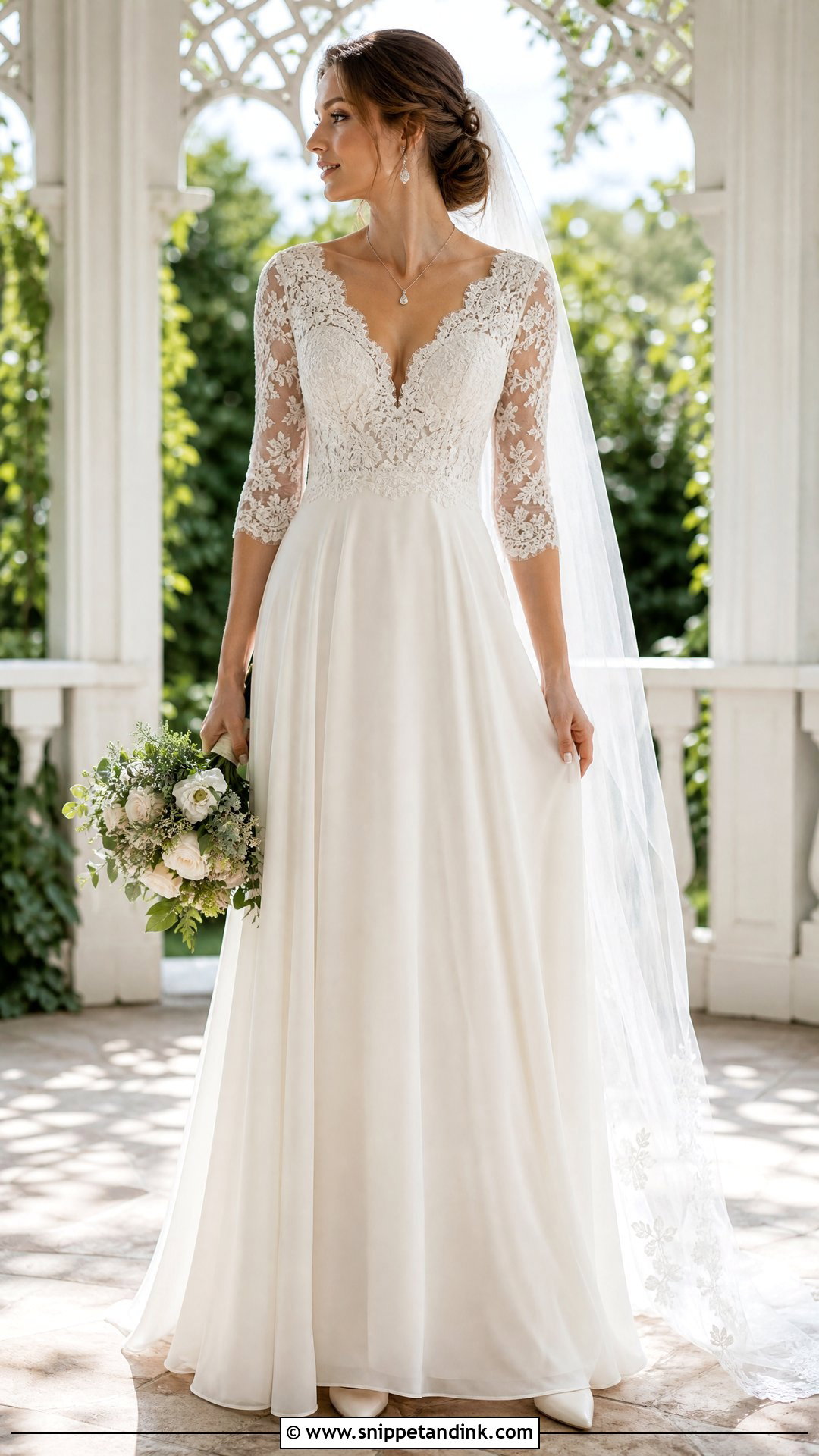
For a courthouse, you want something special that’s still easy through the appointment, photos and lunch. An ivory midi with a fitted waist, three-quarter sleeves and a pencil, A-line or softly flared skirt does that. Lace looks traditional; crepe or satin is more minimal. Add pointed pumps or sleek block heels, a structured bag and pearl or crystal earrings, then a short veil, bow, headband or floral clip for a bridal touch. A tailored coat helps in cool weather. Sit and climb stairs to check the hem. A pencil skirt in particular can ride up when you sit at the registrar’s desk to sign.
19. Champagne Lace 3/4 Sleeve Wedding Dress
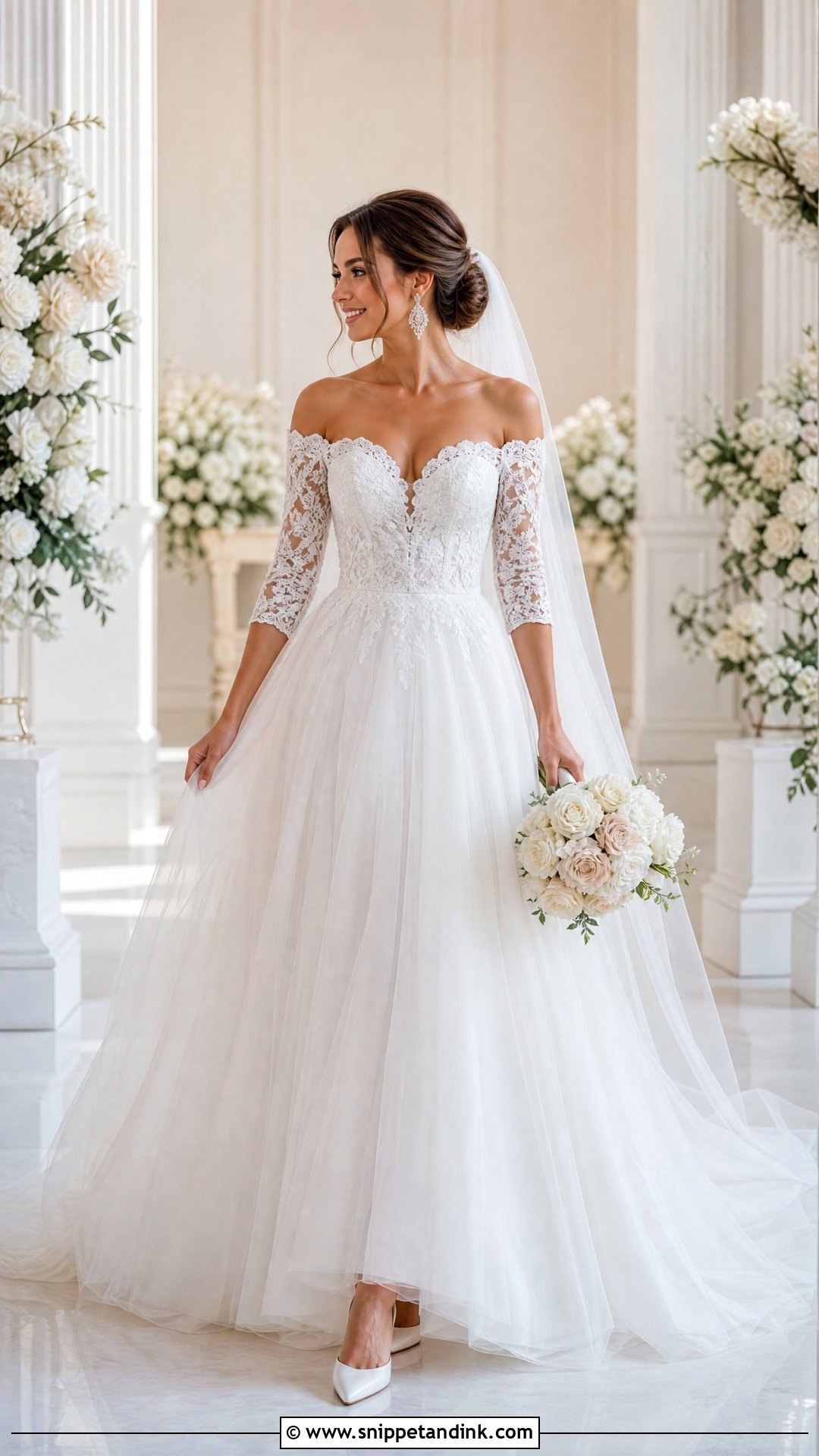
Champagne lining under ivory lace makes the lace pattern stand out in photos, because the contrast shows each motif. Try it on a fitted A-line, mermaid or softly flared gown with illusion sleeves. Choose neutral accessories that complement each other rather than matching exactly. Ivory shoes, pearl earrings and a soft beige or ivory veil sit well together. Gold jewelry warms the undertone; silver or crystal cools it. Carry cream, white and muted blush flowers. Champagne linings vary widely, from pale beige to near gold, so view the fabric in daylight and under the venue’s lighting and hold it near your face before ordering.
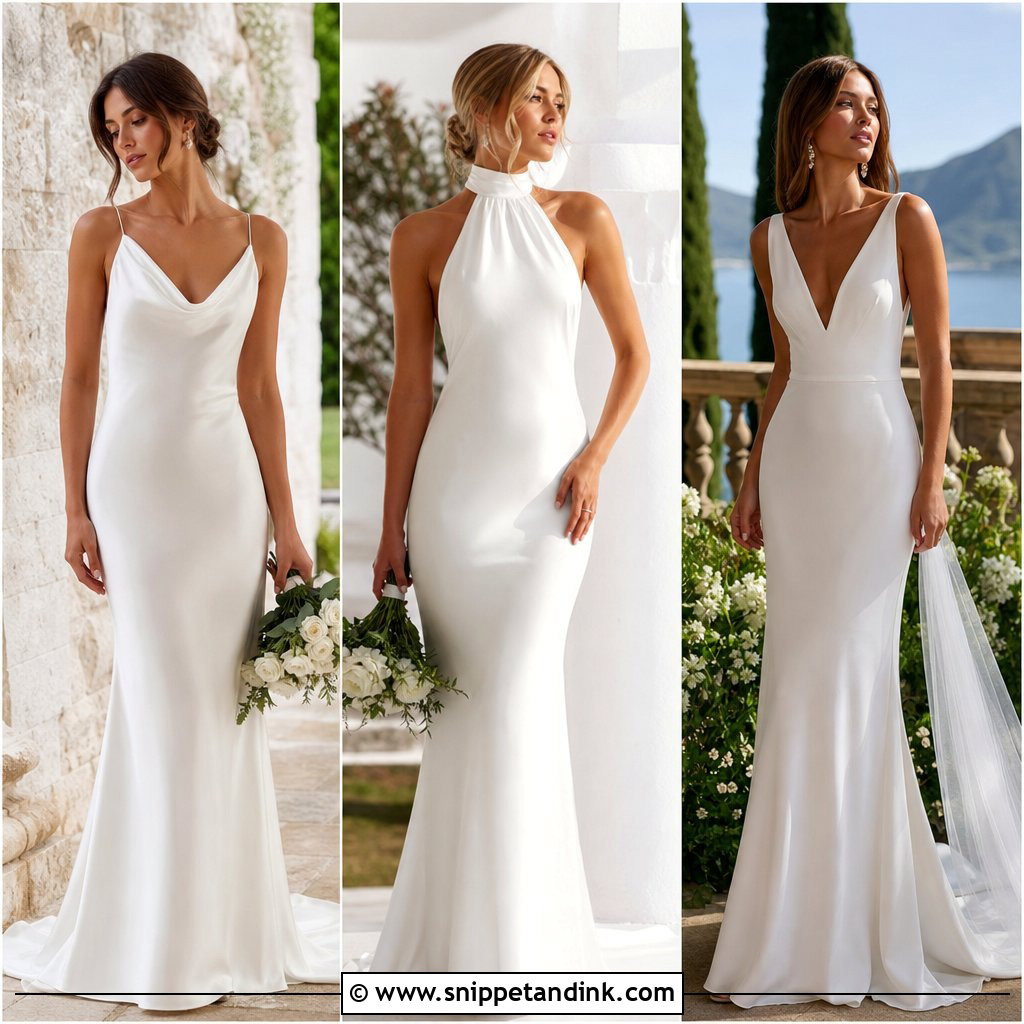
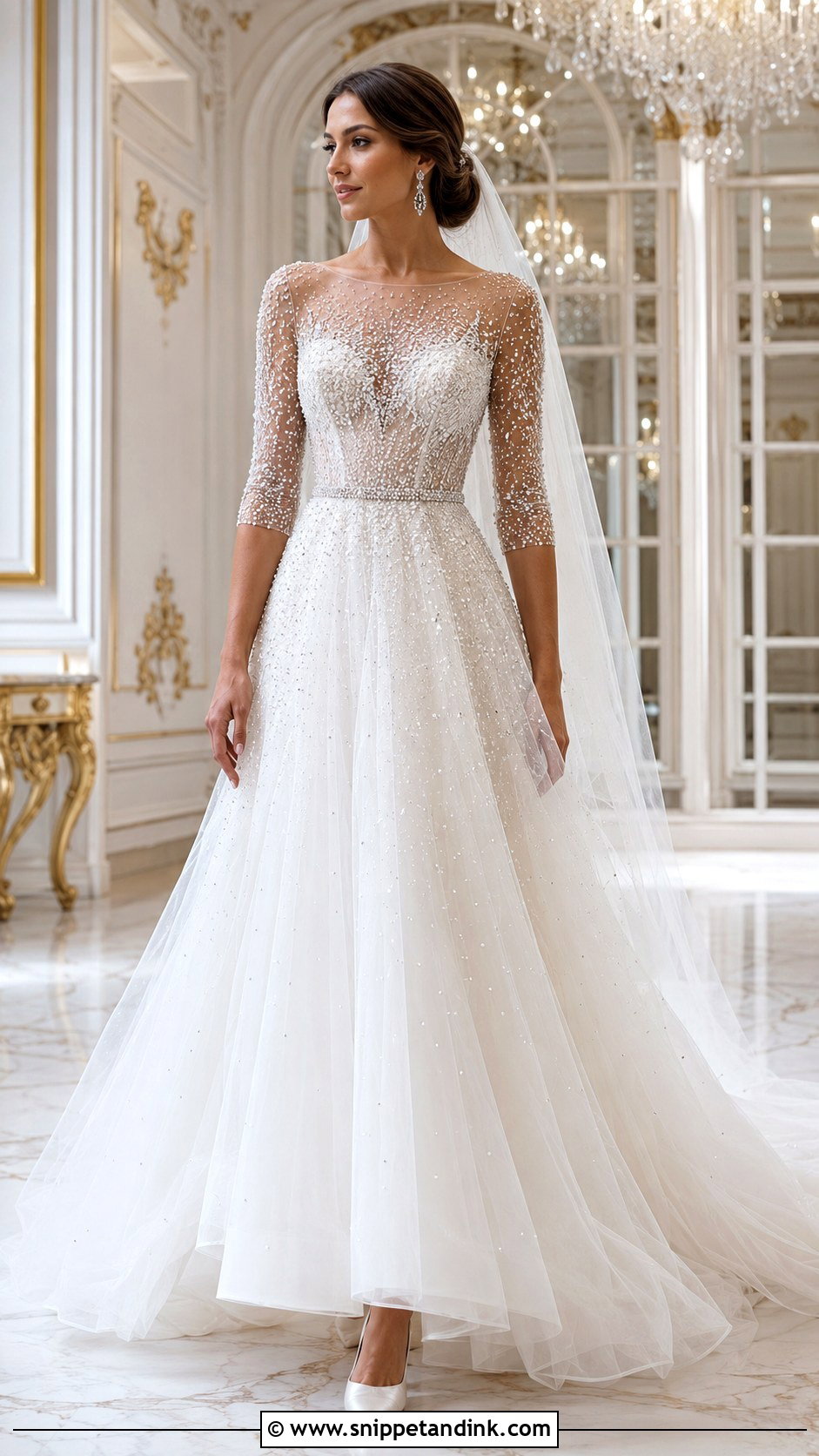
20. Beaded Tulle 3/4 Sleeve Wedding Dress
A little shimmer makes tulle feel glamorous without heavy decoration. Look for a fitted bodice with scattered beads, illusion sleeves and a layered skirt that moves easily. Concentrate the sparkle near the neckline, waist or cuffs so the shape stays graceful; a lightly beaded waistband links bodice to skirt. Crystal drops, metallic or ivory pumps and a plain chapel veil suit it, with a low bun or polished waves. Beads on the inner sleeve and underarm rub with every arm movement, so check that area carefully at fittings, and keep chunky rings and bracelets away from the tulle.
Can Sleeves Be Shortened, Added or Taken In?
Brides often bring me a gown whose sleeves are almost right. Most of that is fixable, but some changes take more time and money than others, so ask before you order.
- Shortening a plain sleeve is quick. Shortening a scalloped lace sleeve means unpicking the scallop edge and moving it up by hand, which takes longer and costs more.
- Taking sleeves in is usually simple, provided the change is small. Letting them out is limited by the seam allowance, which is often narrow on bridal gowns.
- Adding sleeves to a sleeveless gown is common. Many makers sell matching lace or fabric, and a skilled seamstress can build three-quarter sleeves that look original. Ask for this early, since the fabric order can take weeks.
- Detachable sleeves are another route: worn for the ceremony and removed for dancing, they suit brides who want coverage in a cold church but freedom at the reception.
For the season, the sleeve lining is what matters most. Lined satin or Mikado sleeves are warm enough for winter portraits outside. Unlined illusion tulle is cool in summer but gives little warmth, so plan a wrap or coat if the evening will be chilly. In heat, ask whether the sleeves can be left unlined to let the skin breathe.
One Sleeve Length, Twenty Very Different Brides
As the gowns above show, a single sleeve length can belong to very different brides. Lace A-lines lean romantic, satin ball gowns bring formal drama and crepe keeps things modern. Tea-length and midi styles suit smaller celebrations, while chiffon and tulle float outdoors. When you compare gowns, test the sleeves properly: walk, sit, hug and dance in them, and look at the fabric in natural light. Bring your wedding shoes to every alteration appointment. Choose the silhouette you actually love, have it tailored well, and three-quarter sleeves will feel like yours rather than like a compromise on coverage.
You'll Like These Ideas:





Leave a Reply