
A V neckline does two jobs at once: it draws a long vertical line down the body, and it decides how much support the bodice has to provide. The depth is what changes everything. A shallow V sits on the upper chest and behaves like any strapped bodice, while a plunge below the bust depends entirely on what is built inside the dress. The twenty gowns below run from classic lace and structured satin to chiffon, beadwork and clean crepe, across A-line, ball gown, mermaid, sheath and tea-length shapes. Details such as illusion mesh, wider straps, sleeves and detachable layers are where most of the personal fitting happens, so I have noted what I check on each one.
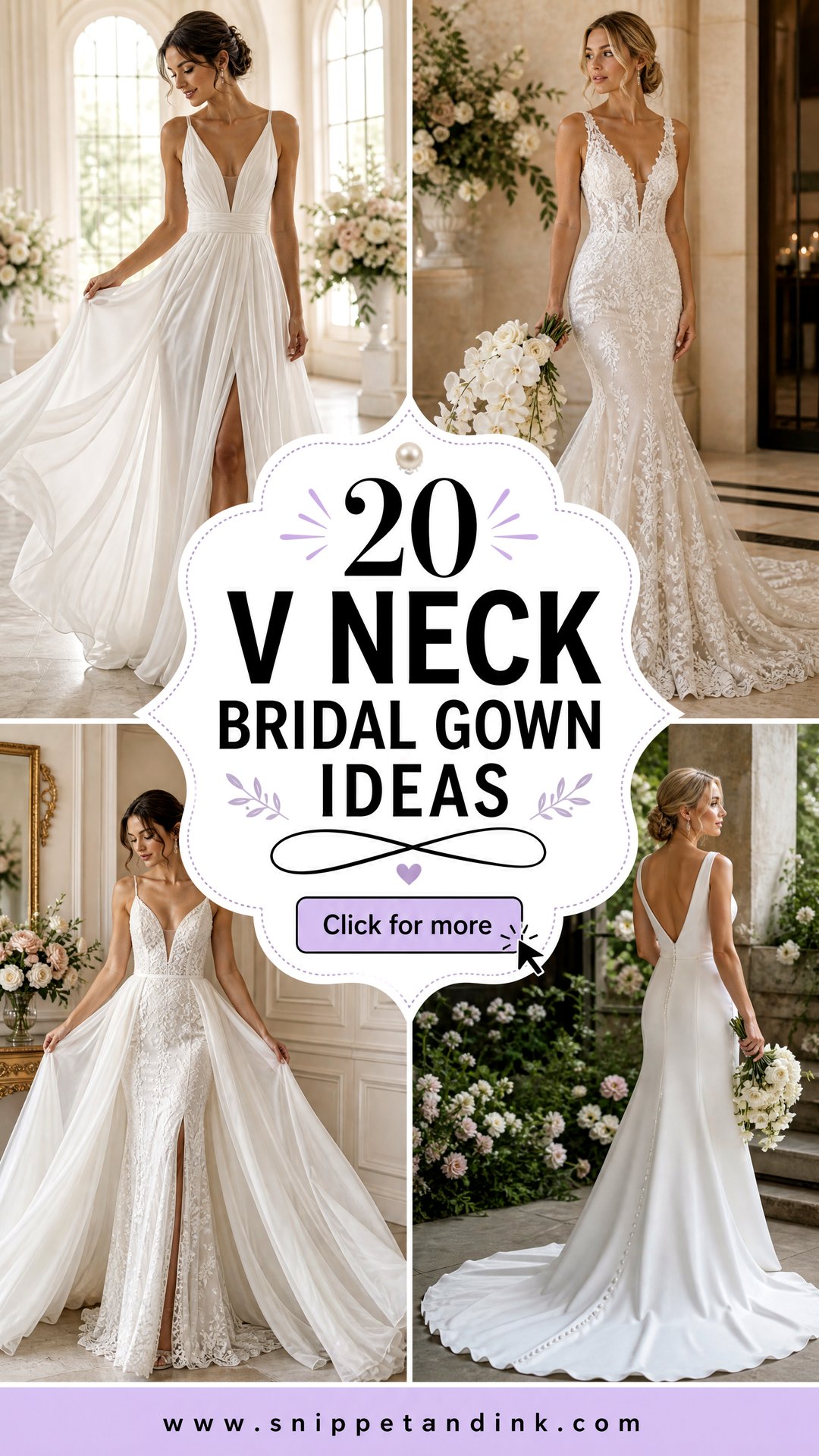
Measuring How Deep a V Your Bust Can Carry
Before I bring out a single V neck gown, I want to know where the point of the V will land on your body. Stand in front of a mirror in the bra or strapless you plan to wear and lay a ruler flat from the hollow of your throat downward. The point where the ruler crosses the line between your breasts is roughly where a medium V stops. Anything above that behaves like an ordinary strapped bodice. Anything below it is a plunge, and from there the dress has to provide the support.
That is why the same neckline feels secure on one bride and nerve-racking on another. A fuller bust pushes the edges of a deep V outward, so the fabric needs built-in cups, a mesh insert or straps set closer to the neck. A smaller bust lets a deeper V lie flat with very little help, but the risk shifts to gaping when you lean forward.
Three things to do in the fitting room
- Bend forward as if reaching for a dropped bouquet. If you can see down the bodice in the mirror, it needs taking in at the shoulders or a cup sewn in.
- Lift both arms overhead. The V should stay centered; if it twists, one strap is longer than the other or the bodice is too wide at the side seams.
- Ask the consultant what is inside the bodice: boning, cups, a waist stay. A deep V without at least two of those depends on tape all day.
1. Lace V Neck A Line Bridal Gown
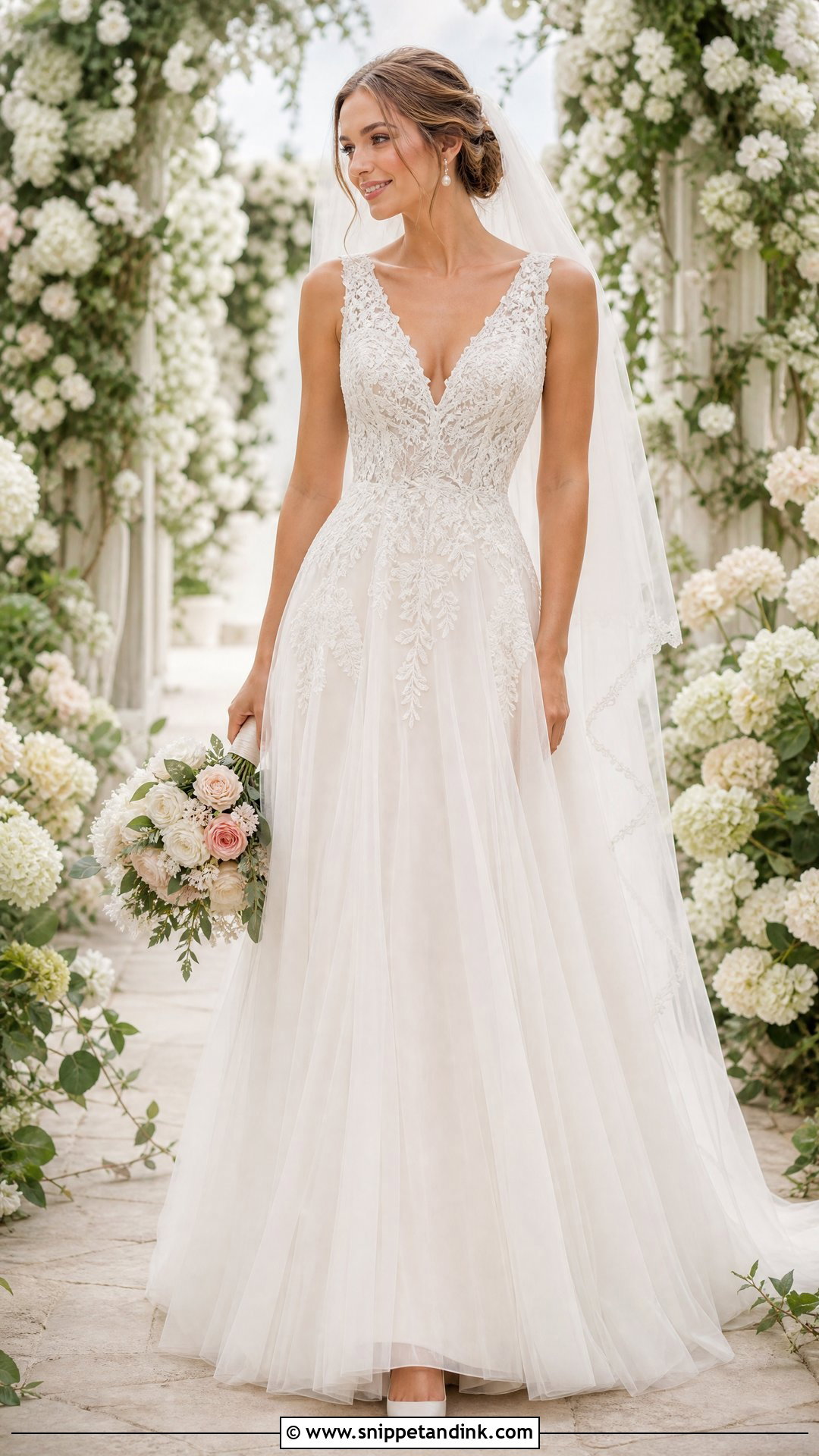
Lace over an A-line skirt is the version I pull first for a bride who is unsure about a V, because the medium depth stays put without much engineering. Look for a fitted bodice, proper straps and floral lace that thins out as it travels into the tulle. Corded lace can scratch along the edge of the V, so run a finger down the neckline before you fall for it. Pearl drops, a fingertip veil, ivory pointed pumps and a loose low bun finish it. If the lace is busy at the chest, leave the necklace off.
2. Satin V Neck Ball Gown
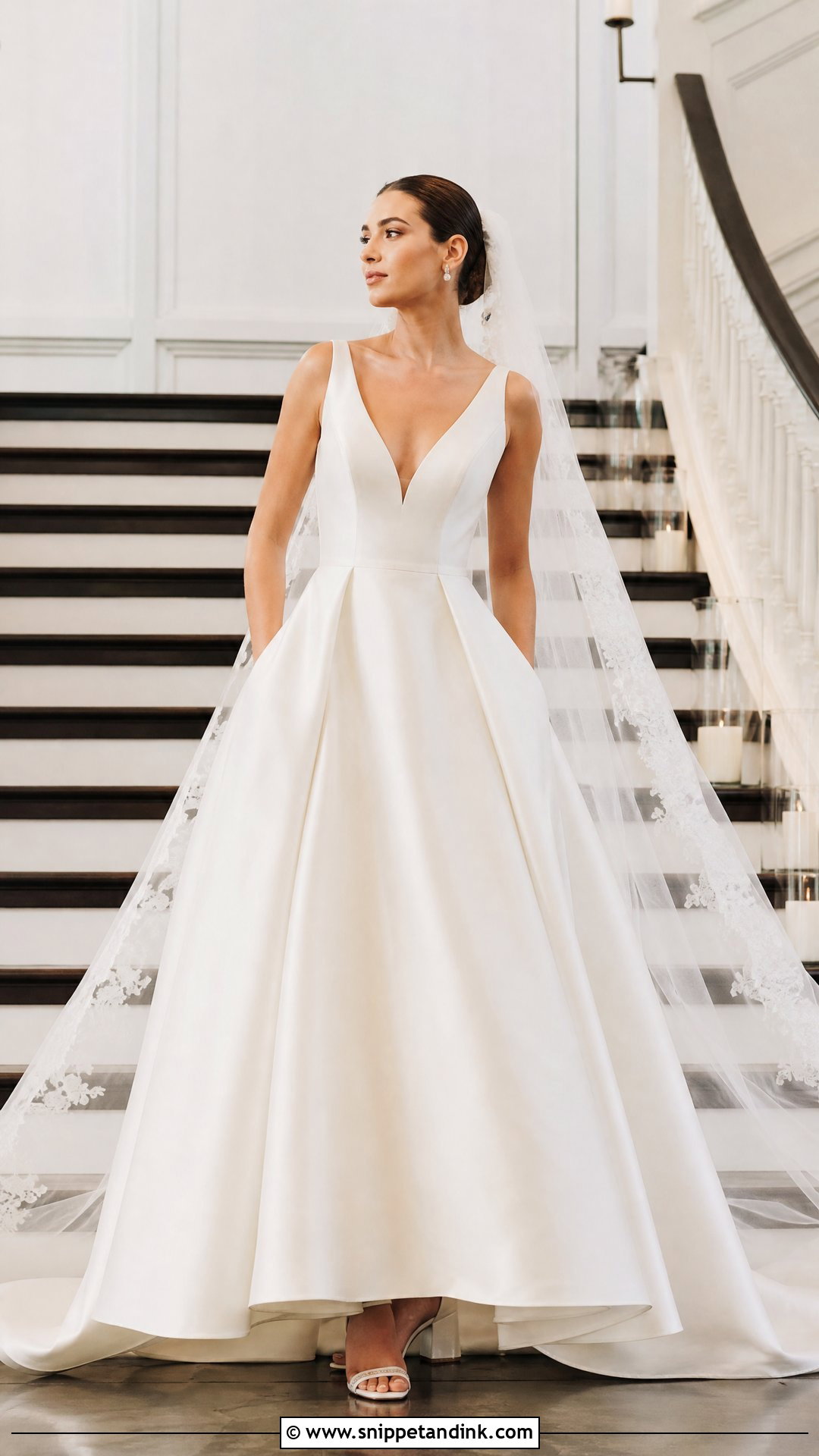
Satin shows every ripple, so a V neck ball gown in satin needs real structure: broad straps, a defined natural waist and boning that keeps the bodice from collapsing when you breathe out. The open neckline is what stops all that skirt from swallowing you. I keep accessories to crystal studs, a sleek bun and a cathedral veil with a narrow ribbon edge. Ivory block heels help you push the skirt forward as you walk, which matters more than people expect on stairs. A small structured clutch is enough for a ballroom or grand hotel; the silhouette is doing the talking.
3. Long Sleeve V Neck Bridal Gown
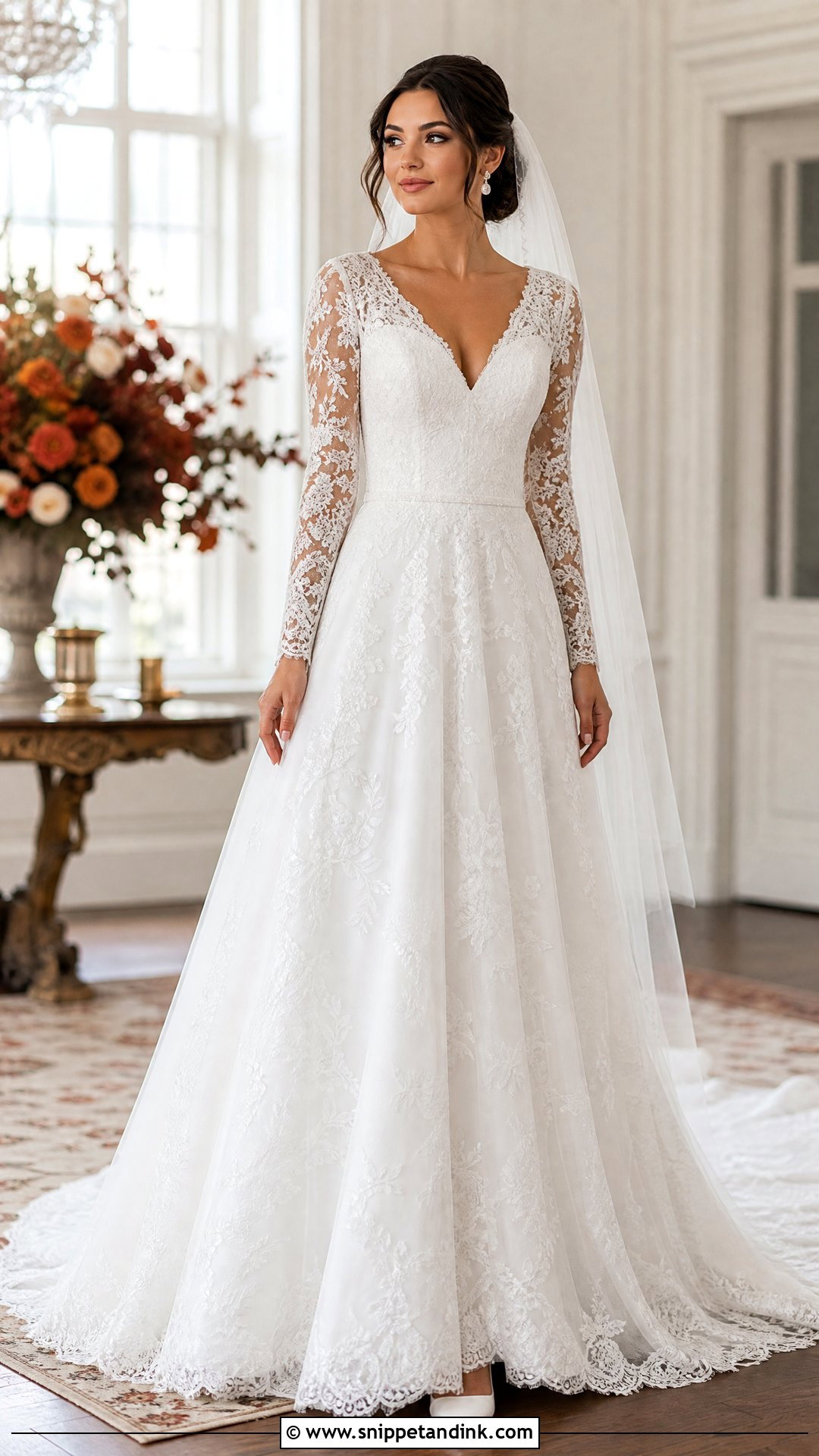
Sheer lace sleeves with fitted cuffs cover the arms and leave the chest open, which keeps a long-sleeved gown from looking heavy. A lined bodice and an A-line or gently fitted skirt carry it well. The fitting detail most people miss: sleeves anchor the shoulders, and if the shoulder seam sits even slightly too far out, the V spreads open every time you reach forward to hug someone. I have the tailor pin the shoulders with the bride lifting her arms. Pearl earrings, a comb veil, closed satin heels and a textured chignon suit a fall, winter or indoor ceremony.
4. Plunging V Neck Bridal Gown
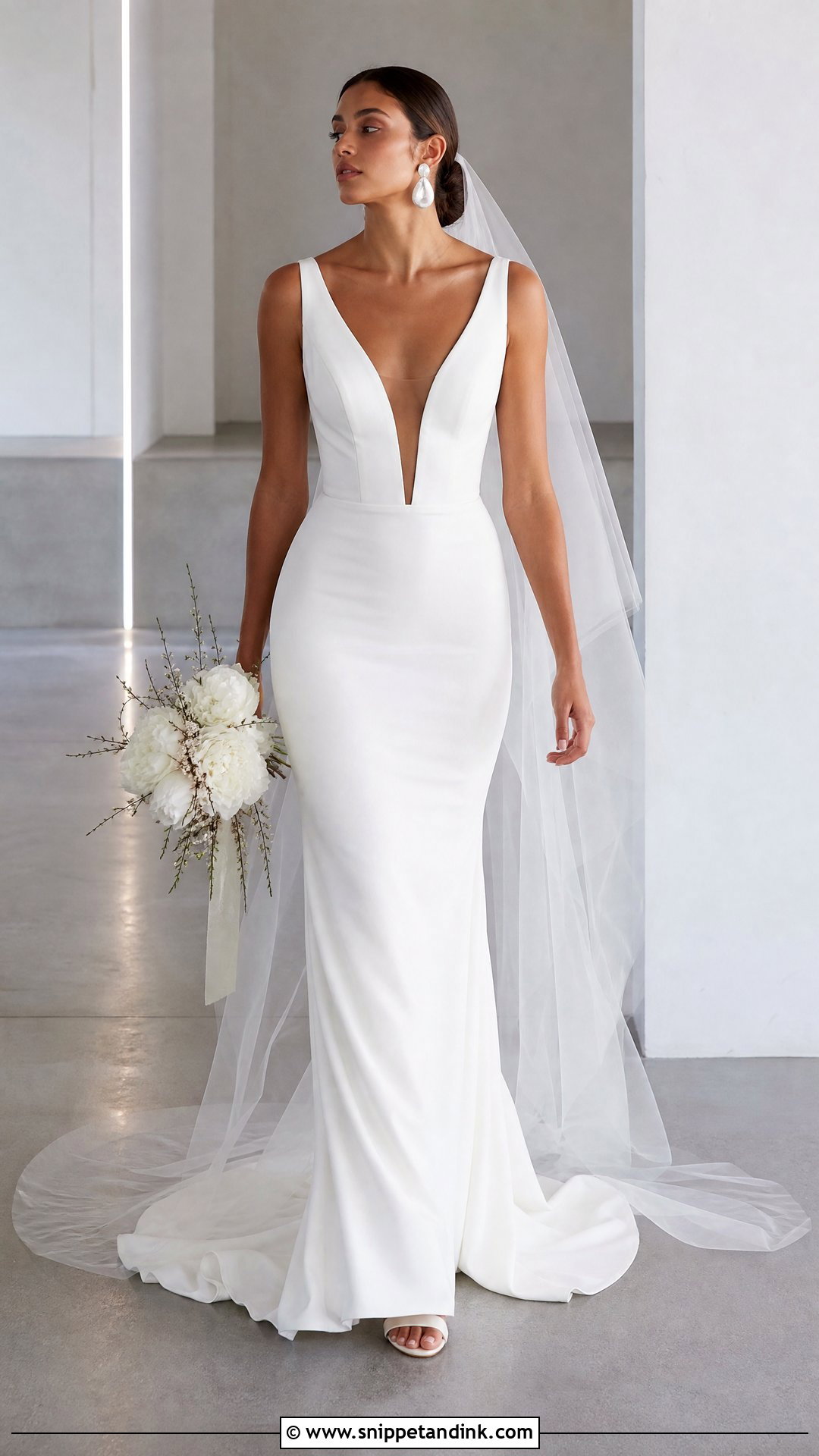
A plunge is the version I am most careful with. When the V drops well below the bust, the dress has to hold you, not tape. I want firm straps, built-in cups and internal boning, with a strip of illusion mesh down the center so the edges cannot drift apart; in photographs that mesh nearly disappears. Fashion tape is a backup only. Keep the styling sharp with sculptural earrings, a smooth low bun, minimal heels and a sheer cathedral veil, and skip the necklace. Gallery, rooftop and hotel venues suit the crispness of it.
5. Modest V Neck Bridal Gown
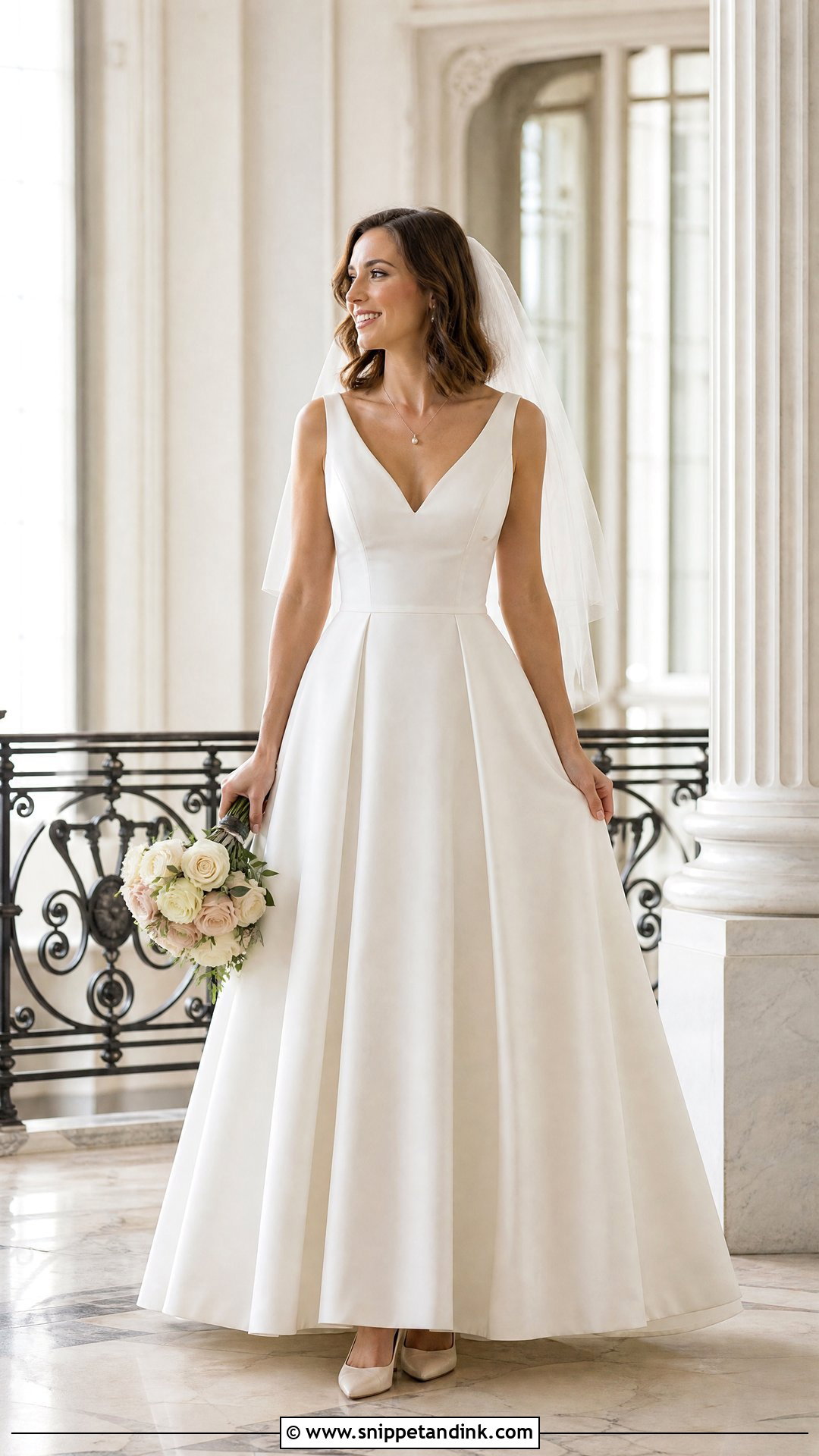
A shallow V that stops near the upper chest gives definition with real coverage, and wider straps plus a fully lined bodice keep it calm. A softly pleated A-line skirt stops the look from going stern. At the fitting, sit down and lean forward as if signing the register; that is the moment a V gapes. A small take-in at the shoulder seam usually fixes it without changing the shape. A delicate pendant, pearl studs, low heels, a shoulder veil and a neat half-up style suit a courthouse, a family wedding or a venue with a conservative dress expectation.
6. Beaded V Neck Bridal Gown
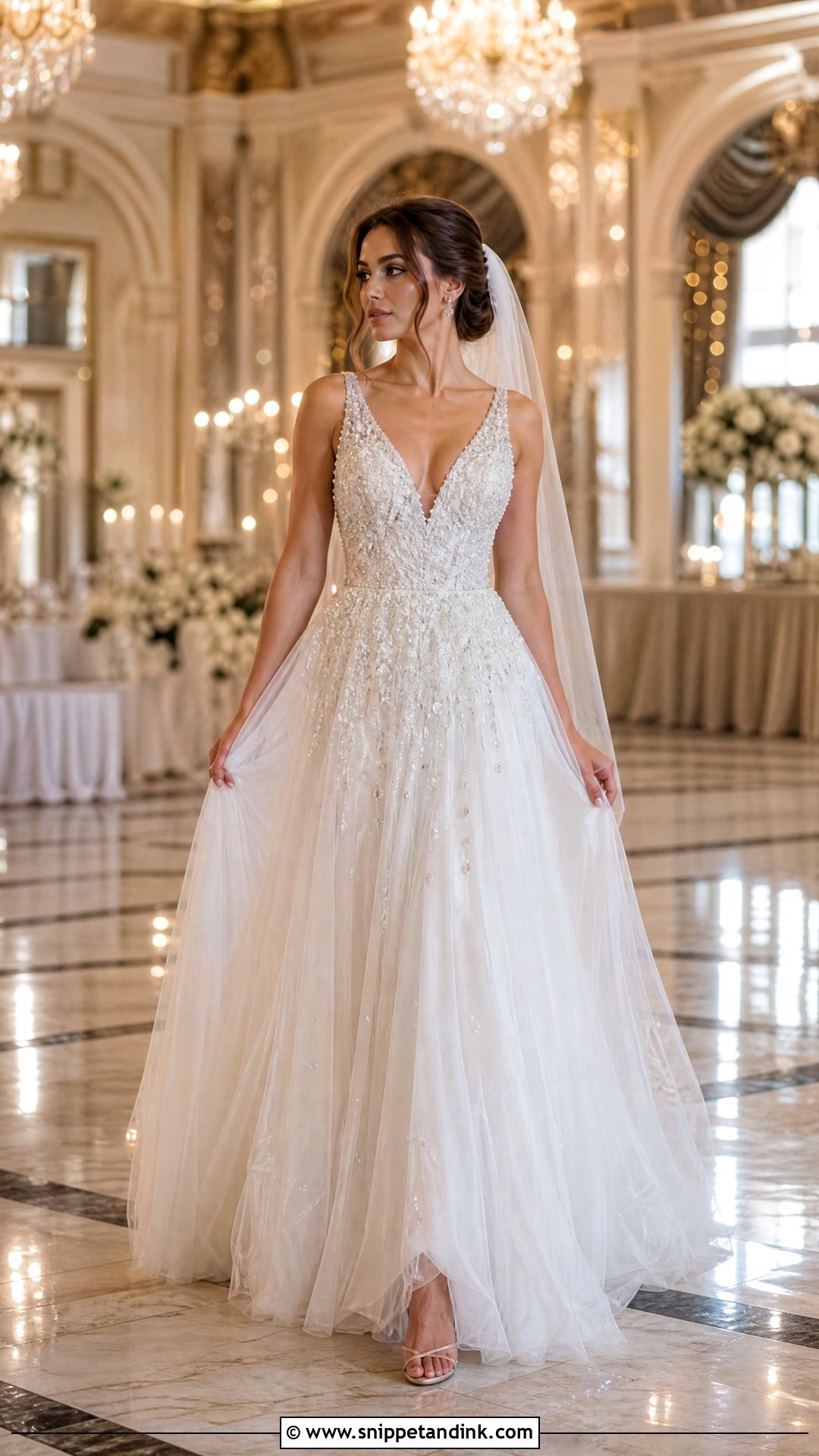
Beading adds weight, and weight pulls on straps. That is the first thing I test on a beaded V: lift the bodice slightly by the straps and feel how much it drags. A crystal, pearl or tonal sequin bodice over a plain chiffon or tulle skirt keeps the sparkle where light catches it, near the face. Hold the V at medium depth. Small studs, metallic ivory heels and an unembellished veil are enough, with Hollywood waves or a smooth side-parted bun. Evening ballrooms with warm lighting are where this beadwork earns its weight.
7. Chiffon V Neck Bridal Gown
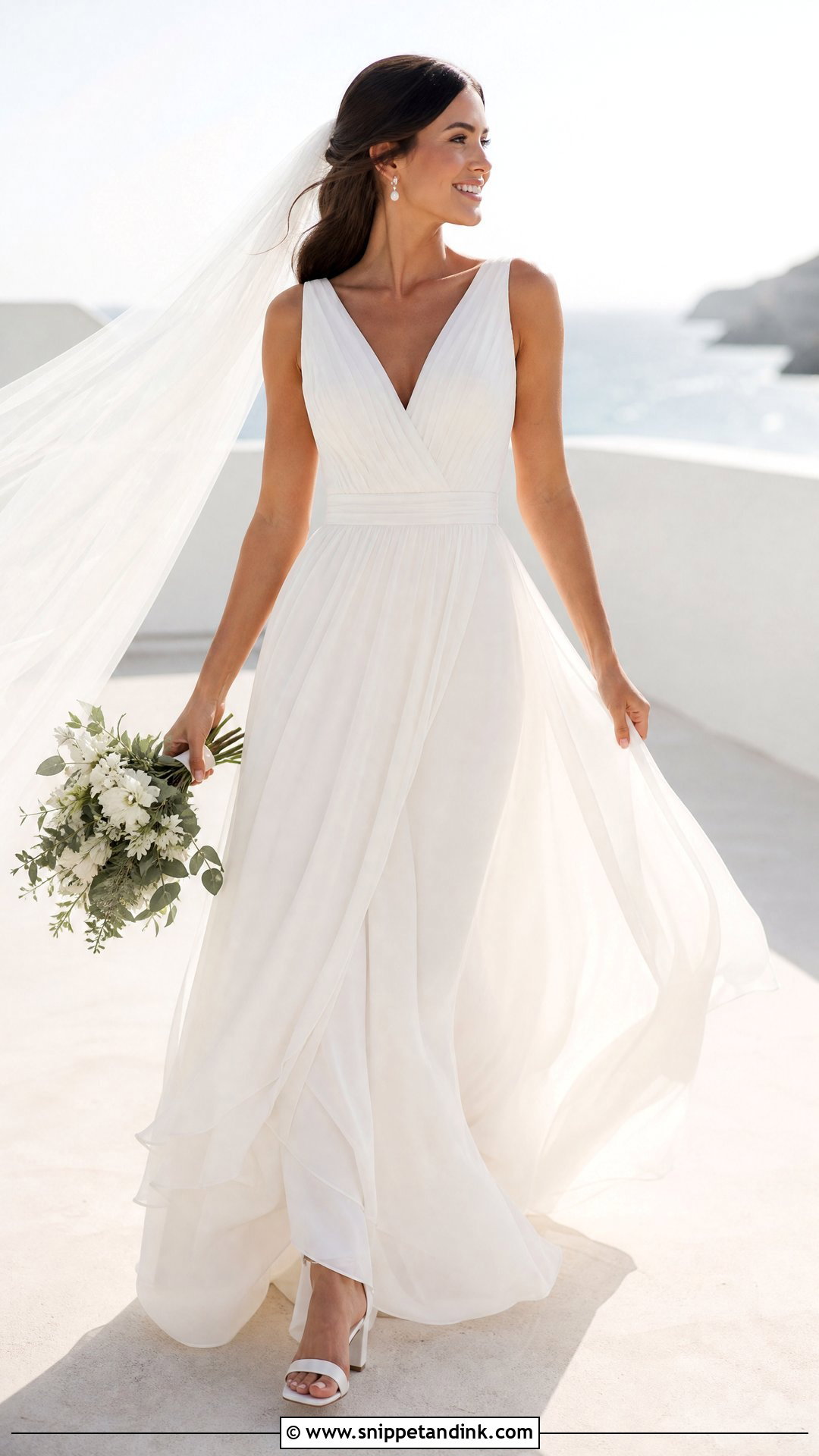
Chiffon moves in the slightest breeze, which is exactly why brides choose it for coastal and outdoor weddings, and exactly why the lining matters. In strong sun a single layer turns translucent, so hold the skirt up to a window before you commit. A wrapped bodice with a defined waistband, wider straps and a soft V back keeps the lines relaxed. Pearl drops, a delicate hair vine, block-heel sandals and a light veil go with it. A low braided bun survives wind far better than loose waves. Carry a loose bouquet of white flowers and greenery.
8. Crepe V Neck Sheath Bridal Gown
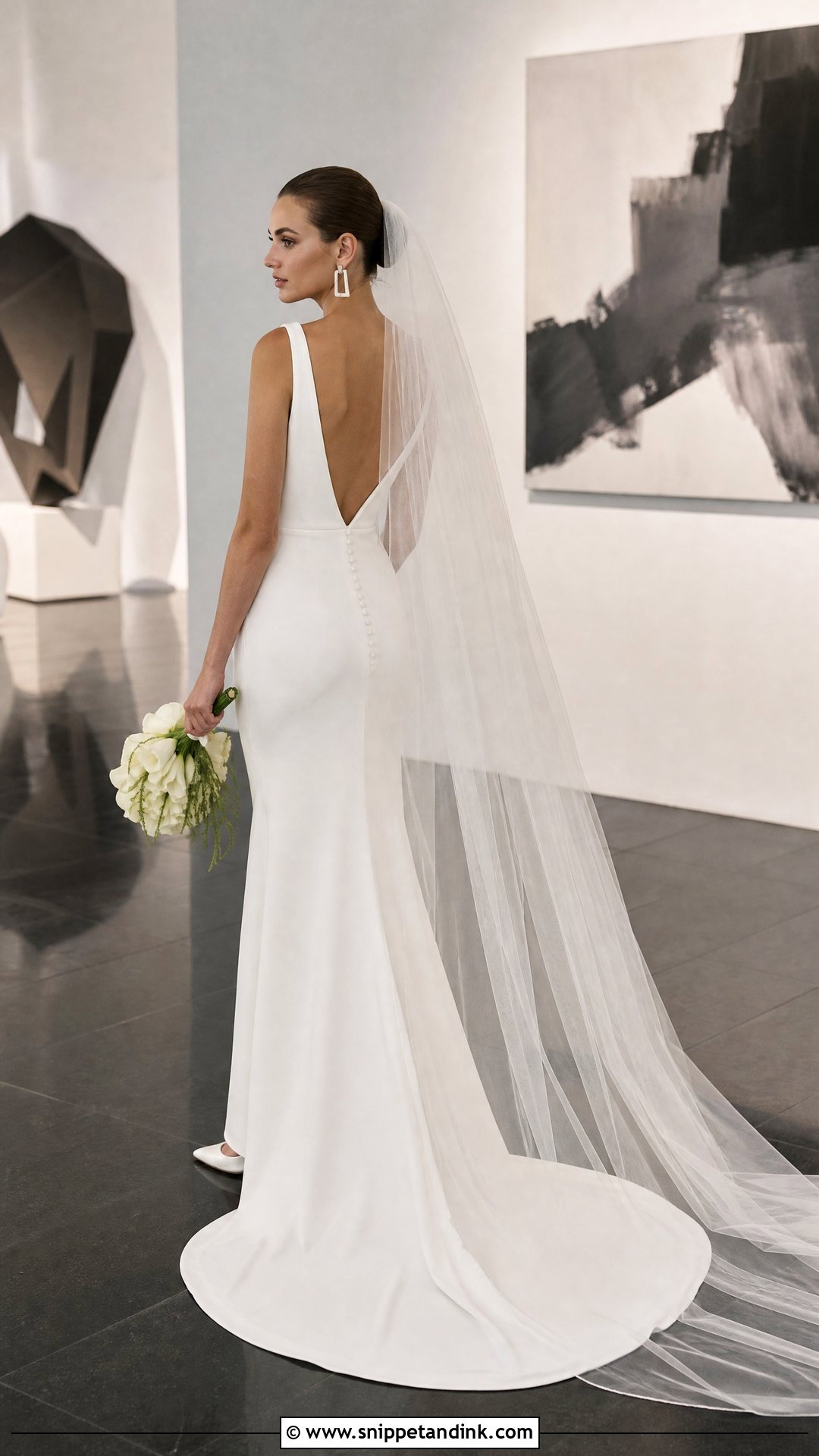
Crepe is unforgiving in a useful way: it shows the body clearly and it also shows every lump of shapewear underneath. A sheath in crepe with a precise V, substantial straps and curved seaming relies on clean cut instead of decoration, and both the V and the column shape read as long, unbroken lines. Ask for smooth foundation pieces, and make sure alteration seams are pressed flat, because a puckered side seam is obvious in this fabric. Geometric earrings, a sleek ponytail or low bun, pointed pumps and a single-layer veil keep it modern for a museum, loft or courthouse.
9. Mermaid V Neck Bridal Gown
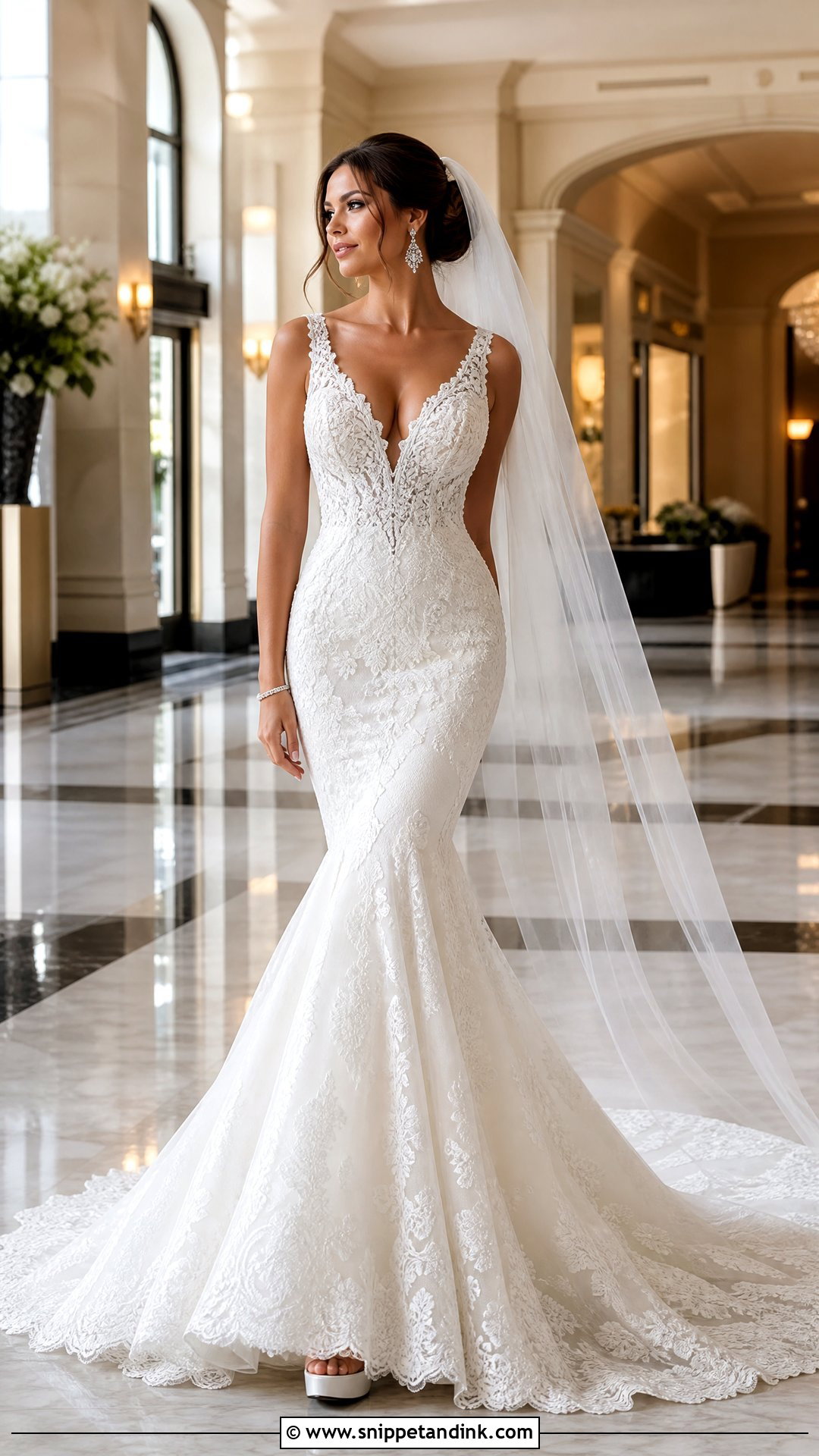
A mermaid holds close through the waist and hips and opens near the knee, and that flare point decides whether you can actually move. I have brides climb a step and sit on a low chair at every fitting. A supportive bodice with sturdy straps keeps the V secure, and lace appliqués or light beading soften the strong outline. Crystal drops, a long plain veil and comfortable platform heels under the hem help, since a little extra height keeps the hem off the floor. An updo balances the fitted shape for a ballroom or evening estate.
10. Boho V Neck Bridal Gown
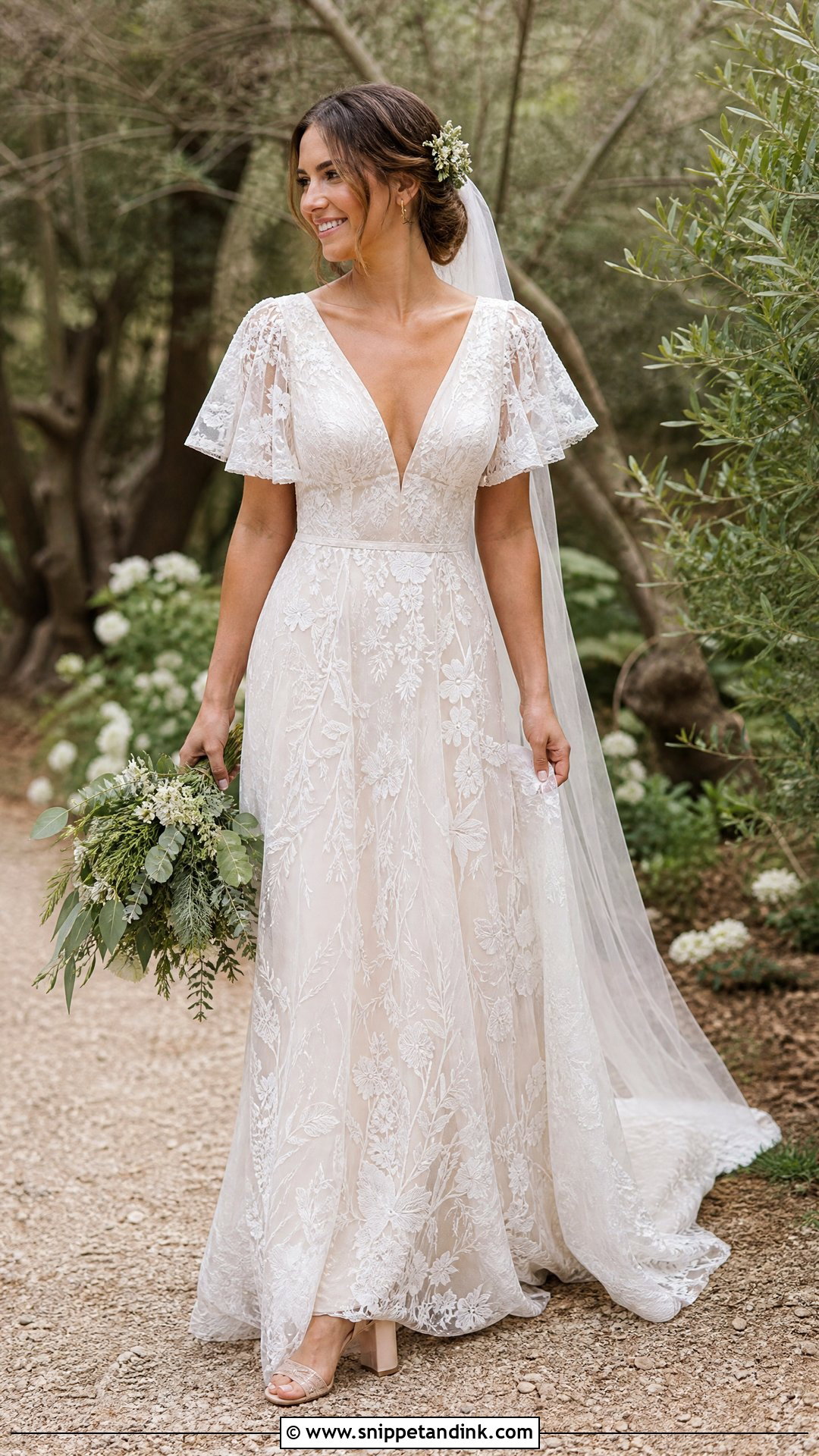
A boho V should feel unstructured, but unstructured does not mean unsupported. Soft botanical lace, flutter sleeves or wide straps and a flowing skirt carry the relaxed mood, while a nude lining shows off the lace and still covers fully. Without boning, the V depends on the straps sitting at exactly the right length, so shorten them if the neckline sags when you lift your arms. A floral comb, small gold earrings, neutral sandals and a fingertip veil are plenty. Woodland, barn, desert and garden settings all suit it, with a loose greenery bouquet.
11. V Neck Bridal Gown With Cap Sleeves
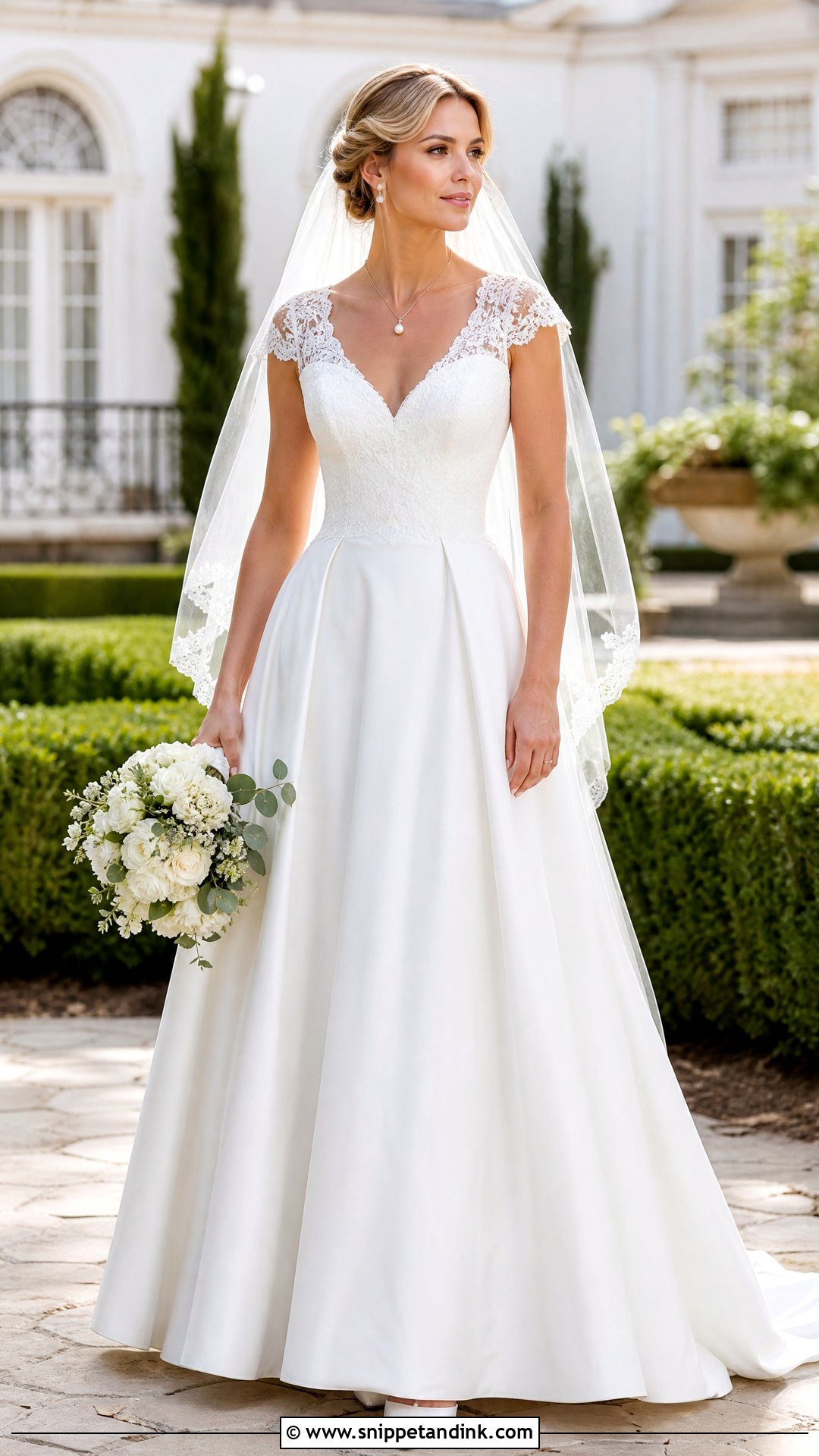
Cap sleeves cover the tops of the shoulders without the commitment of a full sleeve. They should rest on the arm, not bite into it, and lace caps flowing into a structured bodice with a lightly gathered A-line skirt look the most natural. Raise your arms at the fitting. A tight armhole pulls the whole bodice upward and drags the V off center, which is the most common complaint I hear about this style. A thin pearl pendant, satin pumps, a fingertip veil and a side-parted chignon keep the shoulders visible for a daytime garden or estate wedding.
12. V Neck Bridal Gown With Pockets
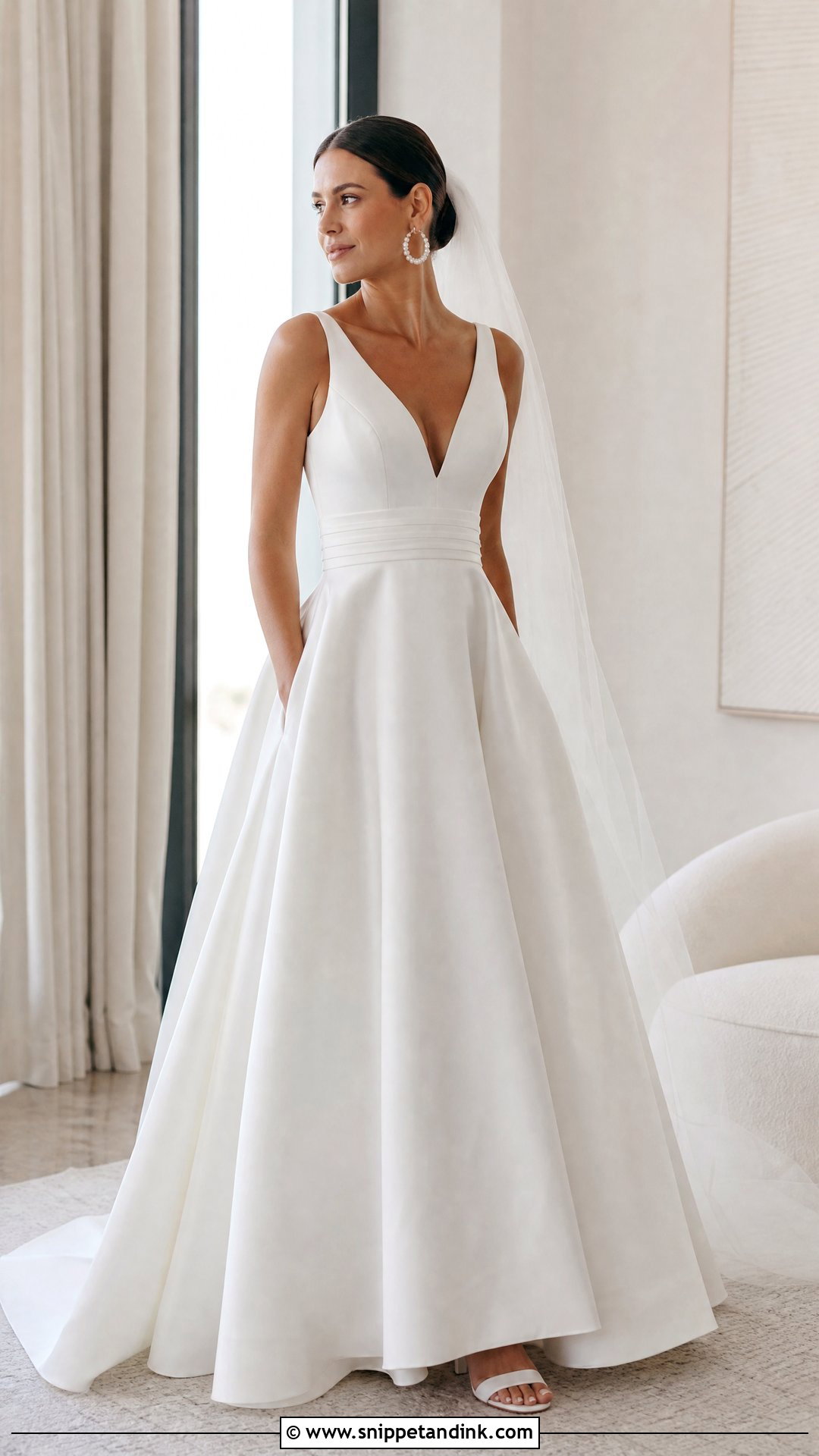
Pockets only stay invisible in fabric with body, so look for structured satin, mikado or heavy crepe where the openings sit inside the side seams. A fitted bodice, wide straps and a clean waistband give definition before the skirt opens out. Keep the pockets for your hands, lip balm and a tissue; a phone drags the skirt down on one side and shows in every photo. Pearl hoops, a smooth updo, block heels and a long veil with minimal edging suit it. Because the surface is plain, a dramatic veil or bolder earrings will not crowd it.
13. Floral Appliqué V Neck Bridal Gown
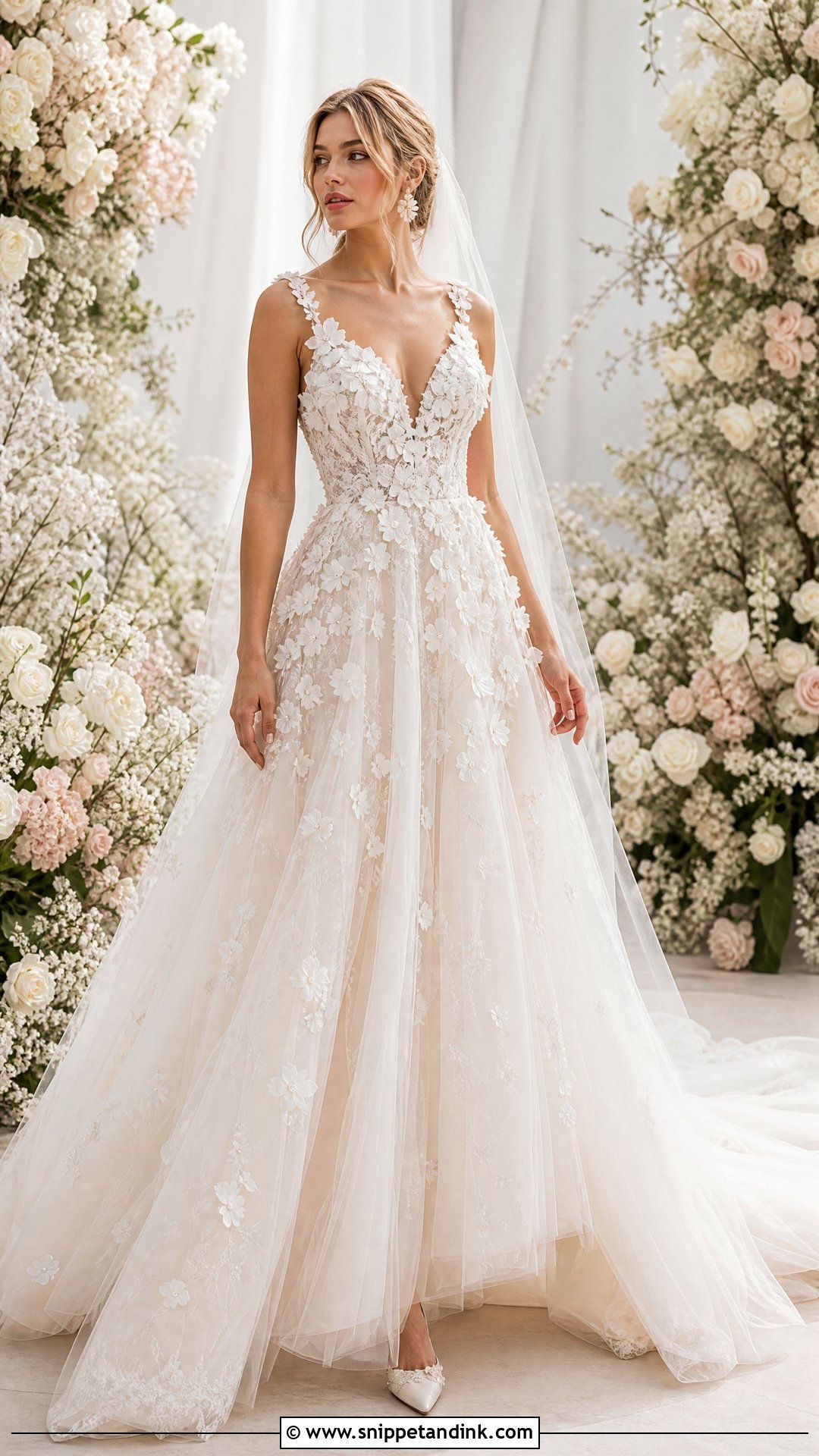
Three-dimensional appliqués look best when they are dense on the bodice and scatter toward the hem, so the eye travels down instead of stopping at the hips. They come on both fitted and A-line shapes, which lets the same idea read romantic or more modern. Before you buy, rub the appliqués along the neckline against the inside of your wrist; stiff backing on a flower can rub skin raw by evening. Floral earrings, a plain tulle veil, ivory heels and a soft low bun let the texture lead, with simple white flowers in hand.
14. V Neck Bridal Gown With Detachable Skirt
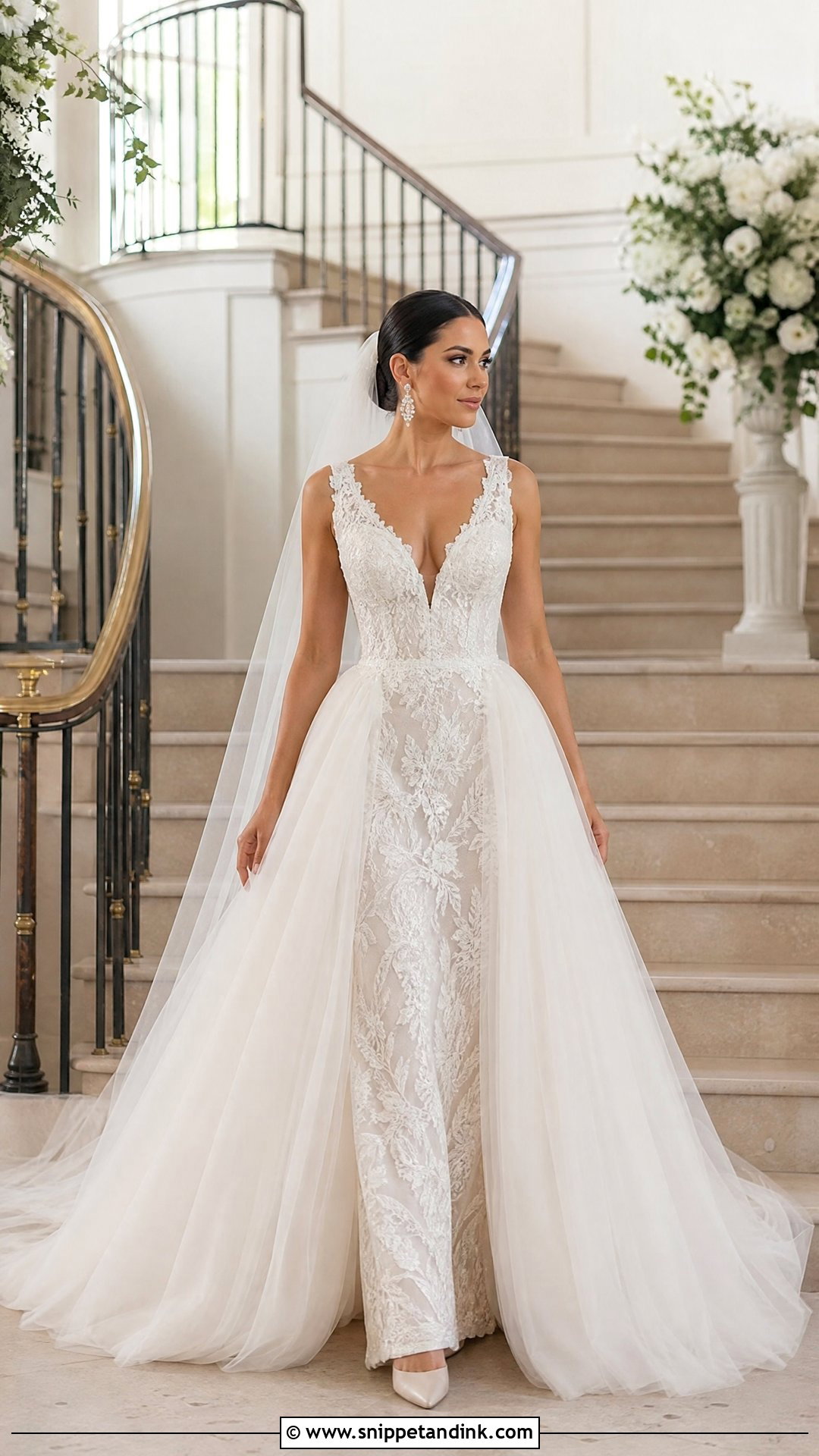
A detachable overskirt turns one V neck gown into two. Underneath is a fitted crepe or lace dress with a secure bodice and short train; over it goes full tulle or satin for the ceremony, then off it comes for dancing. The attachment is where these go wrong. Ask how it fastens, practice removing it yourself, and make sure the waistband lies flat with no bump at the hooks. Crystal earrings, a cathedral veil and heels steady enough for both shapes work, and a sleek updo keeps the change tidy for entrance photos and a lighter reception.
15. V Neck Tea Length Bridal Gown
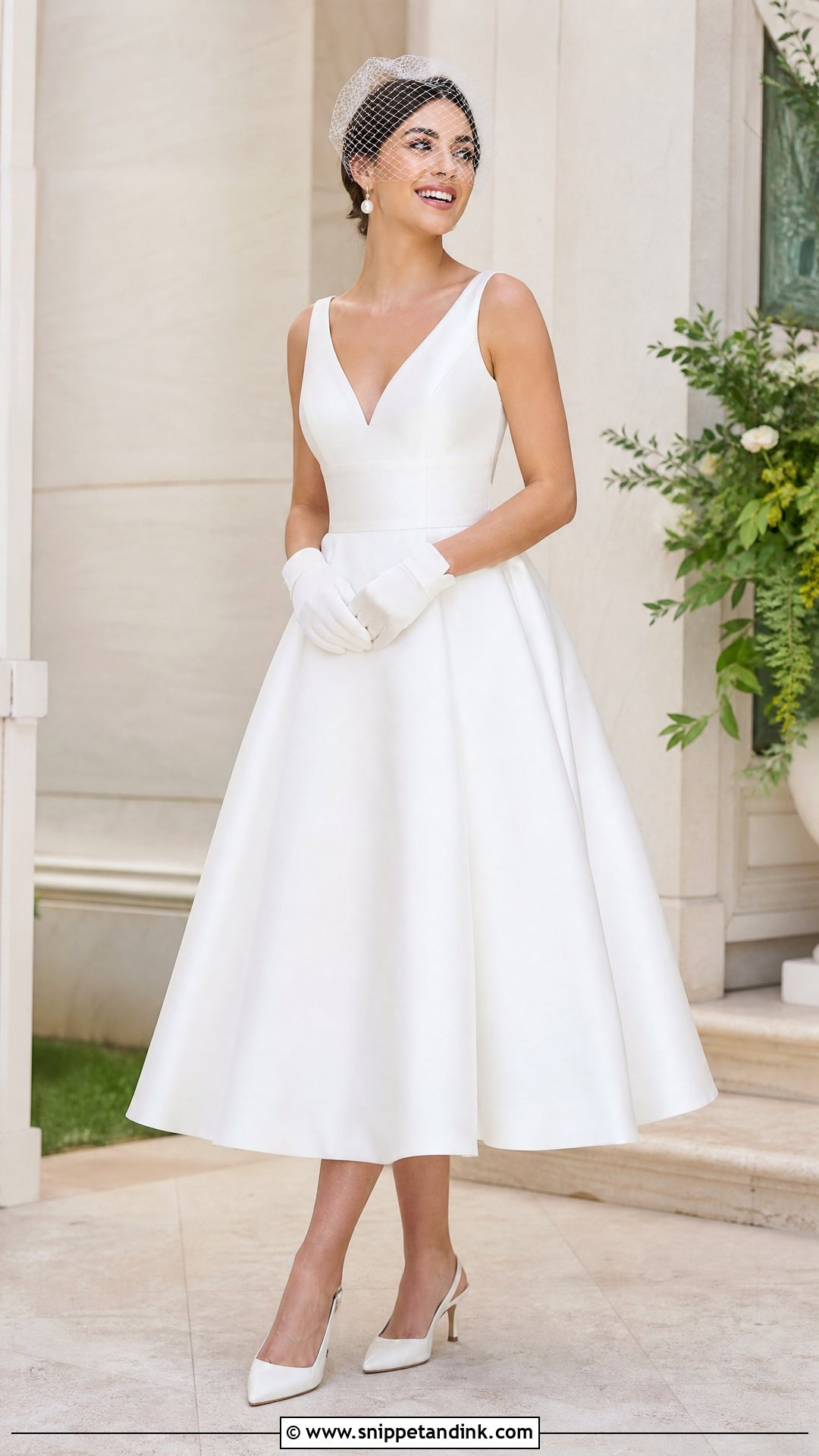
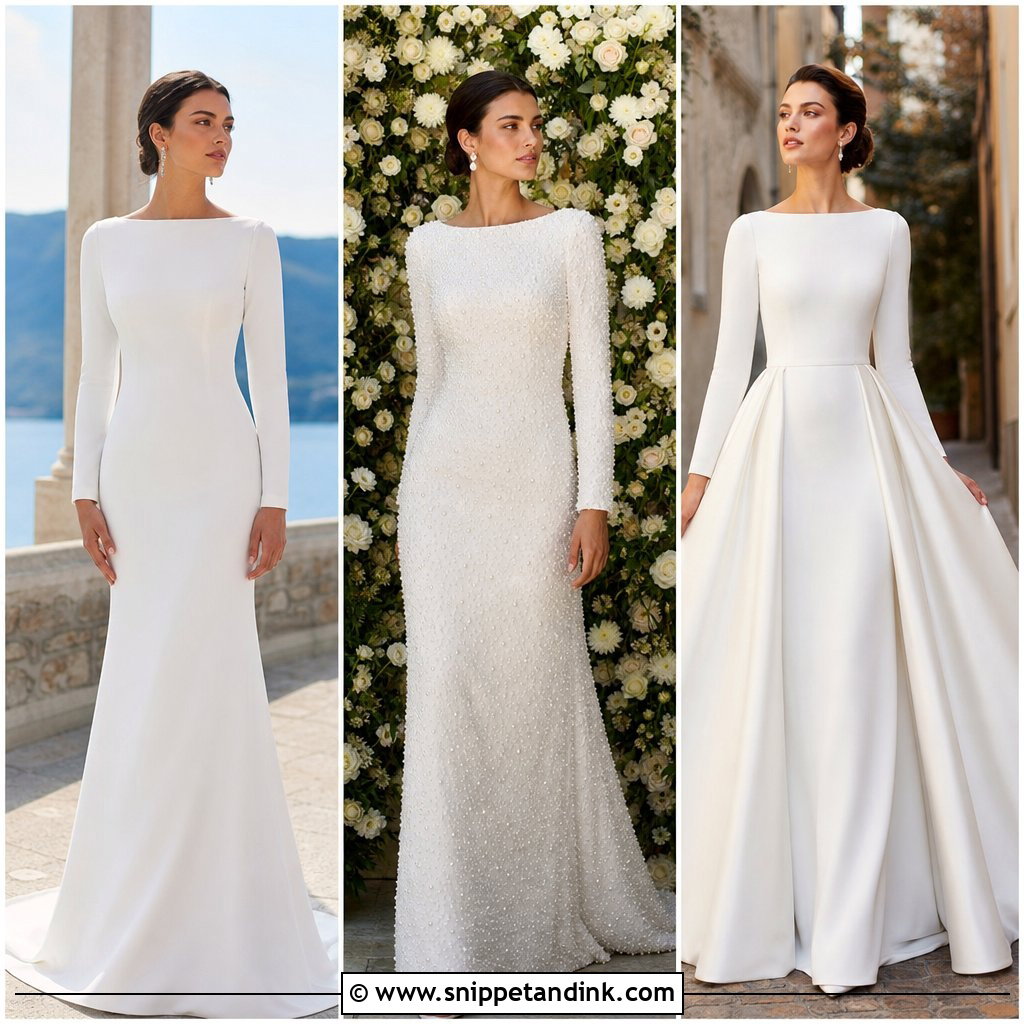
Tea length puts your shoes on show, so they become part of the outfit rather than an afterthought. A fitted bodice, defined waist and flared skirt ending between knee and ankle is the classic shape; satin reads more formal, while lace or tulle feels lighter. Pointed pumps, slingbacks or neat block heels, pearl earrings, optional short gloves and a birdcage or shoulder veil suit it, with a smooth bun or softly curled bob. Check where the hem lands: ending at the widest part of the calf shortens the leg. Courthouses, daytime receptions and small gardens are its natural home.
16. Plus Size V Neck Bridal Gown
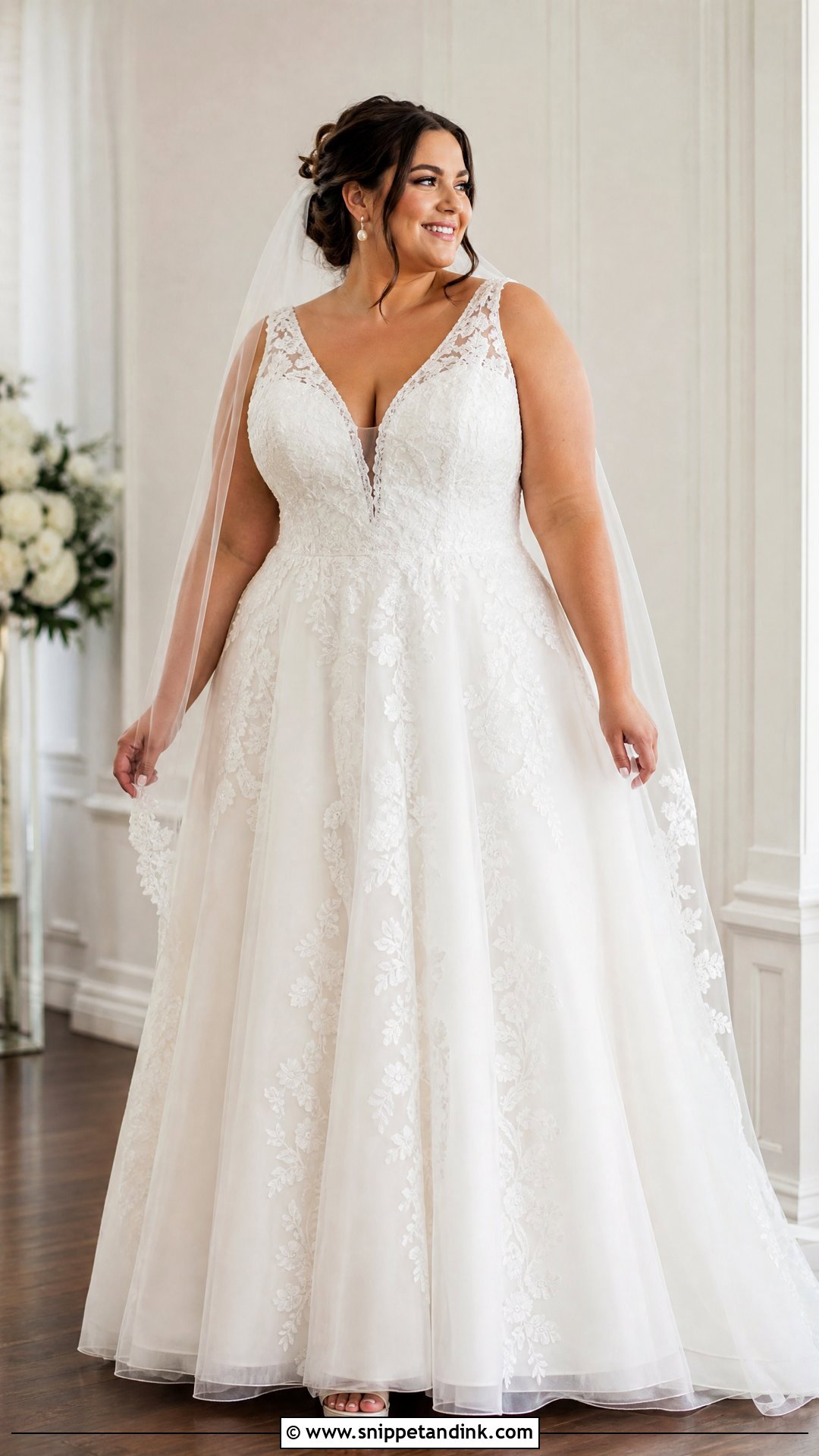
For a plus-size bride, the construction inside a V gown matters far more than the size on the label. I look for broad straps, built-in cups, strong boning and a waist seam placed where your body naturally narrows, not where the pattern assumes it does. An A-line skirt gives easy movement, and lace panels or diagonal draping add depth. Try a shallow and a deeper V side by side; the deeper one often looks better than brides expect, provided the cups are doing the work. Drop earrings, supportive block heels and a fingertip veil finish it. The right one lets you breathe, sit and dance.
17. Petite V Neck Bridal Gown
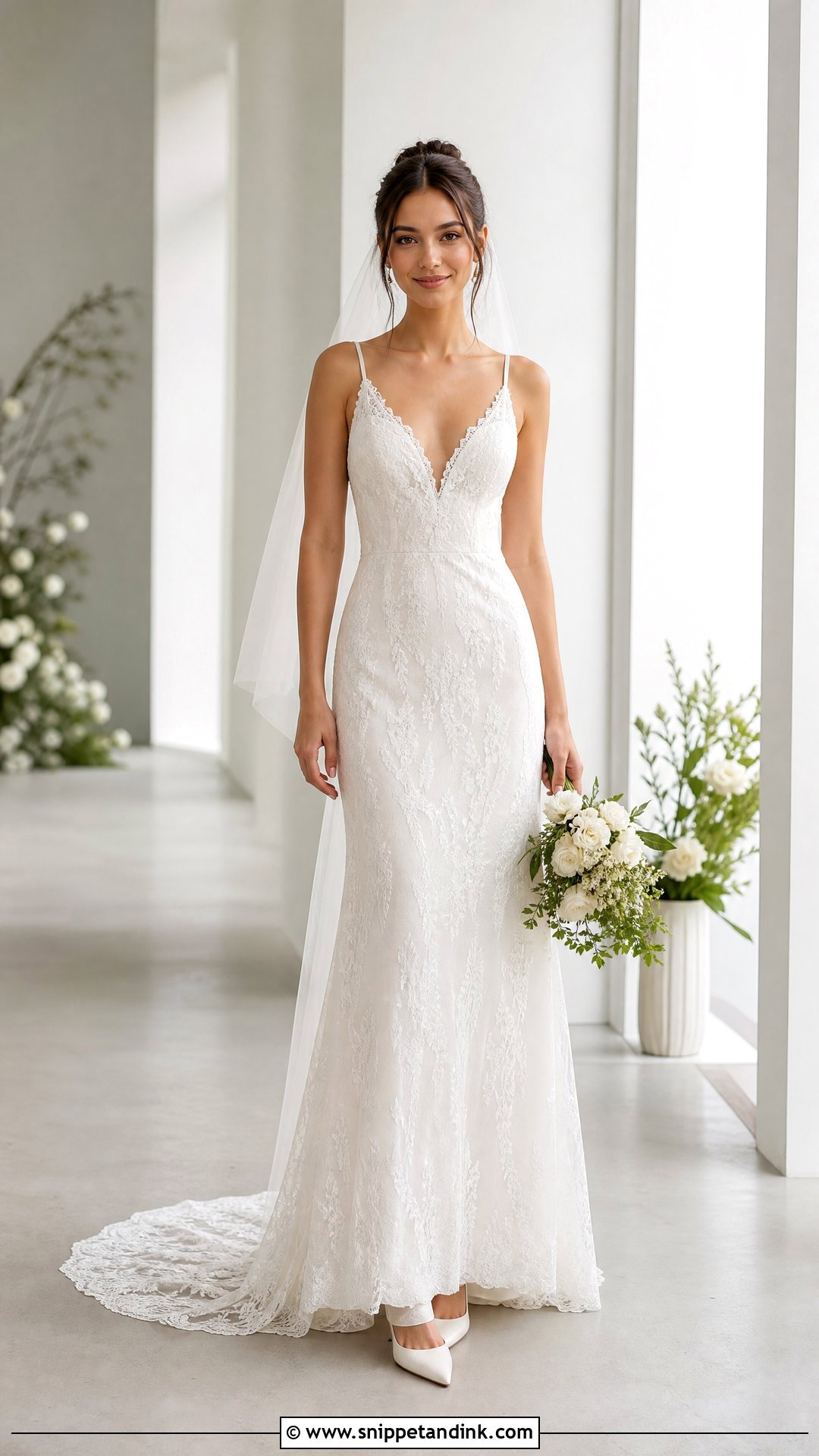
On a petite frame, volume and big motifs take over quickly. A sheath or narrow A-line gown with slim straps, limited skirt volume and vertically placed lace or seams keeps the proportions right, and the V itself lengthens the torso. Skip oversized appliqués and wide belts. One alteration point I insist on: have the bodice adjusted to your height, not just the hem shortened, because on a lace gown the motifs need to land in the right place on your body. Pointed heels, delicate earrings, a narrow bouquet and a single-layer veil suit it.
18. Square Back V Neck Bridal Gown
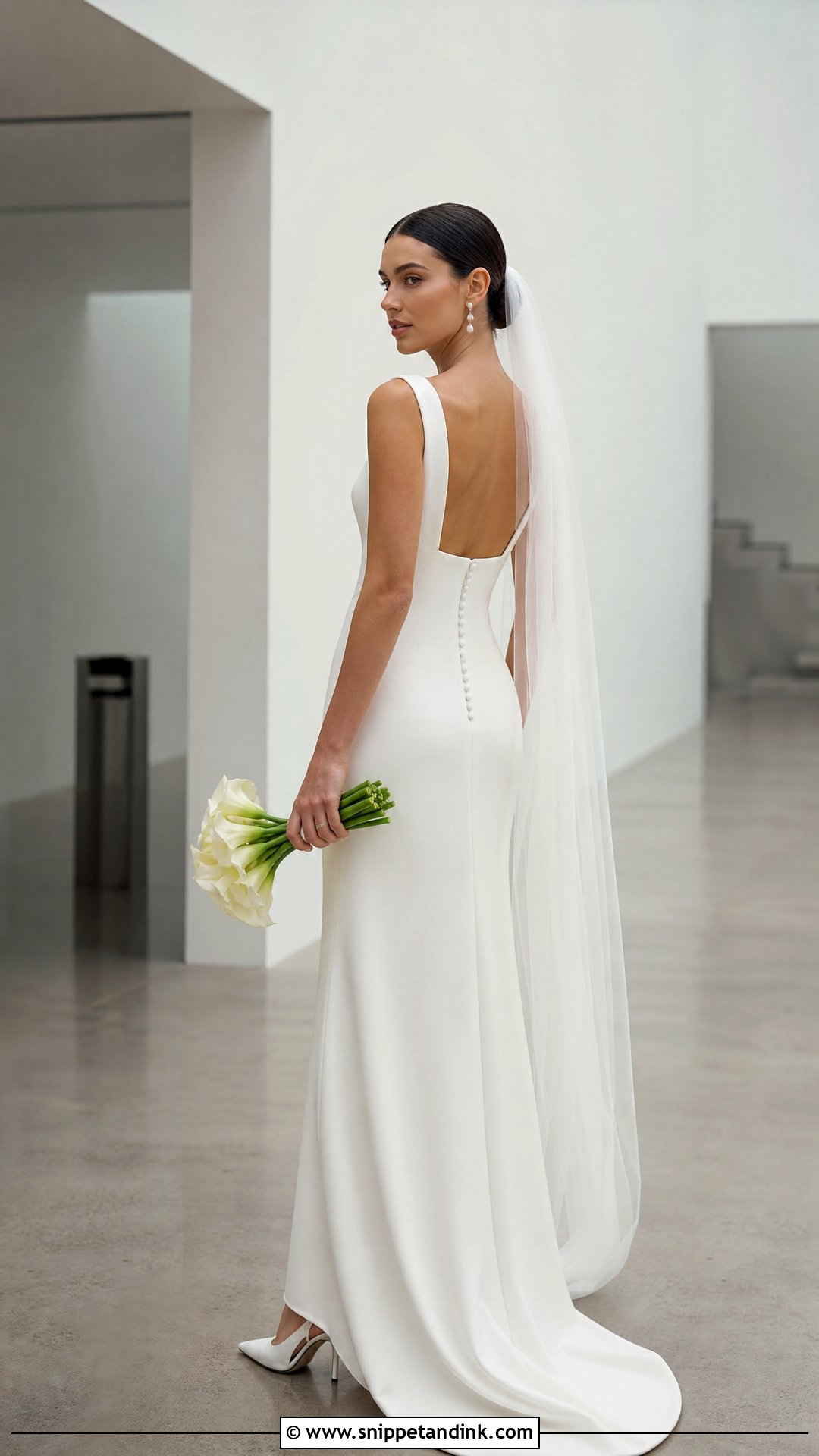
A V in front and a square at the back gives a soft line and a hard one, and matte satin or crepe shows the geometry best. The wide straps connecting the two have to sit flat, which is harder than it sounds: if they are even slightly long, the square back gapes away from the skin. Check it in a three-way mirror while you walk. Wear an updo so the back stays clear, and add drop earrings, a veil set low under the hair and simple pointed heels. A row of covered buttons is all the extra detail it needs for a city or gallery wedding.
19. Halter V Neck Bridal Gown
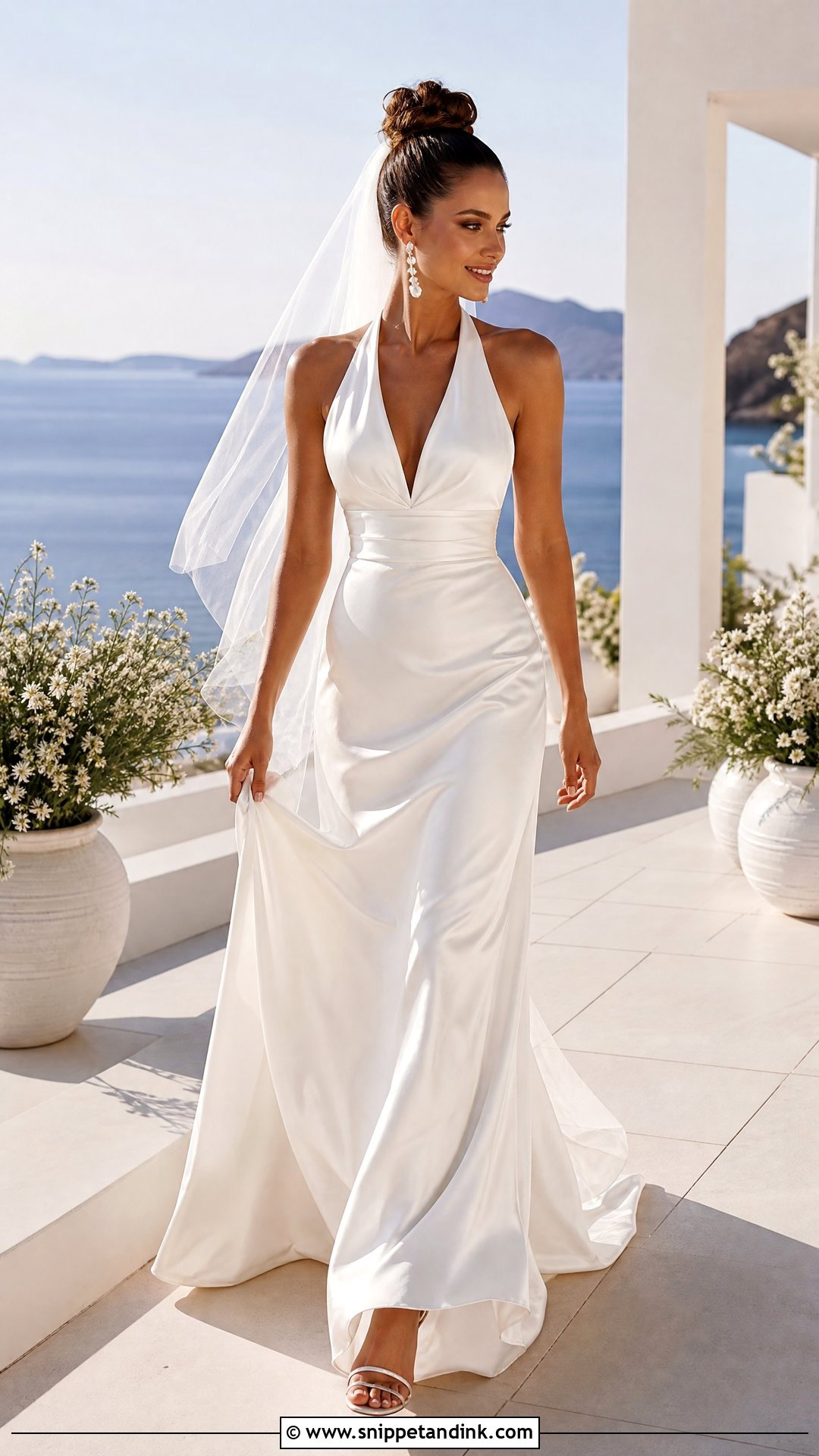
A halter V frames the shoulders and leaves the back open, which reads modern straight away. The catch is that all the weight hangs from the back of your neck. A secure, adjustable fastening is non-negotiable, and if the bodice is heavy I ask for hidden support at the side seams to take some load off. Crepe, satin or embroidered lace all work with a flowing A-line or softly fitted skirt. Statement earrings, a sleek high bun, minimal sandals and a veil attached below the hair finish it, without a necklace. Coastal resorts and rooftops suit it.
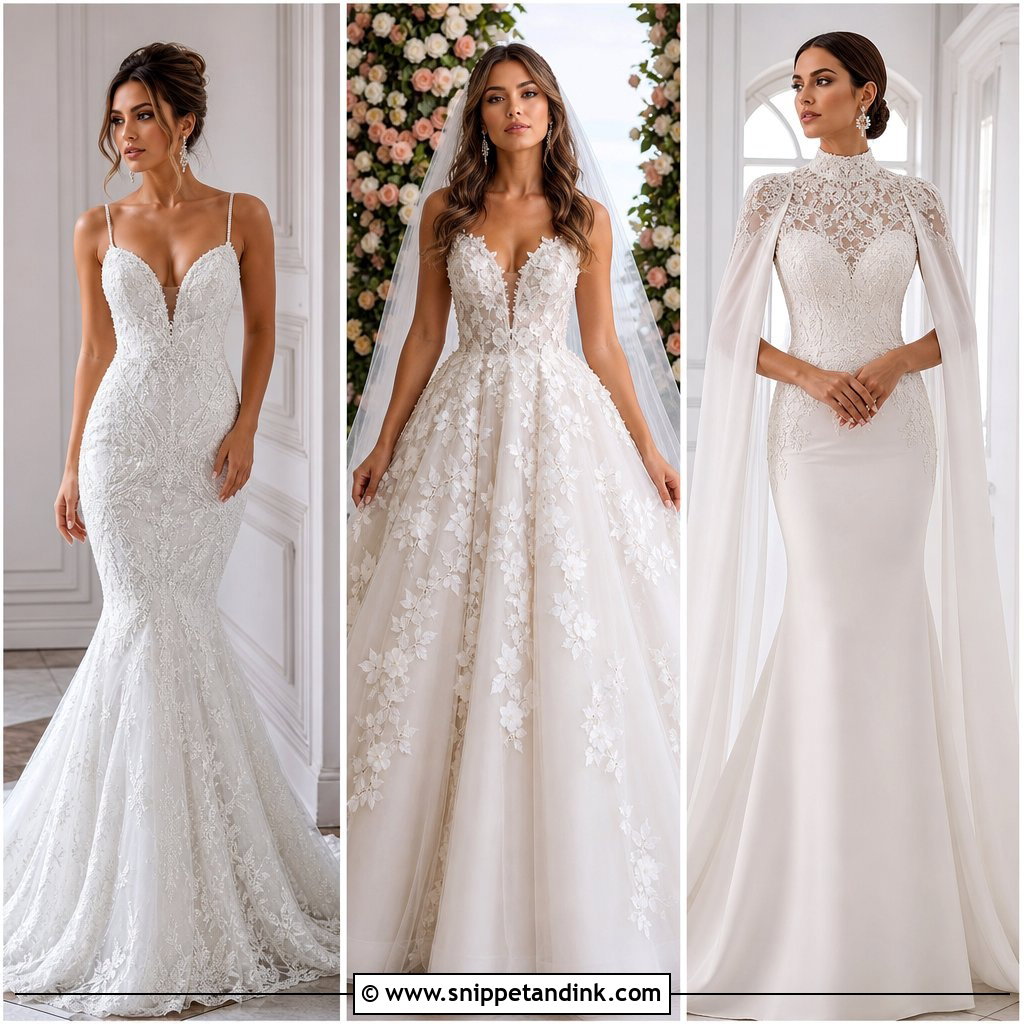


20. Champagne V Neck Bridal Gown
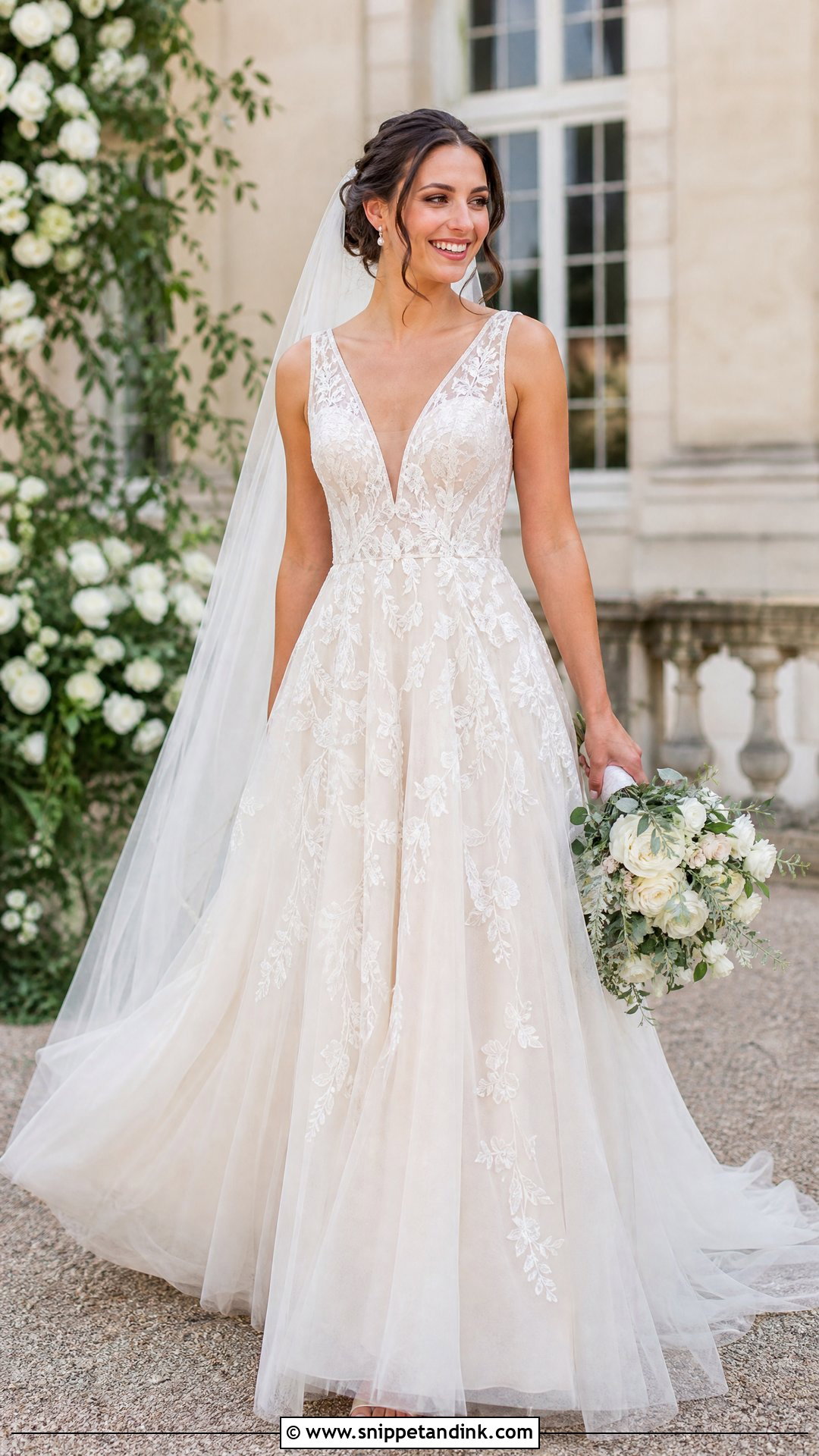
A champagne lining warms the whole dress and lets ivory lace or beading stand out instead of blending in. An A-line with floral appliqués, supportive straps and a light tulle skirt is the classic version, and it sits naturally in garden and rustic settings. Shades vary a lot between labels, and the same lining can look pink indoors and gold outside, so compare swatches by a window and under warm bulbs. Gold or pearl earrings, ivory heels, a plain veil and a white-and-green bouquet keep everything in one family. Soft waves or a low bun suit the gentle color.
Alterations That Stop a V Neckline Gaping
Most V neck problems are solved by a good seamstress, but only if you ask for the right fix. A neckline that gapes when you stand still usually needs the shoulder seams lifted, which pulls the whole bodice up and closes the V slightly. A neckline that only gapes when you move needs a thin strip of stay tape or fine elastic sewn along the inside edge, which keeps the fabric against the skin without changing the shape.
Cups can be added to almost any lined bodice, and they are a far better answer than double-sided tape for a long day. Bring your wedding shoes and undergarments to every fitting, since heel height changes posture and posture changes how a V sits. Plan for two or three fittings, usually starting two to three months before the date, and keep the final one close enough to the wedding that nothing about your shape is still changing.
When tape is still worth packing
I keep fashion tape in my kit for one job: holding a strap or a lace edge flat for portraits. It loosens with body heat, so it is a backup for the photos, not the thing holding a plunge together through dinner and dancing.
Which V Will You Forget You Are Wearing by the First Dance?
One neckline covers a lot of ground here, from romantic lace A-lines to sharp crepe sheaths, dramatic ball gowns and lighter tea-length dresses. What separates a V that works from one you fidget with all night is construction: straps, cups, boning and the alterations around the shoulders. Stand, sit, walk and dance in it at the last fitting. Let accessories support the dress, and look at the full outfit in daylight and under indoor bulbs before the day. The gown that wins is the one you look right in and stop thinking about by the first dance.
You'll Like These Ideas:



Leave a Reply