
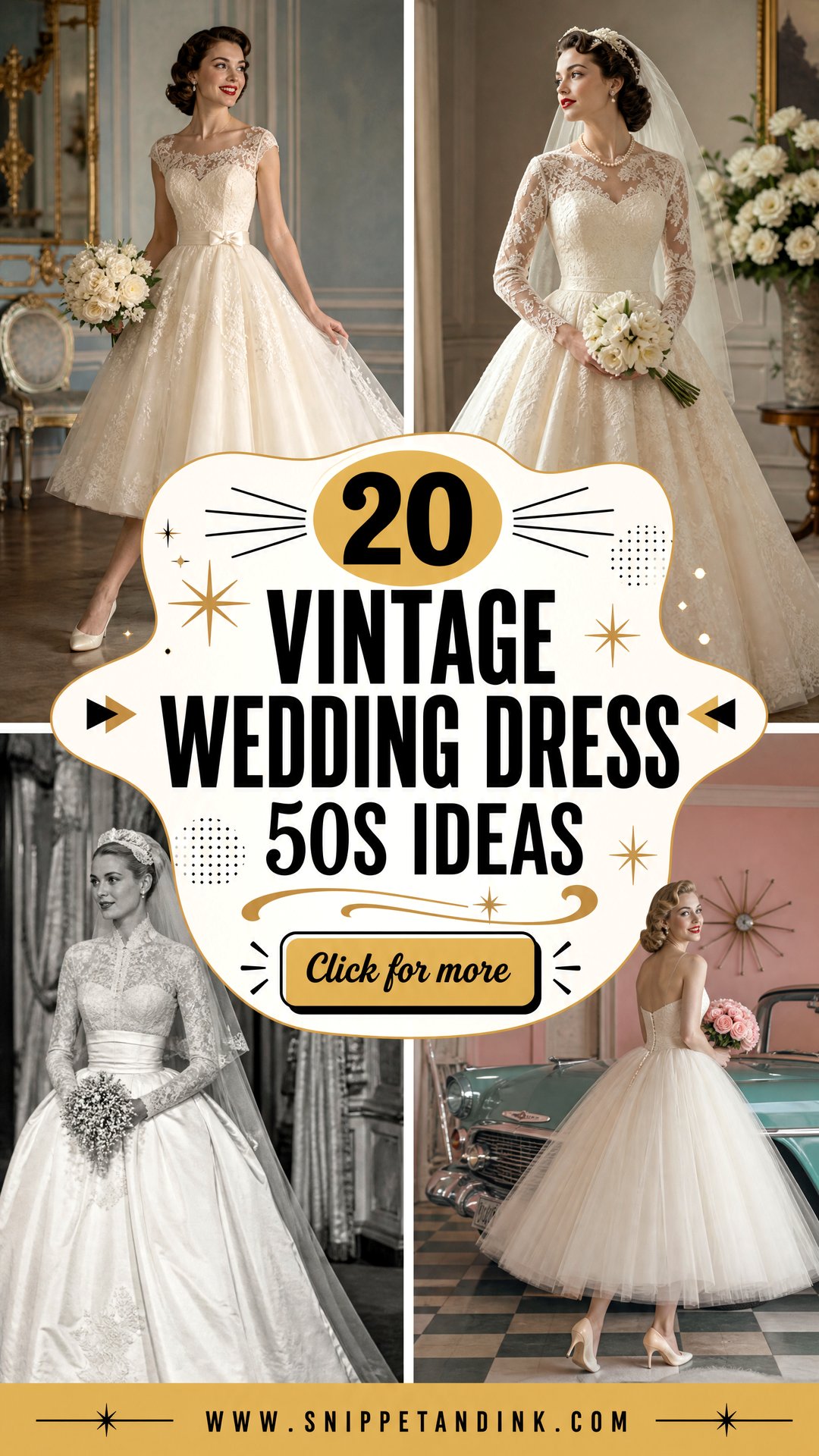
Most fifties wedding dresses start from the same frame: a bodice fitted close to the ribs, a waist seam sitting right at the natural waist, and a skirt that flares out from there to mid-calf or all the way to the floor. Iconic 1950s bridal fashion included both full-skirted gowns and shorter ballerina-length dresses, and most of that volume came from tulle layers or a petticoat rather than the dress fabric itself. As a stylist I find the decade forgiving, because nearly every detail can be adjusted: sleeve coverage, hem length, skirt fullness, even the color. Below are twenty ways the shape can go, from plain satin at tea length to lace with a train, each with the accessories I’d put beside it.
Building the Hourglass From the Foundation Up
A fifties dress is shaped as much by what’s underneath it as by the pattern. The originals were worn over structured underwear and a petticoat, and a modern copy still expects something similar. If you try one on over a soft everyday bra, the waist looks thicker and the skirt hangs limp, and it’s easy to decide the style doesn’t suit you when really the support is missing.
This is the order I work in at fittings:
- Settle the foundation first. A longline bra or a bustier smooths the ribcage, and some brides like a light waist cincher. Whatever you choose, wear the same pieces to every fitting.
- Bring the petticoat to the first fitting, not the last. It changes where the skirt falls and how long it looks, so a hem pinned without it will be wrong.
- Mark your natural waist. Bend sideways; the crease that forms is where the waist seam should sit, and on a short torso that can be higher than the dress was cut for.
- Pin the hem in your wedding shoes. A tea-length hem is measured from the floor, so even a small change in heel height moves it.
- Do a movement test before the final fitting: sit, climb a step, raise both arms, dance for a minute. Anything that gapes or rides up now will do it all day.
Leave room in the timeline. Structured bodices often need two or three fittings, and petticoats sometimes have to be ordered separately, so I’d start alterations well before the last month rather than squeezing them into it.
1. 1950s Tea Length Wedding Dress
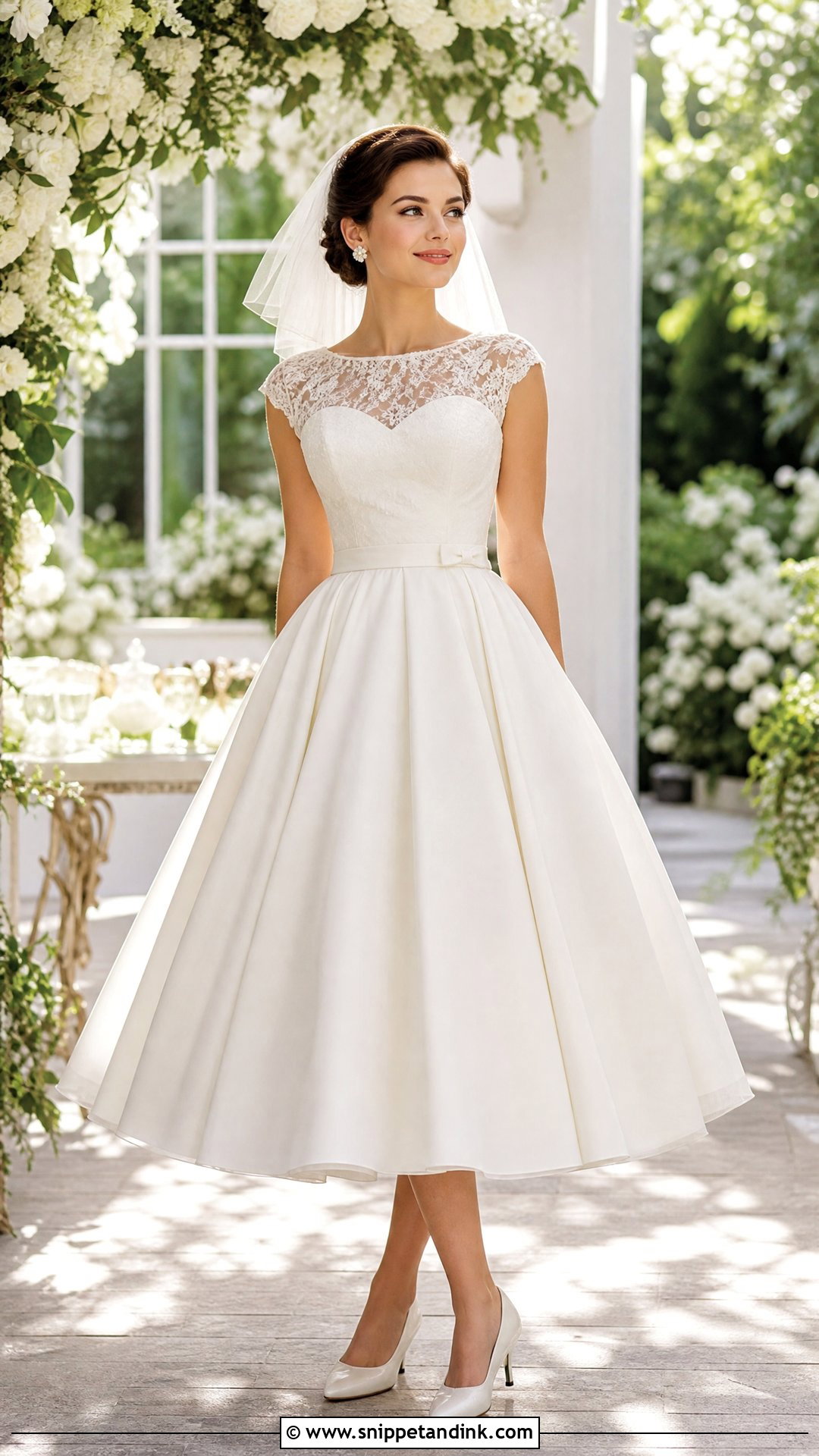
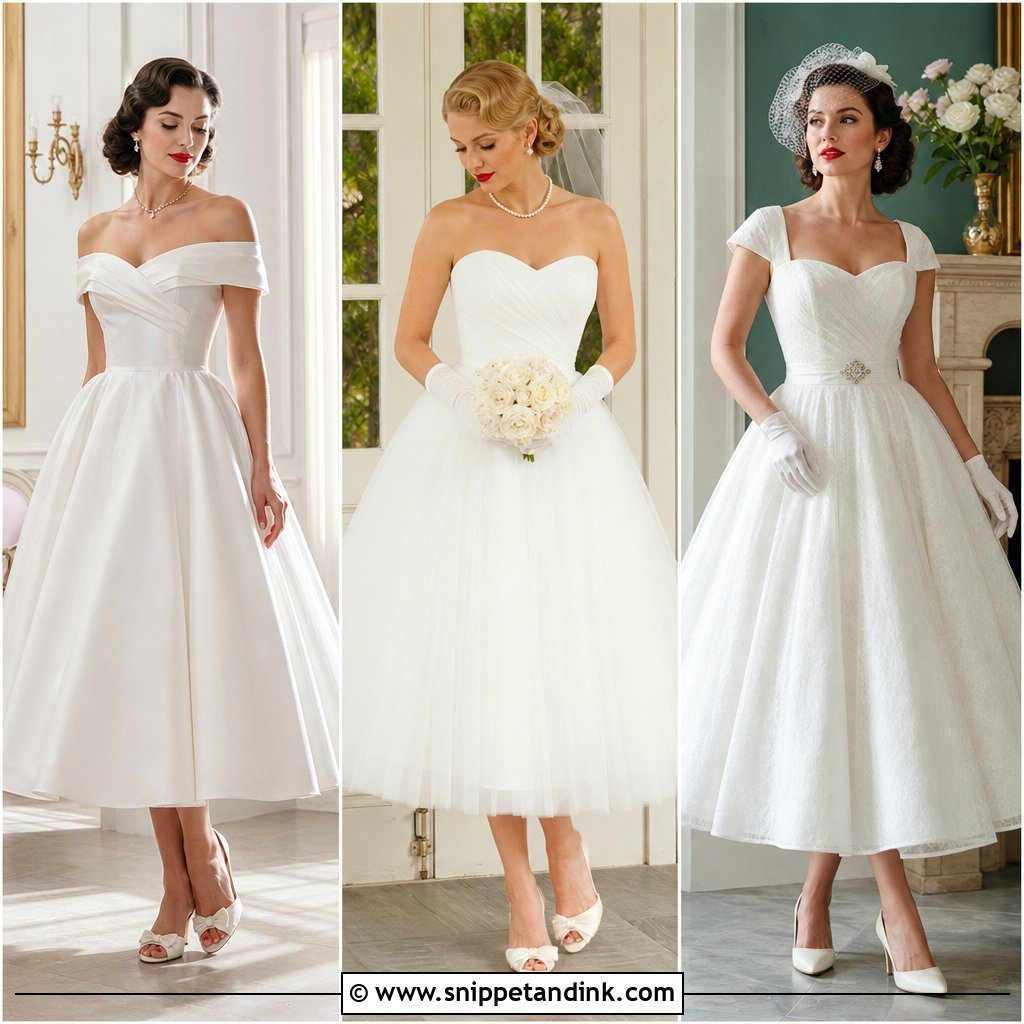
Tea length is the hem that says 1950s faster than any other detail, and it’s the one I suggest first to anyone marrying in daylight. The skirt should finish somewhere between the knee and the ankle. I pin hems with the bride standing in her actual wedding shoes, because a kitten heel versus a flat moves the line more than you’d expect. Keep the bodice fitted with a softly rounded neckline and let a light petticoat do the lifting. Ivory kitten heels, pearl studs and a short tulle veil tucked under a smooth bun are all it needs, plus a small satin clutch for lipstick. During alterations, guard that waist seam. Drop it even slightly and the hourglass turns into a straight torso. Ivory reads softer than bright white here, and a narrow ribbon belt finishes it.
2. 1950s Lace Sleeve Wedding Dress
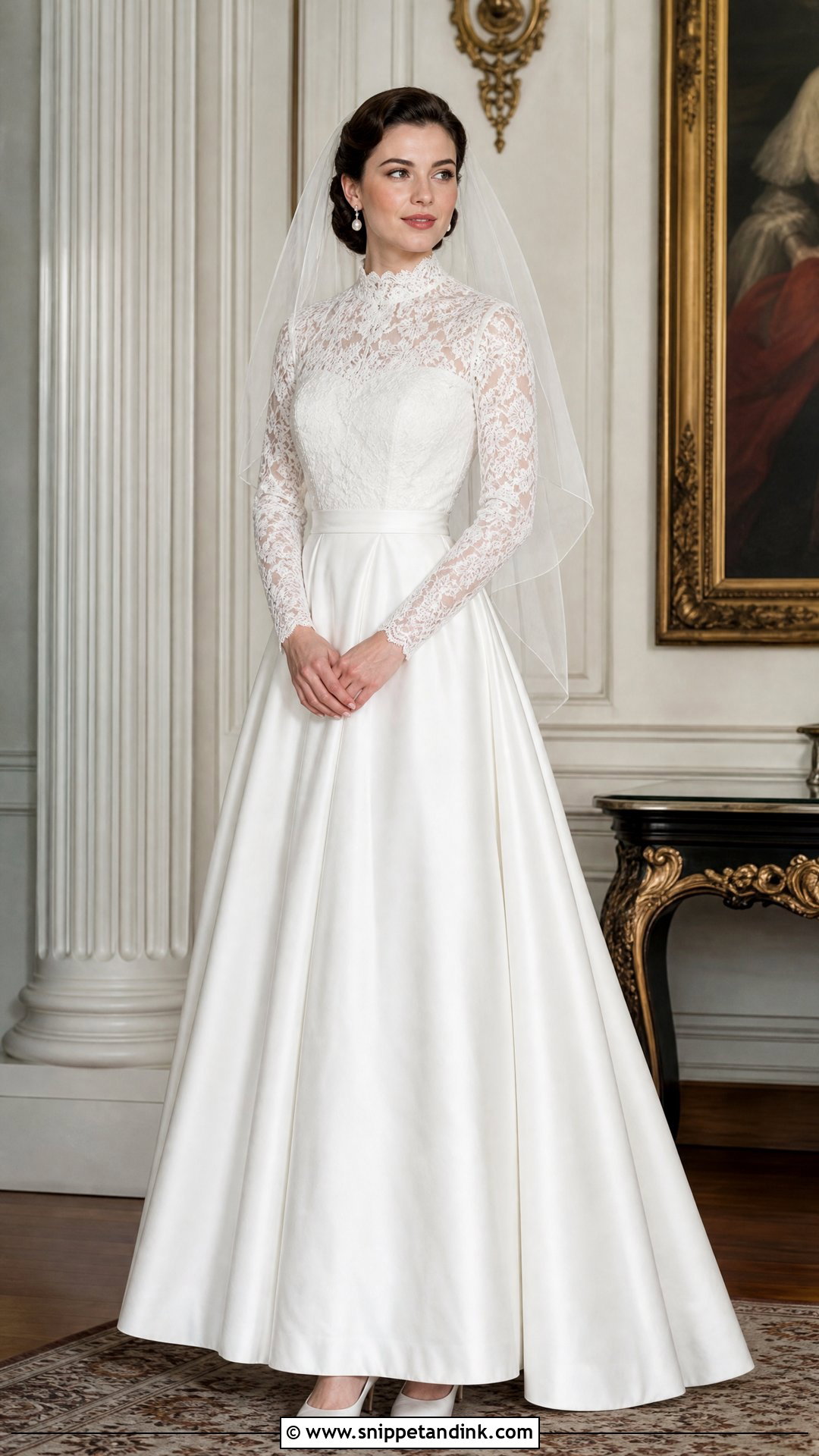
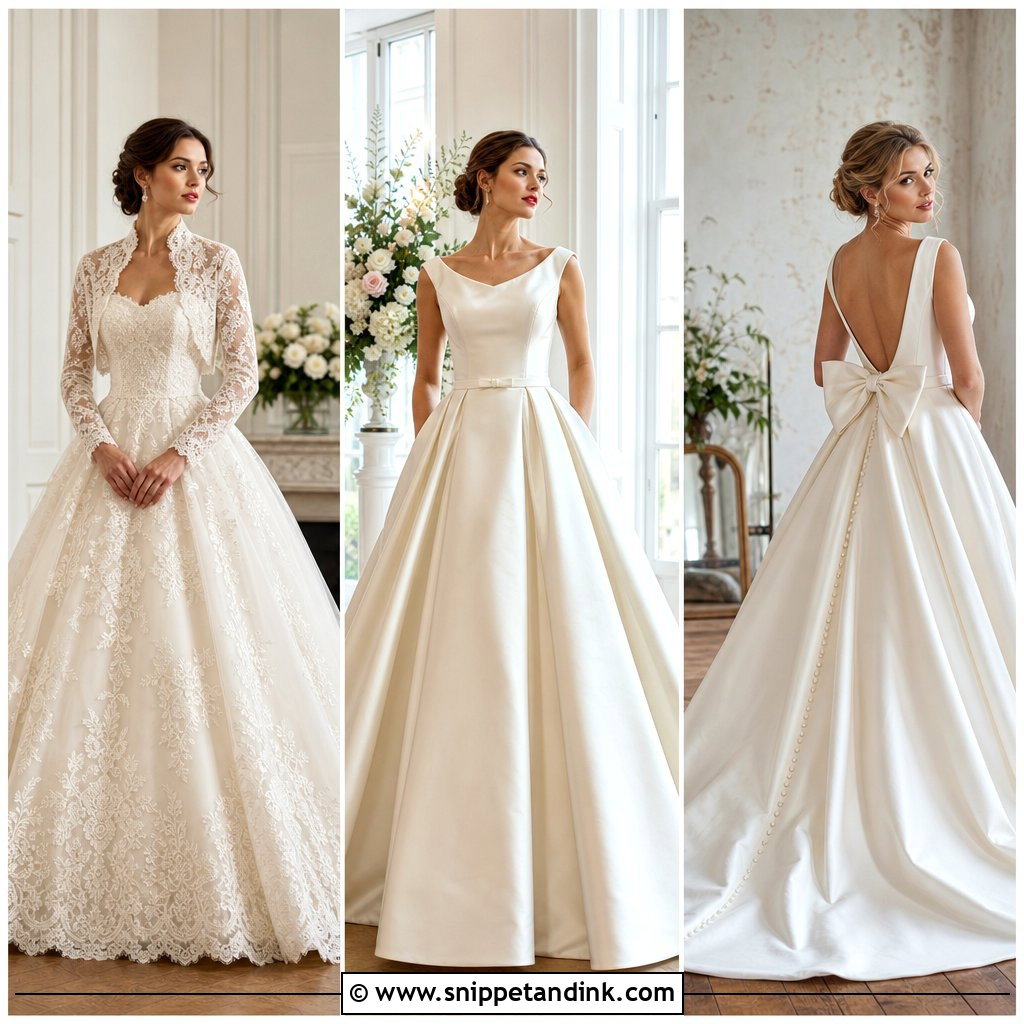
Lace sleeves give you coverage without the dress looking busy, as long as the lace stays on the top half. I like a fitted lace bodice with a high rounded neckline and slim wrist-length sleeves over a plain satin or silk-faille skirt that reaches the floor. The contrast between the two fabrics is the whole point, and a narrow waist is where they meet cleanly. Check the sleeve at the elbow when you lift your arms to hug someone; unlined lace cut tight rides up and digs in by evening. Pointed ivory pumps, pearl drops, a fingertip veil with a cut edge and a low chignon keep it close to the Grace Kelly line. A lightly lined bodice adds modesty if the lace is open. Indoor and cooler-season weddings are where I reach for this one.
3. 1950s Satin Ball Gown Wedding Dress
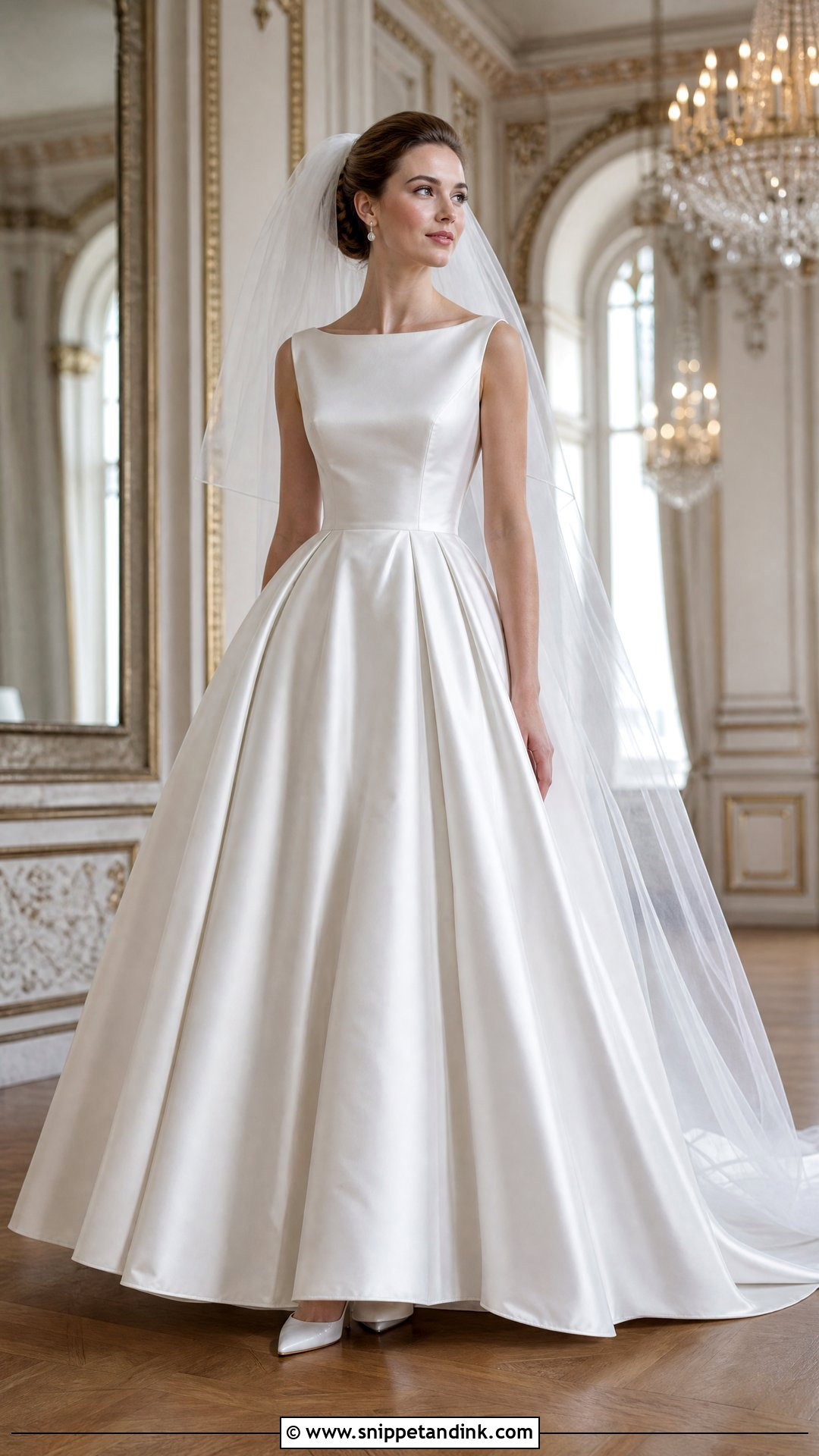
Satin hides nothing. That luminous surface shows every pull at a seam, so the bodice fit has to be exact before anyone talks about accessories. I look for a structured bodice with a bateau neckline, a natural waist and a deep pleated skirt, supported by an underskirt so the satin stands away from the legs instead of clinging. A cathedral veil that just clears the train, satin pumps and pearl earrings are enough. Long gloves make an entrance; plan to swap to shorter ones or go bare-armed once you sit down to eat. A sleek bun or curled updo balances all that skirt. Give this gown space, though. In a narrow aisle or a small restaurant it fights the room, while a ballroom lets it move.
4. 1950s Sweetheart Neck Wedding Dress
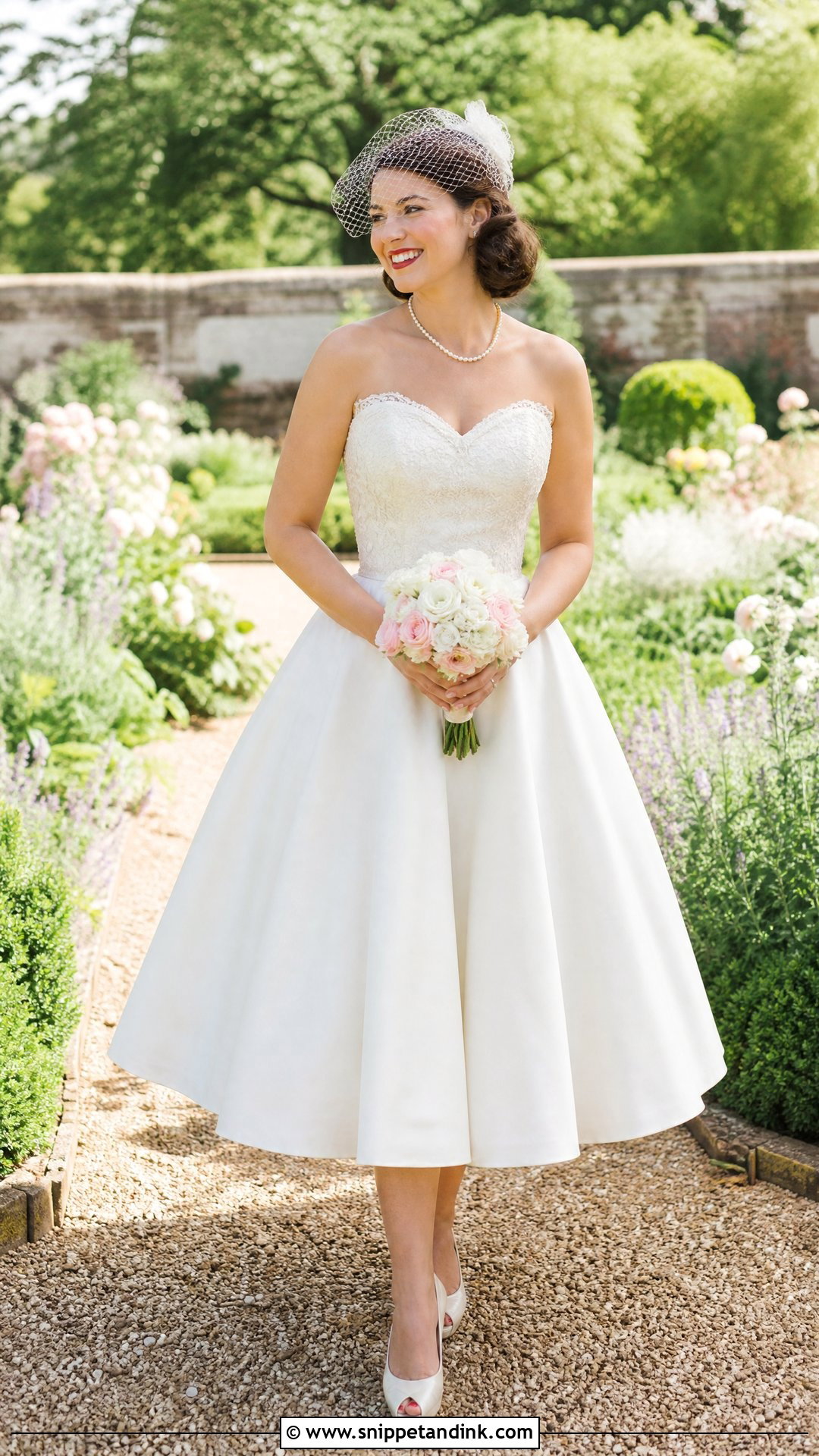
A sweetheart curve lives or dies on boning and fit. I check the neckline with the bride seated and leaning forward, because that is when a sweetheart cut too loose gapes along the top edge, and nobody notices it standing in front of a mirror. Pair it with a defined waist and a tea-length or floor-length skirt. A lace overlay across the shoulders softens the shape and adds cover. A single strand of pearls, peep-toe heels and a birdcage veil with side-parted curls finish it. If the bodice already carries beading or appliqué, drop the necklace and wear pearl studs. Garden ceremonies and hotel receptions both suit it.
5. 1950s Audrey Hepburn Wedding Dress
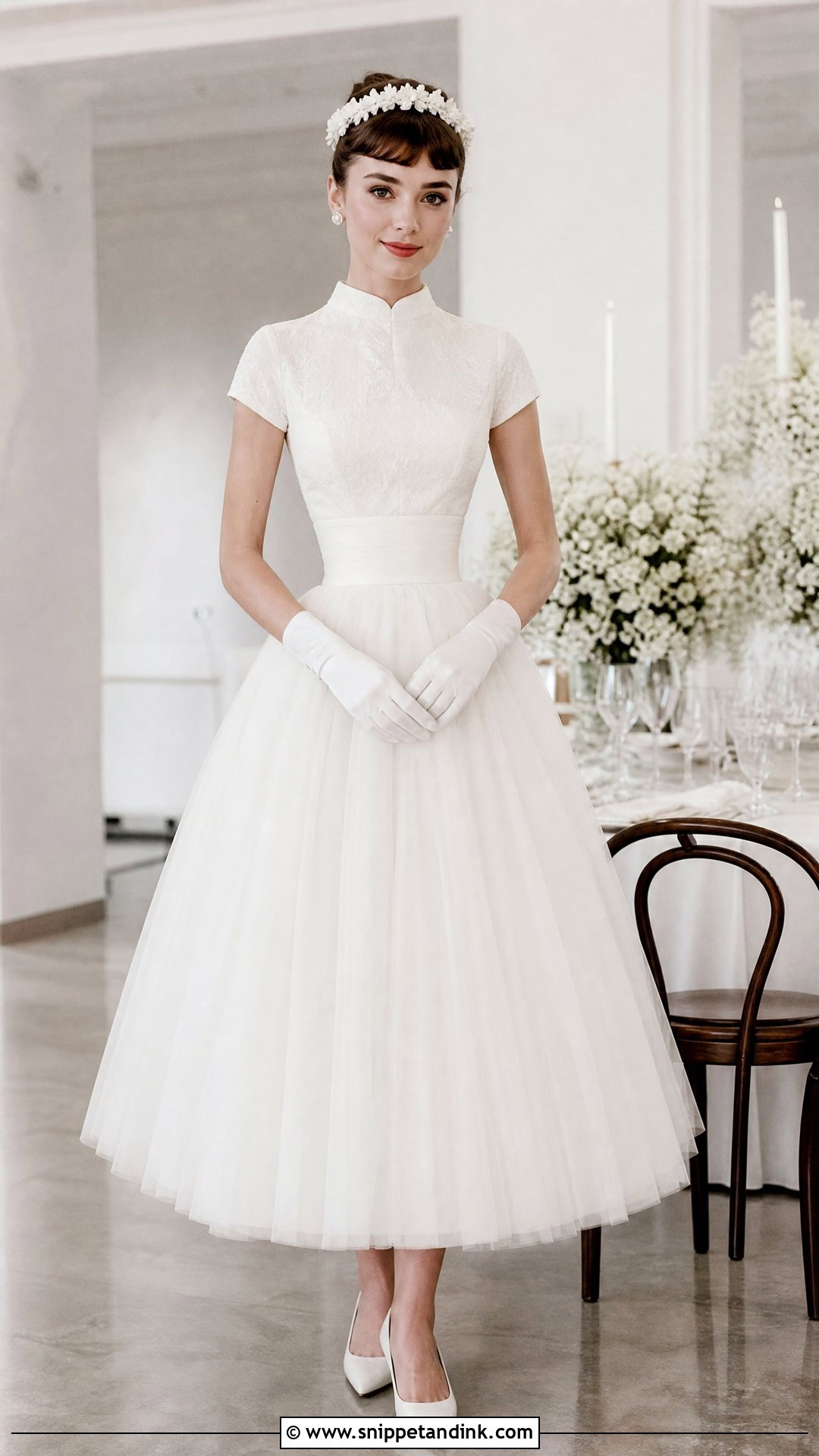
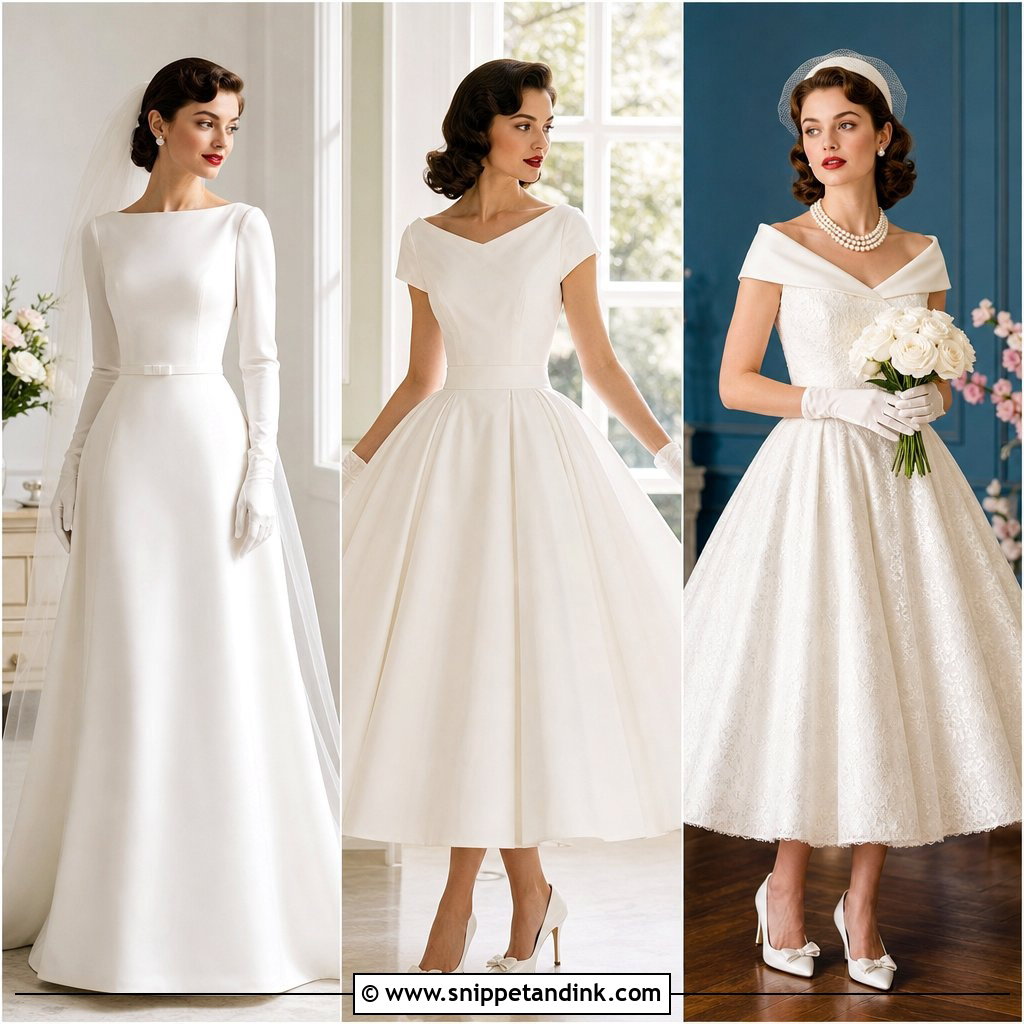
An Audrey Hepburn-inspired wedding outfit is the one I suggest to brides who plan to dance most of the night. The ballerina-length skirt, built from airy tulle layers, sits above the ankle, so there’s nothing to trip on. Keep the neckline high, the bodice fitted, the waist natural or slightly dropped, and the sleeves short or three-quarter. Low pointed pumps, wrist-length gloves and a small floral headband are more in character than a tiara, with pearl studs and nothing else. A neat bun with soft bangs or a clean side part keeps the head small against the full skirt. Because this hem shows your shoes all day, break them in properly. A shoe that rubs by hour three shows up in every candid photo.
6. 1950s Grace Kelly Wedding Dress
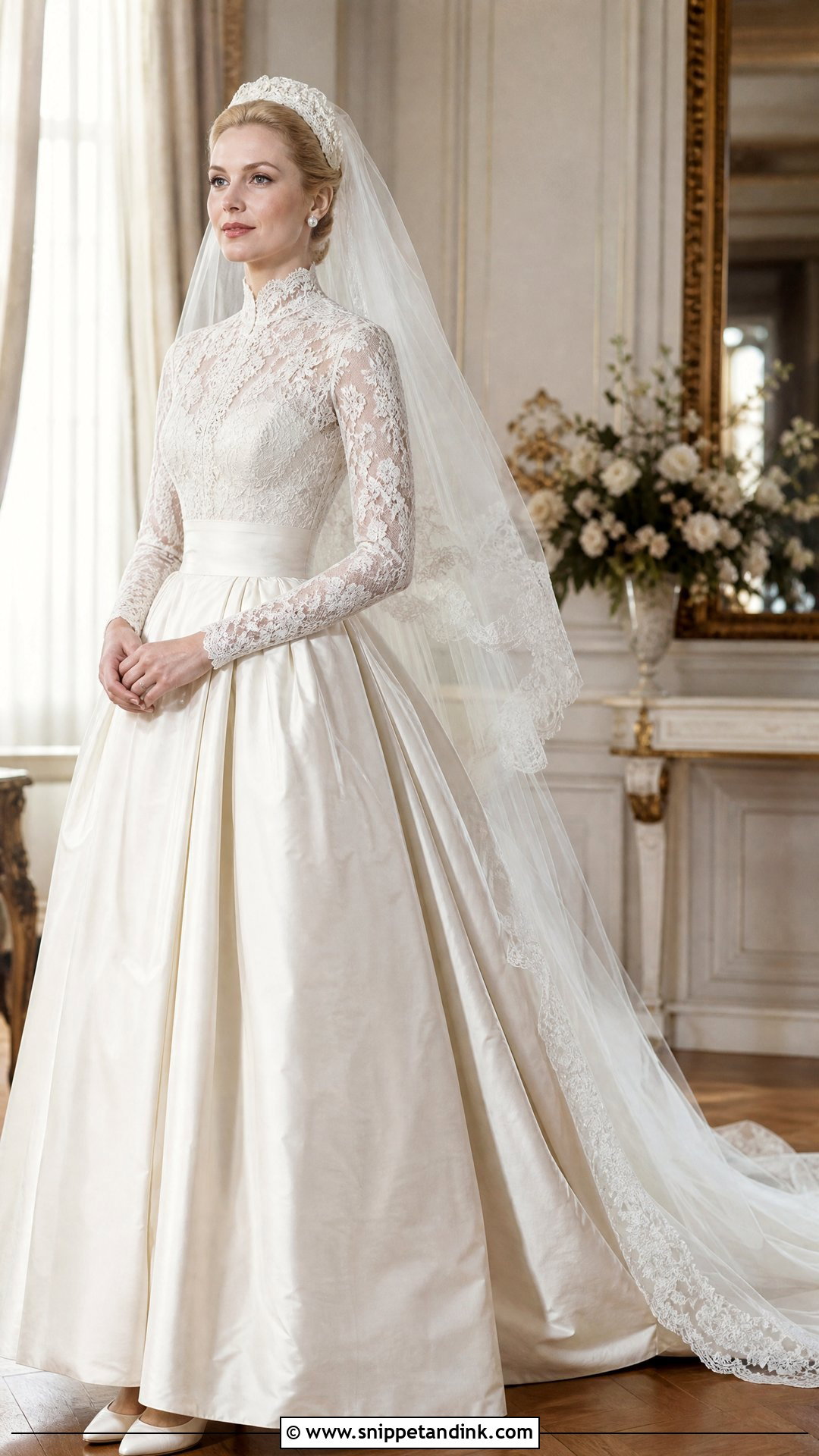
A Grace Kelly-inspired wedding dress is mostly about the bodice: a high neckline, long fitted sleeves and a row of small covered buttons over lace or illusion tulle. Below a carefully shaped waist, a silk or satin skirt falls to the floor with a graceful train and controlled volume. I keep jewelry to understated pearl earrings and let the lace work, adding a lace-edged veil and a smooth low bun. The fitting I worry about is the sleeves. Long fitted lace set into a narrow armhole can stop you raising your arms past shoulder height, so I ask brides to mime a toast and a hug before we sign off. Ask for a soft lining against the skin as well. Historic estates and formal winter weddings suit this gown far better than a beach.
7. 1950s Short Sleeve Wedding Dress
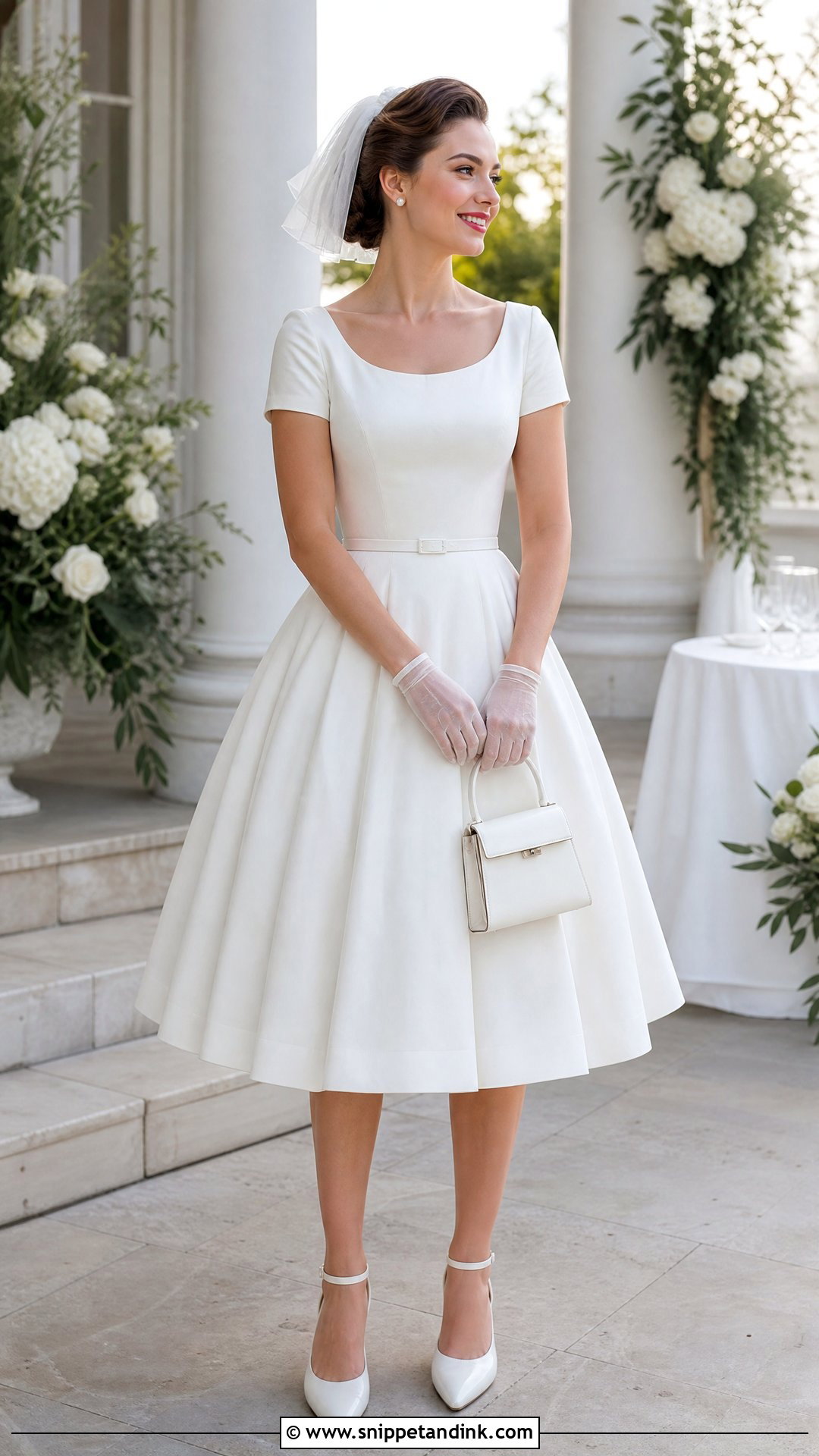
Cap sleeves are the easiest way into the decade for someone who doesn’t want a strapless bodice and finds long sleeves too formal. A scoop neckline, a fitted bodice and a full tea-length skirt hold their shape in crisp cotton sateen, mikado, lace or a lighter satin without any help. When the bodice and skirt are cut from one fabric, a narrow satin belt stops the dress reading as a single long block. Ankle-strap pumps, pearl earrings, a shoulder-length veil and a structured mini bag complete it. I like it most for spring and summer. One request I’d make of your seamstress: set the petticoat up so it comes off, and you can drop some volume after the first dance.
8. 1950s Off Shoulder Wedding Dress
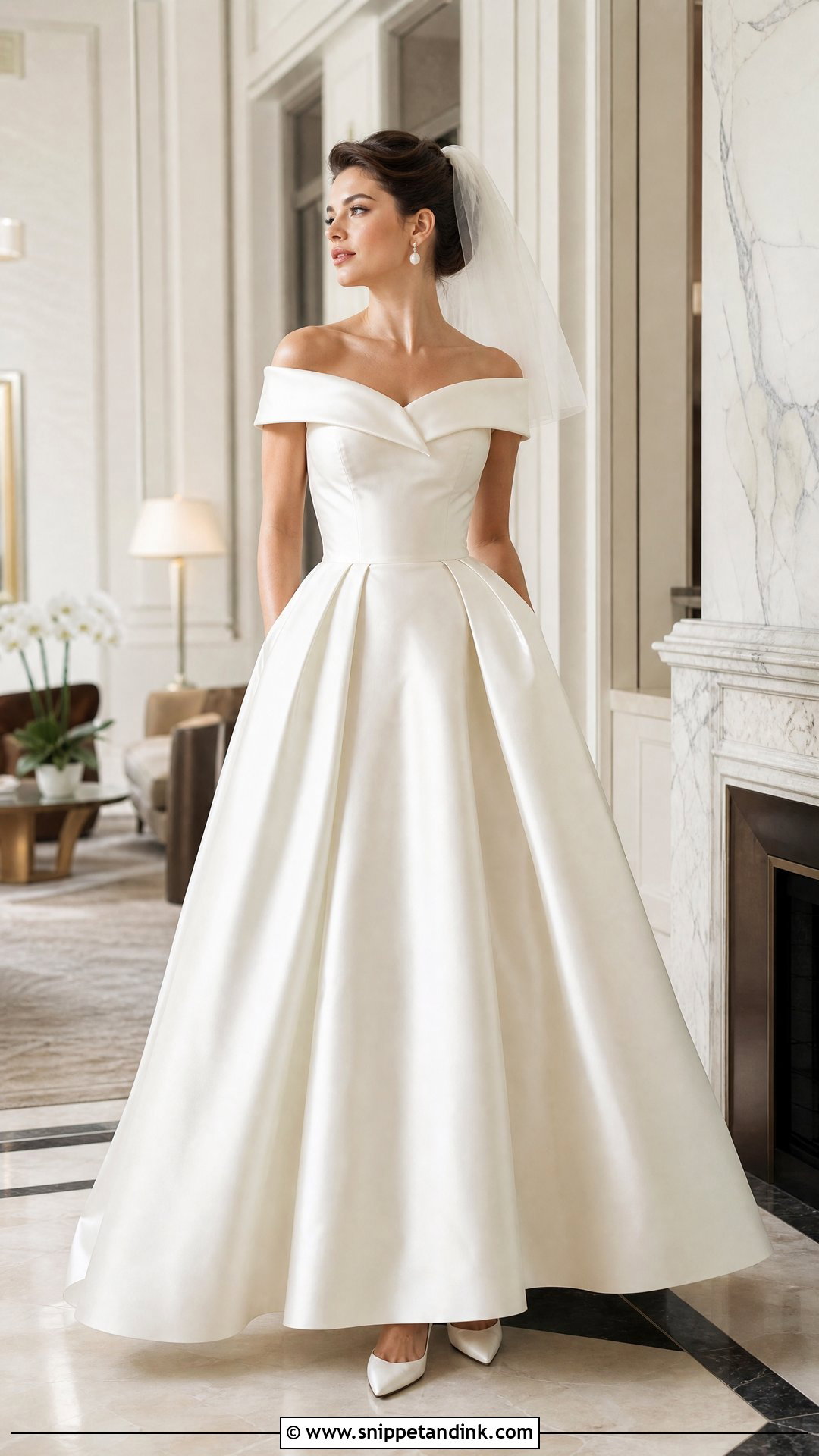
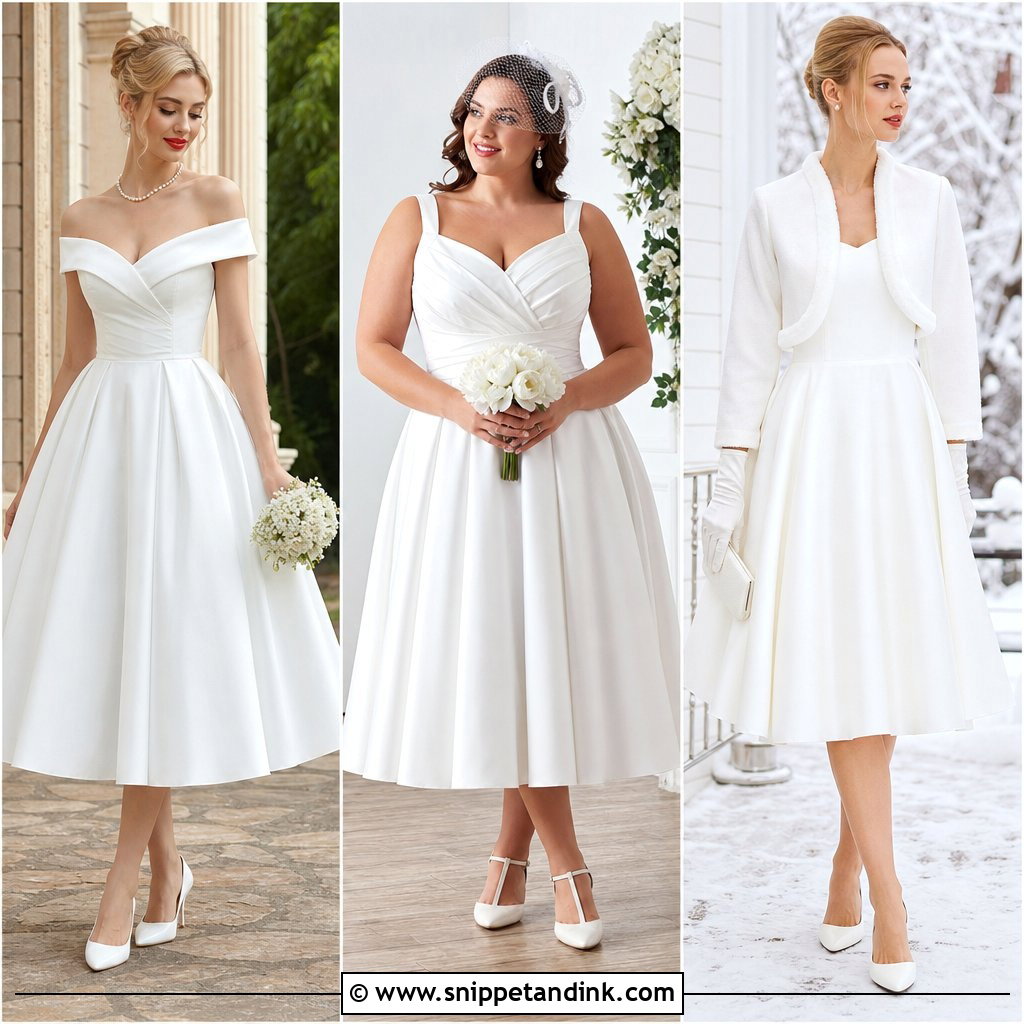
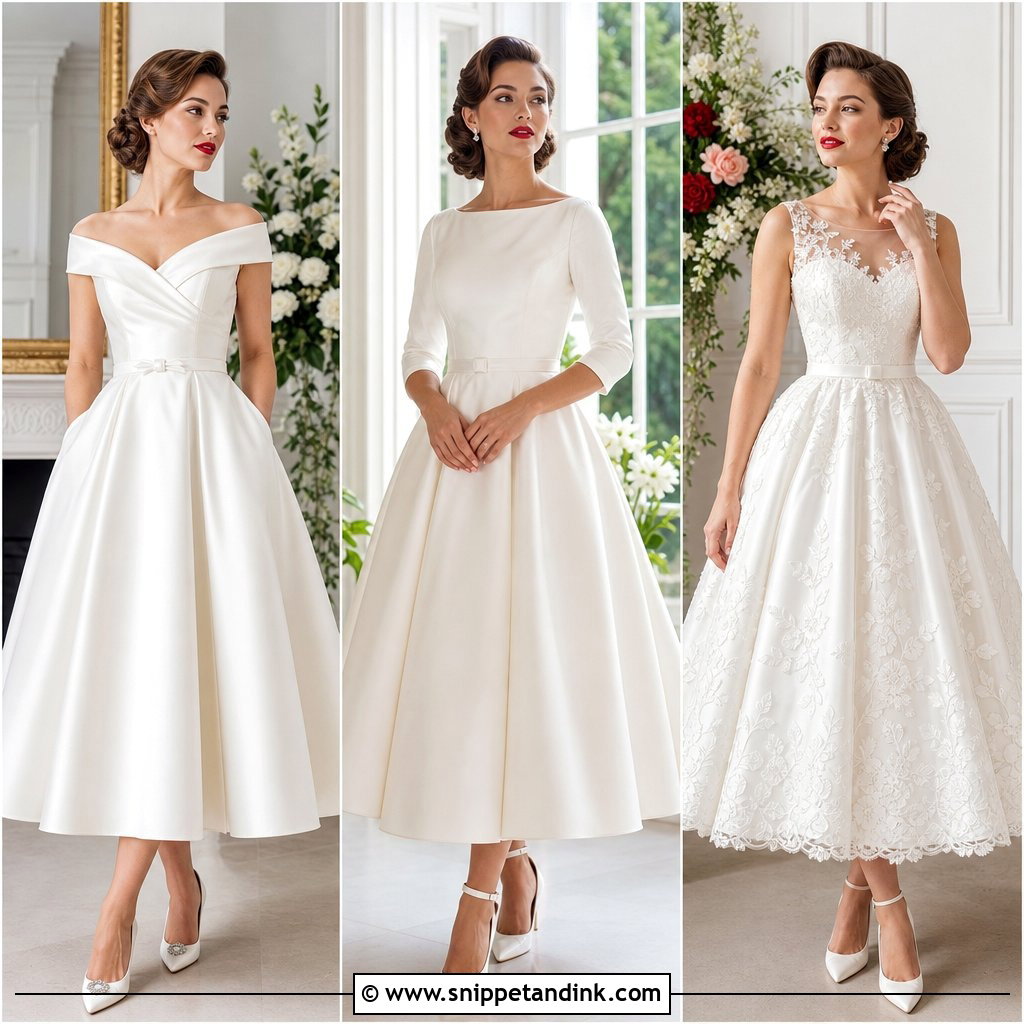
An off-shoulder portrait collar pulls the fitted-and-flared shape toward Old Hollywood. The folded collar has to sit securely across the upper arms, and the usual problem isn’t that it slips down; it rides up when you lift your arms and stays there. Have your tailor watch it while you sit, walk and reach overhead. Below the collar, keep a defined waist and a full satin skirt at tea or floor length. Pearl drop earrings, pointed pumps and a short veil fixed into a polished updo are plenty, and I’d skip the necklace so the open neckline stays clean. A light wrap or cropped bolero keeps you warm between outdoor photos and the reception. Evening venues indoors are its natural home.
9. 1950s Halter Wedding Dress
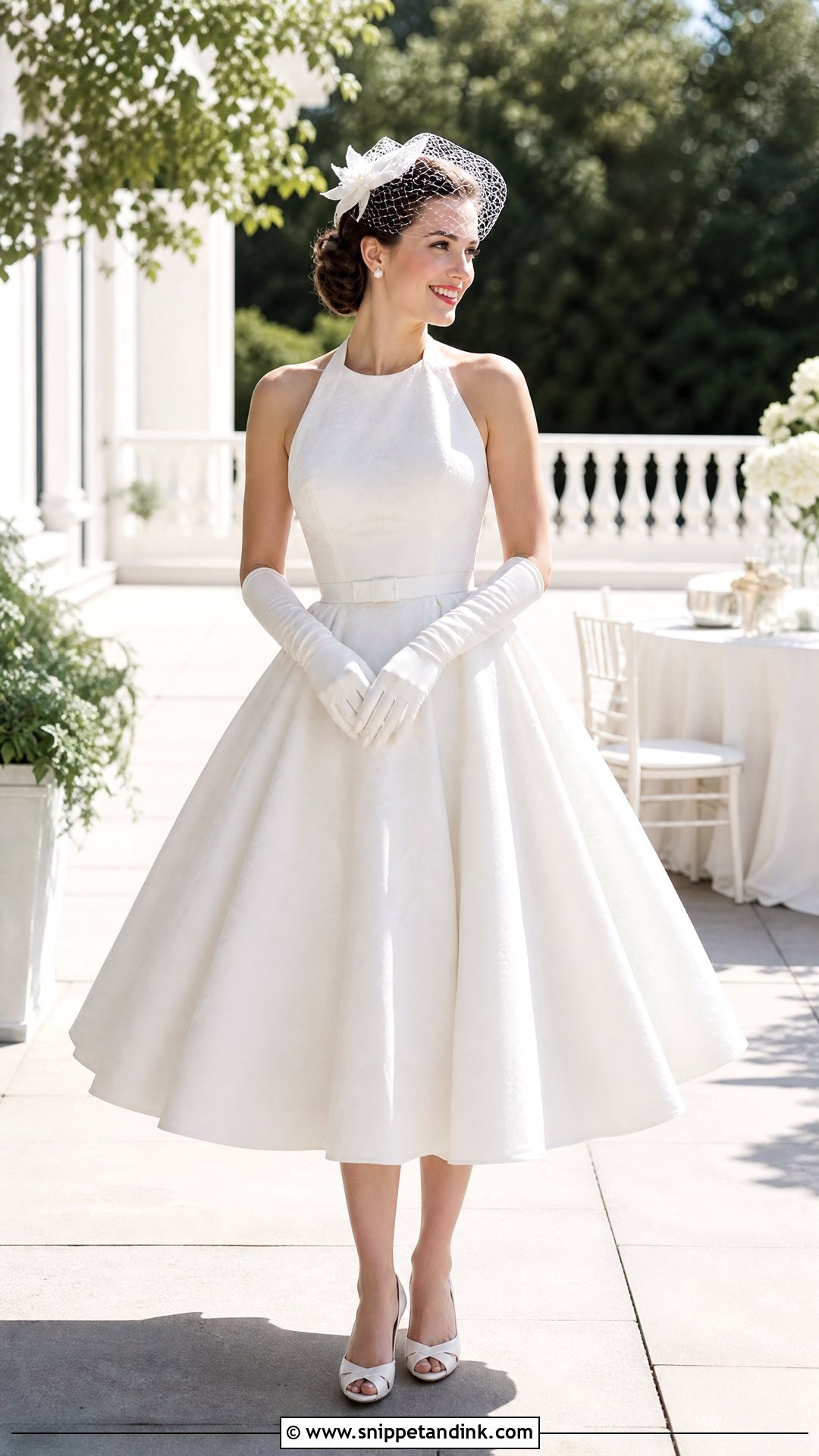
Halters lean more pinup than princess, and I’d only suggest one to a bride who’s comfortable with open shoulders. The strap carries the bodice’s weight around the neck, so its width matters: a thin strap starts to pull after a few hours, a wide one spreads the load and looks more bridal. Look for a supportive bodice with a modest V or gathered neckline, a fitted waist and a full tea-length circle skirt. Elbow gloves or a removable lace bolero balance the bare shoulders during the ceremony. Peep-toe heels, pearl studs and a birdcage veil set slightly to one side, with a rolled updo or smooth ponytail so hair stays off the neckline. On a summer dance floor, cotton sateen or lightweight satin breathes far better than heavy duchess.
10. 1950s Polka Dot Wedding Dress
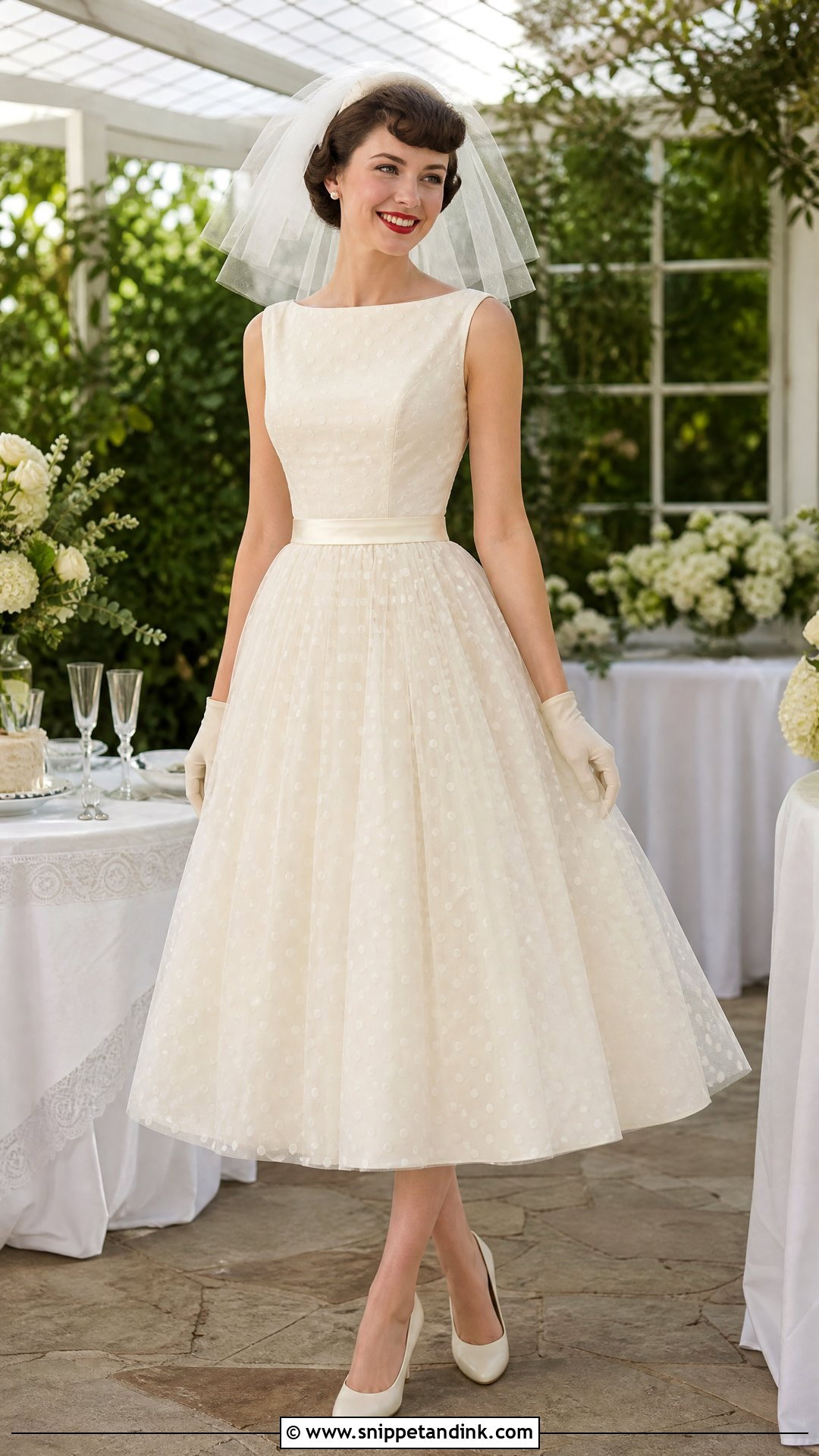
Dots are the riskiest detail on this list, because the gap between charming and costume is narrow. Keep them tiny and tonal, ivory on ivory, ideally in dotted tulle over a smooth fitted bodice and full tea-length skirt. From a few feet away, tonal dots read as texture rather than pattern, which is exactly what you want. A narrow satin waistband, plain ivory pumps, pearl studs and a short blusher veil keep everything else quiet; add one more pattern anywhere and the look tips over. Soft waves or a low curled bun suit it. If a whole dotted skirt feels like too much, put the dotted tulle only on the sleeves, the neckline or the top skirt layer. Daytime and garden receptions are where it belongs.
11. 1950s Tulle Wedding Dress
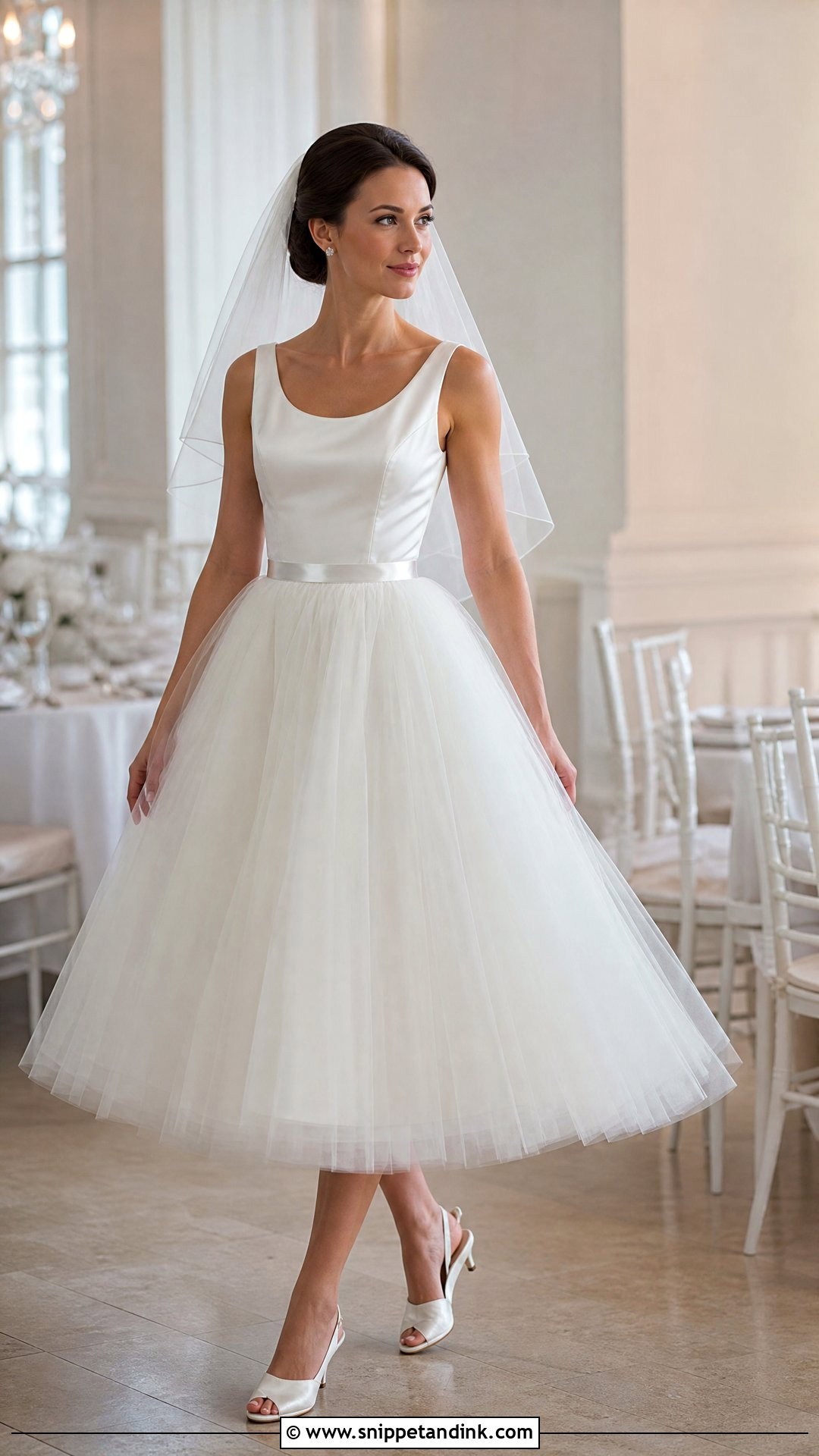
Tulle gives a fifties skirt its bounce, and it’s the fabric I ask brides to touch against bare skin before they commit. Some nylon tulle is scratchy, and a full skirt of it rubs your legs for hours, so a soft lining underneath is worth requesting. The structure I like is a supportive satin bodice with a scoop neckline and natural waist, then several soft tulle layers to tea length, lined so it doesn’t turn sheer in daylight, with a modest petticoat for definition. A satin ribbon belt bridges the crisp bodice and the airy skirt. Slingback kitten heels, crystal studs and a waist-length veil, with a clean updo or shoulder-length curls. The shorter skirt makes dancing easy.
12. 1950s Lace Tea Length Wedding Dress
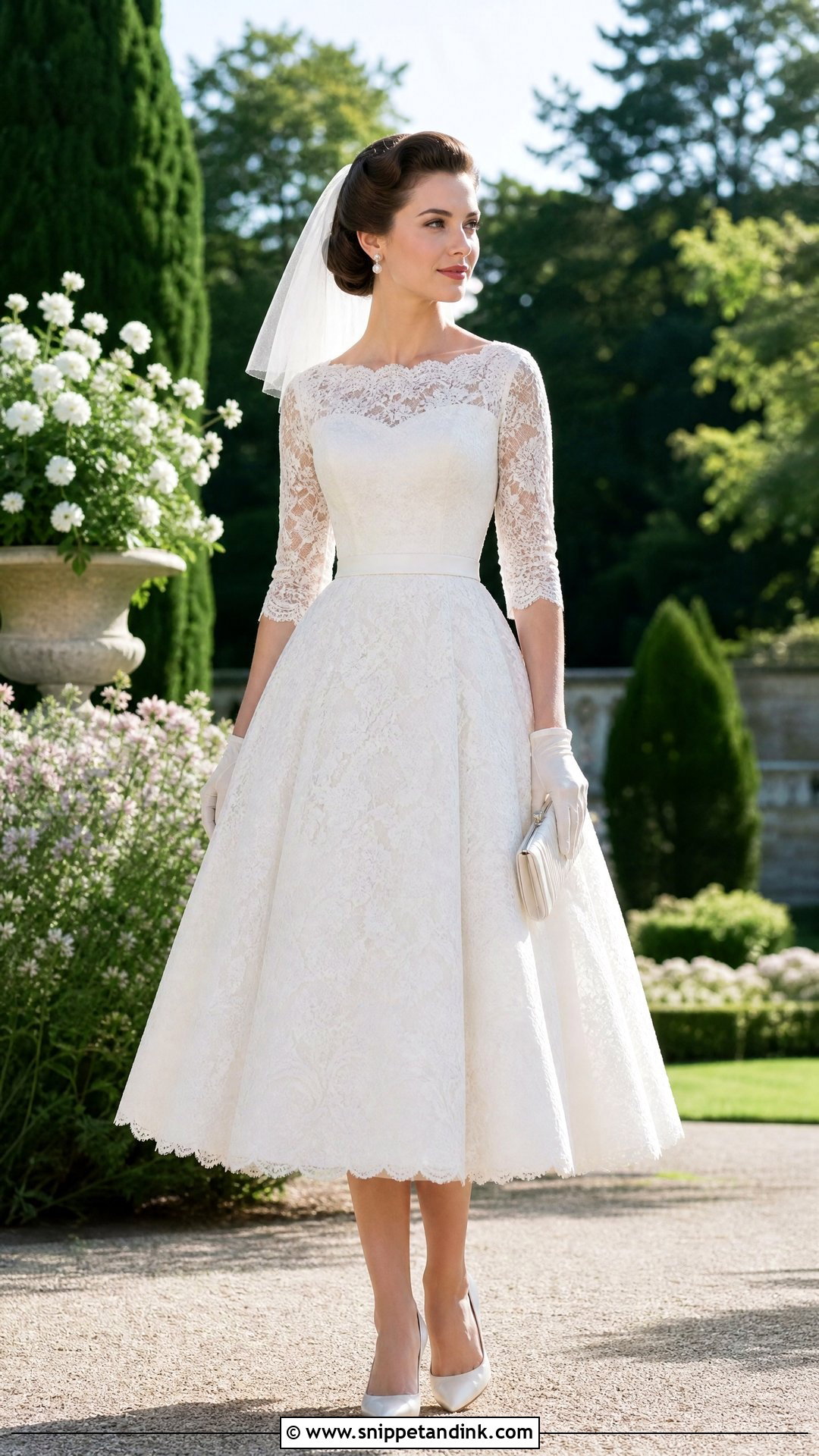
Lace and a tea-length hem together are about as recognizably midcentury as a dress gets. Look for a fitted bodice with a scalloped neckline, short or three-quarter sleeves, and a full skirt of lightweight floral lace over a smooth ivory lining; the lining shows off the pattern and keeps lace off your skin. A narrow grosgrain belt defines the waist without adding sparkle. The detail I spend longest on is the hem. I pin it in the bride’s shoes and look at where it lands on the calf, since a hem stopping at the widest part of the calf makes the leg look heavier, and an ankle strap sitting just below it looks crowded. Almond-toe pumps, pearl earrings, a short veil, a structured clutch and a low curled updo complete a dress that’s easy to move in all day.
13. 1950s Strapless Wedding Dress
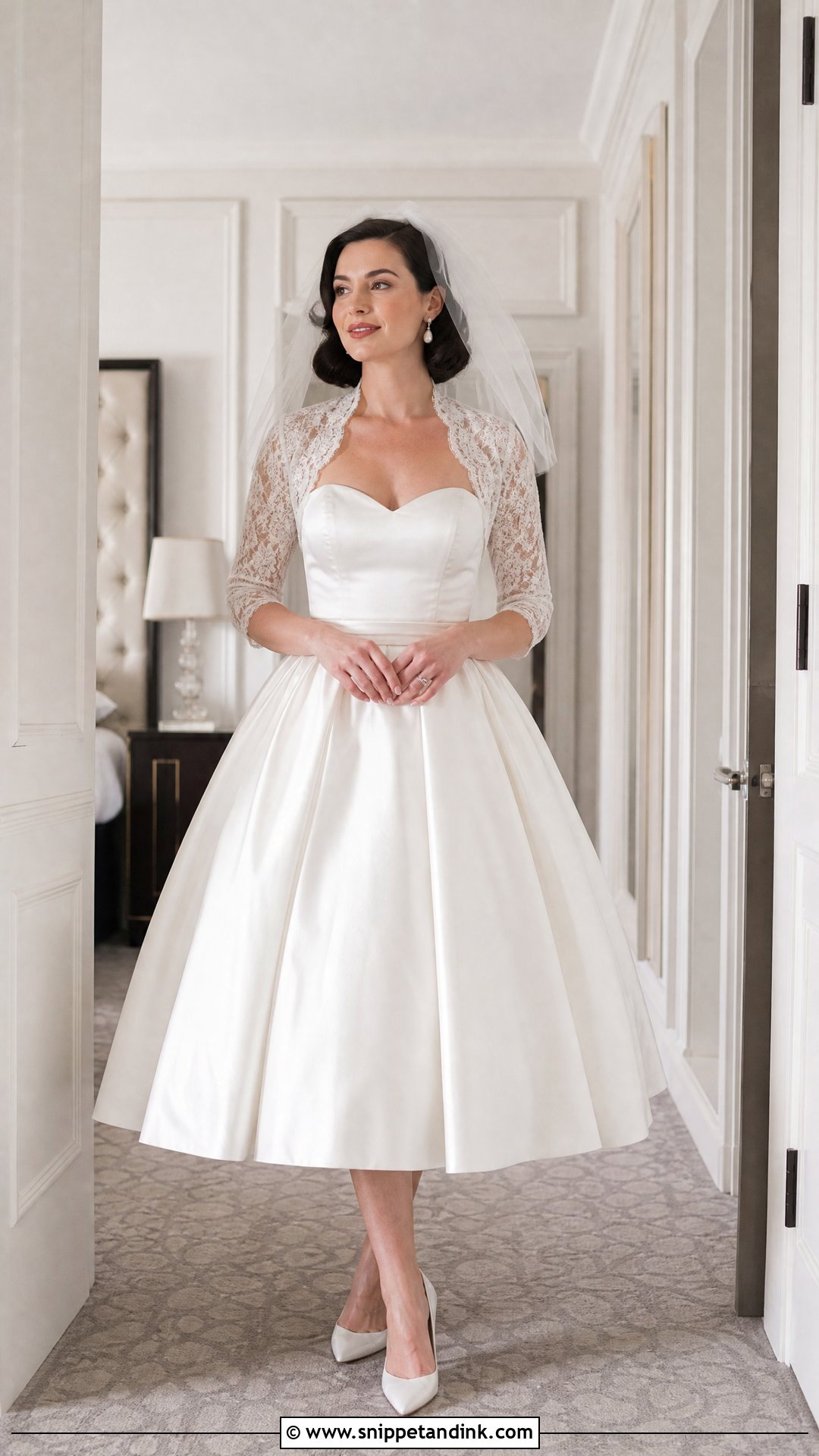
Strapless gives you the cleanest canvas, but only if the bodice is built to stay up by itself. A properly constructed sweetheart bodice holds through internal boning and a snug fit at the ribs, not by squeezing along the top edge. If you catch yourself tugging it up in the fitting room, it isn’t finished yet. I’d pair it with a tea-length satin circle skirt or a floor-length ball gown skirt depending on how formal the day is. A cropped lace bolero covers the shoulders for the ceremony and comes off for the reception, which gives you a second look without a change. Pointed pumps, pearl drops, a fingertip veil and a smooth chignon round it out. Keep embellishment light so the neckline and waist carry it.
14. 1950s High Neck Wedding Dress
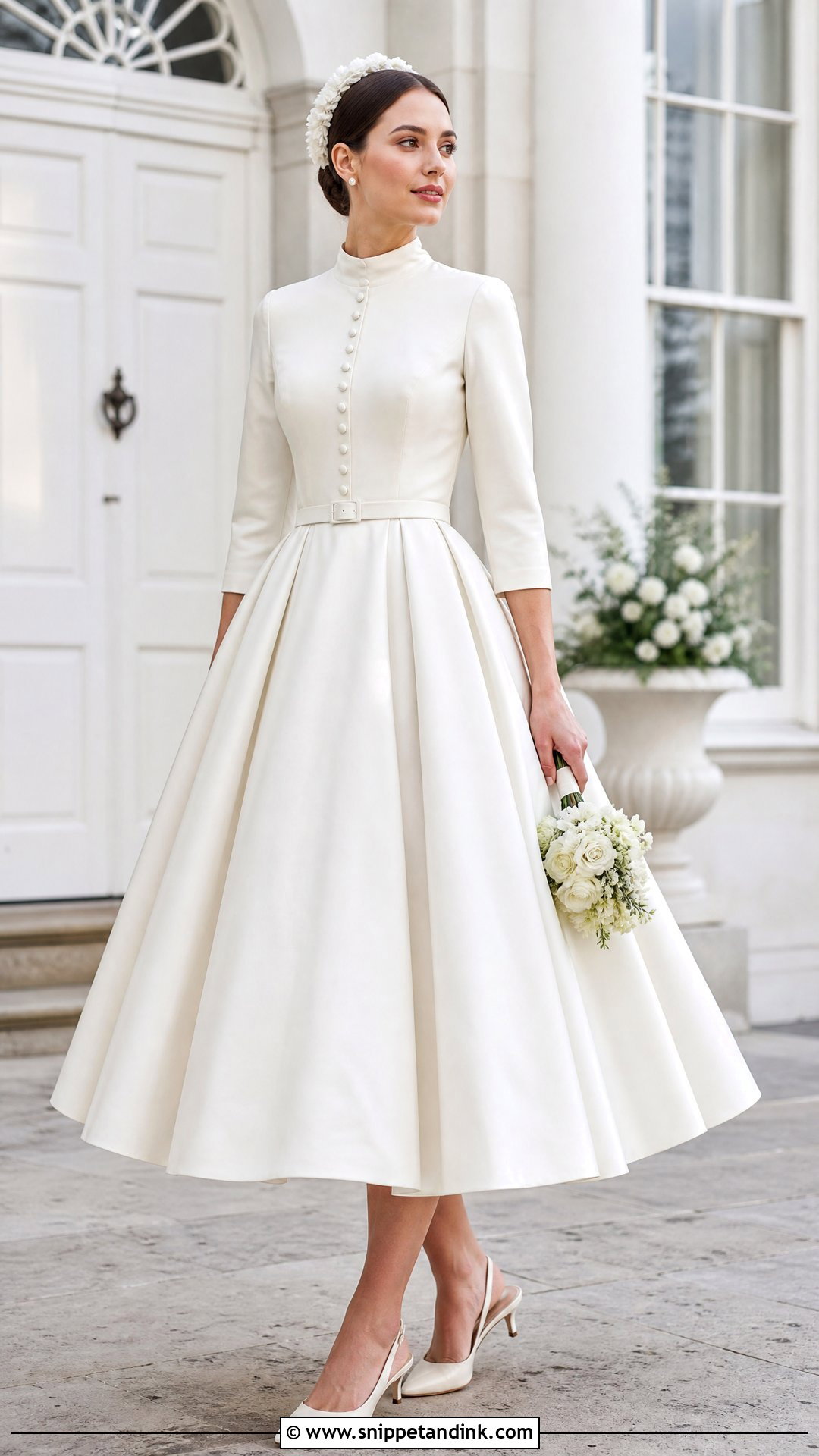
A jewel neckline with covered buttons is quiet and very polished, though a high-neck bodice on a long skirt can look severe. That’s why I’d put it with a full tea-length skirt instead. The bodice can be lace or satin, with short, three-quarter or long sleeves, and a narrow belt breaks up the long line from collar to hem. Skip the necklace, since the neckline frames your face already. Pearl studs, low slingback heels and a small floral headpiece pinned above a neat bun are enough. Do ask for a soft lining inside the collar: a stiff edge is something you notice every time you turn your head, all day. In portraits the high neck draws the eye to your face while the skirt keeps the proportions of the decade.

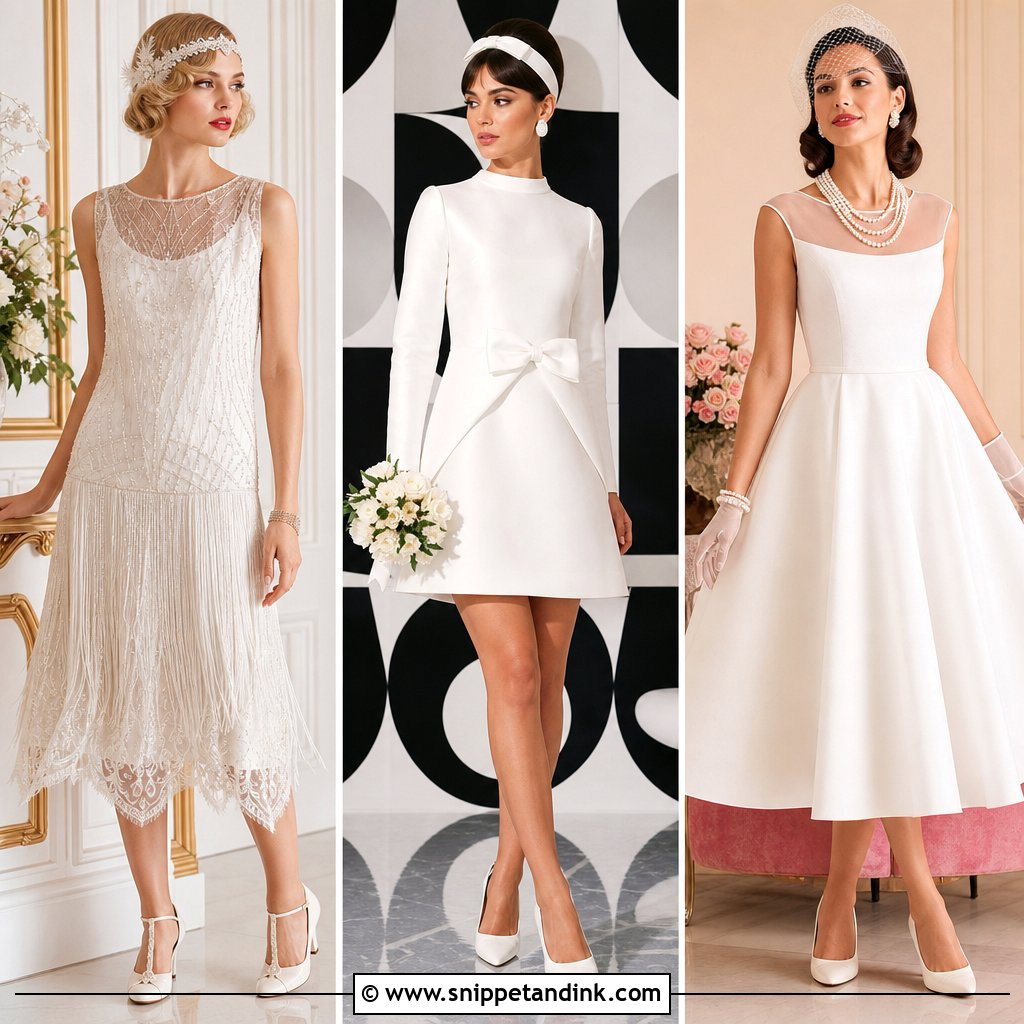

15. 1950s Wedding Dress With Bolero
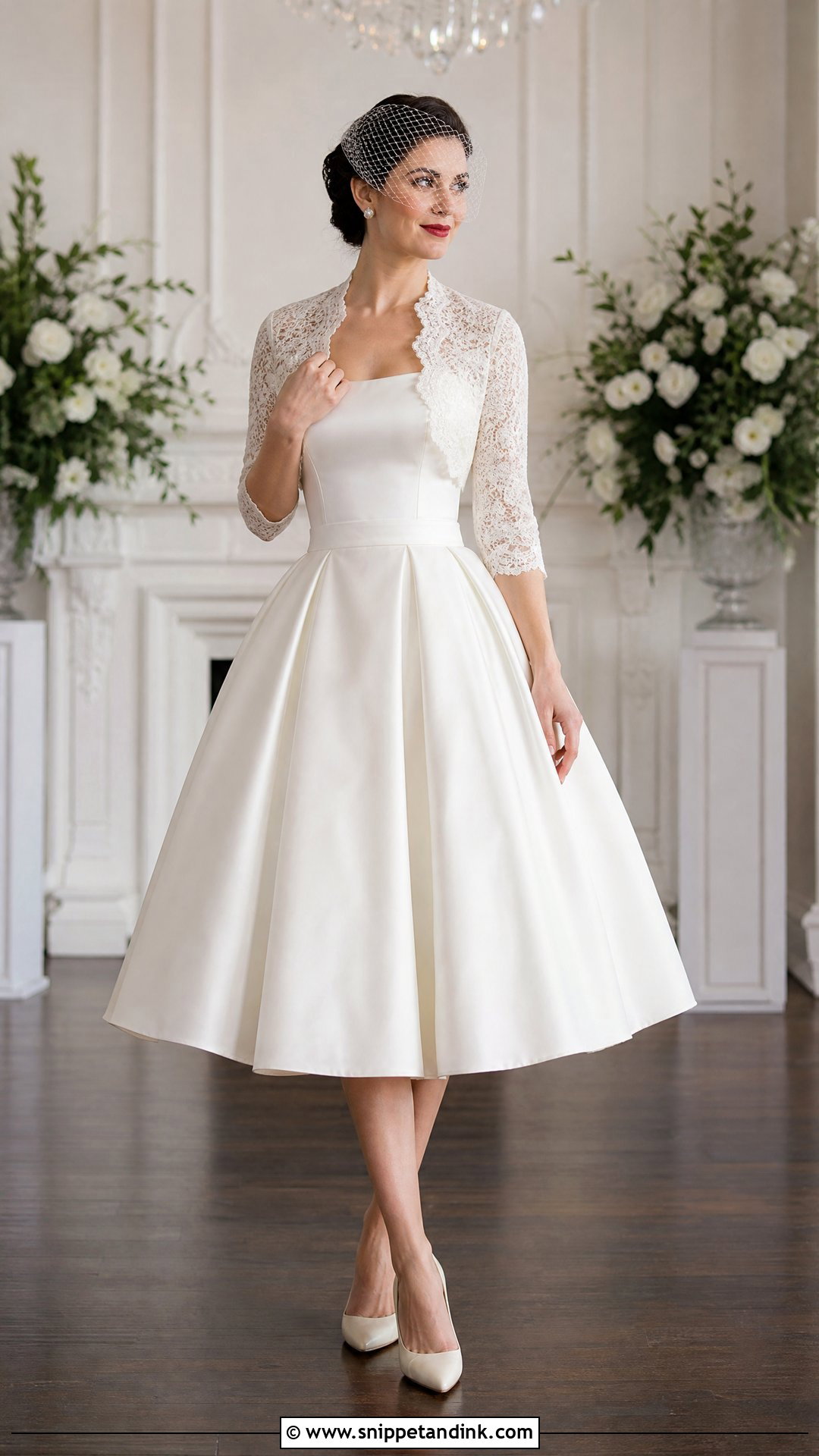
A wedding dress with a matching bolero is really two outfits in one. Start with a sleeveless or strapless tea-length dress with a fitted waist and full satin skirt, then add a cropped lace bolero with three-quarter sleeves and small covered buttons. Length is everything here. The jacket should end right at the waist seam; shorter looks like a shrug, longer hides the waist the whole dress is built around. Ivory pumps, pearl studs and a birdcage veil, with a smooth updo so the collar stays visible, and the bolero comes off for the reception. The trap I watch for is mismatched ivories. Two that look identical under shop lights can split into yellow and pink in photos, so I hold the bolero against the dress in daylight before anything is bought.
16. 1950s Wedding Dress With Gloves
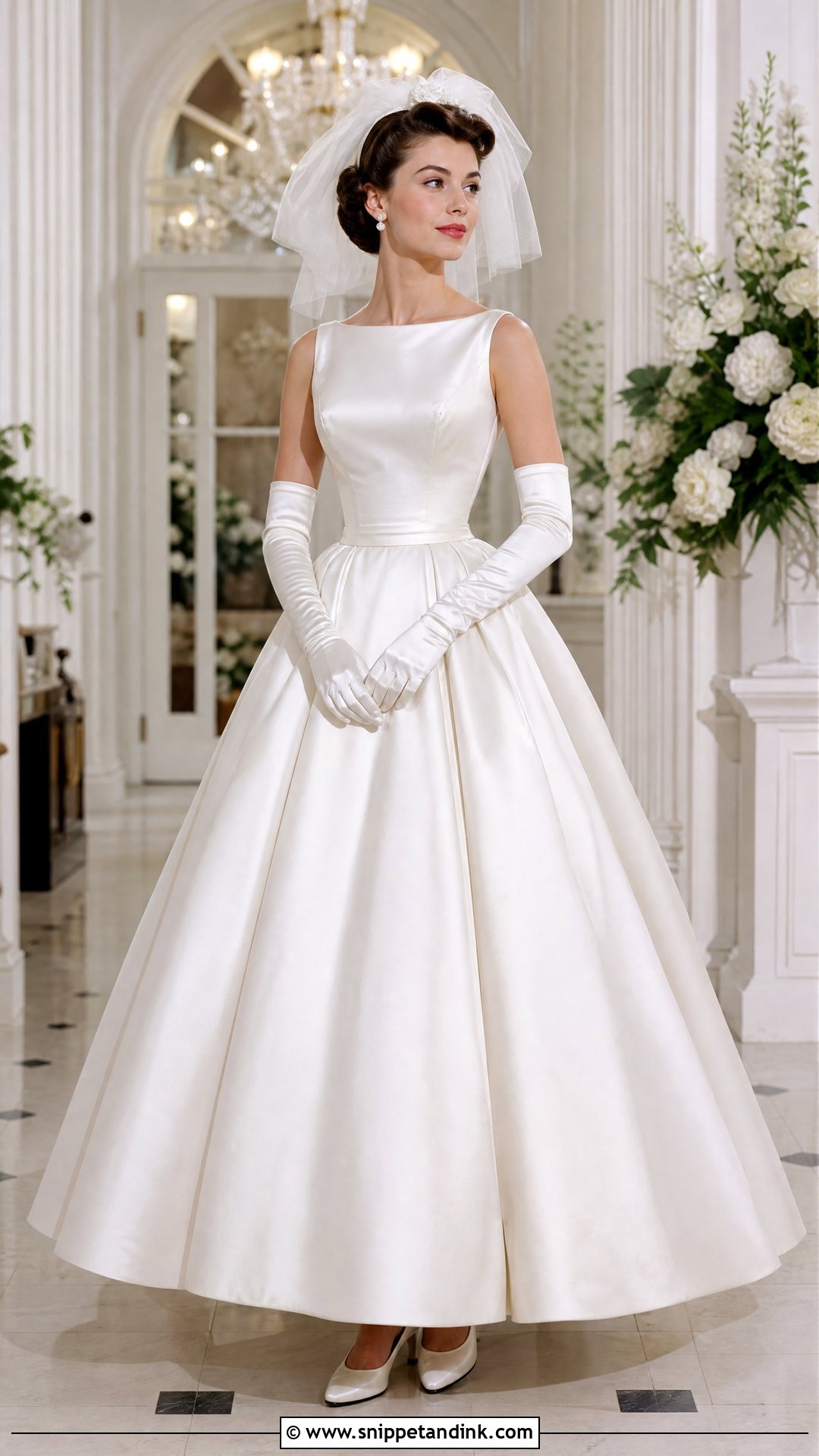
Gloves are the fastest way to make a plain fifties dress formal. Wrist-length gloves go with a tea-length satin dress for daytime; elbow-length belong with a sleeveless floor-length gown. Match the glove fabric to the dress: smooth satin reads formal, sheer mesh softer. Closed-toe pumps, pearl earrings and a short structured veil complete it, and a fitted bodice stops the extra arm coverage looking heavy. Plan the ring moment before the day. Some brides have the ring-finger seam of the left glove opened so the ring slides on over it; others hand the glove to the maid of honor before the vows. Skip bracelets over gloves, they break the line. A minimal dress with no beading gains the most from this detail.
17. 1950s Wedding Dress With Petticoat
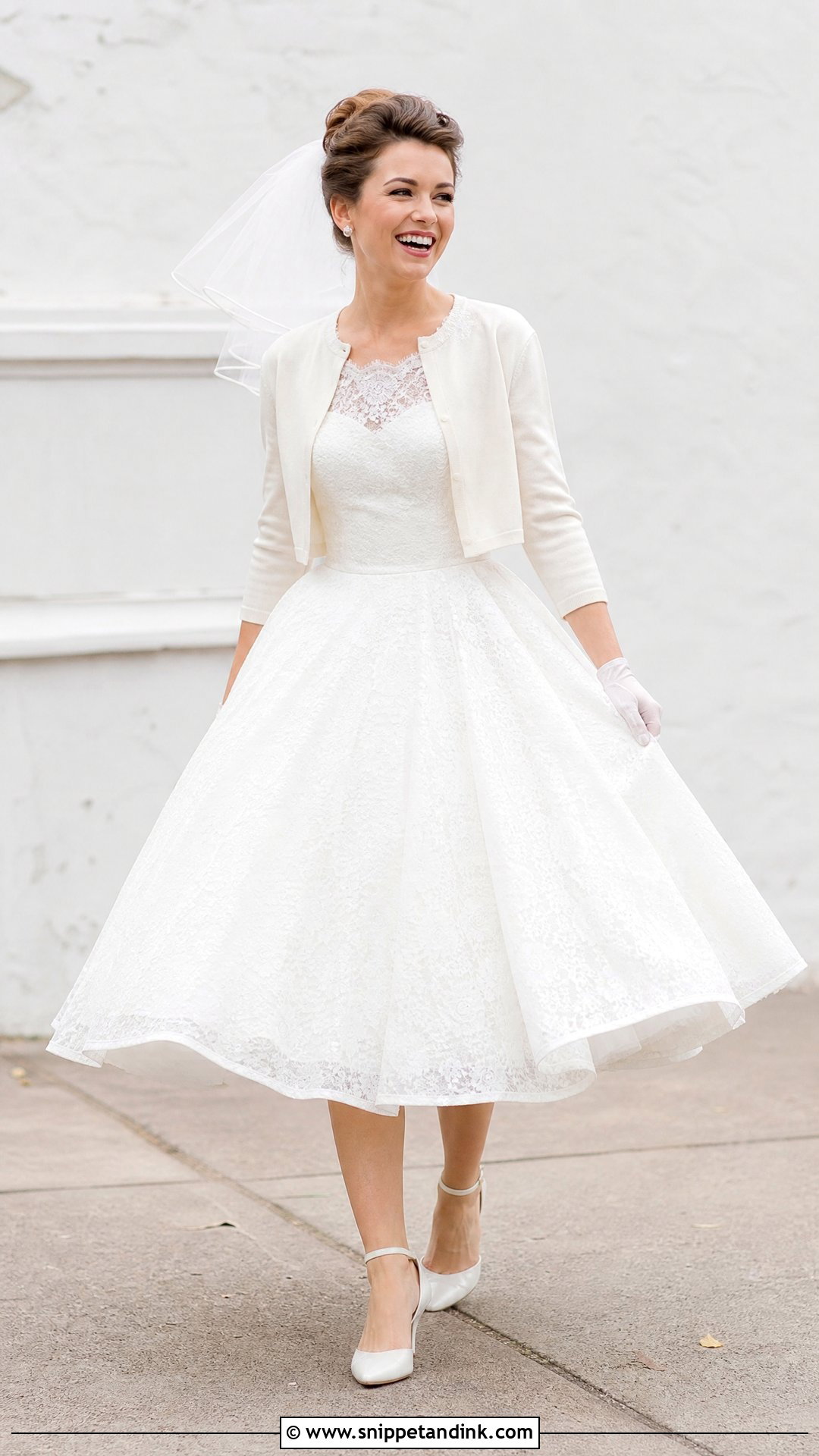
A petticoat gives a 1950s wedding dress its recognizable shape, and the amount of fullness is where most people go wrong. The petticoat must finish above the dress hem, a little shorter than the skirt, so no net peeks out when you sit. Under a fitted tea-length dress in satin, cotton sateen or lace, that usually means knee or calf length. One light layer gives a subtle lift; a fuller design lifts a circle skirt evenly for the strong retro version. I always check the waistband and the inner layer, because stiff net scratches and a tight band digs in after the meal. Ankle-strap heels, pearl earrings and a short veil, plus a fitted cardigan or bolero if you want cover. Practice sitting, walking and climbing stairs in it at home; the volume changes how you move.
18. 1950s Blush Wedding Dress
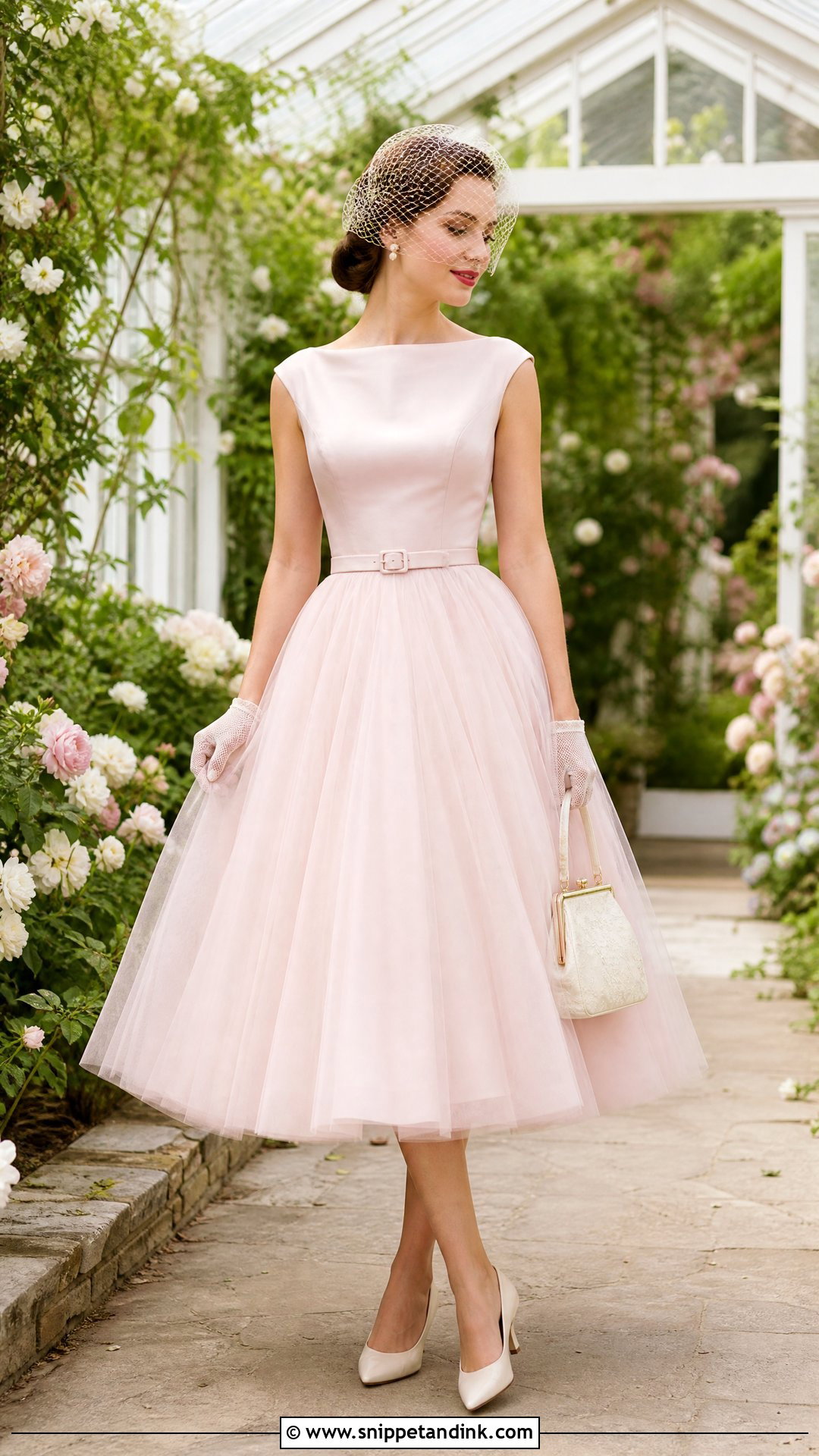
Blush is the gentlest step away from ivory, but the shade has to stay muted. A strong pink turns a fifties silhouette into a party dress. Keep the bodice fitted, the waist defined and the skirt full at tea length, in pale pink satin or tulle, with a slim satin belt in the same blush so the waistline isn’t interrupted. Ivory kitten heels, pearl earrings and a light ivory birdcage veil, a cream bag for the reception and smooth side-parted waves. Pick one metal, silver or pale gold, and stay with it. Undertone is what I check before anything else: some blushes lean peach, some lean lilac, and only daylight shows which one suits your skin. Take the swatch outside.
19. 1950s Floral Wedding Dress
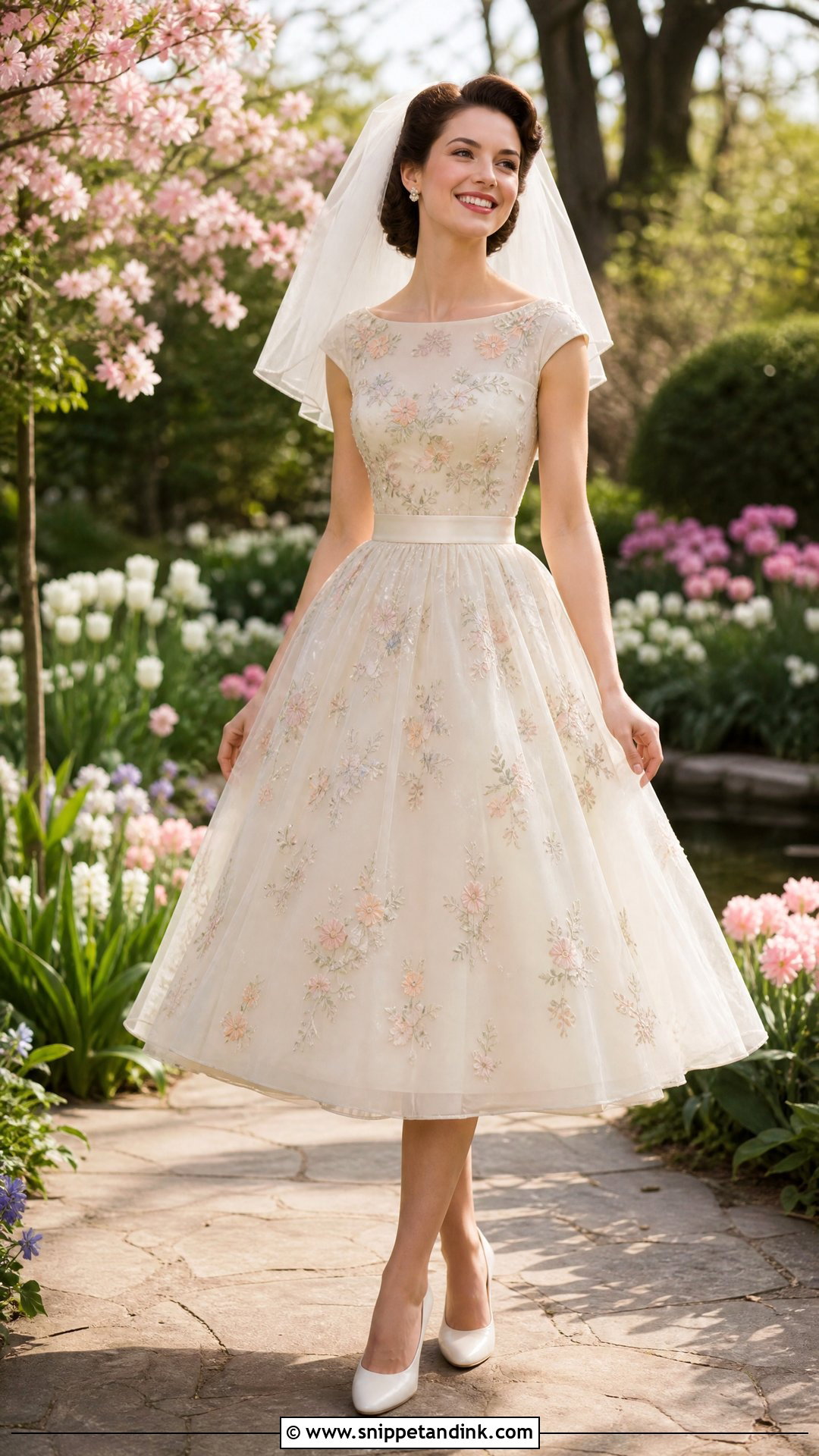
Florals add cheer to a fifties outline, provided the pattern sits on a calm base. Embroidered flowers, floral lace or softly printed organza over ivory all suit a tea-length dress, as long as the bodice stays fitted and the skirt full so the pattern has structure around it. A narrow ribbon belt can pick up one color from the flowers. Everything else stays plain: solid ivory pumps, pearl studs, a plain short veil, a smooth bun or shoulder-length curls. I’d brief your florist too, because a busy bouquet against a printed skirt turns into noise; something small and tonal reads better. For a quieter version, keep floral appliqués to the neckline or hem. Spring and garden weddings are its season.
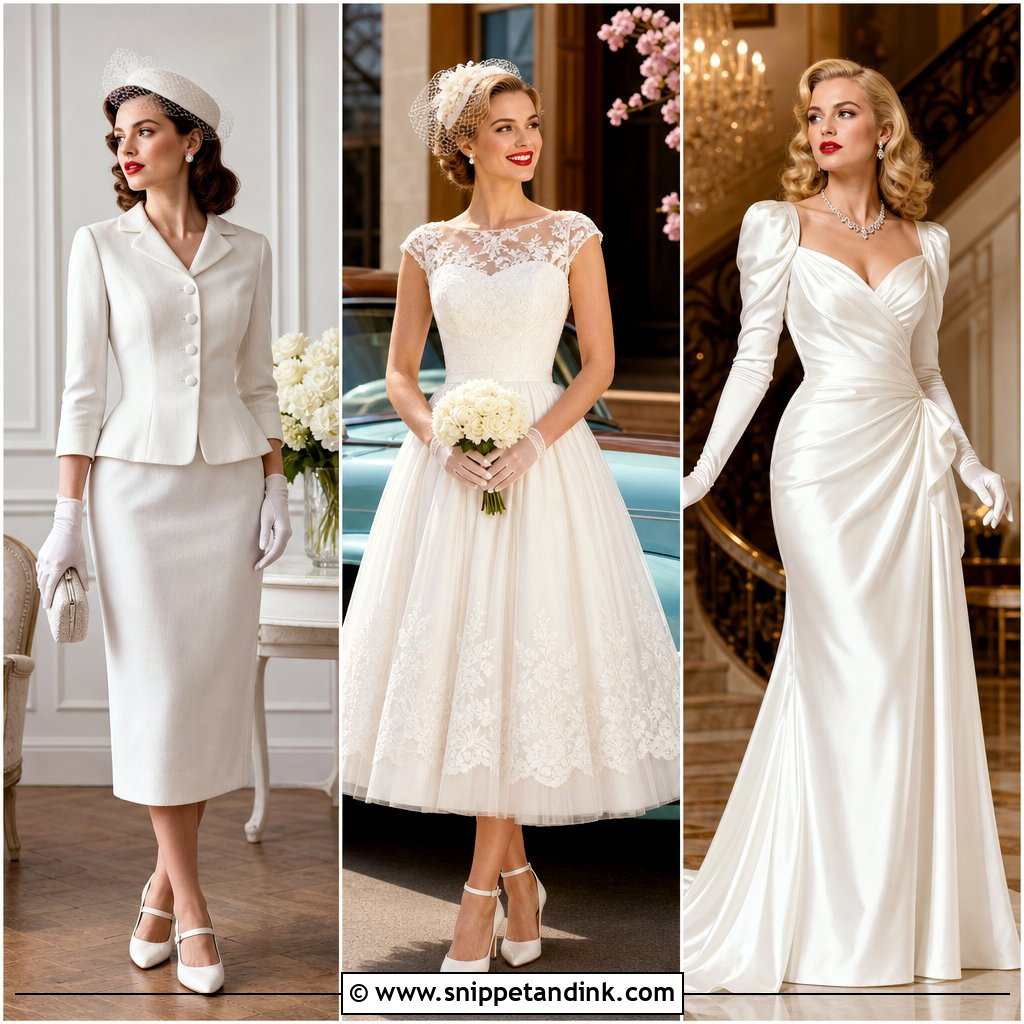
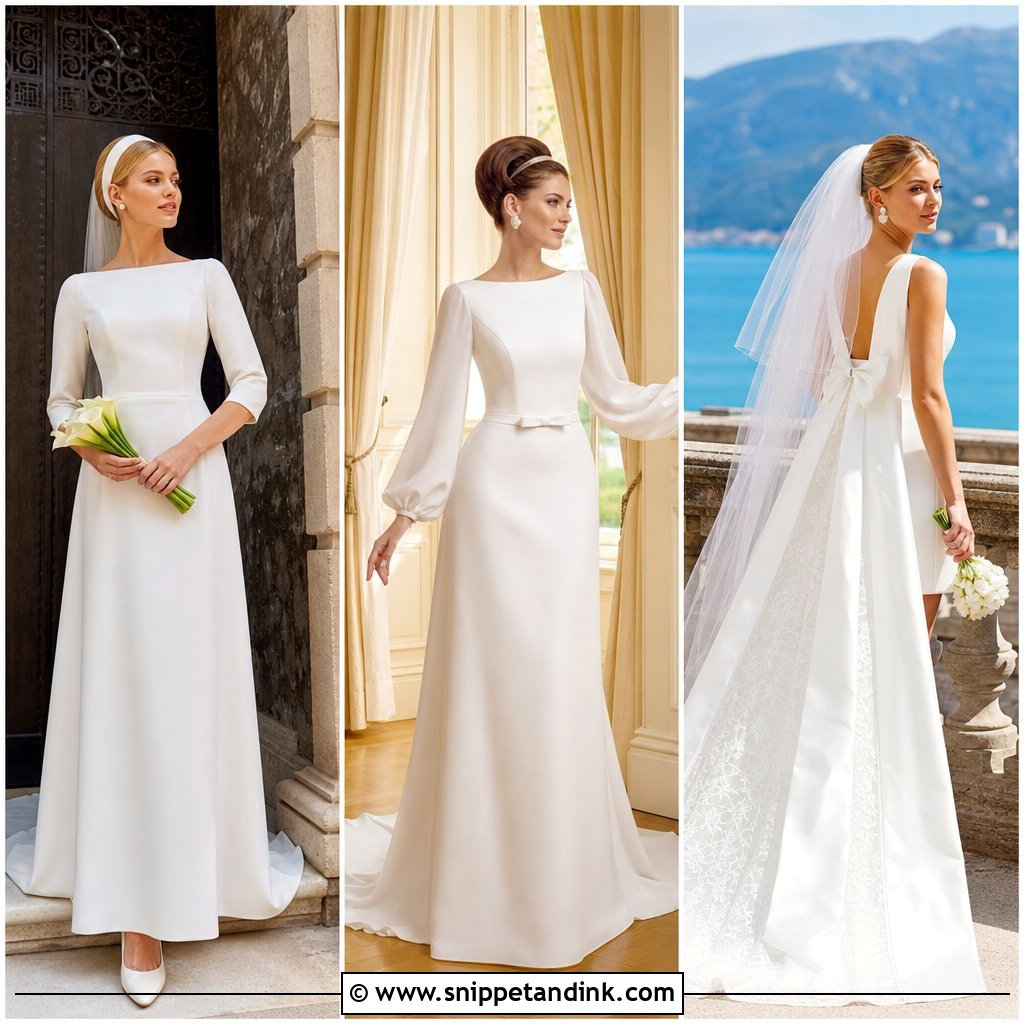


20. 1950s Plus Size Wedding Dress
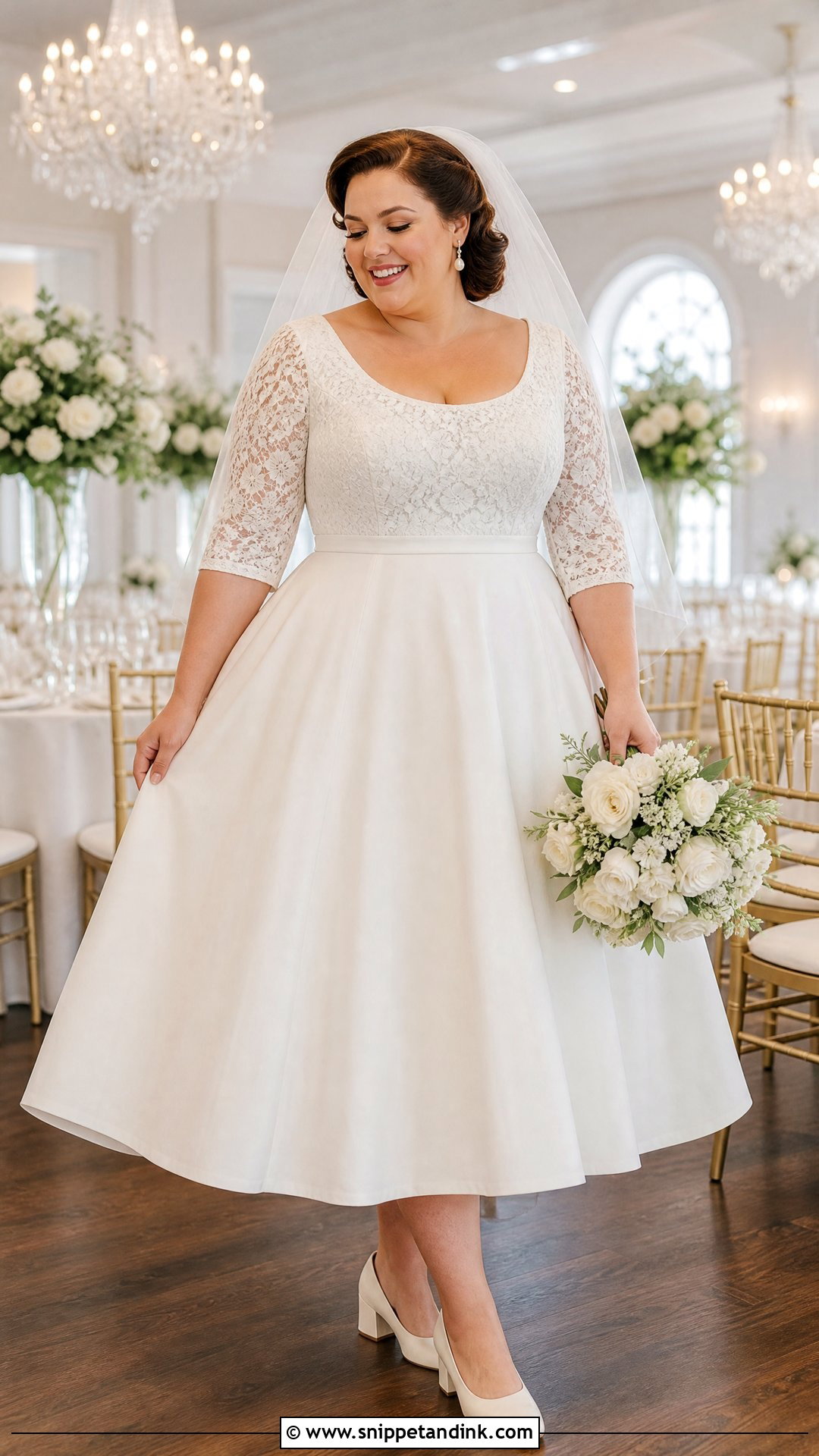
On a fuller figure the 1950s shape works best when it’s engineered, not simply sized up. Start with a fitted bodice with a sweetheart, scoop, or portrait neckline and a waist seam placed at your own natural waist, which may sit higher or lower than the pattern assumes. A structured A-line or full tea-length skirt falls smoothly over the petticoat, and wider straps, lined lace sleeves or a cropped bolero add support. Comfortable block-heel pumps, pearl earrings and a fingertip veil finish it. One thing I tell every bride: don’t order a size down hoping alterations will rescue it. Taking a dress in is routine work; letting it out depends on seam allowance, and some gowns have almost none. Sit and move in the full outfit at every fitting.
Genuine 1950s Gown or a New Dress Cut in the Style?
Brides who love this decade often ask whether to hunt for a real dress from the period. I’m happy to help with either, but they are different projects.
If you buy an original
- Ignore the label size. Vintage sizing runs much smaller than modern labels, so go by bust, waist and hip measurements taken flat.
- Inspect it in daylight: underarms for old stains, silk for splitting along the folds, the zip for rust, and the satin for yellowing at the creases.
- Look inside the seams before you get excited. Generous seam allowances mean the dress can be let out; trimmed ones mean it can only be taken in.
- Budget time and money for a specialist cleaner and a seamstress used to delicate fabric, and expect that some marks will soften rather than disappear.
If you choose a reproduction
A new gown gives you modern sizing, fresh fabric and the option of a hidden zip or built-in support. The trade-off is lead time, since made-to-order dresses can take several months before alterations even begin. Ask the maker whether the petticoat is included or sold separately, because many fifties-style dresses are designed to be worn over one but don’t come with it.
Satin and Tulle From Final Fitting to Morning Of
Collect the dress as late as your seamstress allows, then hang it by its inner hanging loops on a padded hanger so the bodice doesn’t take the weight of the skirt. Store it in a breathable cotton garment bag. Plastic traps moisture and is best kept for the car journey only.
Petticoats crush flat in a bag, so I hang them separately and give them a shake on the morning to bring the volume back. Satin should be steamed, never pressed directly with an iron, which can leave a shine mark you can’t remove; keep the steamer moving and test inside the hem first. Tulle relaxes with steam held at a distance, but too close and the net can pucker.
Afterwards, get the dress to a cleaner within a few weeks. Spilled champagne and frosting can dry invisible on ivory and then turn brown as they age, and they’re much easier to lift while they’re fresh.
Where the Waist Seam Lands Decides the Whole Look
Nearly every dress here grows from three things: a defined waist, a shaped skirt and accessories chosen with restraint. Lace at tea length is the playful, practical end; a satin ball gown is the formal end. Sleeves, boleros, gloves, veils and petticoats then let you turn coverage and volume up or down without losing the decade. My order of priorities never changes: fit, then how the fabric feels after hours of wear, then how freely you can move, and only after that the accessories. Audrey simplicity, Grace Kelly lace, blush tulle or a floral circle skirt, the right one is the dress you’ve stopped thinking about by the speeches.
You'll Like These Ideas:





Leave a Reply