
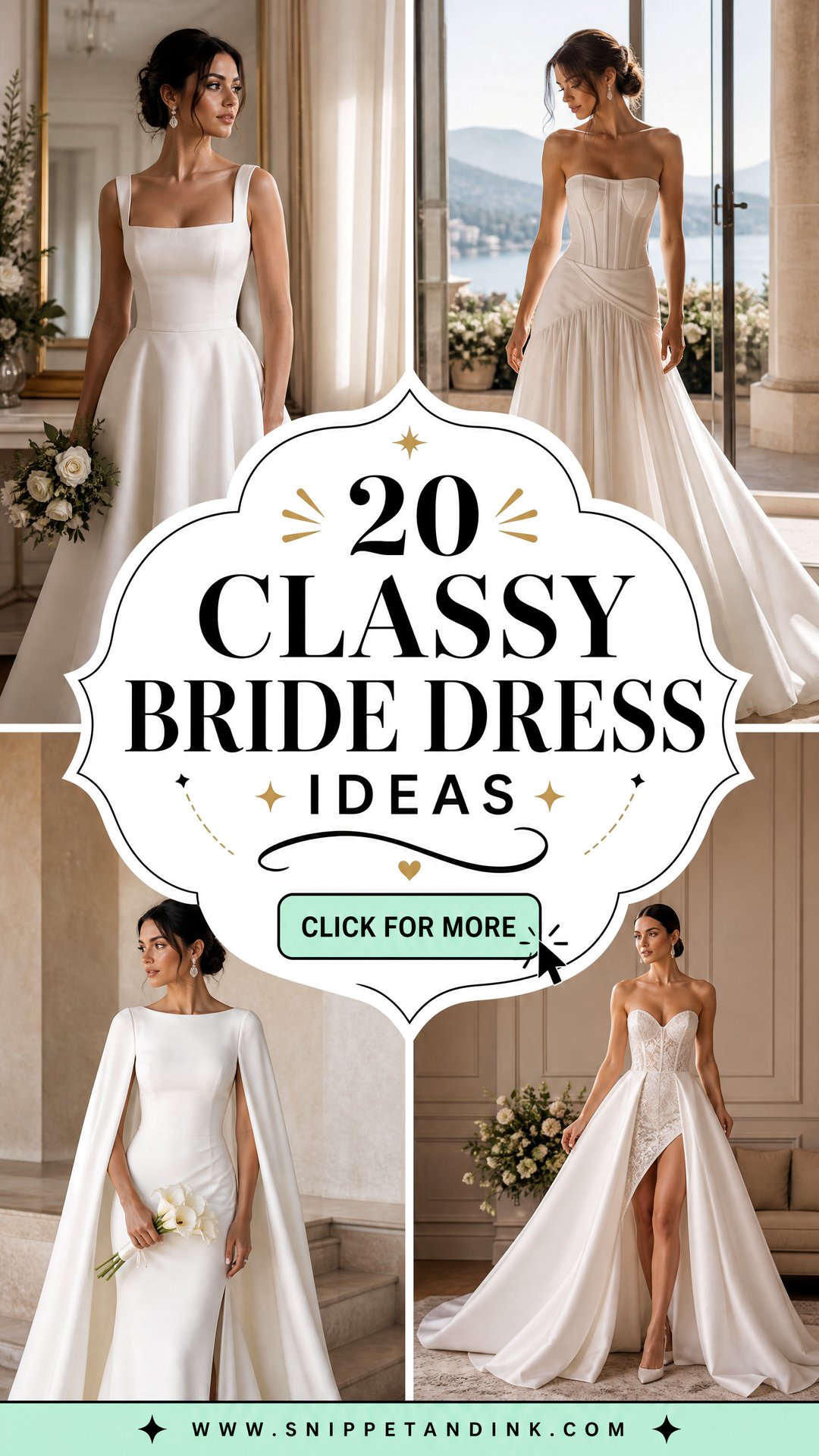
Classy, in a wedding dress, mostly means restraint: one strong idea, good fabric and a fit that lets you move. These 20 Classy Bride Dress Ideas range from structured satin and clean crepe to lace, floral appliqué and detachable layers, plus the shapes that keep coming back into collections, like drop waists, tea-length hems, corsetry and convertible gowns. What I care about at a fitting is less the trend than the practical stuff: does it suit your proportions and venue, and can you sit, climb steps and hug people in it? Accessories come after, and they should support the dress, not argue with it. Regal, minimal, romantic or modest, each idea below is styled head to toe.
How Many Months a Made-to-Order Gown Really Needs
Most of the dresses below are ordered, not bought off the rail. When you say yes in a bridal shop, the gown is usually made to your size afterwards, and production commonly takes several months. Many designers quote somewhere around four to eight months; some couture and heavily embellished pieces take longer. Then alterations need their own time on top.
A timeline I’d work back from:
- Start shopping around nine to twelve months before the wedding, so a full production window still fits.
- Order by roughly seven or eight months out. Ask the shop for the designer’s quoted delivery date in writing.
- Book your first alteration fitting for about two to three months before the day. Most brides need two or three fittings.
- Have the final fitting within the last two weeks, with your actual shoes and underwear, and collect the dress then.
Shorter timelines are possible. Sample sales, off-the-rack shops and rush fees exist, but rush options usually cost extra and limit your choice of styles. If your date is less than six months away, tell the consultant at the start so she only pulls gowns that can arrive in time.
1. Classic A-Line Wedding Dress
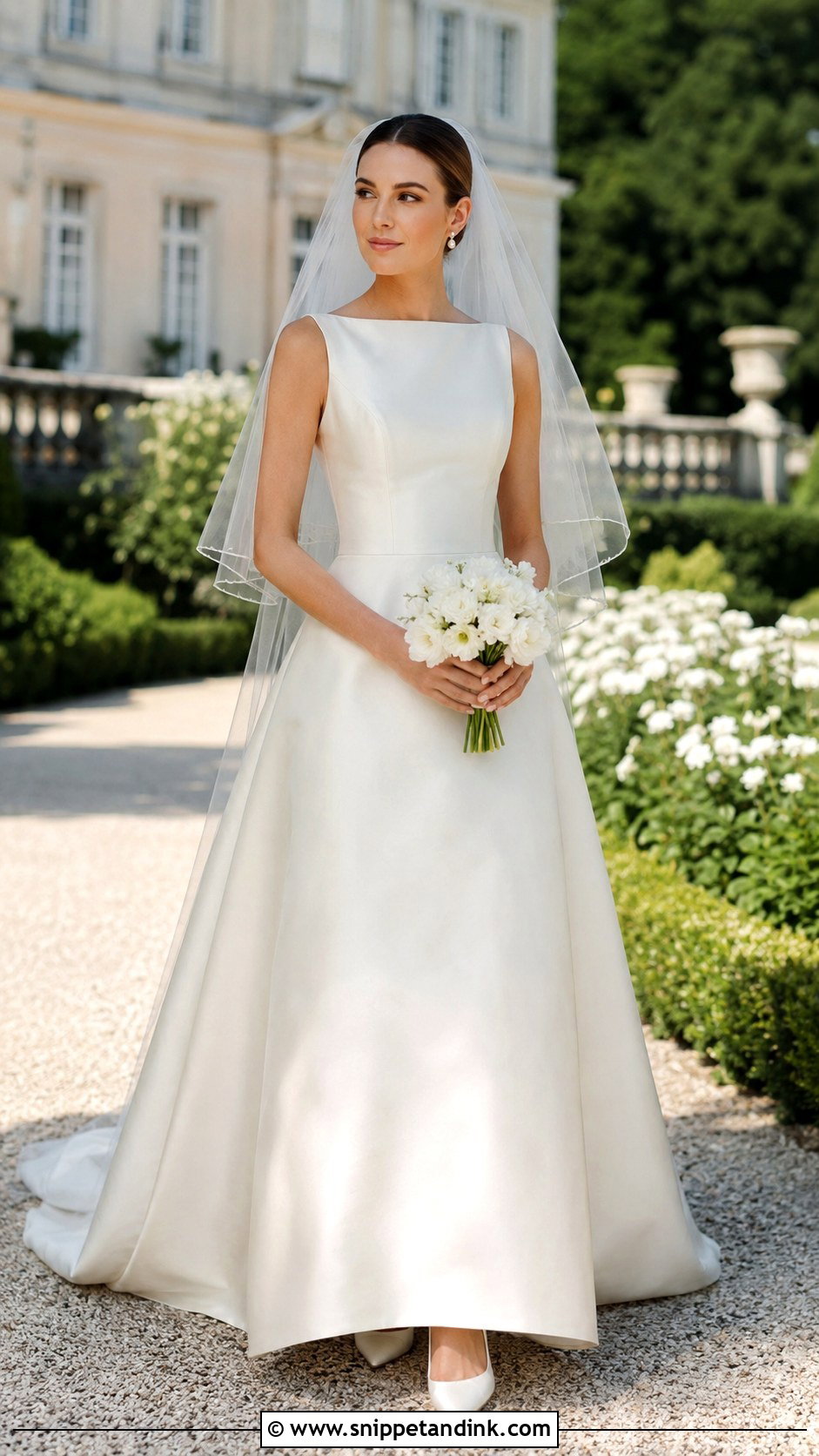
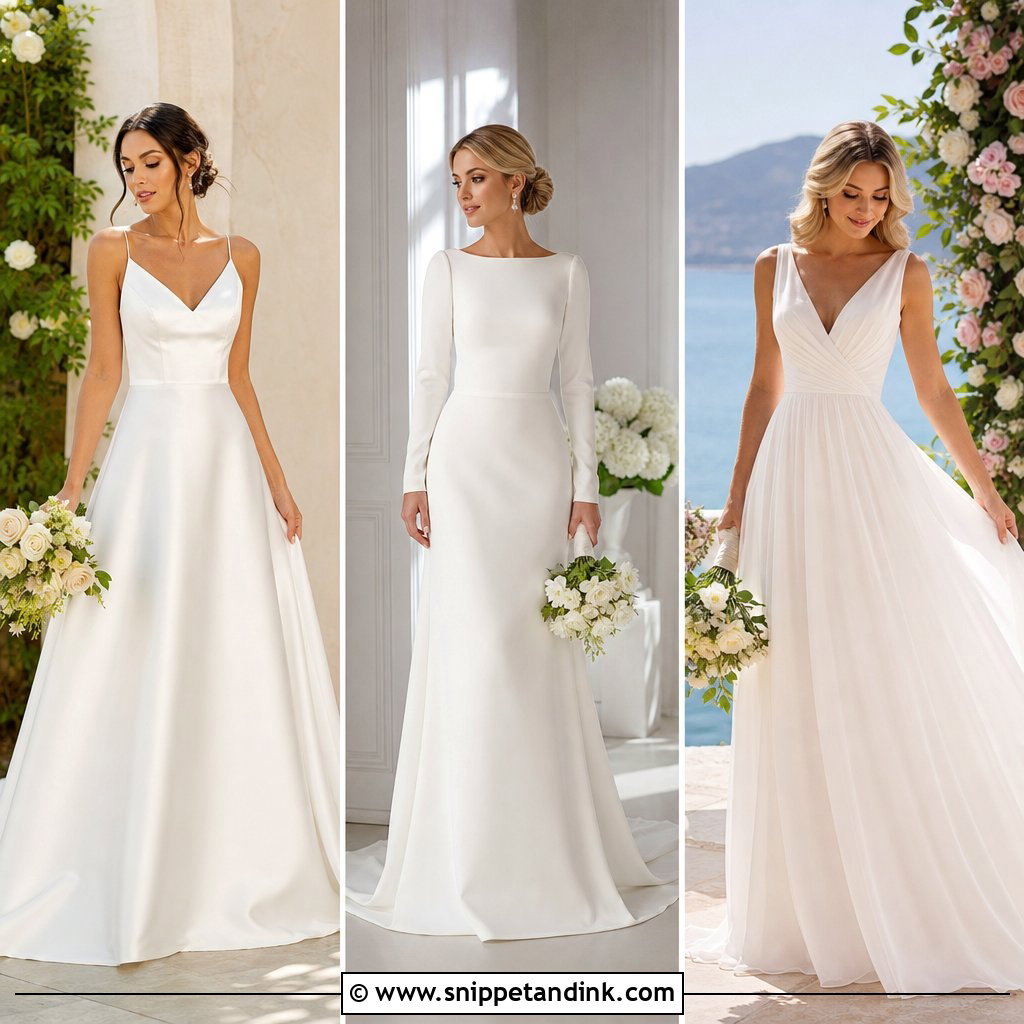
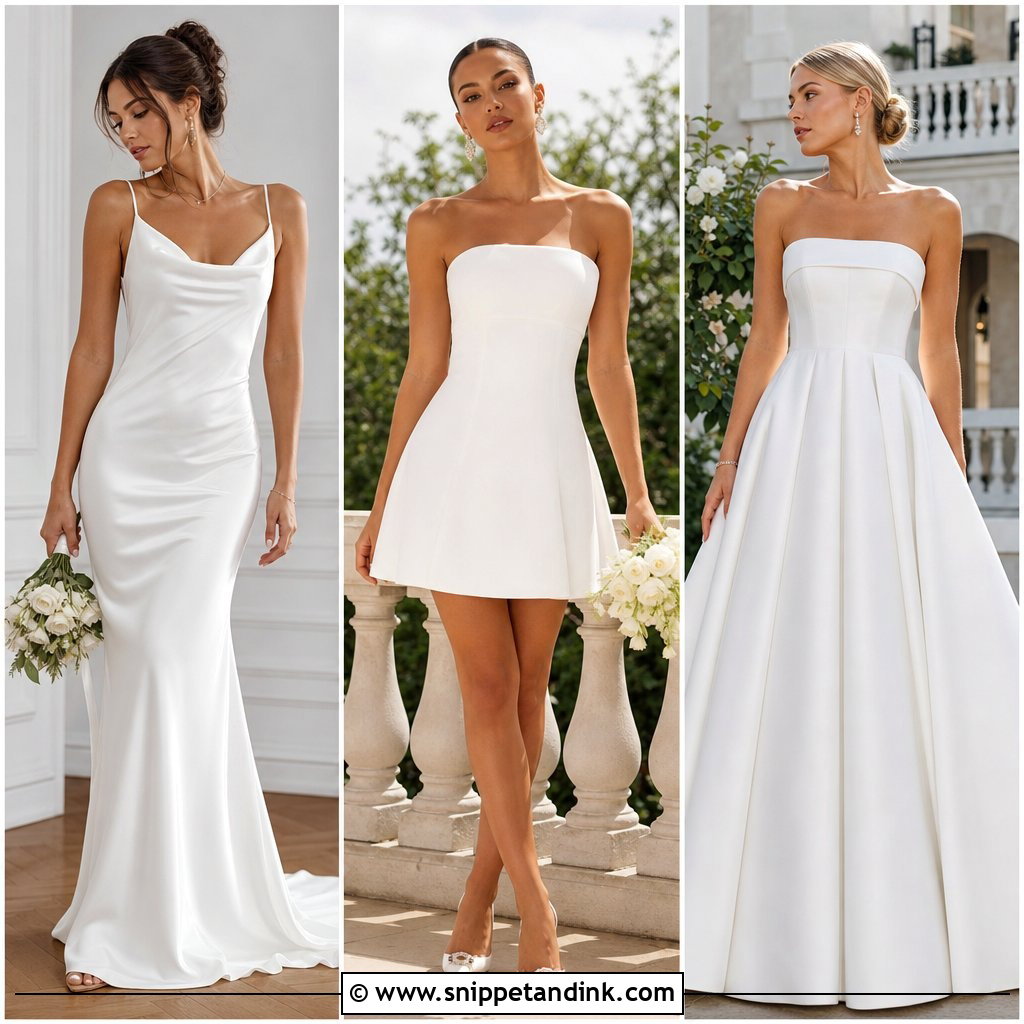
If you can’t decide on a silhouette, start with an A-line. It’s the shape I pull first for almost everyone, because a fitted bodice with a skirt that releases from the waist flatters most figures and hides nothing awkward when you sit. Ivory satin gives it crispness; soft crepe or light organza makes it gentler. Pick the neckline by how much support you need: bateau and soft rounded necks hold a strapless bra line, while a V needs built-in cups. Pointed pumps, pearl drops, a fingertip veil with a narrow satin edge and a small white bouquet with greenery suit a ballroom as easily as a garden, in any season.
2. Satin Ball Gown Wedding Dress
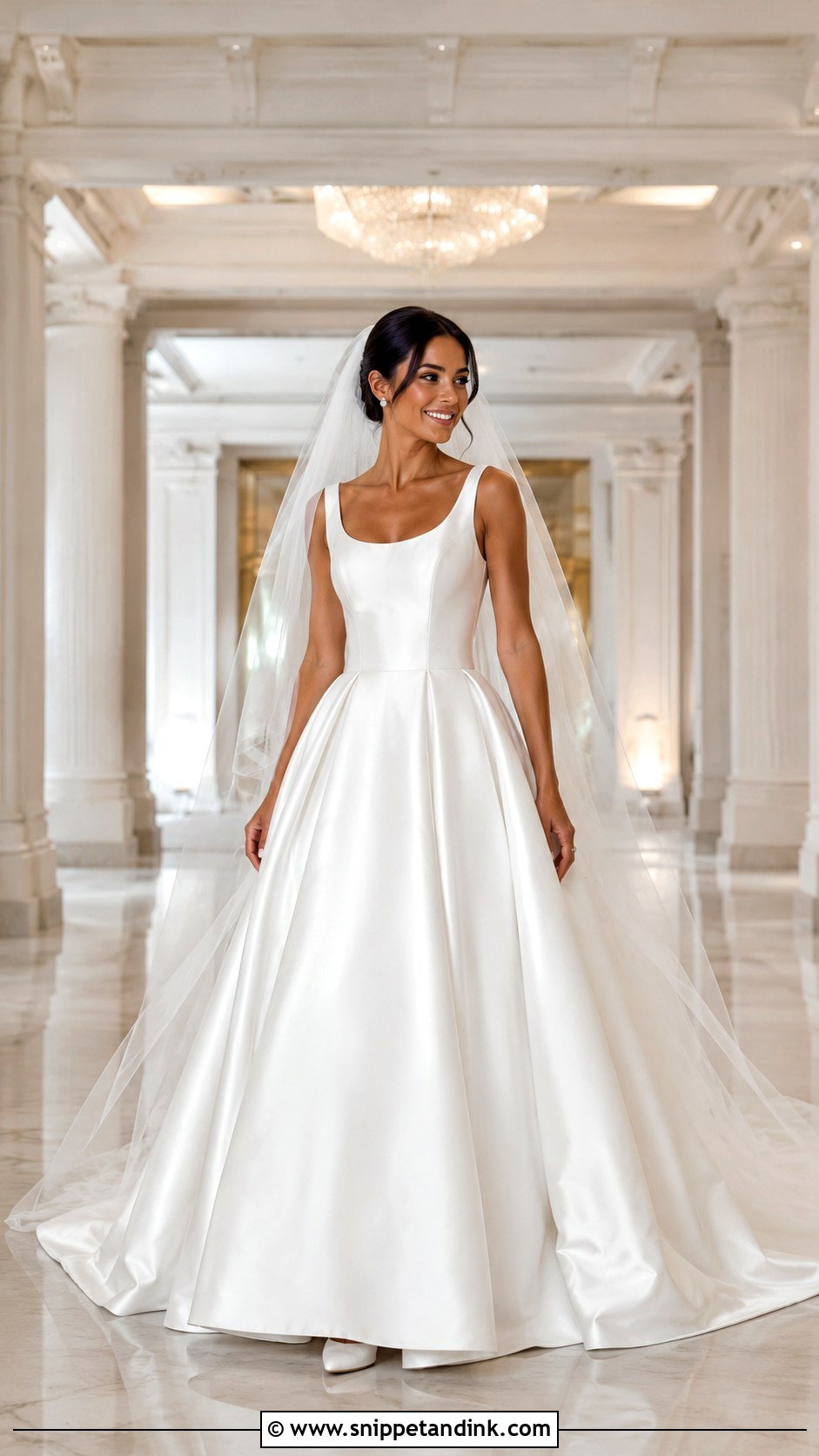
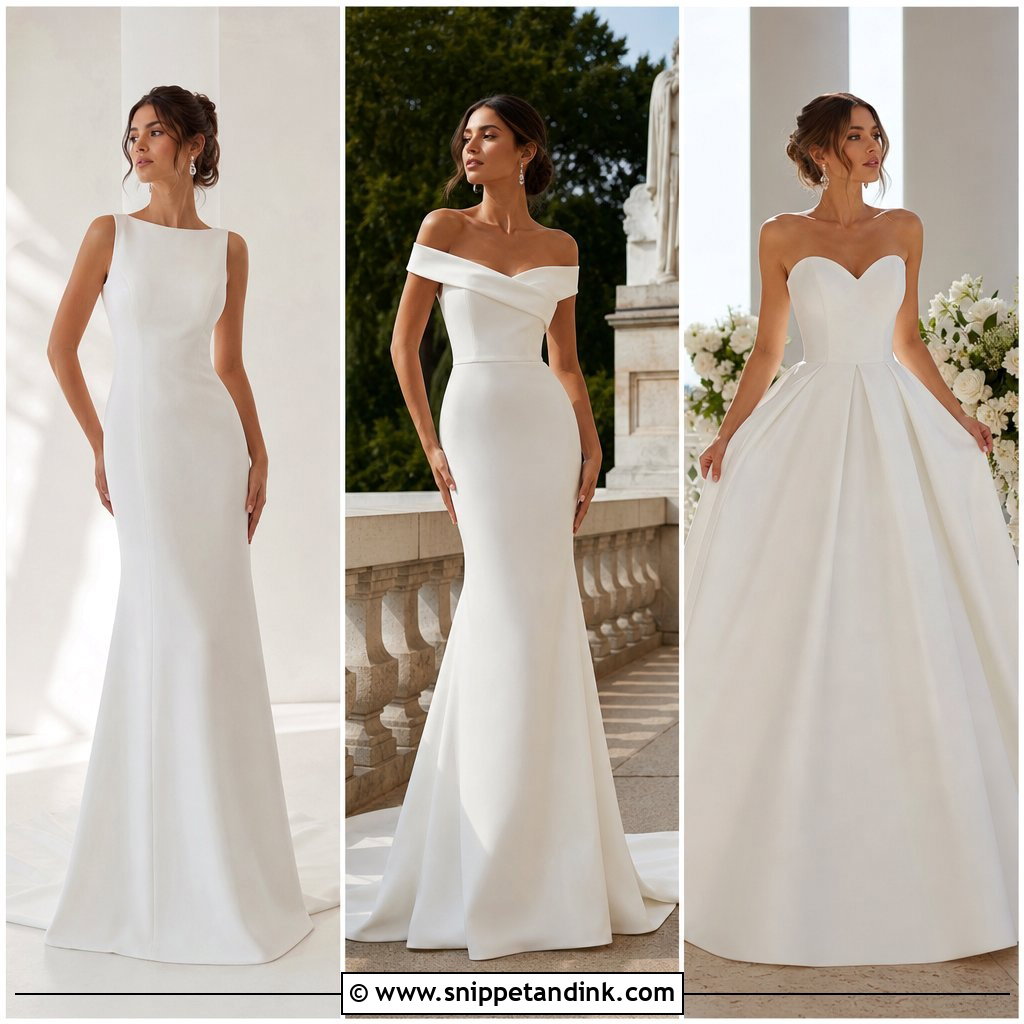
Satin ball gowns earn their reputation on entrances. The fabric’s sheen does the decorating, so look at the seams instead of the embellishment: well-placed princess seams shape the bodice far better than beading ever will. Strapless, scoop or off-the-shoulder, choose the one you don’t keep hitching up in the mirror. Ask for hidden pockets; you’ll use them for lip balm and tissues all day. Crystal studs, a sleek low bun and a cathedral veil keep it formal. Under that much skirt nobody sees your feet, so block heels are a perfectly honest swap for satin stilettos. Keep the bouquet compact and structured, or the whole picture gets heavy.
3. Long Sleeve Lace Wedding Dress
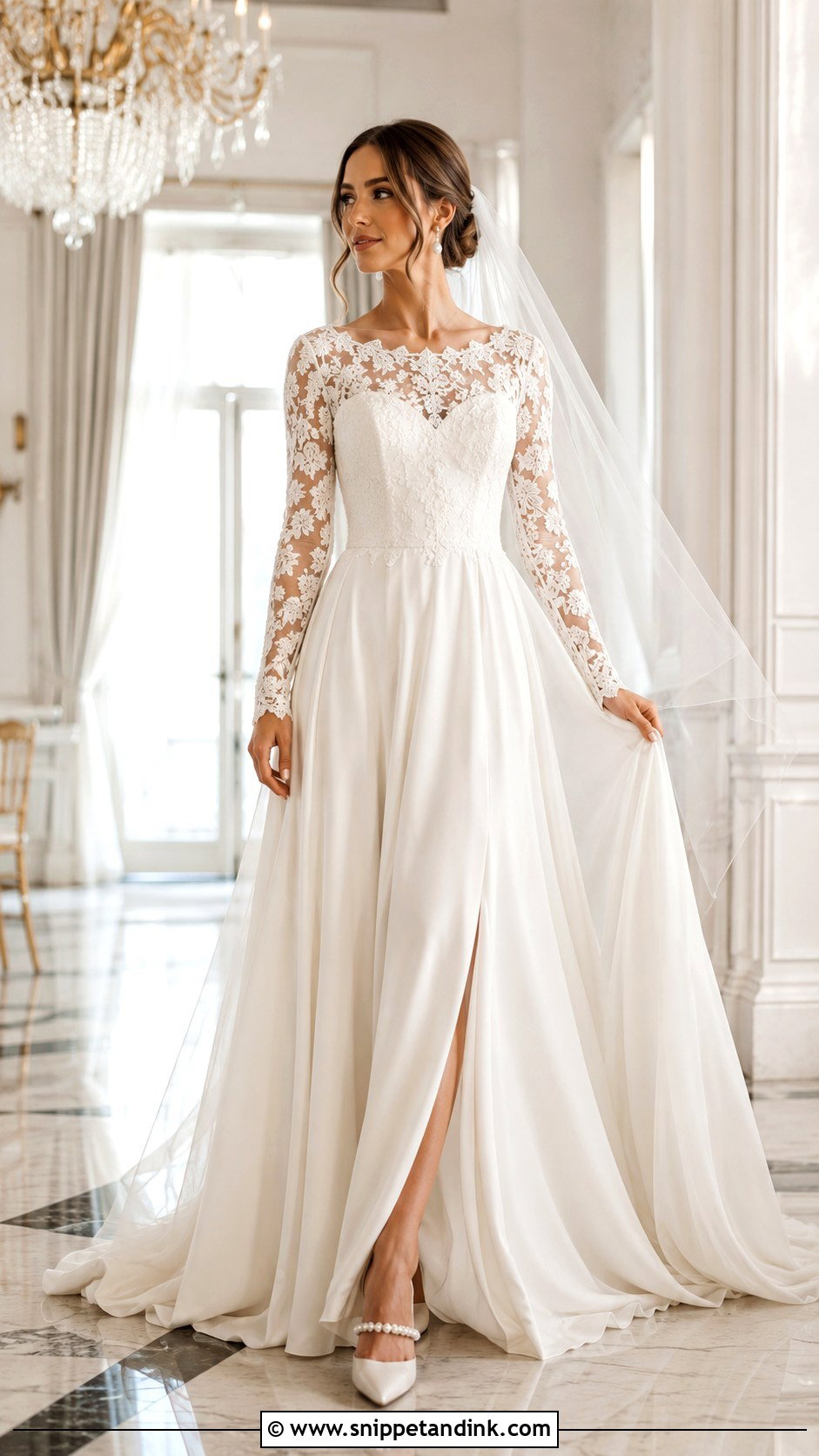
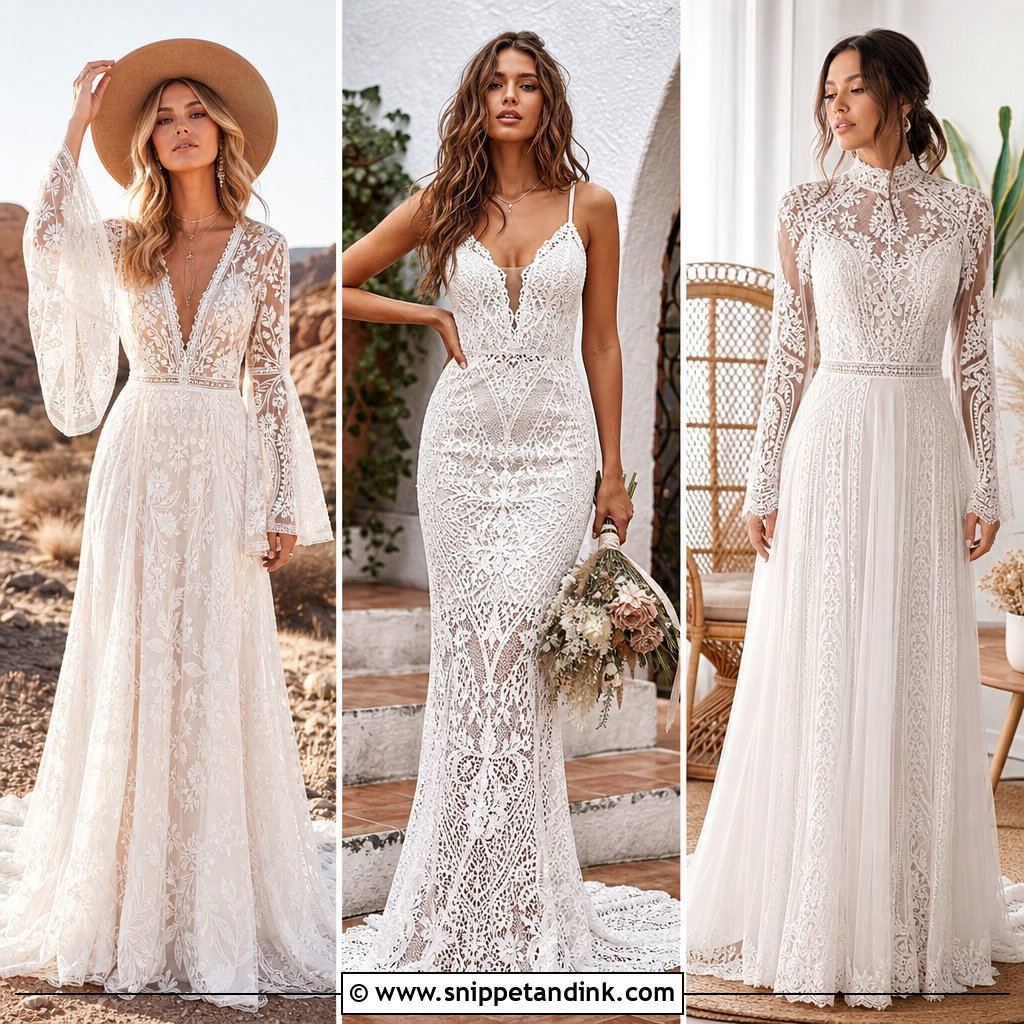
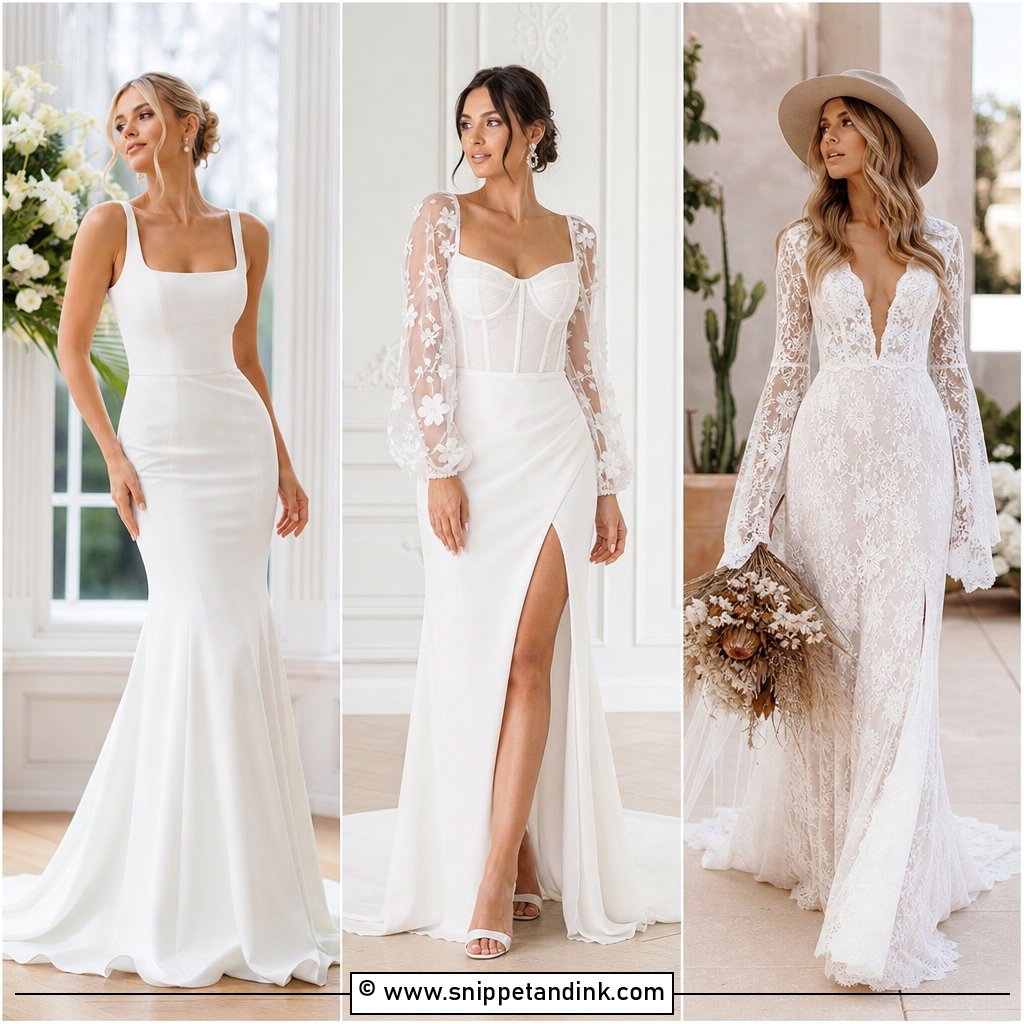
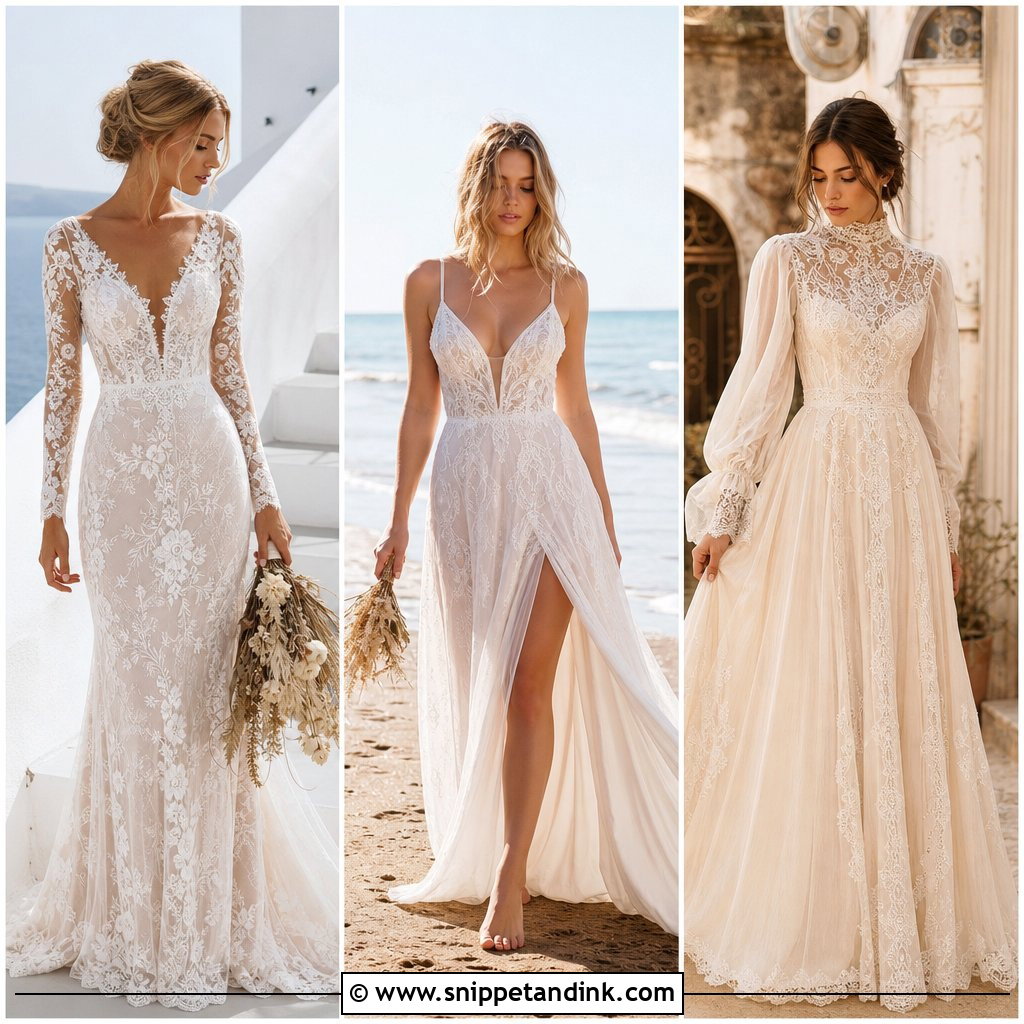
Long lace sleeves are lovely until you raise your arms. Lace has little stretch, so I always have a bride reach forward as if to hug someone at the fitting; if the sleeve pulls at the armpit or the bodice lifts, it needs a gusset or a different cut. Look for a lined bodice, sheer sleeves and an A-line or gently fitted skirt, keeping the lower half simpler than the top. Floral lace reads traditional; geometric lace looks cleaner. Pearl earrings, a fine bracelet, pointed ivory heels and a plain tulle veil that lets the sleeve pattern show are enough. In cold months, add a tailored ivory coat or removable cape. Autumn through early spring, indoors, is where this one belongs.
4. Minimalist Crepe Column Wedding Dress
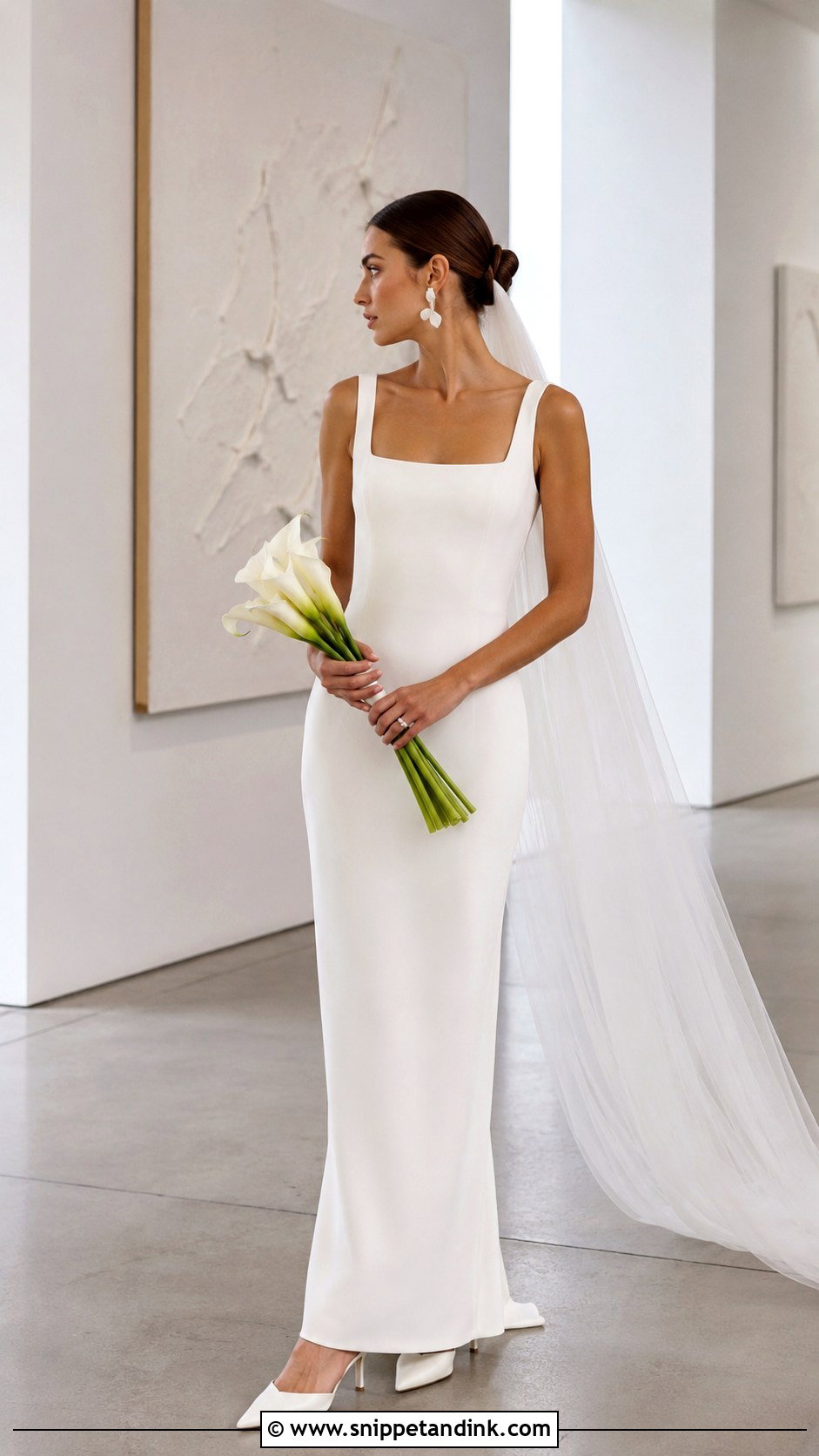
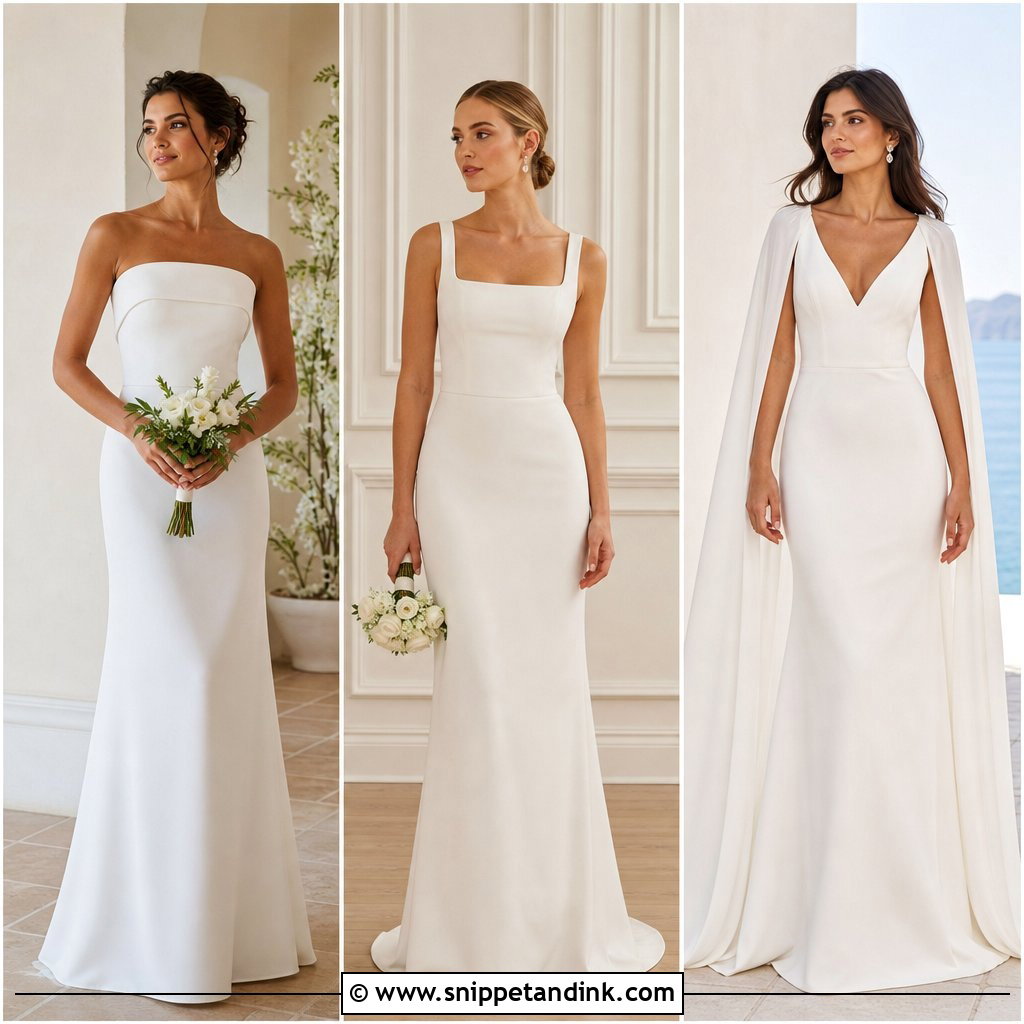
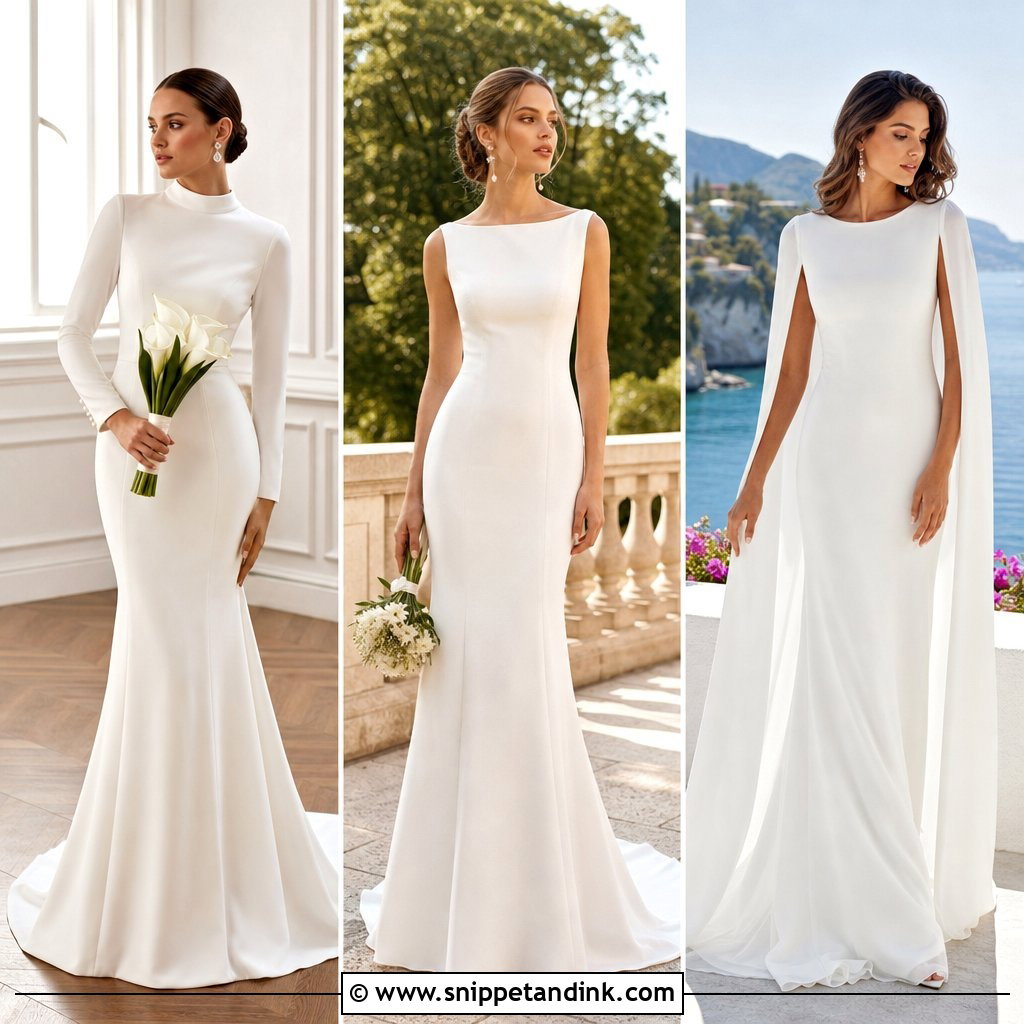
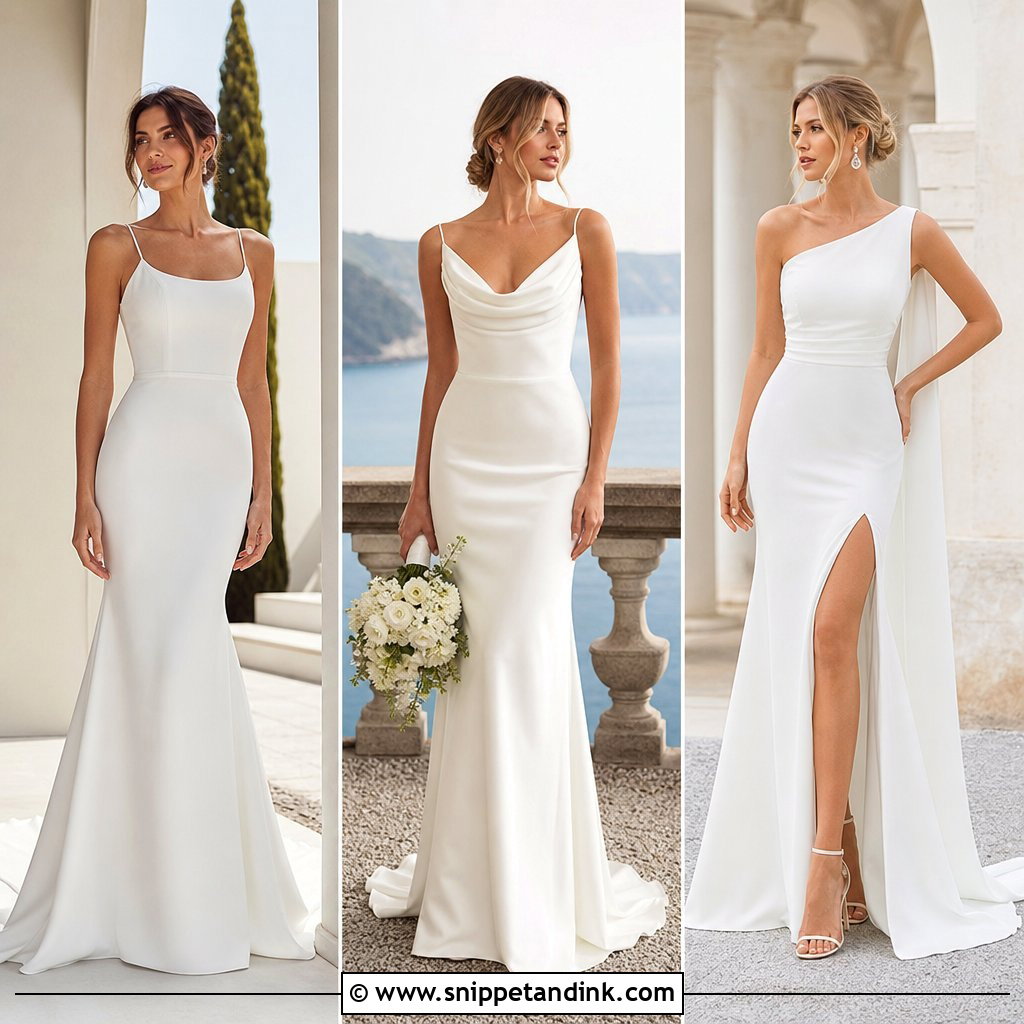
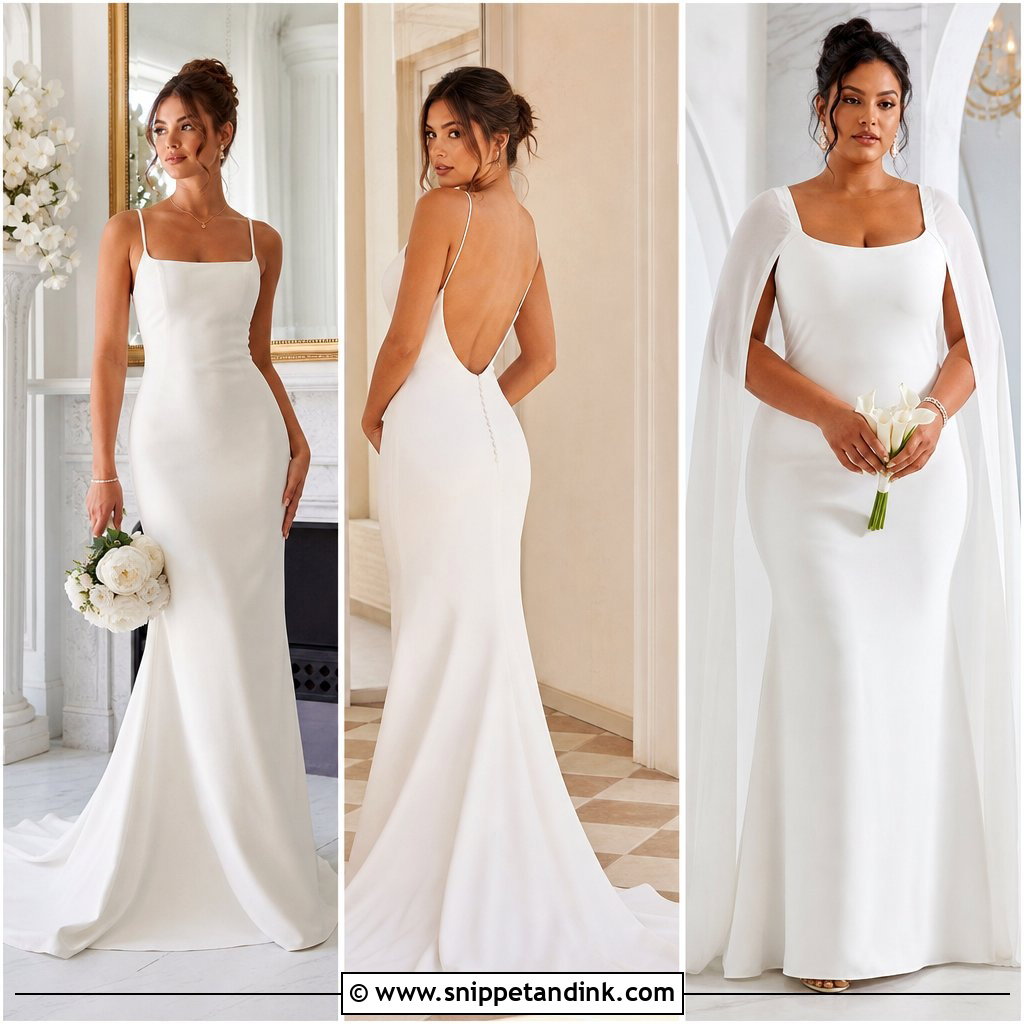
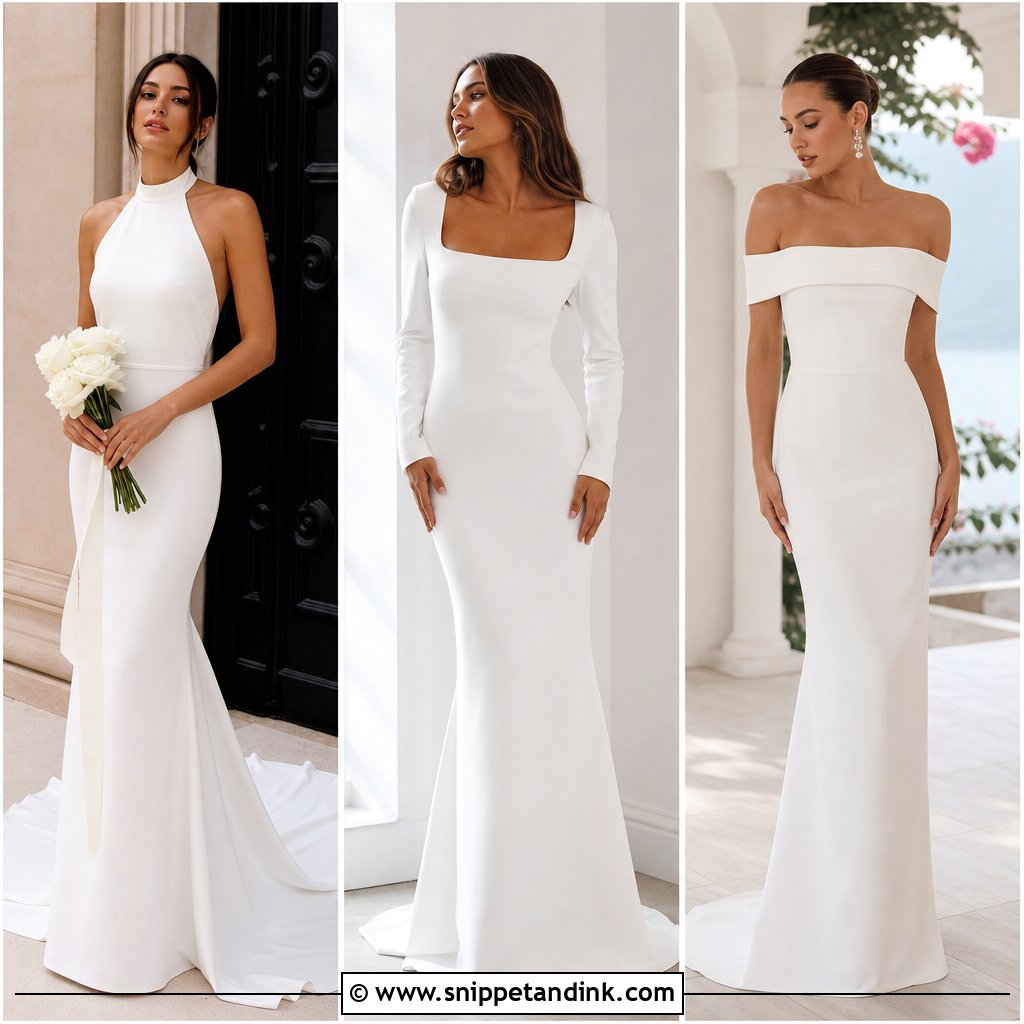
Clean lines can be just as memorable as heavy embellishment, but only if the crepe is substantial. Thin crepe clings and shows every seam underneath; good crepe has weight and hangs straight from the hip. Rub a corner between your fingers and you’ll feel the difference immediately. A column follows the body without gripping it, which makes it easy to wear for a whole day. A square, bateau or soft cowl neck gives the plain front some interest. Sculptural earrings, pointed slingbacks, a sleek bun or glossy waves and a long plain veil are all it wants, with white calla lilies or roses for a gallery, rooftop or city venue.
5. Off-the-Shoulder Wedding Dress
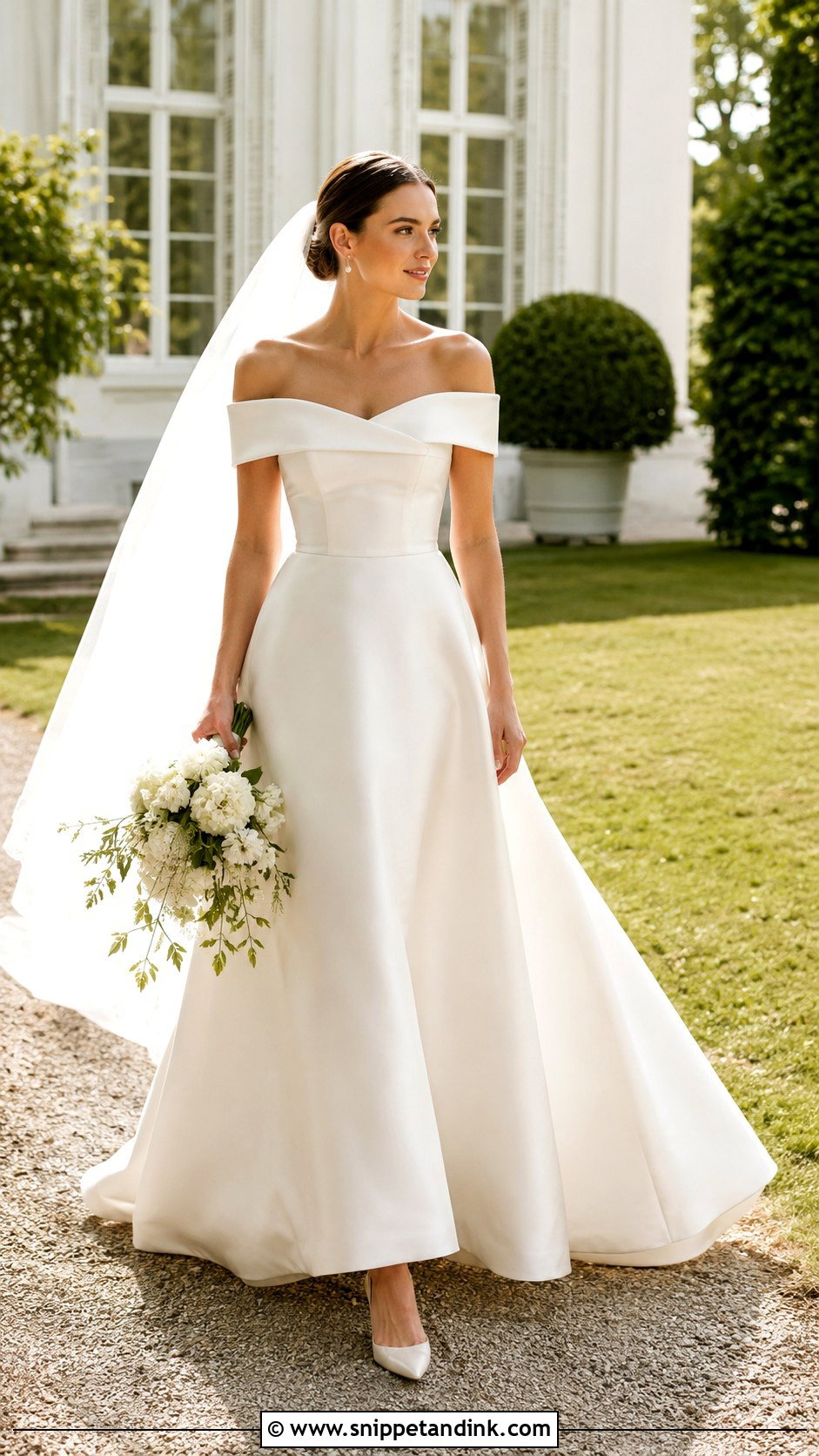
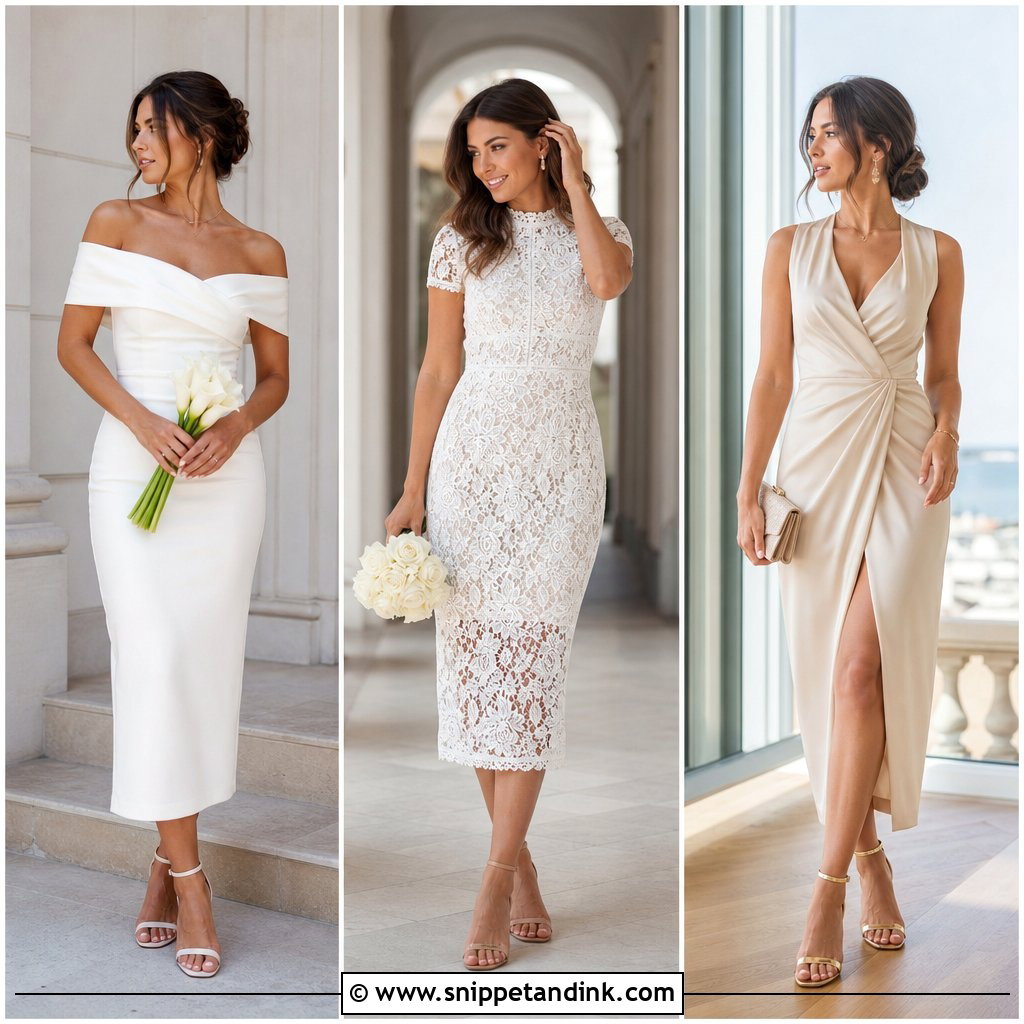
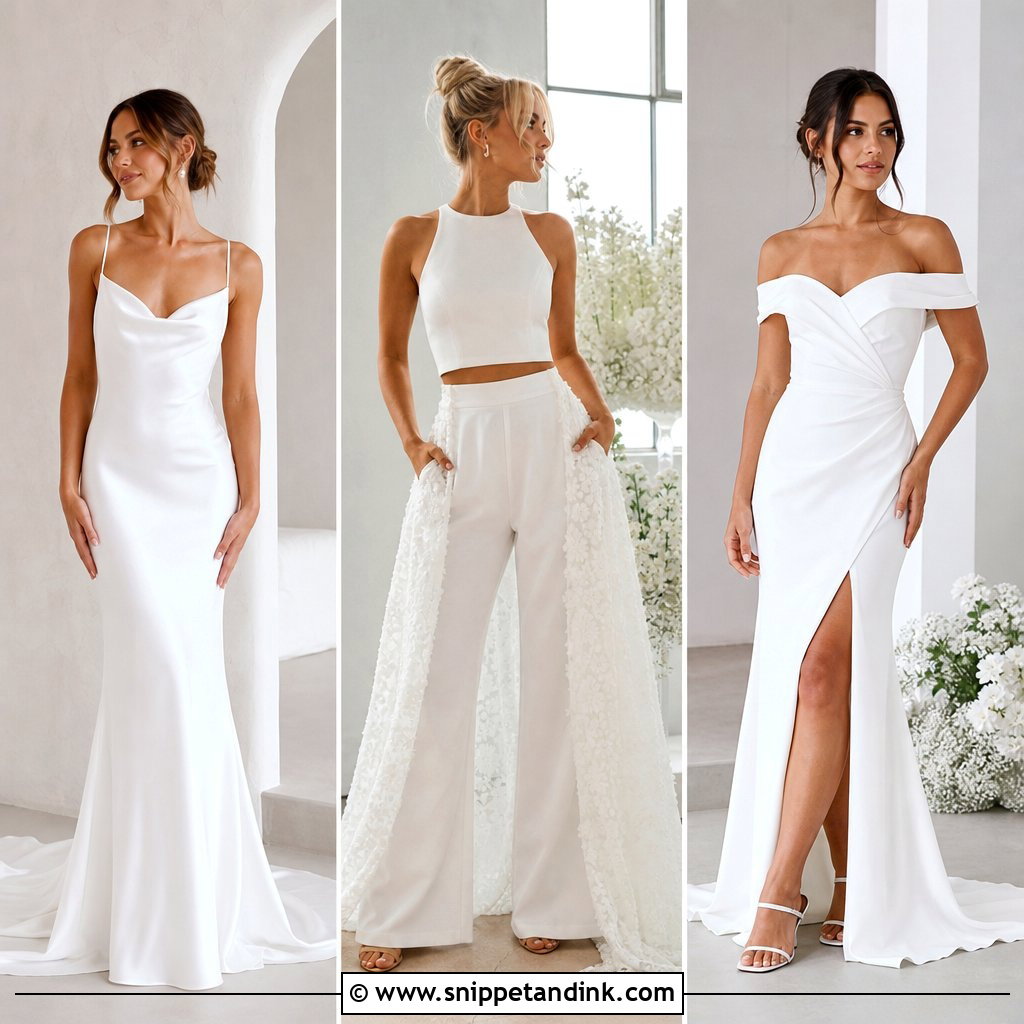
The worry with off-the-shoulder is always the same: will it stay put? It does if there’s a supportive inner bodice doing the work and the shoulder band is anchored to it, not floating. Folded satin, draped tulle or fitted lace sleeves look polished; big ruffles don’t. An A-line skirt balances bare shoulders, while a fitted trumpet sharpens the outline. You can wear a delicate pendant, though I usually skip the necklace for pearl drop earrings. Comfortable pointed pumps, a chapel veil tucked beneath a polished updo and a loose white bouquet suit an estate, a garden or a formal indoor ceremony.
6. Square Neck Wedding Dress
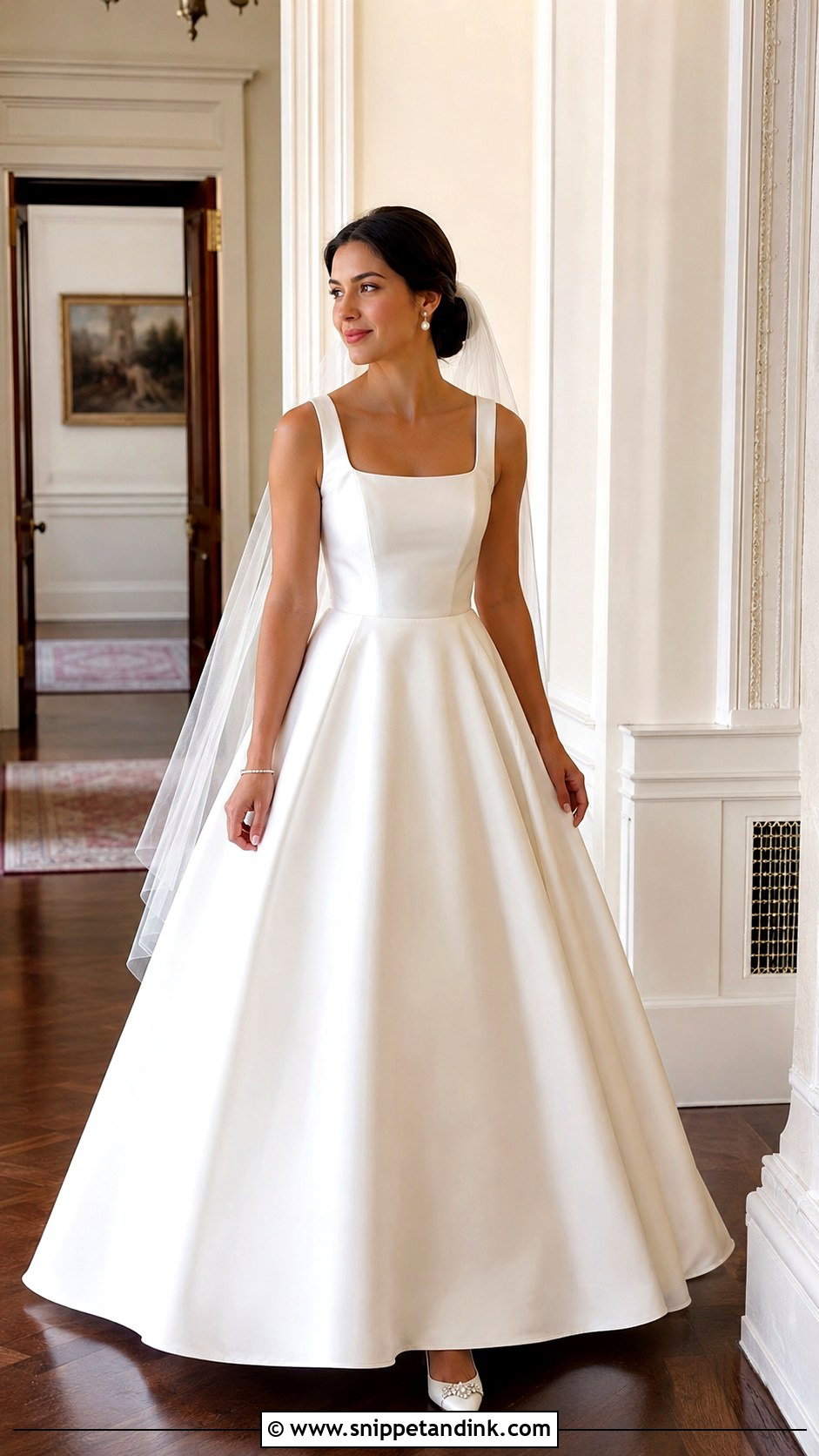
A square neck borrows something from vintage dressing and still looks sharp. It frames the collarbone and works with wide straps, cap sleeves or fitted long sleeves. One fit point I check: the corners of the square should sit level and flat, because if the bodice is too big they gape forward when you lean. Matte satin feels formal, crepe quieter. Use clear seaming with an A-line or full skirt. Pearl studs, a thin tennis bracelet and low pointed heels you can actually stand in all day are plenty. A medium-length veil with a plain edge matches the simplicity, with hair in a low chignon or waves behind the shoulders.
7. High Neck Wedding Dress
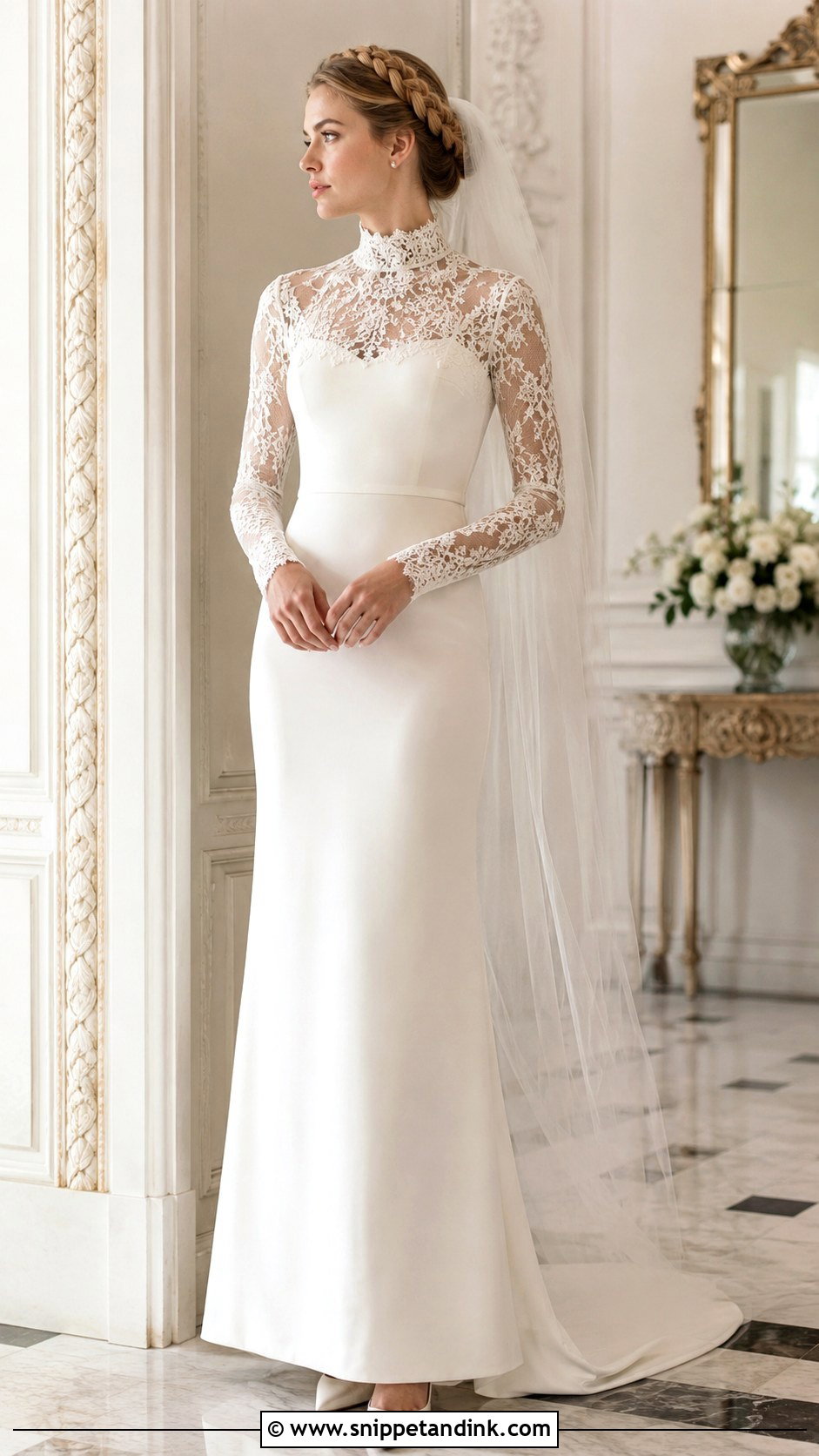
Coverage doesn’t have to feel heavy. A high neck in lace, crepe or silk can be softly rounded, a mock neck or finished with a narrow lace collar, and the trick is to keep everything below it streamlined. Sheer lace sleeves lighten the look; going sleeveless makes it modern. Check that the collar doesn’t press into your throat when you look down, since you’ll be looking down at rings and vows. No necklace. Small diamond or pearl earrings, a sleek bun, braided updo or neat ponytail to keep the neckline clear, pointed heels and a simple veil finish it. Brides who want modest dressing that still looks current tend to land here.
8. Strapless Corset Wedding Dress
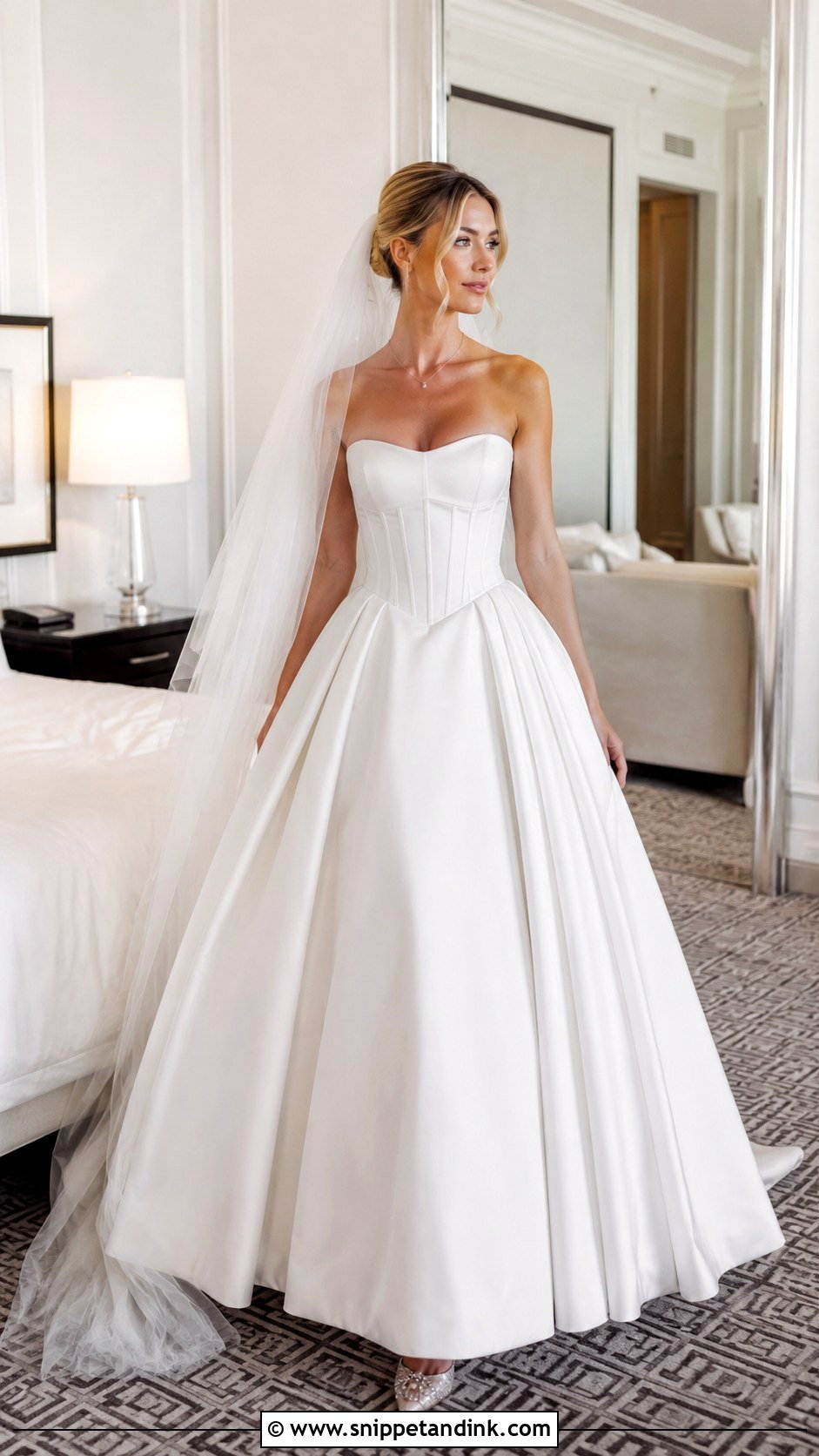
Corsets look classy when the structure is honest and the fit is close. Boning covered in satin or soft tulle reads refined; exposed, heavily contrasted boning tips toward costume. A straight or gently curved neckline gives more coverage than a plunge and is easier to keep in place. Below it, a full A-line, pleated ball gown or drop waist all balance a tight top. My test at every corset fitting: sit down, lift both arms and take a full breath. If the top edge moves or you can’t breathe deeply, it needs adjusting. A fine necklace, small earrings, a long veil and satin pumps or crystal slingbacks complete it.
9. Drop Waist Wedding Dress
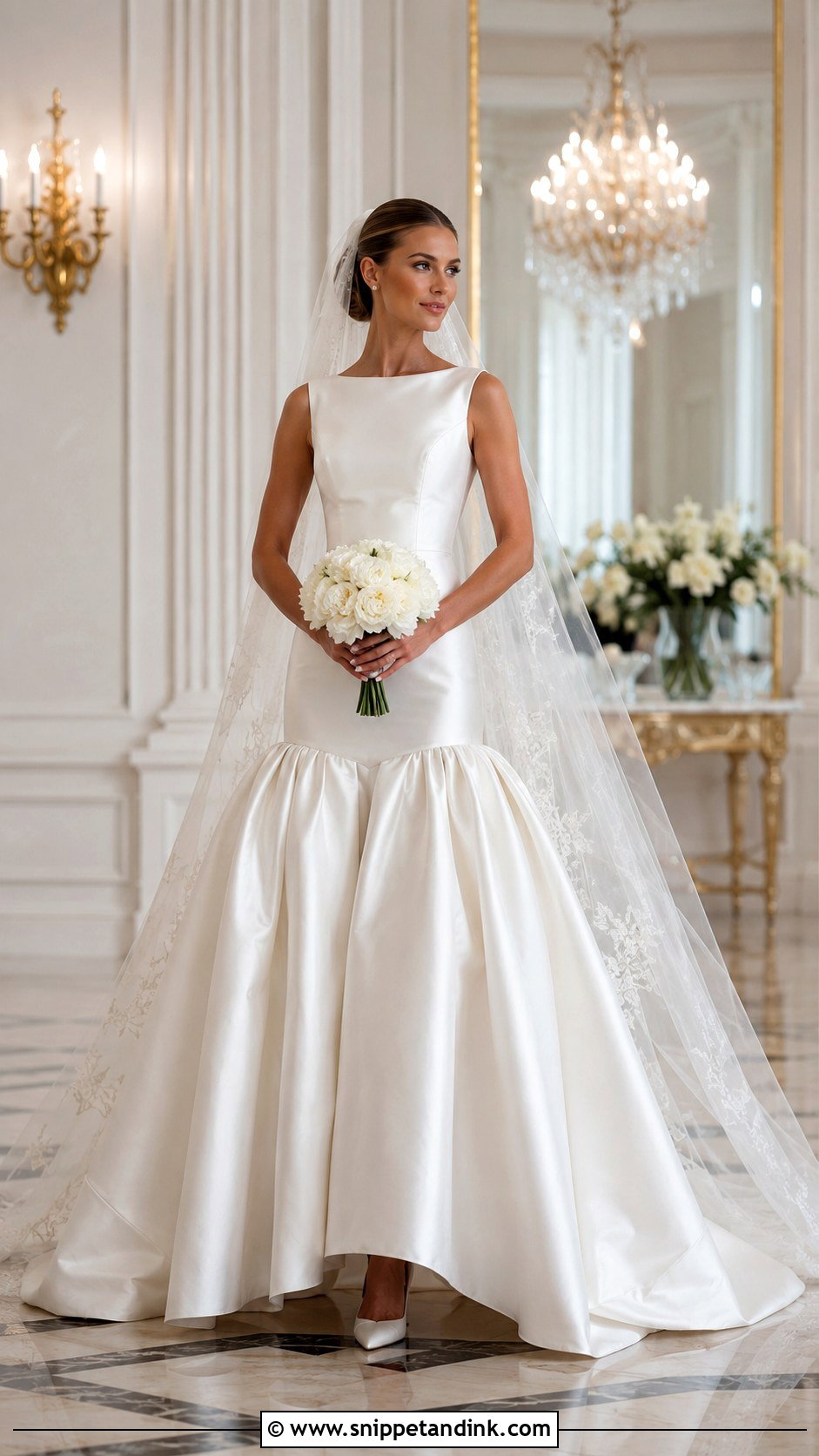
Drop waists stretch the fitted bodice below your natural waist before the skirt opens out, which makes the torso look long. Curved seams or a V-shaped basque point follow the body more kindly than a dead straight line. Fabric matters a lot: satin, mikado and taffeta hold the bodice flat and the skirt full, while softer fabrics collapse at the seam. Simple studs, a narrow bracelet and pointed pumps are enough. Pick a cathedral veil for formality or something shorter to keep it light. Hold your bouquet low and small, since a big one hides the waistline, which is the whole point. Ballrooms and historic estates suit it.
10. Tea-Length Wedding Dress
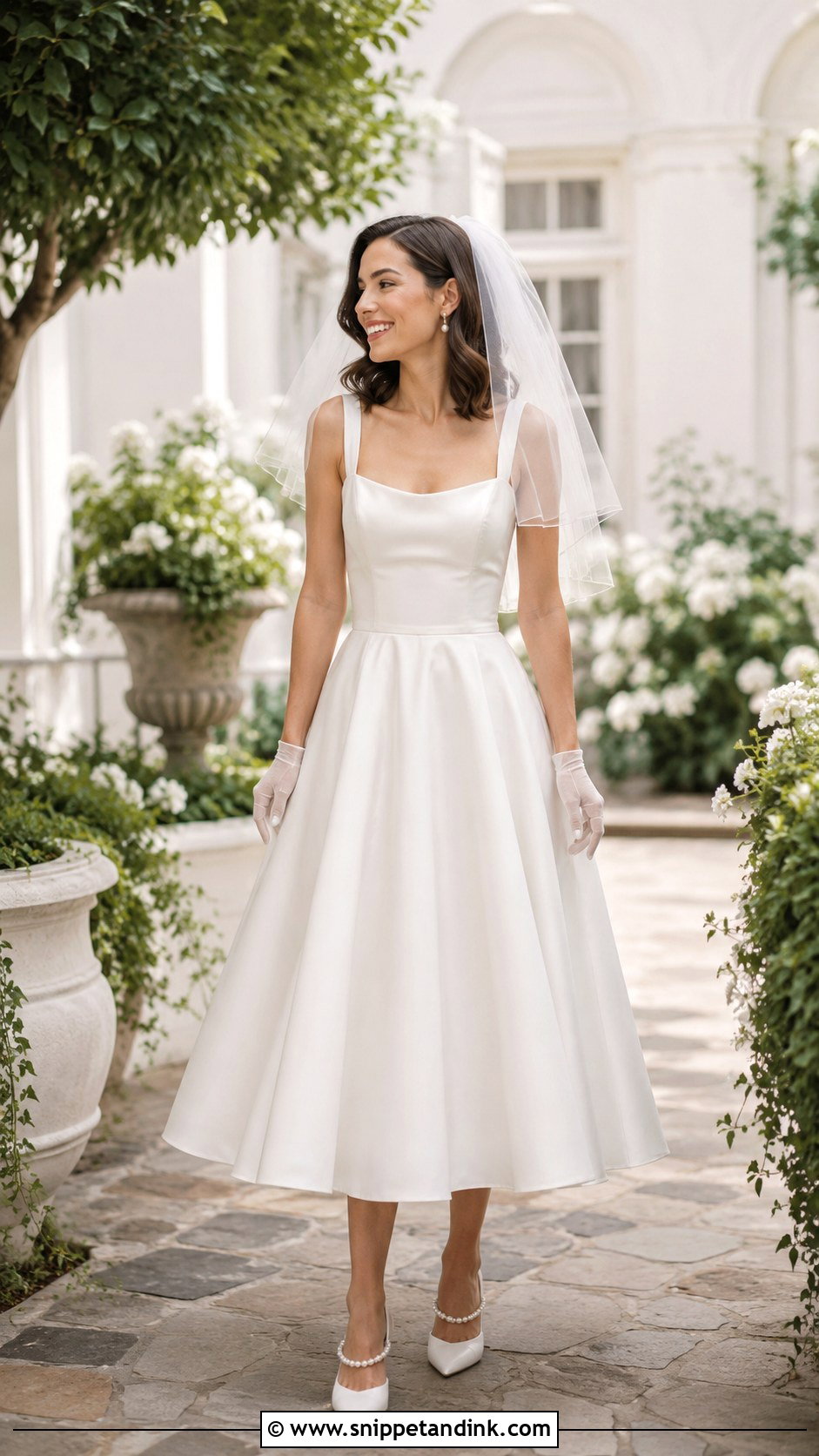
Tea length usually falls between knee and ankle, and I’d pin it at the narrowest point of your calf, which is where it flatters most. A fitted bodice with a softly flared skirt keeps it balanced. Satin or mikado gives structure; layered tulle moves more. Your shoes are on show for the whole day, so buy them first and bring them to every fitting. Pointed slingbacks, pearl-detailed pumps or sleek block heels all work. Short gloves, pearl earrings and a birdcage or shoulder-length veil add a vintage note; add too many of those and it becomes a costume. Courthouse ceremonies, garden parties and anyone who wants to dance freely are well served by it.
11. Silk Slip Wedding Dress
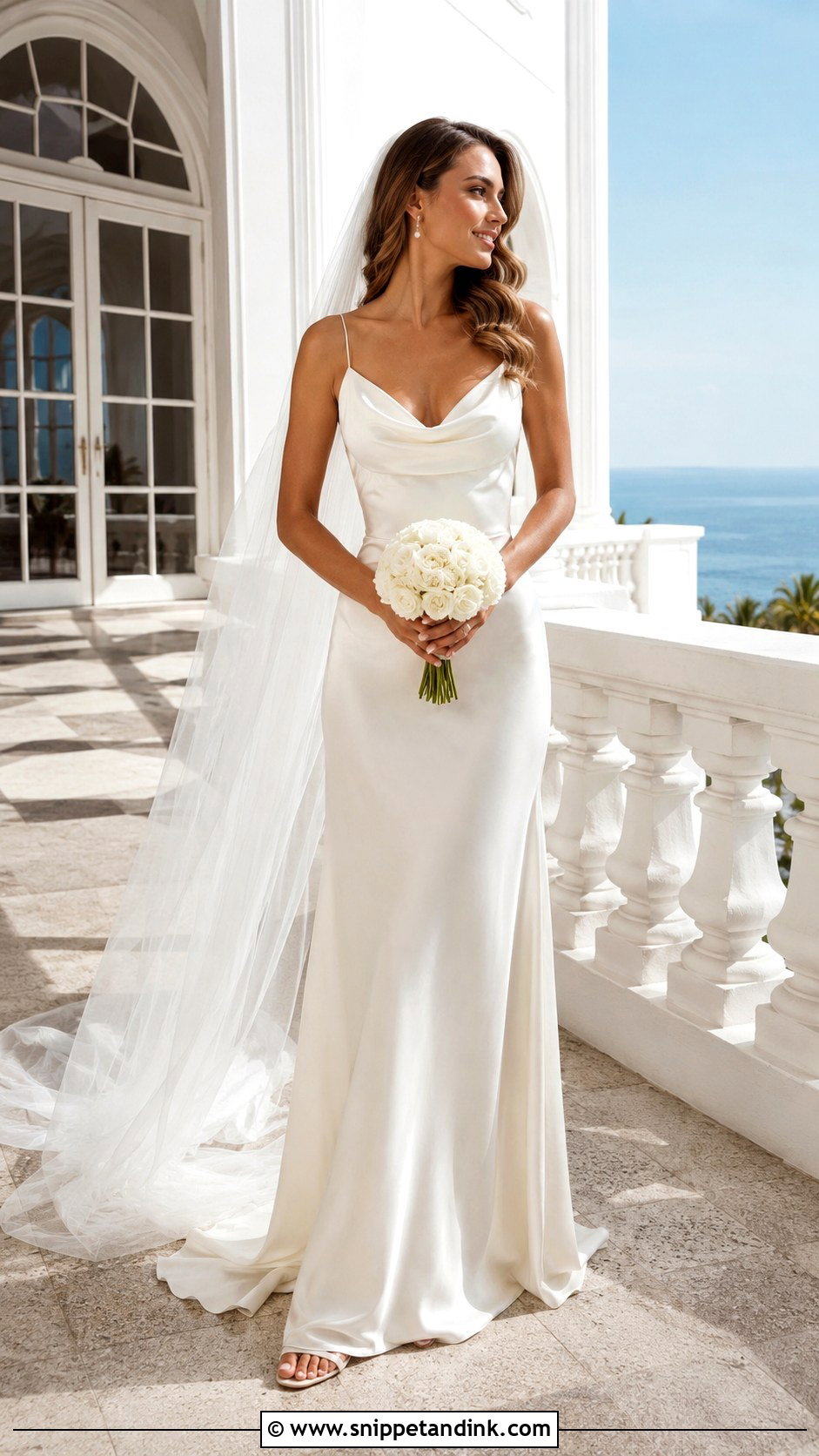
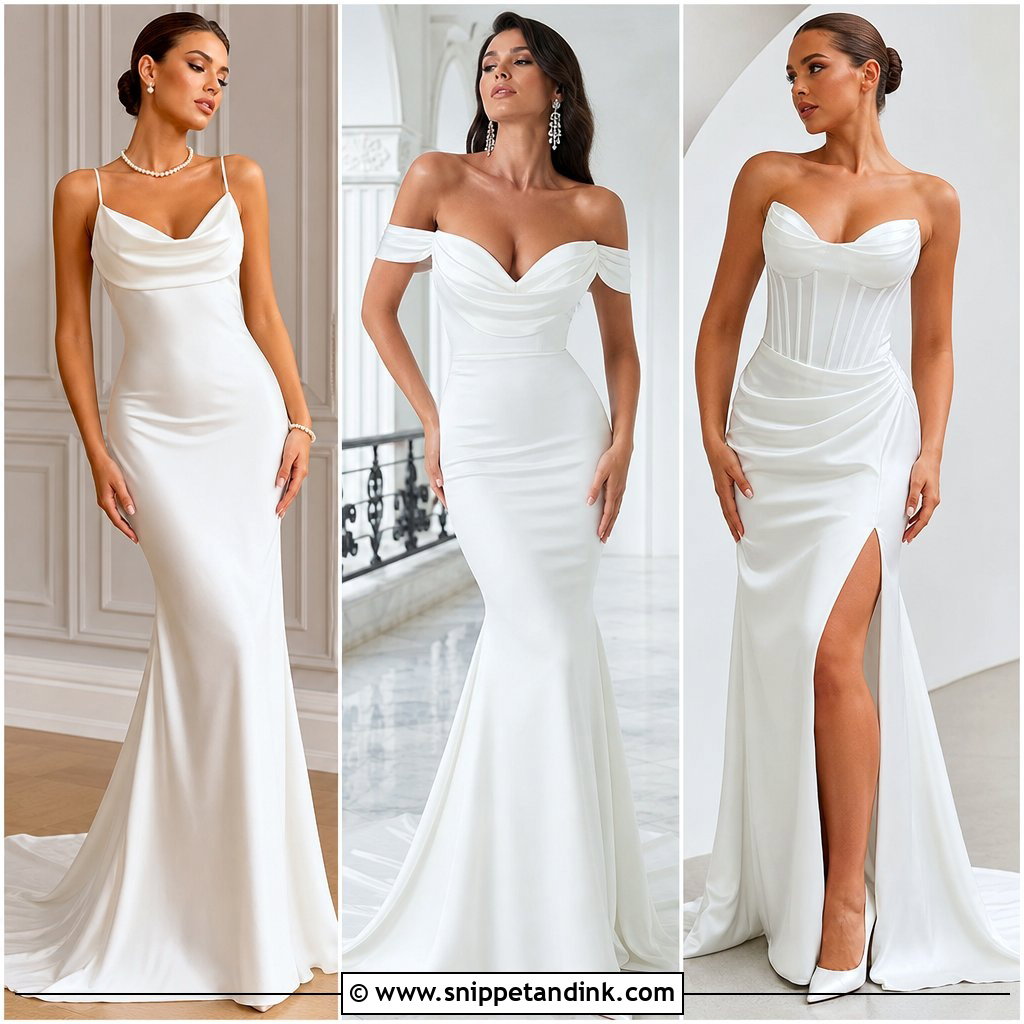
Slip dresses look simple and are anything but simple to fit. Good bias-cut silk or satin drapes along the body, which means it also shows underwear lines and creases where you’ve been sitting. A quality lining helps with both. Choose one that skims rather than clings. A cowl neck feels relaxed, while a straight neckline with wider straps gives more coverage. Strap length and hem have to be tailored precisely, because on a dress this bare, small errors show. Delicate drop earrings, minimal sandals, a long sheer veil, a small clutch and polished waves or a low bun suit a coastal or modern hotel venue in warm weather.
12. Mermaid Wedding Dress
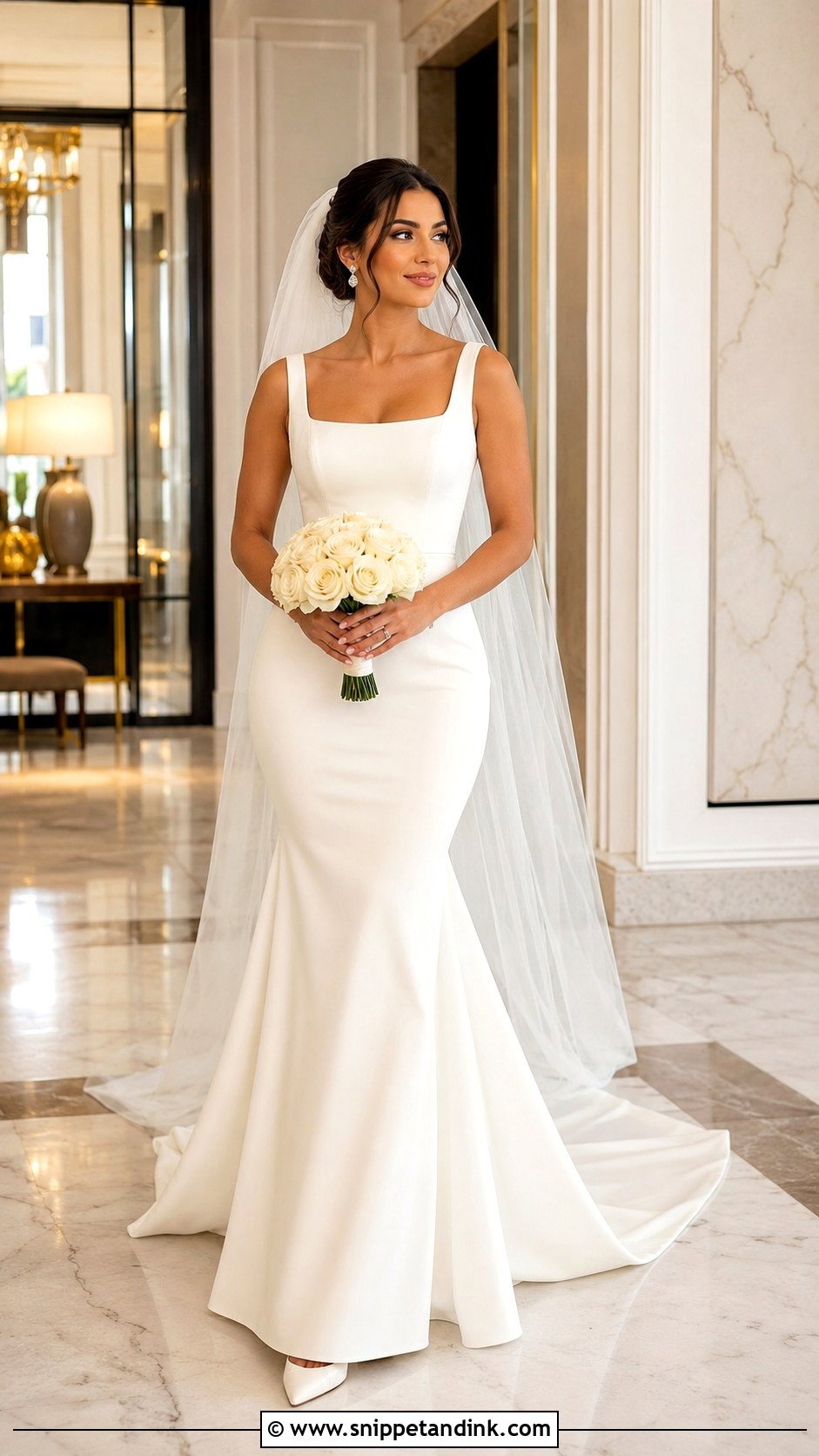
A mermaid has to fit closely, and that’s exactly why it needs testing. The flare should sit near the knee, with enough room above it that you can take a normal stride and sit without the seams straining. Smooth crepe, satin or consistent lace look polished, while heavy sparkle all over can look cheap on such a fitted shape. A sweetheart, square or off-the-shoulder neckline balances the dramatic bottom half. At alterations, walk the length of the room a few times and climb a step. Pointed pumps, classic earrings, a chapel veil that extends past the flare, a neat updo and a small round bouquet complete it.
13. Cape Sleeve Wedding Dress
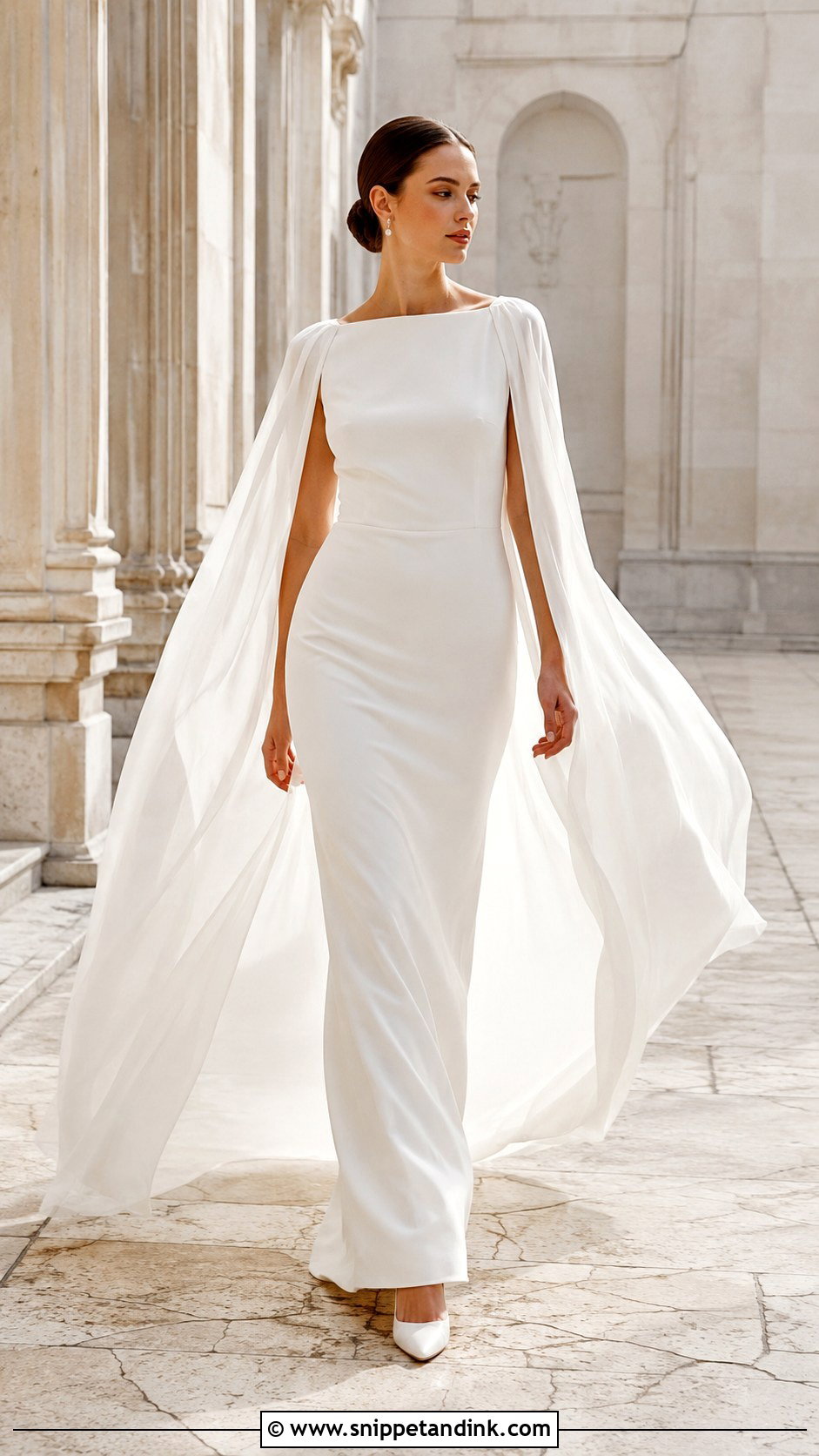
Capes give you the movement of a veil without the pins. They can start at the shoulders, fasten at the back or fall from a high neck. Chiffon floats, while crepe hangs with more structure. Underneath, keep to a simple column or A-line, because the cape already supplies the drama. If you also want a veil, keep it short and plain. One thing to ask the shop: how the cape attaches. A detachable one should hook on securely enough to survive someone standing on its edge, and come off easily before dinner and dancing. Small earrings, closed-toe heels and a sleek bun keep the line clean, and it moves wonderfully in outdoor portraits.
14. One-Shoulder Wedding Dress
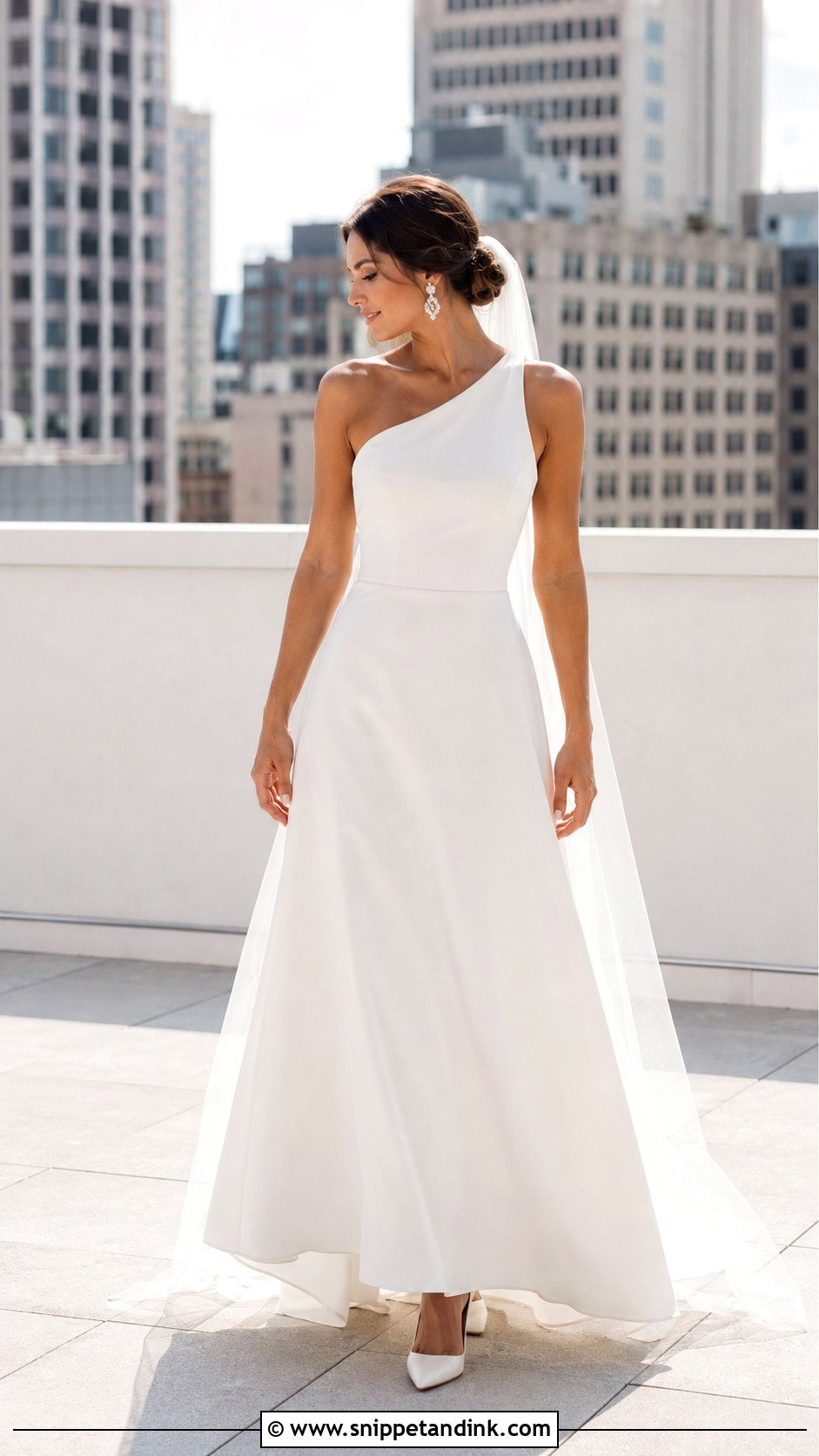
One-shoulder dresses are about direction. A clean fitted bodice with a supportive single strap, a draped shoulder panel or one long sleeve sets up a diagonal, and everything else should follow it. Crepe and satin look sharp; chiffon moves more softly. Keep the skirt calm, whether A-line, column or softly fitted. No necklace. Choose earrings light enough to wear for ten hours, and place a low bun slightly away from the covered shoulder so the asymmetry stays visible. Pointed heels and a simple veil fixed at the back of the hairstyle finish it. Gallery and rooftop venues suit this, and it reads as different without looking trendy.
15. Floral Appliqué Wedding Dress
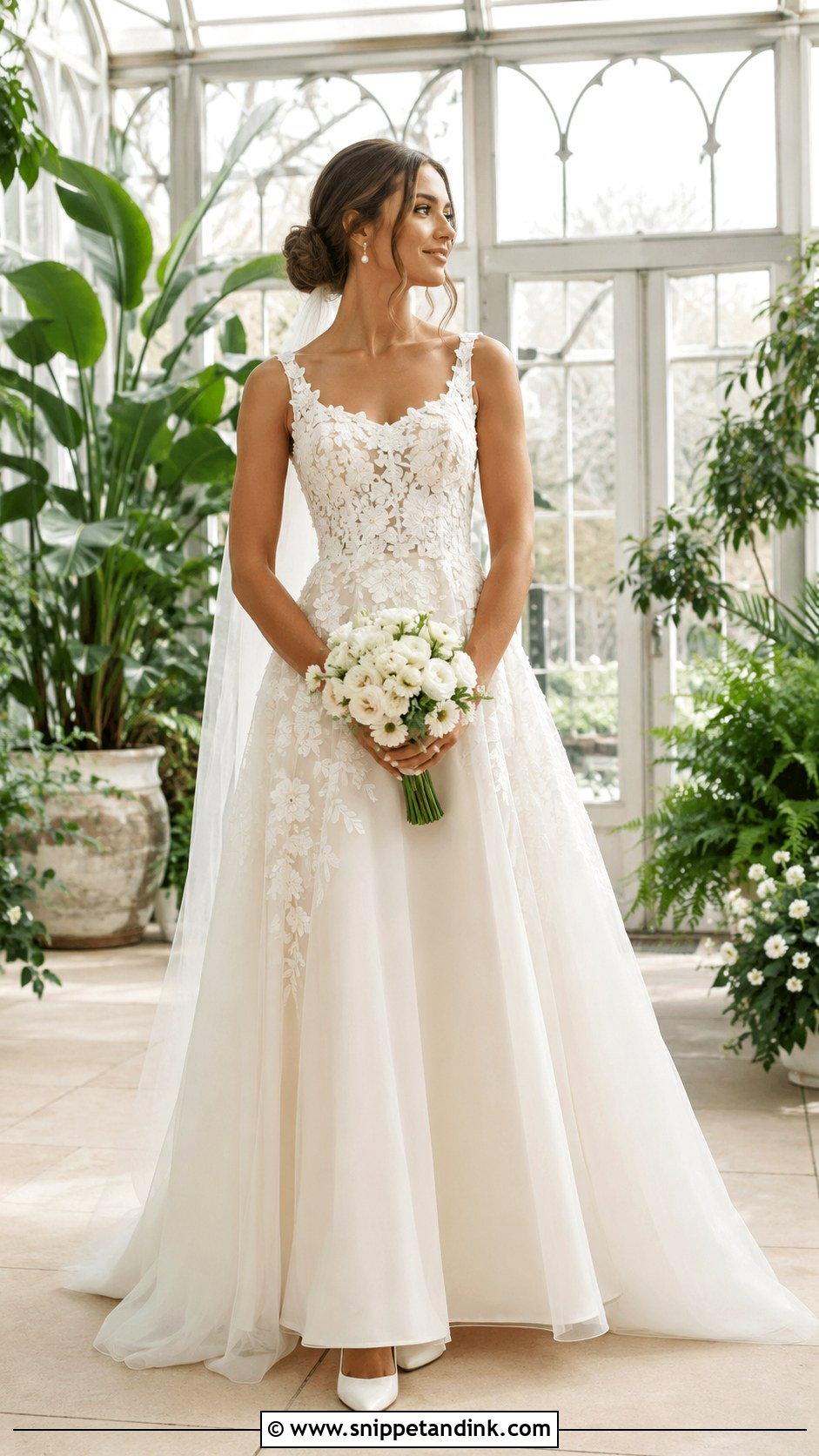
Appliqué flowers look romantic when they’re placed with intention: across the bodice, sleeves or upper skirt, thinning as they go down, not plastered everywhere. On a sheer overlay, check where the lining sits so the coverage is where you want it. Ivory flowers give soft texture, and pearl centres add a glow. Raised petals do snag tulle, so I’d pick a veil with minimal edging. Plain satin heels, small pearl earrings and a loose low bun keep the focus on the botanical detail. Carry a bouquet of one or two flower types so it doesn’t compete with the dress, which belongs in a garden, conservatory or spring estate wedding.
16. Basque Waist Wedding Dress
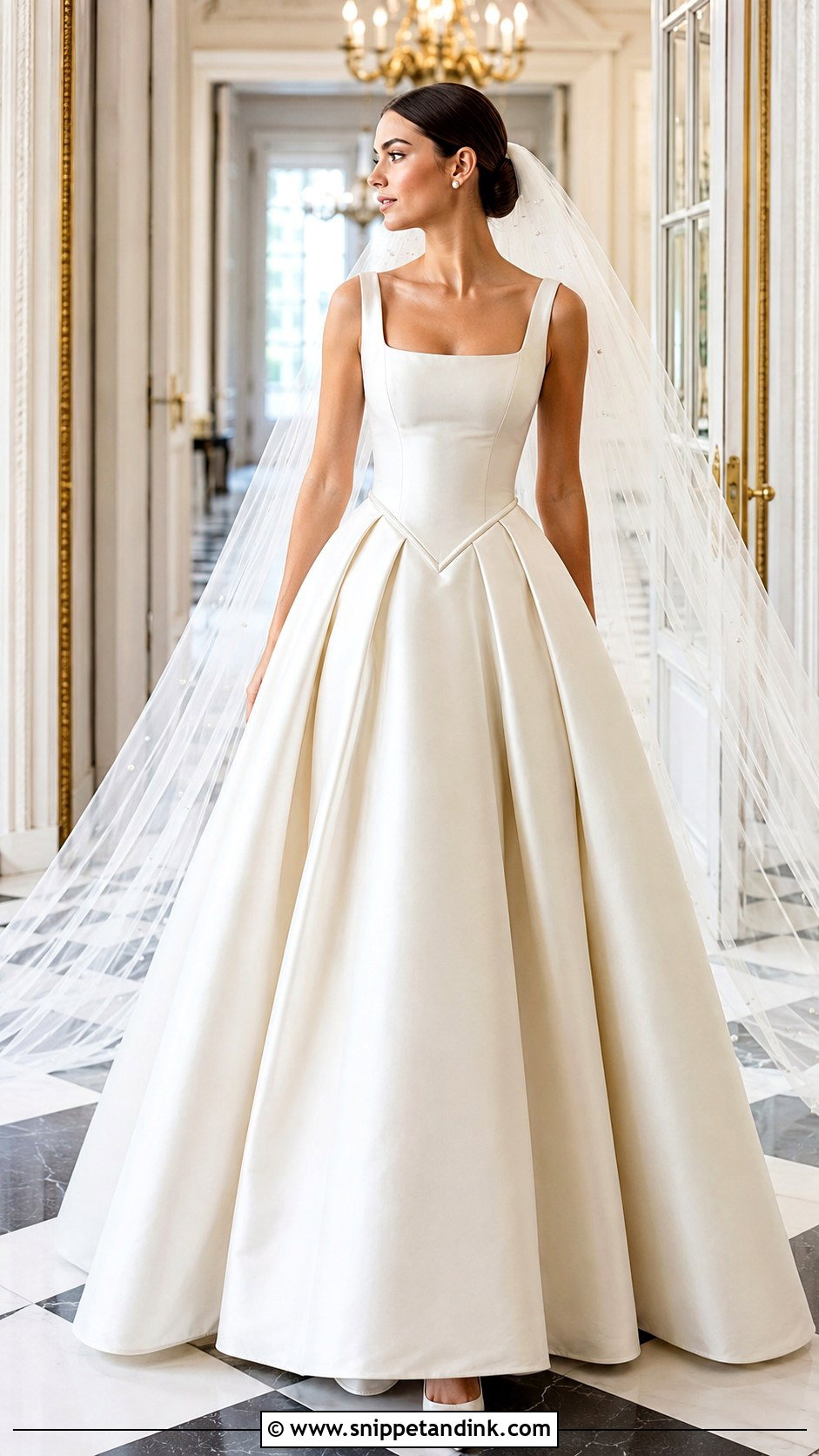
A basque waist wedding dress dips into a V or curved point below the natural waist, and that point is everything. Placed well, it narrows the waist and lengthens the body before the full or pleated skirt begins. Placed too low, it shortens your legs. I always have the tailor mark it with you standing and then sitting. Matte satin or mikado holds the point crisply. A square neckline, wide straps or off-the-shoulder sleeves balance the long bodice. Pearl studs, a fine bracelet, pointed satin heels, a cathedral veil and a neat chignon give it a regal finish without feeling old-fashioned.
17. Pleated Chiffon Wedding Dress
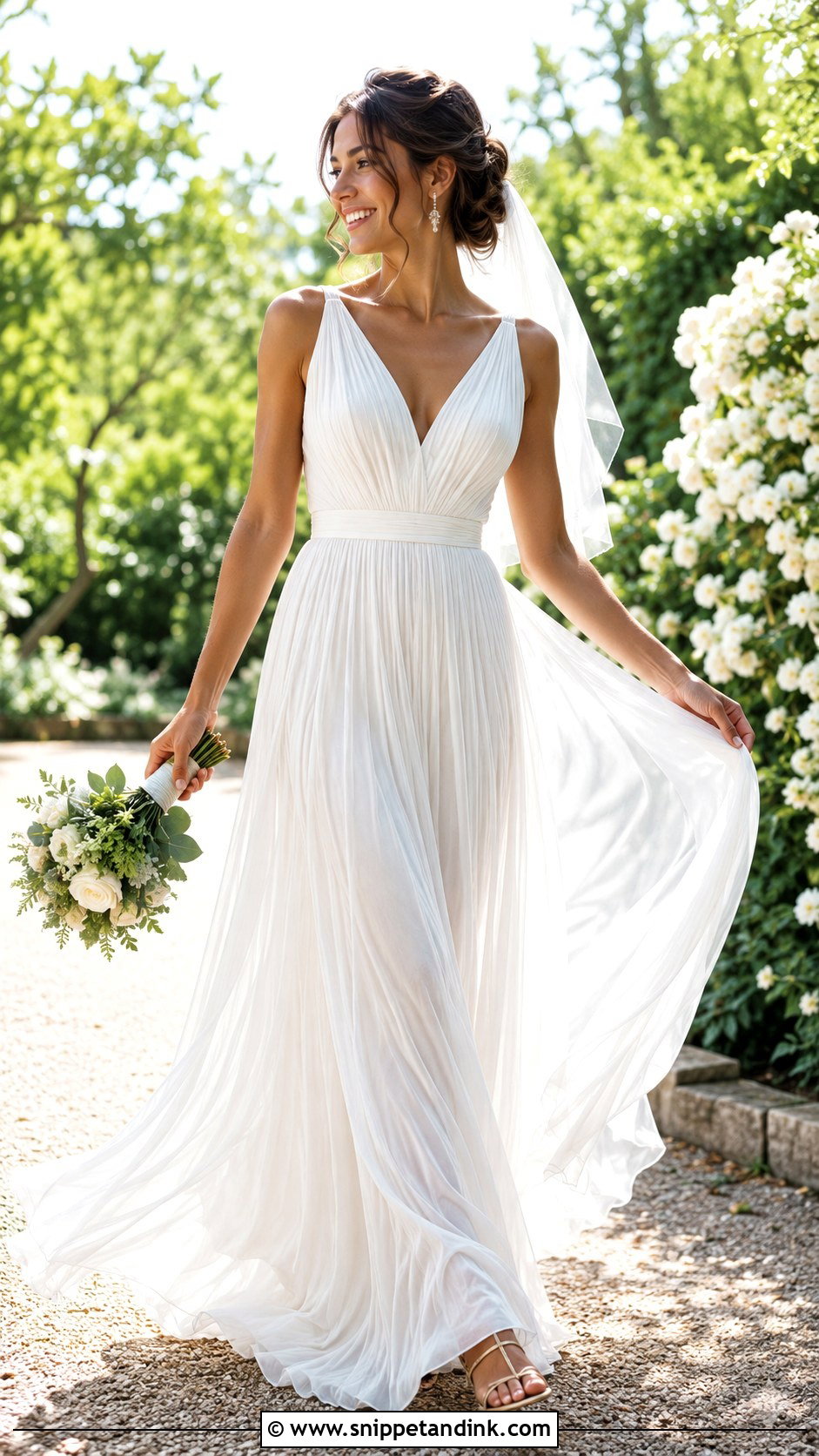
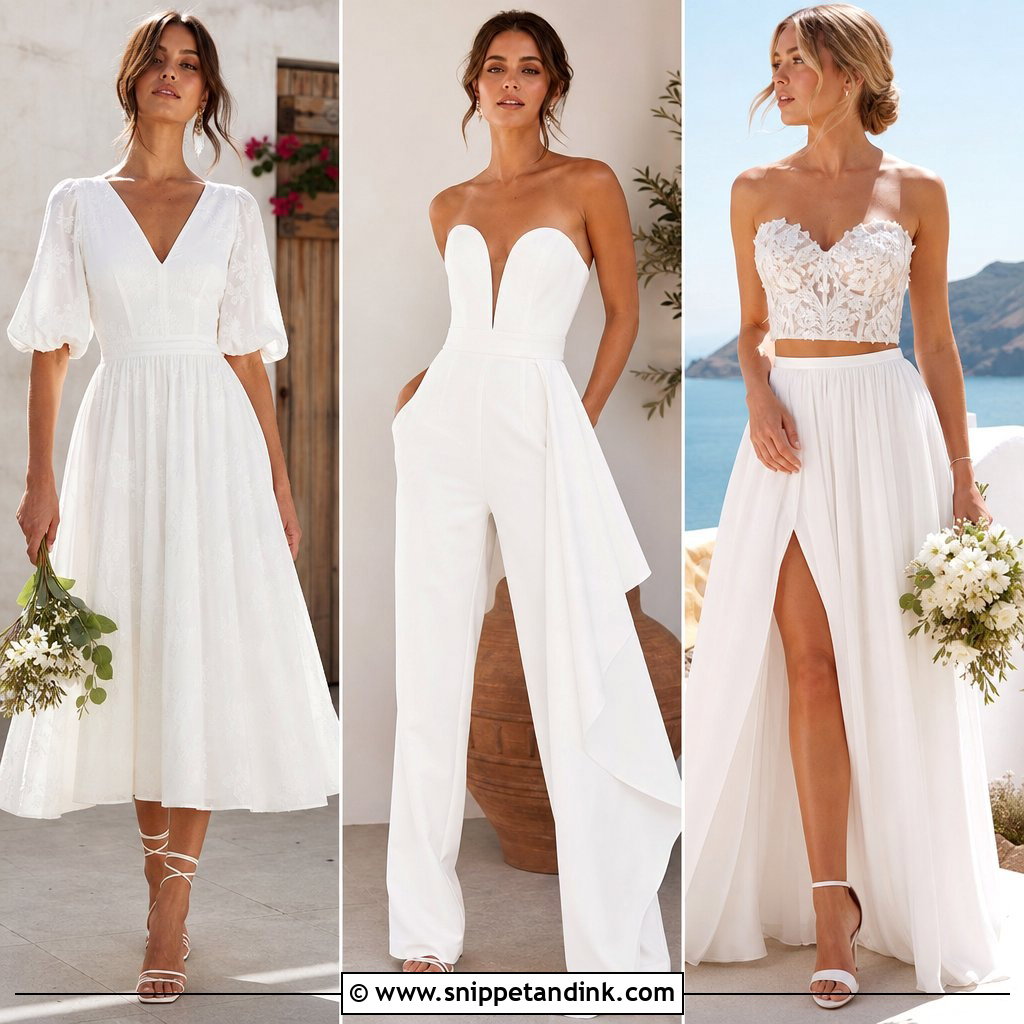
Pleated chiffon is the coolest dress here, literally. It weighs very little, breathes and moves with every step, which is why I suggest it for summer and destination weddings where satin would be sticky by noon. Fine vertical pleats through the skirt need a supportive fitted bodice above them for definition. A V-neck, halter or softly gathered neck suits the fabric. Make sure the skirt is lined, since a single layer of chiffon is see-through in sunlight. Low metallic sandals, delicate earrings, a light veil, a loose updo or polished half-up style and a small bouquet with trailing greenery keep the whole look light.
18. Mikado Wedding Dress With Bow
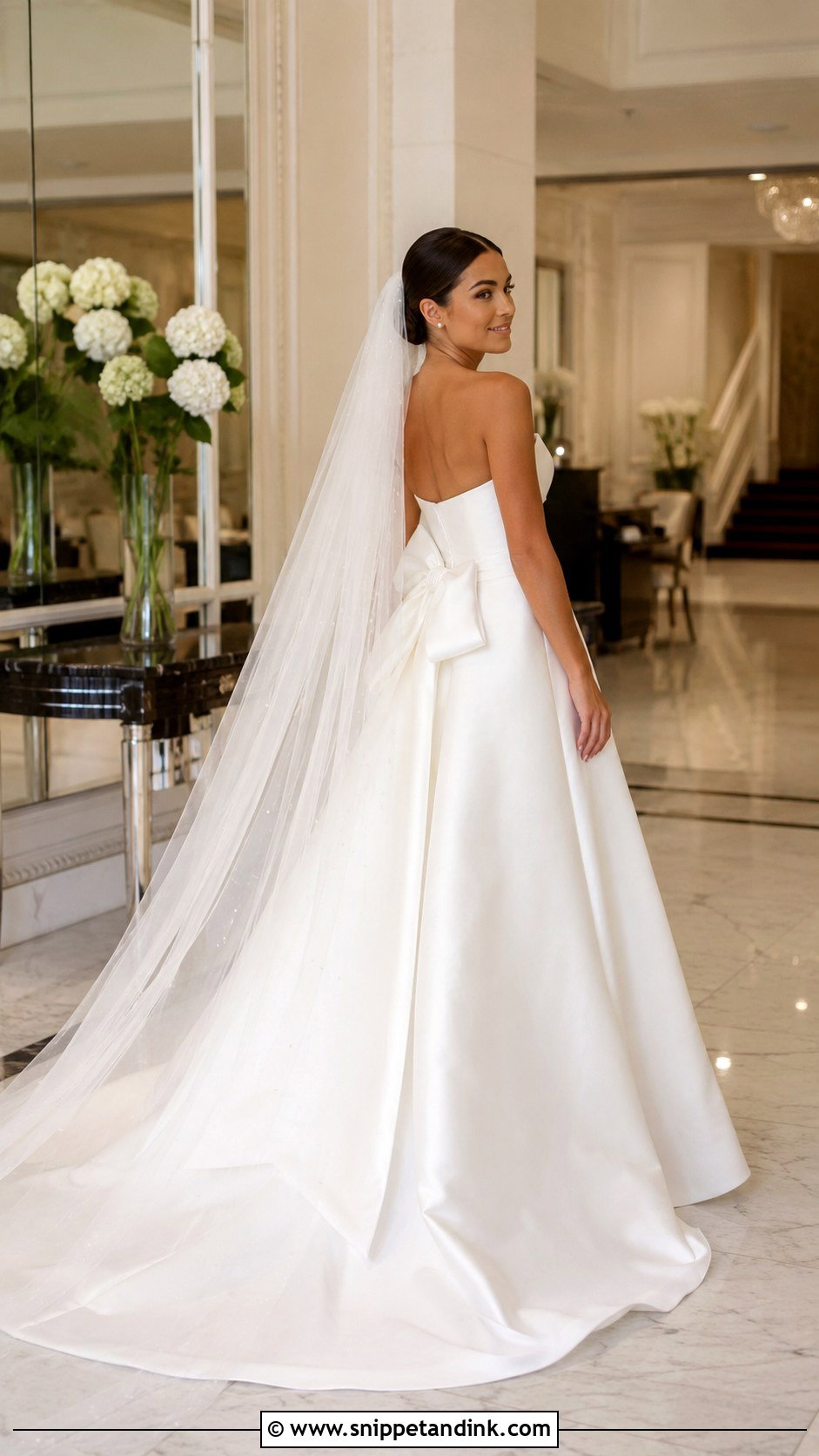
One bow, done well, gives a mikado gown its personality. Mikado is a stiff, slightly lustrous silk-blend that holds a crisp fold, which is why a bow made from it keeps its shape all day rather than wilting. Put it at the back waist, on one shoulder or as a removable accent, but keep it the only big detail. A clean A-line or ball gown with a strapless or square-neck bodice lets the tailoring show. Pearl studs, pointed satin pumps, a plain cathedral veil and a smooth chignon so a back bow stays visible complete the formal look. Take a detachable bow off for the reception and you get a simpler second outfit.
19. Modest Wedding Dress With Sleeves
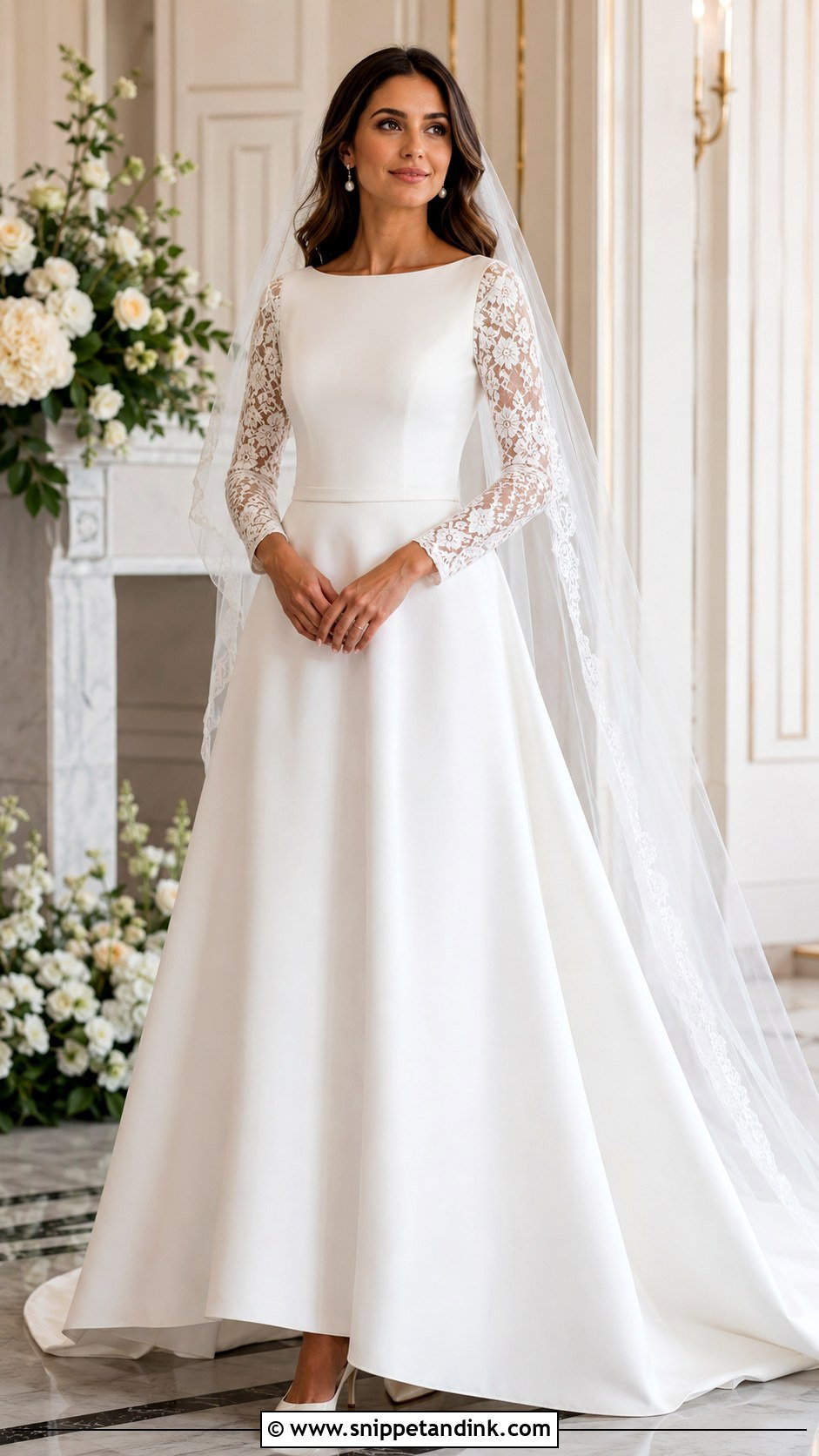
A modest gown has to move with you, so arm movement is my first check. Fitted wrist-length sleeves pull across the shoulder blades if the back is cut narrow, so reach forward and up during the fitting. Look for an opaque bodice with a bateau or softly rounded neckline and an A-line skirt. Lace sleeve panels add texture; crepe or satin keeps it clean. A defined waist and precise sleeve length keep the dress from looking oversized on you. Pointed low heels, pearl earrings, a fingertip or chapel veil and a low bun or soft waves complete it. Subtle embroidery, covered buttons or narrow satin trim are good places to personalise.

20. Convertible Wedding Dress With Detachable Skirt
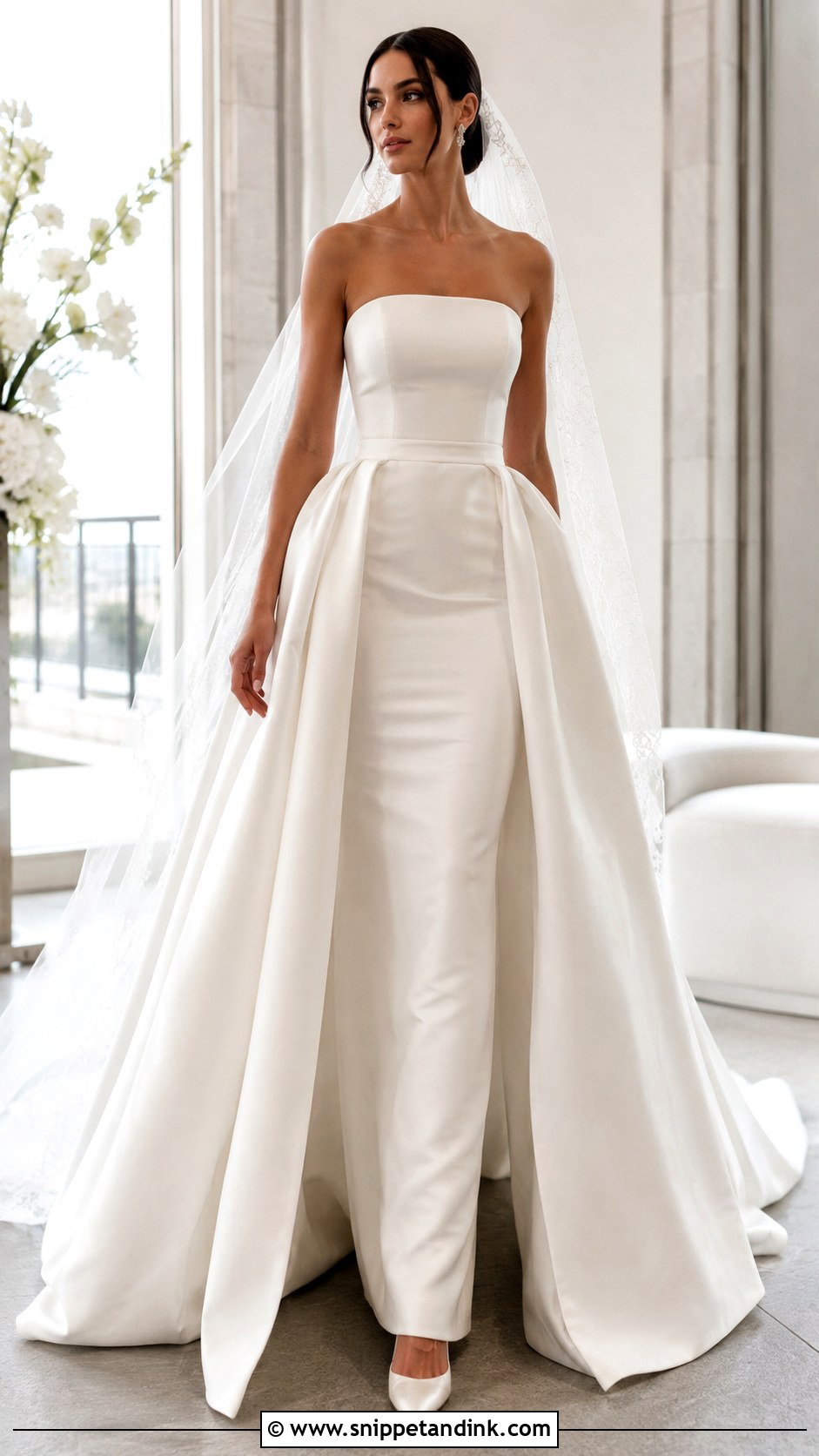
A convertible wedding dress gives you two looks without a full change. Start with a fitted column, mini or slim A-line base and add a detachable overskirt for the ceremony. The waist seams and fabrics of both layers have to match exactly; any mismatch looks like two separate garments. Satin and mikado give the most drama, while organza transforms more softly. Wear classic pumps, refined earrings and a long veil with the full skirt, then swap to slingbacks or embellished flats once it’s off. A detachable train or cape does the same job with less bulk at the waist. Practise the change at your last fitting.
Bustles, Pockets and the Bathroom Question
Every gown with a train needs a plan for after the ceremony, and that plan is a bustle. Your seamstress adds it during alterations. The common types:
- Over bustle: the train hooks up onto buttons at the back waist. Quick to do, and it suits lace and lighter fabrics.
- Under, or French, bustle: the train folds under and ties with ribbons inside. It gives a full, layered back and suits satin and ball gowns, but needs a confident helper.
- Ballroom bustle: several points lift the train so the hem sits evenly all round, almost as if there were no train.
Ask the seamstress to show your bustler, usually a bridesmaid or your mother, how it works at the final fitting, and let her film it on her phone. Ribbon bustles are often colour-coded or numbered. If they aren’t, ask.
On bathroom trips, I tell brides honestly: big skirts need a second person. The easiest method is facing the toilet backwards, with your helper gathering the skirt up from behind. A slip-style gown can be managed alone. Pockets are worth asking for in any style, since alterations can usually add them to the side seams of A-line and ball gown skirts.
Shoes On, Walk the Room, Then Decide
An elegant wedding dress supports your body, sounds like you and fits the celebration you’ve planned. The ideas above run from formal satin ball gowns and sleek crepe columns to romantic lace and practical convertible designs. Compare silhouettes first, then think through fabric, neckline, coverage, season and how you’ll move. Try every serious contender with shoes at the right height, and practise walking, sitting and hugging before you choose. Let accessories support the dress’s strongest detail rather than fight it. Good alterations, plus a veil, jewelry, shoes, hairstyle and bouquet chosen together, will turn any of these into a polished look that’s yours.
You'll Like These Ideas:




Leave a Reply