
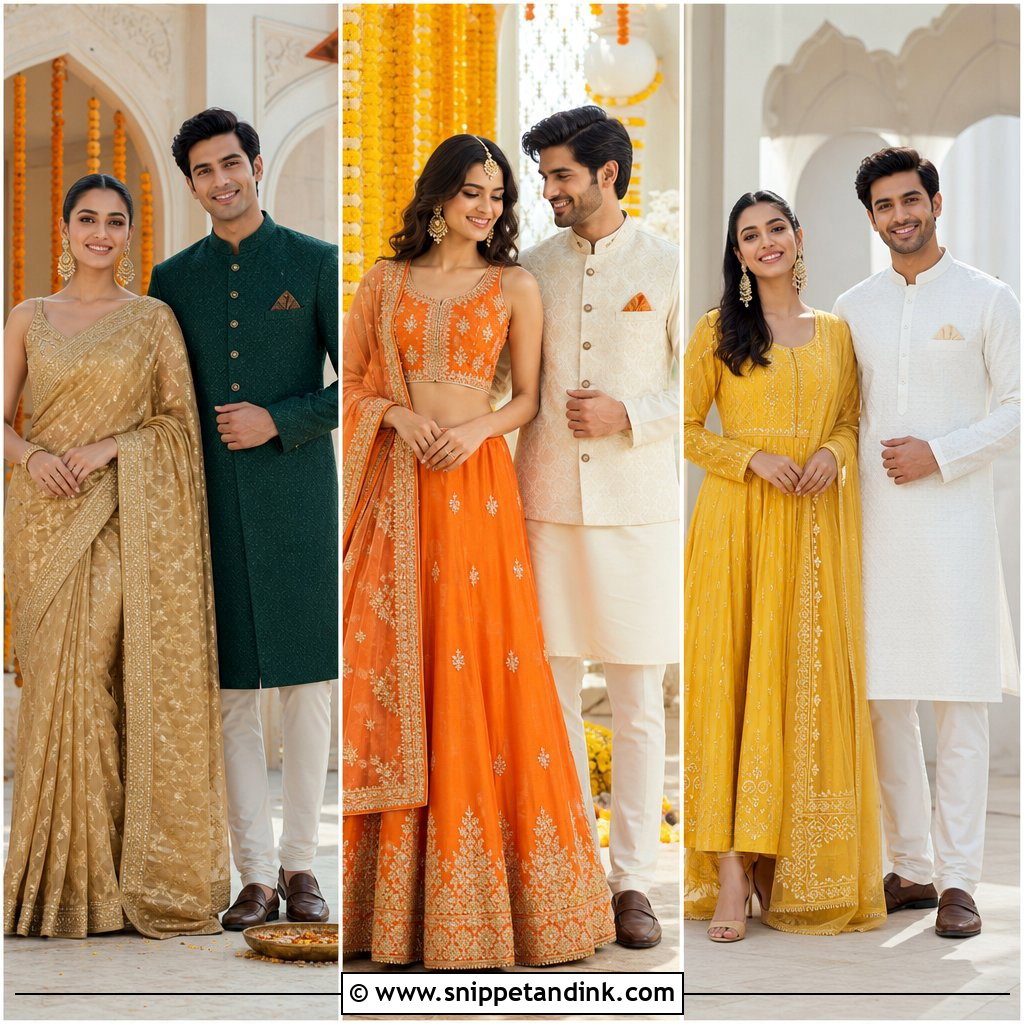
Most Indian wedding couples I dress want to look like a pair without looking like a uniform. The connection usually starts with the lehenga: a stole, a set of buttons or a safa picks up its color or its zari, and the rest of the groom’s outfit stays his own. Guests coordinating as a couple can work the same way, with complementary shades and the same level of formality. Think about each function before you think about color. Day events reward lighter shades, while evening events can carry jewel tones and more metal. The pairings below move through the main functions, from haldi to the reception.

Getting a Sherwani Made to Answer Her Lehenga
With most couples I work with, the lehenga is ordered first and takes longest, so the sherwani is designed around it. That order is right. What goes wrong is the brief: a phone photo of a lehenga tells a tailor almost nothing about thread color or metal tone.
What I bring to the sherwani tailor
- A cutting of her blouse fabric or a spare piece of the dupatta border, if the lehenga designer will release one.
- A note of the zari finish, whether antique gold, bright gold, rose gold or silver. It decides his buttons and threadwork.
- A clear image of her main embroidery motif, so his tailor can borrow one small element instead of the whole design.
- The shoes he’ll actually wear, since churidar length and the gathers at the ankle depend on juttis versus mojaris.
At his fittings, I look at the chest first, because it shouldn’t pull when he sits. Then the sleeve, which should stop at the wrist bone so a watch or kada shows. Last is the hem, which should fall evenly just below the knee all the way round. A sherwani that dips at the back looks careless in every walking shot.
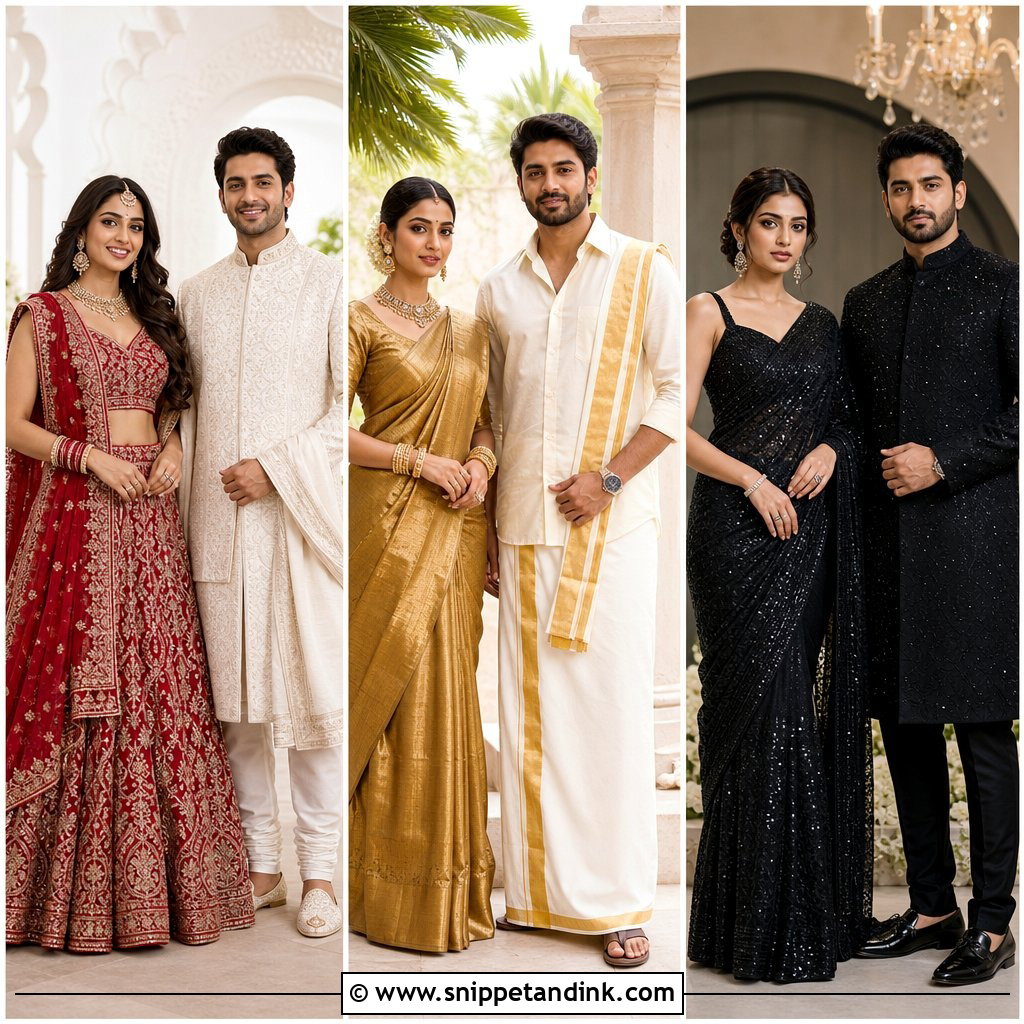
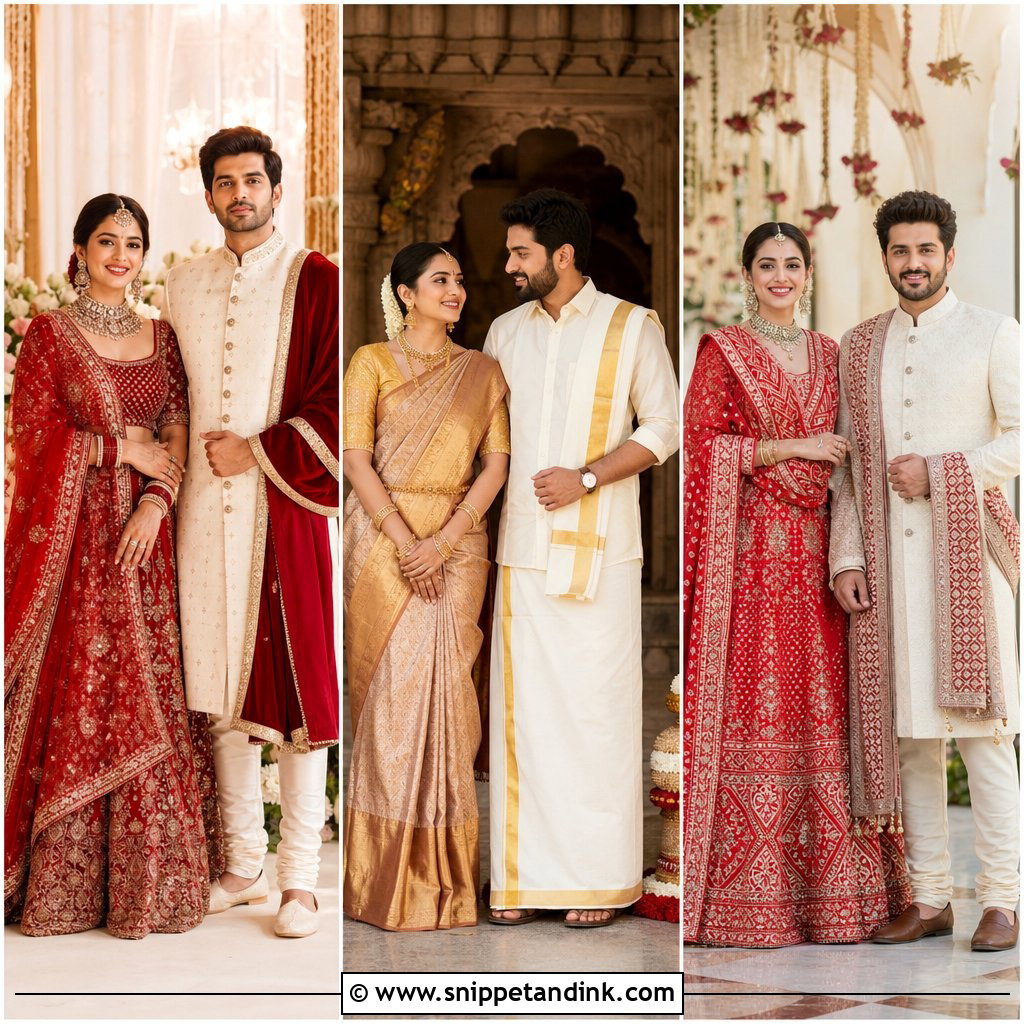
1. Red Lehenga And Ivory Sherwani
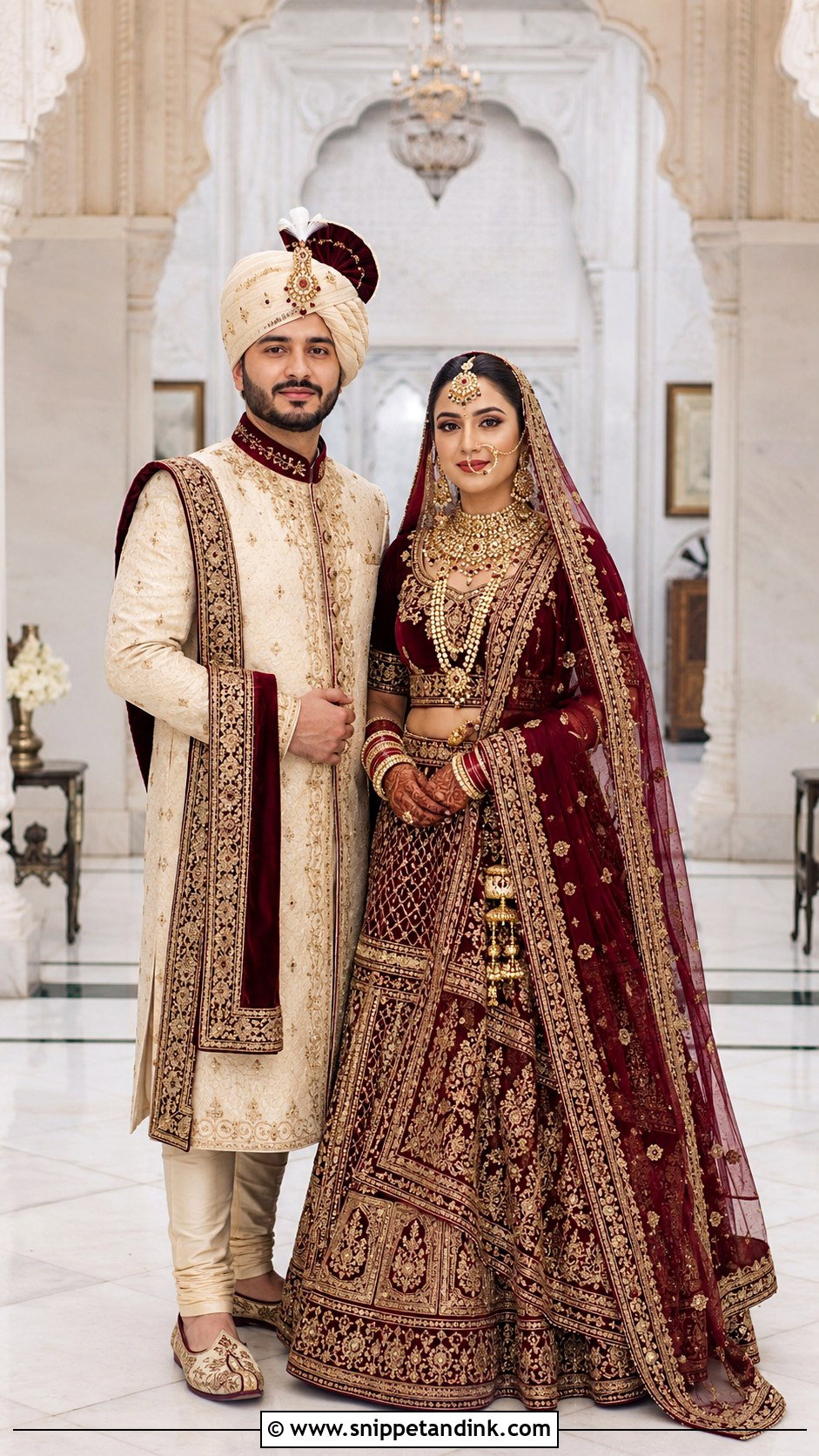
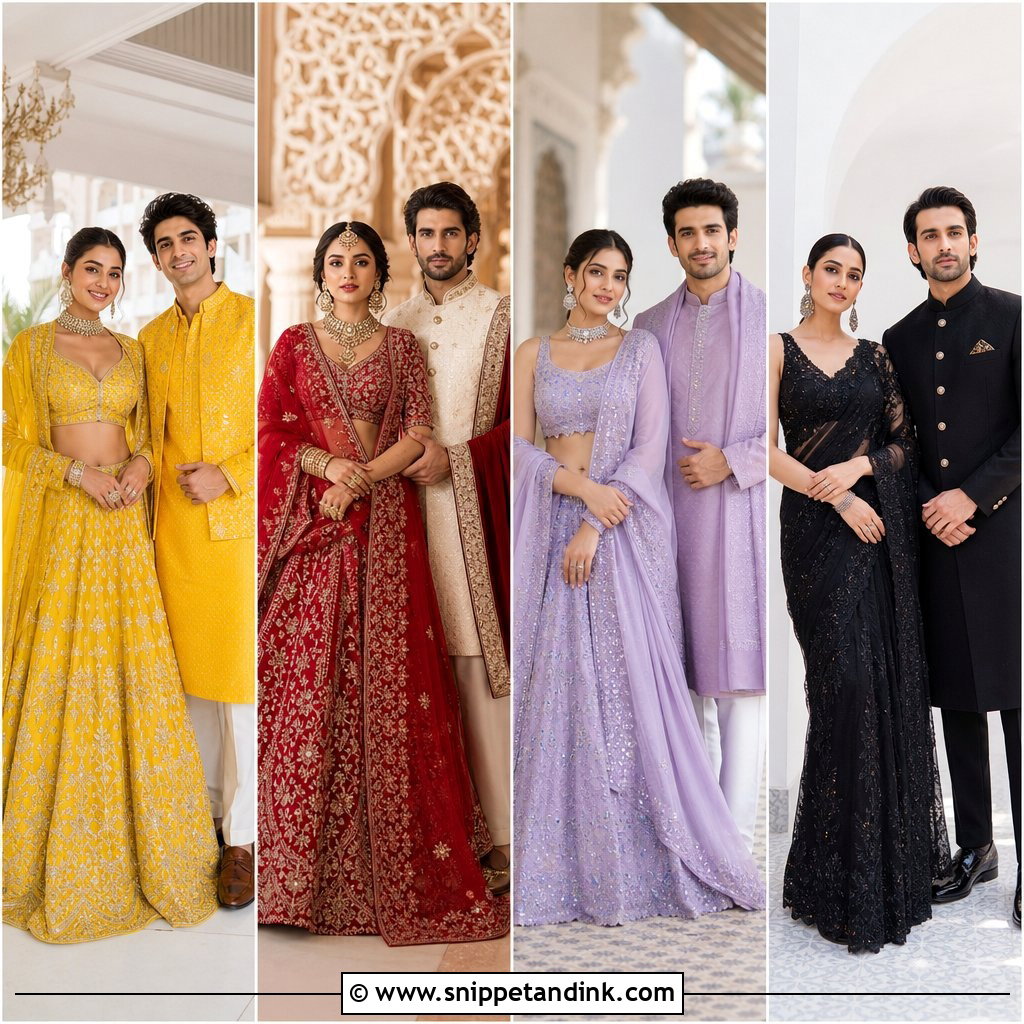
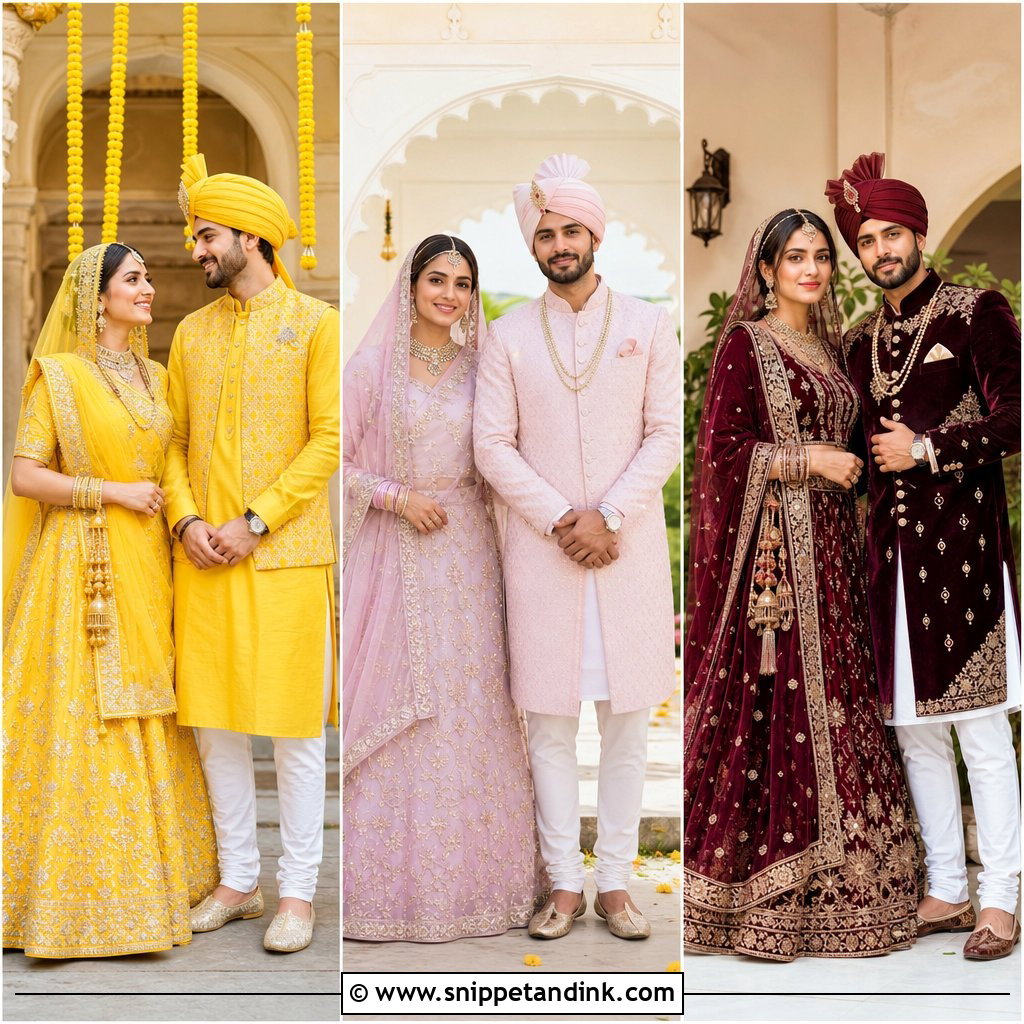
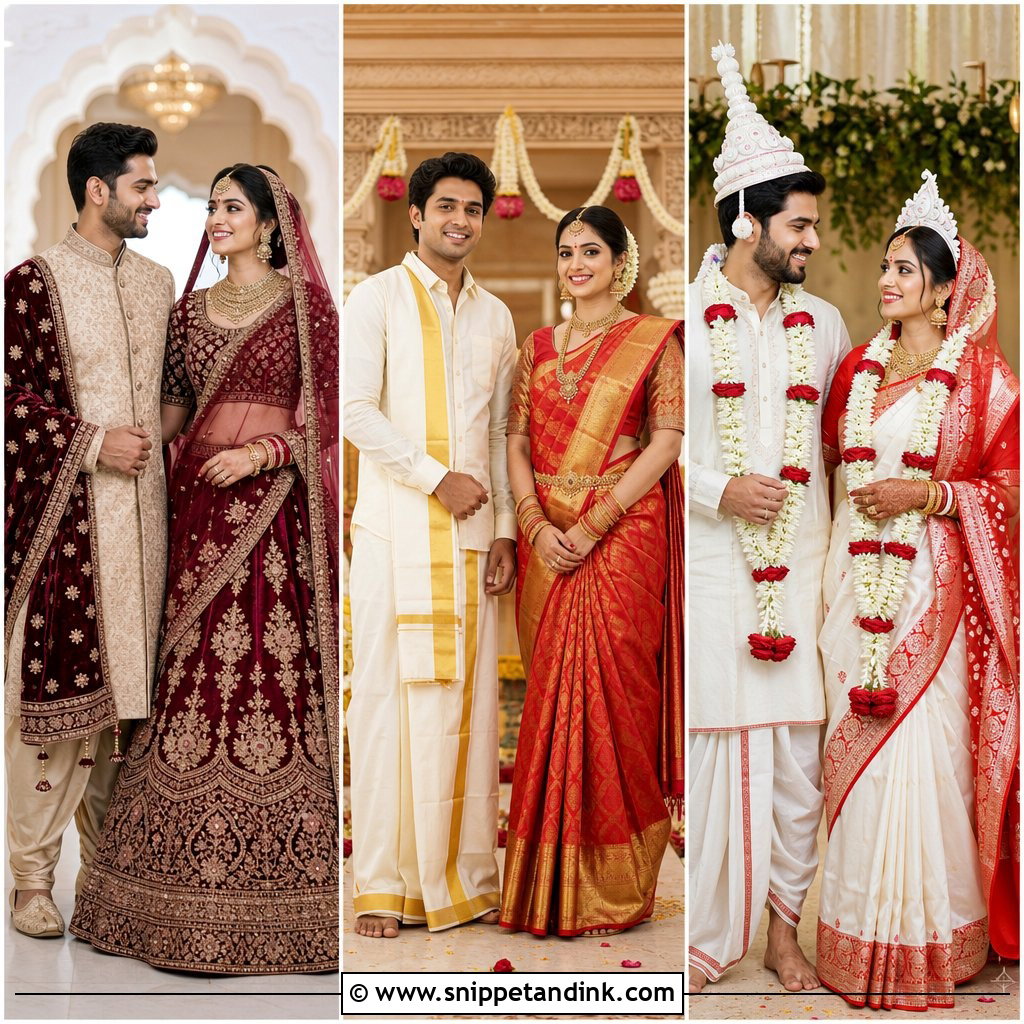
Red and ivory is the classic for a reason: the two read clearly apart in photos and still belong together. She wears deep red silk or velvet with gold embroidery and a bordered dupatta; he wears an ivory sherwani with fine gold threadwork, slim churidar and gold juttis, with a red stole or safa linking the two. The detail I’m strict about is the metal. Antique gold zari on her side and bright yellow gold on his look mismatched up close, so I take a cutting of her border to his tailor.
2. Pastel Pink Lehenga And Beige Sherwani
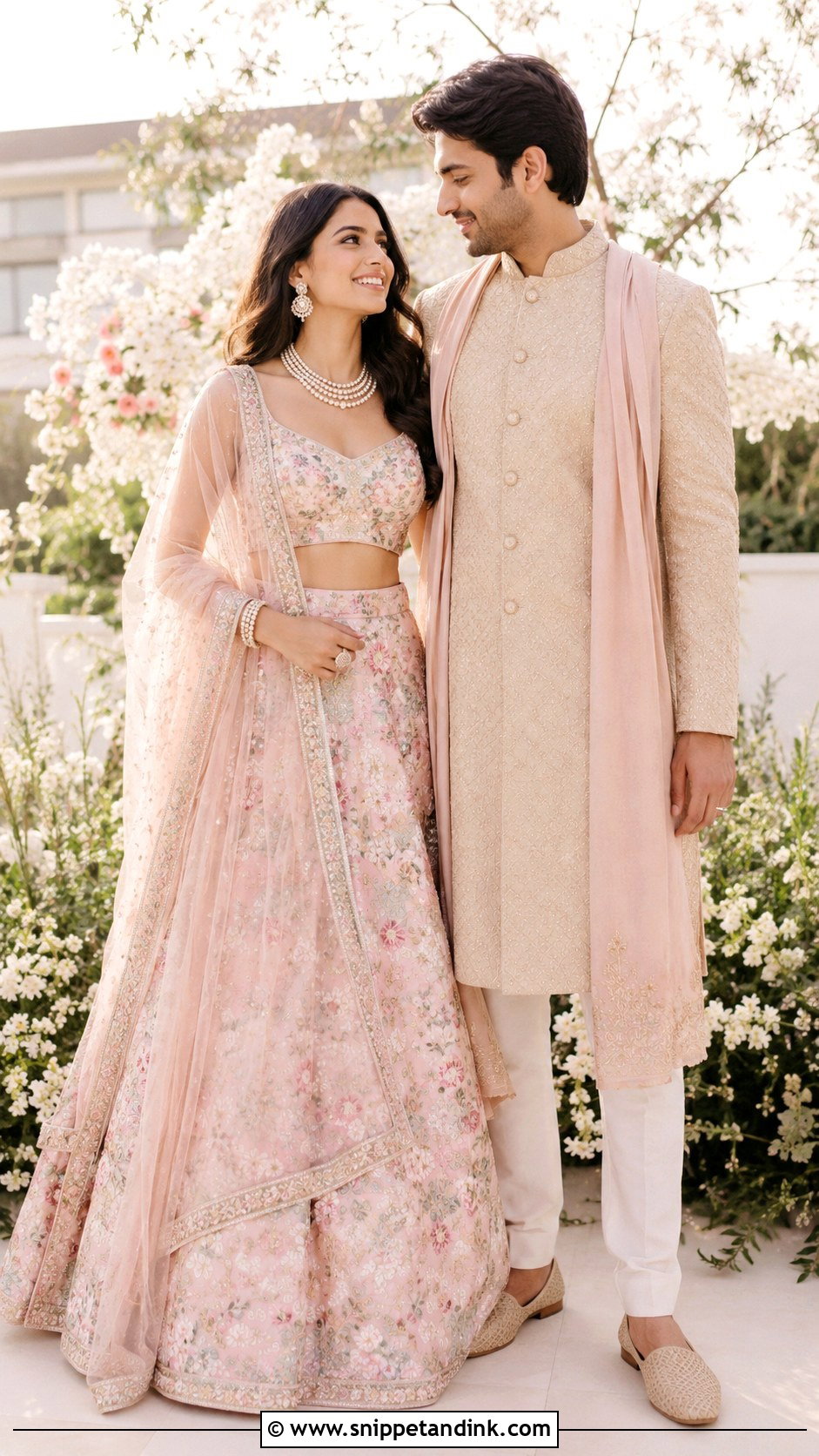
Daytime pastels need matching shine more than matching color. Her blush lehenga with floral embroidery, pearls and a net dupatta sits beside a beige or sand sherwani with pale pink embroidery at the collar and cuffs, cream churidar and neutral juttis. If her lehenga is matte georgette and his sherwani is glossy brocade, he ends up looking more dressed than the bride. In this palette I’d put him in raw silk, which has a soft, dry surface.
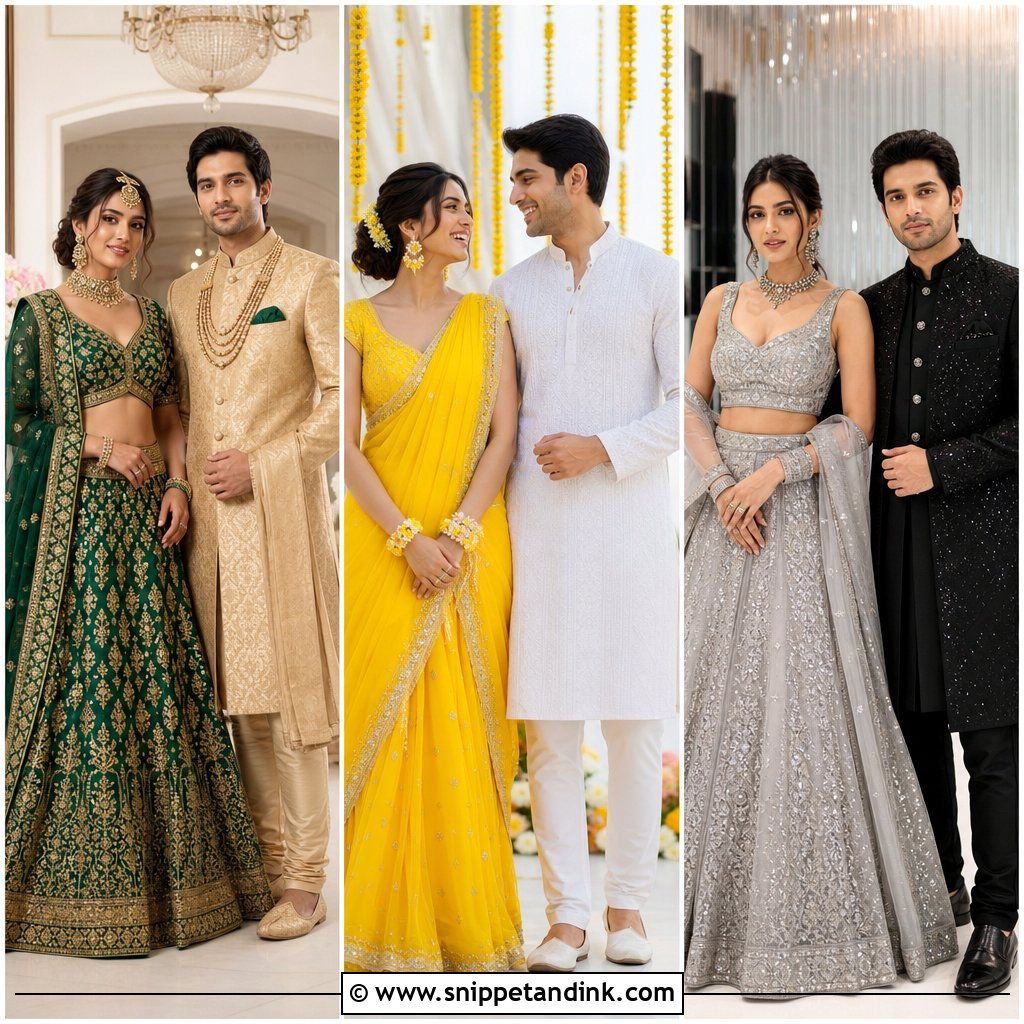
3. Emerald Green Lehenga And Gold Sherwani
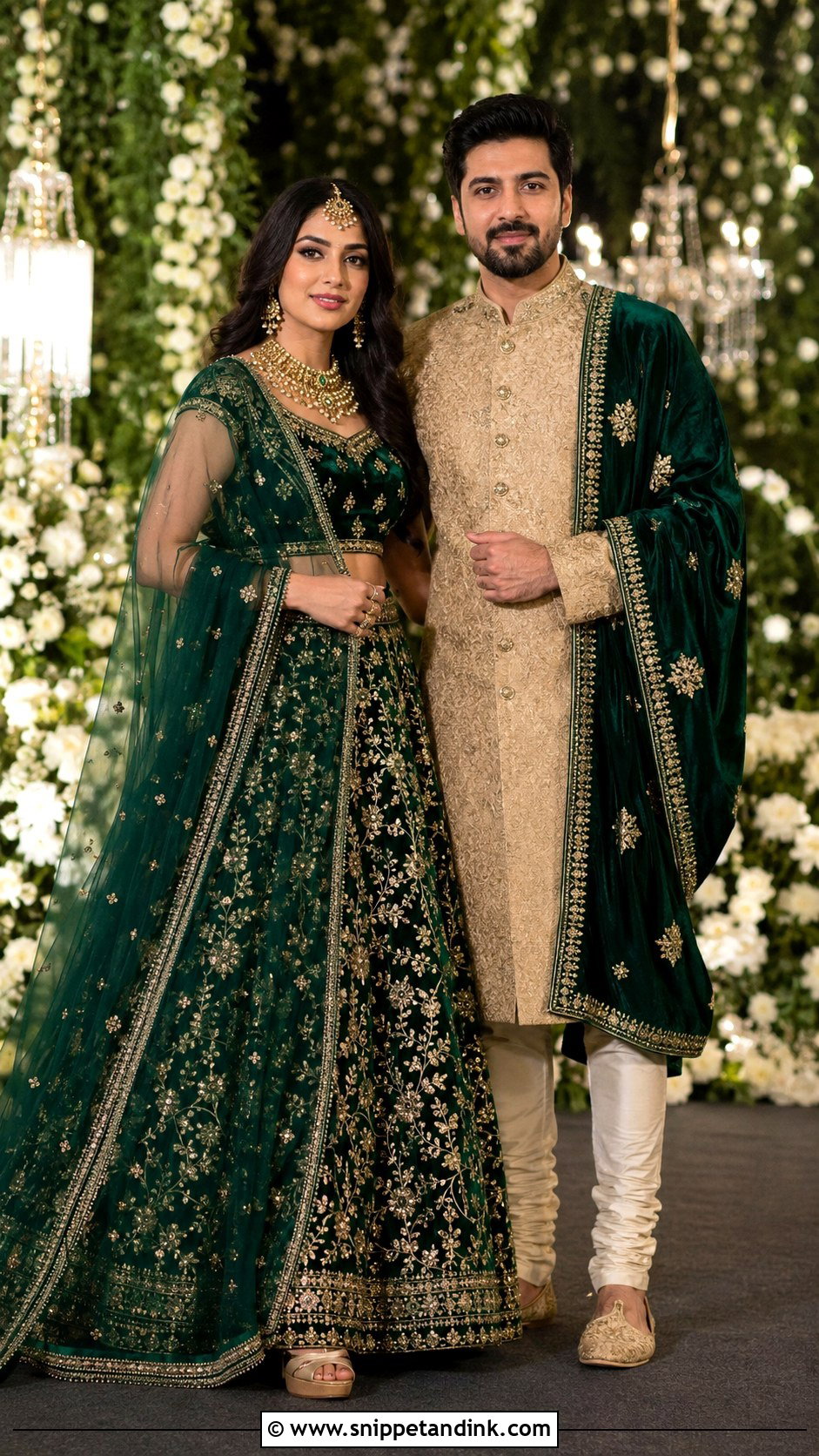
Emerald and gold hold up under evening light, and the trick is giving him the gold in a muted, almost champagne version. Her emerald velvet or raw silk lehenga with antique gold work and a statement necklace leads. His muted gold sherwani with ivory trousers and embroidered juttis follows, with an emerald stole or safa repeating her shade. Don’t load both with heavy work. A densely embroidered gold sherwani under stage lights can glare in photographs.
4. Maroon Lehenga And Cream Sherwani
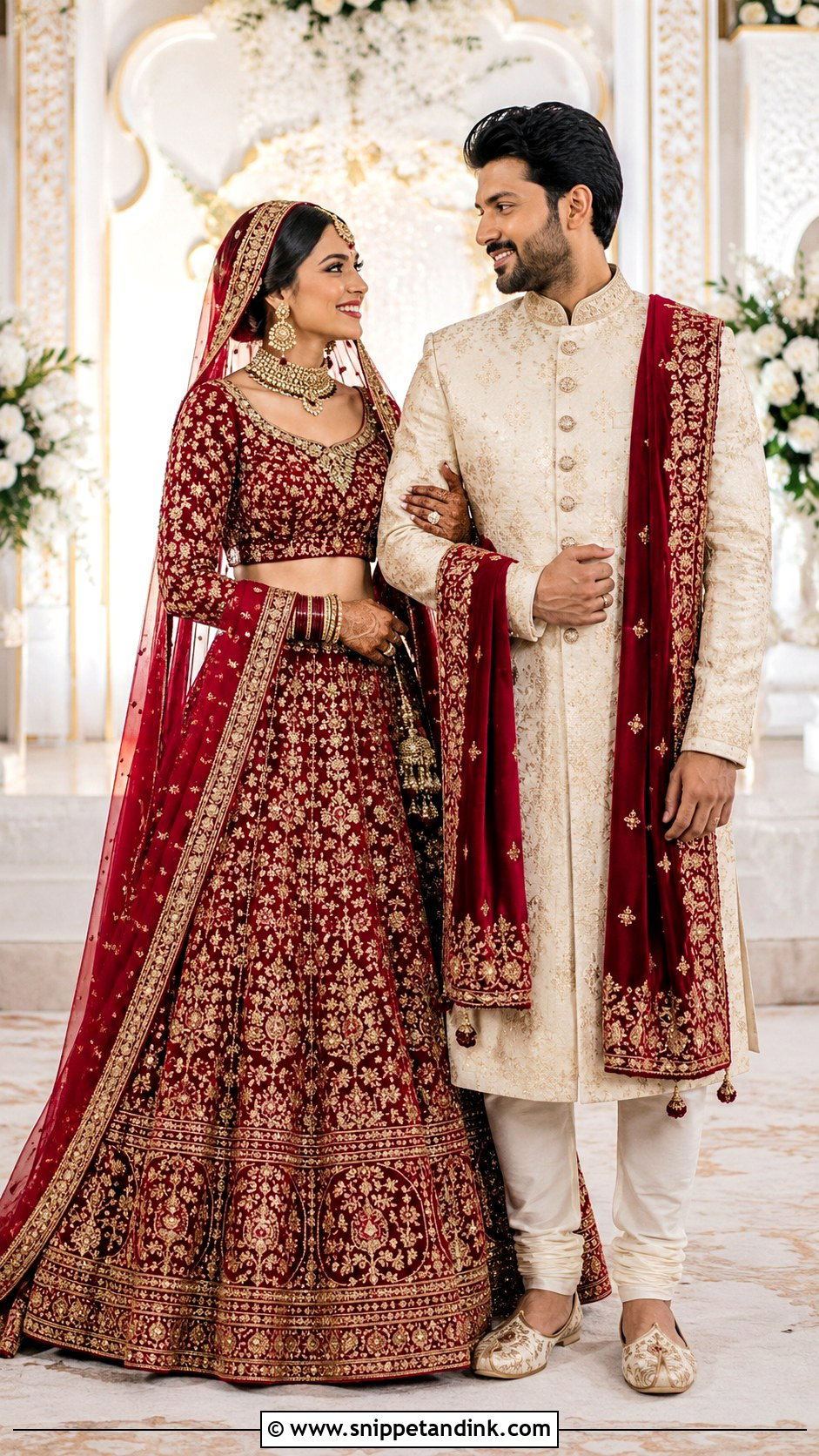
Maroon is softer than bridal red and sits well in heritage venues and the cooler months. A maroon lehenga with antique zari and a double dupatta pairs with a cream sherwani carrying maroon only at the buttons, cuffs or collar, plus a maroon stole. Whenever her lehenga is heavily worked, I simplify the embroidery on his side. Copying her pattern isn’t necessary; matching the metal tone matters far more. Cream raw silk also marks easily, so I tell grooms to leave the sherwani on its hanger until the last minute.
5. Yellow Lehenga And White Kurta For Haldi
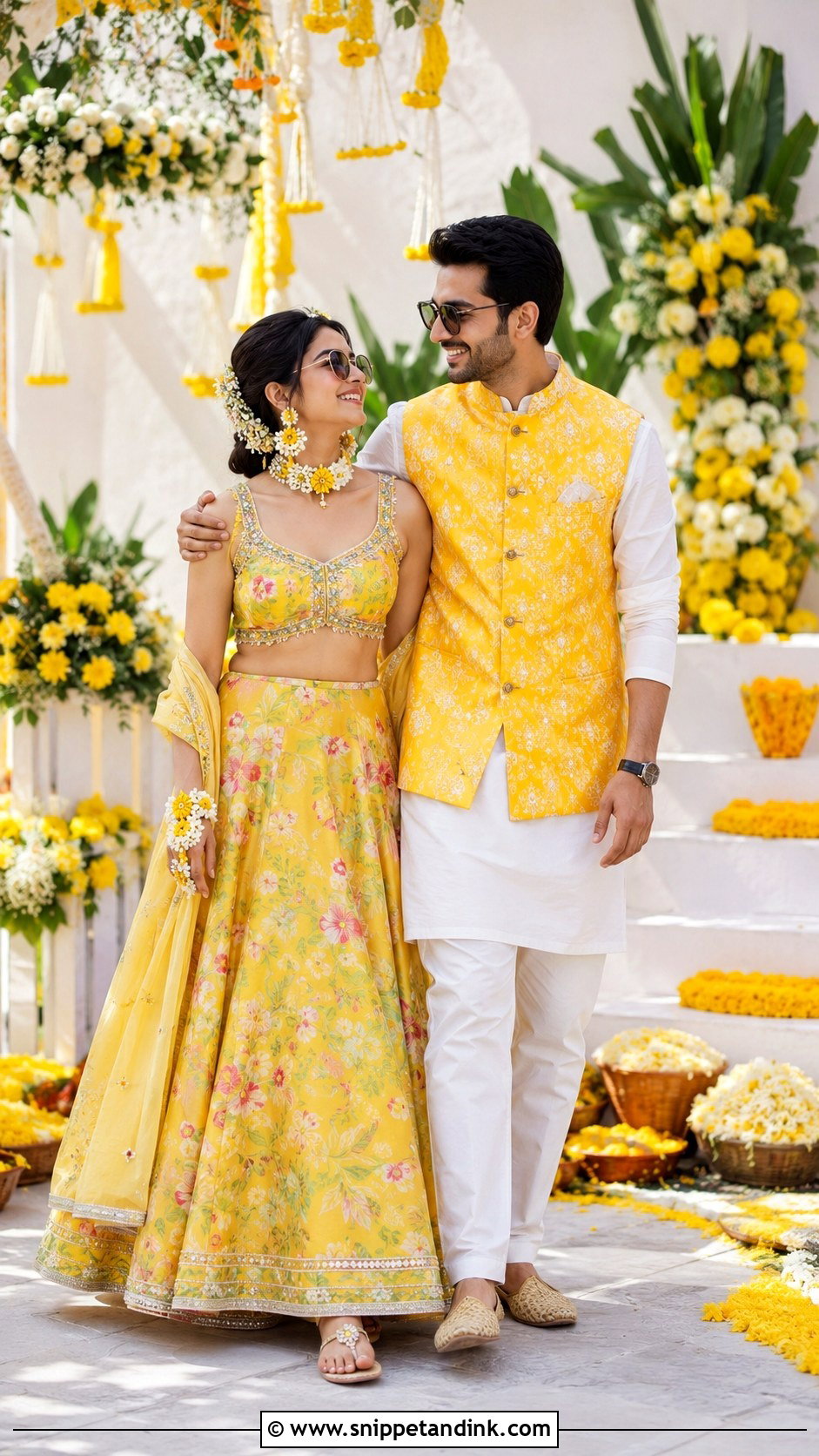
Haldi clothes will get turmeric on them, and turmeric stains cotton and silk alike. I plan haldi celebration outfits as clothes that can take it: a light yellow lehenga with a floral dupatta and flat sandals for her, a white kurta with straight pajamas and a yellow Nehru jacket for him. Honestly, white is the brave choice. If he hopes to wear the kurta again, pale yellow or off-white hides the marks much better. Leave heirlooms and fine hand embroidery at home.
6. Green Lehenga And Printed Kurta For Mehendi
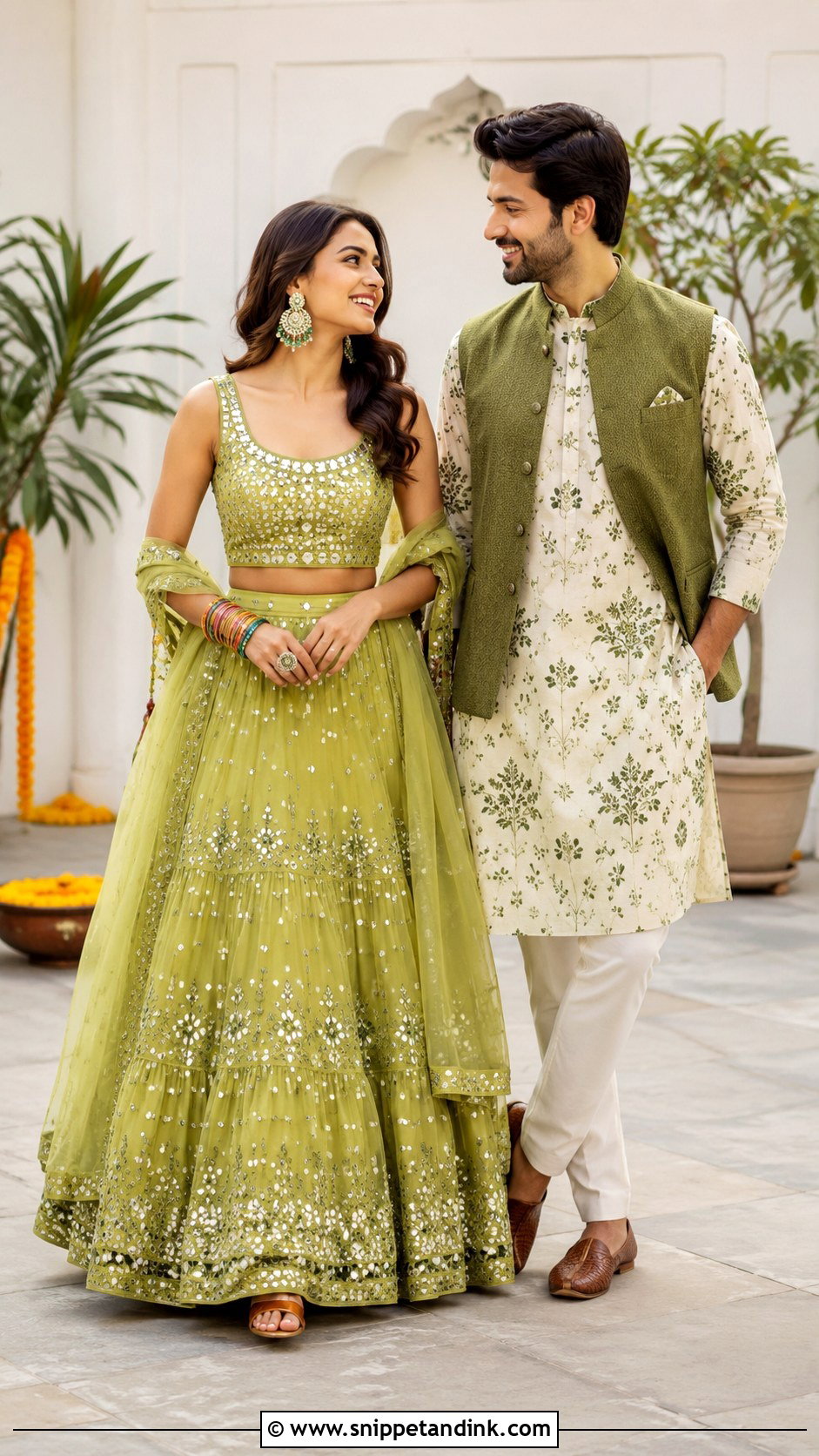
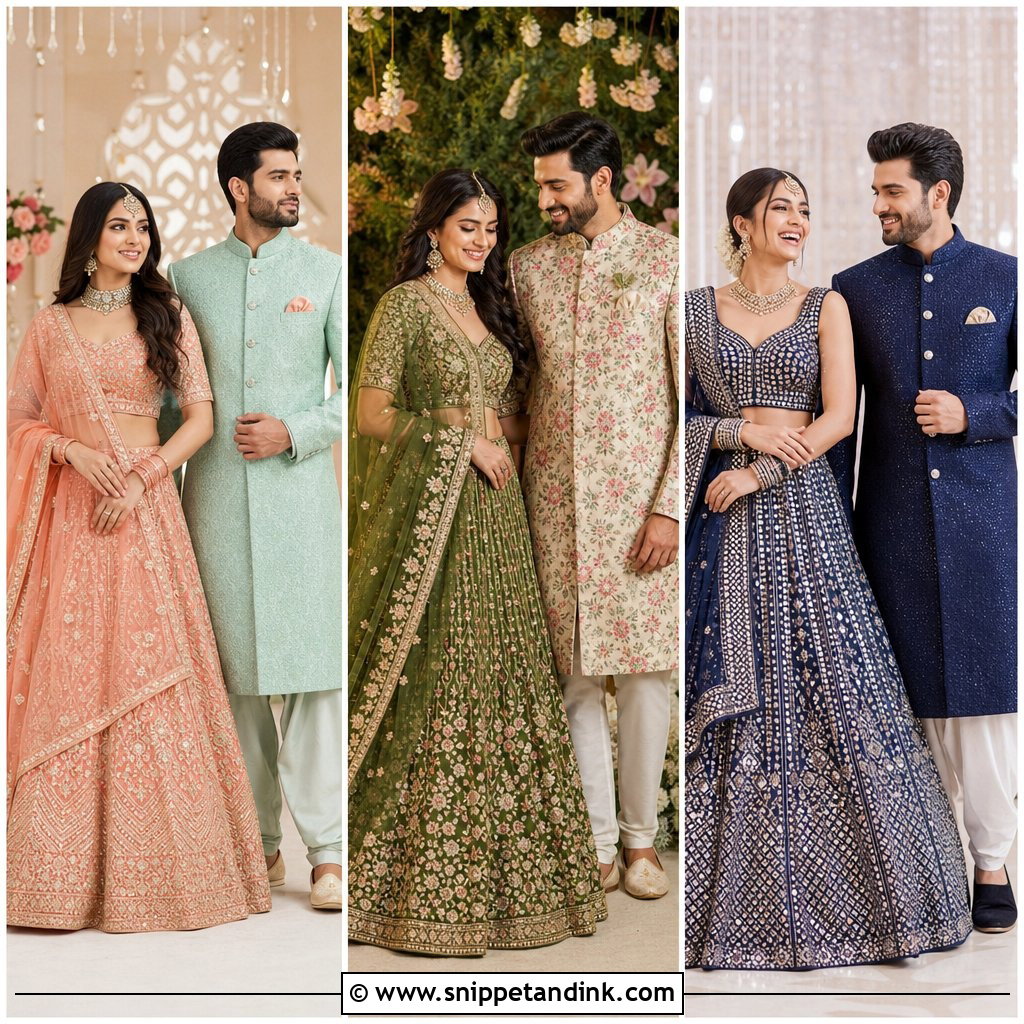
Mehendi is a sitting event, often for hours, so comfort comes first. A lime or leaf green lehenga with mirror work with a short-sleeve blouse keeps the bride’s arms free for the artist, and block heels make the walk to the stage easy. For him, a cream kurta with green botanical print, or a plain green Nehru jacket over tapered pajamas. One accent shade such as pink or orange can run through both. I’d avoid anything stiff at the knee on his side; he’ll be cross-legged on a floor cushion more than once.
7. Navy Blue Lehenga And Silver Sherwani For Sangeet
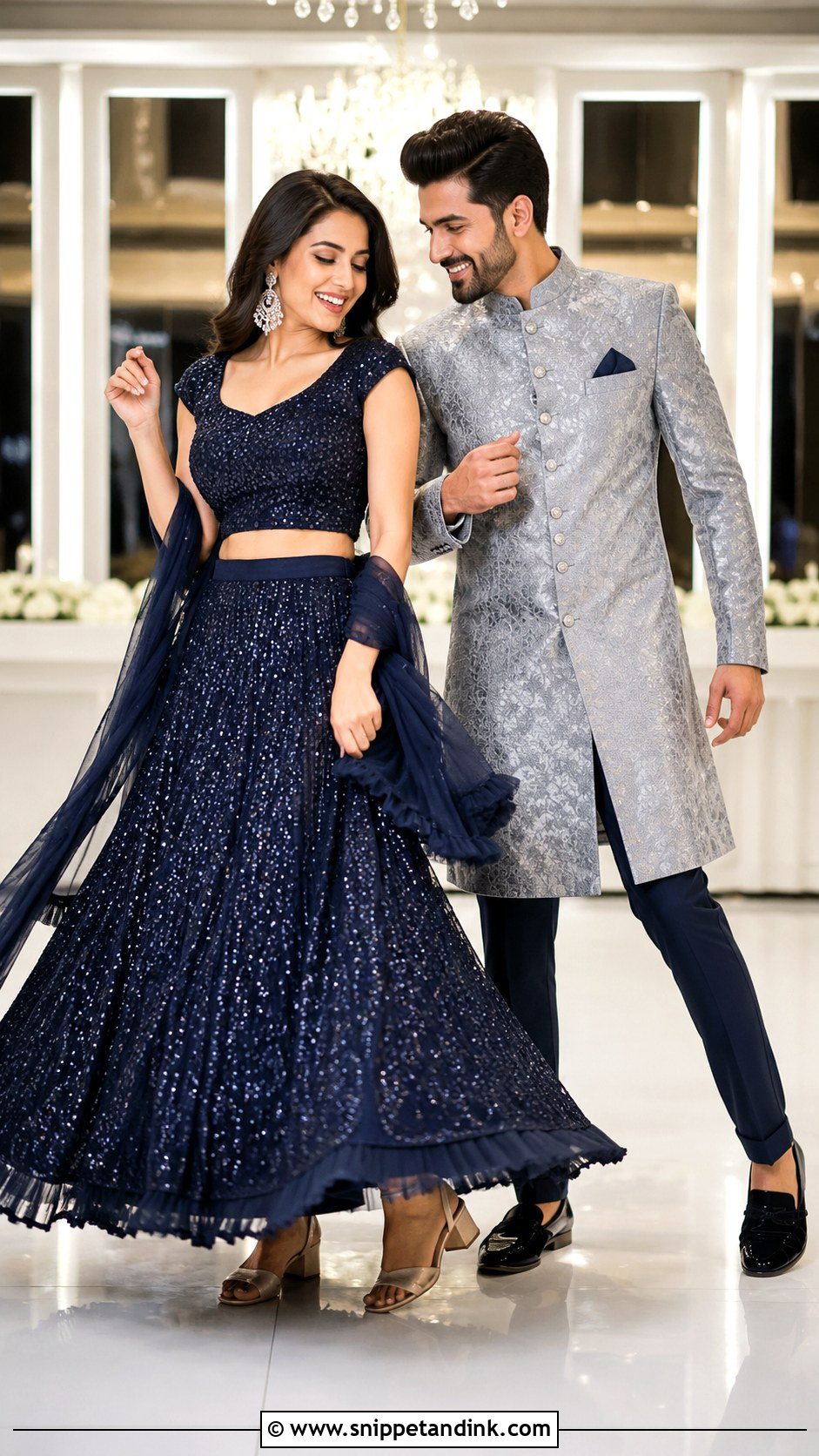
Sangeet clothing is dance clothing first. Her navy lehenga with silver sequins or mirror accents goes with secure block heels, and his silver-gray sherwani or bandhgala with navy detailing goes with slim trousers and loafers. If her outfit sparkles heavily, I keep his jacket mostly matte, because two reflective surfaces under stage lights fight each other. I also check his armholes. A bandhgala cut tight under the arm won’t let him raise his hands during a choreographed number.
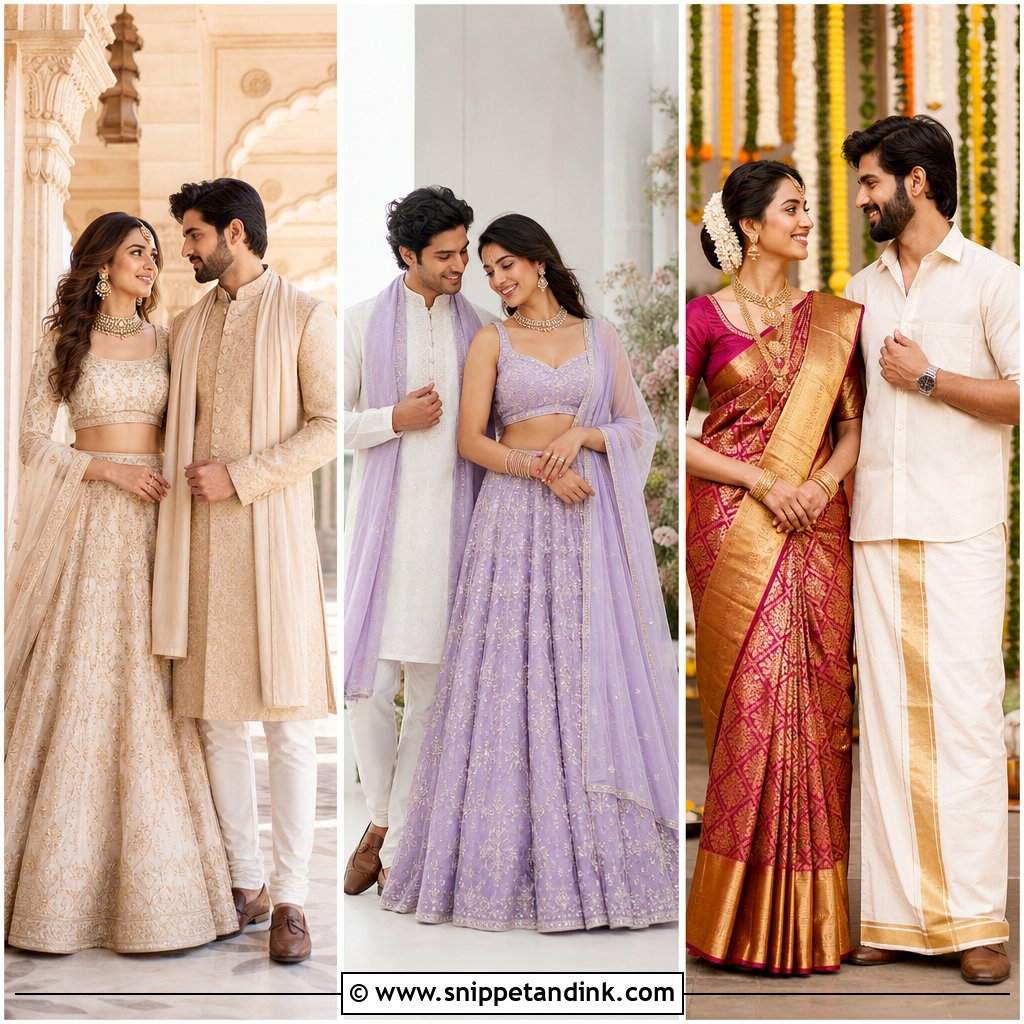
8. Lavender Lehenga And Gray Bandhgala For Engagement
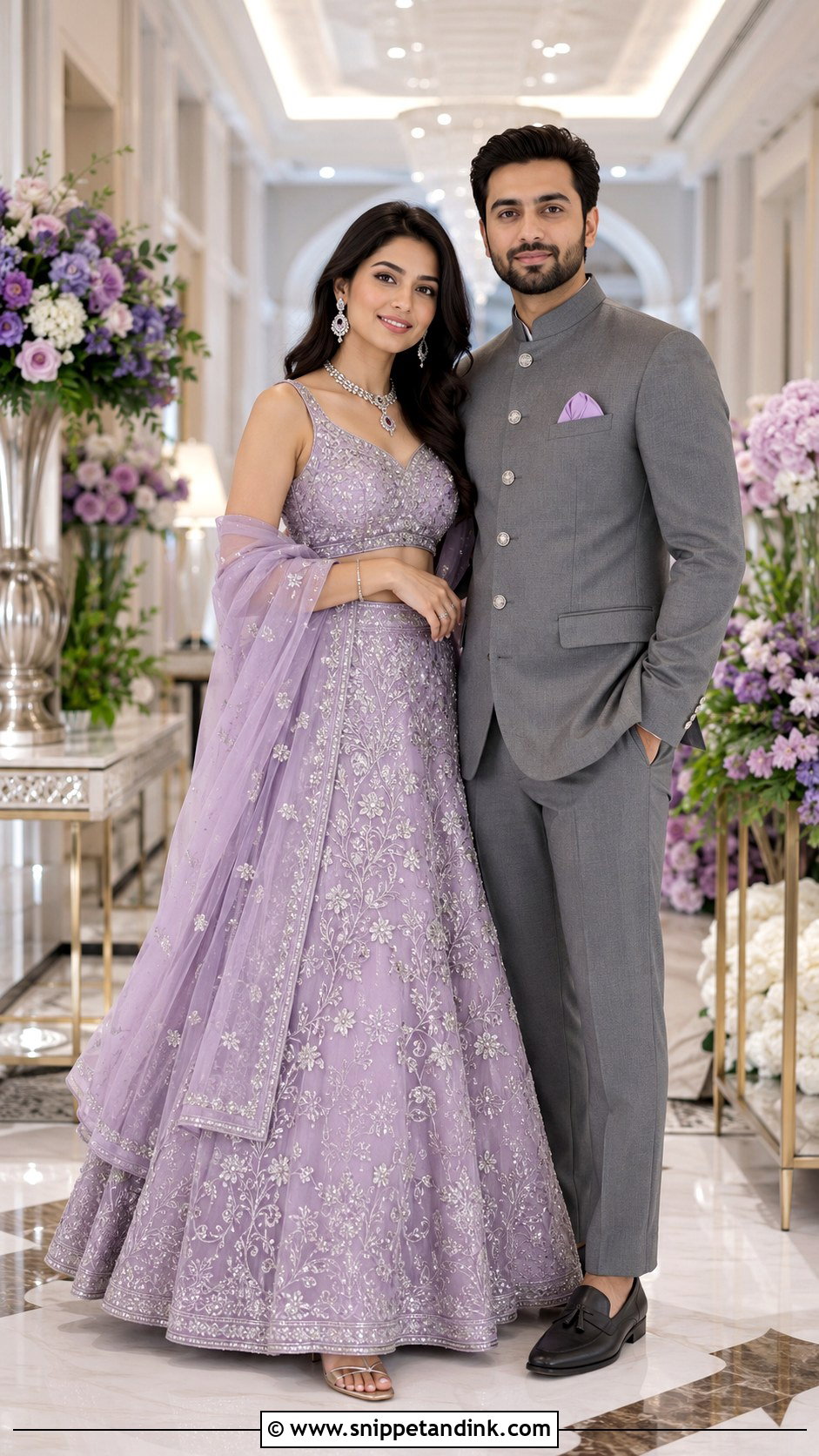
Lavender and soft gray make a quieter engagement choice than the usual reds. She wears a lavender lehenga with silver embroidery and a sheer dupatta; he wears a medium-gray bandhgala with lavender pocket detail, silver buttons and charcoal loafers, and an ivory kurta underneath softens the whole look. Gray varies enormously in undertone. A warm gray beside cool lavender turns muddy, so I compare his fabric with hers before anything is cut.
9. Ivory Lehenga And Gold Sherwani
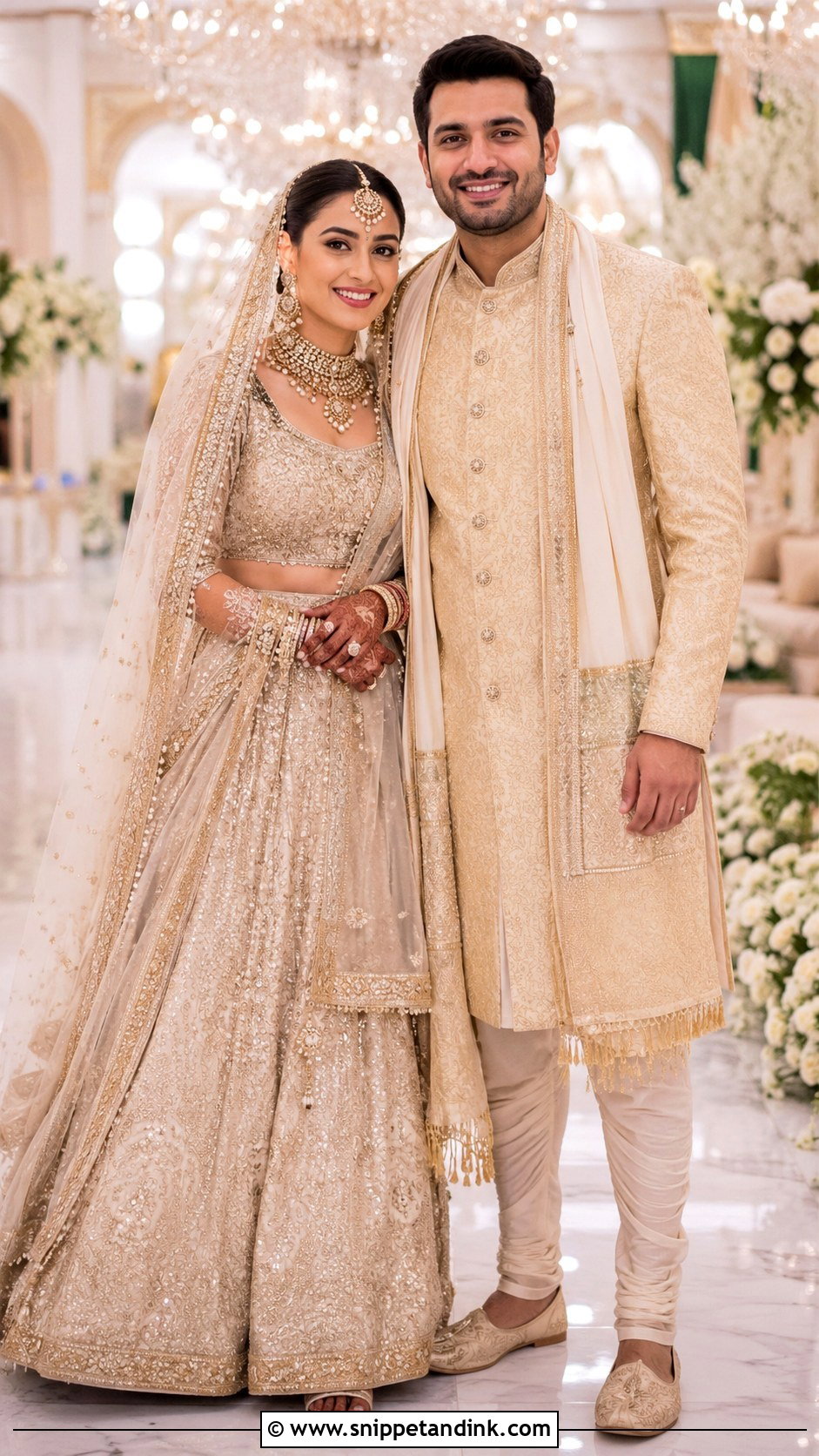
Ivory and gold feel rich without strong contrast, which means texture has to separate the two outfits. Her ivory lehenga with zari, pearls and a gold-bordered dupatta sits beside his champagne-gold sherwani a shade deeper, ivory pants and a cream stole. I pair embroidered work on her with smoother brocade on him. Some families and regions avoid pale clothing for the main ceremony, so ask before anyone places an order.
10. Peach Lehenga And Sage Green Sherwani
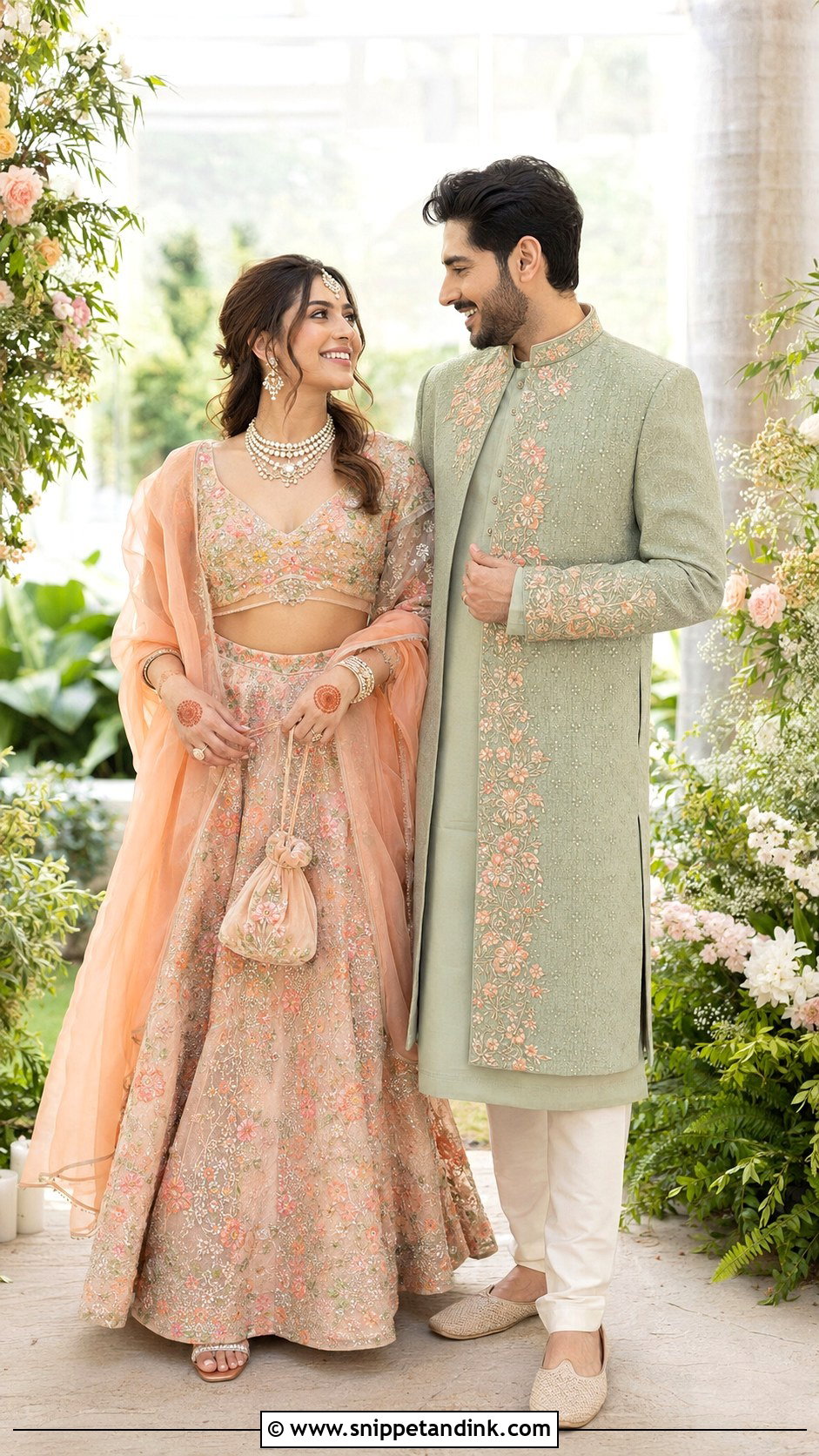
Peach and sage suit spring and summer, and they sit kindly on most skin tones. Her peach lehenga with soft green floral embroidery and an organza dupatta pairs with a sage sherwani with peach threadwork, ivory churidar and beige juttis. Stop at three colors: peach, sage and ivory. Sage silk can look grayish under cool indoor lighting, which is why I’d view a swatch both outdoors and indoors before choosing it for a day that runs into evening.
11. Royal Blue Lehenga And Blush Pink Sherwani
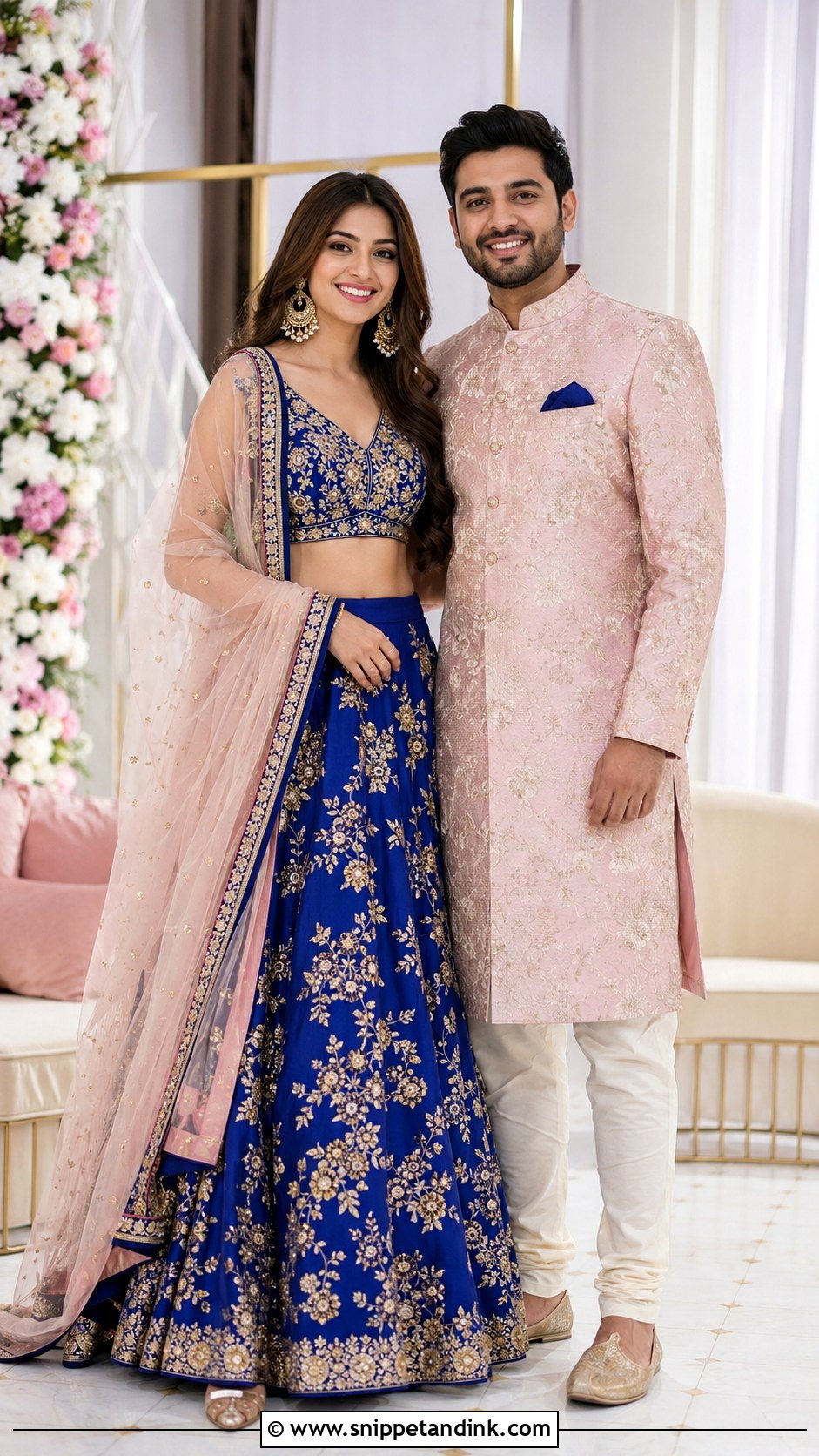
A blush sherwani is a smart way to calm a royal blue lehenga, and plenty of grooms are surprised by how well pale pink wears on them. Her royal blue silk carries blush and gold floral embroidery with a pink-bordered dupatta; his muted blush sherwani takes blue piping, ivory trousers and a royal blue pocket square. Keep the embroidery threads in the same family so the pair reads as connected from across the room.
12. Black Lehenga And Gold Bandhgala For Reception
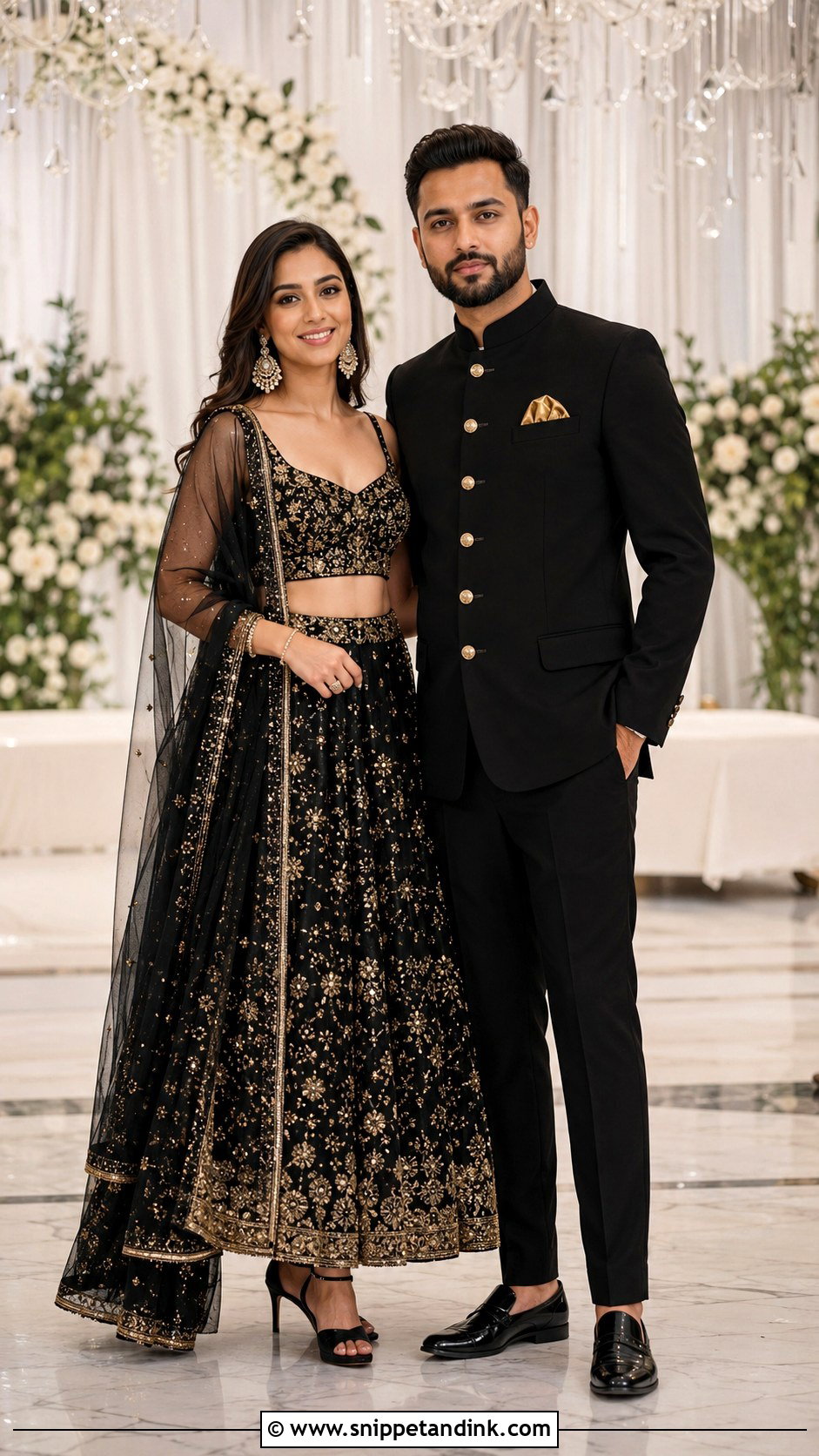
Black at a reception is a family conversation before it’s a styling one, because some households still avoid it at weddings. If it’s welcome, her black lehenga with gold sequin work and his black bandhgala with gold buttons look sharp together. The real question is shine. When her lehenga is heavily embellished, his jacket stays mostly matte with only a few metallic details. Black fabric also shows every bit of lint and dust, and I pack a lint roller for every reception like this one.
13. Teal Lehenga And Champagne Sherwani
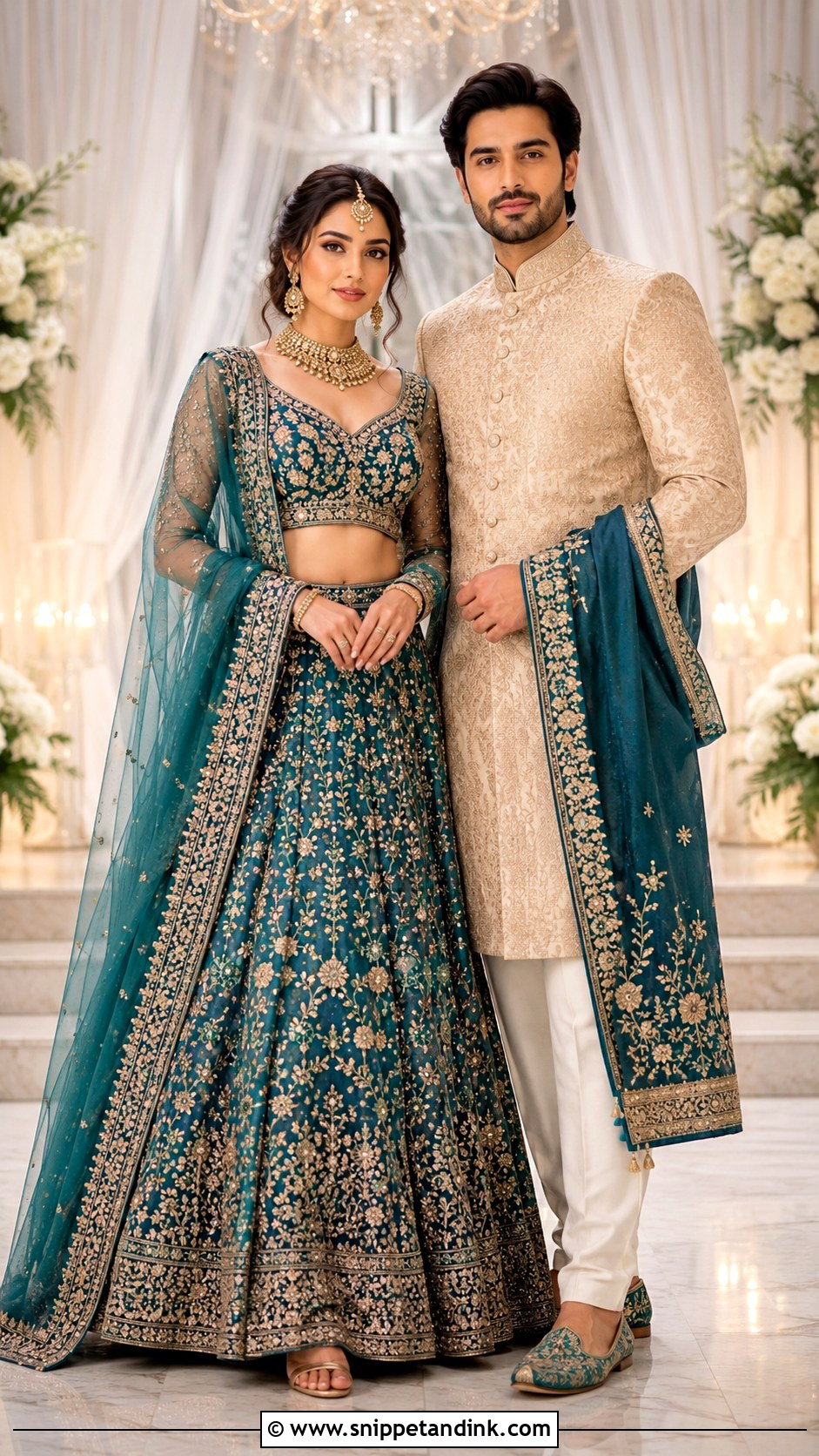
Teal keeps its depth under bright venue lighting, so it earns its place at evening ceremonies. Her teal lehenga with champagne beadwork and antique gold sits beside his champagne sherwani with teal piping, ivory pants and champagne juttis, with one metal tone running through her jewelry and his buttons. Florals can appear on both outfits, but at different scales. I’d put a small motif on the sherwani so it answers the lehenga instead of copying it.
14. Rust Lehenga And Cream Kurta Set
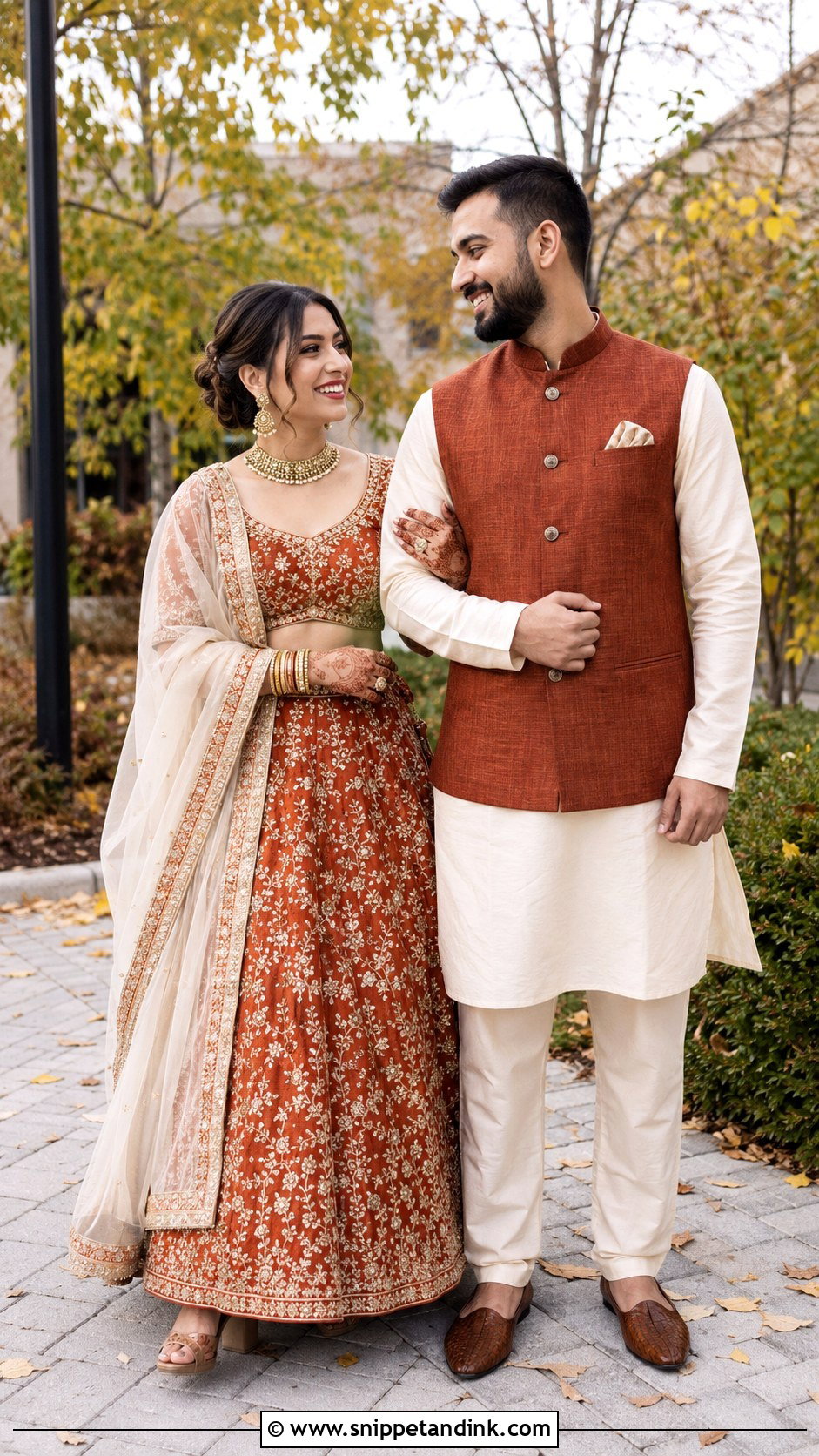
Rust and cream feel grounded at a fall function or a daytime mehendi. She wears a rust lehenga with gold threadwork or mirror details and tan block heels; he wears a cream kurta set under a rust Nehru jacket, with brown juttis. Outdoors, I’d use a silk blend or cotton for him and never velvet. Rust dye also takes very differently on silk and cotton, so hold his jacket fabric against her actual skirt before it’s stitched.
15. Red Kanjeevaram Saree And Cream Veshti
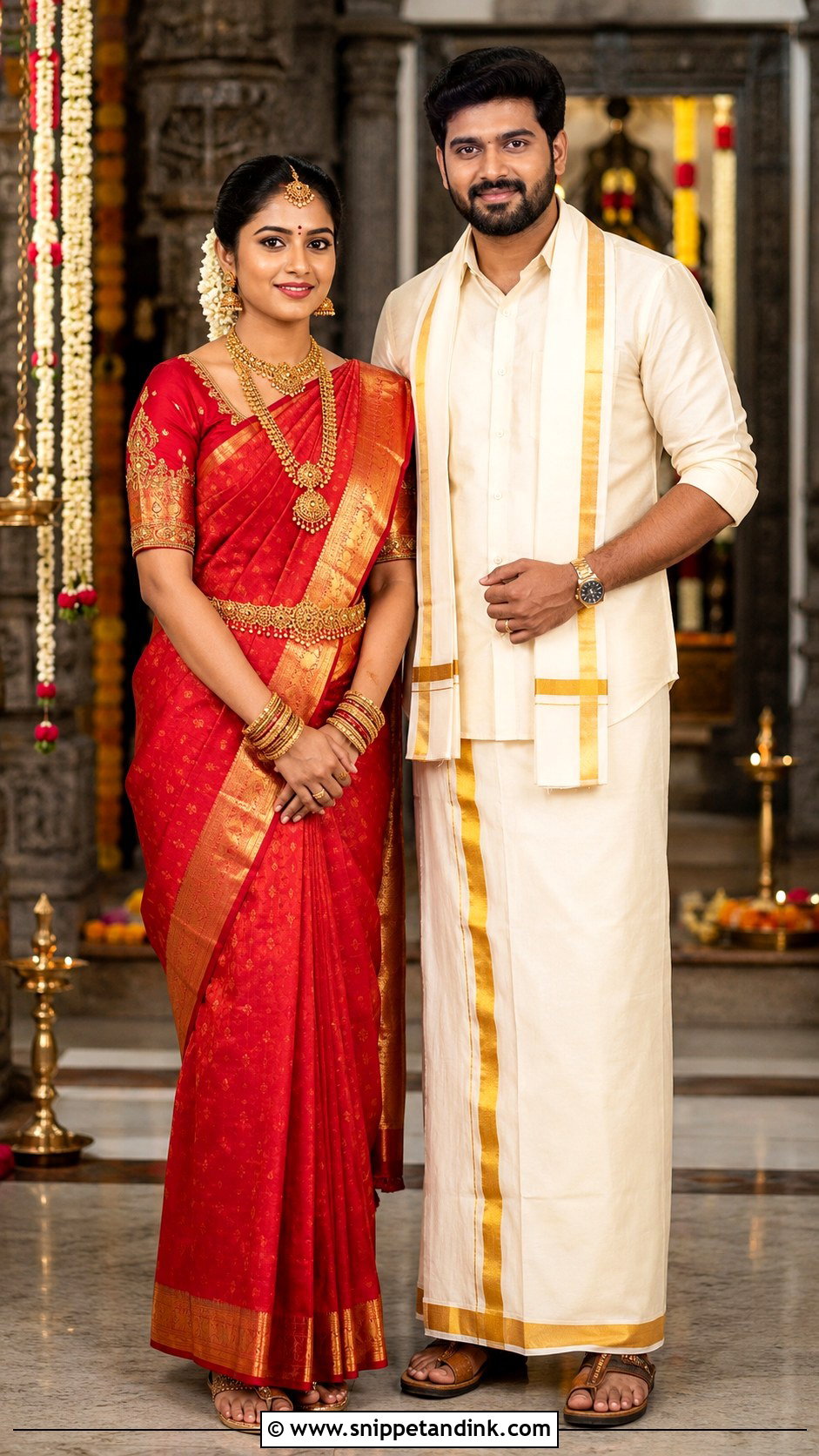
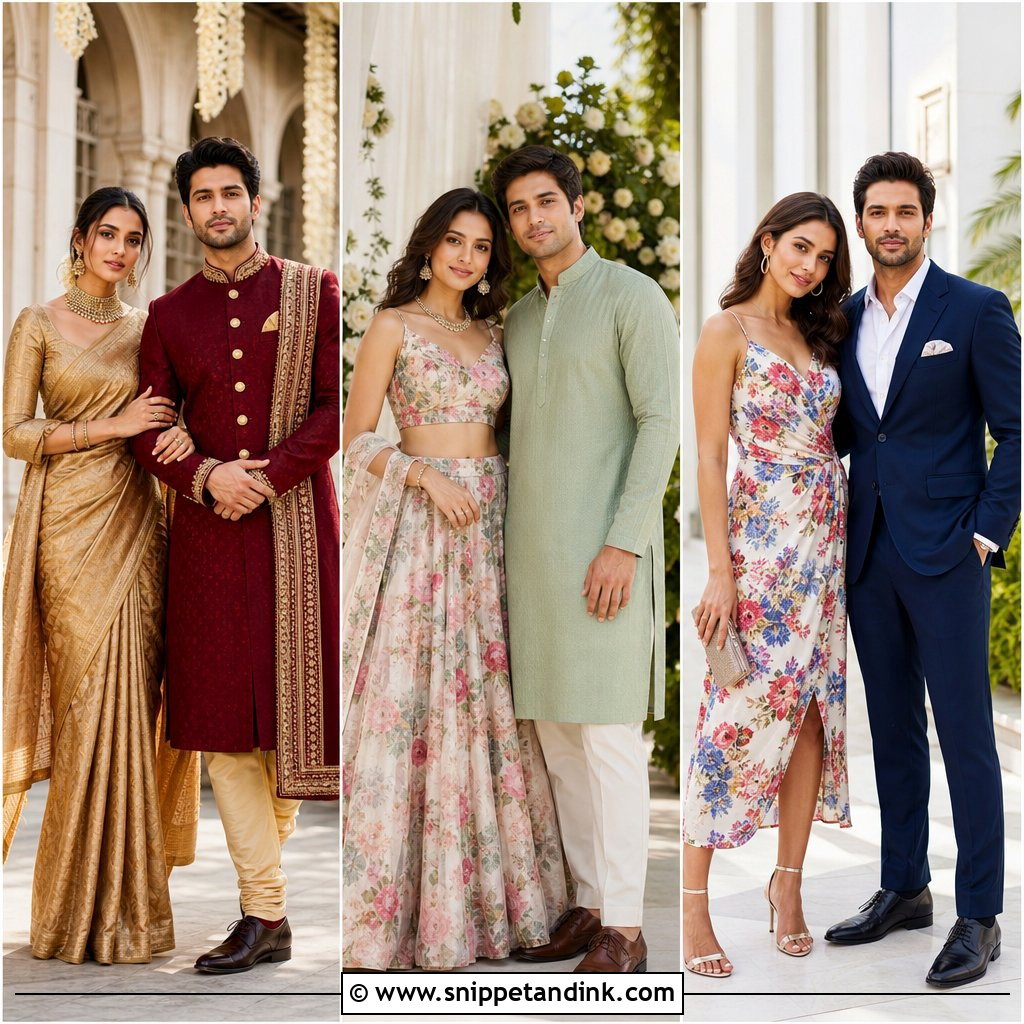
A red Kanjeevaram saree and cream veshti belong to South Indian temple ceremonies, and the details carry regional meaning, so family custom comes first. She wears red silk with a broad gold border, temple jewelry and jasmine; he wears a cream veshti with a gold border, a silk shirt and an angavastram edged in red. The veshti has to stay secure through a long ceremony. If he has never worn one, I’d have someone experienced tie it, or choose a ready-to-wear version with a fastened waist. Match the gold of his border to her saree’s.
16. Banarasi Saree And Velvet Bandhgala
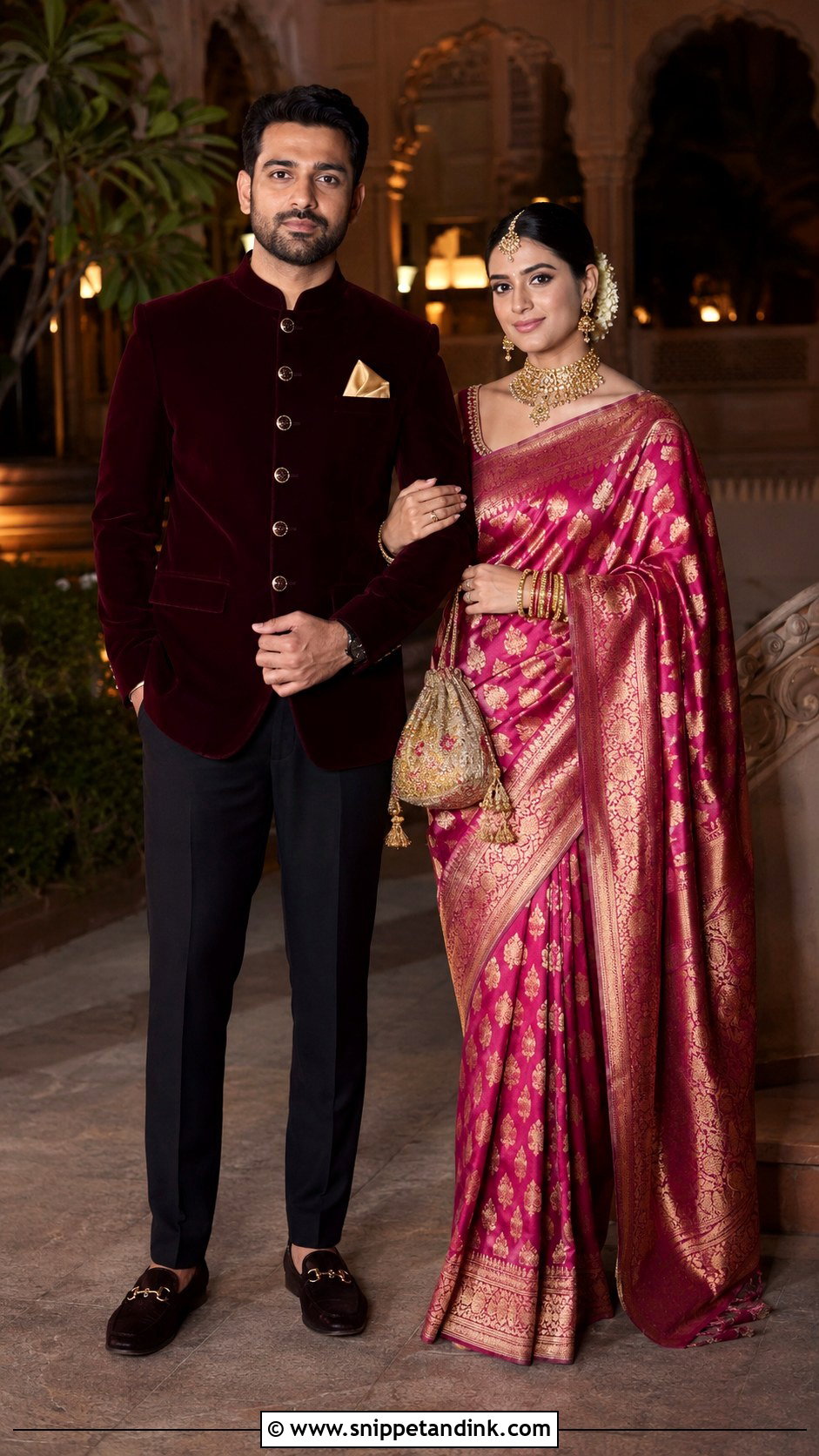
Banarasi weave and velvet both carry visual weight, so everything else stays plain. A magenta or deep red Banarasi saree with woven gold motifs goes with traditional gold jewelry and a potli bag. His velvet bandhgala in a related jewel tone takes black or cream trousers and polished loafers, and his pocket square repeats her gold rather than her base color. Velvet bandhgalas are warm. I keep them to evening receptions and cooler months, and ask the tailor for a breathable lining.
17. Floral Lehenga And Coordinating Printed Kurta
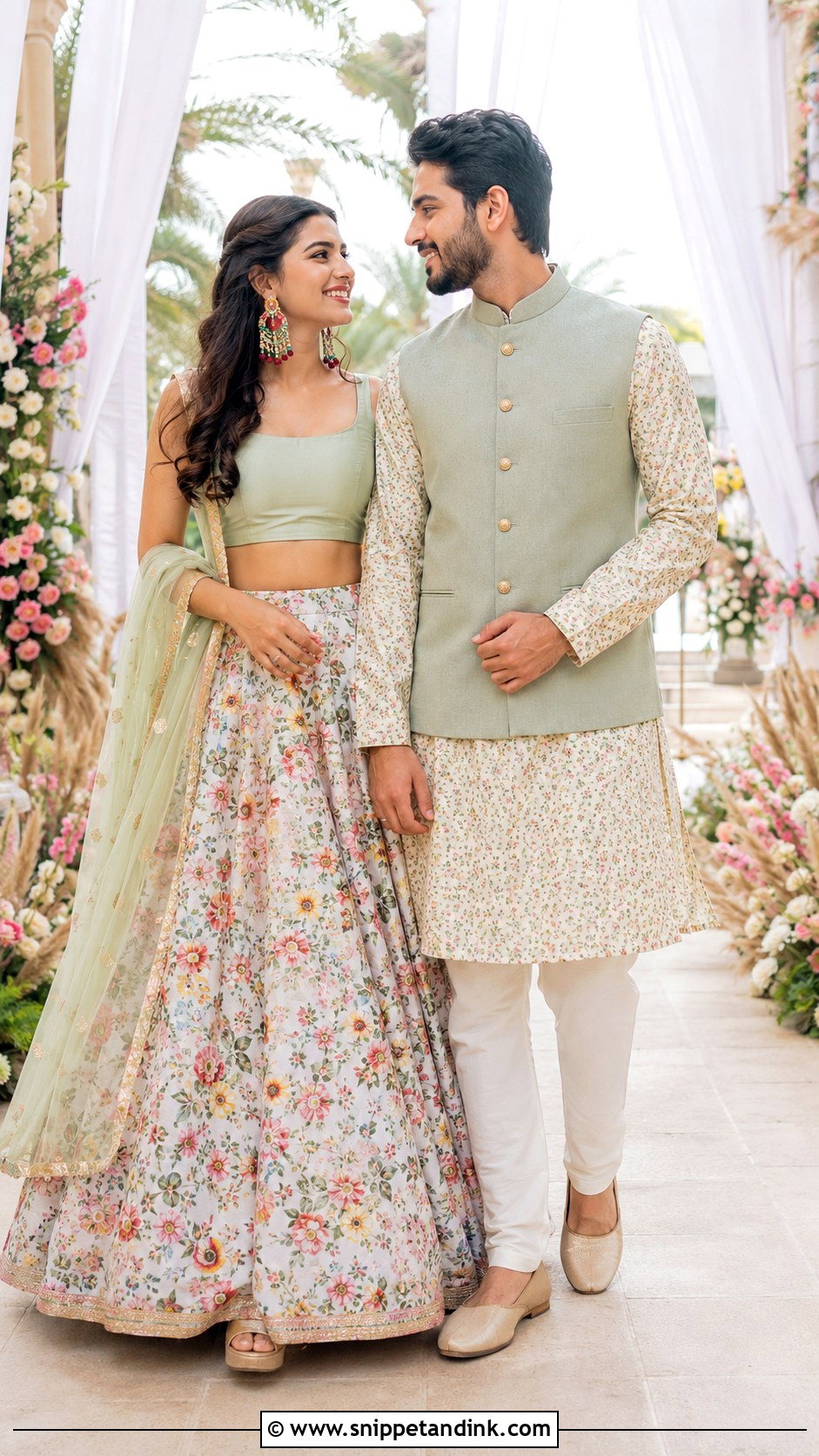
Florals feel friendly at a welcome dinner or an outdoor mehendi. Her floral lehenga with a solid blouse and a dupatta pulling one shade from the print pairs with a kurta in a smaller version of the same floral, or a different print sharing two or three colors. A plain Nehru jacket over a printed kurta gives him structure. I keep his print smaller in scale than hers; when the scales match, the couple can look like they’re in matching pajamas.
18. Mirror Work Lehenga And Embroidered Nehru Jacket
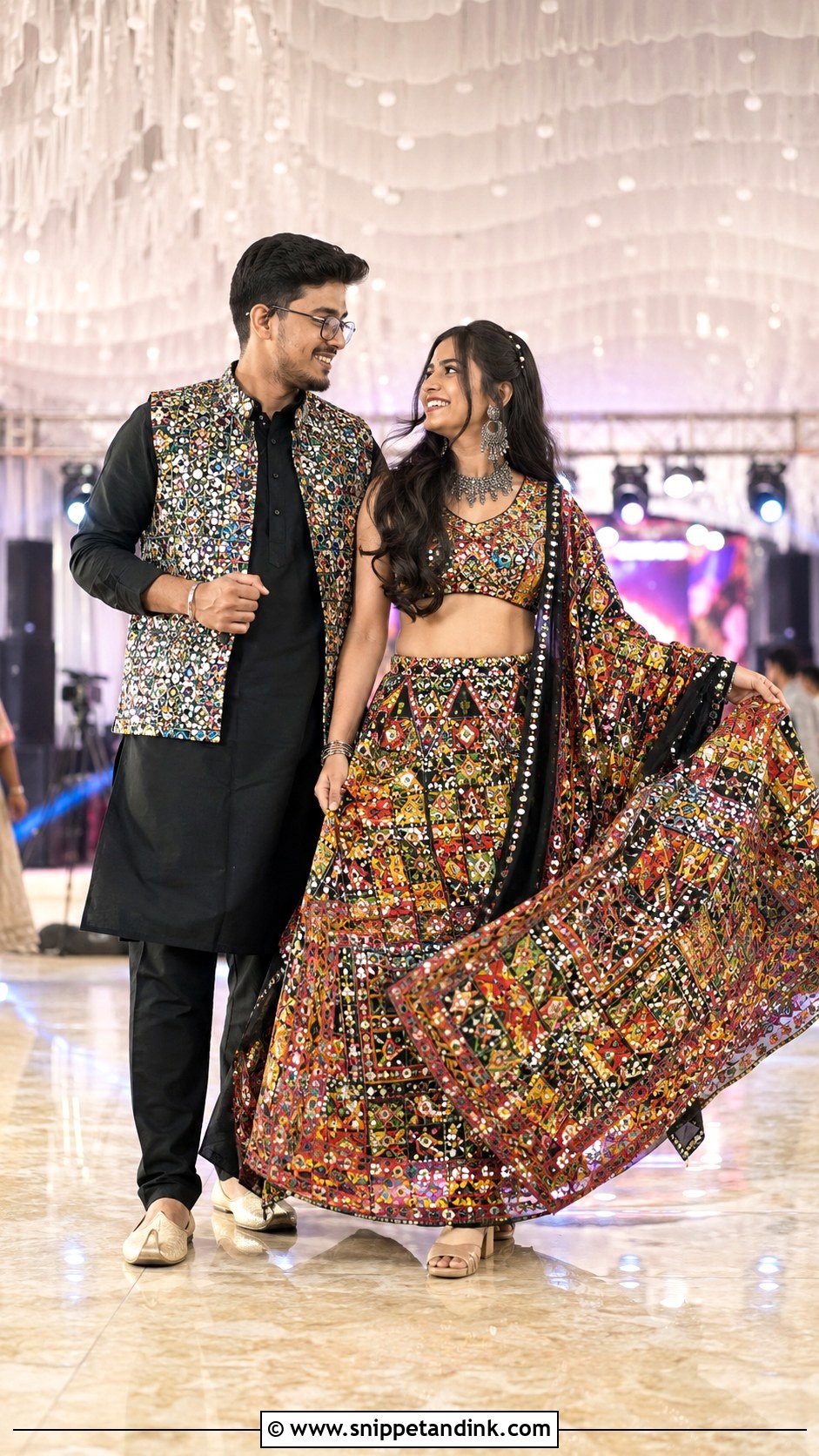
Mirror work catches the light every time you move, which makes it right for a coordinated sangeet or garba outfit. She wears a mirror work lehenga with a fitted blouse, a secured dupatta, oxidized silver and stable heels; he wears a solid kurta set under a mirror-embroidered Nehru jacket that repeats one or two of her colors. Before the night, I run a hand over every mirror. Loose ones snag a partner’s dupatta mid-spin and can scratch skin.
19. Saree Gown And Jodhpuri Suit
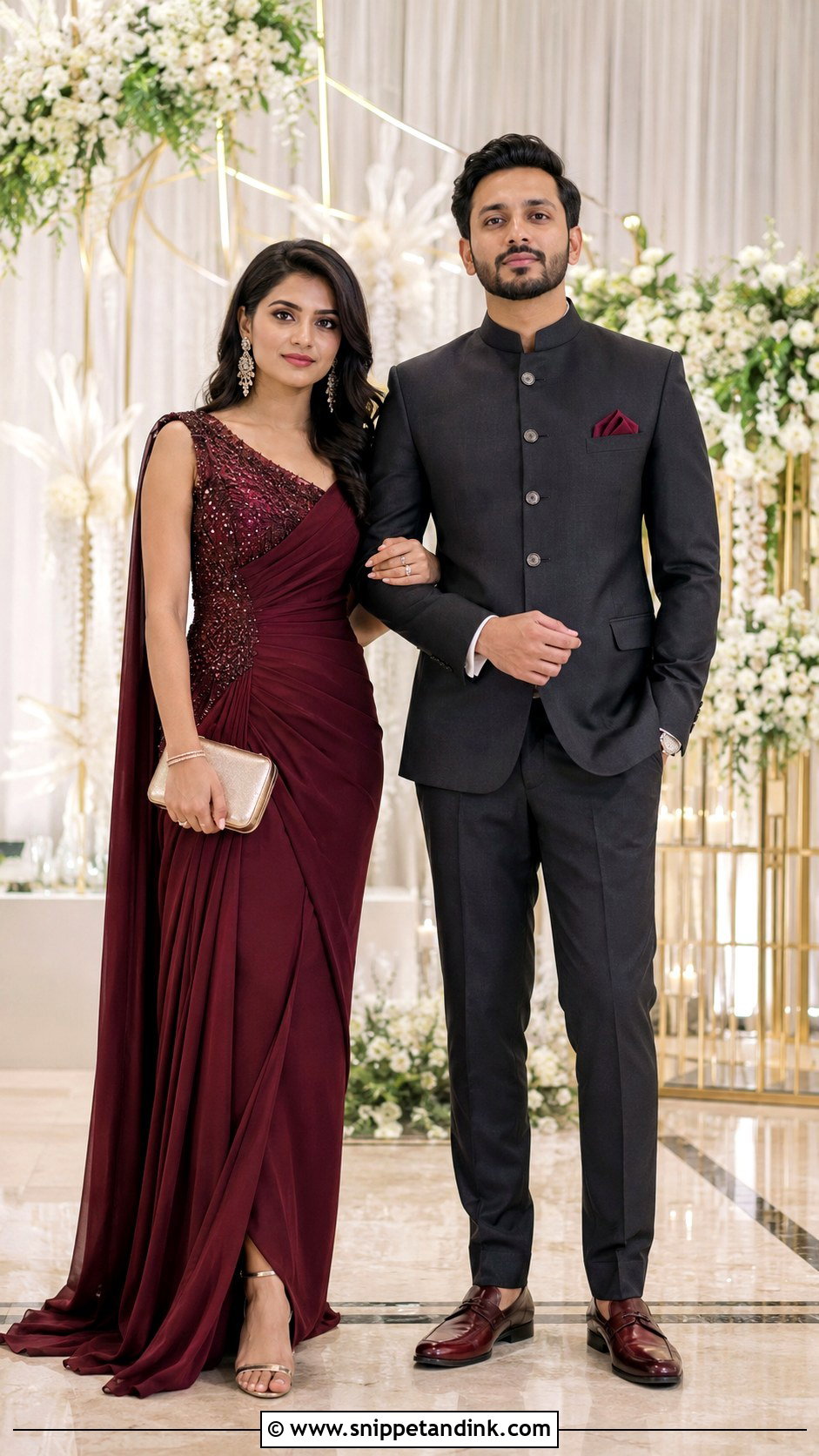
A saree gown and Jodhpuri suit give a reception the cleanest lines in this list. Her pre-draped gown in wine or navy wants statement earrings and sleek heels; his tailored Jodhpuri comes in charcoal or a related jewel tone, with a pocket square matching her gown. The Jodhpuri lives or dies on its collar. A mandarin collar that gaps or rides up looks wrong instantly, so that’s the first thing I check at his fitting. If her gown already carries sequins, keep his suit unembellished.
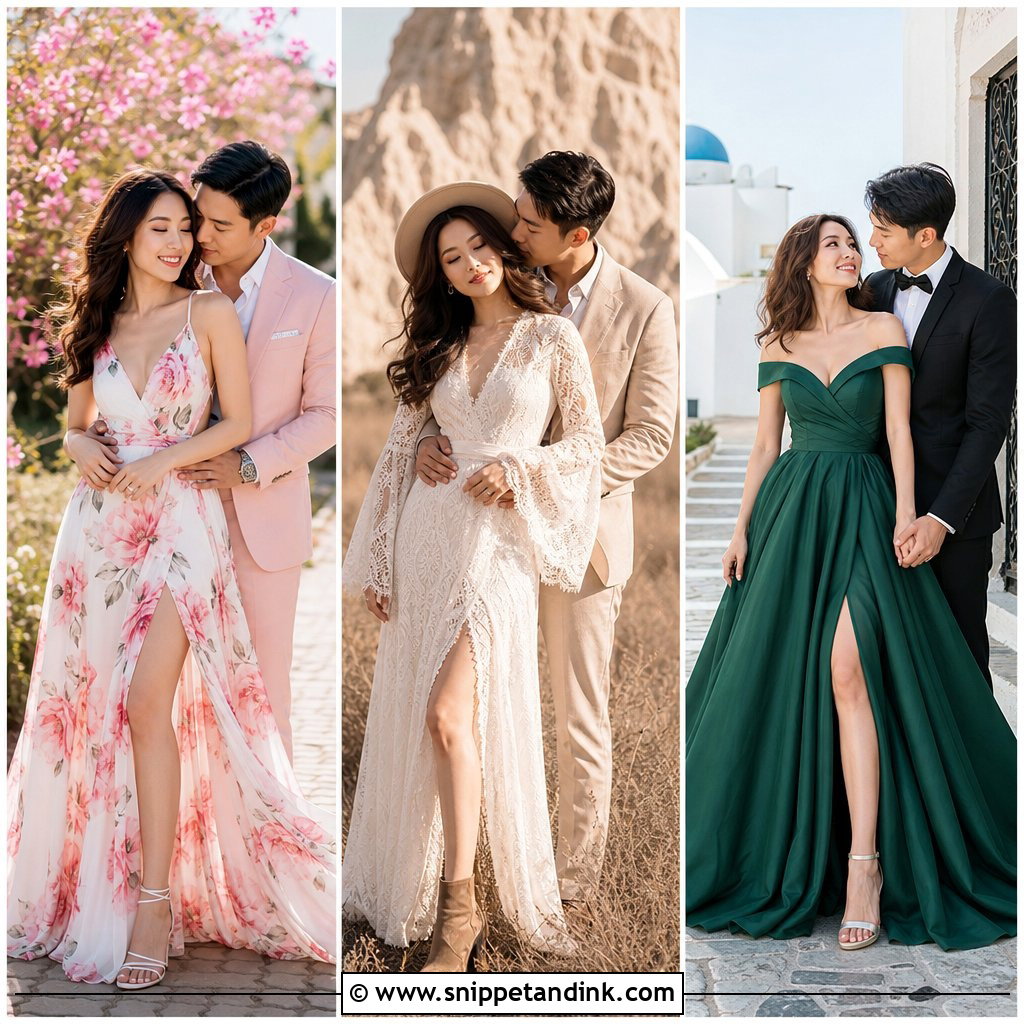
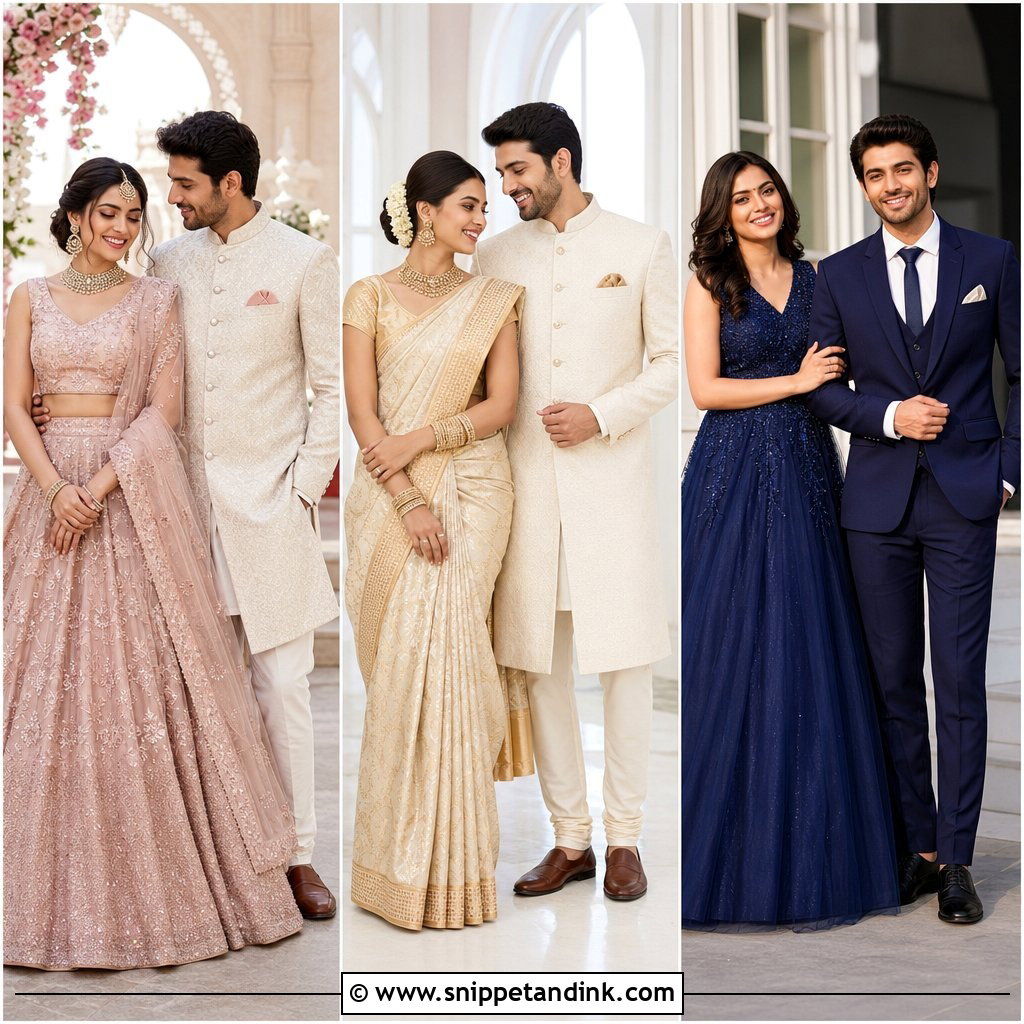
20. White Lehenga And Pastel Sherwani
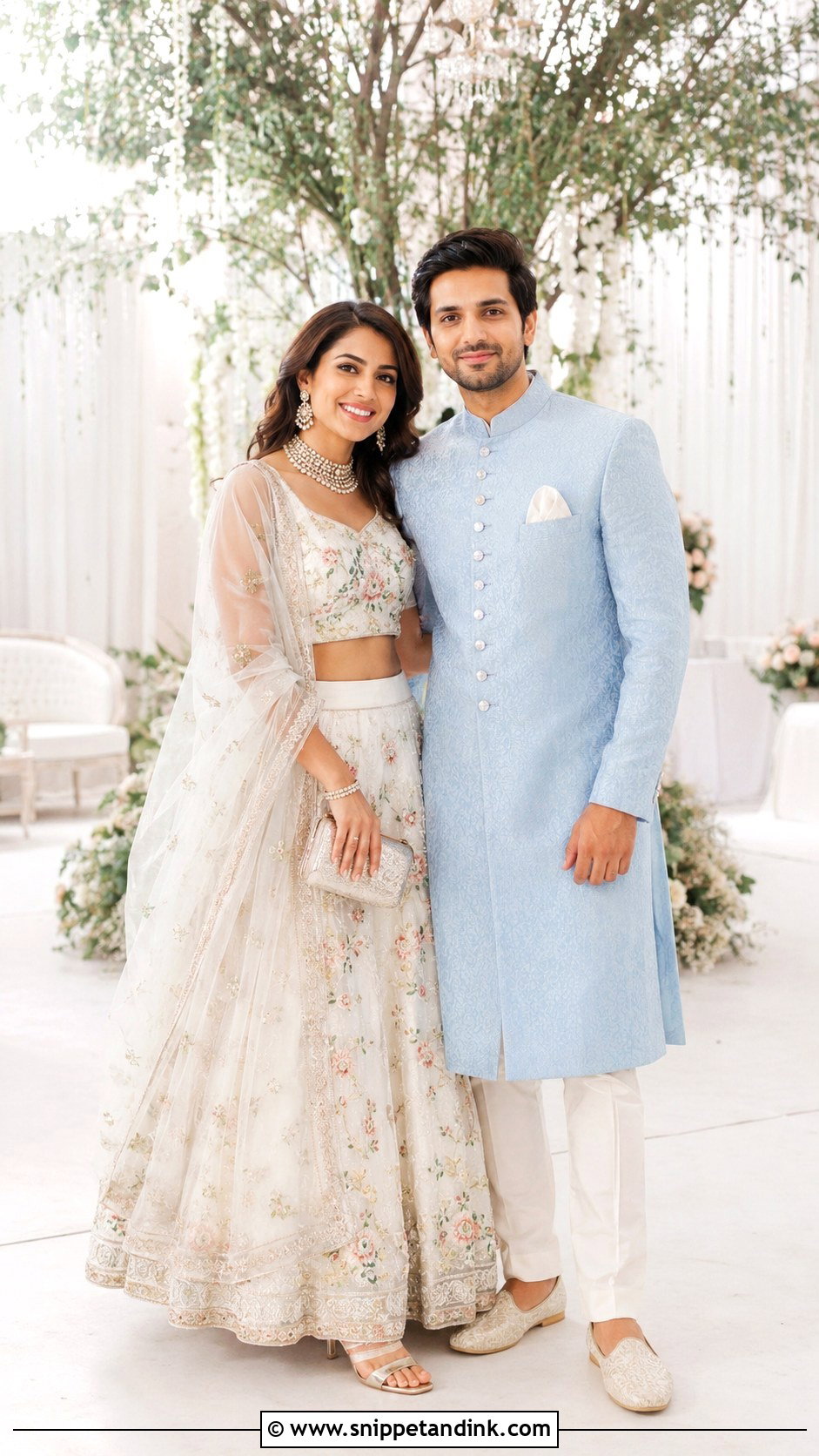
An off-white lehenga with pastel embroidery and a sheer dupatta, beside a pastel sherwani, makes a fresh look for an engagement or a daytime reception. Take his pastel straight from her embroidery and keep it to one shade, powder blue or mint, for instance. Ivory pants and a white pocket square finish him off. Families differ on white at the main ceremony, so check first. On a groom, a pale sherwani shows sweat at the collar in warm weather, and a thin cotton inner layer helps.
Spreading Colors Across Haldi, Mehendi, Sangeet and the Pheras
Couples often wear several outfits over a wedding weekend, and the photos end up side by side in one album. If every function is a pastel, the album blurs together. I plan the colors in sequence before ordering any single outfit.
- Haldi: yellow or white in inexpensive fabric. It will stain.
- Mehendi: greens, florals or bright prints, short sleeves for her and soft fabrics for him.
- Sangeet: the most sparkle of the weekend, cut for movement.
- Main ceremony: the richest outfits, with colors led by family custom.
- Reception: a clear change from the ceremony palette, often deeper or more Western in cut.
One honest saving: his Nehru jacket or bandhgala can often be worn at two events with a different kurta underneath. A bride’s outfits rarely repeat, but a groom’s jacket can.
Safa, Juttis and the Small Pieces That Fail on the Day
Groom outfits rarely fail on the big pieces. It’s the extras that cause trouble, usually within the first hour.
- New leather juttis are stiff and rub at the heel. Wear them around the house for a week beforehand.
- A safa tied on the morning by someone experienced holds far better than one tied by a cousin following a video. A pre-tied safa needs his head measured accurately.
- A stole slides off the shoulder all day unless it’s pinned discreetly under the jacket.
- Churidar gathers creep up as he moves around, and a small safety pin on the inside at each ankle keeps them in place.
Matching Zari Tone Beats Matching Color
The best coordinated couple outfits share a visible connection while each partner stays comfortable in their own clothes. Match selected details, such as zari tone, border colors or fabric, rather than buying identical pieces. Think about how formal each function is and whether you’ll be sitting, walking or dancing in it. Comparing fabric cuttings in daylight prevents most clashes. Sarees, sherwanis, saree gowns and Jodhpuri suits all follow the same approach, from haldi through to the reception.
You'll Like These Ideas:


Leave a Reply