
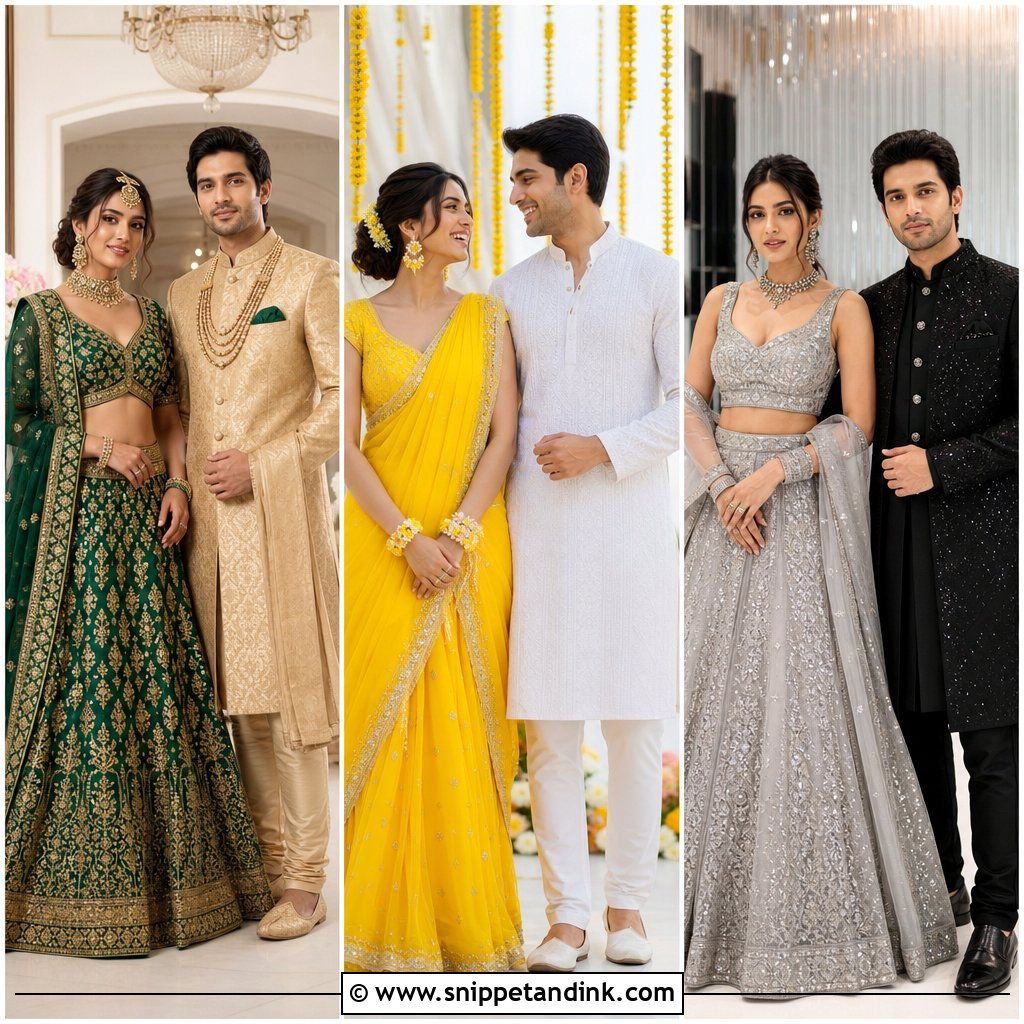
Couples usually come to me after the bride’s outfit is ordered, asking how the groom should match it. My answer is almost always the same: coordinate, don’t copy. Two outfits in identical fabric look like a uniform in photos, while a shared undertone or a repeated embroidery thread makes the pair look planned. The ideas below pair the bride’s lehenga, sharara, gharara or anarkali with a sherwani, kurta set or bandhgala, and for each one I’ve noted where the link between them should sit. They work for a home Nikkah, a banquet hall or a bright outdoor setting.
Coordinating Undertone, Embroidery and Texture Across Two Outfits
When I match a groom to a bride’s outfit, colour is only the first of three checks. The other two, embroidery and texture, are where most couples go wrong.
Undertone
Ivory, cream, champagne and beige all come in warm and cool versions. Put a swatch of his fabric on her outfit in daylight. If one looks yellow or grey next to the other, the undertones clash, and no styling fixes that in photographs.
Embroidery
Repeat one element rather than copying the whole design. The same thread colour, a similar motif on his collar and her border, or matching buttons is enough. His embroidery should almost always be lighter than hers.
Texture
A matte raw silk sherwani beside a shiny tissue lehenga can look like two different events. Aim for a similar level of sheen, or deliberately pair matte with matte and let her embroidery bring the sparkle.
1. Ivory Nikkah Couple Outfit
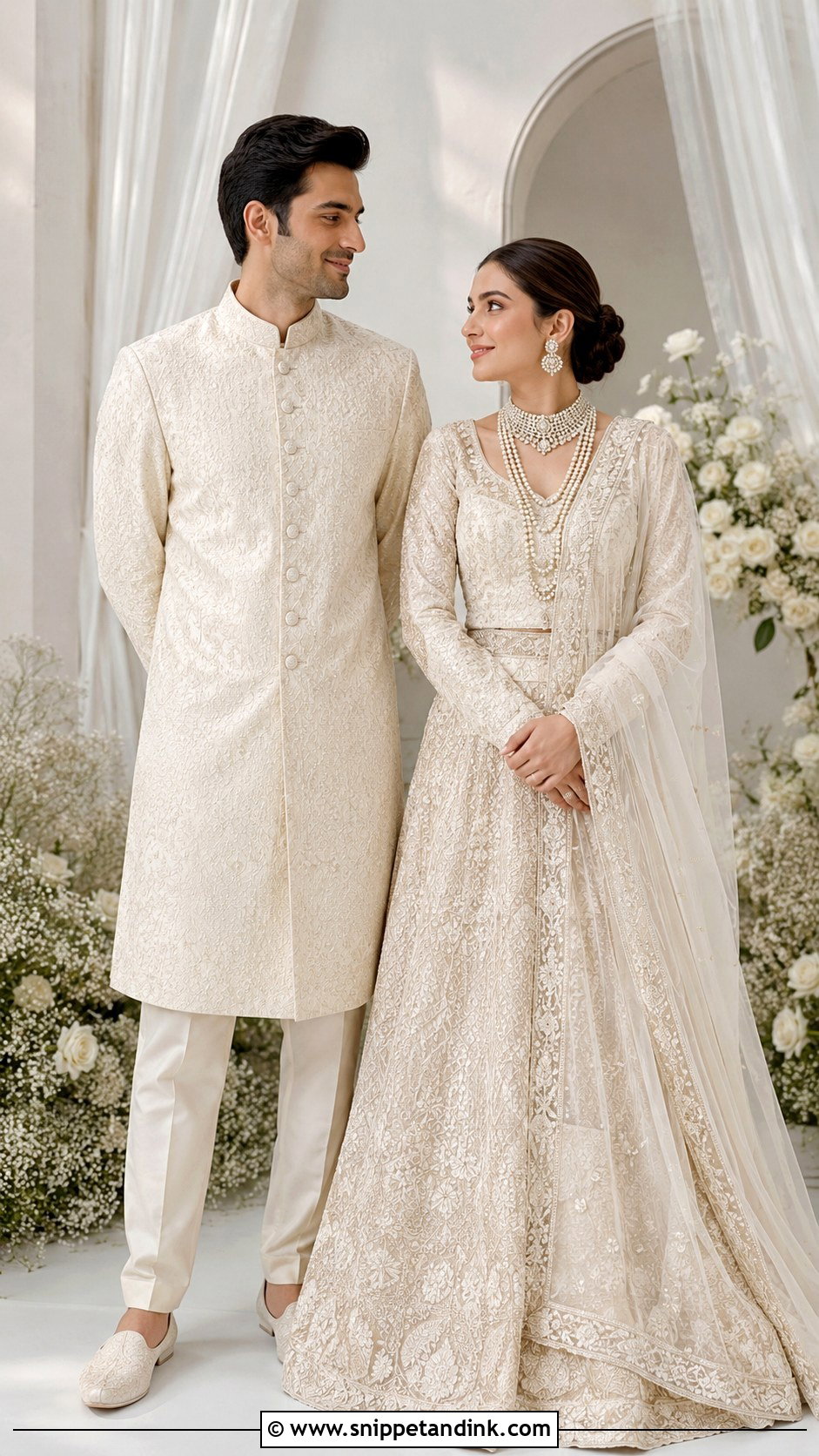
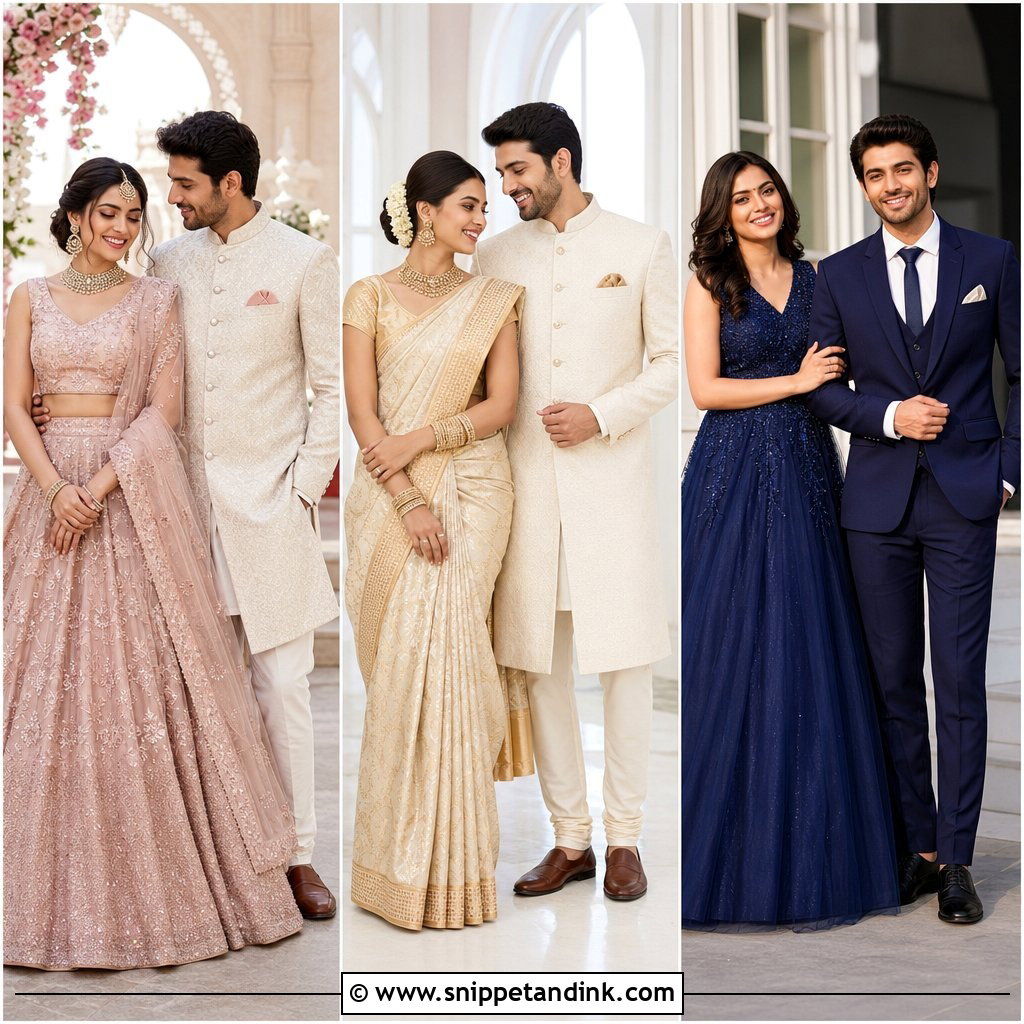
Ivory on both sides is the calmest pairing, and it suits a daytime Nikkah where light bounces off pale fabric. She can wear an ivory lehenga, sharara or anarkali with pearl or fine zardozi work; he wears an ivory sherwani with tonal embroidery and cream trousers. Two whites rarely match exactly, so I compare the fabrics side by side in daylight before the sherwani is cut. A thread of champagne or antique gold in both outfits stops them looking flat together, and classic mojaris finish his side.
2. White And Gold Nikkah Couple Outfit
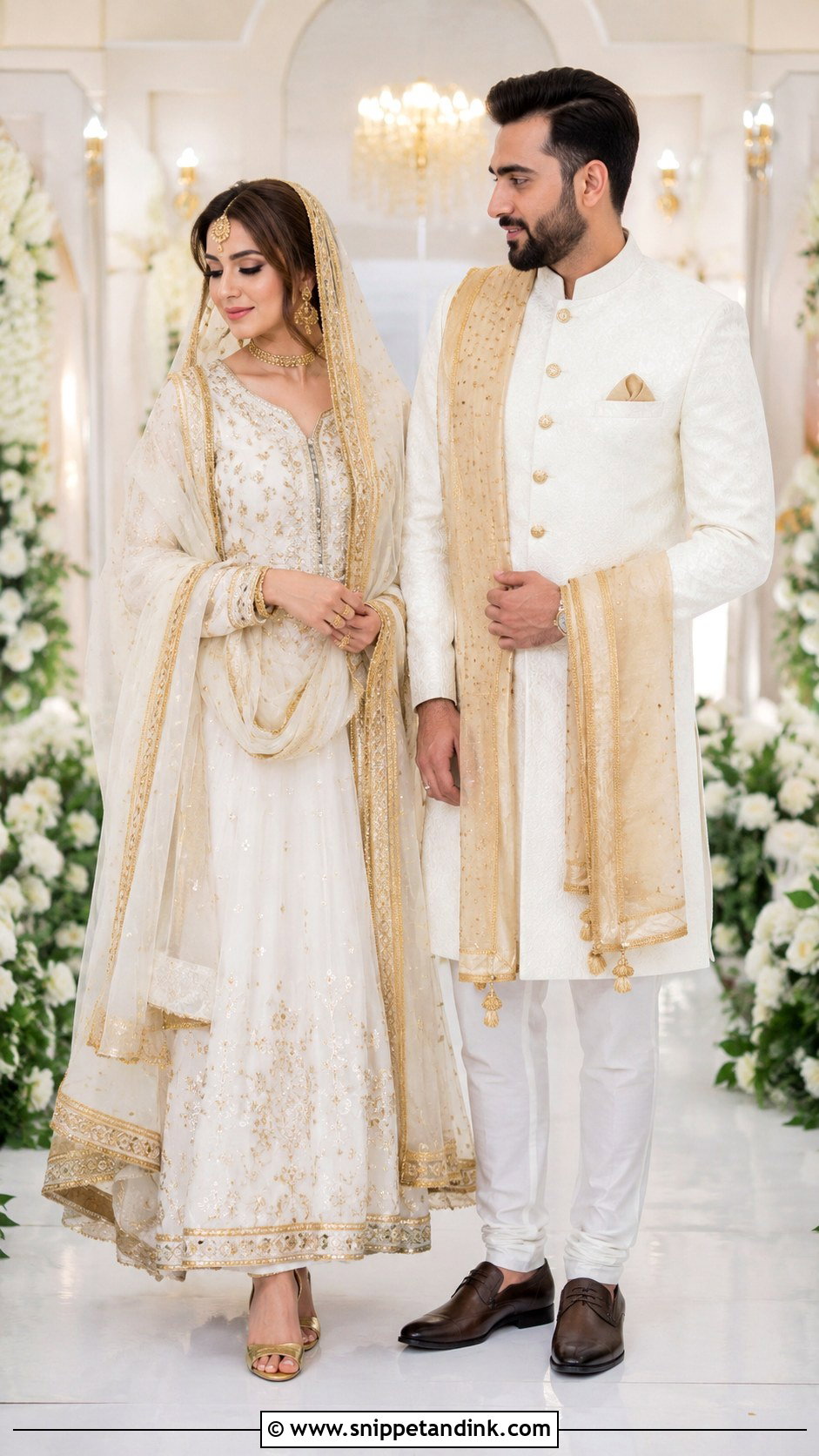
White with gold suits couples who want something traditional but polished. The bride’s maxi, lehenga or pishwas carries gold threadwork at the neckline and sleeves, with a sheer gold-edged dupatta. For him, gold enters through buttons, a stole or small embroidered panels rather than an all-over gold sherwani, which would compete with her. Shoes in cream, tan or gold-toned leather keep the finish clean. The gold warms both whites, so the pair looks brighter in photos.
3. Pastel Pink Nikkah Couple Outfit
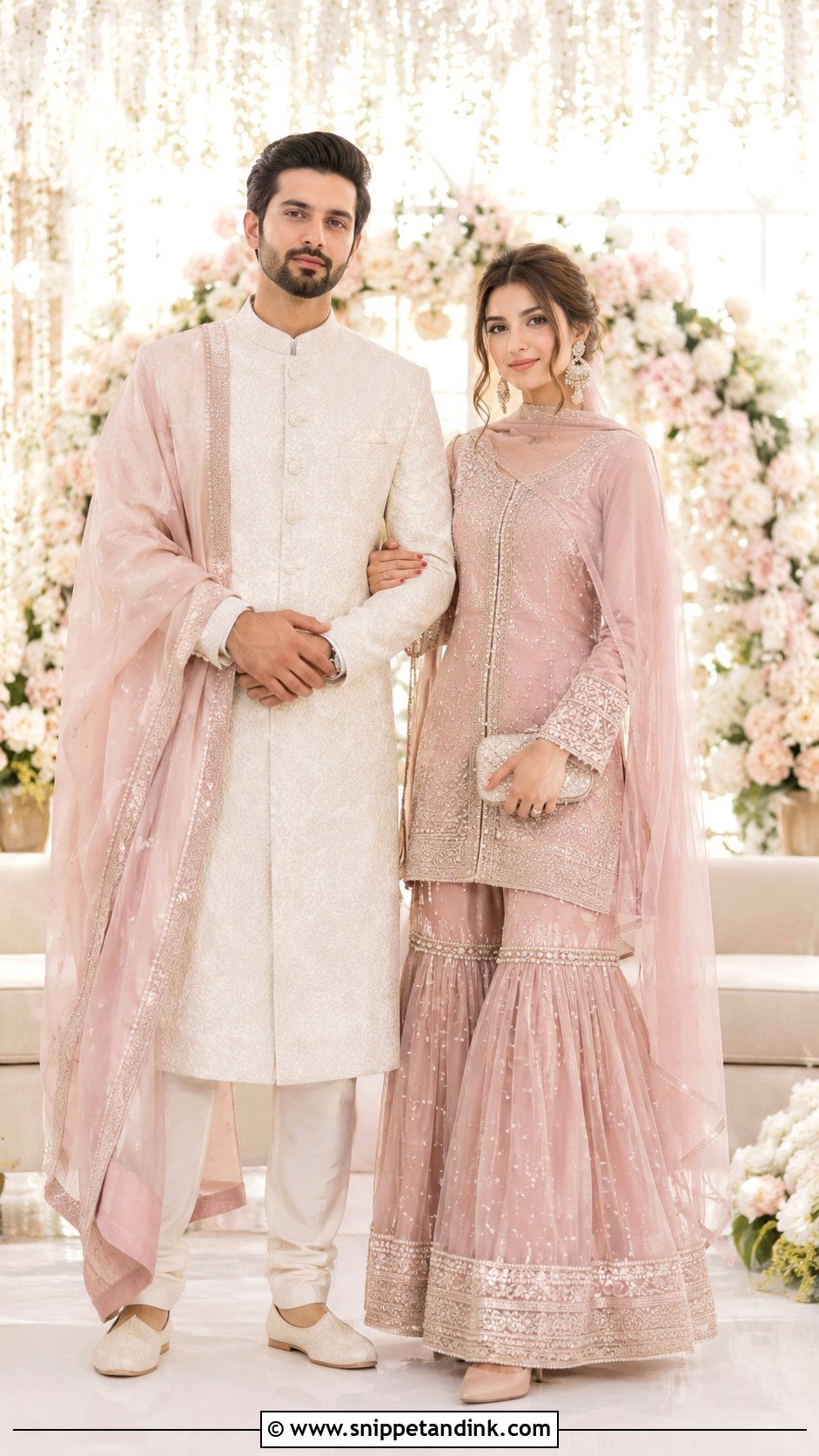
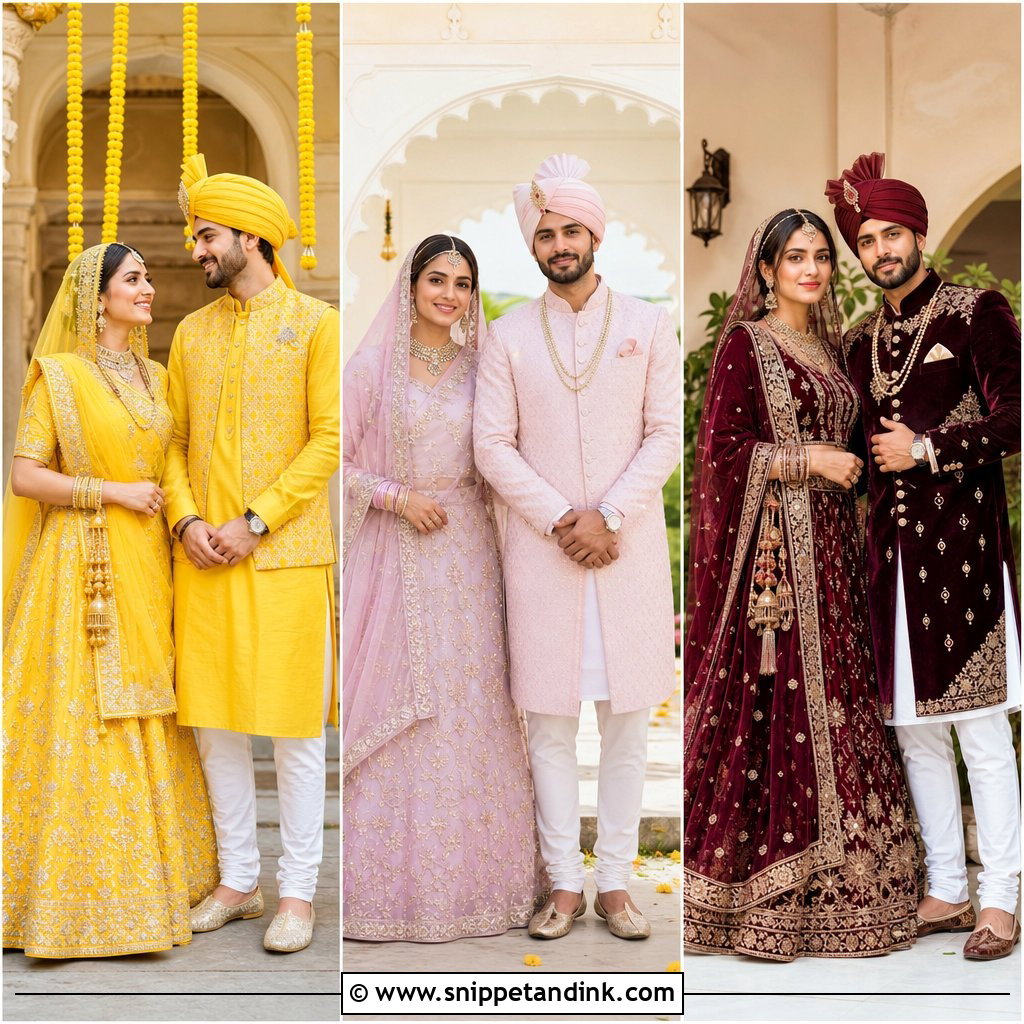
A pastel pink Nikkah couple outfit works when the pink sits mostly on the bride. She wears blush in a lehenga, organza sharara or anarkali with silver, pearl or champagne work. He picks it up in a single accent: a blush stole, pocket square or turban over an ivory sherwani. If he wants more colour, a pale pink kurta under a cream waistcoat works. Grooms often worry pink will look odd on them, and keeping it to one piece near the face solves that.
4. Champagne Nikkah Couple Outfit
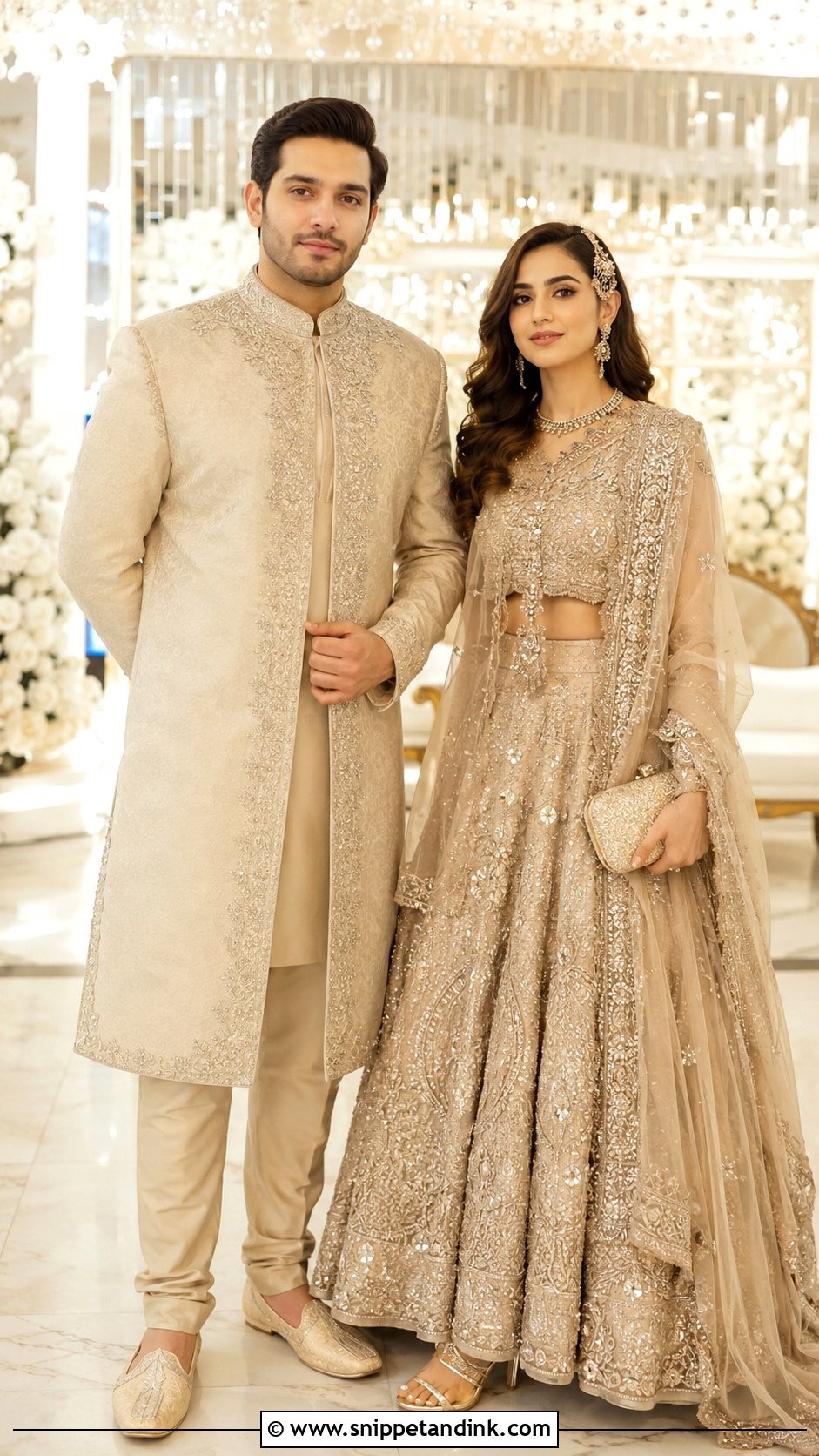
Champagne looks more glamorous than ivory and still reads as neutral. The bride can wear a champagne lehenga, gharara or gown-style outfit with crystal or antique gold work, and the groom a cream or beige sherwani with champagne embroidery or stole. Match the undertones carefully. Warm champagne sits best with gold, cooler champagne with silver or pearl, and mixing the two makes one outfit look dull beside the other. Neat grooming and sleek shoes carry it through.
5. Sage Green Nikkah Couple Outfit
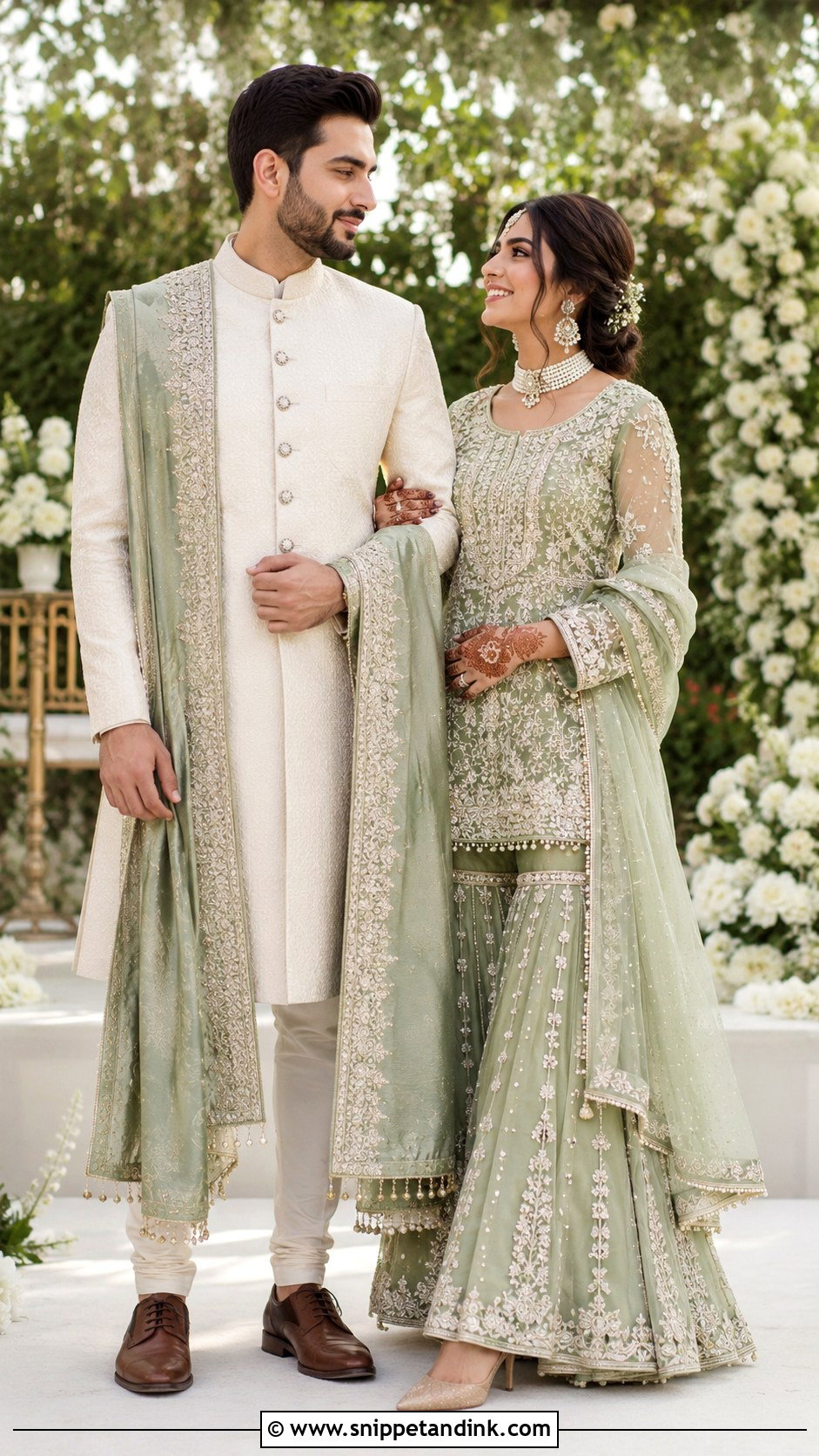
Sage is quiet and modern, and it looks best on matte fabrics like raw silk; on shiny satin it can look grey. The bride wears a sage sharara, lehenga or pishwas with ivory embroidery. The groom has two good options: an ivory sherwani with a sage stole, or a sage kurta with cream trousers and a waistcoat. Pearl jewellery for her and cream mojaris for him keep it light. Garden venues and daytime ceremonies suit sage.
6. Powder Blue Nikkah Couple Outfit
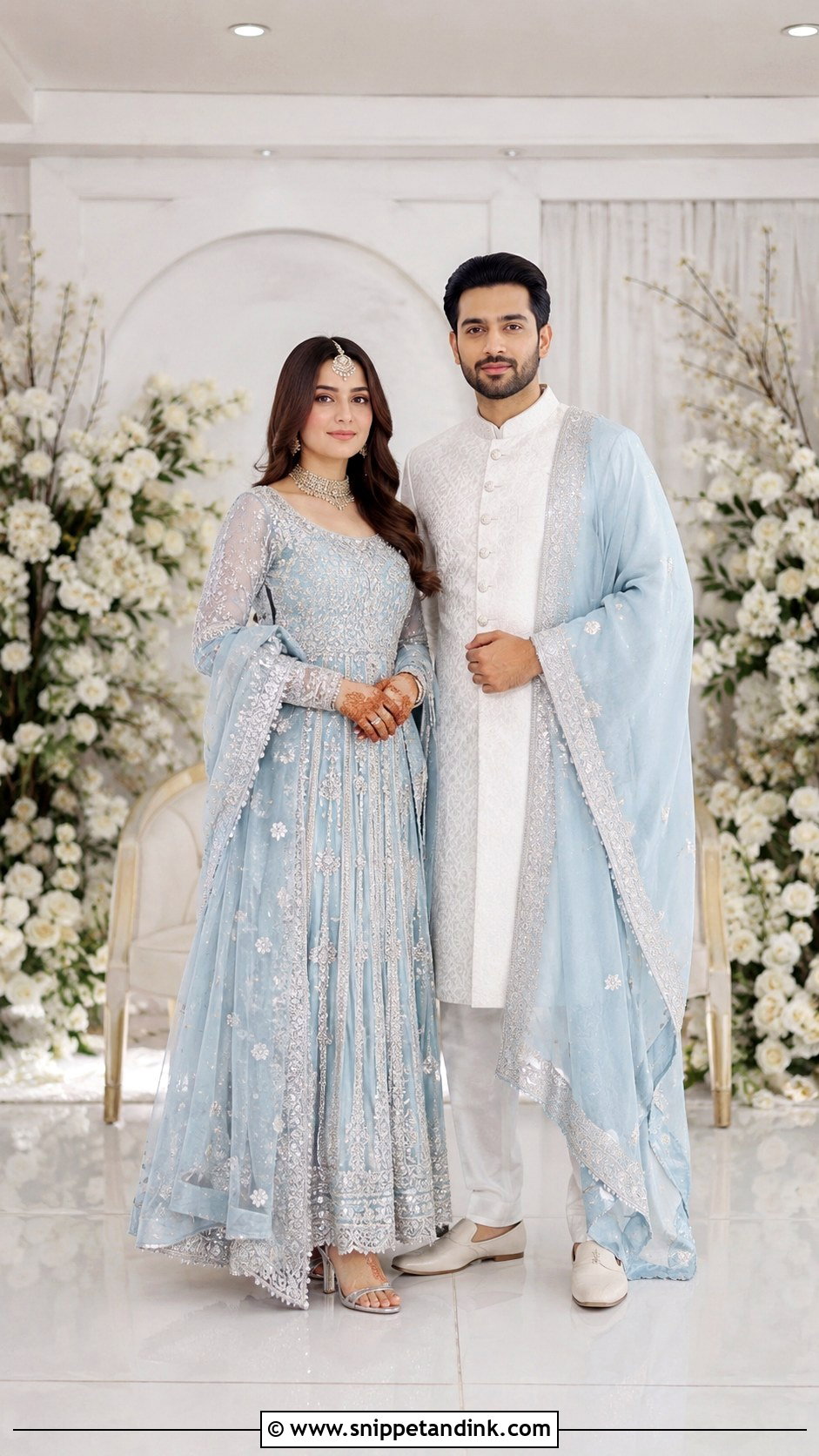
Powder blue is cool, so silver suits it better than yellow gold. The bride’s anarkali, lehenga or gharara can carry silver work or fine floral embroidery. For him, a white or ivory sherwani with a powder blue stole is the safe route; a pale blue sherwani with ivory trousers suits a more formal ceremony. If he goes full blue, choose a shade darker than hers so the two don’t merge in group shots.
7. Lavender Nikkah Couple Outfit
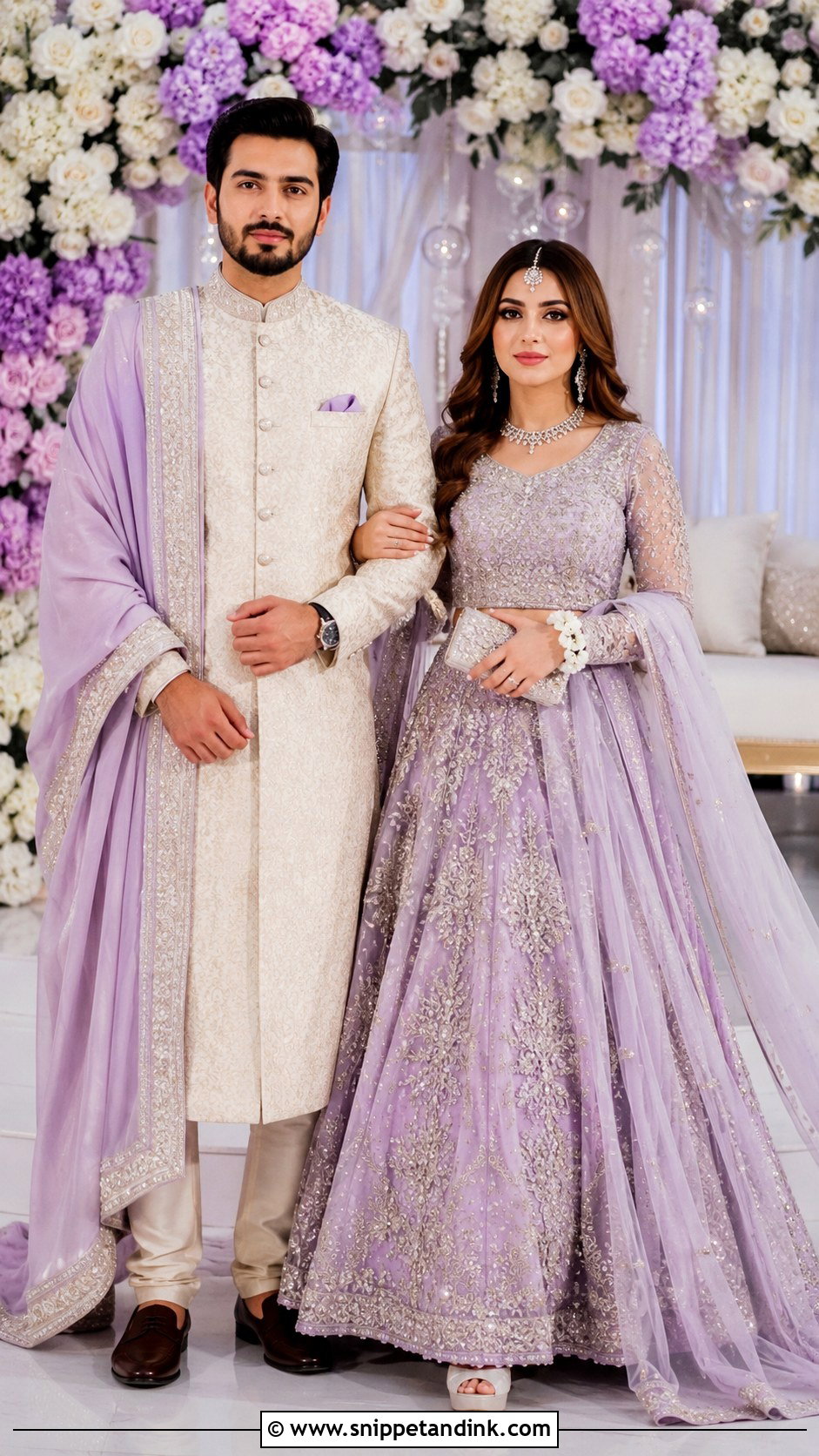
Lavender gives romance without pink, but too much of it on both partners looks costume-like. Let her carry it in a lehenga, pishwas or sharara with silver or mirror work. He stays mostly ivory, with lavender in the stole or a lavender kurta under a cream jacket. Silver jewellery and cream footwear tie it together. Evening ceremonies under bright light and plenty of flowers suit this palette.
8. Beige Nikkah Couple Outfit
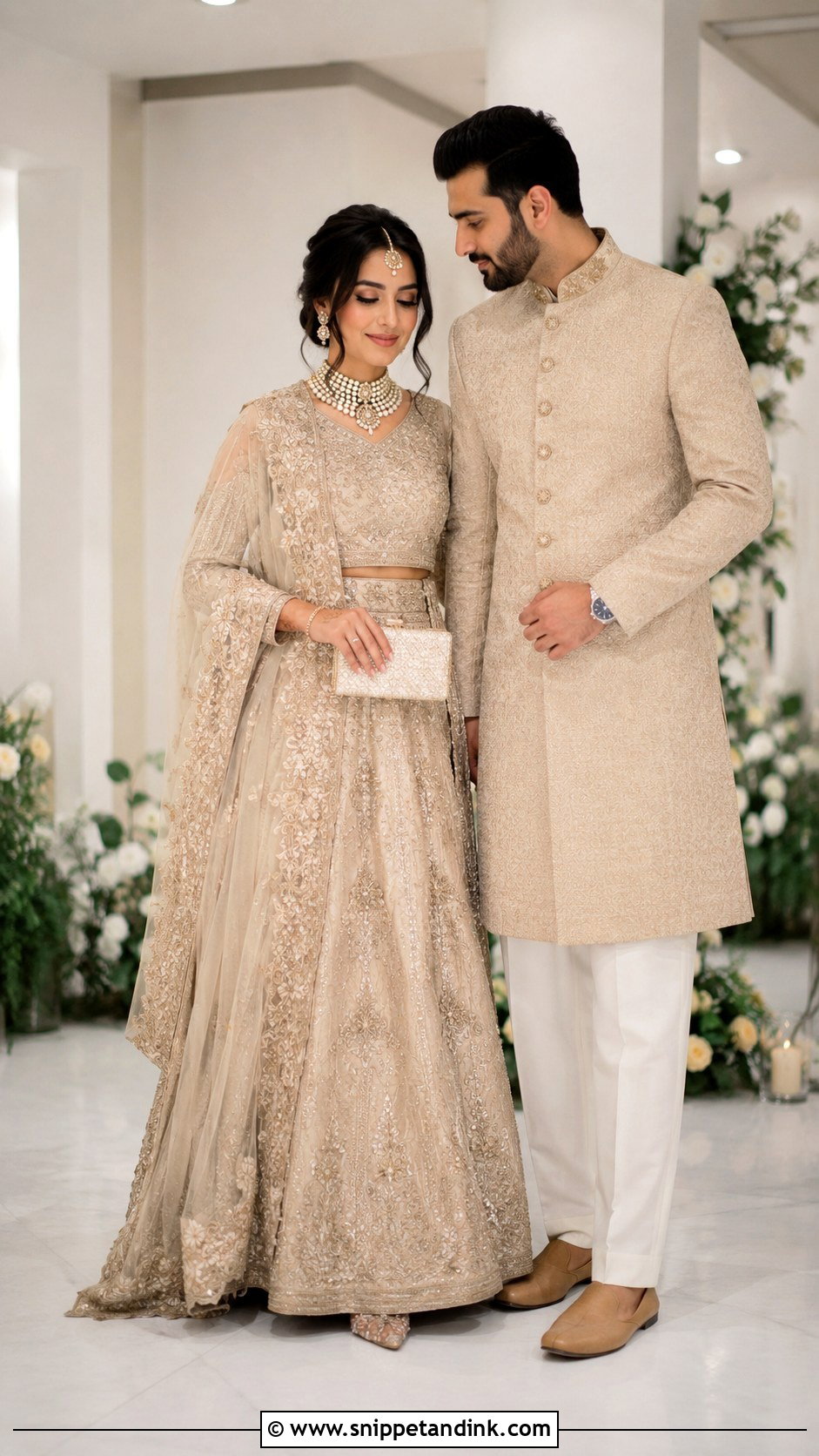
Beige depends entirely on texture and fit, because there’s no colour to carry interest. Raw silk, jacquard, organza and brocade all add depth. The bride can wear a beige lehenga, anarkali or gharara with tonal threadwork; the groom a matching beige sherwani or an ivory one with beige accessories. A sherwani in beige shows every wrinkle and loose seam, so I’d insist on a final fitting with the shoes on. Tan or cream mojaris keep his look cohesive.
9. Mint Green Nikkah Couple Outfit
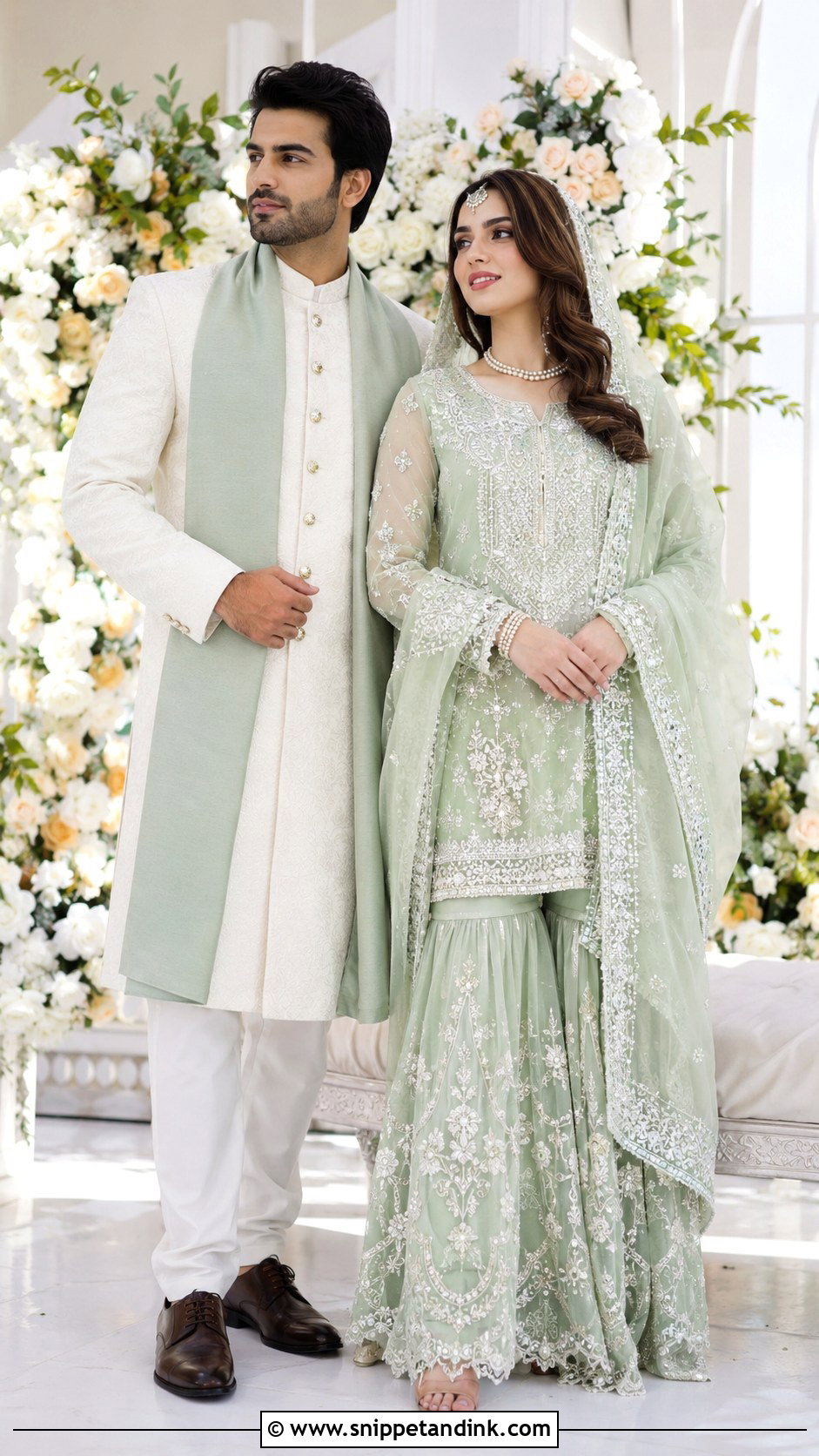
Mint feels young and fresh in daylight. The bride wears a mint sharara, lehenga or long kurta set with white, silver or pearl work, and the groom a white sherwani with a mint stole, or a mint kurta under an ivory waistcoat. When her outfit carries heavy embroidery, his should stay plain. Both heavily worked side by side reads as busy rather than matched.
10. Peach Nikkah Couple Outfit
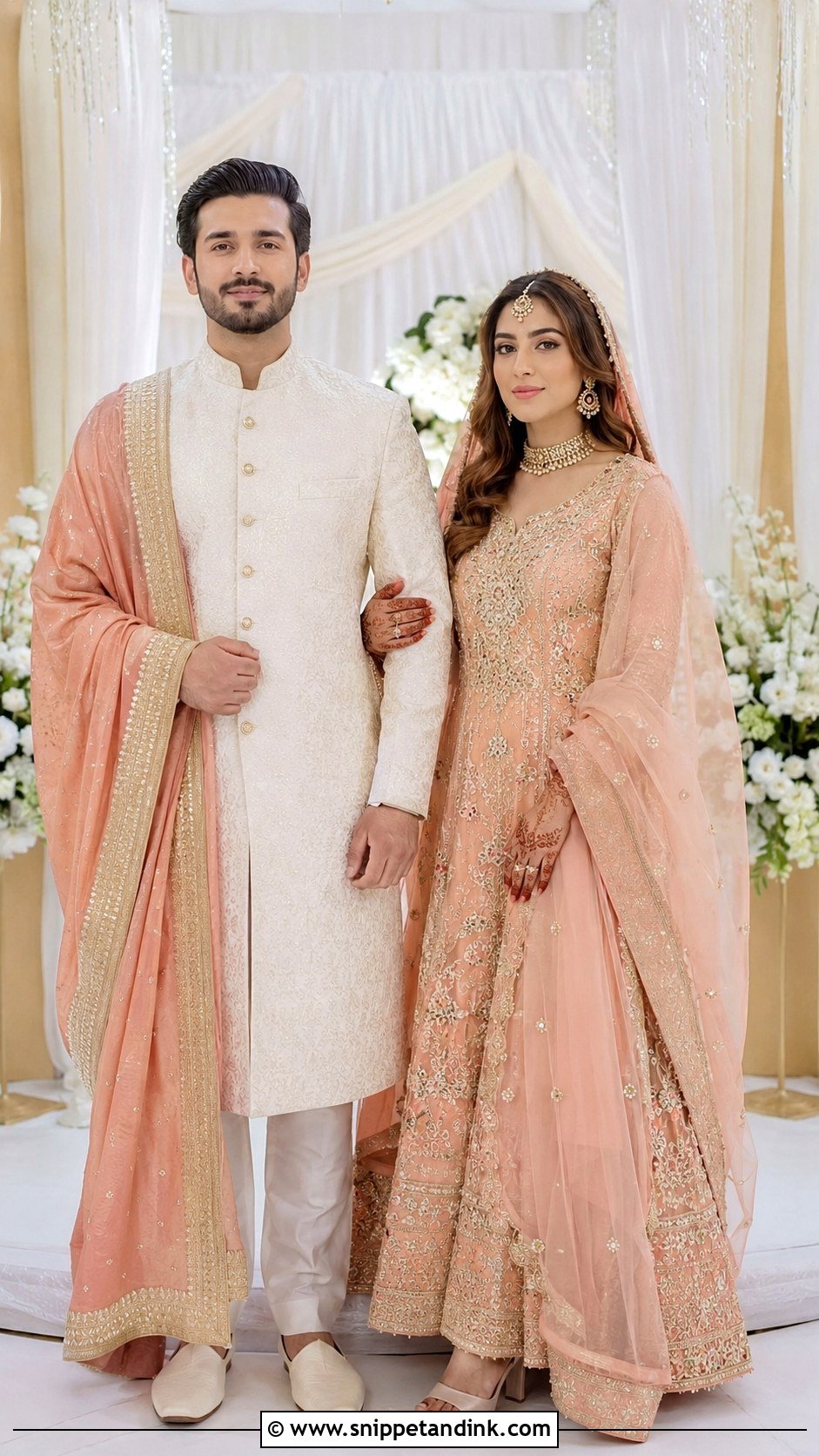
Peach is warm and flatters most skin tones. Chiffon, organza, net and silk all move well in it. The bride’s lehenga, anarkali or gharara takes gold, pearl or ivory work. He can wear an ivory sherwani with a peach stole or a peach kurta with a cream waistcoat. Keep metals warm, gold or champagne. Peach on men looks best in a slightly deeper or dustier tone than the bride’s, which keeps it masculine and still connected.
11. Dusty Rose Nikkah Couple Outfit
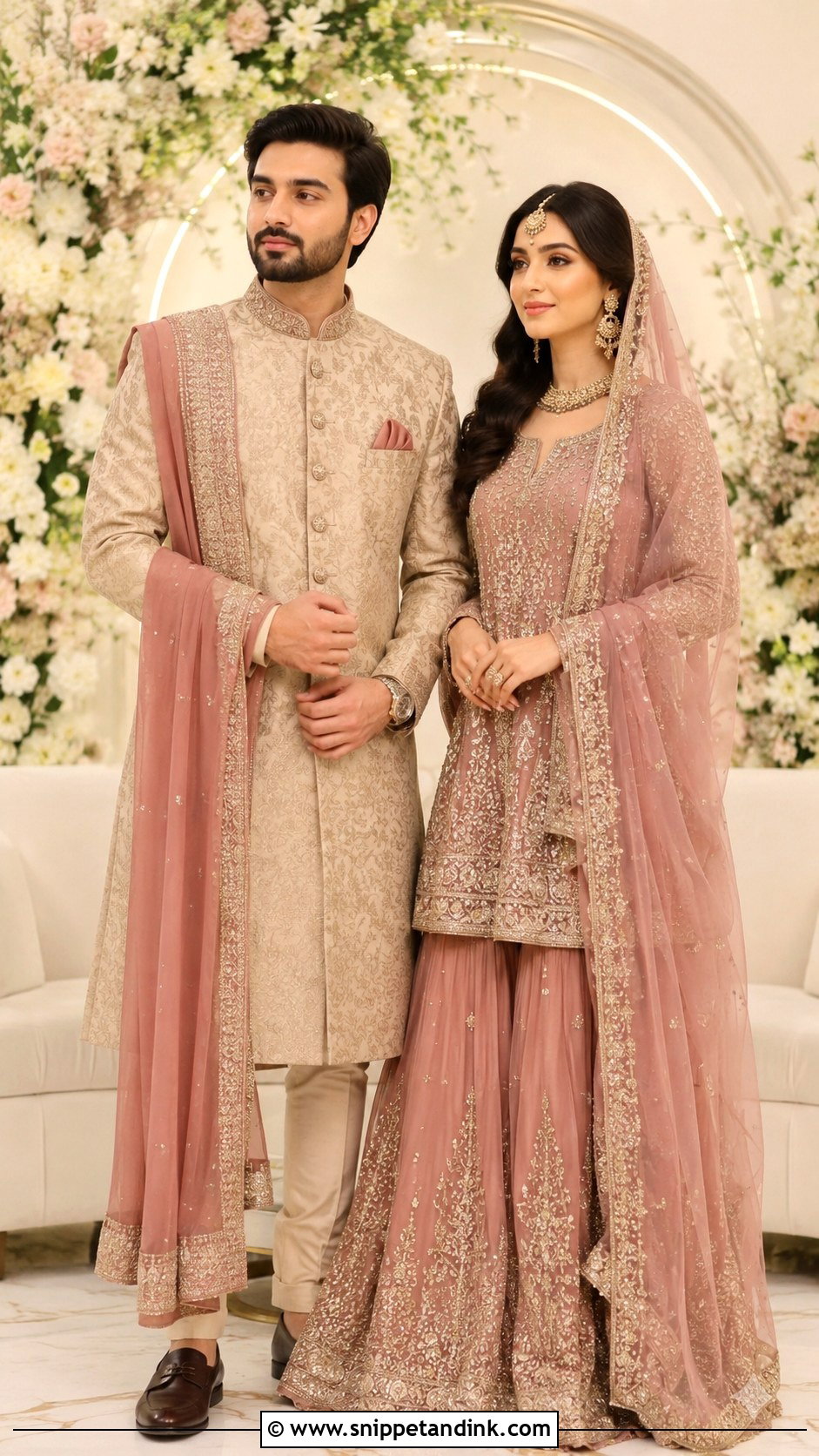
Dusty rose has more depth than bright pink and holds up in both daylight and evening. The bride wears a lehenga or sharara with antique gold, pearl or fine thread work. On his side, rose appears as accents on an ivory or beige sherwani: stole, buttons or pocket square. Muted gold jewellery and soft-toned footwear suit it. It also sits comfortably against floral decor and cream backdrops.
12. Silver Nikkah Couple Outfit
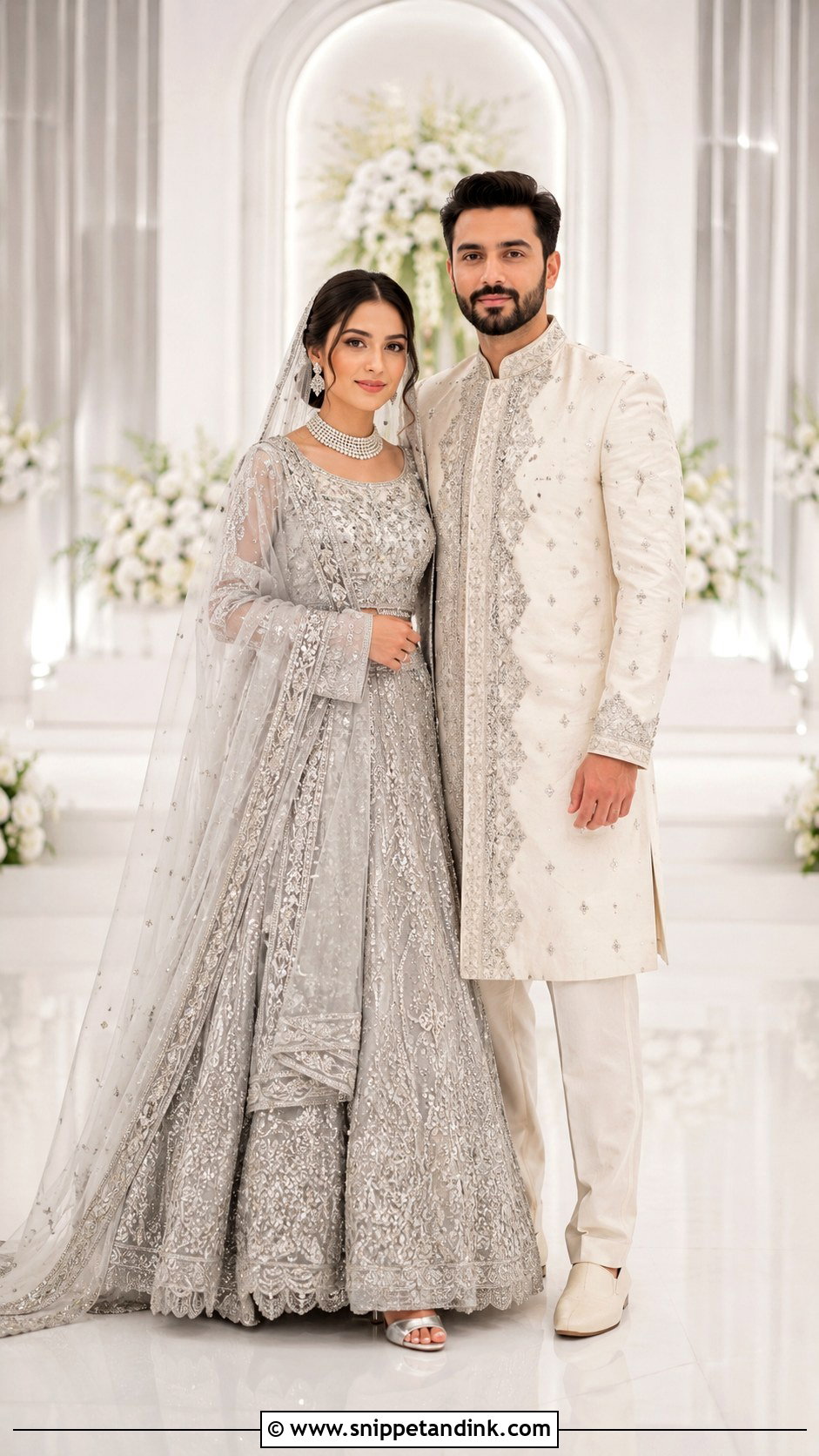
Silver is regal, but shine needs control, because metallic fabric on both partners can flare under flash. The bride can wear a silver lehenga, gown-style anarkali or sharara with crystal or metallic thread embroidery. The groom wears an ivory, white or light gray sherwani with silver embroidery or stole. Balance shiny pieces with matte ones. Cream or grey shoes and minimal accessories keep him polished.
13. Cream And Maroon Nikkah Couple Outfit
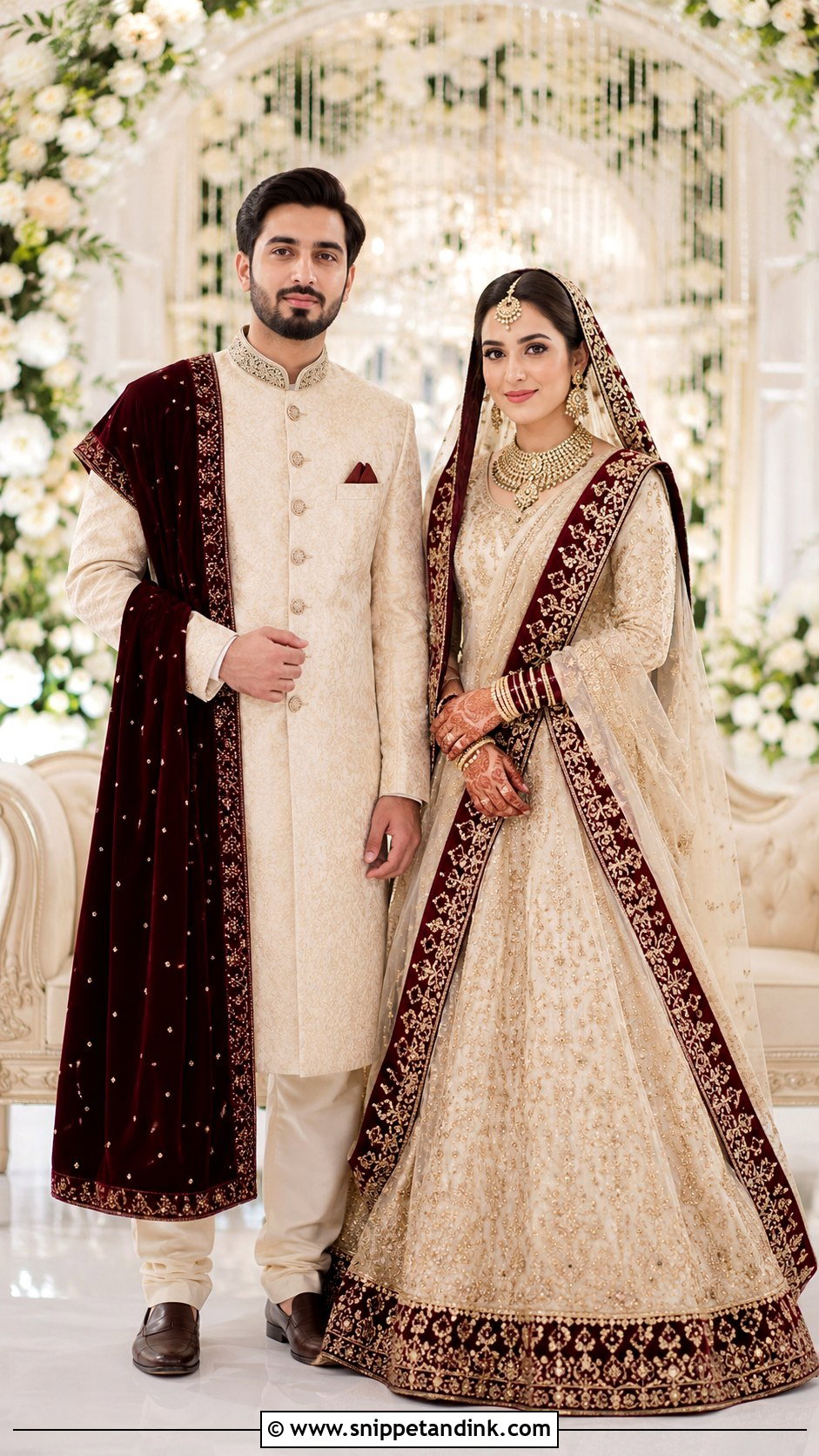
Cream with maroon brings a traditional touch without a full red outfit. She wears a cream lehenga or sharara with maroon borders or dupatta accents; he wears a cream sherwani with a maroon stole, turban or pocket square. Keep the maroon to accents, otherwise it starts to feel like a Barat look. Gold jewellery and cream shoes suit both. Formal family ceremonies are where this pairing works best.
14. Emerald Green Nikkah Couple Outfit
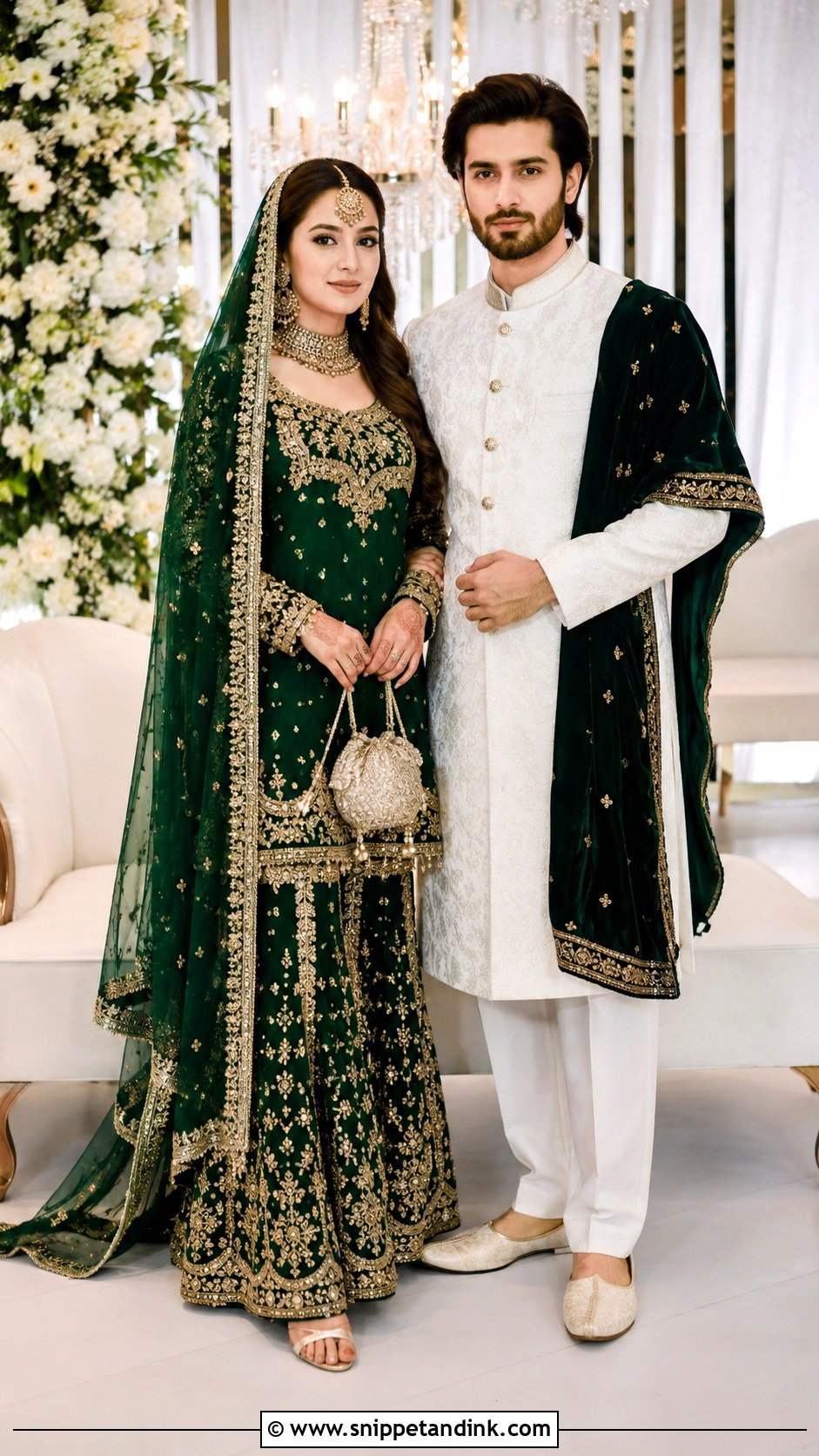
Emerald adds richness, and it suits evening ceremonies and indoor venues. The bride can wear an emerald lehenga, gharara or pishwas with gold or antique work. The groom balances it either with an ivory sherwani and emerald stole, or with a deep green waistcoat over a cream kurta. A green waistcoat should be a tone darker than her outfit so the two shades don’t fight. Keep his accessories minimal.
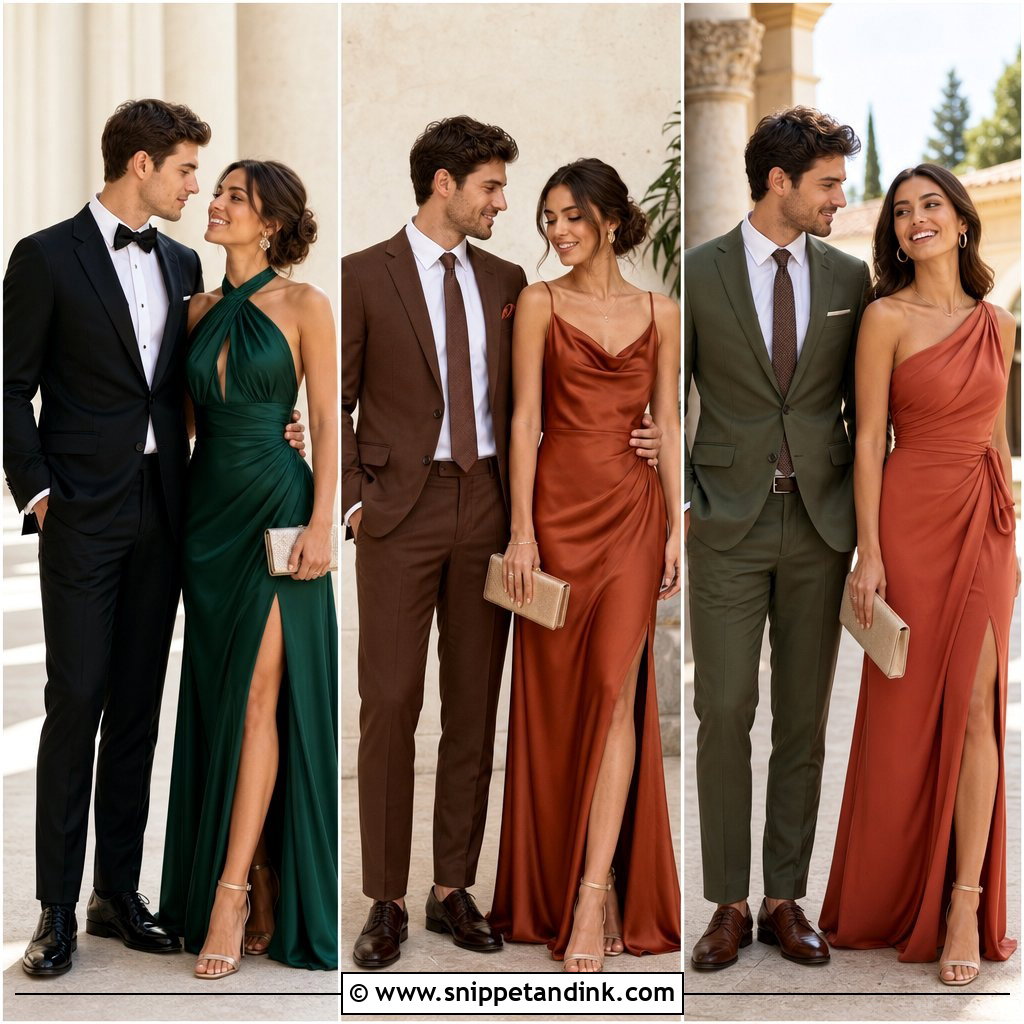
15. Navy Blue Nikkah Couple Outfit
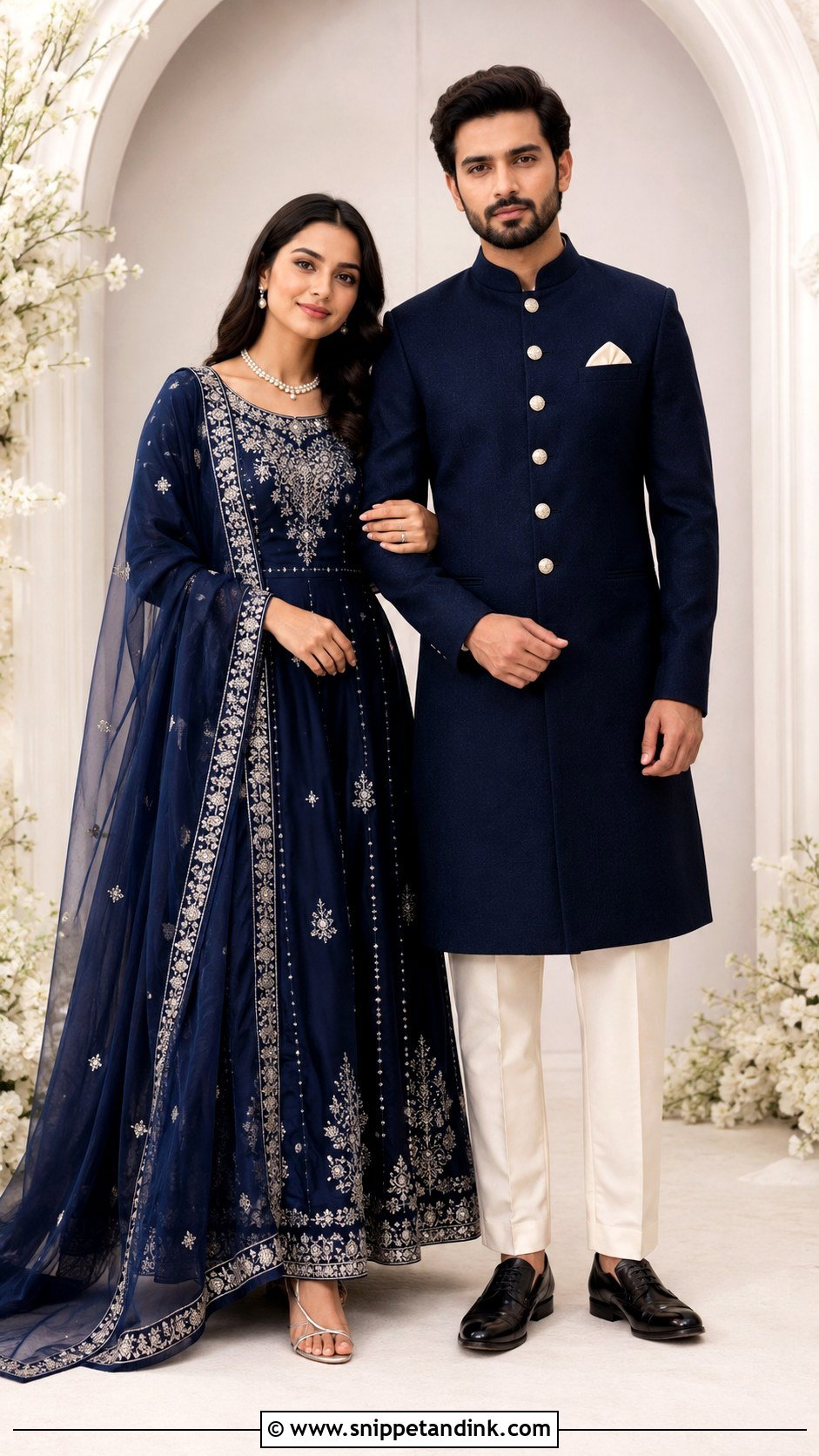
Navy suits couples who want a deeper, more formal Nikkah. The bride wears navy in a lehenga or anarkali with silver, pearl or muted gold work. The groom can wear an ivory sherwani with navy details, or a navy bandhgala-style sherwani with cream trousers. A bandhgala’s high collar needs exact neck sizing; I fit it with one finger of room, since a tight collar becomes unbearable after an hour. Navy reads well against light decor.
16. Matching Sharara And Sherwani Nikkah Outfit
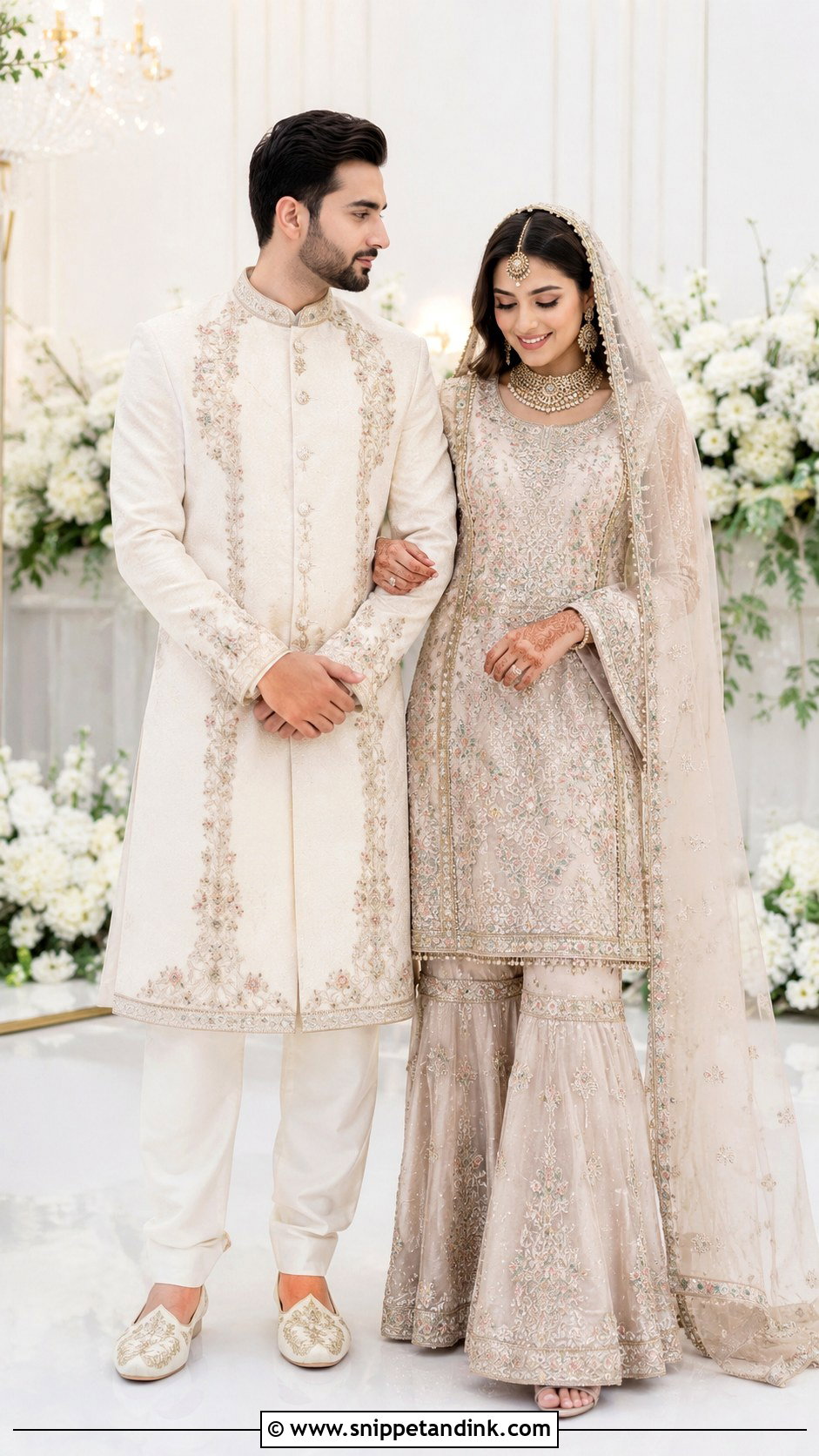
Matching a sharara and sherwani works best through one shared element: border work, buttons or thread colour. Repeating the same fabric everywhere looks too identical. The bride wears an embroidered sharara with a long kameez and soft dupatta, and the groom a sherwani in the same colour family or a neutral with matching embroidery. Shararas are comfortable for sitting, greeting family and moving through photos, which suits a long Nikkah.
17. Lehenga And Sherwani Nikkah Outfit
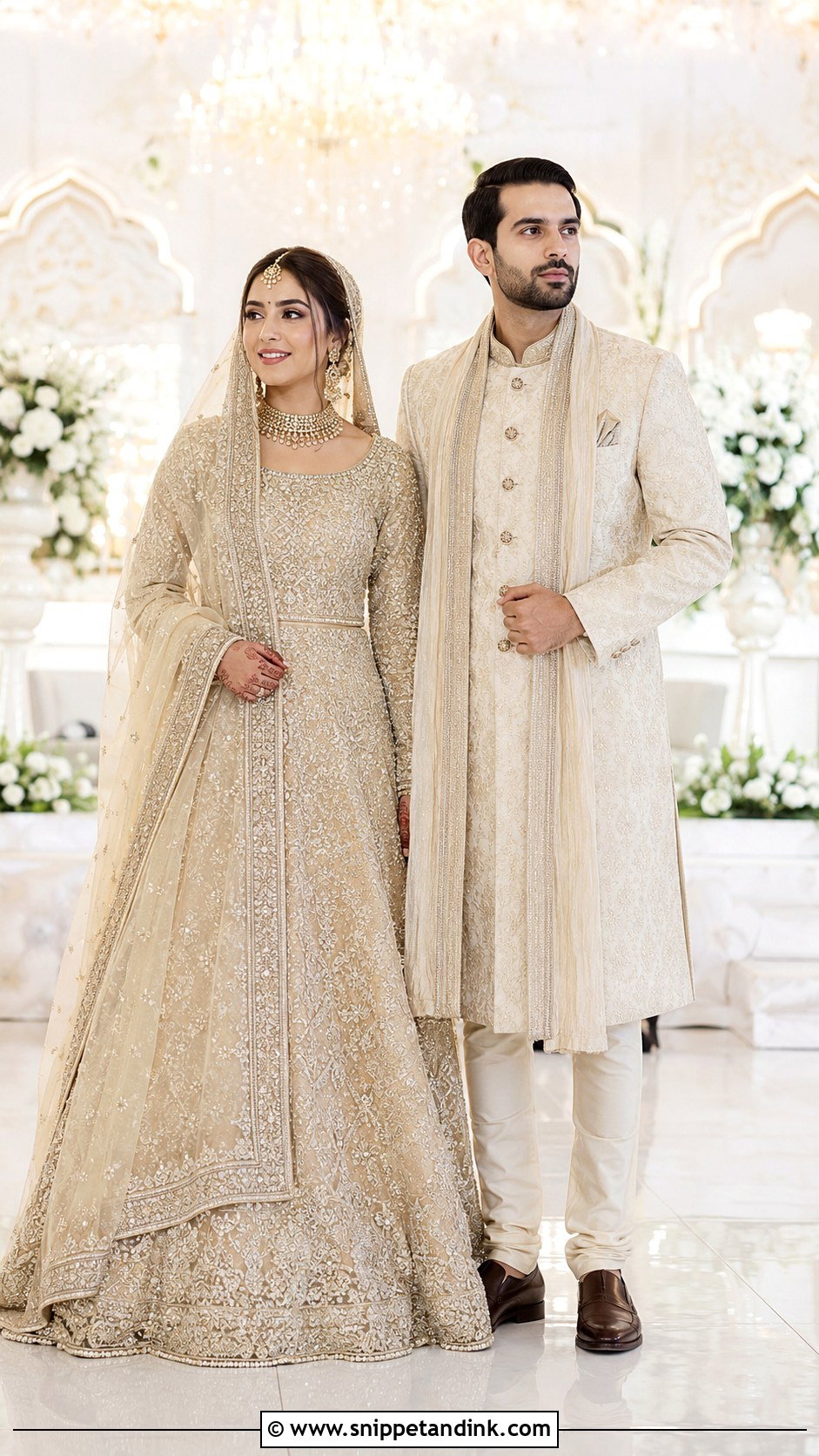
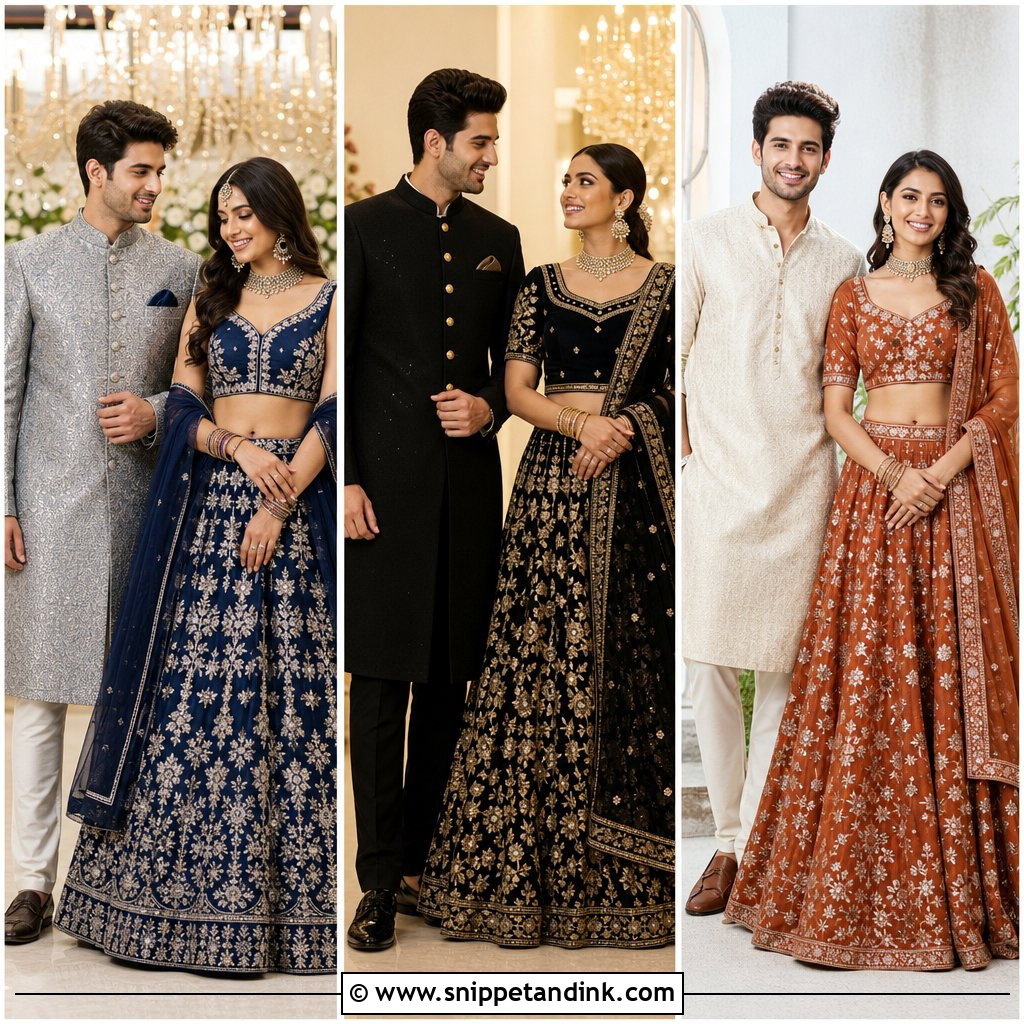
Lehenga and sherwani is the classic pairing, and the rule I give is balance of detail. If her lehenga is heavily worked, his sherwani stays clean. If her outfit is simple, he can add a patterned stole or embroidered jacket. She wears a lehenga with a modest blouse and a dupatta over the shoulder or head; he chooses a sherwani that echoes it through colour, embroidery or texture. Coordinated footwear helps the pair look intentional.
18. Anarkali And Kurta Nikkah Couple Outfit
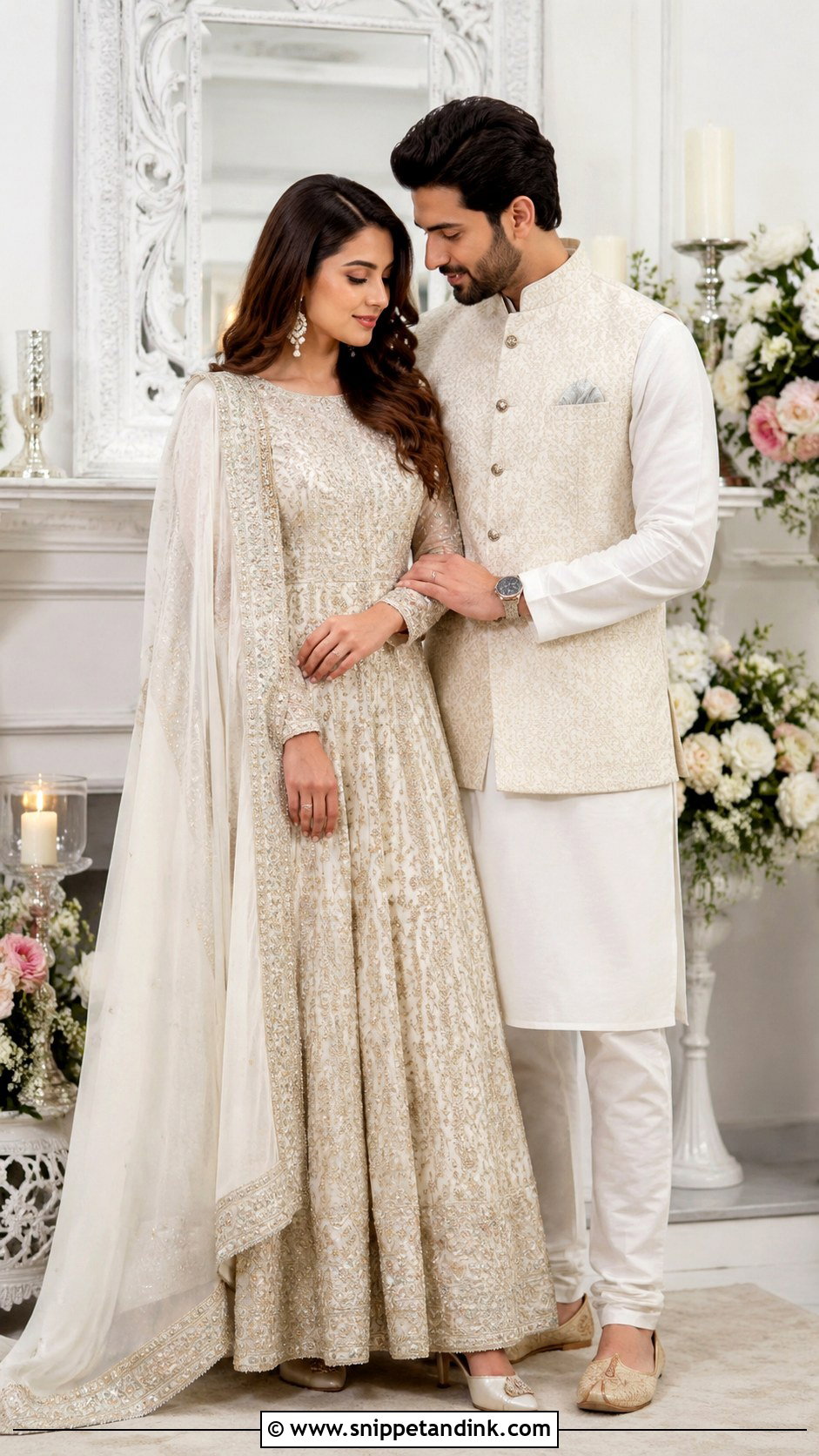
An anarkali and kurta Nikkah couple outfit is lighter than lehenga and sherwani, and still formal when the fabric is rich. She wears a floor-length anarkali with embroidery at neckline, sleeves and hem, with a flowing dupatta. He wears a kurta pajama with a waistcoat, Nehru jacket or light sherwani layer in a coordinating shade. Silk, chiffon, organza or jacquard keep it polished. A Nehru jacket should end just below the hip bone; any longer and it competes with the kurta hem.
19. Gharara And Sherwani Nikkah Outfit
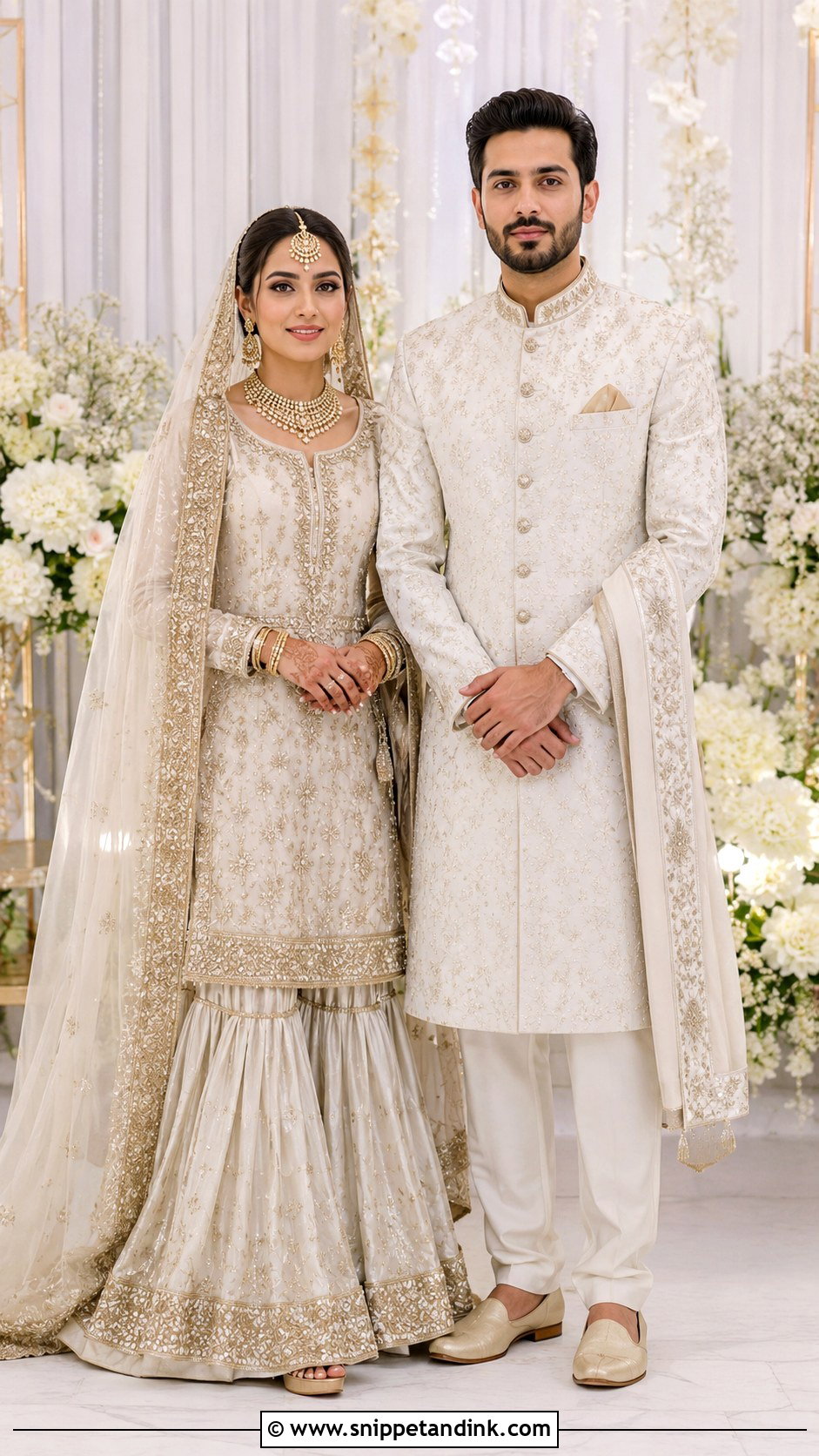
A gharara with a sherwani carries strong South Asian heritage. The bride’s gharara with a long or mid-length kameez and detailed borders looks special in tissue, organza, silk or jamawar. The groom’s ivory, beige or matching sherwani can echo her borders in its embroidery. Keep his outfit structured and her dupatta soft. If she’s in jamawar, I usually avoid jamawar on him as well, because two patterned weaves together look crowded.
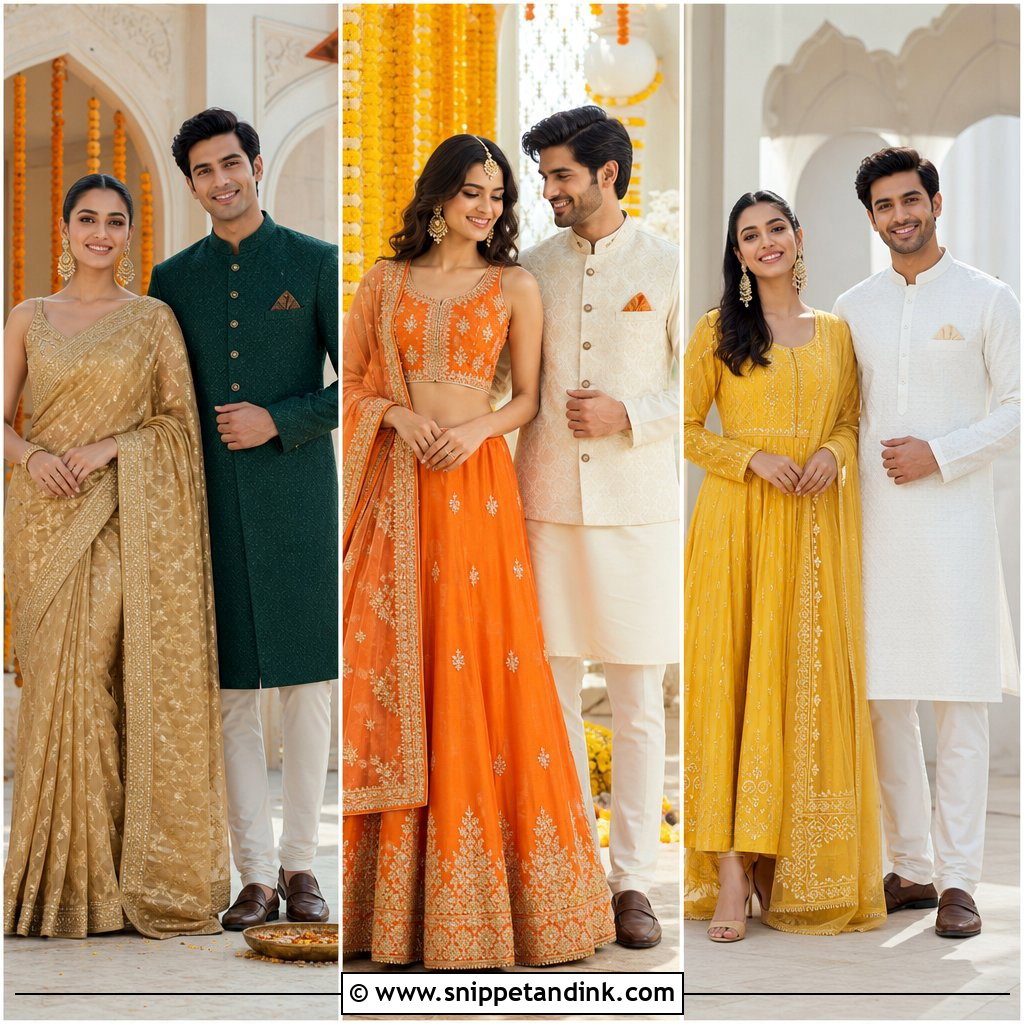
20. Pishwas And Sherwani Nikkah Couple Outfit
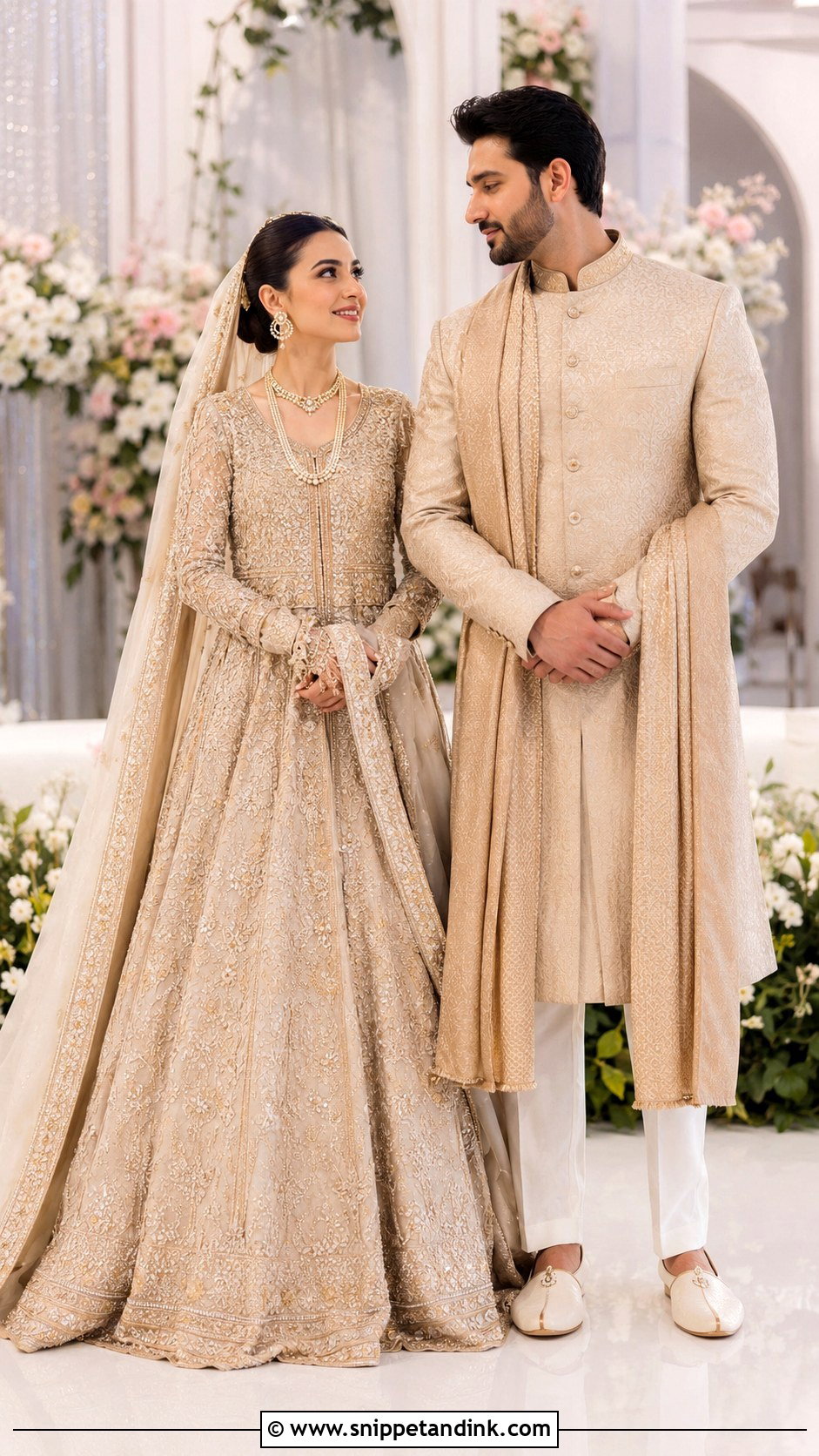
A pishwas has a long, flared line that moves well in portraits, which makes it a natural partner to the vertical structure of a sherwani. She wears the pishwas with delicate embroidery and a flowing dupatta. He wears a sherwani in ivory, champagne, beige or a coordinated pastel, with a stole that picks up her embroidery colour. Formal halls, garden setups and family celebrations all suit it.
21. Velvet Nikkah Couple Outfit
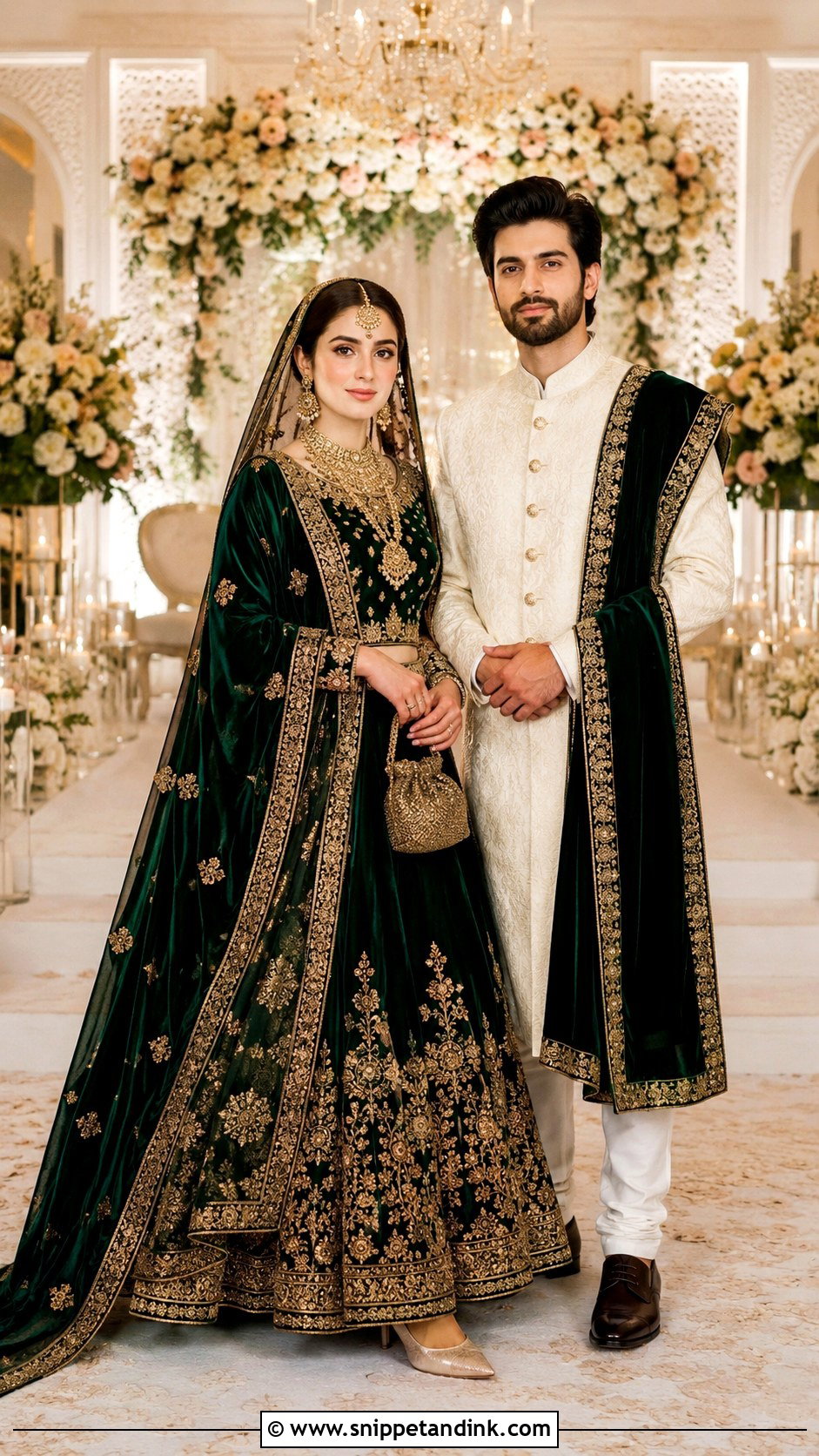
Velvet is warm and visually heavy, so it belongs to winter or evening ceremonies. The bride can wear a velvet lehenga, gharara or long kameez in emerald, navy, maroon or deep plum with antique gold embroidery. For the groom, a velvet shawl or waistcoat is usually enough; a full velvet sherwani is very warm in a heated hall. Keep silhouettes clean and lighten the overall look with cream trousers or a pale kurta.
22. Floral Nikkah Couple Outfit
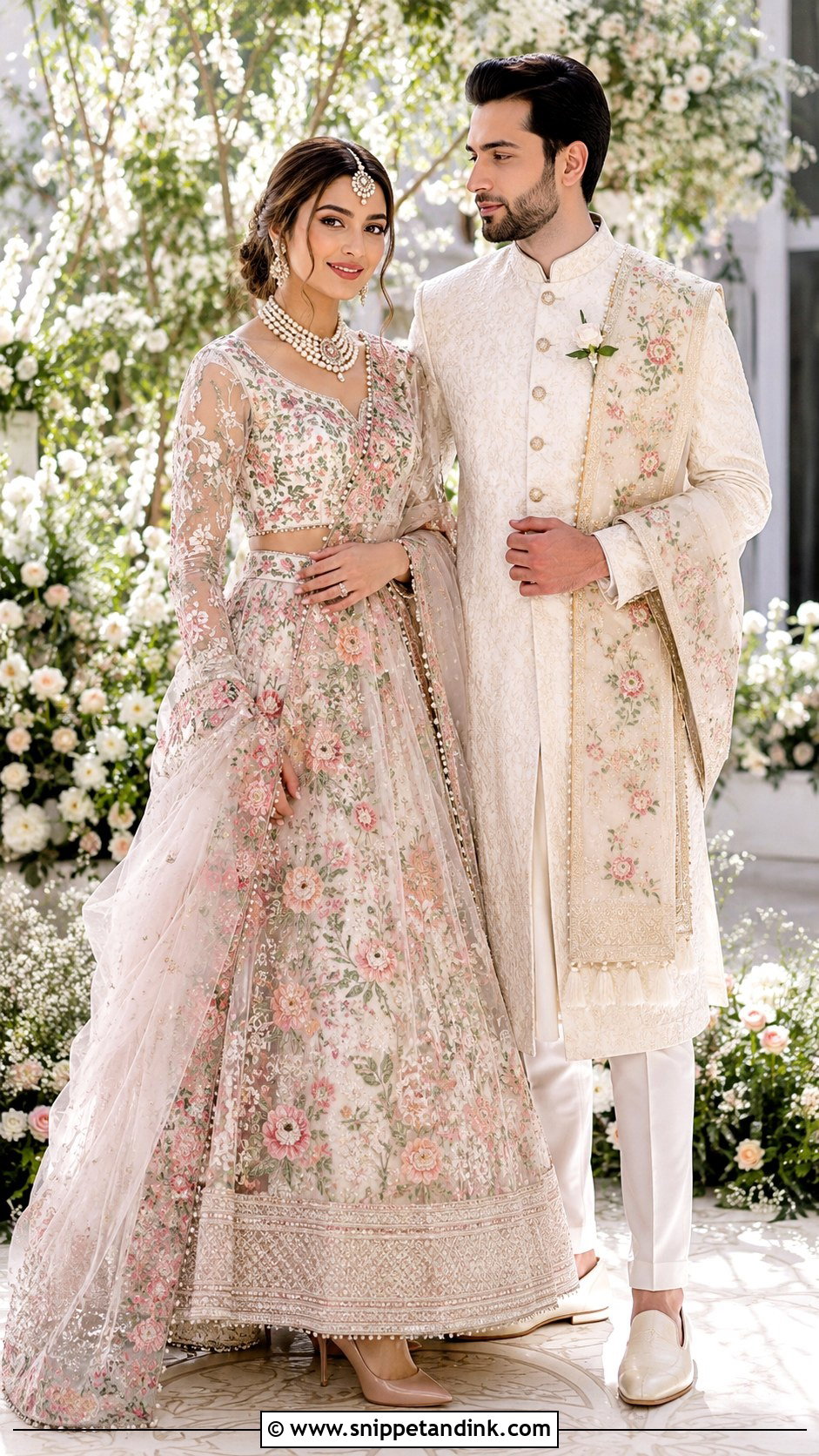
Florals suit daytime ceremonies, garden venues and spring decor. The bride wears a floral embroidered lehenga, printed organza sharara or pastel anarkali with botanical detail. The groom keeps his sherwani plain ivory and adds a floral stole, or wears a waistcoat with subtle floral embroidery. Pick one shade out of her florals for his accent and the coordination is done. Avoid two different prints on the couple; one should stay plain.
23. Minimal Nikkah Couple Outfit
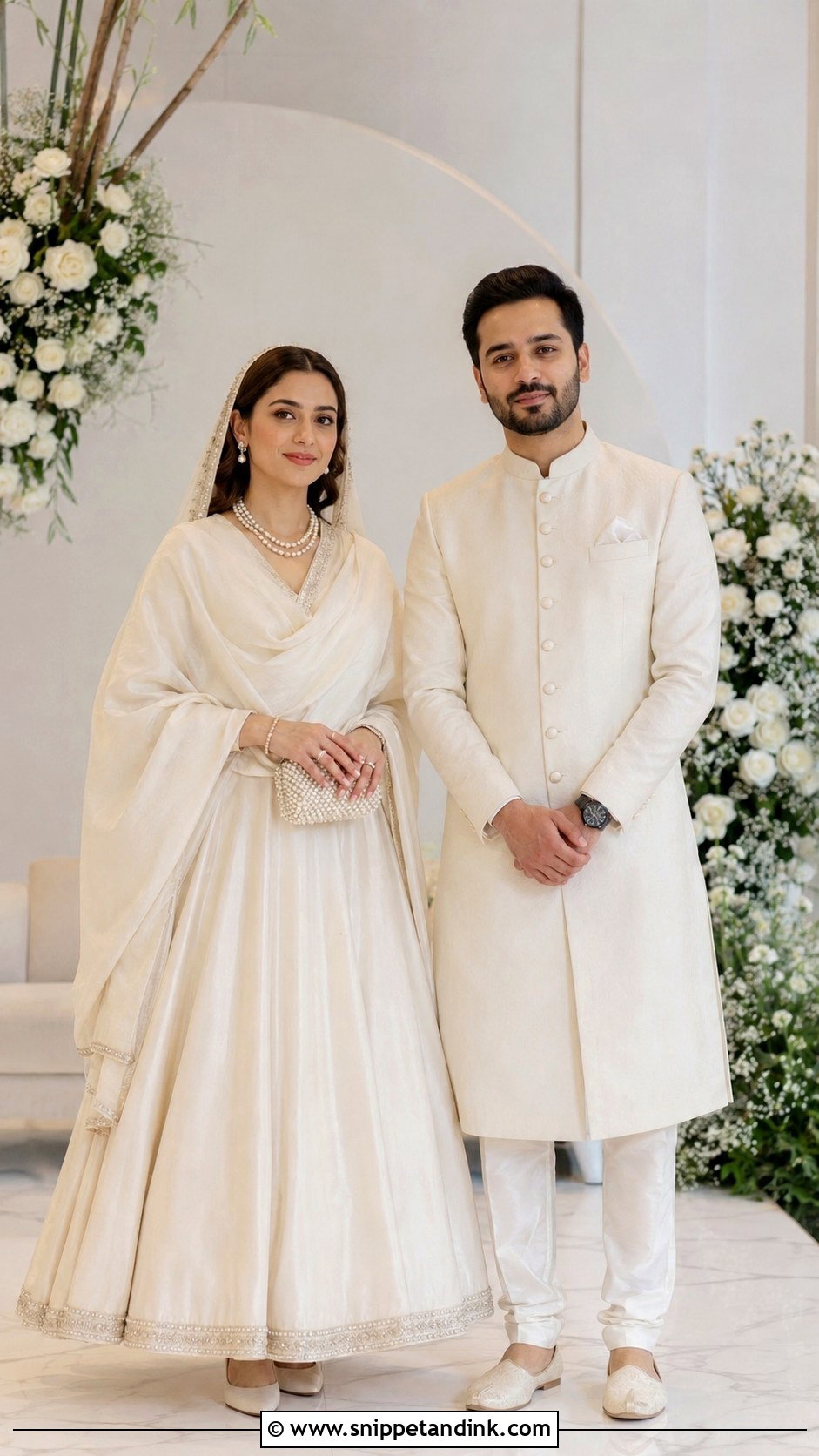
A minimal Nikkah couple outfit lives on fabric and fit. The bride wears a plain silk or crepe anarkali, lehenga or kurta set with clean tailoring and a fine dupatta. The groom wears a simple sherwani, kurta set or bandhgala in the same neutral family. Small details like pearl buttons, a fine border or soft pleating make the difference. Simple tailoring shows every fit issue, so allow time for alterations on both outfits.
24. Modern Nikkah Couple Outfit
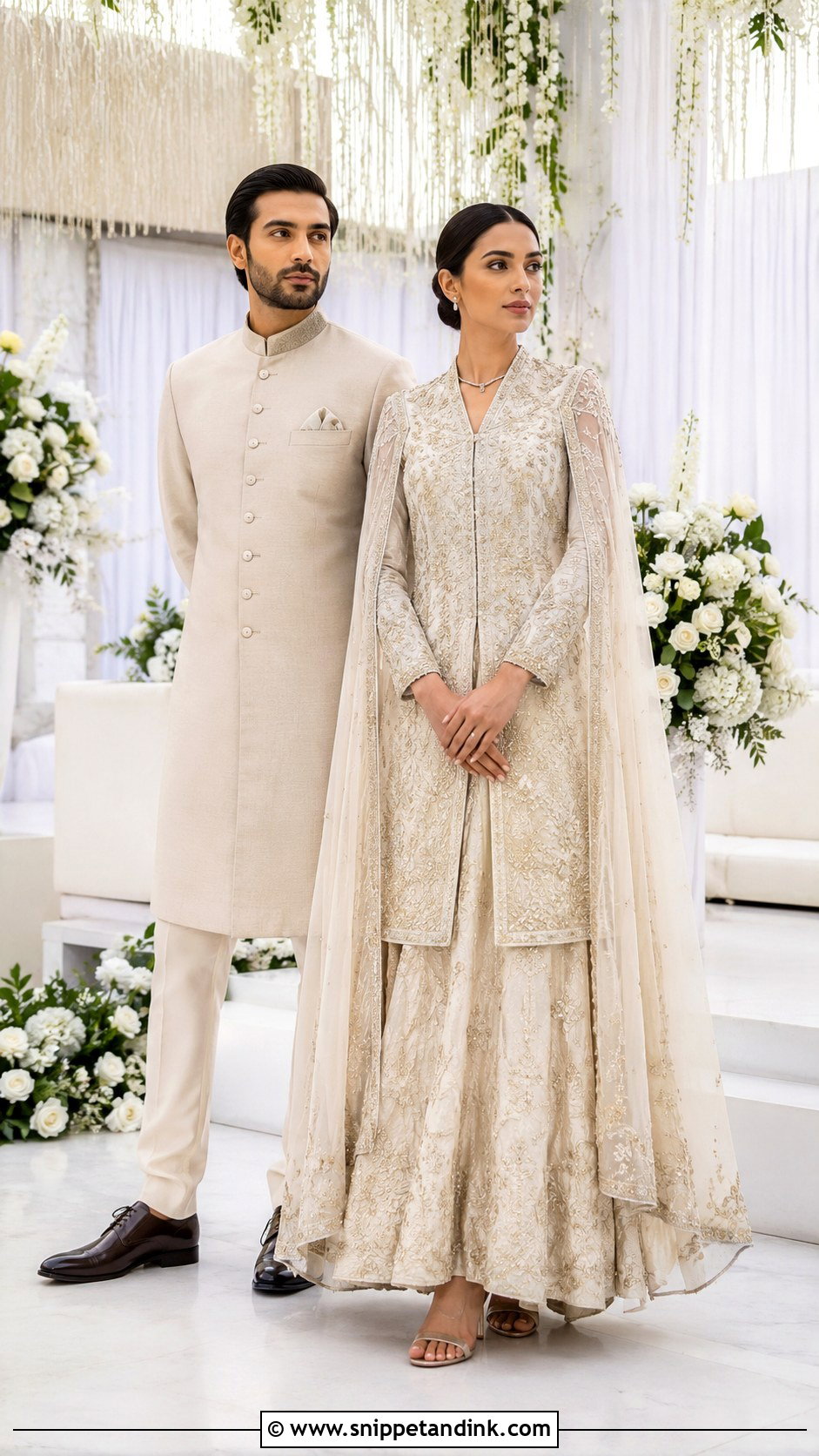
Modern couple dressing keeps modesty but updates the cuts. The bride might wear a structured long jacket over a lehenga, a cape-style dupatta with a sharara or a sleek anarkali. The groom can wear a tailored bandhgala, an Indo-western sherwani or a kurta with a sharp long jacket. Repeat one detail, such as embroidery tone or buttons. Indo-western cuts often sit closer to the body, so check he can sit on a low stage without the jacket straining at the buttons.
25. Traditional Red Nikkah Couple Outfit
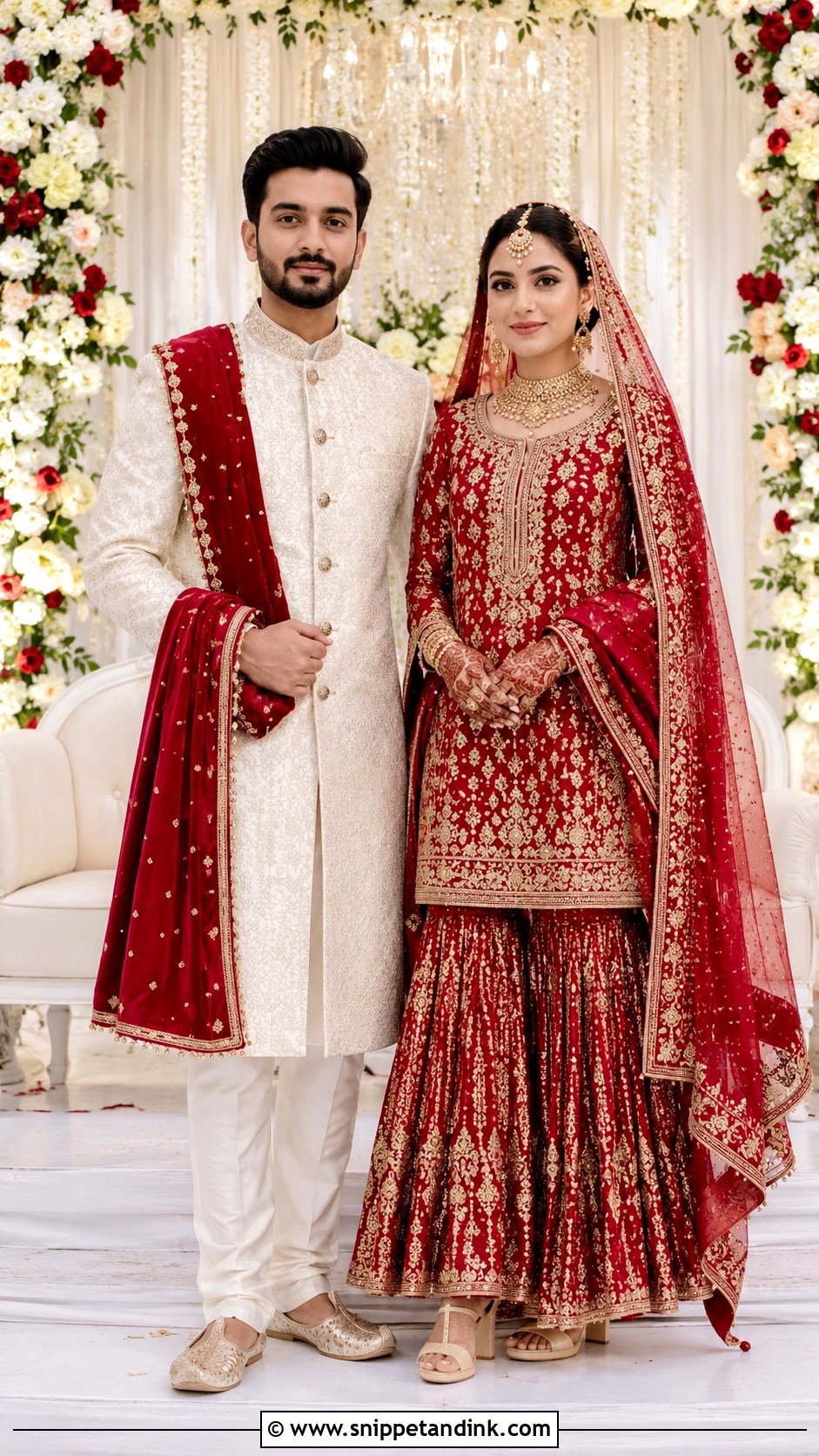
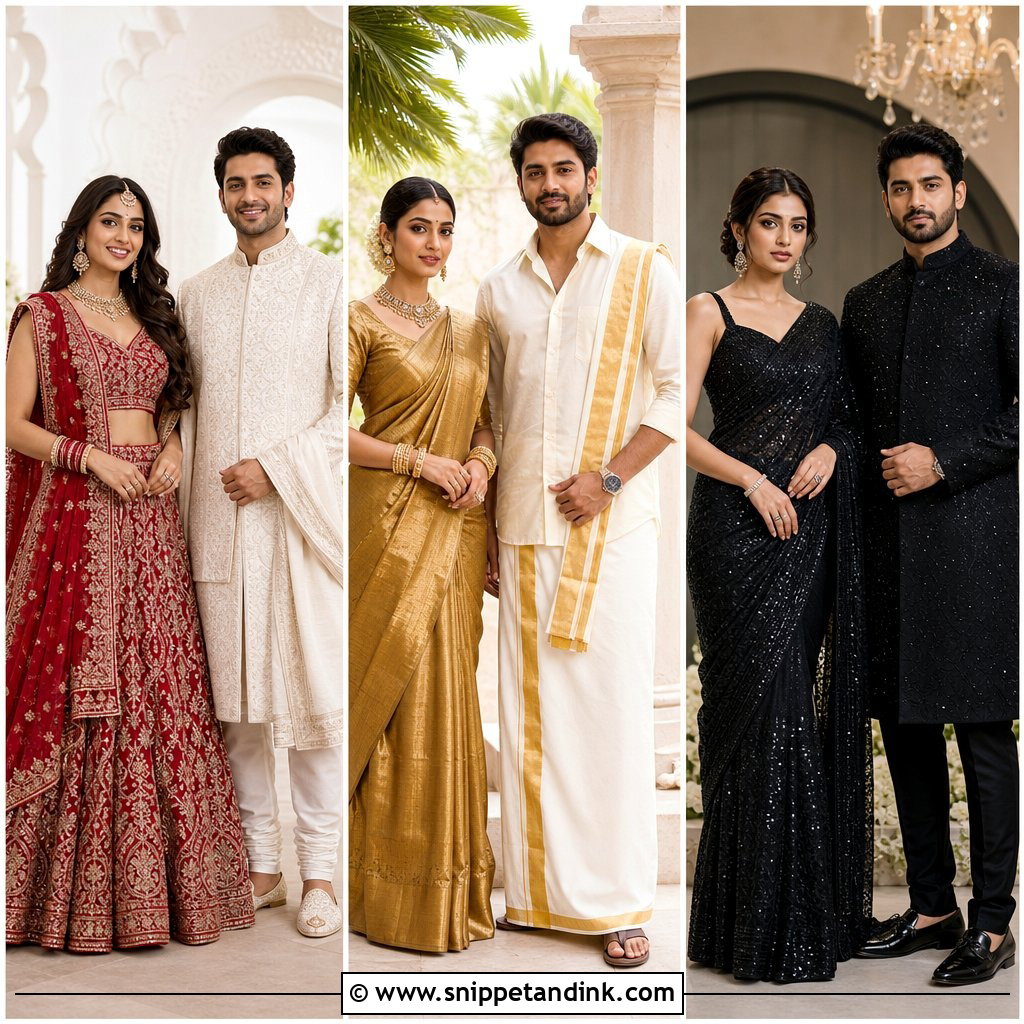
Red carries the weight of tradition and feels festive and family-centred. The bride wears a red lehenga, gharara or sharara with gold embroidery. The groom softens it with an ivory or cream sherwani and a red stole or turban, which keeps the pair from looking too heavy. Match the red exactly between her outfit and his accent; a slightly different red looks like a mistake rather than a choice. Gold jewellery and cream footwear complete it.
The Groom’s Sherwani Needs Its Own Fitting Schedule
Grooms often leave their outfit until the last month, which causes problems when the sherwani is custom-made. Embroidered sherwanis take time to make, so order it soon after the bride’s outfit is confirmed, ideally a few months ahead, and plan at least two fittings.
- Shoulders: the seam should sit at the shoulder bone. Shoulders are the hardest part to alter later.
- Sleeves: they should end at the wrist bone, showing a little of the kurta cuff when the arms hang straight.
- Length: most sherwanis end at or just below the knee. Check it while sitting, since a long sherwani bunches on a low stage.
- Collar: one finger of room at the neck, tested with the kurta underneath.
- Mojaris: wear them around the house for a week beforehand. New mojaris are stiff and can rub the heel raw by evening.
For a safa or turban, have it pre-tied by someone experienced and practise putting it on, and bring the stole to the safa fitting if the colours need to match. On the day, keep a lint roller, a small sewing kit and spare buttons, because embroidered sherwani buttons are often unique and hard to replace.
Let the Bride’s Outfit Set the Tone and the Groom’s Answer It
In nearly every couple I style, the bride’s outfit leads and the groom’s supports it through a colour accent, embroidery or texture. That works across soft neutrals, pastels, jewel tones and red. The ceremony setting matters too: what suits a garden at noon won’t suit a hall at night. Bring both outfits, or at least swatches, together in daylight before anything is finalised. Seeing them side by side once saves a lot of regret in the photos.
You'll Like These Ideas:


Leave a Reply