
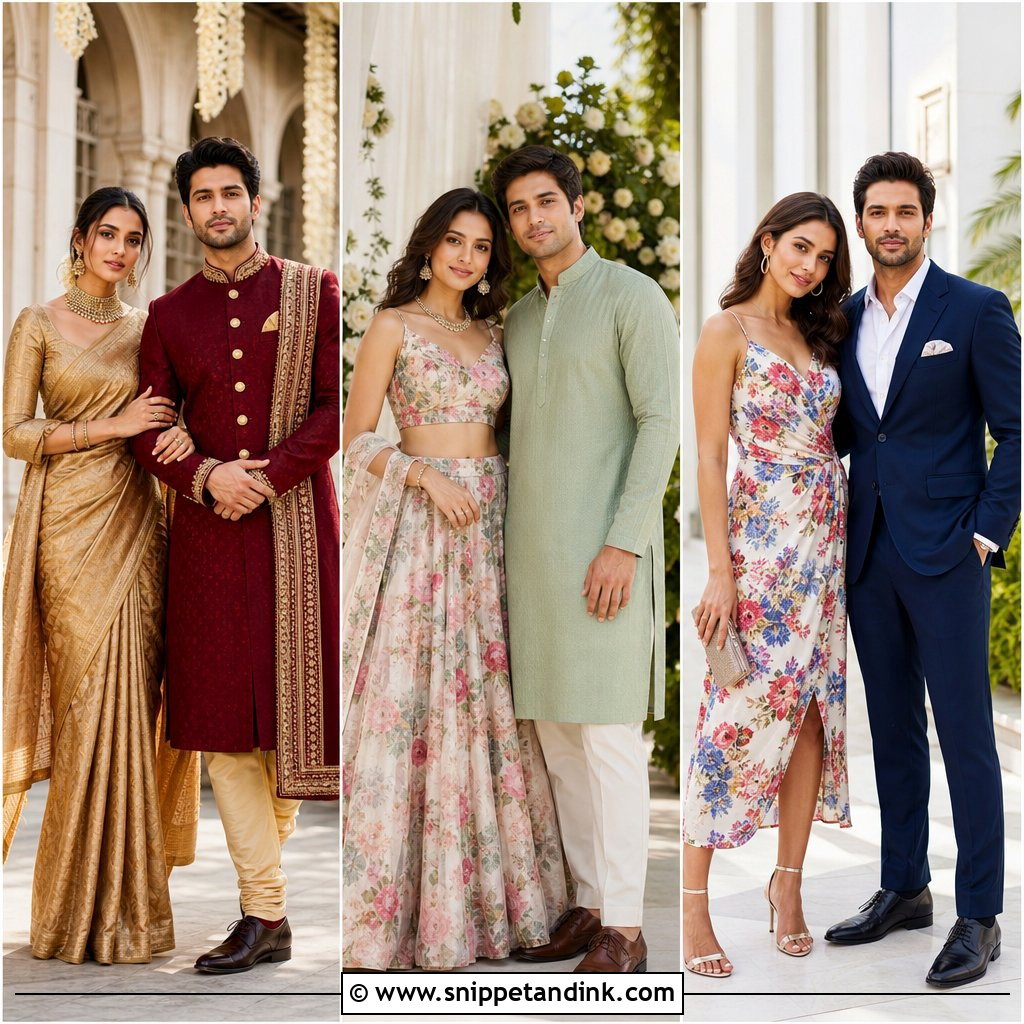
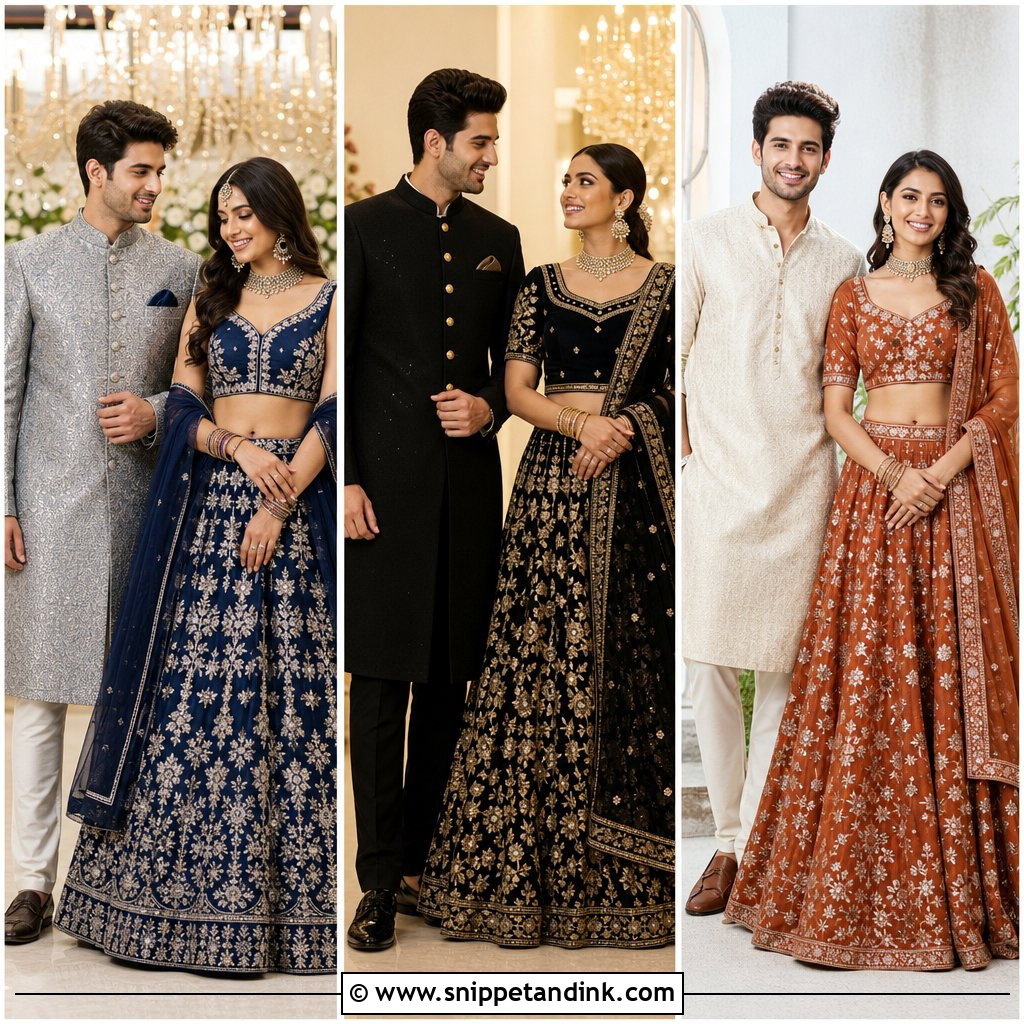
At a ring ceremony the two of you are photographed side by side for hours, often on a raised stage, so the outfits have to be read as a pair. Matching is not the goal. When I style an engaged couple, I start by agreeing one level of formality for both, then connect the looks through a single thread: a shared embroidery colour, a repeated metal, or one shade that shows up in both outfits. Daytime ceremonies suit pastels and lighter fabrics; evening ones carry jewel tones, sequins, velvet and sharper tailoring. The twenty pairings below are complete outfits for both partners, traditional and Western, with notes on where each one works.
Two Tailors, One Palette, and the Swatch That Settles It
Most couples are dressed by two different designers or tailors who never meet. That’s where coordination slips. I ask for physical fabric swatches from the bride’s outfit, including a few strands of the embroidery thread, and send them to the groom’s tailor before his cloth is cut. Colours on a phone screen can be far off, and a blush that looked identical on two screens can arrive as peach and pink.
- Choose the bride’s outfit first. Lehengas and sarees offer fewer colour options than suiting, so it’s easier to match the menswear to them than the other way round.
- Agree one metal, gold, antique gold or silver, and tell both makers. It governs embroidery, buttons, jewellery and watch.
- Allow generous time. Heavily embroidered custom pieces often take two to three months, and some designers need longer in peak wedding season, so ask each maker for their lead time before you commit to a date.
- Book a final fitting for both of you in the same week, then try both outfits on together once in daylight before the ceremony.
If you can only afford one custom piece, put the money into the bride’s outfit and have the groom’s jacket or kurta made to coordinate. A well-cut ready-made sherwani with a custom pocket square or stole in her shade still ties the pair together.
1. Blush Pink Lehenga And Ivory Sherwani
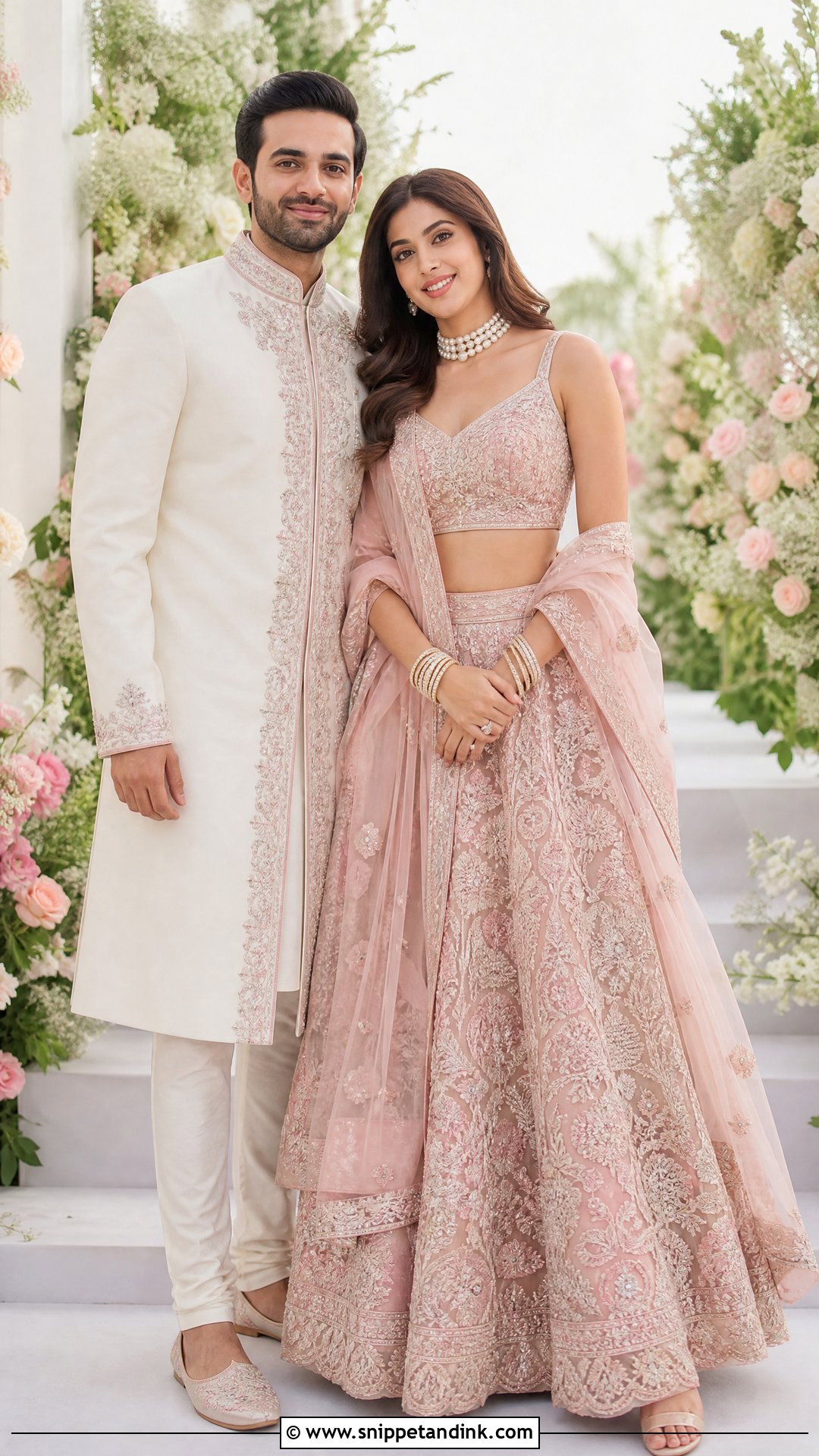
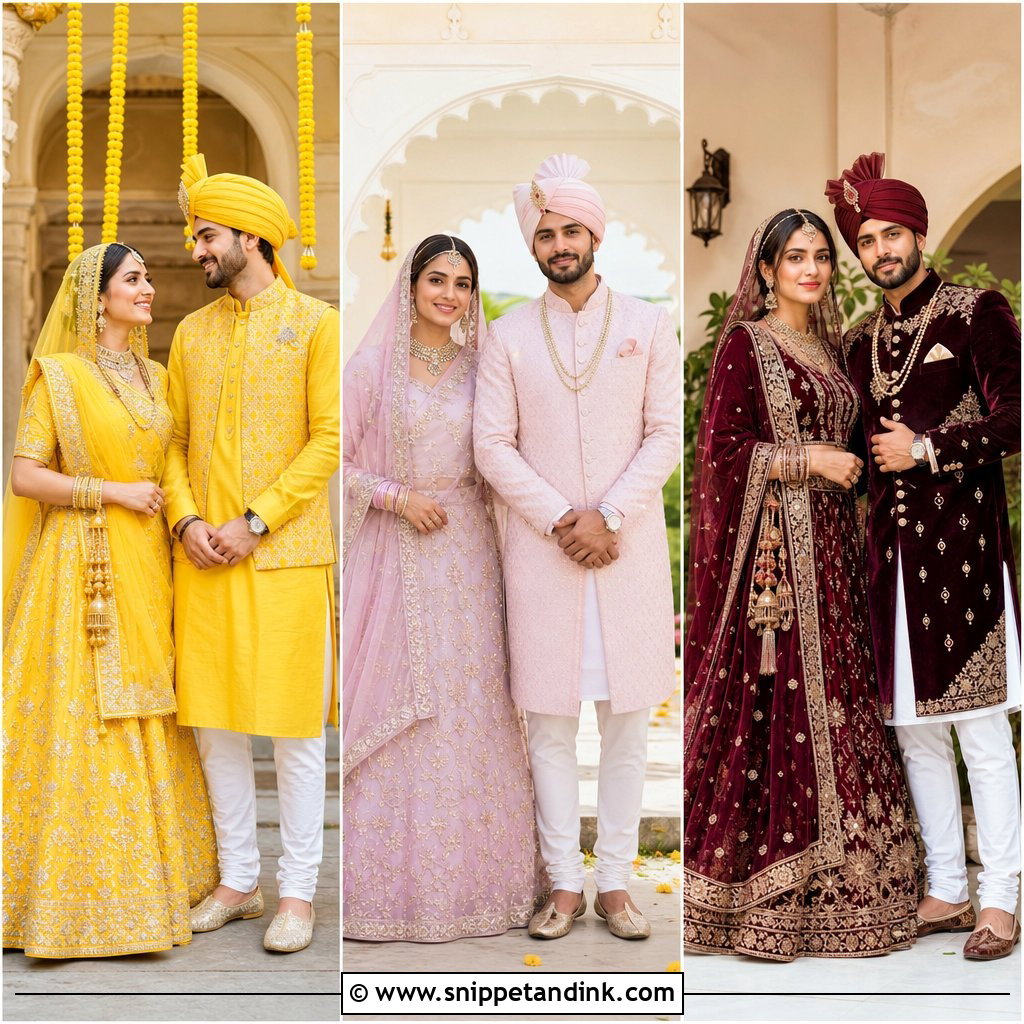
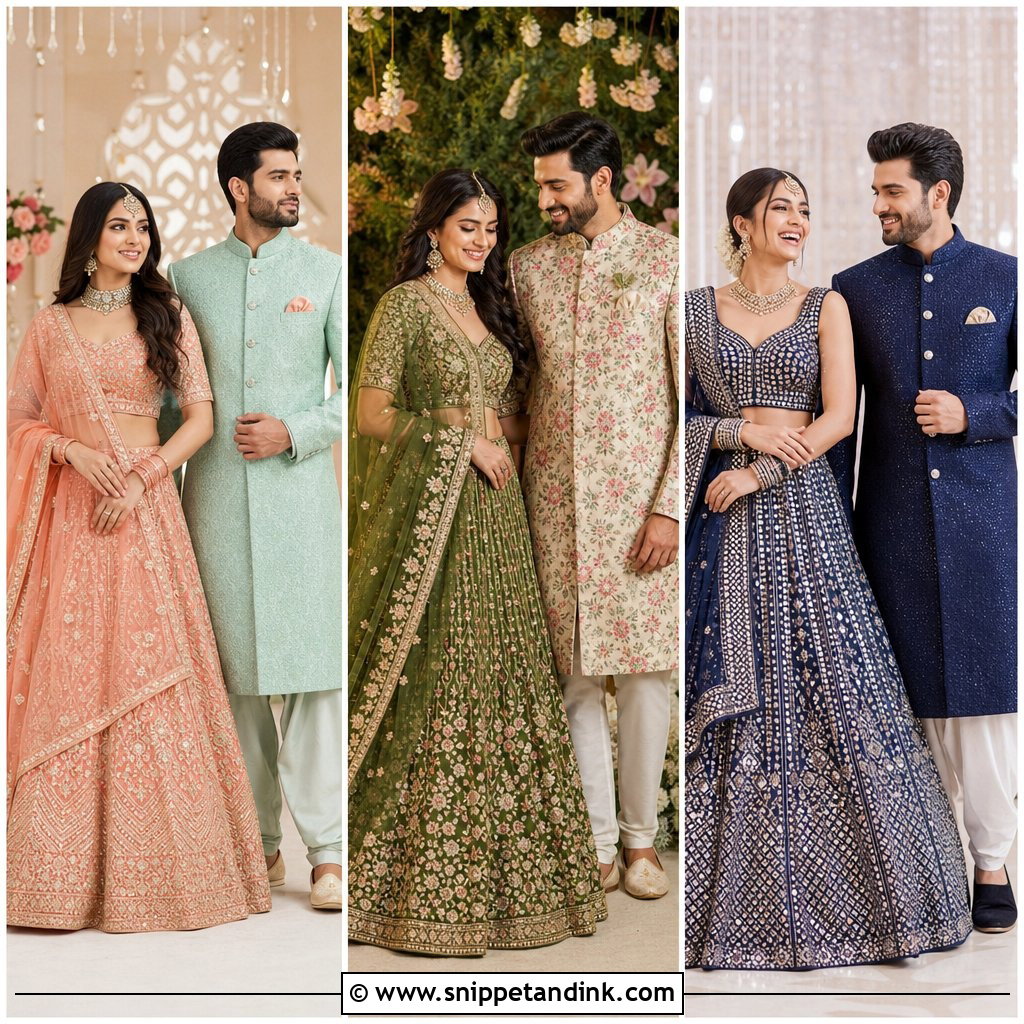
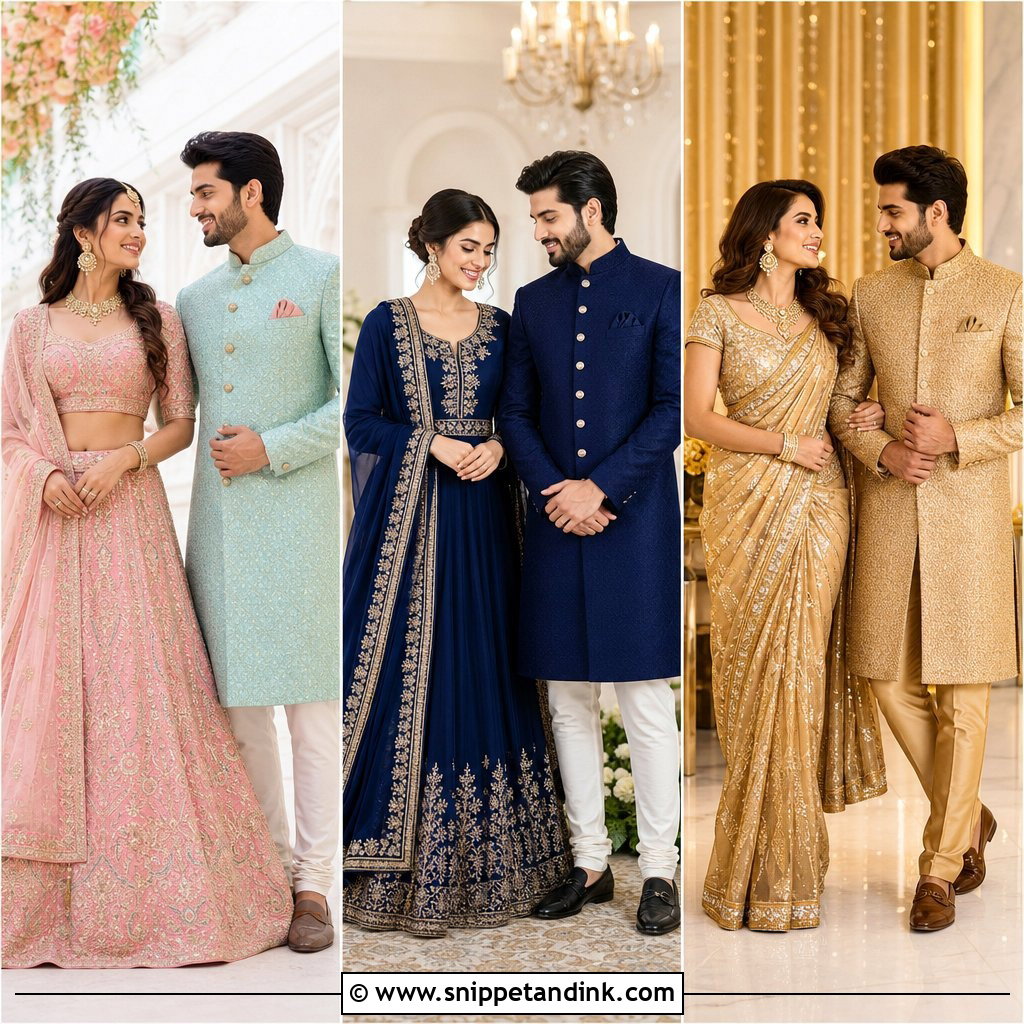
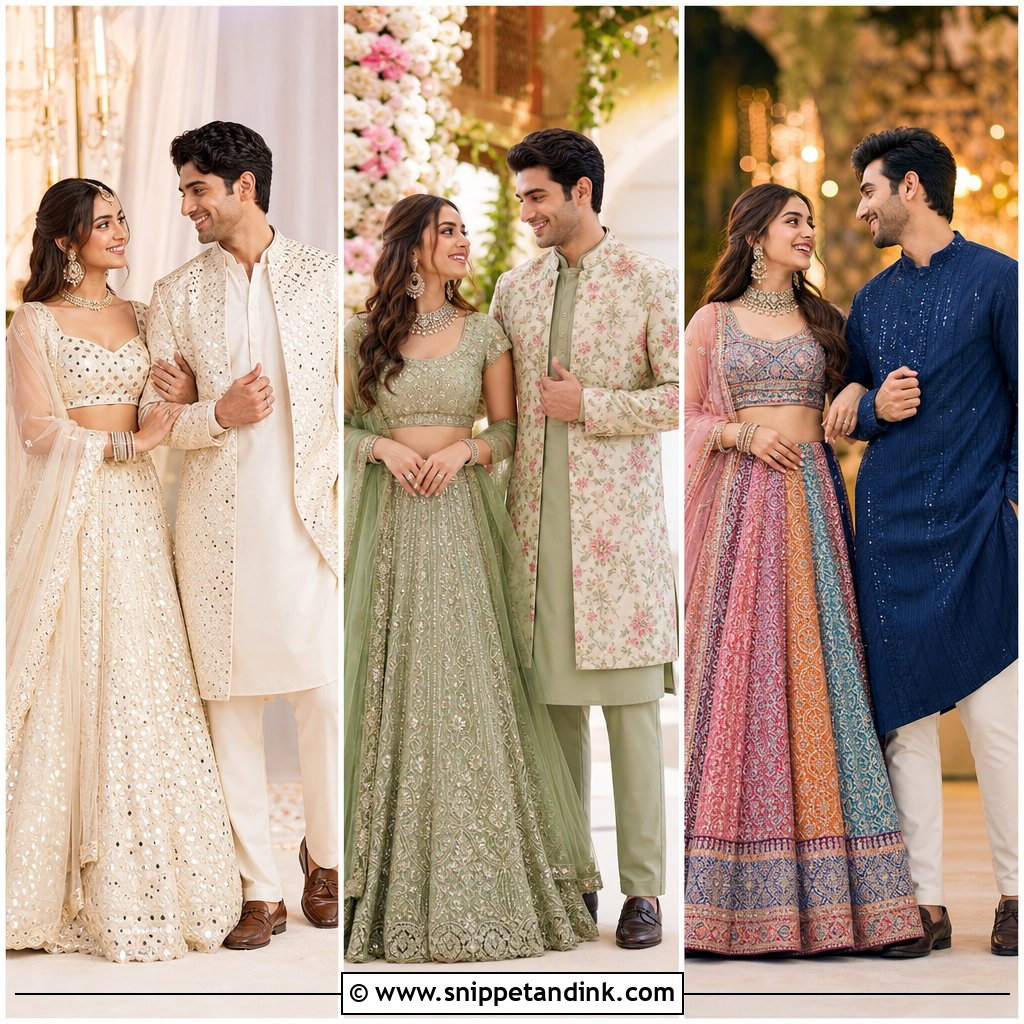
Blush and ivory is the pairing I suggest most for a daytime ring ceremony, because it flatters most skin tones in natural light. She wears a blush pink lehenga with tonal embroidery, a fitted blouse and a light dupatta over one shoulder, with pearl earrings, a fine choker, pink bangles and embellished heels. He wears an ivory sherwani with a little blush threadwork or a pink pocket square, straight ivory trousers and embroidered juttis. Resist putting the same pink on him in a big block. A few touches in his thread and pocket square tie the two together far better.
2. Emerald Green Saree And Black Bandhgala
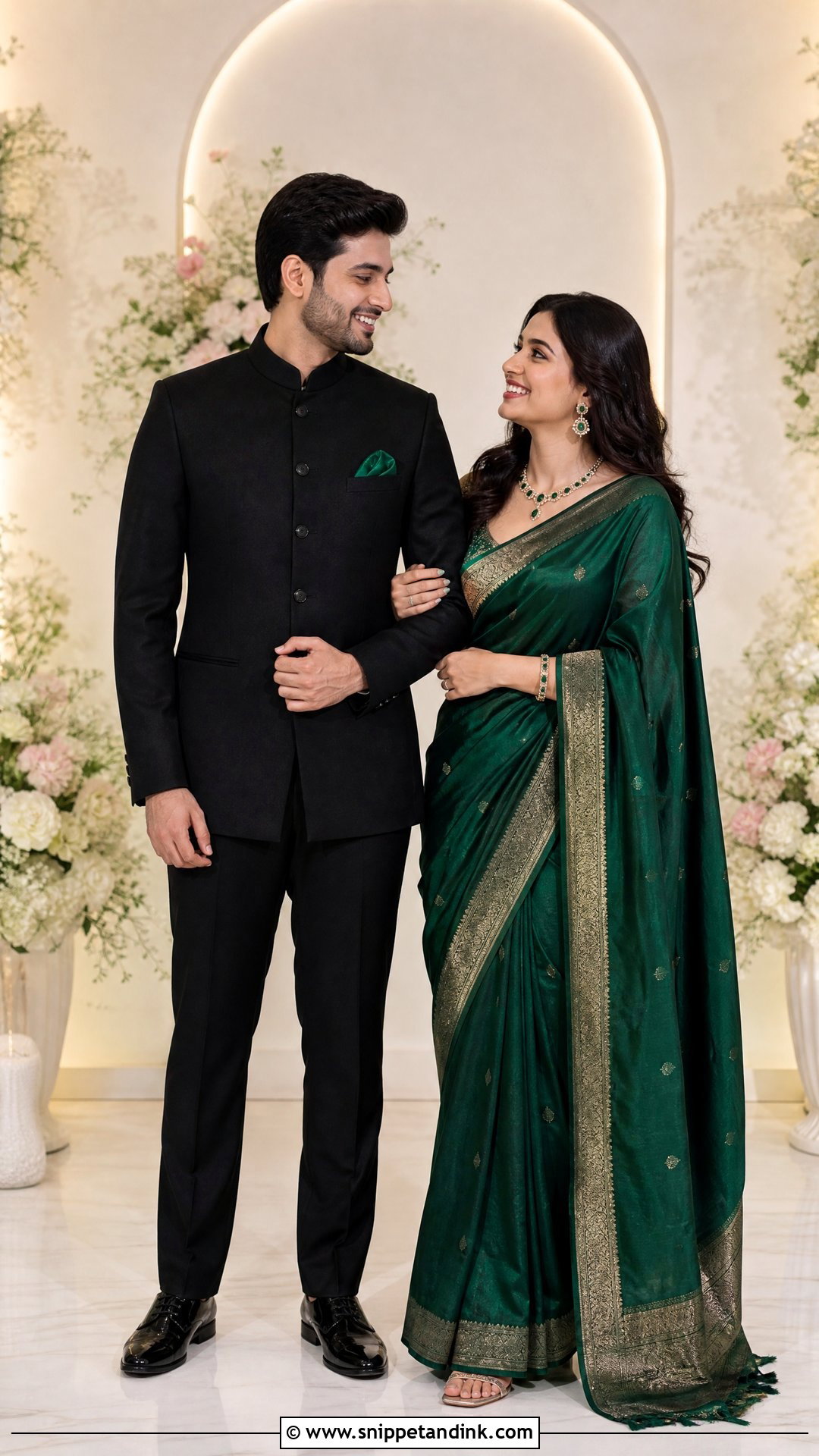
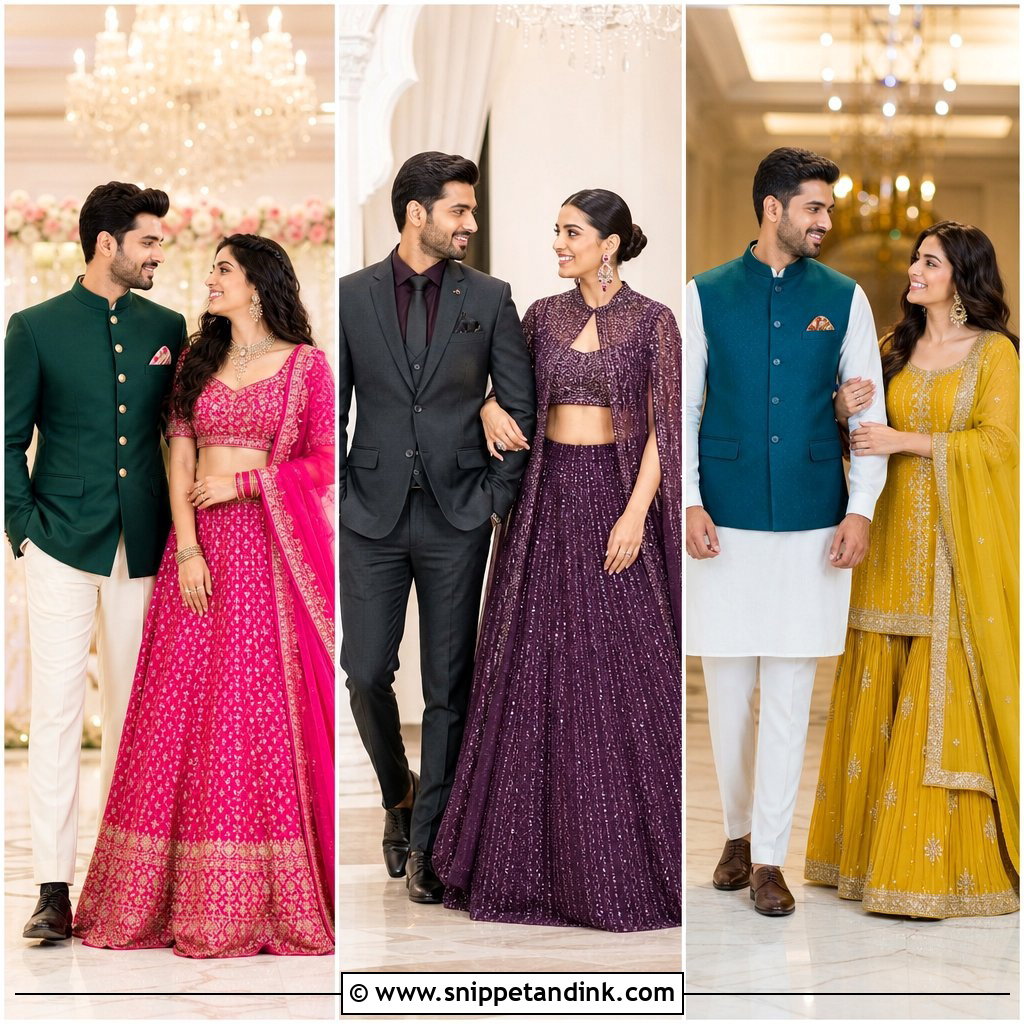
Emerald and black is an evening pairing with real weight. Her saree can be silk, satin or georgette with fine gold embroidery and a structured matching blouse; a sleek bun, gold earrings, stacked bangles and metallic heels finish it. His black bandhgala picks up the green through emerald buttons, a pocket square or a little embroidery at the collar, with black trousers and polished shoes. I’d keep gold on both of you as the link. One caution from fittings: emerald silk shows water spots badly, so keep a drink well away from the pallu.
3. Pastel Blue Gown And Matching Tuxedo
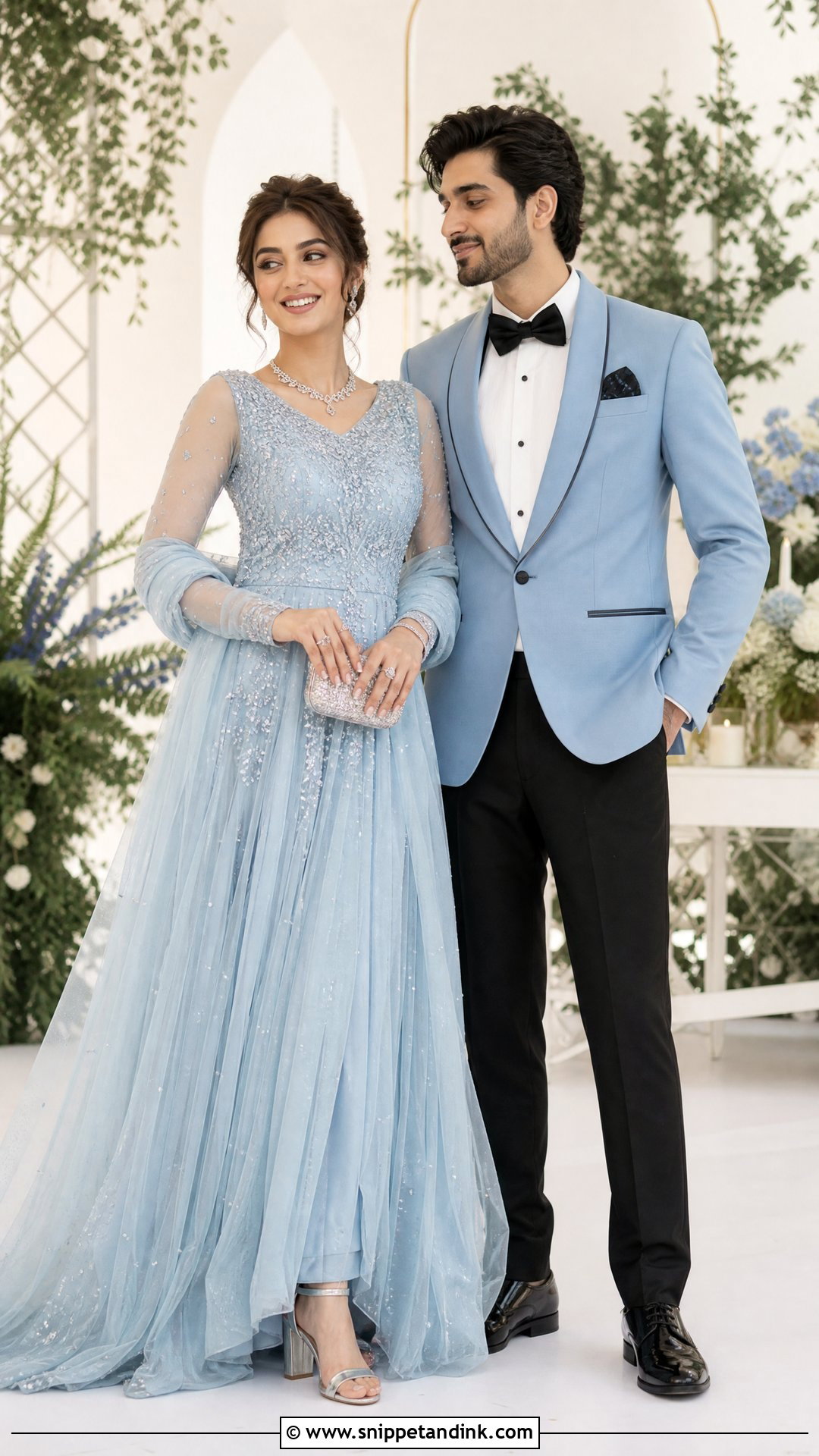
Pastel blue is harder to wear than it looks, because a soft colour shows every pucker in the seams. She wears a floor-length blue gown with a fitted bodice, soft draping and a little silver embellishment, plus crystal earrings, a slim bracelet, a metallic clutch and silver heels. He coordinates in a pastel blue tuxedo jacket, white shirt, black trousers and a black bow tie. If a blue jacket feels like too much for him, a light grey suit with a blue tie is just as good. I’d budget extra time for alterations here. Bright indoor venues and garden ceremonies suit it best.
4. Deep Maroon Lehenga And Black Achkan
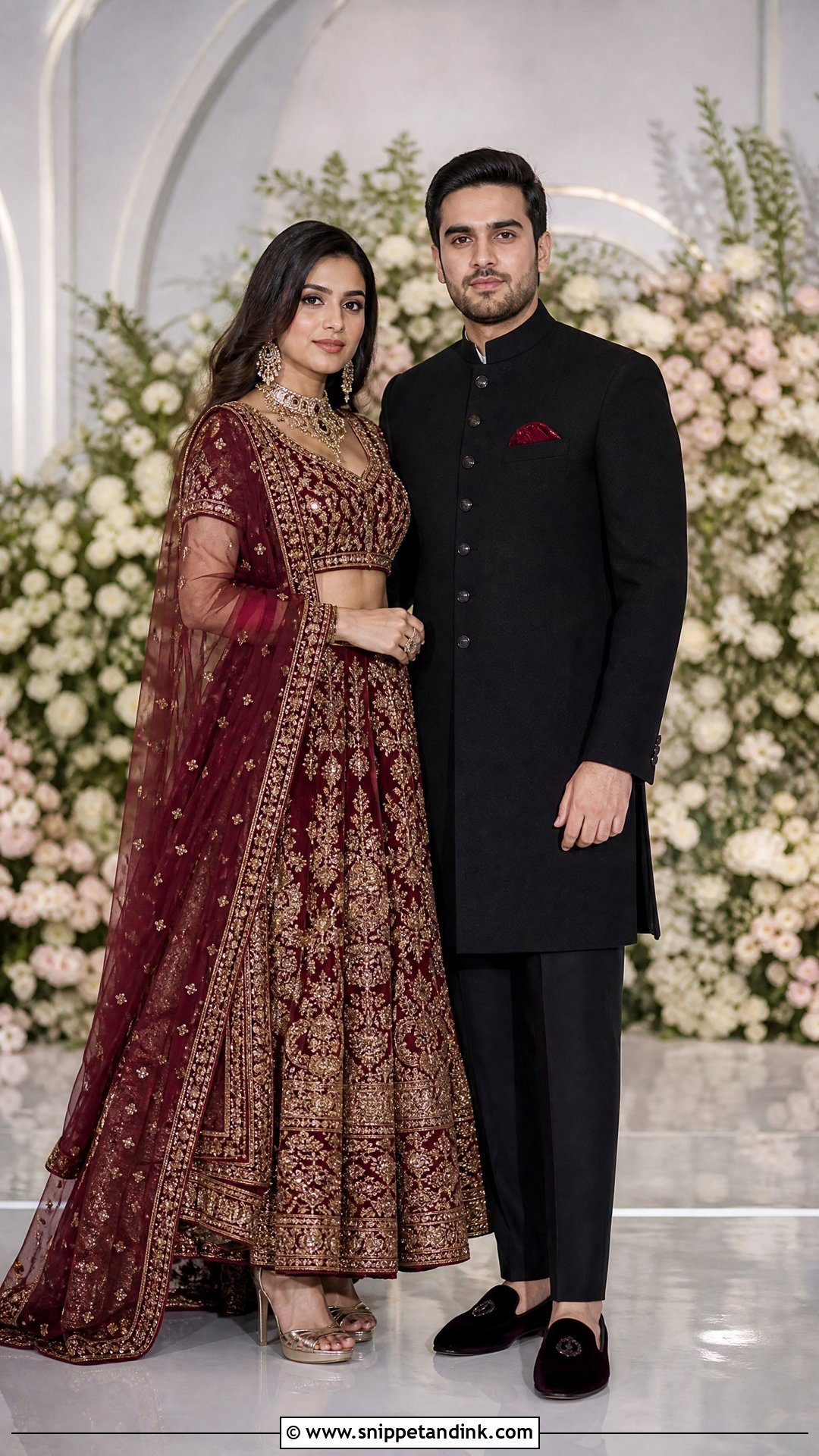
Maroon and black are made for an evening ring ceremony under warm lights. Her lehenga is maroon with antique gold embroidery, a fitted blouse and a sheer dupatta with a narrow border; kundan earrings, a statement ring, gold bangles and embroidered heels complete it. His black achkan carries maroon at the collar, buttons or pocket square, with black trousers and velvet loafers. The dark colours already feel rich, so I keep embroidery concentrated rather than all-over. Against a pale stage or candlelight, the two of you will stand out clearly.
5. Ivory Gold Saree And Cream Sherwani
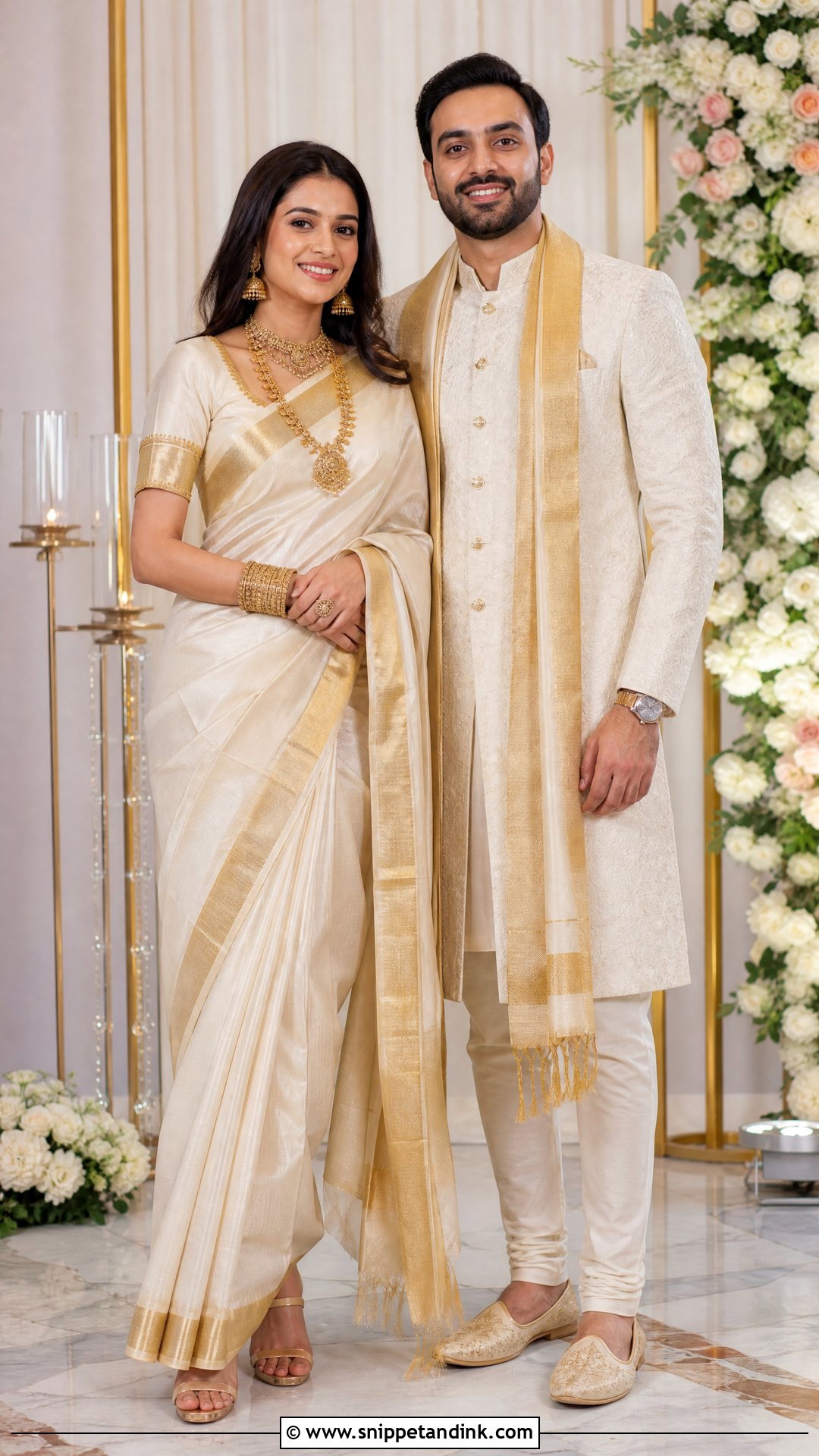
Ivory and gold on both partners looks coordinated without trying. She wears an ivory silk saree with a woven gold border and a short-sleeved blouse in the same colour family, with gold jhumkas, a layered necklace, bangles, metallic sandals and a small floral accent in the bun. He chooses a cream sherwani with quiet gold motifs, straight trousers and juttis, plus a beige or muted gold stole so the outfit has some depth. Don’t chase an exact match in ivory. Two slightly different creams in different textures read as intentional; two near-identical ones look like a near miss.
6. Lavender Lehenga And Gray Bandhgala
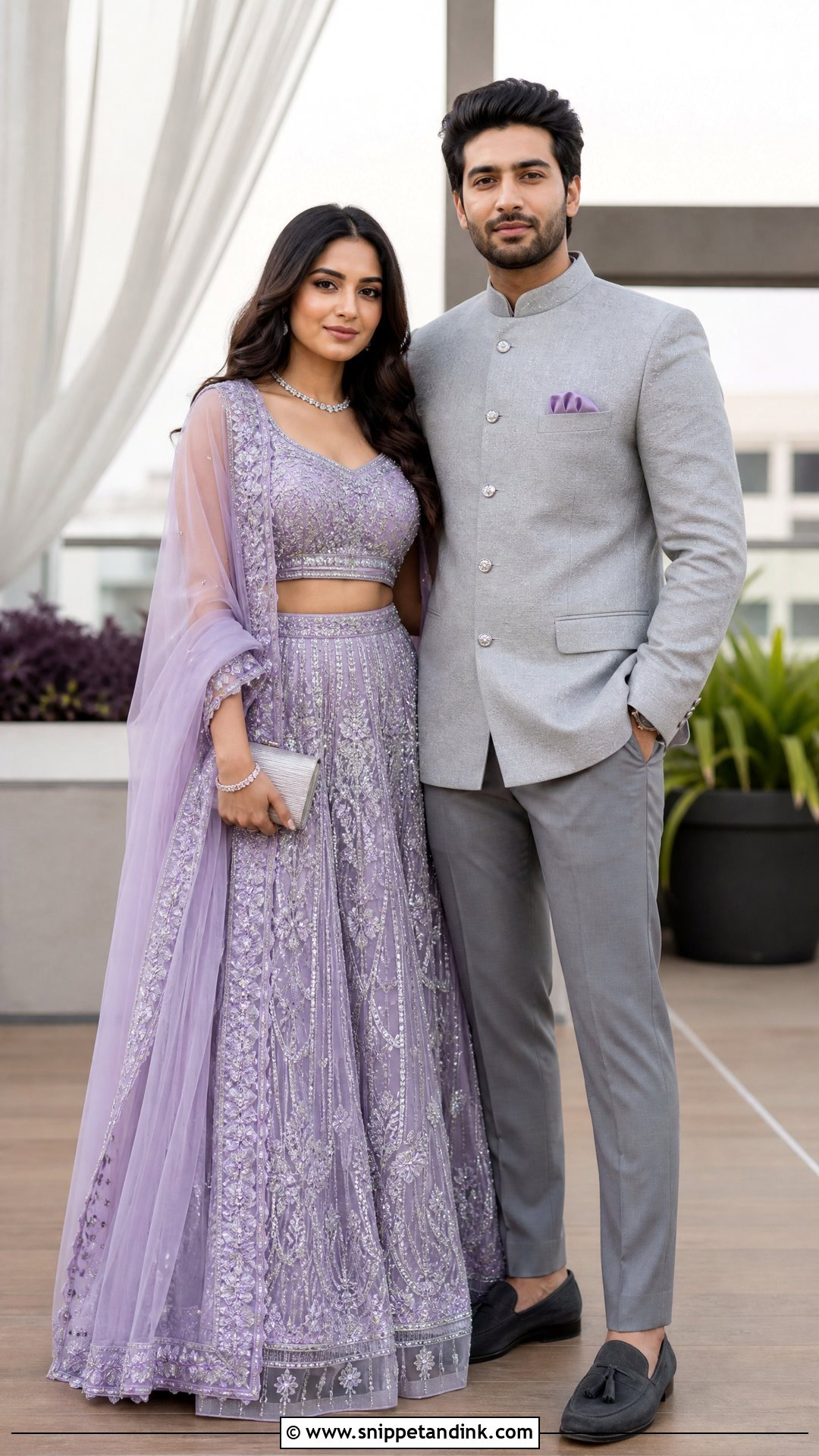
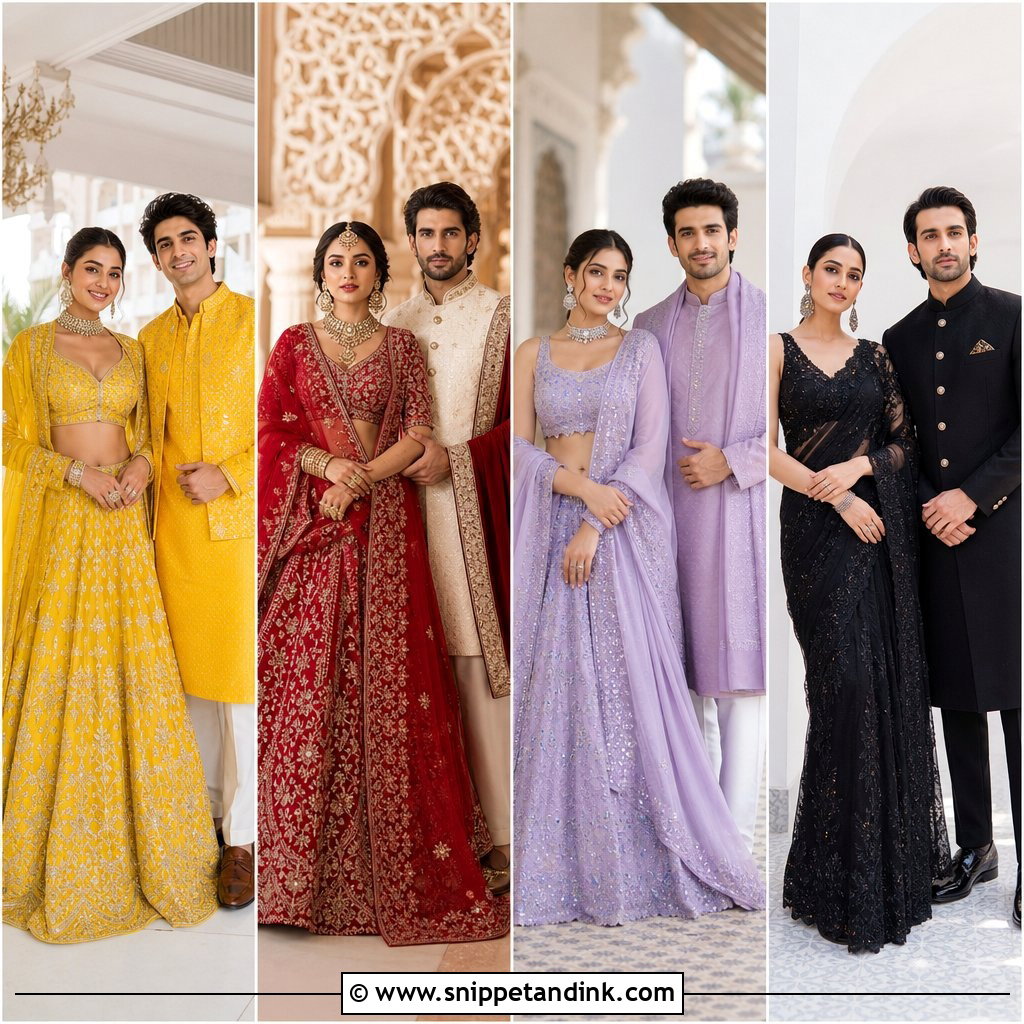
Lavender and grey has a modern feel that suits couples who find traditional reds heavy. Her lavender lehenga carries silver embroidery, a contemporary blouse and a neatly draped dupatta, with diamond-look earrings, a fine necklace, a silver clutch and embellished block heels she can stand in. He wears a medium-gray bandhgala with lavender buttons, a pocket square or a little floral embroidery, matching trousers and charcoal loafers. Agree on silver or gold between you and stick to it. Lavender can turn grey-blue under cool LED stage lights, so test it under the venue lighting if you can.
7. Royal Blue Gown And Navy Suit
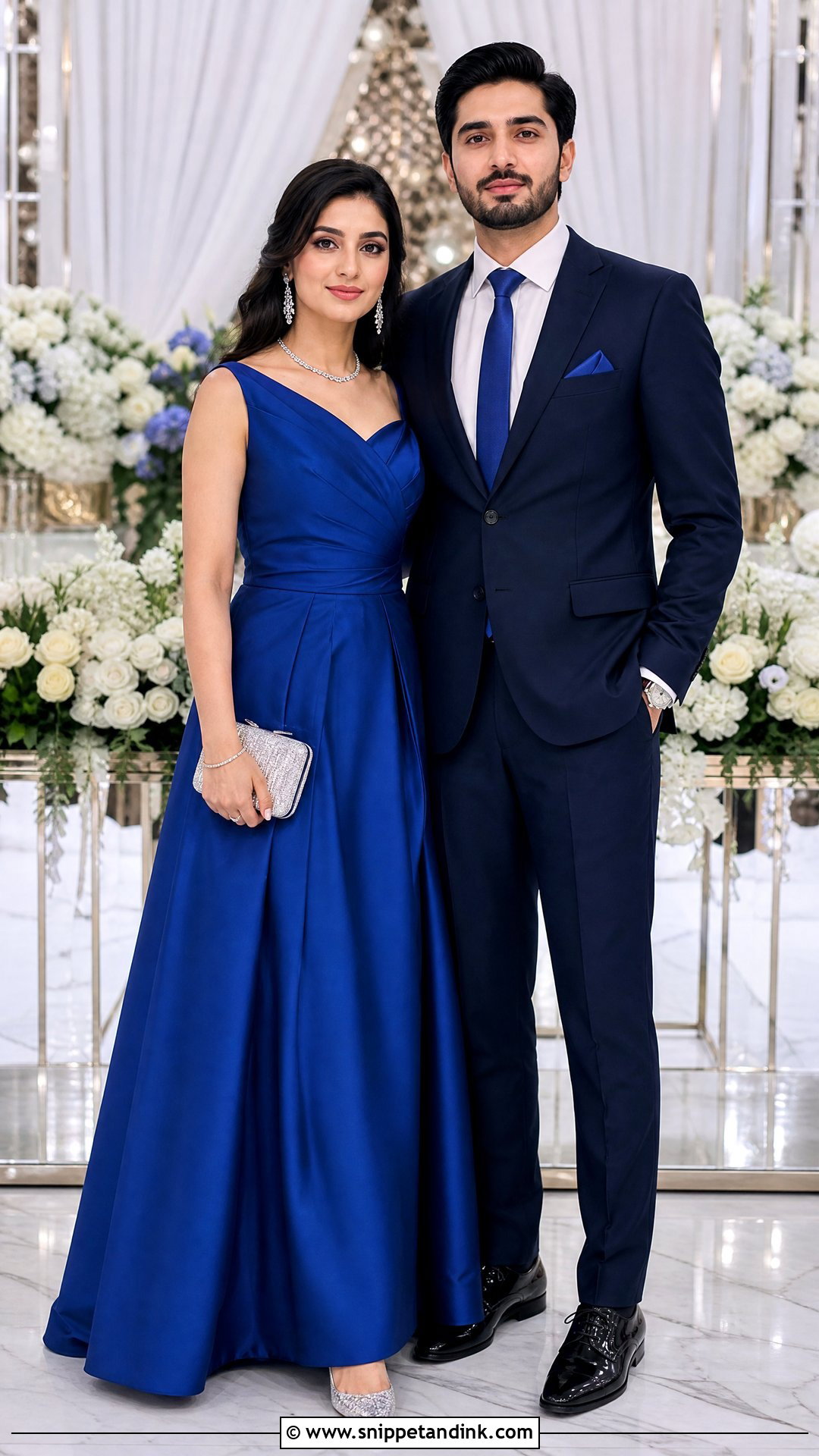
Royal blue against navy gives two related blues with clear contrast. She wears a structured royal blue gown with a defined waist, a flowing skirt and restrained beading at the neckline, plus silver earrings, a bracelet, a small clutch and pointed heels. He wears a tailored navy suit, white shirt and a royal blue tie or pocket square, with dark brown or black shoes. Both colours are strong, so keep accessories spare. Her fabric can have movement and sheen while his stays matte; that difference in finish does more work than any colour trick.
8. Peach Sharara And Beige Kurta Jacket
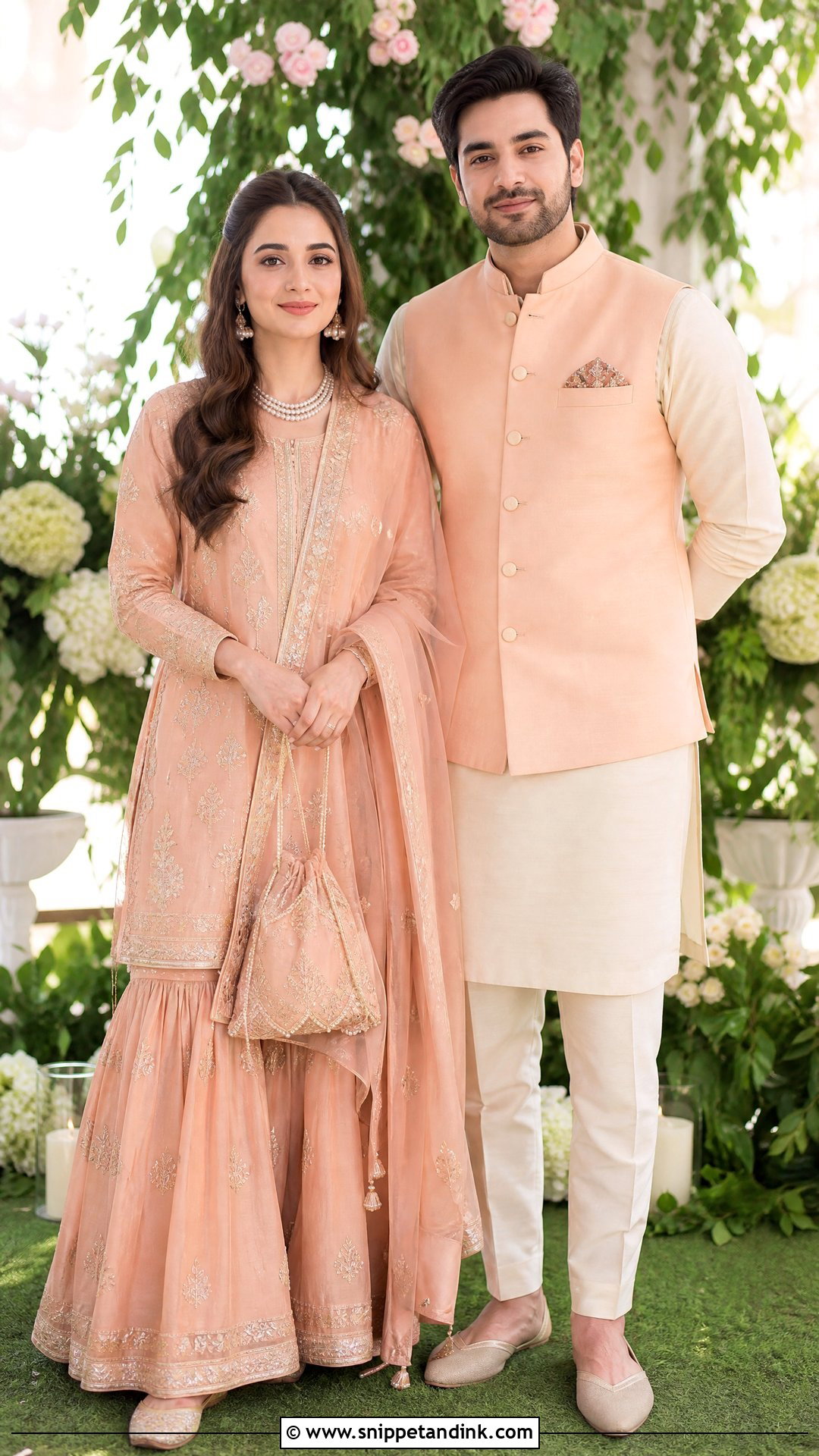
For a relaxed, daytime ceremony at home, a peach sharara is one of the most comfortable outfits I can put a bride in. An embroidered peach kurta, flowing sharara pants and a sheer dupatta across both arms, with pearl earrings, soft bangles, a potli bag and embellished juttis. He wears a beige kurta, fitted trousers and a peach Nehru jacket with neutral juttis. Use the same thread colour, ivory or muted gold, on both pieces. The loose silhouettes are a blessing on a long day of greeting relatives.
9. Red Silk Saree And Off-White Sherwani
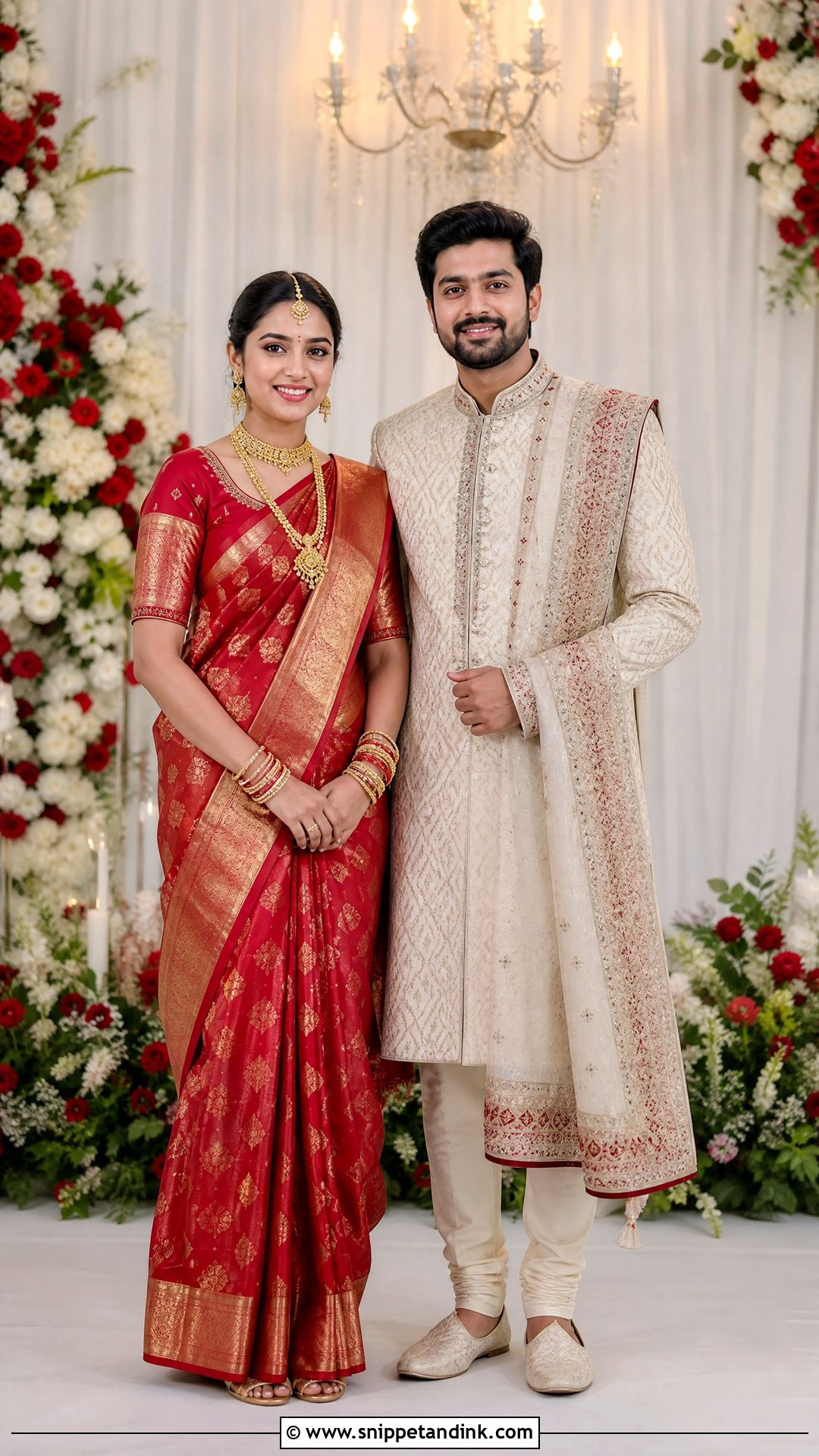
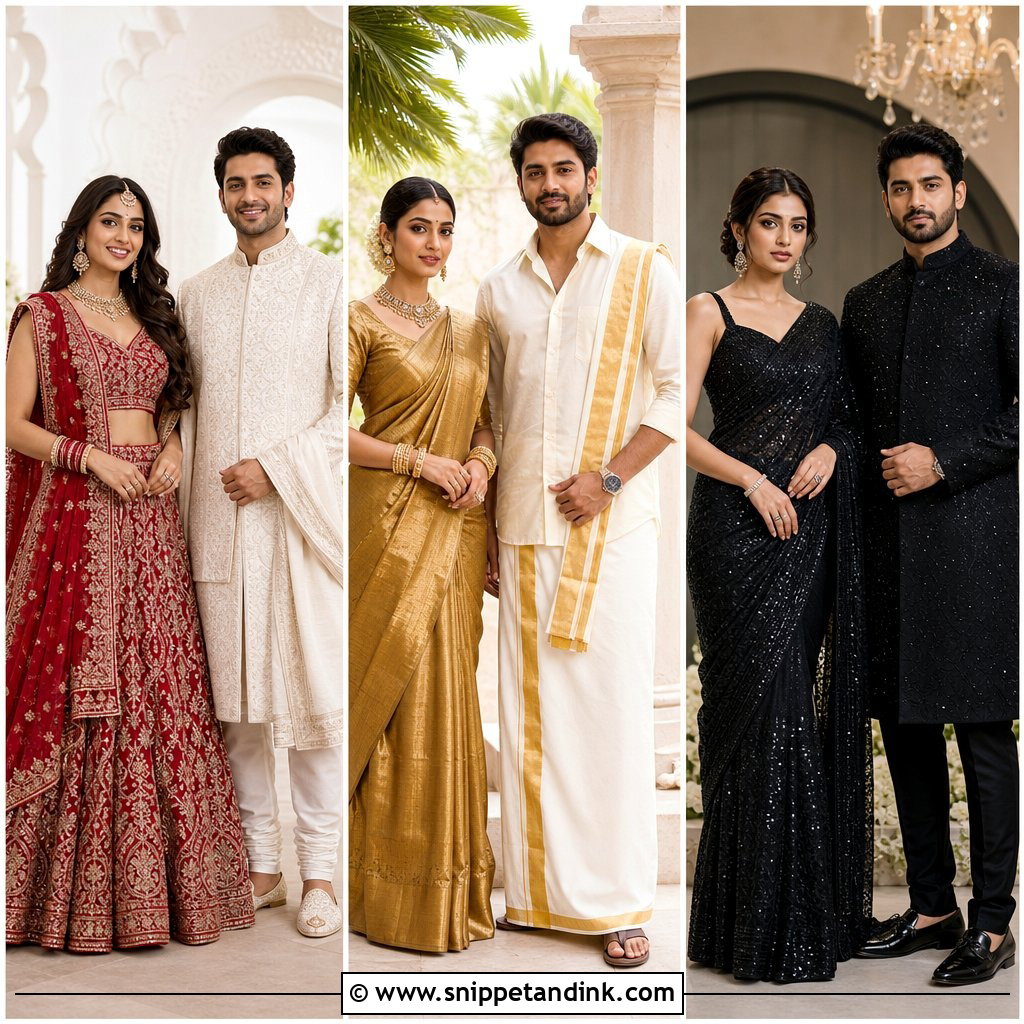
A red silk saree with an off-white sherwani is the classic pairing, and it still works because the contrast is so clear. Her deep red saree has a gold woven border and a simple fitted blouse so the silk does the talking; temple jewellery, gold bangles, a sleek bun and gold sandals finish it. His off-white sherwani takes red only in small doses: restrained embroidery, a pocket square or a narrow stole, with matching trousers and cream juttis. Red pulls the eye on its own. He doesn’t need more of it.
10. Sage Green Lehenga And Tan Bandhgala
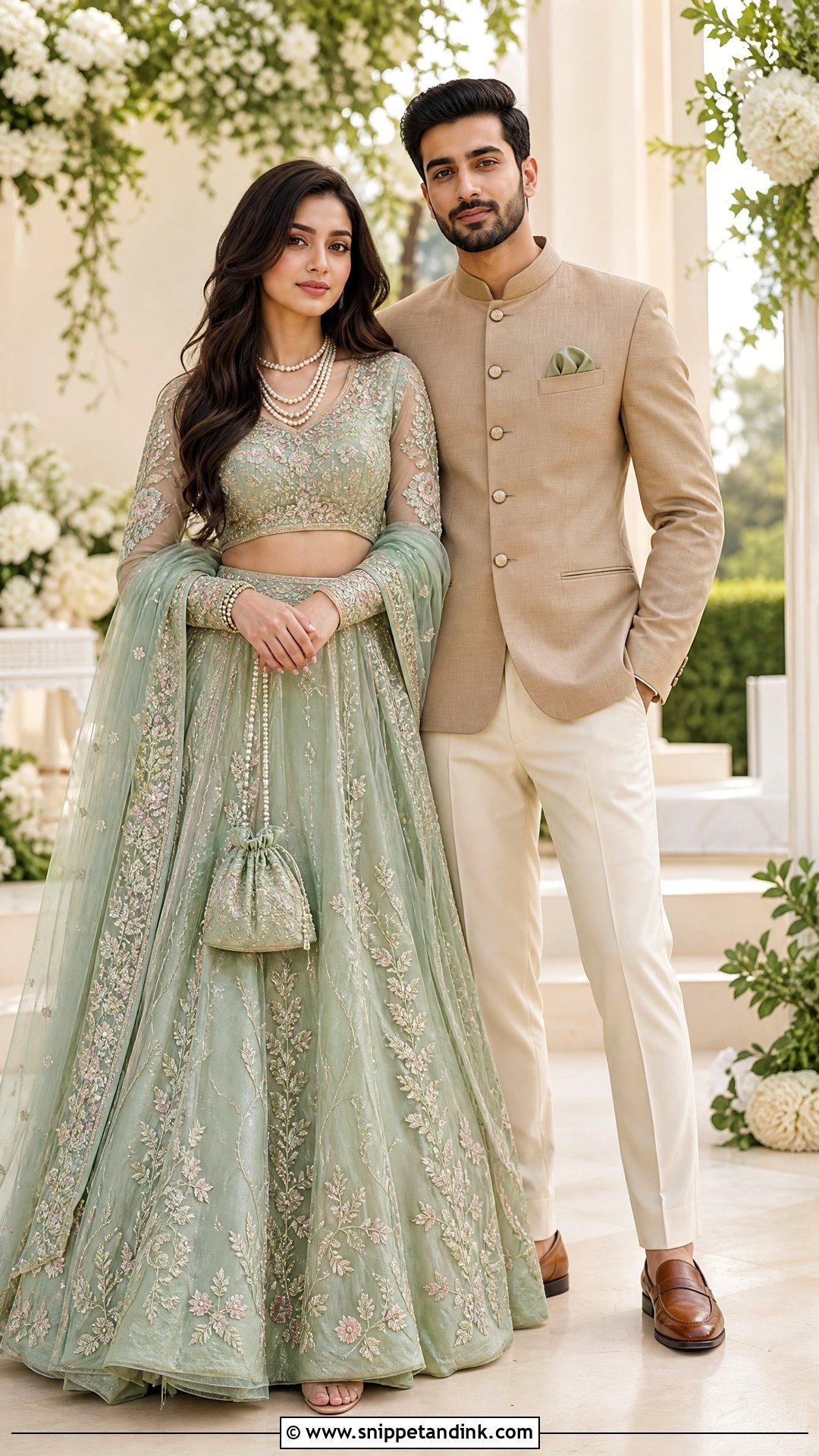
Sage and tan look soft and earthy in daylight. Her sage lehenga has floral threadwork, a supportive blouse and a light dupatta over one shoulder, with pearls, a neutral potli and beige block heels. His tan bandhgala carries sage embroidery, a matching pocket square or muted green buttons, worn with cream trousers and brown loafers. I’d repeat the floral motif once on him, not everywhere. Sage can look washed out against white stage drapes, so if the decor is pale, ask for slightly deeper green in the embroidery to give the outfit edges.
11. Black Sequin Gown And Black Tuxedo
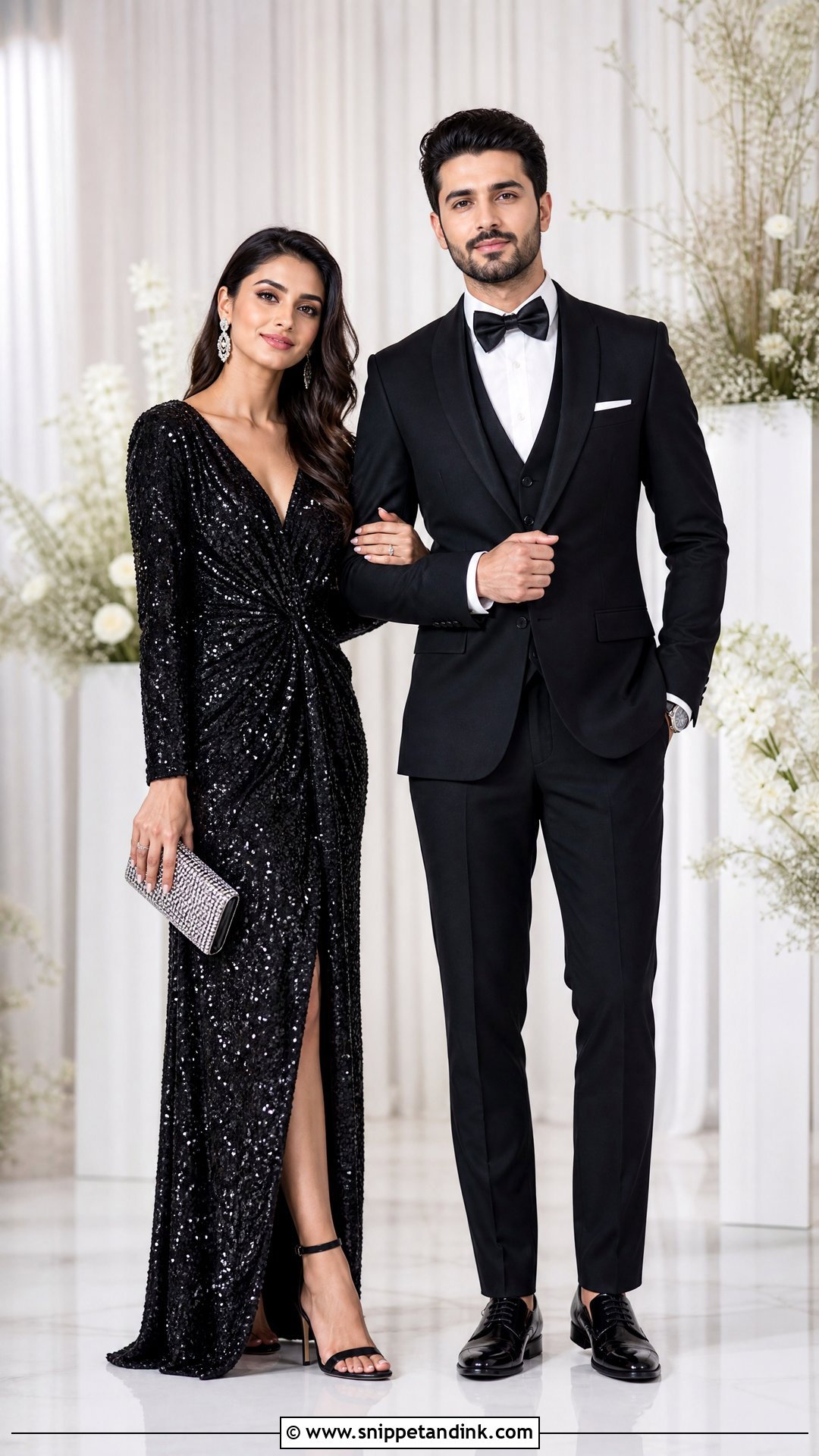
Black sequins and a black tuxedo is the glamorous evening option, and the one that most needs good lighting. She wears a floor-length gown with controlled sequin placement, a defined waist and a neckline she can move in, with drop earrings, a silver clutch, a simple bracelet and black heels. He wears a sharp tuxedo, white shirt, black bow tie, polished shoes and a silver watch. A slight textured lapel can echo her shine. Check the inside of the gown at the fitting: sequins sewn through the lining can scratch the arms and underarms over a long evening.
12. Mustard Lehenga And Cream Kurta Set
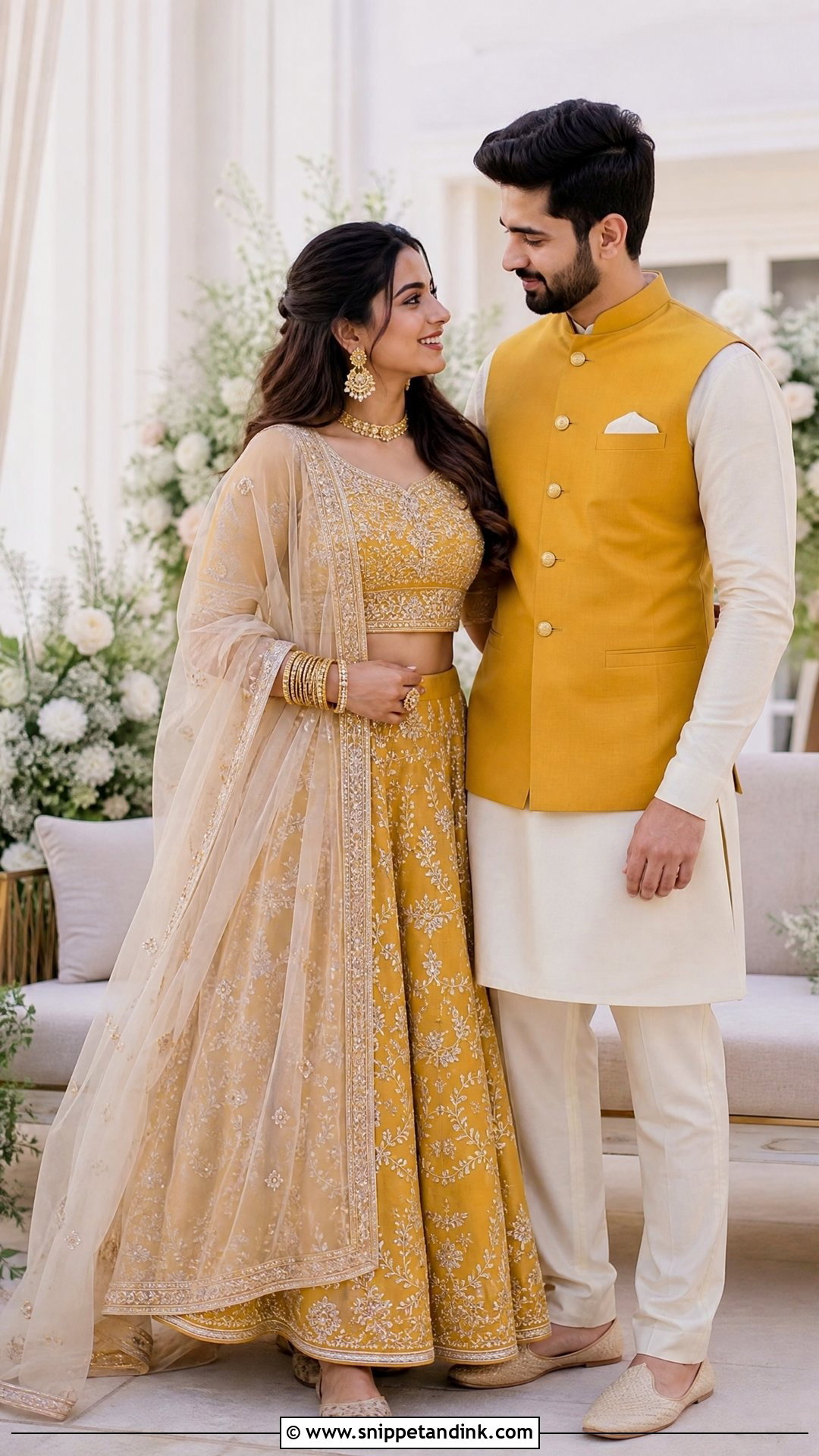
Mustard and cream are warm and cheerful for a daytime ceremony. Her mustard lehenga has ivory floral embroidery, a fitted blouse and a soft cream dupatta, with gold earrings, a fine choker, stacked bangles and neutral juttis. He wears a cream kurta and straight trousers under a mustard embroidered Nehru jacket, beige juttis and a simple watch. I’d steer you to a slightly muted mustard. Bright yellow-mustard can cast colour onto the face in close-ups, while a deeper, browner shade looks richer beside the cream.
13. Teal Lehenga And Navy Sherwani
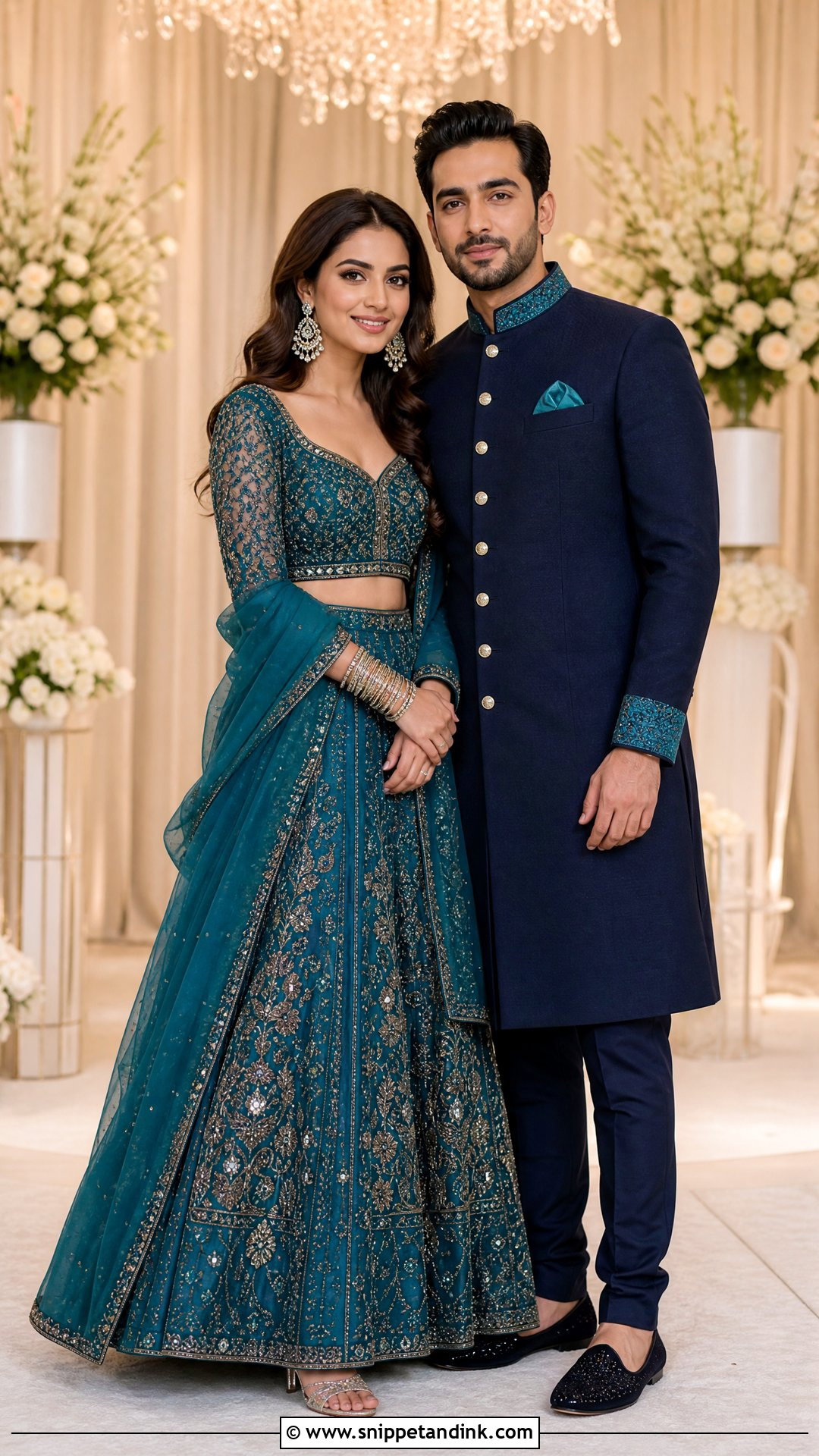
Teal and navy give two deep colours that sit near each other but stay distinct. Her teal lehenga can carry antique gold or silver embroidery depending on her jewellery, with a matching blouse, sheer dupatta, statement earrings, bangles and embellished heels. His navy sherwani has teal threadwork at the collar and cuffs, matching trousers, navy juttis and a teal pocket square. The two shades must be visibly different. If they’re too close, the camera merges you into one dark shape on stage. Formal halls and richly decorated stages suit it.
14. Champagne Gown And Beige Suit
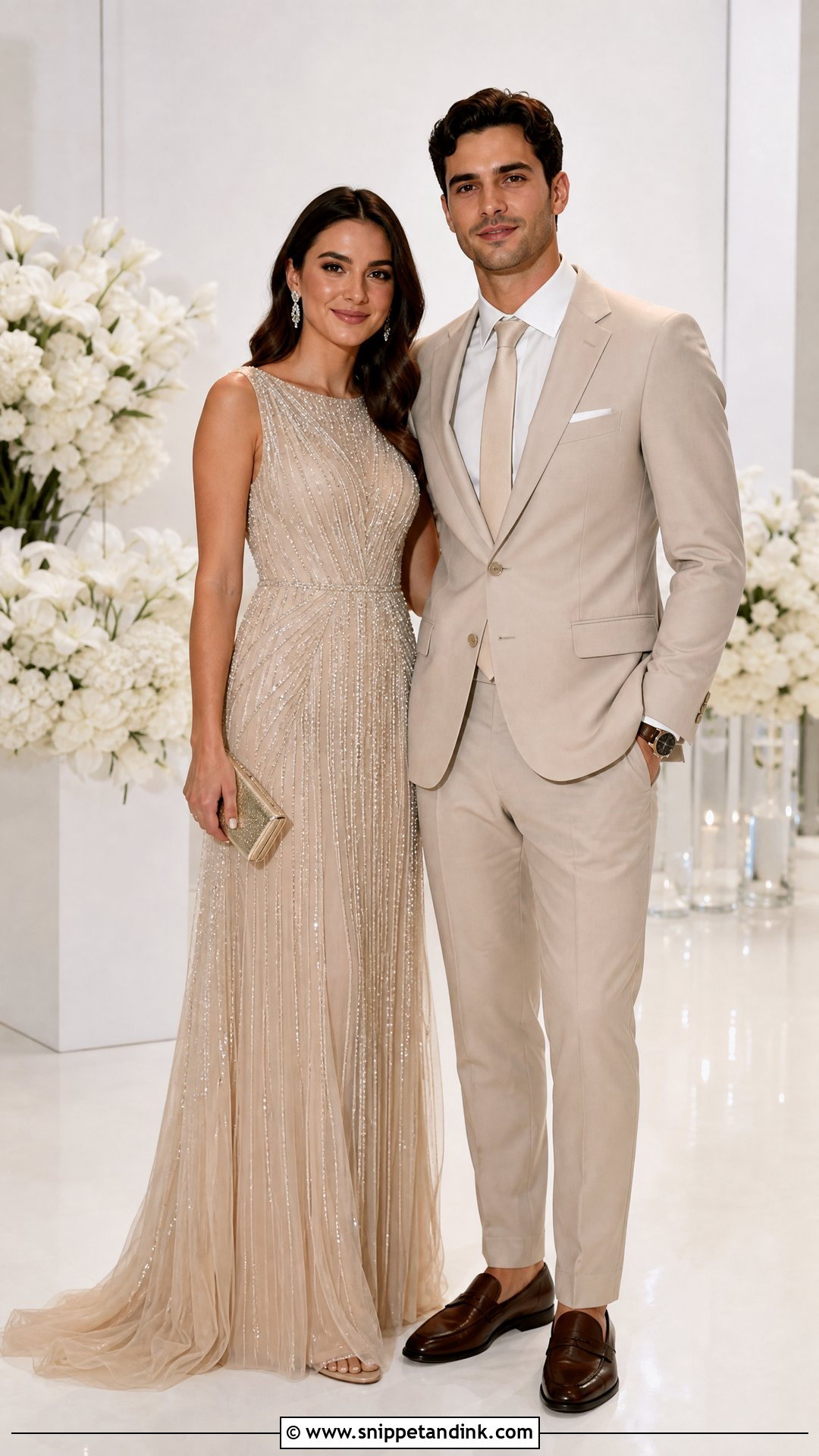
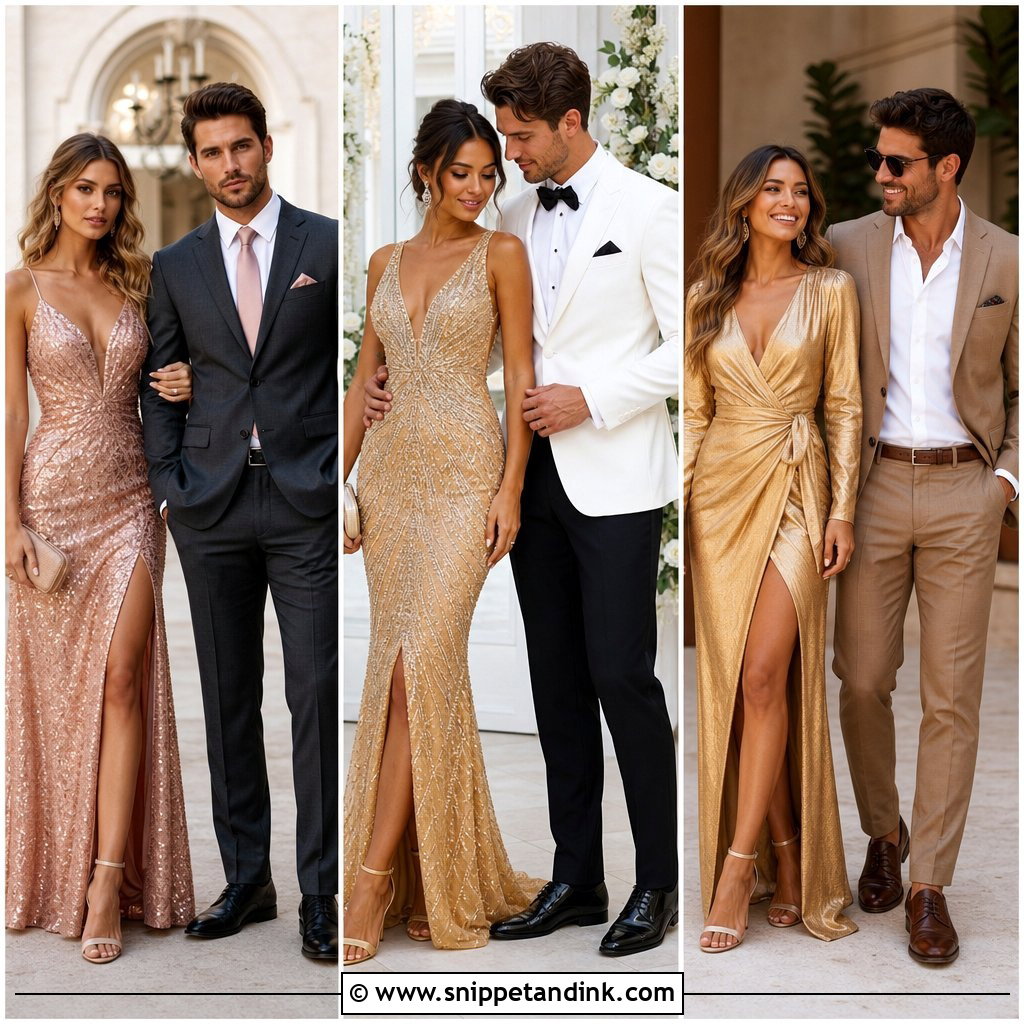
Champagne and beige is understated, and that is exactly where it can go wrong: two neutrals can blend into the backdrop and wash out a fair complexion. Her flowing champagne gown has delicate beading, soft pleats and a defined waist, with crystal earrings, a metallic clutch, a slim bracelet and nude heels. He wears a tailored beige suit, ivory shirt and a champagne tie or pocket square, brown loafers and a classic watch. Give her fabric a subtle sheen and keep his suiting matte; the contrast in finish keeps you from looking like one colour. Naturally lit venues with greenery suit it best.
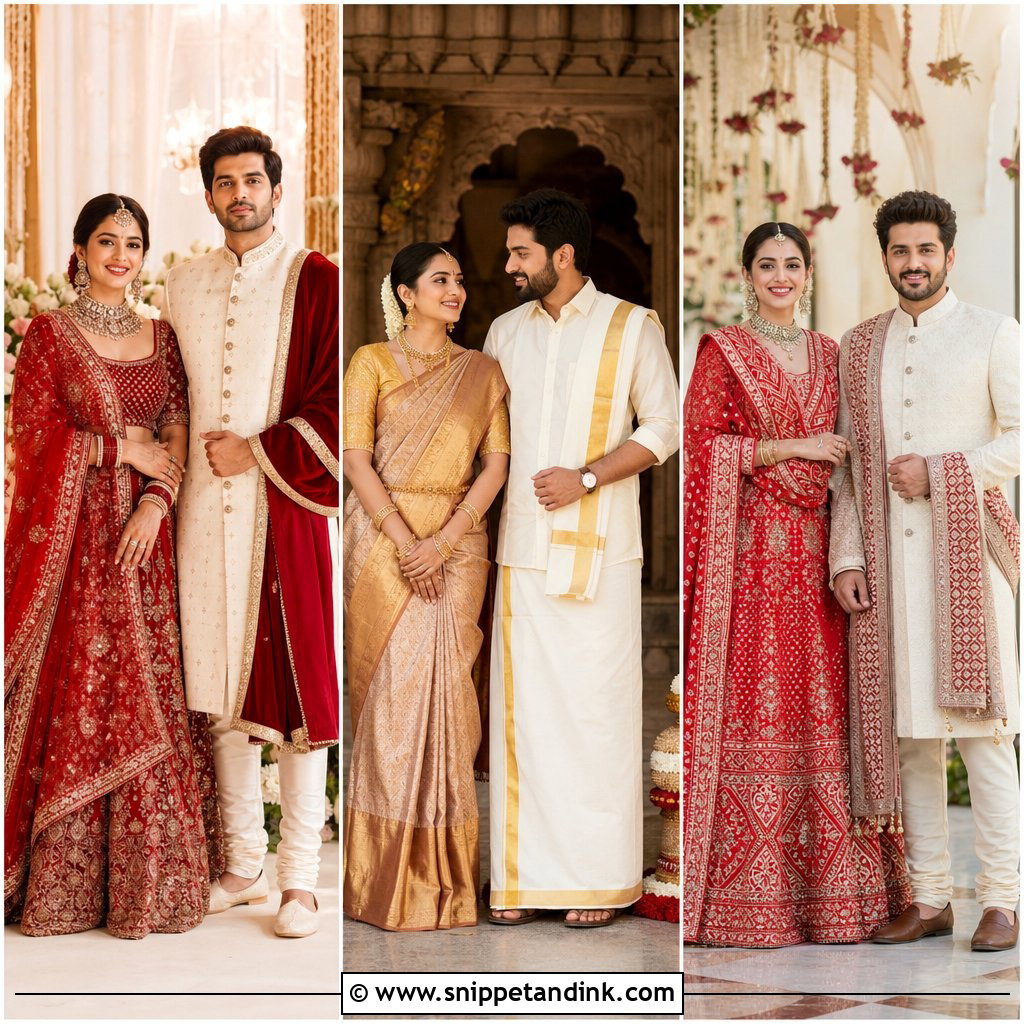
15. Fuchsia Saree And Charcoal Bandhgala
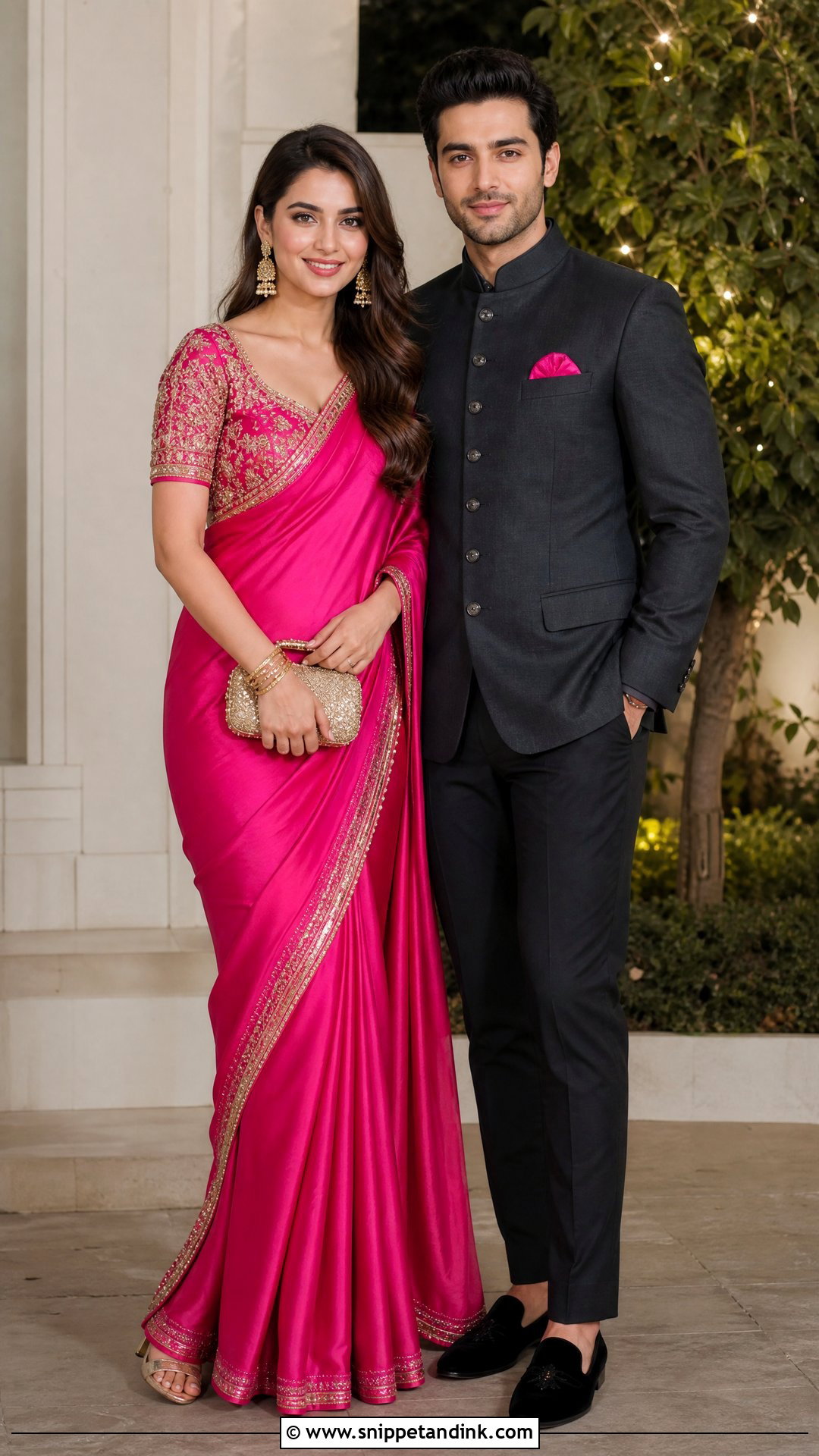
Fuchsia brings personality, and charcoal keeps it grown-up. Her saree in silk, satin or georgette has a narrow embroidered border and a coordinated blouse, with gold earrings, stacked bangles, a compact clutch and metallic heels. His charcoal bandhgala picks up fuchsia at the collar, buttons or pocket square, with matching trousers and black loafers. Fuchsia is already the focal point, so add no other strong colour. Gold makes the pairing warmer, silver more contemporary. It photographs well at evening ceremonies with neutral or softly coloured stage decor.
16. White Lehenga And Pastel Floral Jacket
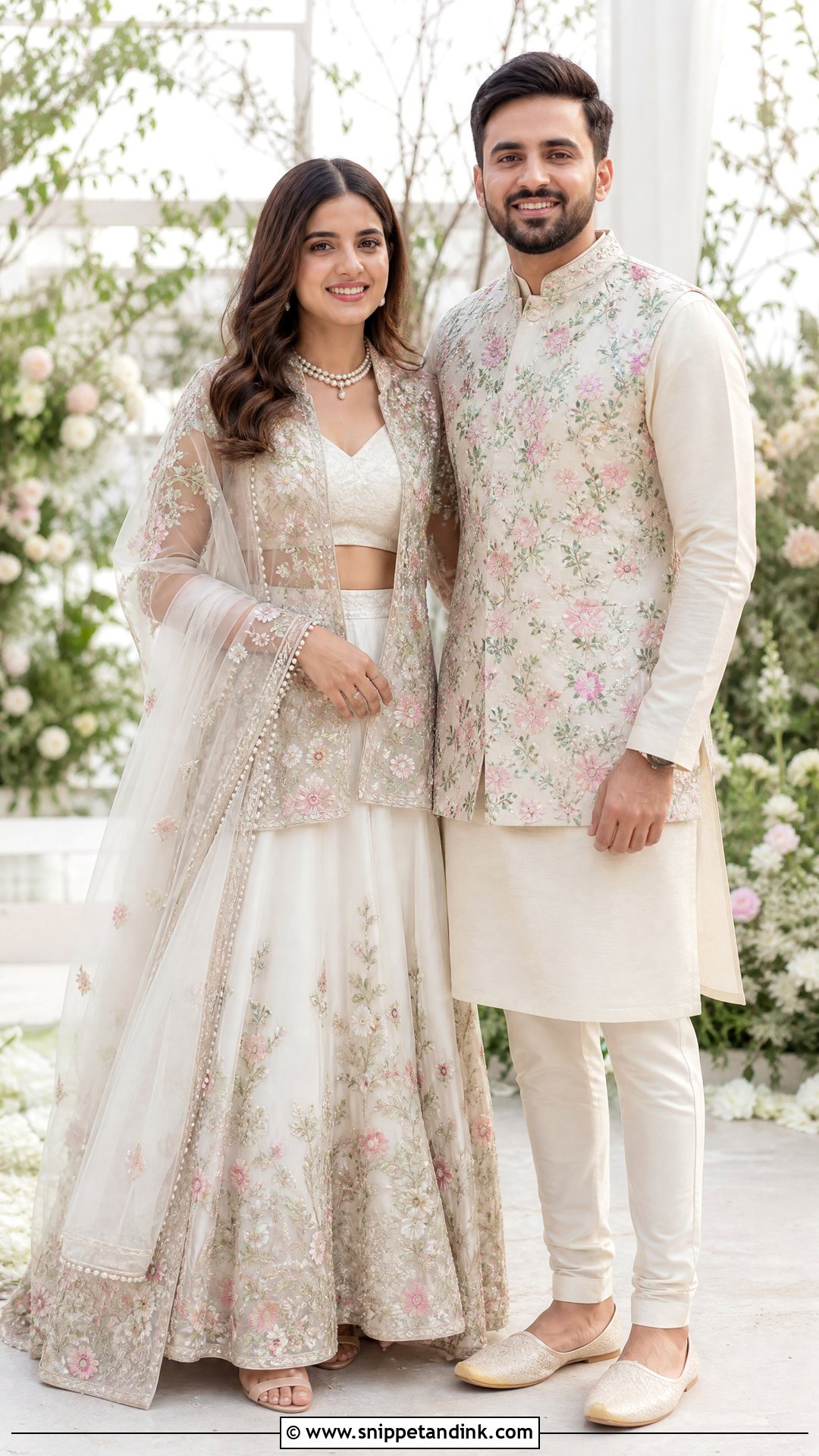
A white lehenga and pastel floral jacket is the fresh, spring option. Her off-white lehenga has subtle floral embroidery in blush, blue, lavender or sage, with a fitted blouse, sheer dupatta, pearl earrings, a fine necklace and neutral heels. He wears an ivory kurta and trousers under a structured floral Nehru jacket that repeats two or three of her embroidery colours, with cream juttis. Avoid stark optical white under strong lighting. Soft ivory shows the embroidery detail far better in photos, where bright white tends to glare.
17. Silver Lehenga And Charcoal Tuxedo
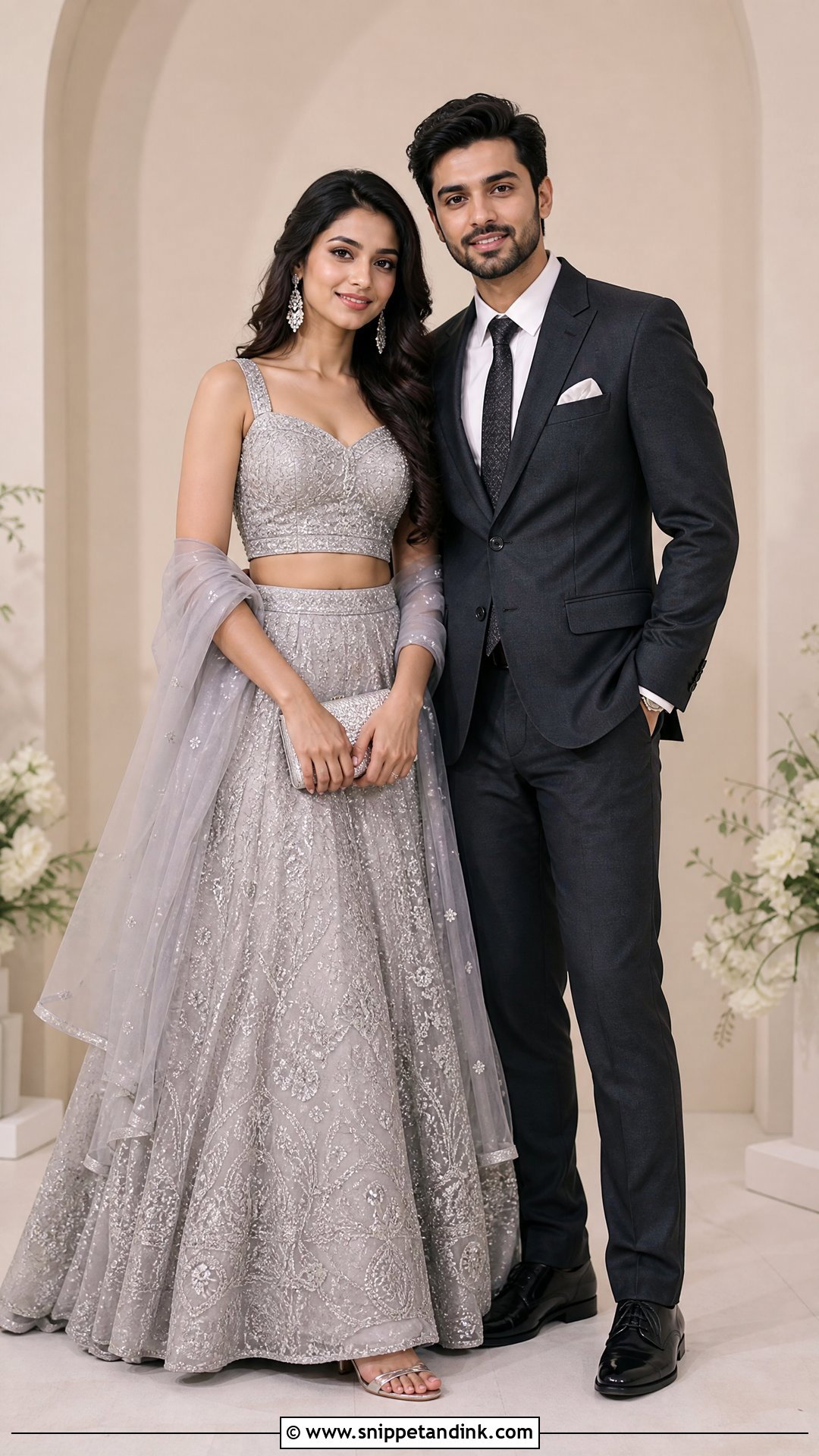
Silver and charcoal is sleek and modern for an evening stage. Her silver-grey lehenga has sequins and metallic threadwork, a structured blouse and a softer dupatta, with diamond-look earrings, a slim bracelet, a grey clutch and silver heels. He wears a charcoal tuxedo, white shirt, dark tie, polished shoes and a silver pocket square. Black works too, but charcoal makes a gentler step beside her metallics. Keep his accessories matte. Metallic lehengas are heavy, so I always ask brides to sit in theirs at the trial; the skirt can pull hard on the waist once seated.
18. Rust Anarkali And Brown Bandhgala
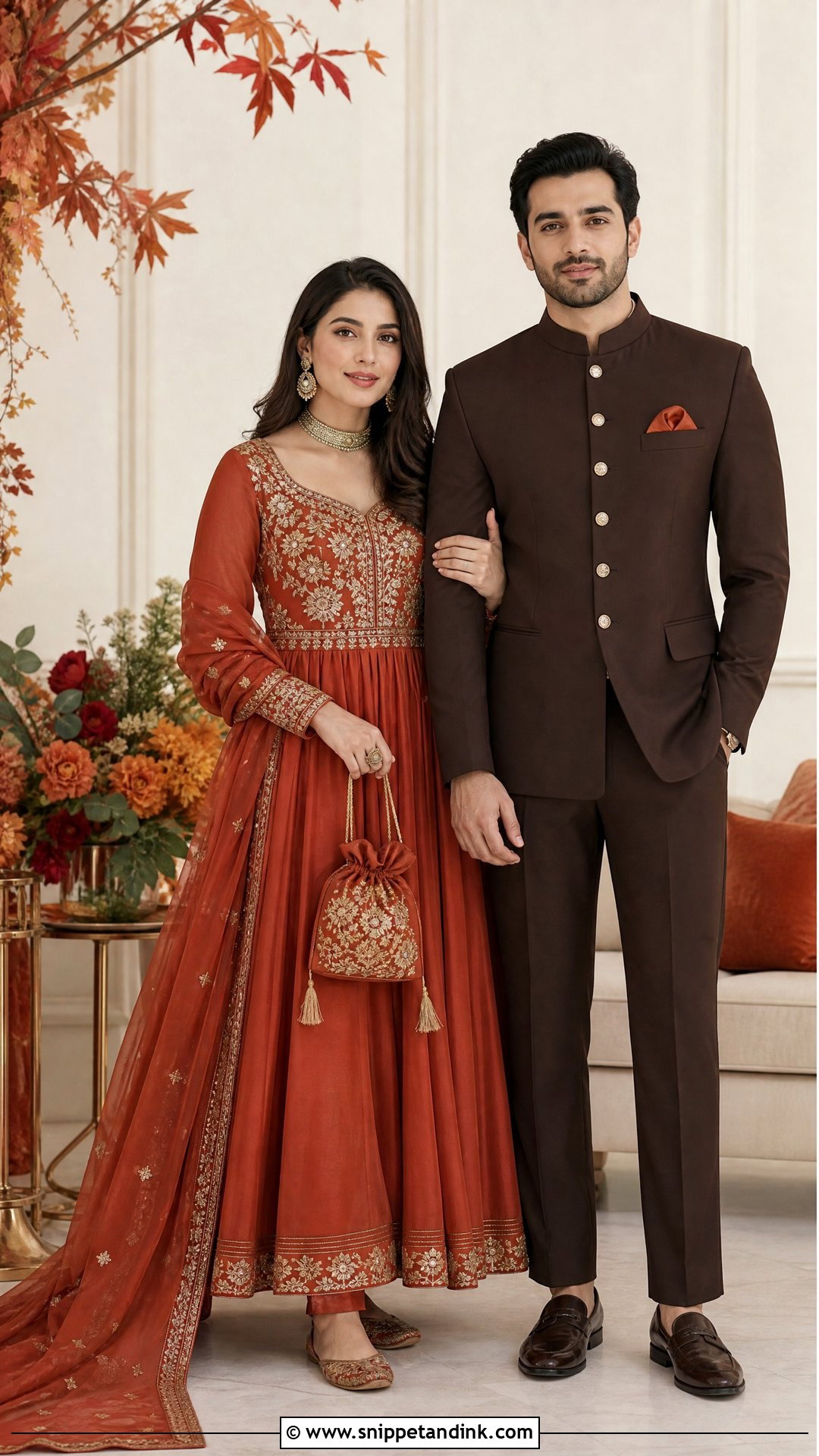
Rust and brown suit a fall or indoor ring ceremony and look richer than brighter traditional colours. Her floor-length rust Anarkali has gold embroidery, fitted sleeves and a flowing skirt, with antique gold earrings, bangles, a potli and embroidered juttis. His deep brown bandhgala carries rust detailing at the collar or pocket, with brown trousers and polished loafers. If the pair feels dark, bring in cream through his stole or her dupatta border. An Anarkali is also kinder than a lehenga for sitting cross-legged during rituals, which is worth knowing if your ceremony involves a puja.
19. Floral Lehenga And Solid Pastel Kurta
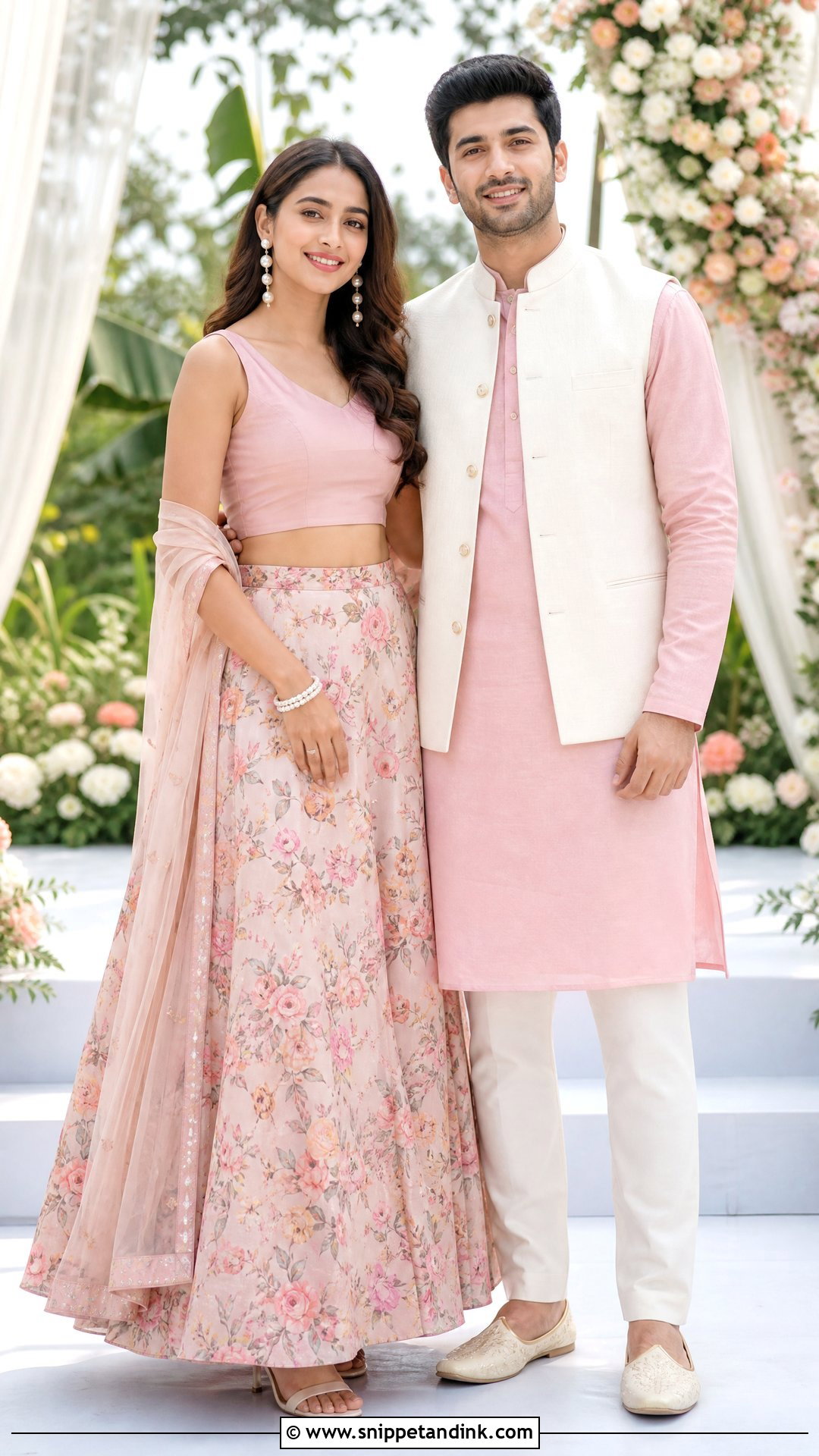
When the bride’s lehenga is floral, let it set the palette and keep him in a solid. She wears a printed or embroidered lehenga with two or three pastel shades, balanced by a plain blouse, a light dupatta, pearl earrings, fine bangles and neutral heels. He takes one secondary colour from her florals for his kurta and trousers, adds an ivory Nehru jacket, a matching pocket square and cream juttis. Two full floral prints side by side look busy in group photos. I take a fabric snippet from her lehenga to his tailor so the shade is pulled from the actual cloth, not a phone screen.
20. White Pantsuit And Navy Tailored Suit
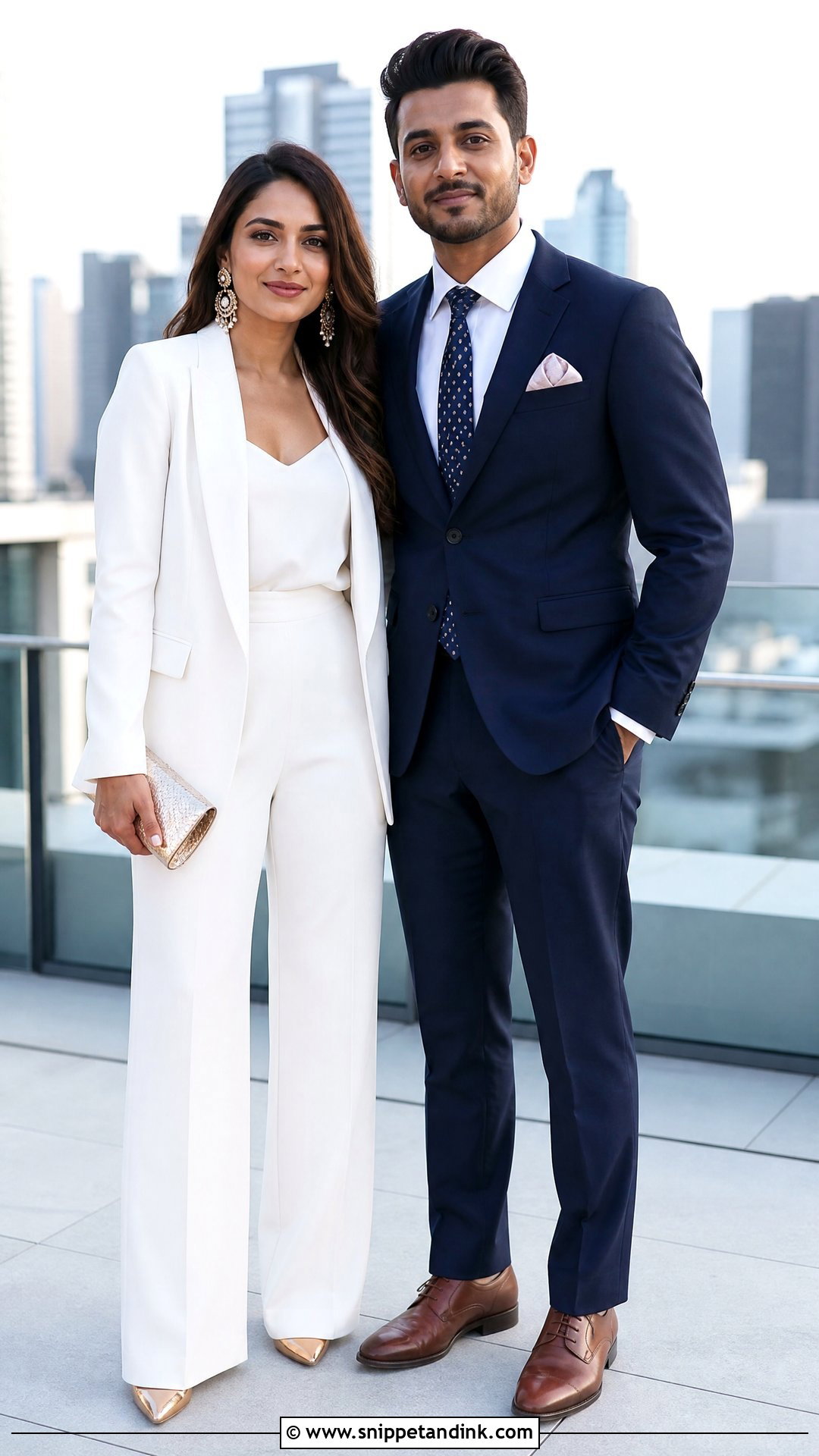
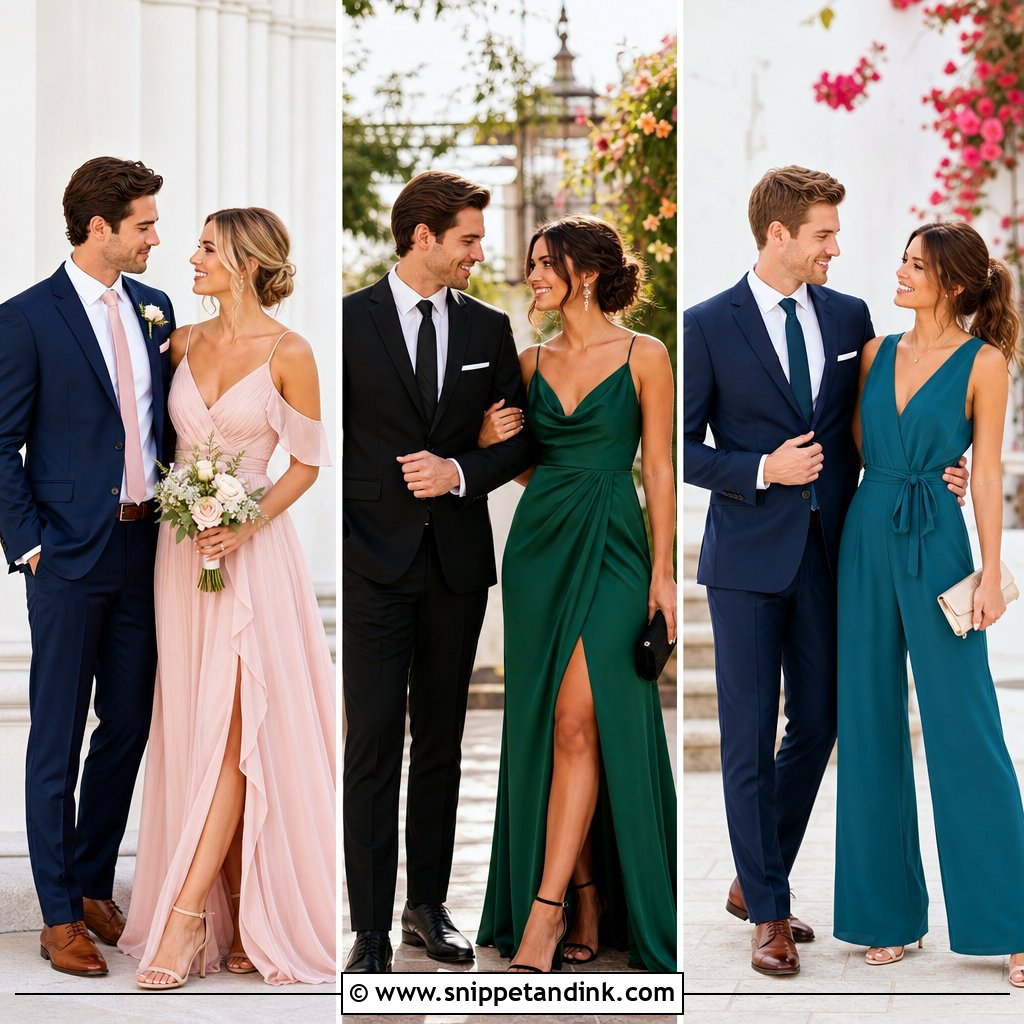
For a modern or courthouse-style ring ceremony, coordinated Western tailoring is sharp and simple. She wears a crisp white pantsuit with a fitted camisole or blouse, wide-leg trousers and a structured blazer, with statement earrings, pointed heels, a metallic clutch and a sleek hairstyle. He wears a navy tailored suit, white shirt, patterned tie and brown shoes, with a white pocket square that echoes her. Simple tailoring hides nothing, so the fit has to be right: shoulders, sleeve length and trouser break. It suits rooftop venues and city celebrations.
What the Camera Sees When the Ring Goes On
The exchange itself is shot close, sometimes with a macro lens, and the photographer’s frame is mostly hands and wrists. That changes how I style the arms.
Keep the ring finger clear
Stacked bangles slide down onto the back of the hand when the arm is held out, and they can hide the ring finger completely. I move most bangles to the other wrist for the exchange, or keep the ring-hand stack thin. Long sleeves with heavy borders or tassels catch the same way. A cuff that sits just above the wrist bone is safest.
Dupatta and drape
When she leans forward to place his ring, a dupatta pinned only at one shoulder will slide off. I pin it at the shoulder and at the back of the blouse, and for a saree I pin the pleats and the pallu so she can extend her arm without the drape shifting. Do a practice exchange in the outfit at the final fitting. It takes thirty seconds and shows you exactly what will slip.
- Nails: a clean, neutral or softly coloured manicure photographs better than bright chipped polish. If you’re having mehndi, keep the nail colour simple so the design reads.
- Groom’s hands: a watch on the ring hand can catch the lens; move it to the other wrist for the exchange.
- Keep a small pouch with spare safety pins, a sewing kit and blotting papers with whoever is closest to the stage.
One Thread That Ties Two Outfits Together
The pairings that work best leave both of you looking like yourselves, just clearly on the same page. Agree the formality first, then connect the outfits through colour, embroidery or a repeated metal. Pastels and light fabrics suit daytime; deeper shades, structured suiting, sequins and rich textures suit evening. Think about the venue, lighting, season and stage backdrop before you settle the palette. And give comfort real weight: secure draping, fits you can sit in, and shoes that survive hours of standing to greet guests. Traditional, Western or one of each, that is what makes the photos look right.
You'll Like These Ideas:


Leave a Reply