
Deciding Which of You Carries the Color
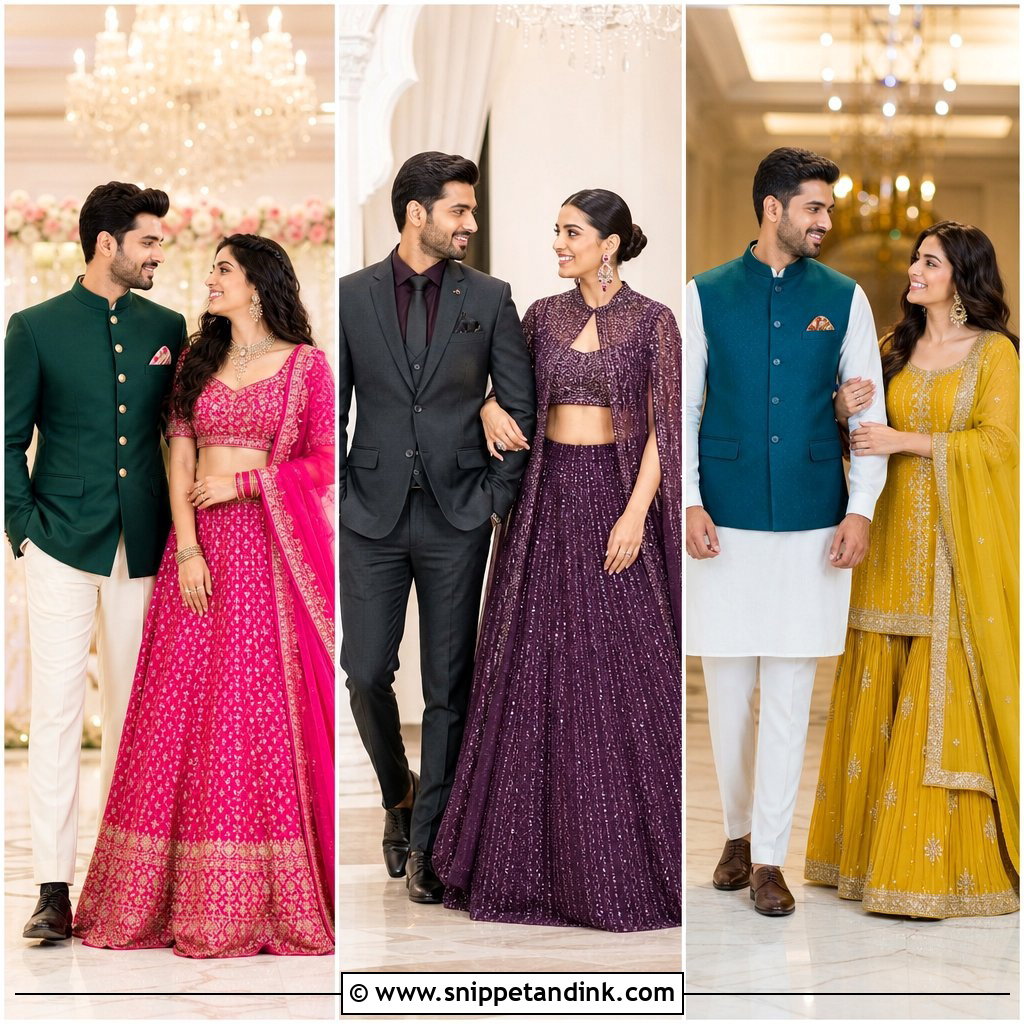
Every pairing below works on one principle: one outfit carries the strong color and the other frames it. Couples get into trouble when both outfits try to lead, so before anyone shops, I ask who wants to be the color. Usually it’s the bride in a lehenga or gown, but some of the best pairs flip it, with a deep suit beside an ivory dress.
Light against dark matters more than hue
Two shades can be opposites on the color wheel and still look muddy if they share the same depth. Photograph both swatches on your phone and switch the picture to black and white. If the fabrics turn into the same grey, the contrast will look flat in your photos, however different they seem in person. Navy and ivory pass this test easily; sage and tan barely do, which is why that pair leans on texture instead.
Match formality before you match color
A beaded lehenga next to a plain cotton kurta looks like two different events. Similar sheen and weight matter as much as the shades: silk with silk blends, velvet with a heavier wool, linen with linen.
What I ask both partners to bring to the first fitting where the outfits meet:
- A swatch or offcut of each main fabric, so the accent piece can be matched to real cloth rather than a screen
- The actual wedding shoes, because trouser hems and lehenga lengths depend on them
- A photo of the venue at the time of day you’ll be there
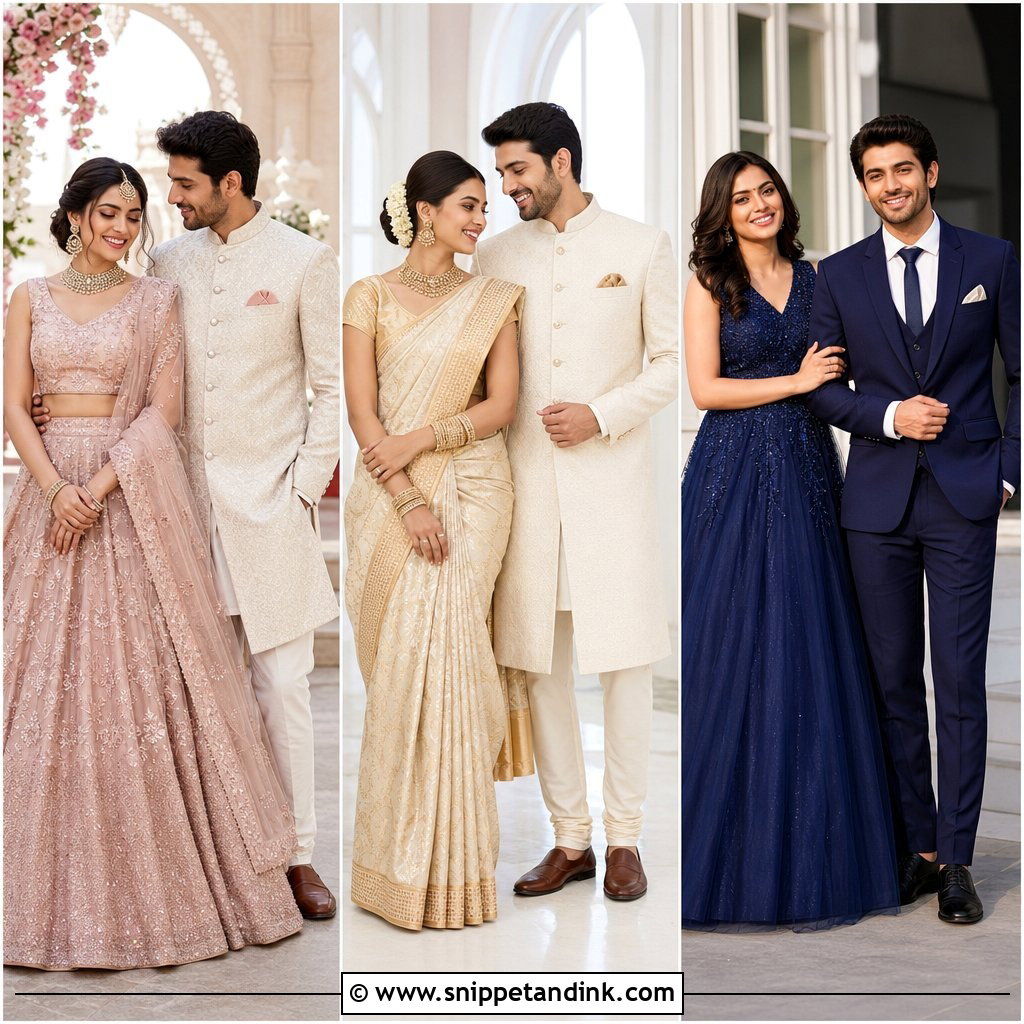
1. Ivory Gown And Navy Suit Wedding Outfit
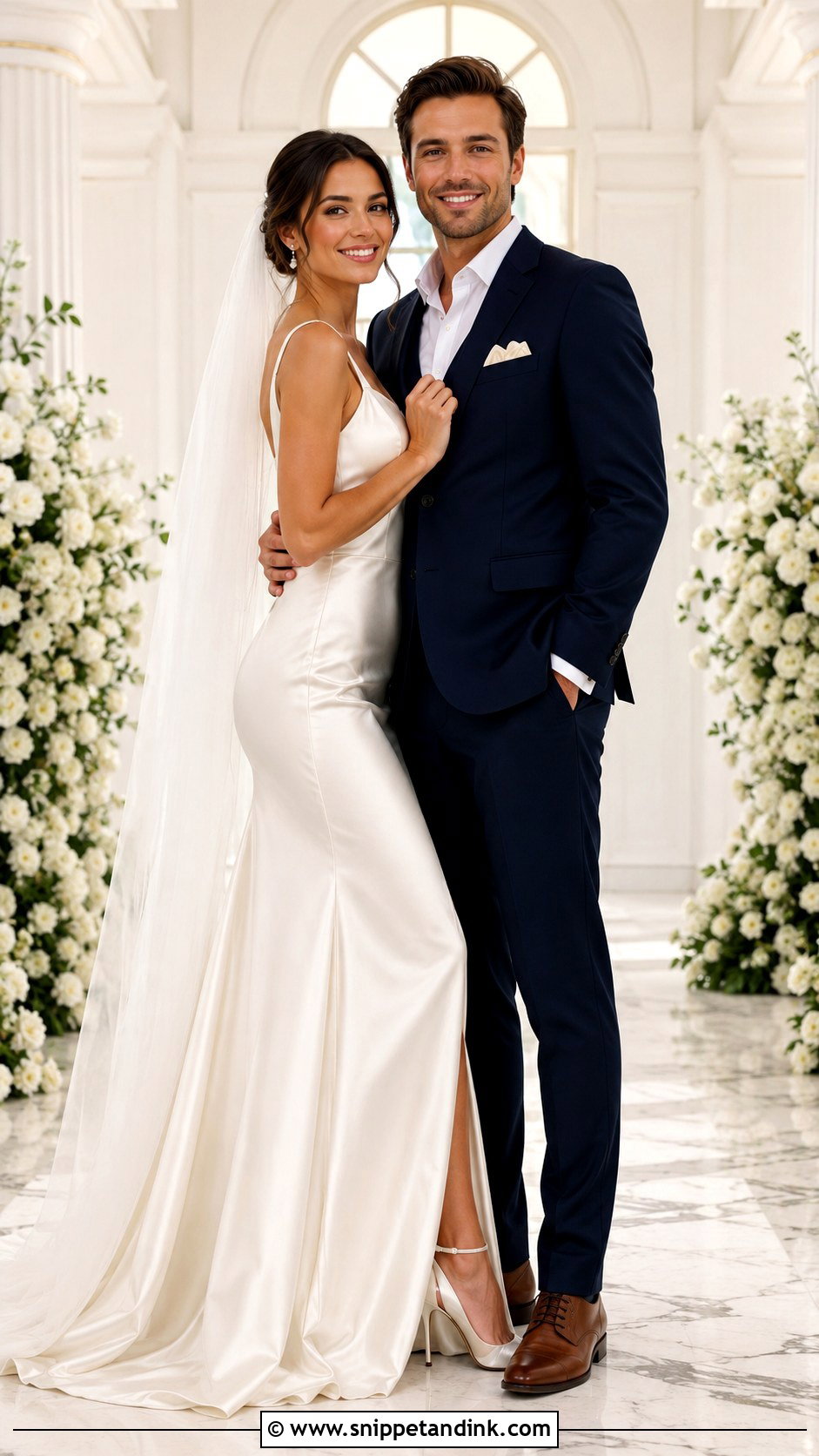
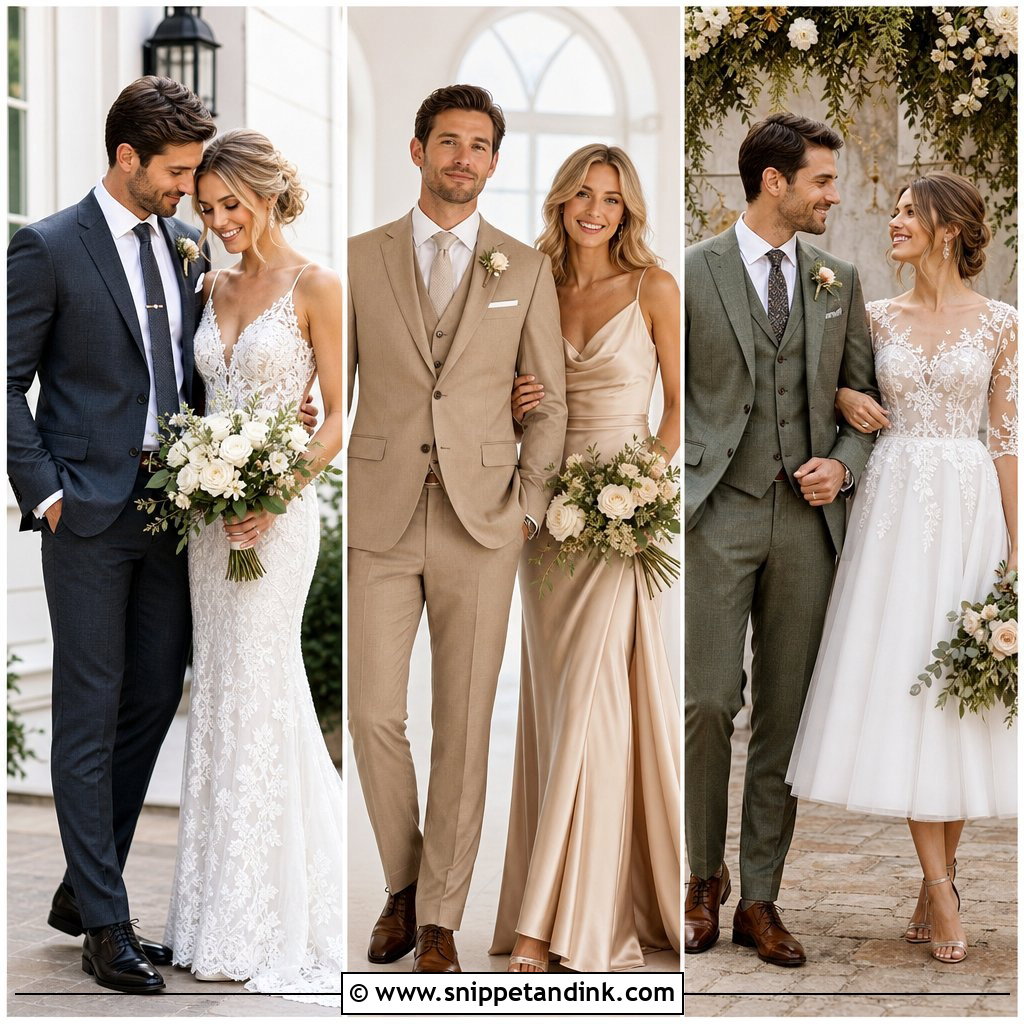
Navy is the contrast I reach for first when a couple can’t agree on anything louder. It is deep enough to frame ivory without the hard edge black gives, and it forgives a warm ivory that would look yellow beside pure white. Pair an ivory satin, crepe or lace gown with pearl earrings, a soft veil and pointed ivory heels; the navy suit needs real tailoring, a crisp white shirt, brown or black dress shoes and an ivory pocket square that echoes the gown. One thing I always check is the shirt held against the gown in daylight, because optic white can make ivory look dingy, and an off-white shirt usually fixes it. It holds up in ballrooms, gardens and on the coast, finished with silver or pearl accents.
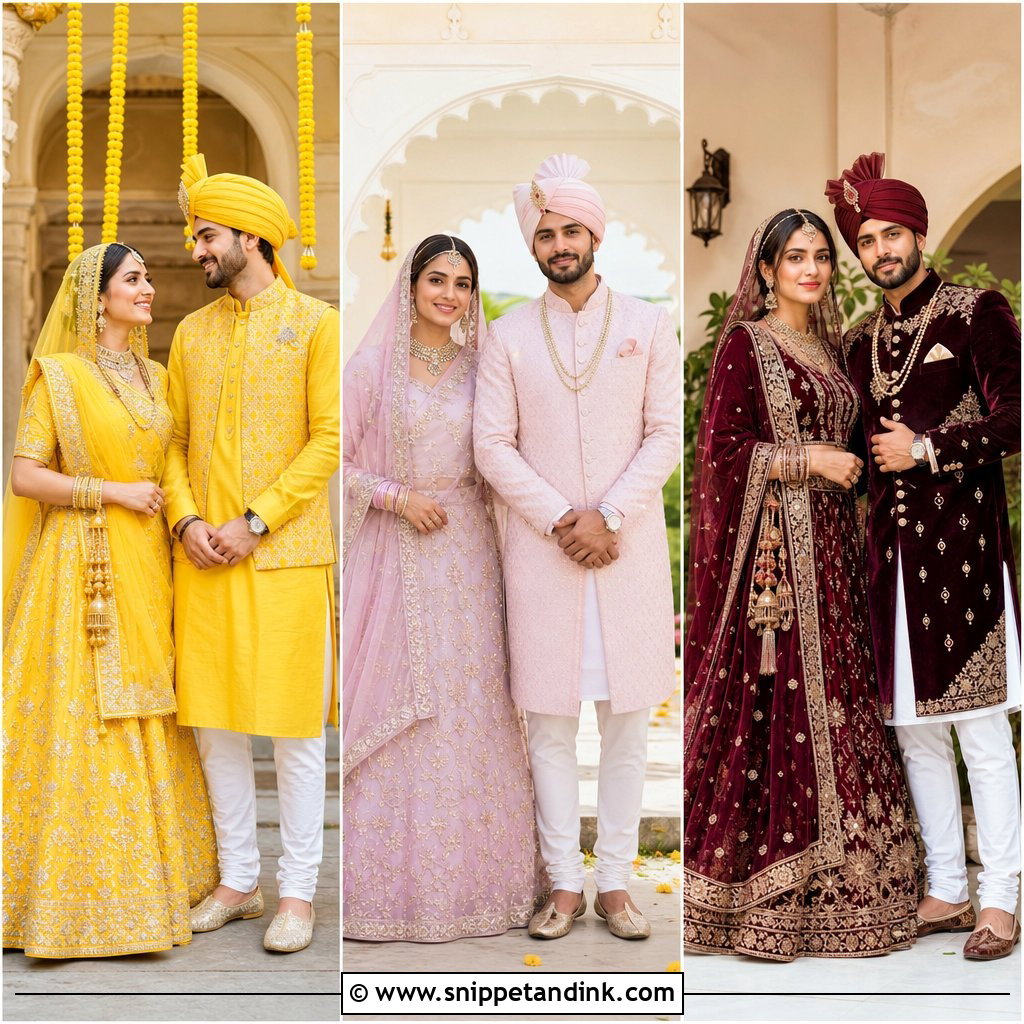
2. Blush Lehenga And Ivory Sherwani Wedding Outfit
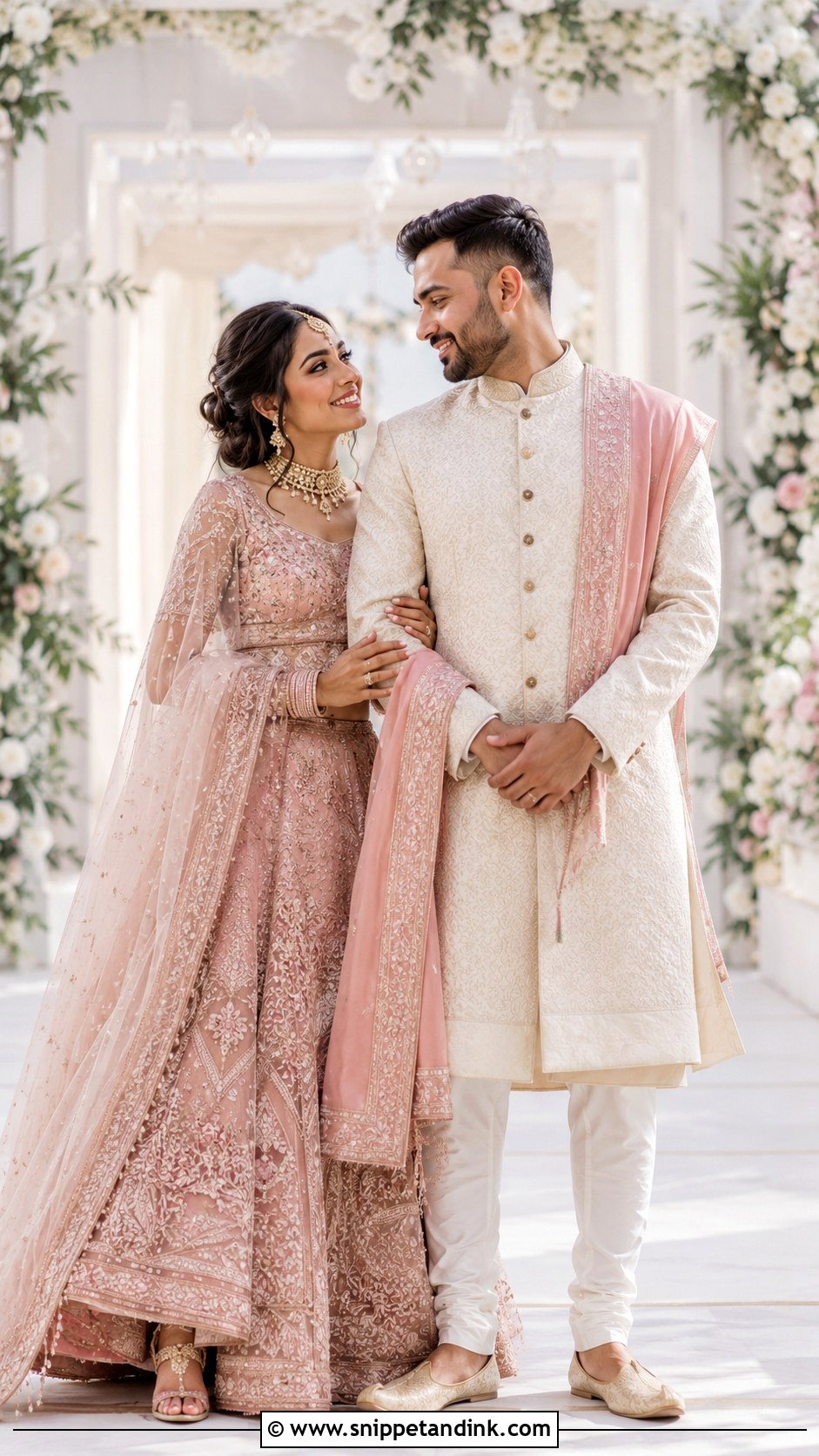
Blush against ivory is a whisper of a contrast, which is both its strength and its risk. The lehenga can carry delicate embroidery, sequins or floral threadwork with gold jewelry, blush bangles and embellished heels, while the ivory sherwani picks up beige mojaris, a blush stole and gold buttons as the link. Where I’d be careful is bright midday sun: a very pale blush can bleach toward ivory, so choose one with a little more pigment than you think you need. Daytime ceremonies, pre-wedding portraits and outdoor venues suit it, and in family group shots the two outfits still read as a pair.
3. Emerald Dress And Charcoal Suit Wedding Outfit
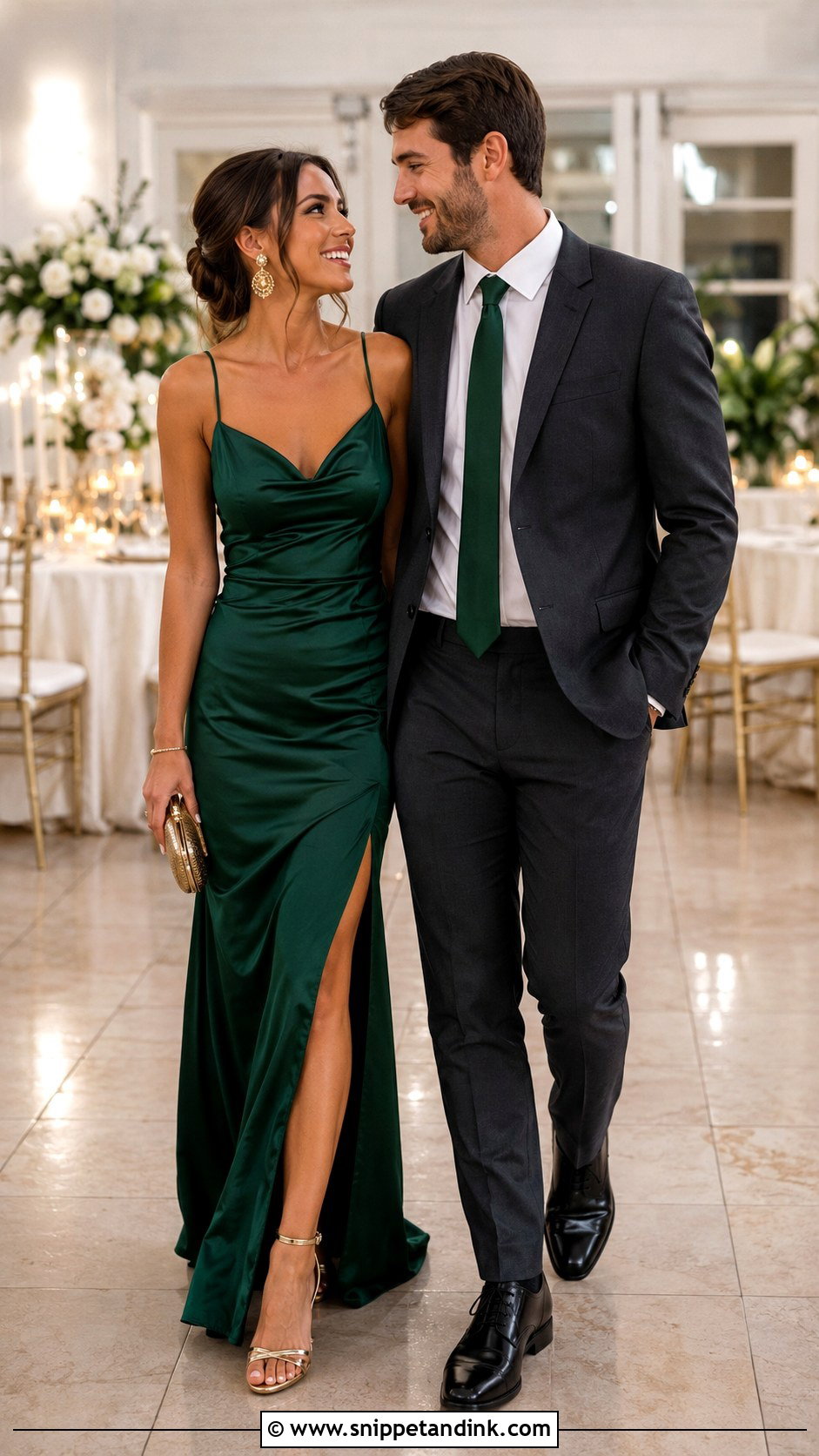
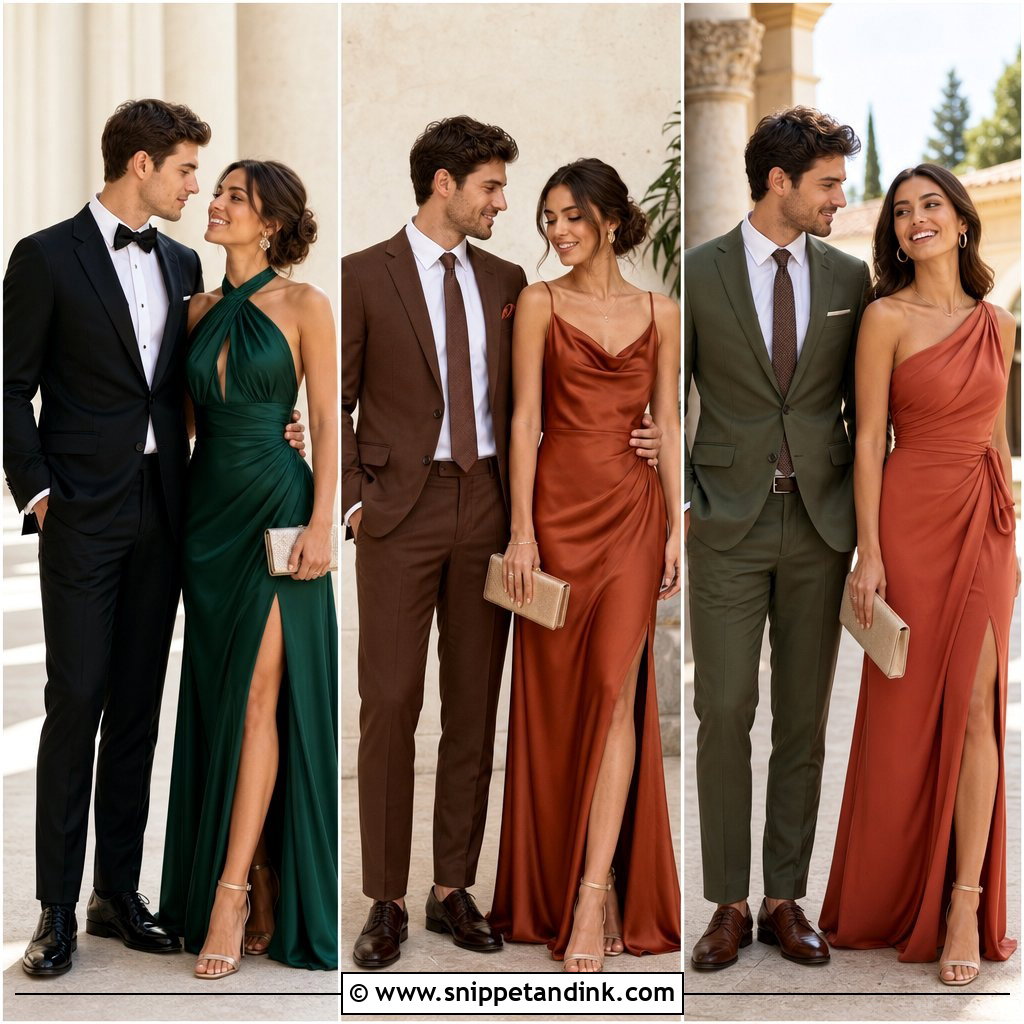
Emerald satin is fussy fabric, and I say that as someone who loves it. It shows water marks and sitting creases, so a crepe-backed satin or a draped style hides the day’s wear far better than a plain bias cut. The dress can be a midi, a floor-length gown or a draped piece with gold jewelry and nude or metallic heels. On the partner, charcoal does the grounding: white shirt, black dress shoes and an emerald tie or pocket square, a repeat small enough to connect without matching. Save it for evening receptions, hotel weddings and cooler months, and keep accessories quiet so the green leads.
4. Maroon Lehenga And Beige Sherwani Wedding Outfit
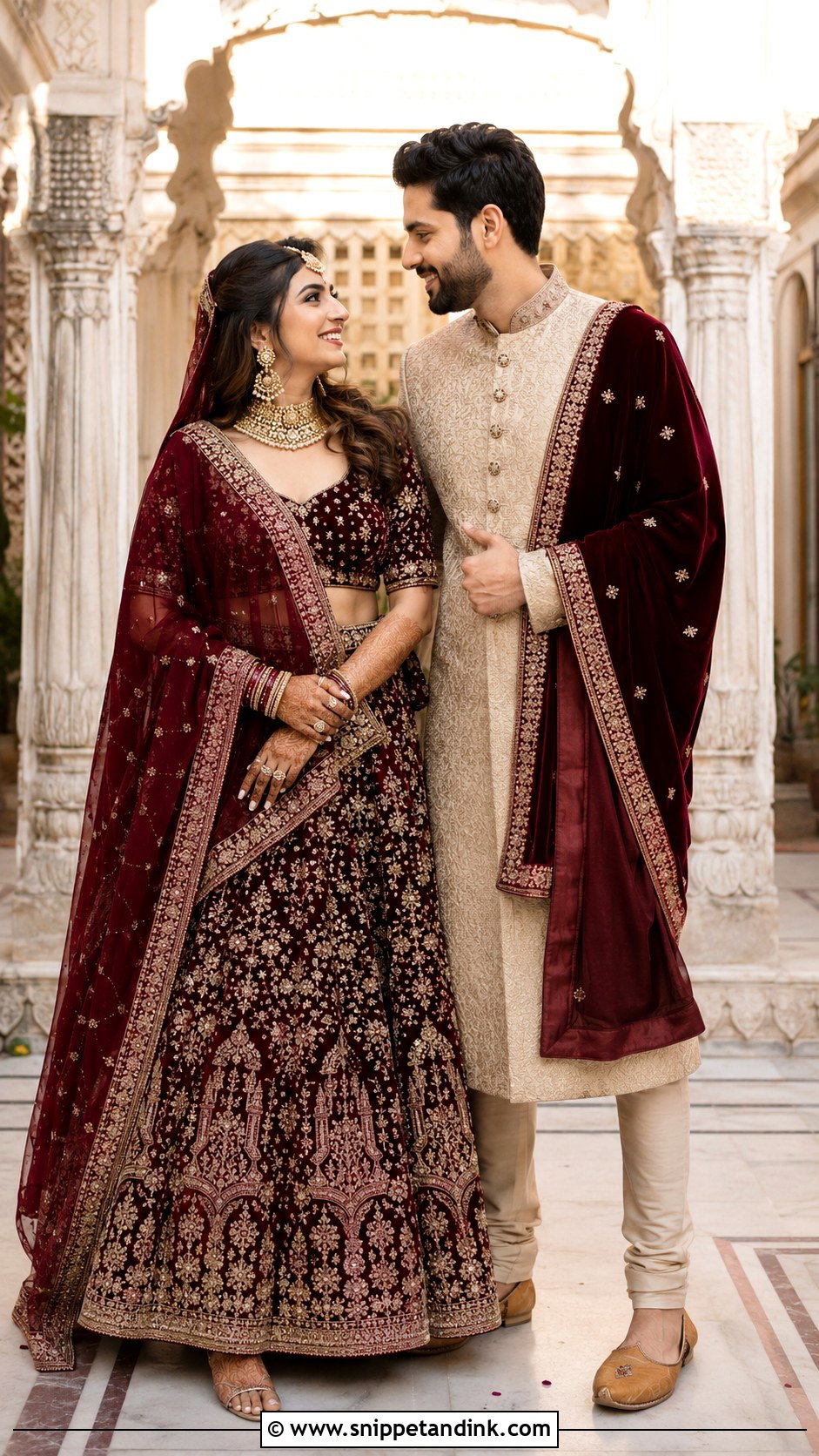
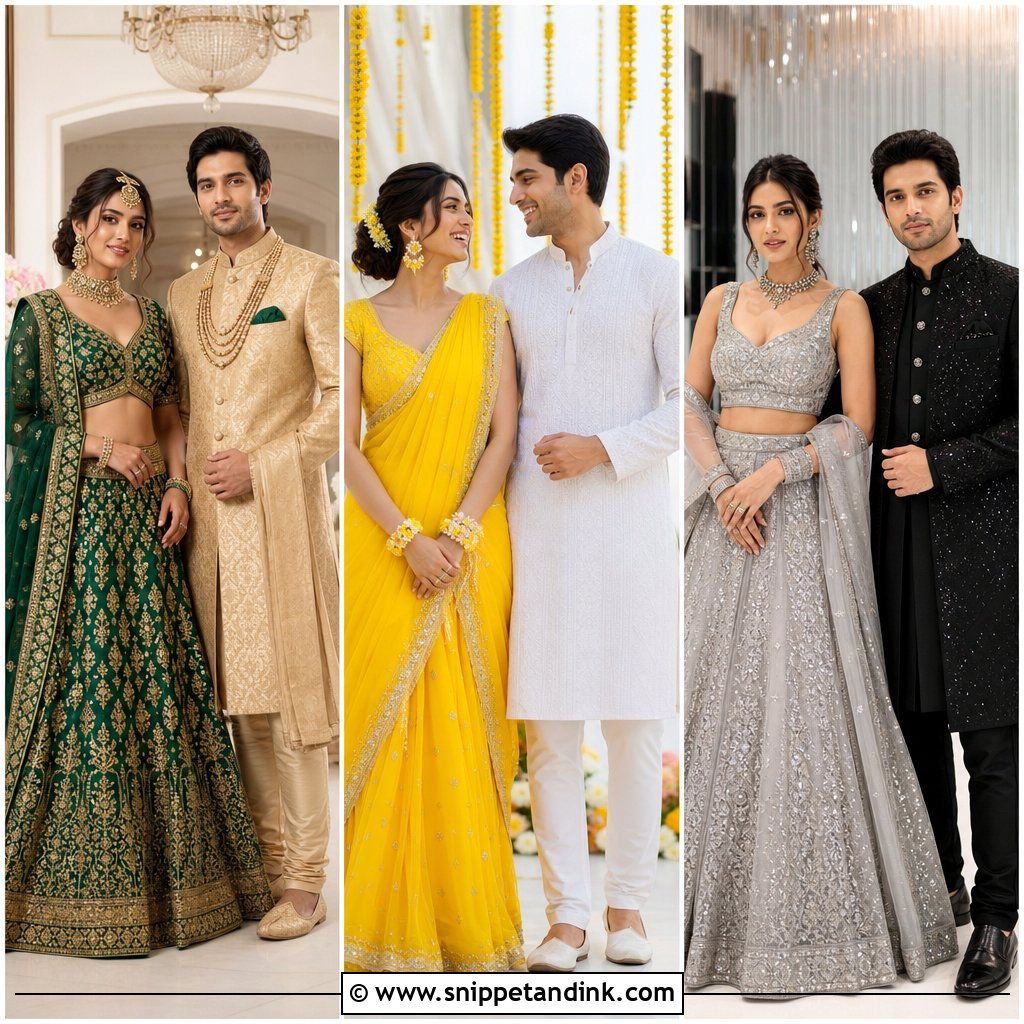
A maroon lehenga next to a beige sherwani gives a traditional pairing warmth and a strong light and dark split. Maroon handles heavy gold embroidery, a full dupatta, layered jewelry and embellished sandals without looking busy, and the lighter sherwani keeps the couple balanced in photos. A sherwani offers few places to add color, so I usually put the connecting maroon into the safa or stole rather than a pocket detail; a turban reads from across a hall. Brown or tan mojaris keep the partner’s side soft. Formal ceremonies, reception entrances and heritage venues suit it, especially against florals and gold lighting.
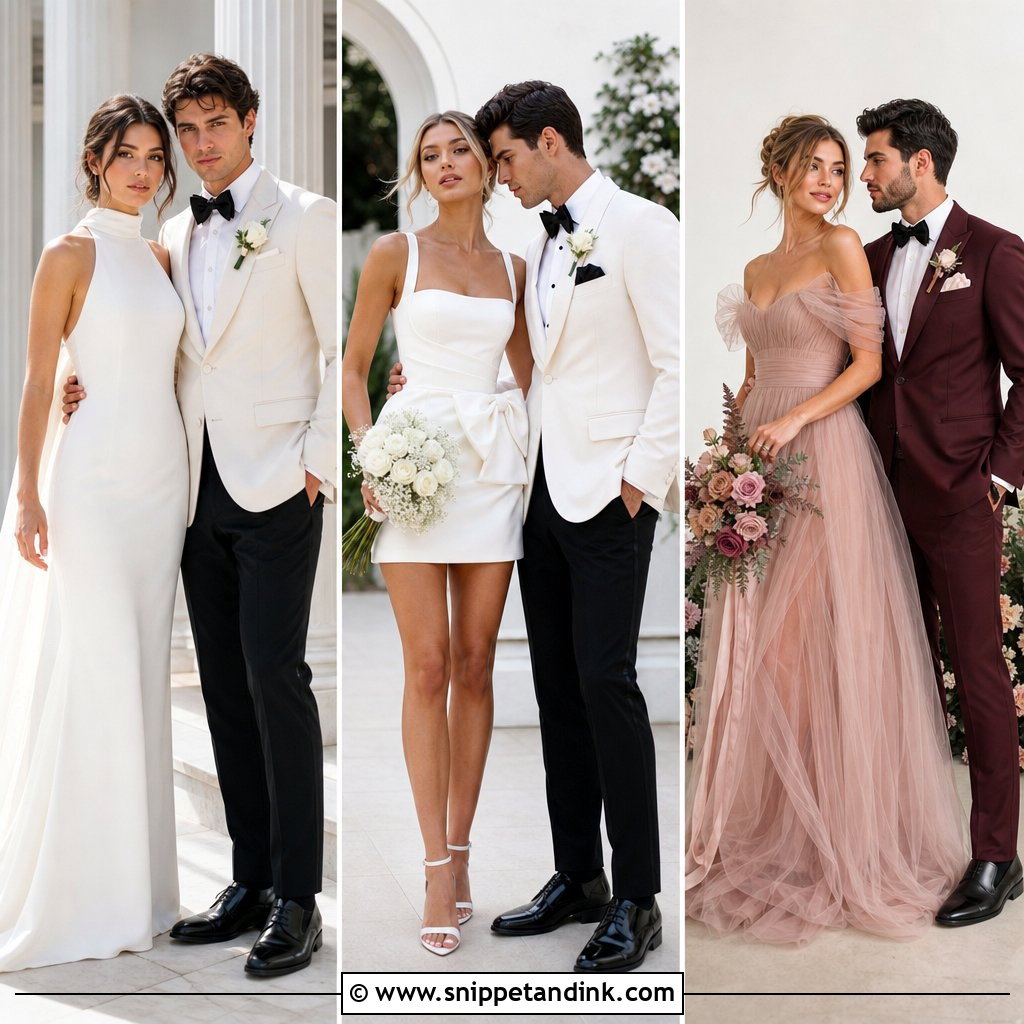
5. Black Tuxedo And Champagne Gown Wedding Outfit
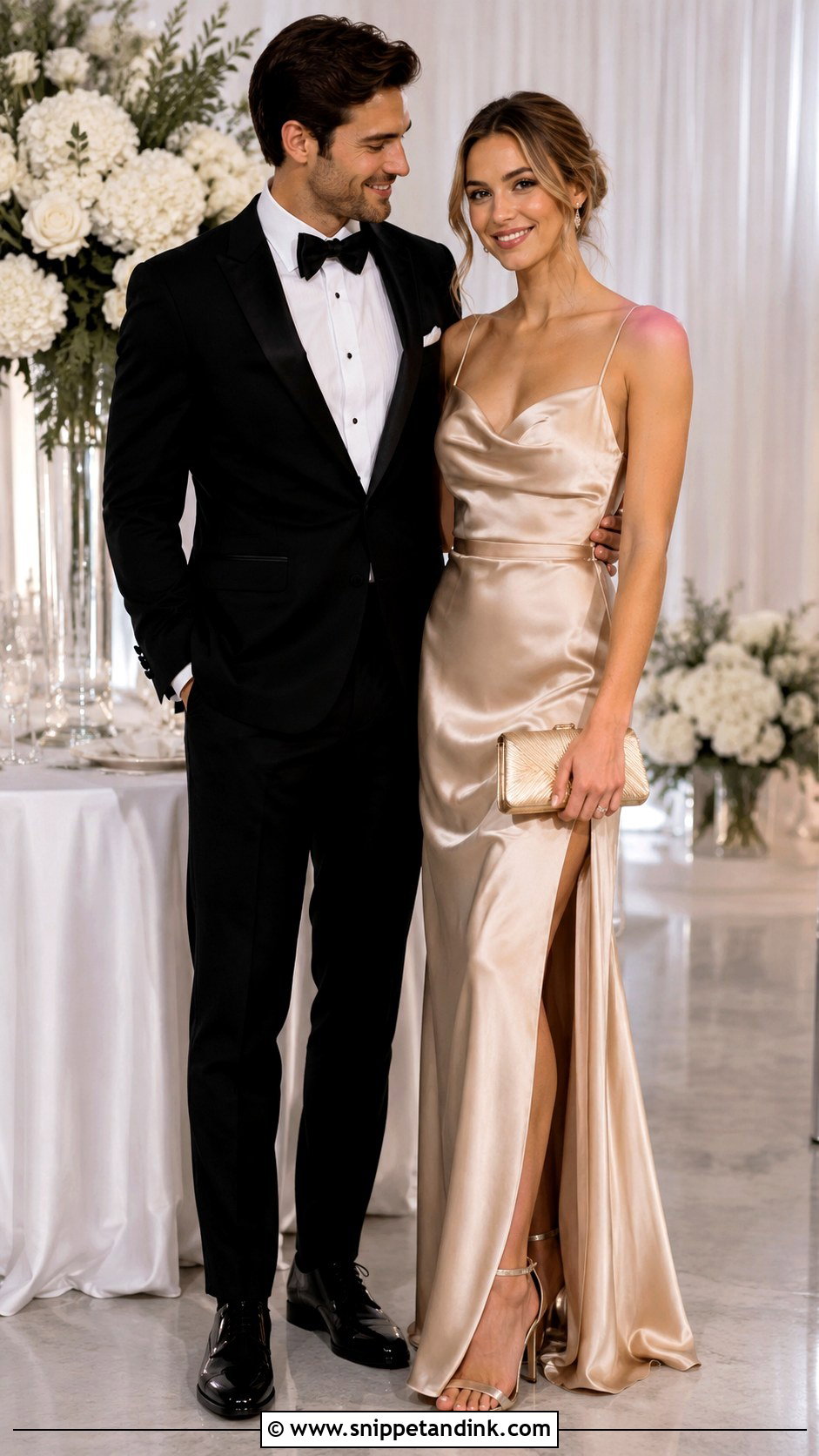
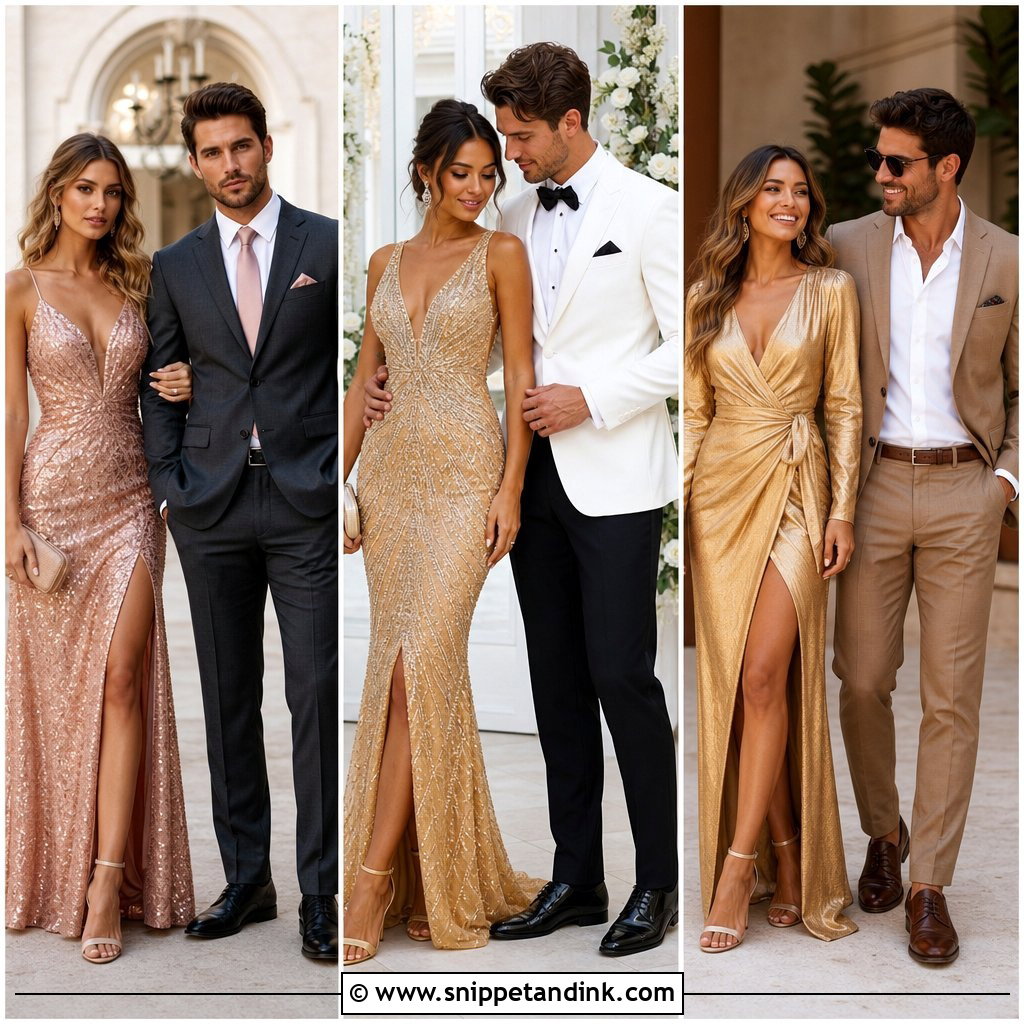
This is the safest black-tie contrast I know, with one catch: champagne changes more under different light than almost any bridal shade. Warm bulbs push it toward gold, and in daylight it can read nude against some skin tones, so I view the fabric in both before anyone commits. Satin, silk or beaded fabric all work, with delicate earrings, a sleek clutch and metallic heels. The tuxedo takes a white dress shirt, black bow tie, polished black shoes and an ivory or champagne pocket square. Both outfits share the same dressed-up mood, so hair and accessories can stay refined and nothing has to compete.
6. Sage Green Dress And Tan Suit Wedding Outfit
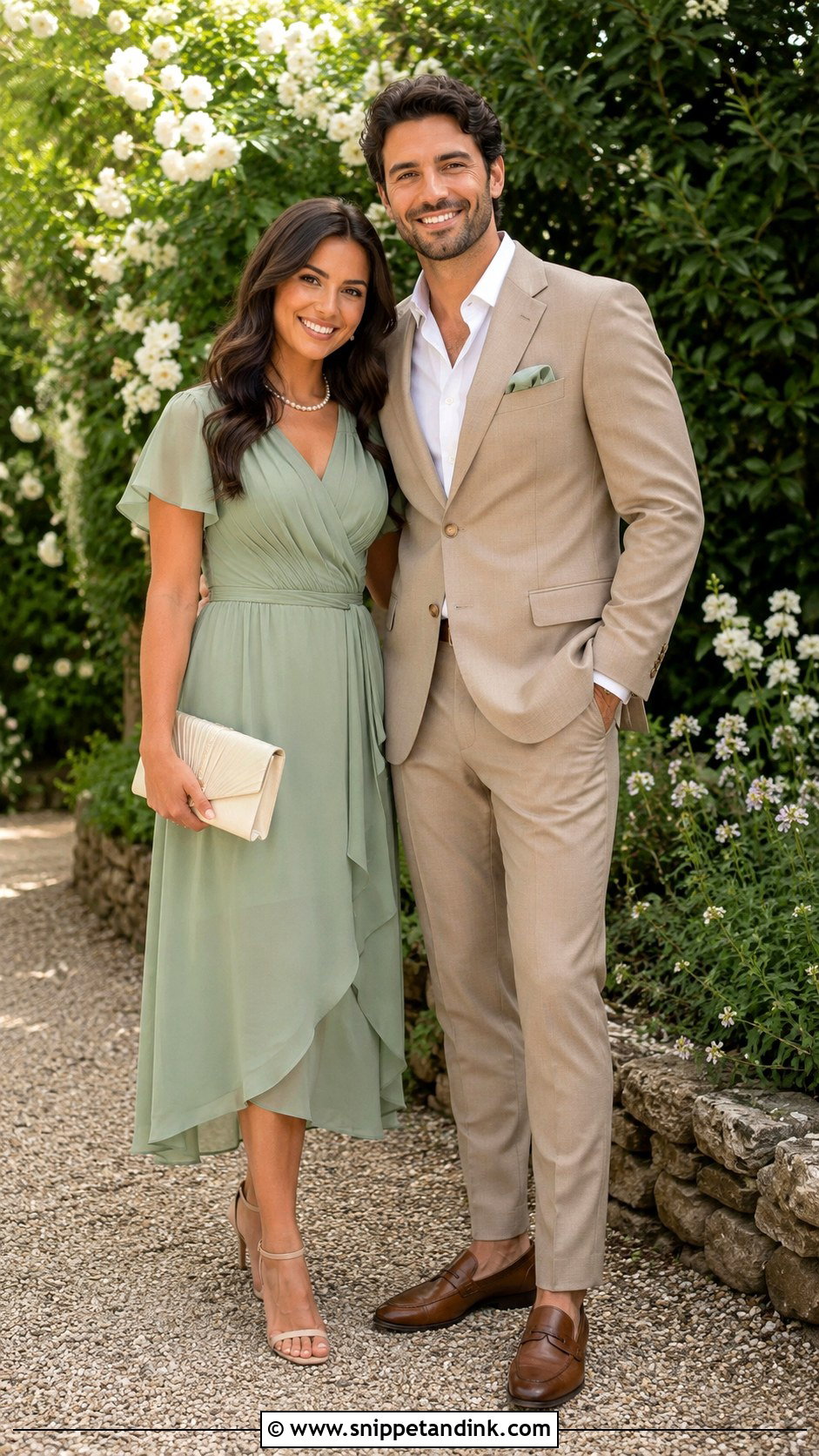
Sage and tan are both muted, so this pairing lives or dies on texture. Put a sage dress in chiffon, satin or a linen blend with nude heels, pearls and a small cream clutch beside a tan suit with a white shirt, brown loafers and a sage tie or boutonniere. Linen blends crease within the first hour of sitting, which looks relaxed on a beach and sloppy in a ballroom. I match the cloth to the dress code: softer weaves for daytime garden and spring ceremonies, sharper tailoring for semi-formal or cocktail attire.
7. Red Saree And Cream Kurta Set Wedding Outfit
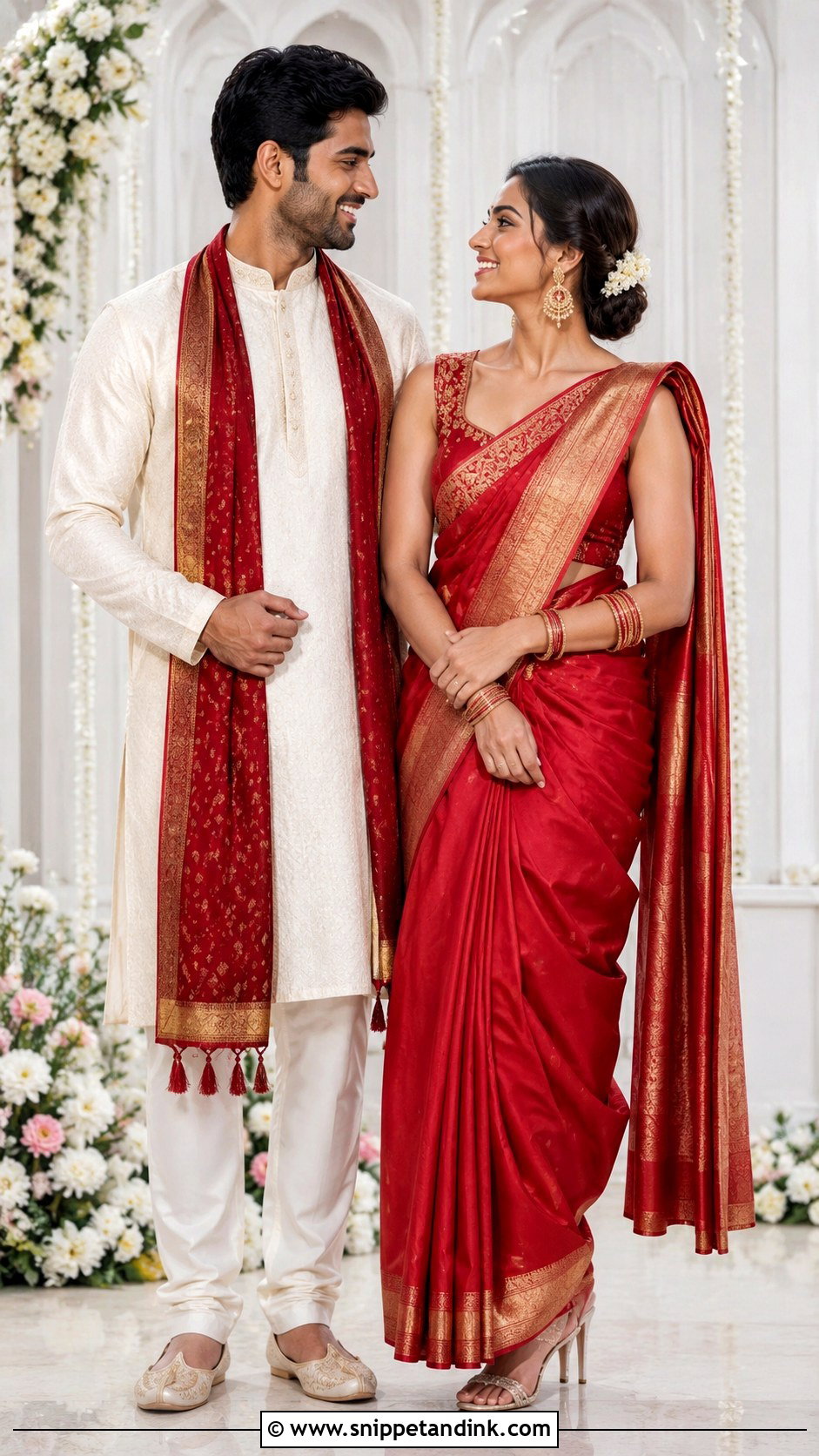
Red carries so much weight that the partner barely needs color, and that restraint is why a cream kurta set works here. The saree can be silk, georgette or organza with gold borders, statement earrings and embellished heels, and a red stole, pocket square or embroidered detail links the two. Gold mojaris or brown sandals finish the kurta. From fittings I can tell you silk holds its pleats through a long ceremony better than georgette, which slides and needs extra pins at the shoulder. It suits ceremonies, family events and receptions, and jewelry and embroidery level make it personal.
8. Lavender Gown And Gray Suit Wedding Outfit
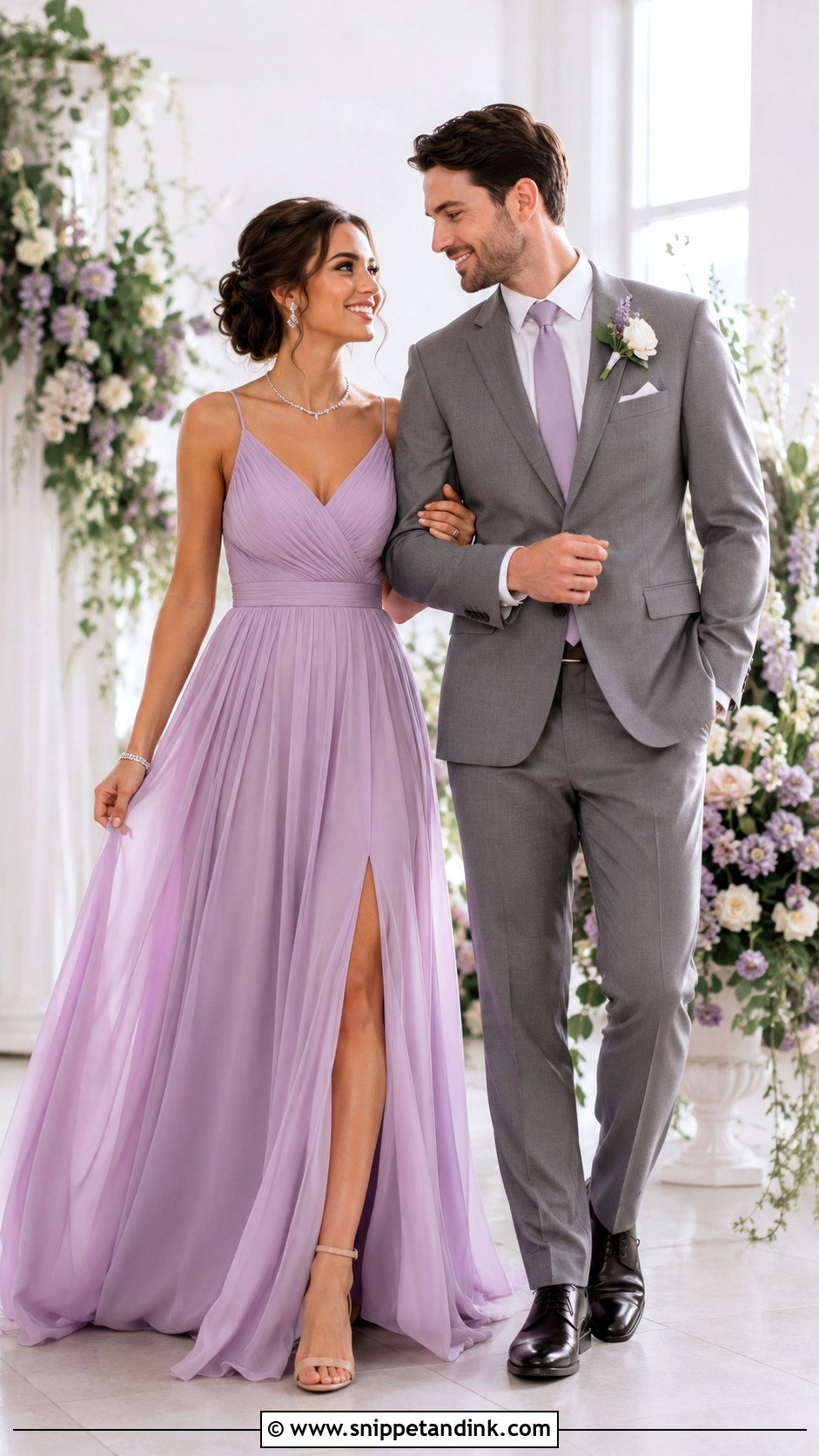
Lavender is the shade I test hardest. Some dye lots lean blue in daylight and pink under warm bulbs, and gray beside it exaggerates whichever way it drifts. Once the gown is right, in chiffon or tulle with silver jewelry, light makeup and silver or nude heels, the gray suit just needs clean tailoring, a white shirt and a lavender tie or pocket square. Light gray feels airy by day; charcoal makes it formal at night. Keep every accessory cool-toned, since a single gold piece breaks the harmony, and save it for spring and outdoor venues.
9. Royal Blue Lehenga And White Sherwani Wedding Outfit
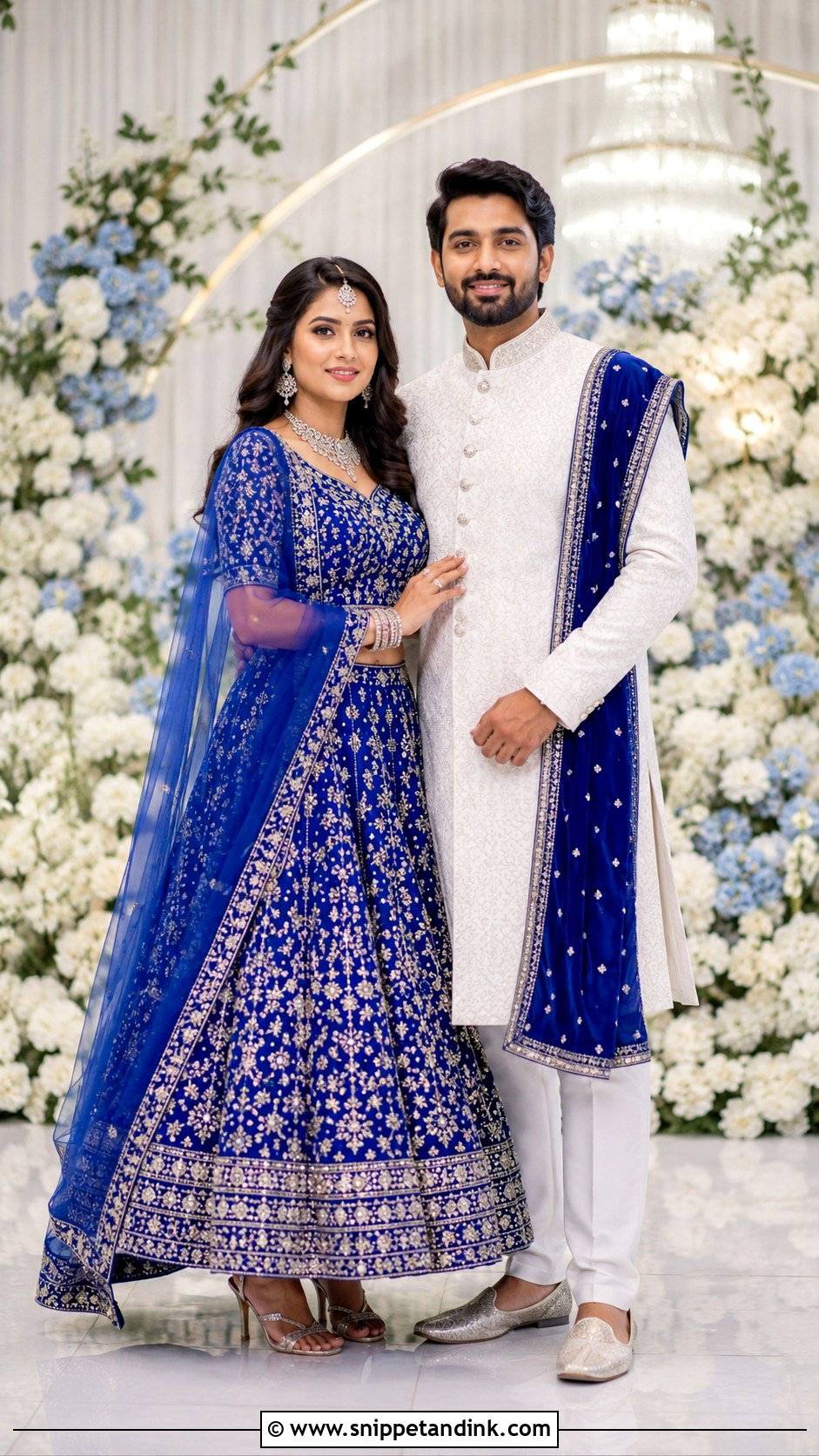
Royal blue is loud, and a white sherwani beside it gives the eye somewhere to rest. Silver embroidery, mirror work or beading on the lehenga catches light, while the white keeps the partner crisp and ceremonial; silver mojaris, a blue stole or a blue brooch tie them together. The bride can finish with silver jewelry, soft curls and metallic heels. I’d warn you that bright white beside saturated blue tends to lose its embroidery detail under flash, so an off-white or pearl sherwani often photographs better. Receptions, sangeets and formal portraits are where this pairing belongs.
10. Mustard Saree And Olive Suit Wedding Outfit
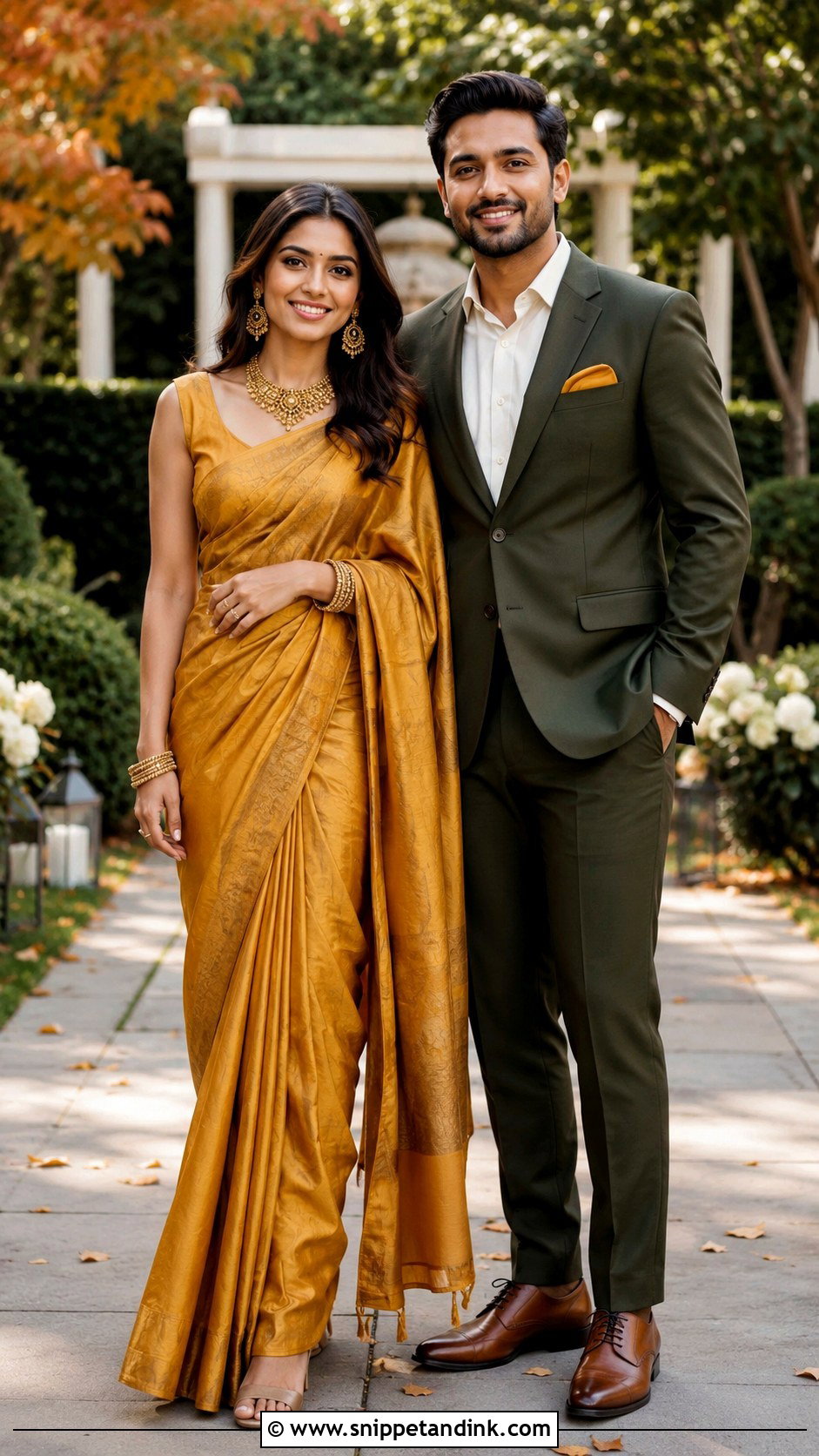
Mustard and olive get along because both sit on the warm side of the wheel. A mustard saree in silk, cotton-silk or organza wants antique gold jewelry, bangles and neutral heels; bright yellow gold can make mustard look flat. The olive suit adds depth without going dark, and a cream shirt, brown shoes and a mustard pocket square or boutonniere keep it warm. It suits outdoor, daytime and fall weddings, but only with clean tailoring, otherwise the earthy palette slides toward casual.
11. Powder Blue Dress And Chocolate Brown Suit Wedding Outfit
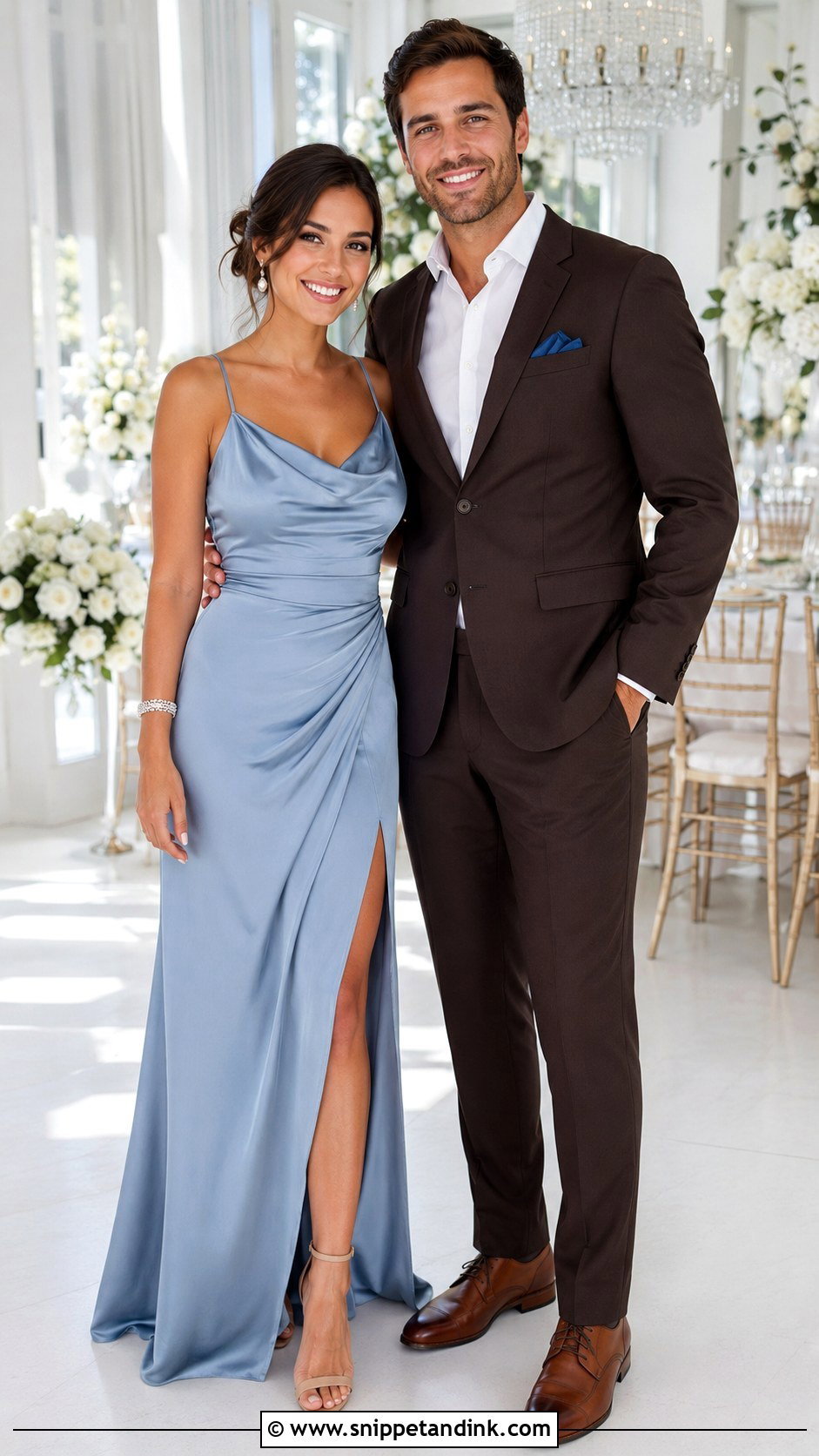
Brown is what stops powder blue from looking sugary. A powder blue dress in satin, chiffon or crepe with pearl earrings, a silver bracelet and nude heels sits beside a chocolate suit, white shirt and brown dress shoes, with a powder blue tie or pocket square as the link. I’d keep the bag and jewelry minimal here. It works for daytime weddings, vineyard-style venues and intimate receptions without tipping into casual.
12. Coral Lehenga And Mint Sherwani Wedding Outfit
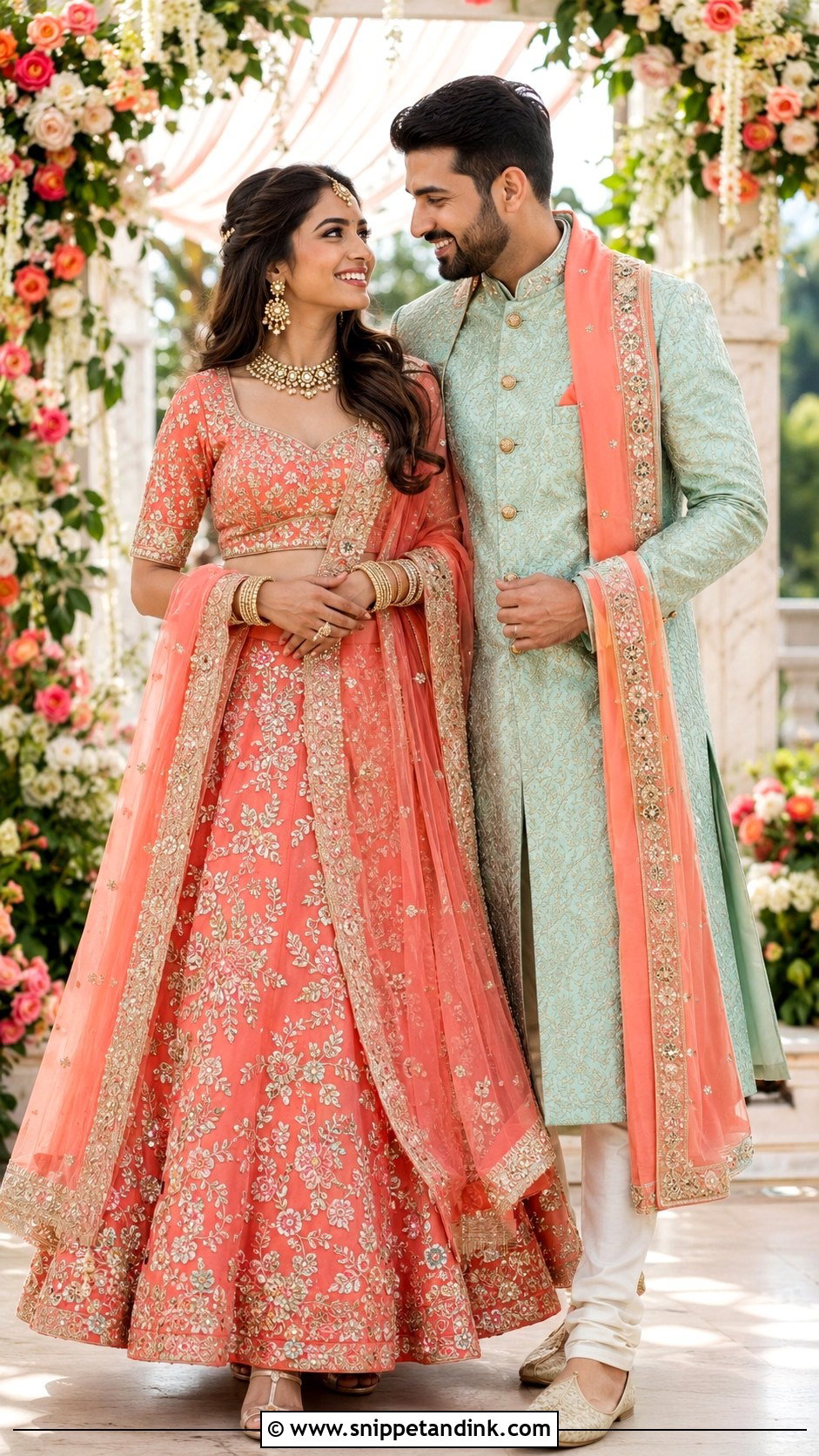
Coral and mint are both lively, so the skill is in what you leave out. A coral lehenga with floral embroidery, sequins or zari work takes gold jewelry and neutral heels, the mint sherwani softens the whole picture, and beige mojaris ground it. The partner can carry a coral stole, buttons or pocket detail as the link. When I style this pair I stop at those two shades plus gold, because a third bright color turns it into a costume. Daytime weddings, summer functions and outdoor celebrations suit it.
13. Burgundy Gown And Light Gray Suit Wedding Outfit
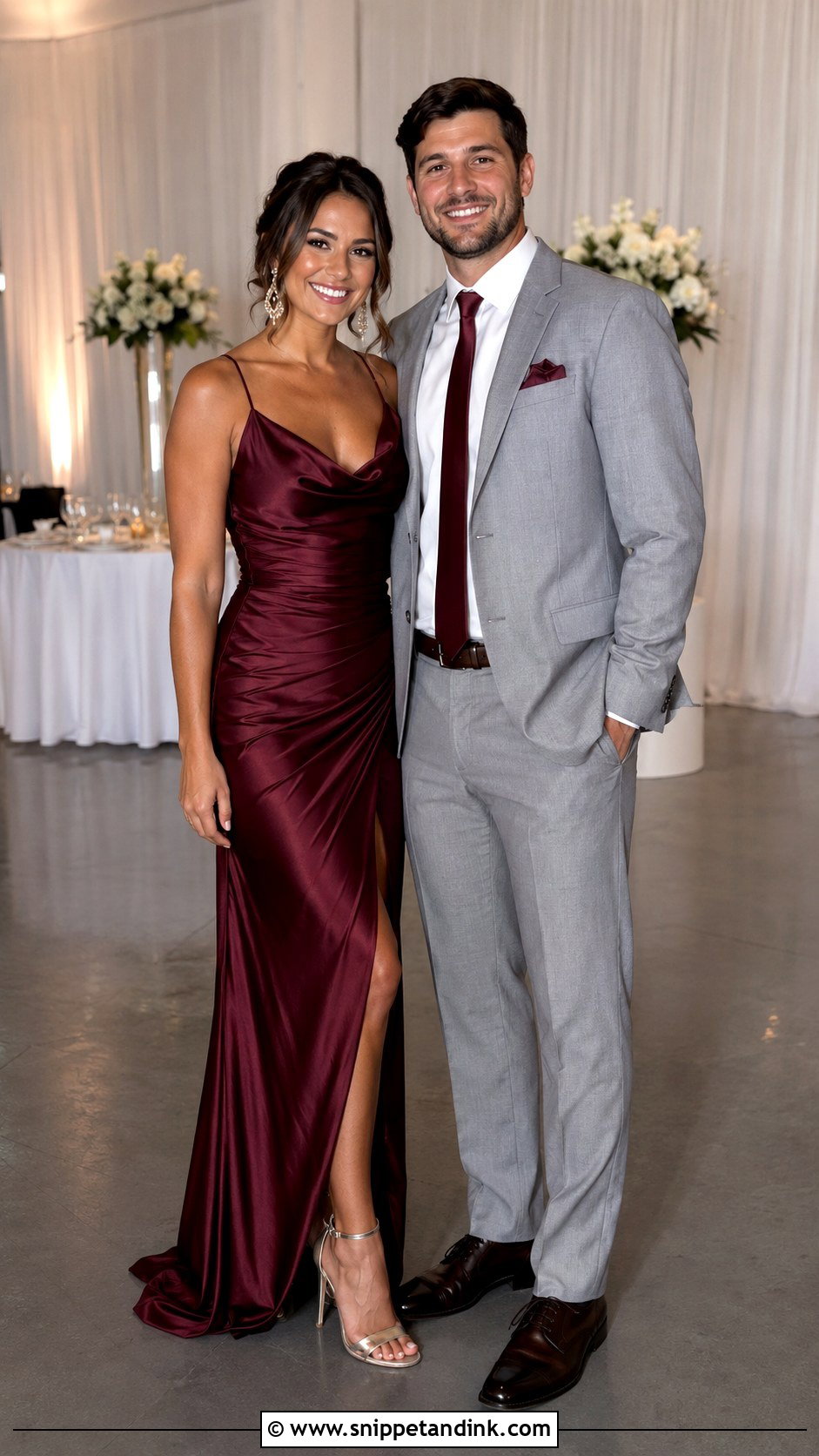
Burgundy velvet is the most forgiving dark fabric I fit. It hides sitting creases and looks rich even in poor light, though it gets warm fast in a crowded hall, so satin or crepe are the cooler options. Follow the gown’s own details for gold or silver jewelry, and finish with metallic heels. The light gray suit stops the pair from going heavy, with a burgundy tie, pocket square or boutonniere, a white shirt and polished shoes. Formal receptions, fall weddings and evening celebrations.
14. Peach Anarkali And Navy Bandhgala Wedding Outfit
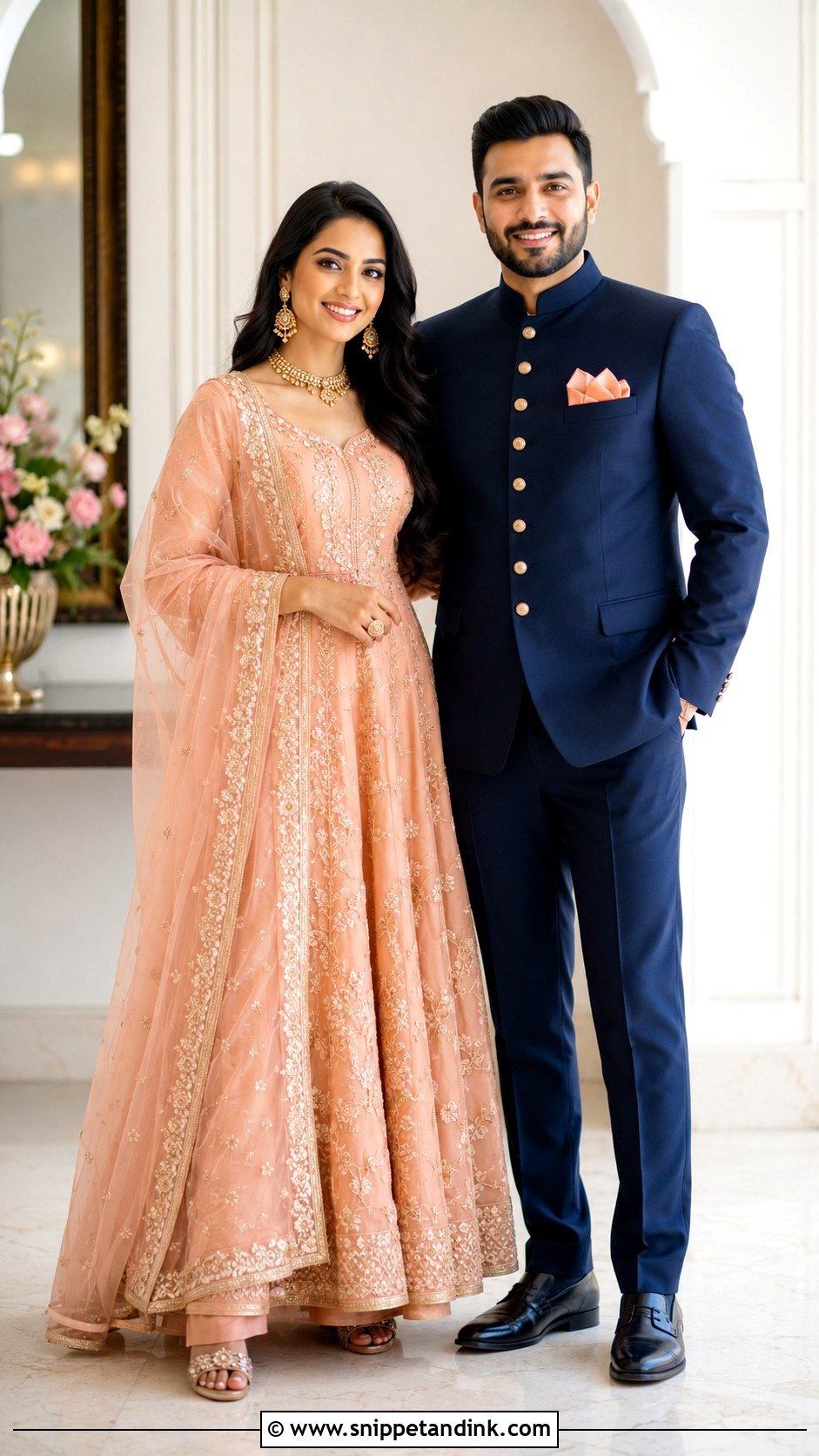
Peach and navy sit close to opposite on the color wheel, which is why the contrast looks deliberate even when both outfits are simple. The peach anarkali carries delicate embroidery, a sheer dupatta and gold jewelry. The navy bandhgala gives the partner structure and formality, tied back with a peach safa, pocket detail or small boutonniere, and brown or black formal shoes depending on the venue and dress code. For engagements, receptions and family celebrations, this is the pair I suggest when a couple wants color without going bold.
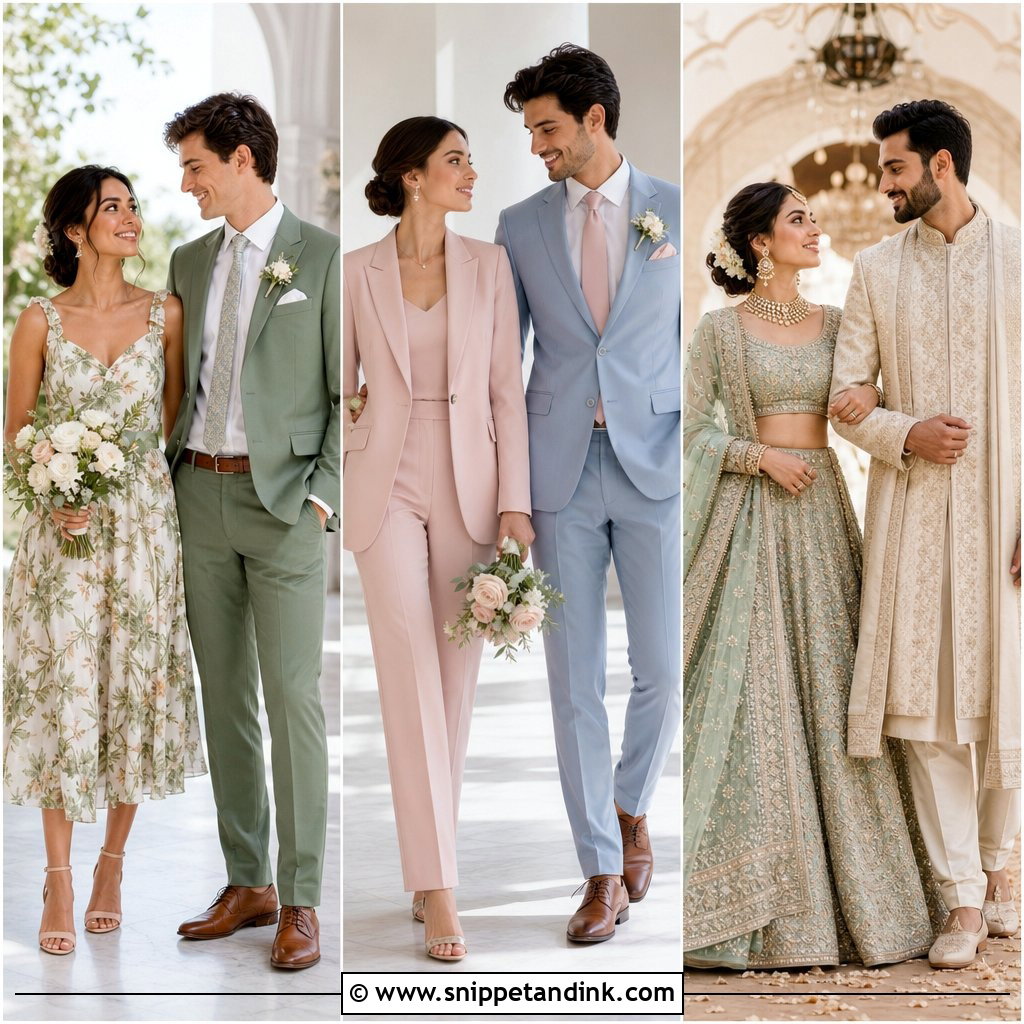
15. White Bridal Suit And Black Suit Wedding Outfit
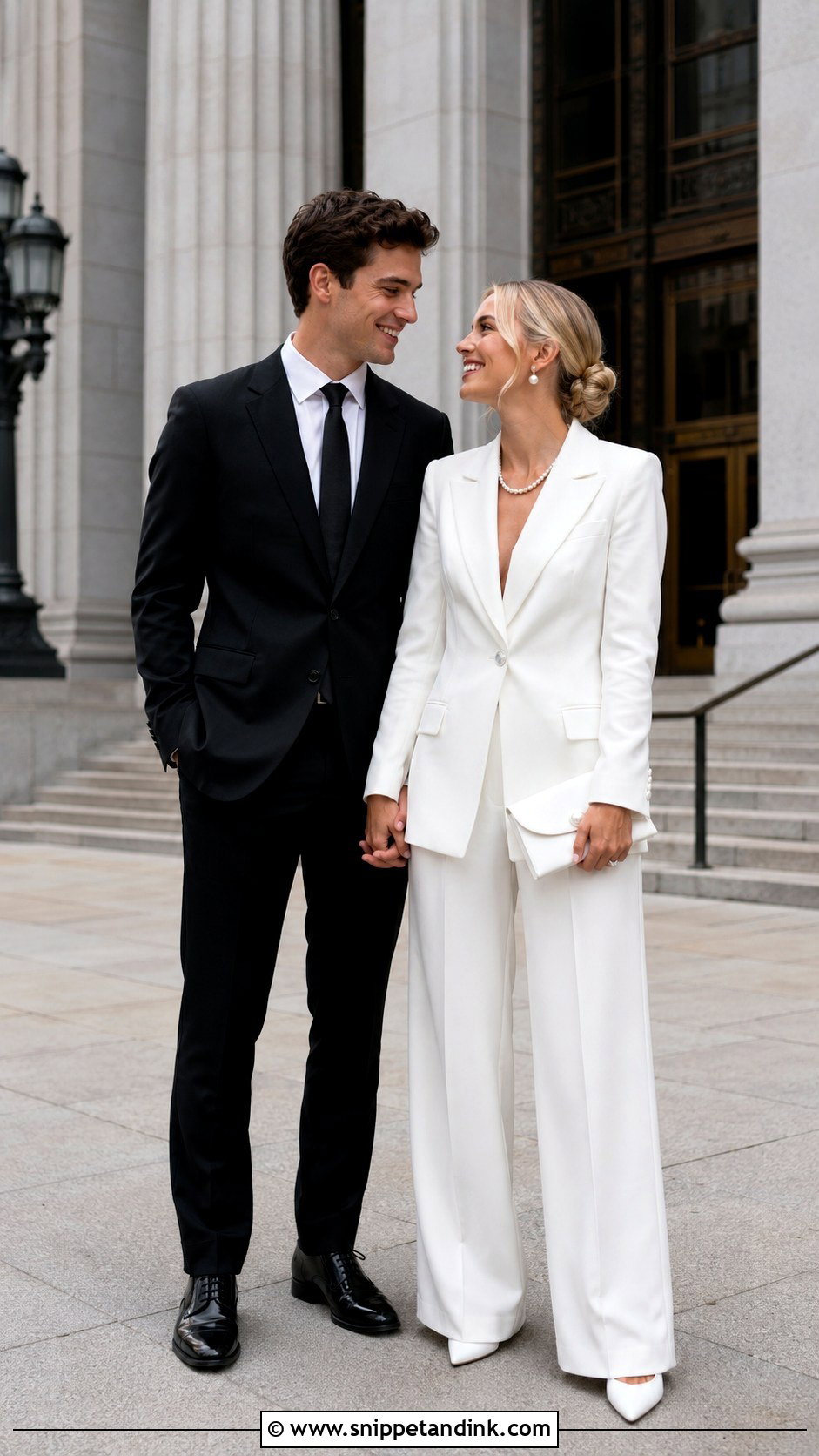
A bridal suit lives or dies on the trouser hem. Wide-leg trousers have to be hemmed with the exact heels on, or they puddle in photos, so I never let them be pinned in flats. The rest is simple: a fitted blazer, pointed heels and pearl or crystal jewelry, beside a sharp black suit with a white shirt, black shoes and a plain tie or bow tie. Add one shared detail, such as matching lapel flowers or the same metal in both sets of accessories. Courthouse weddings, city ceremonies and modern receptions suit this clean, graphic look.
16. Gold Saree And Deep Green Kurta Wedding Outfit
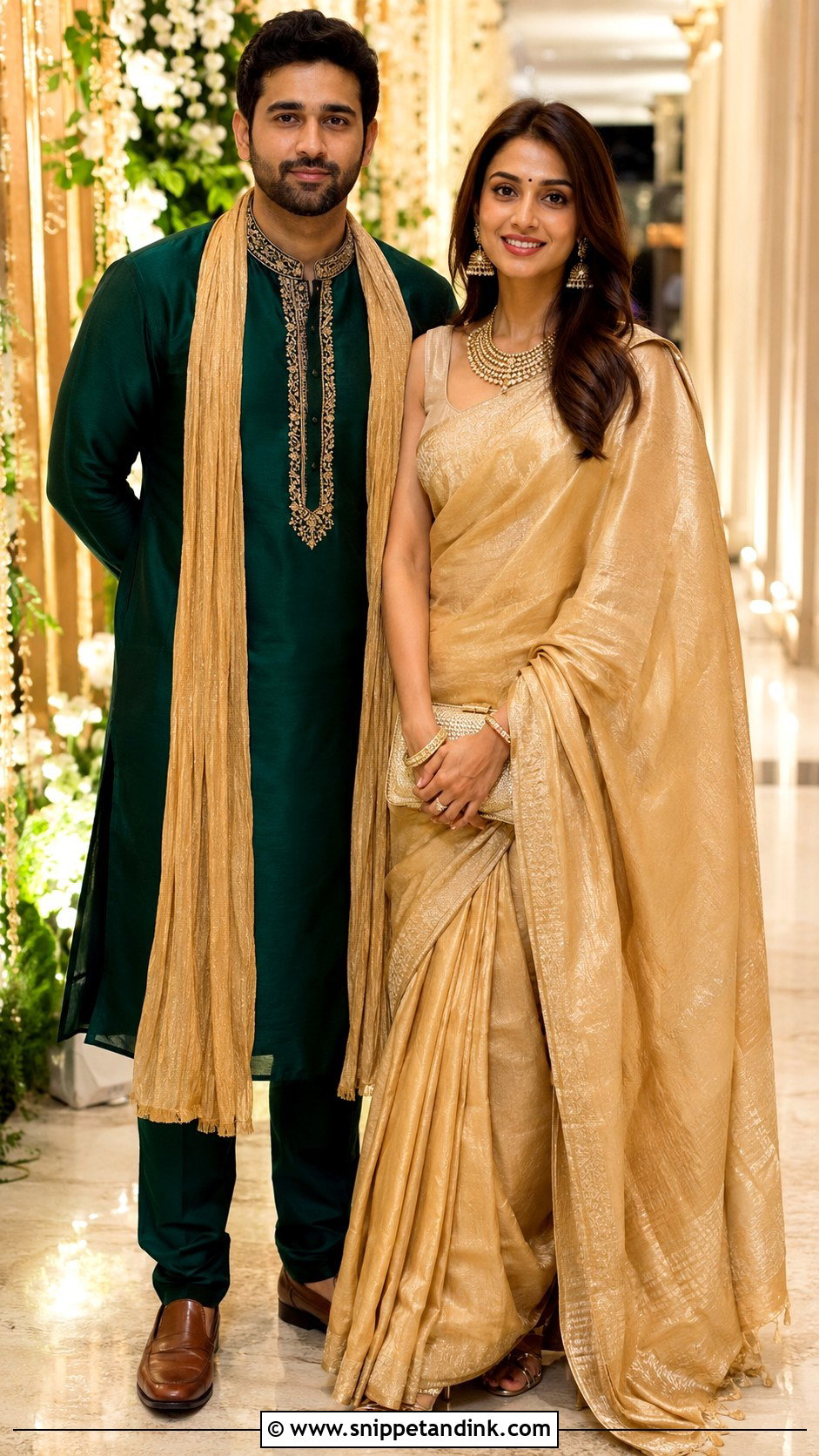
A gold saree in tissue or embroidered organza is lighter to wear than it looks, while heavy gold silk can feel stiff by evening, so I’d choose based on how many hours you’ll be on your feet. Style it with traditional jewelry, a clutch and embellished sandals. The deep green kurta set gives the gold something to glow against, and a gold stole, buttons or embroidered collar links the two, with tan or gold mojaris. Because both colors are strong, let fabric and jewelry make the statement and keep everything else plain. Evening ceremonies, receptions and family portraits suit it.
17. Dusty Rose Dress And Midnight Blue Suit Wedding Outfit
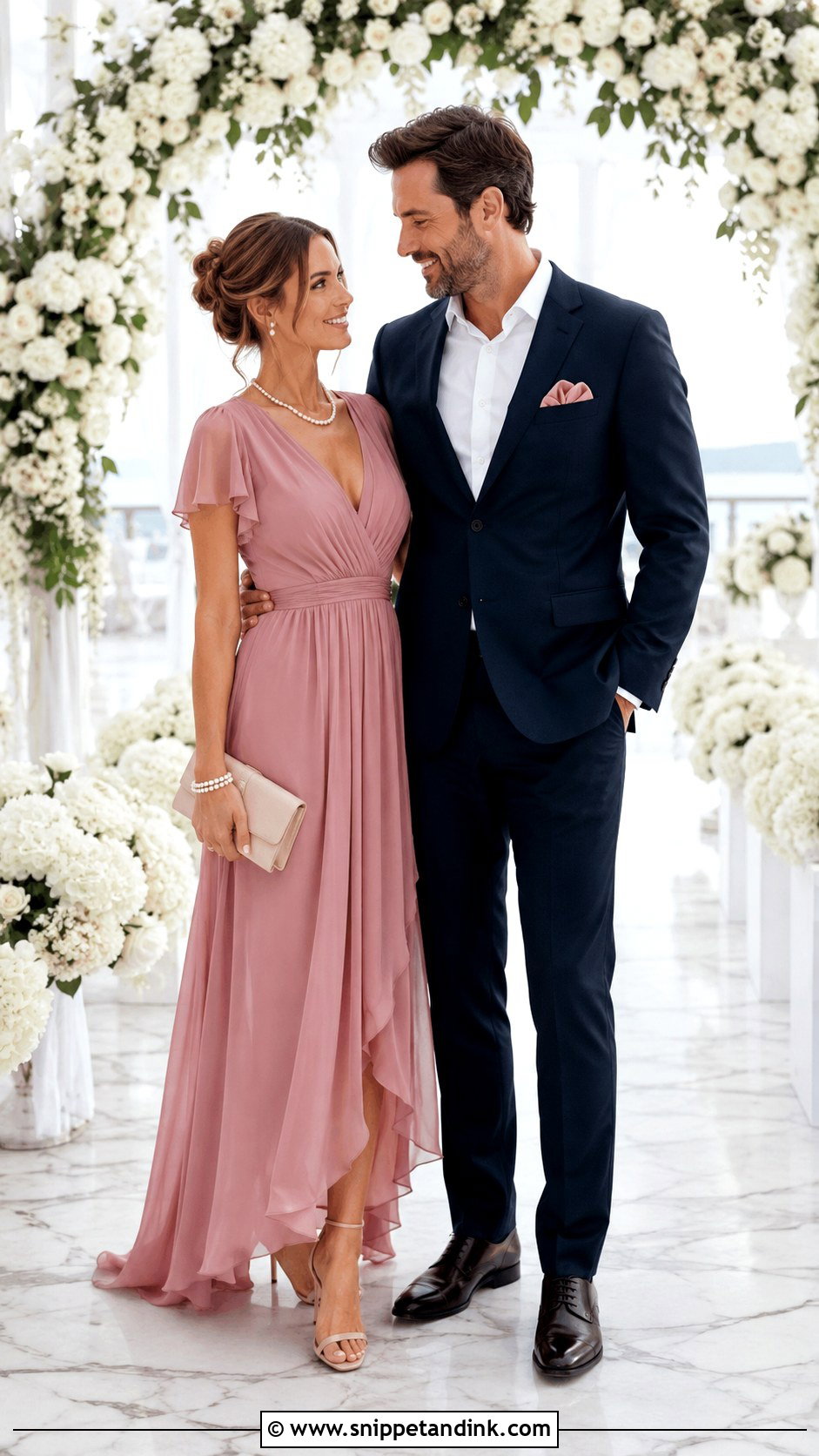
Midnight blue does what black does at night without the harshness, and next to dusty rose it looks grown-up rather than sweet. The rose dress in chiffon, satin or lace pairs with nude heels, pearl jewelry and a delicate clutch; the partner adds a rose tie or pocket square. Keep makeup, shoes and accessories understated. In dim rooms midnight can pass for black, so I ask couples to see the suit cloth under evening light before ordering. Semi-formal weddings, evening receptions and garden-to-ballroom days suit it.
18. Orange Lehenga And Ivory Kurta With Nehru Jacket Wedding Outfit
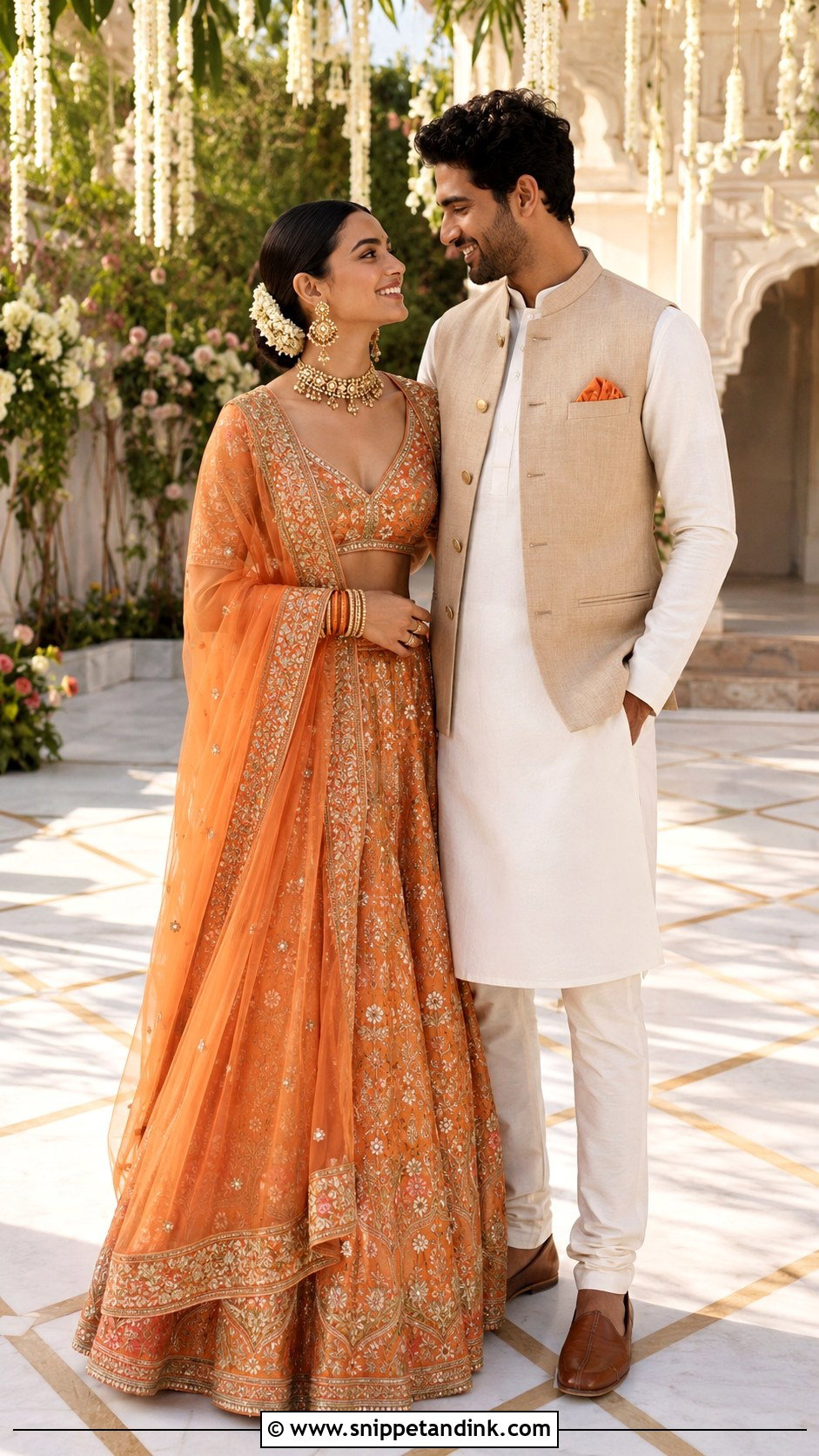
An orange lehenga brings so much energy that the partner’s job is mostly to stay out of its way. Gold embroidery, mirror work or a flowing dupatta give the lehenga movement, the ivory kurta keeps the partner’s base clean, and a beige, gold or orange-accented Nehru jacket connects them, finished with brown mojaris or sandals. I keep that jacket structured, since a soft kurta beside a voluminous lehenga looks underdressed in group photos. Daytime functions, outdoor ceremonies and cultural celebrations.
19. Silver Gown And Navy Tuxedo Wedding Outfit
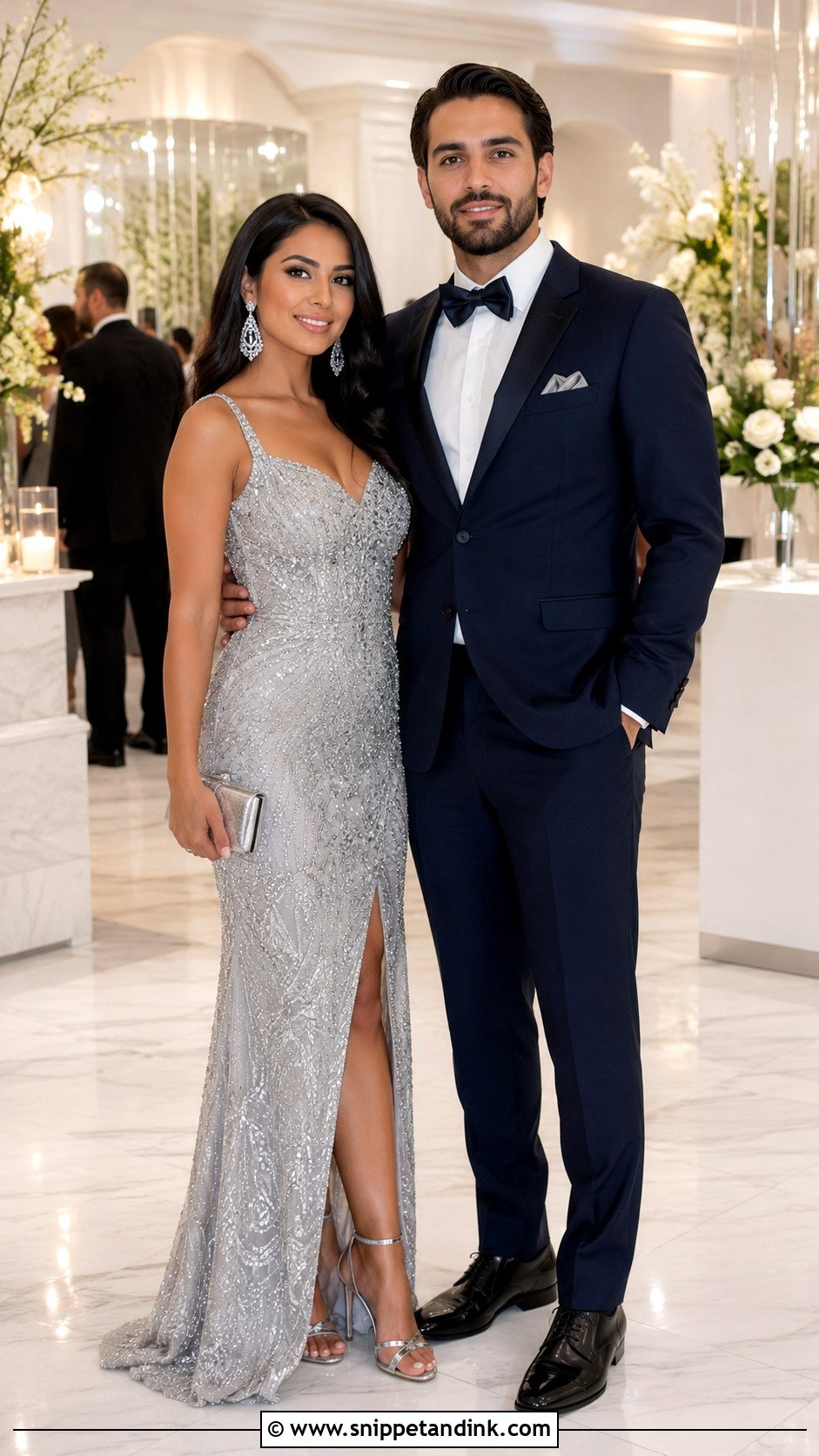
Metallic gowns reflect everything around them, which is the appeal and the problem. Silver beadwork, satin or metallic thread catches candlelight, but it also picks up colored uplighting, so I ask about the venue’s lighting before recommending one. Crystal earrings, a sleek clutch and silver heels finish the gown. The navy tuxedo is a softer alternative to black that stays formal, with a white shirt, black or navy bow tie, polished shoes and a silver pocket square or cufflinks. Evening receptions, winter weddings and upscale venues.
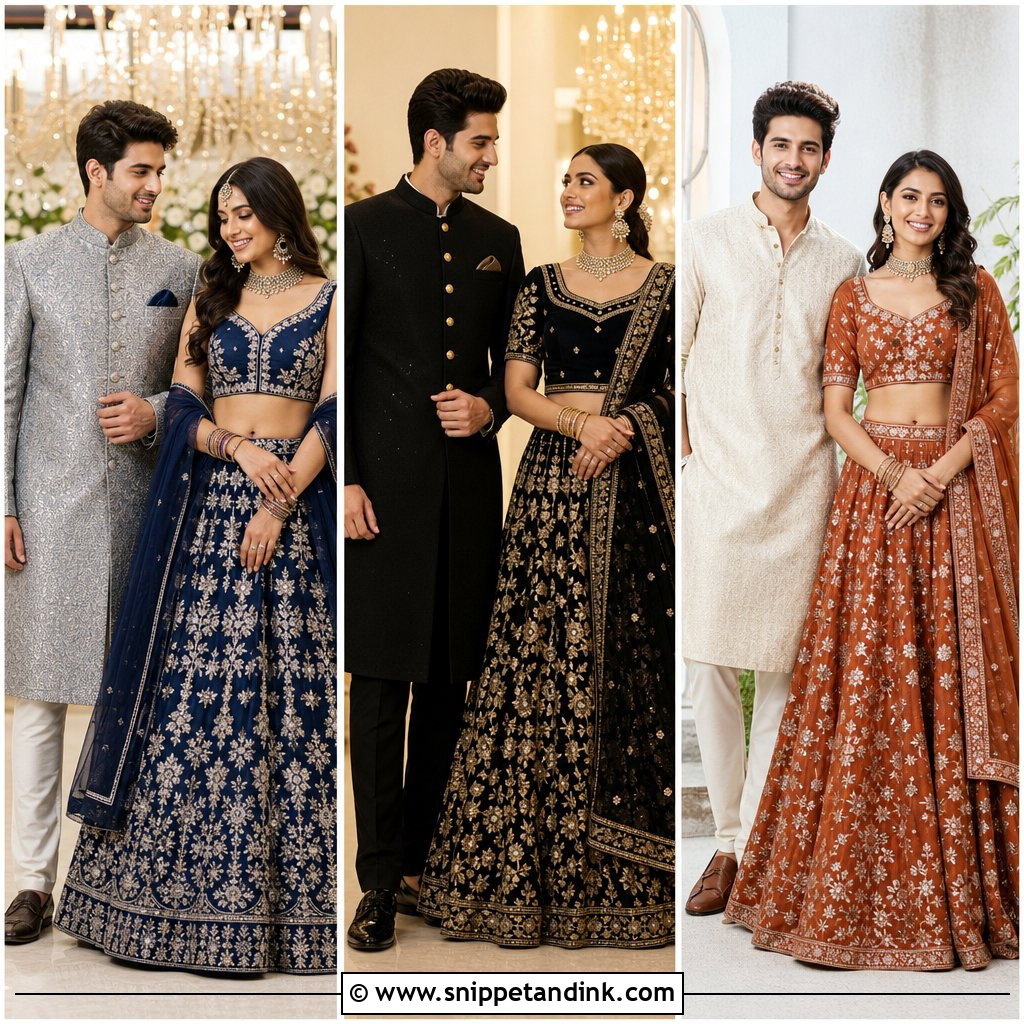
20. Teal Saree And Beige Suit Wedding Outfit
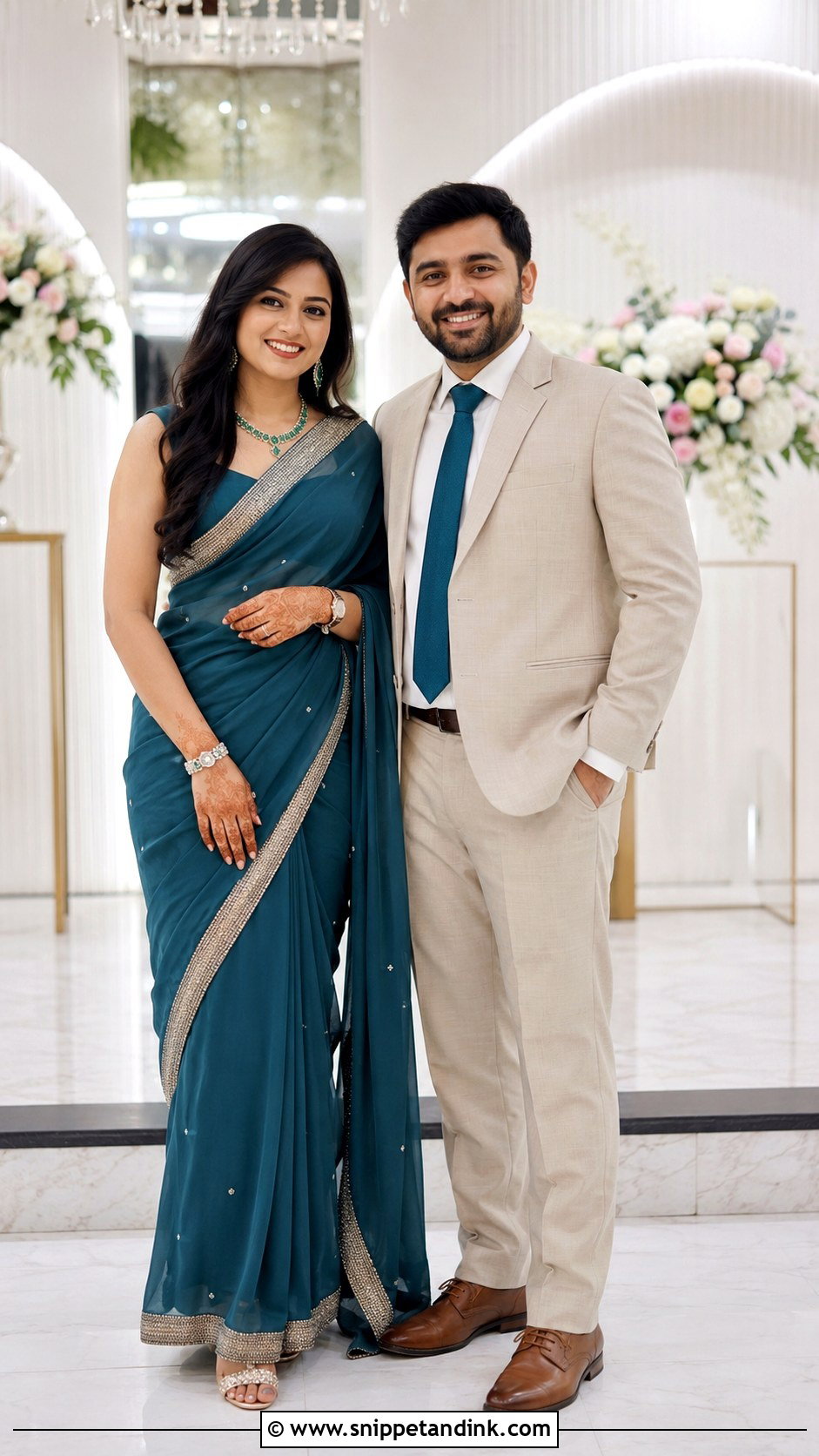
Teal changes with its weave: in silk it reads jewel-deep, in chiffon it softens toward sea green, and georgette sits between. I match the jewelry to the saree’s border, gold or silver, then finish with neutral heels or embellished sandals. The beige suit keeps the partner light, and a teal tie, pocket square or boutonniere coordinates without going matchy. Keep the shirt white or cream. Daytime receptions, destination weddings and semi-formal ceremonies suit it.
21. Plum Gown And Cream Suit Wedding Outfit
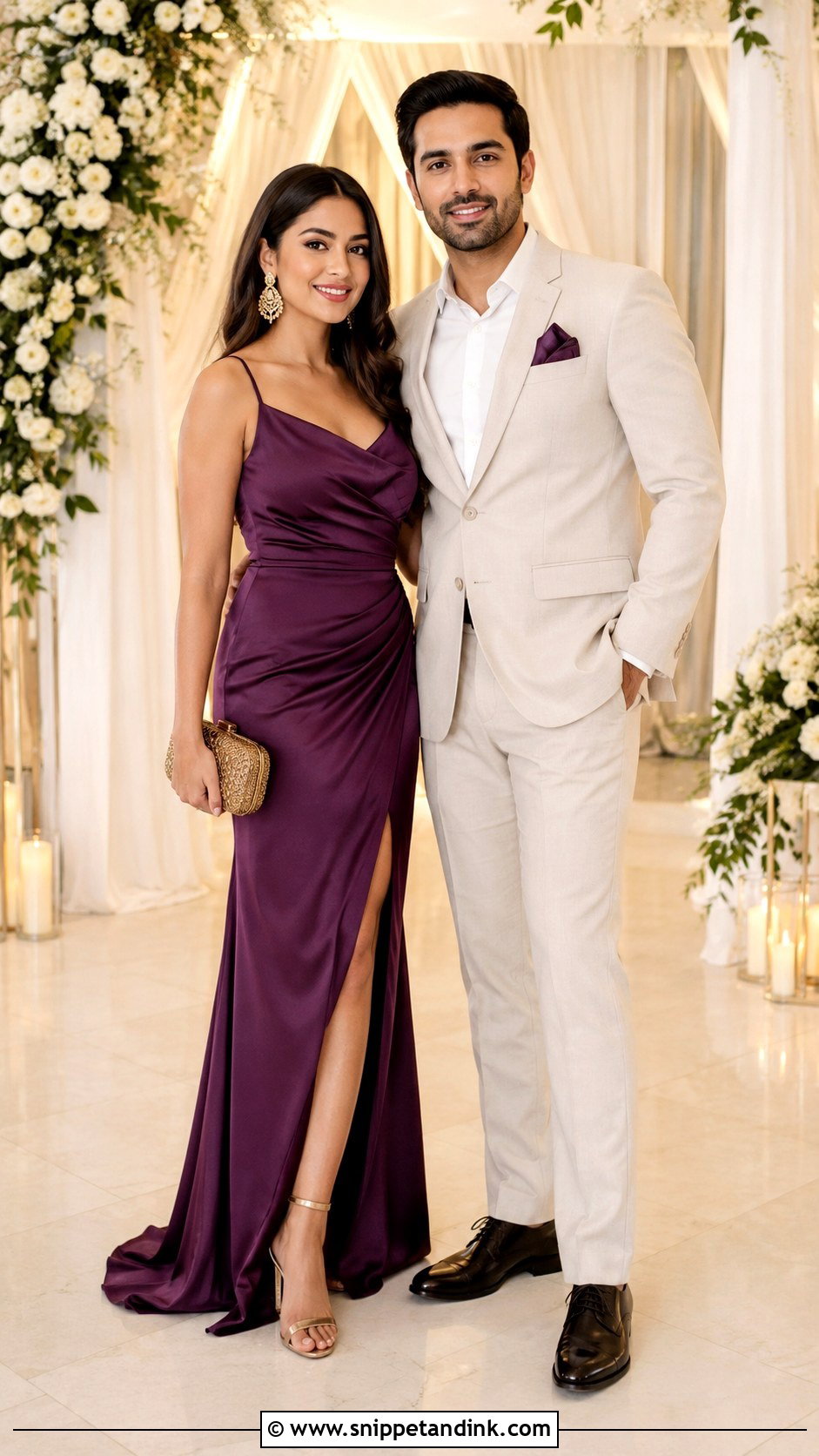
Plum is the deep shade I suggest when burgundy feels too expected. Velvet, satin and flowing crepe all hold it well, with gold earrings, a matching clutch and metallic heels. The cream suit brightens the partner’s side, and a plum tie, pocket square or boutonniere makes the contrast look planned. The dark dress against the light suit already does the work, so accessories stay simple. Indoor receptions, evening ceremonies and cooler weather.
22. Yellow Anarkali And White Kurta Pajama Wedding Outfit
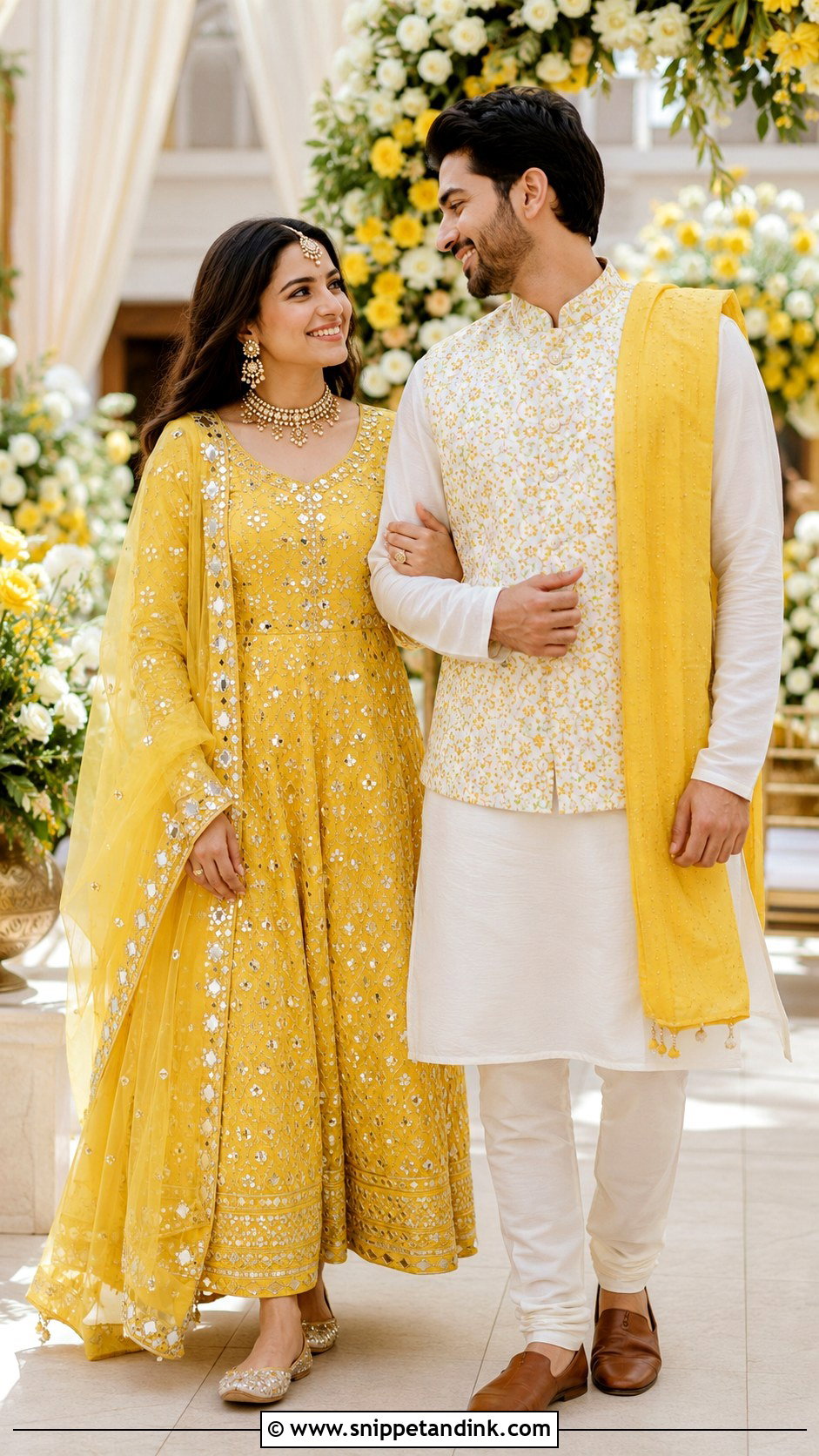
Comfort decides whether this daytime pairing works. A fully embellished yellow anarkali gets heavy, so for a long outdoor function I steer toward gota or soft embroidery over dense mirror work, and embellished flats over heels on grass, with gold jewelry. The white kurta pajama stays fresh, linked by a yellow stole, a printed Nehru jacket or a matching pocket detail. Keep every fabric breathable for pre-wedding ceremonies and warm venues.
23. Fuchsia Lehenga And Charcoal Sherwani Wedding Outfit
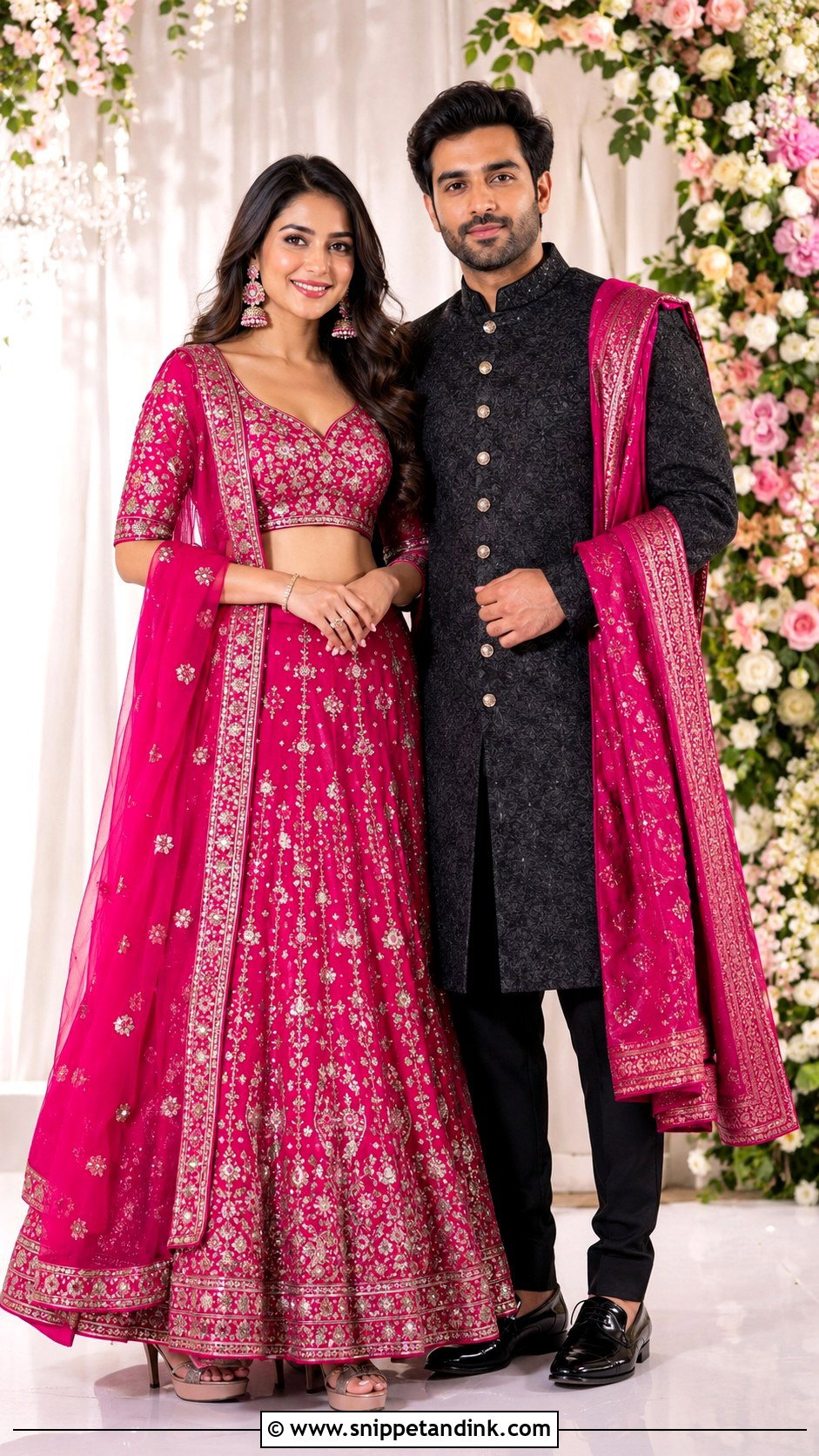
Fuchsia is the brightest shade on this list, and charcoal is what keeps it from tipping into costume. A fuchsia lehenga with metallic embroidery, a matching dupatta and statement earrings carries the energy, while the charcoal sherwani stays sleek, never heavily embellished, with a fuchsia stole, buttons or pocket square and black or deep brown shoes. Vivid pink tends to lose its embroidery detail in photos, which is one more reason I keep the sherwani plain: something in the frame has to hold texture. Receptions, sangeets and evening portraits.
24. Ice Blue Gown And Sand Suit Wedding Outfit
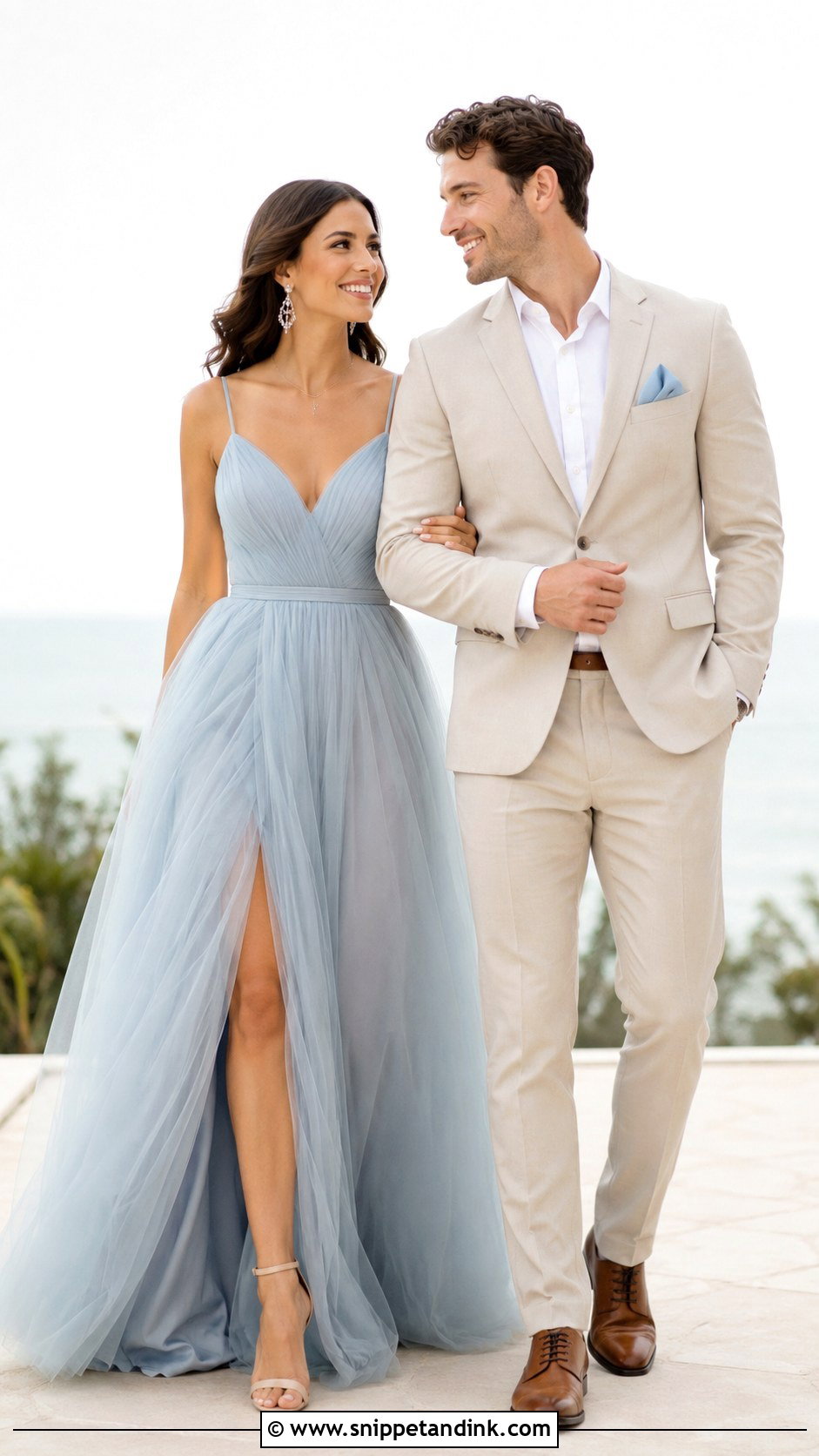
Ice blue is so pale that under an overcast sky it can look grey, and sand beside it stops it going cold. Tulle, chiffon or satin all work, with silver jewelry, soft waves and nude or silver heels. The sand suit stays relaxed but dressy with a white shirt, light brown shoes and an ice blue pocket square or boutonniere. Lightweight fabric moves best in a breeze, which suits beach weddings, garden ceremonies and summer receptions.
25. Rust Saree And Black Bandhgala Wedding Outfit
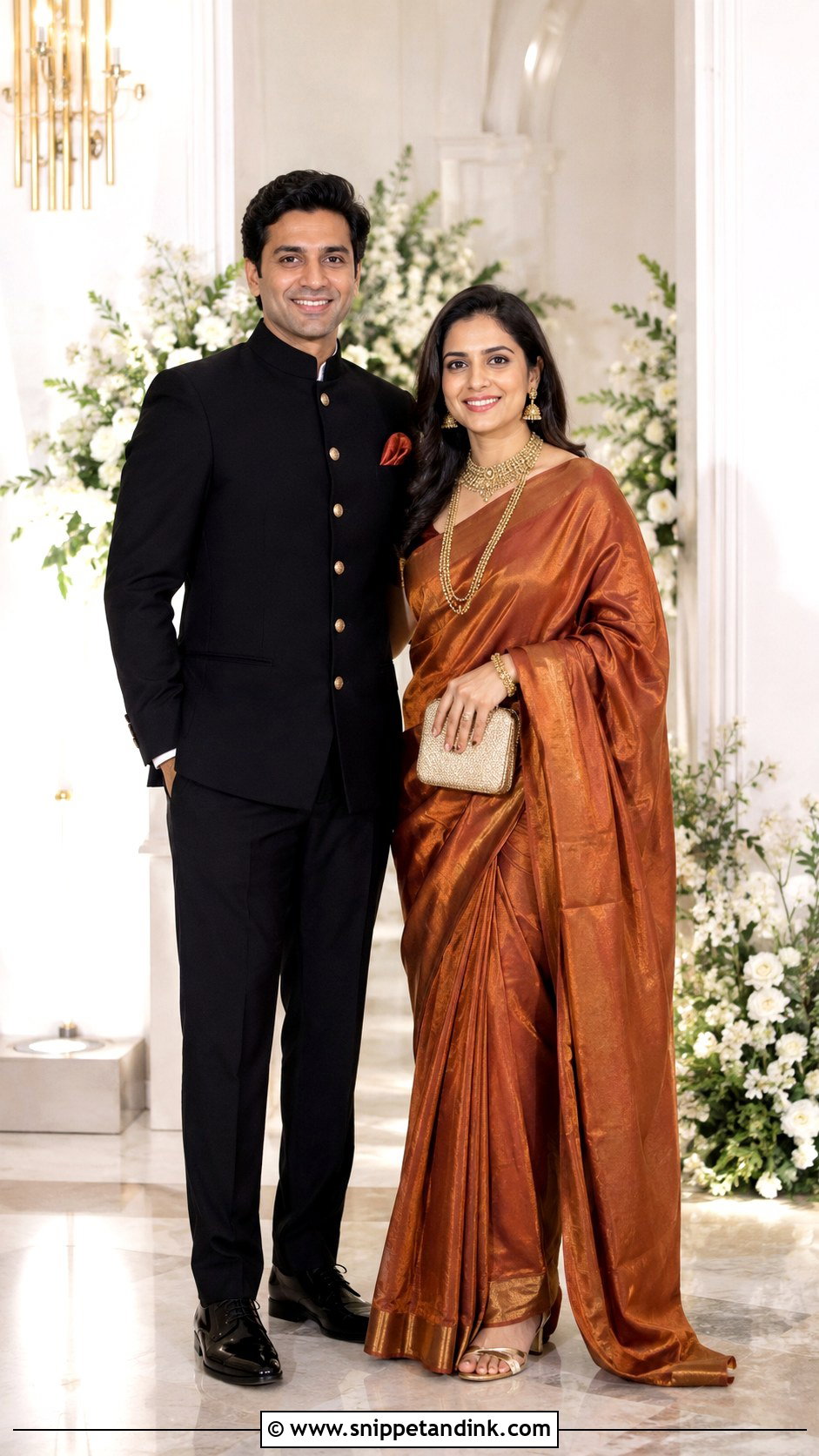
Rust and black is the most dramatic pairing here, and it asks for restraint everywhere else. The saree in silk, satin or organza wants gold jewelry, a structured clutch and metallic sandals; the black bandhgala gives clean structure, with a rust pocket square, brooch or stole as the only link and no extra colors. Black wool shows lint and stray dupatta fibers badly, so a lint roller goes in my kit whenever I dress this pair. Evening receptions, traditional venues and fall weddings.
How These Pairs Behave Under Flash, Bulbs and Midday Sun
Strong contrast is harder to photograph than most couples expect. A camera sets its exposure for one brightness at a time, so a white gown beside a black tuxedo forces a choice: keep the detail in the lace and the suit turns into a flat black shape, or open up the suit and the gown loses its texture. Ivory, champagne and navy close that gap a little, which is part of why I suggest them over pure white and black.
Warm reception lighting is the other surprise. Lavender, ice blue and powder blue drift toward grey under amber bulbs, while champagne and gold turn more yellow. If you can, look at your fabrics under the venue’s evening light, or at least under a warm lamp at home, before the final order goes in.
Lining Up Two Very Different Fitting Schedules
A made-to-order lehenga or gown usually needs several months from order to final fitting, while a suit often needs only a few weeks of alterations. That mismatch catches couples out, because the partner’s accent piece can’t be matched until the main fabric exists. I order the bride’s outfit first, ask the maker for an offcut, and only then source the tie, stole or pocket square against it.
Then plan one try-on together, fully dressed, about two weeks before the wedding. It’s the only time you see the pair as the camera will, and there is still time to swap an accent that looks wrong.
Let the Small Repeat Do the Work
None of these pairings ask you to dress alike. What makes them work is balance, the same level of formality on both sides, and one small repeat that ties the outfits together. A dress against a suit, a lehenga beside a sherwani, a saree with a structured jacket: the rule I follow is one main contrast, then a small color repeated in accessories, embroidery, jewelry, shoes or flowers. That keeps the couple’s outfits polished without looking forced, at a traditional ceremony or a relaxed city wedding alike.
You'll Like These Ideas:


Leave a Reply