
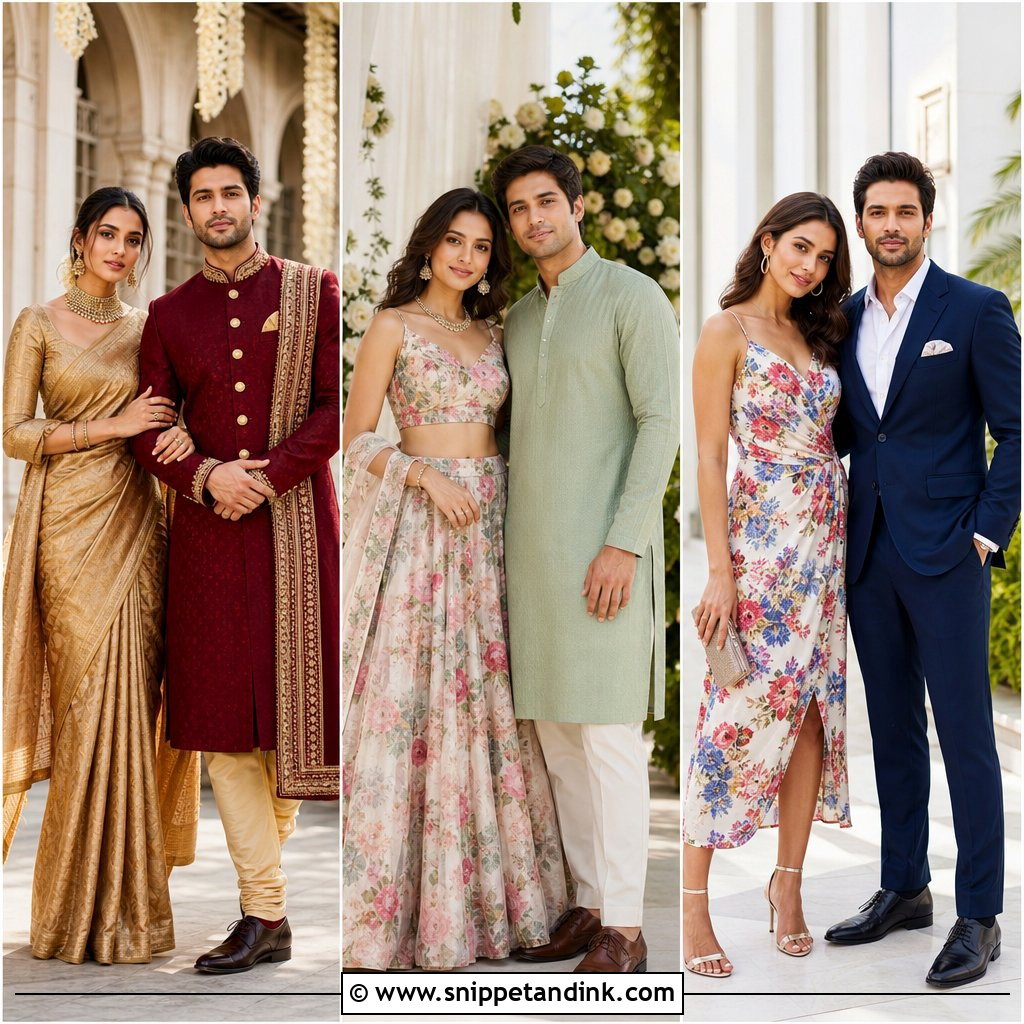
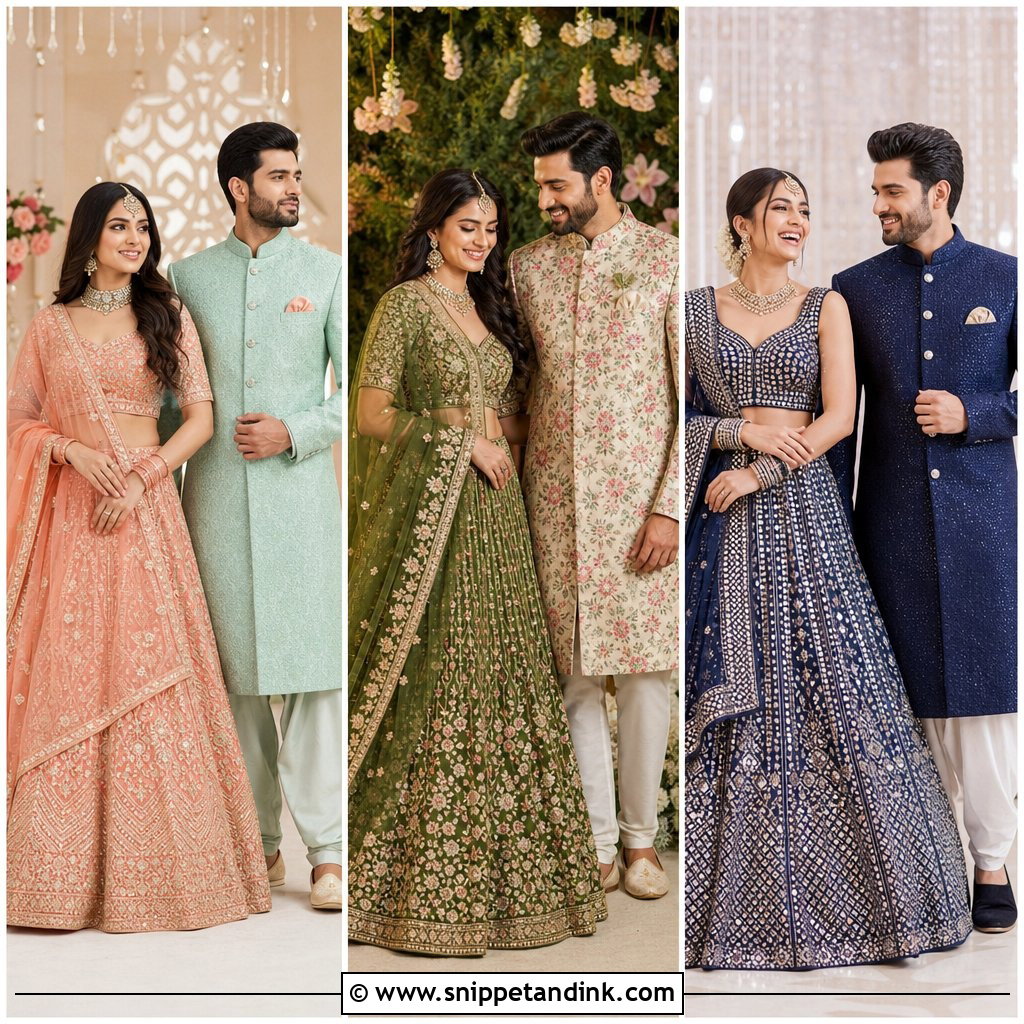
Coordinating a couple for an Indian wedding is mostly about one shared thread, not two identical outfits. When I style a pair, I look for the link first: a motif from her lehenga repeated on his stole, a saree border echoed on a veshti, or one accent color that turns up on both. Pastels hold their depth in daylight, while evening events can carry jewel tones and metallic embroidery, because warm indoor lighting flattens soft colors. From traditional ceremony attire to reception tailoring, the pairings below show how much connection you actually need, and where to stop.

Coordinating Two Outfits Made by Two Different Tailors
Most couples order from separate places: her lehenga or saree from a bridal house, his sherwani from a menswear tailor. That’s where coordination usually breaks, because neither shop ever sees the other’s fabric. This is the order I work in.
- Settle the bride’s outfit first. Custom bridal embroidery and handwoven sarees have the longest lead times, often several months, and they set the palette for everything else.
- Ask for a fabric swatch or a small cut-off of the border and carry it to his fitting. A phone photo isn’t enough, since screens shift reds and golds badly.
- Start with one link only, such as a border color, a motif or a metal finish. Add a second only if the outfits still look unrelated.
- Agree on the gold. Zari and buttons come in antique, bright and rose finishes, and mixing them is the mismatch I see most often.
- Book a joint check with both outfits on, a few weeks before the wedding, so a stole or safa can still be swapped.
Lead times vary a lot by designer and by season, so ask each shop to put its delivery date in writing when you order.
1. Red Lehenga And Ivory Sherwani Outfit
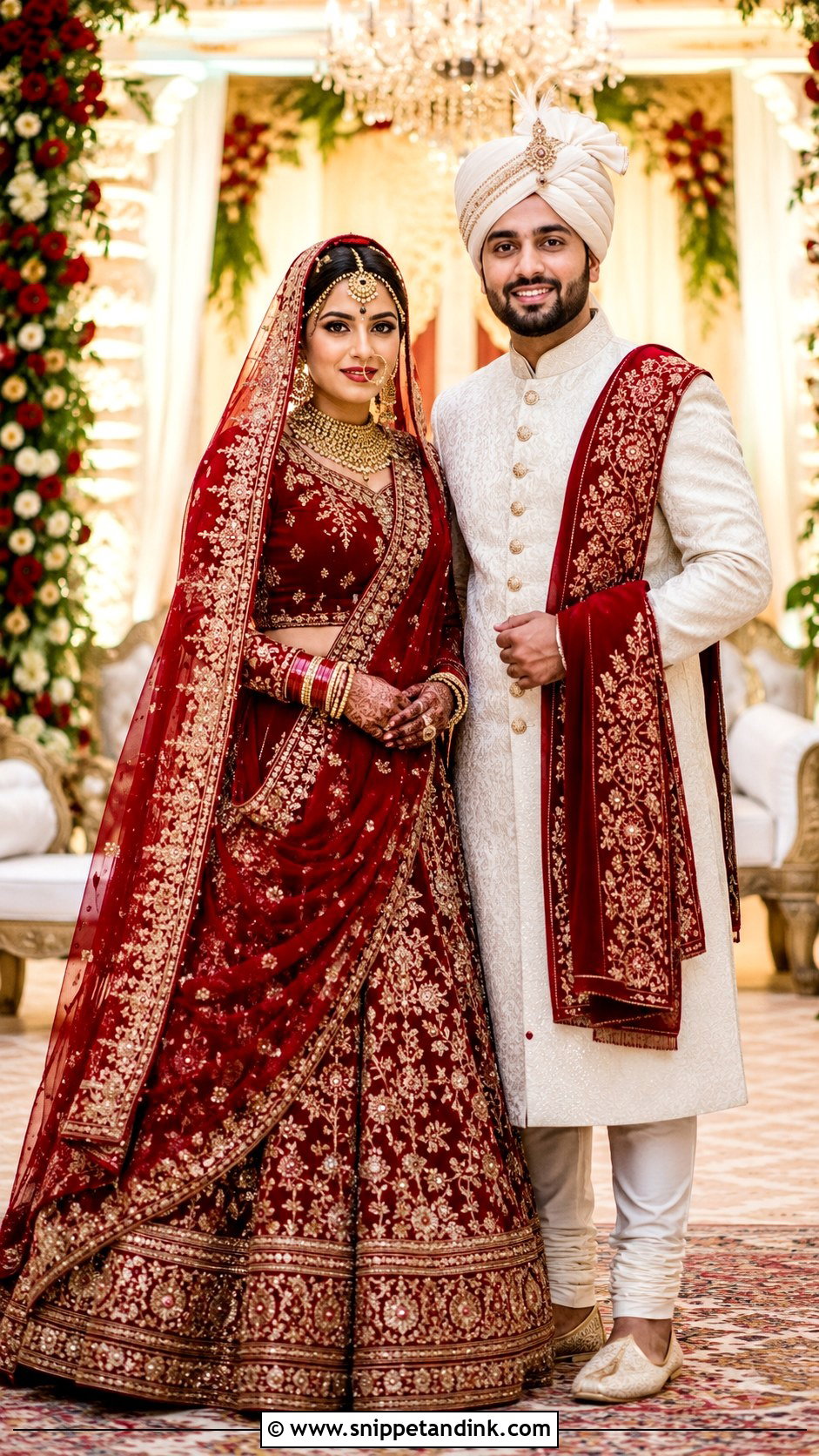
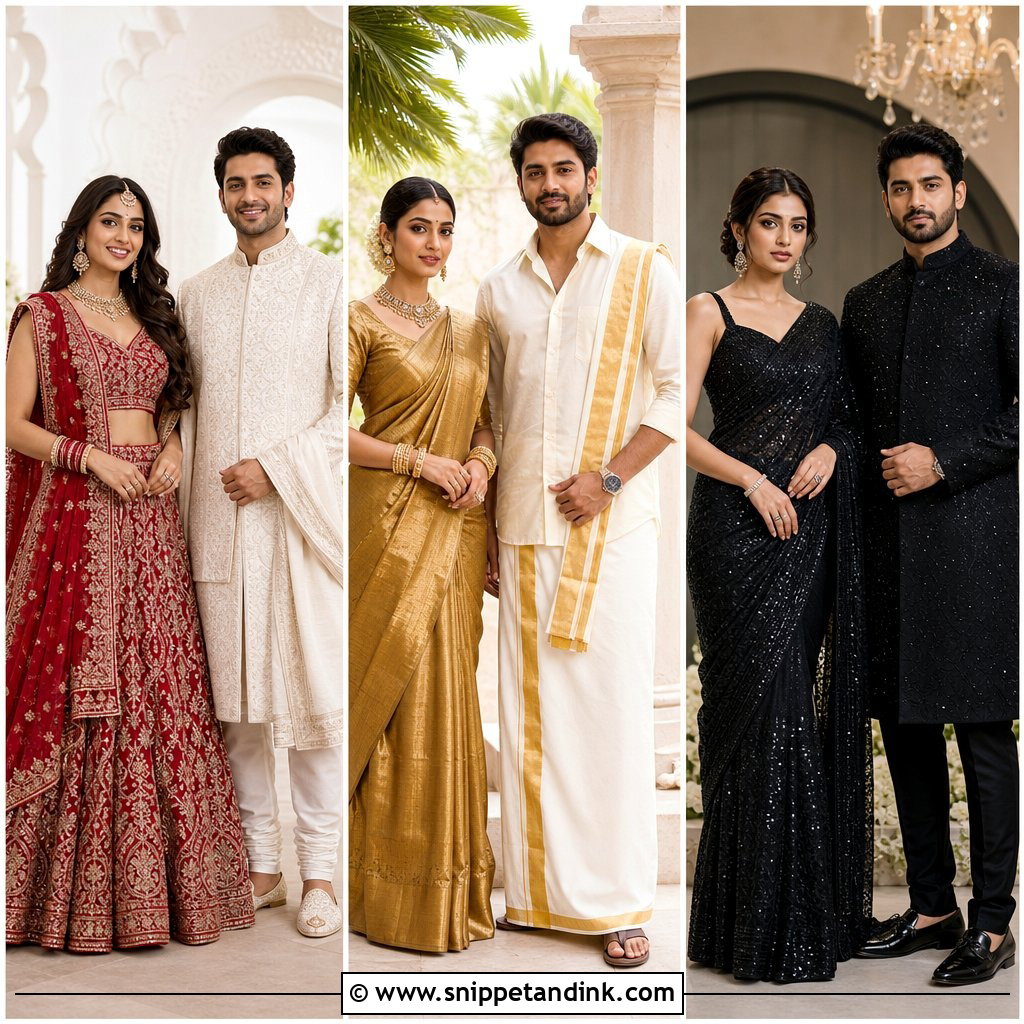
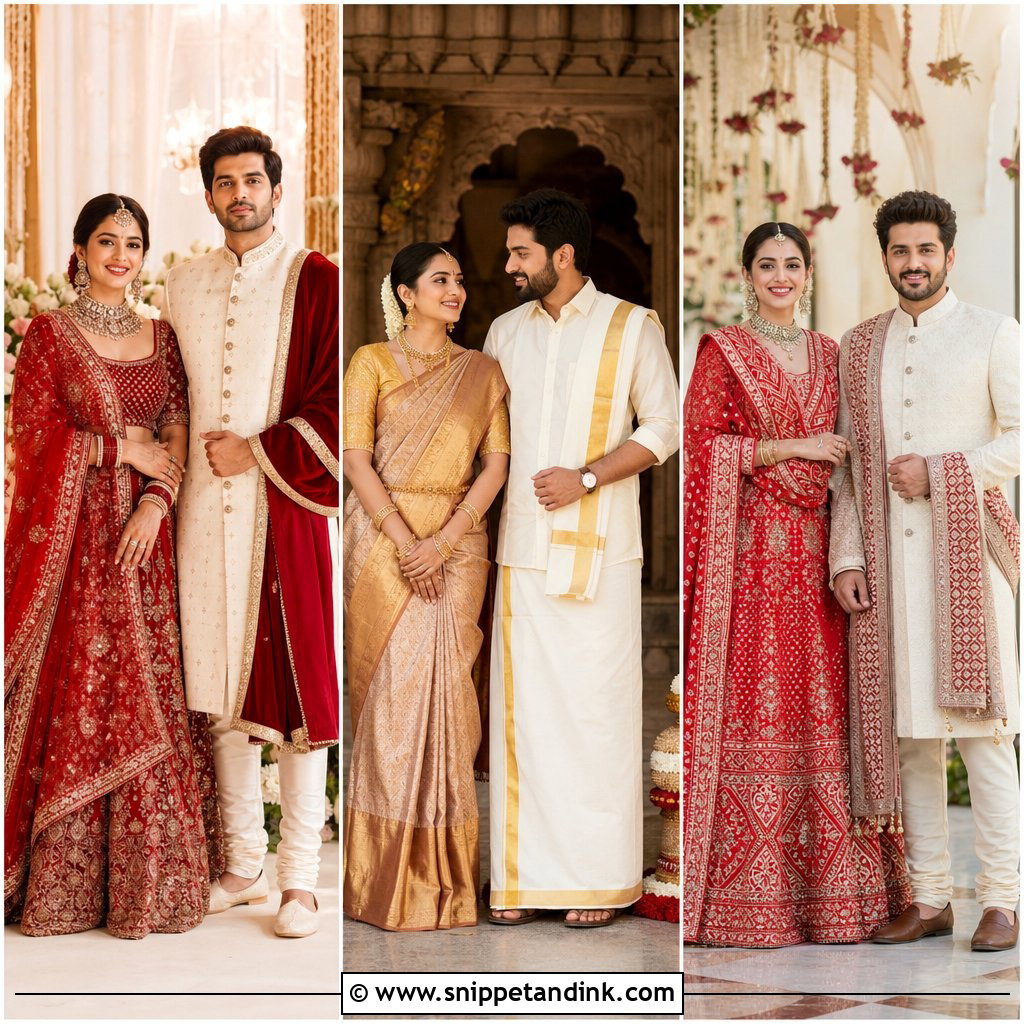
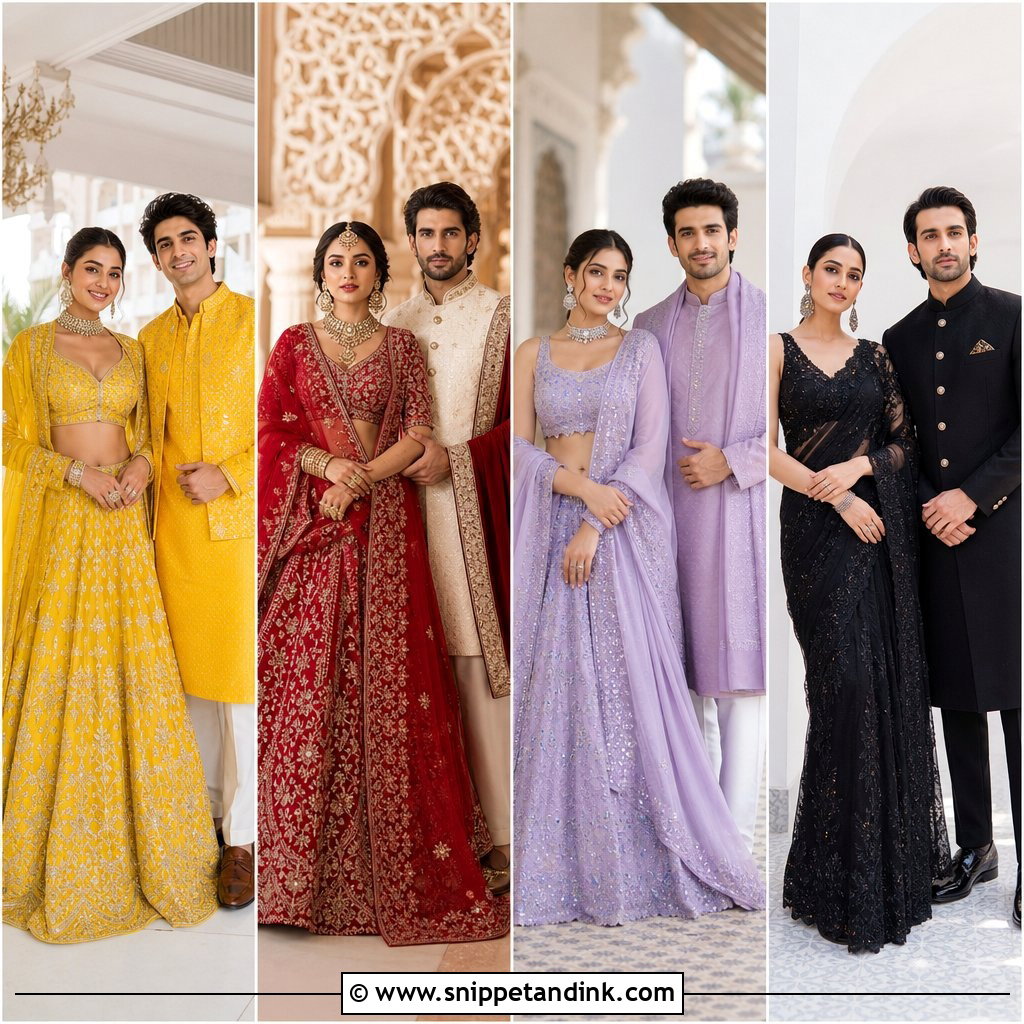
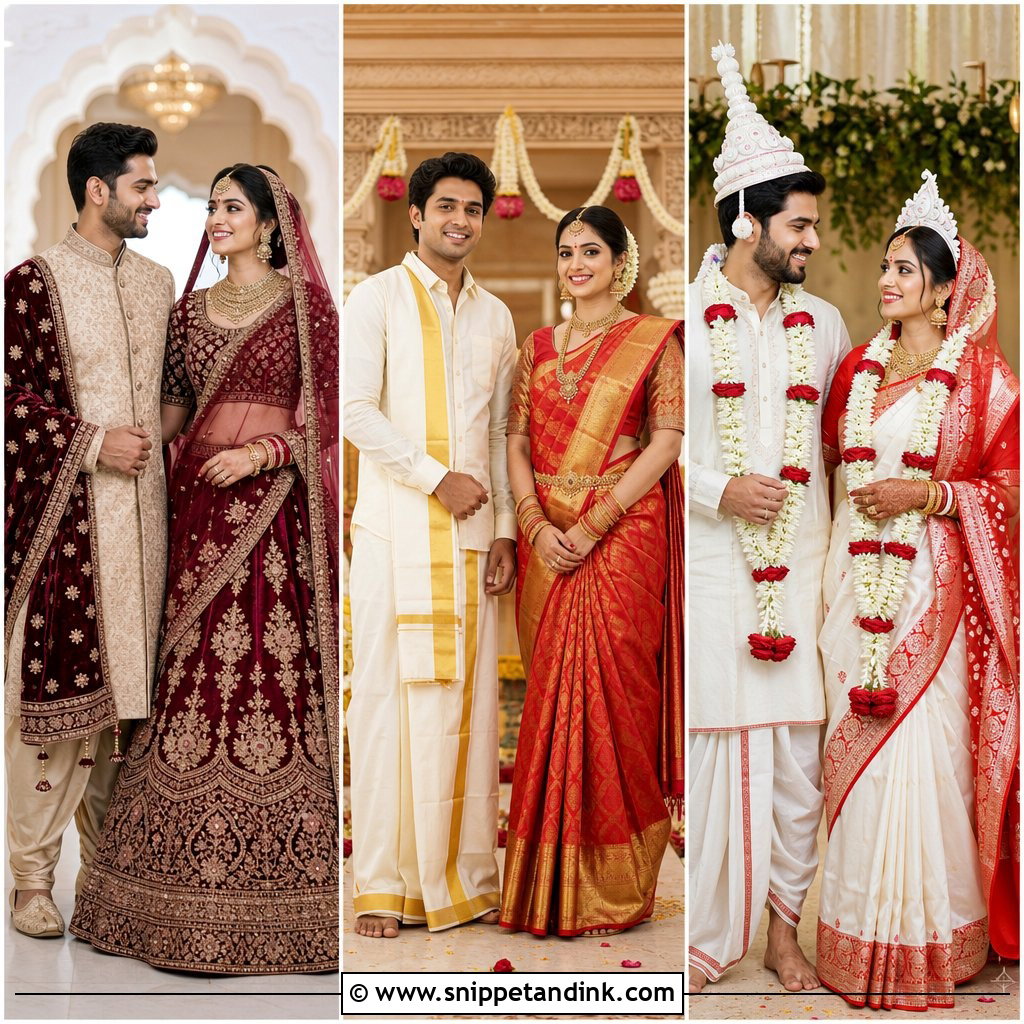
Red beside ivory is the pairing I’m asked for most, and it works because the two colors never fight for attention. Antique gold zardozi on the lehenga reads warmer than bright gold, which keeps the red from looking like costume fabric. Dress the groom in a lightly embroidered ivory sherwani, a red stole, neutral churidar and a safa in red or ivory. Then repeat one element, usually a floral motif or a gold border, and leave the rest separate. One thing I check at the final fitting: ivory sherwanis range from chalk white to cream, and chalk white beside a warm red can look grey in photos, so hold the fabrics together in daylight before anything is cut.
2. Pastel Pink Lehenga And Beige Sherwani Outfit
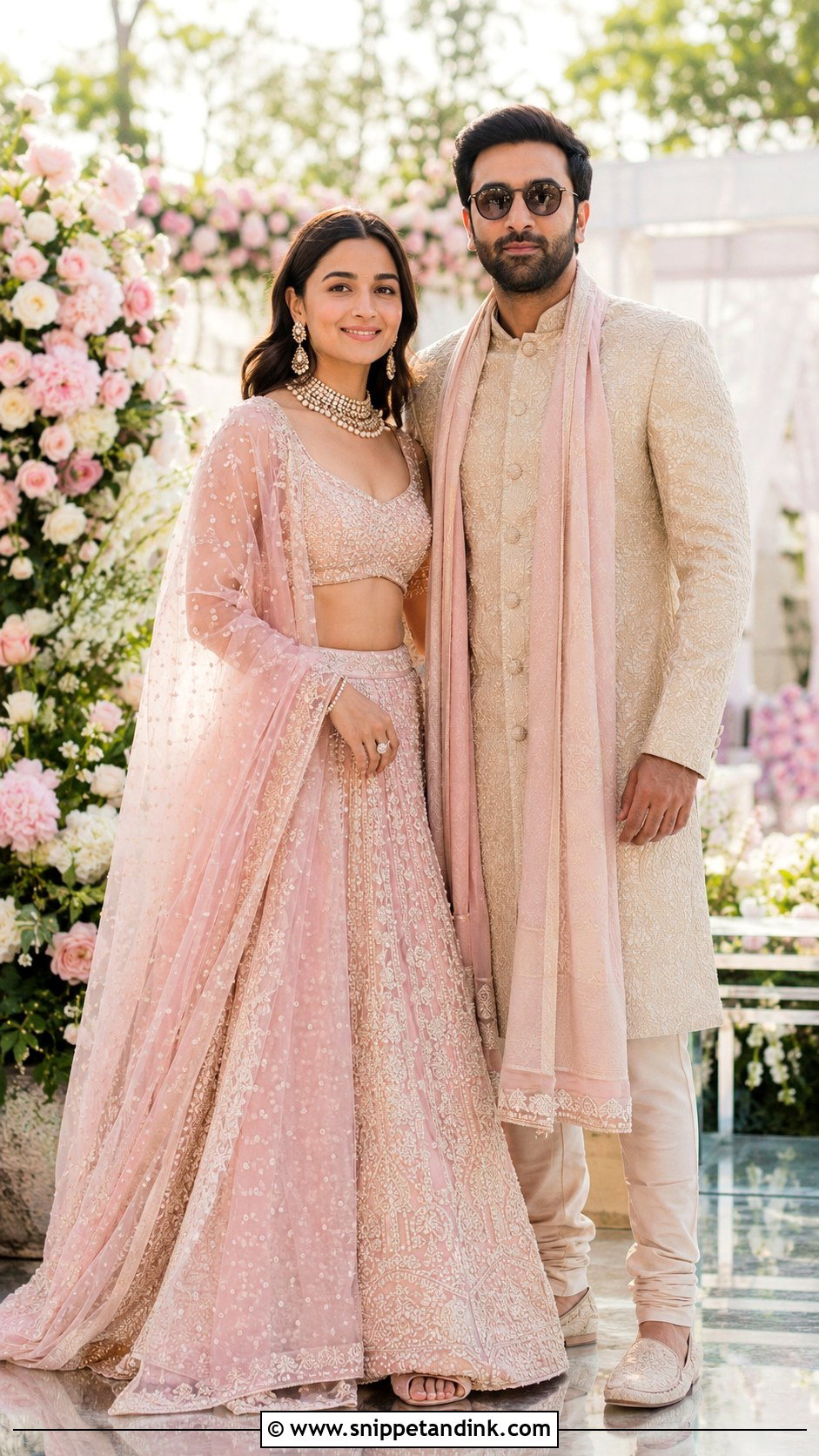
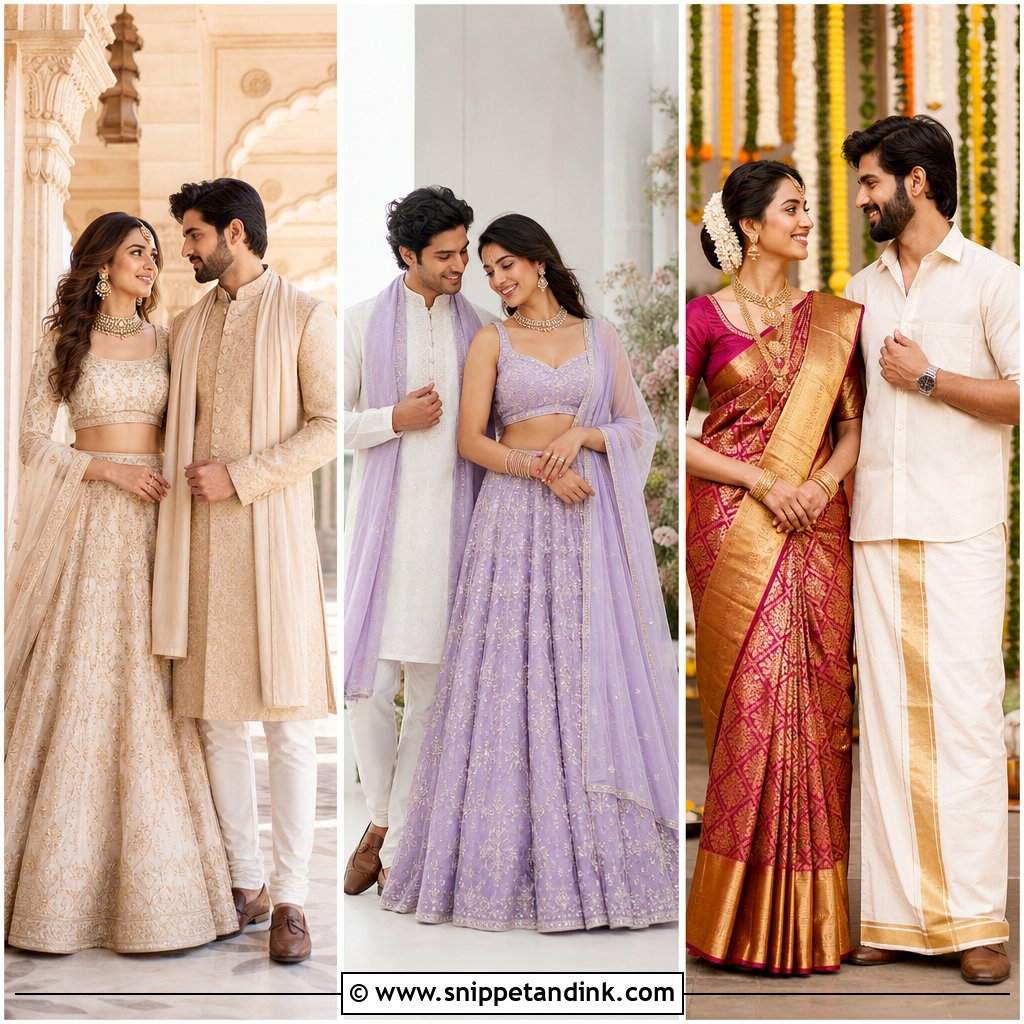
Pastels belong to daytime. Blush and dusty pink lose their depth under warm evening bulbs, but in natural light they look exactly as they did in the shop. A blush lehenga with pearl embroidery and a net dupatta stays light enough to wear for hours, and pearl jewelry with a small potli keeps it quiet. A beige or champagne sherwani gives the groom a base that doesn’t compete, and a pink stole with a matching safa ties the two together. I’d rather layer several pinks than chase one exact shade, since dye lots never match perfectly anyway. Rose, mauve and champagne beside a floral mandap give the photographer depth to work with.
3. Emerald Green Lehenga And Gold Sherwani Outfit
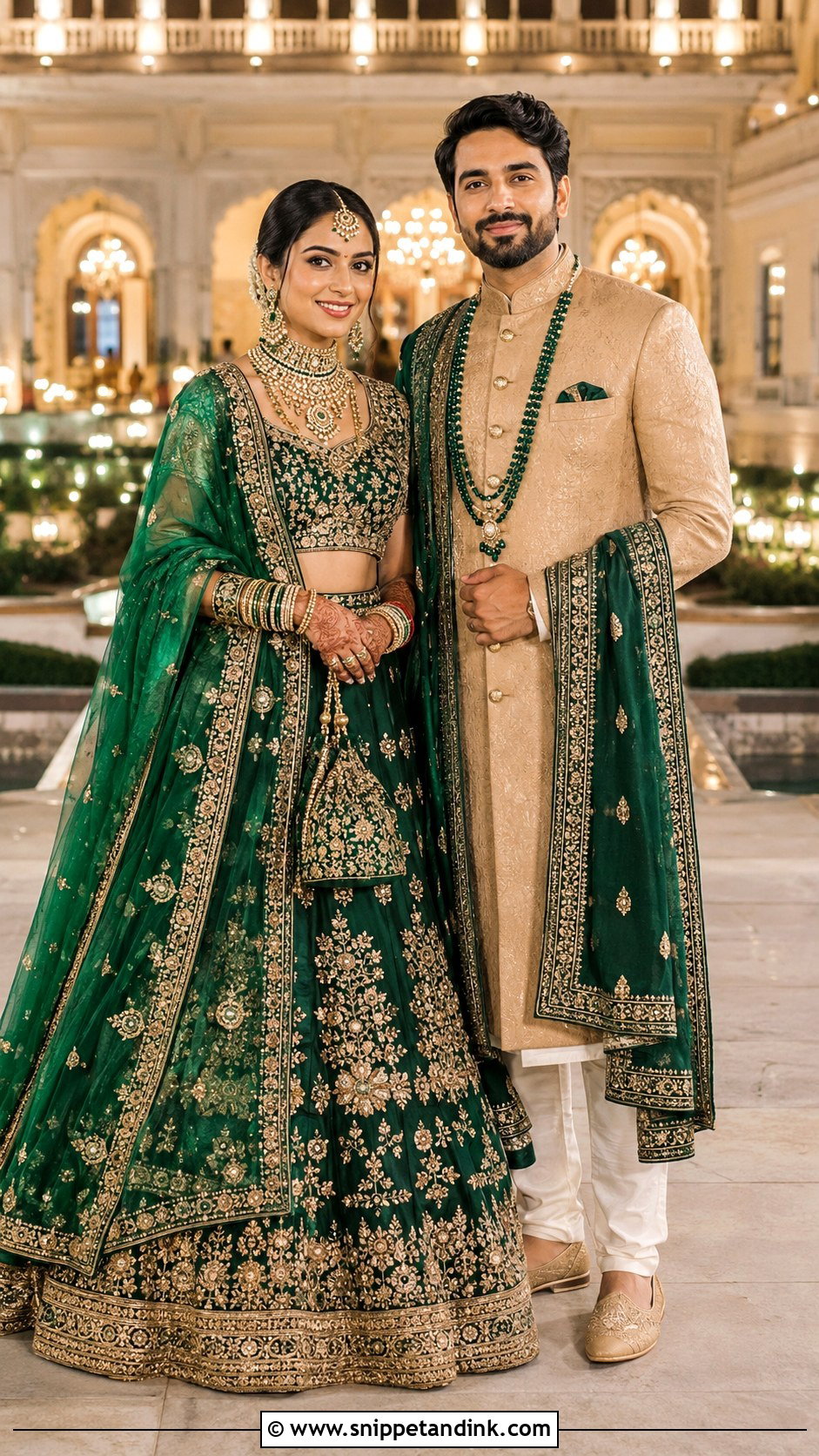
Emerald needs weight to look right, so I steer brides toward velvet or brocade rather than a thin georgette that turns the green flat. Pair it with gold embroidery, a fitted blouse, kundan jewelry and stacked bangles. The groom’s matte gold sherwani can take emerald buttons and a green stole with dark brown or gold mojris. Skip the green safa if his sherwani is already heavily worked; an ivory turban gives the eye a rest. The detail people miss is undertone. A yellow gold next to a rose gold reads as a mistake, so match the metal finish across both outfits. Velvet is warm, which makes this a winter combination, and I wouldn’t book it for an outdoor afternoon in summer.
4. Maroon Lehenga And Champagne Sherwani Outfit
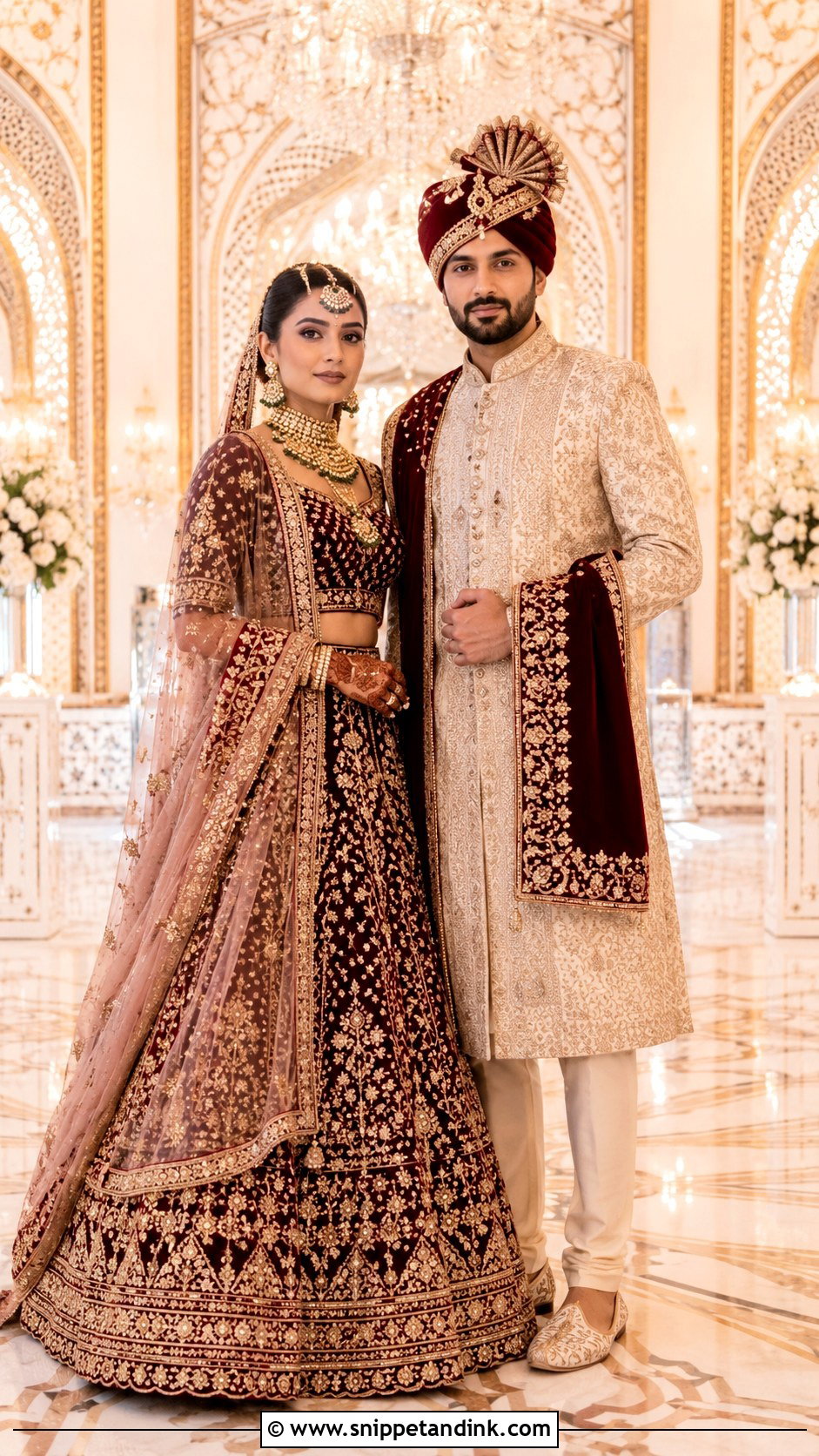
Maroon is red with the volume turned down, and it suits brides who feel loud in bright red. The lehenga carries antique gold embroidery and velvet borders, with a champagne dupatta to lift the color near the face. Polki and maroon bangles stay with the traditional mood. On the groom, keep maroon to threadwork at the collar, cuffs and buttons of a champagne sherwani, plus a maroon stole and embroidered juttis. Once maroon covers his whole outfit, the two of you merge into one dark block in group photos. Heritage halls with warm lighting flatter this pairing; harsh white LEDs wash it brown.
5. White And Gold South Indian Wedding Outfit
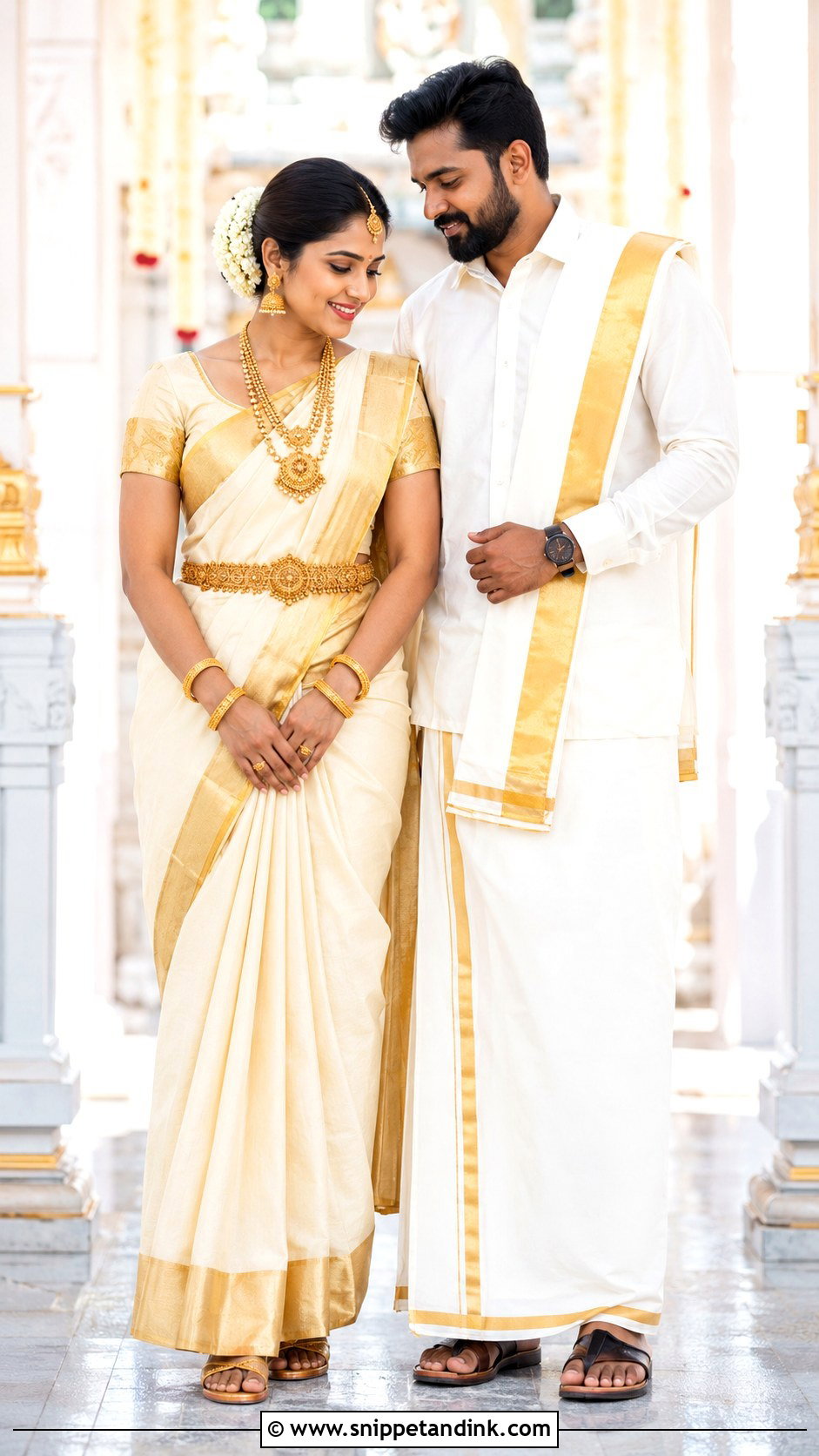
For a temple ceremony, the textiles do the styling. An ivory Kanjeevaram saree with a broad zari border, a silk blouse, temple jewelry and fresh flowers around the bun needs very little else. The groom wears a crisp white veshti, a silk shirt and a gold-bordered angavastram. My favorite trick here is matching the width or pattern of the two gold borders, which nobody notices consciously but everyone reads as planned. A pure silk Kanjeevaram with a heavy zari border is noticeably weighty, so practise sitting cross-legged in it before the day. If you want more color, a red, green or maroon blouse can be repeated on a narrow border of his shawl.
6. Red Kanjeevaram Saree And Cream Sherwani Outfit
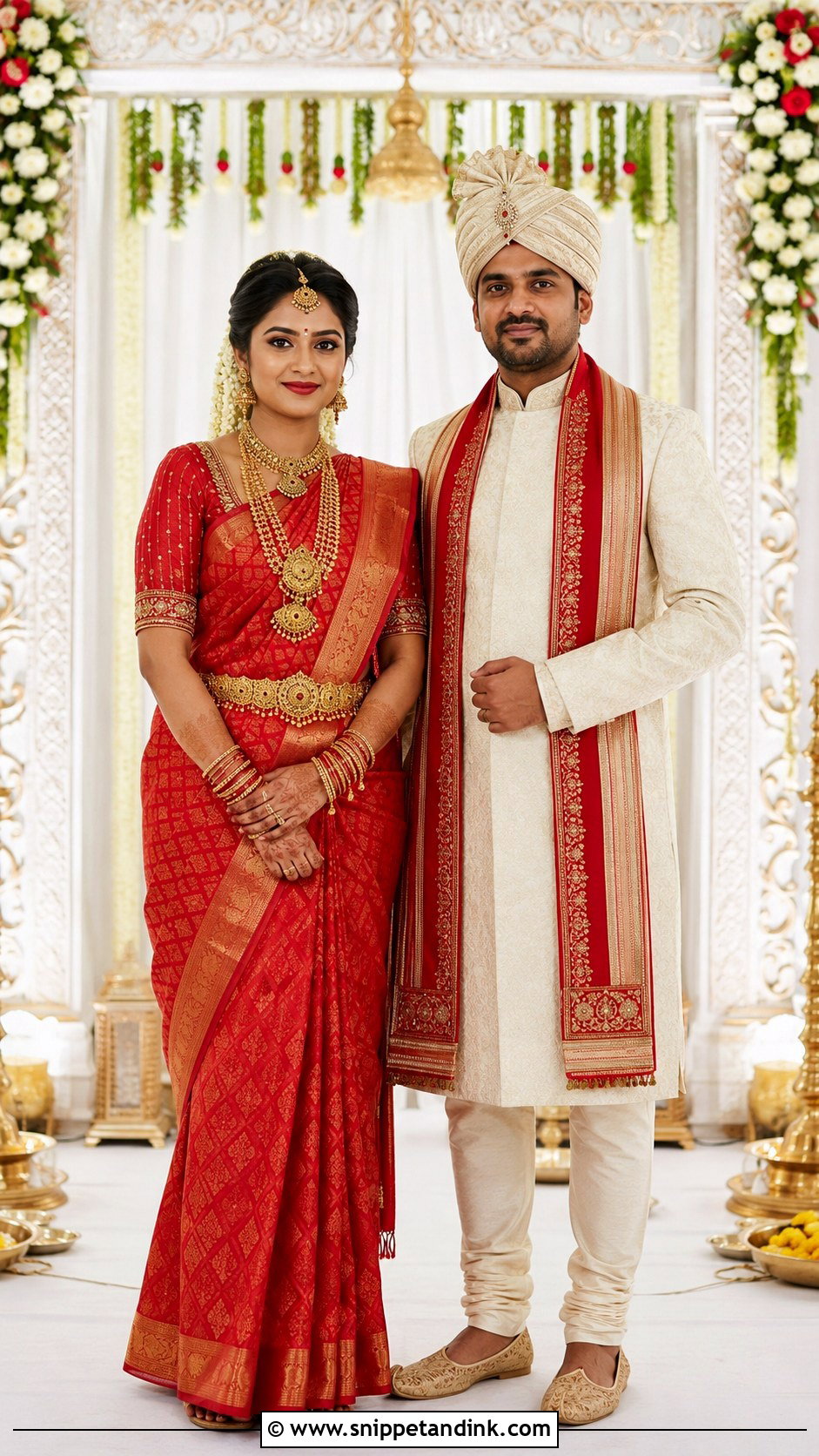
This one puts a South Indian saree and a North Indian sherwani in the same frame, which is why I suggest it to couples from two regions. Red Kanjeevaram silk has a natural glow, so give it a blouse in matching red, contrasting green or antique gold, then temple jewelry, a waist belt and jasmine. A cream raw silk sherwani has a dry, matte surface that sits beside that sheen instead of competing with it. Add gold buttons, tailored churidar and a red stole that echoes the saree, and keep his safa plain cream. Jasmine wilts quickly in heat, so ask for the strings to arrive close to dressing time and keep them cool until then.
7. Green Mehndi Lehenga And Floral Kurta Outfit
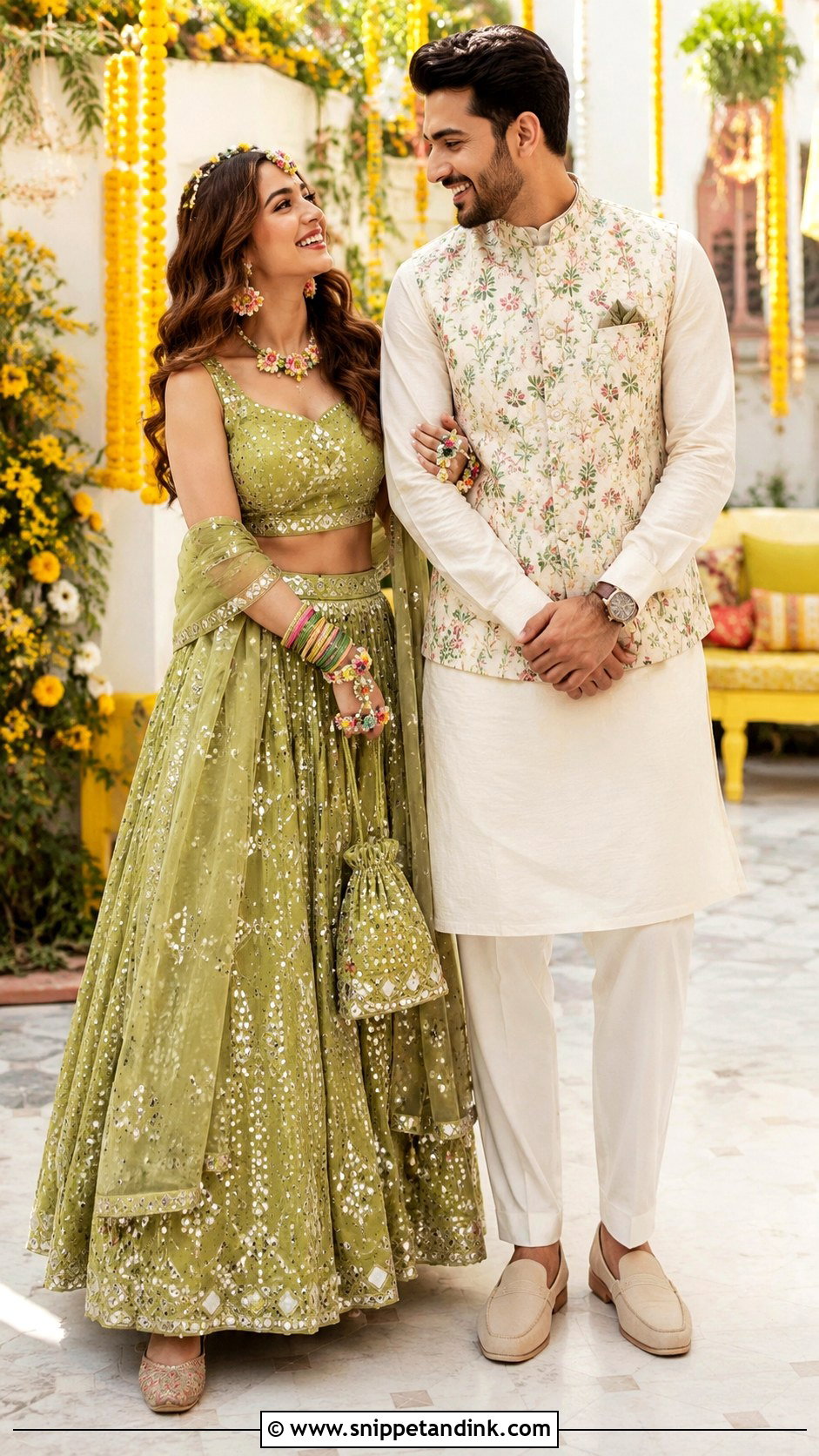
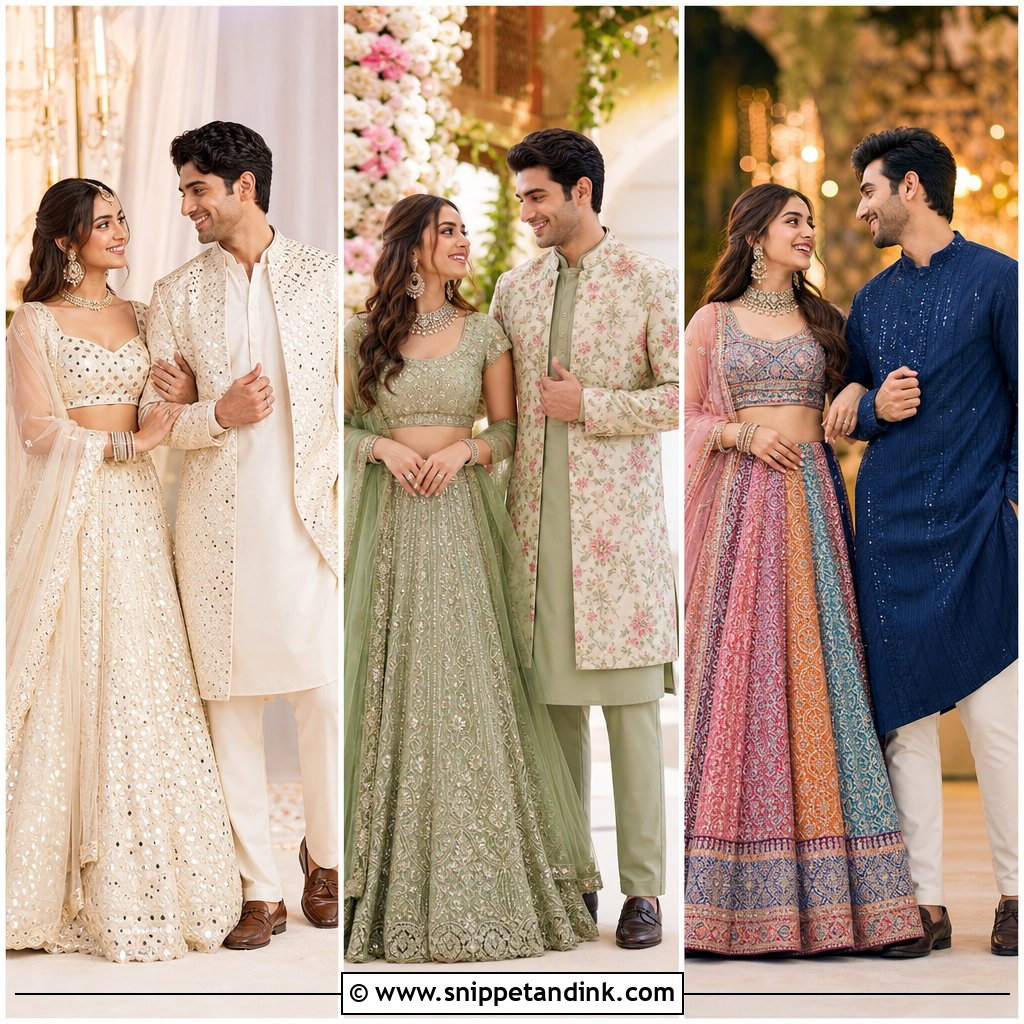
Mehndi outfits are judged on whether you can sit with your hands out for a long stretch and then get up and dance. That’s why I keep the bride’s lehenga light, with mirror work instead of heavy zardozi, and a sleeveless or short-sleeved blouse so fresh paste doesn’t smudge on a cuff. Floral jewelry, colorful bangles, a small potli and cushioned juttis finish her look. The groom’s ivory or pale green kurta pajama with a floral Nehru jacket can repeat colors from her lehenga. Mix greens rather than matching one. Sage, olive and emerald together look deliberate, and an exact match across two different fabrics almost never happens anyway.
8. Yellow Haldi Saree And White Kurta Outfit
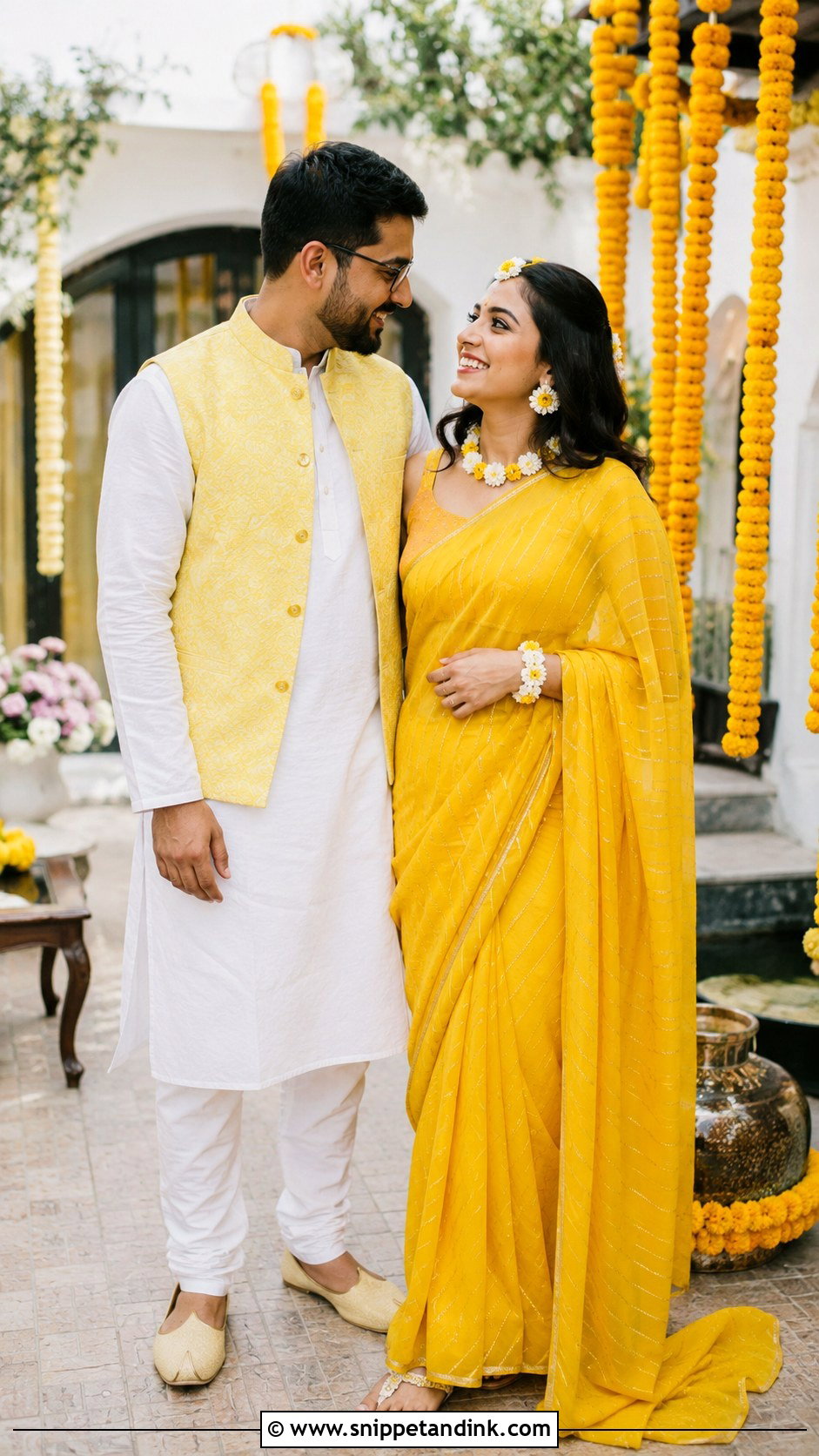
Turmeric stains cotton and silk alike, so haldi clothes are the ones I tell couples to treat as washable at best and sacrificial at worst. For a lively haldi ceremony, a light yellow saree with a simple blouse, floral jewelry and flat sandals does the job, and a pre-draped saree or shorter pallu stops the fabric dragging through the paste. The groom’s breathable white kurta pajama can take a yellow waistcoat or printed stole. White shows every mark. Some couples love that in the photos and others regret it, so decide before you buy. Marigold yellow with small green accents is all the decoration these outfits need.
9. Navy Blue Sangeet Lehenga And Bandhgala Outfit
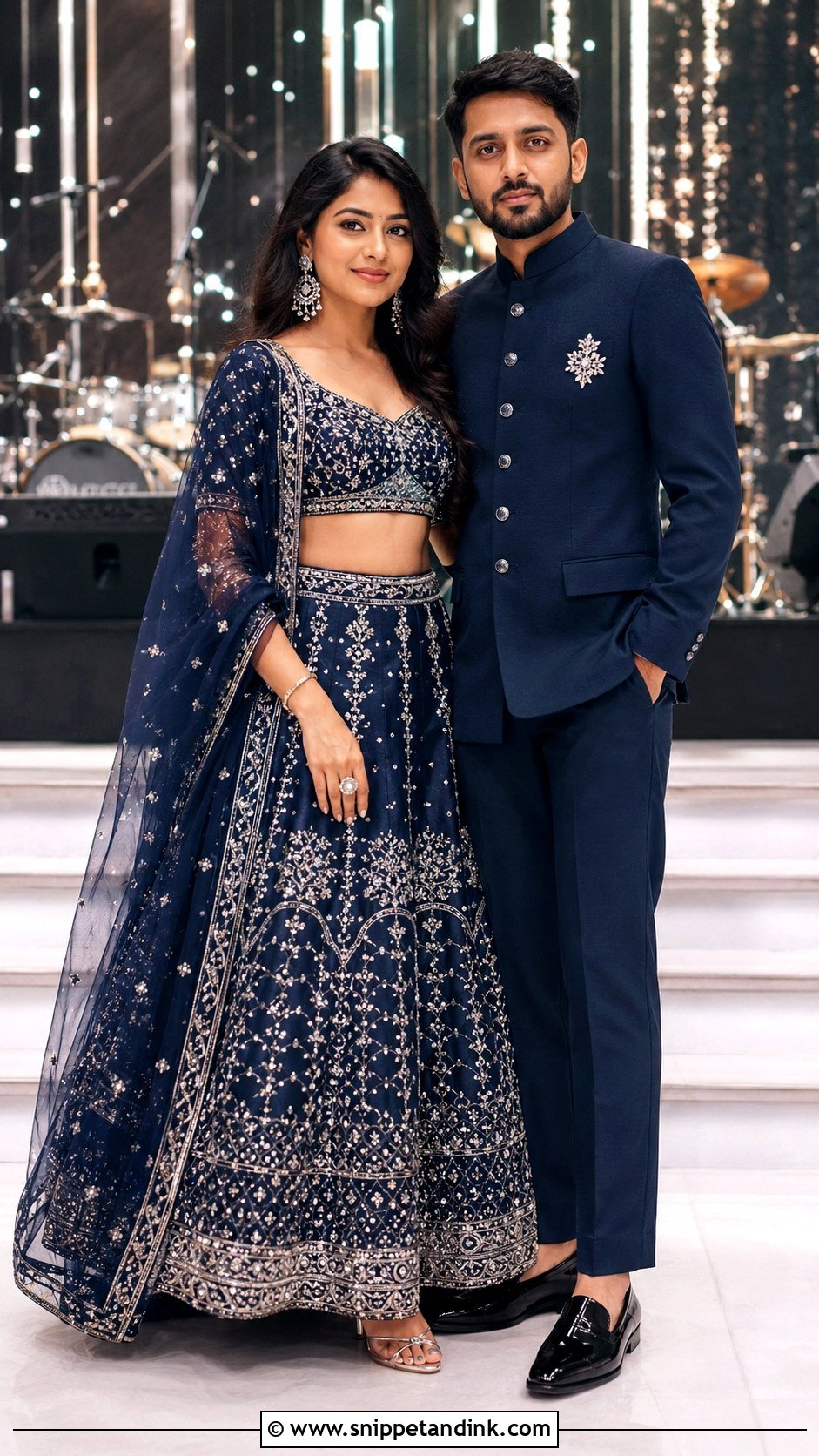
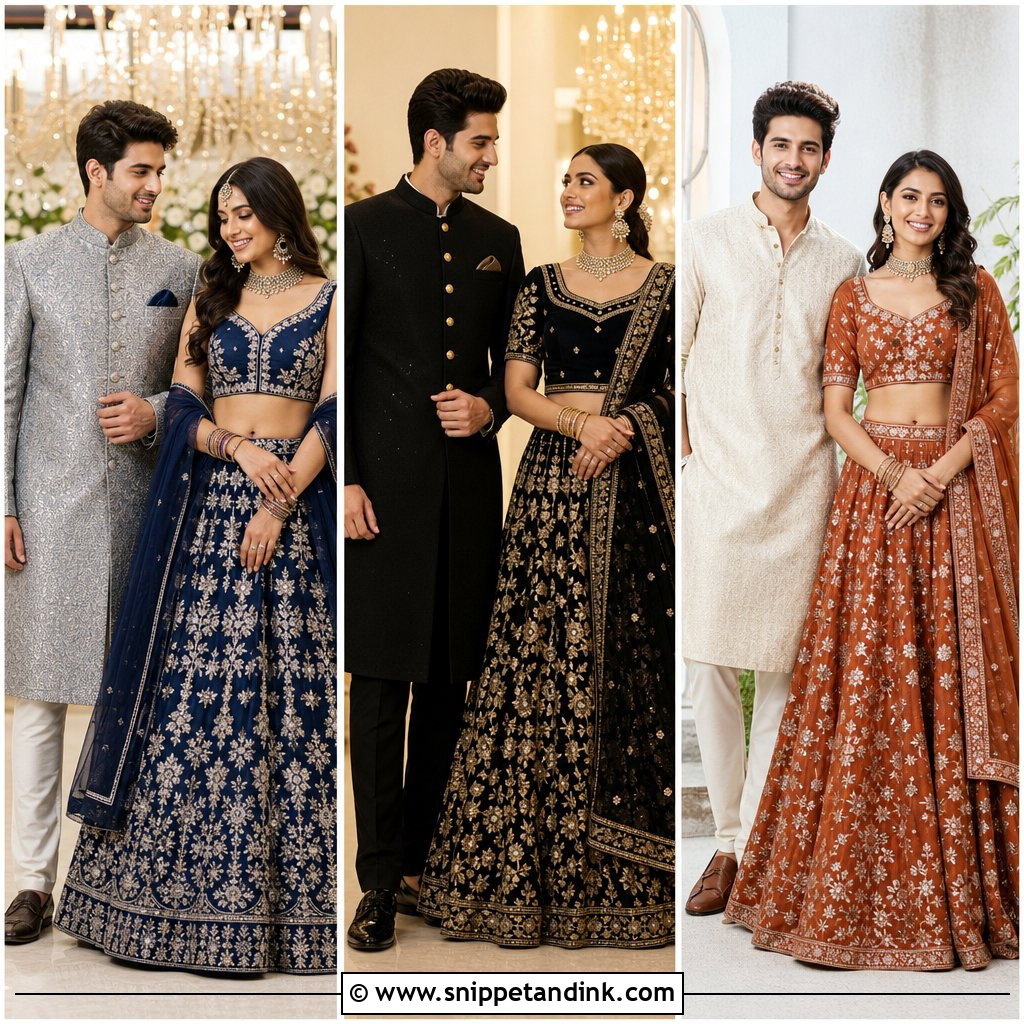
Navy is my answer for couples who want drama at the sangeet without a color that’s hard to pair. Silver sequins or mirror work on a navy lehenga catch stage lights, which matters when you’re performing. Pin the dupatta at the shoulder and the waist before you dance, because a loose drape slips by the second song. His navy bandhgala with silver buttons, slim trousers and black loafers can pick up her silver through a pocket square or brooch. The risk is that two navies blend into one shape on stage, so contrast the surfaces: shine on her, matte velvet or jacquard on him.
10. Silver Lehenga And Black Indo Western Outfit
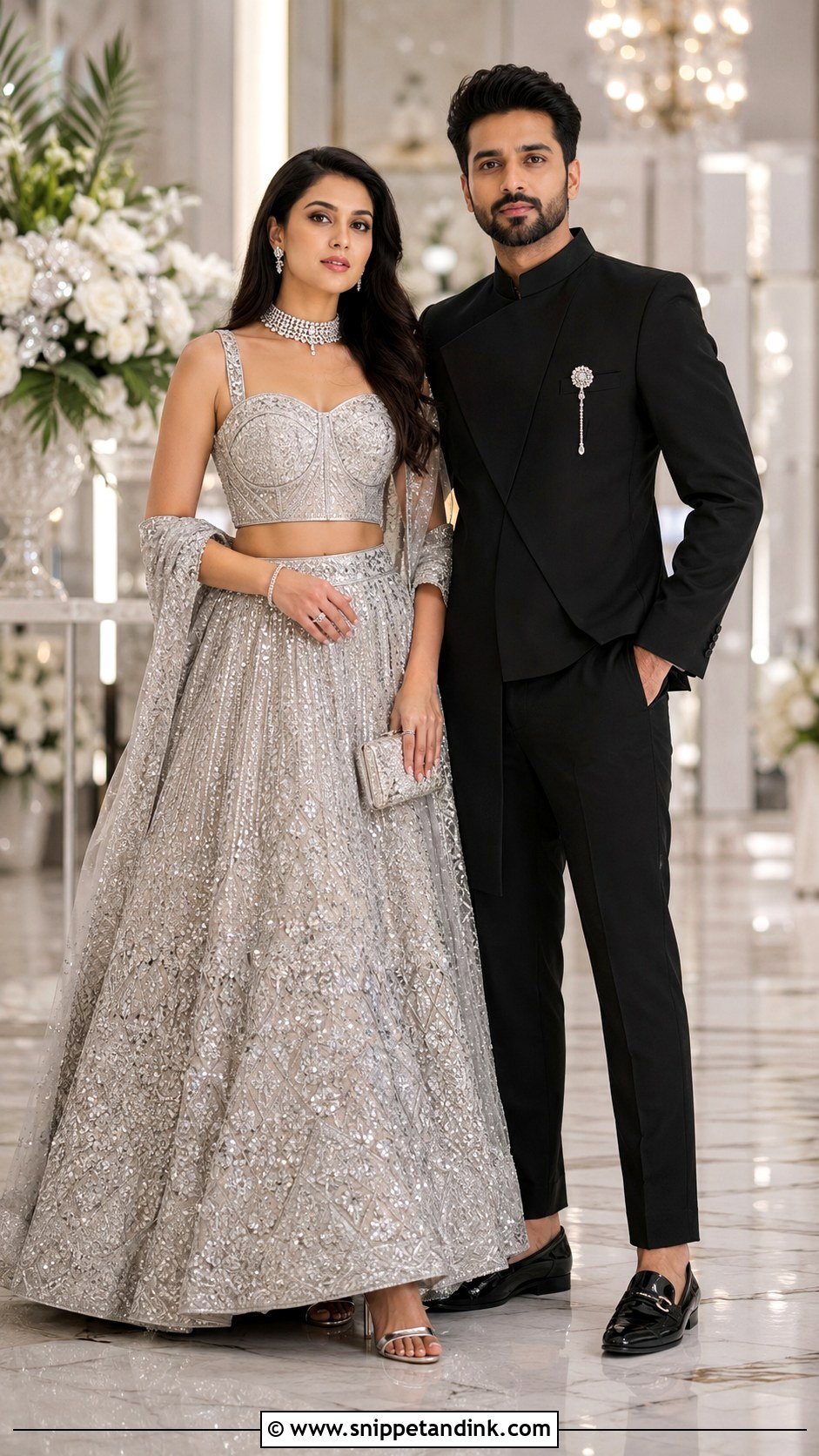
Silver and black belong at the sangeet or reception; many families avoid black at religious rituals, so ask before you plan it for anything near the ceremony. A silver lehenga with crystal work, a structured blouse and a sheer dupatta over one shoulder looks clean with diamond-style jewelry and silver heels. The groom’s black Indo Western jacket with an asymmetric closure and tapered trousers gives a sharp outline beside her. Connect them with silver buttons or a brooch, nothing more. Crystal-heavy lehengas can snag velvet or fine wool when you stand close for portraits, so check that his jacket isn’t the delicate kind.
11. Peach Floral Lehenga And Ivory Kurta Outfit
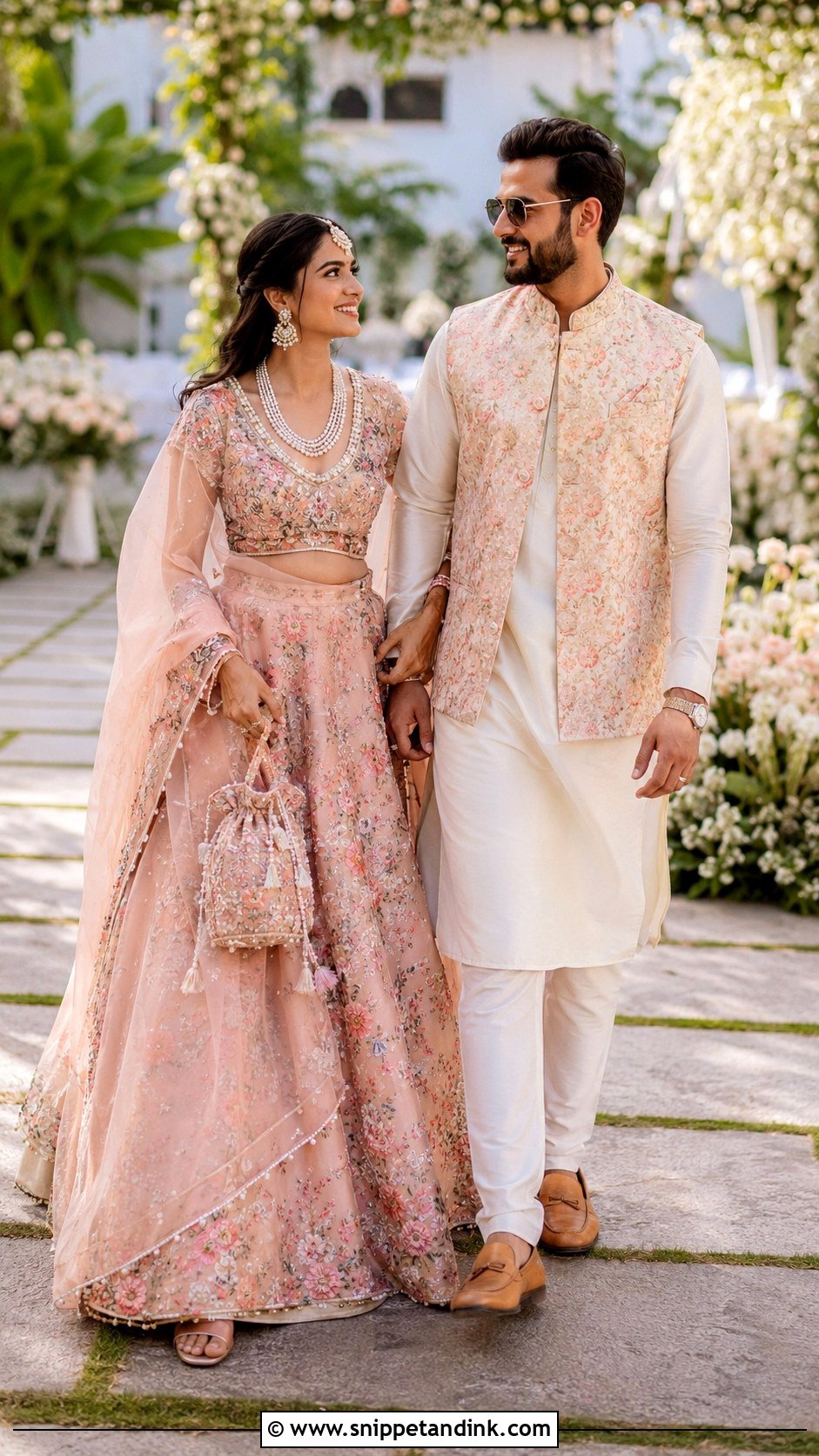
Peach floral is a garden outfit, and the print reads best in open daylight. Organza or light silk holds the shape of a floral skirt without weighing it down, while chiffon moves more in a breeze. The embroidered blouse and delicate dupatta need only pearl earrings and neutral sandals. For the groom, an ivory kurta pajama with a peach Nehru jacket is plenty, finished with tan loafers. I’d never put him in the full print. One or two flowers lifted from her skirt onto his jacket or stole connects them without making them look like matching cushions, and coral or pale green accents sit happily with peach at a welcome event.
12. Lavender Lehenga And Gray Sherwani Outfit
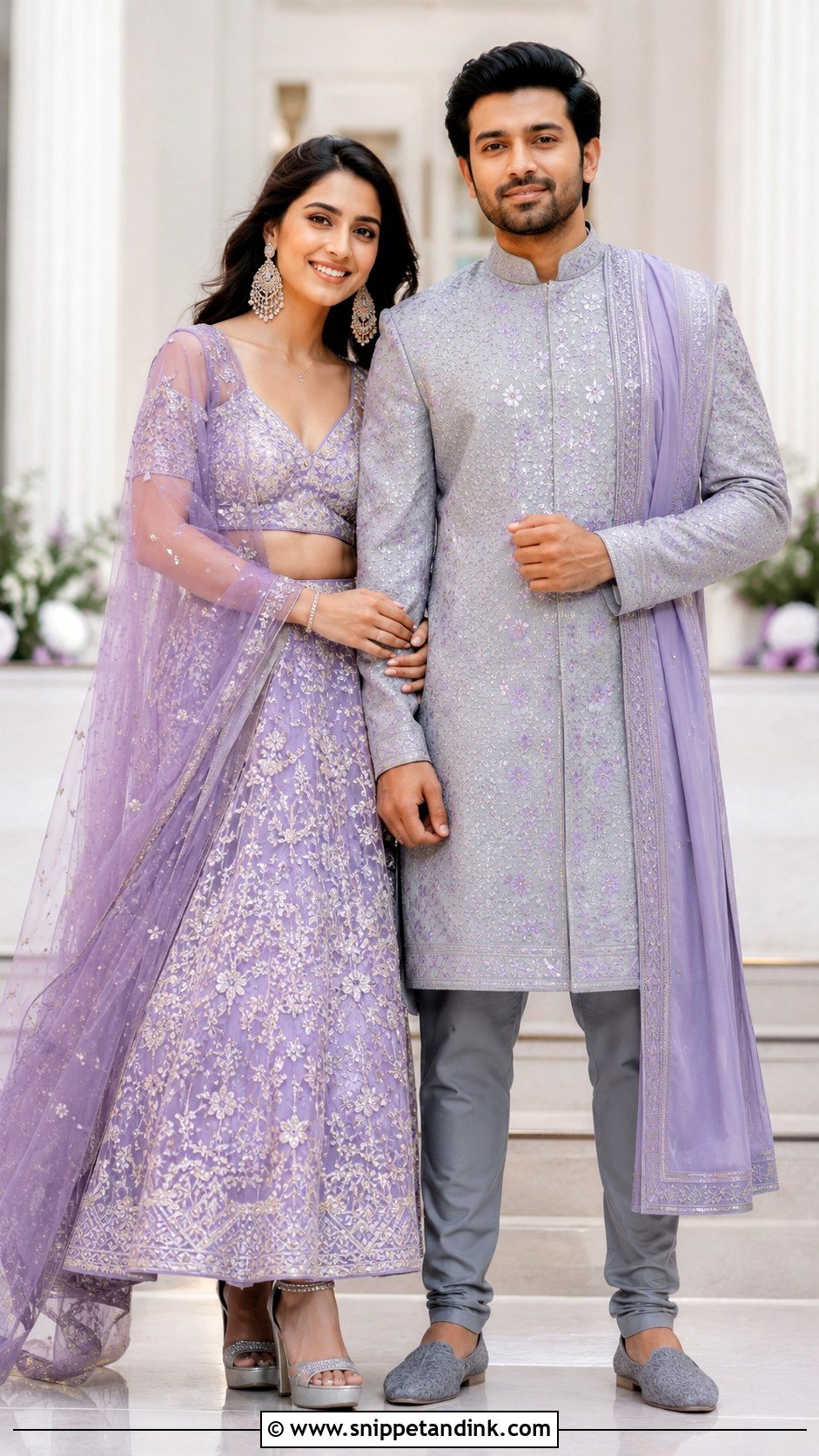
Lavender and soft gray are a modern step away from red, gold and beige. A lavender lehenga with silver embroidery or three-dimensional florals suits a sheer dupatta, crystal earrings and silver footwear, and the groom wears light gray with lavender threadwork, a coordinating stole and charcoal churidar. Lavender is the trickiest color I work with: it shifts pink under warm bulbs and blue in shade. Compare both outfits in the light of the actual event, ideally at the same hour, before committing. In daytime keep both fabrics light. At night, a deeper lavender with metallic accents holds up better.
13. Rust Lehenga And Ivory Bandhgala Outfit
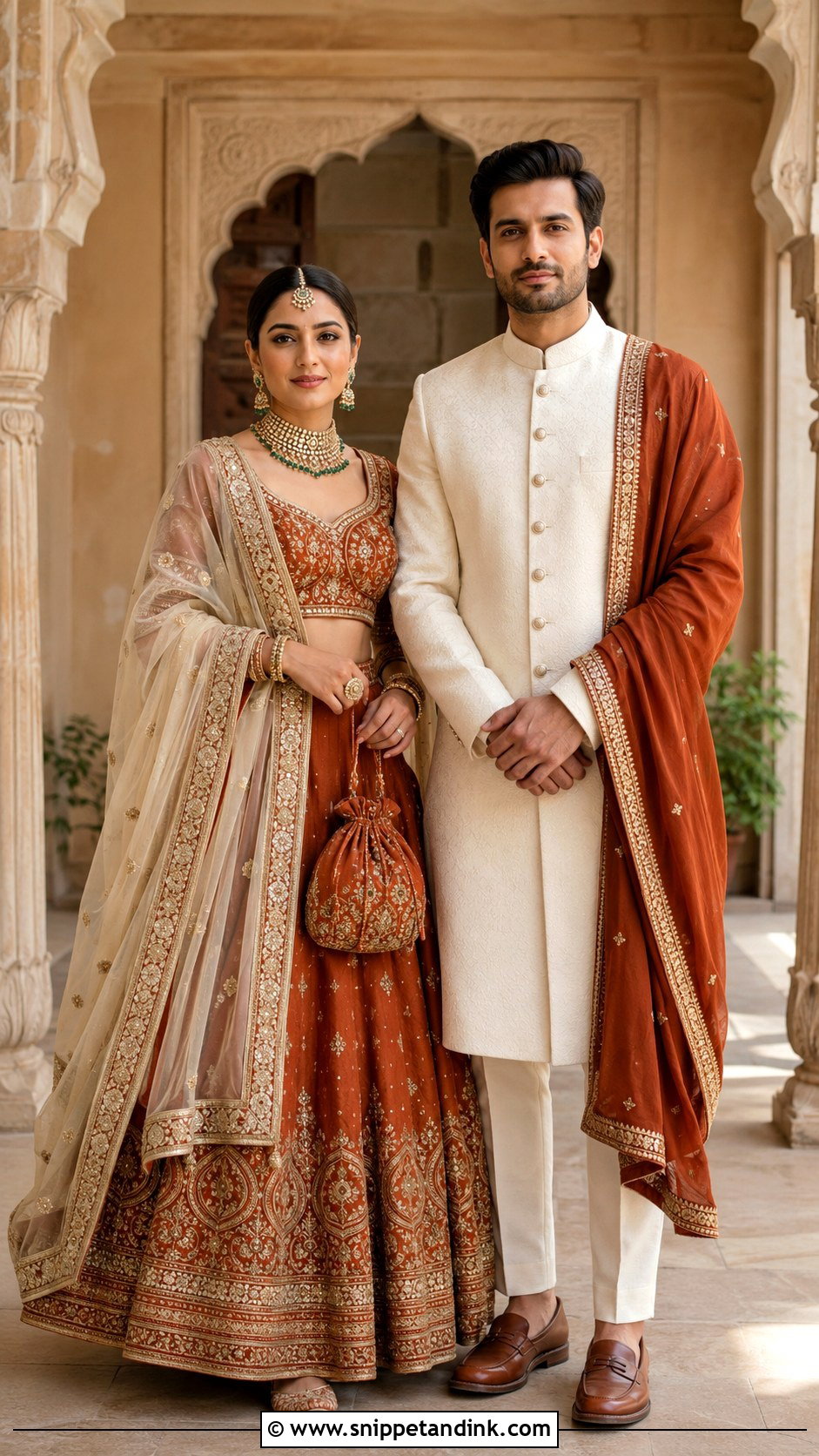
Rust sits close to traditional red and orange, so families who expect a classic bridal color tend to accept it more readily than pastels. A rust or burnt orange lehenga with antique gold embroidery and an ivory dupatta, plus kundan, embroidered juttis and a gold potli, is complete as it stands. His ivory bandhgala with rust buttons, a patterned pocket square, tailored pants and brown loafers keeps the warmth going; add a rust stole for the more formal events. Keep the gold muted. Bright, mirror-finish gold makes rust look cheap, while antique gold deepens it, and sandstone architecture finishes the job.
14. Bengali Red Saree And Ivory Dhoti Kurta Outfit
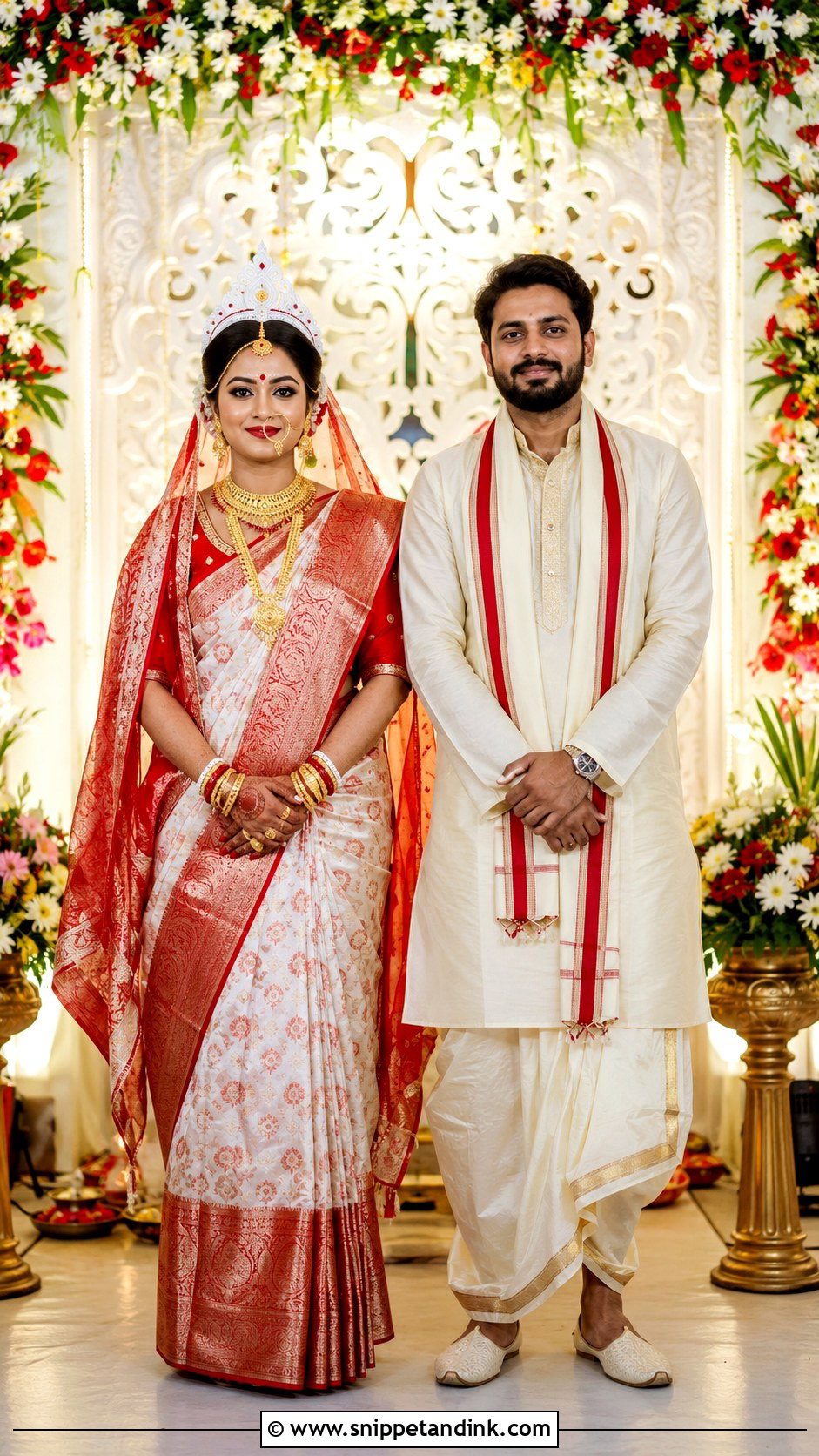
A Bengali bride’s red-and-white look depends on the drape more than on embellishment. Whether the saree is a white, cream or red Banarasi, its red border and gold weaving should be arranged by someone who knows the Bengali drape, and that person needs to be booked early. Gold jewelry, red bangles, a bridal headpiece and a veil complete her look. The groom’s ivory silk kurta and dhoti with an embroidered stole can repeat her red border. Dhotis are easy to step on, so he should walk and climb a step in his at the fitting, not on the morning. Ivory keeps both outfits bright around the fire.
15. Maharashtrian Nauvari Saree And Kurta Dhoti Outfit
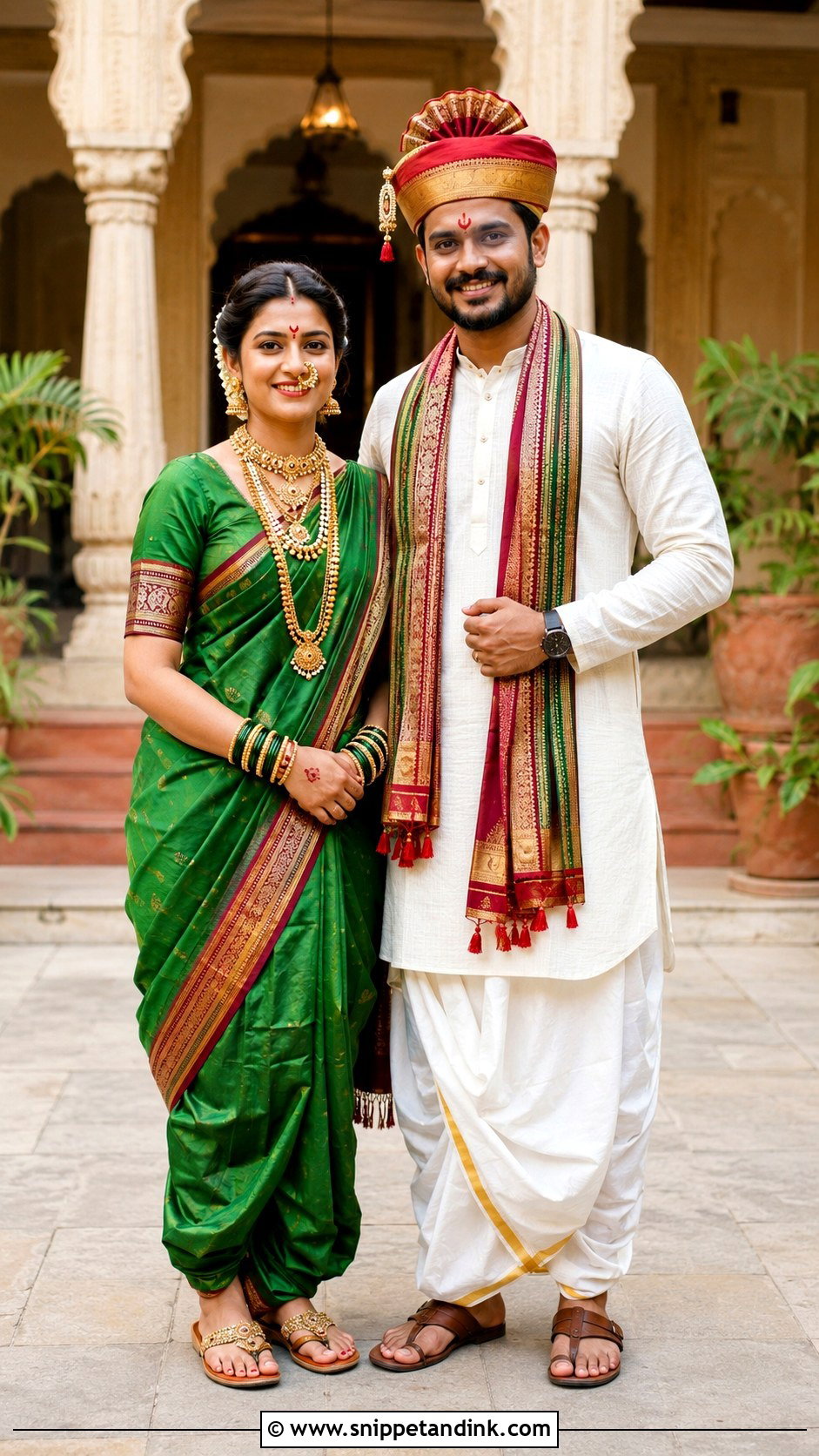
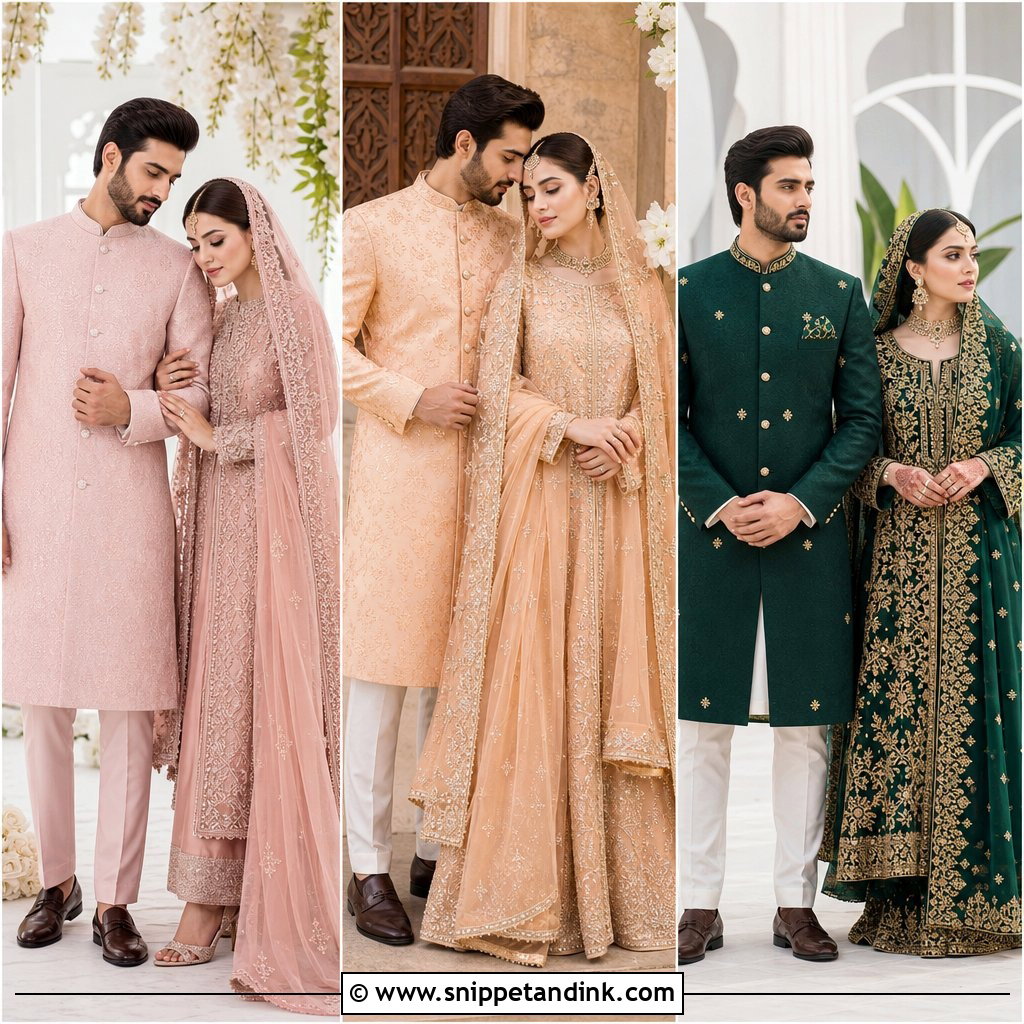
A Maharashtrian wedding outfit is practical by design. The nine-yard Nauvari is wrapped between the legs in a dhoti style, so the bride can walk and sit freely, and that shape is what makes the look recognizable. Silk in green, yellow, purple or red goes with a fitted blouse, a nath, layered necklaces, green bangles and a crescent bindi. The groom’s cream kurta and dhoti take a stole in one shade lifted from her border, plus traditional headwear. Kolhapuri sandals suit both, though new ones are stiff leather and need a few days of wearing in. Nauvari draping takes skill, so a practised draper or a pre-stitched version saves a stressful morning.
16. Punjabi Red Lehenga And Embroidered Sherwani Outfit
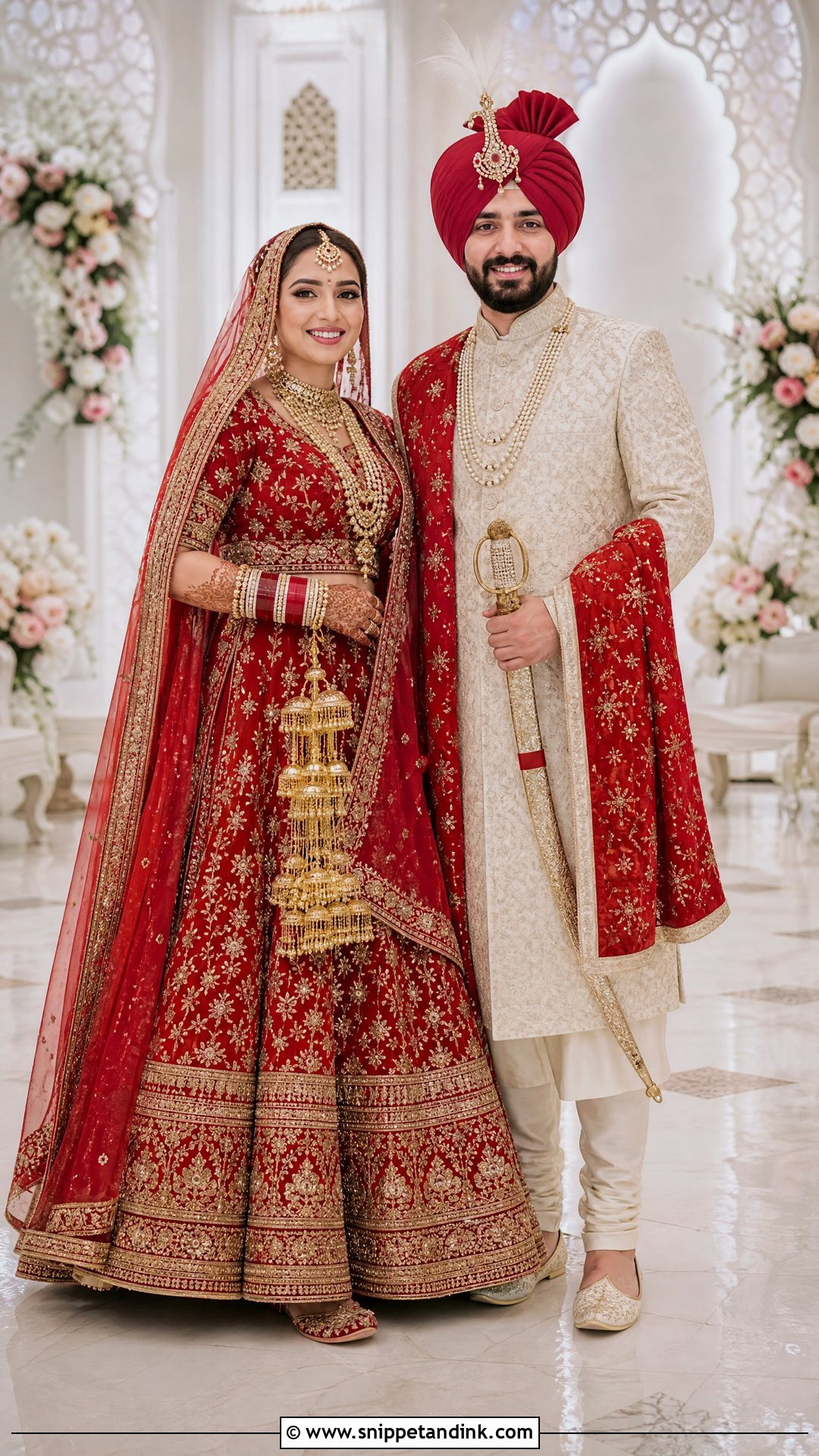
Punjabi weddings are loud in the best way, and the outfits can carry it. A red, magenta or deep pink lehenga with gold work and a richly decorated dupatta sits with the chooda and kalire, which are part of the ritual rather than styling choices. Give the groom an ivory, beige or gold sherwani with embroidery at the collar and front panel, then a turban, red stole and juttis that repeat her main color. His sherwani stays neutral so she remains the focus. Hold the turban fabric against her dupatta before it’s tied: two reds that are slightly off from each other look worse than red beside gold.
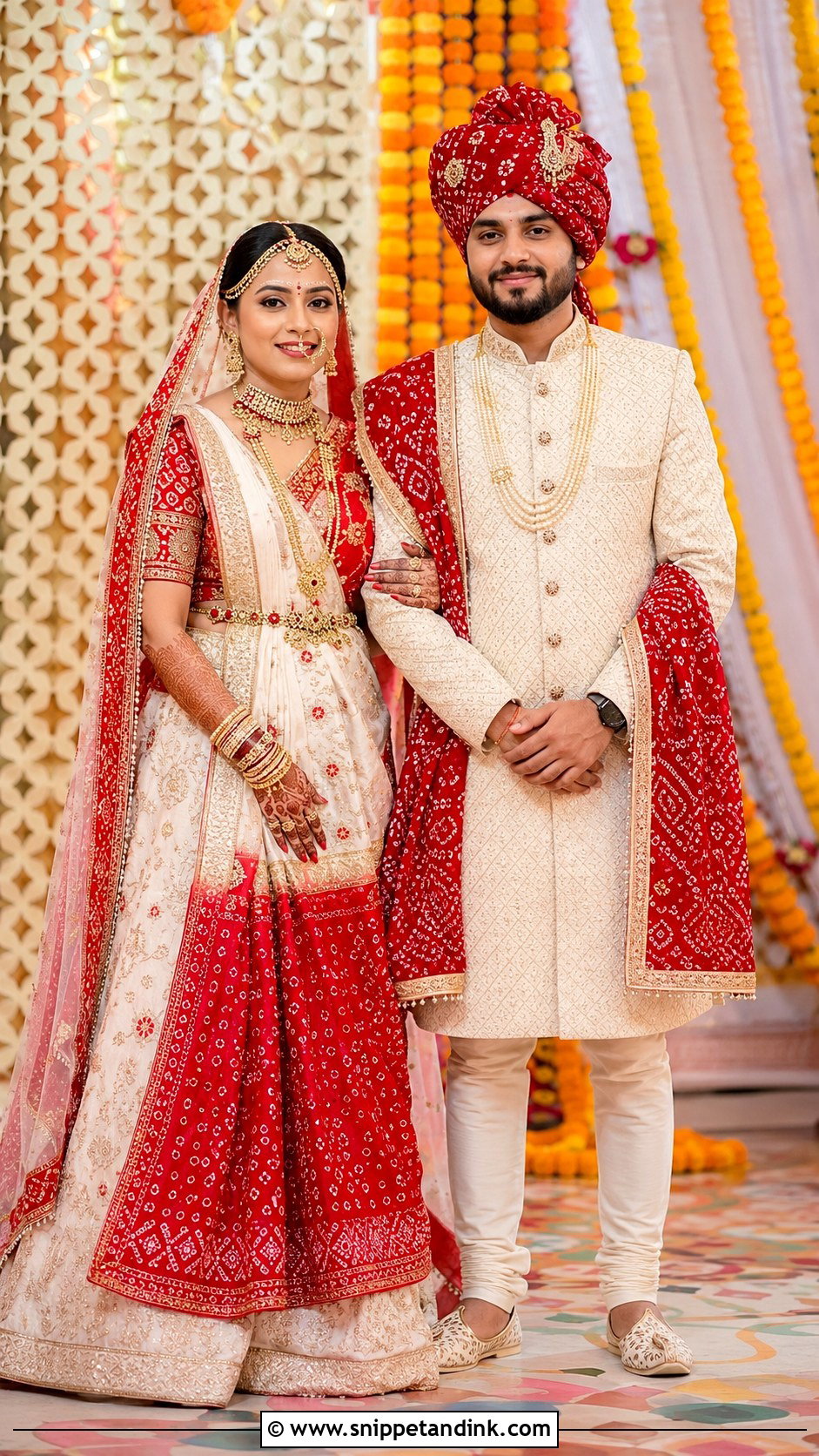
17. Gujarati Panetar Saree And Ivory Sherwani Outfit
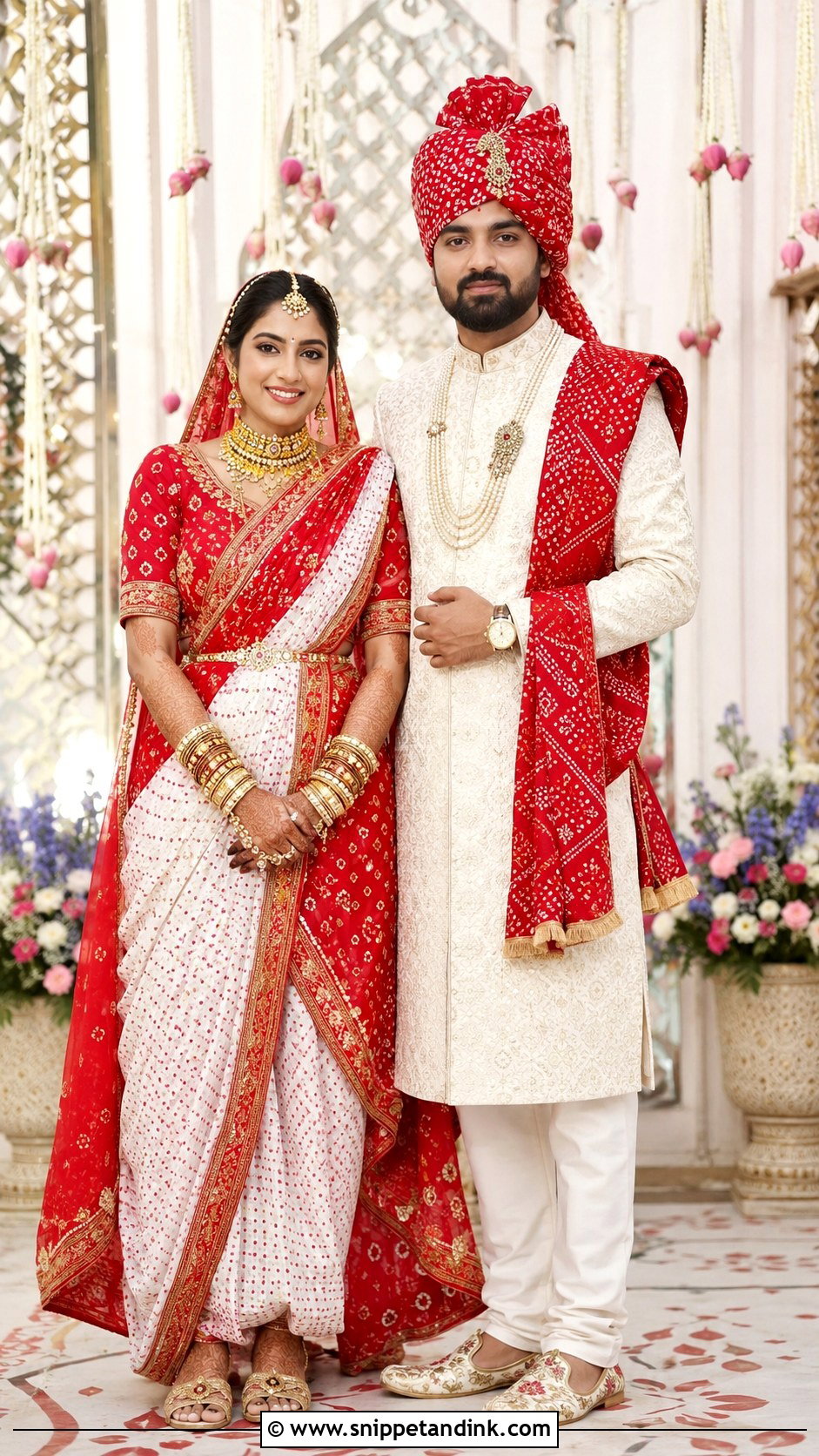
A Gujarati-inspired couple outfit often starts with a red-and-white Panetar saree, or a bridal lehenga with bandhani and embroidery. Gold jewelry, bangles, a waist belt and a carefully set dupatta complete her look. His ivory sherwani or kediyu-style outfit takes red accents, fitted pants and embroidered mojris. Put bandhani on his safa or his stole, one accessory only, because two full prints side by side get busy fast. Red, white, green and gold can all appear, but one has to lead. Hand-tied bandhani has small irregular dots, and that unevenness is the sign of real work, not a flaw.
18. Ivory Lehenga And Sage Green Sherwani Outfit
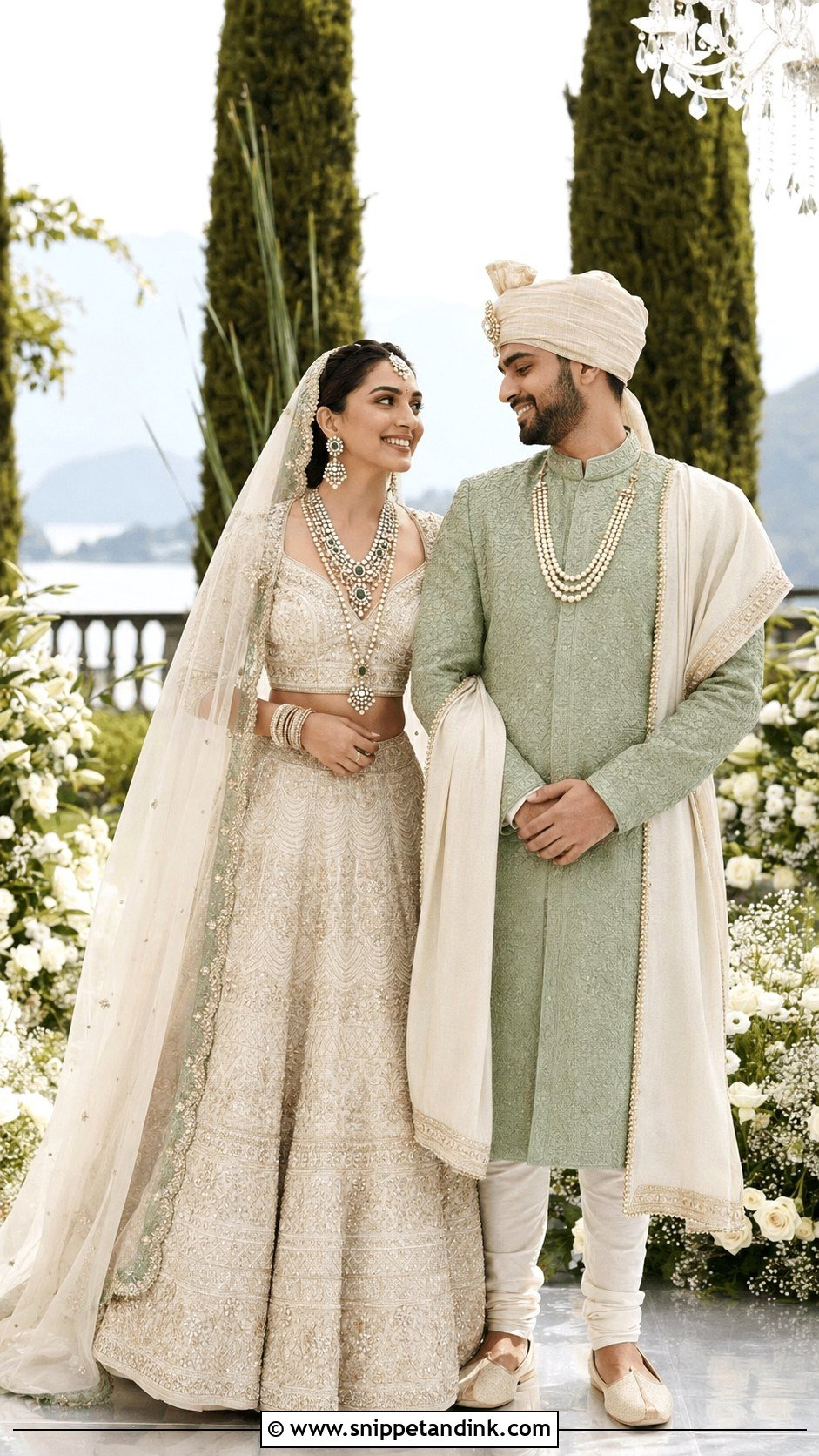
Ivory and sage are both quiet colors, which means texture has to carry the outfits. She wears an ivory lehenga with tonal embroidery, pearl beading and pale green florals; he wears sage with understated gold buttons, ivory pants and a neutral stole. Mix raw silk with organza or jacquard so the pair doesn’t dissolve into one pale shape. I like this for destination weddings, but an ivory hem picks up grass and dust within the first hour on a lawn, so either have the skirt finished a touch shorter or accept the marks. Emerald or pearl jewelry, ivory sandals, embroidered mojris and a cream safa finish it.
19. Gold Saree And Black Bandhgala Reception Outfit
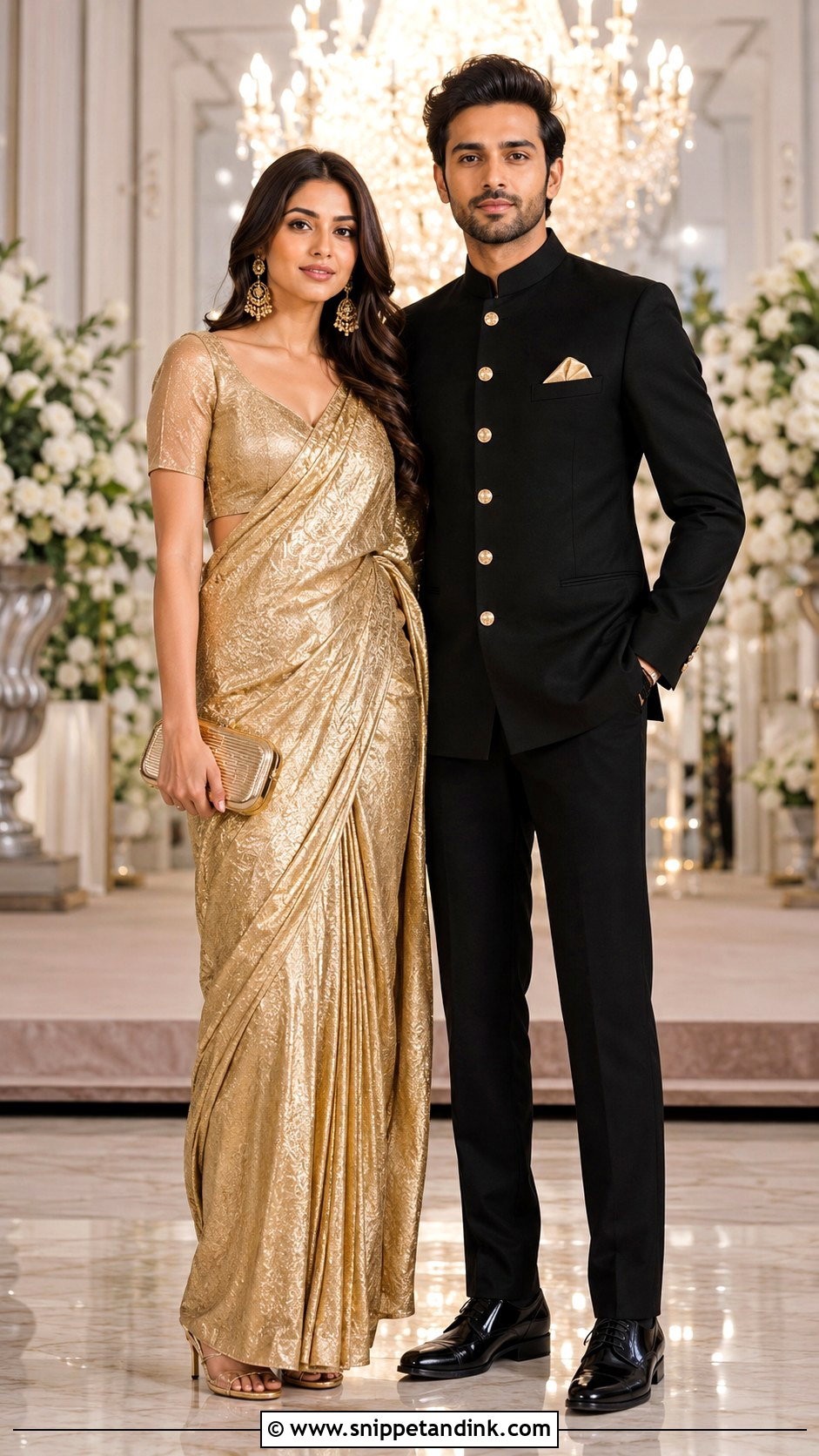
Black and gold at a reception relies on cut. A metallic tissue or sequined saree needs a clean, structured drape with crisp pleats, and the fitted blouse matters more here than with a softer silk. Add statement earrings, a clutch and metallic heels. His black bandhgala must be properly tailored through the shoulders, because black hides nothing about a poor fit under ballroom light. A small gold pocket square or brooch is the only link needed. Tissue creases sharply wherever you sit, so steam it on the day and take your portraits before dinner.
20. Red Bridal Saree And Navy Blue Sherwani Outfit
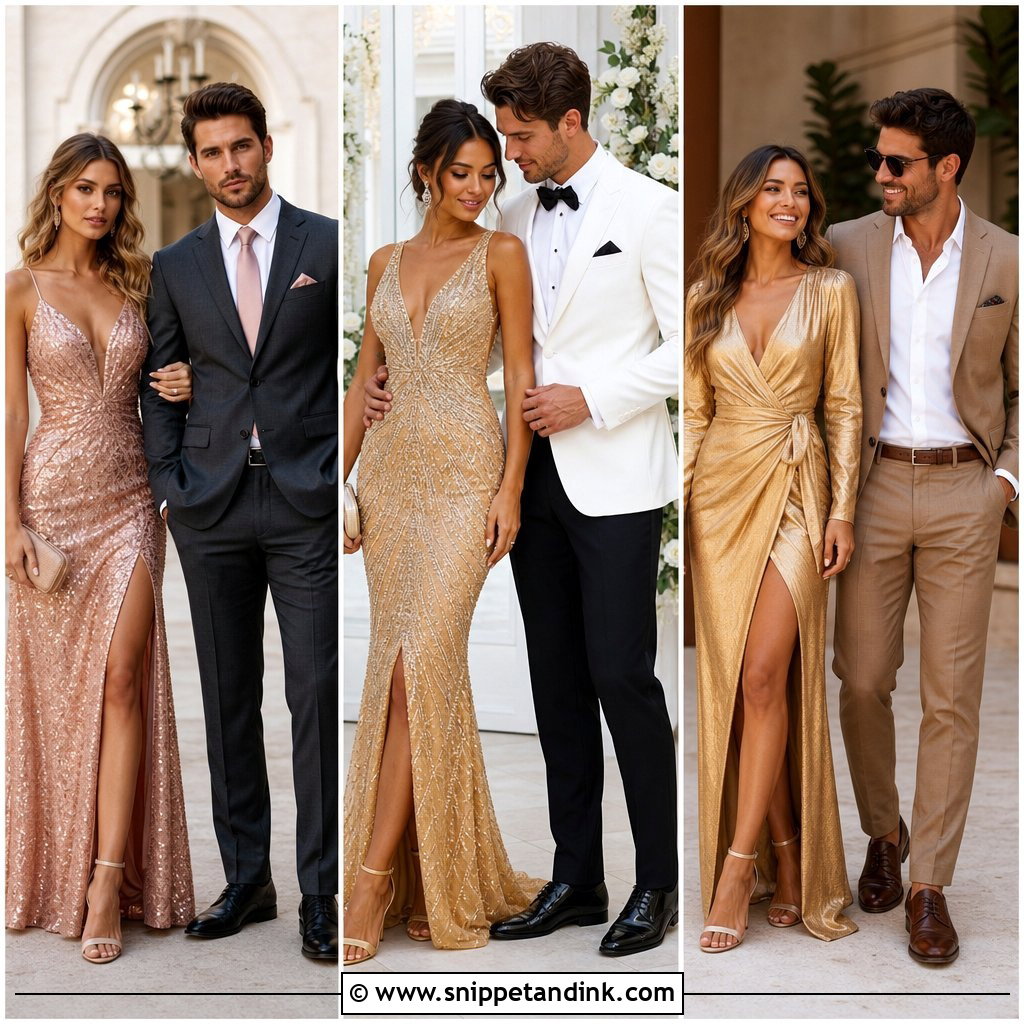
Red and navy don’t match, and that’s the point. They’re two deep colors that sit well together without anyone mistaking them for uniforms. A red Banarasi or silk saree with gold weaving, layered jewelry and bangles pairs with a navy sherwani carrying gold embroidery, cream churidar and a red pocket square. Gold does the linking, through the saree border, his embroidery and the accessories. Choose a navy dark enough to hold its own; a mid blue beside saturated red tends to look like a clash. It works morning or evening.
What Hours of Ritual Do to Silk, Zari and Dupattas
The pheras and the rituals around them can mean sitting on the floor or a low seat for an hour or more, then standing for family portraits. By then the fabric has had its say.
Sit down at the fitting
Heavy lehengas pull on the waistband, and blouses ride up when you lean forward. I ask brides to sit in the full outfit, dupatta pinned, for twenty minutes at the last fitting. If the waist digs in, the tailor can still widen the band or move the hooks. Grooms should do the same: churidar bunches at the knee when seated, and a sherwani that’s tight across the back will show strain lines in every seated photo.
Pin more than you think
A dupatta worn over the head for the ceremony needs anchoring into the hair or a hidden comb as well as at the shoulder. Sheer net slips fastest. Keep spare safety pins in gold and in black in someone’s bag, along with a small sewing kit for a loose hook.
After the last guest leaves
Zari tarnishes when it’s stored damp or sealed in plastic. Air each outfit for a day, then fold it in plain muslin or cotton, and refold along new lines every few months so the metallic thread doesn’t crack at the creases. Use a dry cleaner who handles heavy embroidery, and point out any turmeric or henna marks so they’re treated before the rest.
Stand Side by Side Before the Last Fitting
Couples don’t need identical colors to look like a pair. A repeated border, an embroidery motif or one accent color usually does it. Think about the ceremony, the light at the venue, the season and how much you’ll move before choosing fabrics, and save velvet and brocade for cool evenings. Above all, see both finished outfits side by side at least once before the wedding week, while there’s still time for a tailor to change a stole or a button. If each of you feels comfortable and recognizably yourself, the photos will show it.
You'll Like These Ideas:


Leave a Reply