
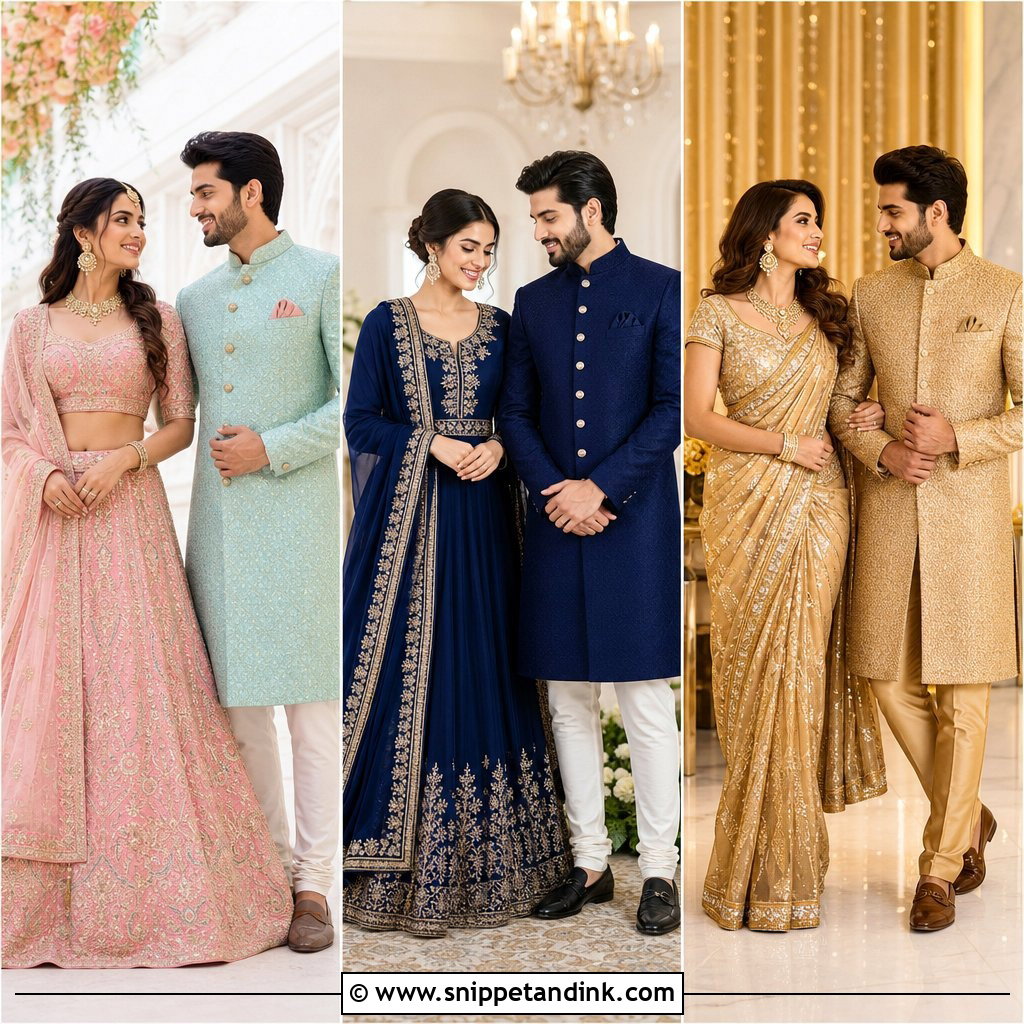
Matching is easy. Belonging together is harder, and it’s what I’m aiming for when a couple asks me for coordinated Indian wedding attire. Two identical outfits flatten each other in photos. What works is a shared thread: one shade from her embroidery picked up in his stole or safa, the same metal on her zari and his buttons, a border repeated in his pocket square. I always settle the bride’s outfit first, then build the groom’s around it, and I check the ceremony, venue, weather, family customs and backdrop before anything is final. Below are 25 pairings, from red and ivory to pastels, regional dress and reception wear, with how I’d tie each pair together.

Put Both Fabric Swatches in One Hand Before Anyone Stitches
Most couple outfits are bought weeks apart in different shops, and that’s how mismatches happen. Ivory from one shop is cream in another. Gold from one embroiderer is yellow, from another it’s antique. I ask the bride to cut a small swatch from her blouse fabric or the leftover border and give it to the groom’s tailor.
- Finalise her outfit first; it’s usually the more complicated order.
- Take her swatch and a photo of the embroidery to his first fitting.
- Compare both fabrics side by side in daylight and under warm indoor light.
- Match the metal tone of buttons, zari and jewelry, not just the base colours.
Grooms’ outfits often get left until late, but a made-to-measure sherwani needs at least two fittings. Leave him enough time, and make sure he wears the actual mojaris and safa to the final fitting so the length of the sherwani and trousers can be set correctly.
Once both outfits are ready, stand next to each other fully dressed and take a few phone photos from across the room. Small things that are invisible up close show up straight away: his safa is a brighter red than her lehenga, or her jewelry is yellow gold while his buttons are silver-toned. Those are cheap to fix a week out and impossible on the day.
1. Red Bridal Lehenga And Ivory Groom Sherwani
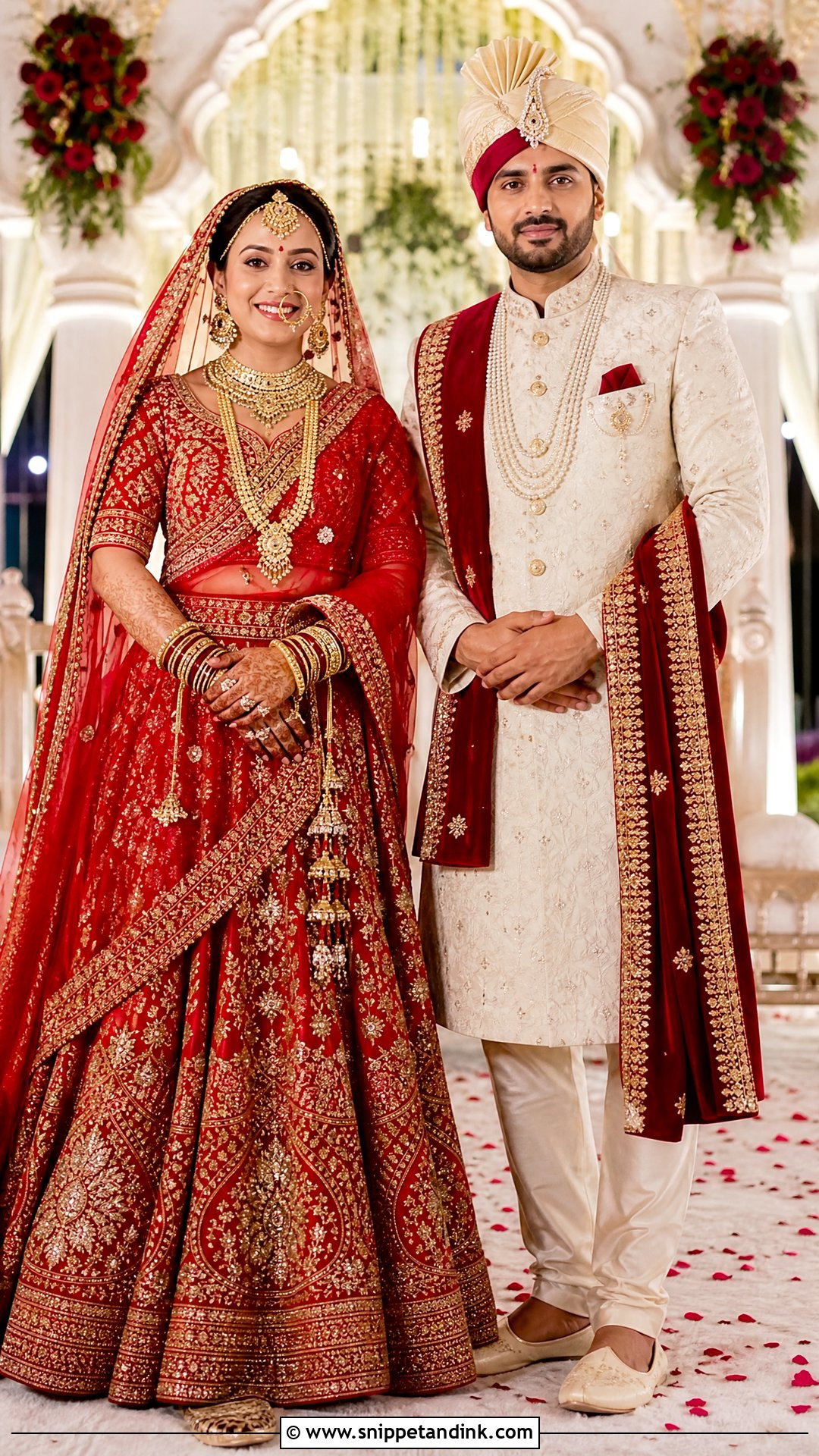
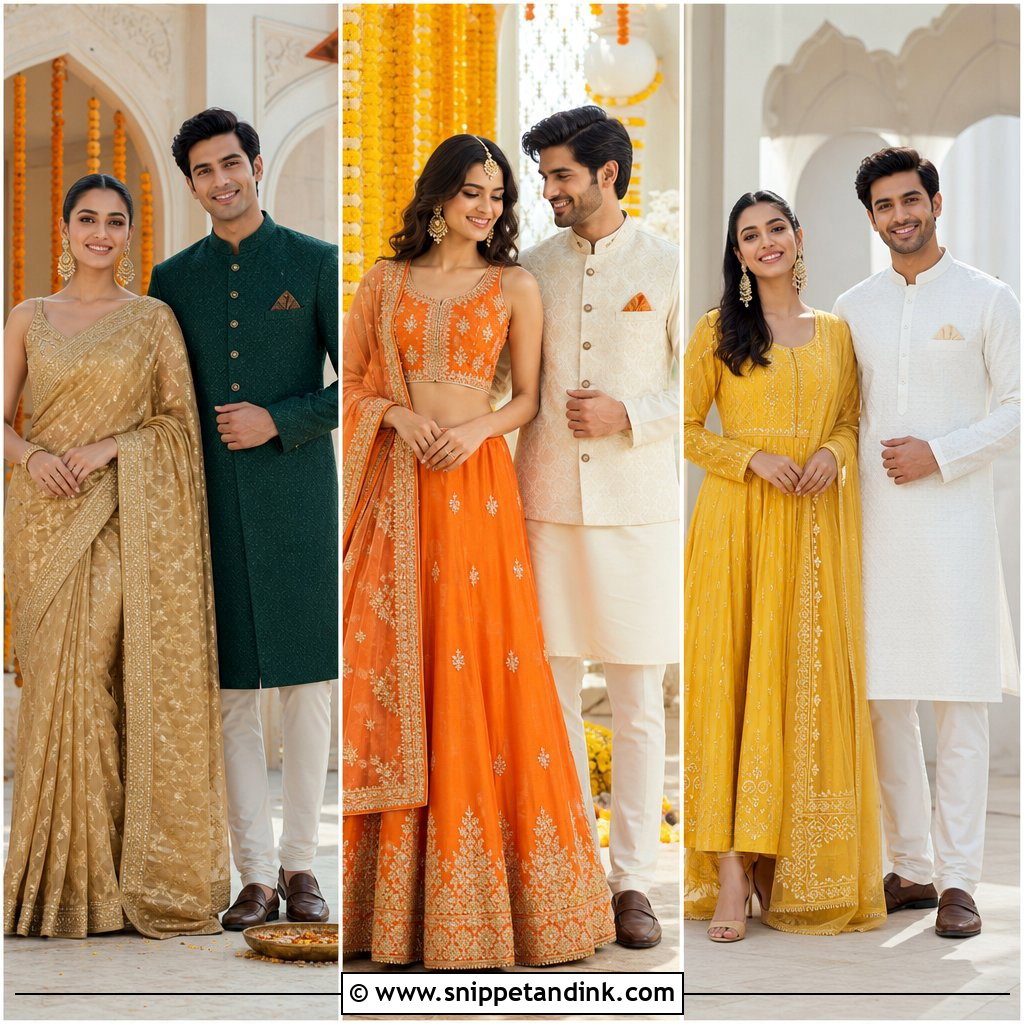
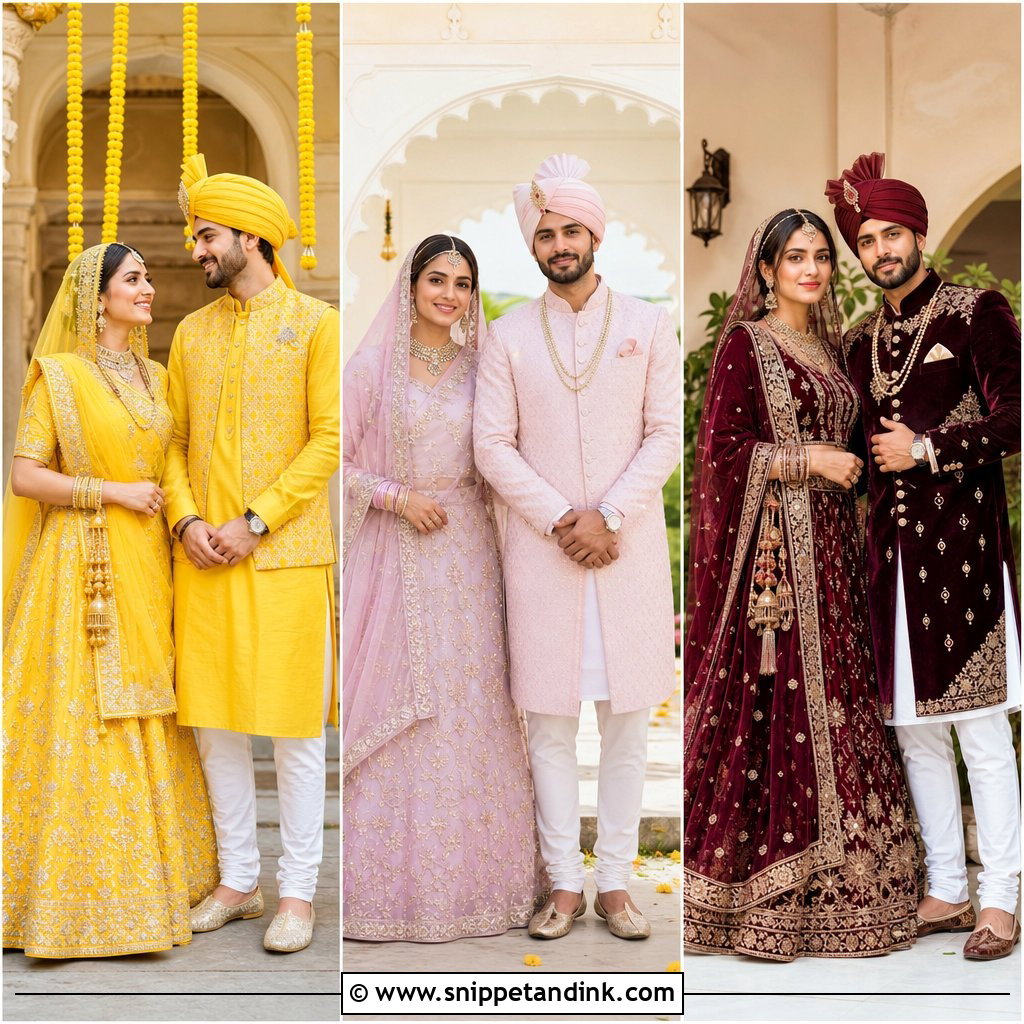
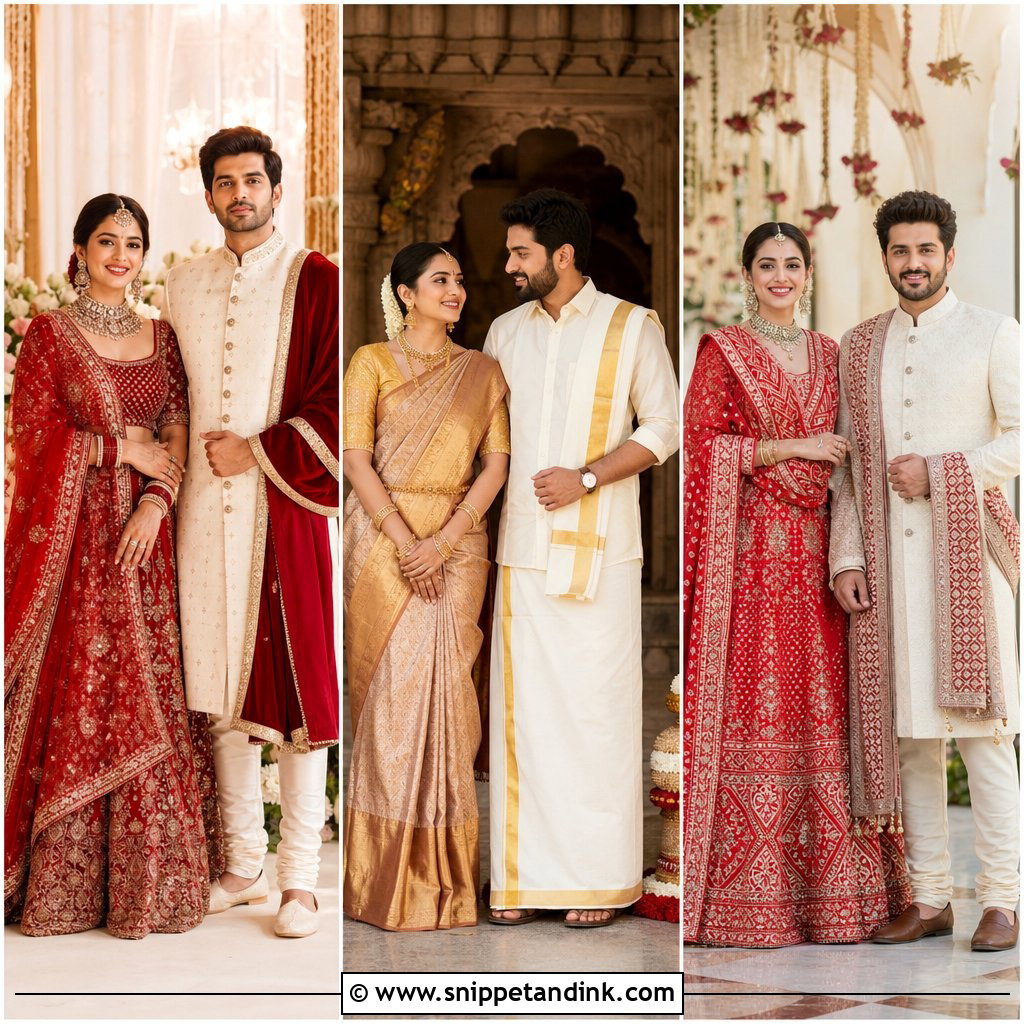
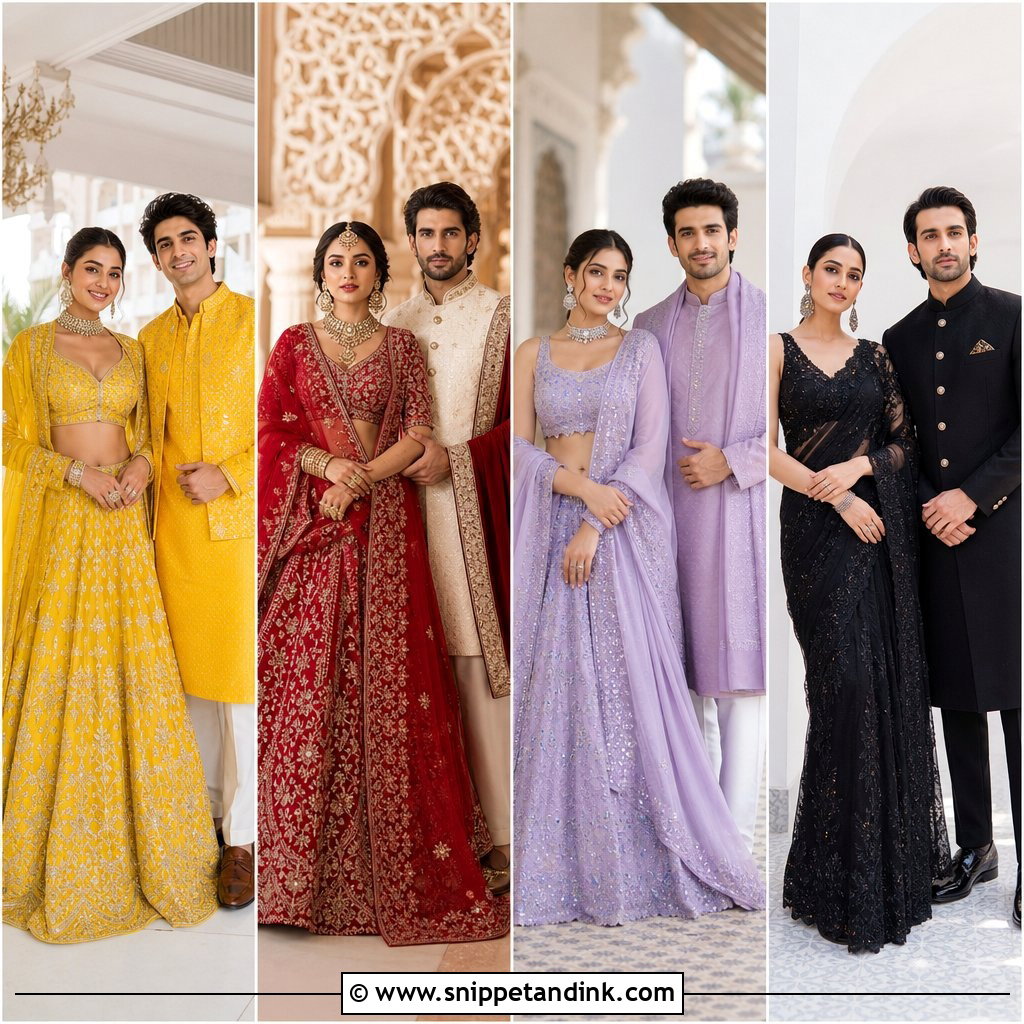
Red beside ivory is the pairing every family recognises. Gold zardozi, sequin or thread embroidery on the lehenga; the red repeated once in his stole, pocket square or safa. Ivory works for him because it supports her colour instead of fighting it. The detail I check hardest is the metal. Put her antique-gold zardozi next to a bright yellow-gold sherwani and the two never quite sit together, so I bring a swatch of her embroidery to his fitting. Antique gold reads warm; champagne gold reads softer and more current. Cream churidar, embroidered mojaris and a pearl mala finish his side.
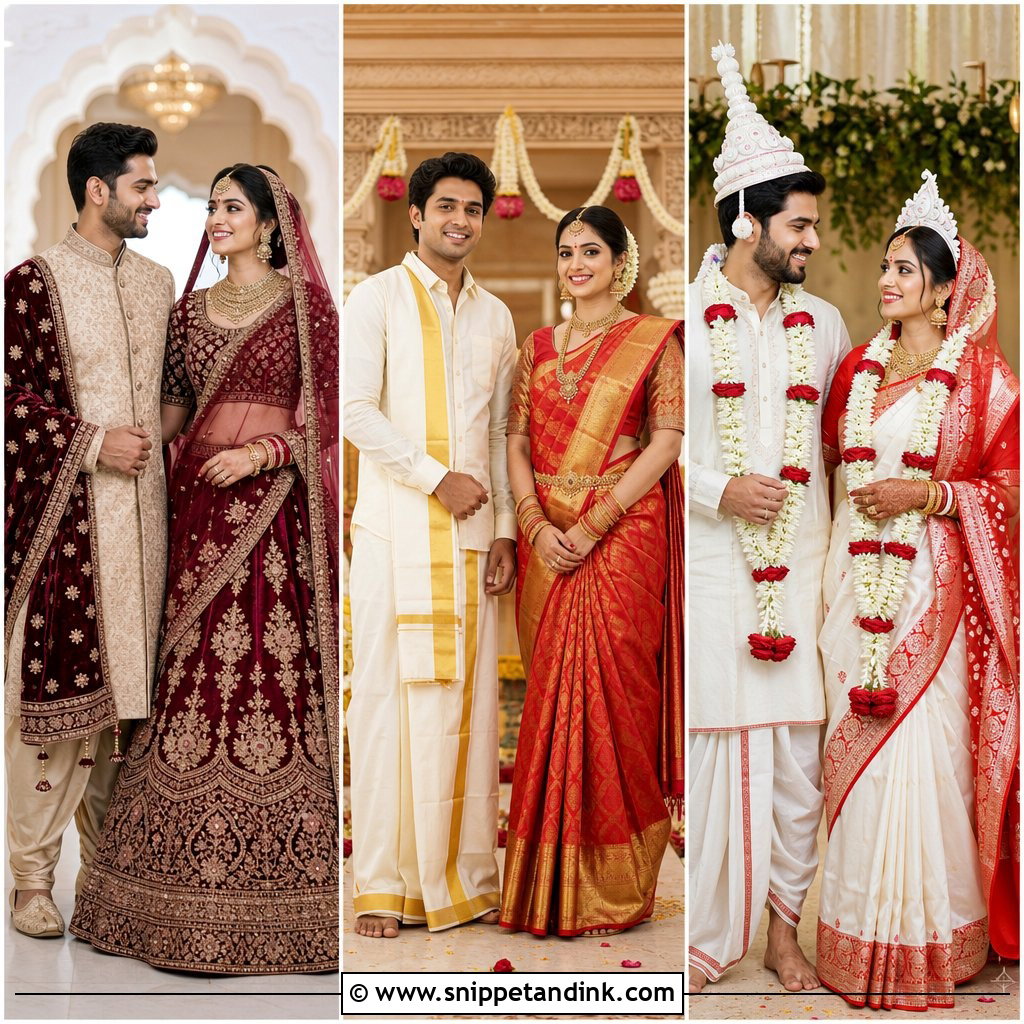
2. Maroon Bridal Lehenga And Gold Groom Sherwani
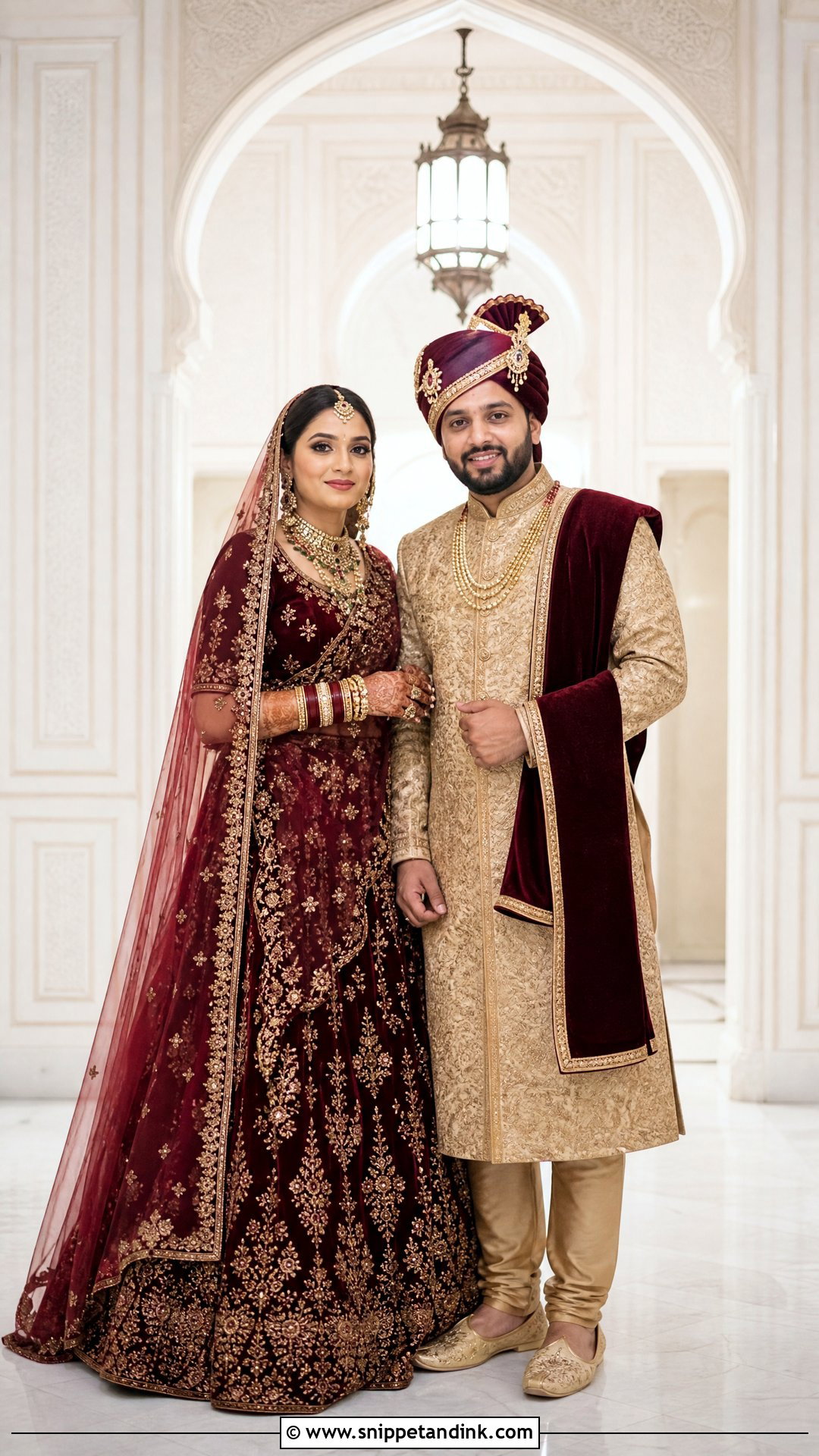
Maroon carries an evening ceremony. Velvet or raw silk with antique-gold work, a fitted blouse and a sheer maroon dupatta for her; a muted gold brocade sherwani with restrained embellishment for him. Maroon accents go into his safa, stole or mojaris. What I balance here is embroidery weight, not colour. If her lehenga is heavy, his sherwani should look quieter at a glance so she reads as the centre. Kundan, a statement nath and bangles complete her look, and the pair sits well against cream and floral mandaps.
3. Pastel Pink Lehenga And Ivory Sherwani
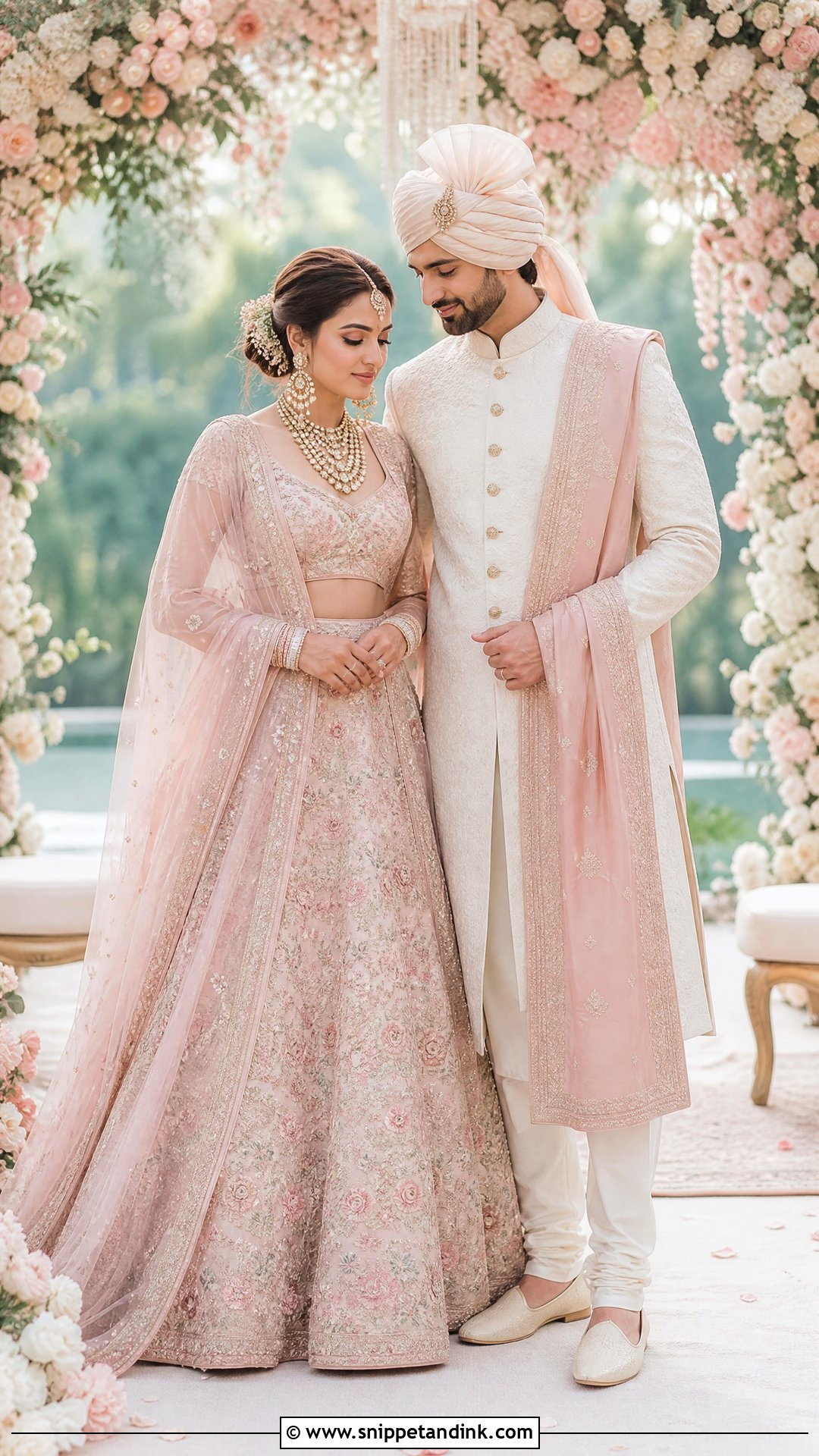
Blush and ivory are for couples who don’t want the deep wedding colours. Floral embroidery, pearls and light sequins on a dusty-pink lehenga; a clean ivory sherwani with pink threadwork at the collar, cuffs or placket. A pale-pink safa connects them without looking matched. Ivory is unforgiving on men’s fabric, though: thin raw silk can turn slightly see-through in strong sun, so I check it against daylight for a garden ceremony. Pearl-and-kundan jewelry for her, cream mojaris and a layered mala for him.
4. Sage Green Lehenga And Cream Sherwani
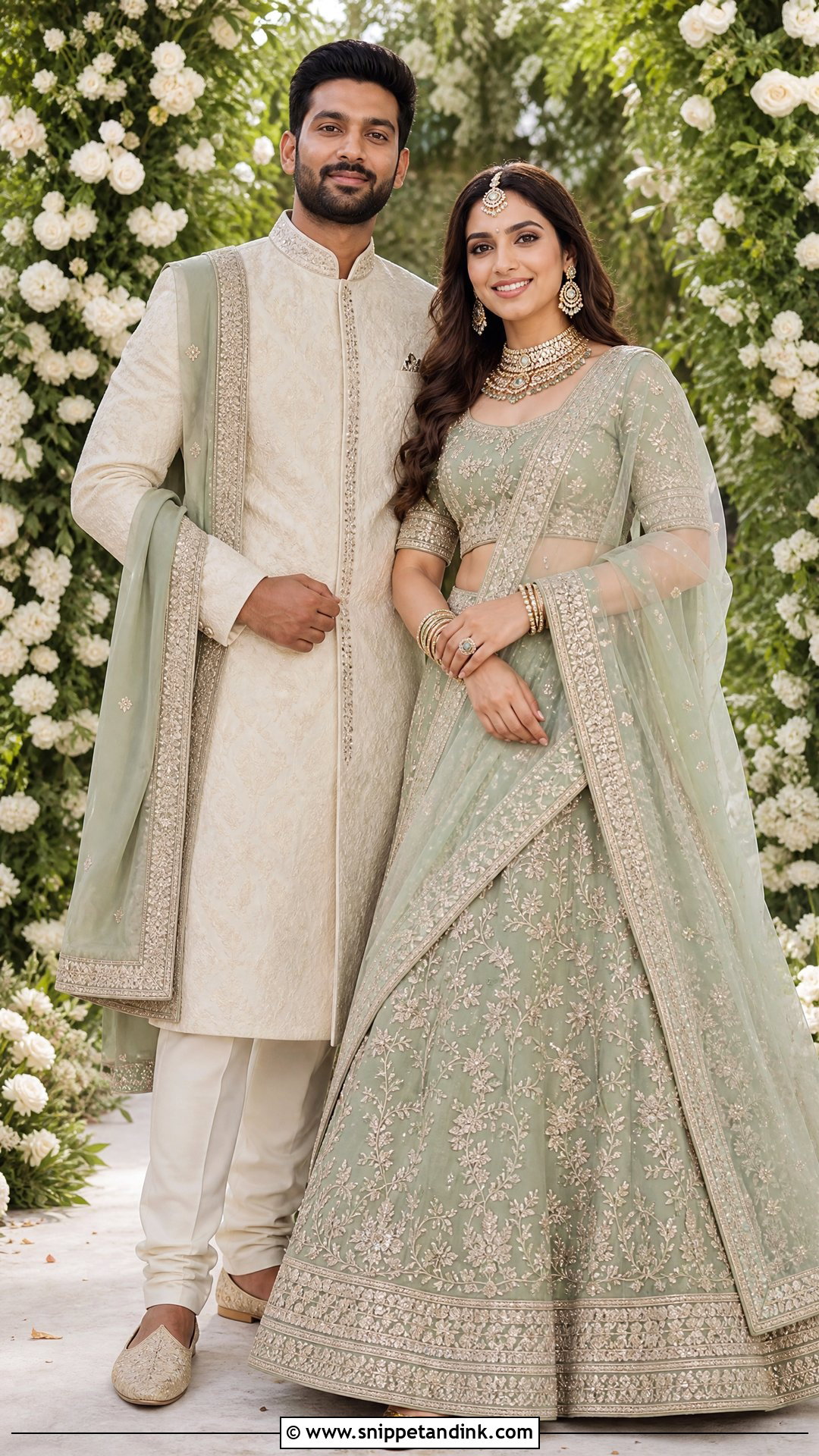
Picture a garden ceremony with greenery and white flowers. A sage lehenga with ivory threadwork sits naturally there, and a cream sherwani gives him a neutral base. A structured blouse and organza dupatta with an embroidered border suit her; emerald accents in polki jewelry lift the muted green. He repeats sage once, in the stole, safa, brooch or collar. Sage can look washed out in photos on flat fabric, so I’d insist on texture: silk, jacquard or dense embroidery. Cream trousers and neutral mojaris keep his look streamlined.
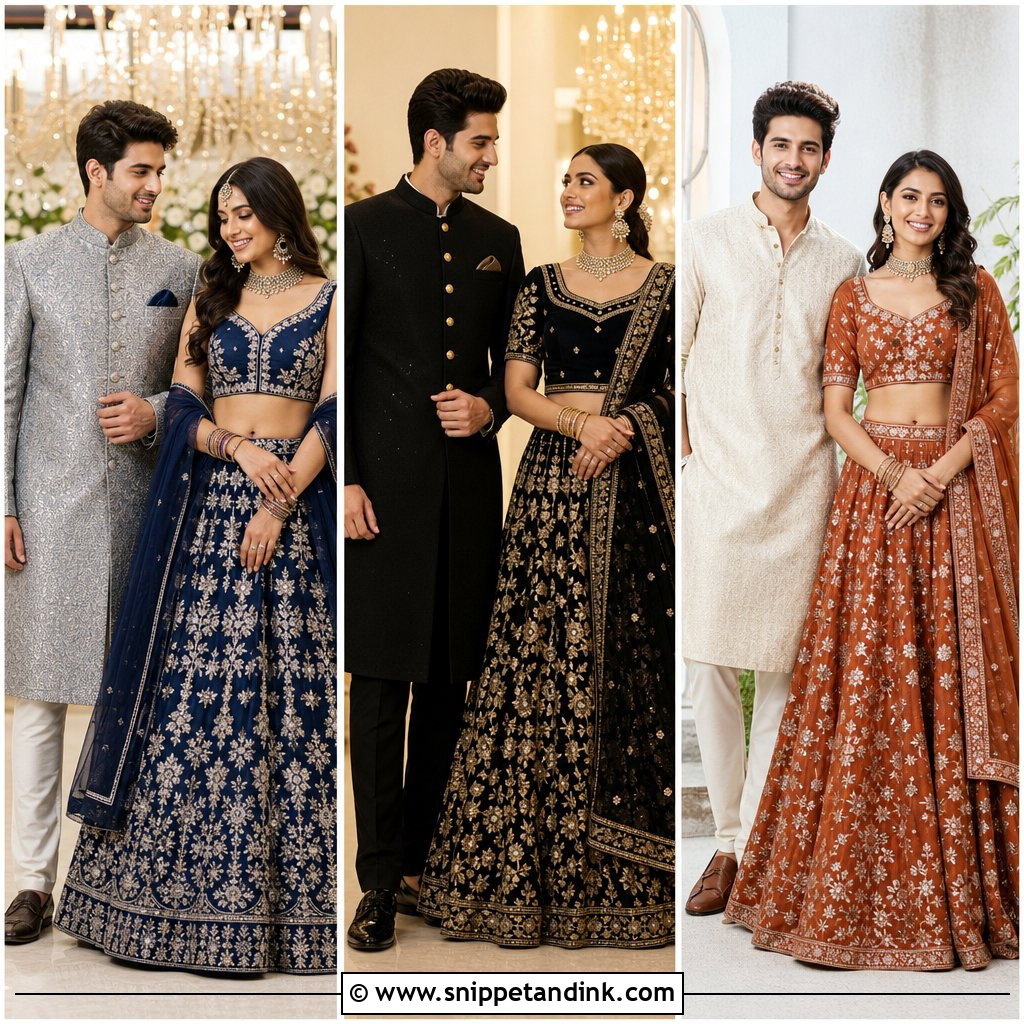
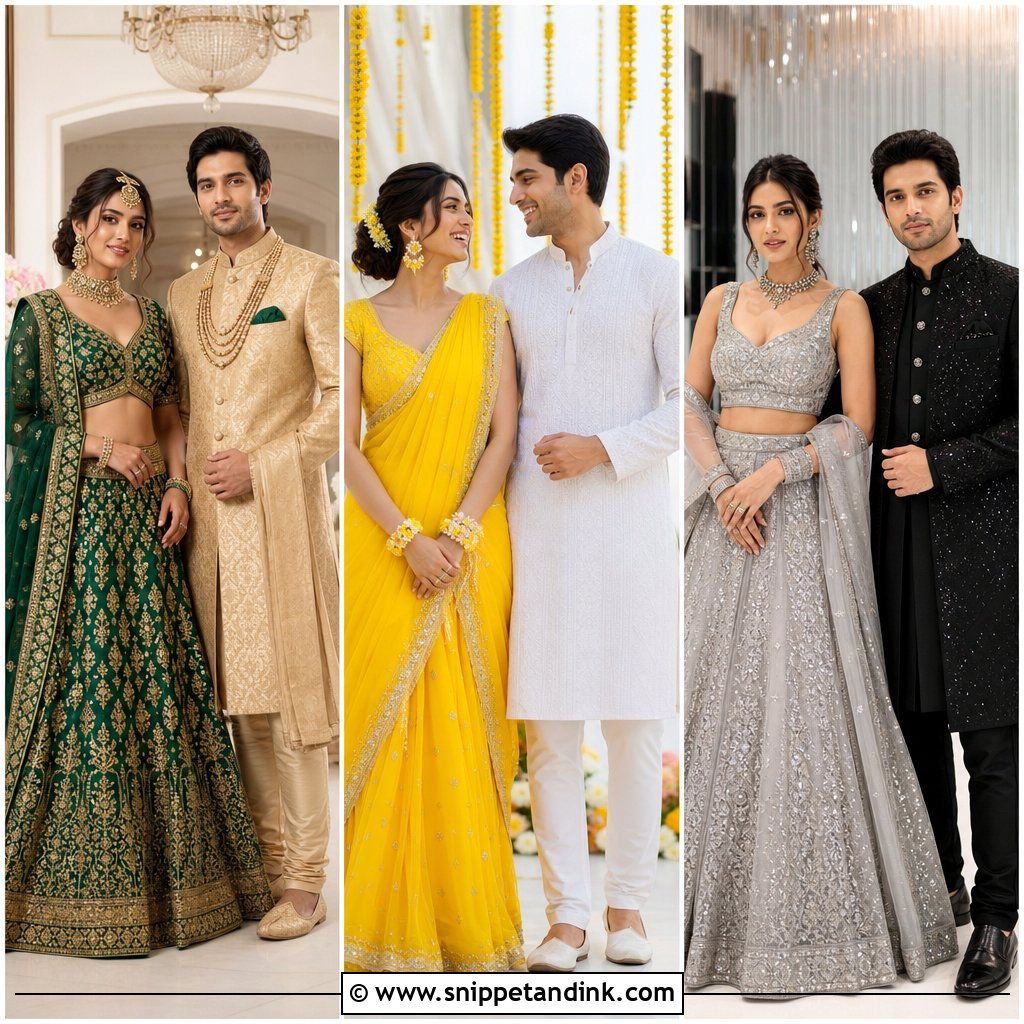
5. Emerald Green Lehenga And Gold Sherwani
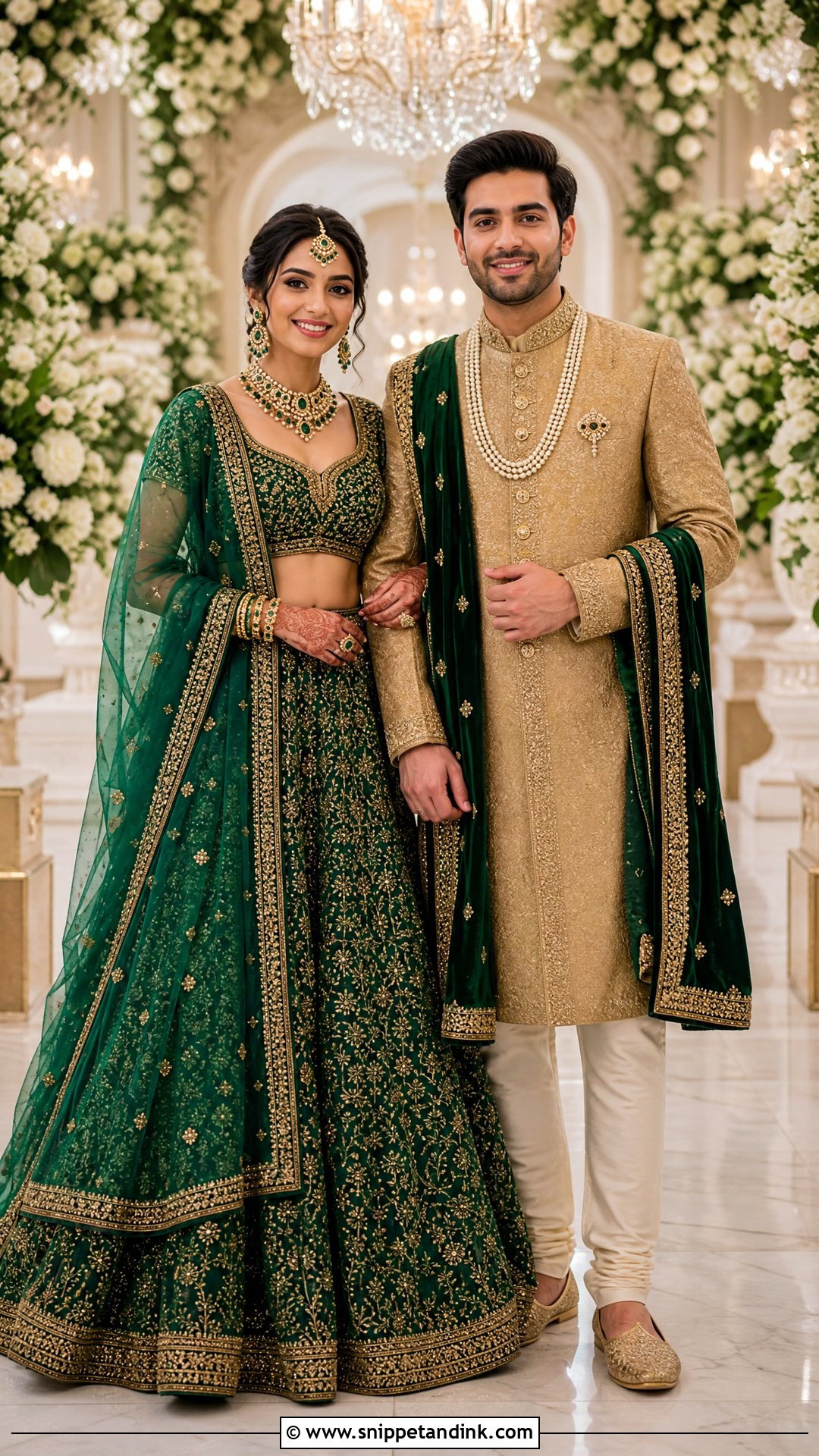
Emerald is a grand-ceremony colour. Rich green with gold embroidery and a contrasting sheer dupatta for her; a groom’s sherwani in soft gold, beige-gold or antique champagne for him, with an emerald stole, green safa or green stone brooch to connect. Kundan with emerald drops and stacked bangles finish her look. I keep the gold tones consistent between them, because bright yellow gold next to muted antique work makes the pair look like they dressed separately. Fitted trousers and a pearl mala for him.
6. Royal Blue Lehenga And Silver Sherwani
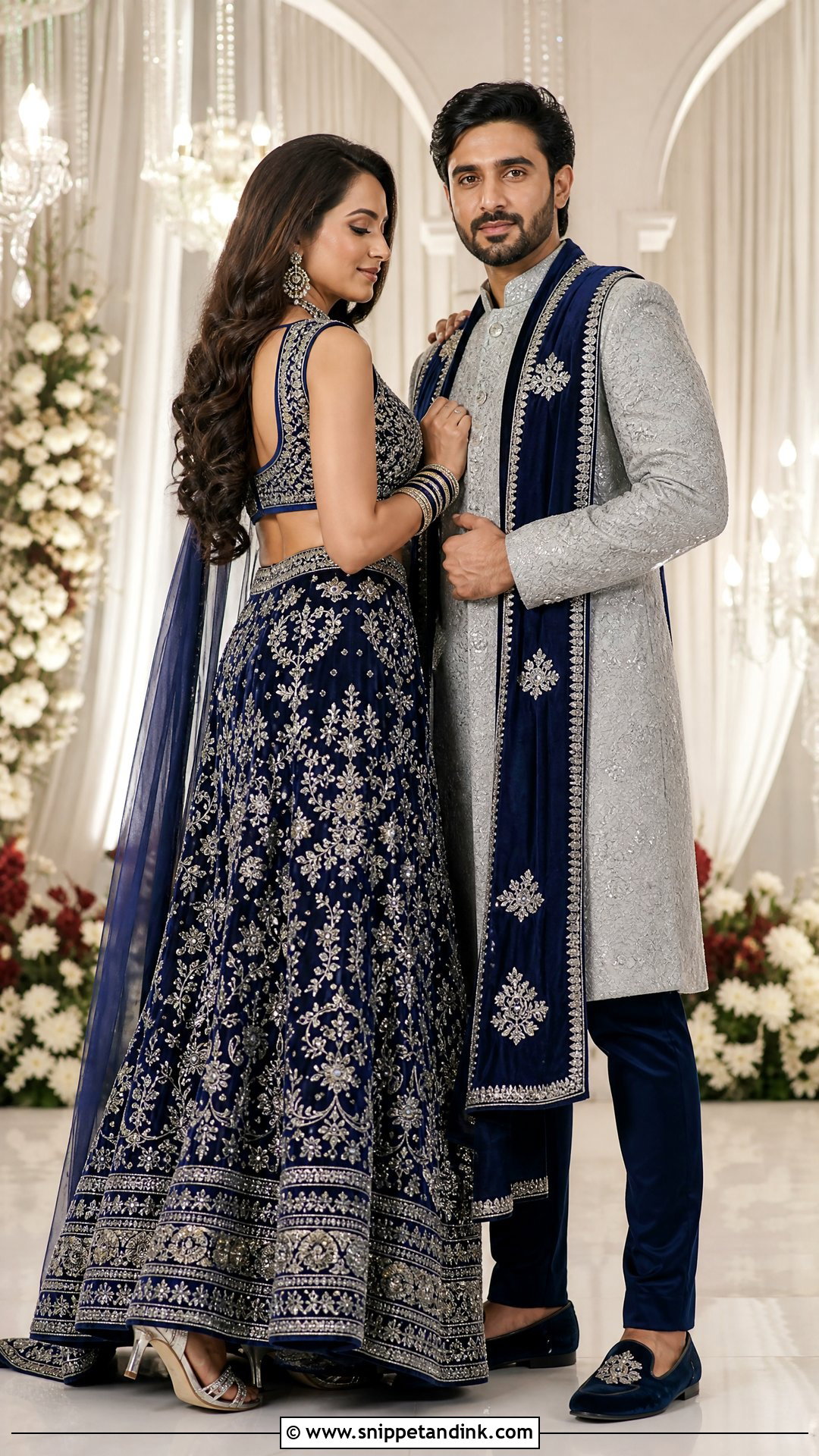
Blue and silver are made for a sangeet stage. Crystal, sequin or silver thread embroidery on a royal-blue lehenga throws light back; a light-grey or silver sherwani with subtle blue details sits beside it. His blue pocket square, stole or velvet mojaris make the link. I’d stop there with colour; blue and silver are already loud together. Diamond-look jewelry and a slim maang tikka for her. Make sure both can move: a fitted sherwani needs enough room at the shoulders for him to lift her in the dance he’s been practising.
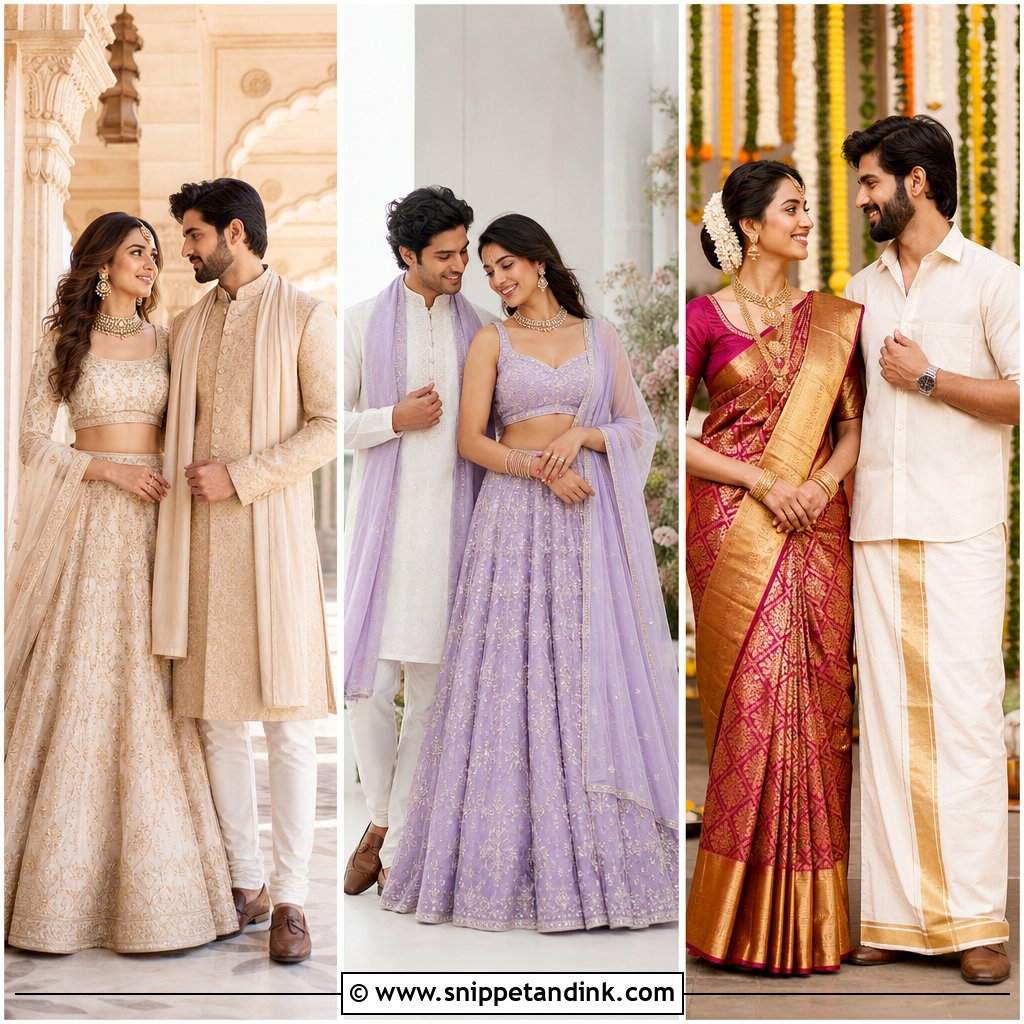
7. Lavender Lehenga And Gray Groom Bandhgala
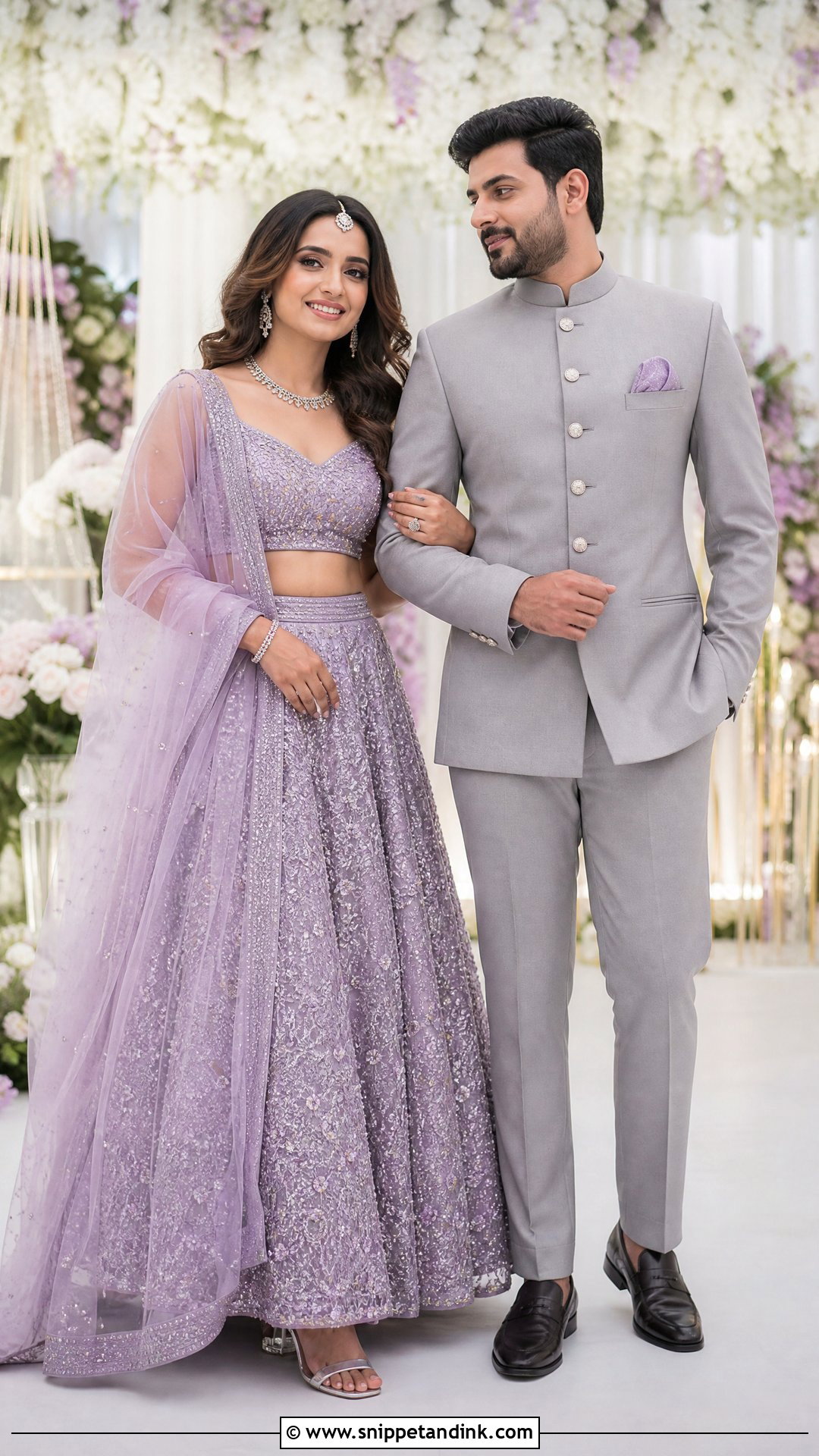
Lavender needs grounding, and a tailored grey bandhgala does that. Tonal embroidery, scattered crystals or floral appliqué on her lehenga with a matching blouse, sheer dupatta and silver jewelry. Charcoal, dove grey or silver-grey for him, with lavender pocket details and straight trousers. Black shoes contrast; grey or embroidered loafers soften it. When her lehenga is heavily worked, I keep his fabric textured but plain. This suits an engagement, cocktail or reception with cleaner silhouettes.
8. Peach Lehenga And Mint Green Sherwani
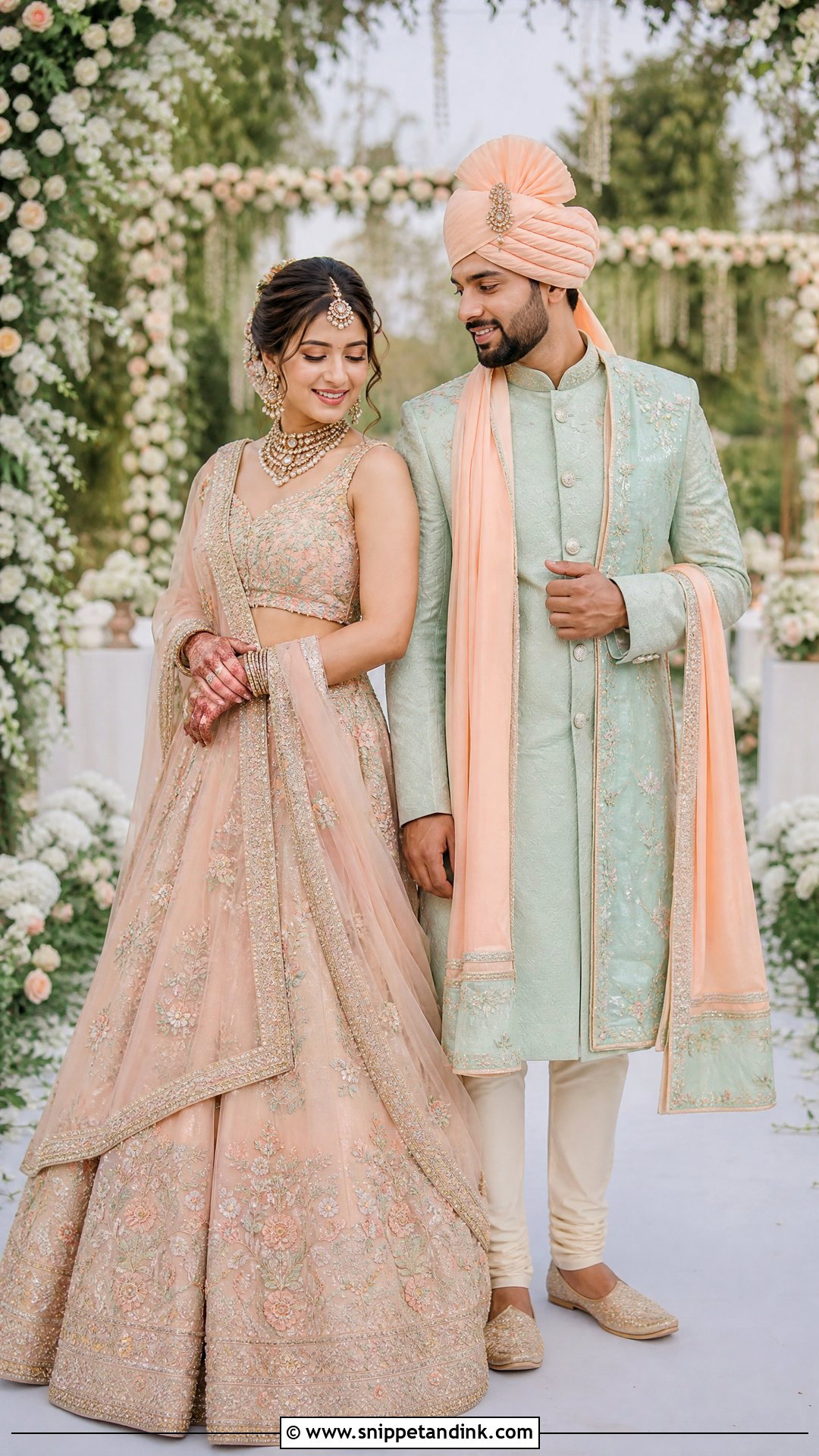
Peach and mint work in reverse: her peach lehenga carries touches of mint in the embroidery, and his mint sherwani carries a peach stole. Each has their own base and they still connect. Pearl jewelry, soft gold bangles and a light dupatta for her; a cream safa, a brooch and beige mojaris for him. Dusty, not neon, is the rule I’d hold firm on. Bright mint and bright peach together can look like a children’s party in daylight, while the muted versions photograph cohesively with flowers and jewelry.
9. Ivory And Gold Matching Wedding Outfits
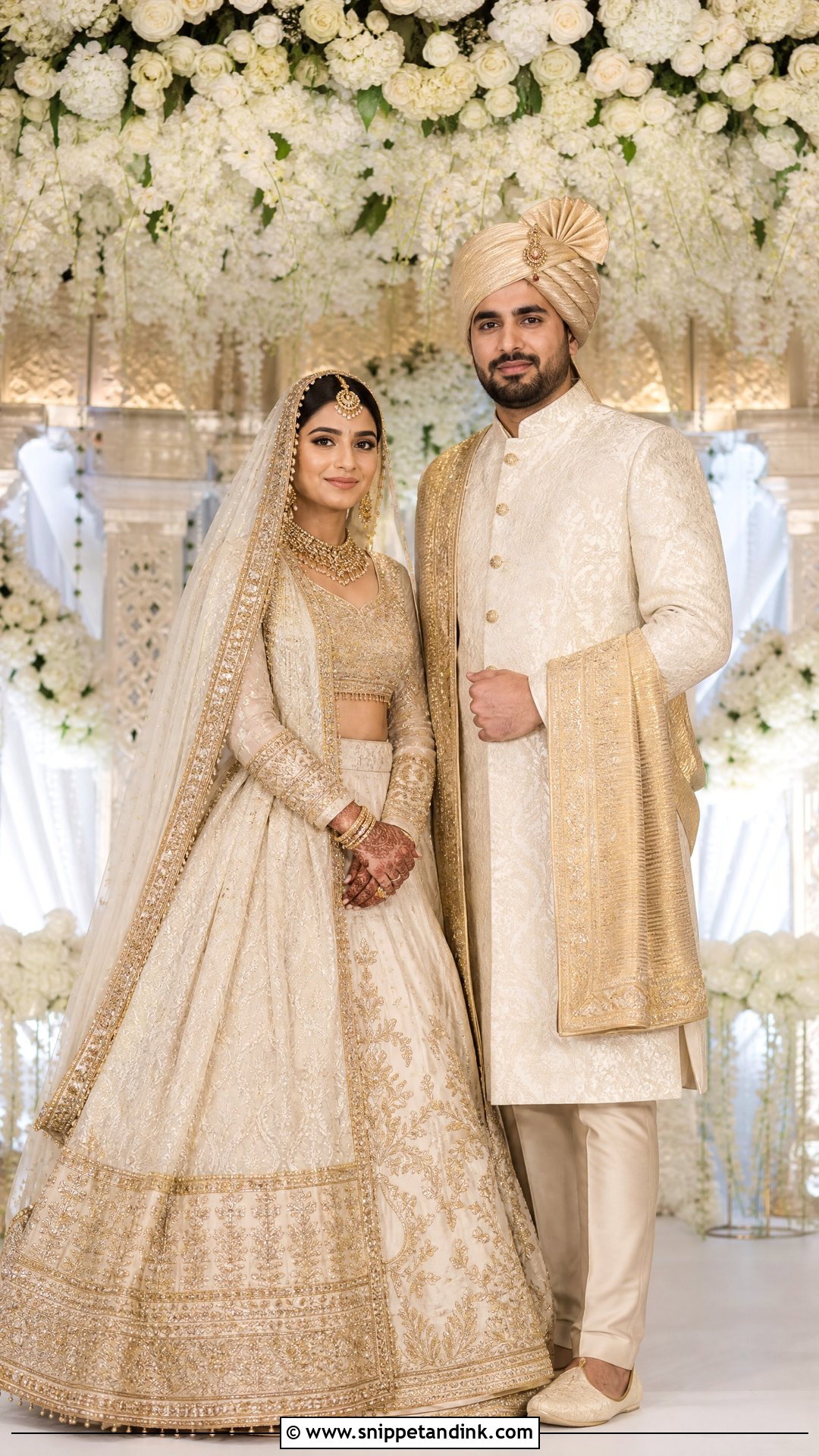
Ivory and gold together look expensive, but with no colour contrast the two outfits can blur into one shape in photos. Texture is the fix. Silk against organza, brocade against velvet trim, matte against reflective embroidery. Her ivory lehenga or saree has gold zari, a structured blouse and a bordered veil; his ivory sherwani has gold buttons, brocade panels or tonal work. Antique-gold jewelry and a beige-gold safa add definition. One accent colour, in emerald jewelry, red bangles or fresh flowers, is plenty.
10. Black And Gold Reception Couple Outfit
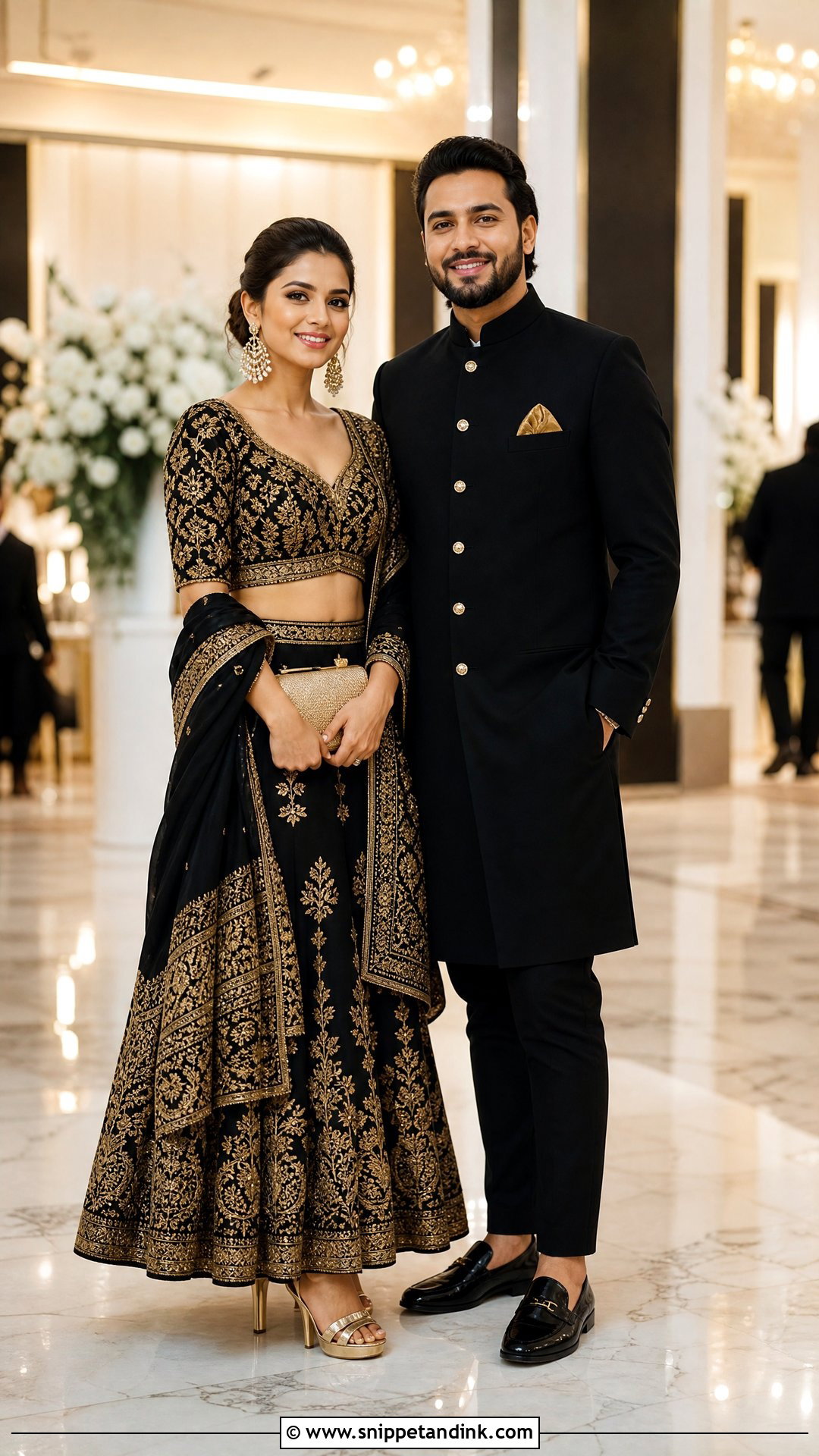
Black and gold make the most dramatic reception entrance. A black lehenga, saree or Indo-Western gown with gold beadwork and a defined waist for her; a black bandhgala or tuxedo-style jacket with gold buttons for him. Coordinate through the metal, not through heavy decoration on both. Black swallows detail in dim light, so I make sure the embroidery has enough metallic contrast to show in photos. Statement earrings and a structured clutch for her, black loafers and a gold pocket square for him. Keep this one for the reception or cocktail.
11. Champagne Bridal Gown And Groom Tuxedo
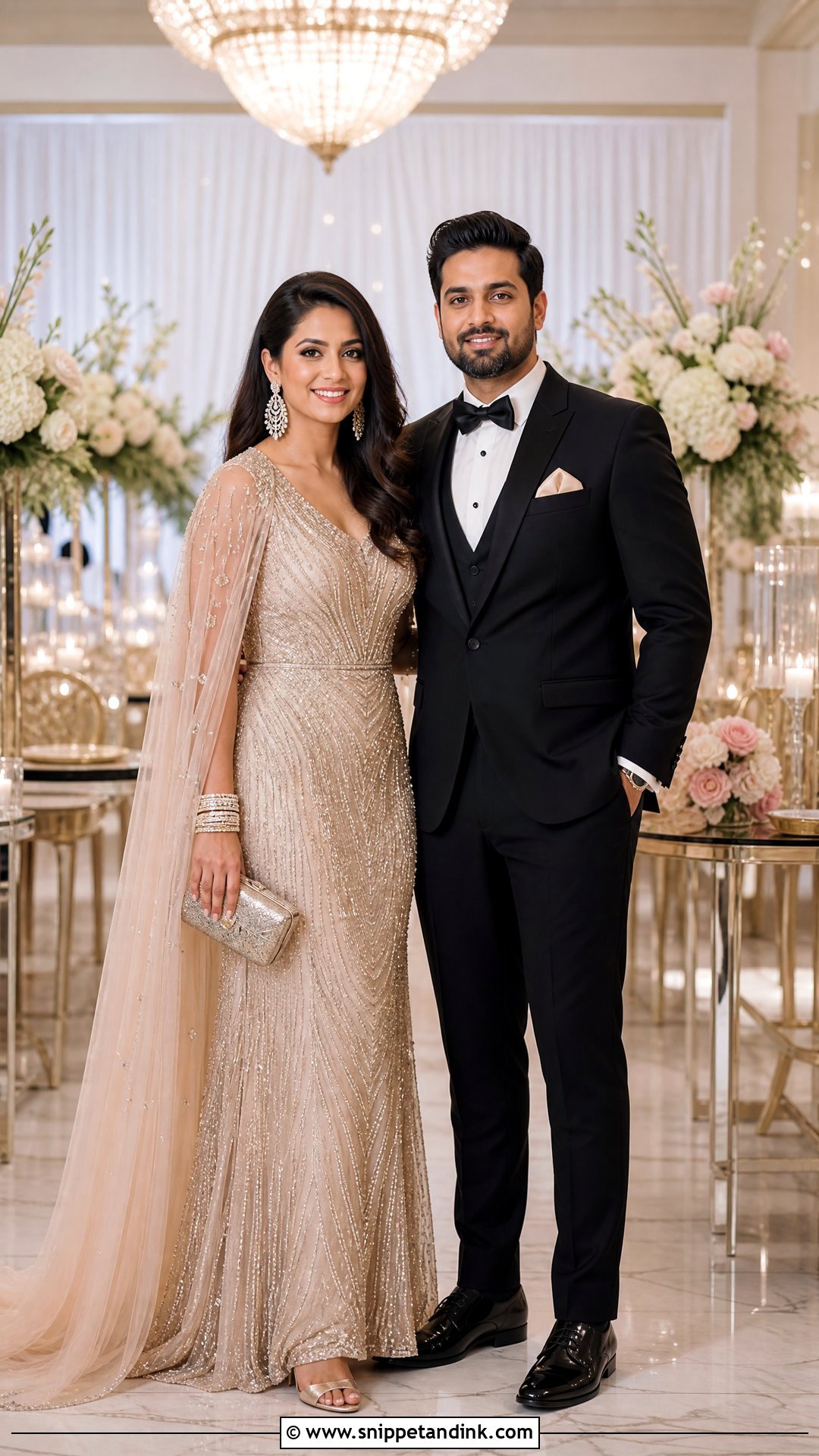
A champagne embroidered gown with a tuxedo bridges Indian glamour and Western formalwear. Beadwork, a fitted bodice and a flowing skirt or detachable cape for her, with chandelier earrings or a refined maang tikka keeping it connected to the wedding. Black, midnight blue or deep brown for his tuxedo, with a champagne pocket square and matching cufflinks. I’d pick midnight blue if her gown is warm champagne; pure black can make it look yellow by contrast. A velvet bow tie adds texture. It suits hotel and ballroom receptions.
12. Yellow Haldi Lehenga And White Kurta Set
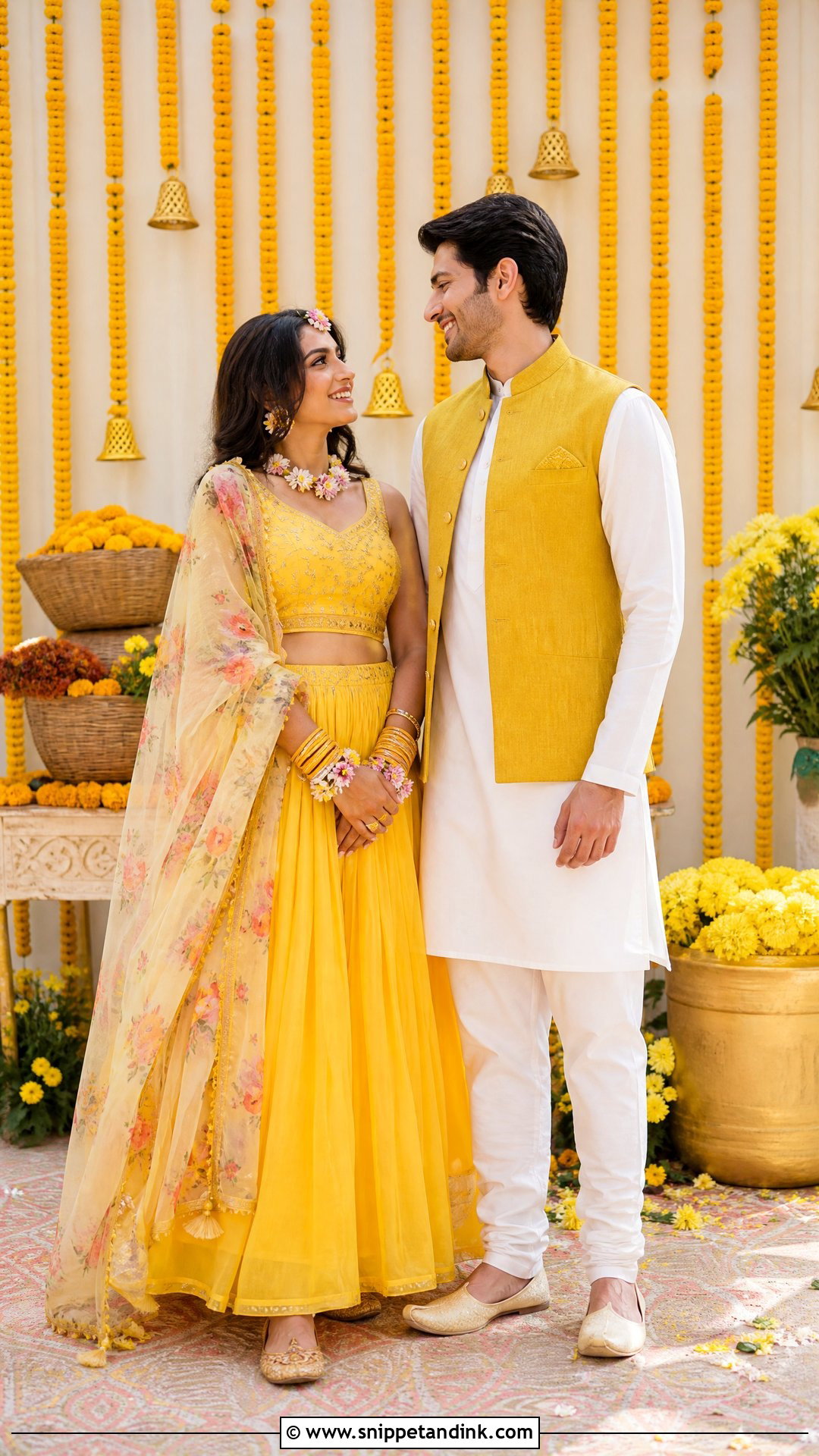
Haldi stains everything, so I keep both outfits cheap to lose and easy to wash. A light yellow lehenga with a short blouse, floral dupatta and minimal embroidery for her; a white or ivory kurta pajama with a yellow Nehru jacket for him, or a yellow kurta with cream trousers. Shared small floral motifs or matching borders tie them together. Cotton, linen blends or light silk let you move. Turmeric sets fast in white cotton, so rinse in cold water the same day. Fresh flower jewelry and juttis are all she needs.
13. Green Mehndi Lehenga And Floral Groom Jacket
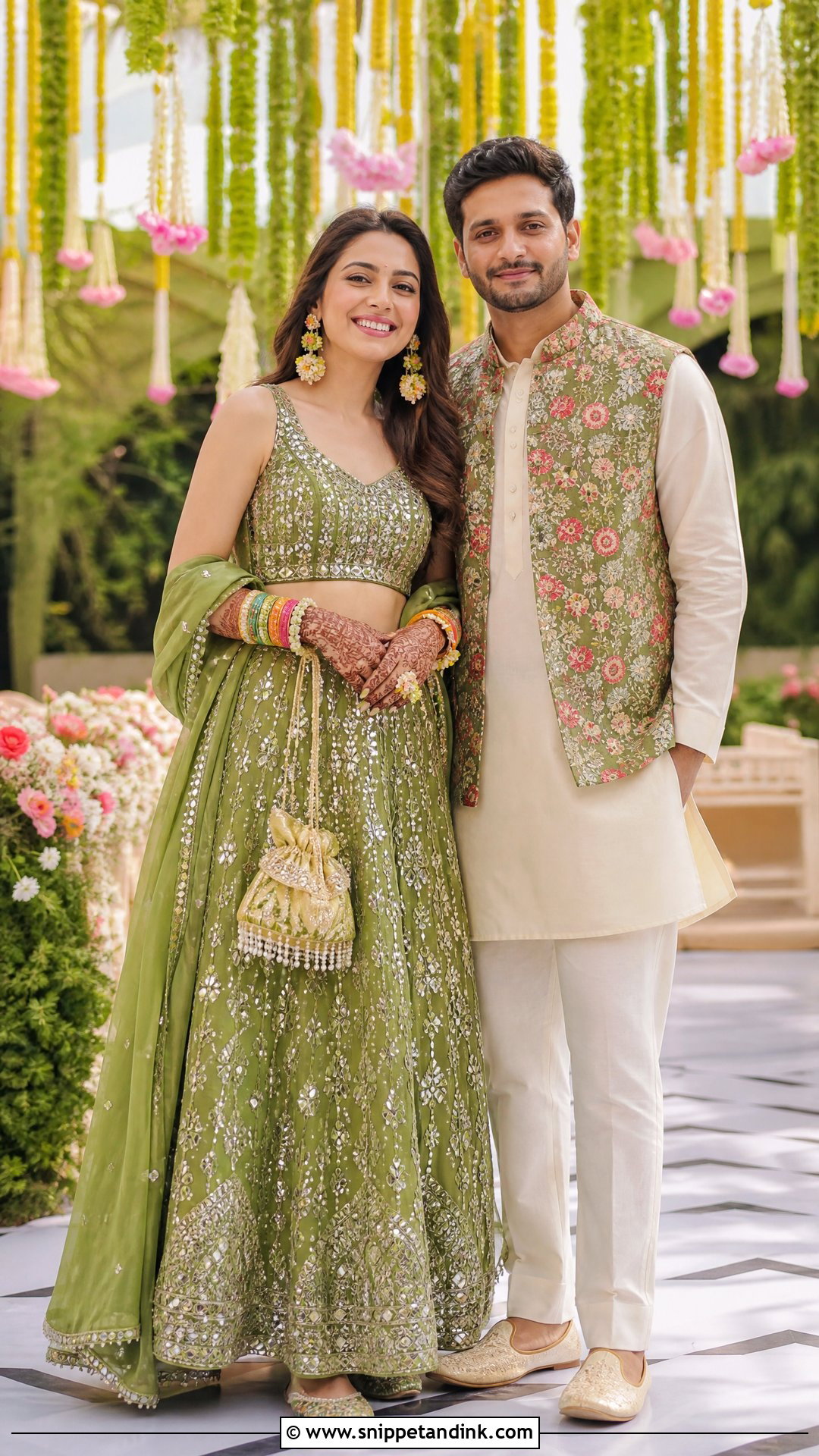
Mehndi is long and lively. A green lehenga or sharara with mirror work, multicoloured embroidery and a light dupatta for her; an ivory kurta pajama with a floral or printed Nehru jacket that picks up her green for him. Colourful bangles, floral earrings and flat juttis keep her comfortable. Avoid putting the same print on both. Shared colours and similar motif sizes connect them while her outfit stays the focus. Her sleeves should stop at the elbow or above, since her henna will be wet for hours.
14. Mirror Work Sangeet Lehenga And Navy Sherwani
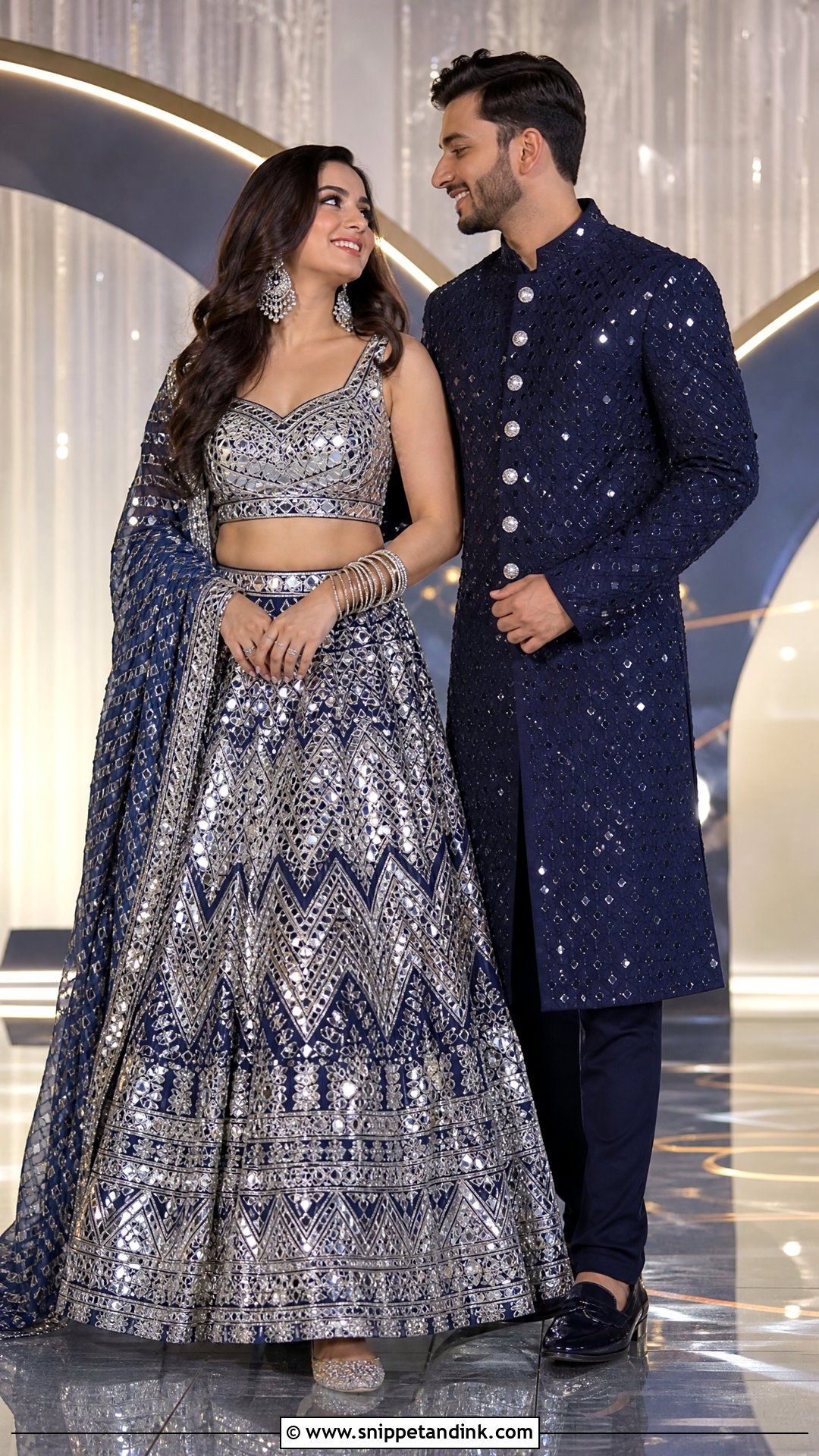
Mirror work belongs at a sangeet. Silver, blue or a jewel tone with mirrors for her, with a secure blouse and light dupatta; a navy sherwani or bandhgala with restrained mirror accents on collar and cuffs for him. Silver buttons and a coordinated pocket square stop his look from feeling like costume. Both outfits need breathable linings, because they’ll be dancing under stage lights. Repeating the silver mirror finish connects them better than matching colour, and it catches the light during performances.
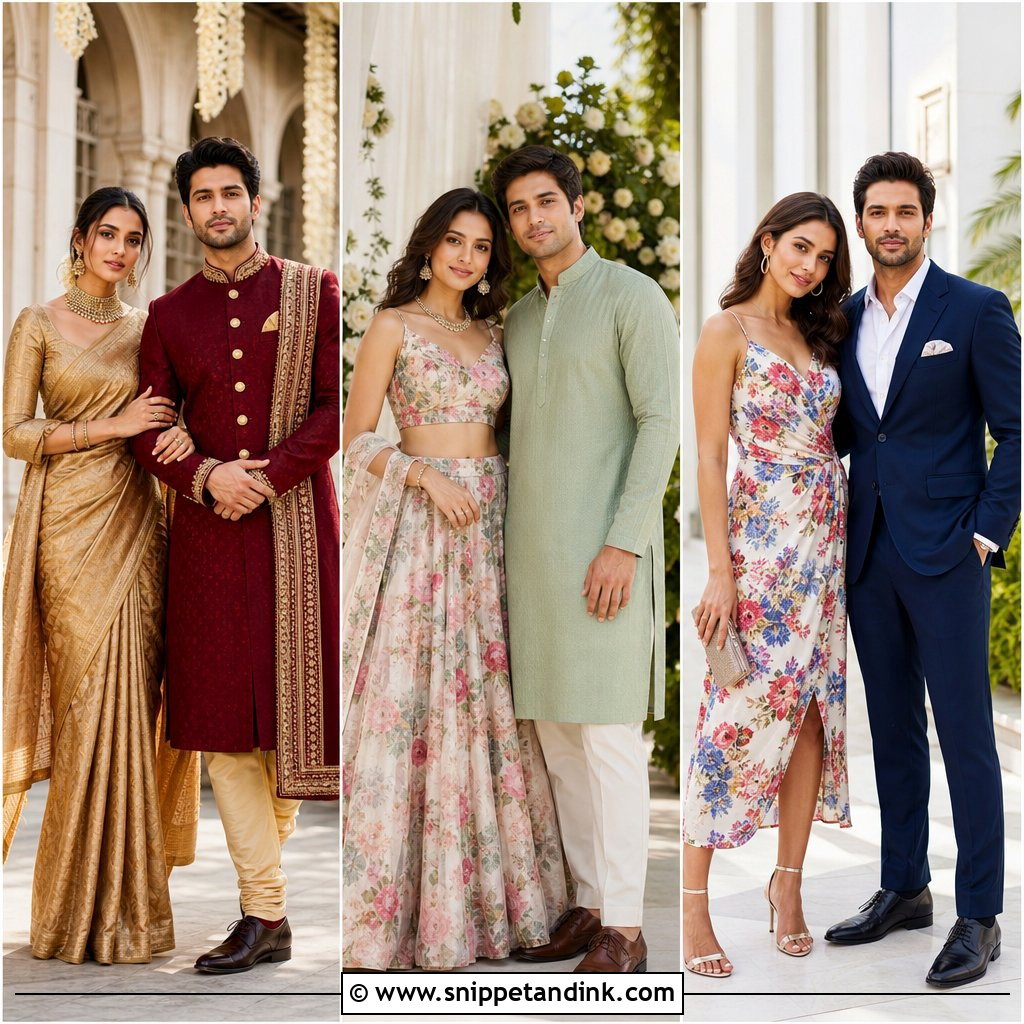
15. Blush Saree And Beige Groom Bandhgala
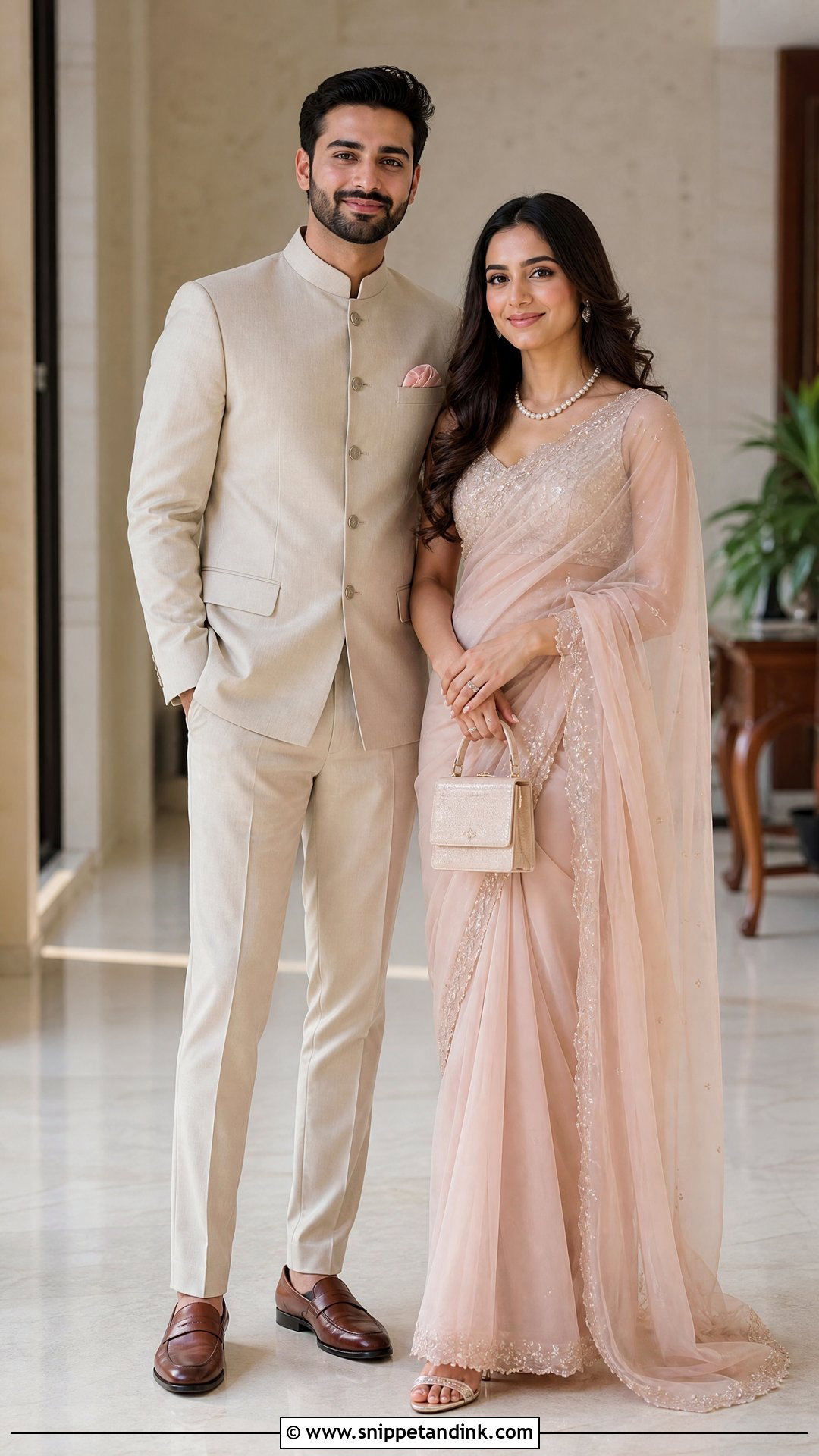
Blush and beige suit an engagement, where the formality is a notch lower. A silk, organza or lightly sequined saree with a fitted blouse and a delicate border for her; a beige or taupe bandhgala with tailored trousers, brown loafers and a blush pocket square for him. Repeat her gold embroidery in his buttons or brooch. With neutrals, fit is everything. A bandhgala that pulls across the chest or a saree pinned loosely looks careless when there’s no colour to distract. Pearl jewelry and metallic sandals finish her side.
16. Burgundy Lehenga And Velvet Groom Bandhgala
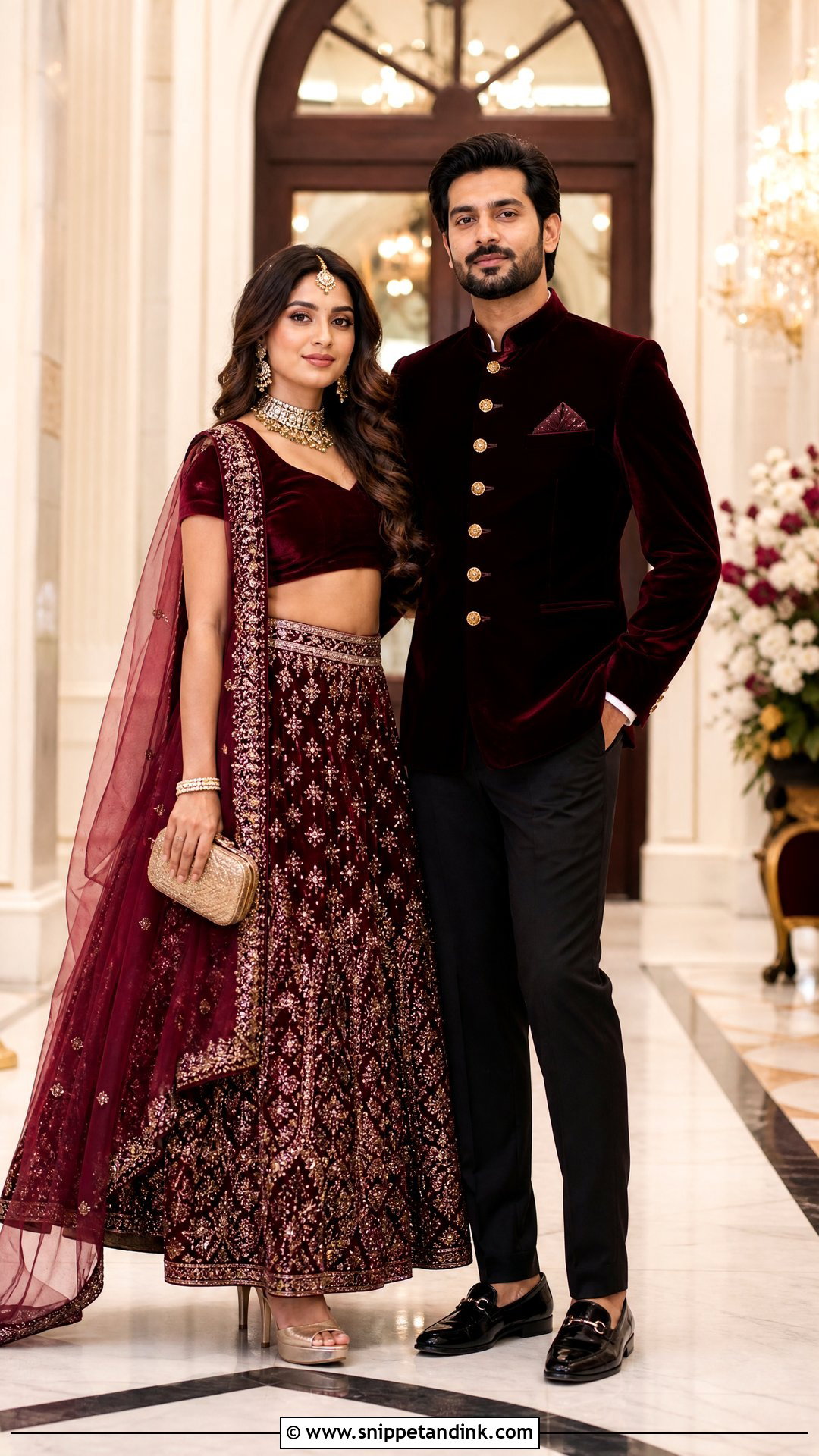
Burgundy and velvet belong to cold-weather receptions. Tonal beadwork or antique-gold embroidery on her burgundy lehenga, or a velvet blouse with a lighter skirt. His velvet bandhgala should be a shade deeper or more muted than hers so they don’t merge into one block in photos. Black trousers and loafers keep him sleek. If both wear velvet, I limit hers to structured areas, otherwise the pair looks heavy. Shared gold buttons or embroidery connect them, with kundan jewelry and a small gold clutch for her.
17. Kanjeevaram Saree And Silk Veshti Outfit
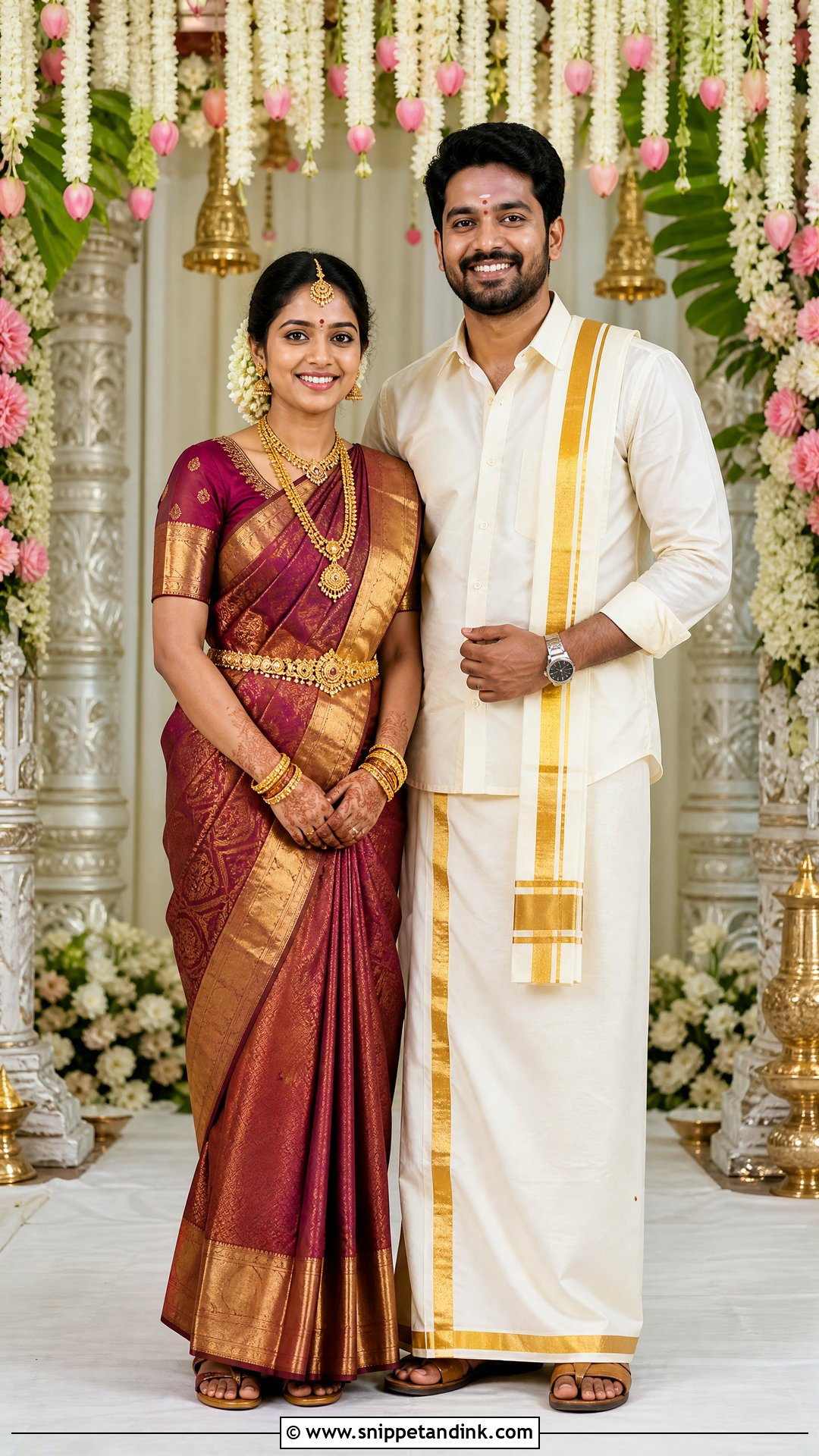
A Kanjeevaram saree and silk veshti is a South Indian pairing with its own rules. Red, green, mustard or jewel pink silk with a contrasting zari border for her; temple jewelry, jasmine, a waist belt and coordinated sandals finish it. A white or cream silk veshti with a matching shirt or angavastram with a gold border for him. I coordinate border width and the gold tone rather than the base colour. Veshtis need to be tied properly to stay up through hours of rituals, so I’d have someone who knows the drape tie it on the day.
18. Bengali Red Saree And White Groom Panjabi
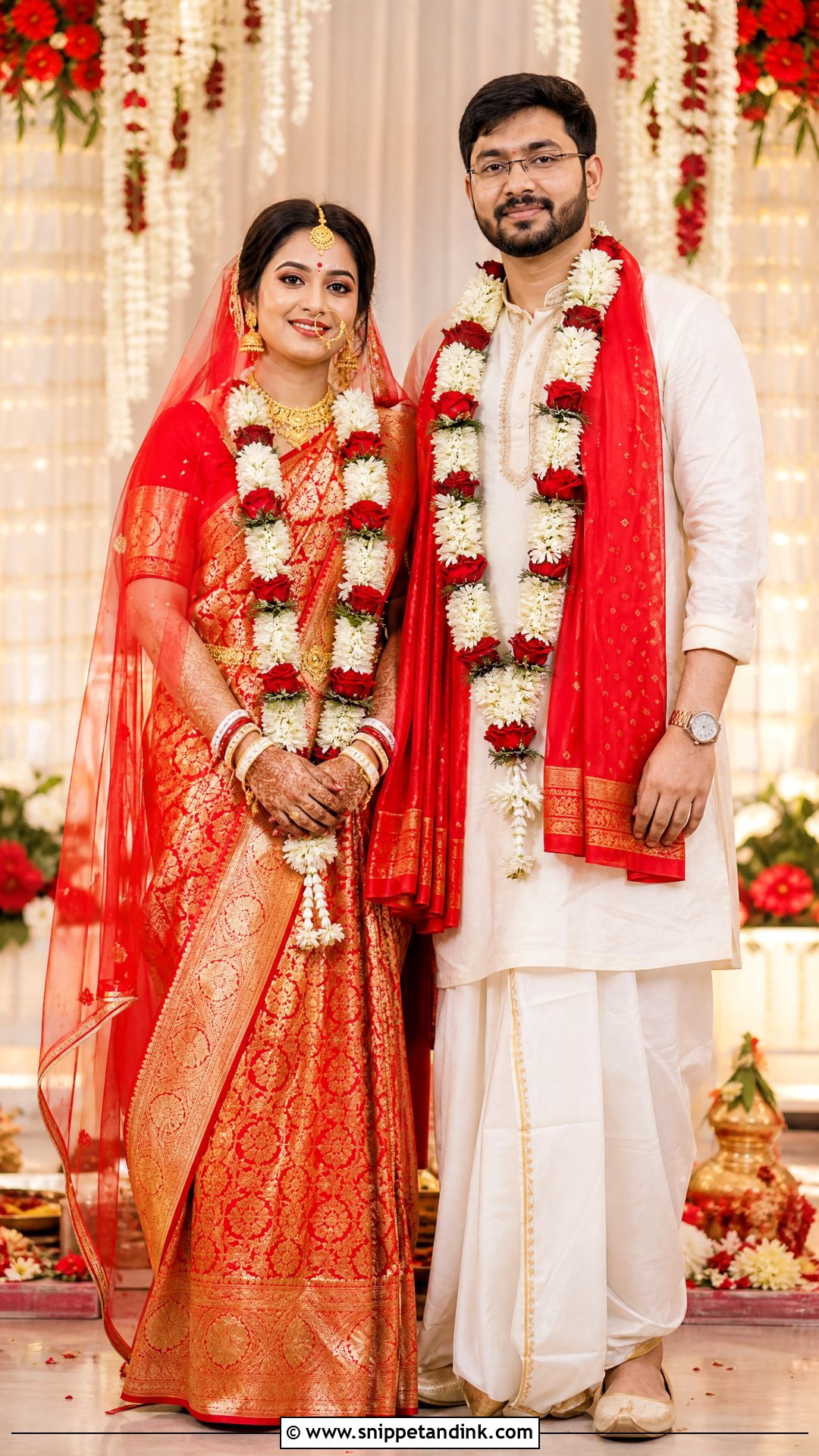
Red and white is the Bengali wedding palette. A red Banarasi or a white saree with a wide red border for her, with gold jewelry, shakha-pola style red-and-white bangles and a neat veil. A white or cream silk panjabi with subtle gold embroidery and a dhoti or pajama for him, with a red stole for the link. Her forehead detailing should complement the clothes, not compete. With so few colours, construction shows: a puckered panjabi seam or a loosely pleated dhoti is noticed immediately, so fabric quality and drape matter most.
19. Magenta Bridal Lehenga And Cream Punjabi Sherwani
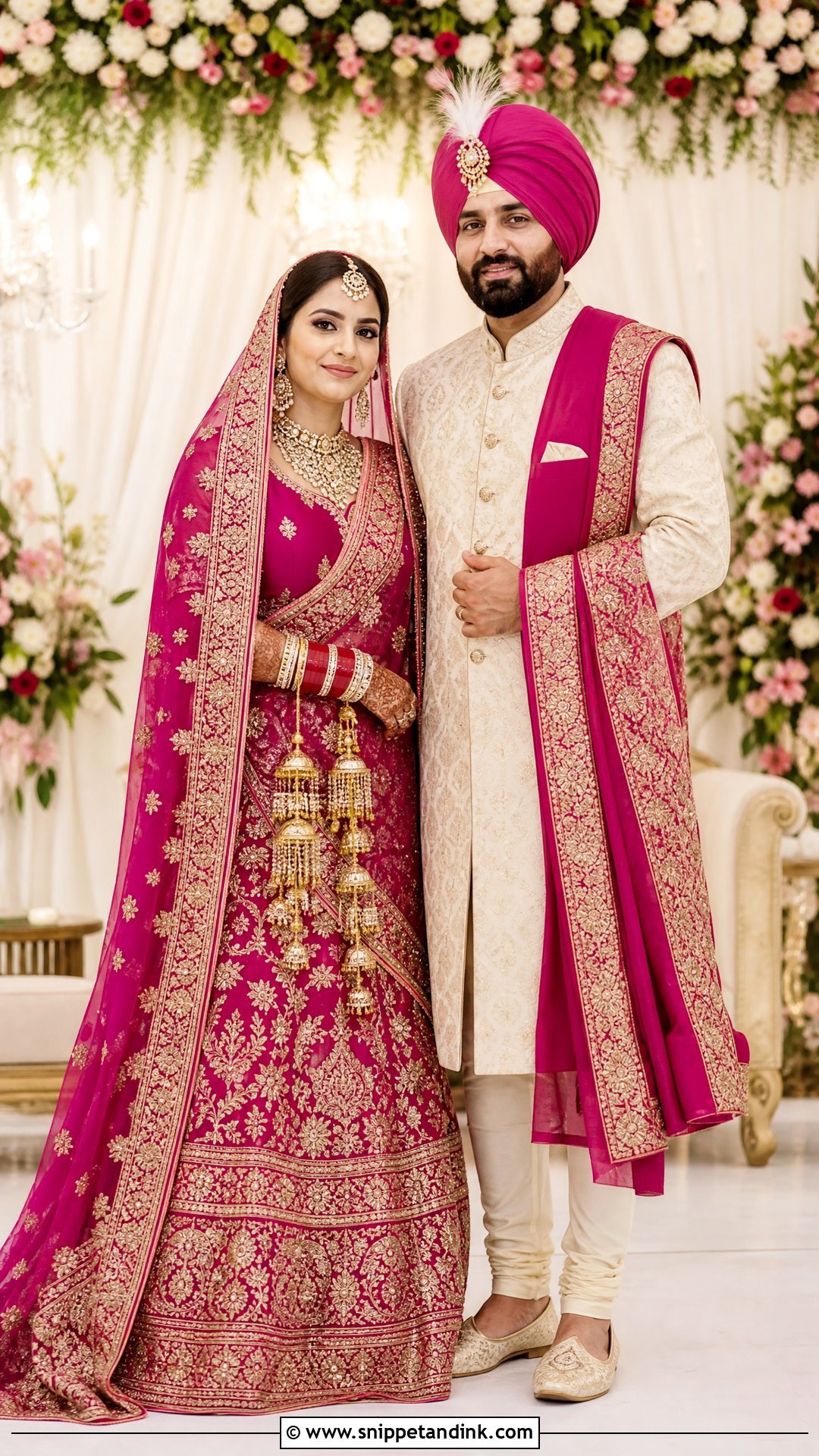
Magenta carries a Punjabi wedding. Gold embroidery on a magenta or hot-pink lehenga with a fitted choli and flowing dupatta for her, plus kalire, layered jewelry and bangles. A cream sherwani with magenta threadwork, a matching safa and stole for him. If her lehenga is heavy, I put his embroidery only on collar, cuffs and buttons. Magenta shifts between pink and purple under different light, so I match his safa fabric to her lehenga in daylight, not in the shop. Tan or gold mojaris suit a lively baraat.
20. Gujarati Panetar Saree And Ivory Groom Achkan
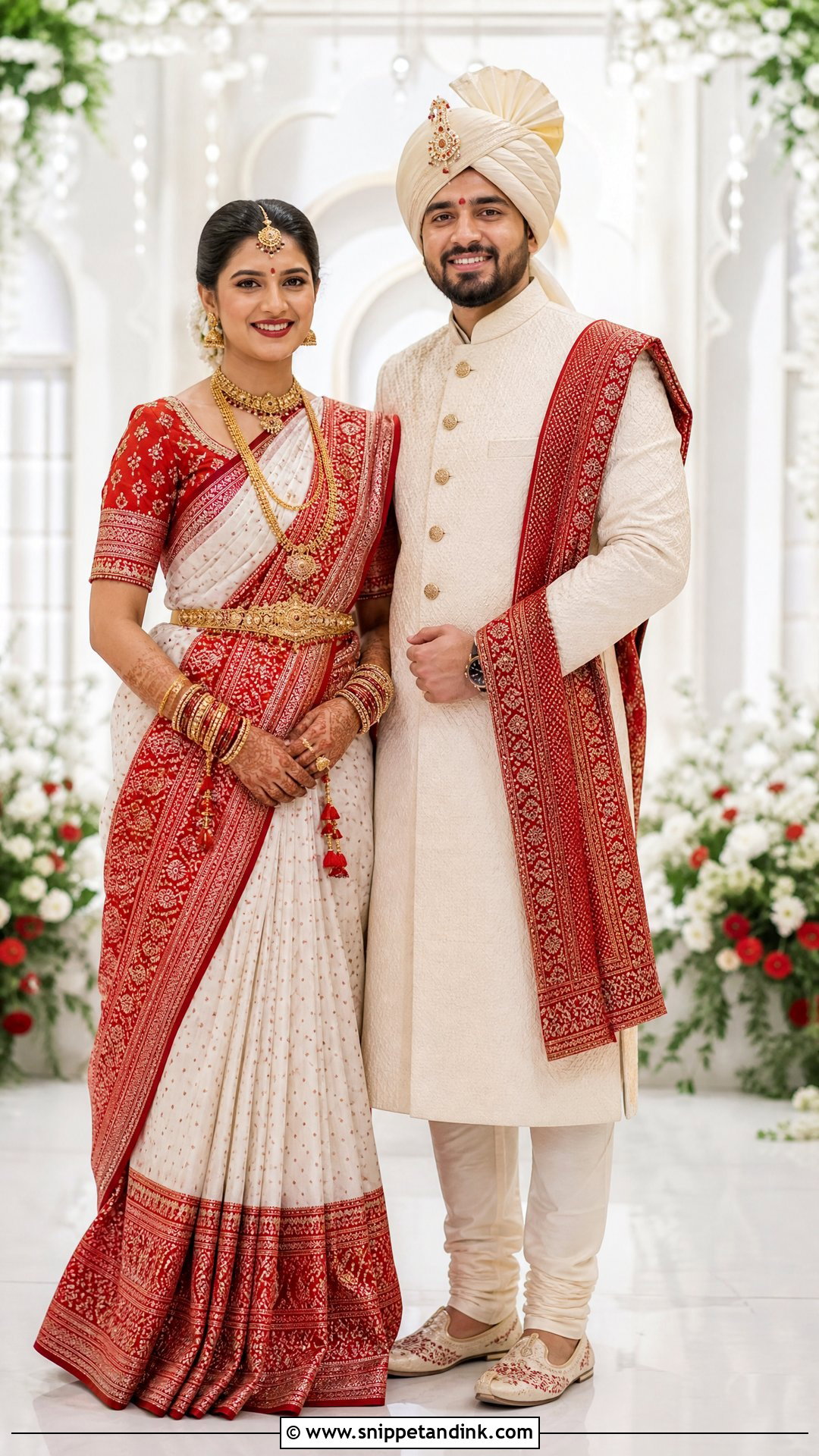
The Panetar, a white saree with a red border and often bandhani detail, is traditionally gifted to the Gujarati bride by her maternal family, so it carries meaning beyond colour. A traditional blouse, gold jewelry, a waist belt, red bangles and a carefully arranged pallu style it. An ivory achkan or sherwani with red embroidery and gold buttons for him, with a red stole or safa. I’d follow the family’s draping customs exactly rather than treating them as decoration. Matching zari borders or small embroidered motifs tie the two together.
21. Nauvari Saree And Groom Dhoti Kurta
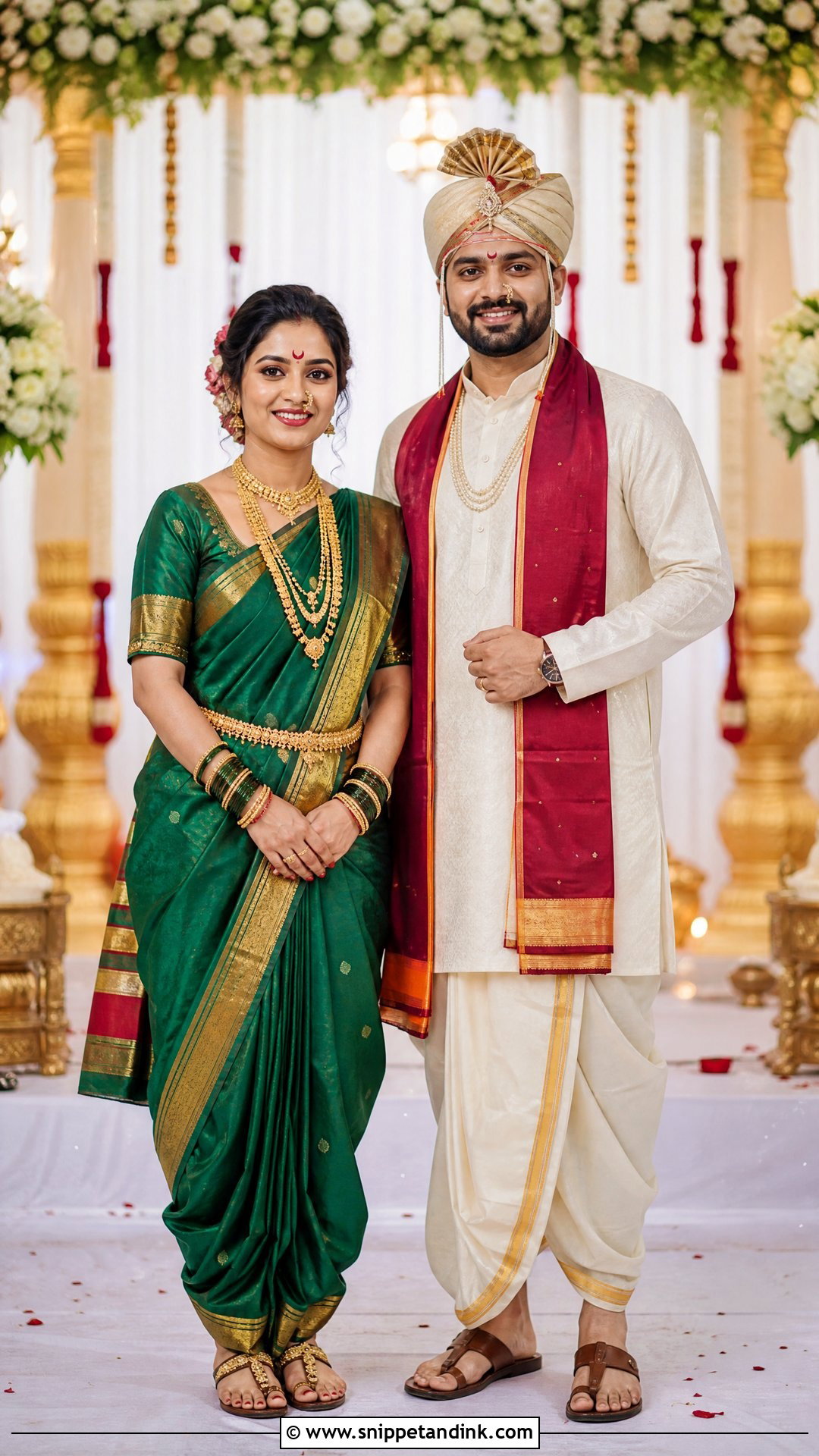
A Nauvari saree with a dhoti-kurta makes a traditional Maharashtrian couple outfit with a strong, practical silhouette. Silk Nauvari in green, yellow, red or purple for her, with a fitted blouse, traditional jewelry, green bangles, a crescent bindi and a flowered bun. A cream or white dhoti and kurta for him, with traditional headwear and a stole repeating her colour. Kolhapuri-style footwear suits both. The Nauvari’s nine yards are draped in a dhoti style, so it’s comfortable once tied right but hard to tie yourself; book a draper or practise well in advance.
22. Kashmiri Bridal Outfit And Groom Pheran
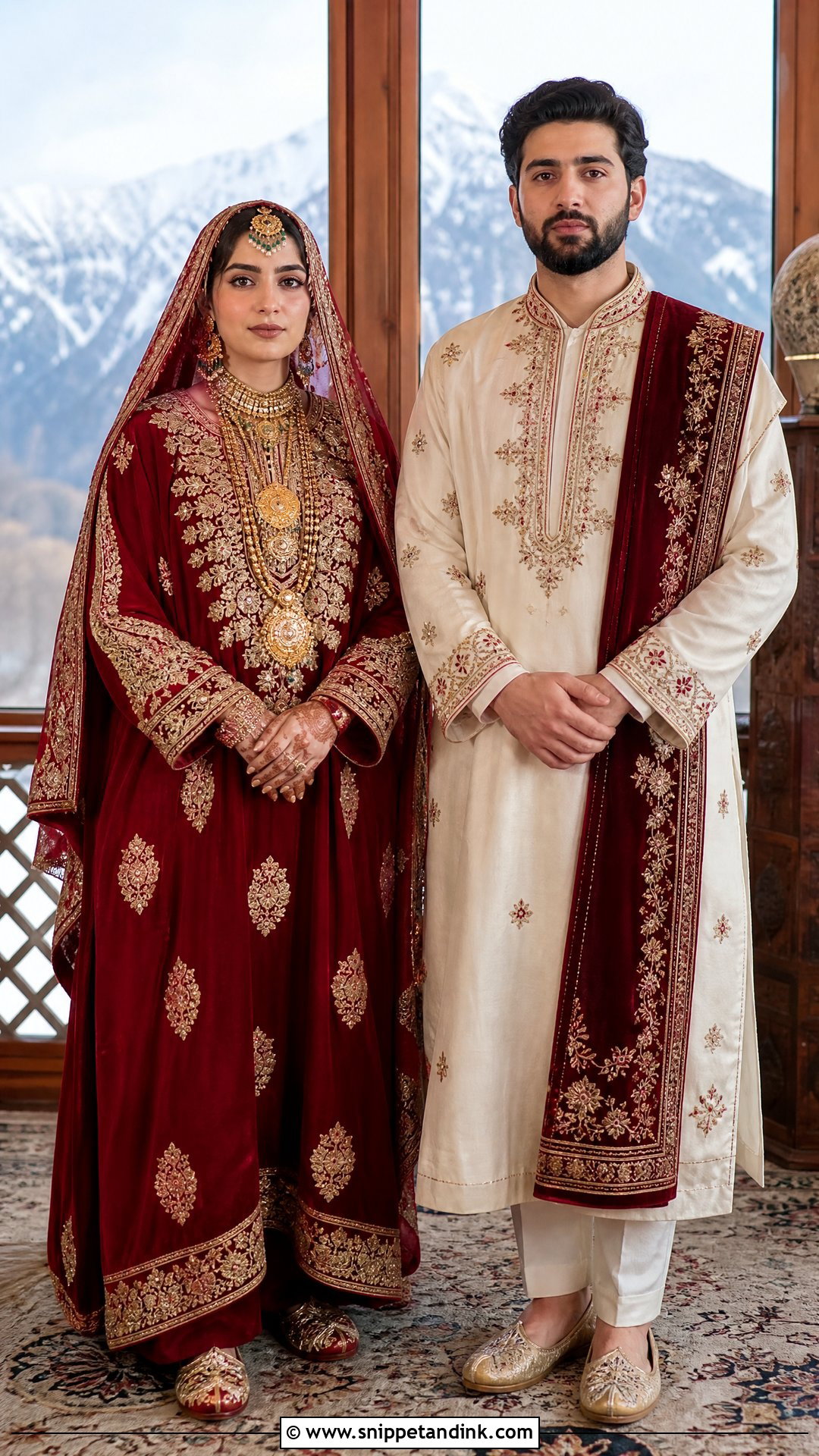
A Kashmiri-inspired couple outfit rests on embroidery and layers. A richly embroidered pheran-style ensemble in red, maroon or deep rust for her, with gold-toned jewelry and a coordinated head covering. A cream, beige or muted-brown pheran with fine embroidery and straight trousers for him, with her red echoed in his stole or collar. Wool and wool blends suit a cold wedding, but they’re warm indoors with heaters running, so I’d choose a lighter lining if the reception is inside. Let the craftsmanship carry it and keep accessories quiet.
23. Floral Bridal Lehenga And Printed Groom Sherwani
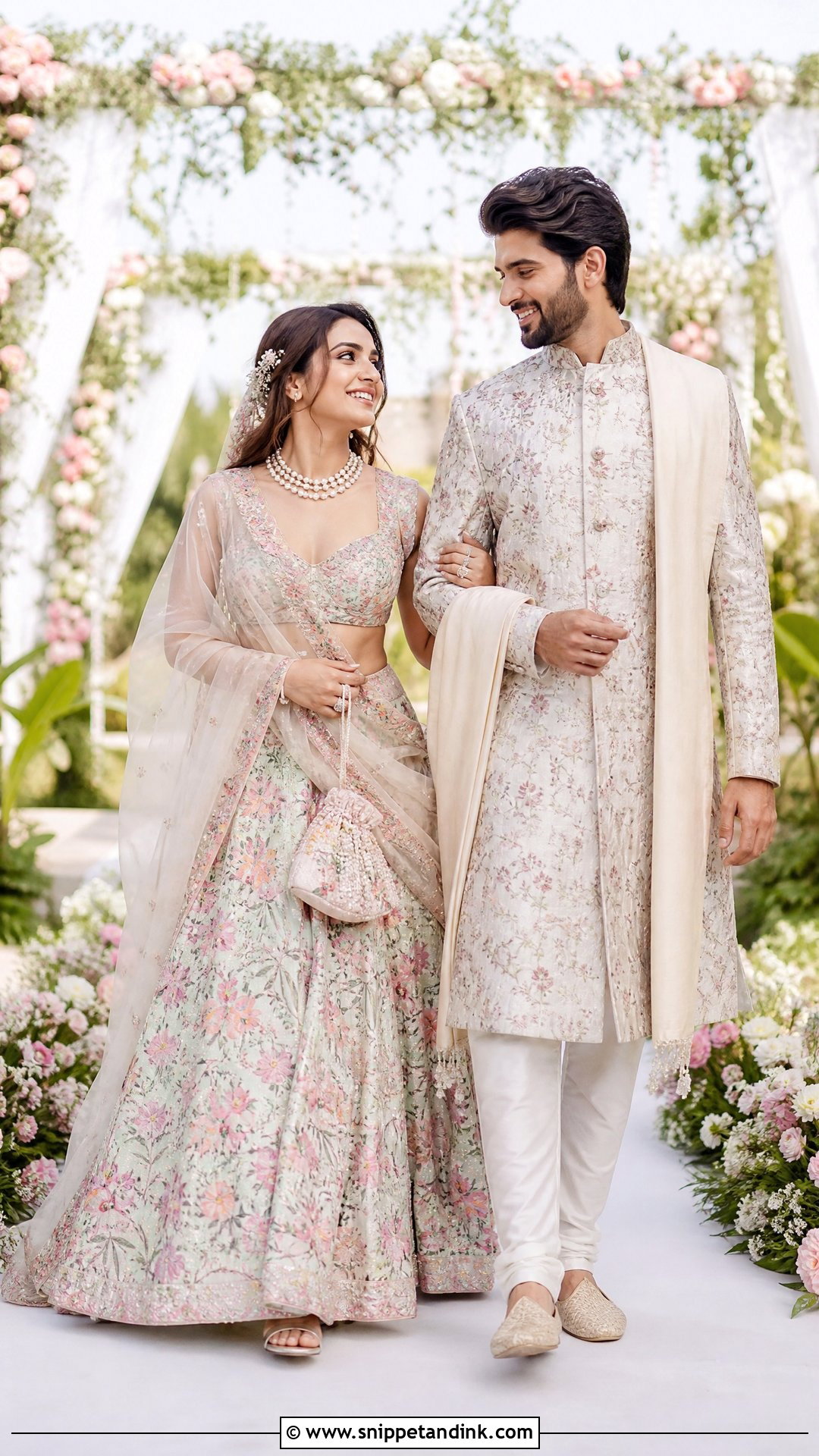
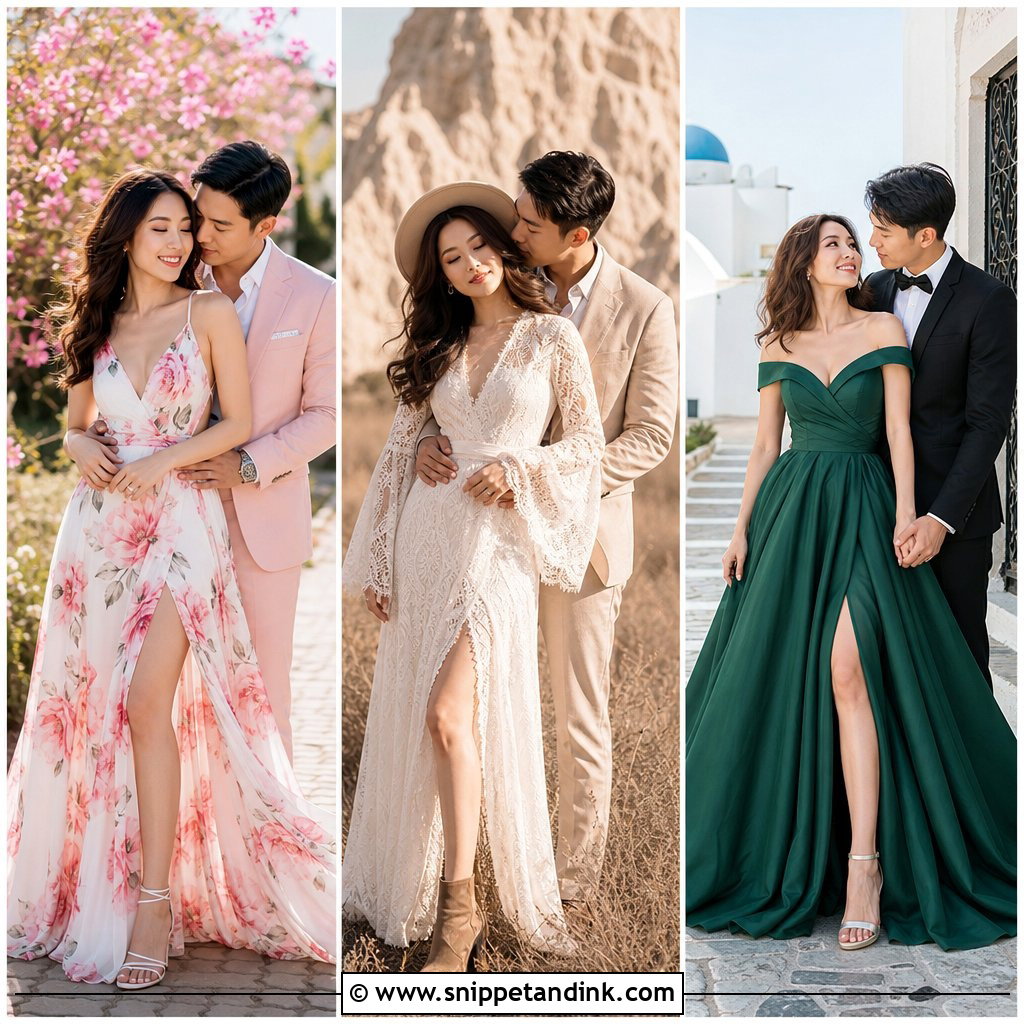
Floral pairings suit garden and destination weddings, as long as only one person wears the big print. A floral lehenga on a pastel or neutral base with a coordinated blouse and sheer dupatta for her. A printed sherwani that takes one or two of her colours in a smaller, quieter pattern for him, with solid trousers and a plain stole. Two large florals side by side turn into noise in photos. Pearl jewelry, floral earrings and metallic sandals for her.
24. Draped Saree And Asymmetrical Groom Sherwani
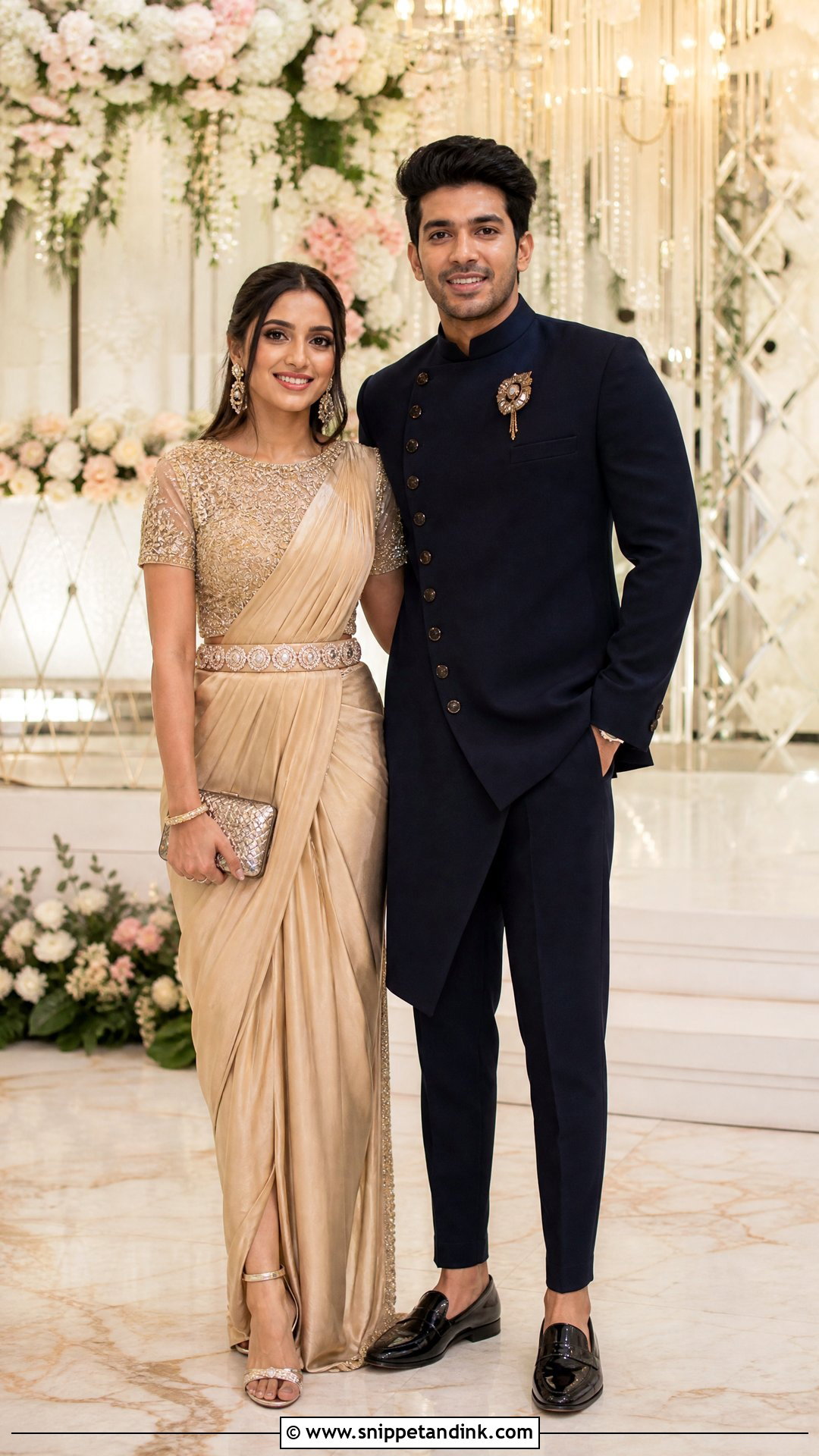
Modern shapes still read as wedding clothes when the fabrics and details stay Indian. A pre-draped saree with an embellished blouse, structured pallu, belt and sleek heels for her; an asymmetrical sherwani or long jacket with fitted trousers and loafers for him. Champagne with navy, ivory with emerald, blush with charcoal all pair well. His buttons or collar work should repeat her embroidery metal. Asymmetric cuts depend on precise tailoring, and a ready-made one rarely hangs right, so I’d have it made to measure. Streamlined jewelry and neat hair suit engagements and receptions.
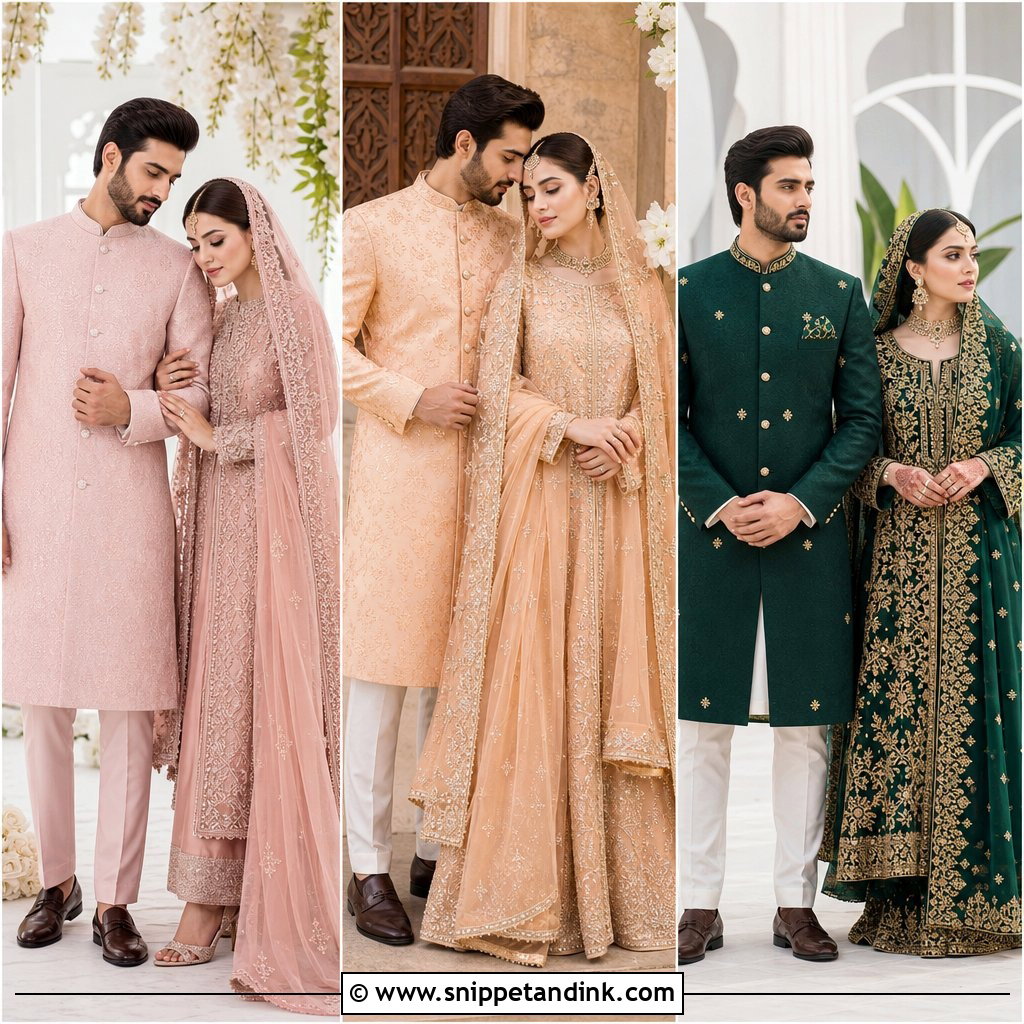
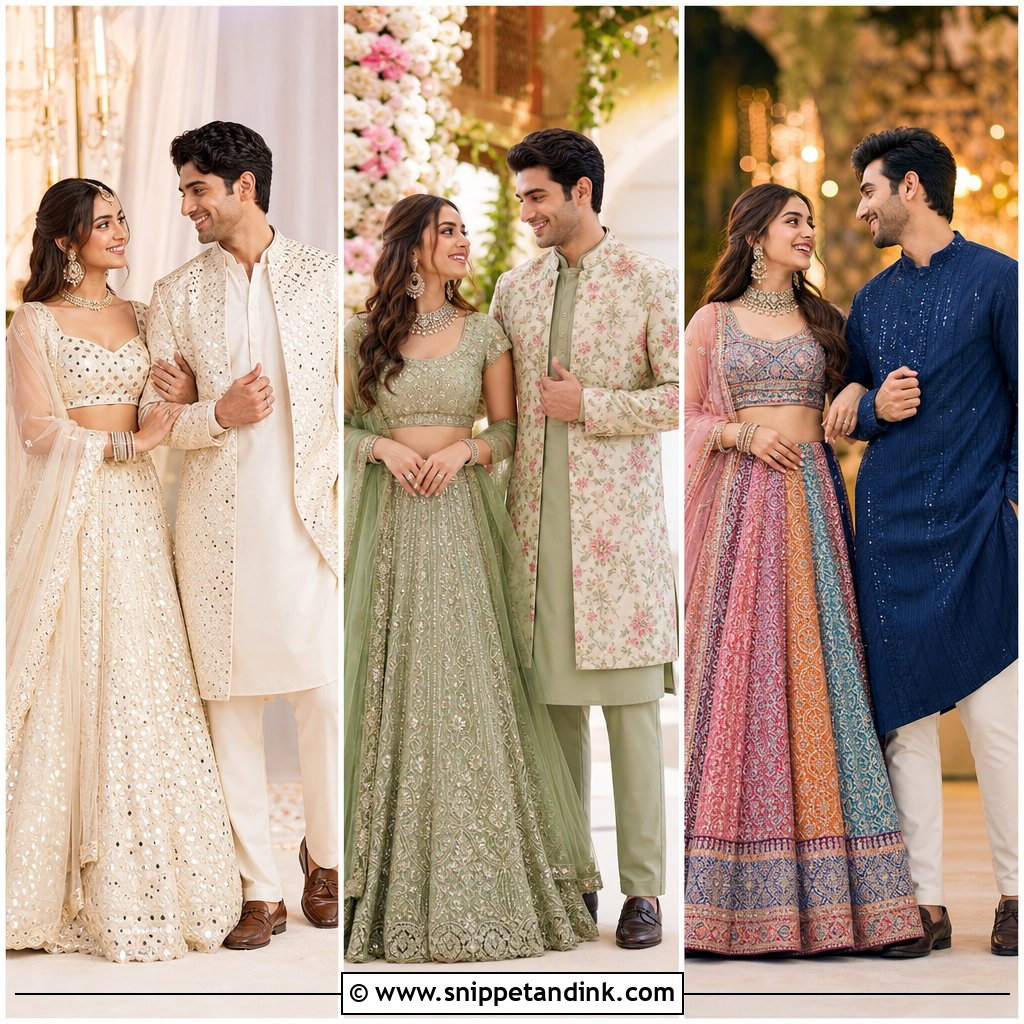
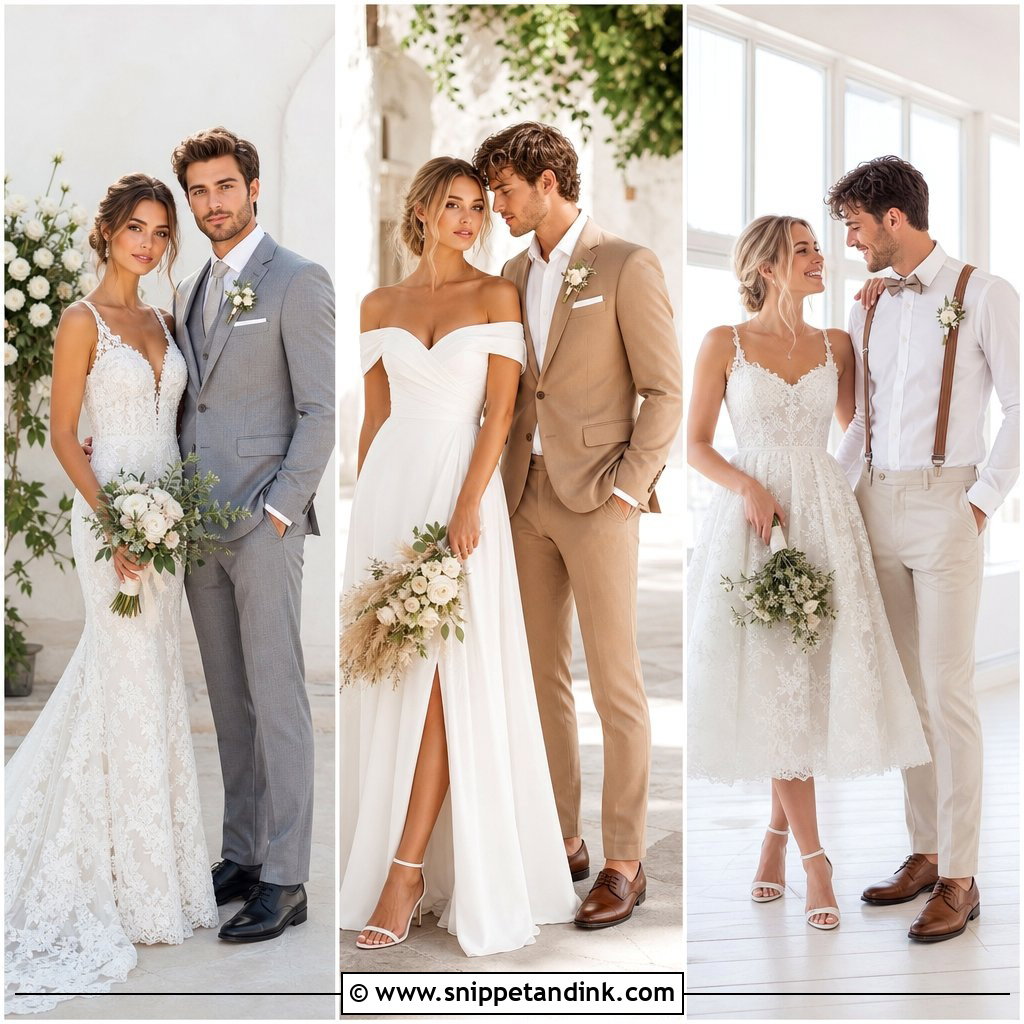
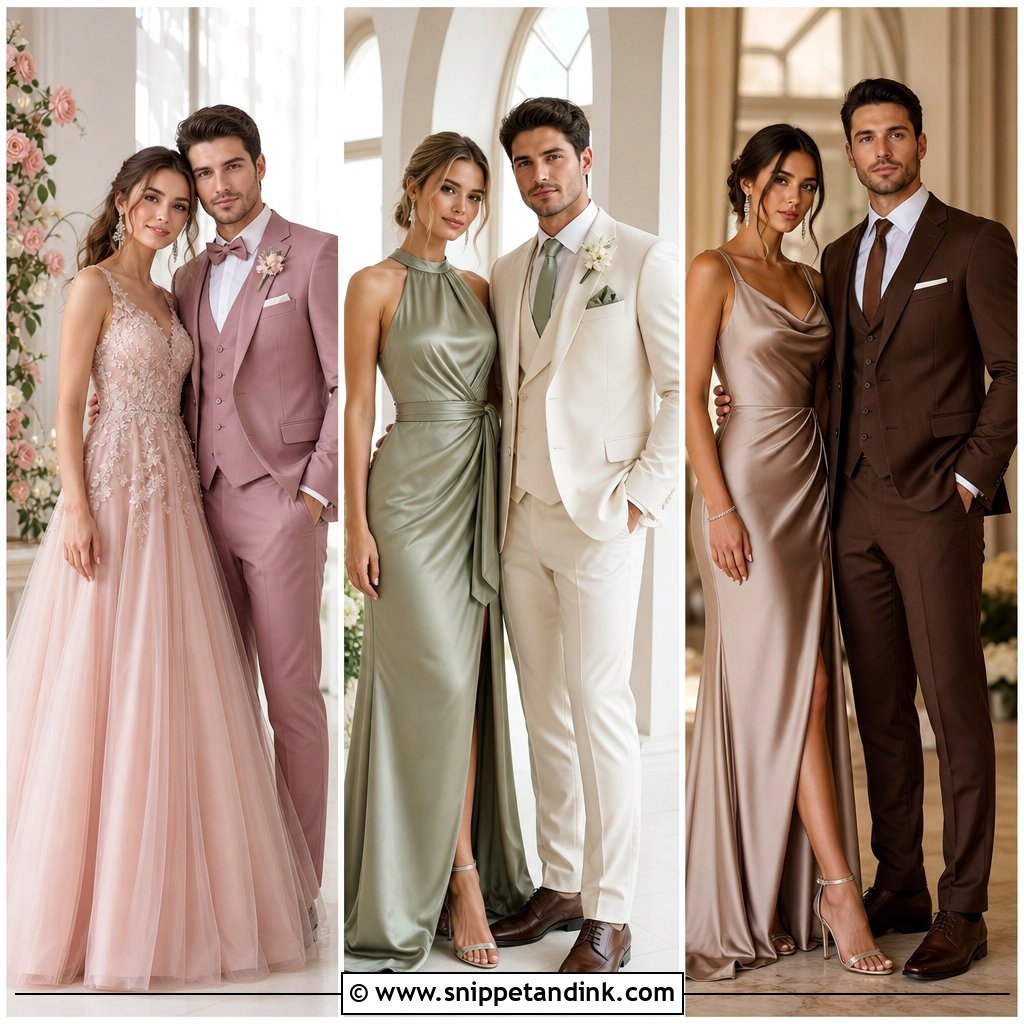
25. Ruby Lehenga And Emerald Groom Sherwani
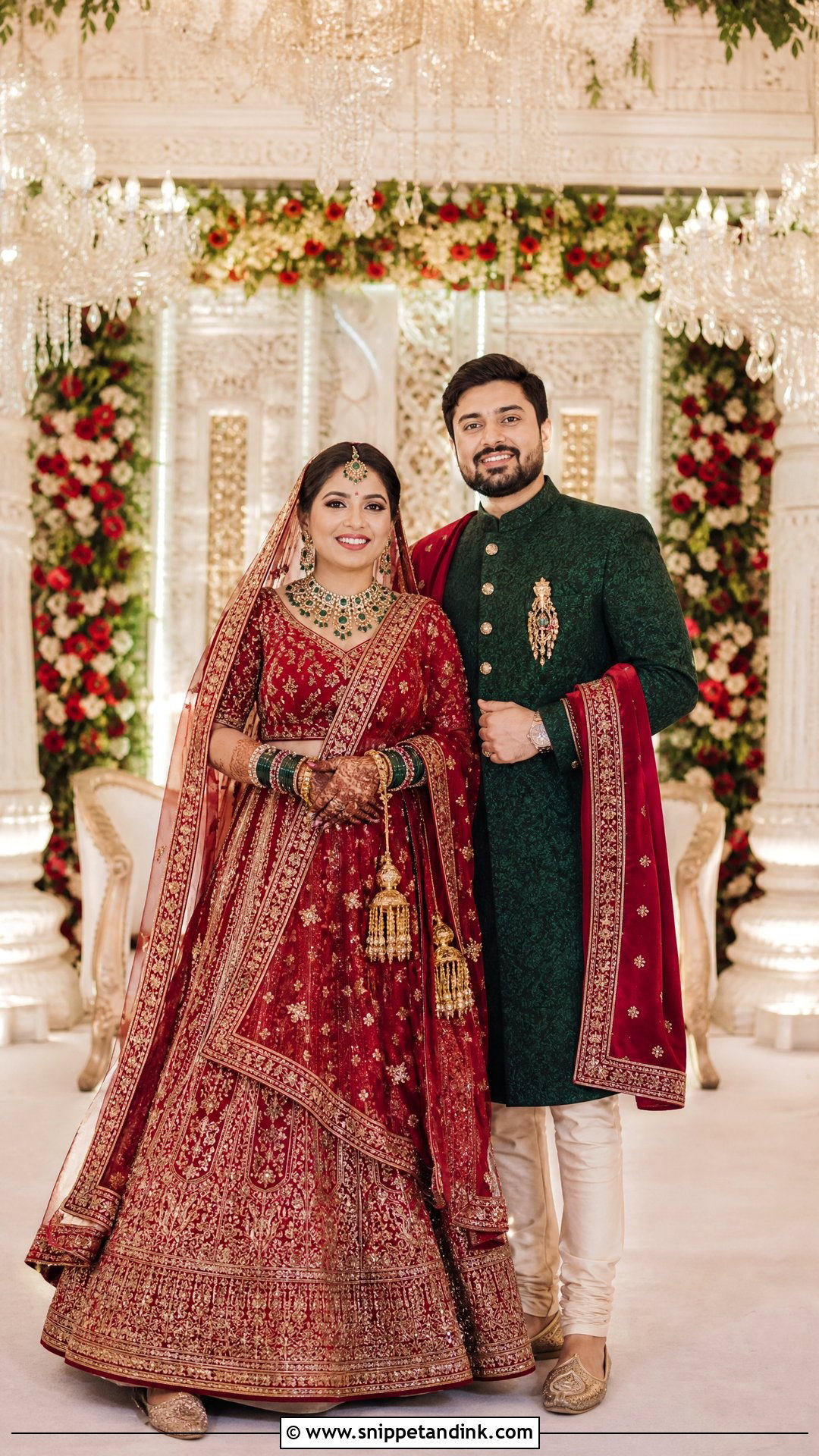
Ruby and emerald are for couples who’d rather contrast than match. A ruby lehenga with gold embroidery for her, a deep emerald sherwani with restrained gold for him. Gold is the bridge. Emerald stones in her jewelry and a ruby stole or pocket detail in his outfit cross-link the colours. I keep both colours equally deep, so neither looks faded beside the other, and I don’t add any third bright shade. Embroidered juttis and a bordered dupatta for her; cream trousers and gold-toned mojaris for him.
Sitting Together Through Pheras and Rituals
Couple outfits get photographed standing, but most of the ceremony is spent sitting side by side on low seats, and that’s where problems show. Her heavy lehenga spreads out and his sherwani bunches at the waist. I ask couples to sit together on the floor at the final fitting and see how the outfits behave.
- In many Hindu ceremonies her dupatta or his stole is knotted to the other for the pheras; choose a stole long and soft enough to tie without dragging her dupatta off her head.
- Sherwani slits need to open enough for him to sit cross-legged.
- Heavy embroidery on her skirt edge can scratch his hands and catch his stole.
- Safas and veils need pins the photographer won’t see when you bow your heads.
If you’re walking around a fire, check that neither outfit has trailing net or loose synthetic layers near the hem. A short pinned hem is far safer than a long train during the pheras.
One Shared Thread Ties a Couple Together
Good couple dressing connects two looks without erasing either person. Start with the ceremony and its formality, then build a shared palette: one main colour, one neutral and one metal finish. Repeated embroidery, borders, accessories or texture look more considered than identical clothes. Think about comfort, climate, family customs, décor and how the colours sit together on camera. A red lehenga with an ivory sherwani, regional dress, pastels or a dramatic reception pair all work with careful coordination.
You'll Like These Ideas:


Leave a Reply