
A couple looks coordinated when the two outfits are clearly in conversation, not when they’re cut from the same bolt. I connect them through one shared element, which might be a shade, a fabric, an embroidery motif or simply the same level of formality, and then let everything else differ. Before any of that, I ask about the dress code, the venue, the likely weather and the family’s traditions, because those rule out more options than taste does. Comfort counts too. You’ll stand, greet, sit through a ceremony and dance, often in the same clothes. The pairings below run from ivory and black tie through lehengas and sarees to courthouse tailoring.
Decide Which Outfit Leads Before Anyone Goes Shopping
In nearly every pairing below, one outfit carries the color, embroidery or shine and the other supports it. I settle that question first, because it changes what each person shops for. The leading outfit is chosen first, and the supporting one is bought to answer it, never the reverse.
Signs the balance has tipped
- Both outfits are densely embroidered from neckline to hem. In group photos the eye jumps between the two of you and settles nowhere.
- The supporting outfit repeats the lead color in one large block, such as a full blush kurta beside a blush lehenga. It starts to read as a uniform.
- The formality doesn’t match. A heavily worked lehenga next to a plain cotton kurta makes one partner look underdressed, even when the colors agree.
Here’s a quick test I use: photograph the two of you together on a phone and switch the image to black and white. Without color, you see at once whether one outfit is shouting and the other has vanished.
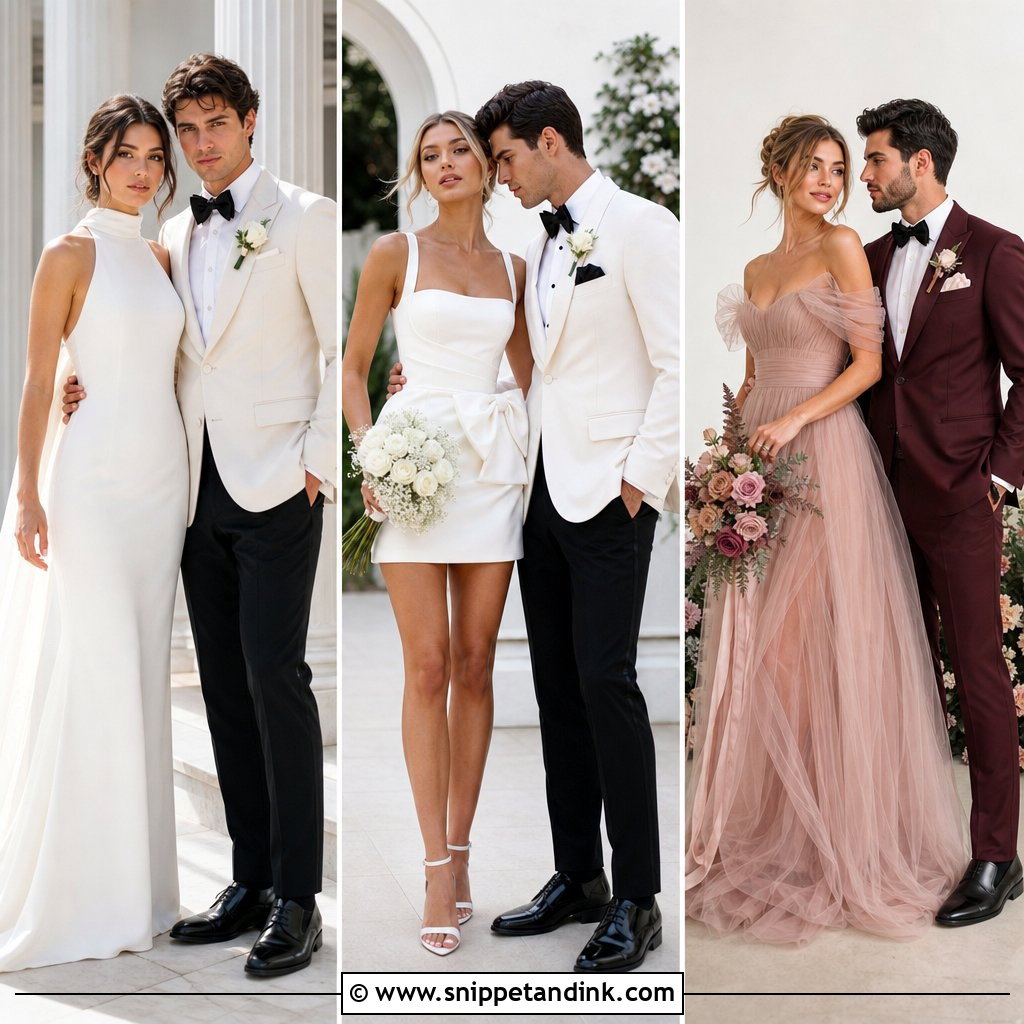
1. Ivory Gown and Black Tuxedo Couple Wedding Outfit
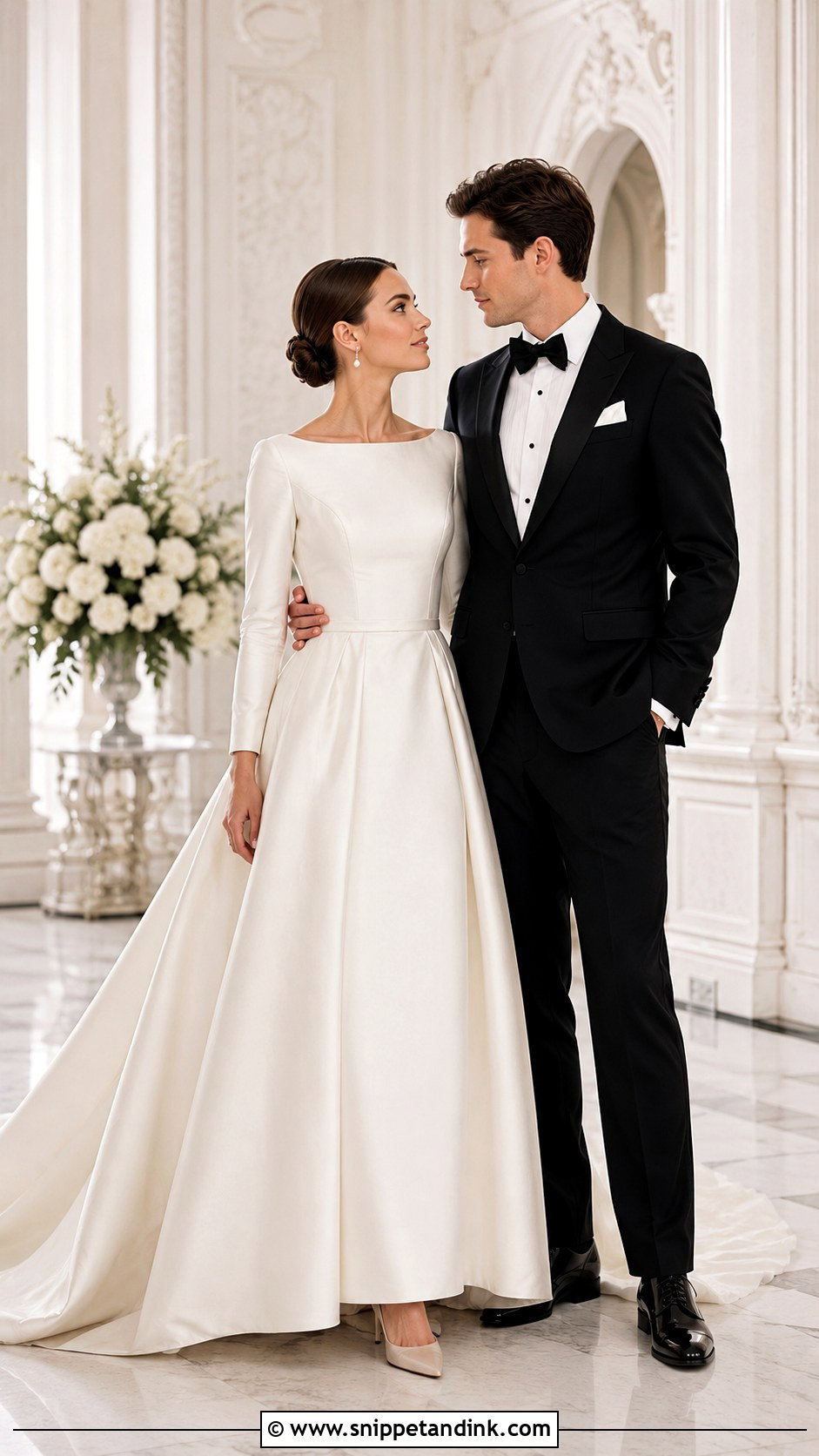
Ivory beside a black tuxedo hardly ever fails, which is exactly why fit decides everything. With so little color, a creased sleeve or a jacket too long in the body is the first thing anyone notices. Any gown shape works as long as it lets you walk and sit; I steer brides toward whichever silhouette they forget they’re wearing after an hour. The partner wears the tuxedo with a white shirt, bow tie and patent shoes, then borrows one bridal detail, such as pearl cuff links or a boutonniere cut from the bouquet.
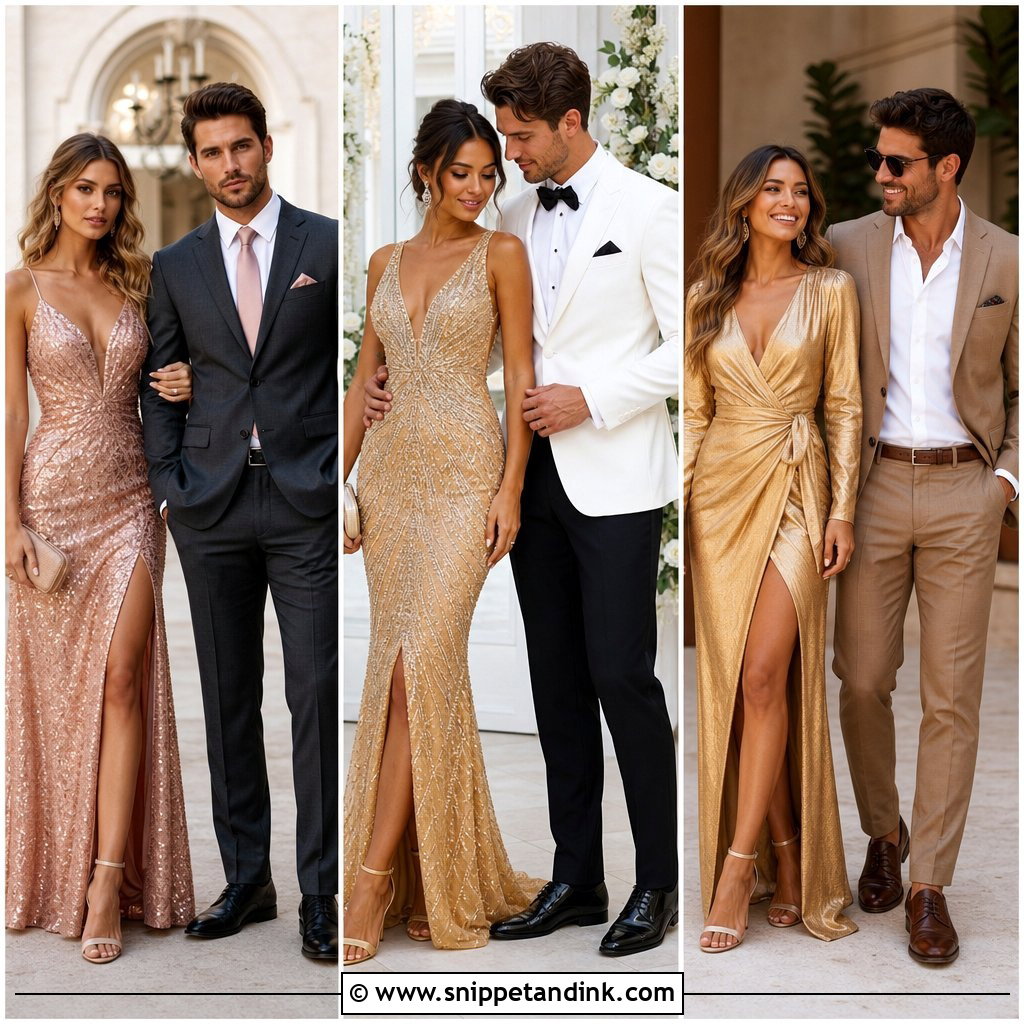
2. Champagne Gown and Navy Suit Couple Wedding Outfit
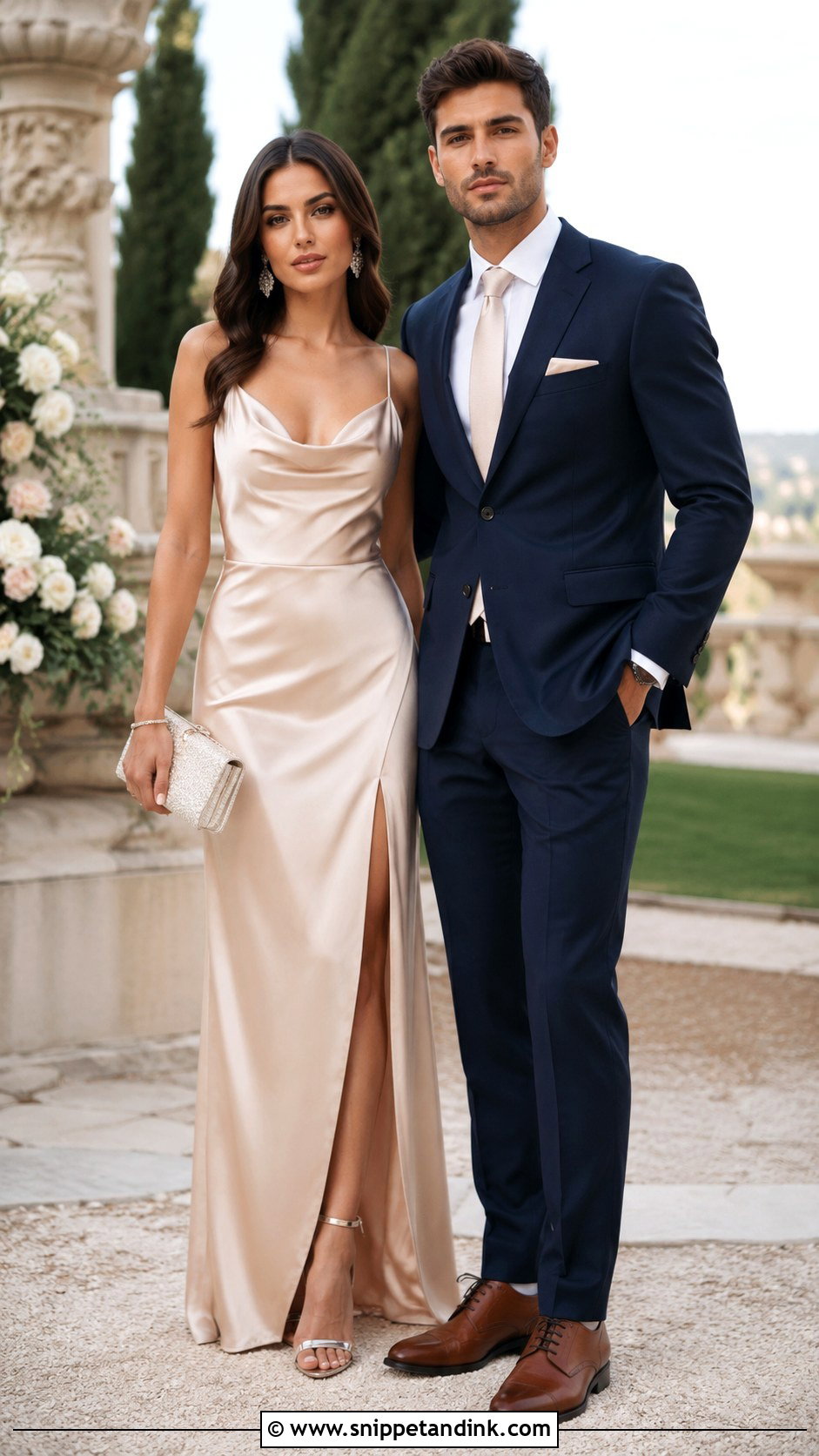
Champagne next to navy is the pairing I suggest when ivory and black feels too stark. Navy gives the camera enough contrast to separate the two figures, while champagne keeps the bride’s side warm. Metallic heels, crystal earrings and a small gold clutch suit the gown; the partner wears a fitted navy suit, white shirt, champagne tie and dark brown shoes. Watch that tie. Champagne silk can turn gray under warm indoor bulbs, so I look at it beside the gown in the venue’s own lighting whenever I can.
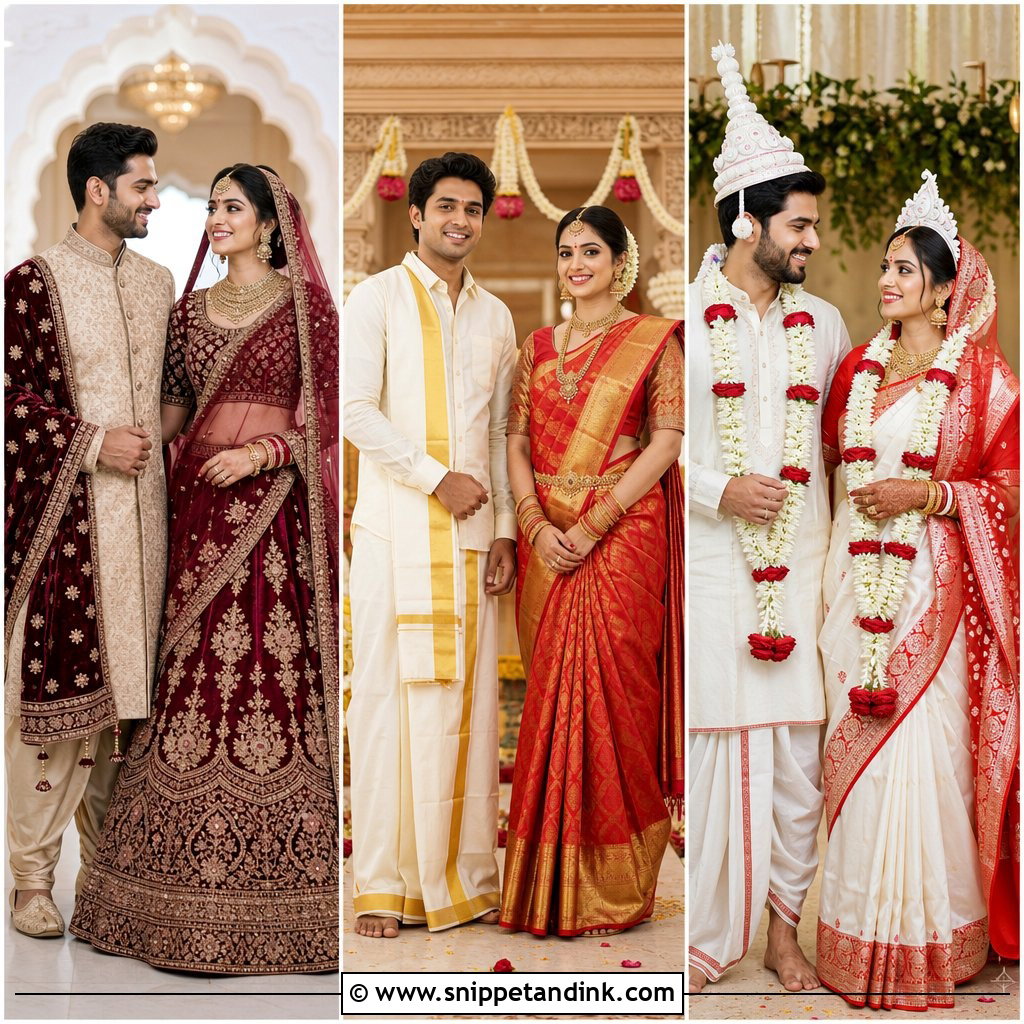
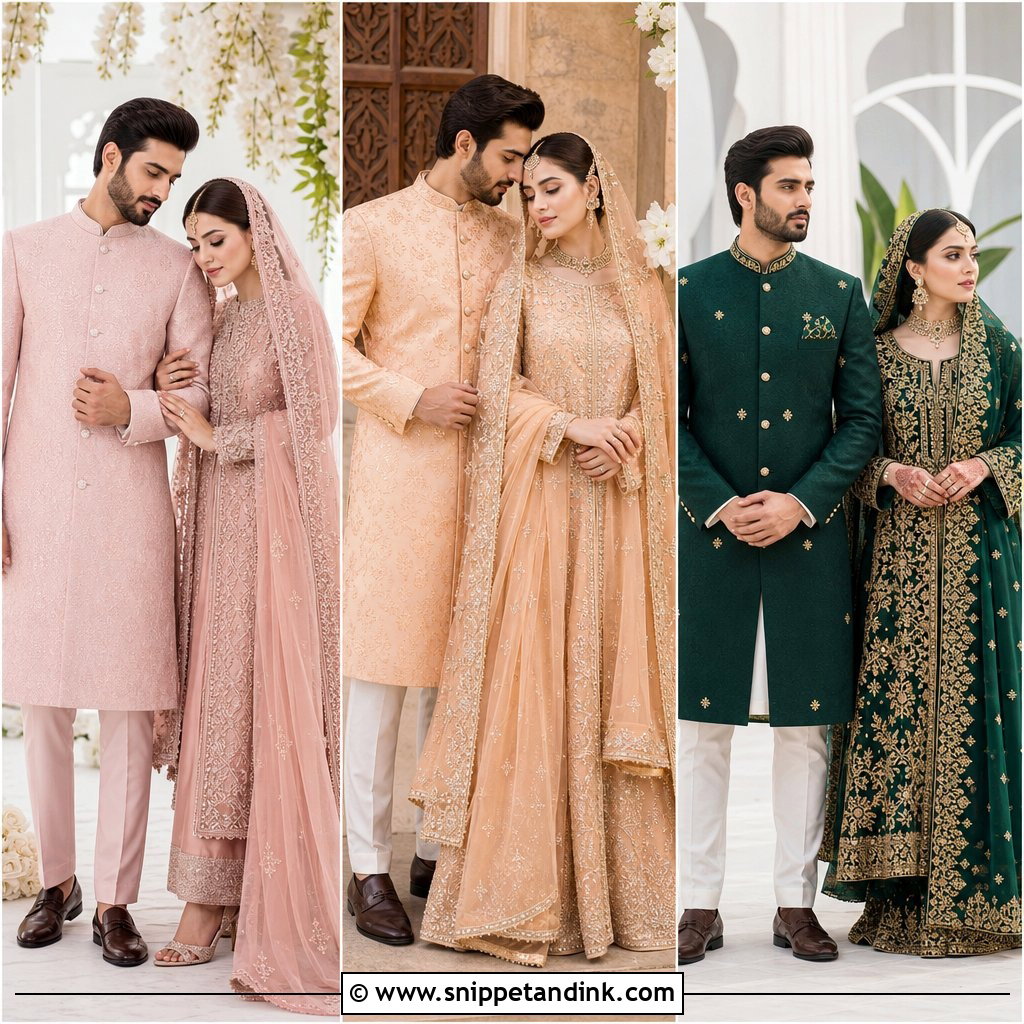
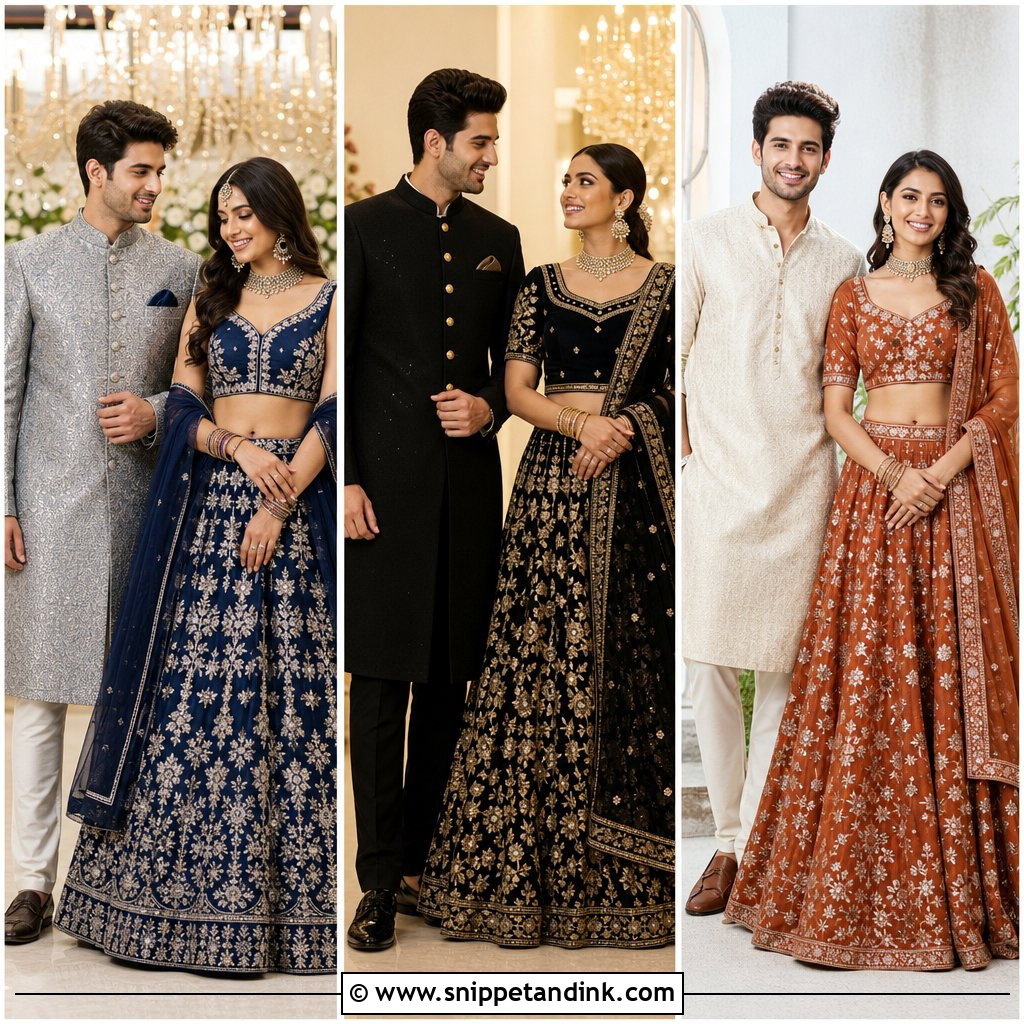
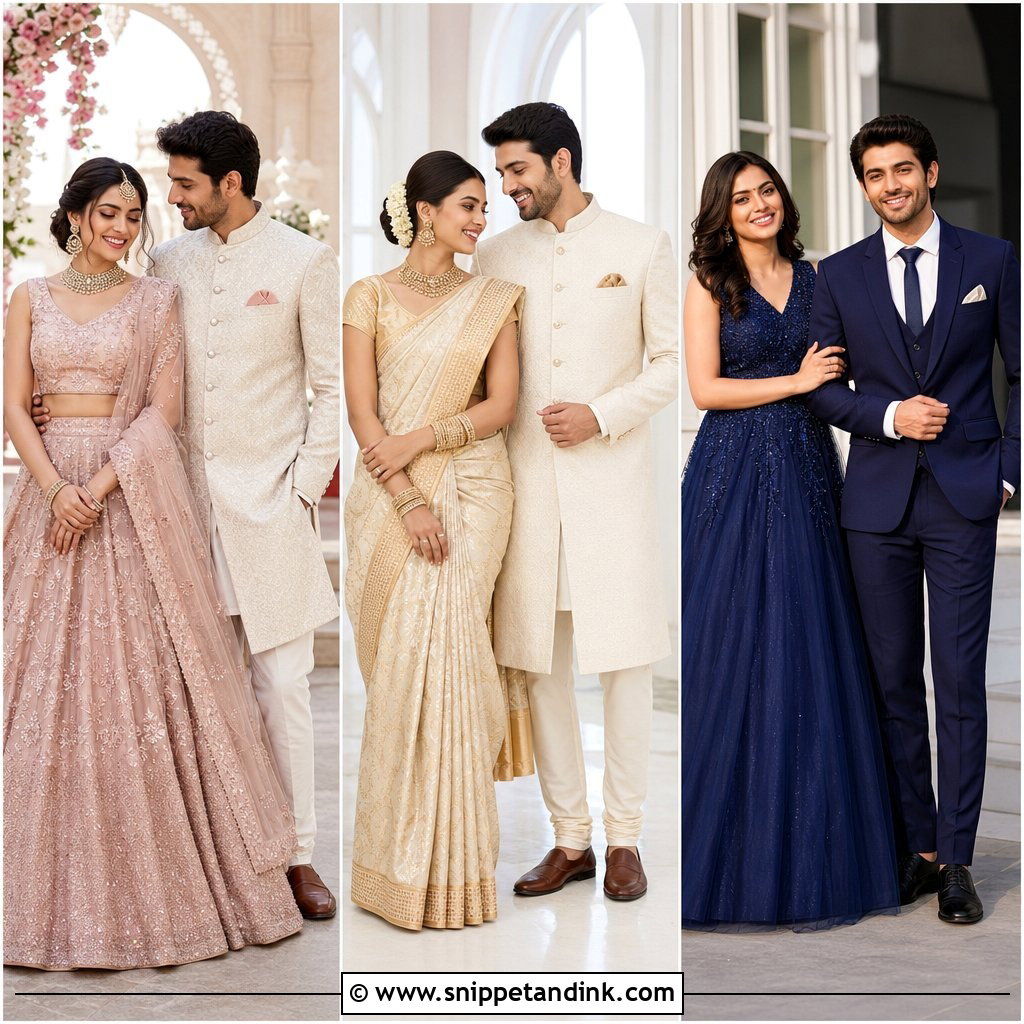
3. Blush Lehenga and Ivory Sherwani Couple Wedding Outfit
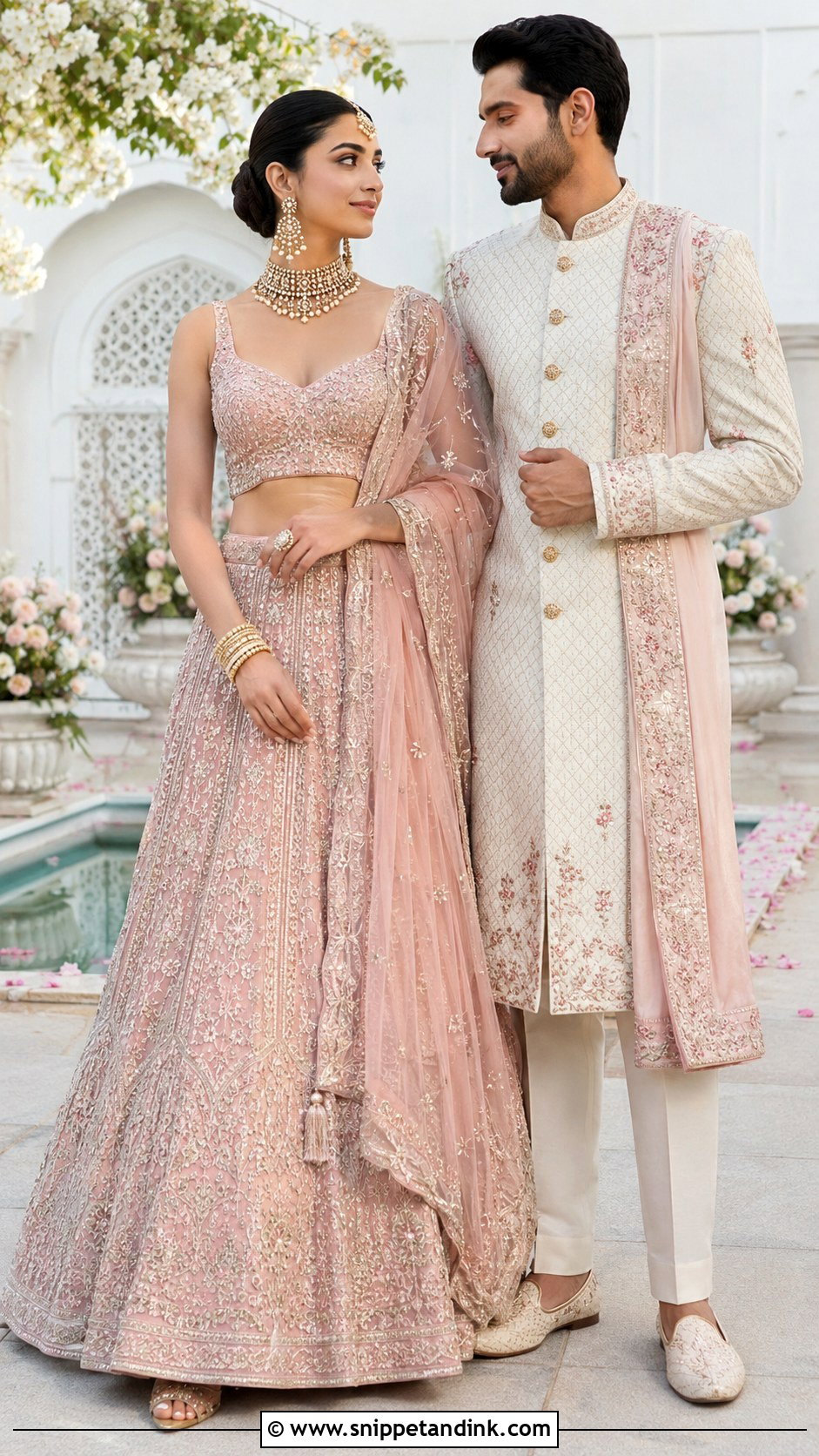
Blush lets a lehenga feel bridal without the weight of traditional deep red, and it carries gold threadwork well because the contrast stays soft. A fitted blouse, a draped dupatta, a coordinated jewelry set and a small potli bag finish it. For the partner, an ivory sherwani with blush embroidery or gold buttons repeats the color in small doses. One caution from fittings: very pale blush can look almost beige against warm, deeper skin, so I hold a few shades up to the face in daylight before anything is ordered.
4. Red Lehenga and Cream Sherwani Couple Wedding Outfit
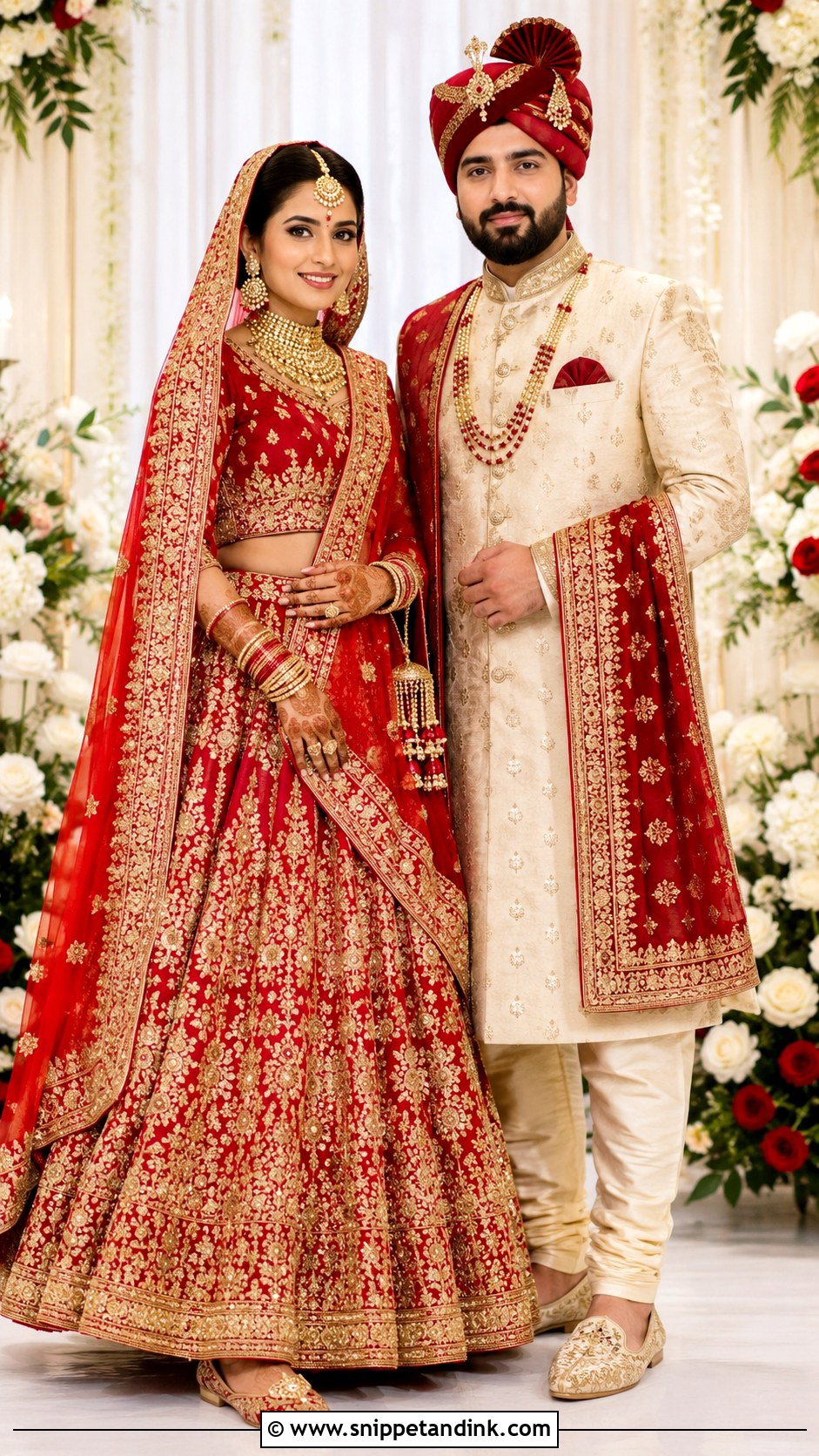
Red and cream is the ceremonial classic. The lehenga takes antique gold embroidery, a structured blouse and a bordered dupatta, with traditional jewelry and red-and-gold bangles, while the partner wears a cream sherwani with gold detail and a red stole or safa that ties back to the lehenga. I’d keep the heavy work on one person. When both outfits carry dense embroidery, the eye has nowhere to rest in group photos. A bordered dupatta also needs securing at the shoulder and the head, and I pin it at the final fitting rather than leaving it to the morning.
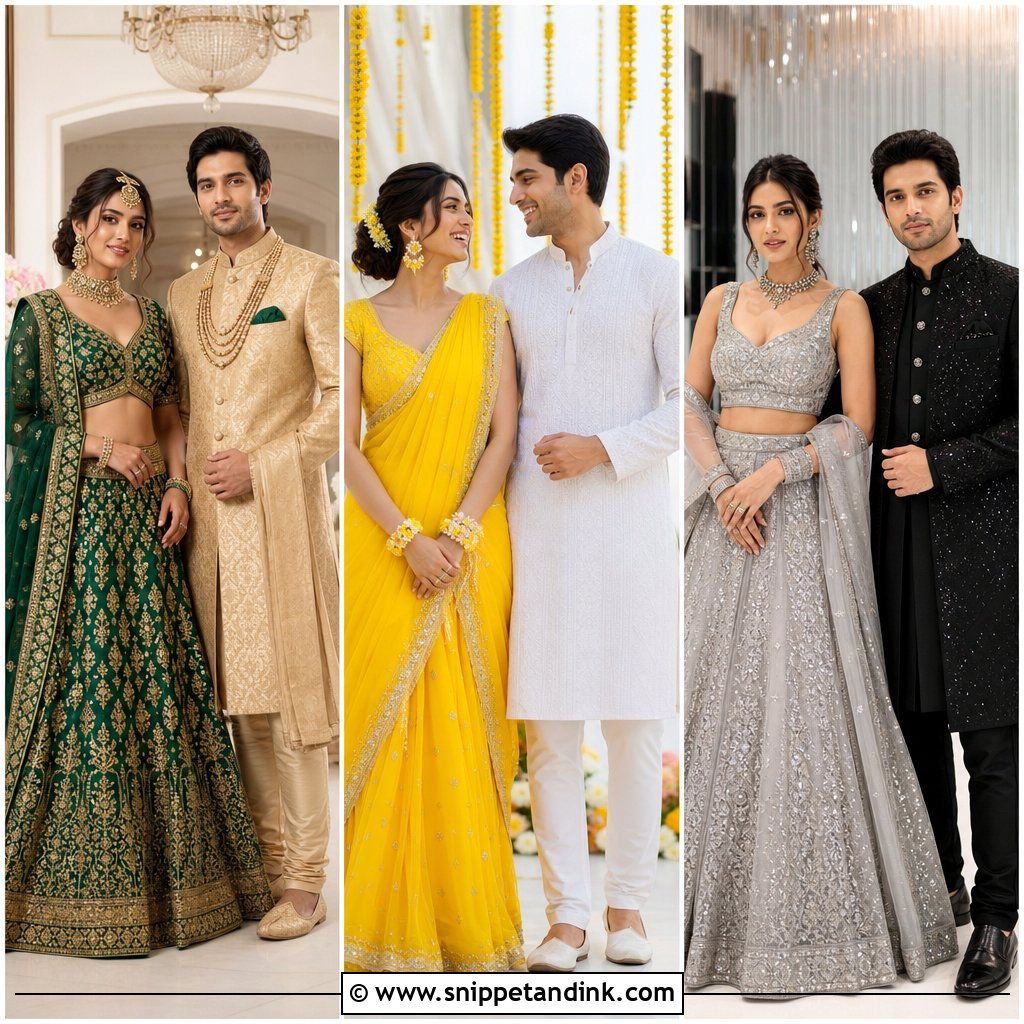
5. Emerald Lehenga and Black Bandhgala Couple Wedding Outfit
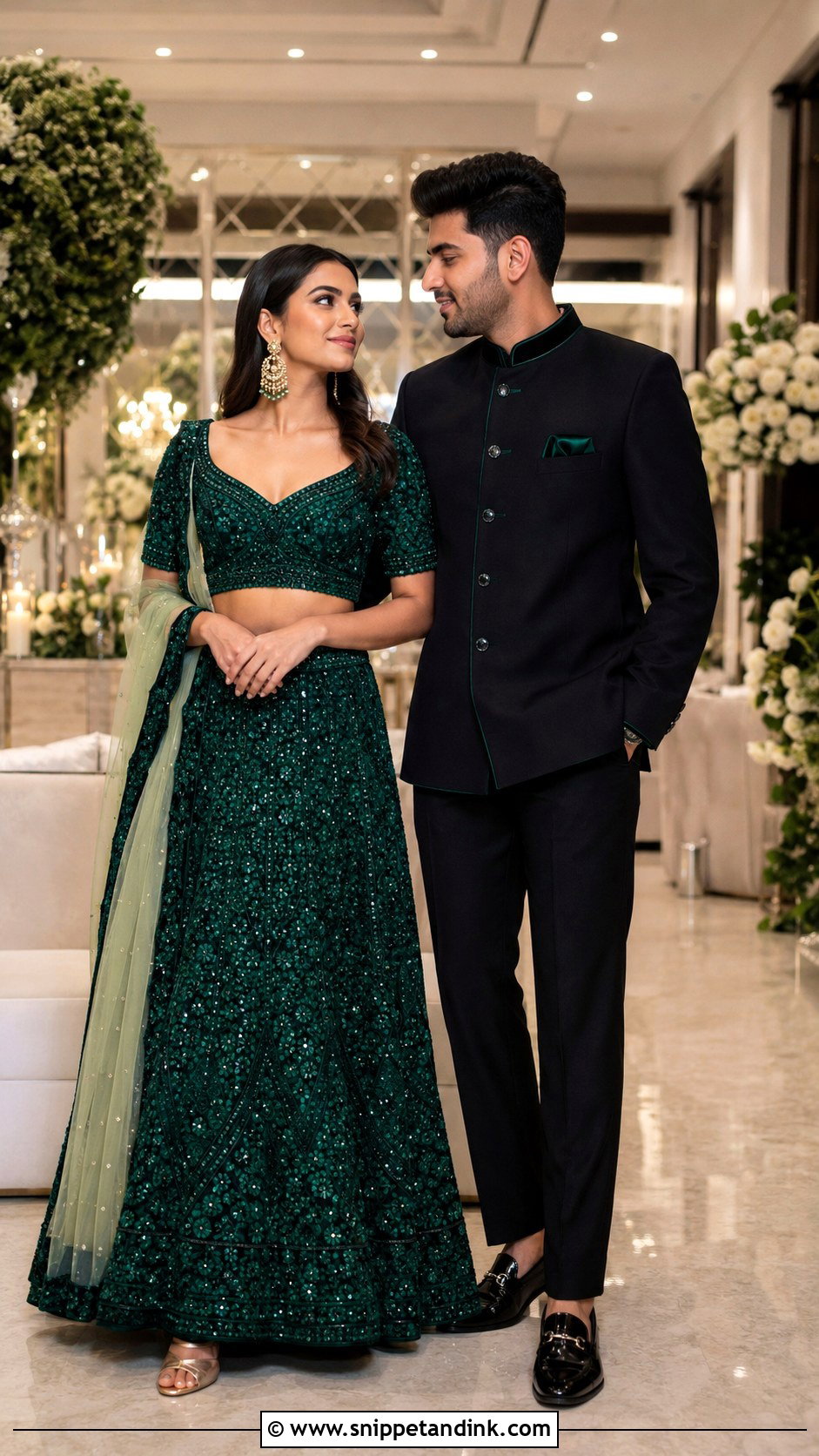
Emerald and black belong to evening. An emerald lehenga with gold embroidery and a lightweight dupatta stays easy to move in, and gold earrings with metallic heels brighten the deep green. The partner’s black bandhgala can pick up emerald through piping or buttons; if the lehenga is heavily worked, keep the bandhgala almost plain. Deep green drinks light. I’d ask the photographer how they plan to light an evening entrance, because under dim, warm bulbs it can read nearly black.
6. Pastel Saree and Coordinated Kurta Couple Wedding Outfit
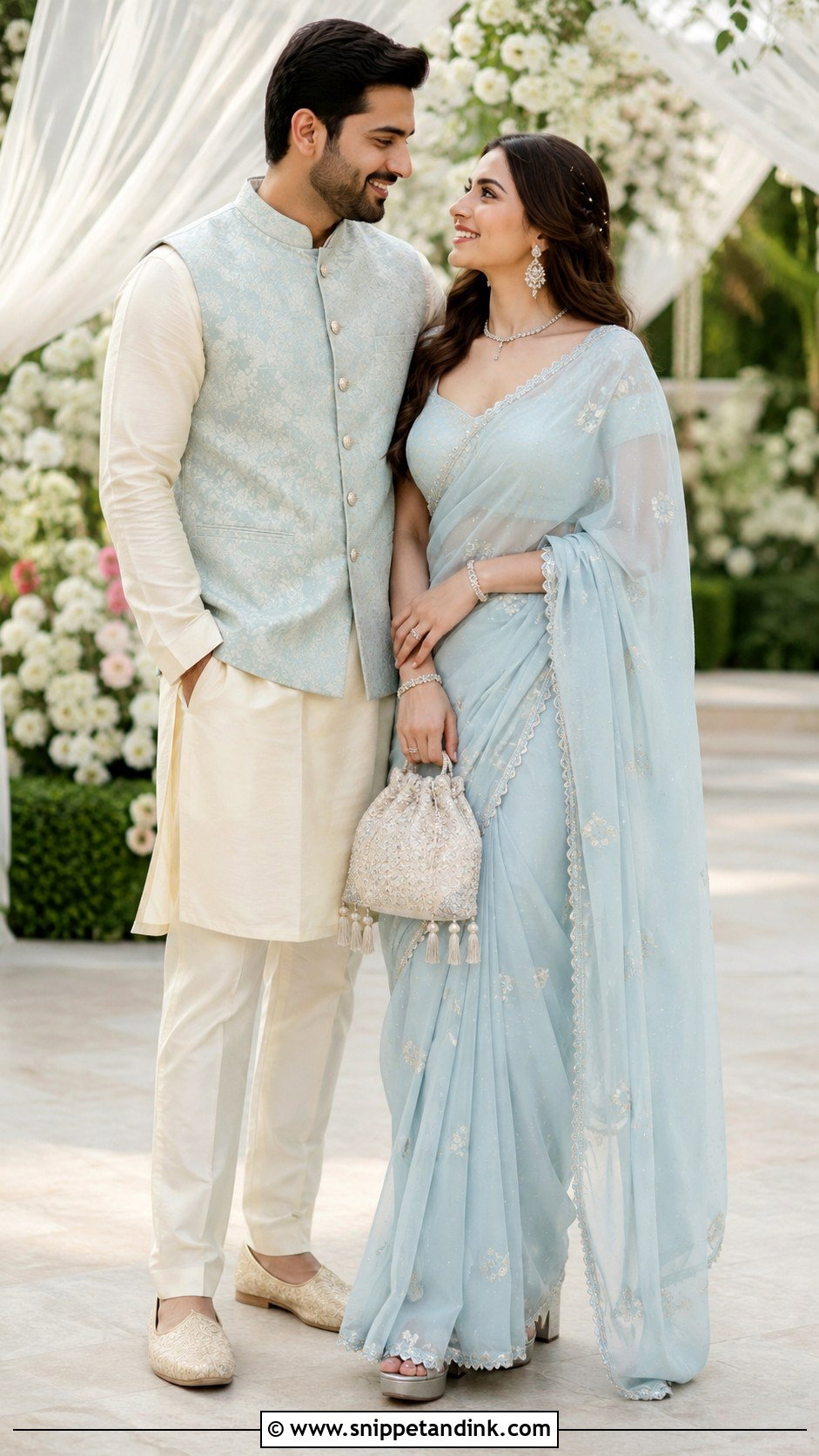
Daylight is where pastel sarees shine. Pick one shade, say powder blue or mint, and keep the partner’s kurta neutral, carrying the pastel only through a jacket, stole or pocket detail. Fabric matters more than color here. Organza holds a crisp pleat and a structured pallu, while chiffon and georgette fall softly and forgive a long day of sitting. For an outdoor ceremony I lean toward georgette, since organza tends to lift and balloon in wind. Keep the two pastels a shade apart in depth so they look related rather than identical.
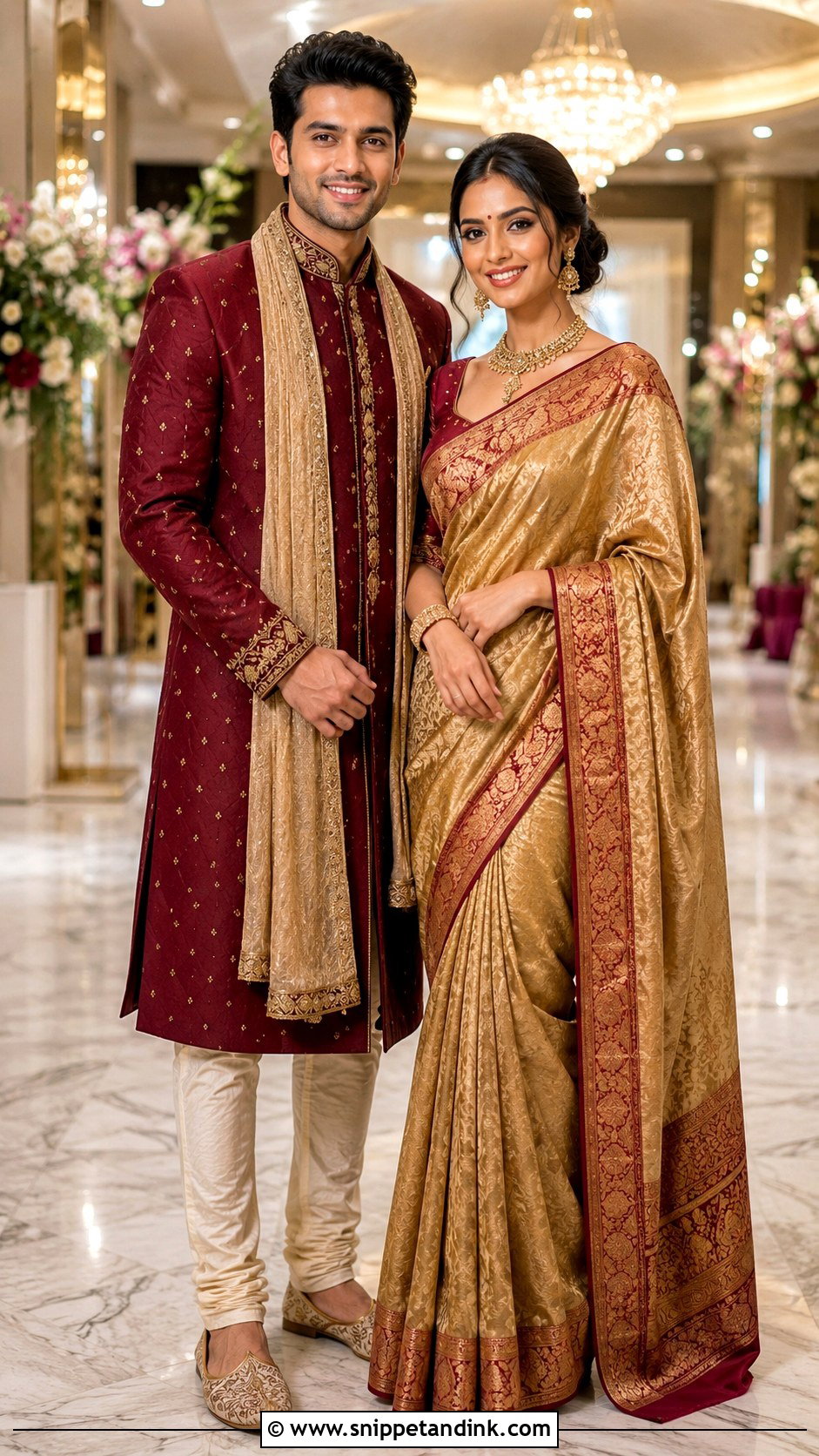
7. Gold Saree and Maroon Sherwani Couple Wedding Outfit
Gold and maroon already feel festive, so the job is restraint. Start from a gold silk saree with a maroon border and a fitted maroon blouse; the partner wears a maroon sherwani with modest gold embroidery and cream trousers. Silk sarees are heavy at the pleats, and before a long ceremony I make sure the pleats are pinned to the petticoat, not just tucked. A gold stole for the partner can come off after the vows for dancing. Add no third color.
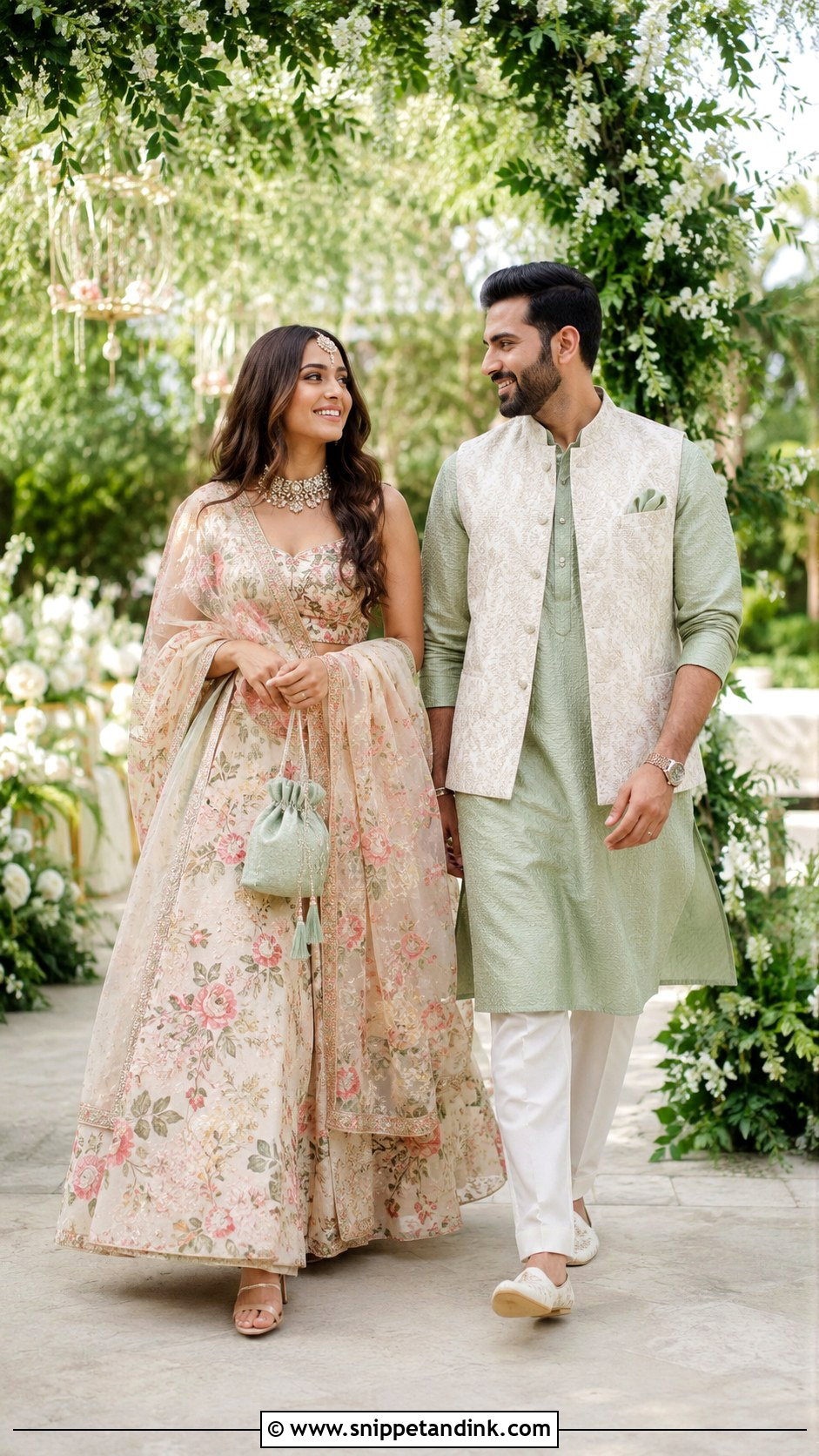
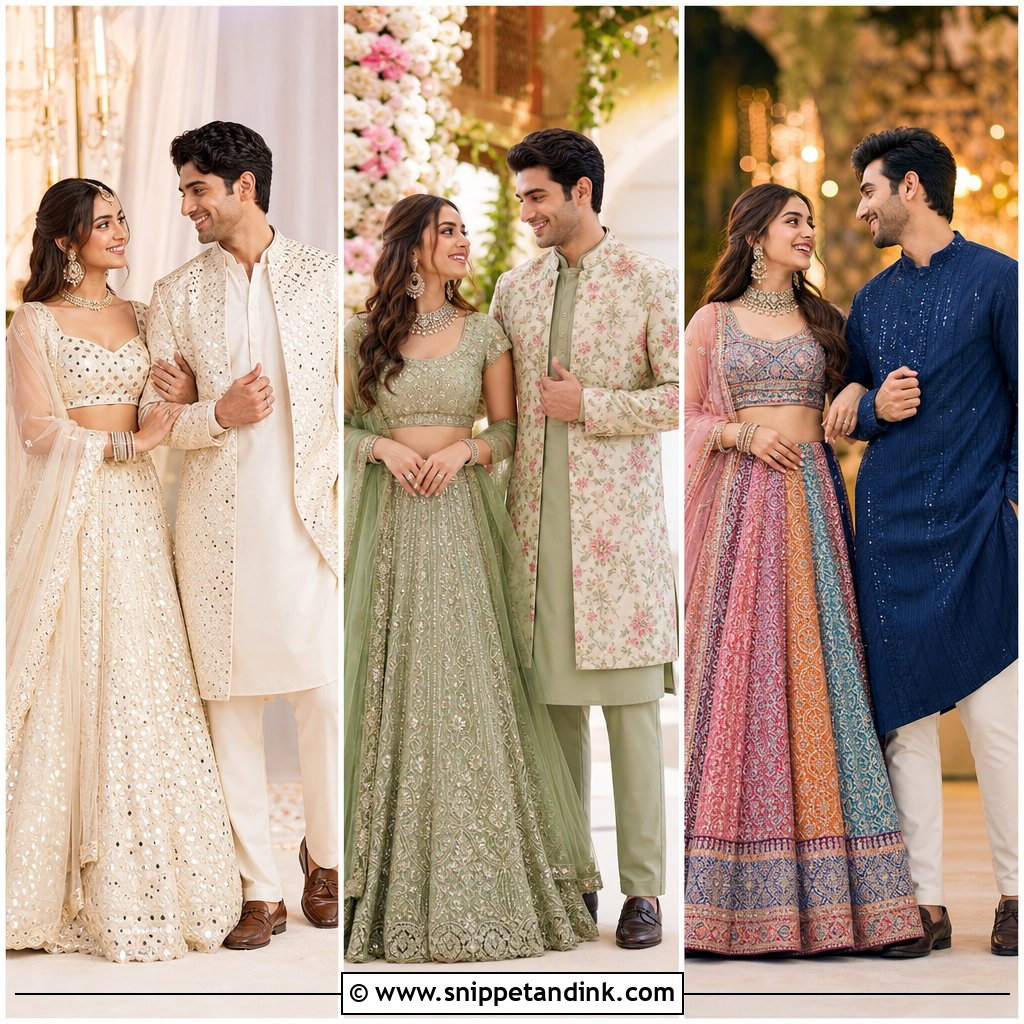
8. Floral Lehenga and Sage Kurta Couple Wedding Outfit
Floral lehengas belong outdoors. A print in blush, peach, sage and ivory sits naturally among garden greenery, and a light skirt, sheer dupatta, block heels and a pastel potli keep it practical on grass. The partner wears a sage kurta with ivory trousers and a sleeveless Nehru jacket, with one color from the print appearing in a lining or pocket square. Never print both outfits. I’d also check the lining, because a light floral skirt in strong sun can turn see-through near the hem.
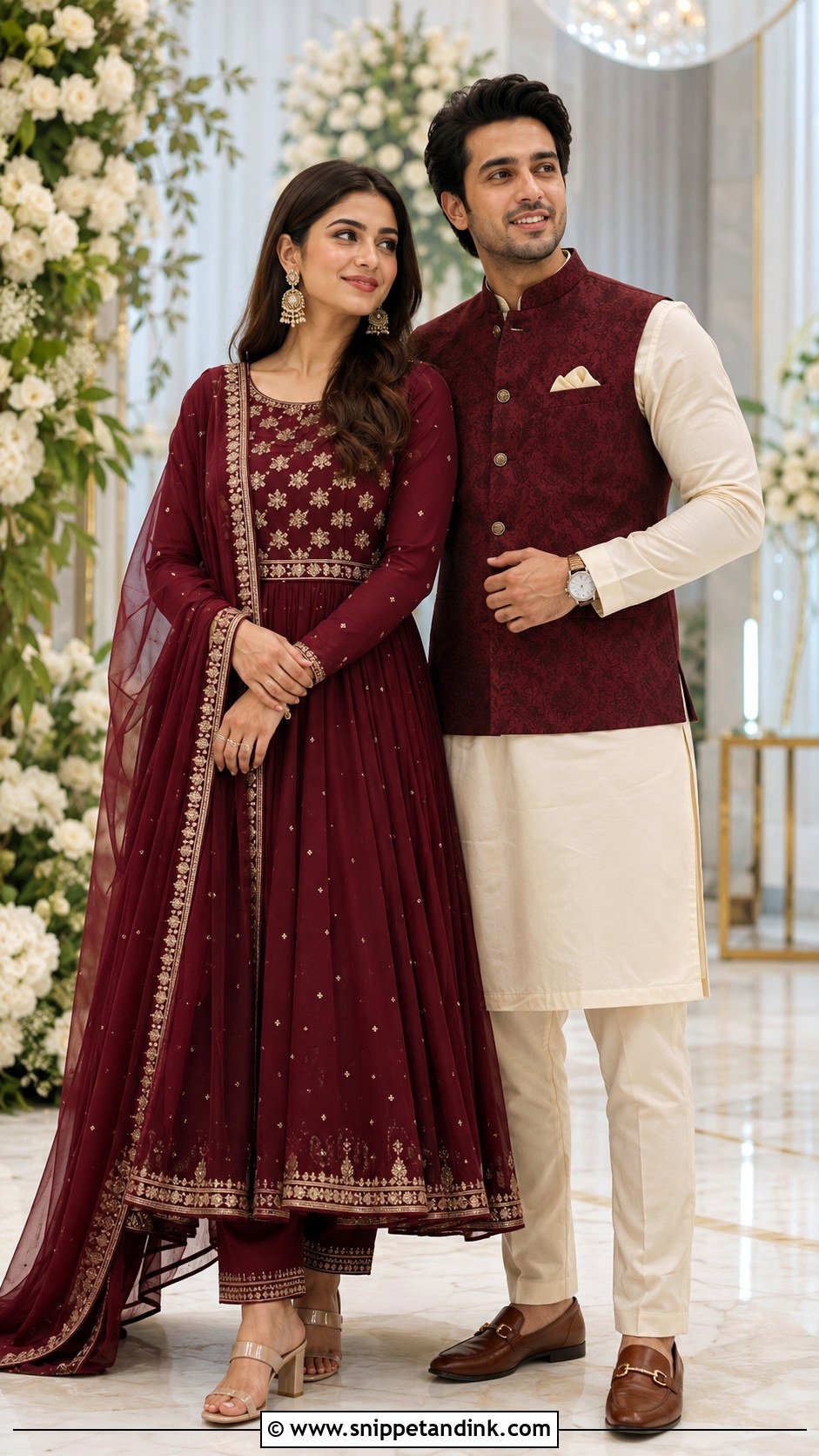
9. Anarkali and Nehru Jacket Couple Wedding Outfit
Long celebrations are where the Anarkali earns its place: you can sit, climb steps and dance without fighting a separate skirt and blouse. Pair a flowing Anarkali with a coordinated kurta and Nehru jacket. The Anarkali needs a defined waist and light embroidery so the flare moves; heavy work at the hem makes it swing like a bell and drag on the shoulders. Over an ivory kurta, the partner’s Nehru jacket takes the Anarkali’s color. Spread that shade unevenly, more on one person and less on the other.
10. Ivory Saree and Beige Suit Couple Wedding Outfit
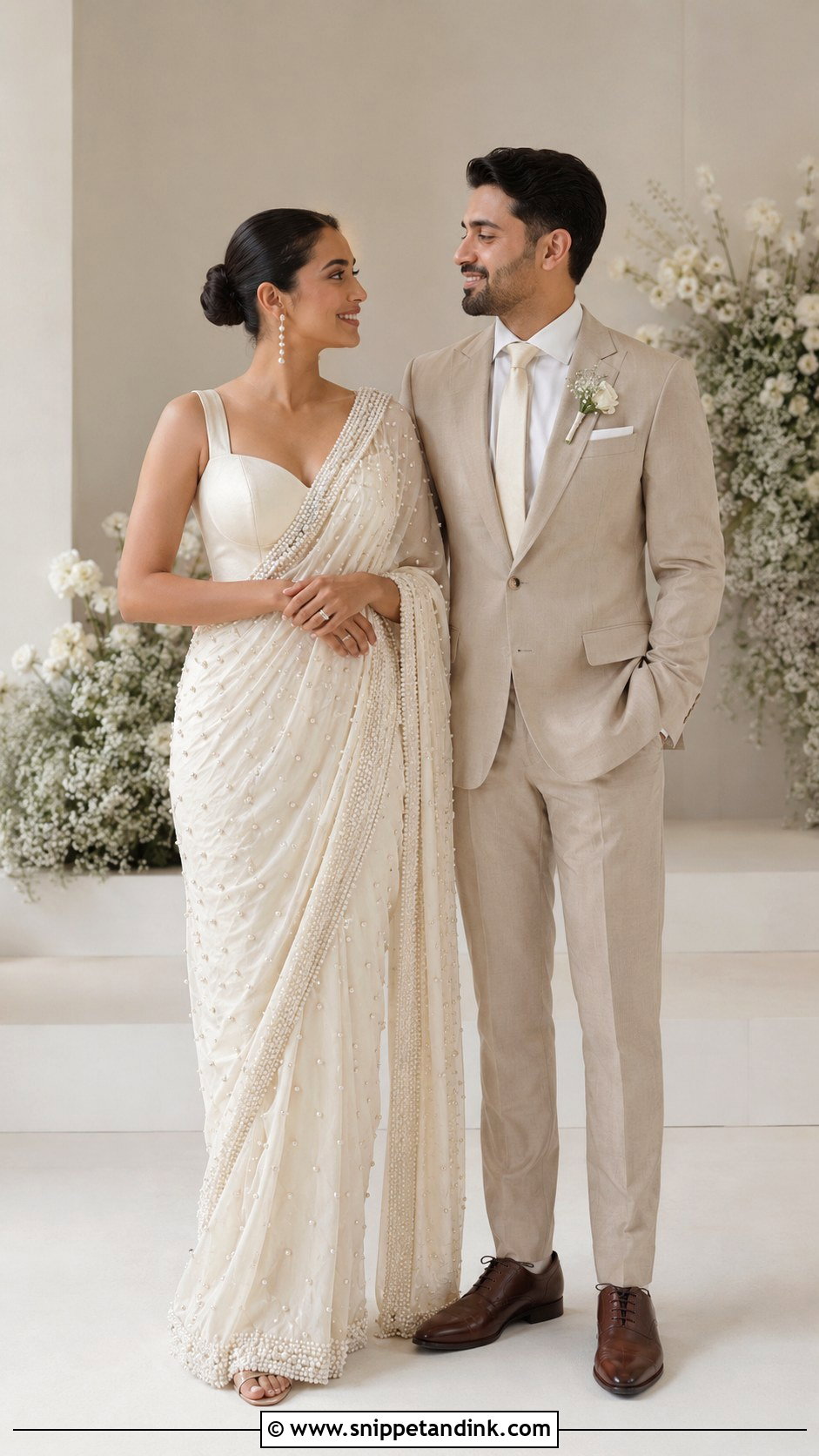
Pale neutrals belong to the marrying couple, or to events where the hosts have specifically asked for them, so guests should think twice about this one. An ivory saree with silver or pearl embroidery, a structured blouse and a low bun sits beside a beige or light taupe suit with an ivory shirt and brown shoes. Neutral on neutral needs texture to stay alive in pictures, so I mix silk, embroidery and brushed suiting. Check the ivory shirt against the saree as well; two ivories from different dye lots can look surprisingly far apart.
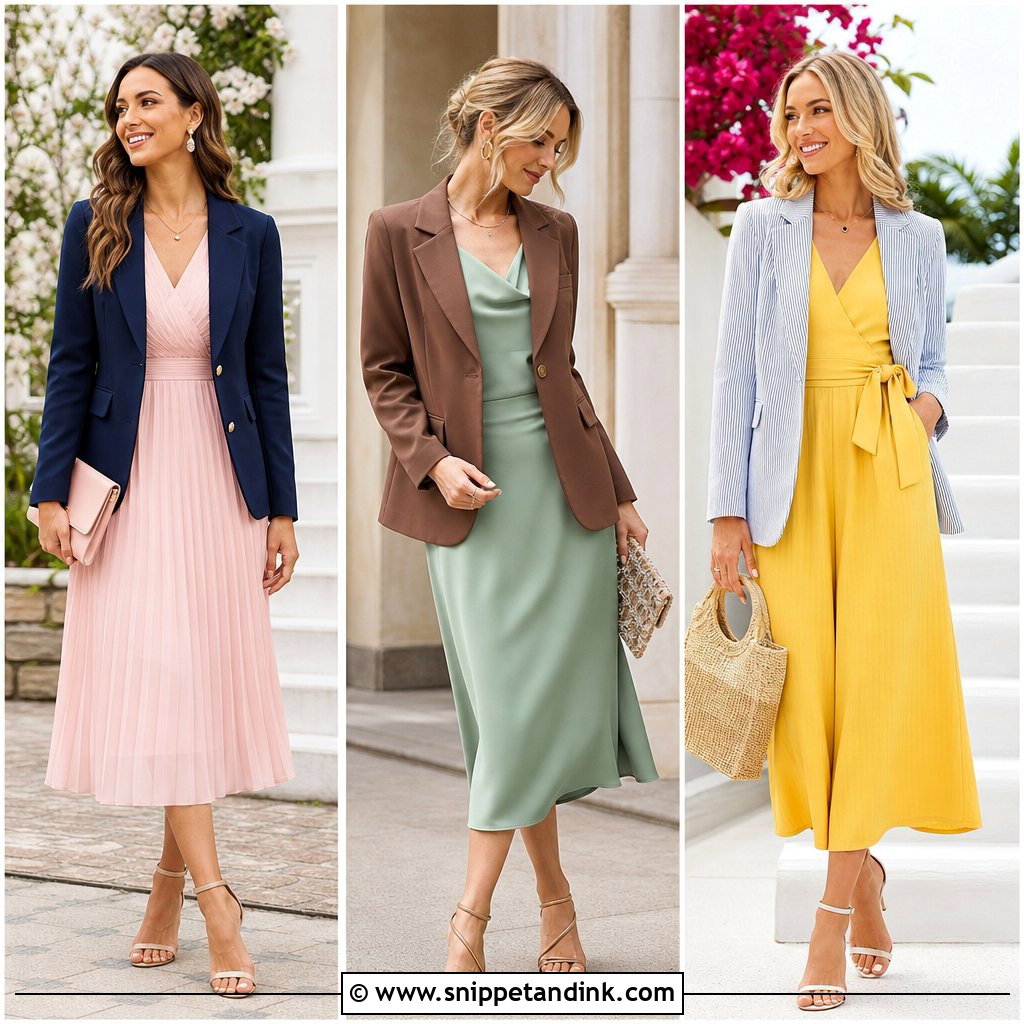
11. Satin Midi Dress and Charcoal Suit Couple Wedding Outfit
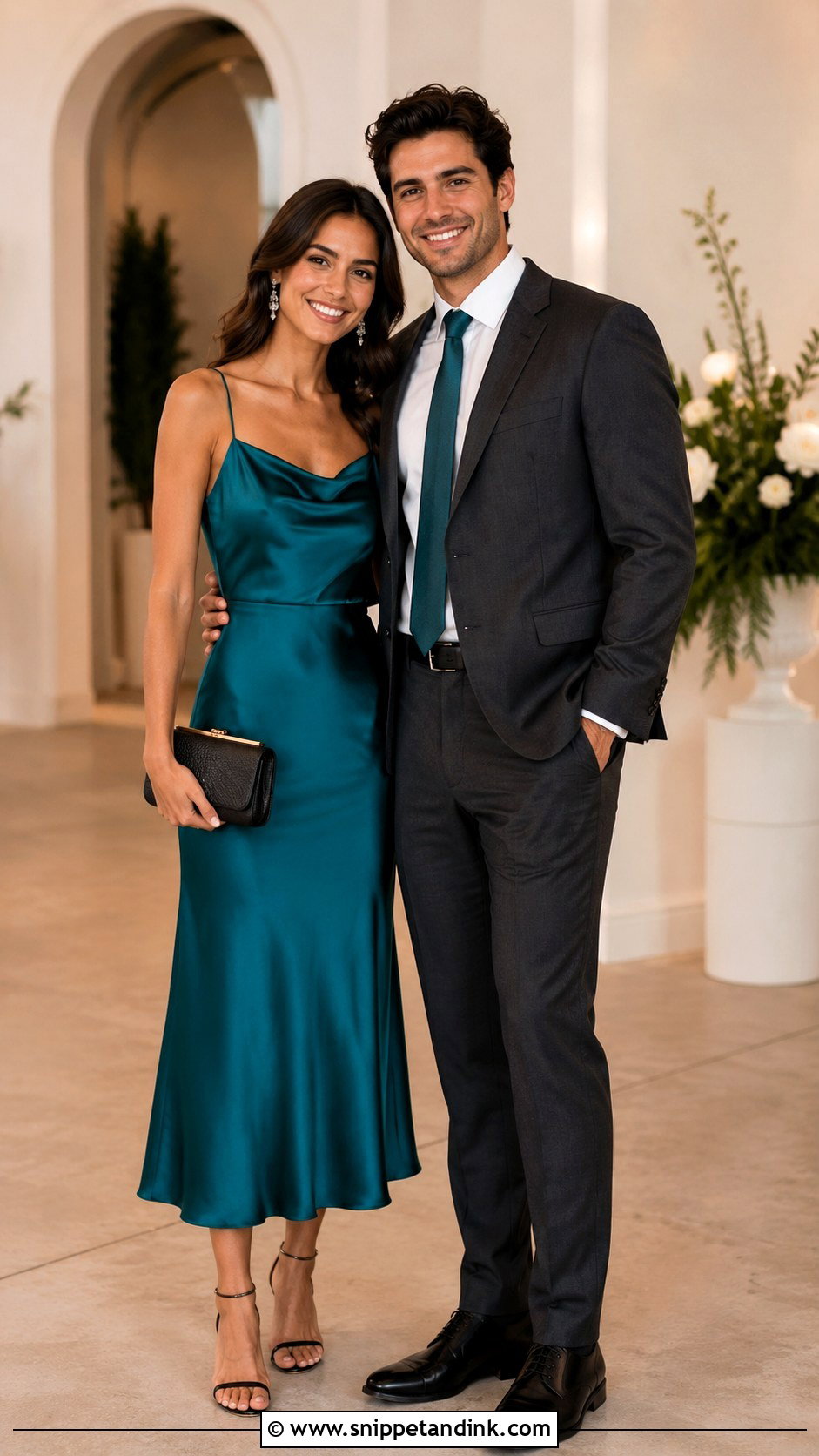
Semi-formal is the easiest dress code to misjudge, and this pairing sits squarely in the middle of it. Think of a satin midi in teal, plum or sapphire beside a charcoal suit, white shirt and a tie that hints at the dress color. Thin satin creases sharply across the lap, so for a wedding with a long seated dinner I’d pick a heavier satin-backed crepe over a light charmeuse. Skip the exact color-matched shirt. A tie or pocket square handles the coordination with less risk of looking forced.
12. Floral Midi Dress and Navy Suit Couple Wedding Outfit
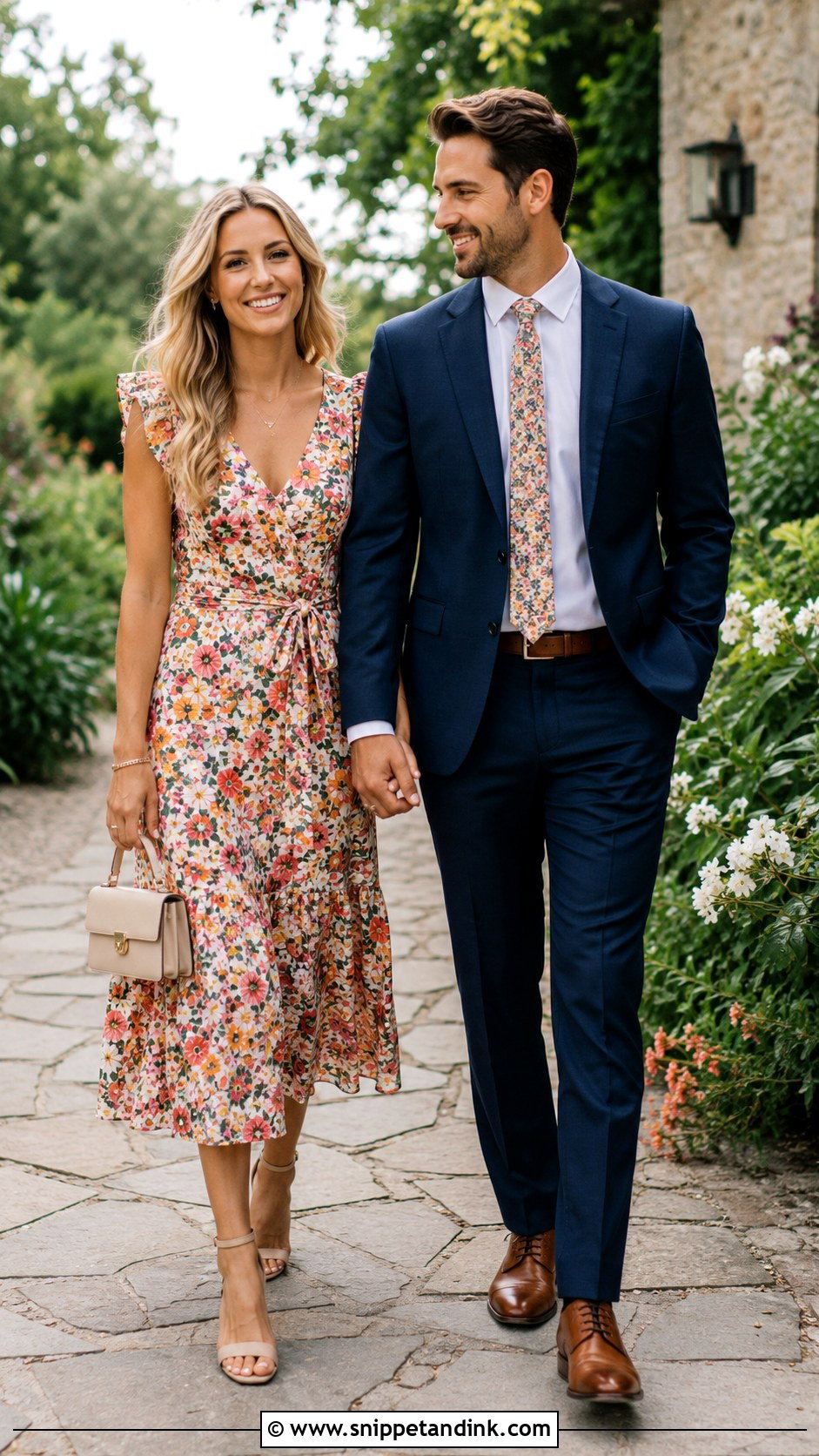
A floral midi beside a navy suit is about as dependable as daytime pairings get. Look for a print on a clearly defined background with only a few colors, which makes it easy to pull one into the partner’s tie. Brown shoes keep the suit relaxed for a garden afternoon; black moves it a step more formal. When I’m picking that tie, I take the dress itself rather than a photo, because printed florals often hide shades a screen won’t show.
13. Velvet Gown and Black Tuxedo Couple Wedding Outfit
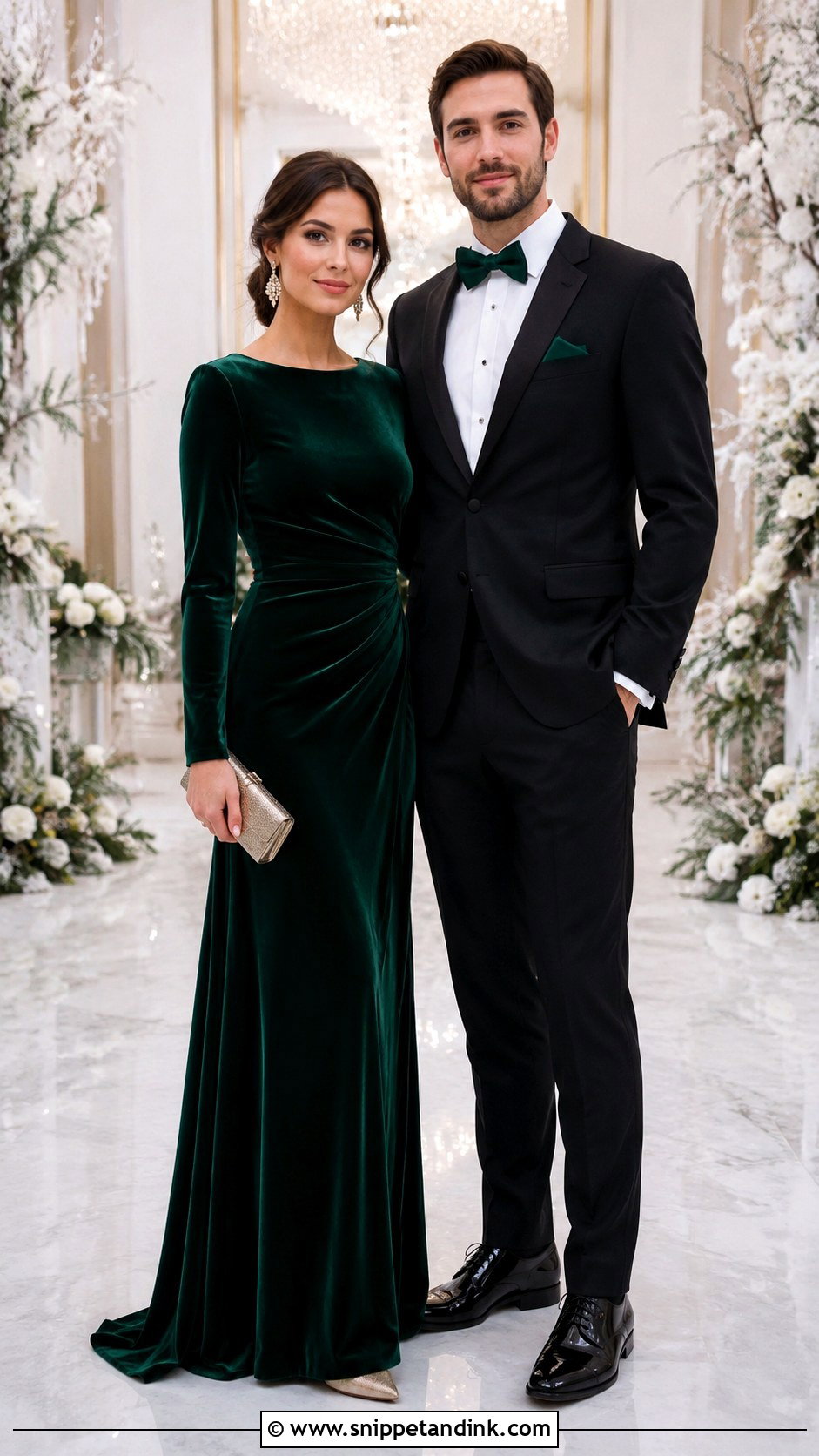
Velvet is a cold-weather fabric, plain and simple. A floor-length gown in burgundy, forest green or midnight blue with a defined waist and a clean neckline needs almost no embellishment, because the pile does the work. The partner wears a black tuxedo, white shirt and bow tie, perhaps with velvet loafers as the one connecting texture. Velvet is also warm, so ask about the venue’s heating before you commit. Dancing in a crowded, heated room in a velvet gown gets uncomfortable quickly.
14. Jumpsuit and Double-Breasted Suit Couple Wedding Outfit
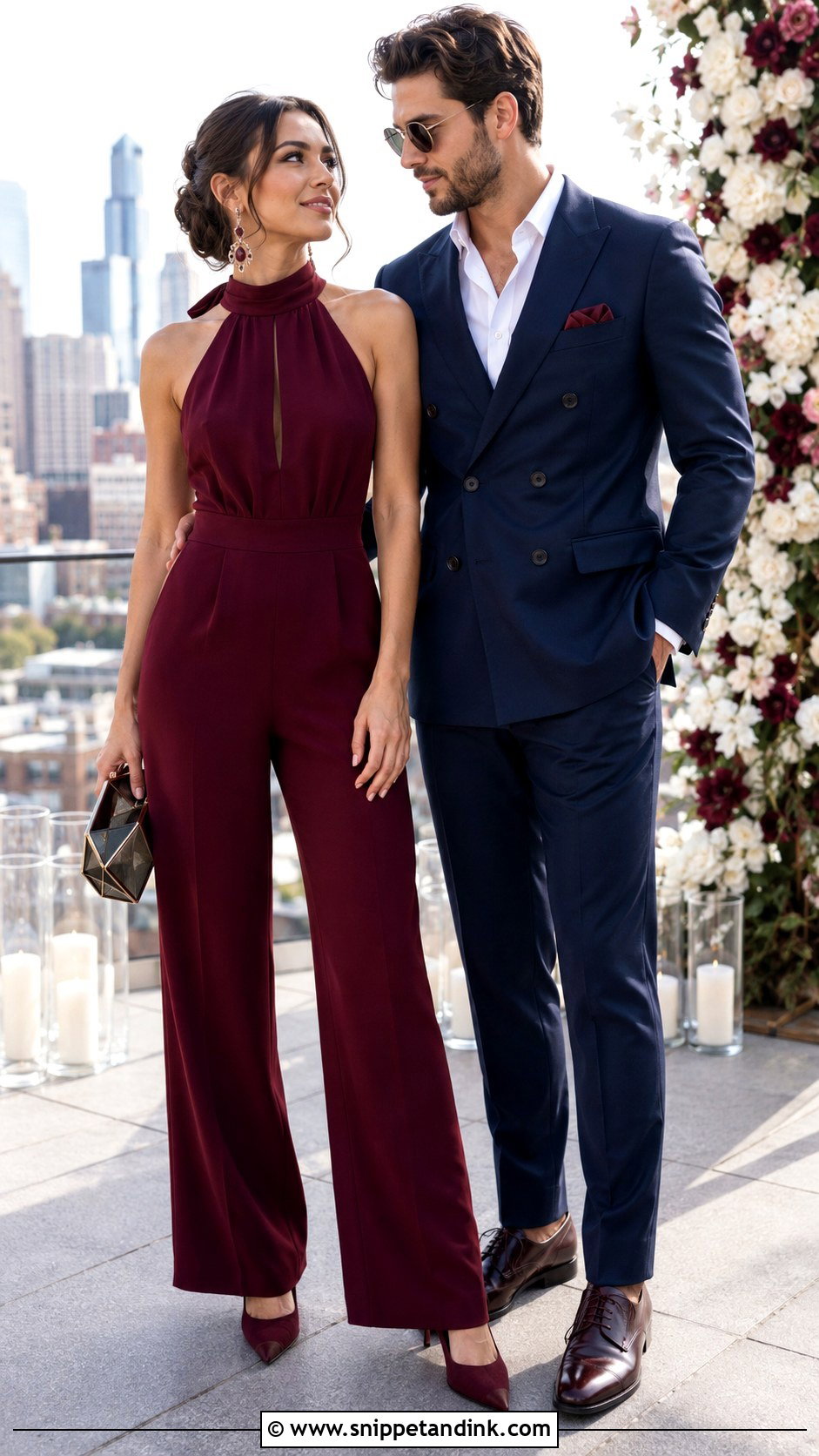
A jumpsuit suits a rooftop or city venue, provided the length is right. The hem should just skim the top of the shoe, so I always have it hemmed with the final pumps on. The partner wears a double-breasted suit, and the link comes from shared tailoring rather than shared color, as with a burgundy jumpsuit with a navy suit and a burgundy pocket square. One practical point people overlook: bathroom trips. Look for a back zip you can reach yourself, or plan who will help.
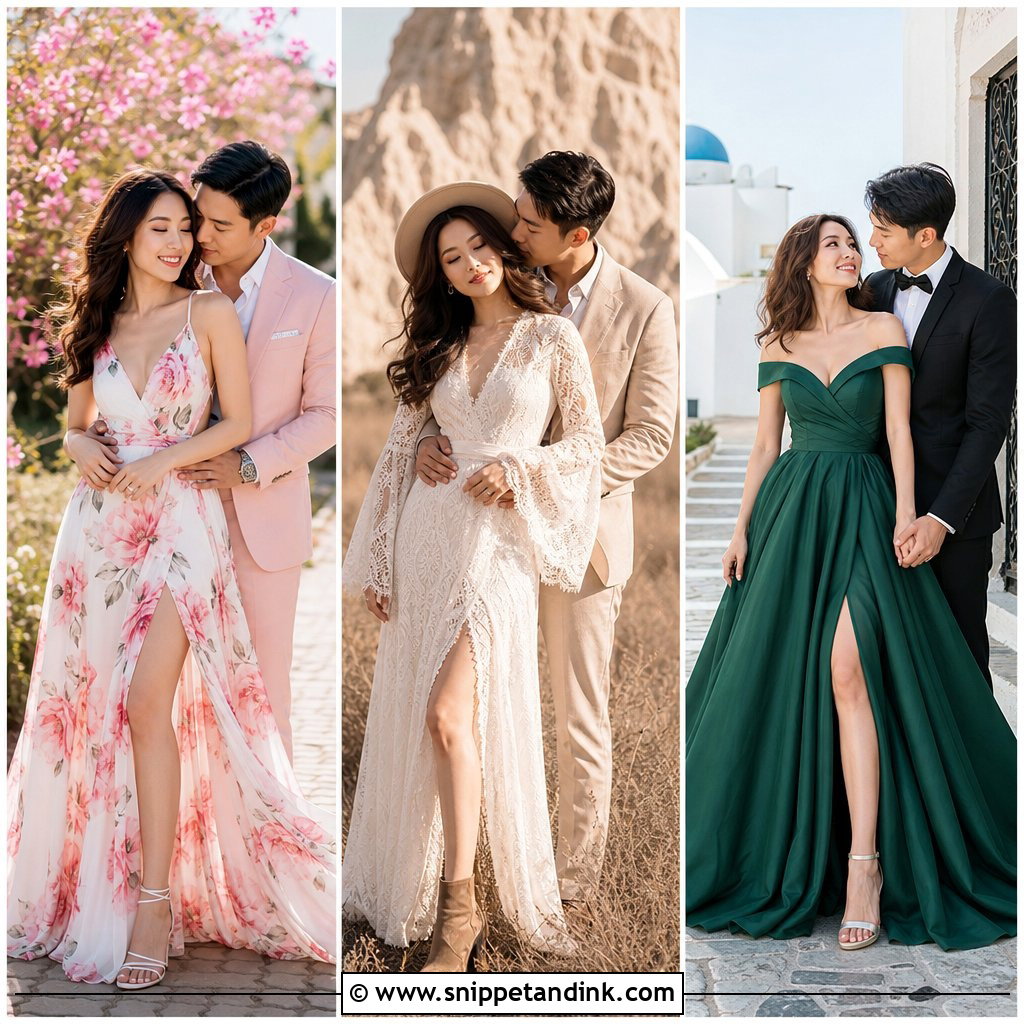
15. Sequin Gown and Velvet Dinner Jacket Couple Wedding Outfit
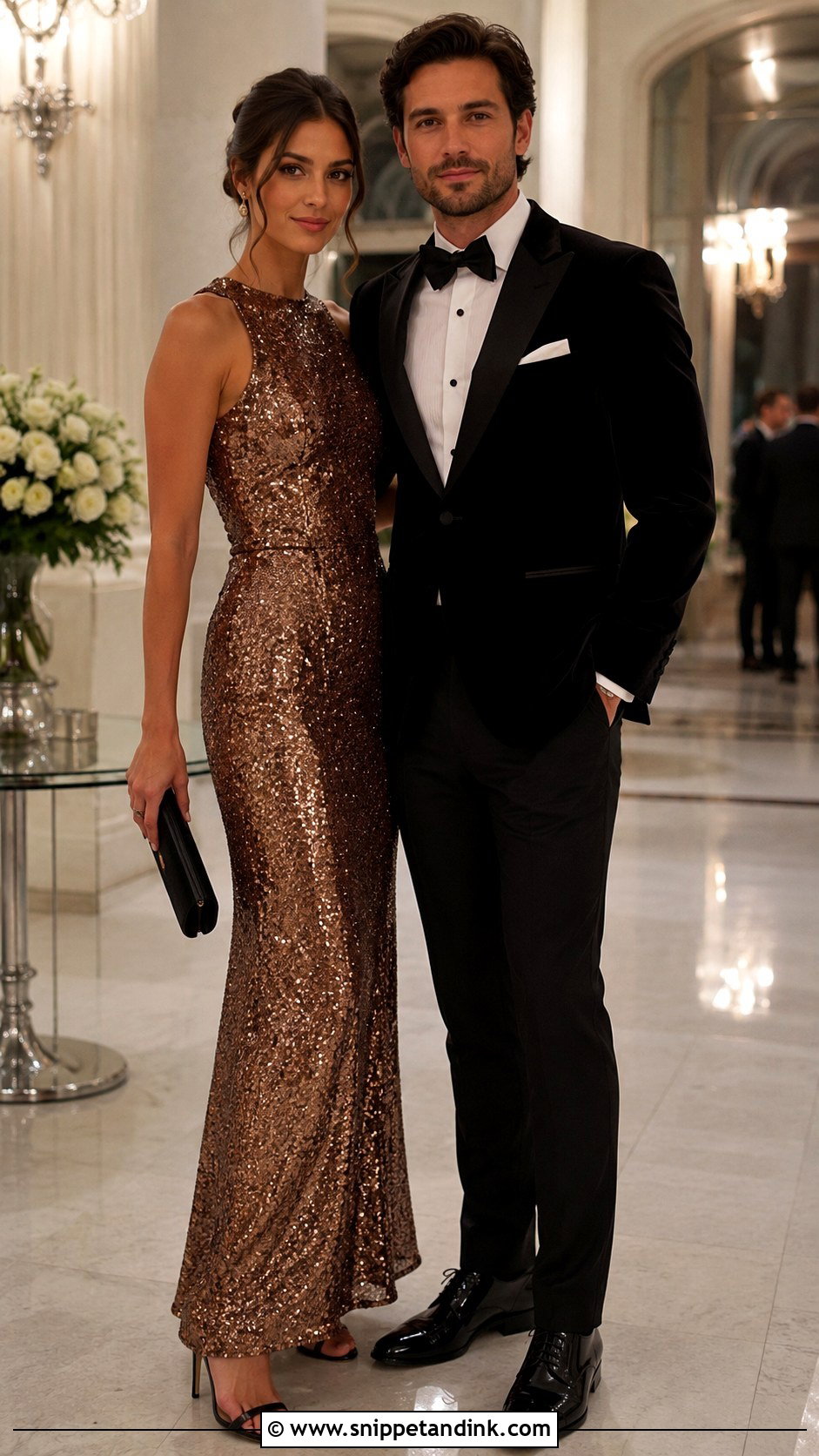
Sequins and velvet both demand attention, so I let each outfit own one of them. A sequin gown in bronze, navy or muted gold goes beside a black velvet dinner jacket, white shirt and bow tie, with the gown kept simple in shape and the accessories small. Highly reflective sequins can flare in flash photos, which is why I lean toward muted or matte sequins. Check the inner arms too. Sequin seams scratch over a long night, so a lined sleeve or a sleeveless cut is kinder to the skin.
16. Beach Maxi Dress and Linen Suit Couple Wedding Outfit
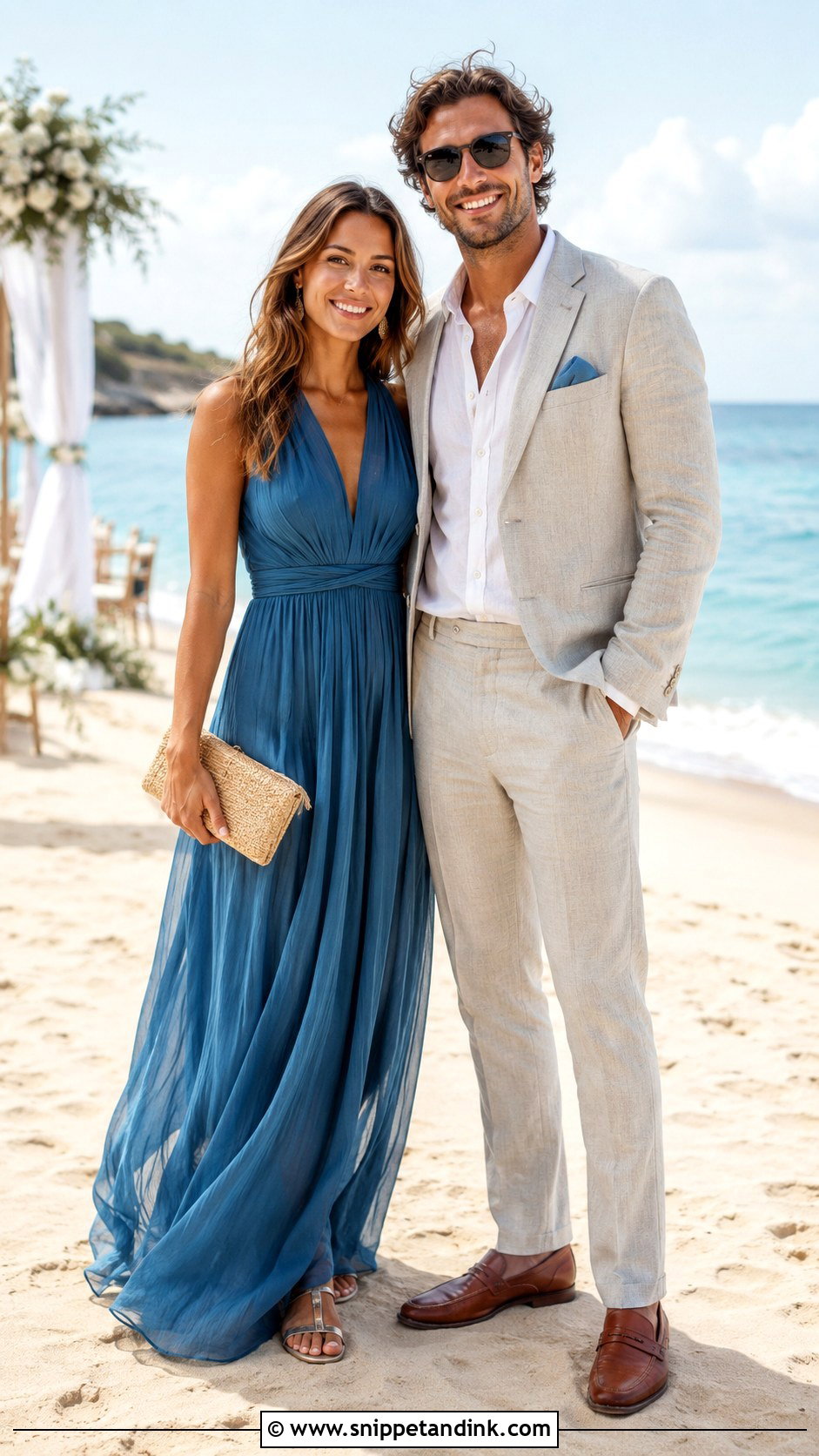
Beaches punish heavy fabric and thin heels. A flowing maxi dress in coral or ocean blue with flat metallic sandals and a small woven clutch stays fresh in strong light. The partner wears a light beige or stone linen suit with an open-collar shirt and leather loafers, picking one quiet shade from the dress print for the shirt or pocket square. If the partner wants to look pressed well past the ceremony, I’d suggest a linen blend over pure linen; it keeps the texture and creases far less.
17. Garden Wedding Dress and Sage Suit Couple Wedding Outfit
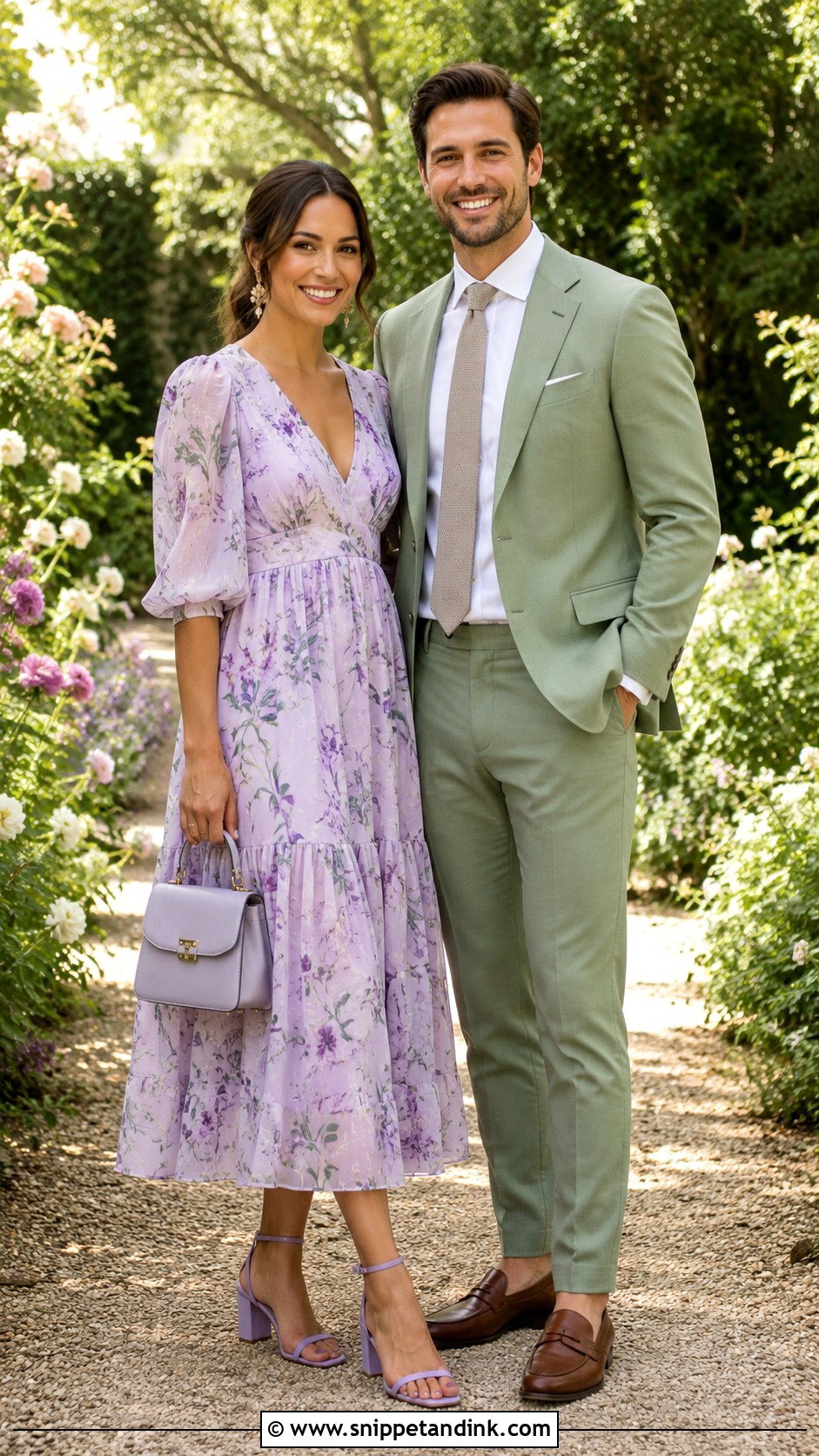
Sage suits look at home among greenery and flatter most skin tones. Put the green in the suit and dress the other partner in a solid or floral midi in lavender, dusty blue or soft yellow, with a breathable lining for comfort outdoors. Ground conditions decide the shoes. I’d walk the ceremony lawn before suggesting heels at all, and usually land on wide block heels or dressy flats. A tie or pocket square with a touch of the dress color closes the loop.
18. Courthouse Pantsuit and Tailored Suit Couple Wedding Outfit
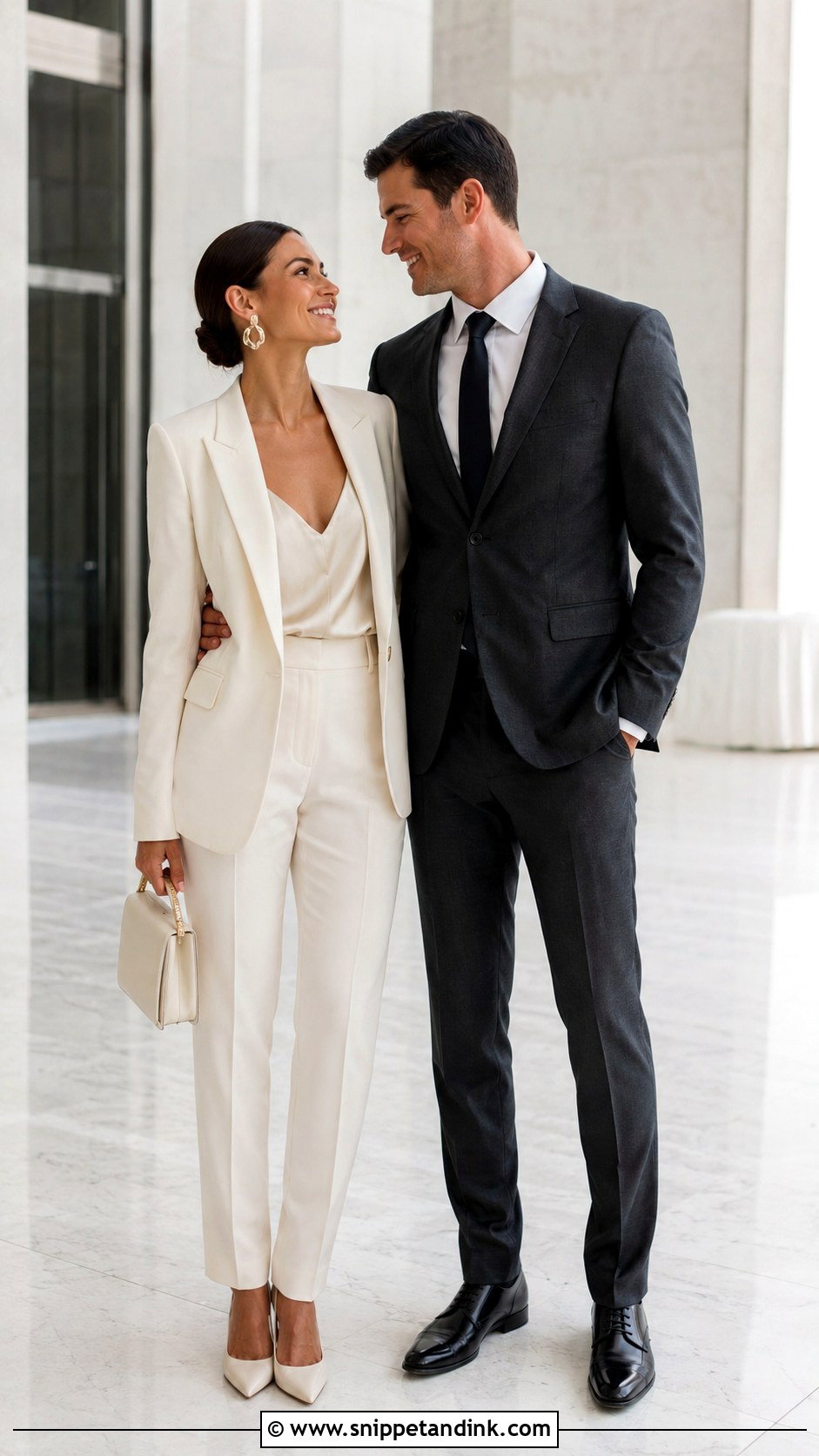
Tailoring carries a courthouse pairing because there’s little decoration to hide behind. One partner wears an ivory or jewel-toned pantsuit over a silk camisole, with pointed pumps and a small bouquet; the other wears a tailored suit in navy, charcoal or taupe. Coordinate through lapel flowers or matching metals. The two alterations I prioritize are trouser hems taken to the exact shoes and jacket sleeves that show a little shirt cuff. Those do more for the photos than any accessory.
19. Monochrome Black Couple Wedding Outfit
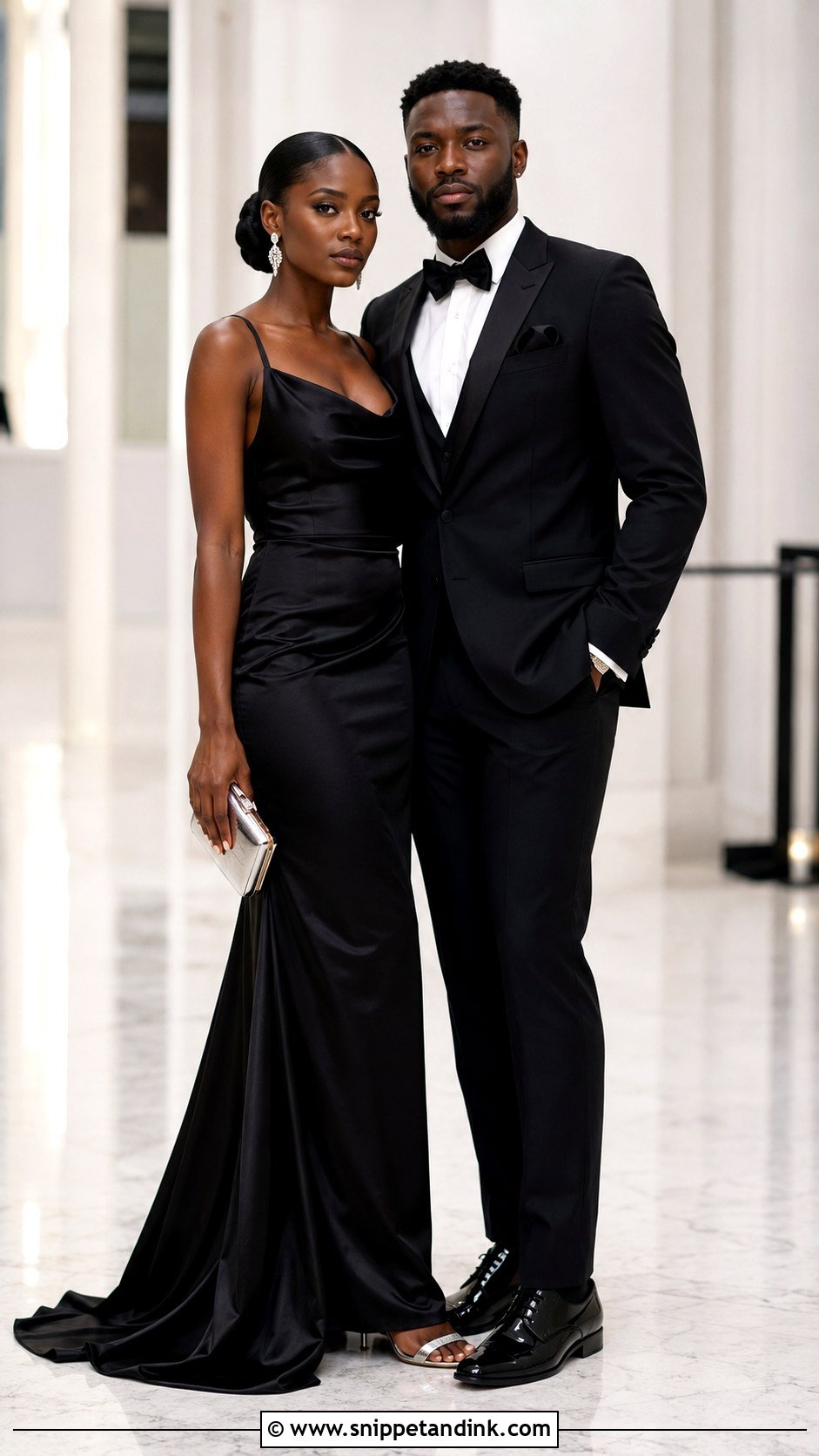
All-black couples look sleek, but only when each piece has its own texture. One partner wears a black column gown or tailored pantsuit, the other a black suit or tuxedo, and mixing satin, crepe and matte suiting keeps the two figures from merging into a single shape on camera. A colorful bouquet gives the frame a focal point. Guests weighing this pairing should check that black is welcome, since some families and cultures associate it with mourning, and the invitation won’t always say so.
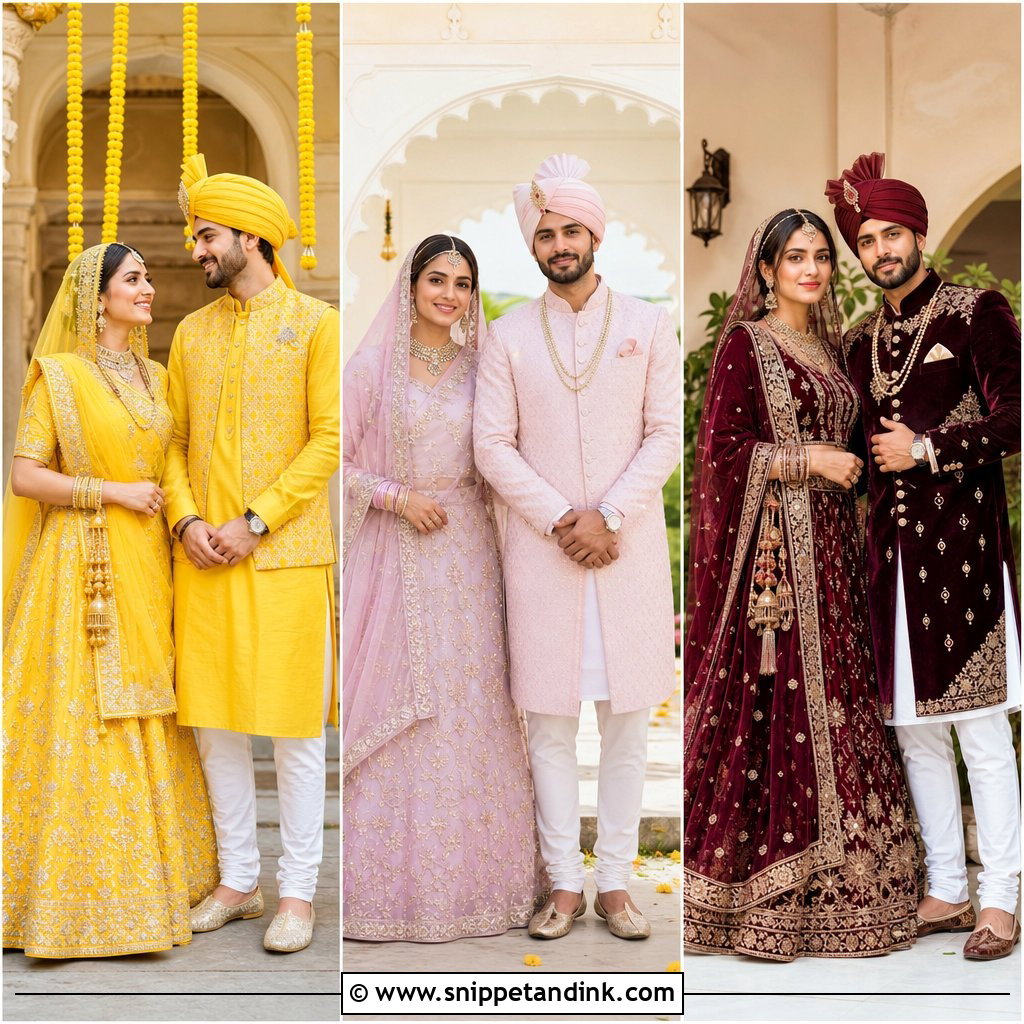
20. Reception Lehenga and Tuxedo Couple Wedding Outfit
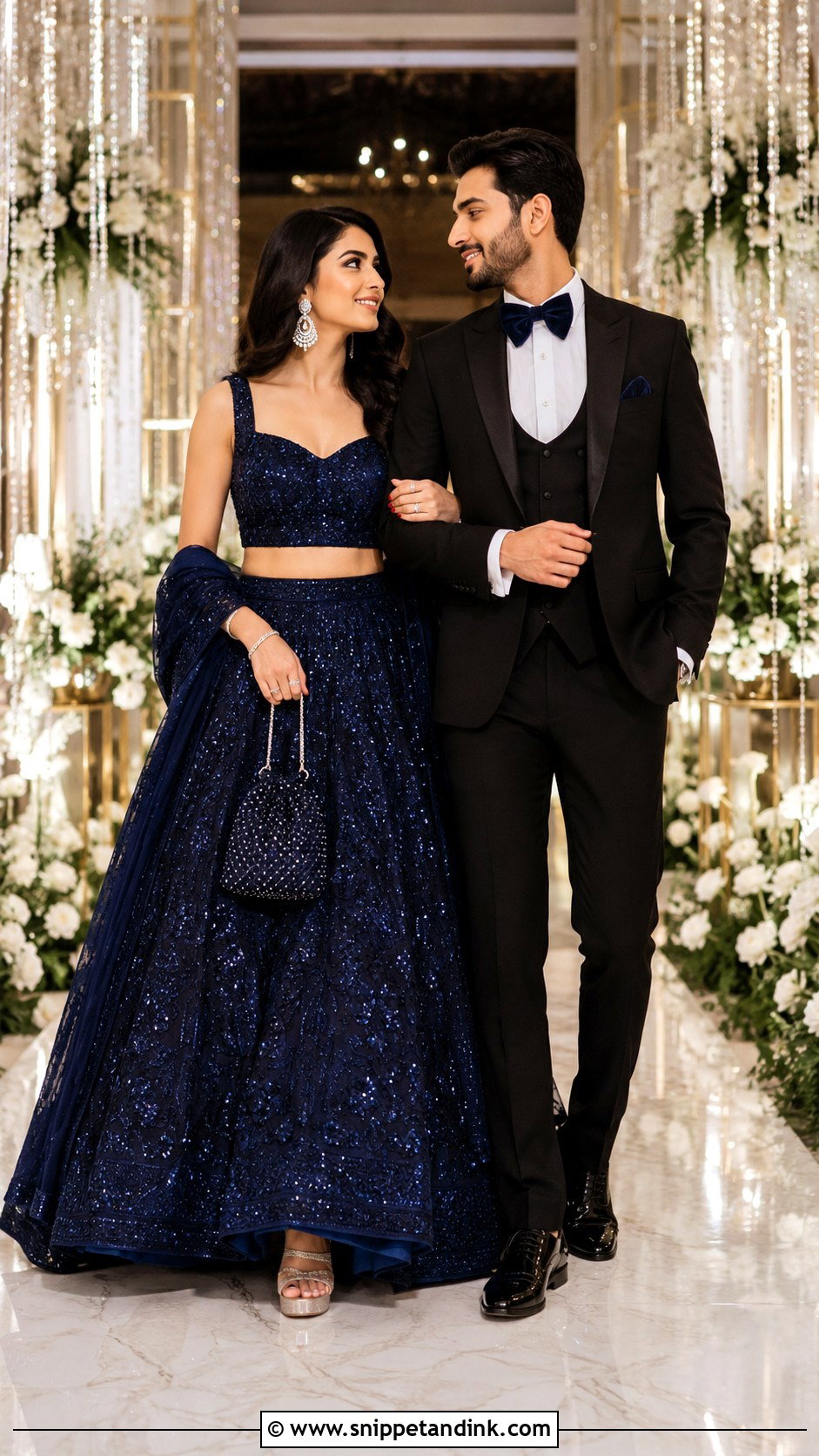
A reception lehenga and tuxedo bring two traditions together at the same level of formality. Midnight blue, silver or champagne with controlled shimmer suits evening light, alongside statement earrings and a small embellished bag. The partner’s black or midnight tuxedo picks up the lehenga color in a pocket square or lapel pin. Reception lehengas are usually lighter than ceremony pieces, which is a relief for dancing, and I look for a flare that moves freely rather than stiff layers of can-can. Platforms feel steadier than stilettos under a full skirt.
Planning the Change From Ceremony Clothes Into Reception Clothes
Several pairings here, the reception lehenga especially, assume a second outfit later in the day. Changes take longer than couples expect. Getting out of a heavy lehenga, removing and resetting jewelry, re-pinning a dupatta and touching up hair can easily use most of an hour, and a saree re-drape needs someone who can pleat confidently.
- Ask the venue for a private room close to the reception space, with a full-length mirror and a rail.
- Lay out the reception outfit, jewelry and shoes in that room before the ceremony begins, already steamed.
- Bring a proper garment bag for the ceremony outfit. A heavy lehenga stuffed into a carrier bag creases along the embroidery.
- Give one person changing duty who isn’t also needed in the photos.
- Schedule the partner’s change too. Shirt studs, cuff links and a self-tie bow tie take longer than anyone budgets for.
Carrying a Heavy Lehenga or Silk Saree Through a Long Day
Weight is the honest downside of the most ceremonial outfits in this list. A densely embroidered lehenga sits on the hips for hours, and a silk saree tugs at its pleats every time you stand up.
- Ask your tailor to set the waistband at the hip bone with a hook as well as the drawstring, so the weight can’t slide down.
- If the outfit arrives early, wear it at home for an hour and sit on both a chair and the floor. You’ll find the tight spots before the guests do.
- Eat something before the ceremony. A fitted blouse and a long ritual are a hard combination on an empty stomach.
- Plan bathroom trips with a helper who can hold the skirt and dupatta clear.
The Quieter Outfit Matters Just as Much
Coordinated outfits should look connected, never costumed. Begin with the dress code, the venue, the season and the cultural expectations, then settle on a single link between the two of you. Let one outfit lead and the other answer in smaller accents. Good tailoring, comfortable shoes and sensible layers matter more than any matching detail. The same approach holds for a lehenga and sherwani, a jumpsuit and double-breasted suit, or an ivory gown and a tuxedo, and it adapts to any budget or body.
You'll Like These Ideas:


Leave a Reply