
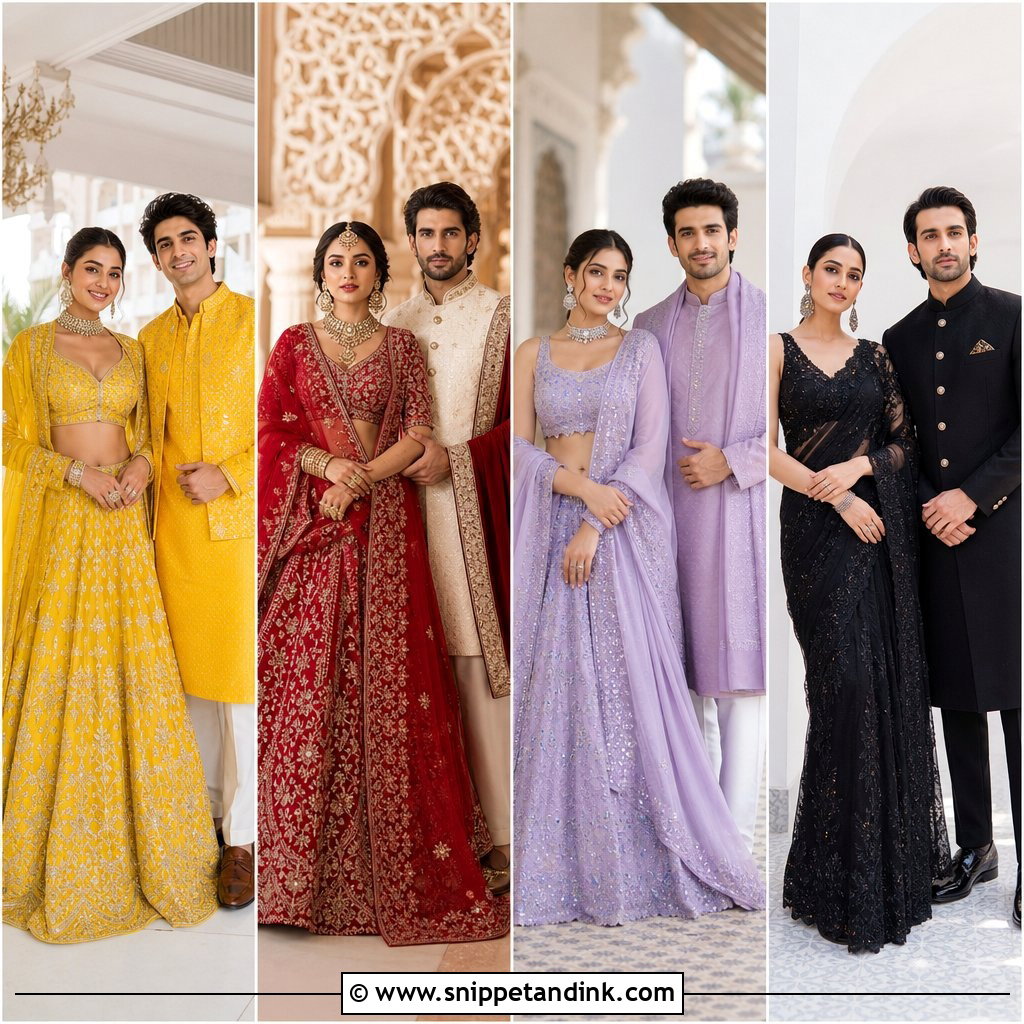
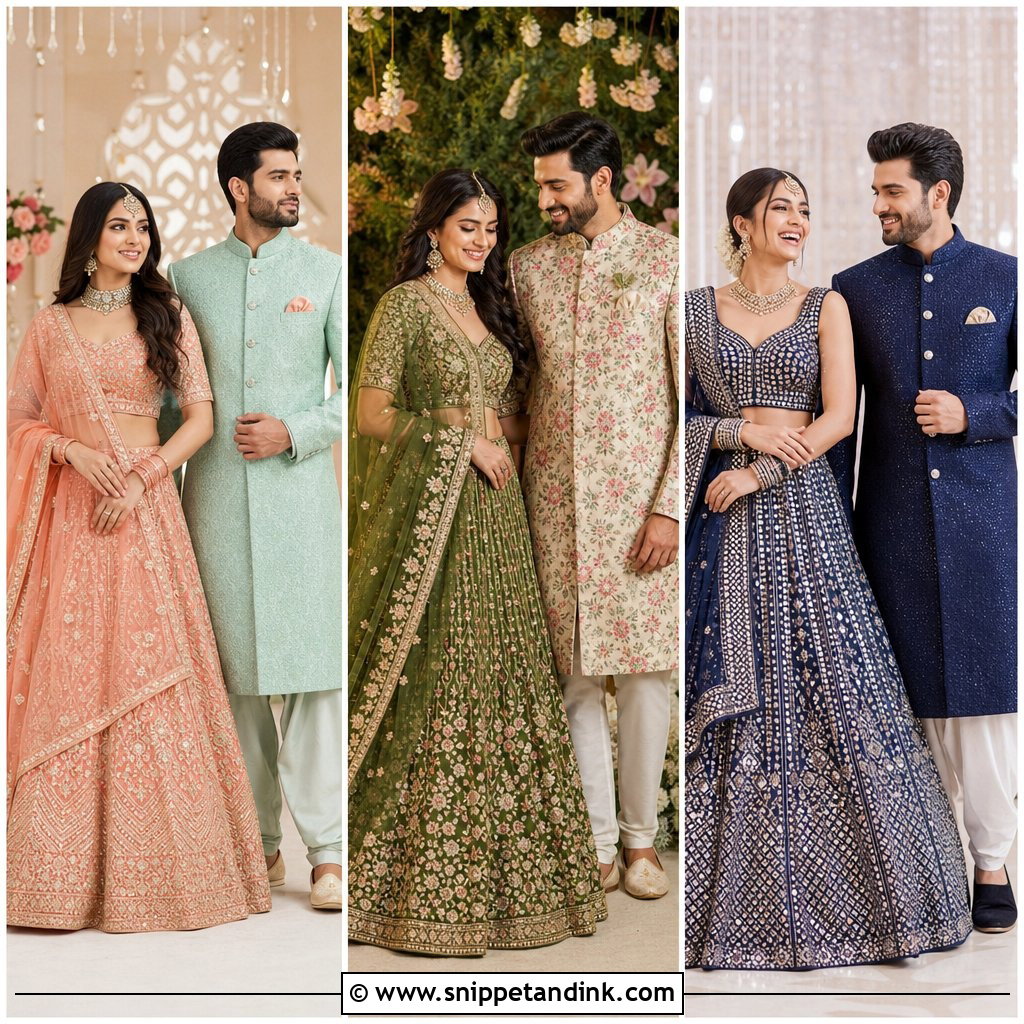
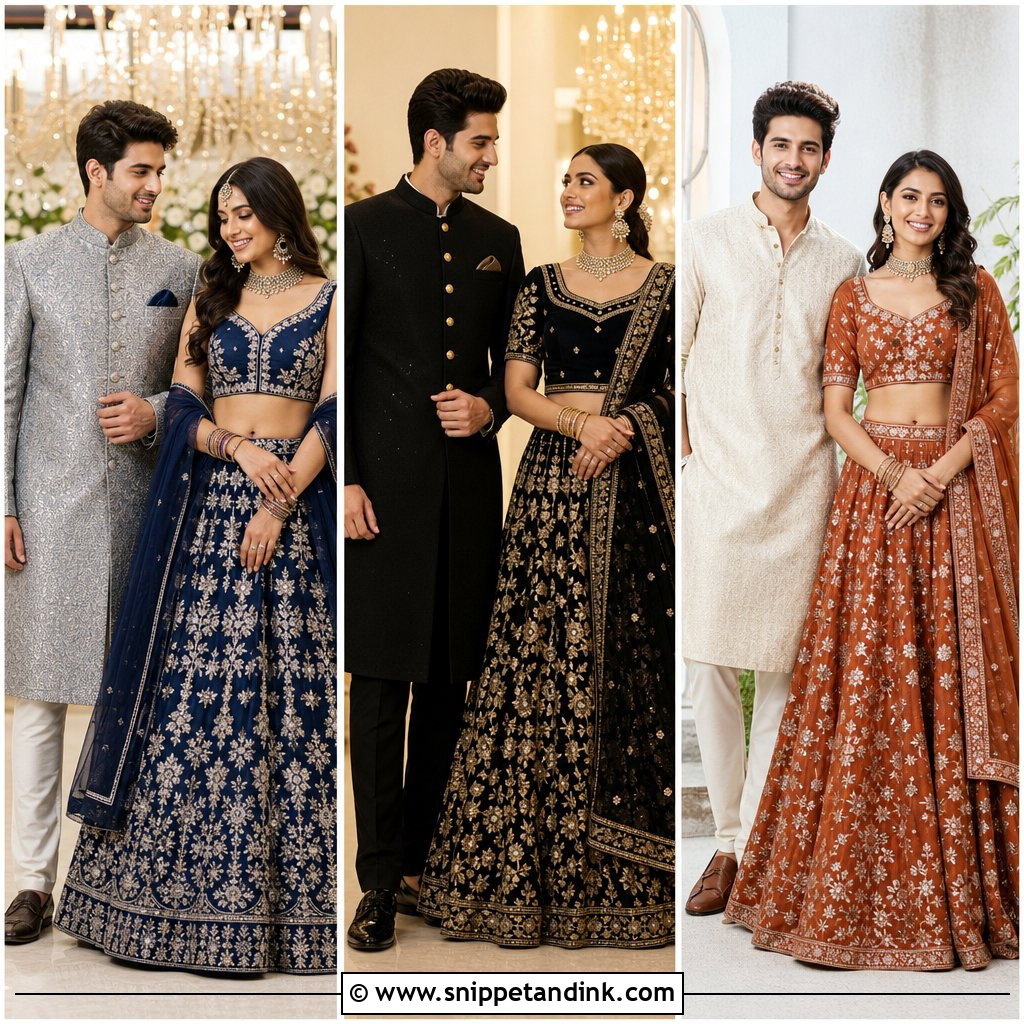
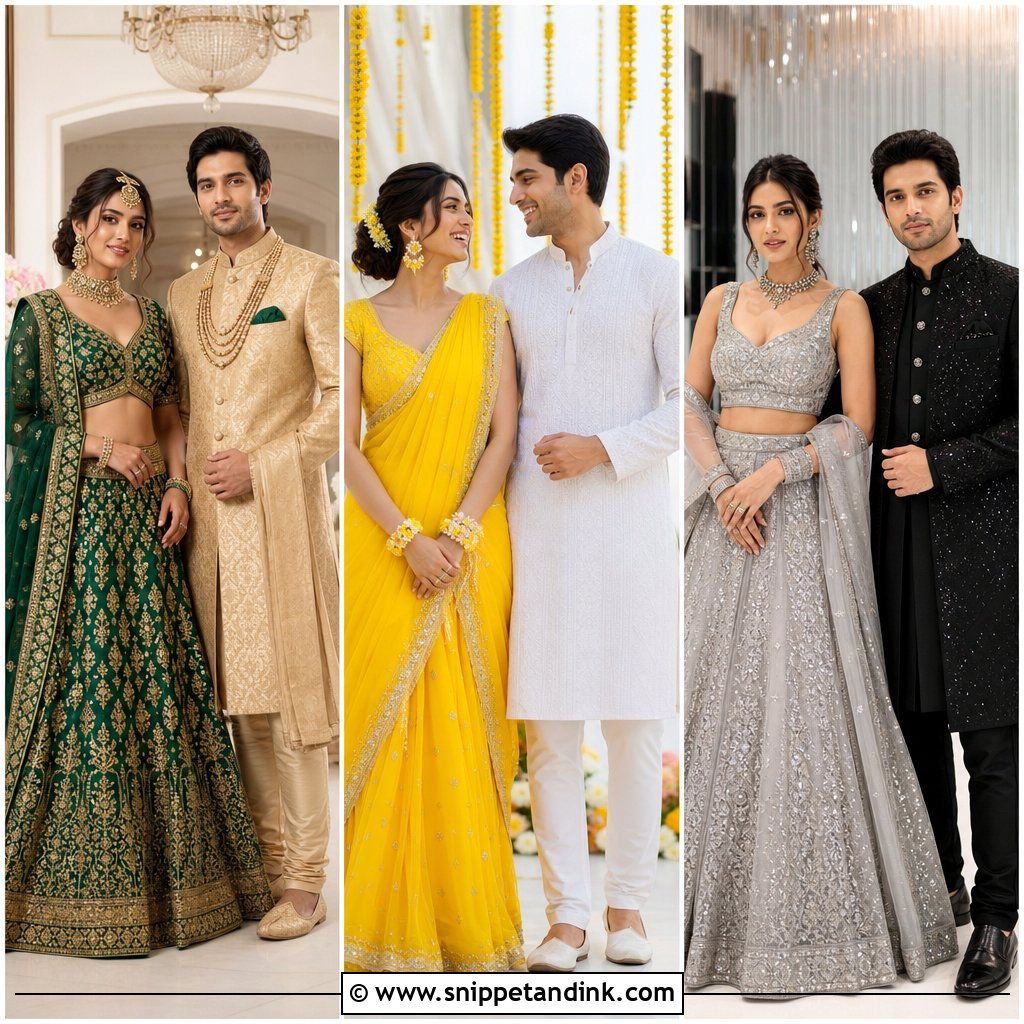
When I dress an Indian couple, I almost never make them match. Matching outfits flatten both people. What works is a link: his stole picks up the color of her lehenga, or one embroidery motif from her border turns up on his collar. Each outfit still looks like it belongs to the person wearing it. The pairings below run from red and gold to pastels, ivory on ivory, jewel tones, regional textiles and metallic reception looks, with notes on fabric, weight and where the connecting detail should sit.

Laying His Swatches Against Hers Before Anything Is Stitched
Most coordination problems I see come from two outfits ordered from two different shops with nobody comparing them. Gold is the worst offender. Zari comes in antique, coppery tones and in bright yellow gold, and silver zari can look almost grey. Put the wrong two together and the couple looks like they dressed for separate events. Ivories behave the same way: one designer’s ivory is another’s cream.
Once her lehenga fabric and embroidery samples exist, I ask for a cutting of the base fabric and a scrap of the zari or thread. That goes with the groom to his tailor, and every choice for him is held against it. Look at them together in daylight and under warm indoor light, because some dyes shift noticeably between the two.
- Decide which metal the couple will share before either outfit is embroidered.
- Get one physical swatch of her main color to his tailor, not a phone photo.
- Settle on the linking detail early: stole, safa, buttons, border or motif.
- Plan separate looks for each event if there are several, so the mehndi, wedding and reception pairs don’t repeat the same trick.
1. Red Bridal Lehenga And Ivory Sherwani Couple Outfit
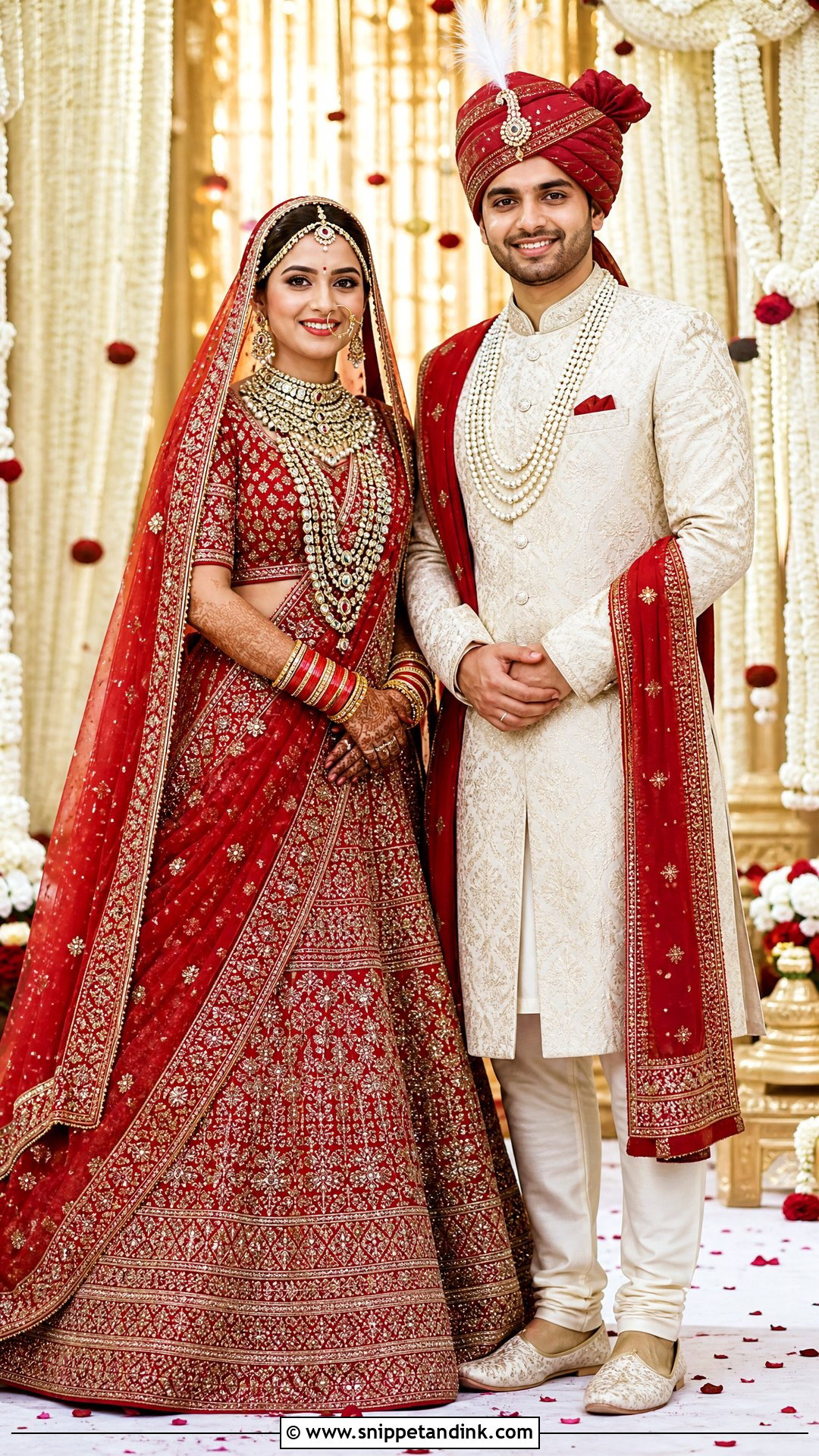
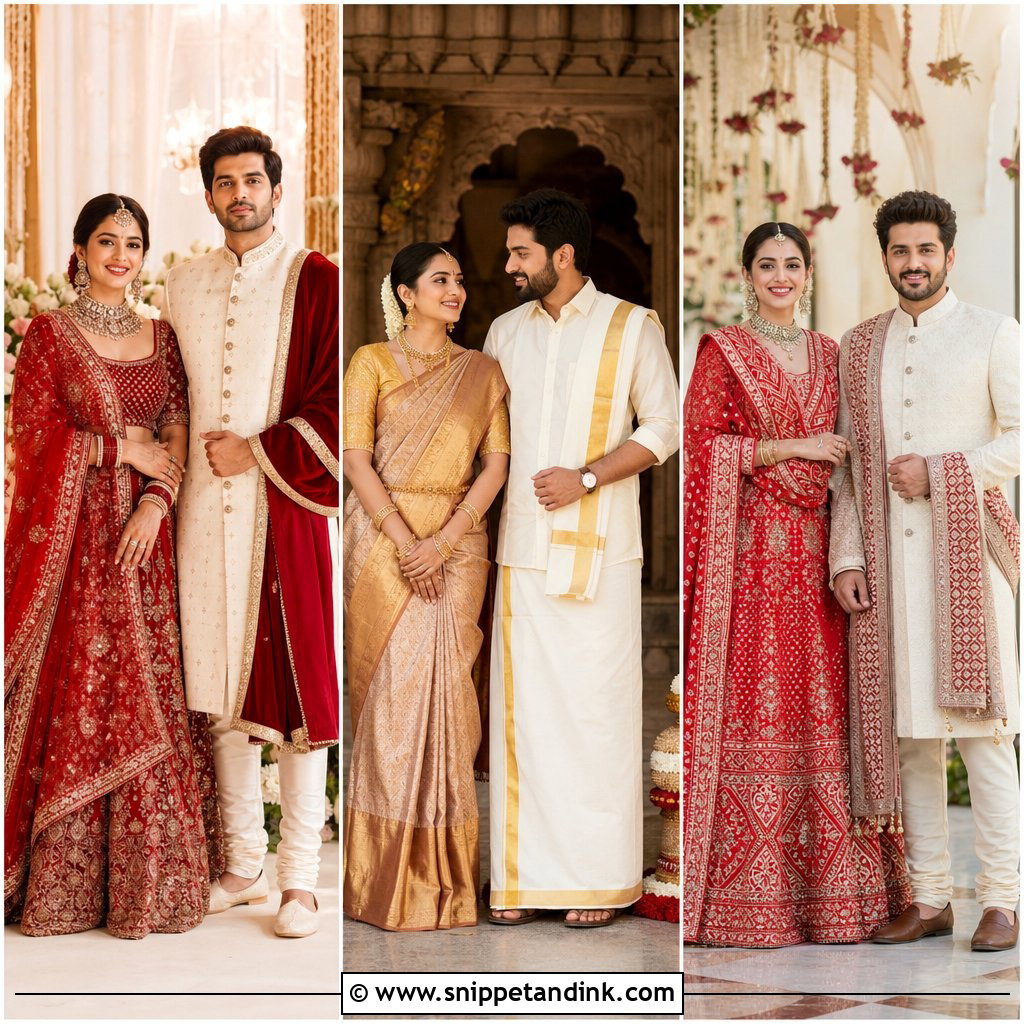
Red for her and ivory for him is the classic for a reason: the groom’s pale sherwani gives the bride’s color room, so neither outfit fights the other. Her lehenga can carry antique gold zardozi, dabka or fine floral work, with the red dupatta worn over the head. A choker, layered necklace, maang tikka, bangles and embroidered footwear complete her side. His ivory raw silk sherwani should have quiet gold detail, then a red stole, safa, pearl mala and cream mojaris. I keep his red to the stole and safa only. Put red on his buttons as well and the two outfits start competing.
2. Maroon Bridal Lehenga And Beige Sherwani Couple Outfit
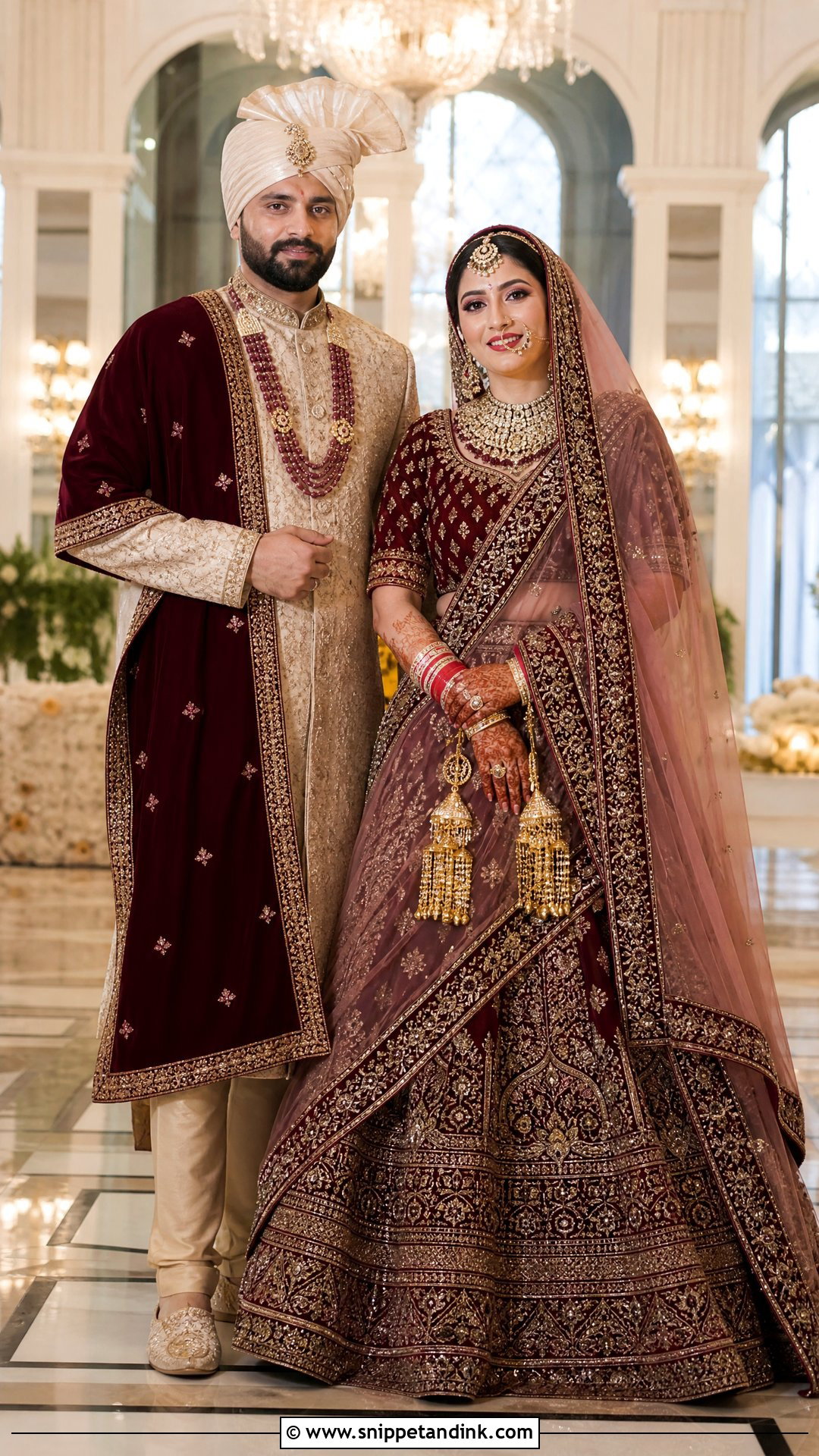
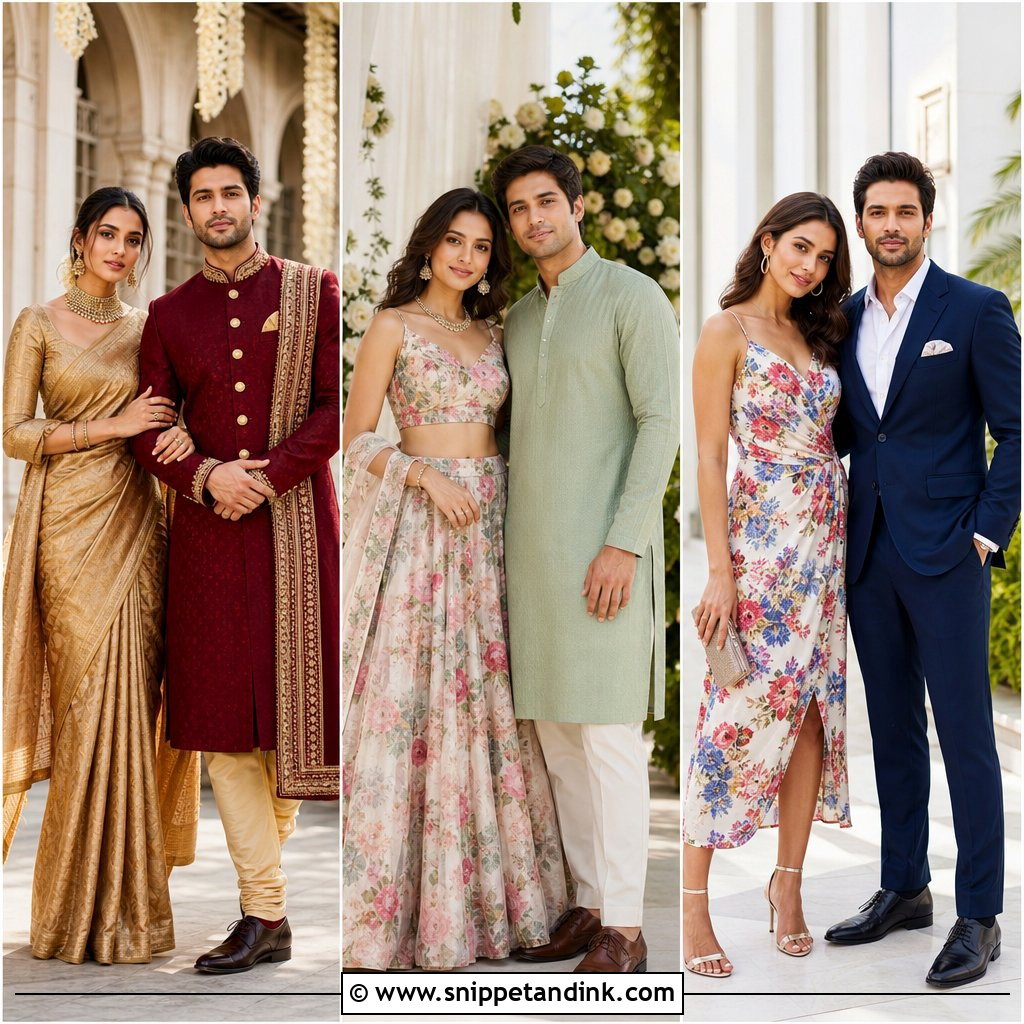
Maroon in velvet is heavy, and I warn brides about that early. A velvet lehenga with dense gold work is warm and weighty, so it suits an autumn or winter evening rather than a summer afternoon. Raw silk gives the same depth with less bulk. A sheer maroon dupatta with a worked border lightens the top half; add kundan, stacked bangles and gold juttis. For him, a beige or light gold sherwani with maroon threadwork or buttons, a maroon velvet stole, a beige safa and brown or gold mojaris. Under warm ballroom light, the maroon and gold read rich and even.
3. Pink Bridal Lehenga And Ivory Sherwani Couple Outfit
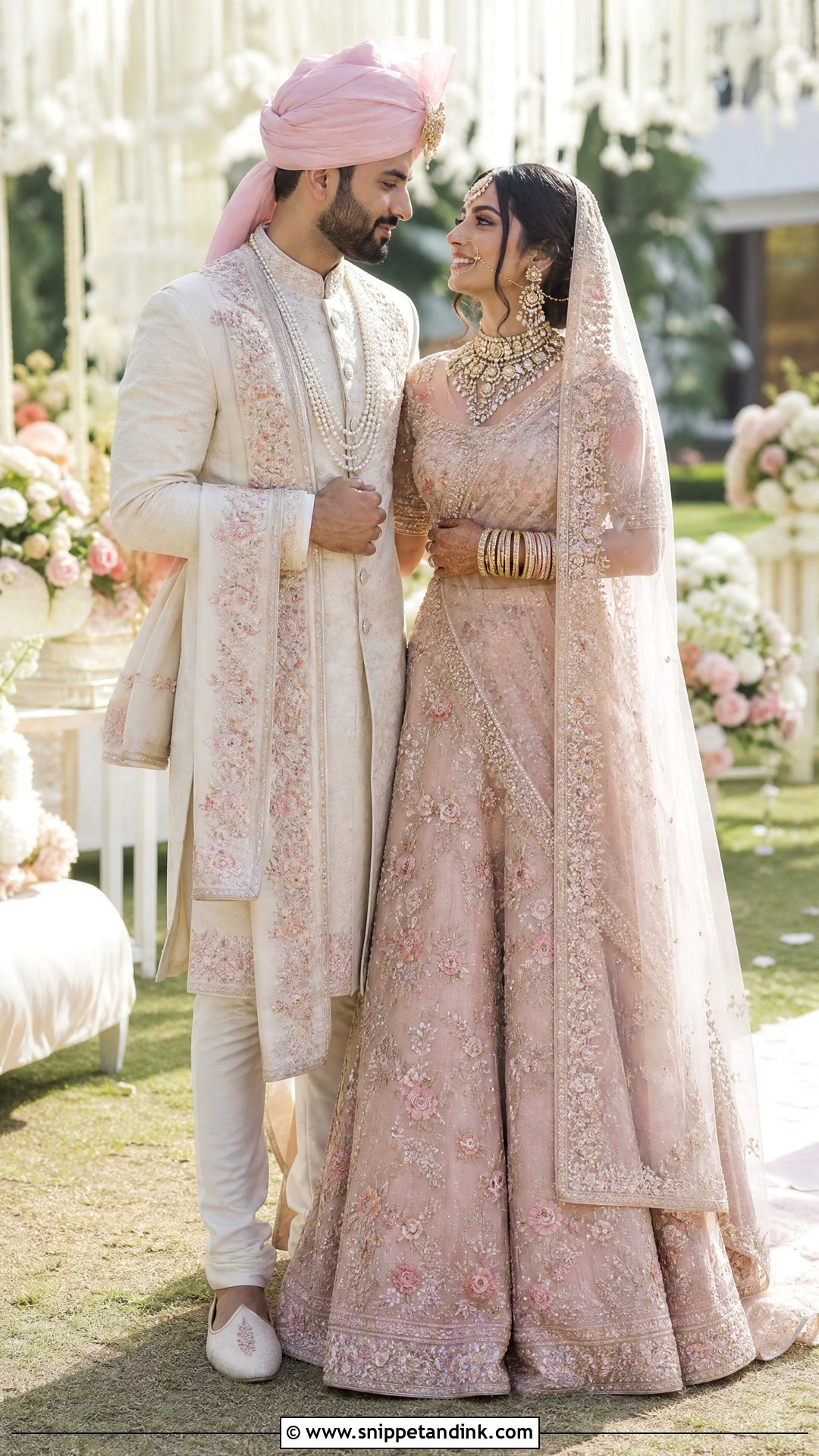
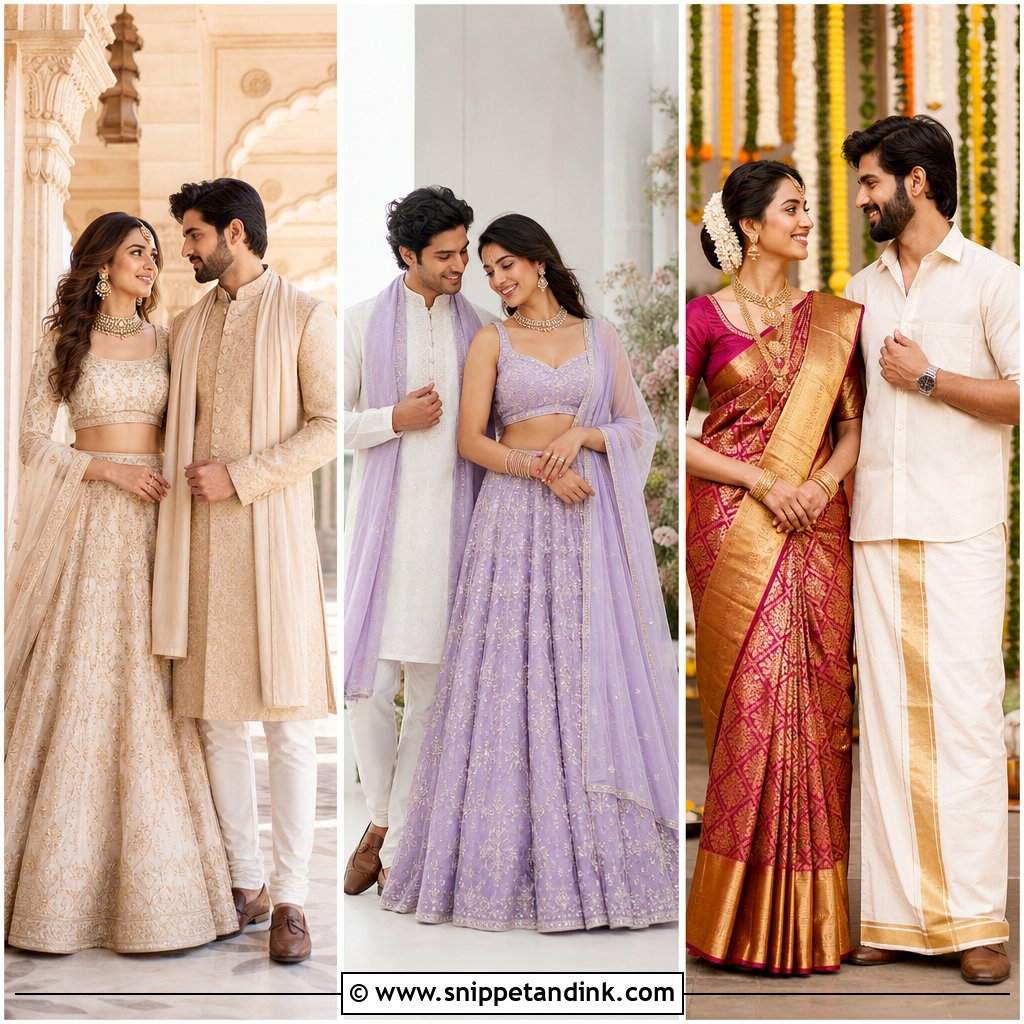
Pink and ivory together feel fresh, and pastels like this sit well at daytime and destination weddings. The shade of pink matters more than people expect. Blush flatters fair and cool undertones; a dusty rose is kinder to warmer and deeper skin. Her lehenga can carry silver-gold embroidery, pearls or floral appliqué, with a fitted blouse and a lightly draped dupatta, plus diamond or polki jewelry and neutral heels. His ivory sherwani needs only pale pink threadwork or a botanical motif, a pink safa or stole, a pearl mala and ivory mojaris.
4. Emerald Green Bridal Lehenga And Gold Sherwani Couple Outfit
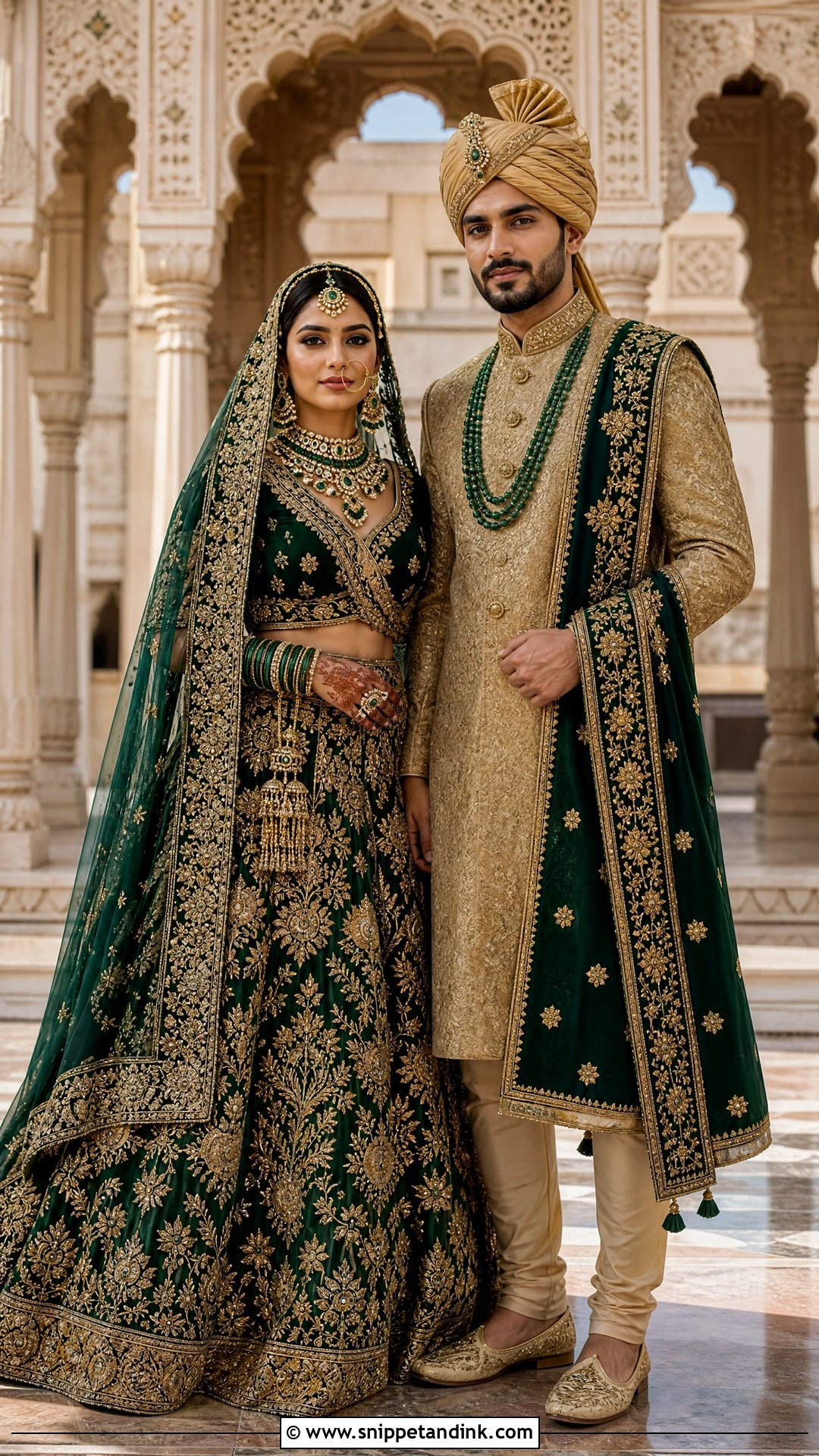
Emerald is the color I suggest to brides who want to leave red behind without giving up depth. Silk or velvet with gold zari, sequins or zardozi, a matching dupatta or a contrasting gold veil, uncut diamonds with emerald accents, gold bangles and embroidered juttis. For him, a muted gold sherwani with green threadwork or small green stone buttons, an emerald stole, cream churidar, a gold safa and mojaris. That neutral base stops the pair from going too dark. I’d ask the decorator to keep the backdrop pale so the two deep tones stand out.
5. Ivory And Gold Matching Bridal Couple Outfit
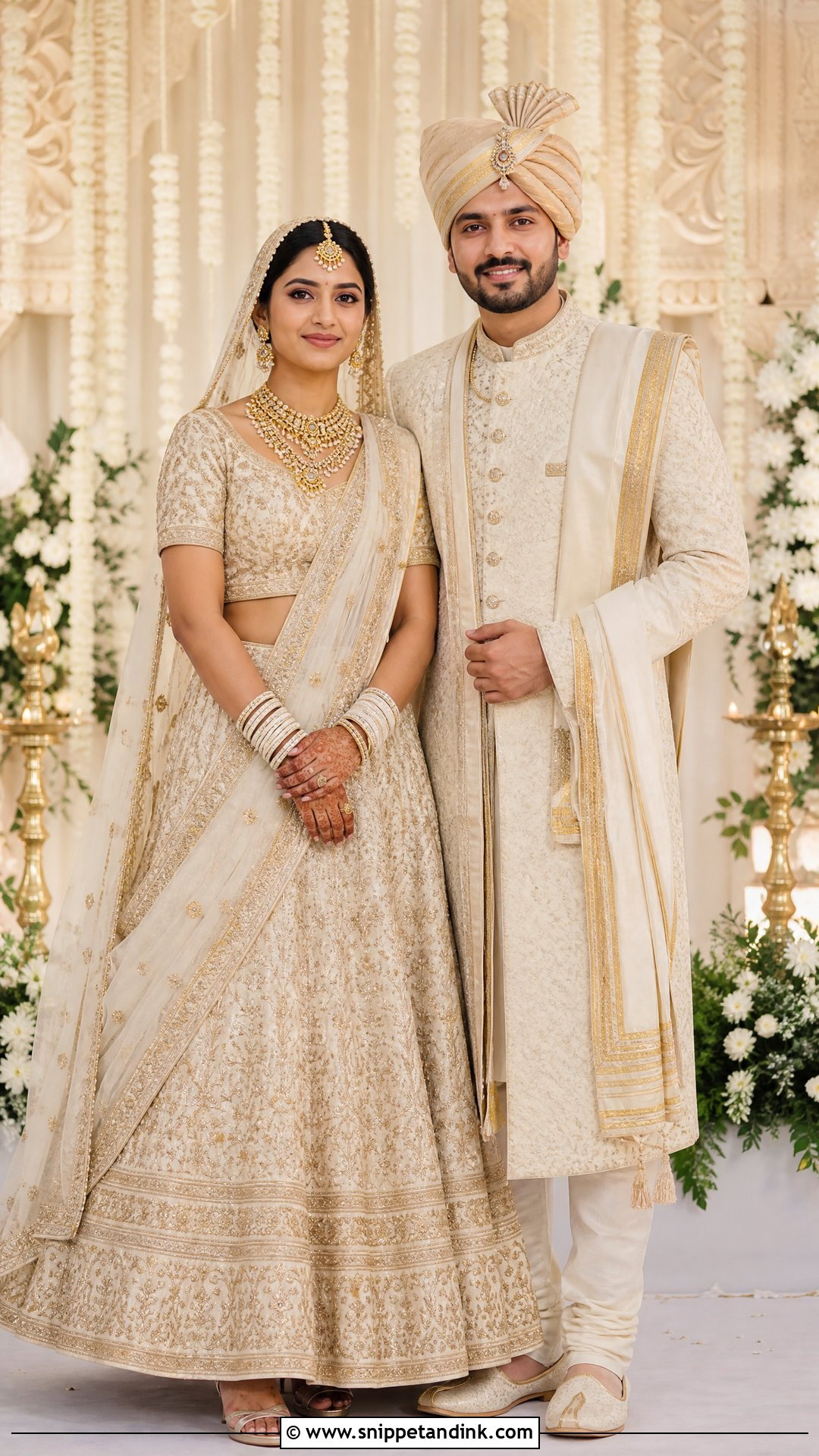
Ivory on ivory is where texture does all the work. If both outfits are the same shade and the same sheen, the couple blurs into one pale shape. My rule is to give the bride the shine and the groom the matte: her ivory lehenga or sari with gold zari, sequins or pearls, and his ivory sherwani in raw silk with gold embroidery. Her layered gold jewelry, maang tikka, ivory bangles and metallic heels give definition. He finishes with a matching churidar, an ivory or champagne safa, a gold-bordered stole and classic mojaris. Done this way, it reads regal rather than plain.
6. Royal Blue Bridal Lehenga And Ivory Sherwani Couple Outfit
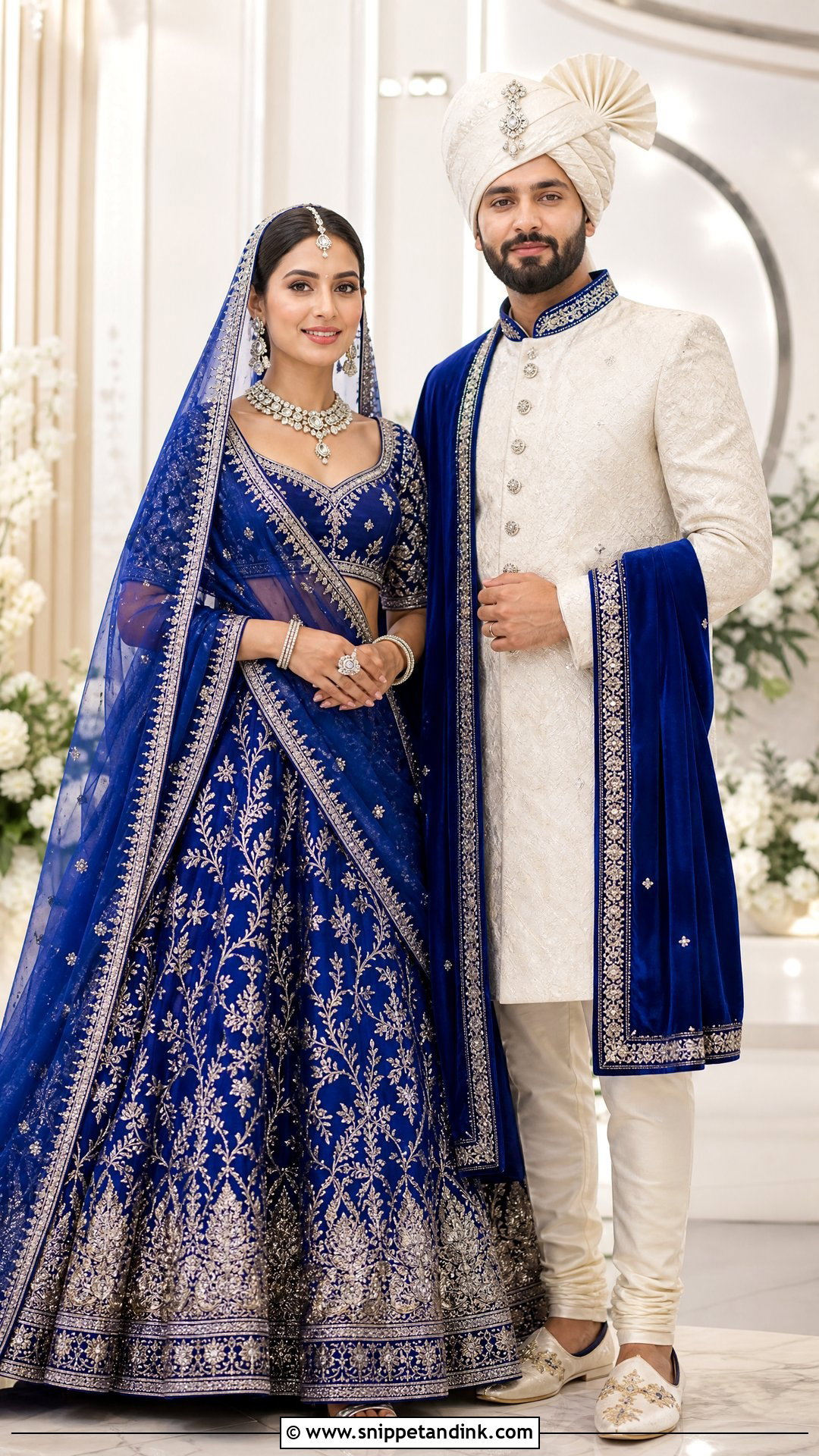
A royal blue lehenga is a strong color, so the rest of the pairing has to stay disciplined. Silver, gold or multicolored embroidery, a structured blouse and a sheer dupatta edged in crystals balance her; diamonds, blue bangles and metallic heels keep it clean. He wears ivory or pale beige, with blue embroidery at the collar, cuffs and buttons, a royal blue stole, an ivory safa and coordinating mojaris. Count the colors: ivory, blue and one metal. A fourth color is usually where the look falls apart.
7. Champagne Bridal Lehenga And Black Bandhgala Couple Outfit
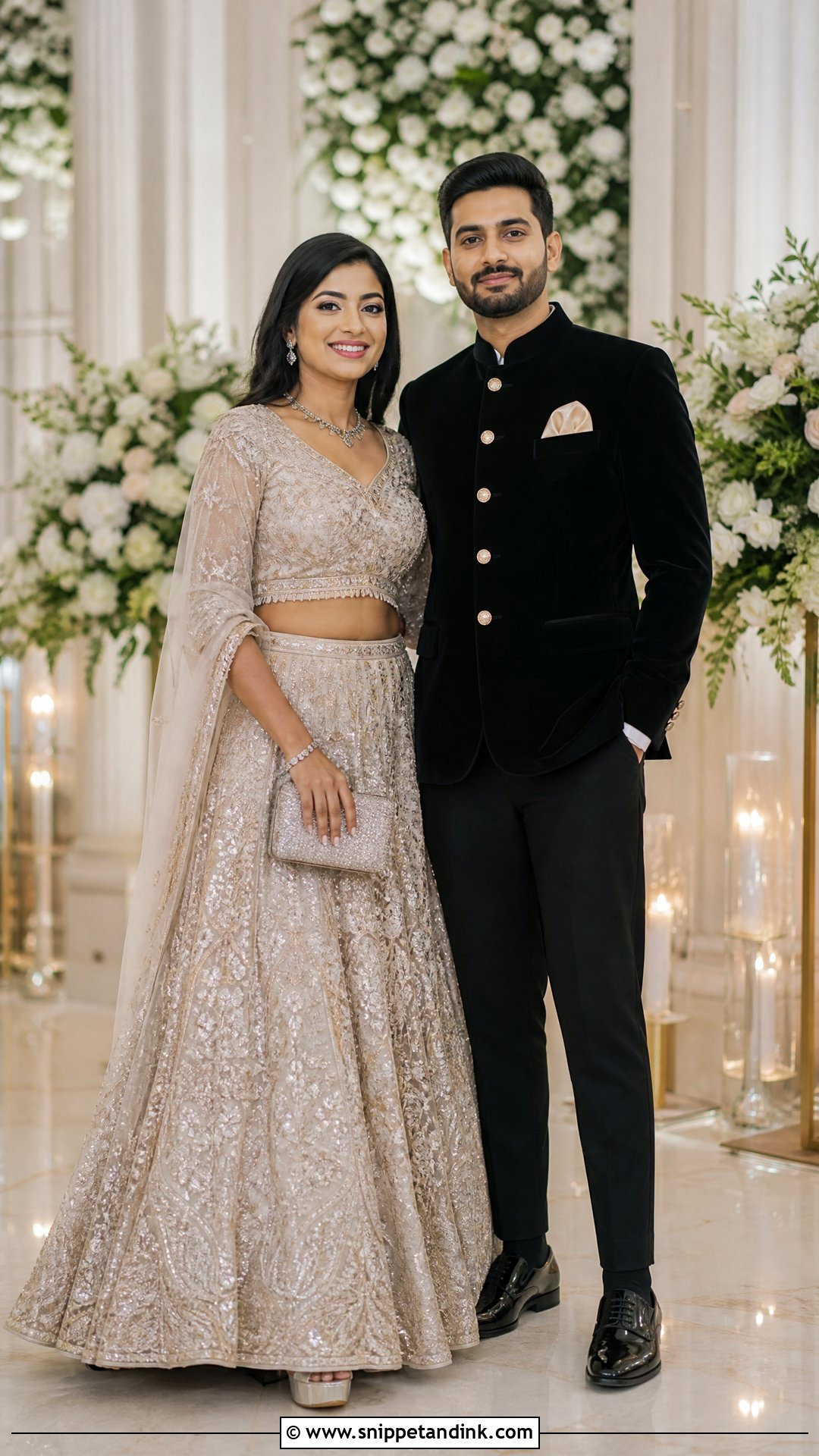
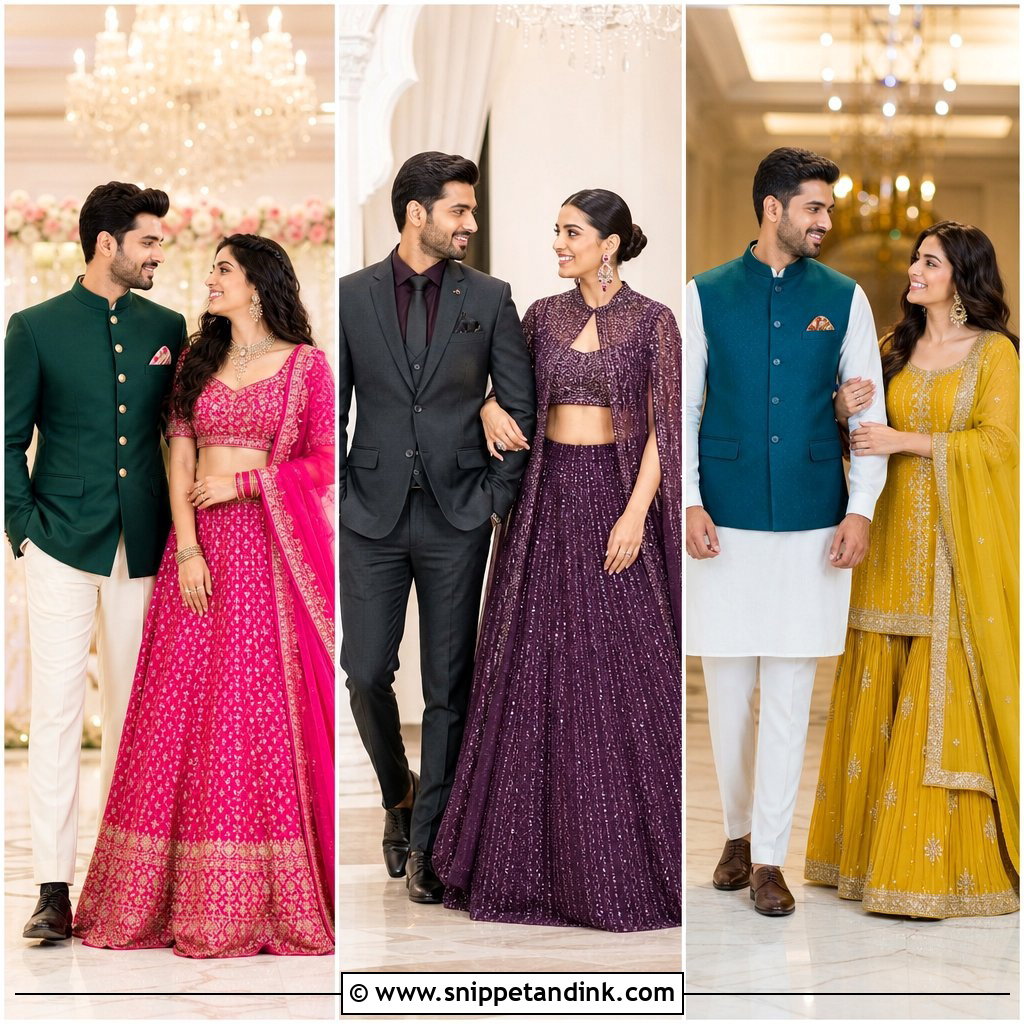
Champagne and black is a reception pairing, not a pheras one, and it’s the place to be modern. Her champagne lehenga can carry crystals, sequins or metallic beads, with a soft trailing hem and a fitted blouse with a sculpted, modest neckline. Diamond earrings, a fine necklace, a small metallic clutch and platform heels she can dance in. His bandhgala in black velvet or silk, with champagne buttons and discreet embroidery, tailored black trousers, polished shoes and a champagne pocket square. A trailing hem needs a bustle loop or wrist loop sewn in, or she’ll be gathering it in her fist all night.
8. Peach Bridal Lehenga And Sage Green Sherwani Couple Outfit
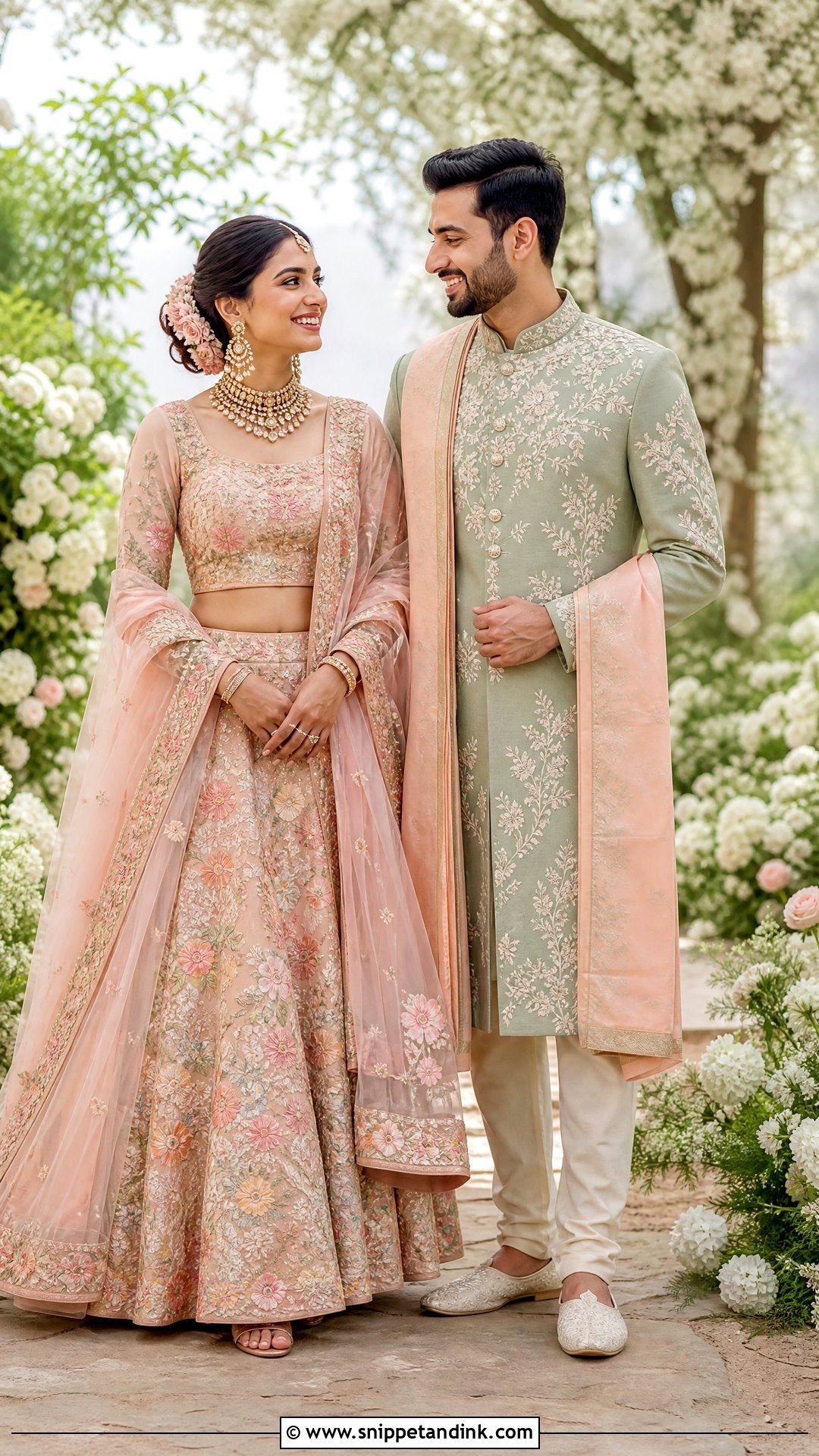
Peach and sage were made for a garden. Her peach lehenga with pastel floral embroidery and pearl accents, an organza dupatta, polki jewelry, peach bangles, a fresh floral bun and embroidered sandals. His sage sherwani with ivory threadwork and a clean fit, a peach stole or safa, ivory pants and cream mojaris. I match the embroidery thread across both outfits, ivory on hers and ivory on his. When each garment brings in its own accent color, a two-tone palette suddenly turns into five.
9. Lavender Bridal Lehenga And Gray Sherwani Couple Outfit
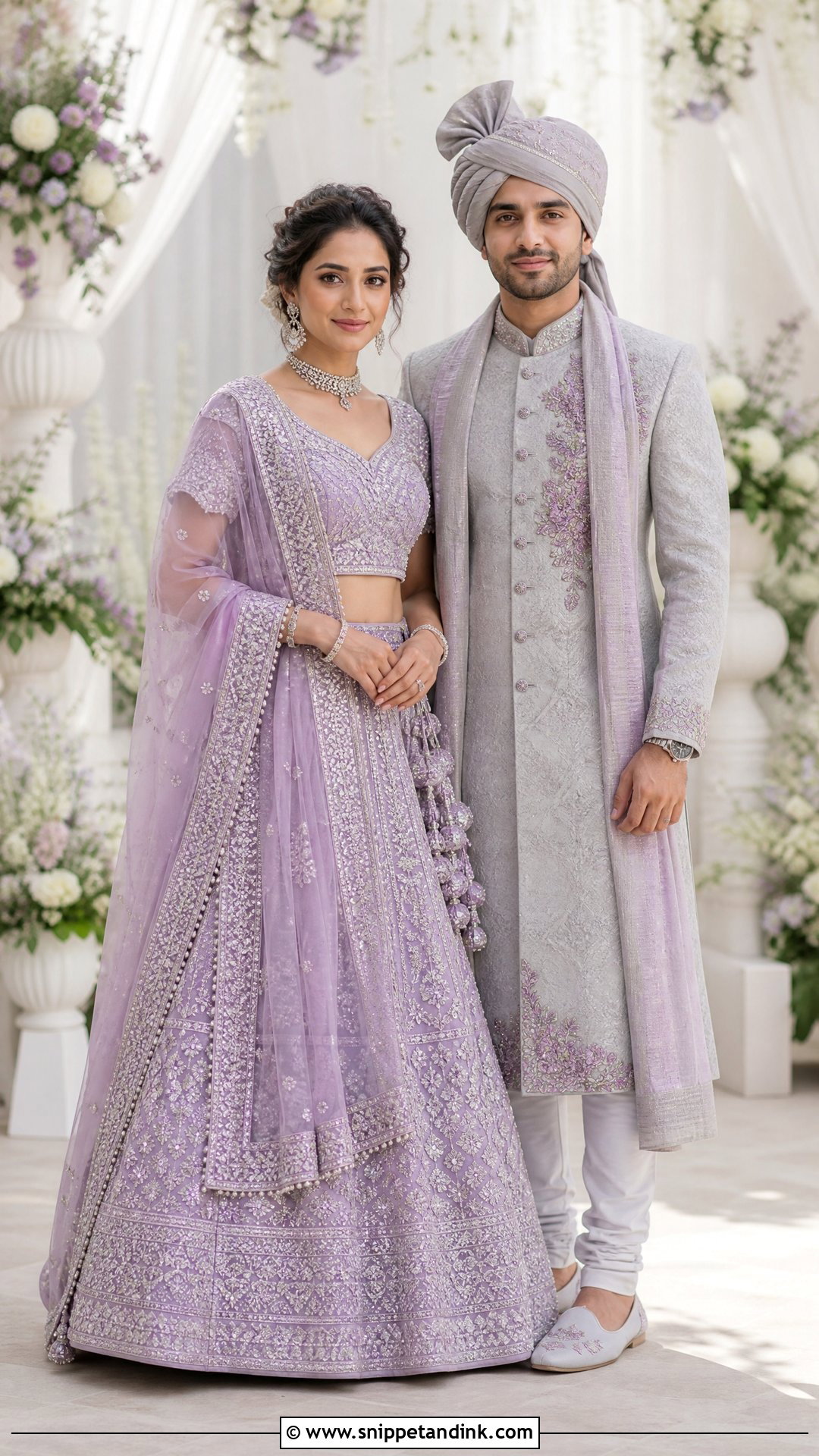
Lavender only stays airy if the metal stays cool. Silver embroidery, translucent sequins, pearls or 3D flowers on her lavender lehenga, a matching blouse and sheer dupatta, then diamonds, silver bangles and lavender or metallic heels. His dove-grey sherwani gets lavender threadwork or small florals, a lavender stole, grey safa and pale grey mojaris. Bring yellow gold into this palette and it turns muddy. Spring weddings, daylight ceremonies and pale indoor decor suit it best.
10. Orange Bridal Lehenga And Cream Sherwani Couple Outfit
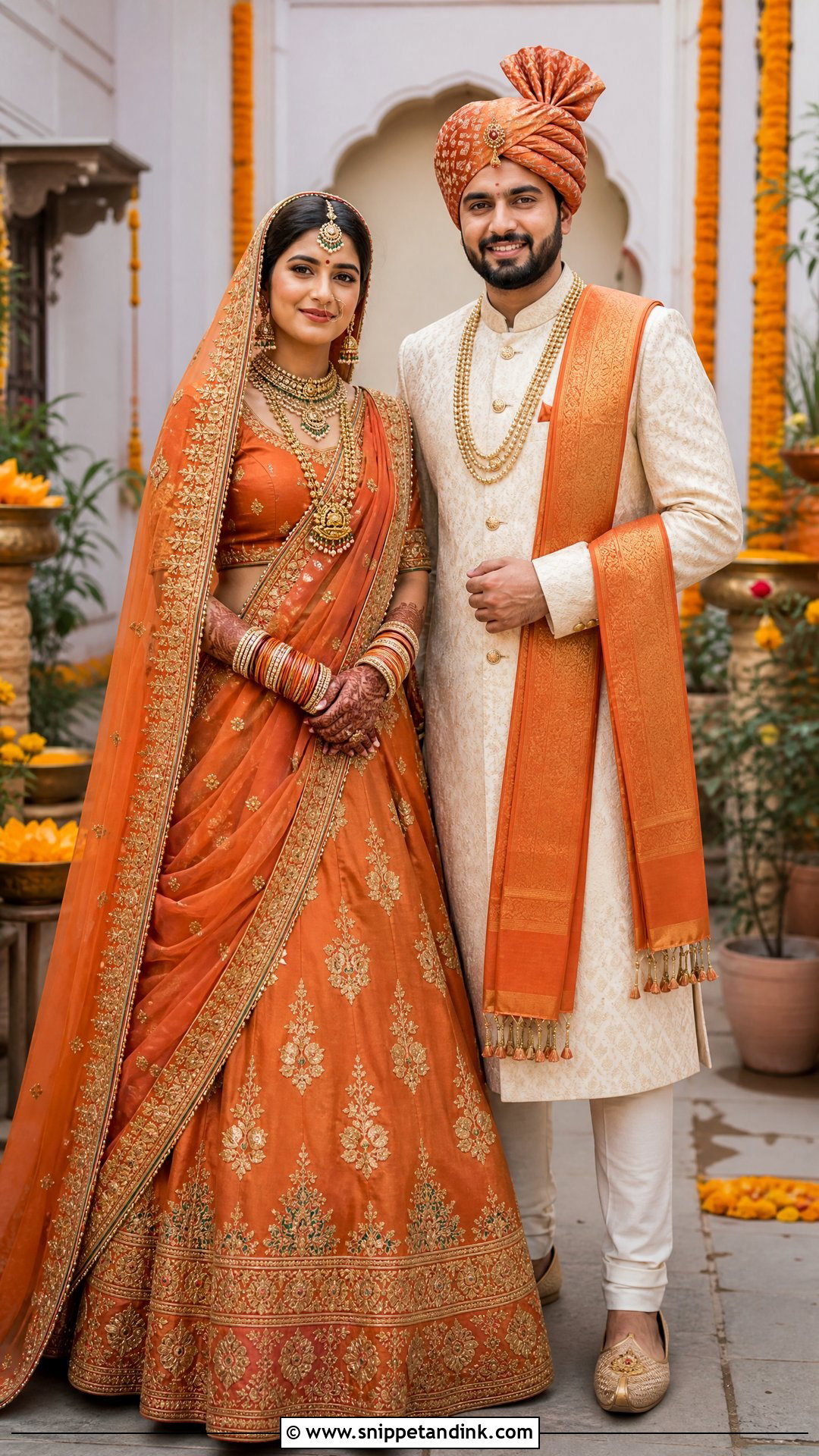
A burnt orange or deep tangerine lehenga has real warmth, but the shade needs care. Burnt and saffron oranges sit well on most skin tones; neon tangerine rarely does. Silk with antique gold work, traditional borders and a well-built blouse, a matching dupatta, temple jewelry, stacked gold bangles and juttis. His cream sherwani with a little orange or gold embroidery, an orange stole, cream churidar, a printed safa and tan-gold mojaris. Courtyards and marigold decor suit it, and the cream gives her color space to breathe.
11. Red Kanjeevaram Sari And Cream Veshti Couple Outfit
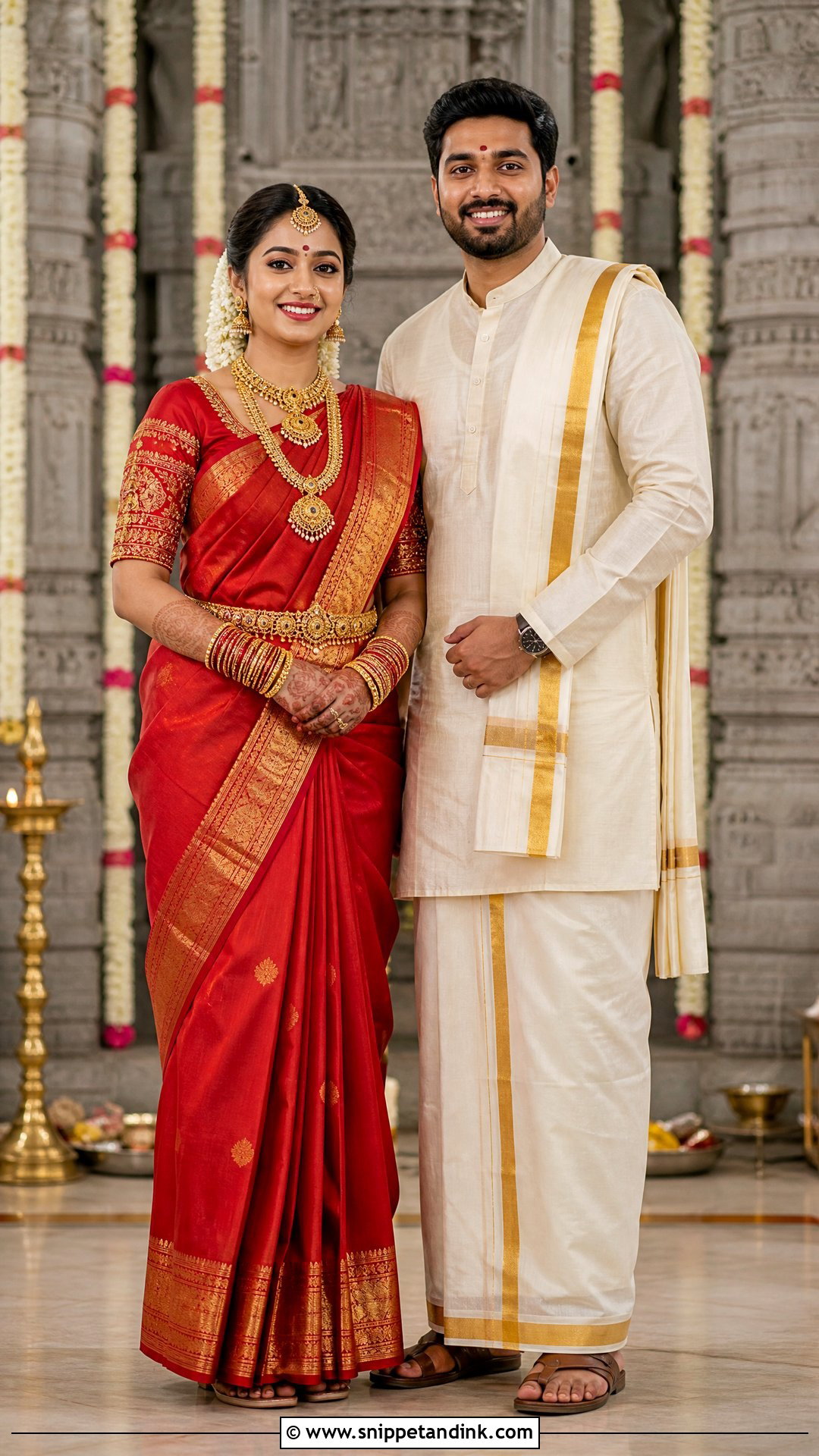
A red Kanjeevaram with a broad gold zari border and a cream veshti makes a South Indian bridal couple look that needs very little help. Her matching blouse, temple jewelry, jasmine, gold bangles, an oddiyanam waist belt and sandals; his crisp cream or ivory veshti with a silk shirt or kurta, a gold-bordered angavastram and leather sandals. The link I’d use is the border: ask for his angavastram with a red line or a zari width close to her sari border. Kanjeevaram silk is heavy and stiff when new, so a pre-pleated drape done by a draper the day before saves a lot of time on the morning.
12. Bengali Red And White Bridal Couple Outfit
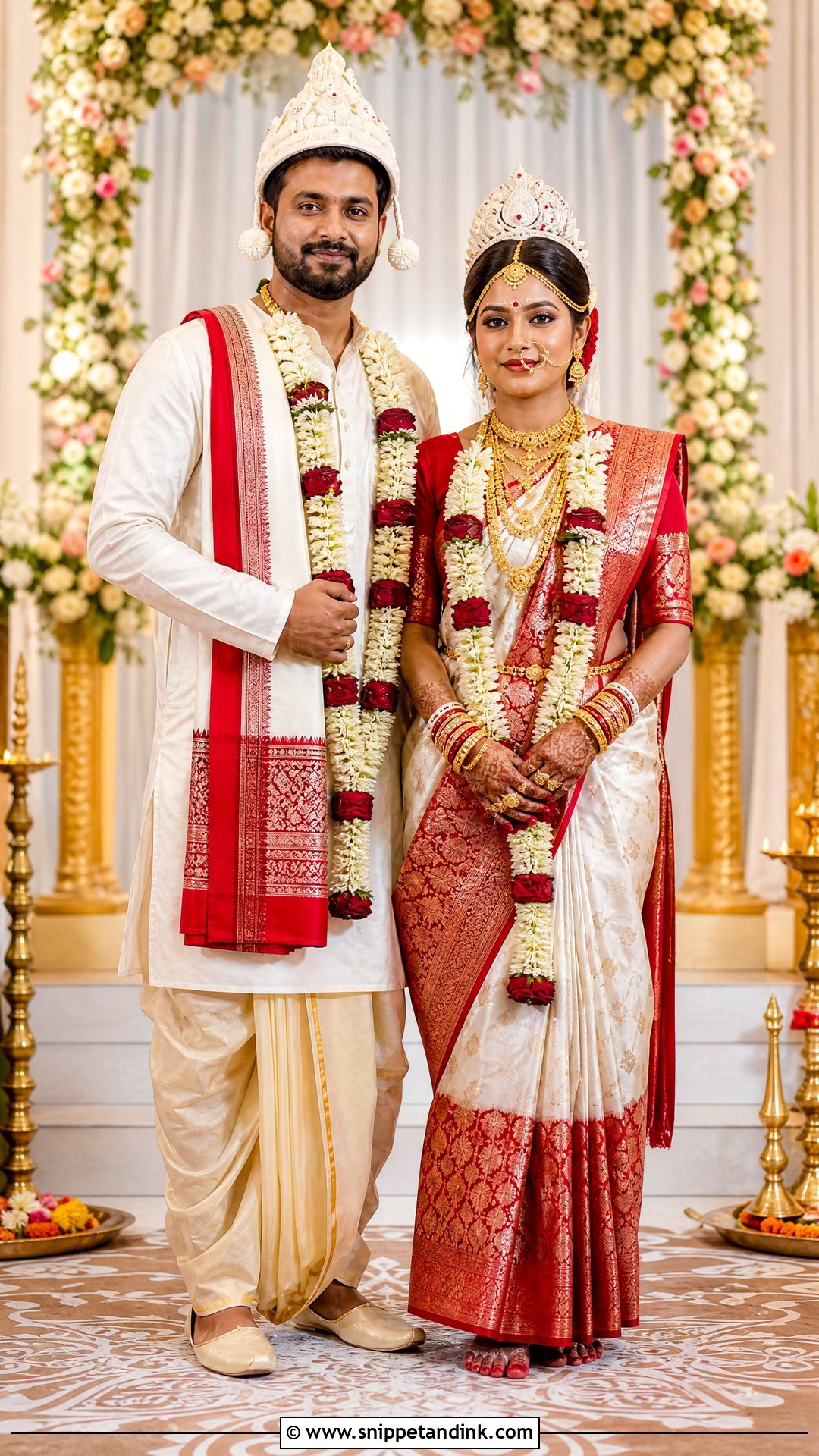
In a Bengali red and white pairing, the reds have to agree. I take her sari border and his stole to the same window and compare them in daylight, because a cherry red beside a brick red looks like a mistake in every picture. Her white, cream or red Banarasi with a bold red border and gold motifs, a red blouse, layered gold, shankha-pola style bangles, the bridal headpiece and alta. His white silk panjabi or kurta with a cream dhoti, a red-bordered stole and the topor or other headwear his family follows. Let her sari carry the pattern while his plainer base holds the balance.
13. Punjabi Red Lehenga And Gold Sherwani Couple Outfit
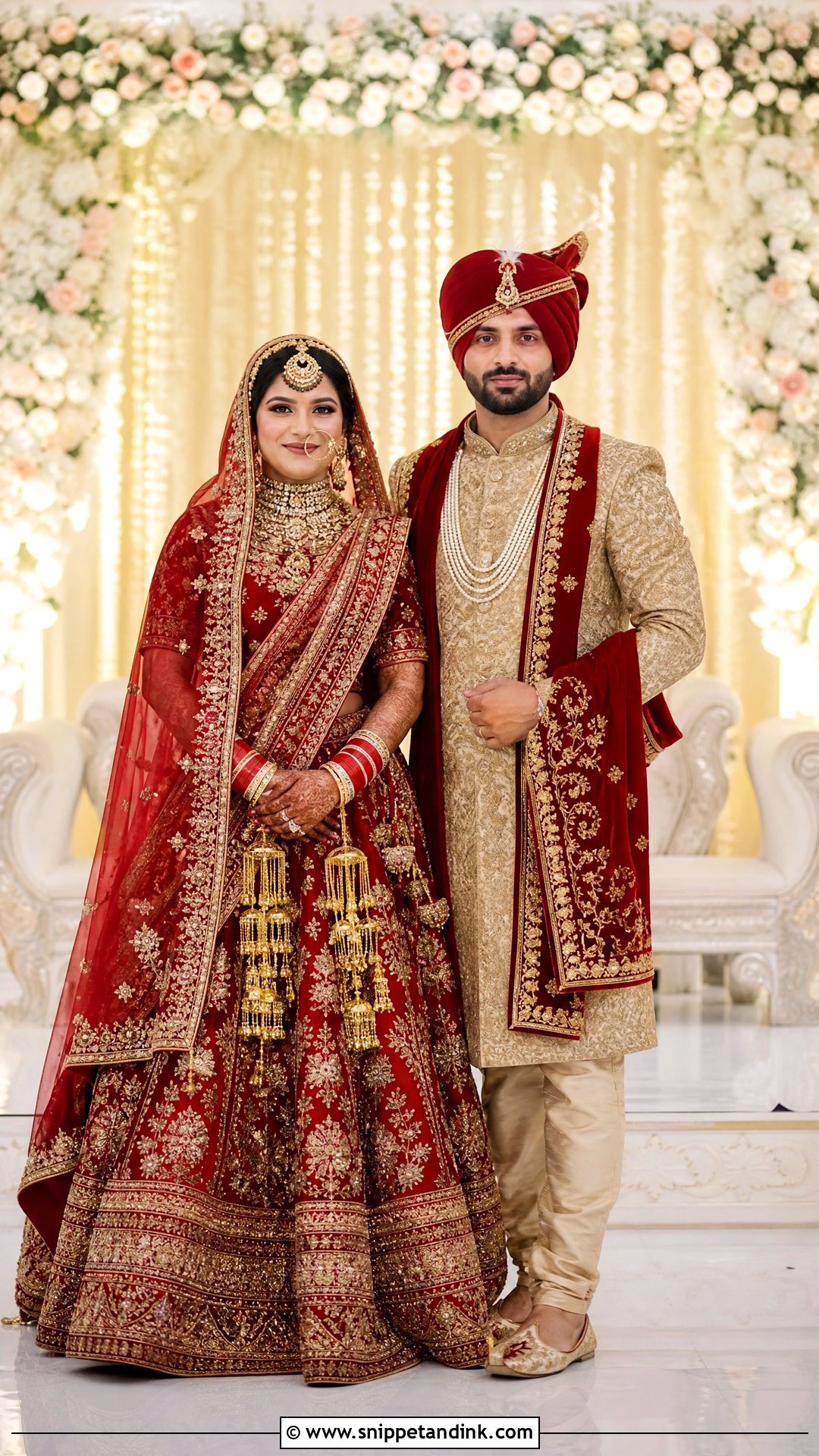
A Punjabi bridal couple outfit can take bold red, rich gold and big accessories, as long as someone controls where the red goes. Her bright red or crimson lehenga with dense gold work and a heavily bordered dupatta, maang tikka, layered necklace, chooda, kalire and gold juttis. His gold or cream sherwani with red embroidery, a fitted churidar, a red turban, a coordinated stole, pearls and embroidered mojaris. Red should dominate her outfit and appear only in a few places on his. The chooda and kalire also hang heavily from the wrists, so I keep her blouse sleeves short or close-fitting.
14. Gujarati Panetar Lehenga And Ivory Sherwani Couple Outfit
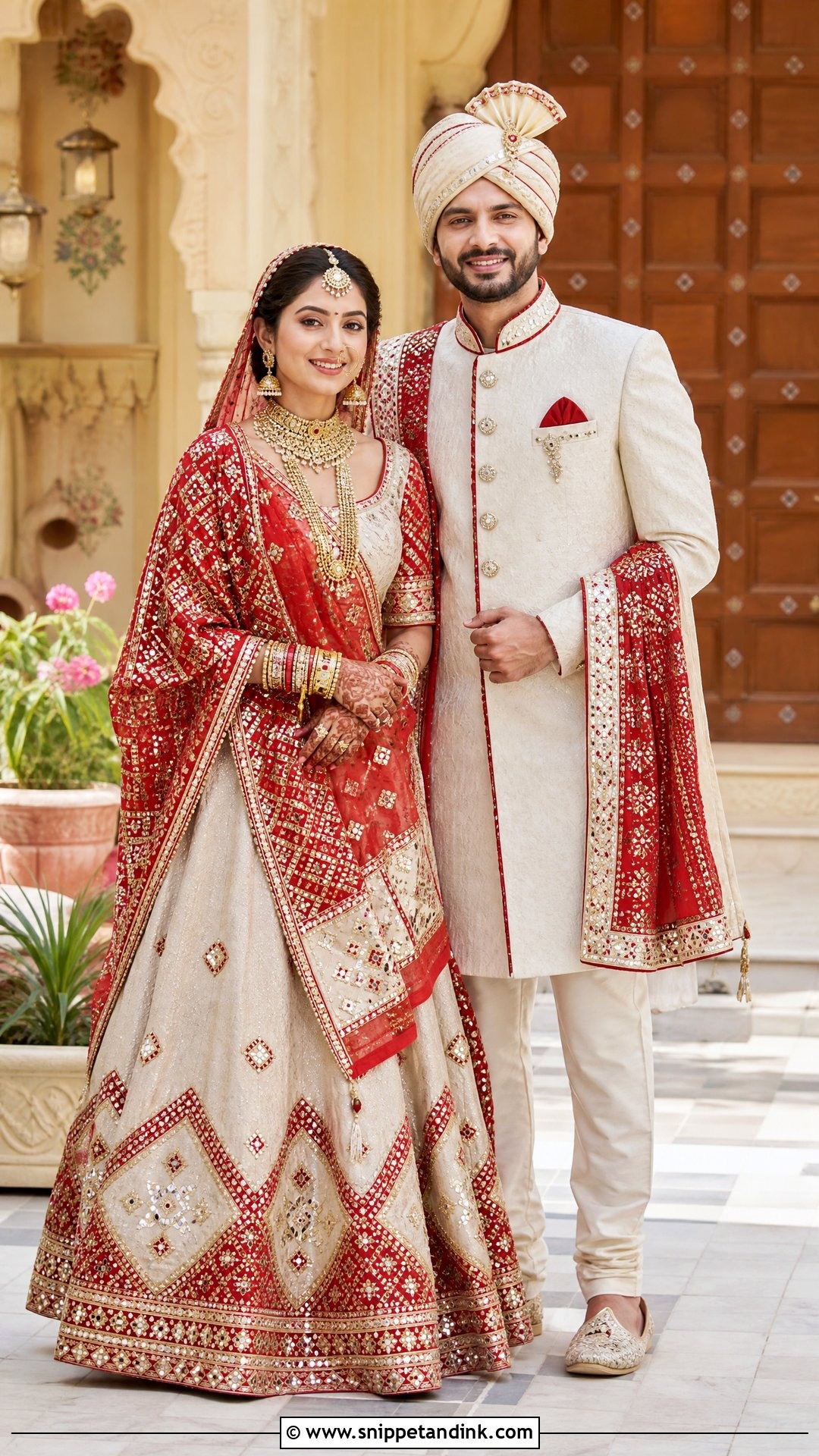
A Gujarati pairing lives in its textiles: panetar in red and white, bandhani, mirror work and gold embroidery. Her panetar-style sari or lehenga, a carefully pinned dupatta, layered gold, bangles and embroidered footwear. His ivory sherwani with red piping, a few mirror details or a patterned stole, an ivory churidar, a red or ivory safa and gold mojaris. I pick one detail to repeat, usually the red border or the mirror work, and leave everything else different. Mirror work catches on fine net, so keep it off any sheer dupatta that will lie over his shoulder during the pheras.
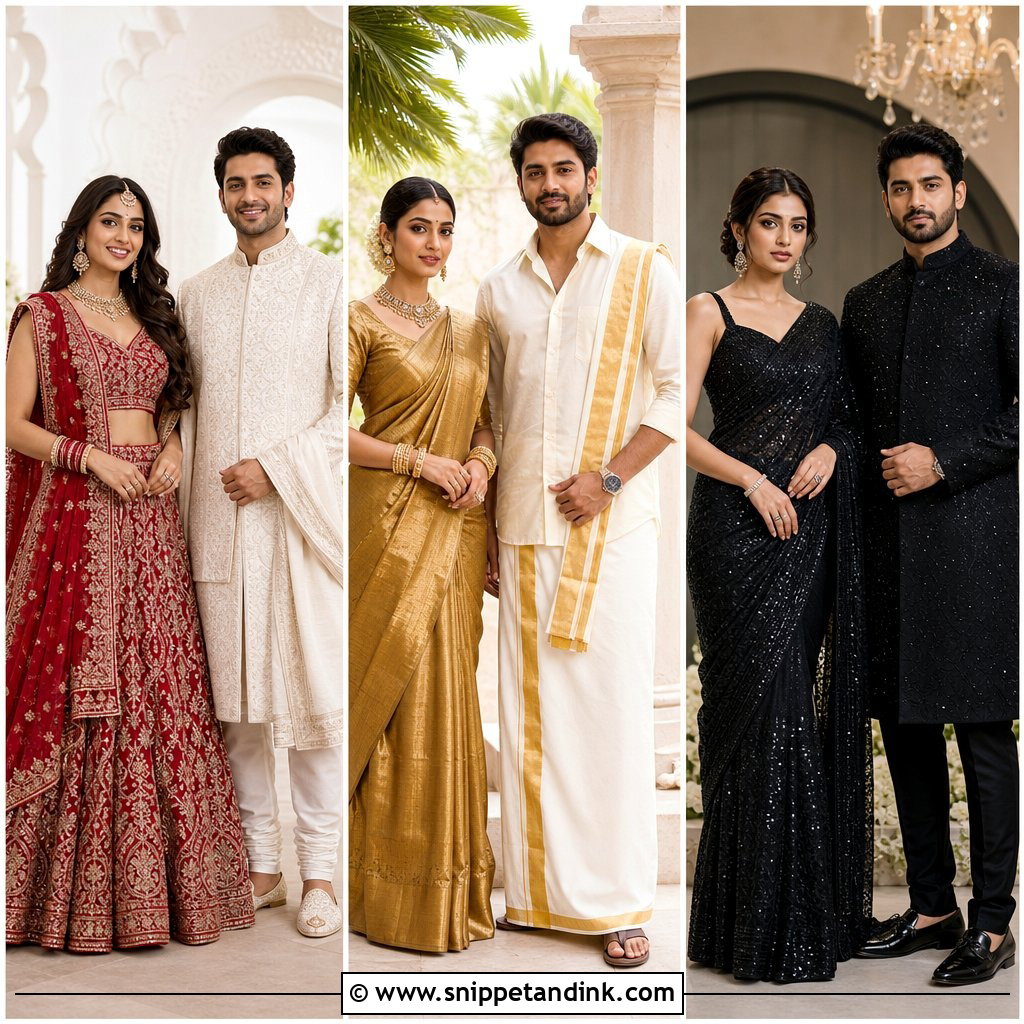
15. Maharashtrian Sari And Cream Kurta Couple Outfit
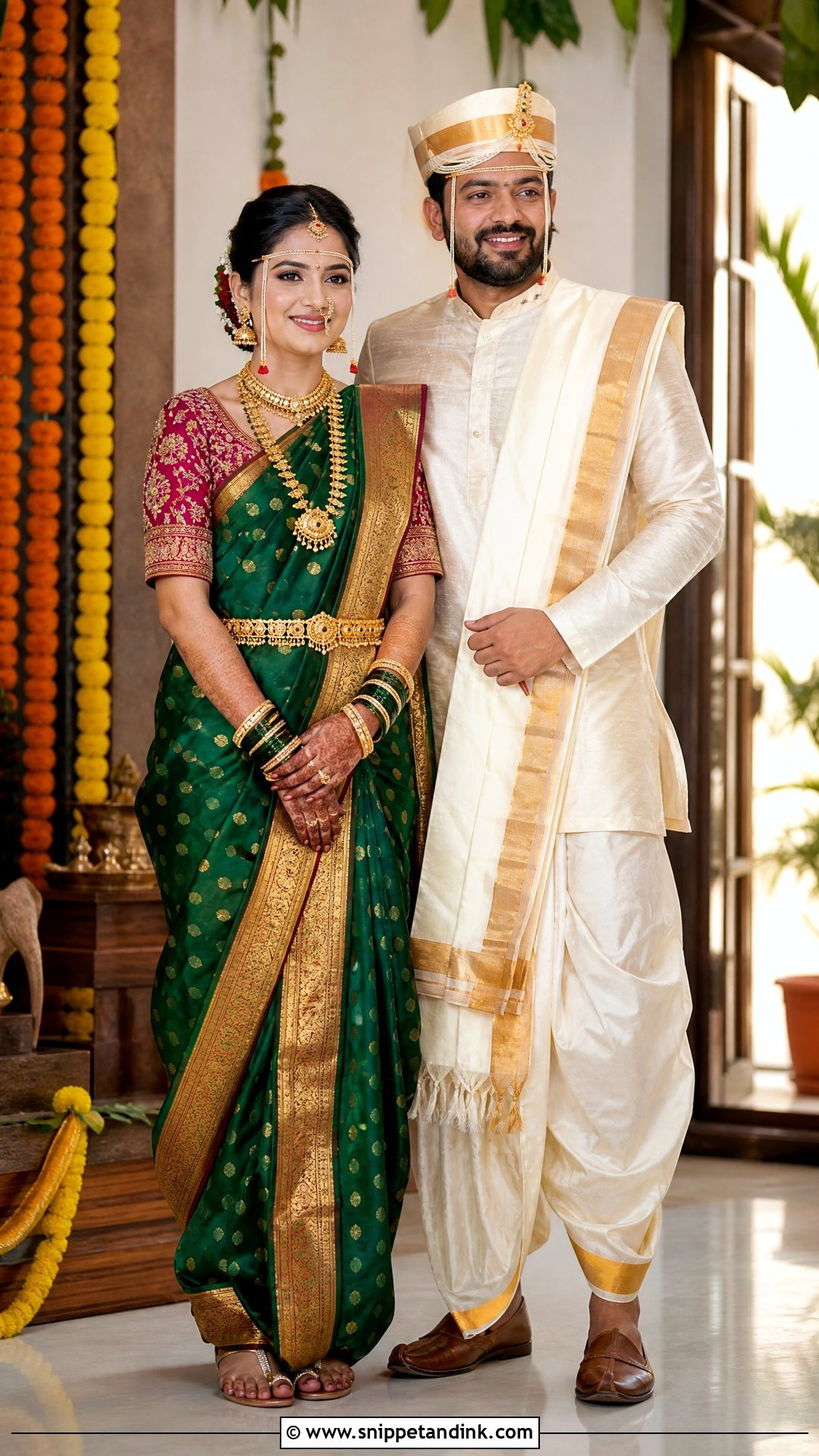
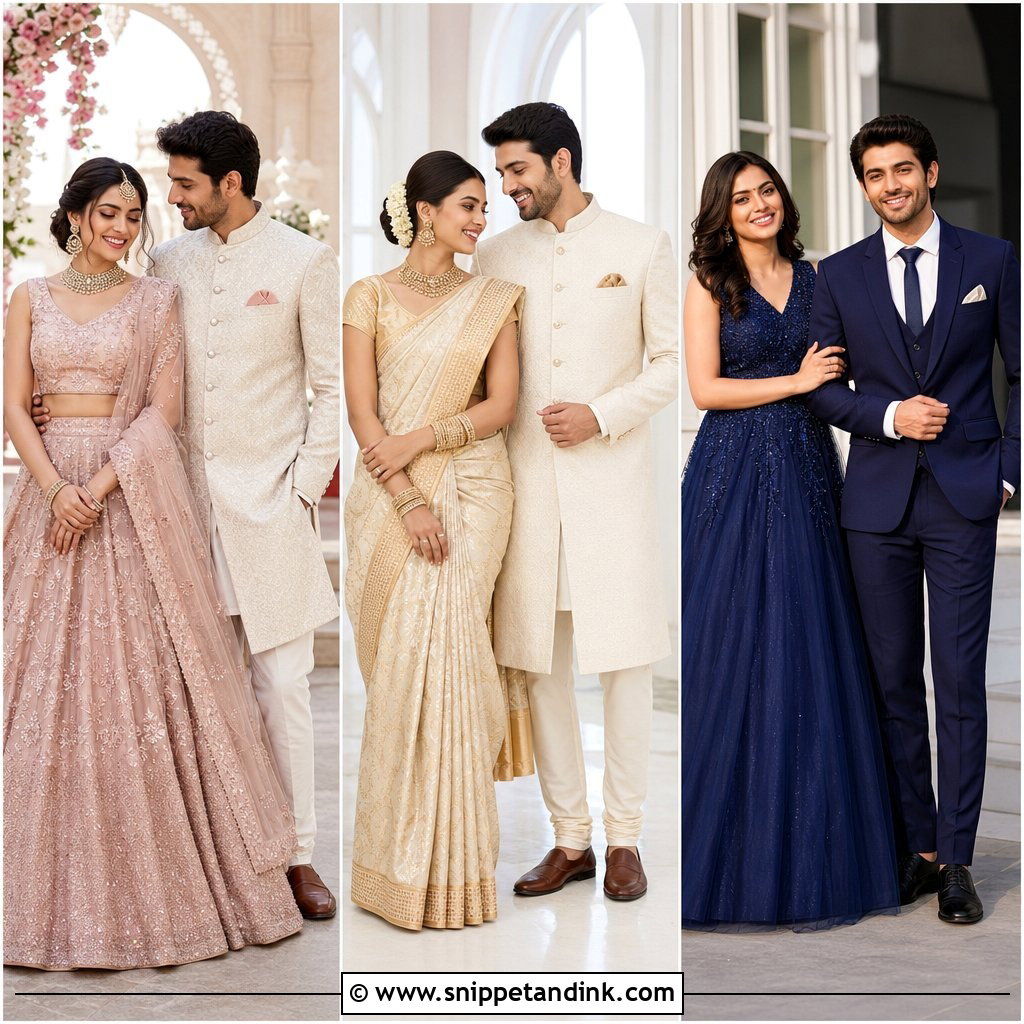
A Maharashtrian bridal couple outfit is about drape and warm gold. Her Paithani in green, yellow or red, worn in the nauvari or a classic drape, with a contrasting blouse, a traditional necklace, nath, green glass bangles, a crescent bindi, a waist belt and comfortable sandals. His cream silk kurta with a dhoti or pajama, a gold-bordered stole, a pheta and brown or cream footwear. I pull one color from her sari border for his stole or pheta. The nauvari is draped tight around the legs, so she should practise sitting and stepping in it once before the day.
16. Floral Bridal Lehenga And Embroidered Sherwani Couple Outfit
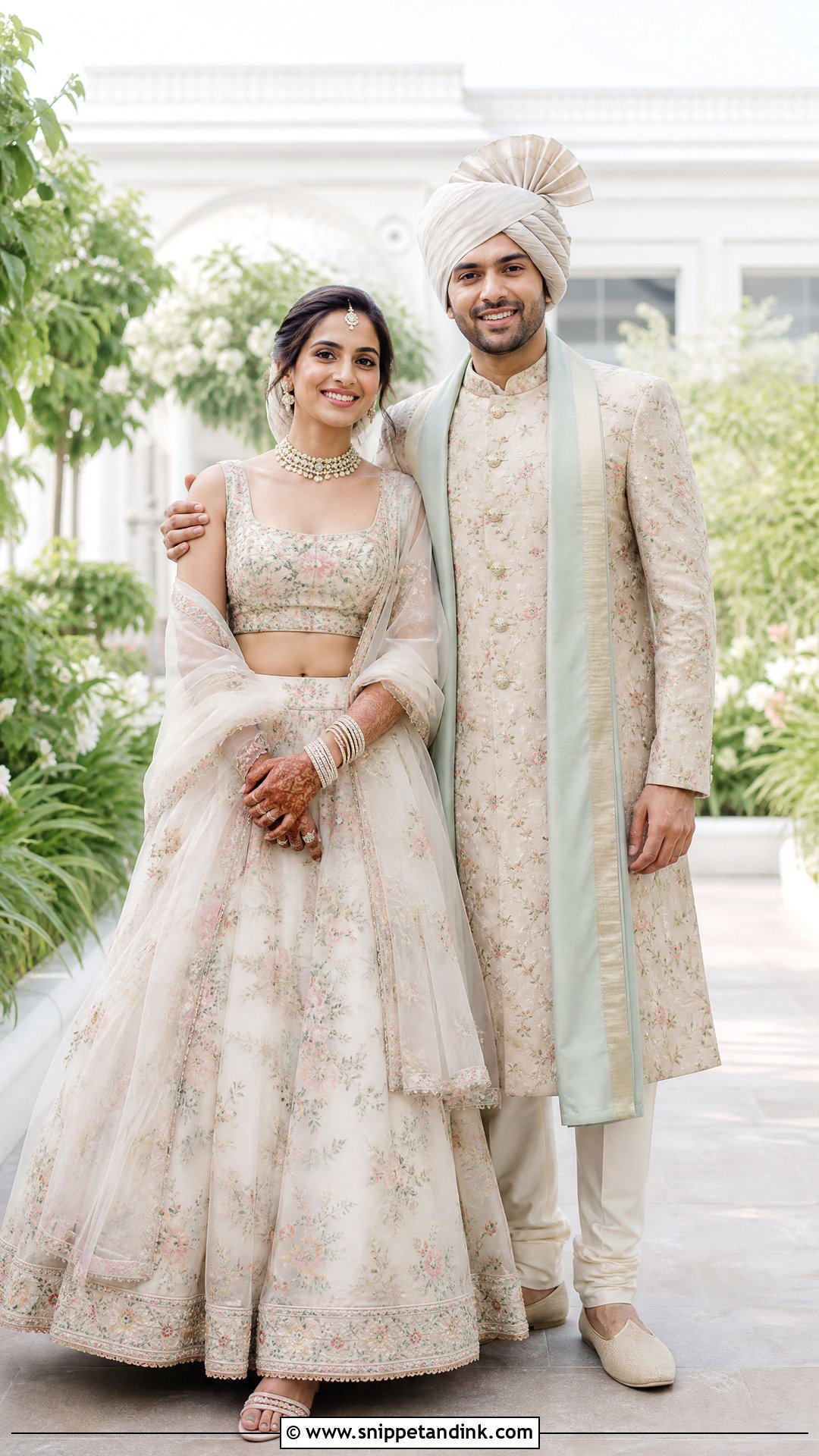
Floral embroidery lets a couple coordinate without sharing a color at all. Her pastel or ivory lehenga with evenly spaced floral threadwork, a fitted blouse, a sheer dupatta, pearls, soft bangles and embellished sandals; his ivory, beige or pastel sherwani with a smaller version of the same motif, plain churidar, a complementary stole, a simple safa and neutral mojaris. I ask the embroiderer to scale his flowers down and space them wider than hers. That keeps her as the focus while the link still reads clearly. Daytime, garden and spring weddings suit it well.
17. Gold Bridal Lehenga And Navy Sherwani Couple Outfit
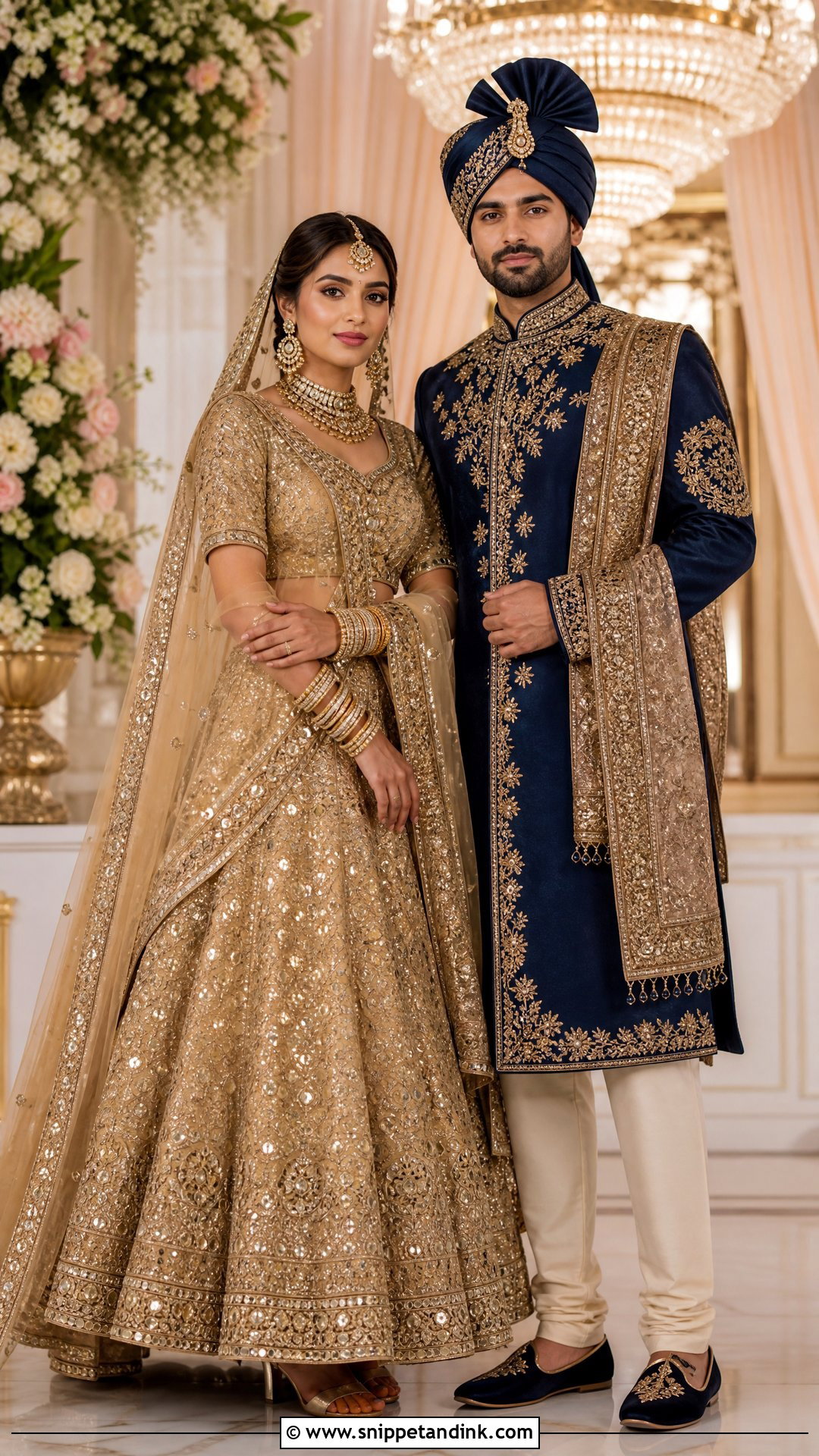
Gold and navy is a strong contrast that looks formal and settled. Her antique gold lehenga with tonal embroidery and sequins, a sculpted blouse and a light gold dupatta so the whole thing doesn’t get top-heavy; kundan, gold bangles, a metallic clutch and heels she can stand in. His deep navy sherwani with gold buttons, embroidery or a brocade panel, a gold stole, navy safa, ivory pants and dark embroidered mojaris. Match the gold tones exactly: antique gold on her and bright yellow gold on him looks like two different weddings.
18. Powder Blue Bridal Lehenga And Ivory Sherwani Couple Outfit
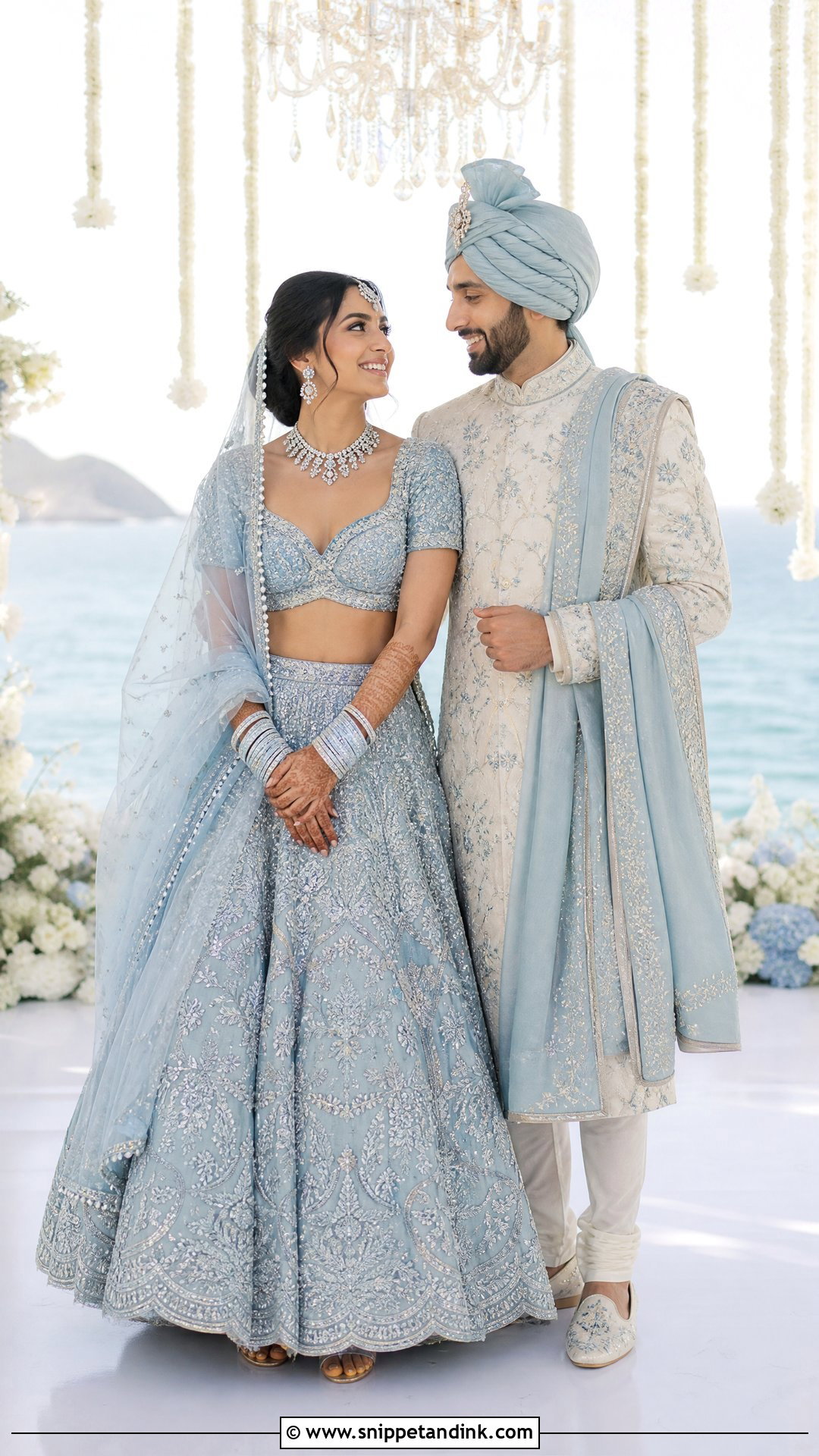
Powder blue and ivory belong in daylight and heat, which means the fabrics have to be light. Her powder blue lehenga with pearl embroidery, silver thread or a few crystals, a structured blouse and a flowing organza dupatta; diamonds, pale blue bangles and silver or ivory heels. His ivory sherwani with blue work at the collar, cuffs and front, a powder blue safa, a stole, ivory trousers and cream mojaris. If they’ll stand under an open mandap at midday, I’d steer him toward a linen-silk or cotton-silk sherwani rather than heavy raw silk.
19. Burgundy Bridal Lehenga And Blush Sherwani Couple Outfit
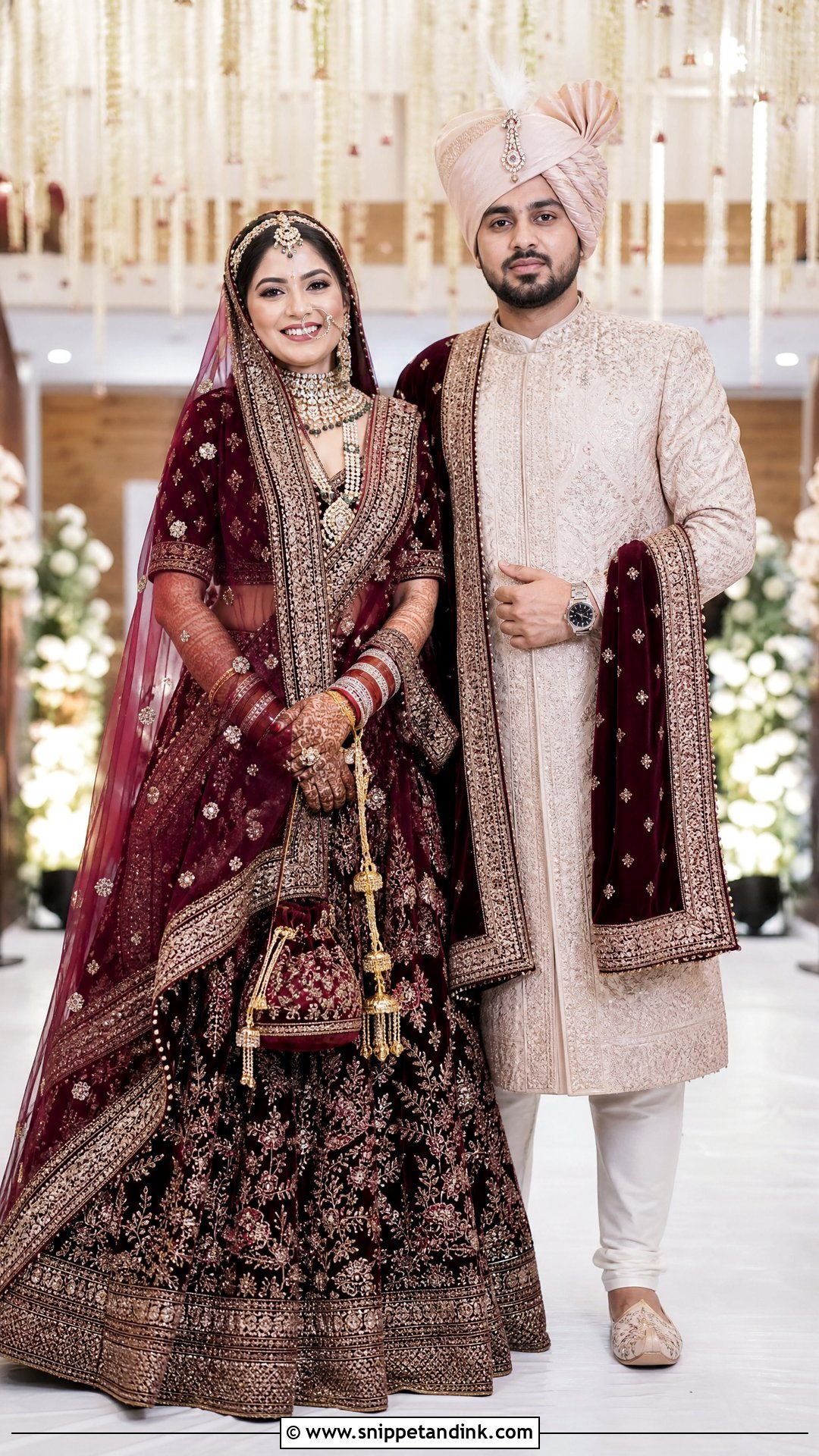
Burgundy and blush is red’s quieter cousin. Her burgundy velvet or silk lehenga with antique gold, rose gold or tonal work, a sheer burgundy dupatta, kundan, matching bangles, a structured potli and gold footwear. His blush or dusty rose sherwani with burgundy threadwork and muted gold buttons, a burgundy stole, blush safa, ivory pants and mojaris. I’d keep his pink dusty and soft. A bright pink sherwani next to burgundy makes both look louder than they are. Autumn and winter celebrations suit the deeper shade.
20. Metallic Bridal Lehenga And Charcoal Bandhgala Couple Outfit
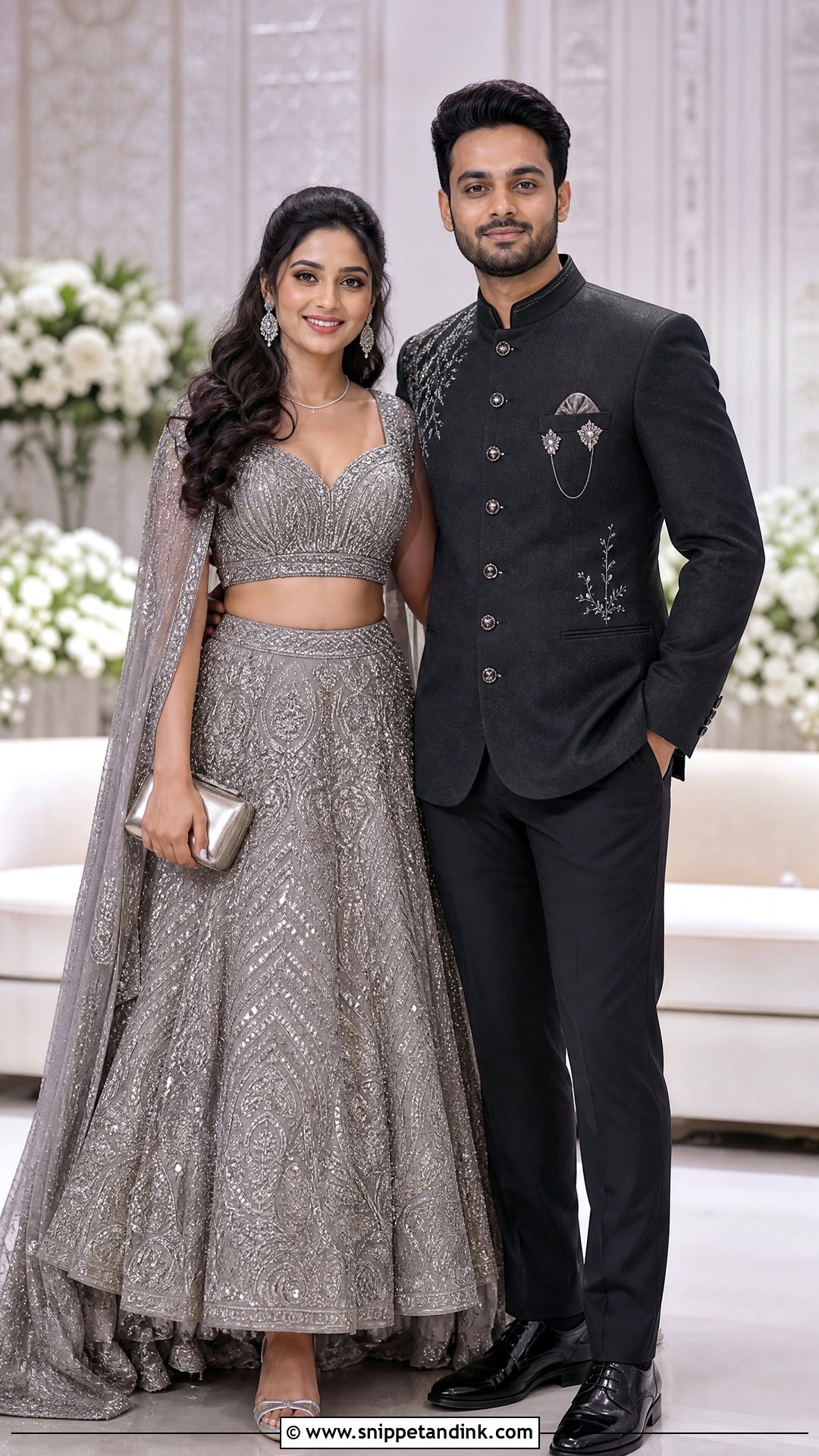
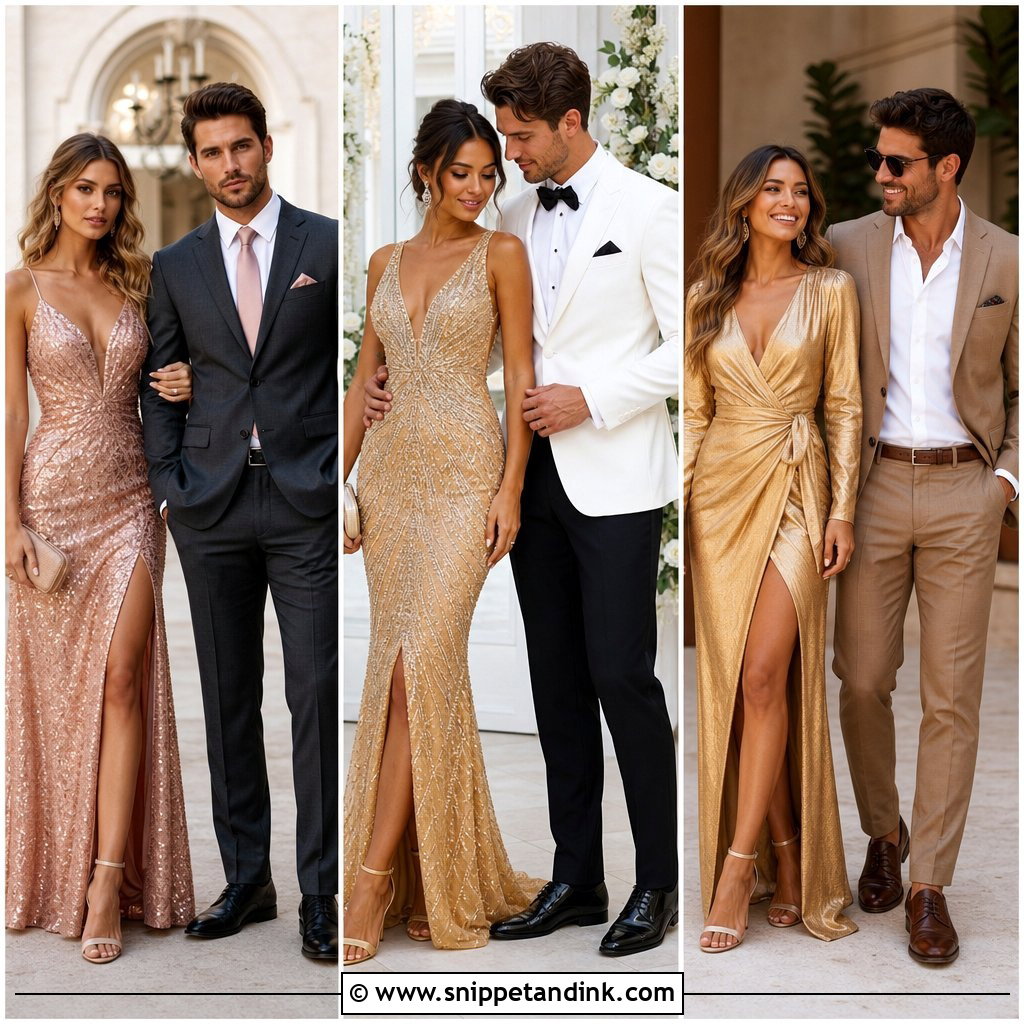
Metallic and charcoal is pure reception. Her silver, pewter or muted gold lehenga with reflective beadwork, a modern fitted blouse and a cape-style drape or light dupatta; diamond earrings, a slim bracelet, metallic heels and a small clutch. His charcoal bandhgala with faint metallic embroidery, tailored trousers, polished black shoes and a pocket square or brooch in her metal. One of them has to be the quiet one, and it’s usually him. Two shiny outfits side by side cancel each other out, especially against dark reception decor.
Seven Rounds, a Long Dinner and a Lehenga That Weighs Kilos
A heavily embroidered bridal lehenga can weigh several kilograms, and most of that hangs from the waistband. I always ask brides at fittings to walk a few laps of the room, sit on the floor and stand up again unaided. If the skirt drags her hips down or the blouse cuts in when she sits, it will be far worse after hours of rituals. A wider, well-lined waistband and a firm drawstring spread the load; extra can-can layers add volume but also add heat.
Pinning a dupatta that has to stay on her head
A heavy worked dupatta over the head pulls backward the moment she turns. I prefer a lighter net dupatta for the head and the heavier one draped over the shoulder, and I pin into the hair foundation, not just to the maang tikka. Have the hairstylist leave a firm anchor at the crown for exactly this.
The groom sits cross-legged too
He’ll spend a long time seated at the mandap, so his churidar needs a little stretch and his sherwani needs side slits that open far enough to sit without the front riding up. Mojaris are stiff when new; he should wear them around the house for a few evenings first.
Afterward, air both outfits before storing them. Wrap embroidered pieces in soft muslin rather than plastic, keep them away from damp, and refold them along different lines every few months so the zari doesn’t crack at the creases.
His Stole, Her Border and the Detail That Ties Them
Start with her lehenga or sari, its silhouette and color, then decide which single thread will run into his outfit: a stole, a safa, a border, a motif or a finish. Think about the time of day, the weather, the venue and how much sitting, walking and bending each ceremony asks for before choosing heavy fabrics. Exact matching is optional and often looks less polished than a well-chosen link. Red, ivory, pastels, jewel tones or metallics can all work once that link is consistent, so treat these pairings as a starting point and adapt the textiles, jewelry and customs to your own families.
You'll Like These Ideas:


Leave a Reply