
A South Asian wedding rarely asks for one outfit. It asks for three, four or five, each worn for hours, each with a different job: sitting cross-legged for henna, getting splashed with turmeric, dancing at the sangeet, standing through the pheras or the Nikah, then greeting a long line of relatives at the reception. When I style a Desi bride, I plan the whole wardrobe as one set so the colors move from event to event and nothing repeats by accident. Below are the lehengas, regional sarees, shararas, ghararas and fusion pieces I reach for most, with the jewelry, dupatta and shoe decisions that make each one wearable, plus what I’d change for your ceremony, season and body.

Planning Four Events of Outfits Without Running Out of Time
Custom bridal wear takes longer than most brides budget for. Heavily embroidered lehengas and handwoven sarees can need several months from order to final fitting, and lead times stretch during peak wedding season, so I’d place the main ceremony order first and the lighter event outfits after it. The usual rhythm I work to looks like this, though every workshop sets its own timeline:
- Main ceremony outfit: order first, with at least two fittings booked before the wedding month.
- Reception and sangeet: order next, since fusion and sequin pieces are quicker to make.
- Mehndi and haldi: these can be ready-made and altered, as they take the most wear and tear.
- Final fitting: about two to three weeks out, wearing the real shoes, jewelry and undergarments.
Spread the colors across the events before you buy anything. I lay out swatches for every outfit in the order they’ll be worn, so two days of photos don’t end up looking like the same shade of pink.
Weight Is the Detail Brides Forget to Ask About
A fully worked lehenga with a double dupatta can be heavy enough to give you a sore back by evening. Ask the designer to weigh the skirt and dupattas, and to move some embroidery from the skirt to the border if it feels too much. Can-can layers add volume but also weight and heat; a lighter lining often does the same job.
1. Red Desi Bridal Lehenga
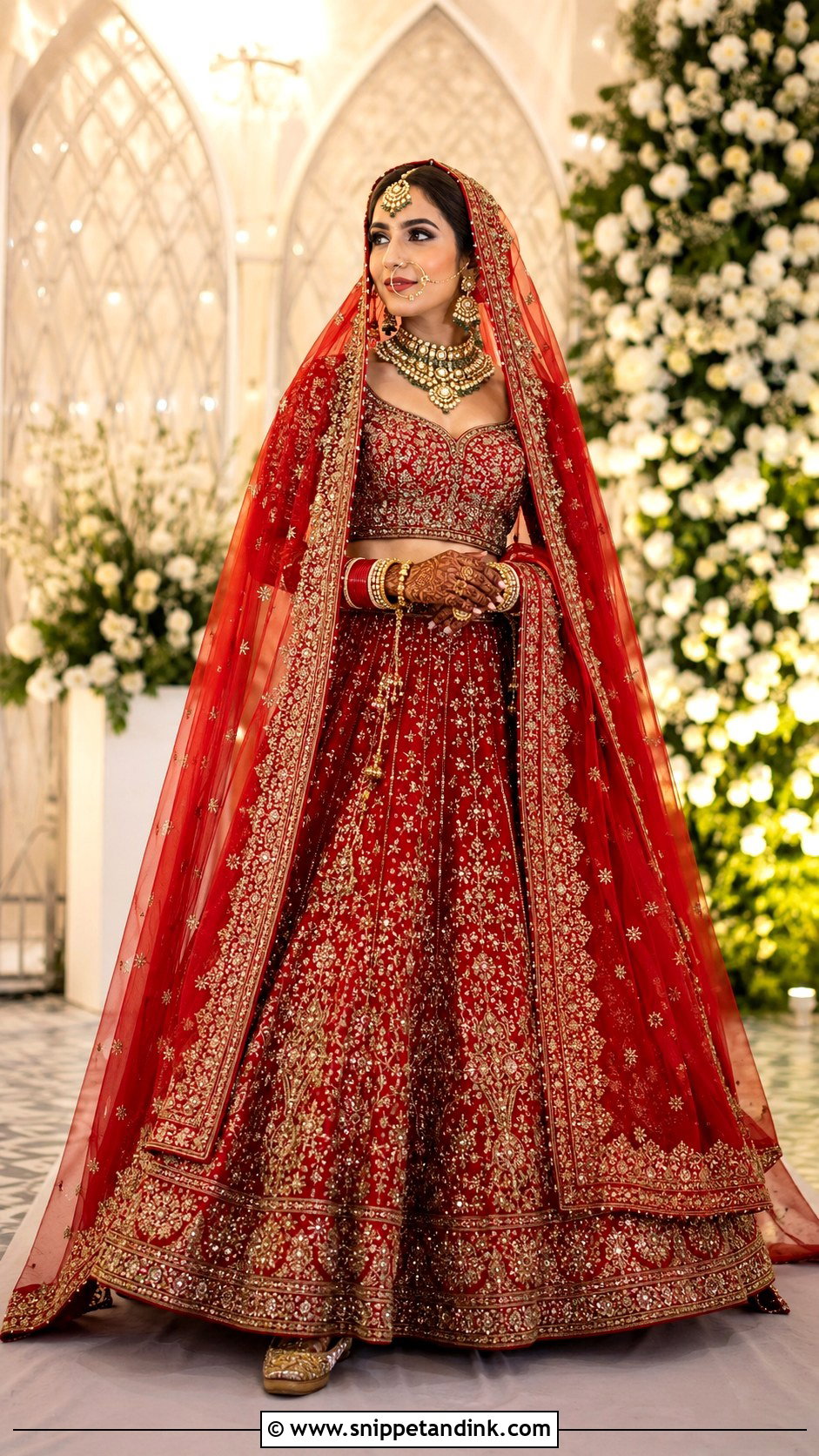
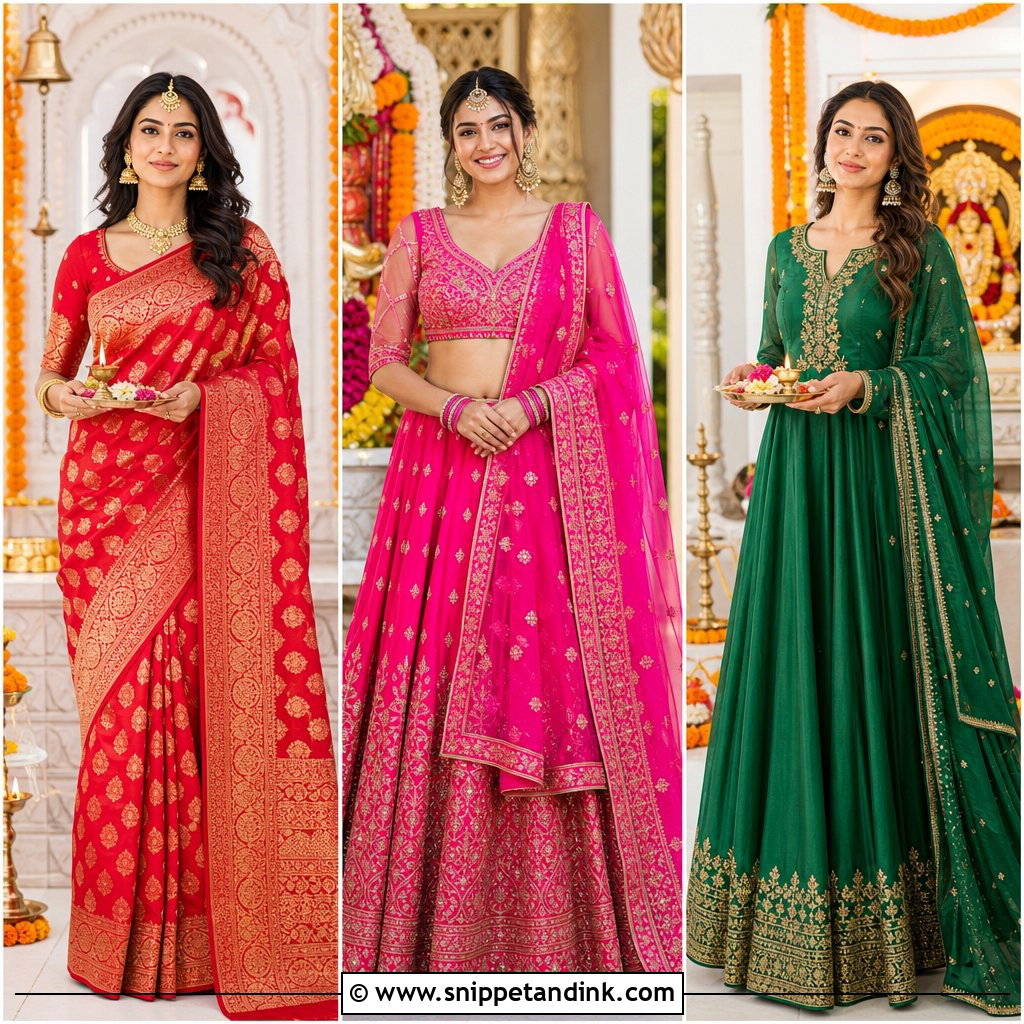
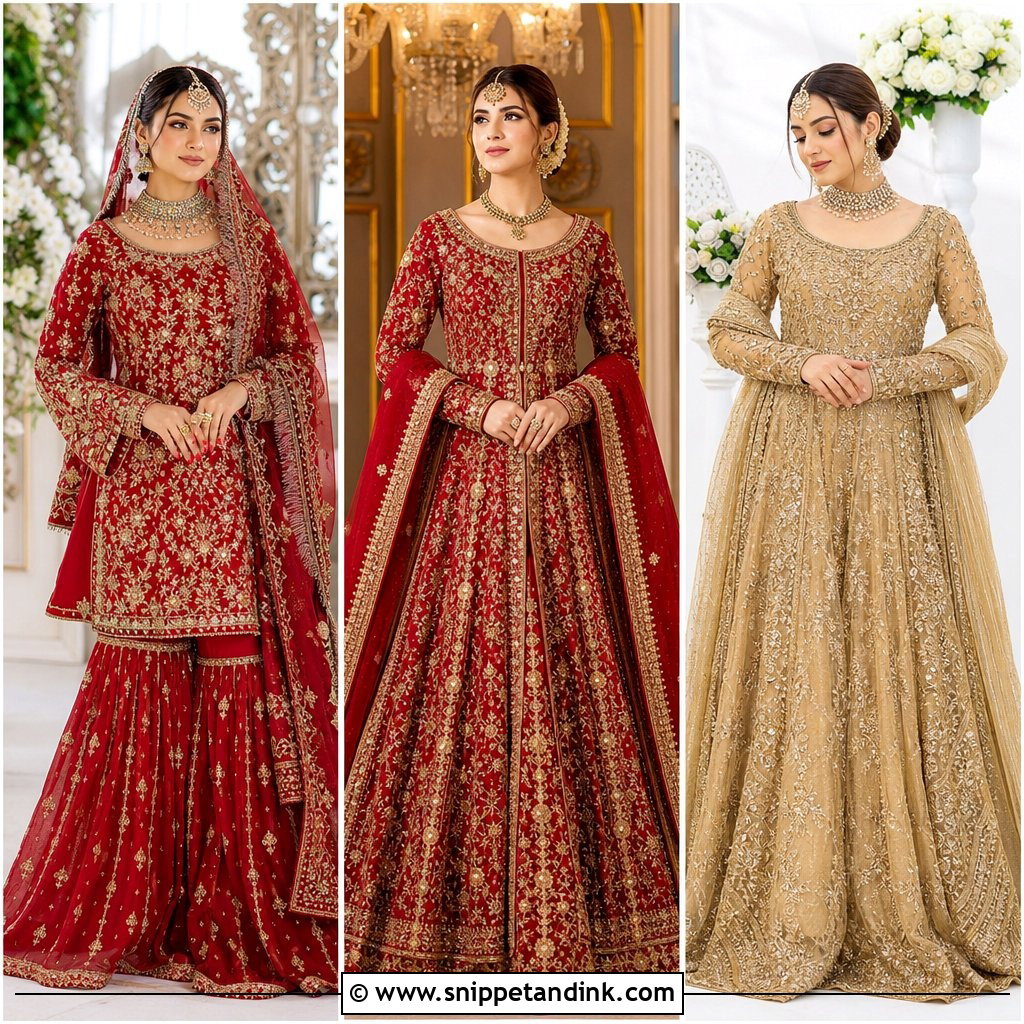
Red is still the color most families picture for the main ceremony, and crimson or vermilion with zardozi and dabka work earns that place. The detail I fuss over is the double dupatta: one draped across the shoulder, a lighter one pinned over the head. If both are heavy net with full borders, the bride ends up carrying pounds of fabric on her crown, so I ask for the head veil in a finer net with the border only. Embroidery that gets denser toward the hem pulls the eye down and makes the skirt look fuller, which suits most figures. Keep the blouse, skirt and both dupattas inside one red family, because a blue-red blouse beside an orange-red skirt shows every time the camera flash fires. Kundan, a maang tikka and embroidered juttis finish it.
2. Ivory And Gold Desi Bridal Lehenga
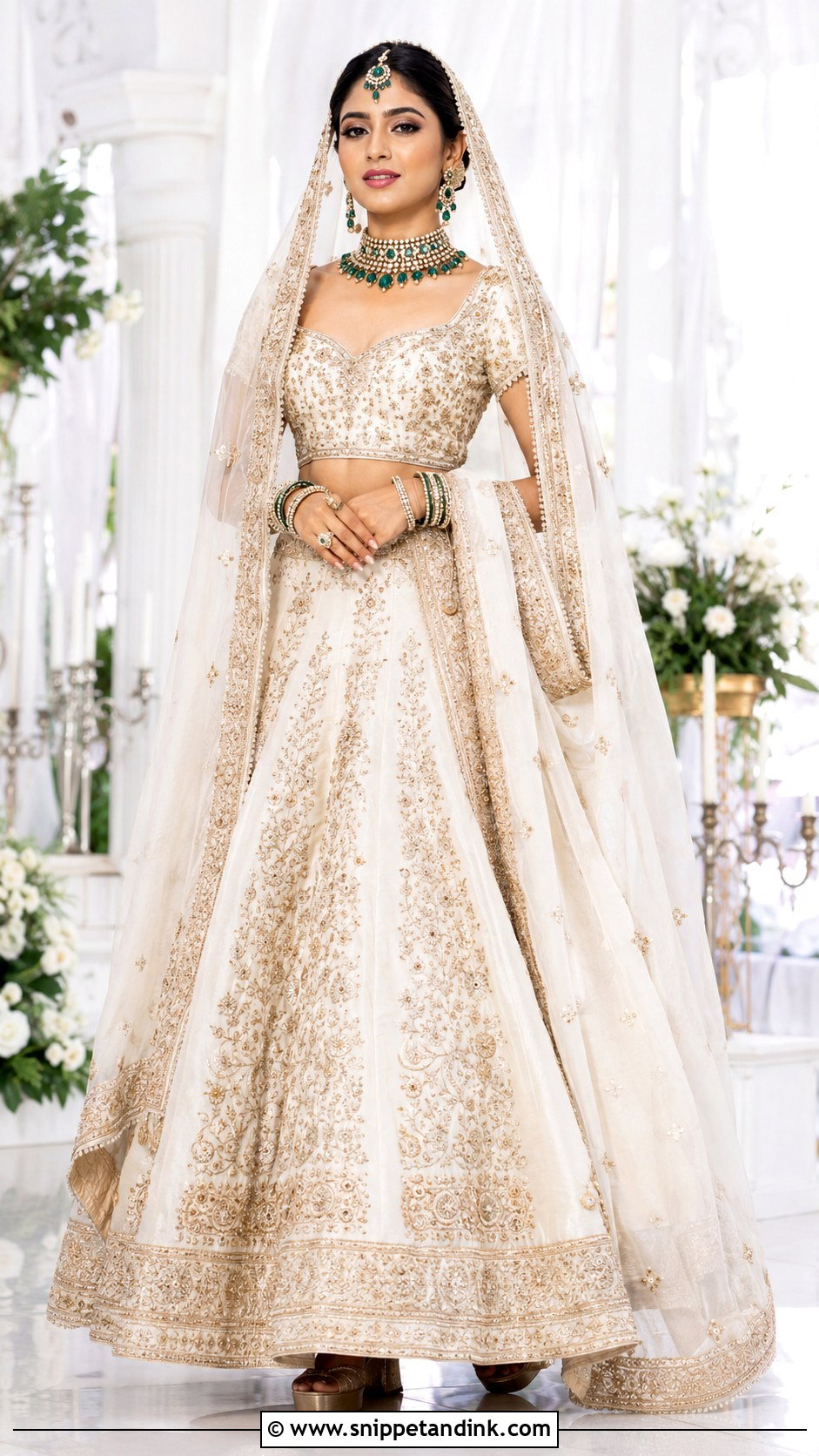
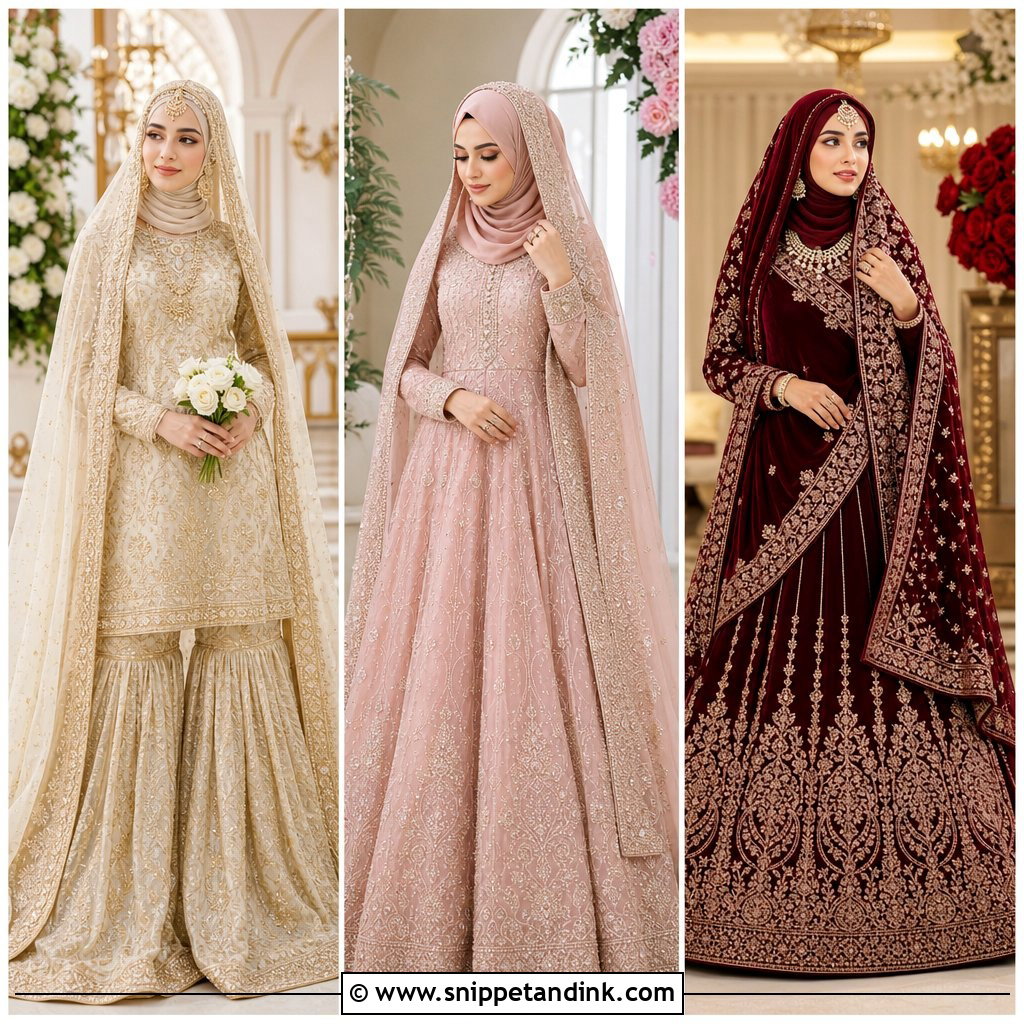
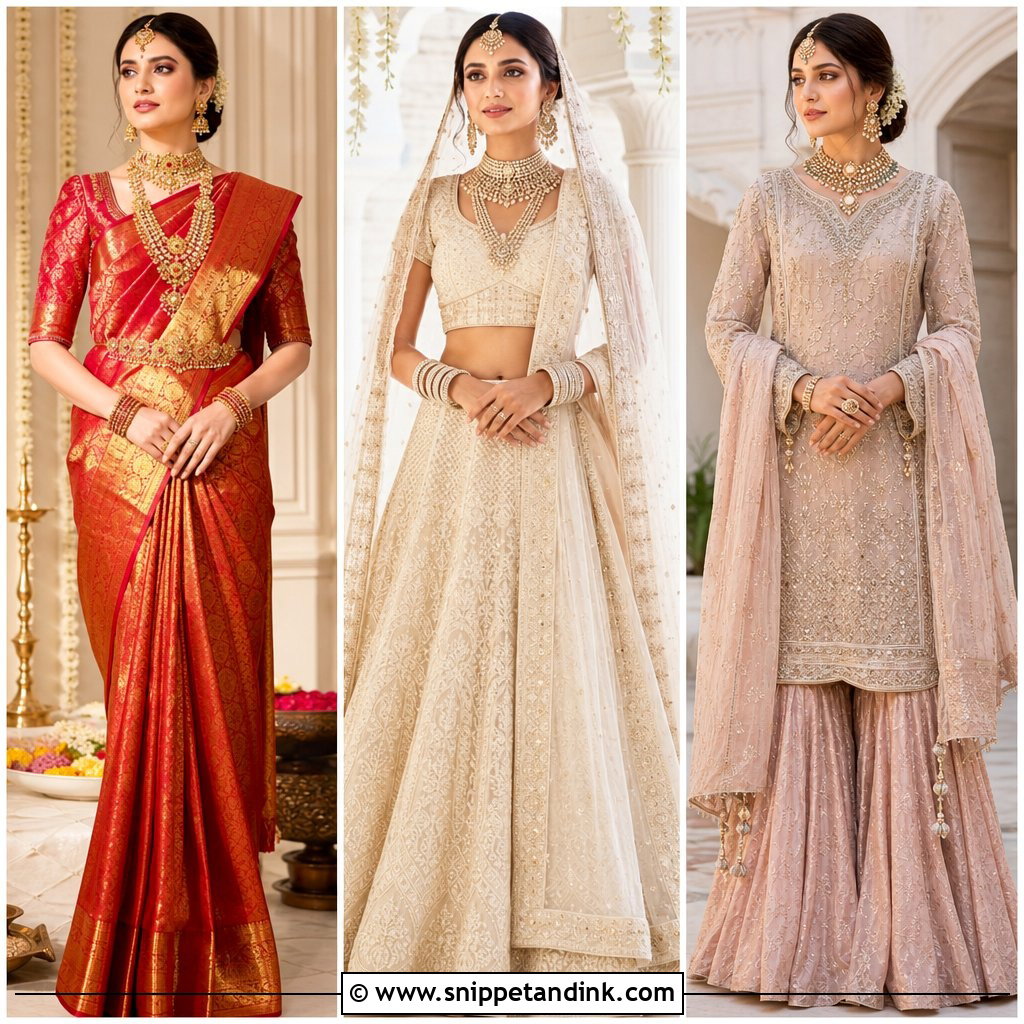
Ivory with antique gold is quieter than red, and that is exactly why it needs testing under real light. A cool white ivory can turn grey indoors and blue in shade; a warmer ivory holds next to gold zari and stays flattering on brown skin. I take a swatch to the venue at the hour of the ceremony before anyone cuts fabric. Silk, organza or a light net works, with pearl or sequin detailing kept fine. Emerald, ruby or pearl jewelry adds the contrast the fabric deliberately leaves out. Under the skirt, gold block heels or padded flats do the work; nobody will see them, and you’ll be standing for a long time.
3. Pastel Pink Desi Bridal Lehenga
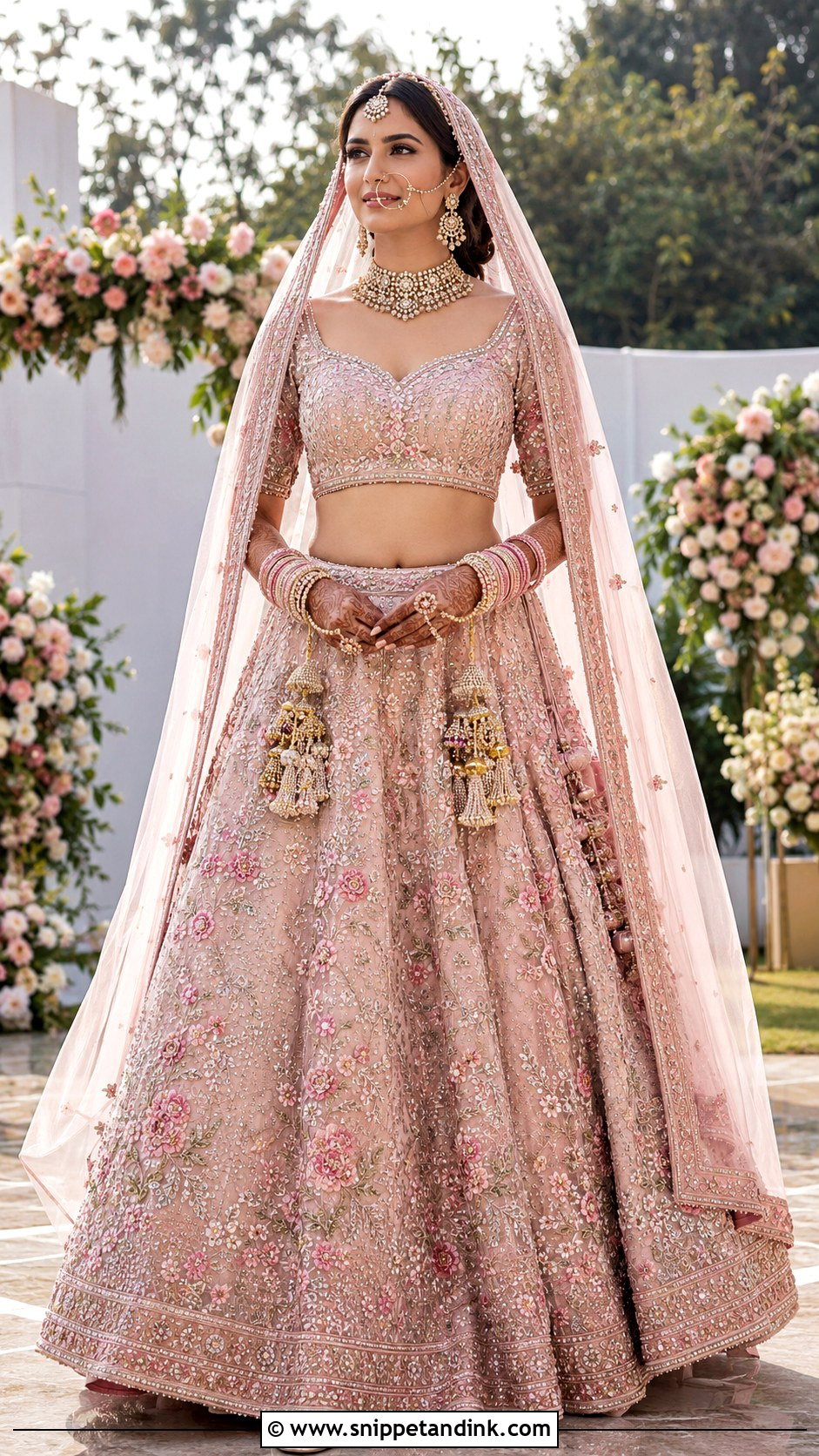
Pastel pink suits a daytime garden ceremony far better than a night ballroom, where it can fade into the decor. The risk with a pale skirt is that the whole outfit goes flat, so I build it from two or three related pinks: blush skirt, a deeper rose veil, dusty pink blouse. That layering gives depth without adding a new color. Keep the dupatta light enough to pin without bulking the shoulders, and choose pearl and polki over heavy gold, which can overpower the softness. Fresh flowers in the hair look right here, but wire them firmly; petals wilt by the second hour outdoors.
4. Emerald Green Desi Bridal Lehenga
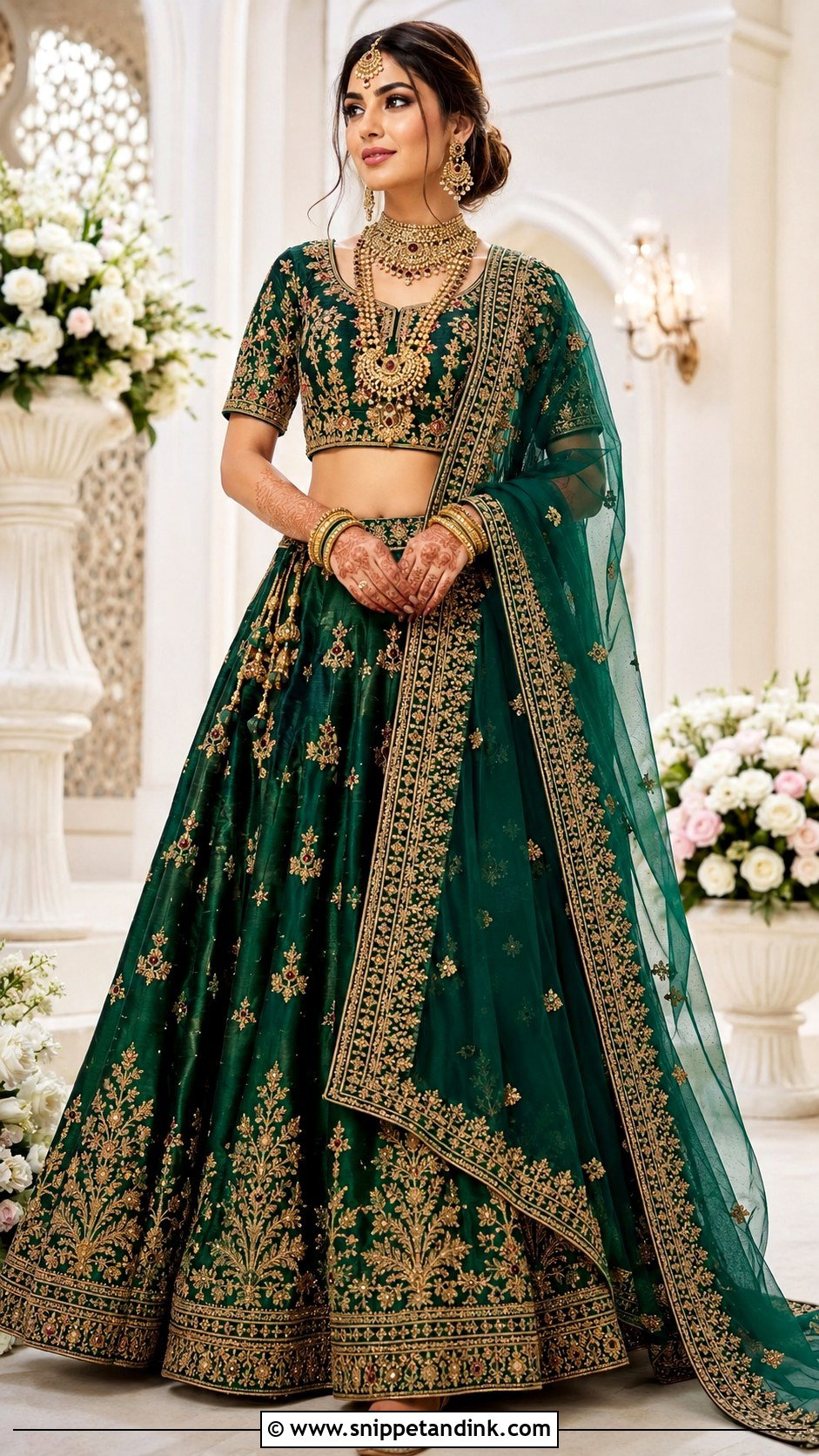
Emerald is my usual suggestion for a bride who doesn’t want red but still wants the main ceremony to look weighty. Velvet, raw silk and brocade all take green well, and antique gold embroidery reads richer on it than bright gold. The trap is undertone. Emerald velvet and emerald net almost never match off the bolt, so I put the blouse, skirt and dupatta side by side in daylight before approving them. A muted gold dupatta can rescue a near miss. Ruby accents warm the face, used sparingly. Cushioned juttis matter more than you’d think with a heavy skirt.
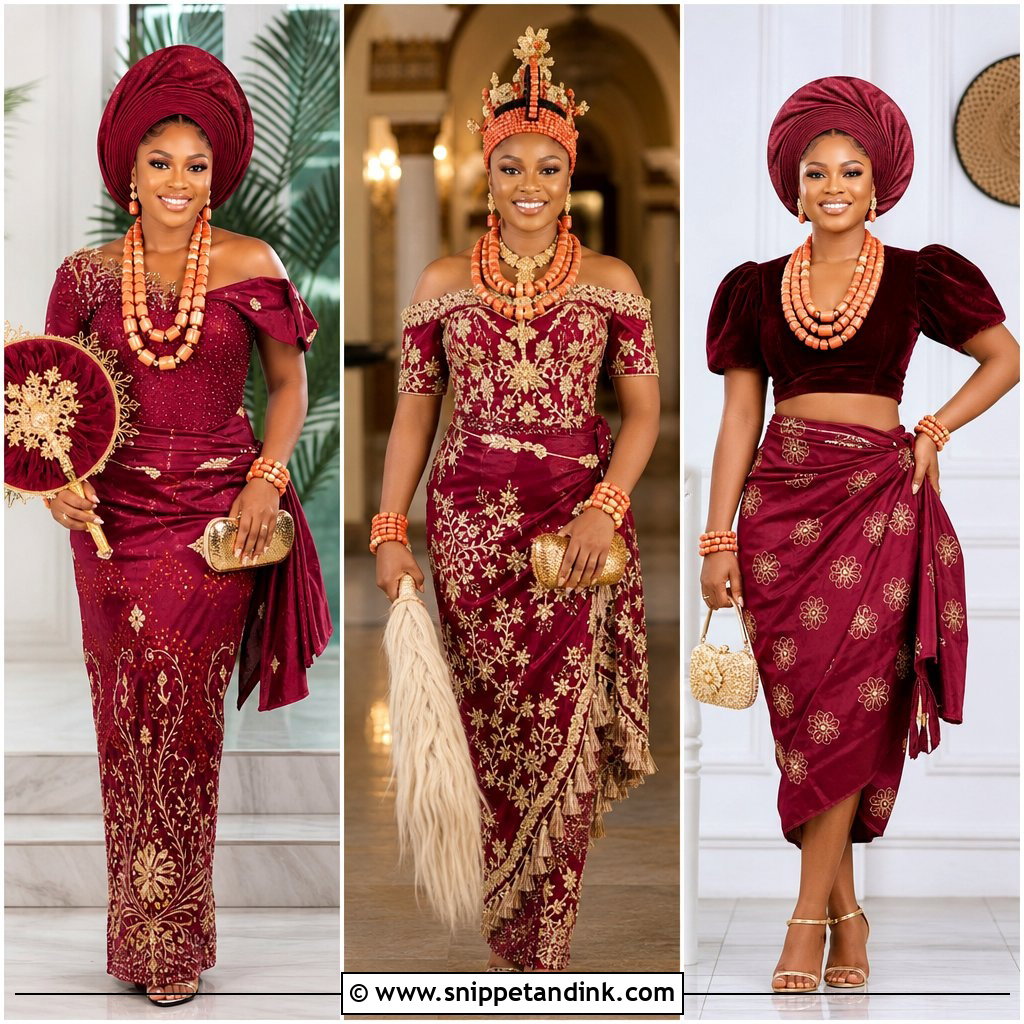
5. Maroon Velvet Desi Bridal Lehenga
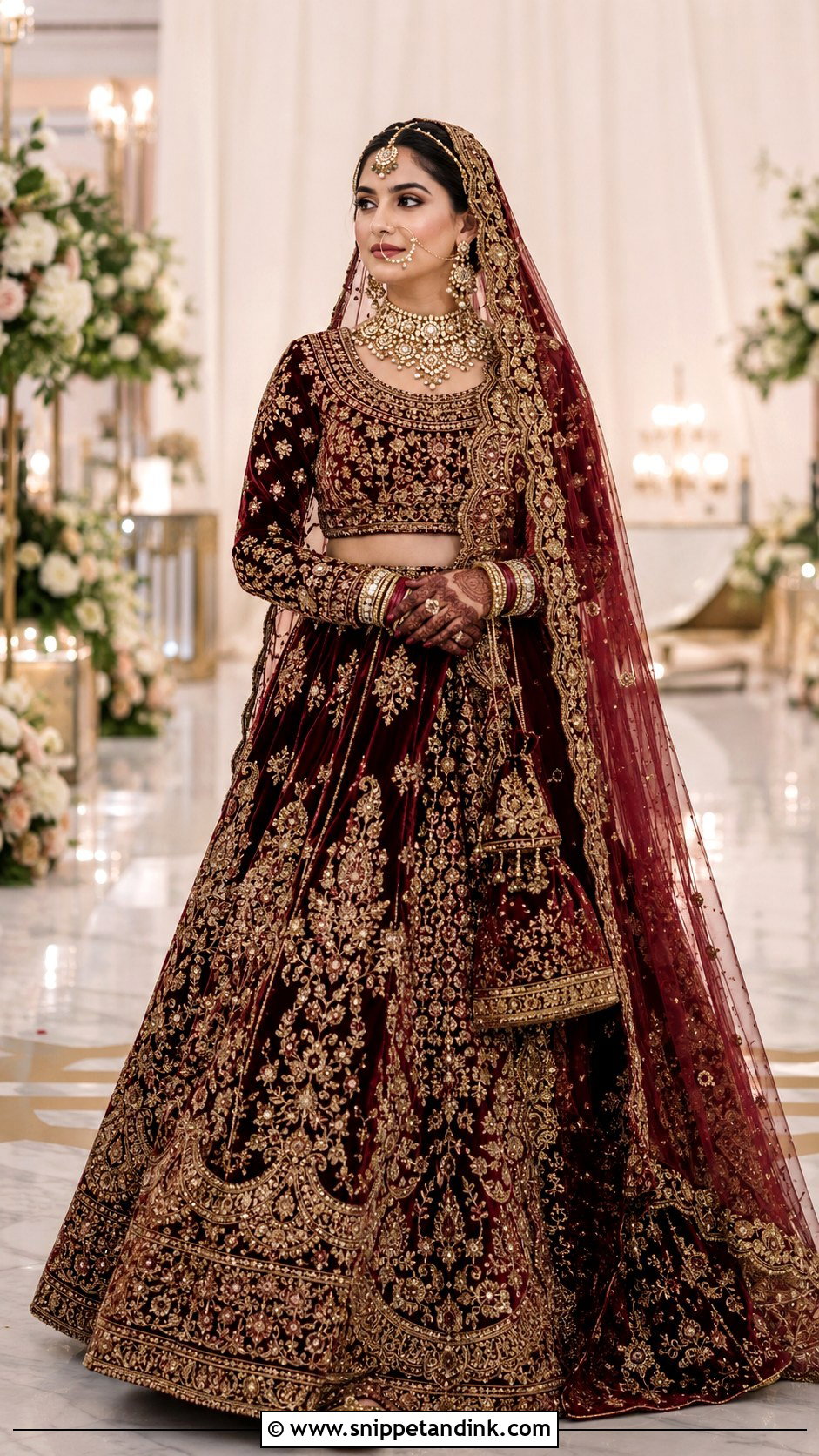
Maroon velvet belongs to winter weddings; in a warm hall it becomes punishing within an hour. Because the pile already looks rich, I keep the gold work to the hem, neckline, sleeves and dupatta border rather than covering the whole skirt, which also keeps the weight down. Ask for the blouse to be fully lined in cotton or soft silk, since raw velvet seams scratch under the arms. A net veil over a velvet outfit is kinder than a second velvet layer. I always have the bride climb stairs in the complete outfit at the last fitting; velvet hems catch on steps more than people expect.
6. Floral Mehndi Bridal Lehenga
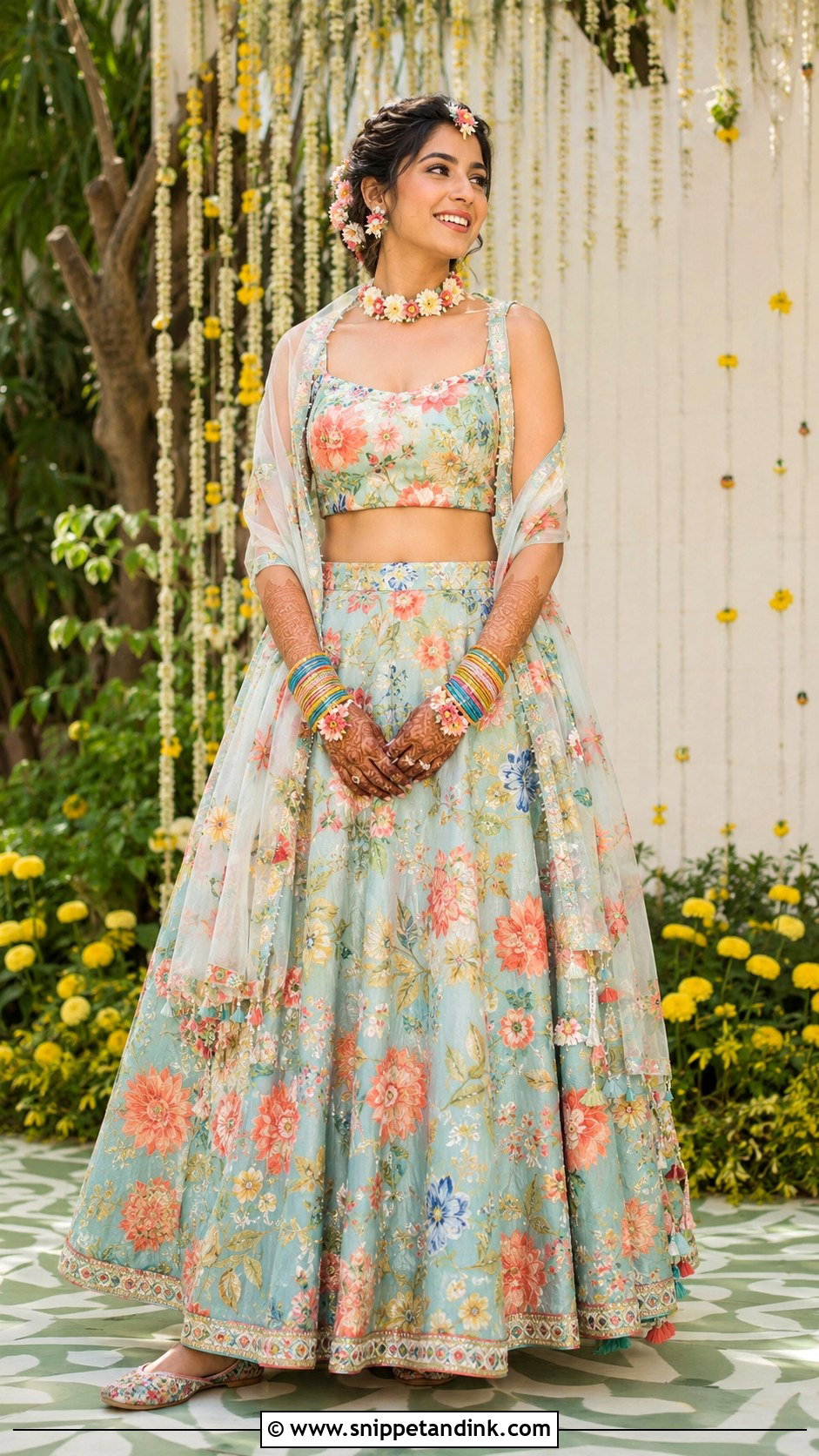
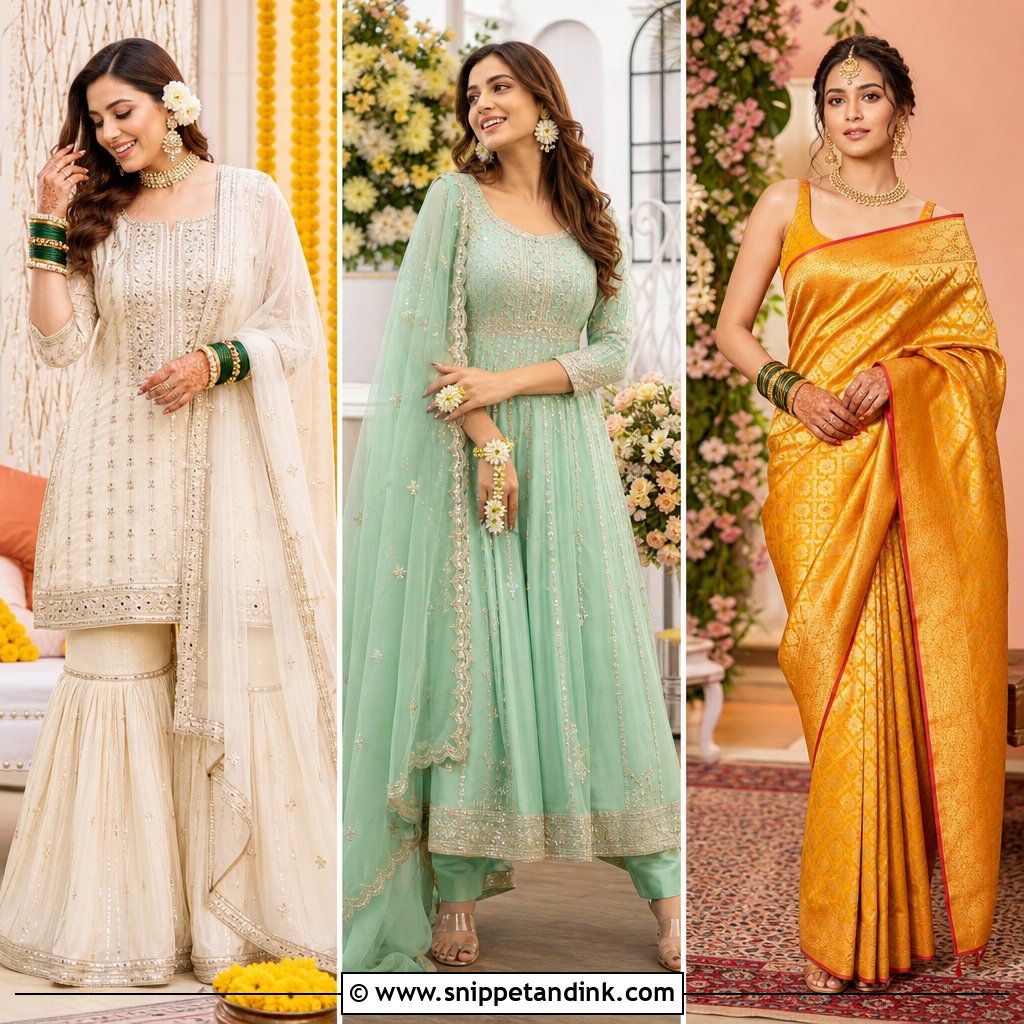
At a mehndi, your hands and feet are out of action for hours, so the outfit has to stay put on its own. Threadwork flowers on a light green, coral, aqua or ivory lehenga are kinder than stones, which snag on cushions and the henna artist’s sleeves. A cropped blouse with real support lets you lean forward for the artist without adjusting anything. I pin a short dupatta at the shoulder so it can’t swing into wet paste. Pick one or two shades from the embroidery for the jewelry, and wear your hair up or braided; loose hair sticks to fresh henna.
7. Yellow Haldi Bridal Sharara
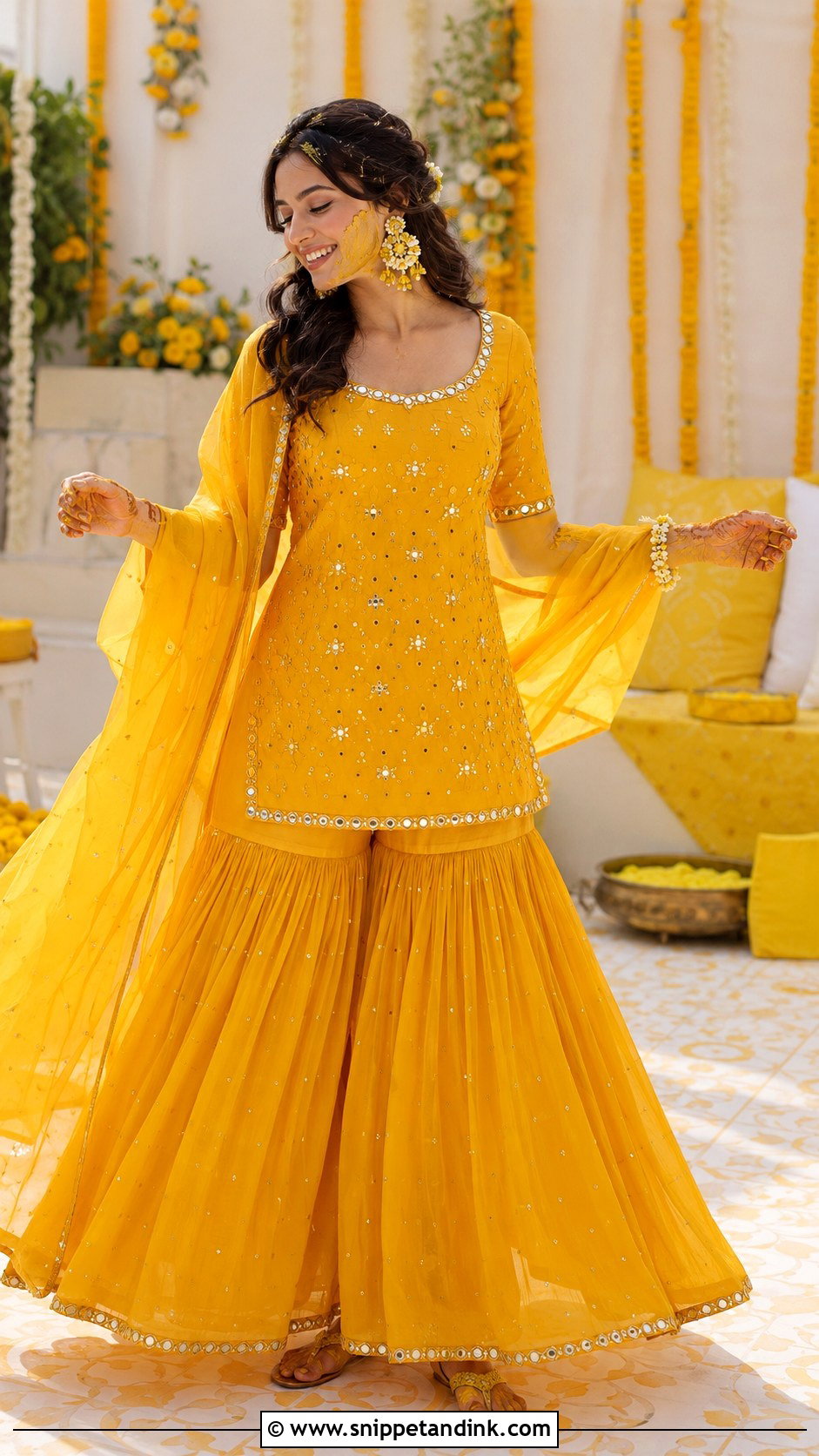
Haldi is the one event where I tell brides to dress for damage. A yellow sharara set in cotton silk, georgette or chanderi moves easily, washes reasonably, and hides turmeric better than any other color. Turmeric stains are stubborn on silk and nearly permanent on pale embroidery, so leave heirloom jewelry and expensive pieces in the box. Gota and small mirror work survive the paste better than sequins. Keep the dupatta short or over one shoulder, wear flat sandals you don’t mind ruining, and secure the hair in a braid or bun.
8. Green Mehndi Bridal Gharara
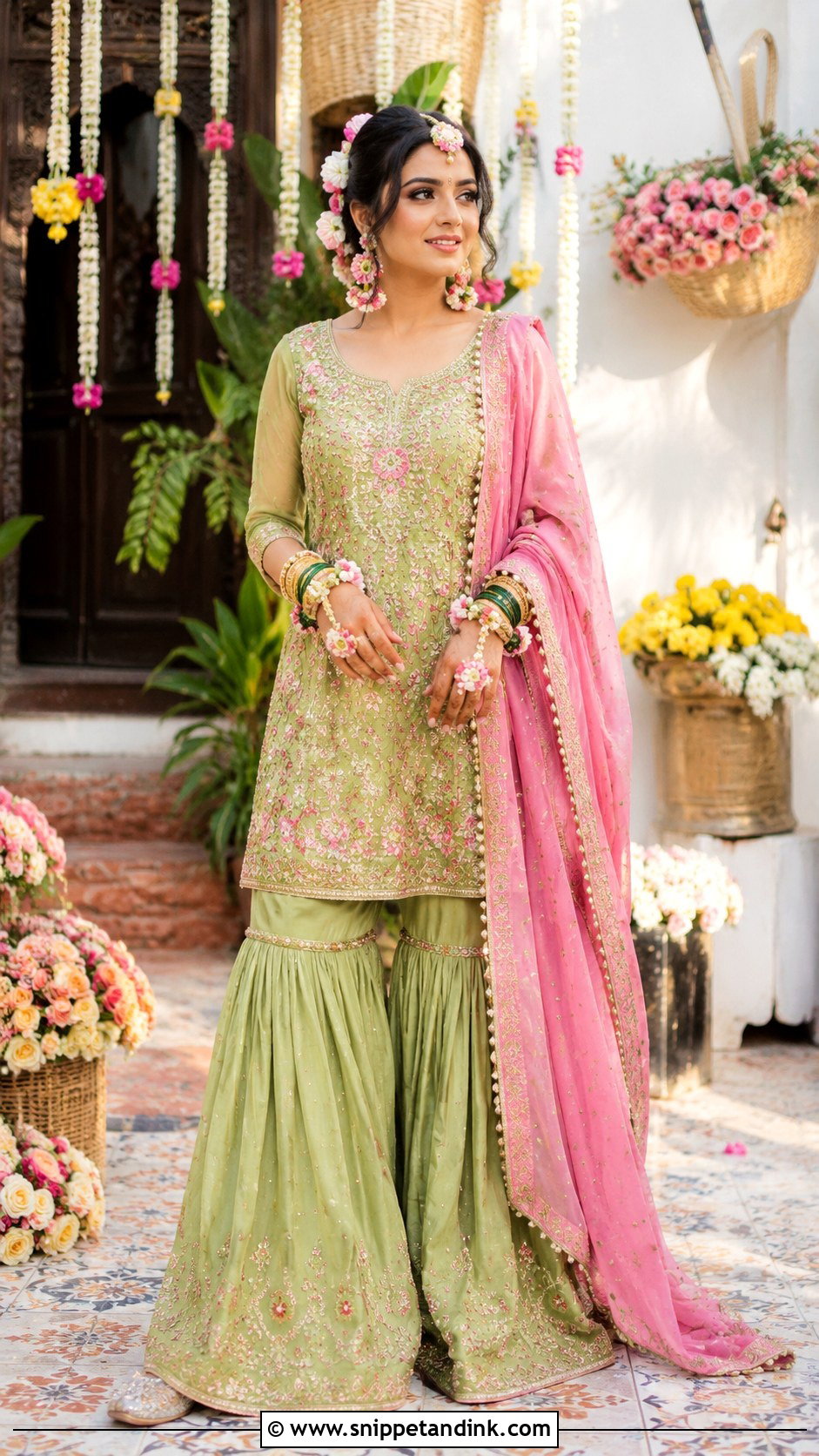
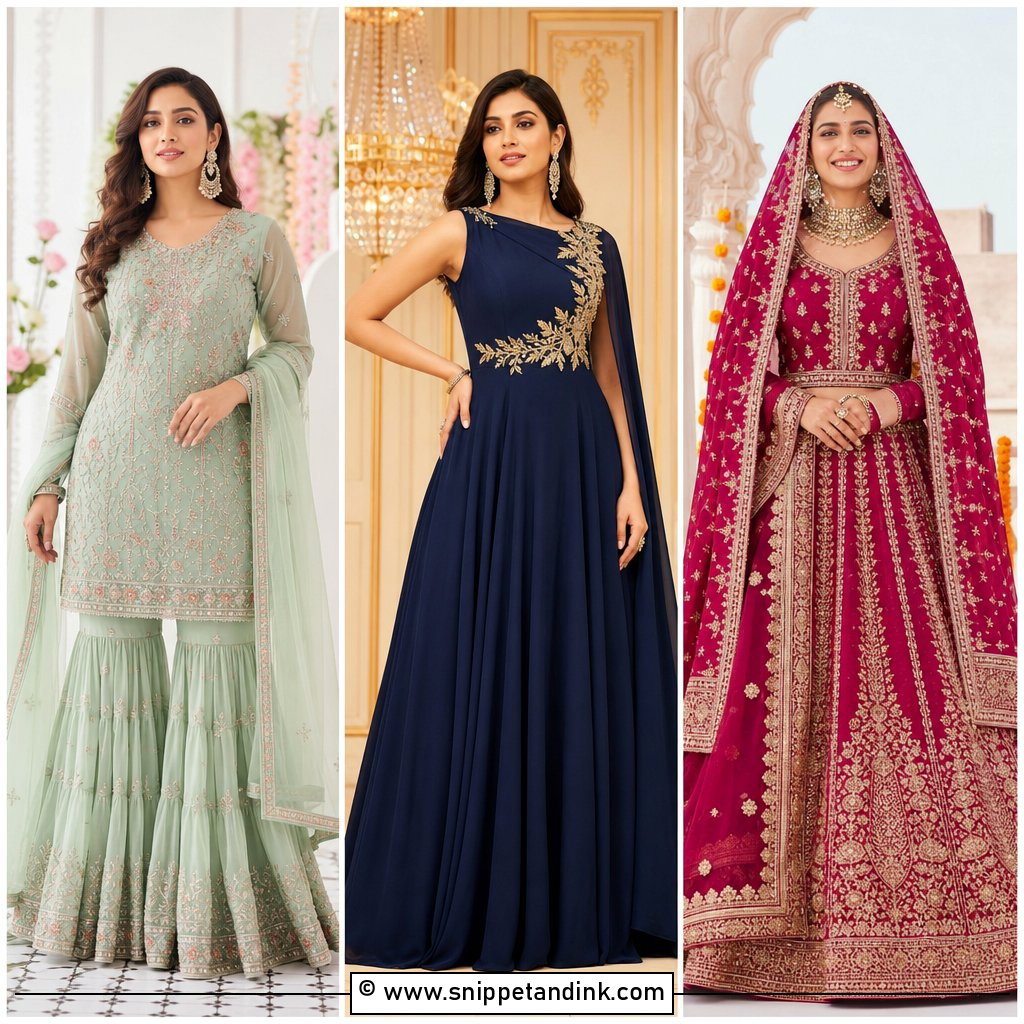
A green gharara works well for mehndi because it gives you the flare of a skirt with legs underneath, which makes sitting on the floor much easier. The fitting point that matters is the knee joint, where the gharara gathers; if that seam sits too high or too tight, you feel it every time you stand. The kurti should end above the knee so the joint shows. Bottle green reads formal, lime or pistachio reads daytime. I like a contrasting pink or orange dupatta over one shoulder, with gota or mirror trims, jhumkas and flat khussas.
9. Mirror Work Sangeet Bridal Lehenga
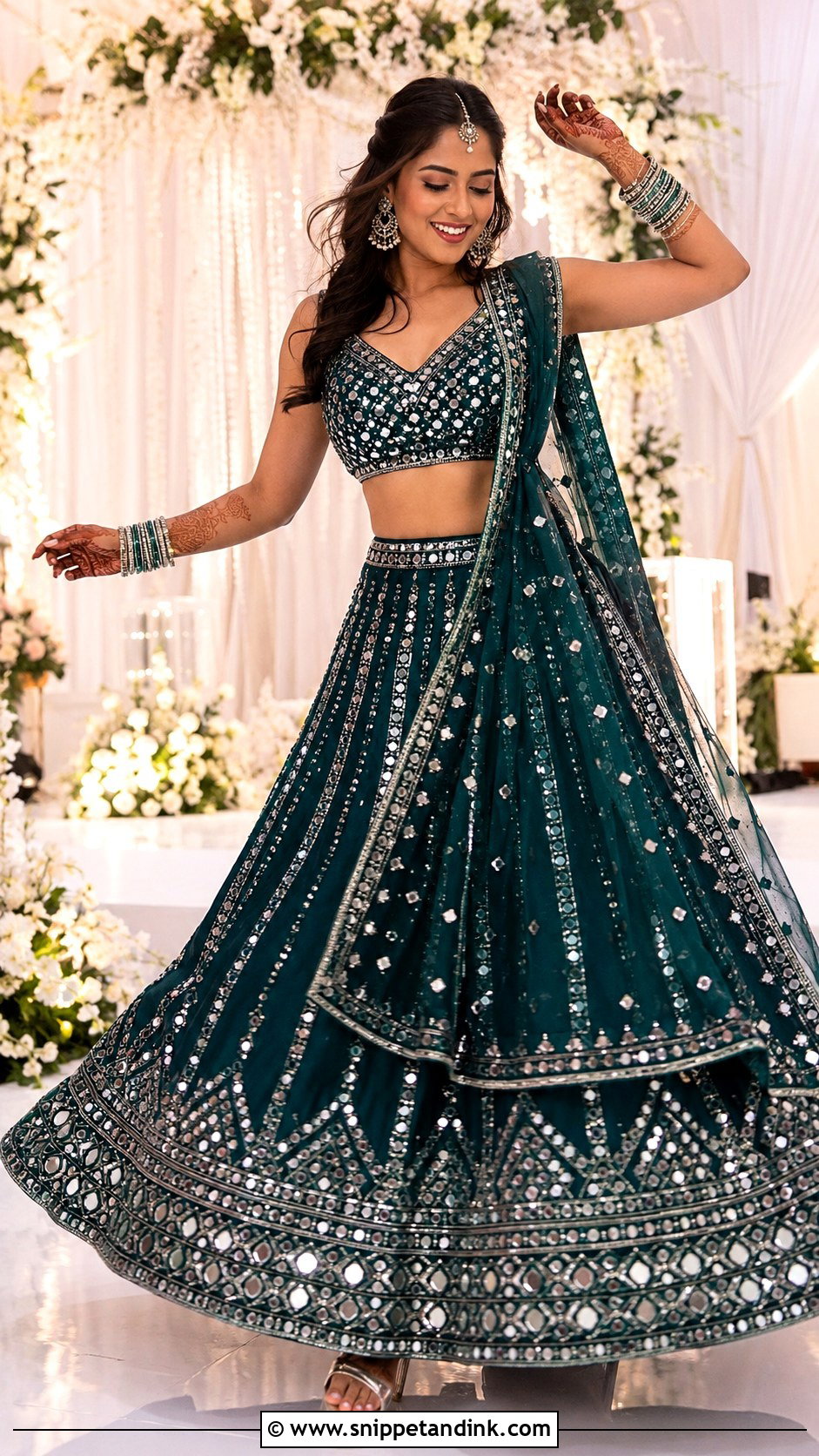
For a sangeet where you’ll actually dance, a mirror work lehenga catches light without the weight of all-over sequins. Before the final fitting, I ask the tailor to check every mirror’s stitching and to cover the inner seams; loose mirrors fall off mid-spin, and raw backing scratches the waist. Navy, fuchsia, purple and teal hold their color under colored stage lights. Choose a blouse with straps or sleeves you trust. Pin a narrow dupatta at both shoulder and waist, and swap the heavy necklace for statement earrings. Cushioned juttis or low block heels beat stilettos on a dance floor.
10. Sequin Sari Gown Reception Outfit
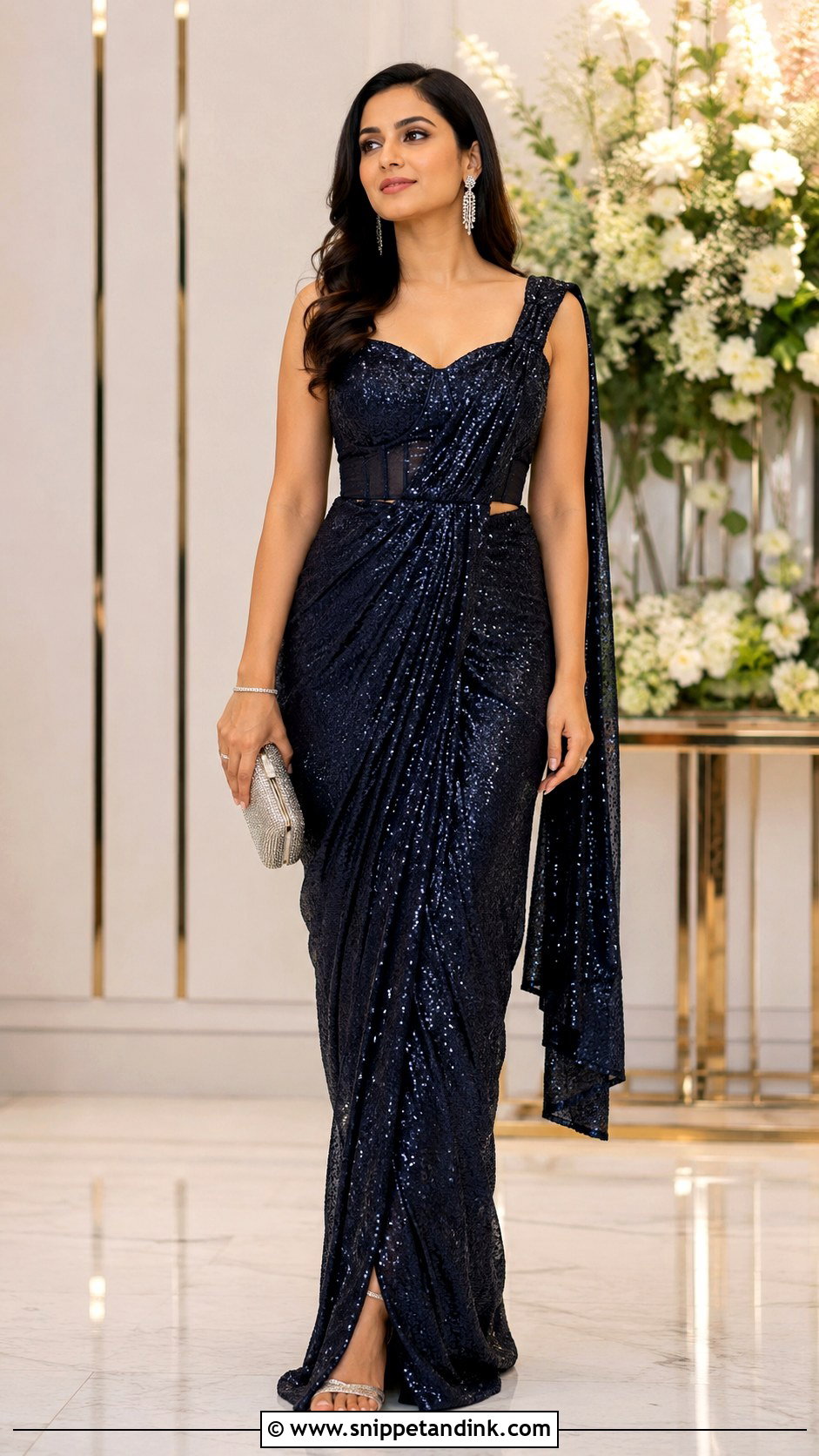
A sequin sari gown gives a reception the drape of a saree without anyone re-pleating it every half hour. I check two things first. Sequins on the inner arm: if they rub, you’ll have red marks by dinner, so ask for a soft underlay or plain fabric there. And the train: decide early whether you plan to dance, because a long train and a crowded floor end badly. Jewel tones and midnight shades suit evening light. A low bun or a sleek ponytail keeps the neckline clear, and a slim bracelet beats stacked bangles that tangle in sequins.
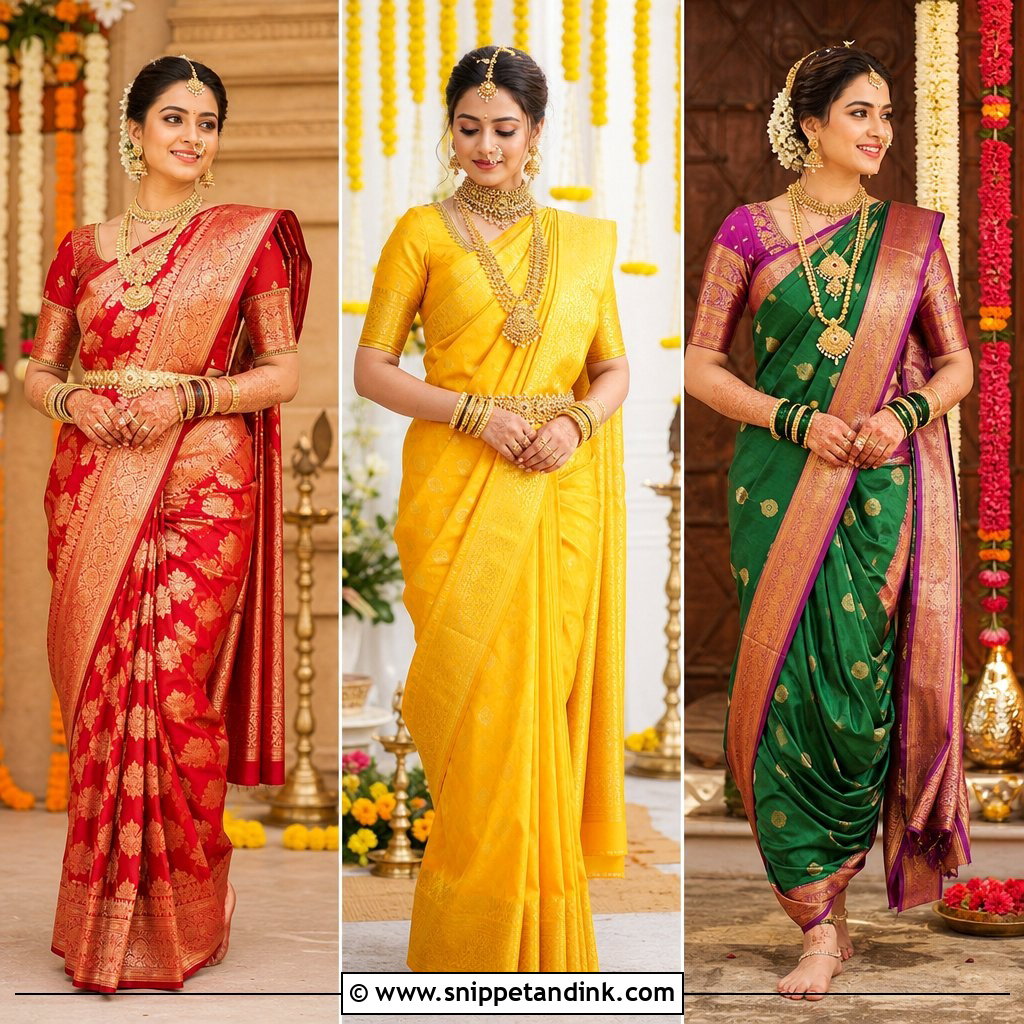
11. Red Banarasi Bridal Saree
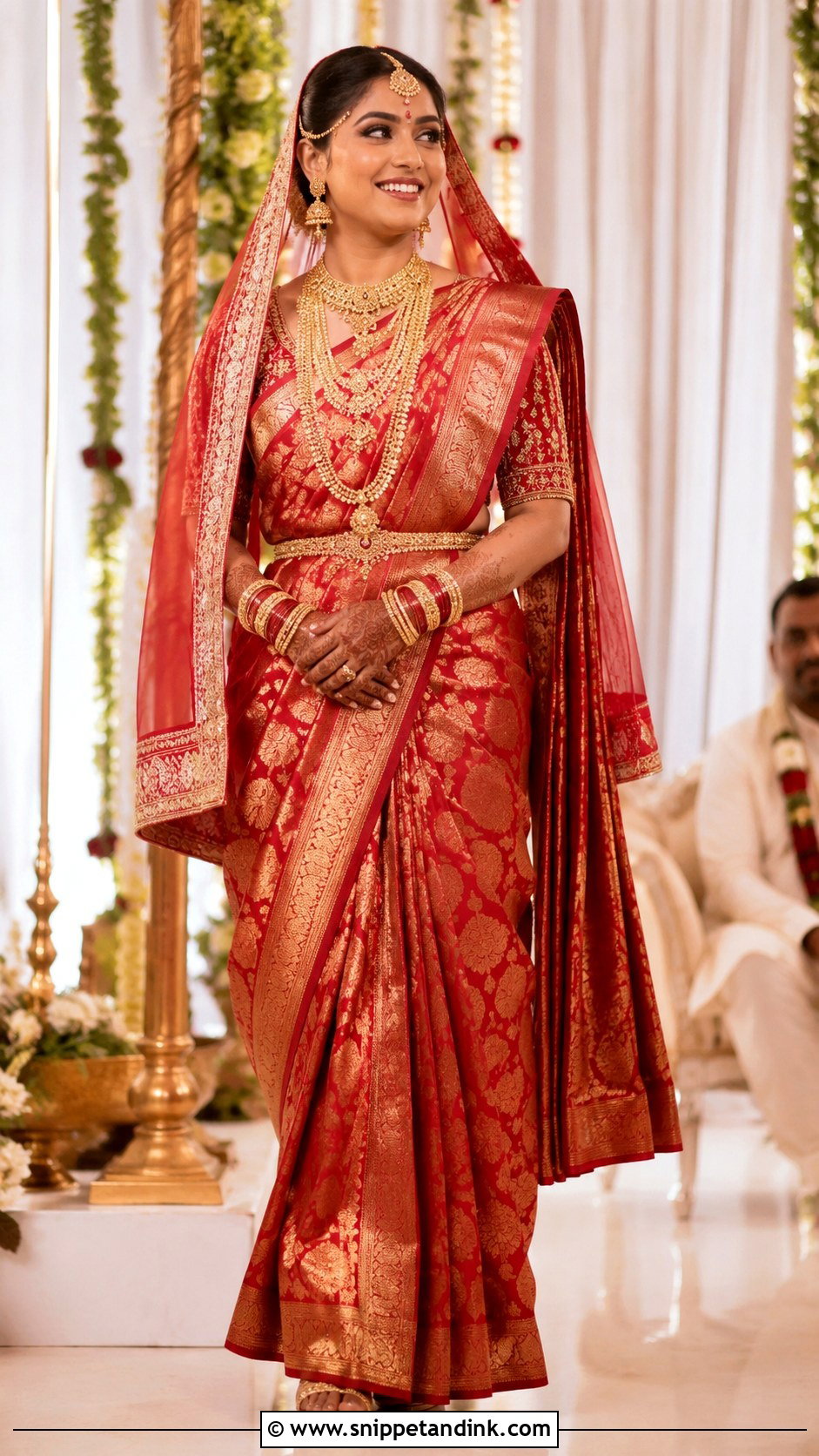
A red Banarasi already carries the ceremony in its weave, so the styling should be supportive rather than competing. The blouse does more work than people realize: a heavy silk drape needs a firm, well-fitted blouse so the pallu doesn’t drag the shoulder down over a long ritual. Wear your final shoes at the draping fitting, because pleat length is set to that heel height. I use a few well-placed pins at the shoulder and pleats rather than many visible ones. And with an heirloom saree, please don’t let anyone cut it to fit; fall and blouse changes can be made without touching the body of the saree.
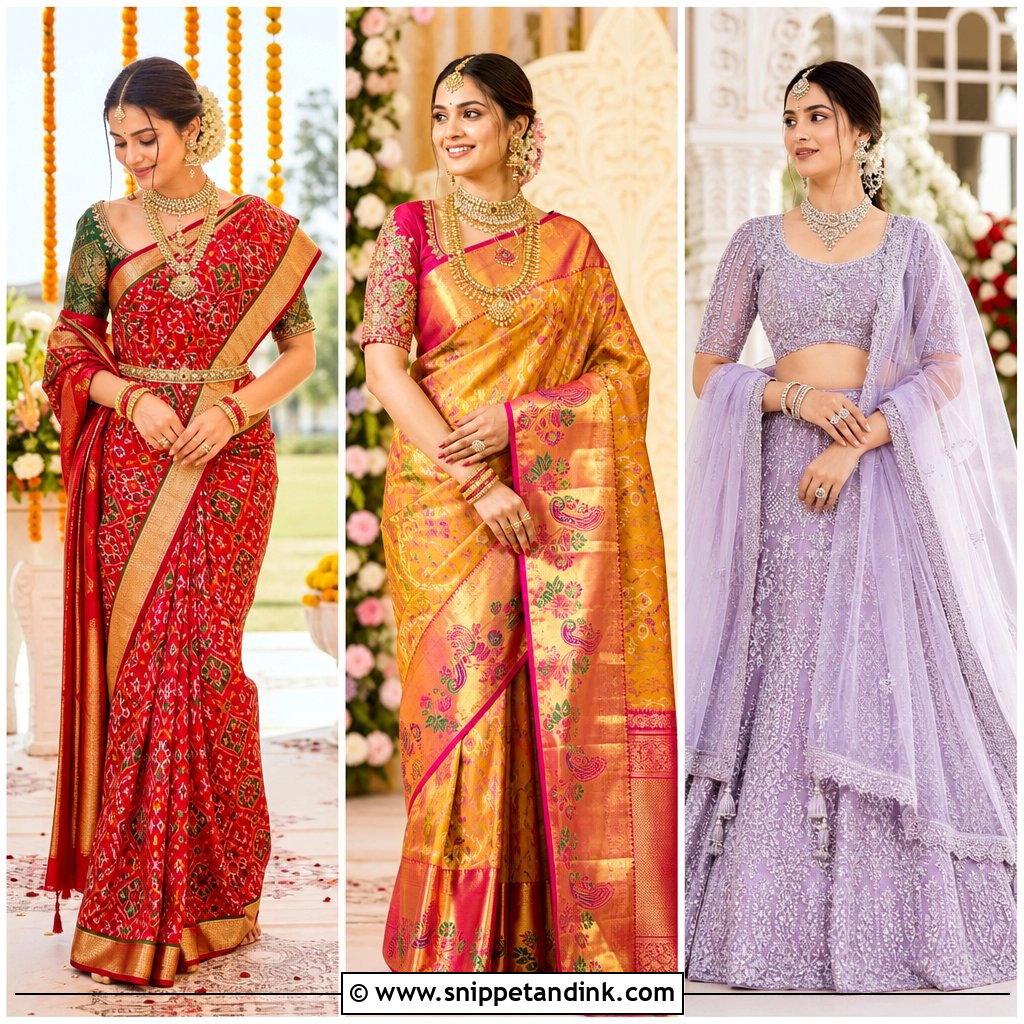
12. Kanjeevaram Silk Bridal Saree
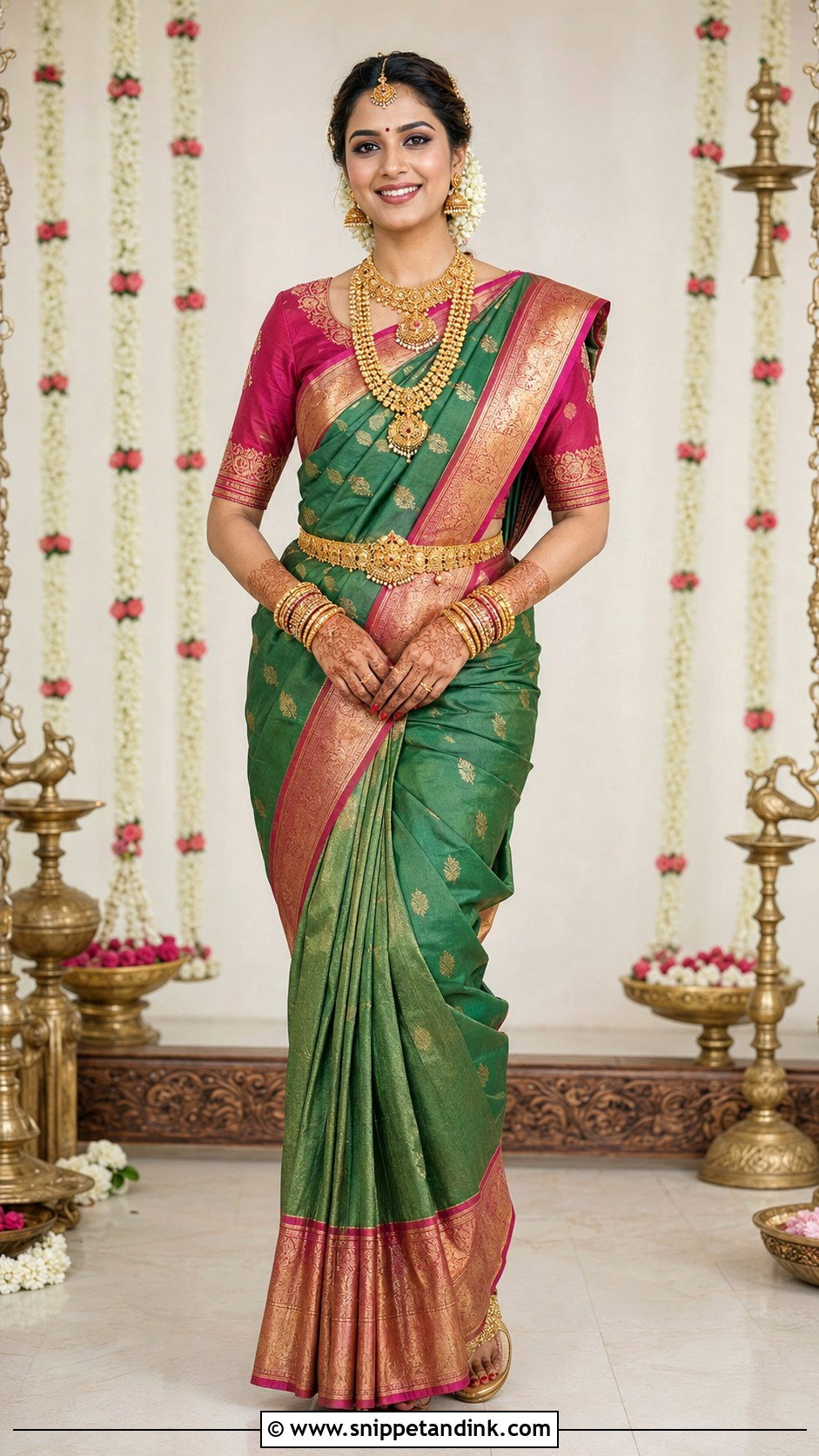
Kanjeevaram silk is heavy and has body, which is lovely for a stately drape but unforgiving of sloppy pleats. I’d always book a draper who has worked with thick silk before, since the waist tuck needs extra security to stay neat for hours. Red and gold, green with magenta, or mustard with maroon are the classic pairings. Temple jewelry, layered necklaces and a waist belt suit the weight of the weave. Jasmine around the braid or bun is traditional and smells wonderful, but pin it tight; jasmine strands slip as the hair loosens through the day.
13. Bengali Red And White Bridal Saree
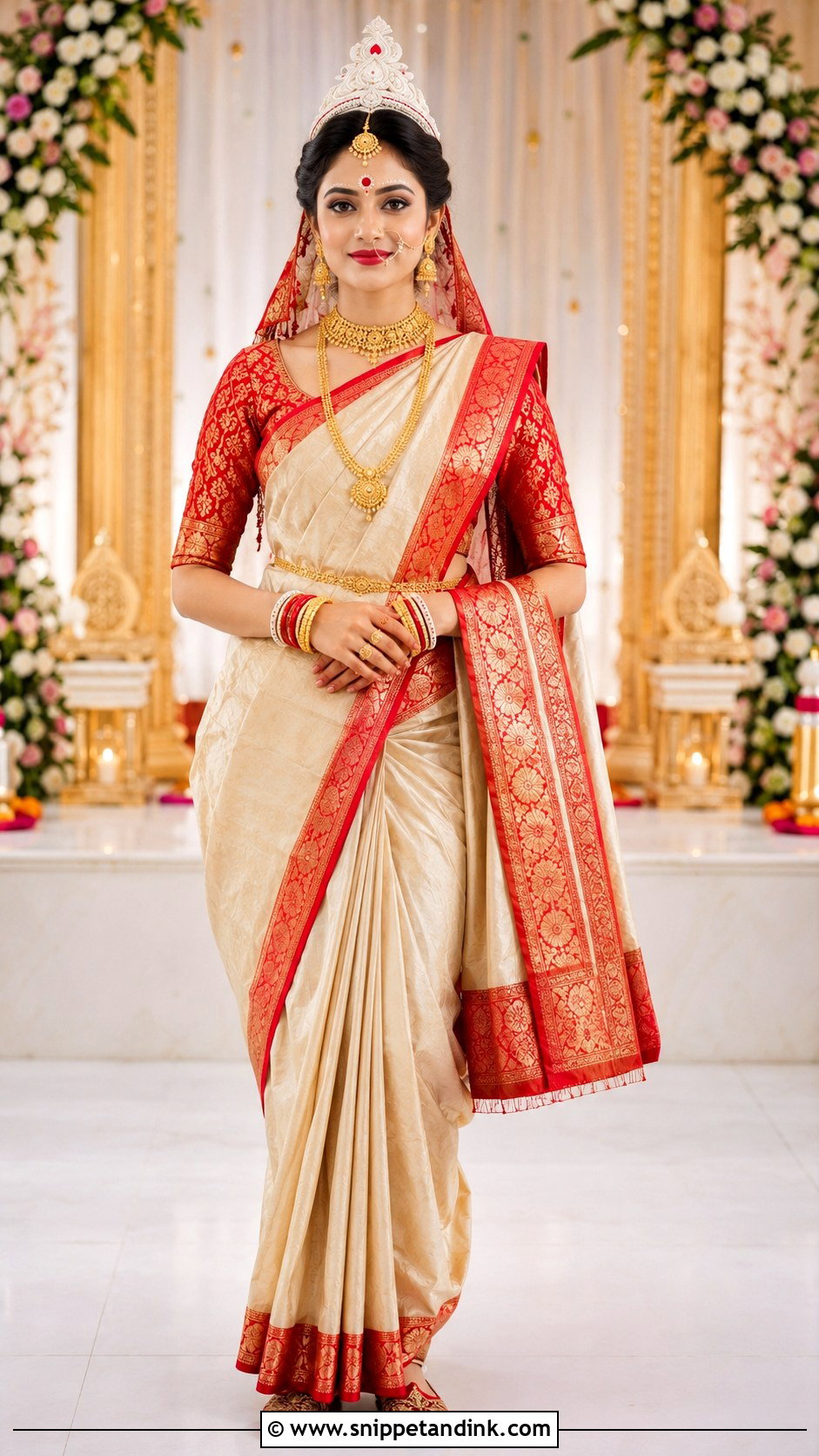
White or cream with a red border is instantly recognizable as a Bengali bridal look, so the styling should respect that contrast instead of hiding it. Silk or Banarasi gives the traditional drape enough structure. Choose the blouse fabric by season, velvet for winter and silk the rest of the year. Gold jewelry, a choker, a headpiece, red alta and a defined bindi can complete the look where they carry meaning for your family. The Bengali drape has its own method, so book enough time for it and practice in your actual shoes, low and stable, which won’t catch in the folds.
14. Gujarati Panetar Bridal Saree
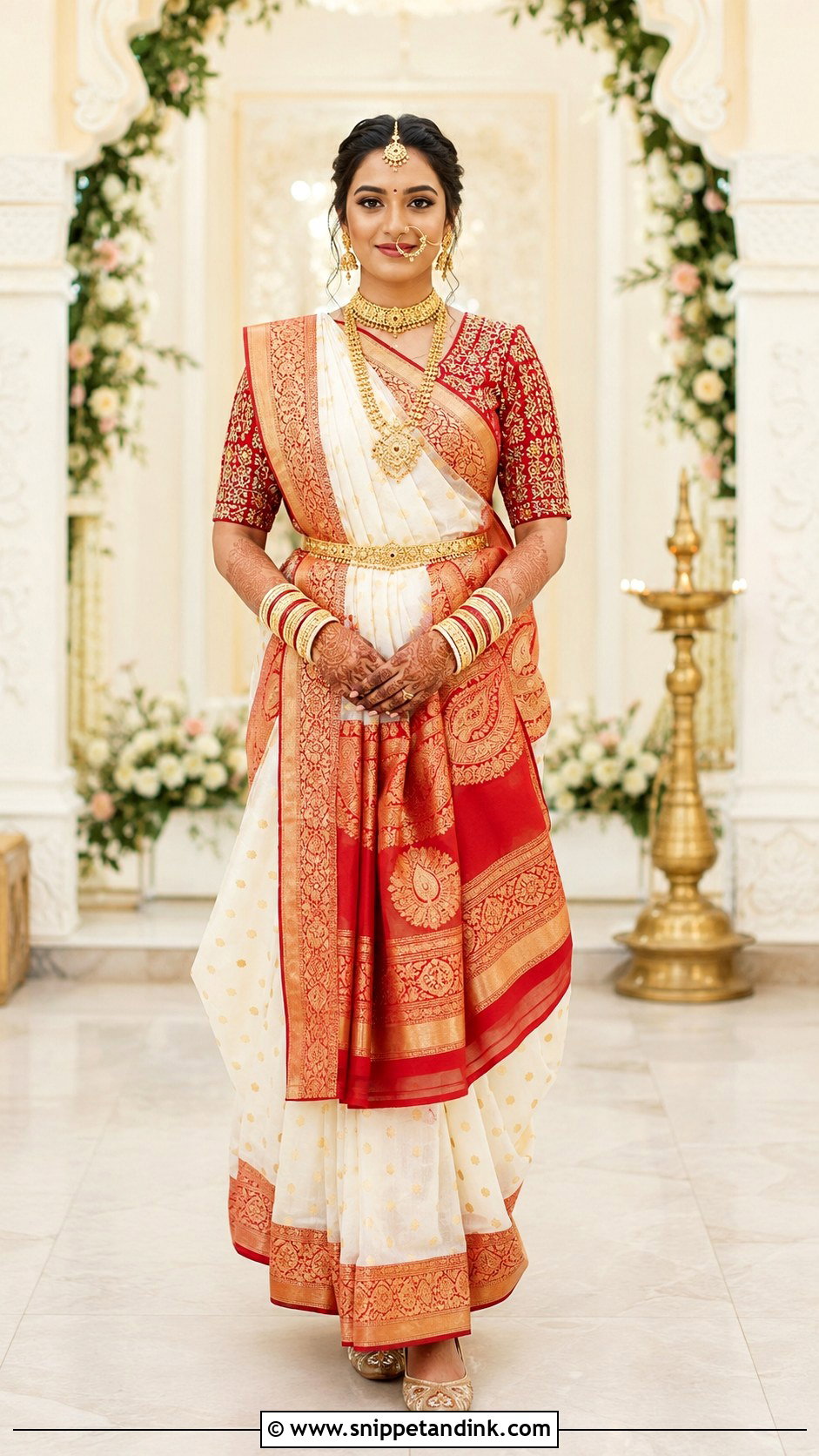
A Panetar’s white body against a red border and pallu is meant to be seen, and the drape decides how much of it is. In the Gujarati style, the pallu often comes over the front, so I’d look for someone who has done that drape many times rather than learning on your morning. Choose the jewelry with family customs in mind: nose ring, waist belt and necklace placement can carry specific meaning. A red or brocade blouse with secure sleeves sits well under the pallu. Keep makeup measured so the color blocking stays the focus, and pick flat or low shoes for ritual walking.
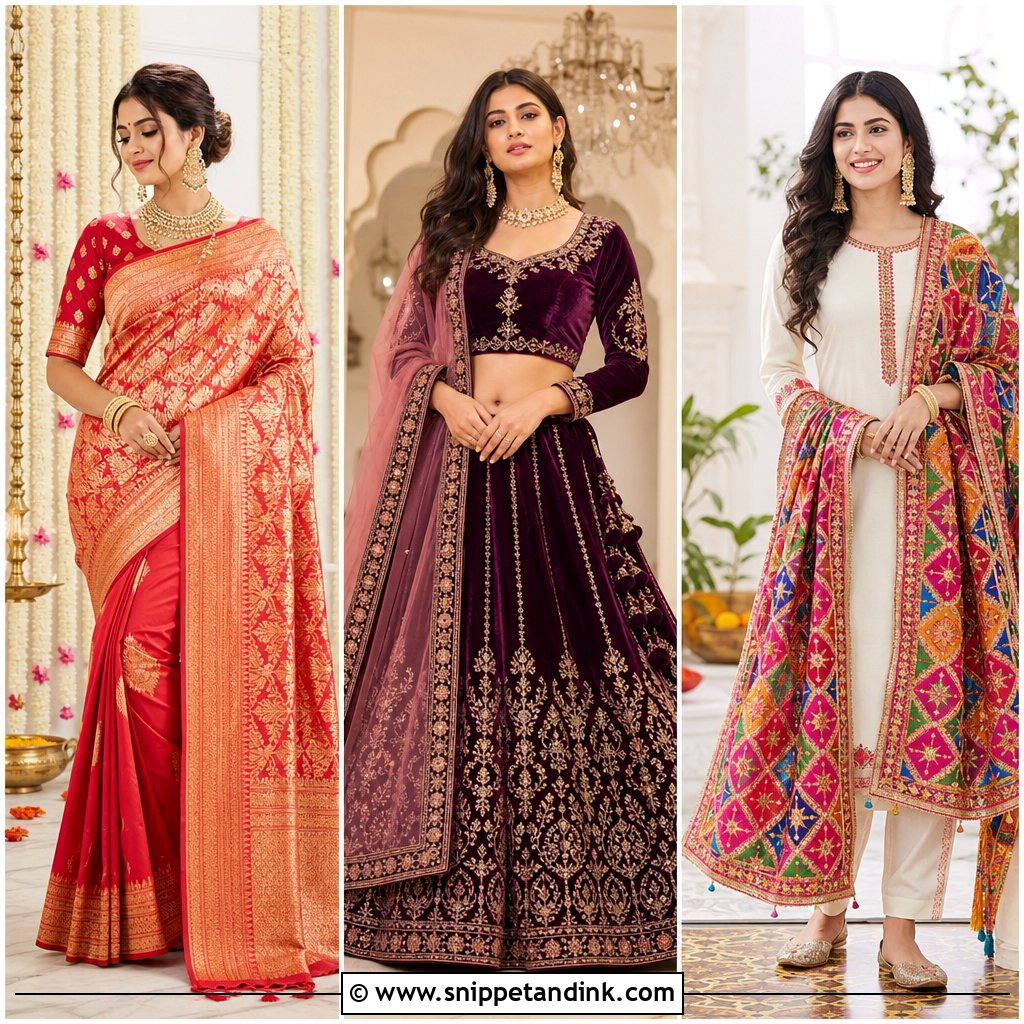
15. Maharashtrian Paithani Bridal Saree
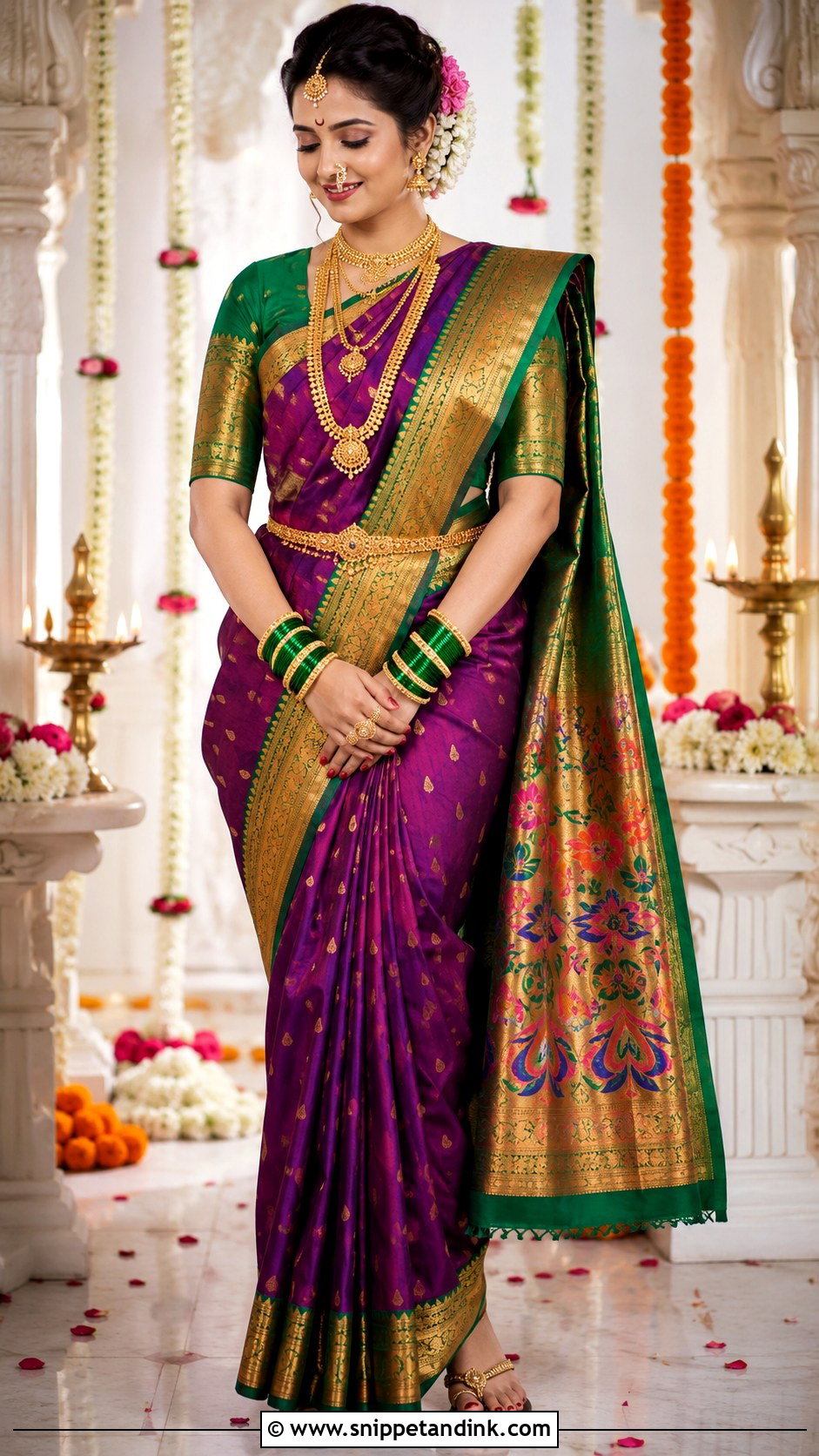
A Paithani’s peacock motifs and metallic border do most of the decorating, so this is a look where I take accessories away rather than add them. Purple, green, mustard, red and peacock blue all suit the weave. Pair it with a contrasting silk blouse and decide early between a regular drape or a traditional nauvari arrangement, since the nauvari changes how you walk, sit and which shoes work. Green glass bangles, a nath, layered gold necklaces and a crescent bindi complete it. Flat sandals are the sensible call for long rituals.
16. Kerala Kasavu Bridal Saree
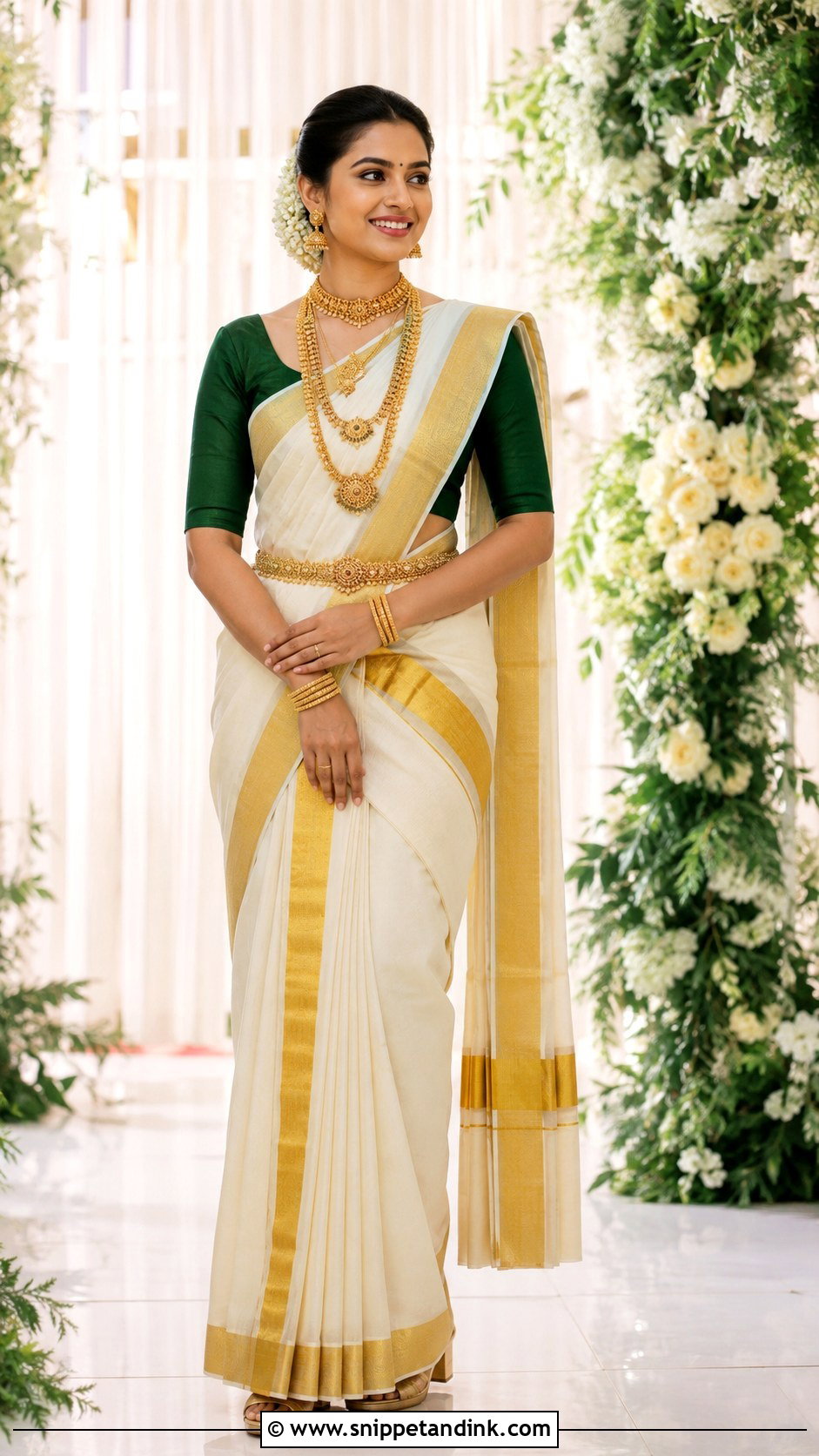
A cream Kasavu with a gold border looks simple in the shop and can turn see-through under strong ceremony lights. I always hold the fabric up to a bright window at the fitting and, if it shows anything, add a fitted underskirt in the same cream. Pair it with a matching cream blouse for a clean line or a green, red or maroon one for contrast. Layered gold necklaces, jhumkas, a waist belt and a floral bun suit the restrained palette. Crisp pleats and a securely pinned pallu are what make Kasavu look bridal rather than everyday.
17. Pakistani Bridal Pishwas
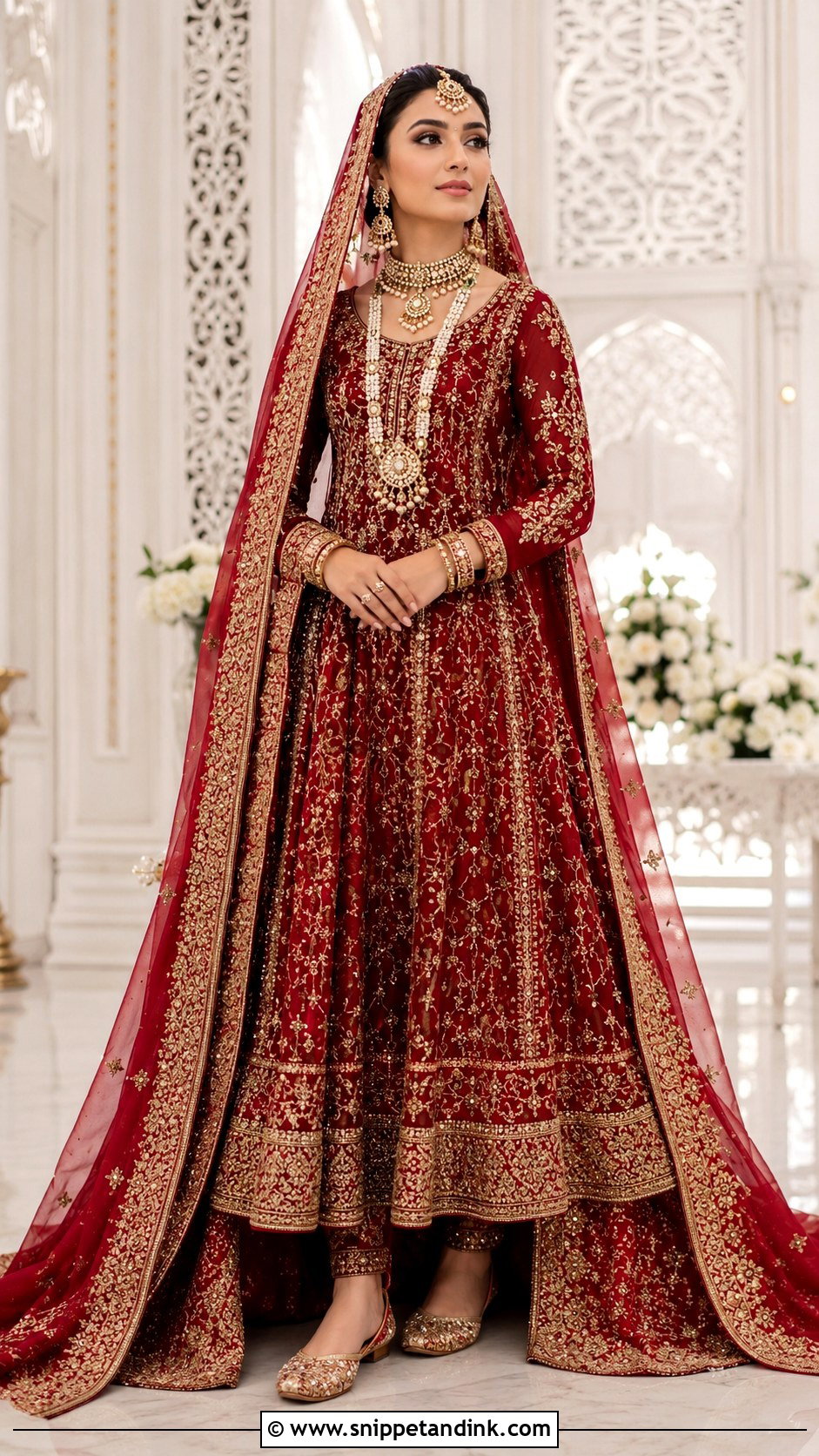
A pishwas is cut like a long frock with a very full skirt, and that flare is the whole point. The fitted bodice has to sit right, so I fit it with the bride’s actual undergarments and jewelry on. Deep red, rust, maroon, ivory or a muted pastel all work, with hand embroidery on the bodice, sleeves and hem. Fitted trousers underneath and a long dupatta over the head finish it. Check the hem with shoes on; a pishwas that brushes the floor gets stepped on constantly. If the pishwas is heavily worked, choose a lighter dupatta to spare your neck.
18. Nikah Bridal Sharara
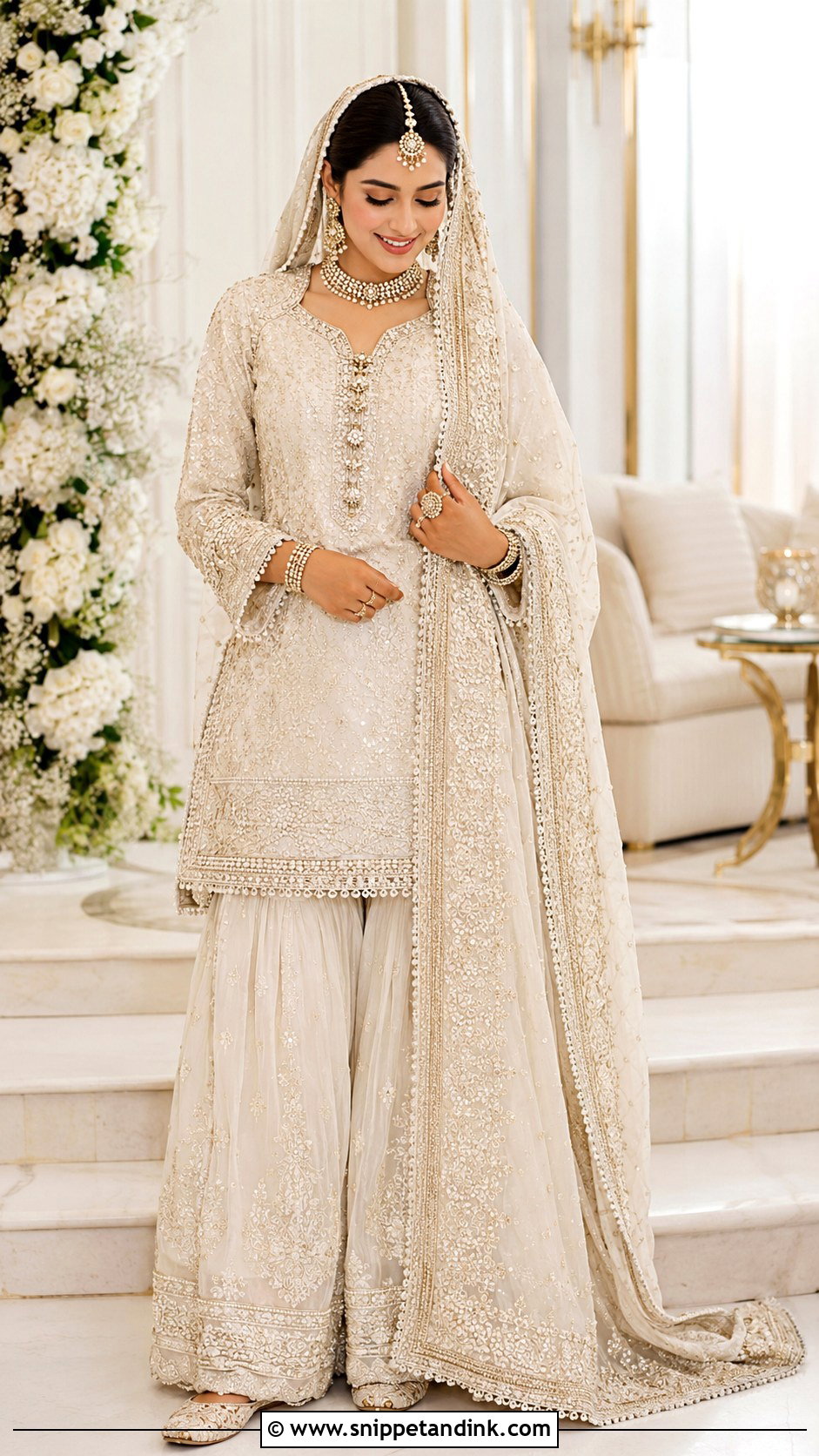
Much of a Nikah is spent seated, so I fit the sharara and kurta with the bride sitting down, not just standing in front of a mirror. A kurta that looks fine standing can pull across the thighs once you sit. Ivory, champagne, blush and soft green suit the mood, with pearl or zari embroidery kept refined. If the kurta is heavily worked, keep the sharara plainer. The veil can have a detailed border, but its center should stay light, because you may wear it for the full ceremony. Breathable lining and embroidered flats finish it.
19. Sikh Bridal Salwar Suit
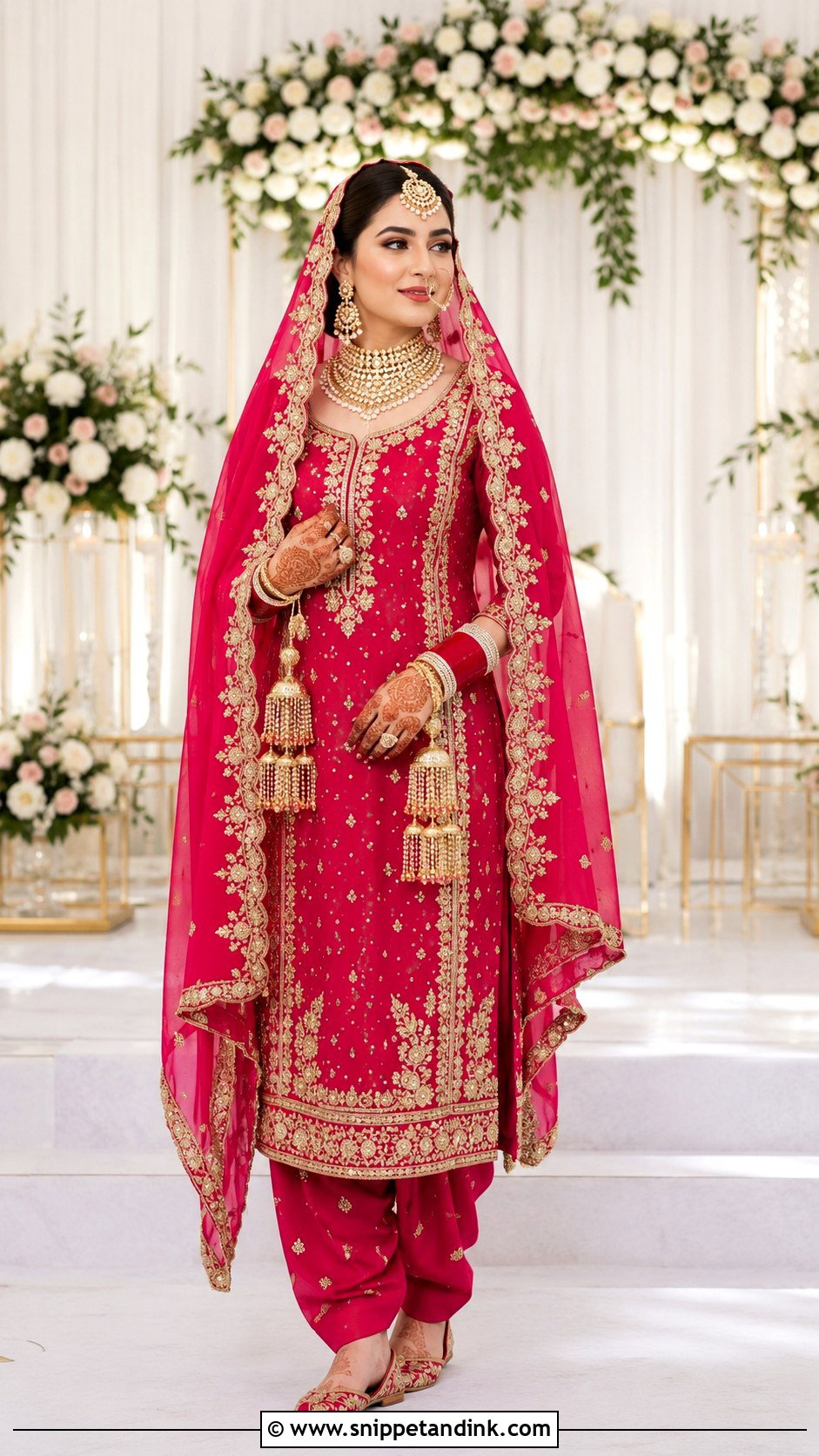
For an Anand Karaj, the dupatta must cover the head securely through the whole ceremony, including walking around the Guru Granth Sahib. Slippery silk slides off within minutes, so I choose a dupatta with some grip, like chiffon with a weighted border or a soft georgette, and pin it to the hair with small pins rather than one big one that pulls. A long kameez with salwar or churidar in red, pink or maroon suits the occasion; velvet in winter, lighter silk otherwise. Keep the embroidery at the neckline, cuffs, hem and dupatta border. Kaleere and bridal bangles are often part of the look.
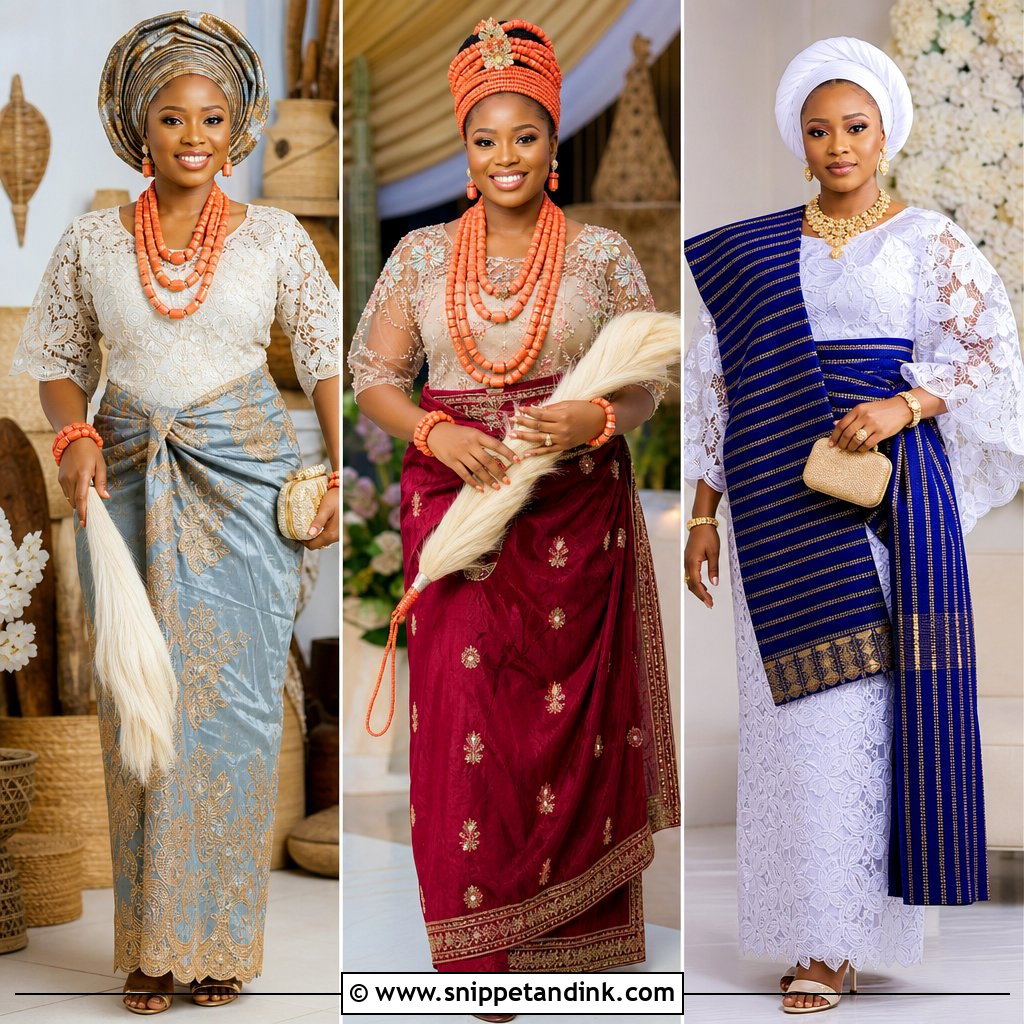
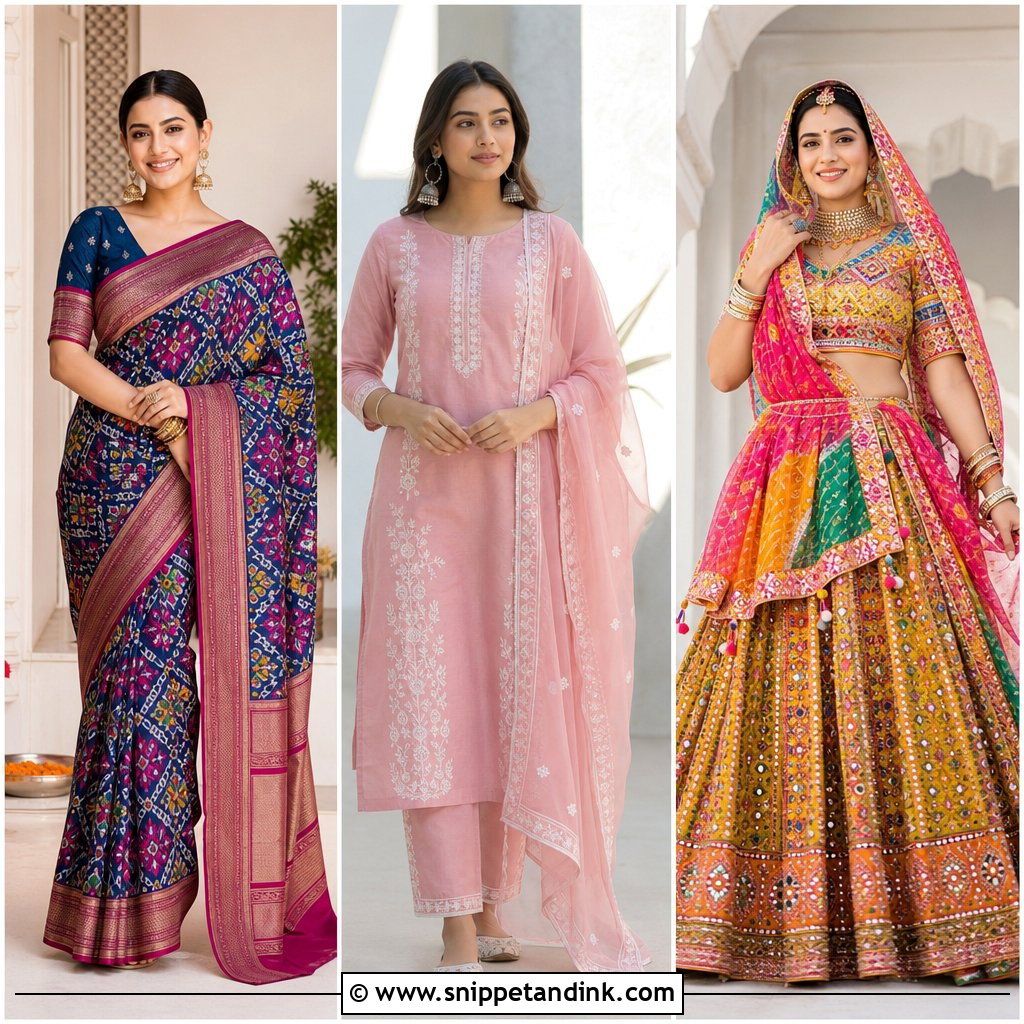
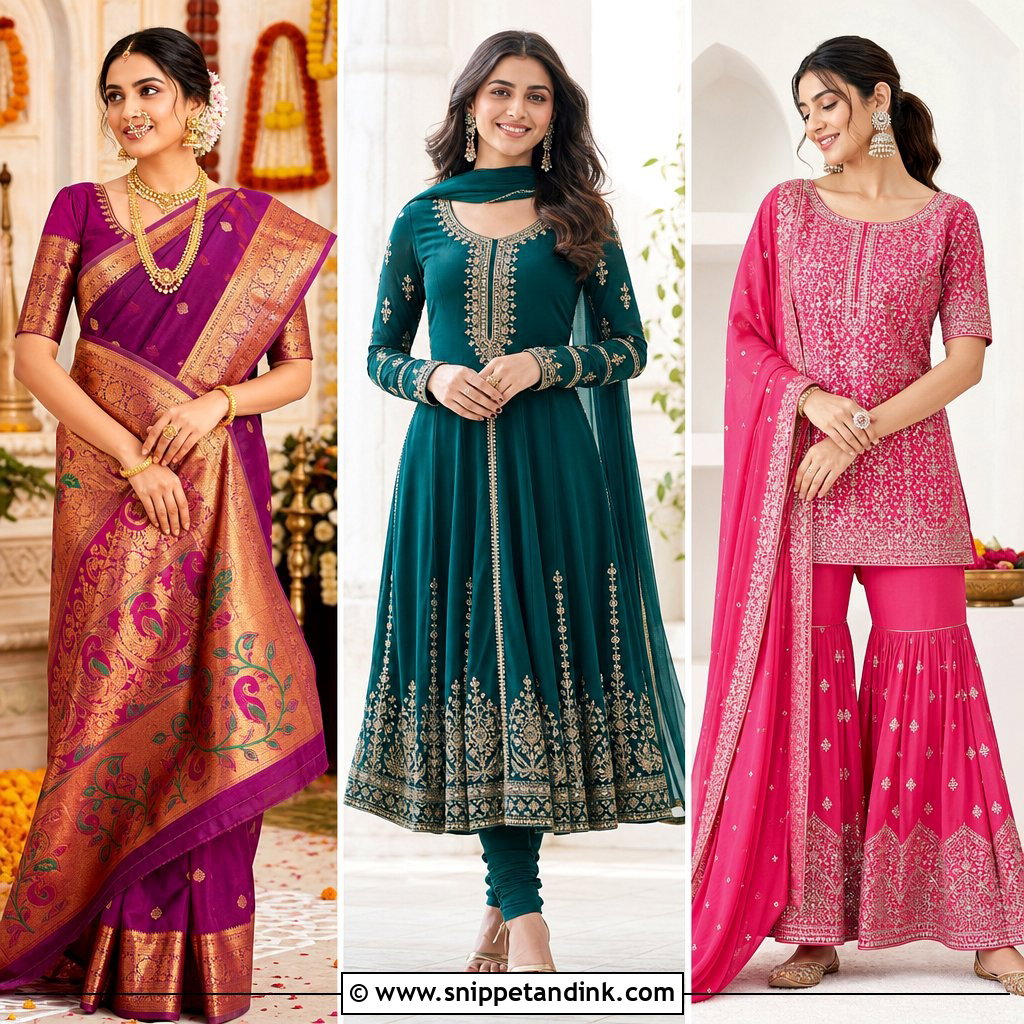
20. Indo Western Bridal Pant Saree
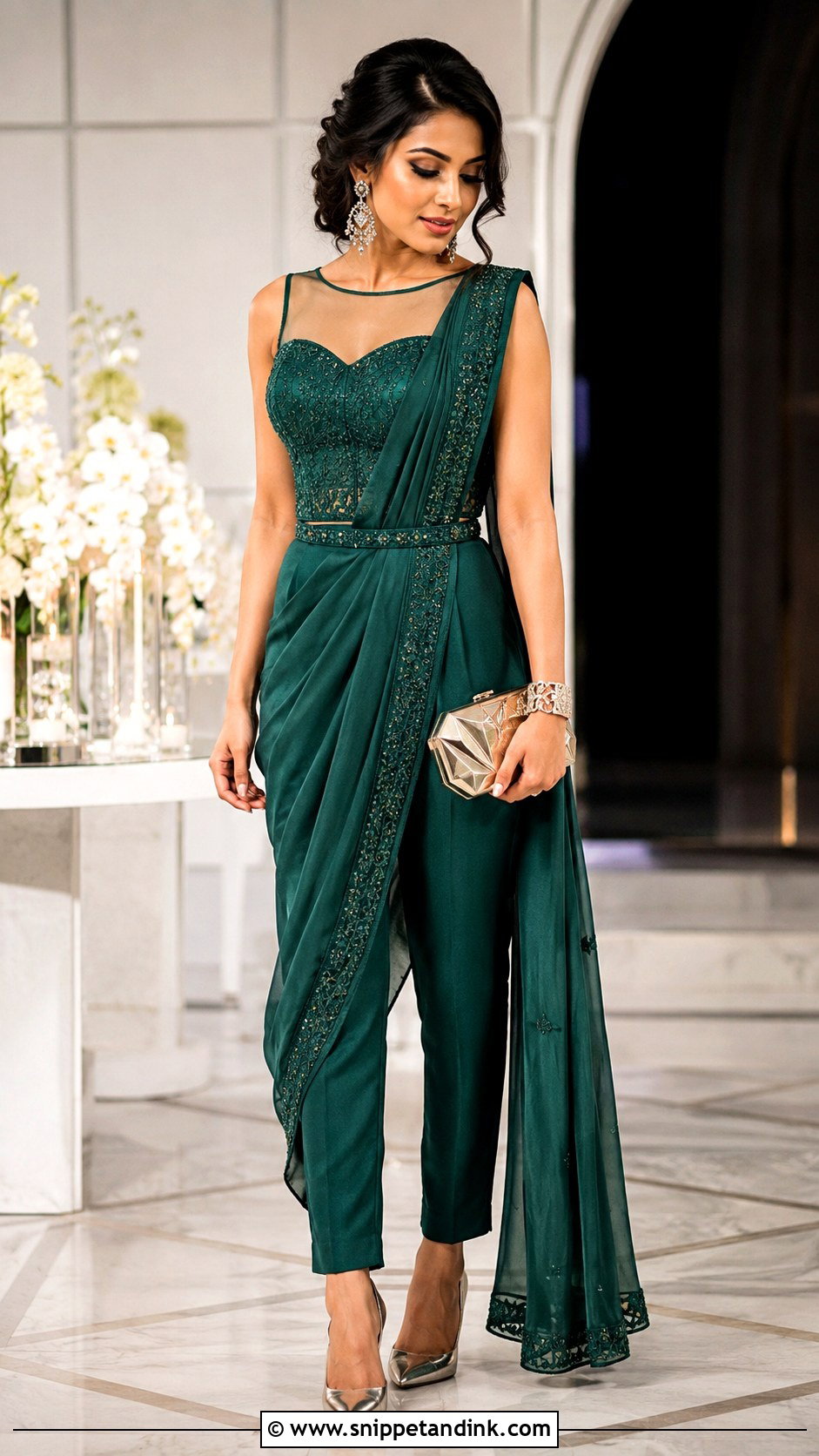
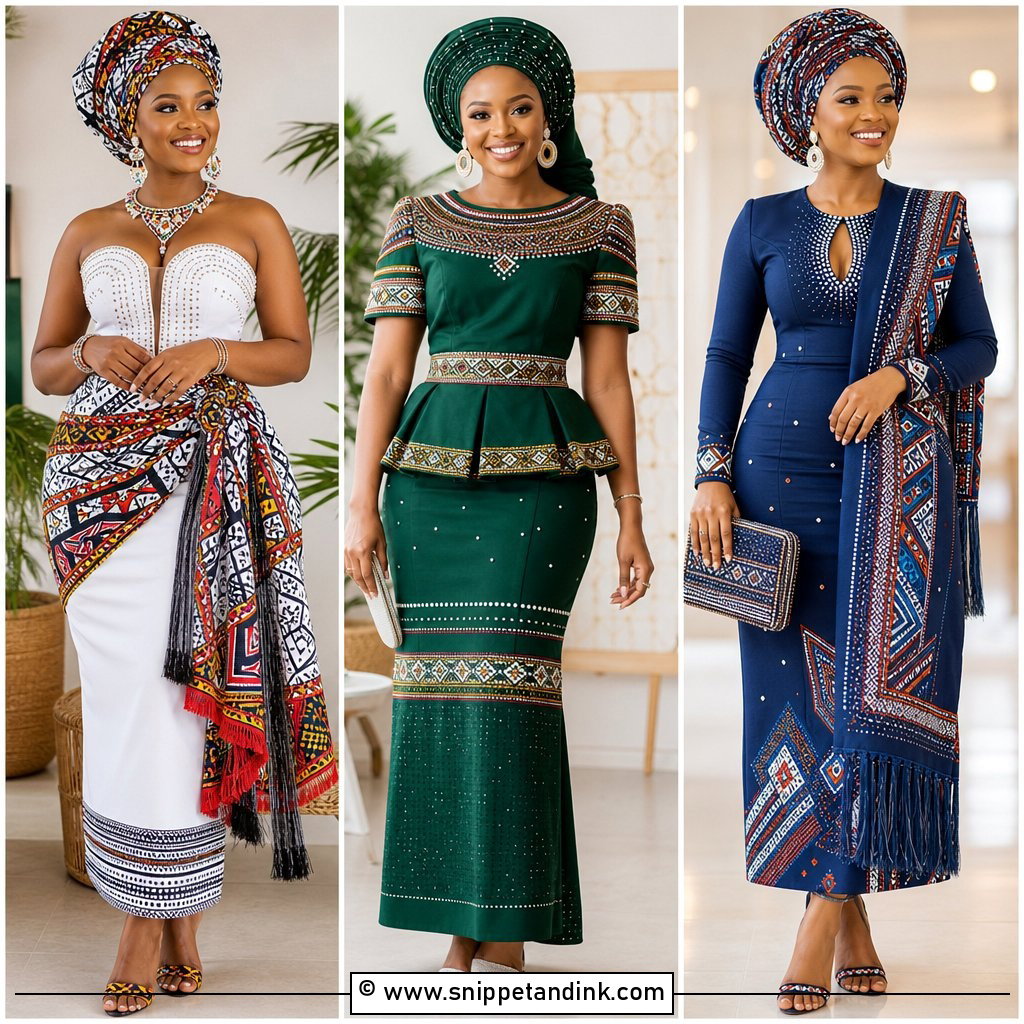
An Indo Western pant saree suits a reception or engagement where you’d rather move freely than manage a skirt. The pre-stitched drape attaches at the waist over tailored pants or a fitted jumpsuit, so the fit across the hips is everything; I have the bride sit and squat at the fitting to check the fabric doesn’t strain. A sculpted blouse or embellished jacket sets the coverage. Jewel tones, metallic neutrals or a single pastel hold up in evening light. Keep the hair sleek, choose a cuff instead of a stack of bangles, and pick heels you can stand in for hours.
Repairs, Pins and Packing for the Day Itself
Something always comes loose at a Desi wedding: a mirror, a hook, the dupatta pin that held all morning. I pack a small kit for every event and hand it to one sister or cousin who stays nearby.
- Safety pins in two sizes and bobby pins that match your hair color, for the dupatta and veil.
- Needle with red, gold and ivory thread for a hem or a dropped hook.
- Double-sided fabric tape for a blouse neckline that gapes when you bend.
- A dry cloth and baby wipes; never rub turmeric or food stains wet on silk.
- Spare flat shoes for the reception walk to the car.
Storing Zari, Velvet and Silk After the Celebrations
Real zari tarnishes when it sits in plastic or near damp, so wrap embroidered pieces in clean white cotton or muslin and store them in a dry cupboard. Velvet should be rolled or hung by the waistband rather than folded hard, because creases flatten the pile. Silk sarees keep longer if you refold them along different lines every few months, since repeated folds weaken the threads, especially at the zari border. Have any turmeric or makeup stains dry cleaned by someone who handles bridal wear, and do it soon; older stains set.
Trying Every Outfit on as a Complete Look Before the Wedding Week
No single piece makes a Desi bridal wardrobe work; the combinations do. Pick each outfit for what that event asks of your body, then check the weight, fit, shoes, jewelry and dupatta together, never one at a time. At your final fitting, walk, sit on the floor, climb a few steps and dance a little in every outfit. Whatever pulls, slips or scratches will do the same on the day, and it’s far easier to fix a week out. Treat these ideas as a starting point and let your family’s traditions and your own comfort decide the rest.
You'll Like These Ideas:


Leave a Reply