
The right ethnic outfit depends less on what’s in fashion and more on four things: which ceremony it is, the family’s dress code, the weather, and your role, from bride to sister to guest. Indian wedding wear gives you a wide range to work with, from woven sarees and embroidered lehengas to shararas, Anarkalis and fusion sets. Right now I see brides and guests leaning toward lighter fabrics, focused embroidery, pre-draped styles, coordinated jackets and pieces they can wear again. Whatever you pick, you’ll need to sit cross-legged, climb steps and dance in it. The twenty looks below are styled head to toe for pheras, receptions, sangeet nights and everything around them.
Which Outfit for Haldi, Mehndi, Sangeet and Pheras?
Indian weddings stretch across several functions, and each has its own practical demands. Customs vary by region and family, so always ask the hosts, but this is how I usually match outfits to events.
- Haldi: turmeric paste stains permanently. Wear yellow, or something cotton you won’t mind ruining. Leave silk and pastels at home.
- Mehndi: you’ll sit still for hours with wet henna on your hands and feet, so pick short or rolled sleeves and a skirt or Patiala that won’t brush the paste.
- Sangeet: the dancing night. Sharara, dhoti pants, mirror work and pre-draped sarees all let you move.
- Pheras or the main ceremony: the most formal. Silk sarees, Anarkalis and lehengas fit here. Temples and gurdwaras often ask you to remove shoes and cover your head, so bring a dupatta and wear footwear you can slip off.
- Reception: the place for velvet, capes, Indo-Western and evening sparkle.
As a guest, avoid full bridal red, and check before wearing white or all-black. Some families associate white with mourning and see black as unlucky at weddings.
1. Red Zari Lehenga Wedding Outfit
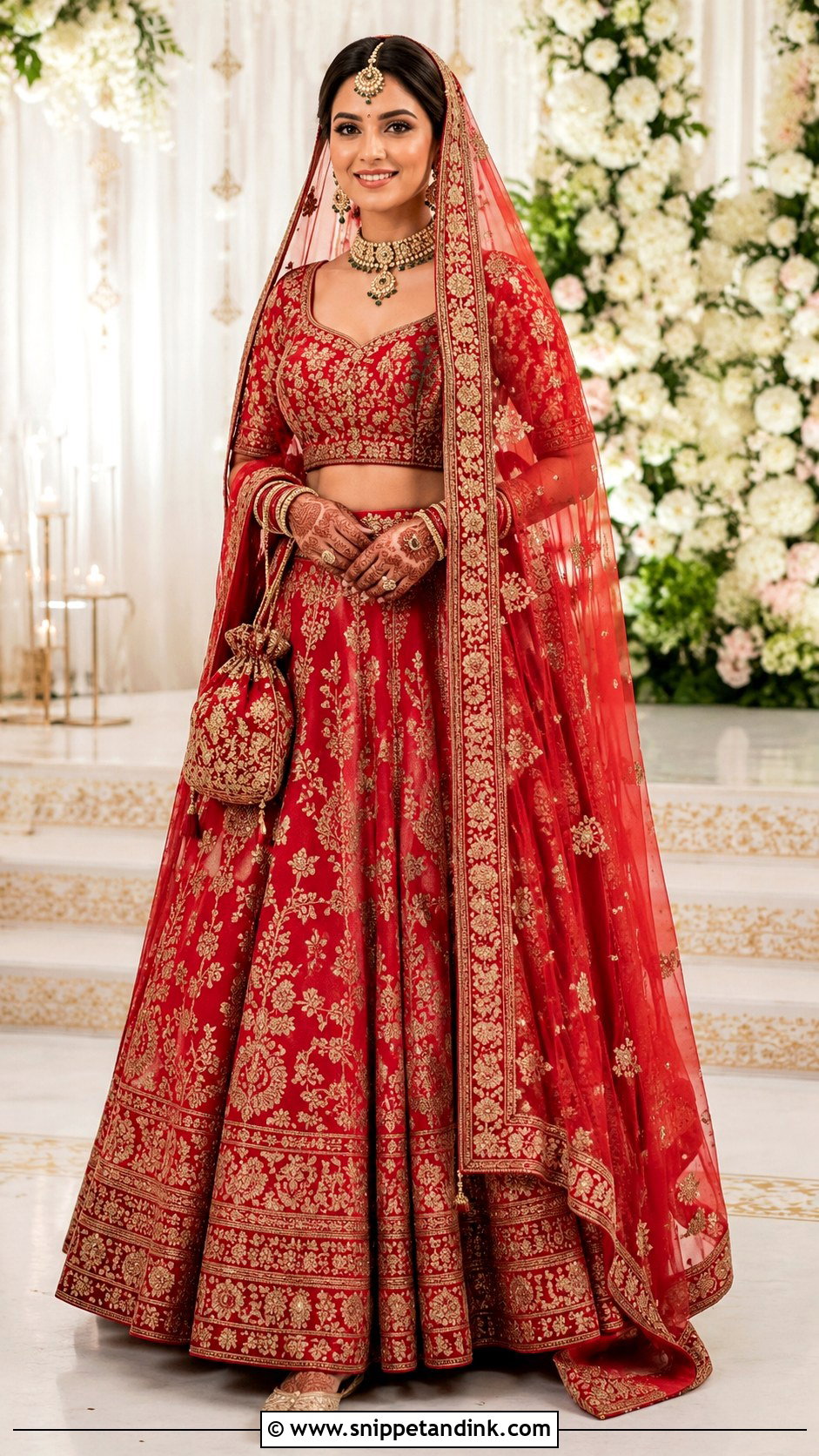
Red zari on silk is the most traditional look here, and it suits the bride or her immediate family. I’d choose a skirt with a balanced flare in silk or raw silk; heavily panelled skirts can weigh several kilos, and you feel every one of them by the third ritual. A fitted embroidered blouse in a square, sweetheart or high neck, plus a dupatta with a neat gold border, is plenty. Add a choker, matching earrings, stacked bangles, a small potli and gold juttis. Brides can layer a second lighter dupatta as a veil. Guests should go for softer reds and less embroidery so nobody mistakes them for the bride.
2. Pastel Floral Lehenga Wedding Outfit
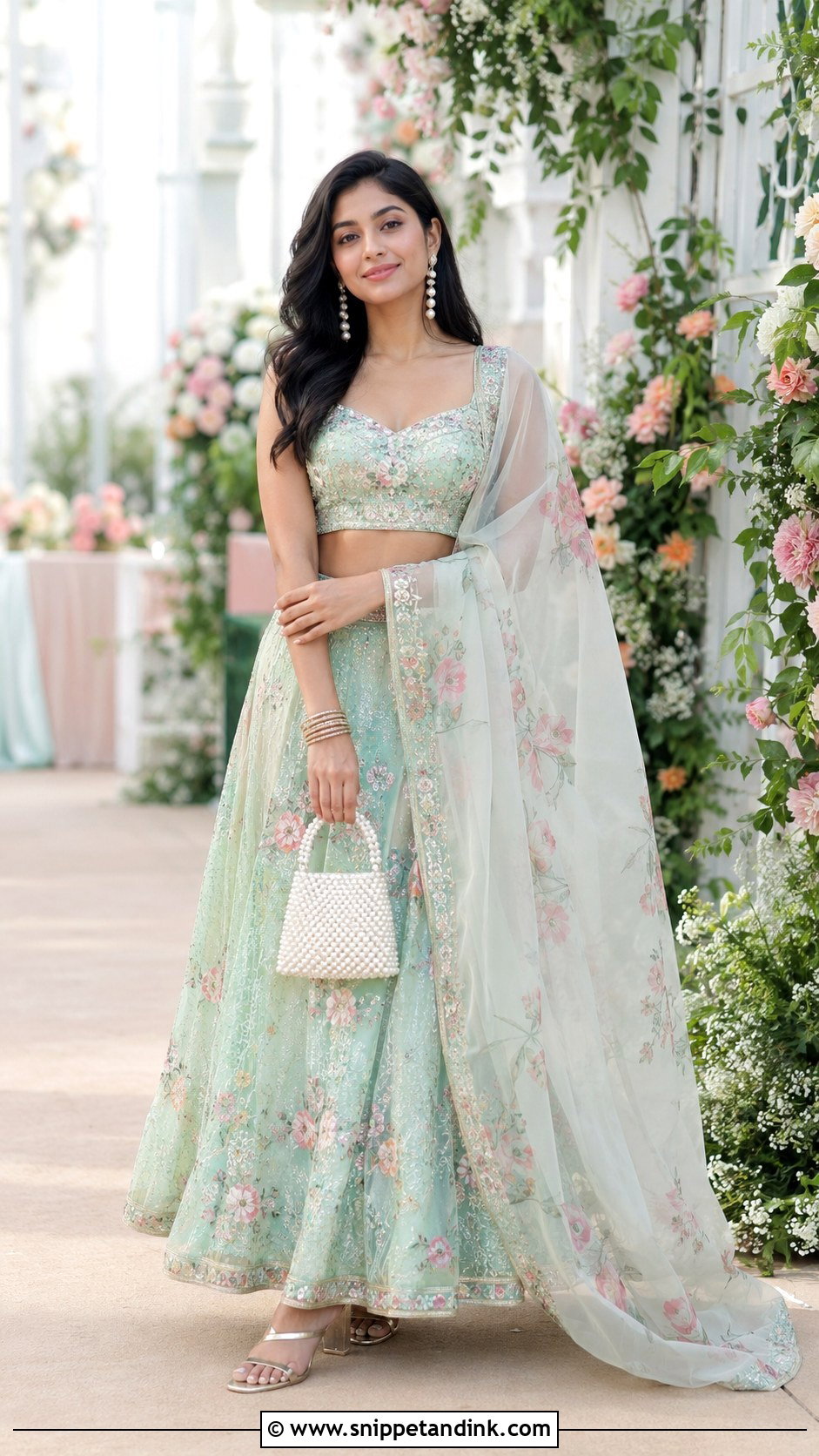
Daytime and garden weddings call for something lighter. A mint, blush, lilac or powder-blue skirt with printed flowers or light threadwork, a matching blouse and a sheer organza dupatta loose over one shoulder keeps the mood airy. Pearl drops, a fine maang tikka and slim bangles are enough; anything heavier swamps the print. Block heels for lawns, juttis for indoors. Pastel is forgiving across ages and figures because the waistband, flare and blouse length are all easy to tailor. One caution: light pastels show turmeric and mehndi stains instantly, so I wouldn’t wear this to the haldi.
3. Banarasi Silk Saree Wedding Outfit
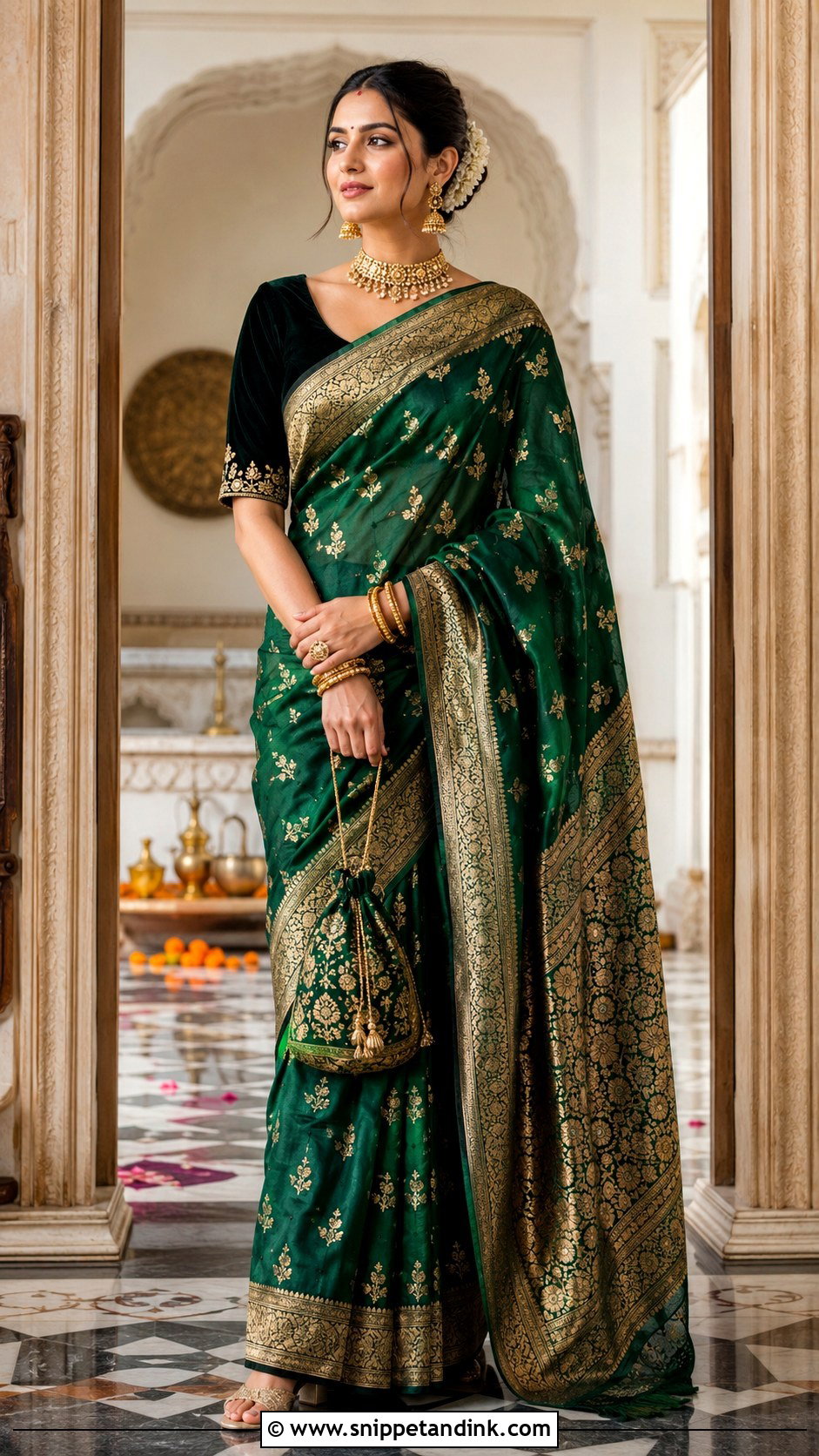
A Banarasi silk saree carries a ceremony on its own. Emerald, ruby, royal blue and deep magenta show off the zari weave best. I pair it with a structured elbow-sleeve blouse that gives support, and I pleat the pallu neatly rather than letting it fall open, so the weave is visible and the fabric stays under control. Gold choker, jhumkas, bangles and a brocade potli complete it, with low block heels. For something more current, try a contrast blouse in velvet or raw silk. Keep the hair sleek. Real Banarasi silk is heavy at the pallu, so pin it at the shoulder with a brooch or two safety pins hidden in the fold.
4. Kanjivaram Silk Saree Wedding Outfit
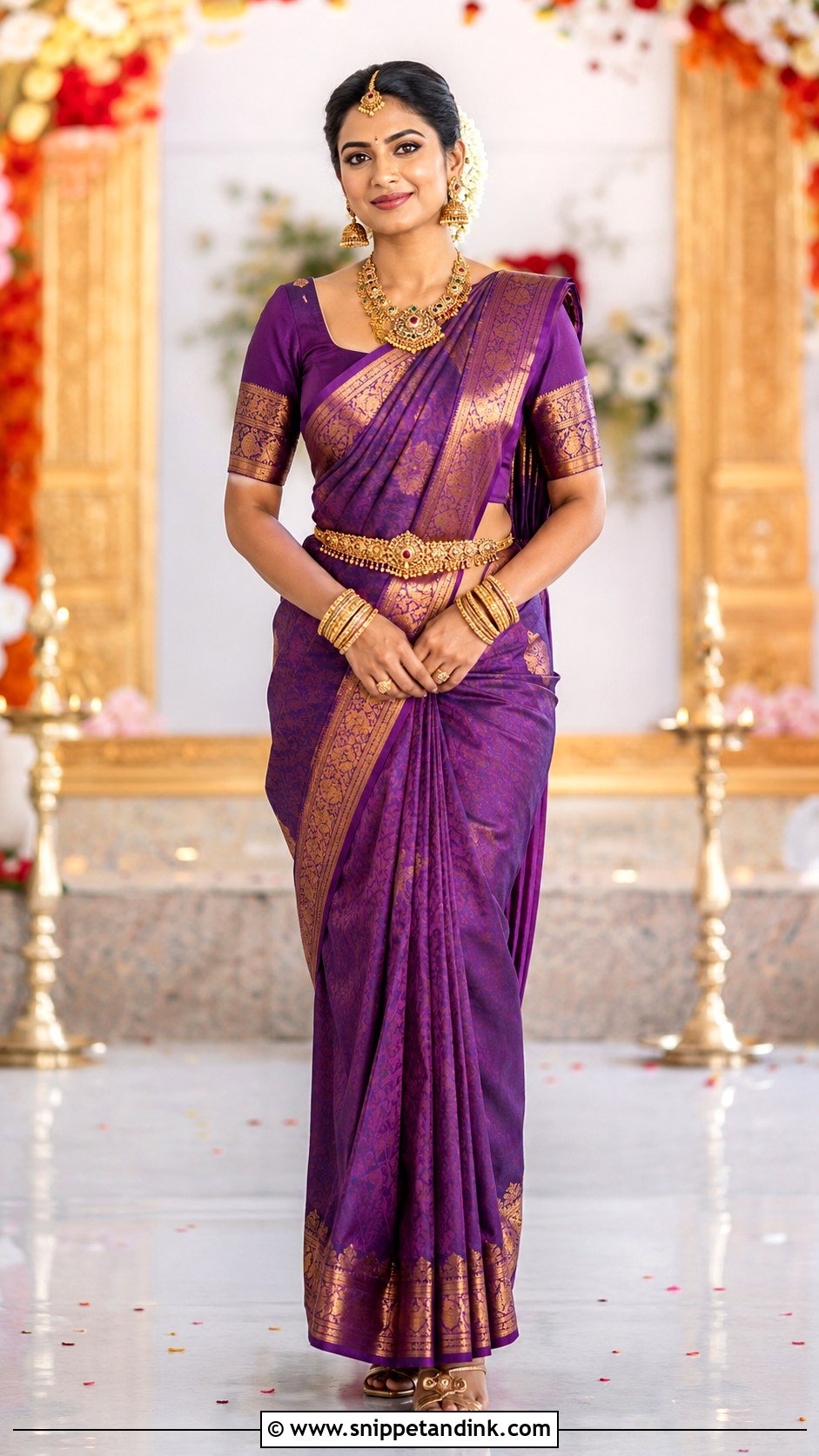
Kanjivaram is the saree I’d choose for a formal South Indian wedding or a temple ceremony. Its silk is thick and the borders are often woven separately and joined, which is why it holds a crisp pleat all day. Classic pairings like mustard and pink, green and red, or purple and gold suit it, and a Kanjivaram silk saree balanced with a tailored elbow-sleeve blouse never looks overdone. Pin the pallu discreetly at the shoulder. Add temple jewellery, gold bangles, a waist belt, traditional earrings, padded gold sandals and jasmine around a braid or bun. Petite? Smaller motifs and narrower borders. Taller frames can carry broad zari.
5. Organza Saree Wedding Outfit
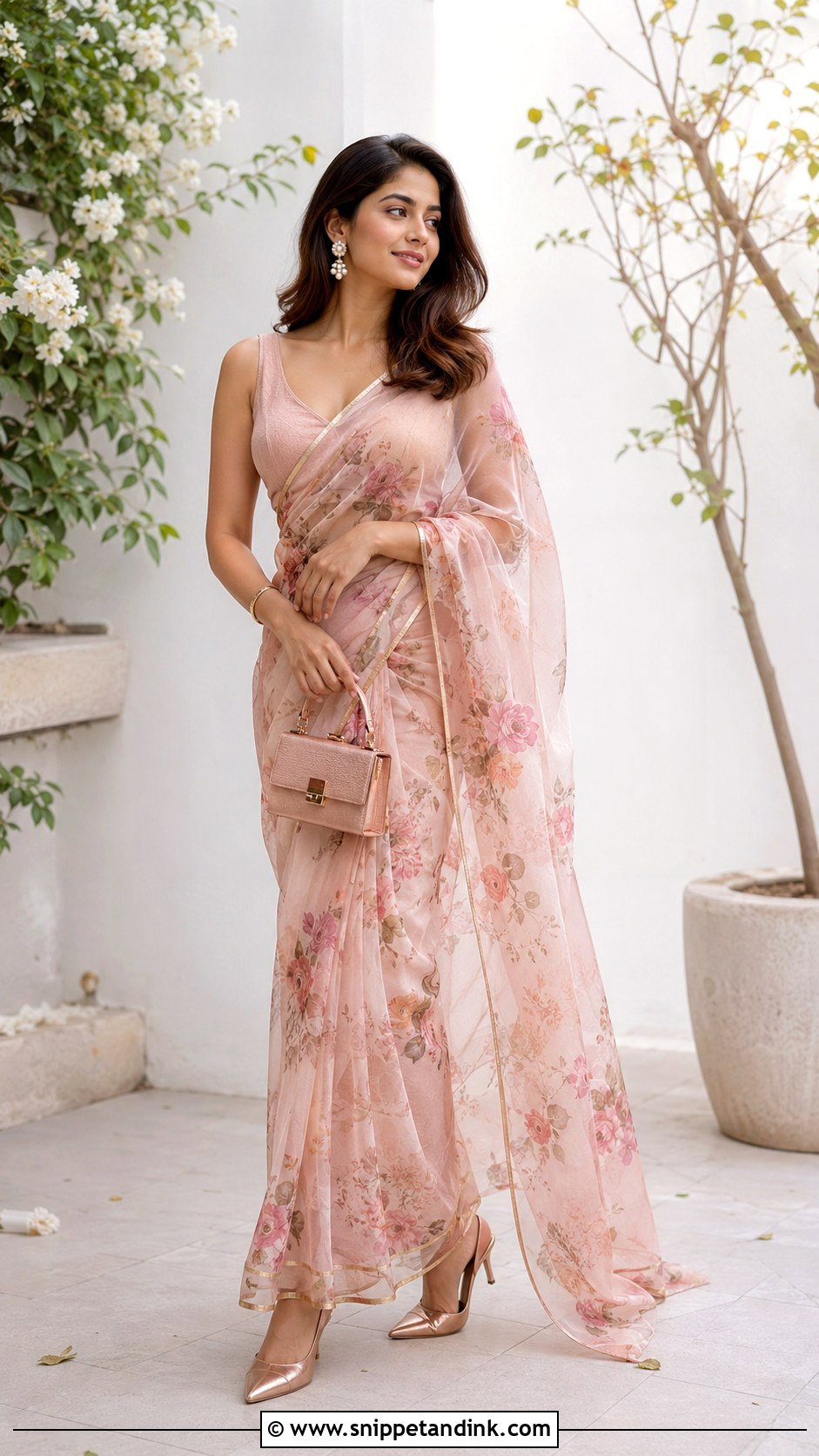
Organza is light, sheer and slightly stiff, which makes it a smart guest saree but a tricky one to pleat. Because it holds its shape, loose pleats puff out at the waist, so I press them flat and pin them firmly. Florals suit daytime; subtle embroidery suits an evening reception. Pair it with a fitted raw-silk blouse in a matching or contrast shade, pearl earrings, a slim bracelet and a structured mini bag. Pointed metallic flats or low slingbacks keep it light. For more coverage, choose a lined blouse with a higher back and slightly longer sleeves.
6. Pre-Draped Saree Wedding Outfit
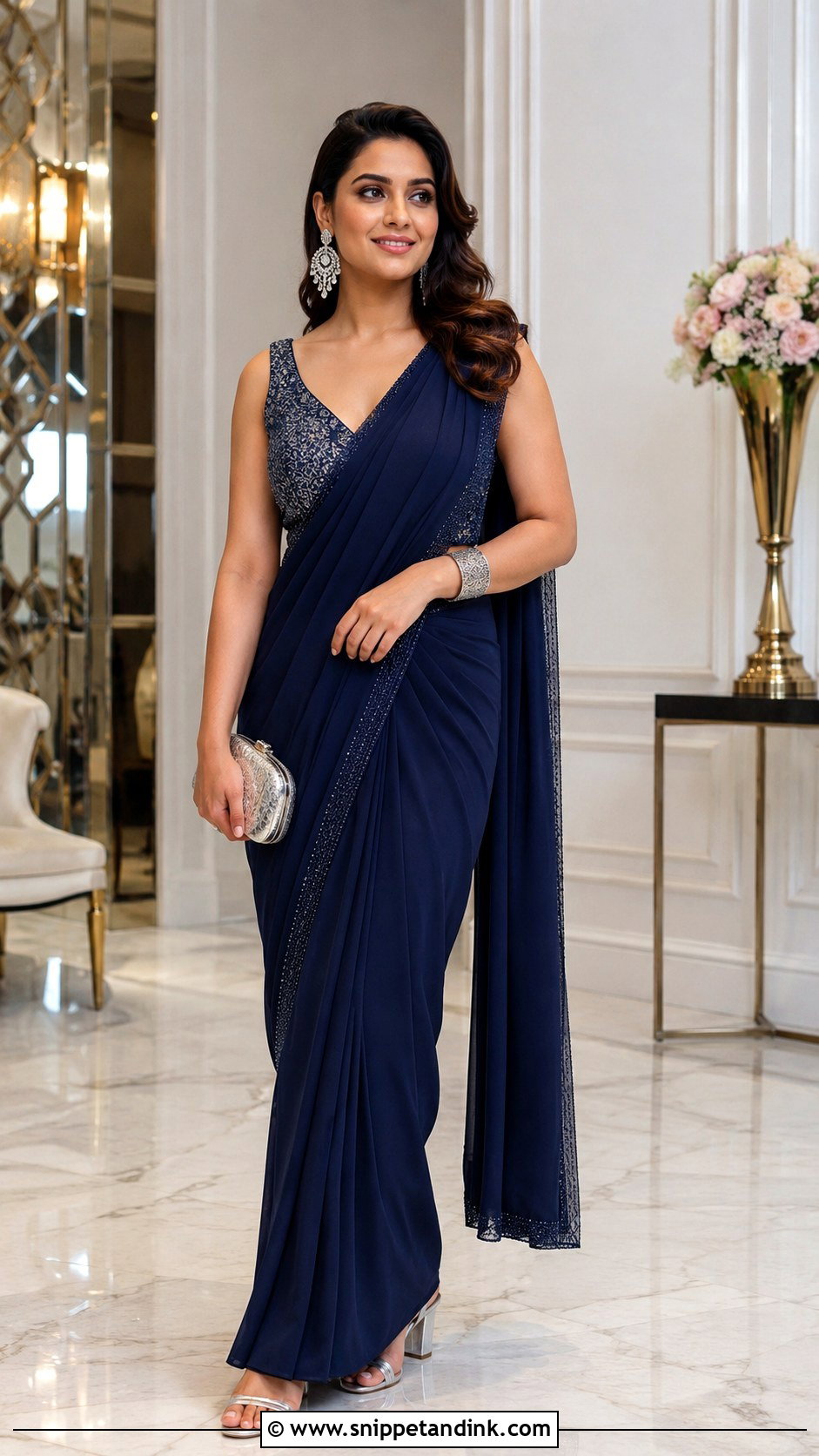
If you’ve never draped a saree, a pre-draped one saves you. The pleats are stitched, the waist is defined and the pallu is attached, so you’re ready in minutes and nothing slips while you greet guests or dance. Crepe, satin, georgette and lightweight silk fall cleanly without bulk. Pair it with an embroidered blouse or a supportive corset-style top, statement earrings, a cuff and a metallic clutch. Try it on with the exact block heels you’ll wear, because the hem length is fixed and can’t be adjusted by re-tucking like a regular saree.
7. Floor-Length Anarkali Wedding Outfit
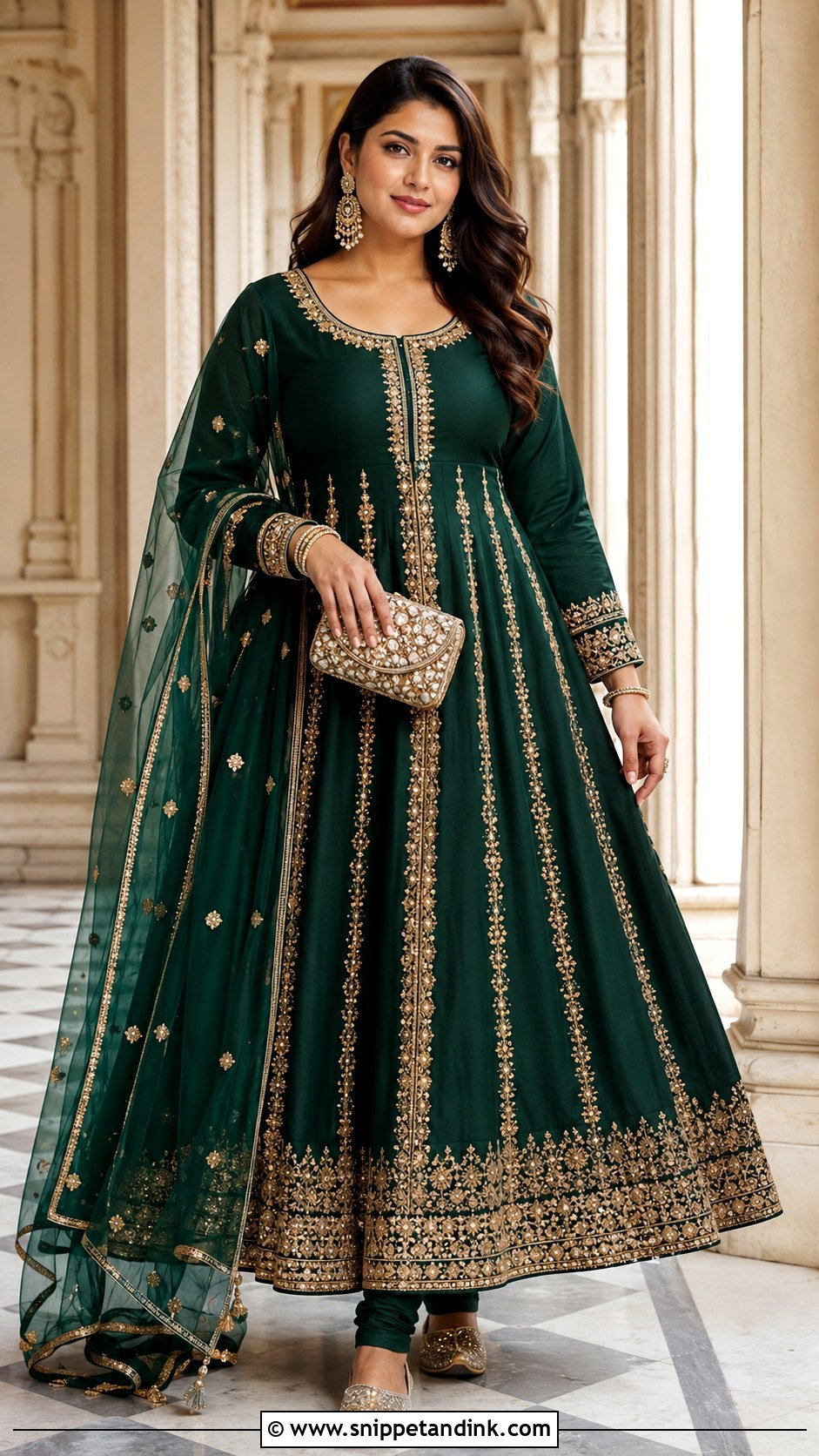
An Anarkali gives you the sweep of a gown with complete coverage. I’d go floor length in georgette, silk or chiffon, with embroidery at the neckline, cuffs or hem, over a matching churidar. Drape a light dupatta over one shoulder or across both arms. Chandelier earrings, stacked bangles, an embroidered clutch and platform juttis or block heels finish it. Vertical panels lengthen the figure and a defined waist seam flatters most shapes. Skip the necklace if the neckline is busy. Have the hem set to skim the ankle; a floor-sweeping Anarkali is easy to step on when you’re climbing stairs or sitting on the floor for rituals.
8. Sharara With Embroidered Jacket Wedding Outfit
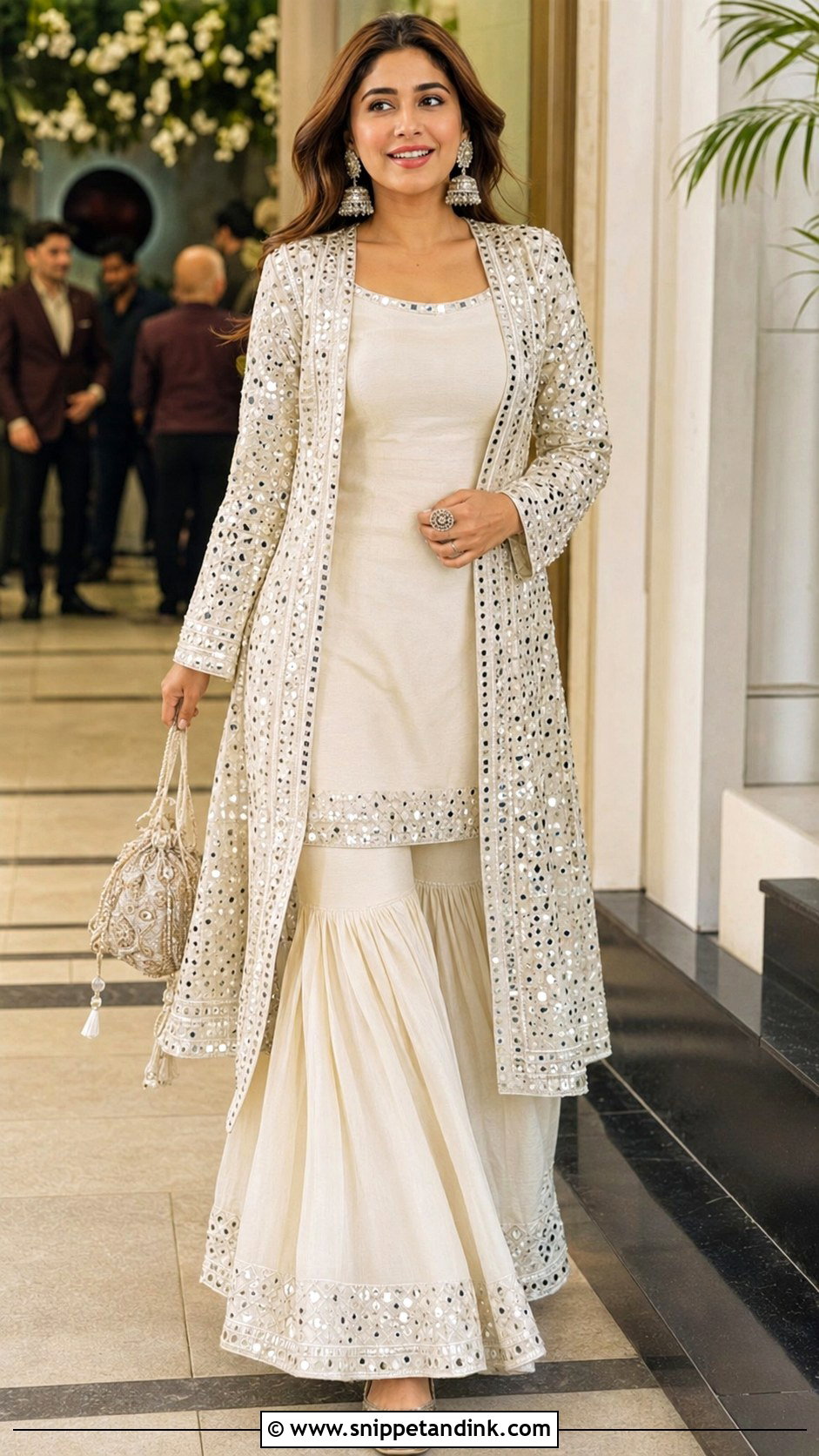
A flowing sharara under an embroidered jacket is what I recommend for anyone who plans to dance all night. Wide flared pants and a fitted kurti or crop blouse in one colour family form the base. The jacket, knee or calf length, carries the detail in mirror work, threadwork or a few sequins. Wear it open to create a long line down the centre. Statement earrings, a cocktail ring, a small potli and cushioned juttis are enough, and you can usually skip the dupatta. Longer jacket lengths add coverage for anyone who wants it.
9. Gharara Suit Wedding Outfit
The gharara is often confused with the sharara, but its shape is different: fitted through the thigh, joined at the knee, then flaring out below. That knee joint, often finished with a band of gota or zari, is the whole point, so wear a short or mid-thigh kurti that leaves it visible. Brocade, silk and georgette are suitably formal. Drape a light dupatta over one shoulder, then add a maang tikka, jhumkas, bangles, embroidered juttis and a compact potli. When it’s stitched, the knee seam must sit exactly at your knee. Too low and you’ll struggle on stairs; too high and the flare looks short.
10. Velvet Lehenga Wedding Outfit
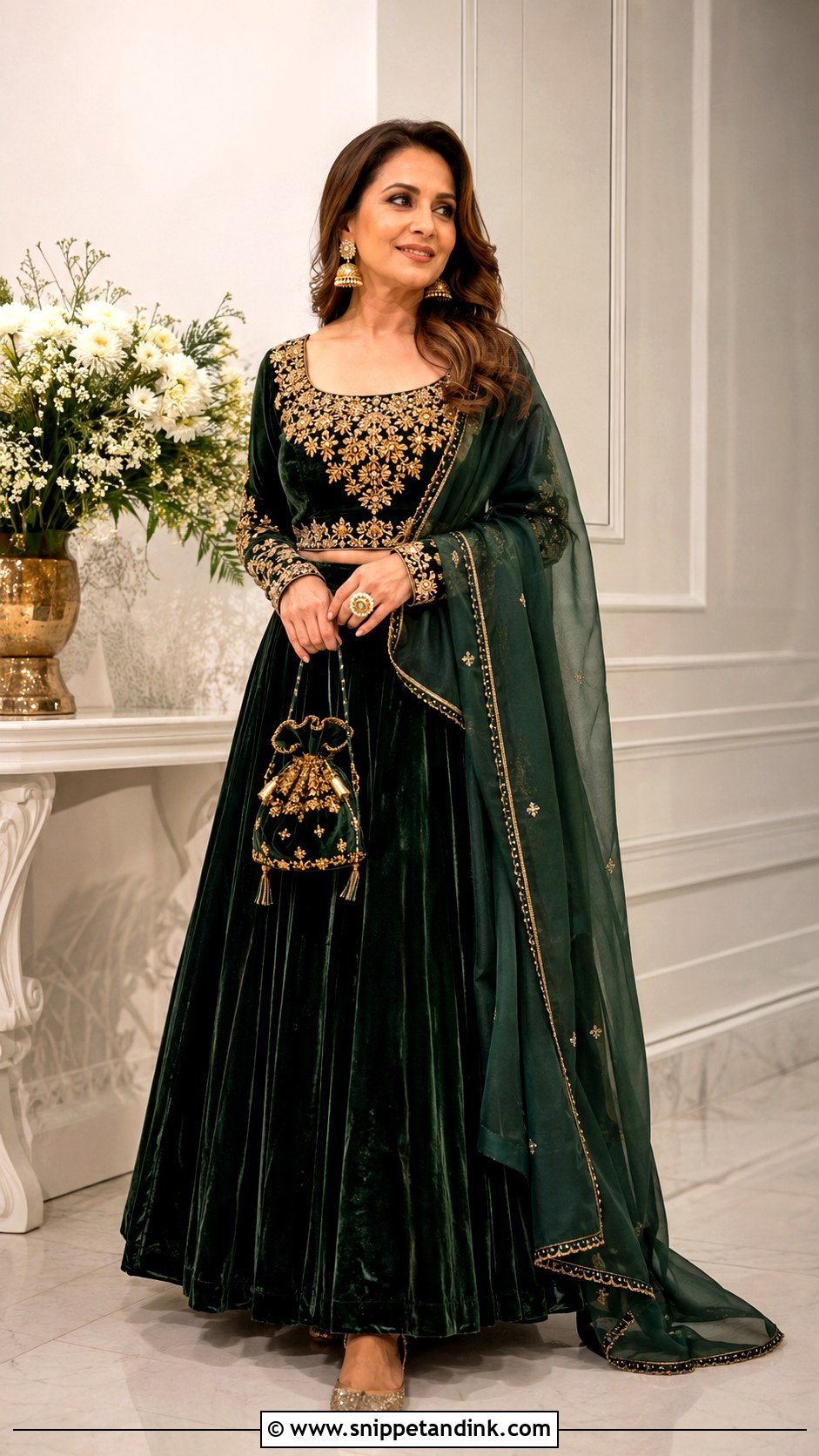
Velvet keeps you warm at a winter wedding without adding layers. Burgundy, navy, forest green or plum skirts with a blouse carrying focused gold embroidery look rich enough already, so limit the embellishment to the waistband, blouse and border. Choose a net or organza dupatta to stop the outfit feeling heavy. Antique gold earrings, a statement ring, a structured potli and cushioned velvet or metallic juttis suit it, with a clean bun or polished waves. Velvet crushes and marks where it’s pressed, so hang it the night before and don’t sit on the dupatta. It’s at home in indoor receptions and evening ceremonies.
11. Mirror Work Lehenga Wedding Outfit
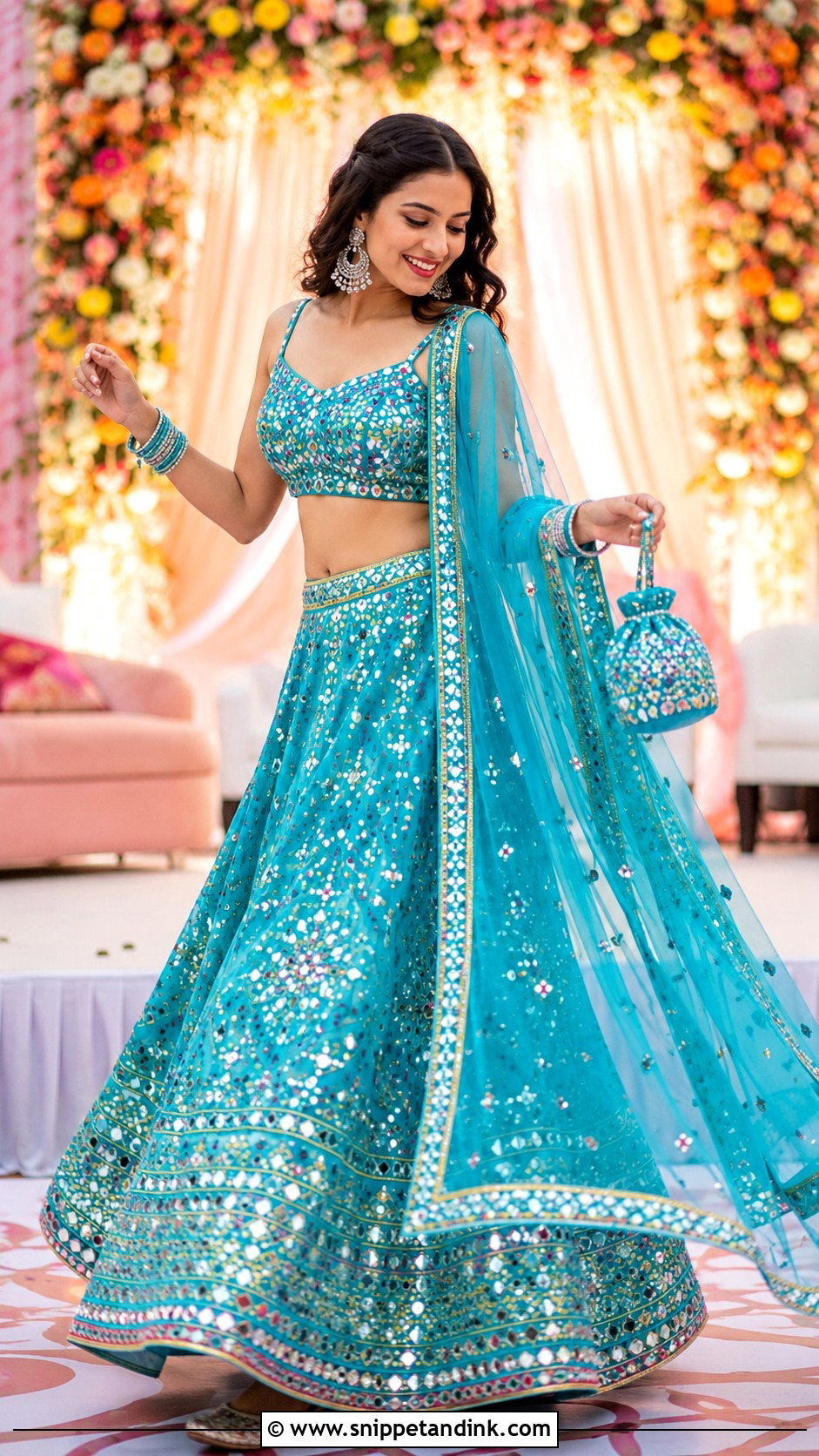
Mirror work belongs at a sangeet. The tiny mirrors catch every light on the dance floor. Turquoise, coral, fuchsia or deep blue suit it, and I look for embroidery spread evenly over skirt and blouse rather than clustered. Keep the dupatta sheer with a simple border. Silver-toned earrings, stacked bangles and an embellished potli are enough. I’d skip the oversized necklace and elaborate hair pieces; mirror work plus two heavy statements is too much. Wedges or padded juttis help you dance. Mirror work adds weight, so check that the blouse fits snugly and the skirt has a light lining.
12. Chikankari Palazzo Suit Wedding Outfit
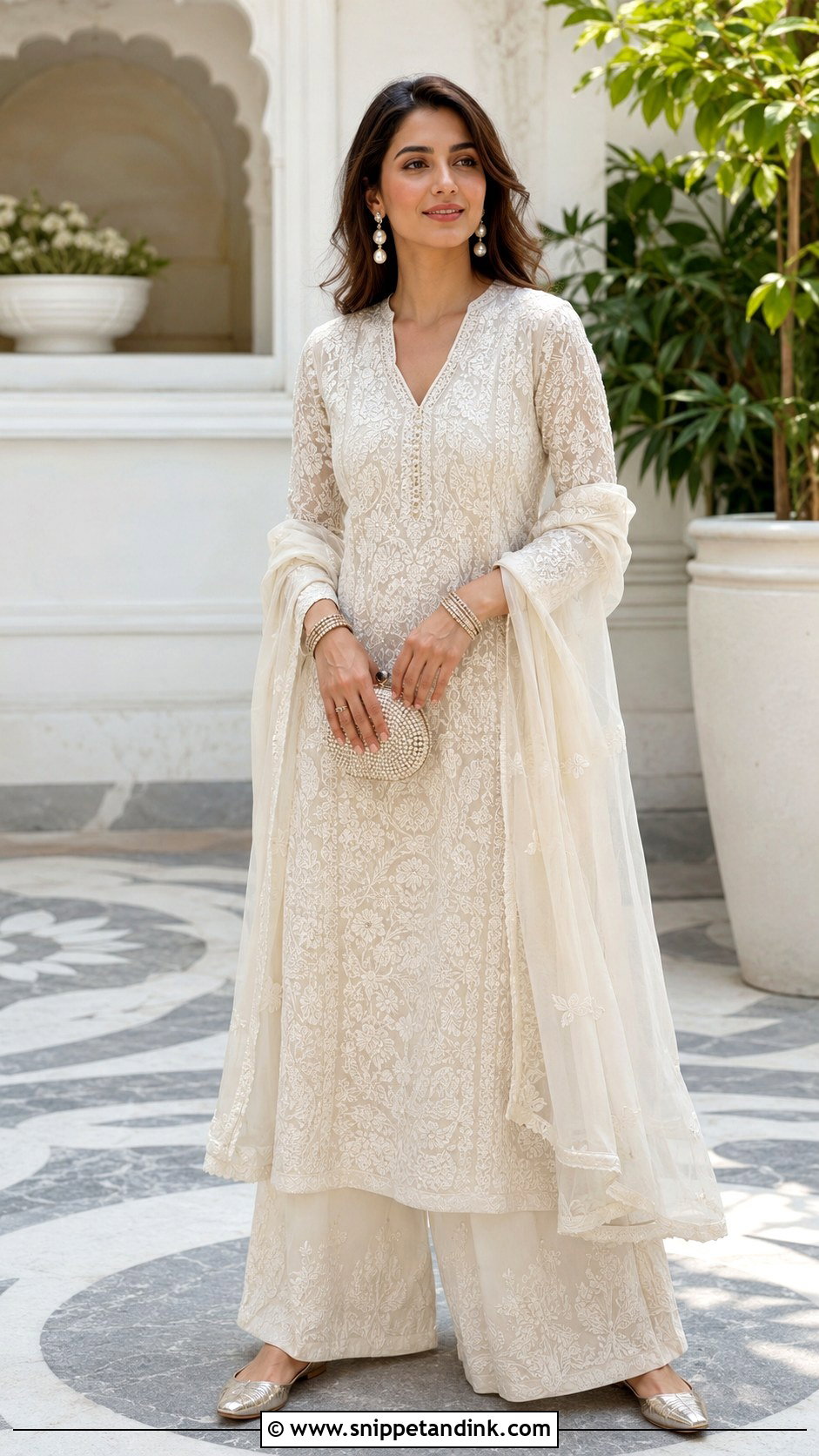
Chikankari is fine hand embroidery from Lucknow, traditionally white thread on pale cotton or georgette, and it’s my pick for a daytime puja or a morning function. A straight or gently flared kurta over wide palazzos in ivory, peach, pistachio, lavender or powder blue lets the stitching show. Mukaish, pearls or a few sequins add sparkle. Layer a sheer dupatta over one shoulder, with pearl earrings, thin bangles, a beaded clutch and metallic flats. Dressing in one colour lengthens the line. Many chikankari fabrics are sheer, so wear a matching full-length lining; in bright sun, a skin-tone slip shows clearly in photos.
13. Peplum Sharara Wedding Outfit
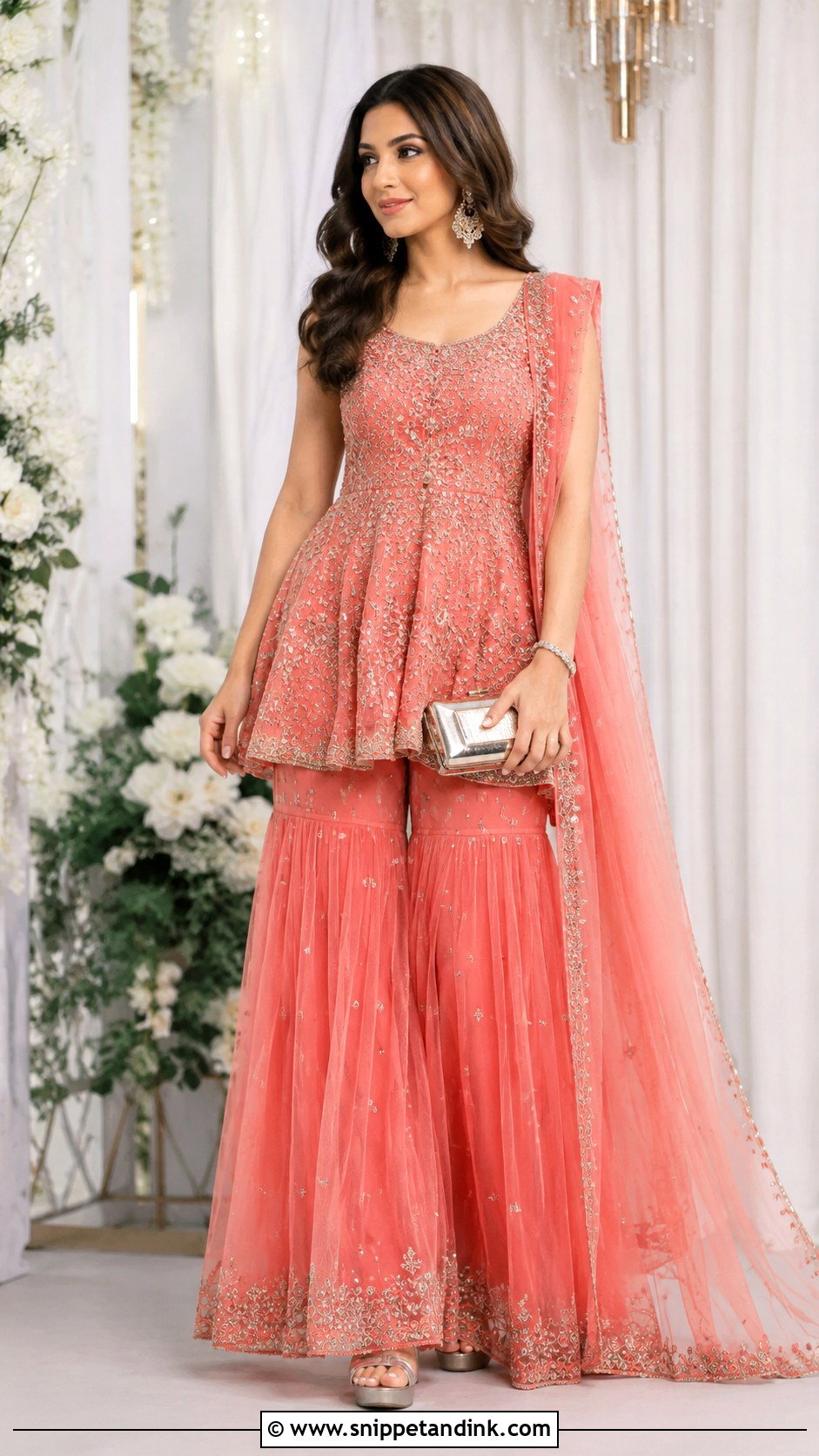
Peplum and sharara is a two-piece that looks fitted on top and moves a lot below. Choose a structured peplum ending at the upper hip, in embroidered silk, brocade or georgette, and softer fabric for the pants so they’re comfortable. Wear a narrow dupatta only if the neckline is plain. Drop earrings, a slim bracelet, a box clutch and metallic platforms finish it. The peplum seam must sit at your natural waist, not below it, or the top looks borrowed. Hem the pants just above the floor in the shoes you’ll actually wear.
14. Dhoti Pant Kurta Wedding Outfit
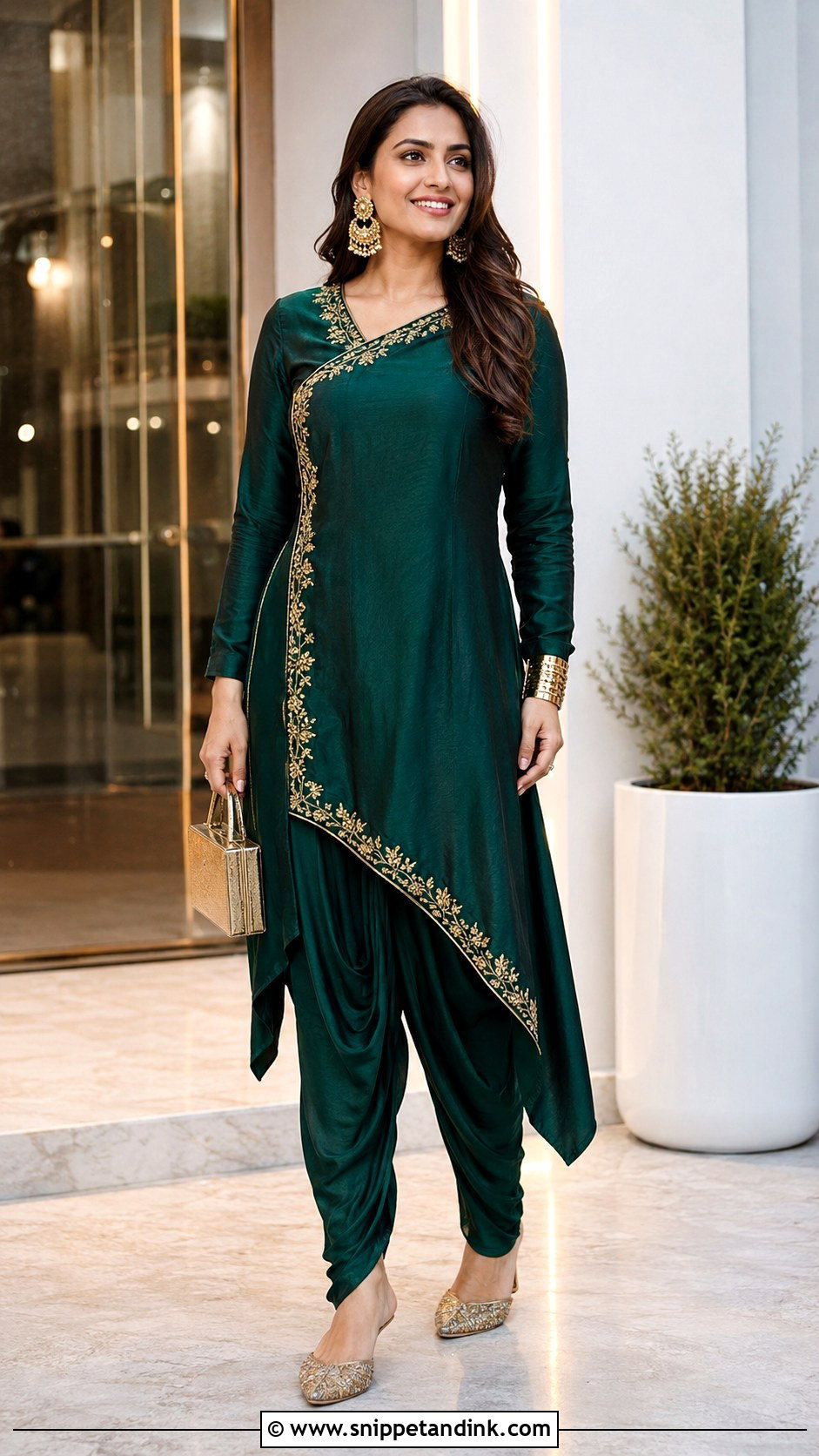
Ready-stitched draped dhoti pants with a short kurta are the most mobile outfit on this list. A short asymmetric kurta, embroidered tunic or high-low top keeps the folds of the pants visible. Silk blends or crepe drape smoothly; stiff cotton doesn’t. Jewel tones for evening, ivory, mustard or coral for day. Bold earrings, a cuff and a small structured bag finish it, with pointed juttis or low mules. A narrow dupatta over one shoulder makes it more traditional. I steer brides toward this for the sangeet when they have choreography to get through.
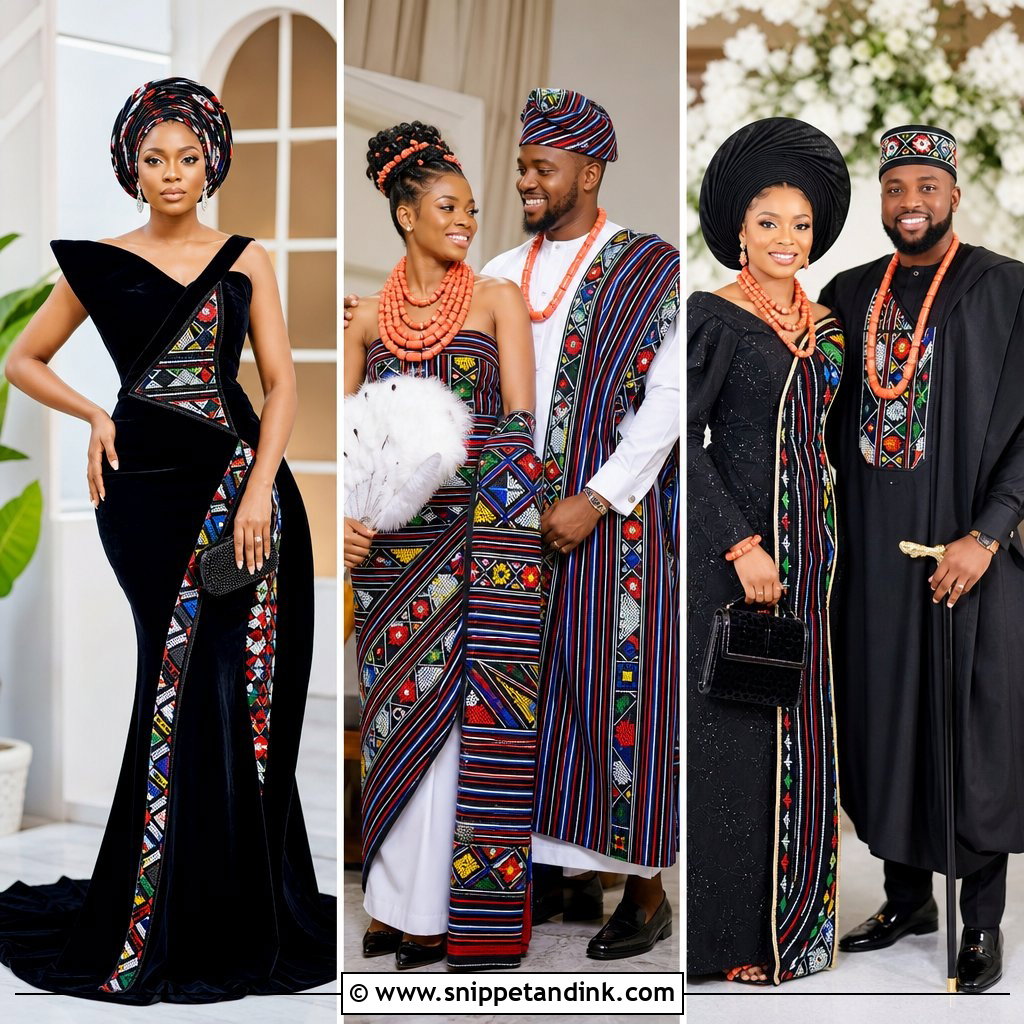
15. Cape Lehenga Wedding Outfit
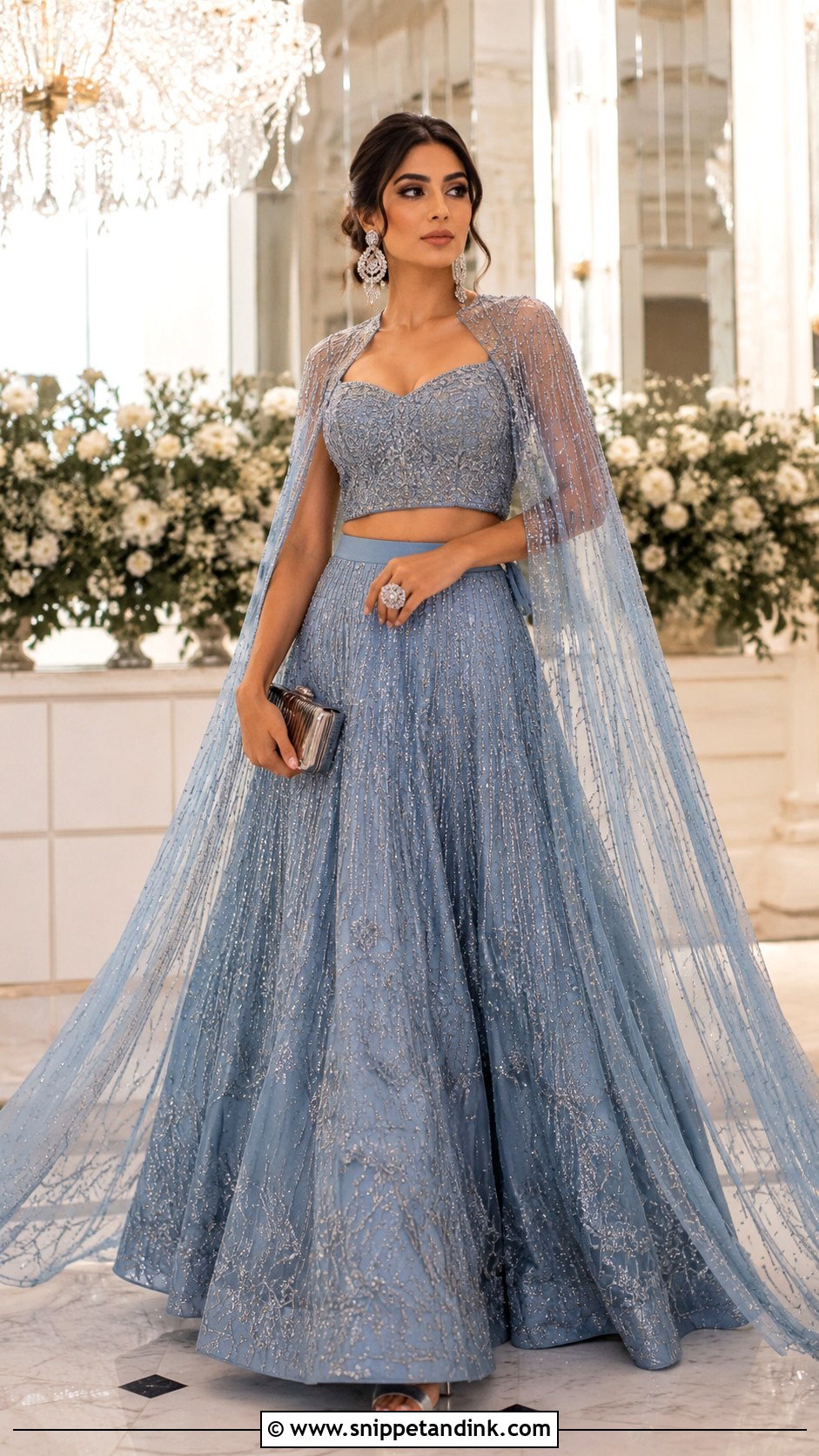
A cape replaces the dupatta, which means one less thing slipping off your shoulder all evening. Over a plain flared skirt and fitted blouse, a sheer embroidered cape at waist length looks young; longer versions move more and cover the arms. If the cape is densely beaded or sequinned, keep the skirt simple. Long earrings, a cocktail ring, a metallic clutch and block-heel sandals are enough, and you can drop the necklace if the cape neckline is ornate. Pin it at the shoulders. Longer capes drift into plates at a buffet, so test the length while holding a bag and a glass.
16. Jacket Lehenga Wedding Outfit
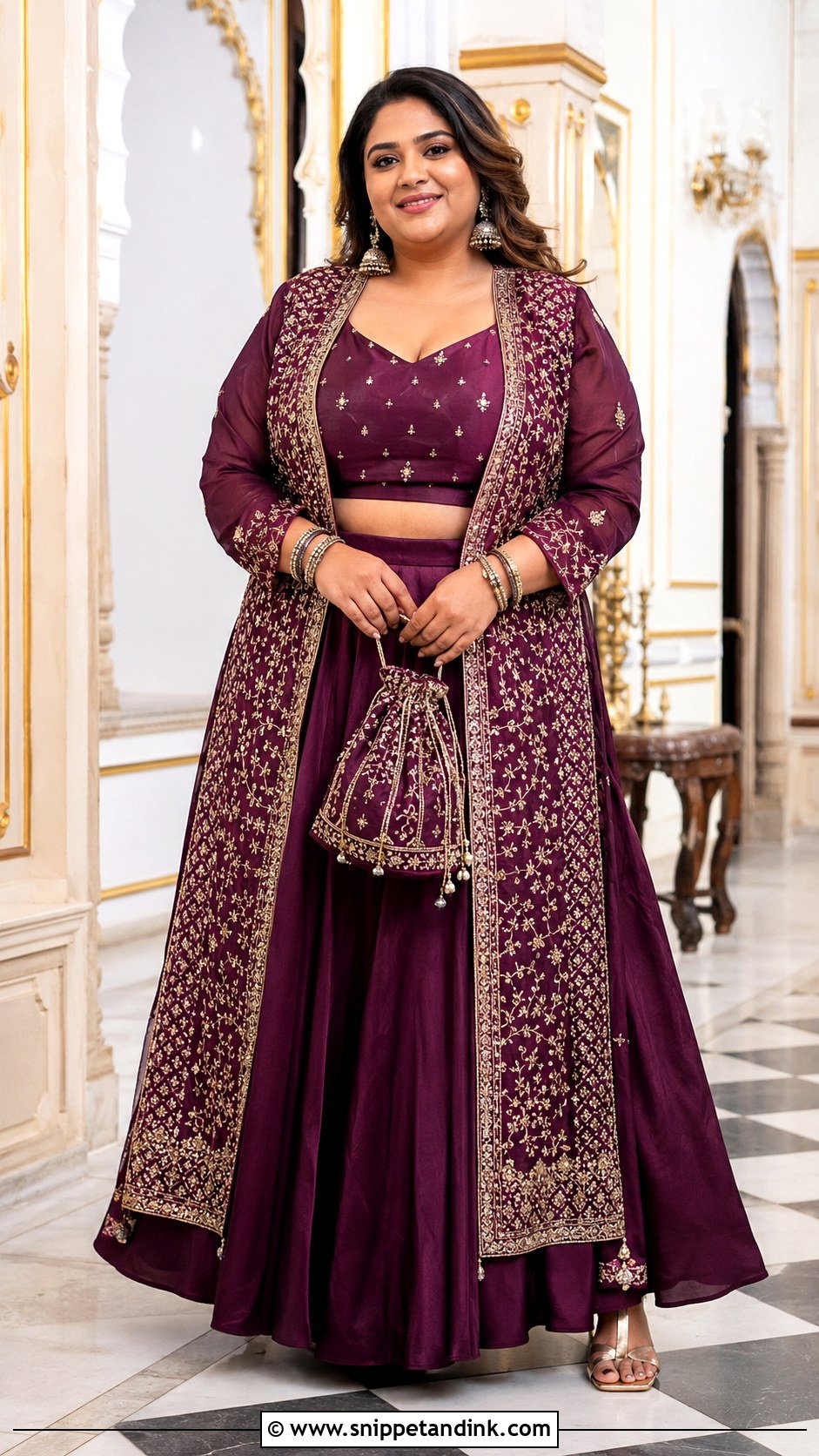
A jacket lehenga gives you warmth and coverage for a cool evening. Pair a flared skirt and fitted blouse with an open-front embroidered jacket anywhere from knee to ankle length; the long version streamlines, the shorter one feels lighter. Match colours closely, or put a jewel-tone jacket over a neutral skirt. Choker or drop earrings, stacked bangles, a compact potli and comfortable block heels finish it, and the dupatta can stay at home. Check the armholes. Heavily embroidered jackets are stiff, and tight sleeves make it hard to raise your arms for the dance floor. Jacket length, embroidery placement and volume can all be adjusted to suit any size.
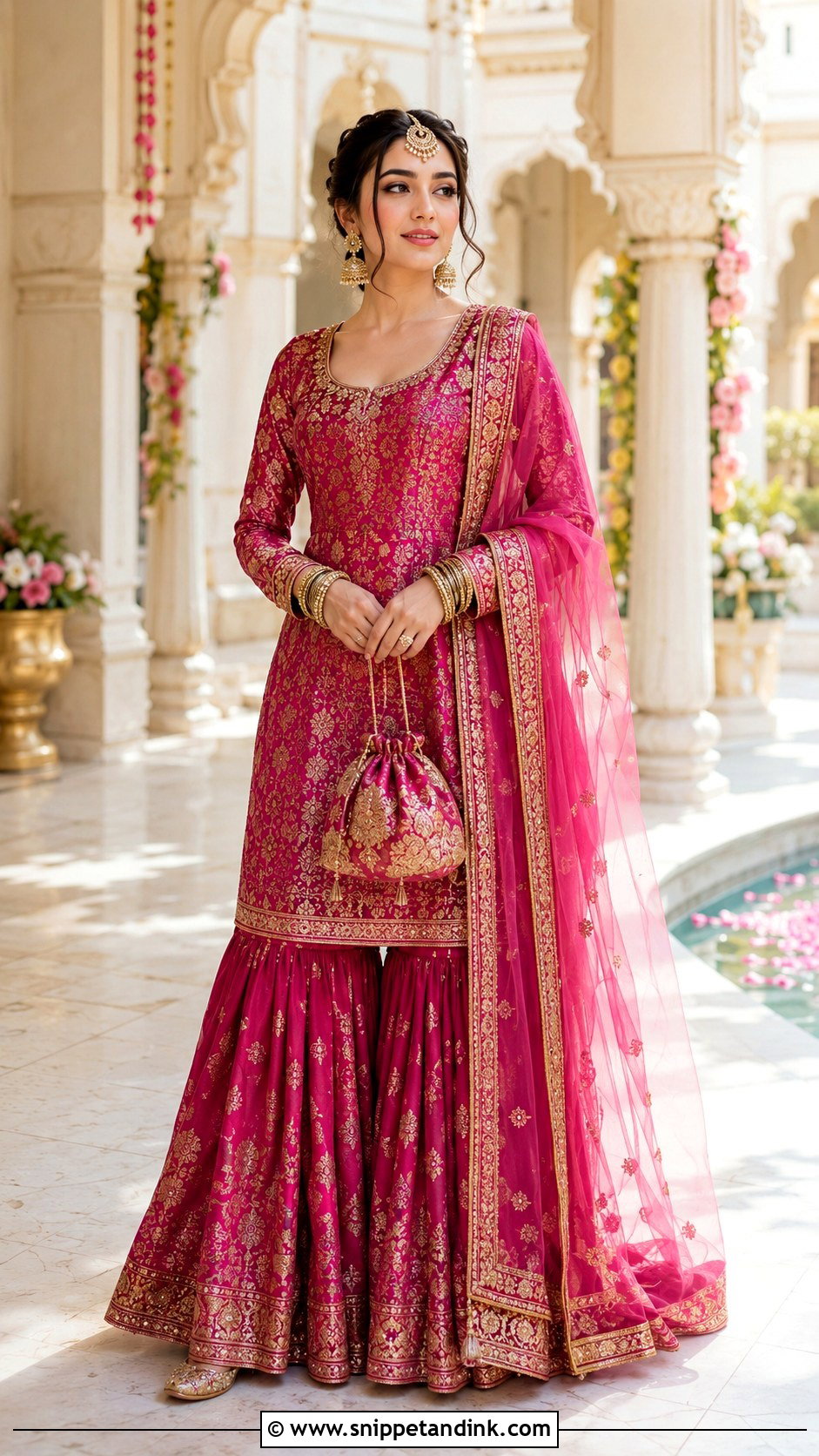
17. Patiala Suit Wedding Outfit
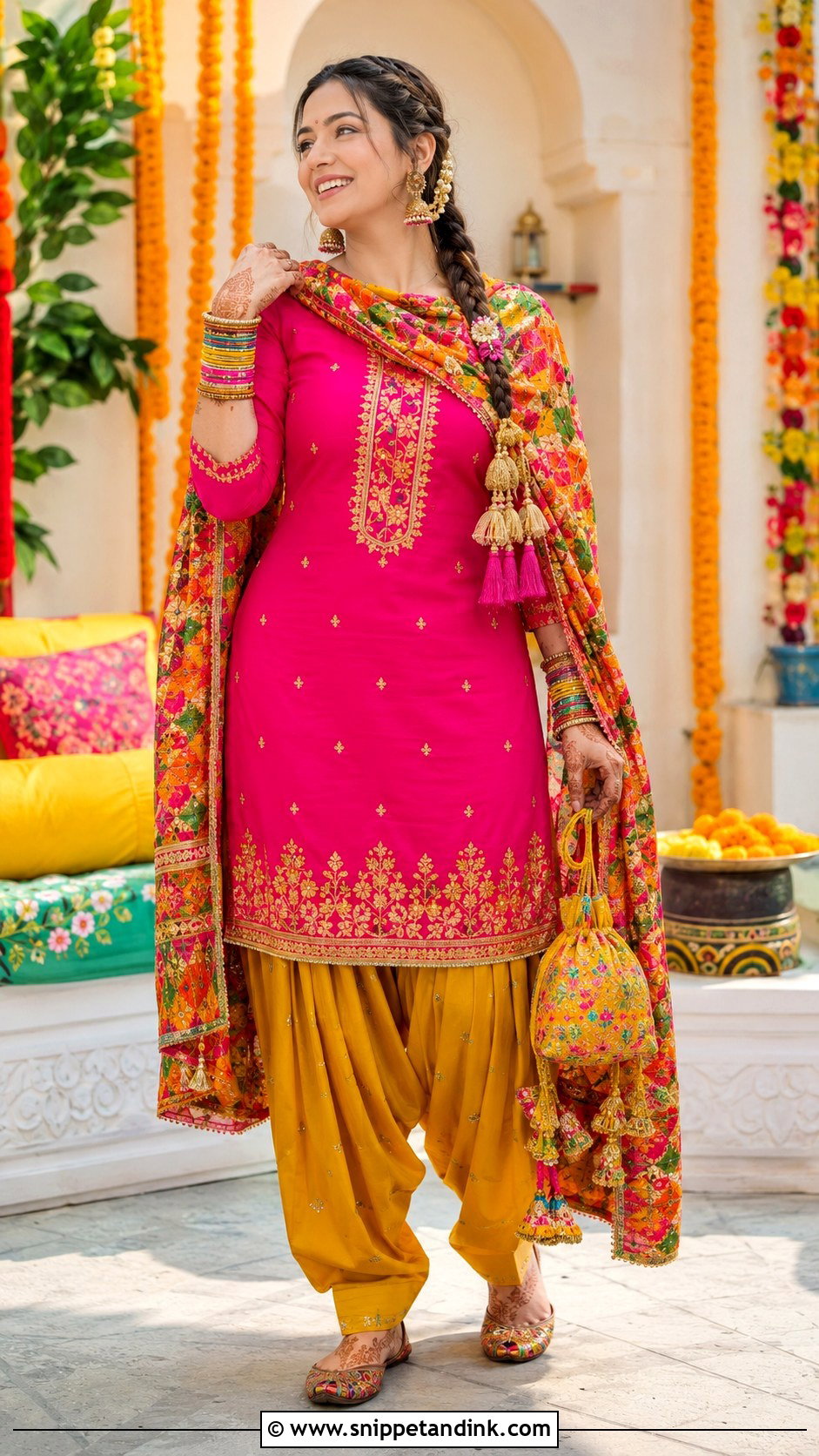
A Patiala suit brings colour and volume to a mehndi or daytime function. The pants are heavily pleated and gathered at the ankle, so pair them with a fitted knee-length kameez that lets the folds show. Phulkari, gota borders or bright colour blocking give it a Punjabi character. Drape the dupatta over one shoulder or around both arms, add jhumkas, colourful bangles, a fabric potli and Punjabi juttis. A paranda woven into a long braid adds the traditional tassels at the end. Patiala pants use a lot of fabric, so for summer venues I’d choose cotton silk or georgette. The waist should sit comfortably and the ankle cuff should grip enough that the pleats don’t drop.
18. Paithani Saree Wedding Outfit
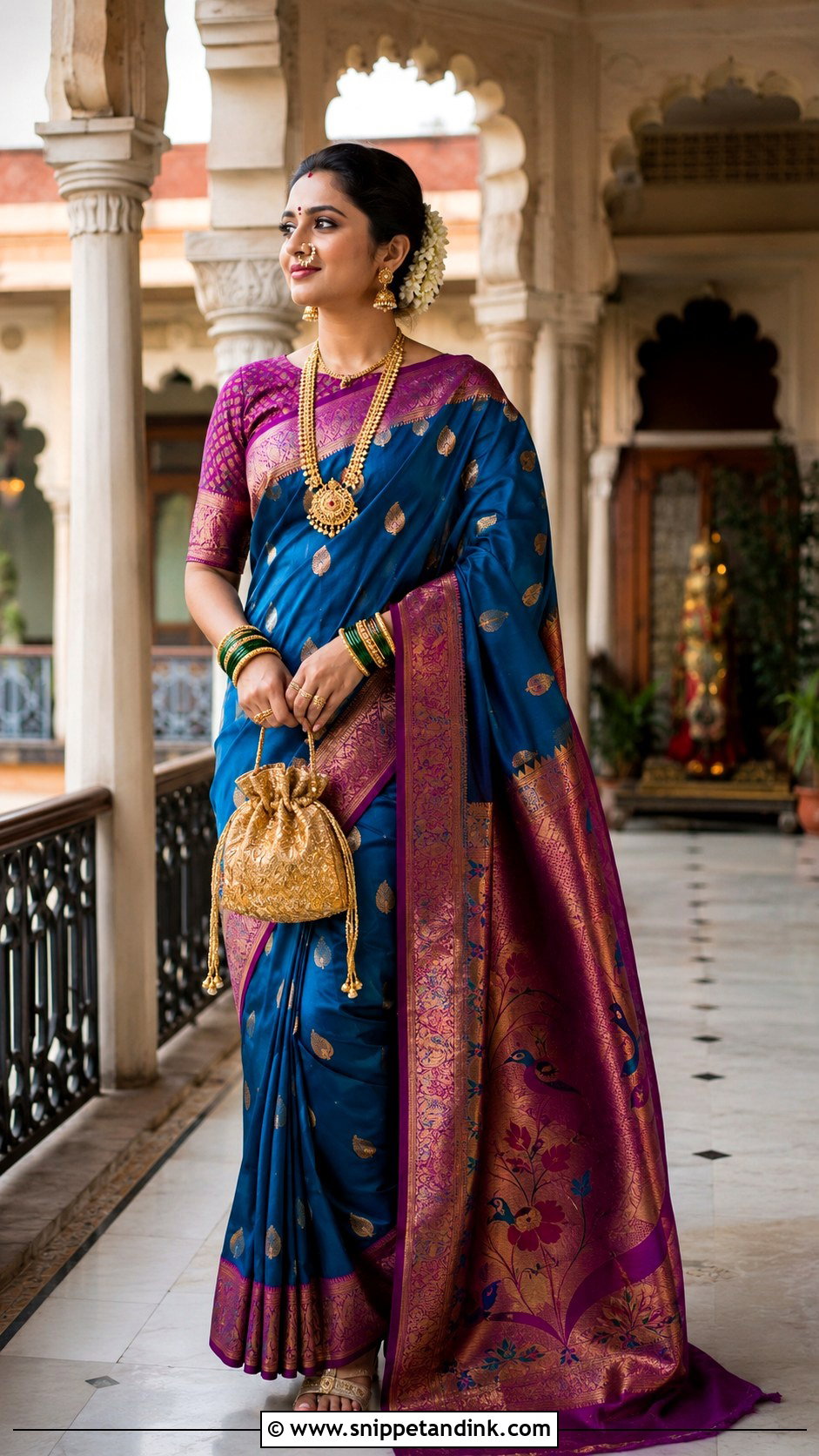
Paithani is a Maharashtrian silk saree known for its contrast border and a pallu woven with motifs such as peacocks and lotuses. Purple, green, pink and peacock blue are the wedding classics. Choose a fitted silk blouse in one colour from the border, and keep it plain; the weave already does the work. Drape crisply so the pallu shows across the shoulder. Traditional gold jewellery, green bangles, a nose pin, a compact potli and low gold heels finish it, with a flower-wrapped bun. A firm petticoat and well-pinned pleats keep it sitting comfortably through a long ceremony.
19. Half Saree Wedding Outfit
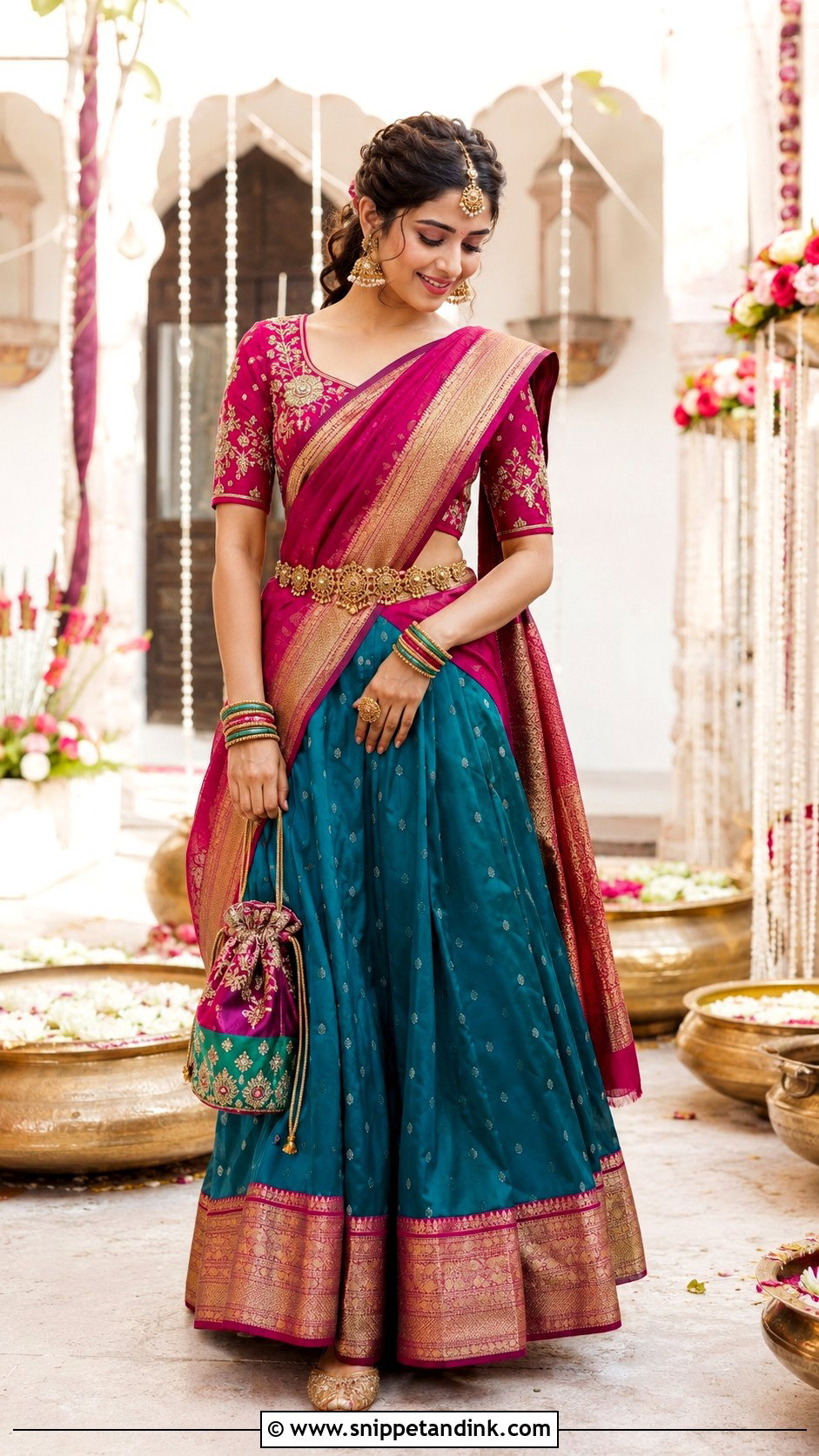
The half saree, worn in South India for coming-of-age ceremonies and weddings, sits between a lehenga and a saree: long skirt, fitted blouse and a dupatta draped diagonally like a pallu. Silk suits a traditional ceremony; georgette suits a lighter event. Contrast works well here: teal and magenta, mustard and green, blue and coral. Temple earrings, bangles, a waist belt, an embroidered potli and gold juttis or low sandals complete it. The diagonal drape needs pinning at the waist and shoulder, or it creeps when you walk. It’s a natural choice for bridesmaids and younger relatives.
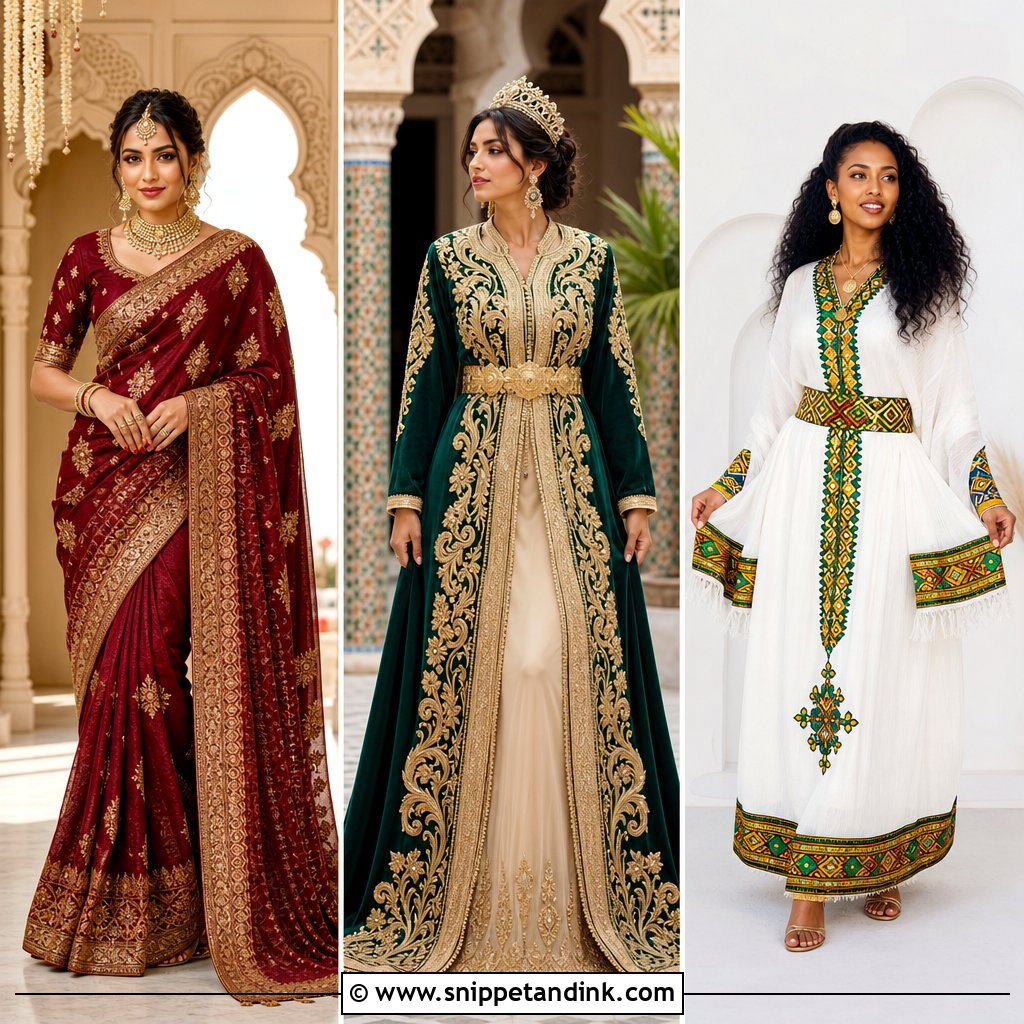
20. Indo-Western Draped Skirt Wedding Outfit
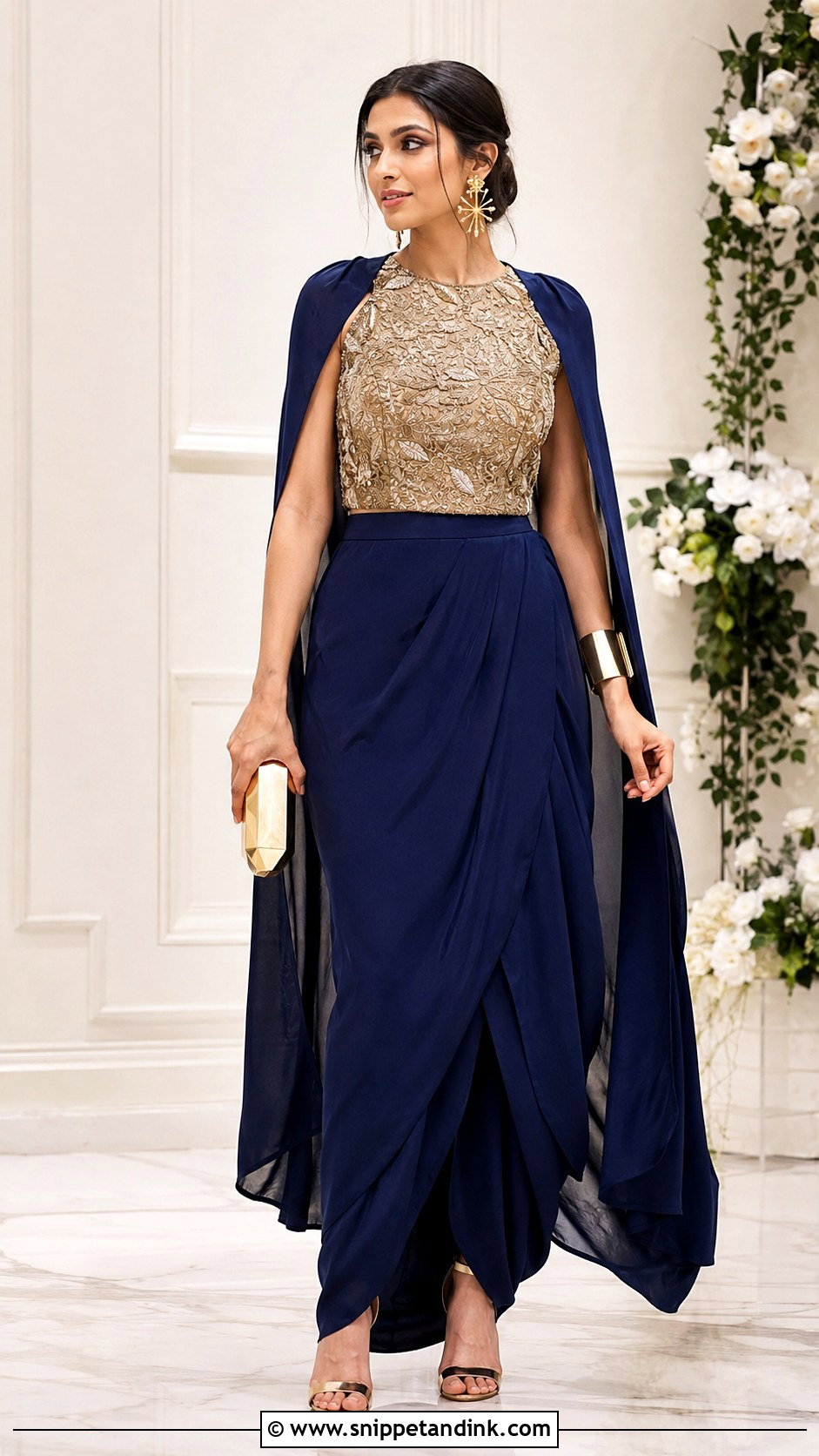
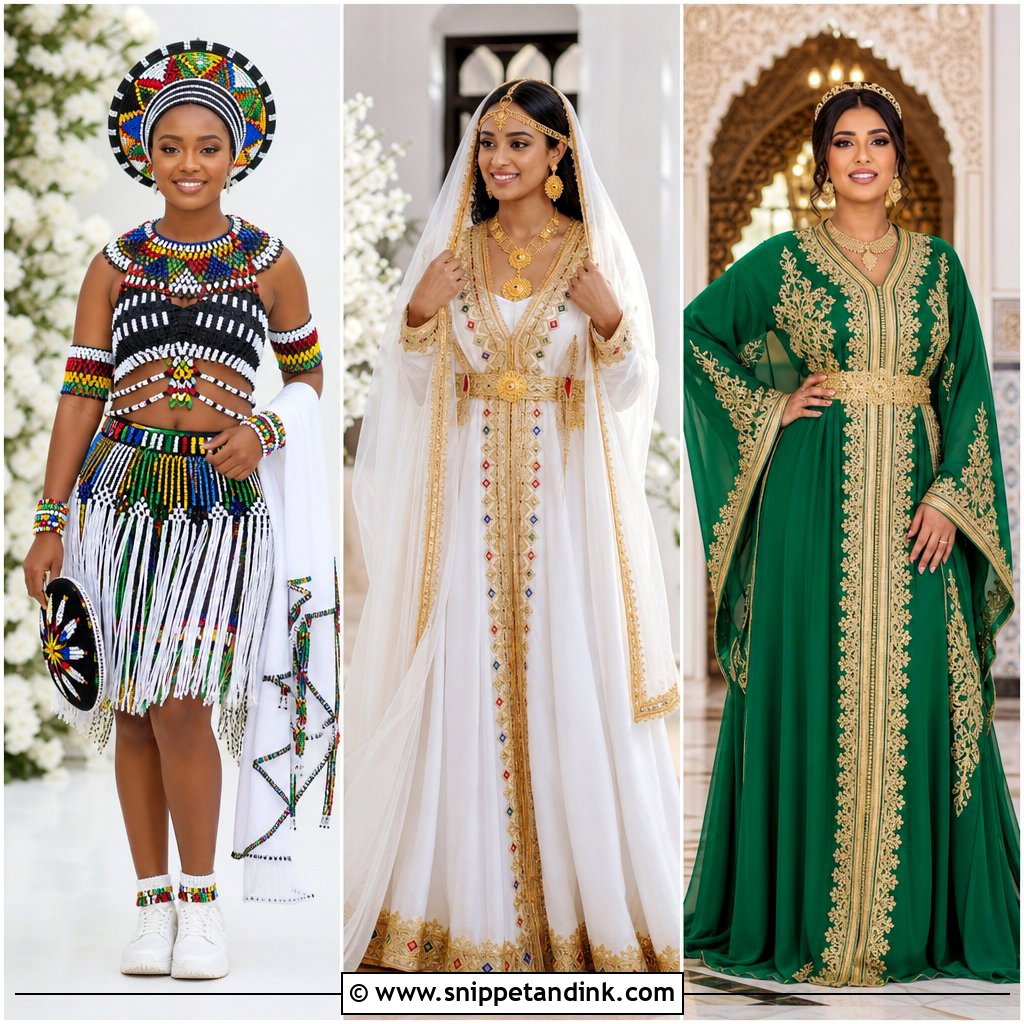
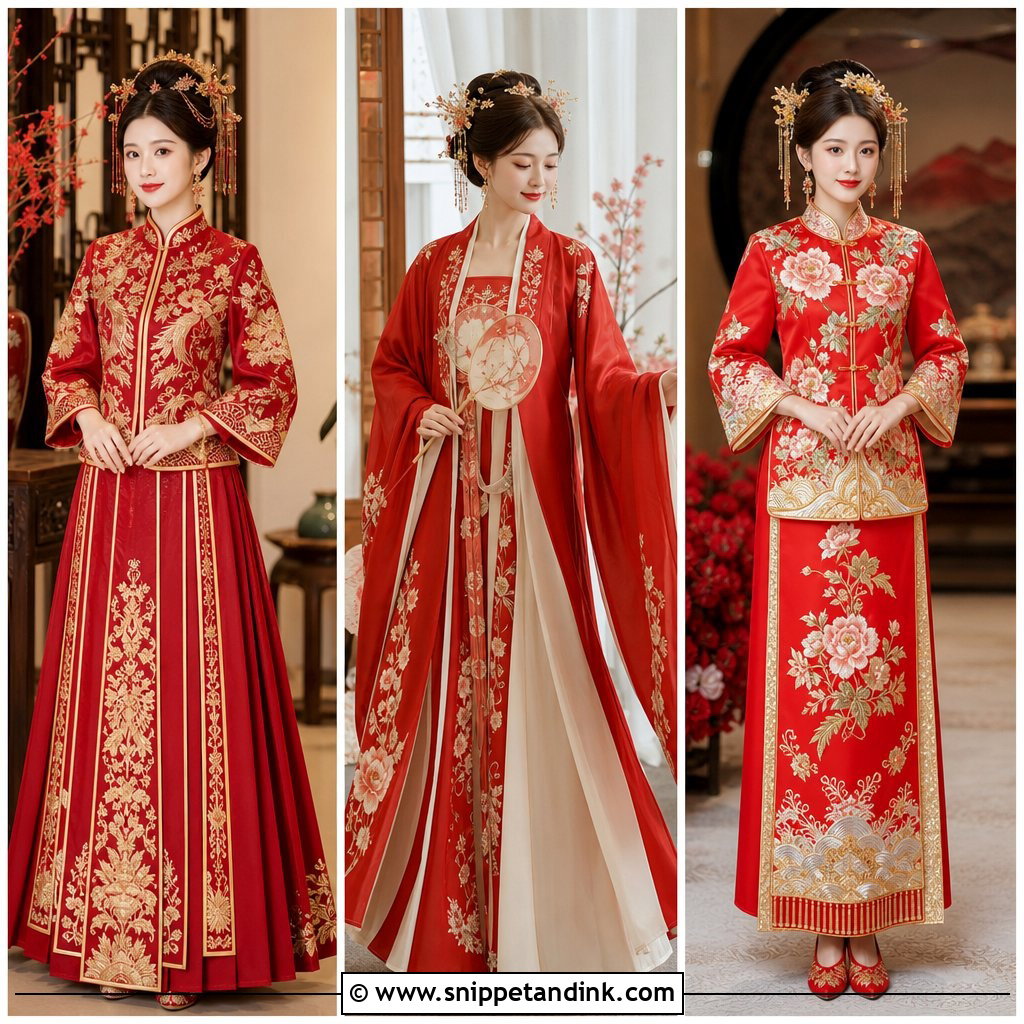
A draped skirt with an embroidered top makes a versatile Indo-Western outfit for receptions or a sangeet. Look for soft pleats or a sari-style overlap, paired with a structured blouse, peplum top or short jacket. Crepe, satin and georgette move smoothly, and beadwork or threadwork keeps the ethnic link. A detachable shoulder drape replaces the dupatta and stays put. Sculptural earrings, a sleek cuff, a modern clutch and metallic heels finish it. Keep the palette tight, because mixed silhouettes in mixed colours look busy. Afterwards, the skirt and top work as separates.
Blouse Stitching, Fall and Pico: The Tailoring Nobody Mentions
Most ready lehengas and sarees arrive with an unstitched blouse piece, and that’s where outfits go wrong at the last minute. Tailors get very busy in wedding season, so I hand over fabric as soon as it’s bought and allow a few weeks plus one trial fitting. Wear the bra you’ll wear on the day to that fitting.
A new saree also needs a fall and pico. The fall is a strip of fabric stitched inside the lower hem to give it weight so the pleats hang straight; the pico is a finish along the raw edges that stops fraying. Most tailors do both quickly, but not on the morning of the wedding.
What I pack for every draped outfit
- A strip of safety pins in two sizes, plus a brooch for the pallu
- A petticoat in matching colour with a firm drawstring
- Double-sided fabric tape for blouse necklines
- A small sewing kit with thread in the outfit’s colour
After the wedding, air silk and zari before storing, wrap them in muslin rather than plastic, and refold along new lines every few months so the metallic thread doesn’t crack at the creases.
Dress for the Ritual First, Then for the Photos
Each of these outfits suits a particular ceremony, season and comfort need. A saree feels classic; a lehenga brings movement; sharara, gharara, Anarkali and palazzo sets are easier to wear through long events; and cape, jacket or draped-skirt styles add structure without losing their roots. Think about the venue, the weather, the customs of the ceremony and how many hours you’ll be in it. Then practise in your shoes, pin every drape, and give your tailor plenty of time. Wear the colours and shapes that let you sit, bow, dance and feel respectful and like yourself.
You'll Like These Ideas:


Leave a Reply