
A Pakistani wedding isn’t one hairstyle, it’s four or five, spread over a week of very different functions. The Barat asks for a bun that can carry a heavy dupatta, the Mehndi wants something you can dance in, and the Walima can relax into waves. What ties them together is structure you can’t see. Most of my planning goes into matha patti placement, passa anchors, fresh flowers and where the dupatta will be pinned, long before we talk about curls. The fifteen styles below are the ones I build most often for brides and their families, with what each one needs to stay put.
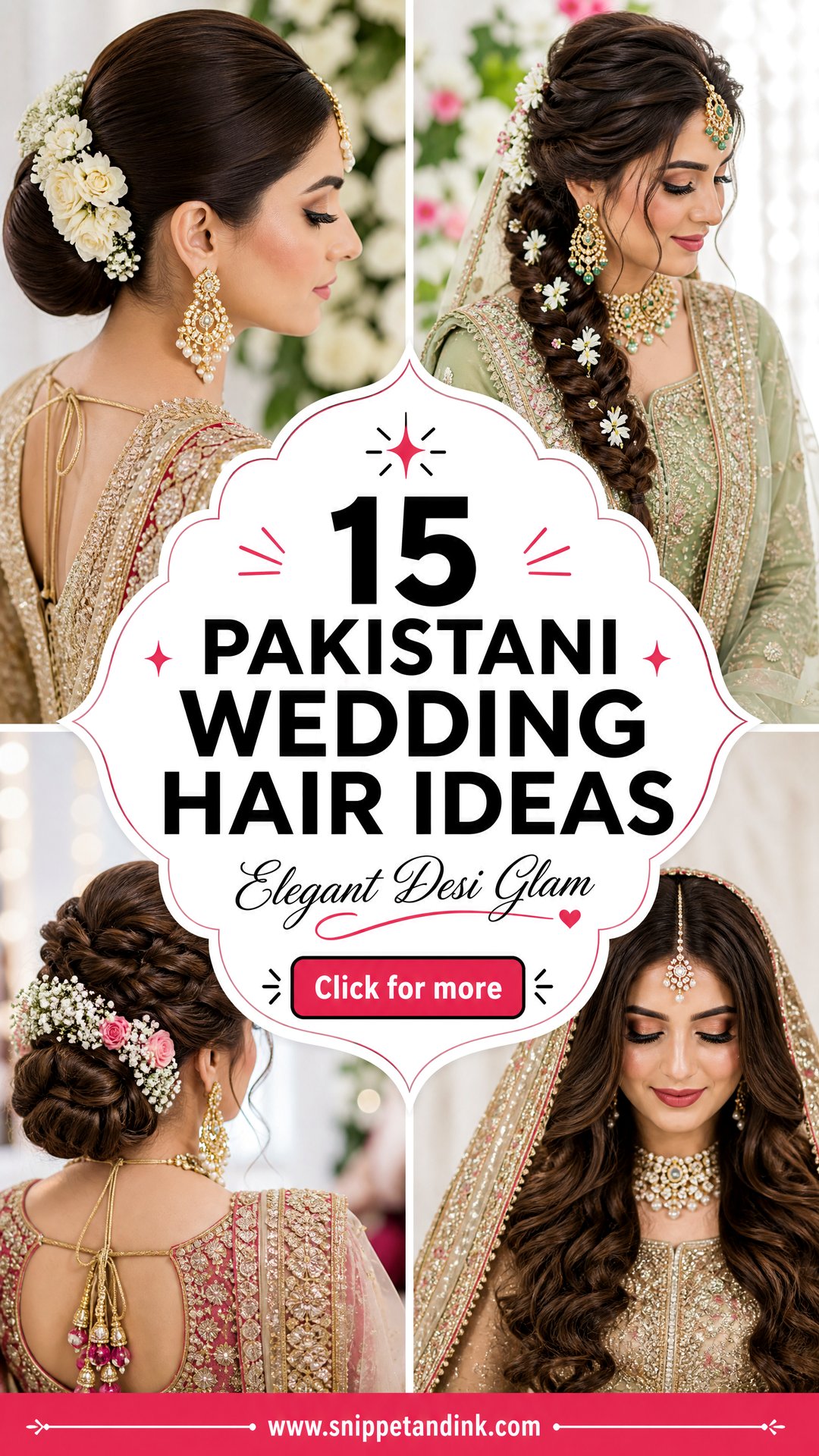
Mayun Through Walima, Planned as One Week of Hair
The hairstyles get the attention, but the bigger risk across a Pakistani wedding week is what happens to your hair between events. Several days of heat styling, spray and pins in a row will leave it dry and harder to curl by the last function. I plan the week as a whole.
- Mayun: keep it simple. A loose plait or low bun copes with turmeric paste and oil much better than curls, and you’ll want to wash afterward anyway.
- Mehndi and dholki: braids, bubble braids or a side braid. They survive dancing and don’t need touch-ups.
- Barat: the most structured look of the week, built around the heaviest dupatta and jewelry. This is the day for a sleek or braided bun.
- Walima: the softest look. Plan a full wash after the Barat so the hair isn’t still stiff with product.
Use a heat protectant before every hot tool, sleep with your hair in a loose braid on a smooth pillowcase between functions, and avoid washing more than you need to in between. Second-day hair often holds a bun better than freshly washed hair, which is useful for the Barat if you washed after the Mehndi.
1. Pakistani Bridal Low Bun
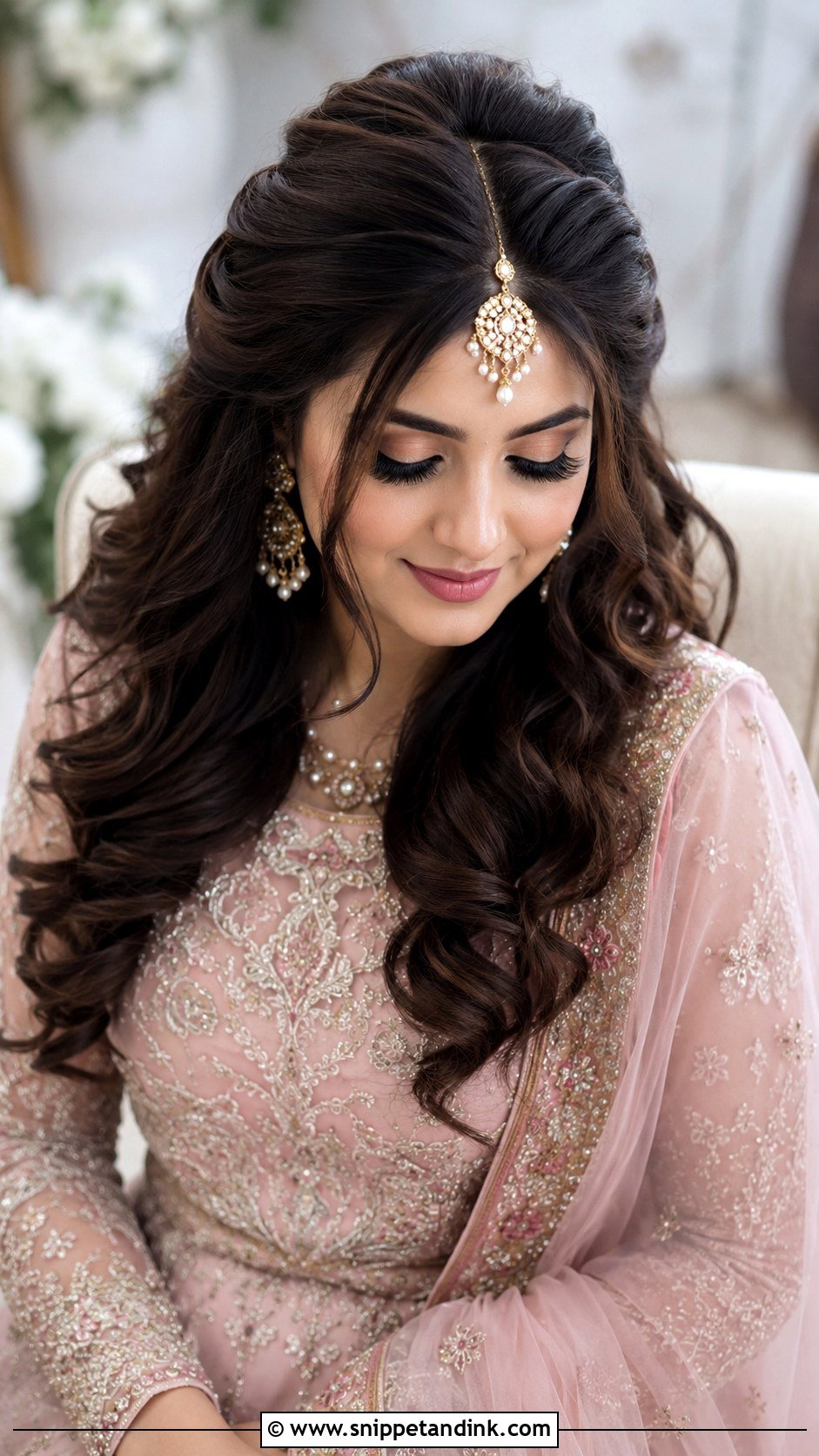
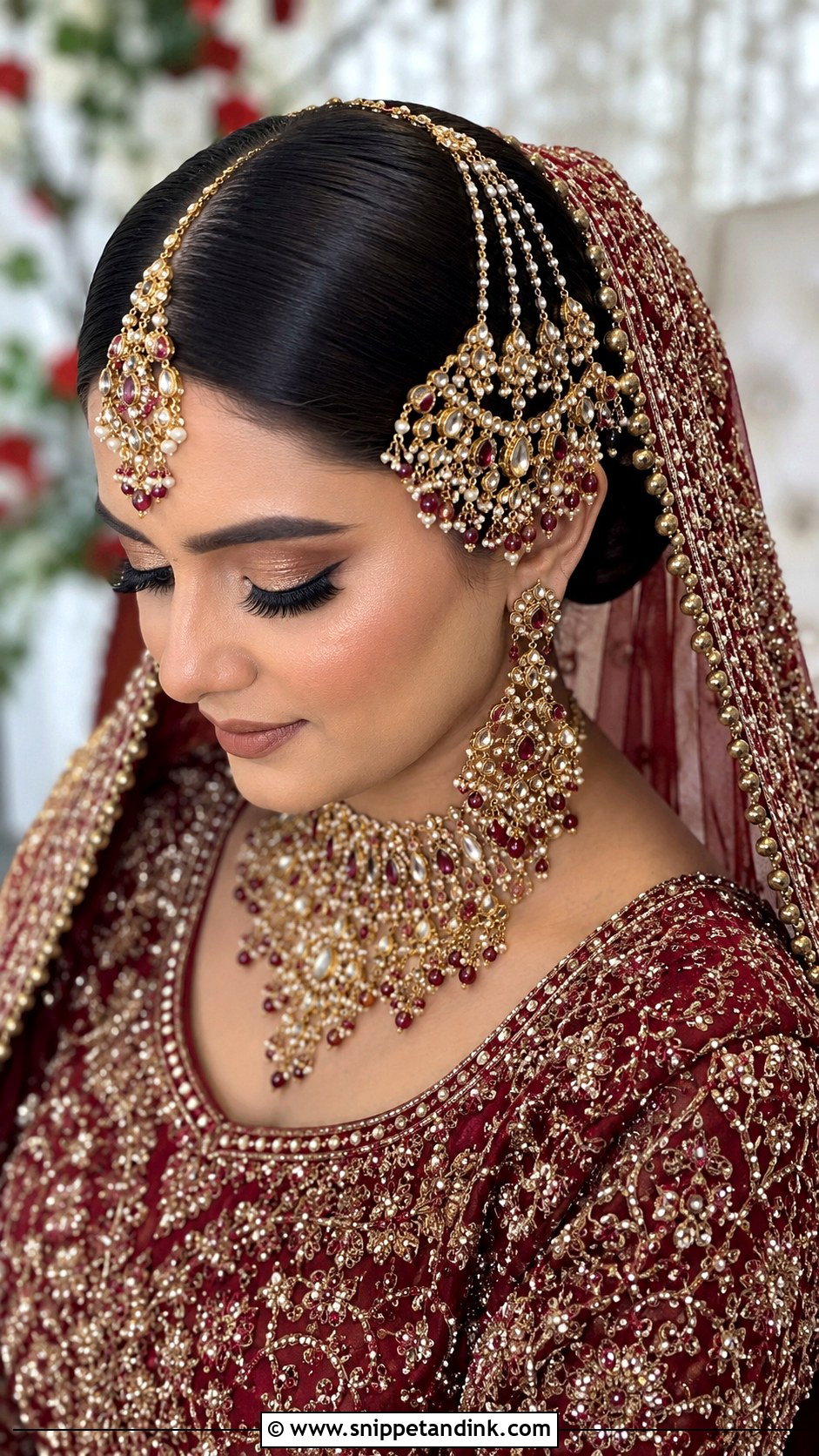
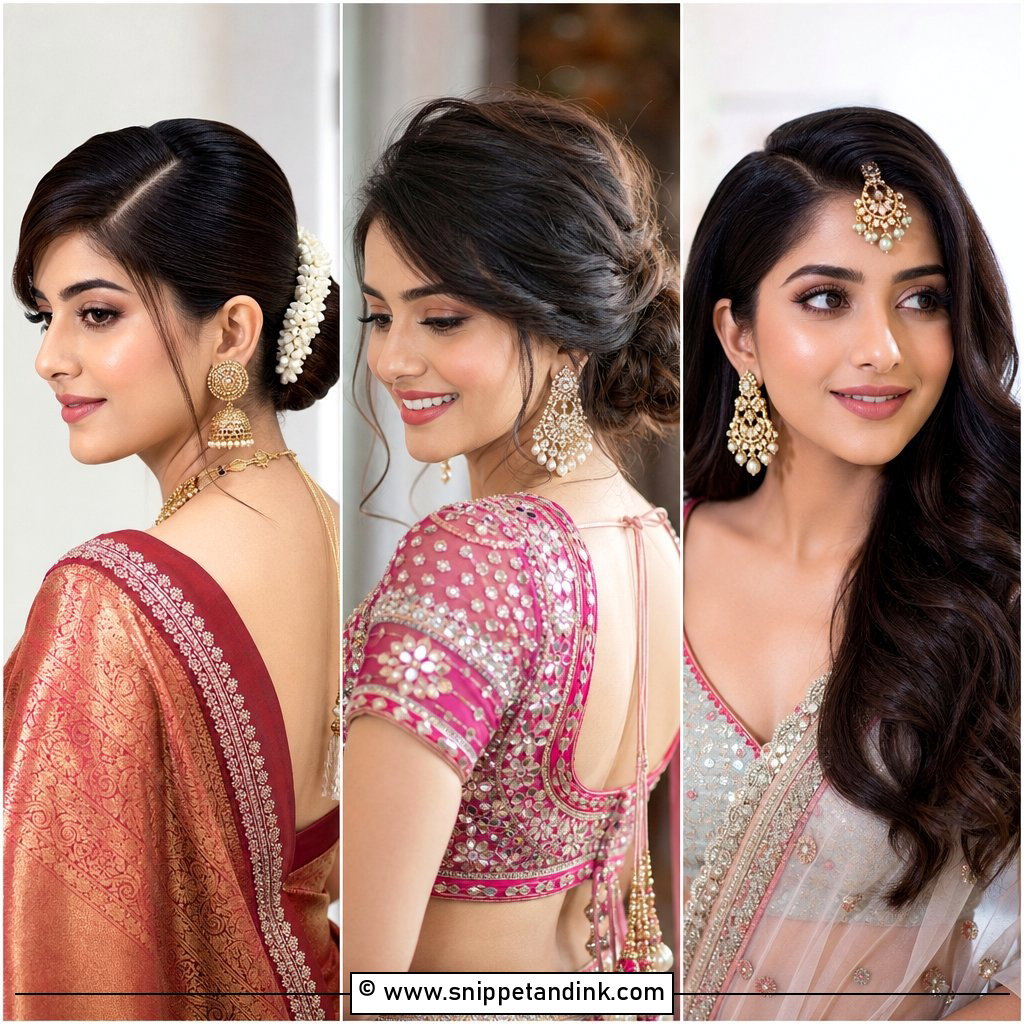
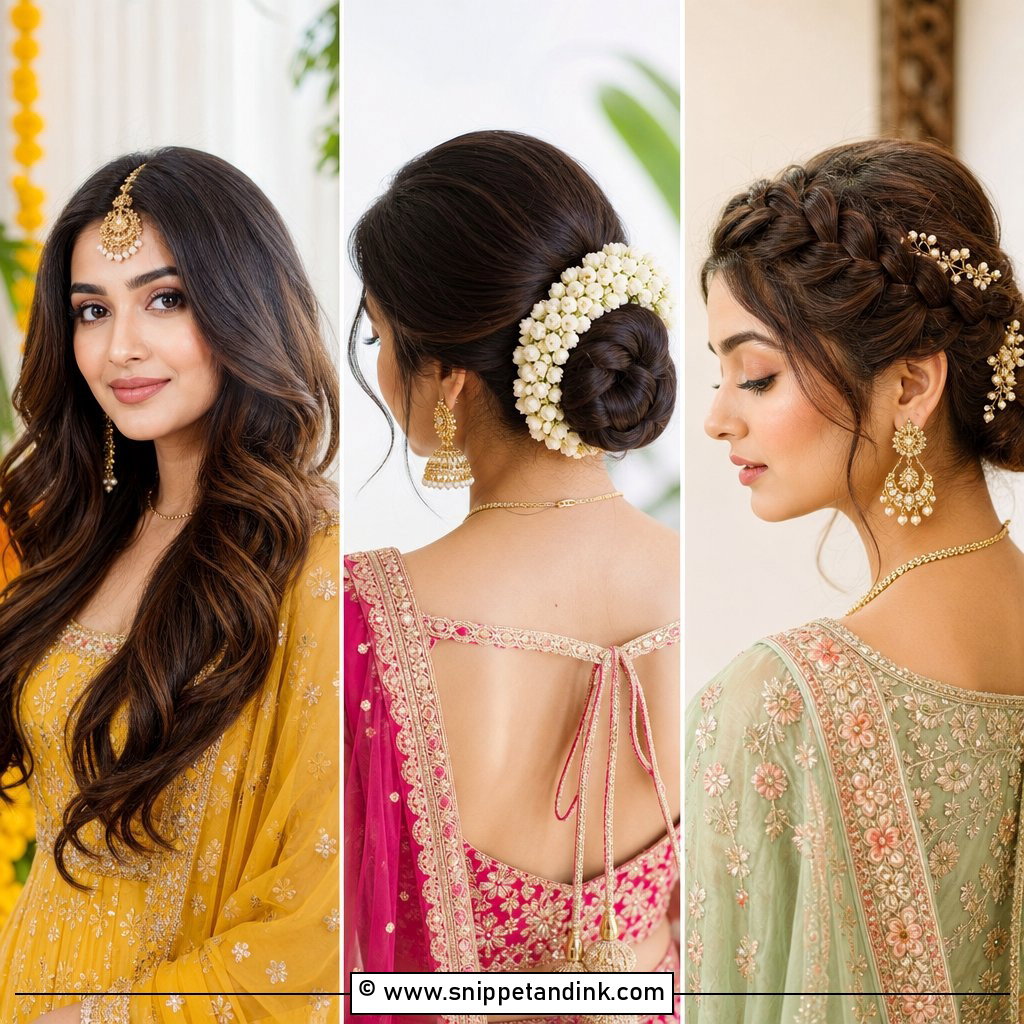
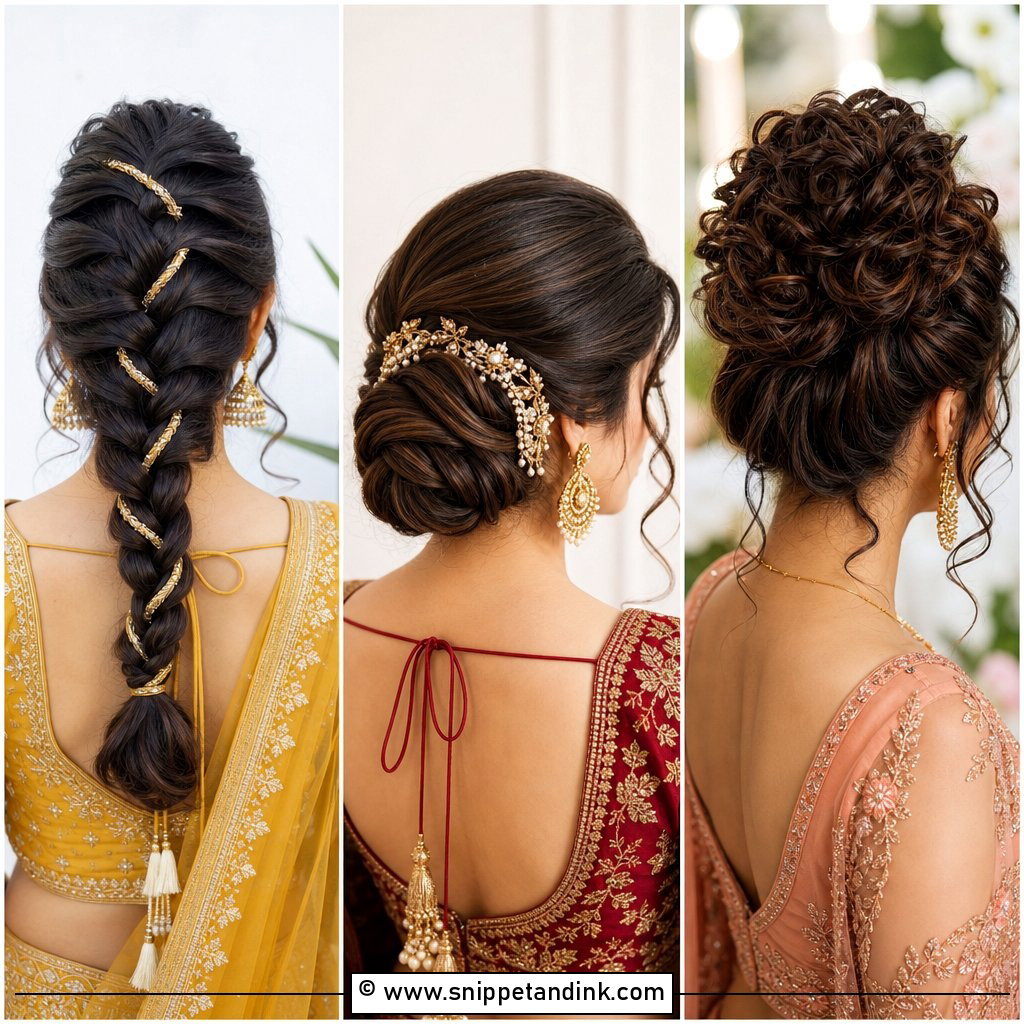
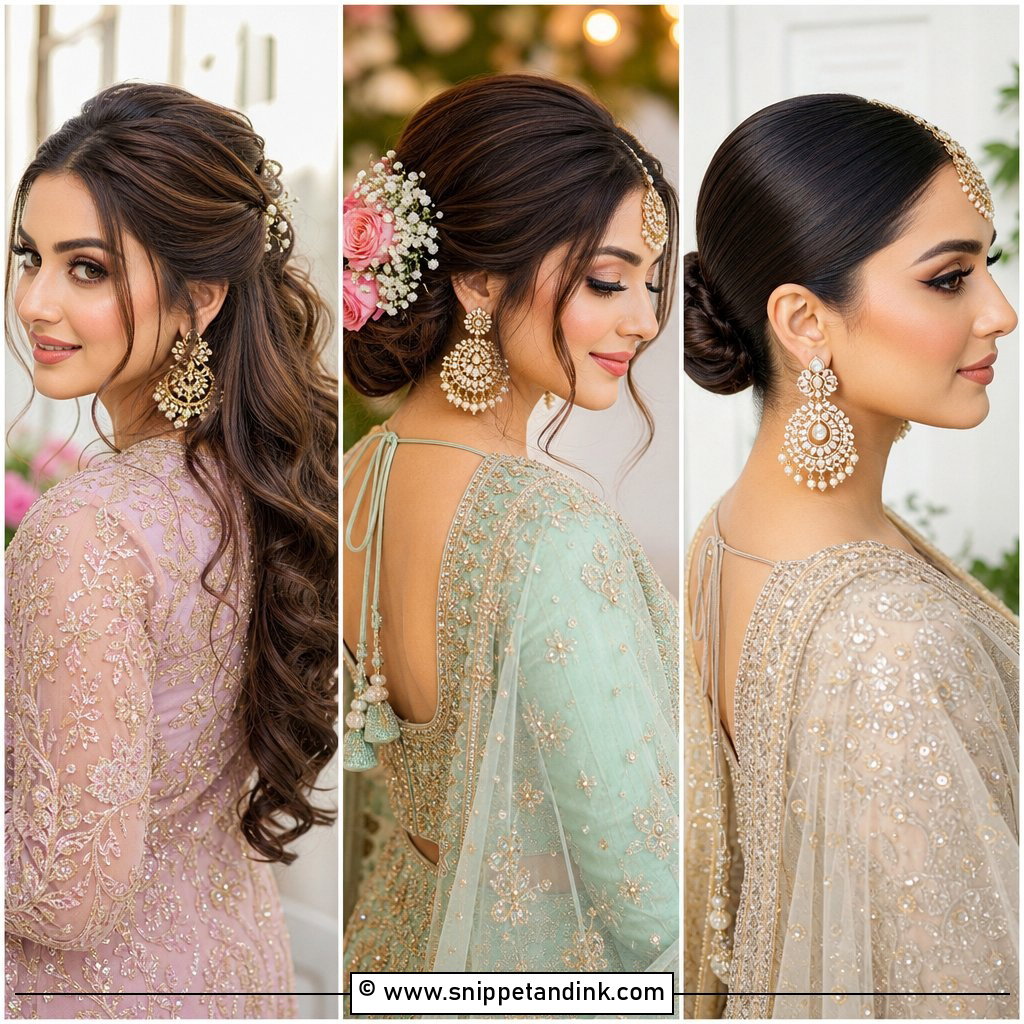
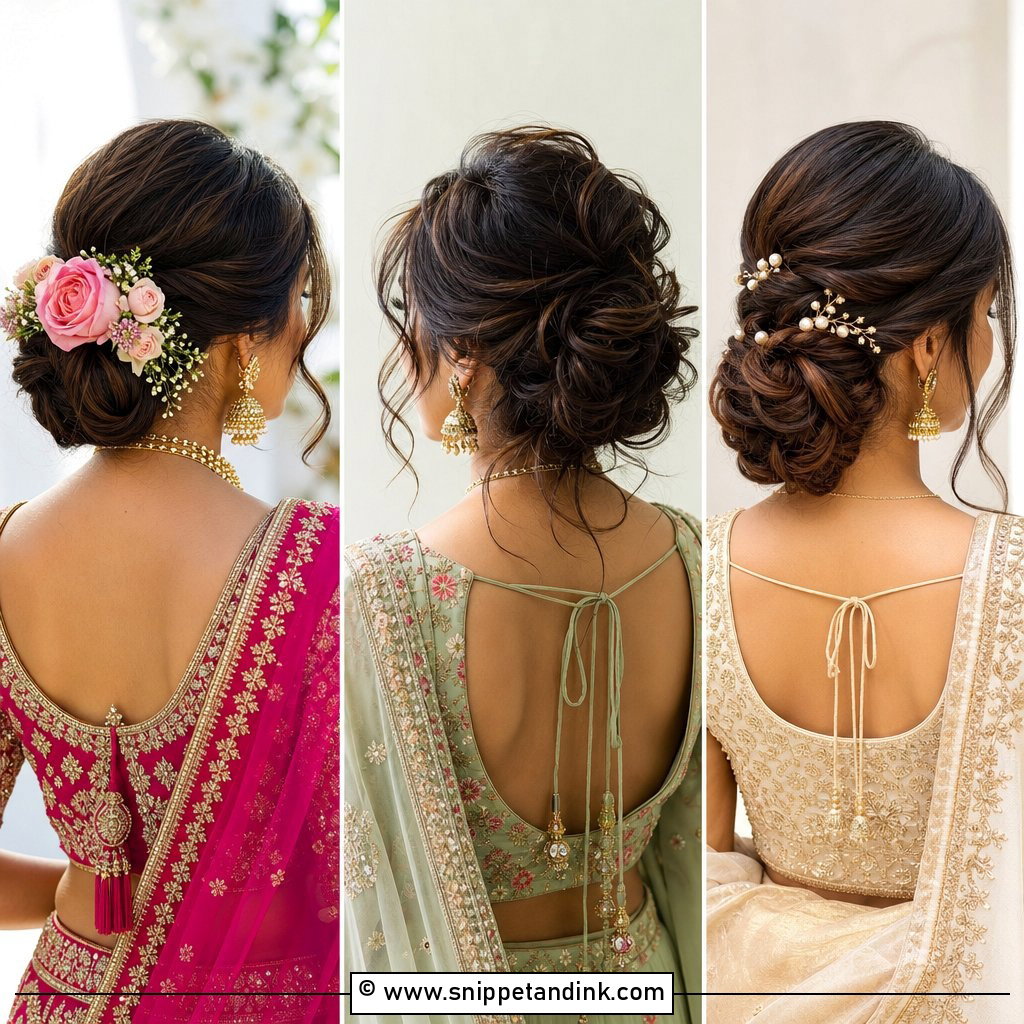
If I had to pick one style for a Barat, it would be this. A Pakistani bridal low bun sits at the nape, under the weight of the dupatta rather than in its path, so pins and jewelry can be secured without dragging on the scalp. It pairs naturally with a centre part, a matha patti and a little lift at the crown, and it leaves the neckline open for chokers and jhumkas. Ask for hidden pinning and a smooth surface, not a lacquered helmet. Two soft pieces at the temples stop it looking severe.
2. Pakistani Wedding Floral Bun
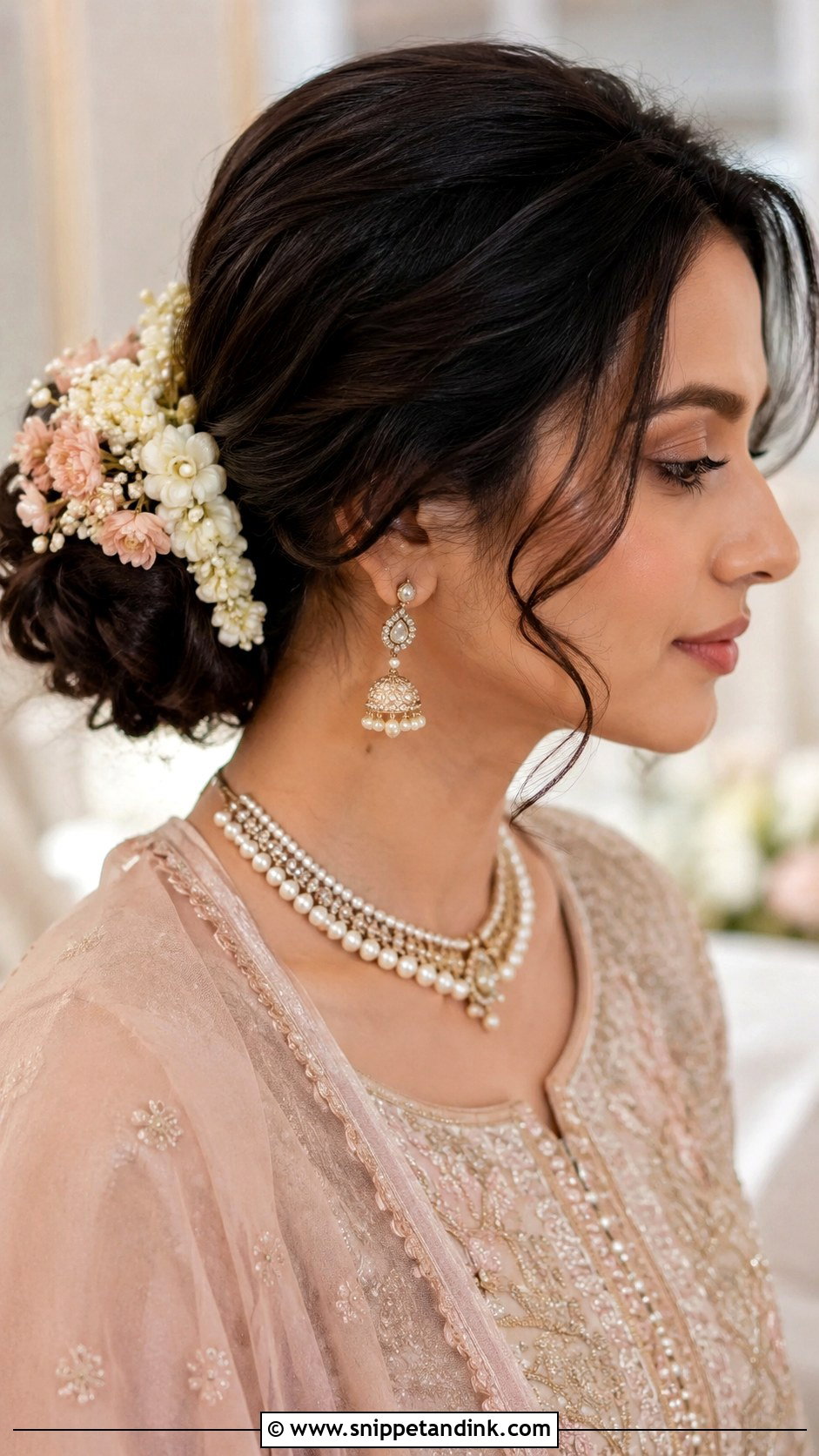
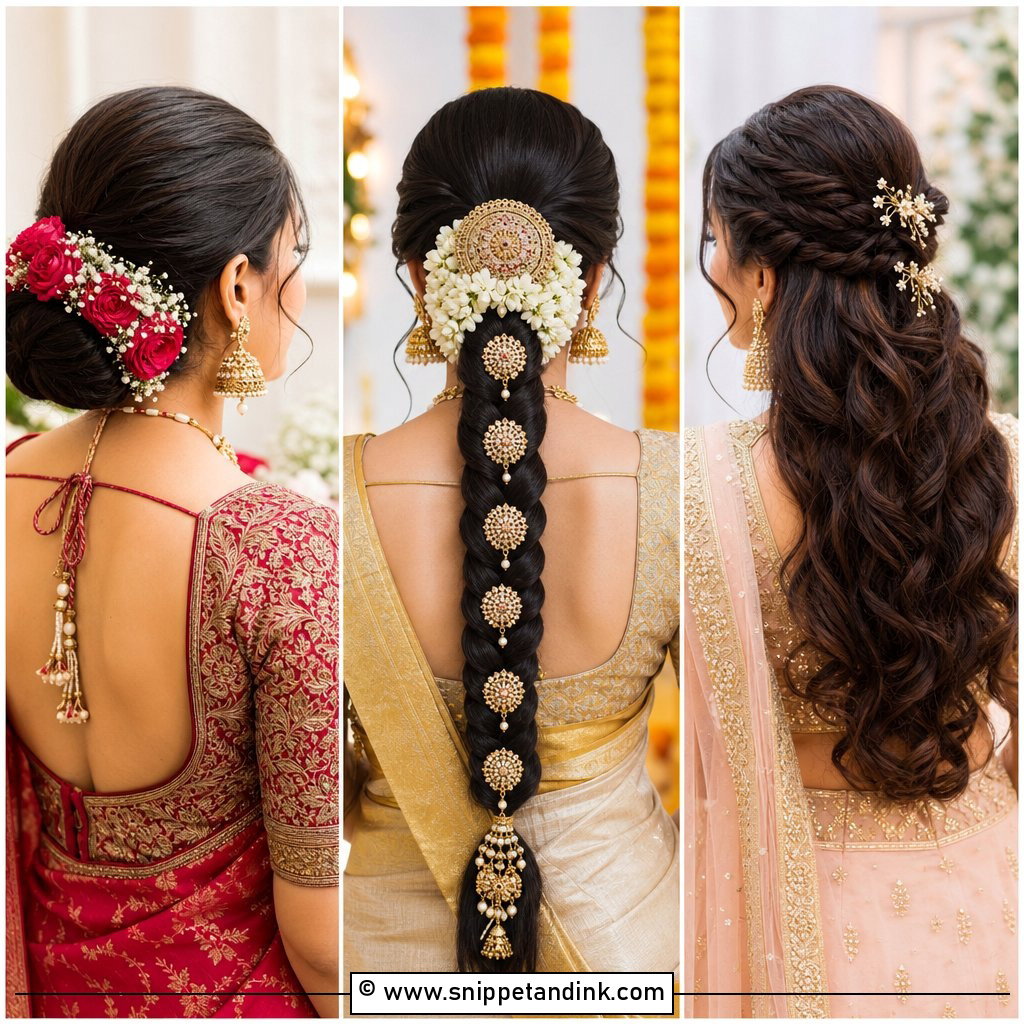
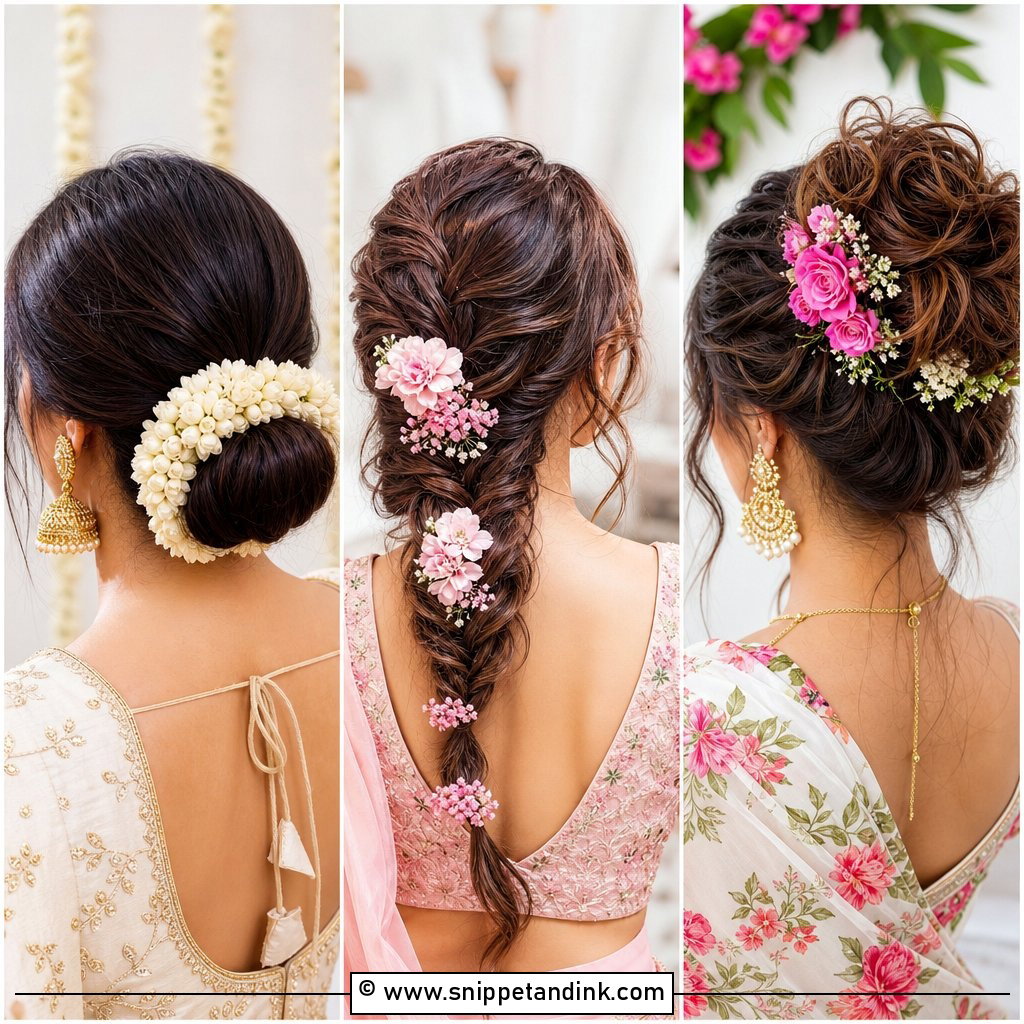
Flowers go in last, never first. I build and pin the bun so it would hold on its own, then tuck jasmine, baby’s breath or small roses into its outer edge, which means a wilting bloom can be pulled out without the shape collapsing. A floral bun suits Mehndi, Nikkah and daytime portraits, and sits well with pastel lehengas, ghararas and organza dupattas. Keep the front plain with a clean part. Too many flowers and the bun reads like a centrepiece.
3. Pakistani Bridal Sleek Bun
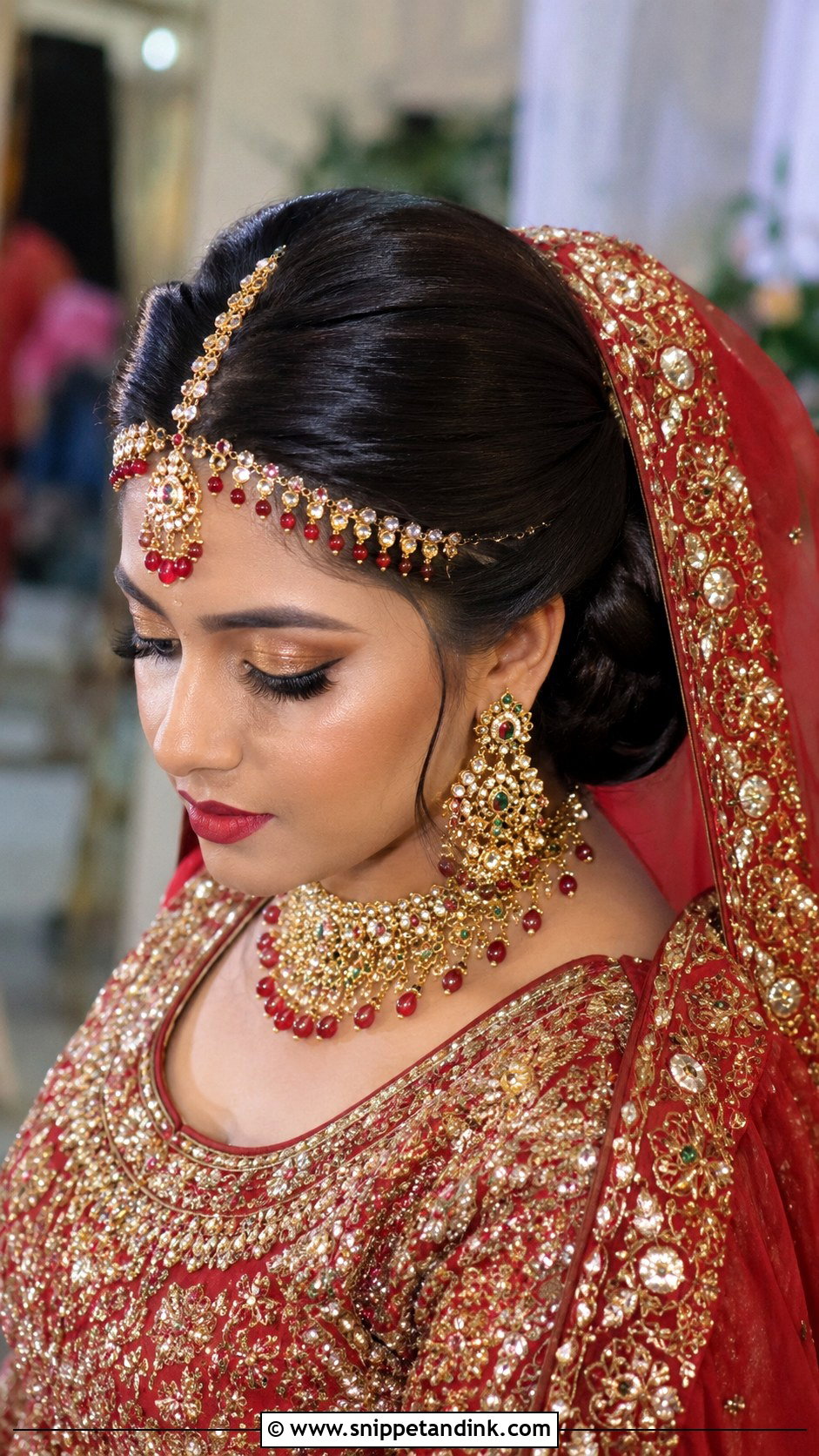
Heavy embroidery, a statement dupatta and bold jewelry all point to a sleek bun. With so much going on in the outfit, smooth hair gives the eye a rest, and a compact bun takes pins all day without loosening. It’s also the most stable base for a matha patti, tikka or passa because nothing underneath can shift. I blow-dry the hair flat first and use shine spray from a distance, since sprayed too close under bright lights it starts to look oily. From the front and in profile the outline stays crisp, which is why so many traditional portraits use it.
4. Pakistani Wedding Side Braid
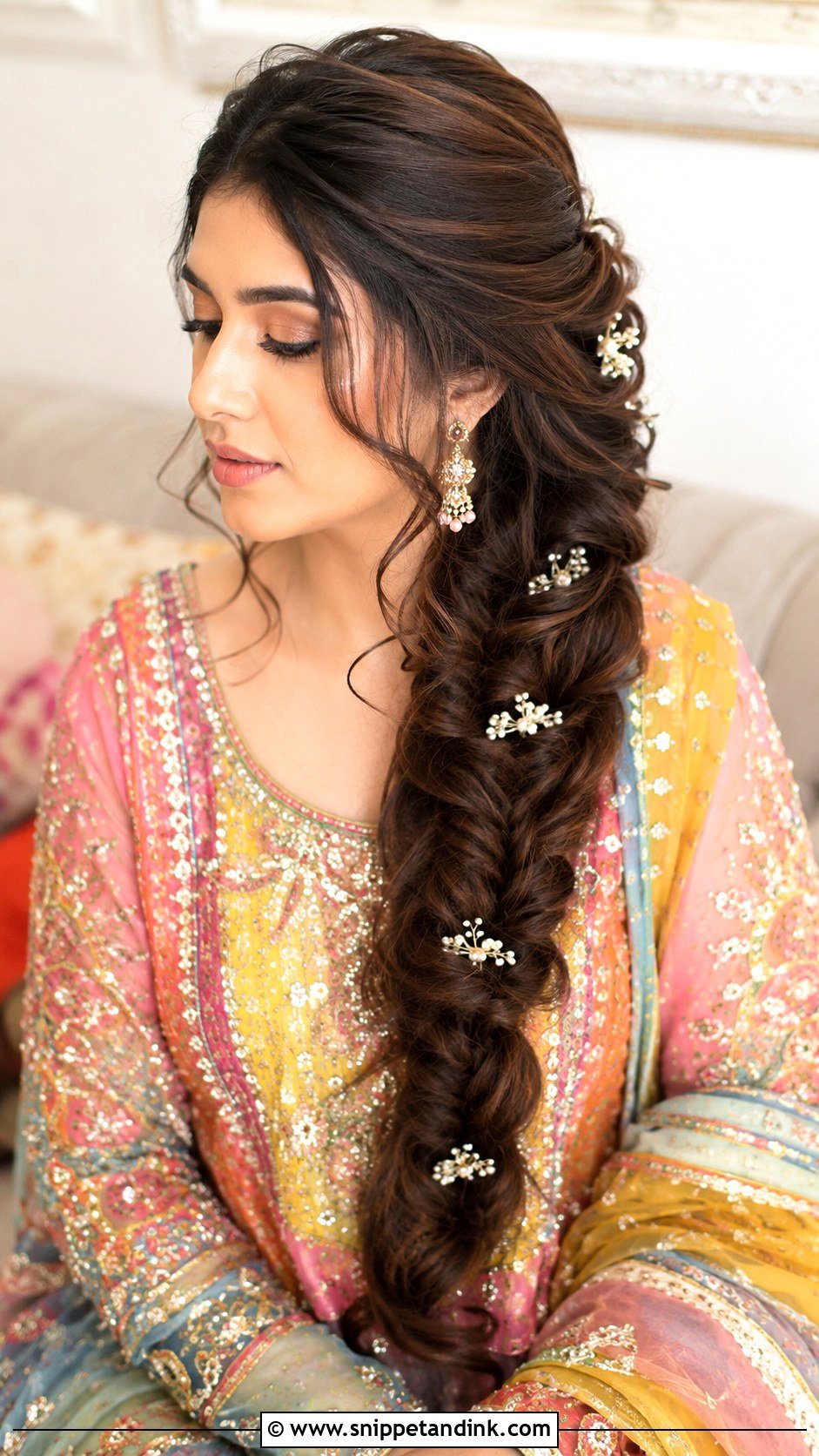
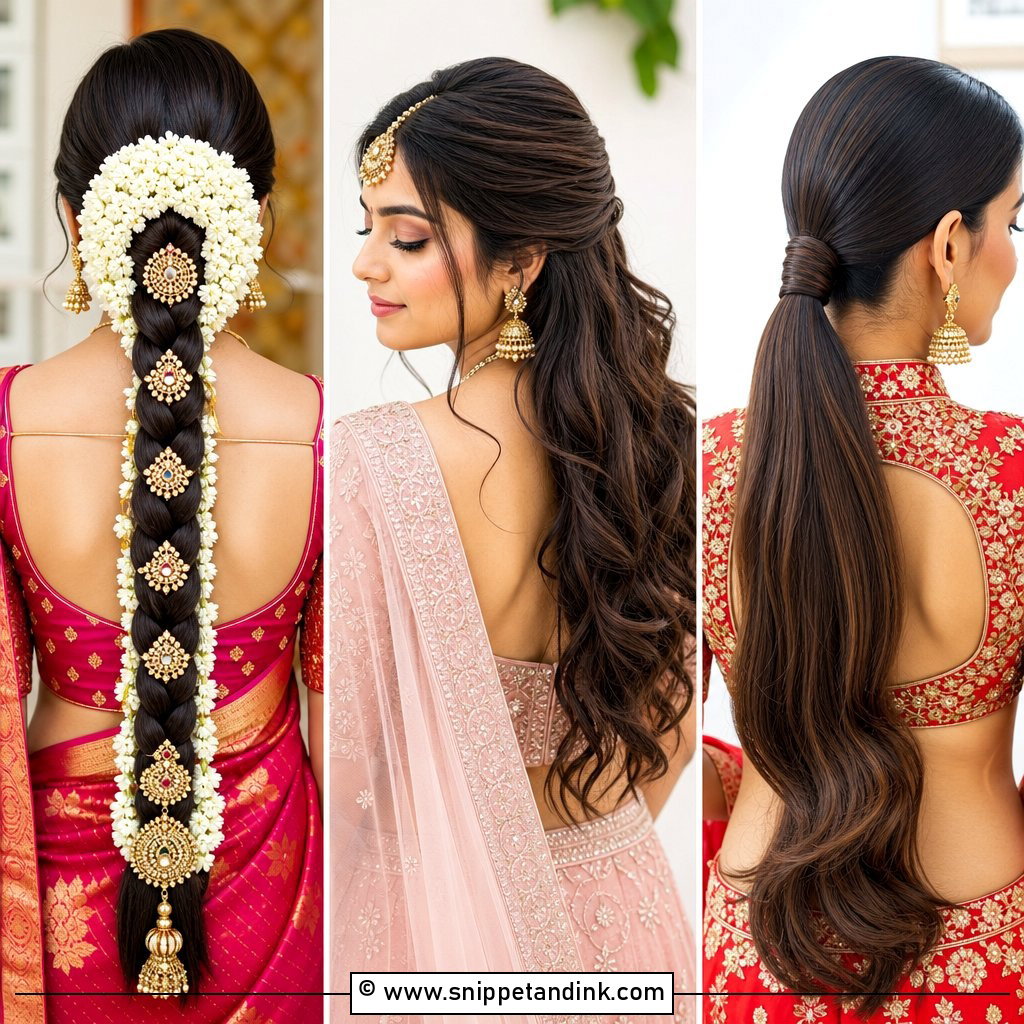
Mehndi and dholki nights involve a lot of dancing, and a side braid is built for that. It moves with you but stays controlled. I like it loose and thick with texture pulled out of each section, and small flowers or pearl pins worked down the length. A side dupatta drape leaves the braid on show. You need real length, so on shoulder-length hair this is an extensions job. Keep some height at the crown or the whole thing can look flat from the front.
5. Pakistani Bridal Fishtail Braid
A fishtail takes about twice as long to plait as a regular braid, and the fine weave is the point. It looks richer than its size and doesn’t need much decoration, a few floral pins or small pearls at most. It suits Mehndi and Nikkah because it feels traditional without the formality of a bun. Place it at the back or bring it to one side, depending on how the dupatta falls and how open the neckline is. After securing the end, I gently pull the outer edges wider, which makes even fine hair look thicker in photos.
6. Pakistani Wedding Loose Curls
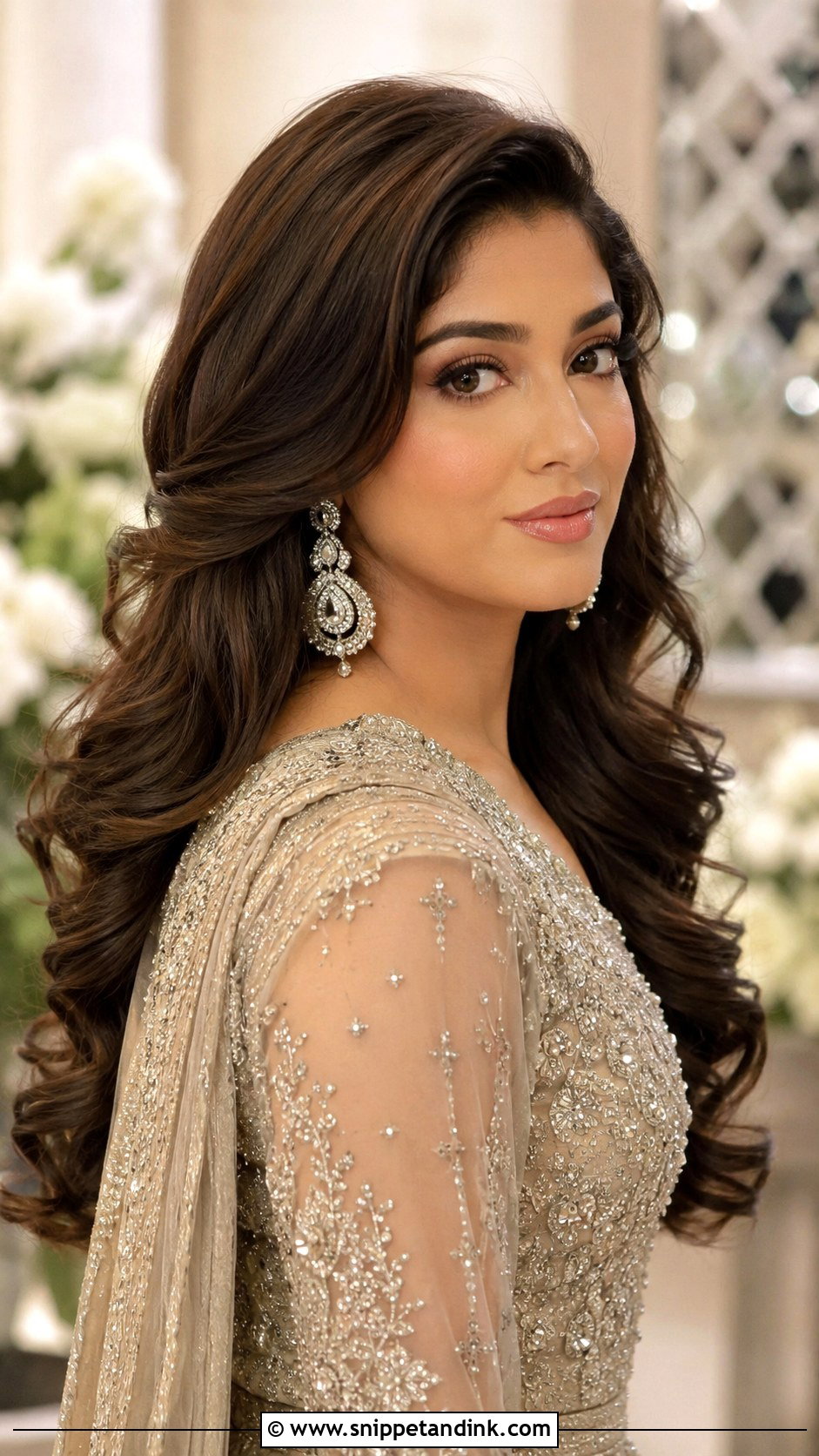
Curls are the first thing to drop in heat and humidity, so I only recommend loose curls for indoor or cooler venues. They suit a Walima, engagement or reception with a lighter dupatta or a gown. I set them tight and brush them out, which gives polish without the ringlet look. A centre part feels traditional, a side part more glamorous. Planning a tikka? Then the top section needs a small pinned base underneath, or the tikka will slide down toward your brow by mid-evening.
7. Pakistani Bridal Half Up Hair
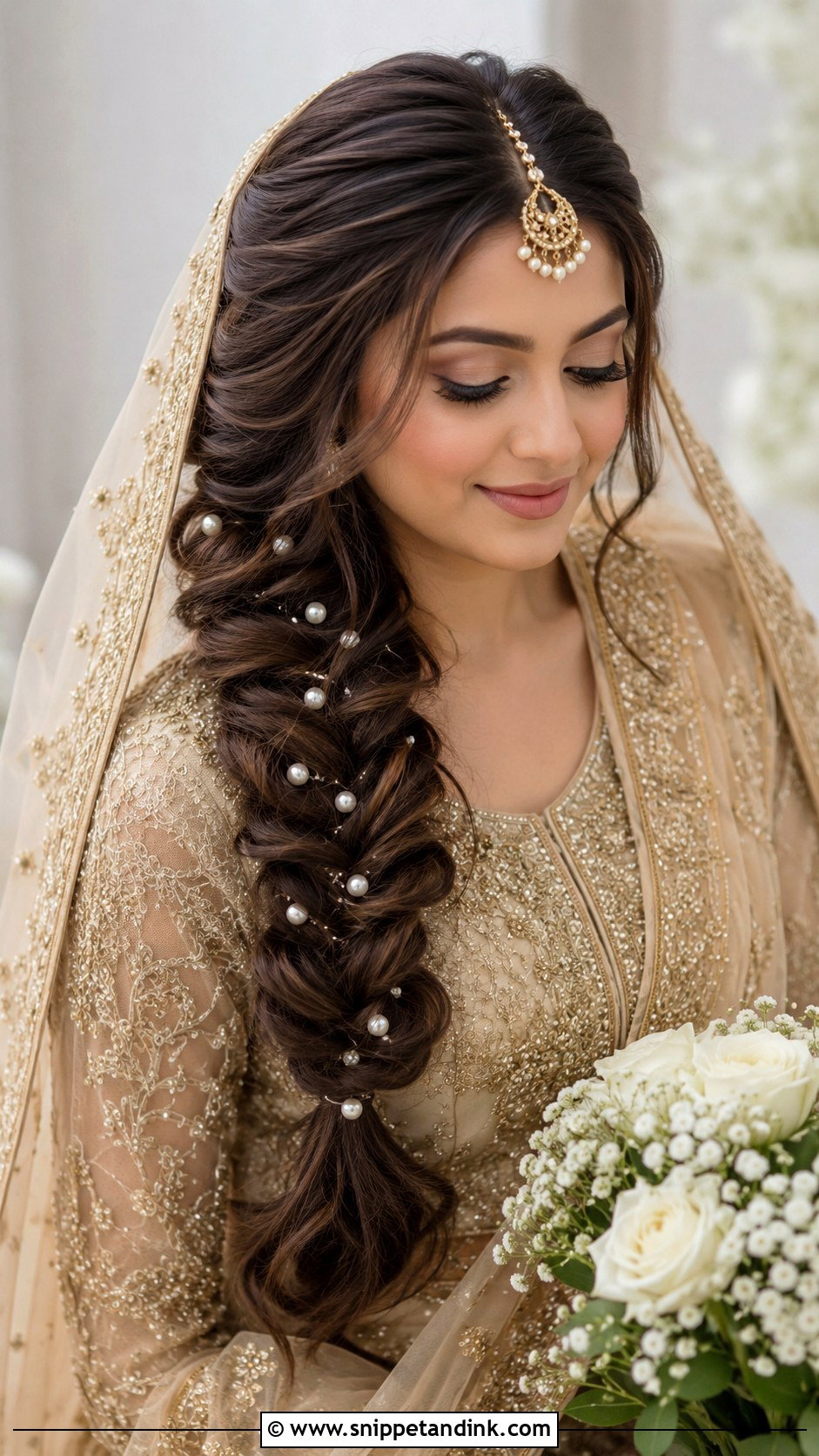
Pakistani bridal half up hair gives you open length with a structured top. I lift the crown slightly and secure that section on crossed bobby pins, which becomes the base for a tikka, passa or light dupatta. The lower hair falls in waves or curls. It works for Nikkah, Walima and engagement events, where the mood is romantic rather than heavy. Lifting the crown also flatters most face shapes, though on very fine hair I usually add a small weft so the back doesn’t look sparse.
8. Pakistani Wedding Bubble Braid
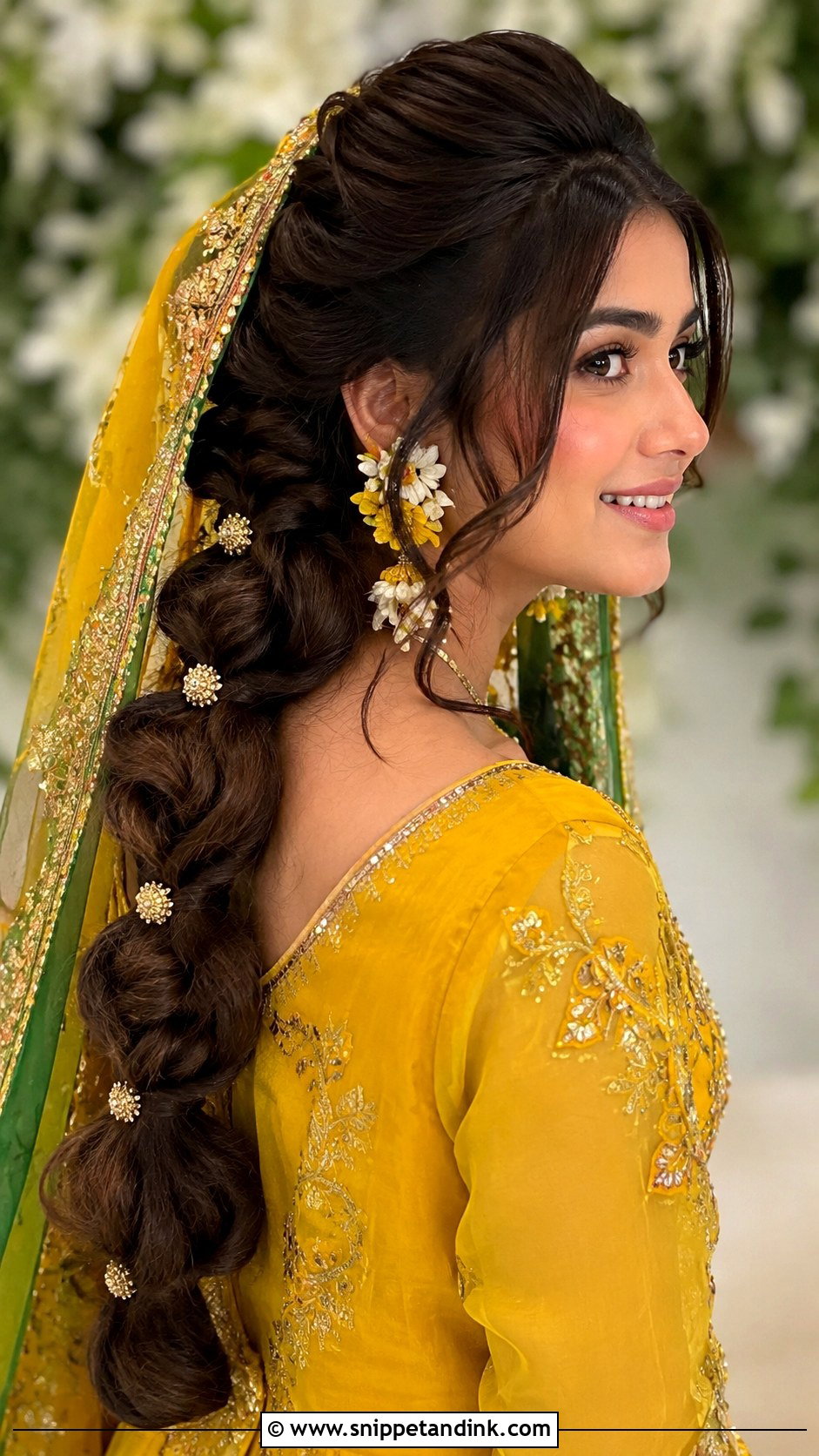
Bubble braids are the quickest festive look I do. You tie off sections down the length with clear elastics, then pull each one gently outward into a rounded shape, no weaving needed, which is why it looks full on medium hair. Gold pins or small flowers between bubbles suit Mehndi and sangeet-style evenings and colourful outfits with light dupattas. It keeps hair off the face while you dance. The risk is that it reads casual, so I keep the front smooth and polished to bring it back to bridal.
9. Pakistani Bridal Braided Bun
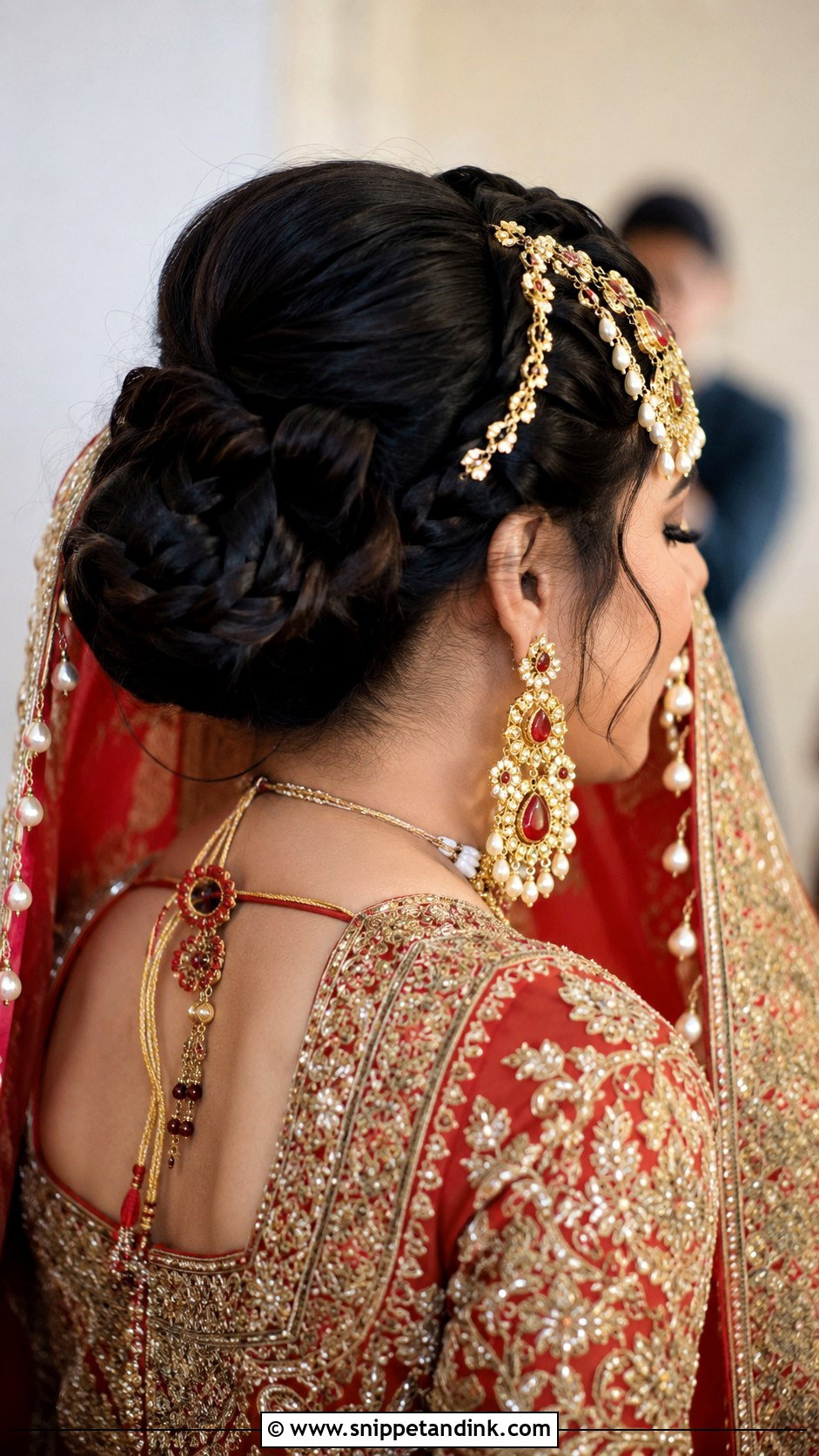
Heavy dupatta, intricate back: this is the answer. The bun gives the dupatta a firm anchor, and the braid gives the back of your head something to show for all those photos taken from behind during the rukhsati and the stage. The braid can wrap the bun, cross the crown or be woven into the bun itself. Matha patti, passa and statement earrings all sit comfortably with it, in a traditional red outfit or a softer pastel. Ask your stylist to keep the braid visible and evenly pinned, not buried under the dupatta.
10. Pakistani Wedding Soft Waves
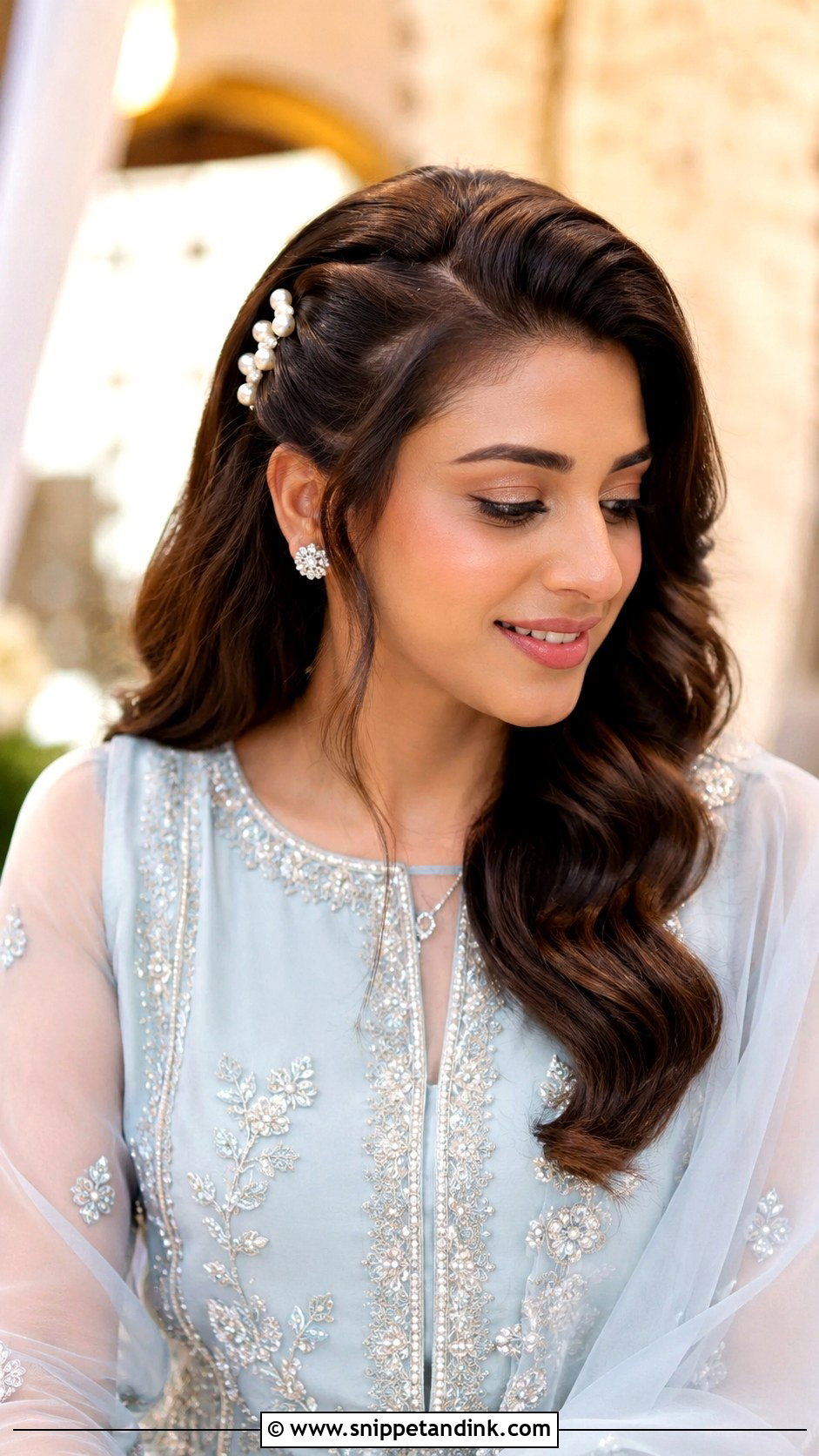
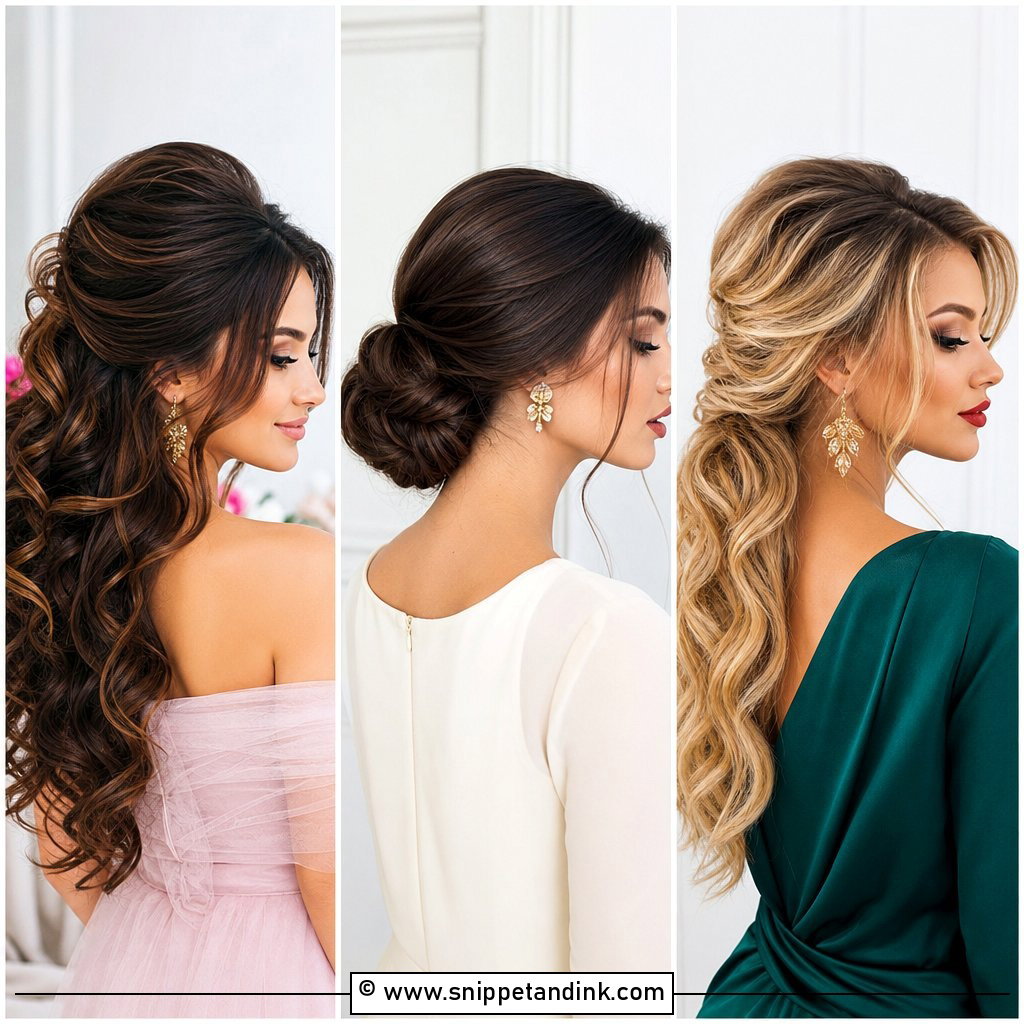
Soft waves are the style I do most for sisters of the bride, guests and bridesmaids, and for a relaxed Walima bride. They should be smooth and touchable, with enough hold to survive greetings and group photos. A back dupatta drape, pearl clips or a light tikka all suit them. Long layers show off well here because the waves follow the cut. To dress it up for a formal function, tuck one side behind the ear and fix it with a decorative pin.
11. Pakistani Bridal High Bun
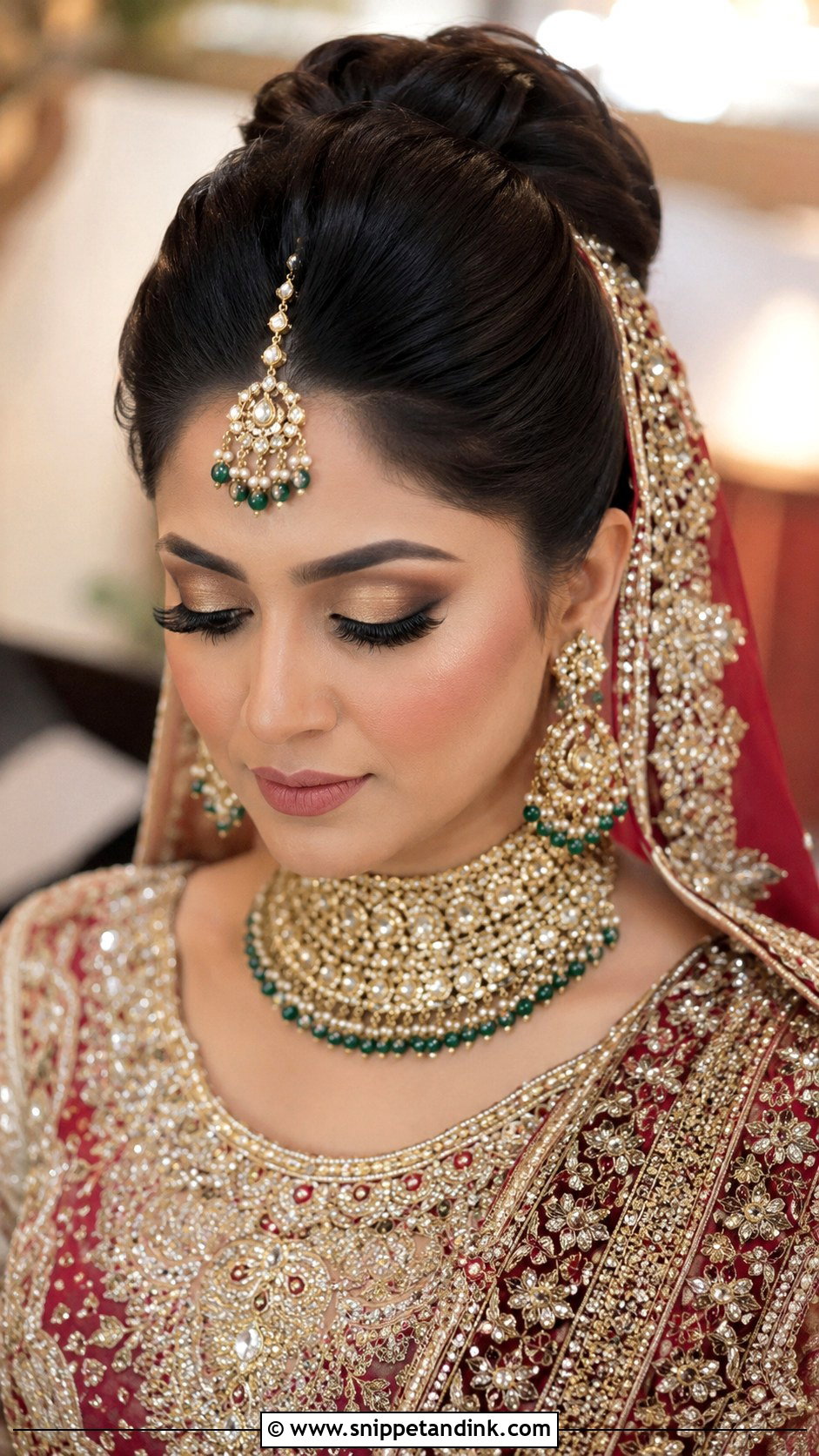
A high bun is the most dramatic shape here, and also the easiest to get wrong. Too high and tight, it looks harsh and pulls the face; set right, it lifts the profile and sits well with heavy jewelry, high necklines and structured lehengas. It works only if the dupatta will be pinned just behind the crown rather than pulled forward over the head. I often use a small padding piece inside so the bun keeps its shape without extreme backcombing. Pair it with a centre part and smooth sides.
12. Pakistani Wedding Messy Bun
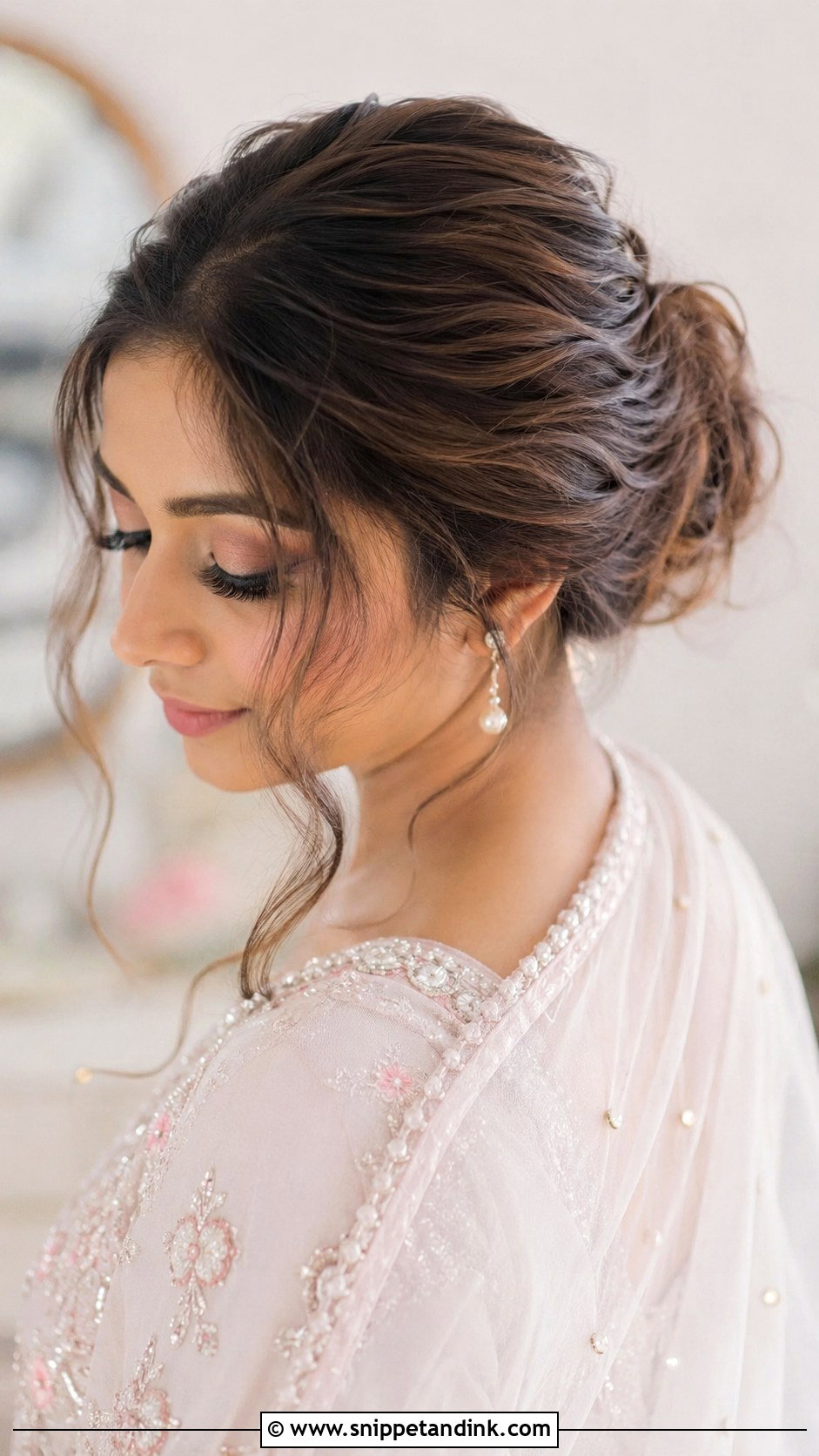
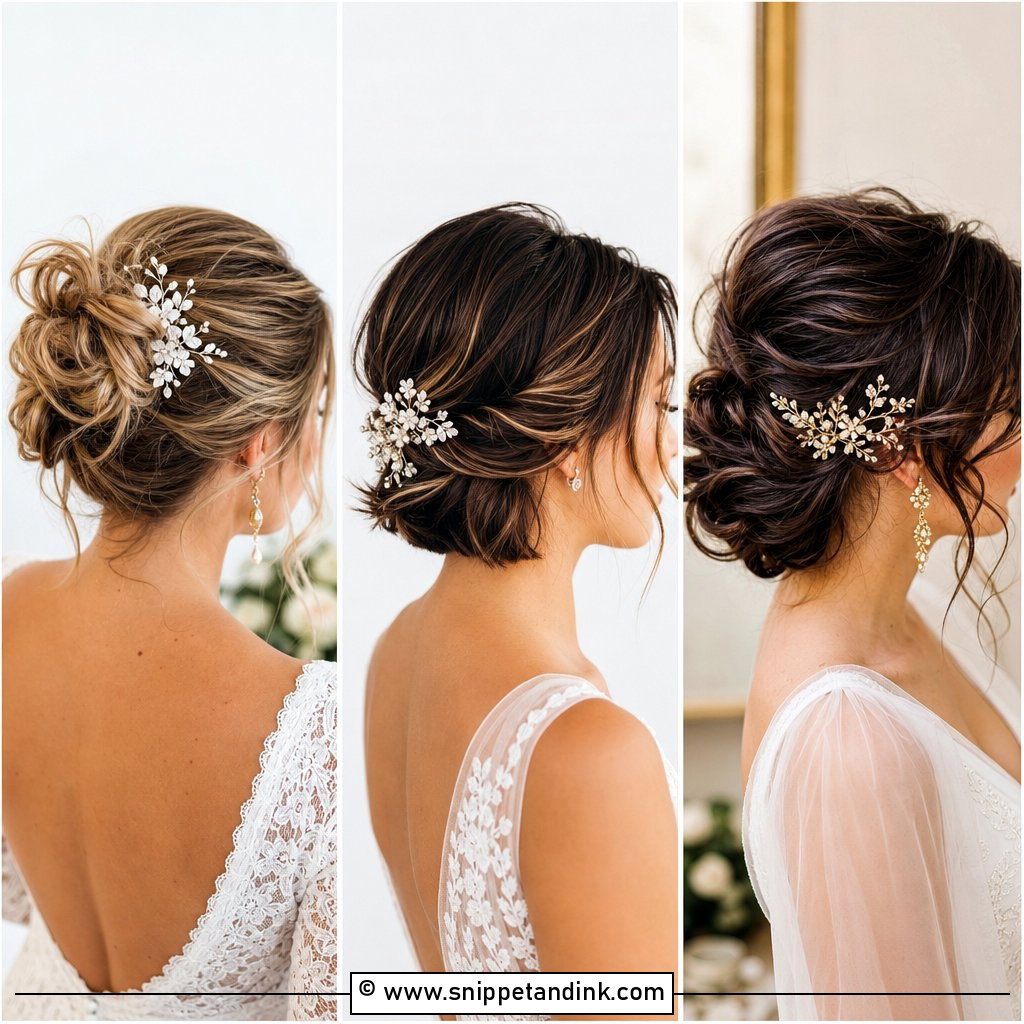
“Messy” is misleading. Every loose piece in a bridal messy bun is placed and pinned, and the texture comes from a light backcomb and texturising spray, not from skipping steps. It sits well with Nikkah, Walima and smaller events, especially with chiffon, organza, or pastel outfits. A low version can hold a delicate dupatta if the pinning underneath is solid. The strands left around the face soften the jawline. I’d avoid it with a very heavy dupatta, which squashes the texture flat within the hour.
13. Pakistani Bridal Center Part Waves
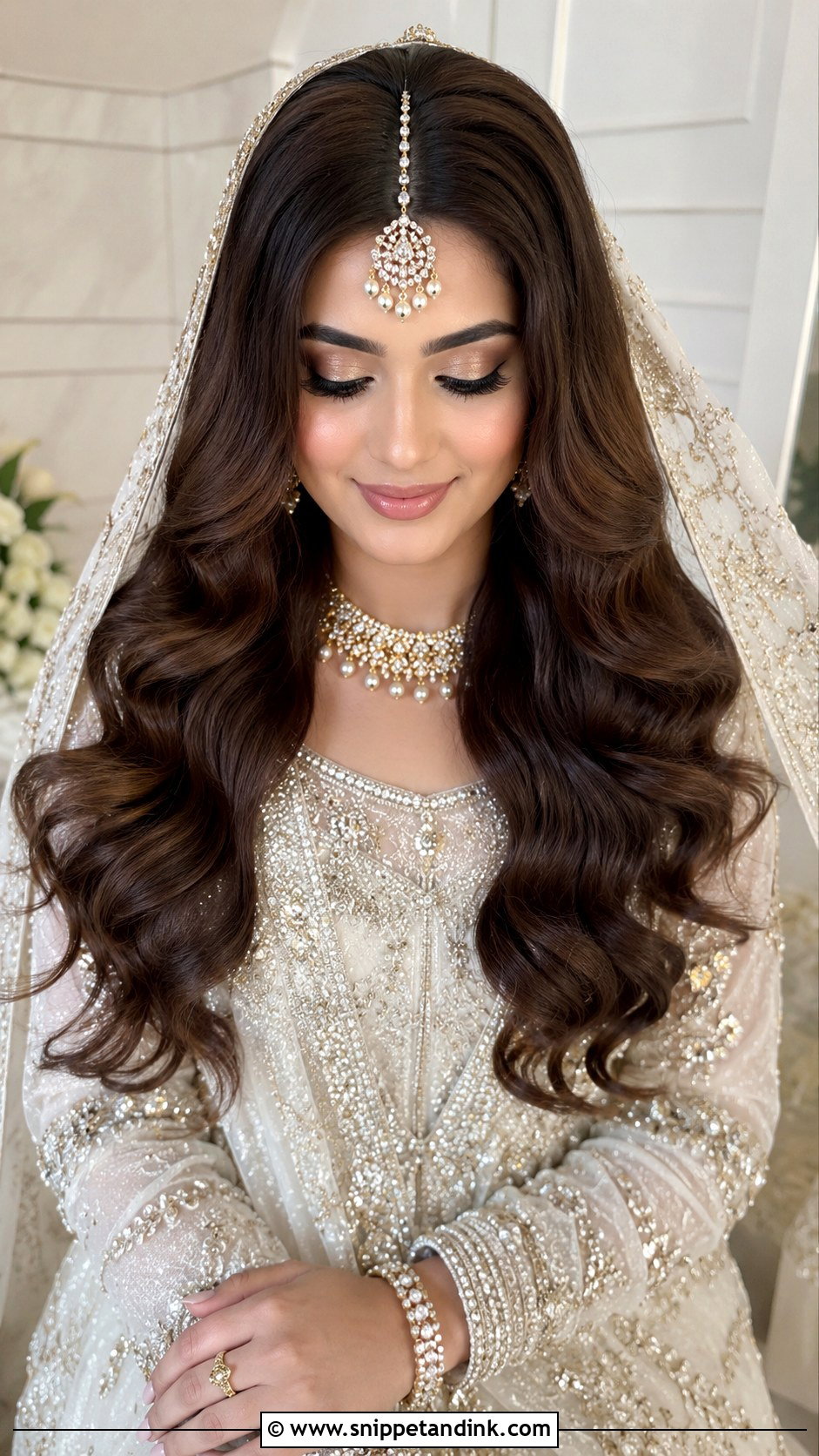
Centre part waves give you a straight line for a tikka or matha patti and soft movement everywhere else. The trick is where the waves start. I begin them below the cheekbones so the top stays smooth enough for jewelry to lie flat. If you want open hair at a Walima, engagement or Nikkah, this is the version that keeps the jewelry tidy. Under a heavy dupatta the waves flatten, so pick a lighter fabric or a back drape to keep them visible.
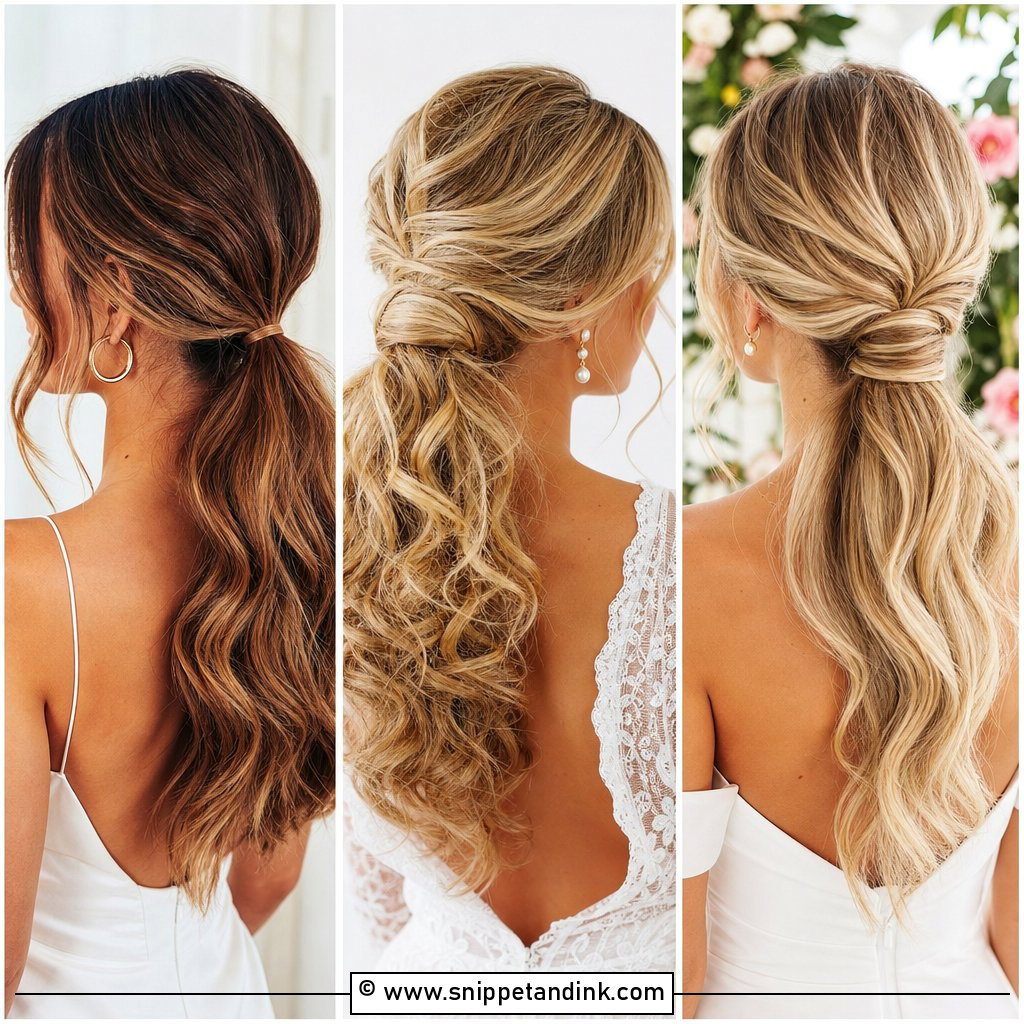
14. Pakistani Wedding Ponytail
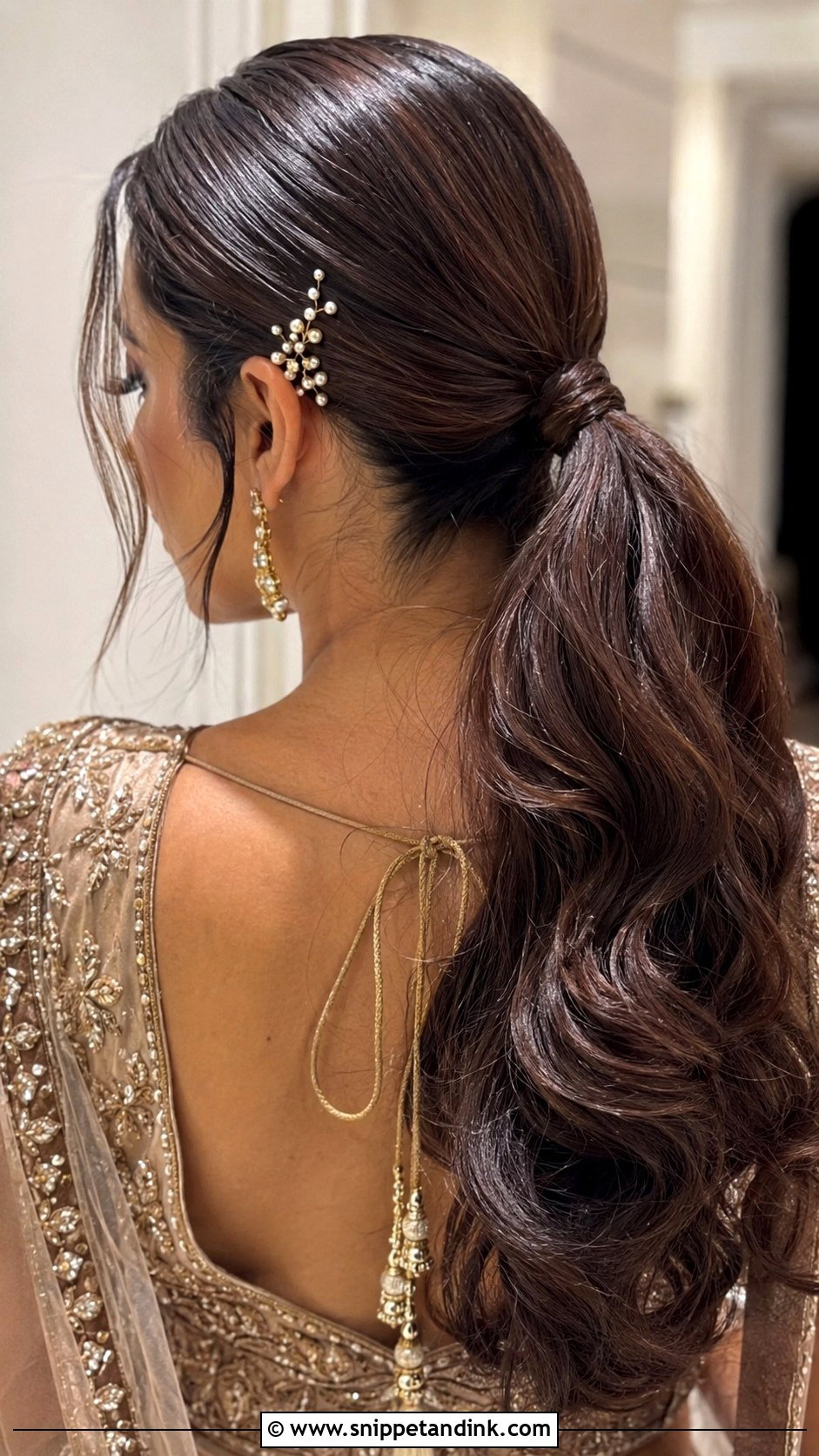
A ponytail can look properly bridal if the base is finished. I wrap a small section of hair around the elastic and pin it underneath, which hides the band and makes the whole thing look deliberate. Low and smooth suits a modern Walima; higher with volume works for receptions and guests. It’s my usual suggestion for hot venues, since the neck stays clear and the hair doesn’t stick to your skin. On fine or short hair you’ll want a clip-in pony piece for length.
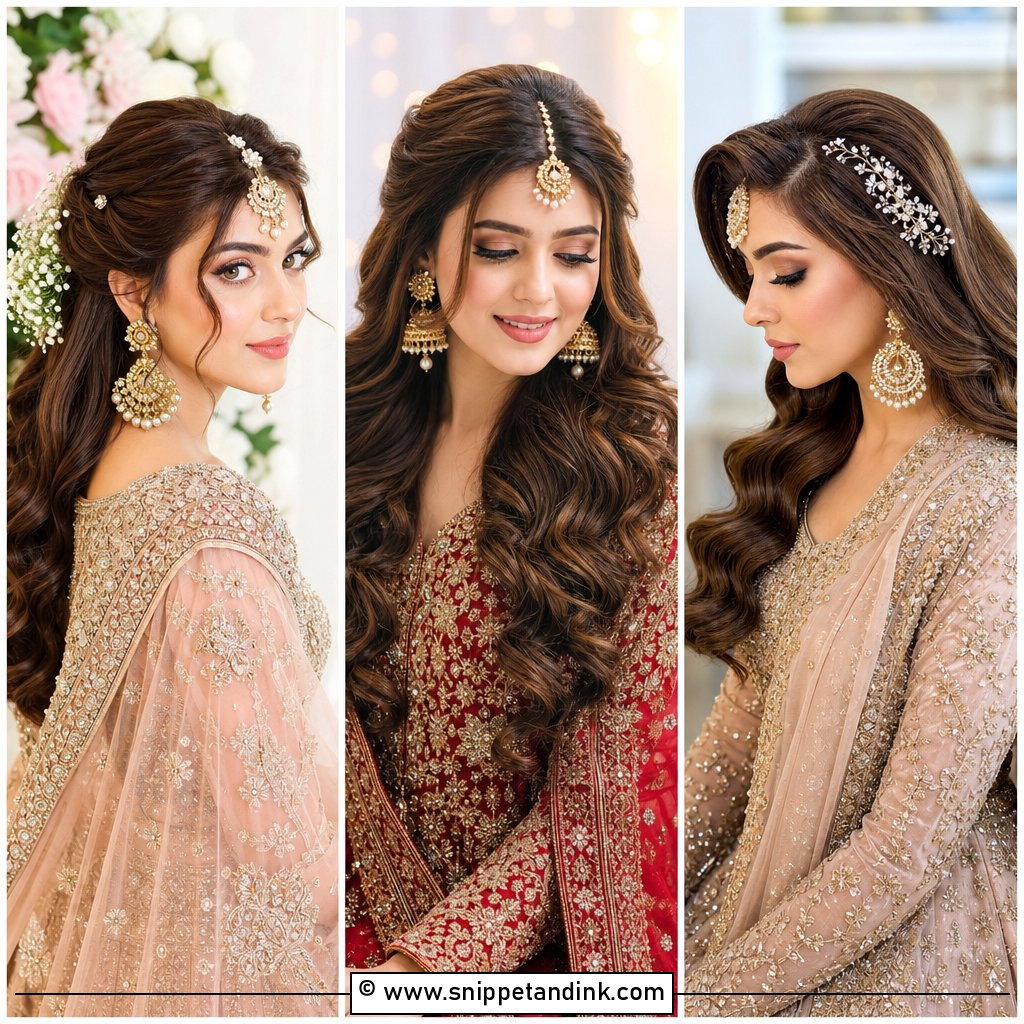
15. Pakistani Bridal Gajra Bun
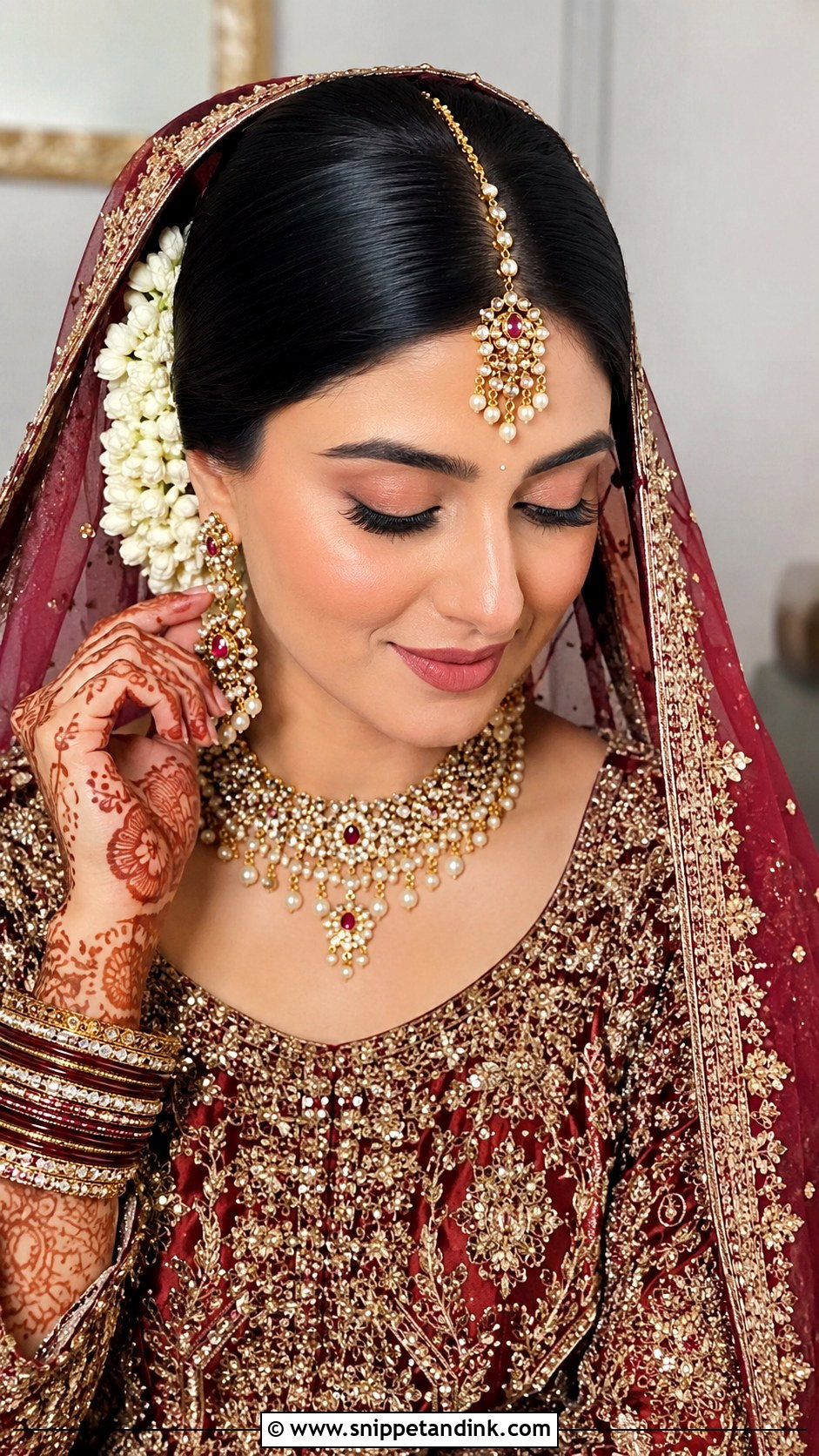
Jasmine gajra wrapped around a low or mid-height bun is the most traditional look on this list. It’s at home at Mehndi, mayun, Nikkah and classic bridal functions, and with gold jewelry and bright festive colours. The gajra needs a firm bun to sit on, so I build that first and secure the strands with U-pins at each loop. Fresh jasmine browns as the evening goes on, and the scent is strong, so if you’re sensitive to fragrance, try a strand near your face beforehand. Keep the front simple with a smooth centre part and a tikka.
Extensions for Braids, Ponytails and Fuller Buns
Several of these looks, the side braid, fishtail, ponytail and long curls especially, depend on length and thickness that many brides don’t naturally have. Clip-in wefts are what most of my brides use, because they go in on the day and come out at night.
Colour match in daylight
Bring the extensions to your trial and check them by a window. Dark hair often has warmth that indoor bulbs hide, and a mismatch shows clearly in a braid, where both shades sit side by side.
Weight adds up
Extensions plus a heavy dupatta plus a passa is a lot for a scalp to carry for hours. If you’re wearing all three, I’ll use fewer wefts and place them lower on the head so they sit under the dupatta pins rather than fighting them.
Real hair, not synthetic
Synthetic fibres can melt under a curling iron and look shiny in flash photos. Human hair wefts take heat, blend with your own texture and can be reused for the next function.
Settle the Dupatta Drape First, Then the Hair
Hair for a Pakistani wedding has to answer to the outfit, the jewelry, the dupatta and the schedule. A heavy Barat dupatta usually means a sleek or braided bun; a soft Walima allows waves; Mehndi and Nikkah leave room for braids and flowers. Decide where the dupatta will sit and where the jewelry hooks in before you fall for a style in a photo. Then bring clear pictures and the real accessories to a trial. If you can turn your head, sit down and hug someone without anything shifting, the style is right.
You'll Like These Ideas:


Leave a Reply