
When a bride tells me a gown “isn’t quite right” but can’t say why, the neckline is usually the reason. It frames your face, decides how the bodice has to support you, and sets up everything else: sleeves, veil, jewelry, even how you hold your bouquet. I don’t pay much attention to body-shape rules. A neckline flatters when it fits securely, suits the way the gown is built and lets you stop thinking about it. Below are 20 shapes I fit regularly, from sweetheart and portrait to halter and surplice, with notes on support, styling and the alterations each one tends to need.
What Each Neckline Asks of Your Underwear
I ask brides to think about the bra before they fall for a neckline, because the two decide each other. Most bridal gowns can have cups sewn in, and for many necklines that’s the best answer. Bring whatever you plan to wear to the first fitting, since the seamstress fits the bodice around it and swapping later can undo her work.
- Strapless, sweetheart and straight necklines: a longline strapless bra or built-in boning and cups, so the bodice grips your ribs, not your bust.
- V-neck, plunge and surplice: a low-plunge bra, or sewn-in cups set into the lining, since most ordinary bras show at the center.
- Halter and one-shoulder: a convertible bra or sewn-in cups; standard straps won’t hide.
- Off-the-shoulder, portrait and bateau: strapless support again, because the straps would sit right where the fabric is.
- Illusion and keyhole: nude, smooth underlayers, as any lace or seam shows through sheer mesh in daylight.
Adhesive cups and tape have their place, but I’d keep them as backup for a backless dress rather than the main support for a twelve-hour day.
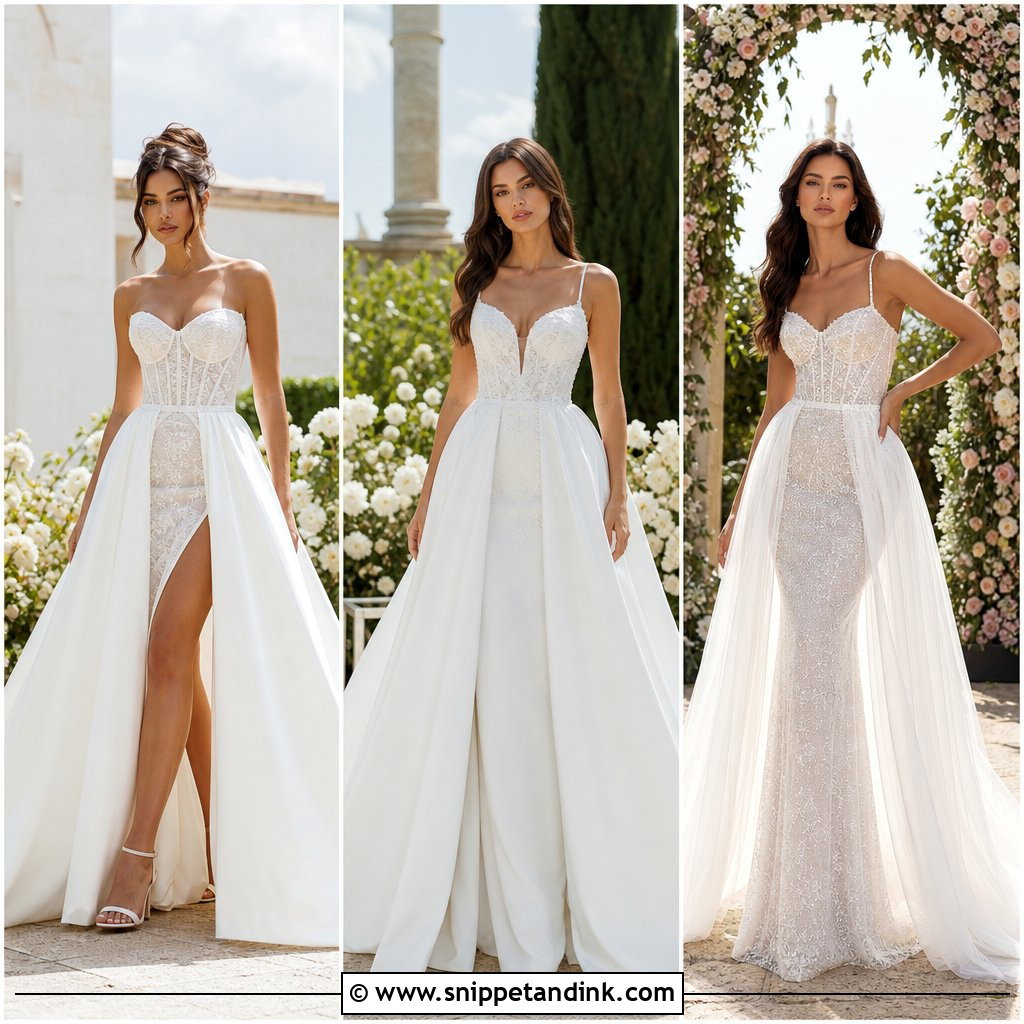
1. Sweetheart Neckline Wedding Dress
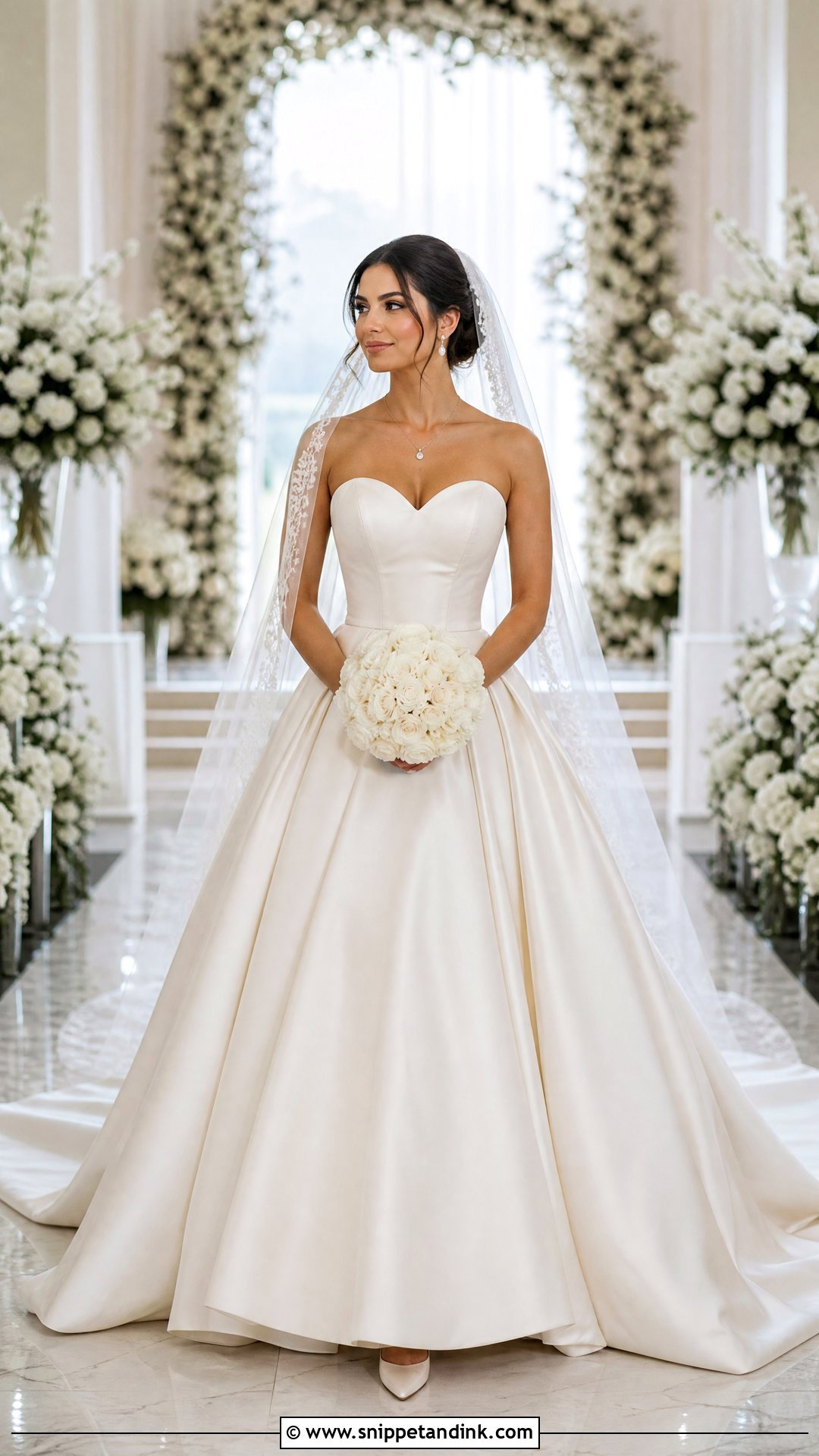
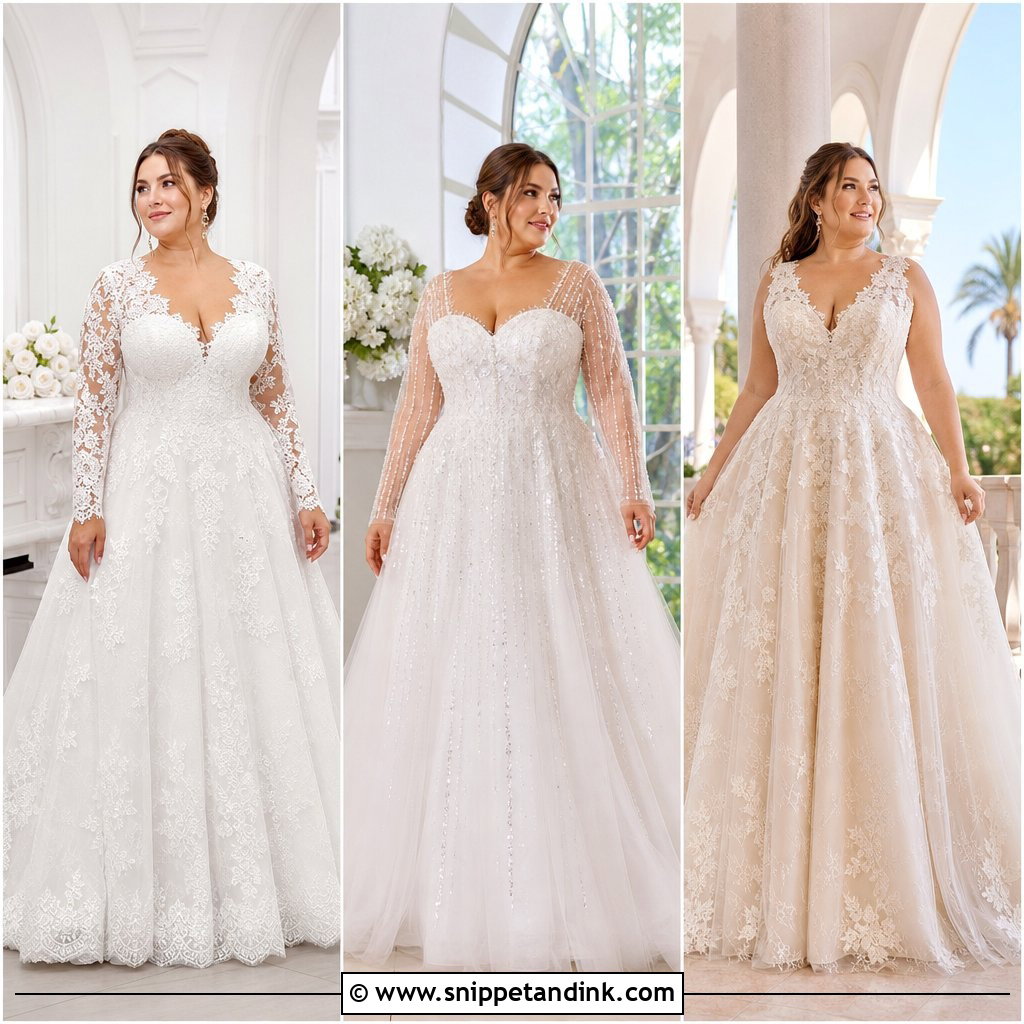
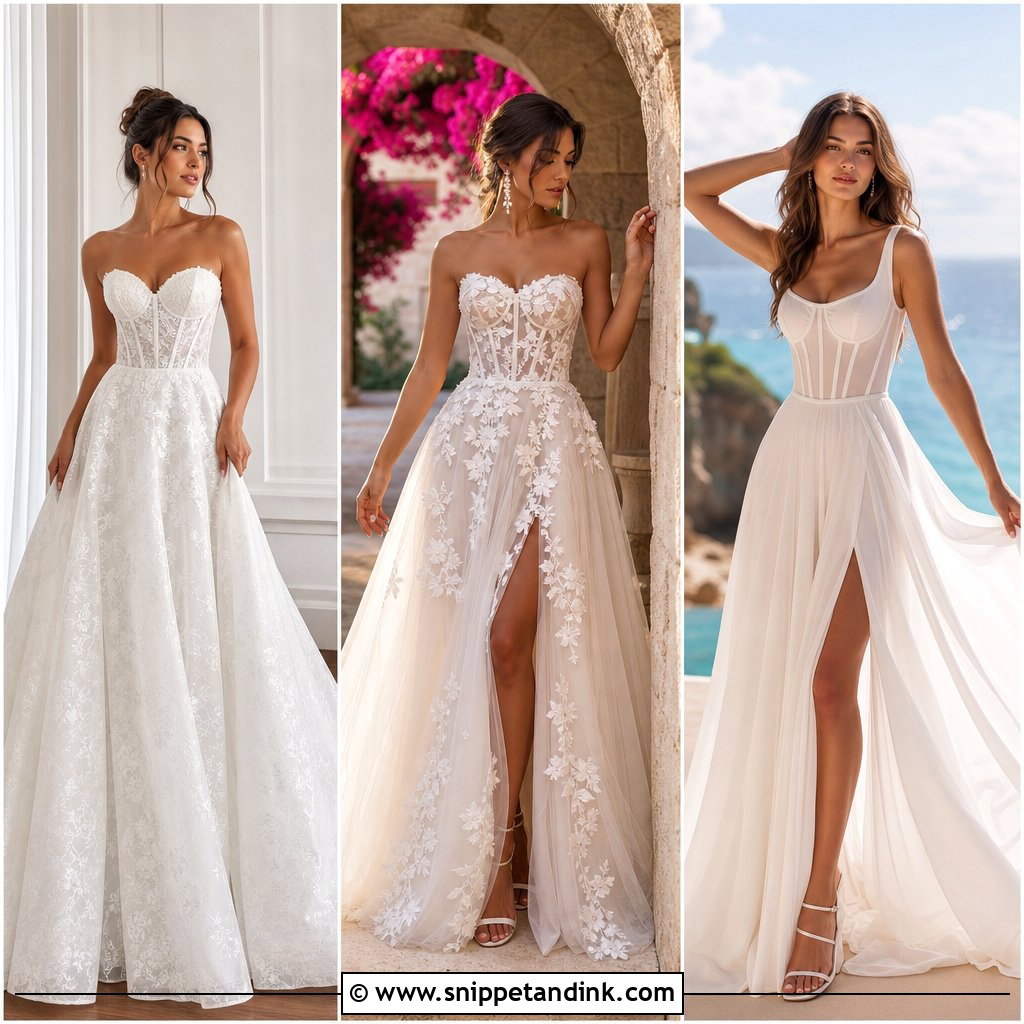
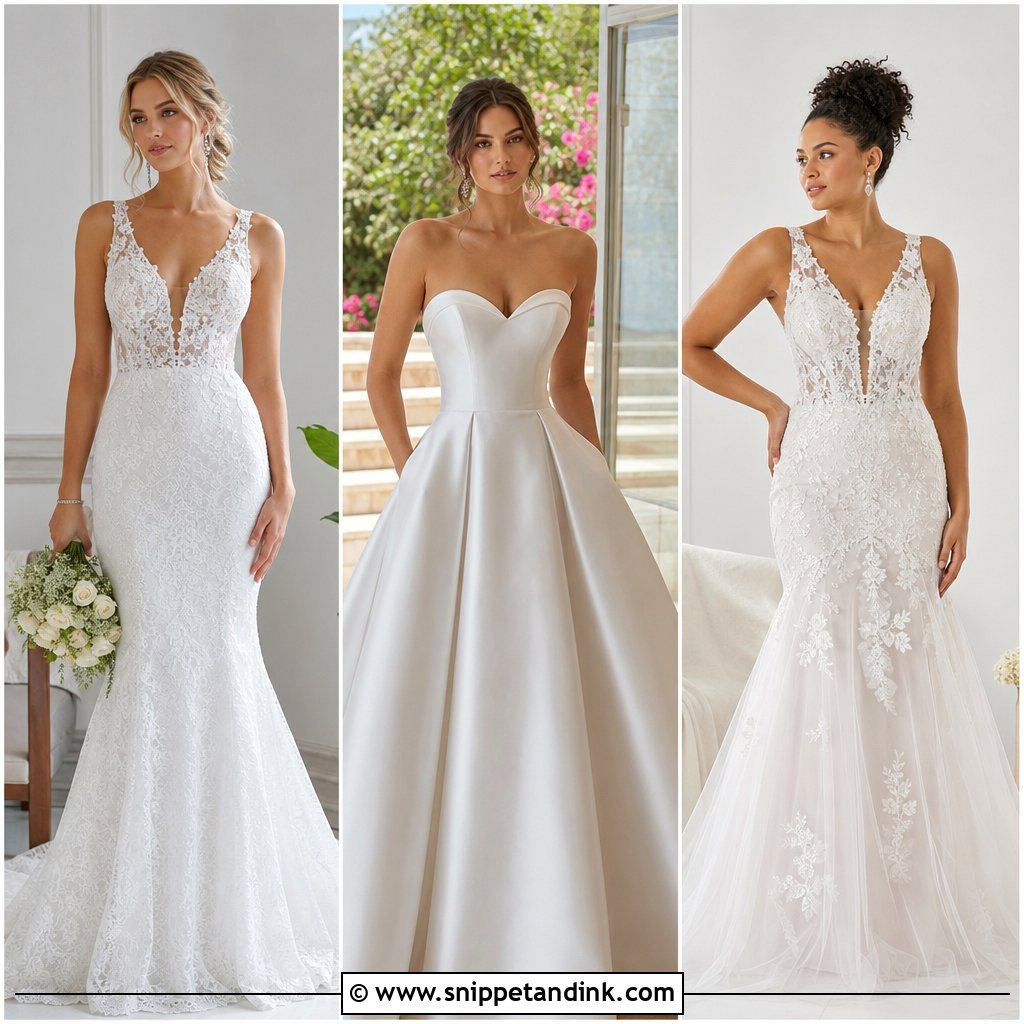
The sweetheart curves into two soft arches at the bust, and it sits on almost any silhouette, from a ball gown to a fitted mermaid. Structured satin keeps it formal; floral lace softens it for a garden. In a strapless version, the upper edge is where everything goes wrong. If the boning and cups aren’t fitted to you, the curve folds inward as soon as you sit, so I have that edge taken in at the side seams rather than just tightened at the zip. A delicate pendant, pearl earrings, pointed heels and a fingertip or cathedral veil suit it. For more coverage, add detachable straps, sheer sleeves, or an illusion panel; the heart shape still reads through them.
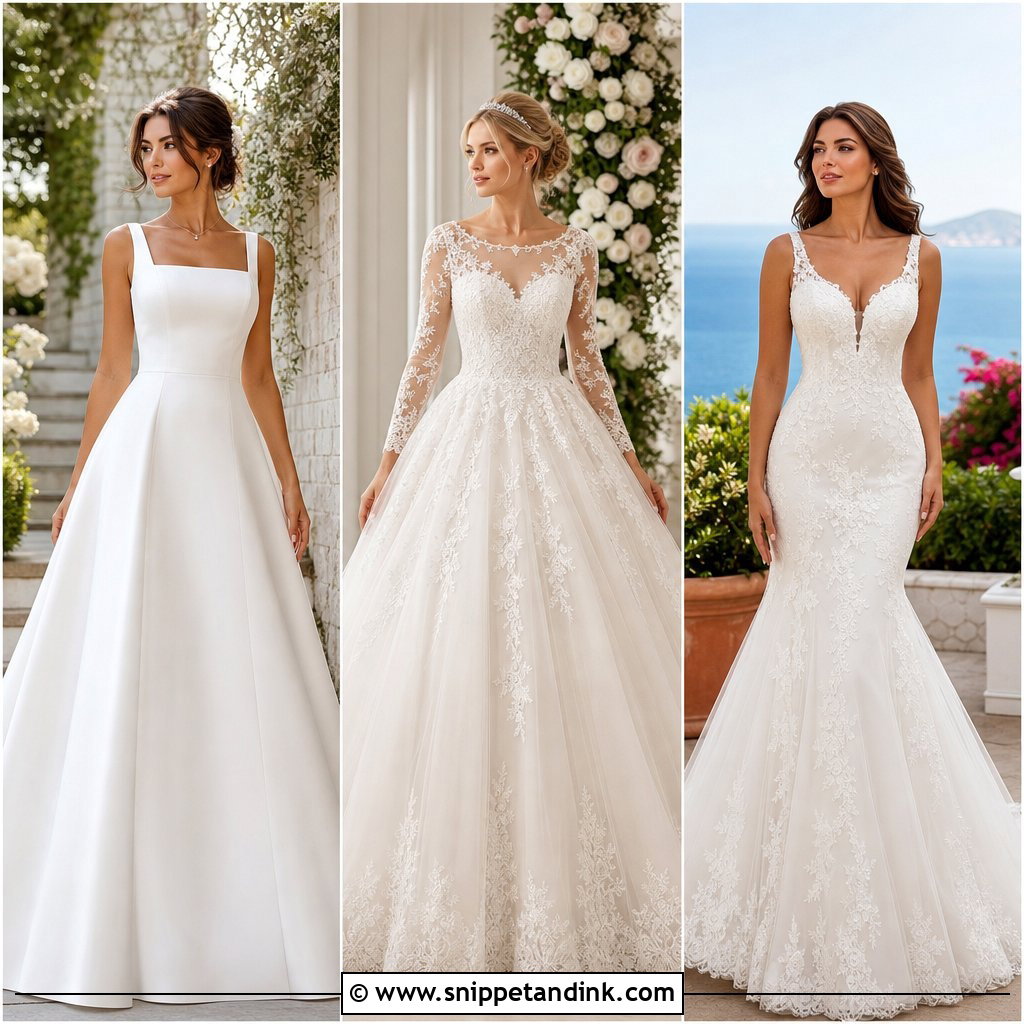
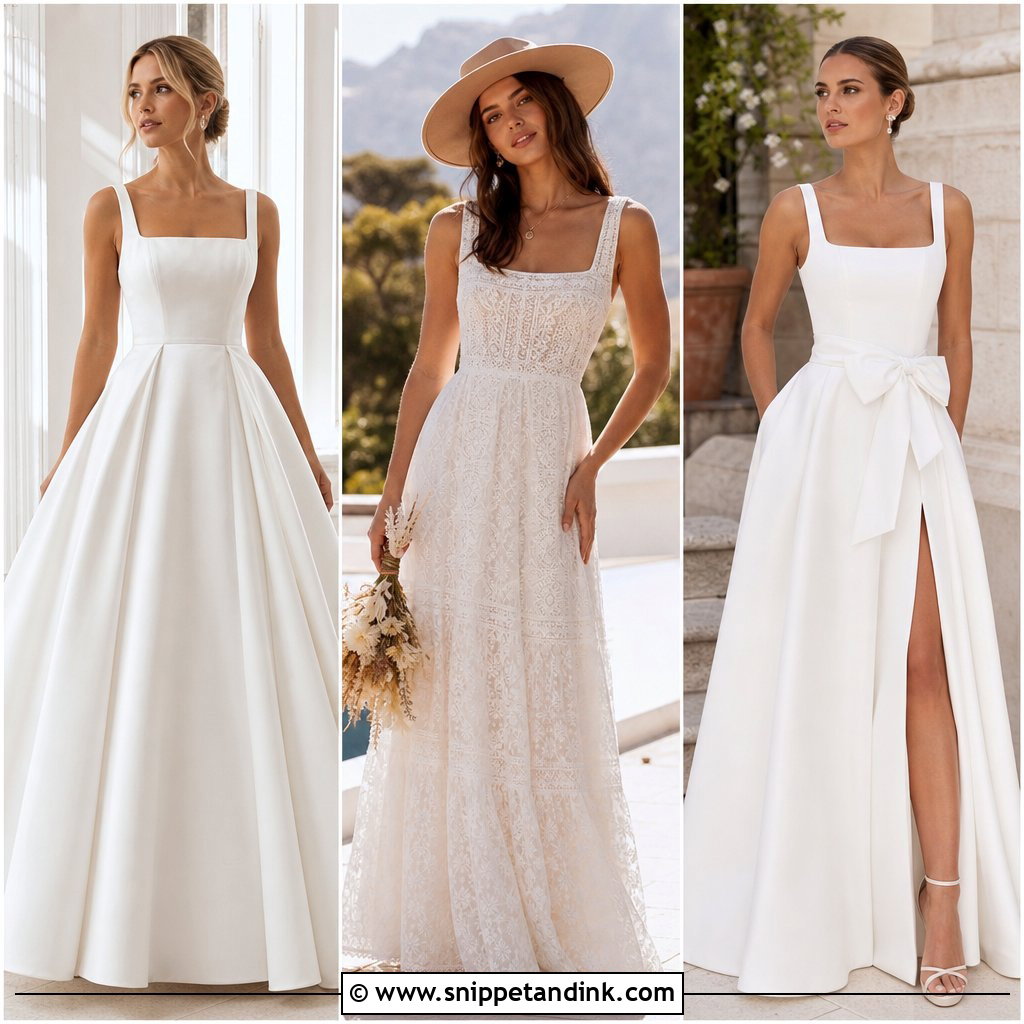
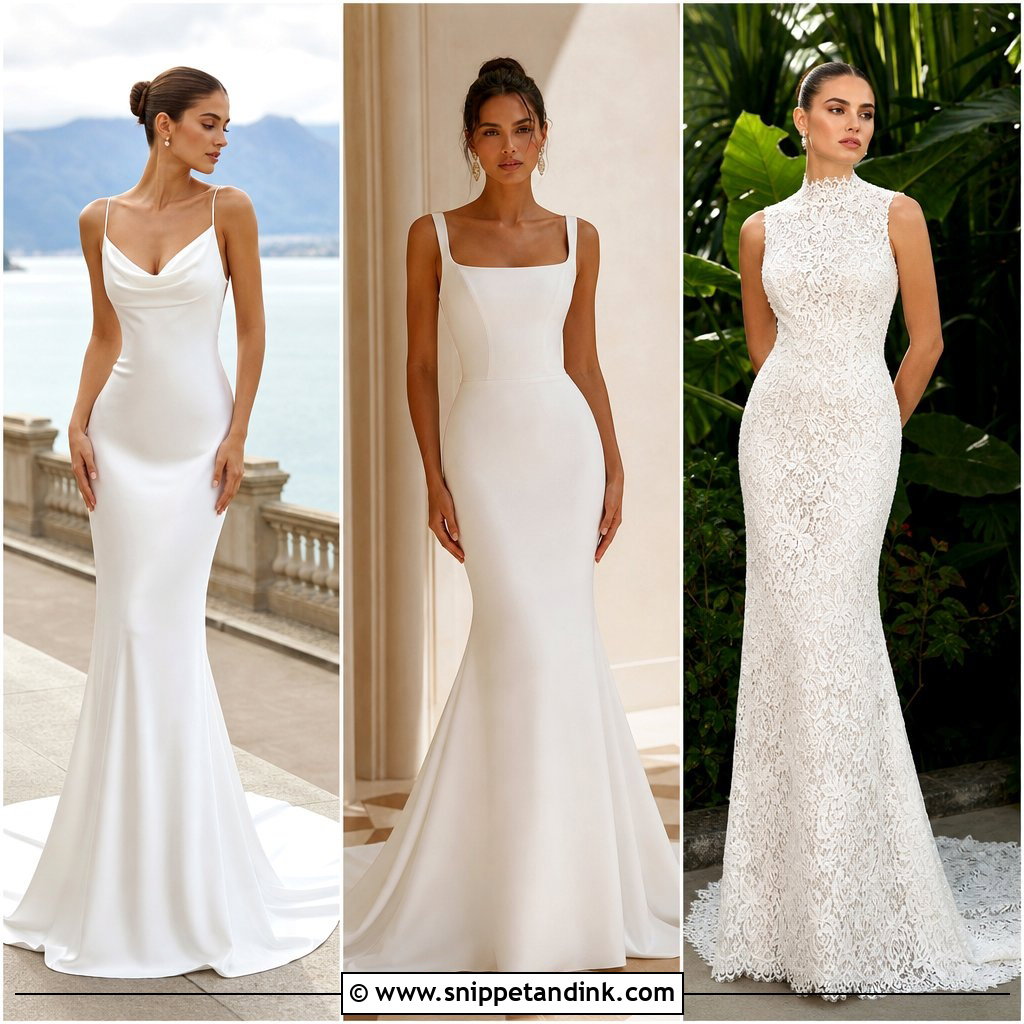
2. Square Neckline Wedding Dress
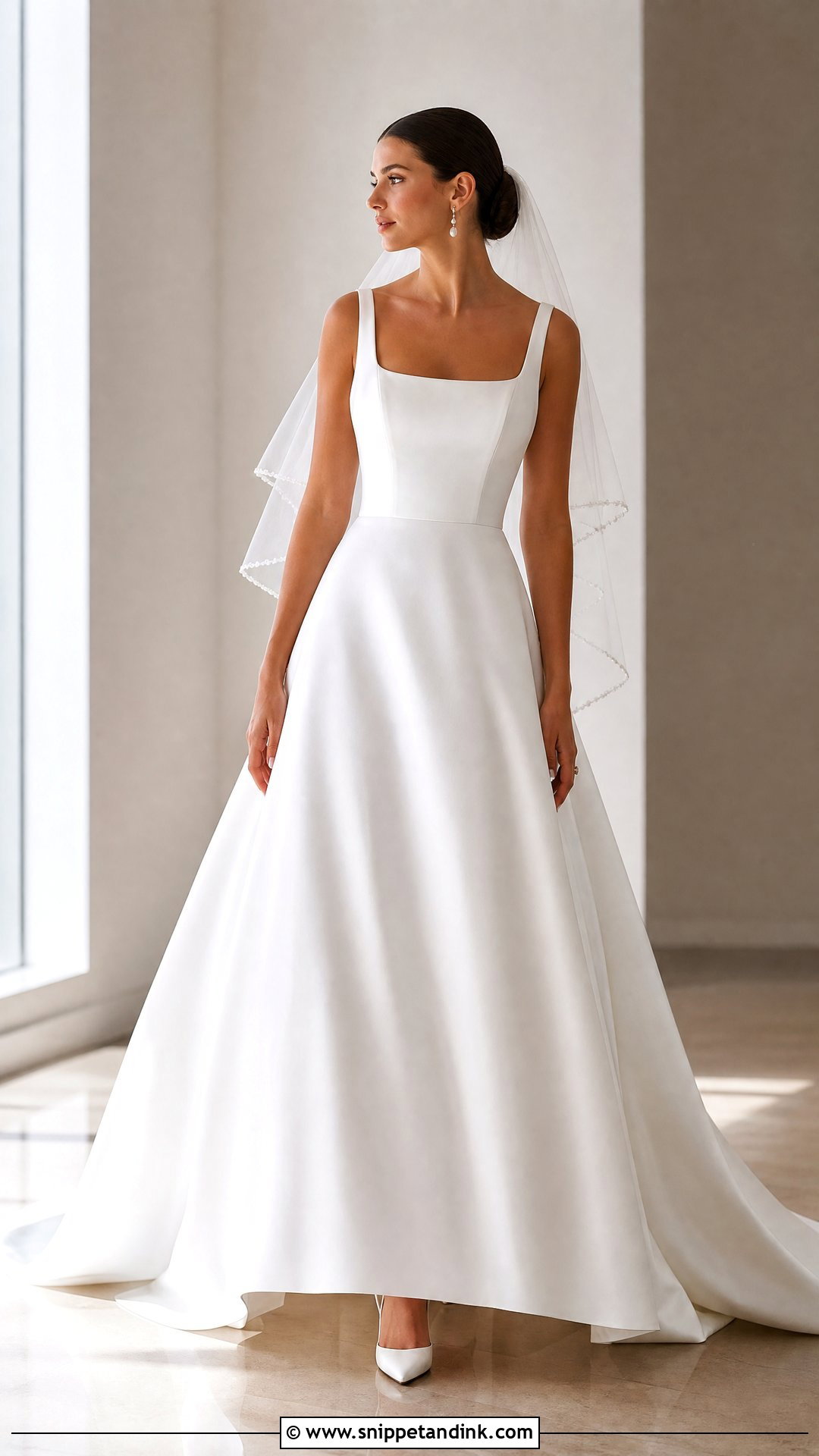
Clean corners make a square neckline look modern, and the straight top edge shows off the collarbone. It works with minimalist satin A-lines, fitted crepe and gowns with puff or long sleeves. The corners are the test. They should sit flat against you, and on a gown cut too wide they lift and point forward when you hug someone. A low bun, small drop earrings, sleek pumps and a simple veil keep it calm. A short pendant can work if there’s open space above the line, but not over detailed lace.
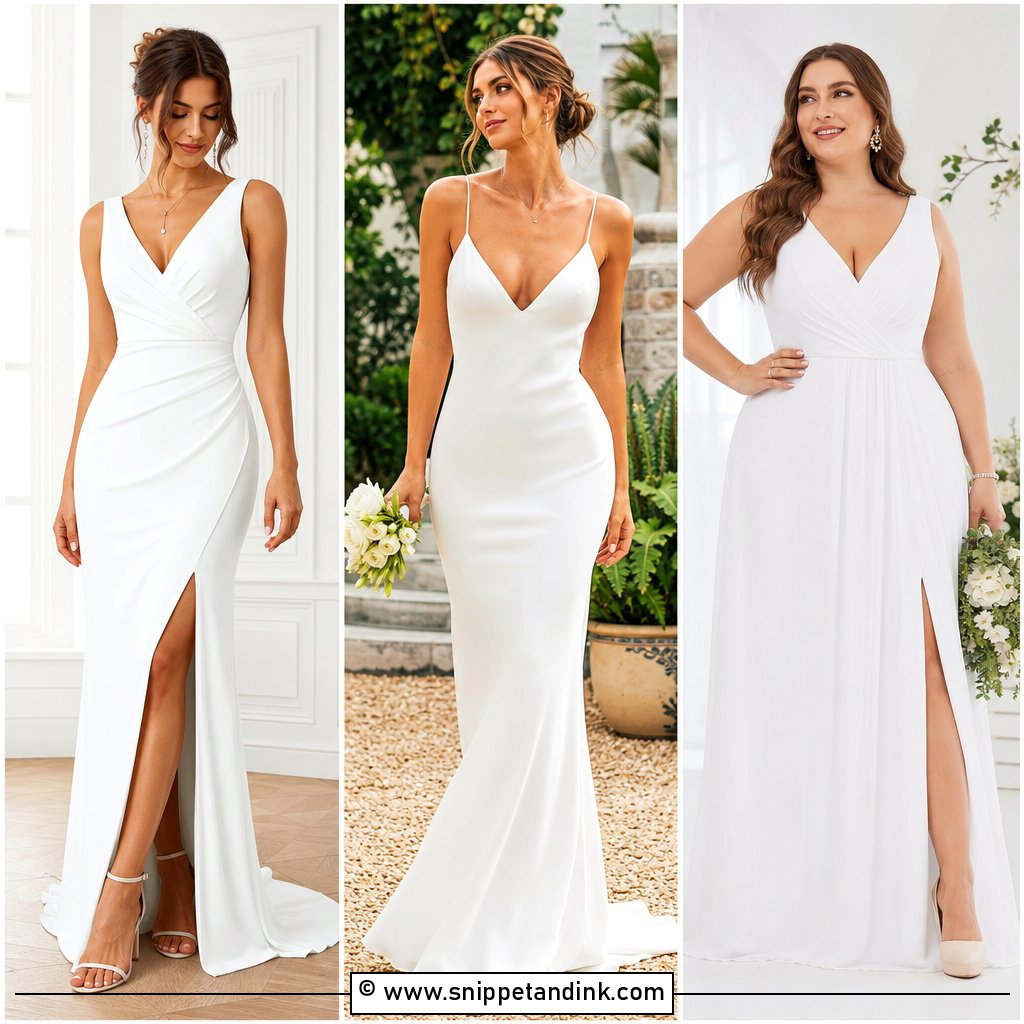
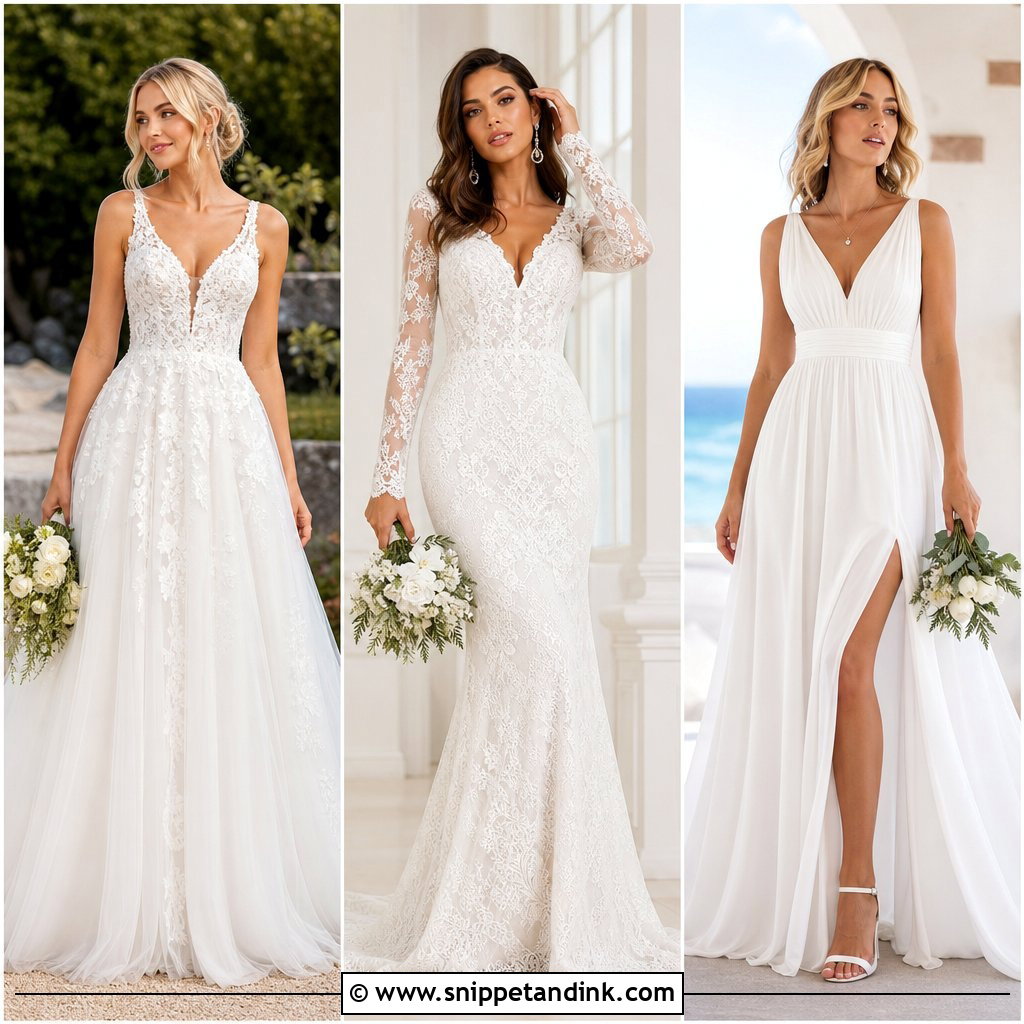
3. V-Neck Wedding Dress
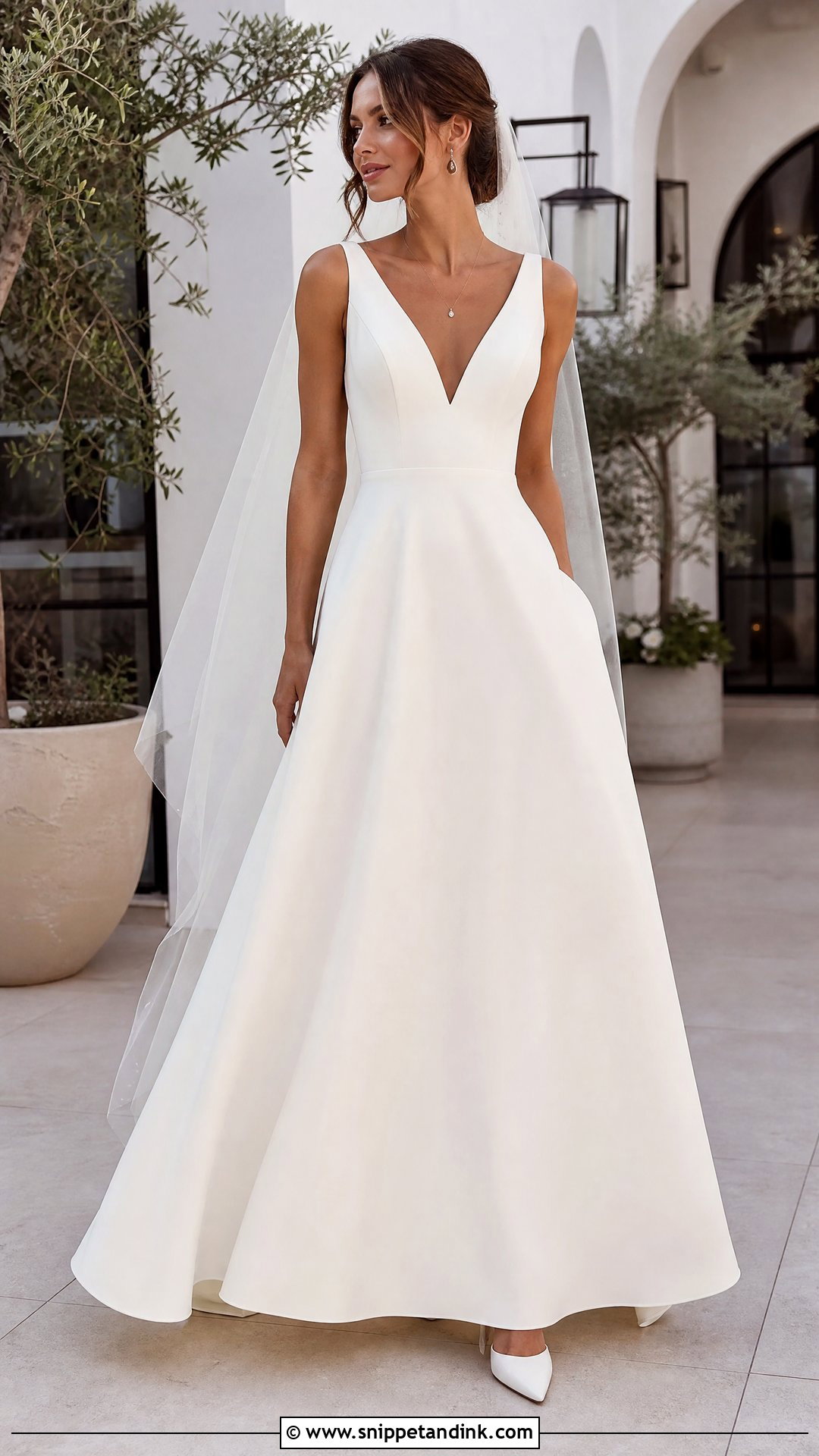
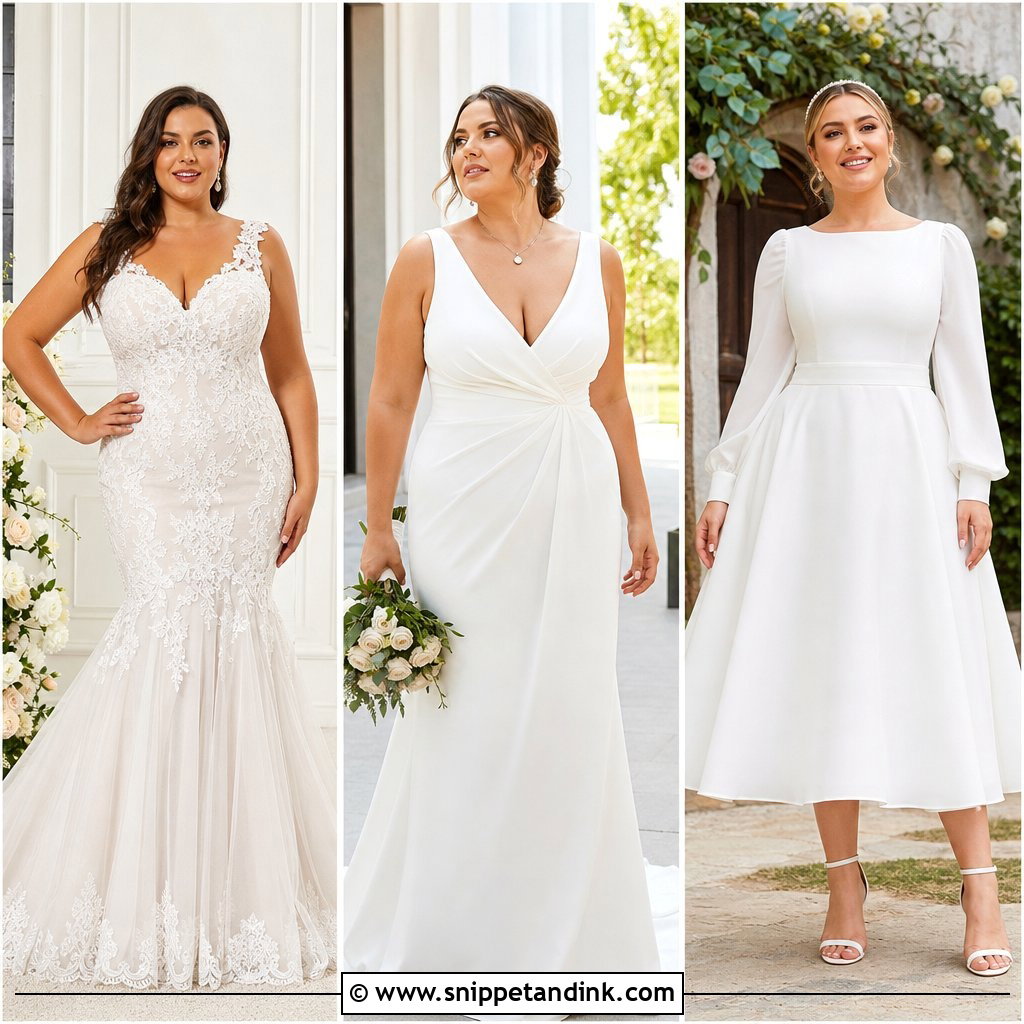
A V-neck draws a vertical line down the body, which lengthens the whole look. The depth is adjustable at the design stage, from a softly curved modest V to something sharp. A moderate V over a chiffon A-line suits an outdoor ceremony; with fitted crepe it reads more city. The thing I check first is whether the sides of the V lie on the skin or stand away from it, since gaping is common on smaller busts and usually needs the seams reshaped, not just a pin. Ask about built-in cups, supportive lining and nude mesh if you want it. A pendant that echoes the V, drop earrings, a low chignon and pointed heels finish it.
4. Plunging Neckline Wedding Dress
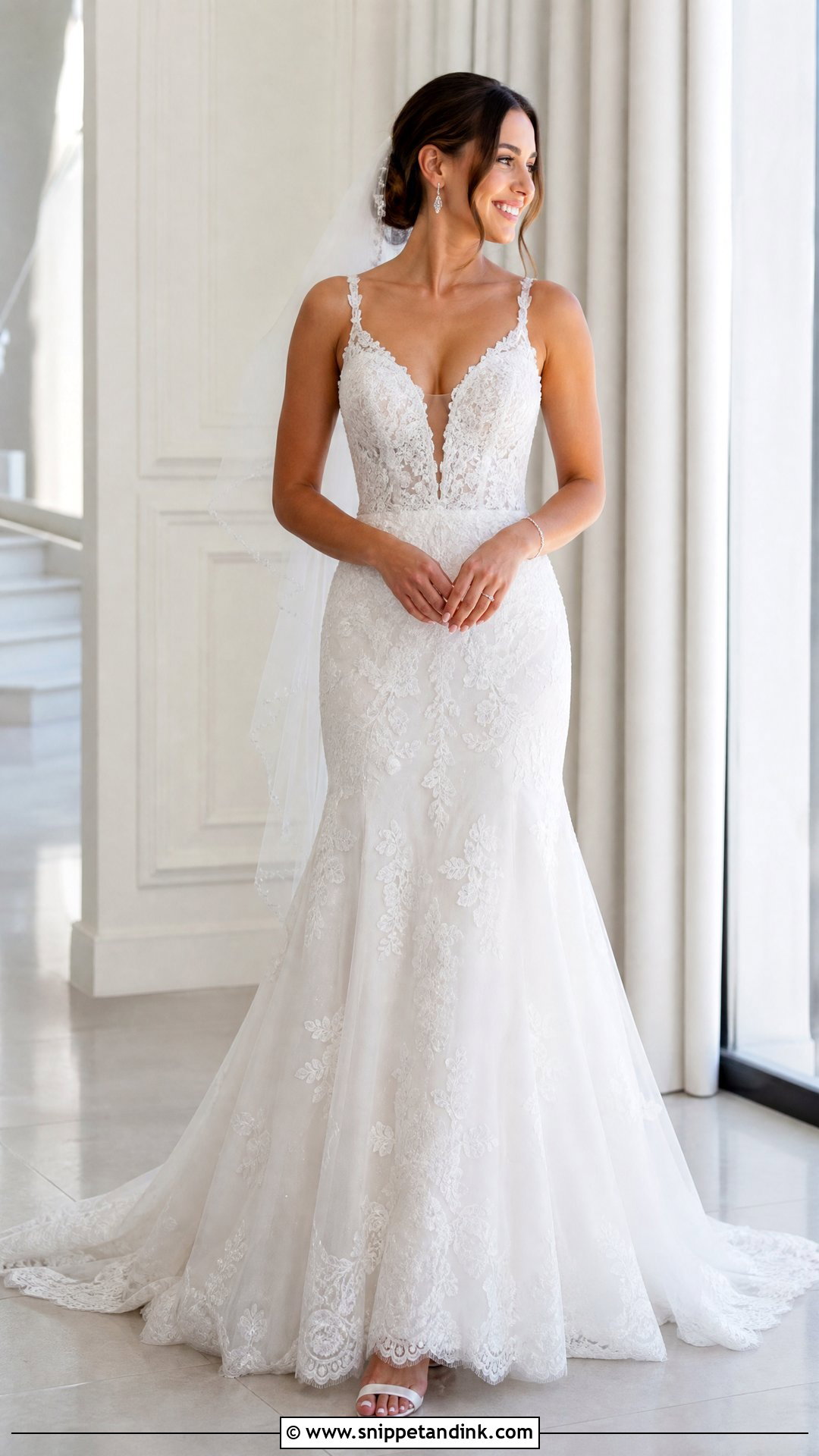
A plunge goes lower than a classic V, and in bridal it’s almost always held in place by a strip of illusion mesh down the center. That mesh is doing structural work, so I’d never let anyone remove it to go deeper. It looks sharp on streamlined sheaths, lace fit-and-flares and plain-skirted ball gowns. Keep jewelry quiet: small earrings, a slim bracelet, a clean updo and good heels. At fittings, sit, lean and bend. Well-matched mesh, supportive cups and careful lace placement keep you covered without the bodice looking heavy, and toupee or fashion tape adds insurance at the edges.
5. Scoop Neckline Wedding Dress
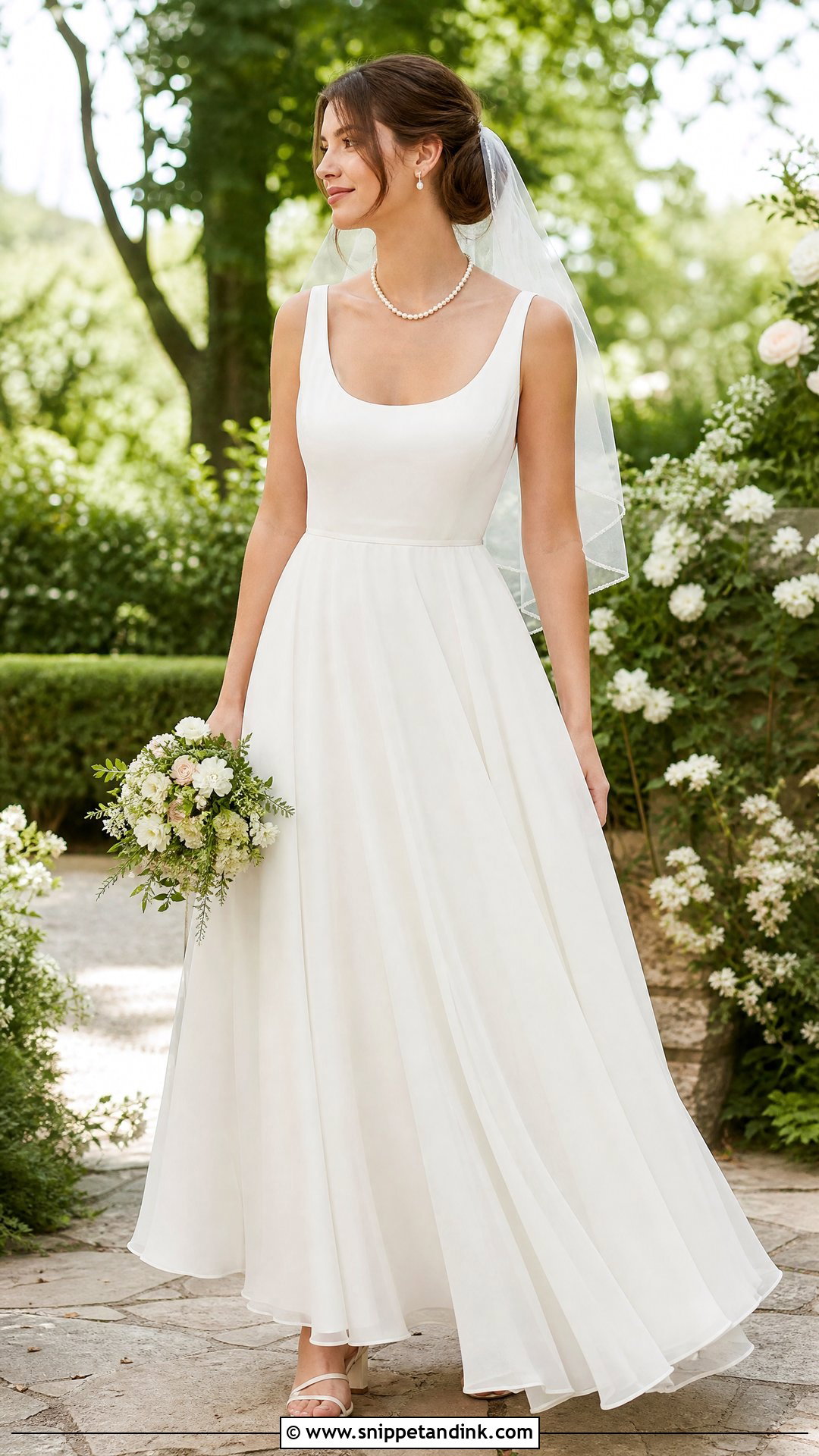
Easy to wear and easy to like. A scoop curves down in a rounded U, opening the upper chest without the sharp angles of a V. A shallow scoop looks classic with sleeves; a deeper one feels more modern. Match your necklace to the depth, a short pearl strand for shallow, a delicate pendant for deep, and add block heels, a soft updo and a light veil. It sits on tea-length, empire, A-line and column gowns alike. The one fitting issue is gaping when you lean forward, which a seamstress fixes by taking in the neckline edge slightly.
6. Off-the-Shoulder Wedding Dress
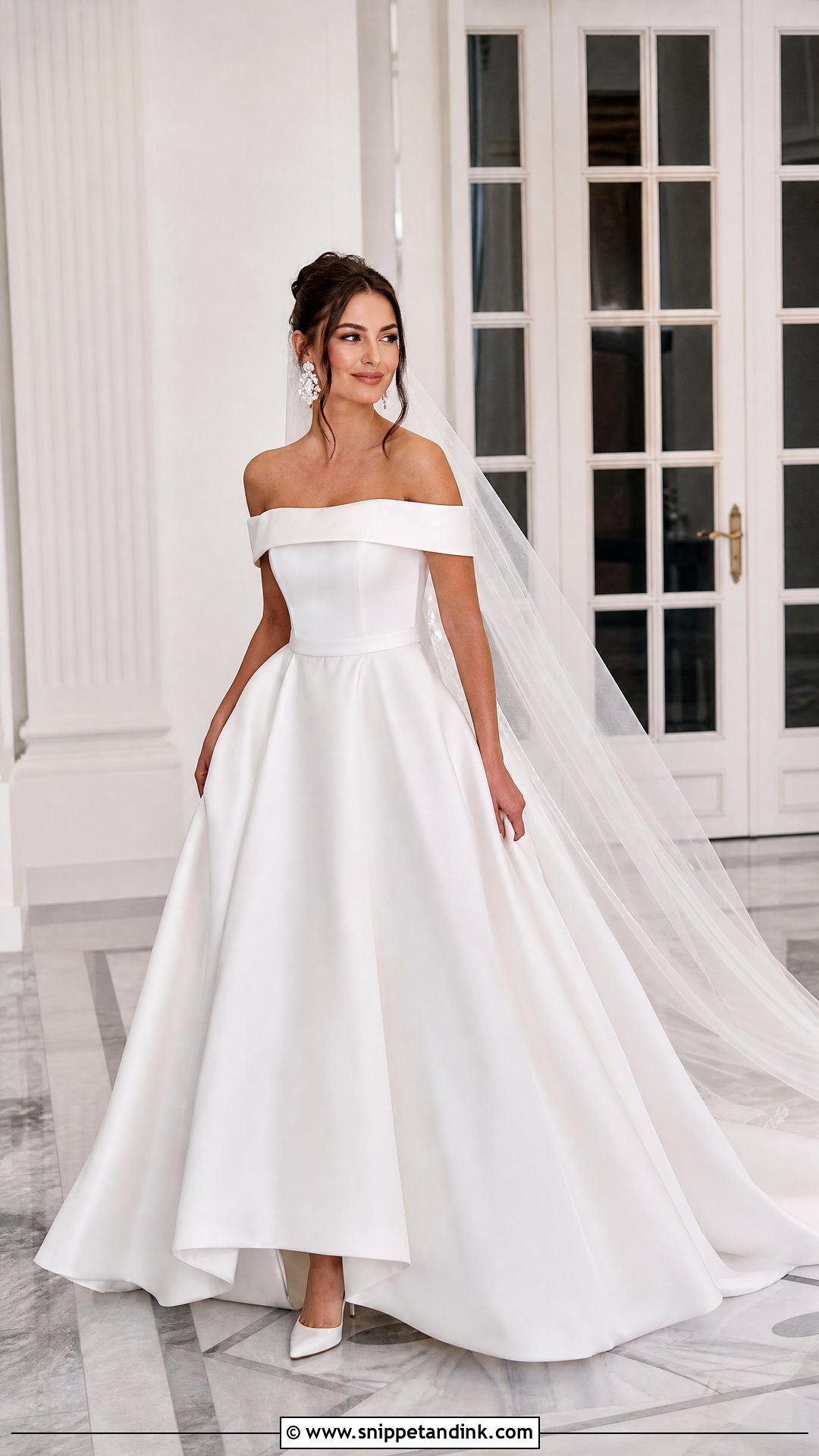
Off-the-shoulder bands sit below the shoulder joint, which looks romantic in photos and restricts your arms in real life. I ask every bride to hug me and raise her arms to shoulder height in the sample before anything else. If the band climbs or the bodice lifts, it needs hidden elastic or a slightly lower placement. The style can be fitted bands, draped fabric, lace sleeves or soft detachable straps, over a full ball gown or a clean crepe column. Statement earrings work better than a big necklace here. Add an updo, closed-toe heels and a veil set above or below the bun.
7. Straight Strapless Wedding Dress
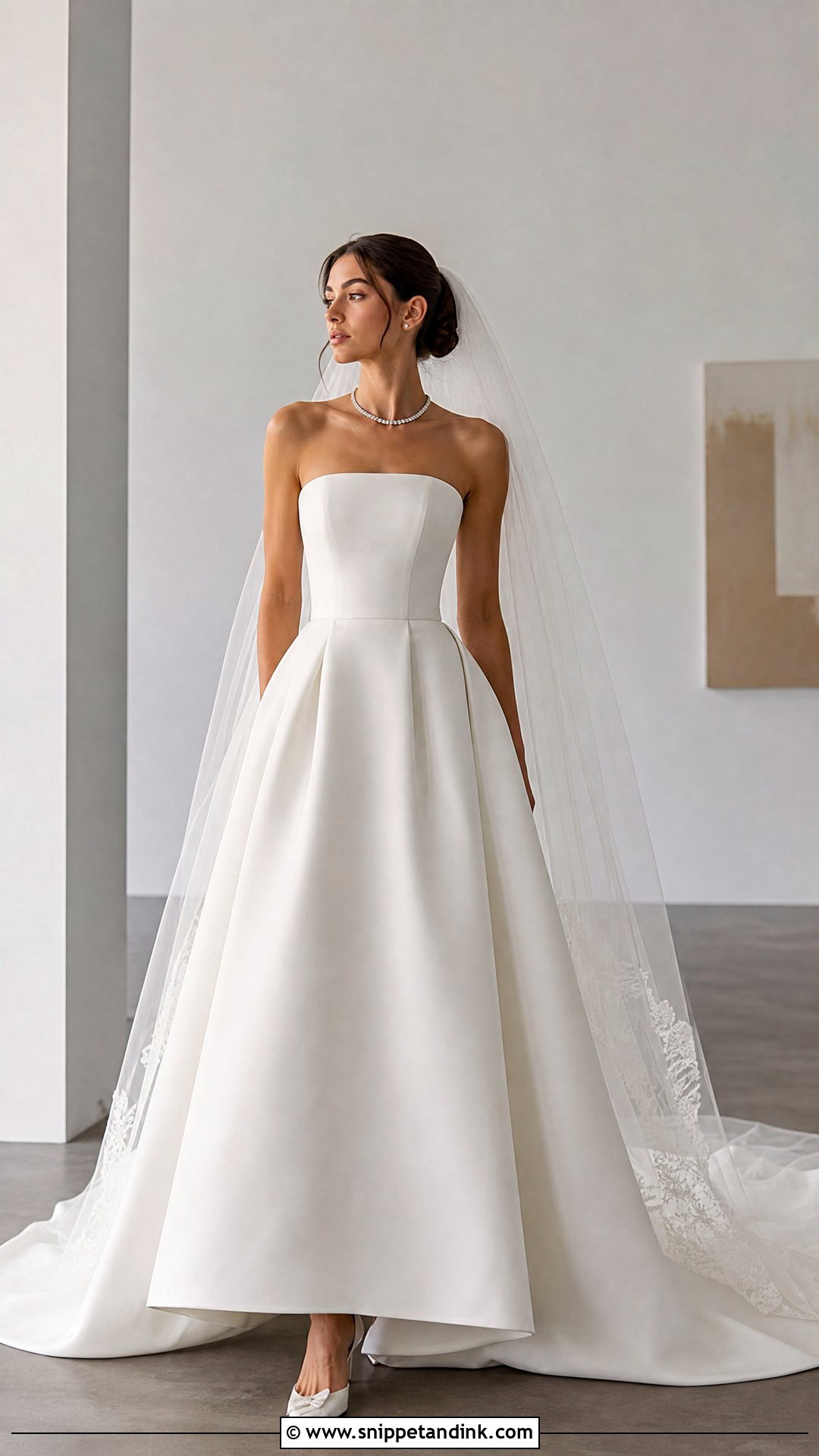
A straight strapless top is simpler than a sweetheart: one clean horizontal line. It suits minimalist satin, structured mikado, embellished corsetry and modern columns. With no straps at all, the support has to come from the torso down. Ask about boning, cups and a waist stay, and have the gown anchored around your ribs instead of squeezed at the top edge, which only creates a ridge over the skin. A collar-length necklace, studs, a smooth updo and pointed pumps finish it, and a long veil adds drama to an otherwise plain dress. Removable sleeves or gloves give you a second look without touching the neckline.
8. Bateau Neckline Wedding Dress
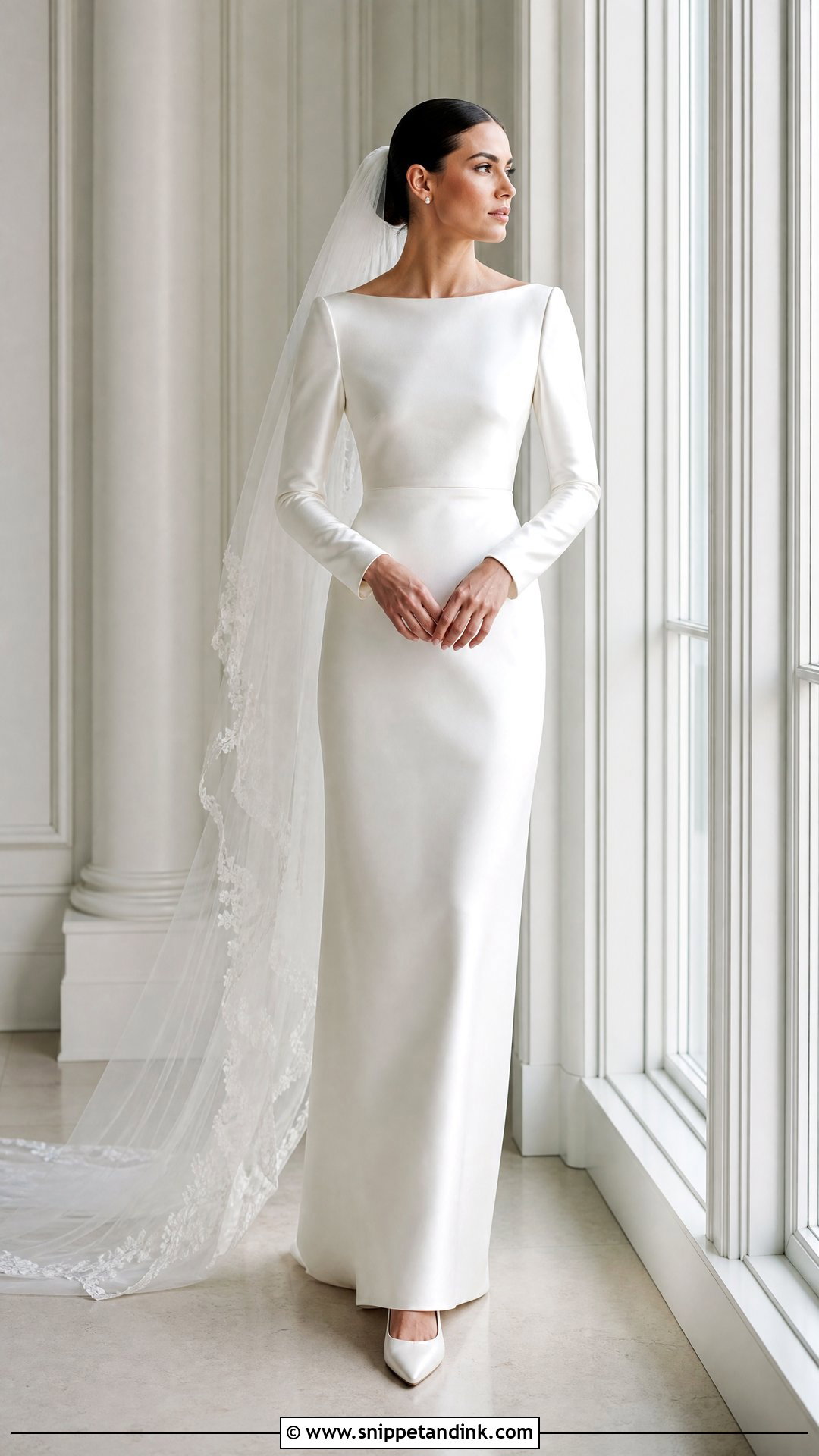
The bateau, also called a boat or Sabrina neck, runs wide along the collarbone toward the shoulders. You’ll see it on satin gowns, lace dresses and designs with fitted long sleeves, over an A-line, sheath or restrained ball gown. Because the neckline is already a strong horizontal line, I skip the necklace and go with pearl studs or slim drops, an elegant bun, low pumps and a chapel veil. Shoulder seam placement decides whether it works. A seam a little too far out and the neckline folds across the collarbone or slides to one side.
9. Illusion Neckline Wedding Dress
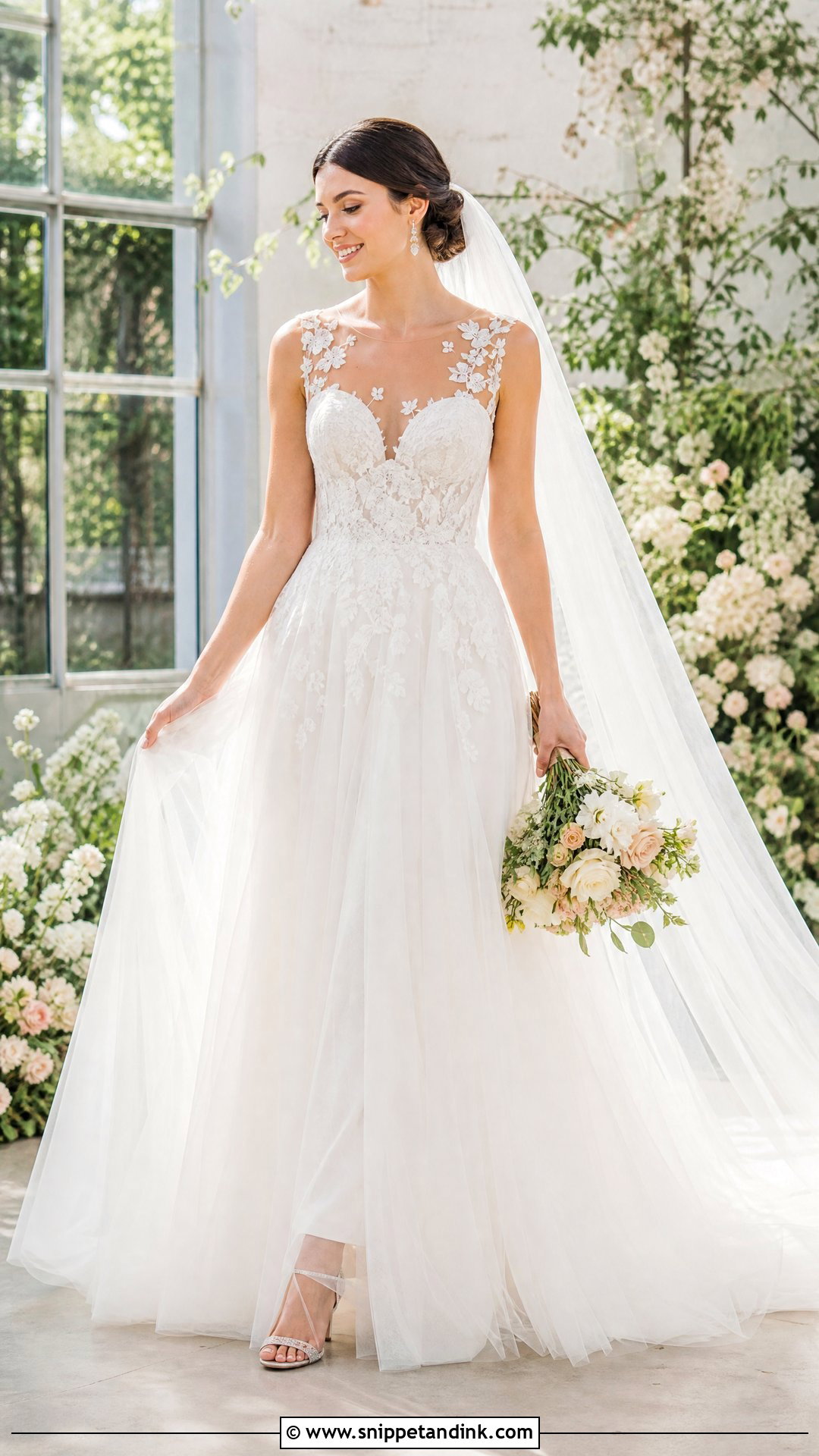
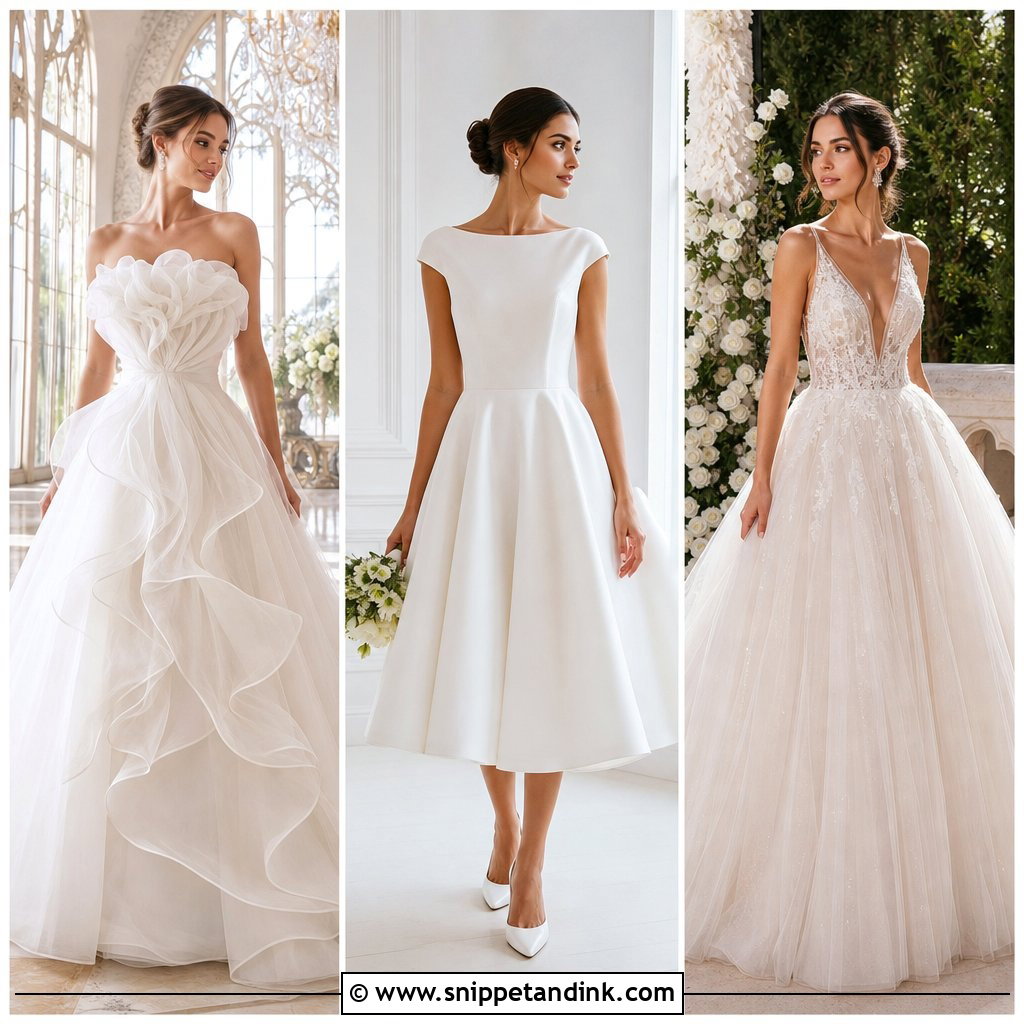
Illusion necklines put lace, beading or embroidery on sheer mesh so the decoration seems to sit on your skin, and the mesh can extend above a sweetheart, V, scoop or straight bodice. Mesh color is the whole game. Ivory, nude and champagne meshes read very differently against different skin tones, so look at it in daylight before alterations are final; the closest match disappears best. Run a finger along the edge too, since cheap mesh scratches at the throat. Small earrings, a simple bracelet and shoes that pick up one detail of the embellishment are enough, with a softly gathered veil over the detailed bodice.
10. High Neck Wedding Dress
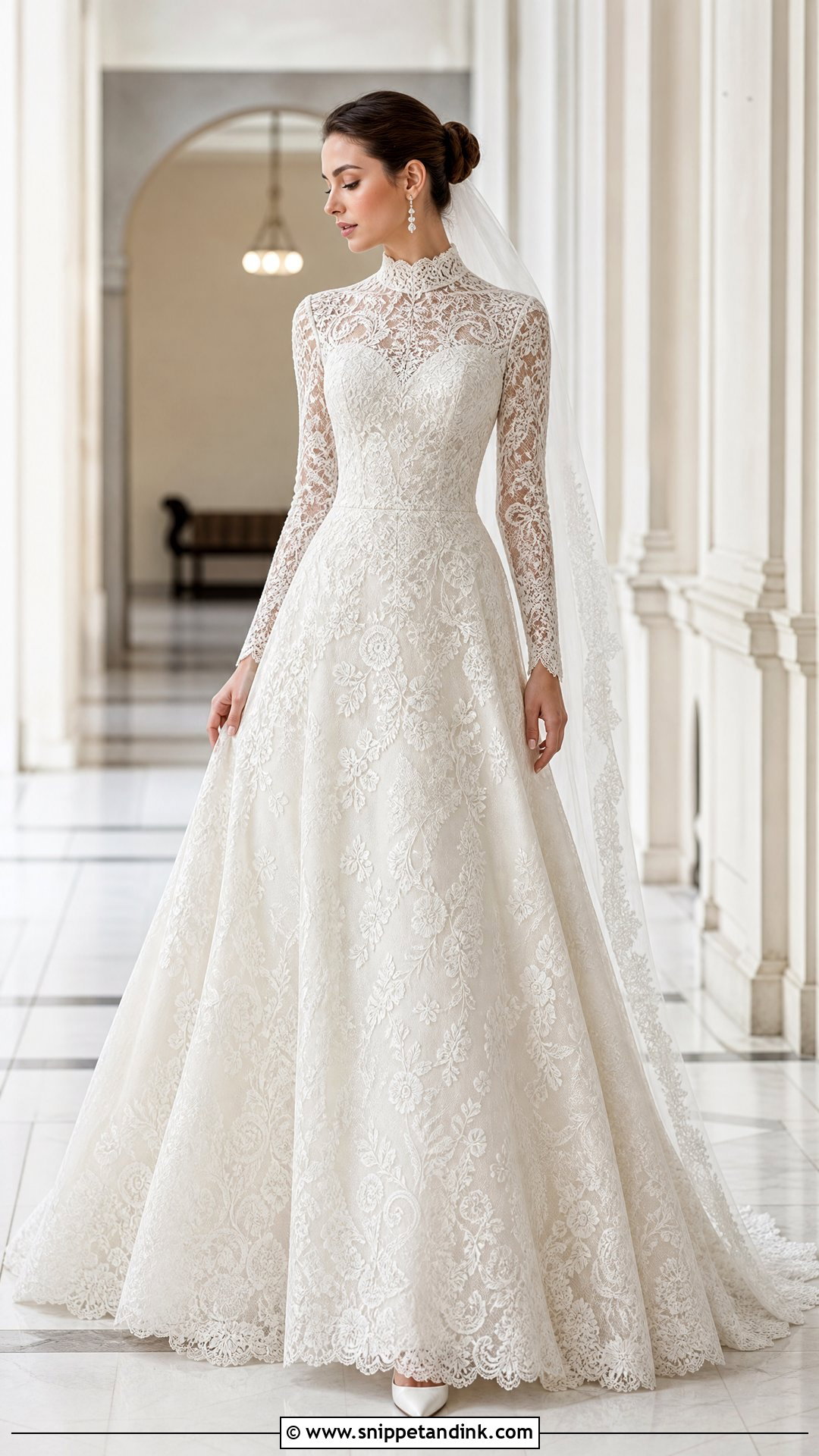
High necks give you coverage and a strong upper line, in solid crepe, delicate lace, embroidered tulle or sheer illusion. They look sharp with fitted long sleeves over a column or A-line. Leave off the necklace and put the detail into earrings, a bracelet or a hair accessory, with a clean bun and the veil set beneath it. I check head movement first: look down at your bouquet and over each shoulder, and the collar shouldn’t rub or dig. An open back is a good counterweight if you want contrast from behind.
11. Halter Neck Wedding Dress
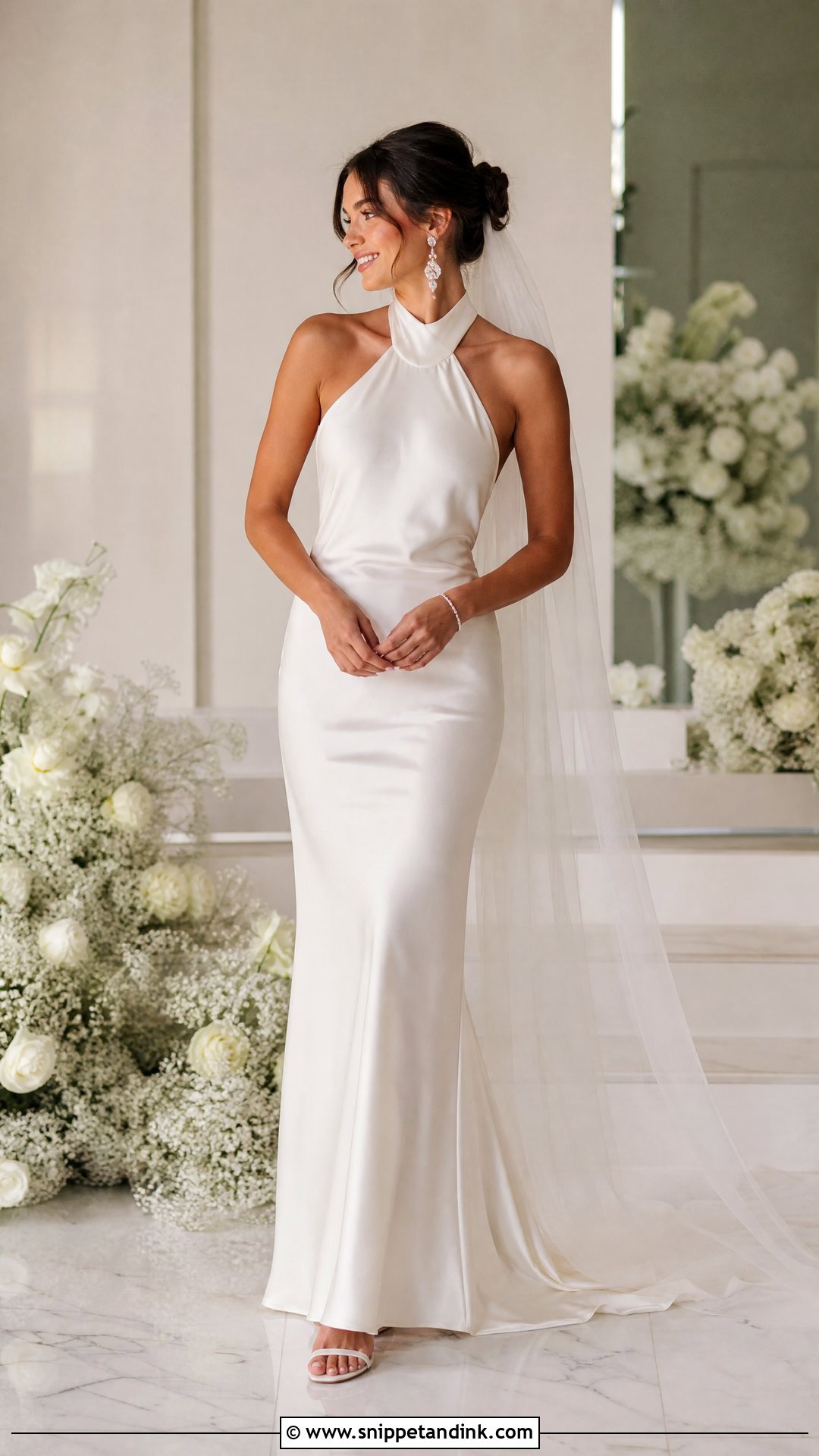
A halter pulls the straps or fabric inward to fasten behind the neck, which points attention straight up toward the face. It looks clean on satin columns, chiffon and fitted lace. Skip the necklace; it crowds the shape. Drop earrings, a slim bracelet, strappy heels and a sleek ponytail or bun suit it, and a low-back halter balances well with a veil you remove after the ceremony. Bust support is the real issue. If the bodice relies on the neck strap to hold you up, you’ll have a sore neck by the speeches, so make sure the internal construction carries the weight and the strap just finishes the line.
12. One-Shoulder Wedding Dress
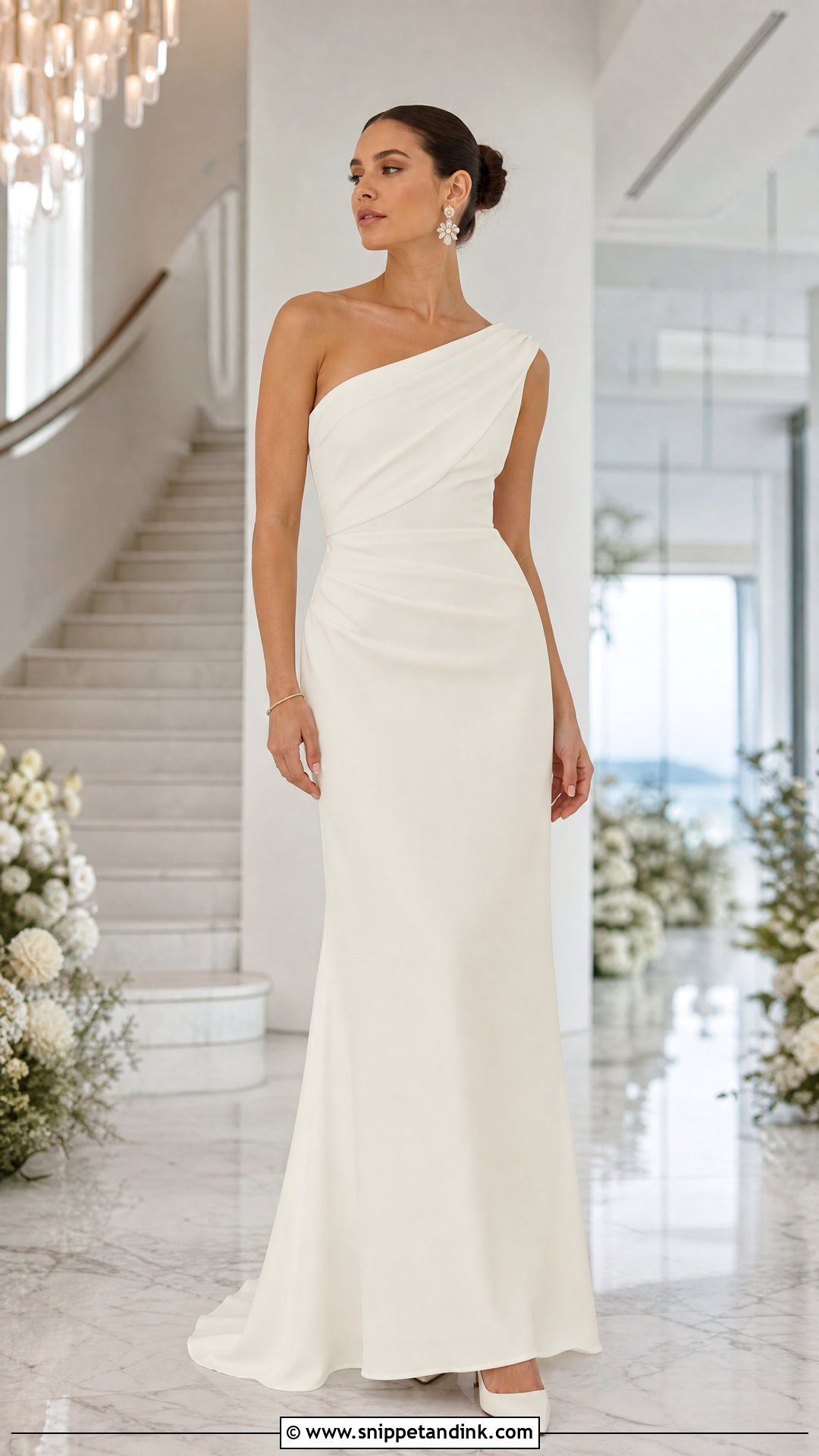
One-shoulder gowns are asymmetrical by design: a wide satin strap, appliqués, draped chiffon or a fitted sleeve on one side, the other shoulder bare. They work on sleek columns, pleated A-lines and structured fit-and-flares. A centered pendant fights the diagonal, so wear earrings, a narrow bracelet on the bare side, simple heels and a low bun or side-swept style that leaves the strap visible. Alterations take more care than on a symmetrical gown, because taking in one side can tilt both the neckline and the waist seam.
13. Queen Anne Neckline Wedding Dress
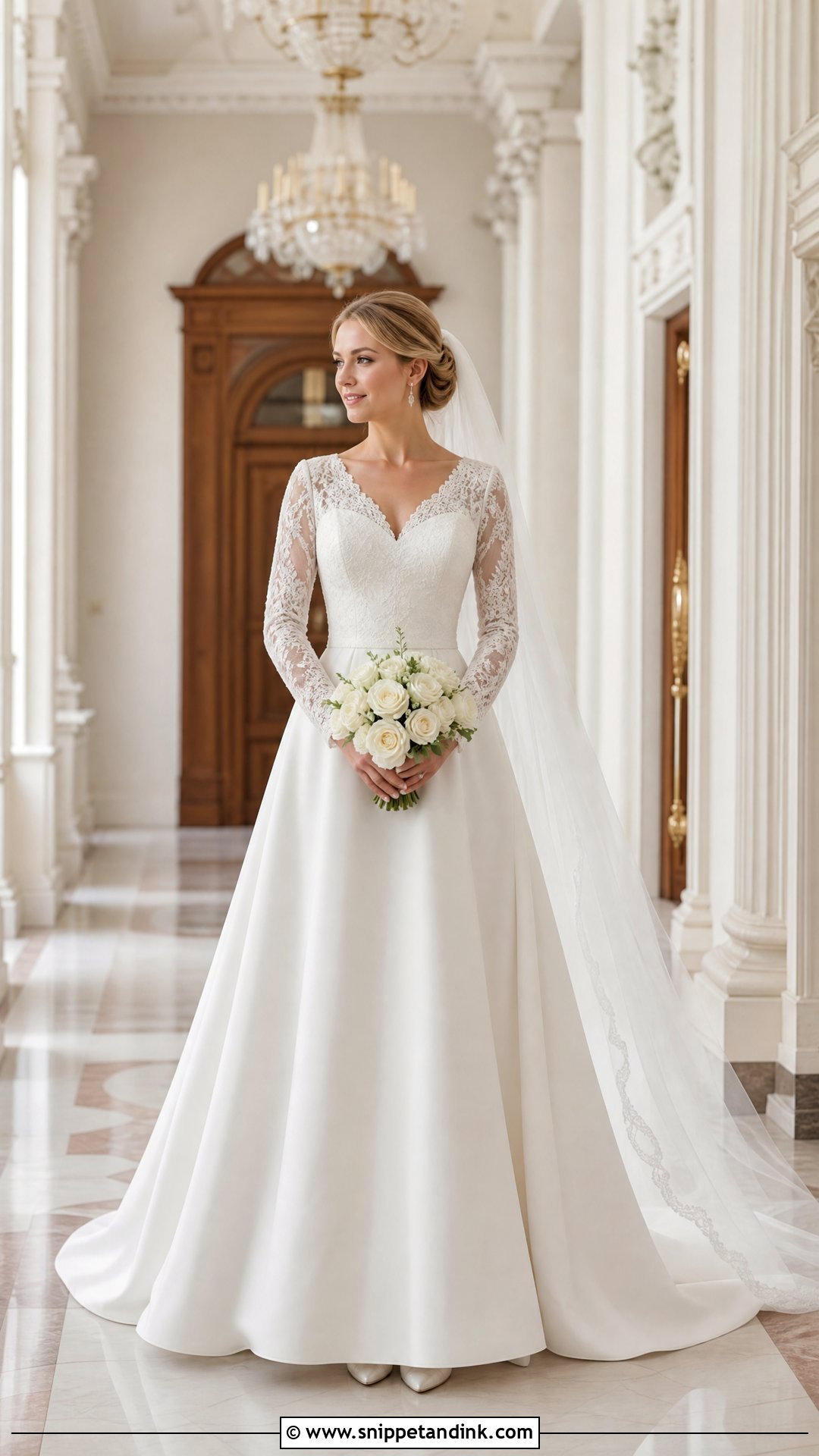
A Queen Anne neckline wedding dress rises high at the back and shoulders, then opens lower at the front, usually into a V, scoop or sweetheart. It’s a traditional shape that loves lace and embroidery, and it pairs well with an A-line skirt, covered buttons and fitted sleeves. With several lines already in play, keep the earrings understated and leave the neck bare. A smooth chignon, classic pumps and a long veil finish it. I check this one from the side and back as much as the front, since the raised collar section can stand away from the neck if the shoulders aren’t fitted precisely.
14. Jewel Neckline Wedding Dress
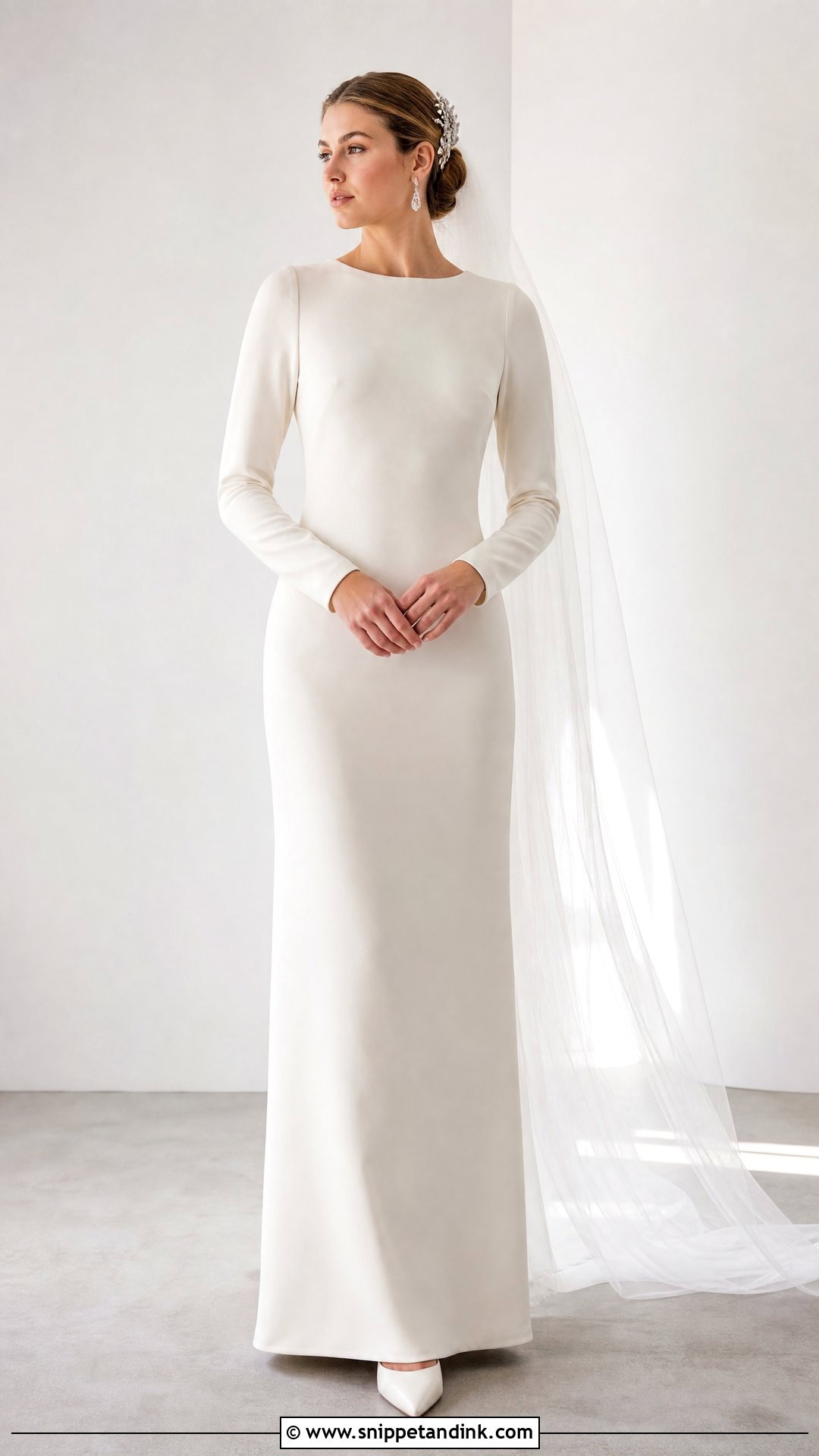
The jewel neckline is a high, round line at the base of the neck. In smooth crepe it’s minimalist; in lace, pearls or embroidered tulle it’s quite detailed. It suits sheaths, tea-length dresses and long-sleeved A-lines. No necklace needed. I’d use studs, drops or a decorative comb, with pointed pumps and a simple veil. For contrast from behind, look for a jewel-neck gown with an open, keyhole, or illusion back. The neckline should sit close enough to look neat while leaving a finger’s width of room so you can turn your head comfortably.
15. Cowl Neck Wedding Dress
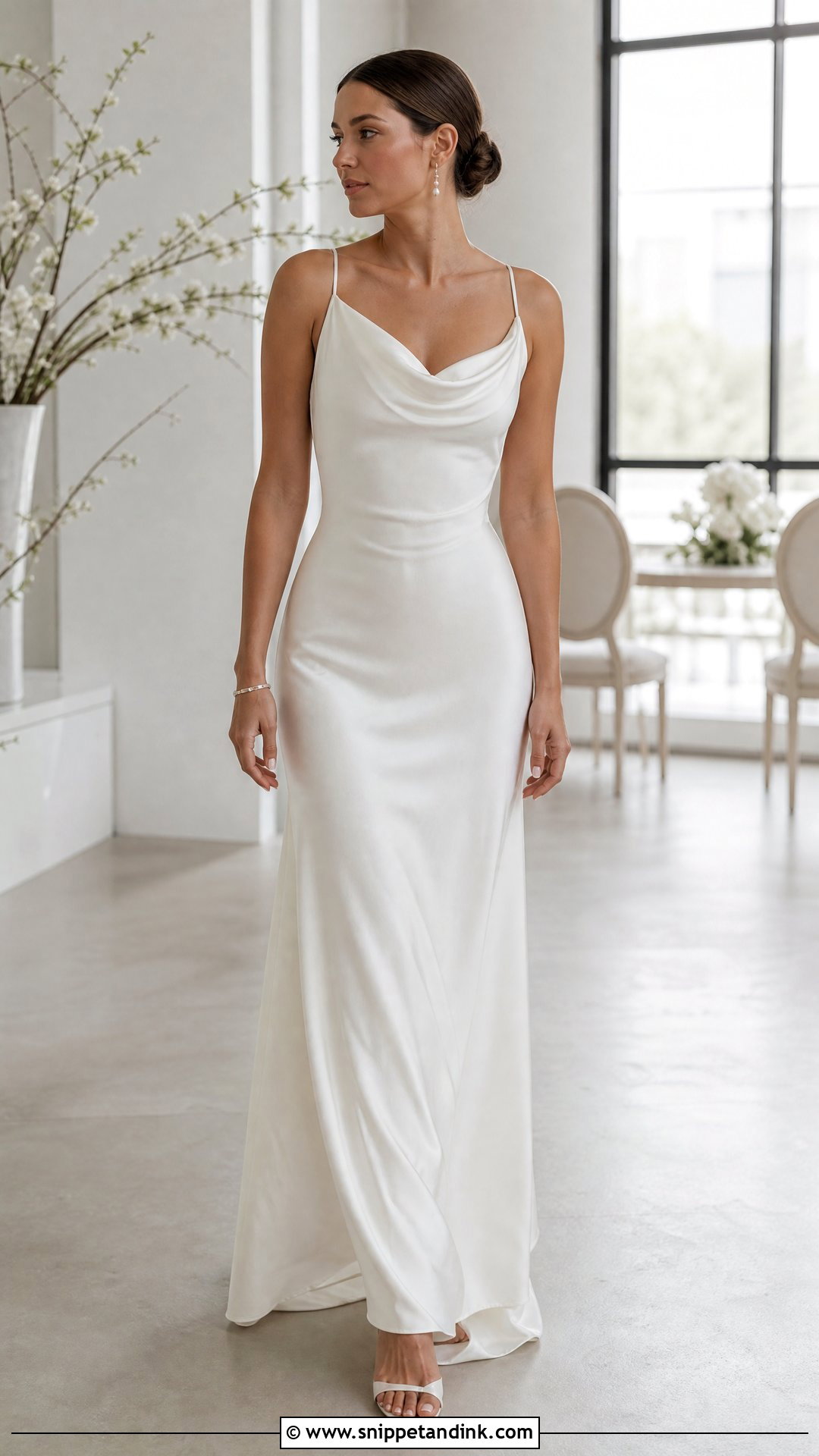
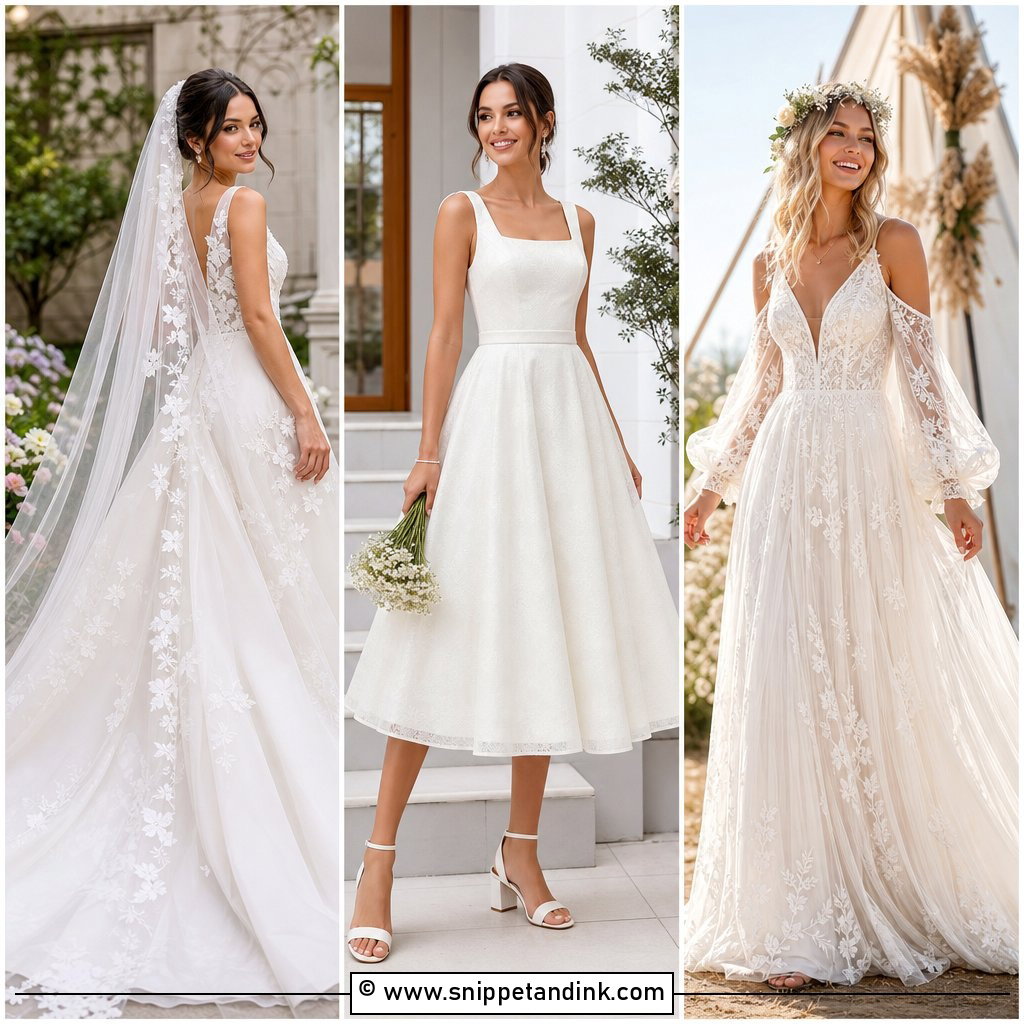
A cowl falls in soft folds instead of following a set curve, and it only works in fabrics with real drape: satin, silk or lightweight crepe, ideally cut on the bias. Put it over a bias-cut sheath or gently flared skirt. Heavy jewelry drags on the drape, so keep to small earrings, a fine bracelet, slim heels and a low bun. Fit is fussy. The folds should hang evenly whether you stand or sit, and a deep cowl can fall open when you lean, so I usually have a light lining or a small weight tacked in to keep it steady without killing the movement.
16. Portrait Neckline Wedding Dress
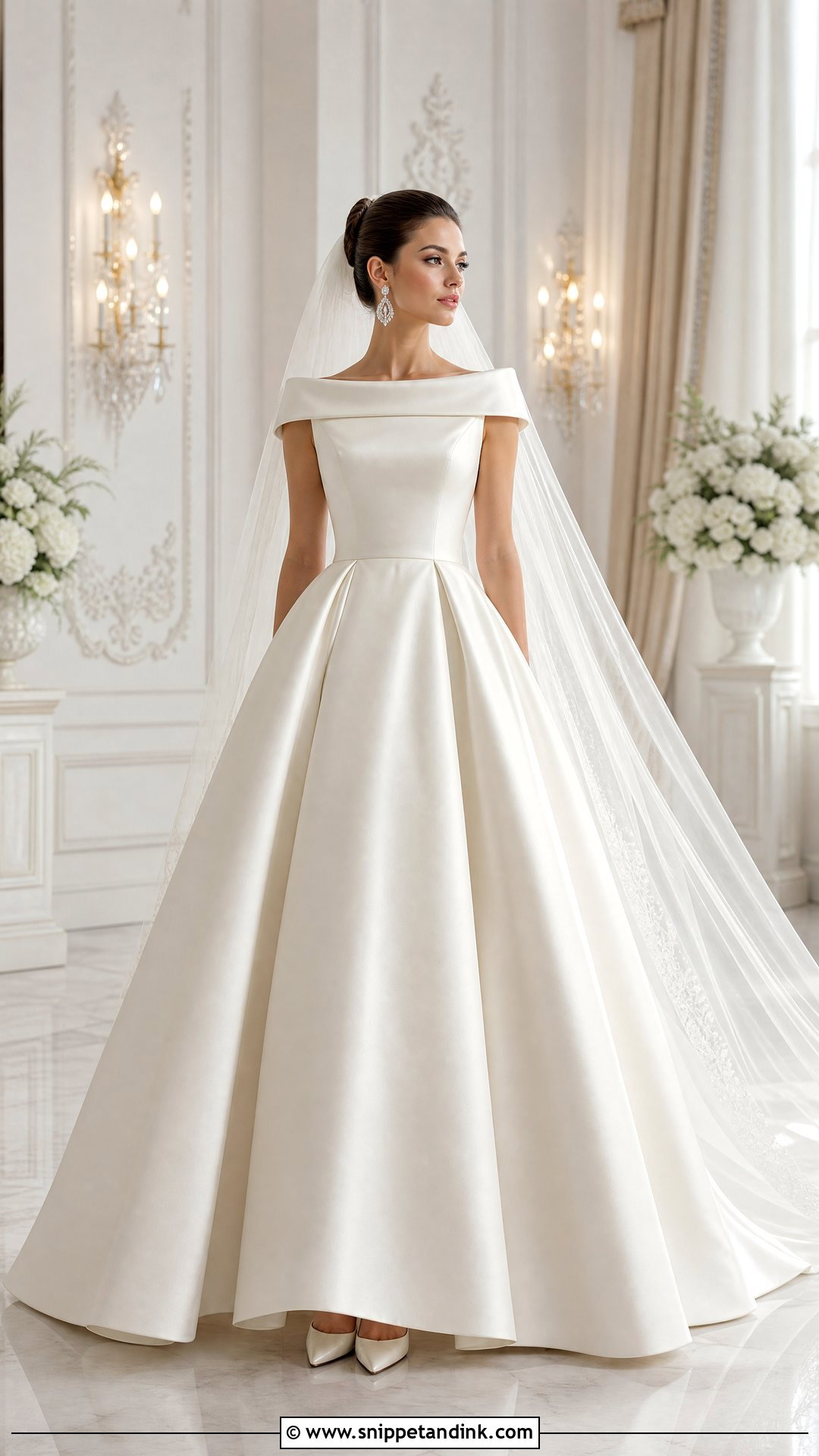
A portrait neckline is a wide folded band that frames the shoulders, heavier and more structured than a standard off-the-shoulder. It’s at its best on a satin ball gown, pleated A-line or fitted dress with covered buttons. Statement earrings, a polished updo and good pumps keep its formal character; a necklace is optional, and a bare neck often looks cleaner when the fabric is substantial. The folded collar has to sit evenly across both shoulders without rolling. Walk, sit and lift your arms at the fitting, because a stiff band that’s slightly too tight will dig in by the end of the night.
17. Keyhole Neckline Wedding Dress
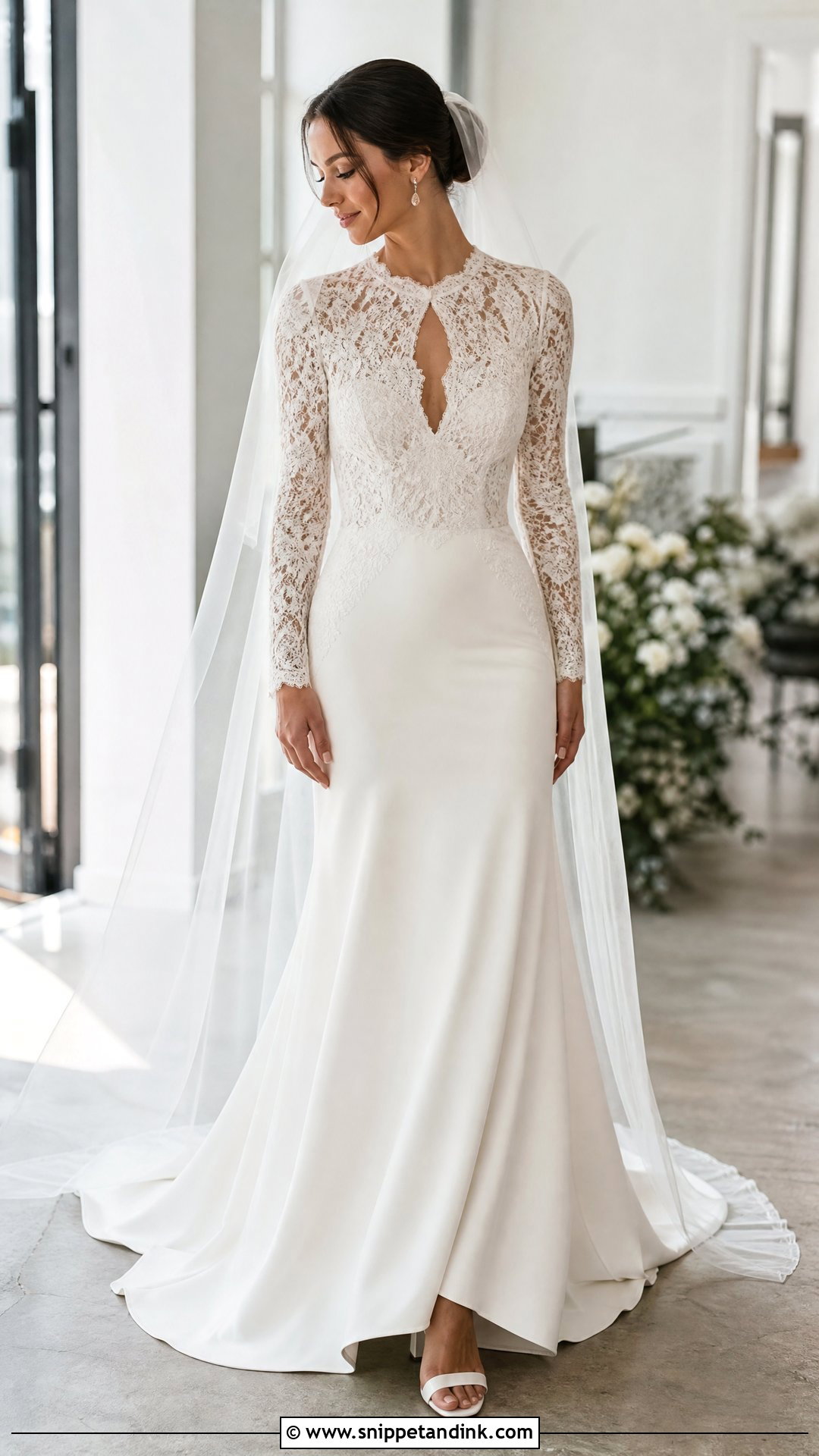
A keyhole neckline wedding dress keeps you covered but cuts a small opening at the upper chest, round, teardrop or narrow, sometimes outlined in lace or beading. It usually sits below a jewel, halter or illusion neck. Earrings instead of a necklace keep the keyhole visible; add a smooth bun, delicate heels and a clean-edged veil. It looks best on fitted lace and sleek crepe. The opening is a good alteration tell: if the shoulders pull, the keyhole stretches lopsided and the fabric around it puckers, so I check its symmetry with arms down and arms raised.
18. Notched Neckline Wedding Dress
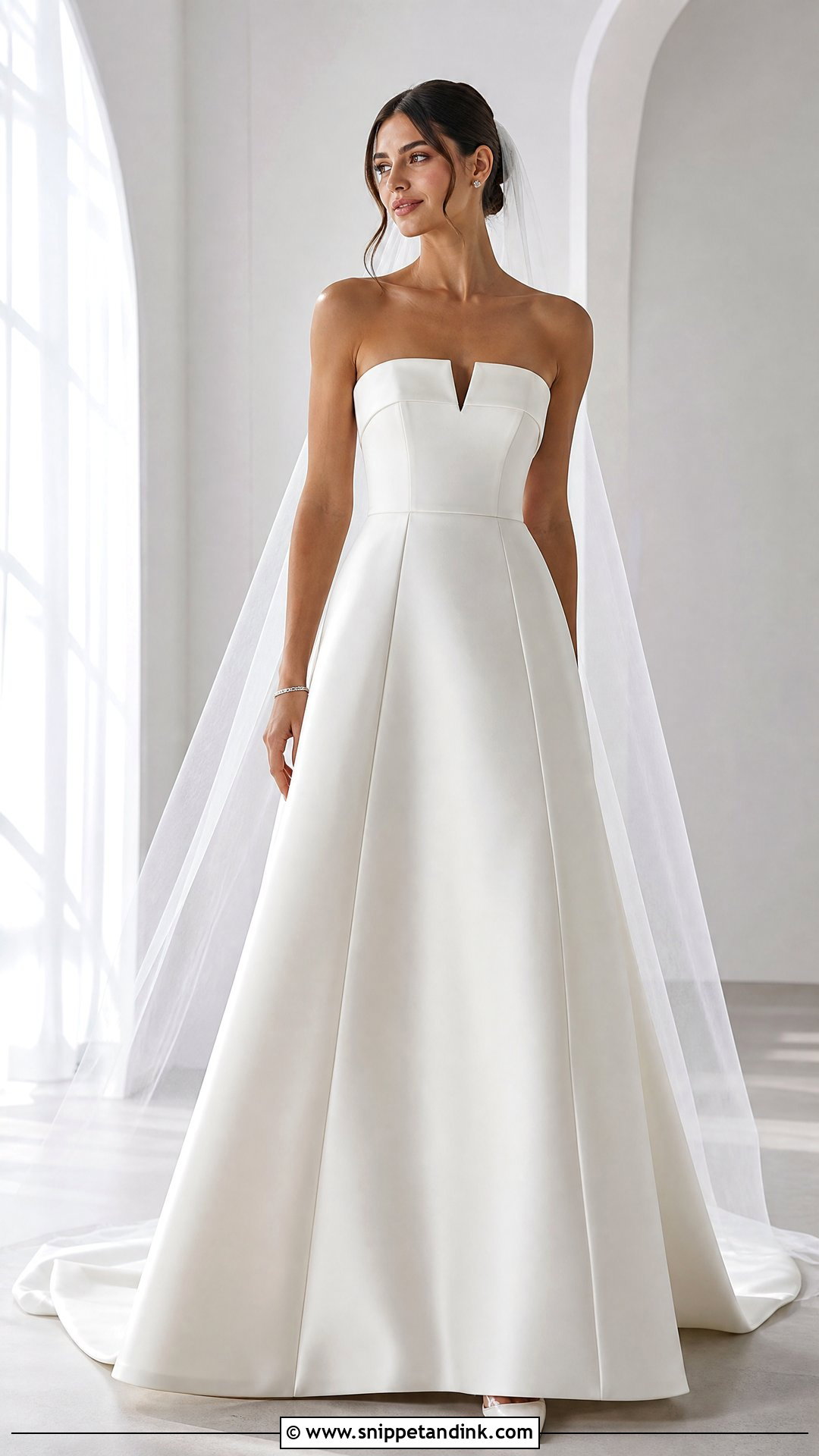
A notch is a small V cut into an otherwise straight, square or gently curved neckline. It gives definition without the depth of a full V, and it looks crisp on structured satin bodices, modern corset gowns and fitted crepe. Compact earrings, a slim bracelet, pointed heels and a neat updo suit it; a necklace can work if it’s short and plain. Because the notch is a small cut point, it collapses if the bodice isn’t firmly supported. Have the seamstress check it while you sit, walk and bend, so the fabric doesn’t fold around the center.
19. Scalloped Lace Neckline Wedding Dress
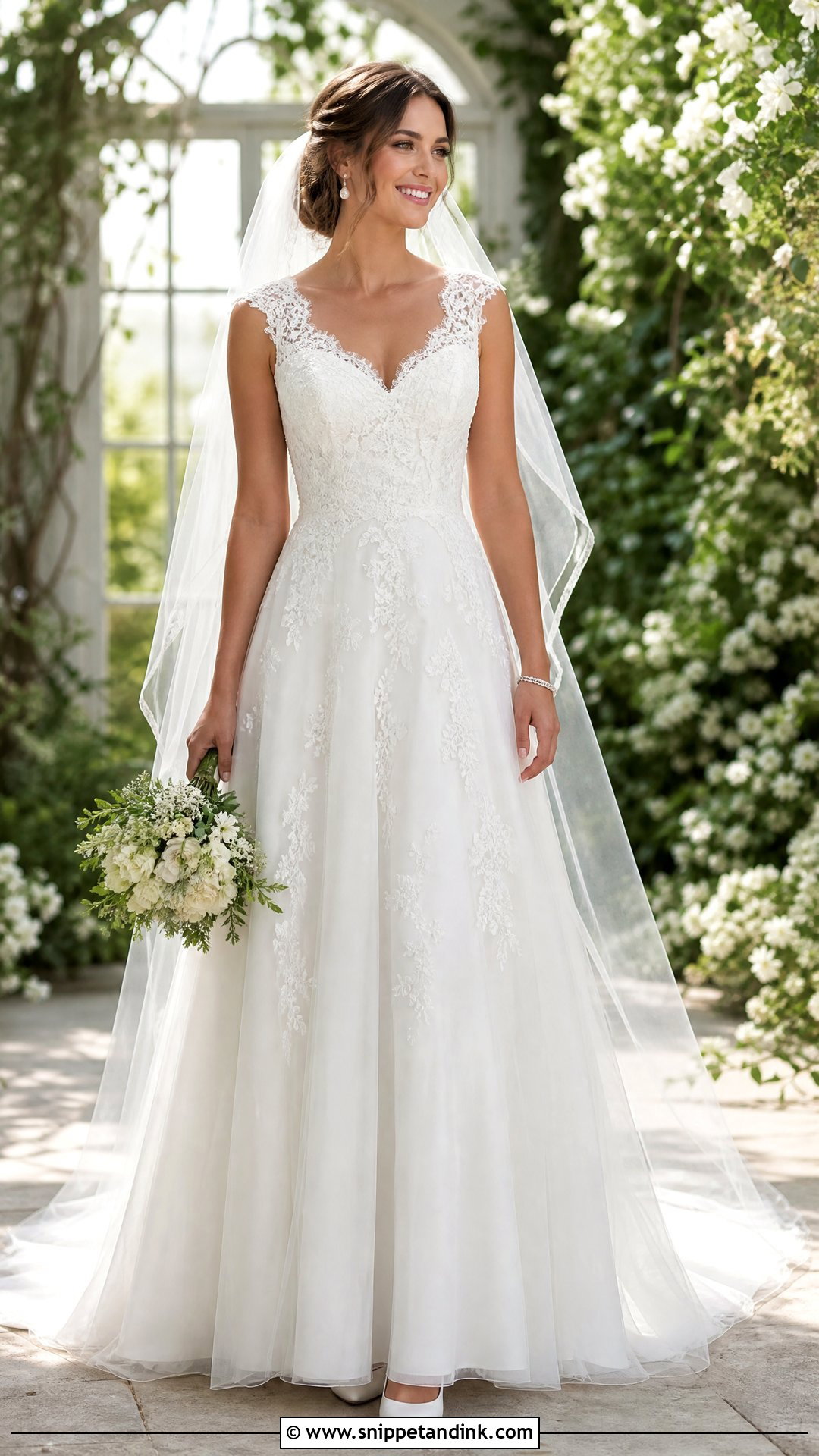
A scalloped lace neckline wedding dress uses the natural curved edge of the lace as the neckline finish, following a V, scoop, bateau, off-the-shoulder or illusion shape. Floral lace on an A-line reads romantic; geometric lace on a fitted gown is sharper. Scalloped edges are fragile, so keep jewelry away from them. Pearl earrings, a fine bracelet, closed-toe heels and a light veil are enough. During alterations I look at where each scallop lands. A good seamstress lifts the lace and re-sets it so the pattern stays balanced, instead of cutting straight through a scallop and leaving a raw edge that curls.
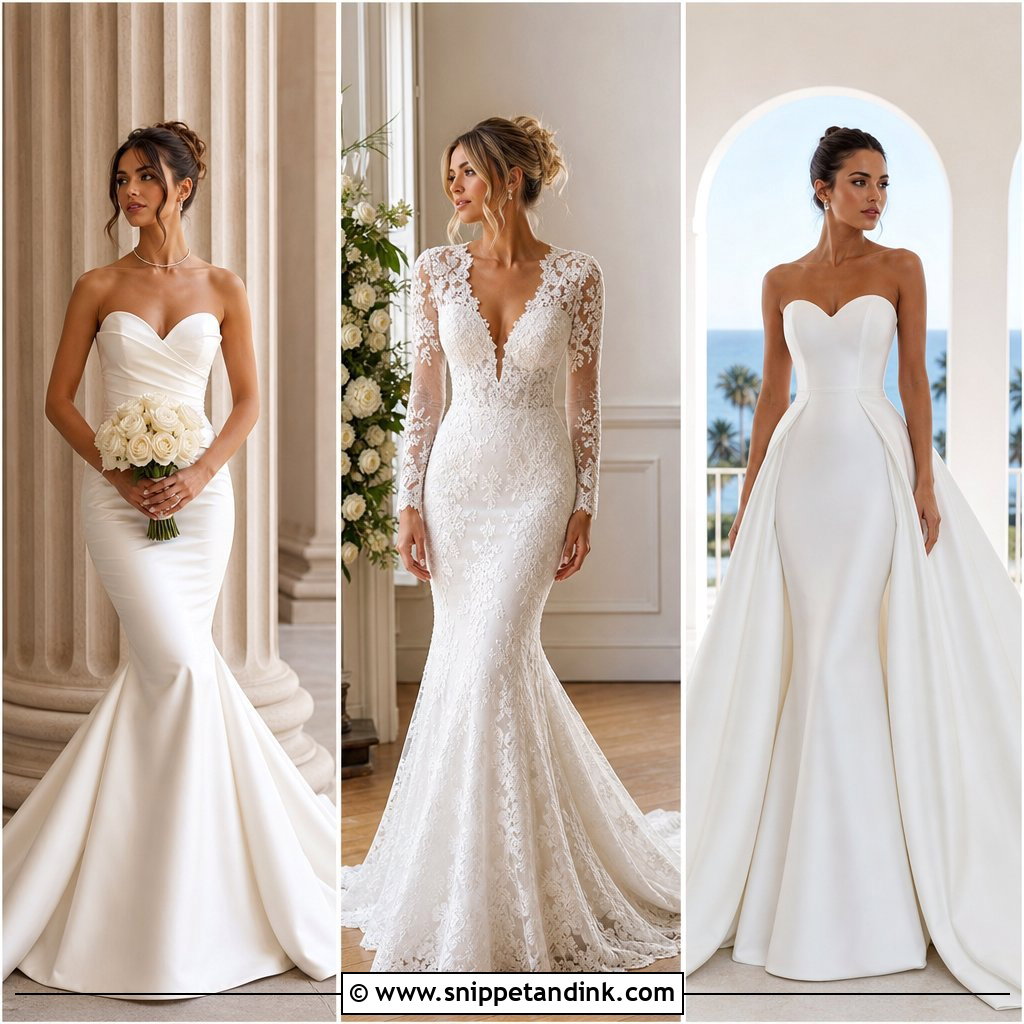



20. Surplice Neckline Wedding Dress
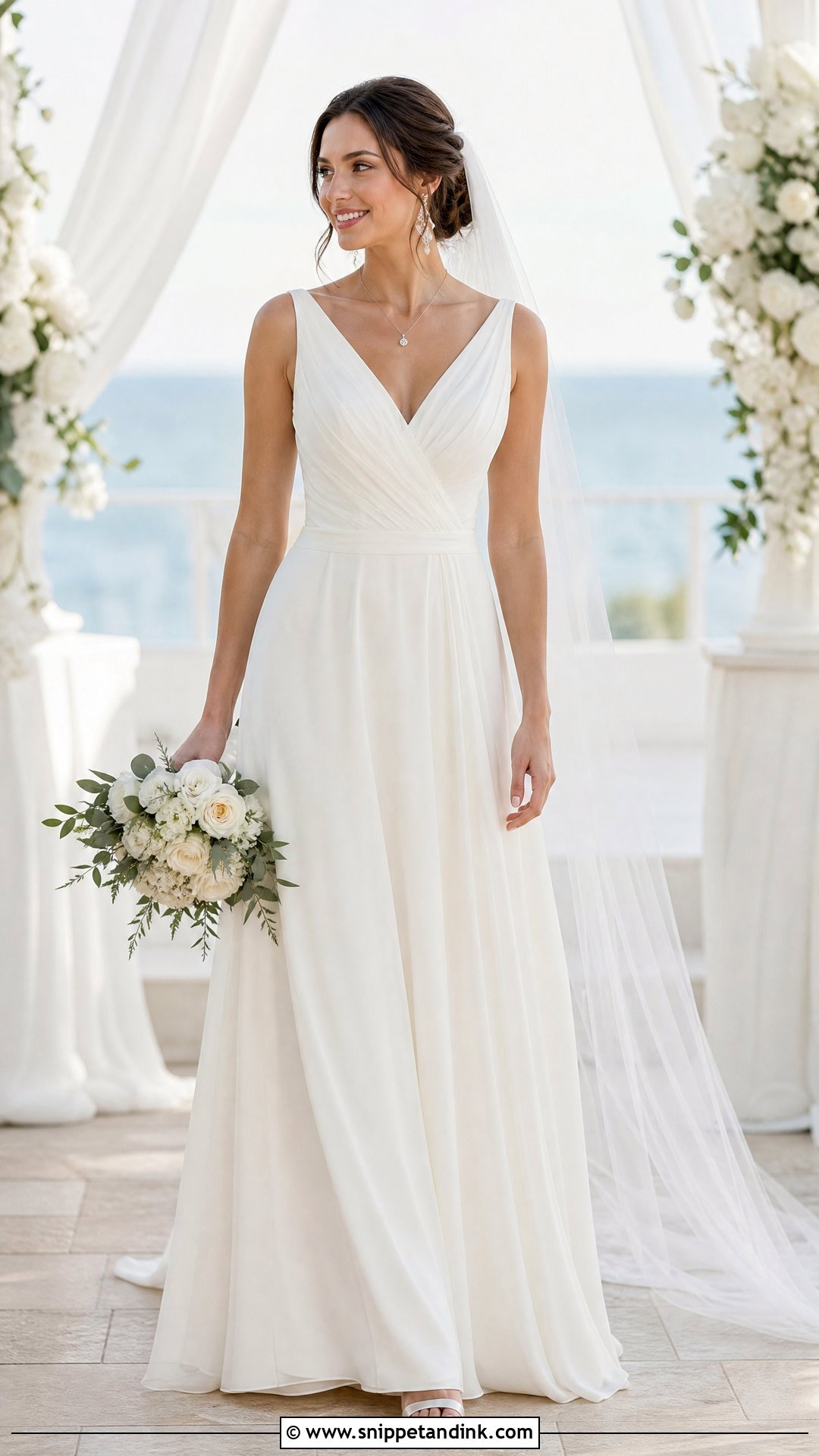
A surplice crosses one bodice panel over the other into a wrap-style V. In chiffon it moves; in satin or crepe it holds a crisp line. It pairs well with empire waists, A-line skirts and soft side draping. Follow the V with a delicate pendant, or skip it for medium-length earrings, then add low heels, a simple veil and a soft bun. The overlap is what to watch, since wrap panels tend to slide open once you sit and lean. Hidden snaps and a supportive lining keep it in place, and a small modesty inset gives extra coverage if you want it.
Which Necklines a Seamstress Can Change
Brides often find the right gown with the wrong neckline. Some changes are routine; others aren’t worth the risk. Lowering a neckline is usually possible on plain fabric, as long as the bodice structure isn’t cut through. Raising one means adding fabric, and that works well when illusion mesh or matching lace can fill the gap, less well on satin where any added piece shows.
Changes that tend to go smoothly
- Adding straps, sleeves or an illusion panel above a sweetheart or straight bodice.
- Softening a deep V or plunge with matching mesh at the center.
- Turning a sweetheart into a straight line on plain fabric.
- Adding hidden snaps to a surplice or cowl that shifts.
Changes I’d think twice about
Reshaping a scalloped lace edge, converting a halter into a strapless bodice, or cutting a high neck down on a heavily beaded gown. Each of these can mean taking the bodice apart, and the cost and risk climb quickly. Have a seamstress look at the gown before you buy and tell you honestly what’s realistic, and leave at least a couple of extra fittings in your schedule for neckline work.
Your Neckline, Seen From Every Angle
One design feature changes the mood, support and styling of a whole gown. Sweetheart and portrait necklines read soft, square, halter and notched shapes are cleaner, and high, jewel and illusion necklines cover you without losing detail. Ignore rigid body-shape rules. Try several shapes with the shoes, hairstyle and undergarments you’ll actually wear, move naturally in each, and look at the gown from the front, side and back. The one to keep is the neckline you forget you’re wearing after ten minutes.
You'll Like These Ideas:




Leave a Reply