
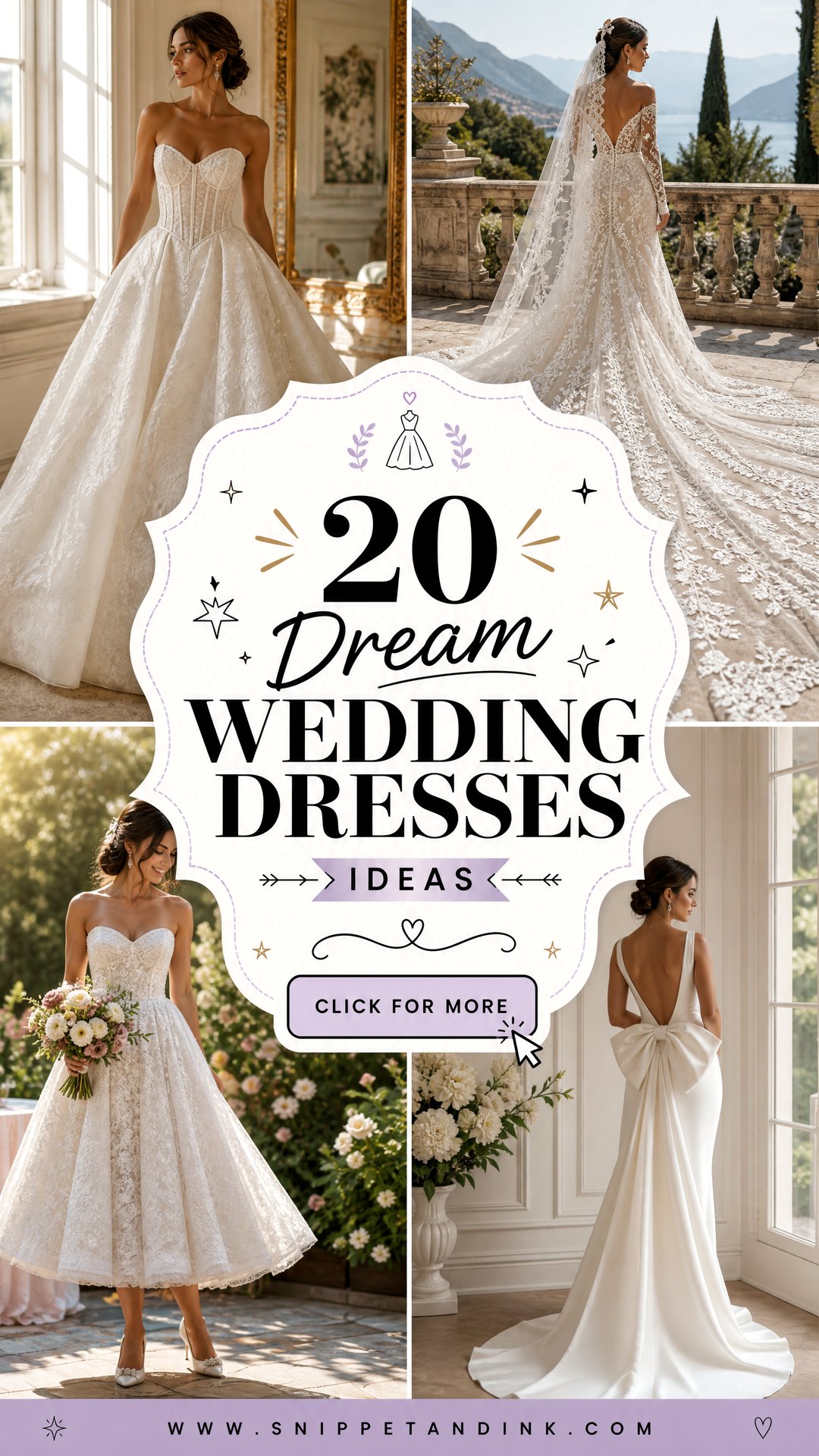
Start with how you want to feel walking in, not with a picture. When a bride sits down with me, I ask how long she’ll be on her feet, whether she wants to dance hard, and what the floor at the venue is made of, because those answers rule out half the gowns before we’ve touched a hanger. These 20 Dream Wedding Dresses Ideas cover the main silhouettes, necklines and fabrics I put brides in, from a lace ball gown to a beach slip, with the styling I’d add and the one fitting check that matters for each. Use them to work out which shapes you want to try, then let the fitting room decide.
Sort the Twenty by the Day You’re Actually Having
Before you fall for a picture, run it past the practical facts of your wedding. This is the rough filter I use with brides on the first call:
- Long day, lots of dancing: A-line, sheath, tea length, convertible overskirt. Leave tight mermaids for brides who’d rather pose than dance.
- Hot weather or outdoors: chiffon, slip and light A-lines. Heavy satin, corsets and long lace sleeves get warm fast.
- Cold season or church: long lace sleeves, high necks, ball gowns. Bring a wrap for photos outside.
- Small venue or registry office: sheath, tea length, square neck. A cathedral train has nowhere to go.
- Sand, grass or gravel: short trains and block heels; chiffon and slip dresses forgive the ground best.
Pick three or four shapes that pass the filter and try those first. You can always add a wild card at the appointment.
1. Lace Ball Gown Wedding Dress
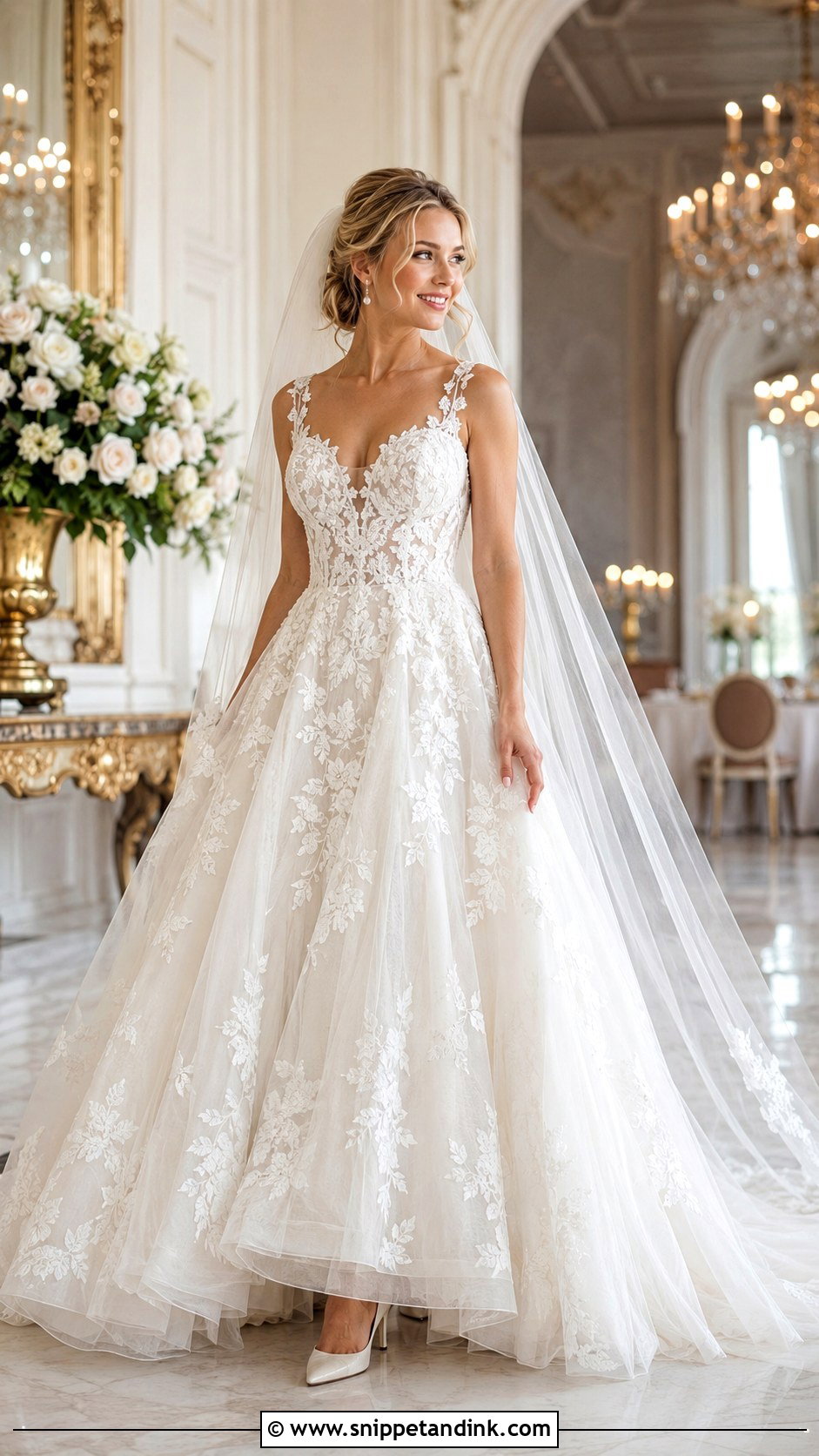
The lace ball gown is the classic for a reason: a fitted bodice and a full skirt suit most bodies. I prefer floral lace over soft tulle, which gives the romance without the weight of layered satin. A sweetheart or gentle scoop neckline keeps the bodice balanced, and slim straps help if you’re worried about strapless. Pearl drops, a cathedral veil and pointed ivory pumps finish it; the lace does the work a necklace would. The skirt is wide, so walk a lap and sit at the fitting. If you can’t get through a standard doorway without turning, you’ll be turning all day.
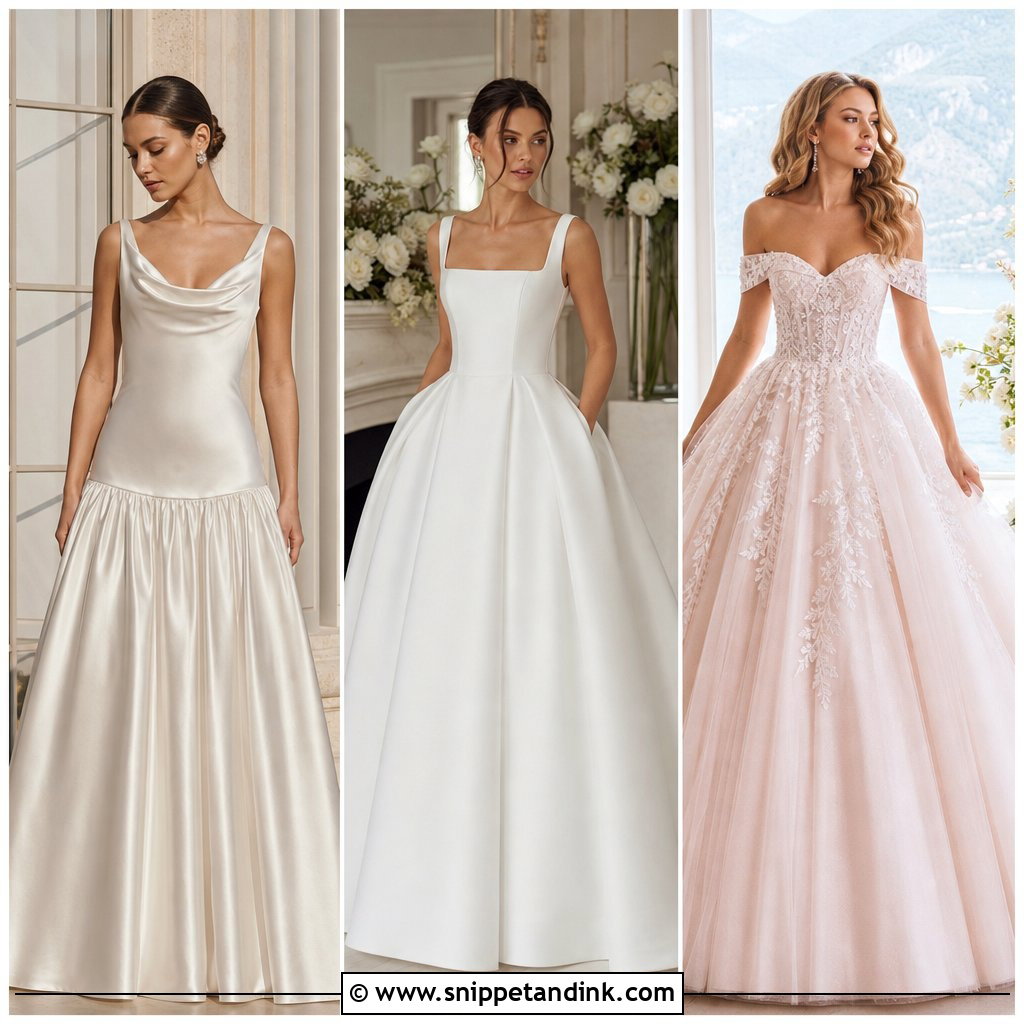
2. Satin A-Line Wedding Dress
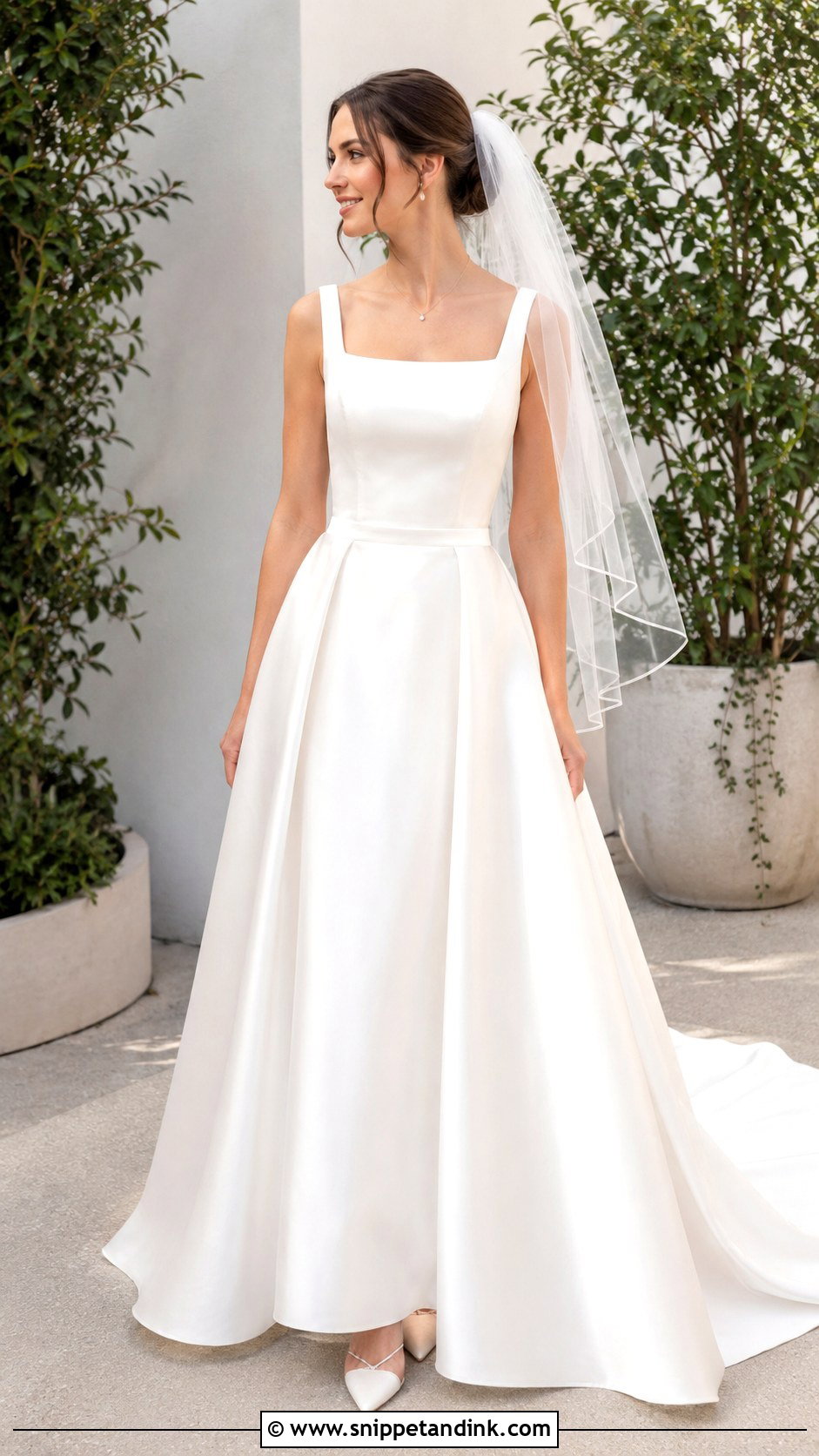
Satin A-lines are what I put on brides who want something clean but still clearly bridal. The skirt widens gradually from a fitted waist, so there’s shape without bulk. A structured square neckline leaves room for a delicate pendant. Pearl studs, satin pumps, a low bun and a fingertip veil suit it, and covered buttons or a little pleating at the waist add quiet detail. Satin shows every flaw in fit. A wrinkle across the hip or a seam pulling at the side is visible in every photo, so I’d budget a little more for alterations on this one.
3. Basque Waist Wedding Dress
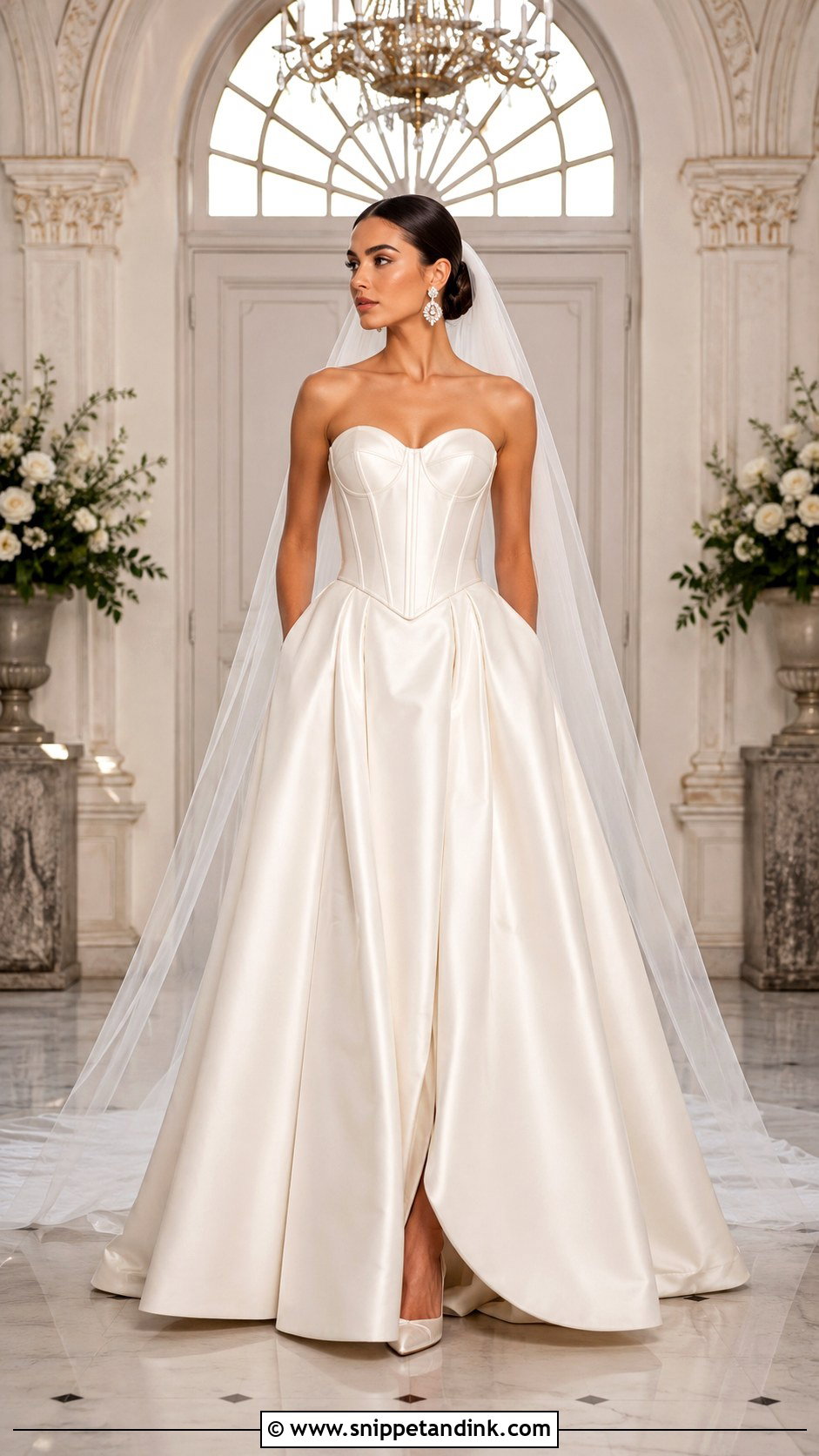
The pointed basque waist lengthens the torso and gives a ball gown a regal outline. I pair it with a corset-style bodice and a full satin or tulle skirt, plus a softly curved neckline so the structure doesn’t look severe. A long plain veil, crystal earrings and sleek ivory heels balance it. If the bodice already has ruching, lace or visible boning, skip the necklace. Here’s the fitting check I never skip: stand, then sit, then bend to pick something up. A basque point cut a touch too long presses into your stomach the moment you sit.
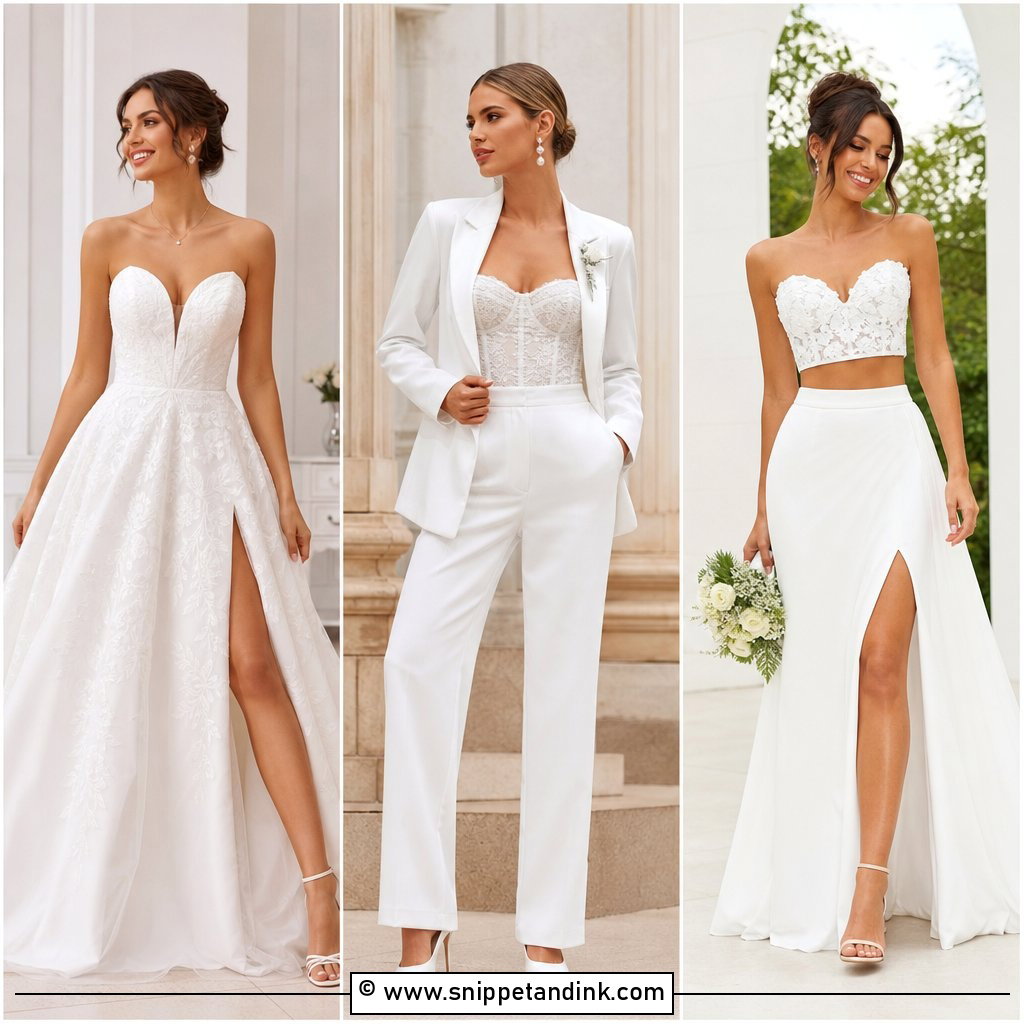
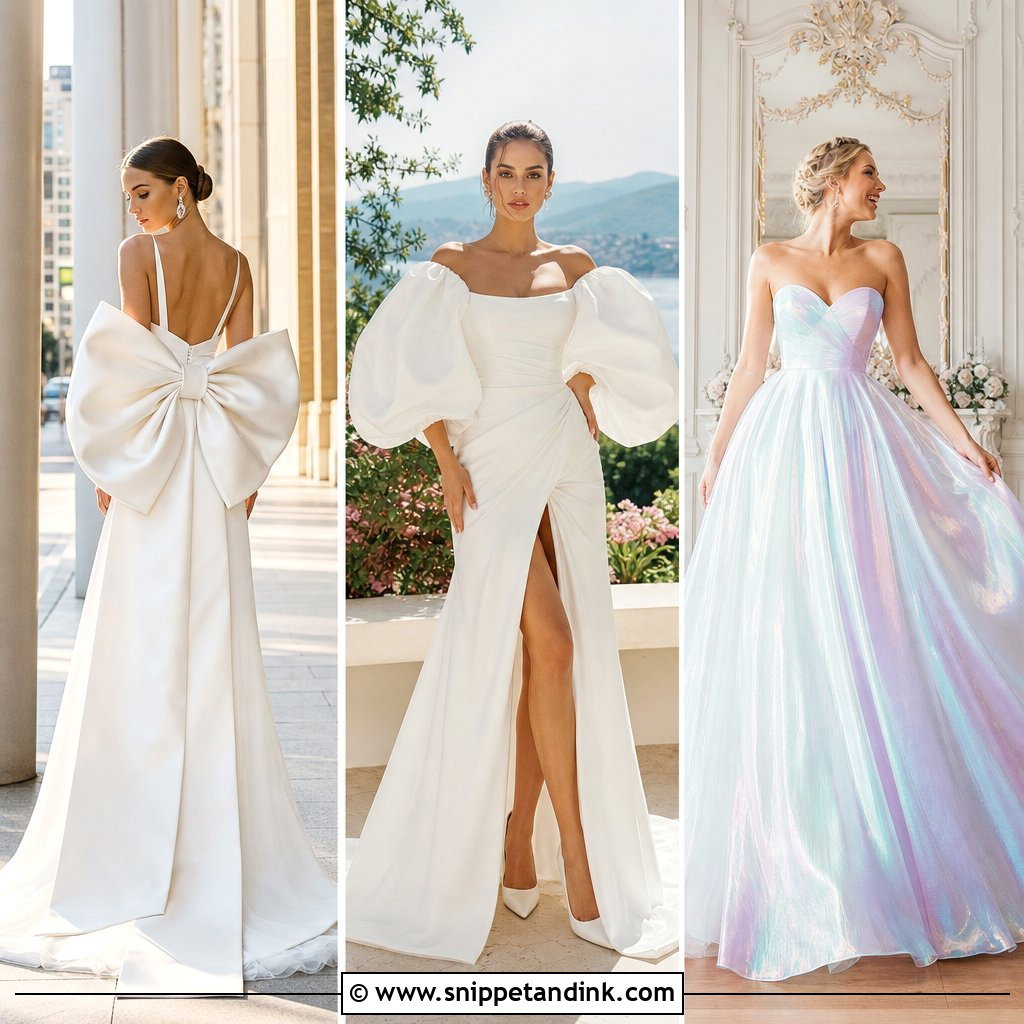
4. Off-Shoulder Wedding Dress
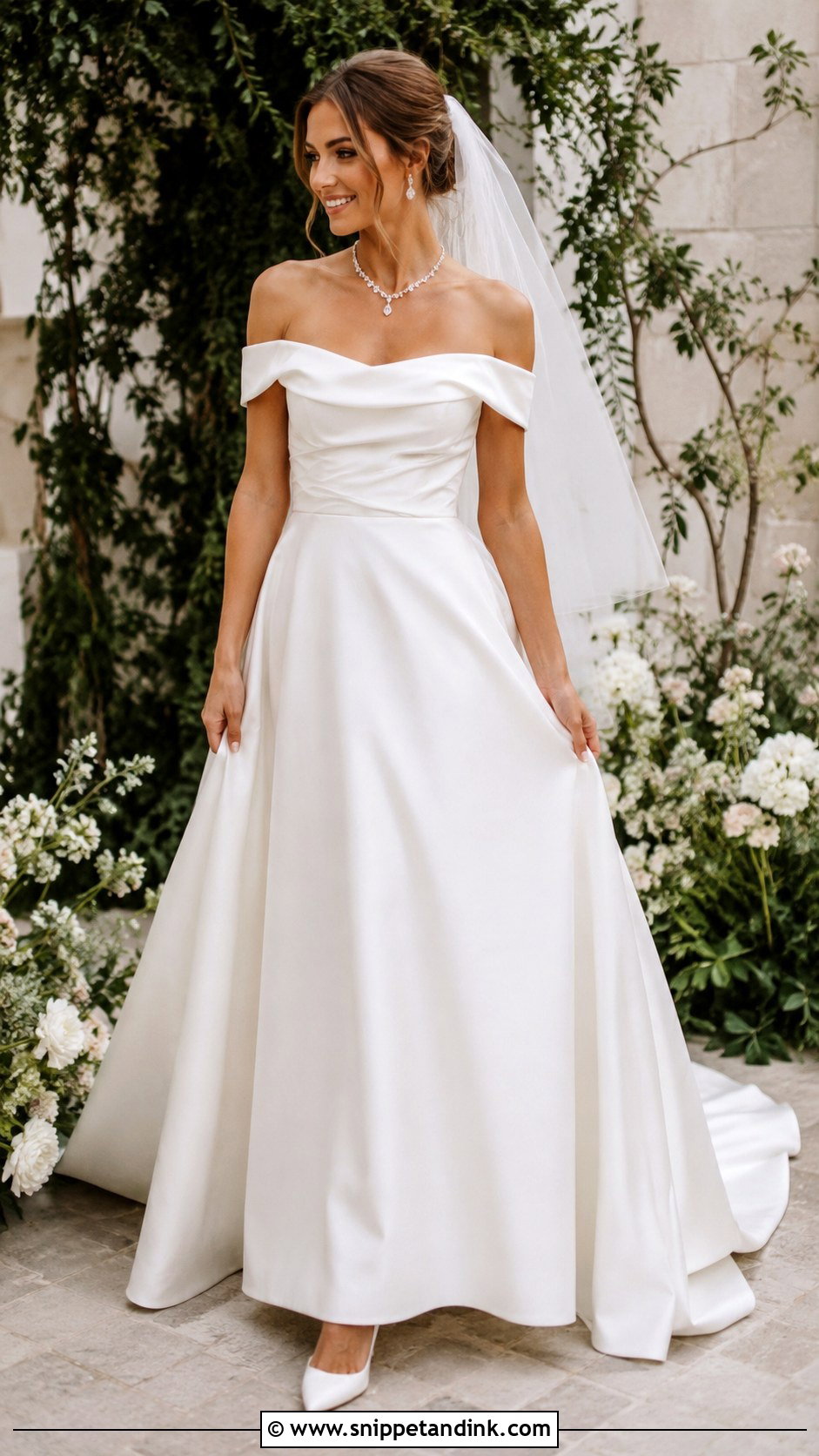
Draped satin, folded tulle or lace across the upper arms frames the collarbone and softens a gown. The bodice underneath has to hold the dress up by itself; the off-shoulder band is only for show. An A-line or soft flare keeps the shape calm. A short crystal necklace, drops, pointed pumps and a textured low bun suit it, with a sheer chapel veil. If you plan to dance, test how high you can raise your arms in it. Most off-shoulder bands stop you at shoulder height, and detachable straps solve that for the reception.
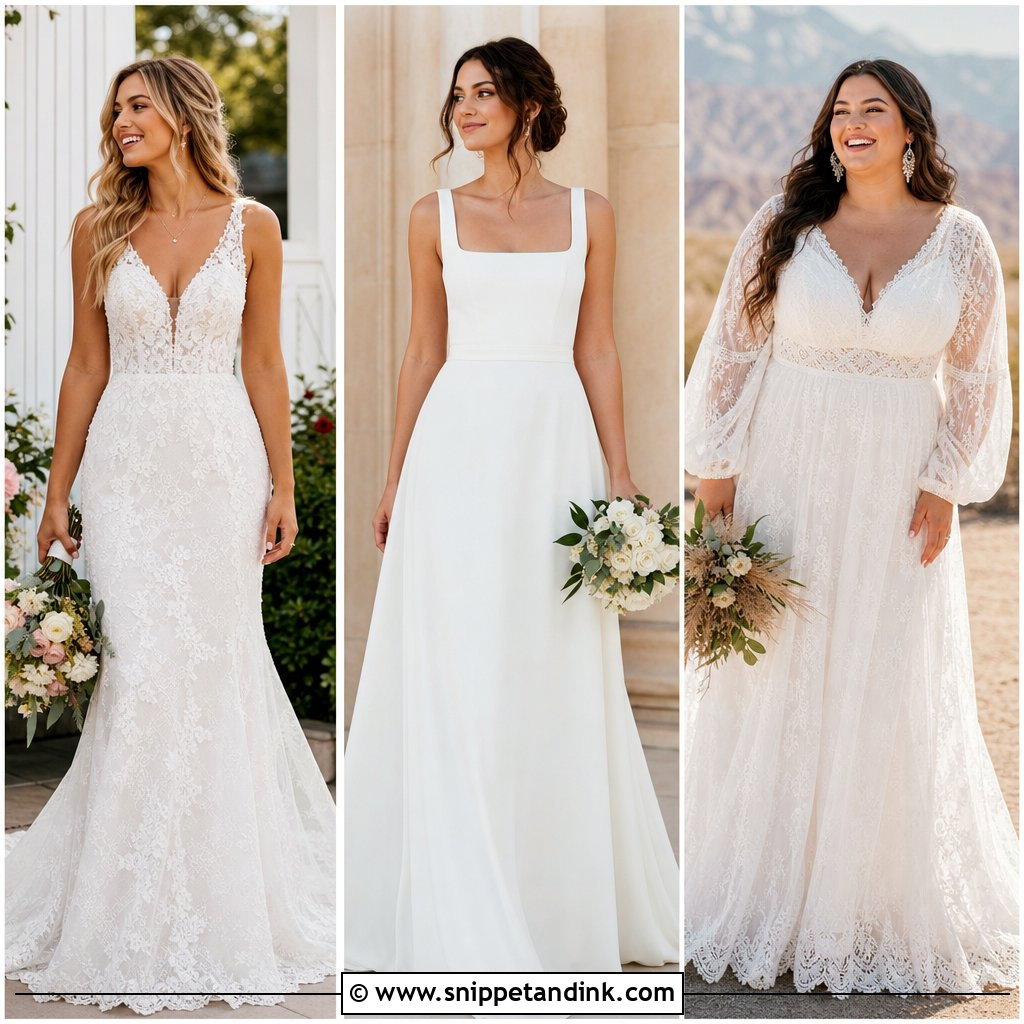
5. Long Sleeve Lace Wedding Dress
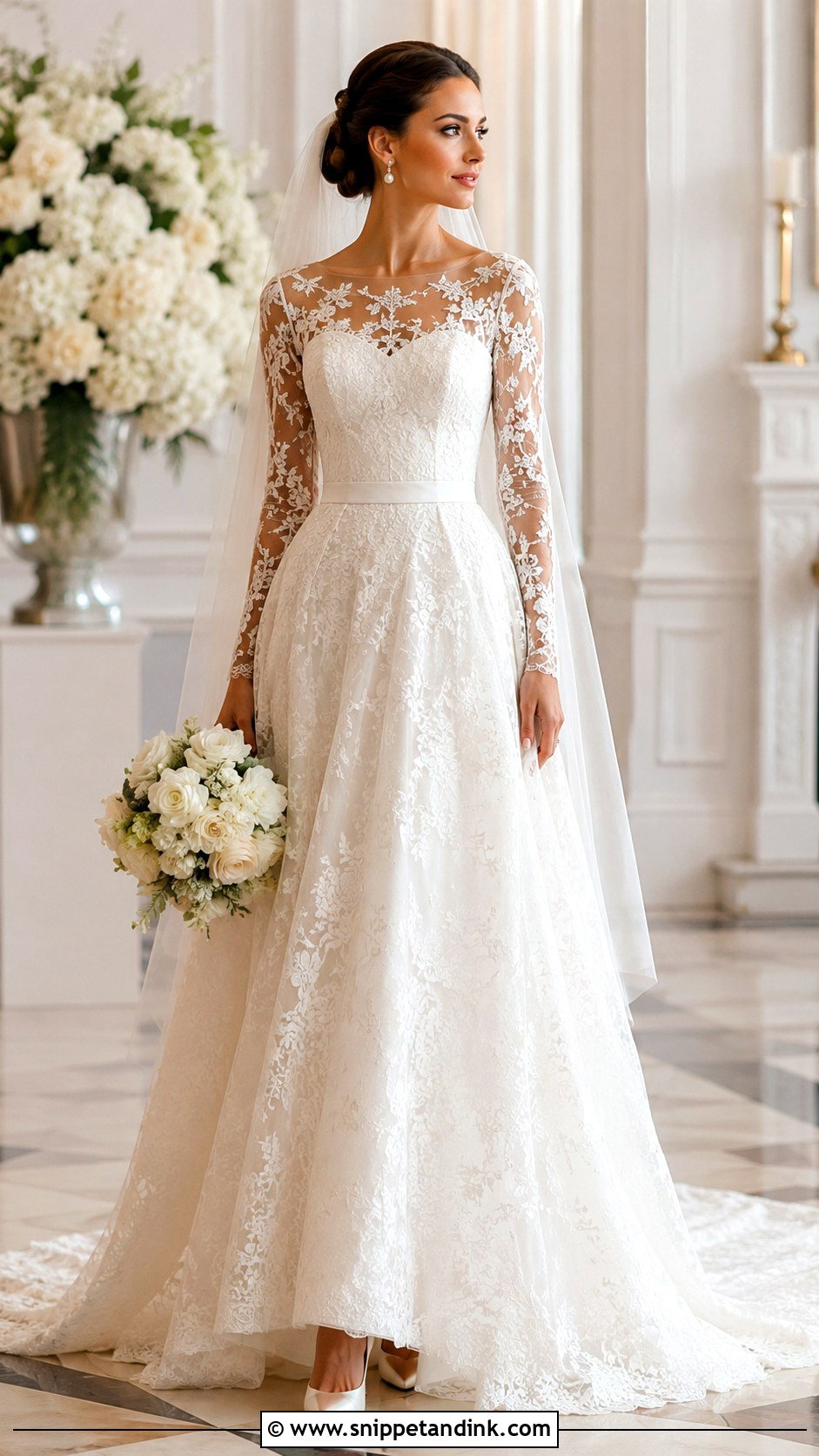
Long lace sleeves bring coverage and texture. Illusion sleeves with appliqués look light; lined lace gives full modesty. A defined waist and flowing A-line skirt stop all that coverage from feeling heavy. Pearl earrings, closed heels and a simple veil under a chignon suit it, and if the neck is high, the necklace stays home. Pay attention to the wrists. Sleeves that are slightly long bunch at the hand and creep over your fingers in ring shots, and a seamstress can shorten them or finish them in a point over the hand instead.
6. Square Neck Wedding Dress
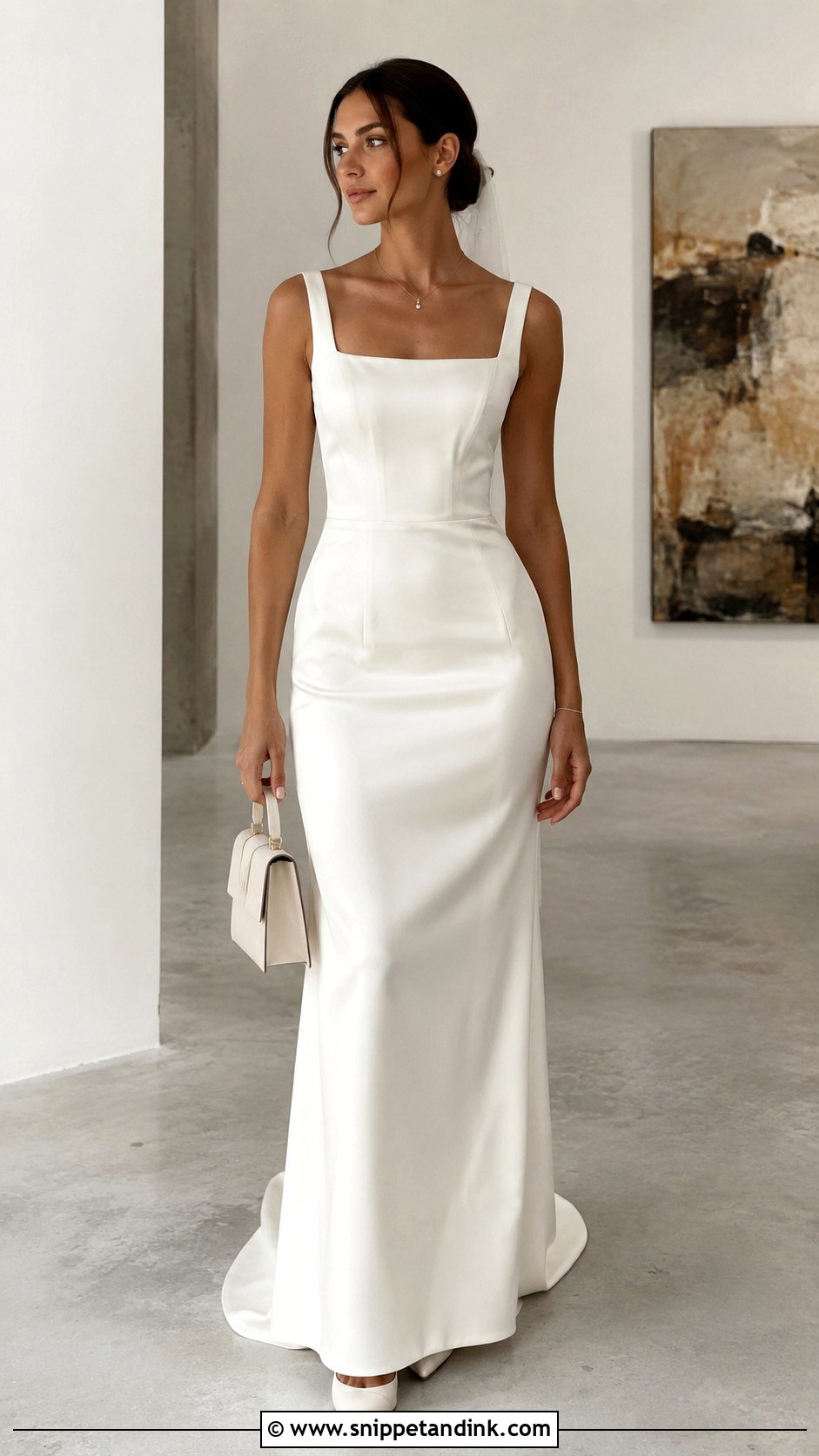
Square necks have a clean, slightly vintage line and give more coverage than a plunge. A fitted satin bodice with wide straps over an A-line or column skirt is how I’d wear it. A slim pendant, pearl studs, pointed heels and a small structured bag for portraits, with a smooth bun or shoulder-length waves. At alterations, check the neckline lies flat when you lean forward. Square necks gape at the corners if the bodice is even slightly loose, and cups sewn in plus correctly placed straps stop it.
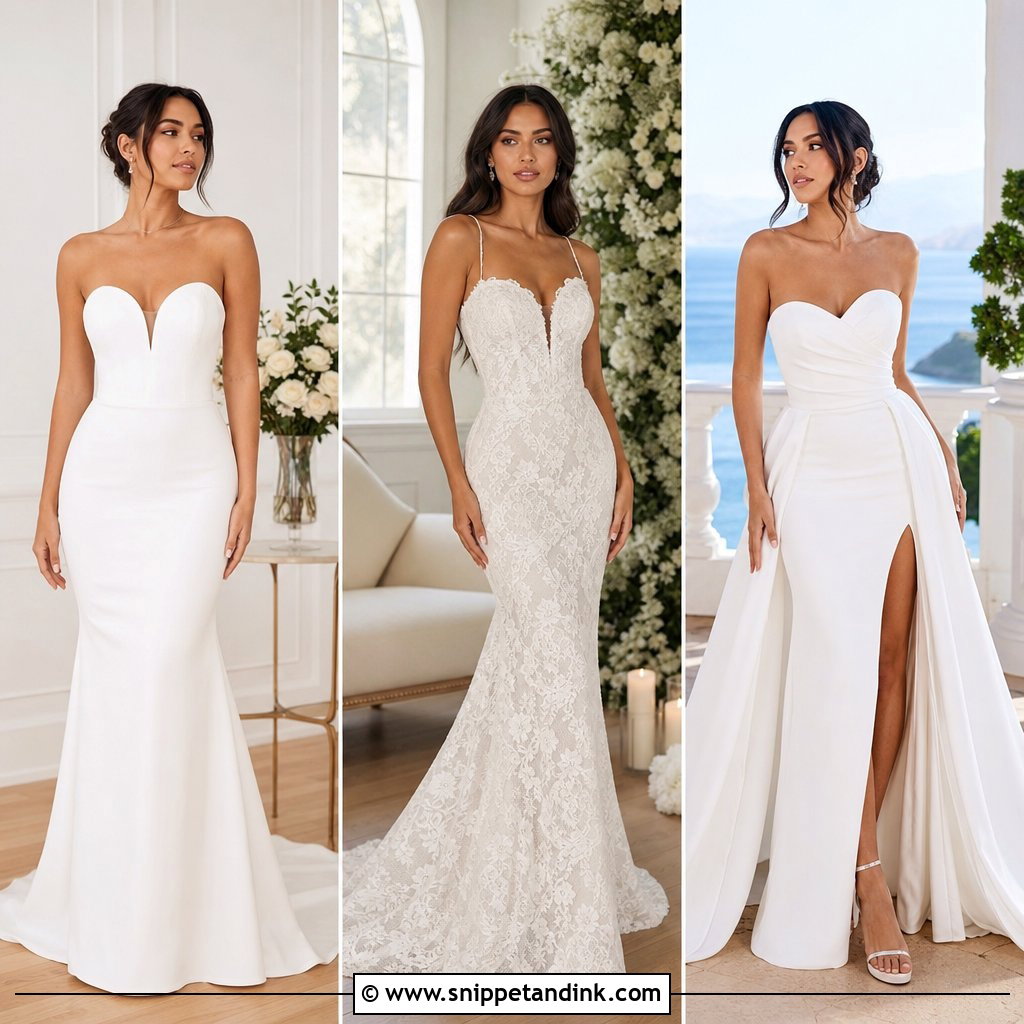
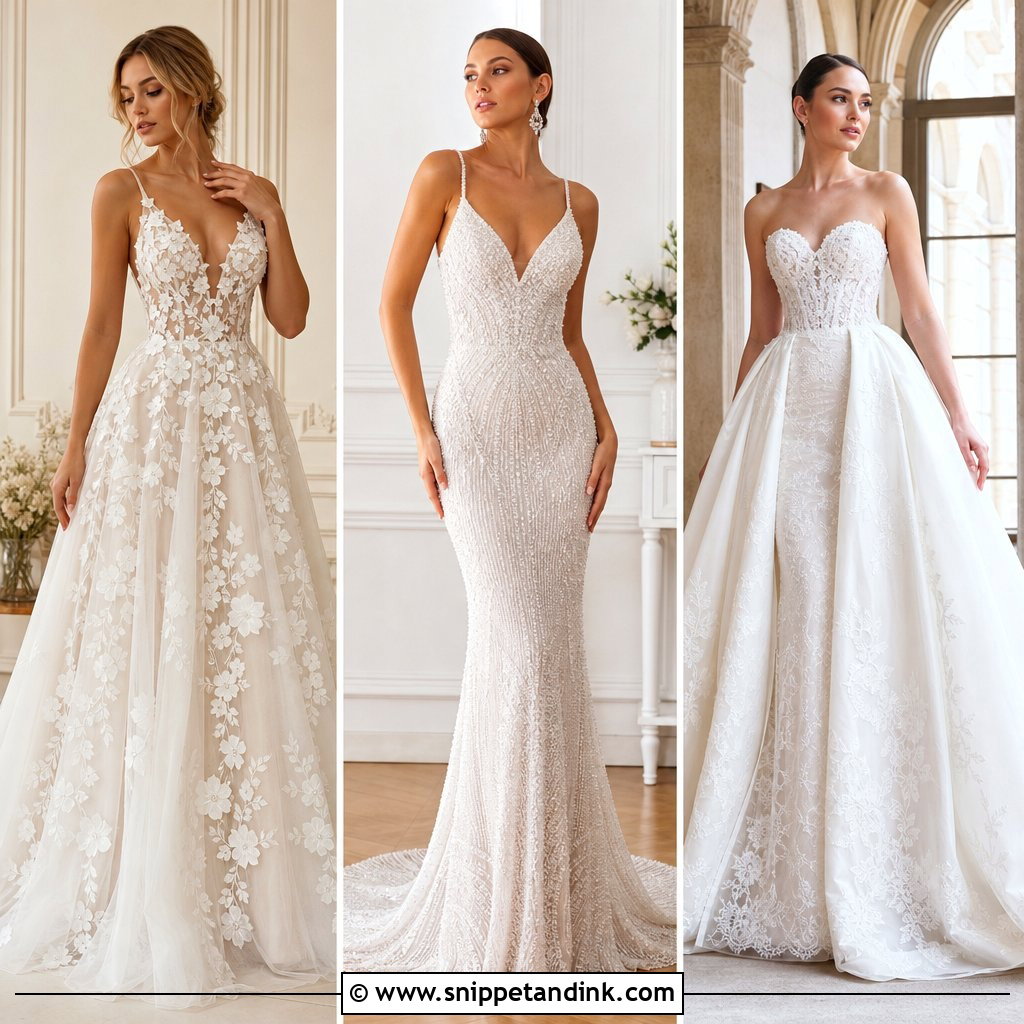
7. Mermaid Wedding Dress
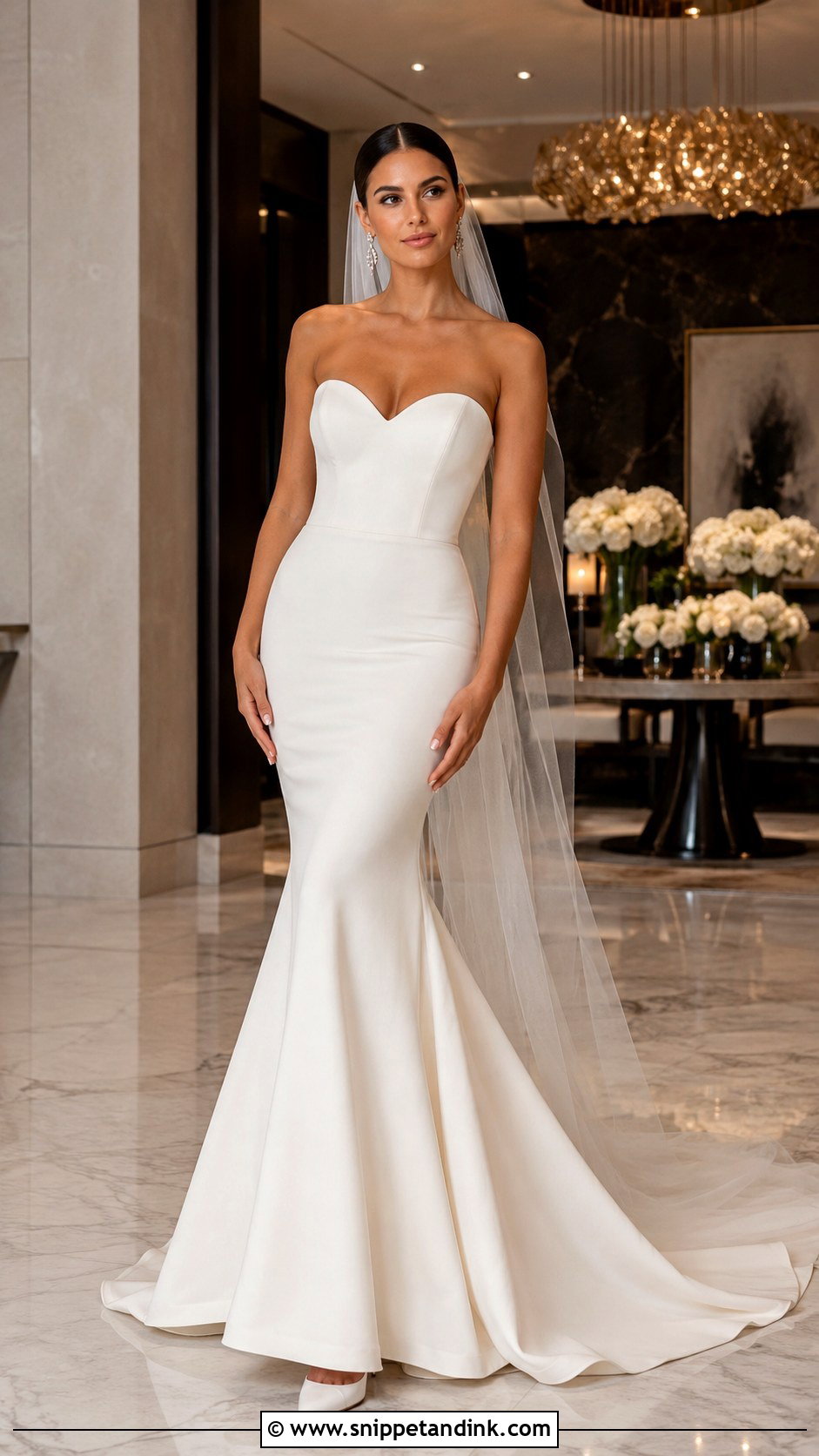
The mermaid hugs the waist and hips and flares near the knee, which makes it the most glamorous shape here and the least forgiving to move in. Crepe, satin or lace all work. A soft sweetheart, scoop or off-shoulder neckline balances the fitted body. Crystal earrings, a sleek veil and comfortable pointed heels, with an updo or polished waves. Walk, climb stairs and sit in it. If the flare starts low, your steps shrink; a fit-and-flare, which opens higher on the thigh, gives most of the look with far more movement. A hidden bustle lifts the train for dancing.
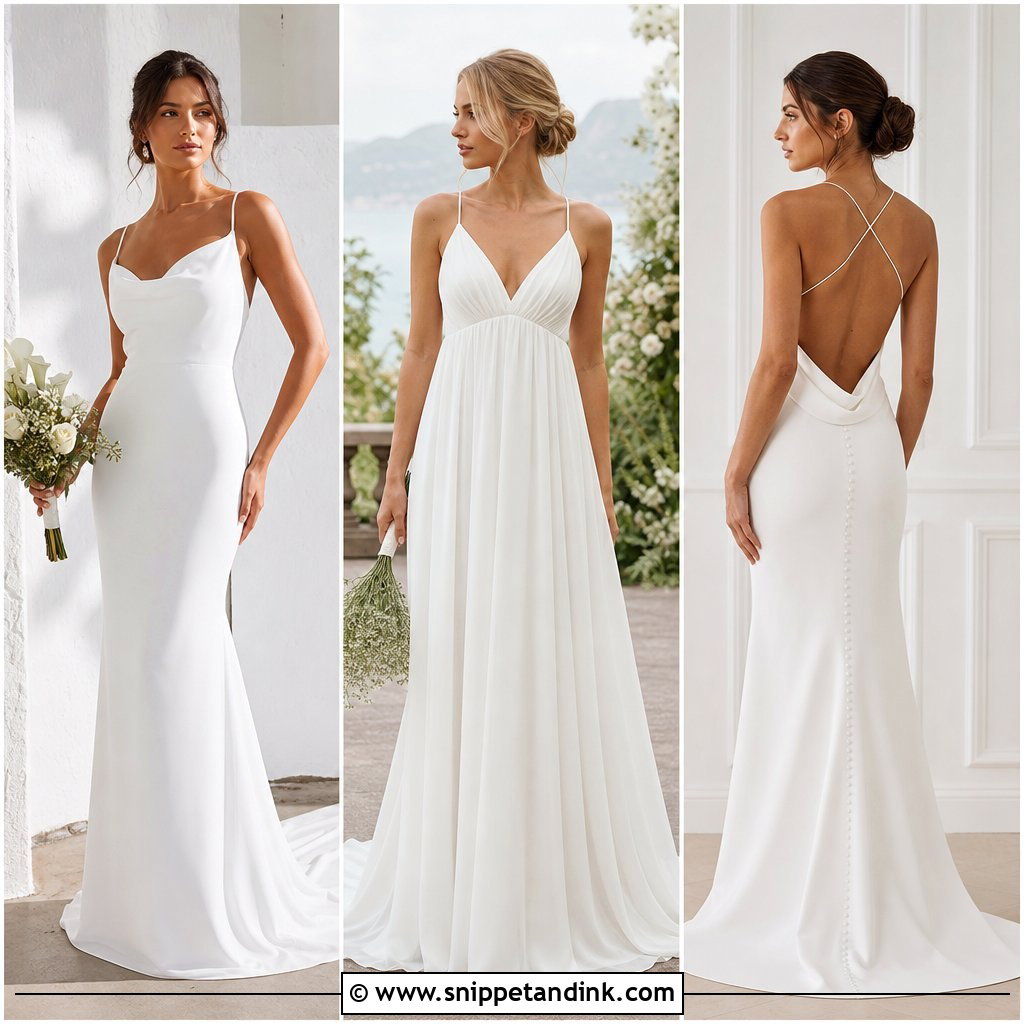
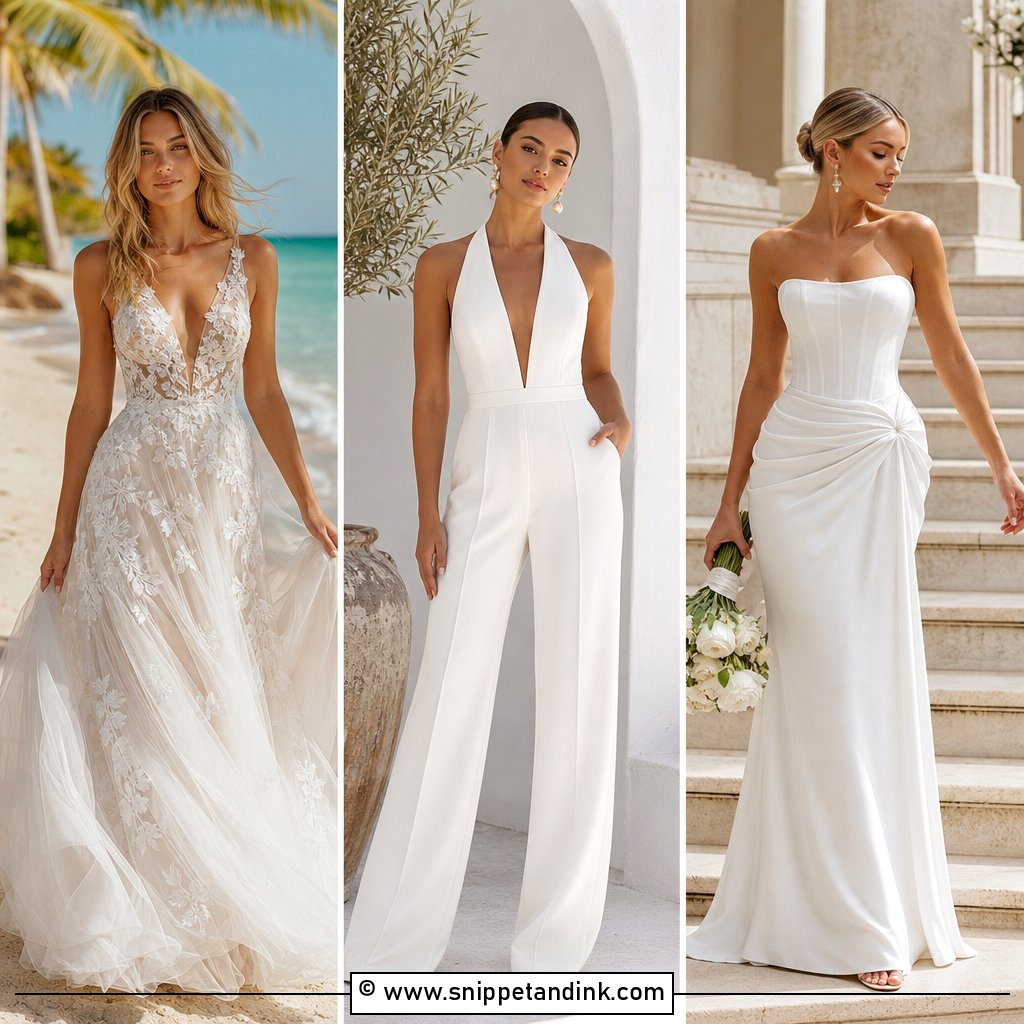
8. Minimalist Sheath Wedding Dress
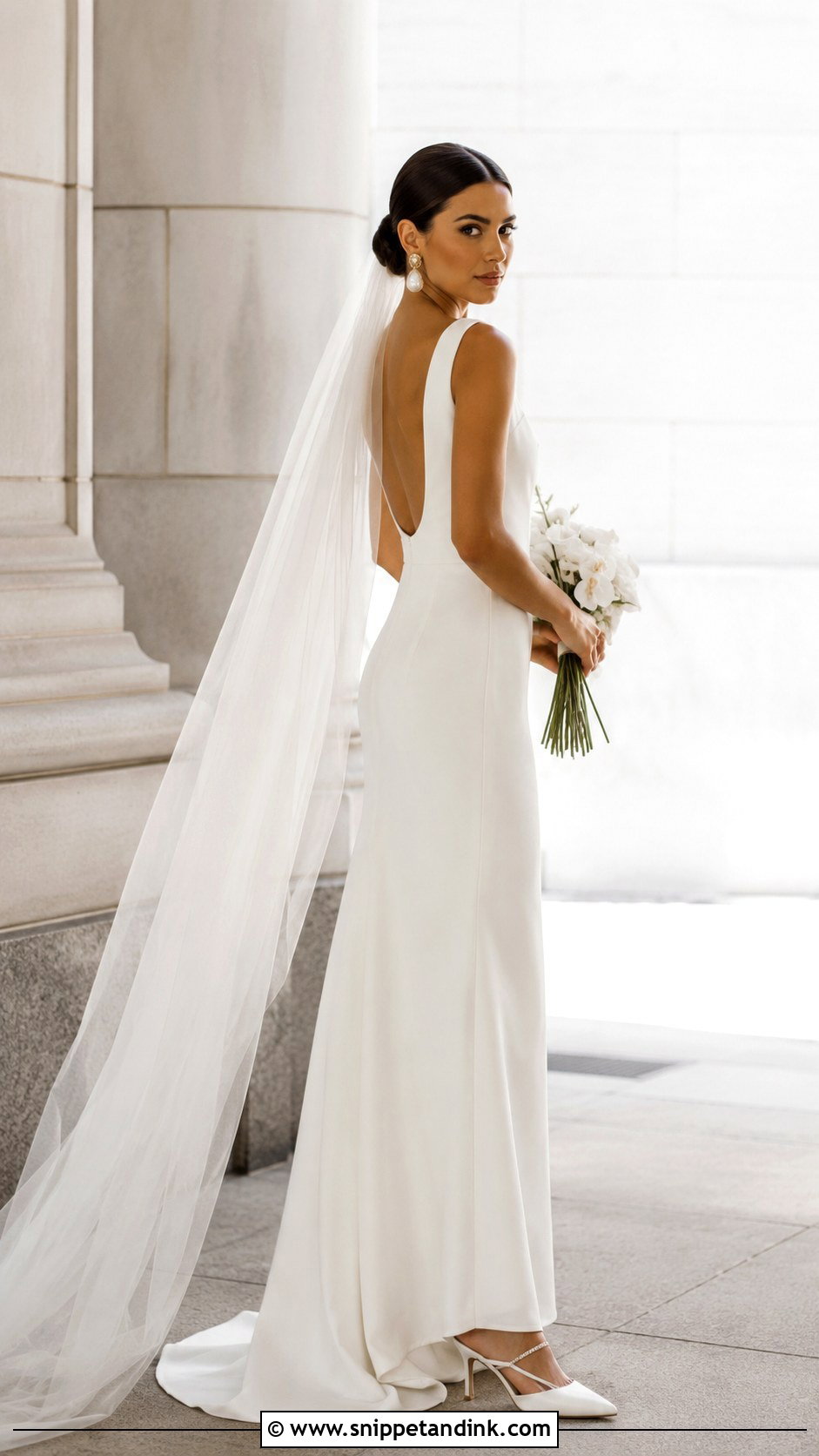
A sheath follows the body with no extra volume, so it lives or dies on the fit. Crepe, silk or matte satin give the cleanest finish, and a bateau neckline, low back or narrow straps add quiet interest. I’d style it with sculptural earrings, pointed slingbacks and a sleek bun; a long plain veil adds drama for the ceremony. It’s my first suggestion for city halls, rooftops and modern venues. Check the hips, the hem and underwear lines in daylight, not just under the warm bulbs of a fitting room.
9. Floral Appliqué Wedding Dress
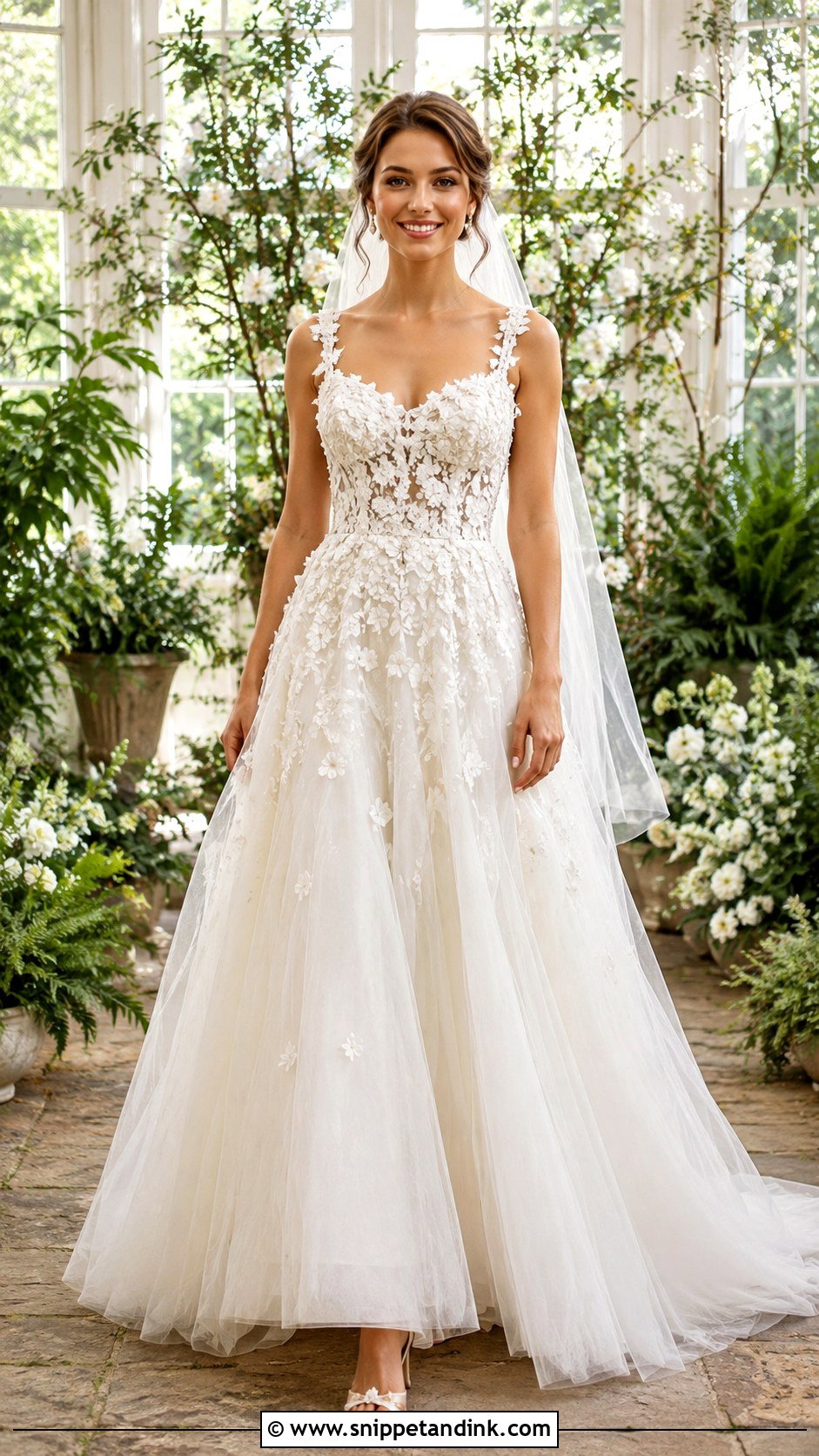
Raised flowers give a gown depth and a garden feel. They can sit on the bodice, trail down the skirt or decorate sheer sleeves. Scale matters: big blooms can swamp a petite frame, while tiny ones get lost on a large skirt. A soft A-line gives the flowers room. Pearl earrings, barely-there ivory heels, a light tulle veil and a loose low bun suit it. I run my hand over every appliqué near the waist, underarms and train. Those spots rub all day, and loose edges there should be stitched down before the wedding, not after.
10. Cathedral Train Wedding Dress
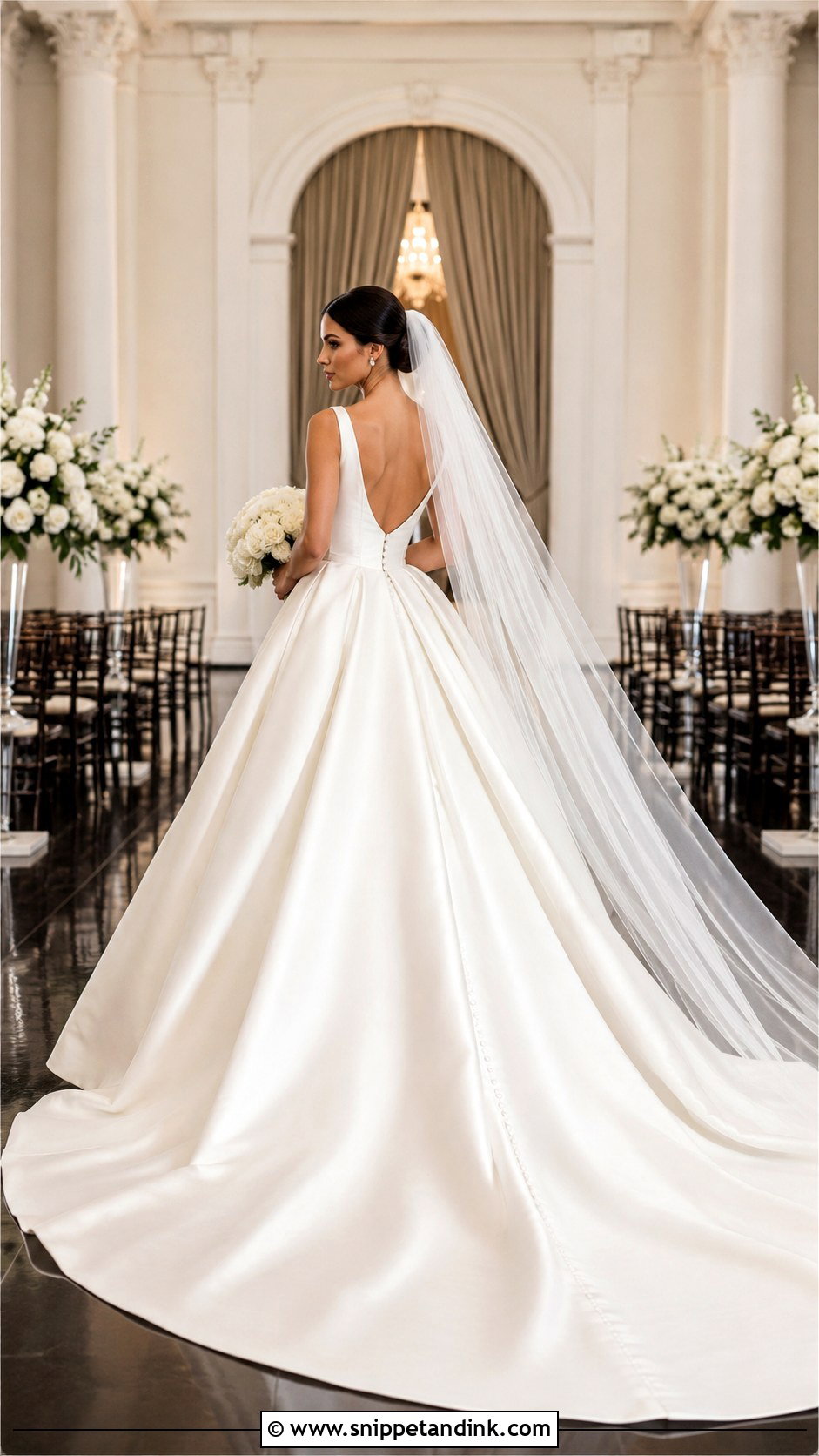
A cathedral train needs space to look right: a long aisle, a clean floor and someone to arrange it before you turn around. It can go on a ball gown, a fitted lace dress or a structured A-line, with a clean neckline at the front so the back carries the drama. Pair it with a cathedral veil, classic studs and stable heels. Think hard about outdoor surfaces, since grass and gravel stain a long train fast. A bustle with several hooks spreads the weight; have a bridesmaid learn it at the final fitting so she isn’t guessing at 8 p.m.
11. Corset Wedding Dress
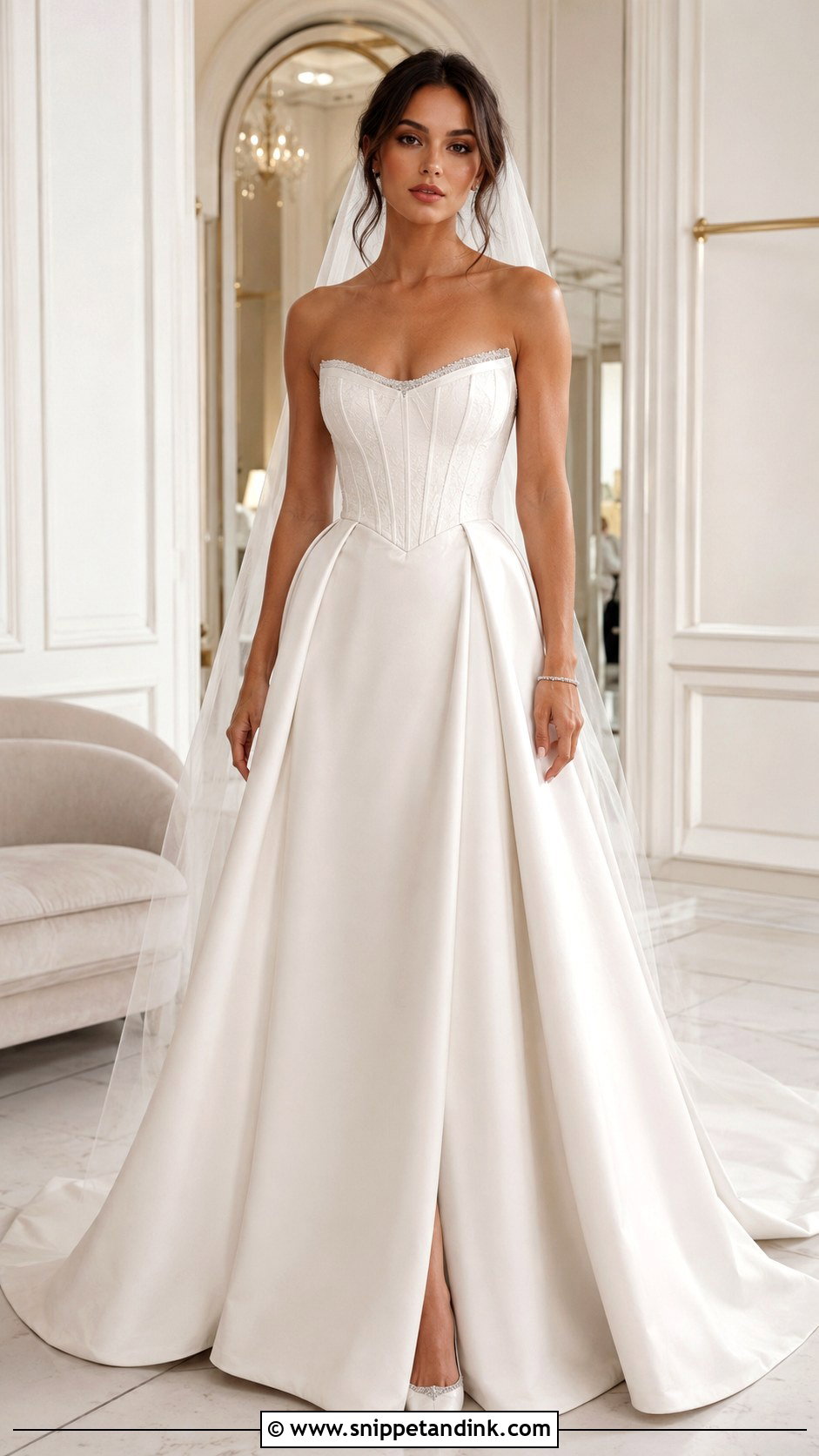
Corset gowns show their structure: exposed boning, lace panels, satin cups or a draped outer layer. Pair the fitted bodice with an A-line, ball gown or soft flare. Crystal studs, a delicate bracelet, pointed pumps and a simple veil keep the focus on the bodice. A corset should support, never hurt. At the fitting, I ask brides to take several deep breaths and sit for a few minutes, then eat something if they can. If it pinches after five minutes, it will be unbearable after six hours, and cup placement or a quick adjustment to the lacing usually fixes it.
12. High Neck Wedding Dress
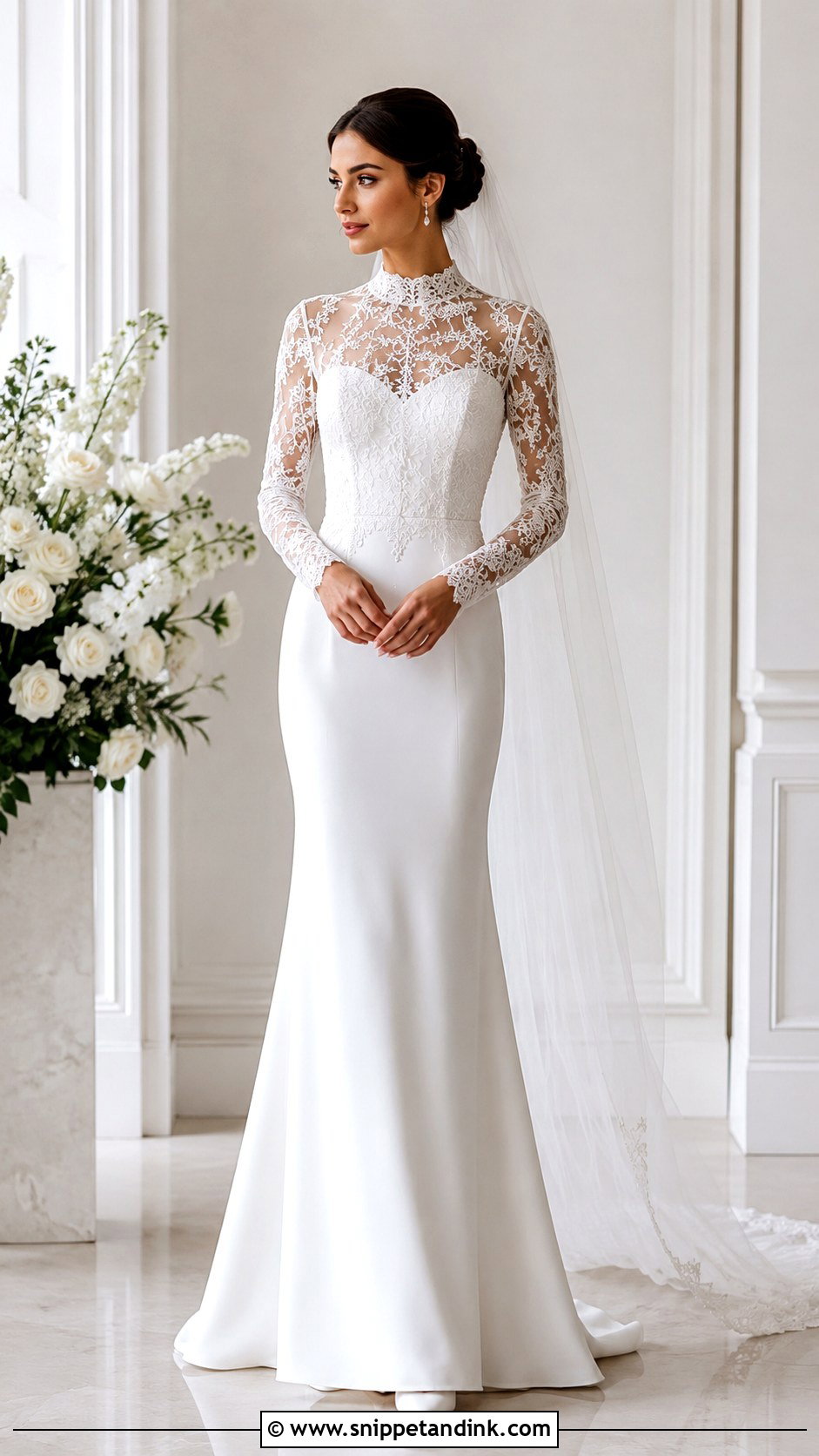
High necks draw the eye to the face. Sheer lace looks romantic, embroidered tulle feels decorative and smooth crepe feels modern. Pair it with a fitted waist and an A-line, sheath or soft flare. Small drop earrings, an elegant updo, closed pumps and a veil set beneath the hairstyle, with no necklace. One thing brides rarely think about: foundation rubs off onto a high collar. I ask the makeup artist to set the neck and jawline with powder and have the bride dress before any final touch-ups.
13. Tea Length Wedding Dress
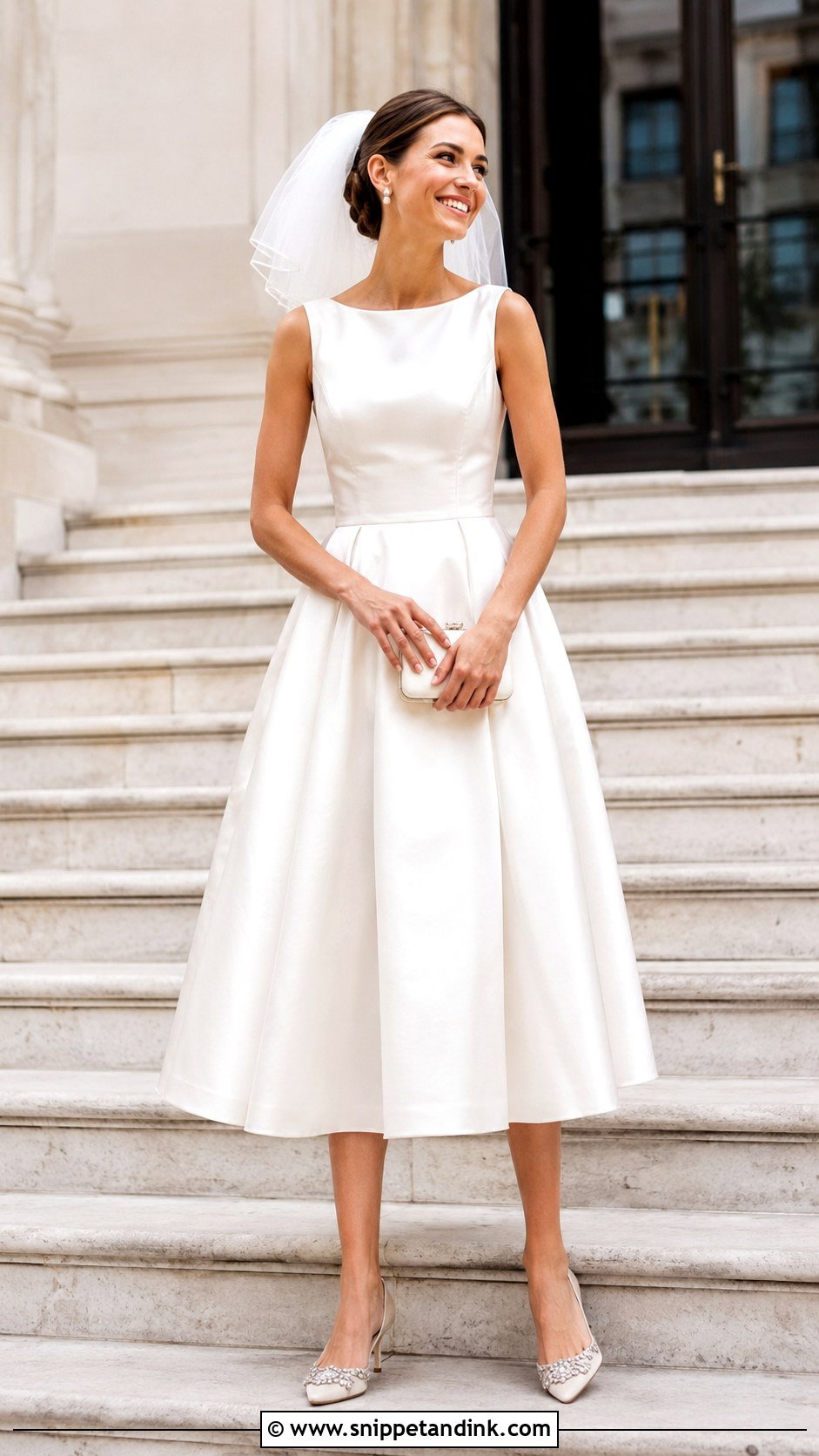
Tea length falls between knee and ankle and has a cheerful, easy feel. A fitted bodice and full skirt look classic; a slim column version looks modern. Since the hem shows your lower legs, the shoes are part of the outfit, so pick pointed pumps, embellished flats or low block heels you can dance in. Pearl earrings, a short veil and a small structured clutch finish it. The exact hem point matters more than with long gowns. Try a few lengths at the fitting; the narrowest part of the calf is usually most flattering. It also works as a reception change.
14. Boho Chiffon Wedding Dress
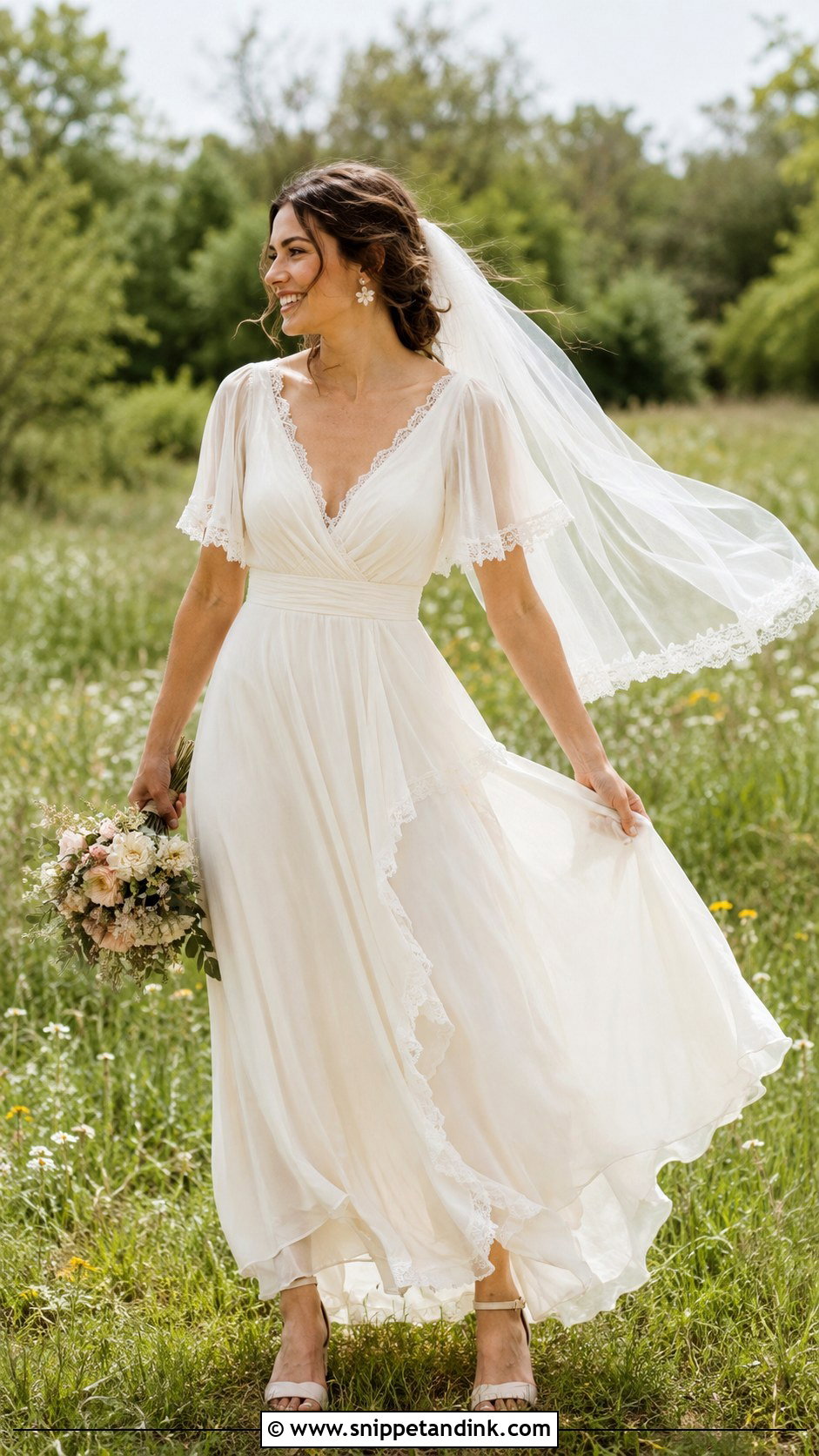
Chiffon makes a light boho gown that moves easily outside. A flowing A-line or empire shape with lace trim, flutter sleeves or a gathered bodice is what I’d look for. Comfortable block-heel sandals, small floral earrings and loose waves suit it, with a light veil or a simple comb. It’s at home in meadows, rustic estates, desert landscapes and relaxed gardens. Bridal salons light their fitting rooms flatteringly, which hides how sheer chiffon is. Step into daylight with it on, and check the hem after any rough path.


15. Beach Slip Wedding Dress
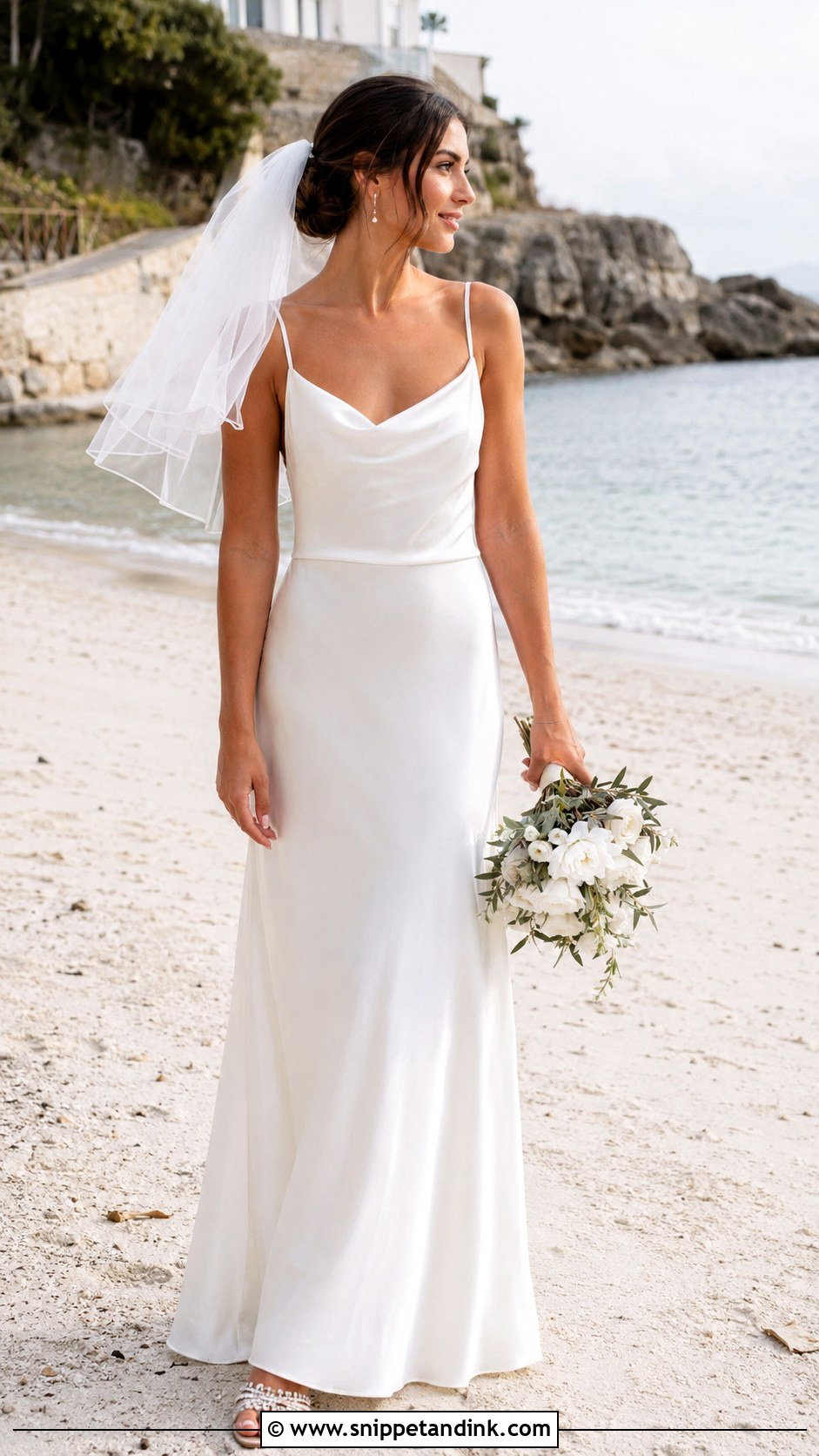
A slip is the simplest, coolest gown to wear on sand. Lightweight silk, satin or crepe with secure straps and a breathable lining is what I’d choose. A cowl, scoop or straight neck keeps it relaxed. Flat embellished sandals, delicate earrings and a low bun that can stand up to wind suit it, with a short or shoulder-length veil. Keep the train short so it doesn’t soak up seawater. Satin slips show sweat marks quickly in heat, so I suggest underarm shields and a test wear on a warm afternoon. Smooth-edged underwear keeps the line clean.
16. Plus Size A-Line Wedding Dress
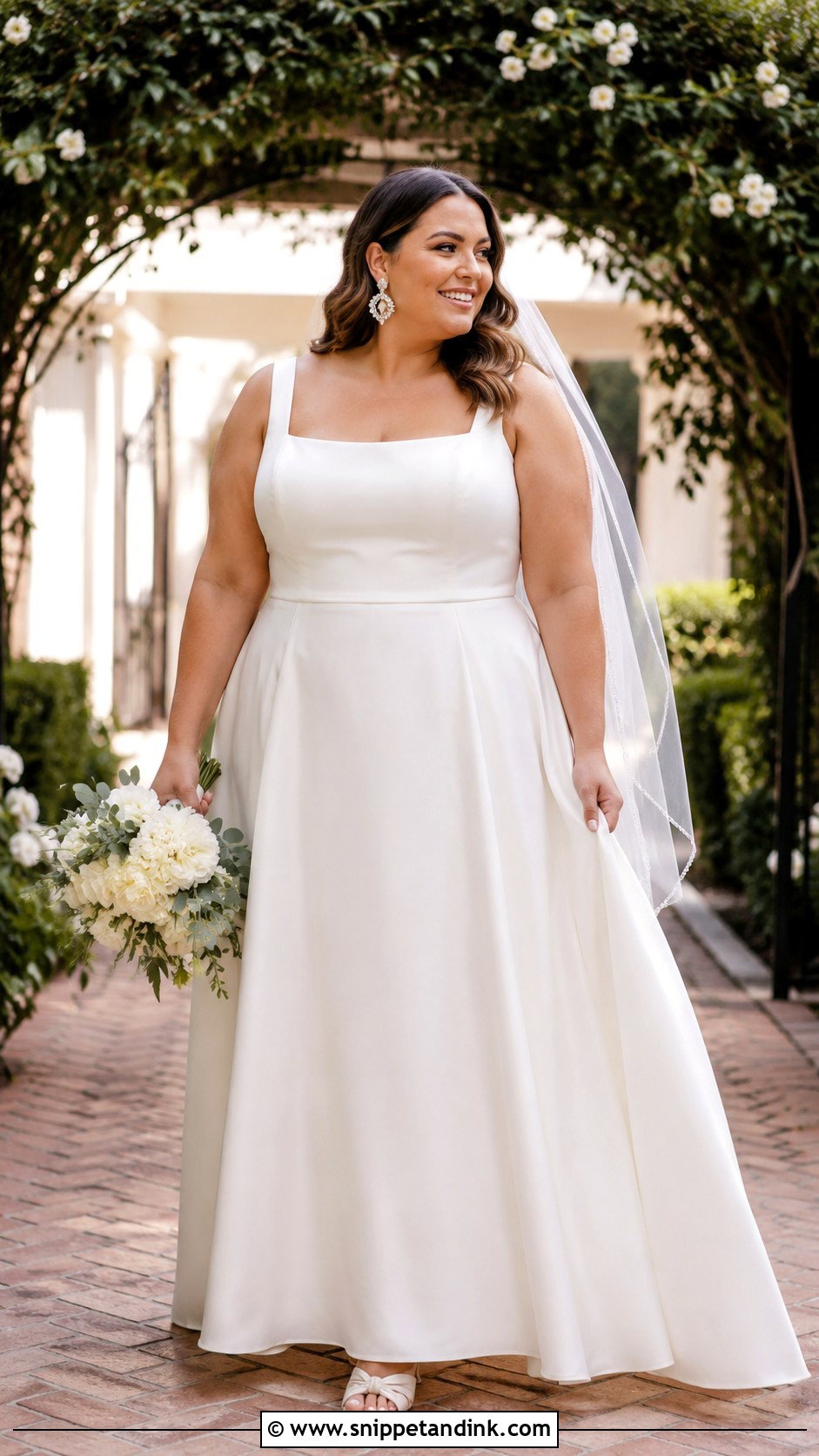
A well-built A-line gives support and movement at any size. I start with the bodice: well-placed cups, secure straps and boning that supports rather than squeezes. A skirt that flows from the natural waist creates a smooth line. Lace sleeves, a square neck or a plunging neckline with illusion mesh make it personal, with cushioned heels and statement earrings. Shop where samples come close to your size so you’re judging the real gown, not one pinned with clips. Alterations should shape the dress to you, not squeeze you into the sample.
17. Blush Tulle Wedding Dress
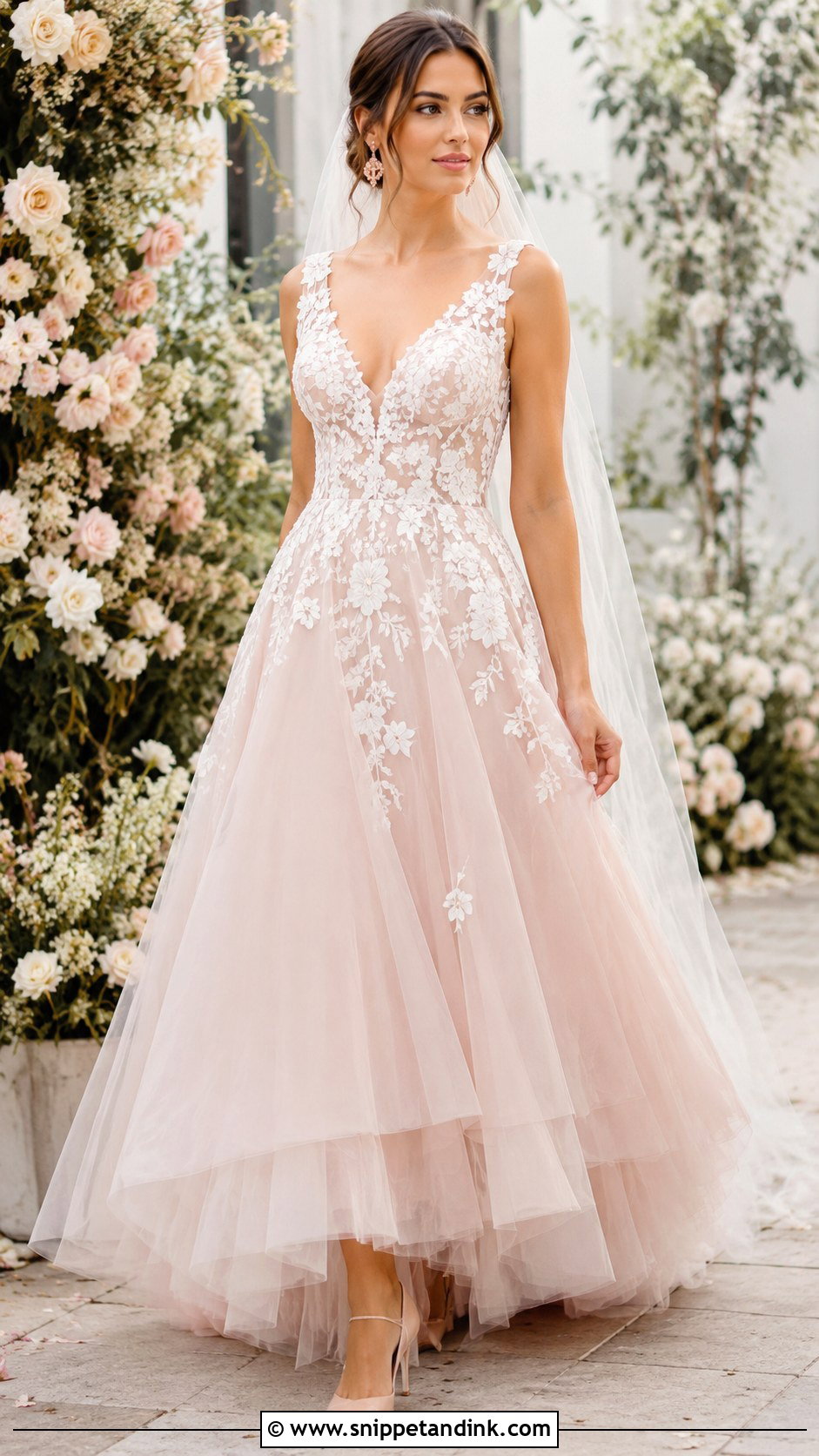
Blush adds warmth while still looking bridal. Pale pink, champagne blush and rose undertones differ a lot, and the right one depends on your skin. A layered A-line or ball gown with a fitted bodice works well, and ivory appliqués over blush lining make the flowers stand out. Rose-gold earrings, neutral pumps and a sheer ivory veil complete it. Avoid a shade too close to your own complexion; in photos it can make the dress disappear. View it in daylight and under warm light before ordering.
18. Bow Back Wedding Dress
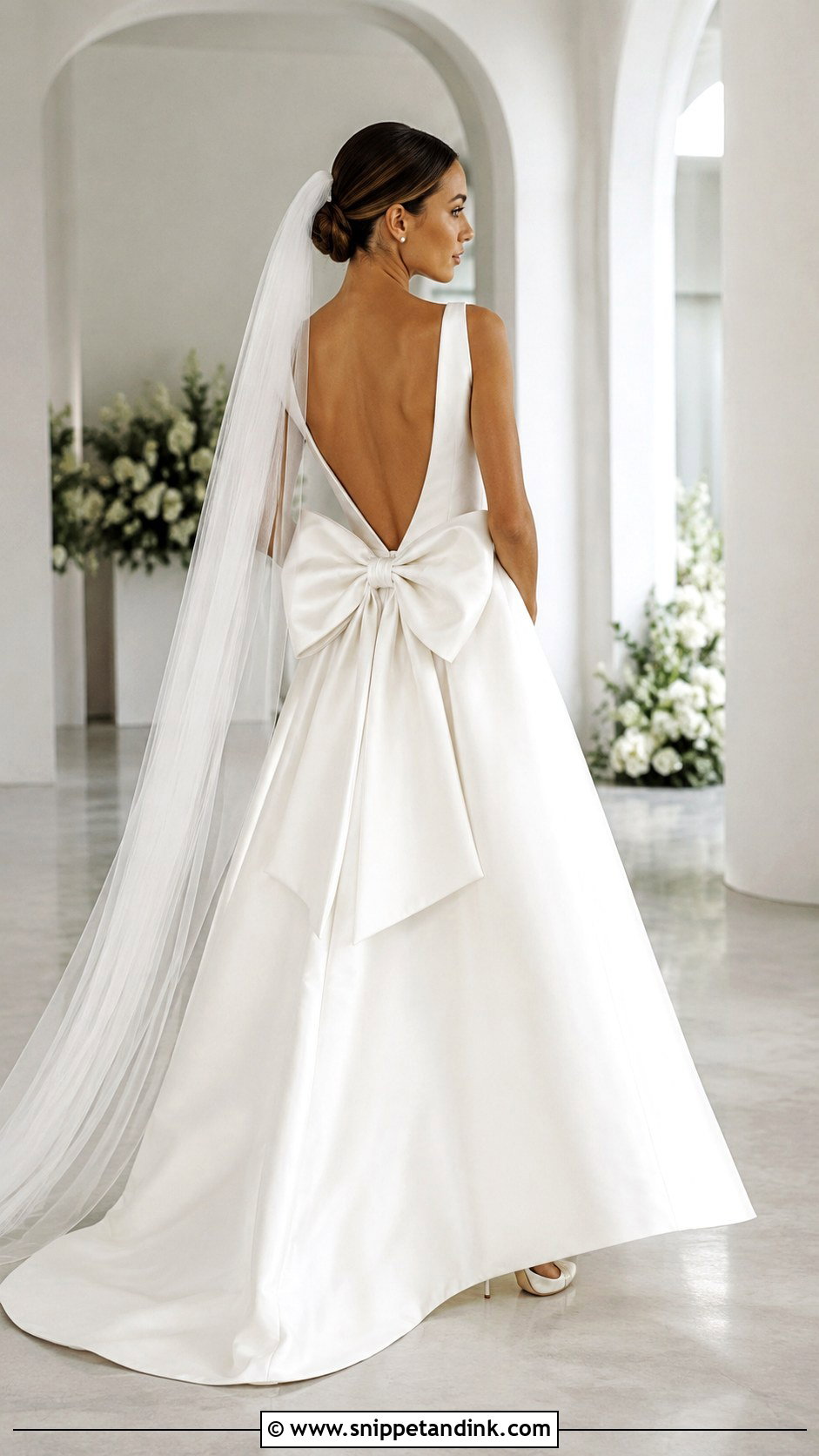
A bow at the back gives guests something to look at during the ceremony, when they mostly see you from behind. It can sit at the waist, across the shoulders or trail down a minimalist satin gown. A structured A-line or sleek column keeps the bow looking deliberate. Pearl studs, pointed heels, a low bun and a simple veil you remove after the vows to reveal it. Steam the bow on the morning; its loops crush in transport. At alterations, check it lies evenly and doesn’t pull the fabric beneath it.
19. Convertible Overskirt Wedding Dress
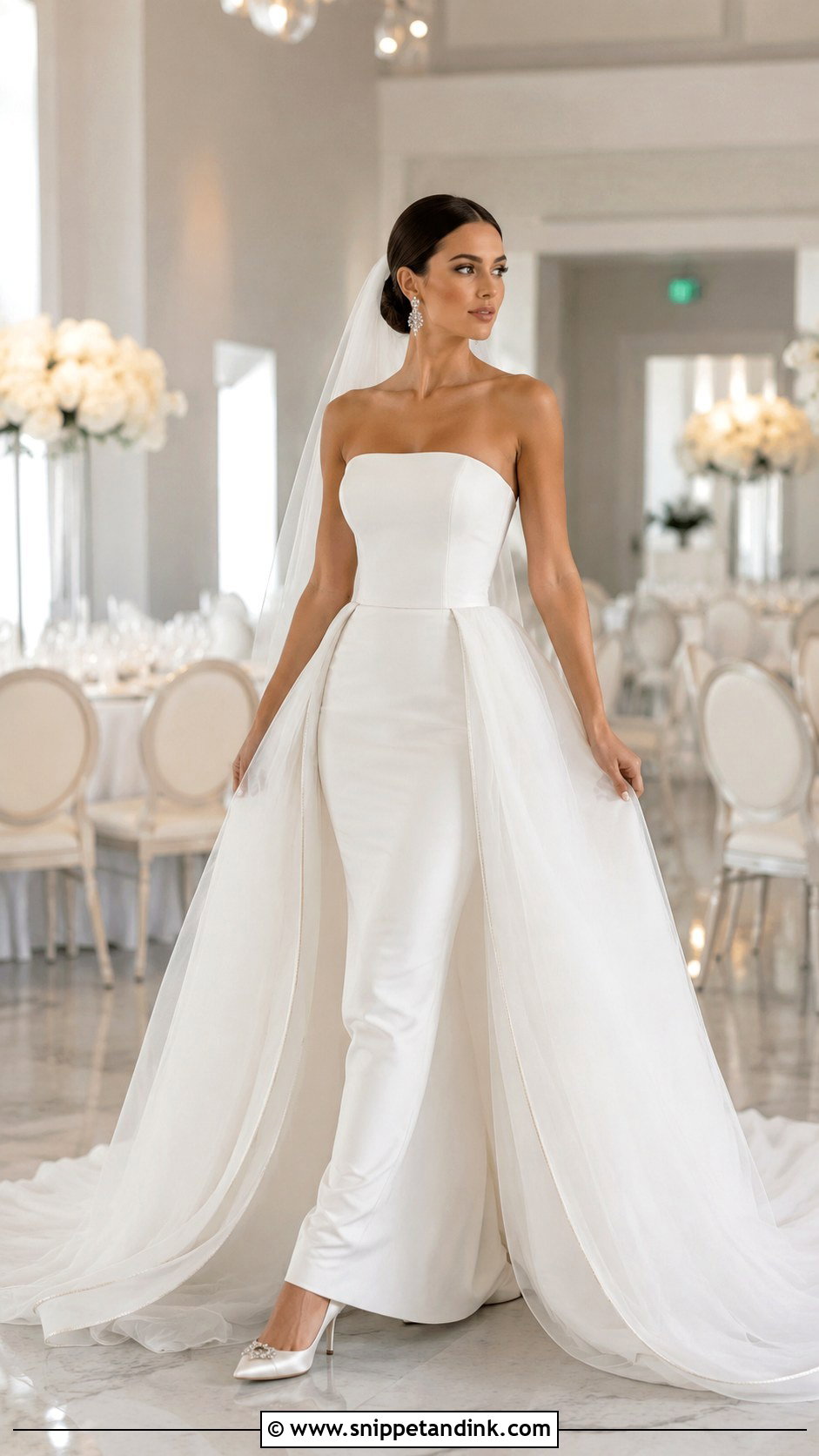
A convertible overskirt wedding dress gives you two looks without a full change. A fitted sheath, mermaid or even a mini goes underneath; a tulle, organza or satin overskirt adds volume and a train for the ceremony, then comes off for dinner and dancing. Crystal earrings, supportive heels and a veil that suits both versions work well. The hooks should be hidden and easy for a helper to undo. Bring both layers to every alteration, because the hem, waistband and bustle all have to line up together.
20. Vintage Inspired Wedding Dress
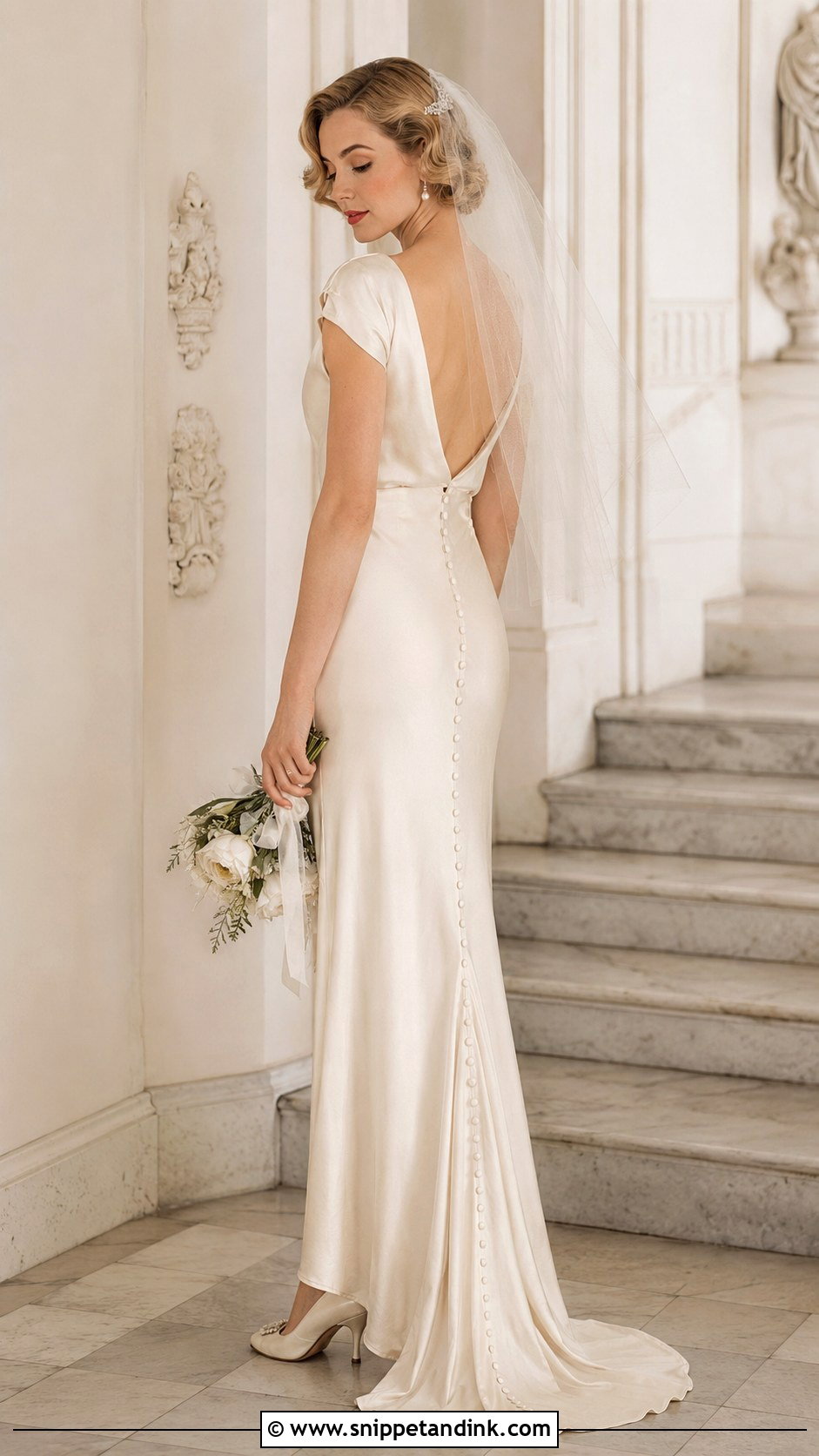
The trick with vintage is choosing one era and one or two details. A 1930s-style silk bias cut, a 1950s tea length skirt or a lace gown with covered buttons all work; mixing eras looks like costume. Pearl earrings, classic pumps, a small comb and soft waves pull it together, with a fingertip veil. Genuine vintage needs close inspection: hold seams up to the light for weak spots, and check the underarms for old staining. Reproductions are sturdier and come in wider sizes, while keeping the character.
An Hour in a Bridal Fitting Room, From the Stylist’s Side
Most bridal appointments run about an hour to ninety minutes, and you’ll try somewhere between five and ten gowns. Samples are usually one or two sizes and get clipped to fit, so don’t panic if the number on the tag isn’t yours. What I watch for is how you move and what you keep touching.
What helps the appointment go well
- Wear smooth nude underwear and bring heels close to your wedding height.
- Bring one or two people whose opinion you trust. Big groups make it hard to hear your own reaction.
- Tell the stylist your budget at the start, including alterations, so she doesn’t pull gowns you can’t order.
- Ask how long the gown takes to arrive and what the deposit and alteration policies are; these vary a lot between shops.
Getting Into the Gown on the Morning
I schedule the dress as the very last step, after hair and makeup are finished, and allow at least half an hour. Corsets and button backs take longer than you’d expect.
Step into the gown whenever you can rather than pulling it over your head. If it has to go over, put a light scarf over your face to protect the makeup. Have one person do up the closure; a crochet hook or a button hook makes rows of loops much faster. Then sit, raise your arms and walk a few steps before you leave the room, so any loose hook or twisted strap gets fixed before the photographer starts shooting.
Which of These Would You Still Be Happy Wearing at Midnight?
The right gown supports your body, suits the venue and feels like you. Treat these ideas as a starting list, not a checklist. Save a few very different silhouettes and try them all; brides often end up in the one they didn’t expect. Judge comfort, movement, fabric and how much alteration it needs as closely as the look. Bring your shoes and underwear, and photograph each favourite from front, side and back. Lace, satin, chiffon or crepe, the fit and styling are what make it a complete bridal look.
You'll Like These Ideas:







Leave a Reply