
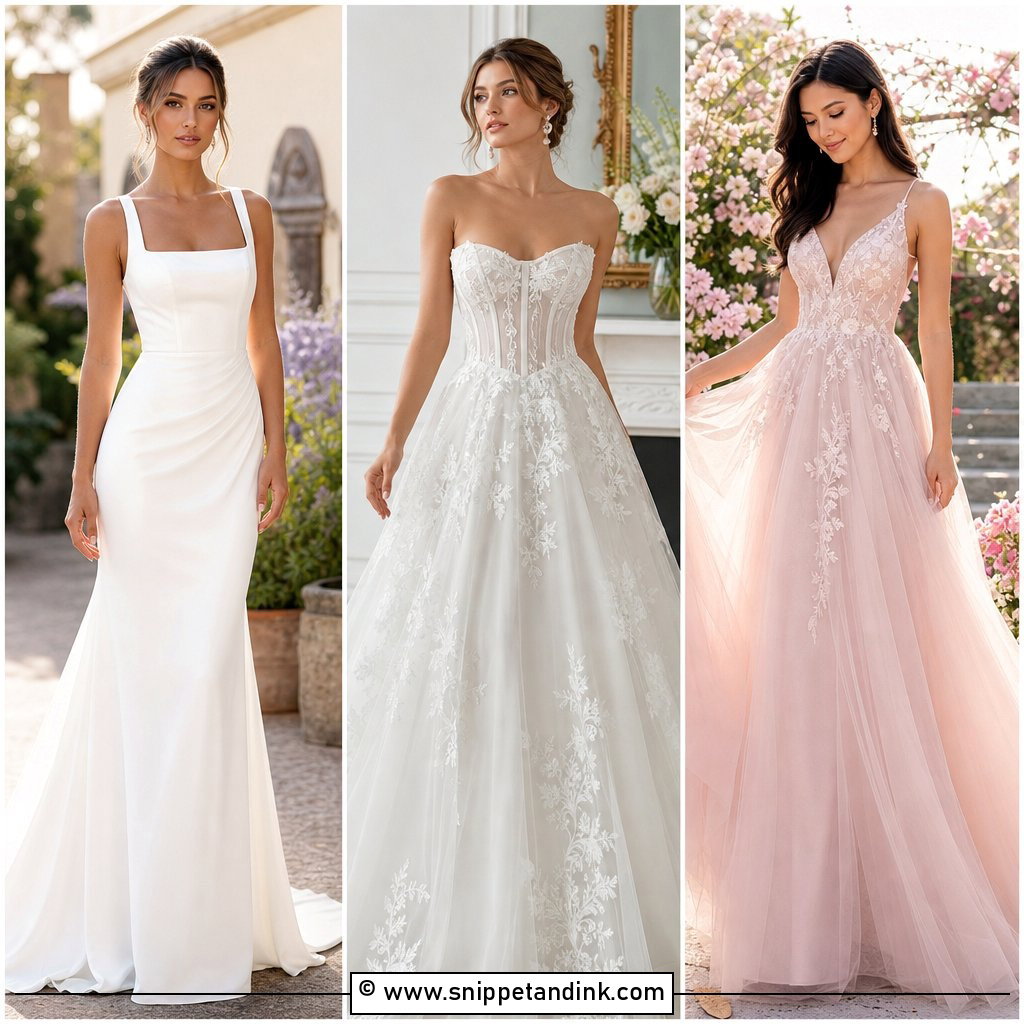
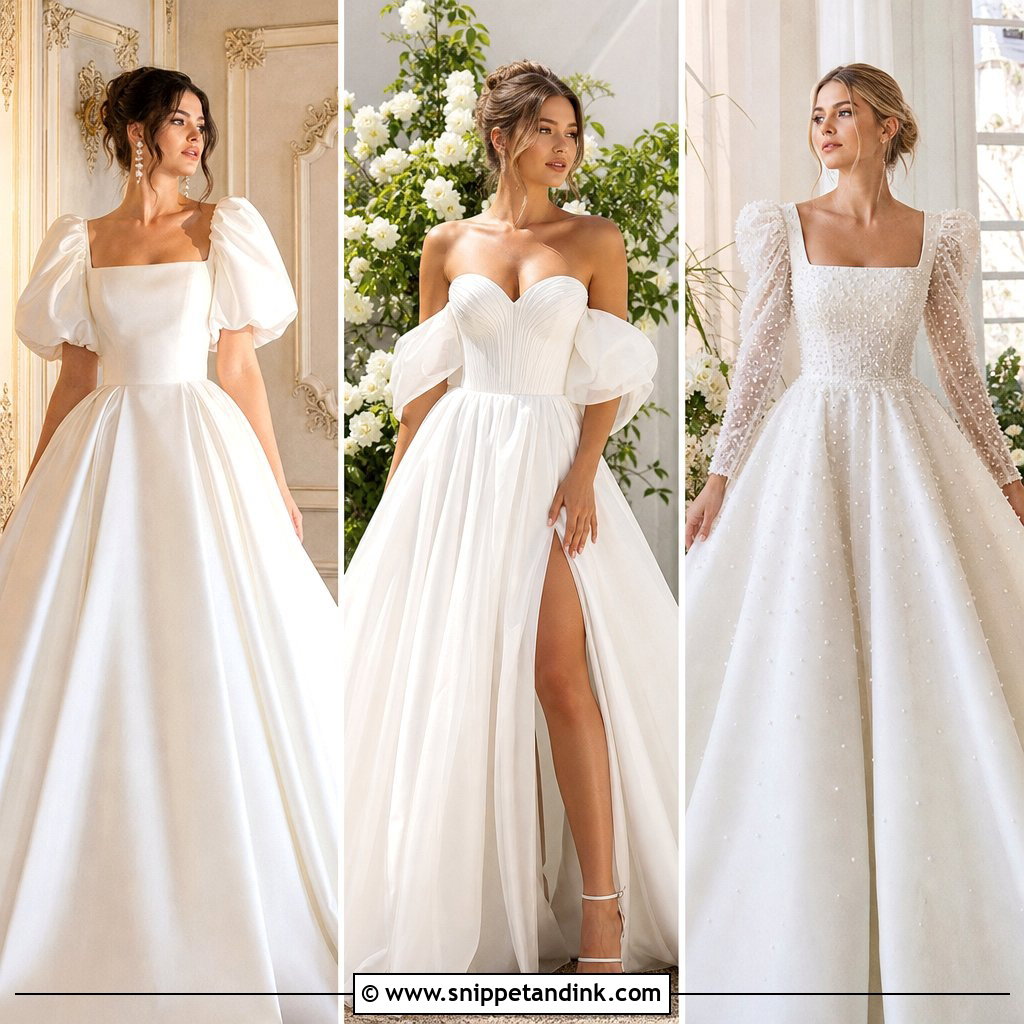
A princess gown is the silhouette many brides have decided on before they ever step into a fitting room, and it’s usually a sound instinct. Princess wedding dresses are built on a fitted bodice and a skirt that opens wide from the waist, and that shape leaves plenty of room for the details you add. Some brides arrive set on plain satin and a cathedral veil. Others want appliqués, pearls, a corset or a hint of blush. What I watch for at every appointment is whether she can still breathe, sit and lift her arms once all that volume is on. Below are 25 versions of the shape, with what each one asks of you on the day.
How Much Lead Time a Ball Gown Really Needs
Full-skirted gowns are almost always made to order, and that changes the calendar. Production times vary a lot by designer, but I tell brides to start shopping around nine to twelve months out so the dress arrives with room to spare. Rush orders exist, though they usually cost extra and limit your choices.
Alterations come next. Most princess gowns need two or three fittings, starting roughly two to three months before the wedding. The bodice and waist are adjusted first, because everything below hangs from them, and the hem is set last.
Hoop or Layered Petticoat?
Many gowns rely on a separate underskirt for their shape. A hoop gives the widest, most even dome, but it swings when you walk and makes sitting awkward. A layered tulle petticoat gives softer volume and moves with you. I try both under the same dress, because the difference in how the skirt falls can be bigger than the difference between two gowns.
Bring These to Every Fitting
- The exact shoes you’ll wear, since the hem is cut to their height
- Your wedding bra or shapewear, or the bodice will be fitted to the wrong body
- The petticoat or hoop, if it’s sold separately
- One person whose opinion you trust, not a crowd
1. Satin Ball Gown Wedding Dress
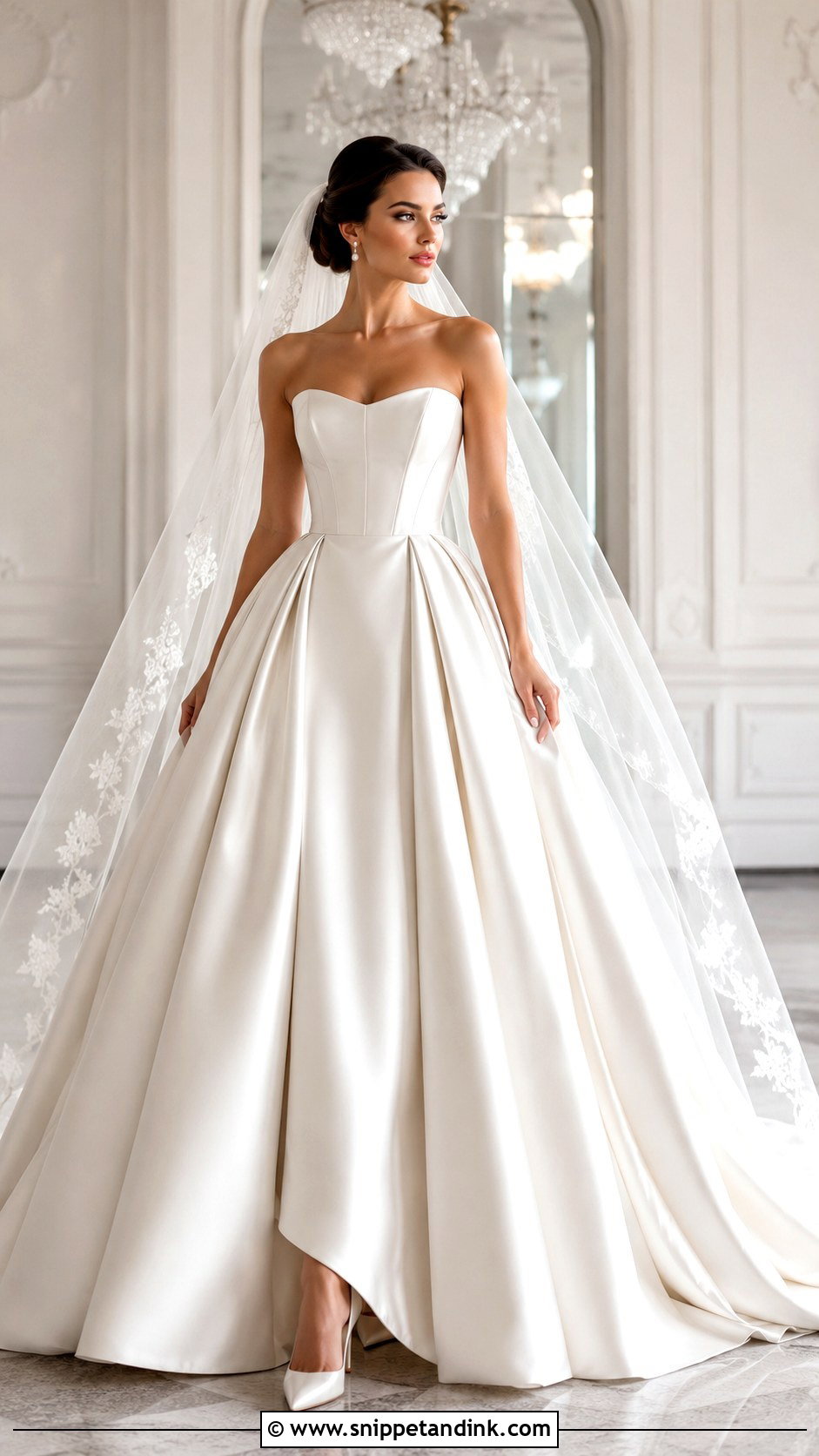
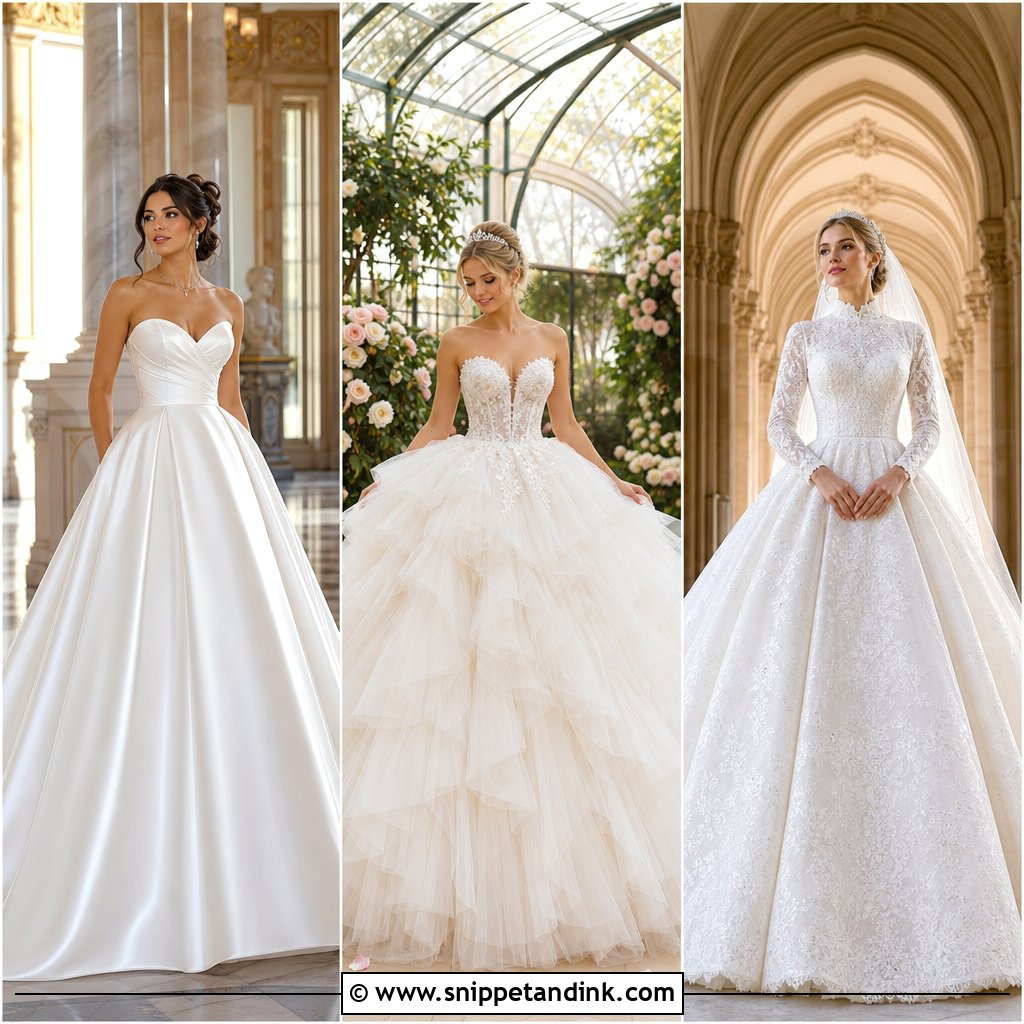
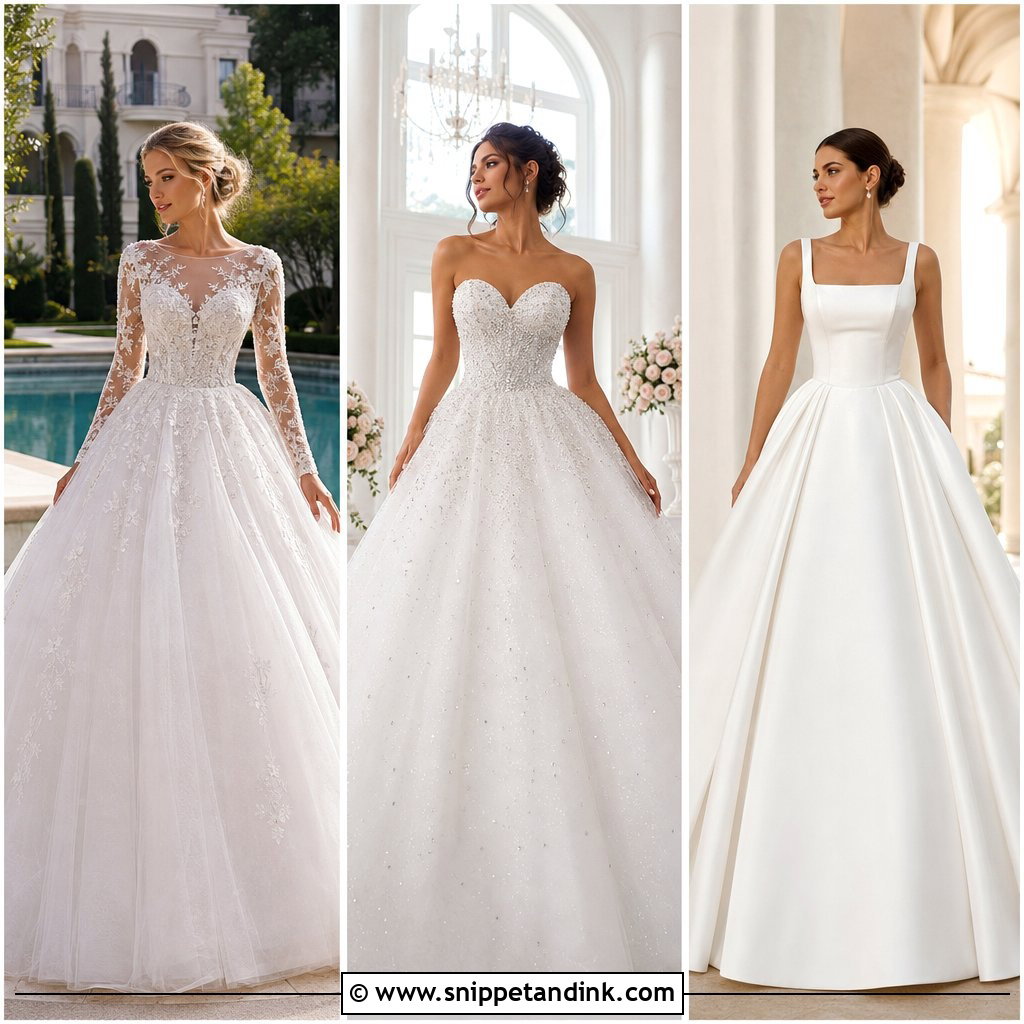
Satin is the fabric I reach for when a bride says she wants the classic version. A structured bodice over a full satin skirt reads as grand from the back row, and the sheen does the job that beading would otherwise do. The trade-off is that satin shows everything: a seam that pulls, a waist half an inch too loose, a crease from the car ride. I steam a satin gown at the venue, never the night before. A cathedral veil, pearl drops, a low bun and pointed ivory heels finish it without competing, and a ballroom, estate or formal garden gives the skirt the space it needs.
2. Lace Sleeve Princess Wedding Dress
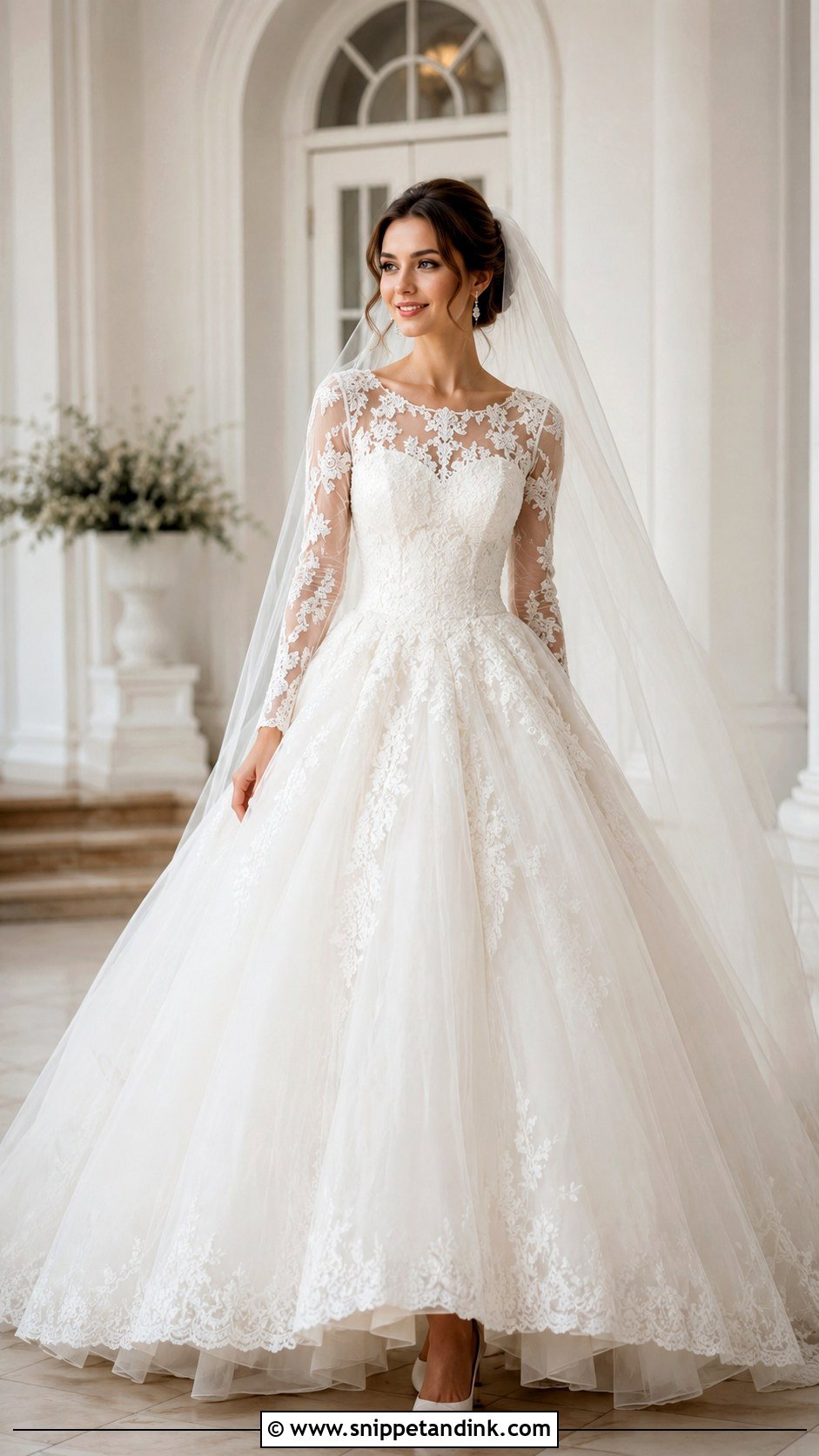
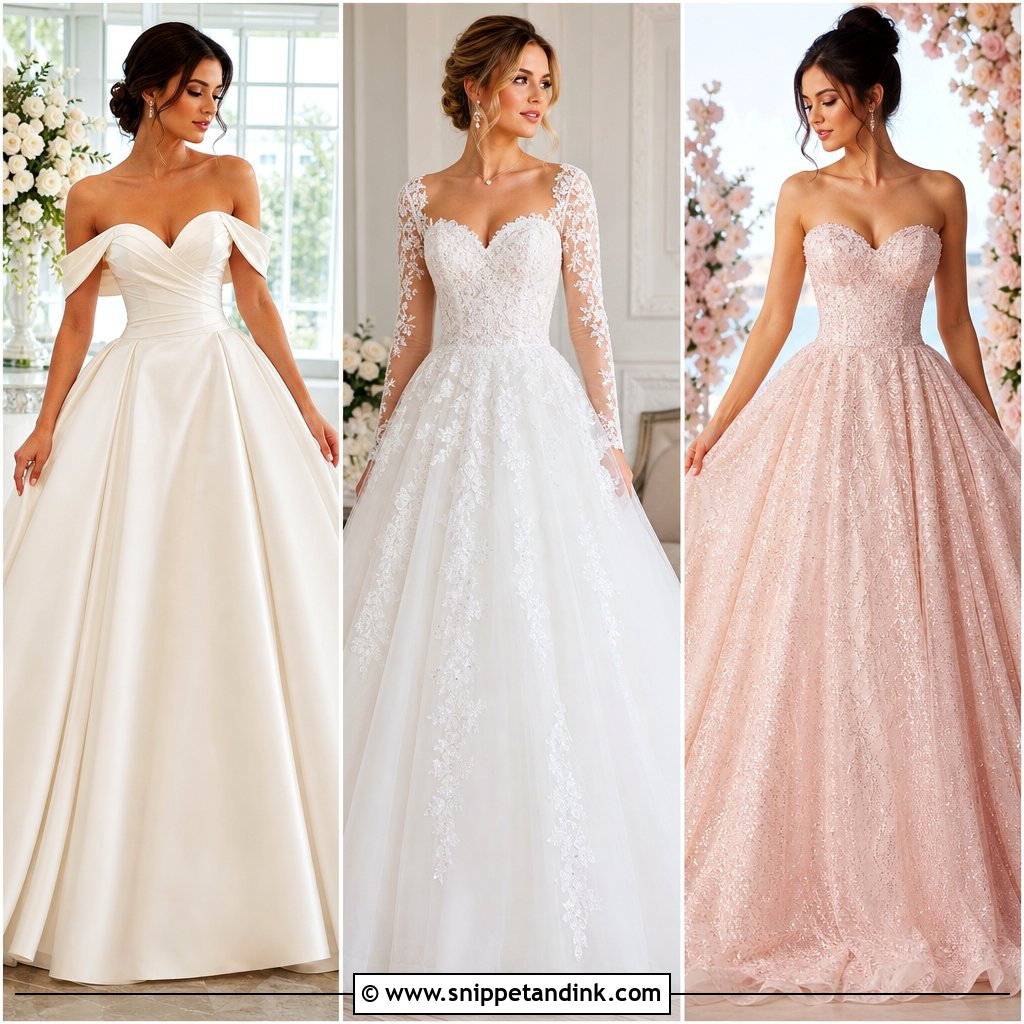
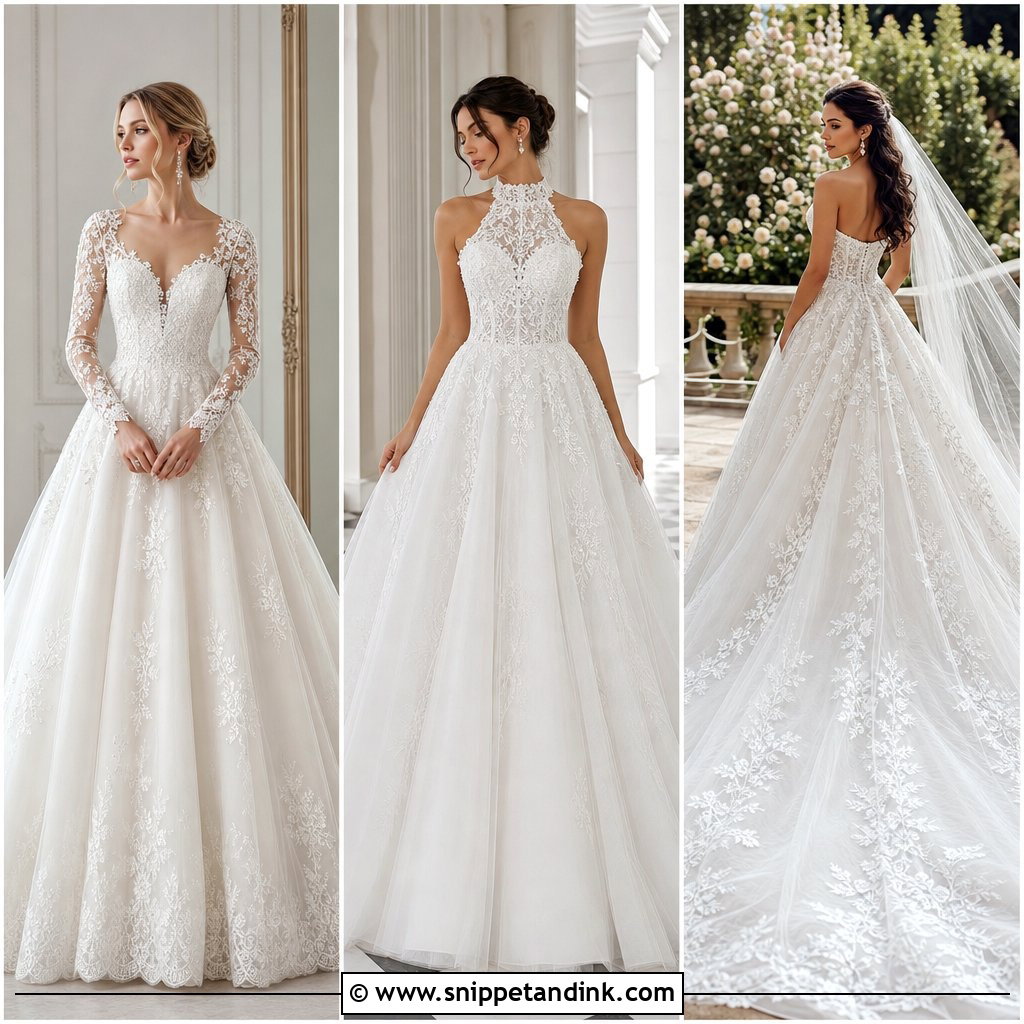
Long lace sleeves soften a big skirt and give coverage without looking heavy. The version I like best has the lace running unbroken from cuff into bodice and dissolving into tulle or satin below the waist, so nothing looks stuck on. At your fitting, raise both arms as if you’re hugging someone. Lace sleeves are often cut close, and a tight armhole will fight you all night. A sheer veil, small diamond studs, ivory pumps and a soft updo keep attention on the sleeves. I suggest this one for autumn and winter, and to brides who need real coverage for a religious ceremony.
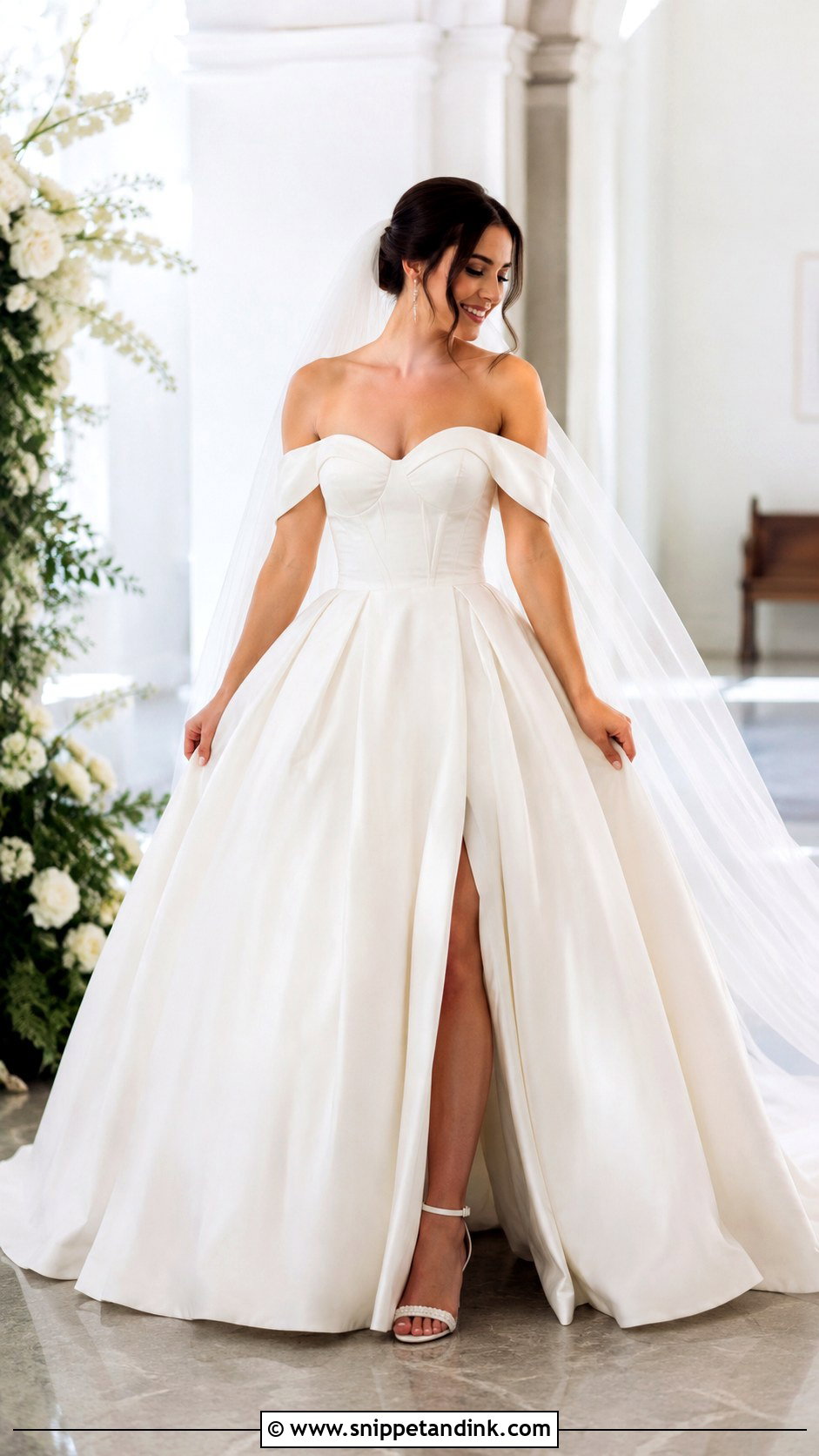
3. Off Shoulder Princess Wedding Dress
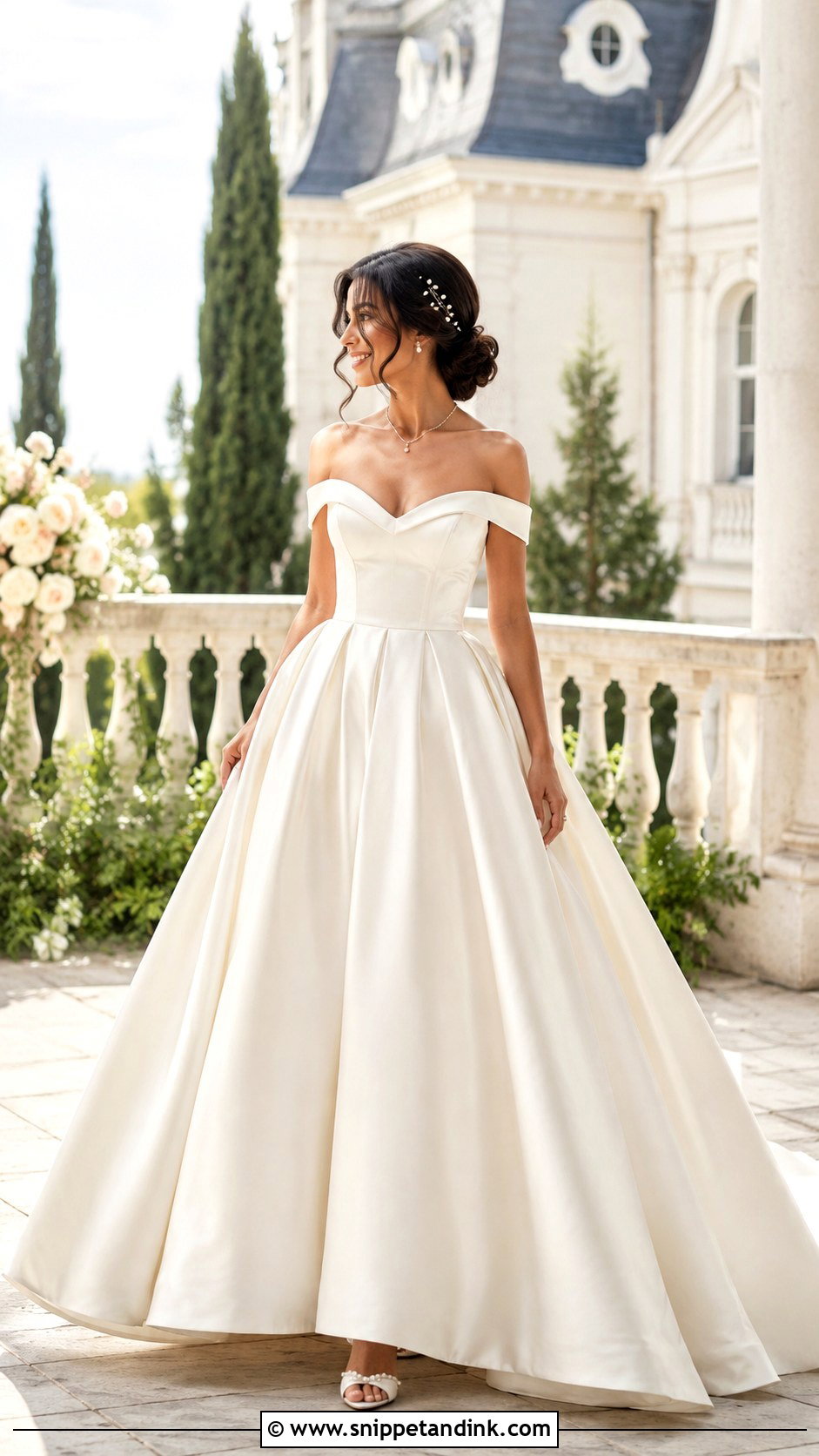
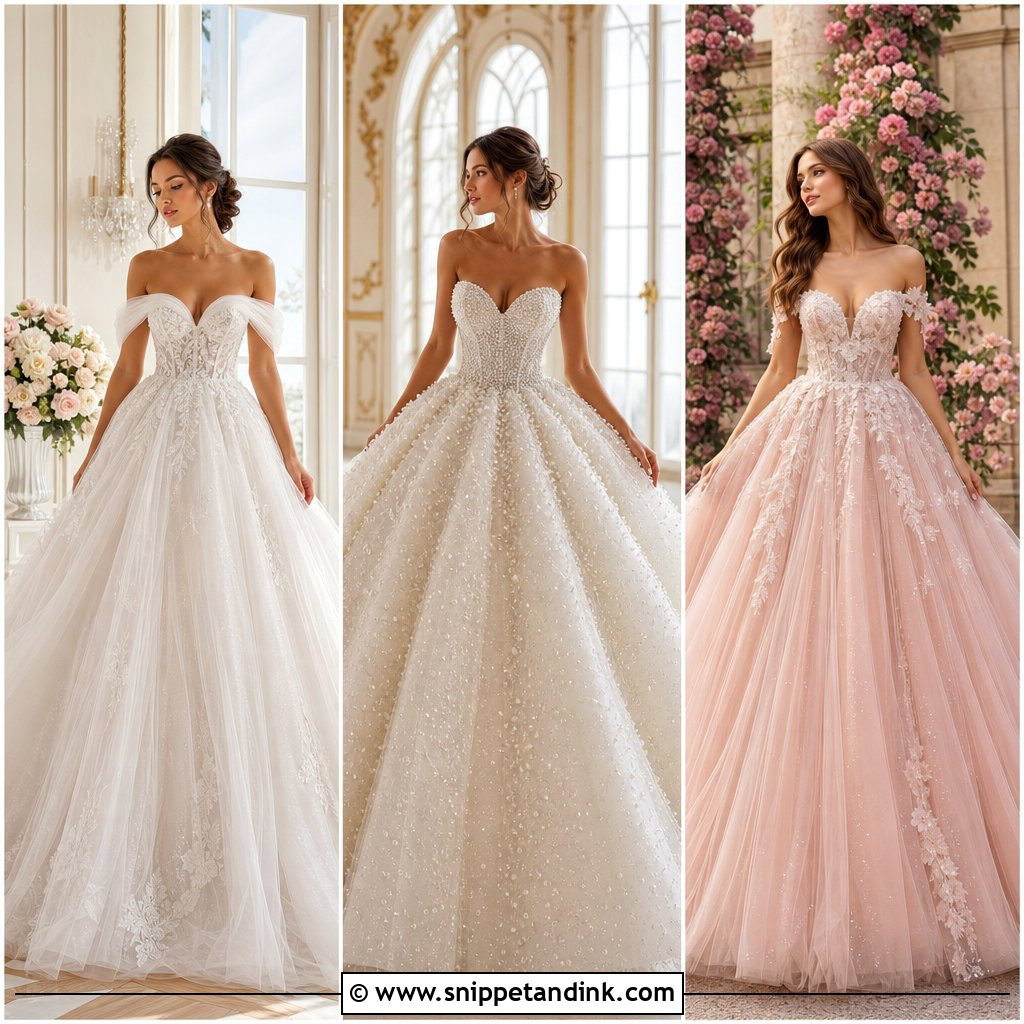
An off shoulder neckline shows the collarbone while staying fairly modest, and it balances a full skirt well. The engineering matters more than the look. A good one is held up by the boned bodice, not by the sleeve bands, so when I fit it I ask the bride to lift her arms and sway a little. If the bands creep up toward her neck, the bodice needs taking in. Satin, tulle, lace and organza all work, and a fingertip or long veil both sit well behind the shoulders. Loose waves, pearl pins and a fine necklace turn it into a fairytale dress with a more modern edge.
4. Tulle Ball Gown Wedding Dress
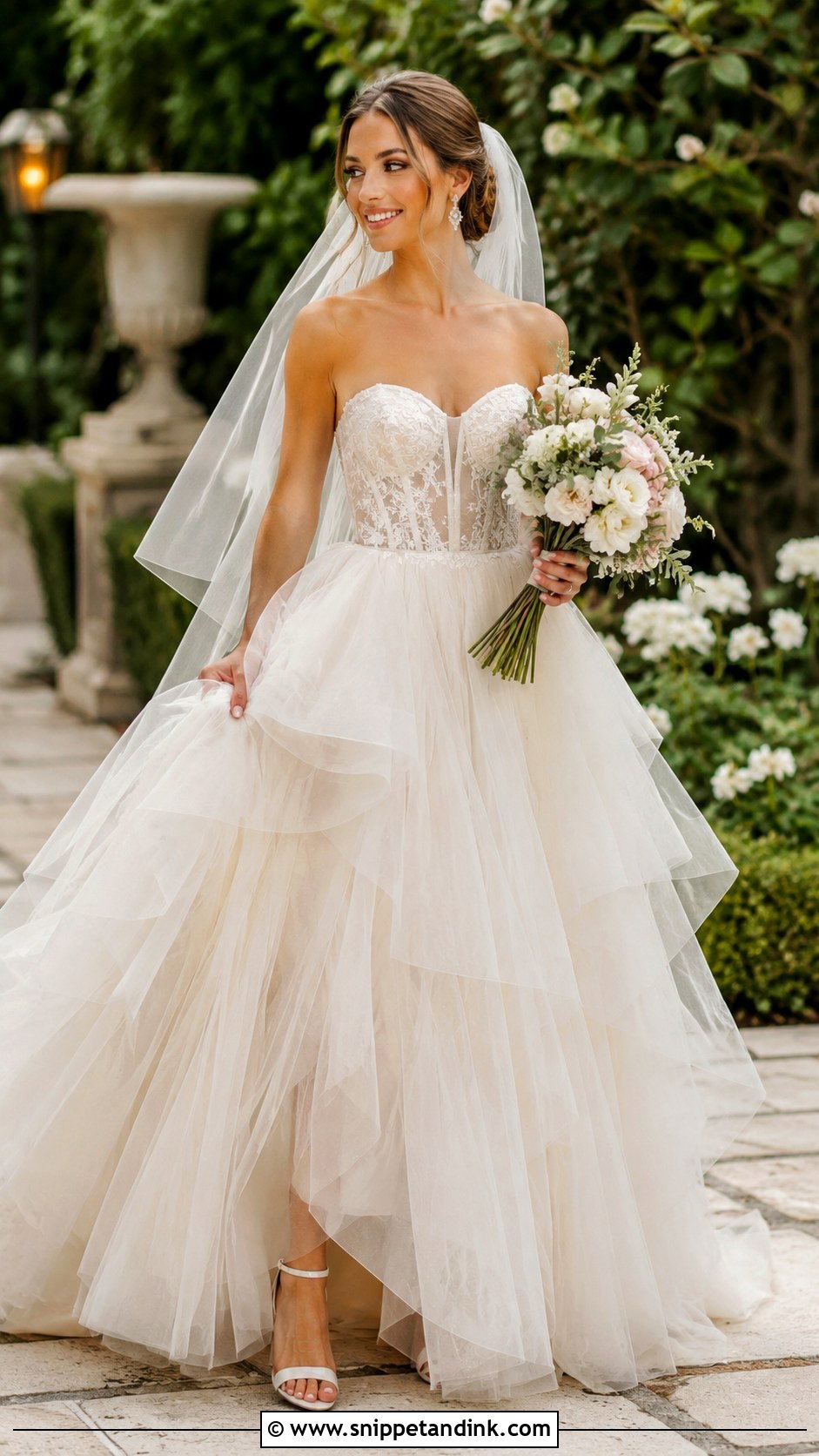
Tulle gives you volume without the weight of satin, which is why it seems to float down the aisle. The part nobody mentions is that tulle snags. Shoe buckles, a beaded clutch, even a groom’s cufflink can catch a layer, so I keep small safety pins in my kit for quick repairs. Crystal earrings, a soft veil and satin heels suit it. Garden weddings are its natural setting, though expect the outer layer of the hem to pick up grass by evening.
5. Beaded Princess Wedding Dress
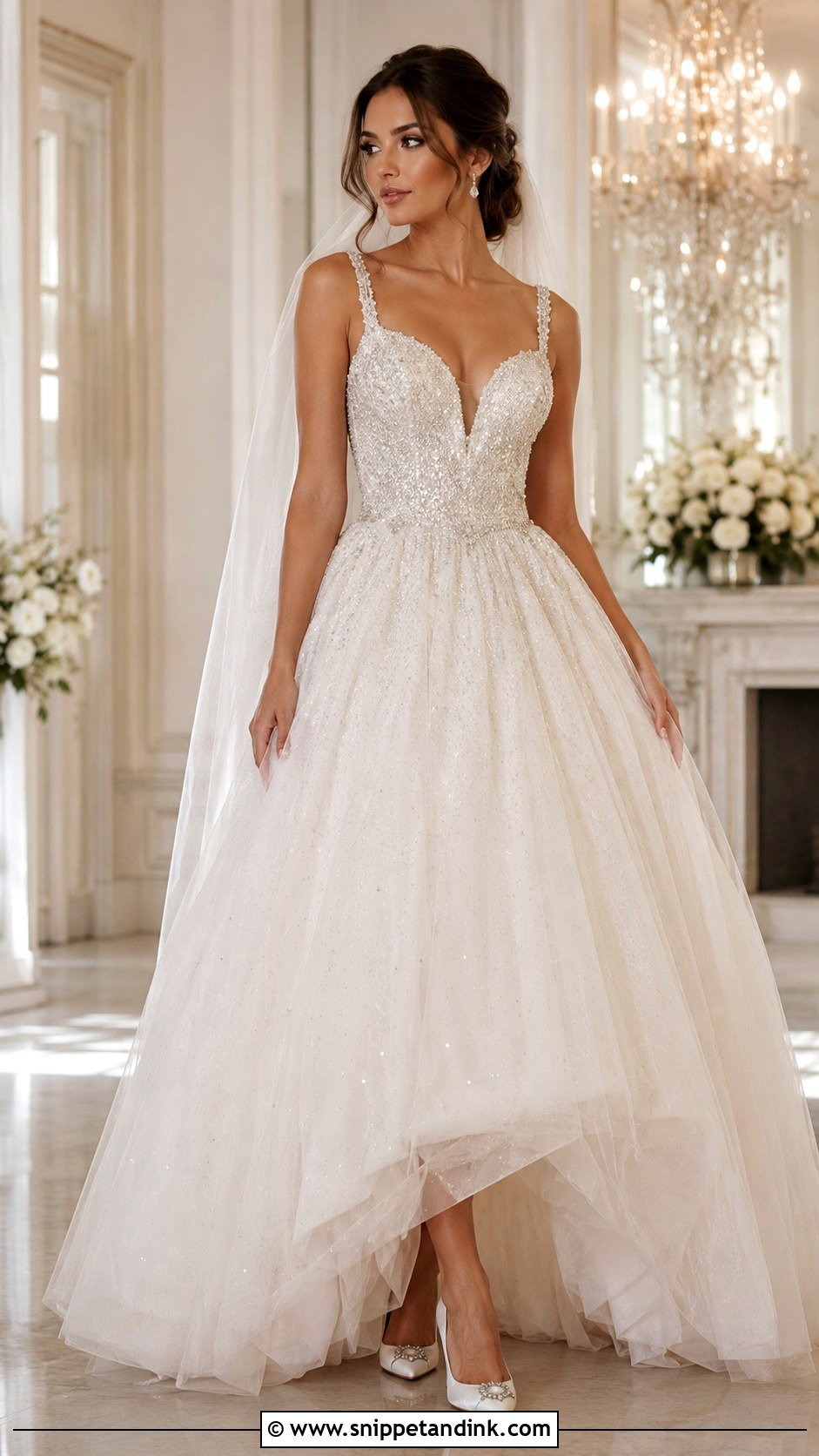
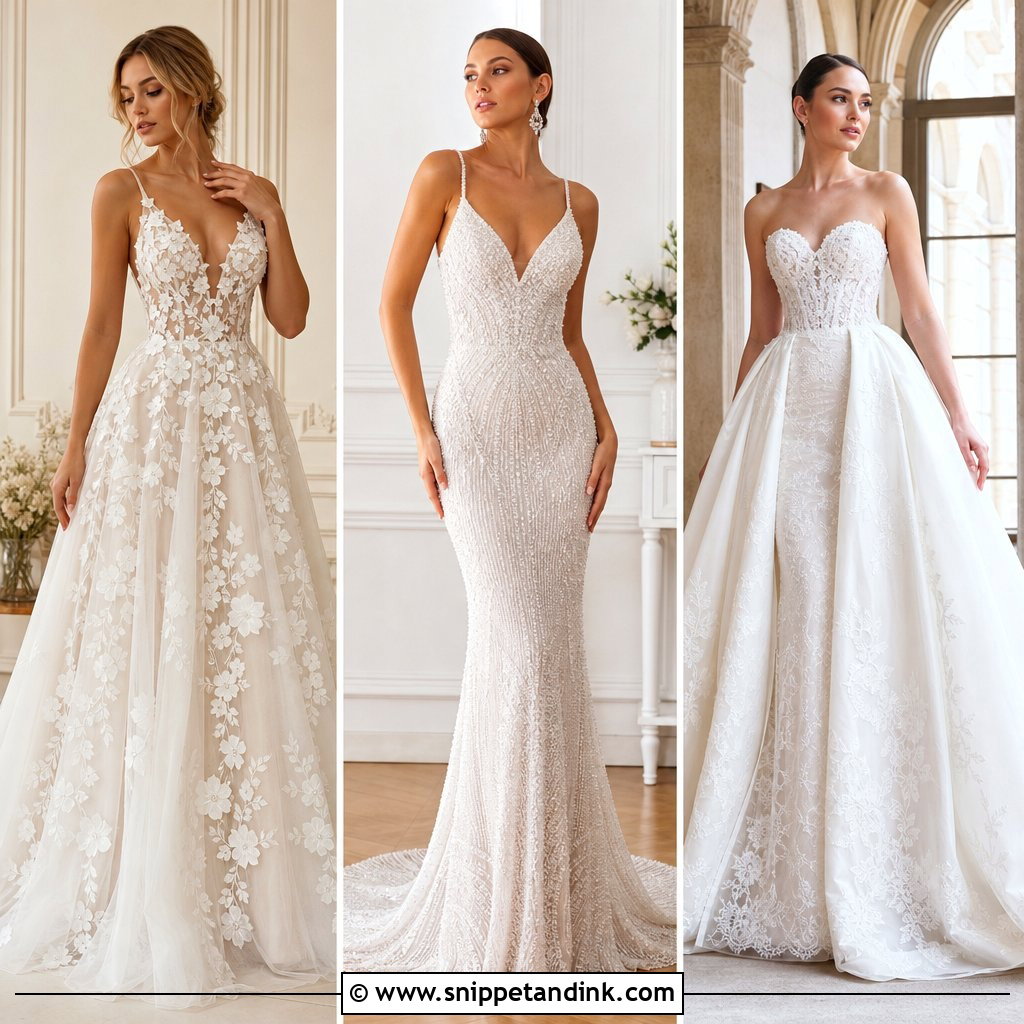
Beading catches light every time you move, which is why it reads so well at a candlelit evening wedding. Balance is the whole skill here: a heavily beaded gown wants small earrings, a plain veil and nothing on the wrist. I prefer a beaded bodice over a soft tulle or organza skirt, because the weight stays up top where the boning supports it. Fully beaded skirts are heavy, so wear one for a good twenty minutes in the shop before deciding. And ask whether the beads are hand-sewn or glued. Glued beads shed.
6. Floral Applique Princess Wedding Dress
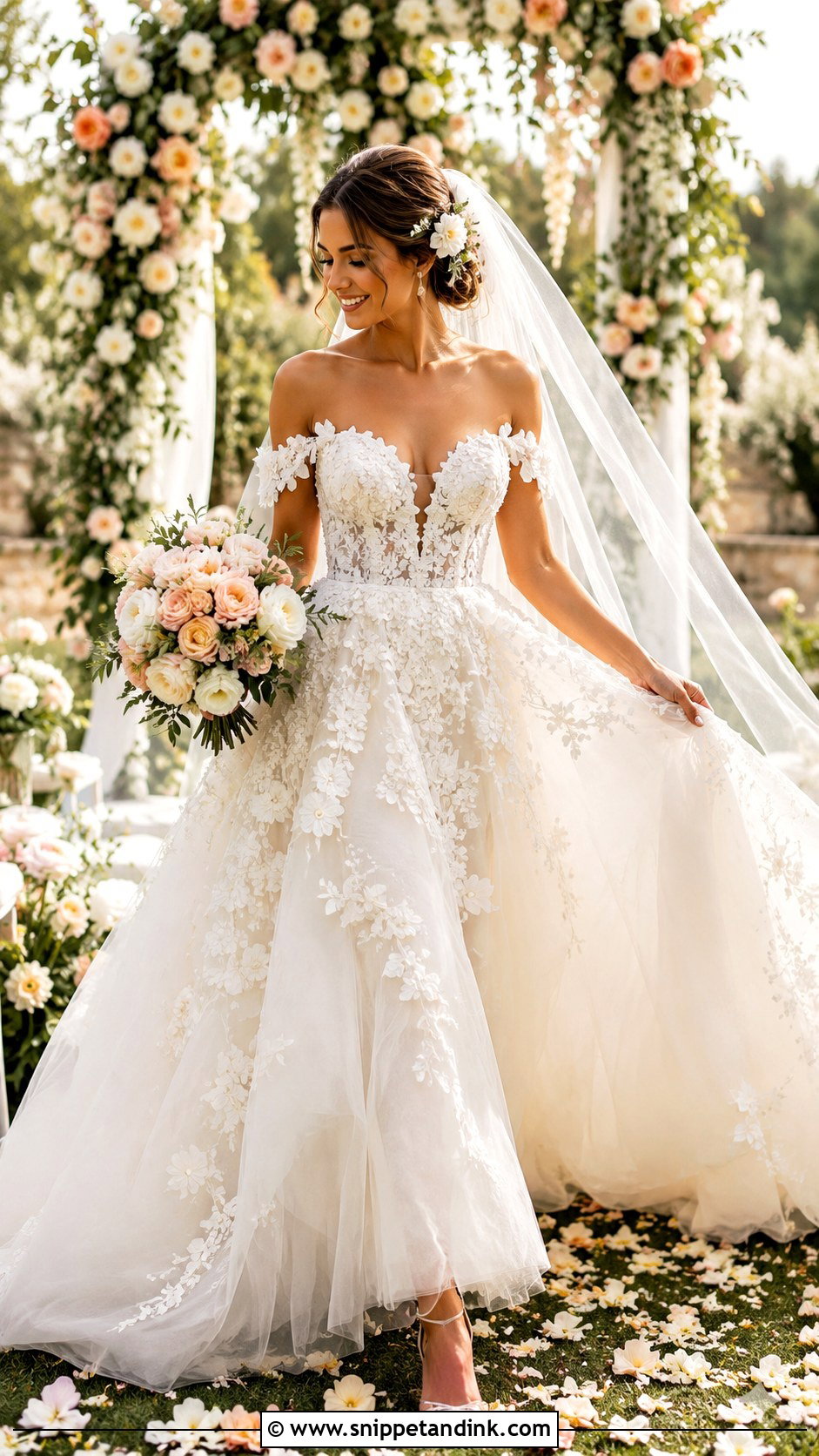
A floral applique princess wedding dress gets its charm from texture, with lace flowers scattered over the bodice or trailing down the skirt as if they’d grown there. I look closely at how they’re attached. Hand-stitched edges lie flat and move with the tulle, while fused ones can lift at the petal tips after hours of wear. A blush or champagne lining behind ivory appliqués makes the flowers show up in photos. Floral pins in soft curls, a sheer veil and strappy heels keep it light for spring and summer, and heavier lace versions carry well into autumn.
7. Corset Princess Wedding Dress
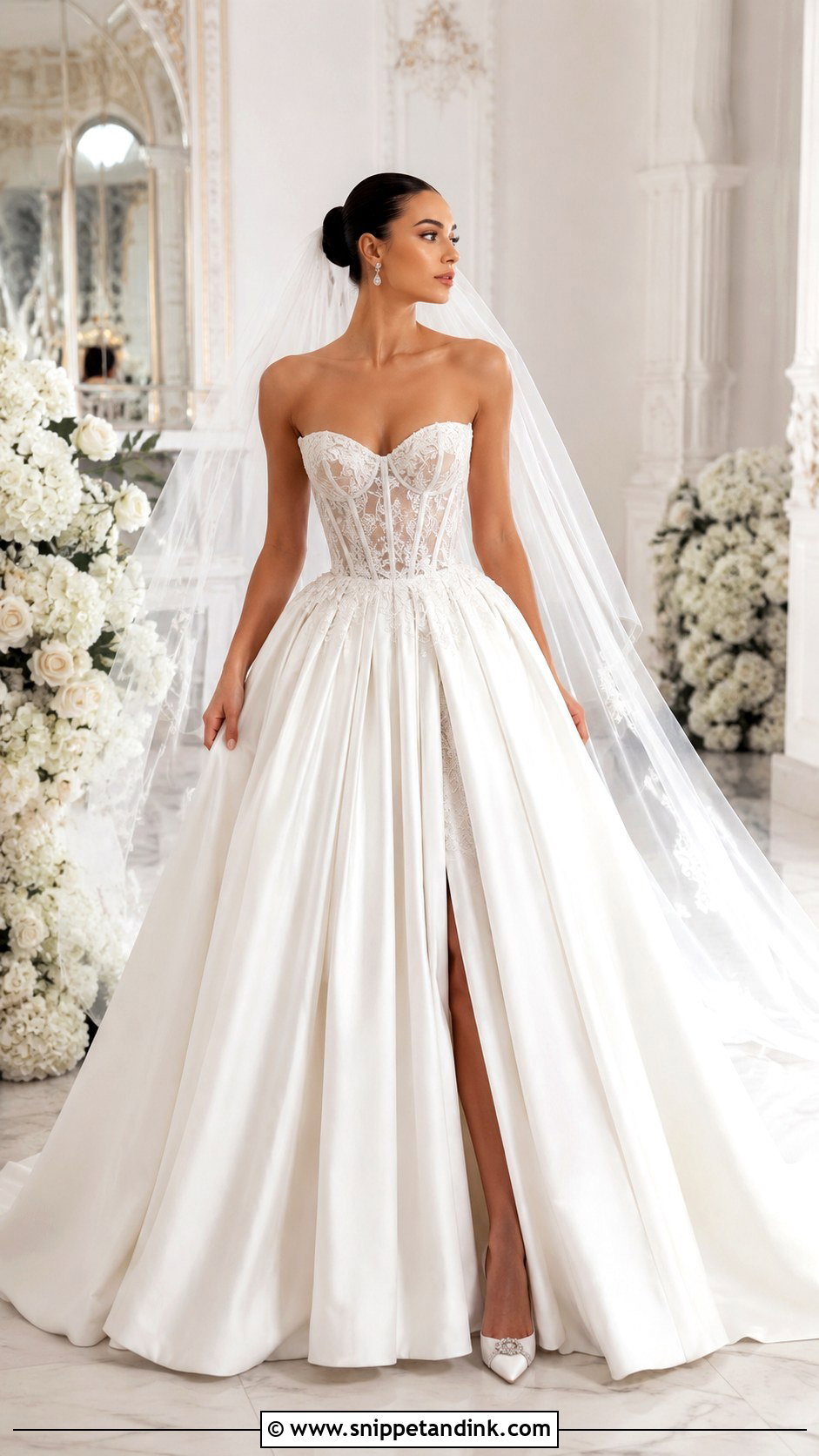
A corset bodice does real work. It supports the bust, shapes the waist and carries part of the skirt’s weight, which is why a well-made one often feels more comfortable than brides expect. Comfort depends entirely on the lacing, though. A lace-up back gives you some adjustment, so I lace it snug for the ceremony and portraits and show a bridesmaid how to ease it slightly before dinner. A sheer lace corset looks soft; satin looks architectural. A long veil, drop earrings, a sleek bun and pointed heels suit either.
8. Basque Waist Princess Wedding Dress
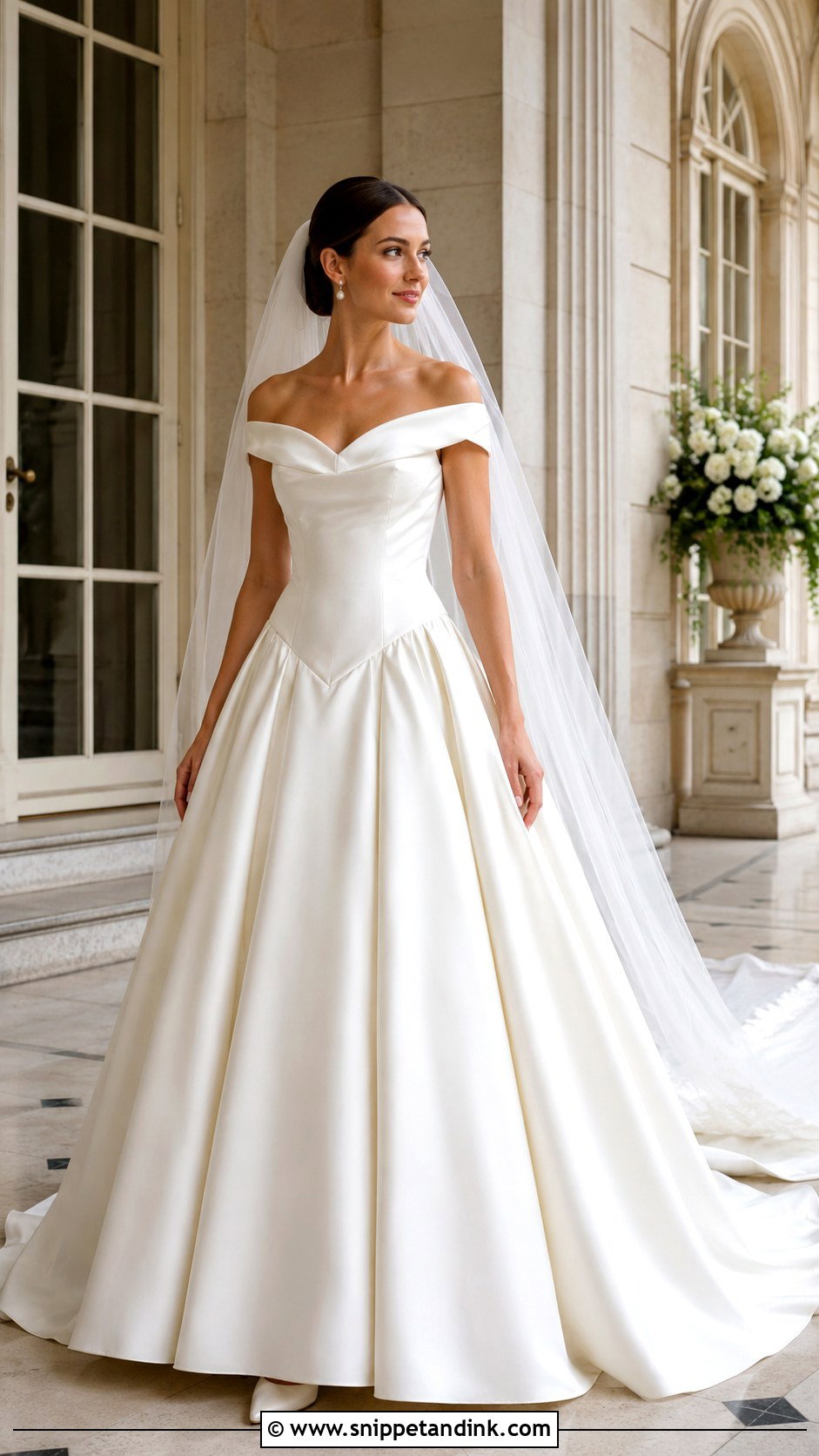
A Basque waist princess wedding dress drops the waistline into a point below the natural waist, which lengthens the torso before the skirt breaks into volume. It’s one of the most flattering lines I fit on brides with a shorter body, because the V draws the eye downward. On a very long torso it can make the top look stretched, so try a natural waist beside it before you decide. Satin, mikado, tulle and lace all hold the point crisply. Pair it with a simple veil, pearls, gloves if you like them and closed-toe heels.
9. Square Neck Princess Wedding Dress
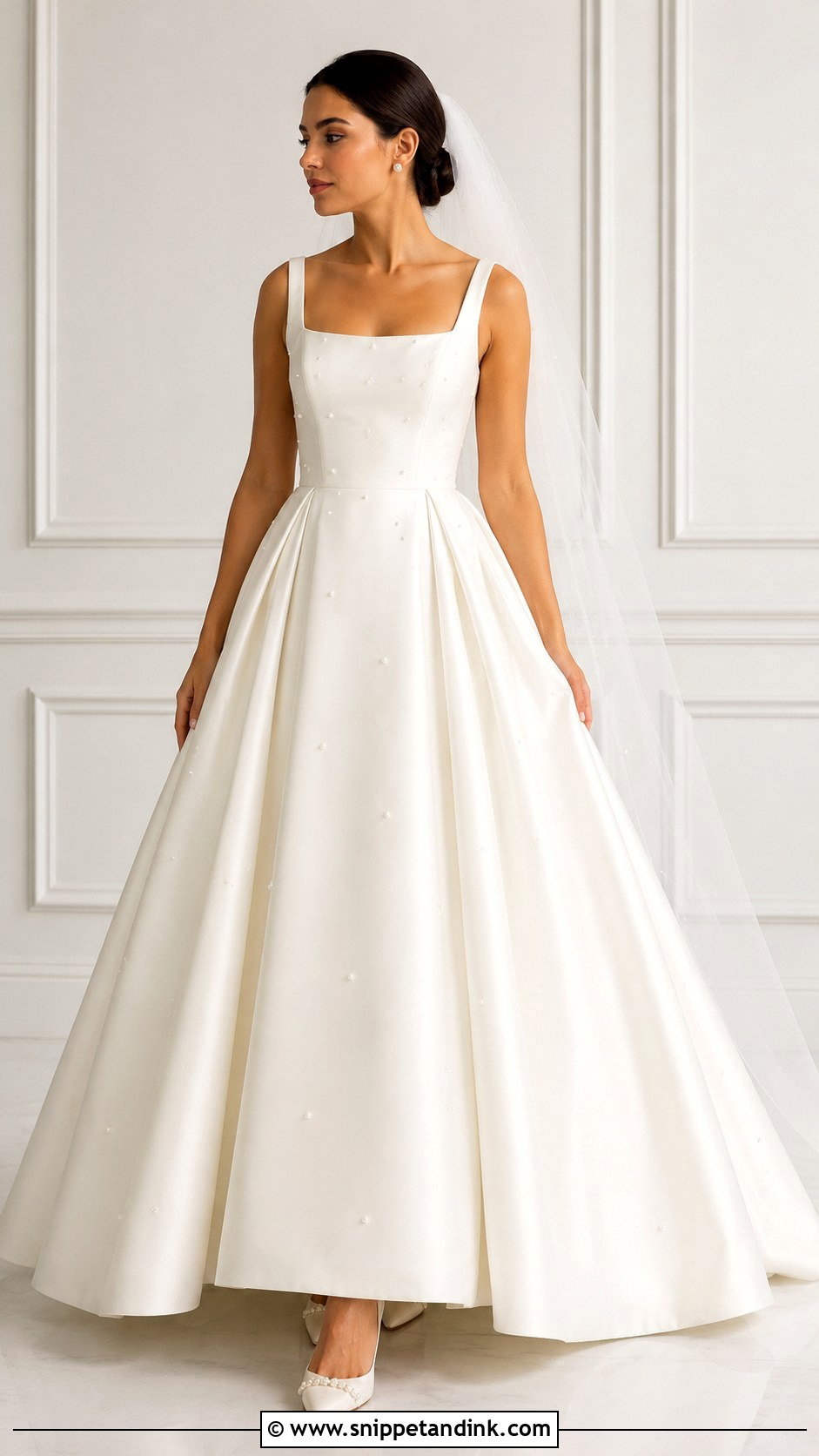
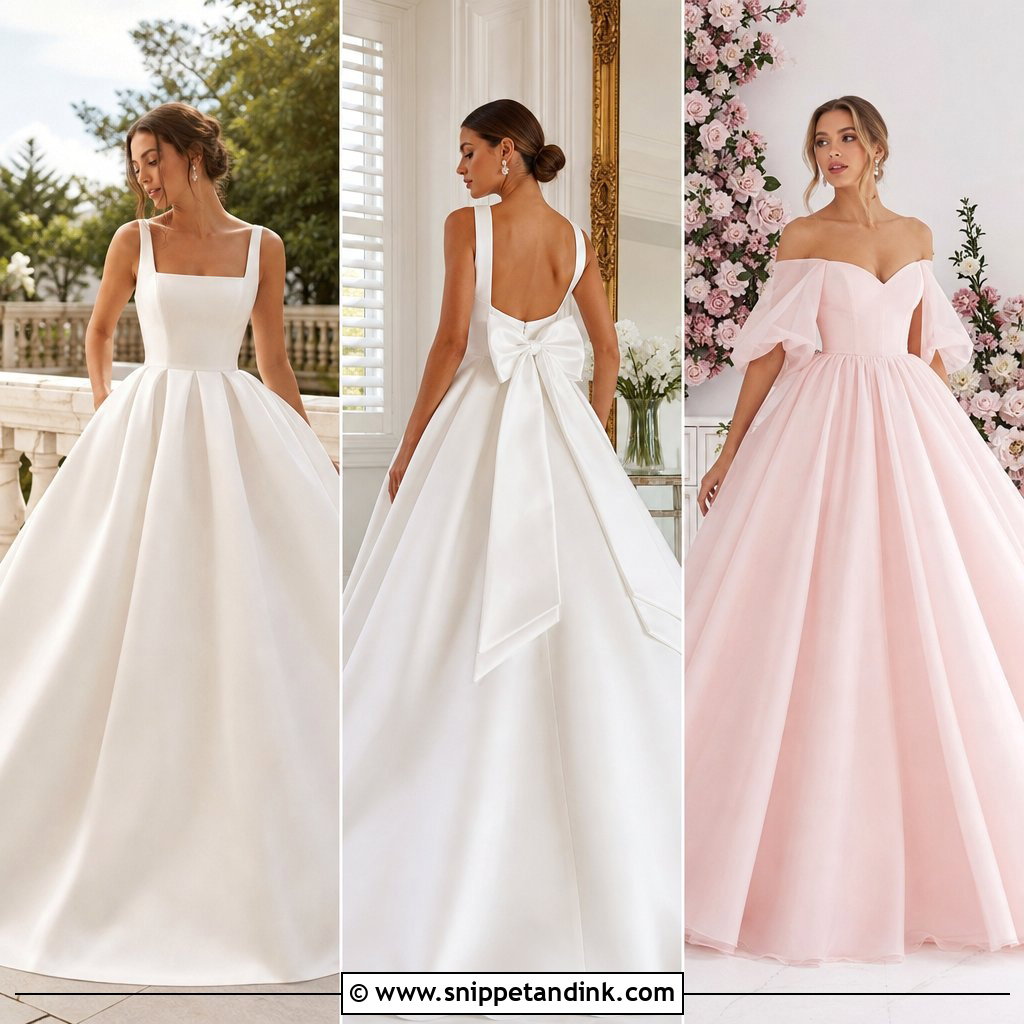
Straight lines across the neckline give a full skirt a calm, structured top half. It’s my suggestion when a bride finds the sweetheart too expected. Sit down at your fitting and look in the mirror: on a poorly fitted bodice the corners of the square gape outward. Wide straps, long sleeves or a sleeveless cut all work with it. Pearl studs, a low chignon and a fingertip or cathedral veil keep the look clean.
10. Sweetheart Princess Wedding Dress
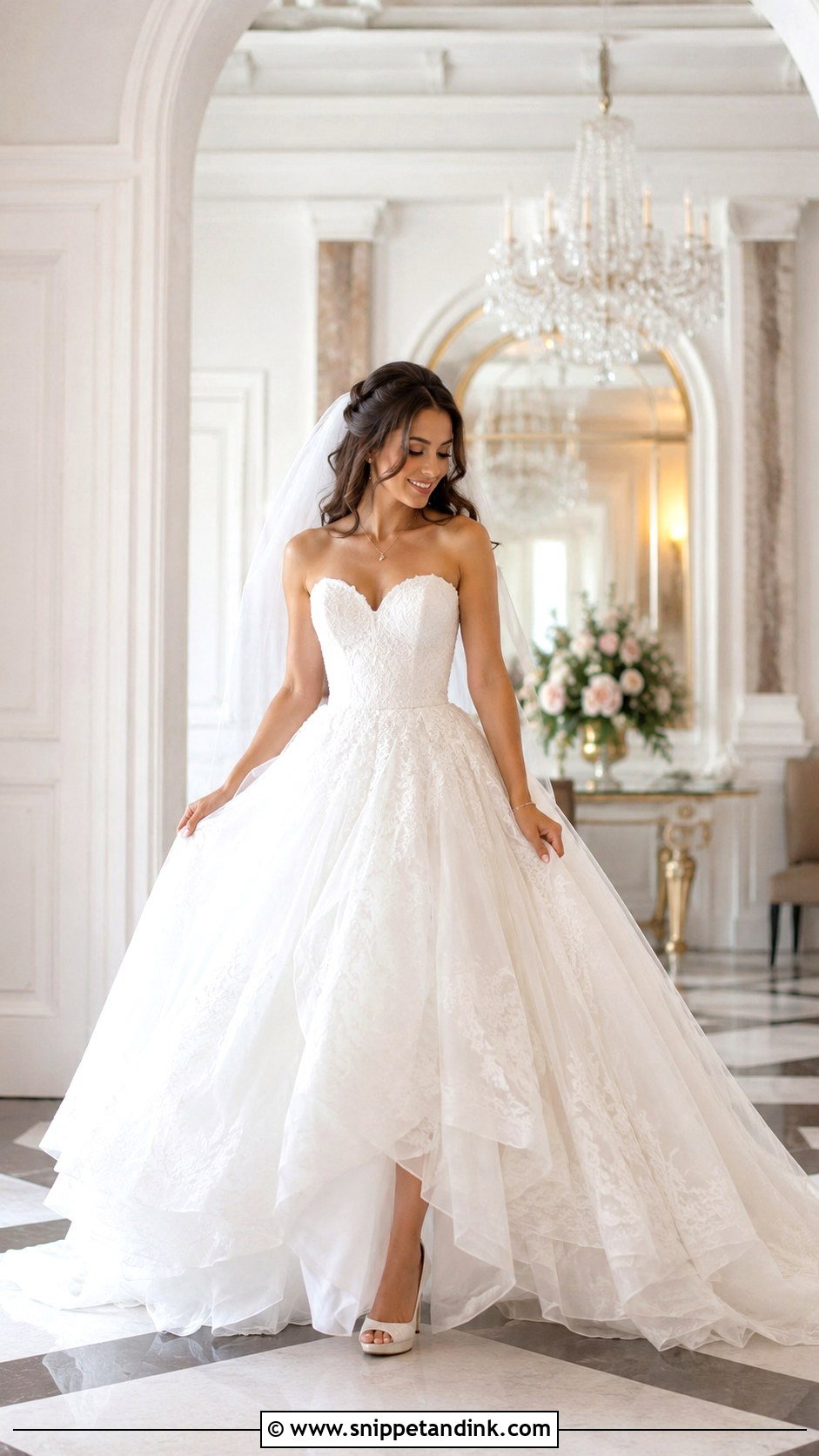
The sweetheart curves around the bust and is usually the first neckline brides try. It’s forgiving and suits almost any fabric. Strapless versions need serious internal structure, so I check the boning and the grip tape along the top edge, then ask the bride to bend forward as if picking something up. If the neckline pulls away from her body, it needs tightening, not a tug every ten minutes all night. Detachable sleeves add coverage for a church ceremony. A fine necklace, a soft veil and loose curls keep it balanced.
11. High Neck Princess Wedding Dress
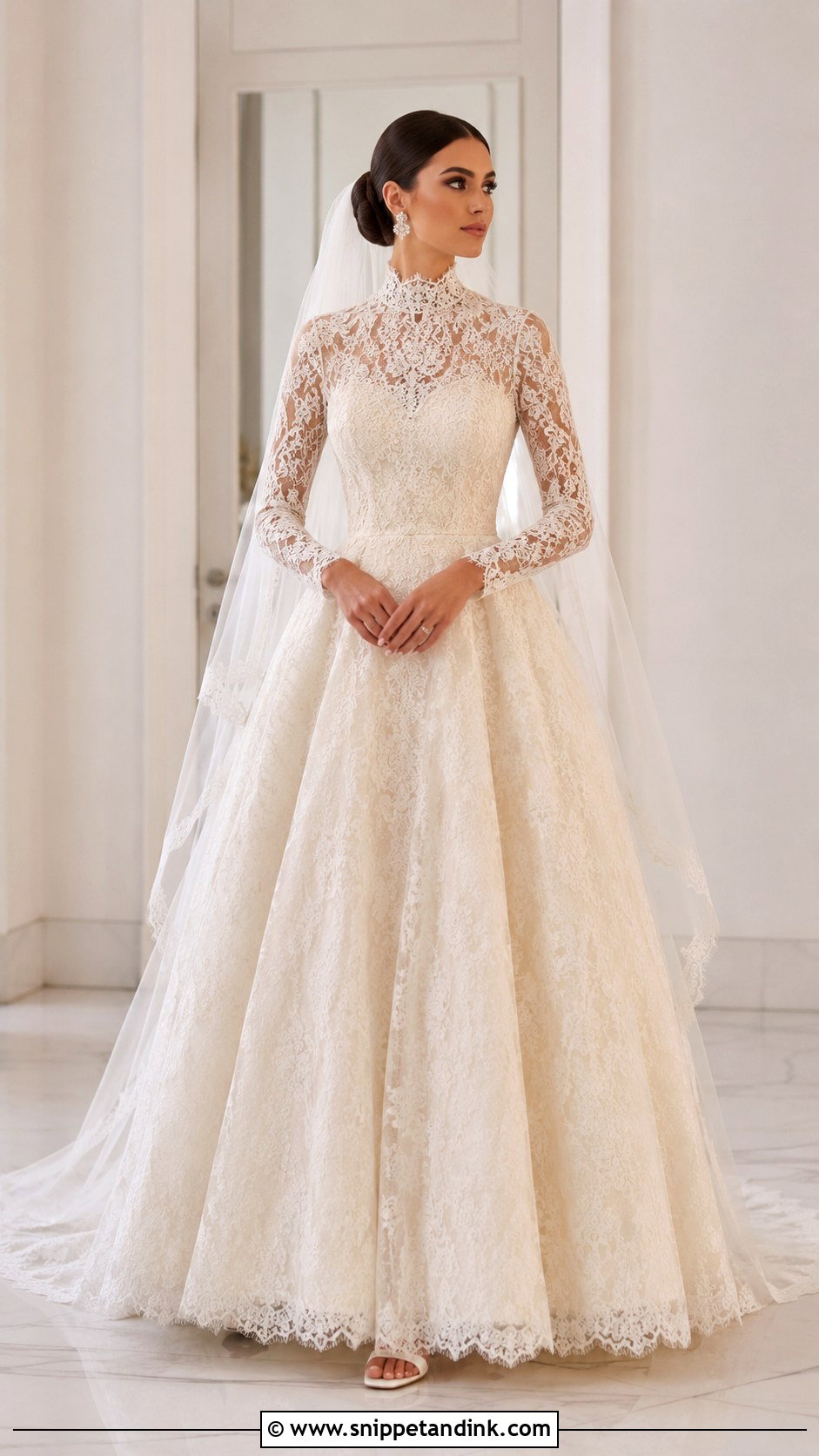
A high neck gives coverage and a slightly vintage line while the full skirt keeps the drama. Lace reads romantic; crepe or satin reads sleek. I always skip the necklace and move the jewelry to the ears, because anything at the throat fights the collar. One fitting caution: a fully lined high collar traps heat, so for a summer wedding I’d lean toward sheer illusion mesh at the neck instead. A neat bun and a long veil complete it, and it’s at its best at formal ceremonies in the cooler months.
12. Long Train Princess Wedding Dress
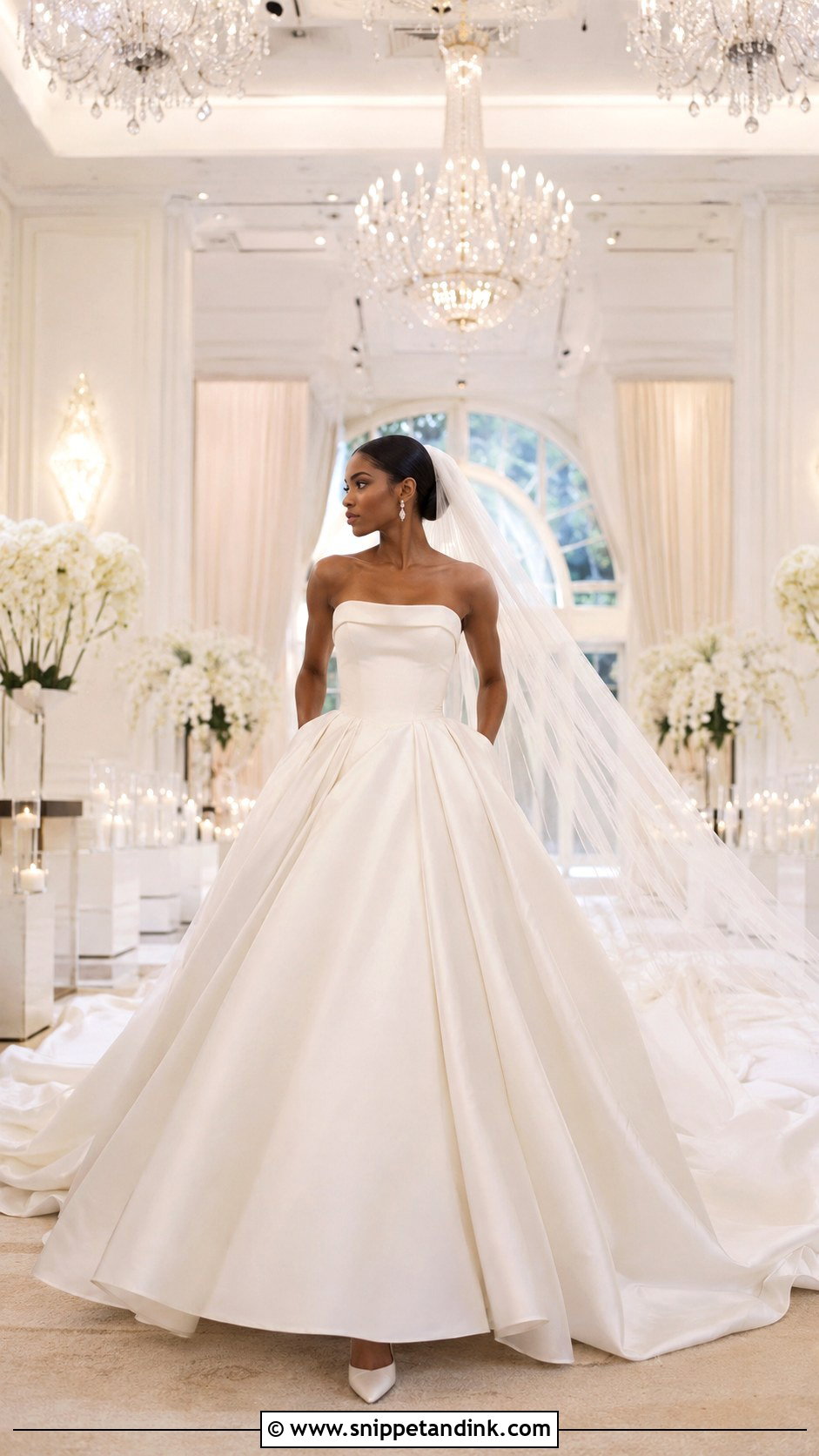
A long train turns the back of the gown into its own moment as you walk away from the guests. It needs a structured bodice and full skirt so the weight is balanced front to back. Before you commit, look at the actual aisle. A long train in a narrow chapel aisle simply bunches. Someone in your party must also learn to lay it flat before the walk and again at the altar, because a train left twisted is what the photos remember. A cathedral veil adds more length. Satin gives a crisp line, lace adds texture, and tulle is the lightest to drag.
13. Pearl Princess Wedding Dress
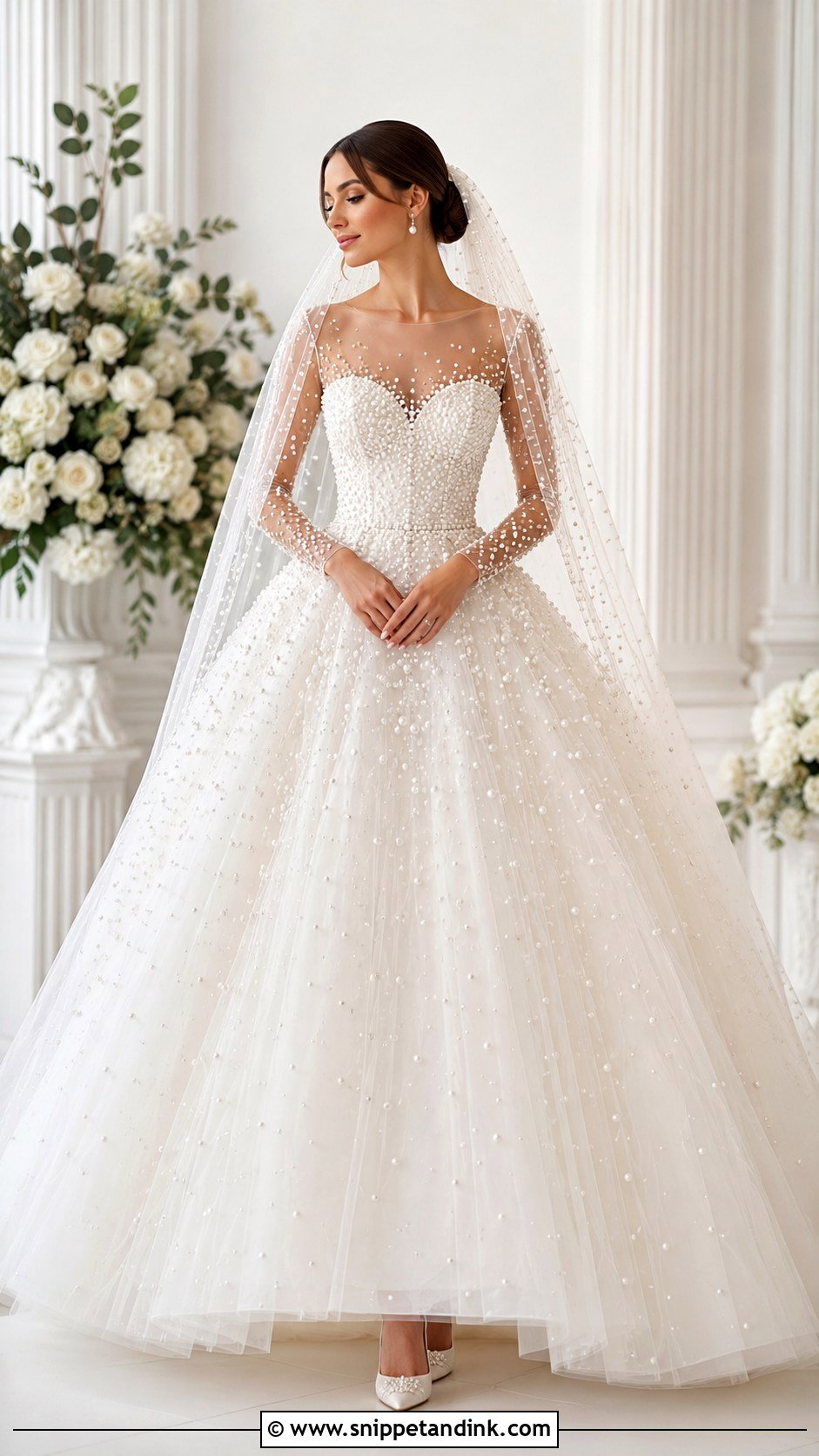
Pearls give texture without the glare of crystals, and they read especially well in daylight. Scattered pearls on tulle or organza look delicate; densely pearled bodices are heavier than you’d guess. I keep the jewelry in the same family, with pearl studs, a simple bracelet and a sheer veil edged in matching pearls. Check how they’re sewn. Each pearl should be secured on its own, or one broken thread can drop a whole row. A low bun or soft waves tucked behind the ears keeps it polished.
14. Sparkle Princess Wedding Dress
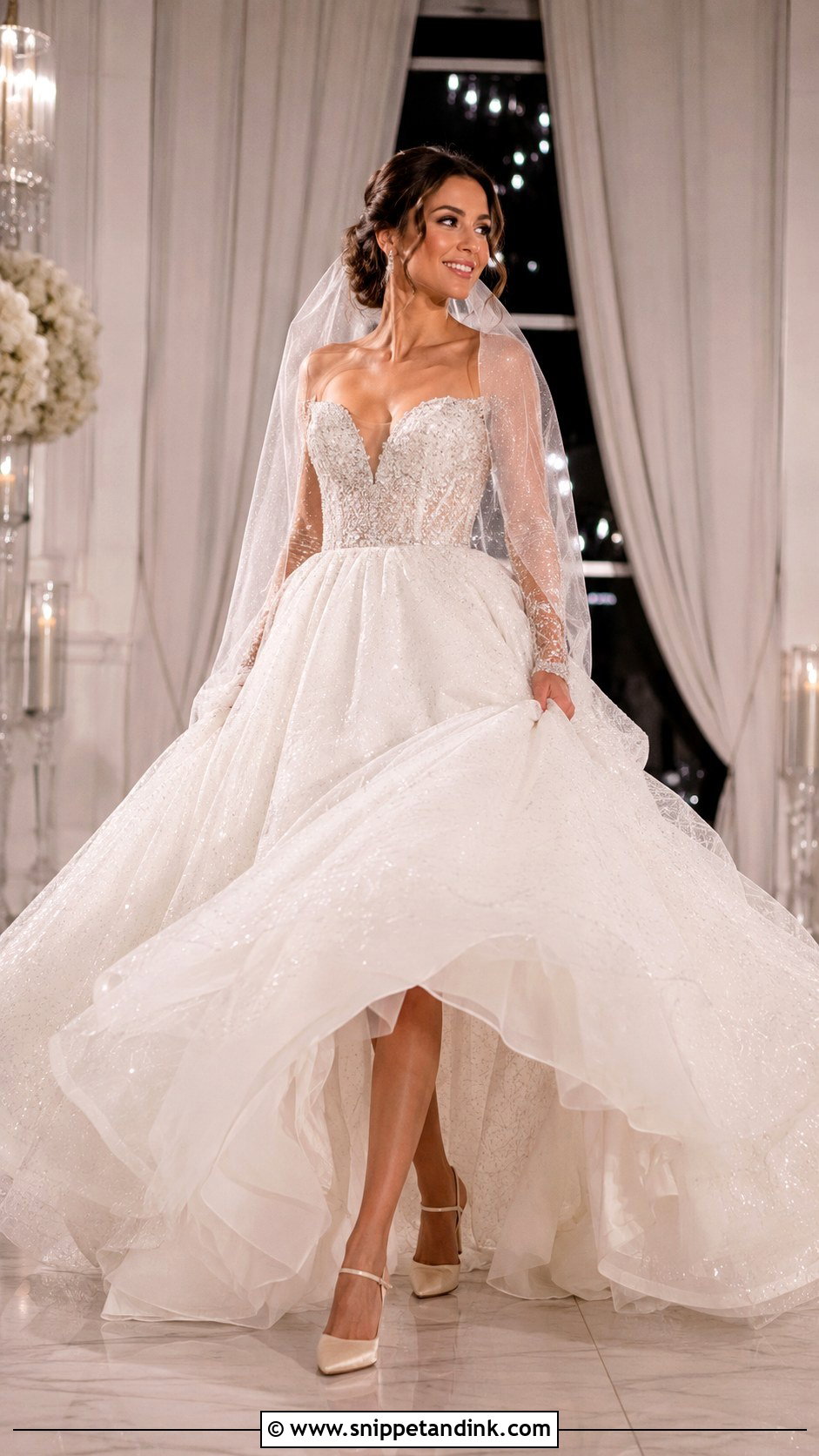
Glitter tulle, crystal beading and sequins come alive under reception lighting and camera flash. The rule I give every bride is one source of sparkle. If the skirt shimmers, the earrings stay small and the veil stays plain. Glitter tulle sheds a little, so expect some on your partner’s suit by midnight. This one belongs at evening ceremonies and in ballrooms, and it depends on tailoring more than you’d think, because a loose bodice under all that shine looks cheap very quickly.
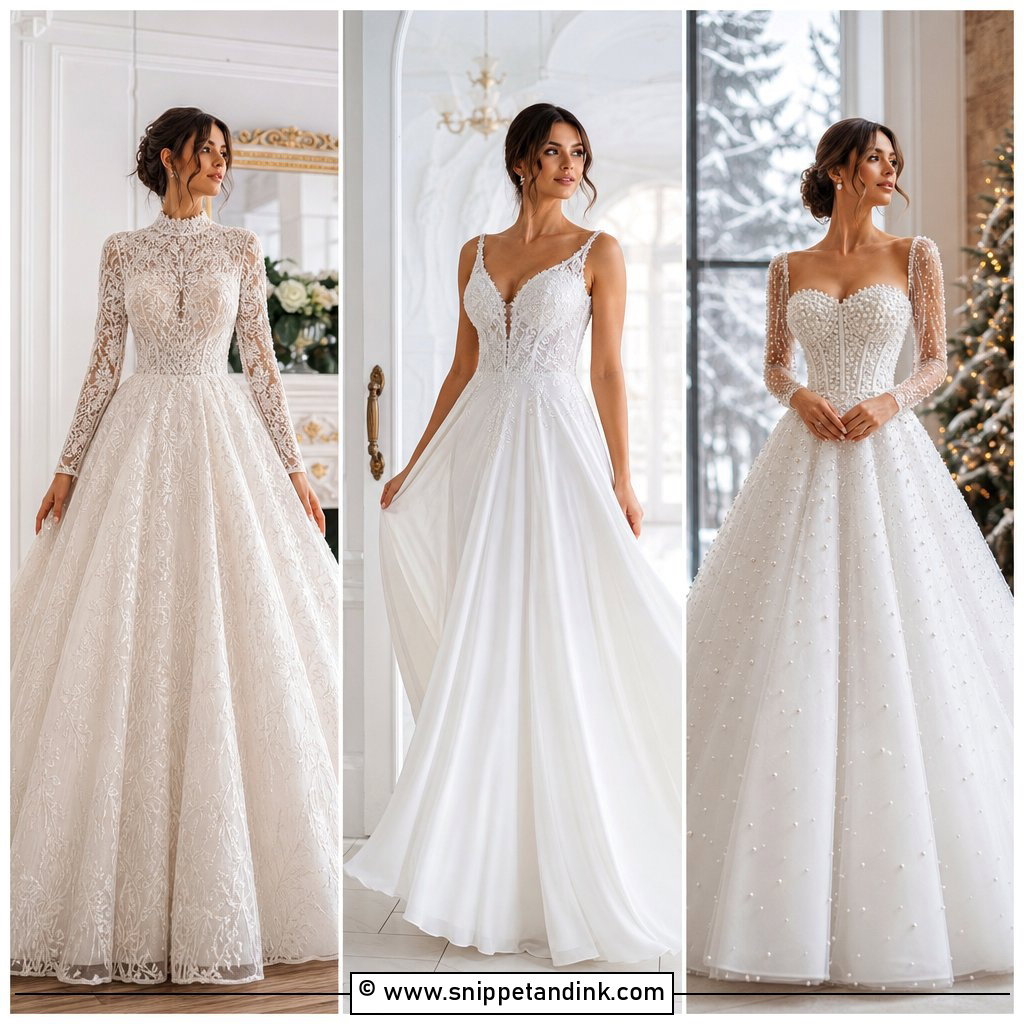


15. Minimal Princess Wedding Dress
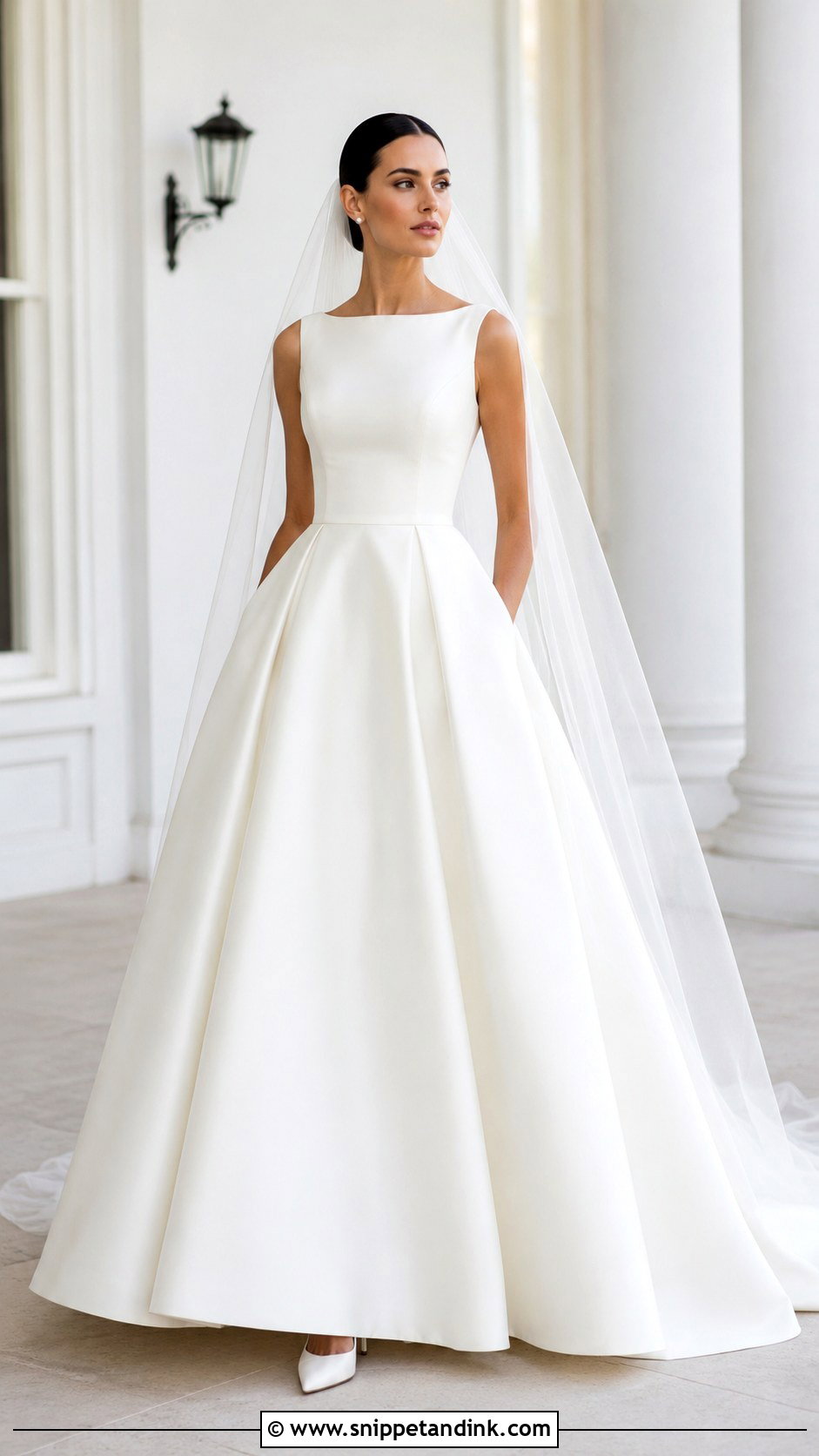
A plain princess gown is all fabric and cut, which means a poor fit has nowhere to hide. Satin, mikado and structured organza hold the shape on their own. I spend the most fitting time on these: where the waist sits, the exact hem height in your wedding shoes, how the bodice moves when you breathe in. Pearl studs, sleek hair, pointed heels and a structured bouquet keep it modern. With no lace to look at, the camera reads only the silhouette and you.
16. Blush Princess Wedding Dress
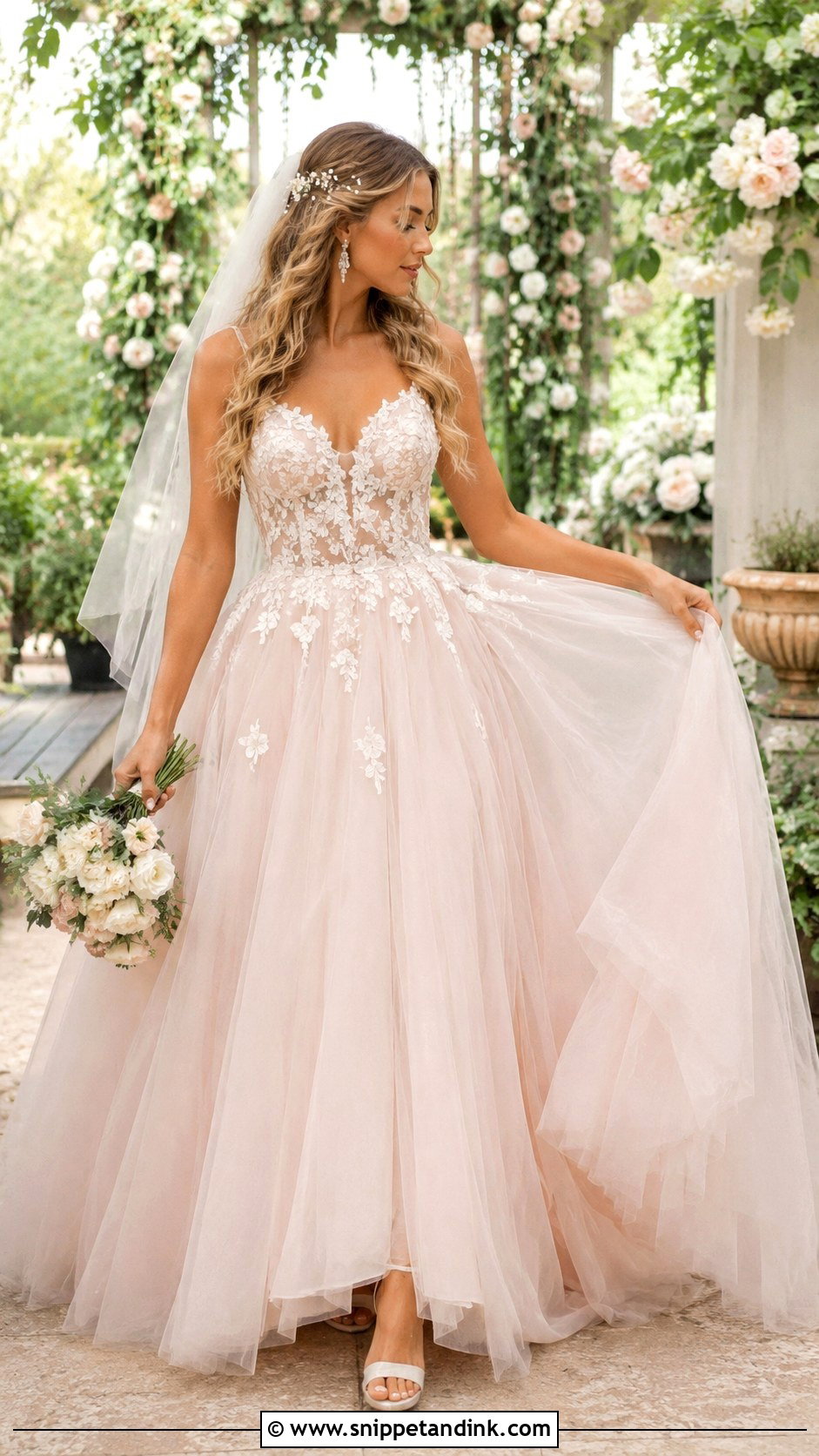
Blush can be a whisper, just a pink lining under ivory tulle, or a clearly pink fabric. Take the swatch to a window before you order, because a blush that looks warm under shop lighting can turn beige outdoors. I find it flatters many skin tones by adding warmth near the face. Rose gold jewelry, soft makeup and ivory heels sit naturally with it. Floral appliqués or light beading add charm, and spring garden weddings are its natural home.
17. Champagne Princess Wedding Dress
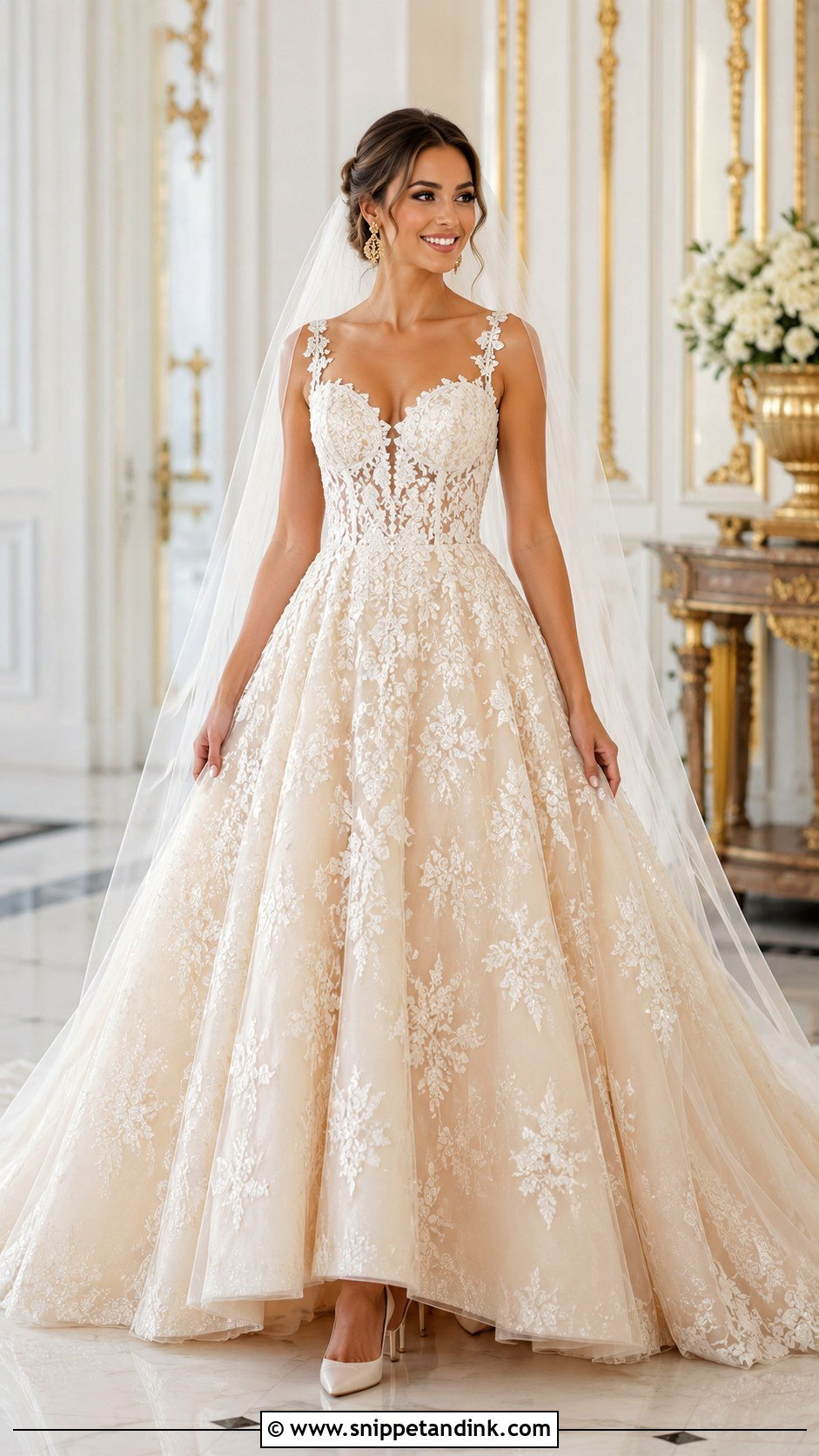
Champagne adds a gold undertone that gives lace and beaded overlays contrast, so the pattern shows instead of disappearing into white. Gold-toned jewelry, ivory or nude heels and a soft veil suit it. Test your veil next to the gown, though. A bright white veil against champagne makes the dress look dingy, so order the veil in the same shade or one step lighter. It’s the move away from ivory I suggest to brides who aren’t ready for real color, and it glows in rooms with warm wood and candlelight.
18. Organza Princess Wedding Dress
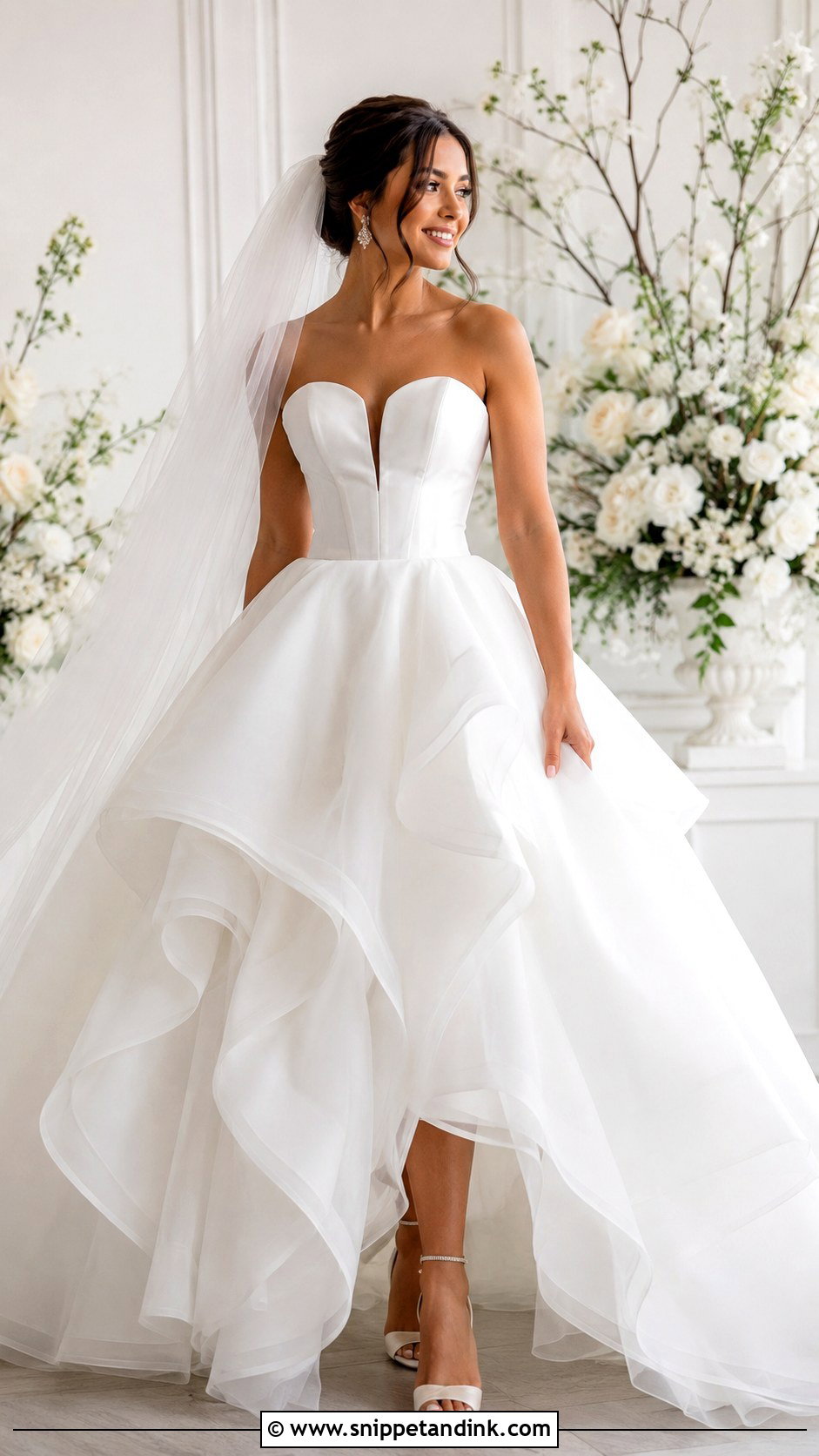
Organza holds shape better than soft tulle and still looks airy, with a slight crispness that makes the skirt stand away from the body. The catch is that it creases if you sit on it carelessly, and those marks stay visible all evening. I teach brides to gather the back of the skirt and perch forward on the chair. Ruffled layers add movement; a smooth skirt reads cleaner. Simple earrings, a long veil and a neat hairstyle suit it at spring, summer and indoor weddings.
19. Mikado Princess Wedding Dress
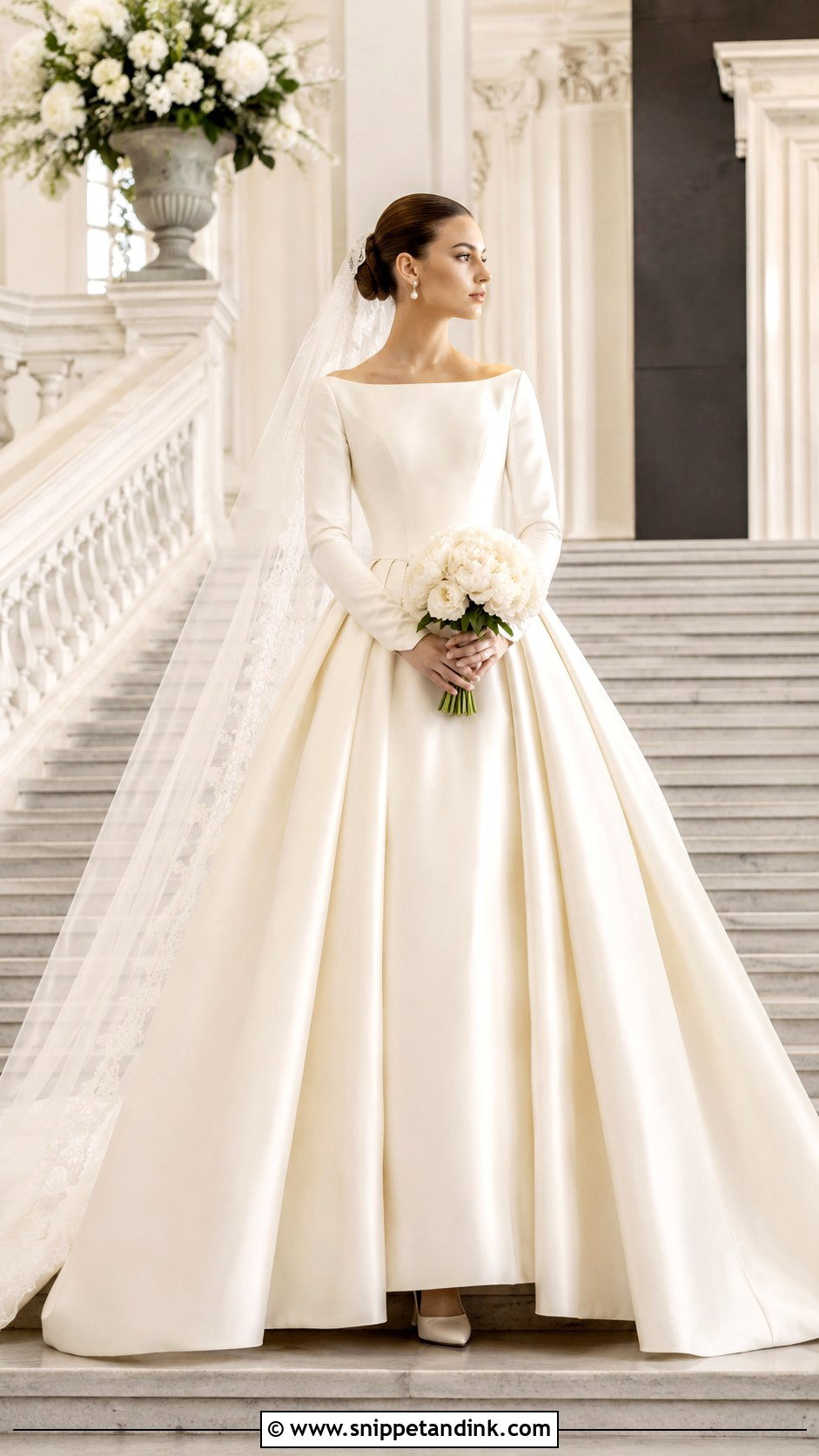
A mikado princess wedding dress is the formal end of this shape. Mikado is a dense, heavy weave with a low sheen, and it holds a full skirt crisply with little help from petticoats. Because it’s dense, it also runs warm, so I’d think twice about it for an outdoor summer ceremony. Keep the lines clean and the bodice fitted. A cathedral veil, pearl or diamond earrings and a sculpted bun suit it, and large venues with grand staircases show off how the fabric falls.
20. Ruffle Princess Wedding Dress
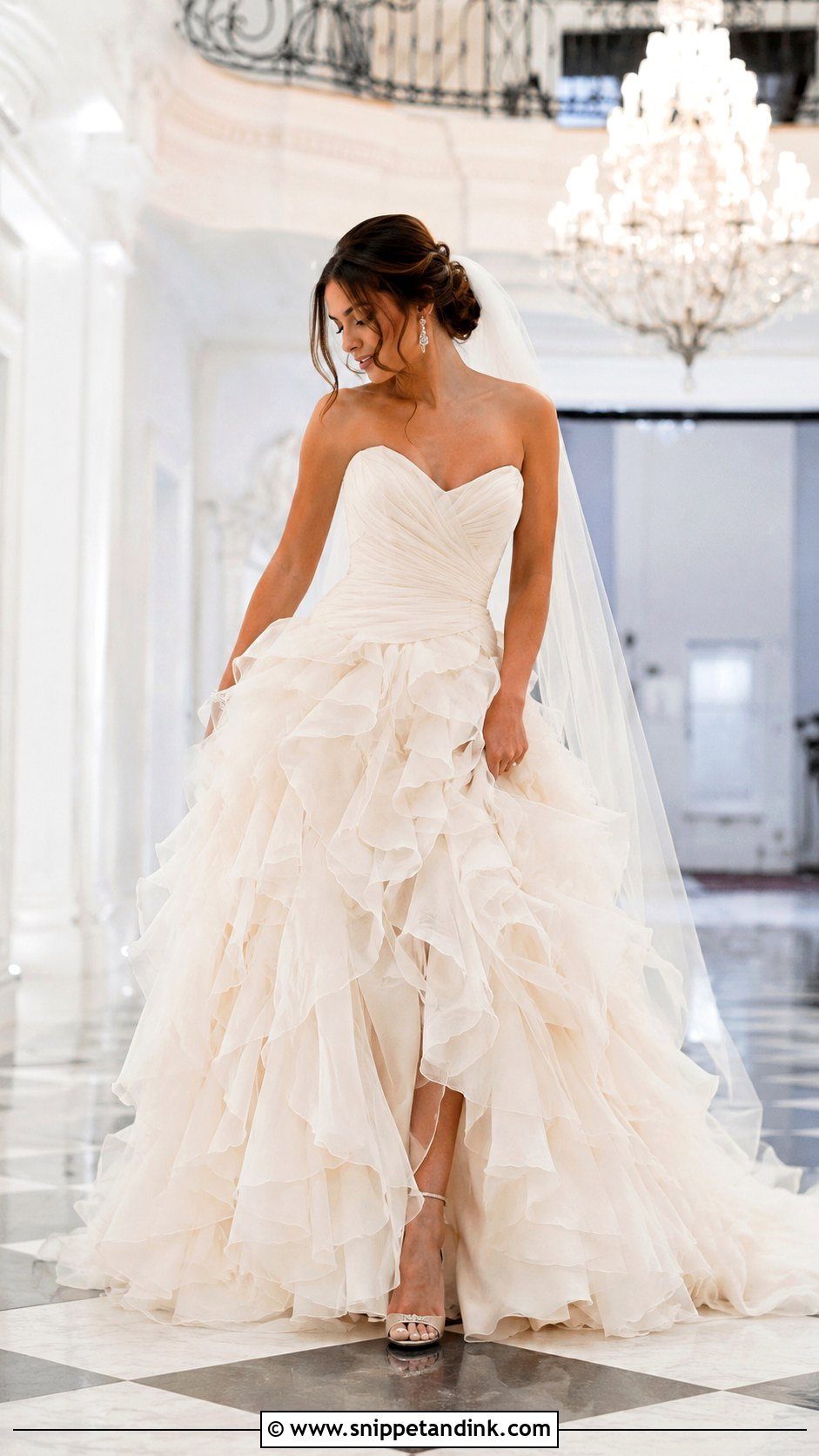
Ruffles add texture and volume, either soft and cascading or bold and sculptural. A fitted bodice is non-negotiable; without it, the ruffles swallow the bride. Keep accessories small, since the skirt is already doing the talking. I raise one thing at fittings: a big ruffled skirt takes up a lot of room, so think about doorways, the car and standing beside your partner at the altar. In photos the layers catch shadow and depth, and the dress reads playful while staying formal.
21. Bow Princess Wedding Dress
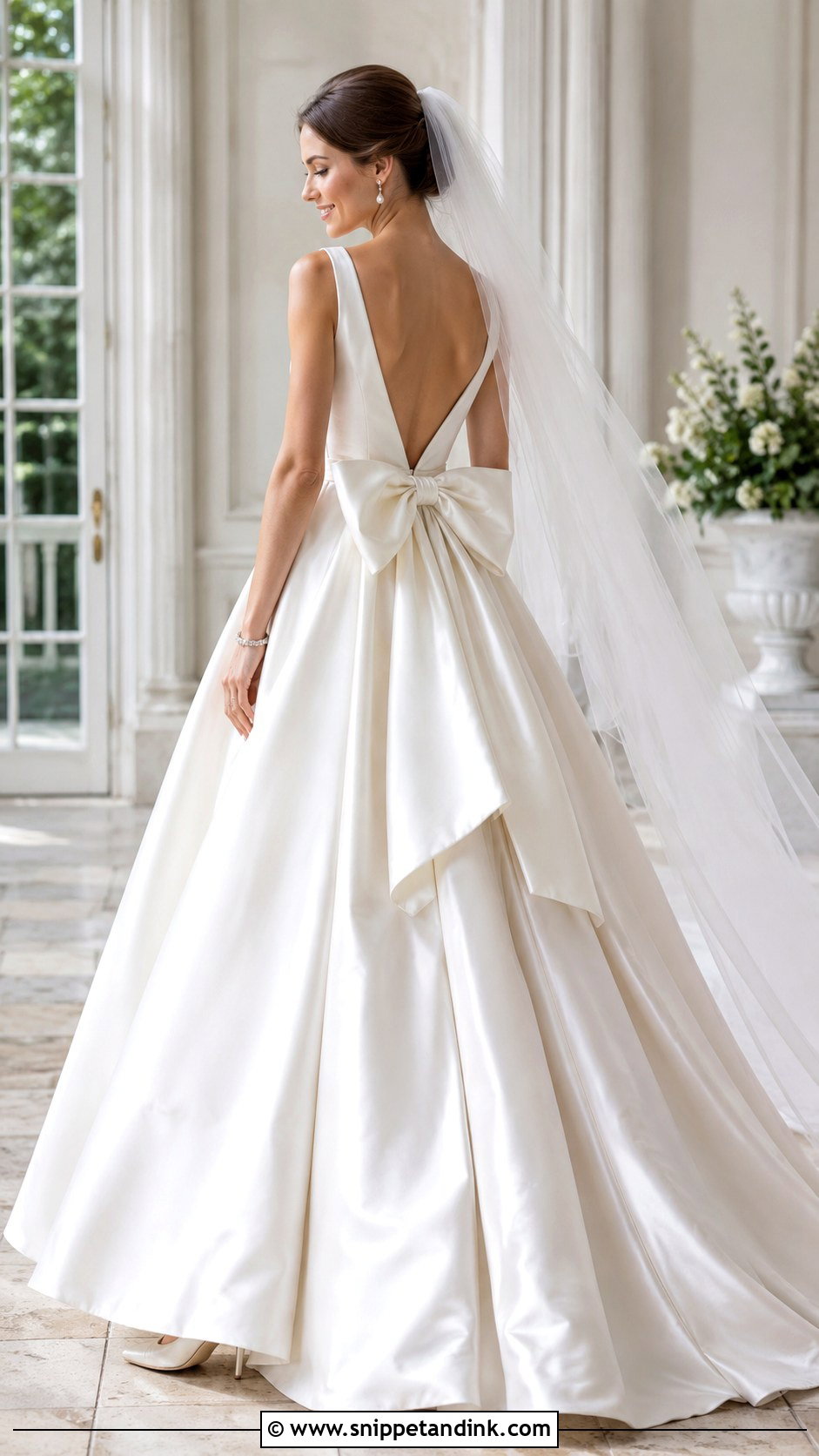
The bow can sit at the back waist, shoulder, neckline or train. A large back bow on satin or mikado is the version I’d choose, because stiff fabric holds the loops up instead of letting them droop by evening. Ask your seamstress how it’s anchored. A bow stitched only at the knot will flop forward once you start dancing. Wear your hair lifted so it shows from behind, and keep the front quiet with a smooth veil, pearl earrings and a simple bracelet. Sweet from the front, dramatic from the back.
22. Detachable Sleeve Princess Wedding Dress
Detachable sleeves give you a covered ceremony look and a lighter reception look without a second gown. Puff sleeves, lace sleeves and off shoulder drapes all come in removable versions. Find out exactly how yours attach. Snaps, hooks and ribbon ties each behave differently, and most need a second pair of hands, so have a bridesmaid practice at the last fitting rather than on the night. A long veil, delicate earrings and comfortable heels keep the first look formal, and once the sleeves come off you can dance freely.
23. Cape Princess Wedding Dress
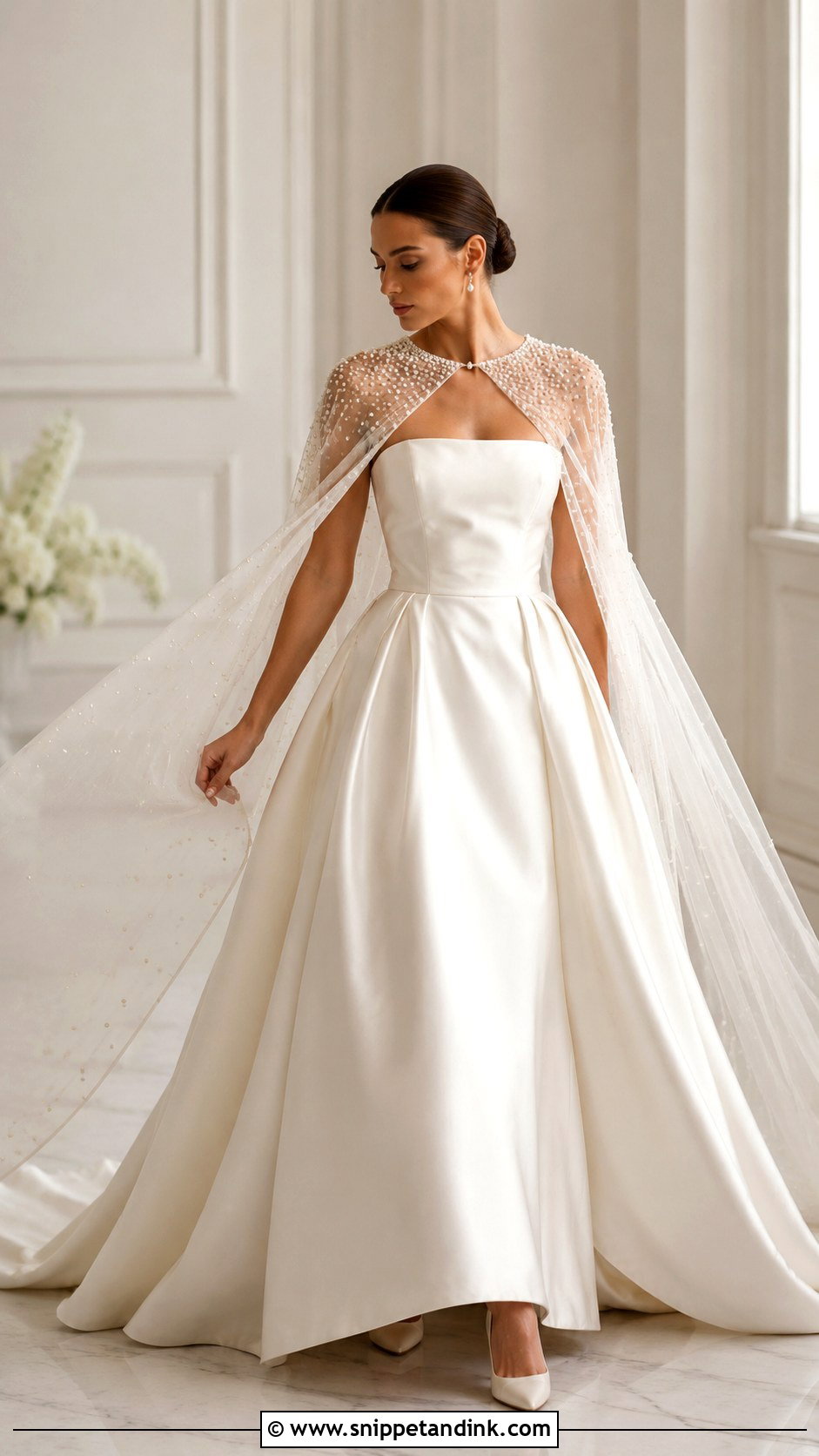
A cape replaces the veil rather than adding to it. A sheer cape floats behind the gown, while lace or pearl versions bring texture. I like it most over plain satin, mikado or minimal tulle, where the cape becomes the only accessory that matters. Watch how it fastens at the shoulders. A cape that clips onto the bodice can drag the neckline back whenever it catches on a chair, so look for sturdy fastenings and try sitting in it. Sleek hair, small earrings and classic heels finish it, and you get shoulder coverage without wearing sleeves all day.
24. Vintage Princess Wedding Dress
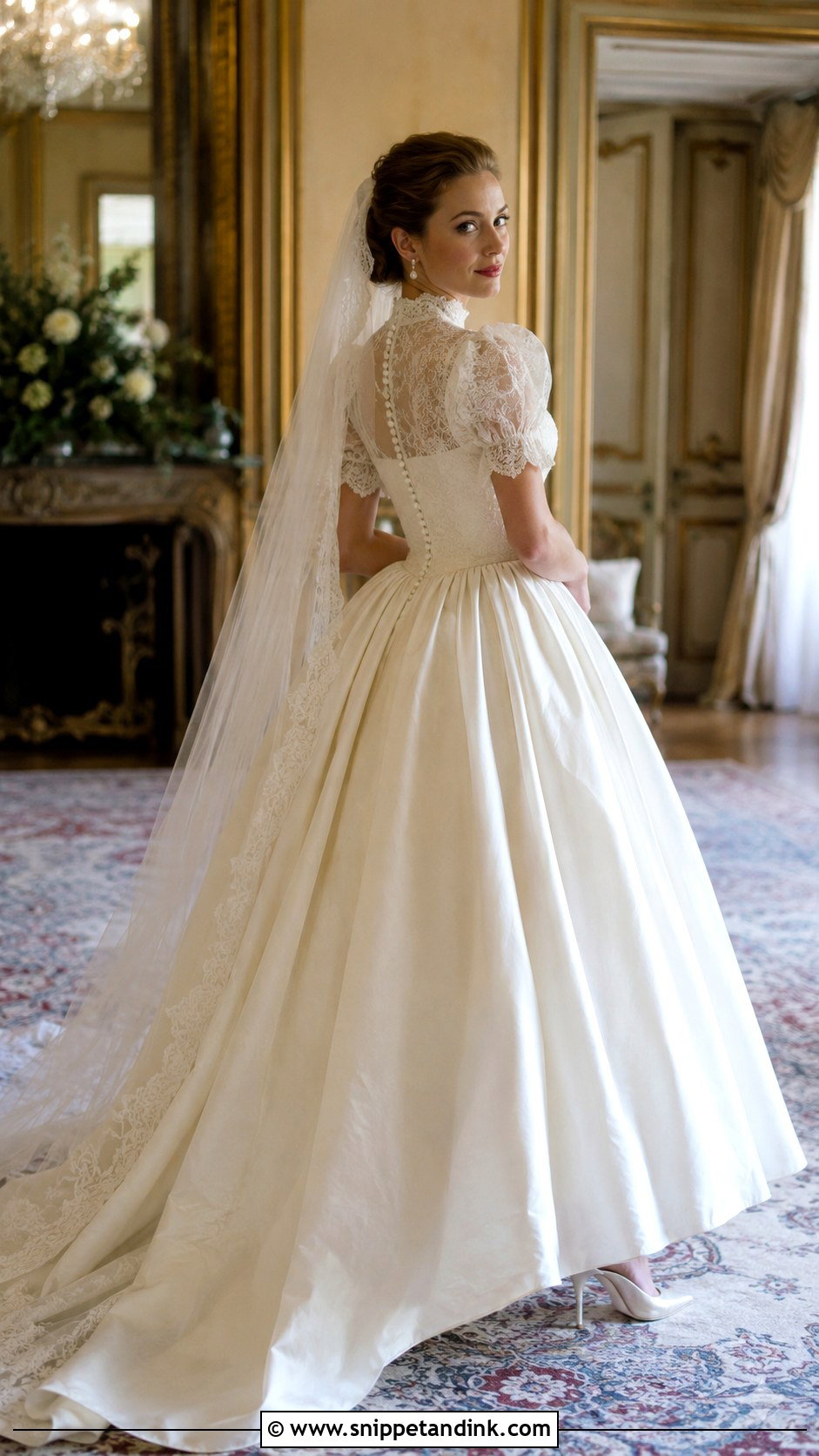
Vintage details include lace bodices, covered buttons, puff sleeves and Basque waists, layered over a full skirt that keeps the gown bridal. The advice I give most often is to pick one era and stay there. A Victorian collar on a 1950s skirt starts to look like costume. If you buy a genuine vintage gown, set aside extra for alterations, because older fabric is fragile and seams often need reinforcing before they can take a day of wear. A lace veil, pearl earrings and a classic updo complete it in historic venues and garden estates.
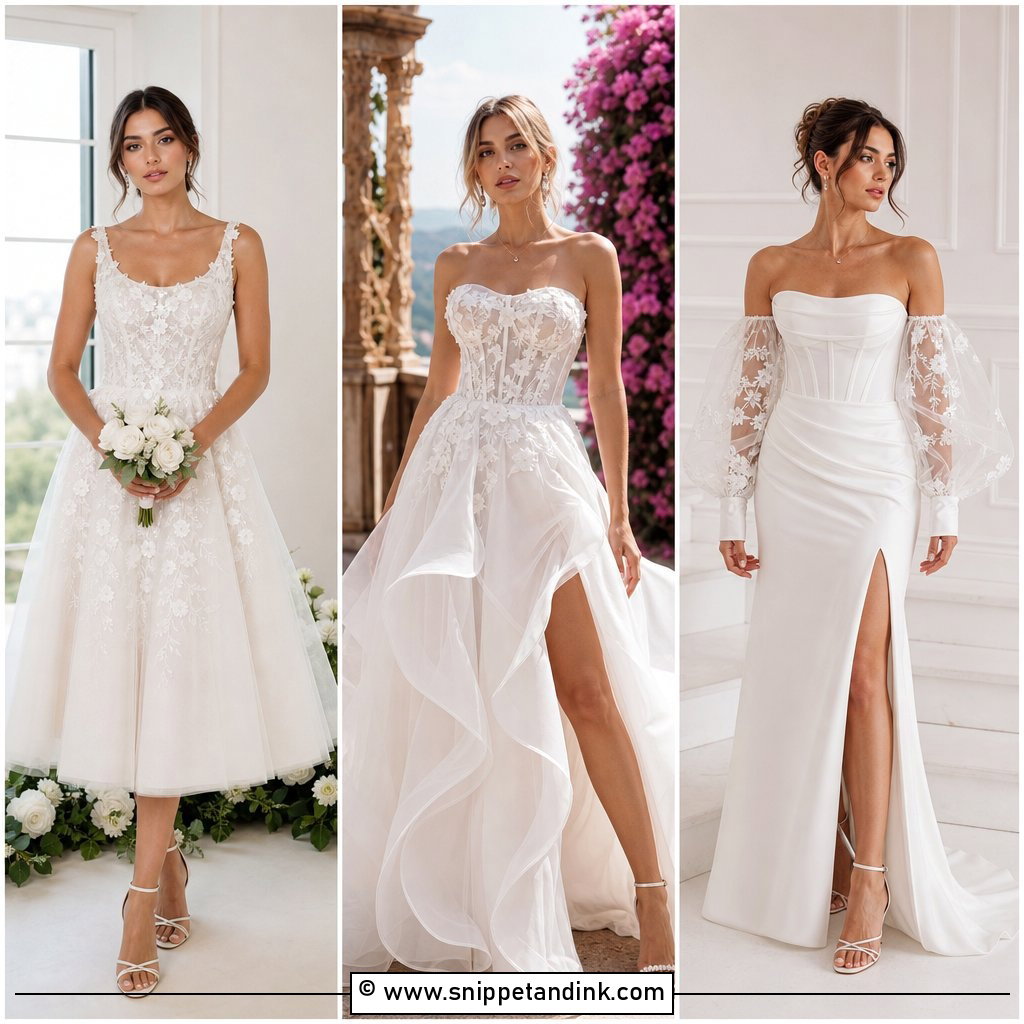

25. Modern Princess Wedding Dress
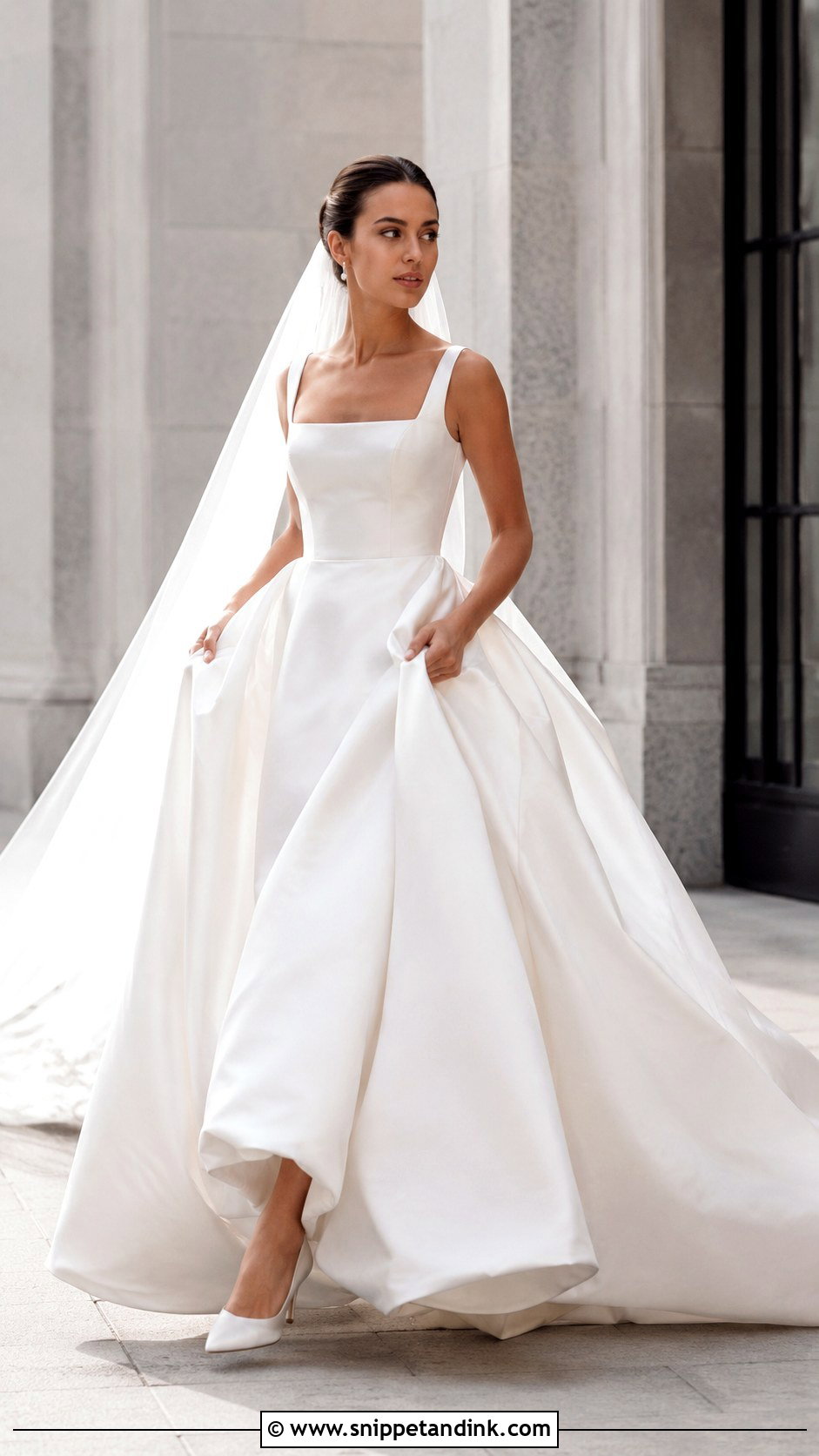
A modern princess gown keeps the full skirt and updates everything above it: a sculptural bodice, a square neckline, sleek satin, a little cutwork. Some come with an overskirt that unhooks, which I recommend if you want a slimmer line for the dance floor. Minimal jewelry, sleek hair and a long plain veil suit it. City venues and spaces with strong architecture make the most sense here, because the clean lines in the room echo the dress.
Doorways, Car Seats and the Bathroom Question
A wide skirt changes how you move through the day, and it helps to rehearse once in the gown before the wedding. Get into the car bottom first, then lift the skirt in after you, with someone tucking the train on top. Ask for the largest car you can; a small back seat will crush tulle and crease satin before you reach the ceremony.
On stairs, lift the front of the skirt a few inches with both hands so your toes never catch the hem. For the bathroom, the easiest method is to face the toilet and straddle it backwards while one bridesmaid gathers the skirt up behind you. It sounds odd, and it works far better than wrestling the fabric forward.
Bustling the Train Before the First Dance
Any train longer than a sweep needs a bustle so you can dance without being stepped on. Your seamstress adds it during alterations, and the style should suit the fabric.
- Over bustle: hooks or buttons lift the train up onto the back of the skirt. Clean and quick, best on satin and mikado.
- French bustle: ribbons tie the train up underneath, creating soft folds. Kind to lace, but it needs a numbered or color-coded ribbon guide.
- Ballroom bustle: the train is tucked under at many points so the skirt looks floor length with no train at all.
Whatever you pick, film your seamstress doing it at the final fitting and send the clip to whoever will bustle you. In a dim reception room, ribbon number seven looks exactly like ribbon number eight.
A Full Skirt That Still Lets You Dance
Princess dresses stay popular because the shape does so much of the work for you. Settle on the fabric and detail you love first, then judge any princess gown on everything else: can you sit, can you lift your arms, does it look right from behind as well as the front. Plan the veil, shoes, jewelry, hair and bouquet together with the dress rather than one at a time. You’ll know it’s the one when you stop adjusting it in the mirror and start moving in it.
You'll Like These Ideas:










Leave a Reply