
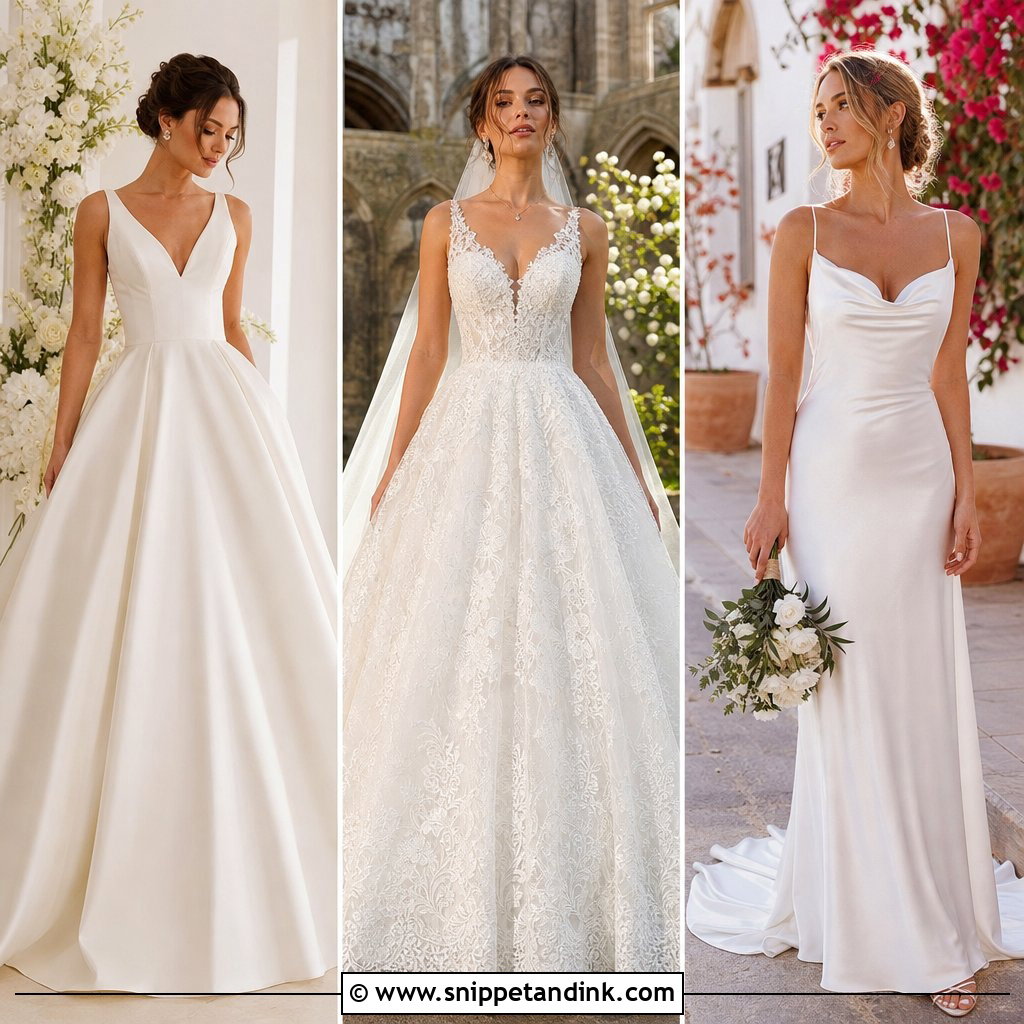
Brides who walk into a fitting room with one photo of a neckline usually leave confused, because a dress only makes sense once you see it with the veil, shoes, hair and room it will live in. So each gown below comes as a full look: ball gowns, sheaths, convertible styles and everything between, for different venues, seasons and bodies. Bridal collections lately lean toward structured waists, lace, generous volume and removable layers, which gives you more choice than ever, and more ways to get it wrong. As you go through them, picture yourself sitting at dinner and hugging your grandmother in each one, not just standing at the altar.
What a Boutique Sample Won’t Tell You
Most bridal shops carry one sample of each gown, usually in a single mid-range size, and clip it to fit whoever is trying it on. That’s fine for judging the style, but it hides a few things you need to ask about before you pay a deposit.
- Lead time. Many gowns are made to order once you buy, and production plus shipping often takes several months before alterations can even begin. Ask the boutique for the exact estimate for that designer.
- Sizing. Bridal size charts usually run smaller than everyday clothing, so you’re ordered by measurement, not by the number on your jeans. Don’t panic if the number is higher.
- Colour. The sample may be ivory while the order comes in light gold or champagne. Ask to see a fabric swatch of the shade you’re ordering.
- Alterations. Most gowns need some, often hemming, a bustle and bodice shaping. Ask whether the shop does them in-house and what they typically include, since this is a separate cost at many boutiques.
Bring your shoes or a pair of the same height and a strapless bra to every appointment. Ask the consultant to unclip the sample at some point too, so you can see how the fabric falls naturally.
1. Strapless Satin Ball Gown
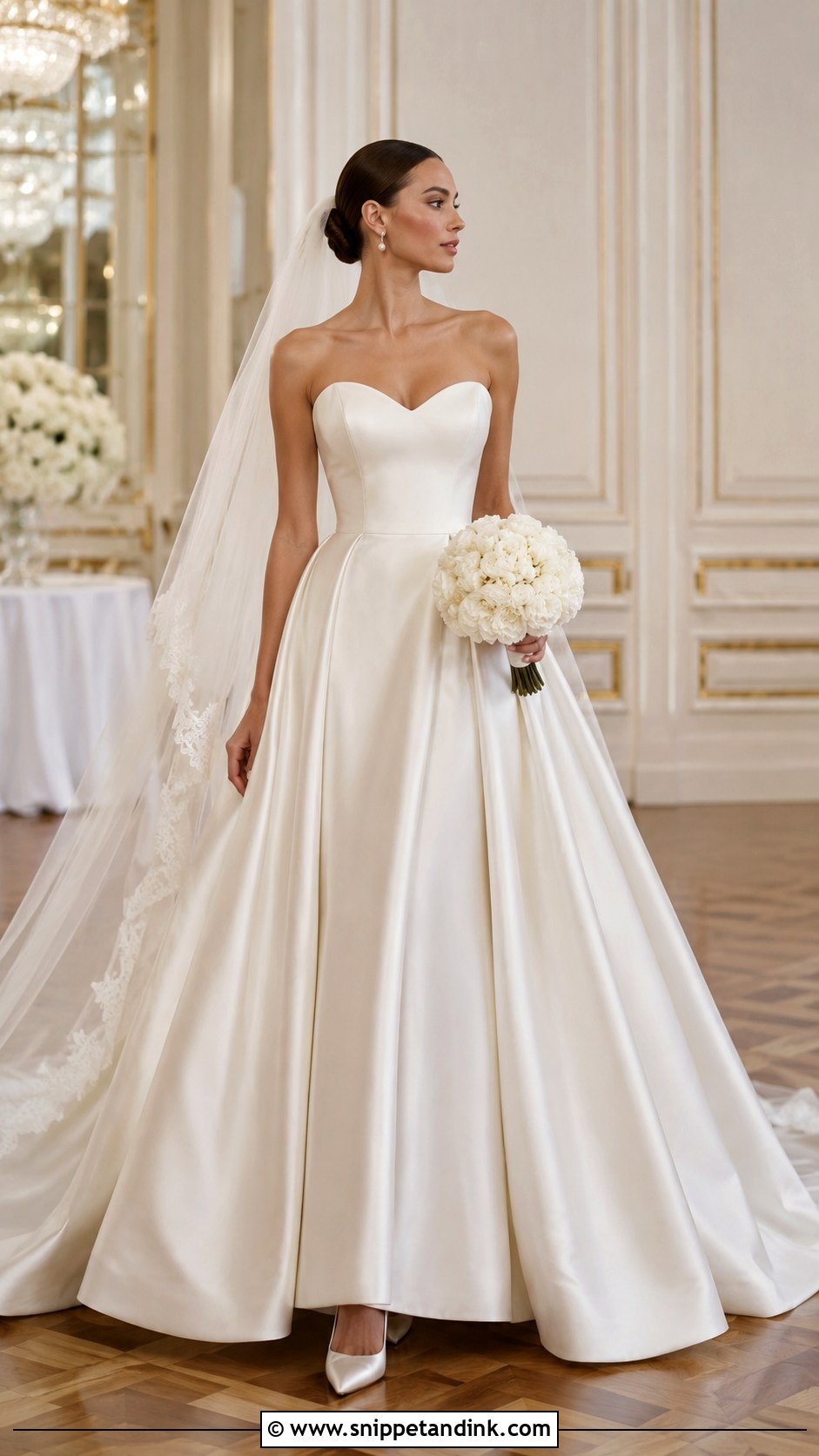
A strapless gown is only as good as what’s built inside it. I look for a bodice with boning and a waist stay, the inner grosgrain band that hooks around your middle and carries the weight of the skirt so the neckline doesn’t slide. Without that, you’ll spend the evening tugging it up. A straight or gently curved neckline in satin, a full skirt, pearl drops, a cathedral veil and pointed heels make a classic formal look for ballrooms, hotels and museums. Leave the final fitting until close to the date, since even small weight changes show at a strapless edge.
2. Drop Waist Wedding Gown
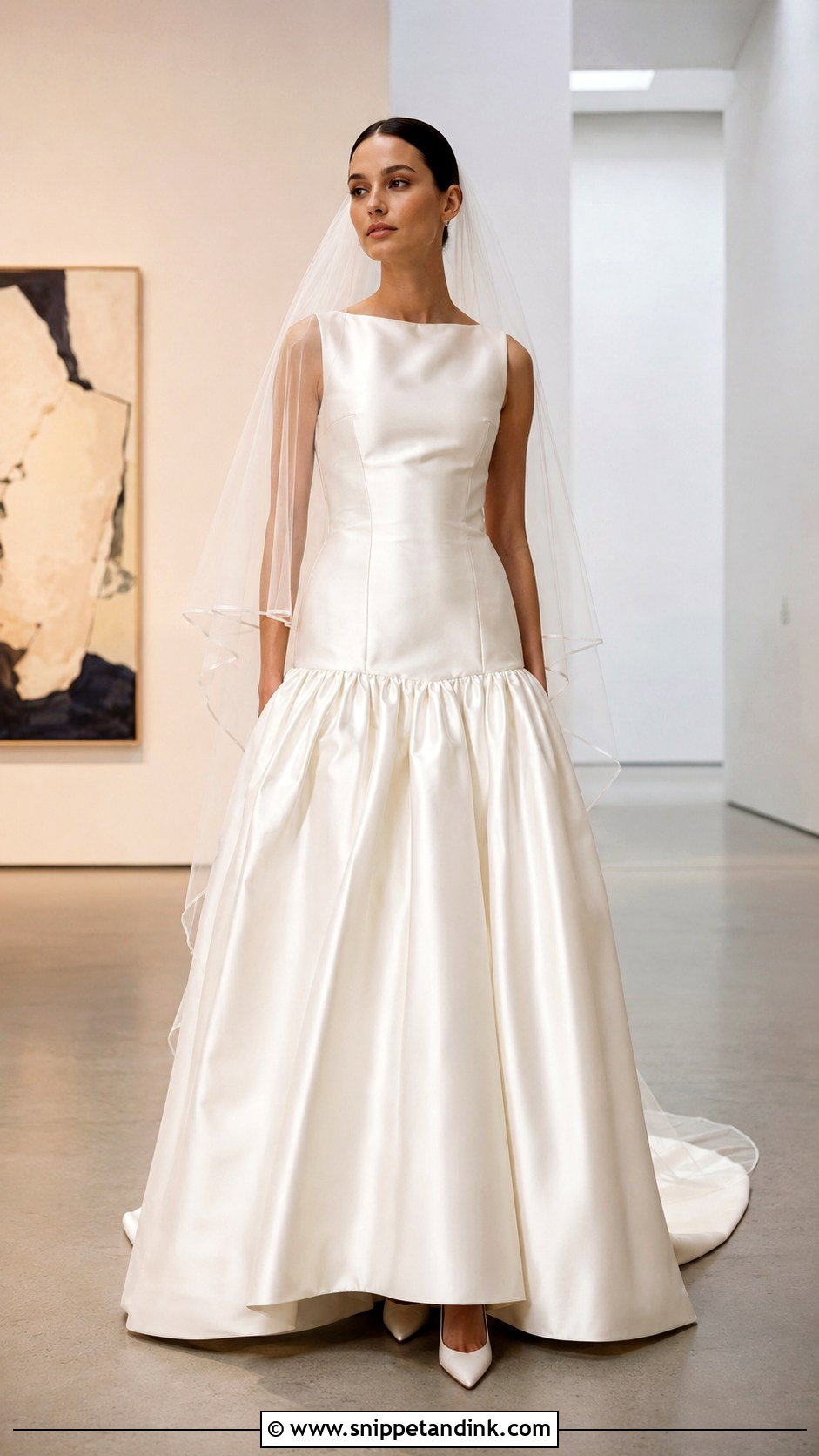
The drop waist is a modern take on drama, with the fitted part ending at the hip before the skirt opens. A smooth basque or elongated waist should trace your shape, not compress it. Sit down in the sample before you order: because the fitted section runs past your natural waist, it can buckle or dig in at the hip crease when you’re seated. If it does that in the shop, it’ll do it through a three-hour dinner. A fingertip veil, crystal studs and a low bun keep attention on the line itself.
3. Long Sleeve Lace Wedding Gown
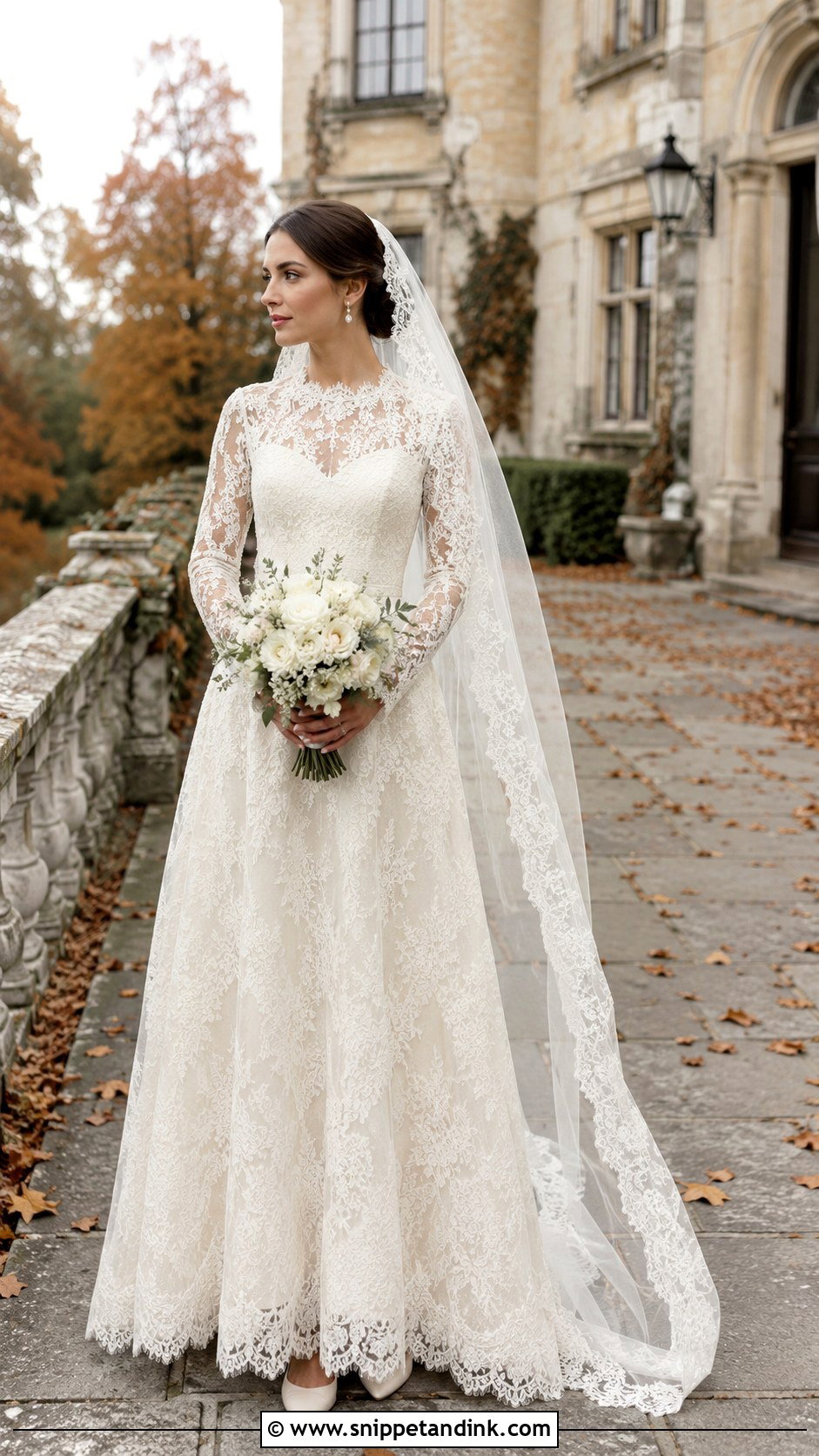
Lace sleeves look delicate and are surprisingly restrictive if they’re cut close to the arm. At a fitting I ask brides to reach forward as if holding a bouquet and then raise a glass; if the lace pulls across the back, the sleeves need easing. Choose an illusion-lined bodice or a solid underlayer depending on how much skin you want to show. Scalloped edges at the wrist finish it neatly. An A-line skirt keeps all that lace from feeling heavy, and a lace-edged veil with a loose chignon completes it for autumn and winter venues.
4. Off Shoulder A-Line Wedding Gown
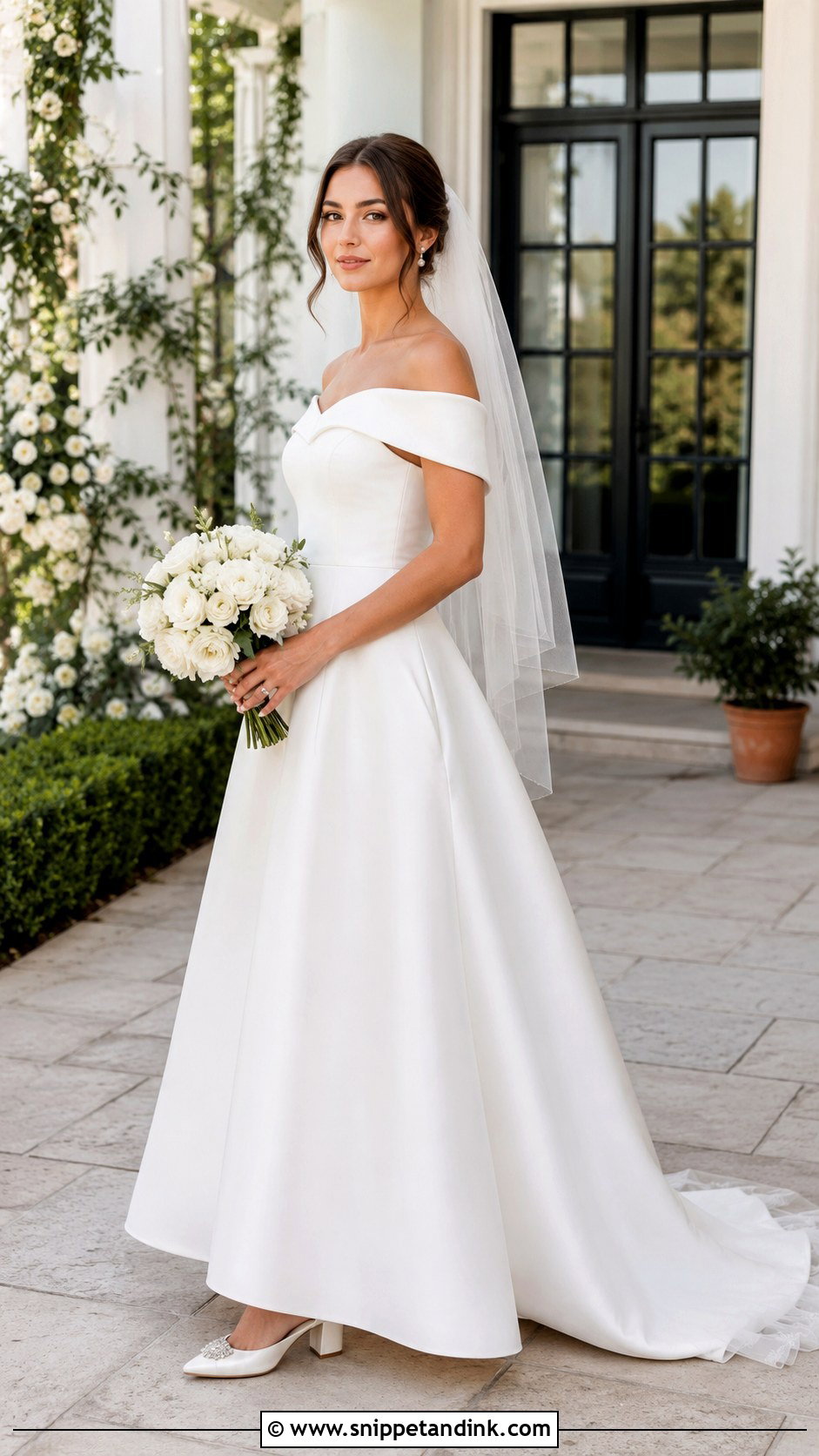
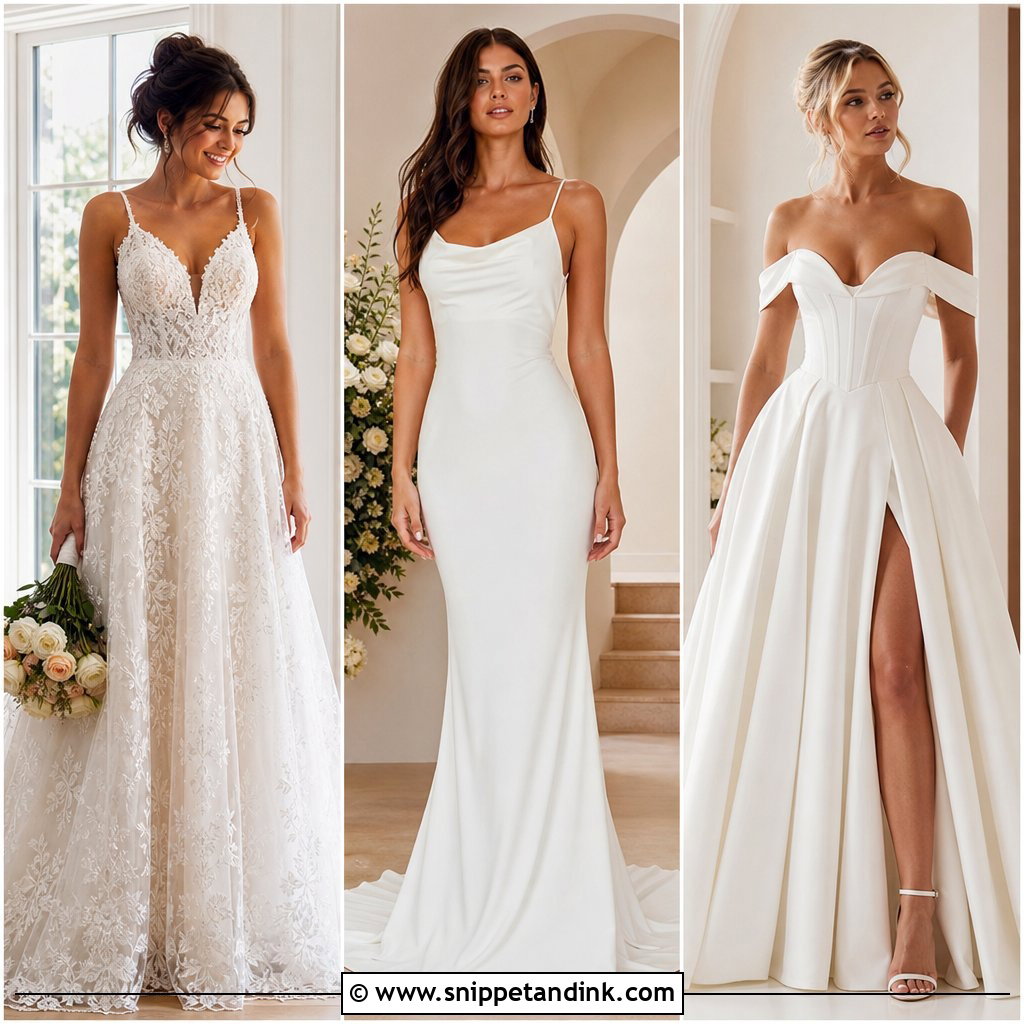
Off-the-shoulder sleeves sit on the upper arm, which means they restrict lifting your arms more than any other neckline. Test it by raising both arms and hugging someone in the fitting room. If the sleeves dig in or the bodice rises, they need repositioning. Satin gives a crisp line; layered tulle feels lighter. The open collarbone suits a short pendant and pearl studs, and an updo keeps hair off the sleeves so it doesn’t catch. Block heels make it an easy dress for gardens and country clubs.
5. Square Neck Crepe Wedding Gown
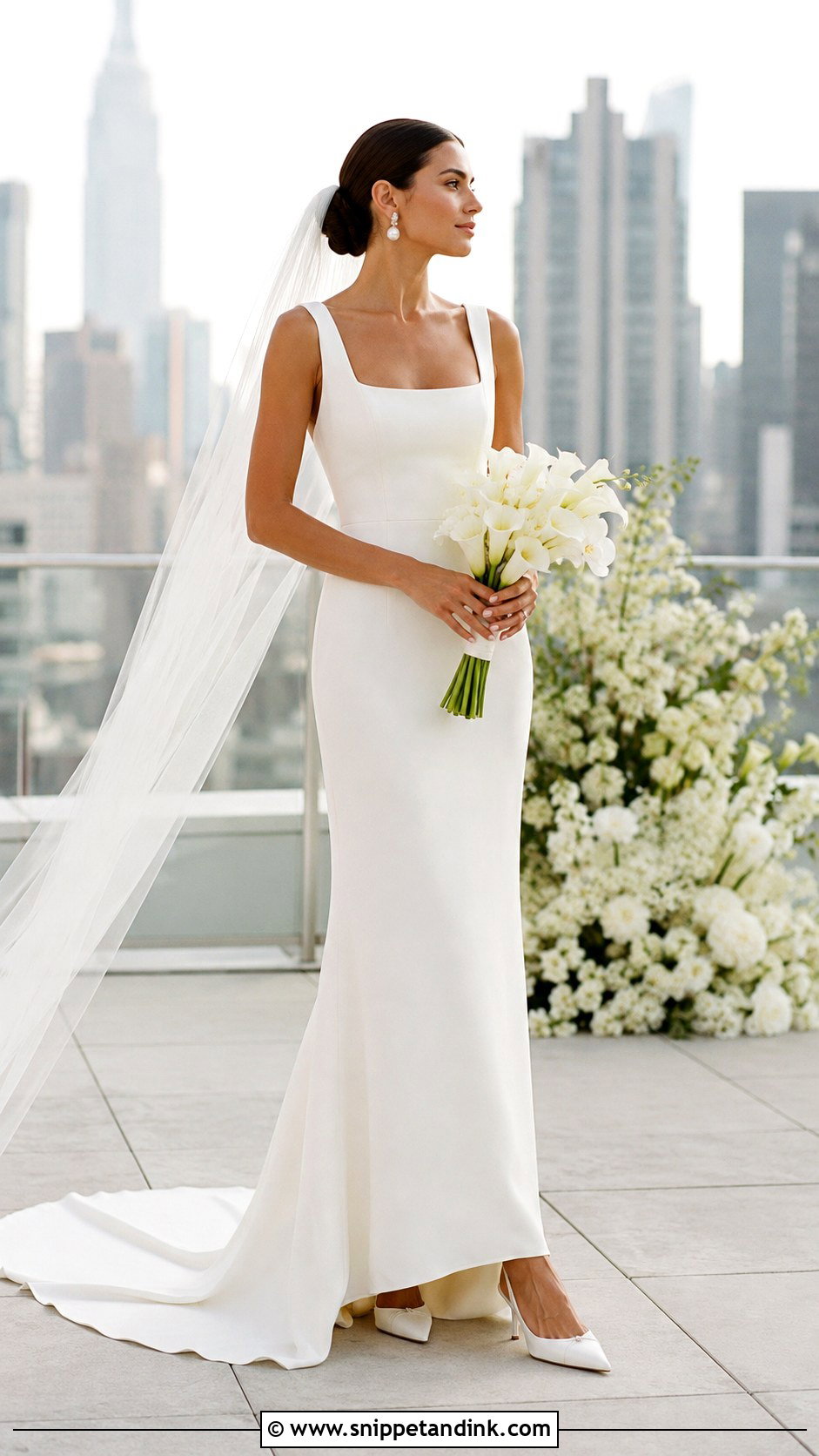
Crepe is honest fabric: it shows every seam and every undergarment line. I’d never fit a crepe gown without the exact bra and shapewear the bride will wear on the day, because a different strap or band changes how the fabric lies. The square neckline gives shape to plain fabric, and you can go column for something minimal or A-line for more room at the hip. Hemming needs care, since crepe should just kiss the floor. Sculptural pearls and pointed slingbacks suit galleries, rooftops and city venues.
6. Corset Tulle Wedding Gown
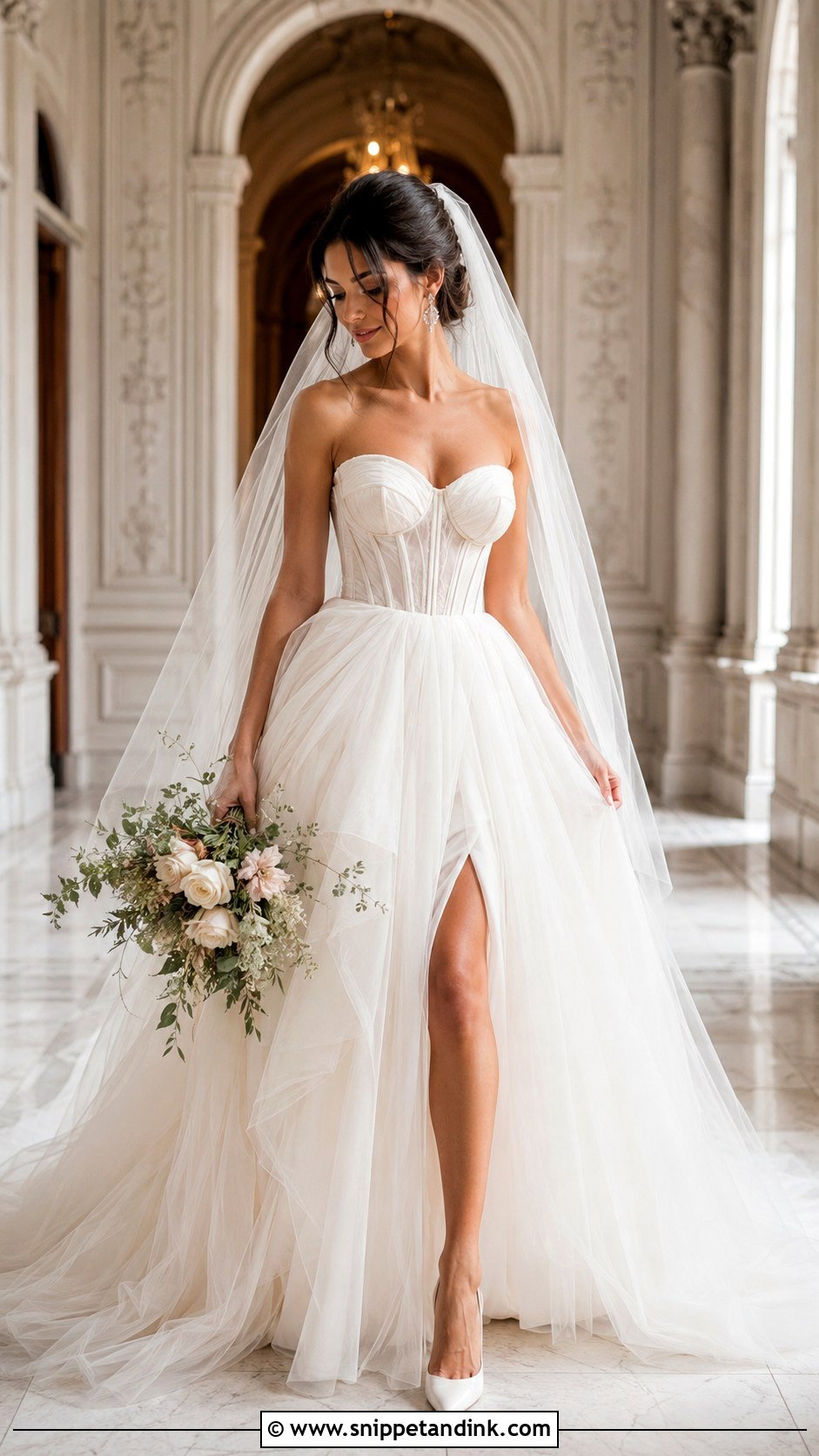
Corset bodices vary hugely in construction. A real corset with spiral steel boning and lacing at the back shapes the waist and adjusts on the day; a decorative corset with plastic boning looks similar on a hanger but can bend and crease at the waist once you sit down. Ask which you’re getting. Tulle layers can form a soft A-line or a full ball gown. Ask too whether the bodice can be lined for more coverage, since sheer corsetry is popular right now and not everyone wants it. Waves or a soft updo suit the airy skirt.
7. Basque Waist Wedding Gown
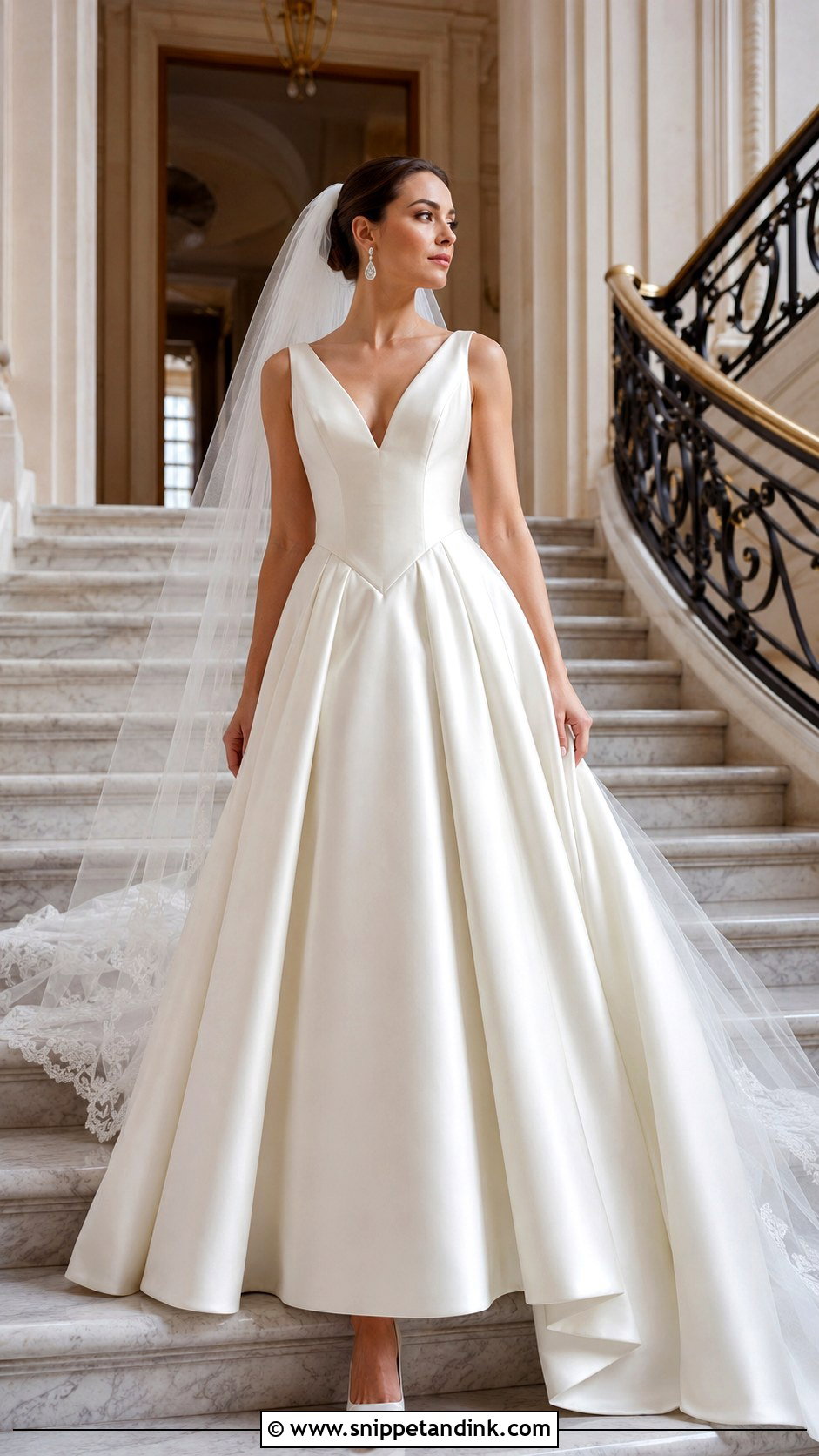
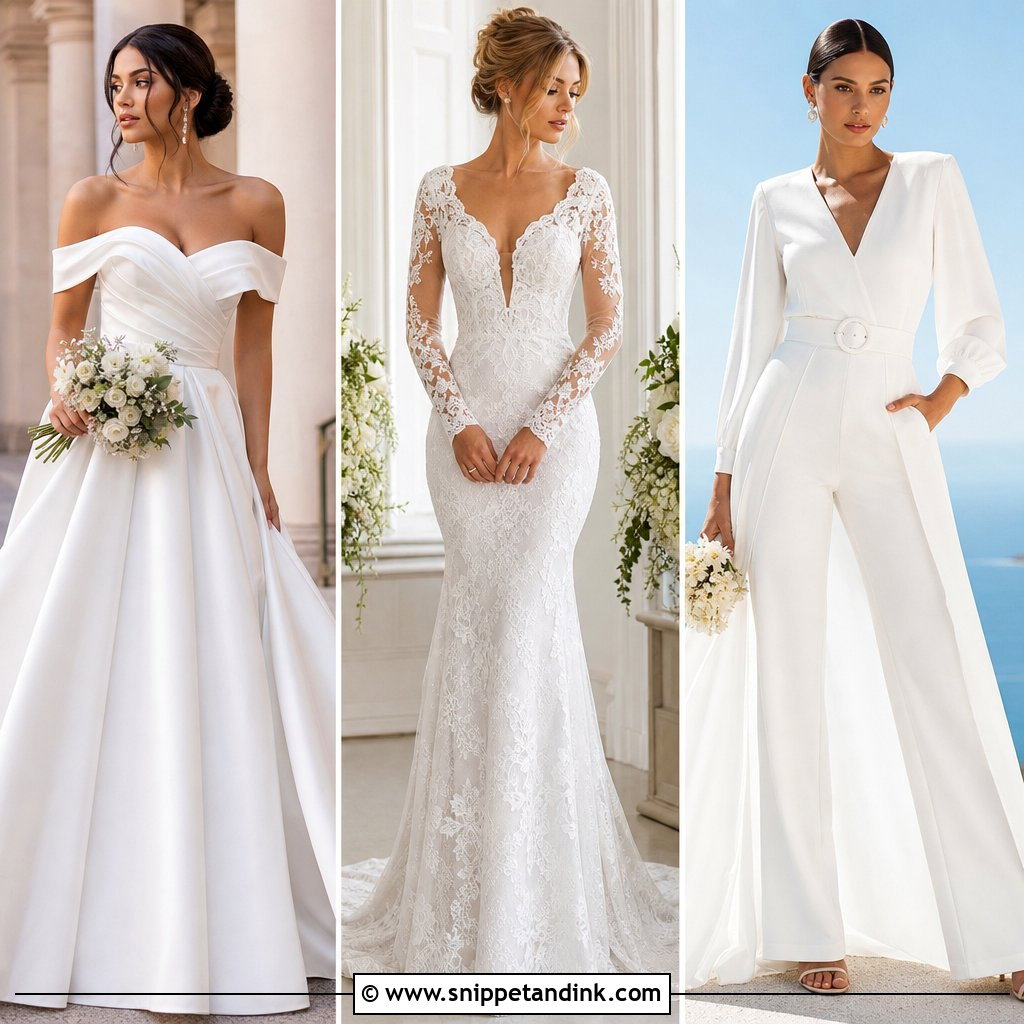
The V point of a basque waist is the detail to fit carefully. When it sits too low, it folds and pokes out when you sit; when it sits too high, it loses the long-waisted effect. A structured satin bodice with a pleated or gathered skirt shows it at its best. Detachable off-shoulder sleeves or wider straps add coverage without changing the line. A polished bun, teardrop earrings and a controlled bouquet suit its formal feel, and it makes a grand entrance on a staircase.
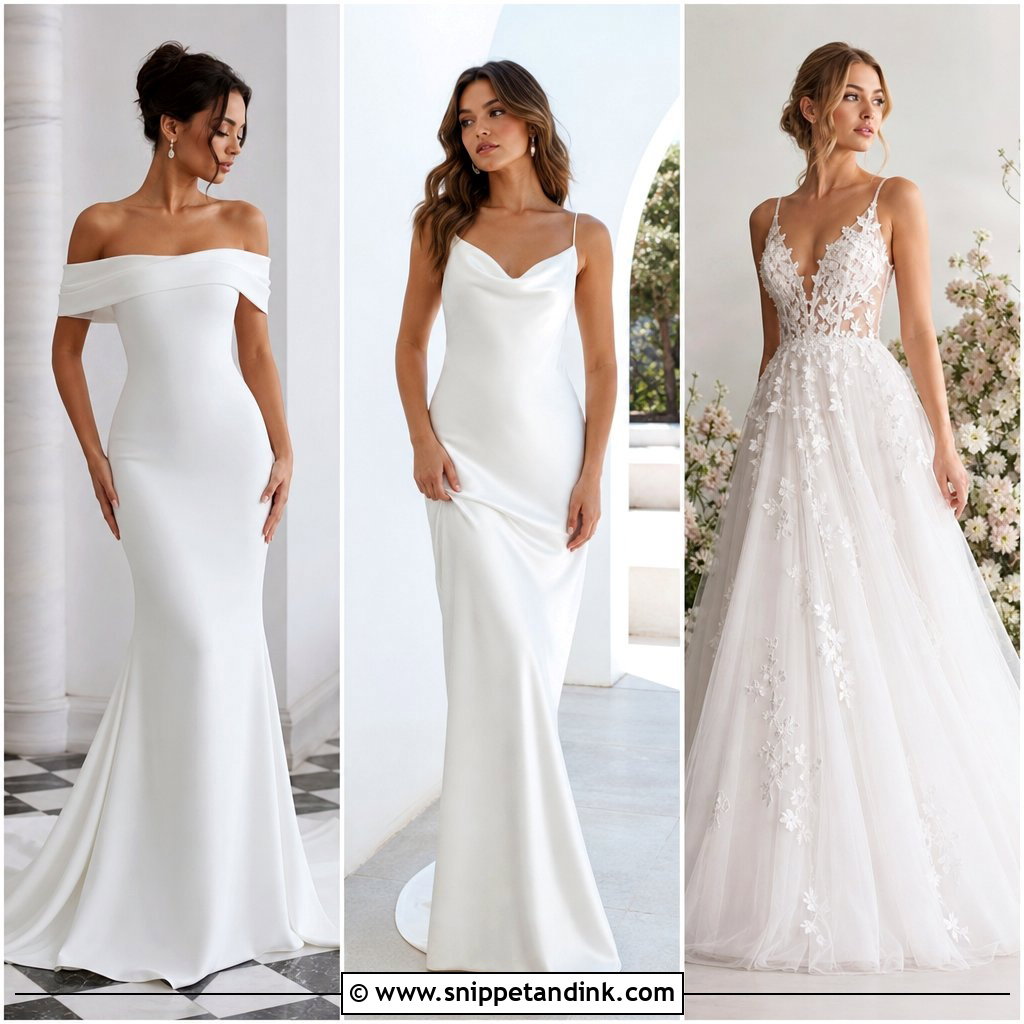
8. Floral Appliqué Wedding Gown
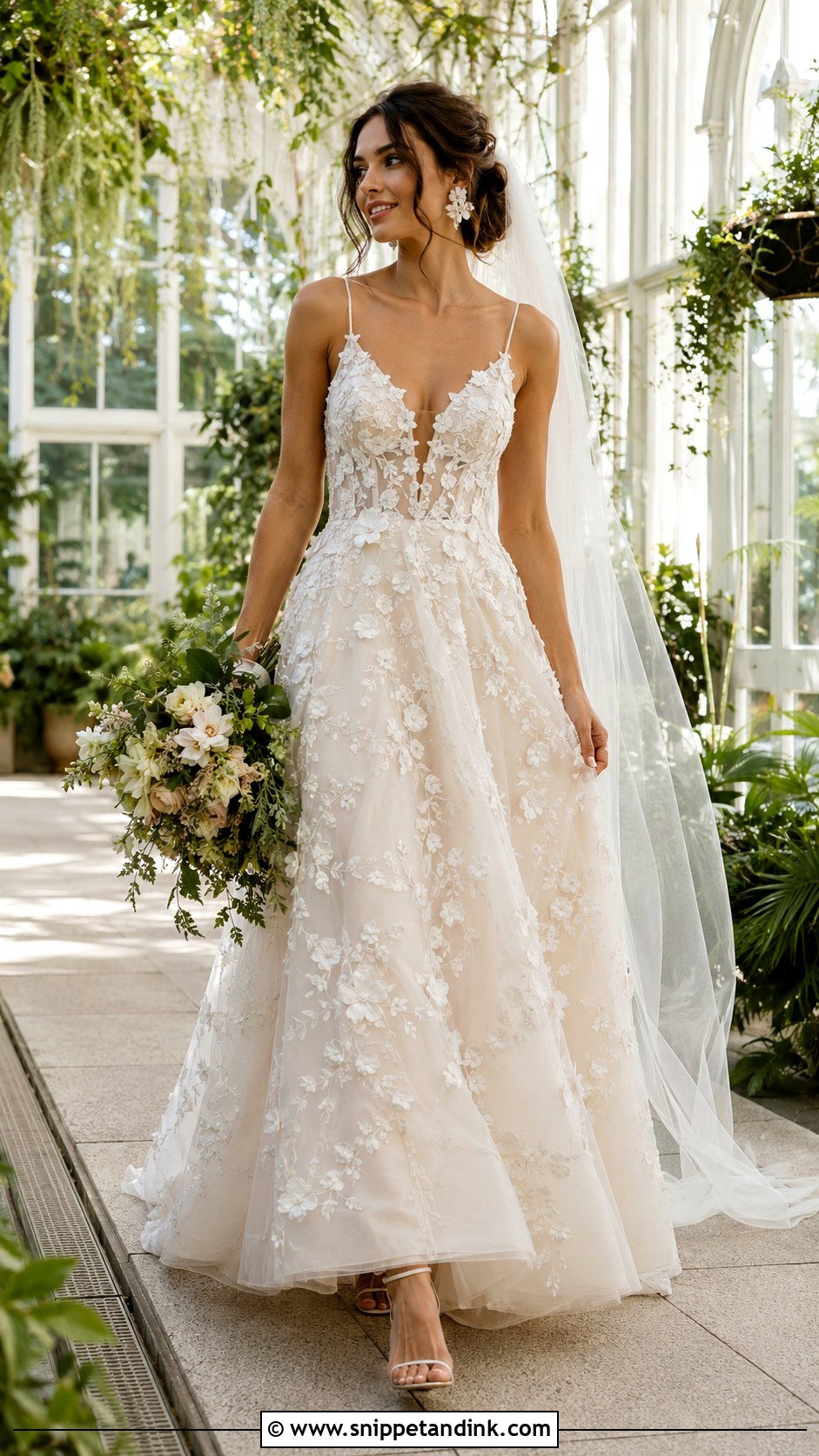
Three-dimensional flowers catch on things. Before committing, I drape the veil over an appliqué gown to see if the petals snag the tulle, and I check the inside of the arms for any raised edges that might scratch. A light A-line skirt carries scattered blossoms without looking heavy. Keep jewellery very small, a tiny floral stud at most, and echo one flower from the gown in the bouquet. A bustle protects the hem appliqué during the reception, which is when floral details get trodden on.
9. High Neck Wedding Gown
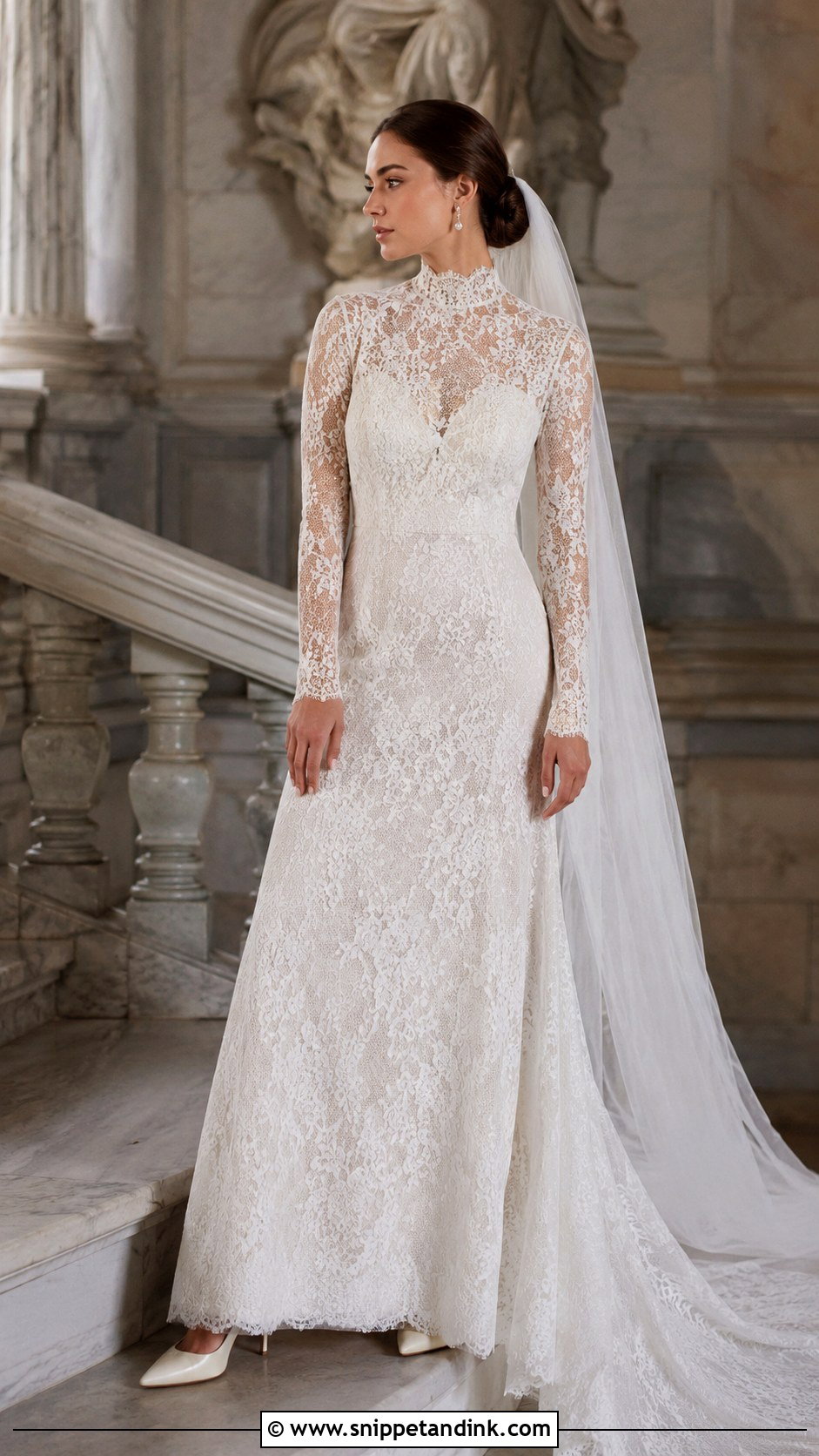
A high neck asks for the simplest styling. Skip the necklace altogether, wear drop earrings and pin the veil below an updo so the collar line stays clean. Lace feels romantic; satin and crepe look more modern. The comfort point I check is the collar itself: turn your head side to side and look down at the bouquet, because a stiff collar rubs the jaw by the evening. Pairing a covered front with an open back gives drama for anyone who wants it, and it suits historic venues and winter weddings.
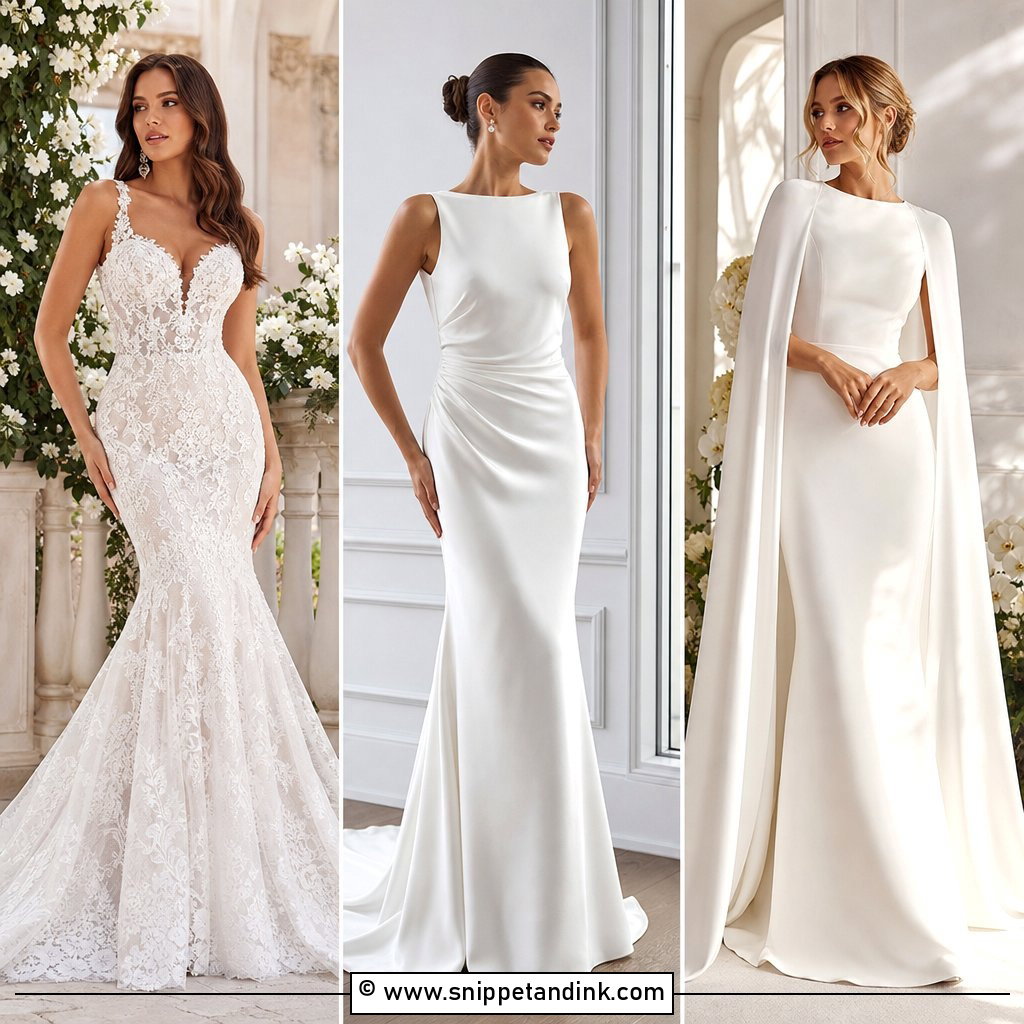
10. Wedding Gown With Cape
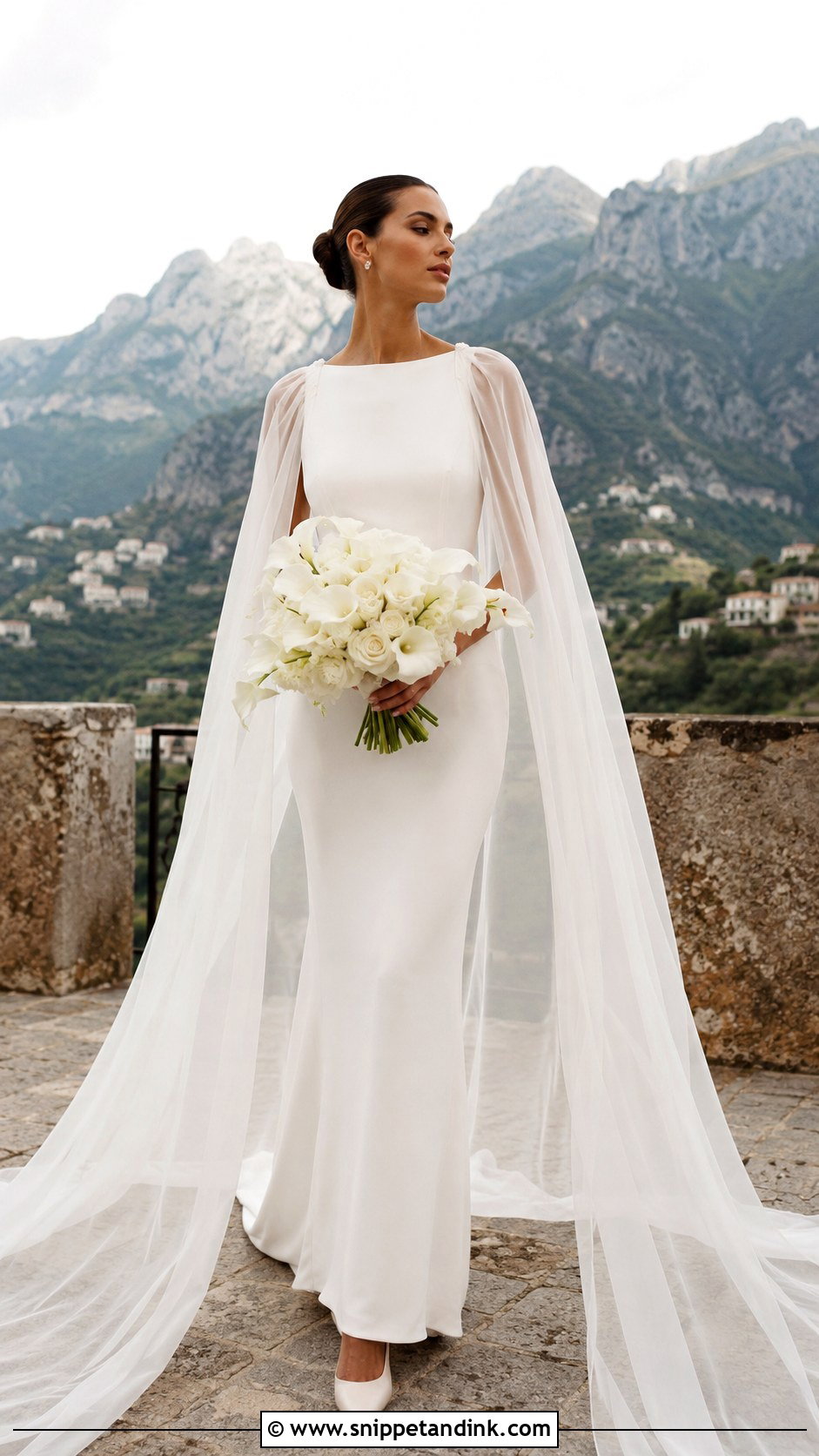
Capes replace the veil and give you movement in photos, especially outdoors. Sheer capes float; lace ones add texture; long smooth capes look architectural. Under all of them, the gown should be simple, so a crepe column or plain A-line is the safest base. Ask how the cape attaches before you buy. Hooks at the shoulder are easy to remove for dancing, while capes sewn into the neckline are not. If the dress has a train, the cape should end above or beyond it, not at the same length, or the two will tangle.
11. Wedding Gown With Detachable Overskirt
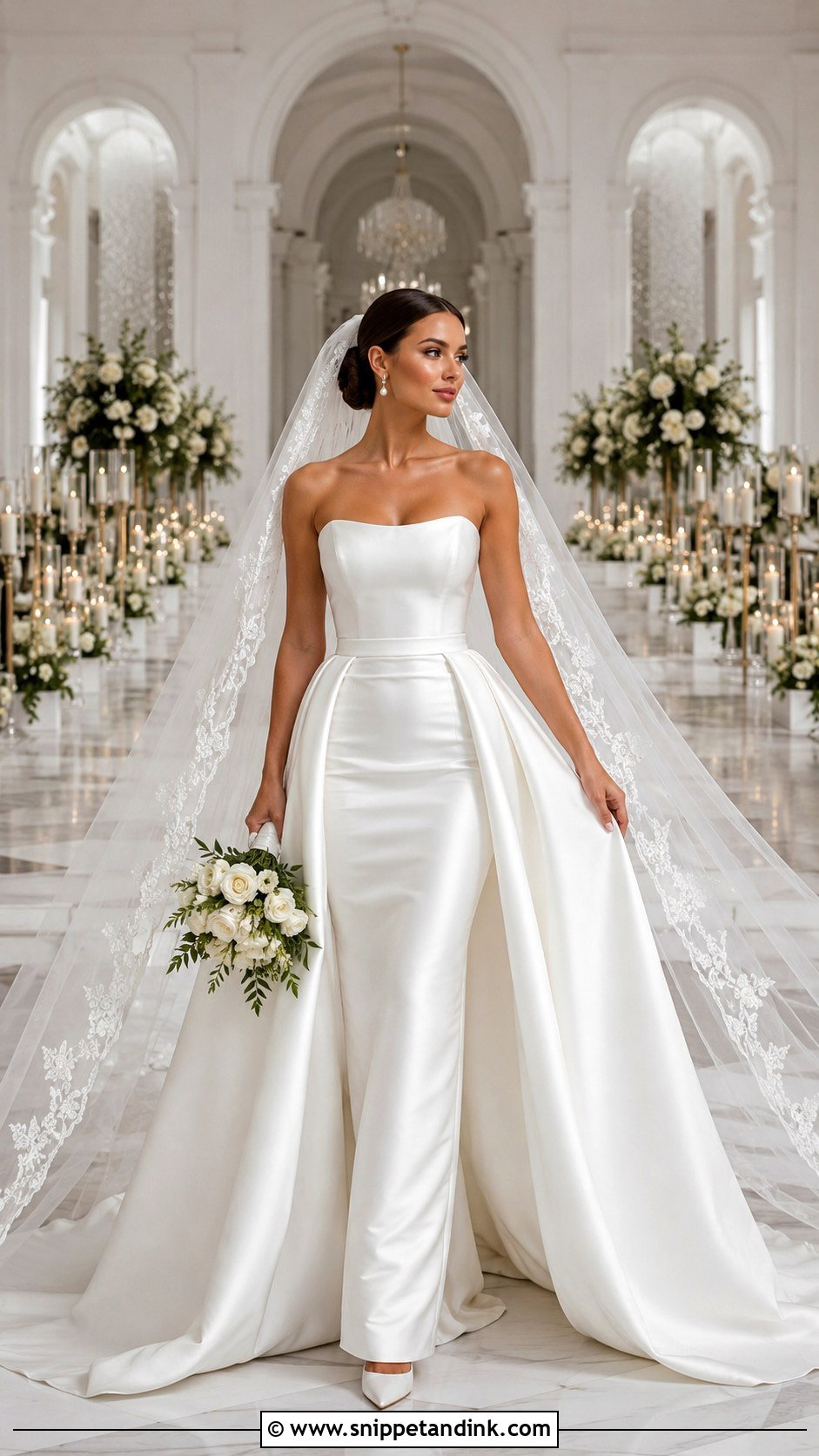
One dress, two silhouettes. The full overskirt gives ceremony volume and a train; take it off and you’re in a fitted column or mermaid gown for dancing. Match the overskirt fabric to the base dress as closely as possible, as a slight difference in satin colour shows clearly once the layers are side by side. Ask your seamstress to hide the attachment points and fit hooks or buttons a bridesmaid can manage. Practise taking it off with that bridesmaid before the day, and swap the long veil for a jewelled comb once it’s off.
12. Minimalist Sheath Wedding Gown
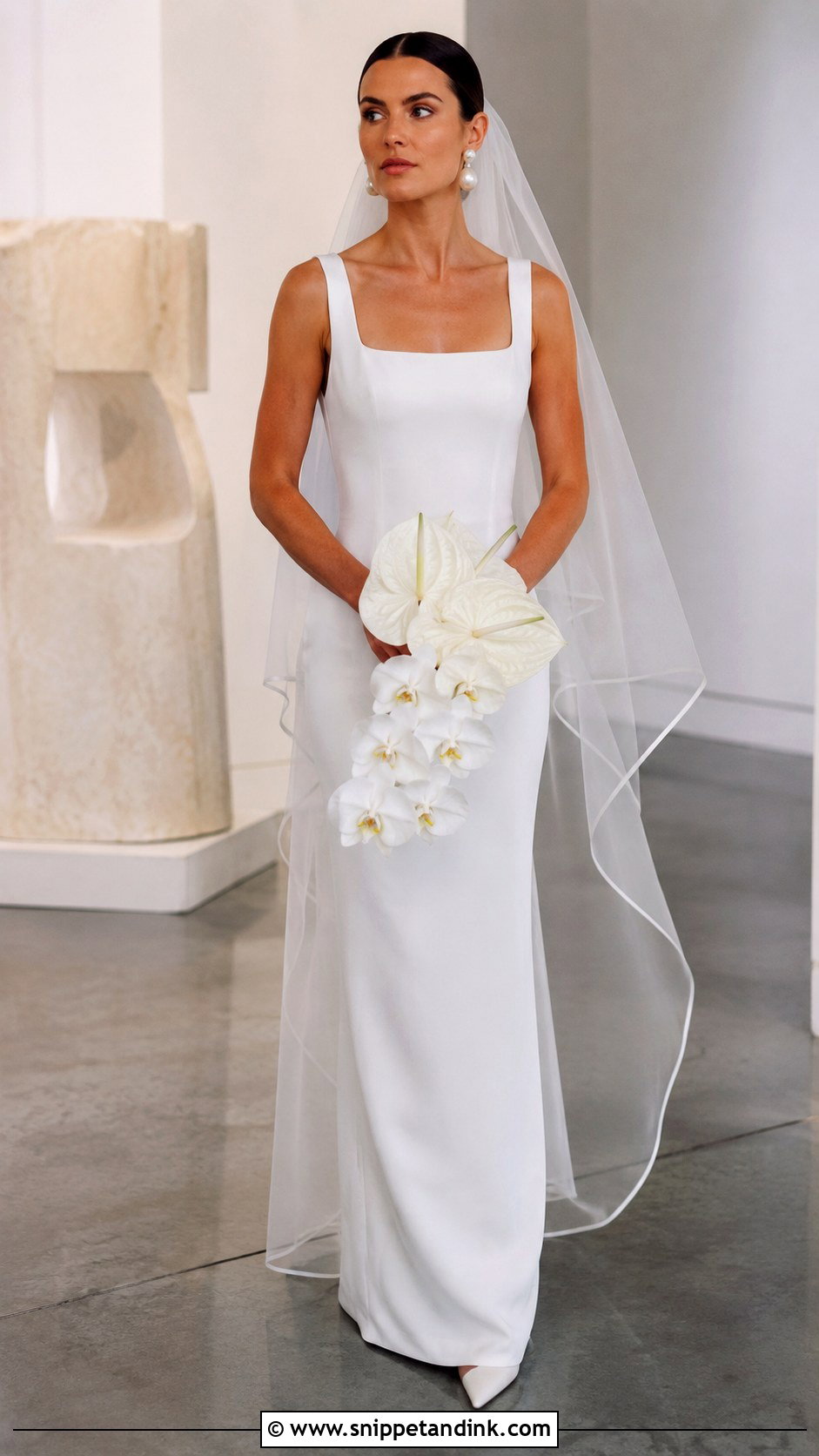
A sheath has nowhere to hide, so tailoring carries the whole look. Smooth crepe, silk or satin with a neckline that suits your shoulders is enough; square, bateau, halter, and softly draped necklines all work. The common problem is stride. A narrow skirt without a slit or kick pleat means short steps and awkward stairs, so I’d walk up and down a staircase during the fitting. Bold pearl earrings and a structured bouquet are enough decoration for a courthouse, gallery or rooftop.
13. Mermaid Wedding Gown
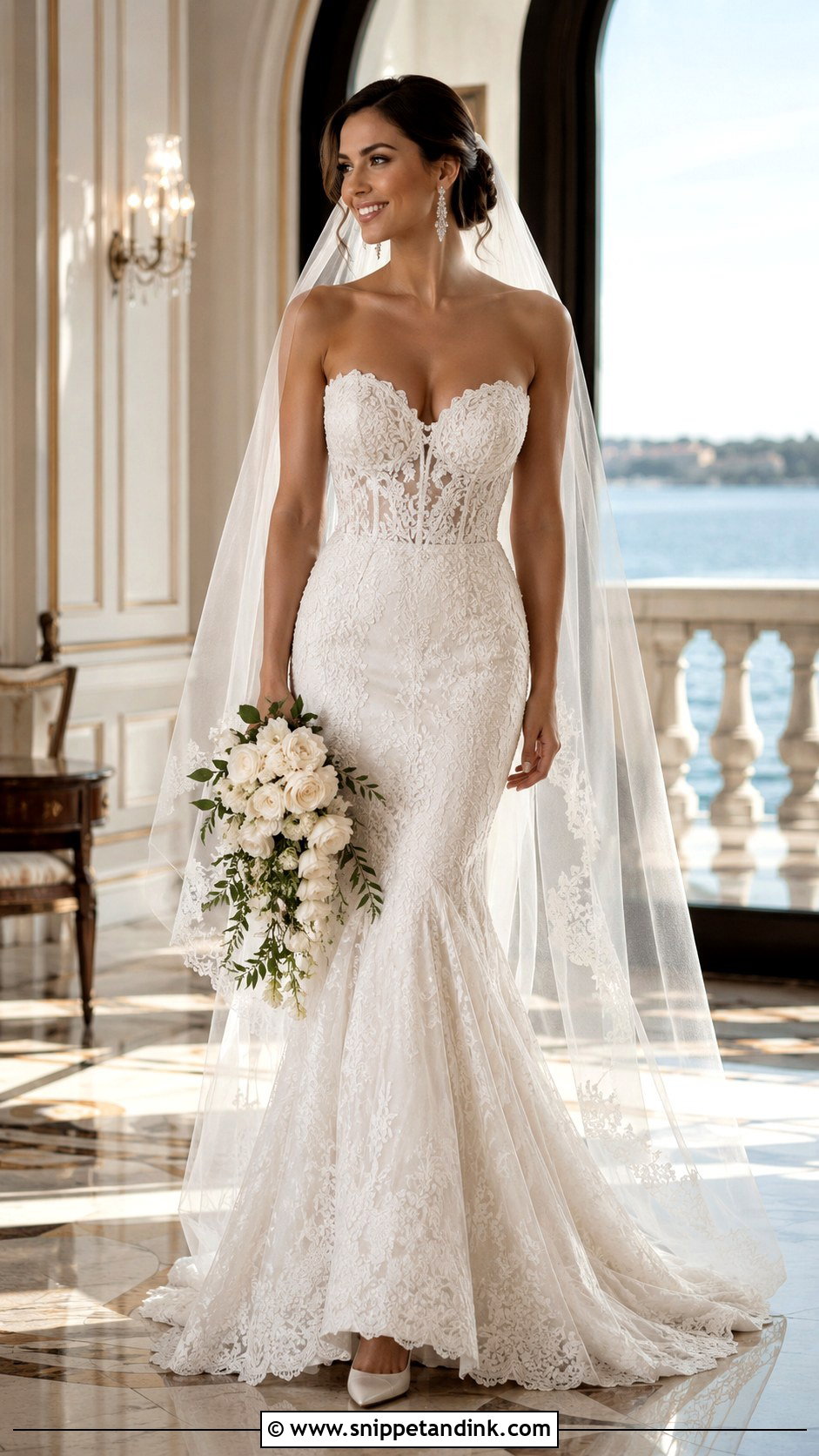
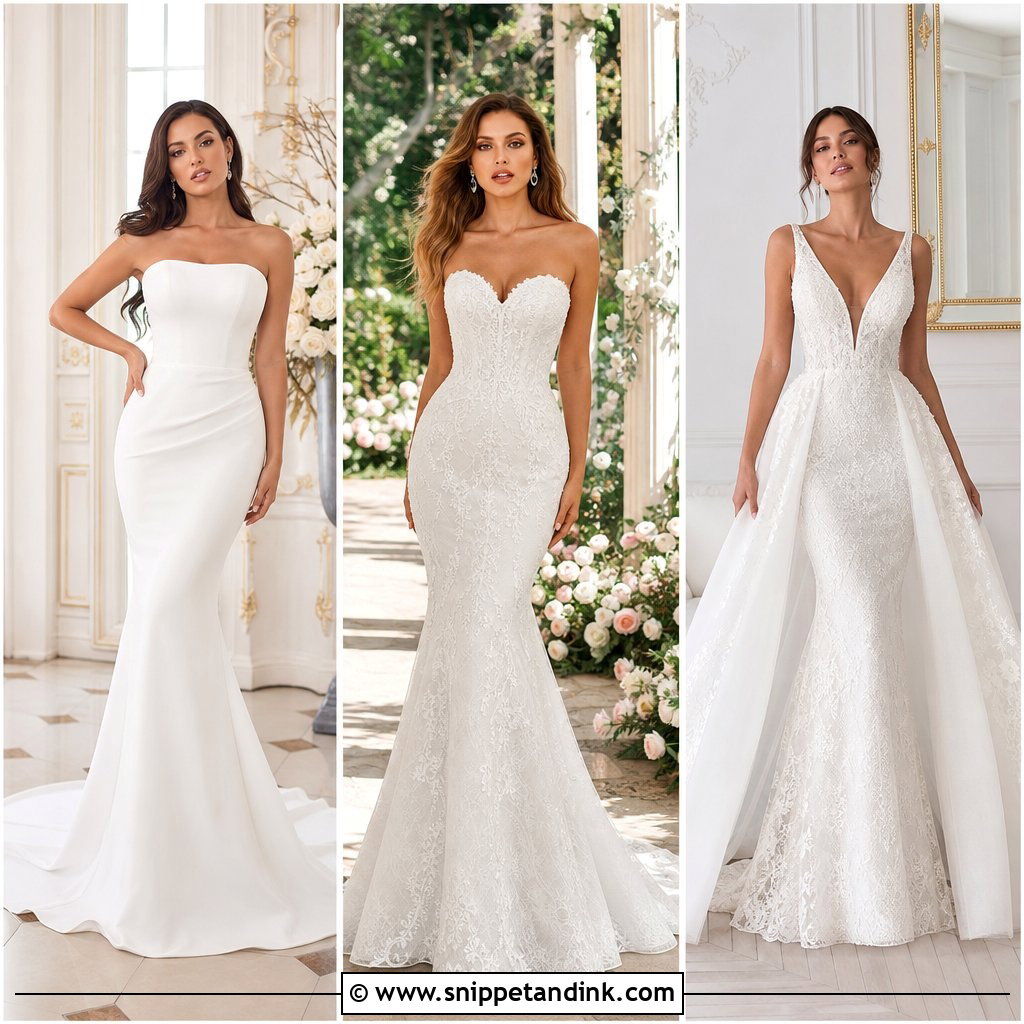
Where the flare starts decides how well you can move. A true mermaid flares at or below the knee and limits your stride; a trumpet flares mid-thigh and allows a more normal step. Try both before choosing. Lace, satin, crepe and beaded fabrics all suit the shape. Ask for a secure bustle, because the train needs lifting for dancing and mermaid bustles carry a lot of weight on a few points. Practise sitting and climbing stairs in the finished dress, and choose a compact bouquet so your shape isn’t covered.
14. Empire Waist Chiffon Wedding Gown
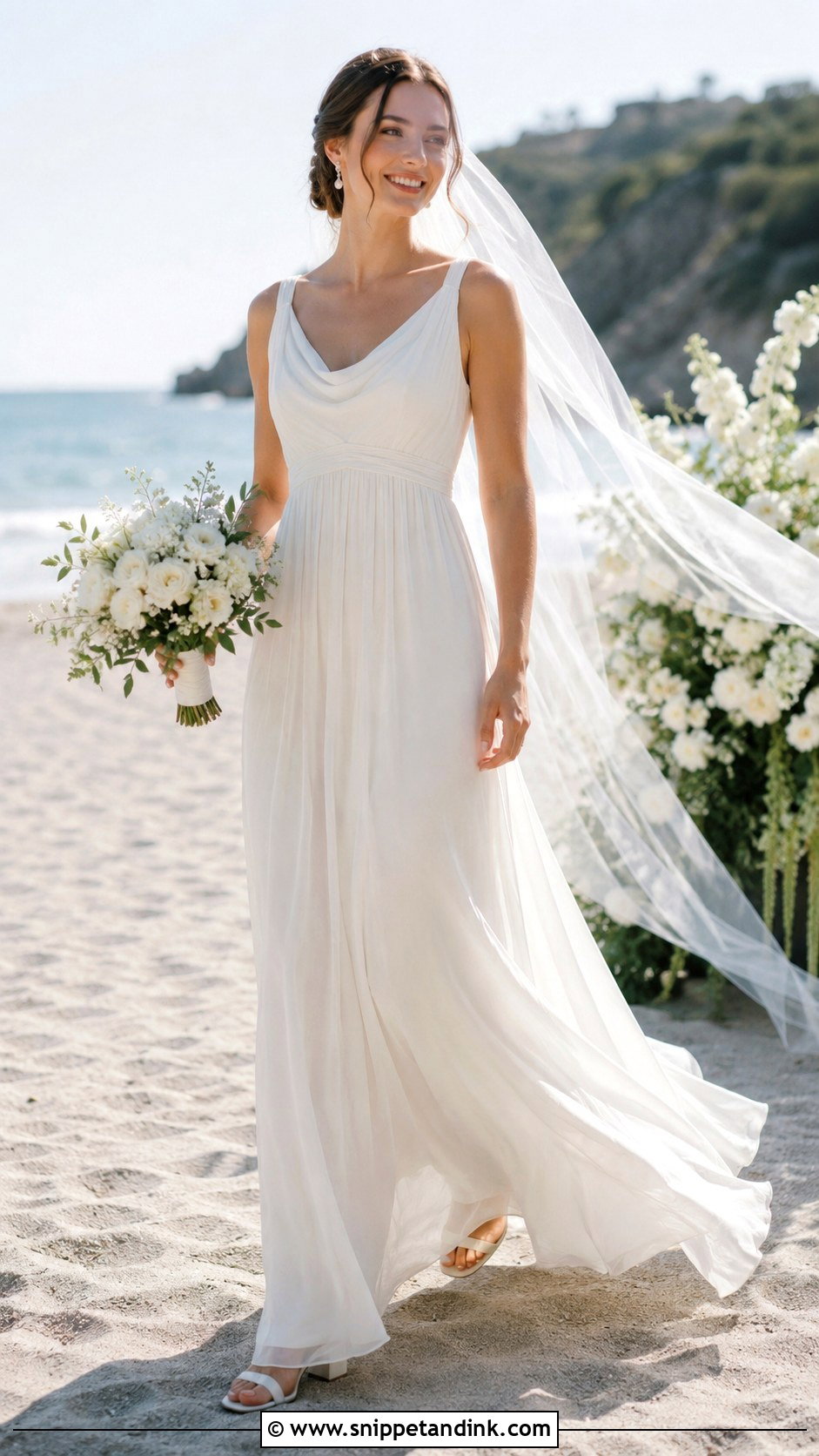
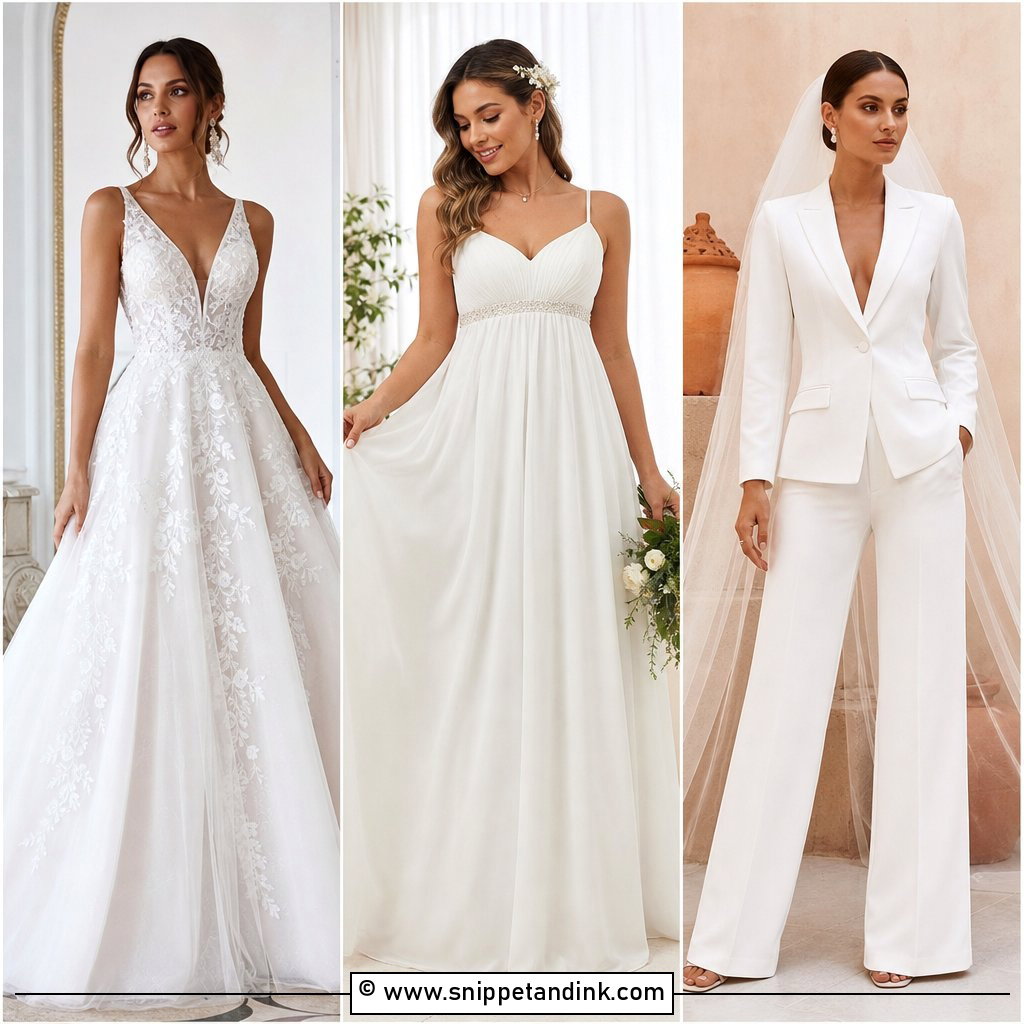
Empire waists sit just under the bust and let the skirt fall freely, so they’re among the most comfortable gowns to wear for a long, hot day. An empire waist chiffon wedding gown moves easily in a breeze, which makes it popular for beach and destination weddings. The thing I always check outdoors is transparency. Thin chiffon with a light lining can be see-through in strong sun, so stand by a bright window at a fitting. Choose fine straps, flutter sleeves or a draped neckline, and wear low block heels on grass or sand.
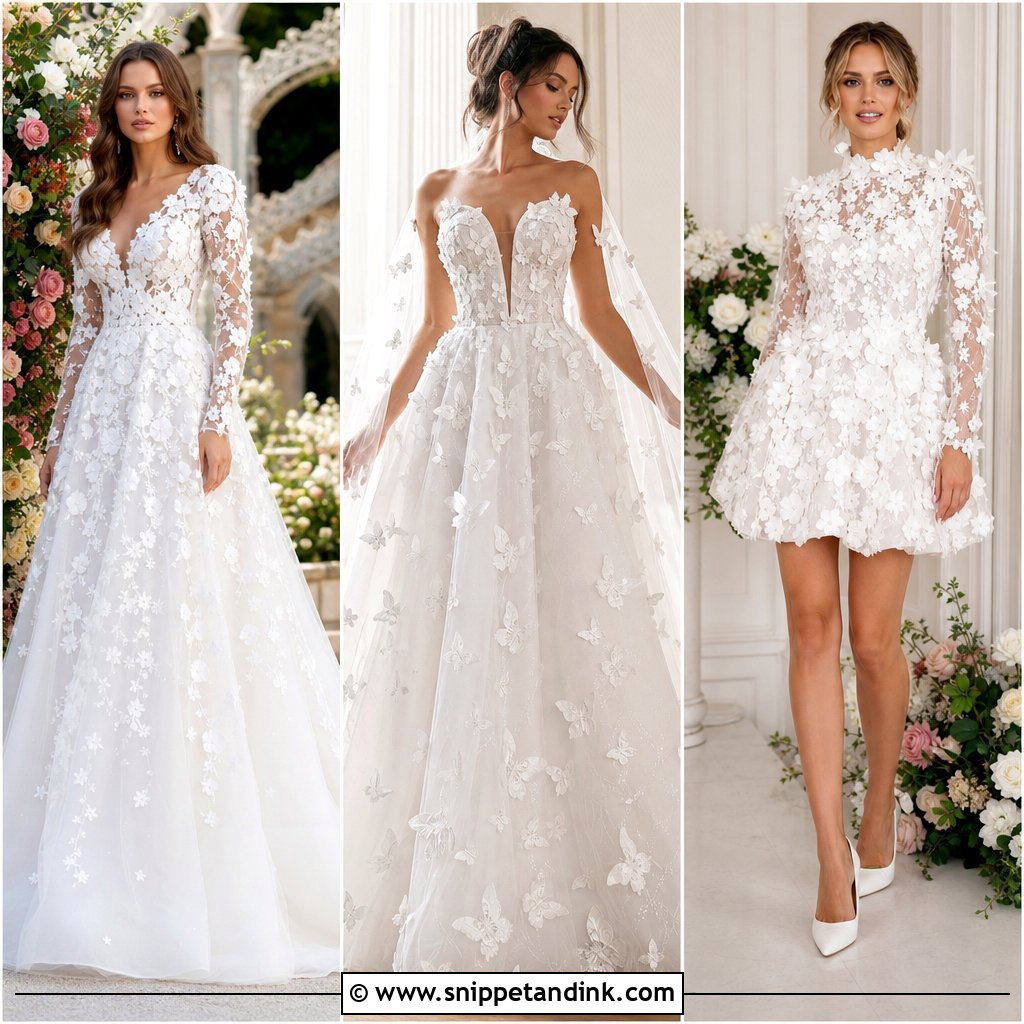
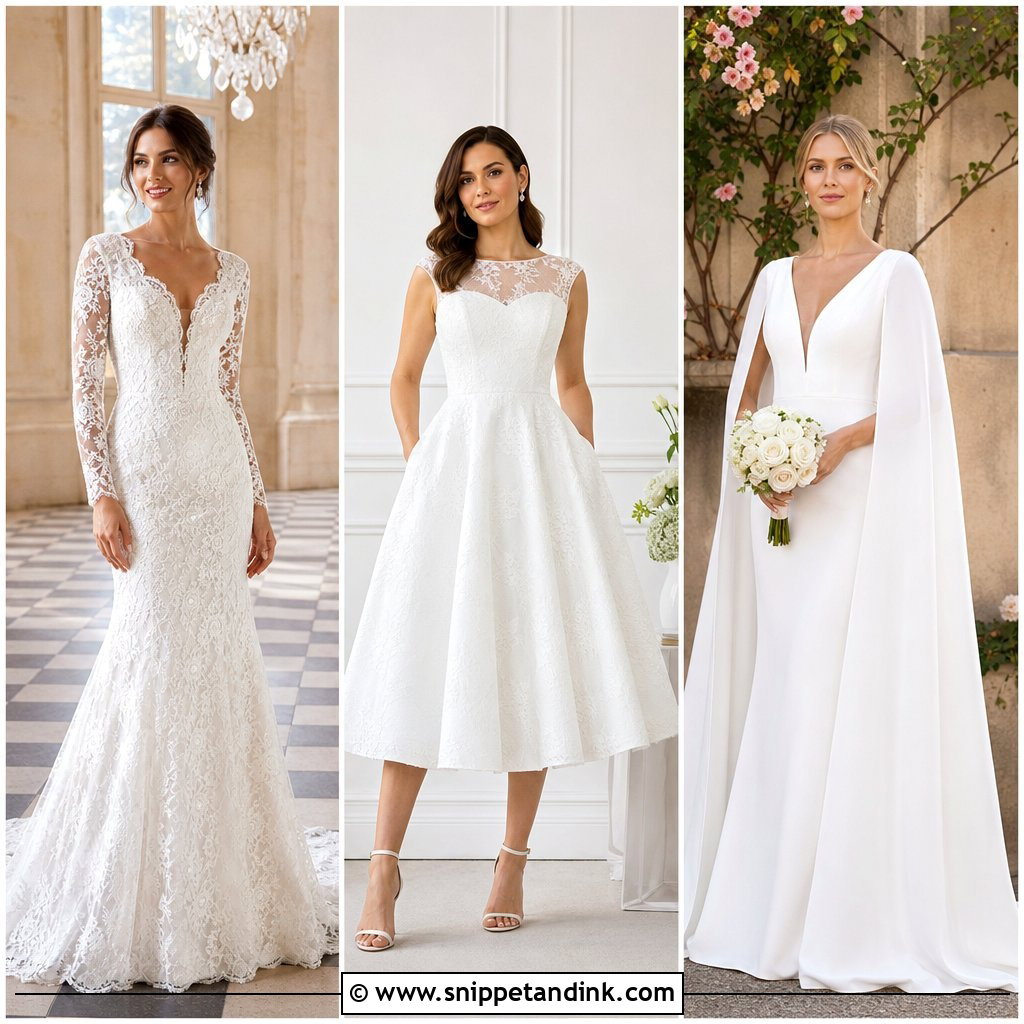

15. Tea Length Wedding Gown
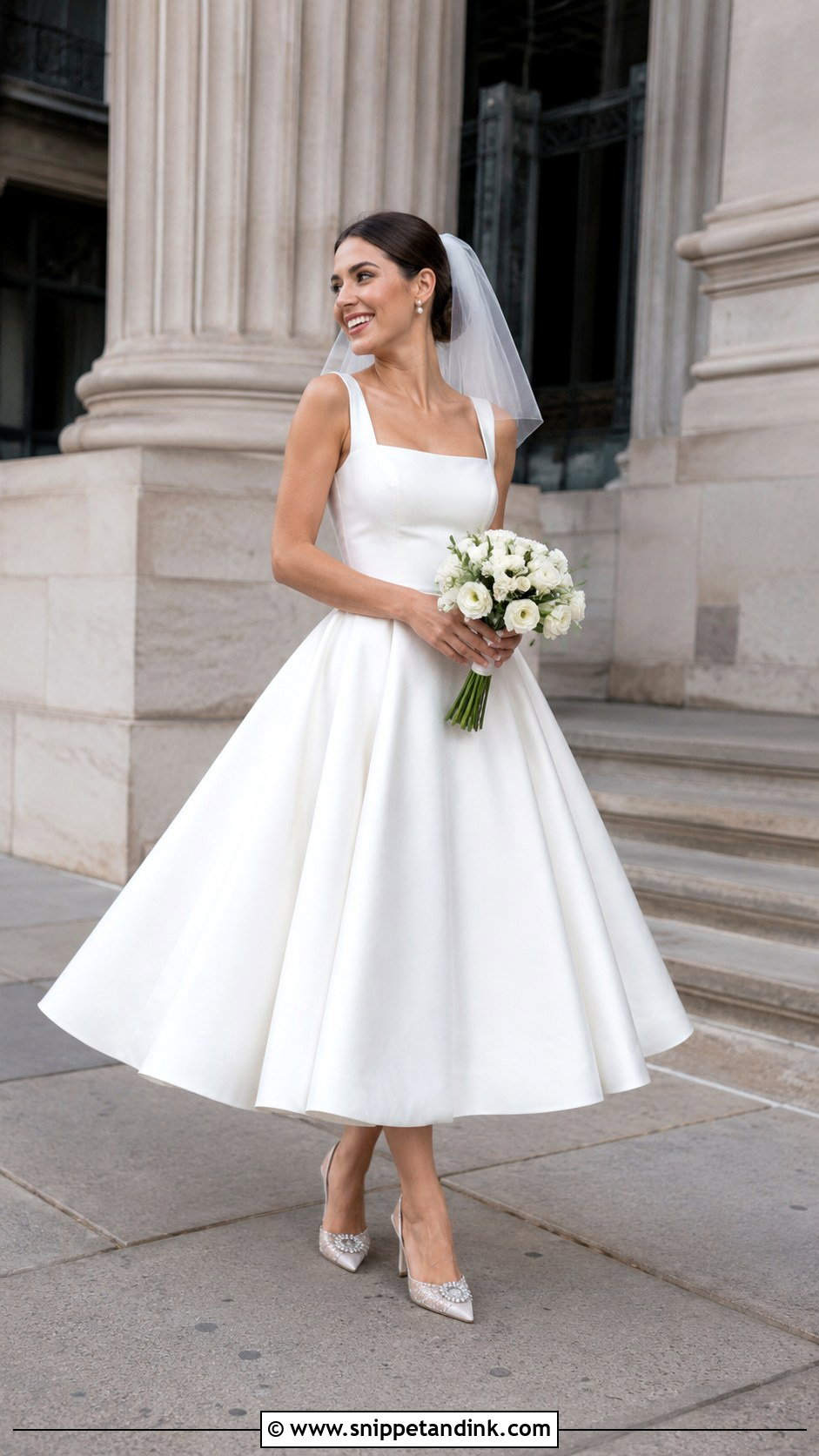
With the hem below the knee and above the ankle, the shoes become part of the dress. Pointed pumps, embellished slingbacks and comfortable block heels all work, but decide on them before the hem is set, because tea length is unforgiving if the hem is even slightly uneven. A fitted bodice with a full skirt looks retro; a slim tea-length sheath feels current. A short veil, pearl studs and optional gloves suit courthouse ceremonies, restaurant weddings and second reception looks. You’ll dance more freely in this than in anything floor-length.
16. Pearl Embellished Wedding Gown
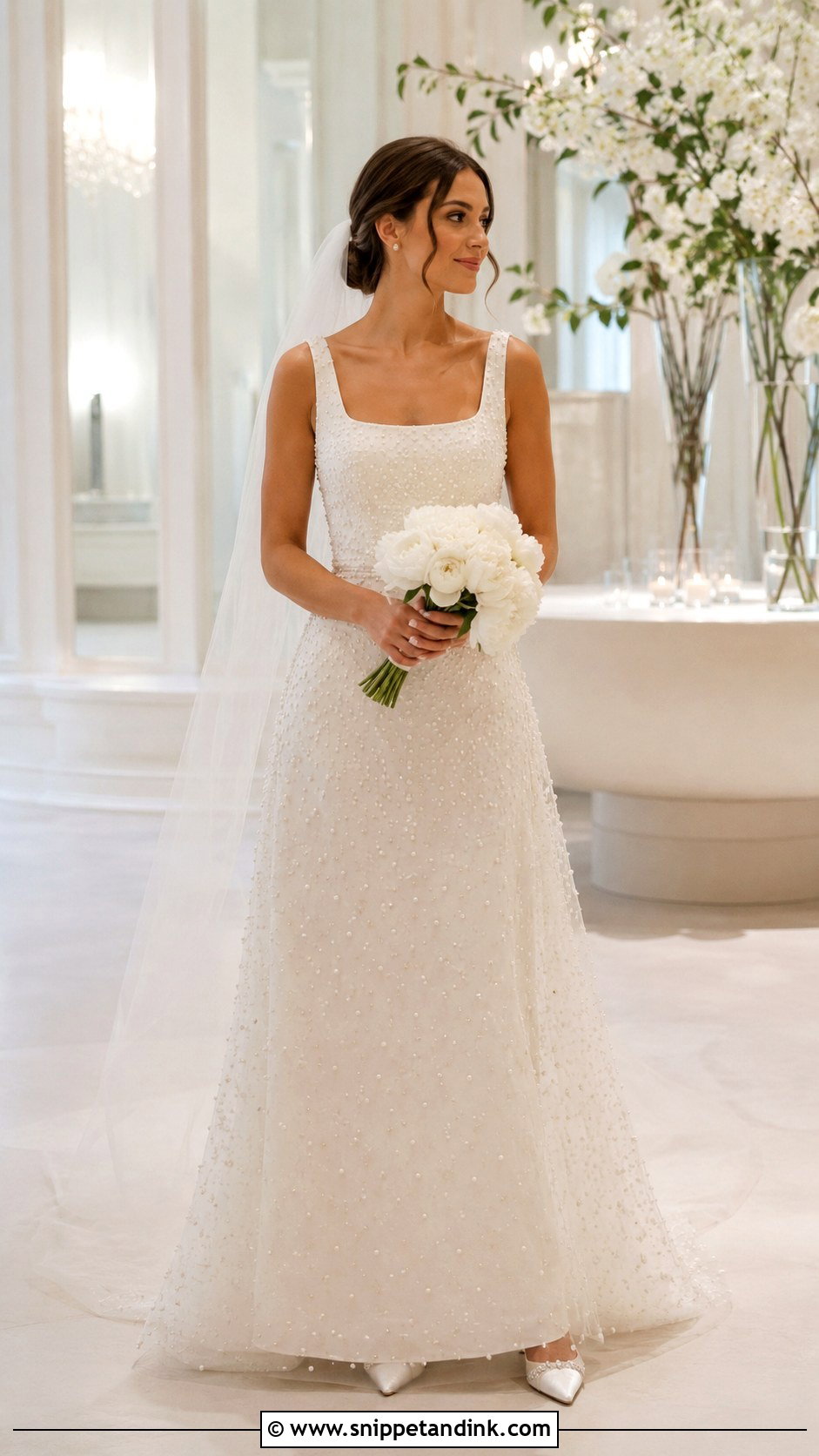
Pearls give a soft glow rather than the sharp flash of crystals, which suits bright daytime rooms. They can cover the bodice, trace the neckline or scatter down the skirt. Keep the silhouette simple so they stay the focus, and skip a pearl necklace if the neckline is already beaded. Pearl beads are heavy and stitched on individually, so I check the bodice for loose threads at each fitting and ask the boutique for a small bag of spares. A bridesmaid with a needle and those spares can fix a dropped pearl in minutes.
17. Bow Detail Wedding Gown
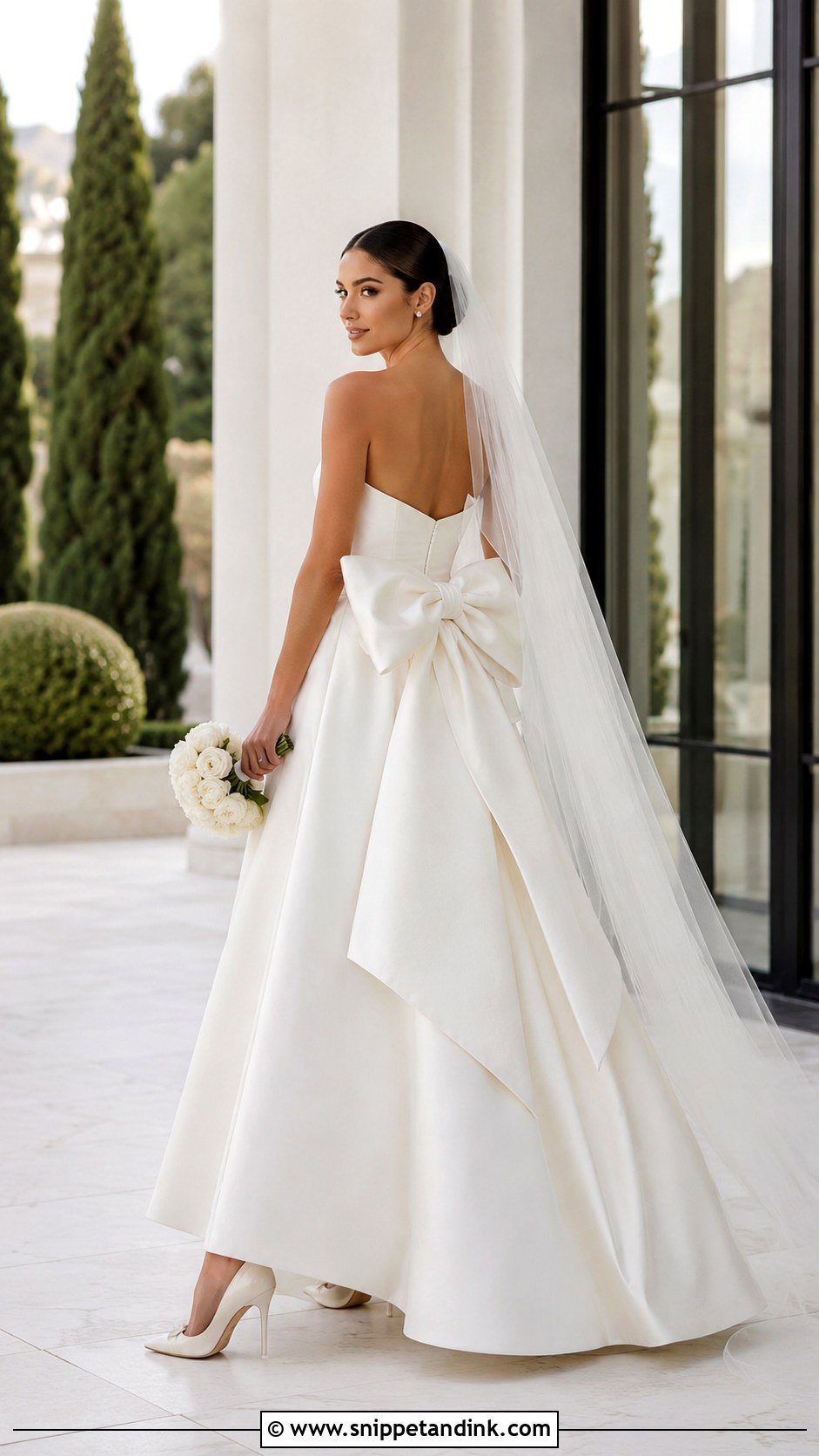
A bow needs stiff fabric to hold its shape. Mikado or heavy satin will keep a back bow crisp all day, while soft satin bows droop by the evening. Decide where you want the detail: a big back bow for the aisle, a small waist bow for definition, or shoulder bows that can come off. If the bow is at the back, hair should be up or swept to one side so it isn’t hidden. Ask whether it can be removed for dancing, since big bows get crushed when you sit at dinner. Keep the bouquet compact.
18. Vintage Inspired Wedding Gown
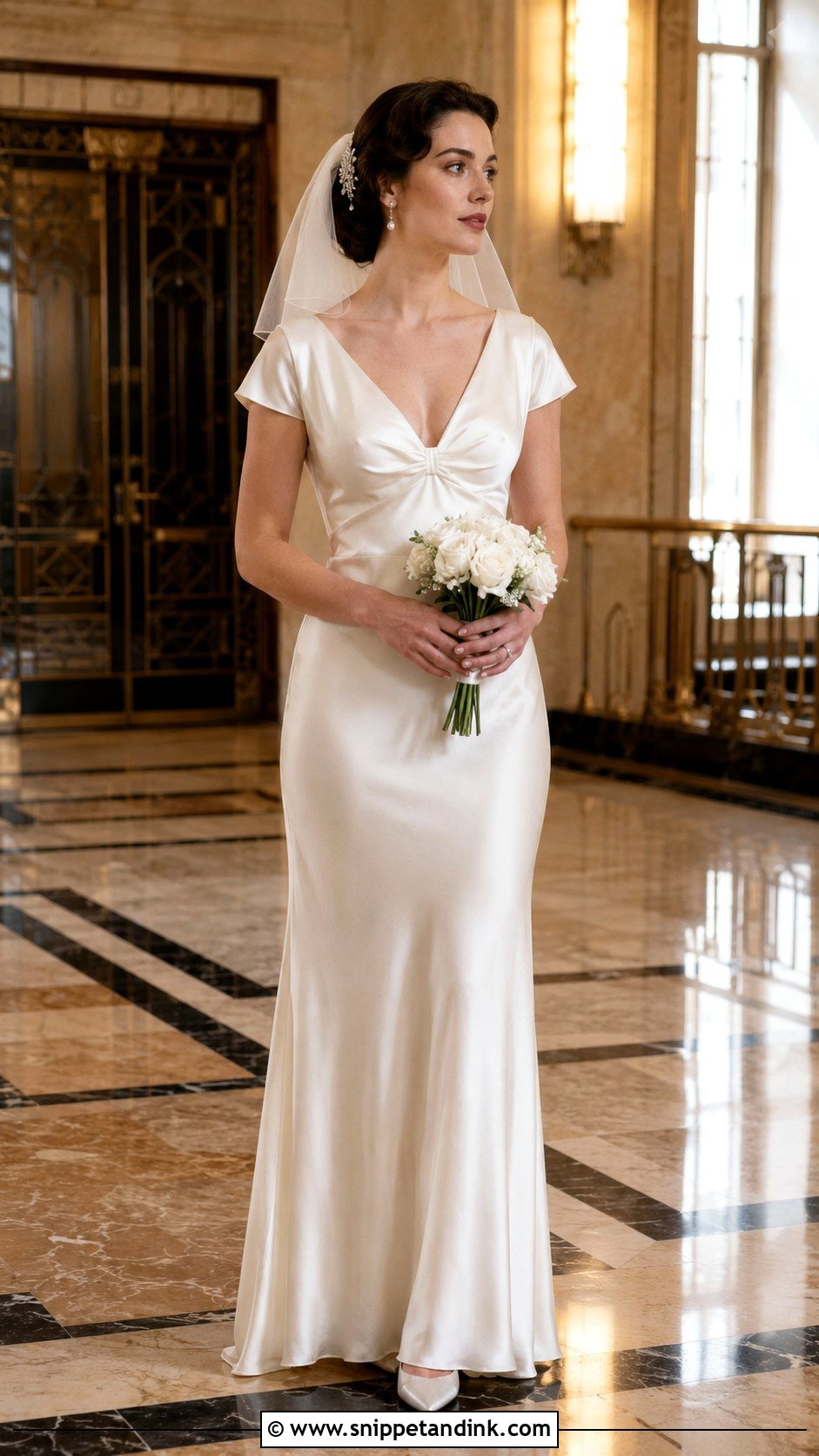
Pick one era and let it lead, and the dress will look like you rather than a costume. A 1930s-style silk bias cut, a 1950s full skirt and a 1970s lace sleeve all translate well with modern lining and support. Keep the beauty look and bouquet simple. Heirloom gowns need time: real vintage fabric may have yellowing, weak seams or brittle lace that only a specialist cleaner and seamstress can assess. I’d start that process at least several months ahead, and plan for the possibility that the dress can’t be altered as much as you’d hoped.
19. Plus Size A-Line Wedding Gown
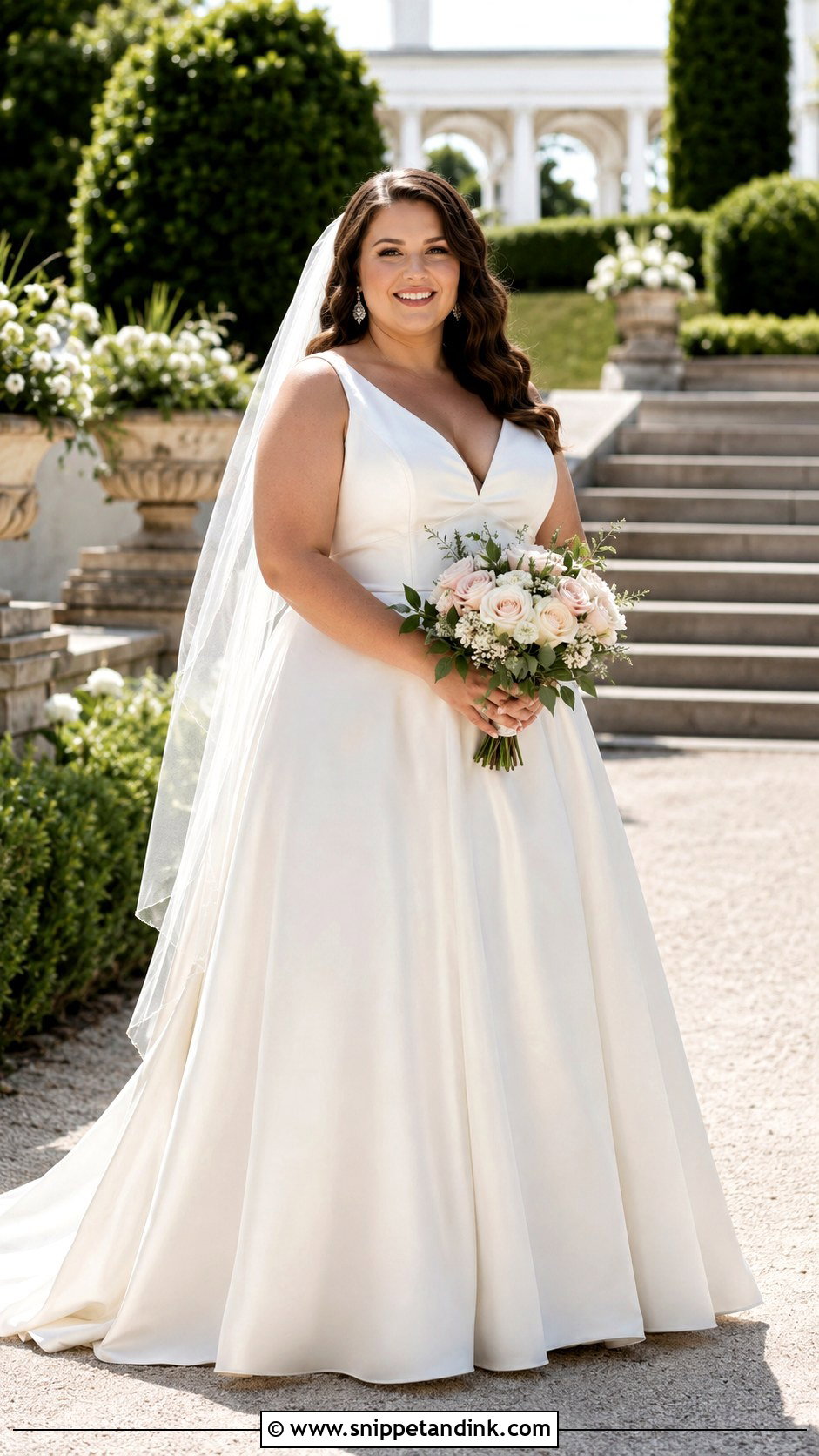
A good plus-size A-line gives structure and support without hiding the shape underneath. I look for real support in the bodice, boning, built-in cups, strong straps, and a skirt that flows smoothly from the waist rather than ballooning from below the bust. Satin holds shape; chiffon and tulle move more softly. Ask boutiques in advance for samples close to your size, since trying a sample several sizes too small and clipped at the back tells you very little about fit or neckline placement. Alterations should shape the dress without making it tight.



20. Convertible Reception Wedding Gown
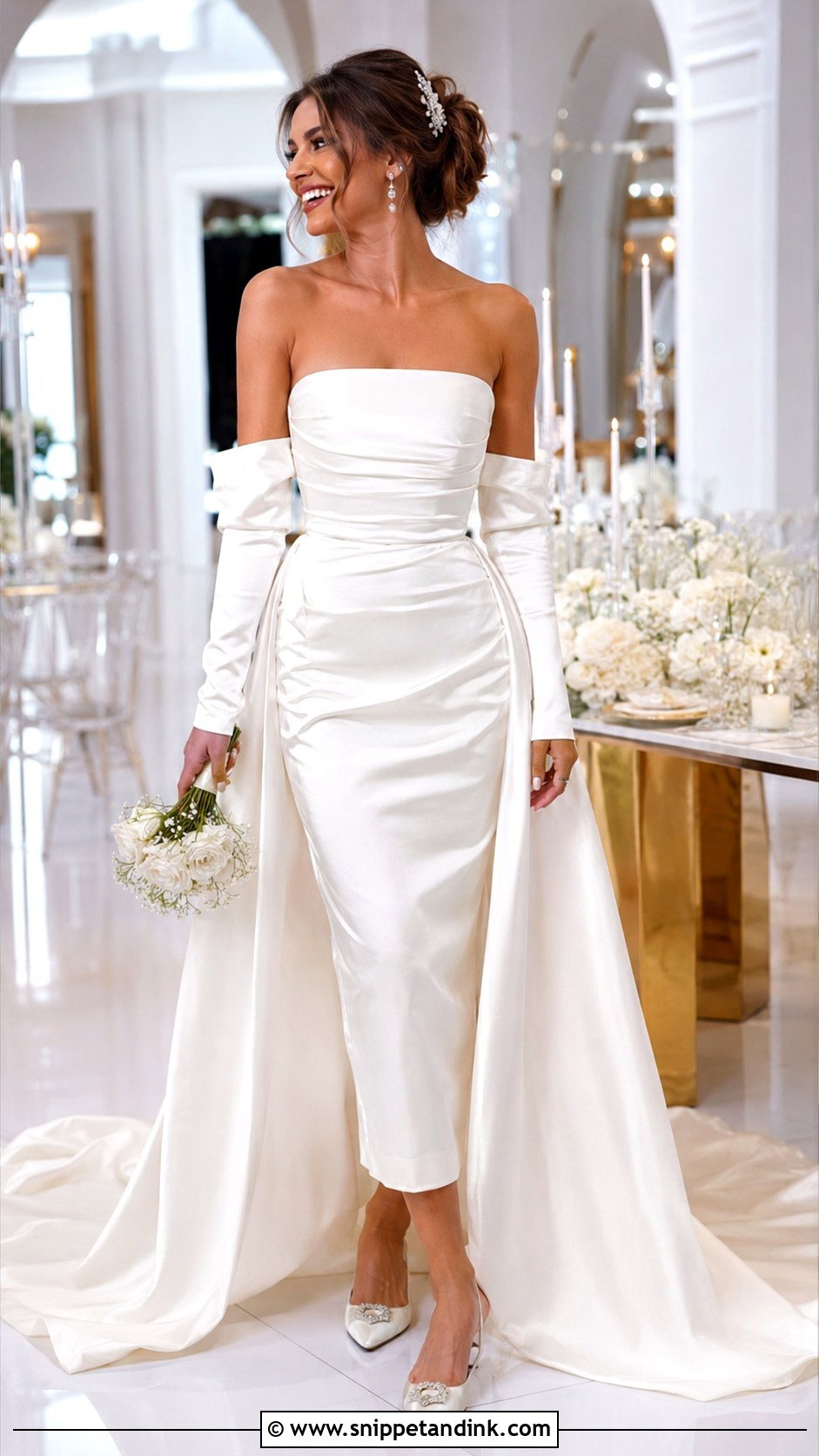
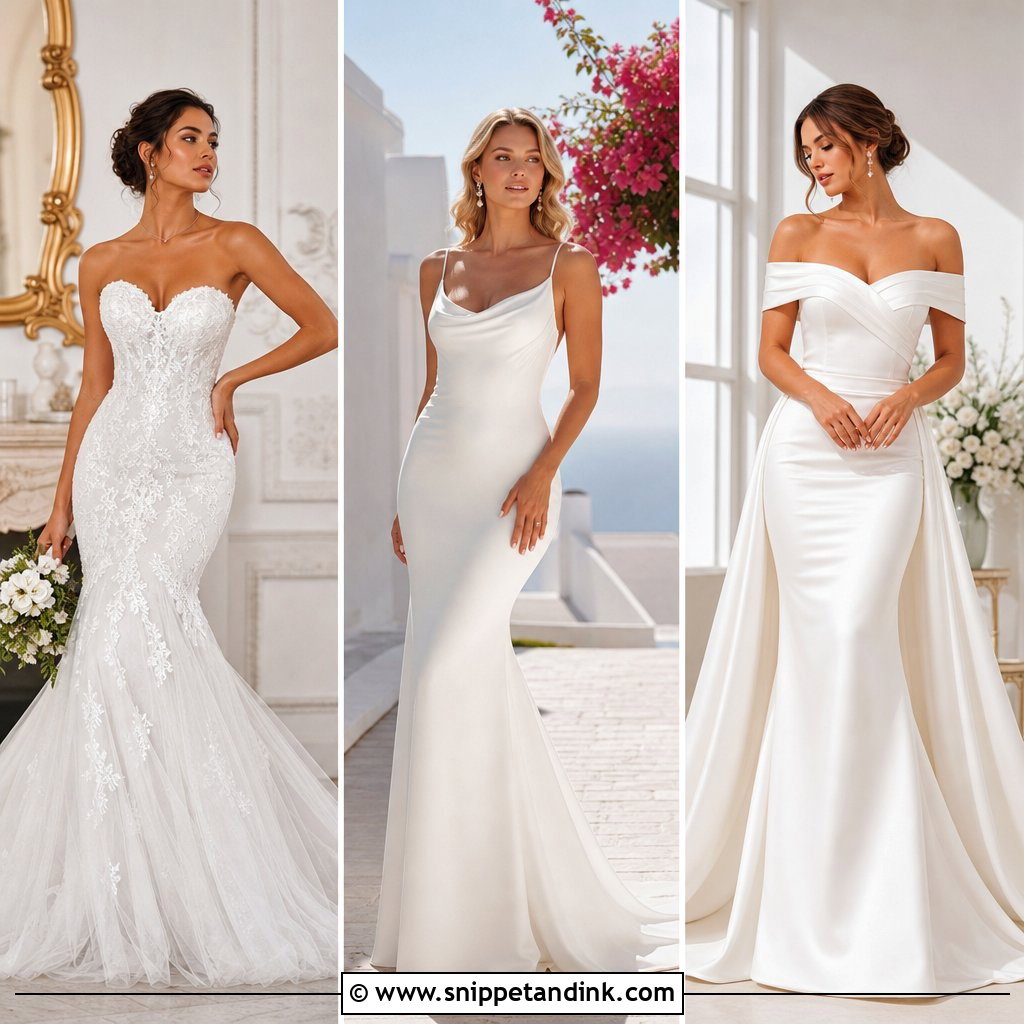
Convertible gowns make sense for long days or two venues. Removable sleeves, a detachable train, an overskirt or a cape can turn a formal ceremony look into something light enough to dance in. Switch your heels for flats or low block heels at the same time, and replace the long veil with a bow, comb or ponytail accessory. Every removable piece needs secure, hidden fastenings. Assign one trusted person to the change and have her practise at the final fitting, because doing it under time pressure for the first time rarely goes well.
Sugar Stains, Hangers and Other Gown Storage Traps
Many brides hang their dress in a wardrobe after the wedding and forget about it. A year later they find yellow patches and a stretched neckline. Most of that damage happens in the first few months.
Clean it soon
Champagne, cake and sweat can dry invisibly on white fabric, then oxidise into brown spots over time. Take the gown to a cleaner who handles bridalwear within a few weeks, and point out where you know something spilled. Ask before they treat any beading, pearls or glued appliqué.
Store it flat, not hung
A heavy satin or beaded skirt pulls on the shoulders and straps when hung for months. Fold it loosely with acid-free tissue in the folds and lay it in an acid-free box. Cotton or muslin covers breathe; plastic bags trap moisture and can cause yellowing. Keep the box somewhere dark and dry with a stable temperature, so not the loft or the basement, and refold it along different lines once a year to avoid permanent creases.
Comfort Is Part of the Fit
The best bridal gown isn’t the most fashionable one. It’s the dress that supports your body, suits the venue, sounds like you and stays comfortable for twelve hours. Use these looks as a starting point, then adjust the fabric, coverage, accessories and tailoring. Bring your shoes and underwear to every fitting, and test each dress while walking, sitting and moving your arms. Choose the veil, shoes, jewellery and bustle as one outfit. Above all, pick the dress you feel most like yourself in.
You'll Like These Ideas:






Leave a Reply