
Indian weddings run over several days, and very few people can book a stylist for every function. The good news is that most of the Indian wedding hairstyles I do for guests can be done at home with an elastic, a handful of pins and some practice. A friend’s mehndi, a cousin’s sangeet or your own reception all call for something a little different, and a saree, a lehenga and a suit each sit differently against the hair. Below are twenty looks I’d happily teach someone to do on herself, from low buns wrapped in gajra to loose braids filled with flowers. None of them need salon tools, but every one of them is easier on the second try than the first, so do a practice run.
Doing the Back of Your Own Head Without a Second Pair of Hands
The hardest part of styling yourself isn’t technique. It’s that you can’t see the back. I tell people to set up before they start:
- Stand with your back to a wall mirror and hold a hand mirror in front of you, or prop your phone on selfie video facing the back of your head.
- Lay out pins, elastics and flowers on the counter before you begin, so you’re not hunting with one hand holding a section.
- Clip off sections first with duckbill clips. It keeps the hair you aren’t working on out of the way.
- Rest your elbows on a table if your arms tire. Braiding with your arms up for twenty minutes is harder than it sounds.
One more thing: skip hair oil for two days before. Oiling is a lovely habit, but pins slide straight out of oiled hair and curls fall within the hour. Wash it out the night before and let the hair settle.
1. Simple Low Bun With Gajra
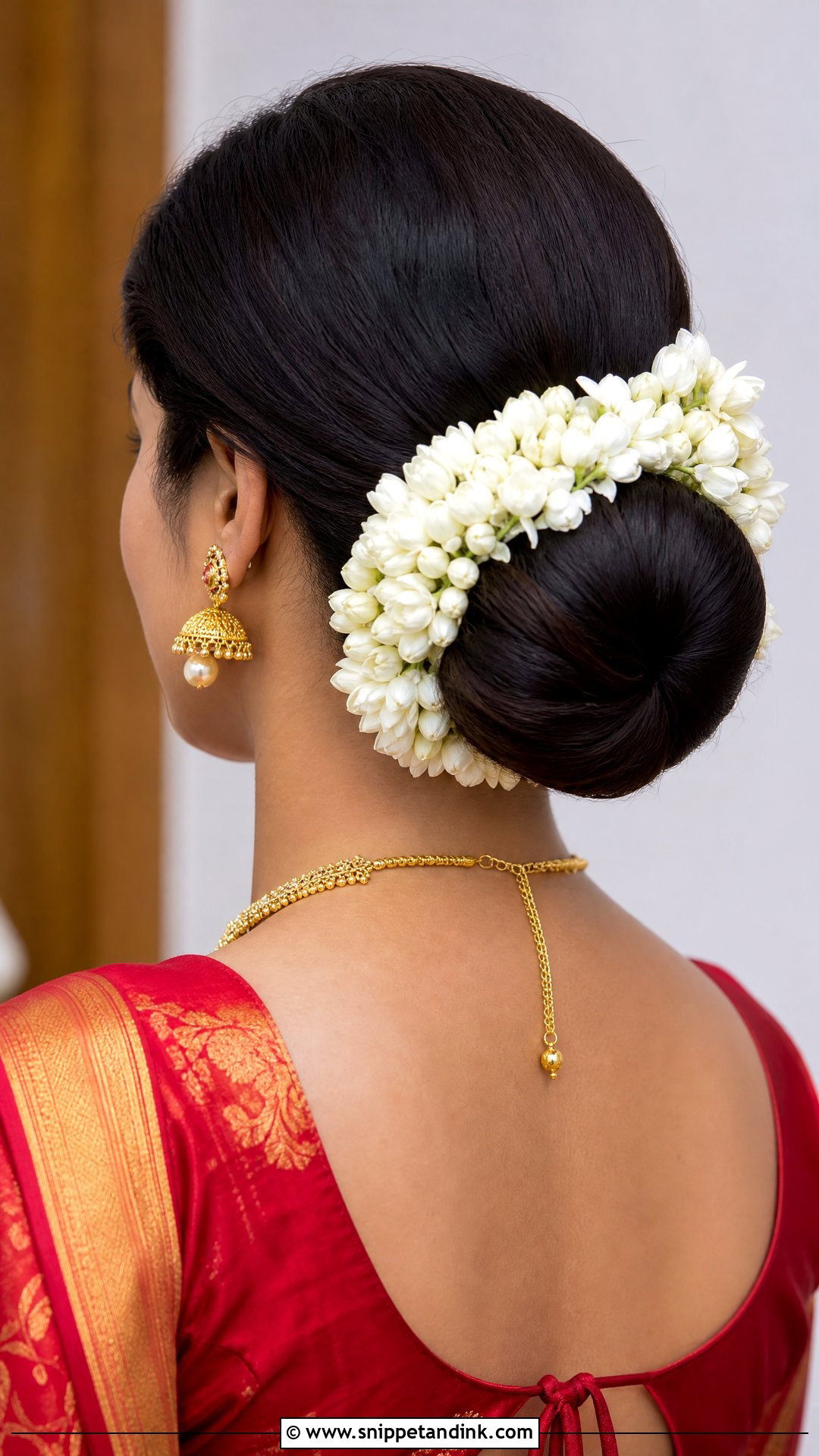
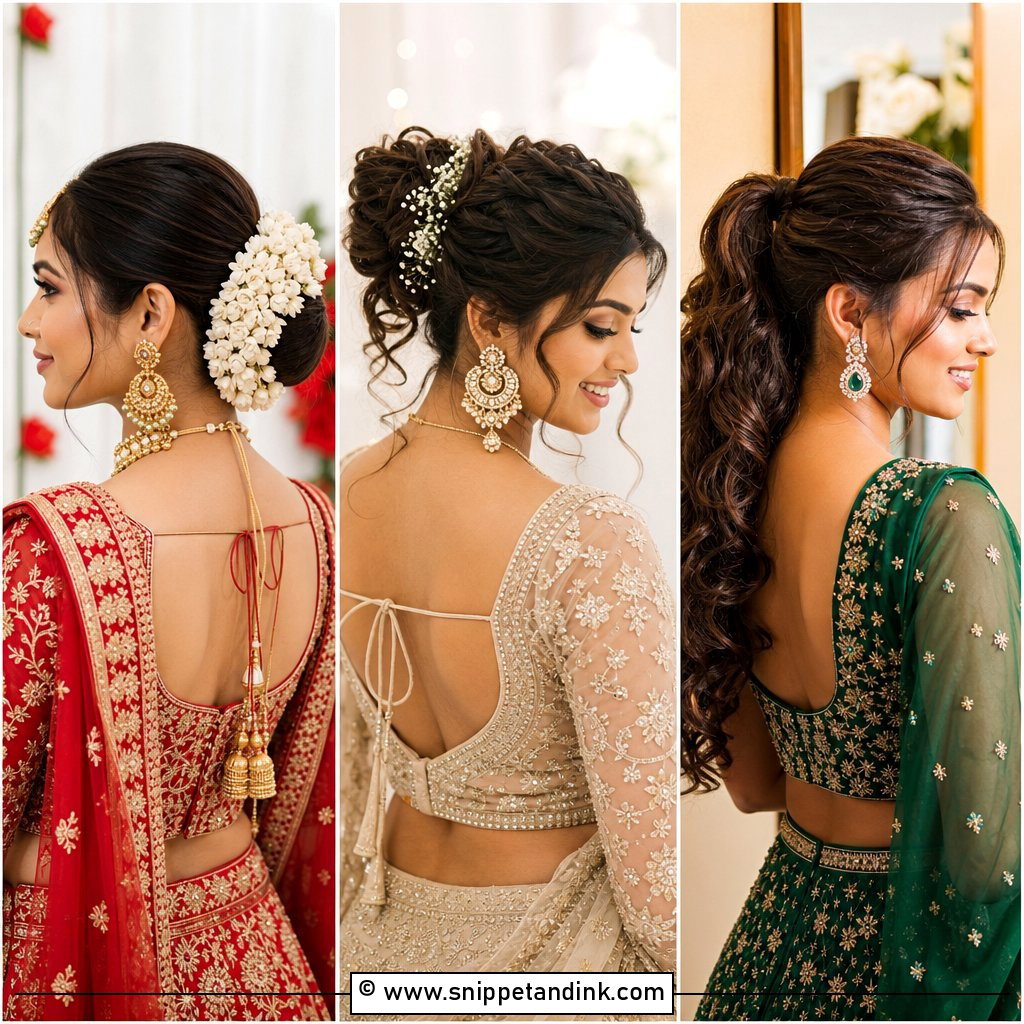
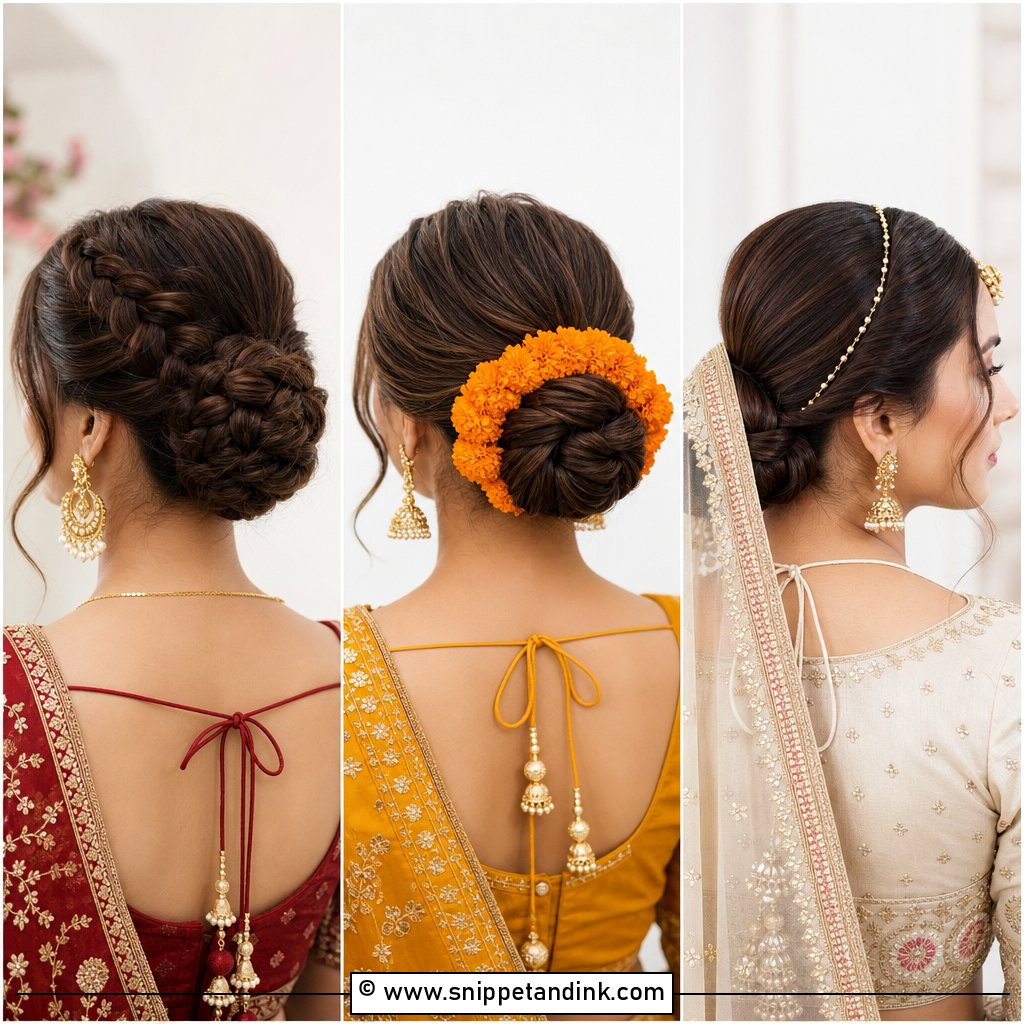
This is the bun I’d teach first, because it suits nearly every Indian outfit and it’s very hard to get wrong. Brush the hair back into a low ponytail at the nape, twist the length and wrap it around the base, pinning as you go with pins pushed into the bun and down into the elastic. Tuck the ends under. Then wrap a fresh gajra (jasmine garland) around the bun and pin it through the string in three or four places, not just at the ends, or it slides off when you turn your head. The jasmine scent carries through a whole evening. It holds for hours under a saree pallu or a silk lehenga dupatta, which is why I trust it for long ceremonies.
2. Side Fishtail Braid
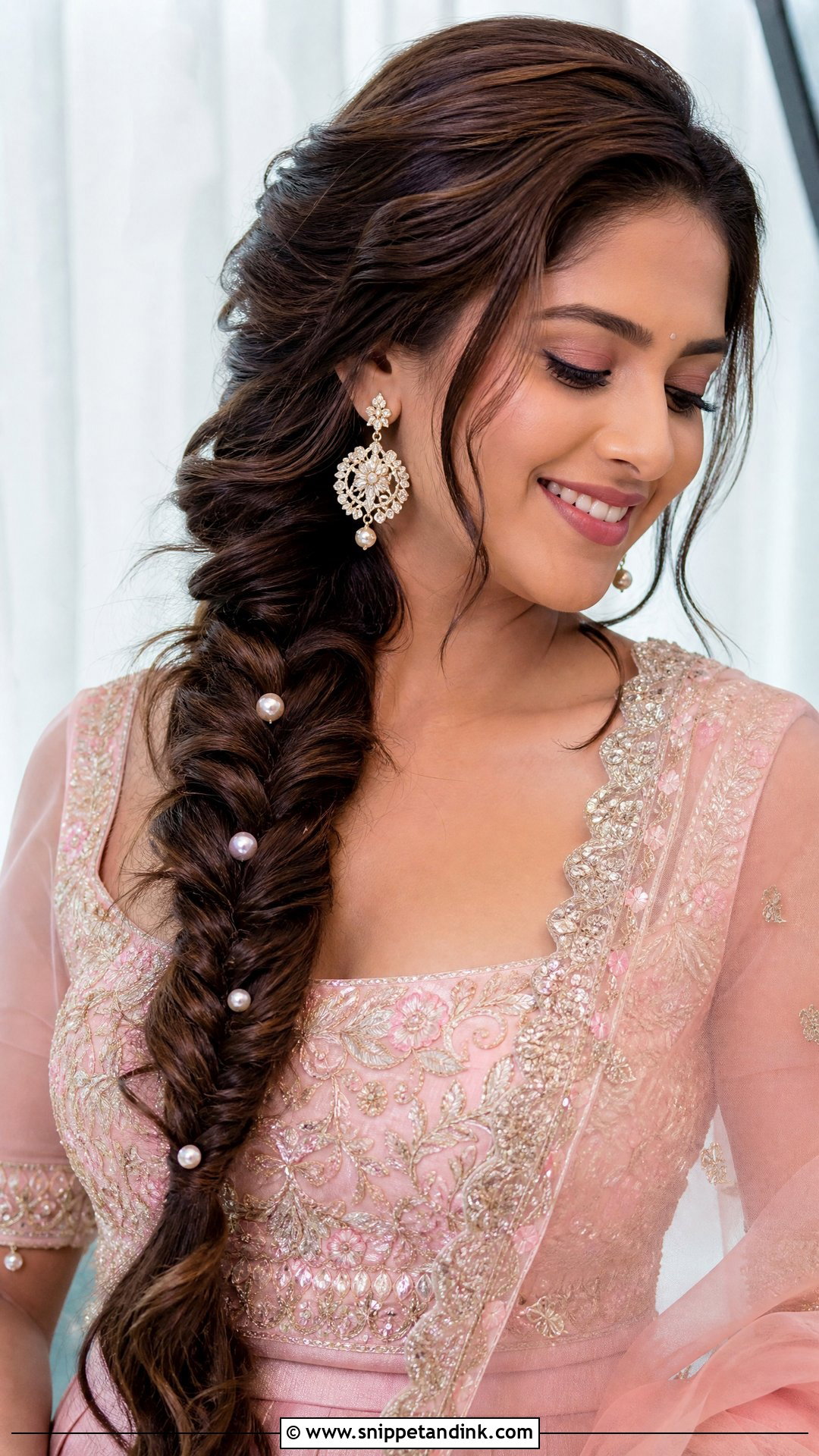
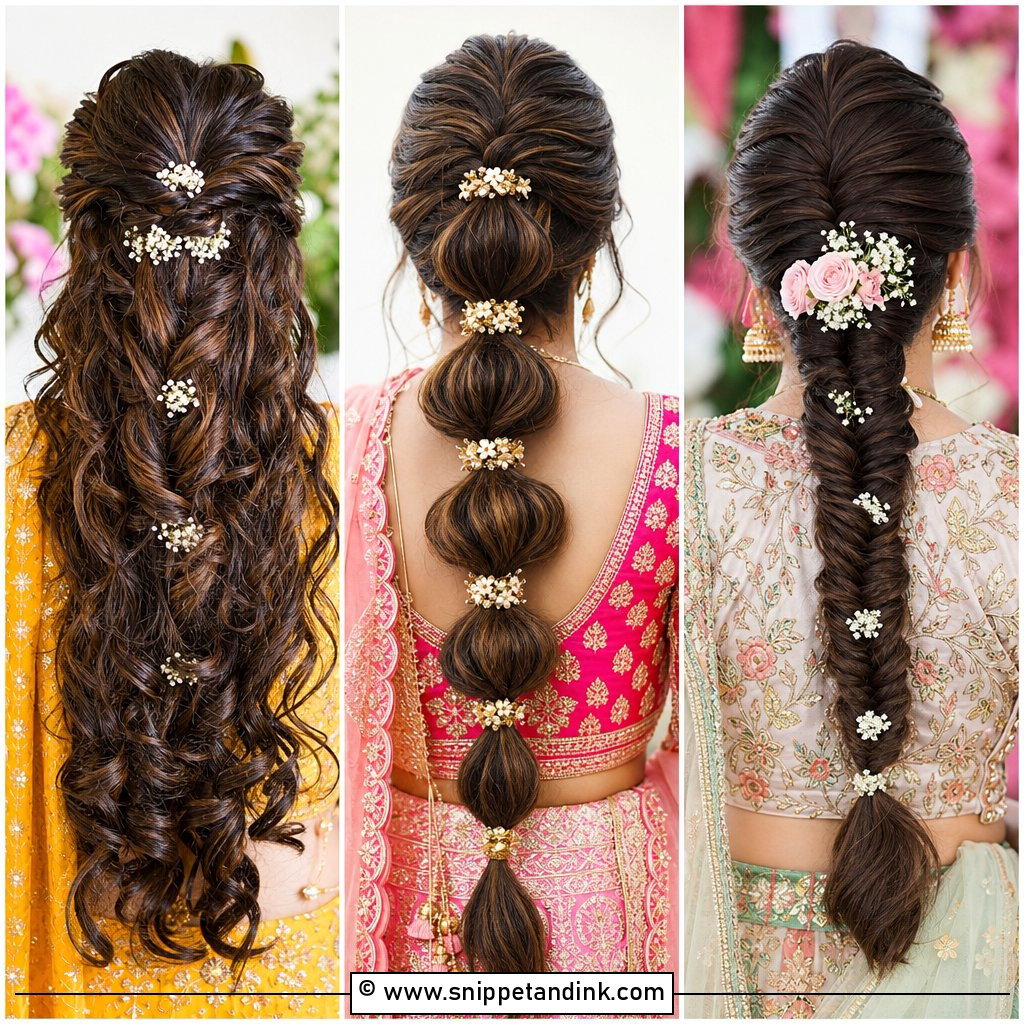
A side fishtail is easier on yourself than a three-strand braid, because you can see what your hands are doing over your shoulder. Gather everything to one side and split it into two sections. Take a thin strand from the outer edge of one section, cross it to the other, then repeat from the other side. The thinner the strands, the more intricate it looks. Once you reach the end, tie it off and pull the edges gently to widen it. Pin small flowers or pearl pins along the weave. Heavy, very layered hair can poke out along the length, so smooth a little cream through first. It sits nicely with lehengas and Indo-western gowns.
3. Half Up Half Down With Puff
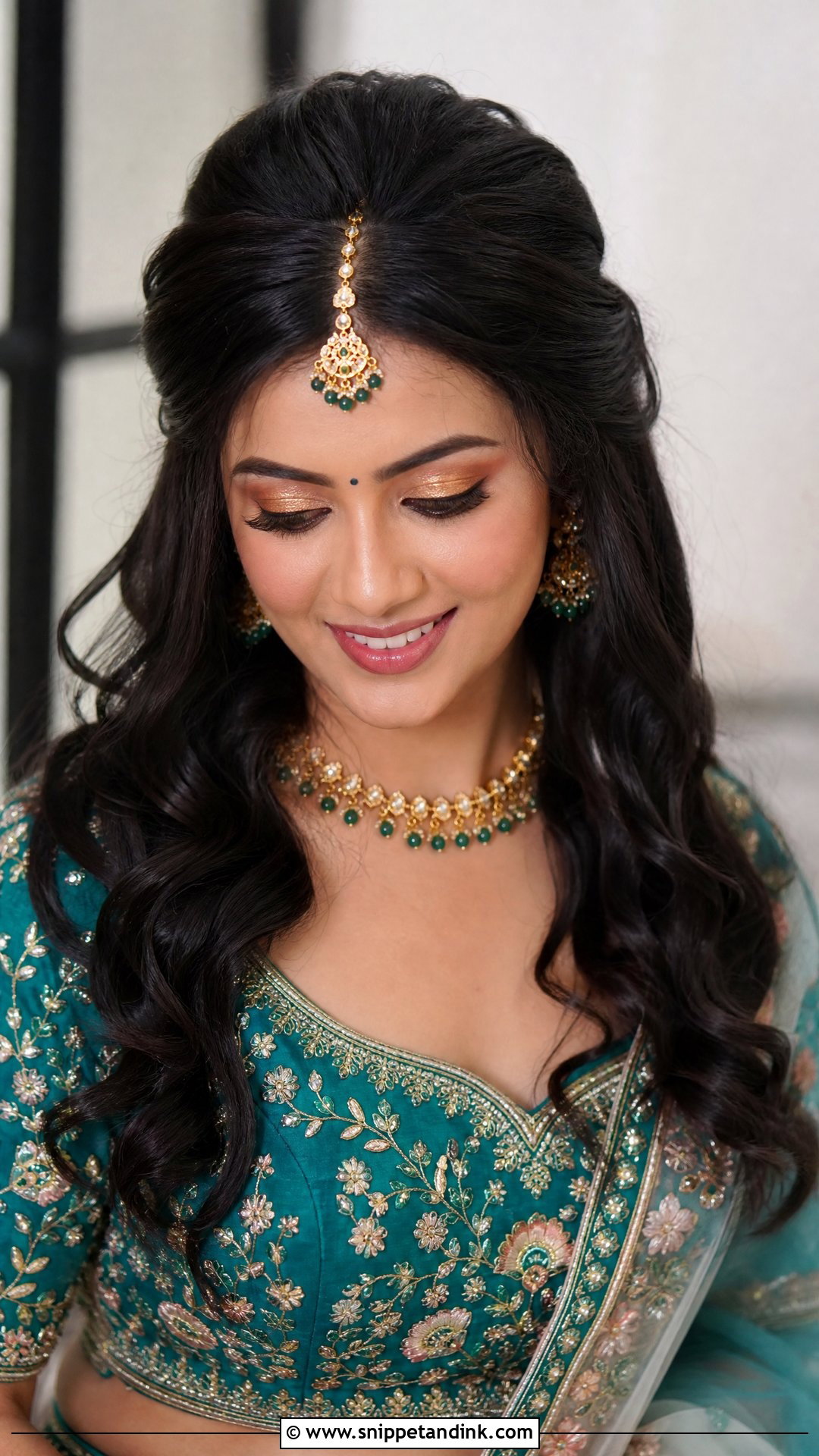
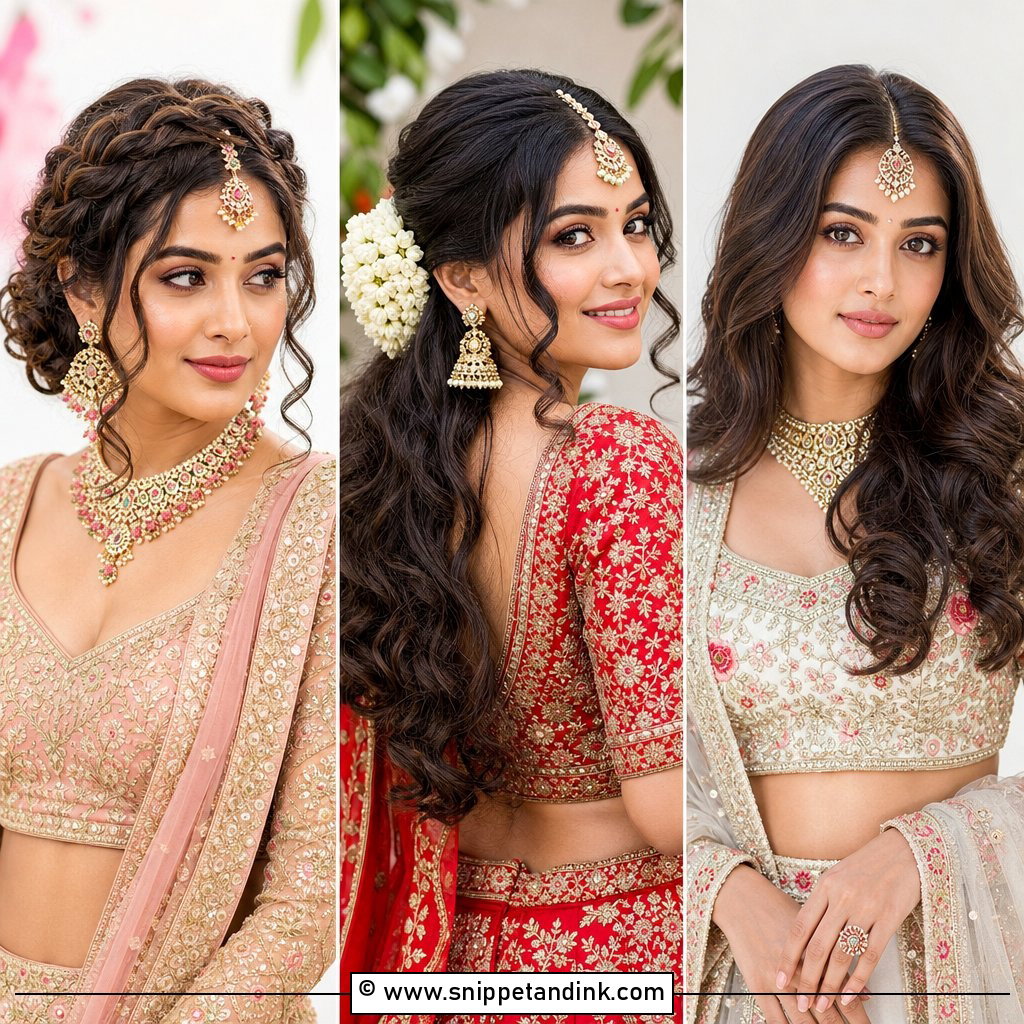
The puff gives height at the crown, and it’s the thing that makes a half-up style look Indian-wedding rather than everyday. Section off the front, backcomb the underside gently at the roots, then smooth the top layer over it and pin it with two crossed pins. Leave the rest loose behind you, curled at the ends if you like. A maang tikka can rest just in front of the puff. On round and oval faces the height is flattering; on a long face, keep the puff low and wide instead of tall. Backcombing can feel scary, but brush only the top layer smooth afterward and nobody will see it. It’s a natural fit for sangeet and reception nights.
4. Messy Low Bun With Twists
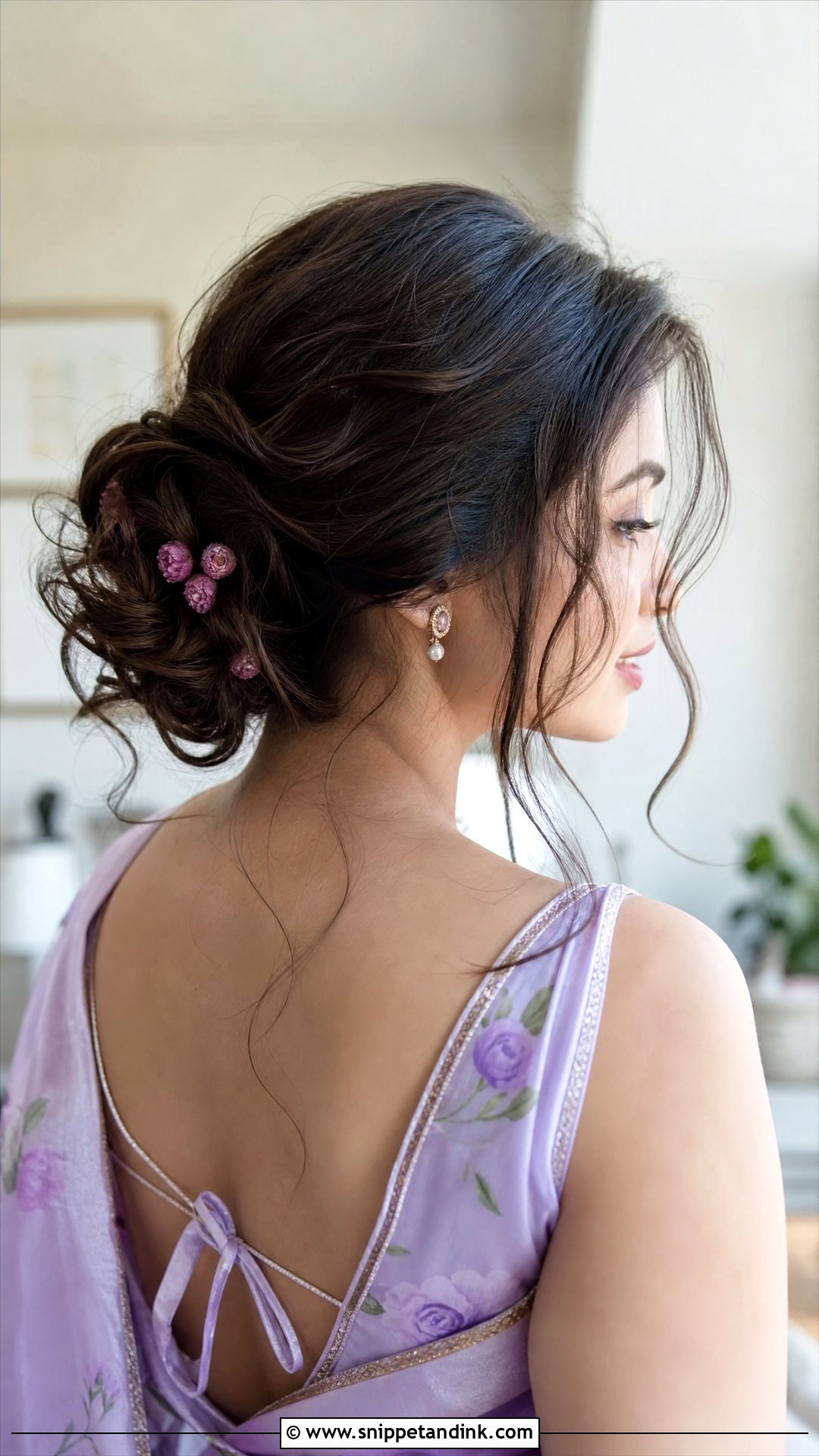
A messy low bun is the most forgiving style on this list, which is why I suggest it for second-day hair and anyone who’s nervous about doing her own. Twist a small section from each side toward the back, gather everything into a loose low bun and pin it. Don’t chase perfection, because a few escaped strands are what make it work. Pull a couple of pieces loose near your ears. Floral lehengas and pastel sarees sit well with it, and a delicate hairpin or a few small rosebuds finishes it. The risk is very freshly washed, silky hair: it won’t hold the twists, so add some texture spray or dry shampoo first.
5. Floral Dutch Braid
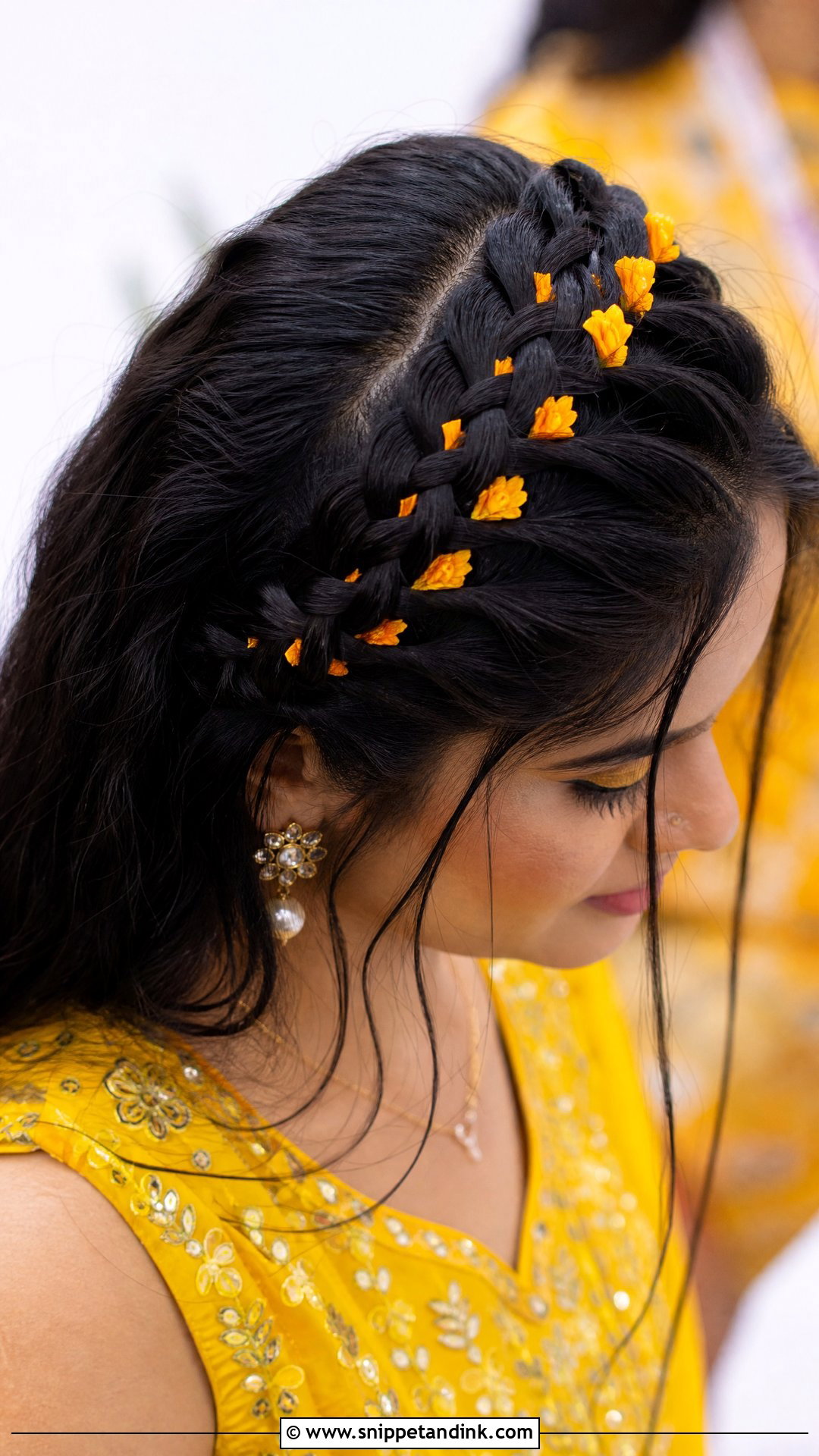
A Dutch braid is the one that stands up off the head, because each outer strand crosses under the middle instead of over. Start at the hairline with three small sections, cross under, add hair and keep going to the nape, then braid the remaining length normally. Pancake the edges gently so it looks fuller. Marigold or rose petals tucked into the braid make it festive; marigold is sturdy and won’t wilt as fast as jasmine in heat. It holds well through dancing, and the bright colour of the flowers suits haldi and mehndi functions. Doing a Dutch braid on your own head takes a few practice rounds, so try it a week ahead.
6. Sleek High Ponytail With Curls
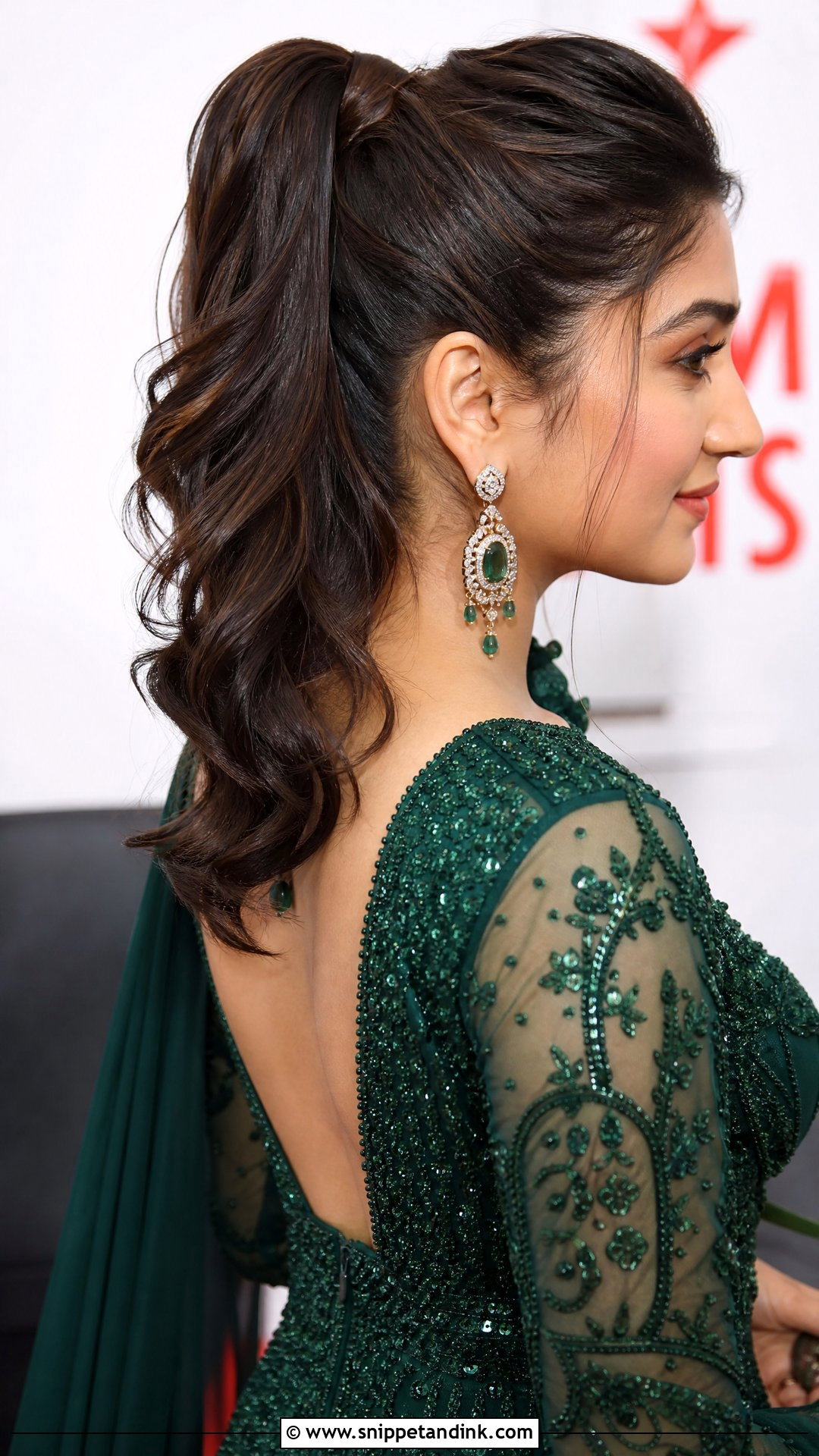
A high ponytail needs a strong elastic and a tight base, because a slack ponytail sags by the second hour. Brush all the hair up, secure it firmly, wrap a small strand around the band and pin it underneath. Then curl the length with a curling iron. The sleek top against the curly tail is what makes it look modern. It lengthens the neck, which suits Indo-western outfits and structured gowns. A word of caution: a very high, heavy ponytail can pull on the scalp and give some people a headache by evening, so set it a little lower if your hair is long and thick. Finish with hairspray.
7. Loose Curls With Front Section Pinned
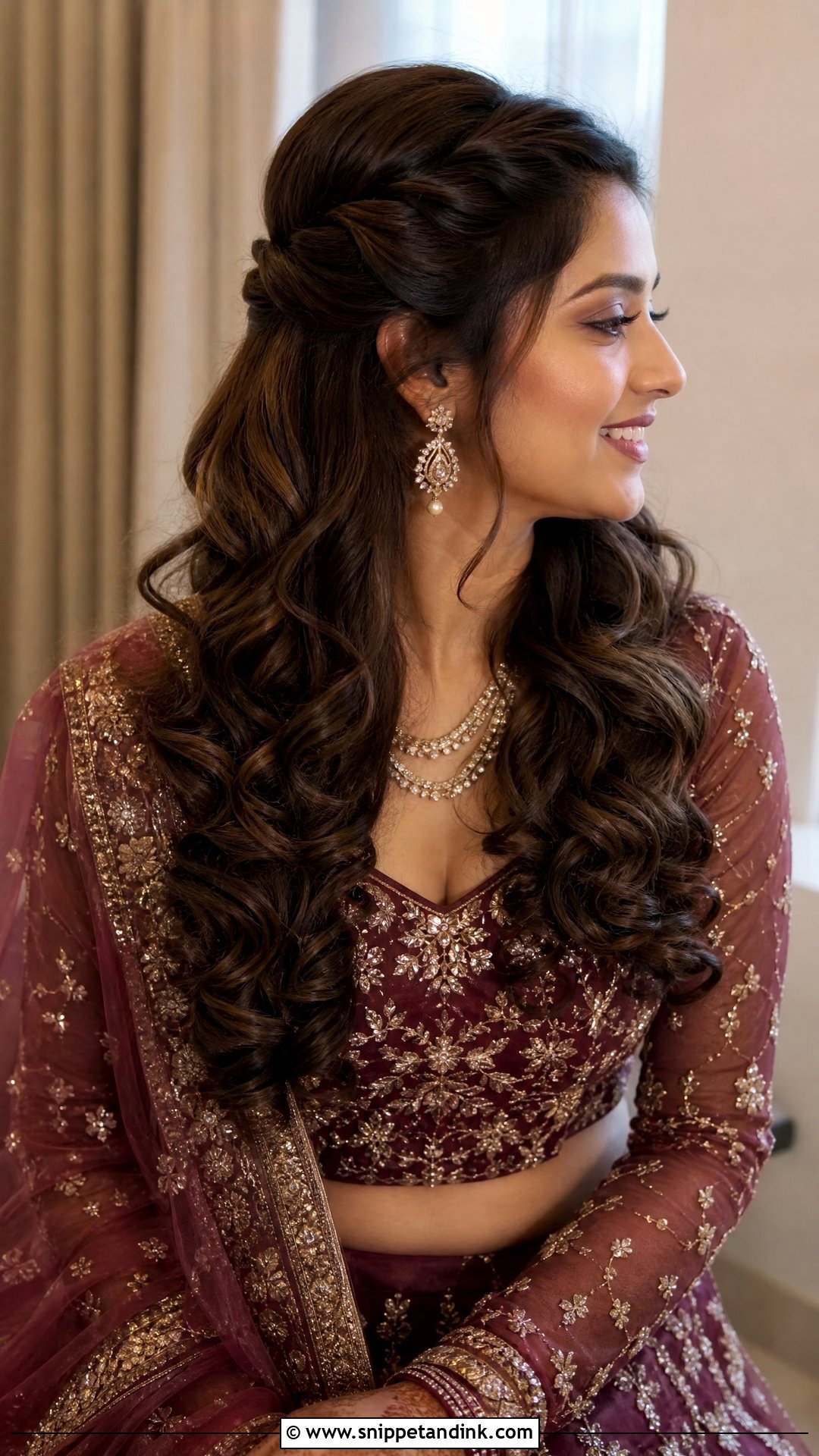
Curls with the front pinned back are low-skill and very wearable, and they keep hair out of your plate and out of your earrings. Curl the whole length with a wide barrel in small sections, let them cool, then run your fingers through to loosen them. Twist the two front sections back and pin them together behind the head. A drop of shine serum on the ends finishes it. On thick, coarse Indian hair, curls can drop fast because of the weight, so curl smaller sections and let each one set in a pinned loop while you do the rest. It goes with lehengas and sarees and is a sensible choice for evening receptions.
8. Braided Crown Updo
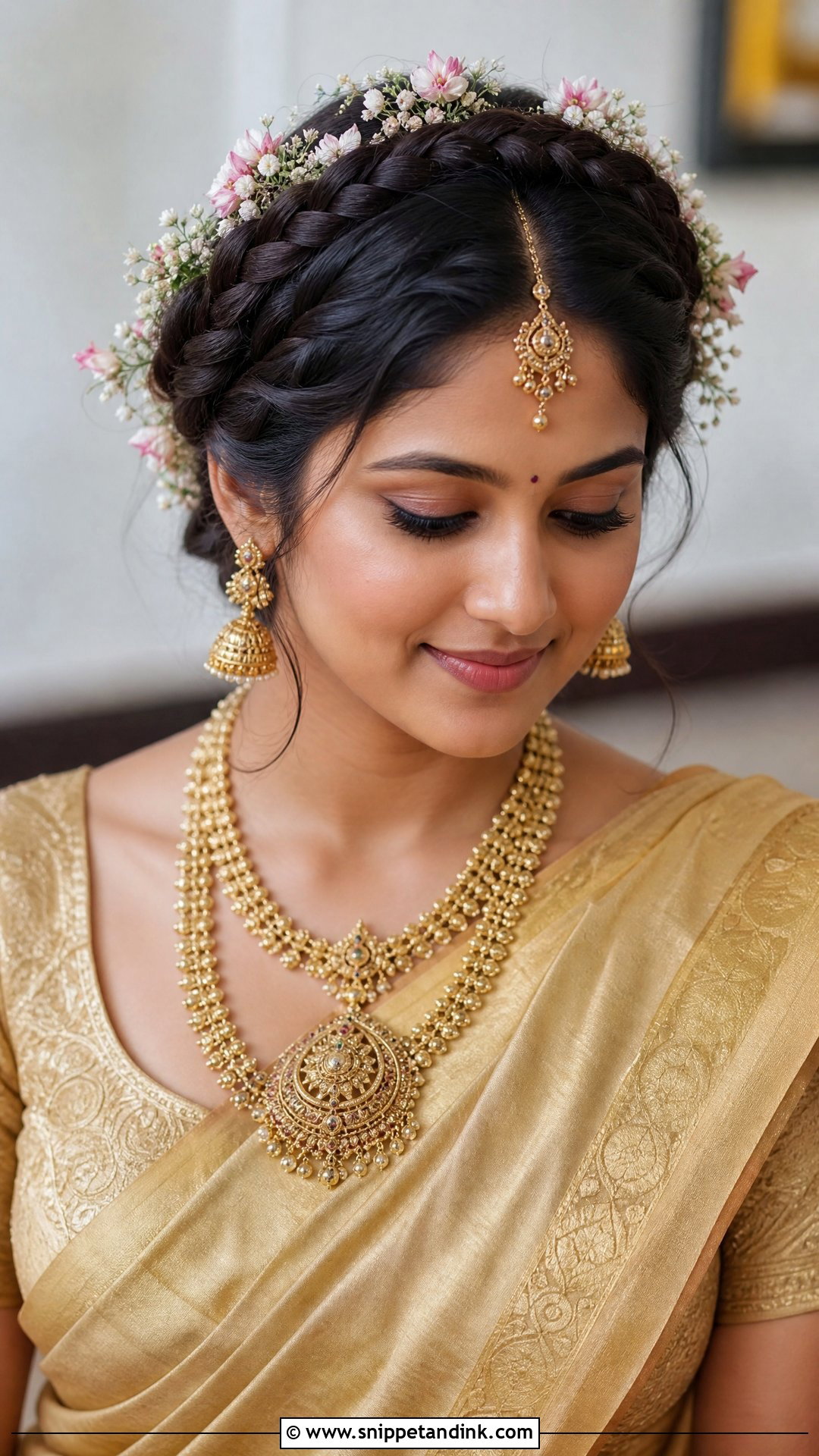
A braided crown keeps every strand off the neck, which matters in summer heat under a heavy silk saree. Part down the middle and braid each side. Lift the right braid over the top of the head and pin it near the left ear, then bring the left braid over and tuck its ends under the first. Pin into the braid itself, with the pin sliding along the plait, so it doesn’t show. Very short or layered hair may not reach across, in which case pin each braid at the back instead. Small flowers or pearl pins along the crown dress it up, and it looks right with traditional silk sarees and heavy jewellery.
9. Twisted Side Bun
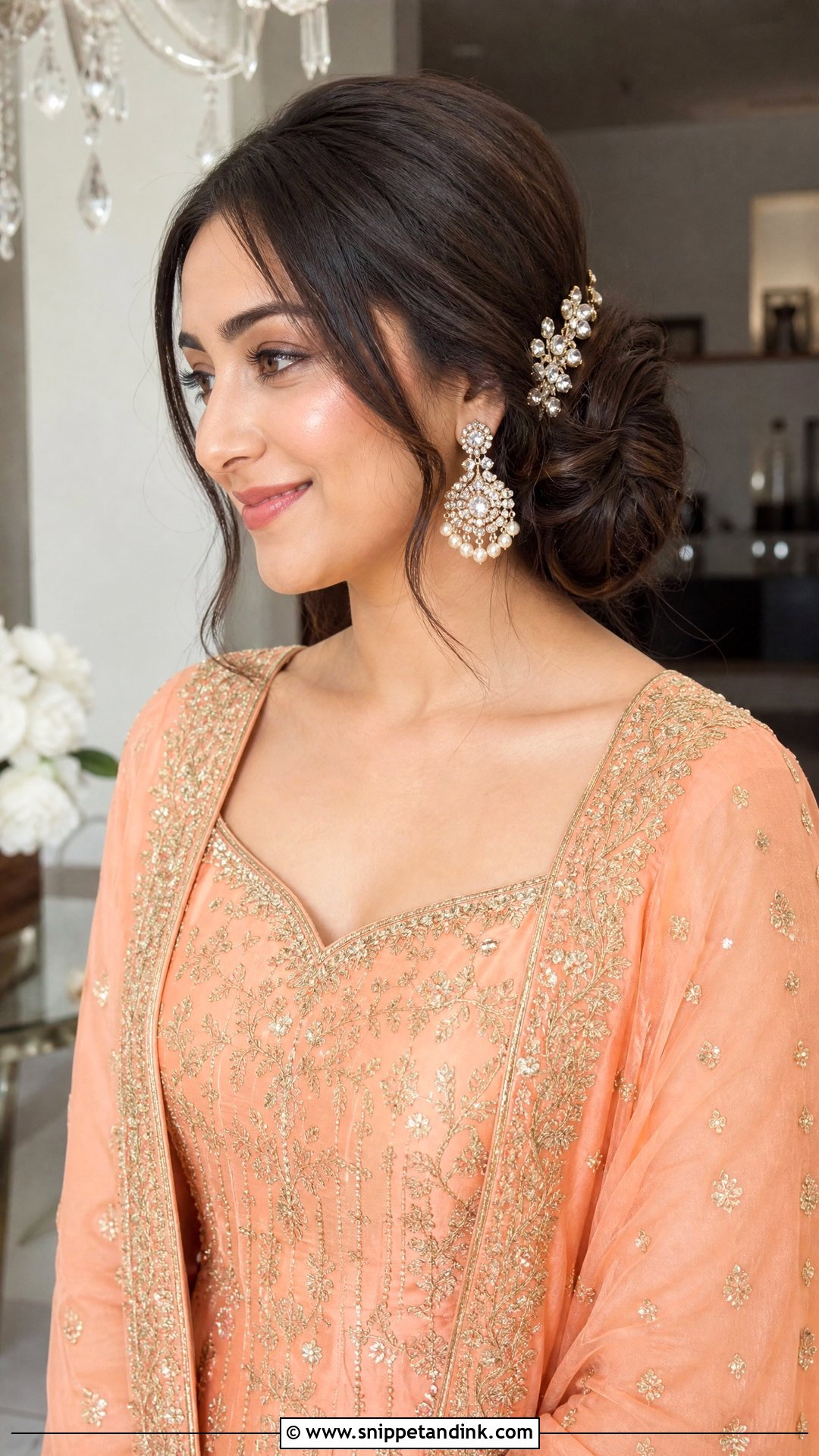
The twisted side bun is quick, and it’s my usual suggestion when someone wants to show off one big earring. Sweep all the hair to one side over your shoulder, twist the length until it starts to coil on itself, then wrap that rope into a bun low behind one ear and pin it. Leave a few soft pieces out to frame the face. Push the pins into the bun toward your head, not outward, so they grip the scalp. A flower or jewelled pin tucked into the coil adds sparkle. It works with sarees and anarkali suits, and a pallu draped over the opposite shoulder balances it well.
10. Front Puff With Open Hair
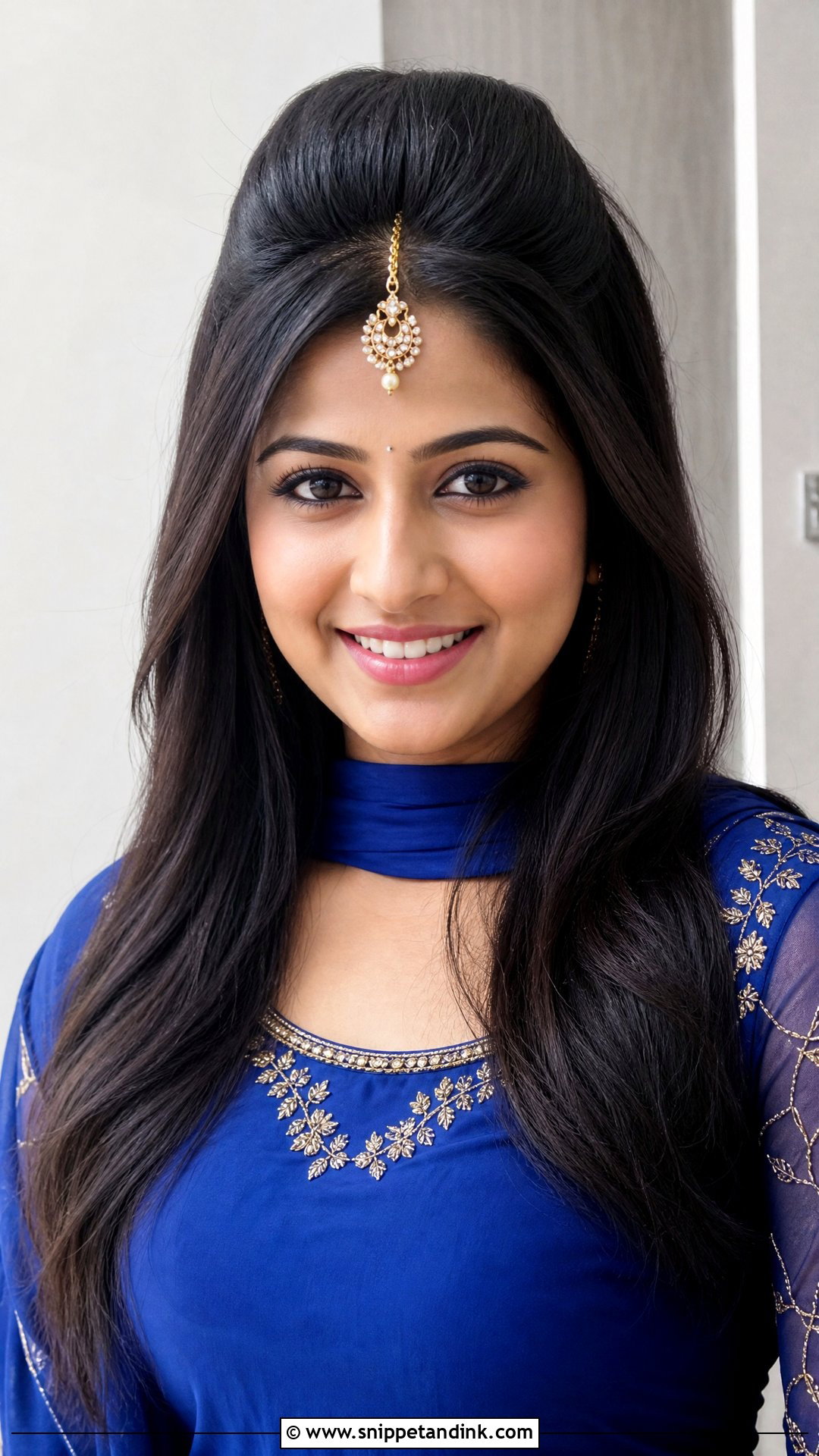
A front puff with open hair shows off length and volume at the same time, and it’s one of the oldest Indian wedding looks for a reason. Take the front section, tease it lightly underneath, smooth the top and pin it back to form a neat puff at the crown. Leave the rest open, straightened or lightly waved. A maang tikka centred on the parting in front of the puff finishes it. Open hair this long gets tangled in jewellery and dupatta pins, so keep your necklace clasp and dupatta away from the ends. It suits churidars, suits and lehengas, and it’s a reliable pick for daytime functions.
11. Fishtail Crown Braid
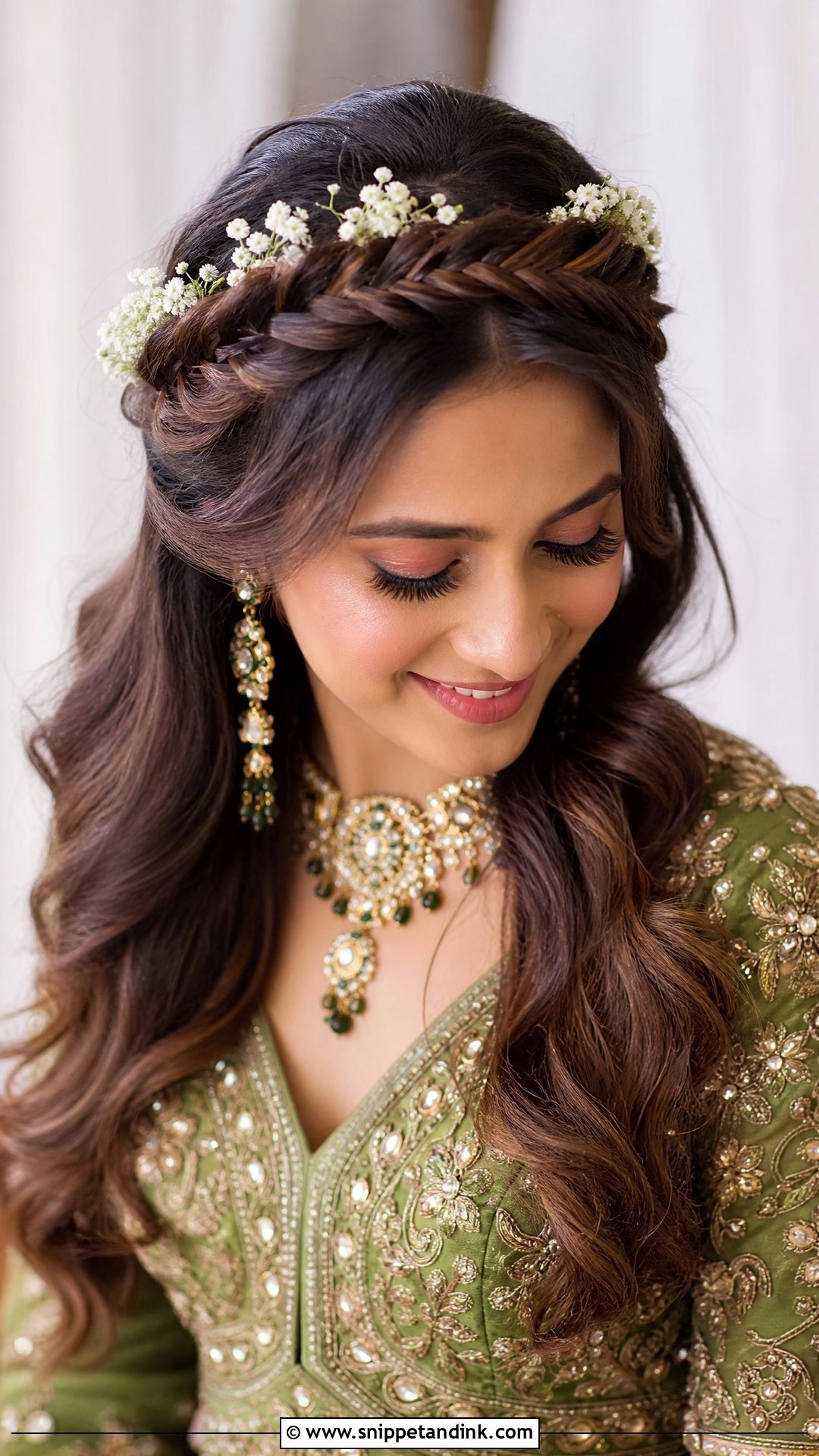
A fishtail crown is a fishtail braid that travels along the hairline, so it frames the face like a woven halo. Start near one temple, picking up thin strands as you braid along the front, then carry it around the back toward the opposite side and pin it. The fishtail weave looks far harder than it is. Leave the back hair open or tuck it into a low bun. Doing the back half on yourself is the tricky part, so practise with a phone propped up behind you. Small white flowers pinned along the braid suit mehndi and haldi celebrations.
12. Low Chignon With Center Part
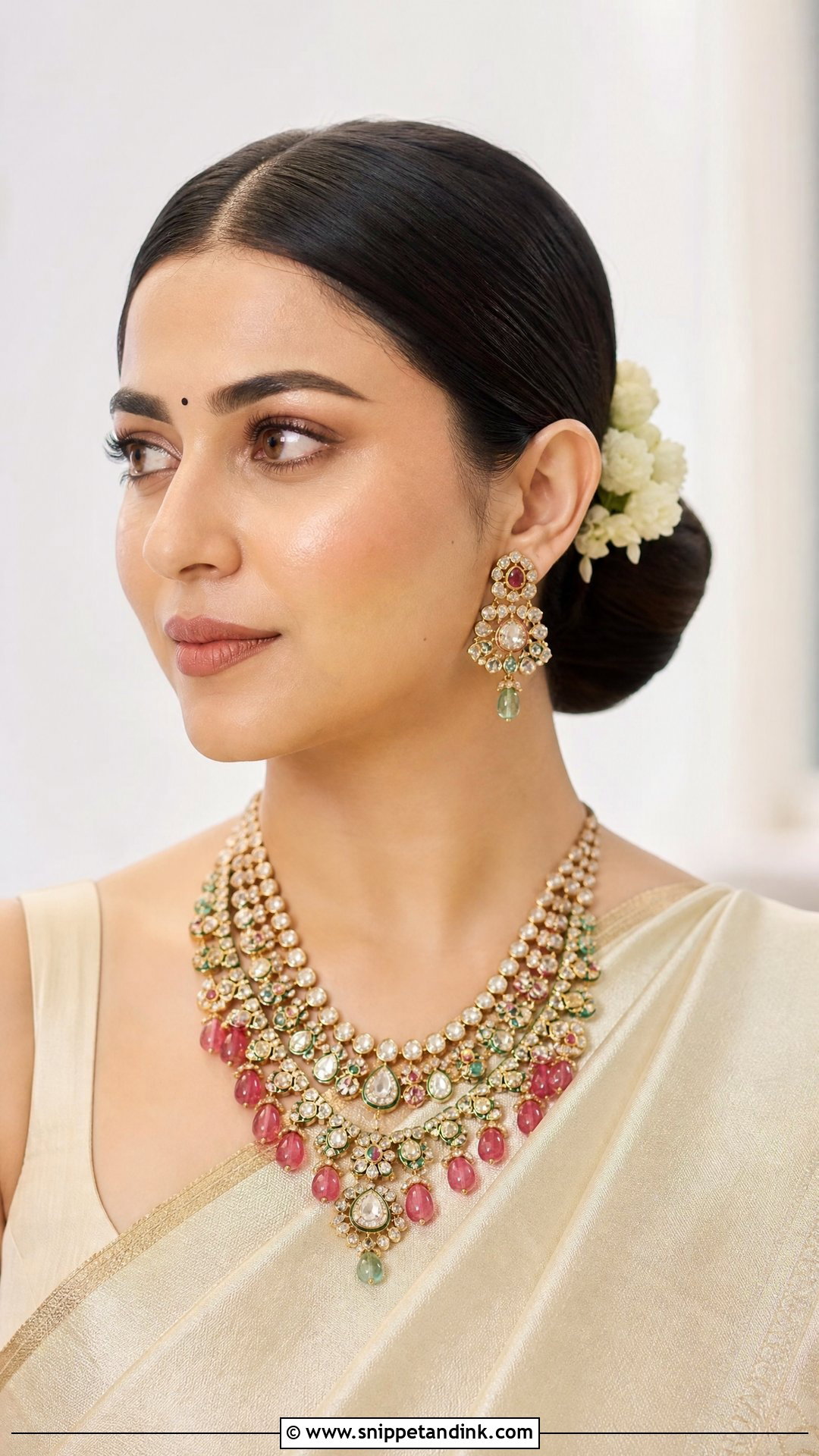
A centre-parted chignon is the quiet option that lets heavy jewellery do the talking. Part the hair straight down the middle, gather it into a low ponytail at the nape, then roll the length under and inward against your neck and pin it with pins hidden inside the roll. It sits beautifully under a heavy bridal necklace and a traditional saree, because nothing competes with them. A single statement pin or a small floral cluster on one side is enough decoration. If your part isn’t naturally straight, draw it with the tail of a comb from the middle of your brows; a crooked centre part shows instantly in a front photo.
13. Bubble Ponytail With Flowers
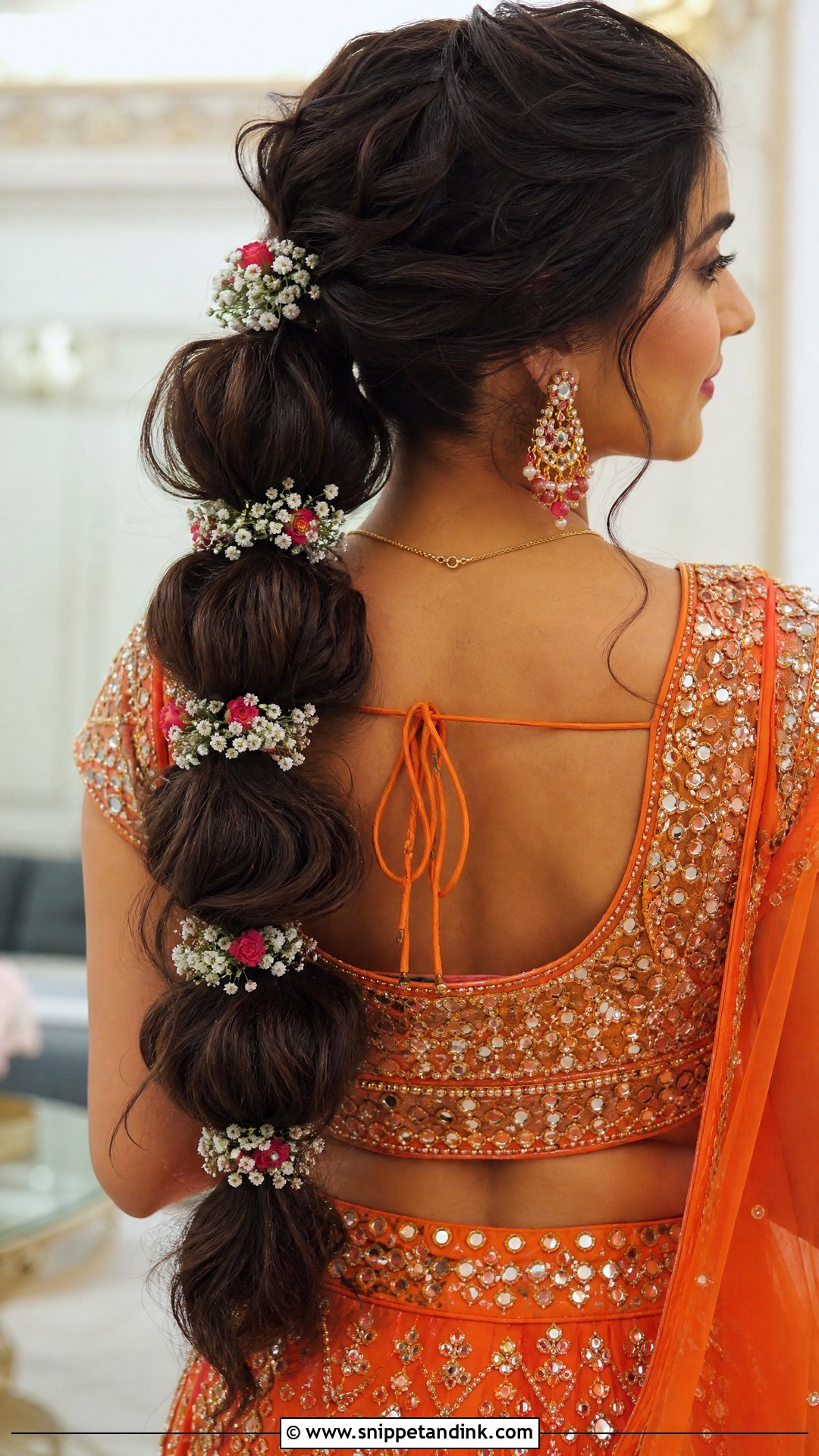
A bubble ponytail is the fun one, and it’s very popular with younger cousins at sangeet. Start with a high or mid ponytail, add clear elastics down the length at even intervals and gently tug each section out into a rounded bubble. Tuck small flowers between the bubbles for a festive touch. It holds well and bounces through dancing. Thin hair can look sparse once pulled apart, so tease each section lightly first. It suits bright lehengas and Indo-western outfits, and it really comes alive at sangeet nights, where there’s music and movement for hours.
14. Side Swept Curls
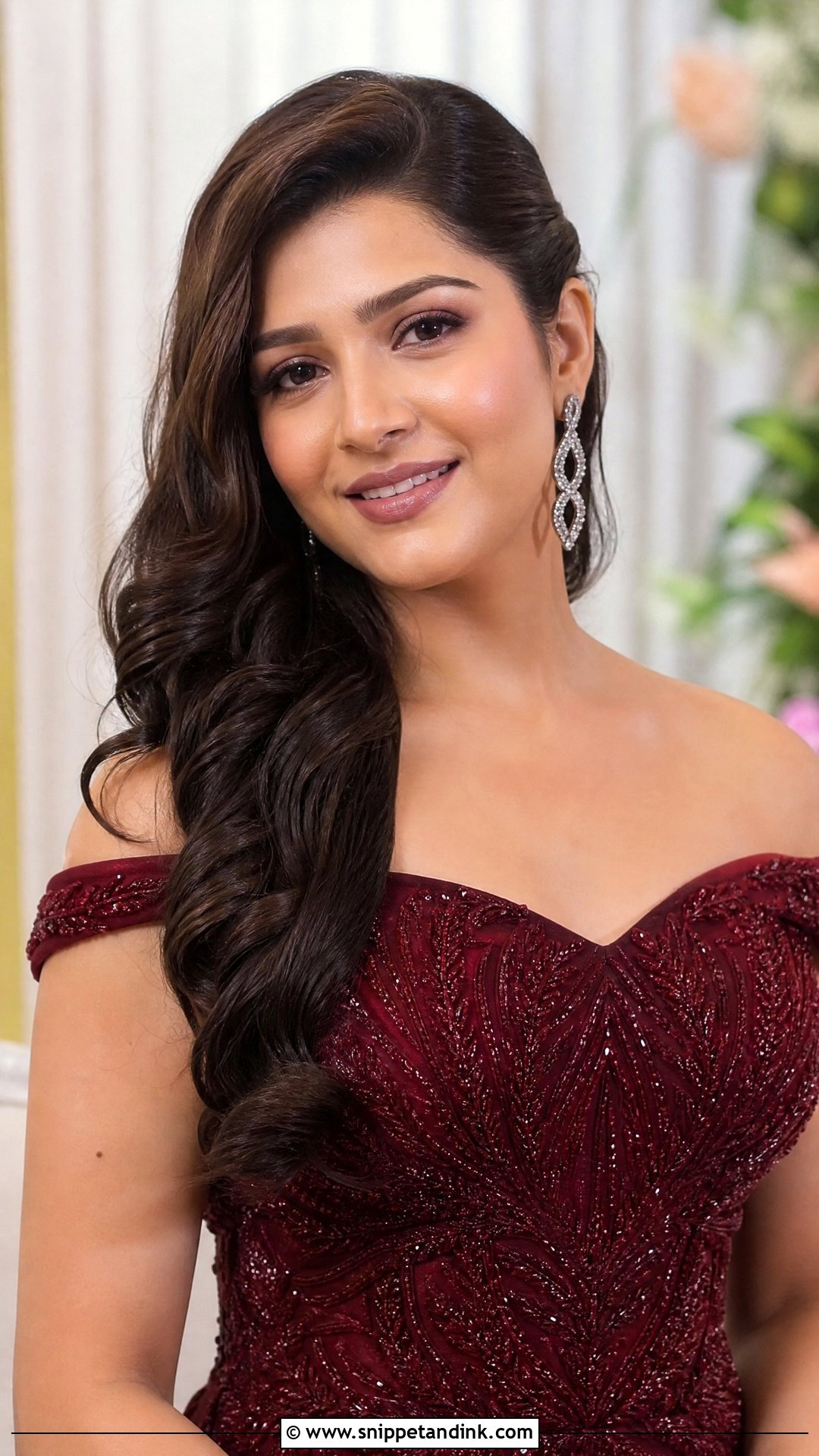
Side-swept curls are old Hollywood with an Indian twist. Curl the whole length into deep waves with a large barrel, sweep them to one shoulder and pin firmly behind the ear on the bare side so the sweep holds. The exposed side shows off earrings and necklace work. A light mist of hairspray keeps it in place. If you’re wearing a saree, sweep the hair to the side opposite the pallu, so they don’t tangle together over one shoulder. It suits sarees, gowns and lehengas, and it’s a strong choice for a reception where you’ll be photographed a lot.


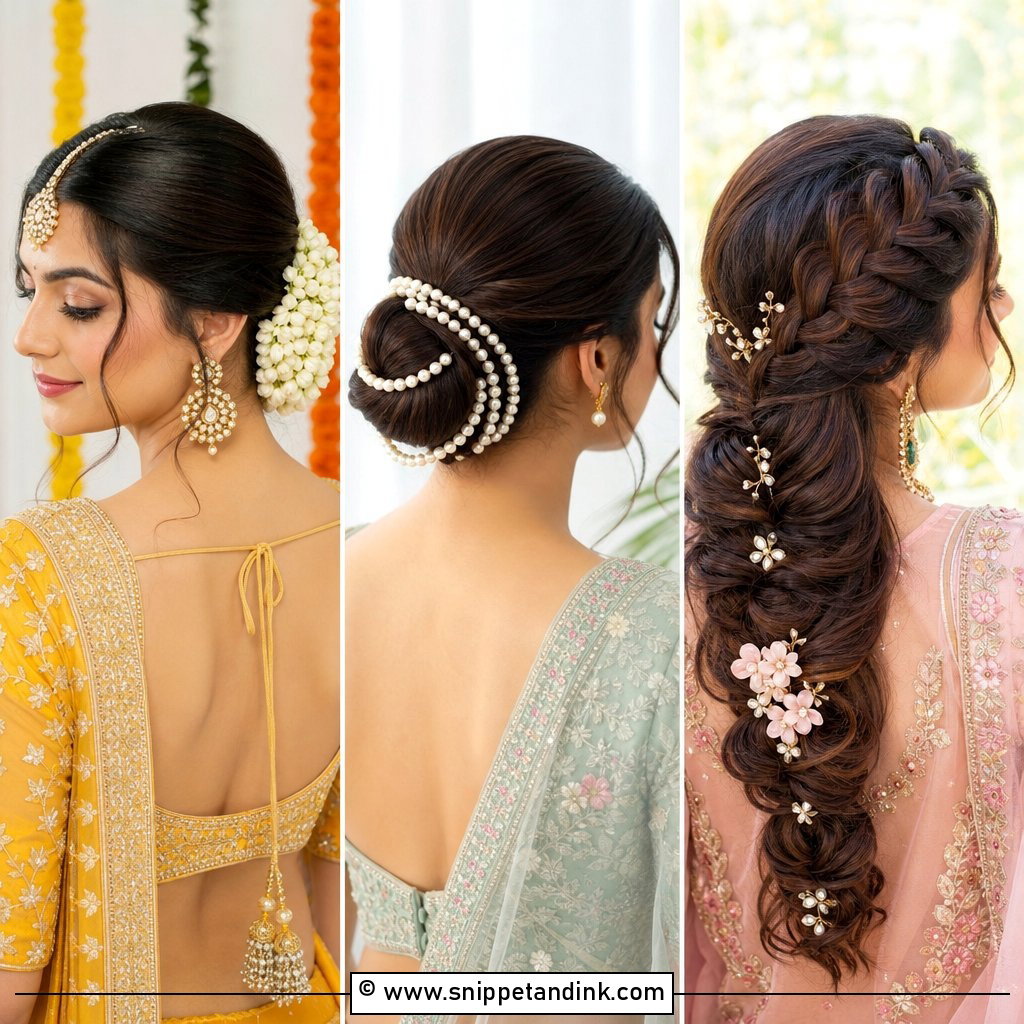
15. Double Braid Into Bun
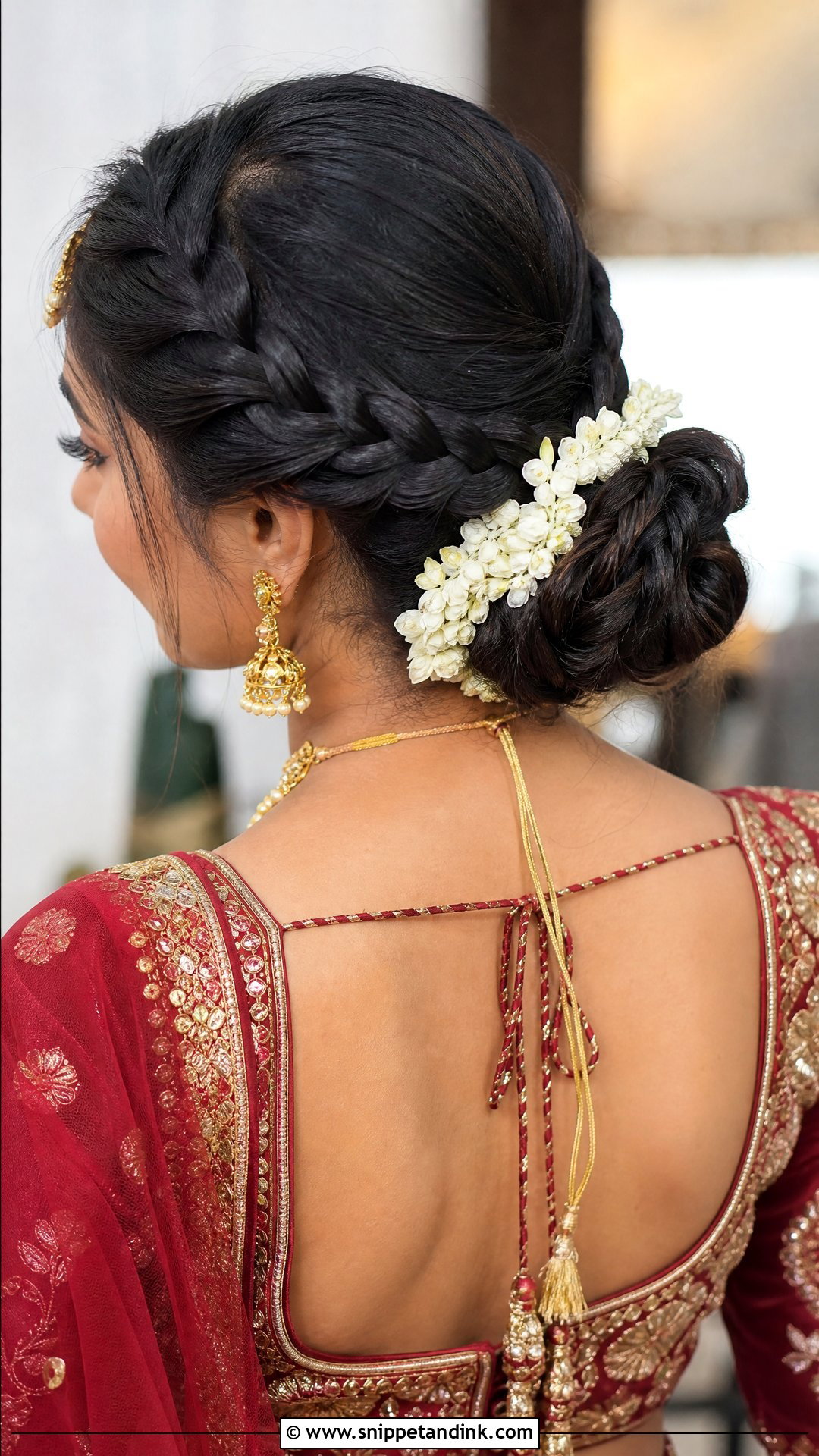
Two small braids feeding into a bun give it detail at the crown without much extra work. Braid a small section from each temple, bring both braids back and gather them with the rest of the hair, then twist everything into a low bun and pin. The braids add texture around the head. Fresh gajra or pearl pins on the bun give it a festive finish. It’s neat, it’s secure and it lasts through long ceremonies, which makes it a practical pick for anyone sitting through the pheras. Very fine hair can make the side braids look thin, so pancake them gently after pinning.
16. Maang Tikka With Open Waves
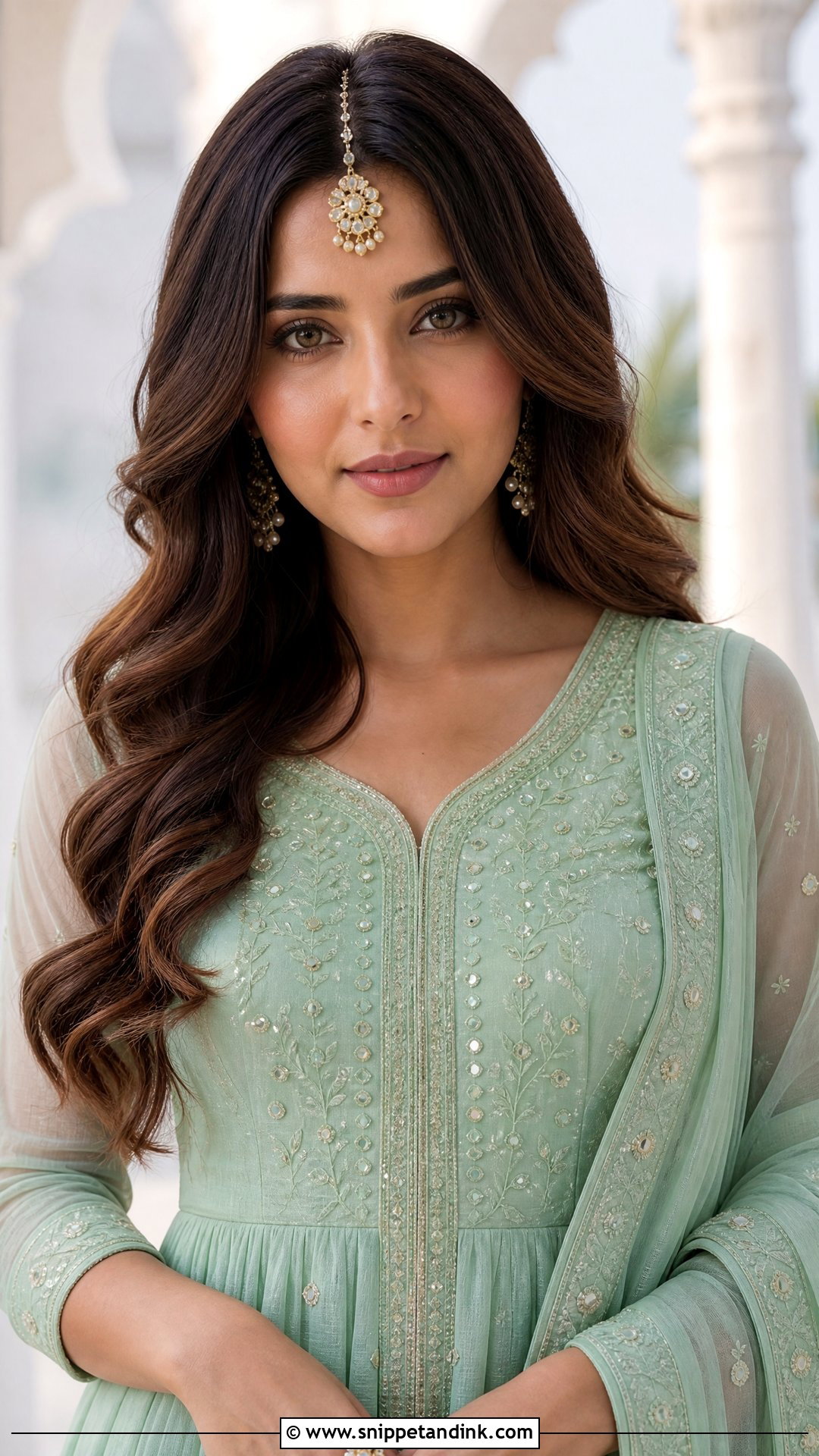
Open waves with a tikka are the easiest look on this list, and the jewellery is what makes it wedding-ready. Wave the mid-lengths and ends with a wand and brush through gently. Part the hair in the centre. Then place the maang tikka along the parting so it rests on your forehead. Most tikkas have a small hook at the top; pin it into the hair with a bobby pin through the hook, and add a second pin behind it, otherwise it swings sideways when you look down. It goes with almost every outfit, from lehengas to anarkalis, and suits anyone who likes a natural finish.
17. Rose Bun Updo
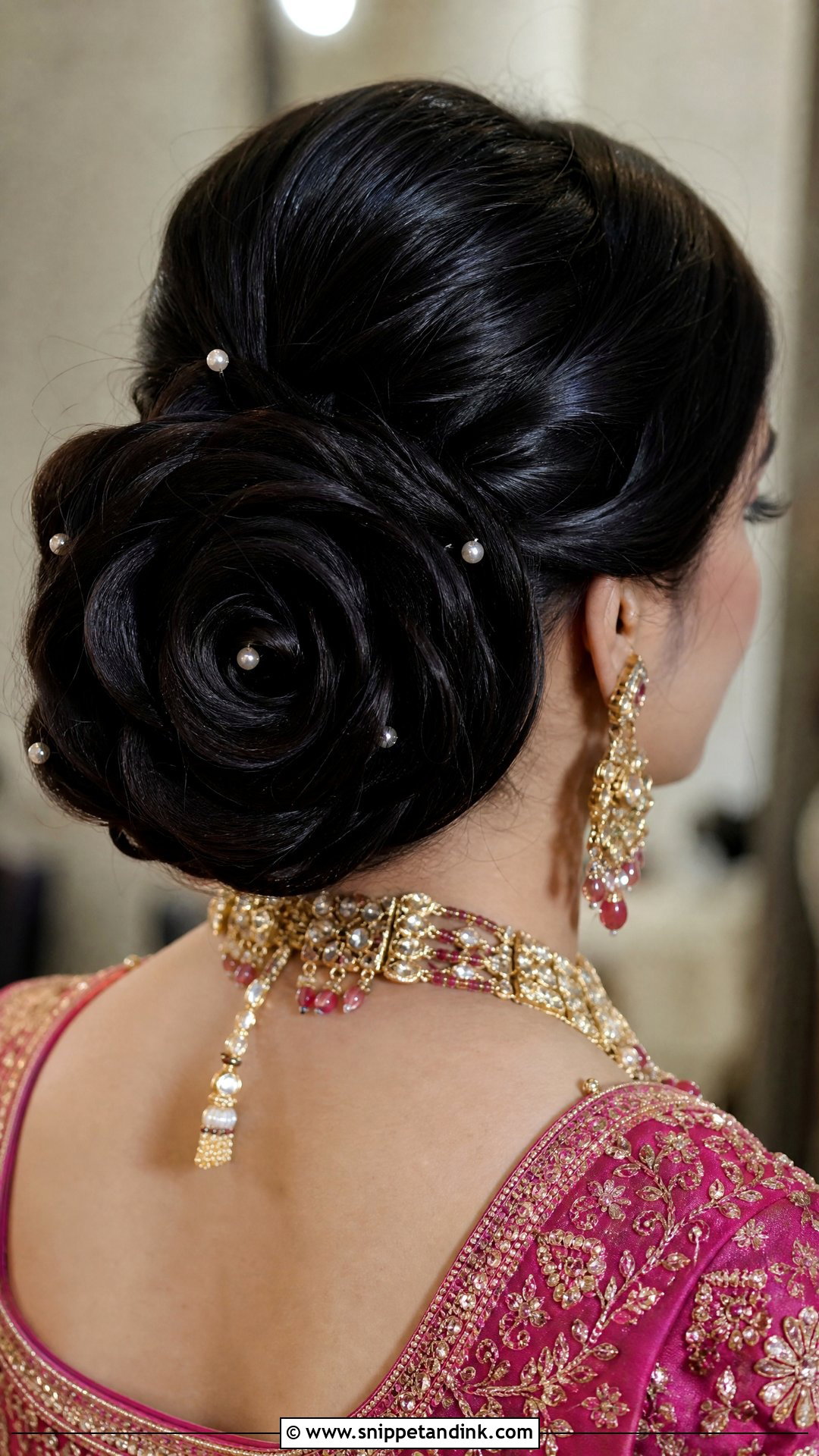
A rose bun is a coil of hair layered like petals, and it looks far more intricate than it is to make. Start with a low ponytail, twist the length into a long rope, then coil it around the base, letting each loop sit slightly over the last like petals. Pin each loop as you go, angling the pins into the centre. A small pearl pin or a real flower in the middle finishes it. On short or thin hair the rose comes out small, so add a hair donut underneath or skip this one. It pairs with heavy bridal sarees and lehengas, and it’s a showpiece for reception evenings.
18. Half Braided Half Open Style
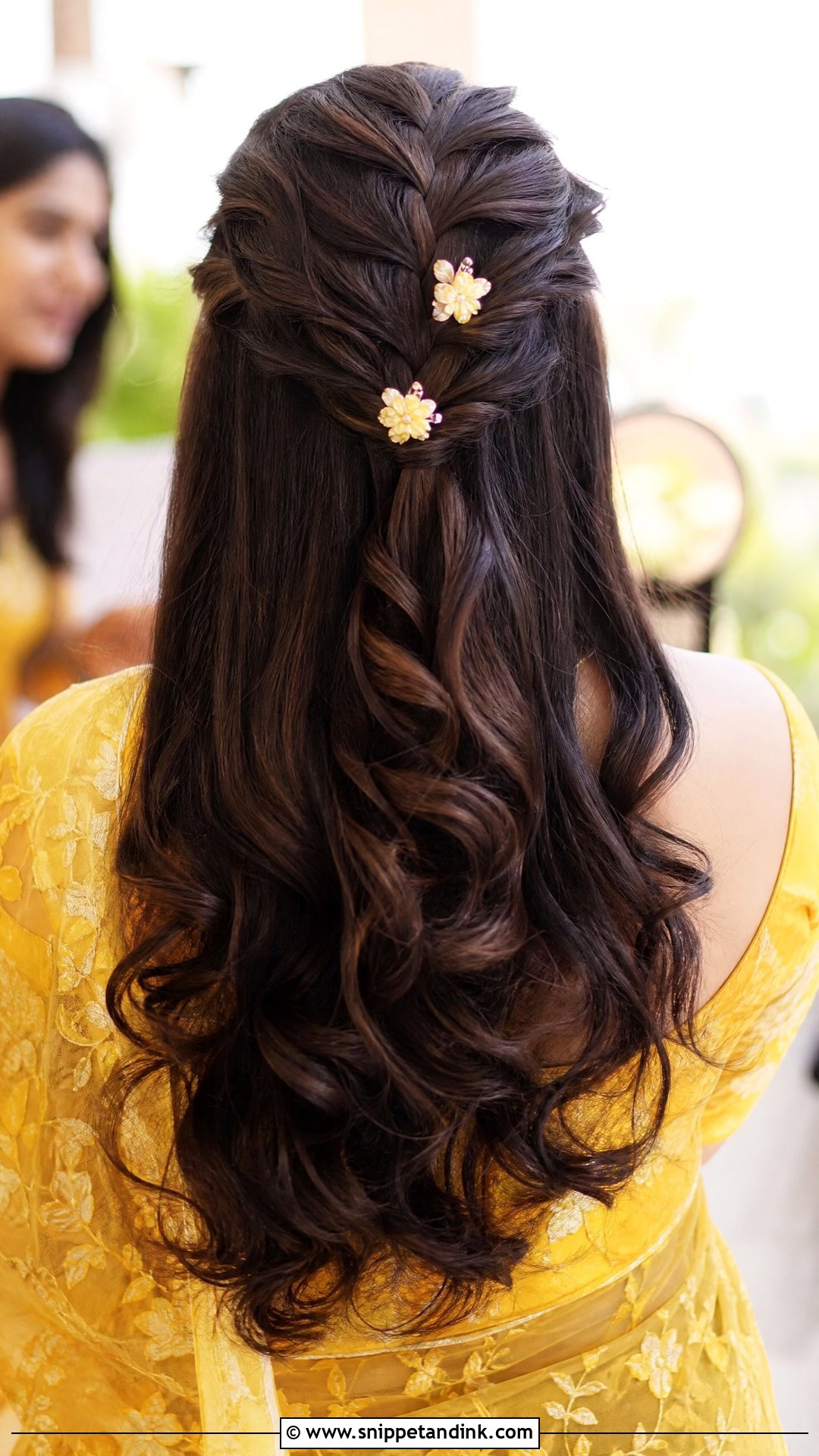
A half-braided style shows off length while keeping the top neat. Take the top half of the hair and braid it loosely down the centre back of the head, then leave the bottom half open and curl the ends if you like. Small flowers or delicate clips along the braid make it wedding-ready. Long and medium hair both suit it. It’s comfortable for long daytime functions, but at haldi I’d skip any open hair; turmeric paste stains light hair and is hard to wash out, so tuck everything up and away for that ceremony.
19. Sleek Bun With Maang Tikka
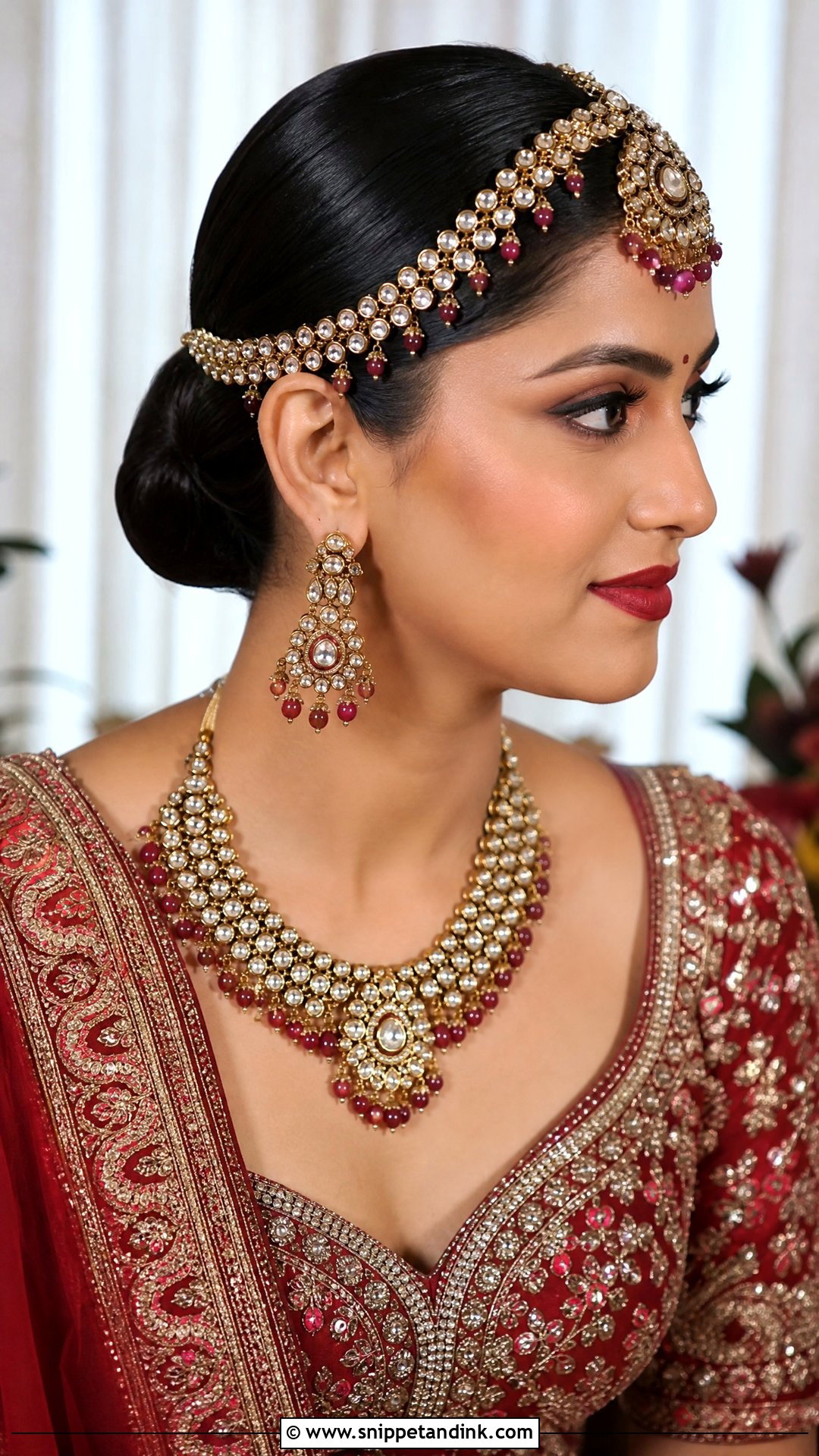
A sleek bun lets accessories do the talking. Smooth the hair back with a brush and a little gel for a polished base, gather it into a low or mid ponytail, then wrap and pin it into a neat, tight bun. Add a maang tikka or matha patti along the hairline. It suits heavy jewellery and statement outfits and stays put for hours without fuss. The caution here is gel: too much and the hair looks wet and stiff in photos, too little and baby hairs frizz by the evening. Work a small amount through with a toothbrush along the hairline only. Formal ceremonies are where it fits best.
20. Flower Adorned Loose Braid
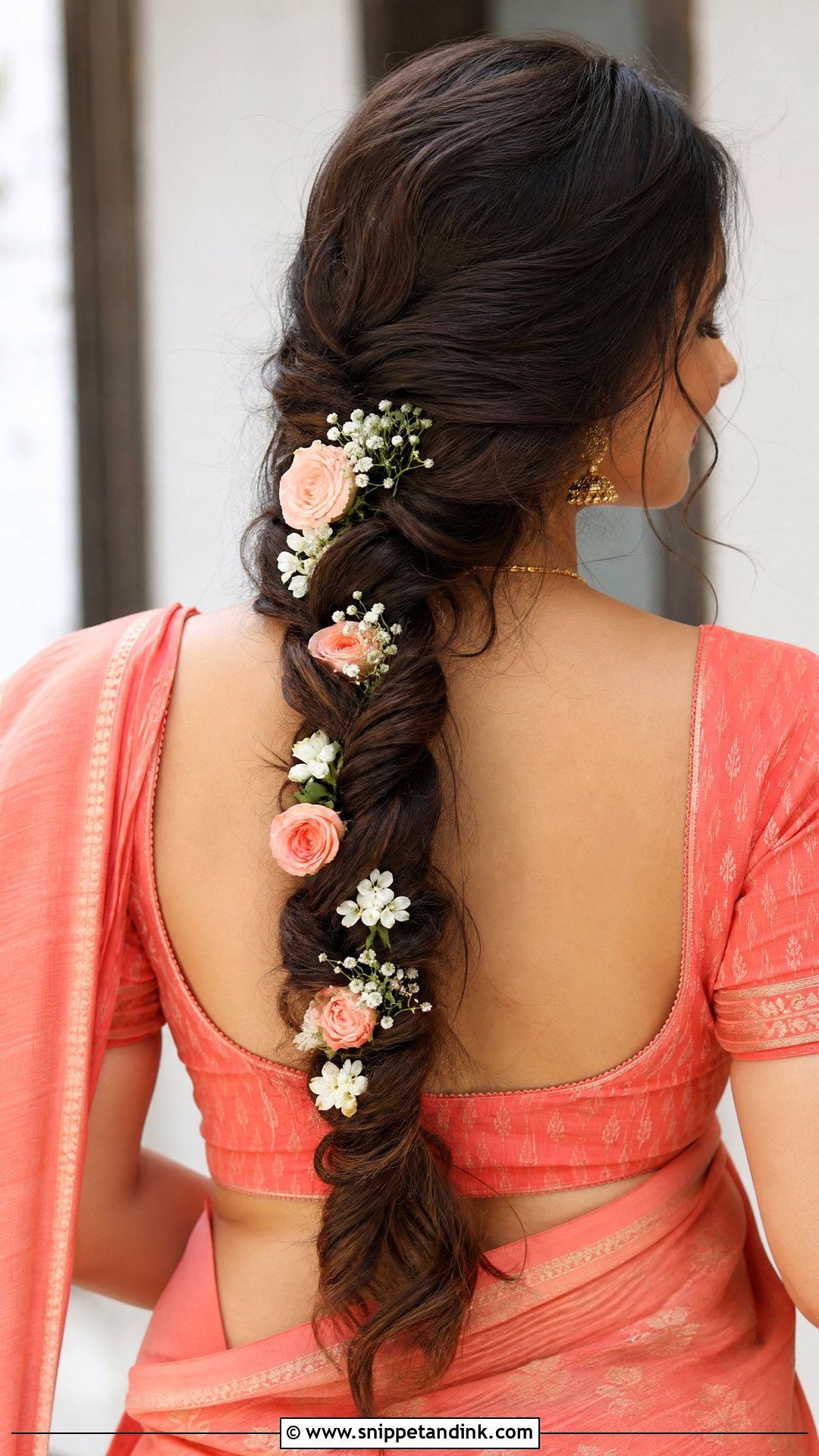
A loose braid filled with flowers is my favourite for daytime functions. Make a simple three-strand braid down your back, keeping it relaxed, then tug the edges gently to widen it. This pancaked effect makes it look fuller. Weave fresh roses, jasmine or marigolds into the sections. Fresh flowers are heavier than you’d think, so space them out evenly and pin each one through the braid, not just into the surface. It works for all hair lengths, and it suits mehndi and haldi celebrations, especially with bright lehengas and cotton sarees.
Gajra, Tikka and Dupatta: Getting the Extras to Stay Put
Keeping a gajra fresh
Jasmine buds open and brown within hours in heat. Buy the gajra the morning of the function, wrap it in a damp cloth and keep it in the fridge until you’re ready. Pin it on last, after hairspray, because the spray turns the petals brown.
Pinning a dupatta over your hair
If your dupatta covers your head, build the hairstyle low. A puff or a high bun lifts the fabric and makes it slide backward. Pin the dupatta into the bun itself with two U-pins, then add a safety pin to the blouse at the shoulder.
Three Functions, One Head of Hair
When you’re doing your hair across several days, plan the order. Heat styling every day dries the ends quickly, so I’d use a braid or bun for haldi, when turmeric can stain, then wash it out. A braid slept in overnight gives free waves for mehndi. Save the curls and puff, which need the most heat, for the sangeet or reception, when photos matter most.
Three Pins, One Mirror, and a Practice Run
Doing your own wedding hair is very doable with a handful of pins, elastics and fresh flowers. The key is practising once or twice before the function so you know how long it takes and where your arms get tired. Start with a low bun or a loose braid if you’ve never done this before, then try a fishtail or Dutch braid once you’re comfortable. Add accessories like a maang tikka, a gajra or pearl pins to make it feel festive. And keep a small pouch of pins with you, because a long night of dancing always loosens something.
You'll Like These Ideas:


Leave a Reply