
Haldi and mehndi are the two events where I dress people for what is going to happen to their bodies, not just for the photos. At a haldi, wet turmeric paste lands on the face, arms and feet, and often on the clothes too. At a mehndi, the bride sits still for hours with drying paste on her hands, while everyone else dances. So the details that matter here are fabric weight, sleeve length and how the dupatta stays put, alongside the fun parts like mirror work, gota patti, floral jewellery and printed dupattas. Haldi leans toward yellow, mustard, orange, lime and ivory; mehndi toward green, teal, pink and coral. Here are the outfits I’d put on brides, sisters and guests for both, with notes on where each one works and where it struggles.
Dress for the Ritual Your Role Puts You In
Before colour or embroidery, I ask a client one thing: how close to the paste will you be? A bride at the haldi gets turmeric on the face, arms, neck and feet, often from several relatives at once. A sister may be applying it. A guest might never be touched. That one answer decides the fabric, the sleeve and how much the outfit is allowed to cost.
If you are in the middle of it
Go sleeveless or short-sleeved, choose cotton, cotton silk or georgette that can be washed, and treat the outfit as something that may not come out perfect. Floral jewellery is ideal because you won’t mind if it gets stained. Leave real gold and kundan sets for later events.
If you are watching or helping
You can go lighter in colour and finer in fabric, but still avoid long trailing dupattas, which drag through bowls of paste and petals on the floor. For the mehndi, the bride needs sleeves well above the elbow and a neckline that won’t need adjusting while her hands are wet.
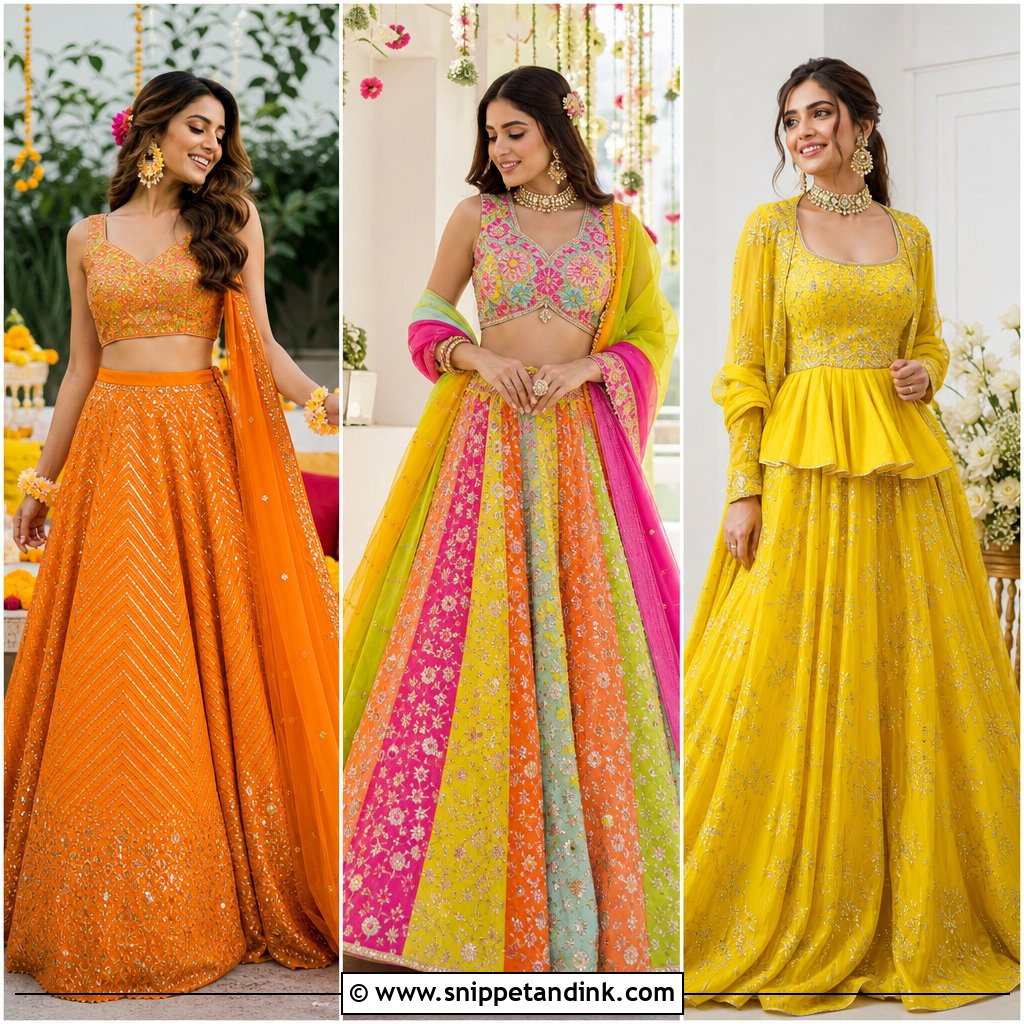
1. Yellow Lehenga For Haldi
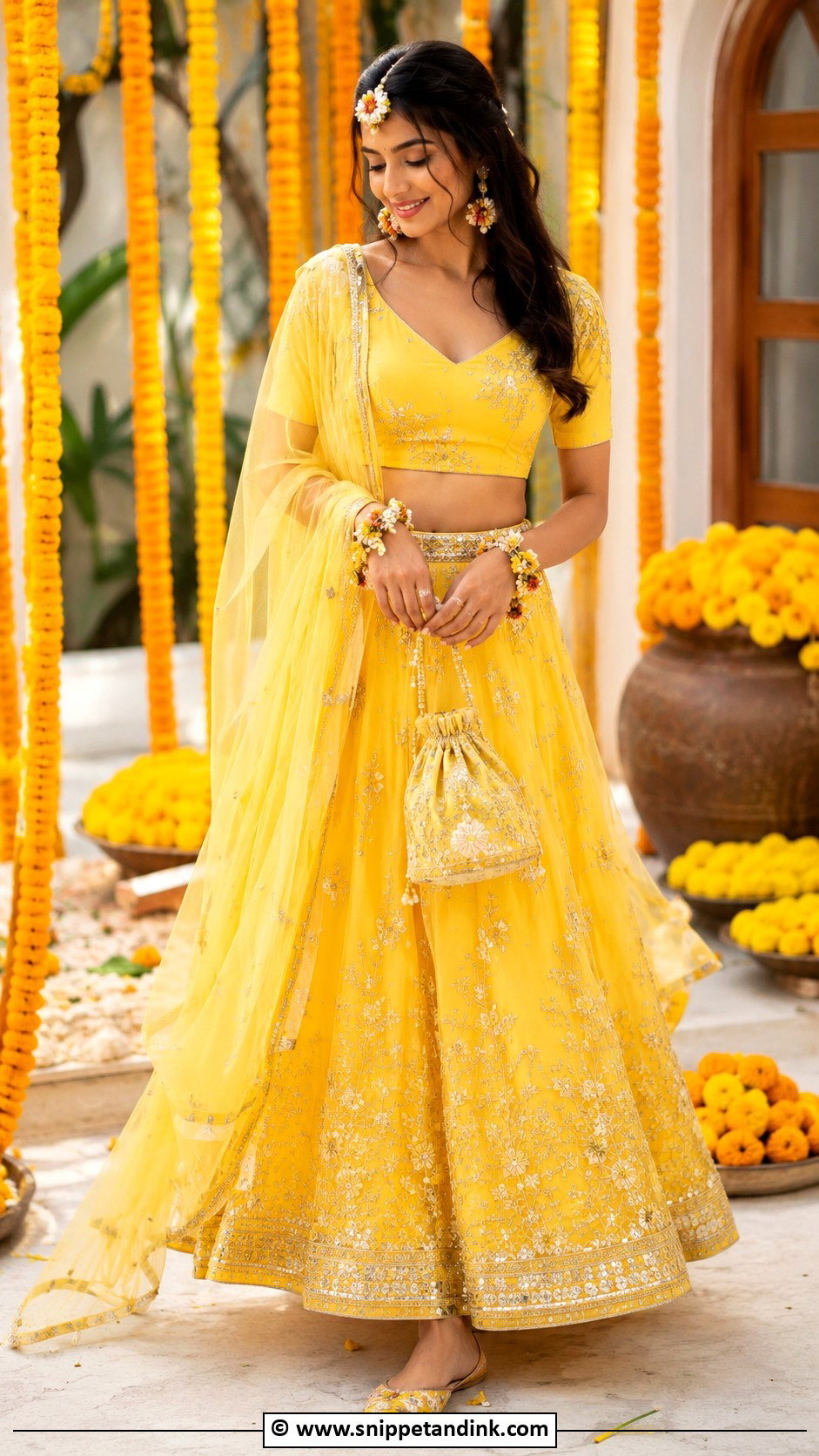
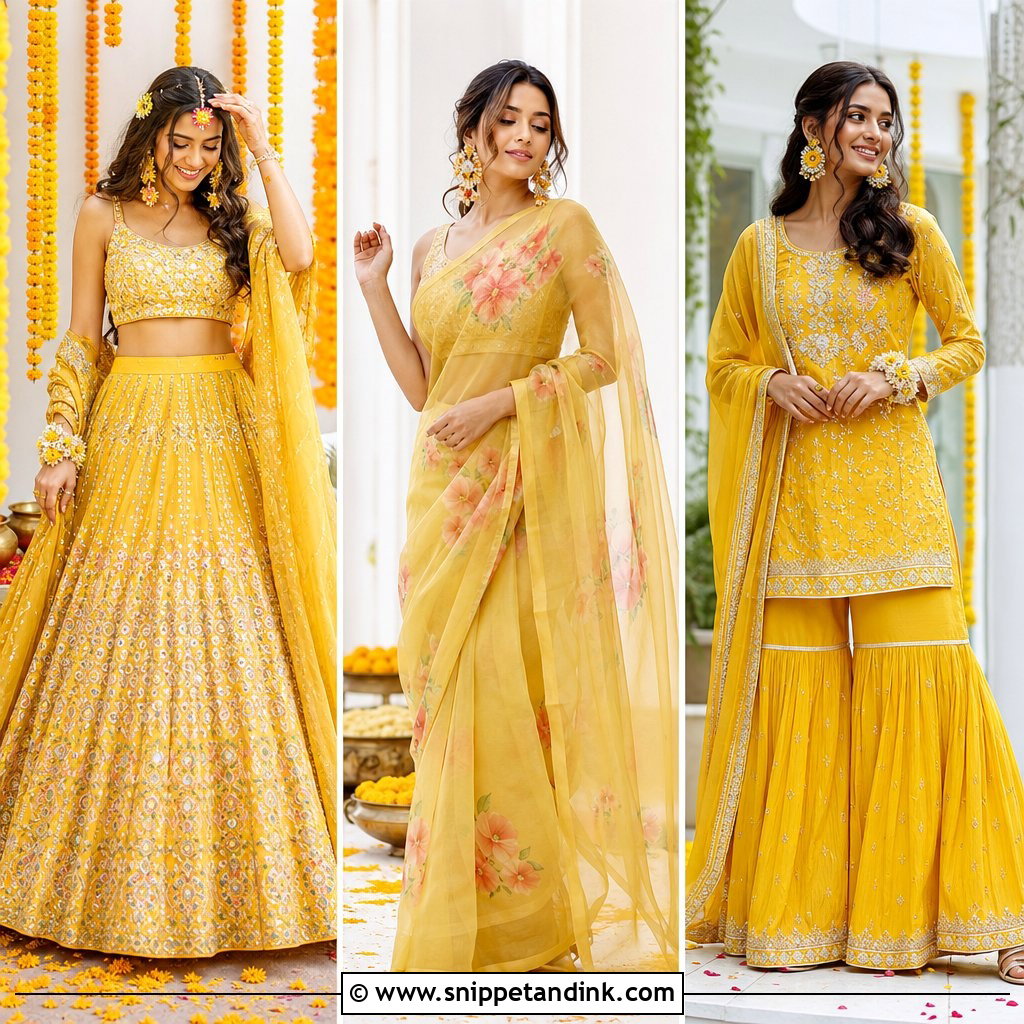
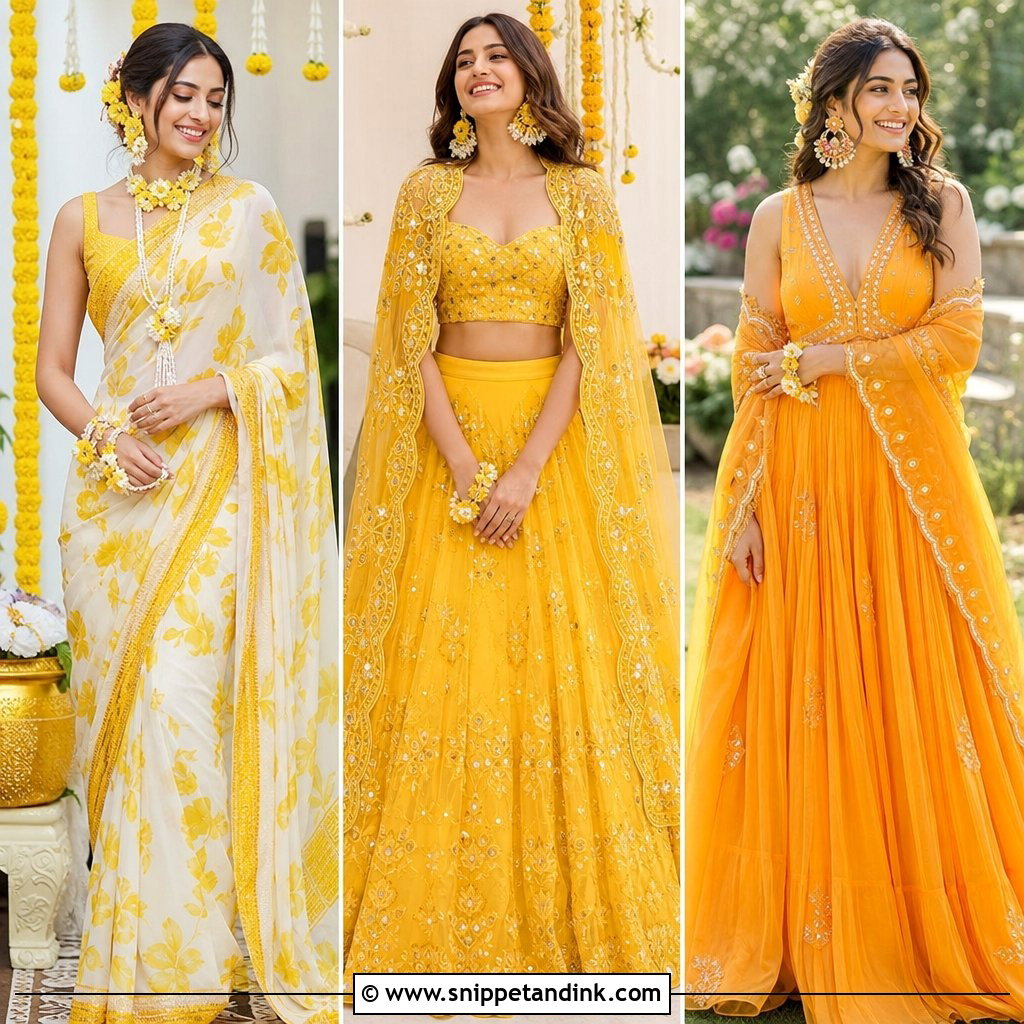
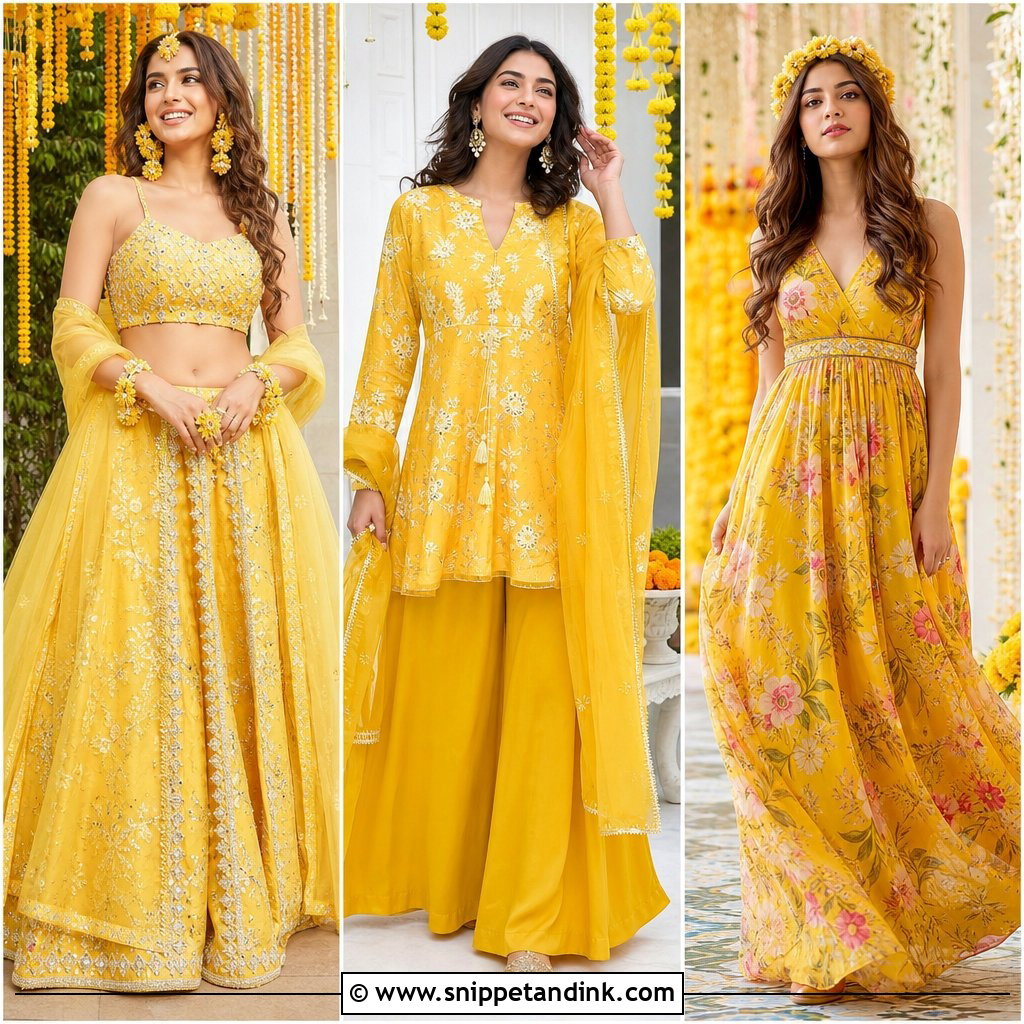
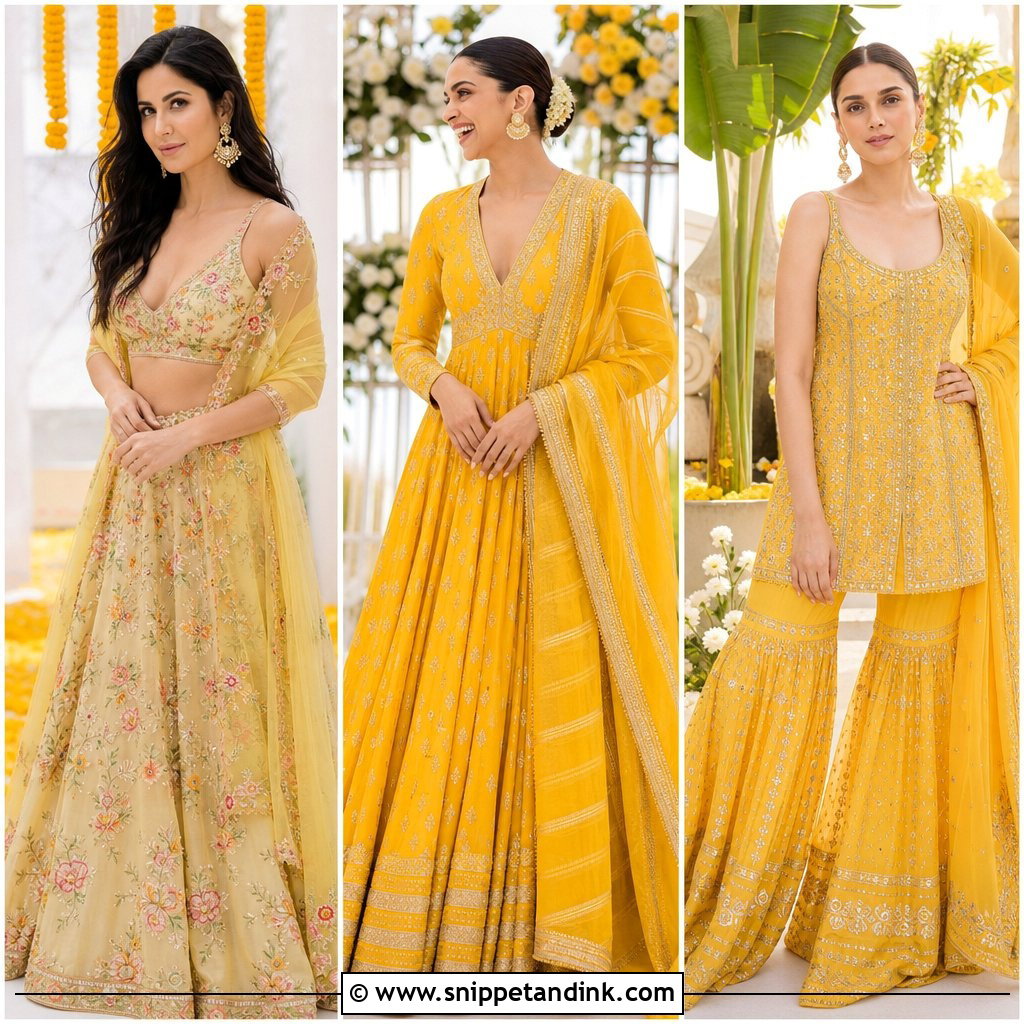
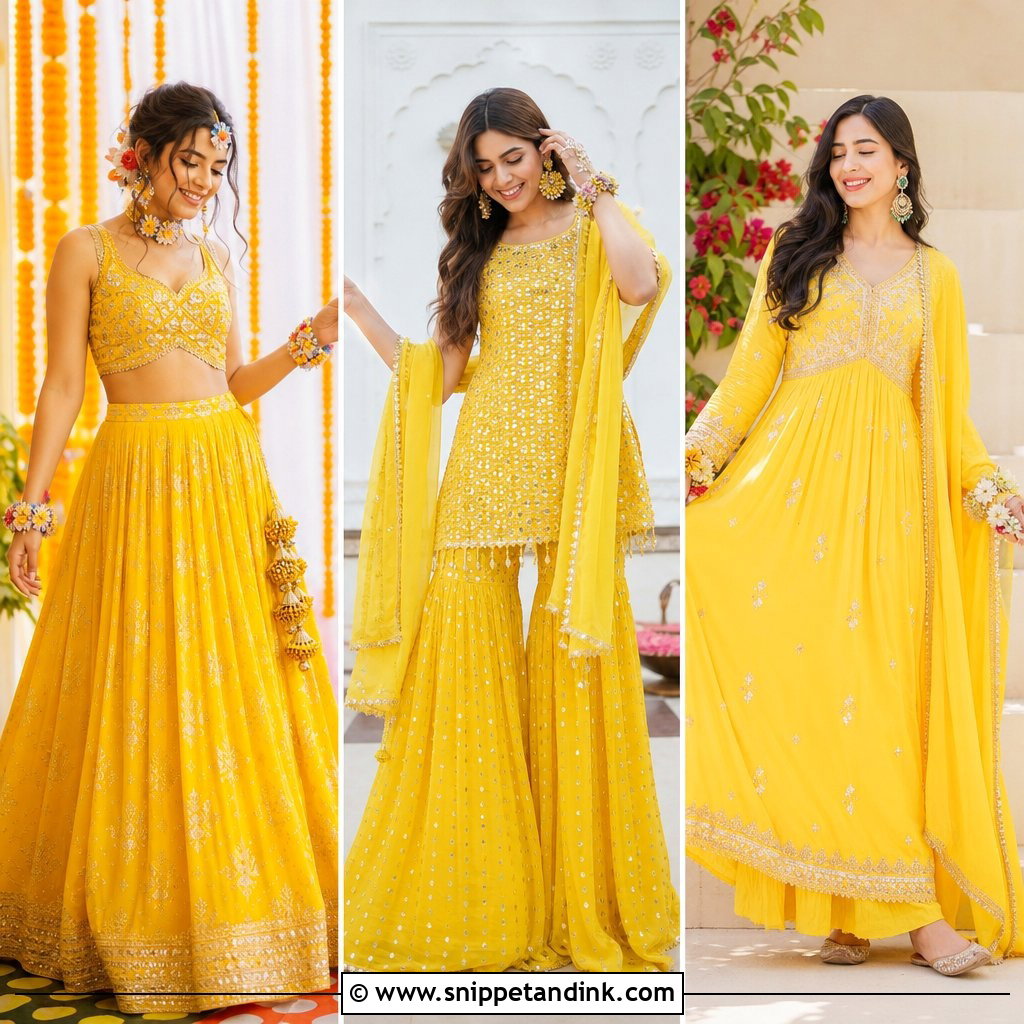
Yellow is the haldi default for a practical reason: turmeric marks blend into it, while on pale fabric they shout. I steer brides toward a lightweight cotton silk or georgette lehenga rather than heavy silk, because the paste is wet and the skirt will get handled. A sleeveless or short-sleeve blouse lets the family apply haldi to the arms without smearing it into the fabric. Floral jewellery replaces metal here, partly because it survives turmeric better. Guests can skip the full set and wear statement earrings with lighter embroidery.
2. Green Lehenga For Mehndi
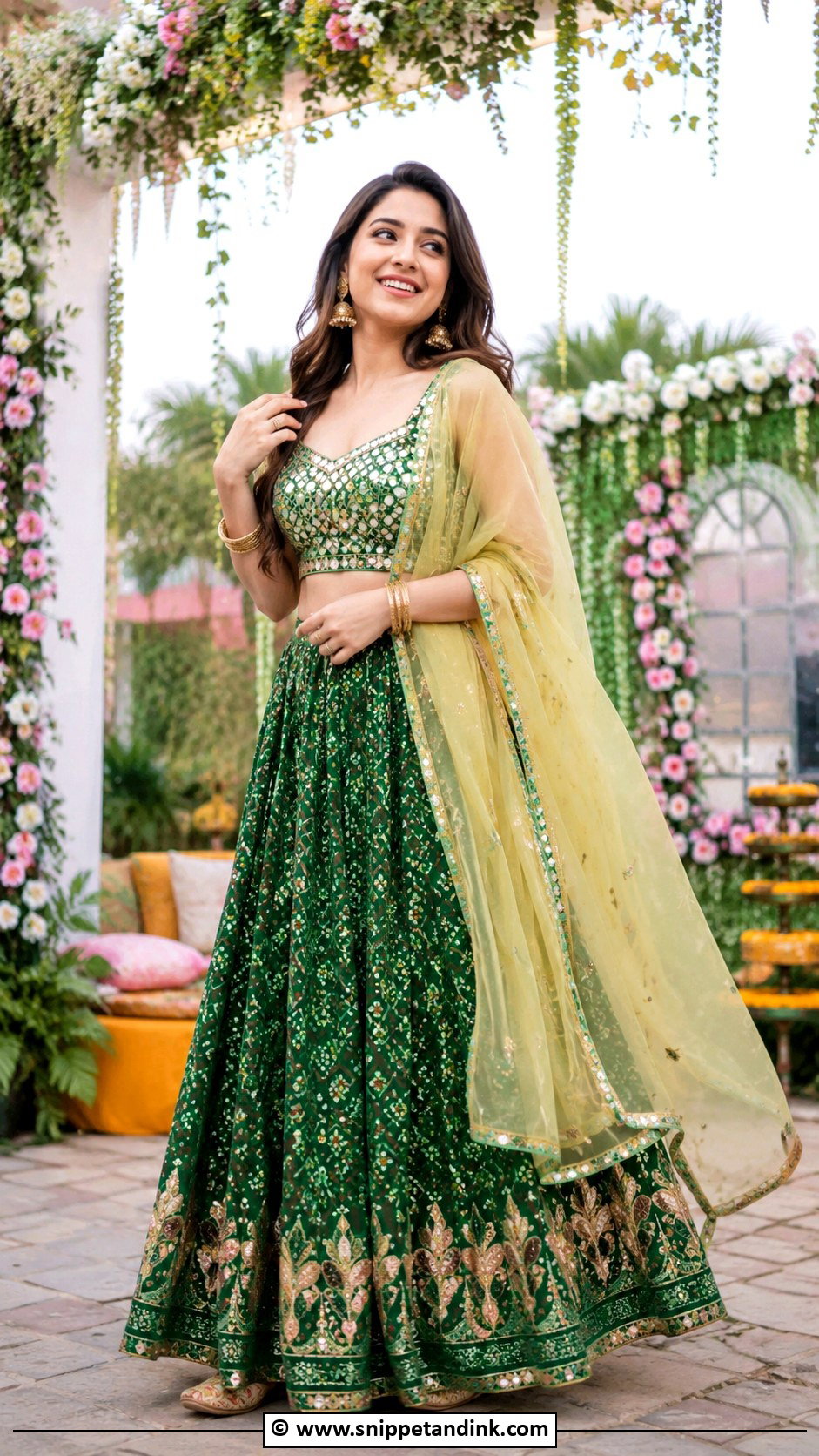
A green lehenga ties into the henna and the garden decor of most mehndis. I pick the green by formality: parrot and olive for a relaxed afternoon, emerald or deep sage for an evening event. Printed skirts with a mirror-work blouse feel lively; silk or embroidered ones look more bridal. The detail I check first on any mehndi blouse is the sleeve. If it reaches past the elbow, the artist can’t work the forearm, and the paste will brush the fabric. Bangles go on one hand only, and a side braid with flowers stays out of the way.
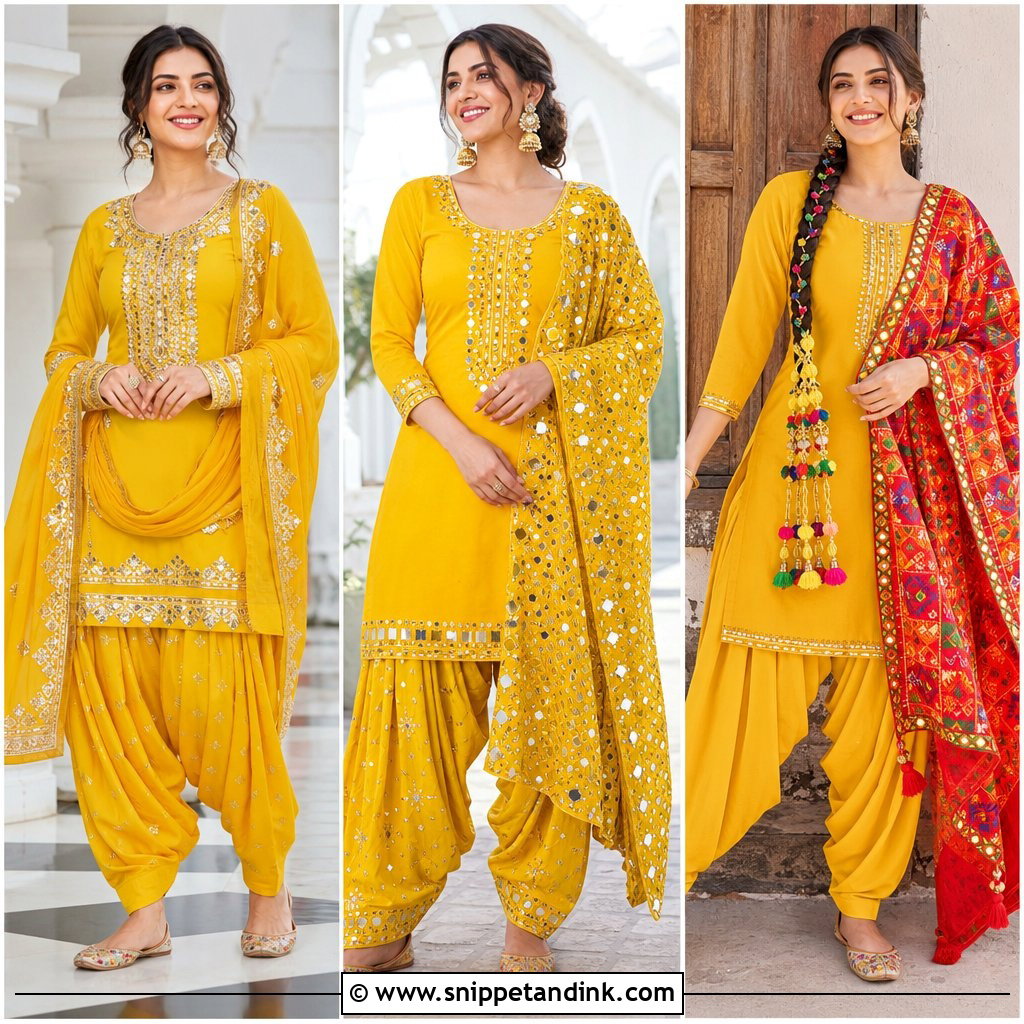
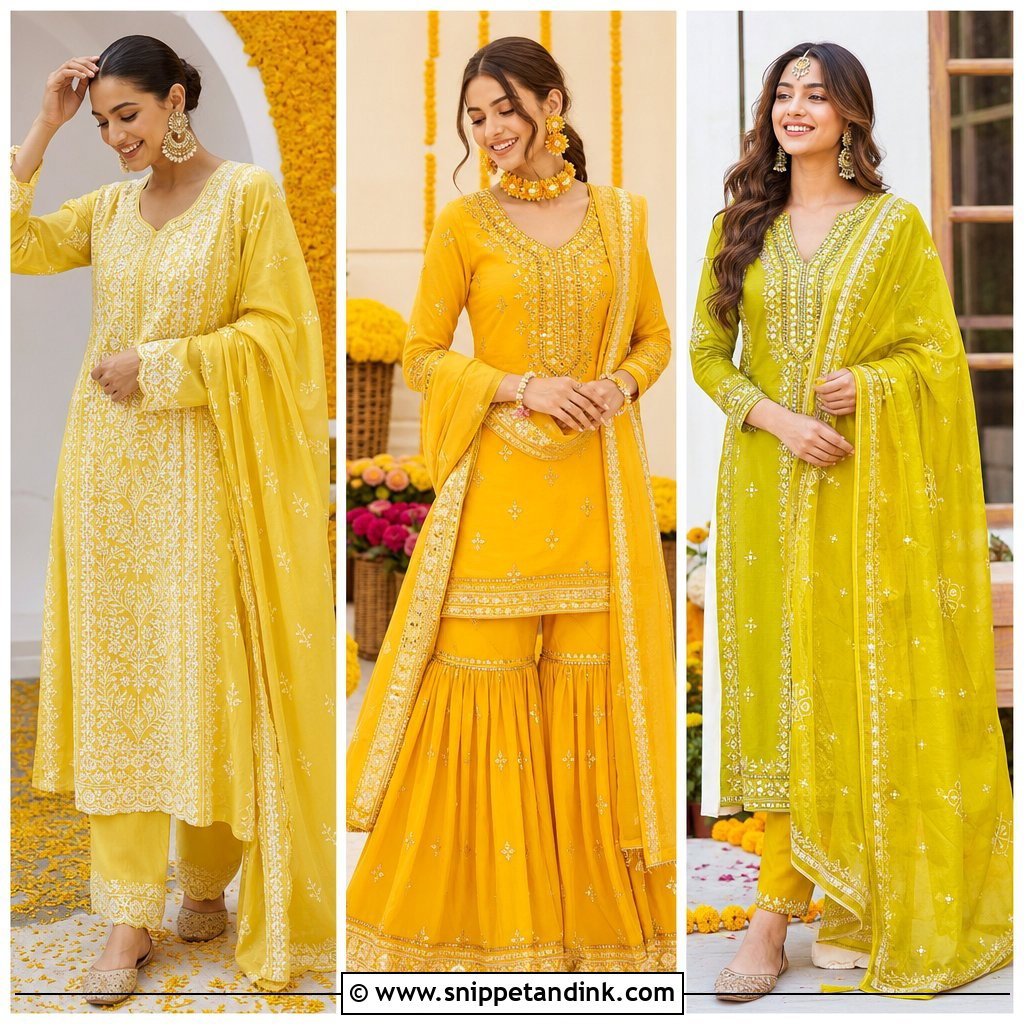
3. Yellow Sharara Set For Haldi
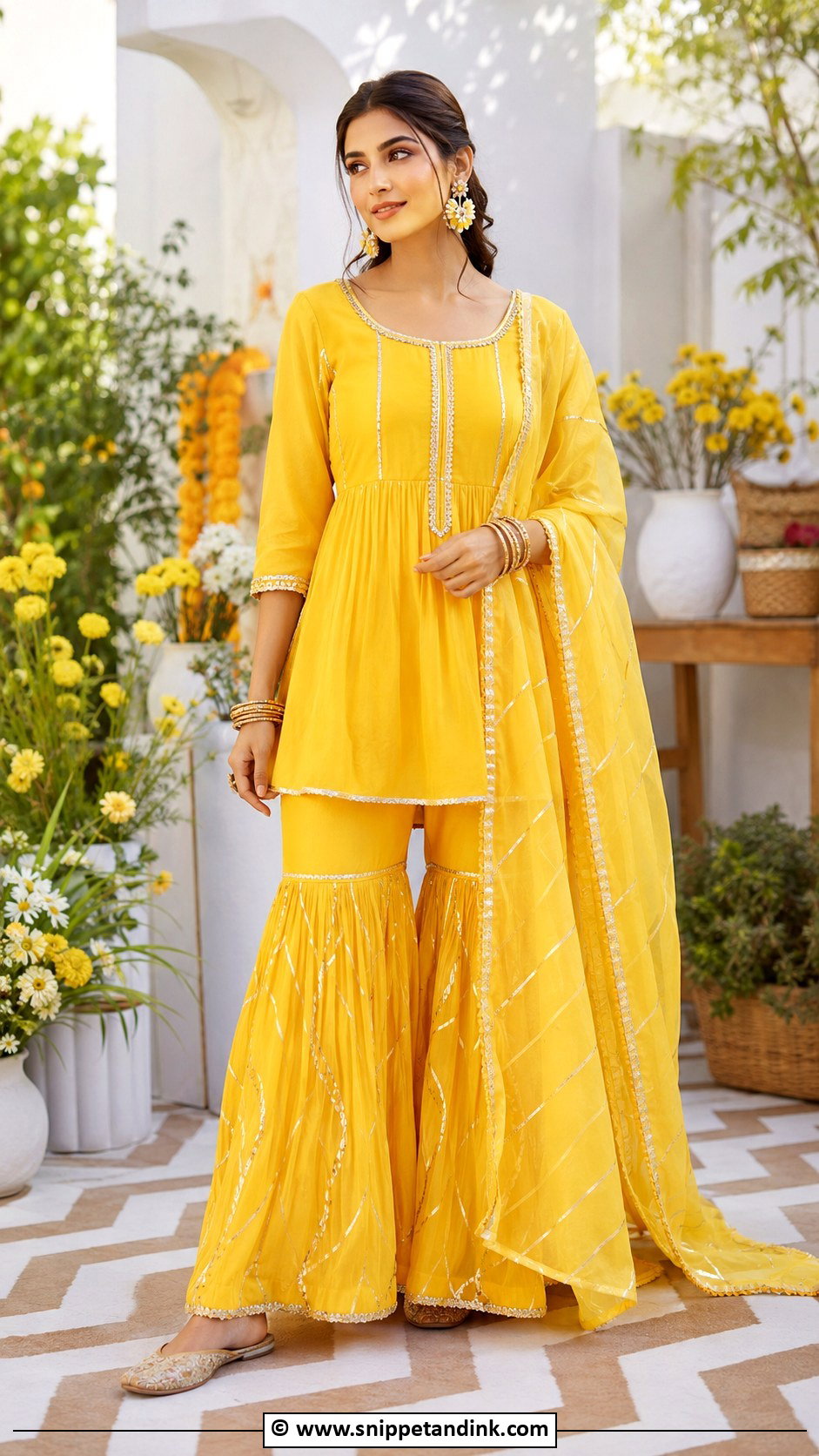
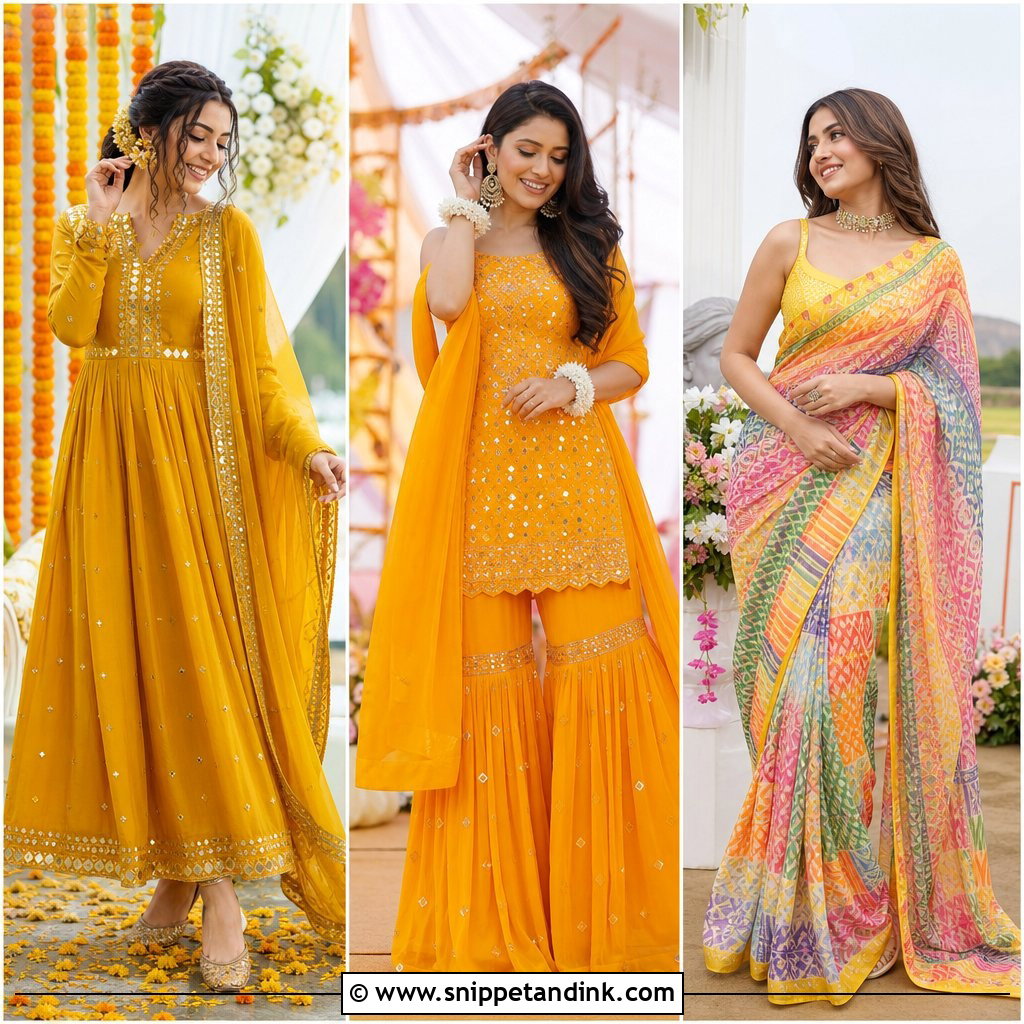
A yellow sharara set is what I suggest to sisters and bridesmaids who will be running around all day. The kurti stays put during rituals, and the flared pants don’t need lifting the way a lehenga does. Chiffon, georgette, cotton silk and muslin all breathe in an outdoor haldi. Gota patti on a short kurti gives the traditional finish. A contrast dupatta in orange, pink or ivory breaks up the yellow, and a sleek bun keeps hair clear of the paste.
4. Pink Sharara Set For Mehndi
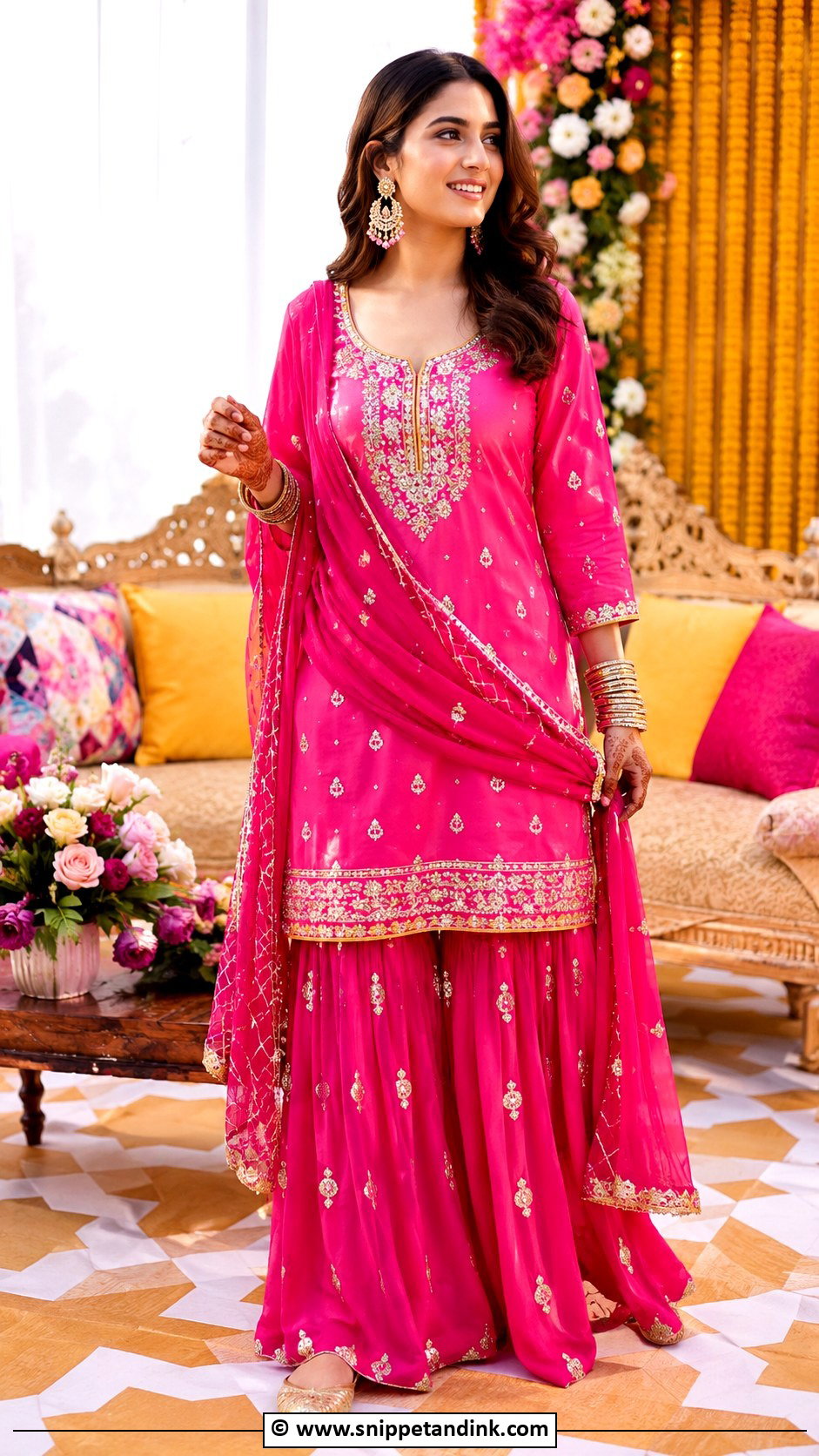
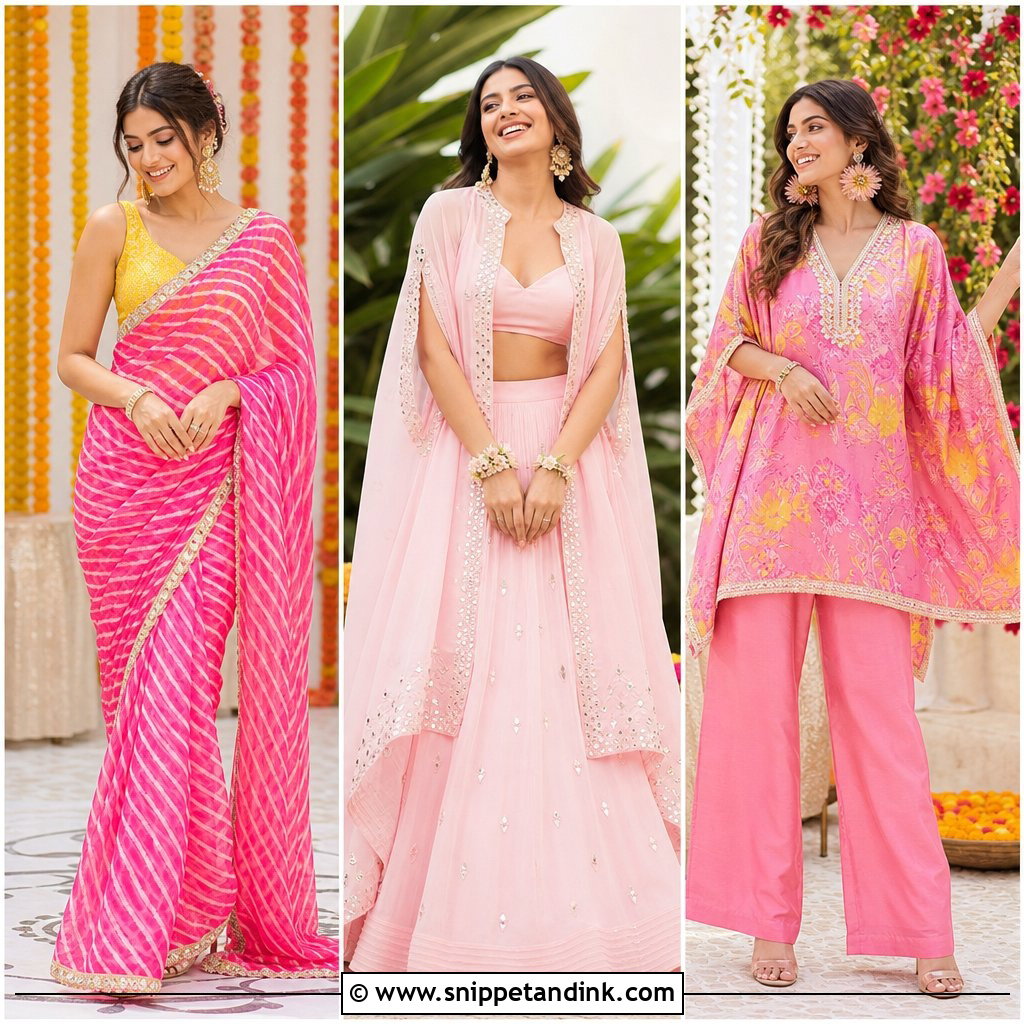
Pink shararas move well, which is why they show up so much in mehndi dance videos. Rani pink reads bold and evening-ready, blush is softer and coral is my pick for daytime. Wide pants and a short embroidered kurti give a flattering line with nothing tight at the waist when you sit cross-legged. Pin the dupatta to one shoulder so both hands are free for henna. Chandbalis and nude or gold juttis are enough jewellery and footwear.
5. Mustard Anarkali For Haldi
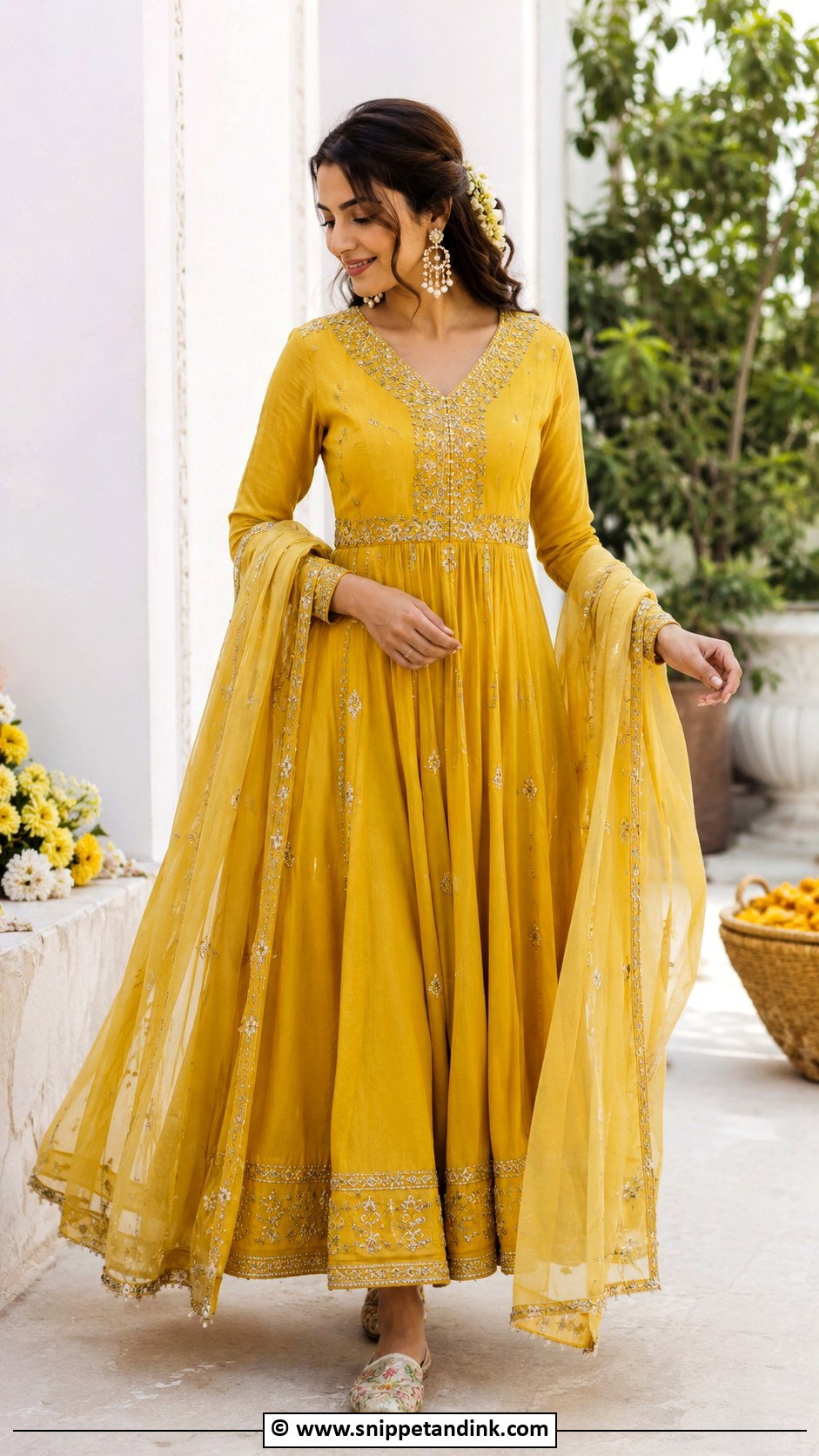
Mustard is the shade I offer mothers, aunts and anyone who wants coverage, since an Anarkali gives a long, flowing line without heavy layers. It sits firmly in the haldi palette but feels a touch more grown-up than lemon yellow. Light embroidery, block print or gota keeps it breathable. I’d go with elbow-length or shorter sleeves if there’s a chance of joining the ritual or getting henna later. A light dupatta, pearl or floral jewellery and a low bun with fresh flowers finish it without fuss.
6. Lime Green Anarkali For Mehndi
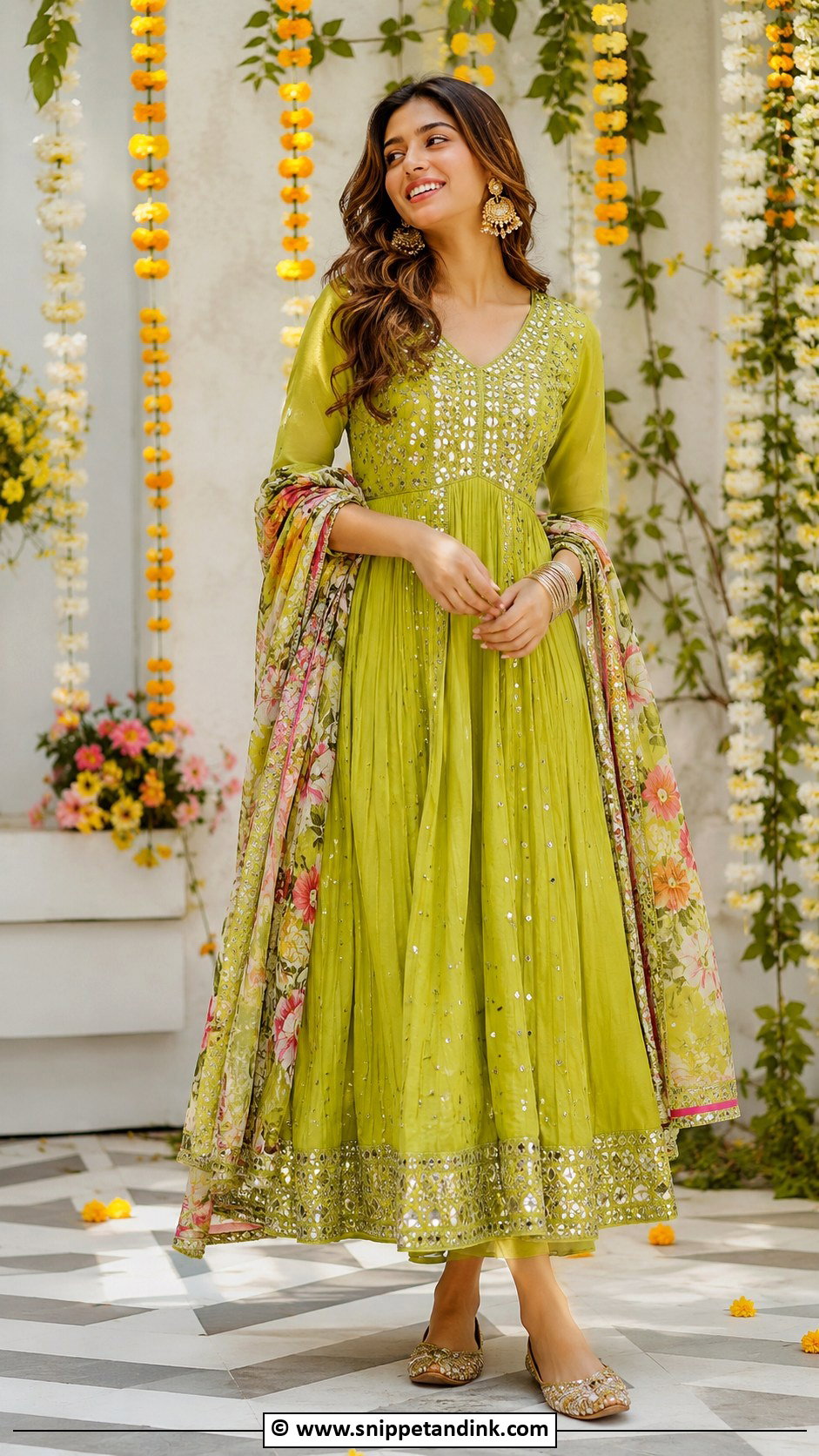
Lime green belongs outdoors, on a lawn or under a tent in daylight. Under yellow evening bulbs, it can look slightly sickly, so I don’t suggest it for a late indoor mehndi. An Anarkali is a comfortable thing to sit in for a long henna session because nothing digs into the waist. Mirror work or a printed dupatta keeps it festive. A belt over the dupatta defines the waist if you want a sharper shape. Jhumkas, bangles and flat juttis are all it needs.
7. Floral Lehenga For Haldi
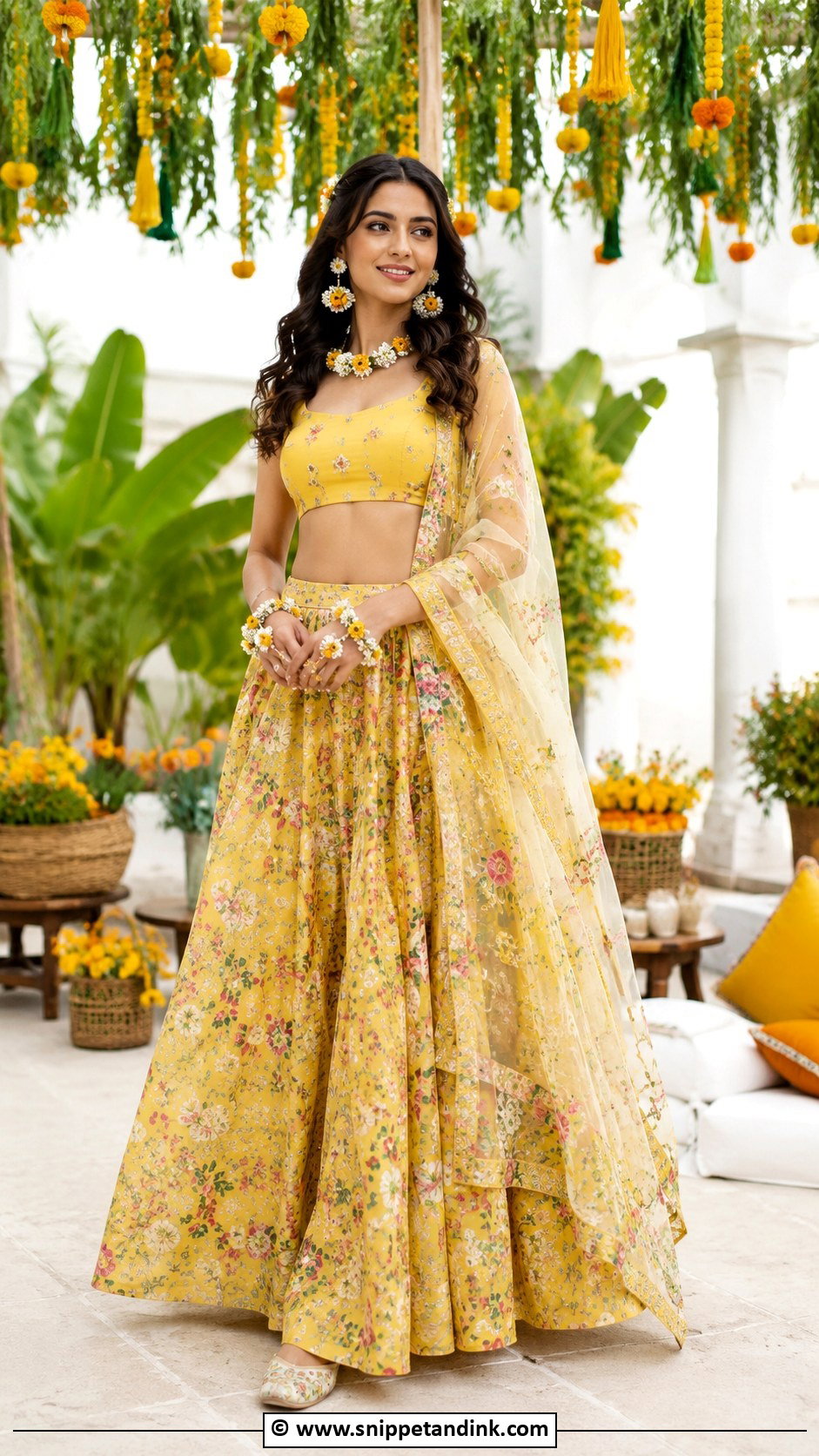
A floral lehenga gives a haldi a softer, garden feeling than solid yellow, and it suits poolside or resort events. Yellow, ivory, peach and lime bases all work with printed or threadwork flowers. Keep the skirt light so you can move, and keep the blouse simple so the print does the talking. Fresh or faux floral jewellery, from earrings to a maang tikka, ties it together. Prints also hide stray turmeric marks surprisingly well, which is a practical bonus.
8. Mirror Work Lehenga For Mehndi
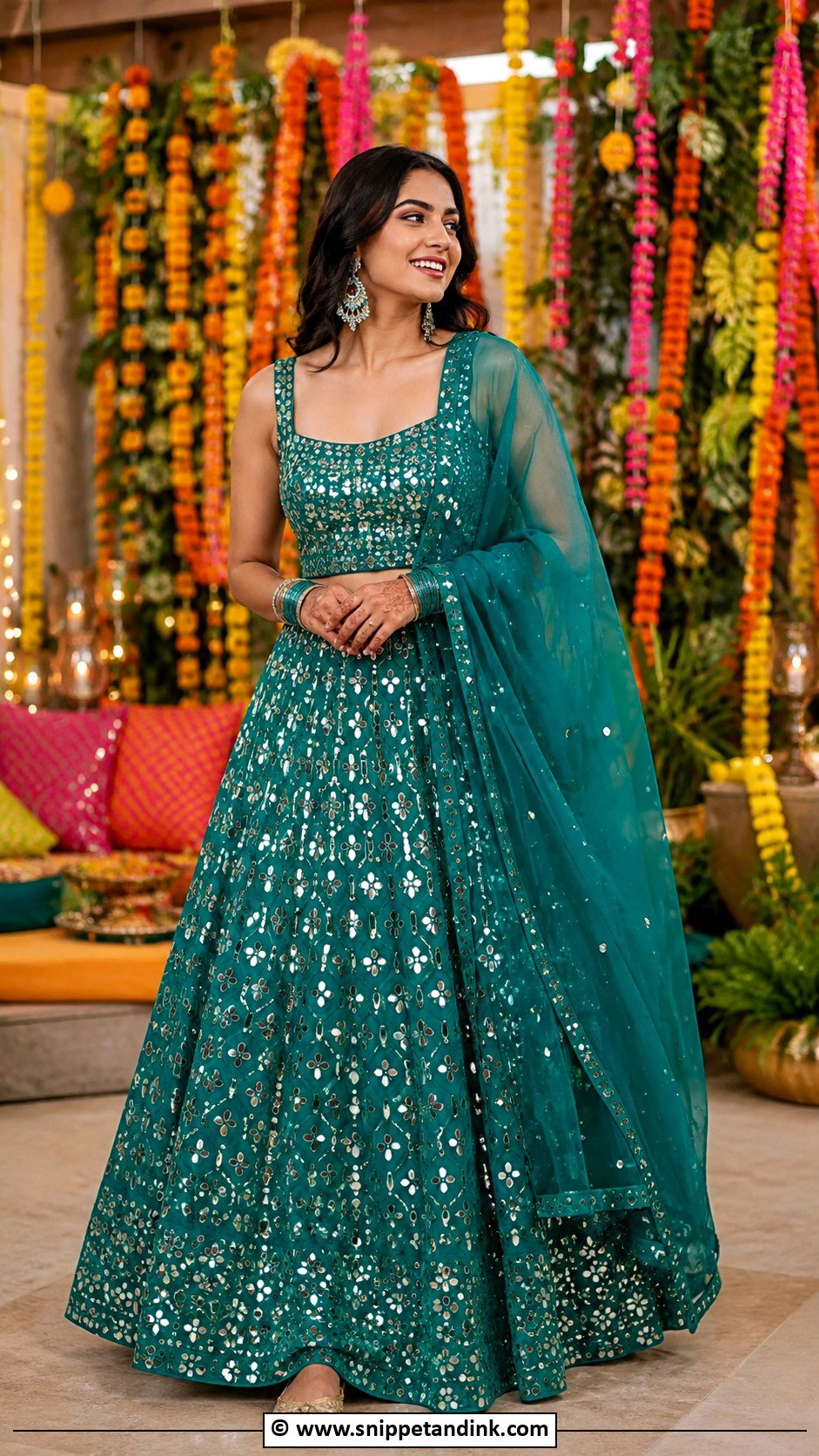
Mirror work catches the light without any extra jewellery. Green, teal, pink, yellow, orange or multicolour all work. For a daytime mehndi I suggest a version with smaller, sparser mirrors; for evening, denser work glows under string lights. My one caution is the blouse: mirror work on the sleeves scratches the inner arm when the henna artist is working, so keep it short-sleeved or sleeveless. A sleek ponytail or braid keeps the neckline visible.
9. Orange Kurta Set For Haldi
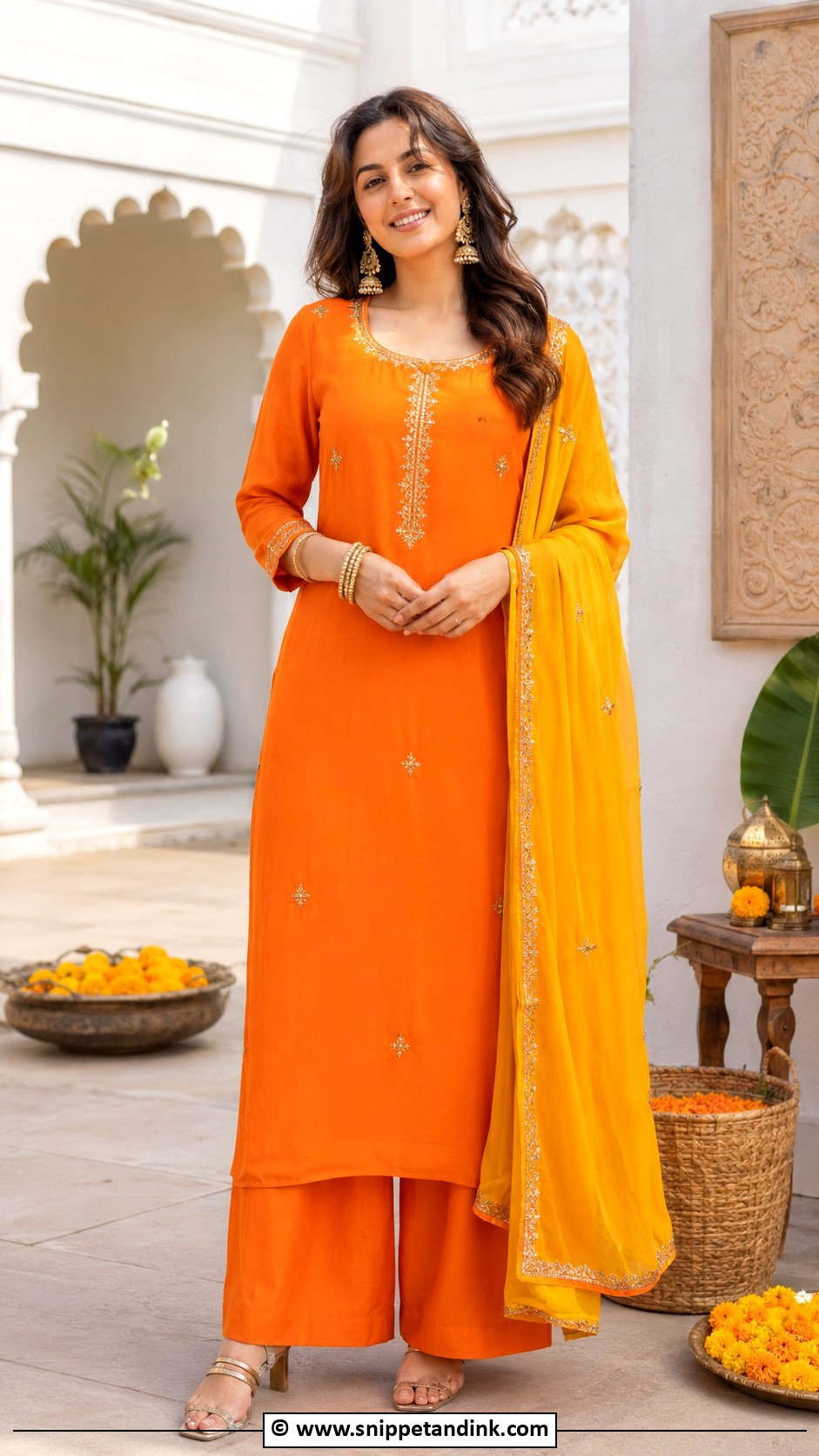
An orange kurta set is the outfit I recommend to guests who want something they will wear again after the wedding. A straight kurta with palazzos, cigarette pants or a simple sharara bottom works in cotton, chanderi or a silk blend. It also gives easy coverage for women who prefer it. A yellow or pink dupatta adds festivity without weight. For a casual haldi, a low ponytail and minimal makeup suit it; for a dressier one, add jhumkas and a potli bag.
10. Teal Kurta Set For Mehndi
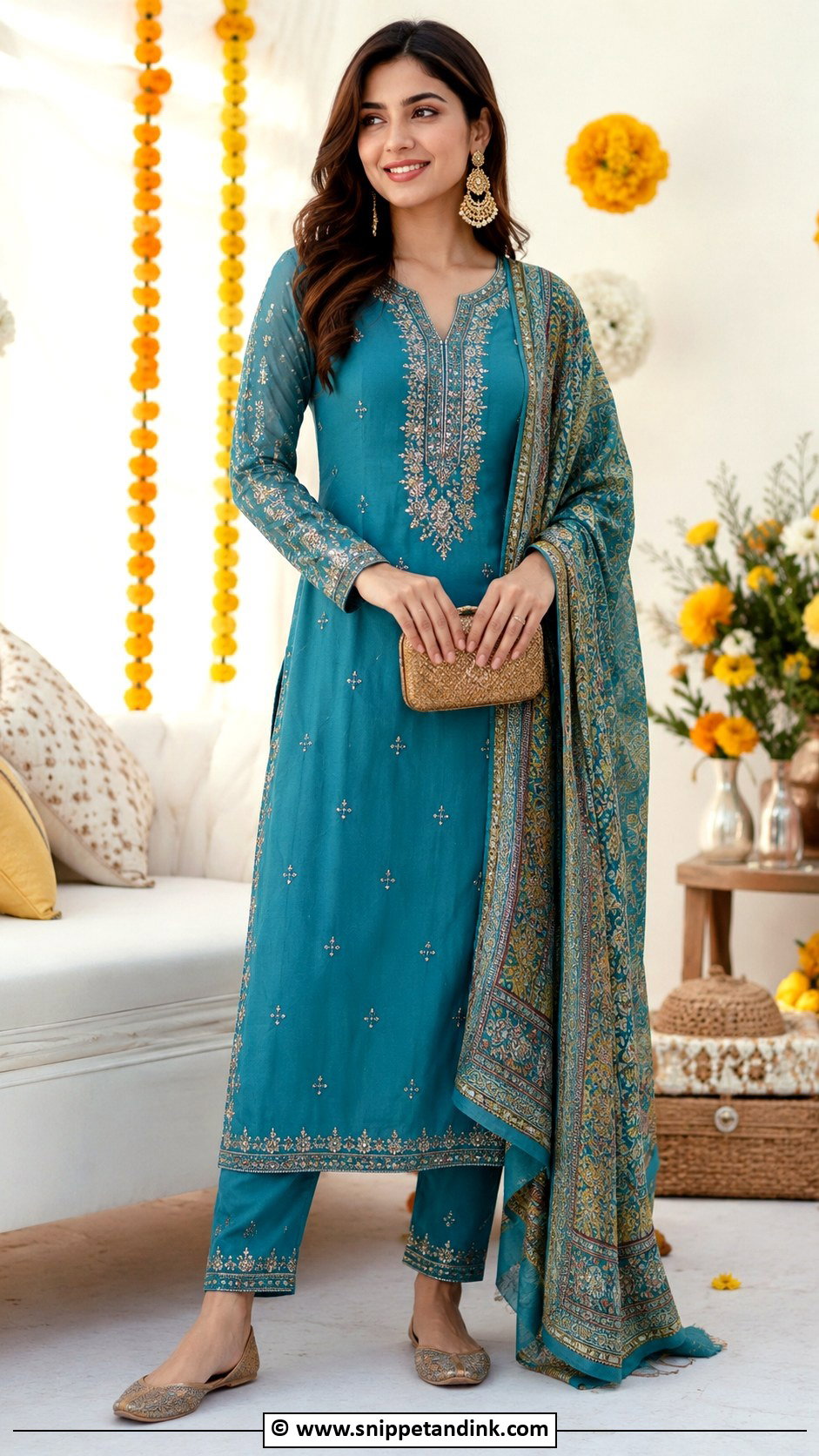
Teal suits more skin tones than almost any other mehndi shade, and it carries through from afternoon into evening without changing character. A straight kurta with embroidered borders and a printed dupatta is my usual pairing. Cotton or modal suit a relaxed mehndi at home; silk, brocade or light mirror work dress it up for a venue. Keep sleeves short or three-quarter so your hands stay free. Antique gold earrings sit well against teal.
11. White And Yellow Haldi Outfit
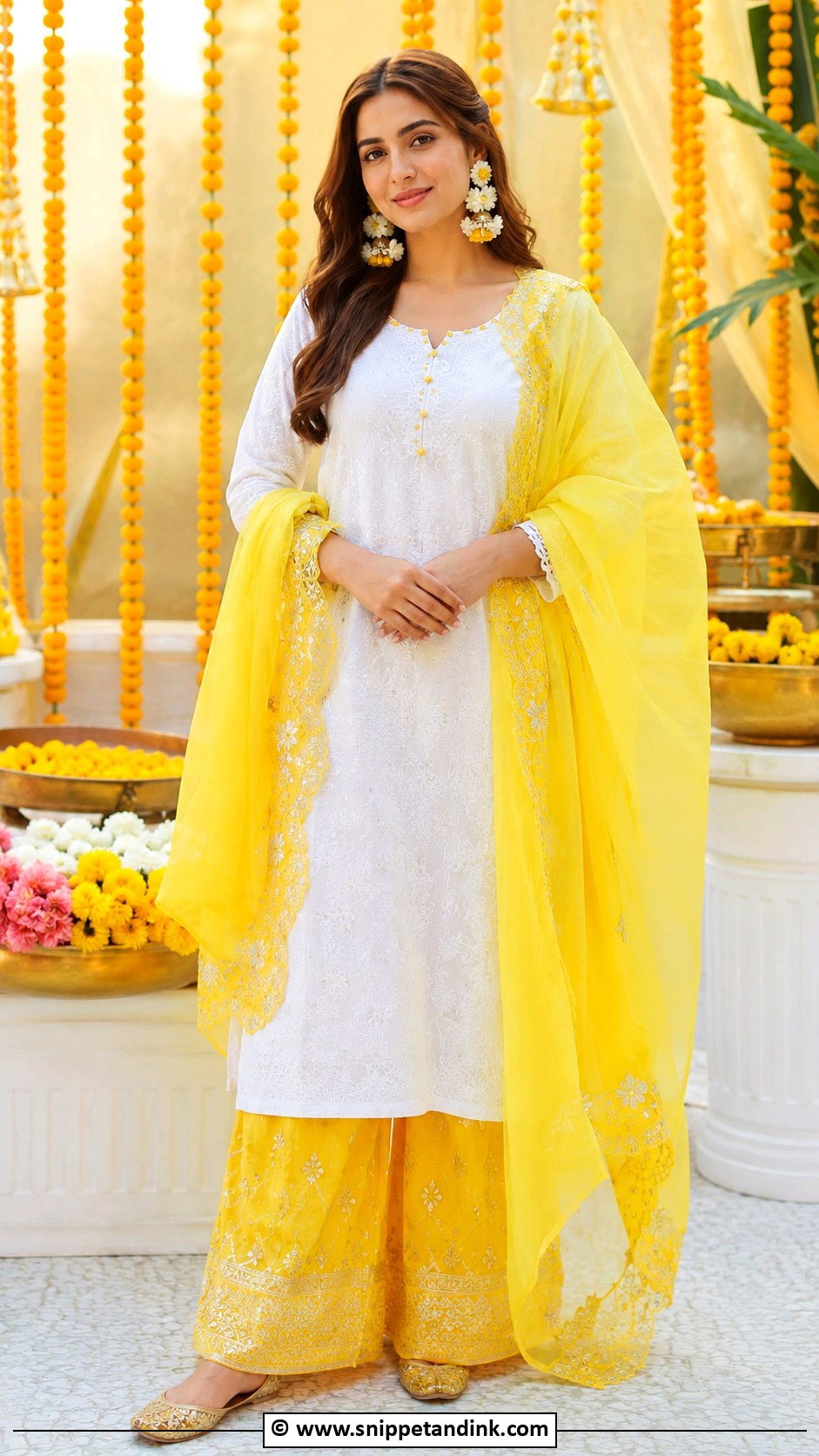
White and yellow looks crisp in daylight, but I’m honest with clients: white fabric and wet turmeric are a risky pair. I’d suggest this one to guests who stay on the edge of the ritual, not to the bride or anyone sitting close. A white kurta with yellow palazzos and dupatta, or a white lehenga with yellow floral accents, are the two easiest versions. Choose a washable cotton so a mark isn’t a disaster. The colour contrast already carries the look, so keep the shape simple.
12. Multicolor Mehndi Lehenga
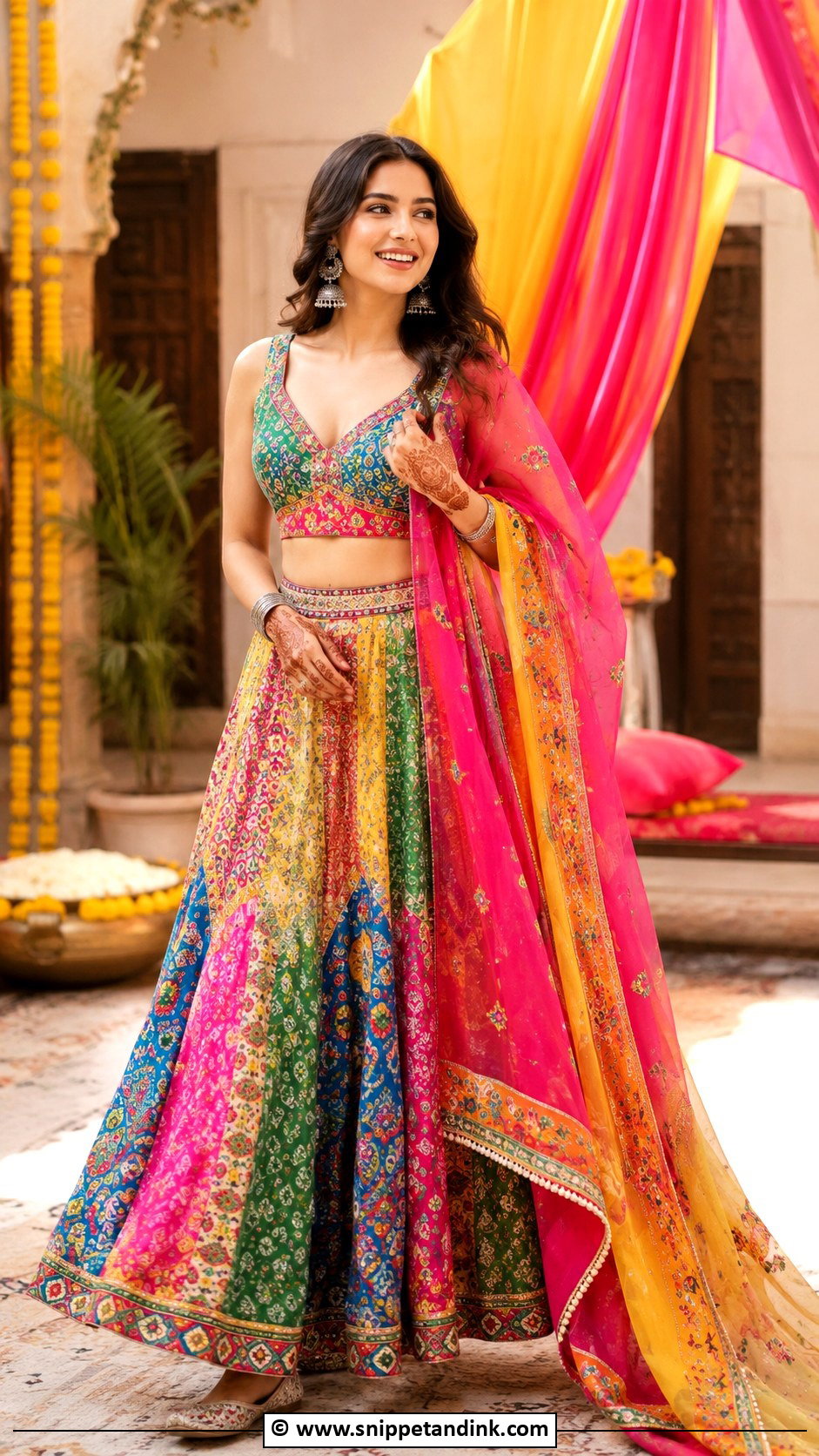
A multicolor mehndi lehenga suits a loud, playful mehndi with music and lots of decor. Patchwork, printed panels and a dupatta that mixes green, pink, yellow, orange and blue all fit. With that many colours, I always pick one metal tone for the jewellery, either gold or oxidised silver, never both. Keep the blouse comfortable and short-sleeved. If dancing is on the plan, embellished flats or juttis are far safer than heels on a dhol floor.
13. Yellow Saree For Haldi
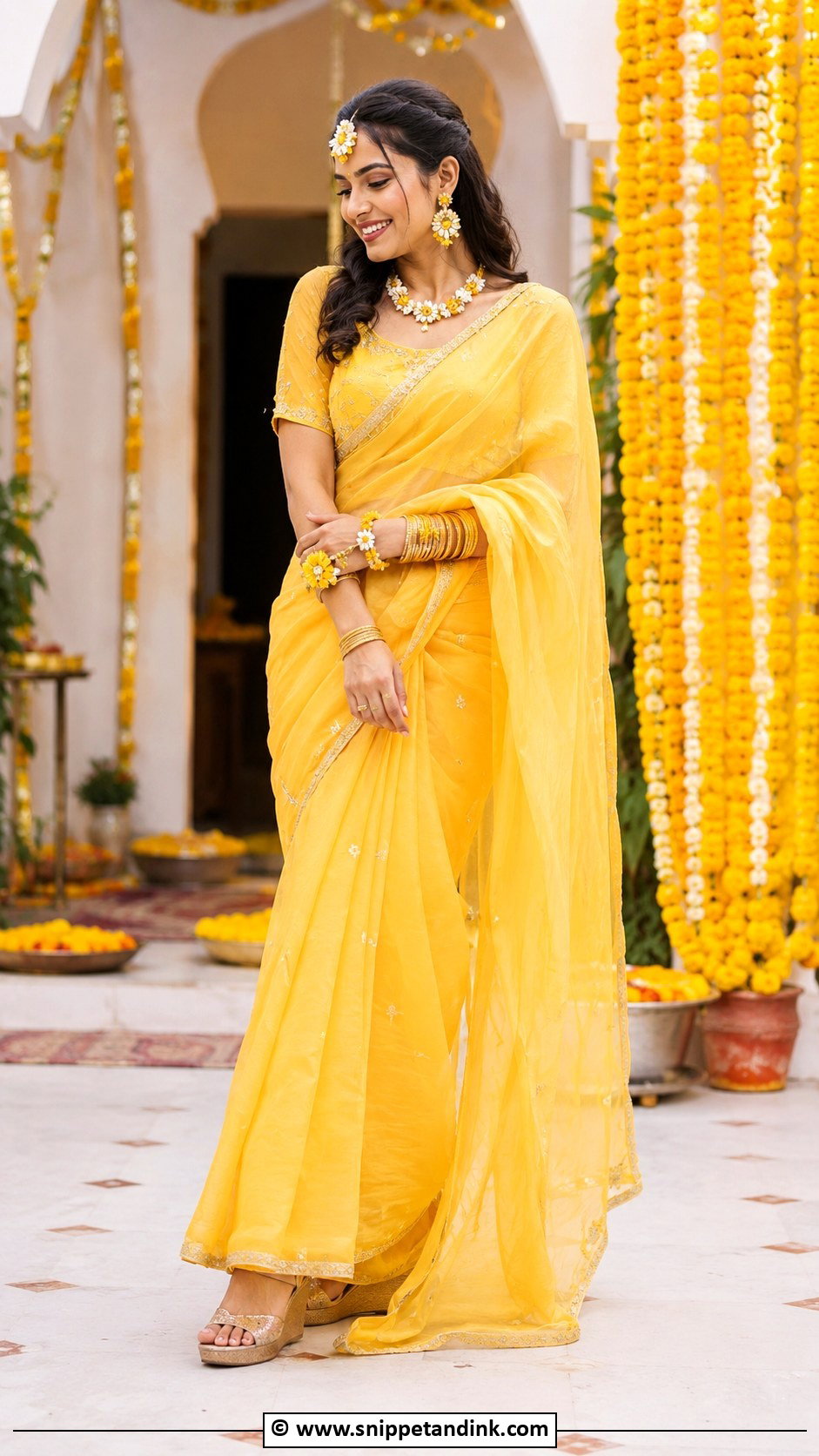
A yellow saree is graceful for a haldi but needs secure pinning, because rituals mean bending, sitting on the floor and having paste applied. I suggest chiffon, georgette, cotton silk, organza or linen so the pallu isn’t heavy. A sleeveless or short-sleeve blouse keeps the arms free. For a bride, floral jewellery with a simple yellow saree is quietly ceremonial; guests can wear a printed or bordered saree with statement earrings. Pin the pleats at the waist and the pallu at the shoulder before you step out.
14. Green Saree For Mehndi
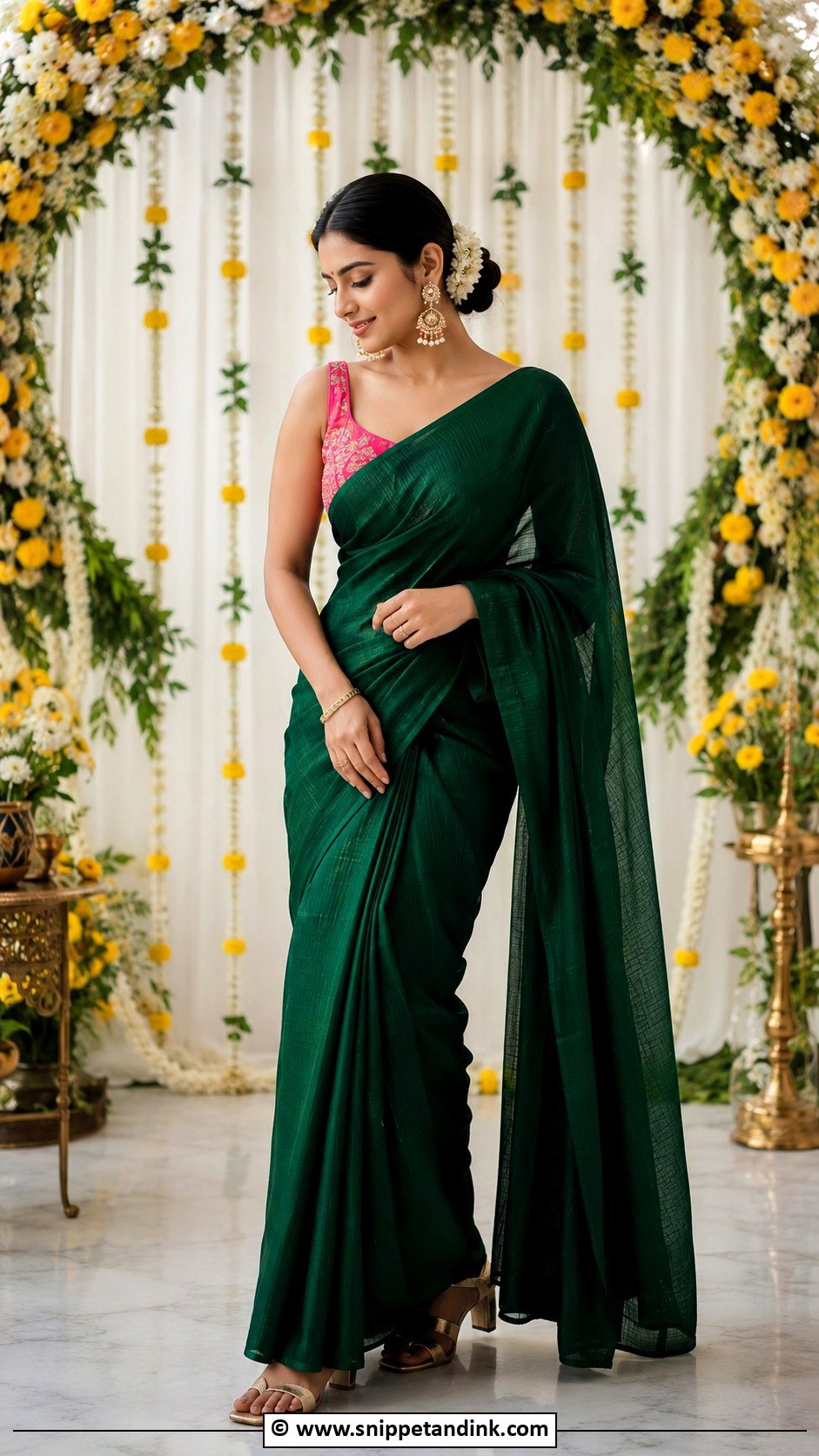
A green saree gives a mehndi a polished, traditional look. Emerald silk suits a formal family event, sage organza feels modern, and printed georgette works for a relaxed daytime function. A contrast blouse in pink, yellow, gold or orange adds festivity. If you are getting henna, keep sleeves short and skip rings and bracelets until the paste has dried and flaked off. Jhumkas, a small bindi and block heels are plenty, and a sleek bun with flowers suits the drape.

15. Yellow Palazzo Set For Haldi
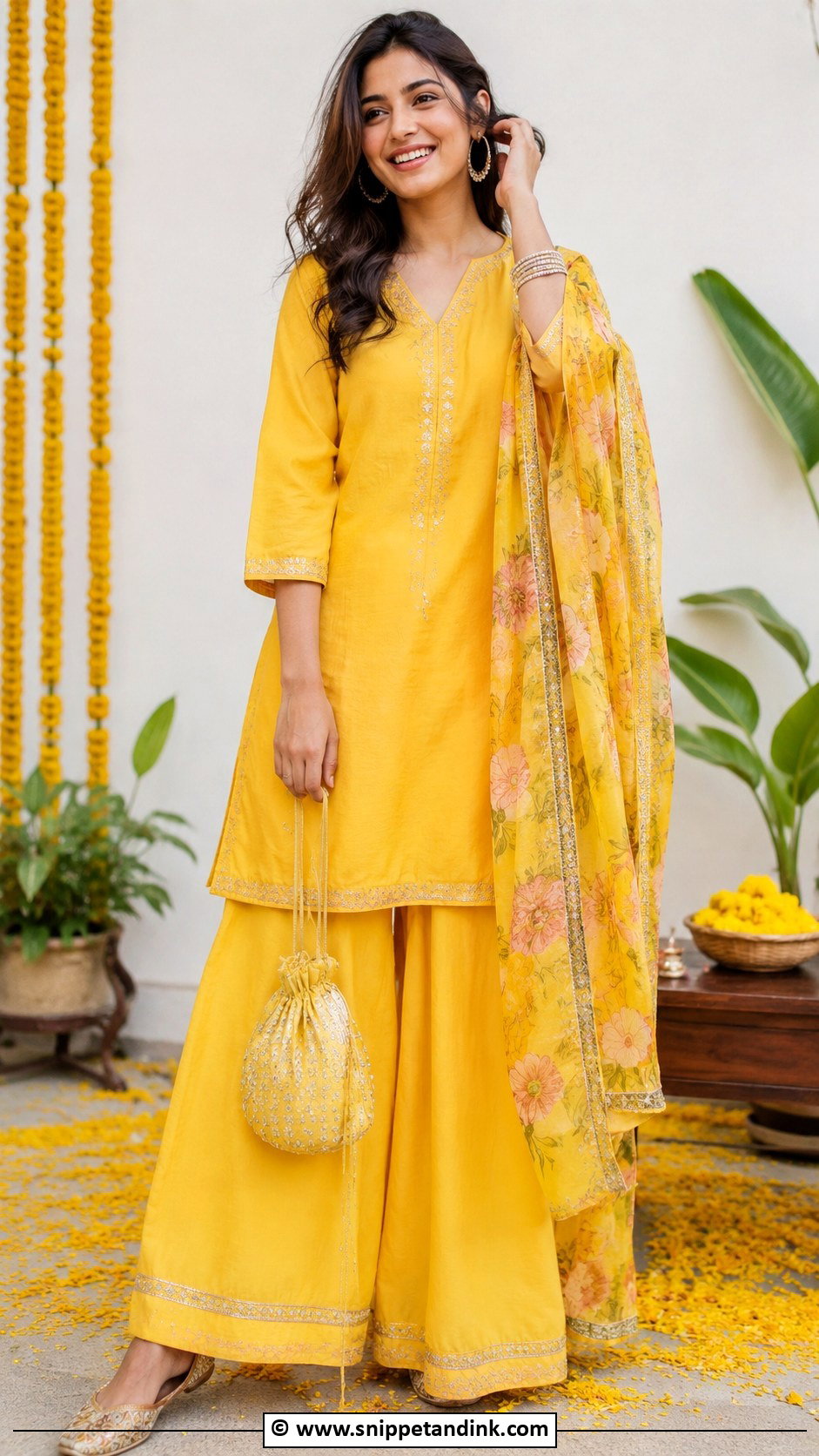
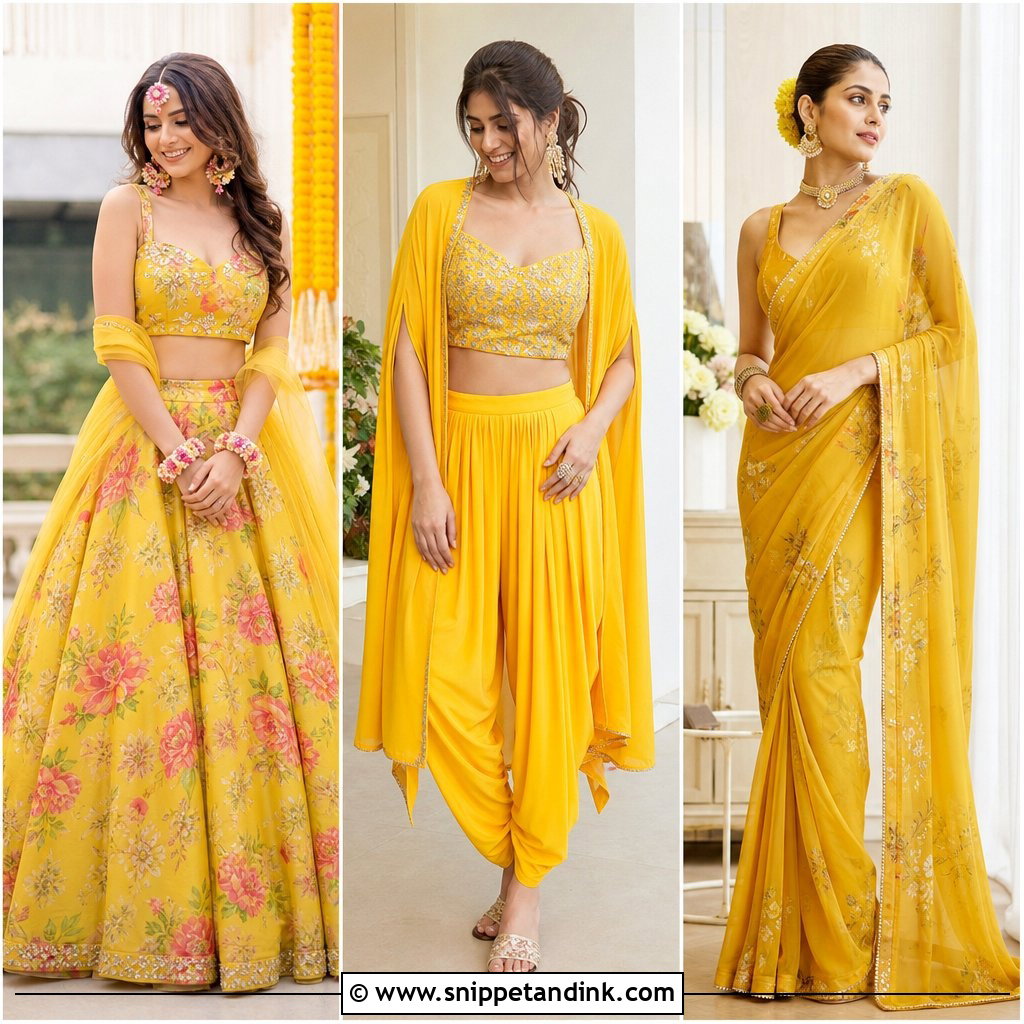
A yellow palazzo set is the comfort pick for a casual or semi-formal haldi. Wide legs make sitting on the floor, walking and dancing easy, while a kurta or crop top keeps it festive. Light embroidery, mirror borders or a printed dupatta give it a wedding touch. Guests on a budget like it because it costs far less than a lehenga. Outdoors, breathable cotton or rayon blends are kinder than synthetic georgette, which gets clammy in the sun.
16. Printed Co Ord Set For Mehndi
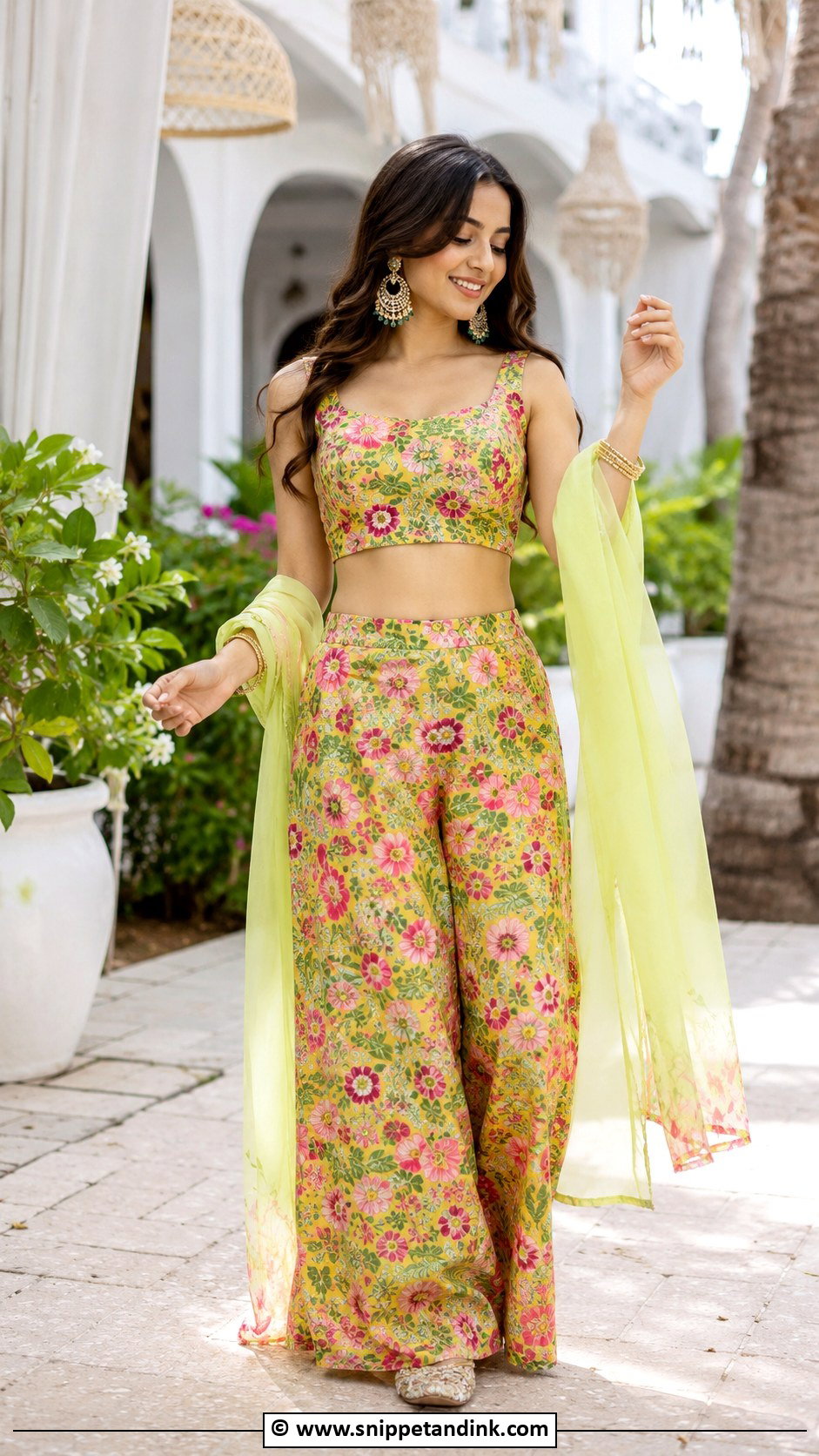
Co-ord sets are what I pack for destination weddings: they fold small, need no draping and don’t crease badly. A crop top with wide pants, a peplum with flared trousers or a short kurta with matching pants all work. Floral, paisley, leheriya and geometric prints suit a mehndi, especially in green, pink, coral or blue. Add a light dupatta if the family’s dress code is more traditional. Statement earrings and embellished flats are enough.
17. Yellow Gharara Set For Haldi
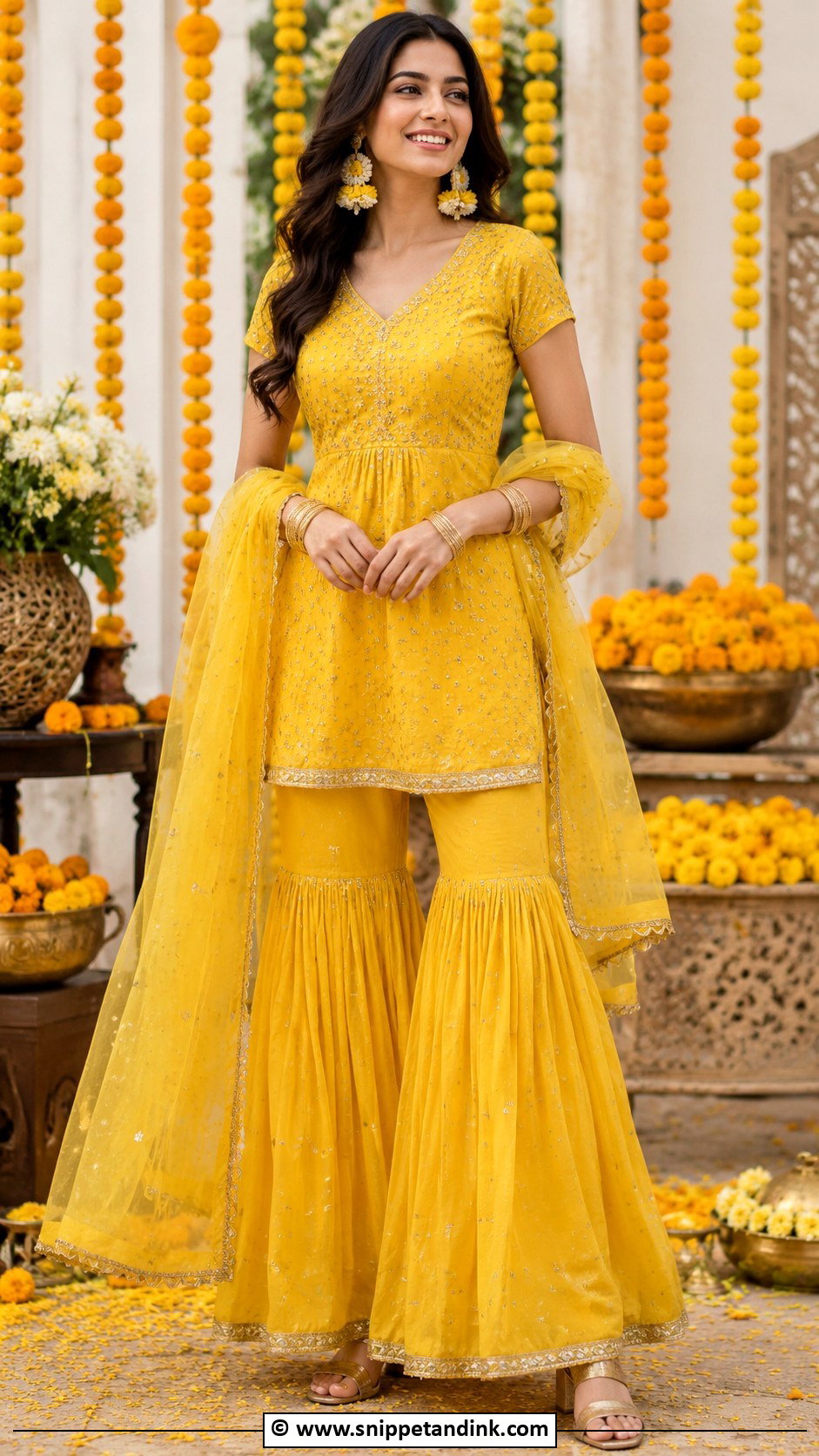
A yellow gharara set has a fitted leg and a flared hem from the knee, which gives it a pretty swing when you walk. A short kurti with lace, gota patti or light mirror work, plus a sheer dupatta in yellow, ivory or peach, is my standard combination. Bridesmaids and sisters suit lighter versions; a bride can take a more detailed set with floral jewellery. Because the gharara has volume, keep the accessories small. Juttis or low block heels, and a centre-parted bun.
18. Green Gharara Set For Mehndi
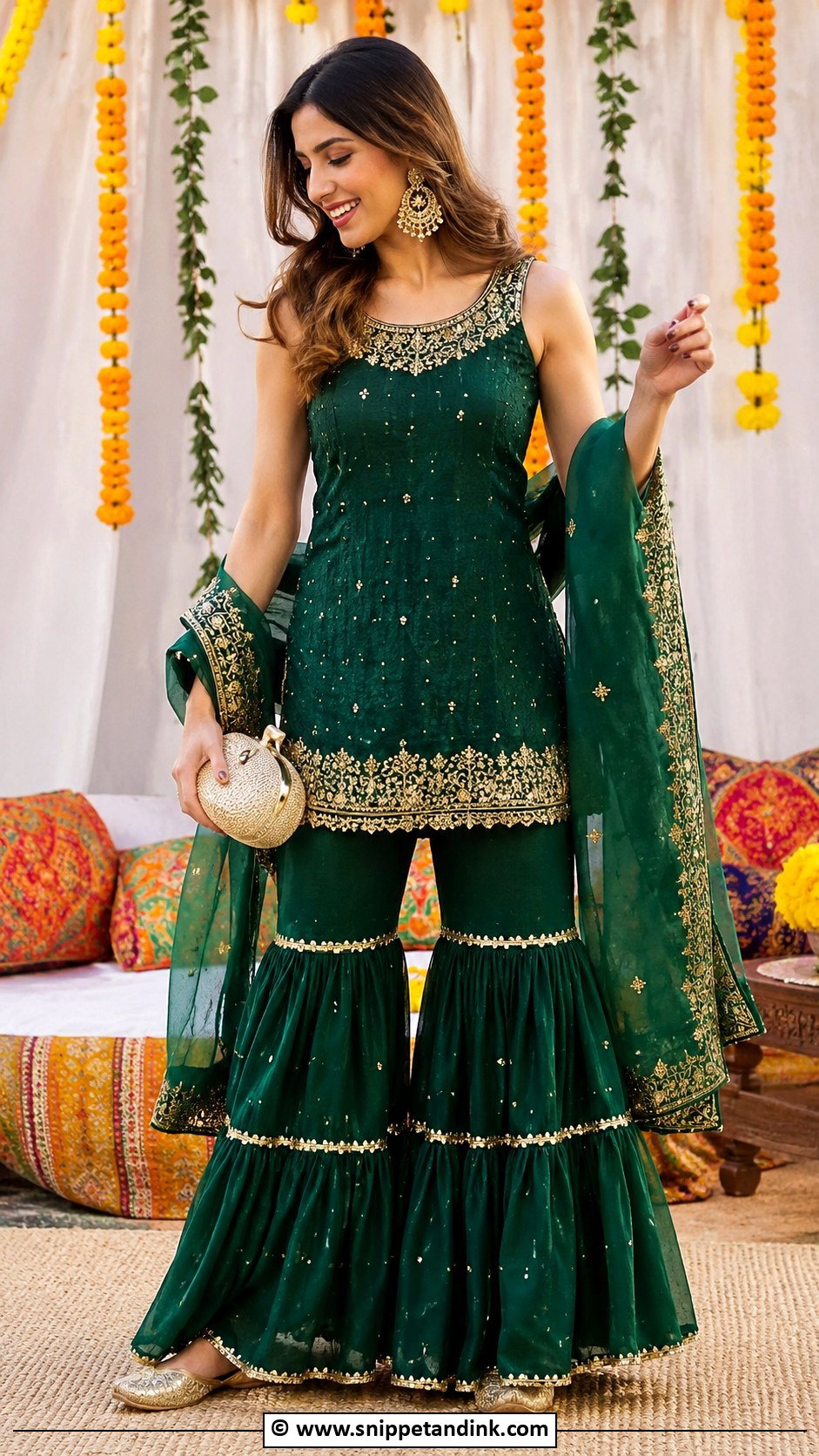
Green ghararas suit mehndis with a lot of dancing. Emerald or bottle green feel formal; mint and sage are softer and better for daytime. My jewellery rule is a trade-off: heavy embroidery means light earrings and no necklace, while a simple set can take a choker or chandbalis. Pin the dupatta loosely so your hands stay free for henna. Gold juttis and a braid with hair accessories finish it.
19. Pastel Lehenga For Mehndi
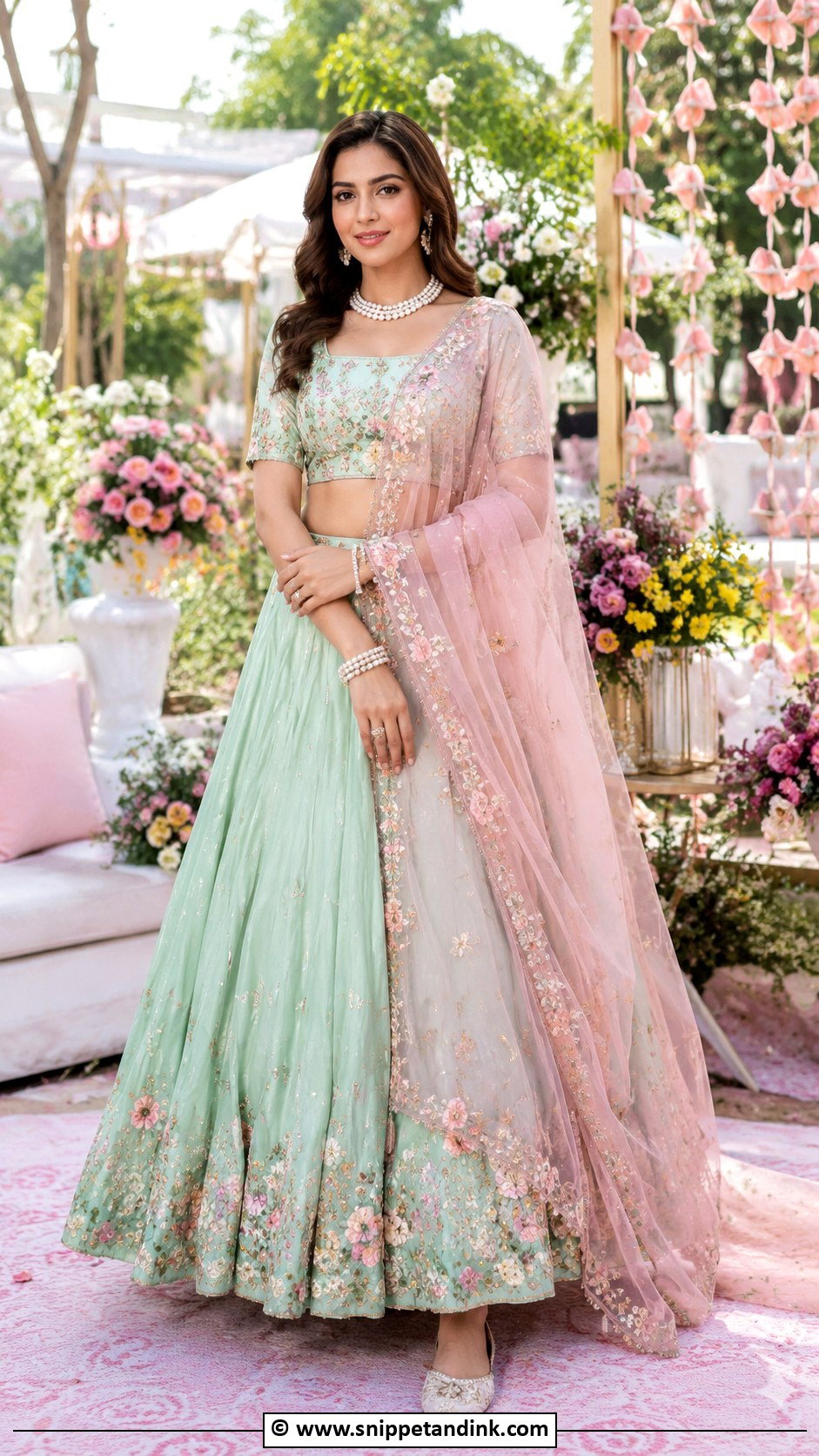
Pastel mehndi lehengas are for brides who don’t want green or yellow at all. Mint, peach, lavender, powder blue and blush sit nicely against floral decor in daylight. The risk with pastels is looking washed out, especially on camera, so I add contrast through jewellery or a dupatta: mint with pink, or peach with gold. Floral embroidery, pearls or subtle mirror work keep it festive. Keep the sleeve short if henna is happening.

20. Ivory Haldi Outfit
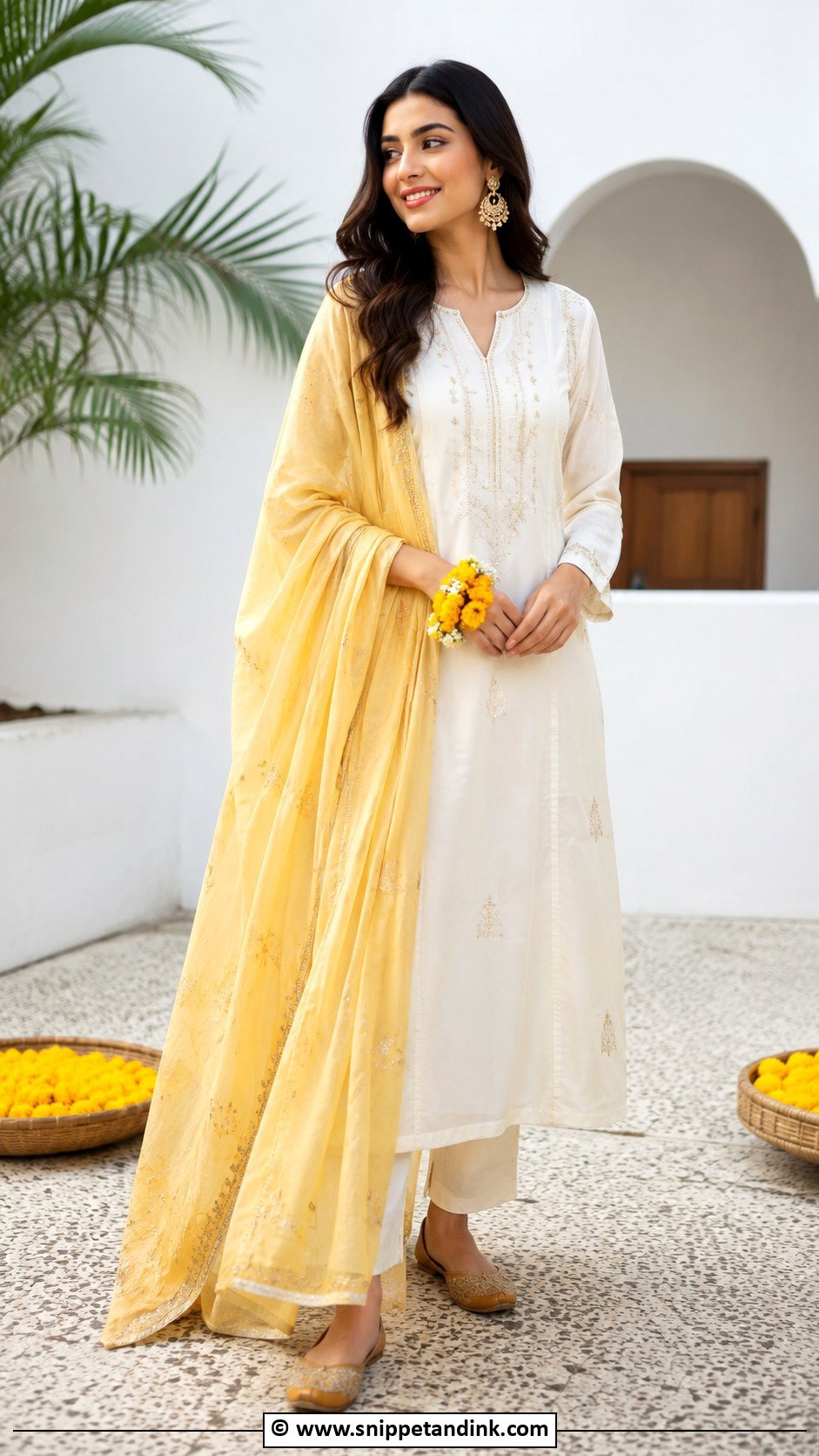
Ivory is calm and photographs well for pre-haldi portraits, but turmeric stains it fast. It’s best for guests or for a ceremony where the paste is applied carefully. An ivory kurta set with a yellow dupatta, an ivory lehenga with marigold jewellery or an ivory saree with gold borders all keep a link to the haldi theme through warm accents. If there is any chance of direct contact, I’d choose a washable or inexpensive fabric. Bright, fresh makeup stops ivory from looking flat.
21. Indo Western Mehndi Outfit
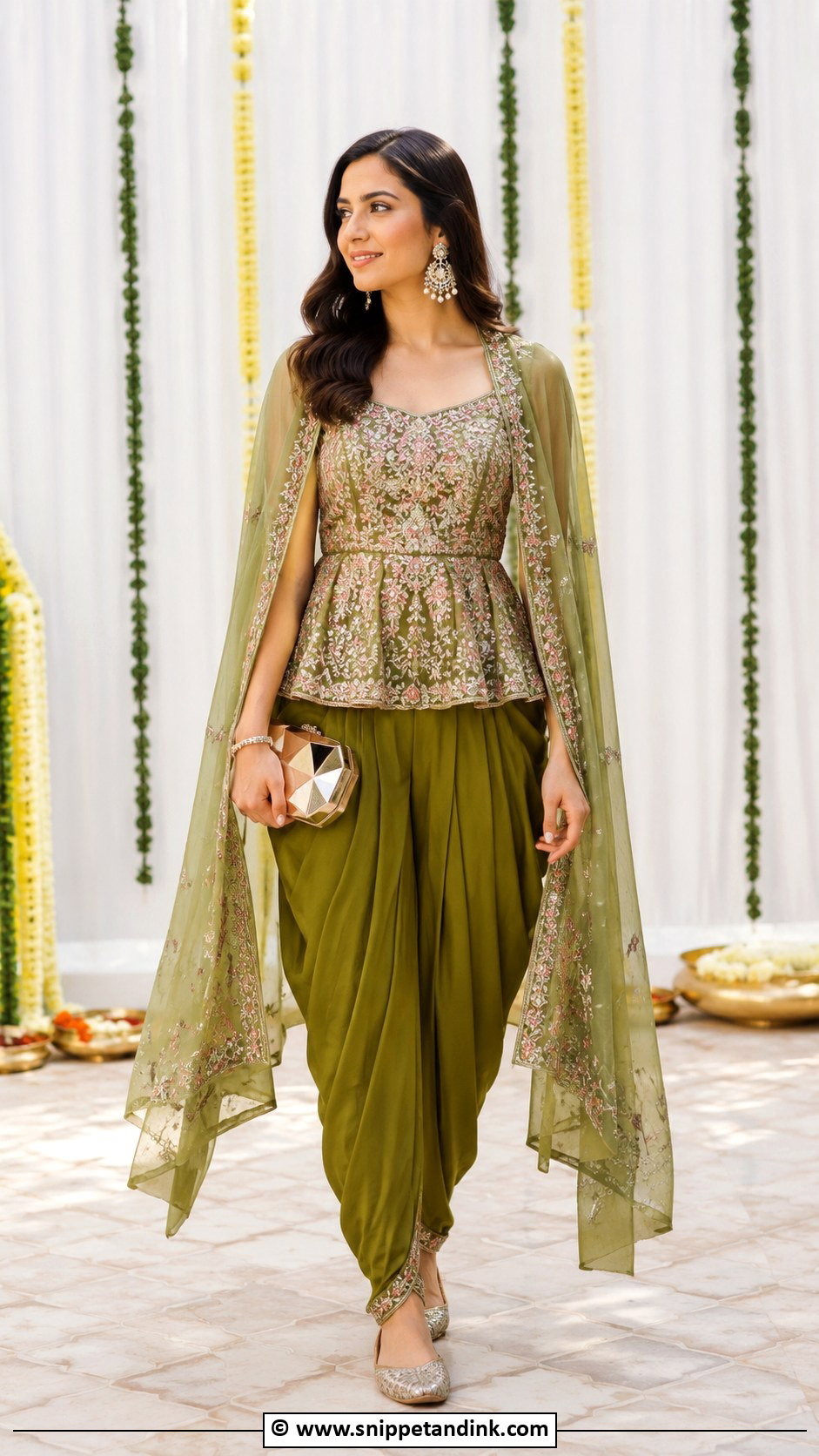
An Indo western mehndi outfit suits destination weddings, cocktail-style mehndis and younger guests who want something besides a lehenga. A draped skirt with a crop top, dhoti pants with a peplum blouse or a cape set in green, pink or yellow are the shapes I see work. Draping must be secure enough to sit through a henna session and dance afterwards, so I test the drape seated before the event. Metallic heels or juttis and a sleek clutch finish it, with hair styled to show the neckline.
22. Yellow Chikankari Kurta Set For Haldi
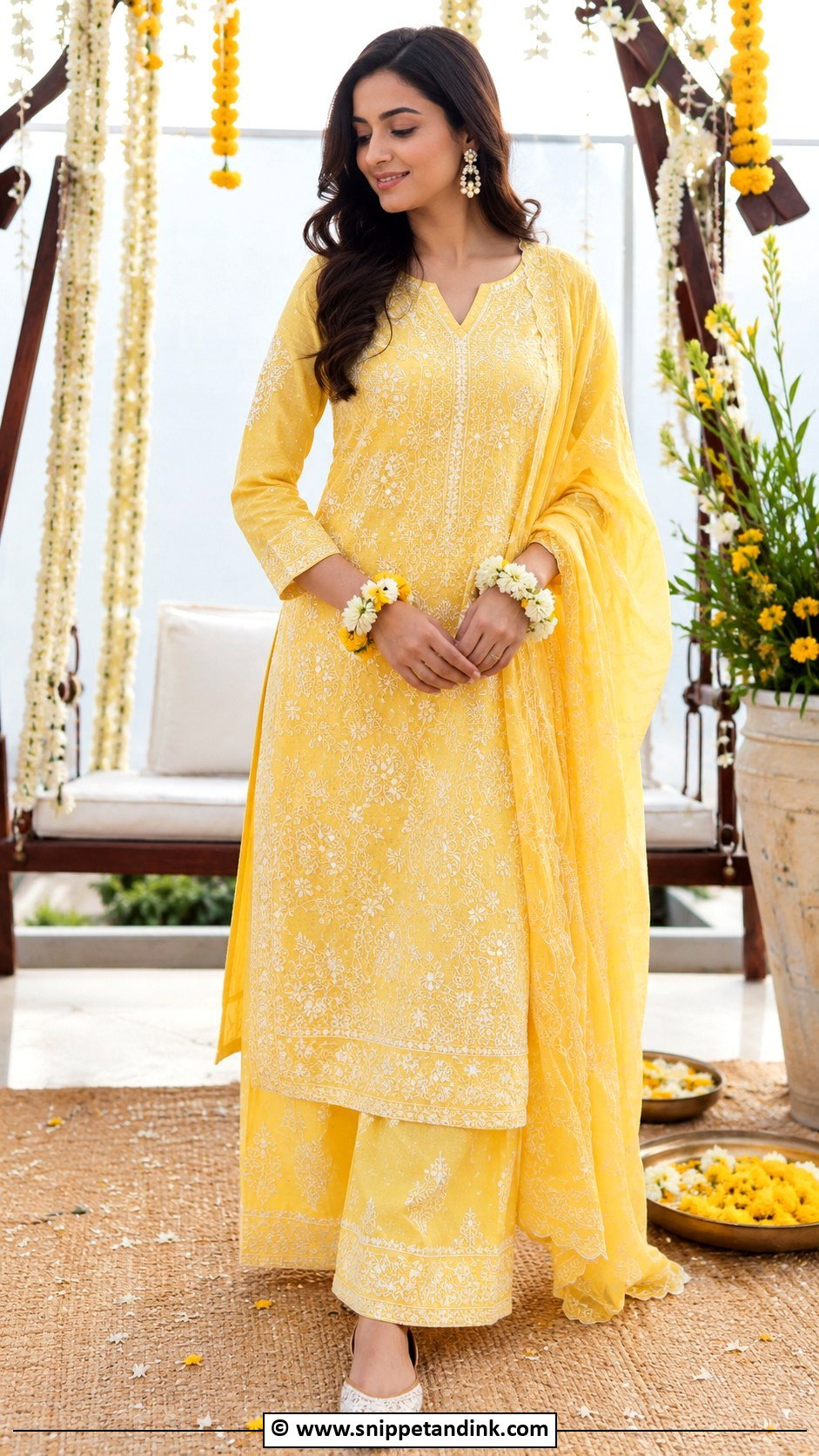
Chikankari is the hand embroidery I suggest for an intimate haldi, because it adds texture without weight and the kurta becomes something you will wear for years. A straight or A-line kurta with palazzos, straight pants or sharara bottoms all work. Real chikankari on cotton or georgette is quite sheer, so check the lining or wear a slip. A matching dupatta keeps it soft; a pink or white one adds contrast. Pearl earrings, floral bangles and peach blush keep the styling light.
23. Green Chikankari Kurta Set For Mehndi
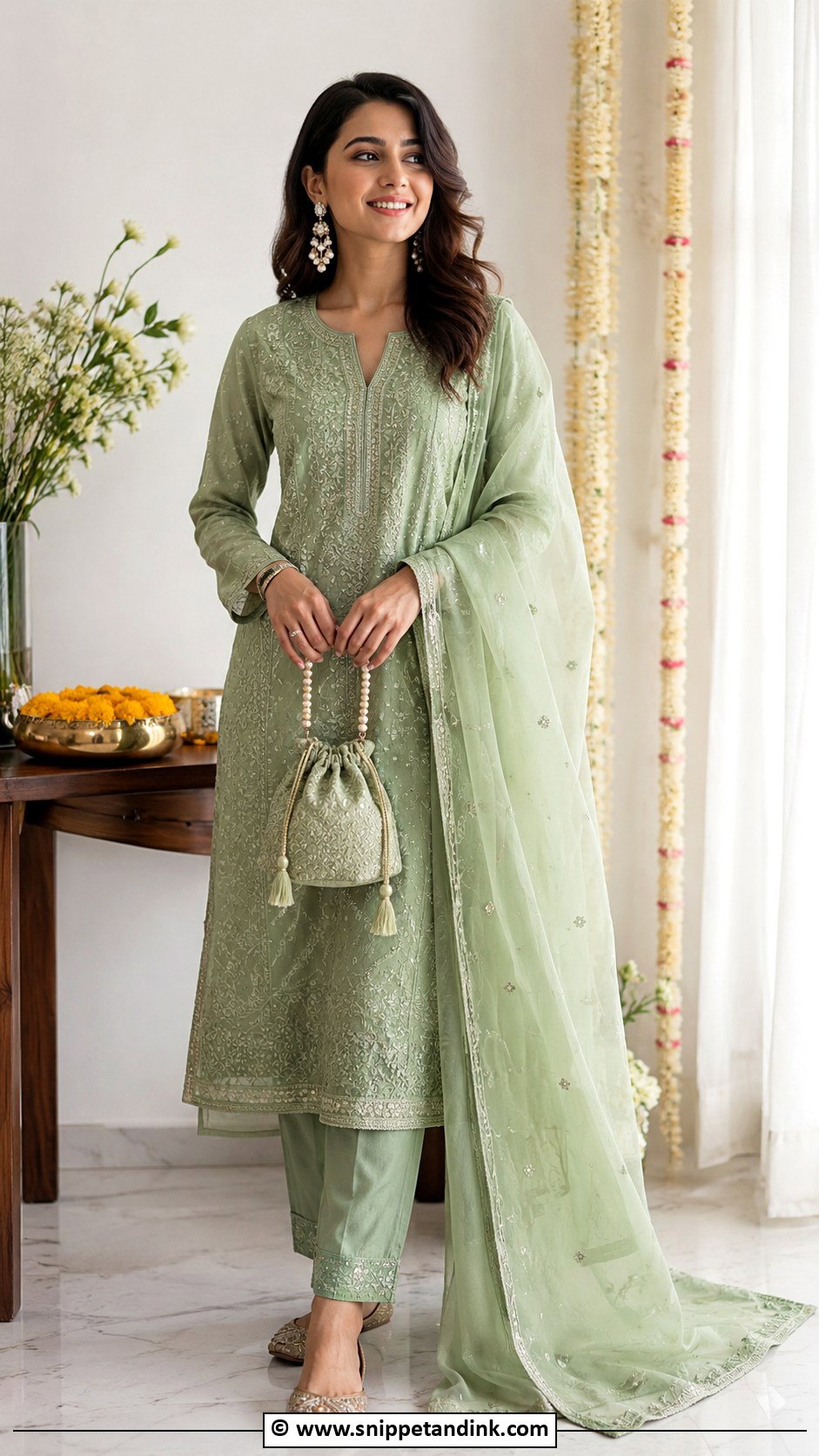
Green chikankari is understated and breathable, ideal for a home mehndi. Sage, mint, olive or emerald can follow the mood of the event. Cotton suits a relaxed gathering; georgette or a silk blend with a lightly embellished dupatta works at a venue. Pick the jewellery metal by the green: silver and pearl flatter mint and sage, and gold warms up olive and emerald. Short or three-quarter sleeves keep the henna clear.
24. Yellow And Pink Haldi Outfit
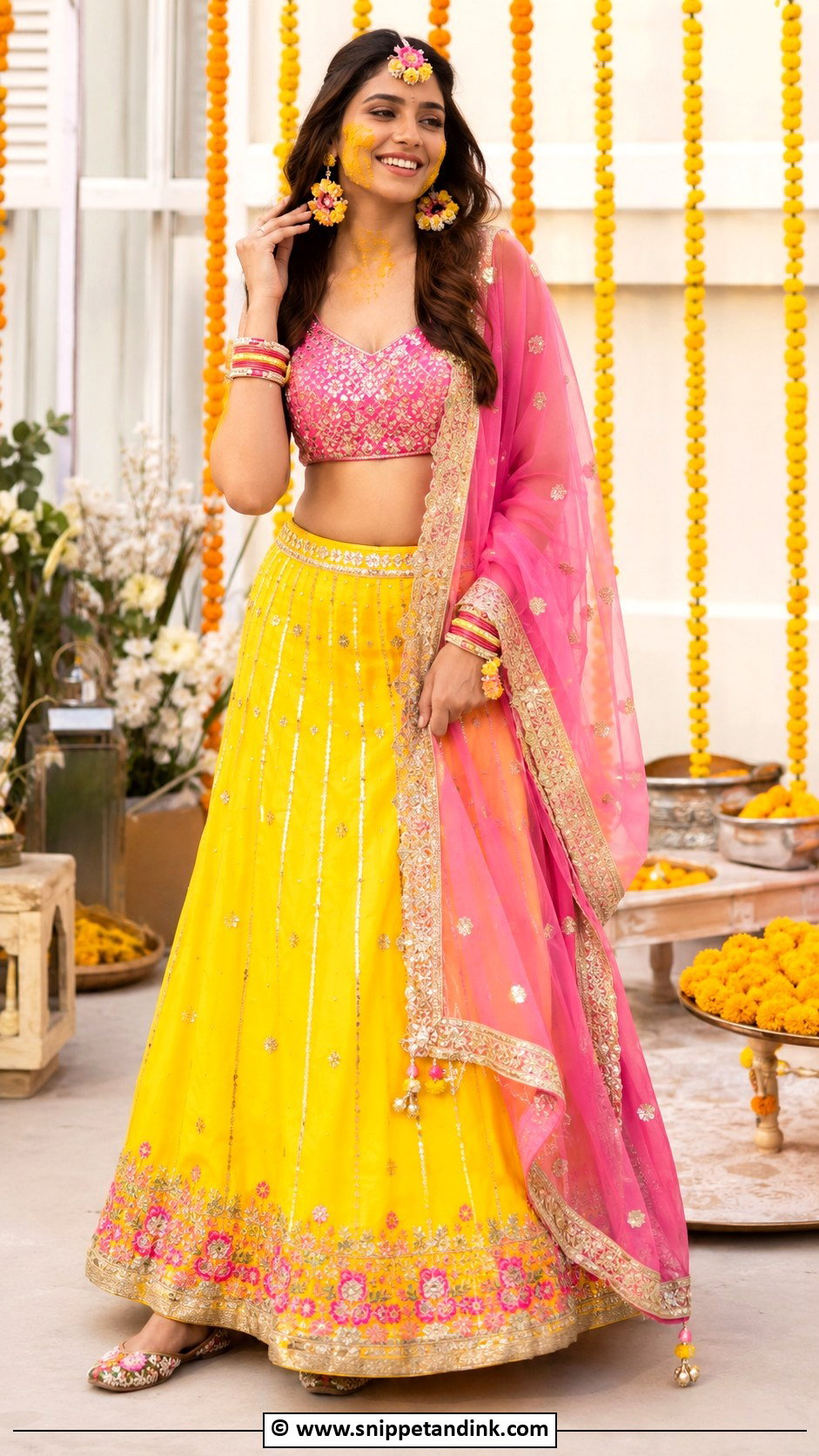
Yellow and pink is a cheerful pairing that photographs well against marigold decor. It works in lehengas, shararas, kurta sets, sarees or co-ords. A yellow base with a pink dupatta is the softer version; a pink blouse with a yellow skirt gives stronger contrast. Keep accessories gold, pearl or floral. A bride can add a floral maang tikka and haath phool, while a guest sticks to earrings and bangles. Flats or juttis are the safe choice for a daytime ritual.



25. Green And Yellow Mehndi Outfit
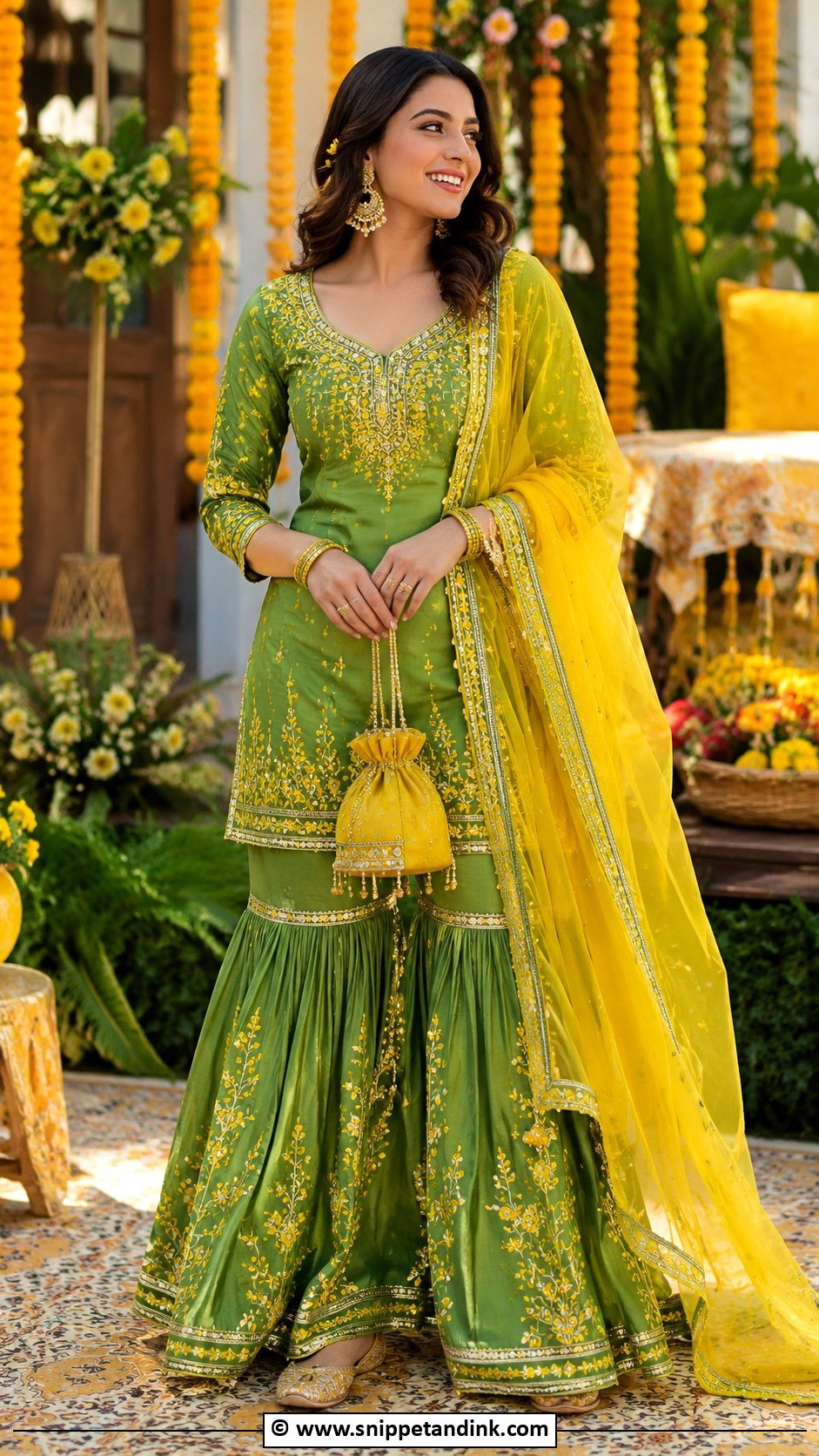
Green and yellow is the answer when the haldi and mehndi fall on the same day and nobody wants to change outfits. A green lehenga with a yellow dupatta, a yellow kurta with green palazzos or a green sharara with yellow embroidery all link the two ceremonies. Gold or floral jewellery connects the colours naturally. I’d choose the yellow piece in the fabric most likely to meet turmeric and keep the green on the parts the henna artist will work around. A potli bag and juttis complete it.
Turmeric on Fabric and Henna on Sleeves: Handling the Damage
Turmeric stains set fast, so speed matters more than the product. Scrape off any paste with a spoon, then rinse the back of the fabric under cold water; hot water pushes the colour deeper. Here is a detail that surprises people: most bar soaps are alkaline, and alkaline soap can turn a yellow turmeric stain reddish brown for a while. Don’t panic if that happens. A mild liquid detergent, a good rinse and drying the piece in sunlight usually fade what’s left, since sunlight breaks the colour down over a day or two. Silk, tissue and anything embroidered should go straight to a dry cleaner, untouched.
Henna paste stains fabric too, and the bride is the one most at risk. While the paste dries, she sits for a long stretch with her hands held away from her body, so I put her in a sleeveless or short-sleeved top and drape the dupatta behind her shoulders. Many artists seal the design with a lemon and sugar mix, which is sticky and drips. Lay an old cotton dupatta over her lap. Once the paste comes off, the stain on skin keeps darkening over the next day or two, so nobody needs to rush the outfit change for photos.
Yellow Paste, Wet Henna and an Outfit That Can Handle Both
The outfits that work at a haldi and a mehndi are the ones that let you take part in the rituals without worrying about your clothes. Breathable fabric, short sleeves, a pinned dupatta and shoes you can stand in for hours matter more than any trend. Yellow, mustard, orange, lime and ivory belong to haldi; green, teal, pink, coral and multicolour to mehndi. Brides can go further with lehengas, floral jewellery and mirror work, while guests get the most from kurta sets, co-ords, sarees and shararas they’ll wear again. Match the outfit to the venue and the plan for the day, and it will feel right.
You'll Like These Ideas:







Leave a Reply