
Most of the curvy brides I dress arrive with a list of shapes they’ve been told to avoid, and most of those rules fall apart the moment the right construction is underneath. The curve-friendly options on the racks now run from ball gowns and fitted crepe to midi lengths, drop waists and removable layers. What decides whether a dress works is how it’s built: where the support sits, how the fabric behaves over the hips, whether the straps carry weight or just decorate. Below are 25 silhouettes, each with what I check at the try-on and how I’d finish the outfit.
Five Things I Test at a Try-On Before Anyone Looks in the Mirror
Mirrors lie a little in bridal shops. Gowns are often clipped at the back to look fitted, and the lighting is kind. So before a curvy bride turns around to look, I run through a few checks that tell us whether the dress can actually work once it’s made to measure.
- Take a deep breath and sit down. If the waist bites or the bodice pushes up toward the chin when seated, the structure is in the wrong place for your body.
- Raise both arms and hug someone. Straps and sleeves should stay put; any pull at the armhole shows where alterations will be needed.
- Check where the straps press. Straps that carry weight sit wide and flat. Thin straps that dig in are decorative and will leave marks by evening.
- Look at the seams over the hips from the side. Smooth seams mean the cut suits you; seams that twist or ripple mean the pattern was drafted for a different shape.
- Ask what’s inside. Cups, boning, a waist stay and a stretch lining all reduce the need for shapewear.
Wear the bra or shapewear you plan to wear on the day, or at least something close. A different bra changes where the bust sits by an inch or more, and the whole bodice fit follows it.
1. A-Line Lace Wedding Dress
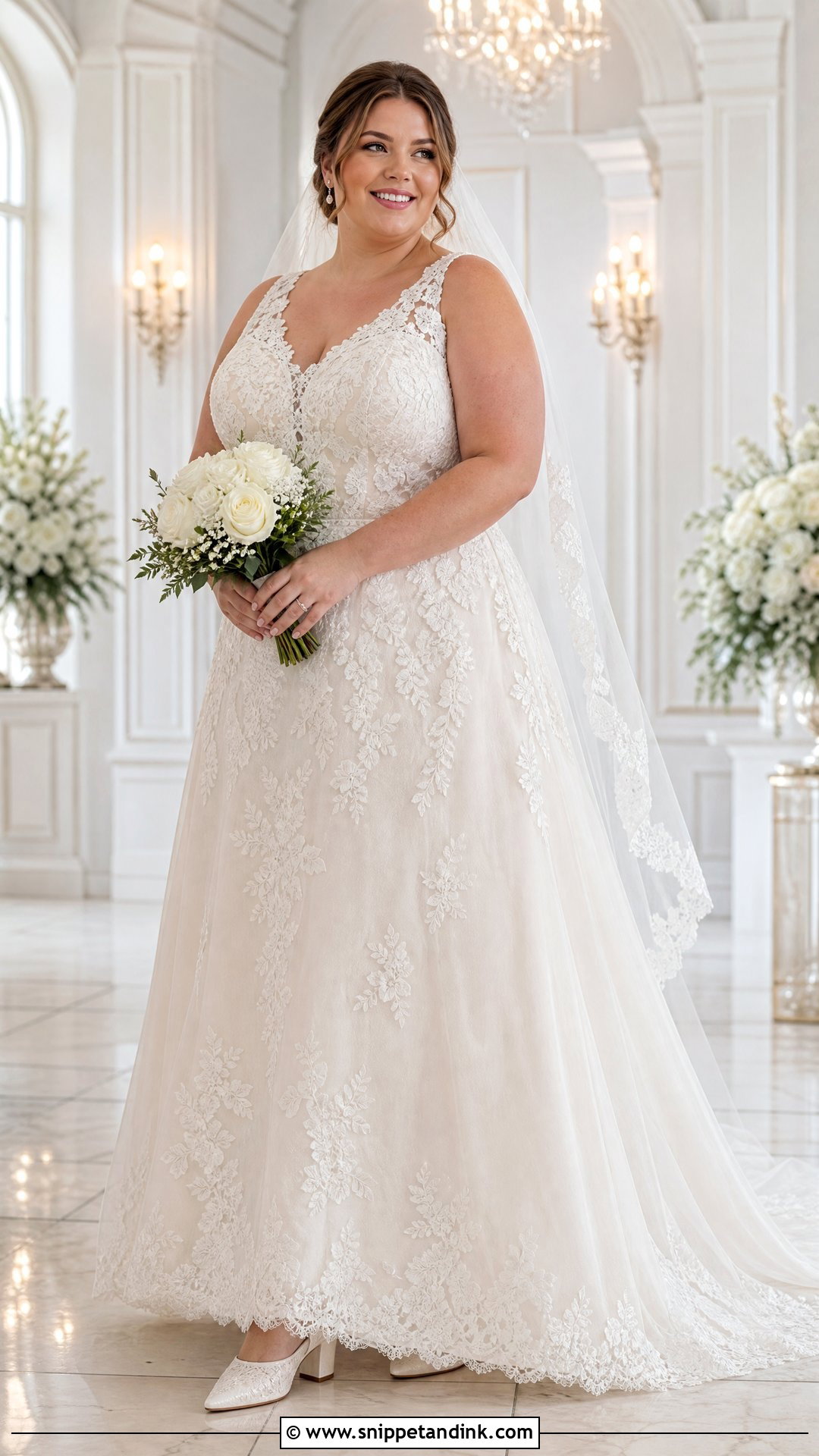
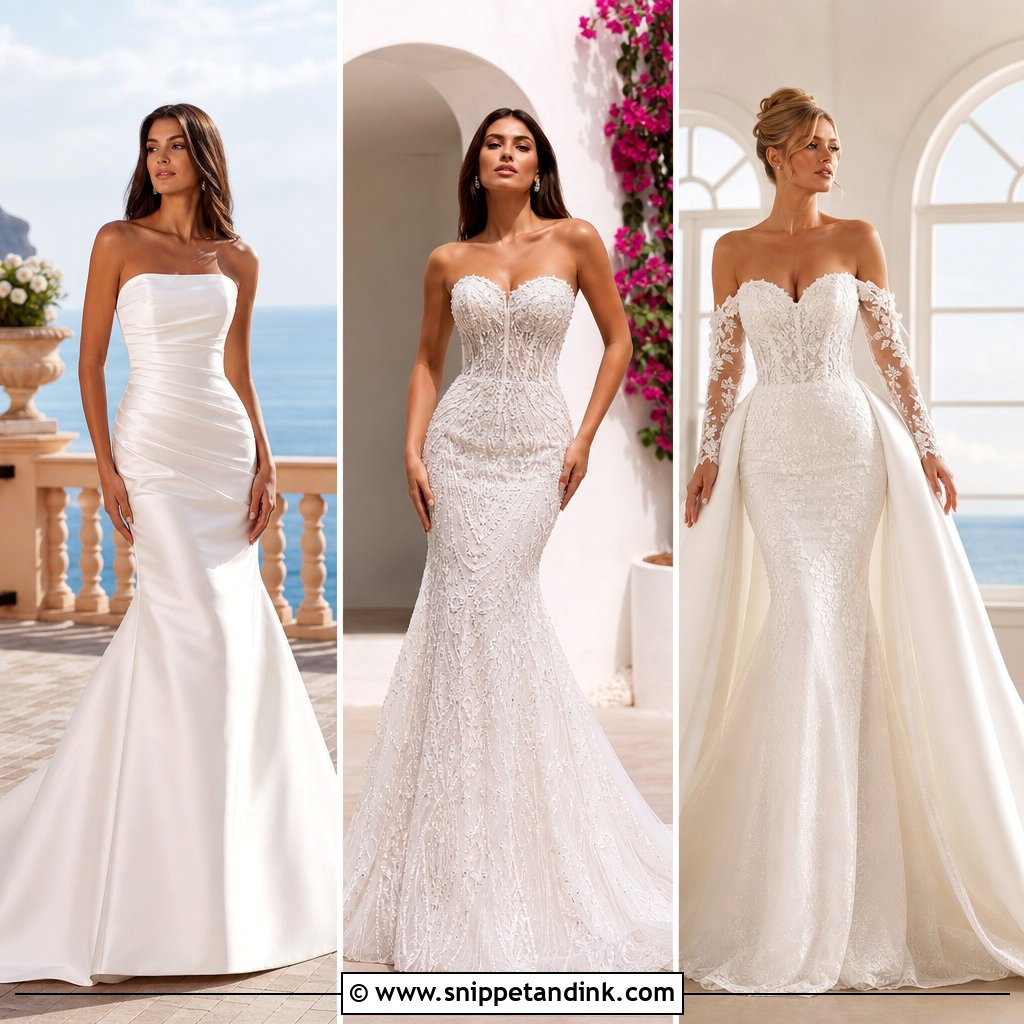
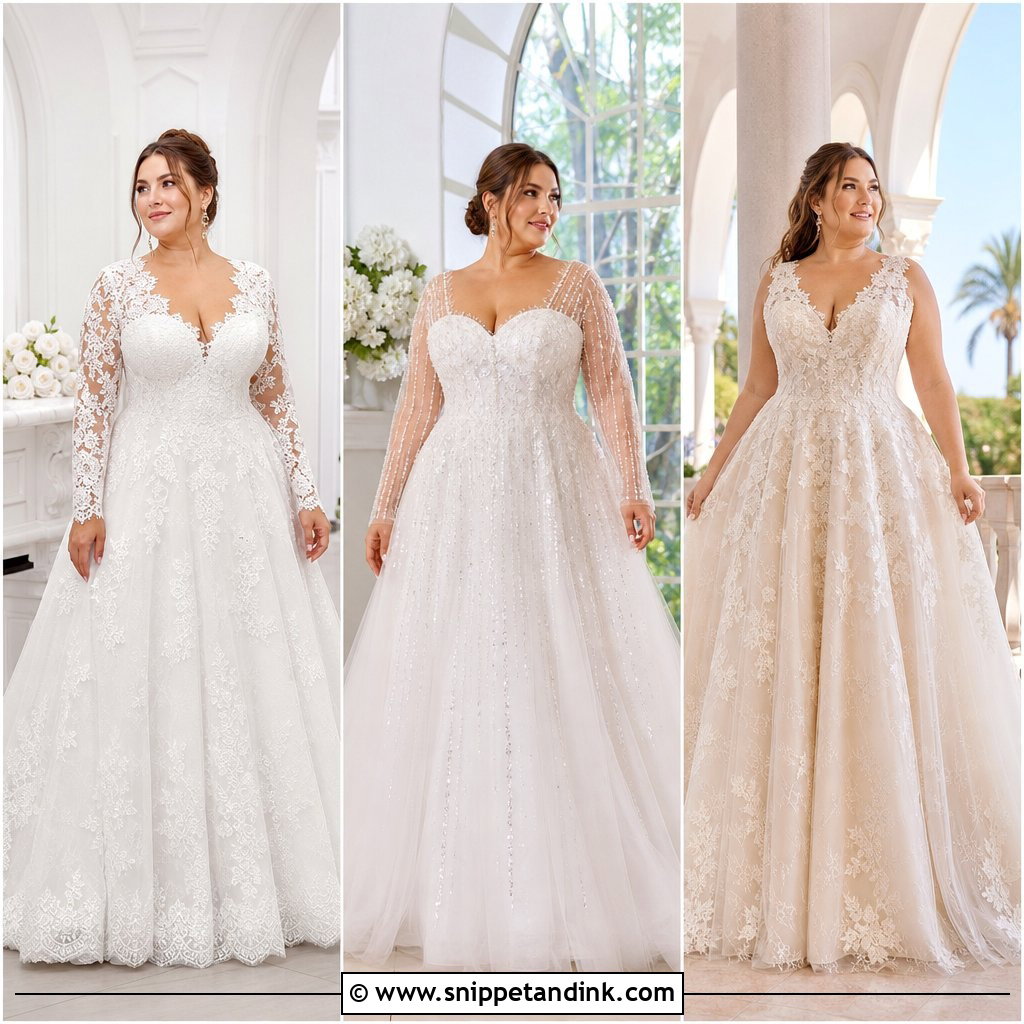
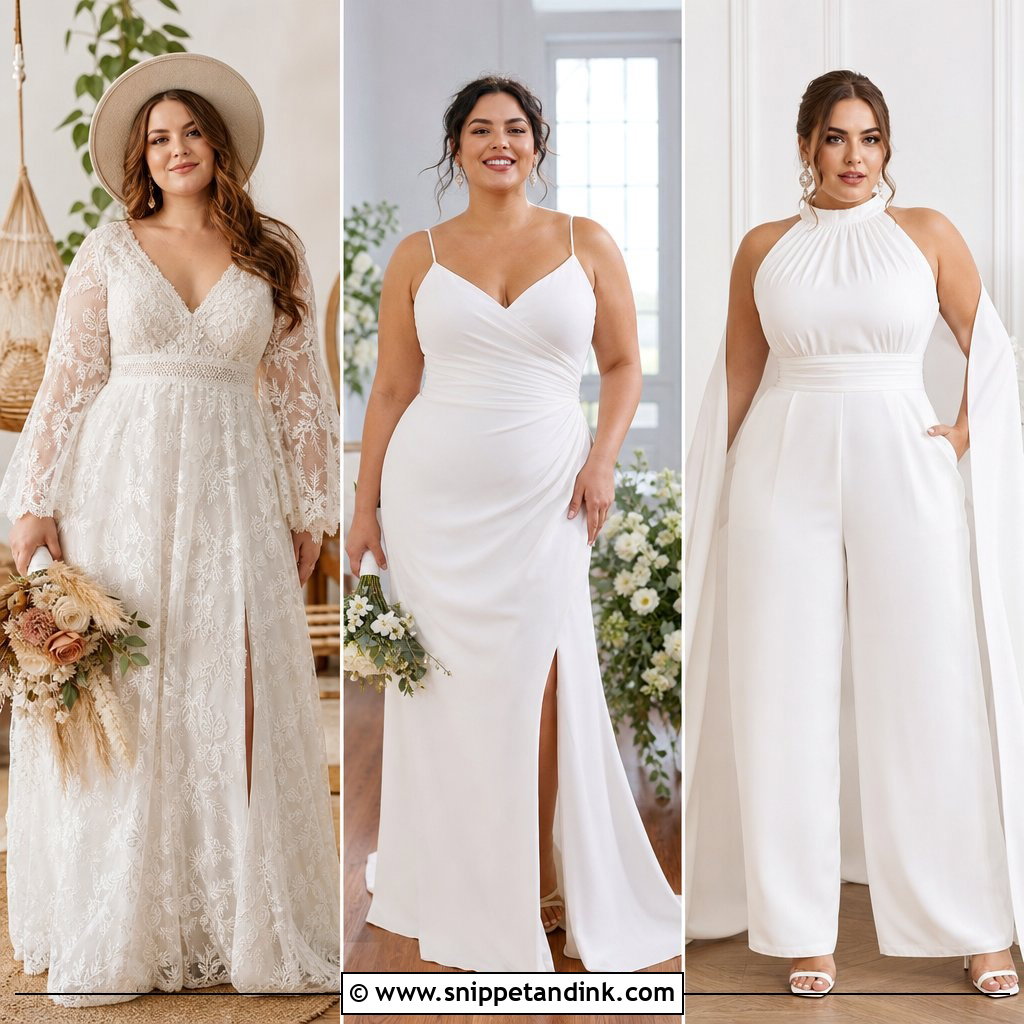
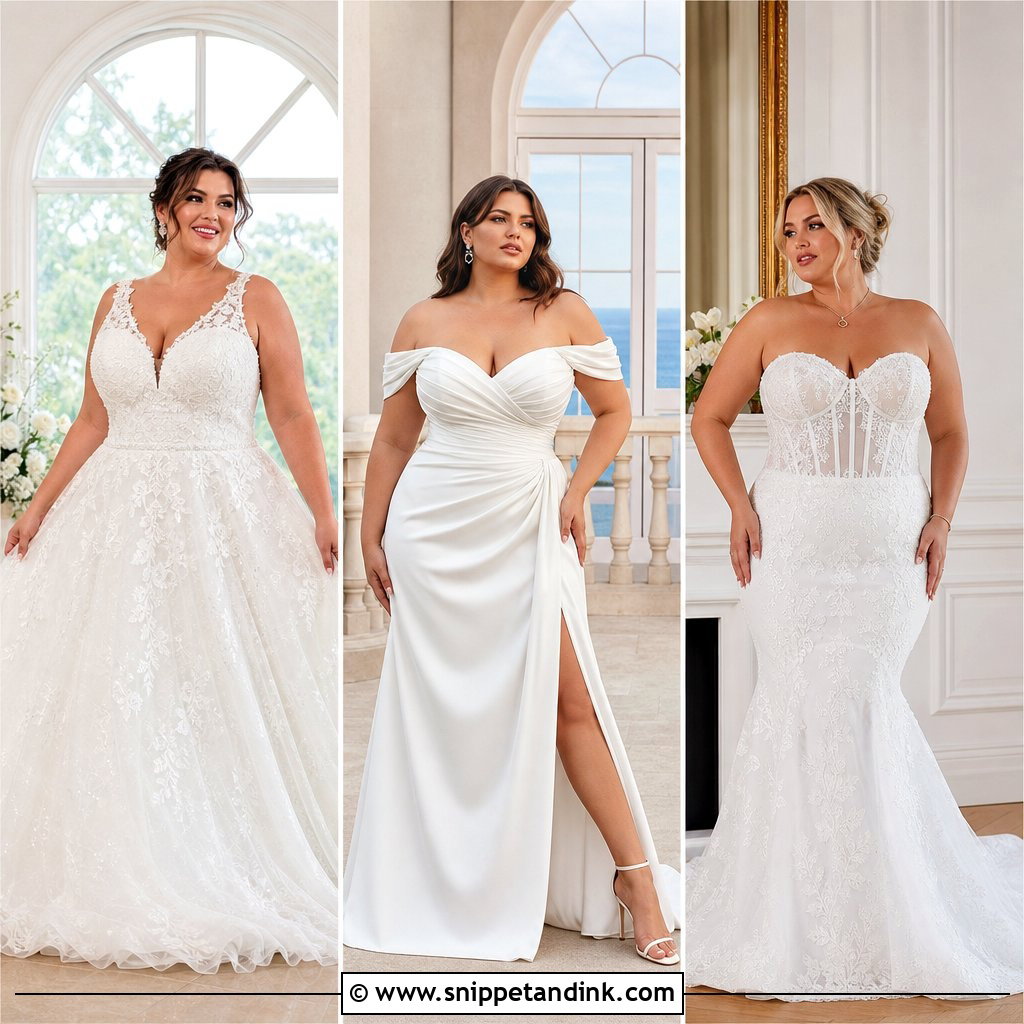
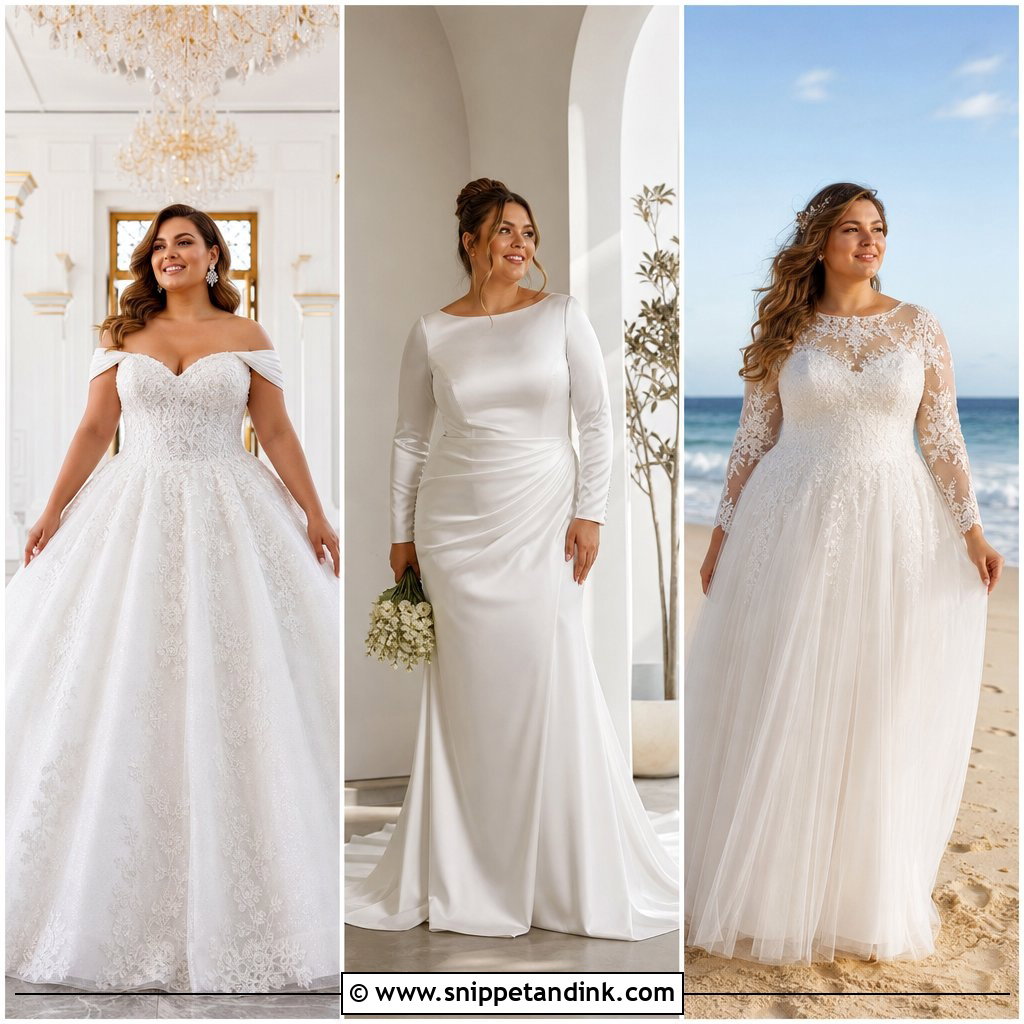
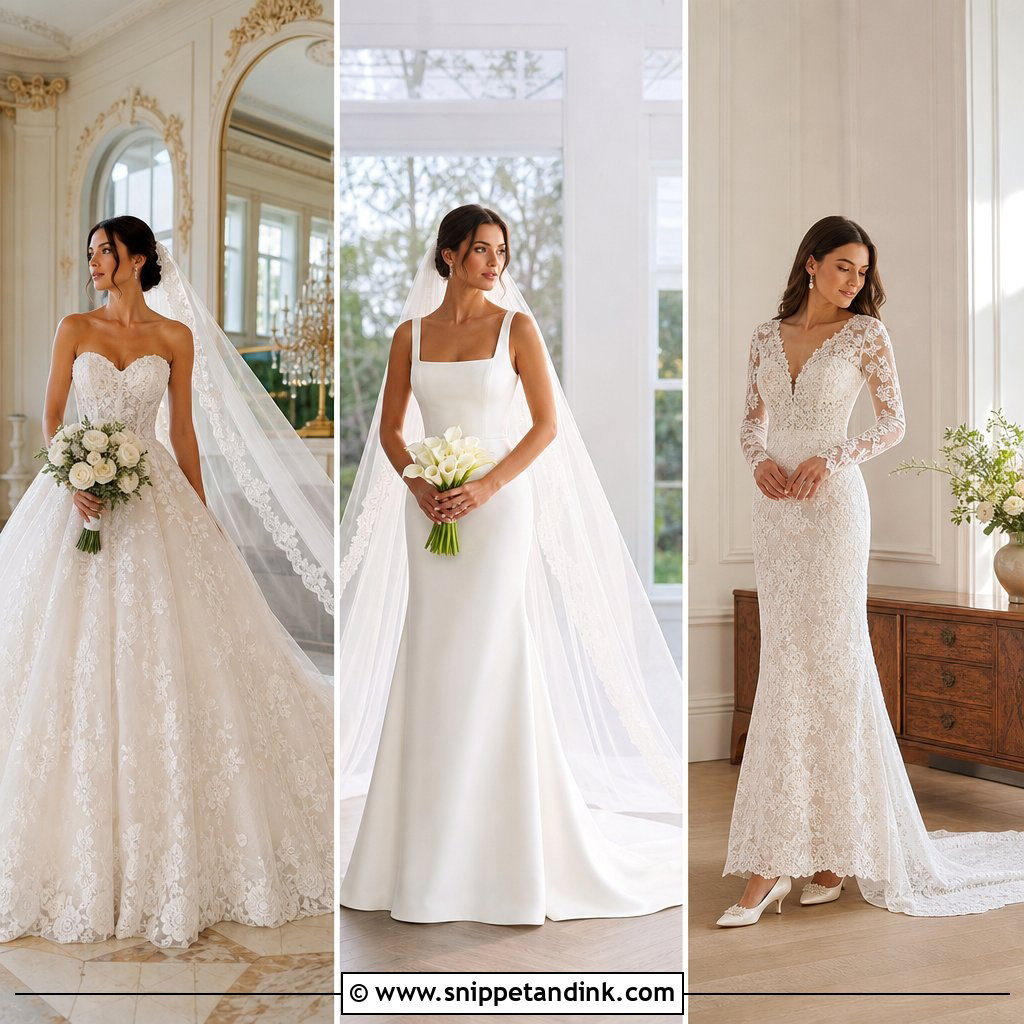
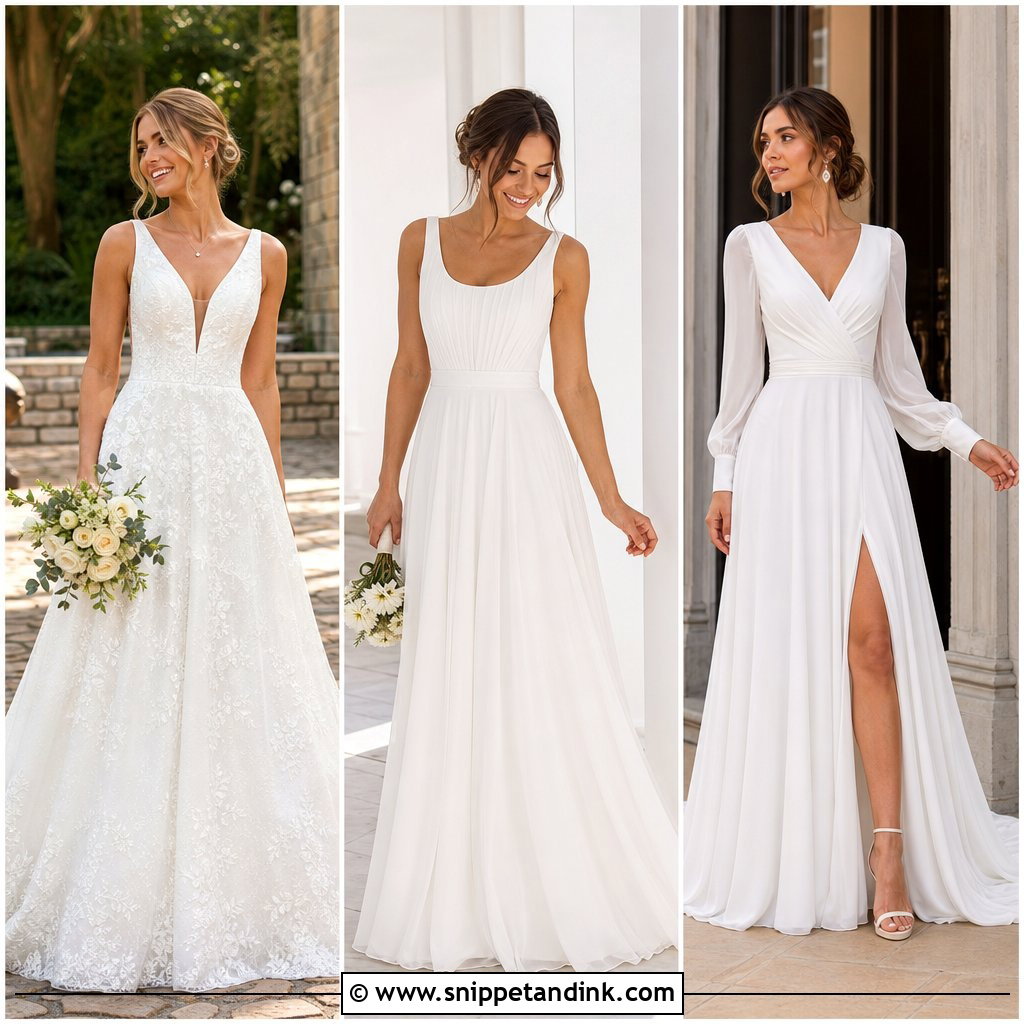
An A-line is where I start most curvy brides, simply because it gives a defined waist without a skirt that grips the hips. The waist seam should land on your natural waist, not above it, and the skirt should skim rather than pouf. Look for a structured bodice and straps that actually bear weight. Floral lace softens; a fine layer of sparkle lifts the detail in photos. Block-heel pumps and a fingertip veil edged in narrow lace keep it balanced, and a round bouquet of white roses suits the shape. You’ll be comfortable in it for twelve hours.
2. Sweetheart Ball Gown Wedding Dress
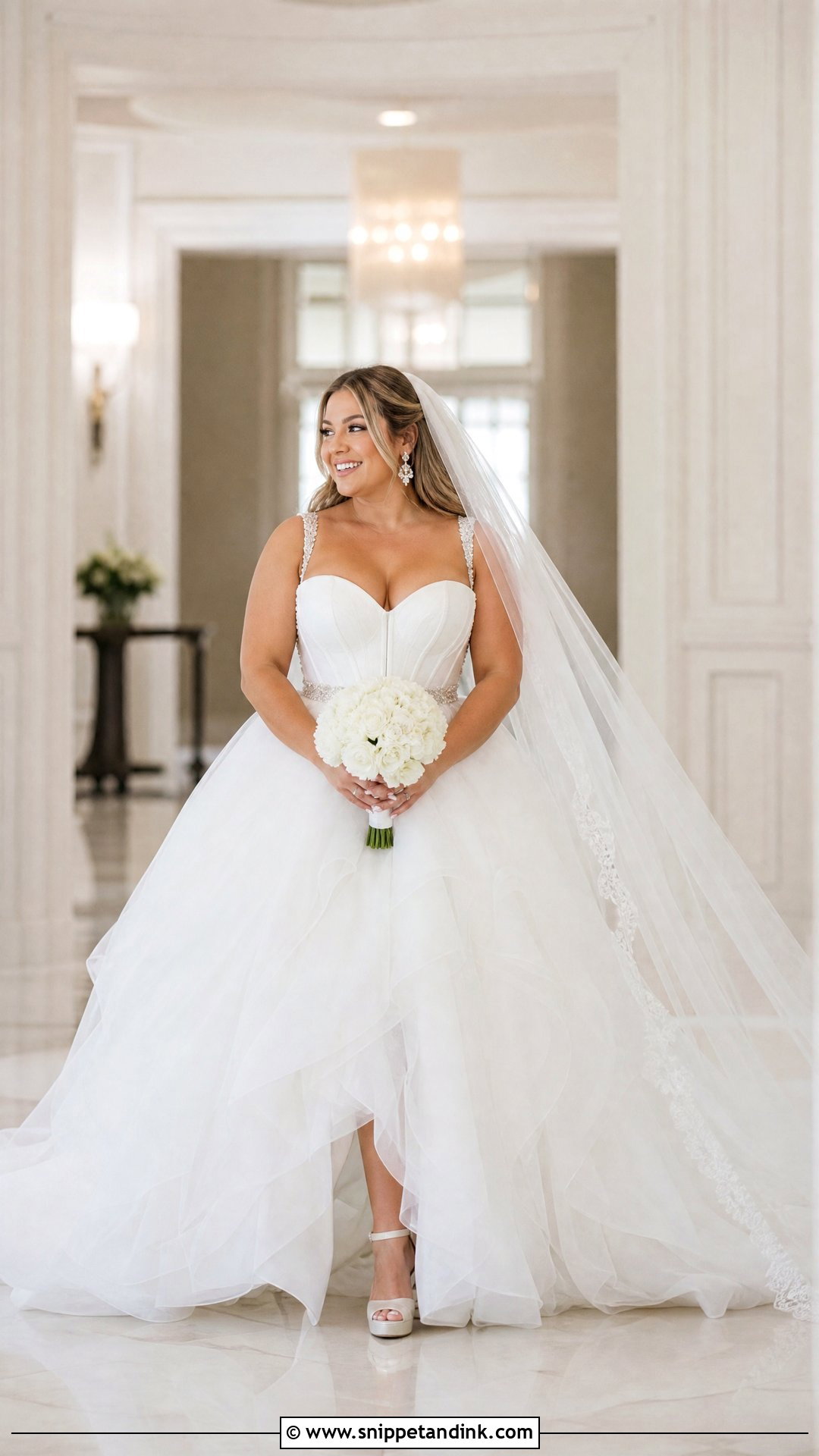
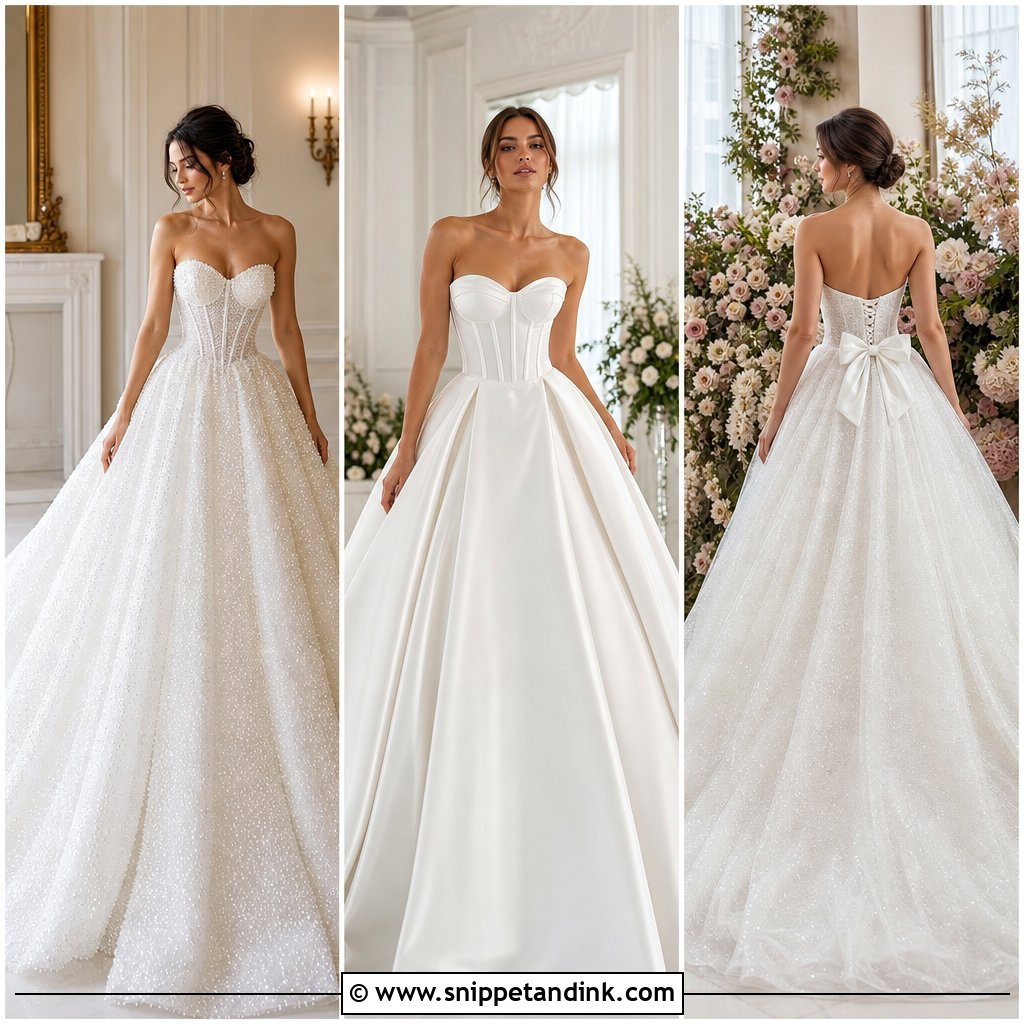
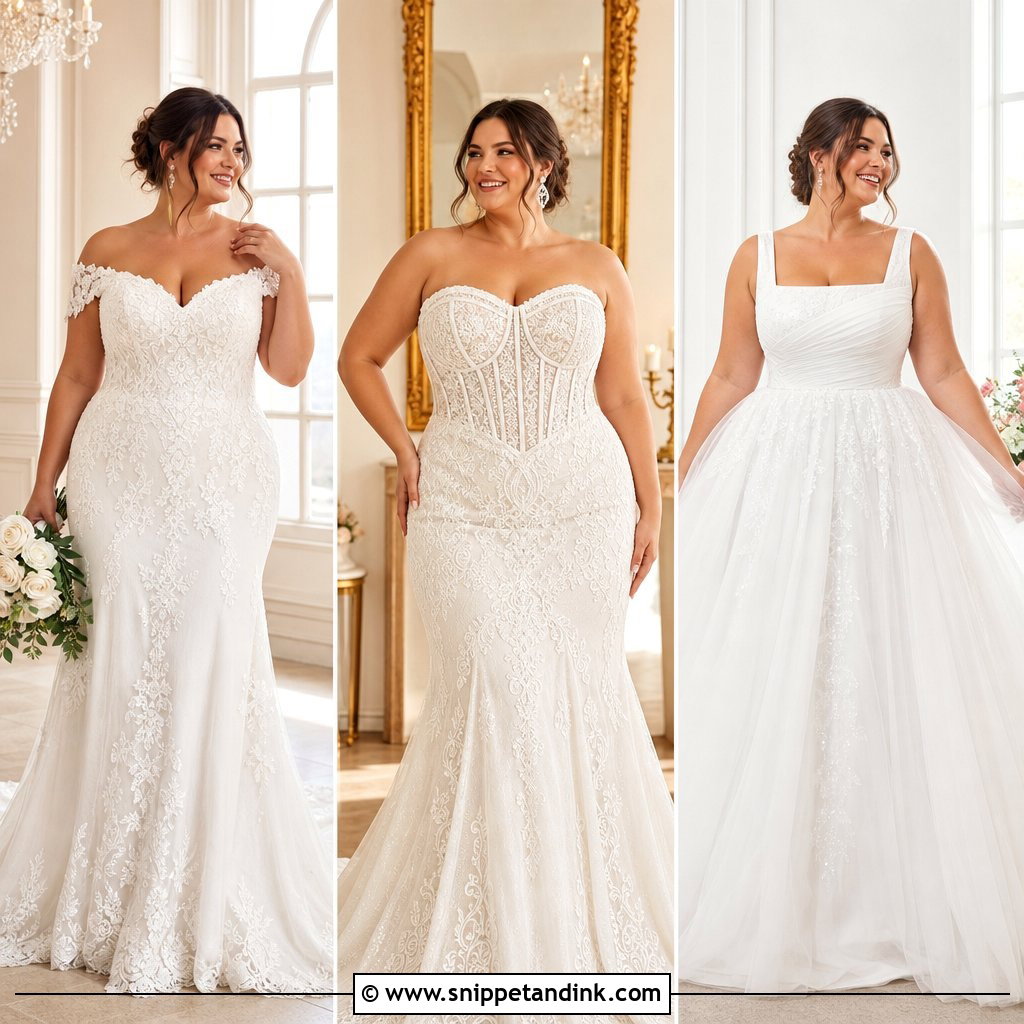
Sweetheart necklines on a full bust need real engineering inside: boning, secure cups and either wide-set straps or removable off-the-shoulder bands. When those are right, the bodice doesn’t feel tight, because the structure holds the dress up rather than your ribs. Choose lightweight tulle or organza for the skirt; several layers of heavy satin can weigh more than brides expect by the end of the night. Platform heels hidden under the skirt give height without wobble. A cathedral veil suits a ballroom or grand hotel.
3. Off-the-Shoulder Tulle Wedding Dress
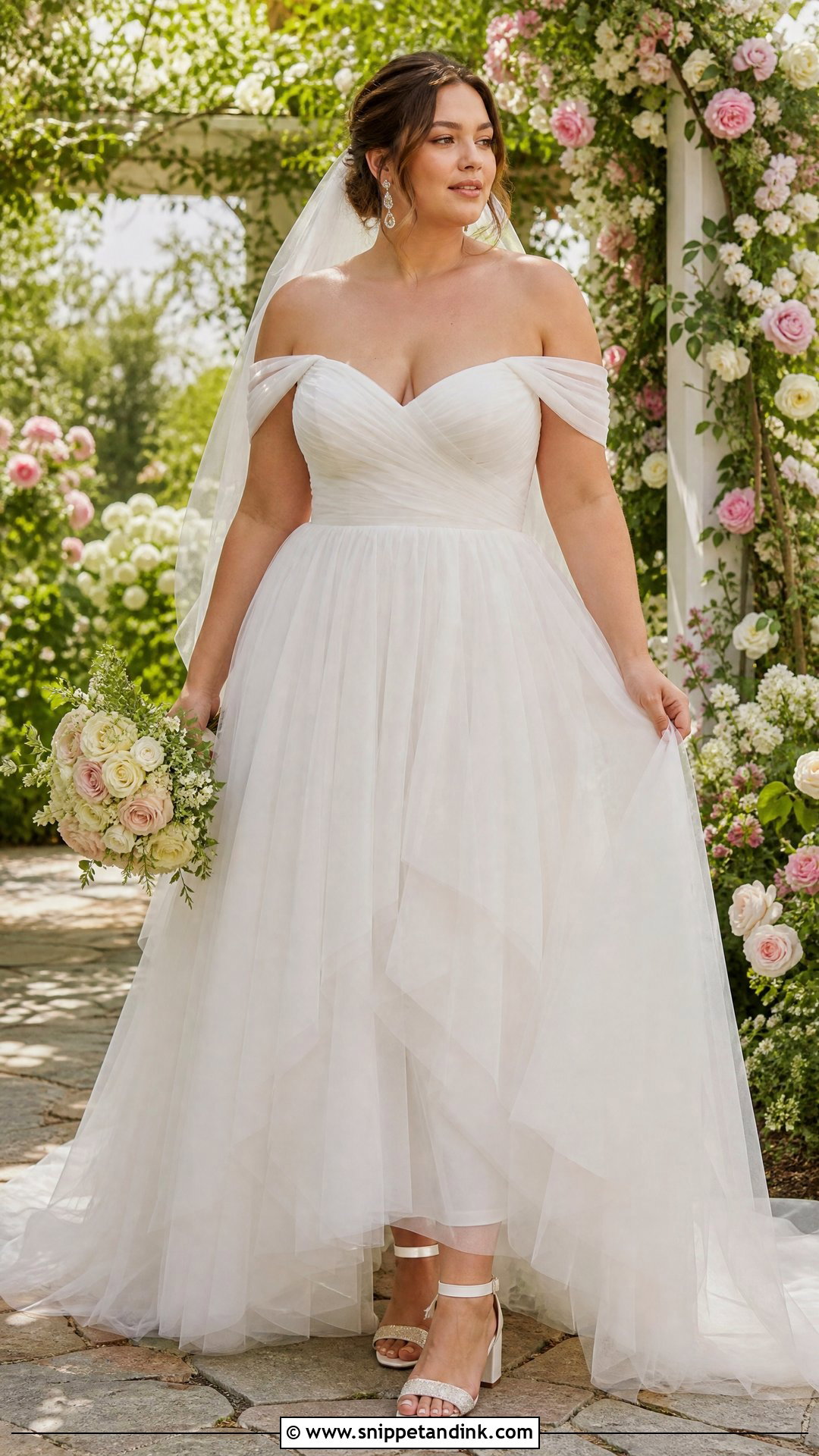
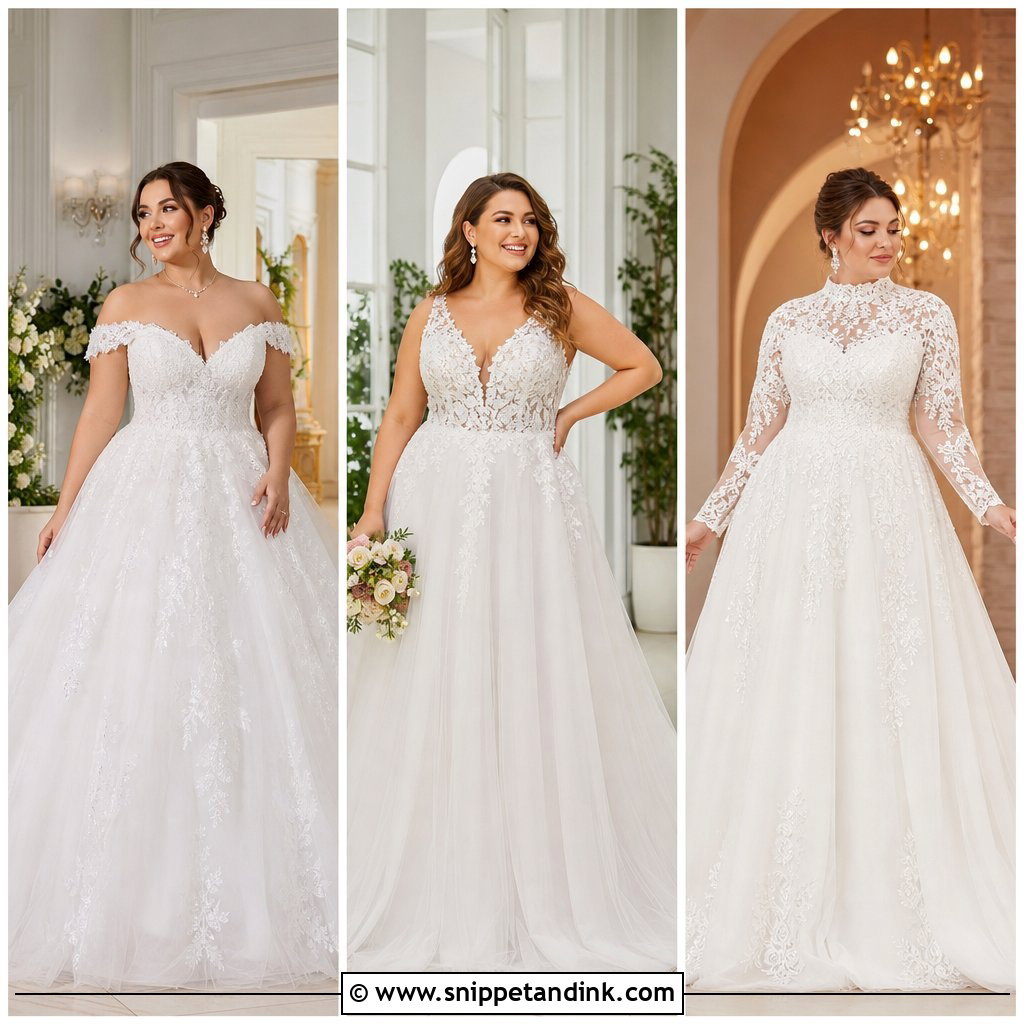
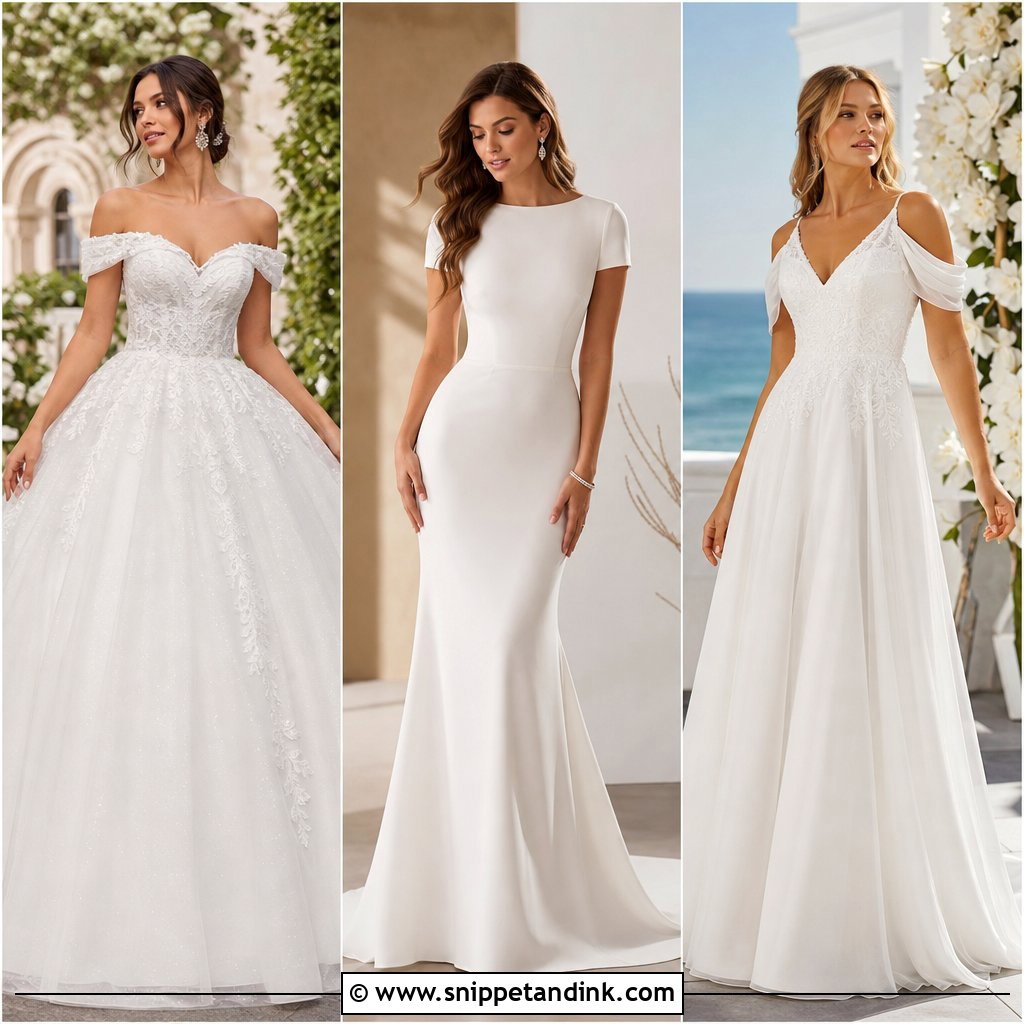
Off-the-shoulder bands should be decoration, not the thing holding the dress up. I always check that a gown like this has a supportive inner bodice; if the bands are doing the work, they’ll creep down your arms all day and you’ll keep hitching them back. With that solved, soft tulle frames the collarbone and shoulders and a layered A-line skirt moves easily. Crystal drops, a small comb and a sheer chapel veil keep it light. A loose bouquet of peonies and roses suits a garden venue.
4. Long Sleeve Lace Wedding Dress
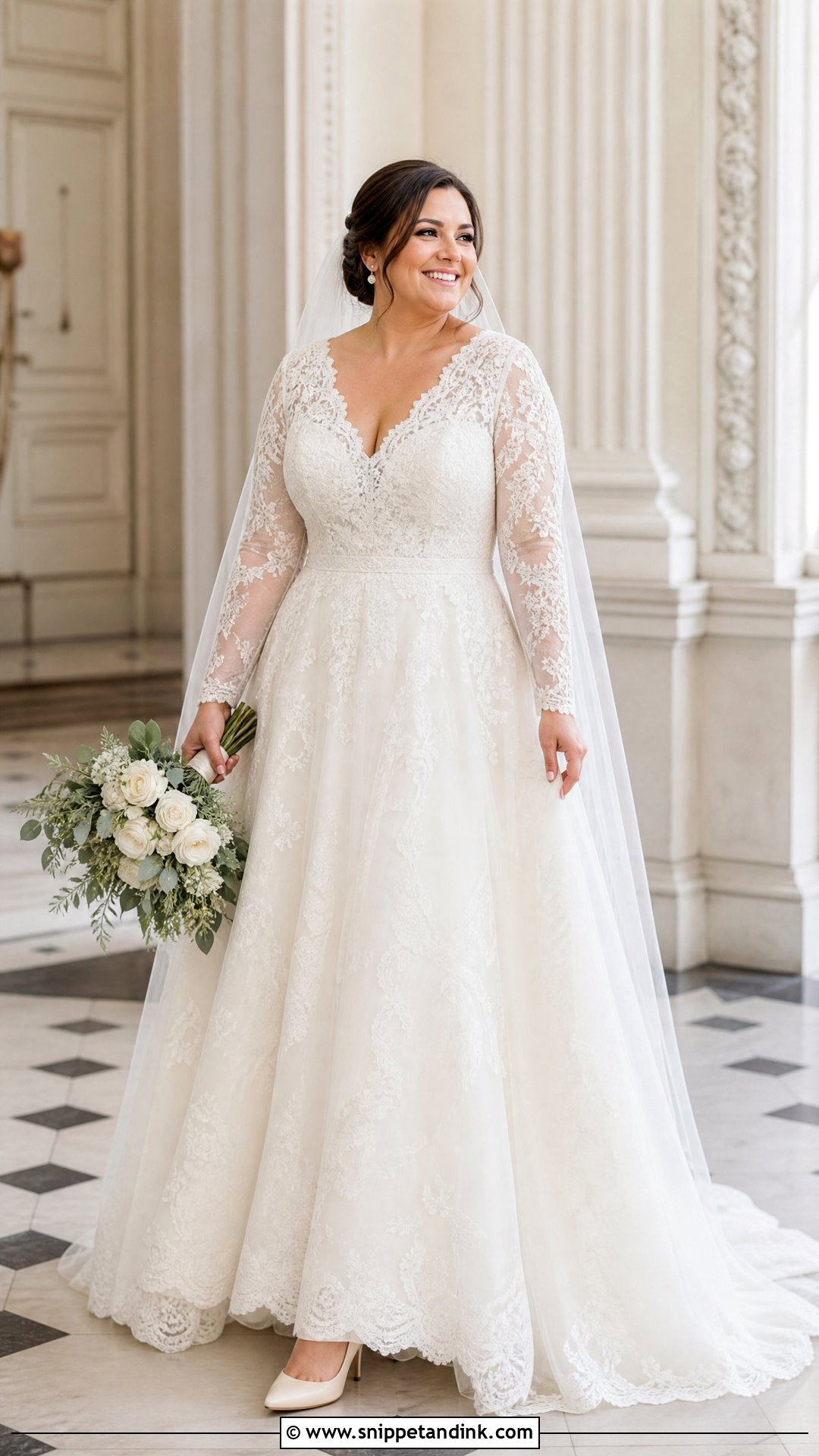
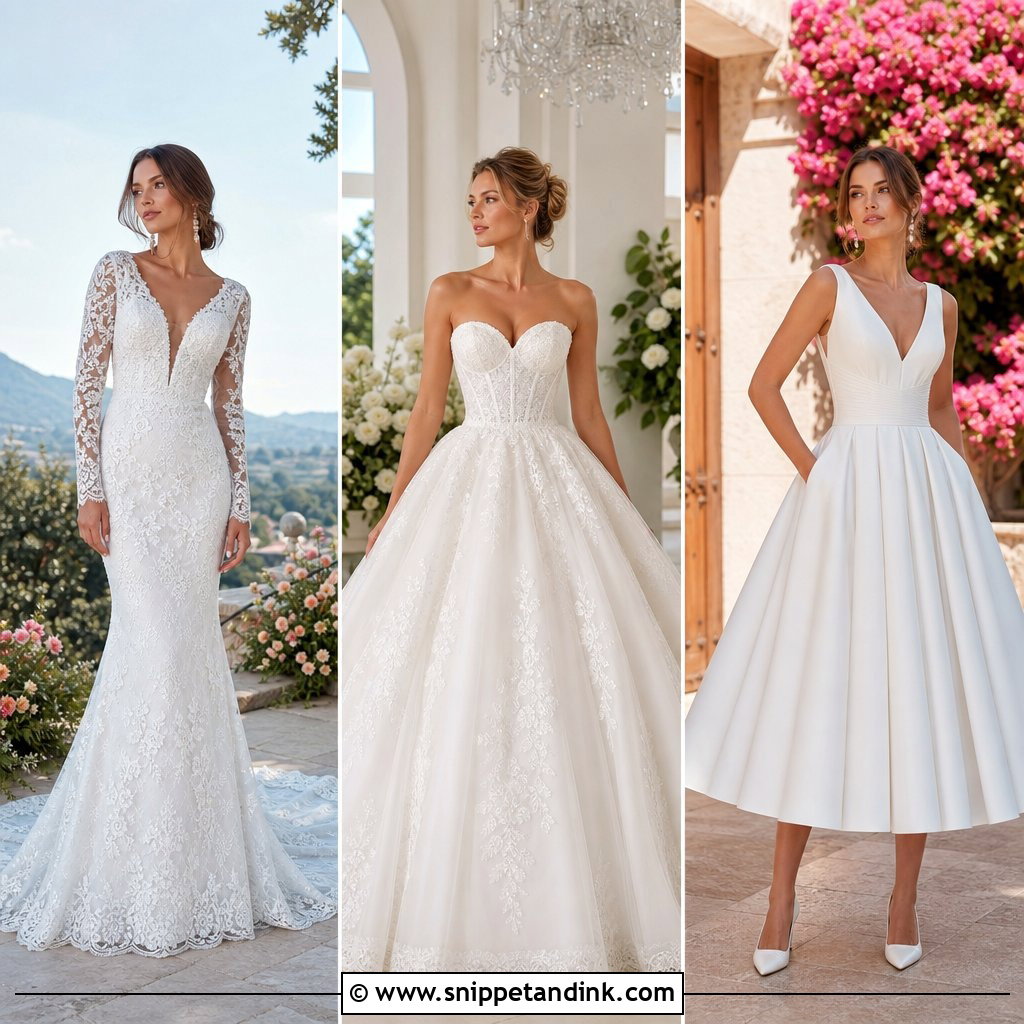
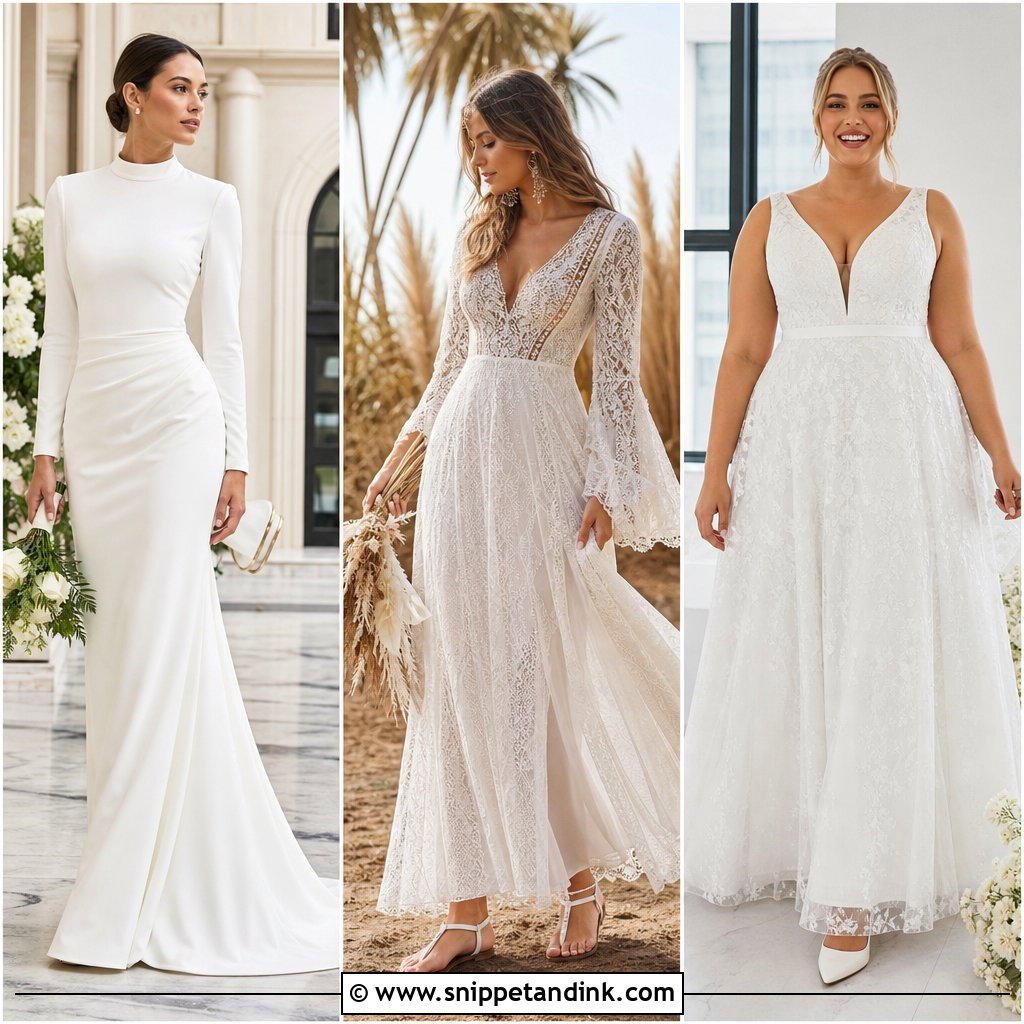
Sheer lace sleeves give coverage without making the upper body look heavy, because you see skin and pattern together rather than a solid block. Fit is the hard part. Bridal lace has little stretch, so I ask brides to hug me and raise their arms at the fitting; if the sleeve pulls at the armhole, it needs letting out there. A V-neck or soft scoop balances the coverage. Pearl earrings, a sleek low bun and a plain tulle veil let the lace lead. It suits a fall or winter wedding and historic venues.
5. V-Neck Chiffon Wedding Dress
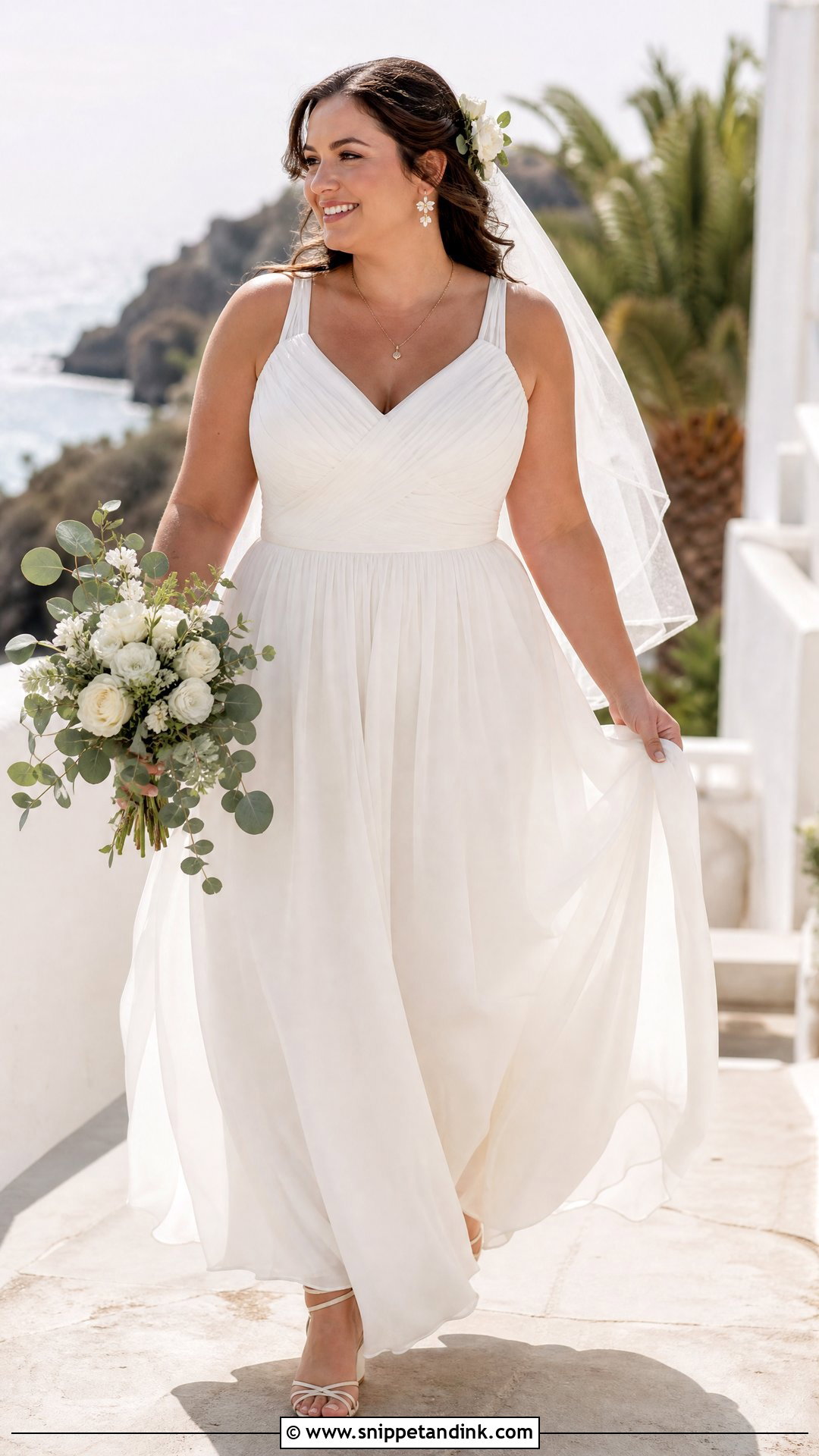
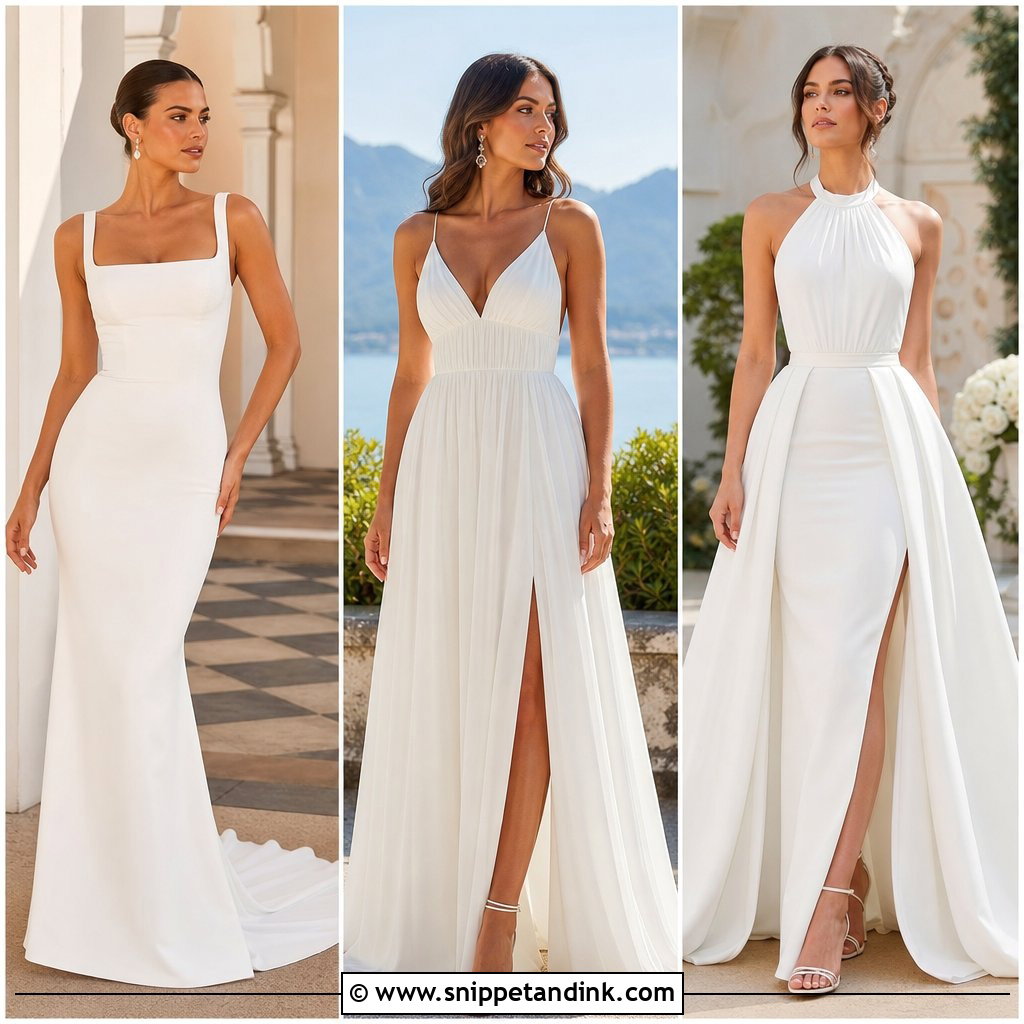
Chiffon is light and fluid, so it never feels formal or heavy, and it doesn’t hold heat. The V-neck opens the upper body. For a fuller bust, the support has to come from proper straps and a fitted underlayer, because chiffon itself has no structure at all. Choose an A-line or a gently gathered skirt, and skip heavy gathers at the midsection if you want a cleaner line. Strappy block heels, a loose updo and an airy fingertip veil suit a beach or destination ceremony.
6. Fit-and-Flare Crepe Wedding Dress
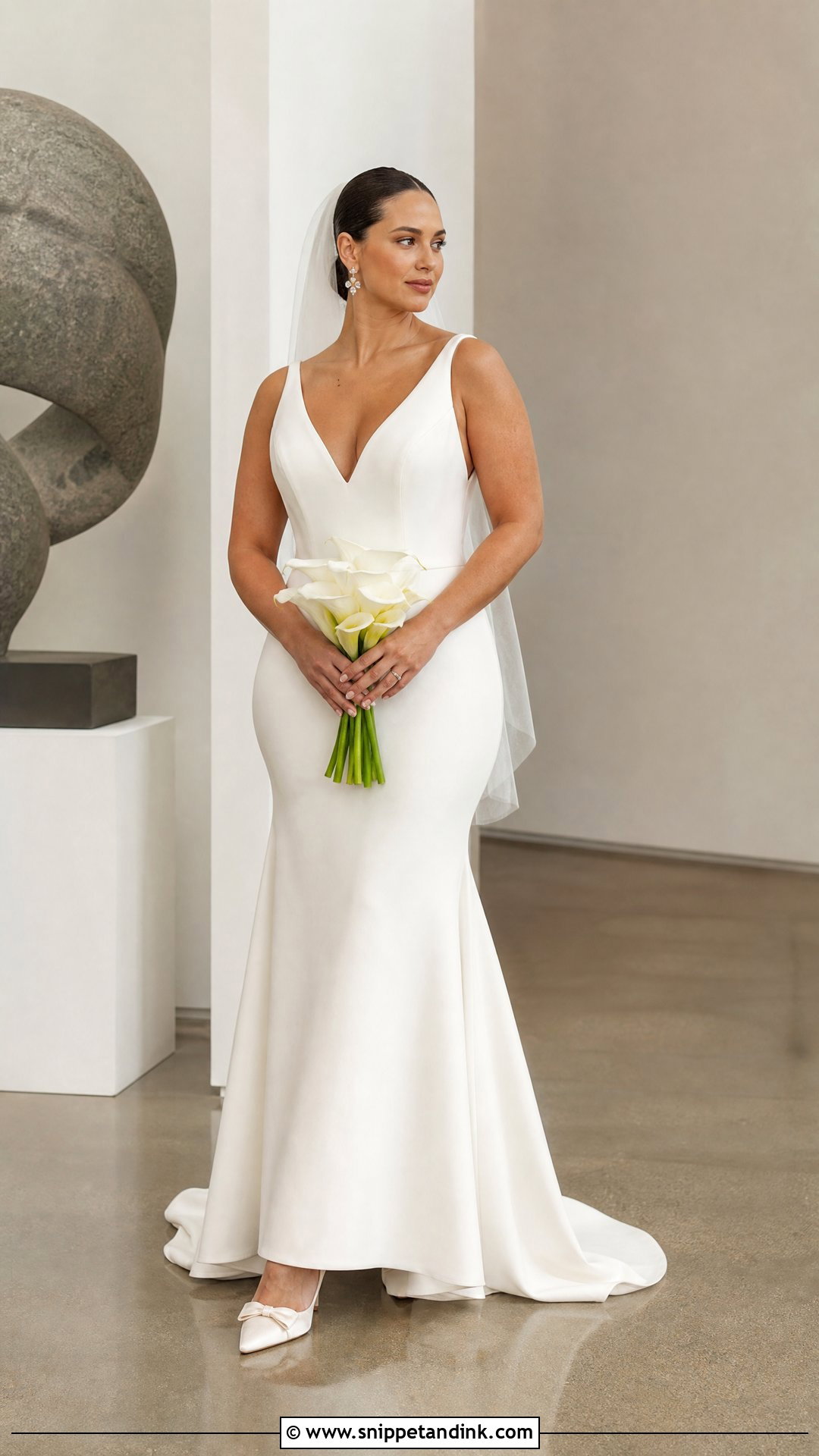
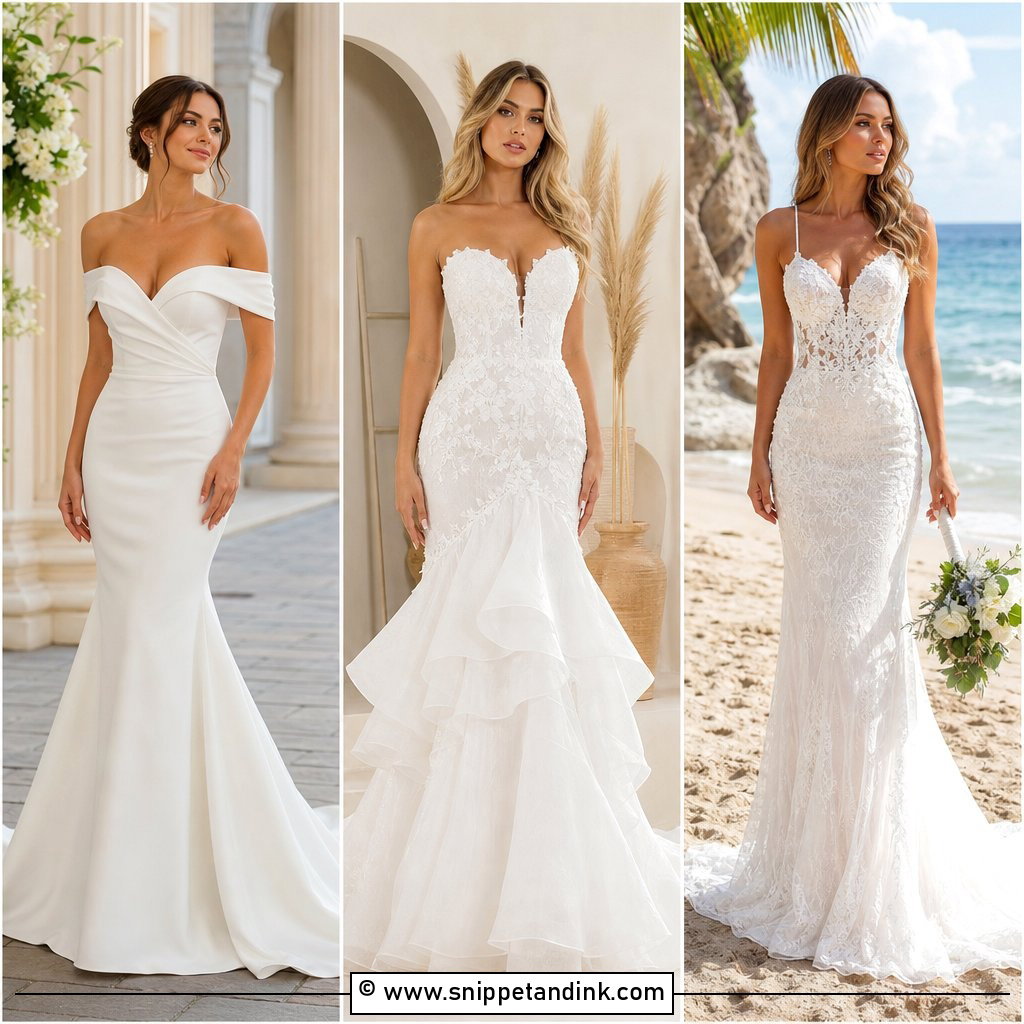
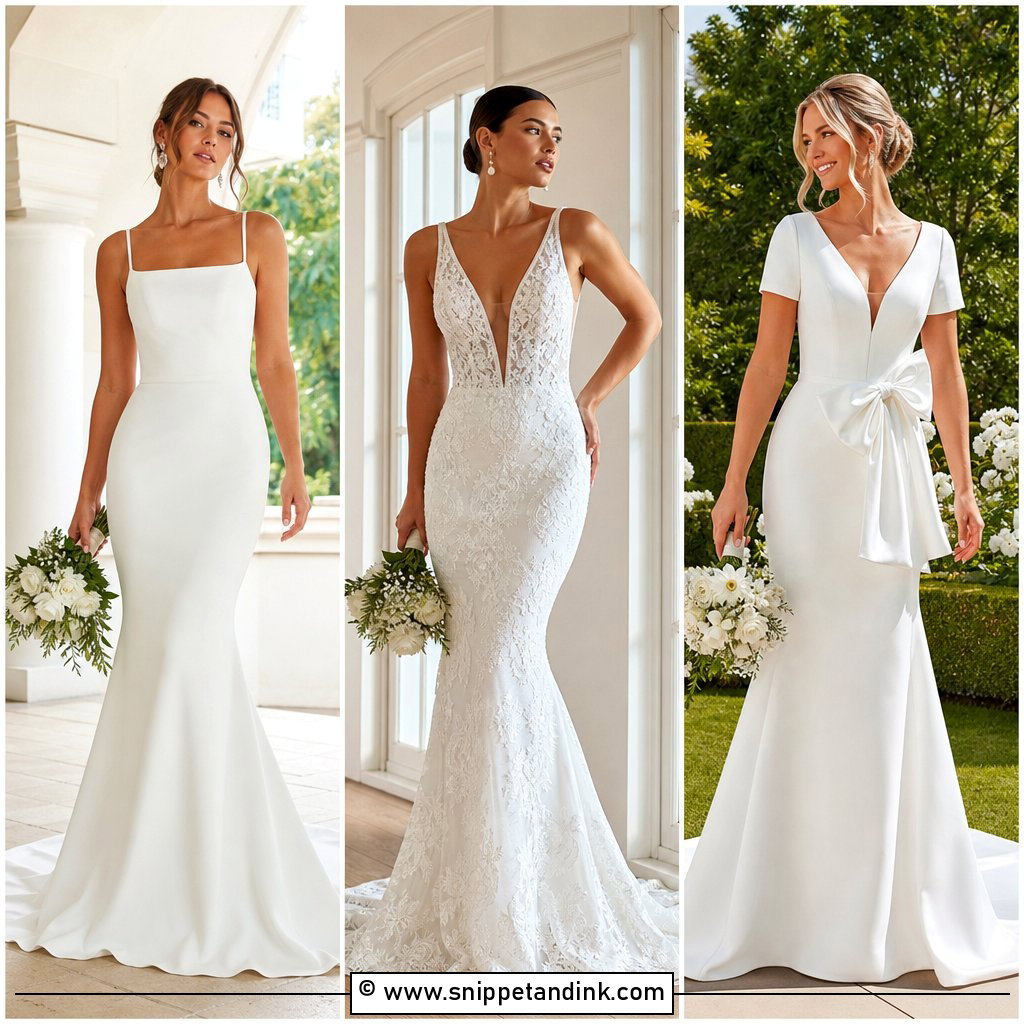
Stretch crepe is the fabric that changed fitted gowns for curvy brides. It follows the bodice and hips, flares around the lower thigh, and lets you move because it gives a little. Strong lining and carefully placed seams make it look smooth rather than clingy. Crepe shows every ridge underneath, so shapewear and no-line underwear need to be chosen before the first fitting, not after. Pointed heels, sculptural earrings and a sleek veil with a low bun keep the minimal mood. Calla lilies or long-stemmed roses suit the clean line.
7. Mermaid Wedding Dress With Straps
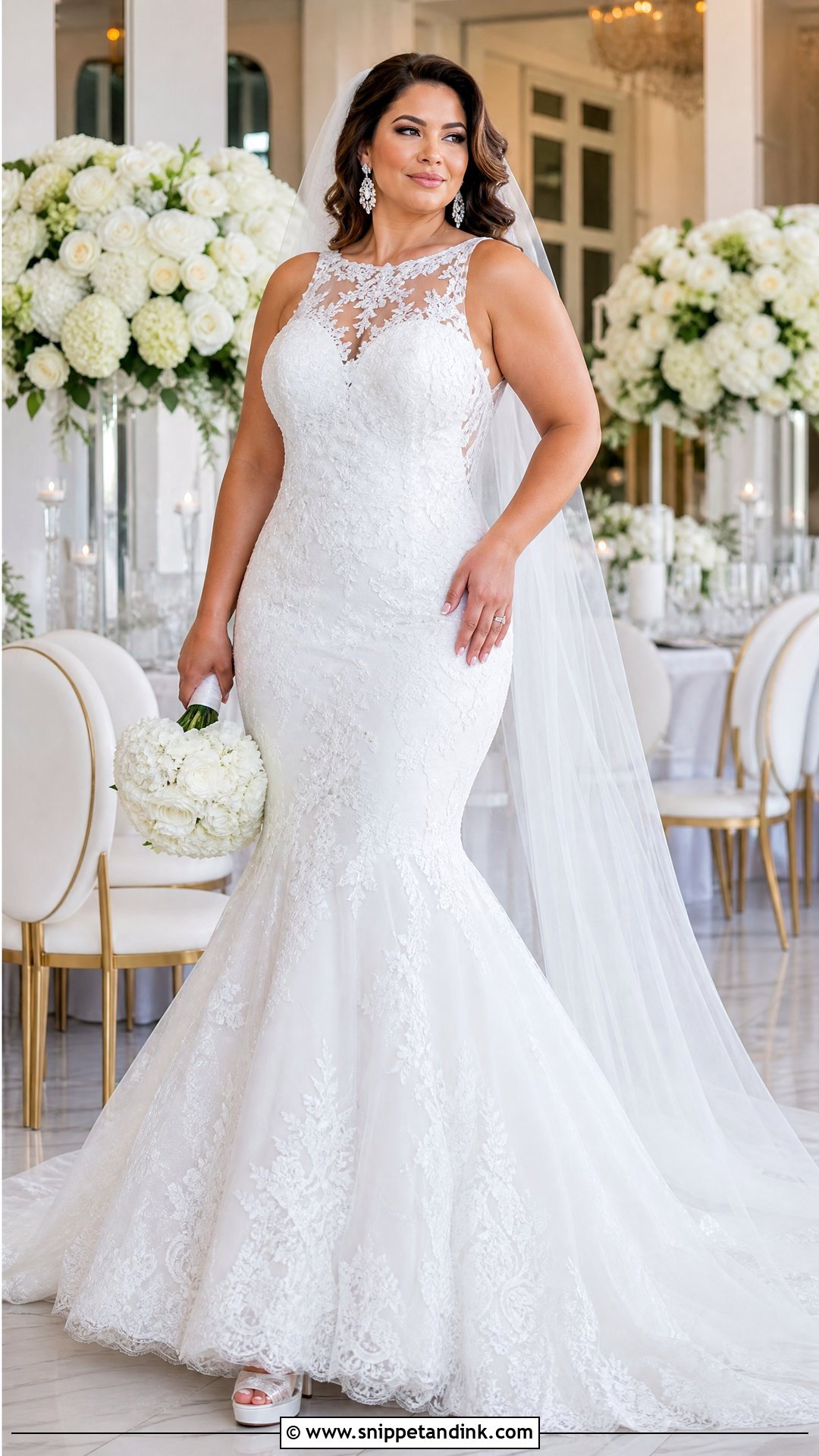
If you want to show off your waist, hips, and natural proportions, a mermaid with real straps is the boldest way to do it. The strap support plus a structured bodice and stretch lining makes it far easier to wear than a strapless version. Where the flare starts matters most: too low and you can’t climb stairs or sit. During alterations, I have brides walk, sit and take a step up in it before we pin the knee. Lace appliqués soften the shape; plain crepe sharpens it. Platform heels, statement earrings and a chapel veil finish it.
8. Corset Bodice Wedding Dress
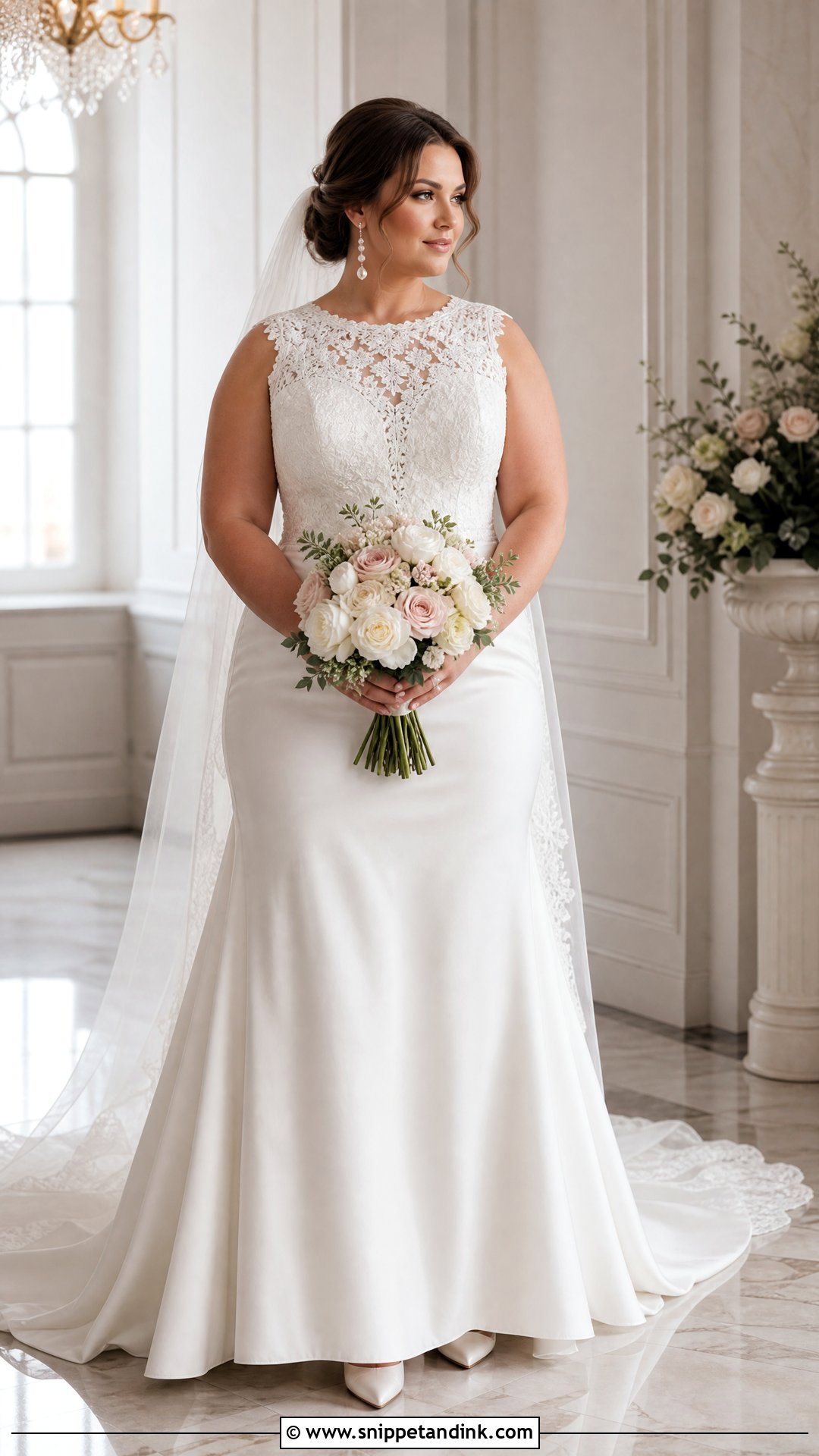
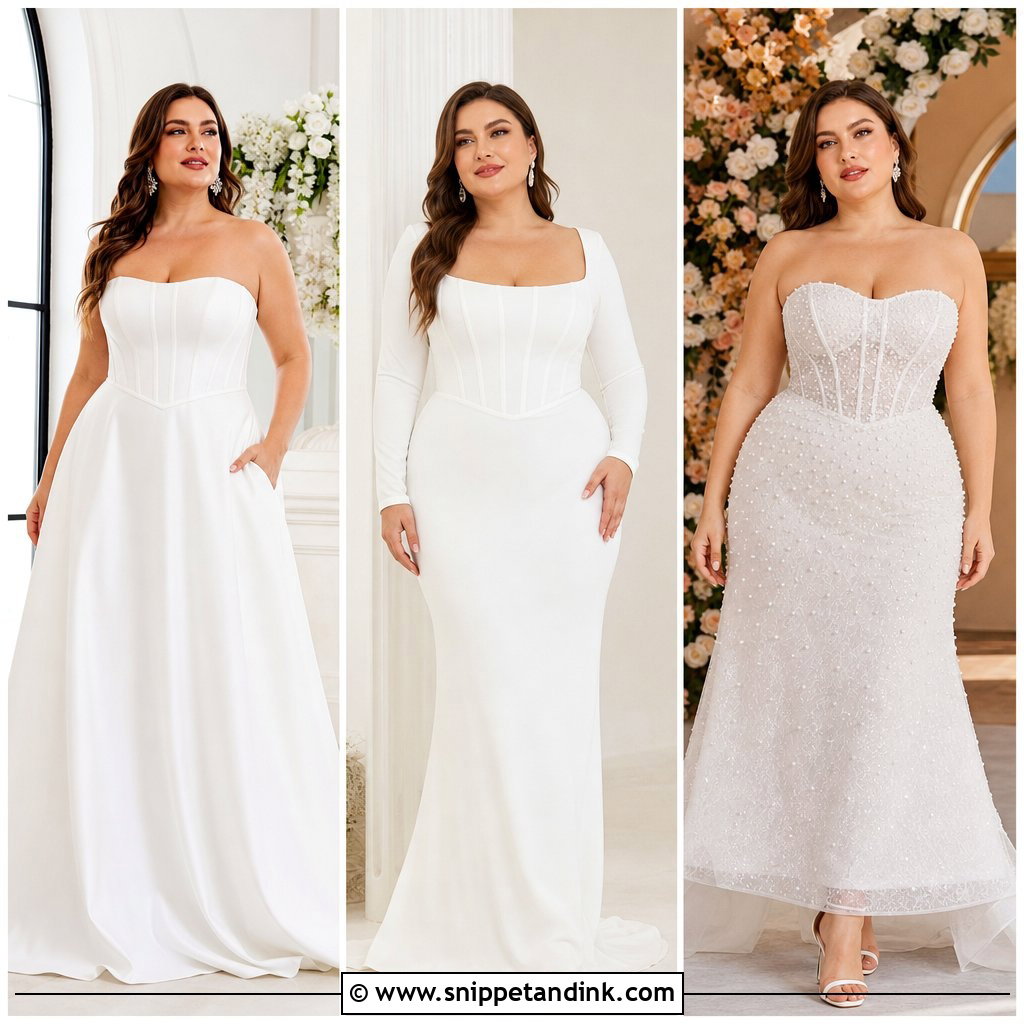
Good corsetry feels like support, not squeeze. The boning should follow your shape, and the cups should fit the bust without pinching at the top or gaping at the side. A lace-up back lets you adjust on the day, which I like for curvy brides because the body changes slightly through a long day of eating and dancing. A concealed zipper looks smoother. Pair the structured top with a flowing satin, organza or tulle skirt. A half-up style keeps the neckline visible.
9. Ruched Waist Wedding Dress
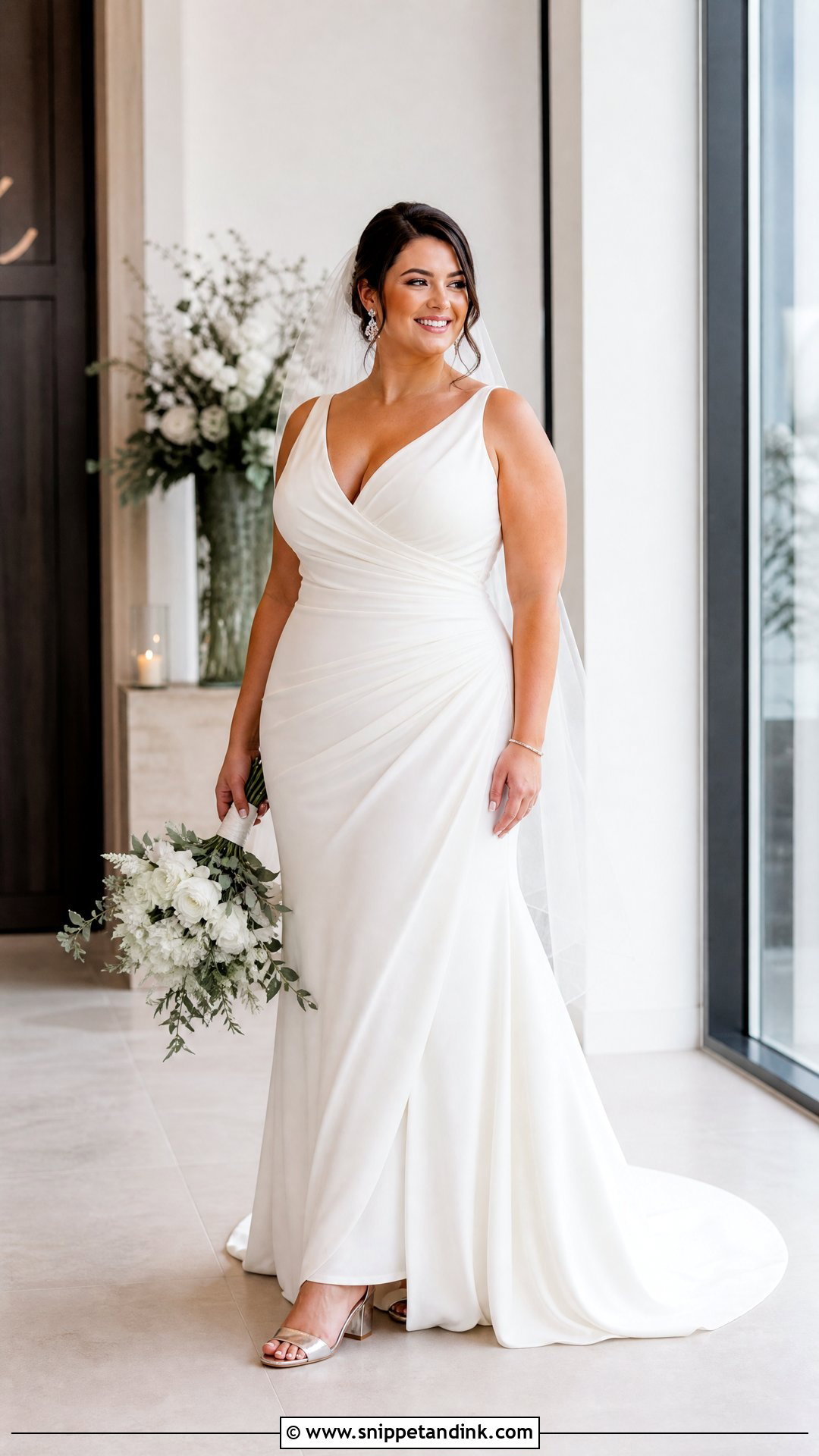
Ruching earns its reputation for being forgiving: diagonal gathers give gentle definition while the fabric follows your body. What I watch for is bulk. Ruching should lie flat; thick folds add volume exactly where most brides don’t want it. Draped jersey, chiffon, satin and stretch crepe all work, depending on how formal the day is. A softly arranged bouquet echoes the fabric’s movement better than a tight dome. Crystal earrings and metallic block heels keep it polished.
10. Empire Waist Wedding Dress
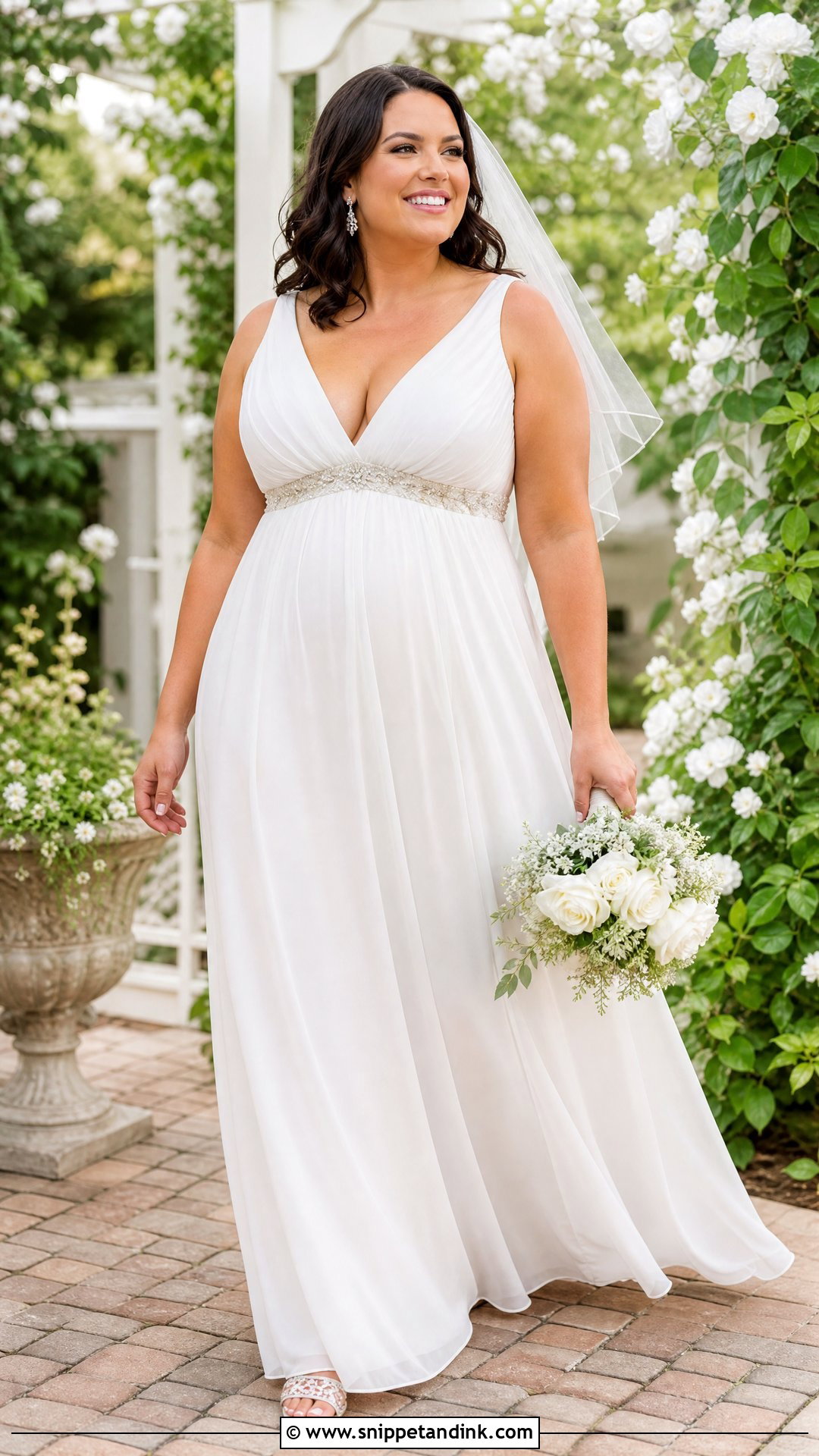
With an empire waist wedding dress, the main seam sits just under the bust and the skirt falls freely past the waist and hips. Brides who dislike anything structured around the middle tend to love it. The mistake I see is a seam placed too high, cutting across the bust rather than under it; on a fuller bust, it needs to sit right at the underwire line. Look for wider straps and secure cups, with fluid chiffon or soft tulle for the skirt. Low embellished sandals suit a warm destination.
11. Square Neck Satin Wedding Dress
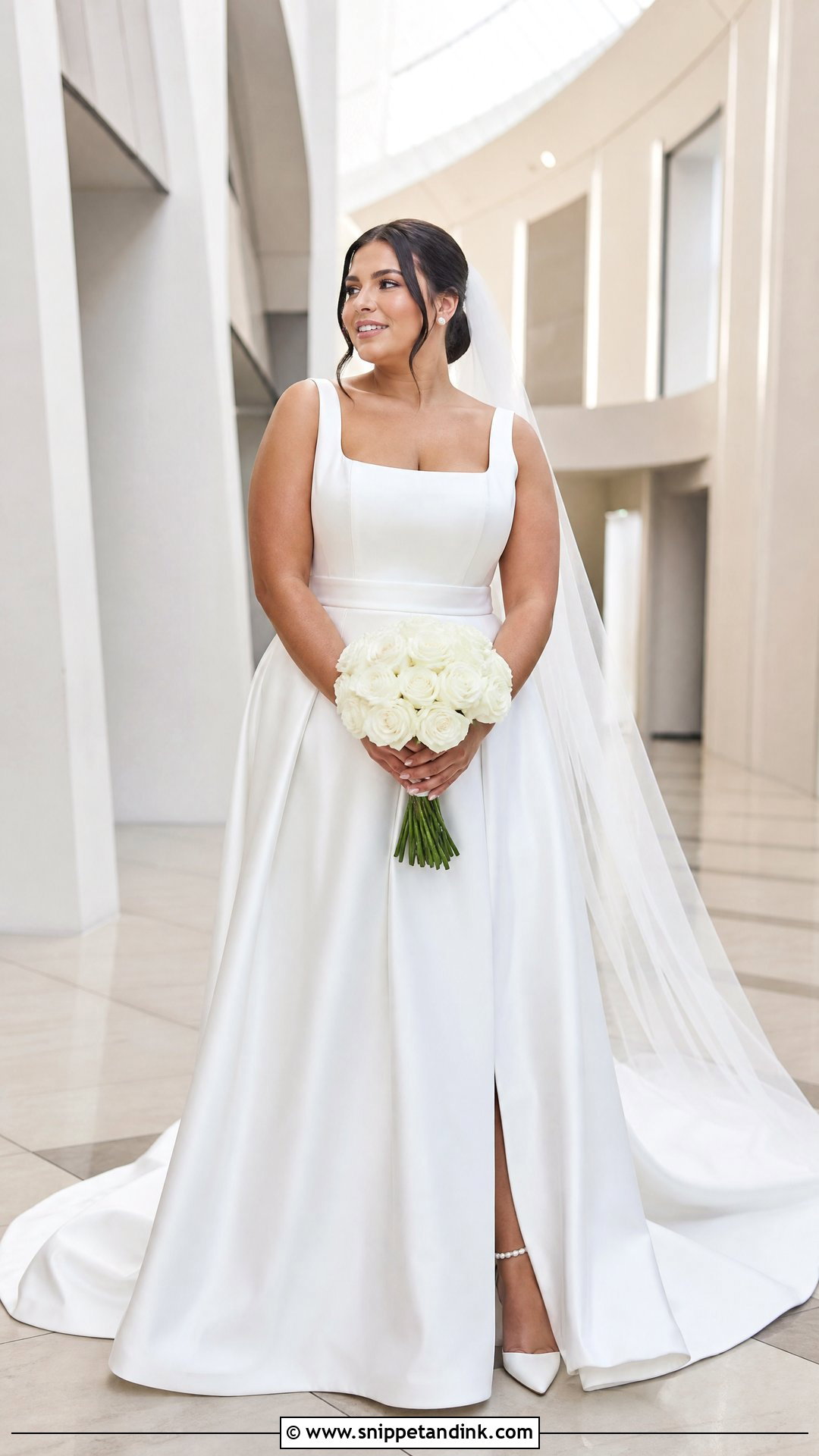
Straight lines across the chest can balance a fuller bust, which is why I often suggest a square neck to curvy brides who think they can only wear a sweetheart. It needs wide straps and a well-built bodice, or the corners of the neckline will bow outward. Matte satin looks understated; high-shine satin looks formal and also shows every pull, so it needs a precise fit. Choose A-line for gentle volume or a column for a sharper line. Pearl studs and a smooth low bun suit it.
12. Scoop Neck Wedding Dress With Sleeves
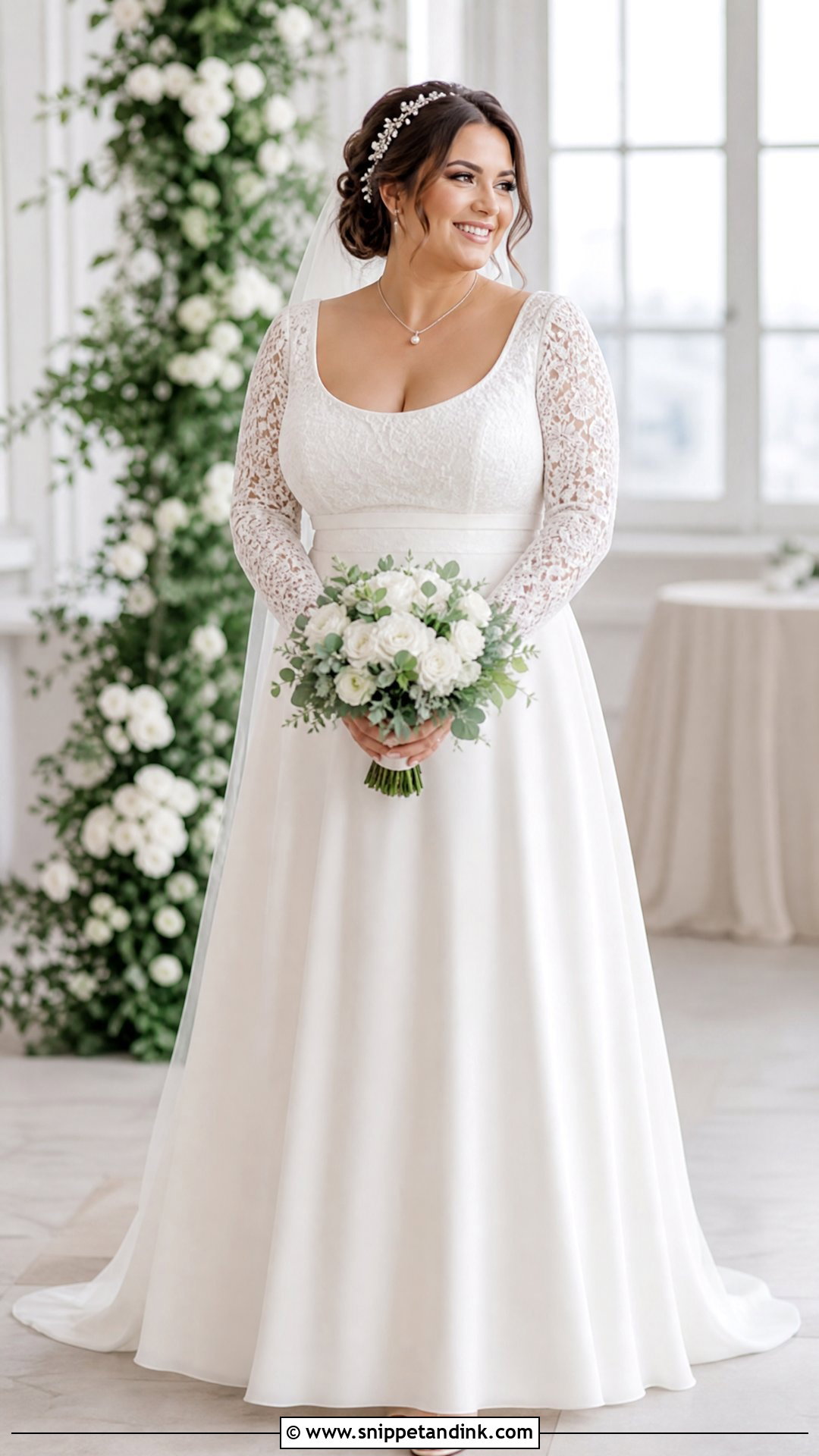
Comfortable coverage and a softly framed neckline: that’s what a scoop neck with sleeves delivers. The curve opens the upper body without a deep plunge, and elbow or full sleeves add balance. Stretch lace, lined tulle or lightweight crepe let the arms move. I’d avoid unlined sleeves in stiff lace, because they scratch at the inner elbow by the evening. A pearl pendant sits nicely in the scoop. It works across seasons and in both small and formal settings.
13. Illusion Neckline Wedding Dress
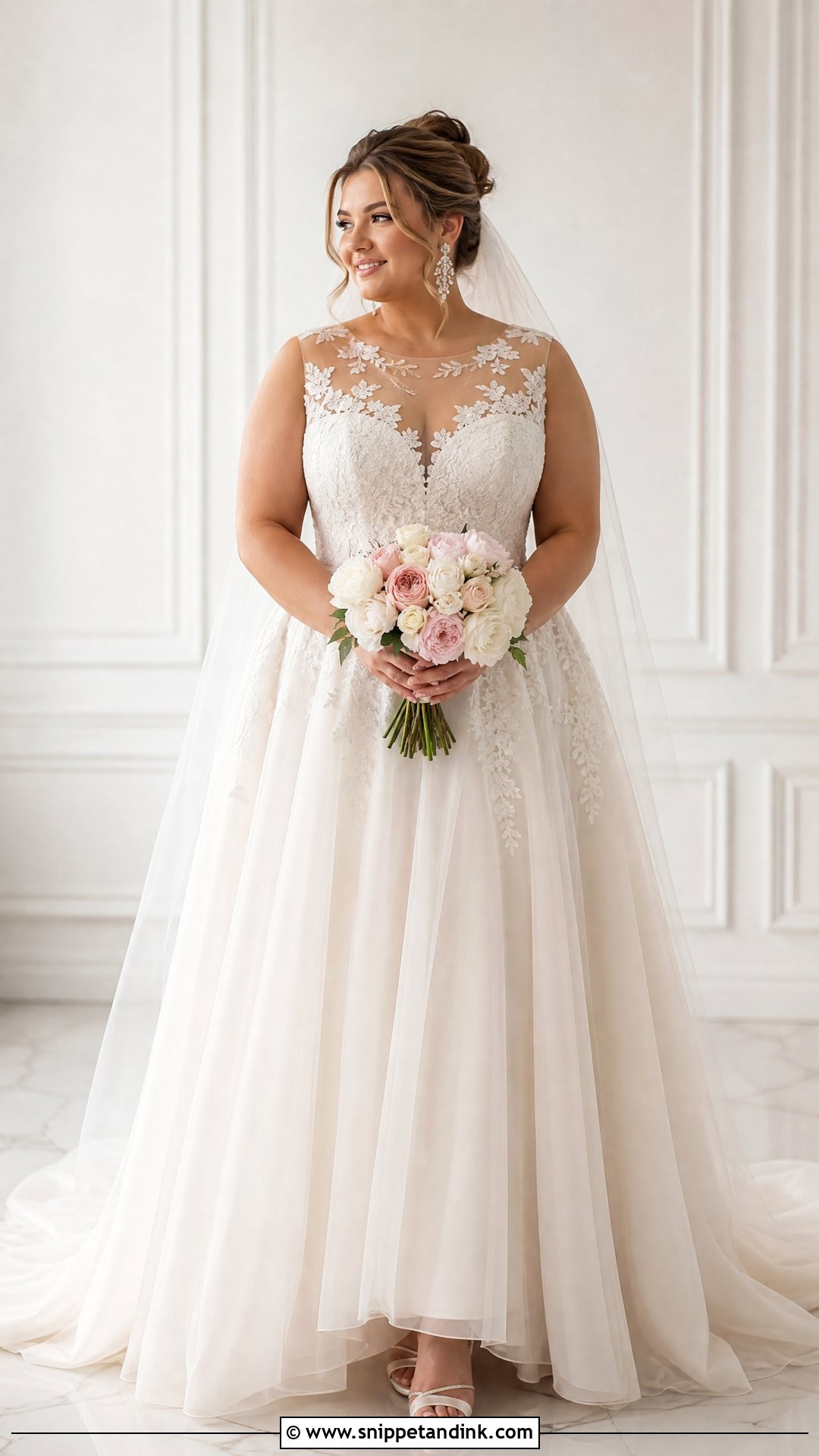
An illusion neckline can provide extra coverage while still looking like an open, detailed bodice. The mesh should match your skin tone closely; on deeper skin tones, many stock nude meshes read grey, so ask whether the maker offers other shades. Lace, beading or embroidered flowers placed on the mesh float on the skin. Behind it all, the inner bodice still needs cups, boning and secure seams. Skip the necklace and let the neckline breathe.
14. Floral Appliqué Wedding Dress
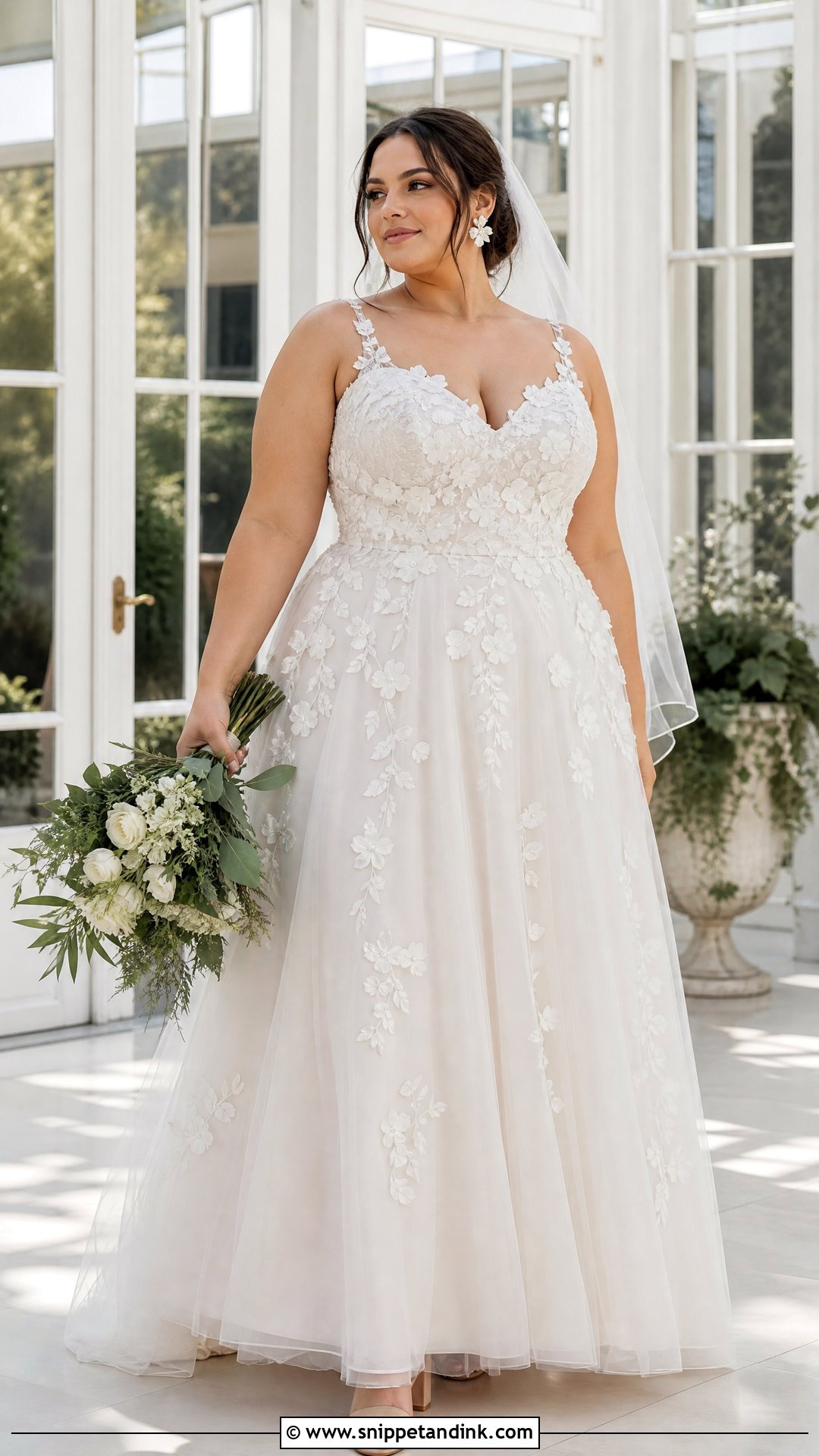
Three-dimensional flowers can sit on the bodice, scatter down an A-line skirt or gather along the train. The thing I check on a curvy bride is spacing: clusters bunched over the hip add bulk to that one area, while evenly spaced appliqués move the eye around the whole gown. A sheer overlay adds depth; a structured lining keeps support. Keep other embellishment restrained. A garden bouquet in white, cream and green connects everything for an outdoor spring wedding.
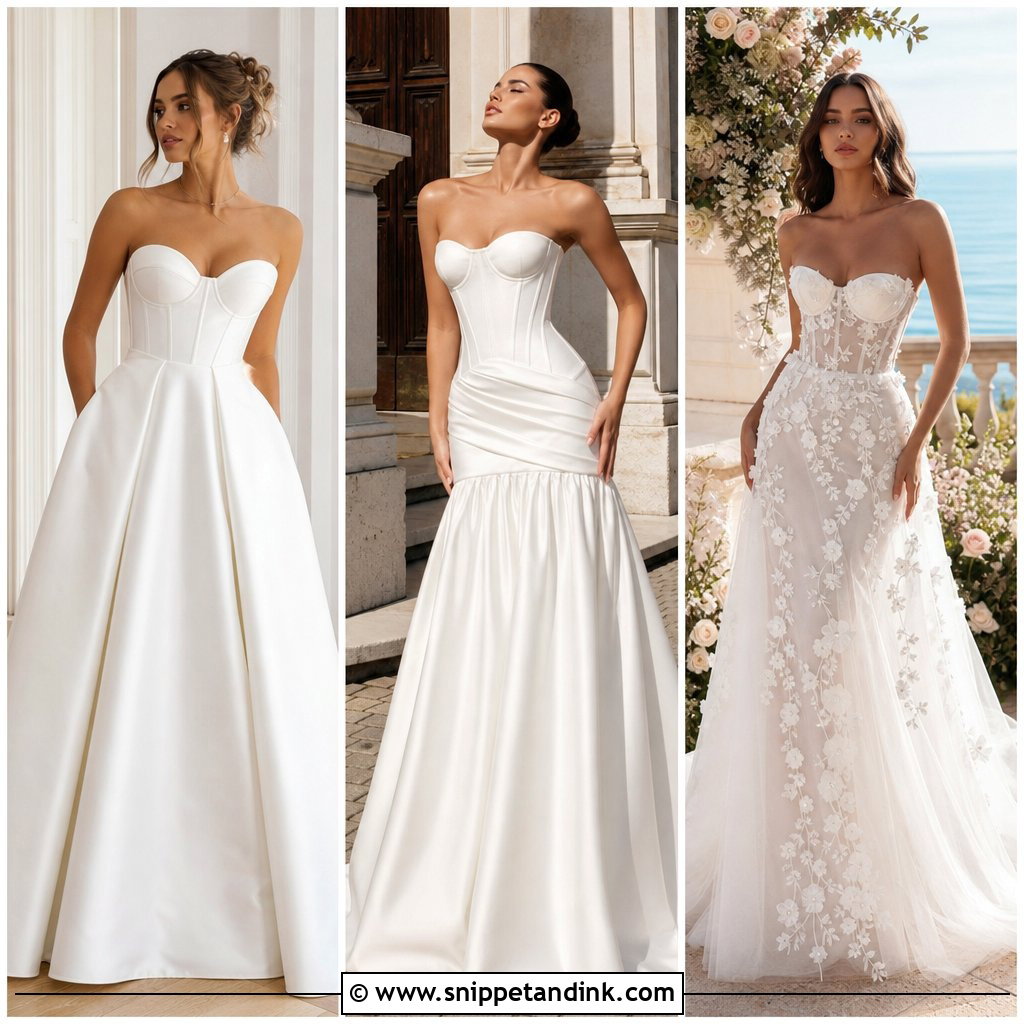
15. Minimalist Crepe Wedding Dress
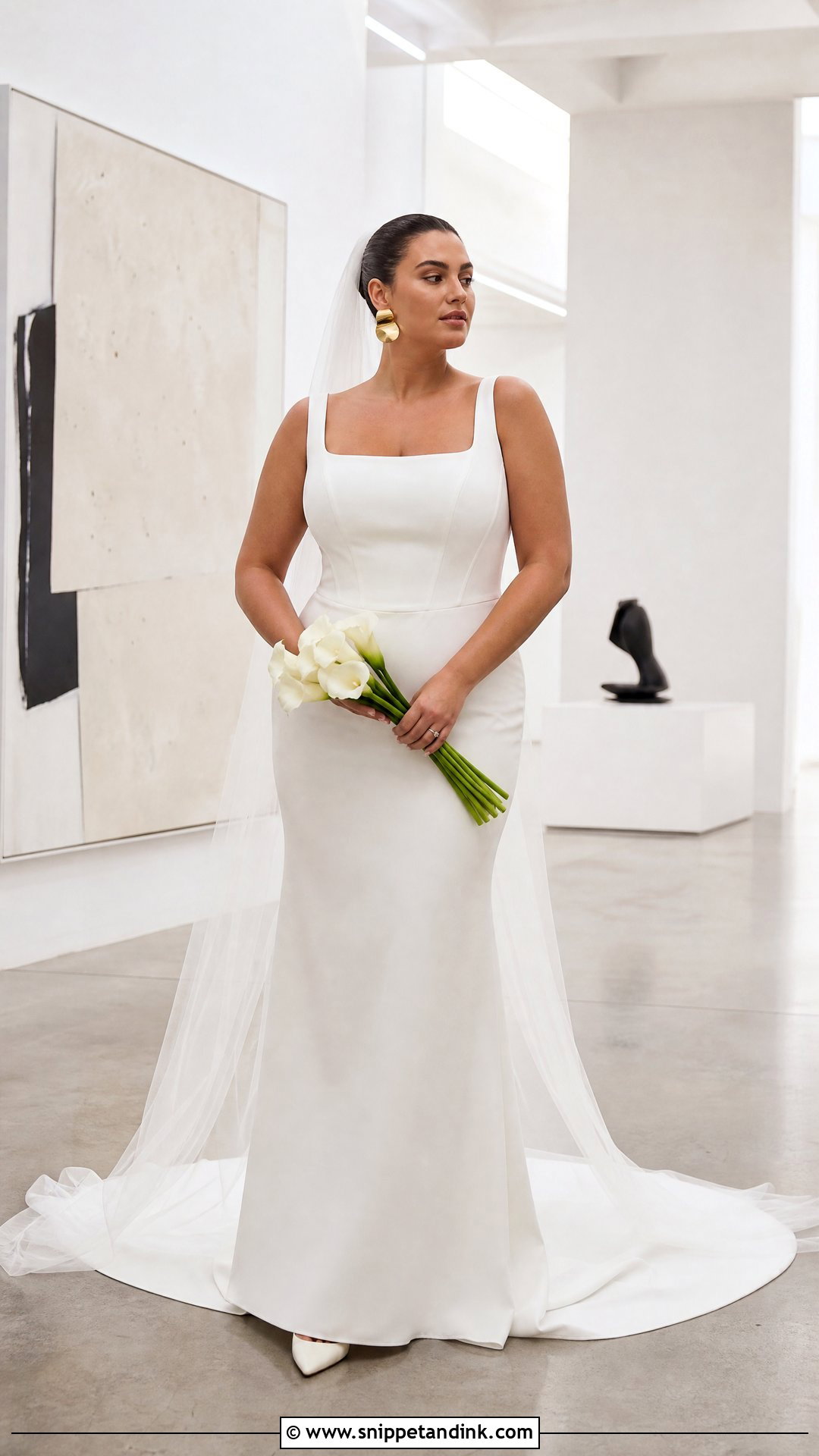
With no lace or beading to distract the eye, a minimalist crepe gown lives or dies on tailoring. Princess seams, internal support and stretch in the fabric let it follow your shape. A bateau, square or V-neck all work depending on bust and coverage. Plain crepe also has no visual texture to hide a bad fit, so I’d budget more for alterations here than for a lace dress. Sculptural gold earrings and a plain cathedral veil suit a museum or rooftop.
16. Draped Satin Wedding Dress
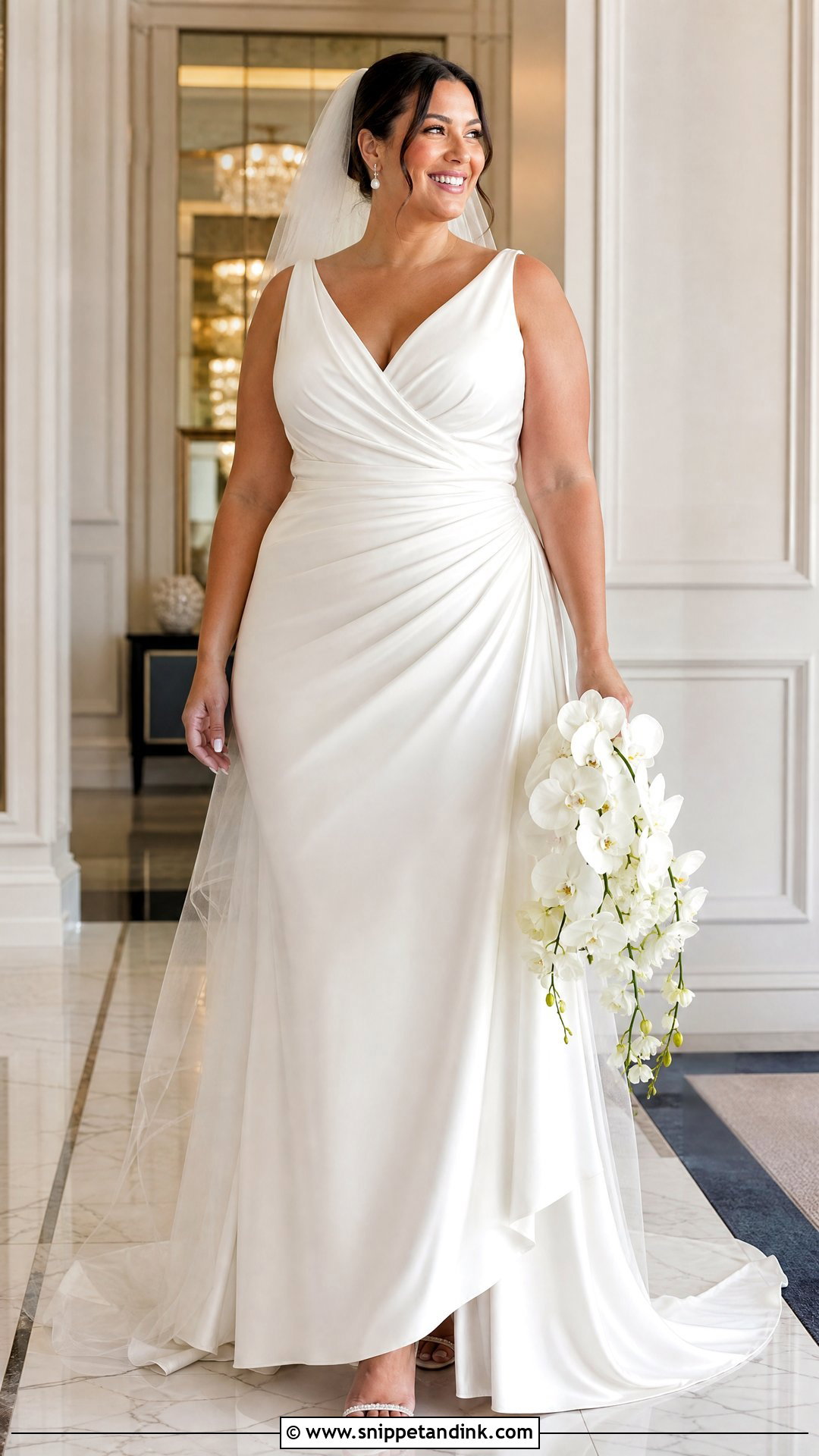
Satin drape falls in folds that follow the body, with a wrap bodice defining the waist and diagonal lines moving across the skirt. The fabric needs enough weight to fall smoothly. Proper lining is vital, because shiny satin shows every pull when a gown is even slightly tight; I’d rather size up and take in. A side-parted bun echoes the diagonal. Finish with slingback heels and an elongated bouquet of orchids or roses. It looks glamorous with no beading at all.
17. Tea-Length Wedding Dress
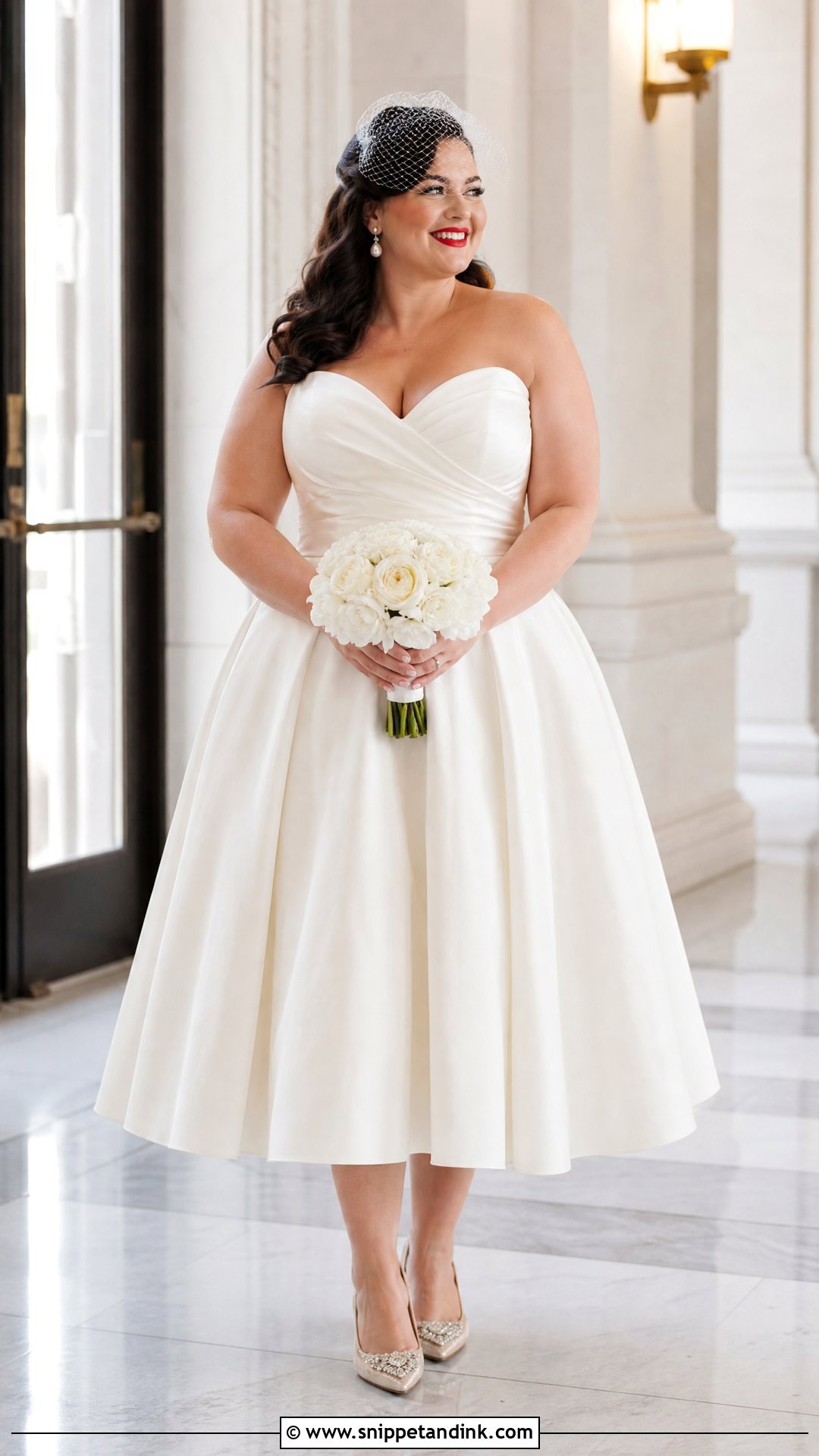
Tea length falls between knee and ankle, which puts your shoes on show and makes walking, dancing and small venues easy. A fitted bodice and defined waist balance the shorter skirt; a fuller skirt gives vintage charm. Supportive straps under a sweetheart, square or V-neck. Hem length is personal, so I mark it with the actual shoes on, since an inch higher or lower changes the proportions on a curvy frame. It suits courthouse ceremonies, brunch receptions and second wedding outfits. No train to manage.
18. Midi Wedding Dress
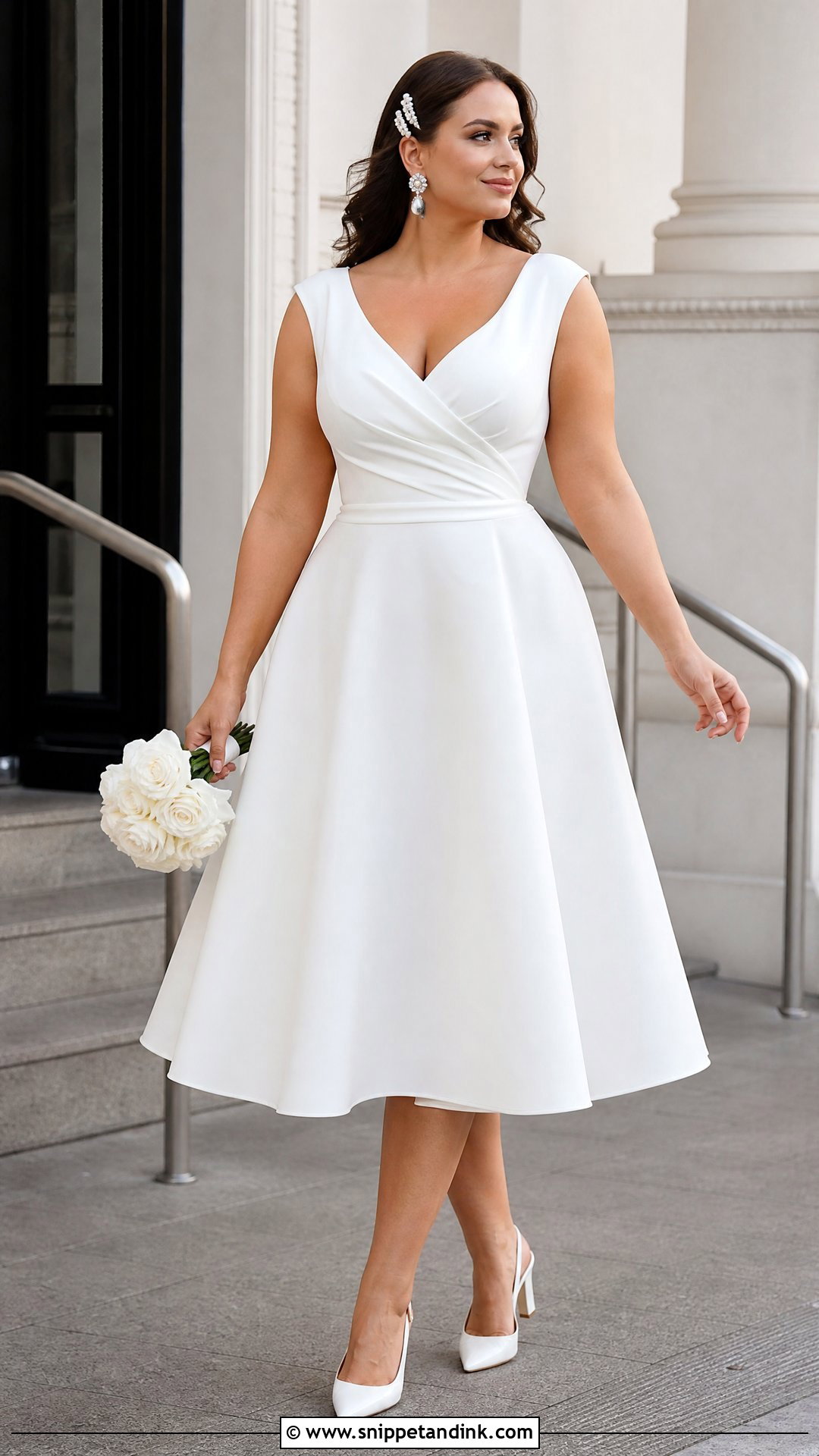
Structure is what keeps a white midi from looking casual. A wrap silhouette, a fitted sheath or a flared skirt all work when the fabric has enough weight to hold its shape; thin fabric shows bra lines and clings. Either pick a neckline that suits your usual supportive bra or buy a style with built-in cups and boning. Pointed slingbacks lengthen the leg. A short veil, modern headband or pearl clips suit city ceremonies and restaurant receptions.
19. Wedding Dress With Detachable Overskirt
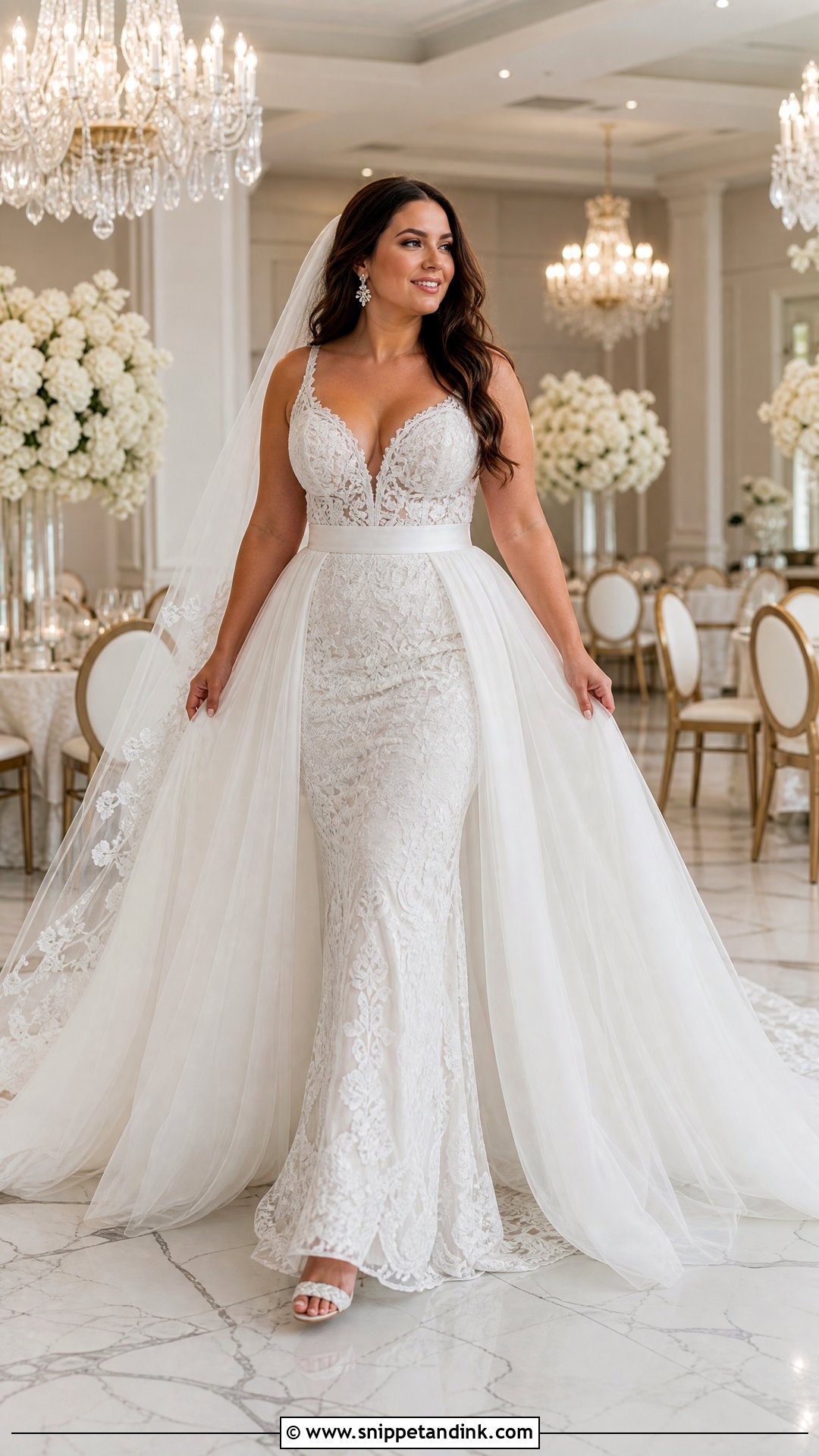
Two silhouettes in one: a full detachable skirt for the ceremony and portraits, then a fitted crepe, lace or beaded gown underneath for the party. The attachment is everything. A heavy overskirt clipped at the waist can leave a ridge over the hips, so I look for a flat waistband with hidden hooks that sit above the curve. Tulle over lace or satin over crepe keeps both looks connected. Swap the veil for a small hair accessory when the skirt comes off.
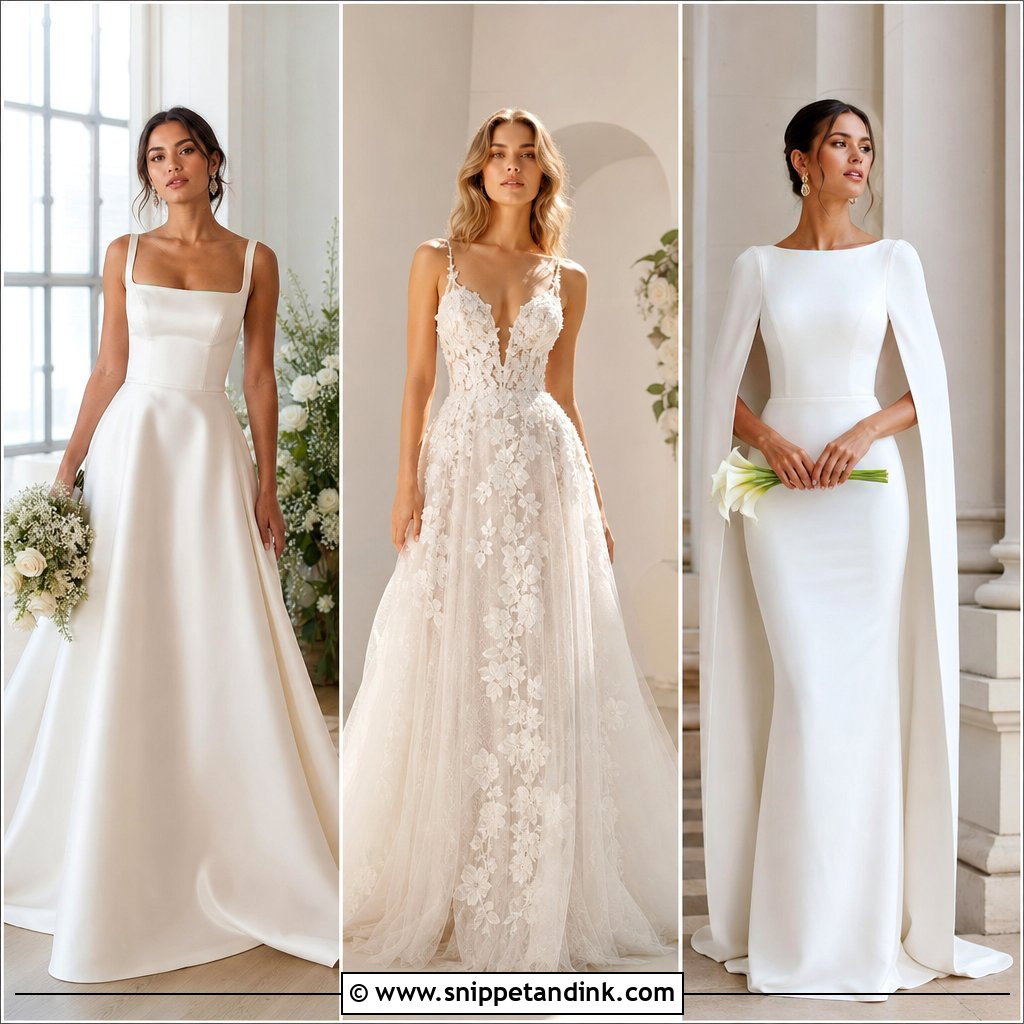
20. Cape Sleeve Wedding Dress
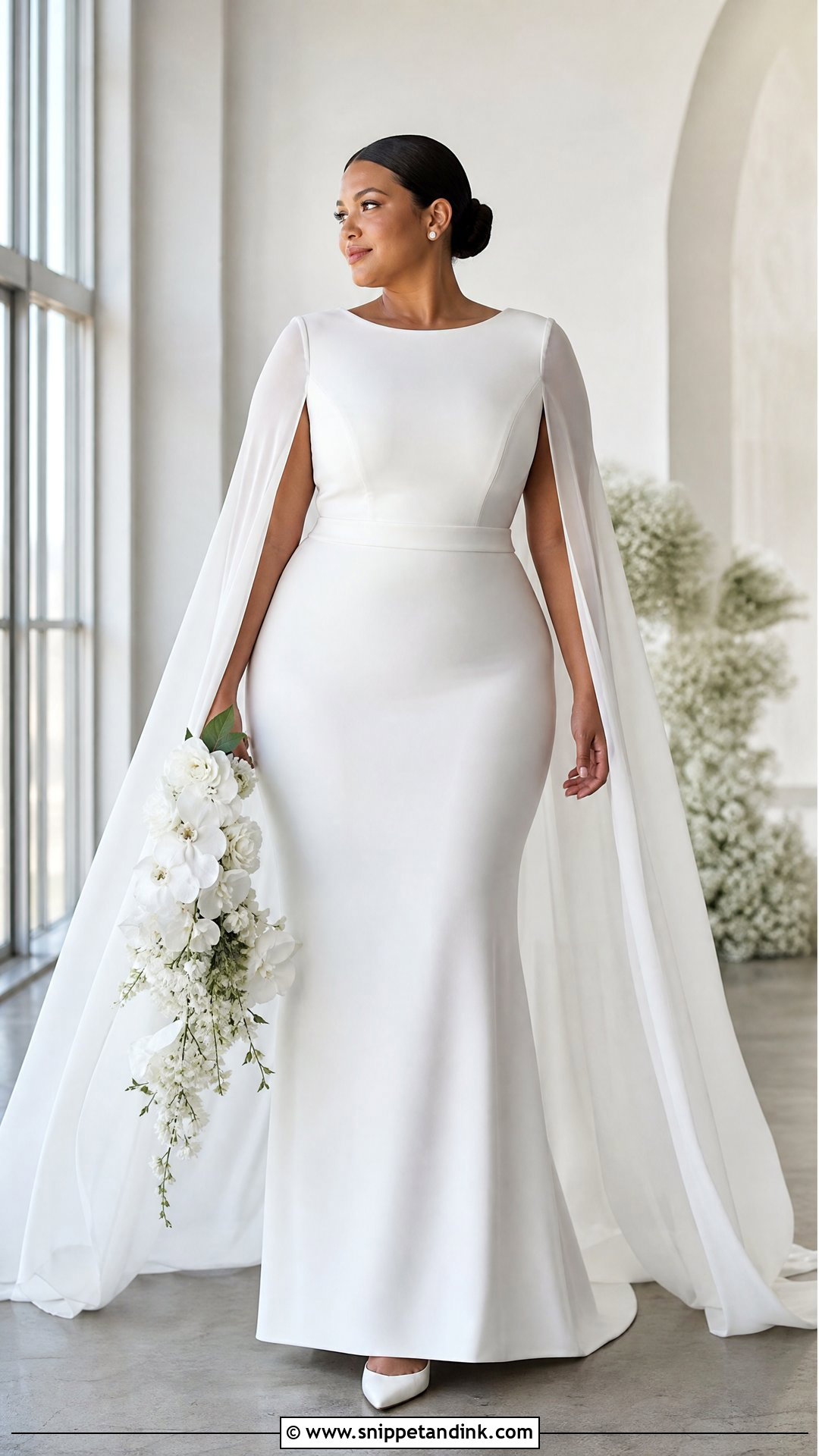
Arm coverage without the tight fit of a sleeve is what makes cape sleeves popular with curvy brides. Chiffon looks airy; lace or beaded tulle looks formal. The cape can fall from the shoulders, attach at the neckline or even stand in for the veil. Underneath, a structured gown with a defined waist keeps the floaty layer from swamping you. Skip the necklace if the cape neckline is already embellished. A long, narrow bouquet follows the vertical line of the fabric.
21. Basque Waist Wedding Dress
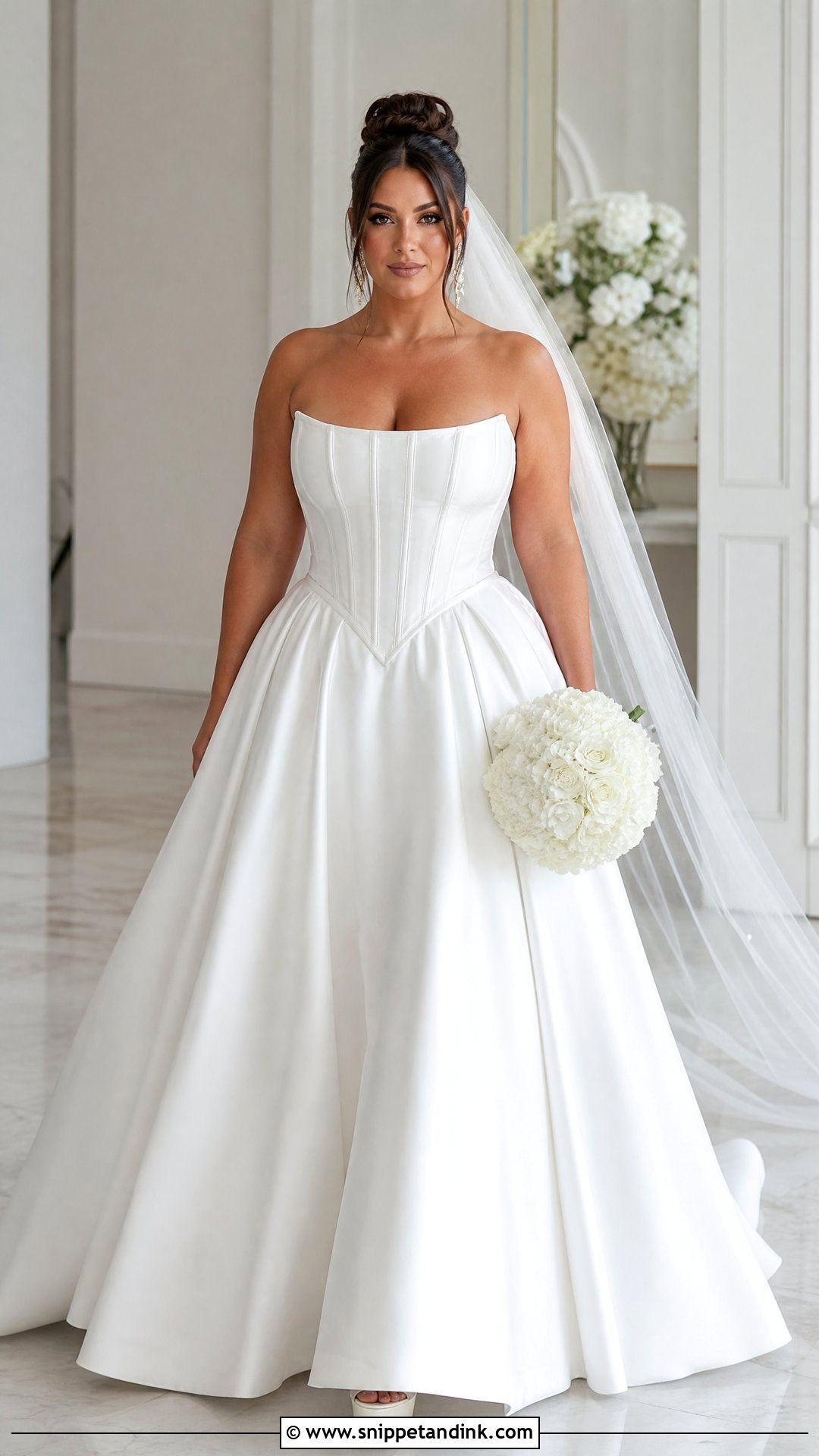
Basque waists drop into a V or U point below the natural waist, which creates a smooth transition into the skirt and lengthens the torso. The point should sit comfortably and not dig in when you sit; I always test this seated, because a rigid point jabs into the stomach at dinner. Flexible boning and smooth lining matter. A full satin skirt gives classic drama; tulle softens. Keep the bouquet low and rounded so it doesn’t hide the point in photos.
22. Drop Waist Wedding Dress
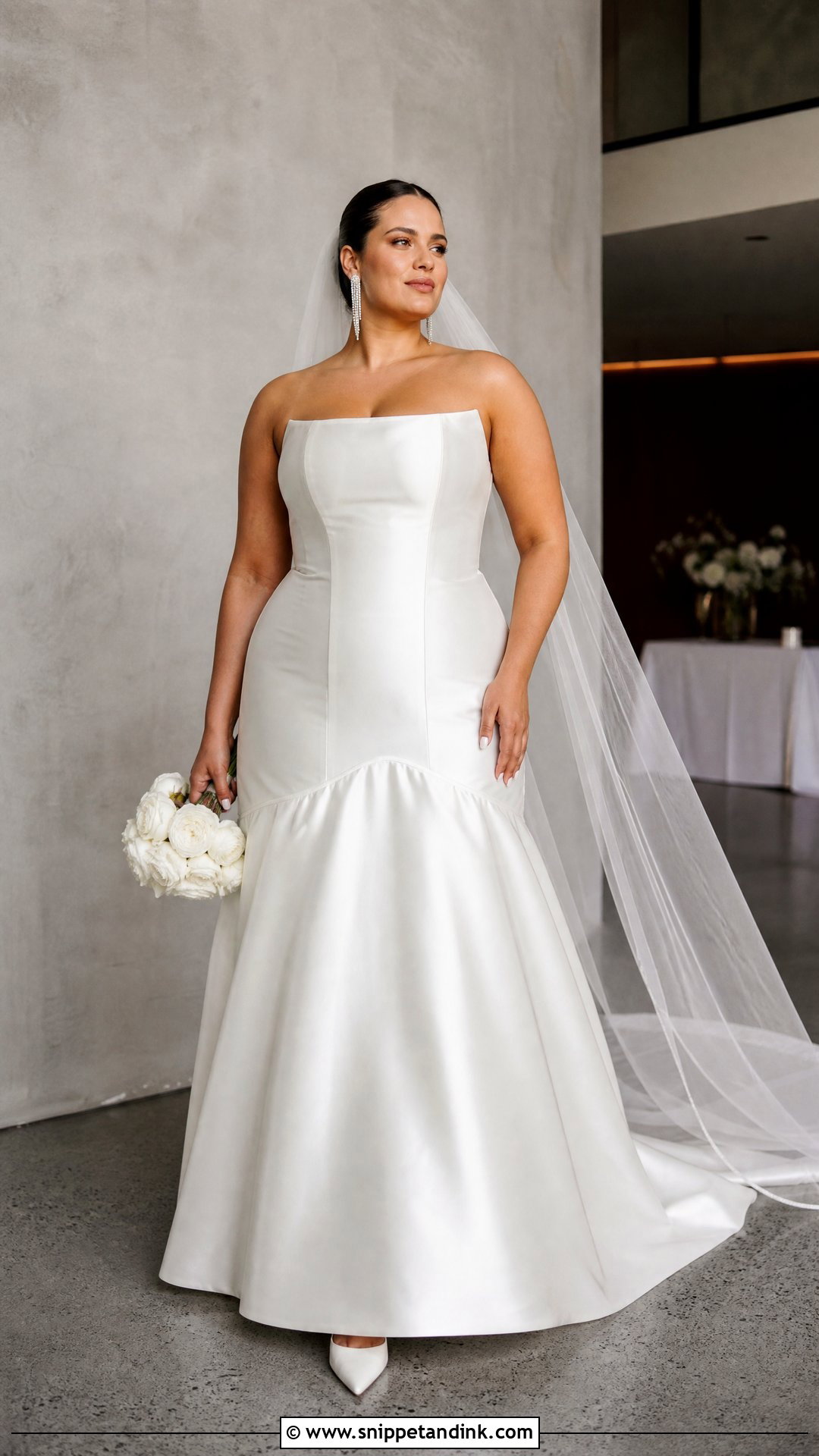
Dropping the bodice below the natural waist gives a longer torso line and a fashion-forward shape. Because the fit continues over the upper hips, sitting is the test: the seams need some flex or the dress rides up. A curved drop waist follows natural proportions more gently than a sharp horizontal seam, which can cut across the widest part of the hip. Long earrings and pointed heels keep the line vertical. A compact bouquet keeps the waist detail visible.
23. High-Low Wedding Dress
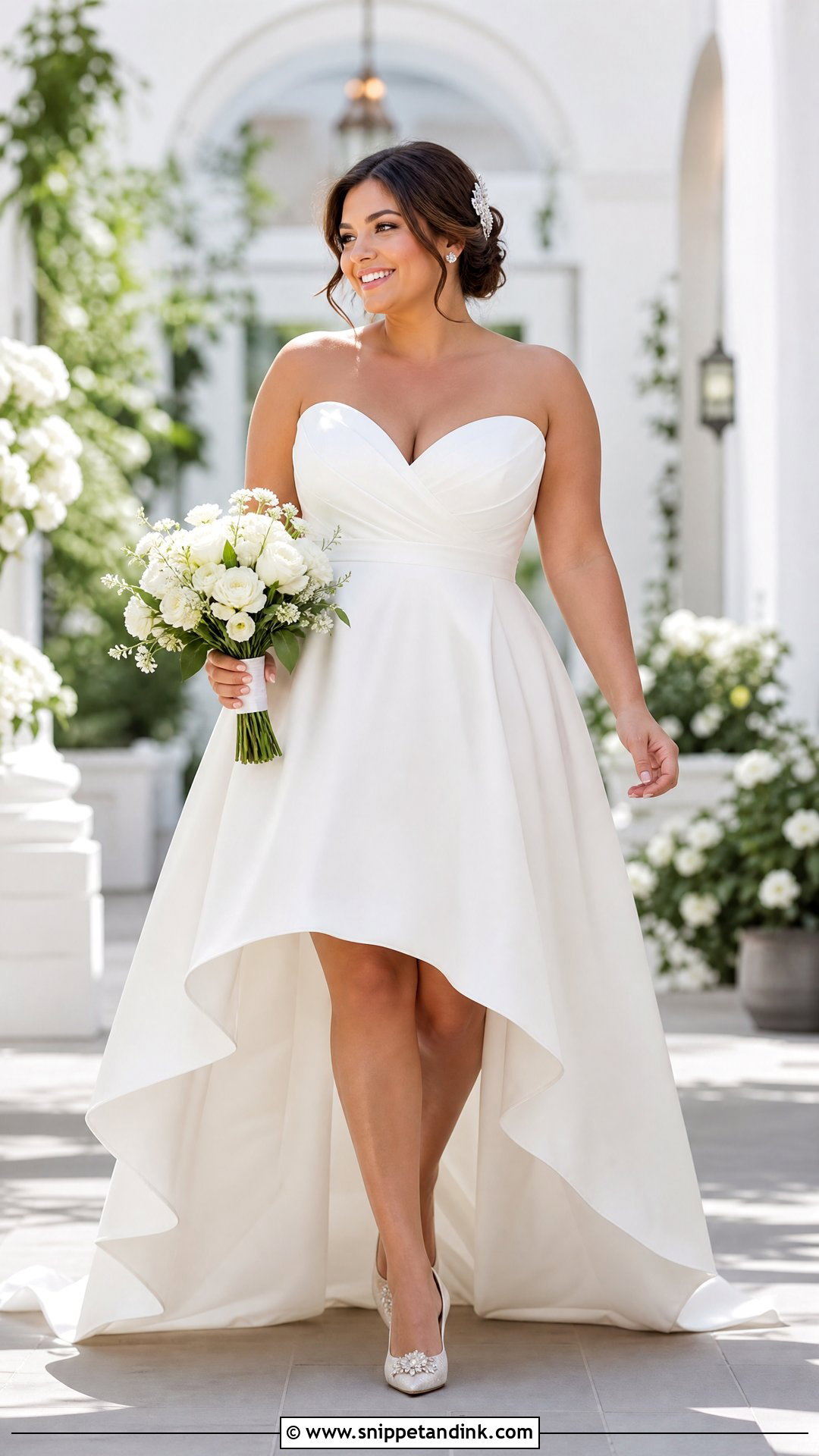
Shorter in front and longer behind, a high-low hem gives you a gown’s movement with shoes on show and no tripping. The difference between front and back should be gradual; an abrupt cut looks unfinished. A structured bodice and defined waist balance the asymmetry. Your shoes become part of the outfit, so statement pumps or ankle-strap sandals deserve real thought. A short veil or comb suits outdoor and destination ceremonies where dancing matters.
24. Blush Wedding Dress
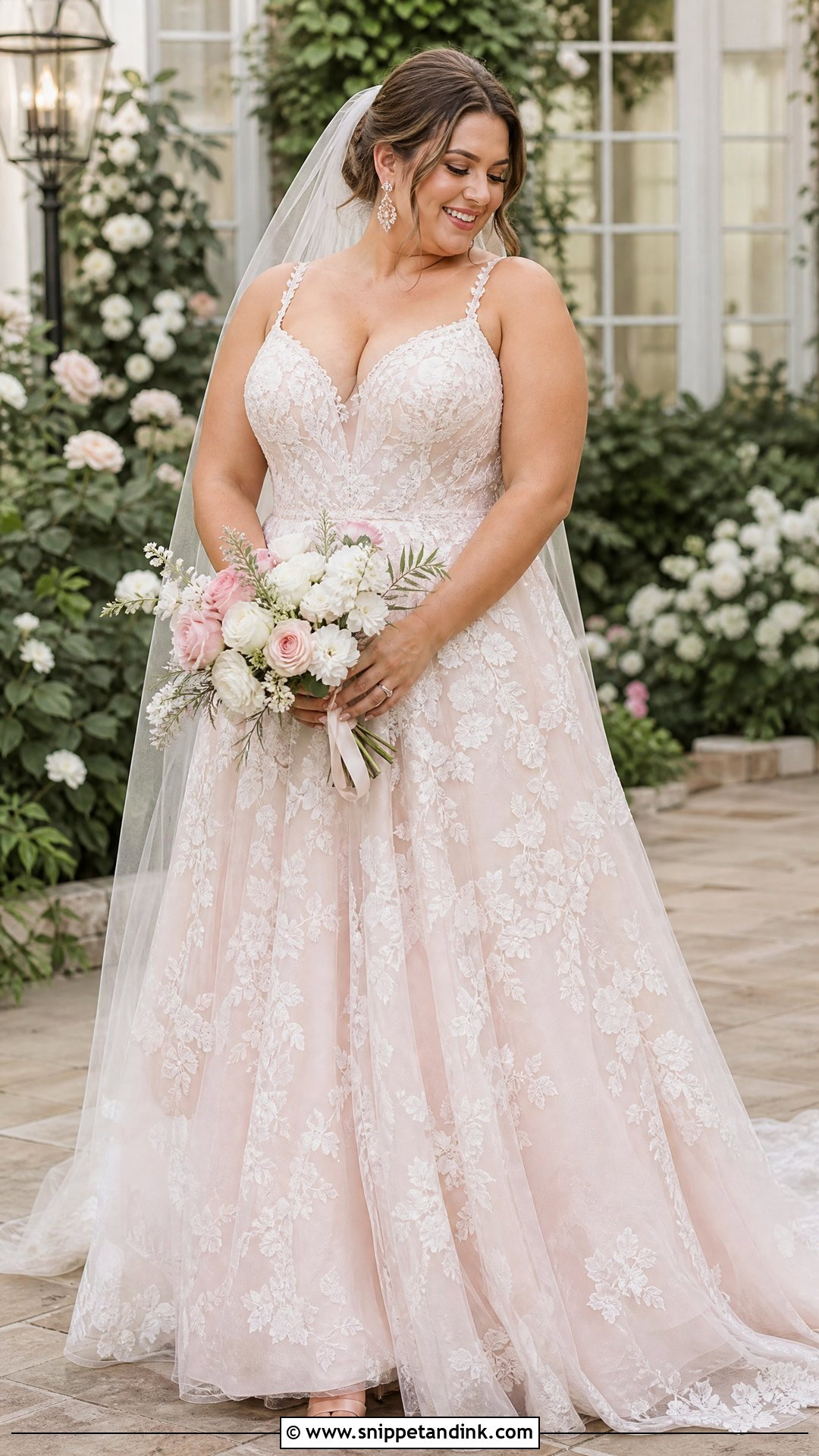
Pale rose, nude-blush or champagne-pink linings under ivory lace or tulle add depth while staying bridal. Undertone is what I test: blush can warm up some complexions and wash out others, so look at the fabric against your face both by a window and under indoor light. The silhouette can be A-line, ball gown or fitted. An ivory veil lets the blush show through. Rose-gold earrings and a bouquet with pale pink and muted green tie it together.
25. Boho Flutter Sleeve Wedding Dress
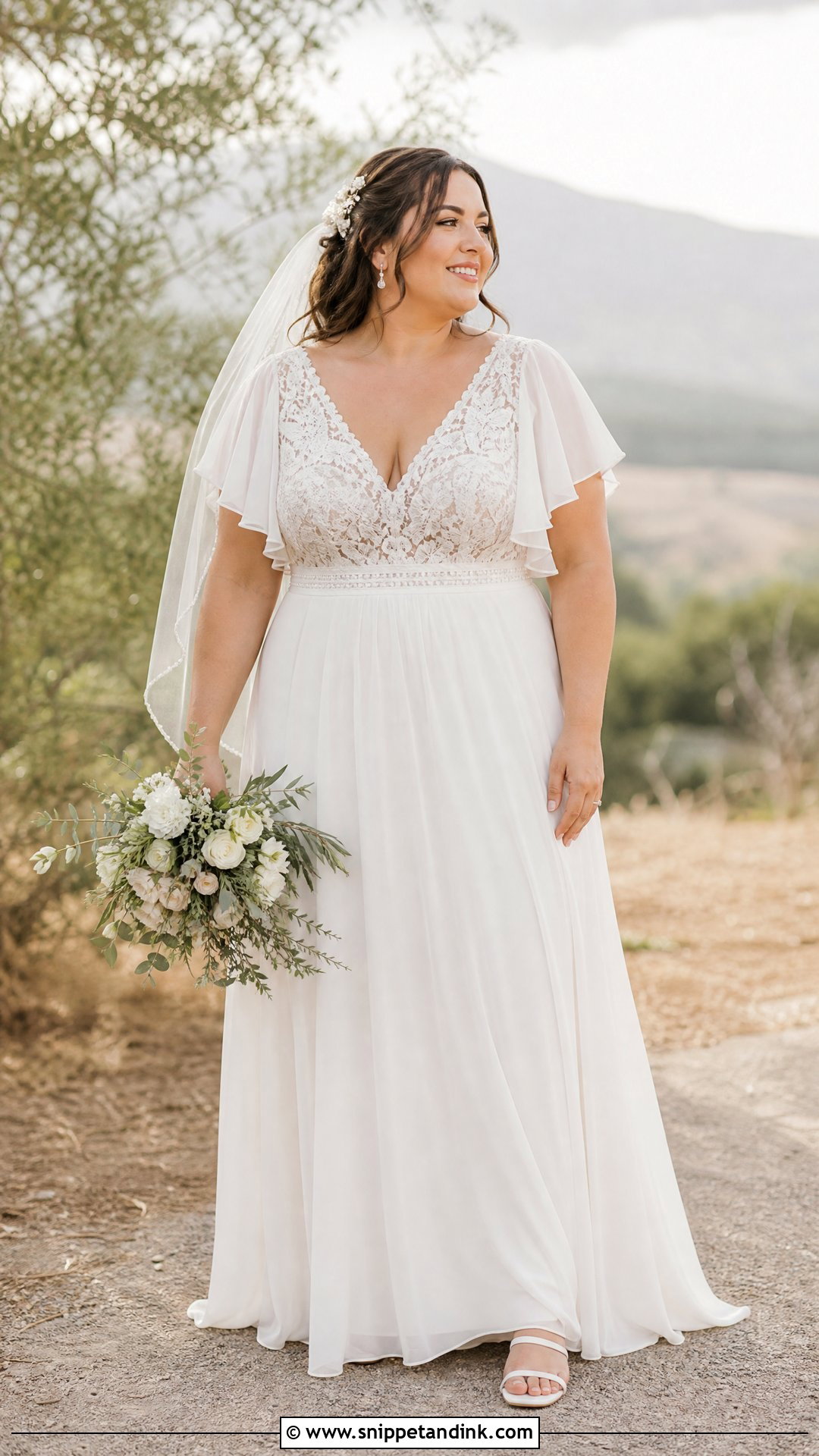
Flutter sleeves give gentle arm coverage that moves with you, which suits relaxed settings: gardens, woodland, desert, barn. Choose lace, chiffon or dotted tulle that drapes; stiff fabric stands away from the body and adds width. A defined waistband keeps all that softness from losing shape, and a V-neck or wrap bodice keeps the neckline open. Low block-heel sandals handle uneven ground. A floral comb and an organic bouquet with textural stems finish it.
What a Seamstress Can and Can’t Change on a Curvy Gown
Brides often order a size based on hope rather than measurements, then discover the alteration room is limited. Bridal sizing runs smaller than high-street sizing, so I always order to the largest of your bust, waist and hip measurements and let the seamstress take in everything else.
Usually straightforward
- Taking in side seams and the bodice, as long as the beading or lace allows it.
- Shortening the hem and adding a bustle for the reception.
- Adding cups, a waist stay or extra boning to a gown that lacks support.
- Adding straps or sleeves made from fabric matching the gown, if the maker sells extra.
Hard or impossible
- Letting a gown out more than a small amount; most bridal seams have very little allowance.
- Moving a waist seam that’s in the wrong place for your torso.
- Re-cutting a mermaid’s flare point without unpicking the lace across the whole skirt.
A bustle on a heavy curvy gown needs strong anchor points. Ask for extra loops so the train’s weight is spread across several spots, or the bustle pulls the back of the skirt into a dip by the end of the dancing. Plan for two or three fittings, with the last one close enough to the date that your measurements won’t shift.
Try the Shape You’d Never Pick From a Photo
No rule about curvy bodies should decide your dress. The right one supports you properly, reflects your taste and lets you move through the day without adjusting. The ideas above cover fitted shapes, flowing skirts, structured bodices, colored linings and removable layers. Try several, including at least one you’d skip on a screen; I’ve watched many brides change their minds the moment the right construction is on. Look at fabric, movement and how much alteration room the seams allow, then match your shoes and accessories to the whole outline.
You'll Like These Ideas:




Leave a Reply