
Forward-looking bridal design has moved a long way from a slightly different neckline. Gowns now arrive with visible corsetry, liquid satin, recycled fabrics, convertible skirts and even tiny lights woven under the tulle. Structured bodices, Basque waists, sheer layers, capes and dimensional texture are everywhere on the rails right now. The trick is wearing an experimental idea without the dress wearing you. Before you fall for any single detail, think about your venue, how much you need to move, how much coverage you want and how the fabric will take alterations. The ideas below run from quietly minimal to openly unconventional, and for each one I’ve noted where it tends to go wrong.
One Experimental Element, Ideally One You Can Remove
Brides who want a forward-looking dress often worry about how it will look in photographs decades from now. The gowns that age badly are rarely the bold ones. They’re the ones that stacked several trends together, like a metallic fabric plus a bubble hem plus a hood plus feathers.
My rule at fittings is one experimental idea per outfit, carried by a dress whose basic shape is clean. If you can put that idea on a removable piece, such as a cape, overskirt, sleeves or a train, even better. You get the drama for the ceremony and a simpler dress for the rest of the night, and the core gown keeps looking current far longer.
It also helps to separate what you love from what you’re seeing everywhere. Save images for a few weeks. The details you keep coming back to are yours; the ones that fade from your list were probably just this season.
1. Sculptural Corset Wedding Dress
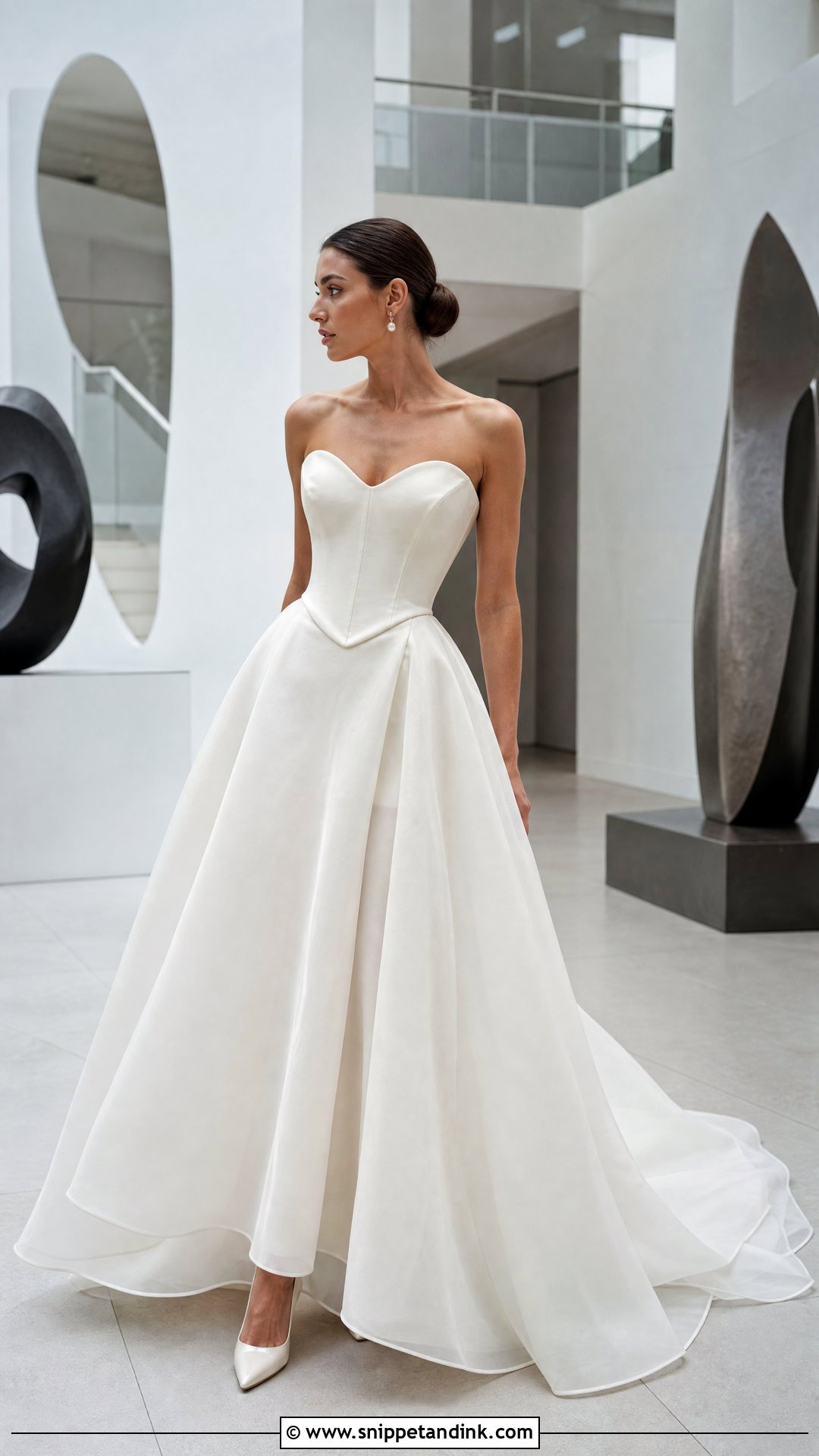
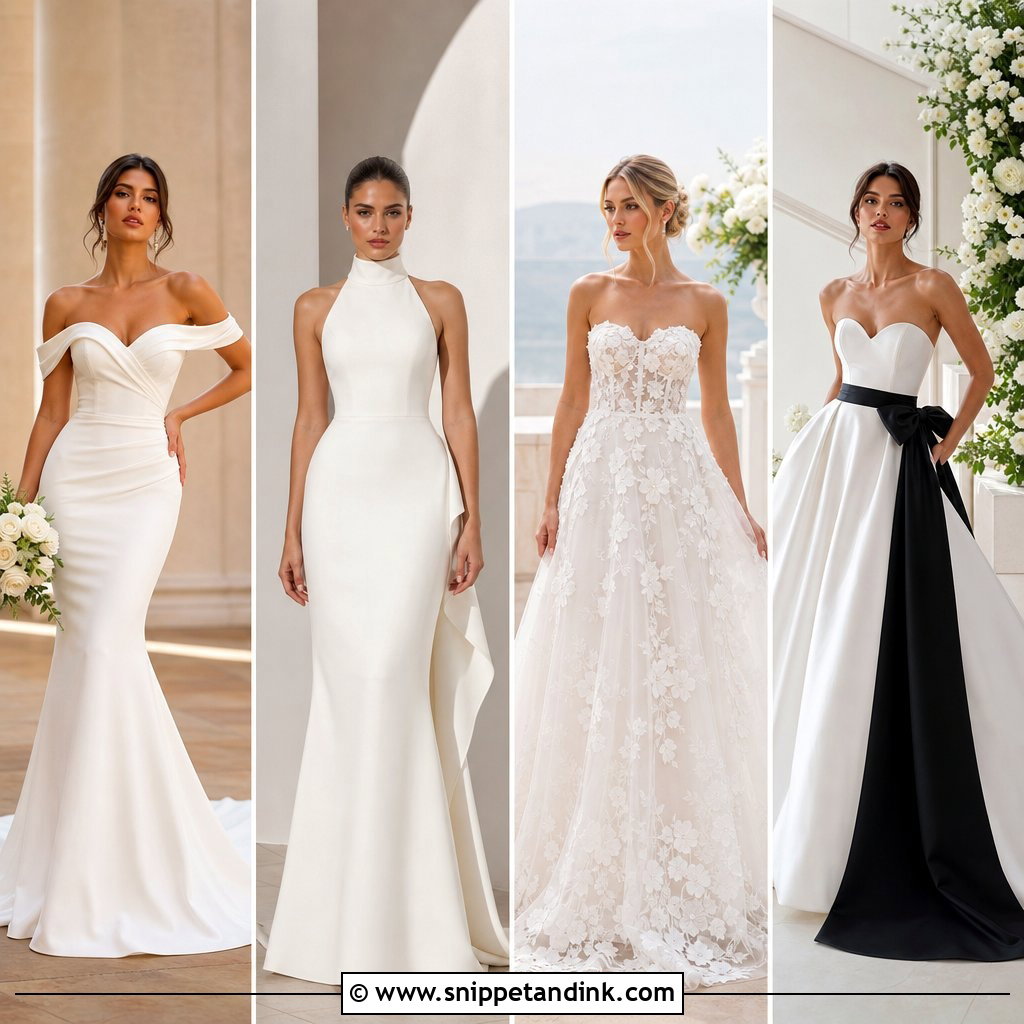
Visible structure is the point here: curved boning, a sharp waist and a neckline that looks drafted rather than sewn. Matte satin or silk mikado keeps the bodice crisp, and organza layers below give the skirt lightness. I fit these with the bride sitting as well as standing, because boning that feels fine upright can dig under the ribs once you’re seated at dinner. A sheer long-sleeve overlay or detachable off-the-shoulder straps add coverage. Pointed ivory pumps, small pearl earrings and a low bun keep the focus on the construction, which suits a museum or a stripped-back modern venue.
2. Liquid Satin Wedding Dress
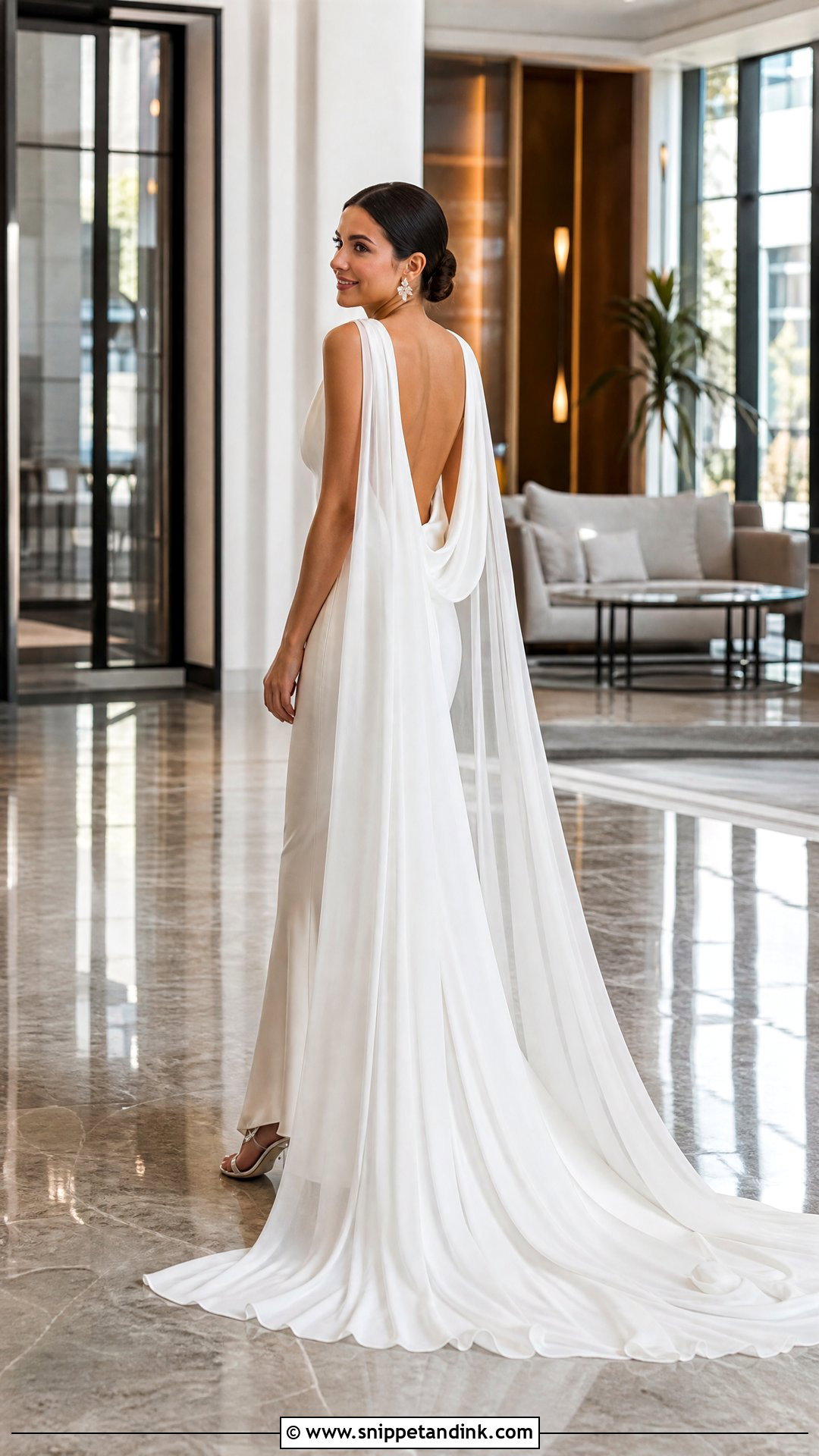
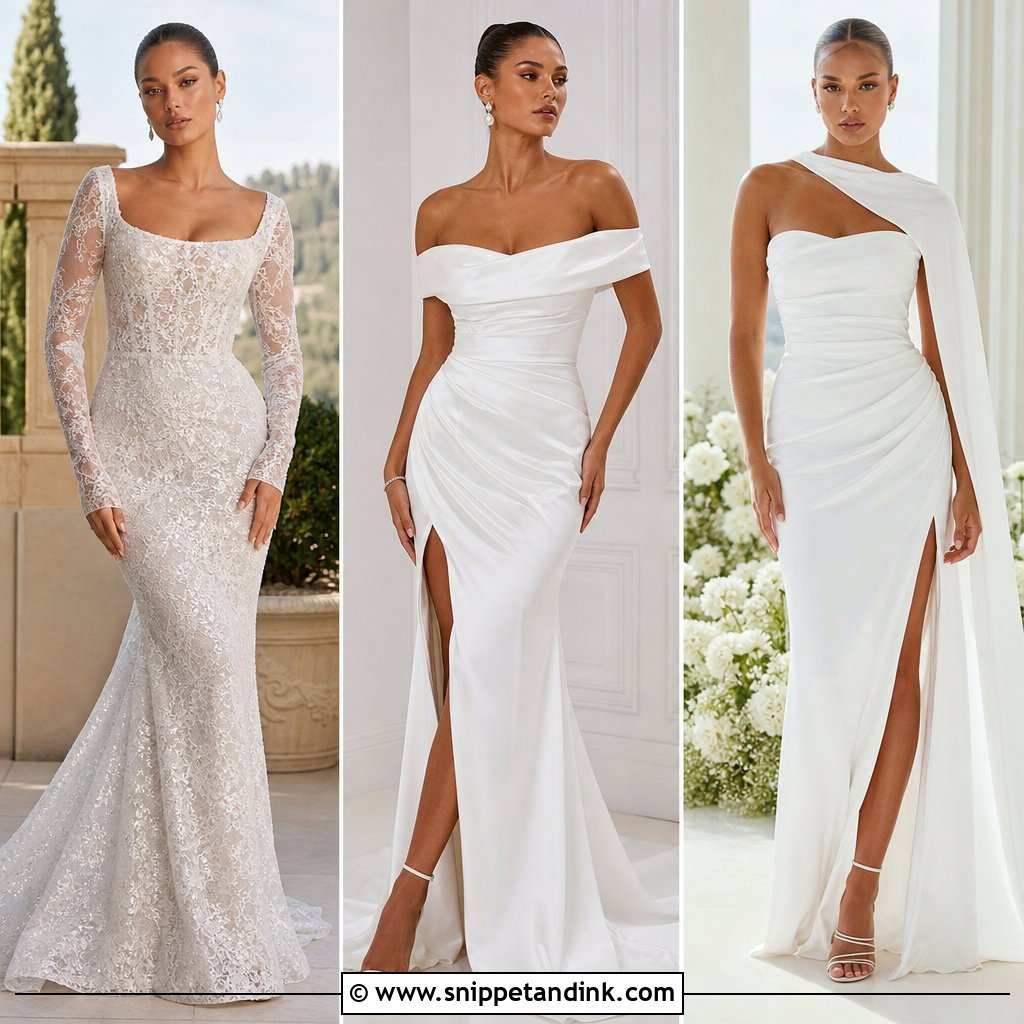
Bias-cut satin that seems to pour off the body is what gives a liquid satin wedding dress its sense of the future. A column with a draped neck, low back and long train lets every fold catch the light. It’s also the least forgiving fabric on this list. Polished satin shows seams, lumps and underwear lines, so ask about a full lining and discreet internal support before you order. Silver slingbacks, sculptural drop earrings and sleek hair suit it, and a removable chiffon cape adds ceremony drama at a rooftop or hotel wedding.
3. Metallic Silver Wedding Dress
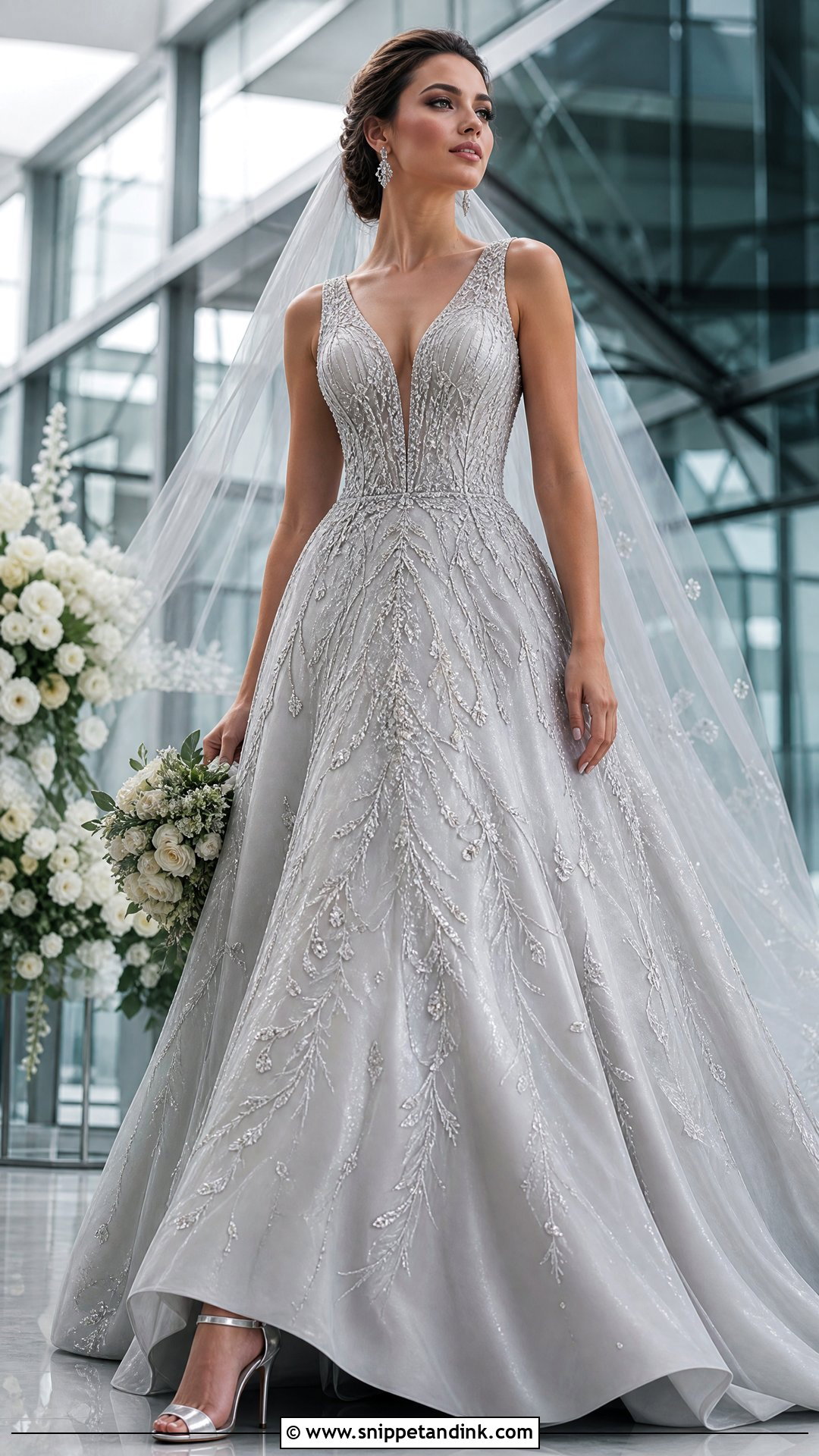
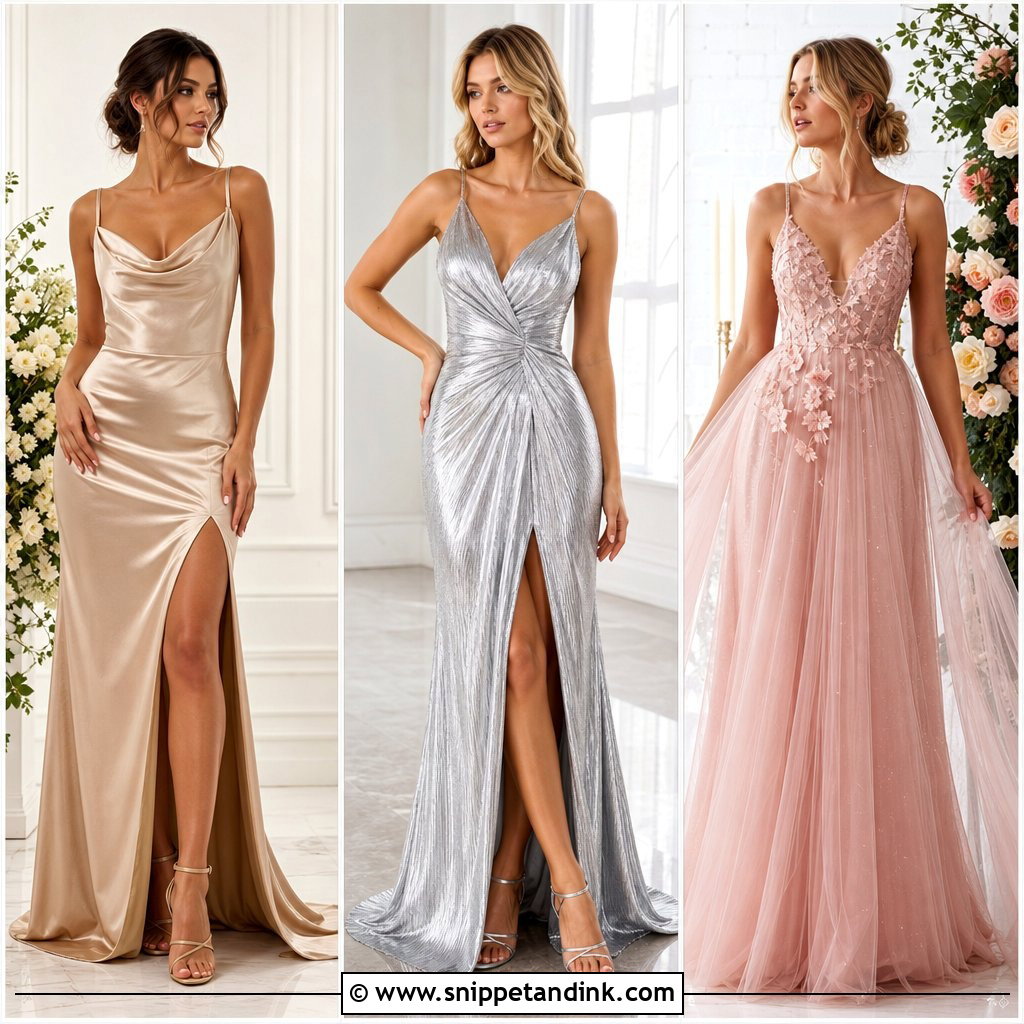
Silver is bolder than ivory but surprisingly wearable if you choose a soft pewter or platinum finish rather than foil-bright metallic. A fitted bodice and sweeping A-line skirt keep the shape familiar so the color can be the experiment. Fine metallic thread, scattered crystals or pearlescent embroidery add depth without weight. Metallics change dramatically with the light, so I always look at a swatch indoors, outdoors and on a phone camera with flash before a bride commits. Silver heels, cool-toned crystal earrings and a pale grey tulle veil soften the shine.
4. Holographic Organza Wedding Dress
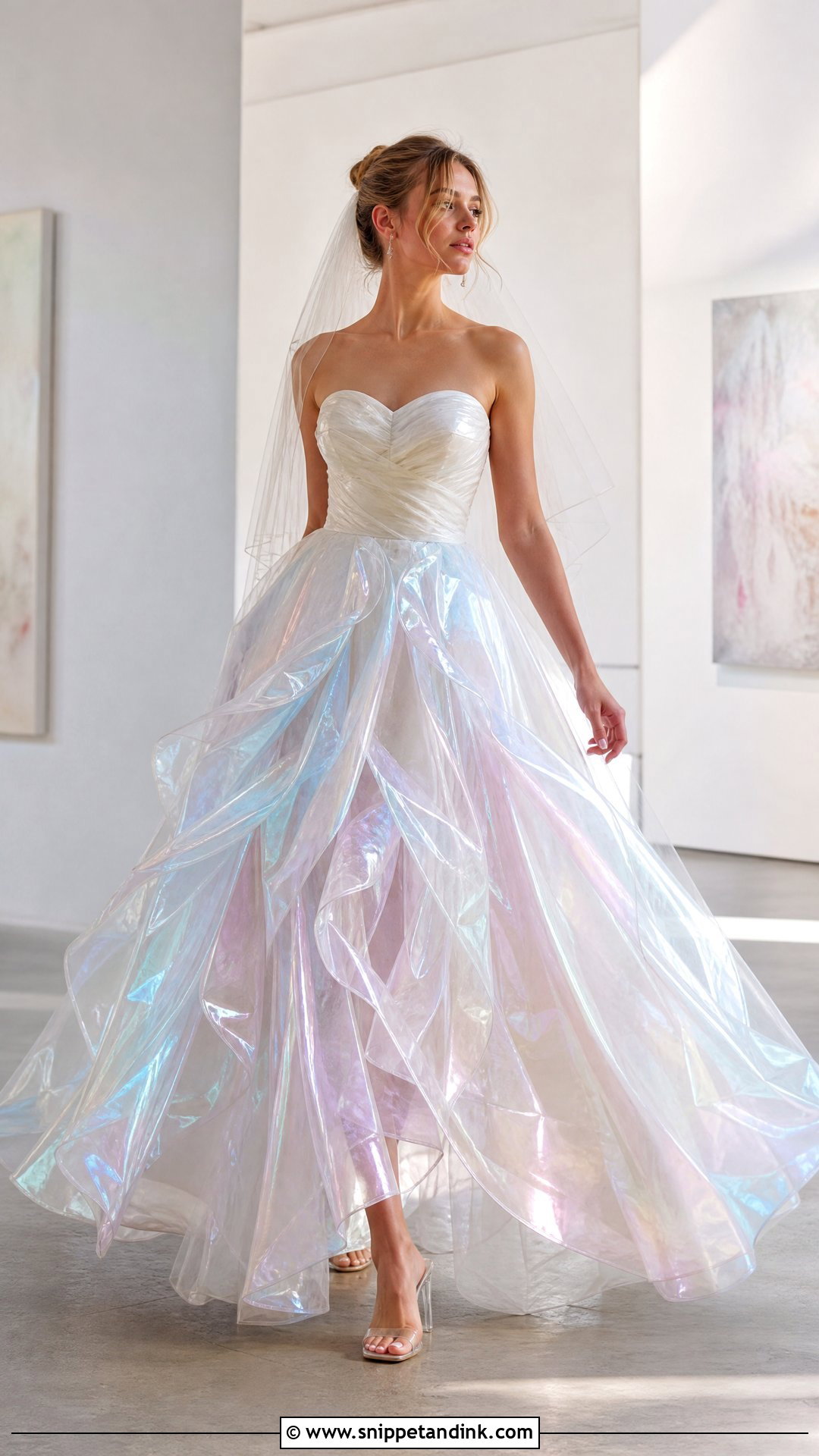
Holographic organza flickers between pale blue, blush, lavender and silver as you move. Keep the bodice plain, either strapless or a simple square neck, or the effect tips into theatre. An A-line skirt gives the fabric enough surface to shift without swamping a small frame. If a full holographic gown feels like too much, use it only as an overskirt on a classic ivory dress, which you can remove later. Order a sample first and photograph it, because how transparent it looks varies a lot from one mill to the next. Clear or silver heels and a minimal fingertip veil finish it.
5. 3D Floral Wedding Dress
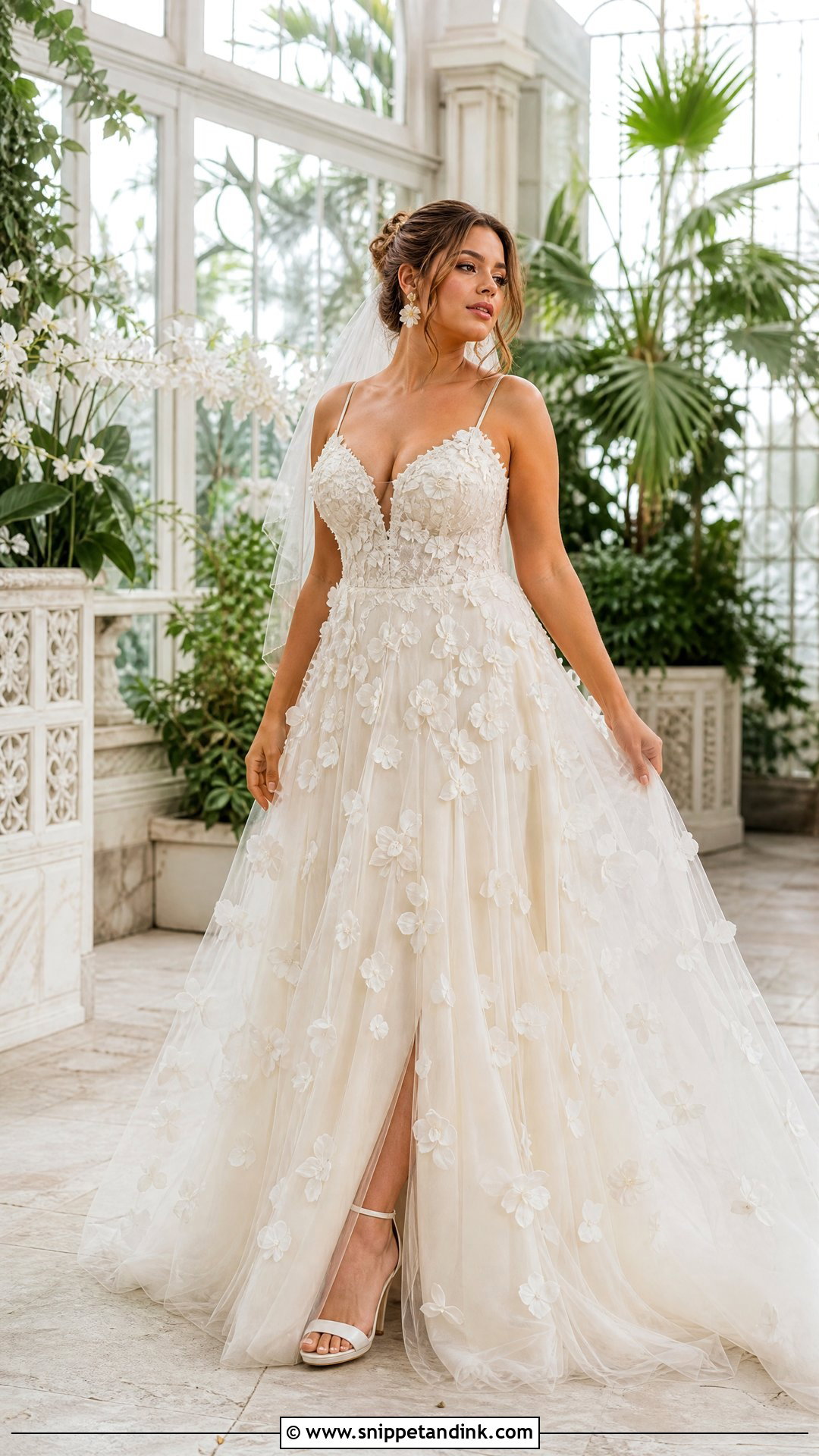
Raised petals placed across the bodice, shoulders and skirt turn a familiar gown into something sculptural. Organza or tulle flowers keep the bulk down; heavier fabric petals get crushed every time you sit or hug. Scale matters. Concentrated appliqués define one area, while scattered petals spread the eye across the whole dress, and a good designer will adjust both to your proportions. Slim ivory heels, small floral earrings and a barely there veil that won’t flatten the flowers make sense in a conservatory or a spring garden.
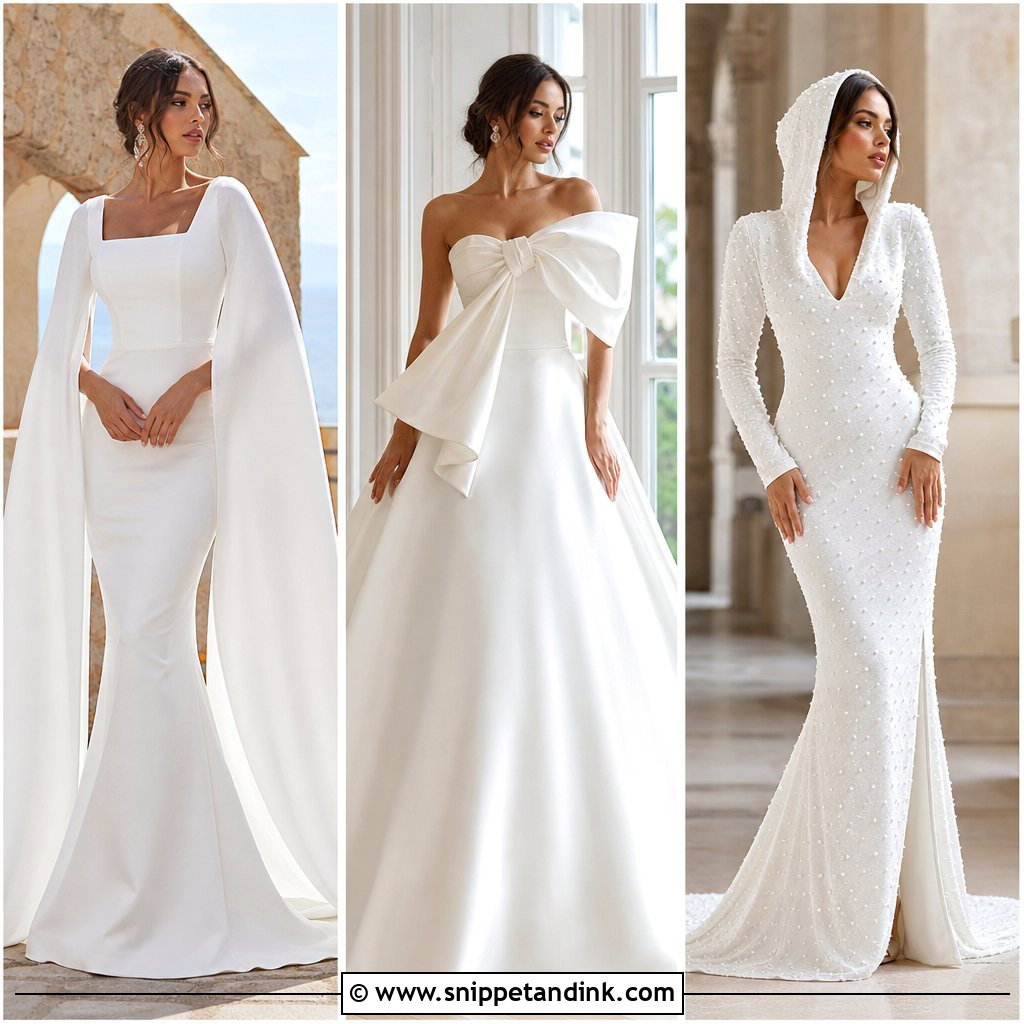
6. Cape Train Wedding Dress
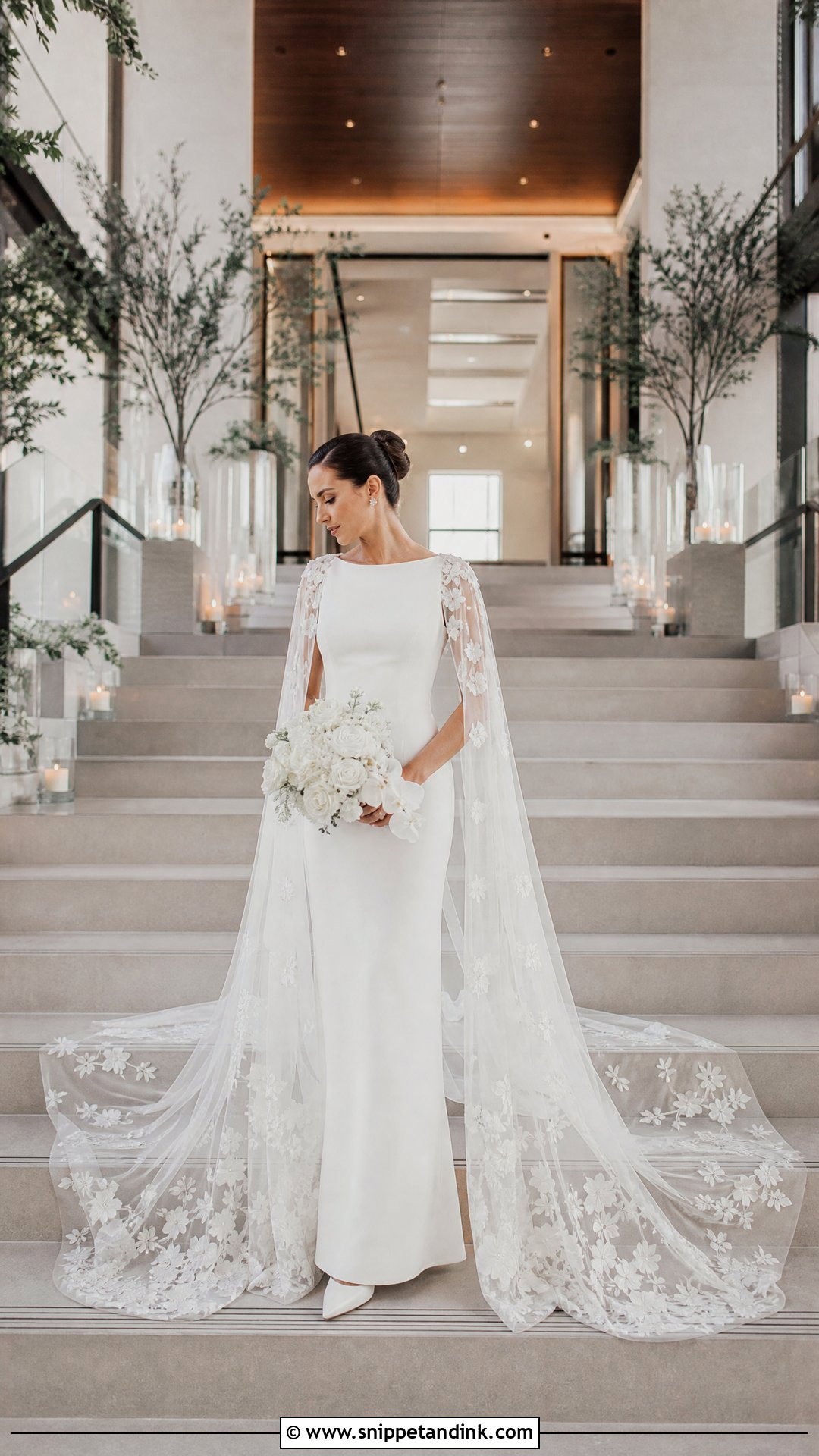
Fabric falling from the shoulders replaces the veil and gives you the back view of a train without dragging one. It can hang from a column, a fitted crepe dress or a minimal A-line. Sheer tulle softens, embroidered organza adds texture and satin looks ceremonial. Attachment is everything: a cape anchored only at two points twists when you turn, so I prefer one stitched or hooked along the full shoulder seam. Wear understated earrings that won’t snag, then remove the cape after the ceremony for a second, simpler look. It needs a venue long enough to show it moving.
7. Basque Waist Bubble Skirt Wedding Dress
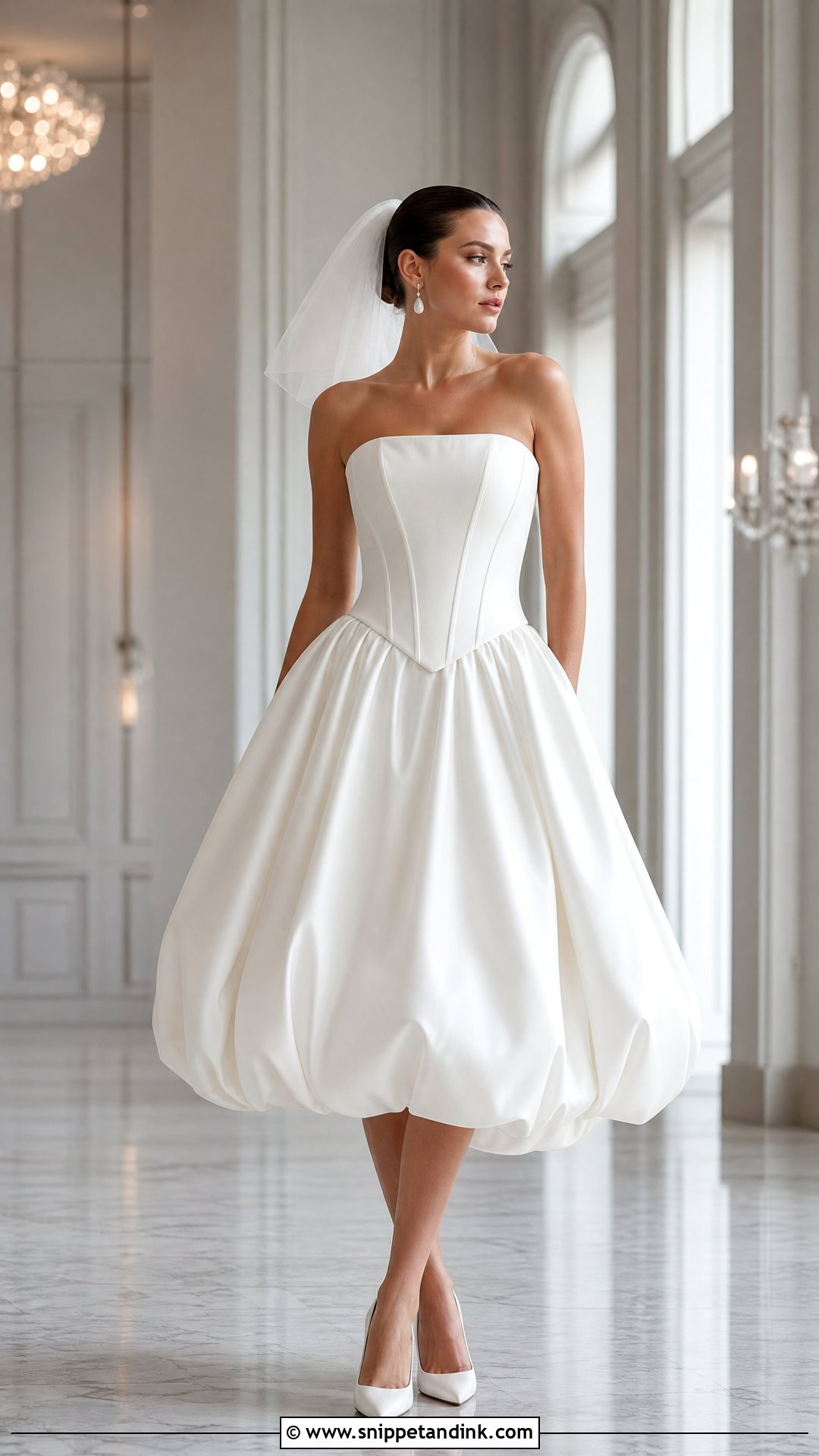
A Basque waist bubble skirt wedding dress pairs an old structural idea with a playful shape. The pointed waist lengthens the torso and the rounded skirt does the drama. Soft chiffon can’t hold that curve, so look for silk faille, mikado or structured organza. Hemming a bubble skirt is a specialist job, since shortening it in the usual way flattens the balloon, so ask your seamstress whether she’s altered one before. Satin pumps, compact pearl earrings and a short veil ending above the fullest point of the skirt suit a hotel or gallery wedding. A dropped bubble hem gives less volume if you’re unsure.
8. Architectural Pleated Wedding Dress
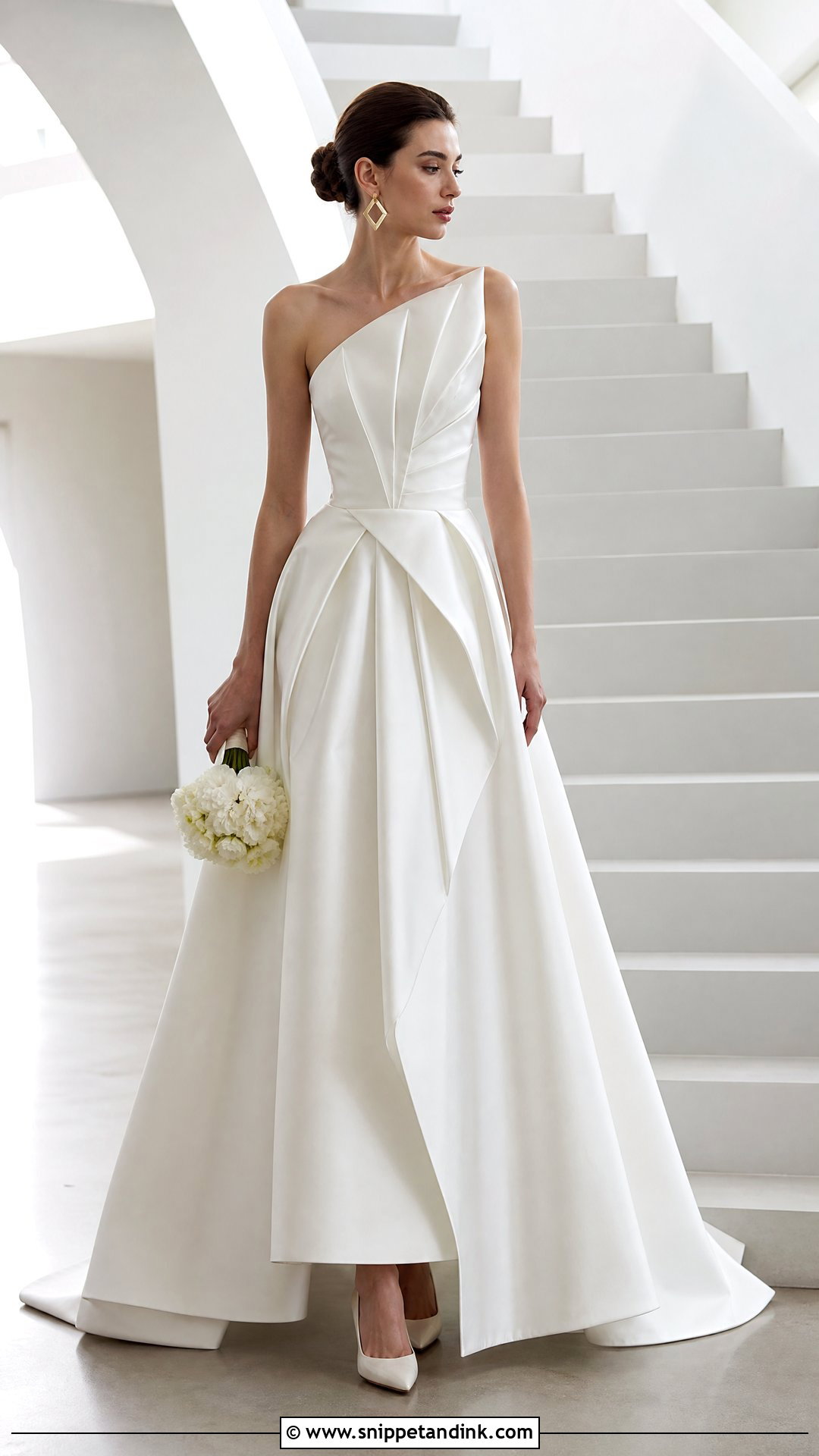
Fan pleats, folded panels and asymmetric draping replace lace on an architectural pleated wedding dress, and a one-shoulder bodice over a pleated A-line skirt looks modern while staying formal. You need fabric with body: silk gazar, mikado or a structured recycled polyester. Pleats add volume where they open, so their direction should flatter your proportions rather than widen the hip. Make sure your seamstress preserves the original fold lines during alterations, because pressed pleats are very hard to restore. Geometric earrings, smooth white heels and a compact, simple bouquet are all it needs.
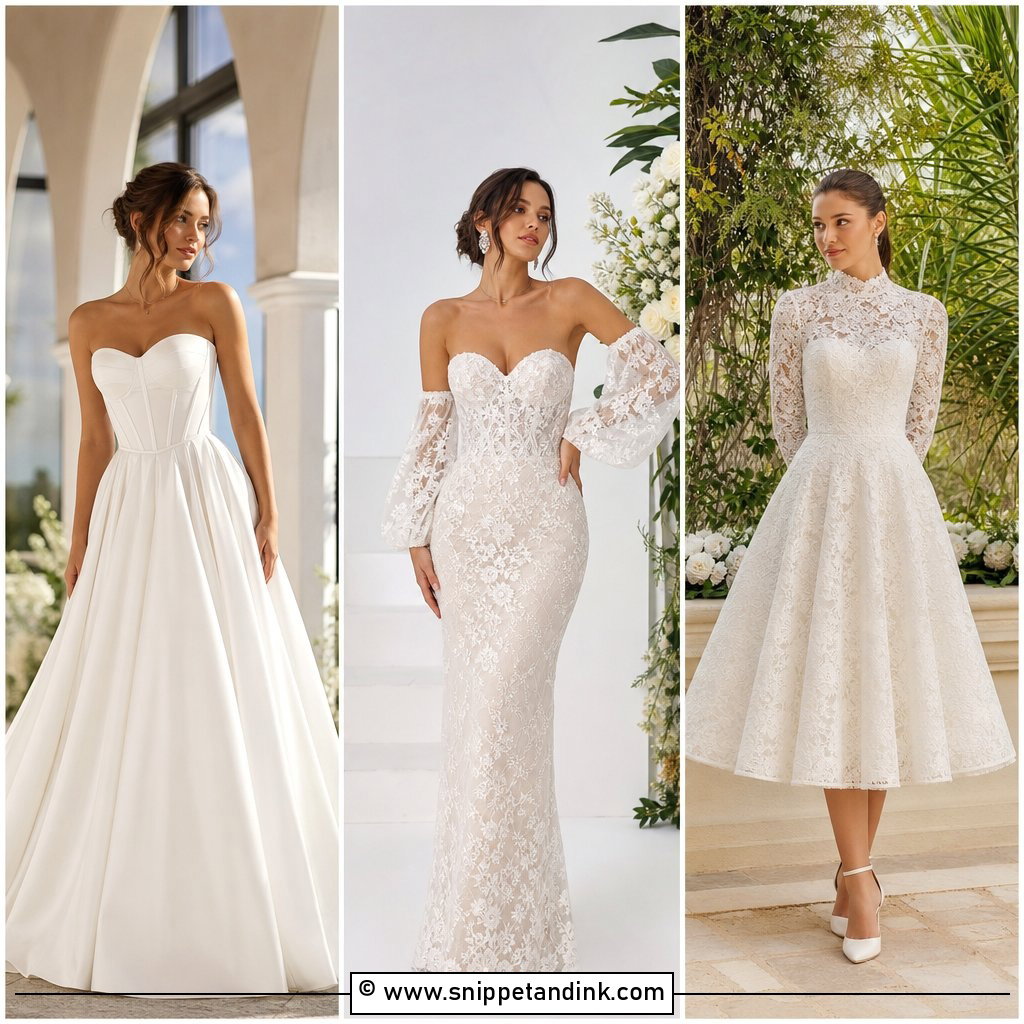
9. Sheer Layered Lace Wedding Dress
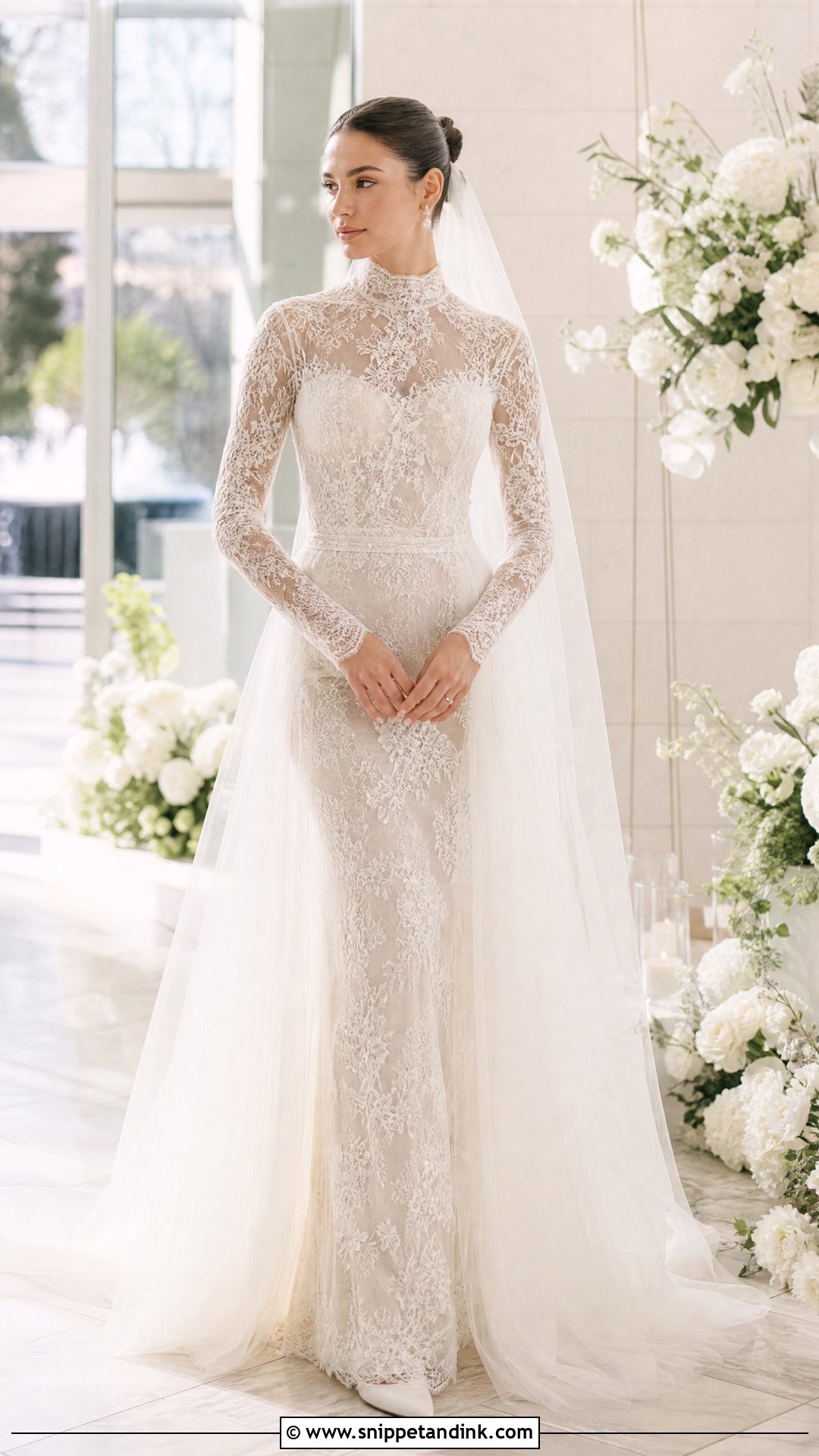
Several sheer layers at different densities let you look airy while staying covered: an opaque bodysuit lining, embroidered lace over it, then soft tulle as an overskirt. Long sleeves and a high neck contrast nicely with sheer sections at the waist or skirt. Here’s what catches people out. Flash photography makes sheer fabric look more transparent than it does in the mirror, so at a fitting ask someone to photograph you with flash and check the result. Changing the lining color or neckline height adjusts the coverage. Closed-toe pumps, pearl drops and a narrow cathedral veil, with no heavy headpiece over patterned lace.
10. Minimalist Column Wedding Dress
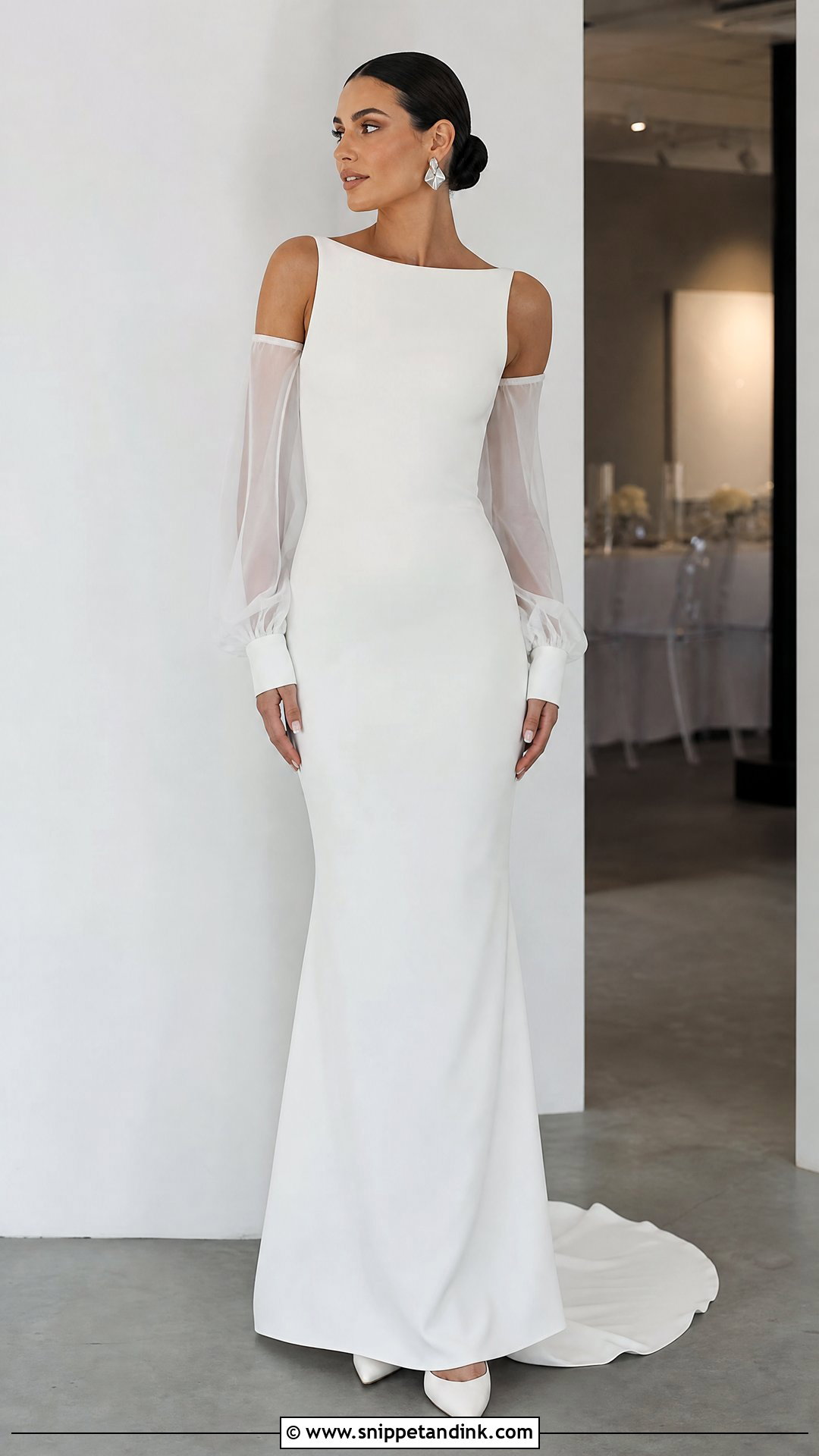
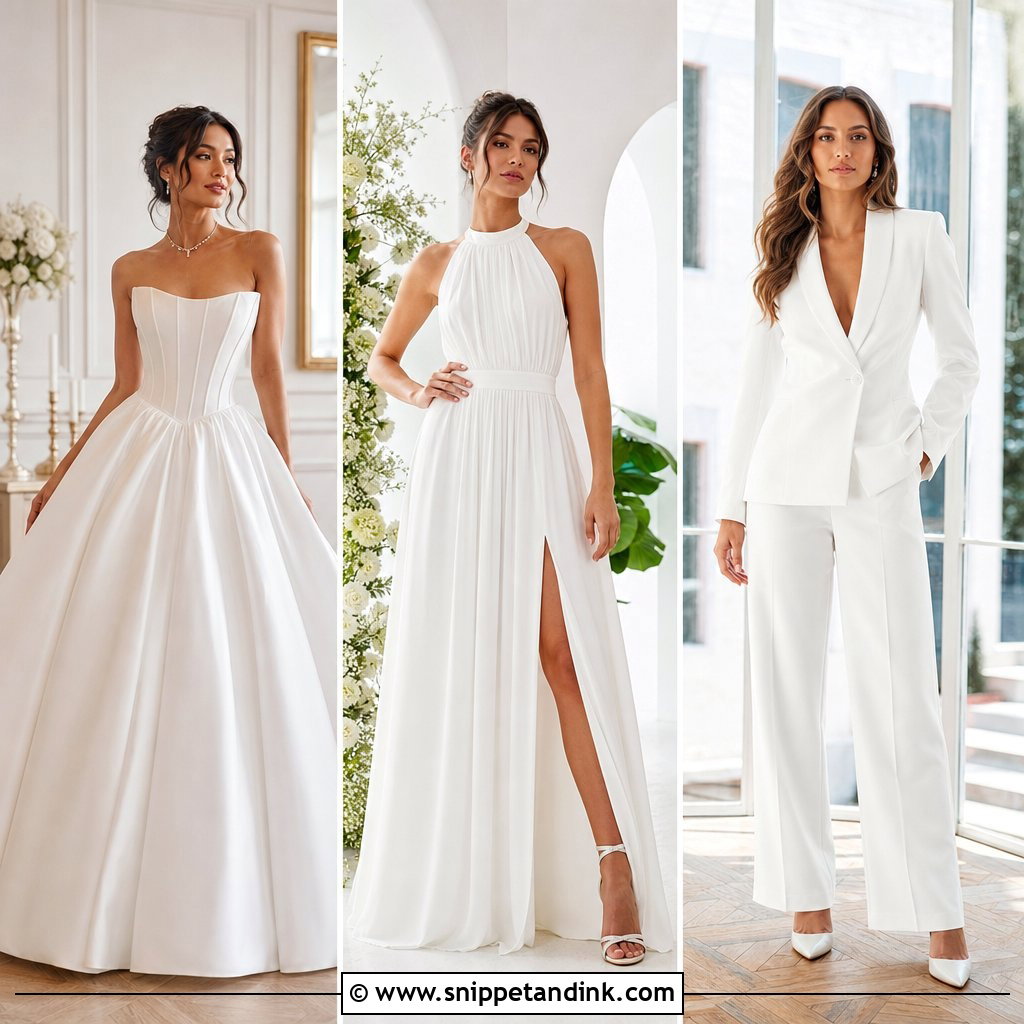
Nothing interrupts a column: a high bateau neck, a long unbroken line and matte crepe, smooth satin or compact jersey. All the support is hidden inside so the outside stays clean. A low back or narrow train adds interest. Columns should skim rather than squeeze, so never size down hoping it looks sleeker; a precise tailor does more than a smaller size. Detachable sheer sleeves or a long plain veil add presence for the ceremony and come off for dinner. White pointed heels, sculptural metal earrings and a polished bun suit a courthouse as well as a formal city wedding.
11. Asymmetric One-Shoulder Wedding Dress
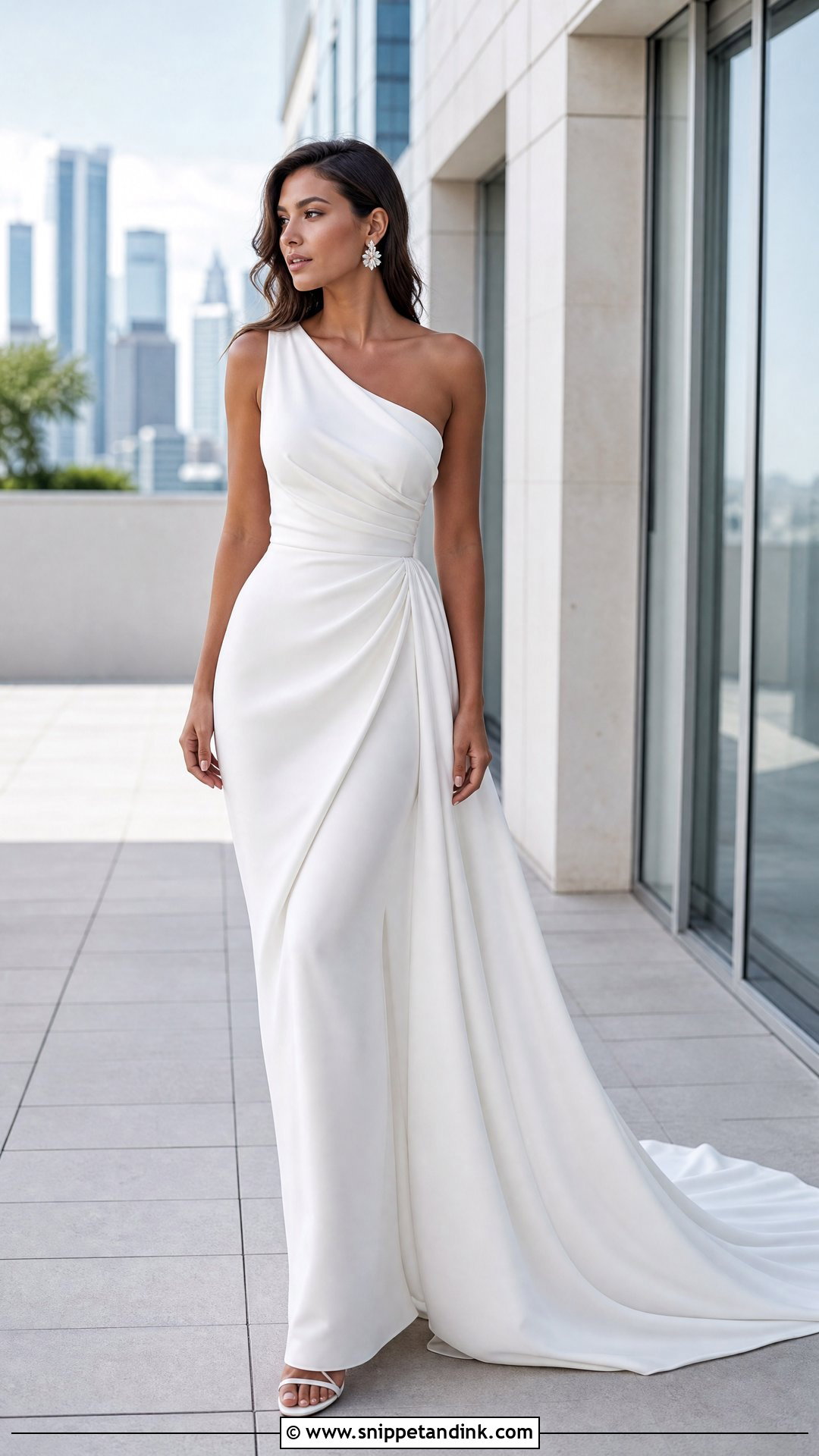
Drape that travels from one shoulder across the bodice gives this dress its movement, falling into a fitted skirt or a flowing train. Satin crepe looks clean, pleated chiffon softer. With only one shoulder holding the bodice, the internal construction must be firm, so test it by reaching across your body to the opposite side. Wear a single statement earring on the bare side and skip the necklace, which breaks the diagonal. A detachable shoulder panel adds coverage without losing the asymmetry. Slim white sandals and a smooth side part complete it.
12. High-Neck Long-Sleeve Wedding Dress
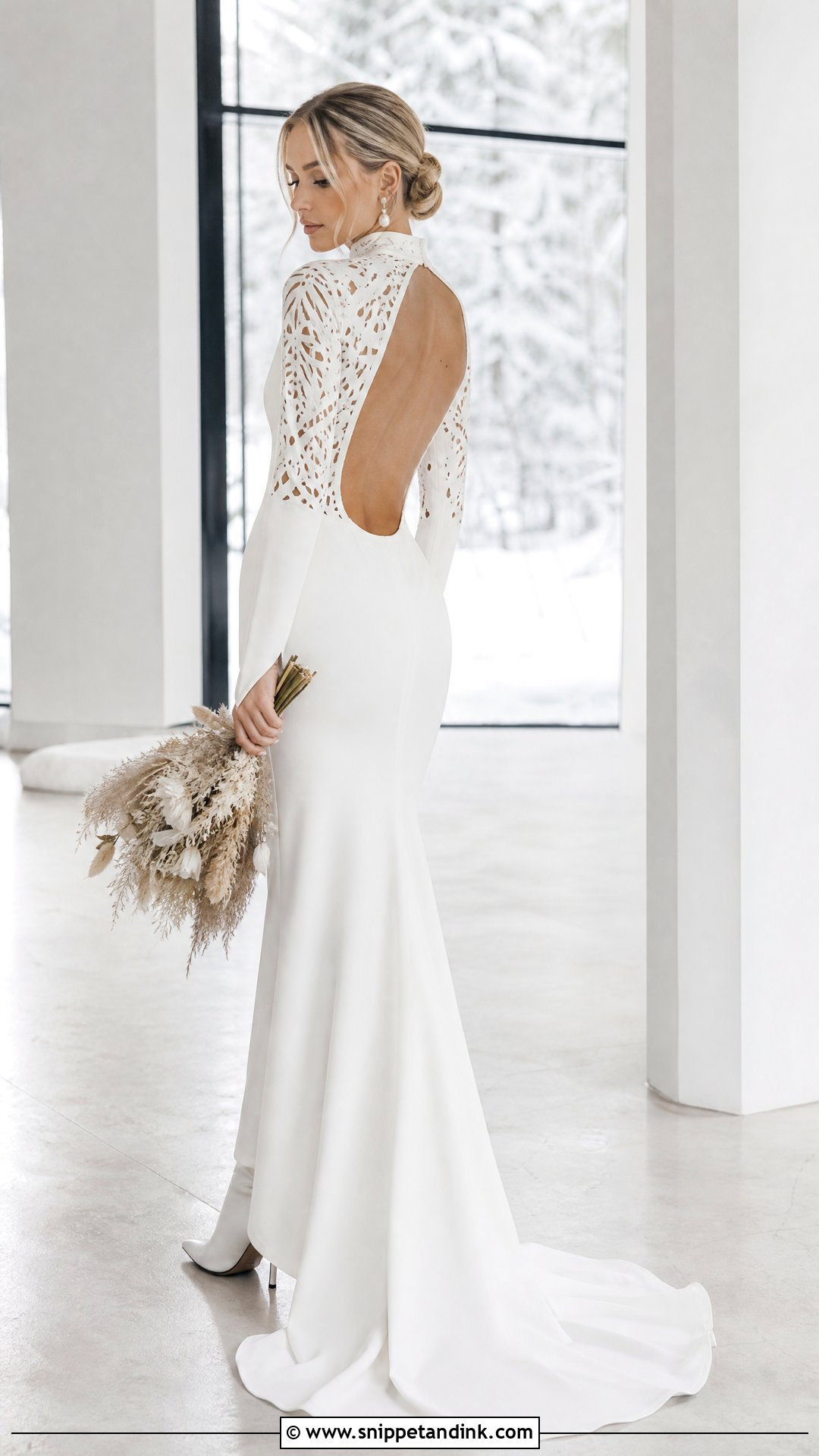
High neck and long sleeves can still look futuristic when the base is fitted crepe with curved seam lines and laser-cut embroidery on sheer sleeves. A narrow mock neck sharpens it, and an open back stops it feeling heavy. Pointed ankle boots or closed pumps, small silver earrings and a low braided bun suit it; attach the veil below the hair. Lightweight lining makes it workable indoors year-round. At fittings I check the shoulder and elbow closely, because a sleeve that’s slightly off twists the whole bodice when you lift your arm.
13. Convertible Two-Piece Wedding Dress
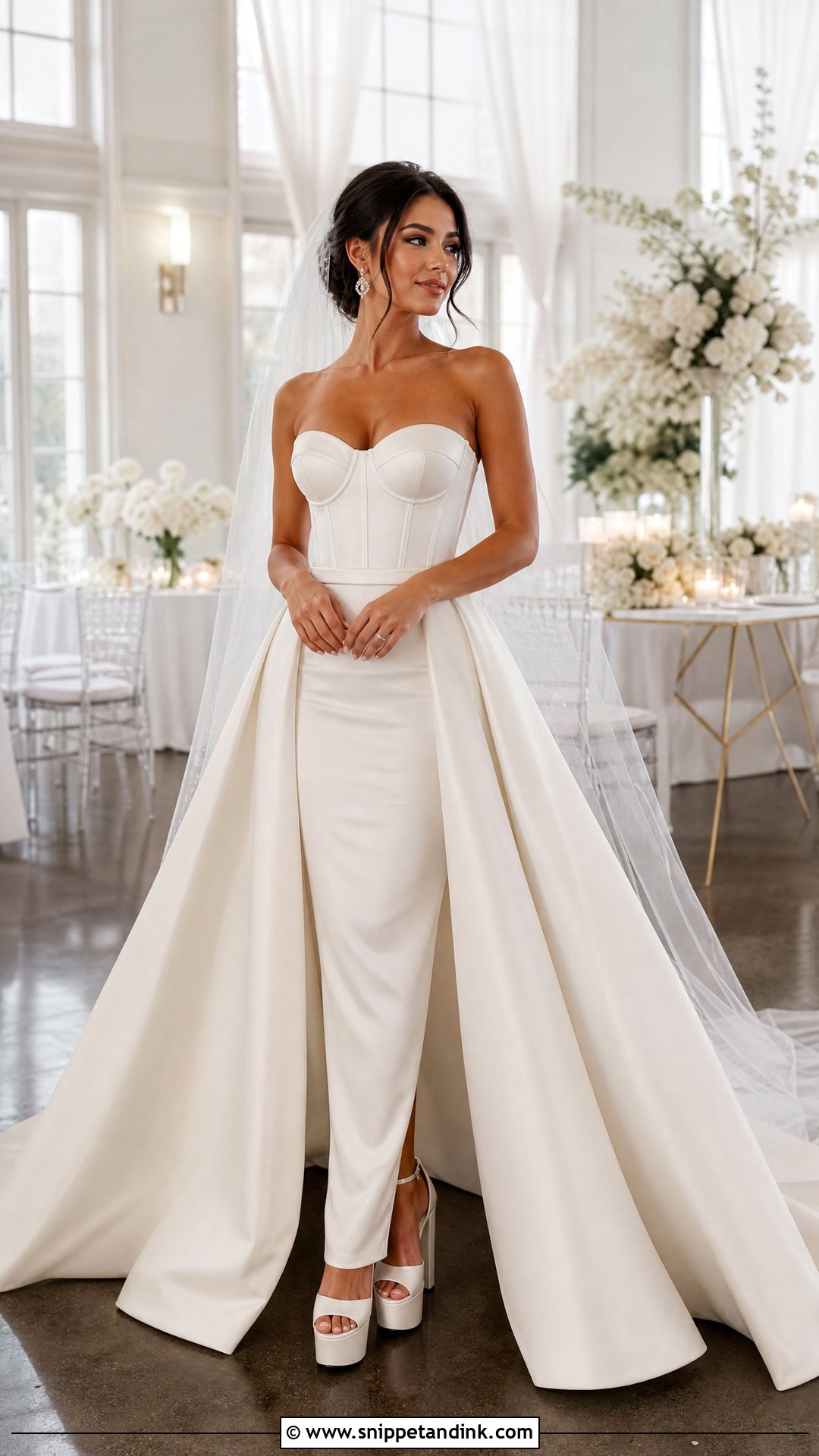
Begin the day in a structured corset top with a full overskirt, then reveal a fitted column skirt underneath for the reception. Matching fabric keeps the pieces connected; contrasting textures make the change more obvious. The overlap is my main concern. The top should extend well past the waistband so no gap opens when you sit or dance, and the fastenings must be secure enough to survive a lot of movement. Platform heels and a fingertip veil for the first look; bolder earrings later. The separates can be restyled after the wedding.
14. Fiber-Optic Wedding Dress
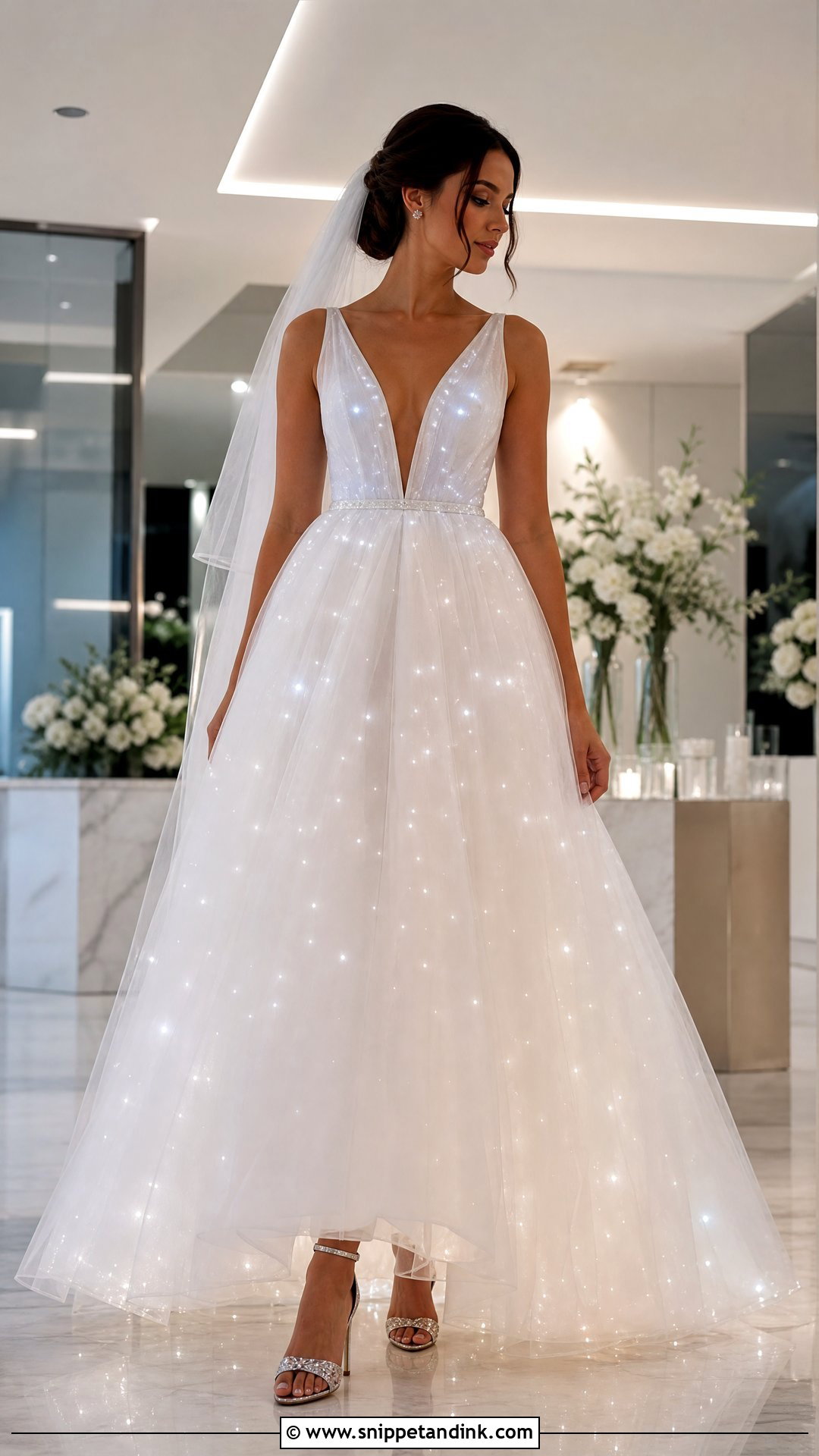
Tiny lit threads beneath a satin or tulle outer layer are the most literal take on future bridal, and the wearable version keeps the glow soft: white, pale blue or pearl. A clean A-line hides the small power pack in a secure internal pocket. Switch it on for the evening rather than the ceremony. This is a specialist commission, so work with a designer experienced in wearable technology and ask about battery safety, weight, run time and cleaning. Every electronic part should come out before alterations, storage or professional cleaning. Silver heels, crystal studs and a plain veil keep it calm.

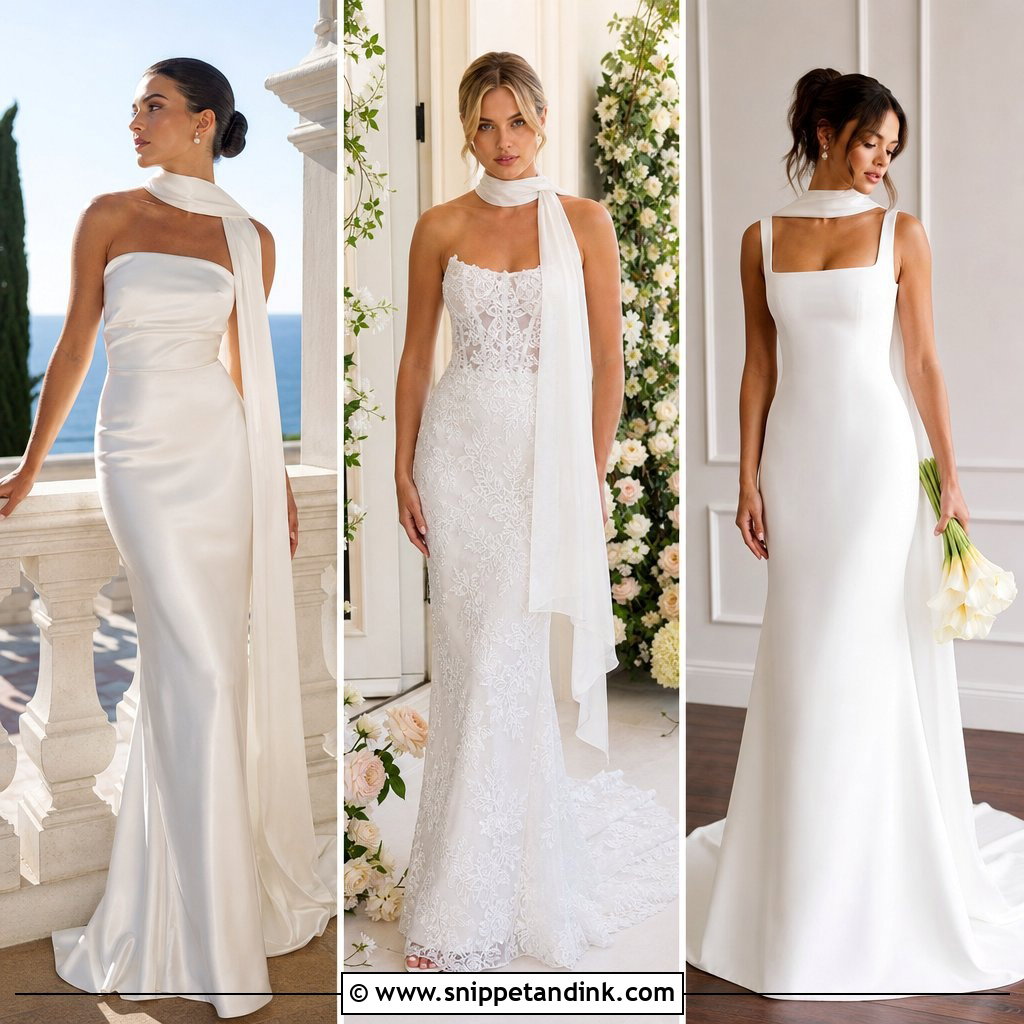

15. Iridescent Color-Shift Wedding Dress
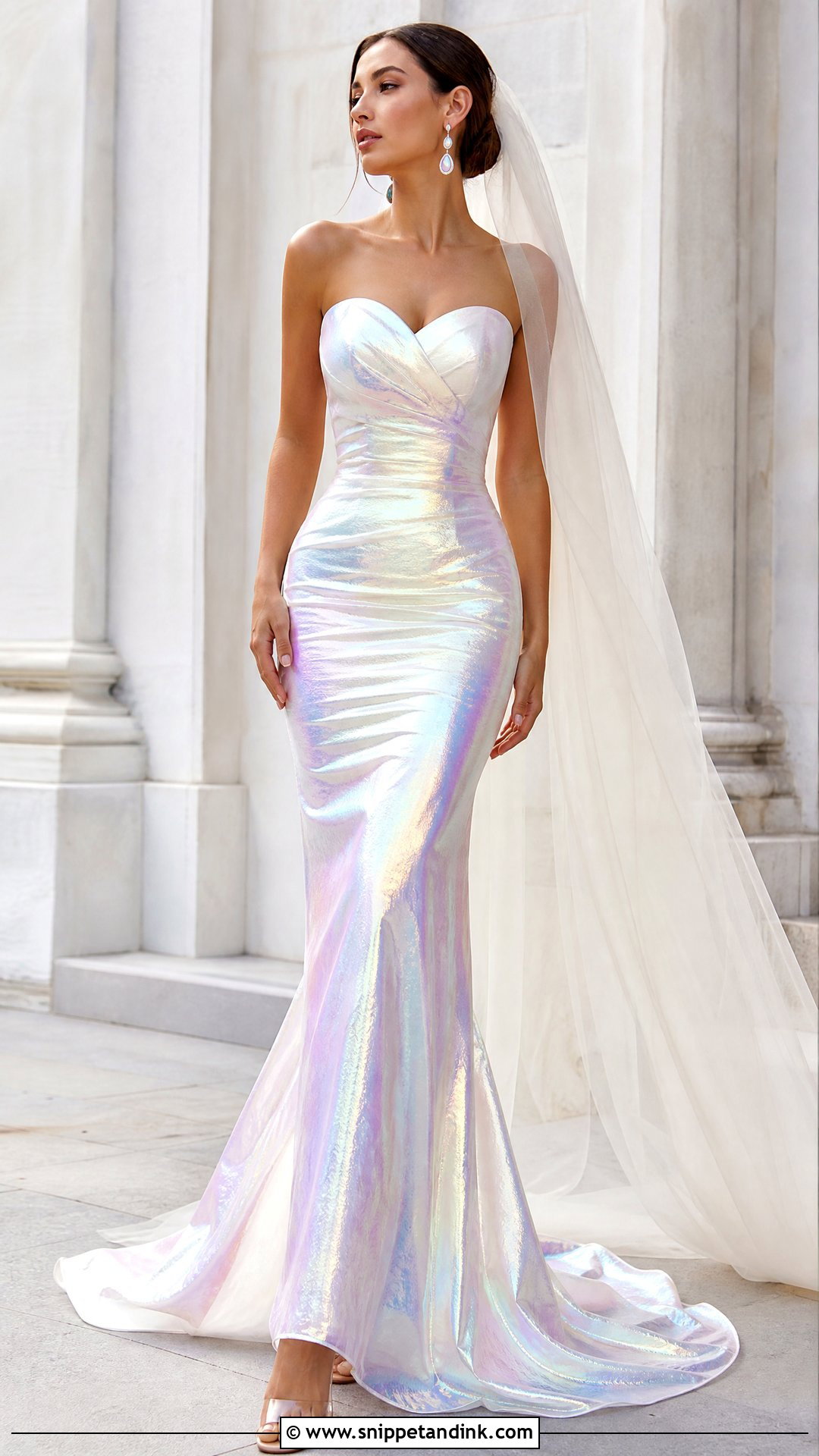
An iridescent color-shift wedding dress uses a pearlized surface that moves gently between ivory, blush, blue and soft lavender. It’s quieter than holographic organza. A fitted mermaid or simple A-line lets the finish stay the focus, so keep flowers and accessories in a narrow palette. Color-shift fabrics often read stronger under flash, so photograph the sample on more than one phone before deciding. For a quieter result, use it only on detachable sleeves, a cape or an overskirt. Translucent heels and opal-style earrings suit it.
16. Recycled Textile Wedding Dress
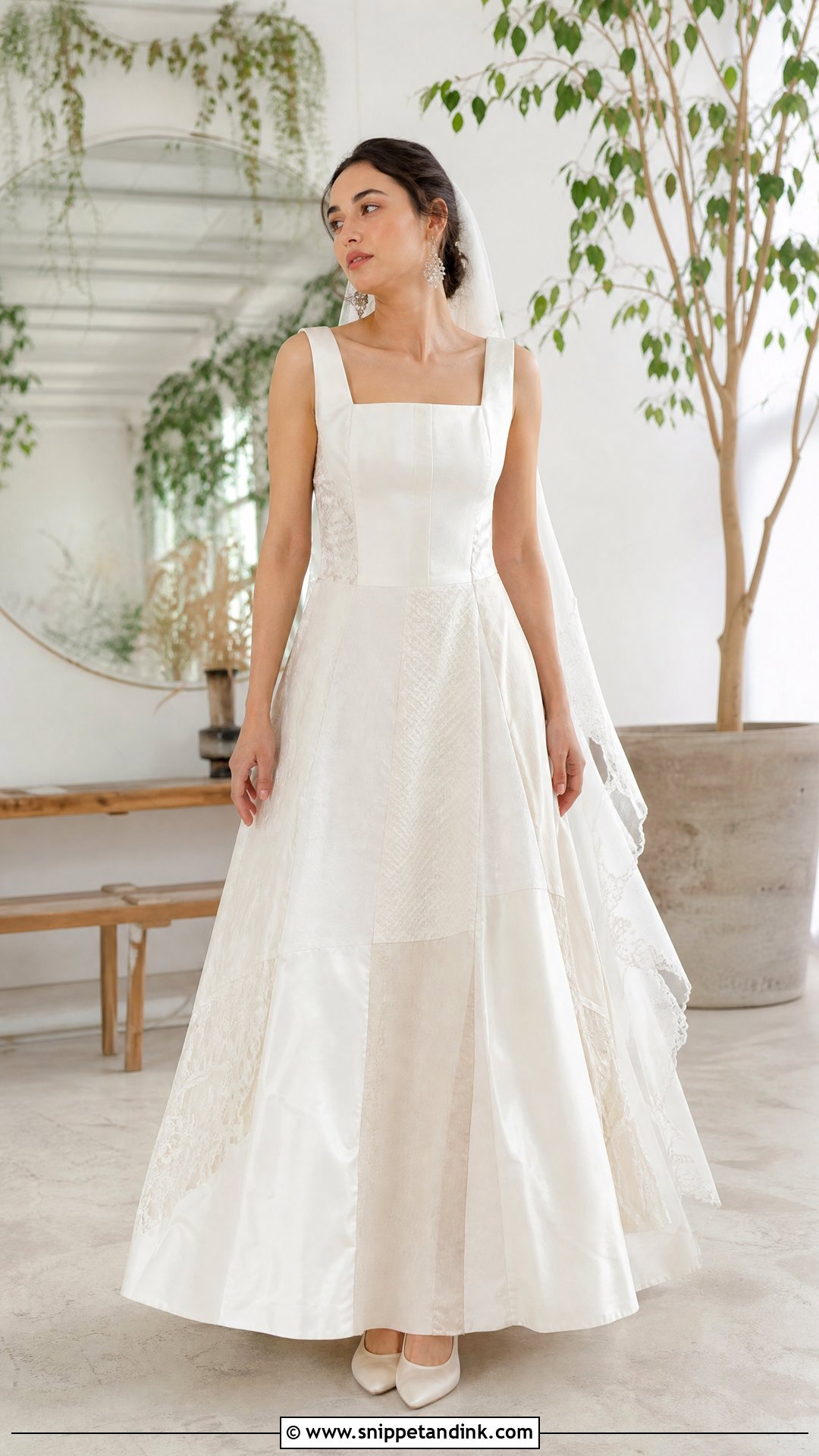
A recycled textile wedding dress can be made from recycled satin, regenerated fibers, repurposed lace or carefully sourced vintage fabric. A square-neck bodice and clean A-line skirt keep it refined rather than rustic. Visible paneling can show off the patchwork, while tonal embroidery ties different textiles together. Don’t rely on broad sustainability claims; ask direct questions about lining, durability, cleaning and how easily it can be altered. A detachable skirt that reveals a midi underneath gives the dress a second life, and a veil cut from leftover fabric wastes nothing.
17. Laser-Cut Lace Wedding Dress
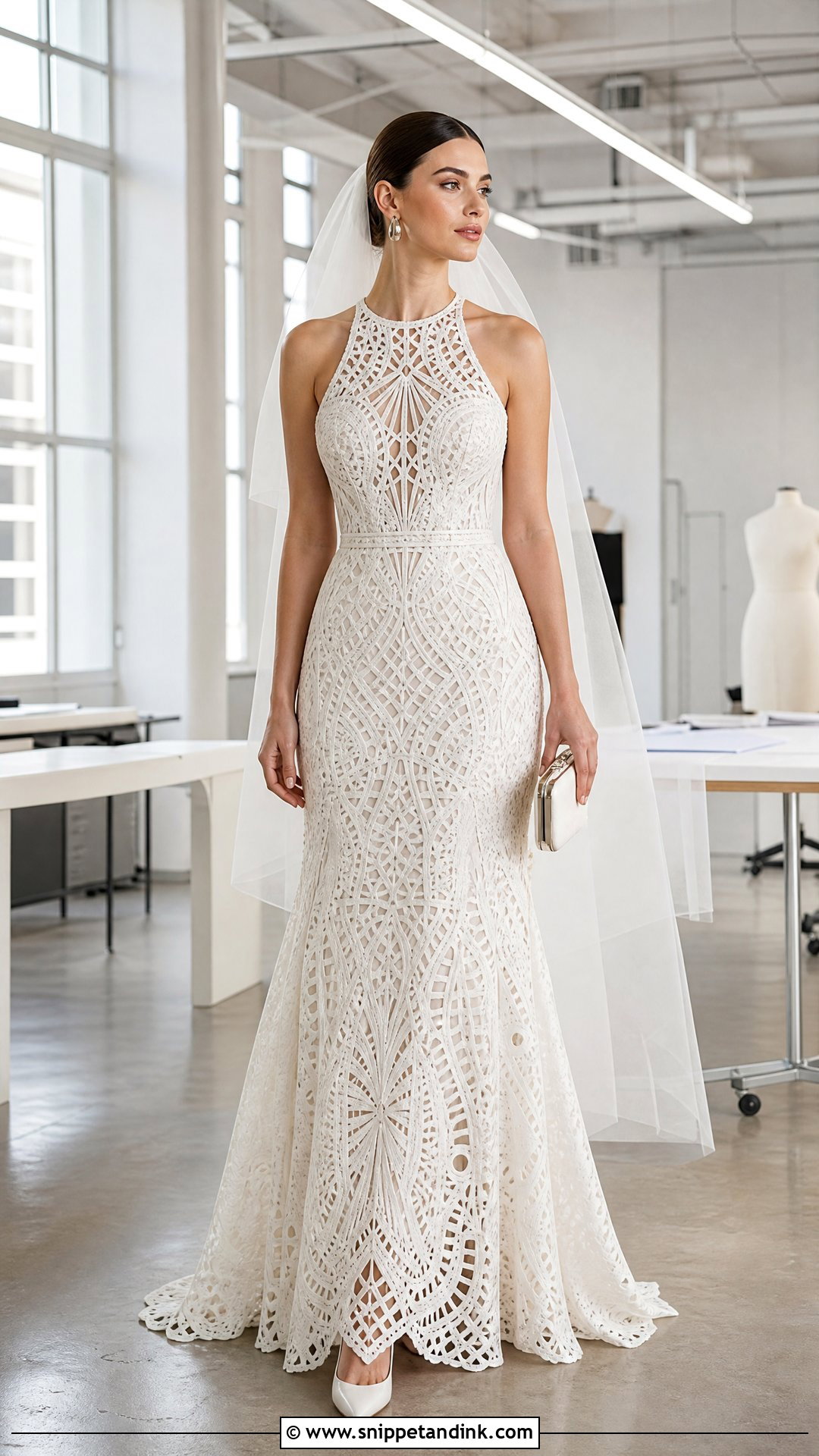
Laser cutting swaps floral lace for crisp geometric shapes such as honeycomb, waves or abstract botanicals. It works best concentrated on a fitted bodice over a plain lining, with a gently flared skirt below. Cut edges are sealed by the heat of the laser, which stops fraying, but fine bridges between holes can still tear if a bracelet or ring catches. Strategic lining adds durability and coverage. Polished metal earrings, smooth pumps and a plain-edged veil suit an industrial venue or design studio.
18. Crystal Mesh Wedding Dress
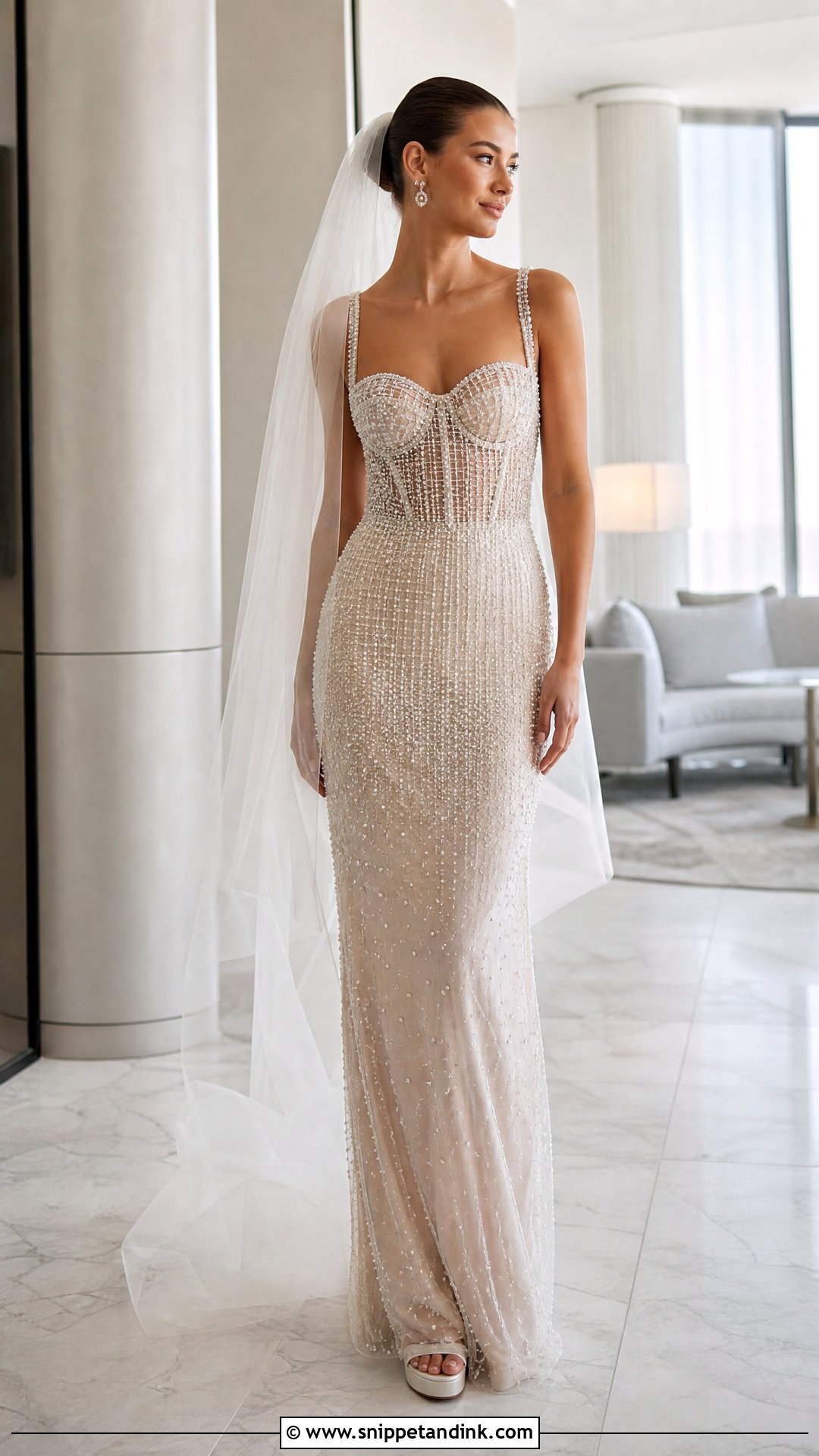
Crystal mesh moves with the body and catches light from every angle. I like it as a finely embellished layer over a simple corseted slip, with the crystals denser at the bodice and thinning toward the hem, which keeps the weight manageable. Do ask how heavy the finished gown is, whether spare crystals come with it and how the zip and waist are reinforced. Skip a jeweled necklace, which scratches and catches against the mesh. Satin platform sandals and small crystal earrings are plenty, and a detachable crystal overskirt can come off before dinner.
19. Feather Cape Wedding Dress
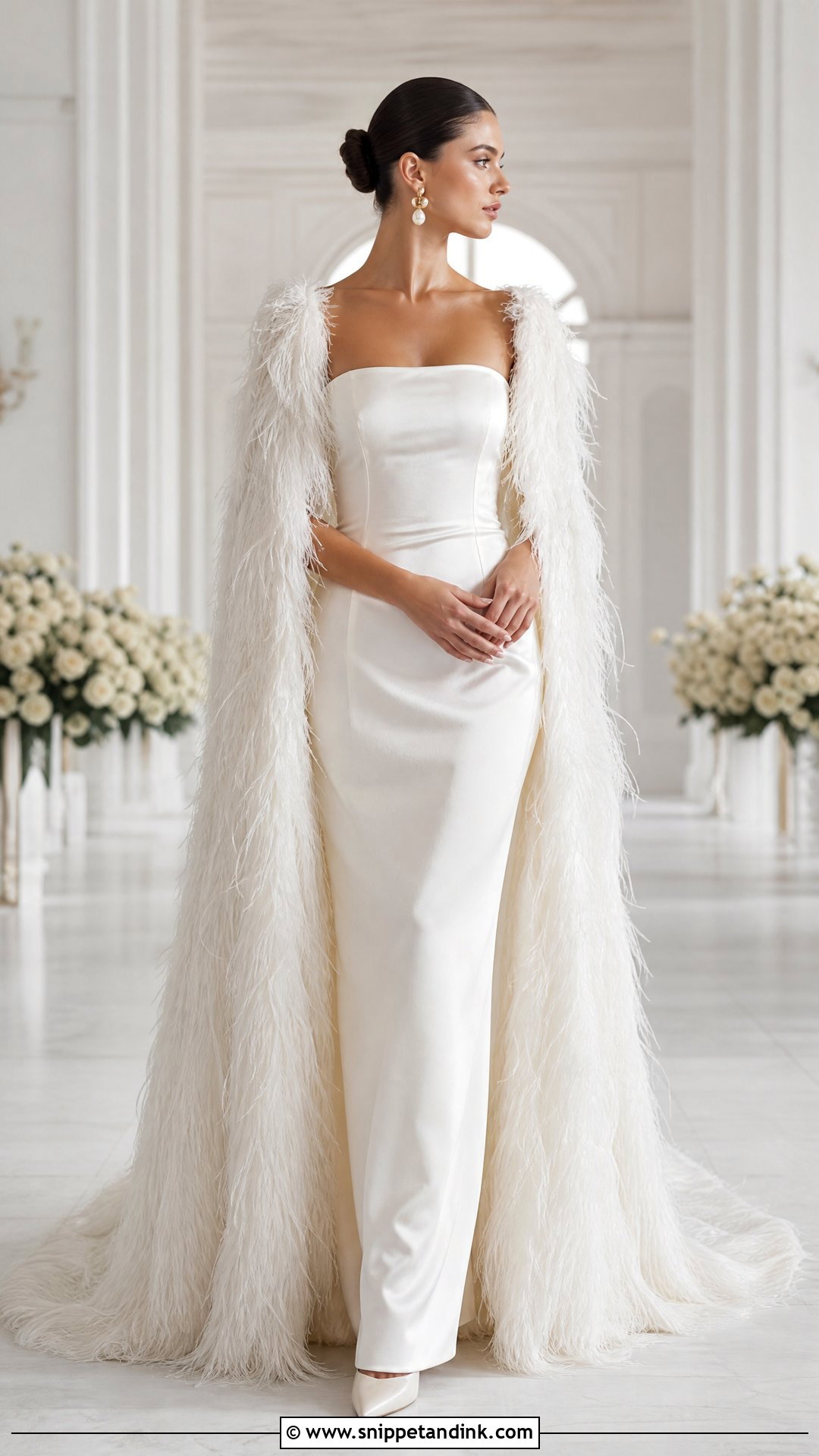
Feathers feel more modern as a removable outer layer than built into the gown. A feather-trimmed cape over a sleek strapless dress, satin column or plain A-line keeps the texture in one place. Refined ivory plumes look better than sheer volume. Hold the trim against your neck at the fitting, since some feathers itch and shed, and check how firmly they’re stitched. If you prefer animal-free materials, sculpted organza, fringed chiffon or embroidered tulle give a similar floating effect. Pointed pumps and a smooth updo, then off with the cape for the reception.

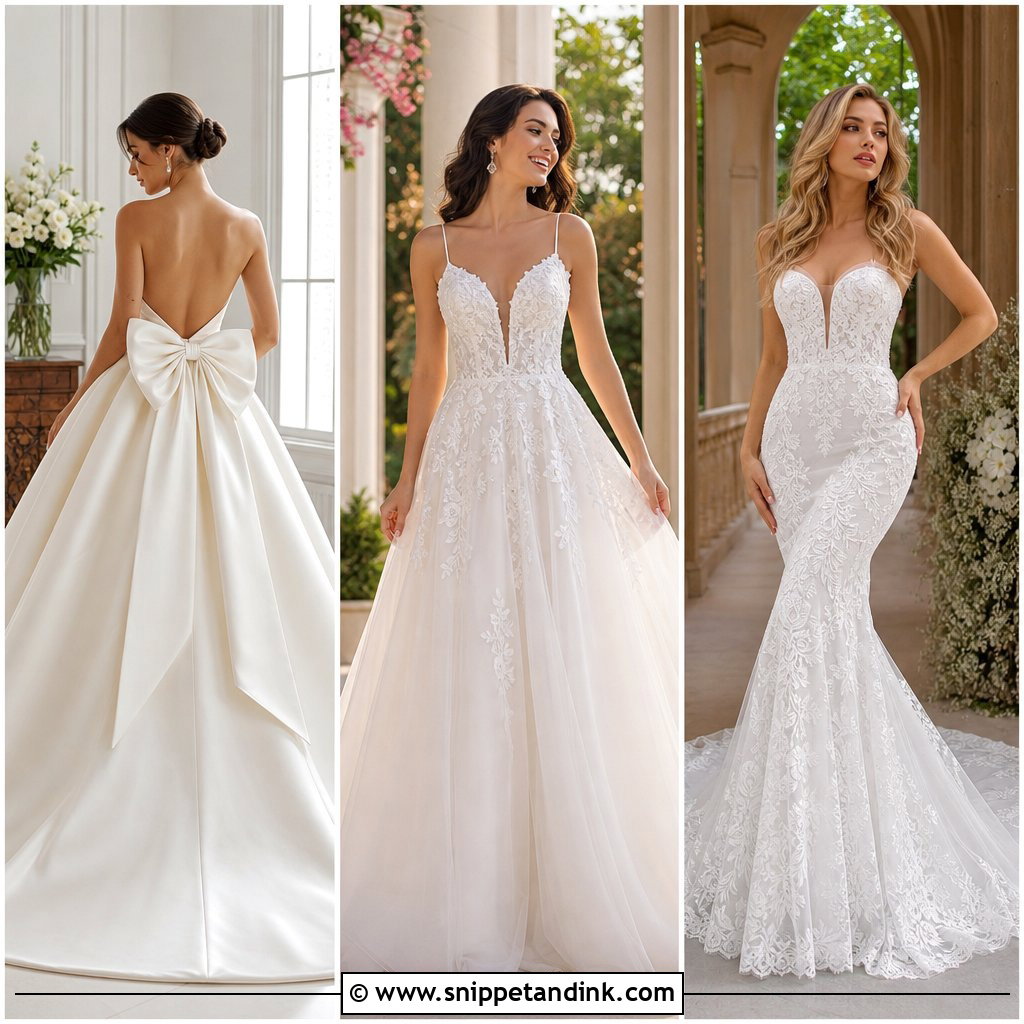
20. Mini Wedding Dress With Detachable Train
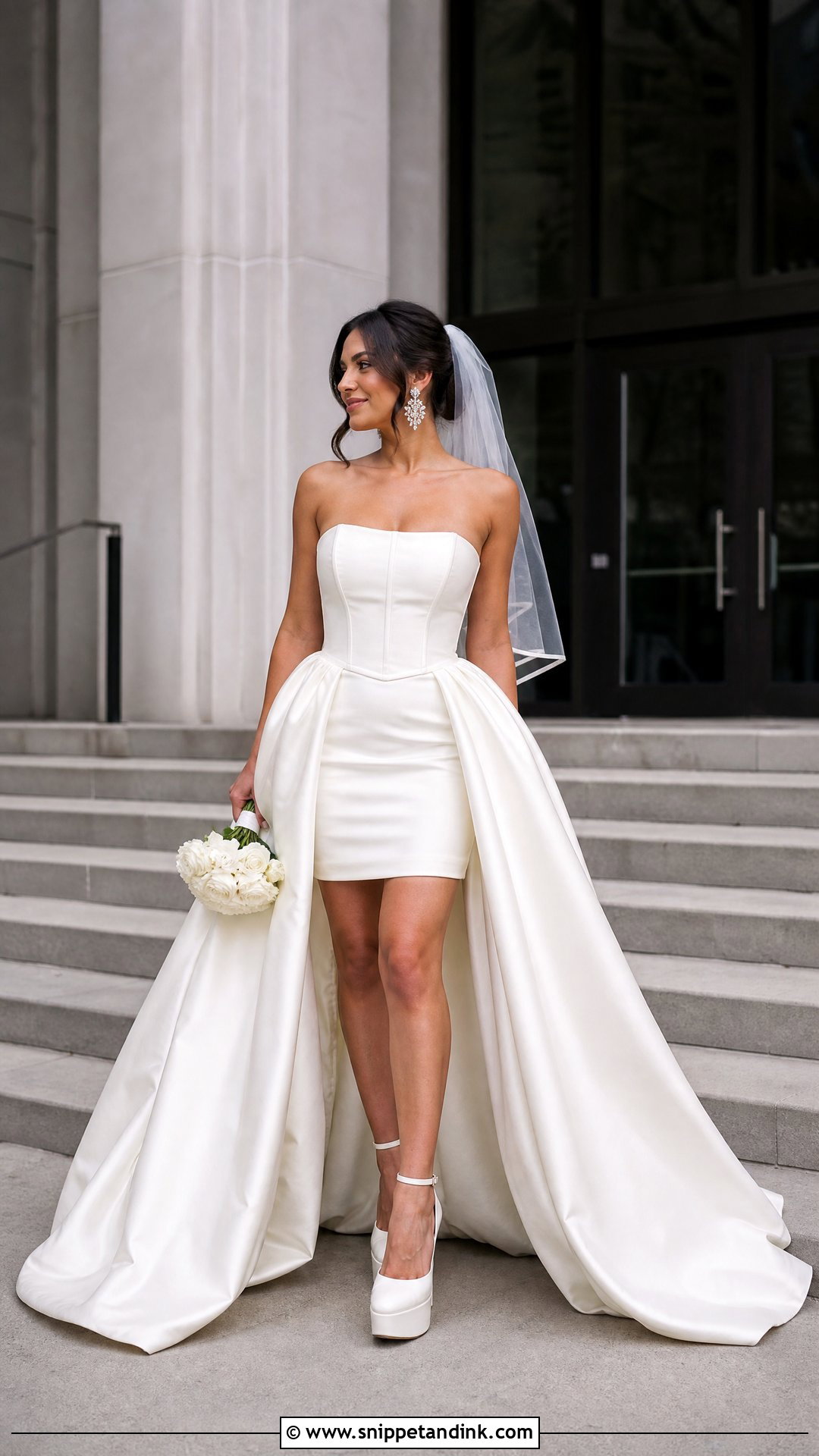
From behind it looks like a ball gown; once the train comes off, you’re in a structured mini. Start with a thigh- or knee-length dress with a secure corset bodice, then attach a full overskirt or train at the waist for the ceremony. The detachable piece should close smoothly and not rotate while you walk, so practice in it. Because your legs and shoes are on show all evening, the tailoring and footwear carry more weight than usual. Platform pumps, statement earrings and a short veil or sculptural headband suit a civil ceremony or destination wedding.
21. Hooded Wedding Dress
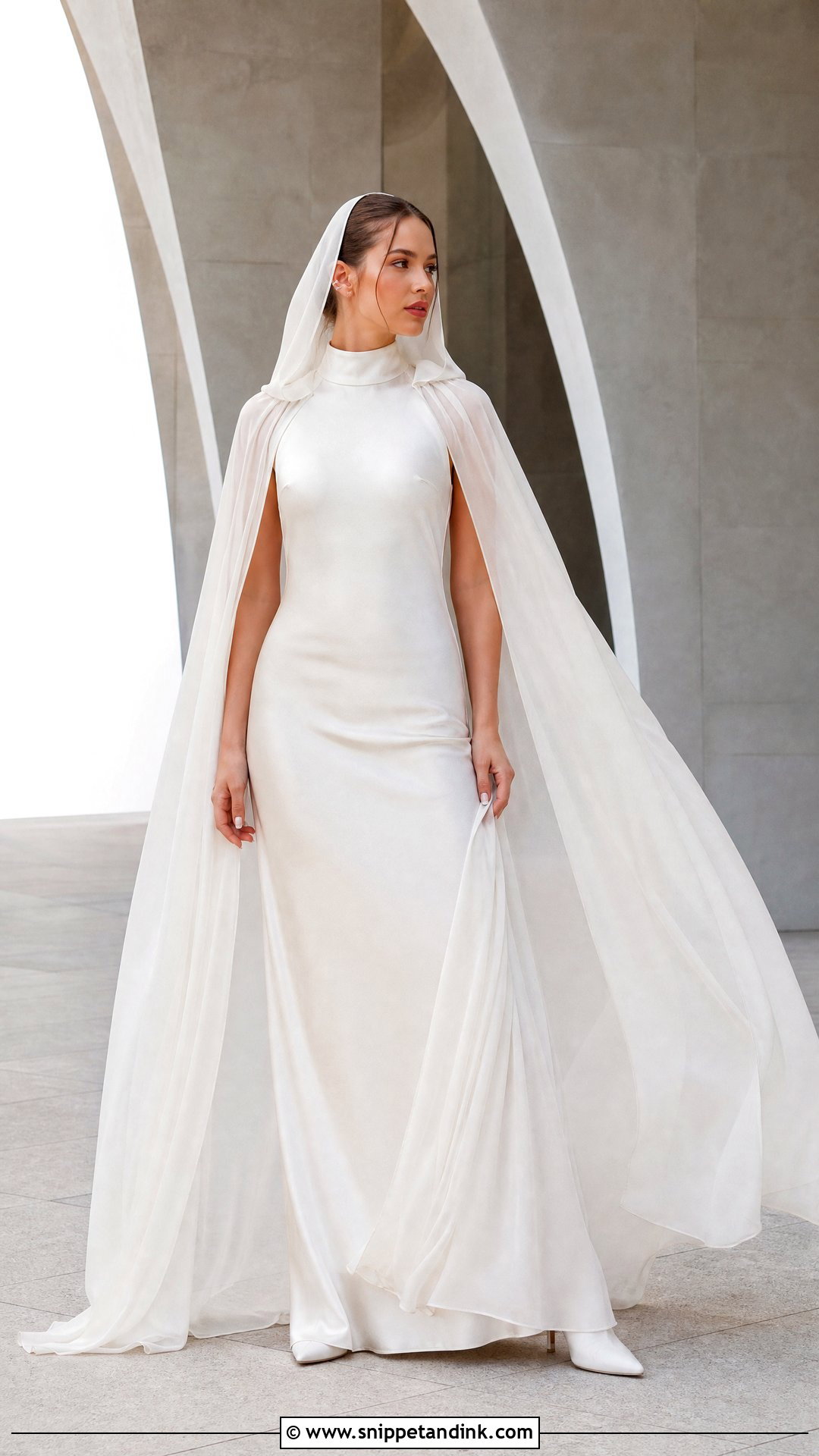
A hood is an unexpected stand-in for a veil. It can hang from a fluid cape, be built into a long-sleeve gown or be a detachable piece of sheer chiffon. Keep the dress underneath simple, a high-neck satin column or fitted crepe, so the hood reads as intentional. The fit around the face matters: it should frame you without slipping over your eyes or flattening your hair, and your hairstylist needs to see it before the trial. Lower it after the ceremony to sit as a soft draped collar. Pointed boots, small ear cuffs and luminous skin finish it.
22. Square-Neck Drop-Waist Wedding Dress
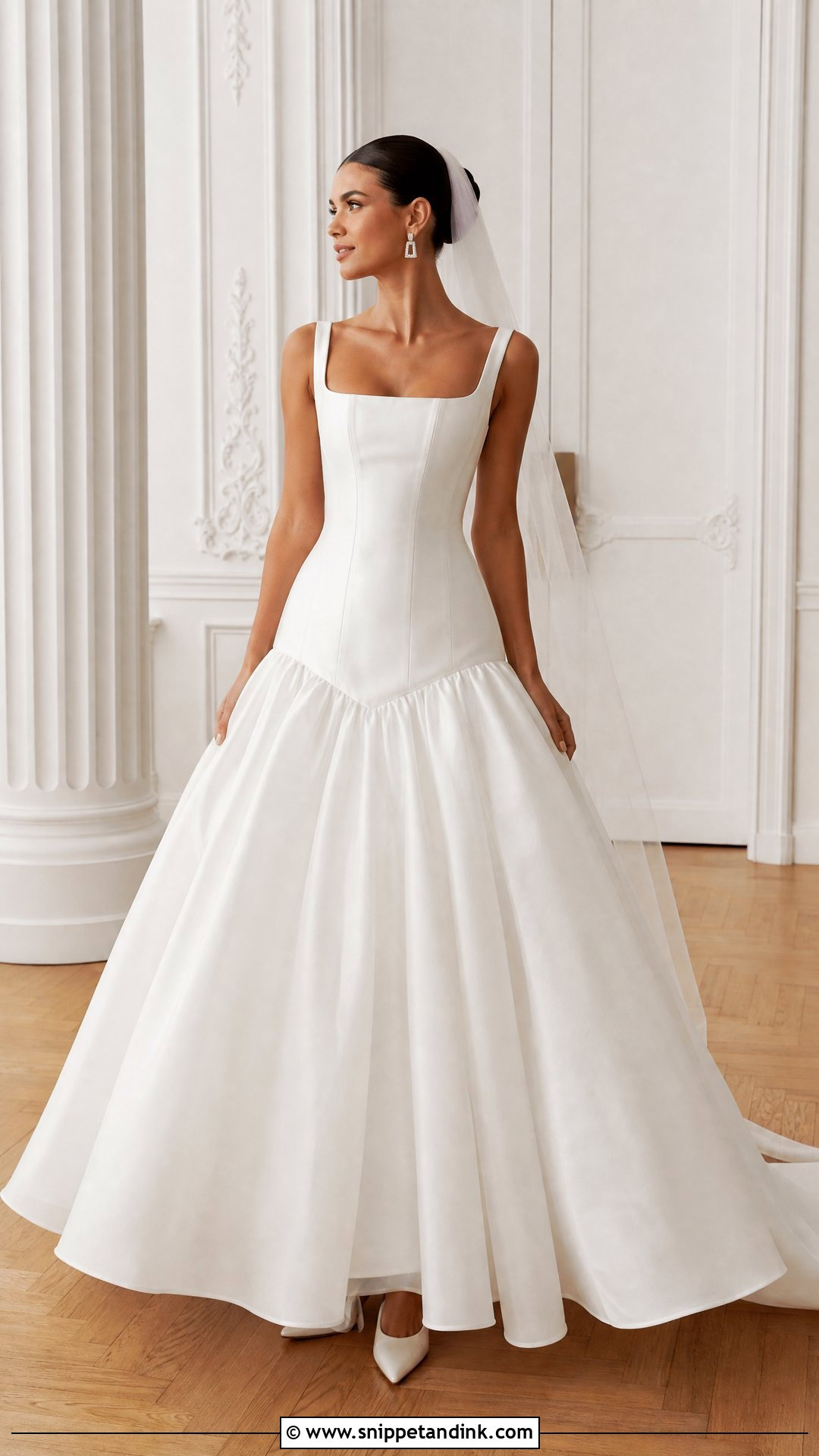
The bodice runs past the natural waist before opening into a full skirt, which makes the torso look long and smooth. Structured satin or mikado defines the shape, while an organza skirt softens it. Wide straps help support the lower waistline. If your torso is short, ask for the drop waist to sit slightly higher; a seam that lands across the widest part of the hip shortens the legs. Pointed ivory heels, a narrow ribbon veil and small geometric earrings suit a ballroom or gallery.
23. Cocoon Silhouette Wedding Dress
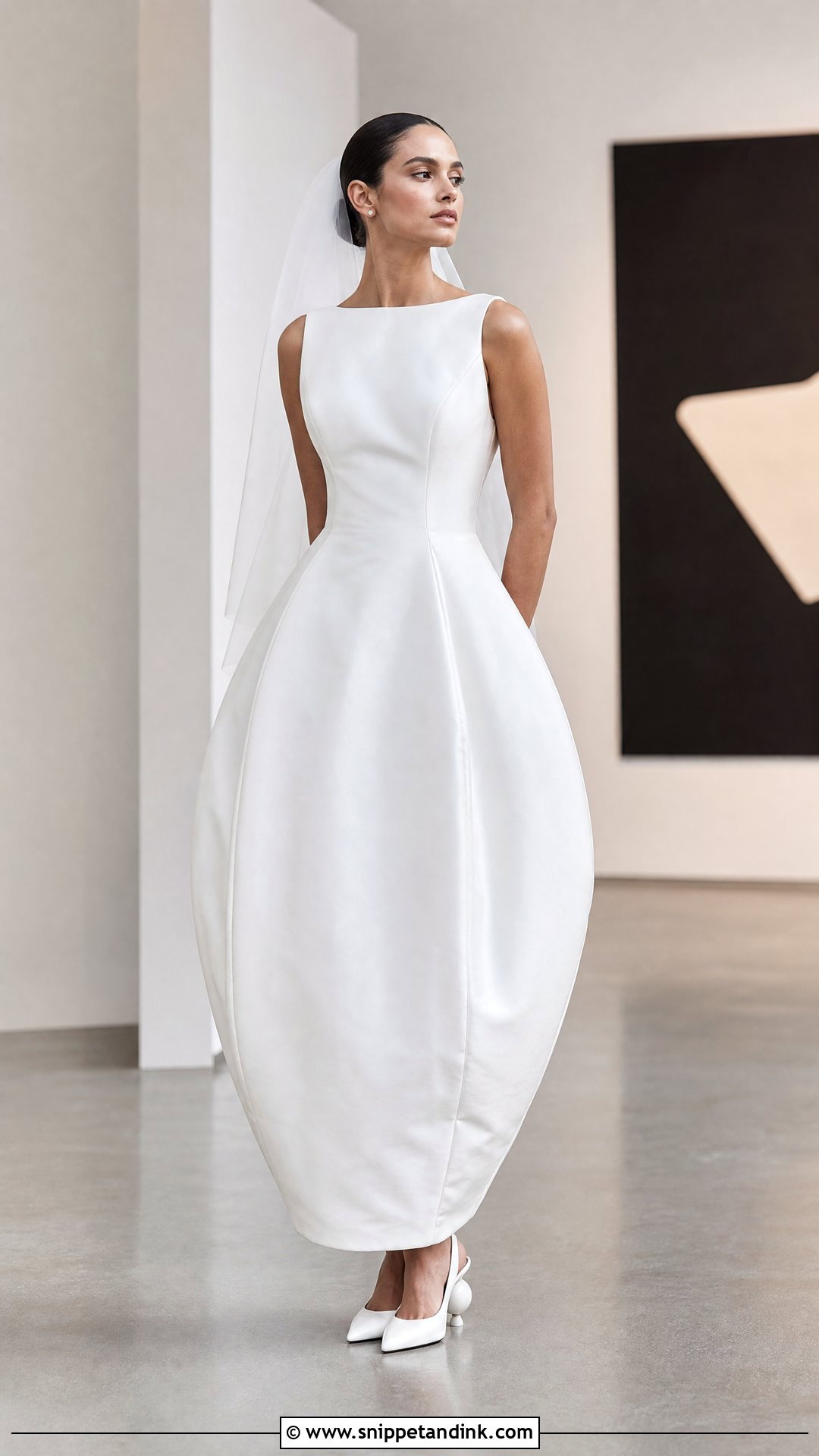
A cocoon gathers volume around the middle through curved seams and narrows again at the hem, which is a real alternative to both the fitted gown and the ball skirt. Lightweight mikado, silk gazar or structured organza holds the round shape without weight. The narrowed hem can shorten your stride, so ask for a hidden back slit or extra walking room inside. A clean strapless or sleeveless neckline balances the fuller middle. Sculptural heels, small studs and a compact bouquet, with a short veil to keep the back silhouette visible.
24. Black-And-White Wedding Dress
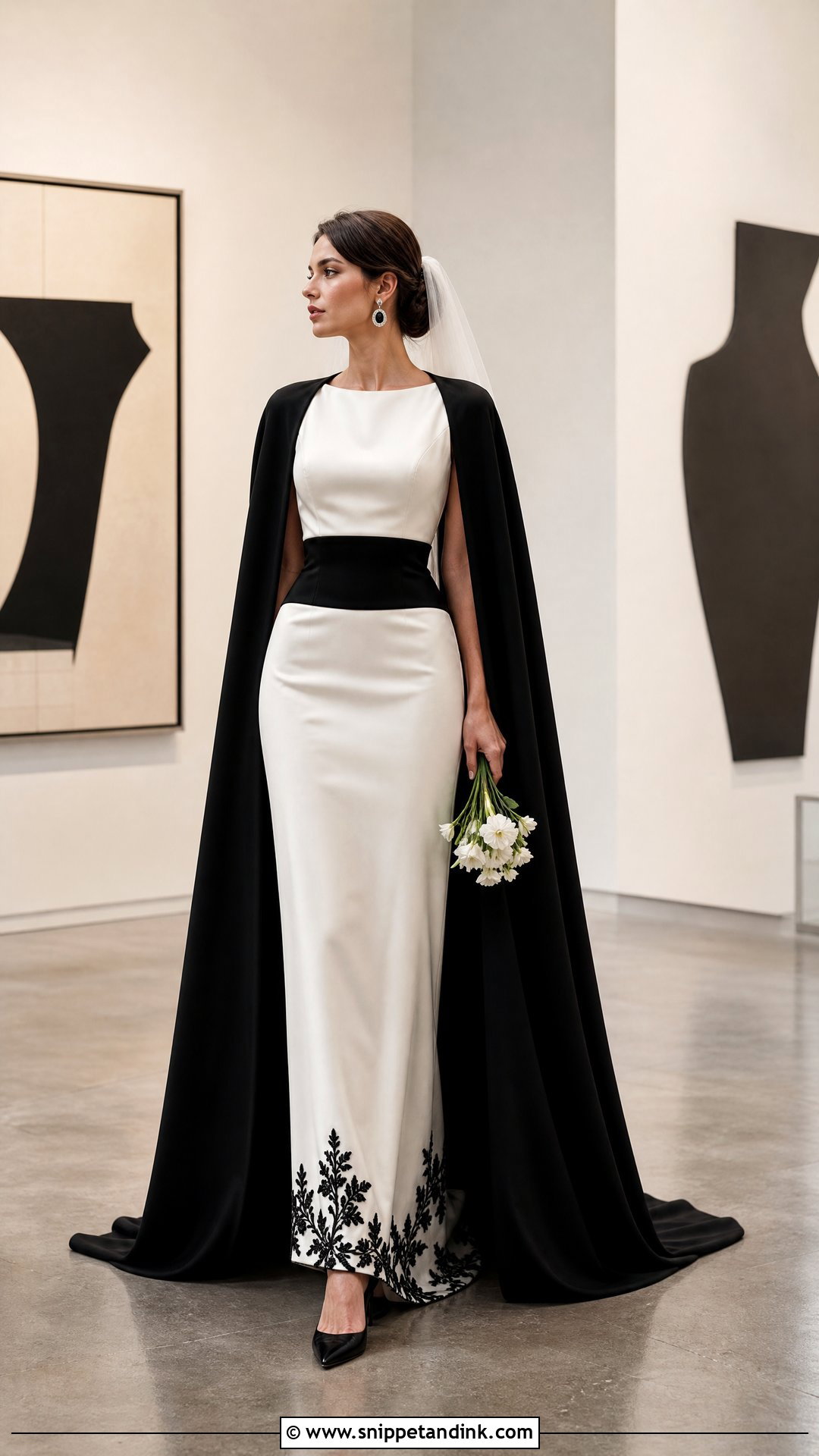
Start with ivory satin and add black only where it earns its place: a structured bodice panel, a velvet waist ribbon, an embroidered hem or a detachable cape. Limiting the dark color to a few spots keeps it polished. A column looks graphic; a black-trimmed ball gown more dramatic. Black and ivory in different finishes, say matte velvet against shiny satin, can photograph with very different brightness, so check them together on camera. Charcoal or deep navy gives a softer contrast. Black pointed pumps and a plain ivory veil suit an evening or gallery wedding.
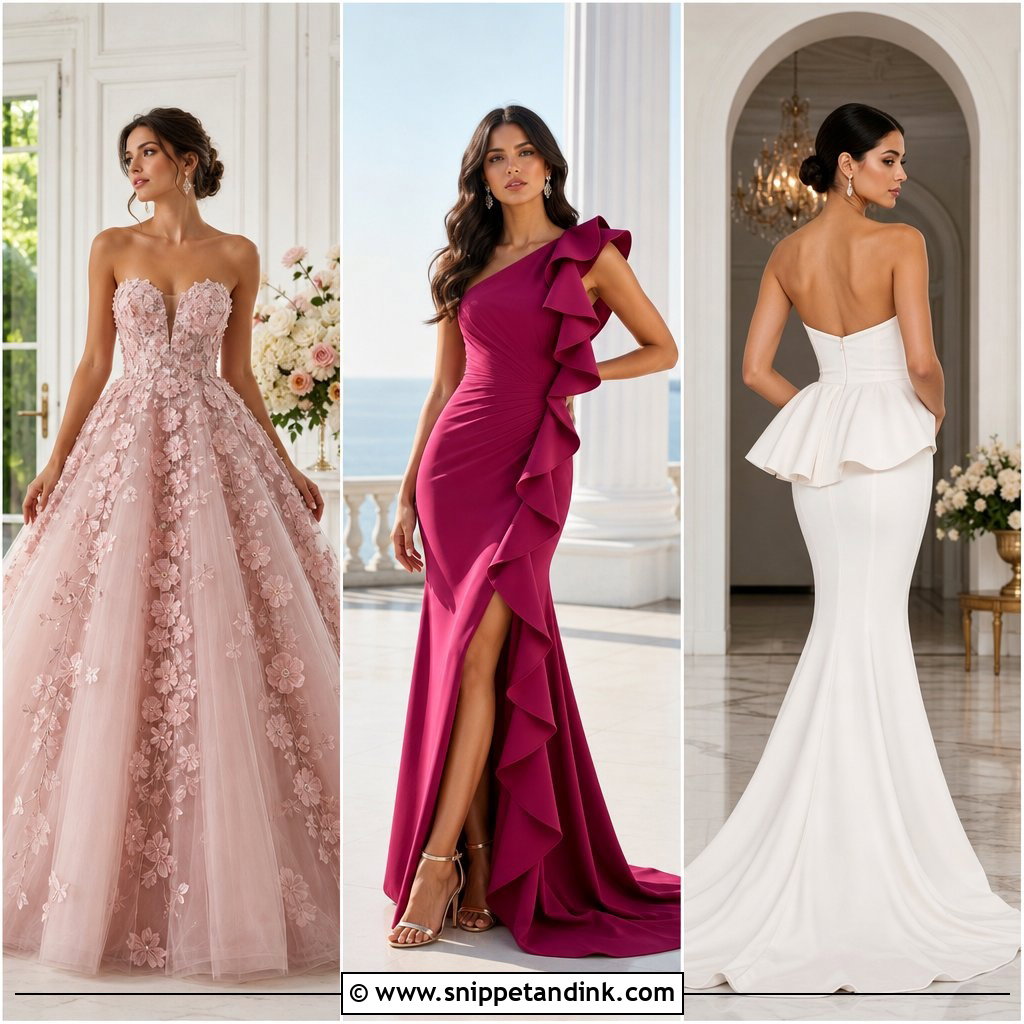
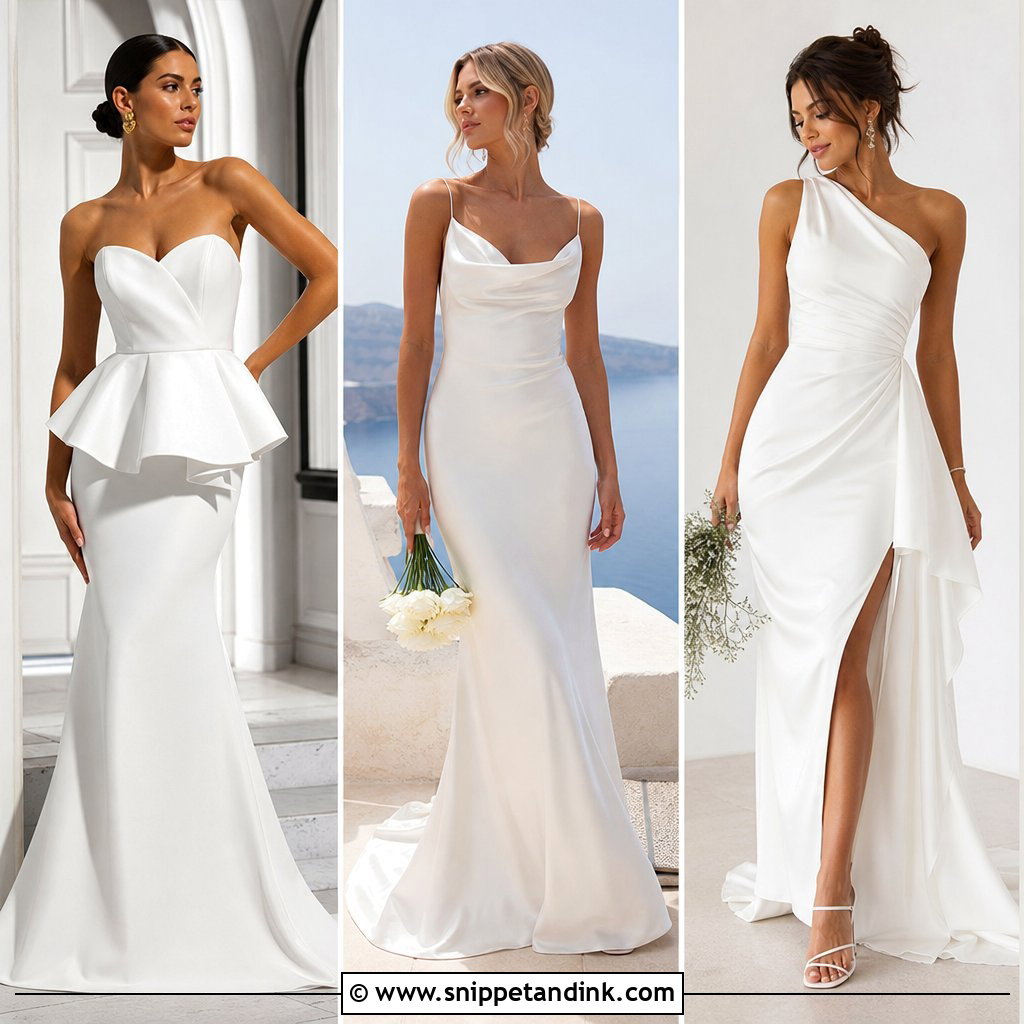


25. Champagne Gold Wedding Dress
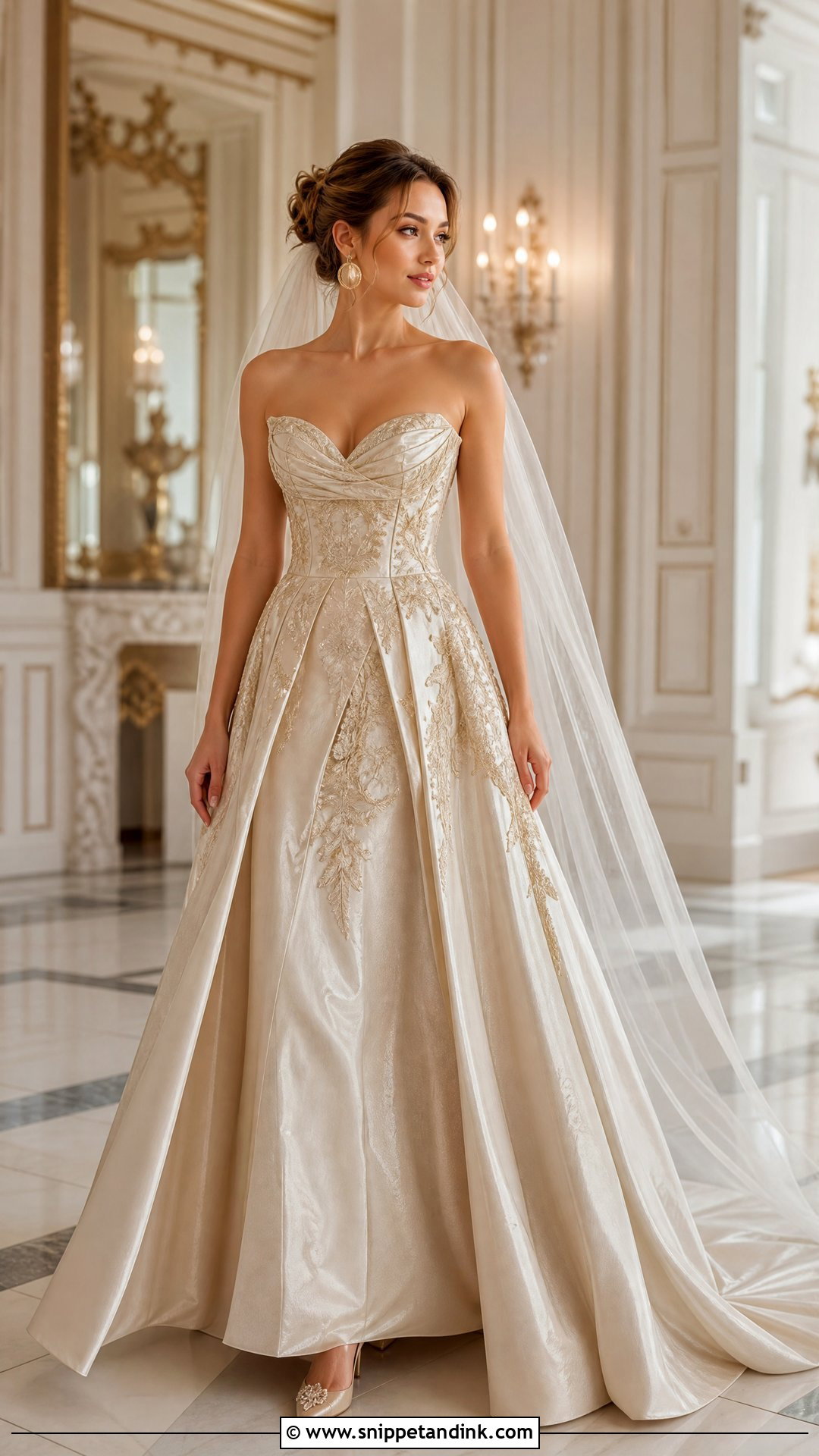
Champagne gold warms futuristic bridal fashion up. Look for a pale metallic with a soft glow rather than bright yellow gold. A draped corset bodice and flowing A-line skirt keep it romantic, with fine metallic embroidery for depth. The lining color changes how warm and how see-through the dress looks, so try more than one. This shade flatters many complexions, but I’d still hold the fabric near the face in daylight before ordering. If a full gold gown feels too bold, use it as an embroidered overlay, cape, sleeves or overskirt on an ivory base. Champagne heels, brushed-gold earrings and ivory flowers suit it.
Unusual Fabrics Need More Lead Time Than a Standard Gown
Most off-the-rack bridal gowns are ordered several months ahead because they’re made after you place the order, and alterations then need another two or three months. Anything unusual stretches that schedule. Specialty fabrics may be woven or dyed in small runs, wearable technology needs testing, and custom commissions involve several fittings on a muslin toile before the real fabric is cut.
If your heart is set on an experimental piece, start shopping roughly a year out and ask the designer for a written timeline with the date the fabric is cut. Delivery estimates vary widely between designers, so confirm yours rather than assuming.
Why Gazar, Metallics and Pleats Are Harder to Alter
Some of the fabrics above don’t forgive mistakes. Silk gazar, tight satin and metallic lamé keep needle holes permanently, so a seam let out after a first attempt can leave a visible line of punctures. Pressed pleats are difficult to restore once flattened. Laser-cut fabric can’t simply be taken in through the pattern without breaking the design.
- Ask your seamstress whether she’s worked with the fabric before, and how she’d handle a mistake.
- Expect her to test stitches and pressing on a hidden seam allowance first.
- Keep weight changes in mind for the final weeks, since letting out is harder than taking in on these fabrics.
- For any gown with electronics, have every component removed before it goes near a sewing machine or steam.
Wear the Idea, Not the Costume
The most exciting ideas here, from sculptural corsets and architectural pleats to glowing fabrics, removable capes, modular skirts and recycled textiles, only work when they still let you live through a long day. Sit, walk, hug and dance in the gown before deciding. Look at fabric samples in several kinds of light, and photograph them with flash. Experimental details look strongest when the rest of the outfit stays clean. Quiet minimalism or full drama, the right dress supports your body, suits your venue and still looks like you.
You'll Like These Ideas:




Leave a Reply