
Plenty of curvy brides walk into a first appointment already braced for a fight with the gown. It rarely needs to be one. Fit on a fuller figure comes down to what is happening inside the dress: boning, cups, a waist stay, how the seams are cut and whether the fabric has enough weight to skim instead of cling. Get those right and nearly every silhouette is open to you, from a structured A-line to a crepe sheath, lace sleeves, a jumpsuit or a short dress for the party. Below are the 25 shapes and details I reach for most, with what I check on each before a bride commits.
Shopping Bridal Salons When the Samples Run Small
Many bridal salons stock their samples in a narrow size range, so a curvy bride can end up clipped into a gown that won’t close at the back. That tells you very little about how the finished dress will fit. Call ahead and ask which designers they carry in larger samples, then book around those. Trying on a gown that actually closes on you is worth more than any amount of imagining.
Order by measurement, not by hope
Gowns are ordered from the designer’s own size chart using bust, waist and hip, and I order to the largest of the three. A dress can always be taken in, but letting out is limited by the seam allowance, which is often narrow. Please don’t order a size down planning to shrink into it. If your shape changes before the wedding, the seamstress adjusts from there.
Give the timeline room
Made-to-order gowns commonly take around four to six months to arrive, sometimes longer, and alterations need another couple of months with two or three fittings. Starting the search roughly nine to twelve months out keeps you calm. Short on time? Look at off-the-rack and sample sales, knowing those gowns may need more work.
1. Curvy Bride A-Line Wedding Dress
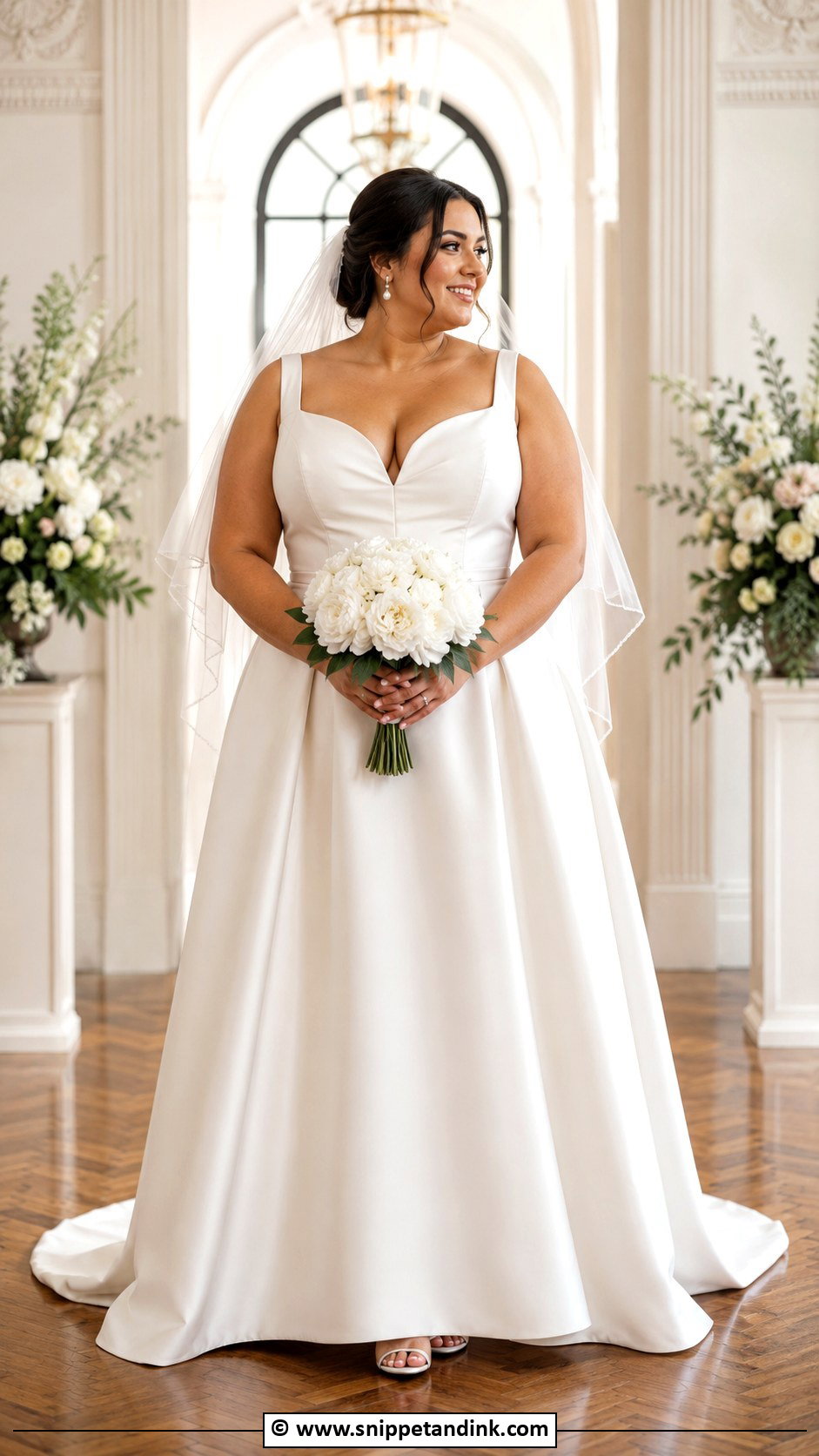
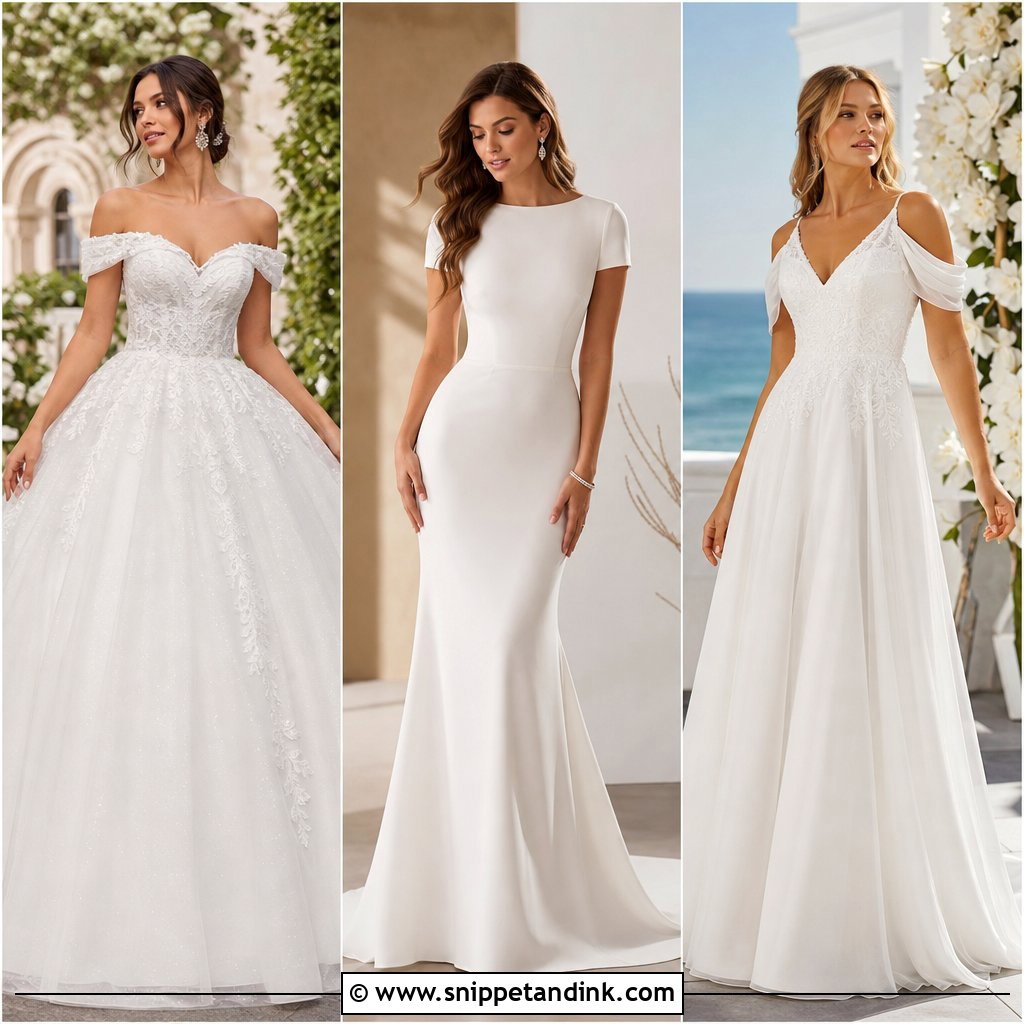
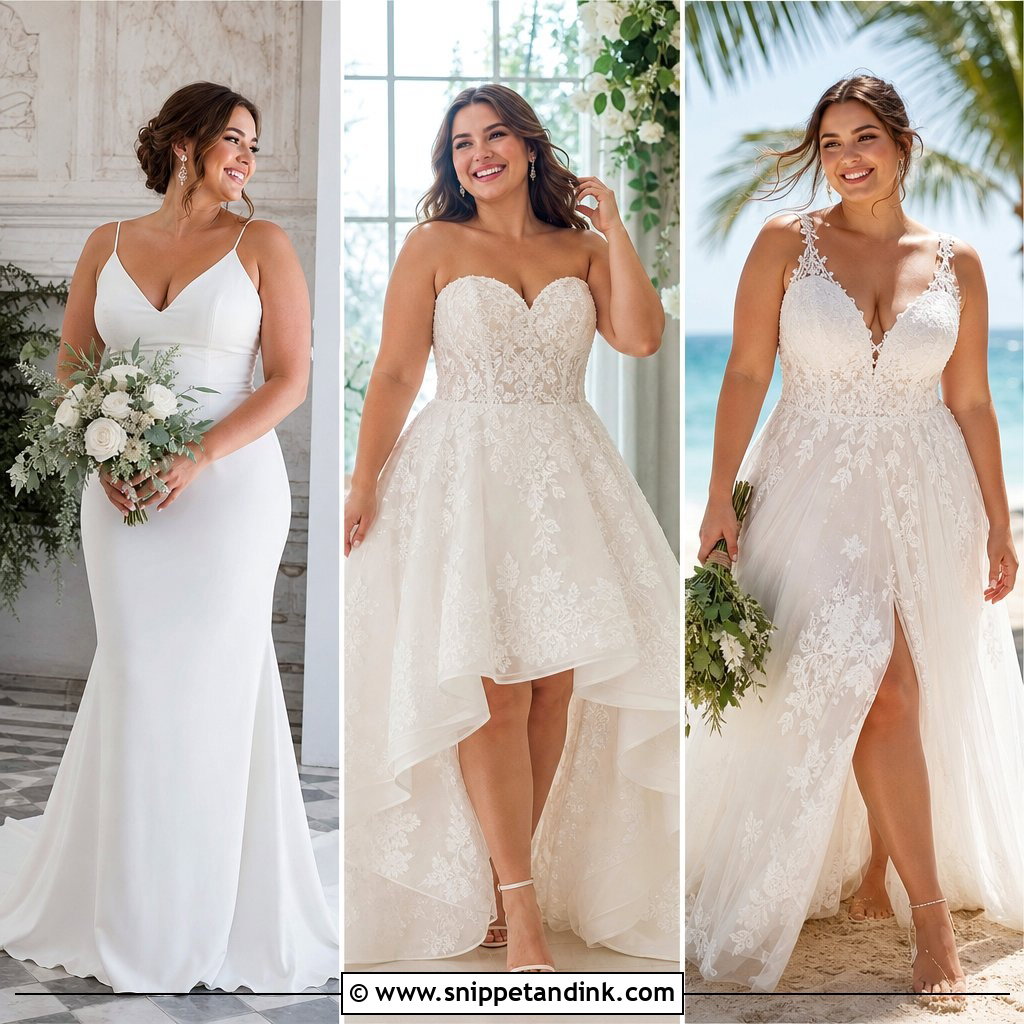
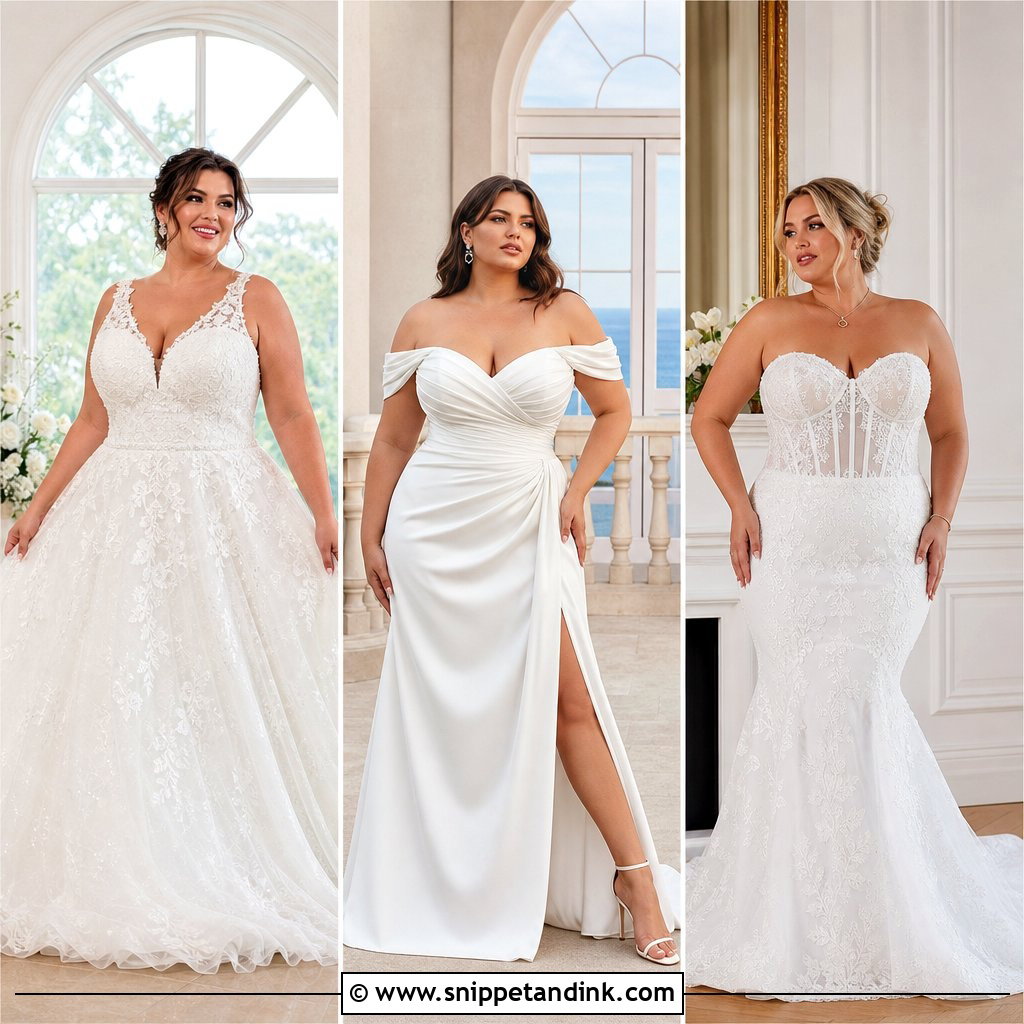
The A-line is where I start most first appointments, because it tells me quickly what a bride’s body wants from a bodice. The skirt releases at the natural waist and clears the hips, so all the fitting work happens above it. A structured bodice with wide straps or a soft sweetheart gives the most security on a fuller bust. Satin reads clean; lace or tulle softens it. I’d pair it with block heels and a fingertip veil, which ends around the hip and keeps the line unbroken.
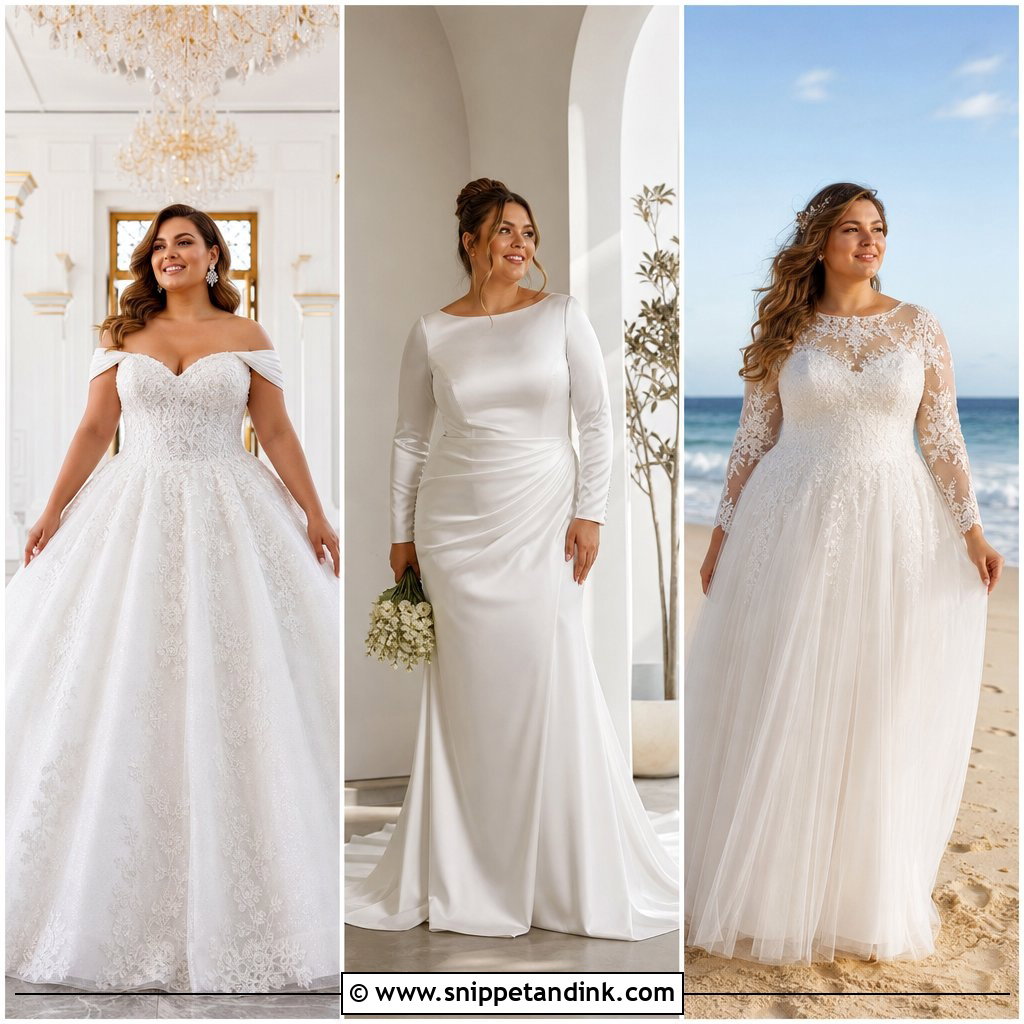
2. Curvy Bride Ball Gown Wedding Dress
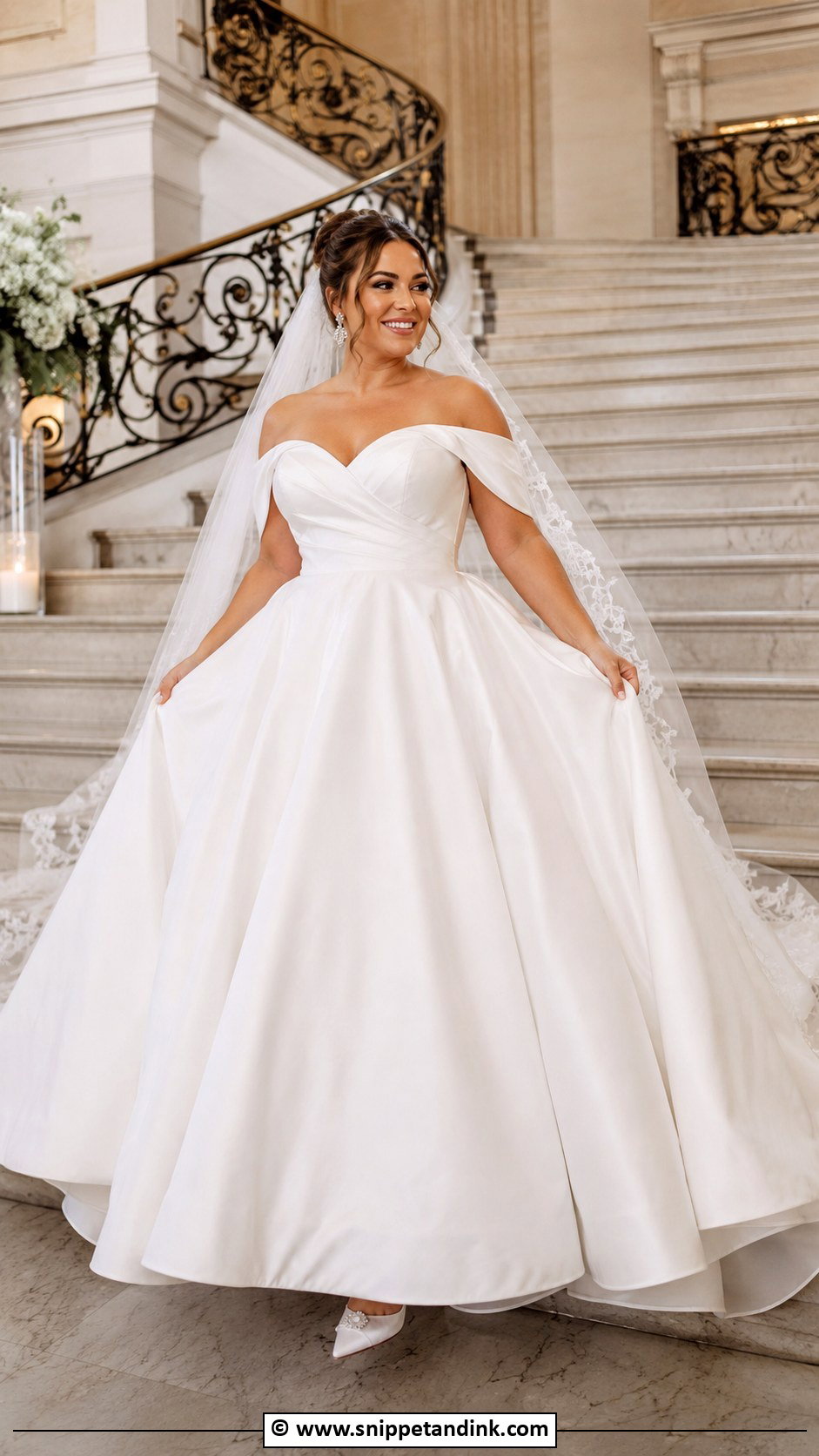
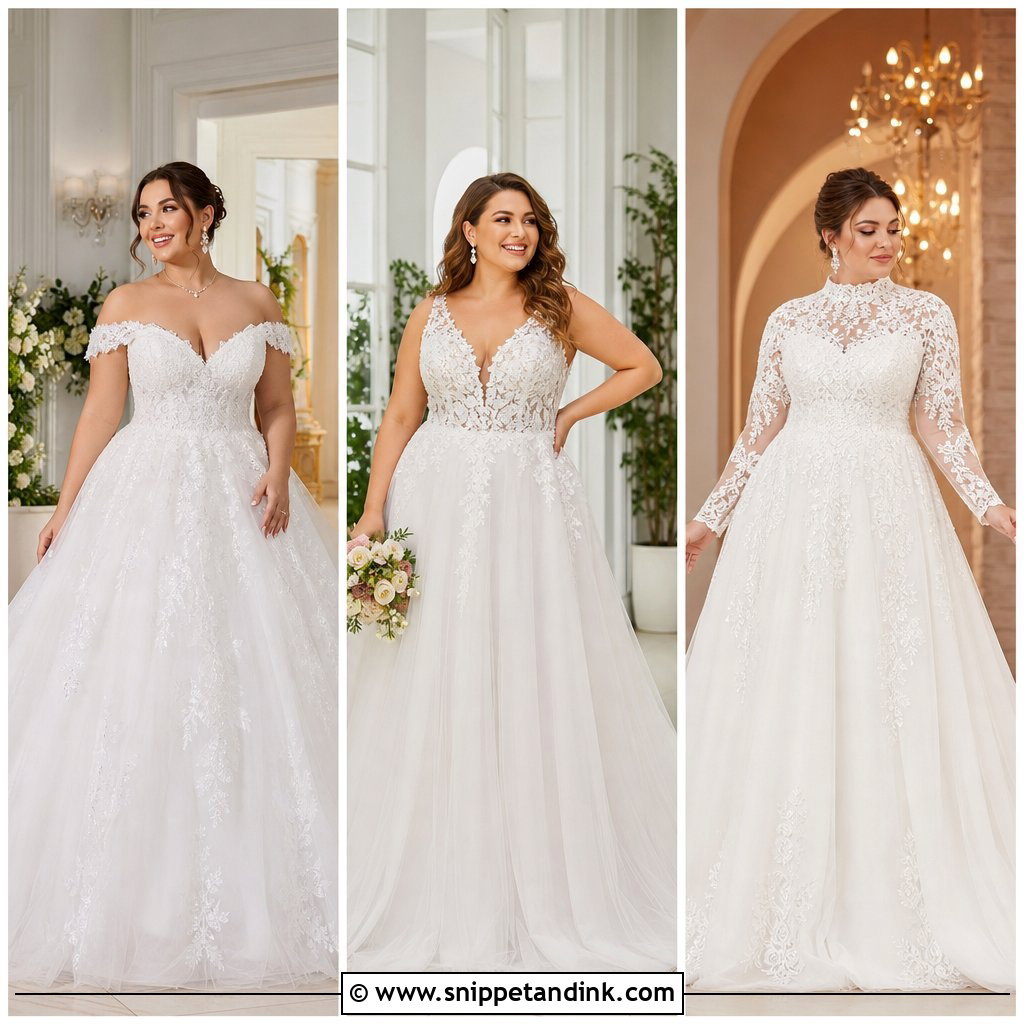
A ball gown carries real weight, sometimes several pounds of tulle or mikado, and all of it hangs from your waist. That’s why I won’t put a curvy bride in one without proper boning or a corset-back bodice: the internal structure is what stops the skirt dragging the waistline down by the reception. Mikado holds a crisp shape, while layered tulle moves more softly. Save this silhouette for ballrooms, staircases and evening receptions where the volume has room to breathe. A cathedral veil and pointed-toe heels finish it without crowding the skirt.
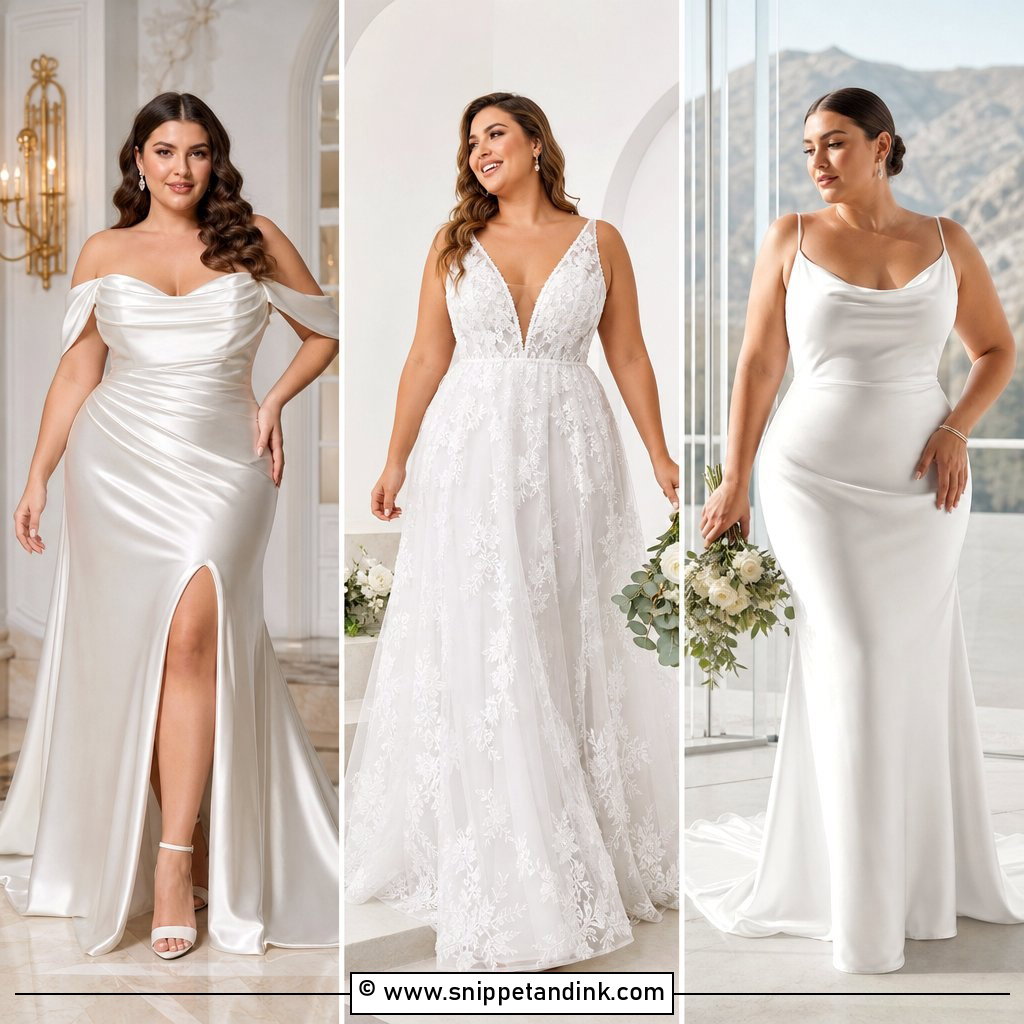
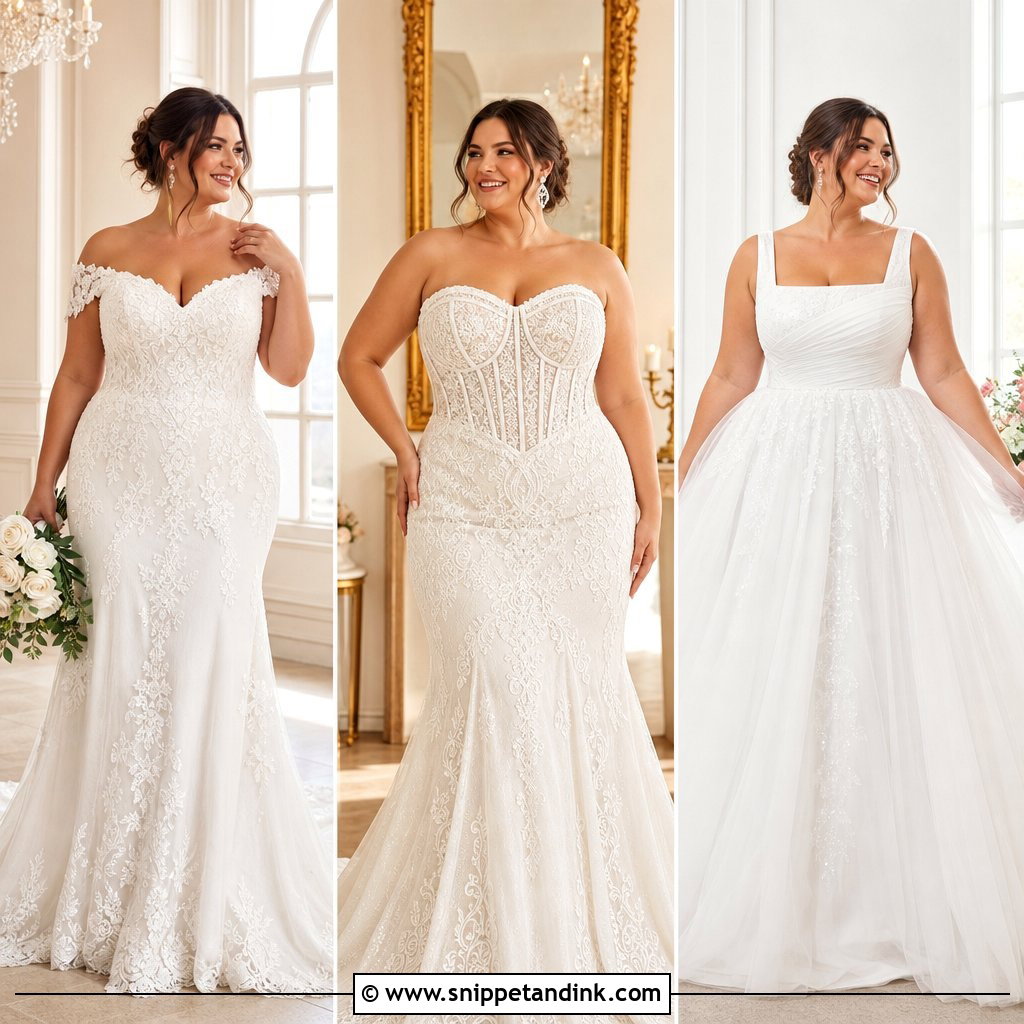
3. Curvy Bride Mermaid Wedding Dress
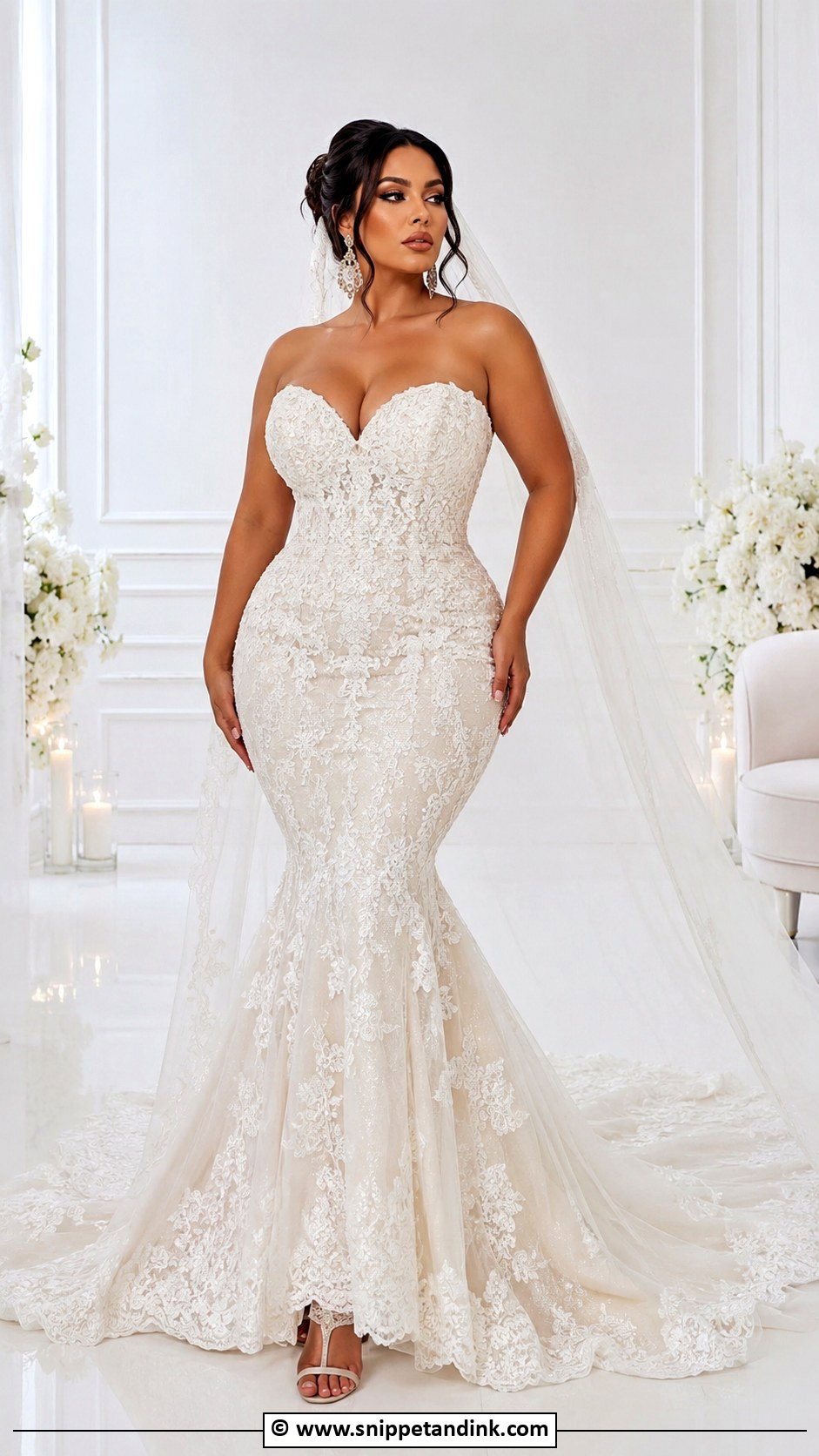
A mermaid follows you through bust, waist, hips and thighs before it flares, so every inch has to be fitted. The flare point is my first check. Set it too high and the skirt kicks out mid-thigh; too low and you can’t climb a step. Stretch crepe, soft lace or lined jersey forgive movement far better than stiff satin. Strapless, off-shoulder and V necklines are all possible if the bodice is built to carry your bust. And sit down in it at the fitting. If you can’t, it needs letting out at the knee.
4. Curvy Bride Fit And Flare Wedding Dress
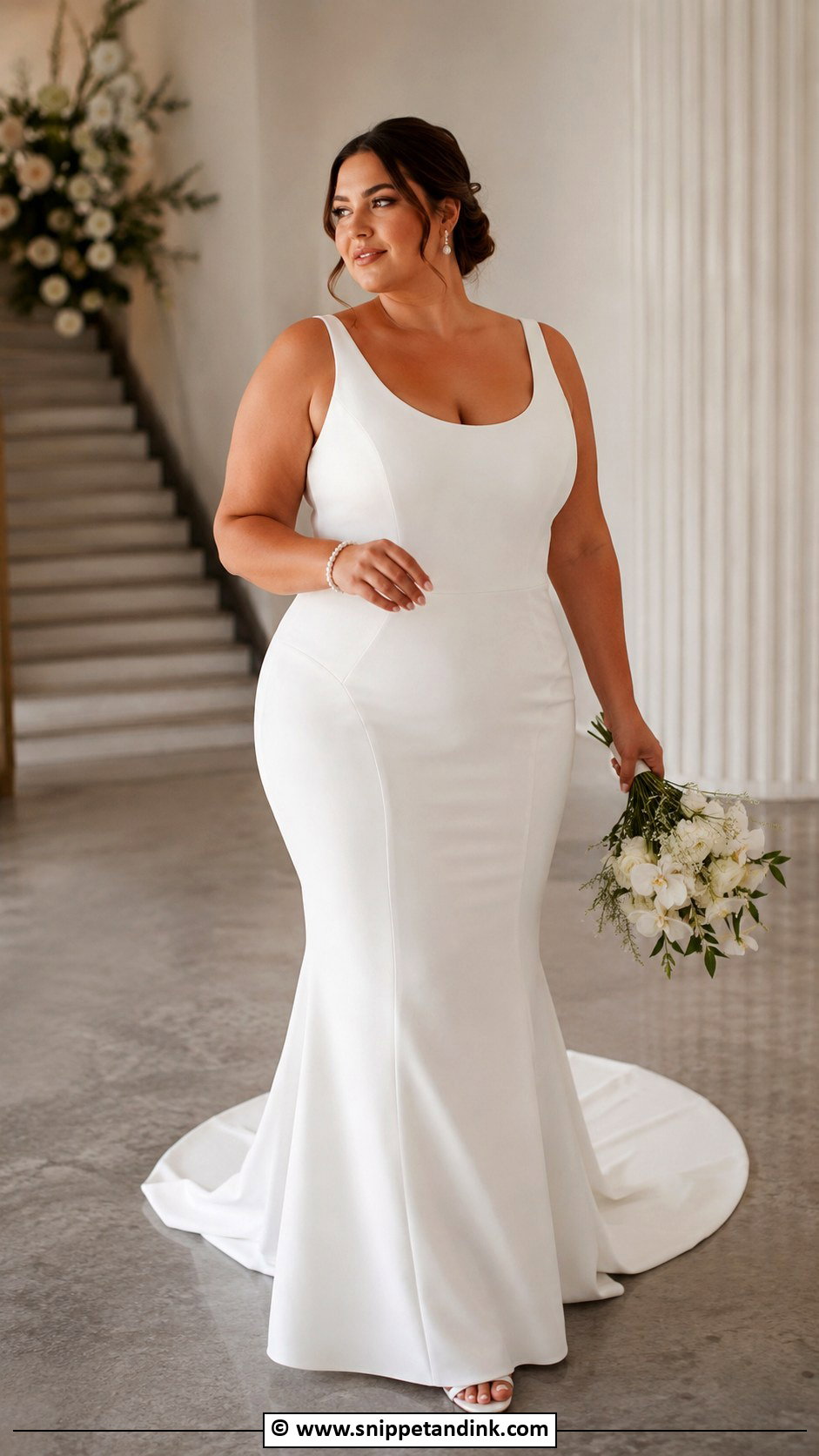
Brides who find the mermaid too restrictive usually settle happily here. The fit and flare holds the bodice and hips, then opens earlier and more gradually, so you can walk, sit and take stairs without hitching the skirt. Vertical lace or subtle princess seams pull the eye lengthwise. A scoop neckline or sweetheart softens the upper body. Have the hem measured in your actual wedding shoes, and choose a veil that falls past the train.
5. Curvy Bride Empire Waist Wedding Dress
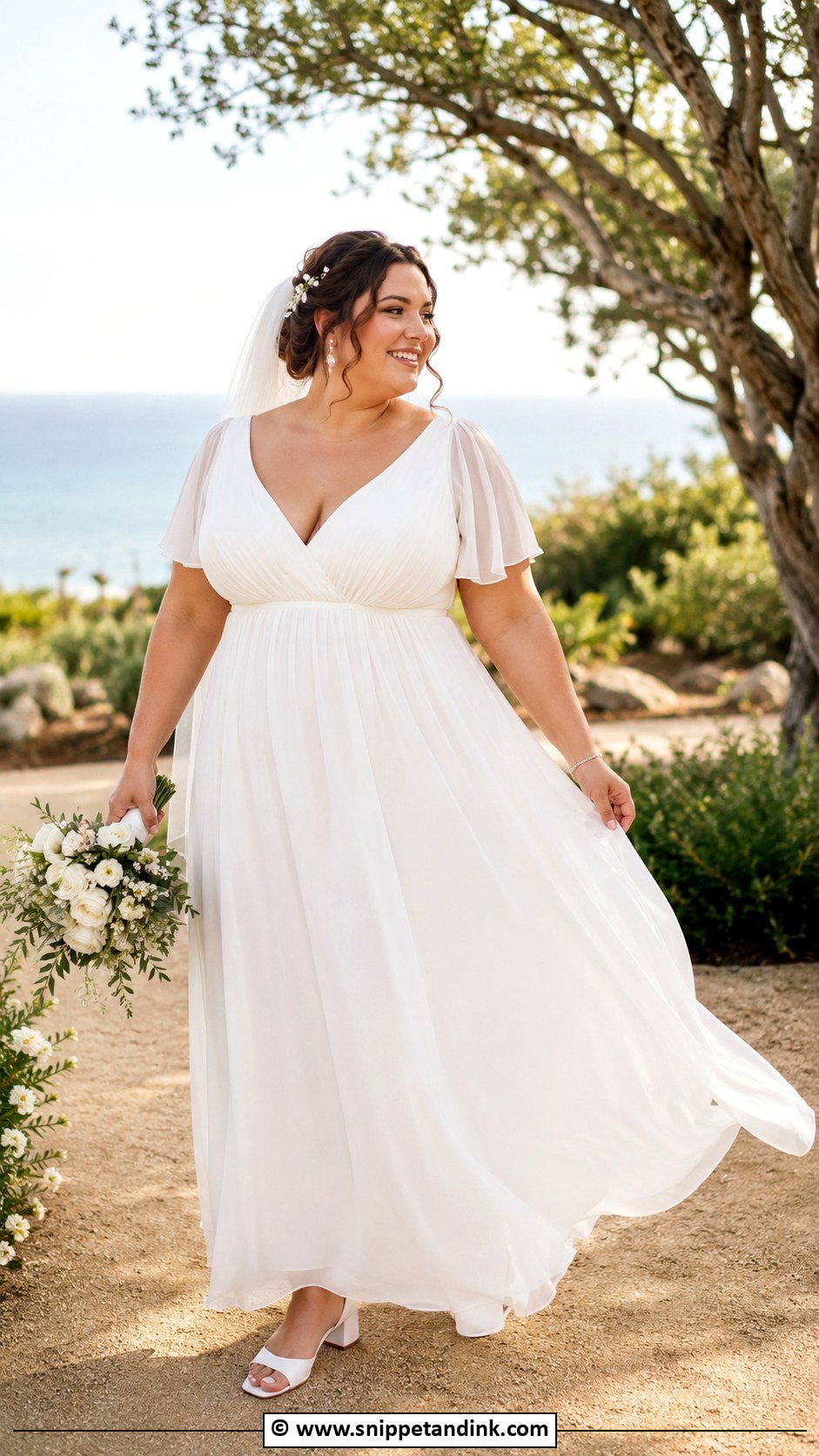
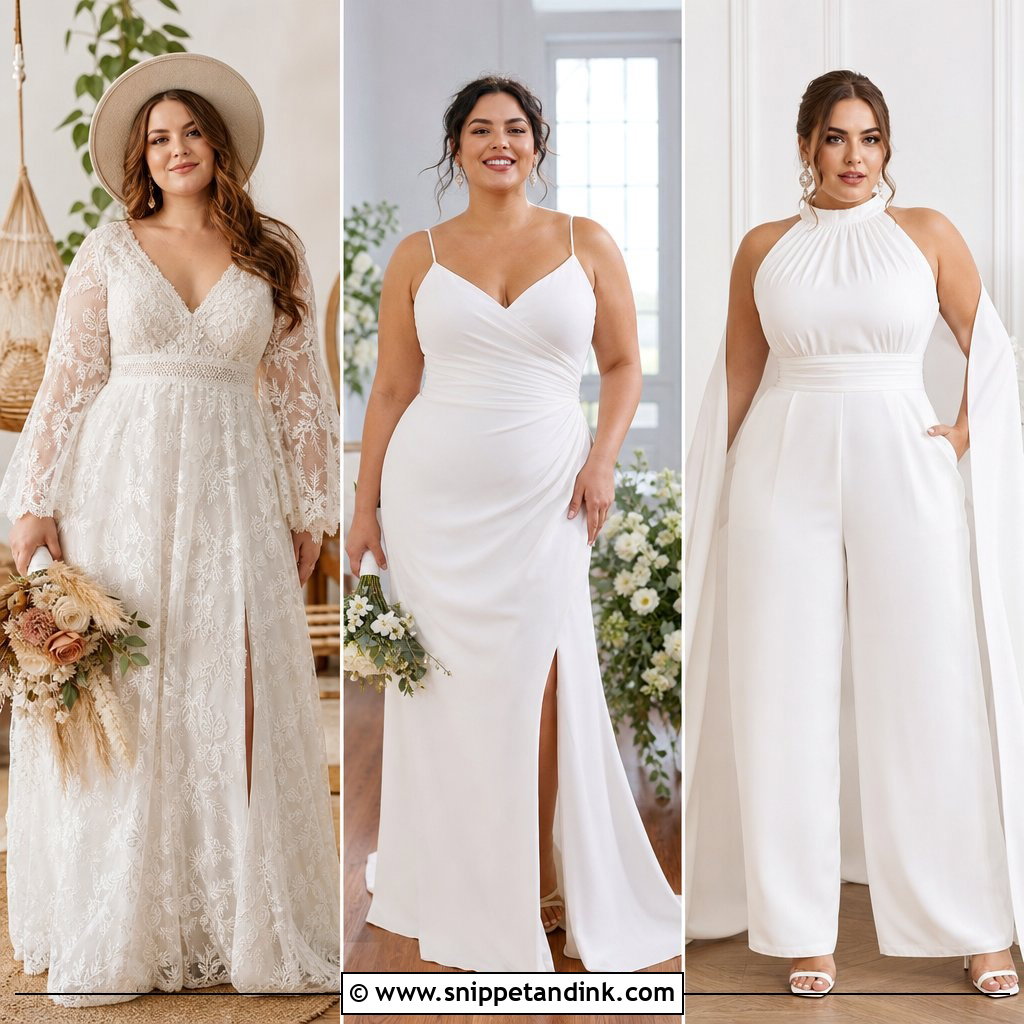
The curvy bride empire waist wedding dress has a reputation for looking like maternity wear, and that only happens when the seam sits too low or the skirt fabric is too stiff. Placed right under the bust, with chiffon or lightweight crepe falling from it, the skirt drapes over the midsection without holding on. On a very full bust I’d add a V neck or a flutter sleeve so the bodice doesn’t look boxy. It’s the easiest dress here to wear for a long beach or garden day, and low block heels with floral hair pins keep it relaxed.
6. Curvy Bride Corset Wedding Dress
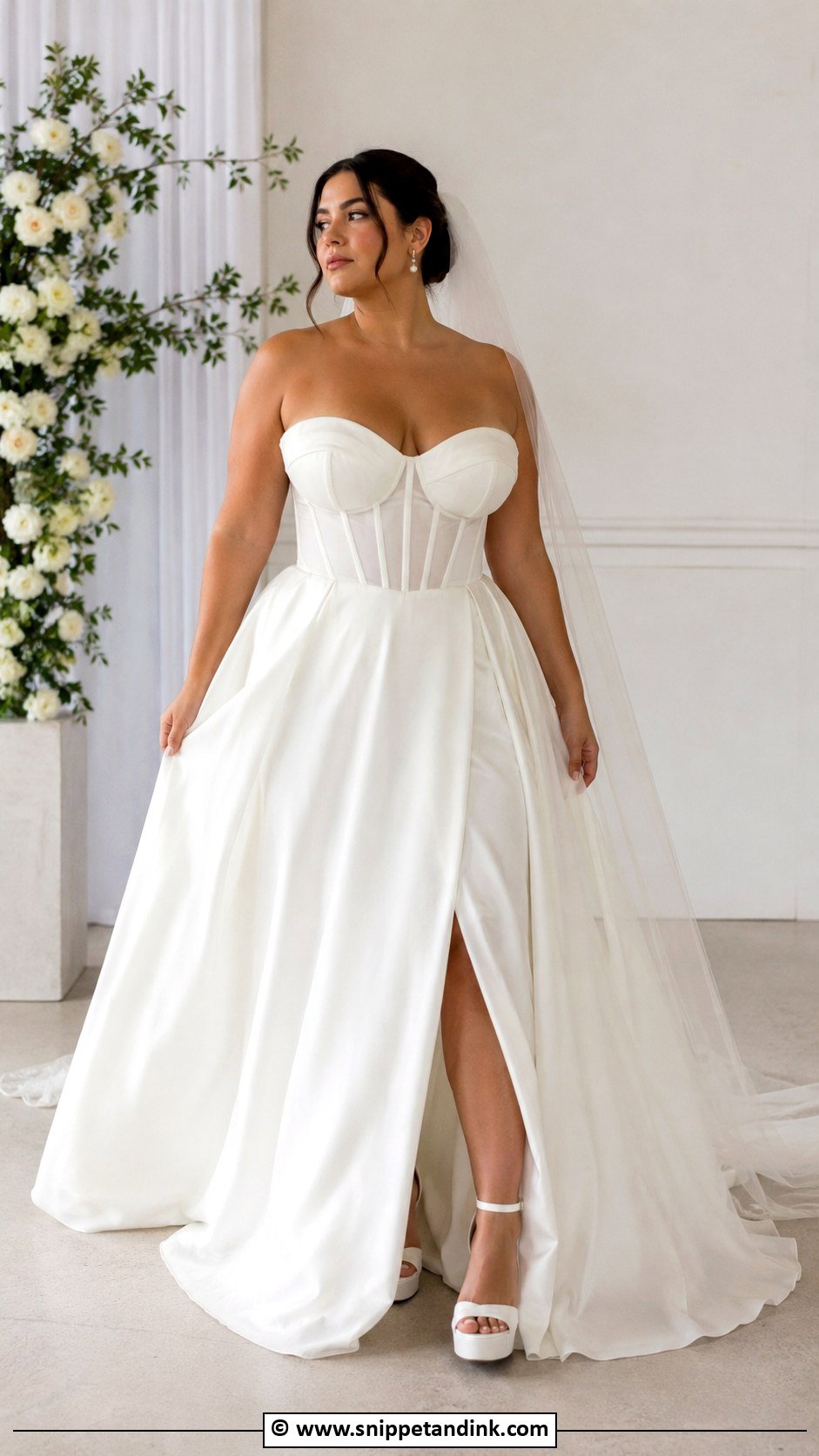
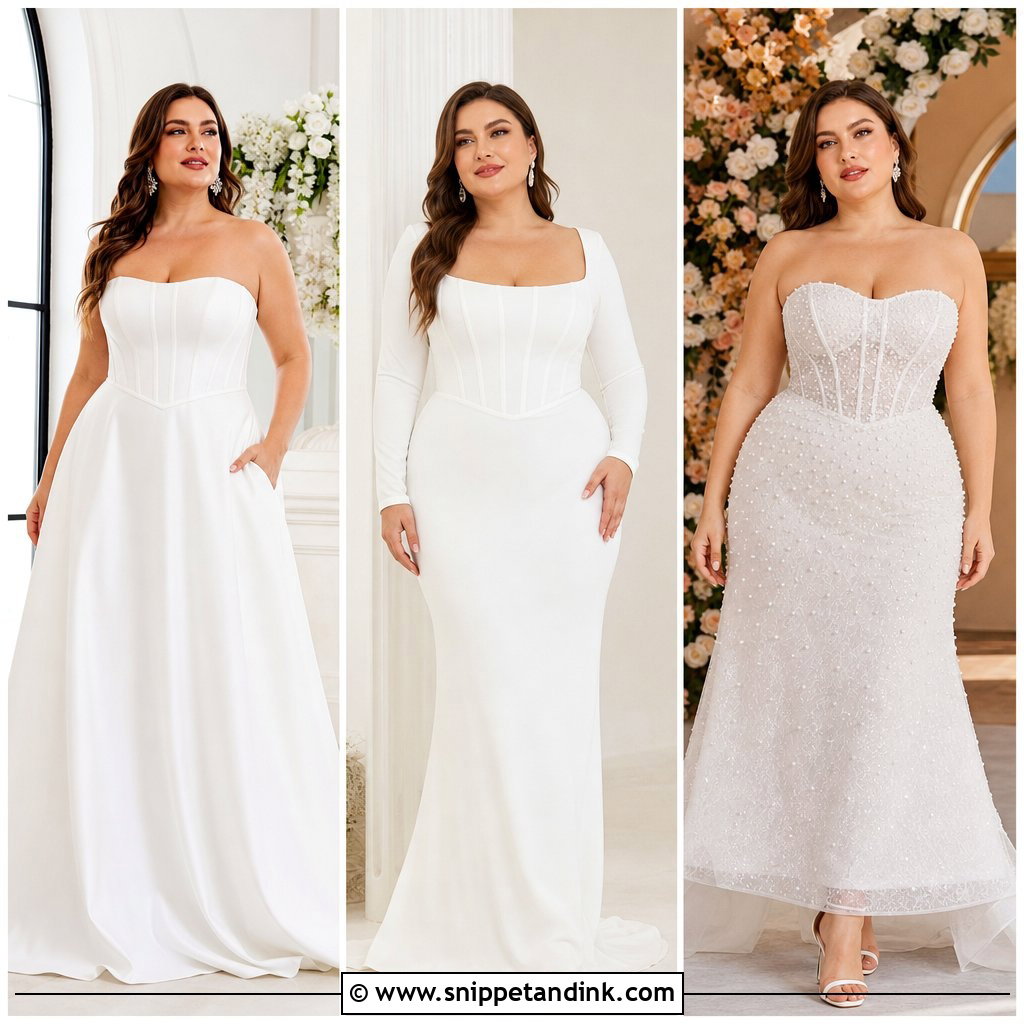
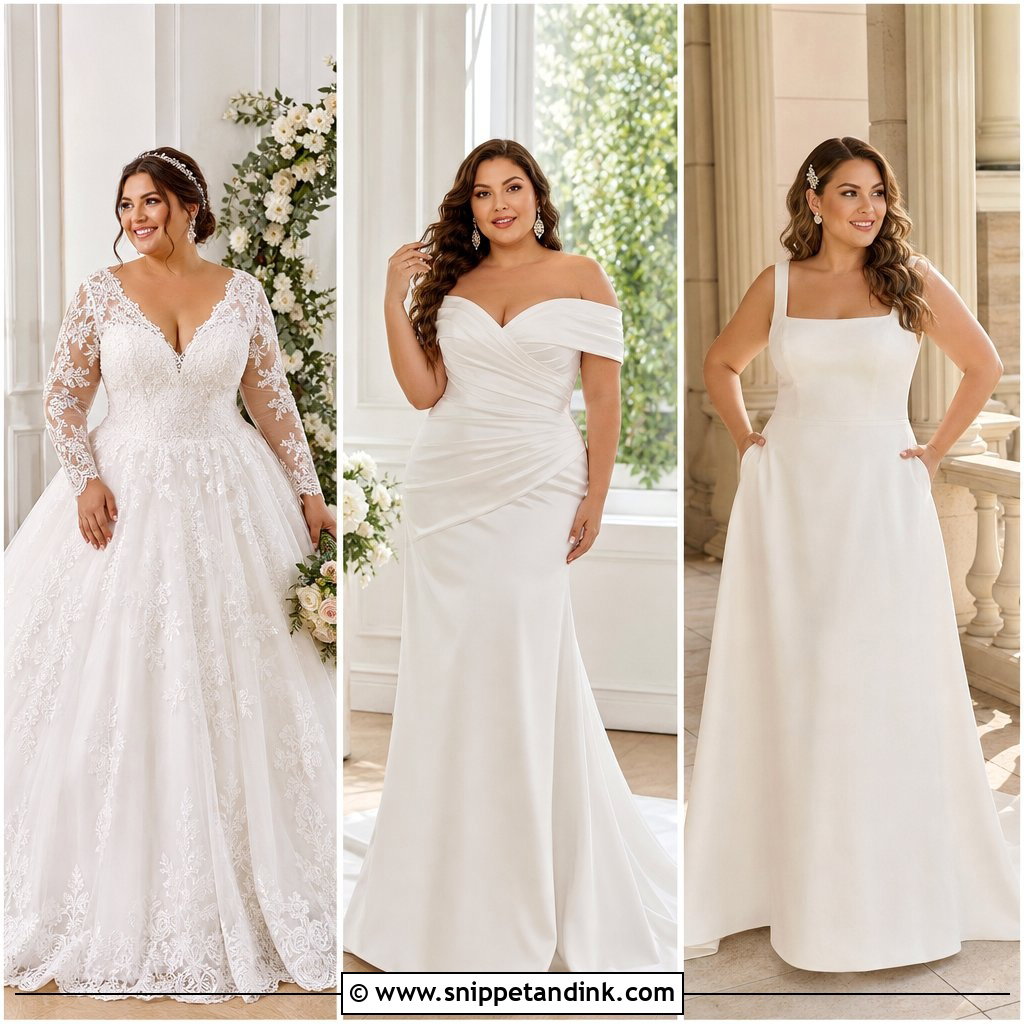
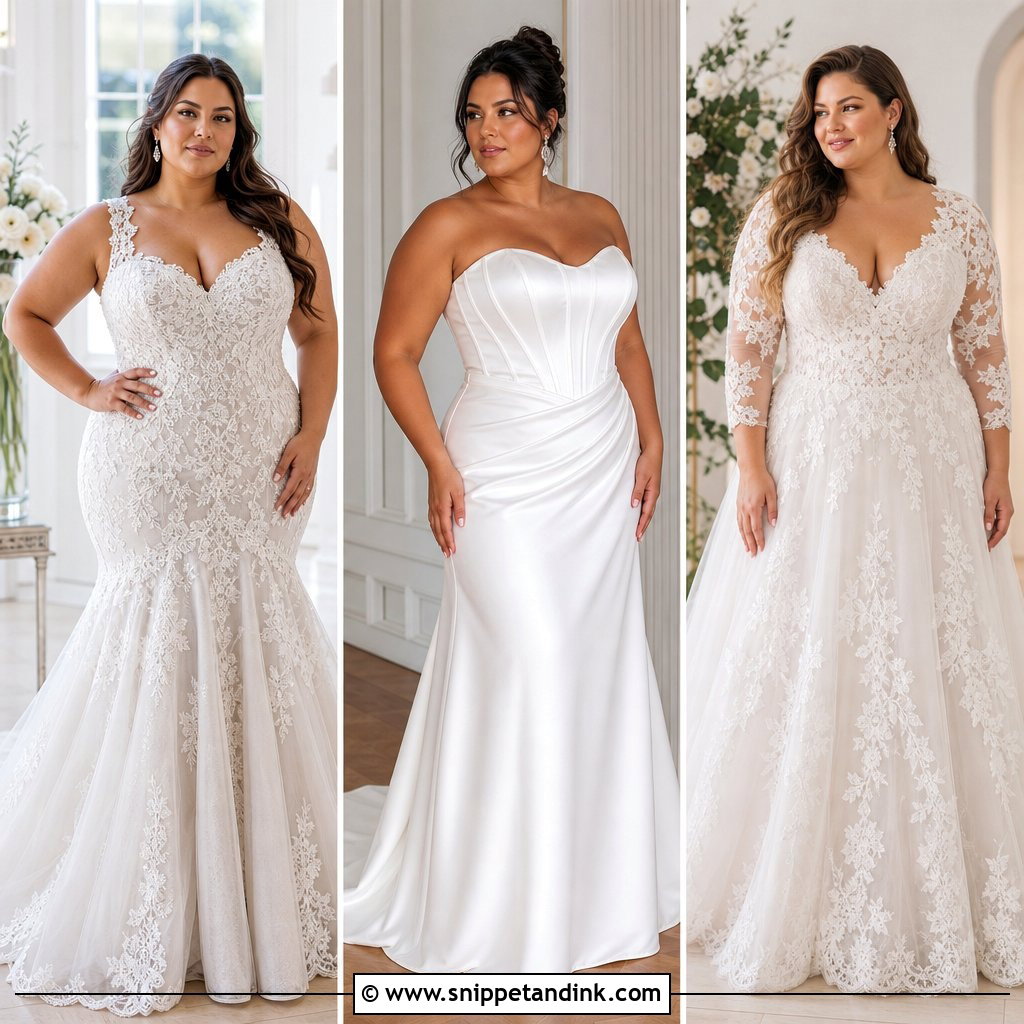
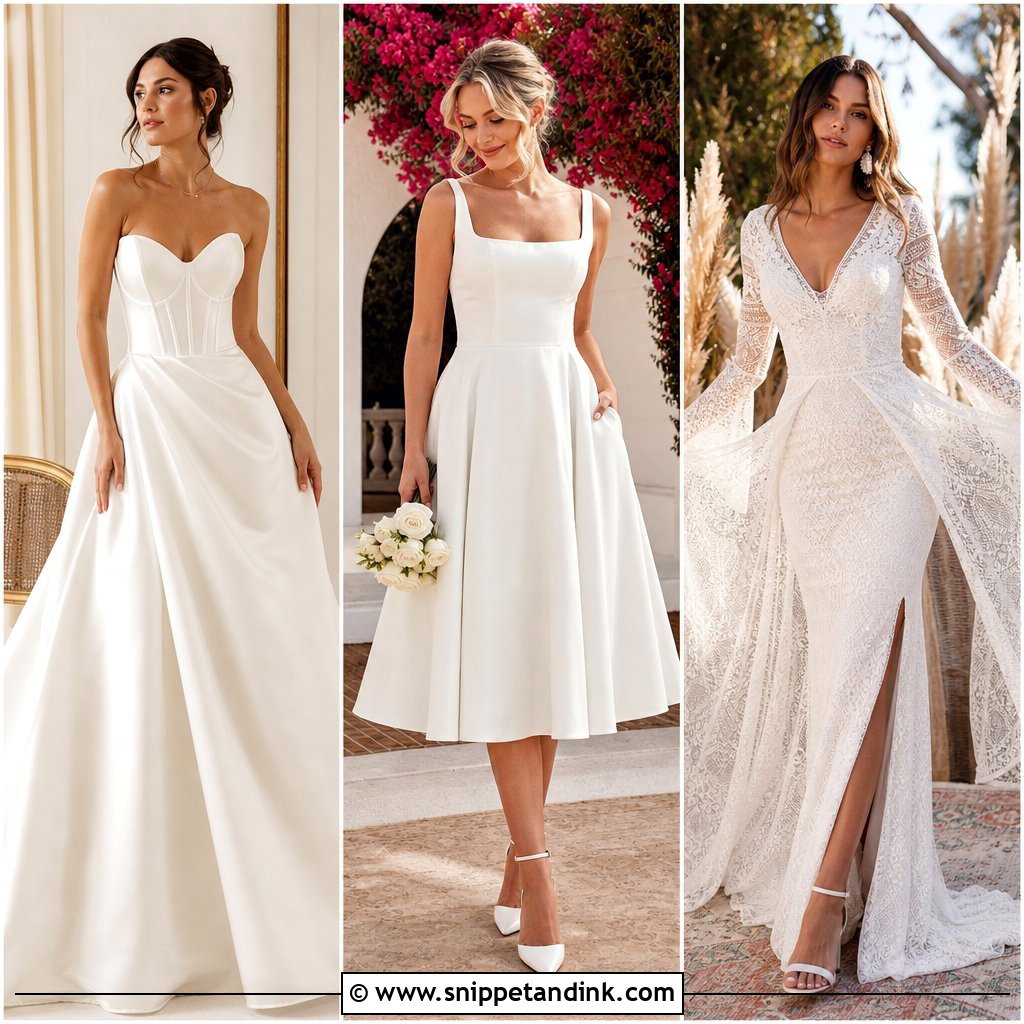
A corset bodice does the job straps usually do. It holds the bust from the ribcage, so the support comes from below instead of dragging on your shoulders. Whether it looks elegant or costume-like depends on the boning: I look for spiral steel or flat bones that lie smooth under the fabric, not plastic that ripples when you sit. It sits happily over an A-line, ball gown or fitted crepe skirt. Sheer illusion panels soften it, and satin with visible seaming makes it read modern. Platform heels and pearl earrings keep the rest quiet.
7. Curvy Bride Off Shoulder Wedding Dress
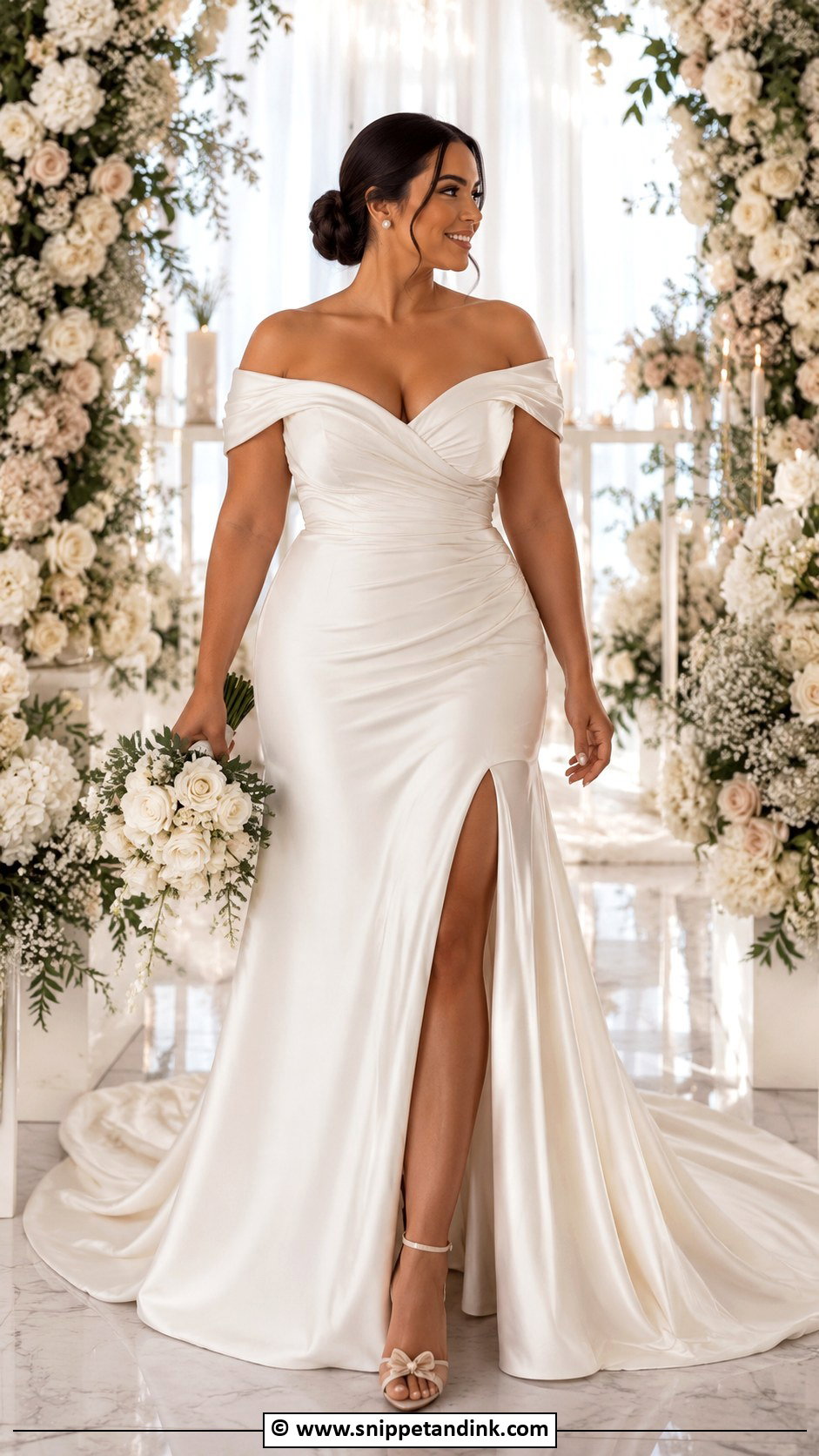
Off-shoulder sleeves pull the eye up to the collarbone, but they catch brides out in one way: they limit how high you can lift your arms. At fittings I ask brides to hug me and raise a glass, because that shows me straight away whether the sleeves slide or bind. A gown with an inner structure or a silicone gripper along the neckline stays put without constant tugging. Lace sleeves feel romantic, folded satin is cleaner. Wear a low bun and pearl studs, and only add a necklace if there’s room above the neckline.
8. Curvy Bride Long Sleeve Wedding Dress
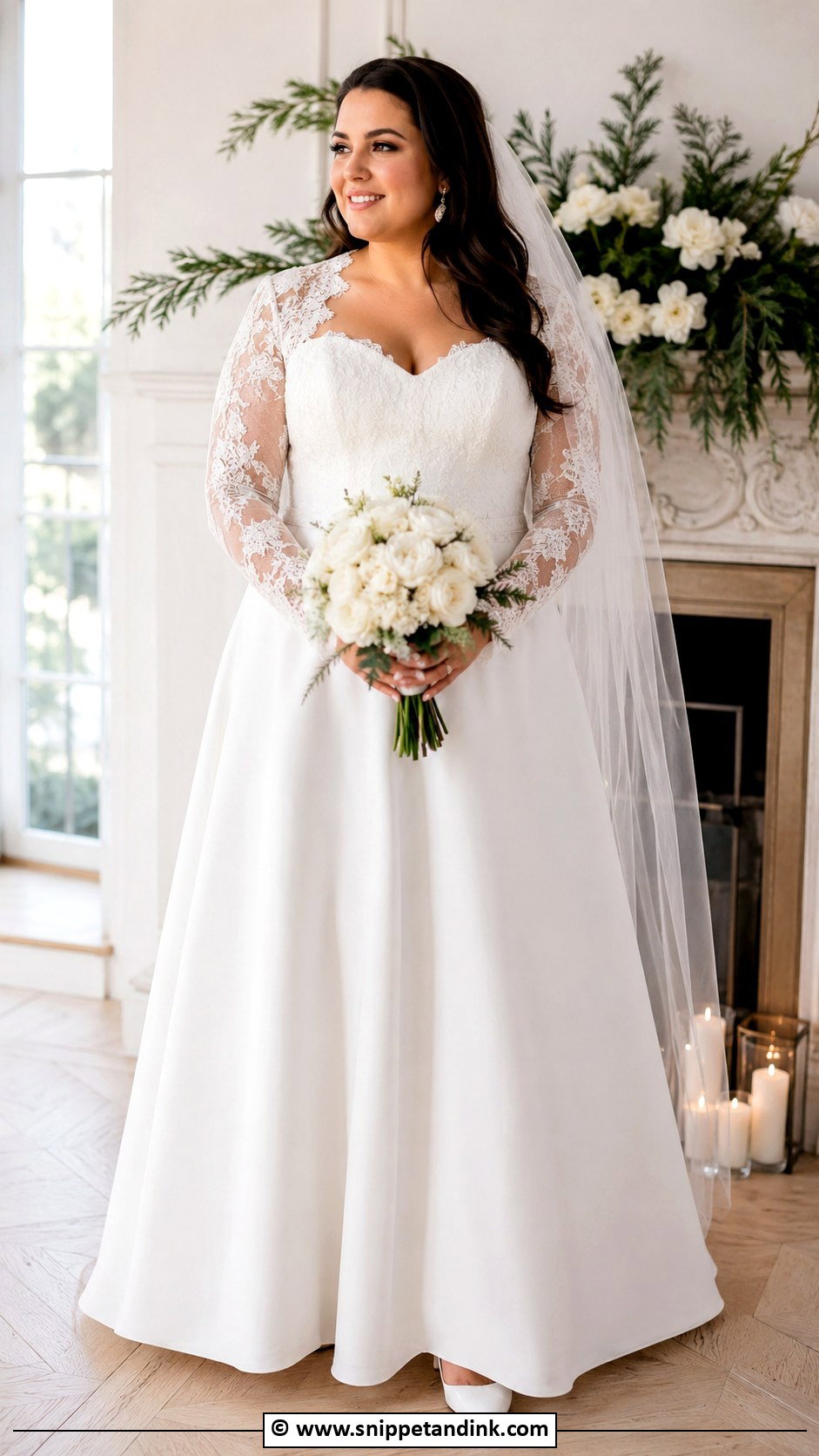
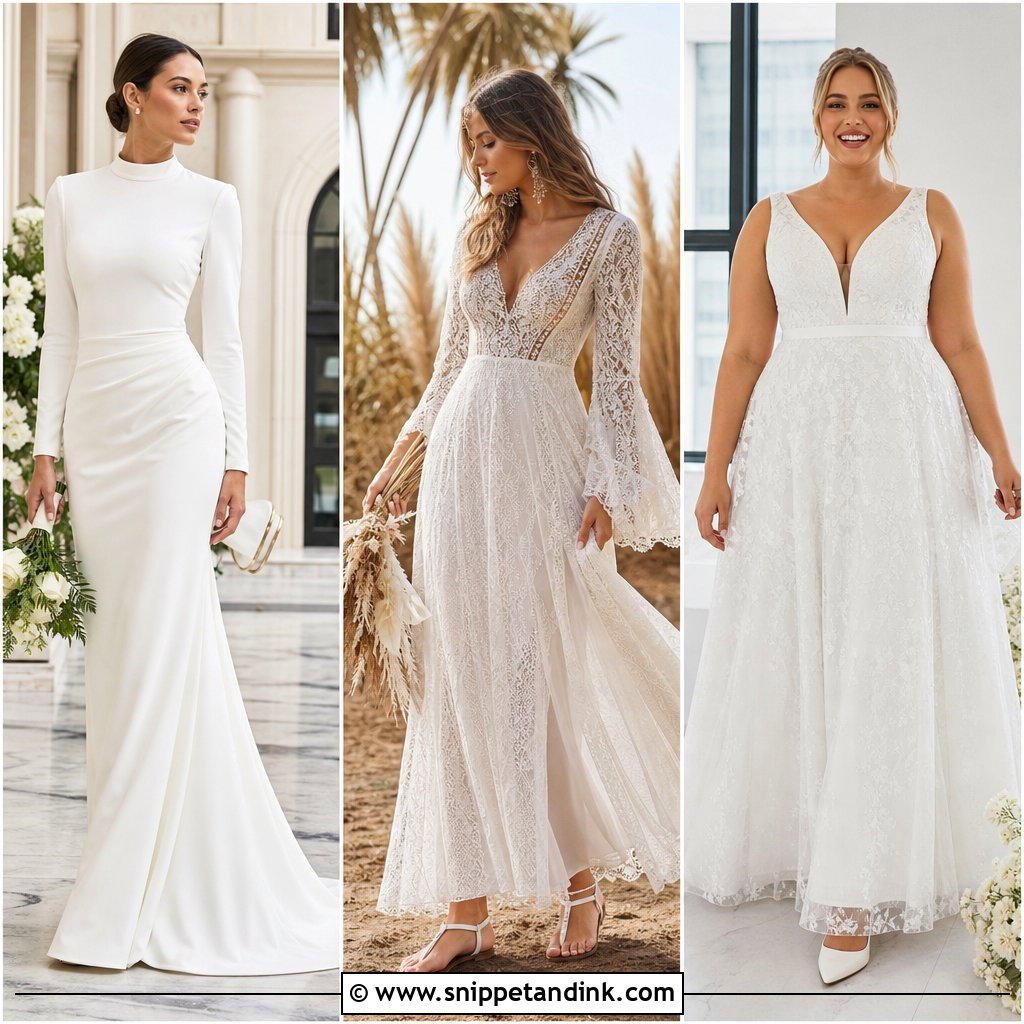
Long sleeves earn their place at autumn and winter weddings, formal venues and ceremonies that ask for coverage. On a curvy arm, fabric decides everything. Illusion mesh with lace appliqué covers you and still breathes, while fitted crepe looks sleek but needs a little ease at the bicep or you won’t be able to hug anyone. I always balance a full sleeve with an open neck or a low back so the top half doesn’t feel closed in. Closed-toe heels, a smooth updo and a chapel veil suit it.
9. Curvy Bride Lace Wedding Dress
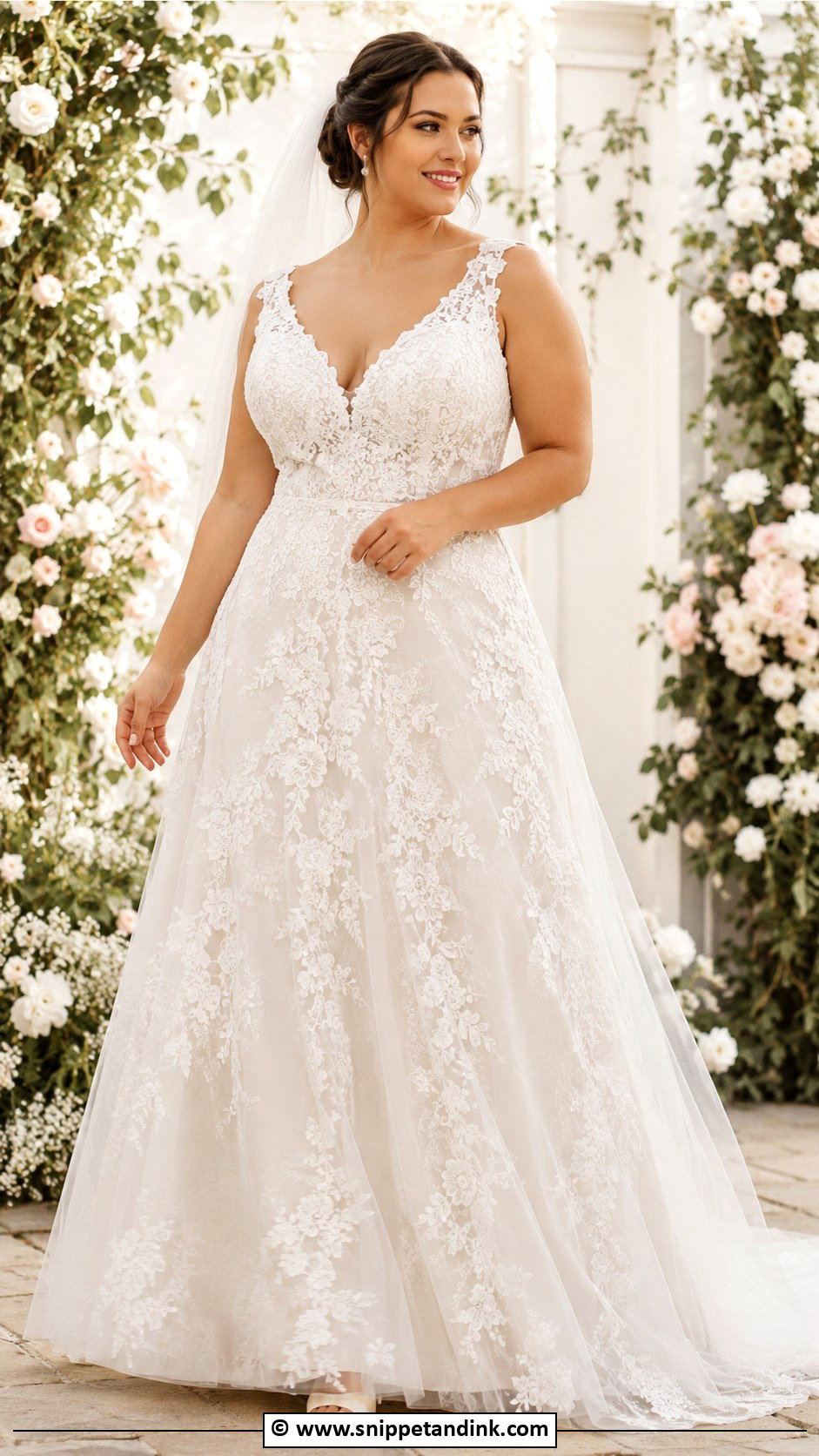
With lace, placement matters more than the lace itself. I look for motifs that run vertically or frame the waist, and I avoid gowns where a heavy band of pattern stops right at the widest point of the hip, because the eye stops there too. Allover lace feels classic; appliqué scattered over tulle is lighter. A nude or champagne lining lifts the pattern off the skin. Keep shoes, veil and earrings plain, since the fabric is already doing the talking.
10. Curvy Bride Satin Wedding Dress
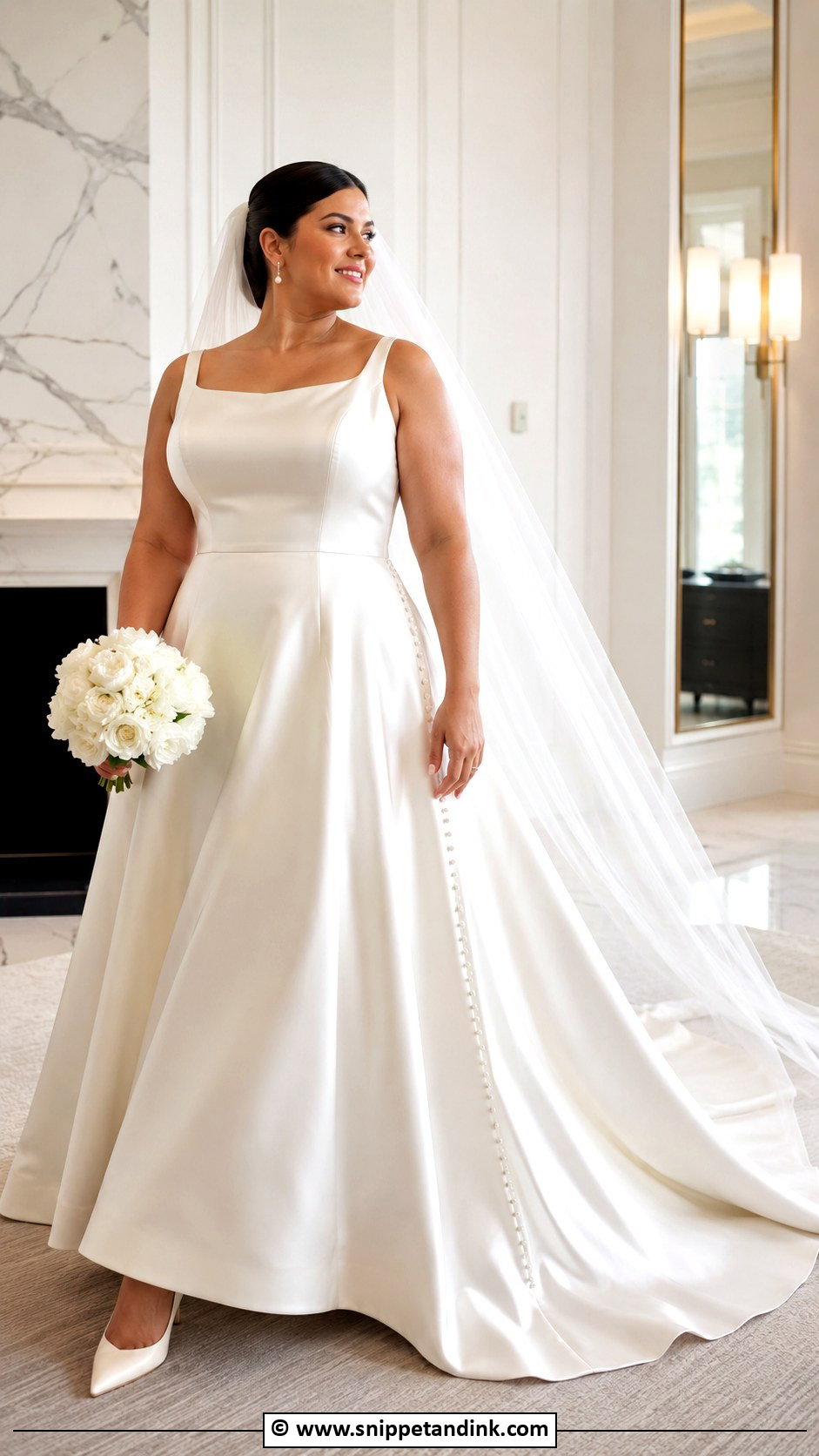
Satin is honest. It shows every seam, every pull and every spot where the fit is slightly off, so here I treat tailoring as non-negotiable. A structured bodice and a skirt with proper weight stop it clinging. Ask about creasing too: satin creases across the lap the first time you sit, and a heavier duchess satin recovers far better than a thin polyester one. An A-line satin is classic, a satin fit-and-flare has more drama, and either needs only pointed heels, a sleek veil and pearl or crystal earrings.
11. Curvy Bride Crepe Wedding Dress
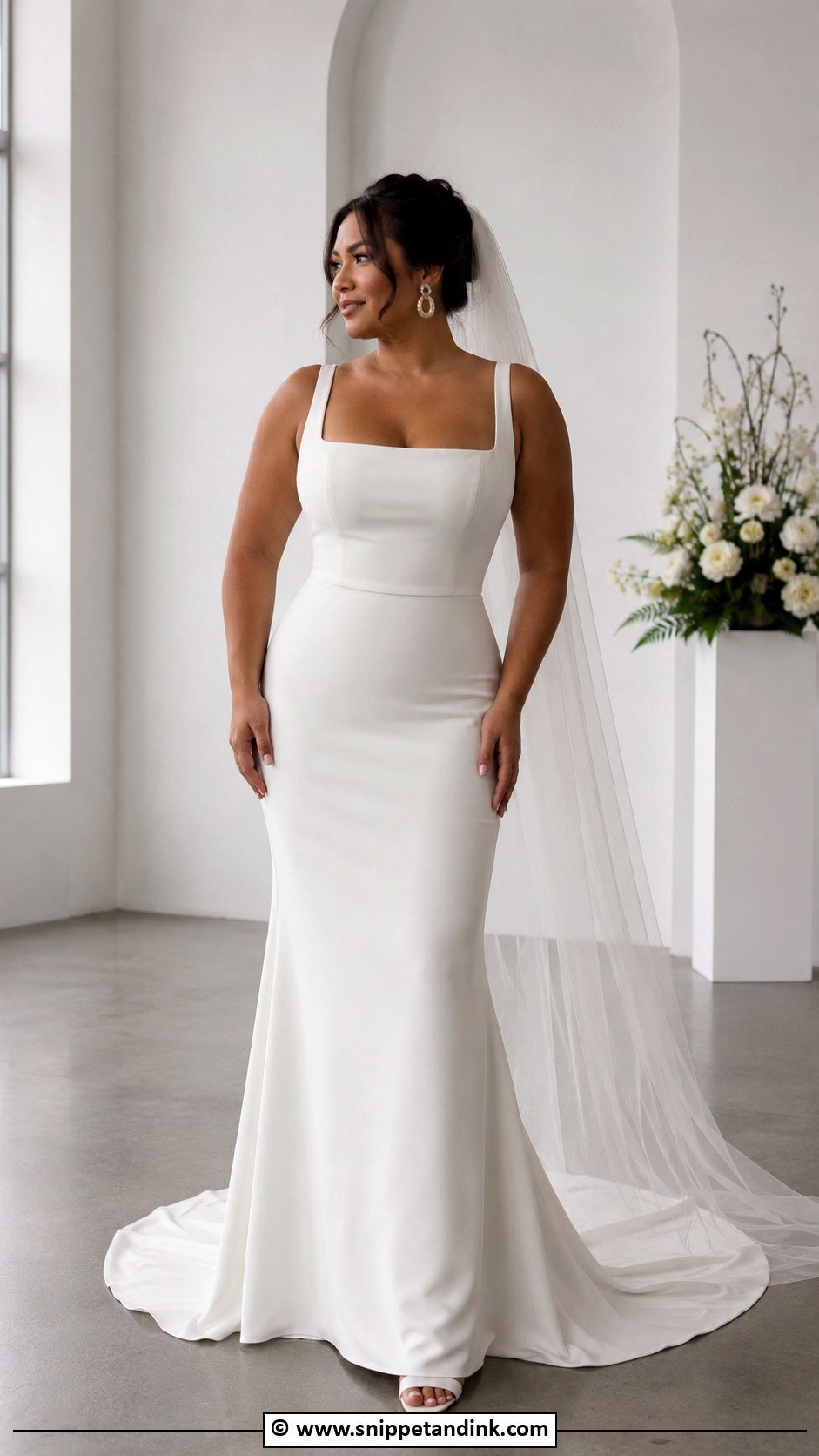
Crepe has enough weight to skim the body instead of grabbing it, which is why it turns up in so many minimalist gowns. The catch is that thin, unlined crepe shows underwear lines and every shaping garment, so I check the lining before anything else. Fit-and-flare, sheath and pared-back A-line cuts suit it best, with bust support built in under a square, bateau or V neck. If you want two looks from one dress, a detachable overskirt or cape over crepe makes an easy reception switch.
12. Curvy Bride Boho Wedding Dress
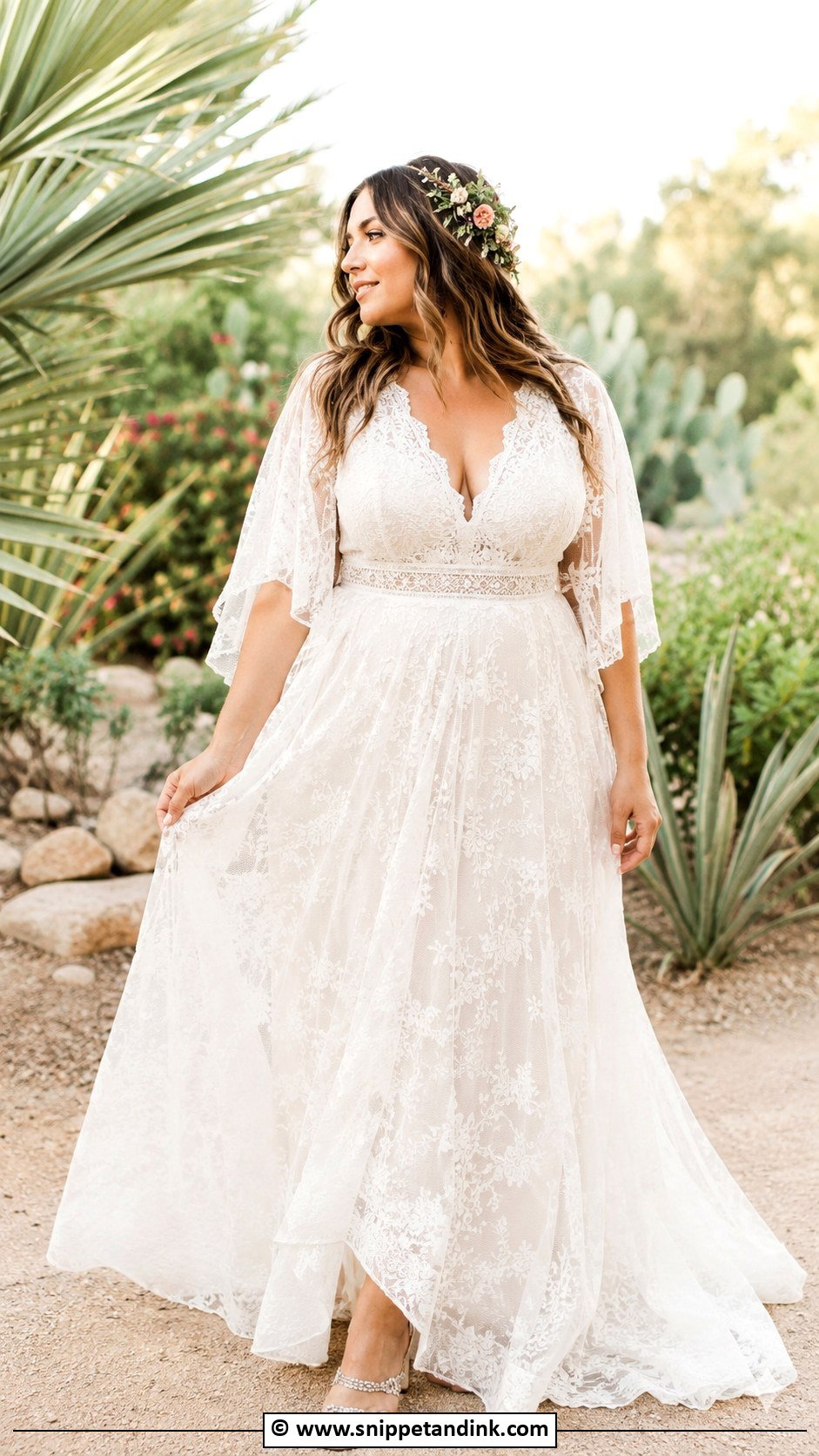
The trap with boho is shapelessness. Soft lace and a flowing skirt with nothing underneath can swallow a curvy figure, so I look for a defined waist or a light corset hidden inside the bodice. Bell sleeves, flutter sleeves and lace panels bring the personality. At garden, beach and desert venues, check how the hem meets the ground: tulle snags on gravel and lace drags sand all evening. Low heels or embellished sandals and loose waves finish it.
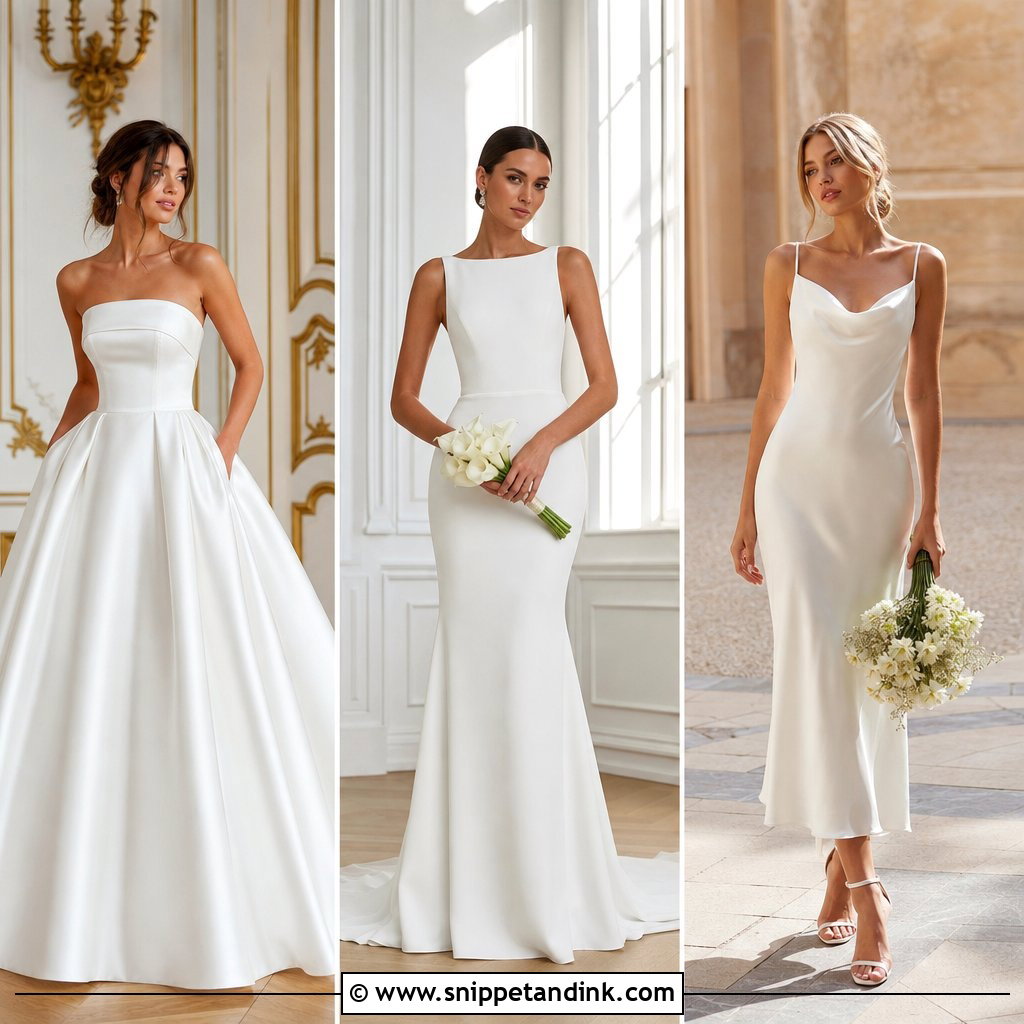
13. Curvy Bride Simple Wedding Dress
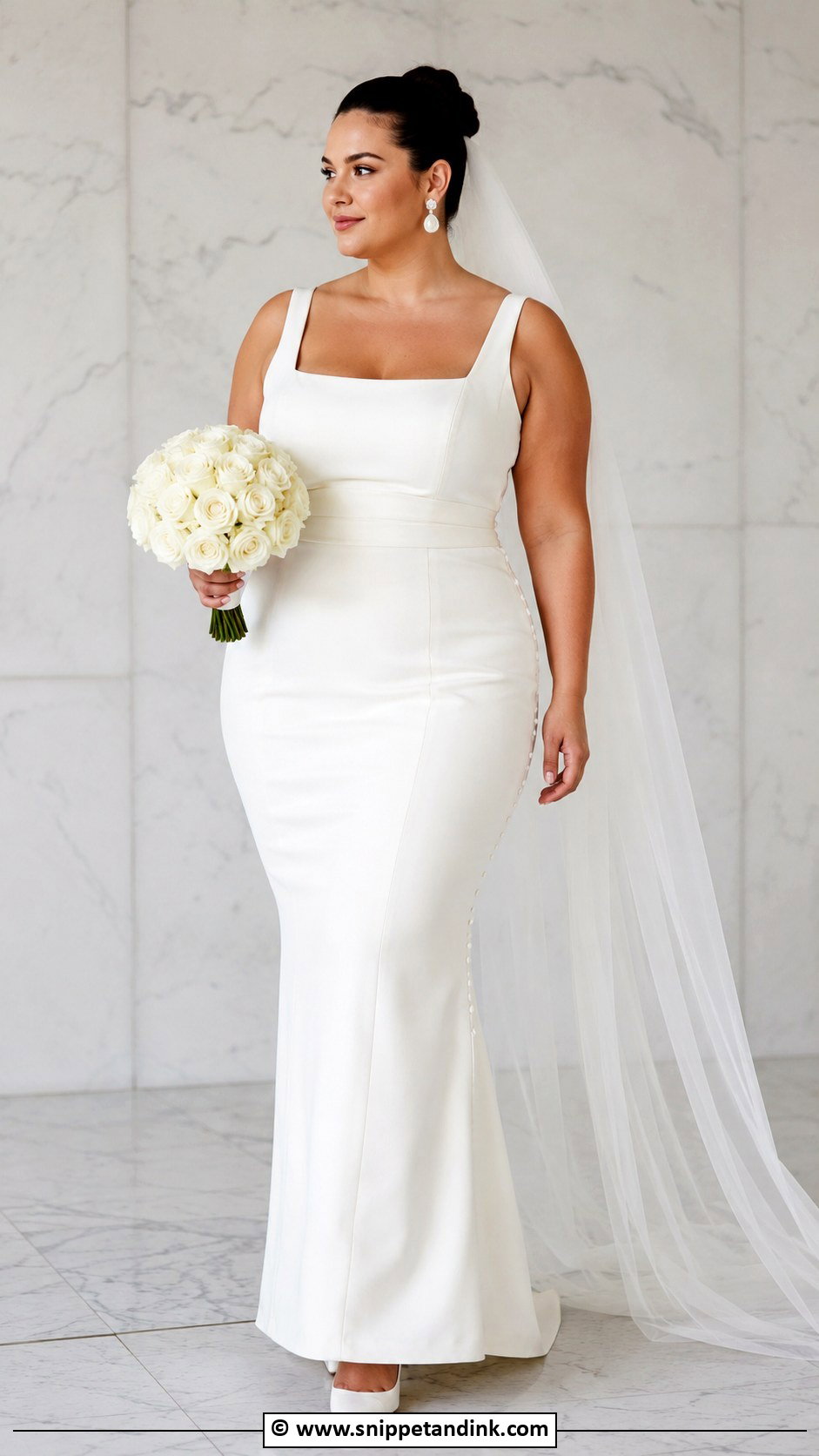
A plain gown hides nothing, so it relies entirely on cut. With no beading or lace to distract, the bodice seams and the hem have to be right, and that’s where I’d spend the alteration budget. An A-line, sheath or structured fit-and-flare all hold their shape without decoration. One detail is enough: a square neckline, covered buttons down the back, a slit or a dramatic veil. Sleek heels and a polished bun do the rest.
14. Curvy Bride Plus Size Tea Length Wedding Dress
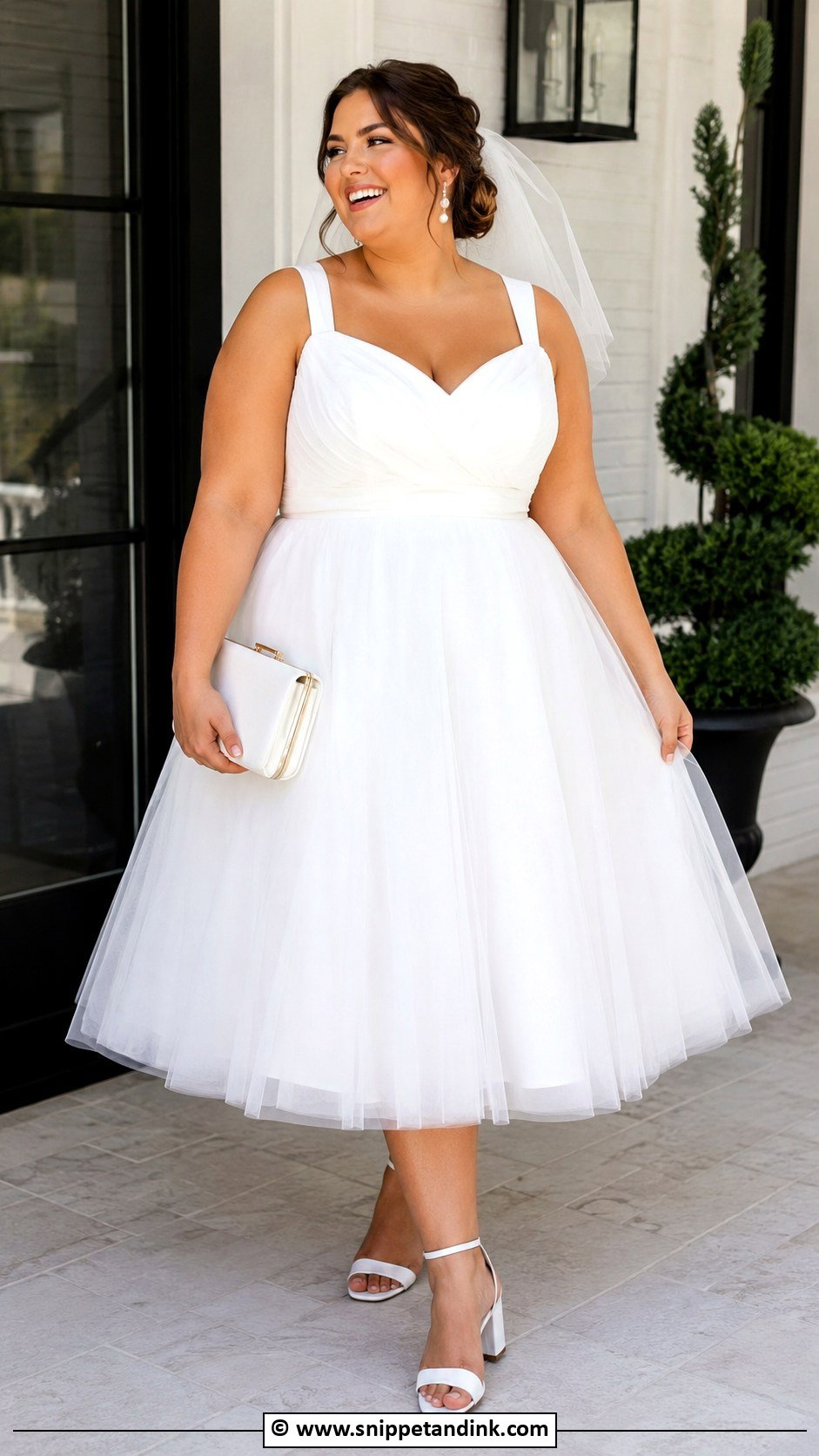
A tea-length gown lands between knee and ankle, so your shoes and calves become part of the outfit. A plus size tea length wedding dress is one I like for courthouse weddings, brunch receptions and retro celebrations. The exact hem point matters: just below the fullest part of the calf is usually the most comfortable line, and I’d only pin it with you standing in your wedding shoes. A fitted bodice over a flared skirt gives shape without heaviness. A short veil and a structured clutch keep it playful.
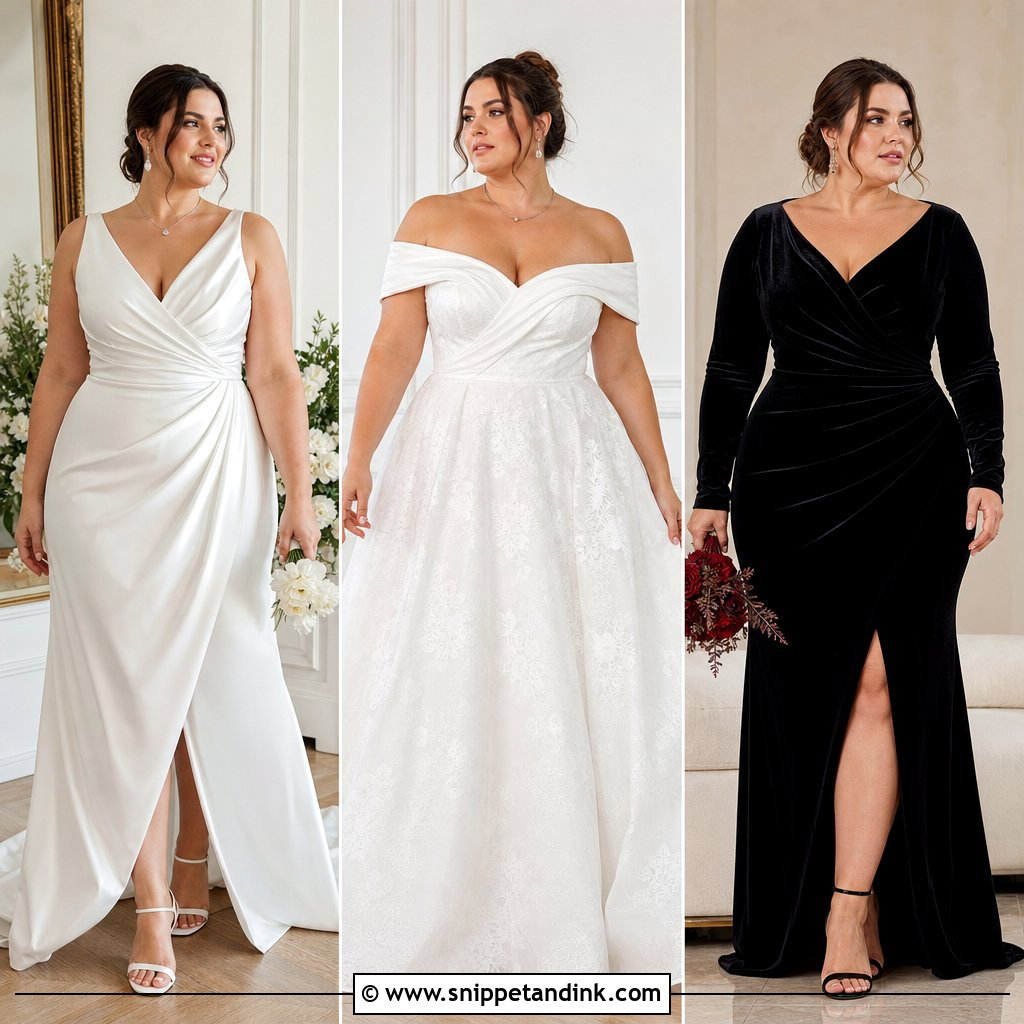
15. Curvy Bride Short Wedding Dress
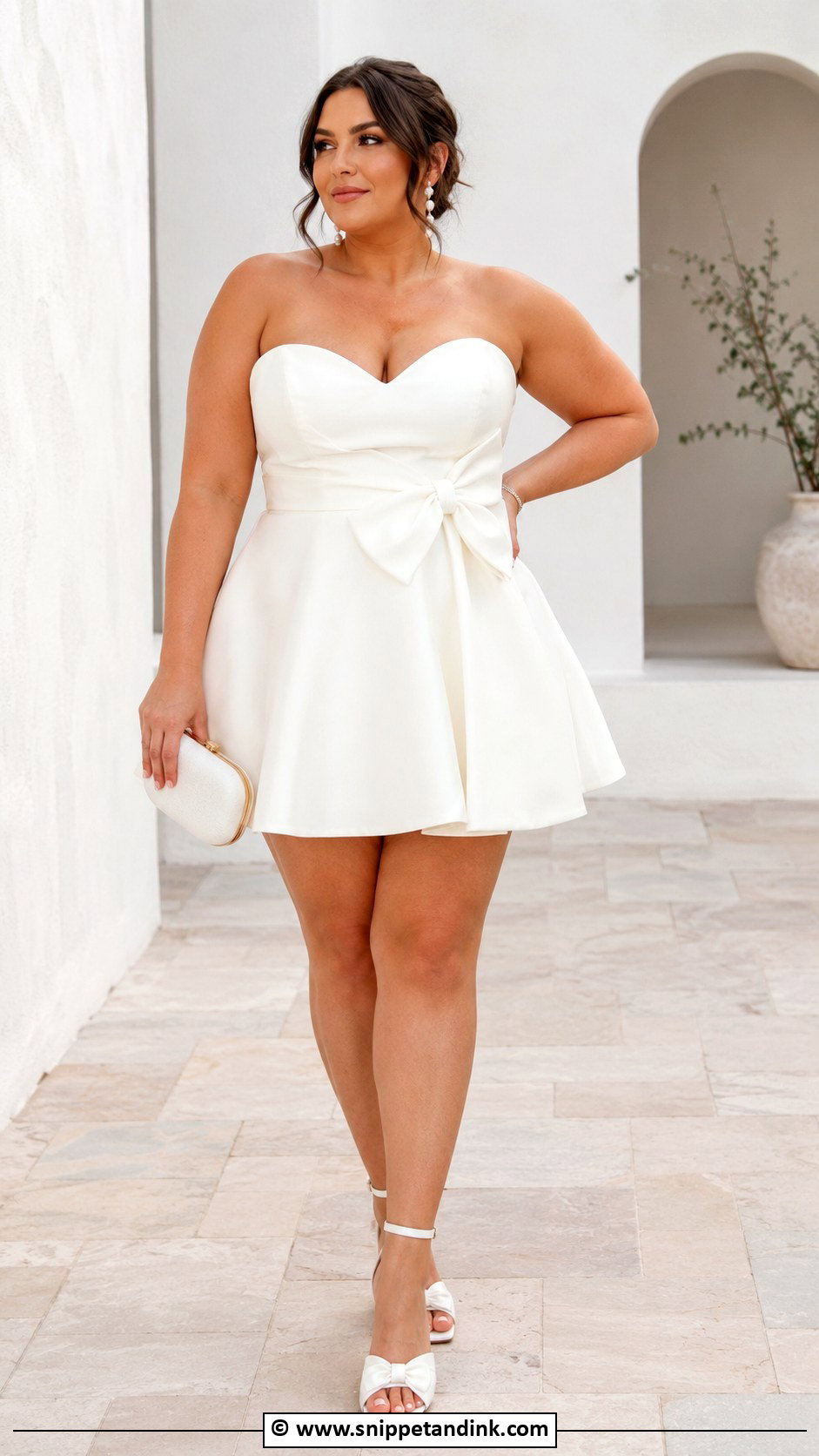
I suggest a short dress to brides who want to actually dance, whether at an elopement, a courthouse ceremony or as an after-party change. Structure still matters at this length; a boned bodice or a skirt with some body moves better than thin jersey that rides up. Do the sitting test in front of a mirror, because a mini that looks fine standing can climb several inches when you sit. Satin looks sleek, and feathers or bows add fun. Pack sheer tights if the venue runs cold.
16. Curvy Bride High Low Wedding Dress
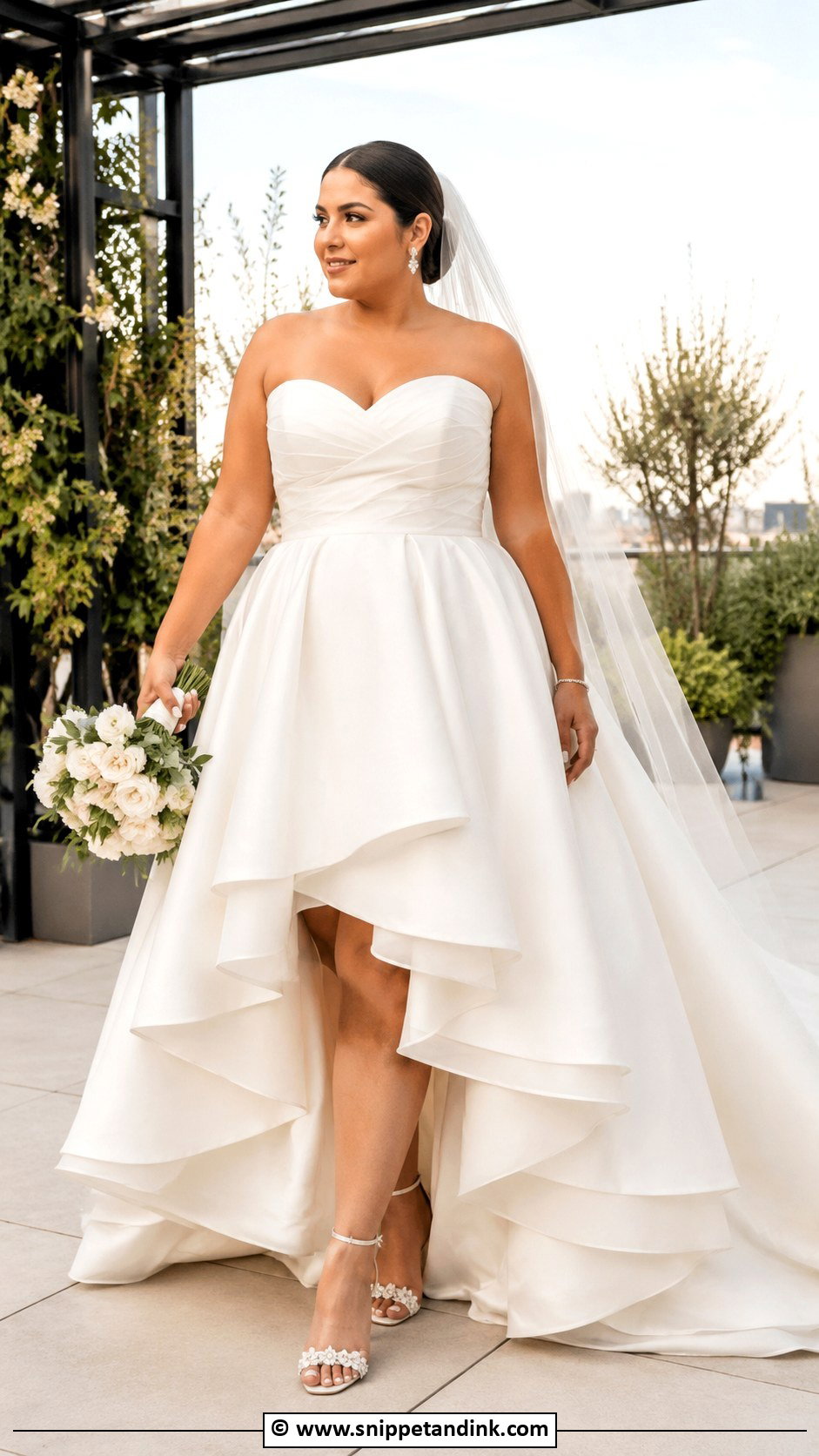
A high-low hem gives you a train in photos and freedom at the front, which helps on garden and rooftop venues with steps. The angle of the hemline is what I fuss over. A gentle curve reads intentional; a steep drop can look like a hemming mistake. Keep a structured bodice over a flared or layered tulle skirt for balance. Your shoes are on show, so choose a pair worth seeing and break them in first. A sleek veil and a simple bracelet are plenty.
17. Curvy Bride Square Neck Wedding Dress
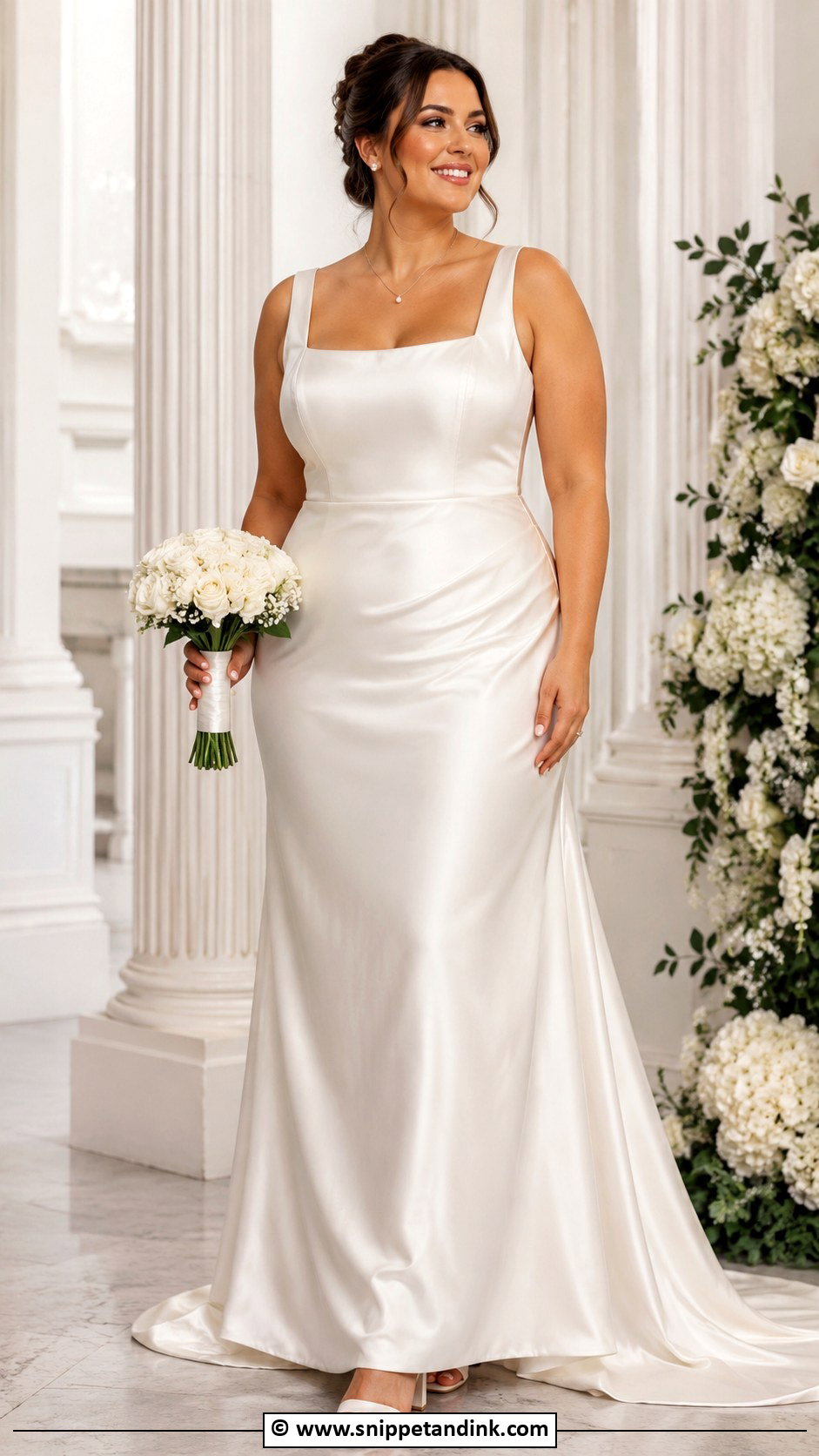
The square neck is one of the most supportive necklines I fit on a fuller bust, because the straight line runs across the chest and connects directly into wide straps. It frames the collarbone without any plunge. A-line, satin, crepe and ball gown skirts all take it well. Jewelry is the real decision here. A short pendant can sit nicely inside the square, or you can skip the necklace and wear statement earrings. Classic pumps or block heels finish it.
18. Curvy Bride V Neck Wedding Dress
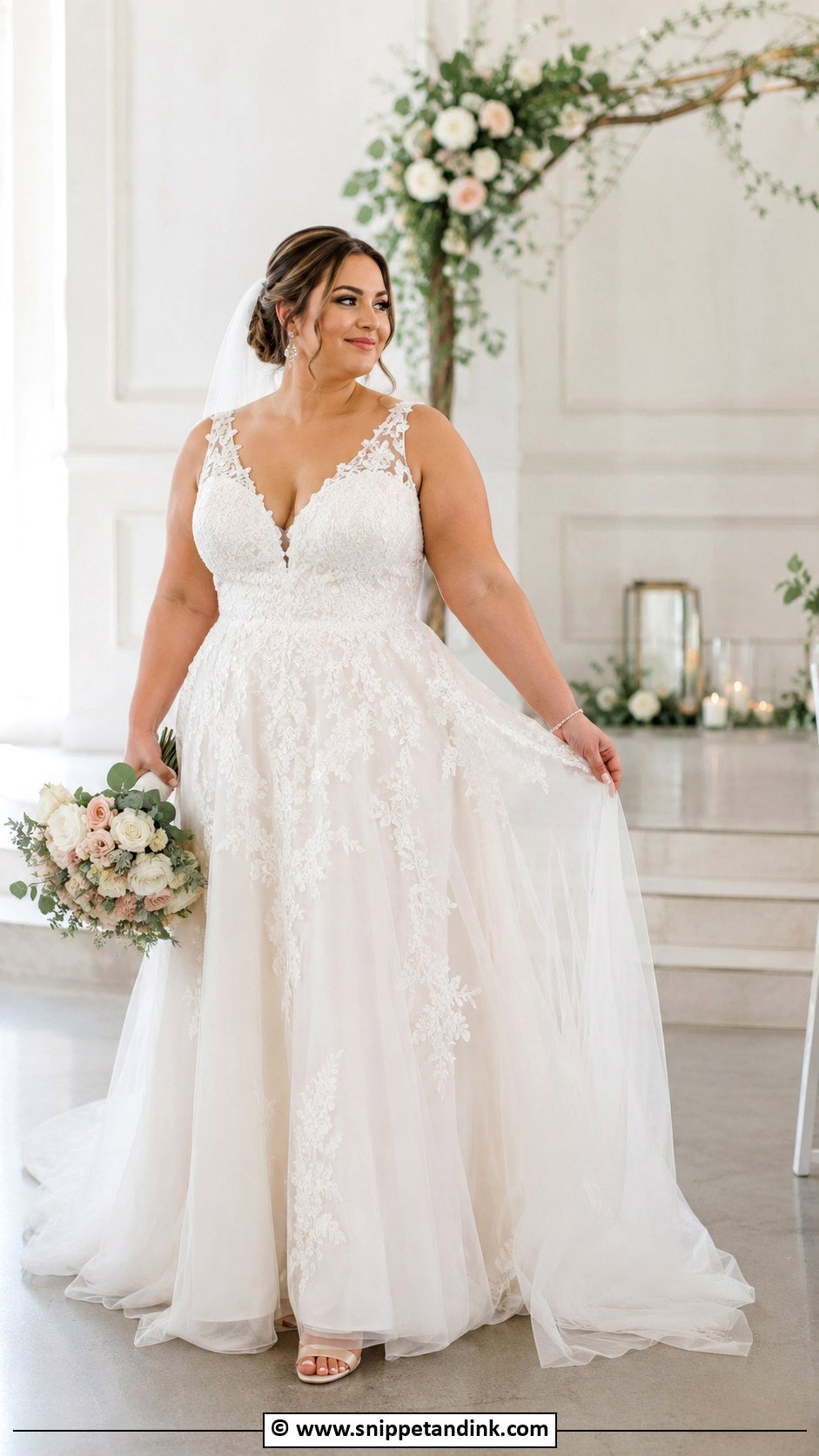
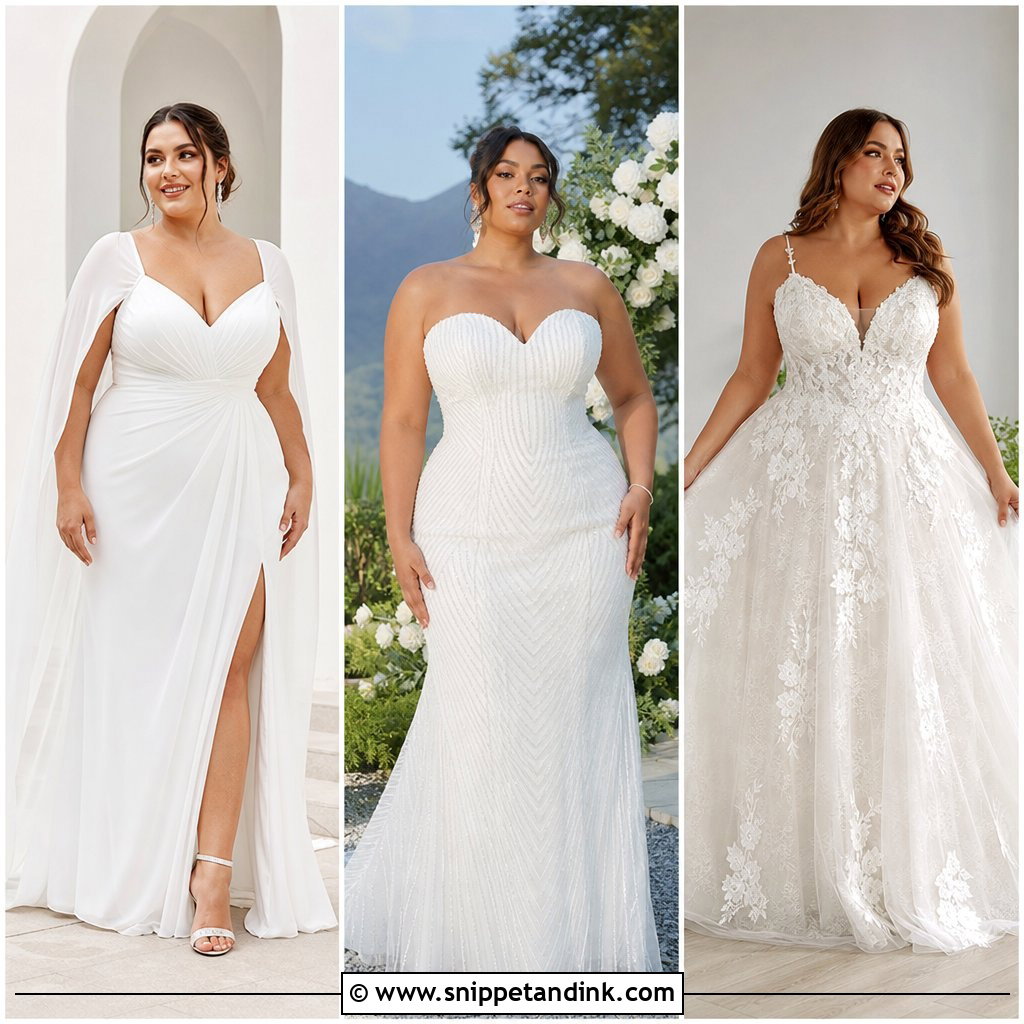
A V neckline draws one long vertical line through the torso, and its depth can be adjusted more than people expect. A seamstress can raise a plunge with an illusion insert or add hidden cups, so don’t rule out a gown because the sample is cut low. Wider straps carry a fuller bust better than thin ones. Put it over an A-line for a classic feel, a crepe sheath for something minimal, or add lace sleeves for softness. Drop earrings echo the shape of the V.
19. Curvy Bride Strapless Wedding Dress
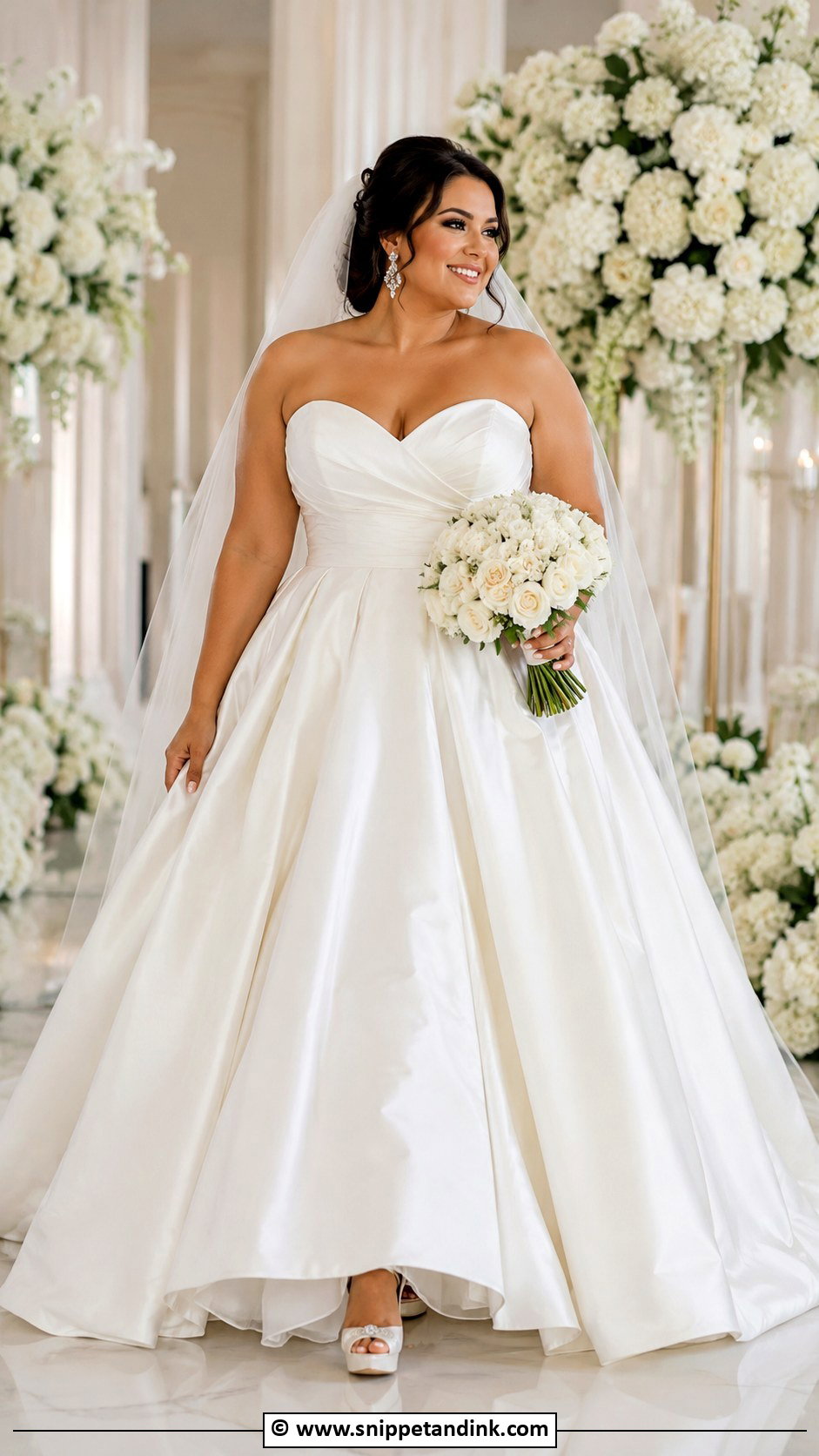
Without strong internal support, a strapless gown means a day of pulling it up. I check that the bodice is fitted to your ribcage, not only your bust, since the grip around the ribs is what actually holds it. A sweetheart neckline adds softness, a straight neckline feels modern. If you’d like coverage for the ceremony, a detachable bolero, cape or off-shoulder sleeve gives you that option. Let the amount of skin showing decide between a statement necklace and chandelier earrings, and pin the veil securely.
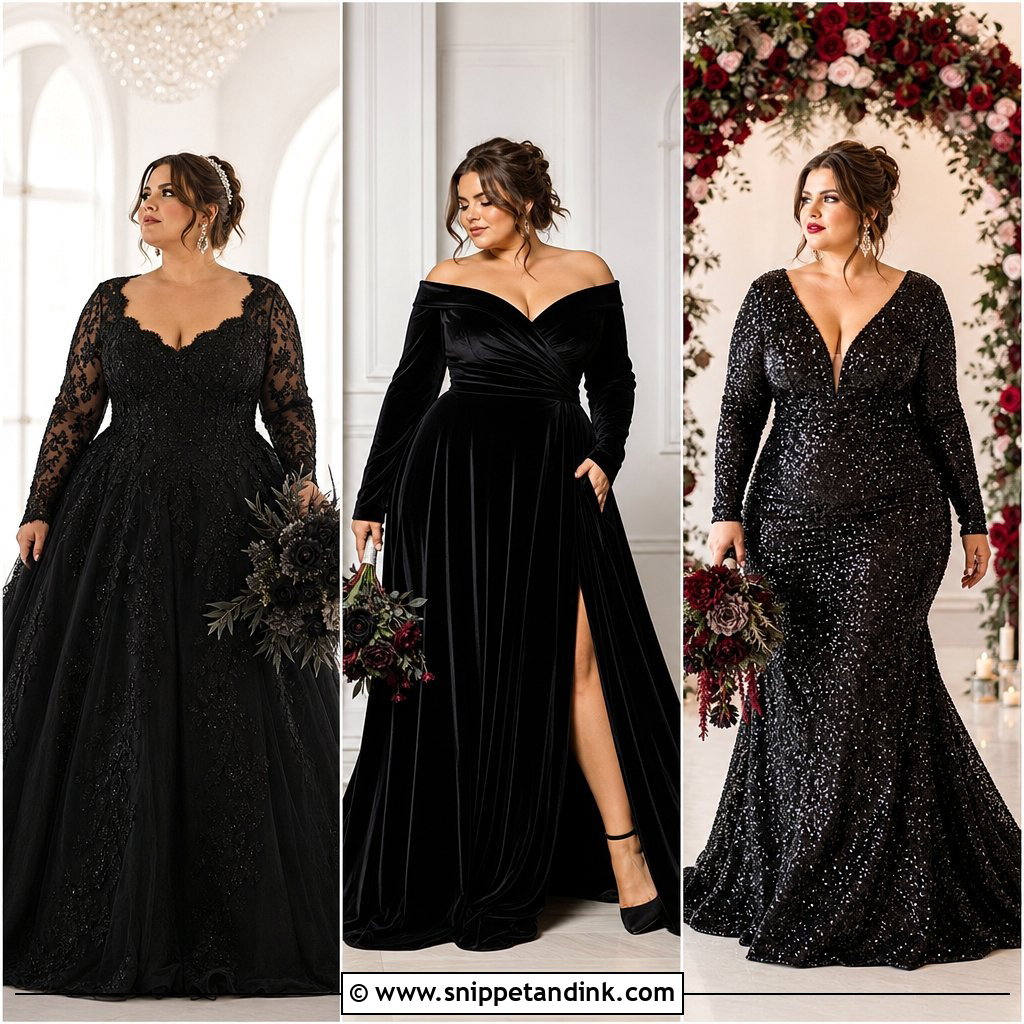
20. Curvy Bride Wedding Dress With Slit
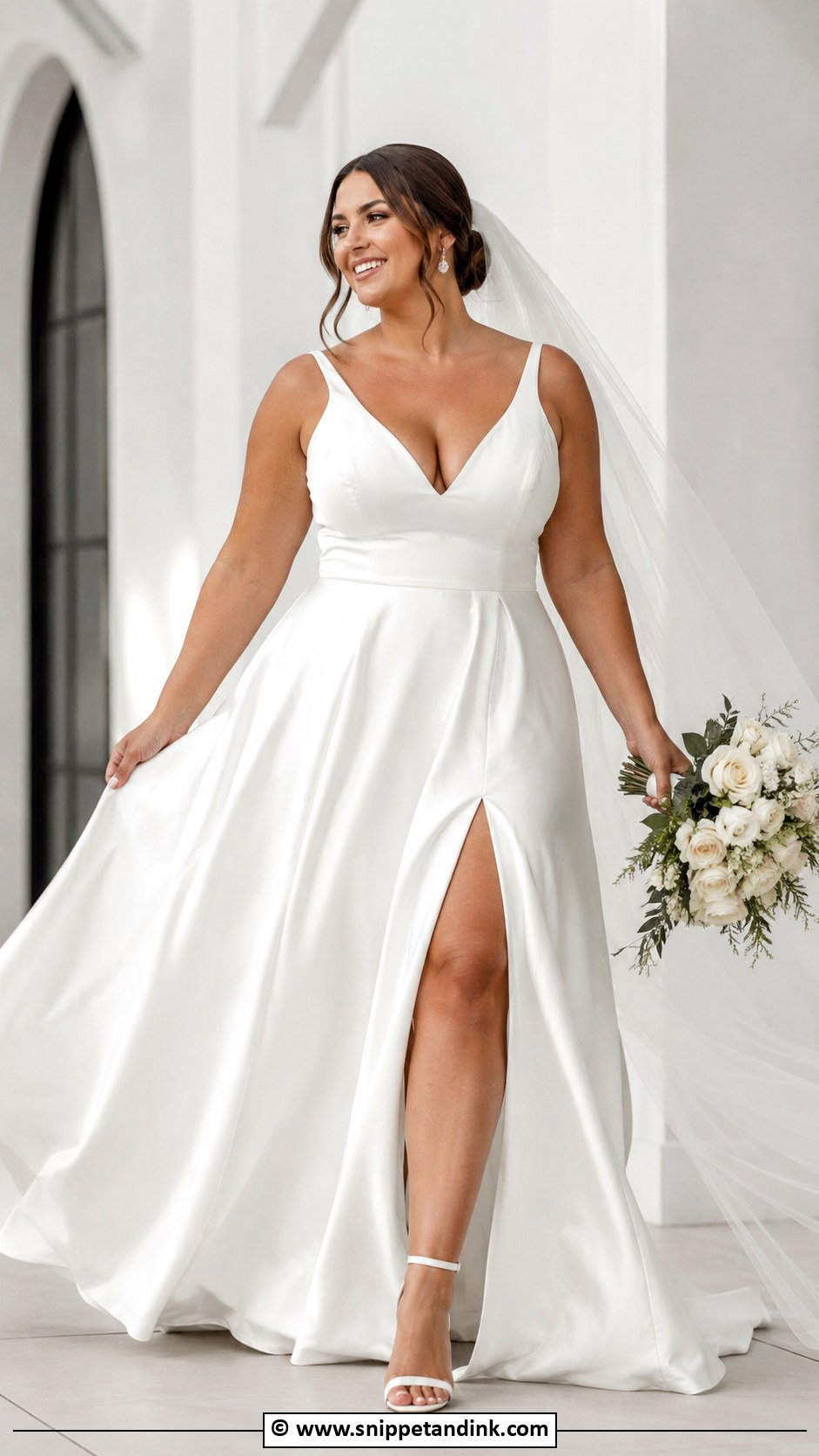
Where the slit sits matters more than how high it goes. I mark it with the bride standing, walking and sitting, because a slit that looks right in the mirror can open much further the moment you sit or climb into a car. A front or side slit adds movement to A-line, sheath and satin gowns. It also puts your shoes on display, so strappy heels or pointed pumps deserve some thought. Keep the jewelry restrained.
21. Curvy Bride Wedding Dress With Cape
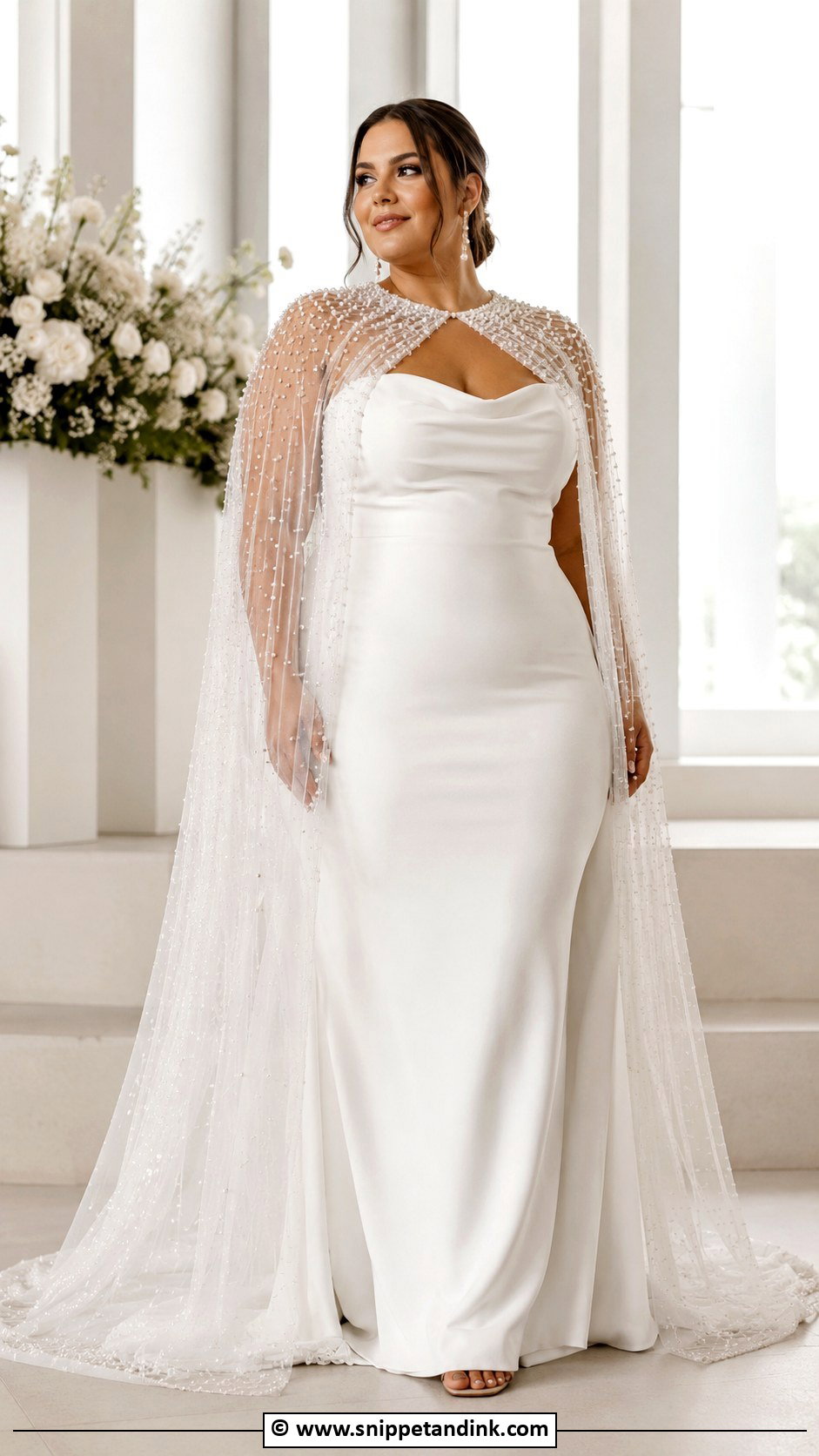
A cape gives you the entrance of a veil without anything pinned into your hair, and it adds shoulder and arm coverage. It can be sheer, lace, satin or pearl-trimmed, and a detachable one comes off for the reception. I always check how it attaches: snaps or loops at the shoulder sit flatter than hooks at the neckline, which can tug forward on a fuller bust. Match the length to your venue, fingertip for a small room and cathedral for a long aisle. Sleek hair keeps the cape the focus.
22. Curvy Bride Wedding Dress With Detachable Skirt
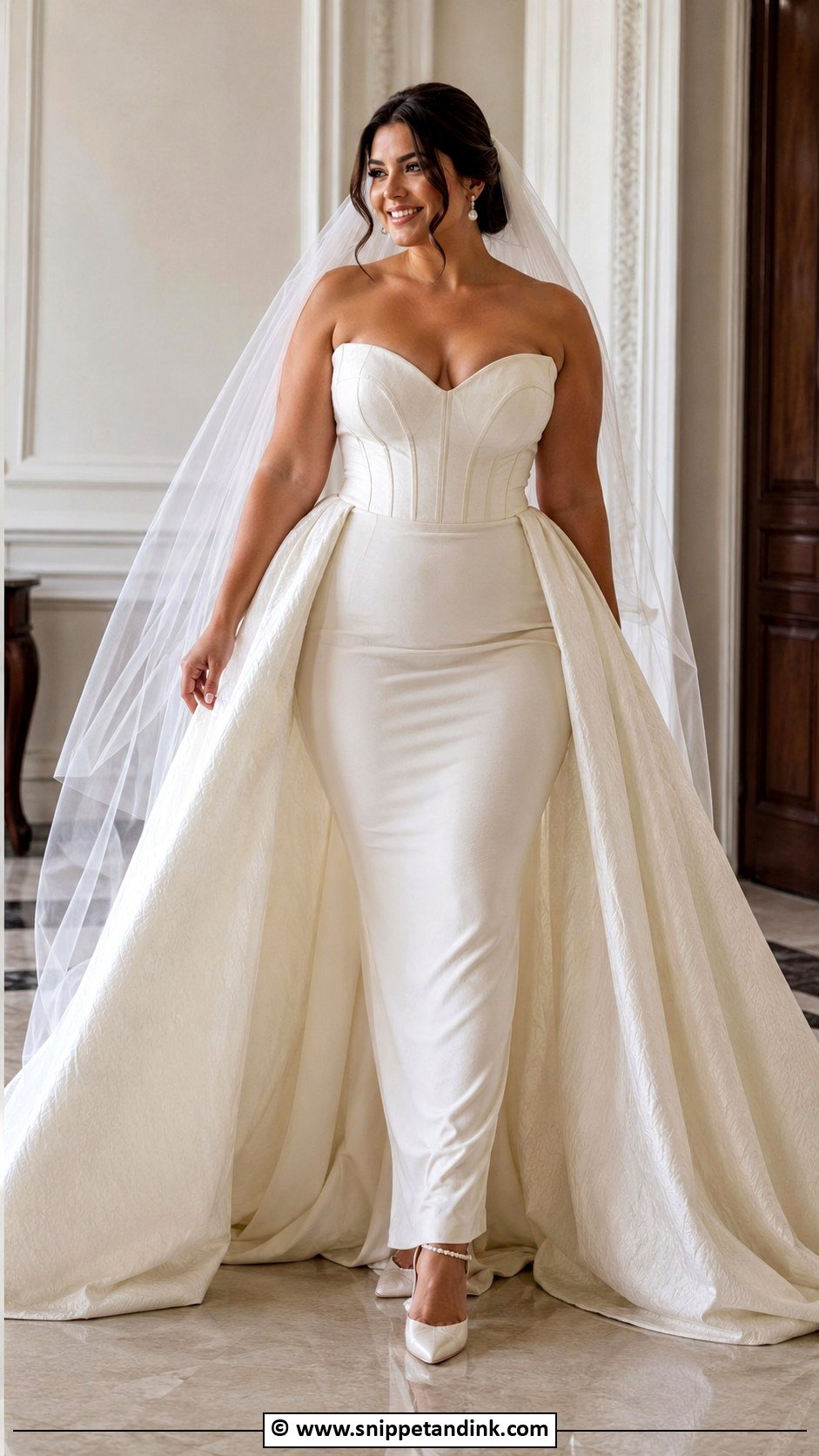
Two dresses for one fitting schedule: full volume for the ceremony, then a fitted dress, sheath or shorter look underneath for dancing. The closures are where I look first. Hooks and a hidden waistband hold better than snaps on a heavy overskirt, and the base dress needs to look finished on its own, not like a slip. Have your bridesmaid practise removing it before the day. Bolder earrings suit the reception half.
23. Curvy Bride Bridal Jumpsuit
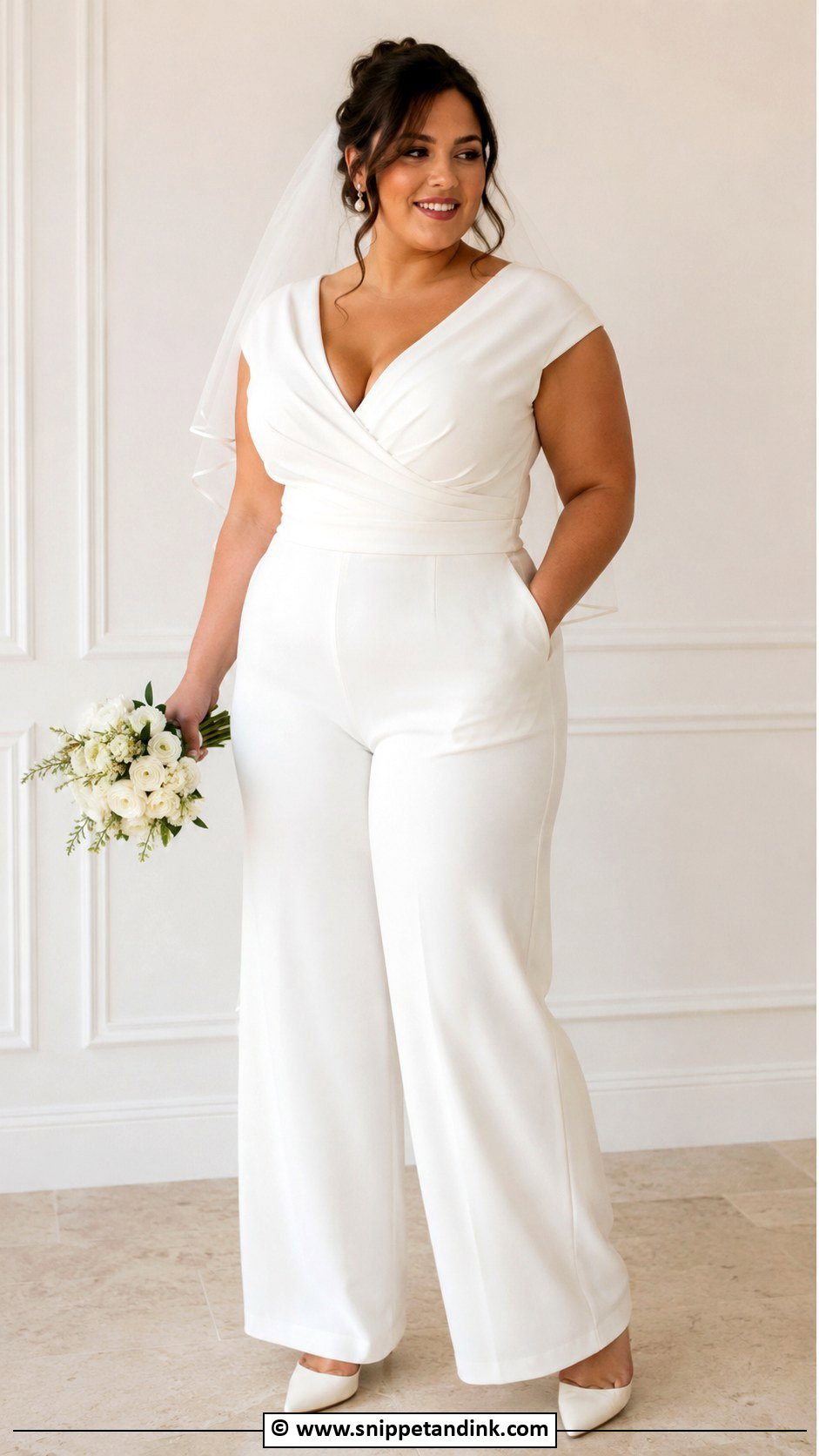
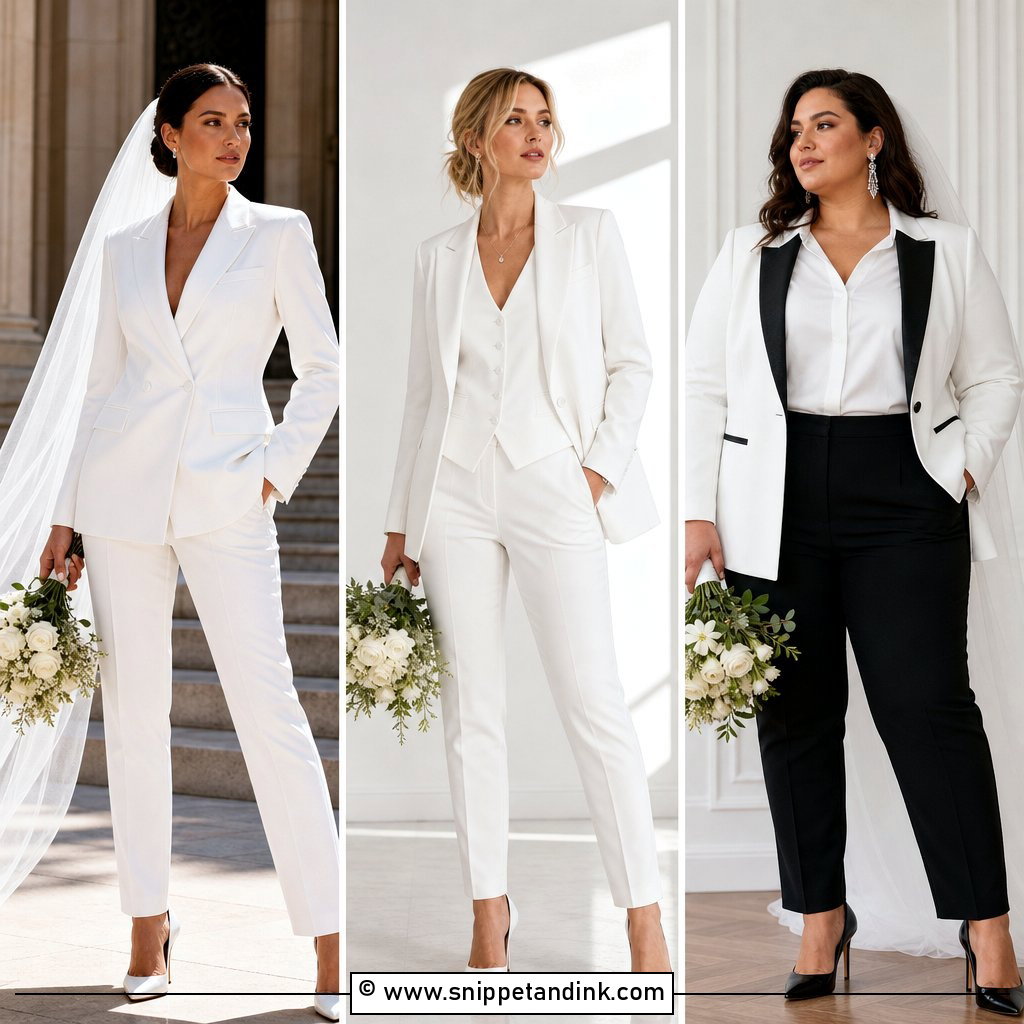
A bridal jumpsuit gives curvy brides structure and freedom of movement at the same time. Wide legs make a long line, and a fitted bodice or wrap top defines the waist. Fabric weight is the deciding factor: crepe, satin or tailored stretch suiting drapes properly, while thin fabric clings at the seat. I fit the rise carefully, because one that’s too short pulls every time you sit. Pointed heels lengthen the leg, and a short veil or hair bow keeps it bridal for courthouse weddings and receptions alike.
24. Curvy Bride Reception Dress
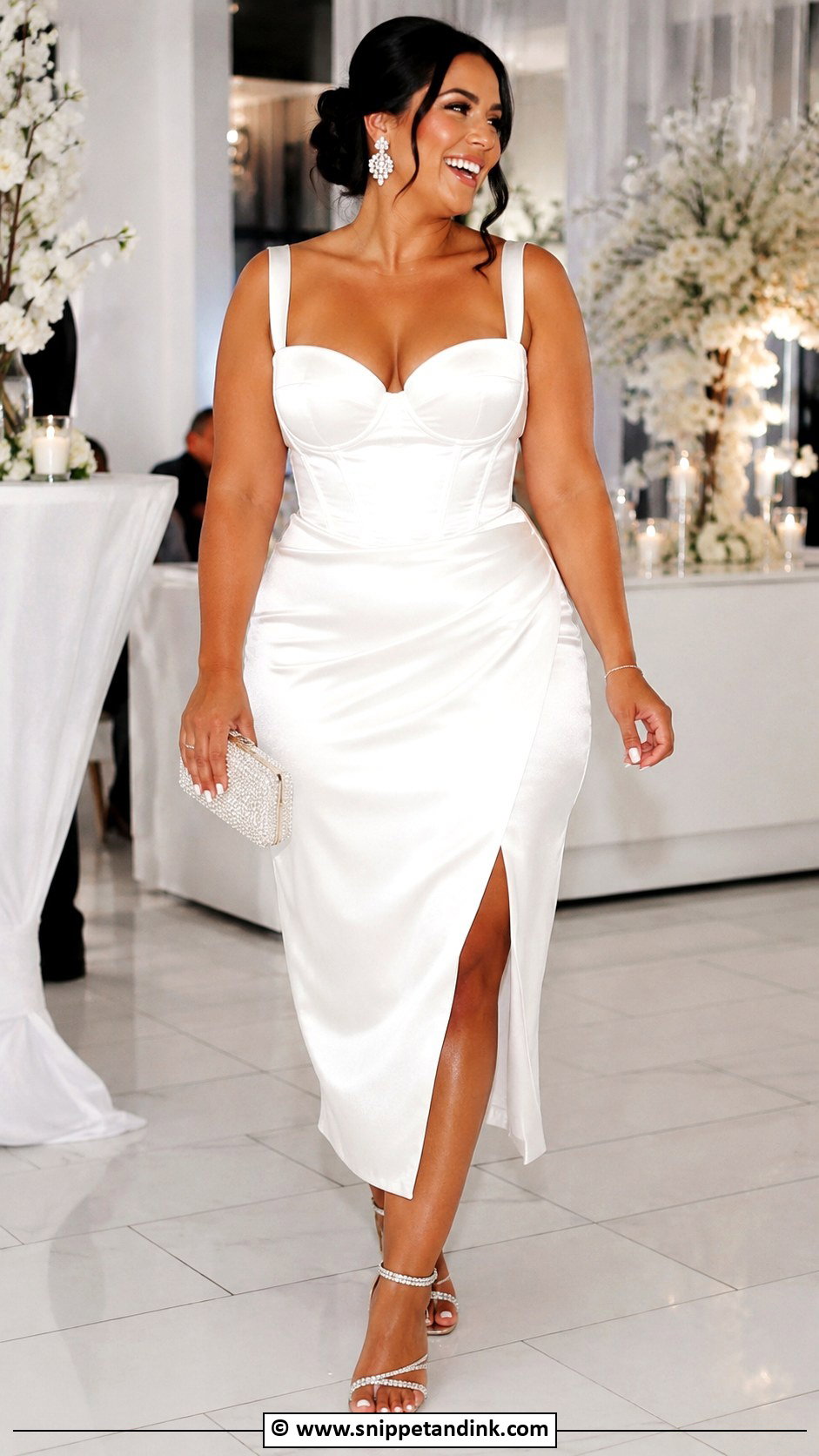
After the ceremony, most brides want something lighter they can dance in without managing a train. A midi, short satin dress, sparkly sheath or feather-trimmed mini can all serve as a second look. Support still matters, so choose a shape you can sit and move in without tugging. Plan where you’ll change and who’ll help with the buttons, because that’s the part that always runs long. If the ceremony gown is classic, let this one be playful.


25. Curvy Bride Courthouse Wedding Dress
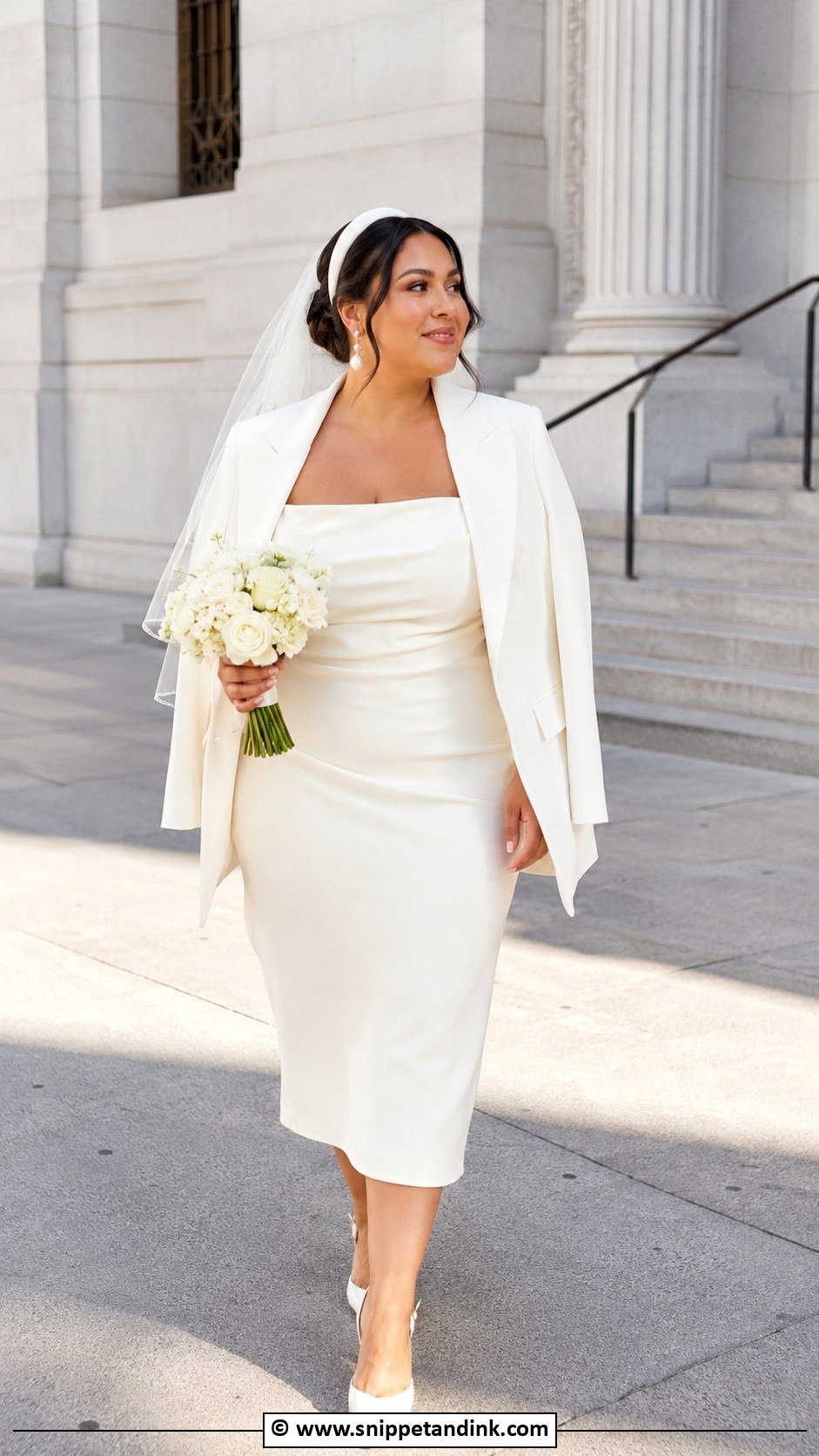
For a civil ceremony I’d keep things simple: a midi, a tailored bridal suit, a tea-length gown or a satin sheath. Courthouse weddings usually mean standing in corridors, waiting your turn, then photos outside on steps, so stable shoes come first. Block heels, slingbacks or smart flats all qualify. A structured blazer, pearl earrings, a small bouquet and a headband make it bridal. Skip the heavy beading and the long train. Good fit is what this outfit needs.
What a Seamstress Can Change on a Curvy Gown, and What She Can’t
Alterations are where a good dress becomes yours, and on a fuller figure they usually go well beyond hemming. These are the requests I’d bring to the first fitting:
- Cups sewn in and shaped to you, which hold more securely than any strapless bra worn underneath.
- A waist stay: a grosgrain ribbon tacked inside at the waist that takes the weight of a heavy skirt off the zip and shoulders.
- Straps added or widened, often cut from matching fabric or the hem offcut.
- A bustle tested with the real skirt. Heavy satin and layered tulle need more bustle points, or the train drops halfway through the reception.
Some fixes are hard or impossible: letting out beyond the seam allowance, moving the waist seam on a boned bodice, or reshaping lace that sits across the hip. If a gown needs those changes to work, it may not be your gown.
The chair-and-stairs test
At the last fitting I ask brides to sit for a few minutes, raise both arms, bend to pick something up and climb a flight of stairs. Fabric that pulls or a bodice that gaps during that test will do it all day. Wear your real shoes and undergarments, and bring whoever will be bustling you so they can practise.
Fit First, Fabric Second, Trends Last
Whatever silhouette you lean toward, fit comes before trend. Every shape on this list can work on a curvy body when the structure, fabric and tailoring suit you. Try at least one shape you’re sure you’d never wear, because the gown a bride ends up loving is often a surprise to her. A wedding dress shouldn’t make you feel smaller. It should feel like you, from the first photo to the last song.
You'll Like These Ideas:




Leave a Reply