
Shape charts tell curvy brides what to avoid. I’d rather start from what you love and then work out how the dress needs to be built so it holds you properly. Today’s curvy wedding dresses run from sculpted mermaids to plain crepe columns, and in nearly every case the inside of the gown matters as much as the outside: where the boning sits, how the lining is cut, whether the seams give you room to breathe. Below are twenty complete looks with the construction details I look for and the fitting tests I’d run on each.
Which Part of Your Body Should the Dress Hold Up?
Instead of asking curvy brides about their shape, I ask where they want the gown to do the work. Most answer quickly: the bust, the waist, or nowhere at all because they want to feel loose. That answer narrows the list faster than any pear-or-hourglass quiz.
Support at the bust
A fuller bust needs structure built into the bodice: boning, moulded cups and a waist stay. Square necks, sweethearts with straps, and V-necks with power mesh behind them all give that. Strapless is possible, but only in a well-built bodice and after a proper sit-down test.
Definition at the waist
If you like a defined middle, basque waists, corset ball gowns and fit-and-flares all mark the waist. If you’d rather not, an empire seam or soft A-line skims past it, and a column in heavy crepe gives a long line without hugging.
Room at the hip
Mermaids and fit-and-flares hold the hip; A-lines and ball gowns release it. Neither is more flattering in principle. It comes down to whether you like to feel held or free when you walk, and I’d try one of each before deciding.
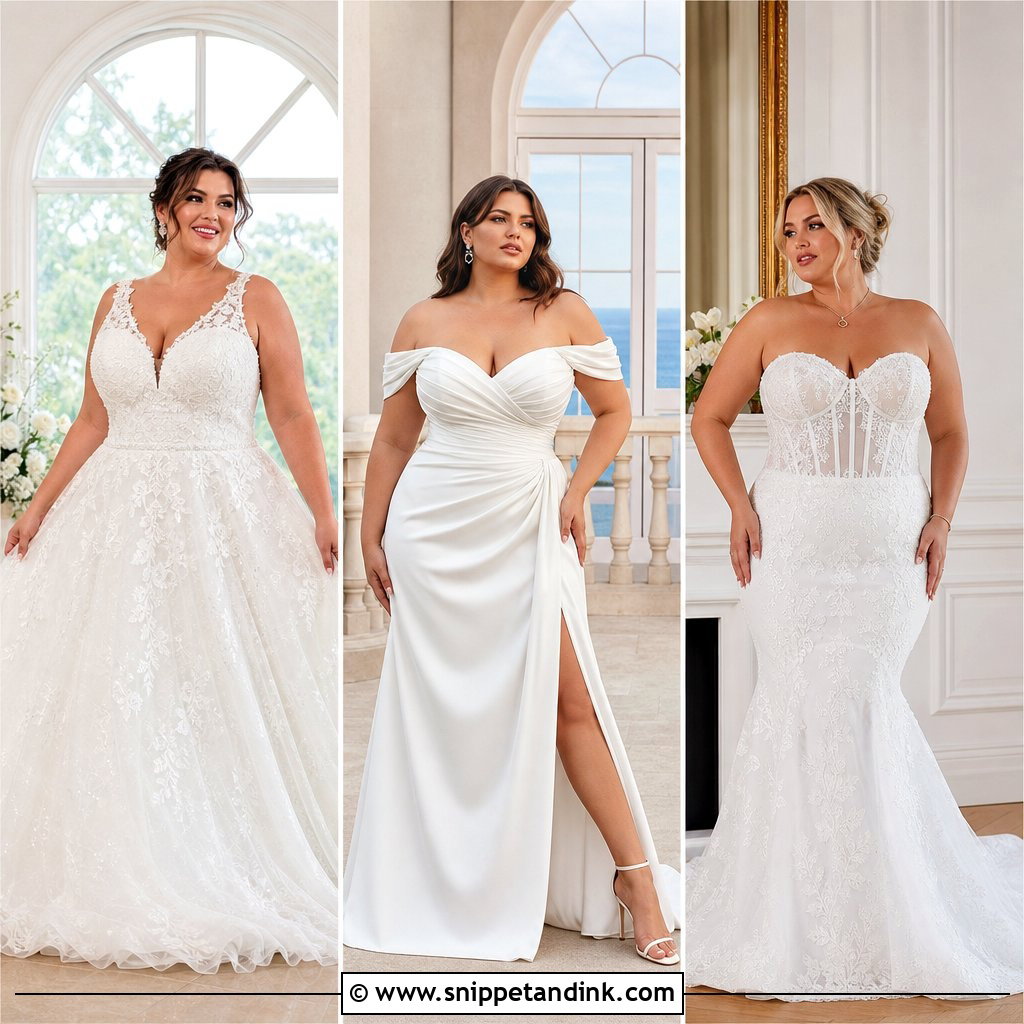
1. A-Line Lace Wedding Dress
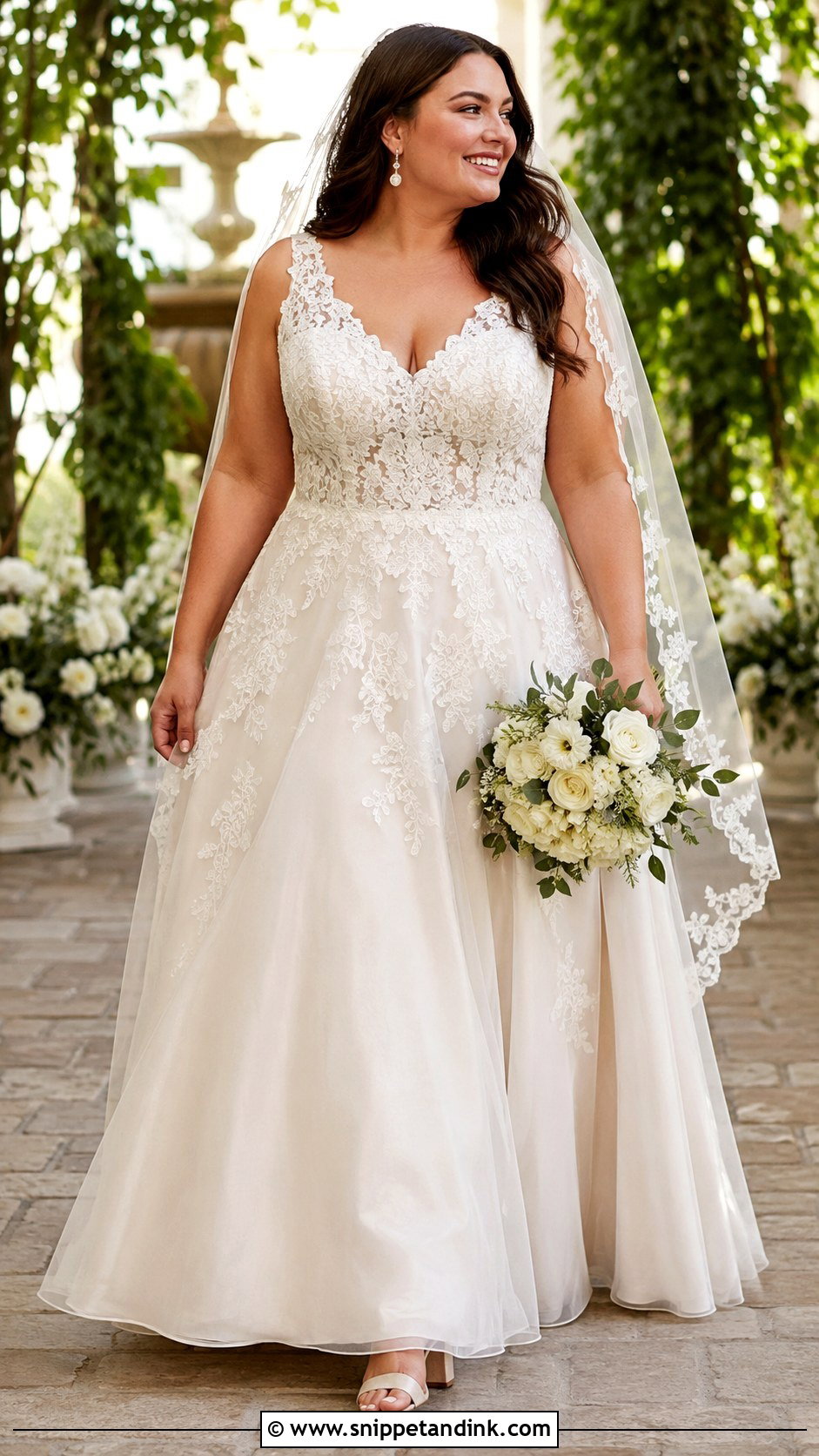
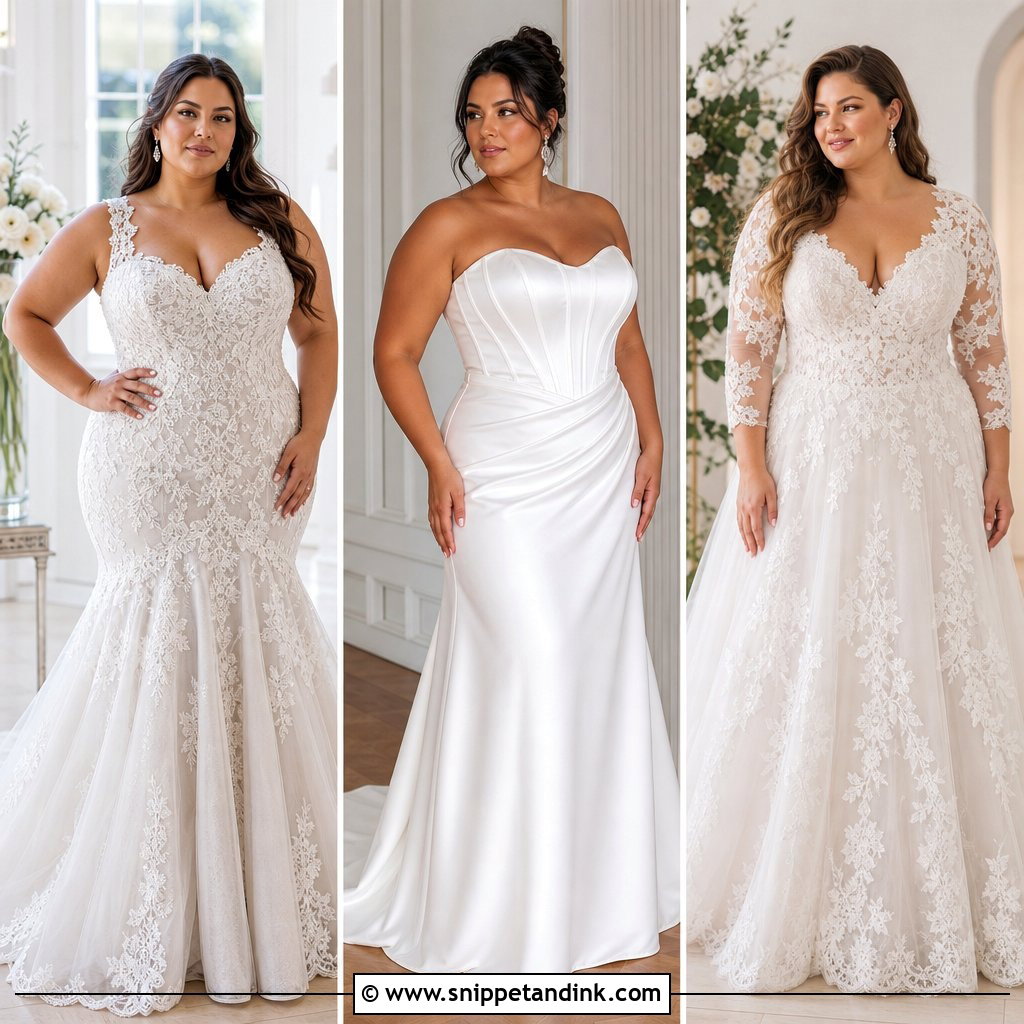
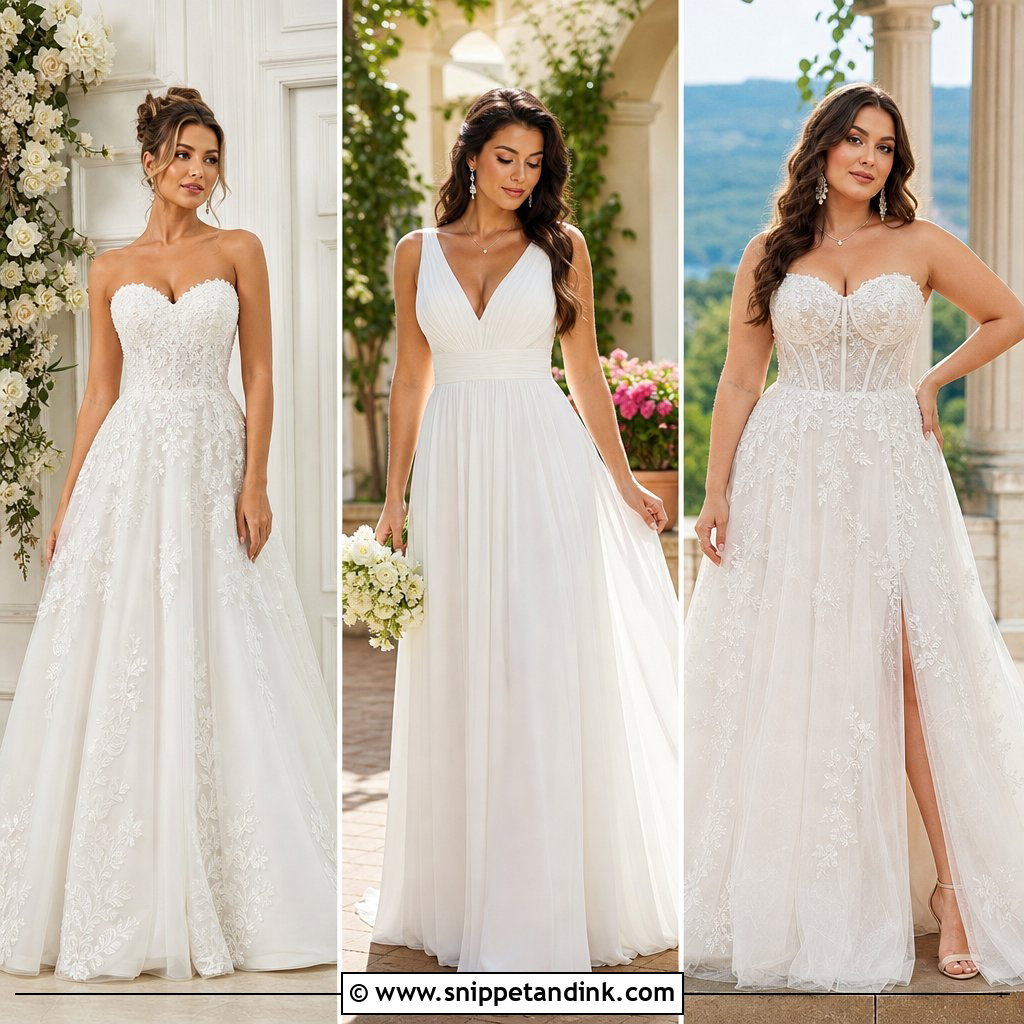
Lace A-lines forgive a lot, which is why they’re often the first dress that feels right. The skirt starts at the natural waist and falls away, so nothing clings at the hip or tummy. My advice is to have the straps, bust and hem fitted at the same appointment, because shortening a strap lifts the whole skirt and changes the hem. A V or illusion neckline keeps the top half open. Ivory block-heel sandals, pearl drops, a lace-edged fingertip veil and small white roses keep the focus on the lace. It sits comfortably in a garden, an estate or a church.
2. Corset Ball Gown Wedding Dress
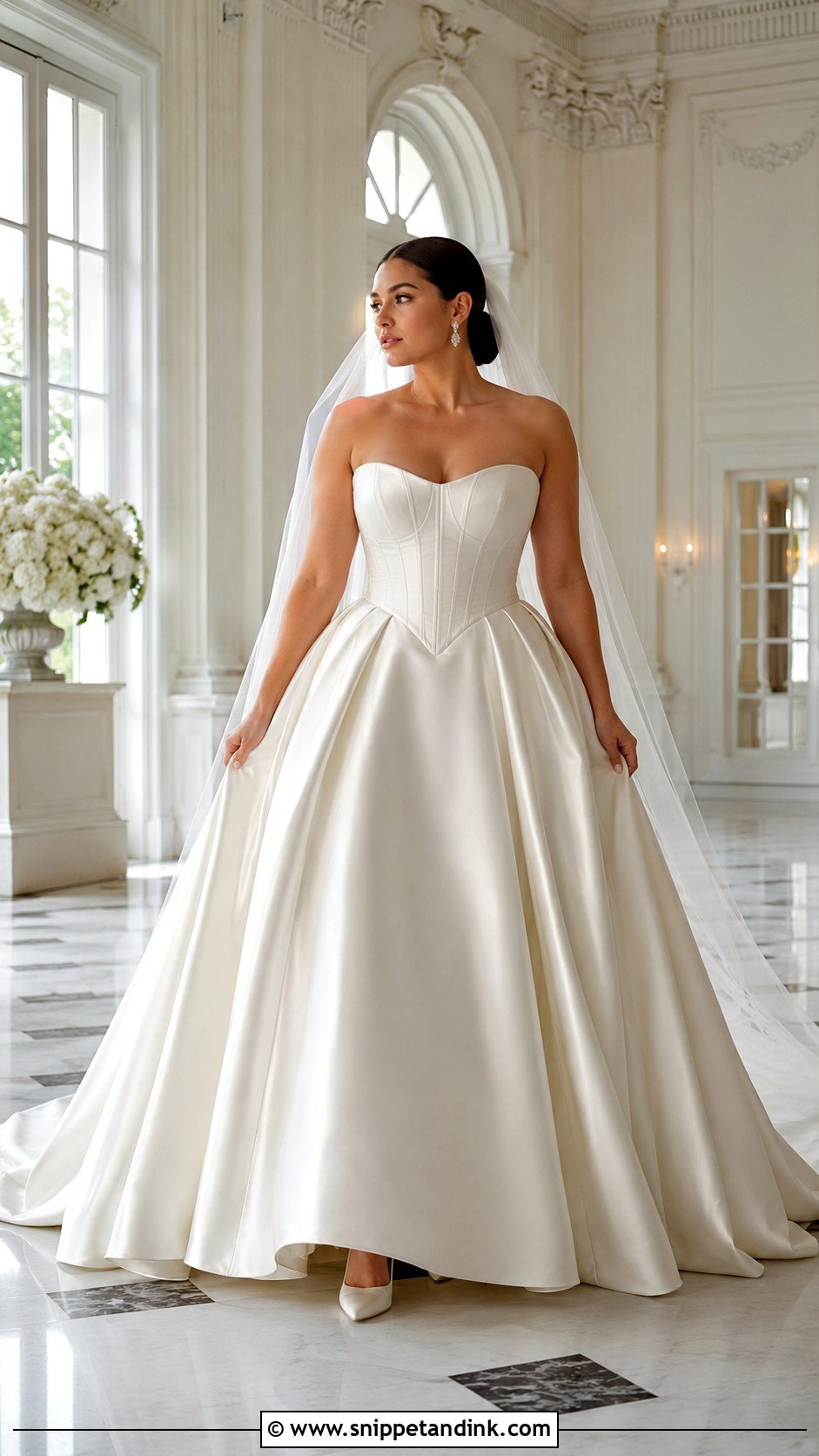
A corset ball gown is all about the back closure. Lace-up backs let me adjust the fit by a centimetre or two on the morning; zips don’t. The shape should come from correctly placed boning, never from pulling the laces as tight as they’ll go, which flattens the bust and makes sitting miserable. Satin or layered tulle gives the skirt its volume. Pointed ivory pumps, a cathedral veil, crystal earrings and a low bun suit a ballroom or a grand hotel. Practise sitting, walking and lifting your arms during alterations, and tell your seamstress anything that pinches; it rarely improves on its own.
3. Mermaid Crepe Wedding Dress
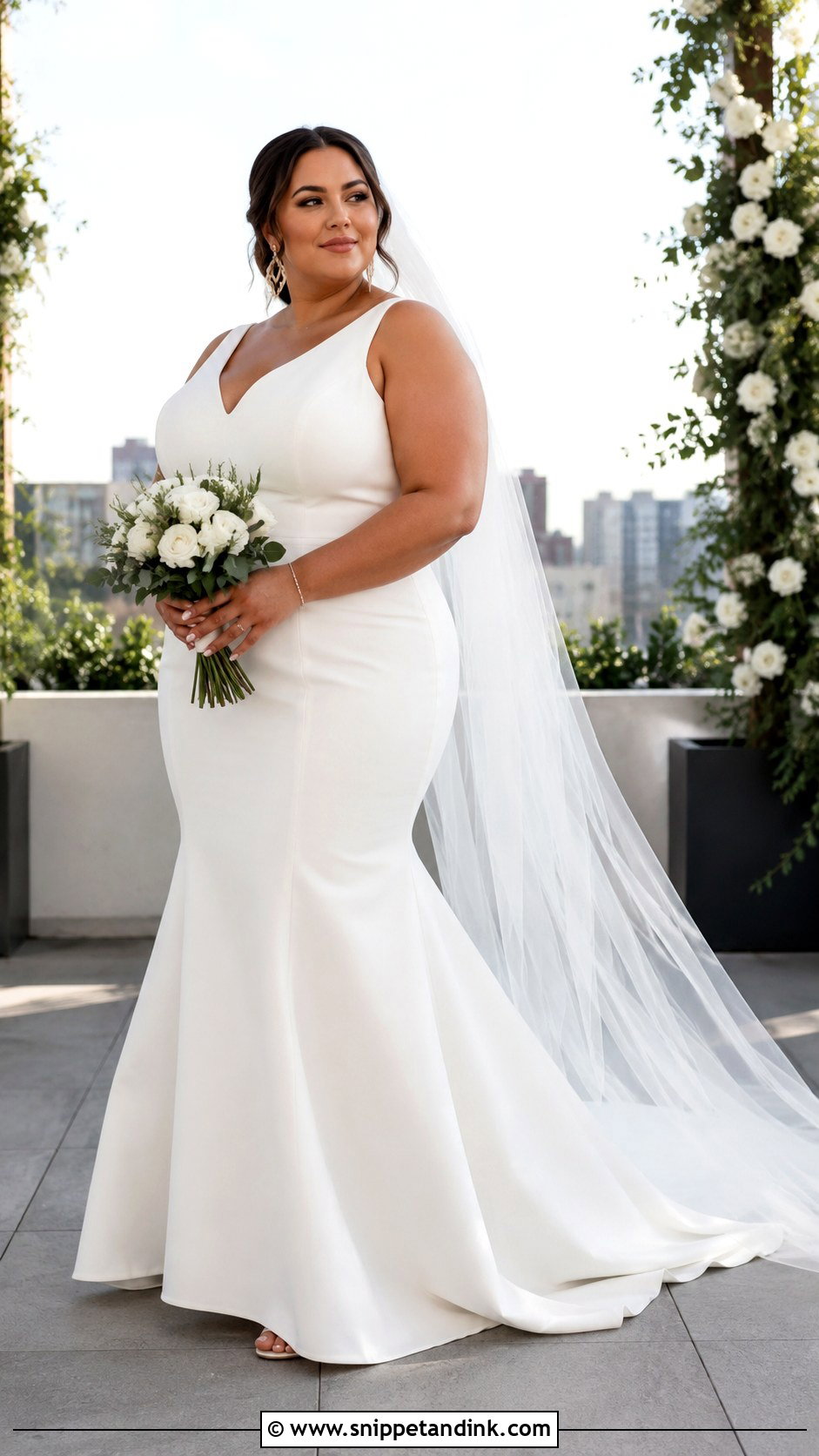
Heavy stretch crepe is the fabric I trust for a curvy mermaid. It smooths without the stiffness of a structured satin, and it recovers when you stand up after sitting. Look for straps that carry real weight, princess seams and a lined bodice. The flare should start where your stride stays natural; I walk brides up and down the shop before we set it. Smoothing underwear can keep the line clean, though it shouldn’t feel like a requirement. Metallic low heels, sculptural earrings, a slim bracelet and a chapel veil suit a rooftop or an evening city venue.
4. Fit-And-Flare Lace Wedding Dress
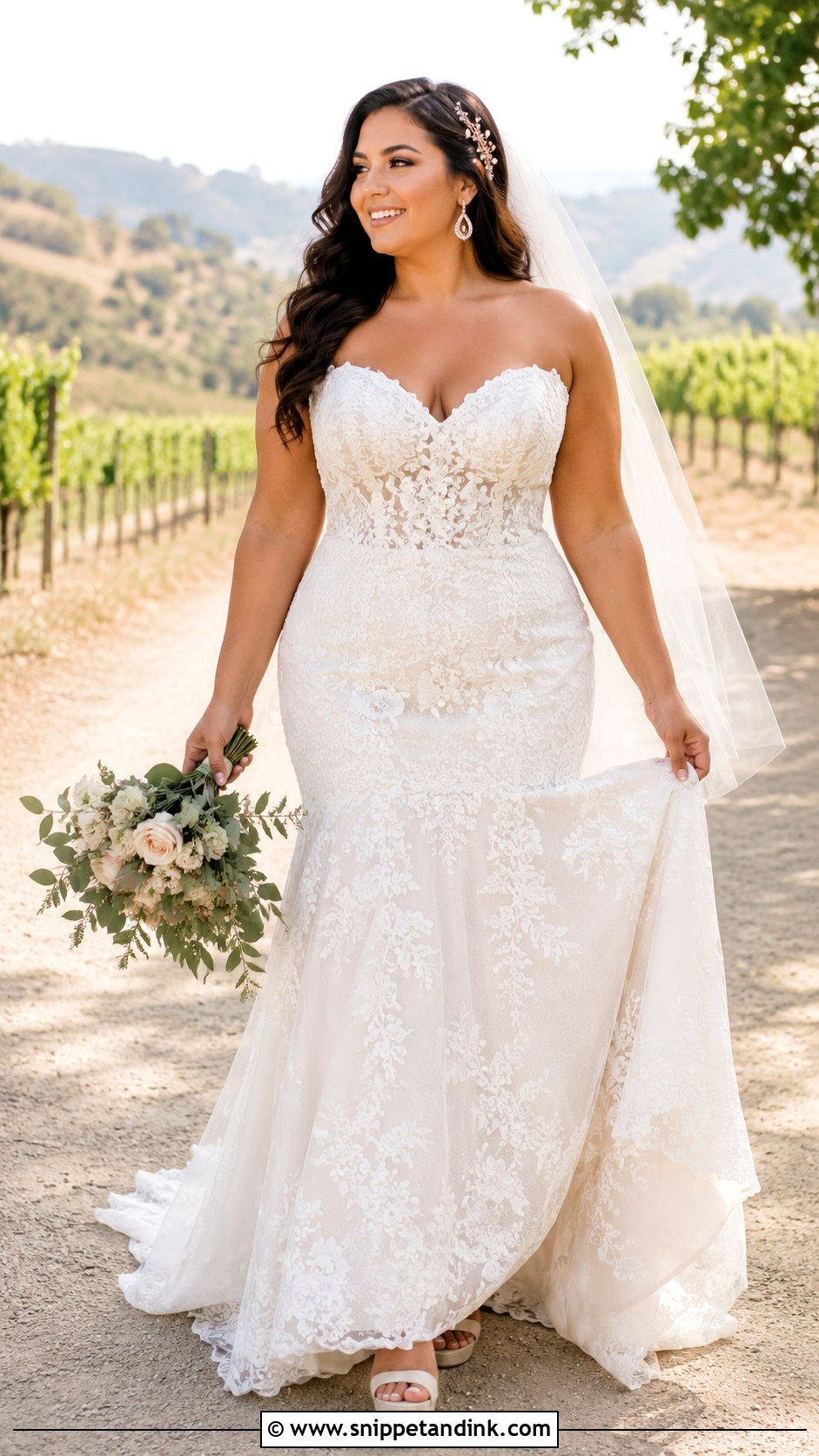
Do you want shape through the bodice without the tight knee of a mermaid? Fit-and-flare is the middle ground: it follows the bust, waist and upper hip, then opens earlier and more gently. I pick medium-scale lace for curvy clients, since tiny lace disappears and huge motifs can sit awkwardly across the bust, and I like appliqués running vertically down the skirt. A sweetheart or scoop neckline leaves room for hidden support. At the fitting, check that the lining stretches with the lace; if it doesn’t, the lace ripples. Platform sandals, a hair comb, teardrop earrings and a light veil finish it for a vineyard or garden.
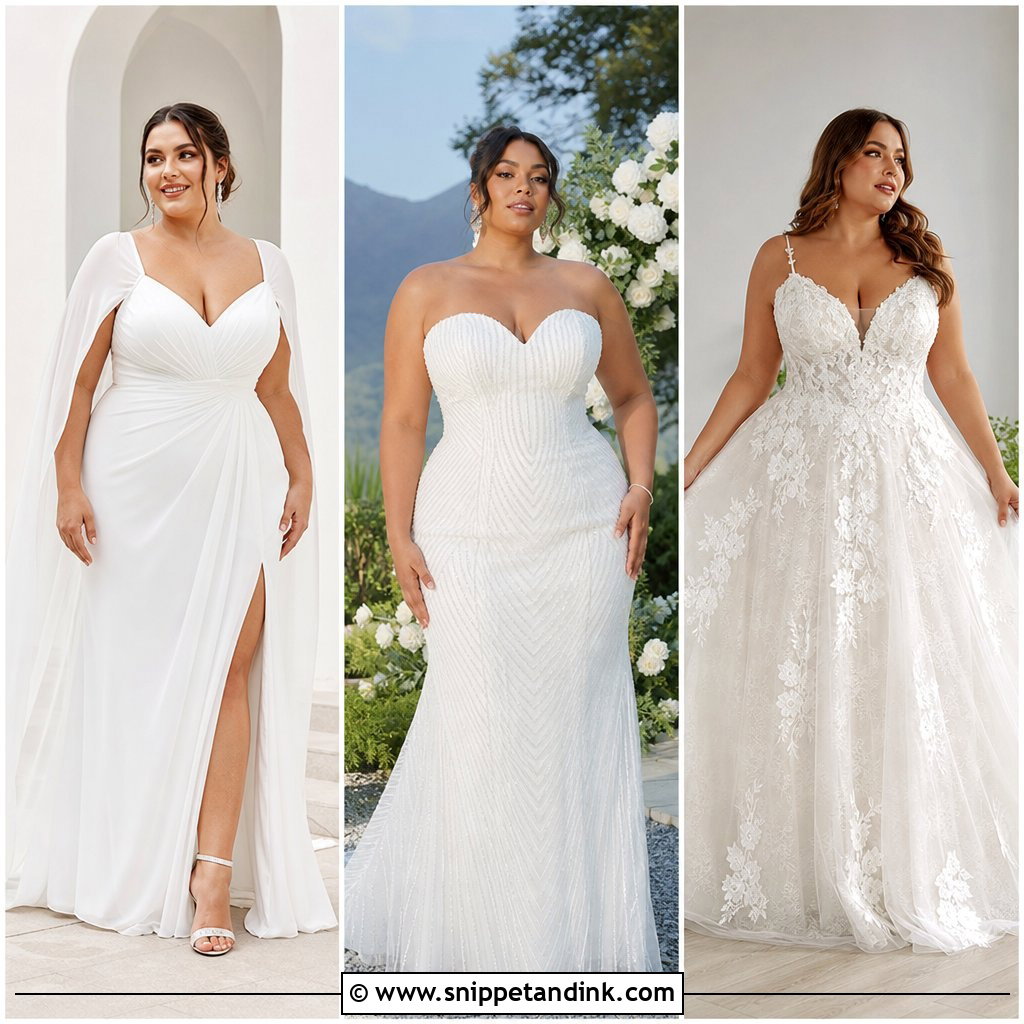
5. Empire Waist Chiffon Wedding Dress
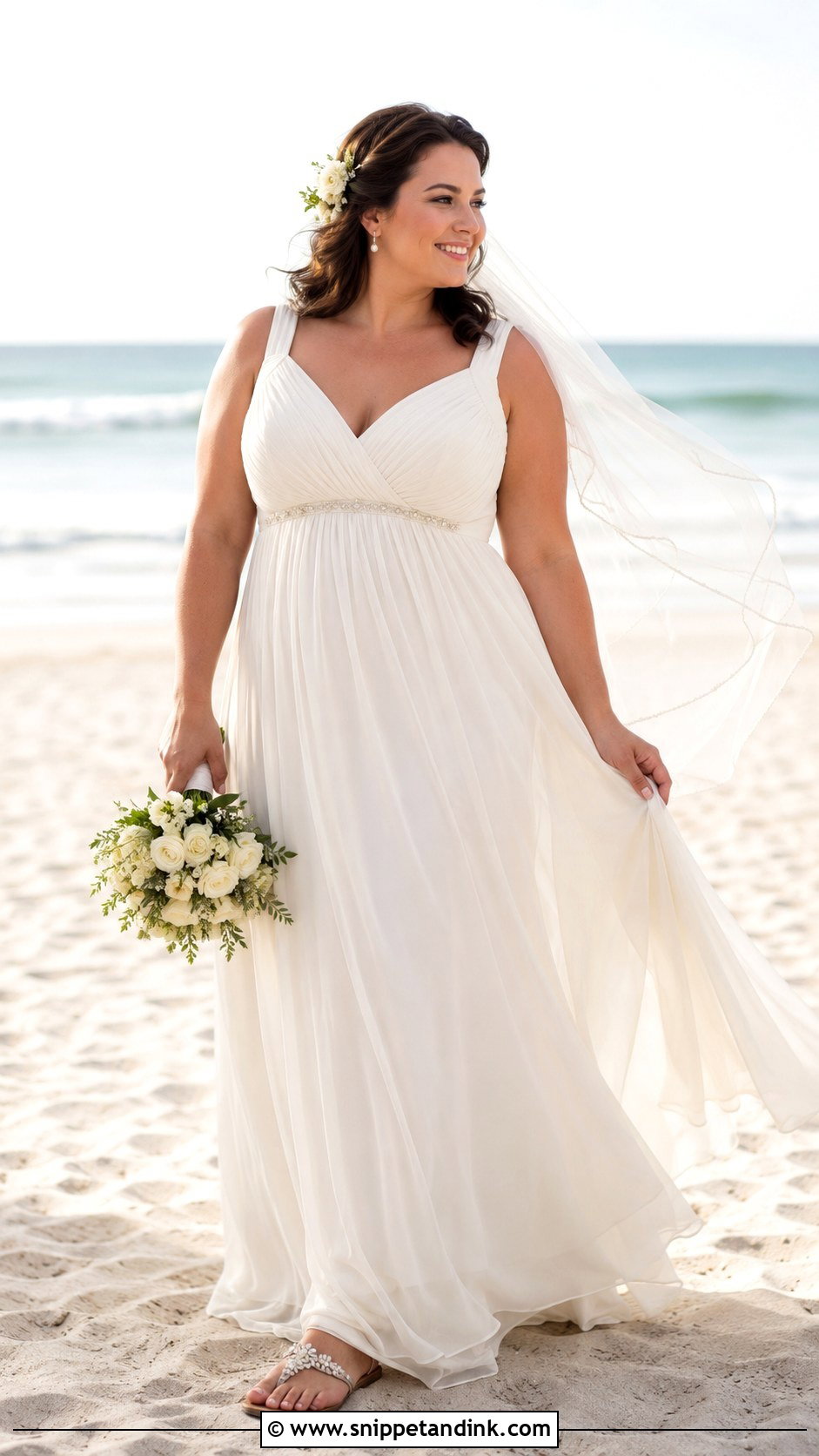
Chiffon on an empire seam is the softest silhouette here. The waistline sits under the bust and the skirt drops straight past the midsection, which many brides find comfortable all day. The weak point is transparency, so look for layered lining and a supportive inner bodice with wide straps. Outdoors, chiffon catches on anything, so ask for a simple bustle and a hem that just clears the ground. Embellished flat sandals, a floral hairpiece, small pearls, a shoulder-length veil and loose waves suit a beach or destination ceremony.
6. Basque Waist Satin Wedding Dress
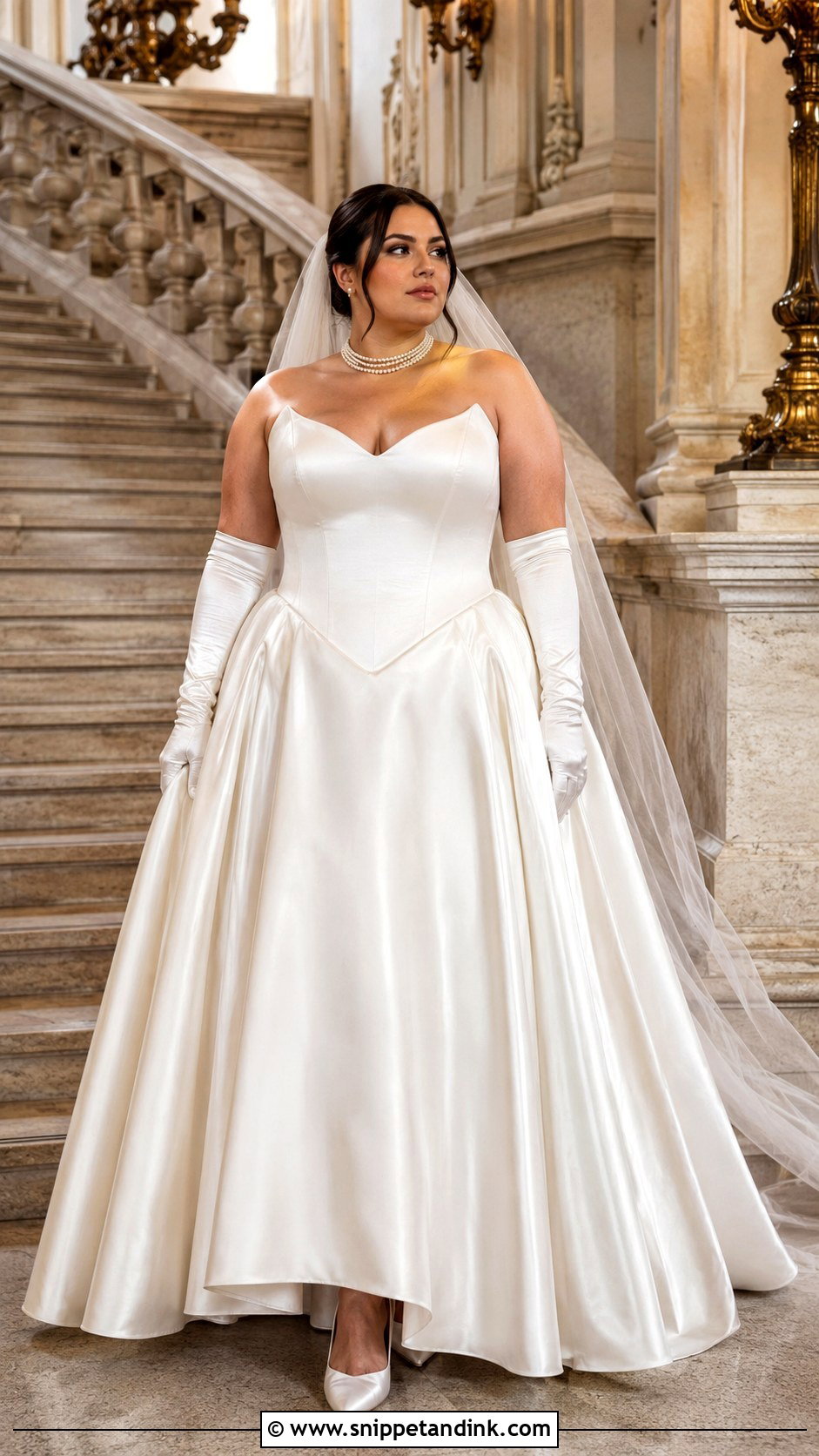
A basque waist satin wedding dress carries a vintage line, with a gentle V dipping at the front where the bodice meets the skirt. The point must rest flat. If it presses into you when seated, the bodice is too long for your torso, and that’s an easy fix if caught early. Matte or softly lustrous satin reads well in photos without hot spots of shine. I’d style it formally: closed pumps, a pearl choker, elbow gloves, a long plain veil and a smooth bun, at a historic house or ballroom.
7. Off-The-Shoulder Wedding Dress
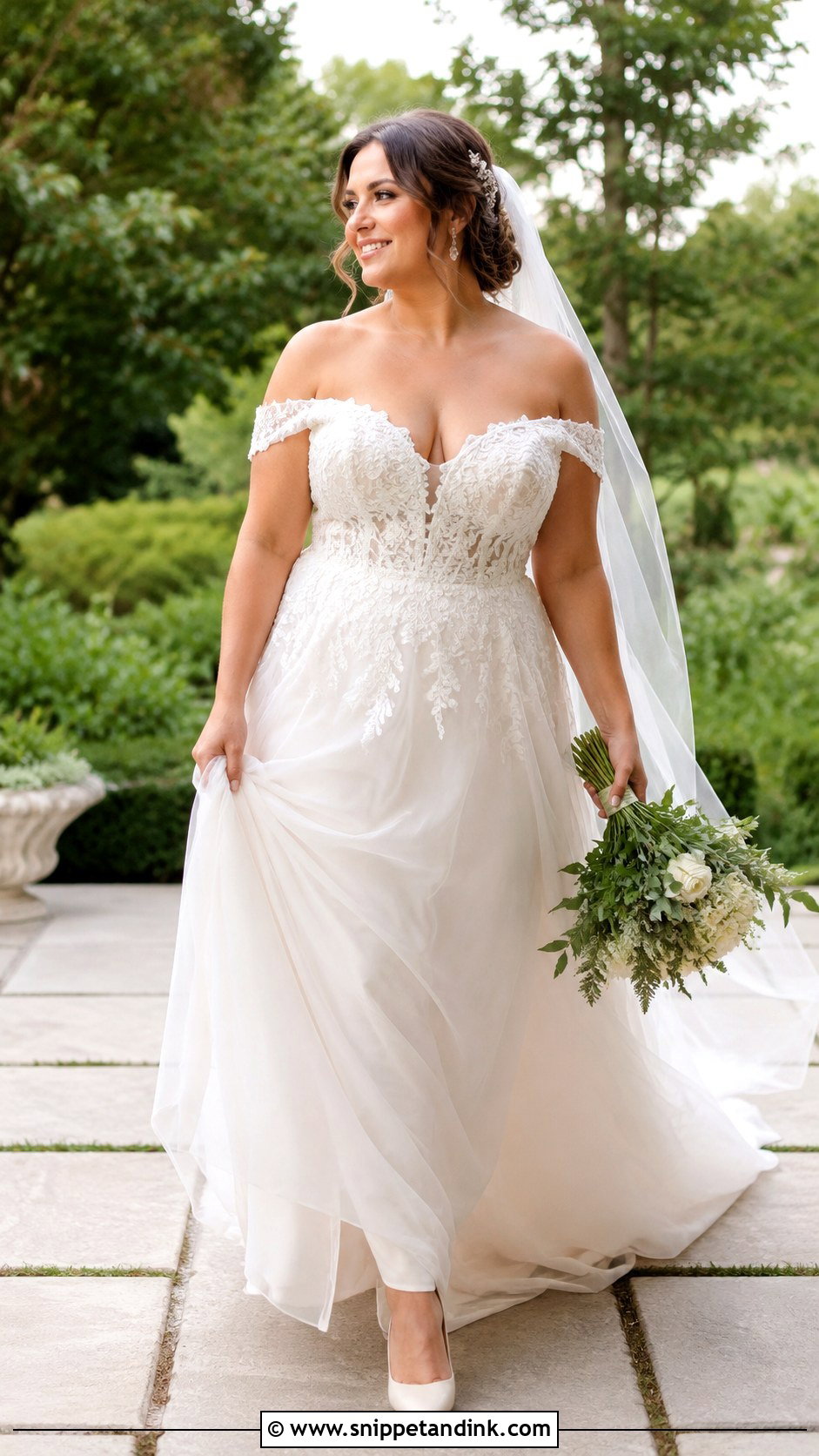
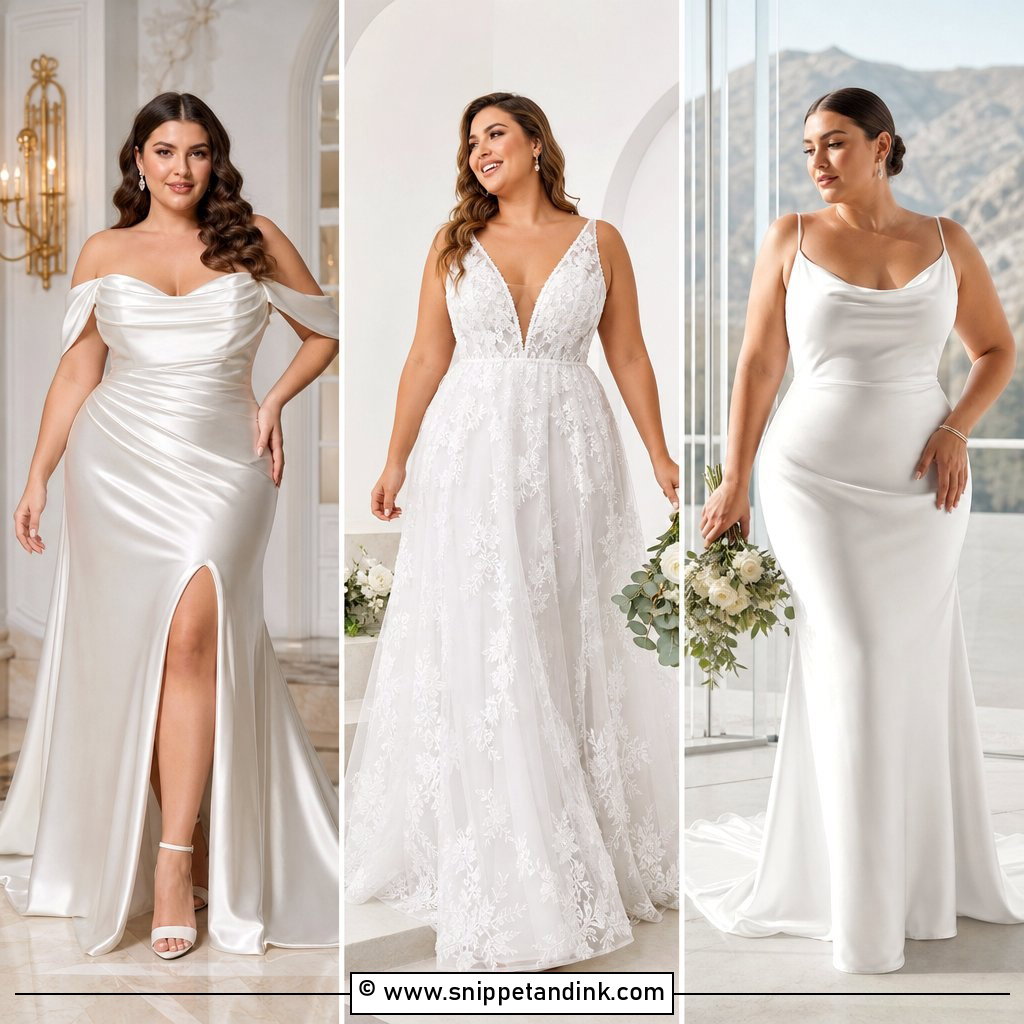
An off-the-shoulder neckline frames the face and collarbone, but the sleeves must be decorative, not structural. An internal corset or firm bodice should hold the gown so the sleeves aren’t carrying weight. During fittings, hug someone and lift your arms; if the sleeves cut into your upper arm, ask for a little more ease. Skip the necklace when the neckline has lace or beading. Crystal hairpins, drop earrings, ivory pumps and a sheer chapel veil suit a formal garden or a bright hall.
8. Long Sleeve Lace Wedding Dress
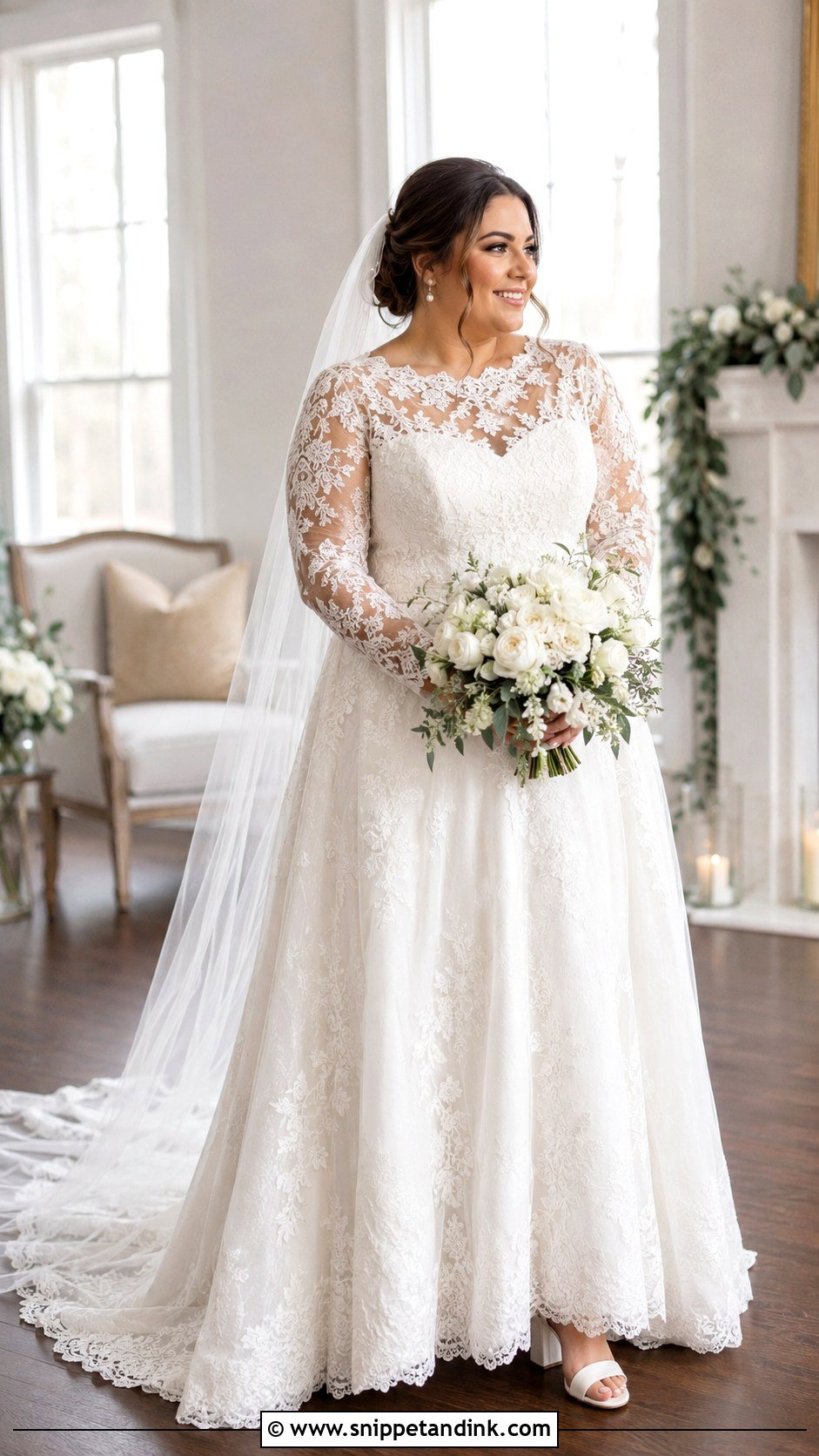
Long lace sleeves are made or ruined at the upper arm and elbow. Off-the-rack sleeves are cut for an average arm, so I usually have them re-shaped to the bride rather than simply shortened. Reach forward: if the lace pulls across your shoulder blades, the back needs more room. A lined bodice under sheer lace sleeves gives definition and still shows the pattern. Velvet block heels, pearl studs, a cathedral veil and a textured white bouquet suit autumn and winter, or any cool indoor ceremony.
9. Square Neck Wedding Dress
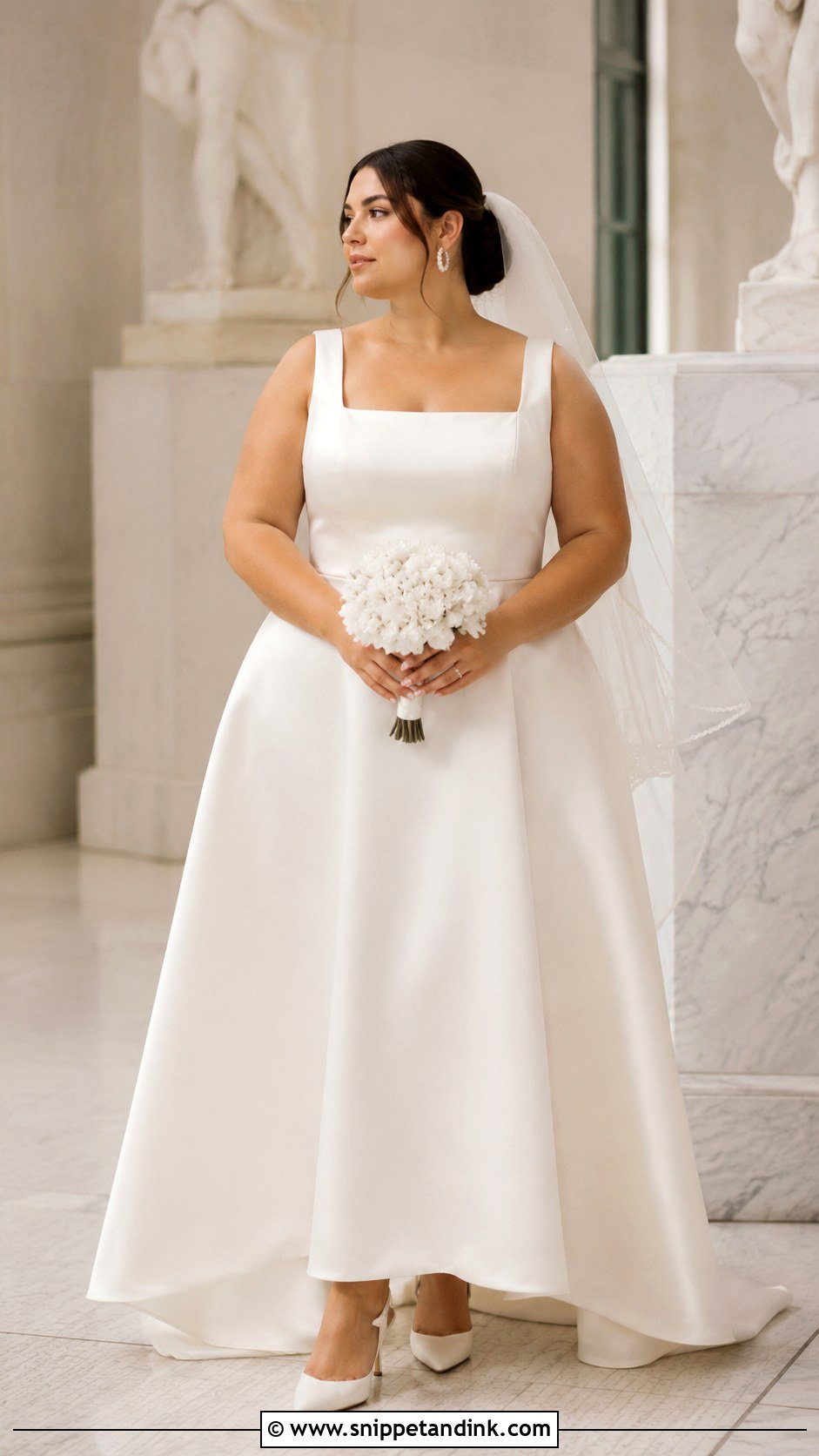
The square neck reads clean and modern, and wide straps hide a proper bra. A structured A-line skirt in satin, mikado or crepe keeps the line smooth. I watch the top edge when the bride sits; if it gapes or folds, the neckline needs a stay tape or small dart. Pearl hoops, slingbacks, a small structured bouquet and a fingertip veil keep it sharp. A low chignon with a few loose face-framing pieces softens it so it doesn’t look severe in a museum or restaurant setting.
10. Strapless Ruched Wedding Dress
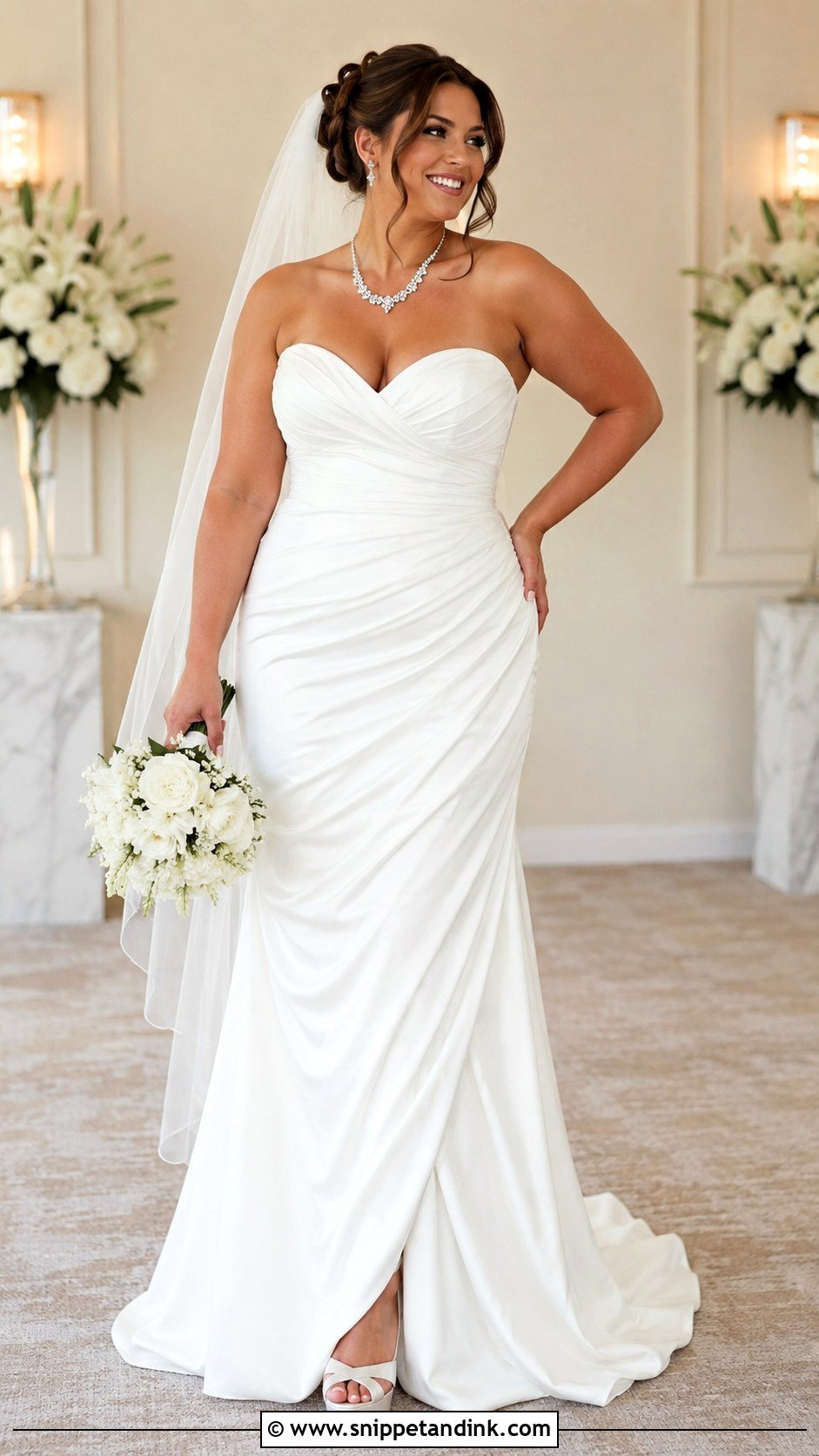
Strapless on a fuller bust can absolutely work, but only with the right build. Diagonal ruching helps the bodice follow your shape, and underneath it you want boning, moulded cups and a waist stay, a grosgrain band that anchors the gown at the waist so the bodice isn’t sliding down. Wear the sample for ten minutes, sit, then stand: if you’ve hitched it up twice, it’s not the one. A sparkling necklace, studs, platform heels and a light veil that doesn’t drag on the bodice finish it. Choose a gathered A-line skirt for movement or a fitted skirt for glamour.
11. V-Neck Tulle Wedding Dress
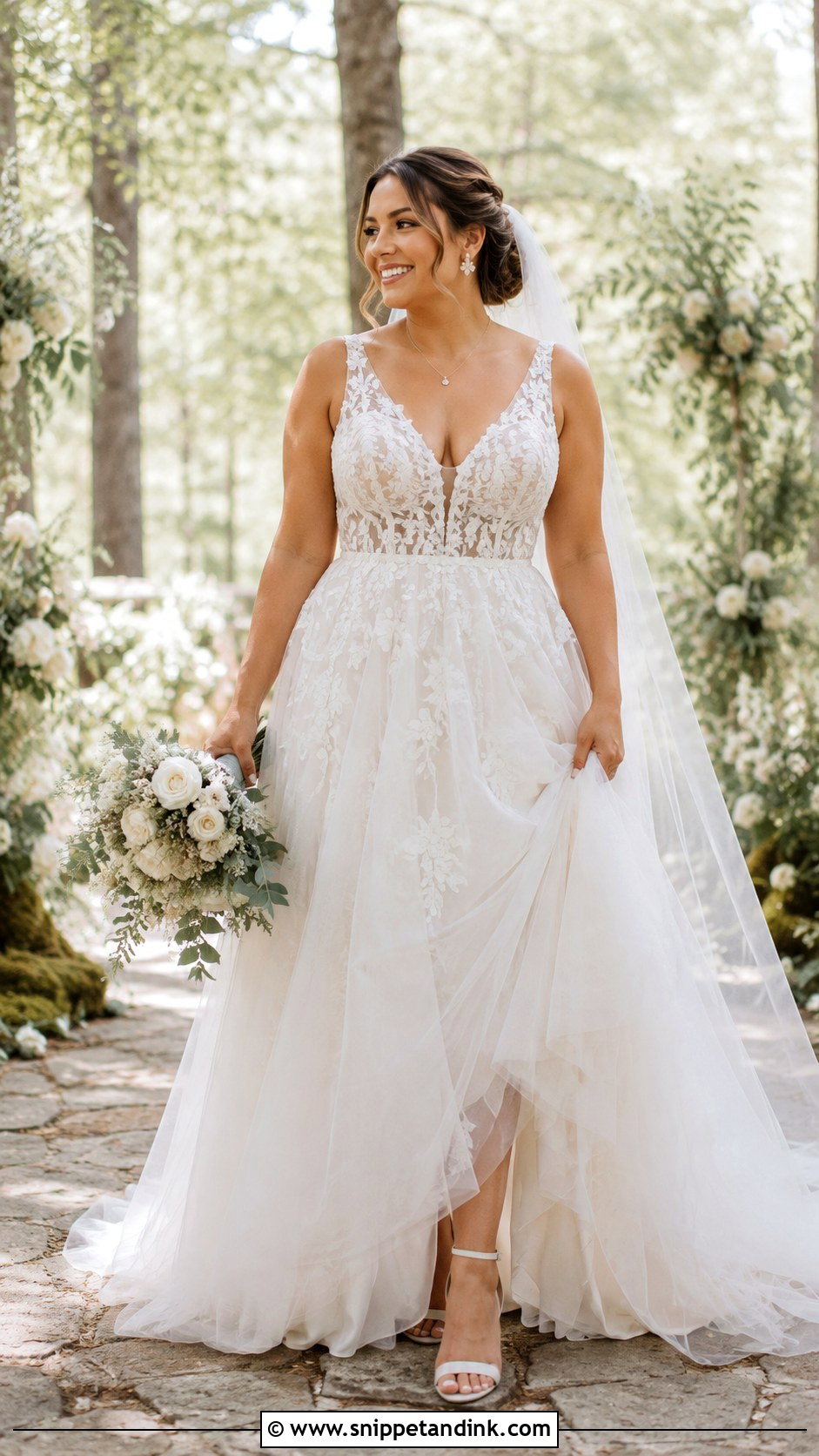
Tulle layers make a V-neck feel light, but the neckline still needs serious support for a curvy bust. Look for supportive mesh, secure straps and enough coverage at the sides of the bust that you aren’t worrying about spillage when you lean in for a hug. Check that the skirt layers are trimmed evenly and the lining feels smooth. Ankle-strap heels, a delicate pendant, floral earrings, a soft veil and a loose braided updo suit woodland and garden venues.
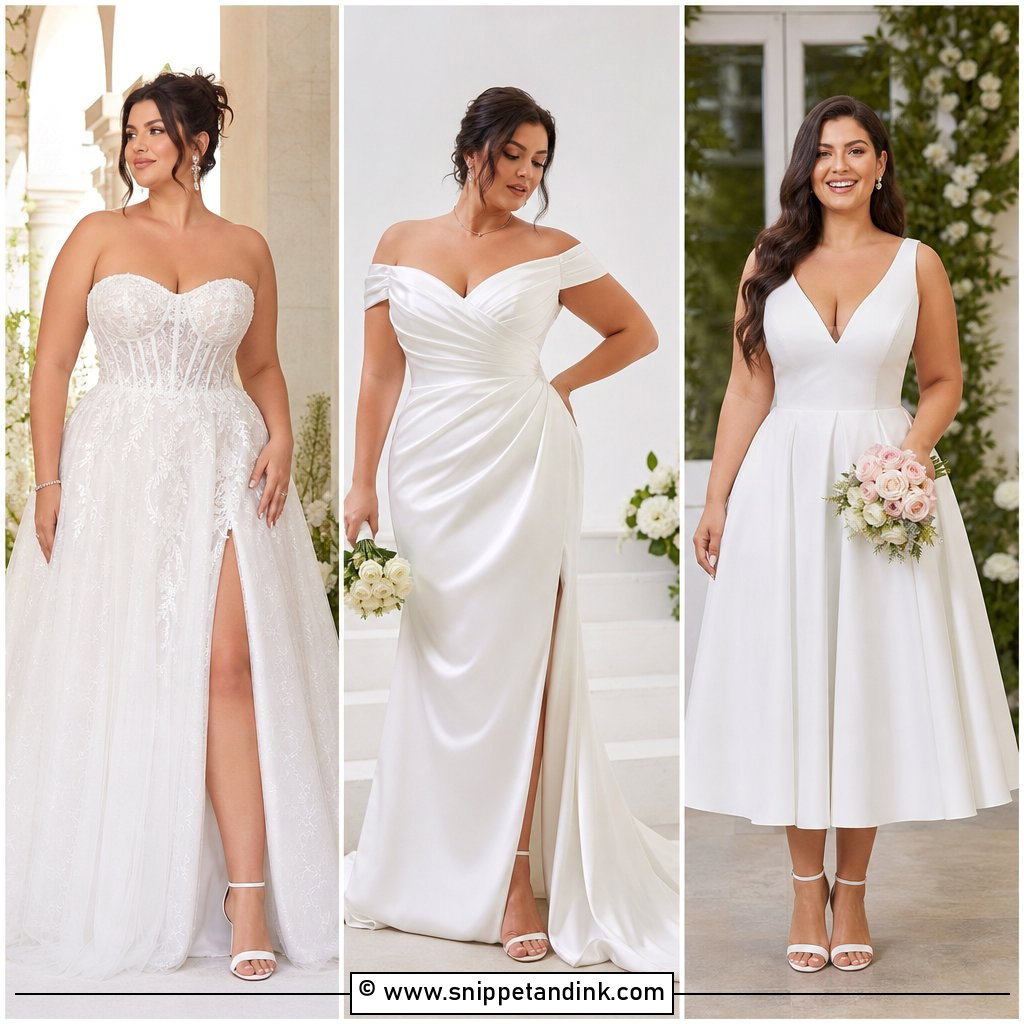
12. Tea-Length Wedding Dress
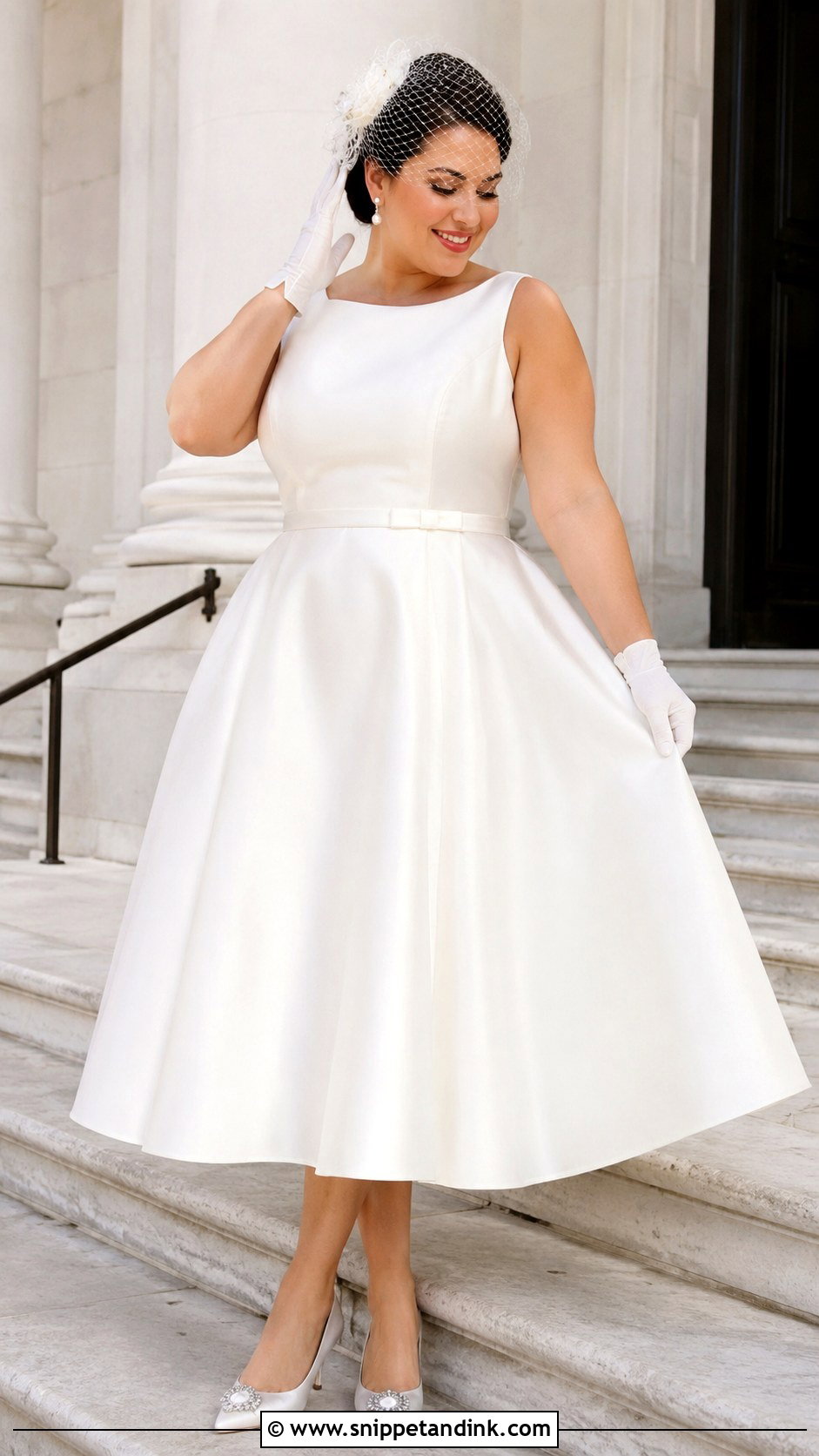
Tea length is the most playful shape here, and it puts your legs and shoes on display. I’d mark the hem standing, then check it seated, since a full skirt rises more than you’d guess. Secure straps and enough skirt structure keep it from looking deflated by the evening. Jewelled kitten heels, short gloves, pearl earrings and a birdcage veil or bow suit a courthouse wedding or a brunch reception. A narrow satin belt can define the waist, but the dress should look finished without it.
13. Boho Bell Sleeve Wedding Dress
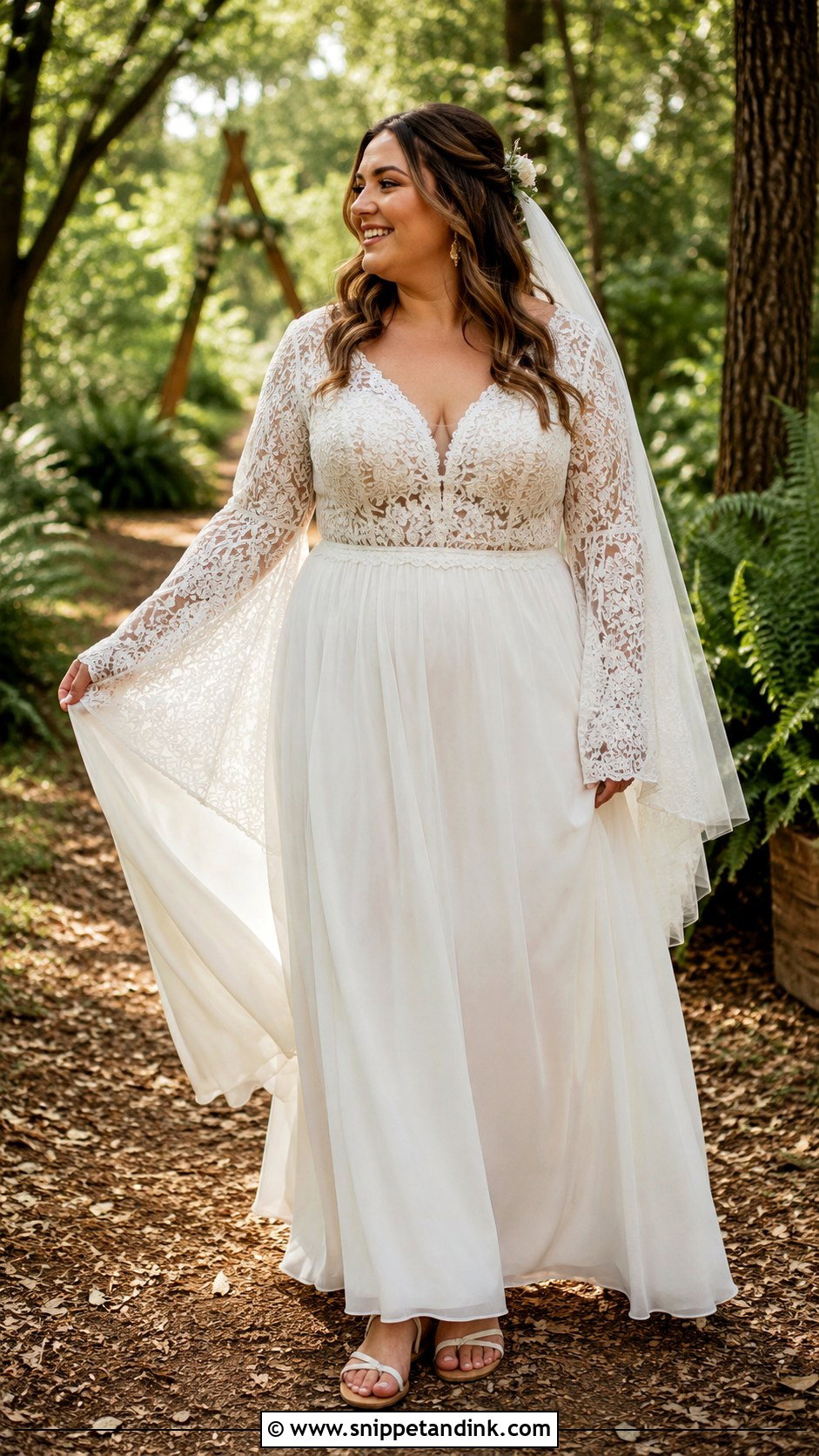
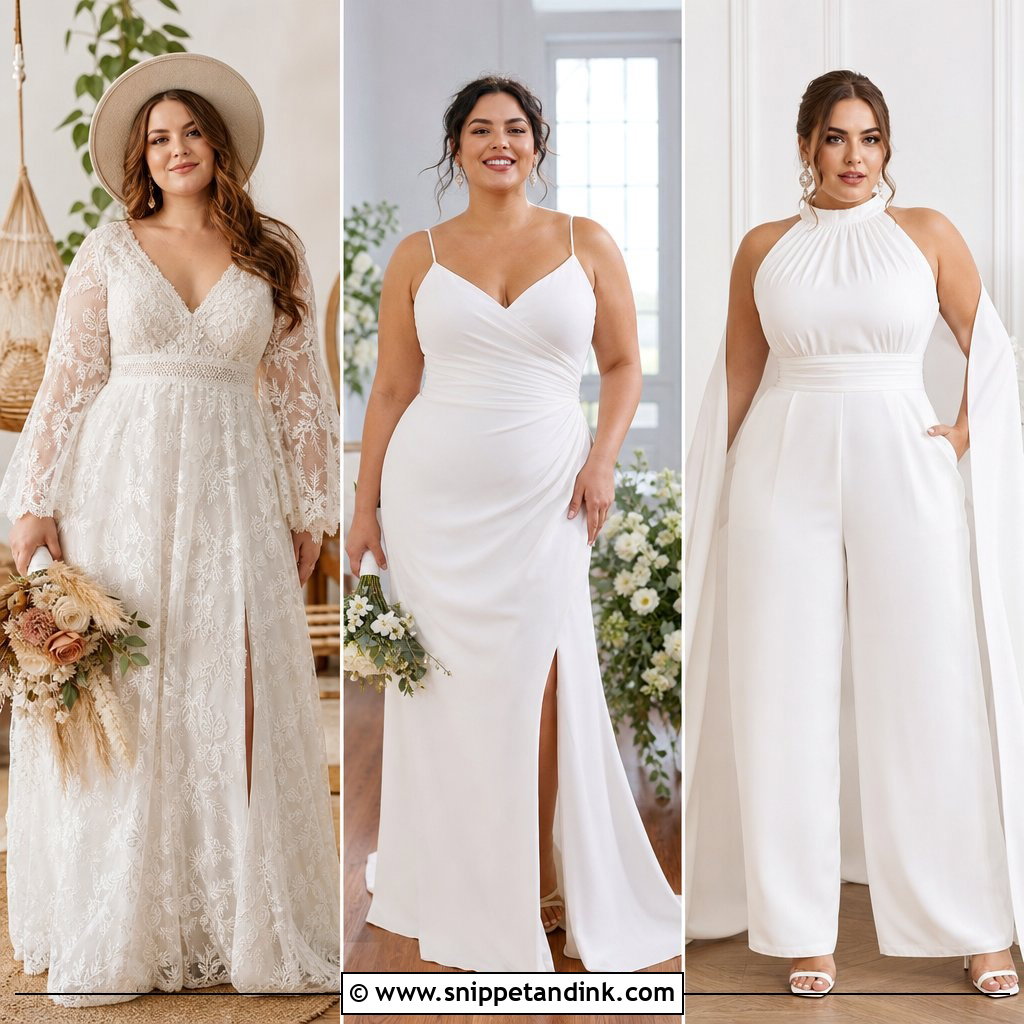
A boho bell sleeve wedding dress needs soft, flexible lace at the arm, or the sleeve stands away stiffly rather than swaying. I’d skip heavy fringe and chunky bracelets, both of which tangle in wide sleeves. A lined bodice and flowing A-line skirt give support without losing the relaxed mood. Ivory sandals, a flower comb, small gold earrings, a light veil under loose waves and a meadow-style bouquet suit a rustic venue, desert landscape or woodland clearing.
14. Minimalist Column Wedding Dress
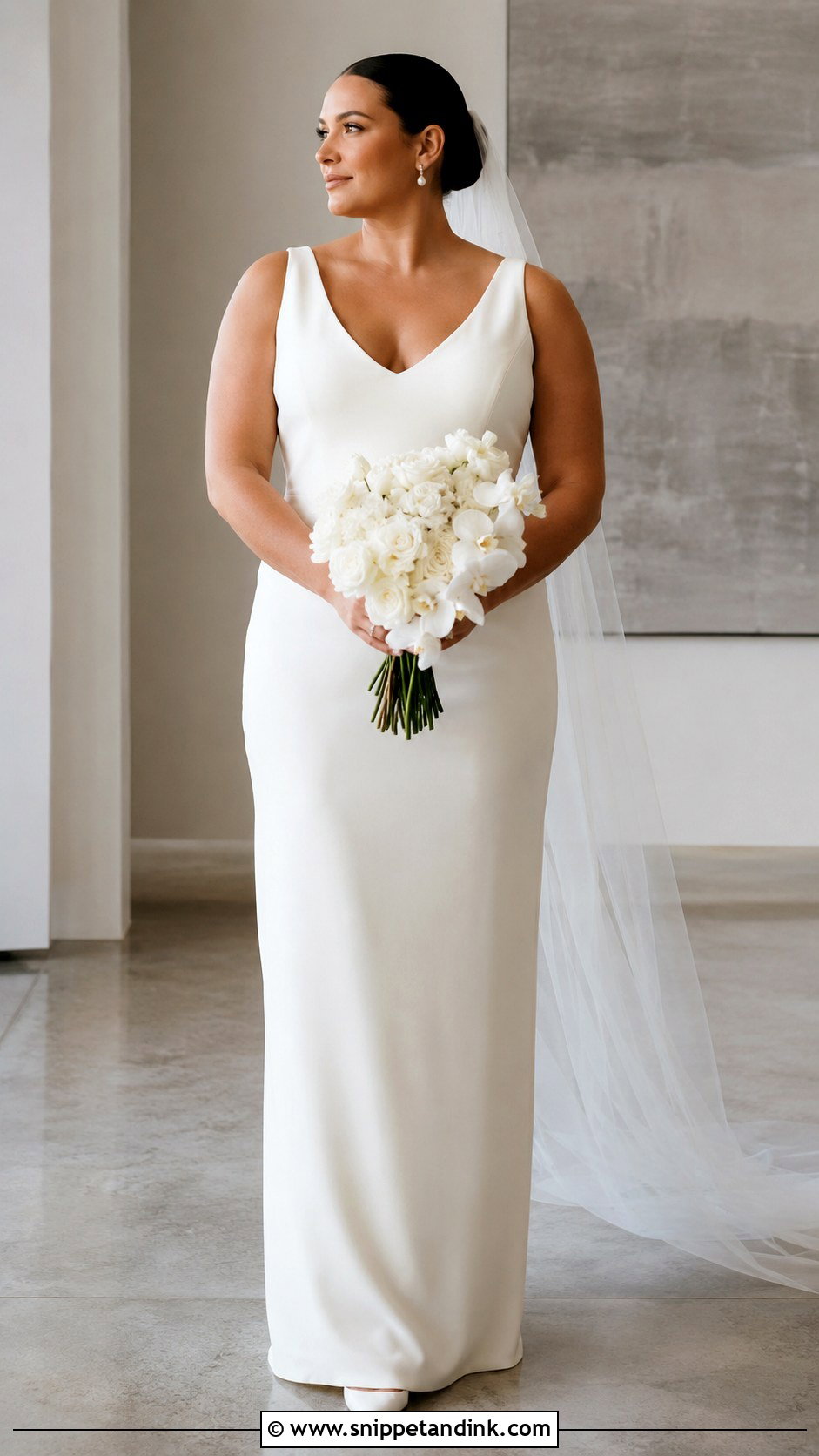
Sometimes the plainest gown is the strongest. A column relies on seaming and fabric, so I only suggest it in substantial crepe or satin with a supportive inner structure. Every seam is on display, which means careful alterations and a final check in daylight. A bateau, scoop or gentle V keeps it refined. Pointed pumps, modern pearls, a structured clutch, a long plain veil, sleek hair and a single-variety bouquet suit a gallery, loft or city hall.
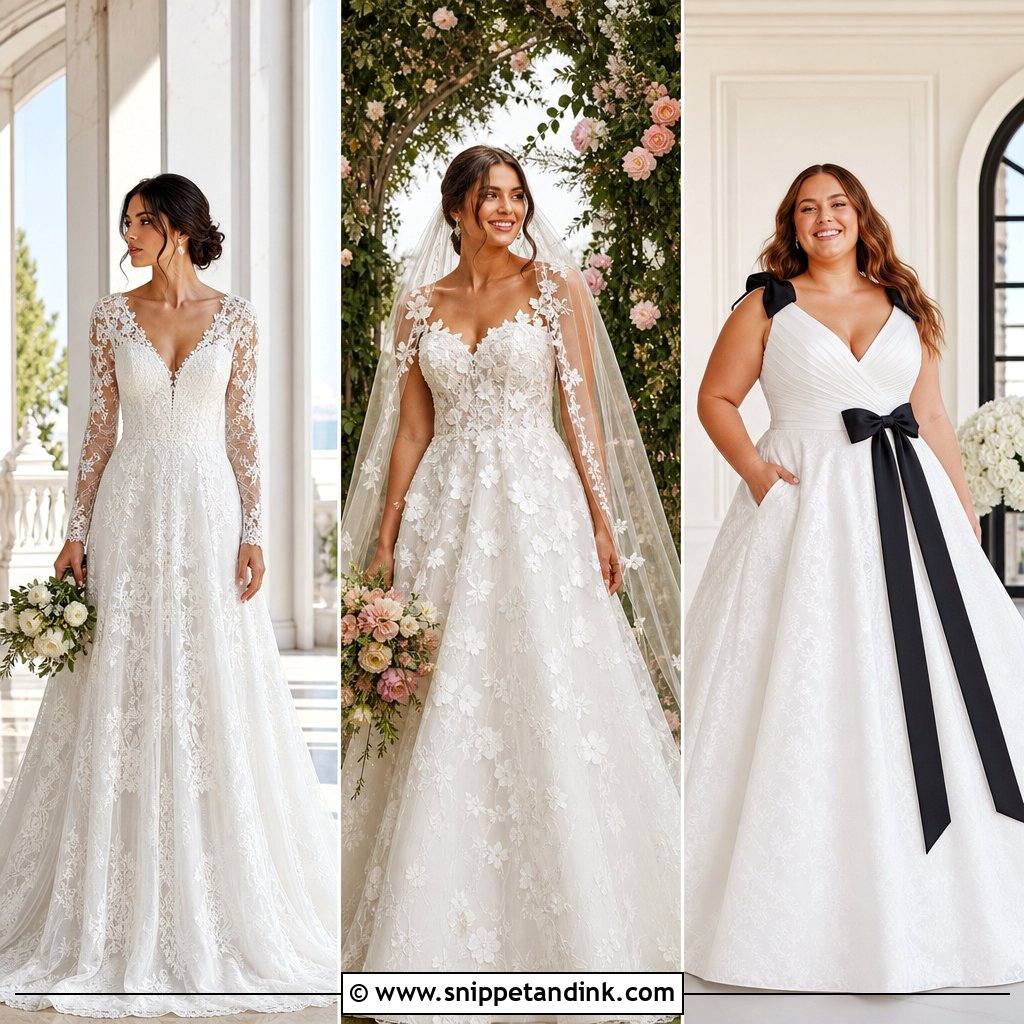
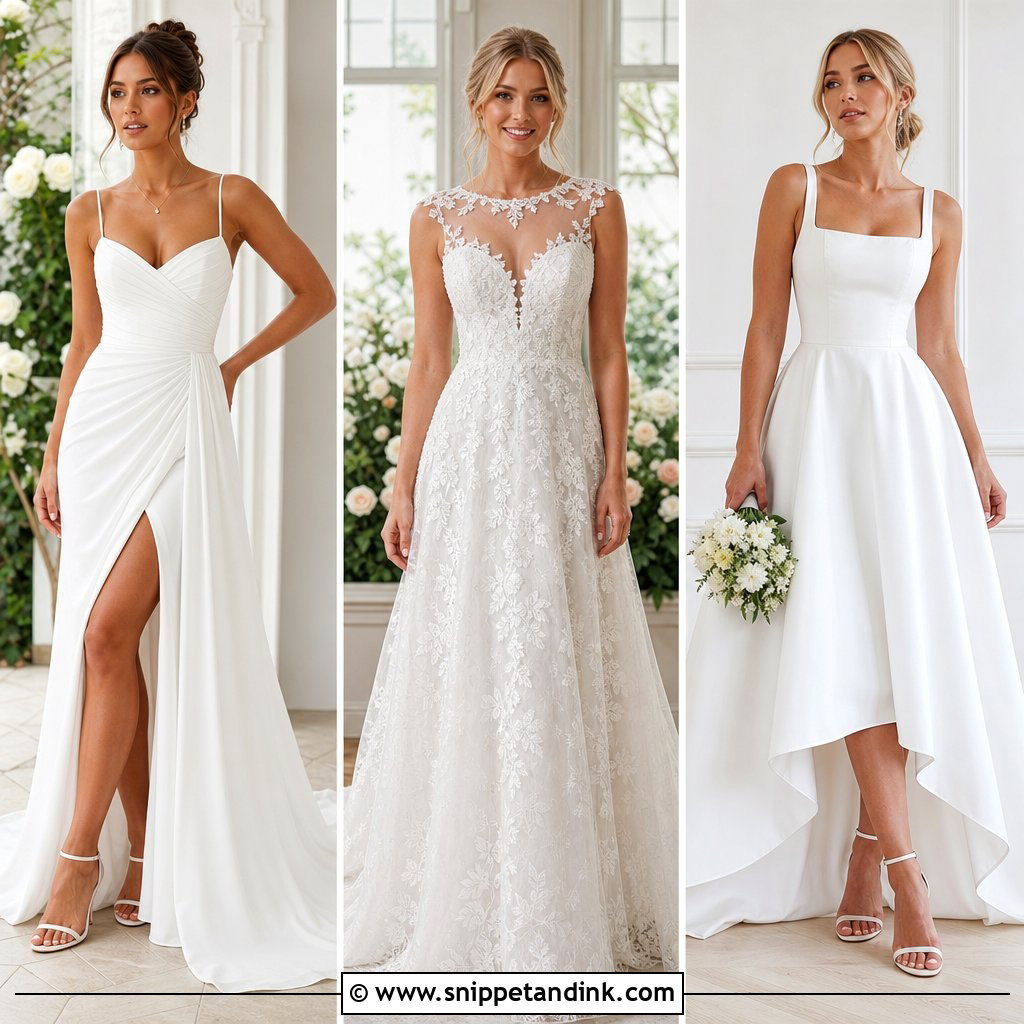
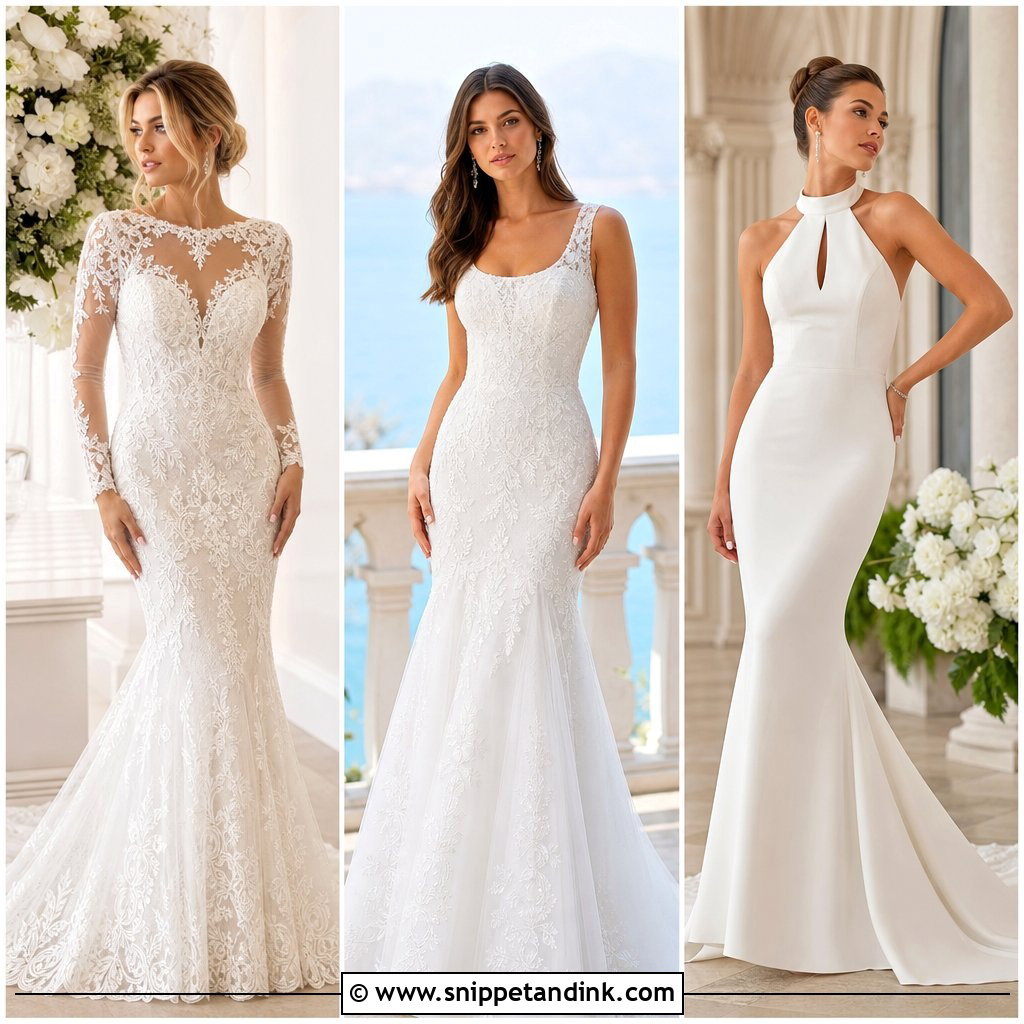
15. Asymmetrical Draped Wedding Dress
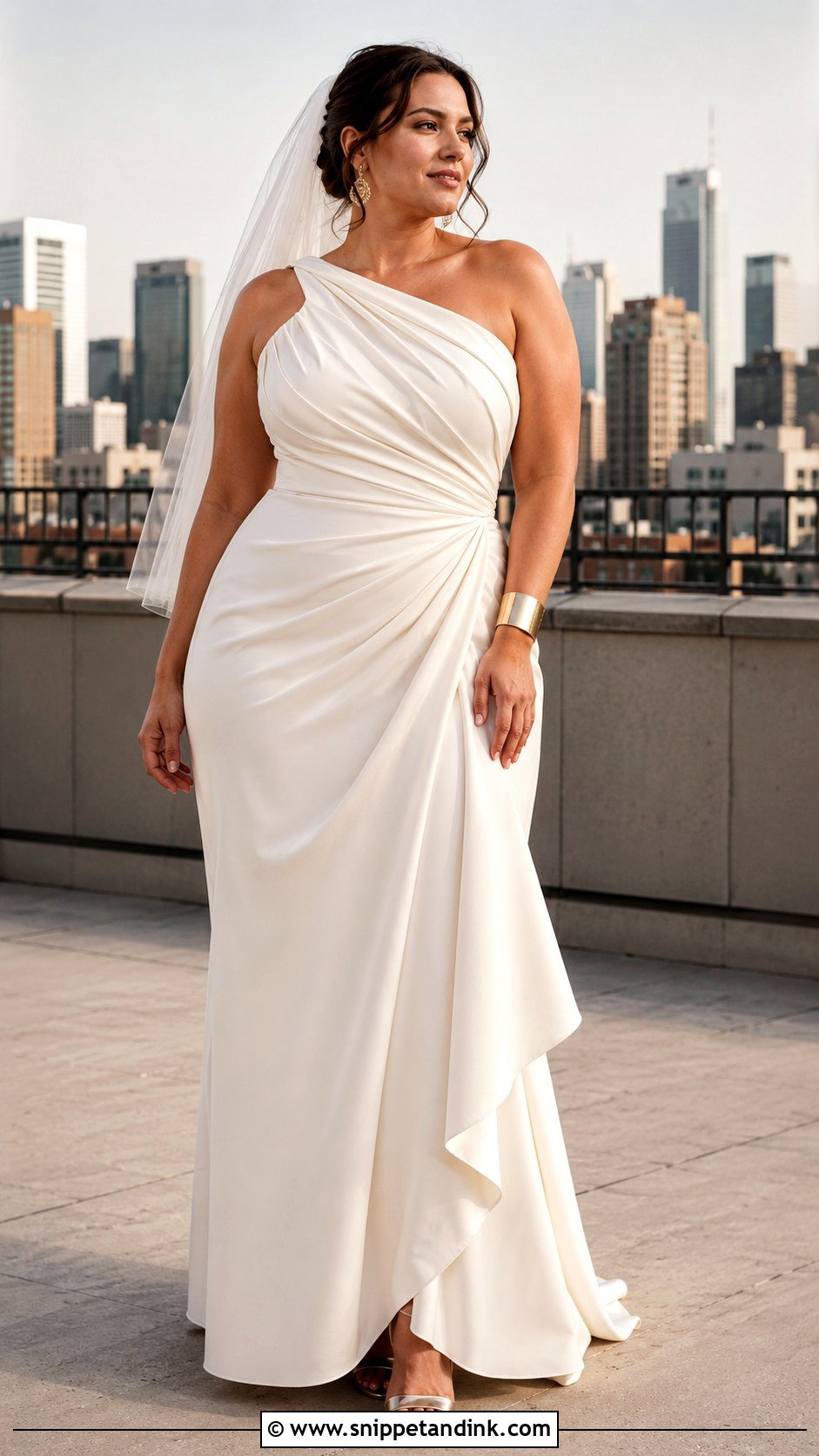
Angled draping draws the eye across the body rather than up and down, which many curvy brides find flattering. The folds have to be stitched into a firm inner bodice, though; loose draping shifts and bunches by the reception. When the side seams are taken in, ask your seamstress to keep the original folds rather than re-pleating them. Metallic sandals, sculptural earrings, a cuff and a simple veil behind the hair are enough, since the draping already carries the interest. It’s a strong pick for a rooftop or art venue.
16. Cape Sleeve Wedding Dress
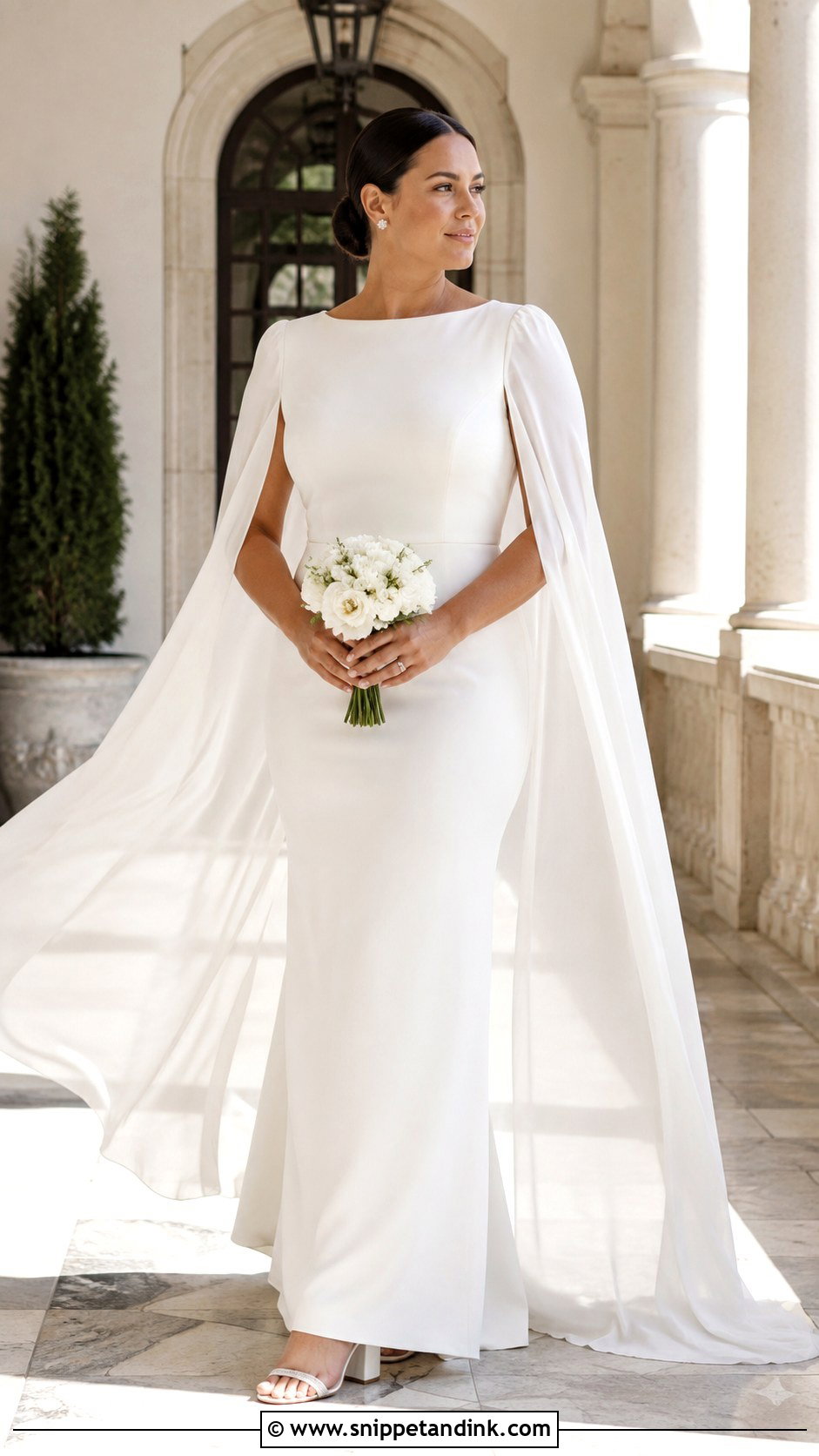
Capes can fall from the shoulders, the neckline or the upper back, and each sits differently. Shoulder capes give the most arm coverage; back capes leave the arms free. Over a fitted crepe gown or structured A-line, lightweight chiffon or tulle moves without adding bulk. If the cape trails like a train, skip the veil, or wear a short one with a detachable cape. Walk outside in it before the day if you can, since wind catches capes fast. Low block heels, crystal studs, a sleek bun and a compact bouquet suit a courtyard or coastal venue.
17. High-Low Wedding Dress
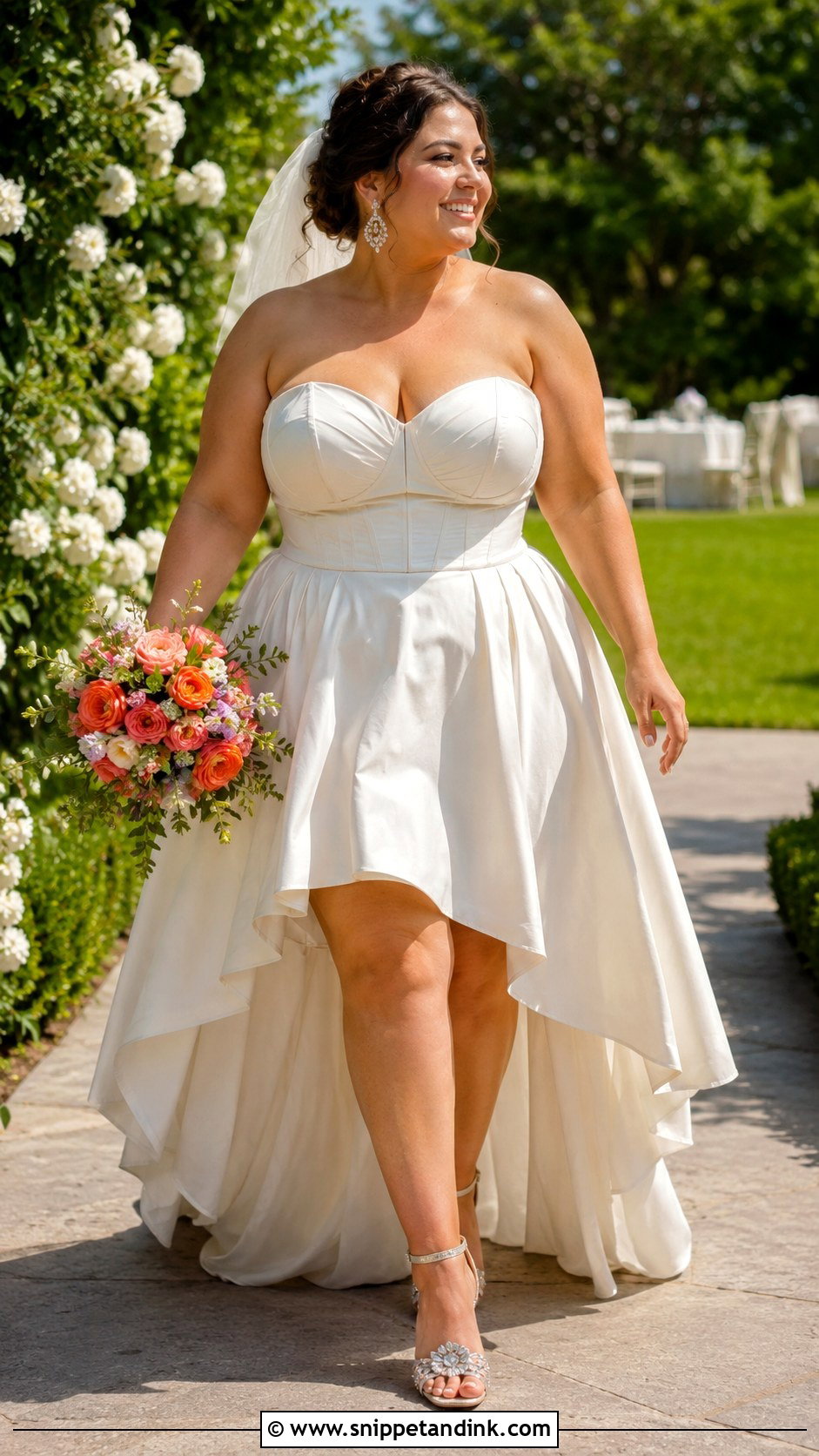
High-low hems give you the sweep of a long skirt with the ease of a short front, which makes walking on grass or stairs much simpler. The change in length should be gradual. Since your shoes are fully visible, pick embellished block heels you can actually stand in. Ask your seamstress to check the front hem on stairs and uneven ground. Bold earrings, a short veil and a bright bouquet suit garden receptions and destination ceremonies, anywhere a floor-length gown feels overdressed.
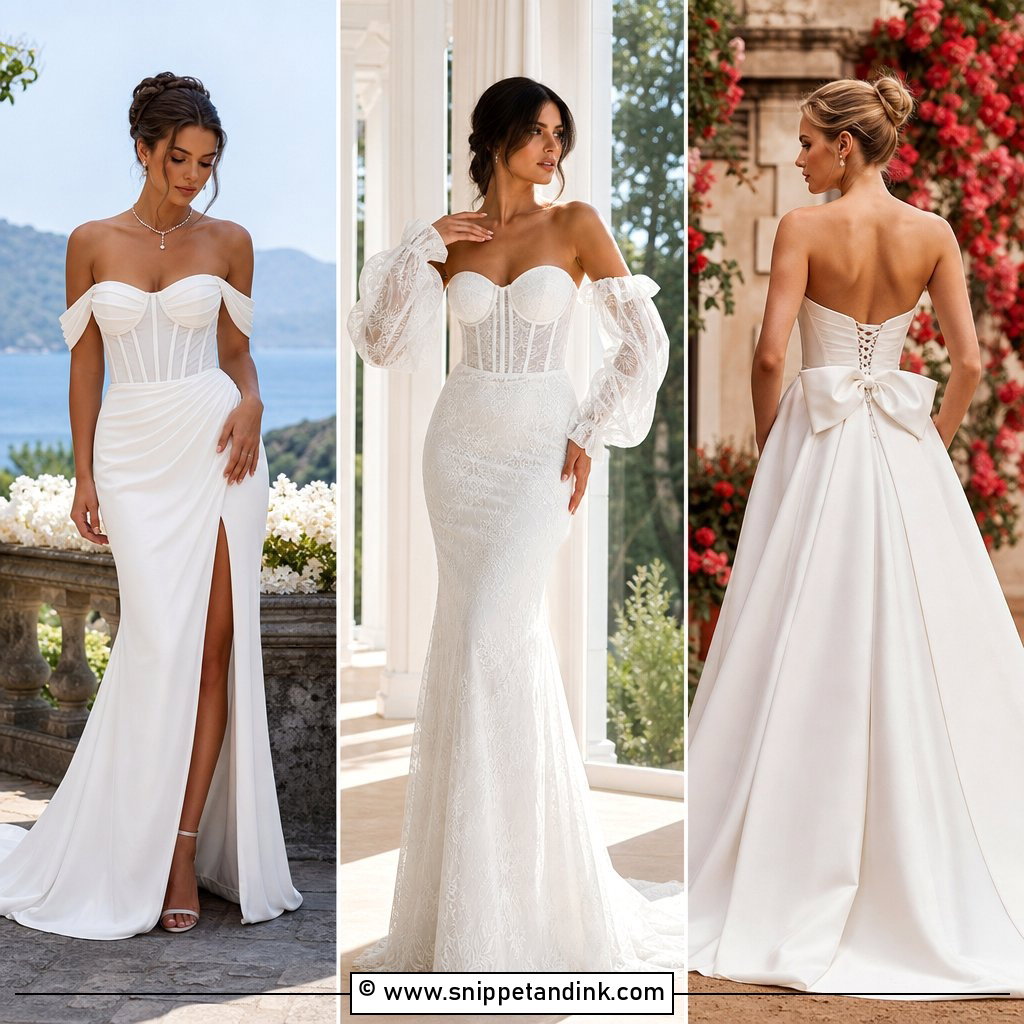
18. Floral Appliqué Wedding Dress
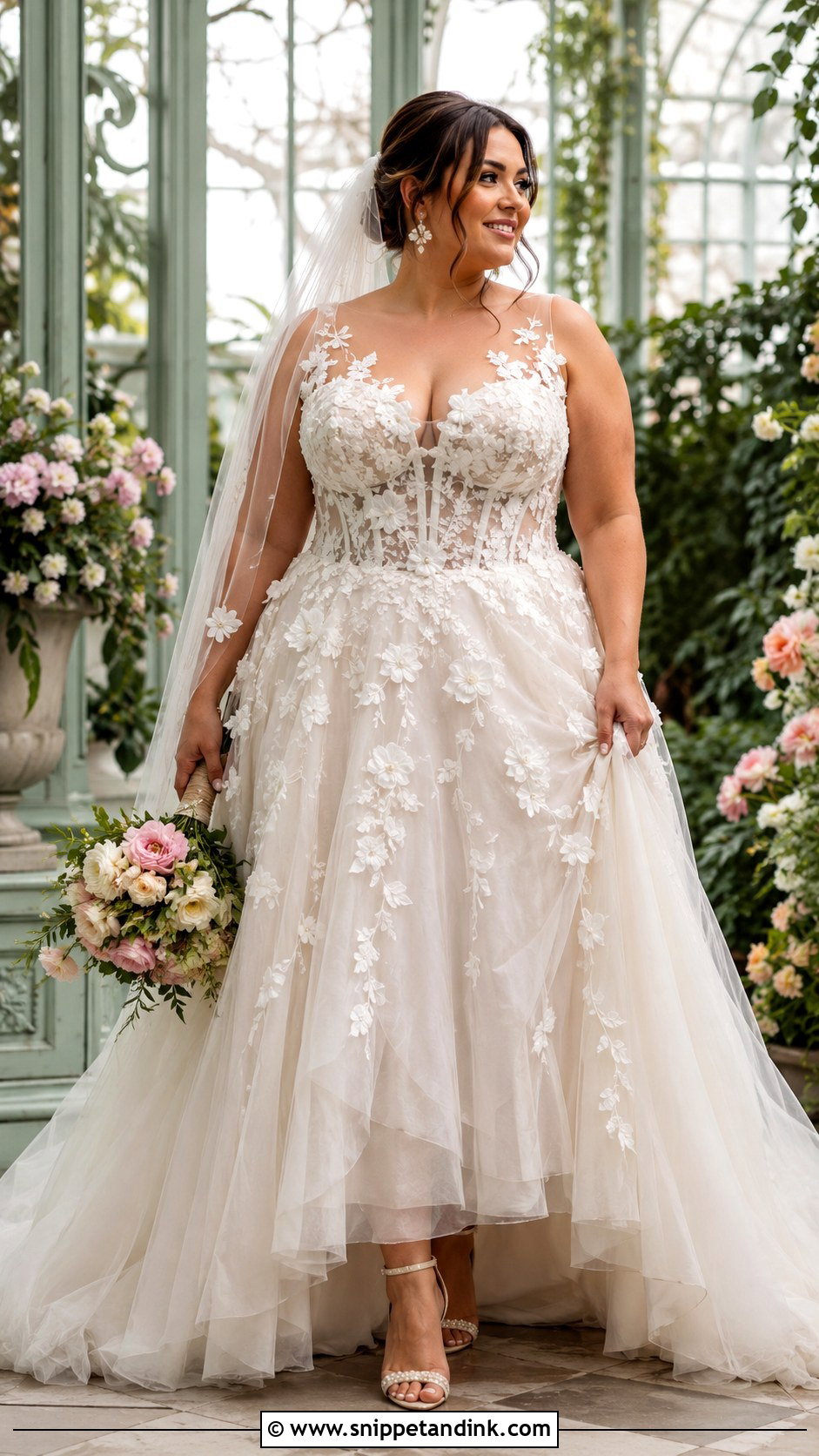
Raised floral appliqués look best when they follow the line of the gown instead of clustering on one area. On a curvy bride I like them trailing from an illusion neckline down a corset bodice onto tulle. Run your hand along the arms of the dress: stiff petal edges scratch, and they can be softened or backed before the wedding. Keep the hair simple so the flowers stay the focus. Pearl-accented heels, floral earrings, a sheer veil and a garden-style bouquet suit a conservatory or estate wedding.
19. Detachable Overskirt Wedding Dress
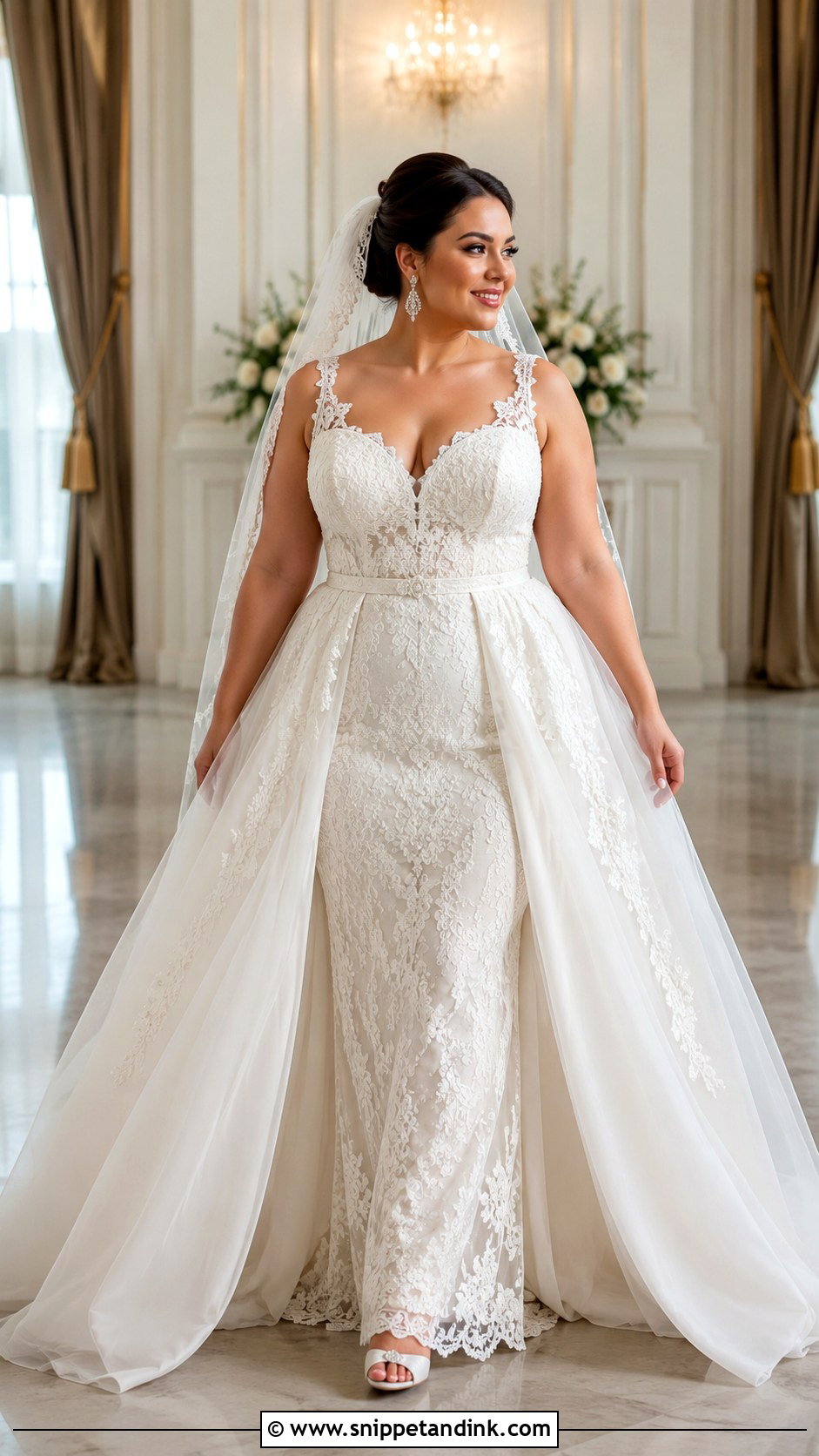
A detachable overskirt wedding dress lets you walk in with a full tulle, organza or satin skirt and dance in a fitted crepe or lace gown underneath. I check two things: that the attachment lies flat at the waist, and that the base gown has its own finished hem and no exposed loops. Practise removing and replacing the skirt beforehand with the person who’ll help you. Comfortable heels, statement earrings, a secure updo and a veil that suits the ceremony skirt work for both looks.
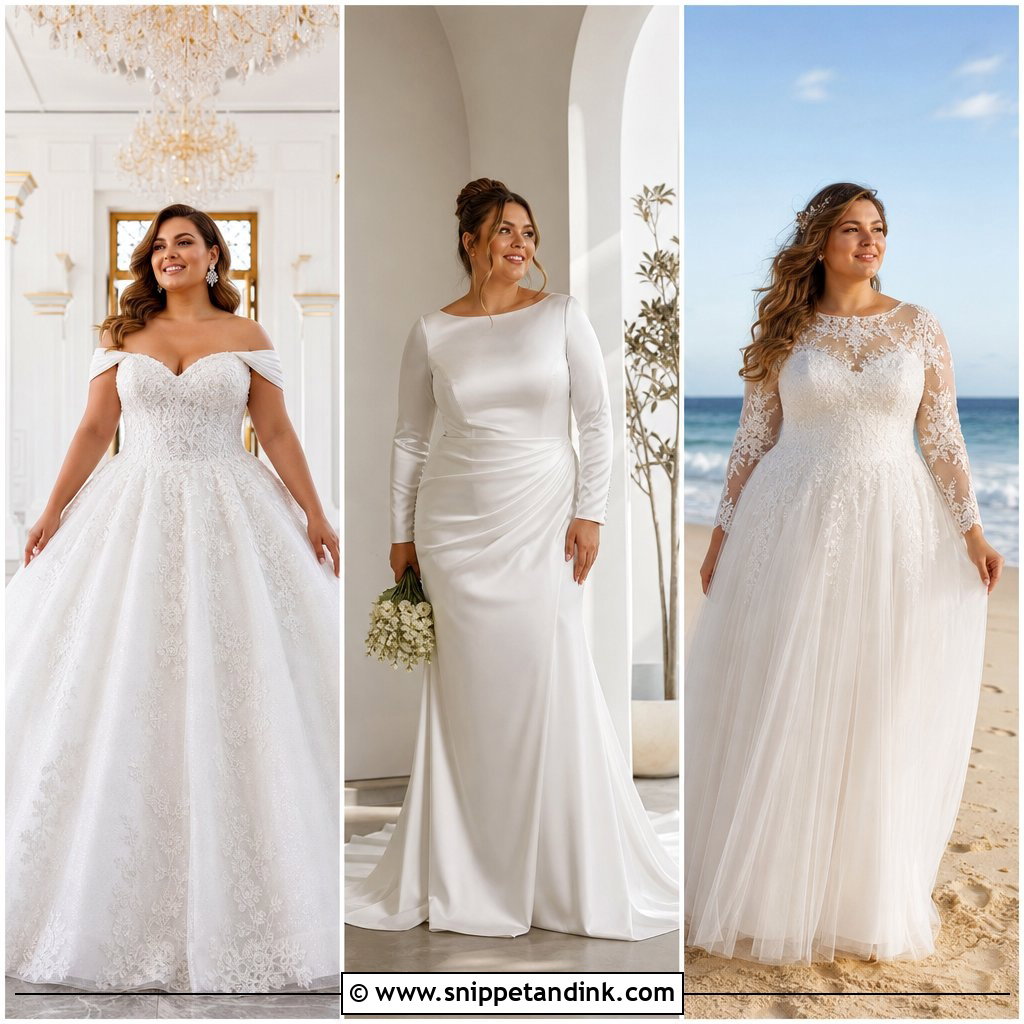
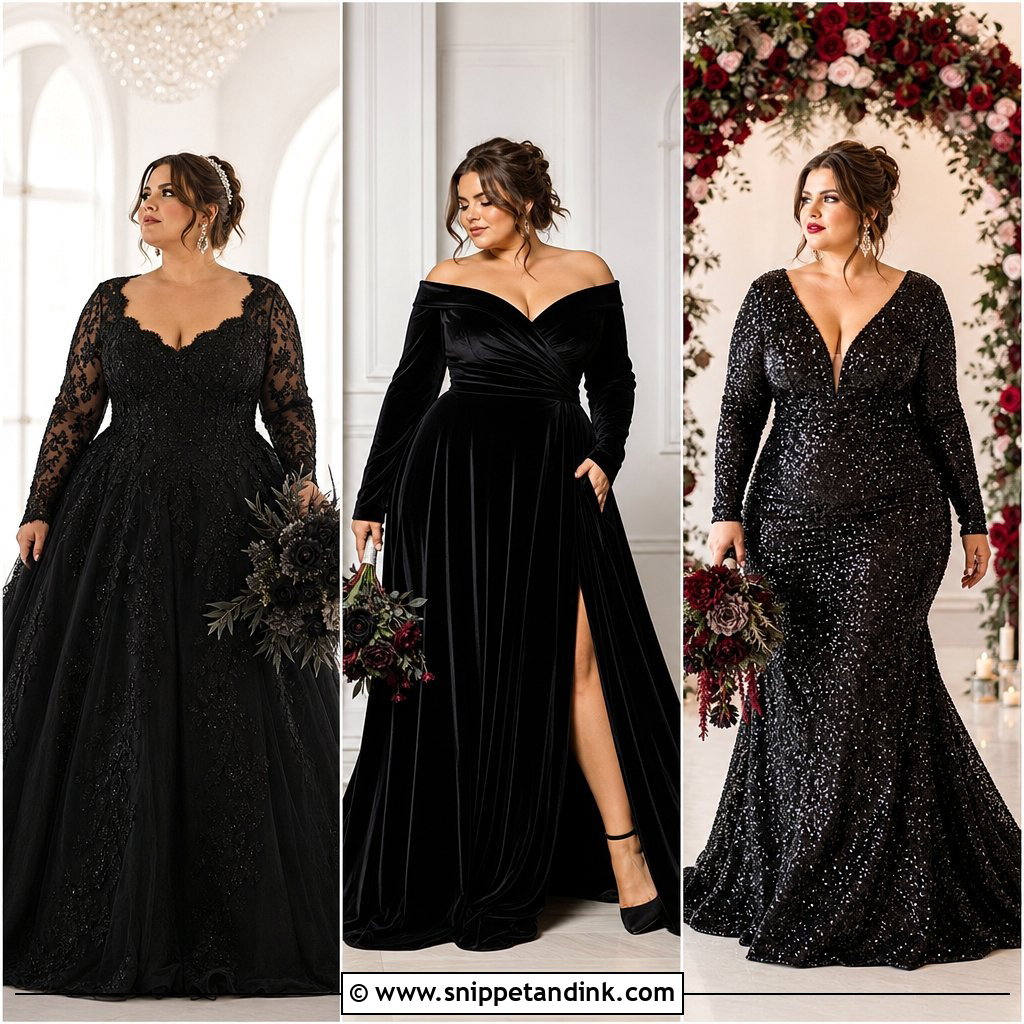
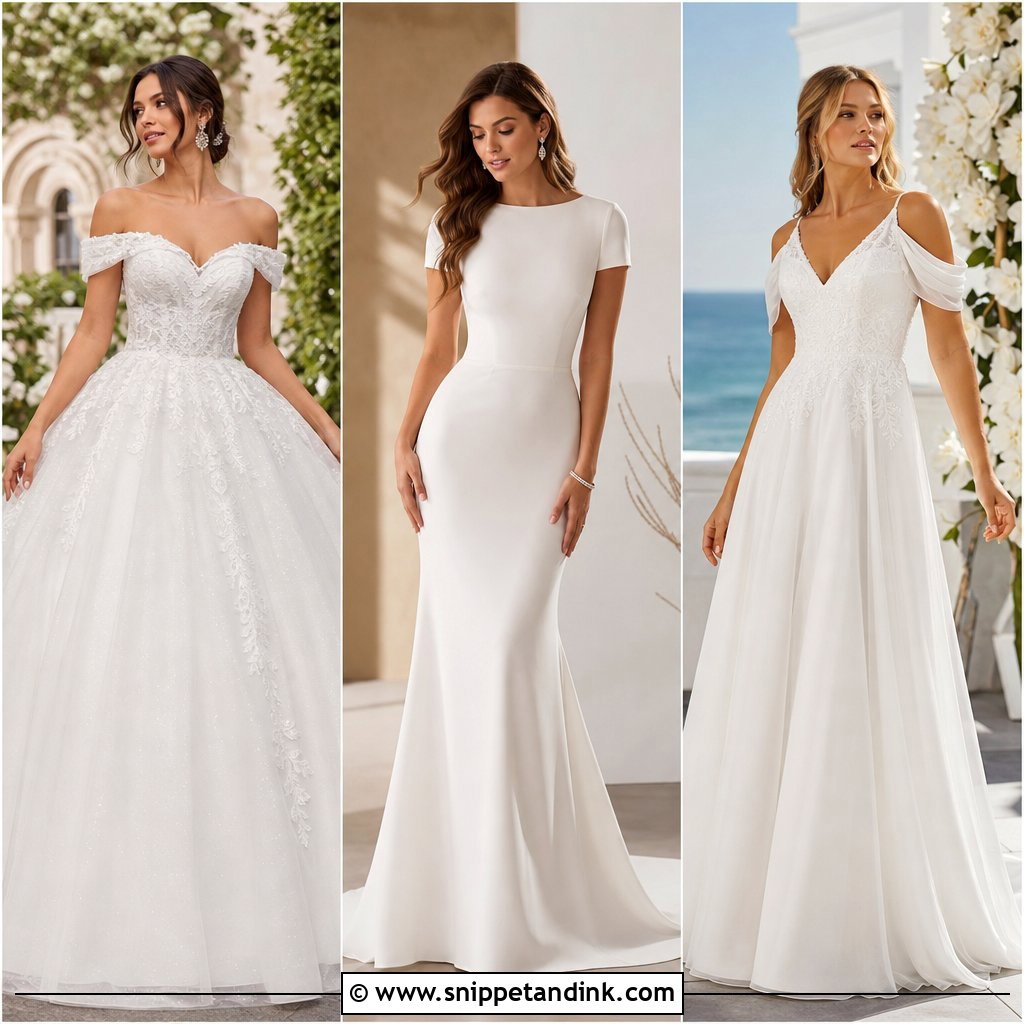

20. Blush Wedding Dress
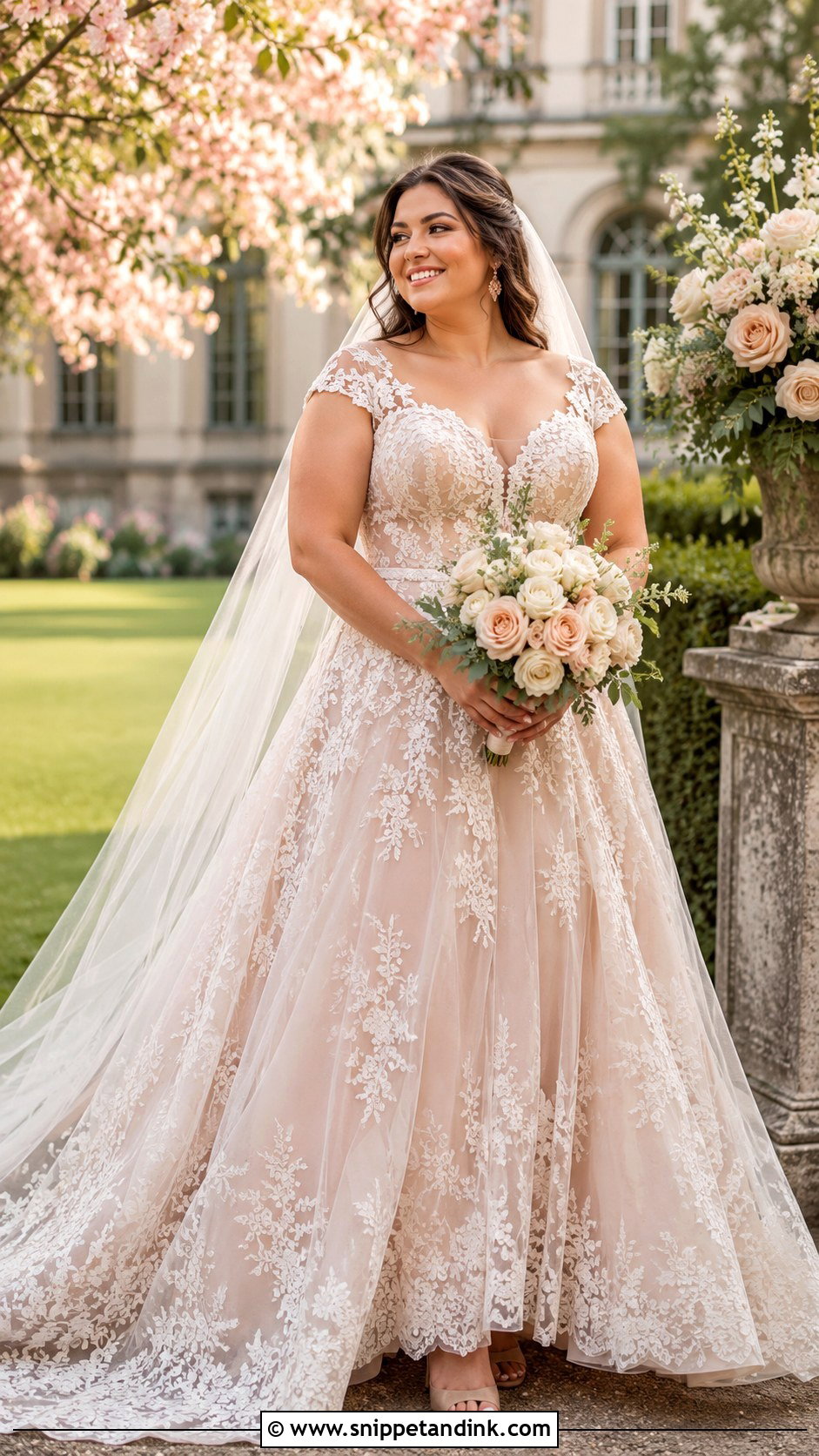
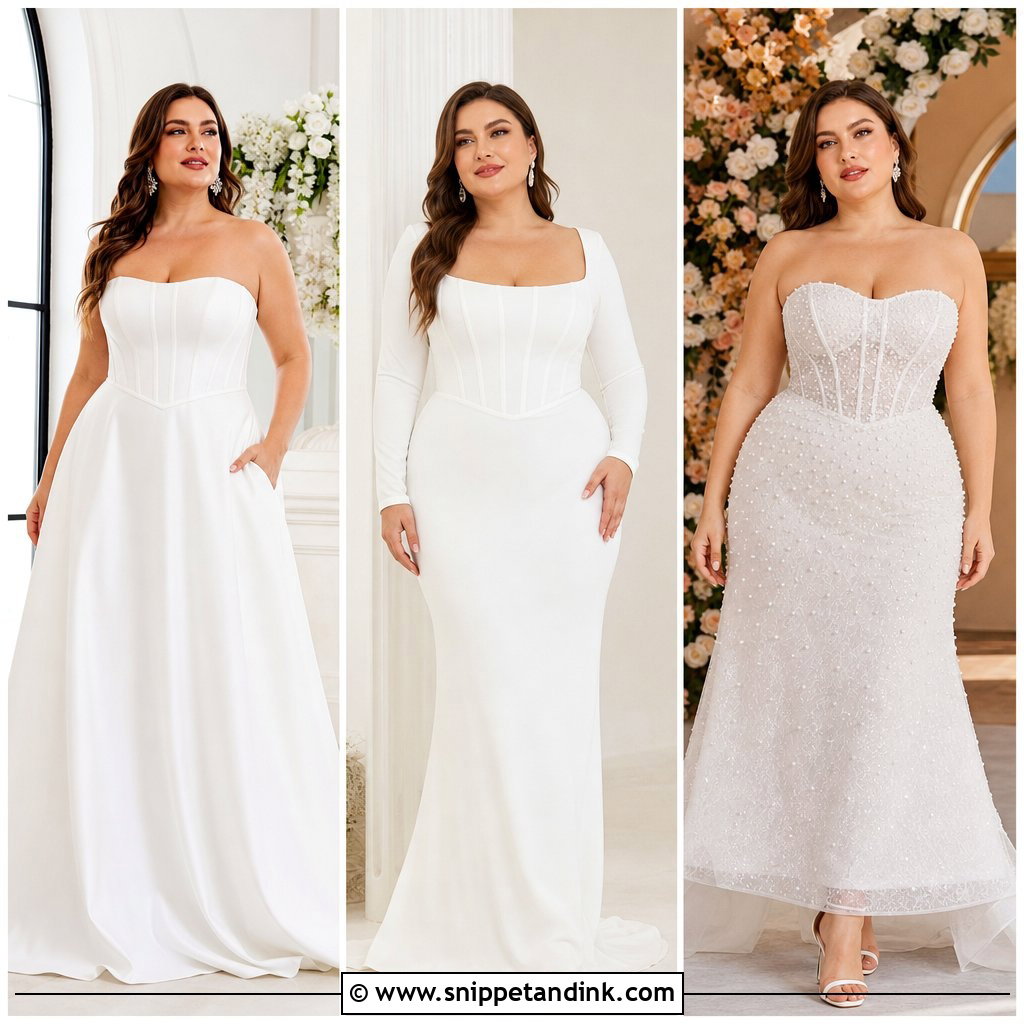
Blush ranges from barely pink ivory to muted rose, and the same shade can look radiant on one skin tone and washed out on another. Hold swatches against your face in daylight before deciding. A blush lining under ivory lace is the subtlest version; solid blush satin is a bolder statement. Champagne heels, rose-gold earrings, a neutral veil and cream, peach and dusty pink flowers coordinate without matching too exactly. Tell your photographer the dress is blush so the edit doesn’t correct it toward white.
Steaming, Storing and Carrying a Structured Gown
Curvy gowns tend to carry more internal structure, and that changes how you look after them between the final fitting and the morning of the wedding. A boned bodice shouldn’t be folded, and a heavy skirt pulls on thin shoulder straps if you hang the dress by them.
- Hang the gown by the inner hanging loops sewn at the waist, not the straps, so the skirt’s weight sits on the waistband.
- Keep it in a breathable cotton bag rather than plastic, which traps moisture.
- Steam from inside the skirt and keep the nozzle moving; satin water-marks if you hold it in one spot, and crepe mostly needs only a light pass.
- Lay it flat across the back seat for car journeys with the bodice uppermost, or ask the shop for a garment box if you’re flying.
After the wedding, get it to a specialist cleaner within a few weeks. Spilled drinks and sugar can be invisible at first and turn brown over time, especially on silk and ivory satin. Point out any stains you know about, including the hem, which will have picked up more than you’d think from the dance floor.
The Dress Still Has to Work at Midnight
A size label or a list of figure rules shouldn’t pick your gown. What matters is a dress that supports you, suits your venue and lets you move. As you compare the curvy gowns on your shortlist, ask about inner construction, how much the fabric gives, whether the neckline stays put and how much the seams can be altered. Try at least one shape you’d dismissed; the hanger lies often. Then keep shoes and jewellery supporting the dress, not fighting it, and go with the gown you forget you’re wearing.
You'll Like These Ideas:




Leave a Reply