
I don’t keep a list of shapes that curvy women should hide or avoid, and I’d be suspicious of anyone who does. What I do pay attention to is how a gown is built: whether the bodice carries the bust on its own, whether the fabric has stretch where you move, whether a corset back gives room to adjust, and where the seams fall on your body. Plus-size bridal lines now run from romantic A-lines and structured ball gowns to curve-skimming mermaids and plain sheaths. The twenty below cover classic, modern, boho and less traditional picks, each with the construction detail I’d check first.
How Crepe, Mikado, Satin and Tulle Behave on Curves
Brides often fall for a silhouette and then feel let down by it on their body, when the real issue was the fabric. The same A-line cut sits very differently in four materials, so this is how I explain them in the fitting room.
Stretch crepe
Matte, smooth and forgiving to move in. It follows the body closely, so it suits fitted, mermaid and sheath shapes, but it also shows undergarment lines and needs exact tailoring.
Mikado and structured satin
Heavy and crisp, so they hold their own shape instead of following yours. Good for ball gowns and a sharp drop waist. Shiny satin catches light on every fold, so a well-fitted bodice matters even more.
Tulle and chiffon
Light layers that add volume without weight. Tulle builds a full skirt you can wear all day; chiffon drifts and suits outdoor weddings. Both need a supportive bodice underneath, since they give no structure themselves.
Lace
Lace takes on the character of whatever sits under it. Over a firm lining it reads tailored; over soft tulle it floats. Stretch lace is worth asking for on sleeves and fitted bodices, and alterations through a lace pattern take longer because the motifs have to be matched at the seams.
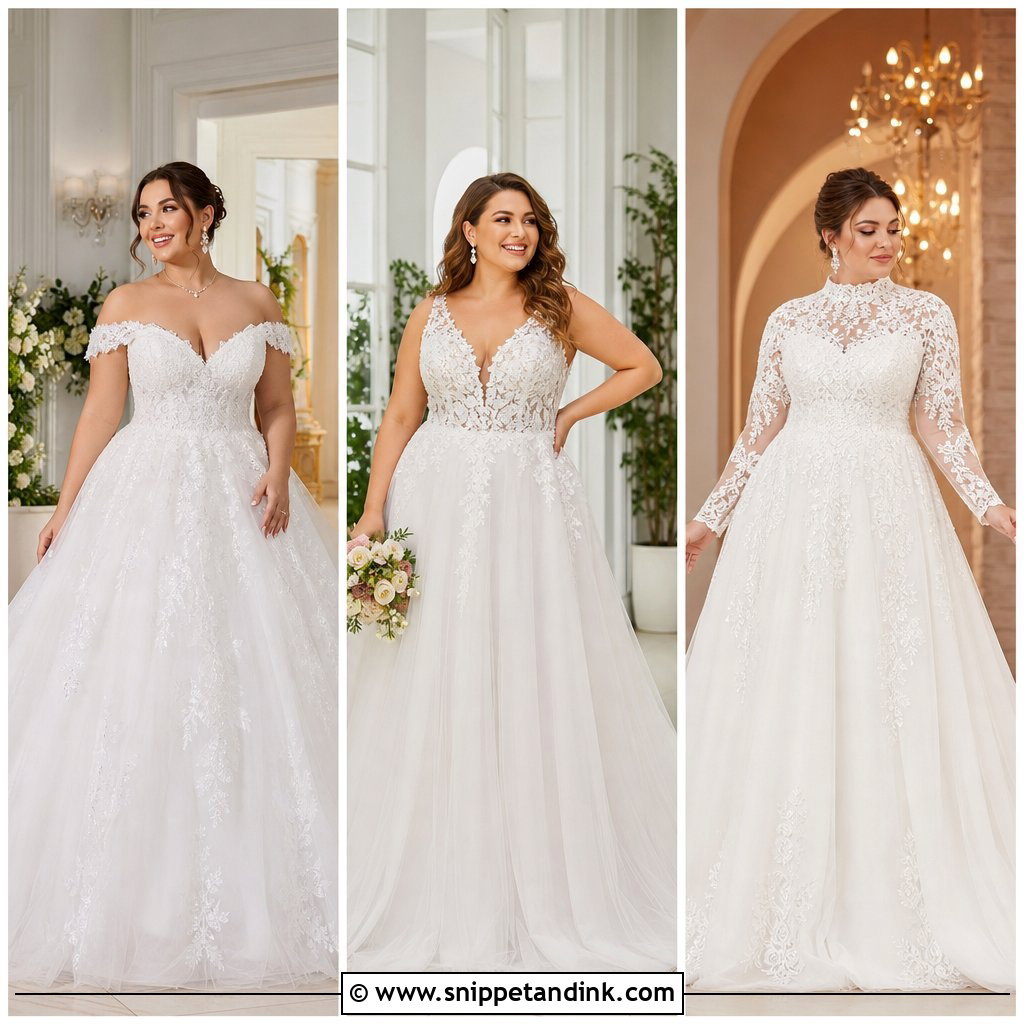
1. Plus Size A-Line Lace Wedding Dress
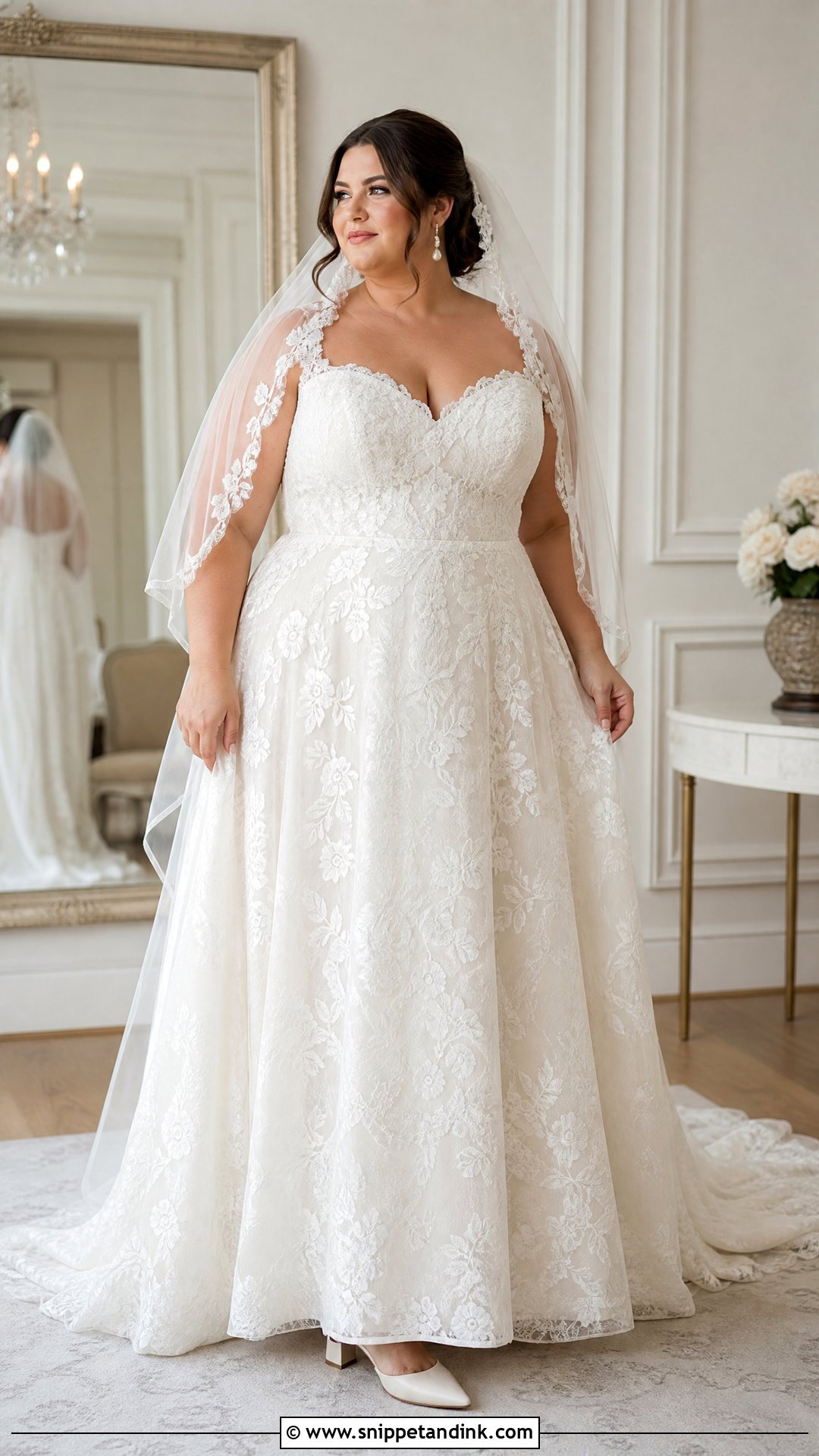
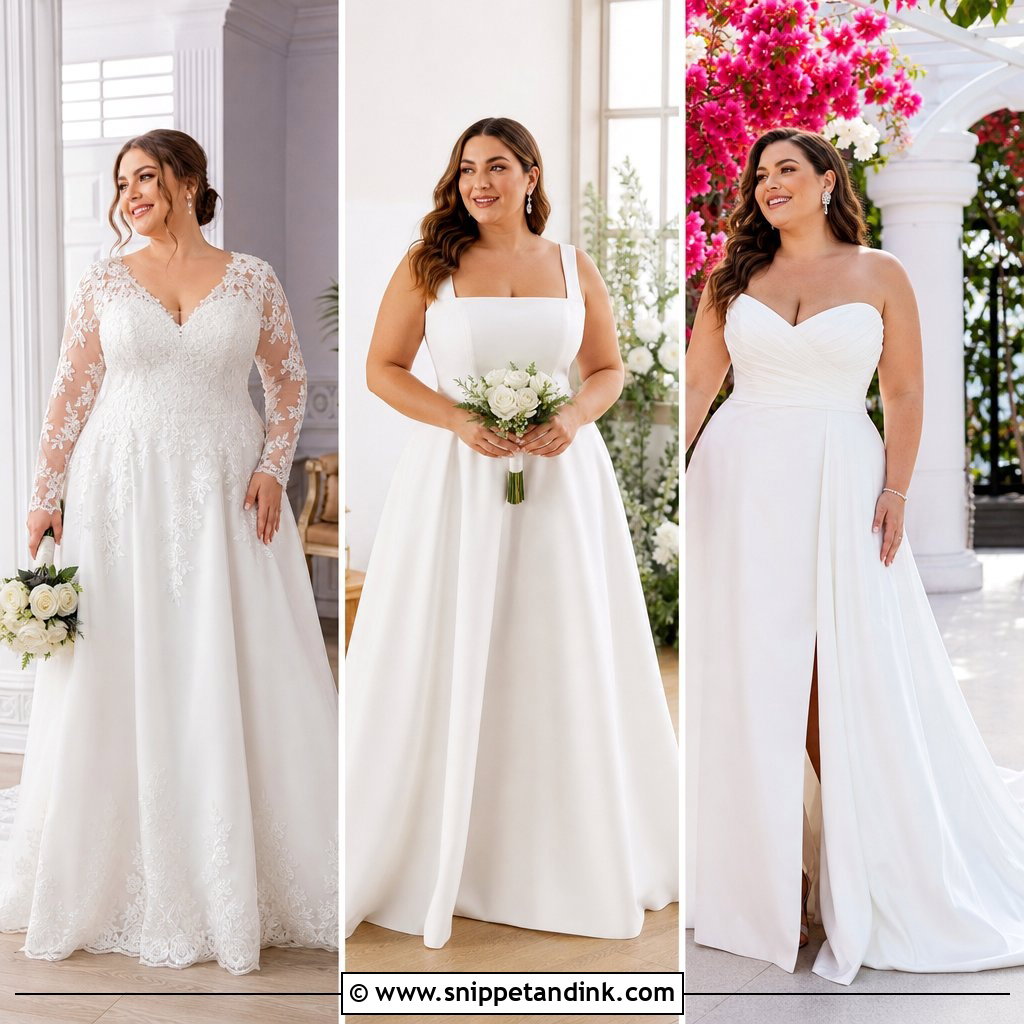
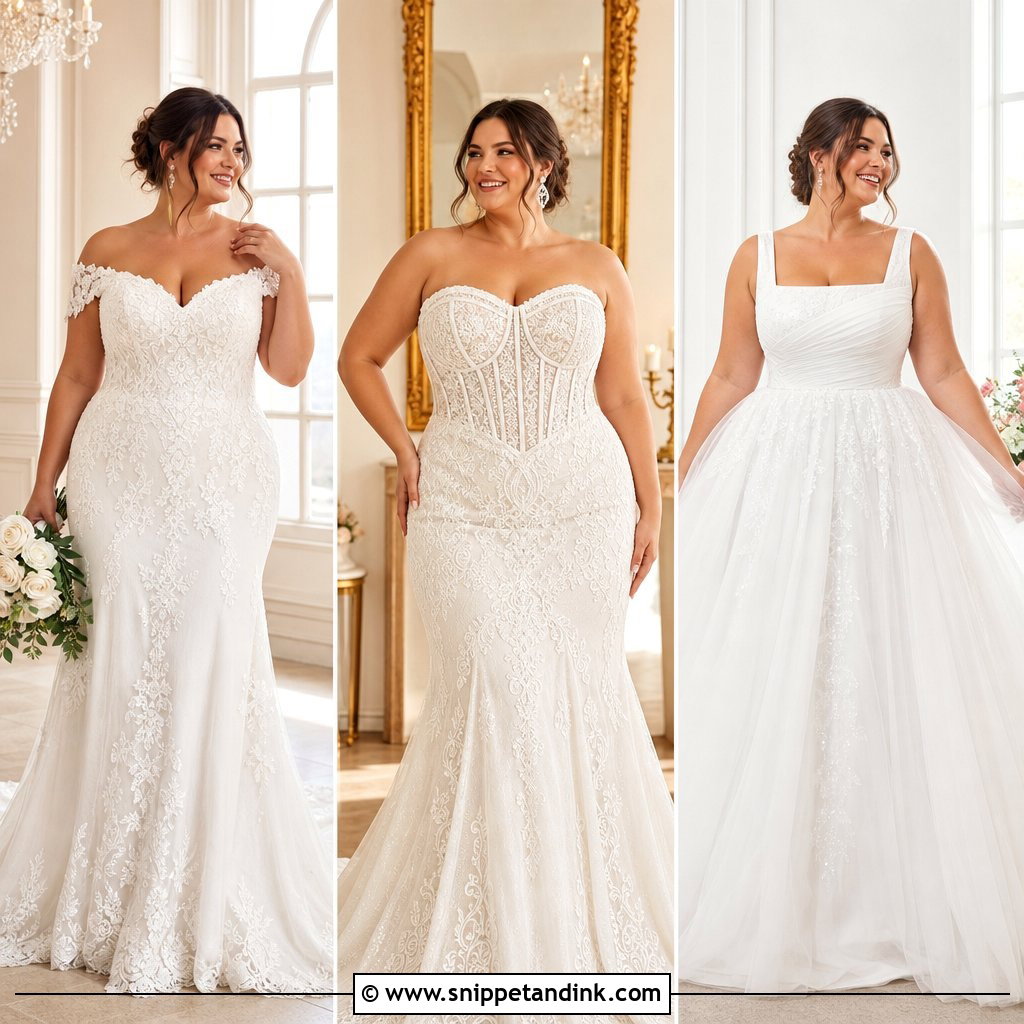
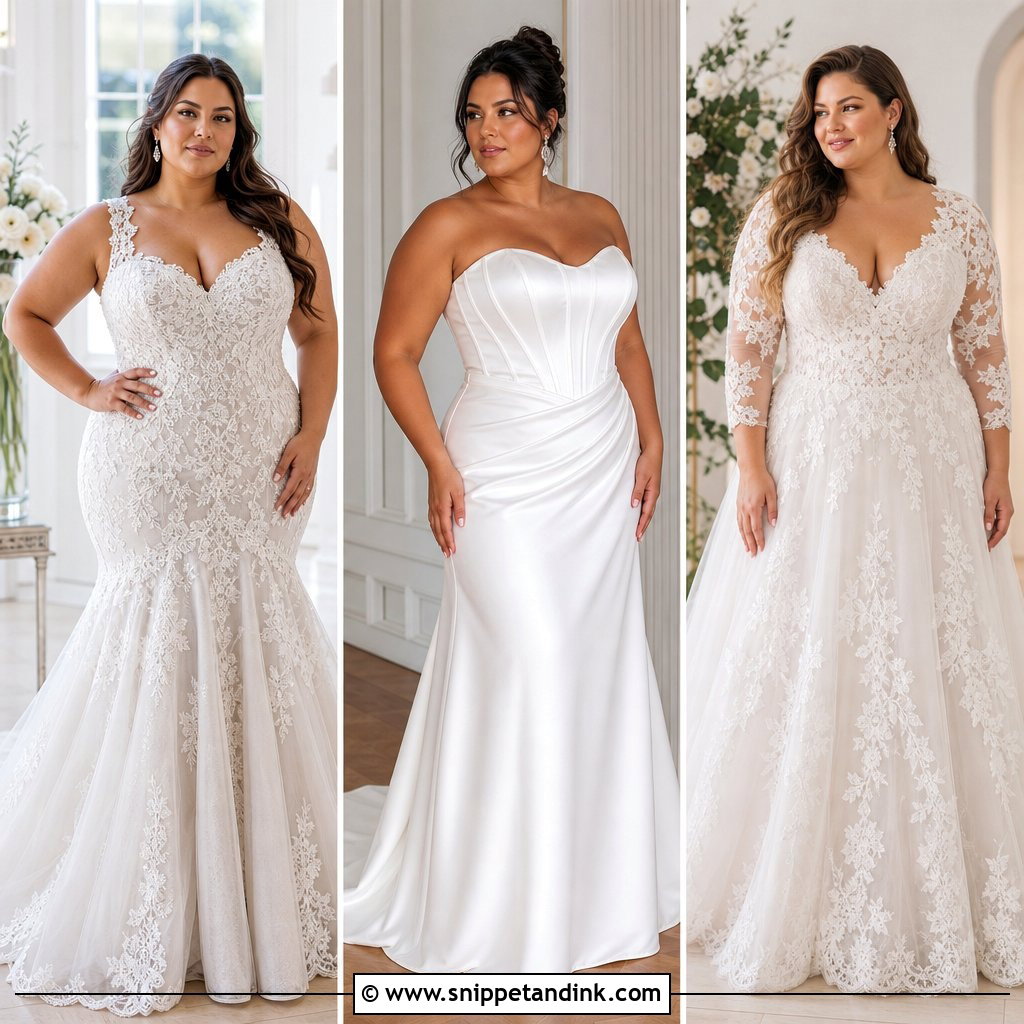
Lining colour changes a lace A-line more than the lace does. Floral lace over ivory looks soft and classic; over champagne it gains depth and the pattern shows more clearly in photos. A sweetheart or modest V leaves space for built-in cups or boning, which is where the real support comes from. The bodice should mark your natural waist before the skirt flares. Pearl drops, a fingertip veil and pointed block heels suit it. Have the hem levelled in your wedding shoes, then sit and raise your arms; nothing should pull across the bust or waist.
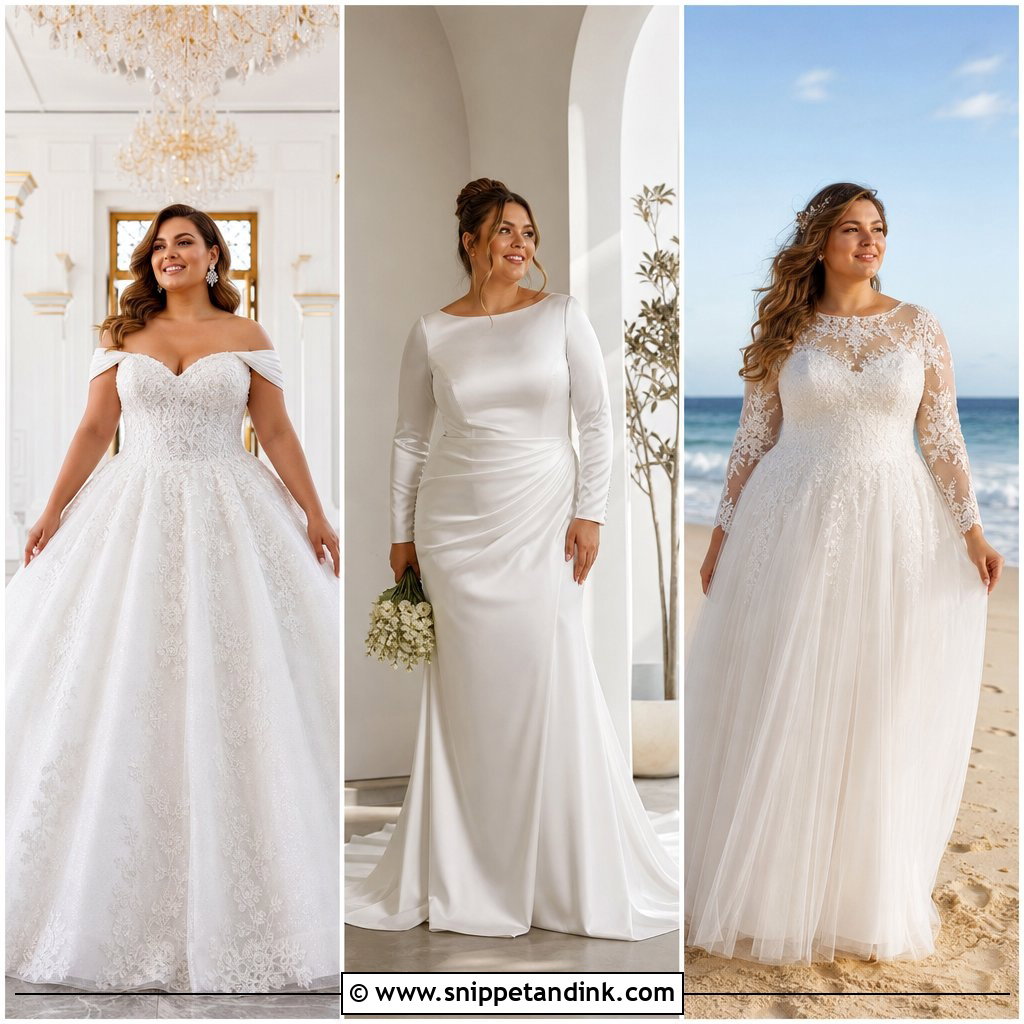
2. Plus Size Off-the-Shoulder Ball Gown Wedding Dress
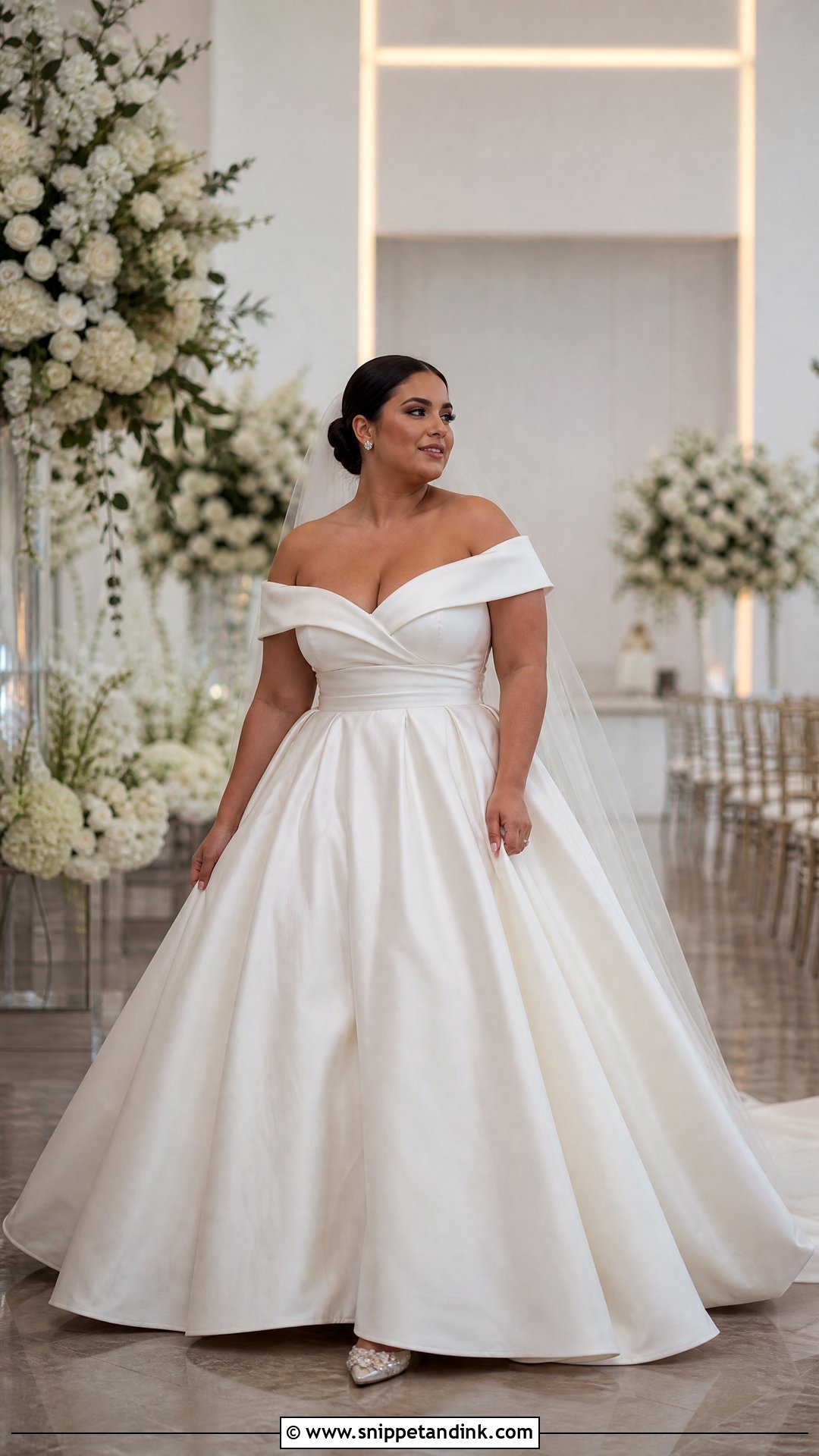
Off-the-shoulder necklines need help to stay where they’re put, and on a fuller bust that help has to be built in. I look for interior boning, a firm support panel or discreet illusion straps before I look at anything else. Once that’s right, the neckline frames the collarbone and the full skirt gives a defined waist. Satin or mikado gives clean volume; layered tulle is softer and lighter to carry. A simple pendant, studs and a low bun keep the shoulders visible. Stable block heels or embellished flats are a fine choice under that much skirt.
3. Plus Size Long-Sleeve Lace Wedding Dress
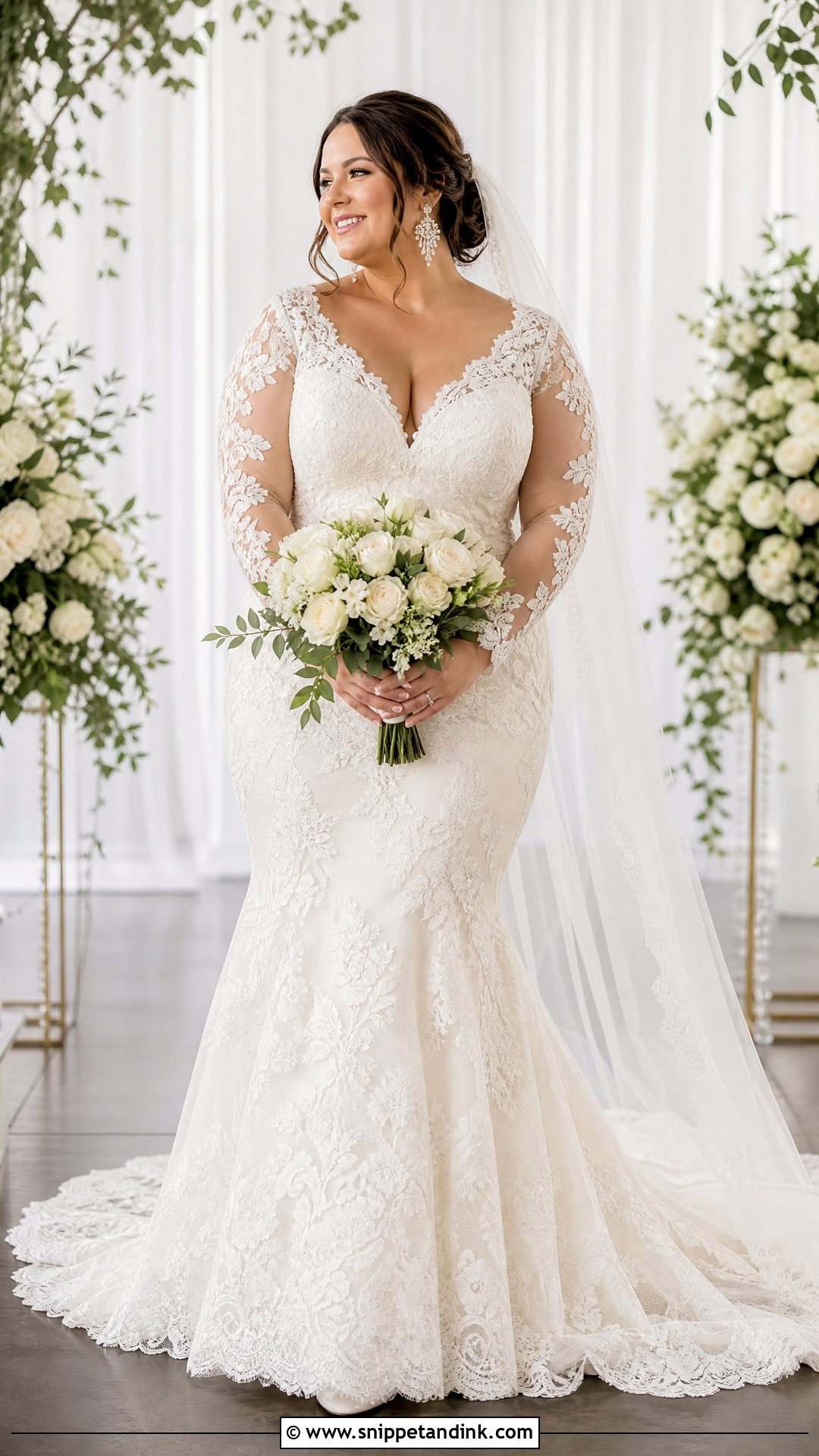
A sleeve that twists every time you lift your arm is the usual complaint with long lace sleeves, and it comes from a shoulder seam set in the wrong place. Check that first. Soft stretch lace or illusion tulle should bend at the elbow without pulling. On a fit-and-flare or modified A-line, a V-neck keeps the top open and a scoop back adds something for the photographer. Covered buttons down the back and train finish it without adding bulk. A chapel veil, small crystal earrings and ivory low heels make it traditional.
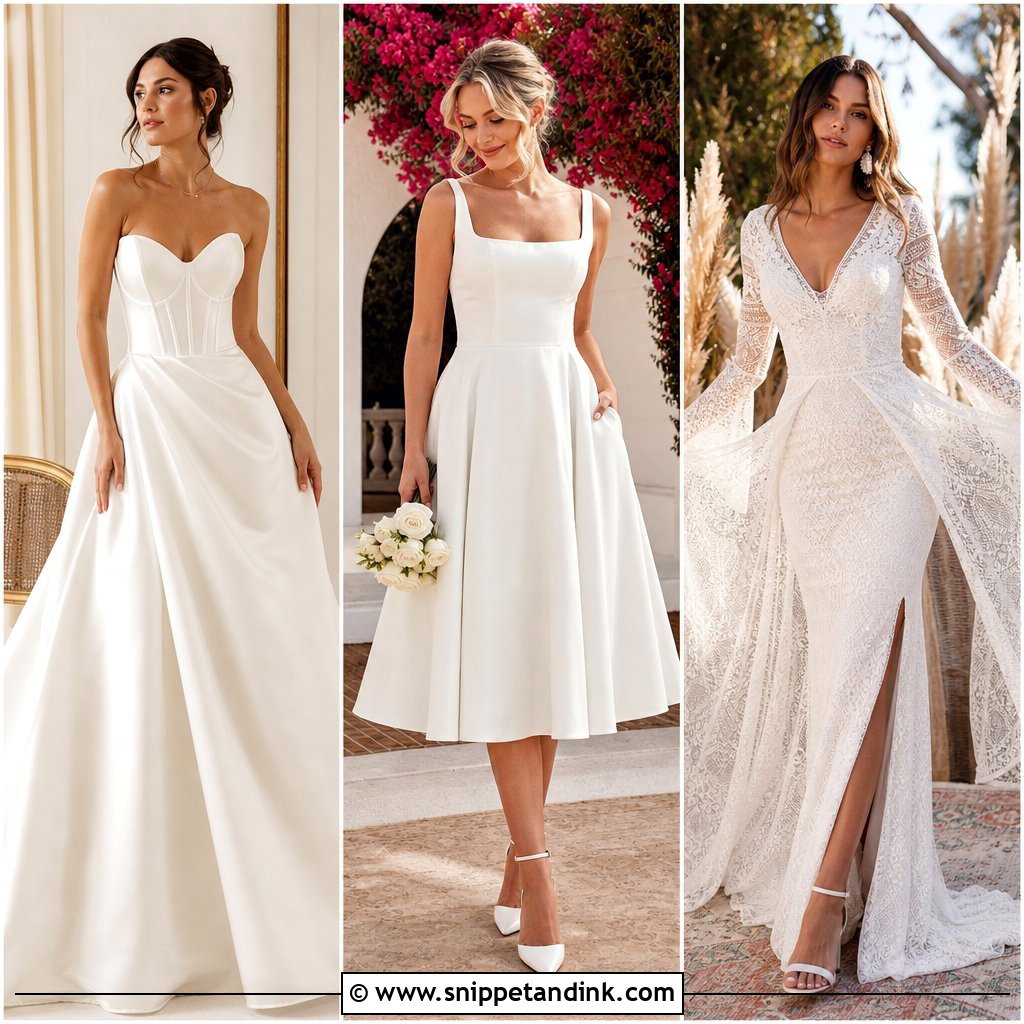
4. Plus Size Square-Neck Crepe Wedding Dress
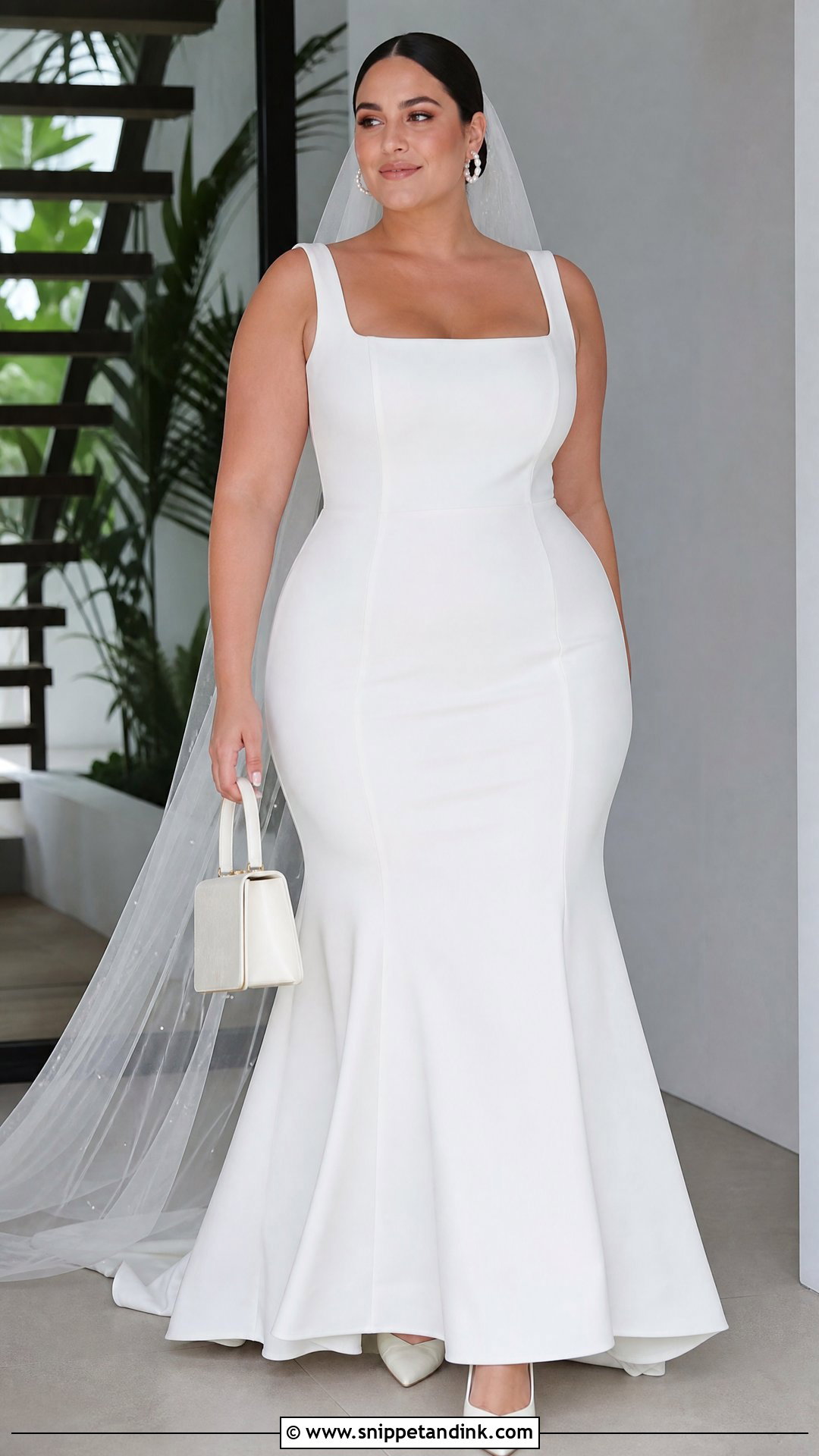
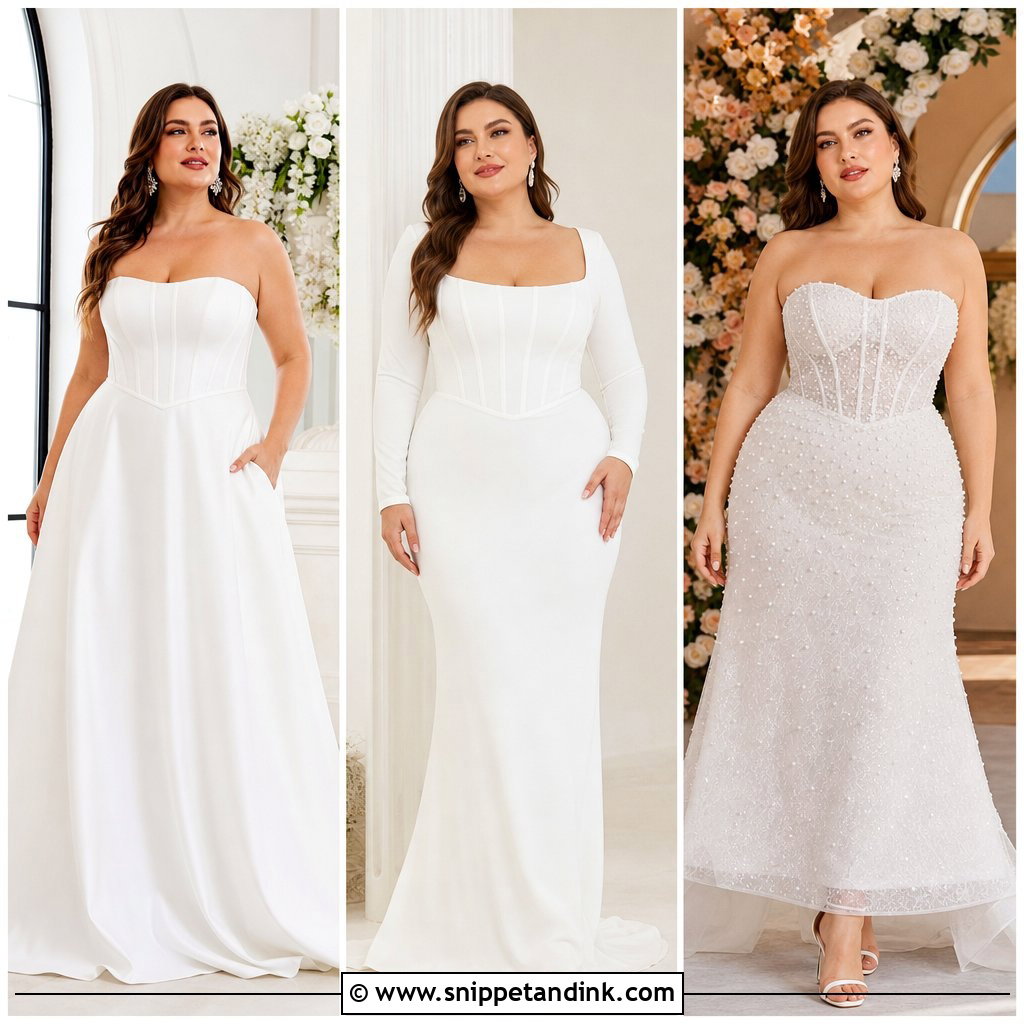
Stretch crepe is the version of this dress I’d recommend, especially in a fitted or fit-and-flare cut, because it gives through the hips and thighs where rigid crepe pulls. Wide straps hold a real bra, and princess seams shape the bodice and run smoothly into the skirt. Smooth fabric shows every seam and every pulling line, so look at the gown from the front, side and back, standing and seated. Horizontal creases across the hips mean it needs letting out. Pearl hoops, a sleek veil and pointed pumps finish it.
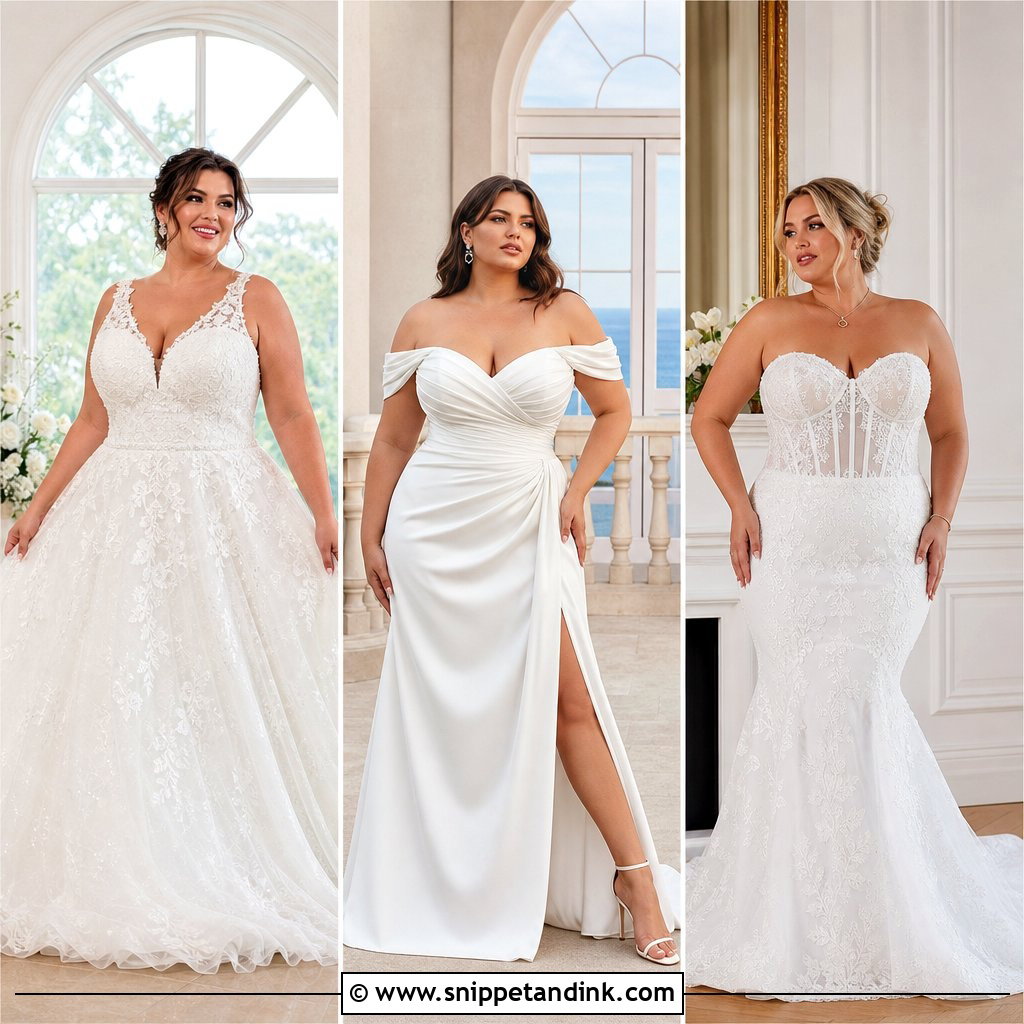
5. Plus Size V-Neck Chiffon Wedding Dress
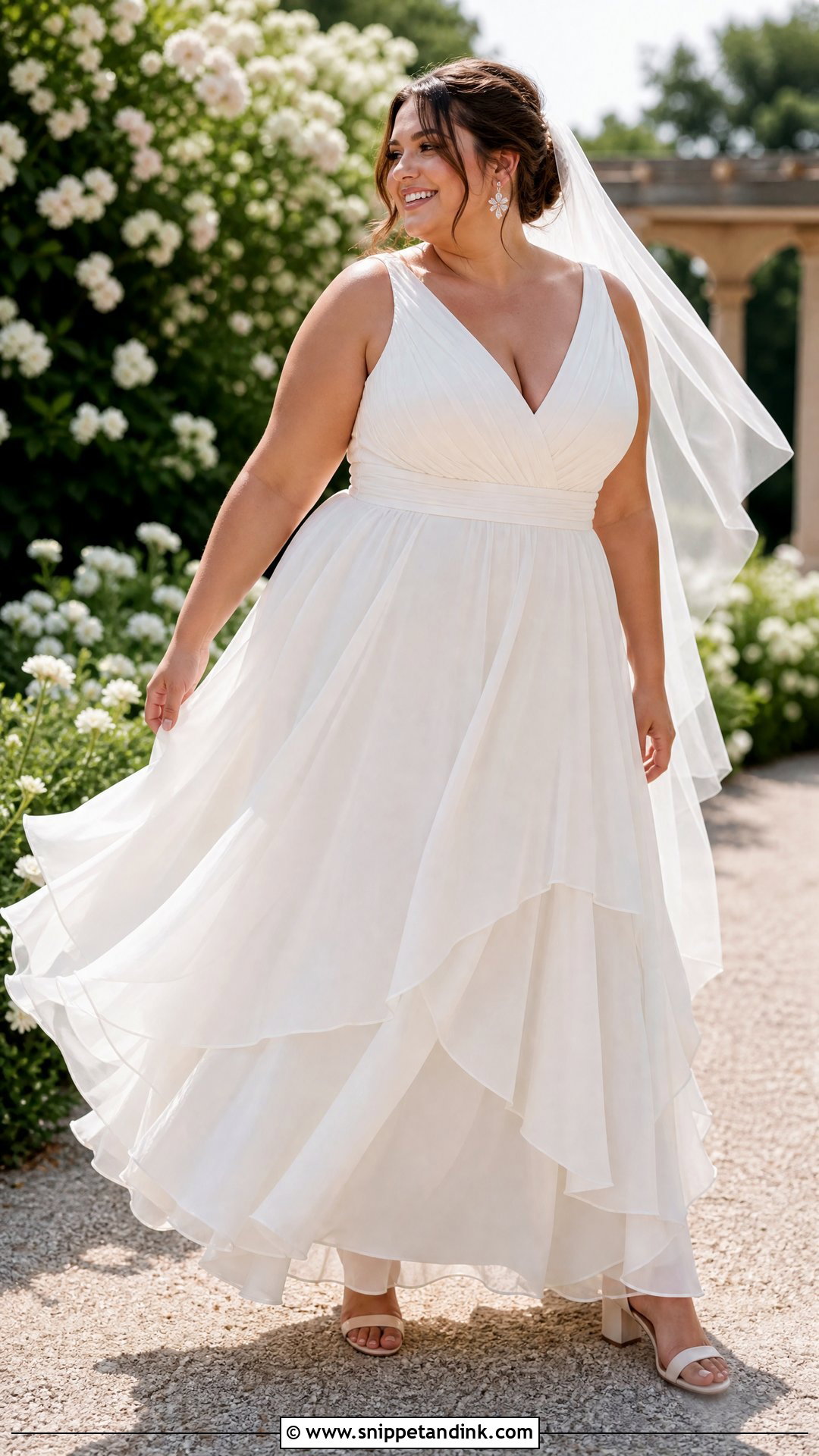
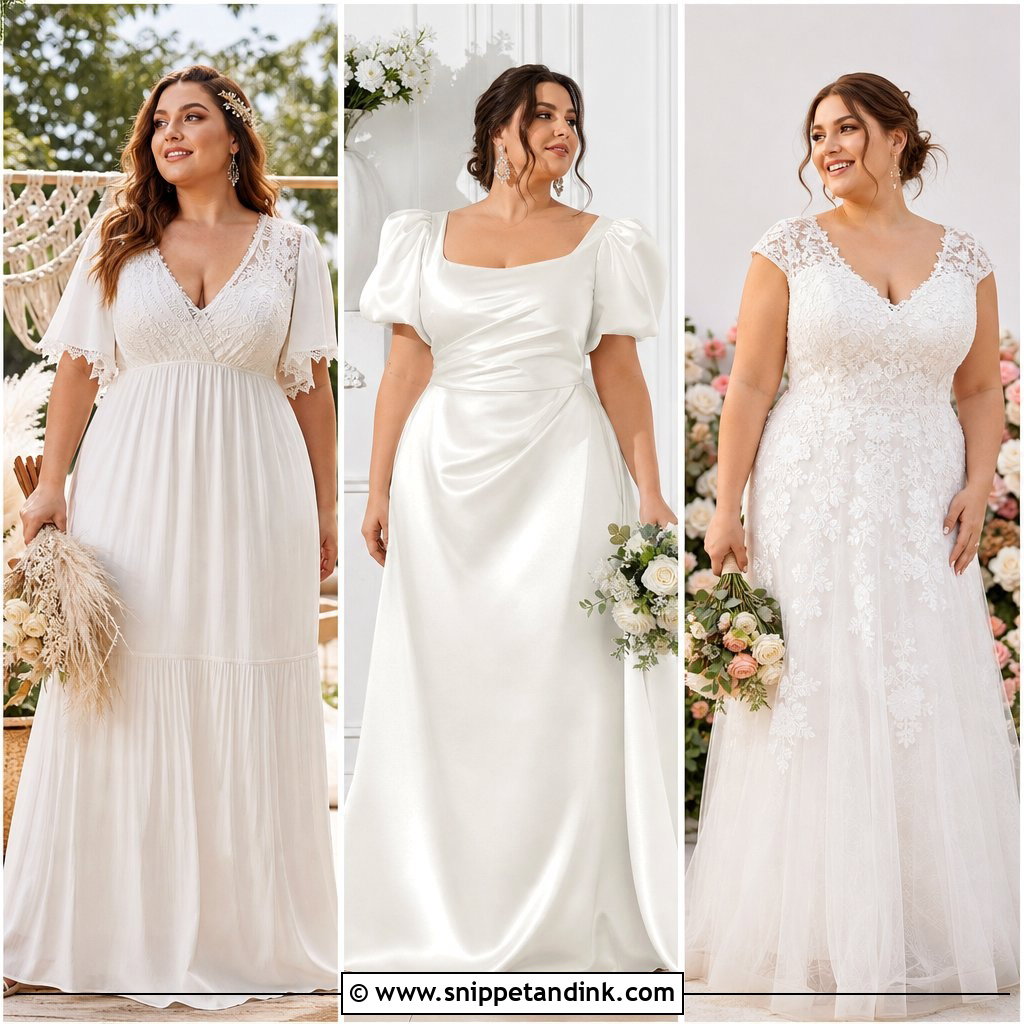
Chiffon is light and moves in the slightest breeze, which suits a garden, beach or warm-weather wedding. On a curvy figure, I’d want a lined V-neck bodice with wider straps and a defined waistband so the softness sits on top of real support. Lean forward in the fitting room: a low V should stay put. Layers falling from the natural waist give movement without ball-gown weight. Each layer needs hemming separately and evenly, or the edges look ragged. Floral earrings, a loose updo, block sandals and a hair vine or light veil keep it relaxed.
6. Plus Size Strapless Satin Wedding Dress
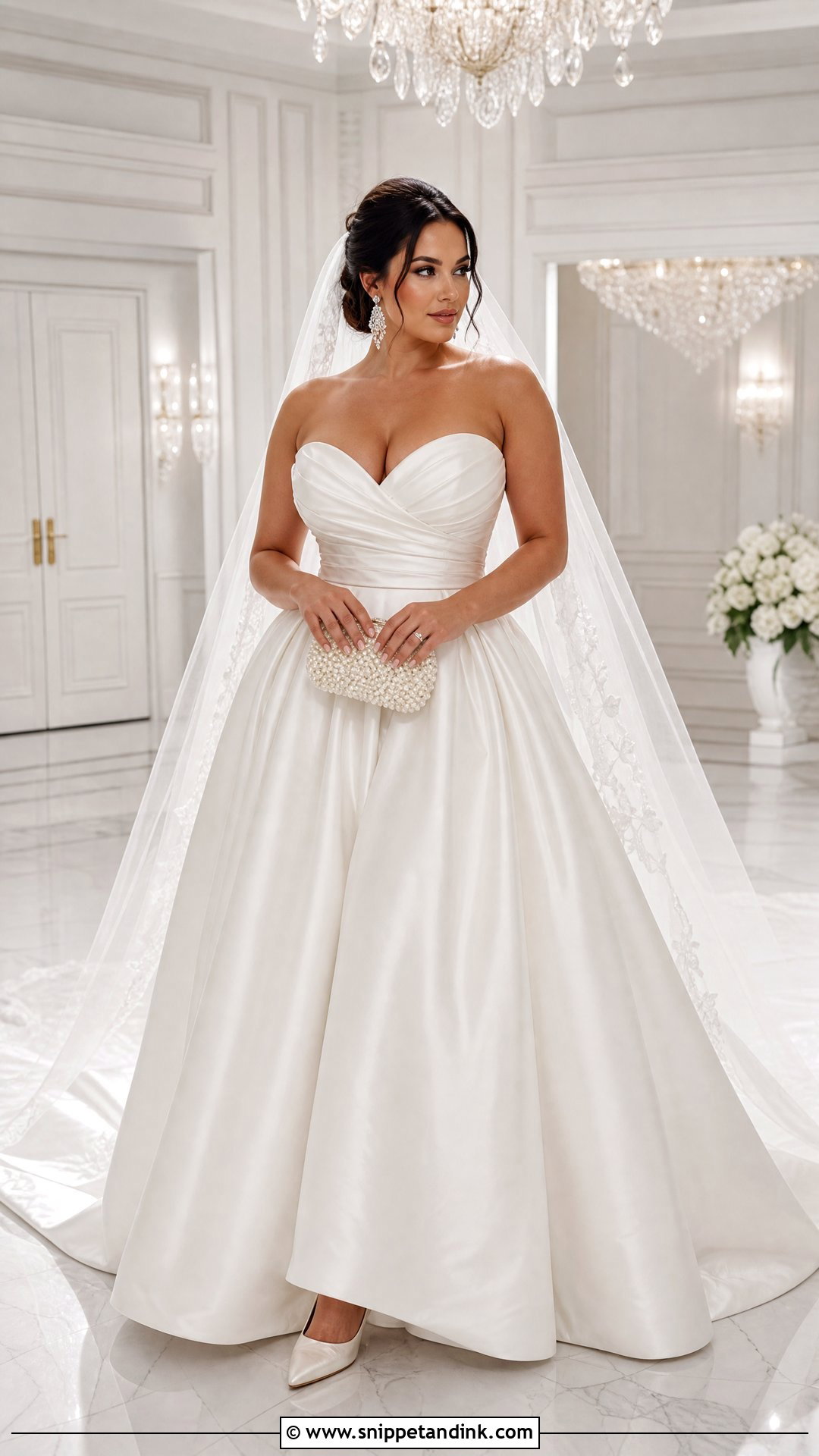
Strapless satin works on a full bust when the bodice holds everything up through construction, not tightness. Boning, secure cups, a firm waist stay and a gently curved neckline are what I check. Satin is smooth and unforgiving, so a little draping across the bodice adds dimension and softens the shine. For the ceremony, a cathedral veil; for the reception, take it off and add a statement necklace or chandelier earrings. In the fitting, bend, move your arms and sit for several minutes. If you’re tugging it up even once, it needs adjusting.
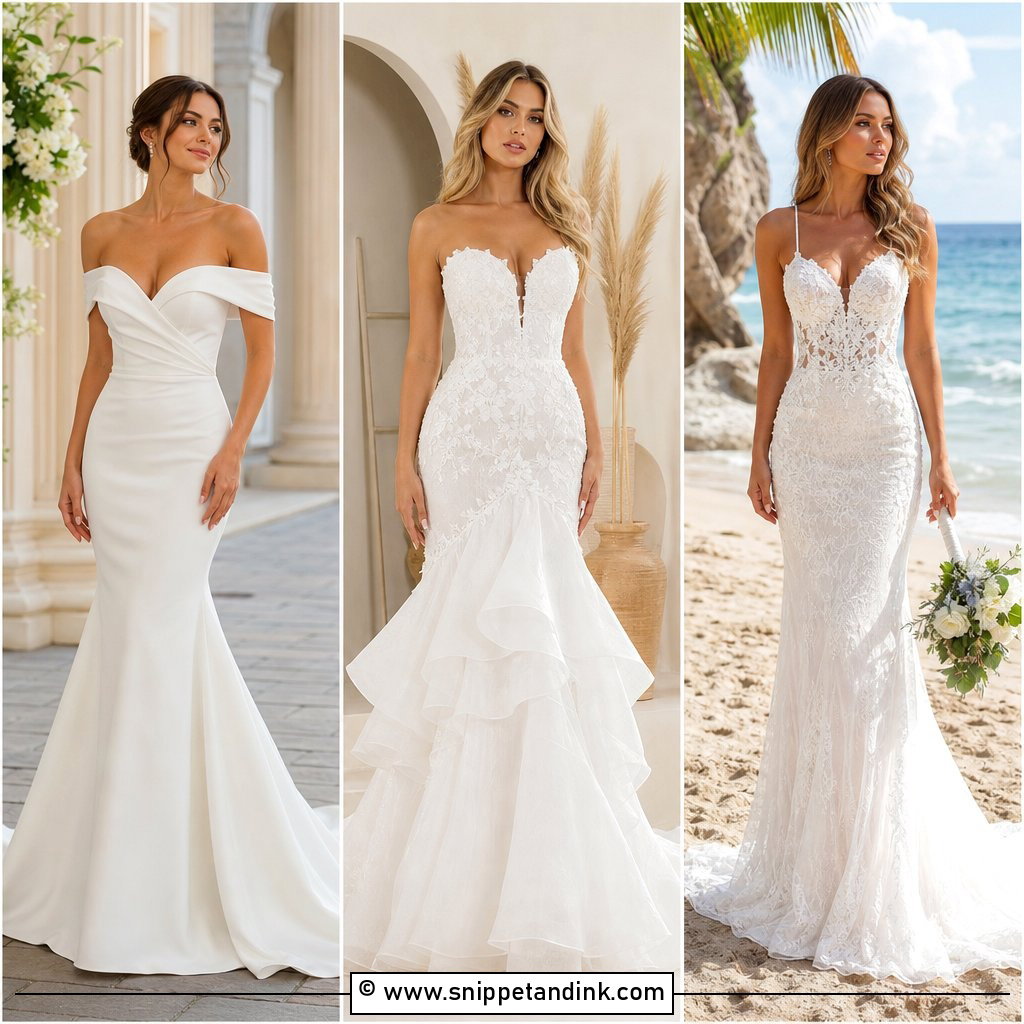
7. Plus Size Mermaid Crepe Wedding Dress
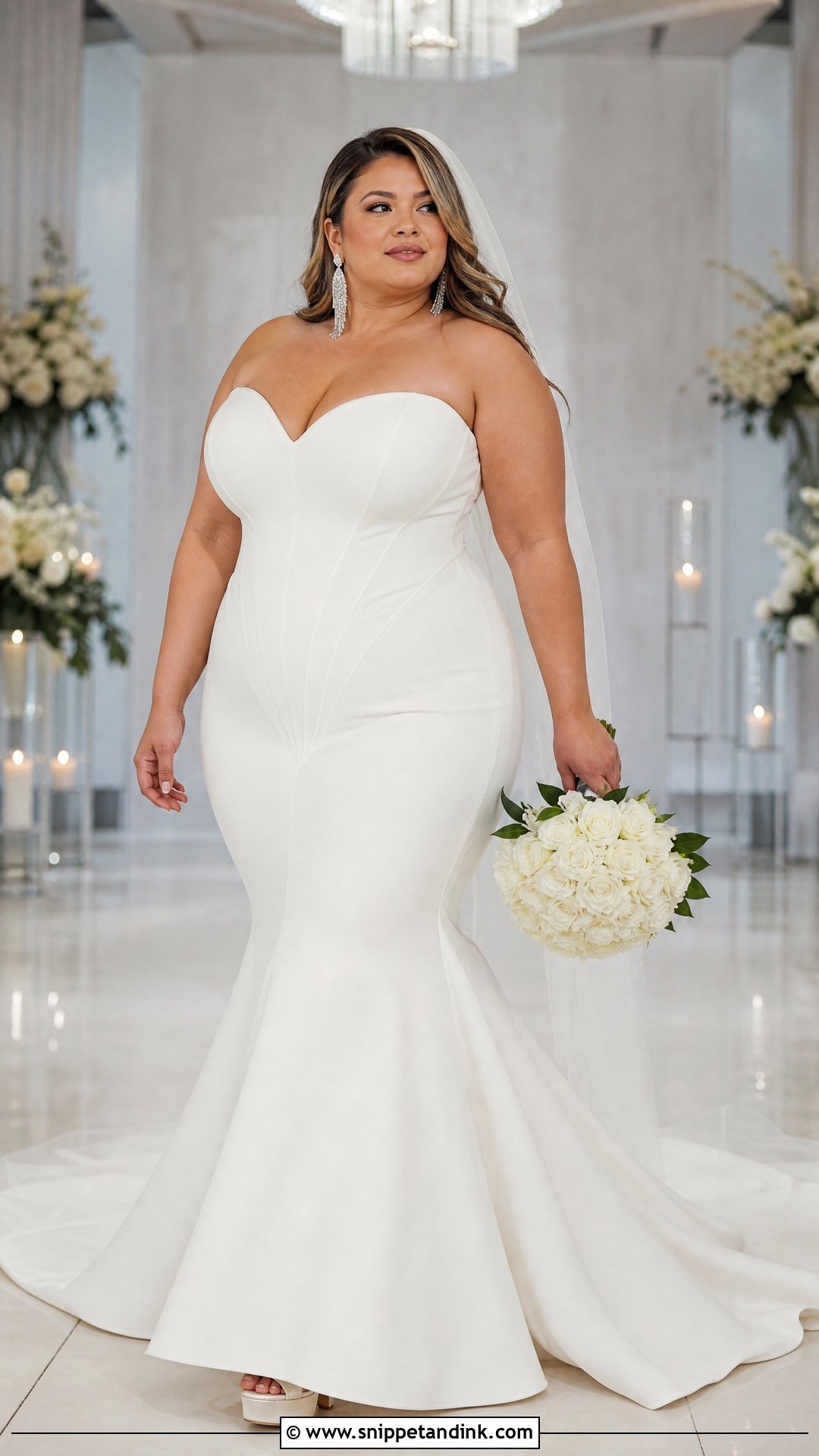
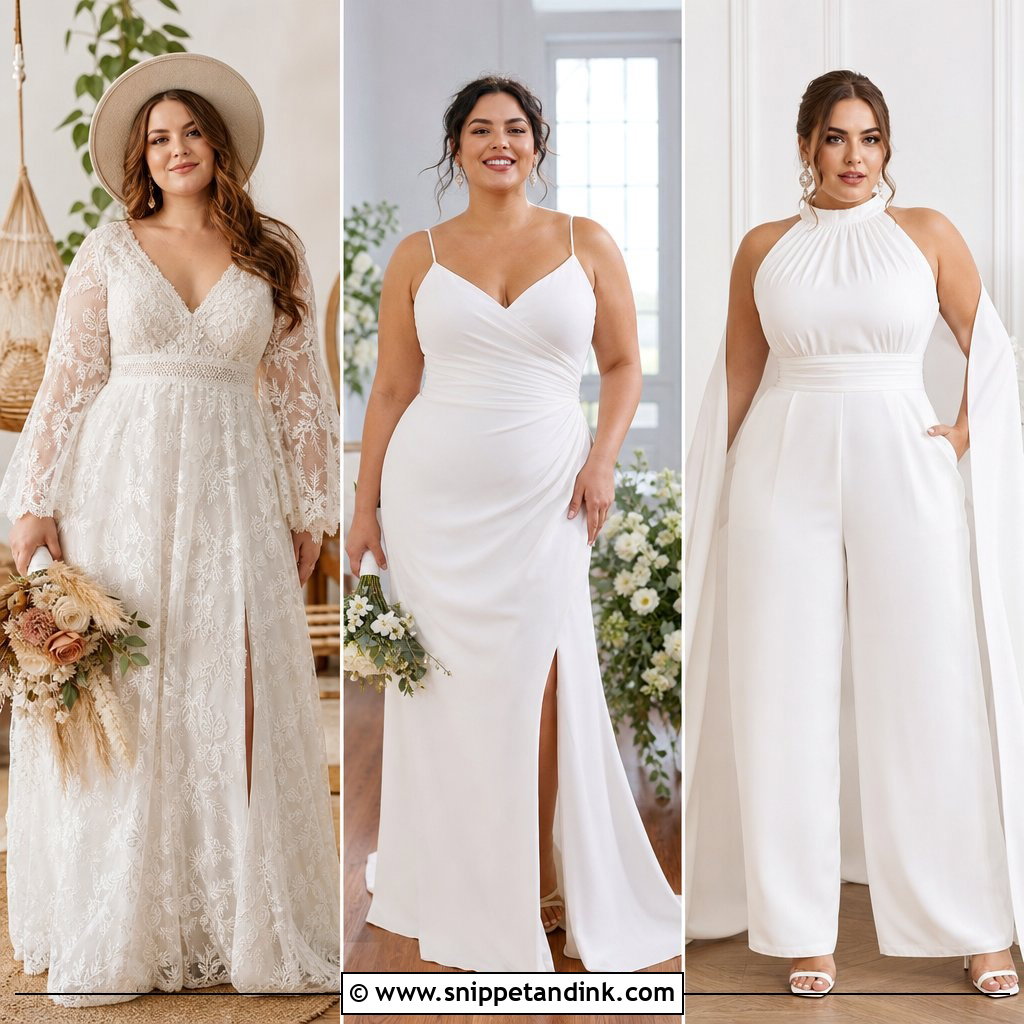
Mermaid is a confident pick for a bride who wants her curves front and centre. Stretch crepe is my choice here since it gives far more room through the hips and thighs than a rigid fabric. Strong vertical seams and a supportive bodice shape it, and the flare should start around or just below the knee. Higher and walking gets awkward; lower and the skirt looks pinched. Platform heels stay steady under a narrow skirt. Take full steps and climb stairs in the fitting. If you’re shuffling, the knee needs letting out.
8. Plus Size Tea-Length Wedding Dress
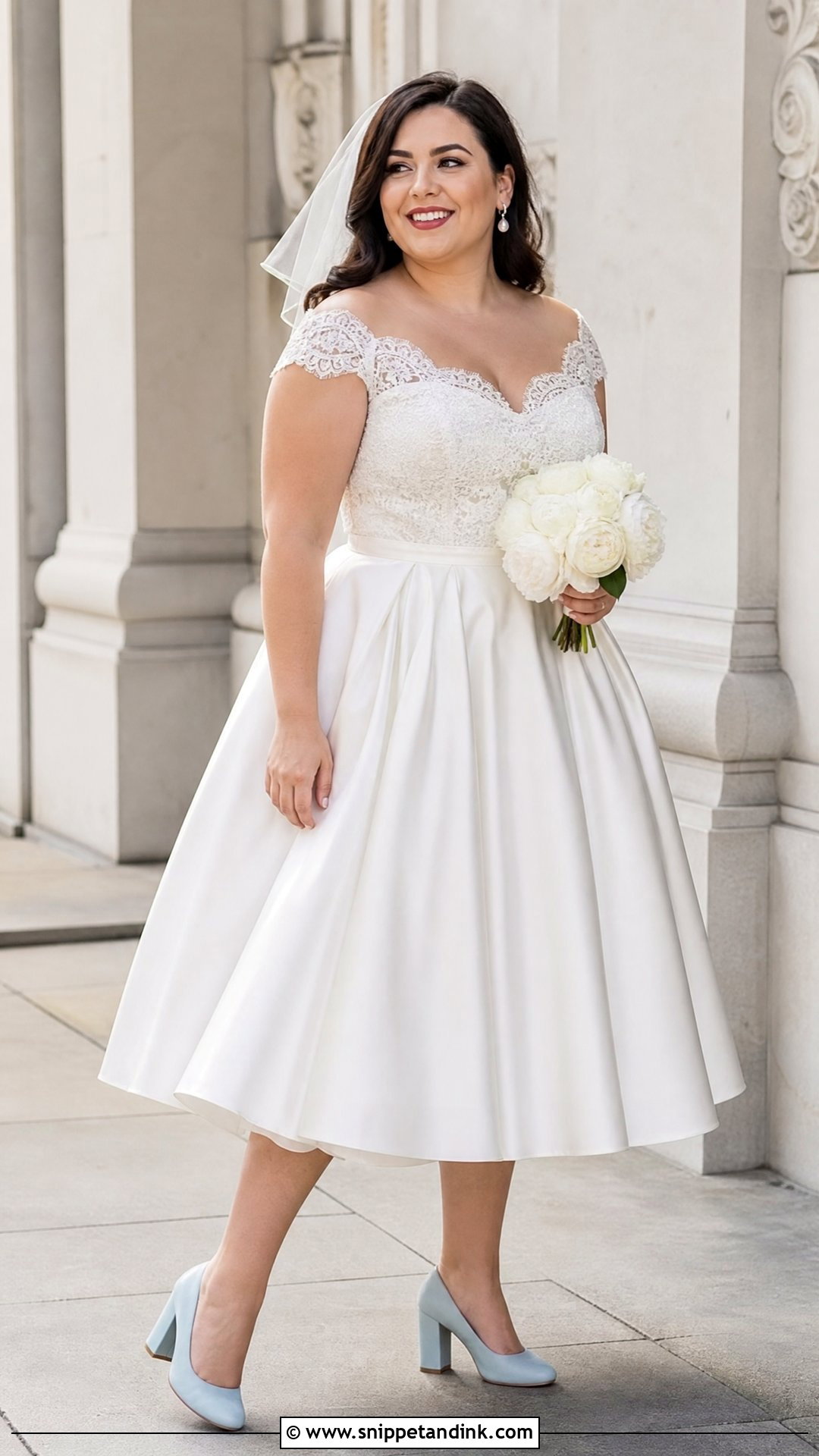
Tea length shows off shoes, so I let the bride pick those before we hem. A fitted bodice with a scoop or sweetheart neckline and a gently flared skirt gives the vintage feel. Structured satin holds a crisp retro shape and lace is softer. Ivory, silver or pale blue block-heel pumps all suit it, with pearl earrings and a short veil. A cropped bridal jacket covers cooler days. Once the shoes are final, check the hem lands at a flattering point on the leg and stays level all the way round. Courthouse and daytime weddings suit it best.
9. Plus Size Boho Lace Wedding Dress
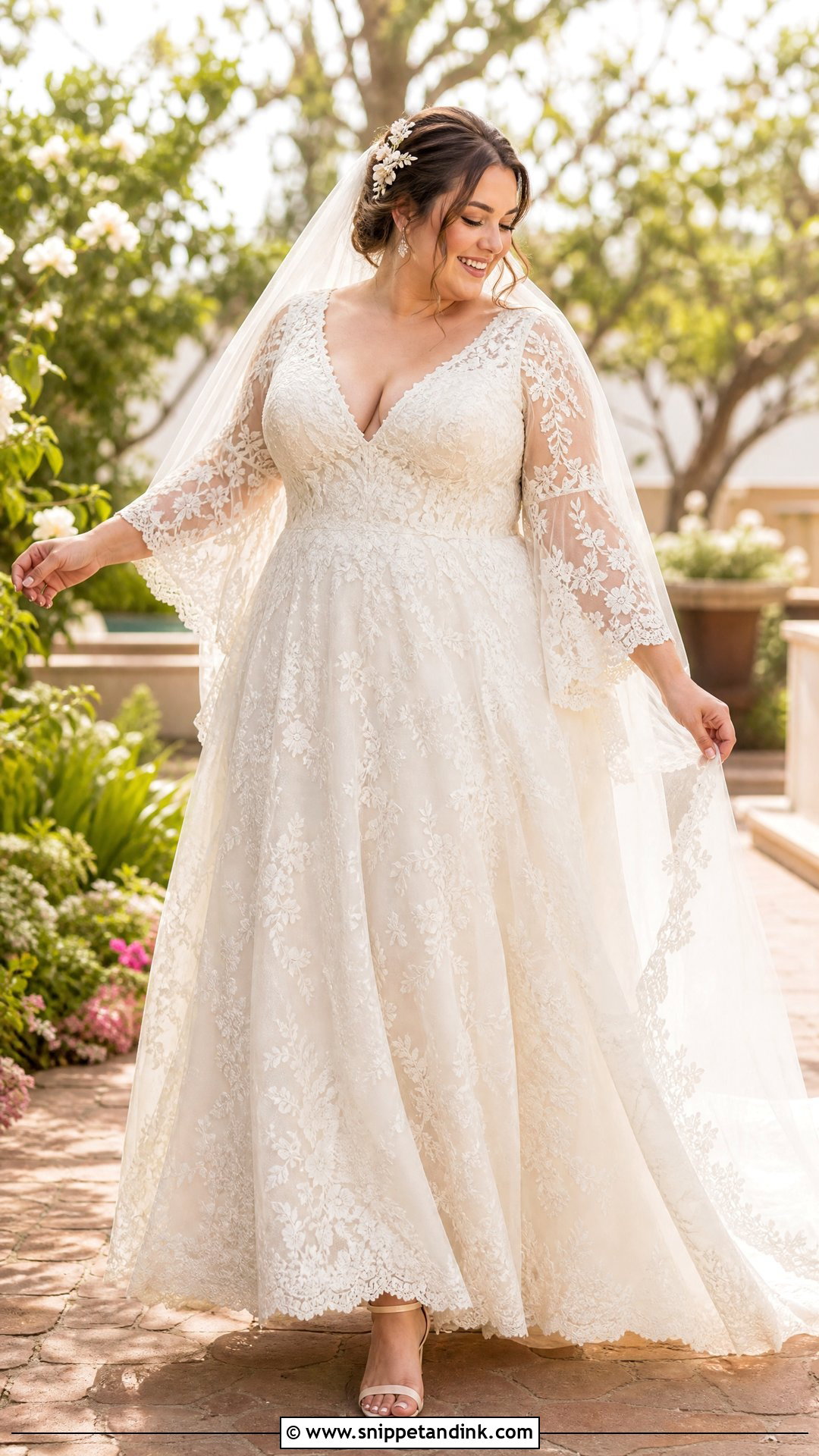
Boho lace can look unstructured on the hanger and still need structure inside. I’d want lined lace through the bust and waist, with the sheer parts kept to the sleeves or upper back, which gives coverage where it matters. A softly defined waist shapes it without stiffness. Add flowing bell sleeves, a V-neck bodice and a relaxed A-line skirt, and it suits an open garden or outdoor arch. Choose one or two small pieces of jewellery, a floral comb and ankle-strap sandals. A lace-edged cape or light veil adds movement.
10. Plus Size High-Neck Illusion Wedding Dress
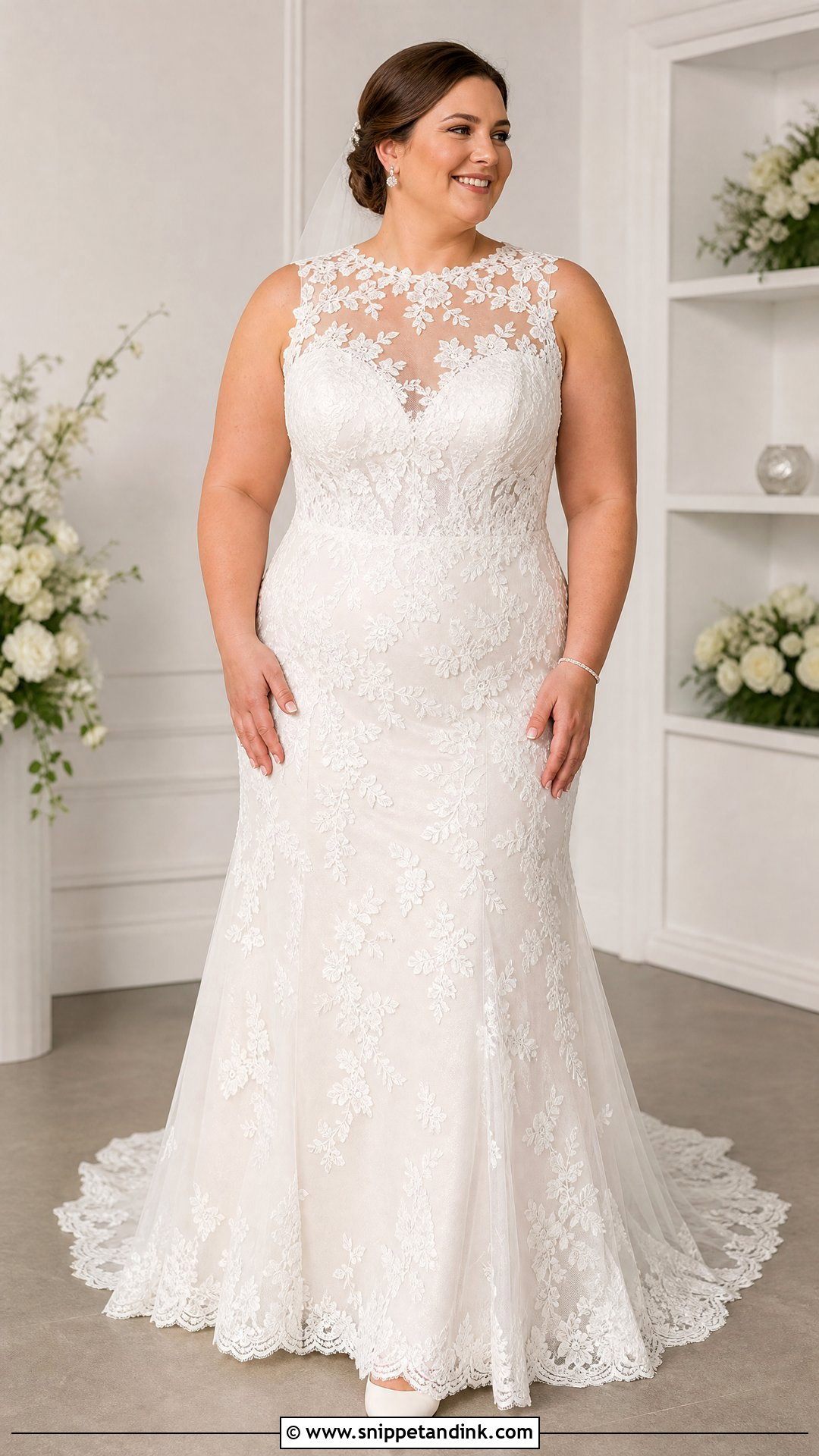
A high neck can feel heavy on a fuller figure unless the fabric keeps it light, which is why I prefer an illusion tulle yoke with lace appliqués flowing into a structured bodice. An A-line or fit-and-flare skirt balances the coverage up top. The tulle around the neck and armholes should feel soft against the skin; cheap tulle scratches by mid-afternoon. Hair in a low bun or smooth ponytail shows off the neck and back. Skip the necklace and wear crystal studs and a narrow bracelet. Pointed pumps and a simple veil complete it.
11. Plus Size Cape-Sleeve Wedding Dress
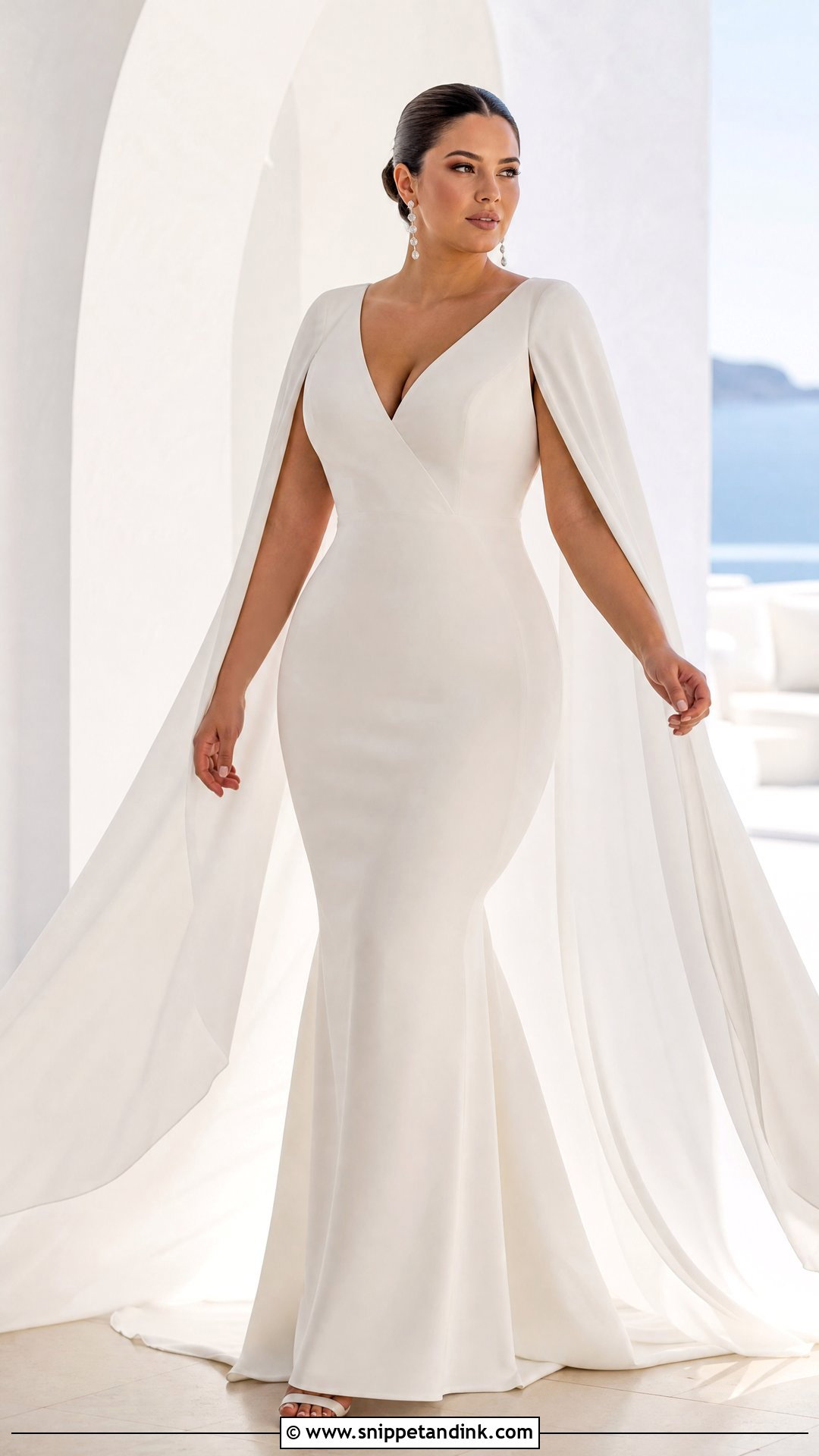
Cape sleeves give the upper arms coverage and movement at once. Attached at the shoulders, the panels can fall to the elbow, wrist or floor on a clean crepe or chiffon gown with a V or scoop neckline. A veil isn’t always needed when the cape already moves behind you; if you want both, keep the veil plain and light so they don’t tangle. A smooth updo and drop earrings keep the sleeves clear. Take it outside before the day. Long cape panels catch wind, so check you can manage them on a breezy lawn.
12. Plus Size One-Shoulder Wedding Dress
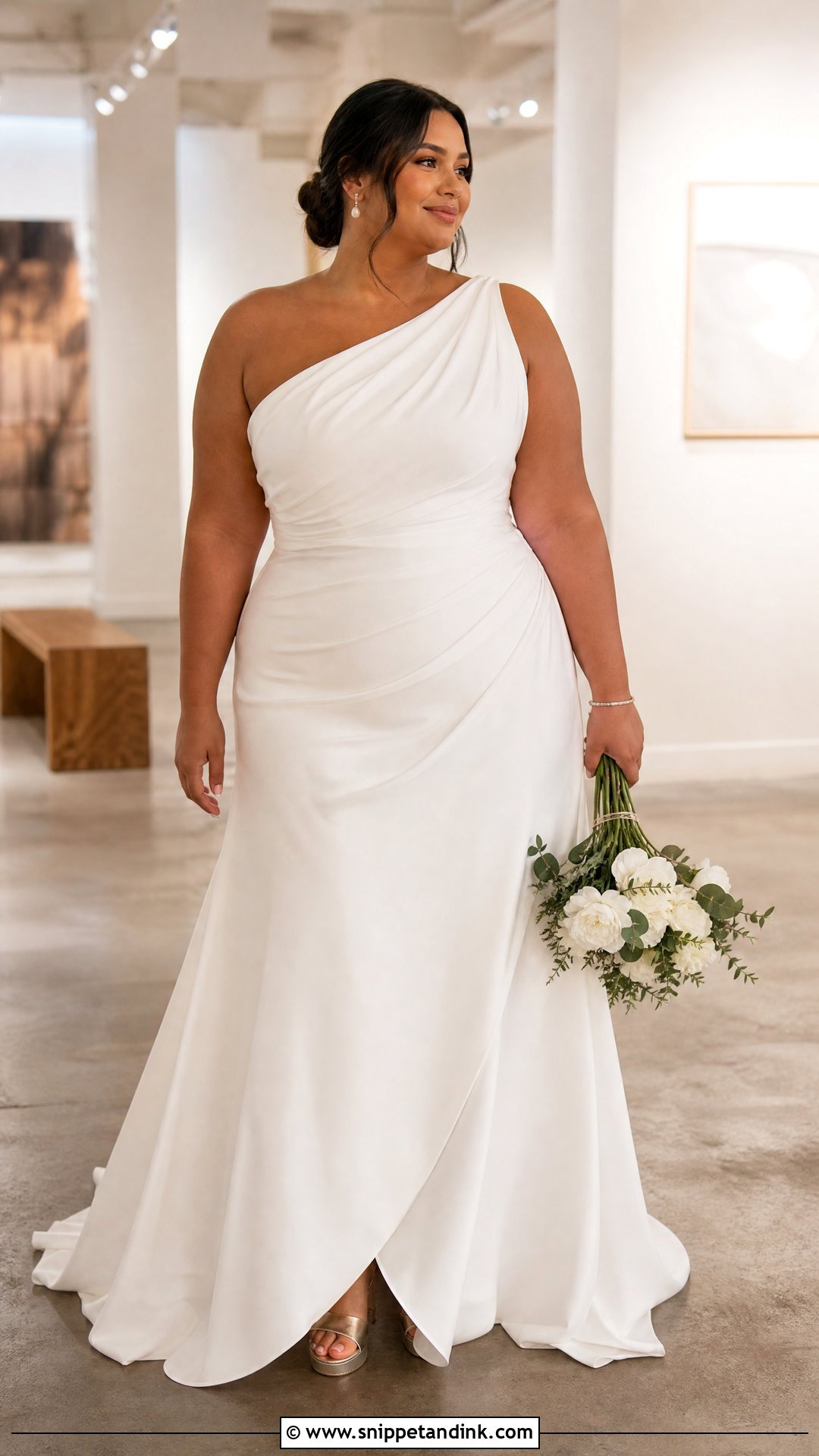
One-shoulder draping creates an elegant asymmetrical line across the bodice, and on a structured satin or soft crepe gown it reads modern without chasing a trend. An A-line moves easily; a fitted skirt looks more sculpted. The single strap should be a design line, not the only support, so the open side needs a firm inner structure. Raise your arms at the fitting and check the strap stays flat. A side-swept style or low bun shows off the shoulder, with one statement earring or small studs and stable block heels.
13. Plus Size Corset-Back Tulle Wedding Dress
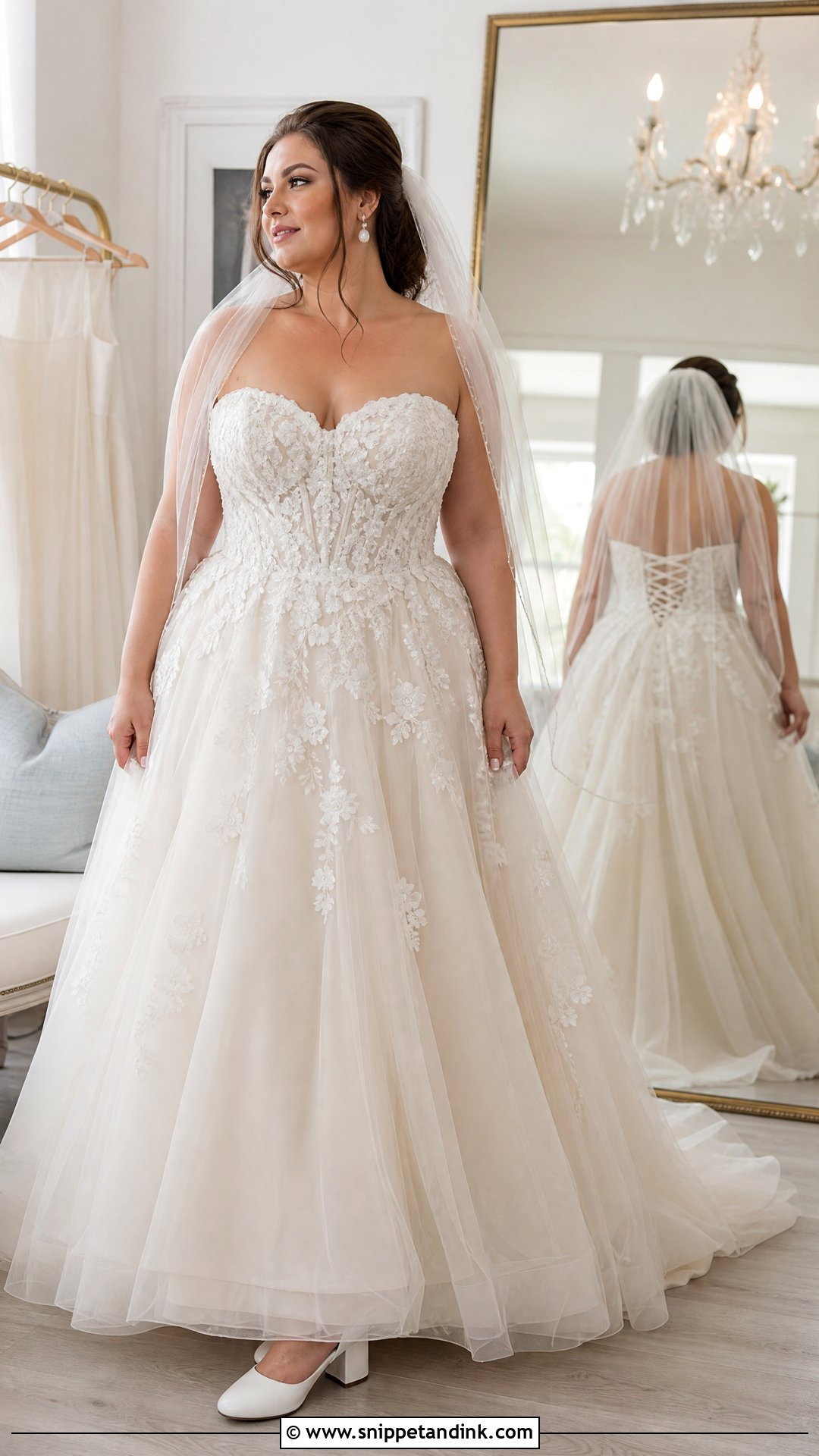
A corset back is the most forgiving closure there is, since it can be adjusted a little if your measurements shift before the wedding. Pair the laced bodice with a layered tulle skirt, a sweetheart neckline, cups and boning so the laces don’t have to be pulled hard to hold you in. Appliqués that run from bodice into skirt smooth the join. The one job to delegate: someone in your party must learn to lace it properly, top to bottom, with even spacing. Then sit in it fully laced and breathe deeply. A fingertip veil and pearl earrings finish it.
14. Plus Size Drop-Waist Wedding Dress
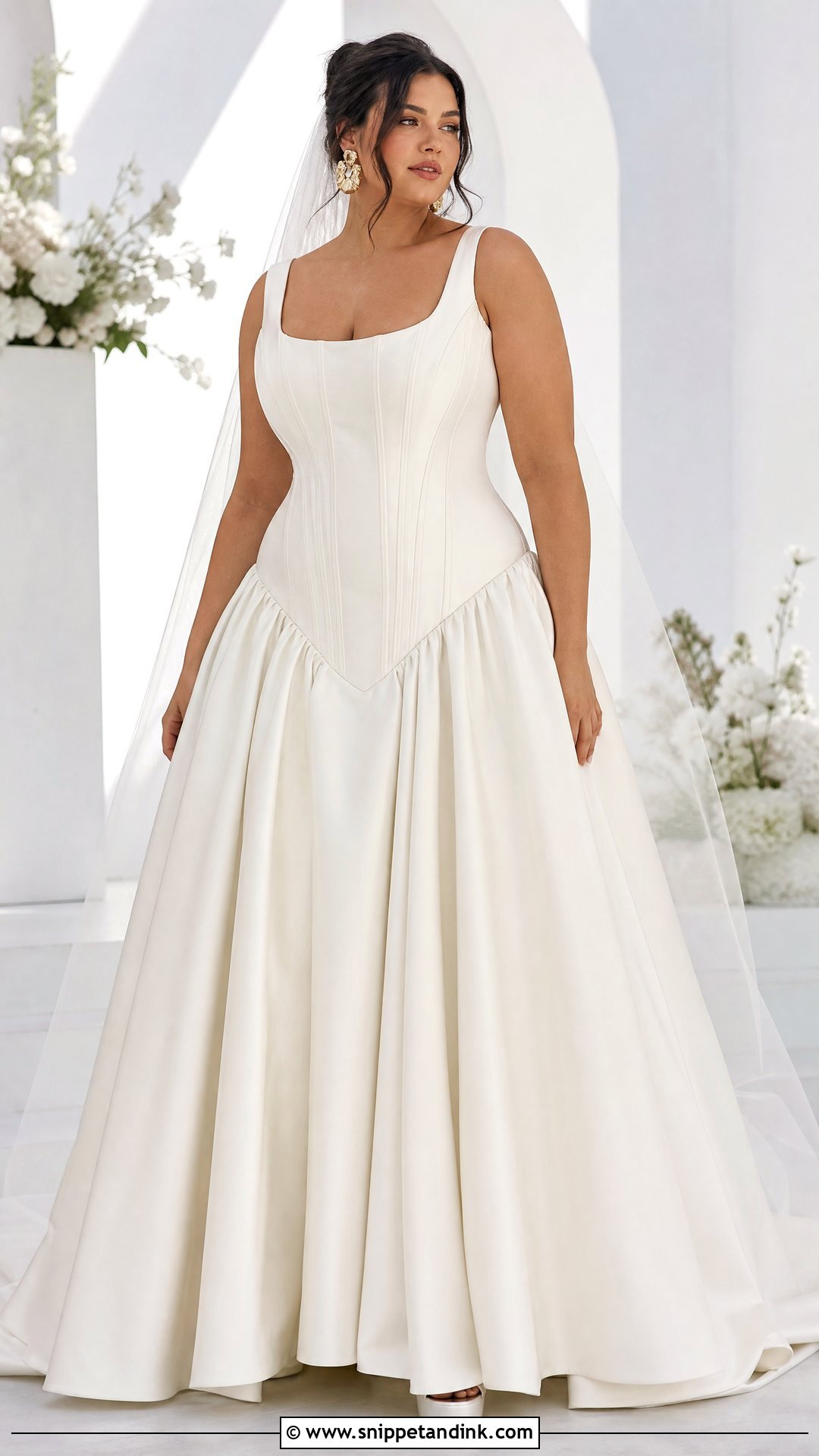
A drop waist runs the fitted bodice below your natural waist before the skirt opens out, so more of your torso is inside the structure. That makes the alterations harder than on most gowns. Curved basque seams or a longline corset bodice should follow you rather than press. Satin, Mikado, and structured taffeta hold the dramatic shape; tulle keeps the skirt lighter. Walk, sit and bend before you sign off. If the lower seam rides up or folds at the hips when you sit, it’s sitting too low. A simple veil and platform heels keep it modern.
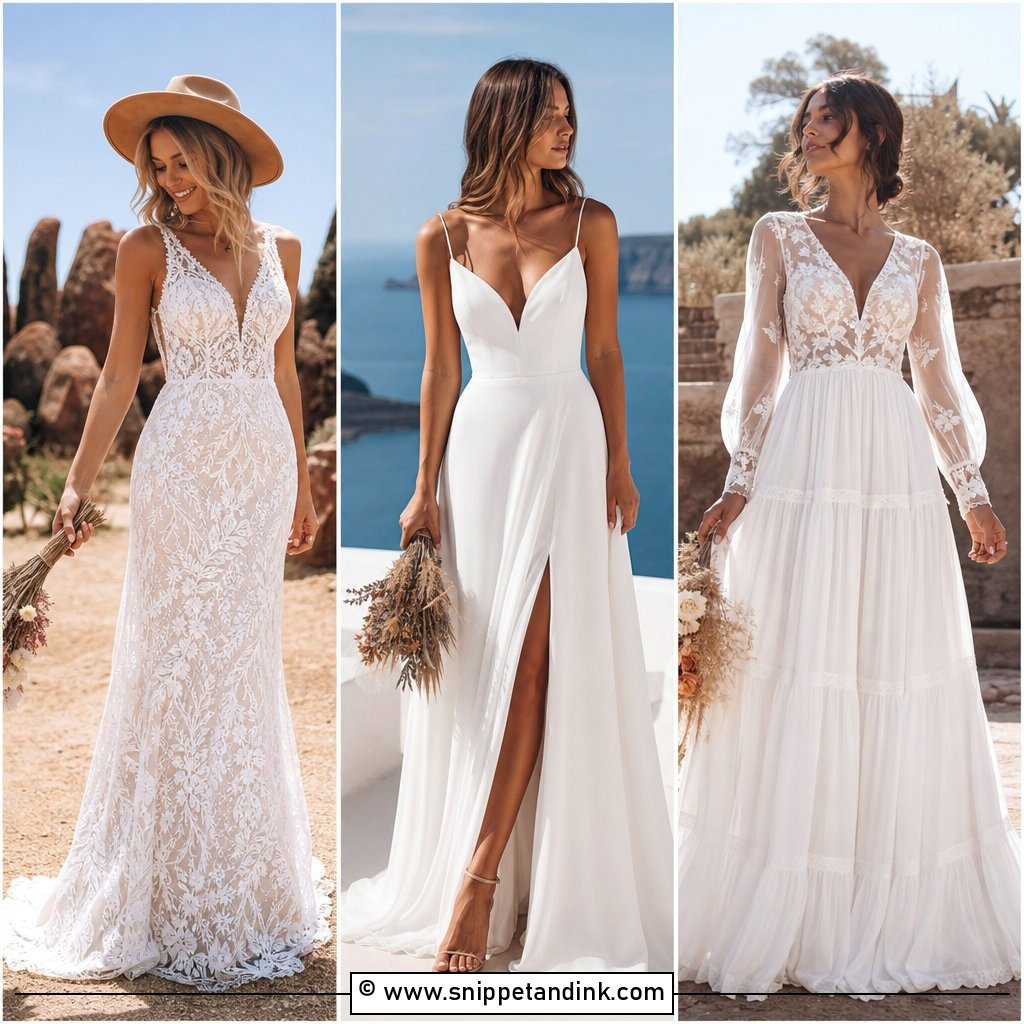
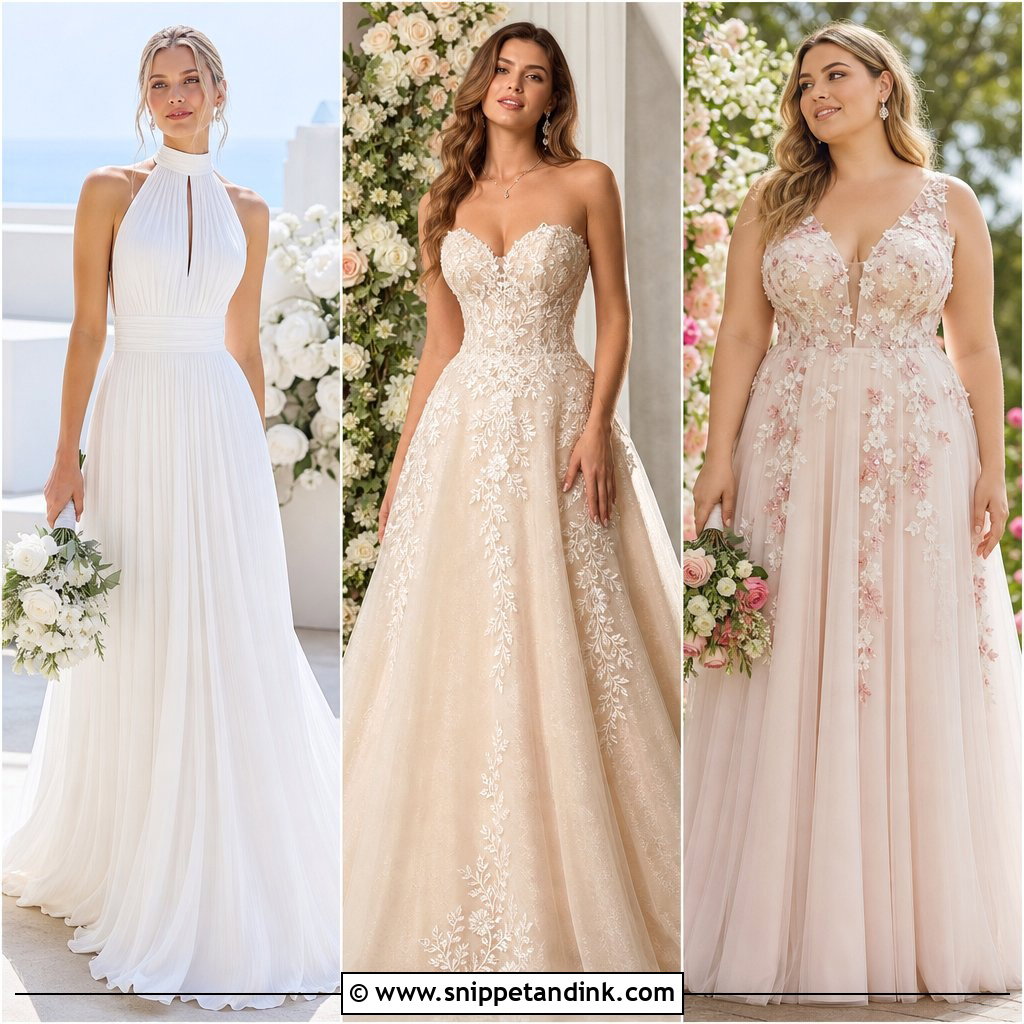
15. Plus Size Floral Appliqué Wedding Dress
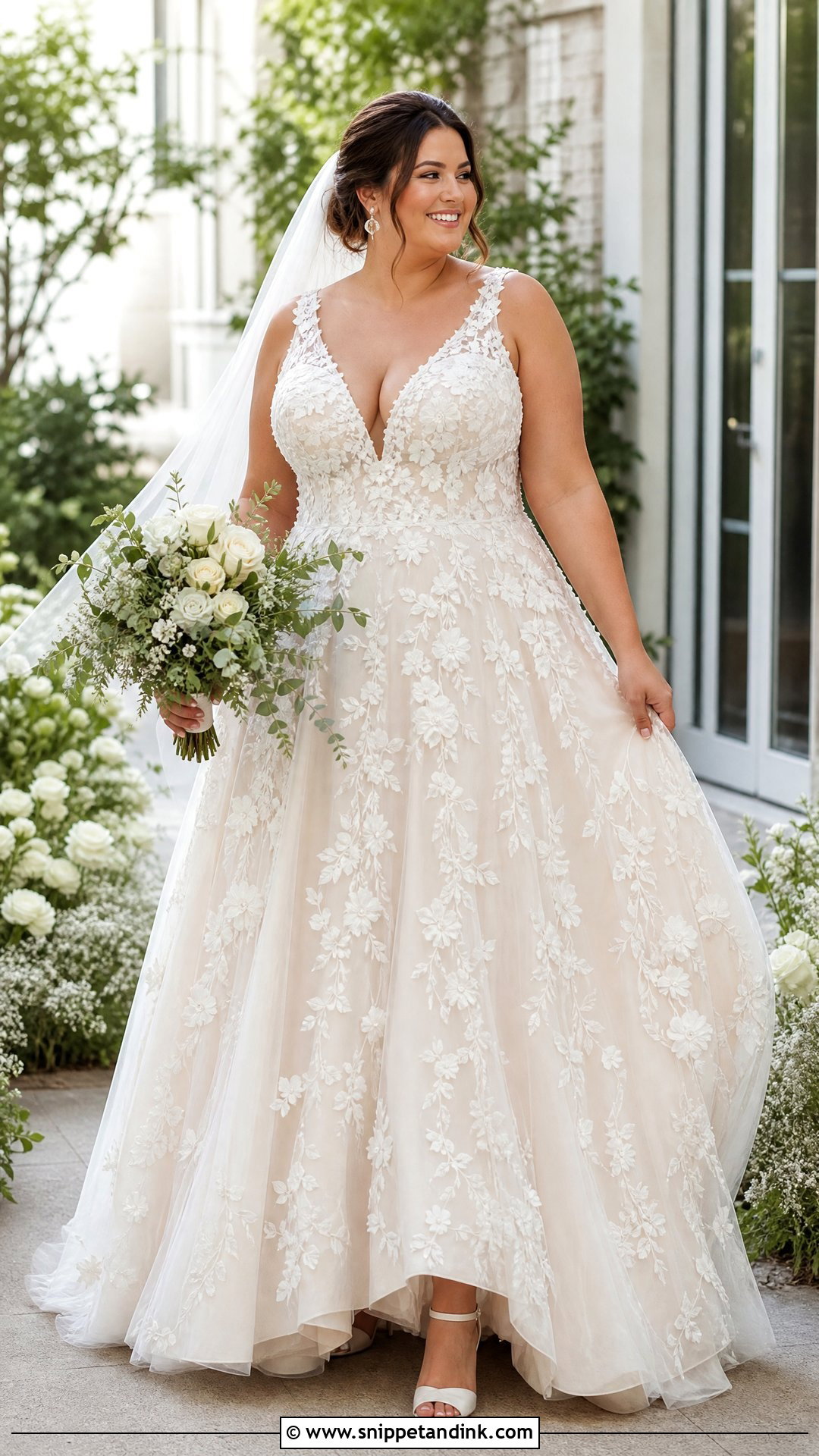
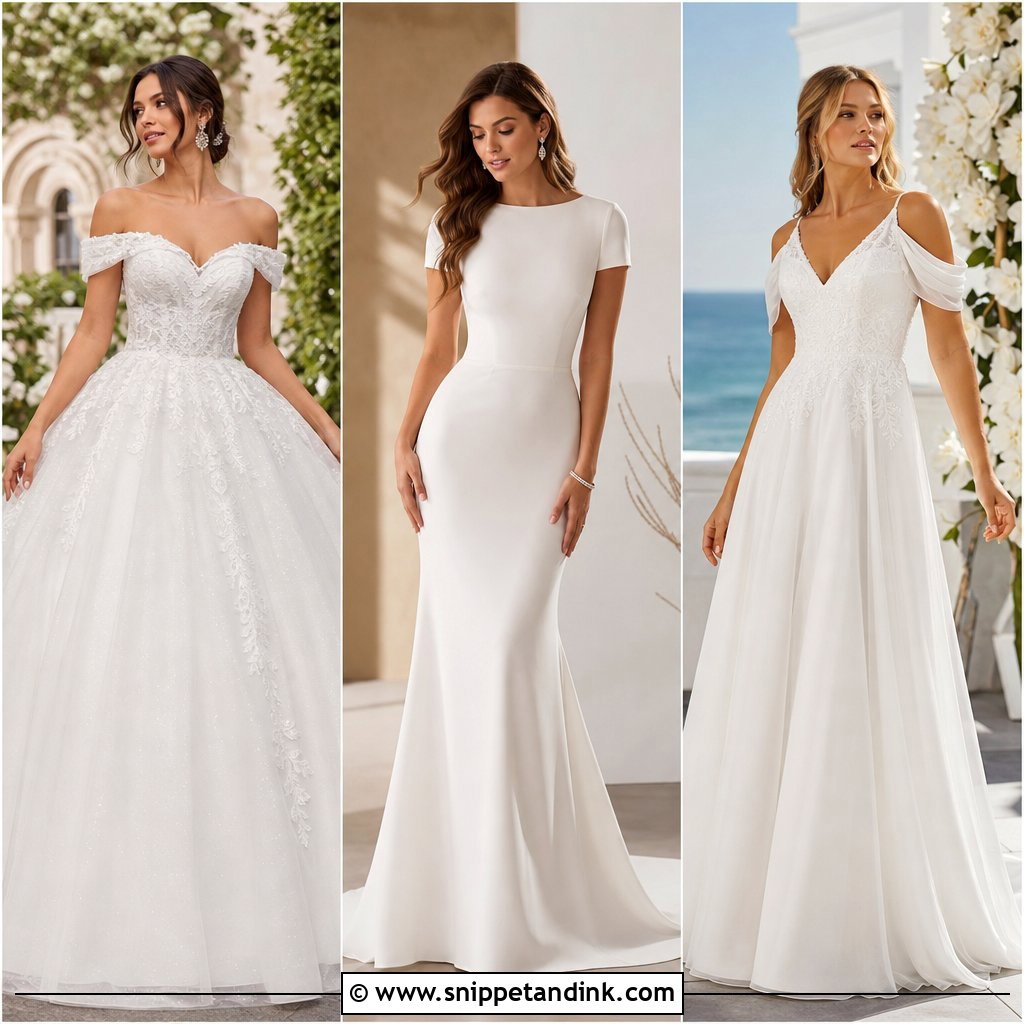
Underarms are where raised appliqués cause trouble. A flower sitting right under the arm rubs with every movement for hours, so I check placement during alterations and ask for any there to be moved. An A-line with flowers scattered from bodice into skirt, lightening toward the hem, gives the texture room to show up in close-up photos. Ivory appliqués over nude, blush or champagne lining look more defined. A supportive V-neck or off-the-shoulder bodice suits it. Keep earrings and veil plain and the bouquet soft rather than an exact match.
16. Plus Size Minimalist Sheath Wedding Dress
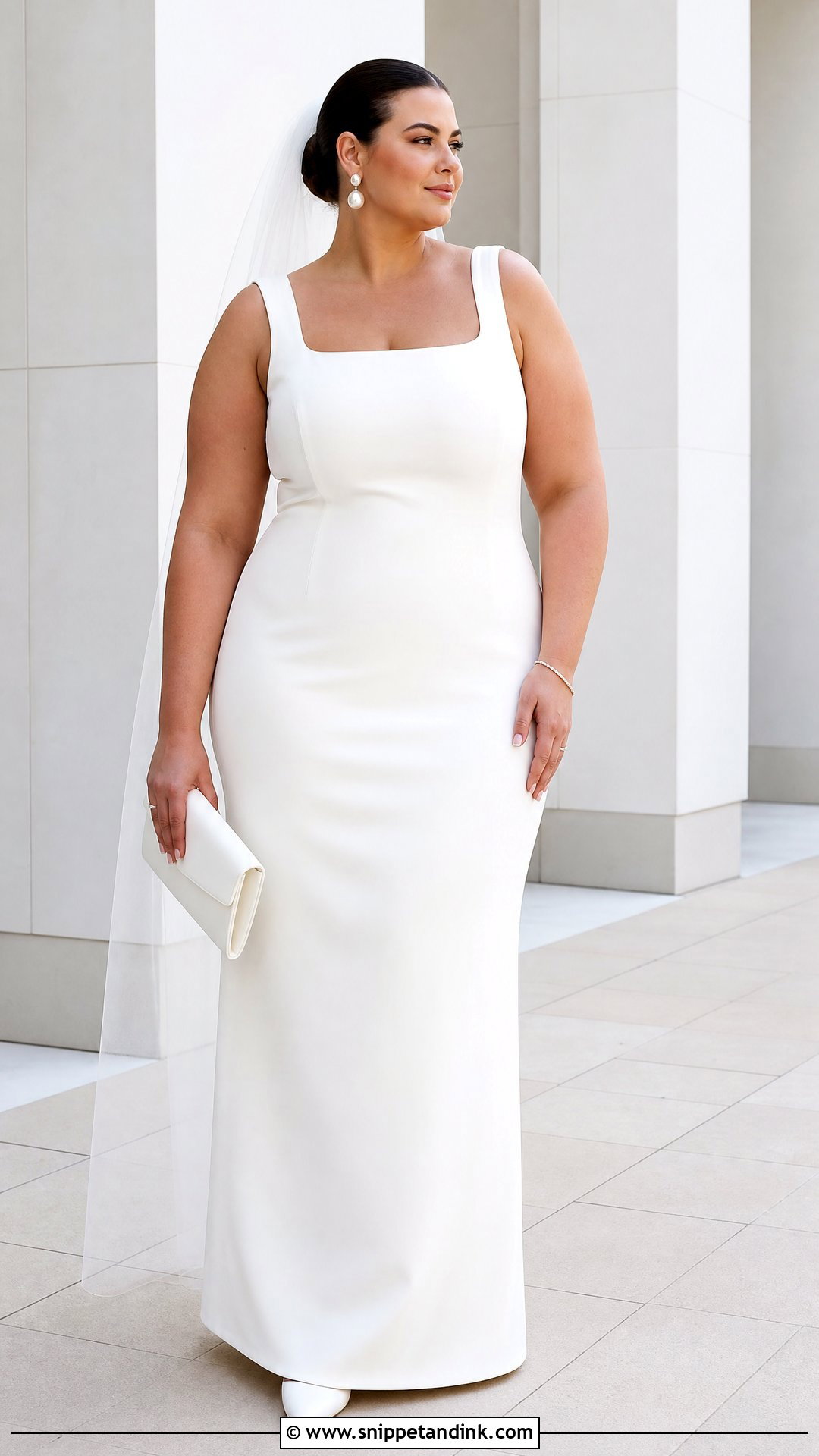
A sheath has nowhere to hide a bad fit, but done right it’s one of the most comfortable dresses on this list. Stretch crepe with a supportive lining and well-placed seams should follow the body without squeezing. A scoop, square or modest V with wide straps and a low back works well. Add interest with a long veil, bold earrings or a detachable chiffon train. The test is the stride: take a full step and sit. If it pulls across the hips, it needs a vent or more ease. The dress itself should give you a secure base, so shapewear becomes optional.
17. Plus Size Champagne Wedding Dress
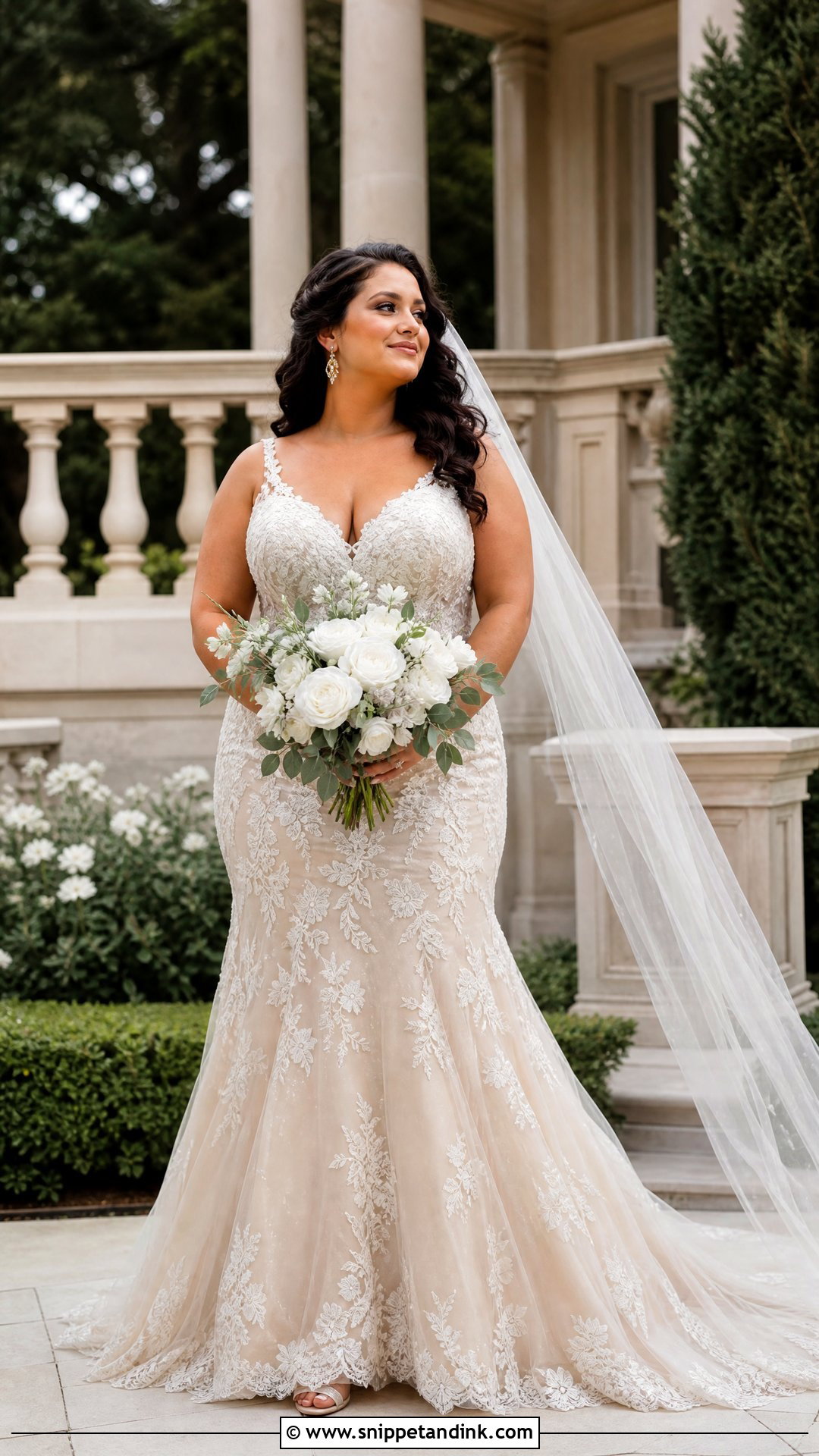
Ivory lace, embroidery or beading stands out better over champagne, which is why I often suggest a champagne lining under ivory tulle before a whole champagne gown. For a richer look, full champagne satin works too. An A-line or fit-and-flare keeps it clearly bridal. Gold earrings, neutral heels and a sheer ivory veil soften the palette, and white flowers with greenery give contrast. Boutique bulbs flatter warm colours, so check the fabric by a window, then photograph it from a few angles to see the layered effect.
18. Plus Size Puff-Sleeve Wedding Dress
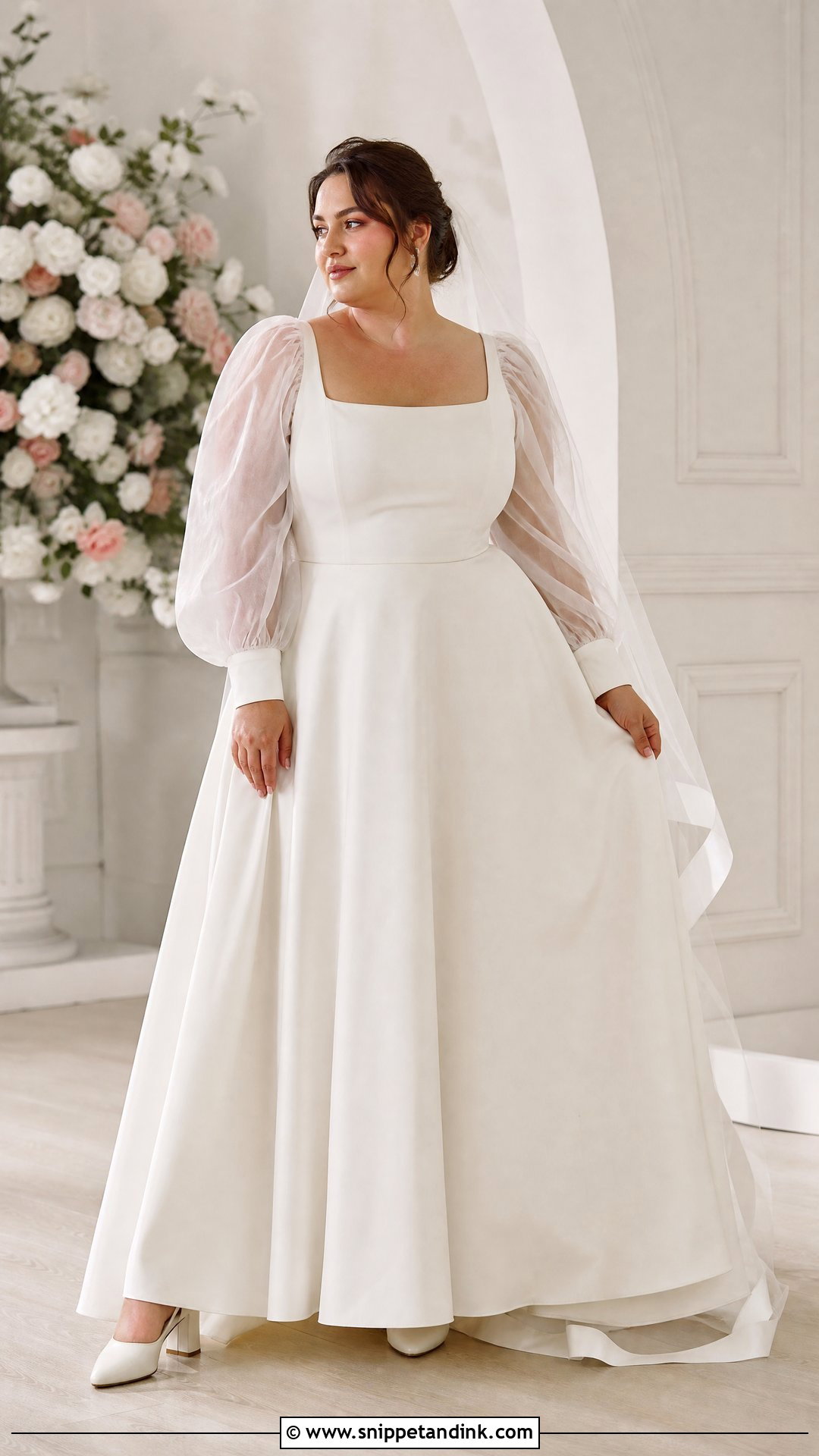
Puff sleeves are volume at the shoulder, so the fabric has to be light. Organza or tulle holds a puff without weight; heavier satin sleeves drag the bodice down. A square-neck fitted bodice balances them and an A-line continues the line. Detachable sleeves give a second look for the reception without a change. Keep hair up and off the shoulders. In the fitting, bend and raise your arms fully. Elastic sleeve bands that leave marks or pull the bodice up are too tight and should be swapped for a wider band.
19. Plus Size Wedding Dress With Detachable Overskirt
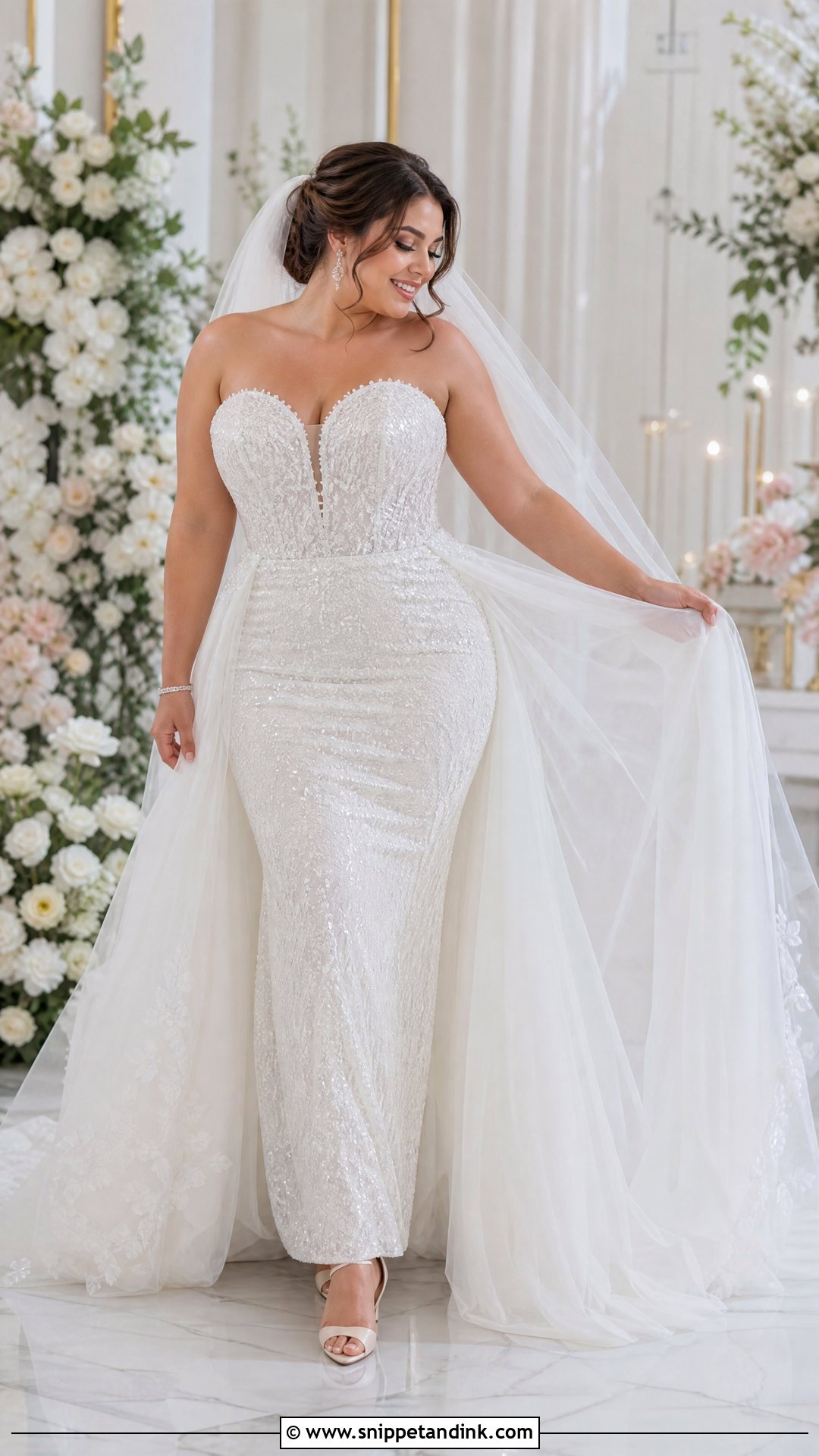
With a detachable overskirt, a fitted crepe, lace or beaded base gown gets full tulle or satin volume for the aisle and portraits, then becomes a lighter curve-skimming dress for dinner and dancing. The waistband is my focus: it should lie flat and close securely without a ridge showing through the base dress. Practise taking it off and reattaching it before the day, and choose one calm helper to handle it. Swap the long veil for a hair comb at the change.
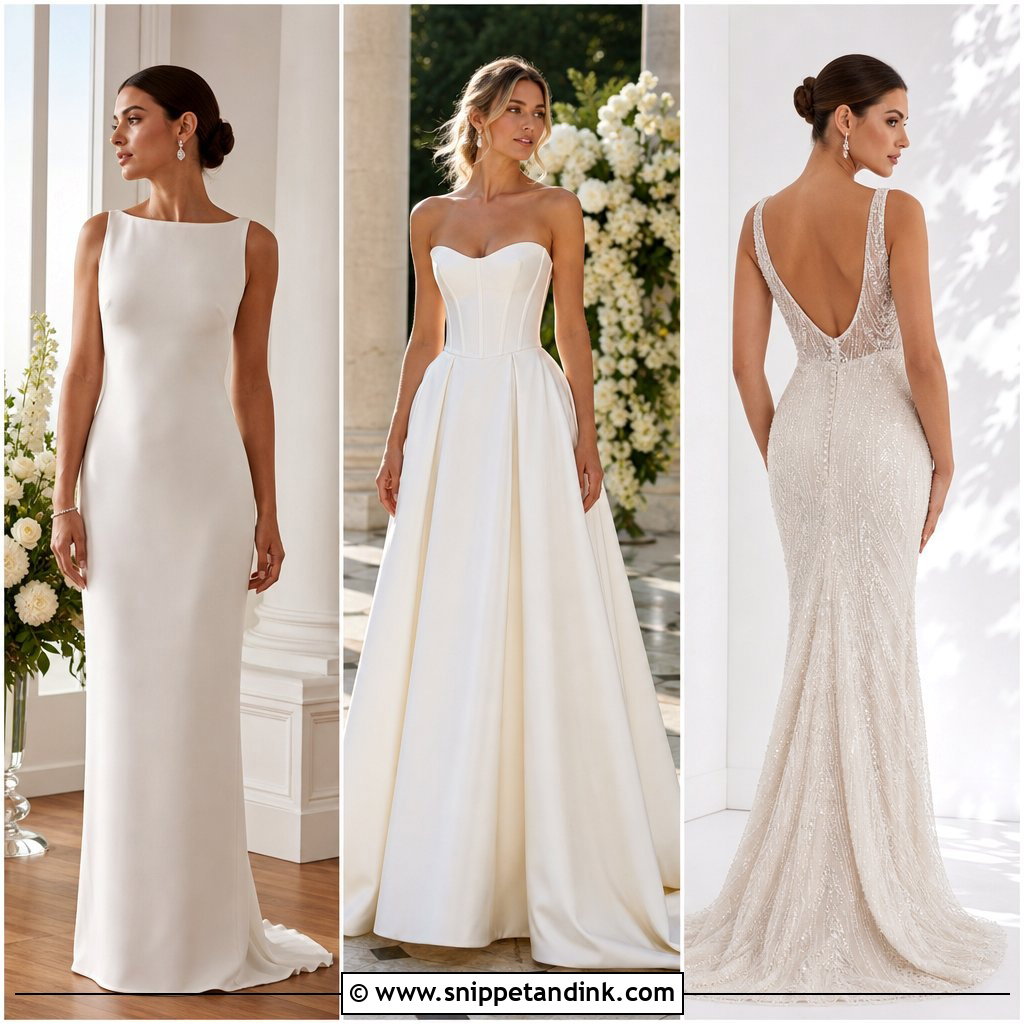


20. Plus Size Short Courthouse Wedding Dress
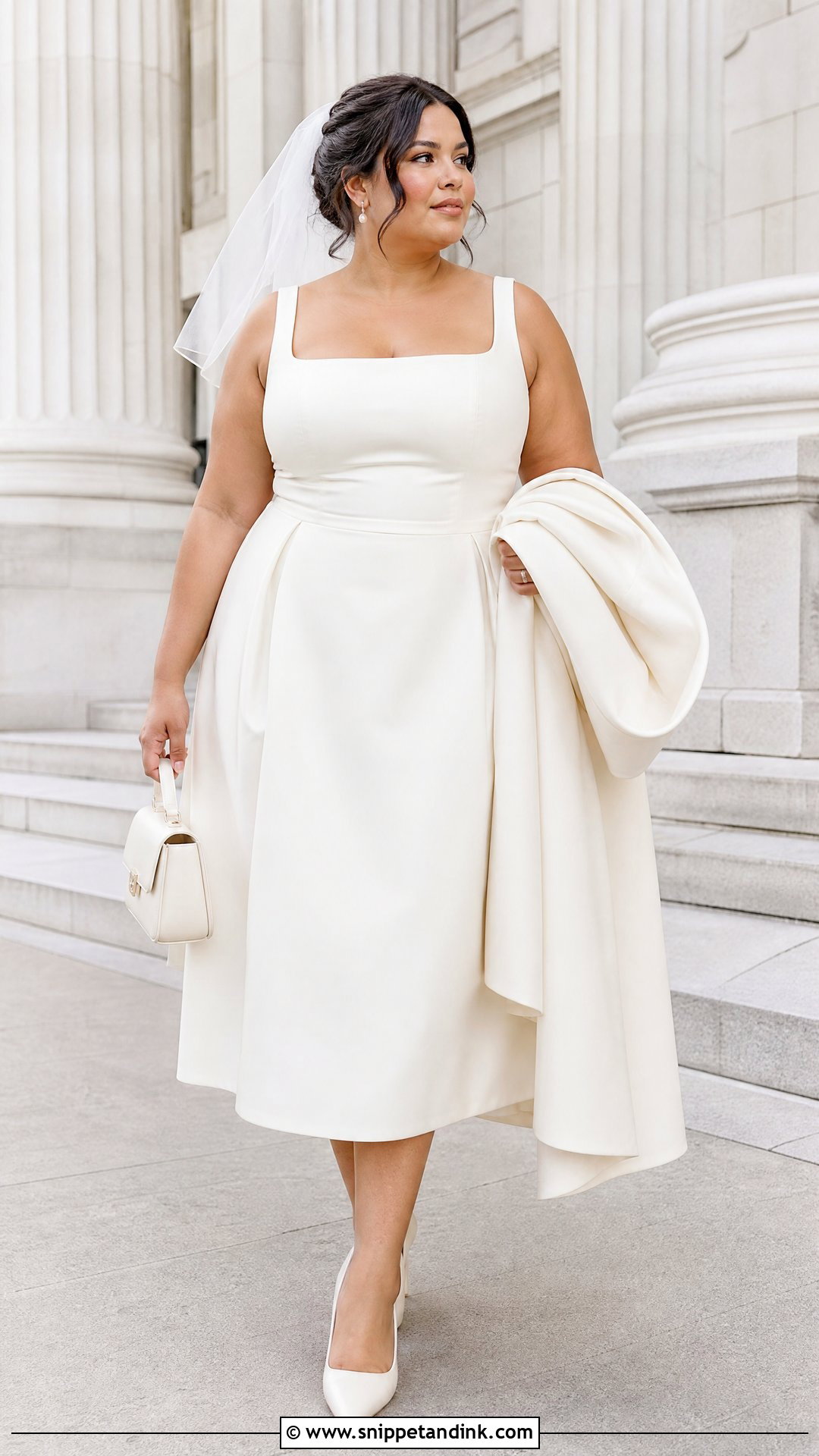
Short dresses suit a courthouse or small city ceremony, and the structure decides whether they look bridal or like a party dress. A tailored knee or midi length with a defined waist, a square neckline, wrap bodice or jacket-style top looks finished. Pointed pumps, pearl earrings and a birdcage veil, short tulle veil or a hair bow mark you as the bride. Layer a long ivory coat in cold weather. Practise seated poses, too, since courthouse photos often include them, and check the hem and neckline stay put when you sit.
Support Built Into the Gown, or Worn Underneath It
On a fuller bust, I’d rather the dress do the supporting. Many gowns can have cups, boning and a waist stay sewn in, and a skilled seamstress can add them to one that arrives without. That often means you can skip a strapless bra that slides down by the evening.
- Built-in cups and boning: best for strapless, sweetheart and off-the-shoulder bodices.
- A waist stay: a firm inner band that anchors the dress at the waist so the bodice doesn’t drop.
- A longline bra: useful with a low back or plunging neckline where cups alone won’t hold.
- Light shapewear: optional, and only if it doesn’t roll at the waist when you sit.
Decide which approach you’re taking by the first fitting. Changing undergarments after the bodice is altered can shift the fit by enough to need another round of work.
No Neckline Belongs to One Body Type
No silhouette, neckline or fabric belongs to only one body type. Begin with the gowns that feel like you, then judge each on support, comfort and how it moves. Try one shape you didn’t expect to like alongside your favourites. Bring your shoes and undergarments to fittings and leave enough time for careful adjustments. The gown is right when you can stand naturally and forget to check it.
You'll Like These Ideas:




Leave a Reply