
Shopping for a gown with curves should be fun, and it usually is once the dress is built properly. The best Wedding Dresses for Curvy Women aren’t a separate category of styles; they’re ordinary silhouettes with better engineering inside: real cups, boning placed where your body needs it, and fabric heavy enough to skim rather than cling. A-lines, mermaids, corsets, crepe sheaths and lace sleeves can all work on a curvy figure. What changes the result is fit. I’ve watched the same dress look wrong off the rack and exactly right after alterations, so I care far more about construction and tailoring than about the number on the label. The twenty looks below each come with what I’d check at the fitting.
What’s Inside a Gown That Actually Supports Curves
When a curvy bride tells me a dress feels wrong, the cause is almost always inside it. Before you fall for the outside of a gown, ask the consultant to turn the bodice inside out. Here’s what I look for.
- Boning: flexible spiral or sturdy synthetic bones running up the side and front seams, so the bodice holds its own shape instead of relying on straps.
- Cups: moulded or sewn-in cups sized for a real bust. Many brides with a fuller bust skip a bra entirely in a well-built bodice, though some feel better in a longline bra, and that’s fine too.
- A waist stay: a grosgrain band hooked inside at the waist. It takes the weight of a heavy skirt off your shoulders and stops the bodice slipping.
- Lining fabric: a power mesh or firm lining under lace smooths without needing heavy shapewear.
A gown can look plain on the hanger and wear superbly because of all this. The reverse is also true. A pretty sample with a flimsy inside rarely improves, however good the alterations.
1. A-Line Lace Wedding Dress
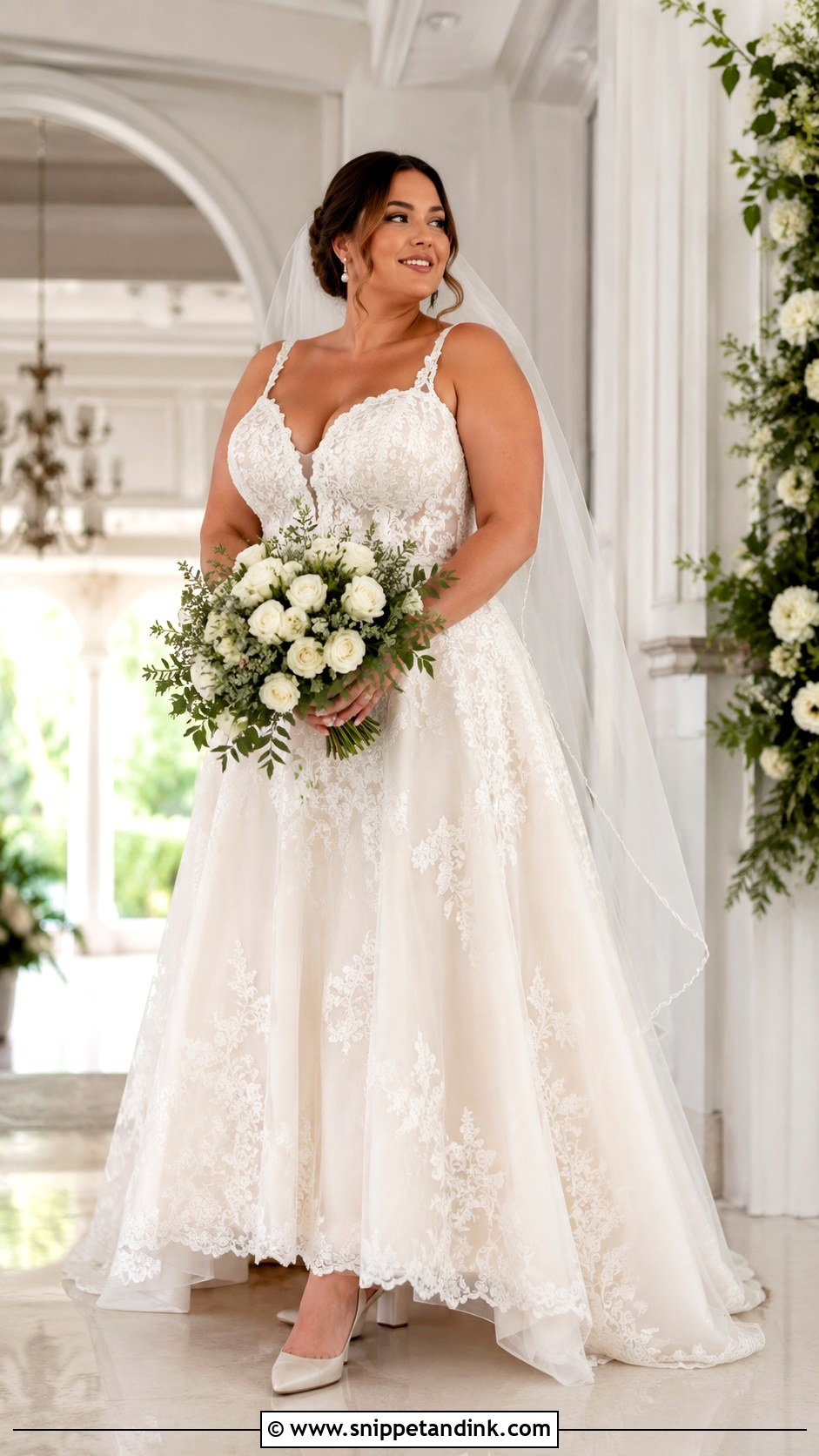
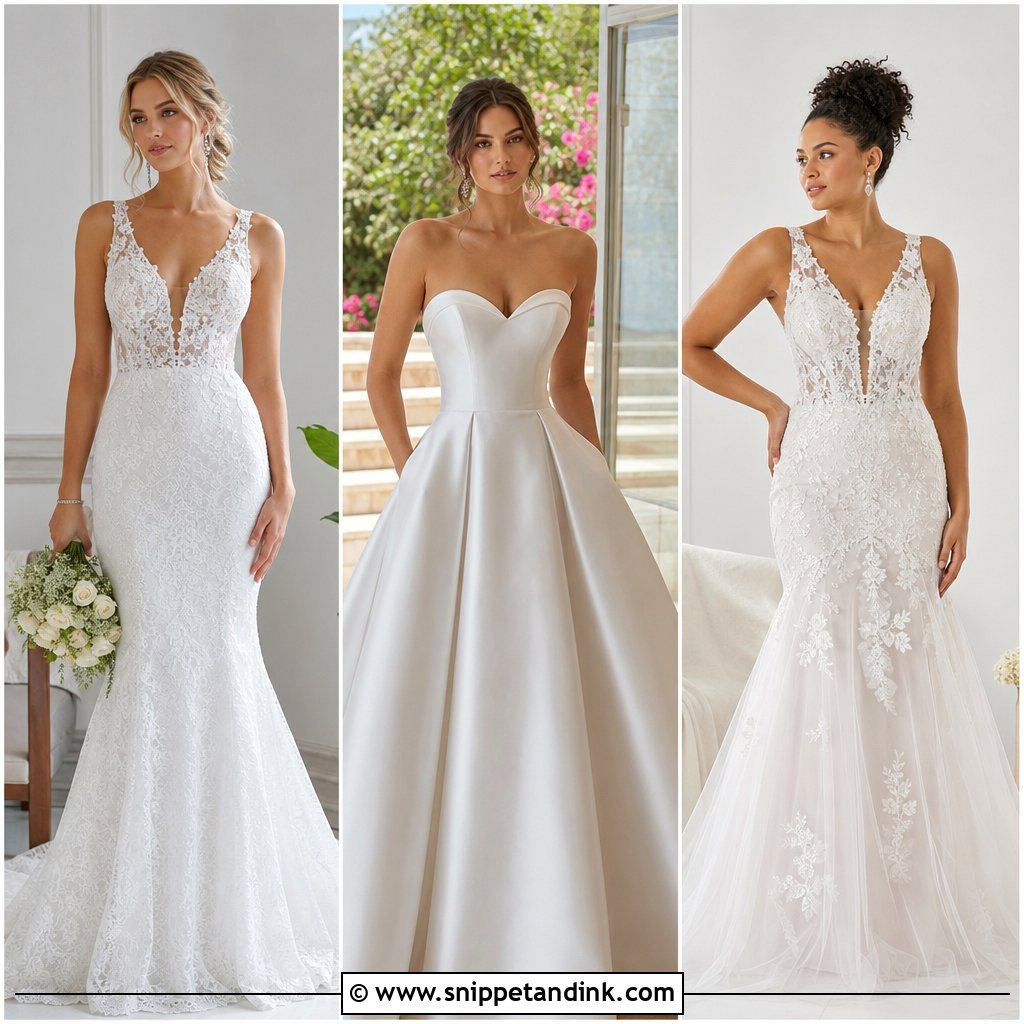
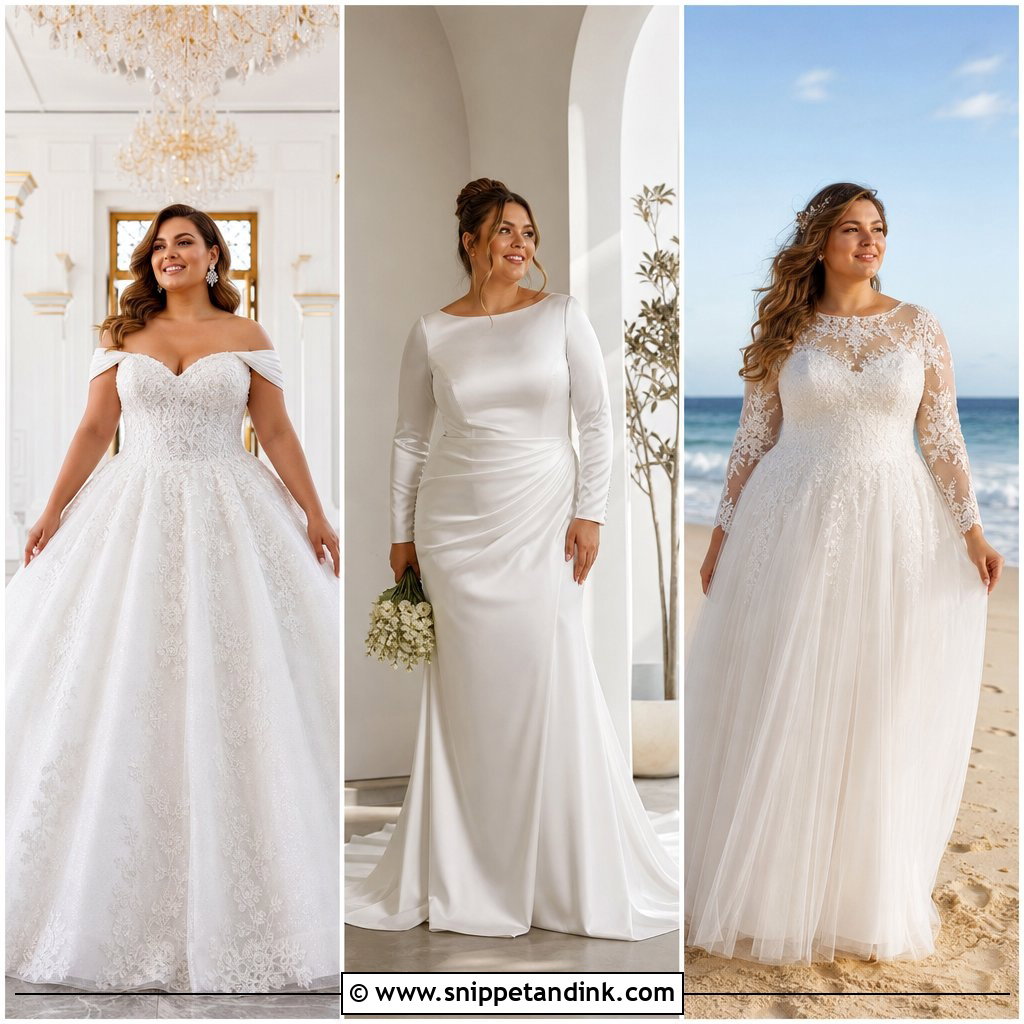
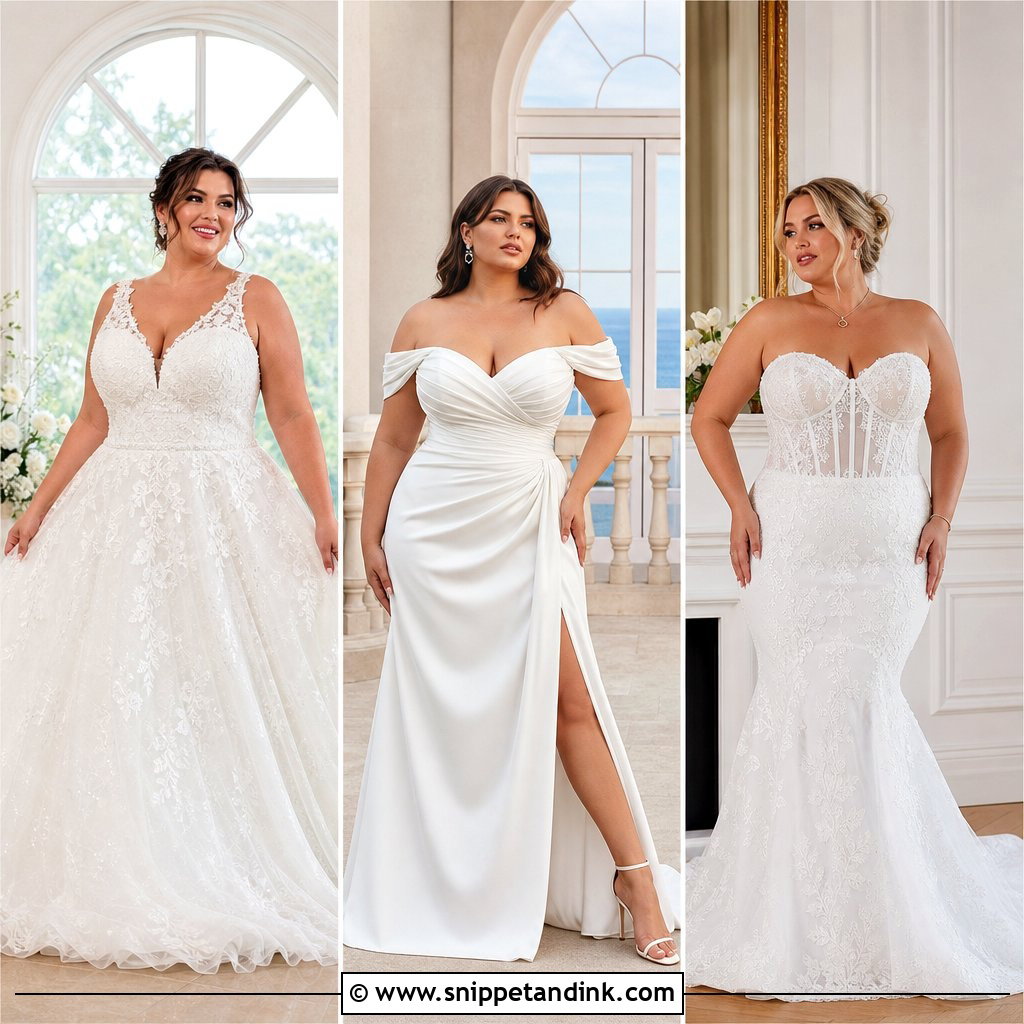
A-line lace is the dress I’d put on almost any curvy bride first, mainly because it tells us so much. The bodice follows the bust and waist, then the skirt opens and moves freely past the hips. Lace appliqués running from neckline to hem draw a long, continuous line. If you need more support, wide straps or an illusion neckline give the bodice something to hang from besides your ribs. A fingertip veil and pointed block heels keep it comfortable through a long day. The fitting detail that matters: lace bodices bought off the rack often gap under the arm or pinch at the side seam. Both are easy fixes for a good seamstress, so don’t rule the dress out because of them.
2. Satin Ball Gown Wedding Dress
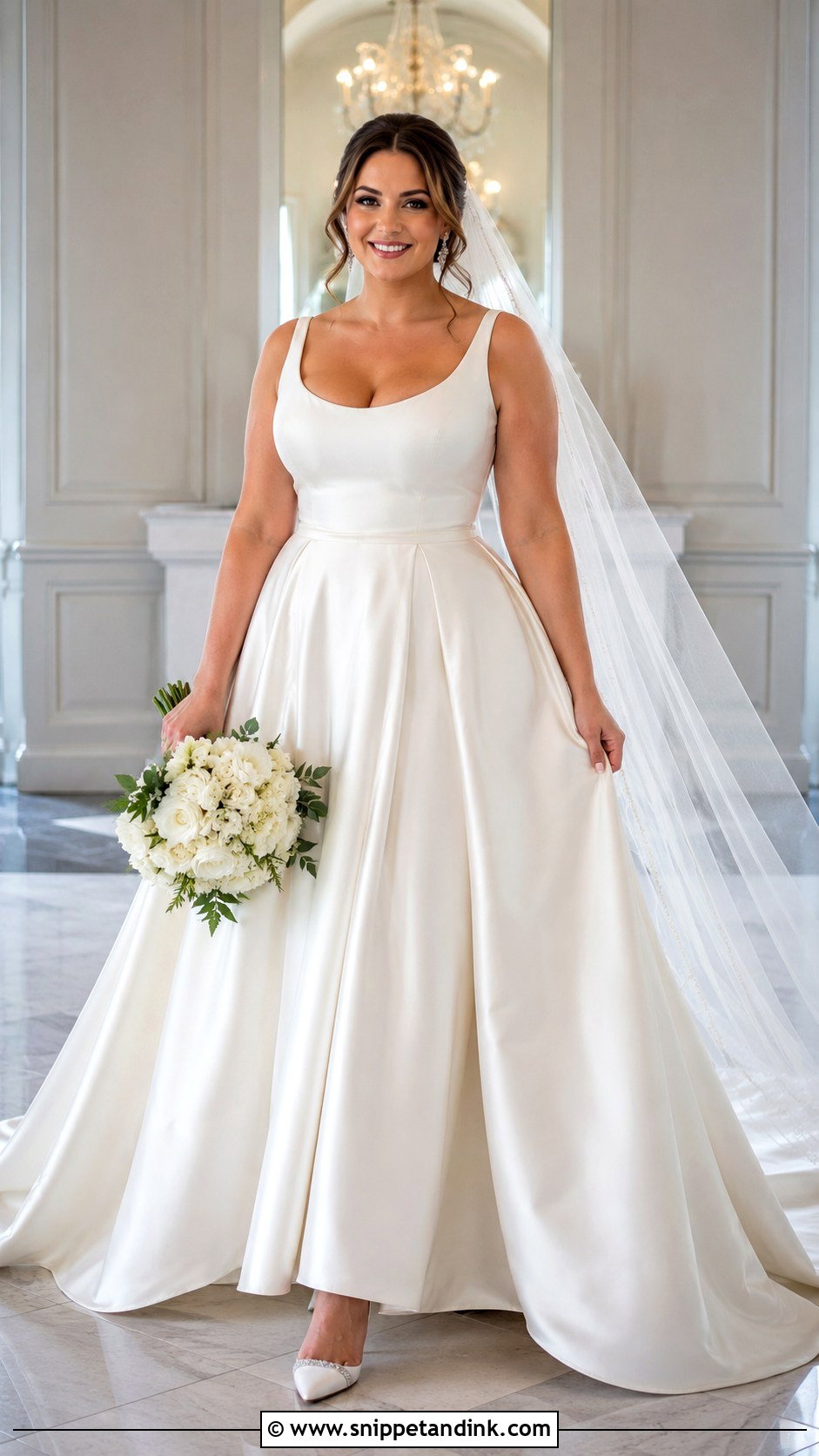
Satin ball gowns have real presence, and the full skirt stands away from the hips, which many curvy brides find freeing to walk in. The fitted bodice sets the waist. I’d steer toward a matte or soft-sheen satin, because high-shine satin reflects light across every curve and fold, and it shows any wrinkle where the bodice meets the skirt. Scoop, sweetheart and portrait necklines all frame the face well. Ask for sewn-in cups and firm boning, plus a waist seam placed at your natural waist, not where the sample happened to sit. Satin shows every alteration line, so this is one dress where an experienced tailor is worth paying for.
3. Mermaid Wedding Dress
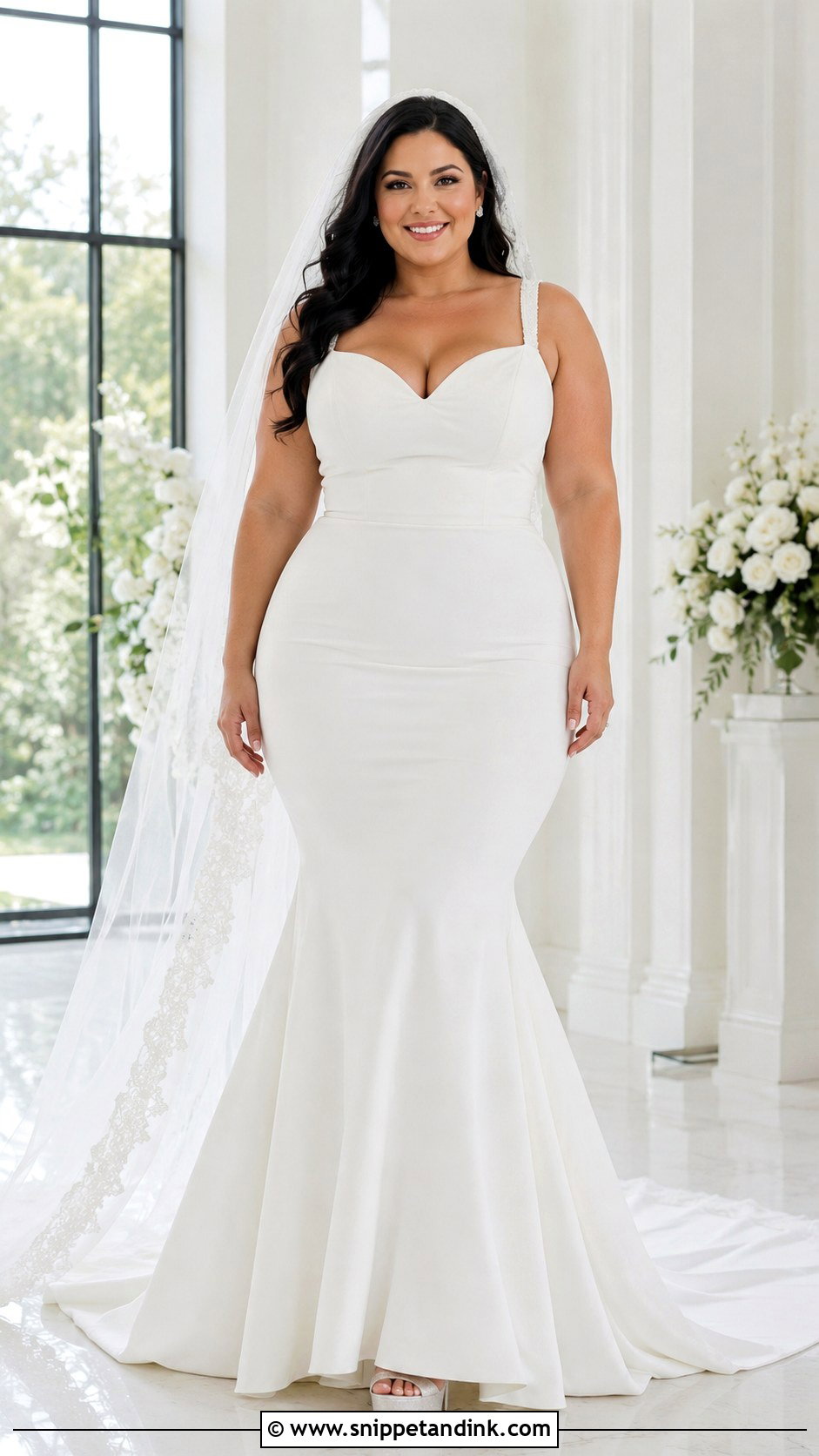
Mermaids are for the bride who wants her shape seen. The dress follows bust, waist and hips and flares around the knee, giving a dramatic hourglass effect. Stretch crepe, lined lace and mikado hold up best because they shape without straining. The point I’m most careful about is where the flare starts. Set too high, it looks like a fit-and-flare; set too low, you can’t climb stairs. I have brides sit, walk and step up onto a fitting platform before we pin it. Wide straps or an off-the-shoulder bodice add support, and platform heels help with the longer hem.
4. Fit-And-Flare Wedding Dress
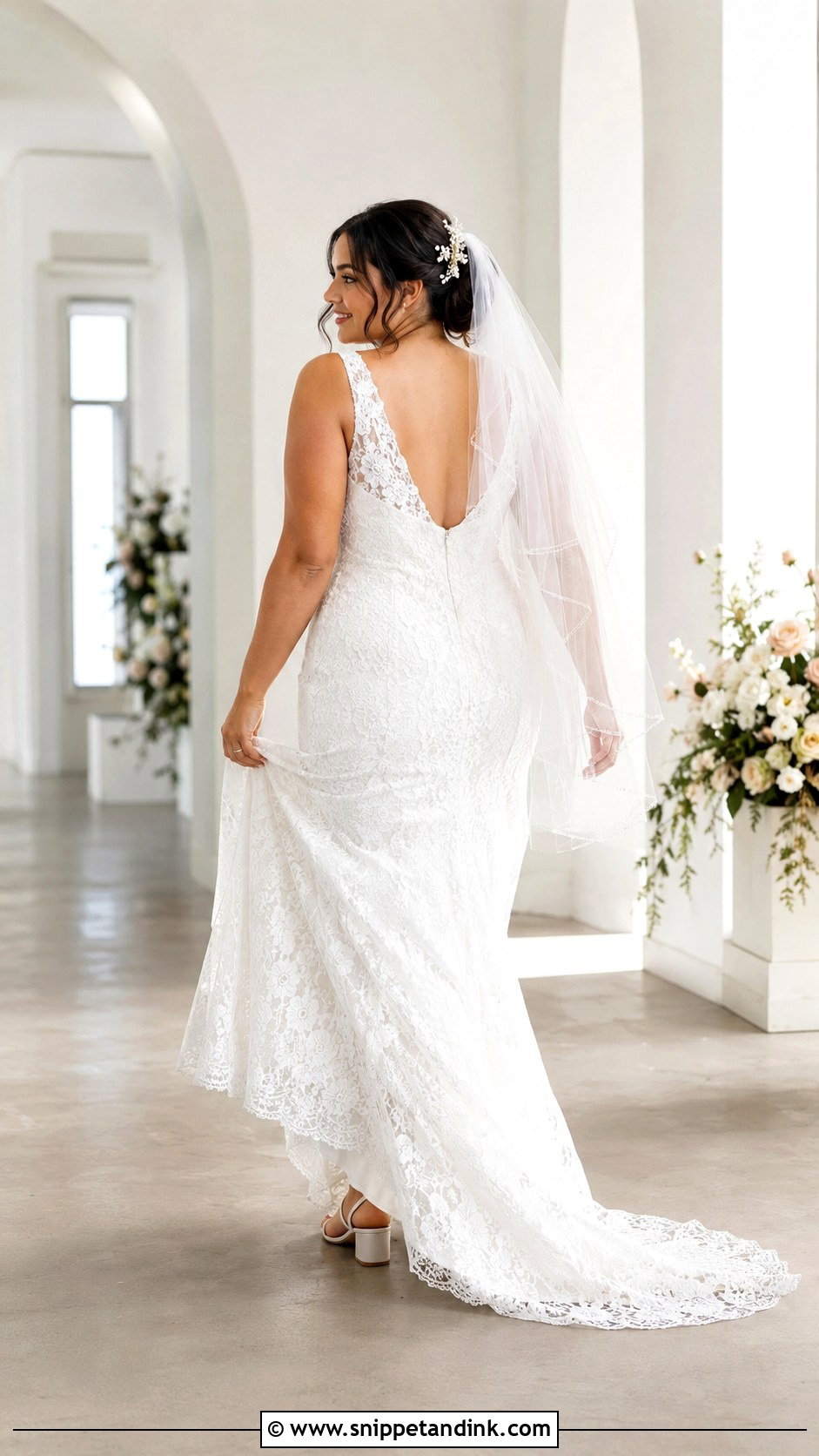
Think of fit-and-flare as the easier-going cousin of the mermaid. The skirt opens around the upper thigh instead of the knee, so sitting, walking and dancing come naturally. Vertical seams or lace panels lengthen the body, and a low V-back adds interest. If you want more coverage at the bust, an illusion inset or a raised neckline is a simple alteration request. I always ask brides to stride across the room in this one. If the skirt pulls across the hips as you step, the flare point needs dropping slightly, or the hips need letting out, and a smooth lining against the body helps the skirt fall cleanly.
5. Empire Waist Chiffon Wedding Dress
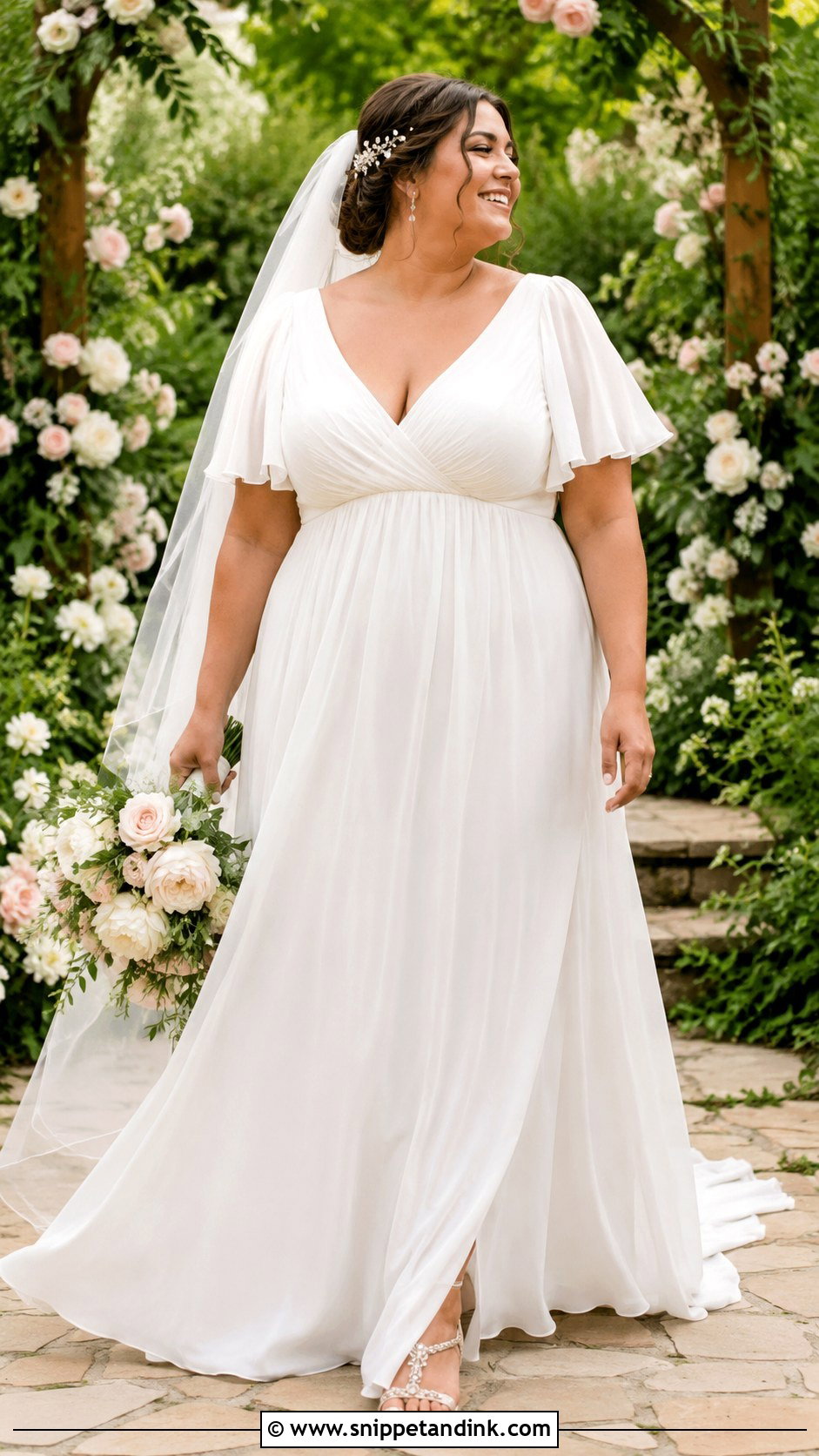
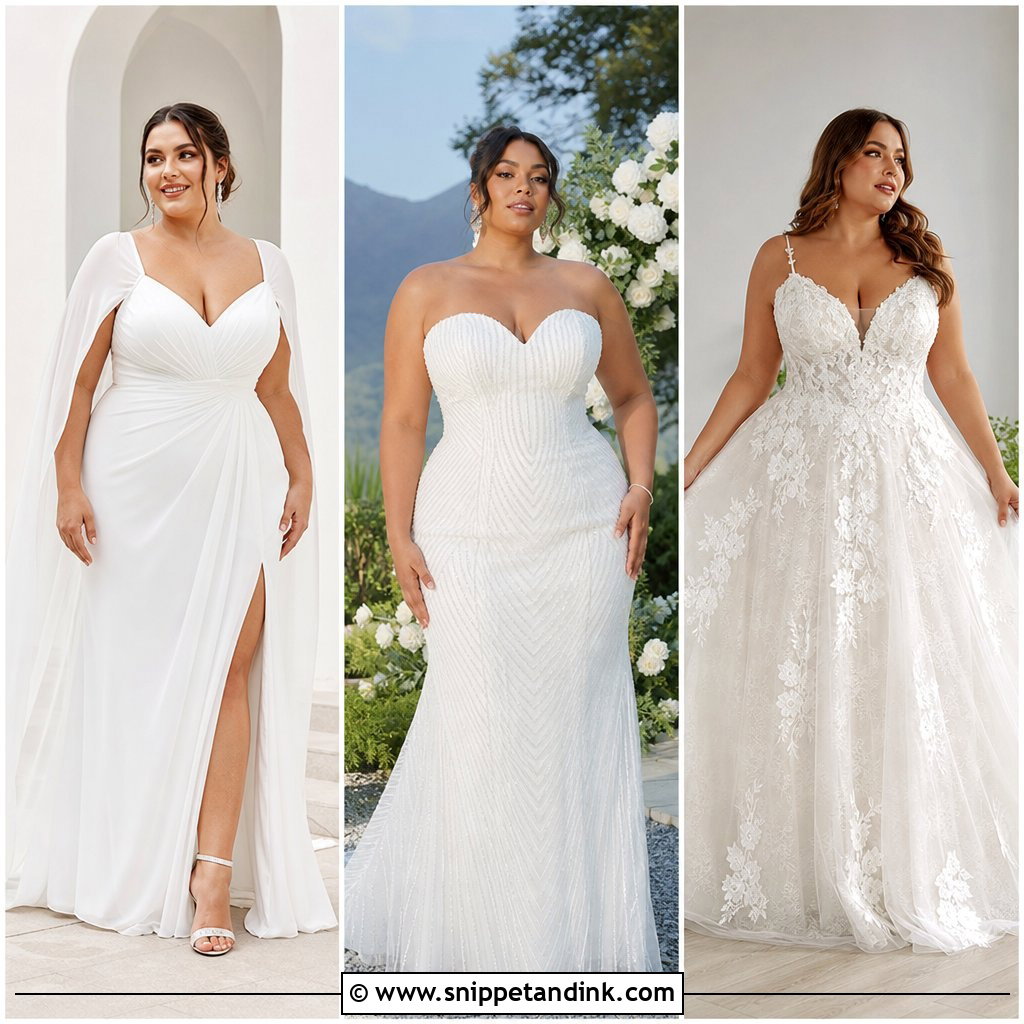
Chiffon empire waists suit garden, beach and warm-weather weddings, since the fabric floats and nothing presses on the natural waist. The fitted band sits under the bust and the skirt falls straight from there. A crossover V-neck supports and frames a fuller bust, and flutter sleeves give soft coverage at the upper arm. Here’s my honest caveat: an empire dress with a weak bodice looks shapeless, because all the definition comes from that under-bust seam. I’d have a tailor tighten the cups, shorten the straps and sharpen that seam until it sits snugly. Low sandals and a light veil suit the breeze.
6. Off-The-Shoulder Wedding Dress
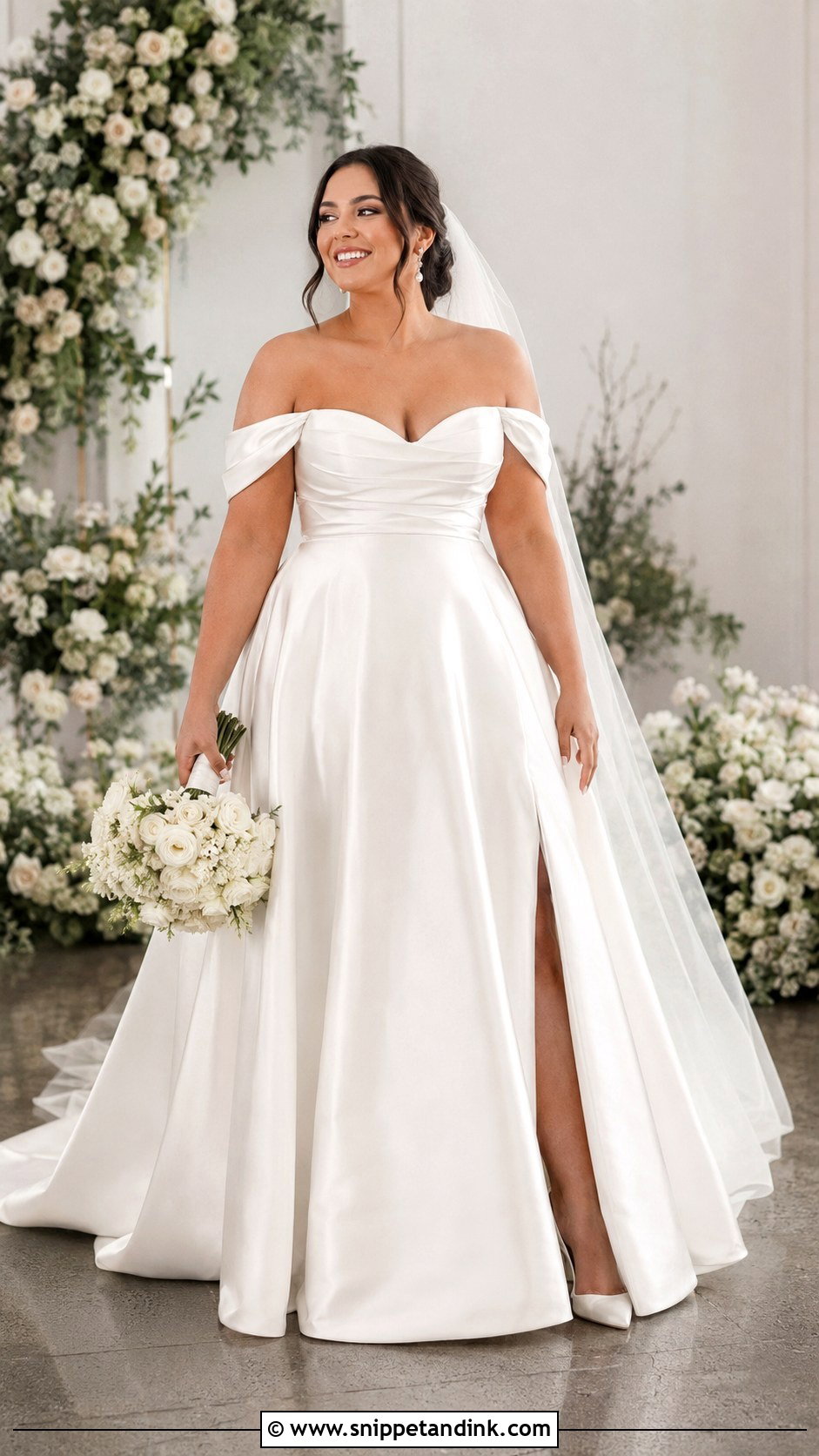
Off-the-shoulder necklines show off collarbones and face, and they balance wider hips nicely. The rule I don’t bend: the bodice must hold itself up with internal boning, because the sleeve bands can’t carry a fuller bust and will slide down if they try. Choose a gently curved neckline and bands that sit on the upper arm without biting. An A-line or full satin skirt keeps it classic; fitted crepe feels more current. At fittings, hug someone, raise your arms, and sit. If the bands creep up or cut in, a small tailoring tweak at the shoulder usually solves it.
7. Long Sleeve Lace Wedding Dress
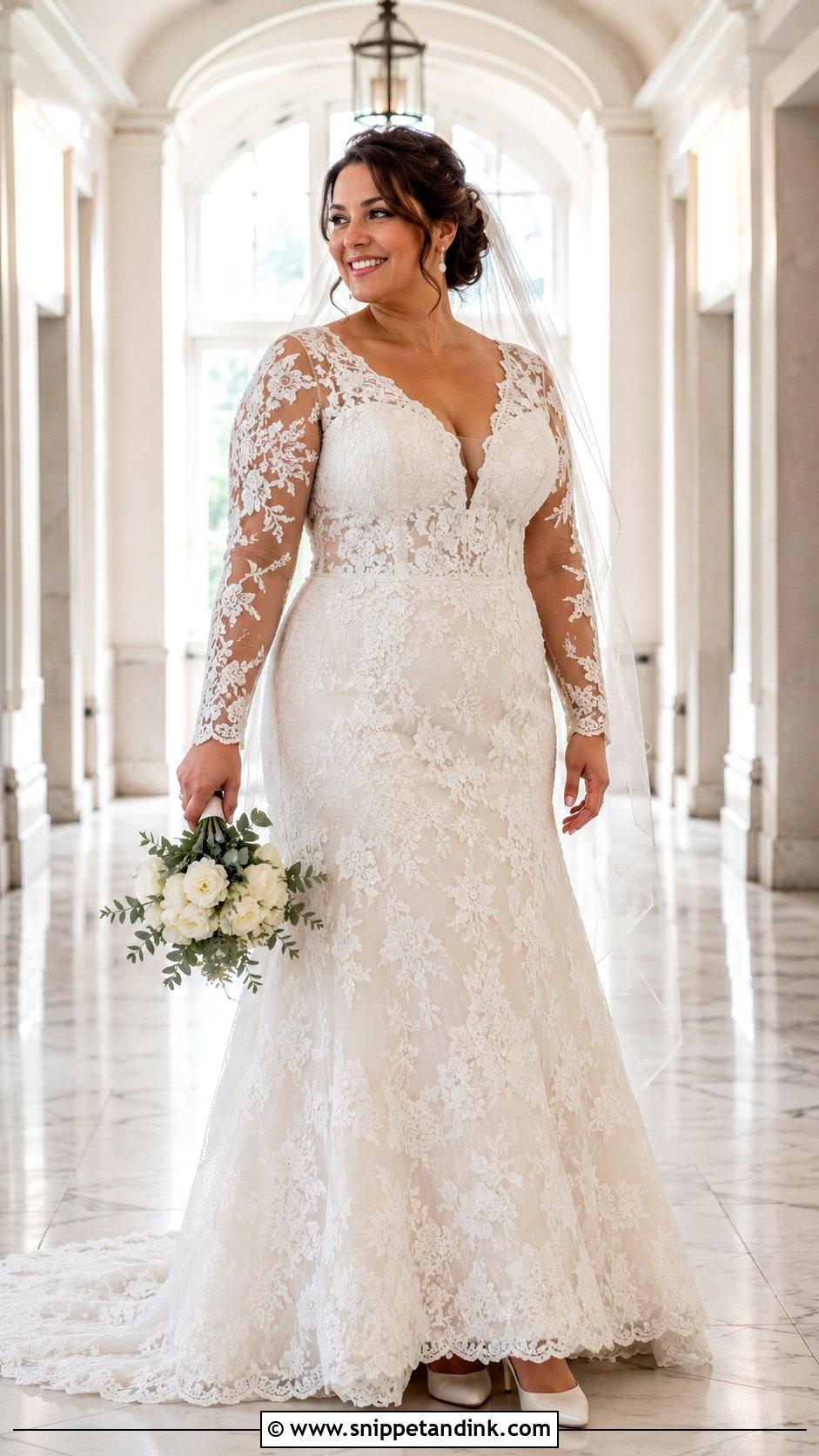
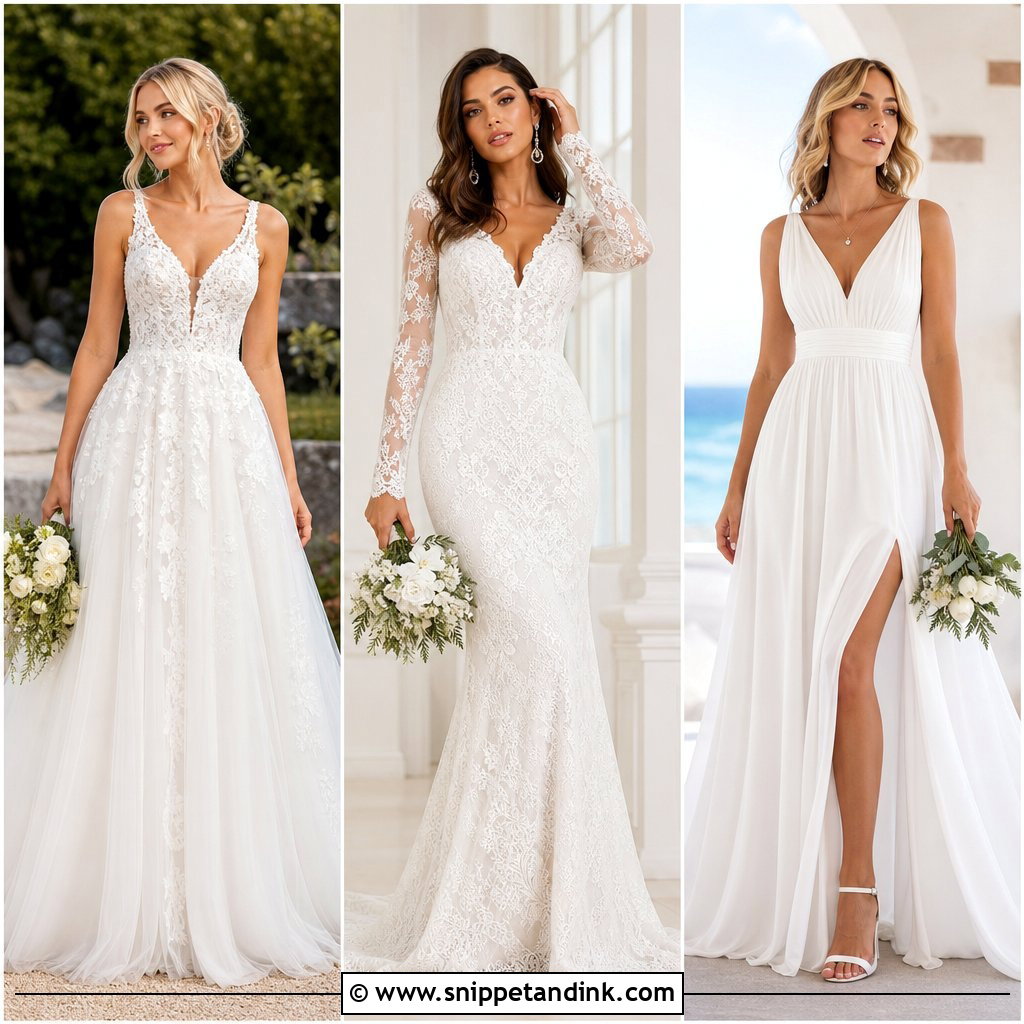
Long lace sleeves give coverage without weight when they’re built on flexible illusion tulle that moves with your arms. A defined waist and softly flared skirt keep the lace from swallowing your shape. Vertical appliqués, covered buttons and a V-neck stretch the line through the whole gown. The problem I see often with sleeves on curvy brides is the upper arm: sample sleeves are cut slim, and a tight sleeve pulls the shoulder seam out of place. Bend your elbows and lift your arms at fittings. If the sleeve fights you, ask for it to be let out or recut, and have it end neatly at the wrist bone.
8. Square Neck Wedding Dress
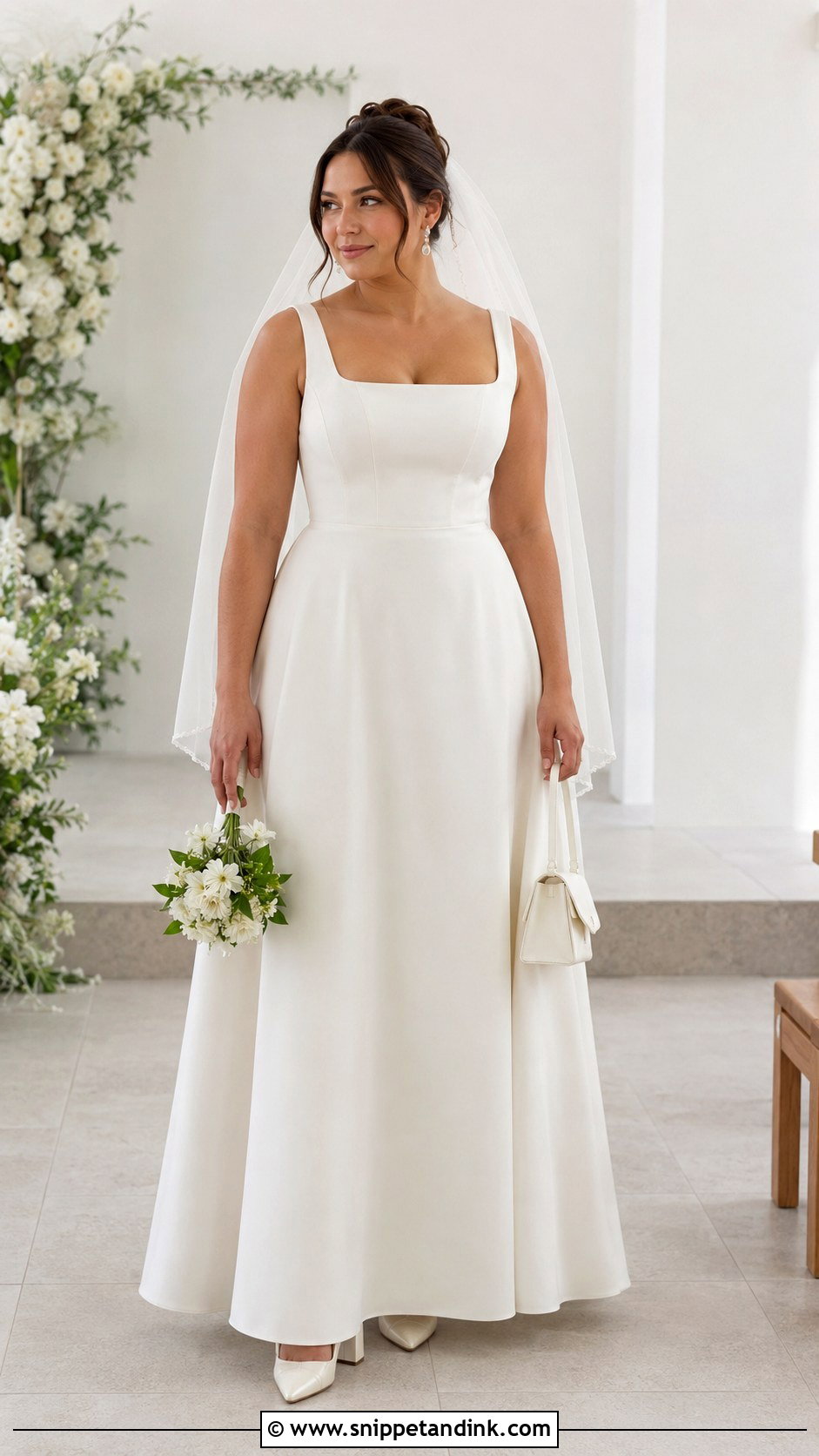
A square neck gives a modern frame and more coverage than a deep plunge, and the wide straps it usually comes with leave room for proper built-in cups. That makes it one of the most practical necklines for a fuller bust. A structured A-line skirt keeps it traditional; fitted crepe reads minimal. The square neck has one weakness: it must lie flat. If the front edge stands away from the chest when you lean forward, it needs taking in at the straps or the side seams. I check it from the side, not just the front, and look at the underarm for gaps.
9. V-Neck Wedding Dress
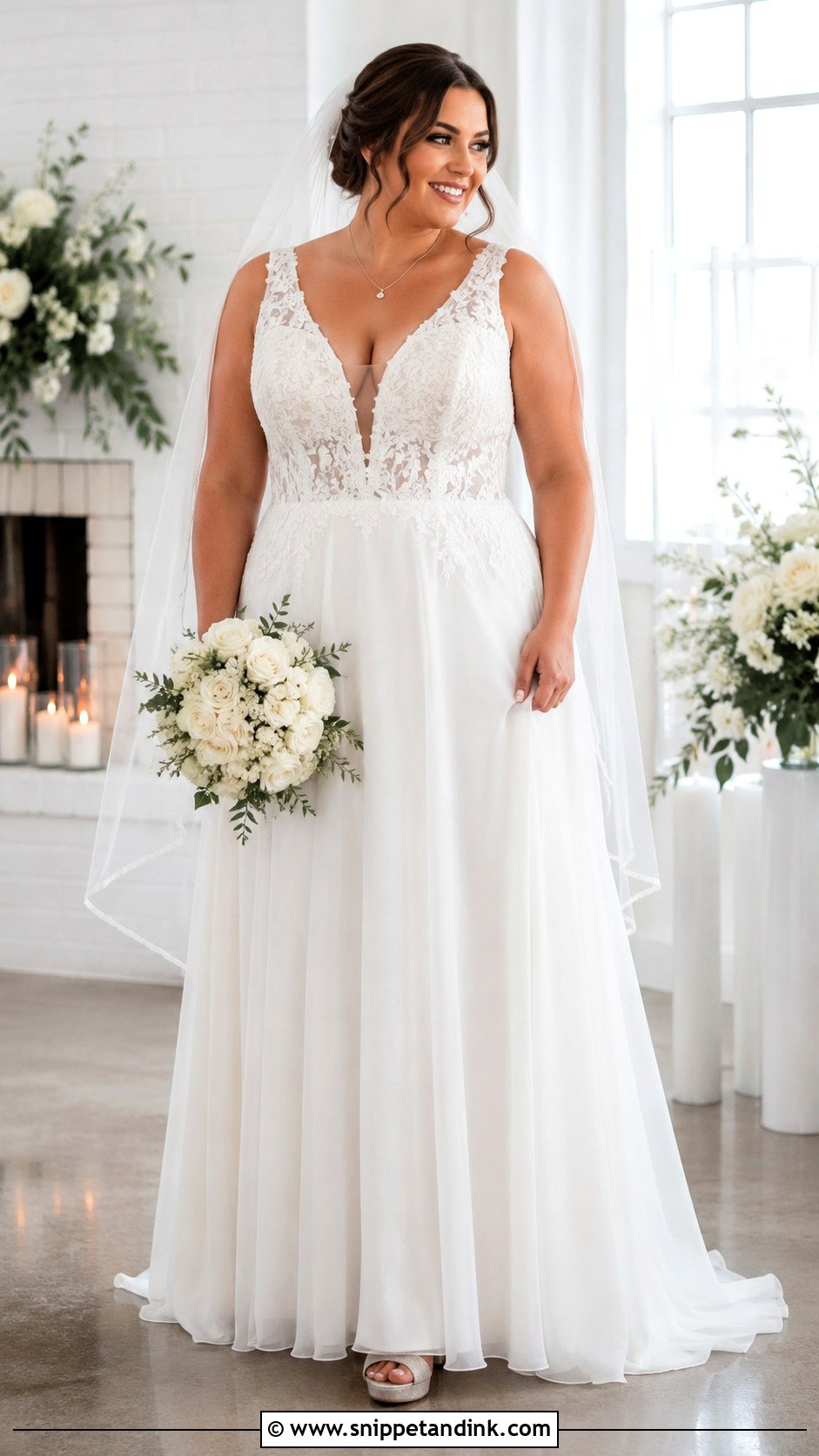
Don’t judge a V-neck from a single front photo. The plunge can be shallow, moderate or backed with illusion mesh, and wide straps plus a well-built bodice spread the support evenly. Pair it with a flowing A-line or a fitted skirt with gentle ruching at the waist. Soft waves, a fine pendant and comfortable platform sandals finish it. What I check is the side view and the seated view, because a V that looks secure standing can open up when you sit or bend. A tailor can add cups, mesh or a small hidden hook without changing the look of the dress at all.
10. Corset Bodice Wedding Dress
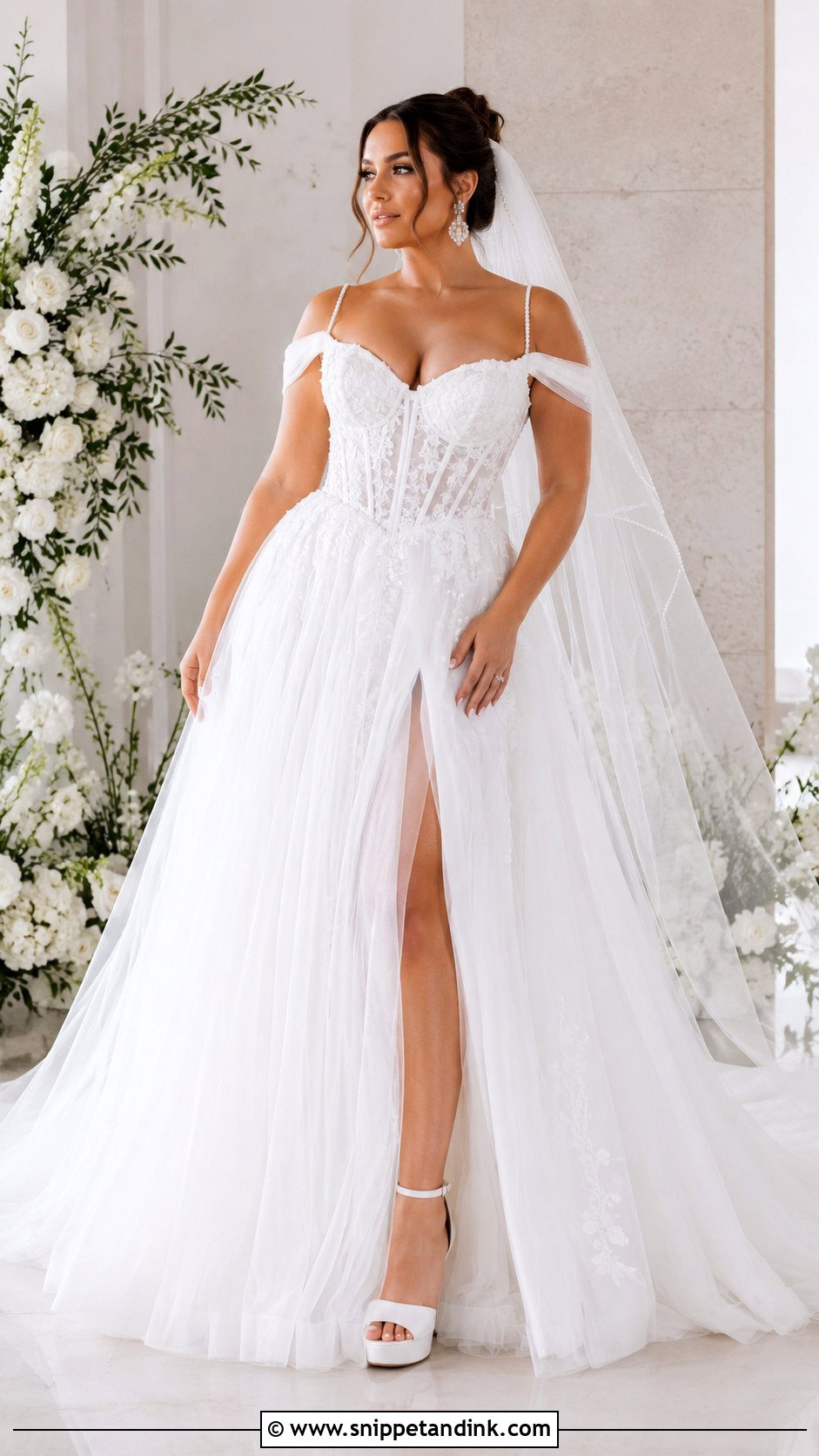
A corset bodice is adjustable support, which is why I like it so much on curves. Modern bridal corsetry should feel firm, not painful, with boning that follows the torso and cups that genuinely fit. A basque or slightly pointed waist adds definition before a full tulle, satin or organza skirt. If the back laces up, have someone from your wedding party practise tightening it before the day; lacing evenly from the middle outward makes a real difference to comfort. During fittings, sit and take a full breath. If it digs into your ribs or bottom of the bust, it needs adjusting.
11. Drop Waist Wedding Dress
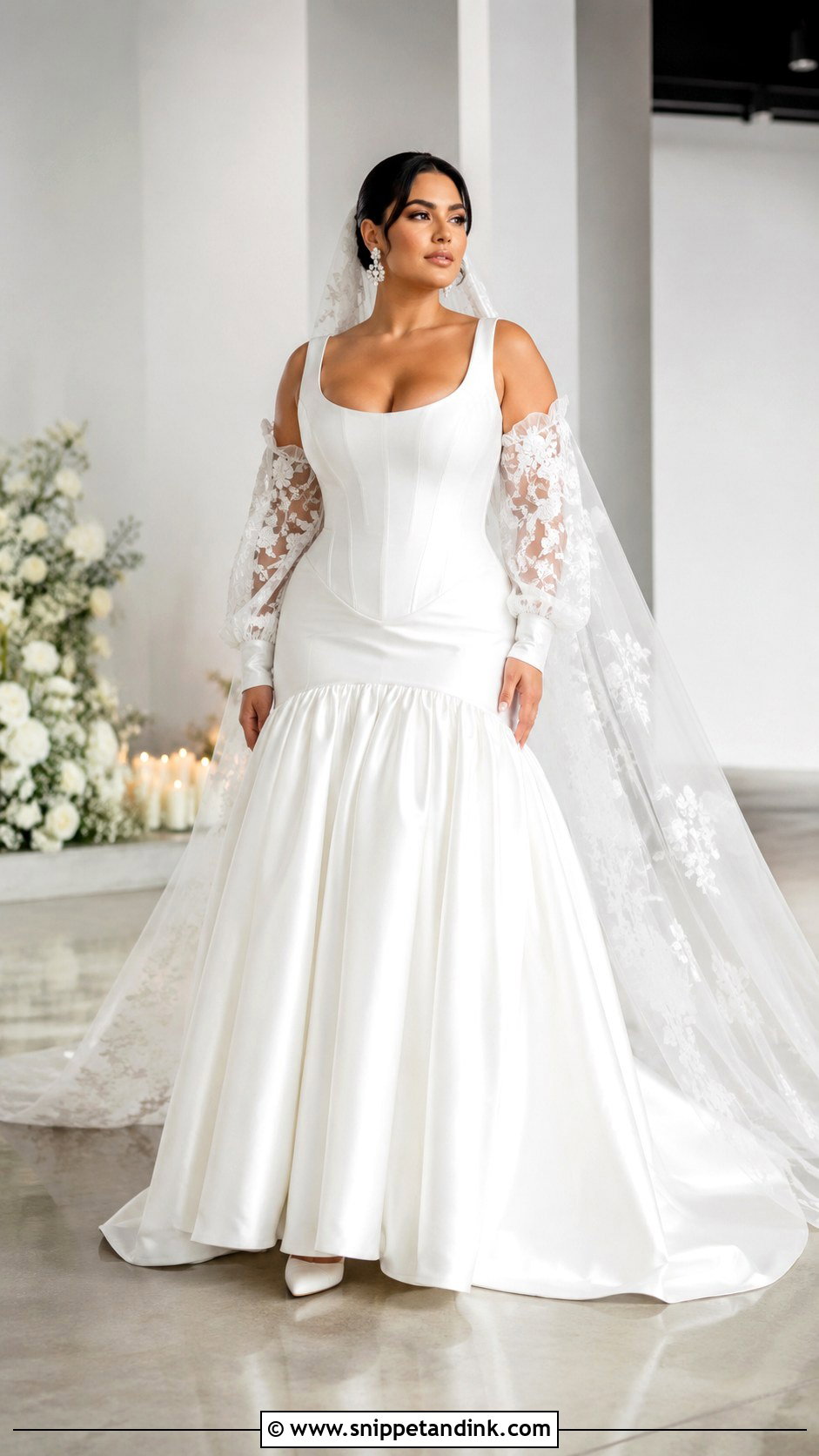
Drop waists extend the fitted bodice below the natural waist, giving a long line that suits brides who like a more fashion-forward shape. They do need care on a curvy figure. The dropped seam lands on the upper hips, so it has to sit at a point that’s comfortable when you sit as well as stand, and the boning must flex. Curved seams help far more than straight ones. A scoop or strapless neckline keeps it clean, and detachable sleeves give you a second look. I’d honestly skip this one if you dislike anything fitted across the hips, because even a perfect drop waist is snug there.
12. Ruched Crepe Wedding Dress
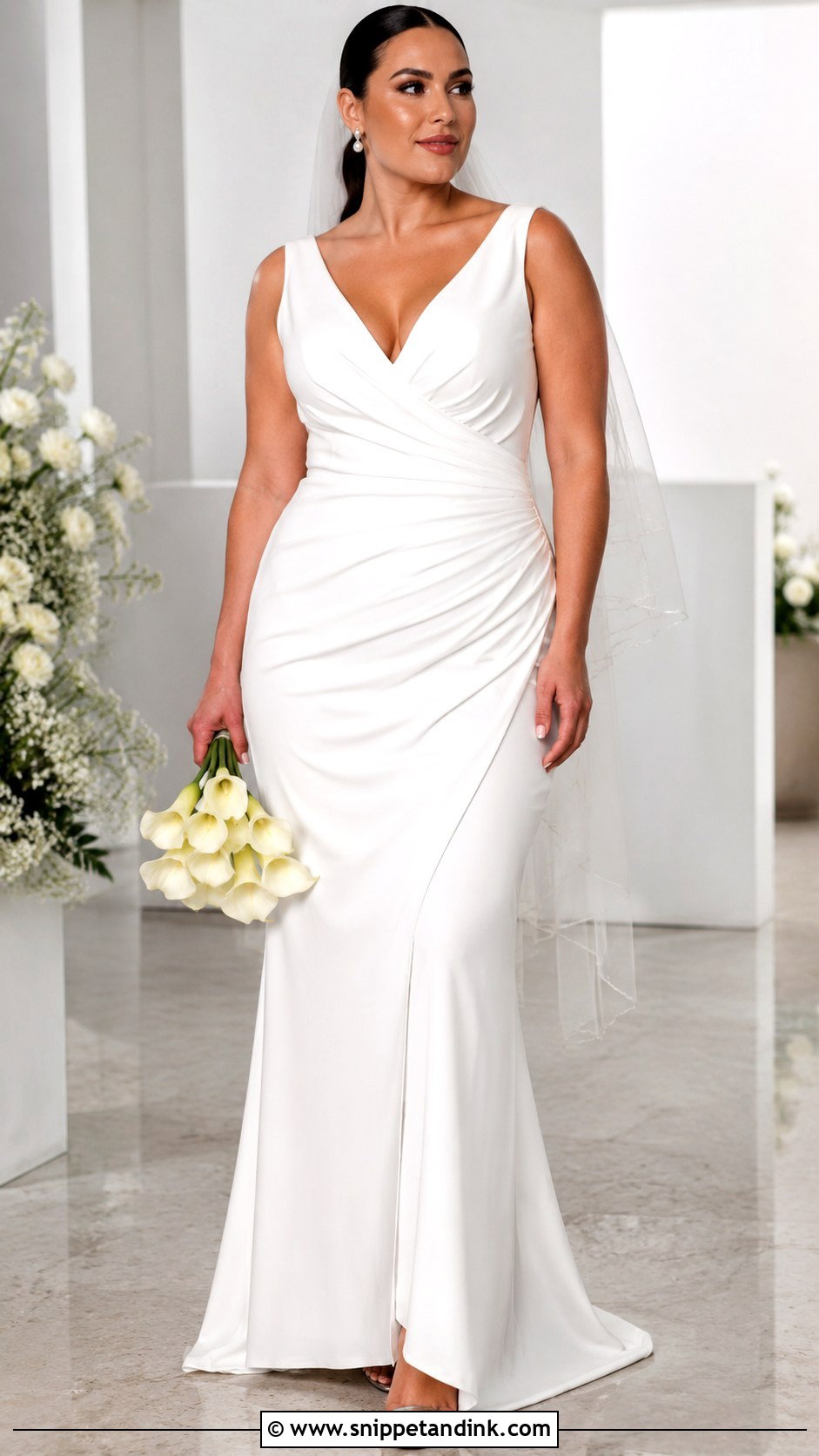
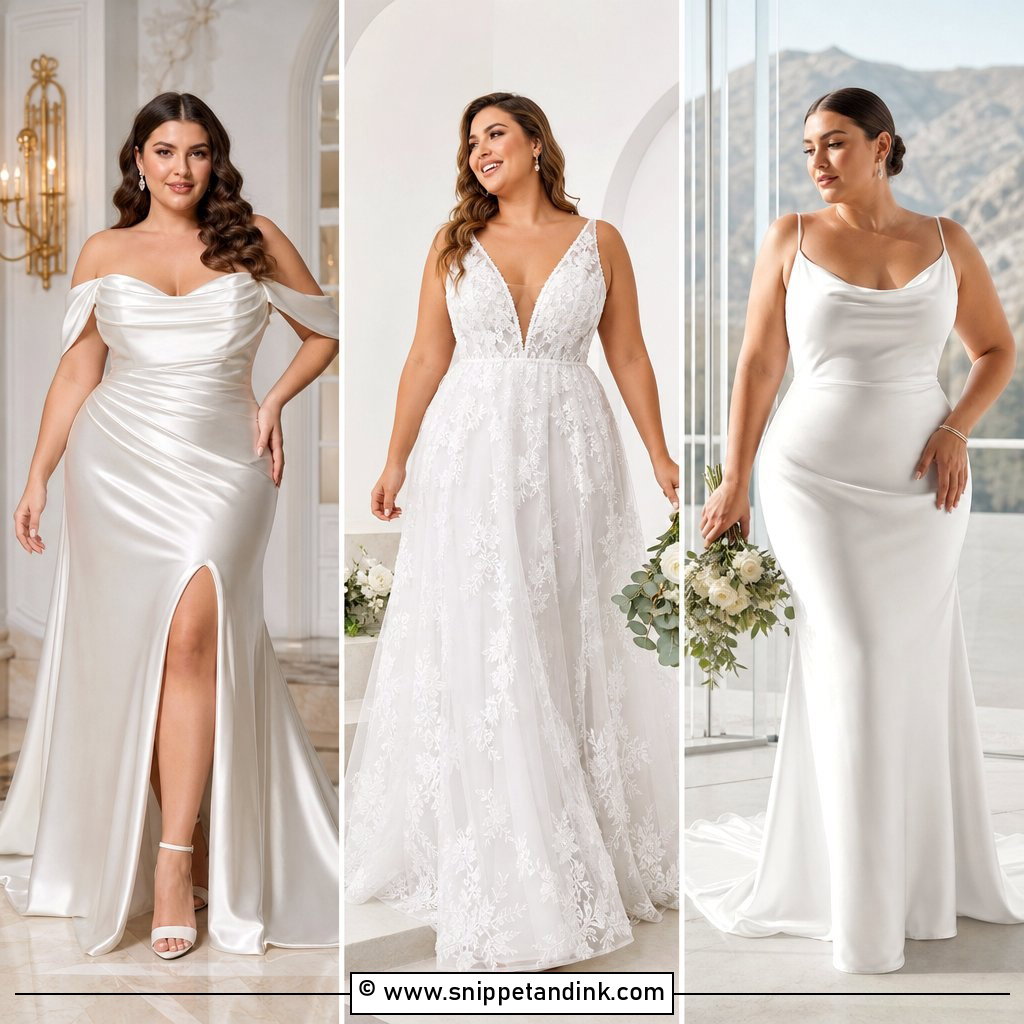
Ruching gives crepe some movement and helps it follow the body without clinging. Diagonal folds across the waist or hip add interest and soften the fit. Choose a medium-weight stretch crepe with a good lining, as thin crepe shows everything underneath. A wrap V-neck or draped off-the-shoulder line works with the texture. The risk with ruching is bulk: folds stacked in the wrong place make the area look larger, not smaller. I look at placement from the front, the side and the back before agreeing to it, and I’d wear the actual shapewear you plan to wear to that fitting so the folds lie as they will on the day.
13. Tea Length Wedding Dress
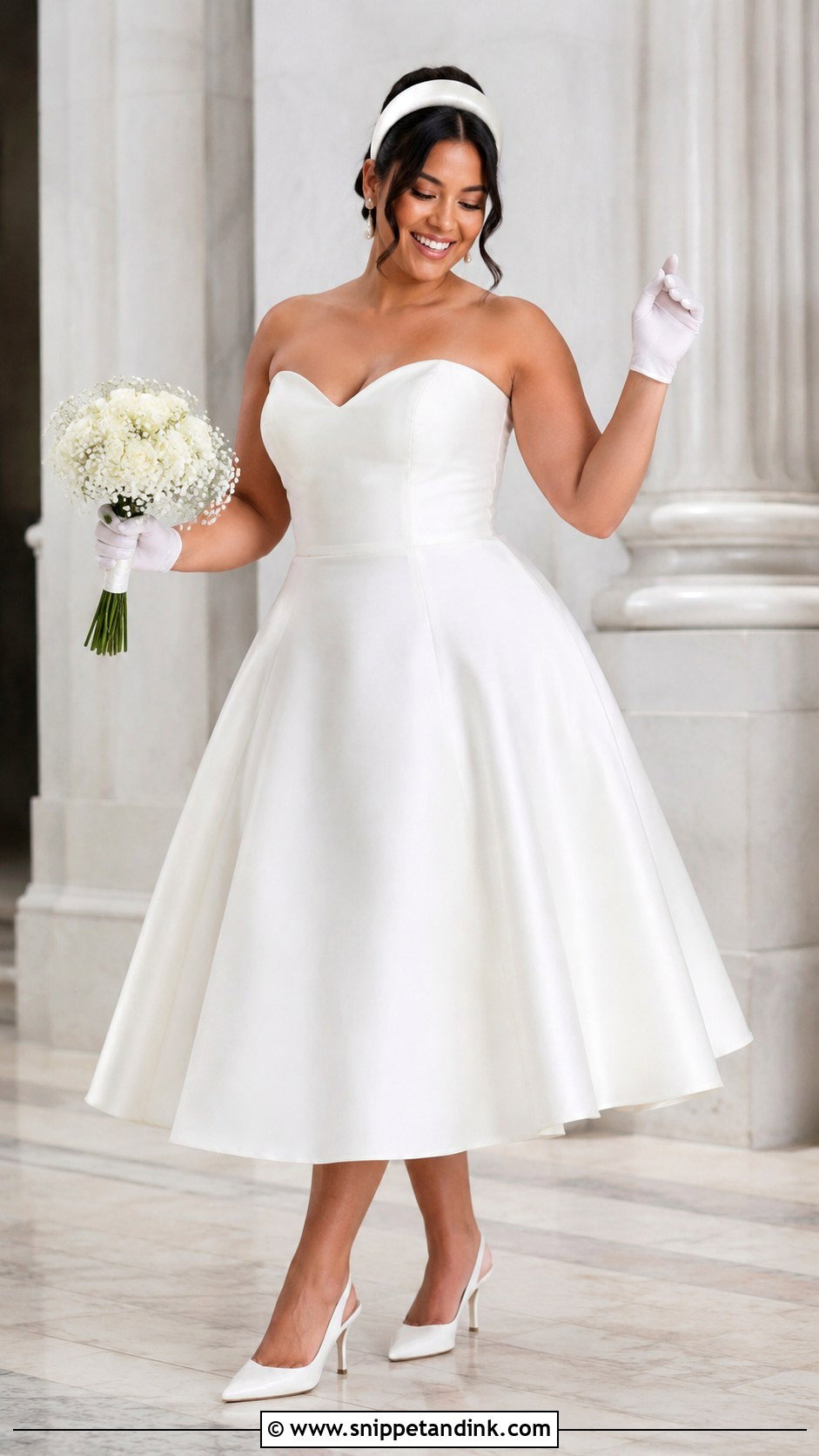
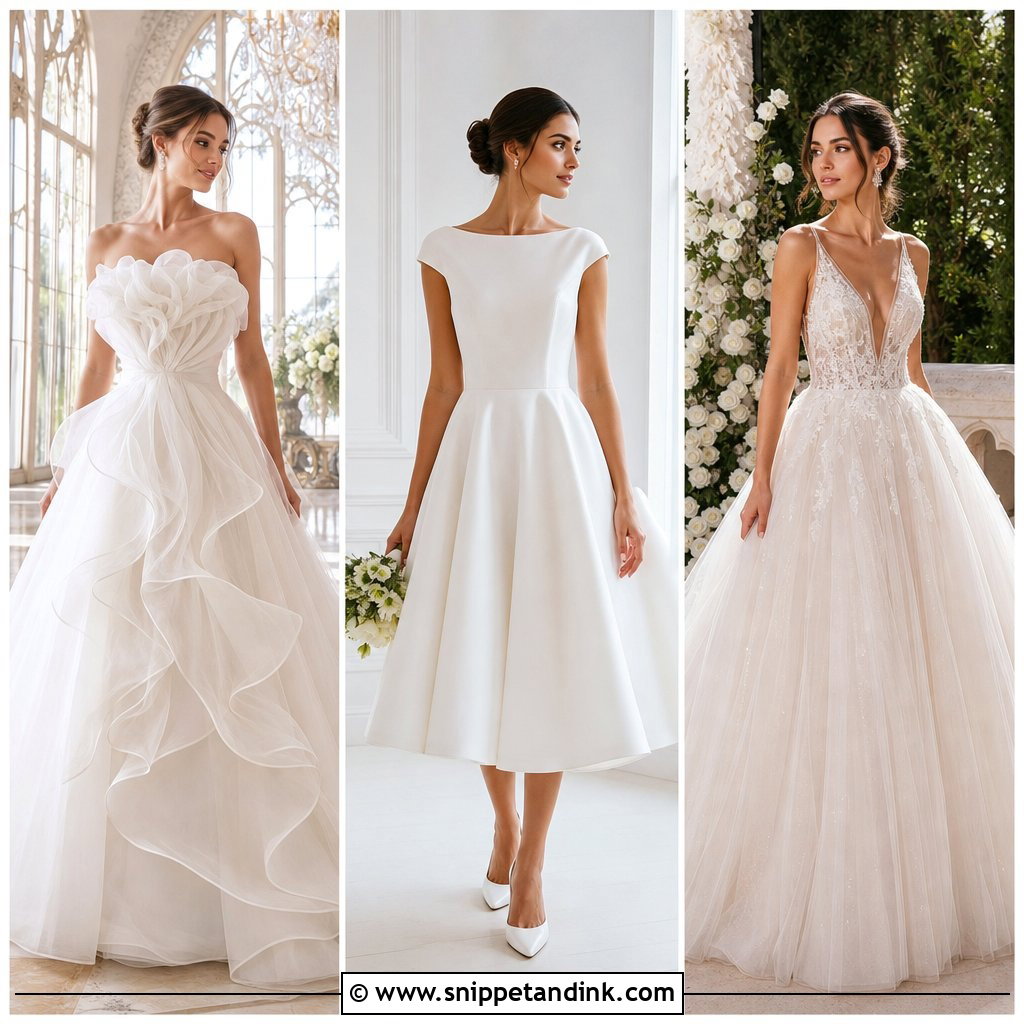
Tea length falls somewhere between the knee and the ankle, which makes it great for a courthouse ceremony, a daytime party or a smaller wedding. A fitted bodice and softly flared skirt give classic proportions; a square or sweetheart neck adds definition. Your shoes are on display, so choose ones you love that you can actually stand in for hours. Short gloves and a birdcage veil lean into the vintage feel. The hem is everything here. A centimetre or two changes how the whole dress balances on your leg, so have it set while you’re wearing the exact shoes you’ll wear on the day.
14. Boho Bell Sleeve Wedding Dress
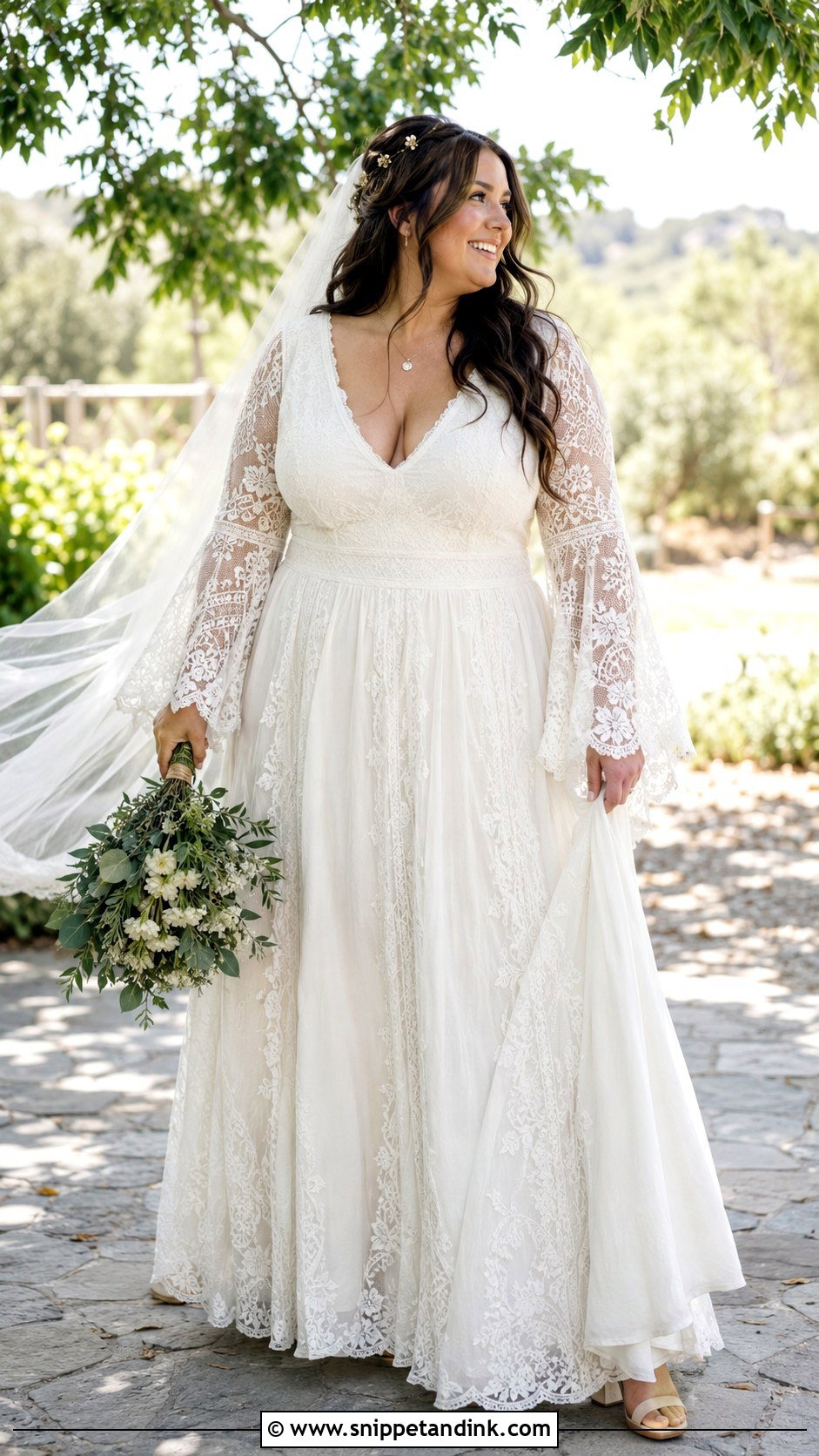
Bell sleeves bring volume at the arm, so the rest of the dress needs some structure to balance it: a lined bodice with a defined waist, a modest V-neck, and an A-line or lightly fitted skirt. Without that, the softness spreads everywhere and the shape disappears. Floral hairpins, a loose braided updo and a raw-edge veil suit the relaxed mood. Check the sleeve length carefully. If it covers your hands, you’ll be pushing it out of the way all day, especially when eating. Light lace moves better outdoors than heavy embroidery, and a wrist loop keeps the train off the grass.
15. Minimalist Sheath Wedding Dress
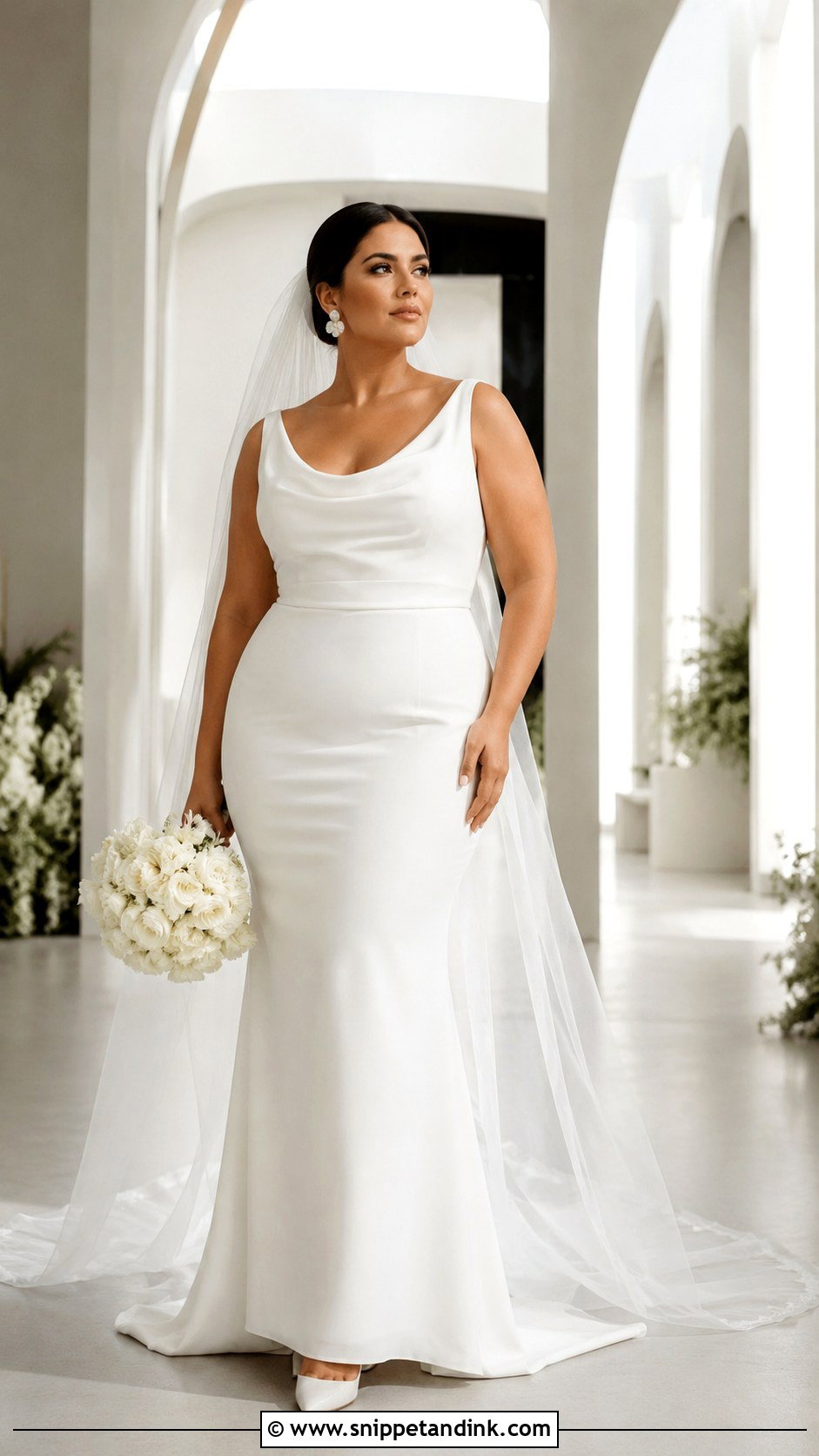
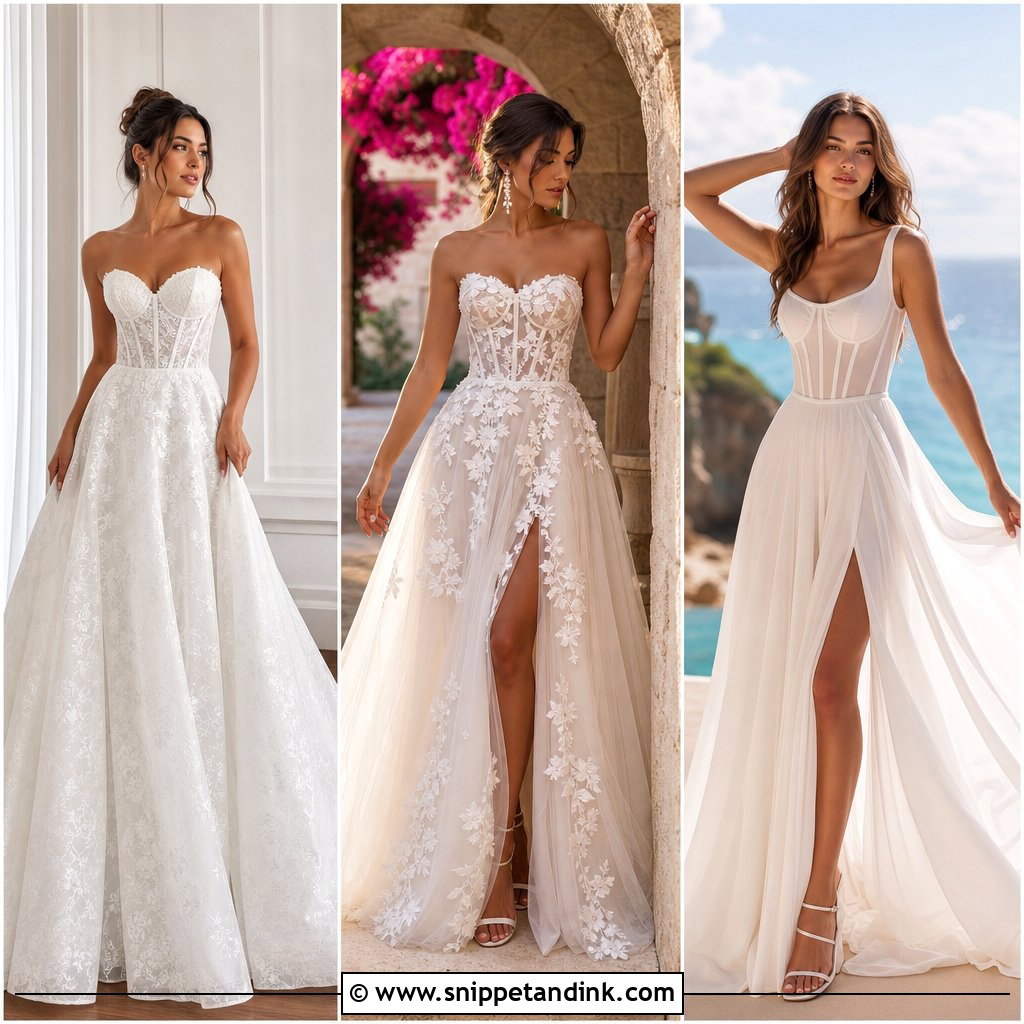
A sheath is the simplest dress here, and simple means fit does all the work. It falls close to the body with no lace or beading to distract. I’d choose substantial stretch crepe, smooth satin or double-lined jersey, since thinner fabrics show every line underneath. Princess seams or gentle waist shaping add definition. Allow time for alterations at bust, waist, hips and hem. The test I use: the dress should skim, not squeeze. If you see horizontal pulling lines across the hips when you stand still, it needs letting out. A long plain veil and a low bun suit its clean look.
16. Cape Sleeve Wedding Dress
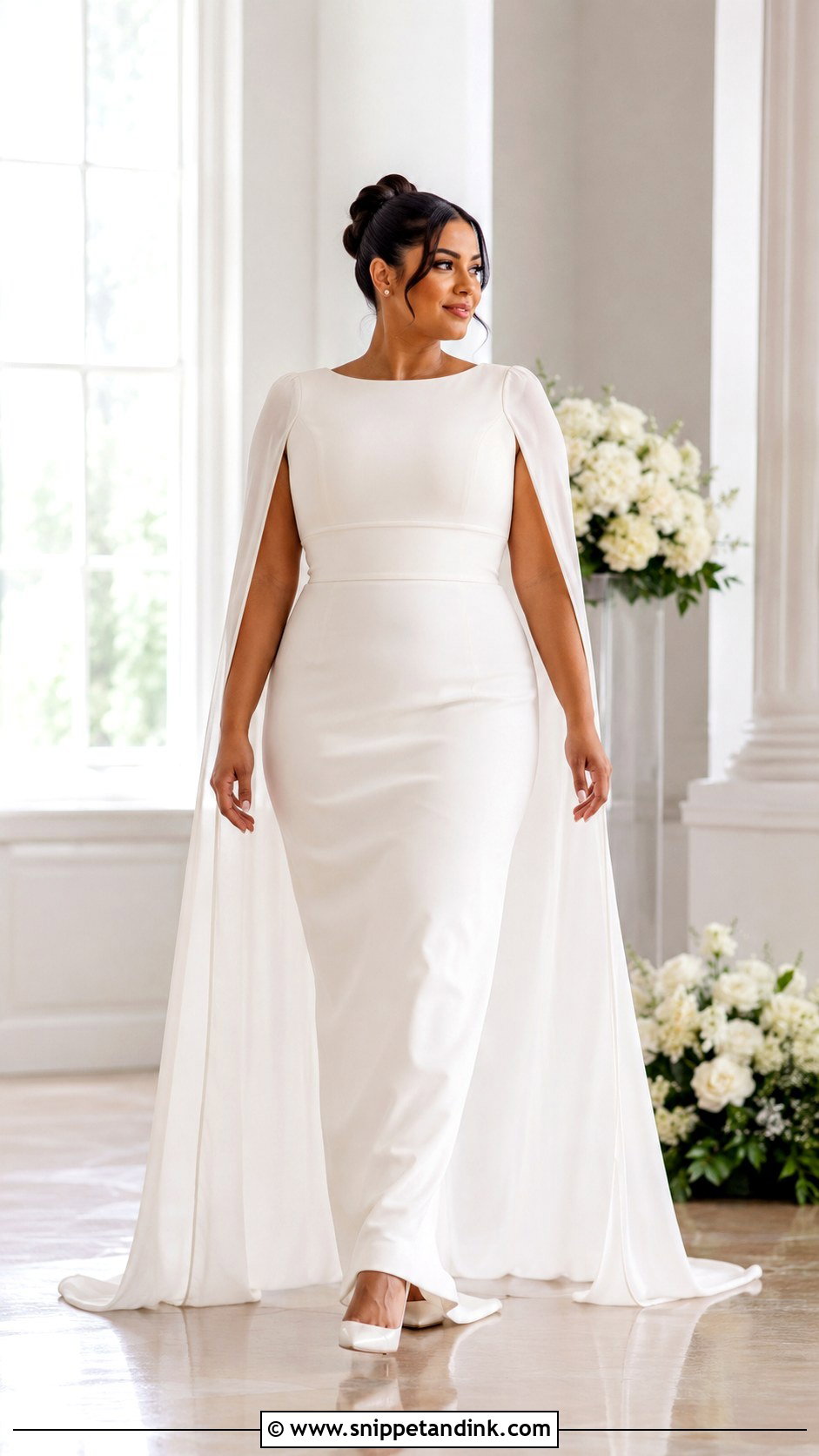
Cape sleeves give arm coverage without the close fit of a real sleeve, which many curvy brides prefer. The cape can hang from the shoulders, attach at the neckline, or fall down the back like a light train. Pair it with a structured column or A-line underneath. Chiffon floats; lace or beaded tulle is dressier. You may not need a veil if the cape runs down the back. The thing I check is where it attaches. A heavy cape tugs the neckline backward, so the attachment points need to sit on firm seams, and outdoors you’ll want them secure enough to stay put when the wind catches it.
17. Basque Waist Ball Gown Wedding Dress
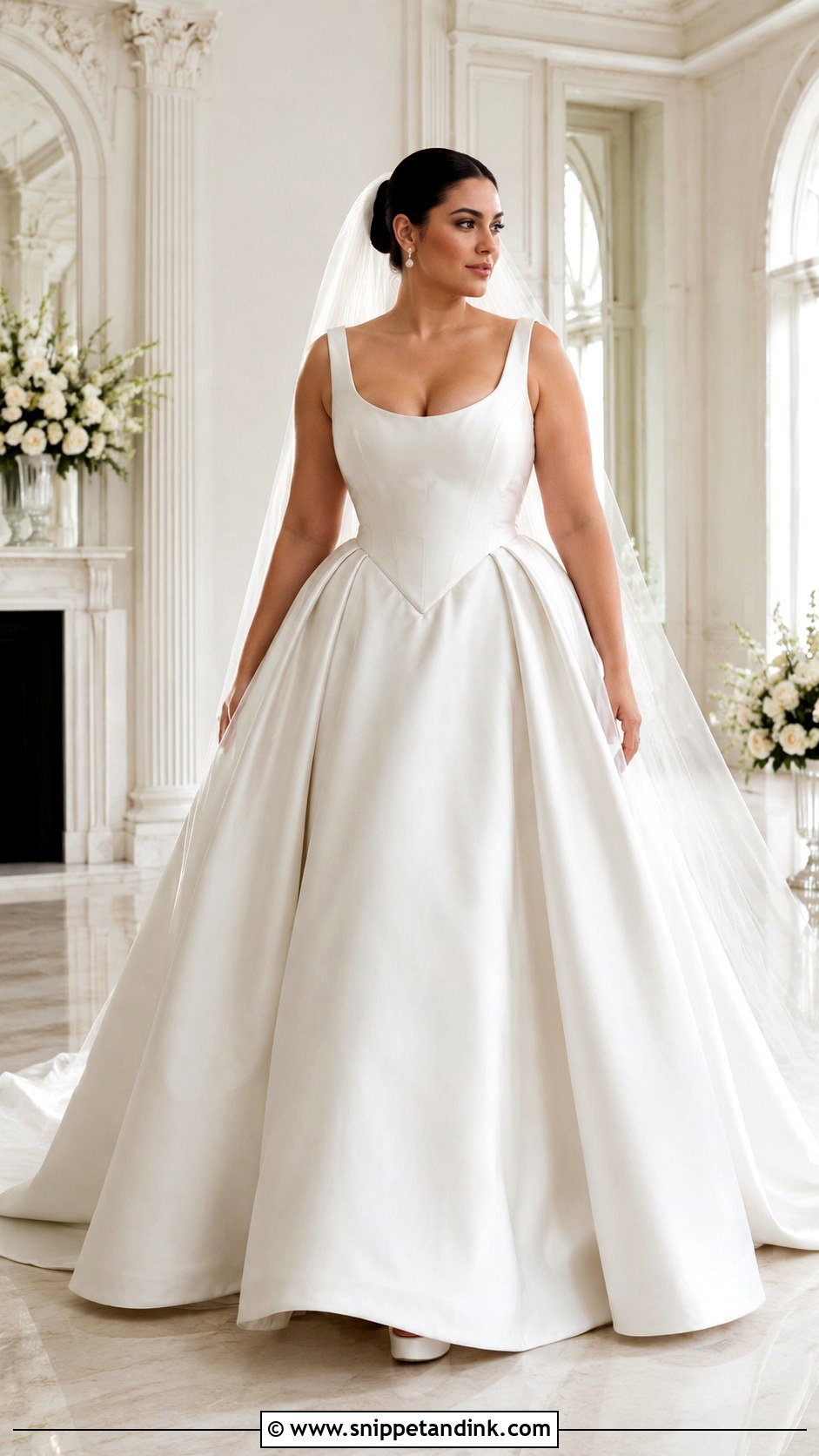
A basque waist ball gown has a bodice that dips into a V or U below the natural waist before the full skirt begins. On a curvy figure, it defines the torso while the skirt takes care of the hips. Satin, mikado and layered tulle all suit it. The point of the basque must sit in exactly the right place, otherwise it presses into your lower stomach when you sit. I’d check that the boning bends as you sit and that the skirt’s weight is carried by a waist stay, not hanging off the bodice. Wide straps or off-the-shoulder bands complete the structure.
18. Floral Appliqué A-Line Wedding Dress
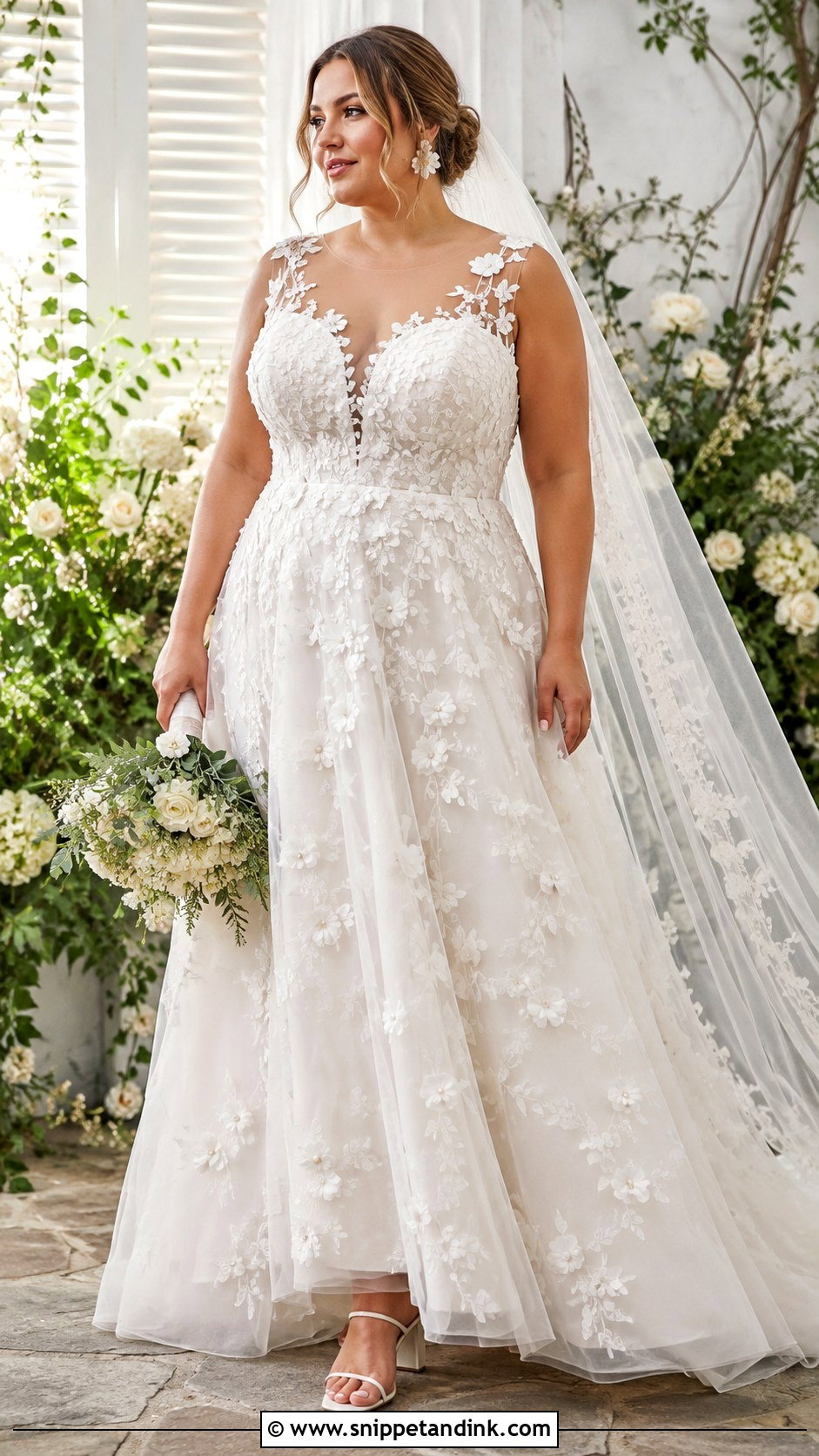
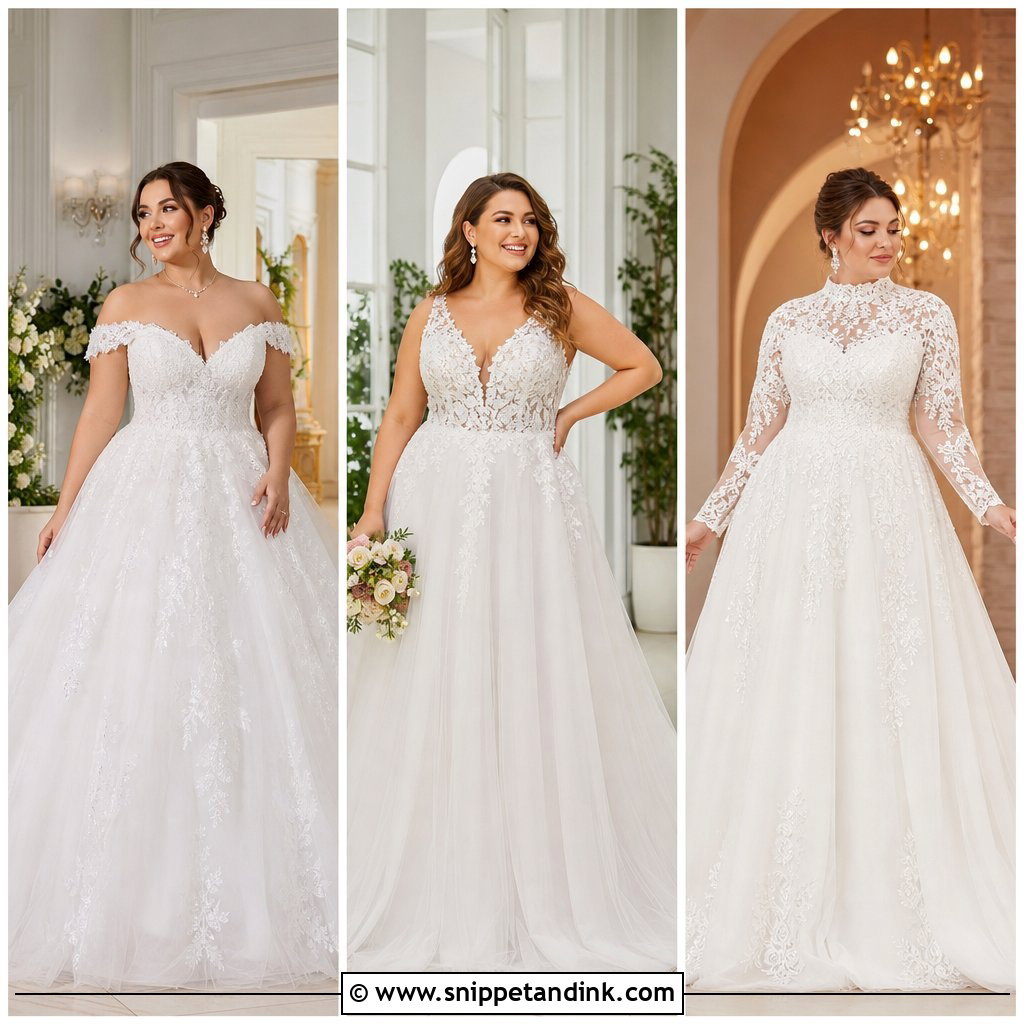
Floral appliqués add texture without needing extra volume, and an A-line keeps the base comfortable. Look for flowers concentrated on the bodice that thin out down the skirt, which keeps the dress from looking heavy at the hip. An illusion neckline or wide straps hold the embellished bodice in place. One practical thing brides don’t expect: if the dress needs taking in or letting out, appliqués over the seams must be removed and re-stitched, which adds time and cost. Ask about it at your first fitting. A smooth, breathable lining also stops the backs of the flowers scratching your skin through the evening.
19. Champagne Tulle Wedding Dress
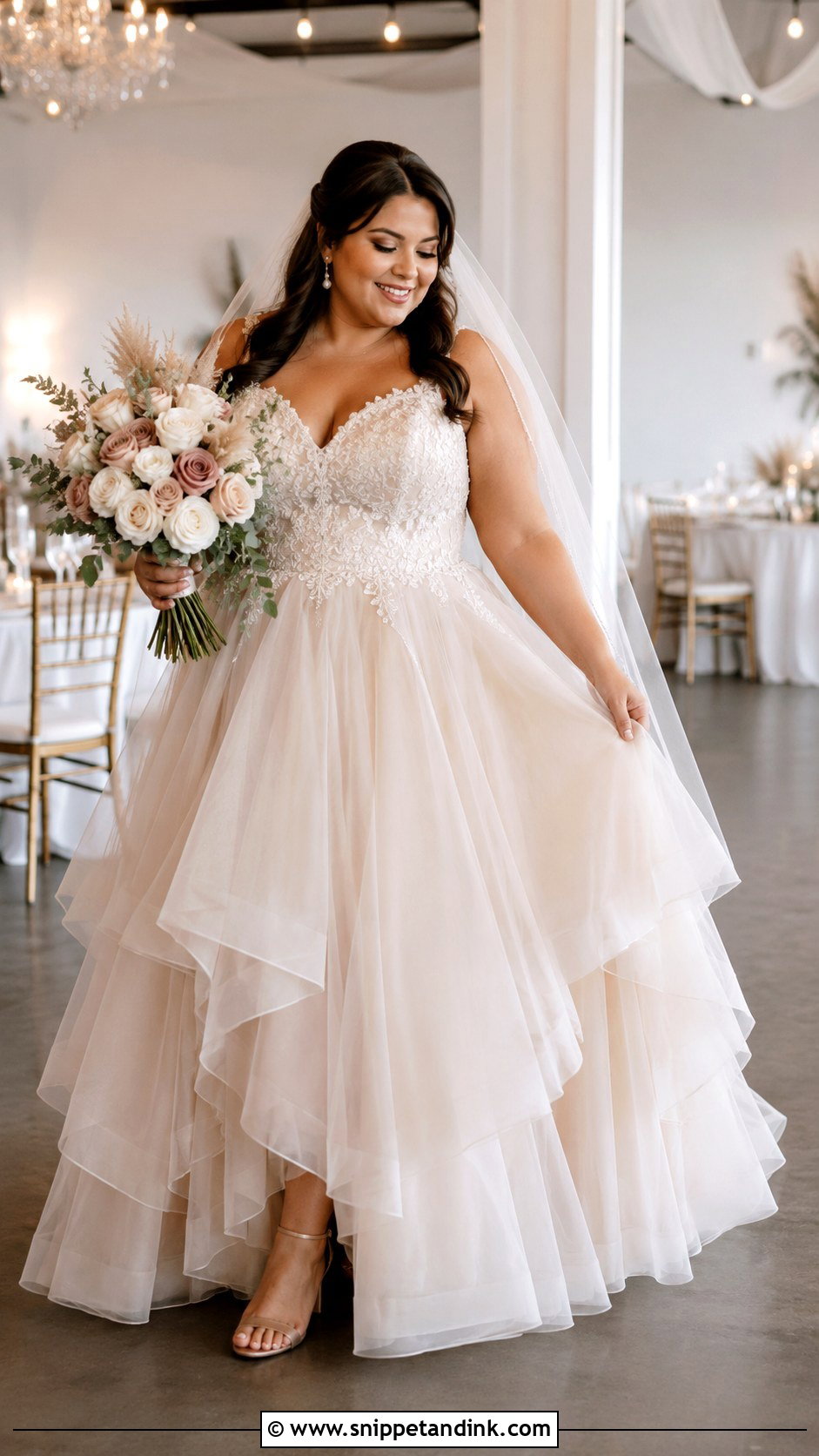
Champagne tulle is a warmer, softer alternative to bright white that still reads as bridal. It adds depth beneath ivory lace, beading or appliqués. An A-line or ball gown shows the colour throughout the skirt. I’d keep the accessories quietly warm, with gold or pearl earrings and an ivory veil. Colour is the tricky bit. The shade comes from both the tulle and the lining beneath it, and swapping a nude lining for an ivory one can change how the dress looks on you a great deal. Look at swatches against your skin in daylight and under lighting similar to your venue before committing.

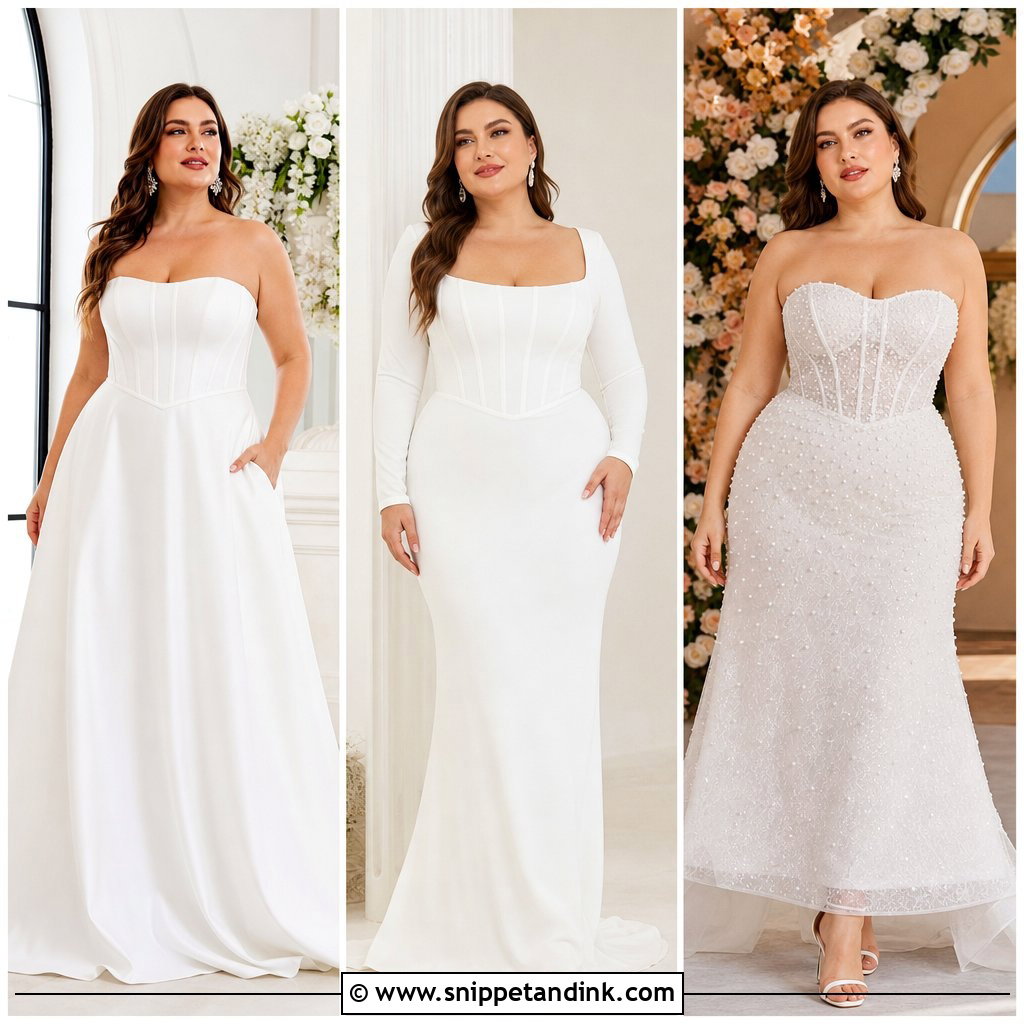
20. Detachable Overskirt Wedding Dress
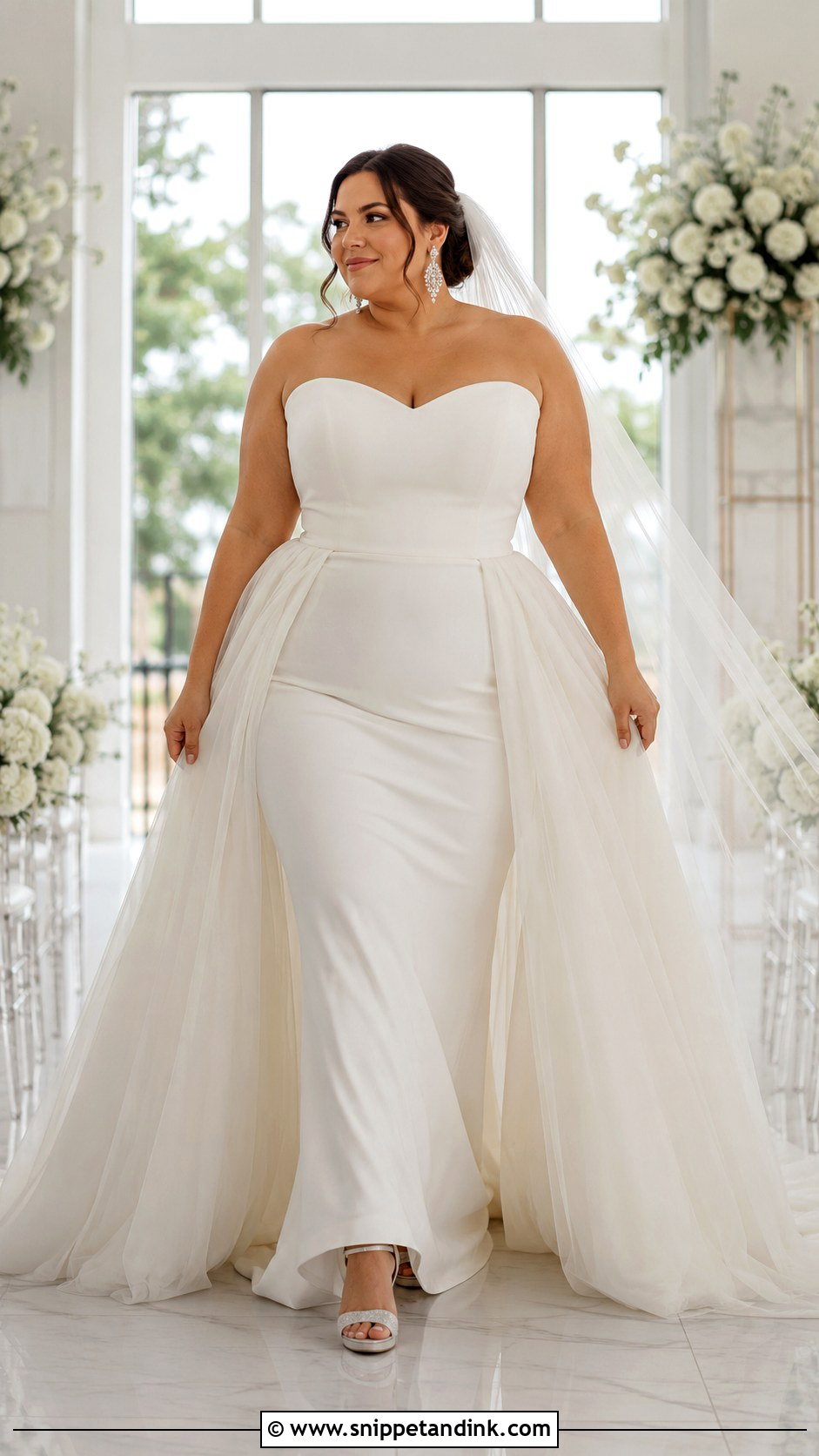
A detachable overskirt gives you a big ceremony gown and a lighter reception dress without a full change. Wear it over a fitted crepe, lace or satin base, then take it off to dance. Tulle adds airy volume; mikado or satin gives a sculpted shape. For curvy brides, I’d watch the waistband most closely: a thick band sitting on top of the dress’s own waist seam adds bulk exactly where you don’t want it, so ask for a flat band and hidden hooks. The base gown must look completely finished on its own, and your helper should practise the removal at a fitting.
Size Charts, Sample Sizes and Ordering the Right Gown
Bridal sizing confuses almost everyone. Most designers use their own charts, and bridal sizes often run smaller than everyday clothing, so you might order a size or two above what you usually wear. Ignore the number. It never appears on the dress anyone sees.
How the order is usually placed
The salon measures bust, waist and hips, and the gown is normally ordered to fit your largest measurement, since it’s far easier for a seamstress to take a dress in than to let it out. Curvy brides are often a different size on top and bottom, which is normal and exactly what alterations are for. Ask whether the designer offers custom measurements or extra length for a small fee.
Trying on samples that don’t fit
Many salons still carry samples in a narrow range, so call ahead and ask which dresses they have in or near your size. A sample clipped open at the back tells you little about how a bodice will actually support you. If a store can’t show you anything close, it’s reasonable to go elsewhere.
Alteration timing
Gowns are typically made to order over several months, and alterations usually need two or three fittings spread over the last couple of months before the wedding. I’d keep your weight and undergarments as steady as you can between the first and last fitting, and bring the same shoes every time.
Curves Aren’t the Problem, the Fit Is
The gown you remember is the one that reflects your taste, supports your body and lets you enjoy every hour of the day. Curves suit every major silhouette here, from airy A-lines to mermaids and full ball skirts. Try a few shapes you didn’t plan on, since curvy brides are often surprised by what works. Focus on how the dress is built and how it moves, not the label. Cups, linings, straps and good alterations make the real difference. Keep accessories simple, and pick the dress you feel most like yourself in.
You'll Like These Ideas:





Leave a Reply