
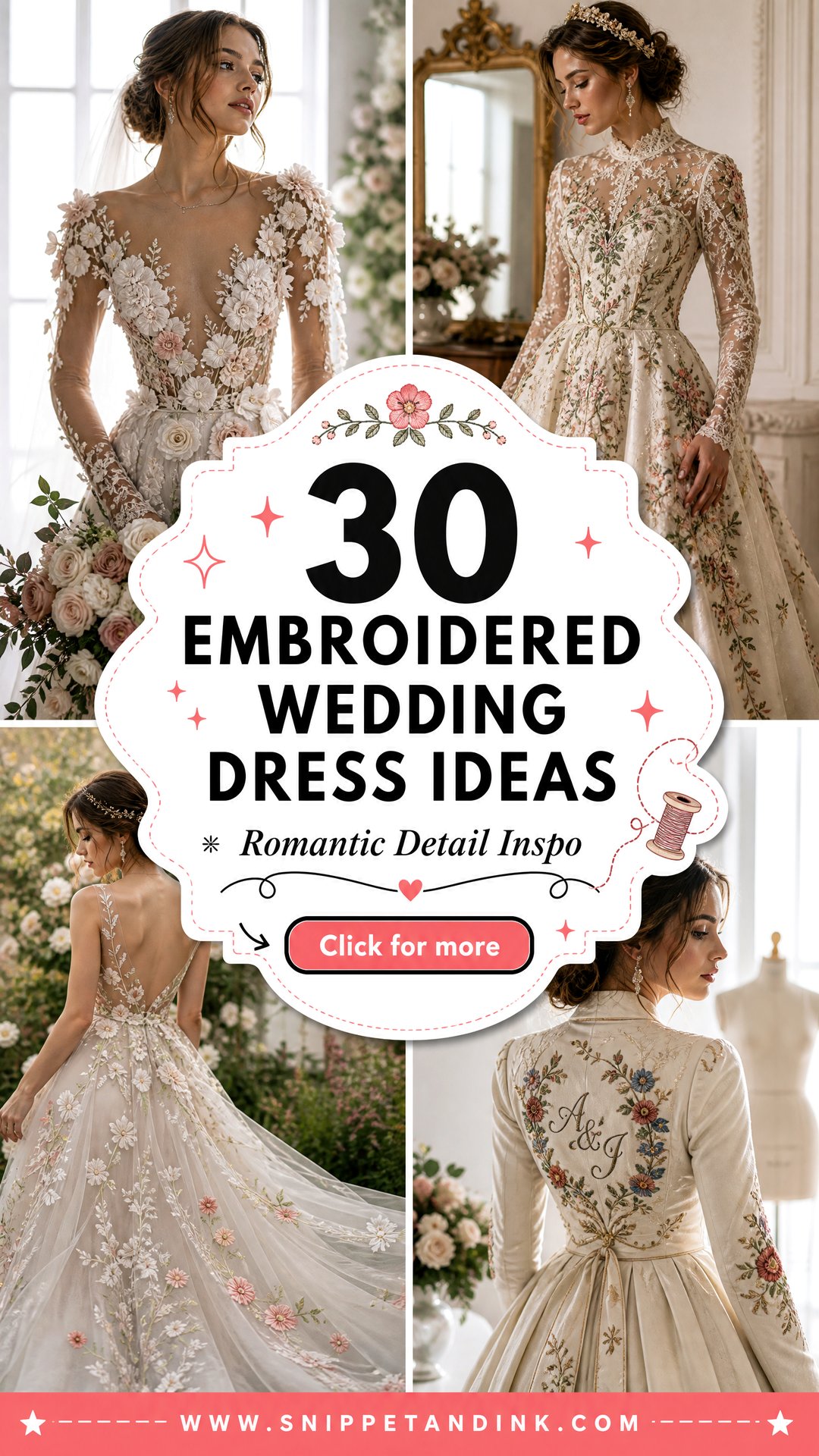
Embroidery is the detail I see brides fall for fastest in a fitting room, and it is also the one that changes most between a photo and real life. Stitching can sit flat and quiet, rise off the fabric in petals, or carry pearls and color, and how it behaves depends on the base fabric, the thread and where it is placed on your body. Right now I’m pulling a lot of floral appliqué, pearl work, sheer sleeves, corset bodices and soft color for clients, plus gowns that change between ceremony and reception. Below are thirty complete looks, each with notes on what I’d pair with it and what I’d watch for when you try it on.
Turn the Bodice Inside Out at Your First Fitting
When a bride hands me an embroidered gown to look at, I check the inside before the outside. The back of the work tells you how it was made and how it will feel after eight hours against your skin.
Embroidery, appliqué and beading are not the same thing
- Embroidery is thread stitched straight into the base fabric. It’s flat, light and moves with the dress, but it can pucker if the fabric underneath wasn’t stabilised.
- Appliqué is a motif cut from lace or fabric and sewn on top. It gives that raised, layered look and is easier to move or remove during alterations.
- Beading and pearls add weight. A heavily beaded bodice can feel noticeably heavier by evening, and the beads are what catch on bouquets and hair.
Machine embroidery is even and usually sturdy. Hand work has small irregularities that give it life, takes longer and costs more. Neither is better; just know which one you are paying for.
Three things I check on the hanger
First, scratchiness: rub the inside of the bodice on your inner wrist, since thread knots and metallic yarn can rub underarms raw. Second, the edges of each motif: they should be tacked down all the way round, not lifting at the corners. Third, weight distribution. Hold the gown by the shoulders and see if it drags forward; heavy stitching at the hem pulls a light bodice off balance, and you’ll feel that tug all day.
1. Floral Embroidered Wedding Dress
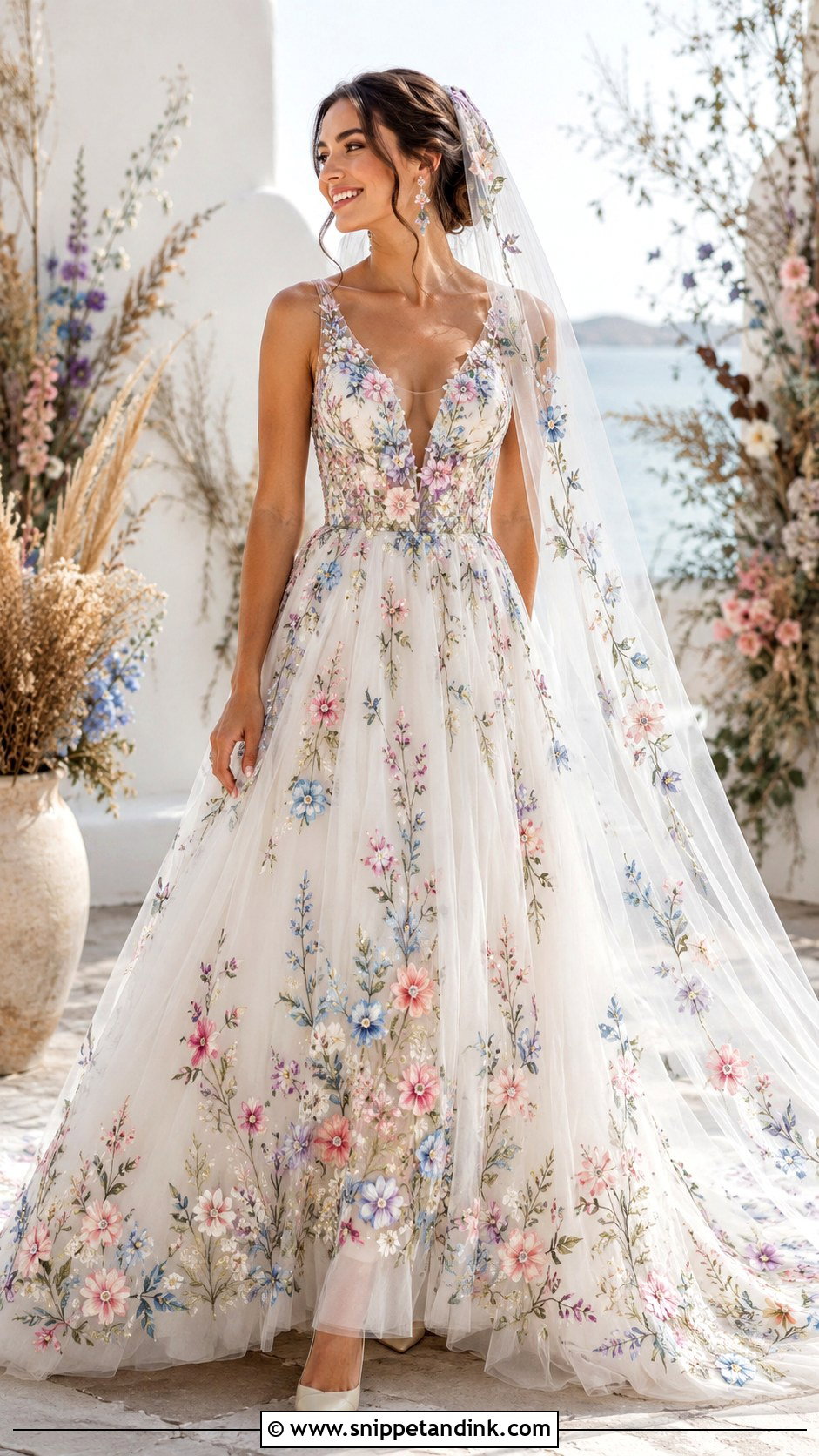
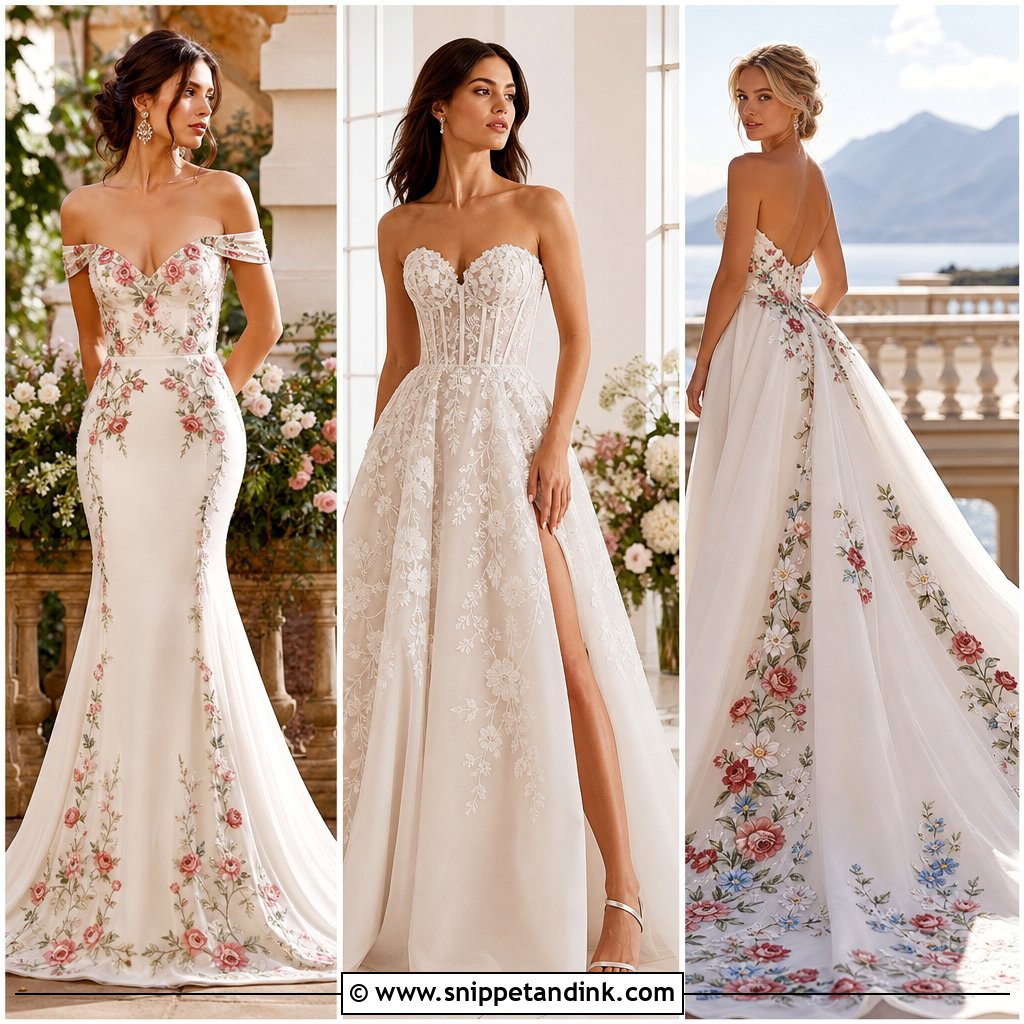
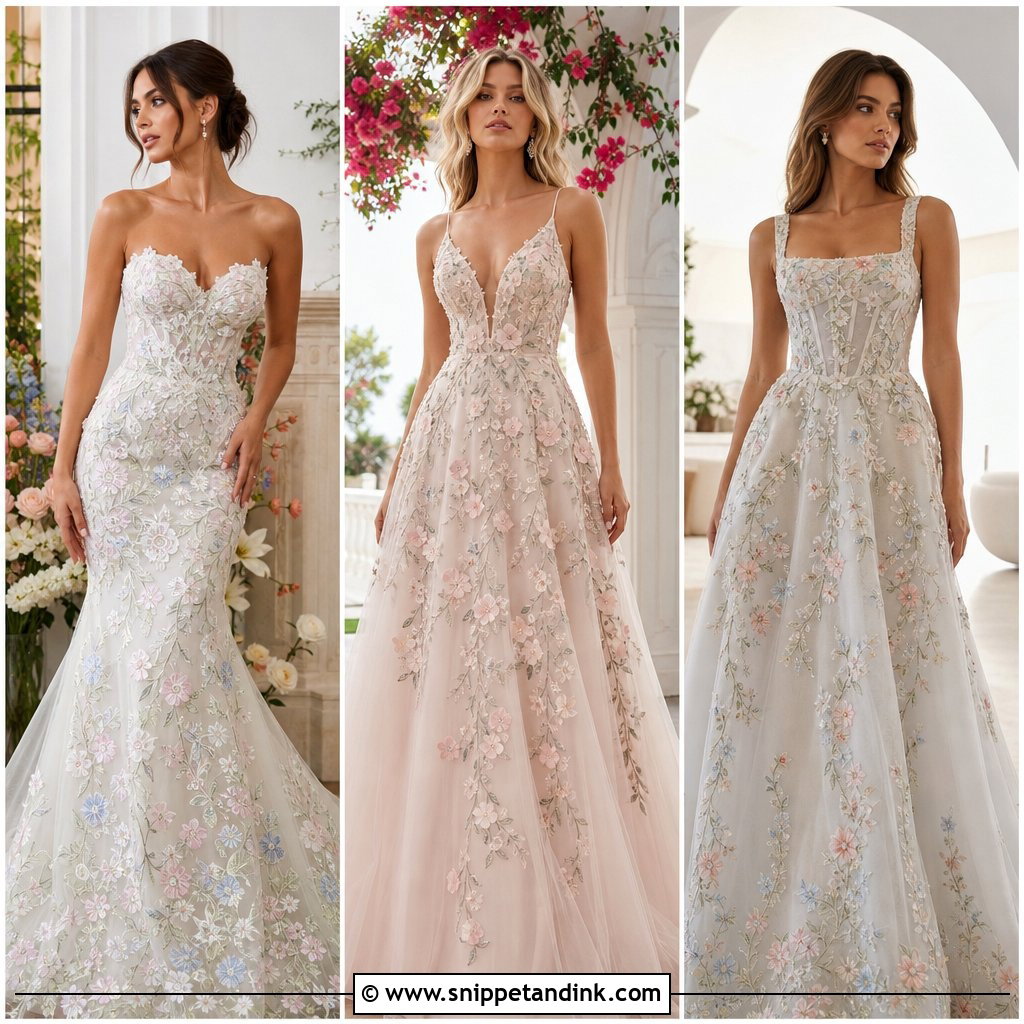
Floral stitching is where most brides start, and for good reason: it reads as bridal even when the thread carries color. On a soft A-line or fit-and-flare, ivory or blush flowers worked over sheer tulle look as if they are floating on the skin, which is exactly the effect you want. I keep the accessories plain here, usually pearl drops, a clean veil and satin heels. If you’d like more color, pastel threadwork in pink, blue, lavender or green suits a garden or spring ceremony, but ask to see it in daylight first, because pale greens can disappear under warm indoor bulbs.
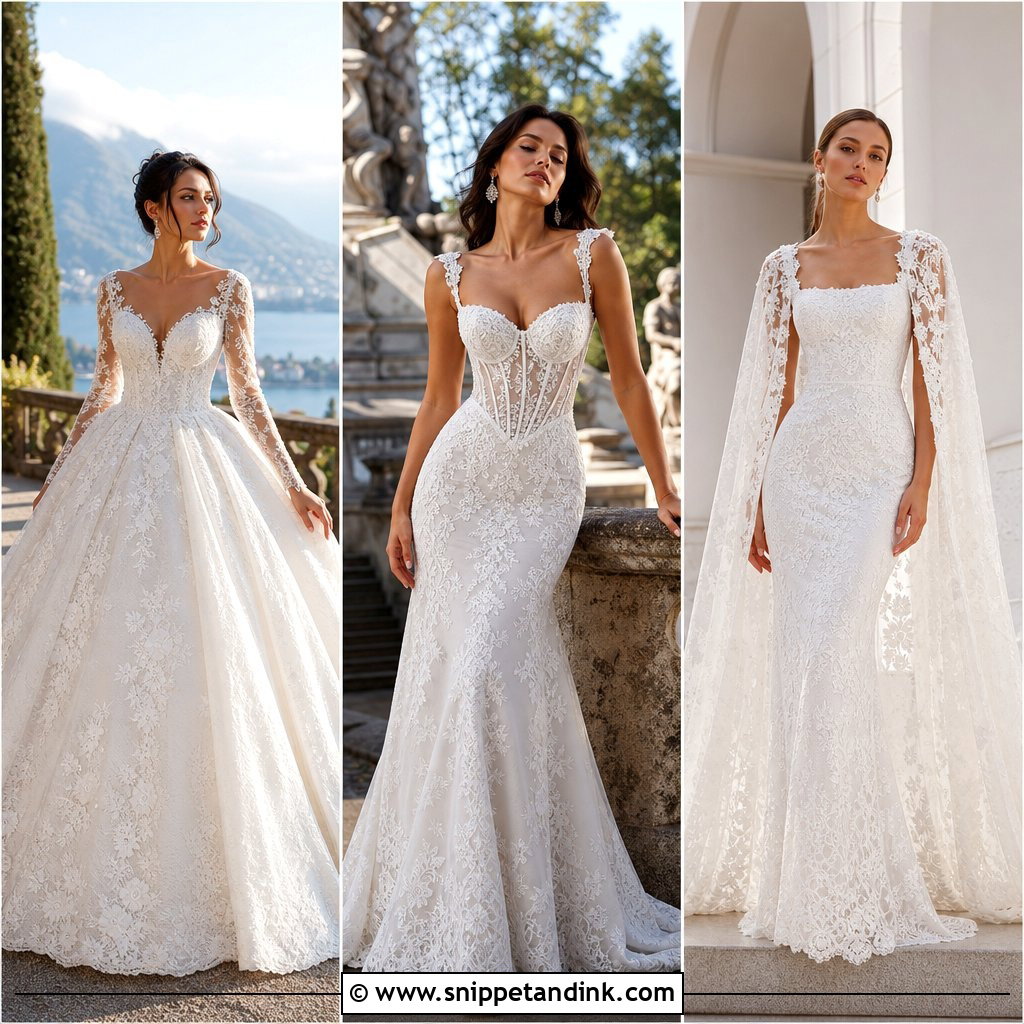
2. Lace Embroidered Wedding Dress
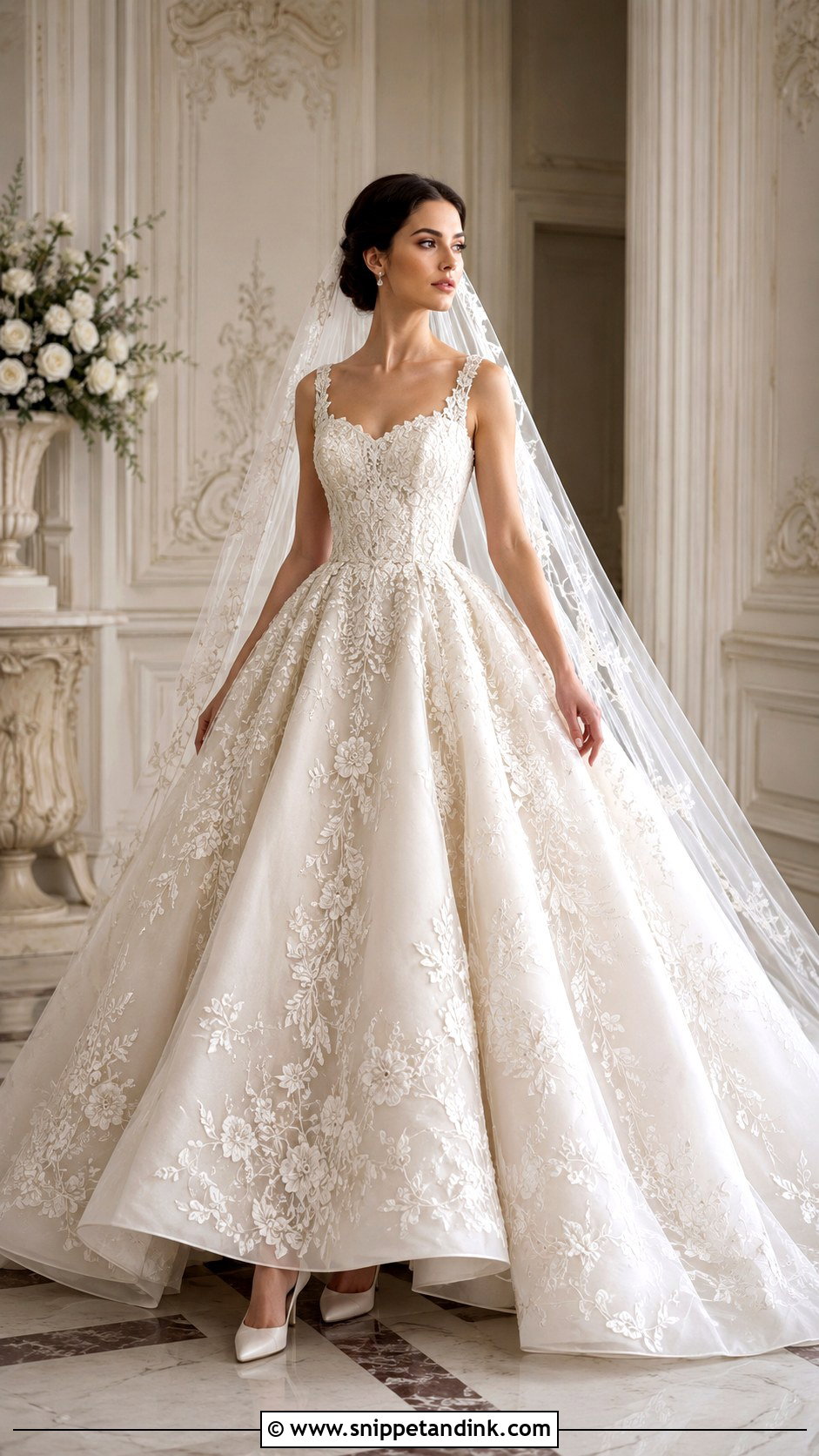
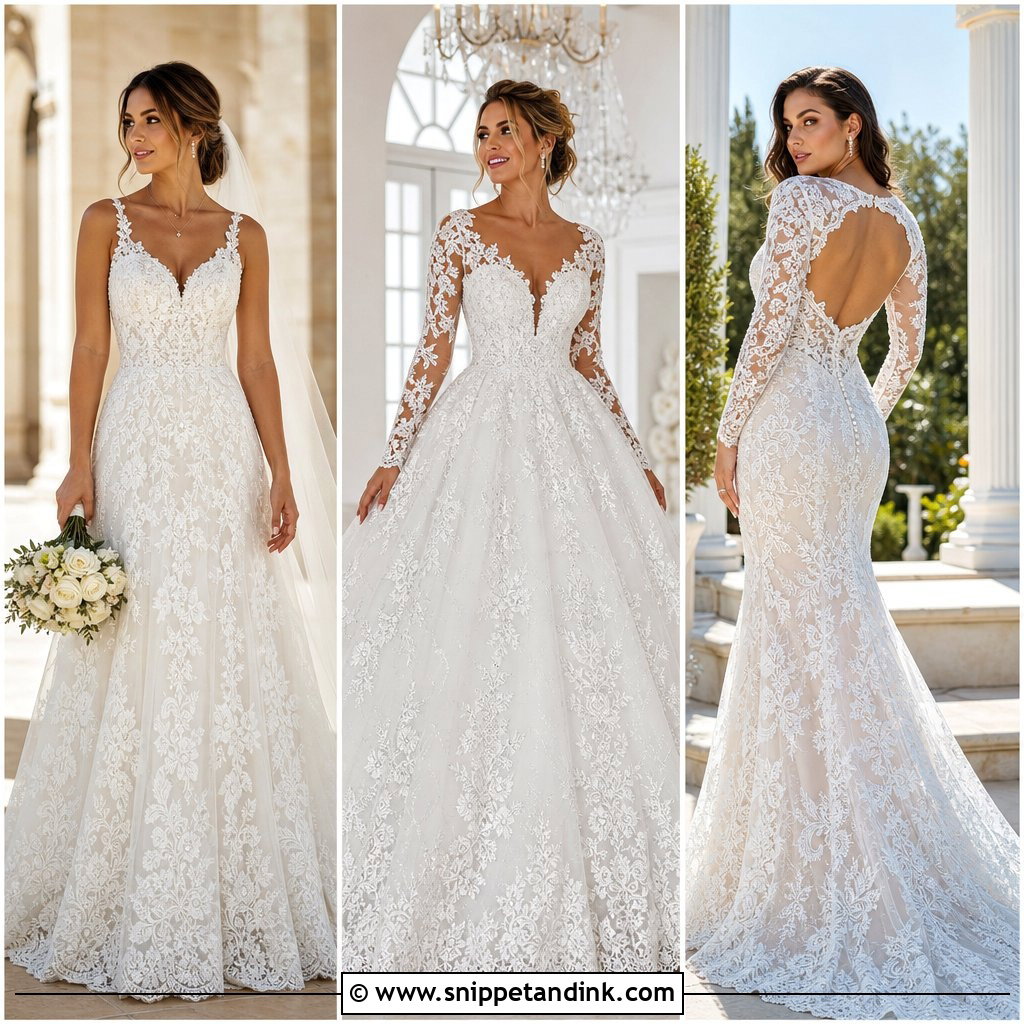
Plain lace and embroidered lace look similar on a hanger and very different under a camera flash. Raised work, beading and corded floral motifs (the cord is stitched around each petal’s edge) throw small shadows, and those shadows are what give depth in photos. Long lace sleeves suit a formal room; sleeveless keeps you cooler in summer. I style it with a fingertip veil, pointed ivory heels and small pearl studs. To make it feel current, look for a clean lining, a low back or a square neckline.
3. Colorful Embroidered Wedding Dress
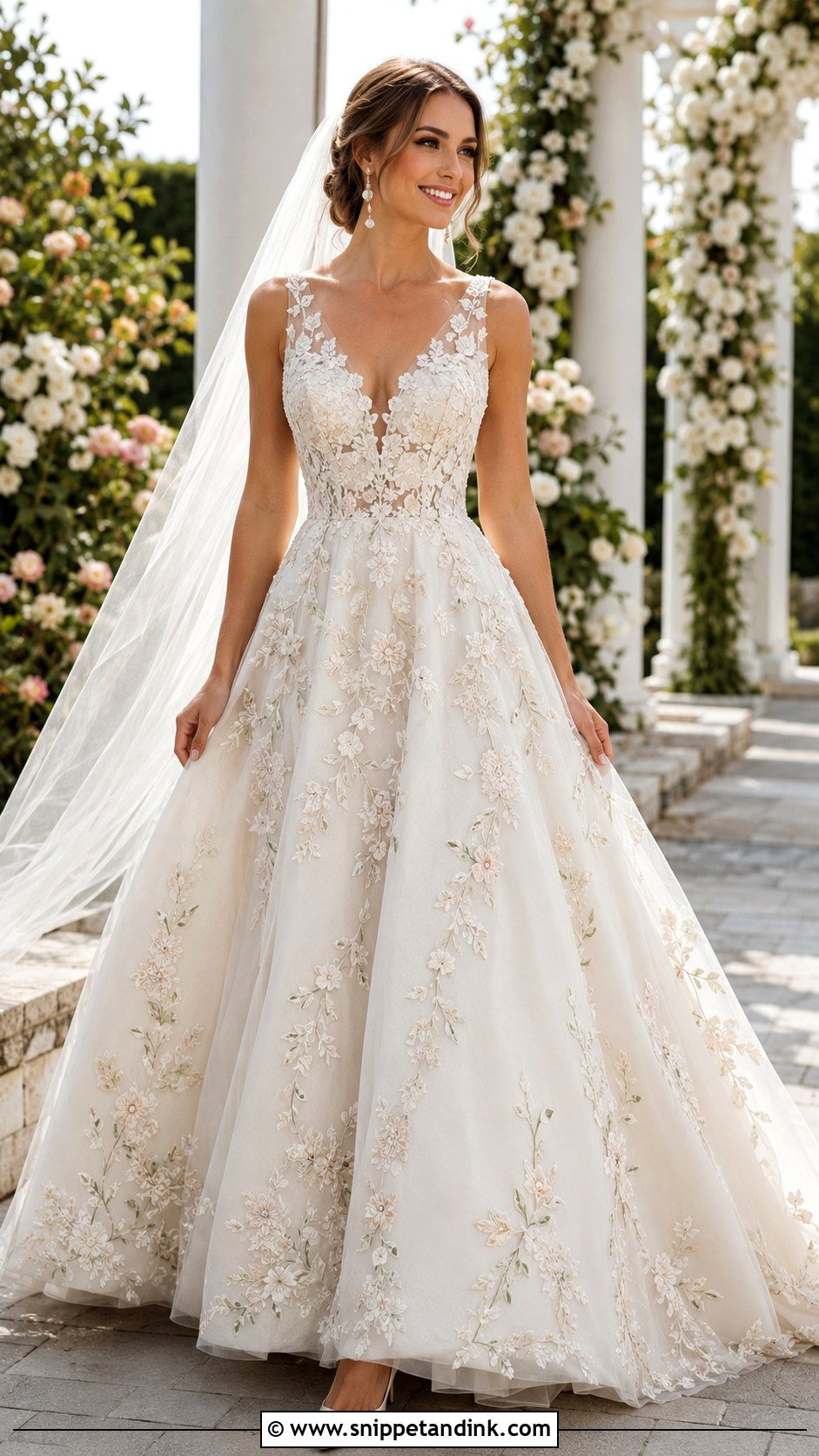
A white, ivory or nude base keeps colored embroidery reading as a wedding dress rather than a party dress. From there you decide how loud it gets: wildflower shades scattered lightly over the skirt, or blooms packed onto the bodice. My one firm rule is to repeat a thread color somewhere else, often in a veil edged with the same motif, so the color looks planned. Shoes stay ivory, earrings tiny, and makeup fresh rather than heavy, because strong lipstick fights with multicolored stitching in close-up portraits.
4. Pearl Embroidered Wedding Dress
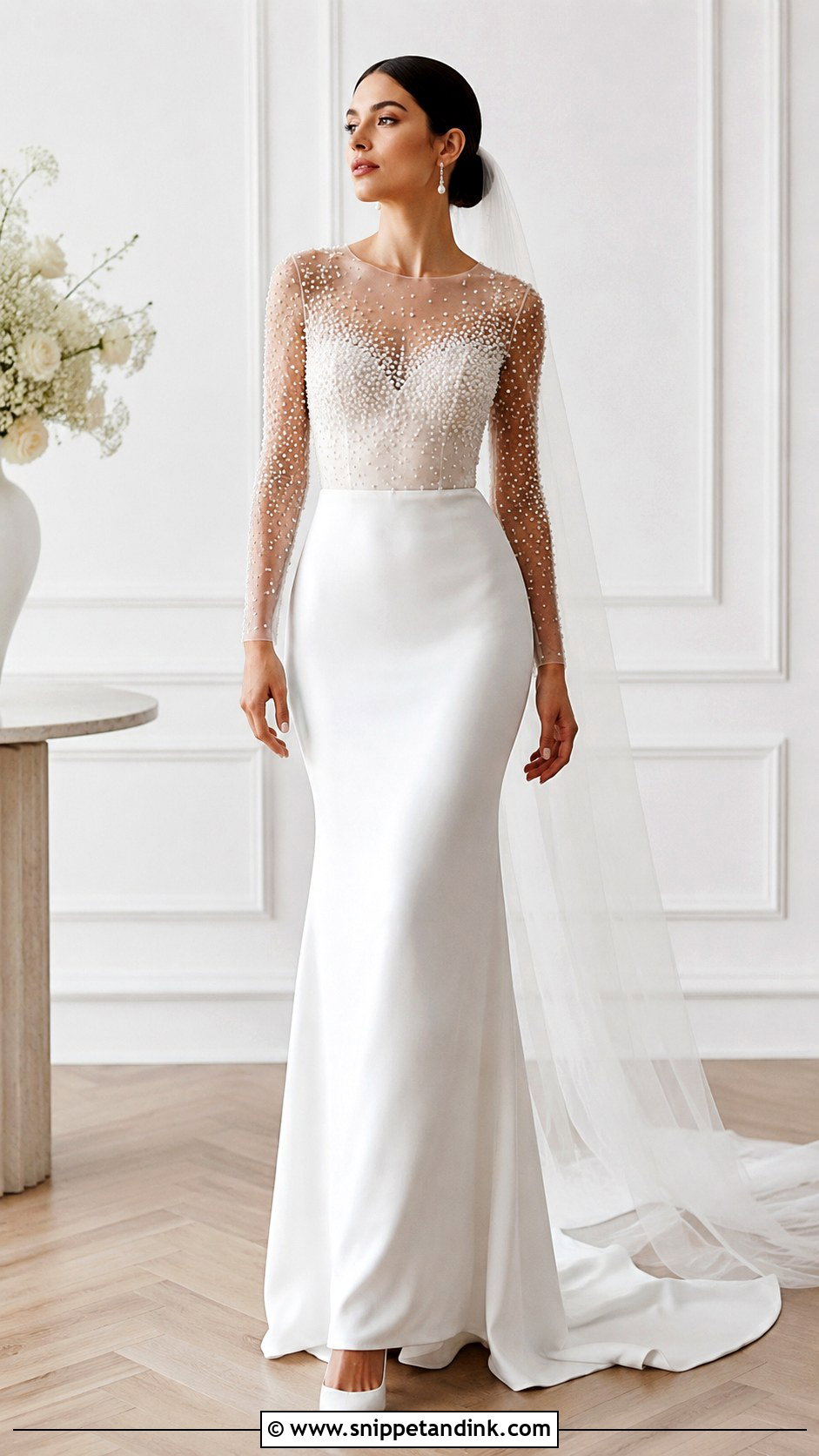
Pearls give a soft glow where crystals give sparkle, and on camera that difference is huge. You’ll find them stitched into floral lace, dotted over sheer sleeves or traced along a bodice and train. On fitted crepe they look sleek; on a tulle ball gown they lean romantic. When I check a pearl gown, I run a hand over the beading at the inner arm and waist, since that’s where loose pearls catch on bouquets and on a partner’s sleeve. Pearl earrings, satin pumps and a smooth low bun finish it, and I stop there.
5. 3D Floral Embroidered Wedding Dress
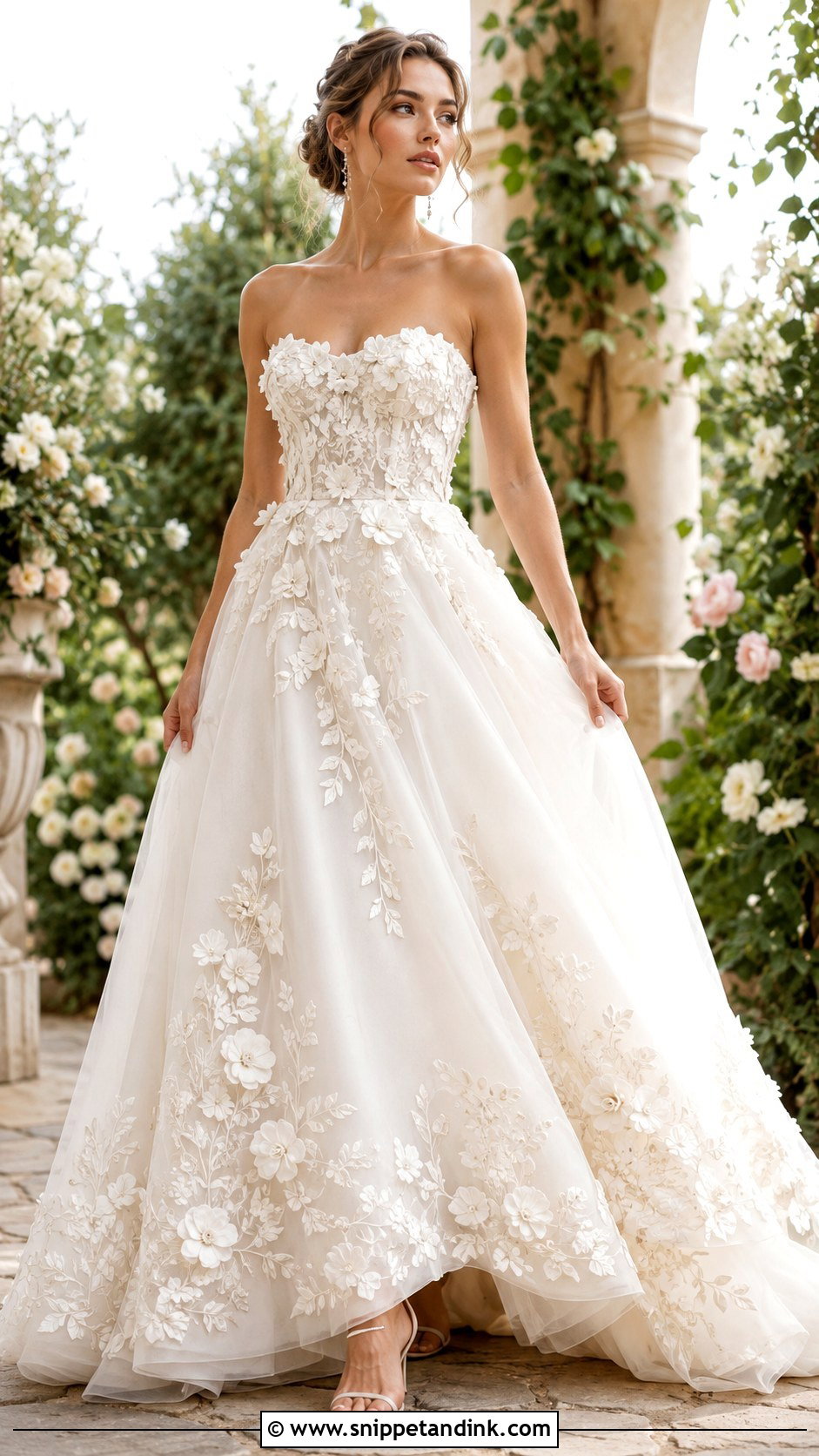
A 3D floral embroidered wedding dress moves when you move, which is the whole point. Fabric petals, raised vines and layered appliqué catch light from the side, so the gown changes as you walk down an aisle. Pick one focus area (bodice, sleeves, hem or train), because petals everywhere can look like a costume. Something I always warn about: raised petals crush when you sit or lean against a car seat, so ask the salon how they recover with a steamer. Keep heels barely there, earrings small and the veil simple.
6. Boho Embroidered Wedding Dress
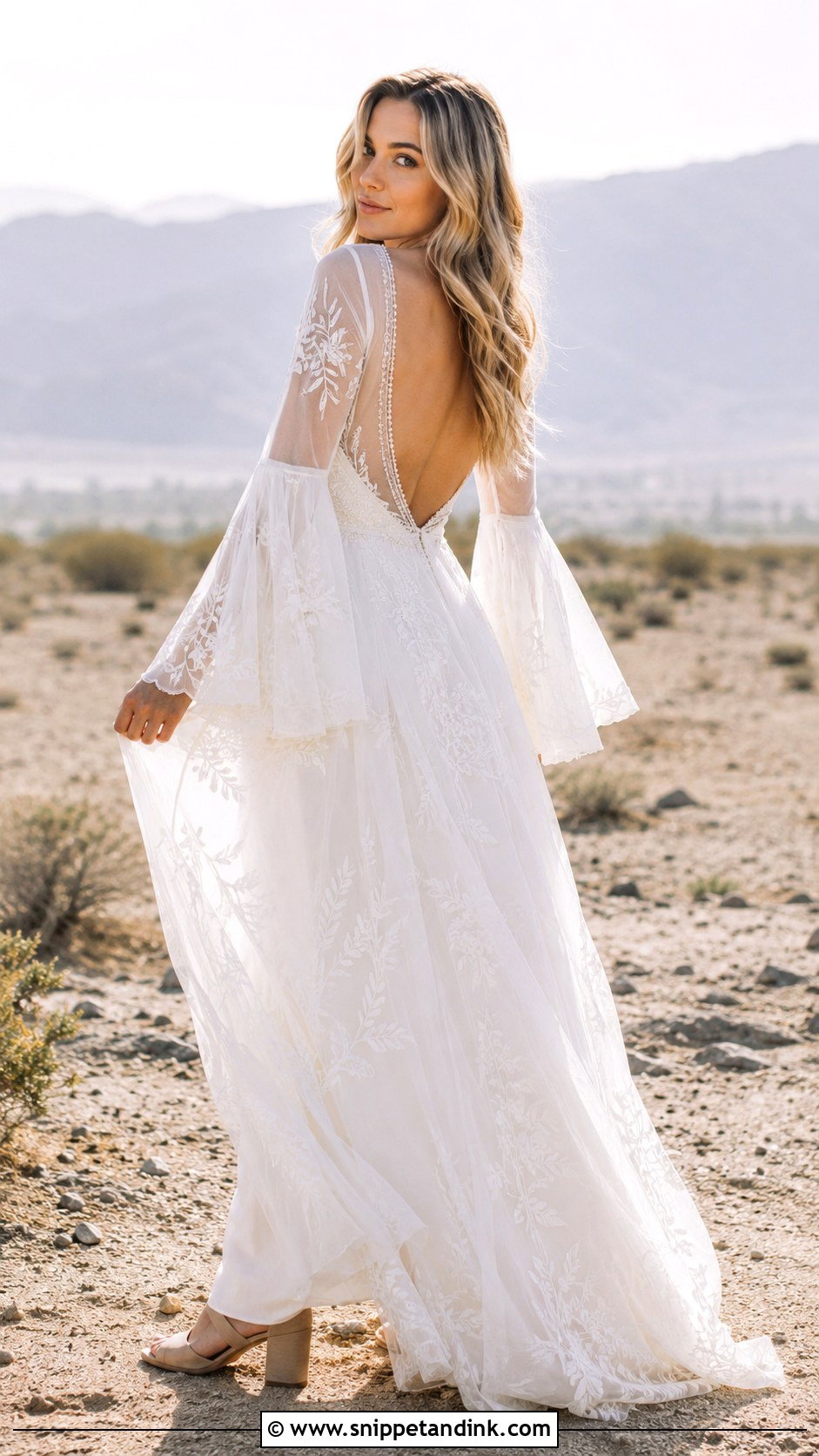
Nothing about a boho embroidered wedding dress should feel stiff. Soft tulle, chiffon or crochet-style lace with vine or geometric embroidery lets you sit on a blanket, dance barefoot and still look put together. Bell sleeves, a deep V or an open back give shape without needing structure. On grass or sand I steer brides toward block-heel sandals, because a stiletto sinks and drags the hem forward. The one thing to check is the hem itself: loose crochet edges pick up burrs and sand, so a slightly shorter length can save the bottom row of stitching.
7. Vintage Embroidered Wedding Dress
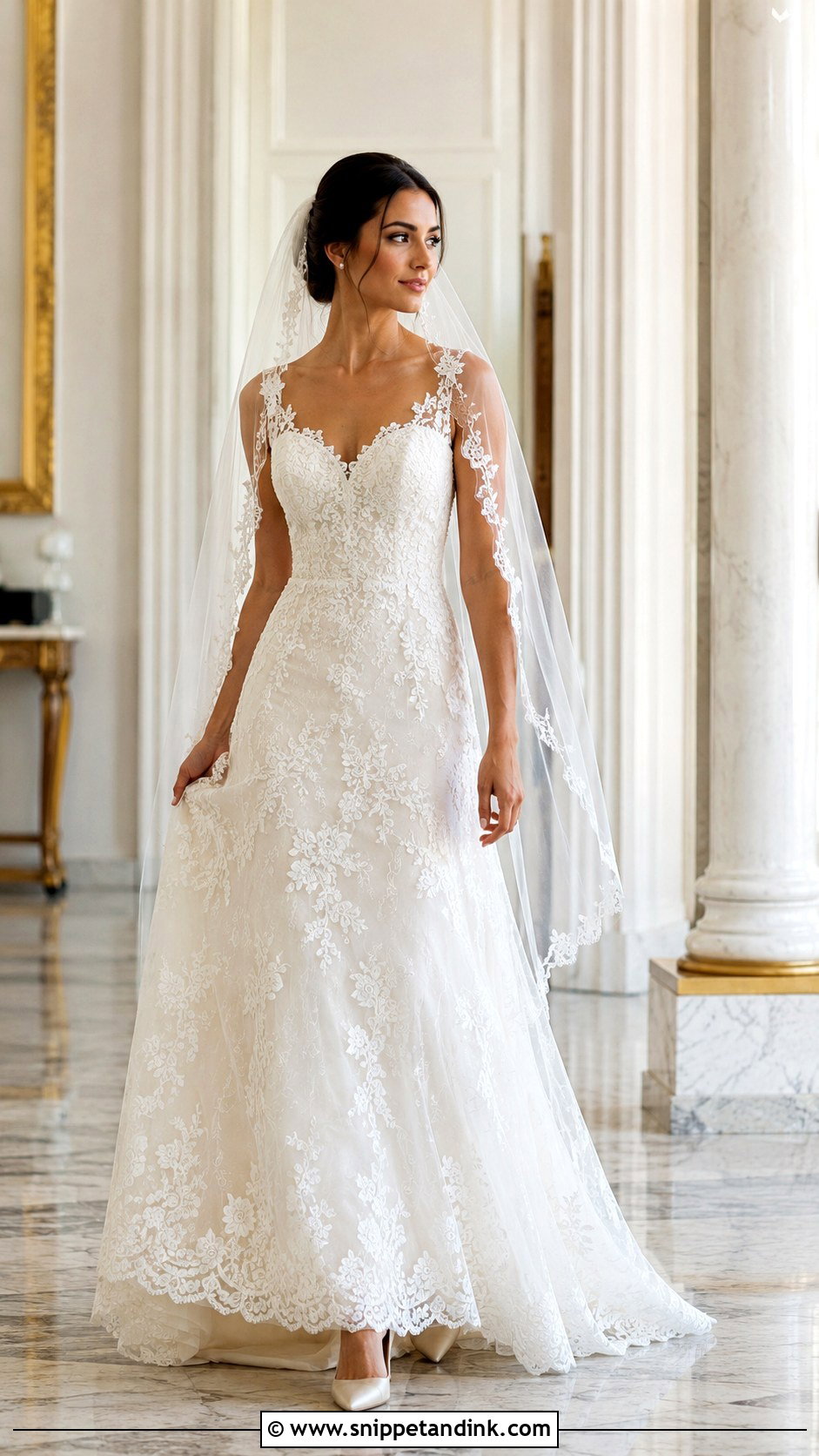
High necklines, long sleeves, scalloped hems and fine threadwork are what make a vintage embroidered wedding dress feel like it has a history. Motifs drawn from heirloom lace, Art Deco geometry, Victorian florals or Edwardian tulle each suggest a different decade, so decide which era you actually love before you shop. Tea length feels playful; a long column looks more serious. I’d add low satin heels, pearl earrings and either a soft veil or a hair comb. If the gown is genuinely old, have a specialist check the thread before alterations, because aged silk thread can snap the moment a seamstress pulls on it.
8. Sheer Sleeve Embroidered Wedding Dress
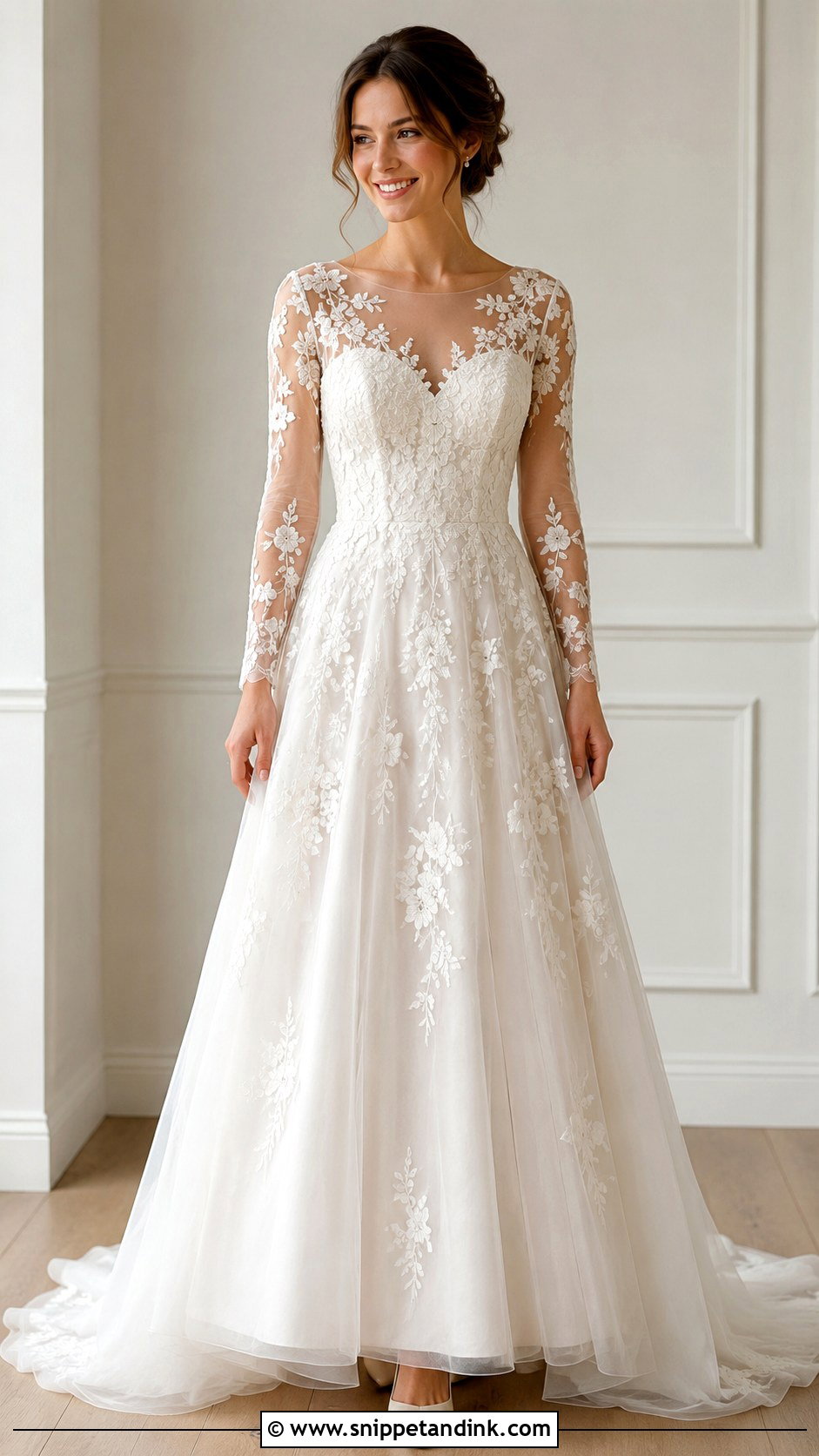
Sheer embroidered sleeves solve the coverage question without the heaviness of lined lace. Vines, pearl dots or scattered blossoms on illusion tulle frame the arm, and the tulle itself almost disappears in photos. The thing I test is reach: lift your arms as if you’re hugging someone taller, because tight sleeves pull the bodice up and the embroidery puckers at the elbow. Pair them with a fitted bodice, an A-line skirt or sleek crepe, a simple updo, small earrings and a veil short enough not to hide the sleeves. They suit fall, winter and formal days best, though breathable tulle works in spring too.
9. Corset Embroidered Wedding Dress
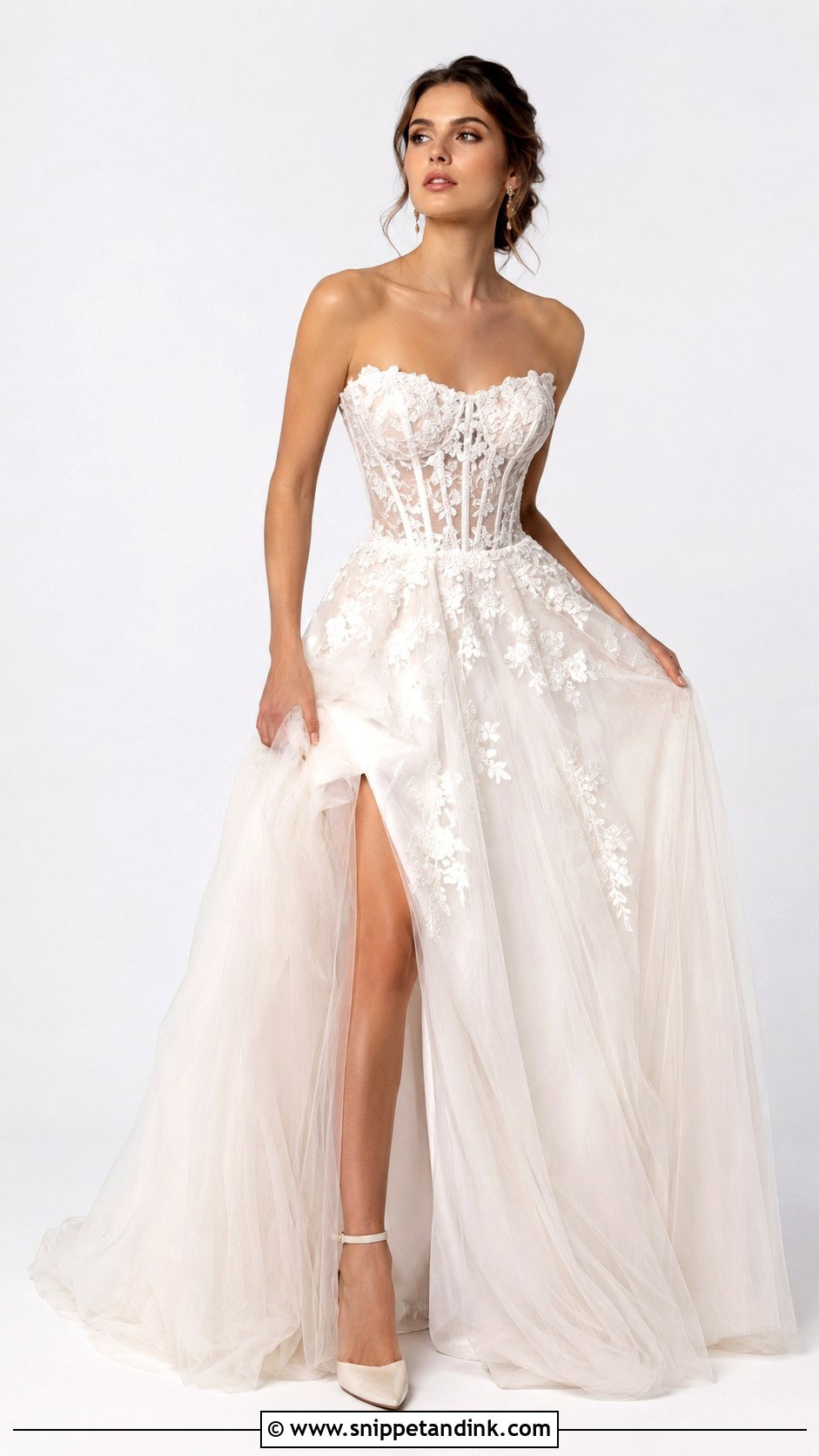
Corsetry gives the support; embroidery takes the hard edge off it. Visible boning behind sheer panels reads modern, while a lined corset bodice looks more classic. A full tulle skirt makes it dramatic, a fitted skirt makes it sleek. I almost always fit a corset gown with the bride’s actual shoes and undergarments, because a quarter inch at the waist changes where the embroidery lines up with the boning. With a busy neckline I’d skip the necklace entirely.
10. Ball Gown Embroidered Wedding Dress
Volume does the talking in a ball gown, so the embroidery’s job is to soften it. Floral appliqué, pearl stitching or vines that travel from bodice down into the skirt keep that much fabric from looking like a plain cake. Strapless and off-the-shoulder necklines balance the width best. I keep jewelry small and hair accessories light, because one more focal point on a gown this size looks crowded. Measure your aisle and doorways before committing; a big embroidered skirt needs room, and ballrooms or estates usually have it where small chapels do not.
11. Mermaid Embroidered Wedding Dress
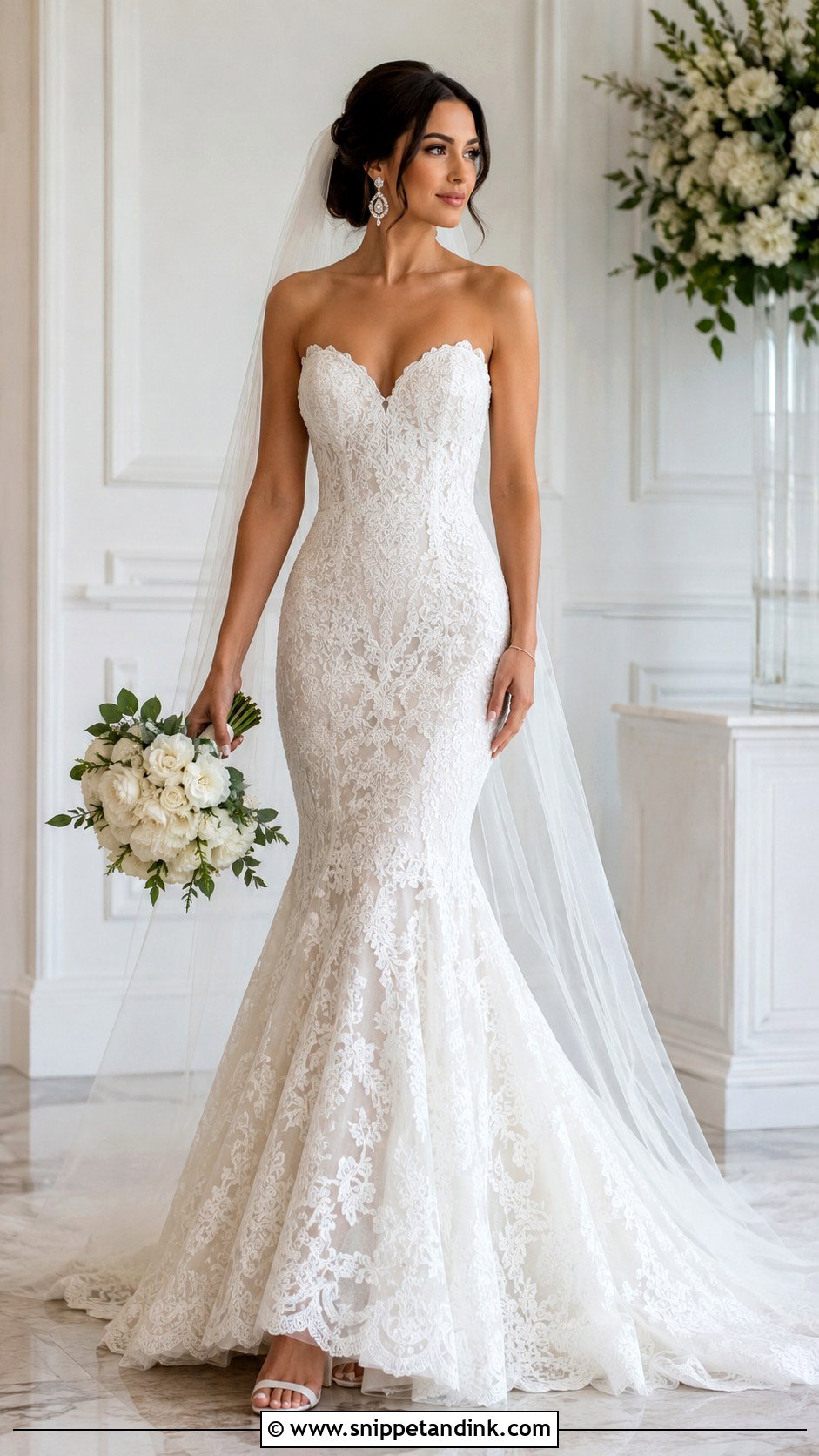
A mermaid shape lives or dies on fit, and embroidery makes the fitting harder. Stitching that follows the bodice, hips and flare creates a long vertical line, but if the motif lands unevenly across the hips it draws the eye exactly where you may not want it. Lace feels classic, pearls feel polished, florals feel romantic. At the fitting, sit down and climb a step: if the flare starts too high you’ll waddle, and the embroidery at the knee will crease. Sleek heels, drop earrings and a smooth veil that falls behind the train finish it.
12. A Line Embroidered Wedding Dress
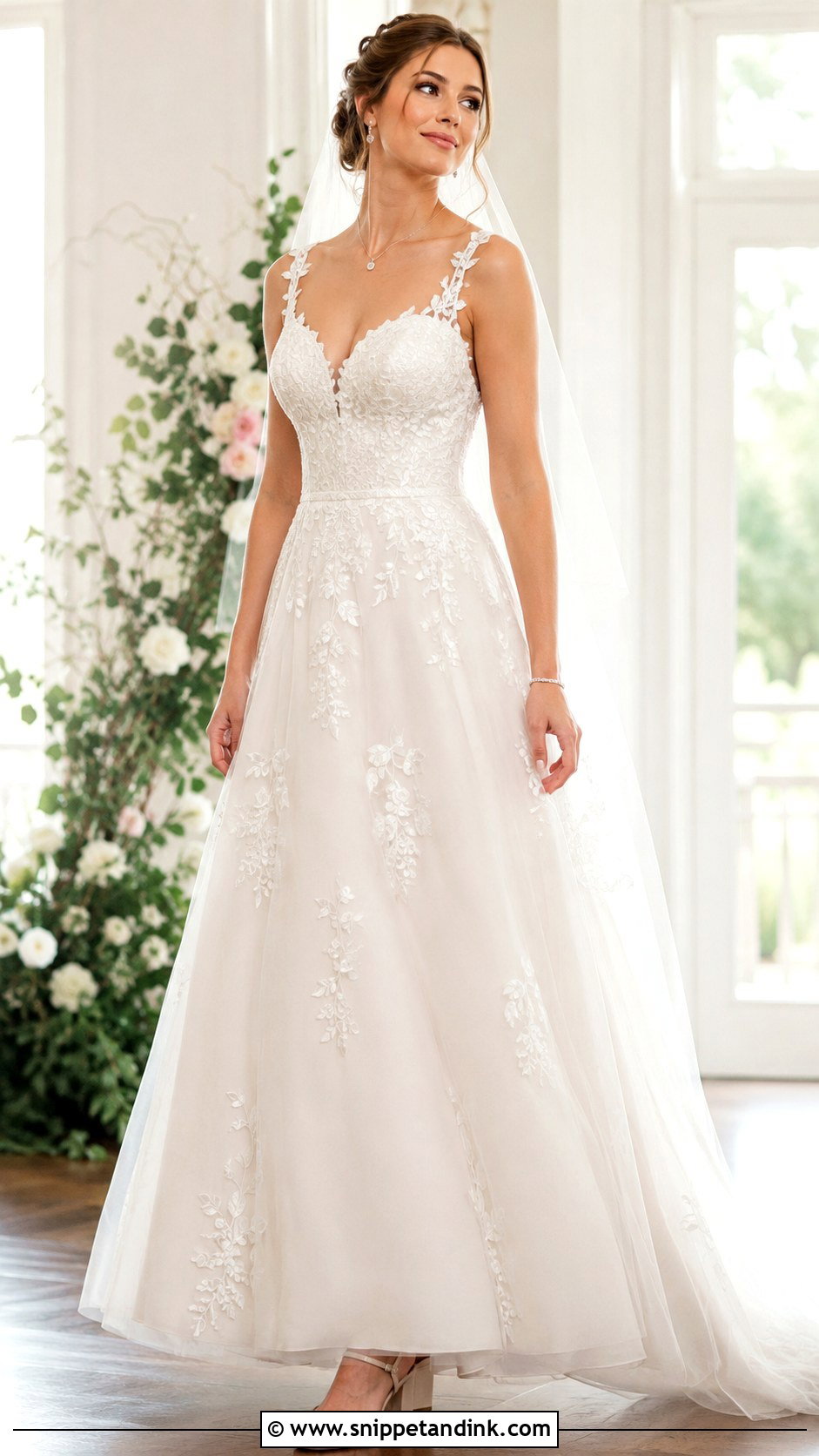
An A-line is the shape I suggest when a bride isn’t sure what she wants, because it suits most bodies and lets you move all day. The fitted bodice and gently widening skirt give shape without squeezing. Embroidery can cluster at the bodice, drift through the skirt or trace the hem. Block heels or classic pumps, a soft veil and fine jewelry keep it easy, and it fits a garden or a hotel ballroom equally well. Ivory threadwork stays classic; for personality, try soft colorful florals.
13. Tulle Embroidered Wedding Dress
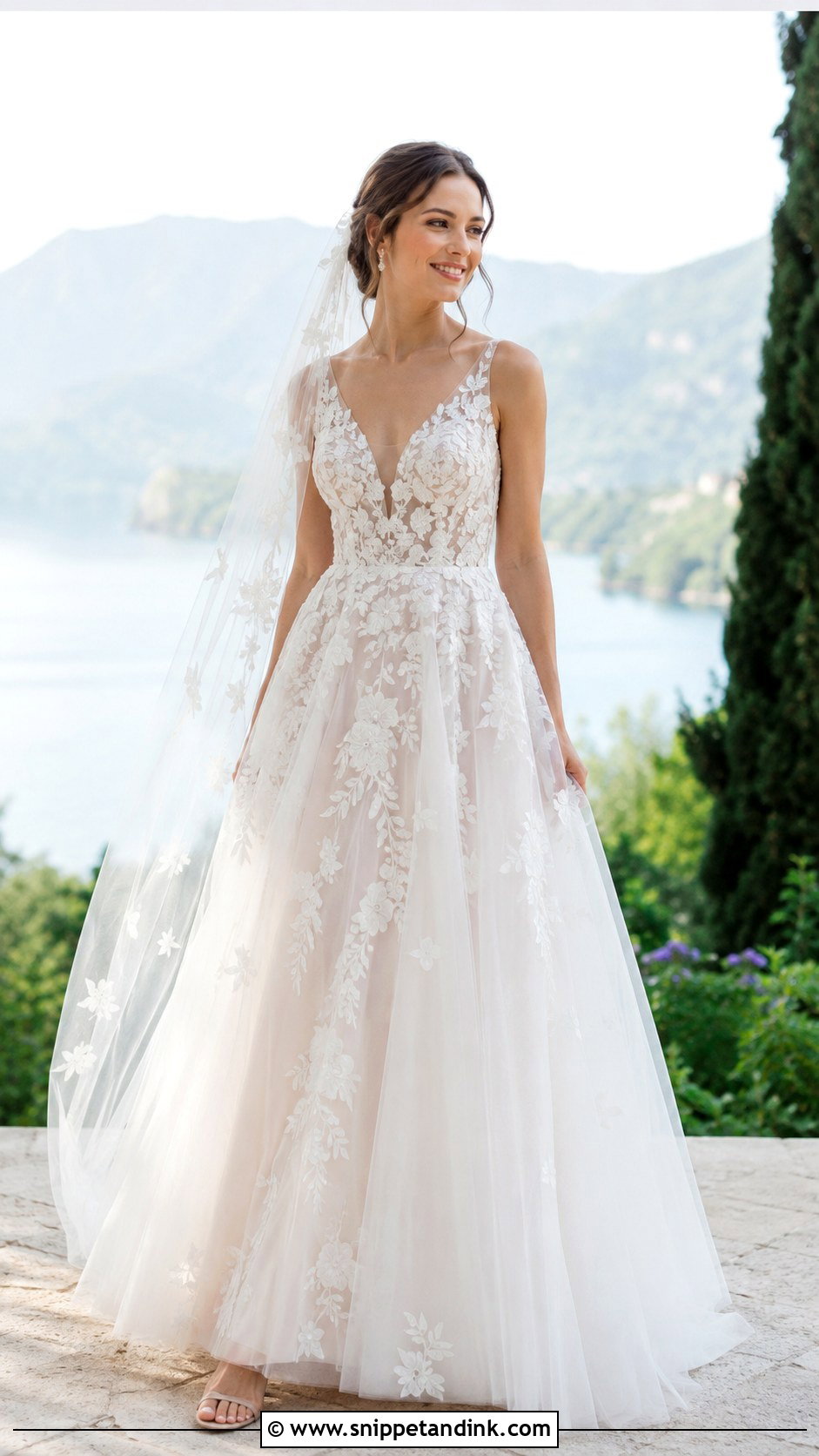
Tulle is the most forgiving base for embroidery because it’s sheer enough to make motifs look layered rather than printed. Florals, stars, vines and pearls all sit well on it. A full skirt gives the fairytale effect, a slim overlay looks lighter. The trade-off is fragility: tulle snags on rings, bouquet wire and rough stone steps, and once a pulled thread runs across an embroidered area it’s hard to hide. Simple heels, a sheer veil and tiny earrings keep it airy, and soft lining is worth asking for if you want coverage.
14. Satin Embroidered Wedding Dress
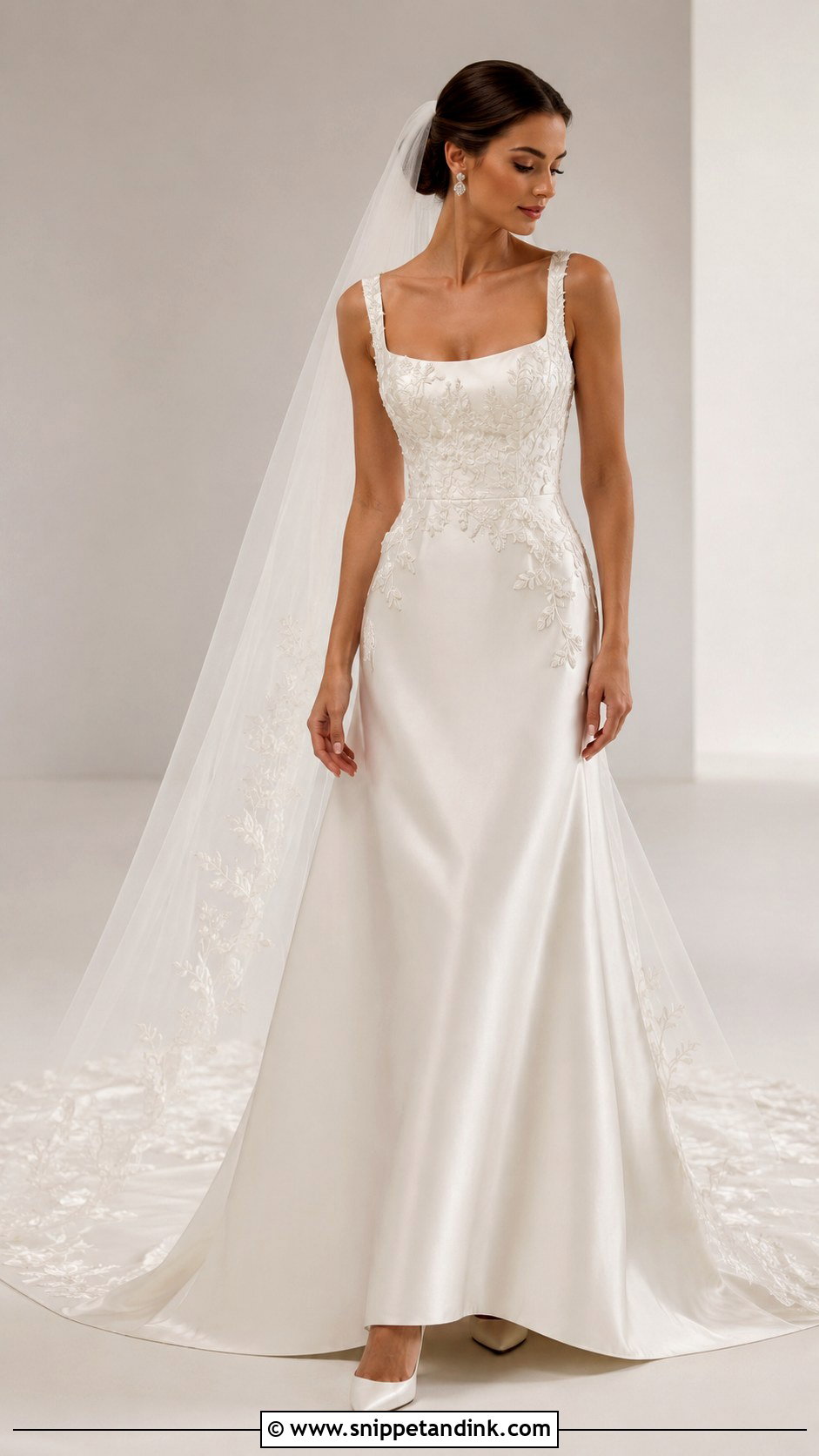
Satin shows every stitch, which is both the appeal and the risk. Against that smooth surface, floral work on the bodice, pearls along the neckline or an embroidered train stand out sharply. An A-line satin gown feels classic, a slip with light embroidery feels minimal. I’m careful with placement here: satin reflects light, so a heavy motif on the hip or stomach catches flash and looks bigger than it is. Satin also creases where you sit, so I suggest brides practice sitting in it and plan a quick steam before portraits. Satin pumps, a structured veil and polished earrings complete it.

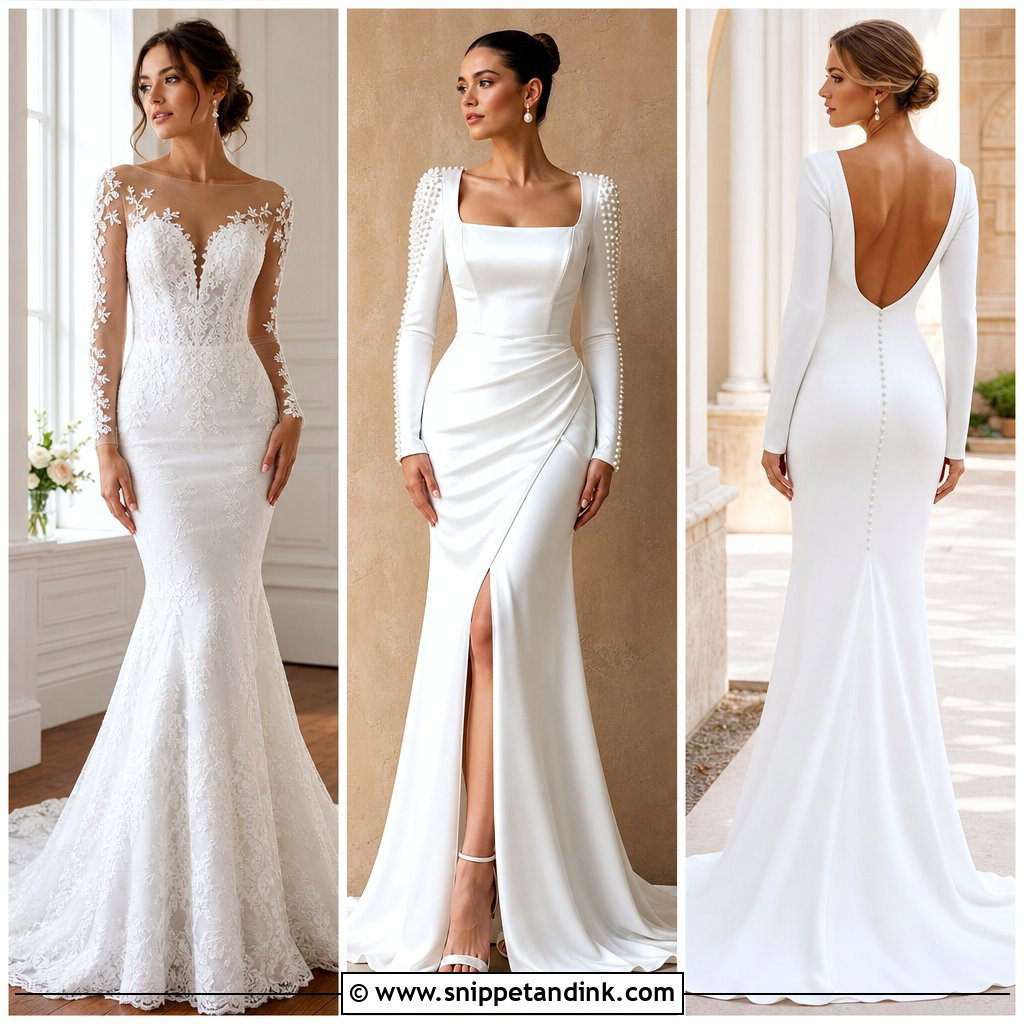

15. Minimal Embroidered Wedding Dress
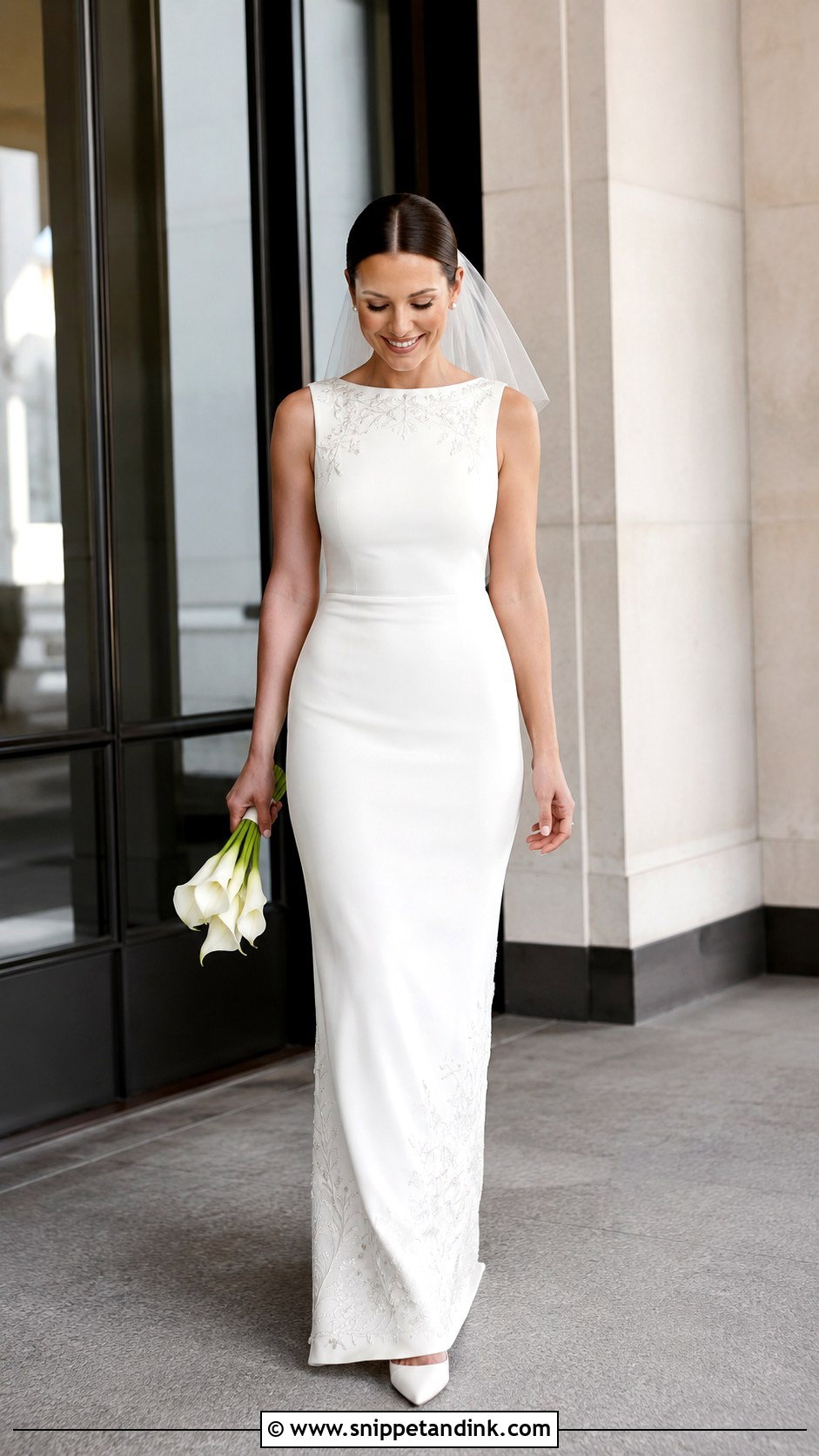
Restraint is the skill with minimal embroidery. Choose crepe, satin or mikado and put the stitching in one place only: neckline, waist, sleeves, back or hem. White on white gives texture you notice up close without looking busy from across the room. Simple pumps, a short veil and small pearl or diamond-style studs are all it needs. City venues and courthouse ceremonies suit it well. Let the embroidery be a quiet signature, not the whole story.
16. Black Embroidered Wedding Dress
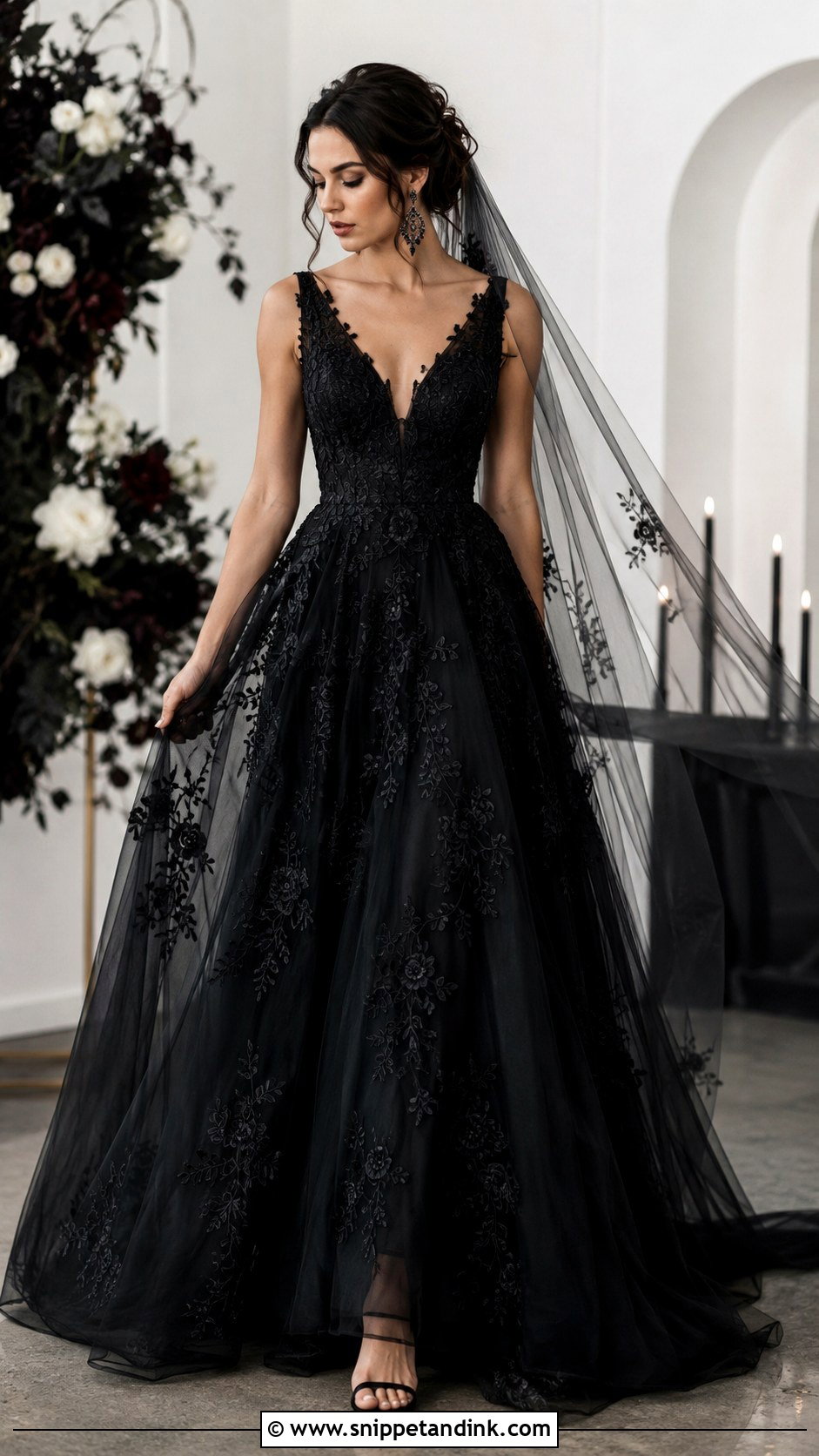
Black is a choice brides make deliberately, and the embroidery decides how it reads. Black on black gives texture only you and the camera will notice; silver thread adds contrast; colored florals soften it into something romantic. A black tulle ball gown looks editorial, a fitted black lace gown looks formal. Black or metallic heels, refined earrings and a simple veil keep a bridal note. Evening light is kinder to it than harsh midday sun, which can flatten black fabric into a dark shape with no detail at all.
17. Blue Embroidered Wedding Dress
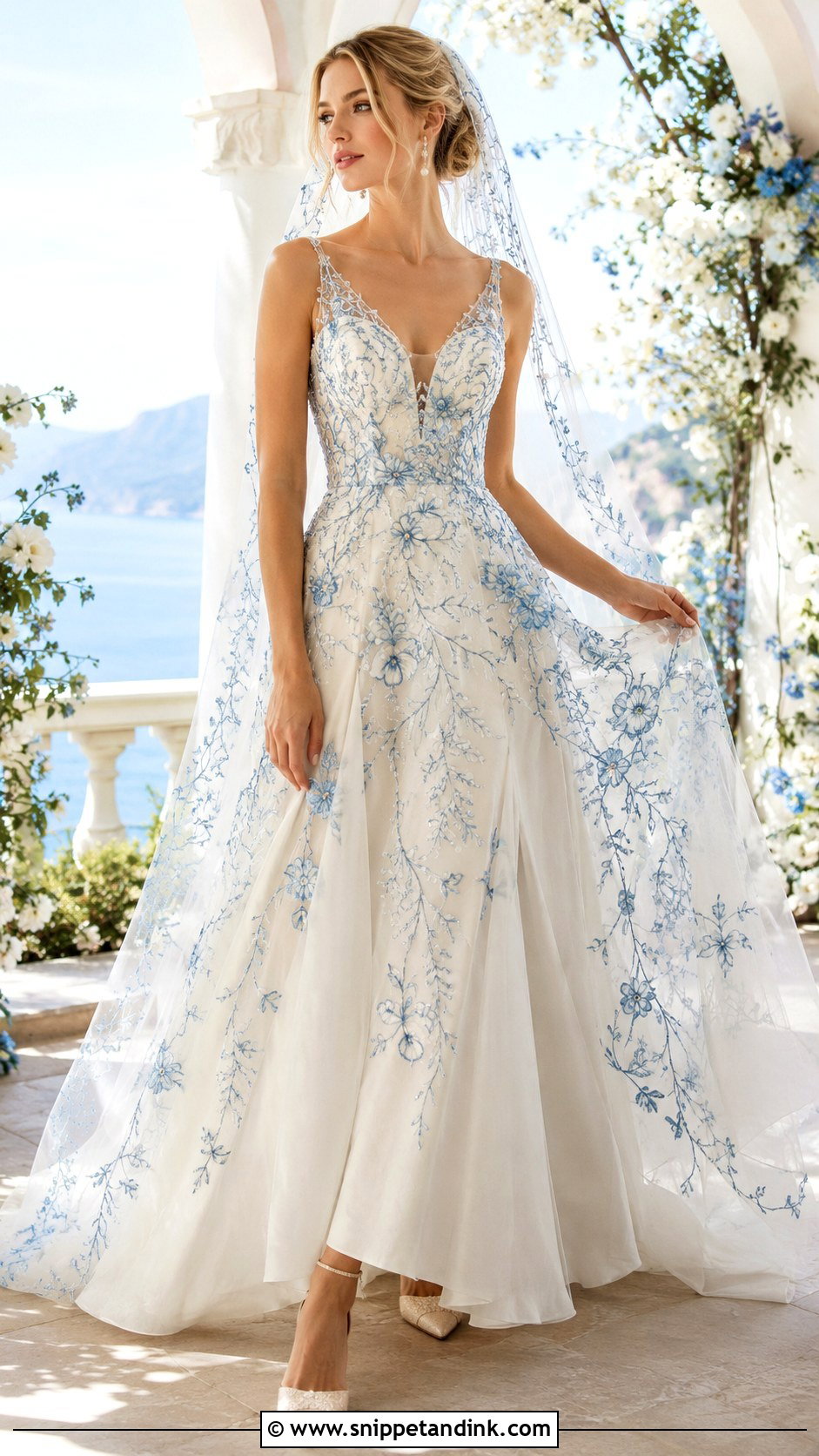
Blue is the easiest color to wear on a wedding dress because so many brides already want something blue. Pale blue embroidery on ivory looks delicate; a light blue gown with white threadwork feels more unusual. Floral blue stitching reads romantic, silver-blue vines read cool. Ivory heels, pearl earrings and a veil with a touch of the same motif tie it together. I keep makeup soft, with rosy cheeks and natural lips, because a strong lip next to cool blue thread can make skin look sallow in photos.
18. Blush Embroidered Wedding Dress
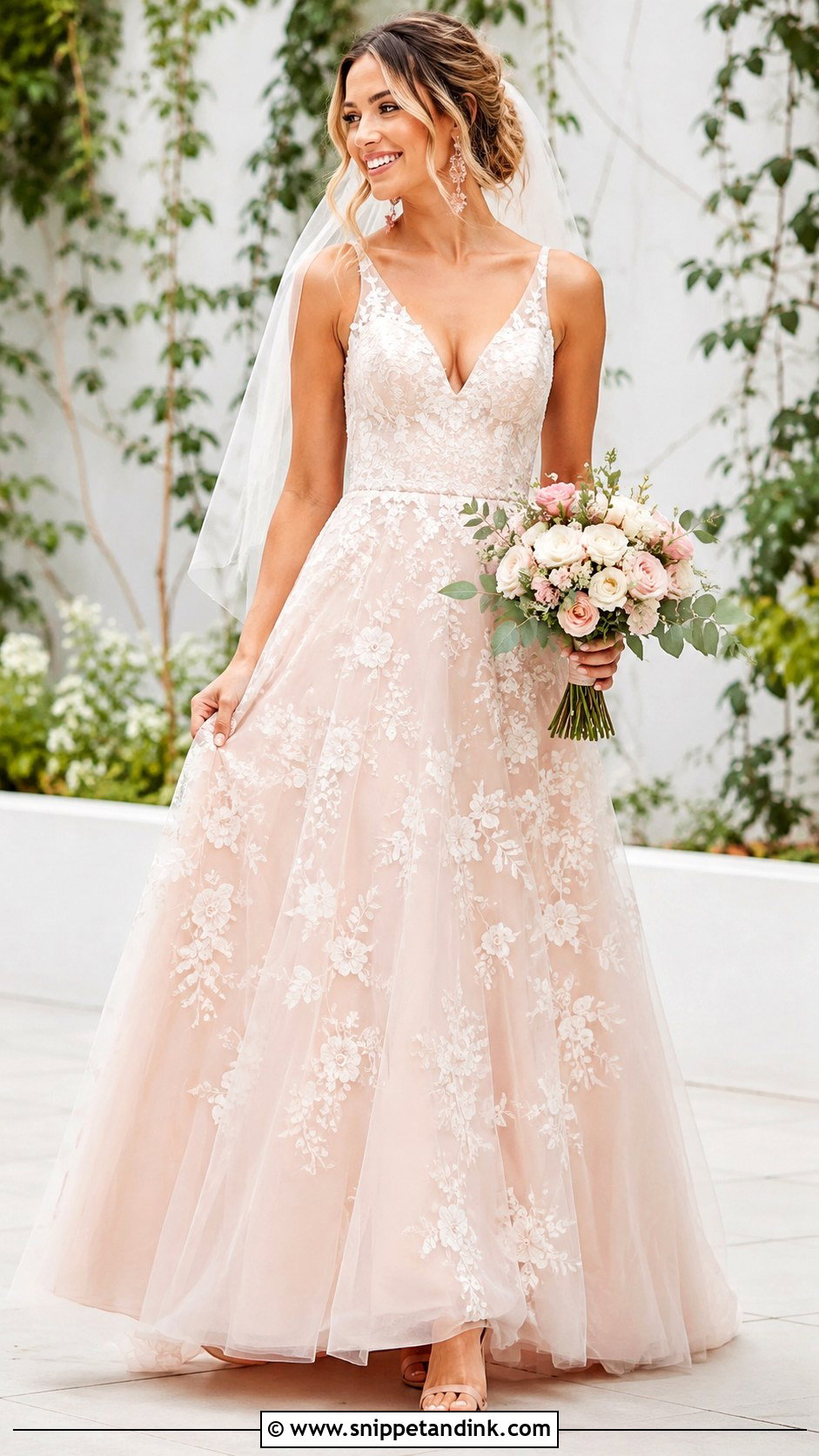
Blush gets too sweet only when everything else is sweet too. A soft pink base with ivory floral embroidery, or an ivory dress with blush appliqué, both work; an A-line or ball gown leans romantic while a fitted shape makes the color modern. I’d pair nude or ivory heels, rose-toned earrings and a light veil. If you’re nervous about pink, put the blush only in the underlay and keep the stitching ivory. Do look at it against your skin in daylight, since some blush shades wash out fair skin and read as plain white on camera.
19. Gold Embroidered Wedding Dress
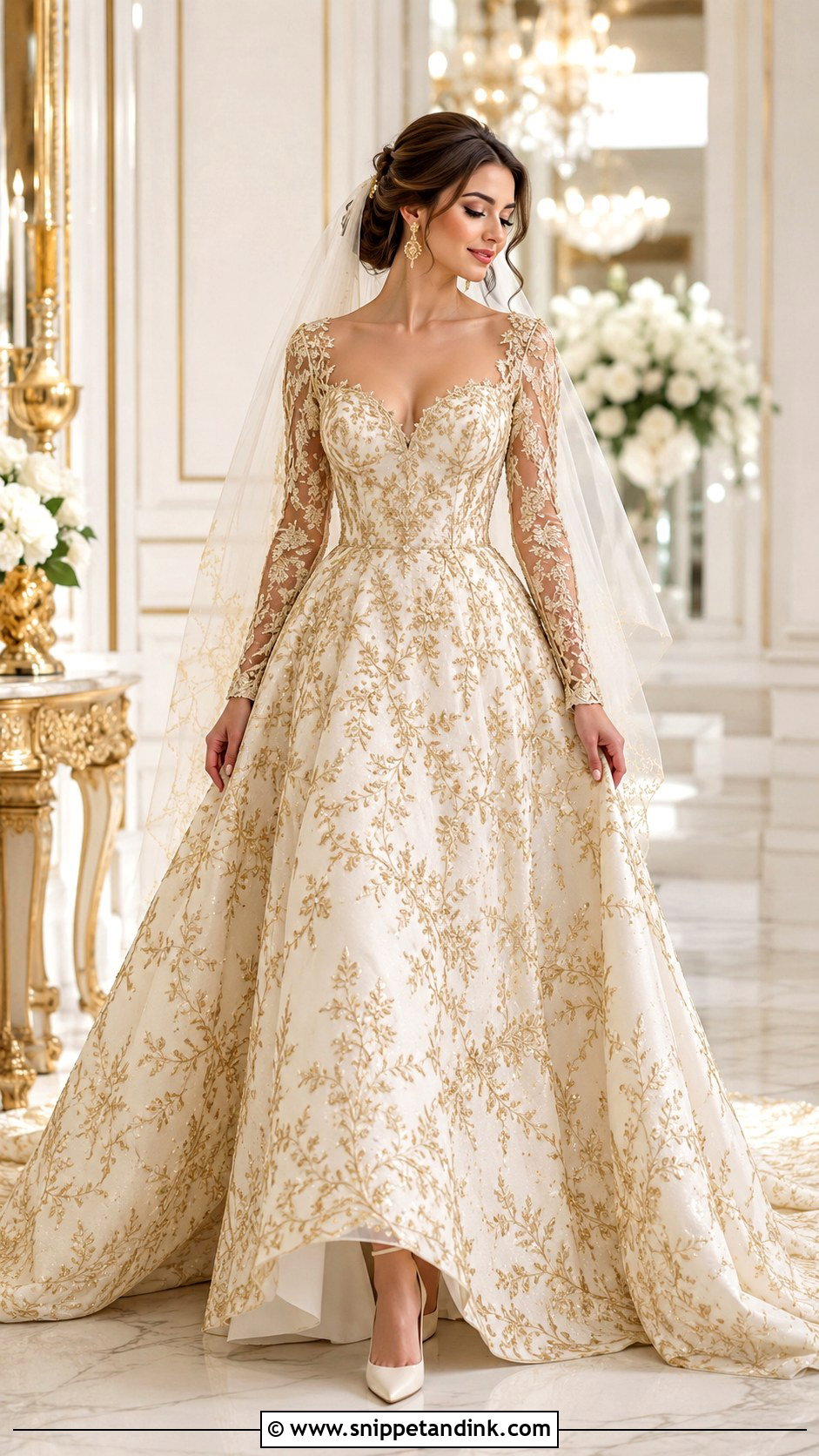
Gold thread on ivory, champagne, nude or soft white gives a warm, regal glow that shows best in evening and candlelight. Fine gold vines stay subtle; baroque scrollwork turns the gown into the main event. Gold earrings, ivory heels and a plain veil let the thread carry it. Real metallic thread is stiffer and scratchier than silk, so I always have brides wear a gold gown for twenty minutes at the fitting and check the inner arms and underarm seams. Keep hair clean and makeup soft so the gold looks rich rather than heavy.


20. Champagne Embroidered Wedding Dress
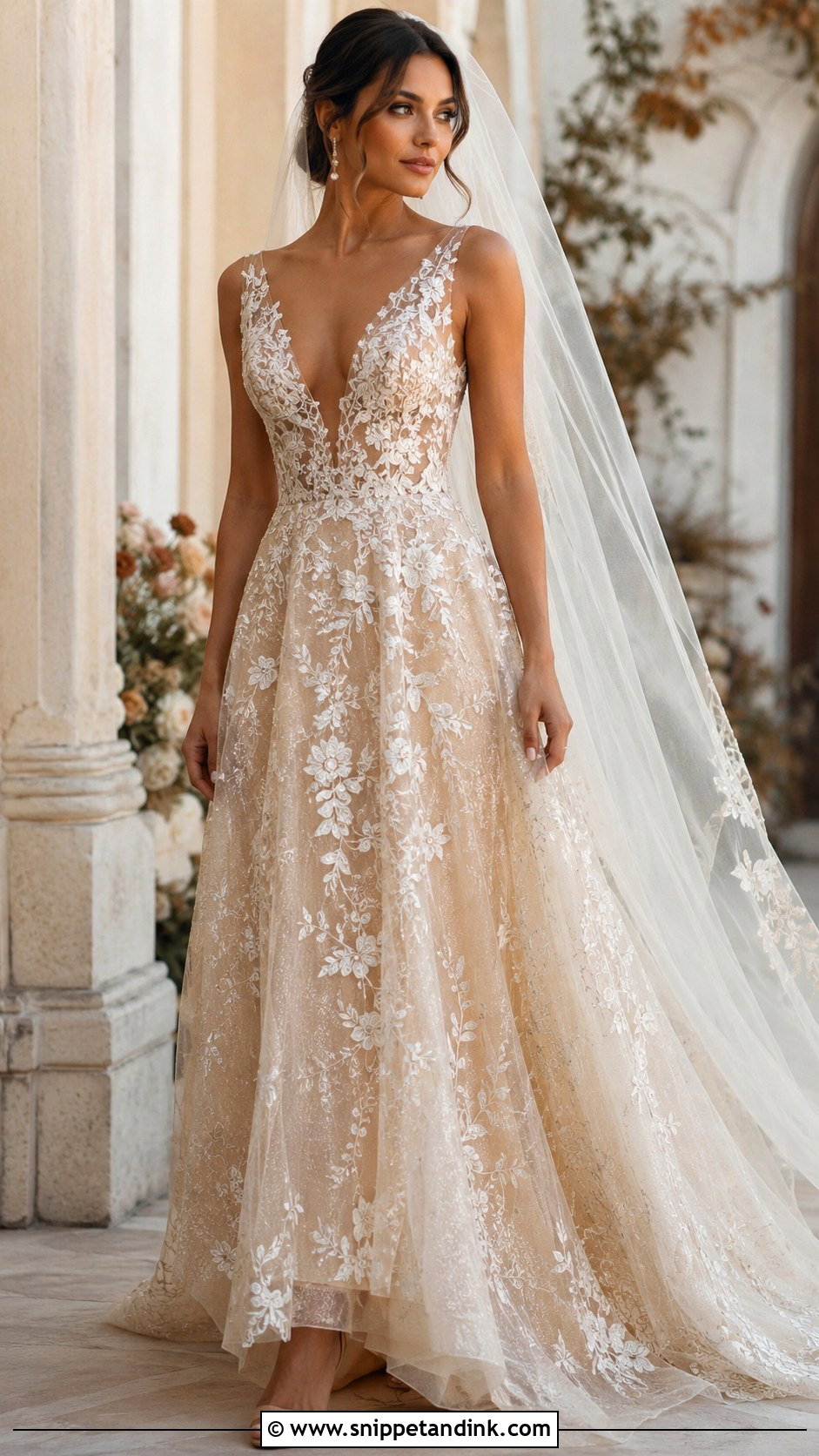
Champagne is the shade I reach for when bright white makes a bride look tired. It warms the skin and pairs well with ivory lace, pearls, gold thread or soft appliqué. A fitted silhouette looks sleek, layered tulle romantic. Match the veil to a warm ivory, not bright white, or the veil will make the dress look dingy next to it. Nude heels and pearl earrings finish it, and it suits fall weddings, estates and outdoor ceremonies in late afternoon light.
21. Long Sleeve Embroidered Wedding Dress
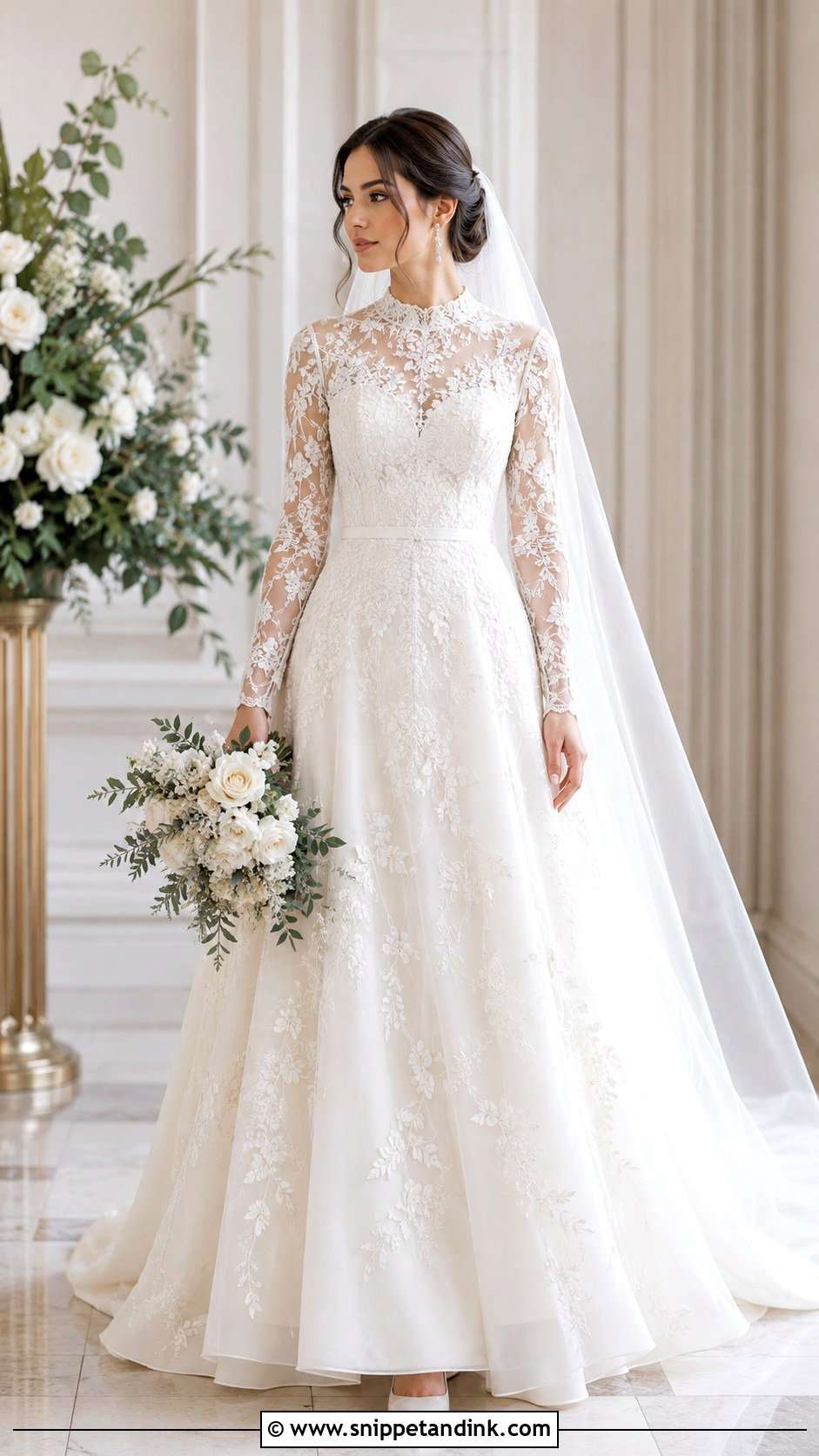
Cool weather is the obvious reason for long sleeves, but comfort is the better one. Sheer floral sleeves give light coverage; lined lace sleeves feel more traditional. The skirt can be fitted, A-line or full depending on how formal you want it. I like the embroidery to spill a little from the sleeve onto the bodice so the sleeve looks part of the gown, not added later. Closed-toe heels, drop earrings and a veil that falls behind the shoulders finish it. In spring, ask for fine tulle so you don’t overheat by the first dance.
22. Off Shoulder Embroidered Wedding Dress
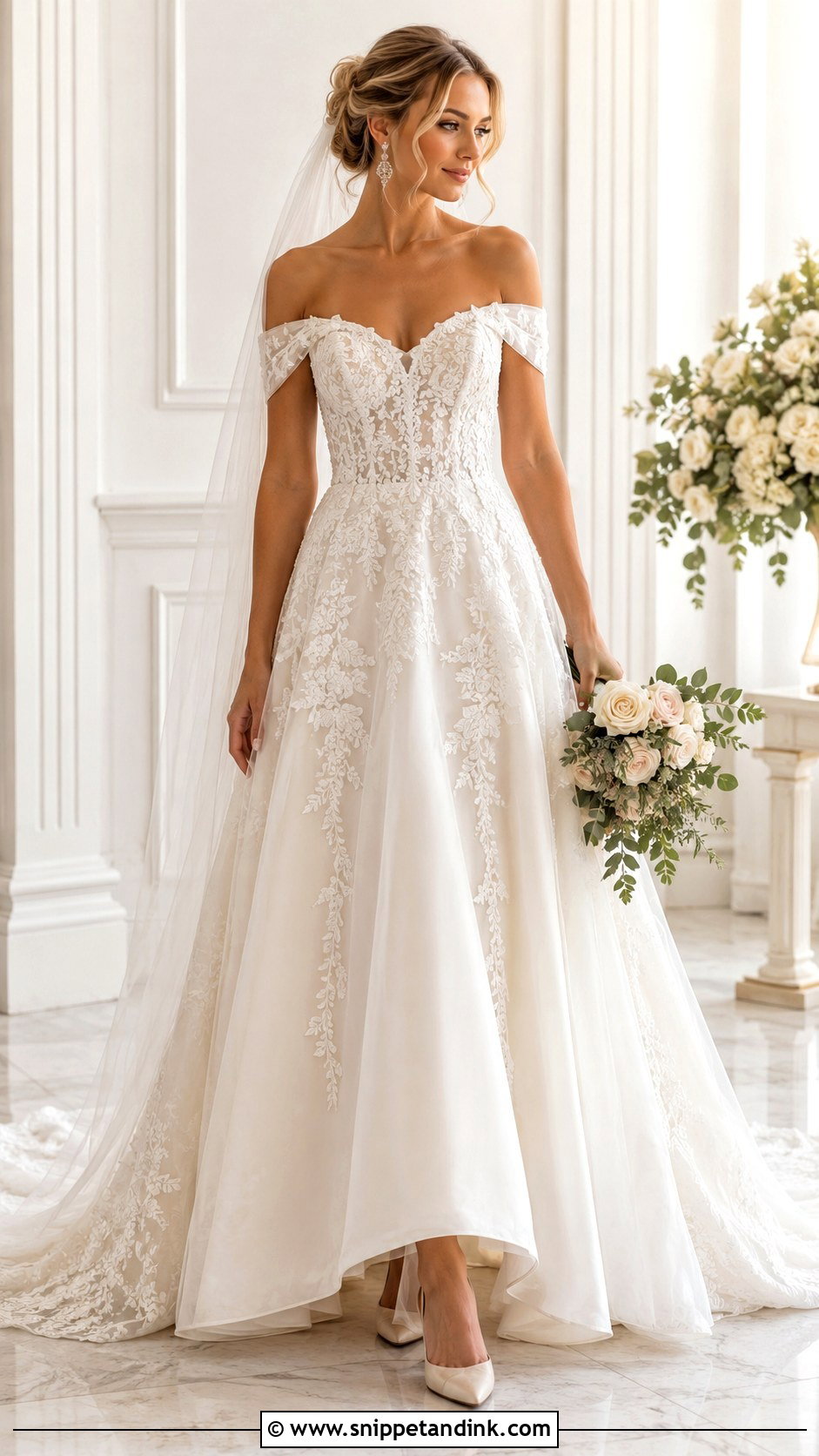
An off-shoulder neckline puts the embroidery right at your collarbones, which draws the eye upward. Stitching along the neckline, sleeves and bodice softens the shoulder line, and it pairs with fitted, full or flowing skirts. I’d only add a necklace if the neckline is very plain; otherwise earrings carry it. Attach the veil low in the hair so it doesn’t fight the neckline. The fitting check is simple: raise your arms and hug someone. Off-shoulder bands that are too loose slide down, and the embroidery shifts with them.
23. Square Neck Embroidered Wedding Dress
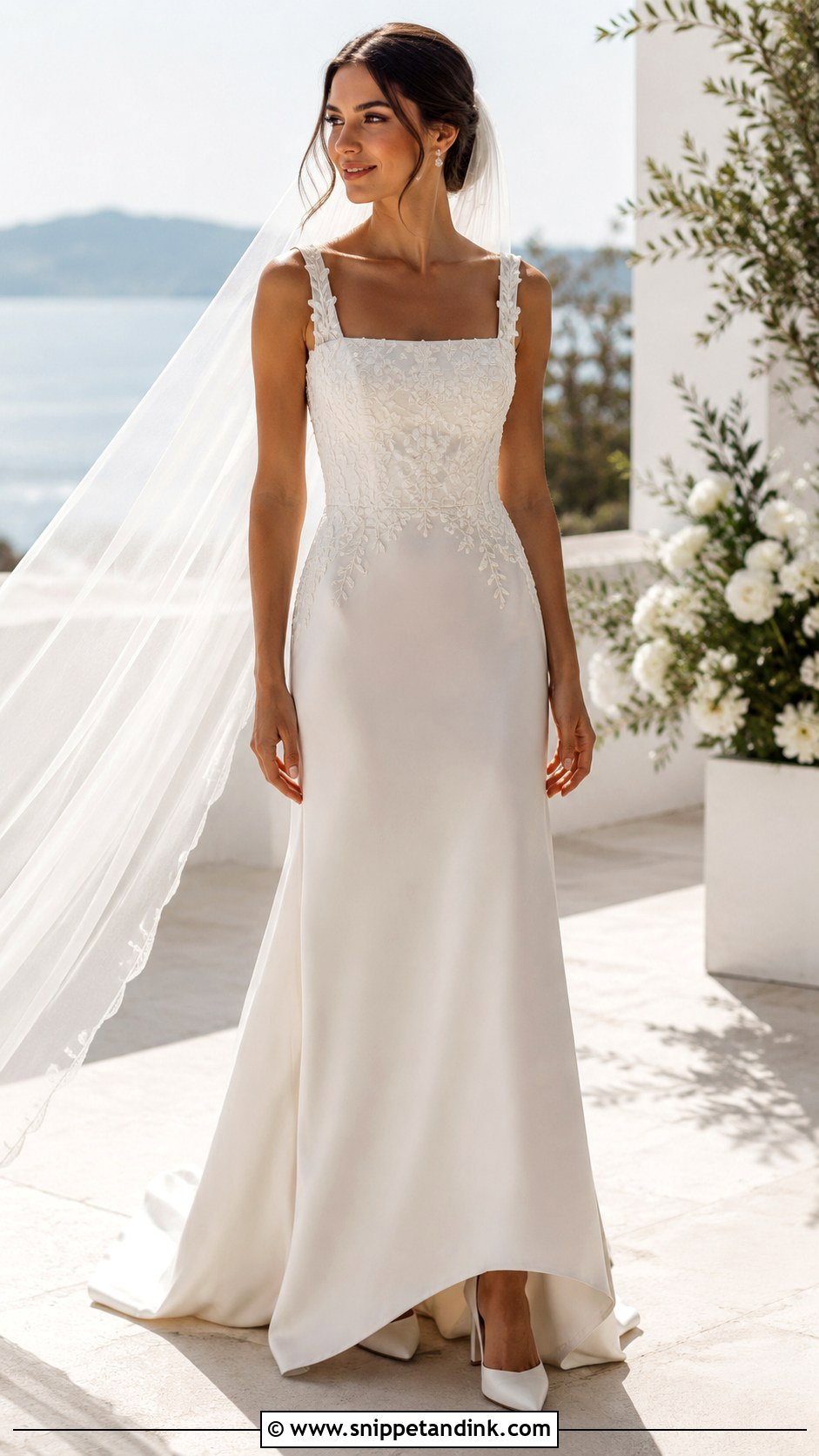
Square necklines look clean and quietly modern, and the straight line gives a little structure the embroidery then softens around the bodice and straps. It sits well on A-line, sheath and ball gown shapes. Florals lean romantic, pearls lean polished, white on white leans minimal. I like a sleek veil, small earrings and pointed heels with it. It is also one of the more supportive necklines for brides who don’t want a high neck, since the straps can be built wide enough to hide a bra.
24. High Neck Embroidered Wedding Dress
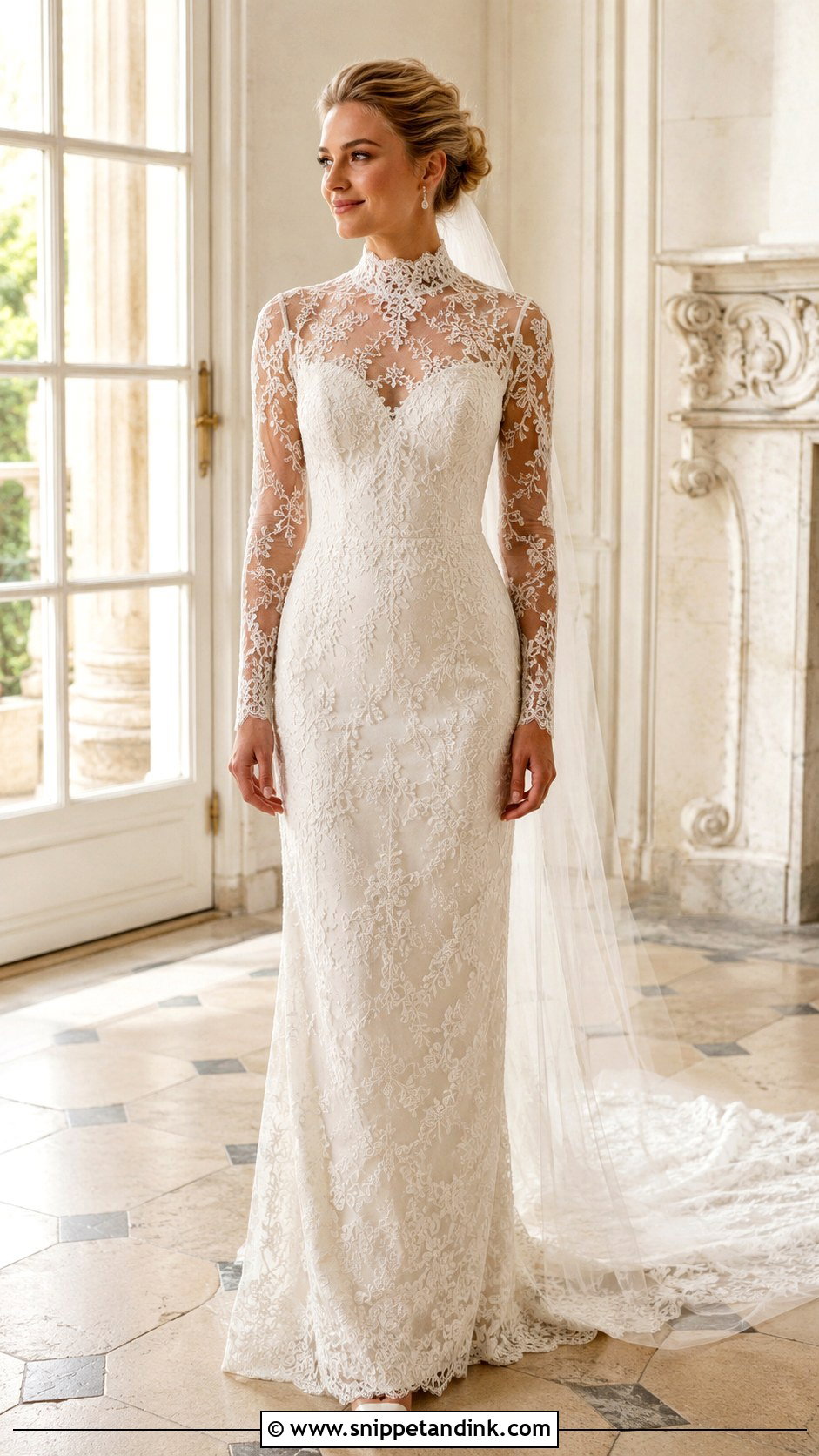
High necks feel refined and a little vintage, and illusion fabric under the lace keeps them from looking heavy. They pair well with long sleeves, columns or soft A-lines. Skip the necklace and wear earrings. A smooth updo and a veil set at the back of the head keep the neckline visible. One fitting note I always give: a high neck that’s even slightly tight will feel like a collar by hour six, so make sure you can turn your head and swallow comfortably.
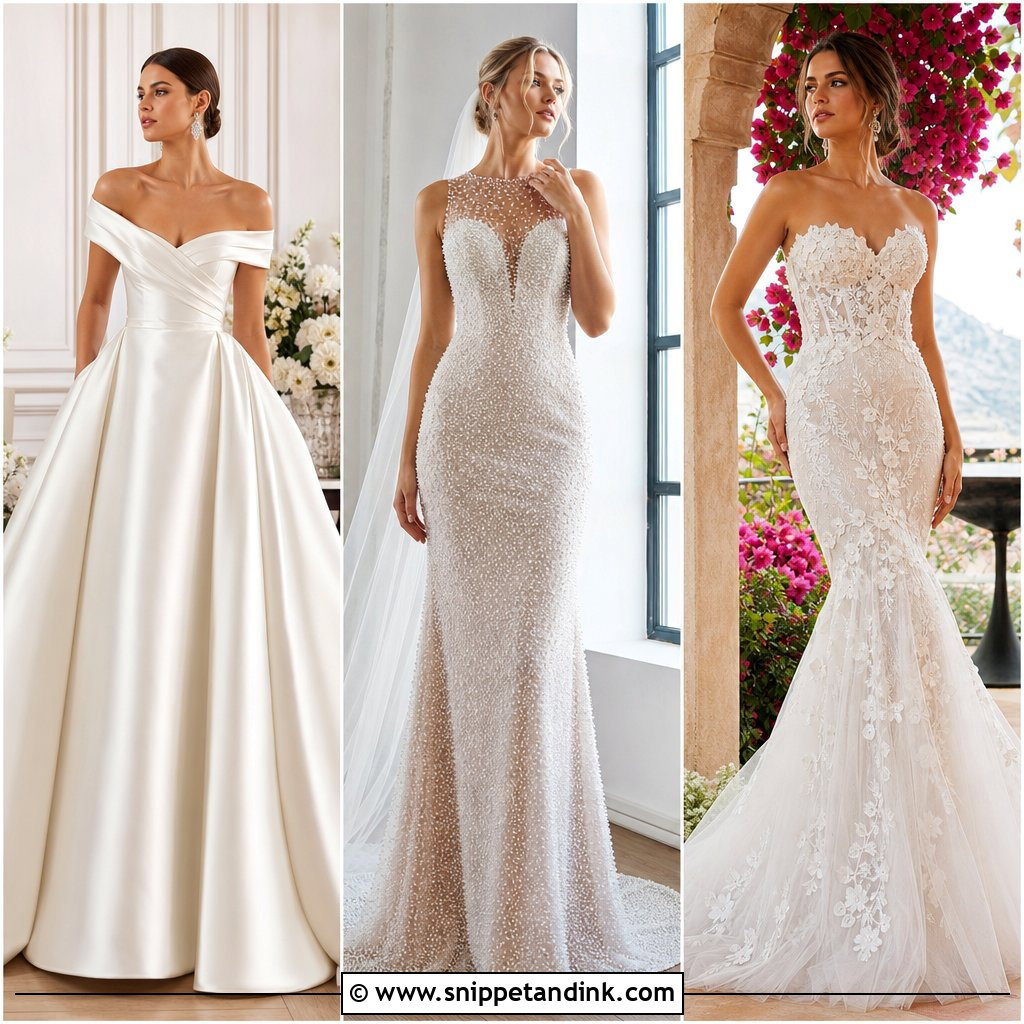

25. Open Back Embroidered Wedding Dress
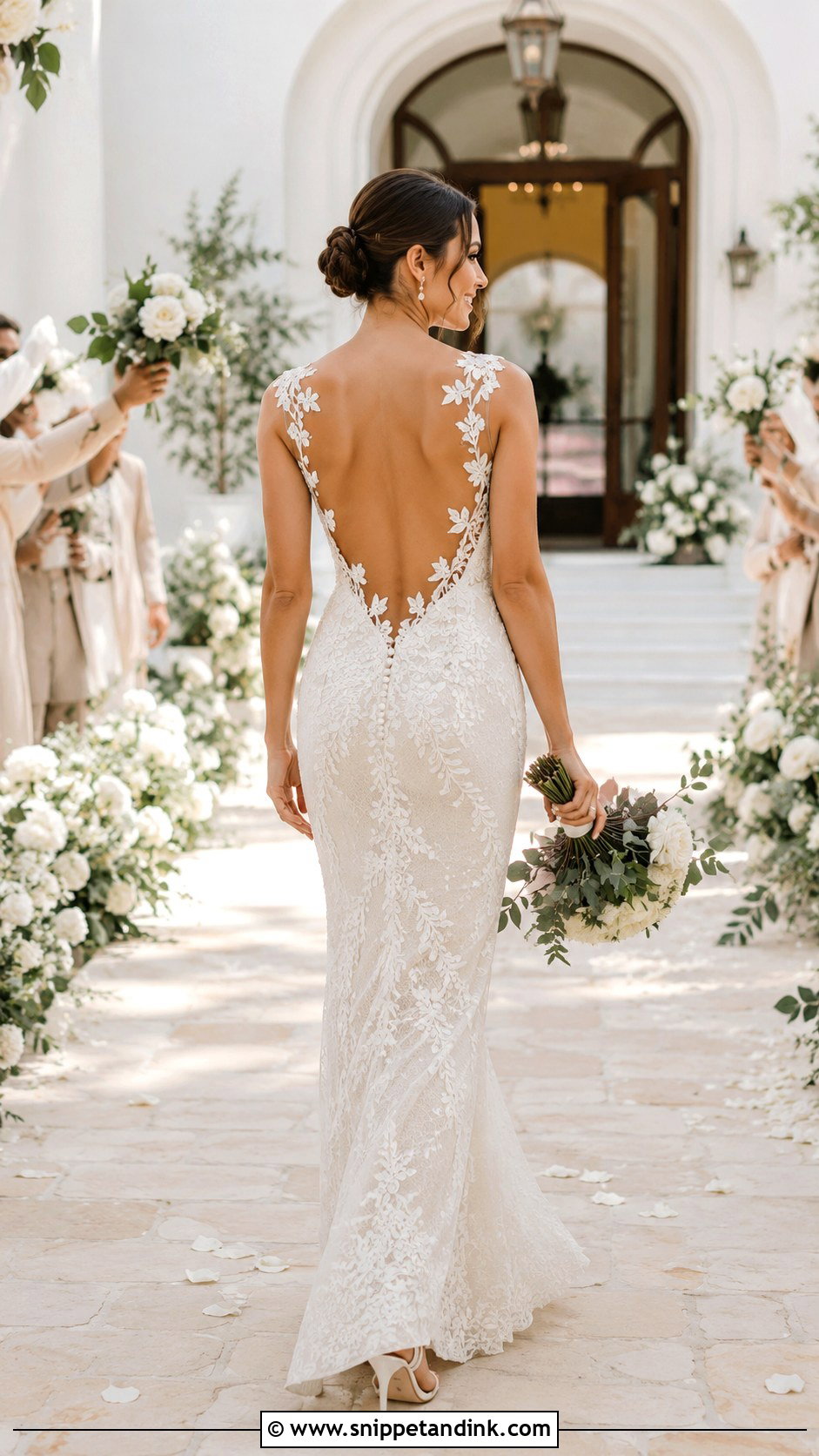
Guests spend most of the ceremony looking at your back, so an open back is where embroidery earns its keep. Floral vines, lace edging, pearls or illusion panels can frame the spine. A fitted gown makes it sleek, an A-line softer. Wear your hair up or in a low bun so the detail shows, choose simple earrings, and sort out back-friendly undergarments early. At the fitting I watch the edge of the embroidery as you bend and reach, because appliqué that isn’t tacked down well lifts at the corners and looks messy in motion.
26. Cathedral Train Embroidered Wedding Dress
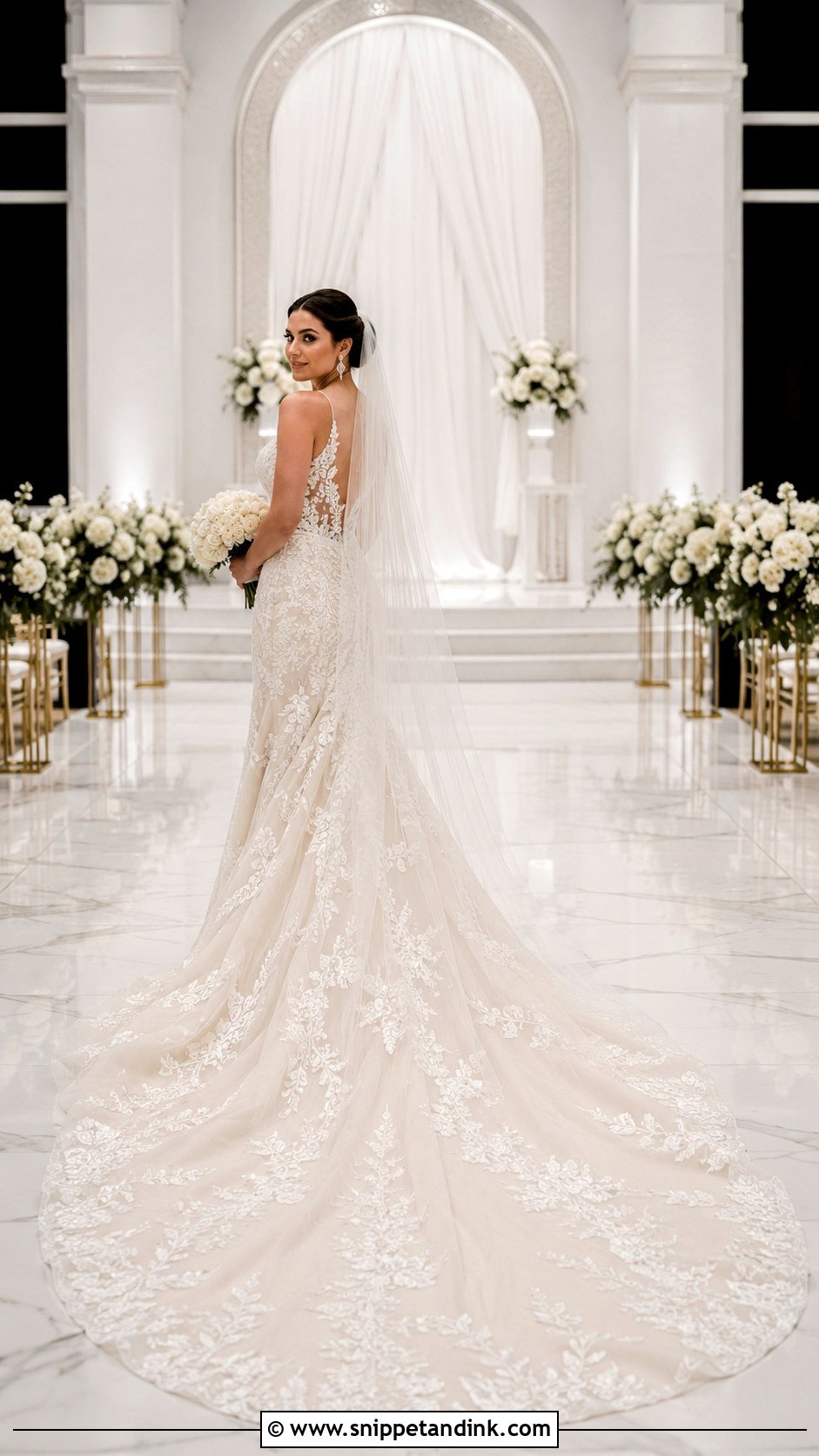
A cathedral train gives embroidery the most room of any shape, so motifs can run from bodice to skirt or bloom across the train itself. Florals, lace, pearls and vines all suit the length. Only pair a cathedral veil if the train’s design still shows through; otherwise a shorter, plainer veil is kinder to the dress. Practice the bustle before the day, because heavy appliqué makes bustle points work harder and a snapped loop mid-reception is the most common train problem I see. Large spaces and long outdoor aisles suit it best.
27. Detachable Skirt Embroidered Wedding Dress
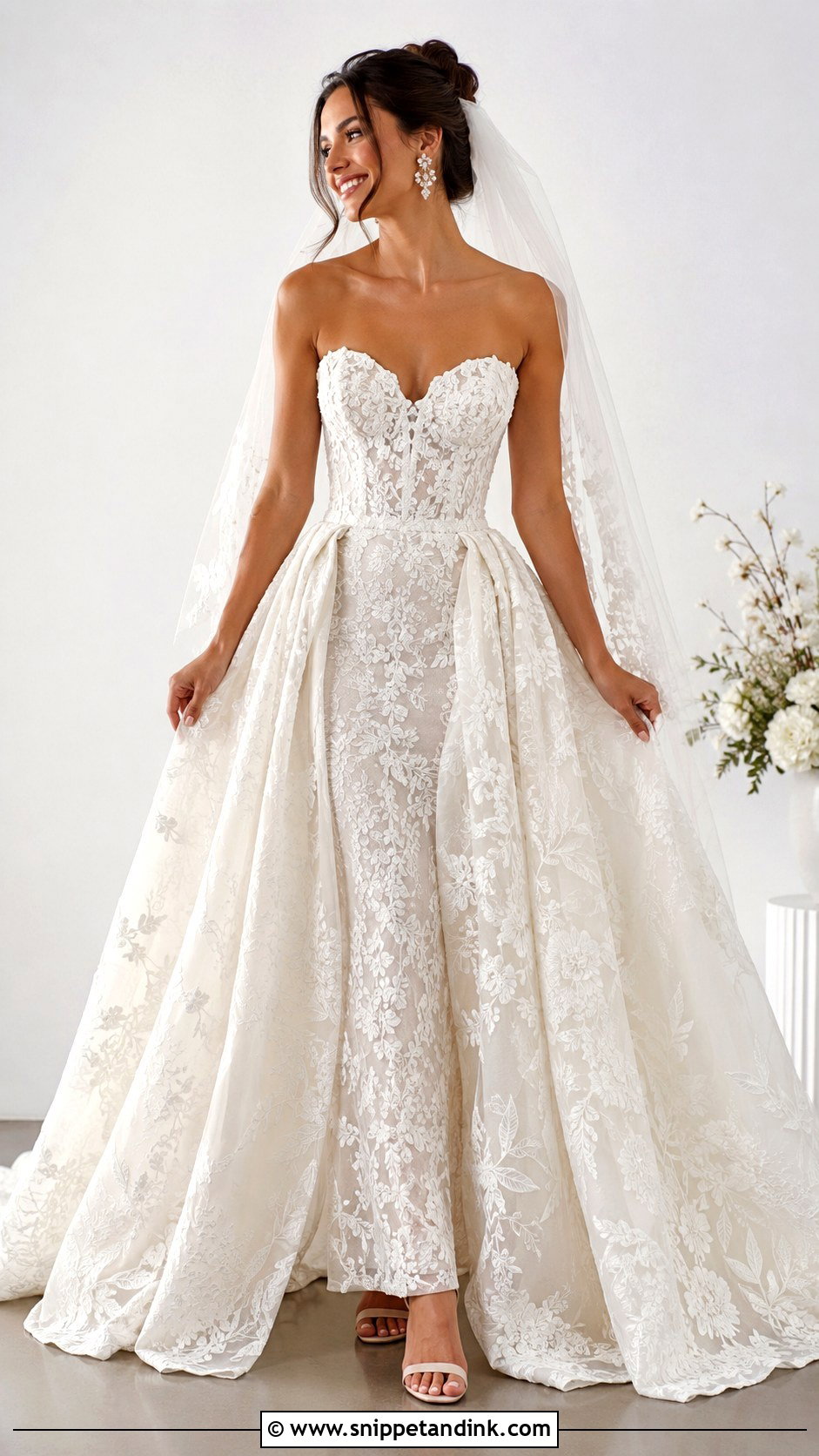
A detachable skirt embroidered wedding dress gives you a ceremony look and a dancing look in one fitting. The full embroidered overskirt goes over a fitted dress, a jumpsuit-style base or a mini lining, then comes off for the reception. Choose a motif that appears on both pieces, such as flowers on the bodice and the skirt edge, so the reveal looks intentional. Rehearse removing it with whoever will help you; the hooks or snaps often sit under the embroidery and are fiddly in a hurry.
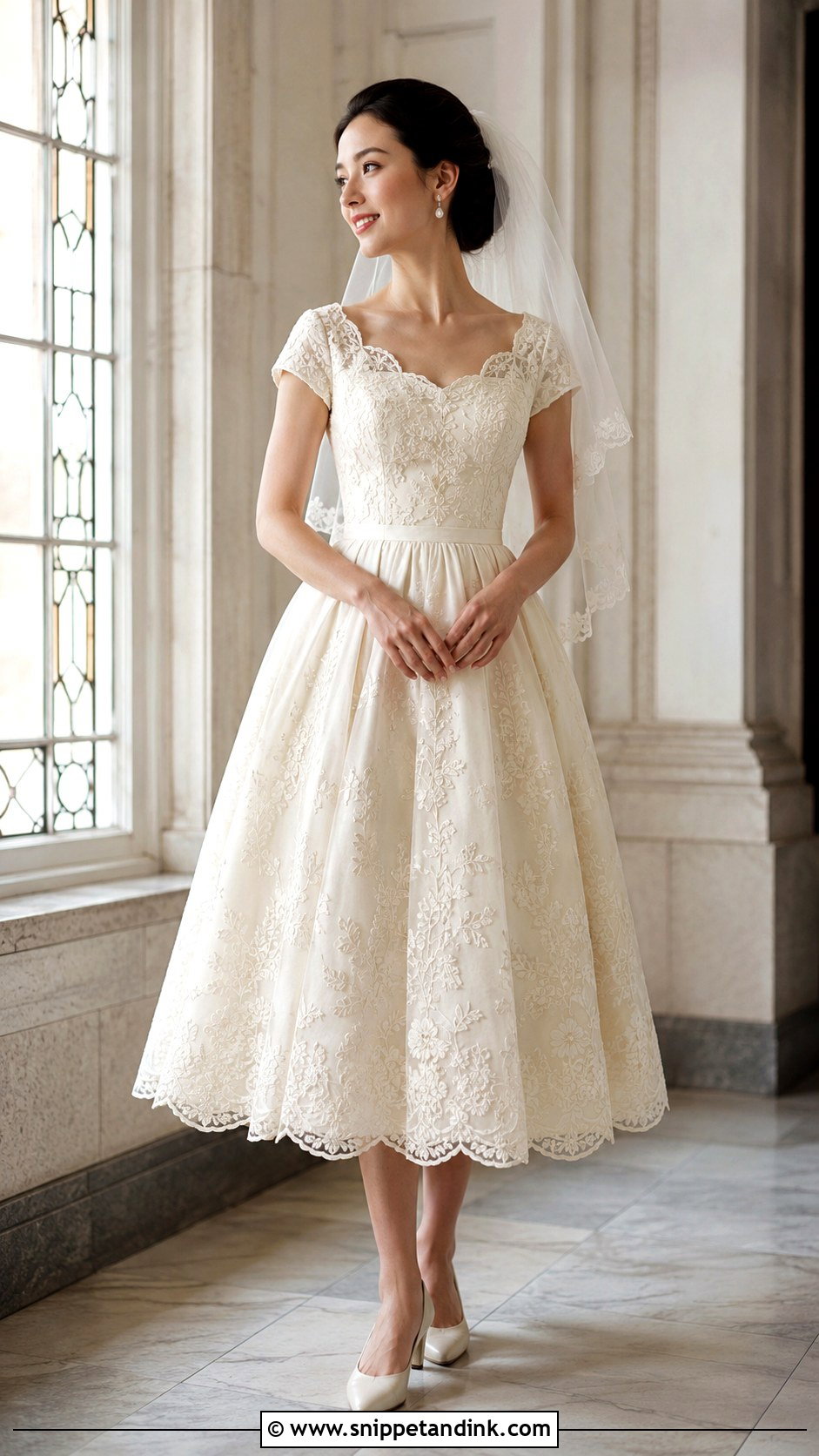
28. Tea Length Embroidered Wedding Dress
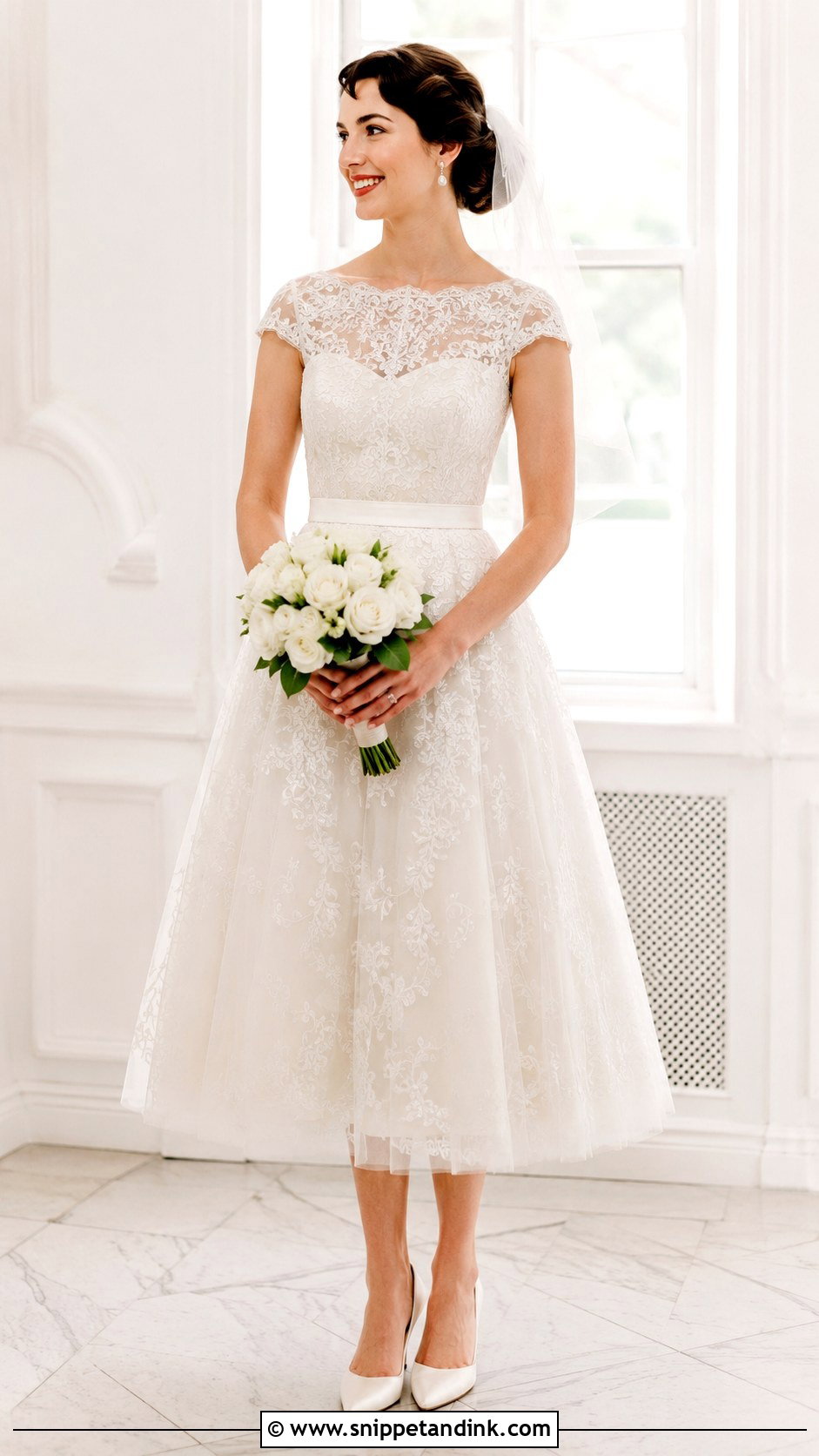
A tea length embroidered wedding dress falls between knee and ankle, which means everyone sees your shoes. Embroidered tulle, lace or organza with florals keeps it bridal. I’d style satin pumps, pearl earrings and either a short veil or a bow in the hair. It suits courthouse weddings, garden receptions, brunches and second looks, and gives a vintage feel without a full gown. Keep the waist neatly fitted, since a loose waist on a shorter dress looks borrowed rather than chosen.
29. Short Embroidered Wedding Dress
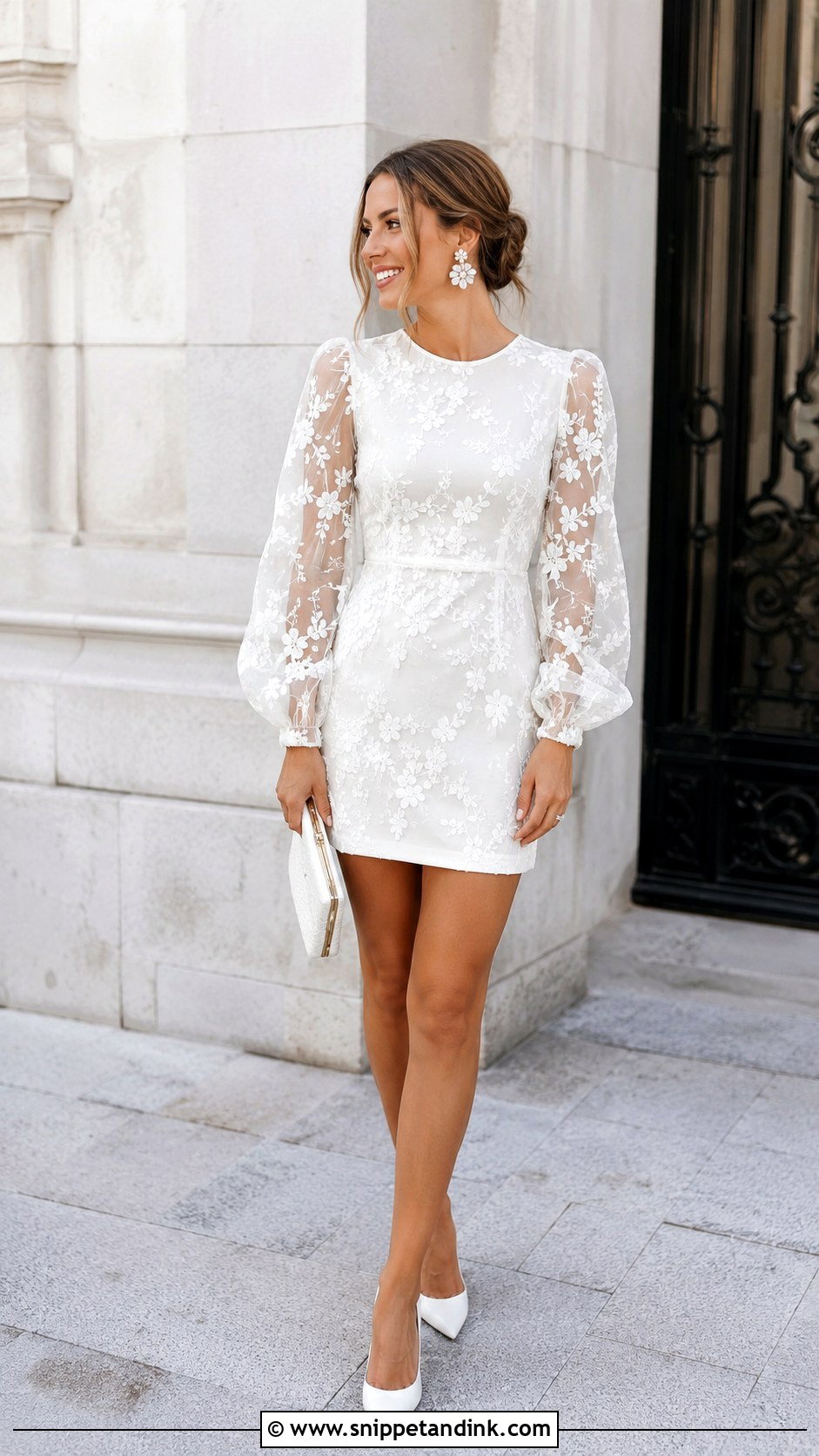
Short embroidered dresses work for civil ceremonies, a reception change or the after-party. Embroidery is what stops a mini or knee-length cut from looking like ordinary eveningwear: floral lace, pearl beading, bows or sheer embroidered sleeves. Pointed heels, a small clutch and statement earrings complete it; a short veil makes it read as a wedding, no veil keeps it modern. With less fabric there’s nowhere for poor tailoring to hide, so spend on fit and quality cloth.
30. Custom Embroidered Wedding Dress
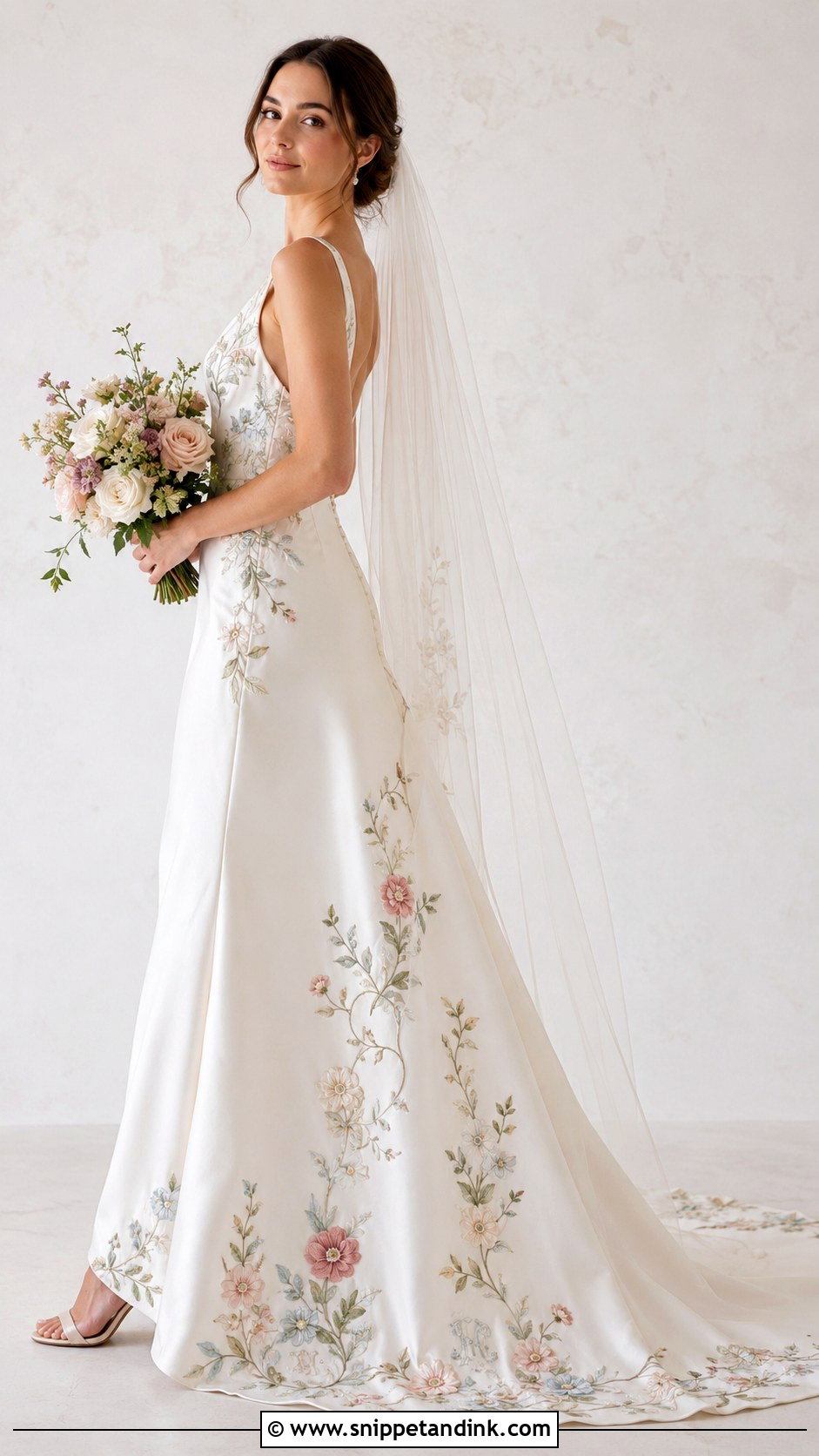
Custom embroidery lets the stitching mean something: your wedding flowers, initials, the date, a family symbol, vines drawn from the venue. Keep the silhouette true to your body and let the embroidery be the personal part, because a simple gown with one meaningful motif often lands harder than a heavily decorated one. Ask to approve a stitched sample or a drawing before work starts. Plan for it early. Custom work usually adds design and fitting time on top of a normal order, and hand embroidery adds more.
Alterations Get Slower Wherever Thread Covers the Seam
Brides are often surprised that embroidery changes the alteration bill more than the purchase price does. A plain hem is cut and resewn. An embroidered or appliquéd hem has to be unpicked, lifted, shortened underneath and stitched back by hand so the motif still sits evenly. Taking in a side seam through dense embroidery works the same way.
My planning advice is simple. Order the gown with time to spare, often nine months or more before the wedding, and longer for custom work. Start fittings roughly two to three months out and expect at least two. Bring the real shoes and undergarments to every one, because changing heel height after the hem is done means unpicking that embroidery a second time. Prices vary widely by region and seamstress, so ask for a quote per change before you agree to anything.
Steam It, Never Press It, and Store It Flat
Pearls, beads and raised petals do not survive a hot iron. On the morning, I steam embroidered gowns from the inside, keeping the steamer moving and a hand’s width away so petals relax without wilting. Small marks on the day are best left alone; rubbing pushes makeup or wine deeper into thread.
- Get it to a specialist cleaner within a few weeks, and point out every stain, including clear ones like champagne that yellow later.
- Ask whether the cleaner hand-treats beaded and appliquéd areas, since some trims cannot go through standard dry cleaning.
- Store it folded in acid-free tissue inside a breathable box, away from light. Plastic traps moisture and can yellow ivory thread.
- Don’t leave a heavily embroidered gown hanging by its shoulder straps for months; use the inner hanging loops or store it flat so the weight doesn’t stretch the bodice.
Which Kind of Stitching Moves the Way You Do?
Embroidery stretches from garden romance to sharp minimalism, so the right gown depends on your venue, season, comfort and the detail you want people to remember. Florals feel romantic, pearls polished, colored thread personal, 3D appliqué textured. For something quieter, go white on white or put the stitching in one place. For drama, look at a cathedral train, a black gown or a custom design. Whatever you pick, judge it while moving, sitting and hugging, because that’s how you’ll spend the day in it.
You'll Like These Ideas:





Leave a Reply