
The European gowns I pull for clients rarely rely on decoration to do the work. What sets them apart is cut and cloth: a satin that holds its own shape, lace that sits flat against the body, a hem measured to the exact shoe. The European wedding dresses below range from heavy Italian satin to Greek chiffon you could pack in a carry-on, plus a few short civil ceremony looks for brides marrying at a town hall first. I’ve noted what each one asks of you in fittings, in heat and on a long day, because a dress that looks right on the hanger can behave very differently by the time the speeches start.
Matching Fabric to the Weather at Your Venue
Before I show a bride any silhouette, I ask where and when she’s marrying. Fabric decides comfort far more than shape does, and Europe covers everything from a humid Amalfi August to a damp November in Edinburgh.
- Heat and humidity: chiffon, organza and light lace breathe. Heavy satin and mikado trap warmth, and you’ll feel it during outdoor photos.
- Cool or indoor venues: crepe, satin and wool blends hold structure and don’t look limp in candlelight.
- Wind on coasts or cliffs: avoid long cathedral veils and very light overskirts, which lift and twist. Weighted hems help.
- Rain risk: lighter-coloured silk shows water spots, so pack a large clear umbrella and keep a bustle option for wet grass.
Creasing matters too. Satin and crepe show sitting marks after a long dinner, while tulle and chiffon shake out. If you’ll be seated for a long meal, factor that into how polished you want the evening photos to look.
1. French Lace Wedding Dress
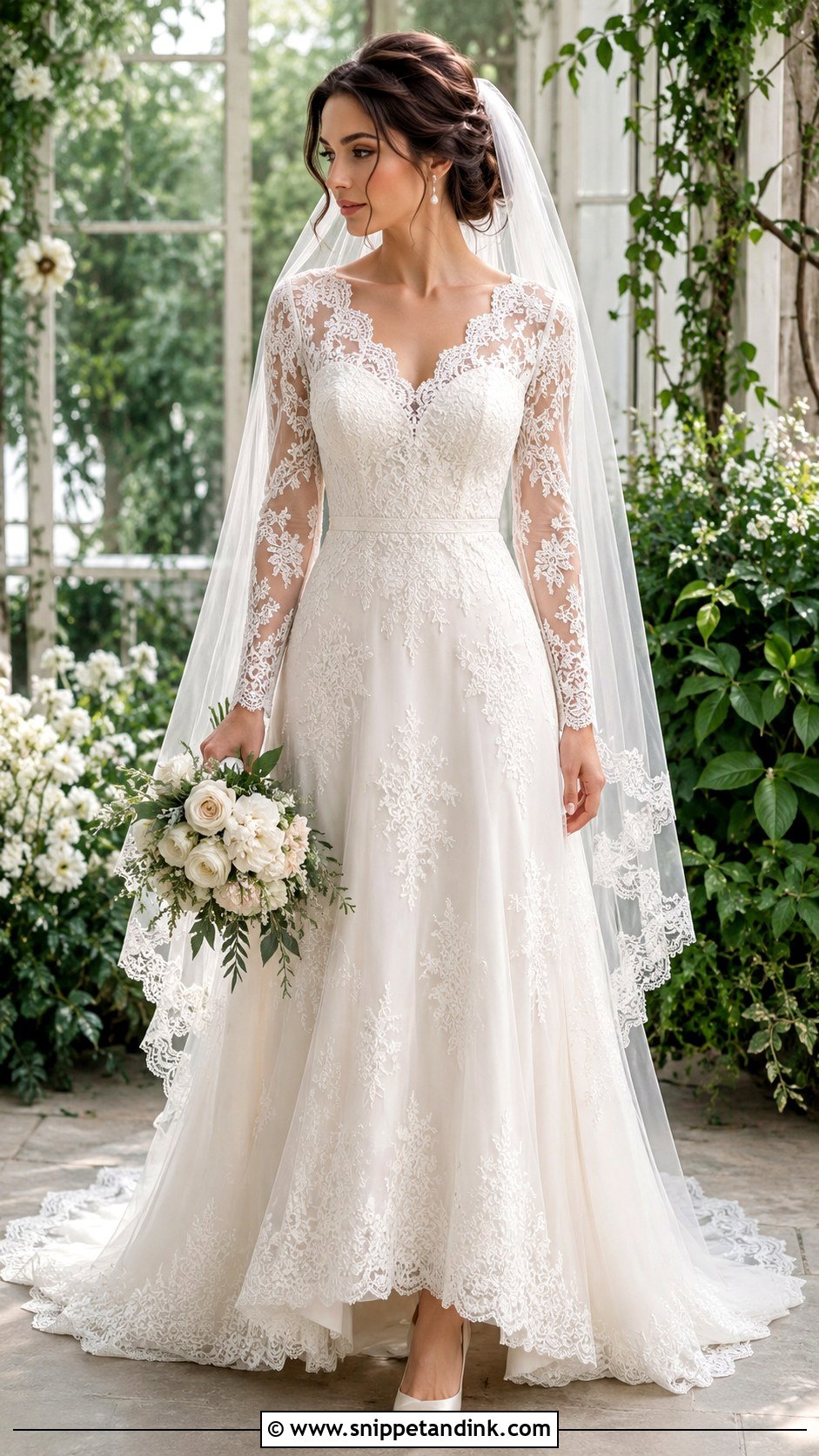
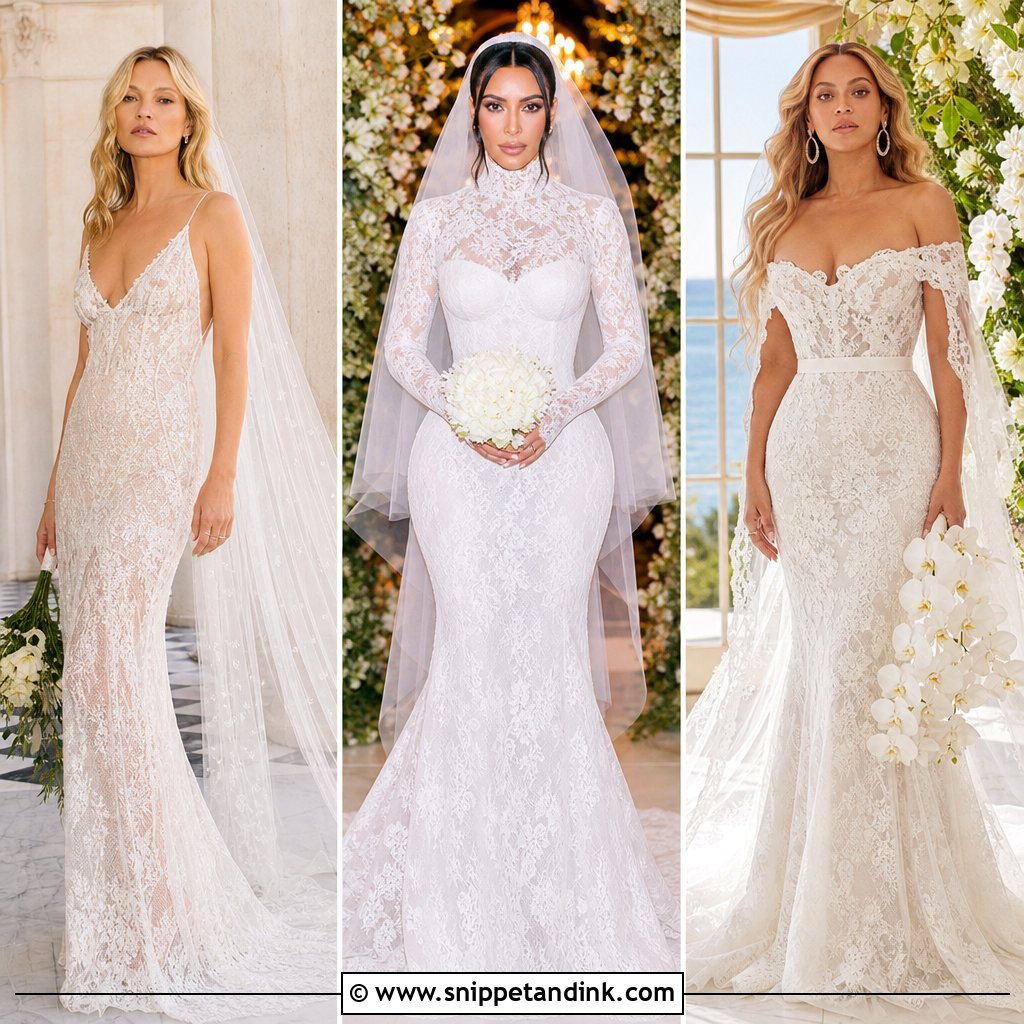
French lace is the one I reach for when a bride wants romance but hates fuss. A fitted lace bodice over a soft A-line skirt, sheer long sleeves and a modest train gives you shape from the back, which is where guests spend the whole ceremony looking. Ask whether the lace is appliquéd by hand along the edges; cut lace with no finished scallop tends to fray at the sleeve hem after a few hours of hugging. Pearl drops, a low chignon and a fingertip veil let the lace stay in charge. If you want more coverage, a lined bodice hides your bra and stops the lace from catching on itself.
2. Italian Satin Wedding Dress
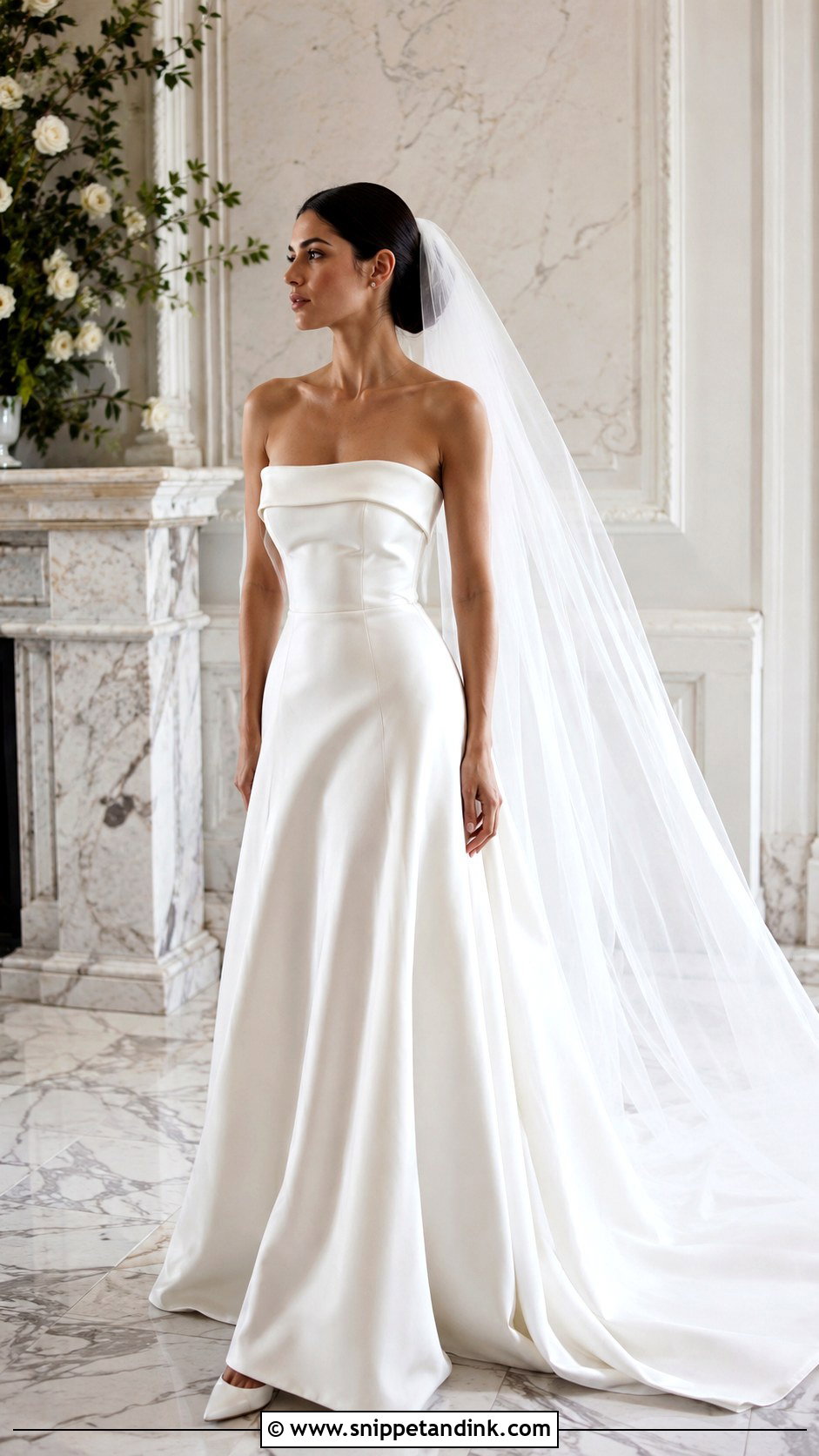
Heavy satin is unforgiving, and that’s exactly why an Italian satin wedding dress looks so expensive when the fit is right. Strapless or square-neck, with a boned bodice and a skirt that falls straight from the waist, it needs almost nothing added. The catch: satin shows every pull line across the hips and every seam that’s slightly off, so I’d budget for a skilled seamstress rather than a quick hem. Keep it to studs, a plain veil and pointed satin heels. A small ivory clutch is plenty for a black-tie villa dinner.
3. Spanish Off Shoulder Wedding Dress
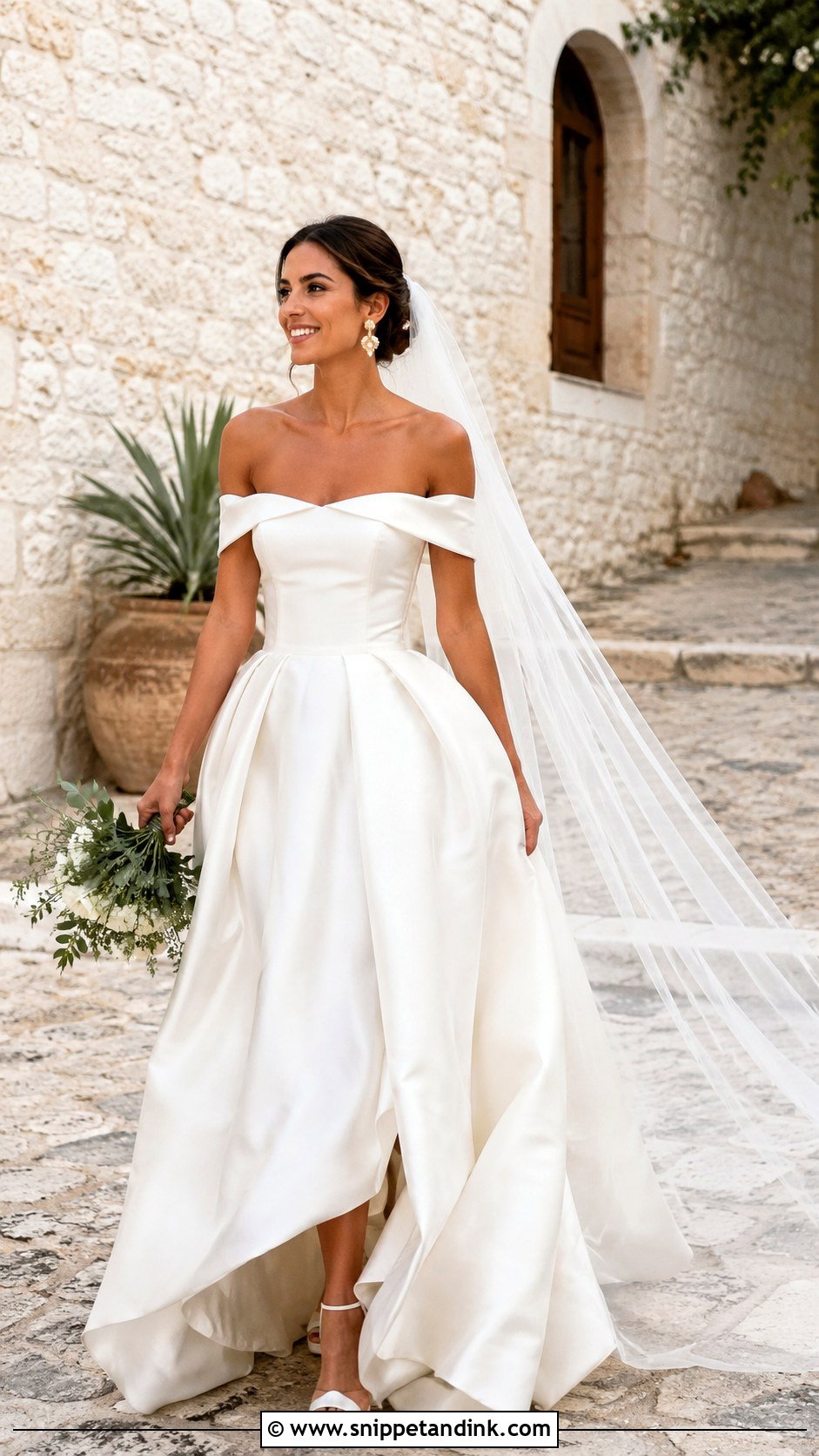
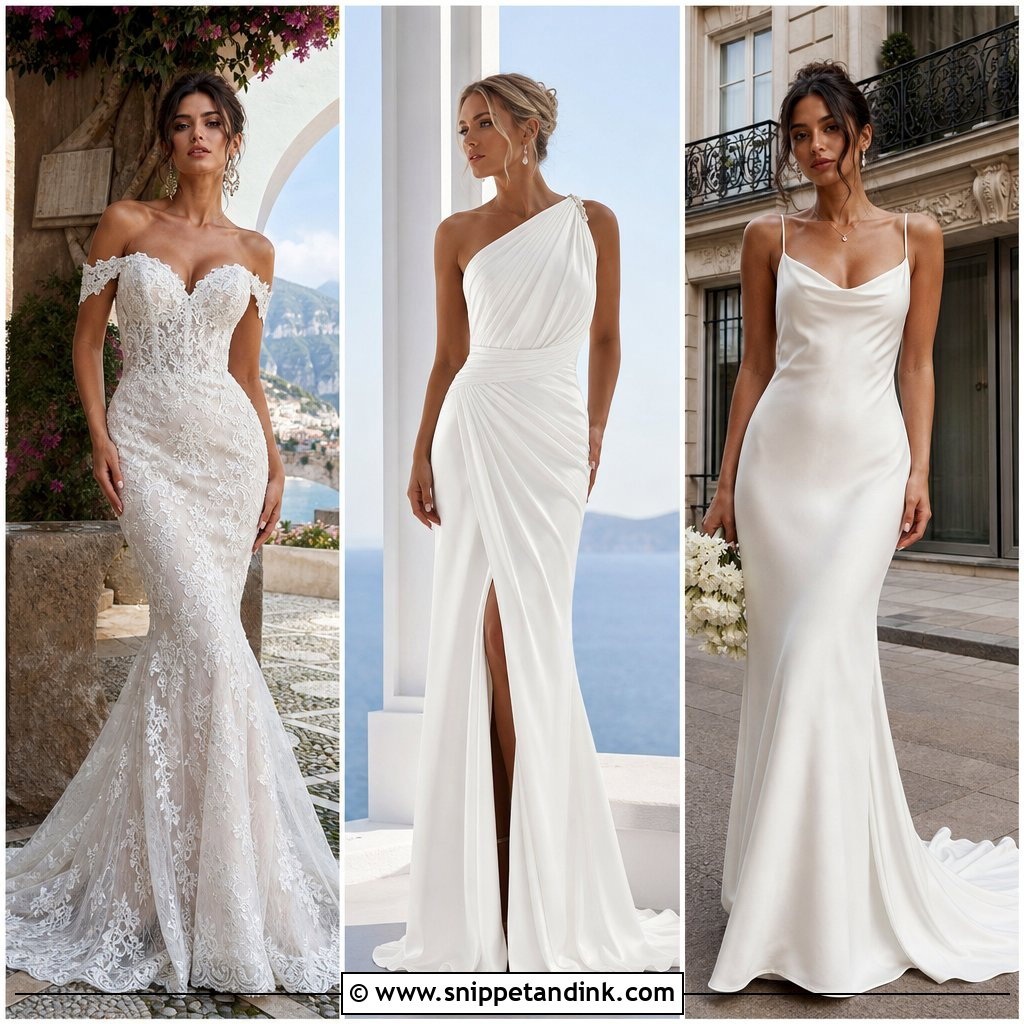
The folded neckline on a Spanish off shoulder wedding dress looks easy in photos, but it’s the trickiest part to fit. If the band sits even a centimetre too loose, you’ll spend the evening pulling it up, so I test it by having the bride raise both arms as if she’s hugging someone taller. Mikado or structured satin holds that fold better than soft lace. With bare collarbones, skip the necklace and go for statement earrings and a smooth updo. On stone courtyards, ivory block heels save you from wobbling down the aisle.
4. Greek Chiffon Wedding Dress
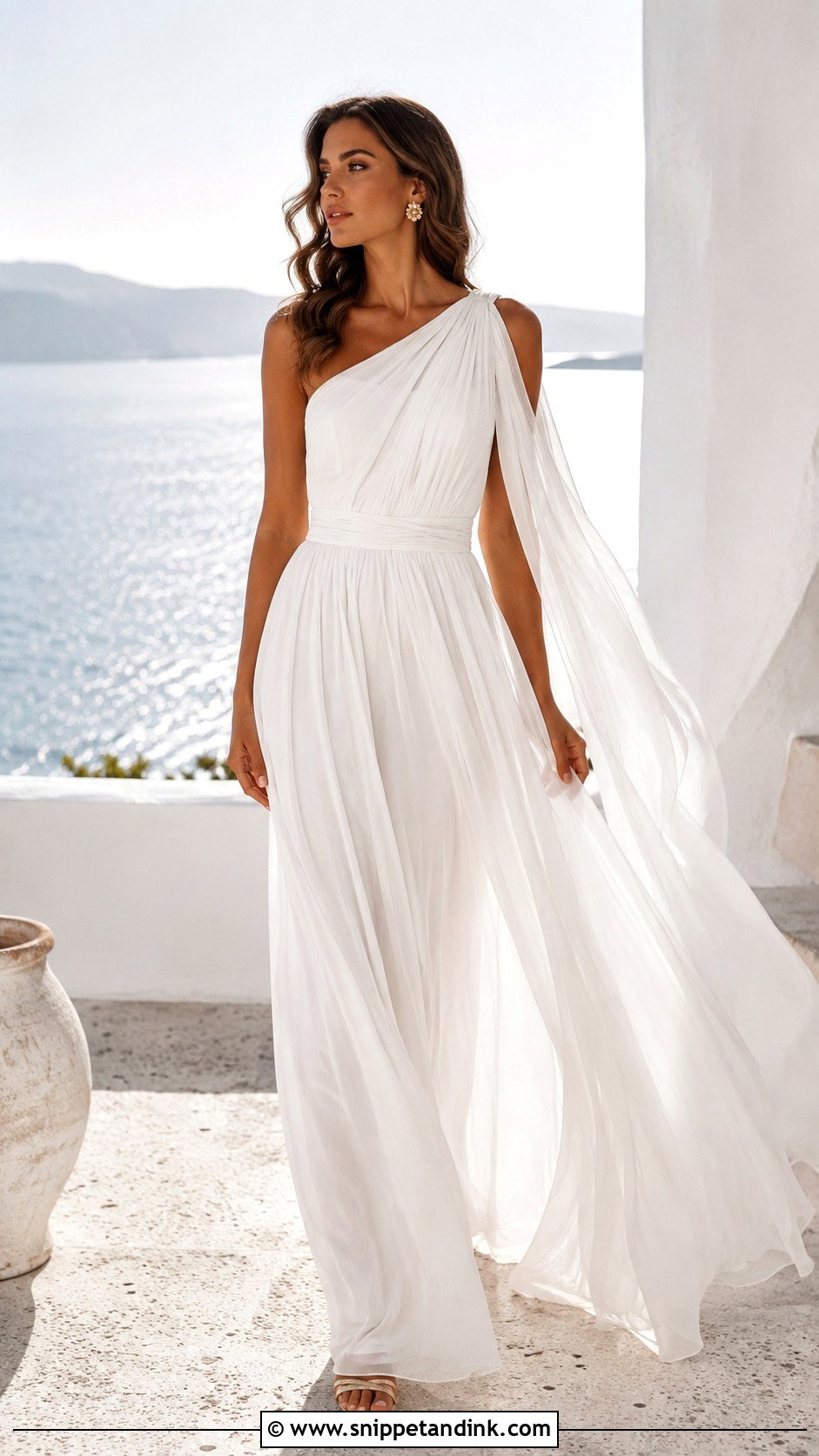
Chiffon is the fabric I’d choose for a Greek island wedding without hesitating. It breathes in heat, it moves with the smallest breeze, and it recovers from packing better than almost anything else. A draped bodice with a gathered waist and a one-shoulder or soft V neckline gives the Grecian line. Flat sandals on sand, metallic low heels on a terrace. One warning: chiffon is sheer when backlit, so stand in a sunny doorway at your fitting and check the lining before you sign off.
5. Paris Civil Wedding Dress
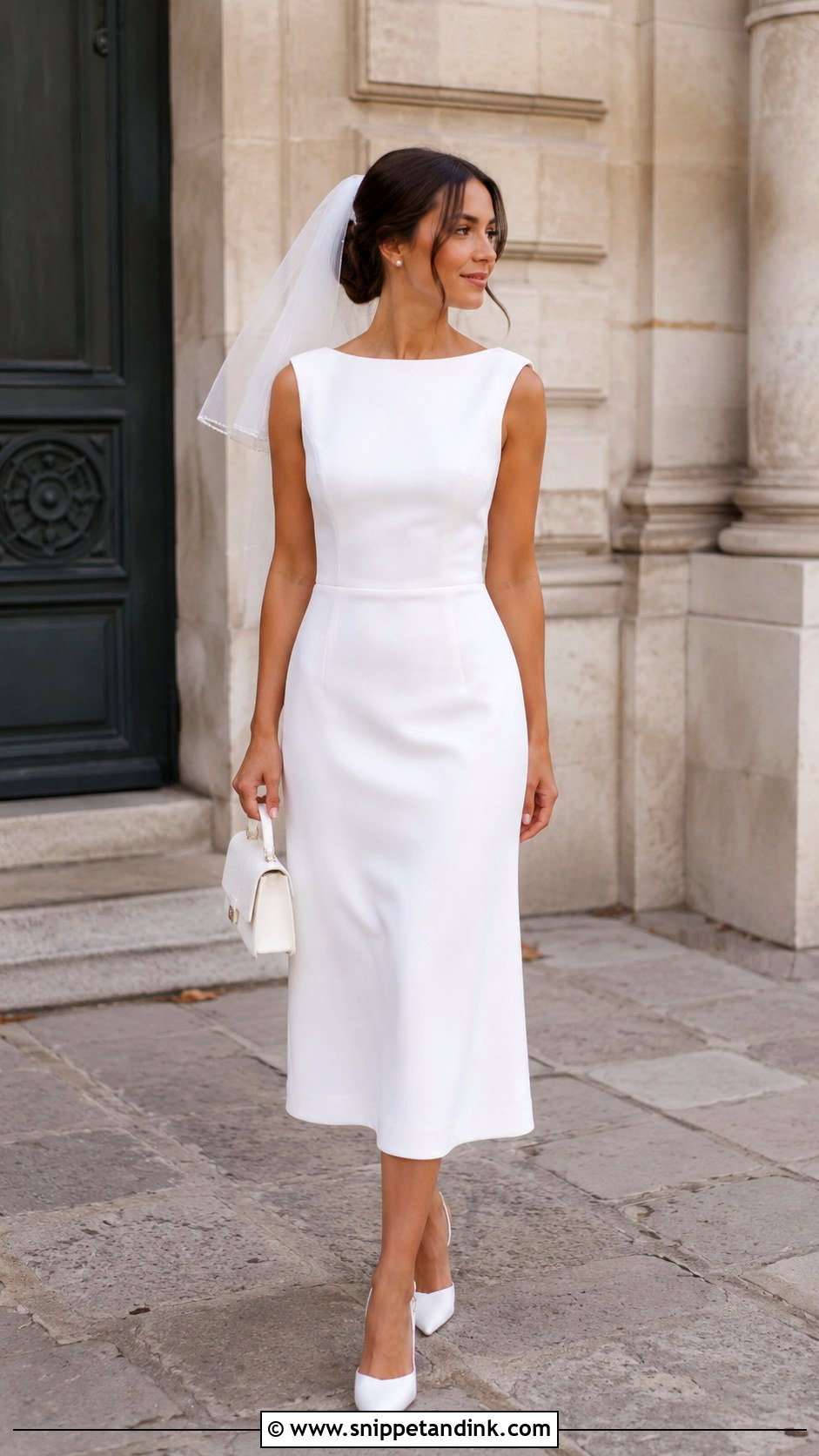
For a town hall ceremony, a Paris civil wedding dress should sit closer to tailoring than to bridal. Think a white midi with a bateau or square neckline in crepe, satin or a wool blend if it’s winter. Slingbacks, pearl studs, a top-handle bag and a short veil or bow clip make it read as bridal. I like this as a first look when the long gown comes later in the day. Sit down in it at the shop: a structured midi rides up more than you’d expect.
6. European Satin Slip Wedding Dress
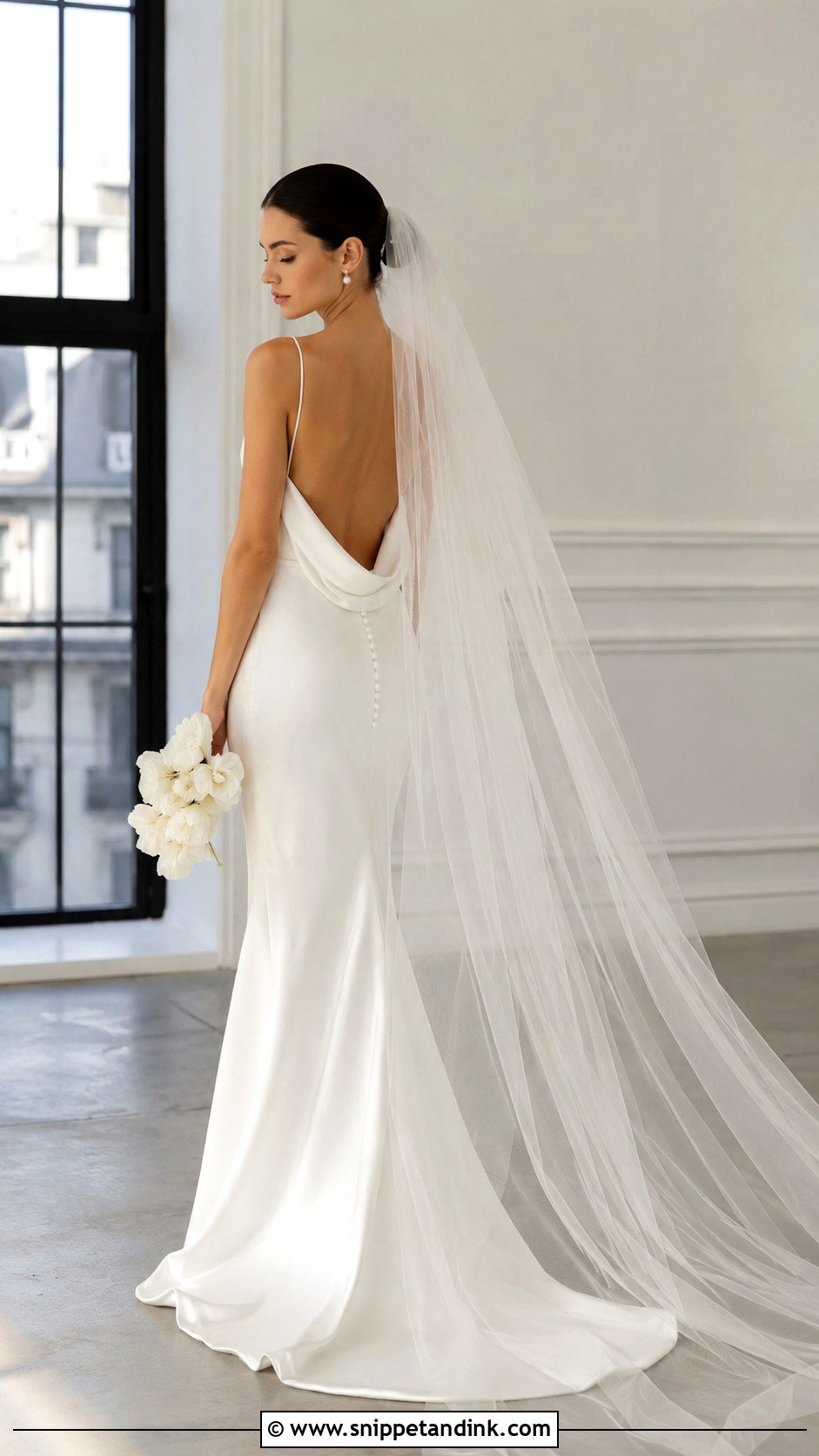
Bias-cut silk or satin drapes because the fabric is cut diagonally across the weave, which also means it stretches and drops over time. That’s why I never let a bride hem a slip dress at the first fitting; it needs to hang for a day or two first. A cowl neck, fine straps and a low back need only small diamond or pearl earrings and a sheer cathedral veil. Underwear is the real issue with a slip, so bring the exact pieces you plan to wear. For cooler evenings, a cropped faux-fur wrap or a tailored ivory blazer keeps the line clean.
7. Dutch Minimalist Wedding Dress
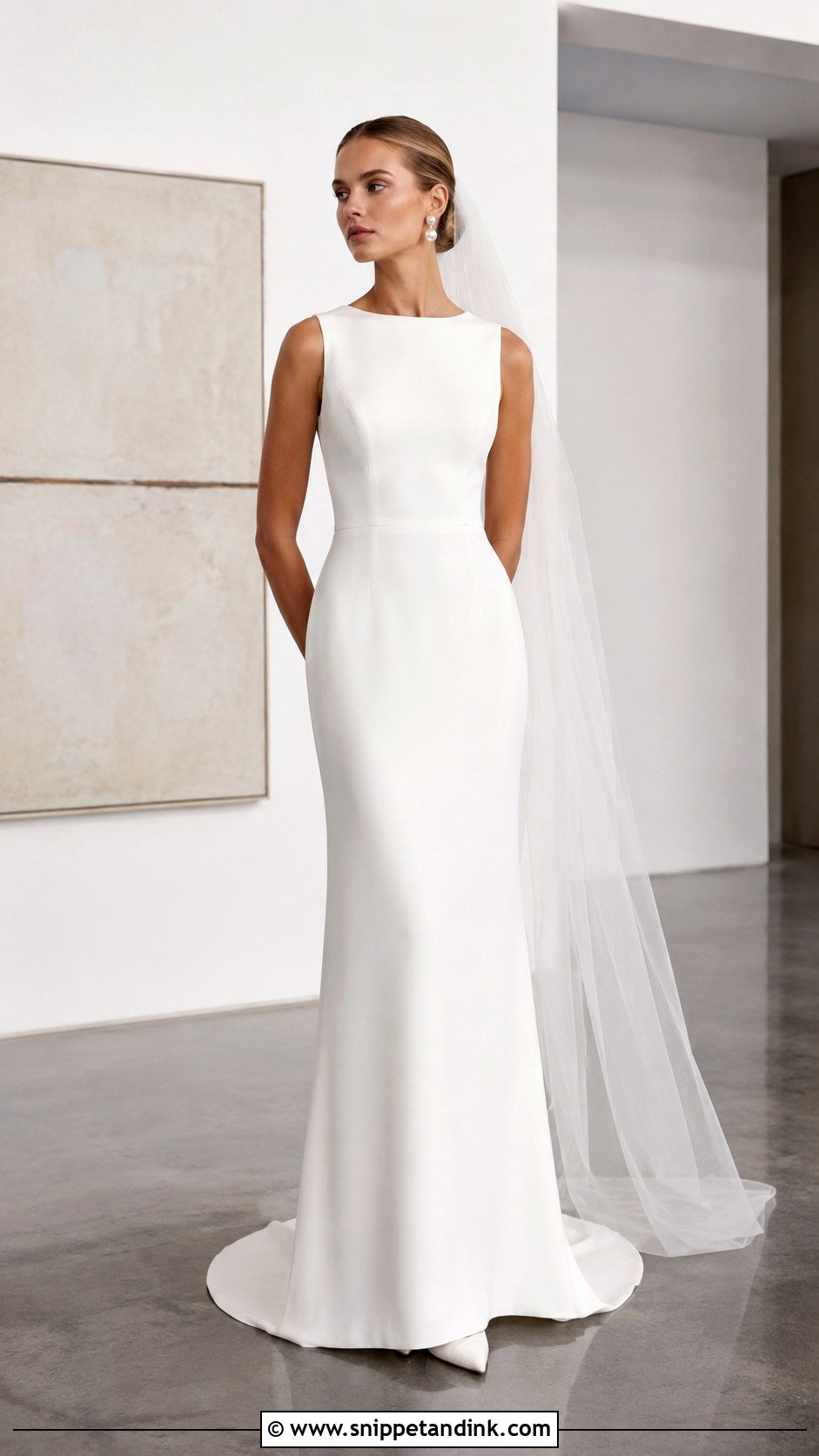
There’s nowhere to hide in a crepe column with a high neck and no embellishment, so the seams themselves become the decoration. I check that the side seams run perfectly straight down the body and that the hem just kisses the floor in the shoes you’ll actually wear. Sculptural pearl earrings, smooth leather pumps and a sleek low bun suit a gallery or city hall. A long plain veil adds ceremony without breaking the minimal mood. Brides with a curvier figure should ask for a crepe with some weight, because thin crepe clings in the wrong places.
8. English Garden Wedding Dress
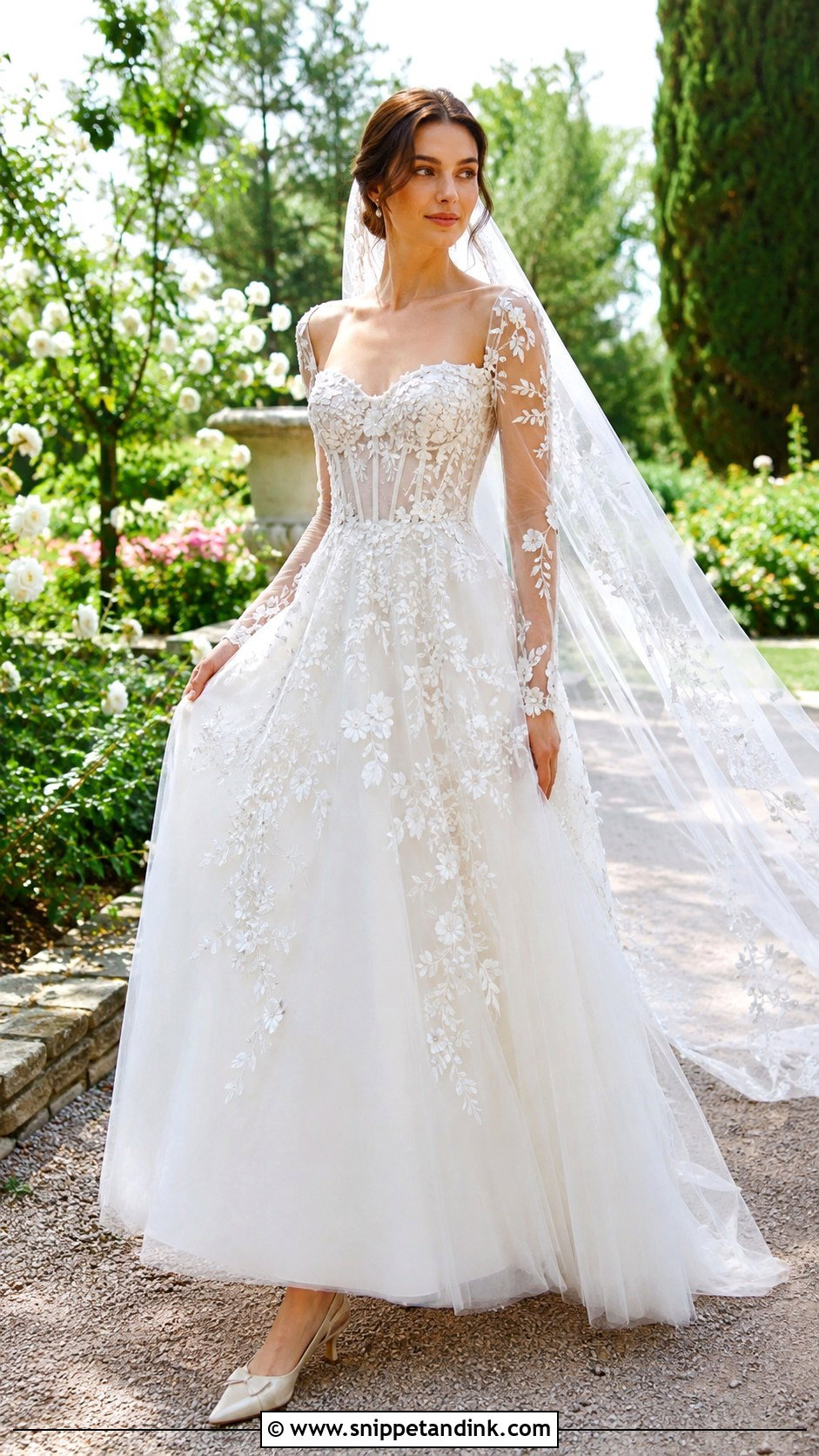
Garden weddings in England can turn chilly by late afternoon, which is one reason sheer sleeves earn their place here. A floral appliqué A-line with a corset-style bodice and a light tulle skirt suits the setting, and a pale blush lining under ivory tulle gives the flowers depth. Kitten heels are the practical call on lawns, since stilettos sink. Pin loose waves back with a floral comb, keep makeup rosy, and choose a veil with tiny embroidered flowers only if the gown’s appliqué is fairly sparse.
9. Portuguese Beach Wedding Dress
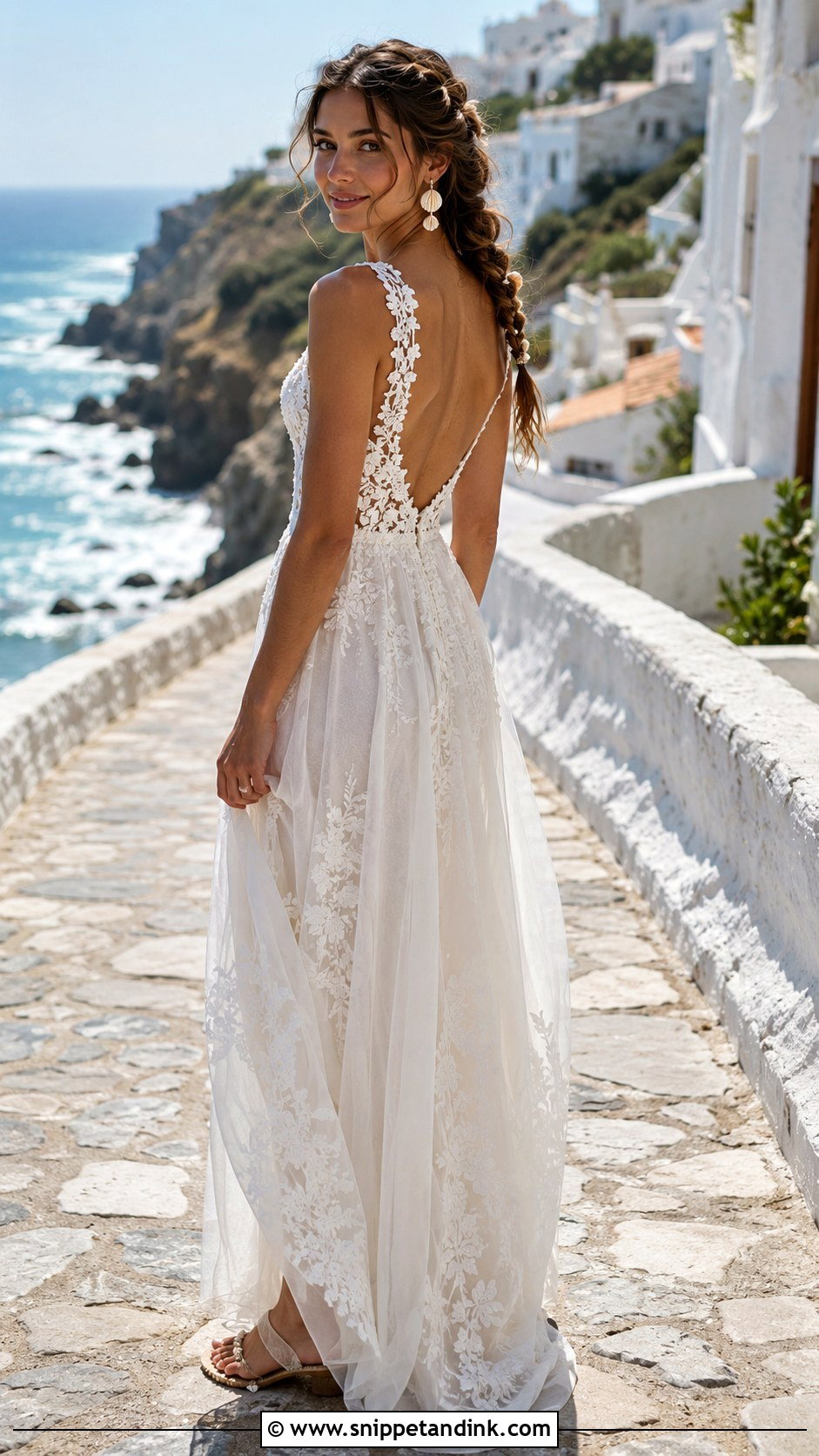
Sand is hard on a train, so for a Portuguese beach ceremony I’d keep the hem short of the ground at the back or choose a bustle you can lift after the vows. Sleeveless lace or chiffon with an open back stays cool on a cliffside. Wind is the other factor: a long veil looks romantic for about four photos and then wraps around your face, so a short veil or silk hair scarf is often wiser. Flat pearl sandals and a loose braid finish it. Skip heavy beading, which gets hot and catches sand.
10. French Corset Wedding Dress
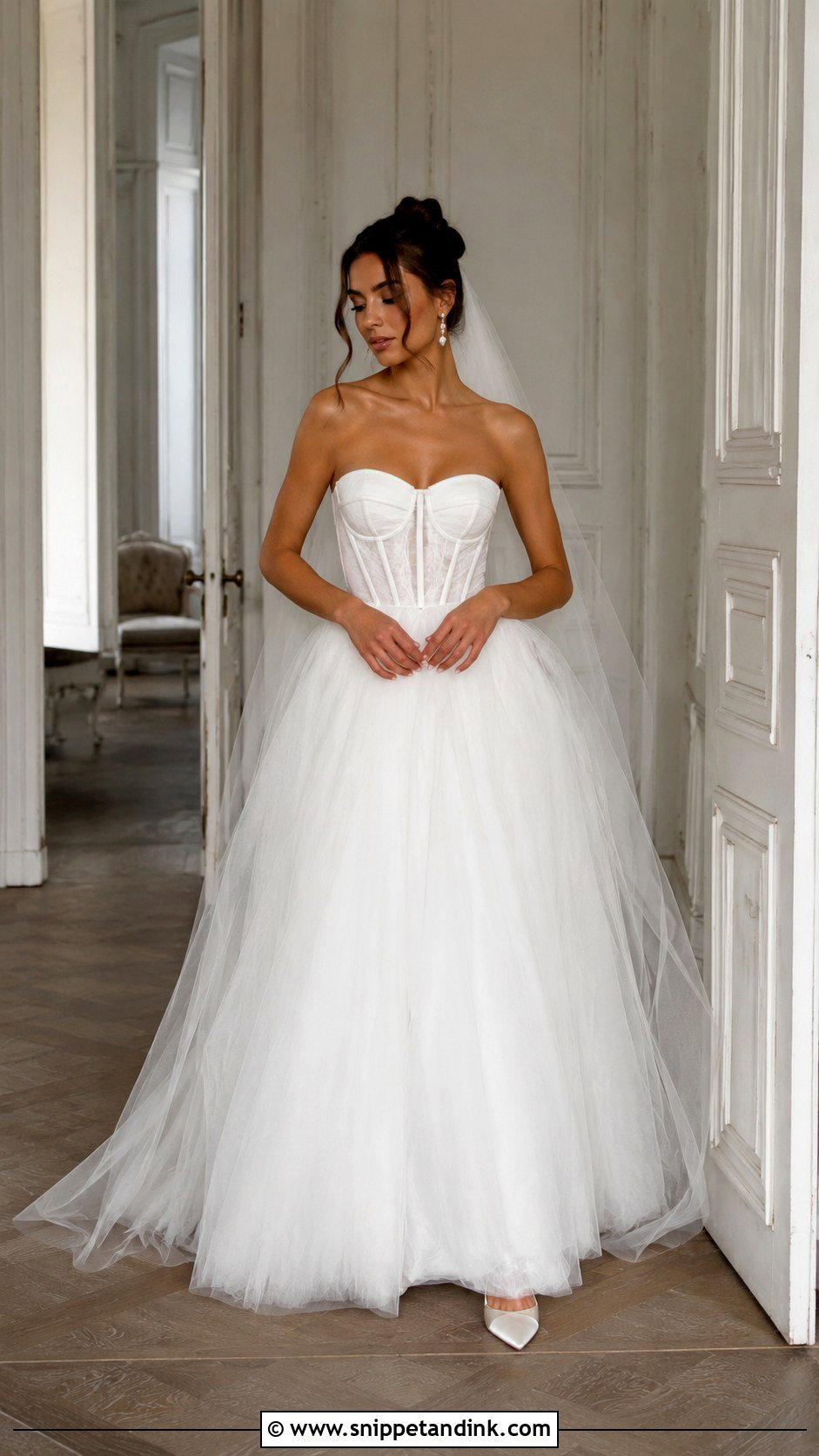
Visible boning, a shaped bodice and a full skirt in tulle, organza or satin make a French corset gown, and the fit makes or breaks it. A good corset should let you take a full breath and sit through dinner; if you can’t, the boning has been pulled in too far. Lace-up backs give your seamstress room to adjust on the morning if you’ve been nervous and not eating. Delicate drop earrings and a half-up style keep the neckline visible. Clean bodice for a modern look, floral embroidery for something vintage.
11. Italian Long Sleeve Wedding Dress
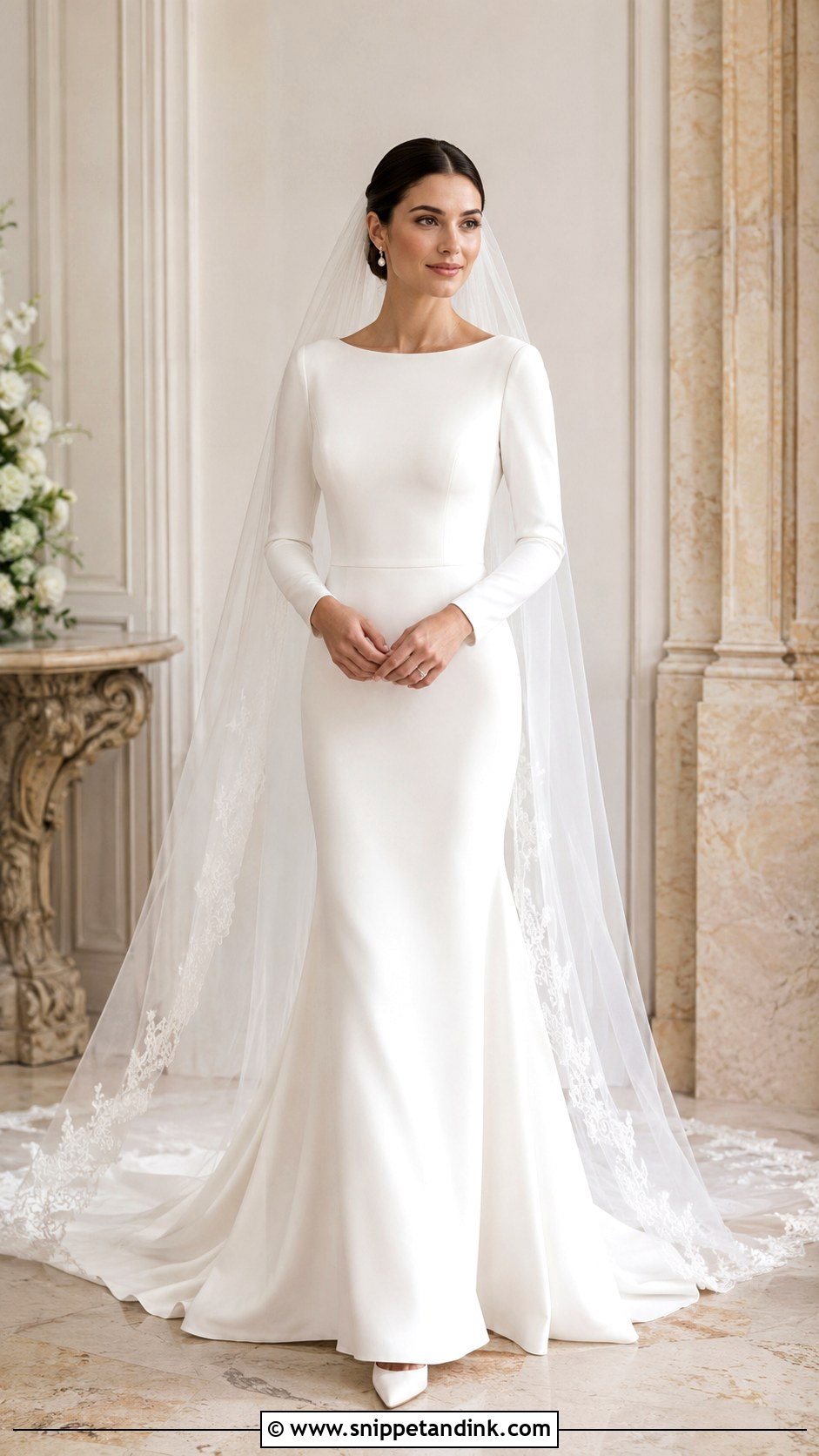
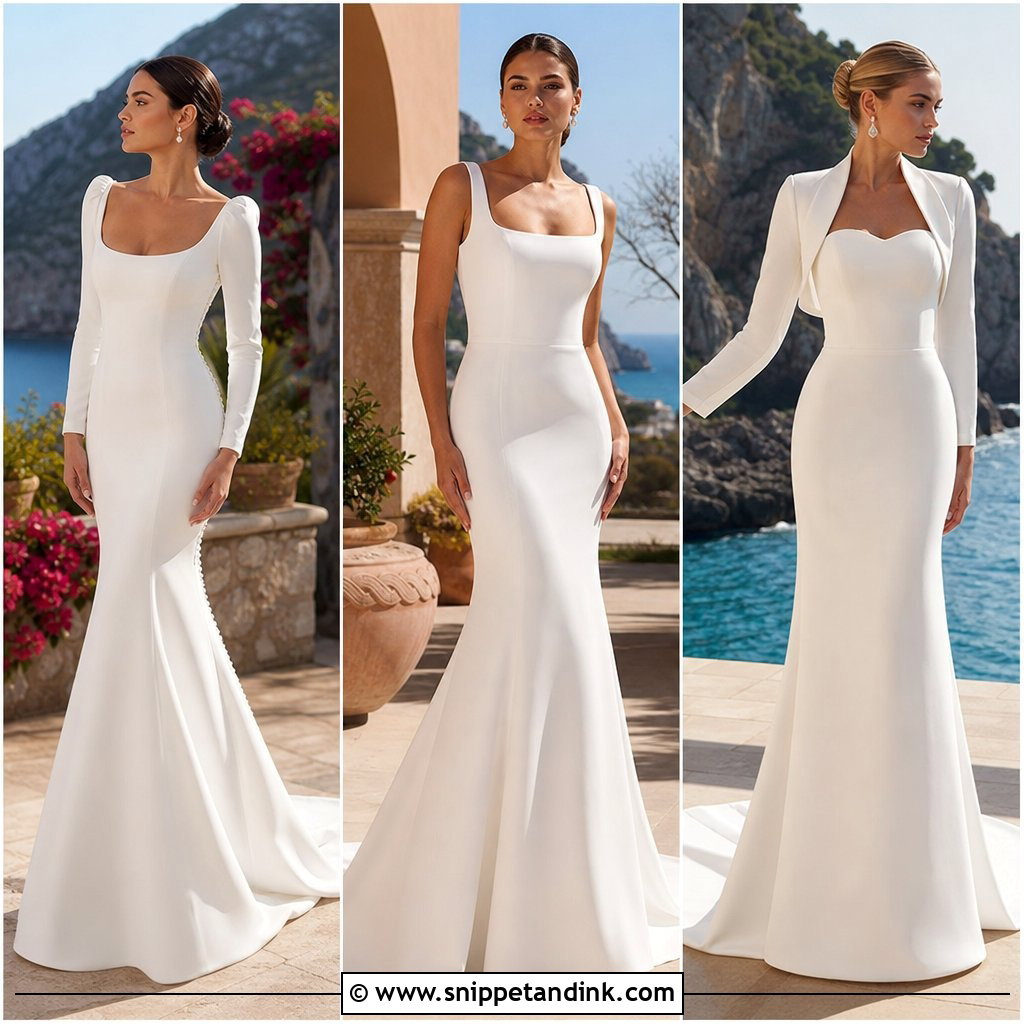
Long sleeves can make an Italian gown feel right in autumn and winter, but they have to be cut for movement. Fitted crepe or satin with a clean neckline and a soft train works well, and lace sleeves over a plain skirt add detail without competition. Raise your arms and hug at the fitting; tight sleeves with no stretch will restrict you at the reception. Closed-toe heels, pearl earrings, a smooth bun and a cathedral veil suit a historic hall or an evening villa celebration.
12. European Ball Gown Wedding Dress
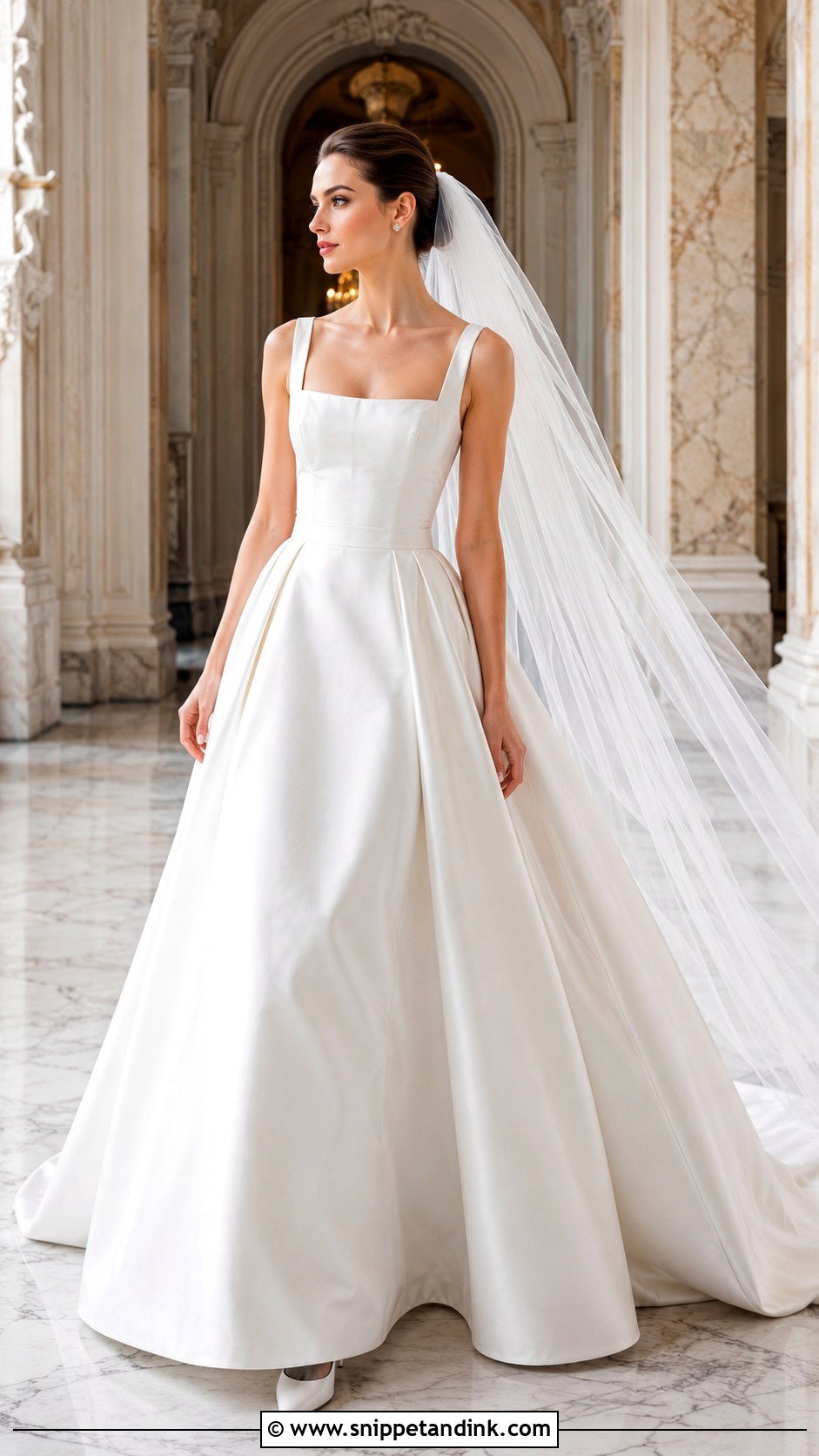
Volume needs structure underneath it. A ball gown in satin, mikado or layered tulle relies on a firm bodice and usually a petticoat or hoop, and if the bodice is slightly loose the whole skirt drags it down by the end of the night. I always hem these to the exact shoes, because even a half-inch change shows on a full skirt. A long veil, crystal studs and satin pumps are all it needs. Think about doorways, cars and toilets too; ask your venue where you can manage the skirt with help.
13. Scandinavian Clean Wedding Dress
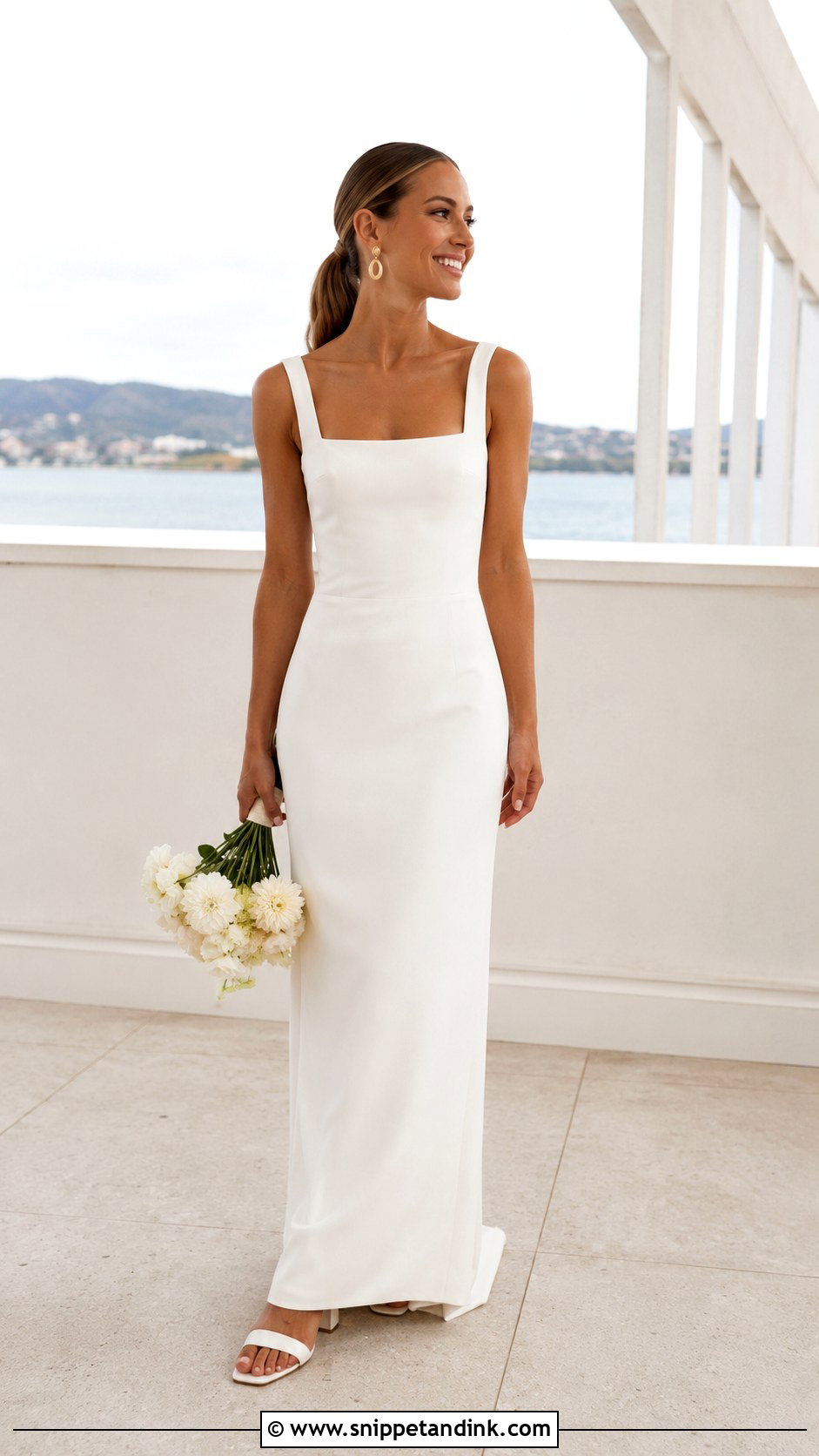
Matte crepe, a square neckline, wide straps and a quiet back detail give the Scandinavian version its calm. It’s one of the most comfortable gowns on this list, partly because wide straps distribute weight and you won’t spend the day hoisting anything up. Block heels, brushed gold earrings and a low ponytail keep it modern. Add a tailored ivory coat for a waterfront ceremony in cooler months. A plain veil or none at all both suit it.
14. European Floral Wedding Dress
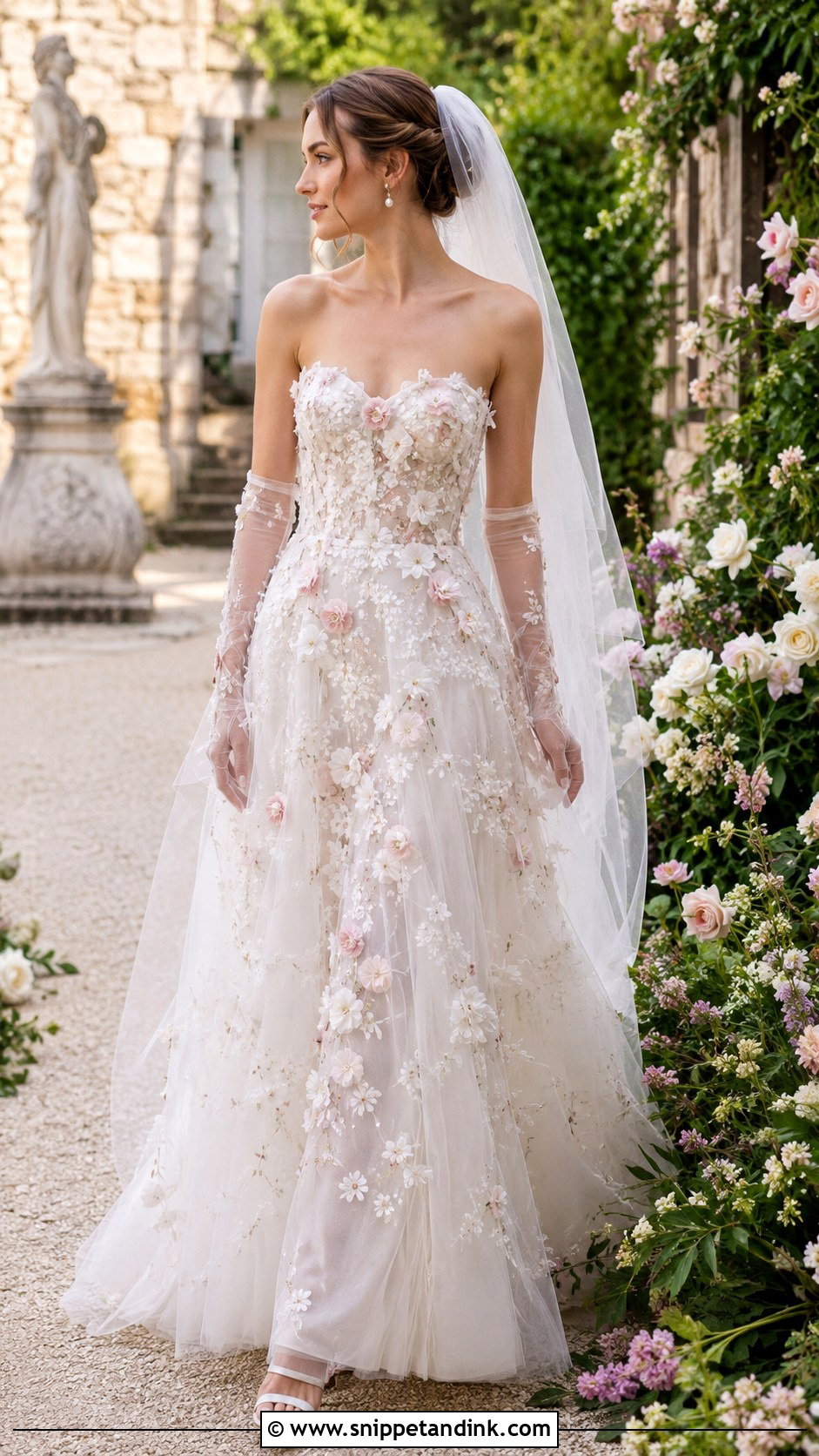
3D floral appliqué on tulle gives texture without sparkle, but placement is everything. I look at where the flowers sit on a bride’s body before anything else: clustered at the neckline they draw the eye up, scattered down the skirt they add movement. Pearl earrings, sheer gloves and simple heels keep it delicate. A floral veil only works when the gown’s flowers are sparse; on a heavily textured dress, go plain. Countryside estates and spring gardens suit it best.
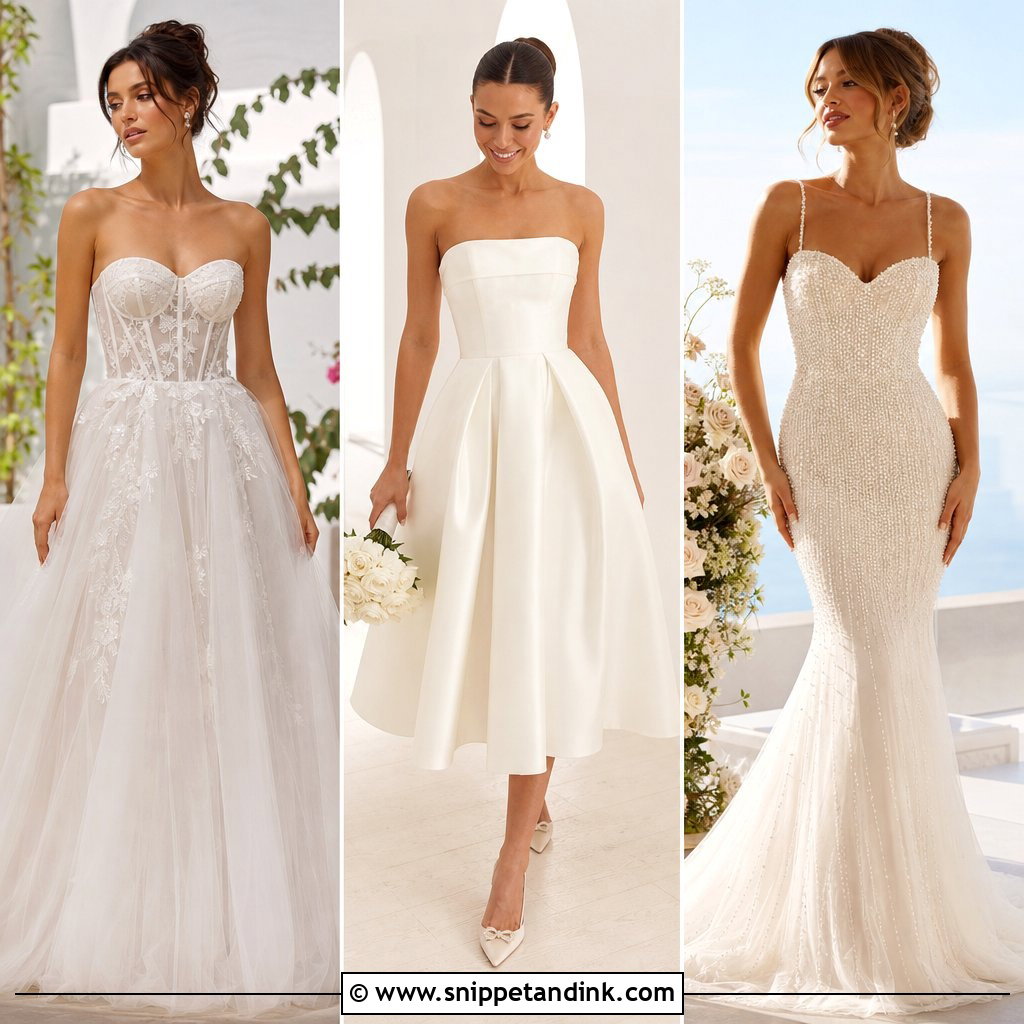
15. European Short Wedding Dress
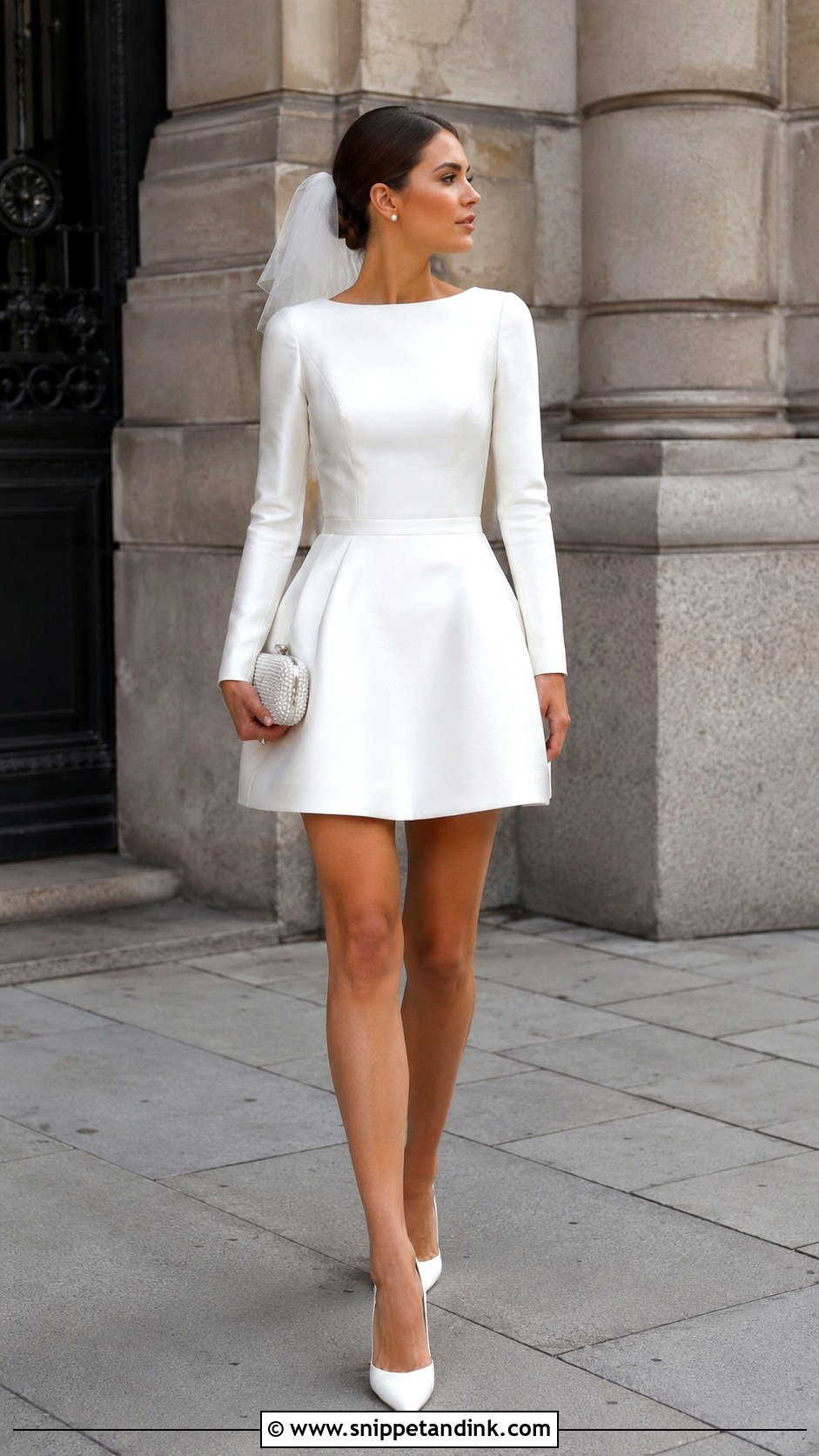
A short dress needs more tailoring than a long one, because the hemline and bodice carry the whole look. A white mini or above-the-knee shape in satin, lace or crepe with a structured bodice suits a civil ceremony, an elopement or a reception change. Pointed heels, pearl studs and a small veil or oversized bow make it bridal, with sheer tights in cooler seasons. Sit, climb a step and dance a little at your fitting so you know where the hem lands. Long sleeves or a high neck give coverage if you want it.
16. European Tea Length Wedding Dress
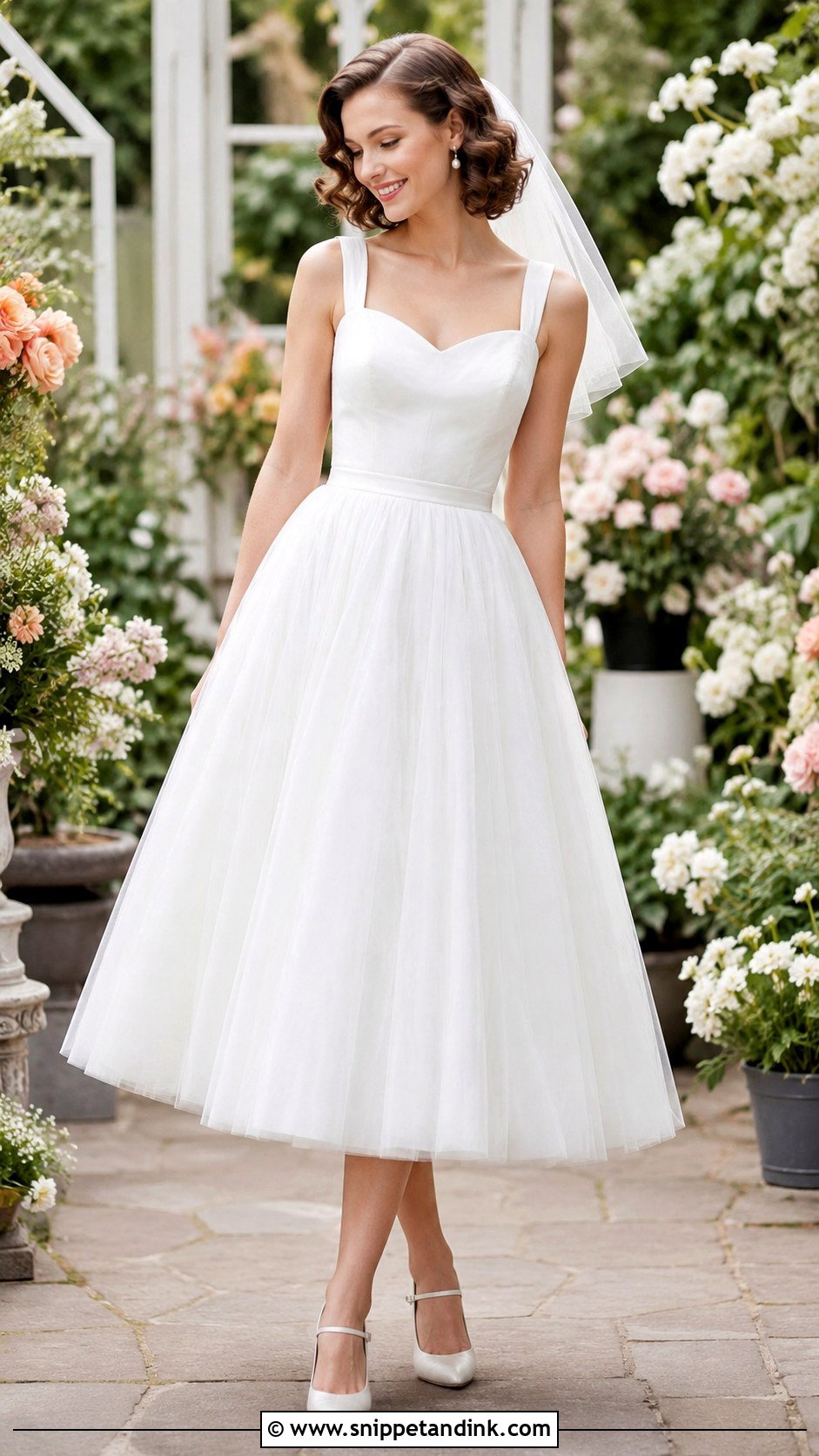
Tea length falls between the knee and ankle, and that mid-calf hem means your shoes are on show all day, so pick a pair you love. A fitted bodice and full skirt in satin, tulle, lace or organza gives the vintage shape, and Mary Jane heels with a short veil complete it. I’d suggest a petticoat under the skirt if you want the classic flare; without one, soft fabrics collapse after a few hours. Courthouse weddings and daytime garden receptions suit it, and you’ll never trip on a train.
17. European Square Neck Wedding Dress
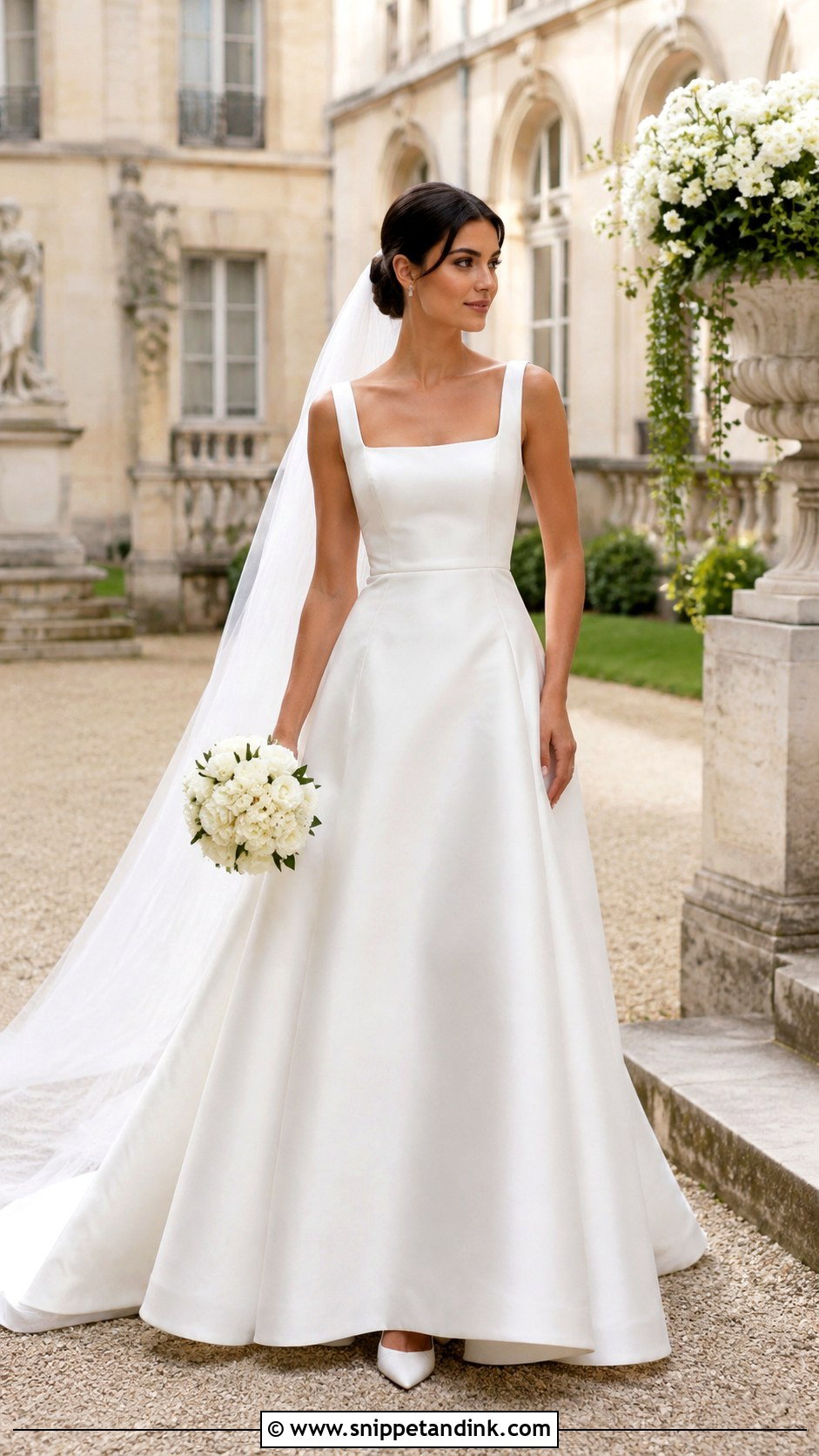
Square necklines are one of the most forgiving cuts I fit. The straight line frames the collarbone and the wide straps feel secure on most bust sizes, so brides rarely spend the day adjusting. A fitted bodice over an A-line or column skirt suits formal estates and modern city spaces alike. Simple earrings are enough. Lace softens it, while satin or crepe keeps it sharp. Polished waves or a low bun and a plain veil finish the look.
18. European High Neck Wedding Dress
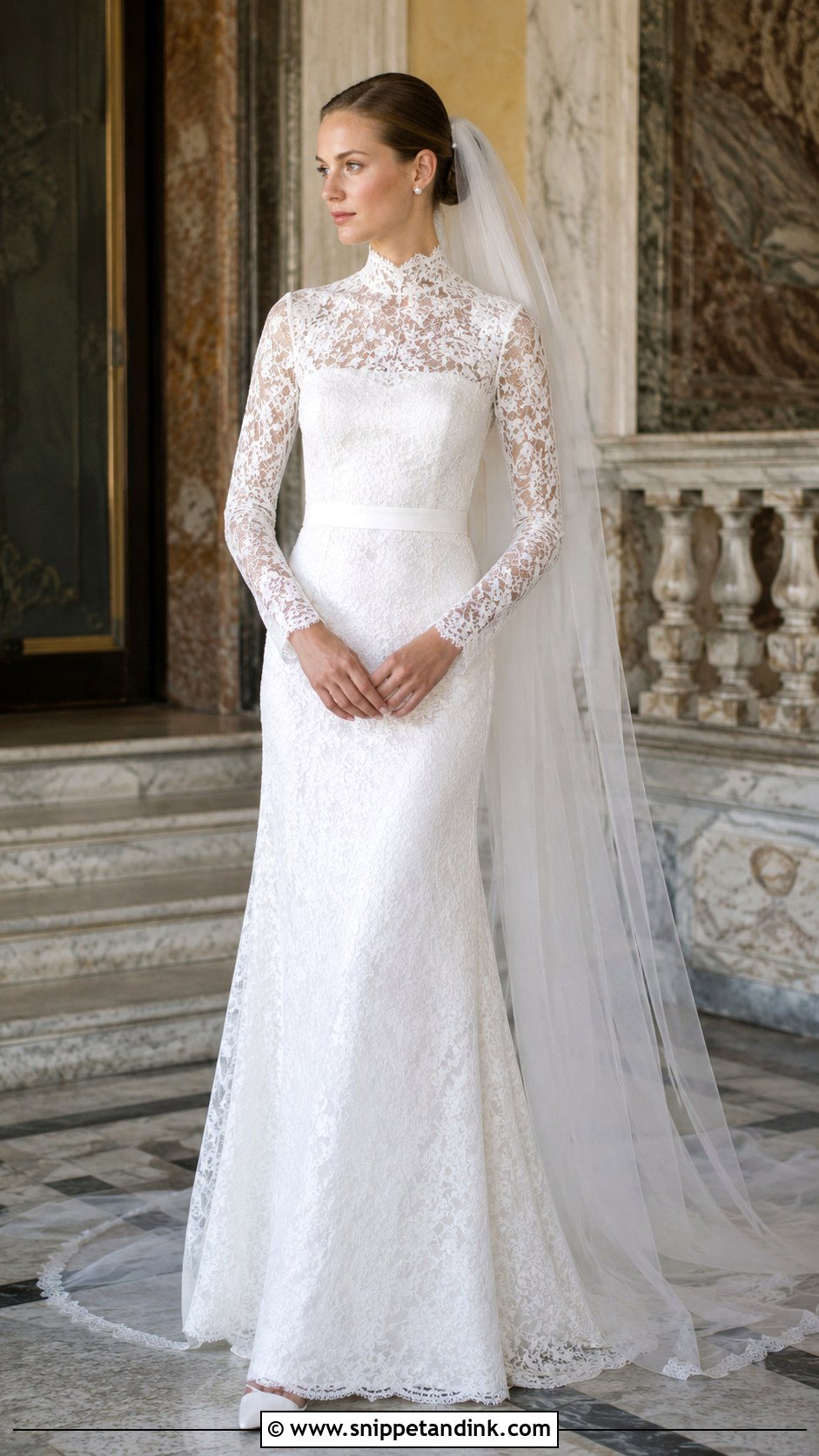
High necklines and long sleeves in lace or crepe give coverage with a slightly vintage feel, and they suit cooler seasons and formal venues. Wear your hair up so the neckline isn’t lost under curls. If you’re petite, a heavy lace high neck can swallow you, so look for lighter fabric and a clearly defined waist. Small pearl studs, closed-toe heels and a long veil keep it balanced. Check that the neck closure isn’t tight when you turn your head; it’s something you only notice after a few hours.
19. European Open Back Wedding Dress
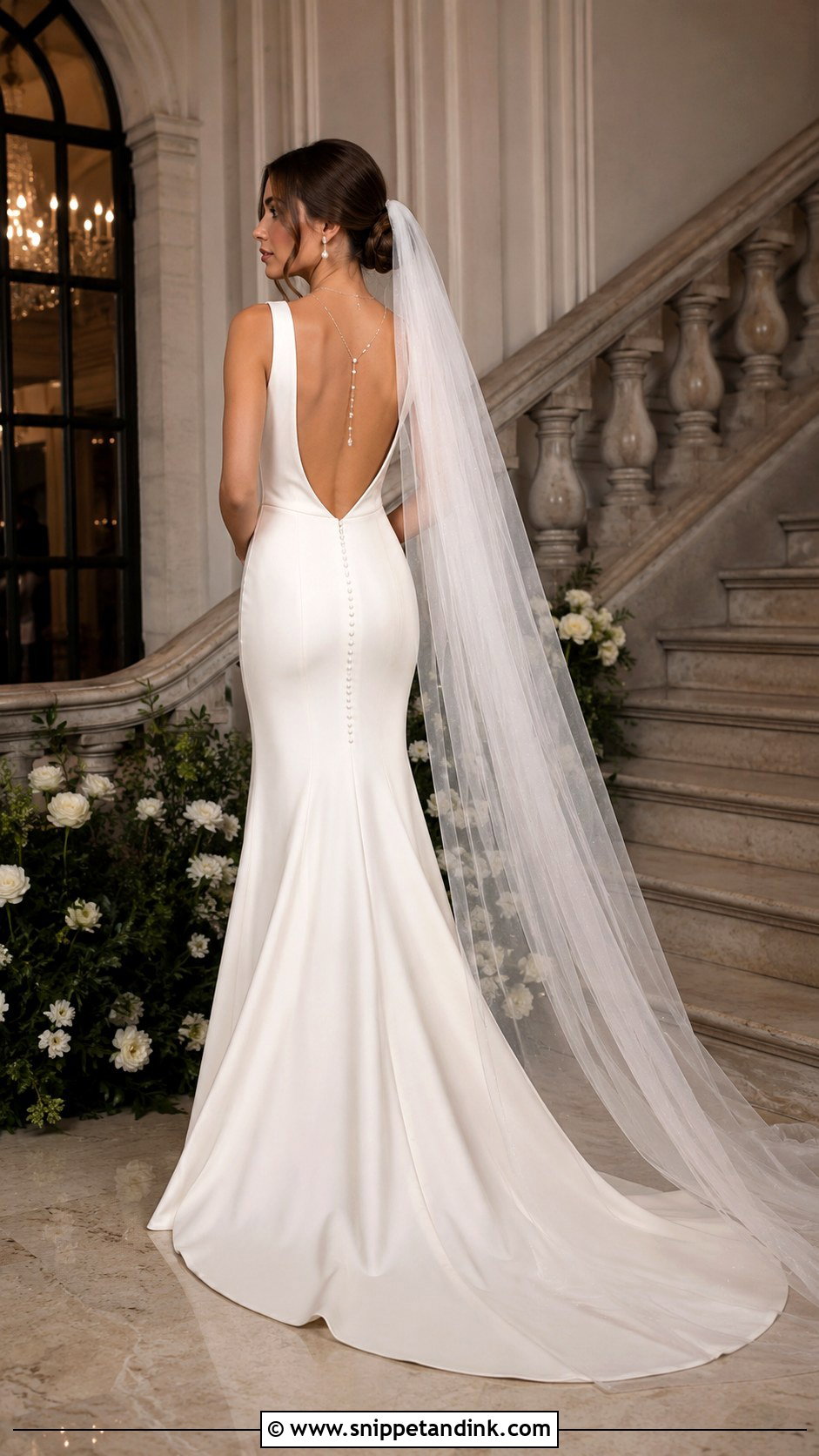
An open back looks dramatic as you walk away up the aisle, and a high front neckline balances it. Underwear is the first question I ask about here, before fabric or veil, because the back has to be cut around what keeps you supported. Many gowns build cups or illusion mesh into the bodice for exactly that reason. Crepe, satin or lace all work; style it with an updo, back-drop pearls and clean heels. A sheer veil lets the back stay visible in photos.
20. European Tulle Wedding Dress
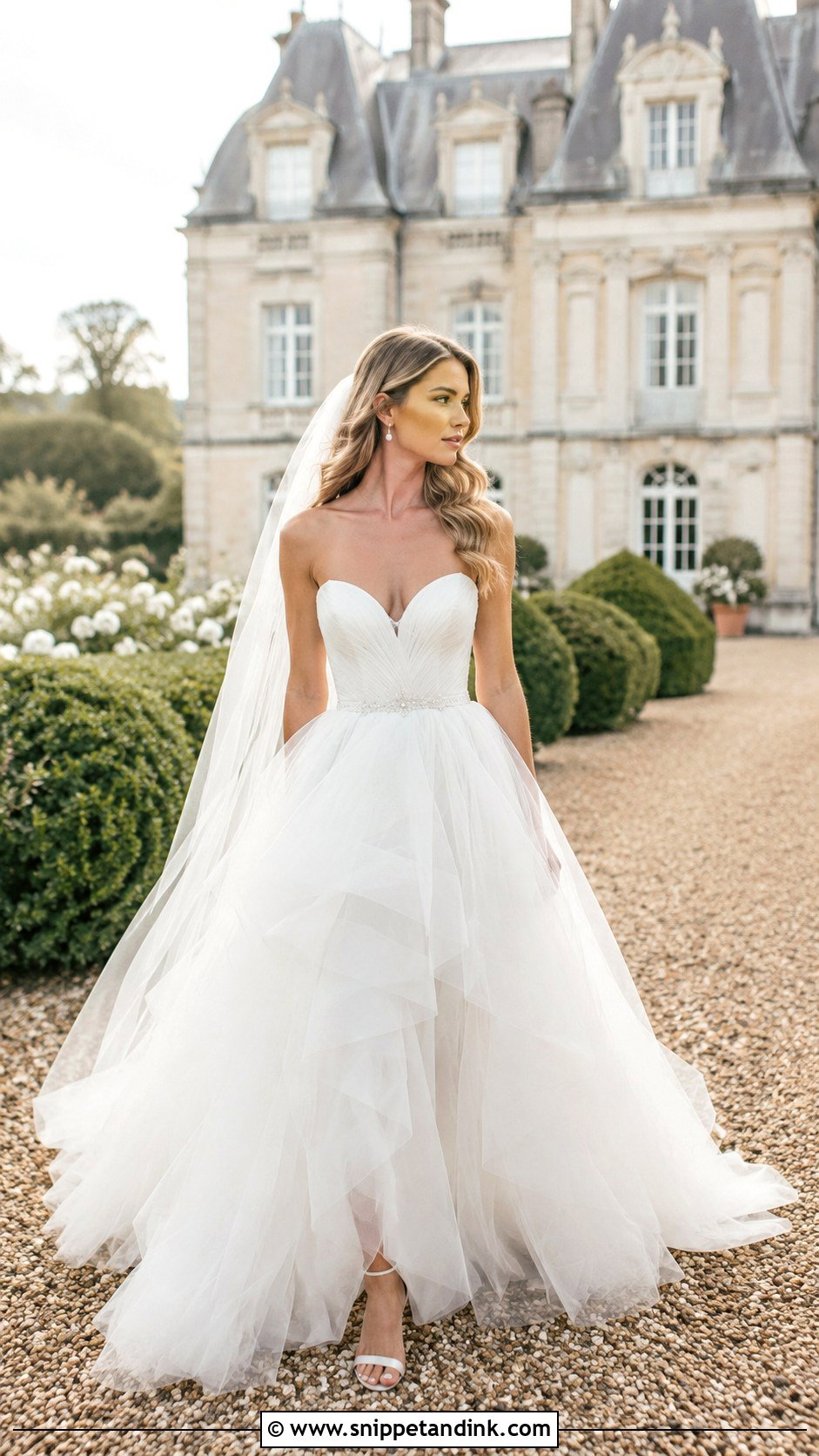
Tulle floats, but it can also look young, which is why I’d balance it with polished hair and makeup rather than loose curls and pastels. Layers of soft tulle over a fitted bodice give movement without weight. An ivory tulle over a soft champagne lining adds dimension in photographs. Delicate heels, pearl earrings and a sheer veil suit garden weddings and chateau venues. Be aware that tulle snags easily on rough stone and jewellery, so watch bracelets and keep a few safety pins in your kit.
21. European Pearl Wedding Dress
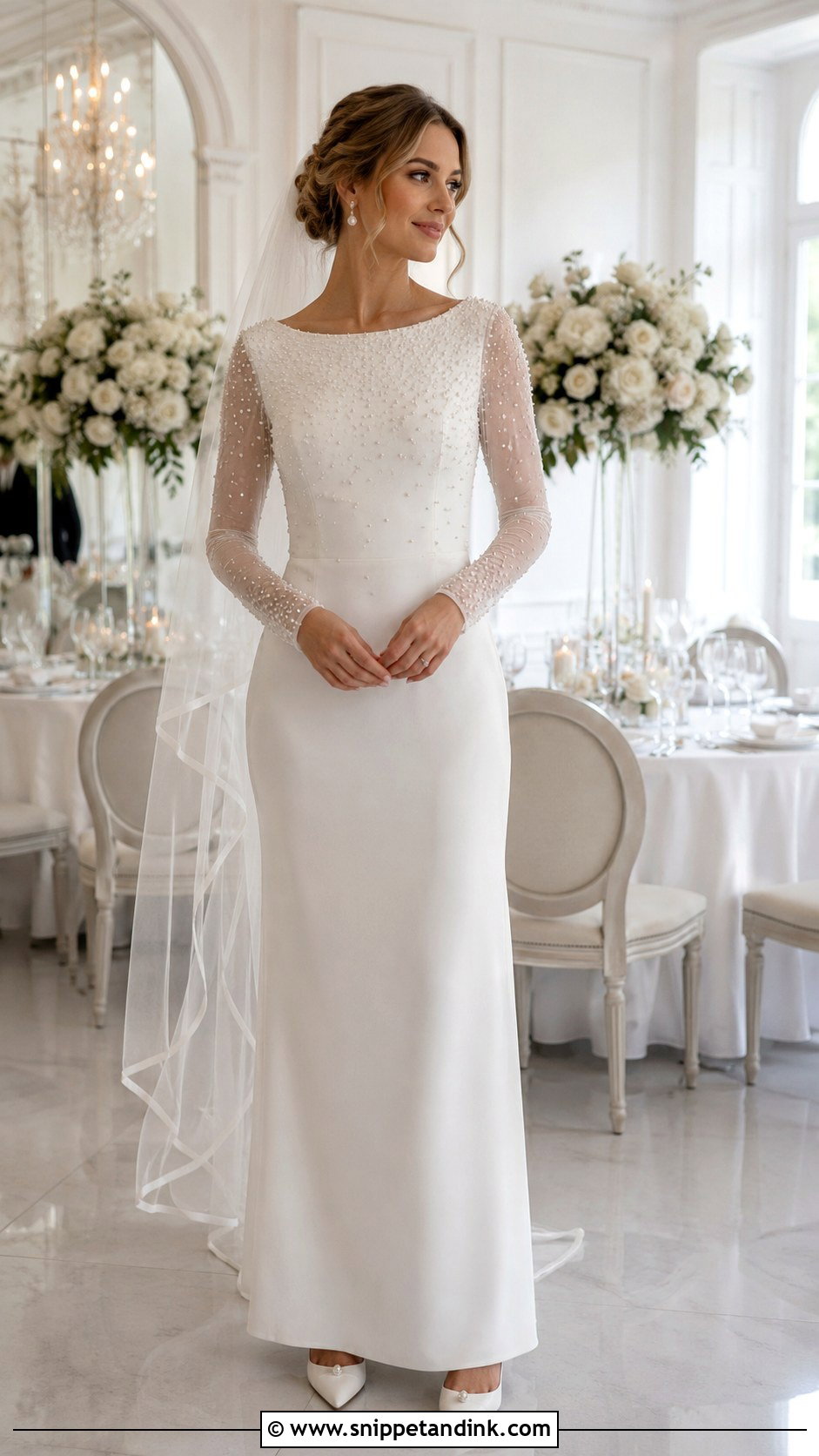
Pearl beading gives a softer shine than crystals, and it works best scattered rather than covering every surface. A simple column, A-line or fitted silhouette keeps it from becoming busy. Pearl earrings, satin heels and a soft updo suit the gown, but skip a pearl necklace unless the neckline is very plain. Bright natural light shows pearl detail at its best. Ask how the pearls are attached: hand-sewn ones survive hugs and dancing, glued ones sometimes don’t.
22. European Cape Wedding Dress
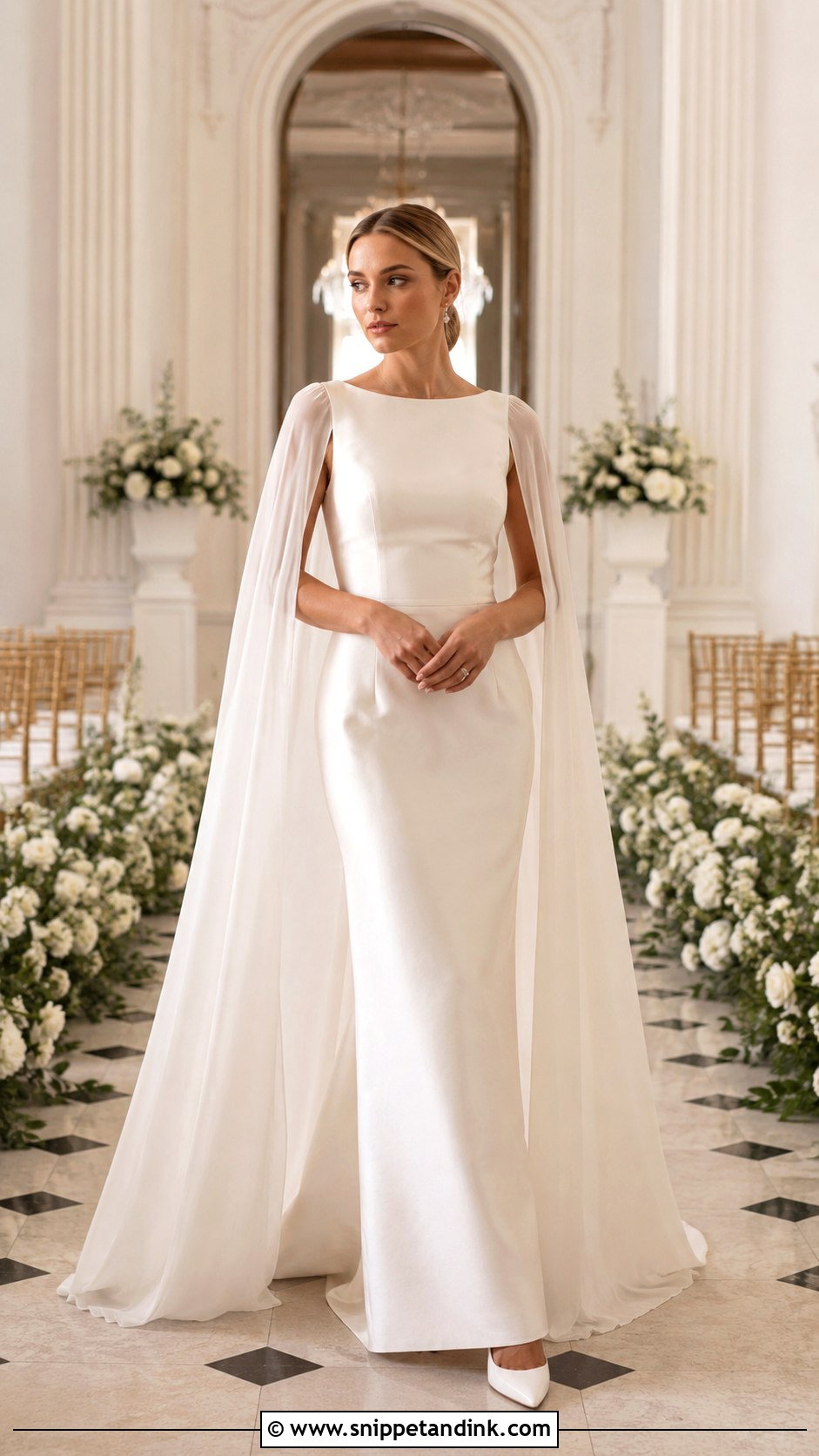
A detachable cape in tulle, chiffon or lace can replace a veil and adds movement in walking shots without hiding the shape of a sleek crepe or satin gown underneath. I like it for formal ceremonies in cooler months, where a little shoulder coverage feels right. The practical win is that you take it off after the ceremony and the gown becomes lighter for dinner and dancing. Ask how it attaches; buttons or small hooks hold better than snaps on a heavy cape. Simple earrings, pointed heels and a neat hairstyle keep the focus on the drape.
23. European Blazer Wedding Dress
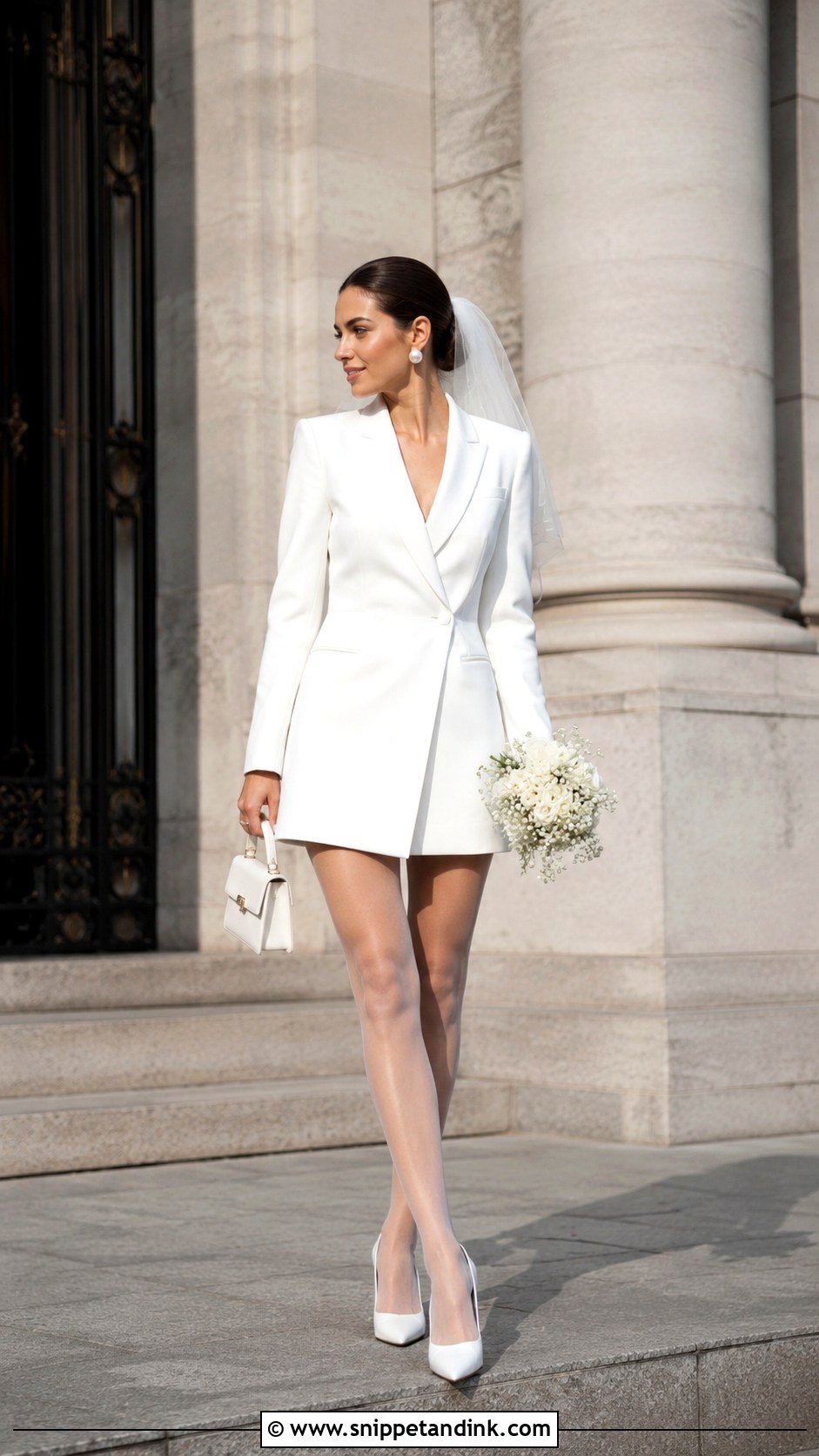
Blazer dresses live or die at the shoulder. If the shoulder seam sits past your natural edge, no amount of styling saves it, so this is the one item I’d send straight to a tailor. A white blazer mini or a tailored jacket over a sleek midi suits city halls, intimate lunches and elopements. Pointed pumps, pearl earrings, sheer tights in cooler months and a structured mini bag work well. A short veil or bow softens the sharp lines.
24. European Bridal Jumpsuit
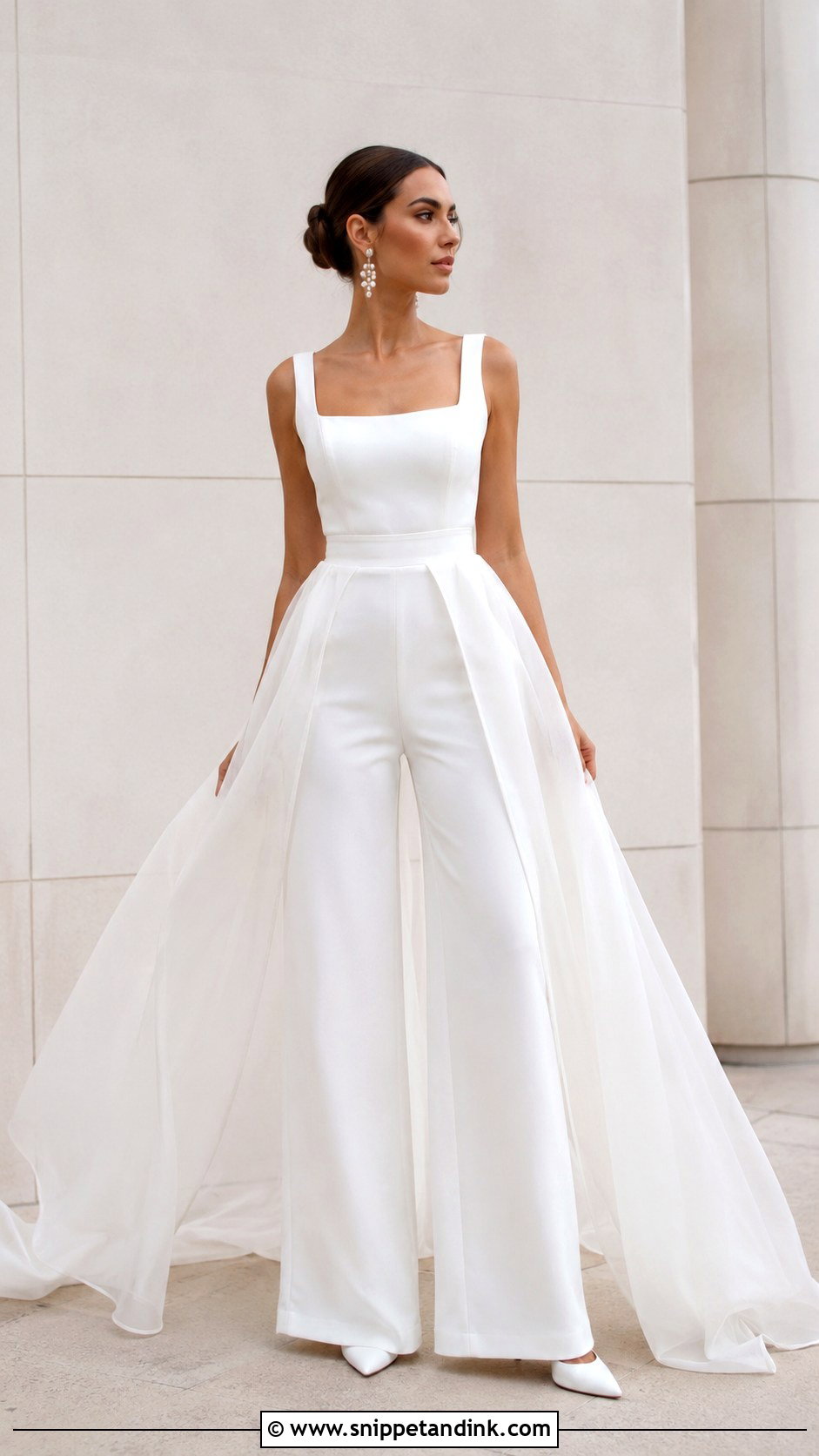
Wide legs give a European bridal jumpsuit the sweep of a gown while letting you walk, sit and dance freely. Look for white crepe with real weight, because lightweight fabric twists around the legs and shows creases. A fitted waist and a draped or square neckline flatter most figures. Pointed heels, statement earrings and a sleek bun keep it sharp; add a detachable overskirt or cape for the ceremony. Check the bathroom situation at your fitting, since a back zip you can’t reach alone is a long night.
25. European Reception Wedding Dress
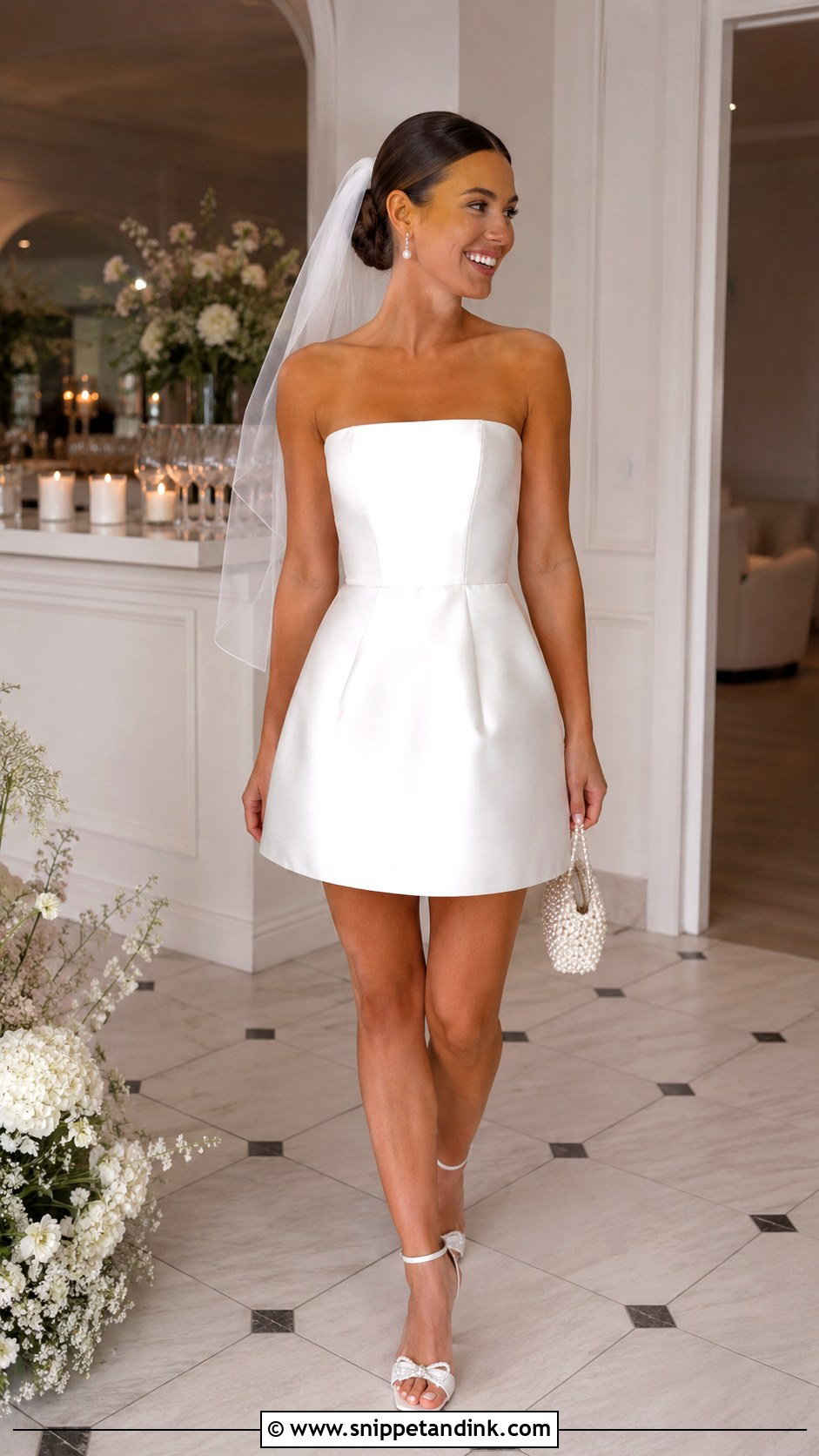
For the reception change, I want brides in something they can dance in for hours. A satin mini, a feather-trimmed midi or a simple lace short dress all suit the party, and this is the moment to be more playful than your ceremony gown. Comfortable heels, pearl earrings and a small evening bag are enough, plus a bow or clip if you want a bridal touch. Choose fabric with a little stretch or a cut that lets you raise your arms. You’ll change after dinner, so plan who helps you out of the first gown and how long it takes.
Flying Your Gown to a Destination Ceremony
Most brides marrying abroad carry the dress on the plane rather than checking it. Ask your airline ahead of time whether a garment bag counts as cabin baggage and whether crew can hang it; policies vary, and some will only allow it in the overhead bin. Folding is usually fine if you do it properly.
- Ask your bridal shop to pack it with acid-free tissue between folds and inside the bodice.
- Lay it flat in a breathable garment bag, never plastic, and keep the receipt with you in case of customs questions.
- Hang it on arrival using the inner hanger loops, not the straps, so heavy skirts don’t stretch the shoulders.
- Steam, don’t iron. Many hotels and venues have a steamer, but confirm it in advance or bring a small travel one.
Leave a Margin for Final Fittings
Structured gowns such as corsets and ball gowns often need three fittings, with the last one close to the wedding. If you’re travelling, schedule that final fitting at least a week before you fly so any small adjustment can be finished calmly. A bias-cut slip is the exception I watch most, since it can drop slightly after hanging and should be hemmed late.
Cut, Cloth and How It Feels at Midnight
What ties these European gowns together isn’t a single shape. It’s the attention to cut and cloth: satin that holds its line, chiffon that breathes, tailoring that sits right at the shoulder. Start with your venue and climate, then let fabric narrow the list before you fall for a silhouette. And at every fitting, sit, lift your arms and walk a few steps. A dress that still feels comfortable after an hour in the shop has a good chance of feeling right late into the night.
You'll Like These Ideas:









Leave a Reply