
Nordic bridal style comes from a practical place: good fabric, a shape you can move in, and accessories that are there for a reason. A Scandinavian-inspired gown can be sleek and modern, quietly romantic or sturdy enough for a ceremony in a field. Draped gowns, detachable layers, short dresses and pared-back silhouettes all sit comfortably inside the look. What brides underestimate is how exposed a plain dress is. With no lace or beading to distract, fabric and fit carry everything, so I’ve added notes on what to check in each of these twenty, from silk slips to winter dresses.
Judging Crepe and Silk When There Is Nothing to Hide Behind
A minimal dress is only as good as its cloth, and you can test that in the shop in a few minutes. I do these checks with every bride before we even talk about necklines.
- Hold the skirt up to a window. Good bridal crepe and silk are opaque enough that you can’t see your hand clearly through a single layer.
- Squeeze a corner of the skirt in your fist for ten seconds. Light creasing that relaxes is normal; deep sharp creases will show after every sit-down.
- Look along the side seams in daylight. Small puckers mean the fabric was sewn under tension, and plain fabric makes that obvious.
- Turn the hem over. A clean, weighted or faced hem helps a column dress fall straight instead of flicking out at the ankle.
Then think about what goes underneath. Smooth, skin-tone underwear in your size, a bra built into the dress where possible, and a slip under thin silk all matter more here than they would under a lace ball gown. Wear the actual pieces to the first fitting, since changing them later changes how the dress hangs.
1. Minimalist Silk Slip Wedding Dress
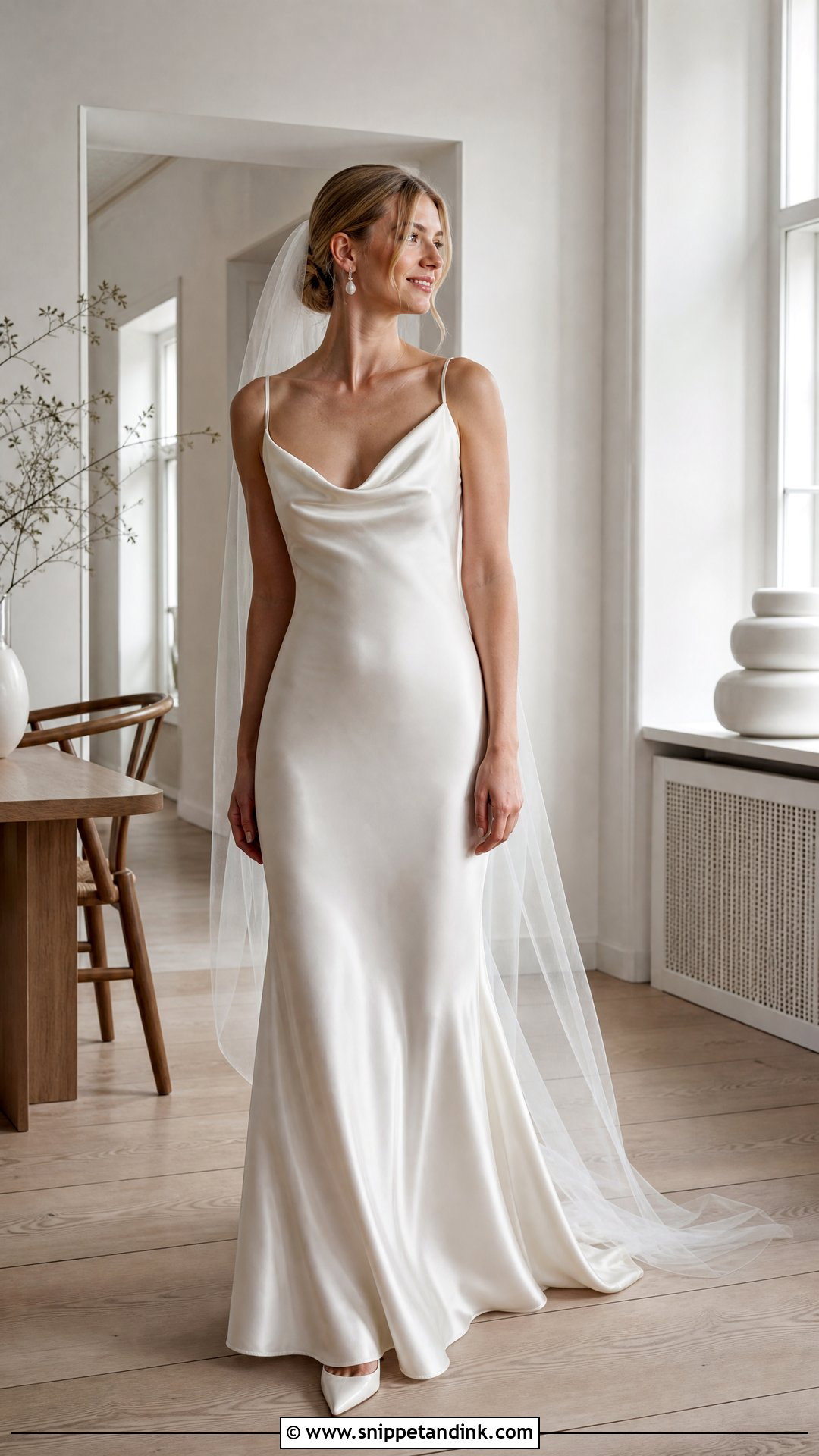
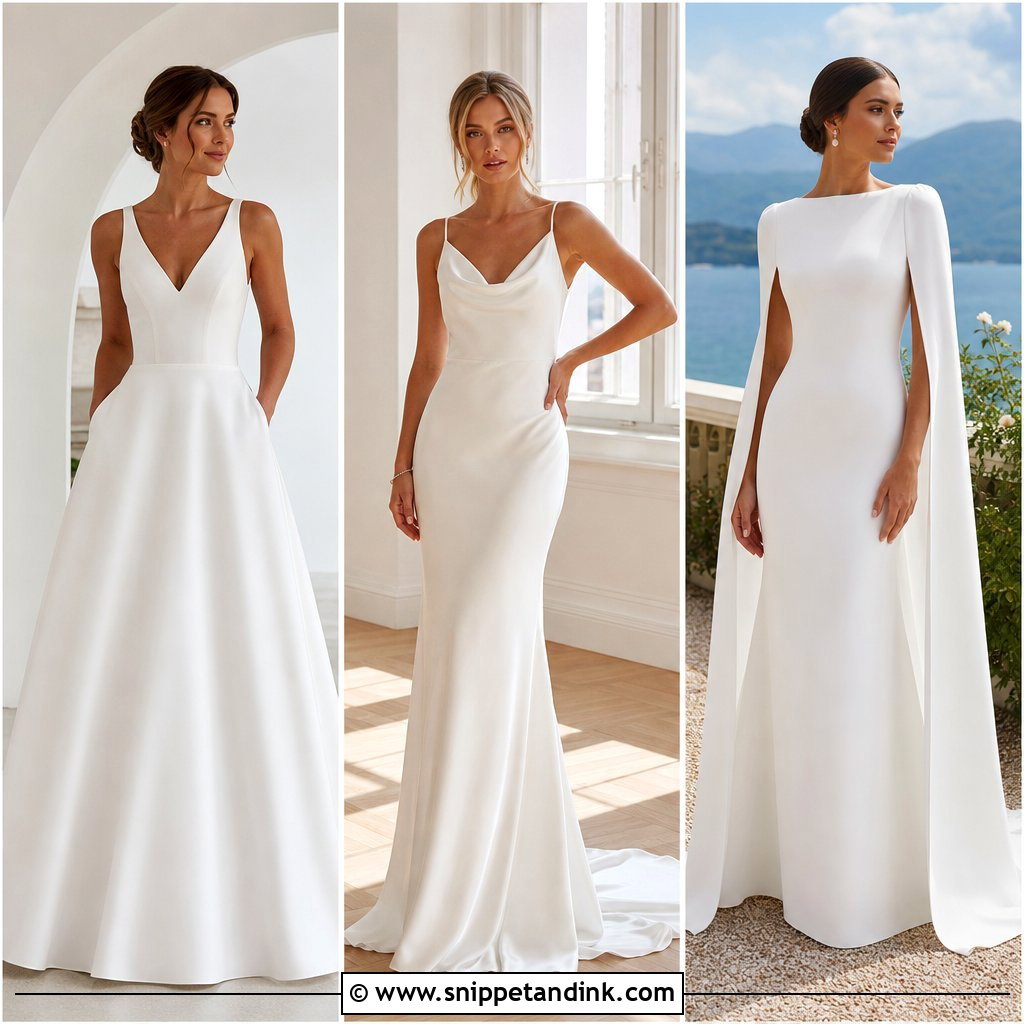
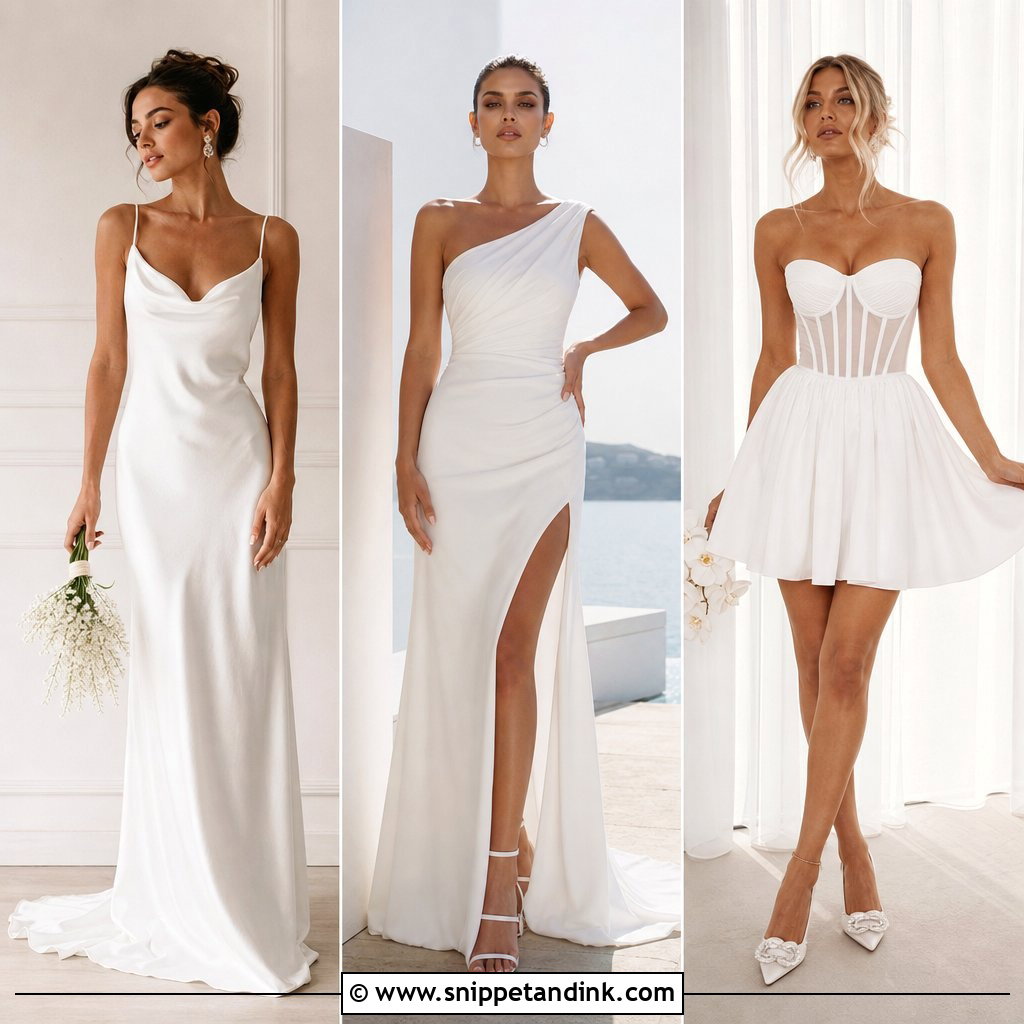
The slip is the purest version of this style. A silk slip gown cut on the bias follows the body without gripping it, and a soft cowl with thin straps keeps the top light. Low ivory slingbacks, small pearls, a fingertip veil and a smooth bun or tucked waves finish it. It suits city ceremonies, coastal venues and small weddings, and a sheer long-sleeve topper adds coverage for the ceremony. Bias cut shows everything underneath, though. I always look at a slip on the bride from the side: thin silk clings to the stomach and shows any line, so a heavier silk with a smooth lining is worth the extra cost.
2. Square Neck Crepe Wedding Dress
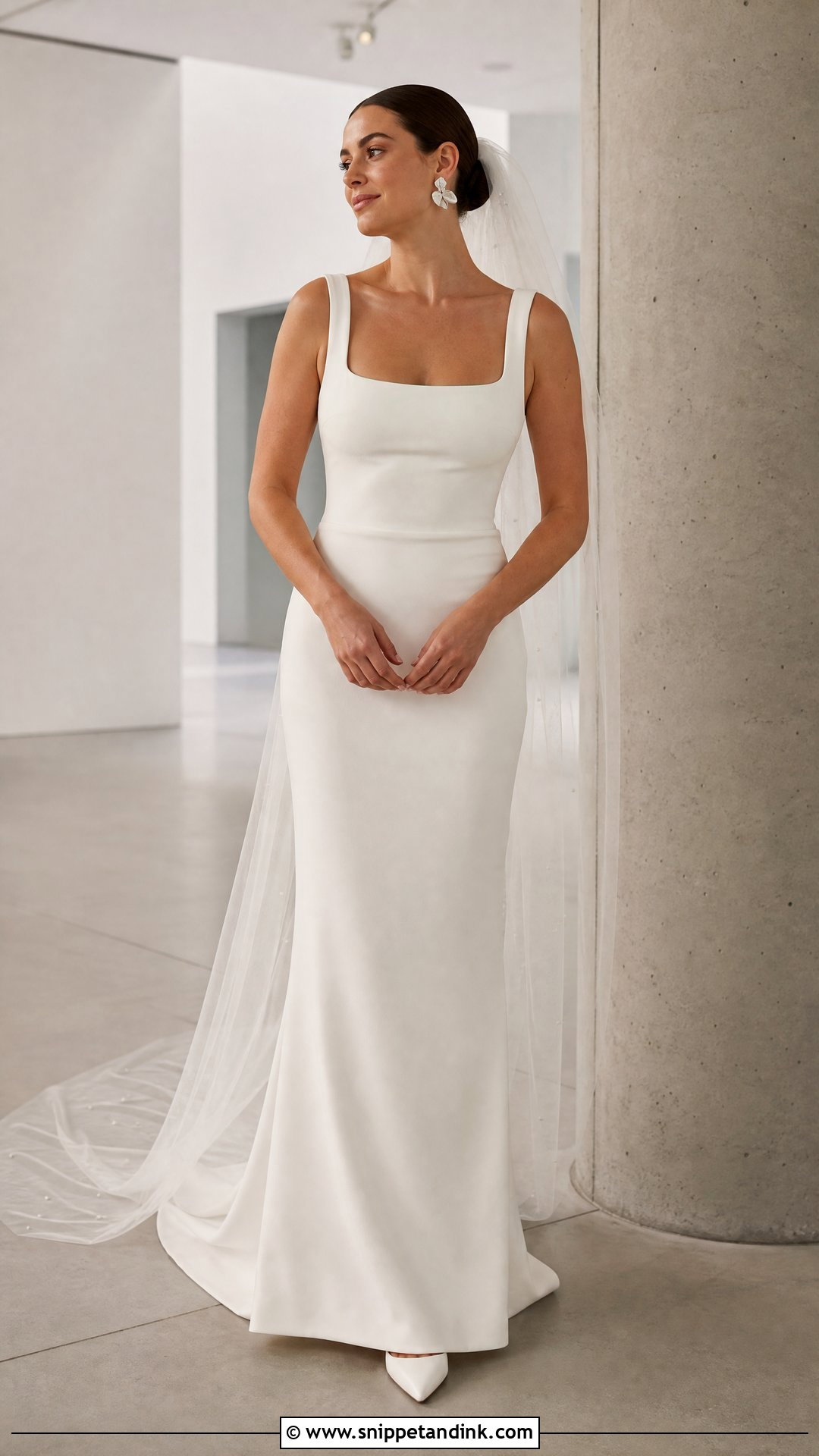
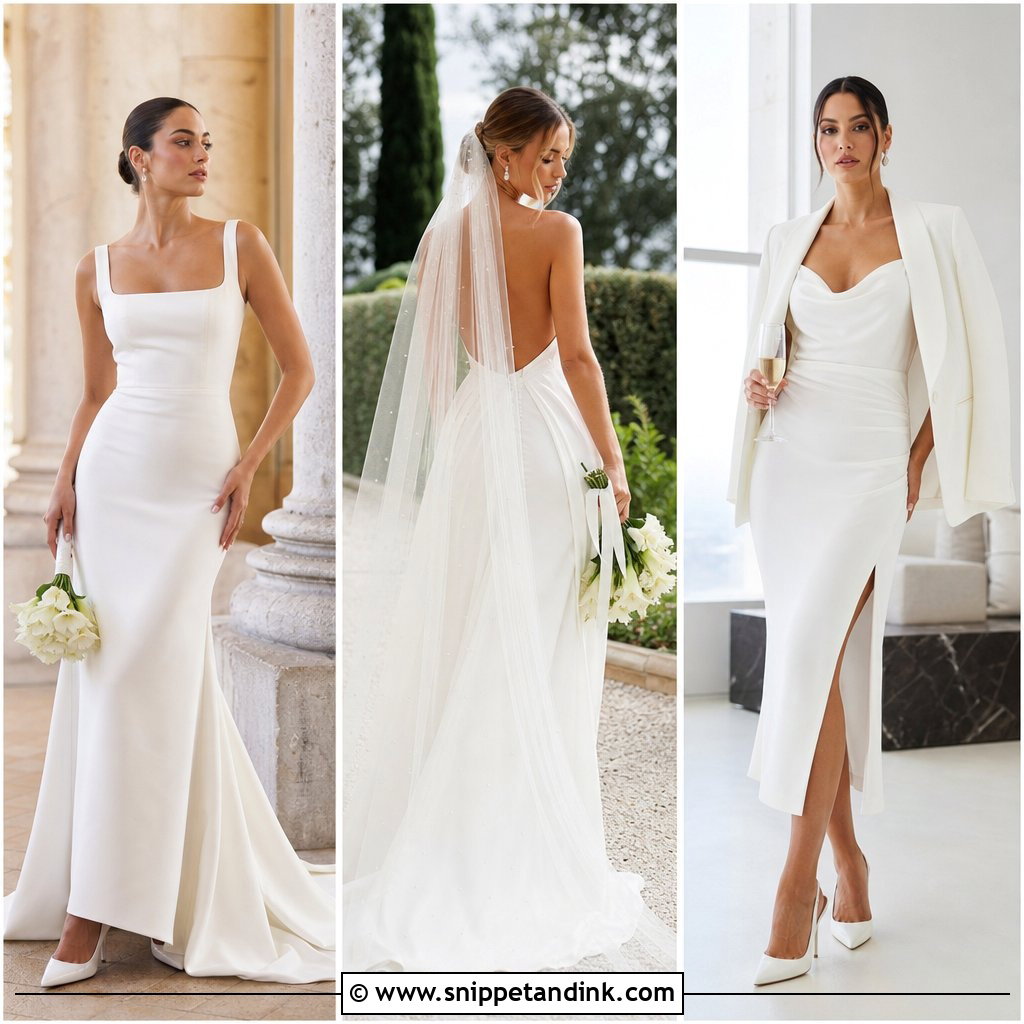
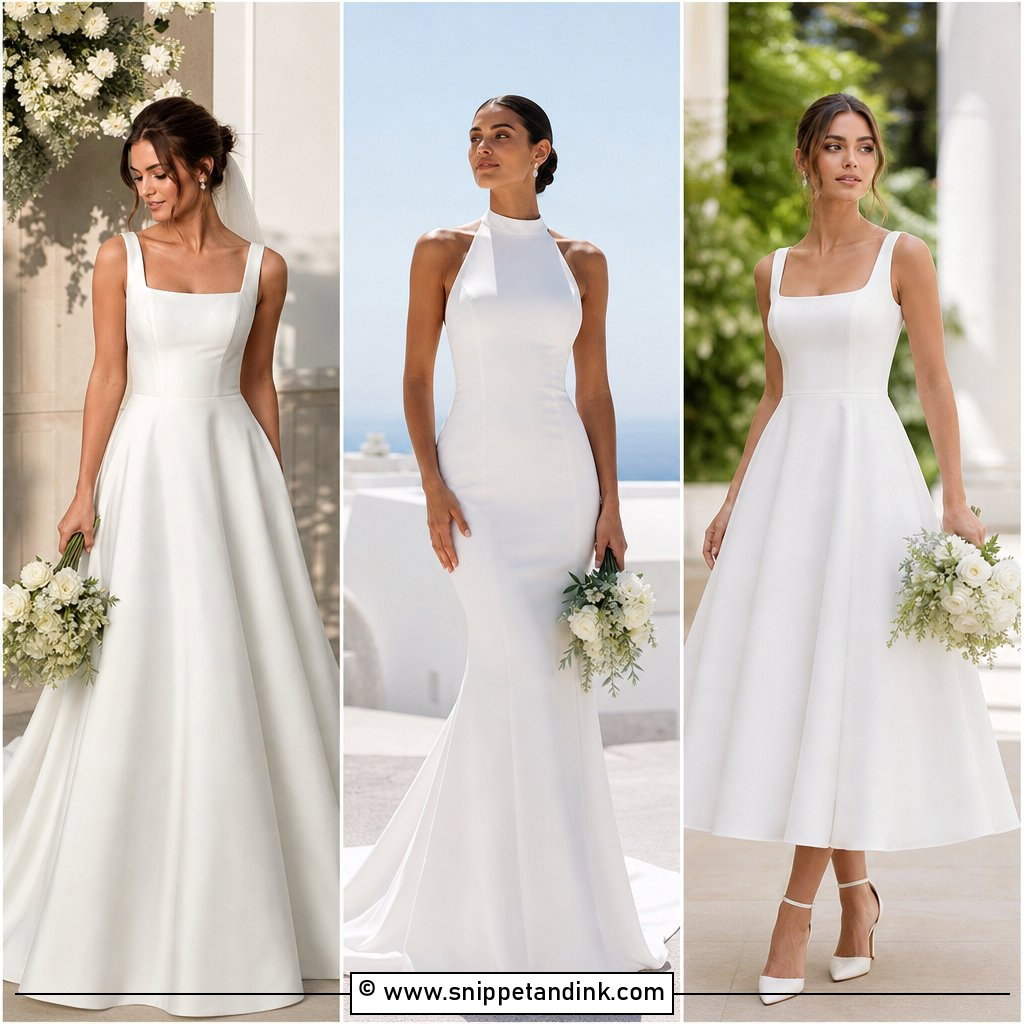
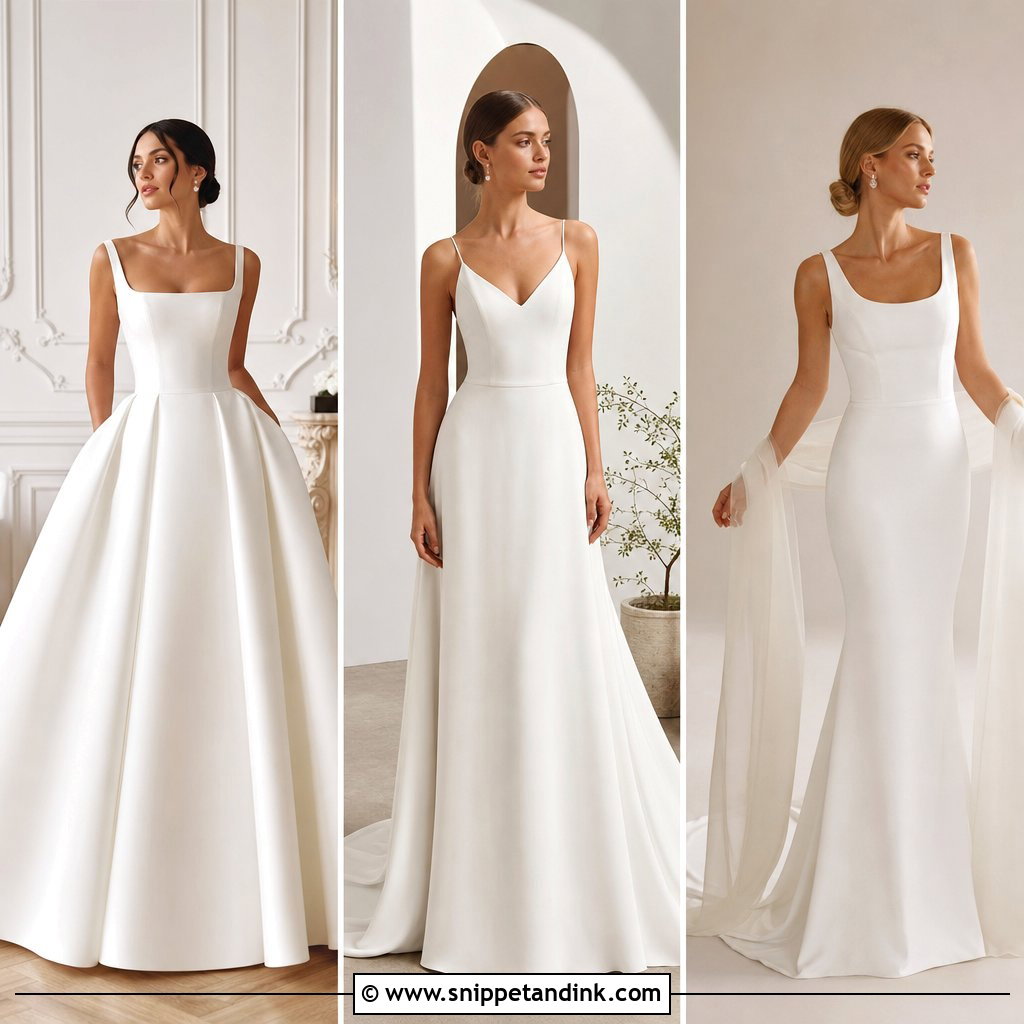
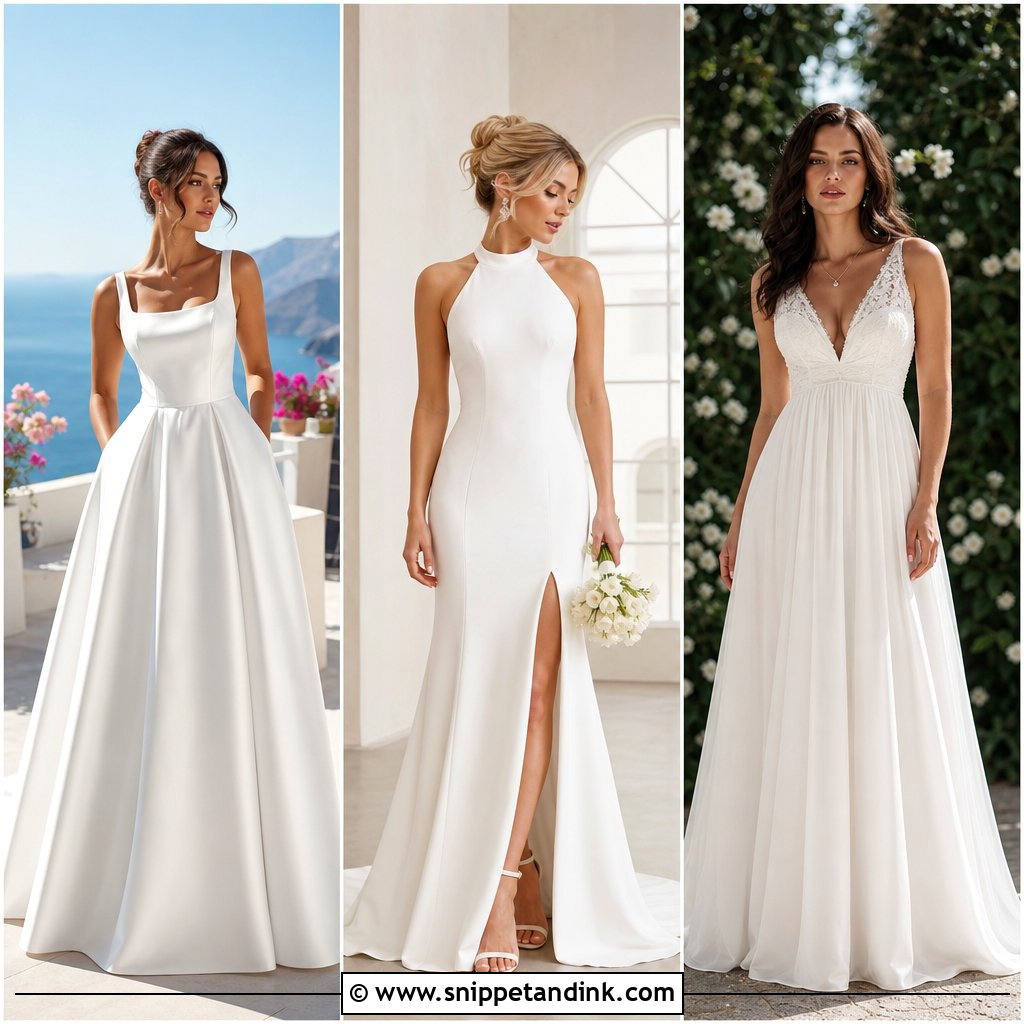
Square necklines give a plain crepe dress a little architecture. The straight line frames the collarbone and balances the shoulders, which is why it flatters so many builds. Go for a column or soft fitted shape with wide straps and a clean floor-length skirt, plus pointed pumps, sculptural silver earrings, a compact white and green bouquet and a low chignon. A chapel veil adds ceremony without decoration. The corners of that neckline are where I spend fitting time. If the straps are a fraction too long, the square sags into a soft U, and the whole point is lost.
3. Long Sleeve Satin Wedding Dress
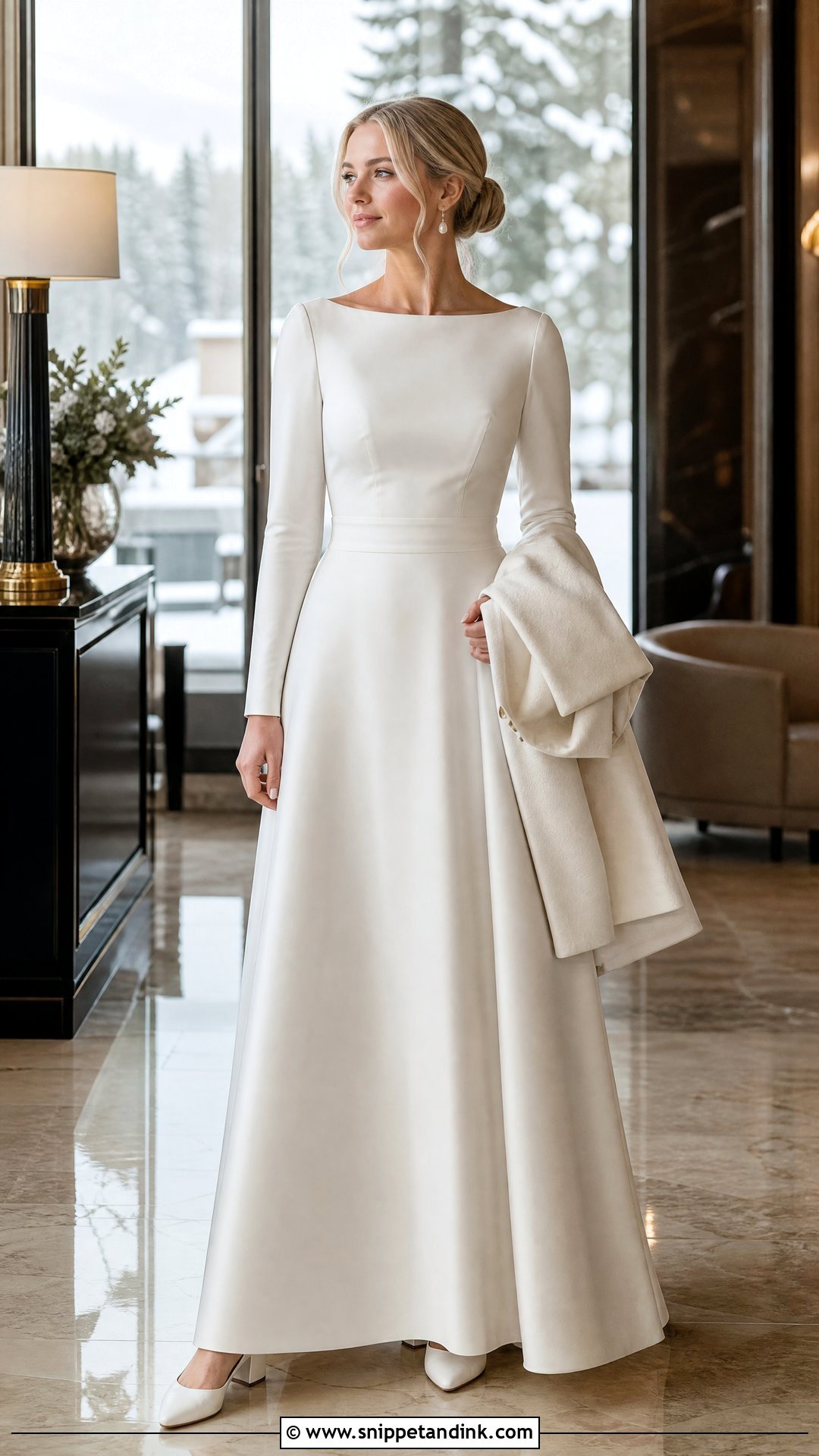
In crisp weather, long satin sleeves make sense. A softly tailored gown with a high bateau neck, fitted sleeves and a subtle A-line skirt needs no beading, since satin already catches daylight. Closed-toe block heels, pearl drops, a structured ivory coat for outdoor photos, a neat bun and light luminous makeup suit the mood. Fall, winter and early spring weddings in a city hall, hotel or countryside venue all work. Moving between a cold courtyard and a heated room is the real test, so I look for a breathable lining and enough room at the elbow to eat dinner without the sleeve cutting in.
4. High Neck Silk Wedding Dress
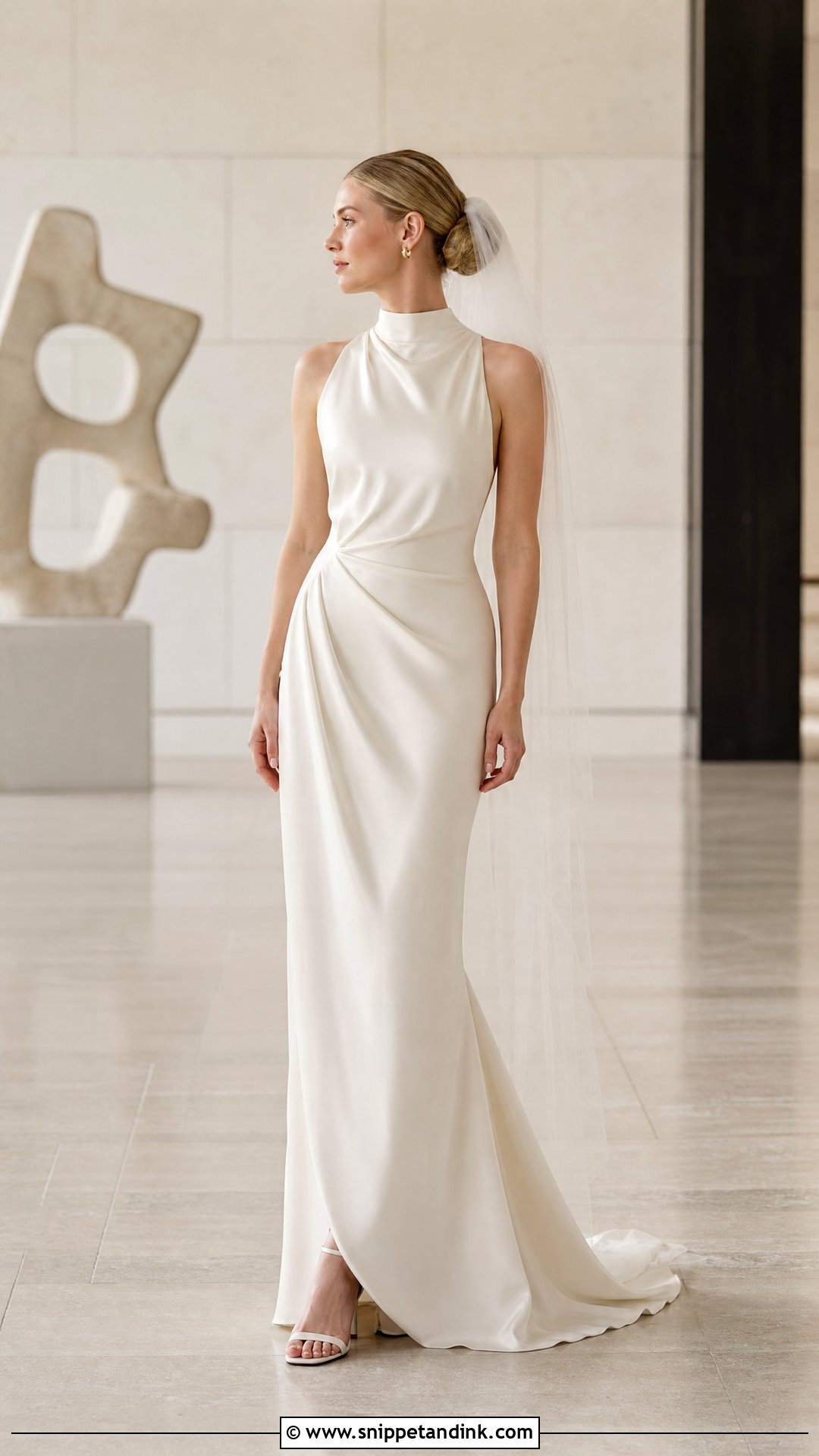
A high silk neckline with no sleeves reads architectural rather than modest. Soft draping, a gathered collar or a scarf tie gives interest without decoration. Sleek ankle-strap heels, a low knot, minimalist gold earrings and a veil set below the hair keep the neck clear. Galleries, modern restaurants and spare indoor venues suit it, and brides who want less exposure at the chest like it. I always ask the bride to turn her head fully left and right. A stiff collar presses on the throat, while lightweight silk falls naturally and doesn’t bunch at the shoulders.
5. Strapless A-Line Wedding Dress
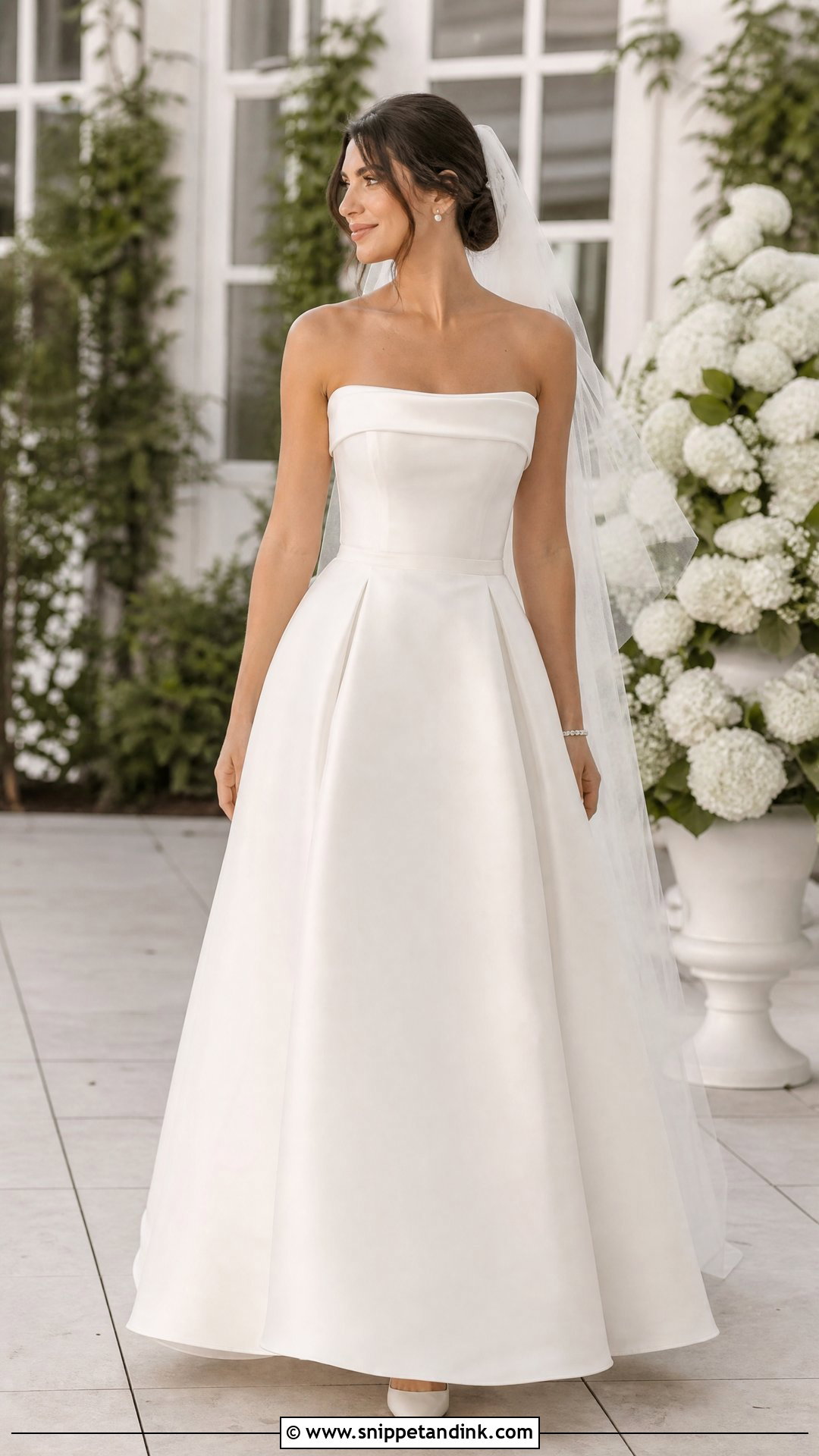
A strapless A-line gives soft volume while staying simple. A clean folded neckline over a skirt of matte satin, mikado or structured silk skims the hips and opens gently. Pointed ivory heels, small studs, a single-layer veil with a raw edge and a loose low bun soften it. Gardens, estates and modern rooms all suit it, and it works across many proportions. Strapless only works with real support inside. If I can slide two fingers down the top edge easily, the bodice needs taking in, because by the reception the bride will be hitching it up every few minutes.
6. Cap Sleeve Midi Wedding Dress
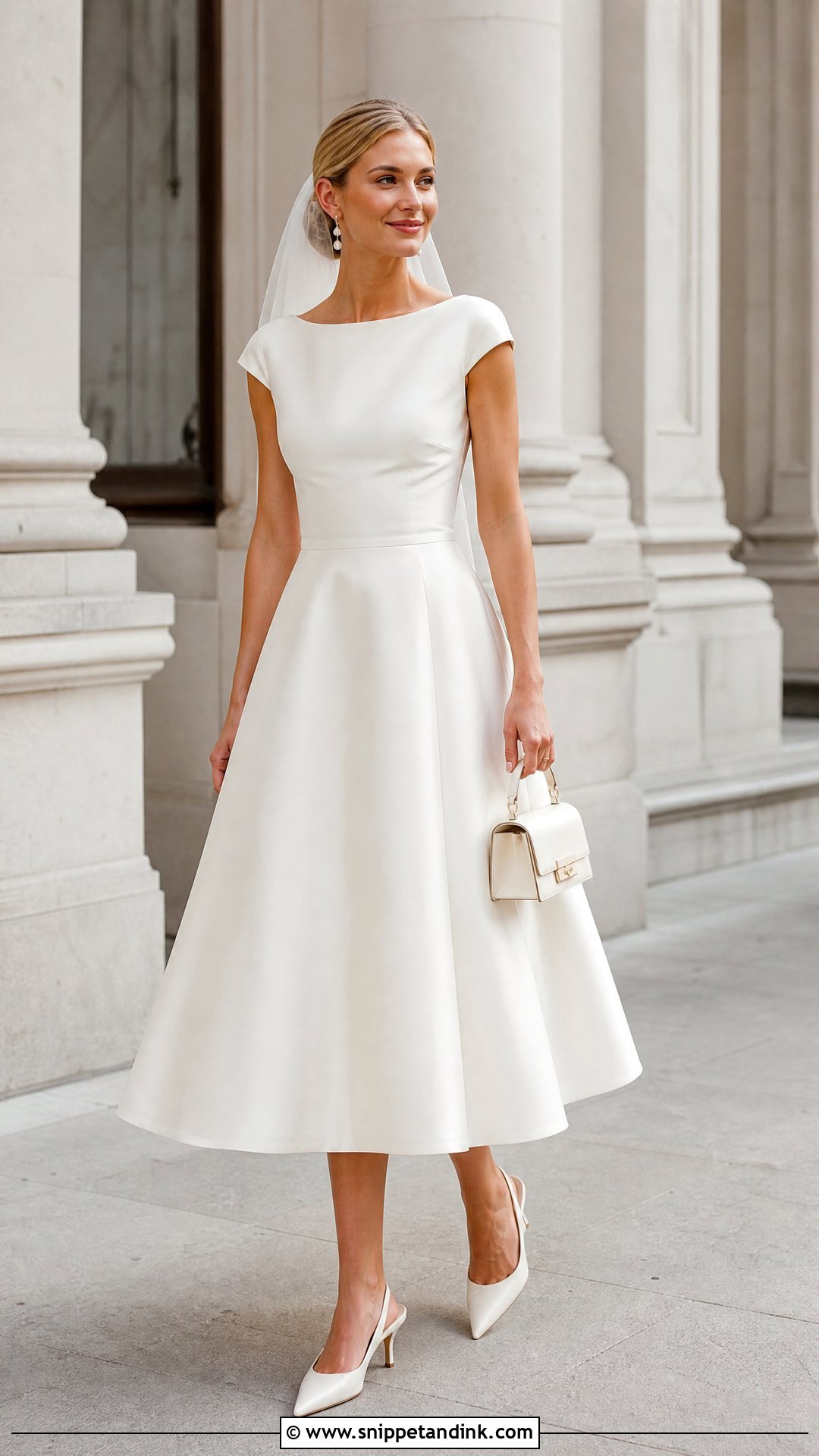
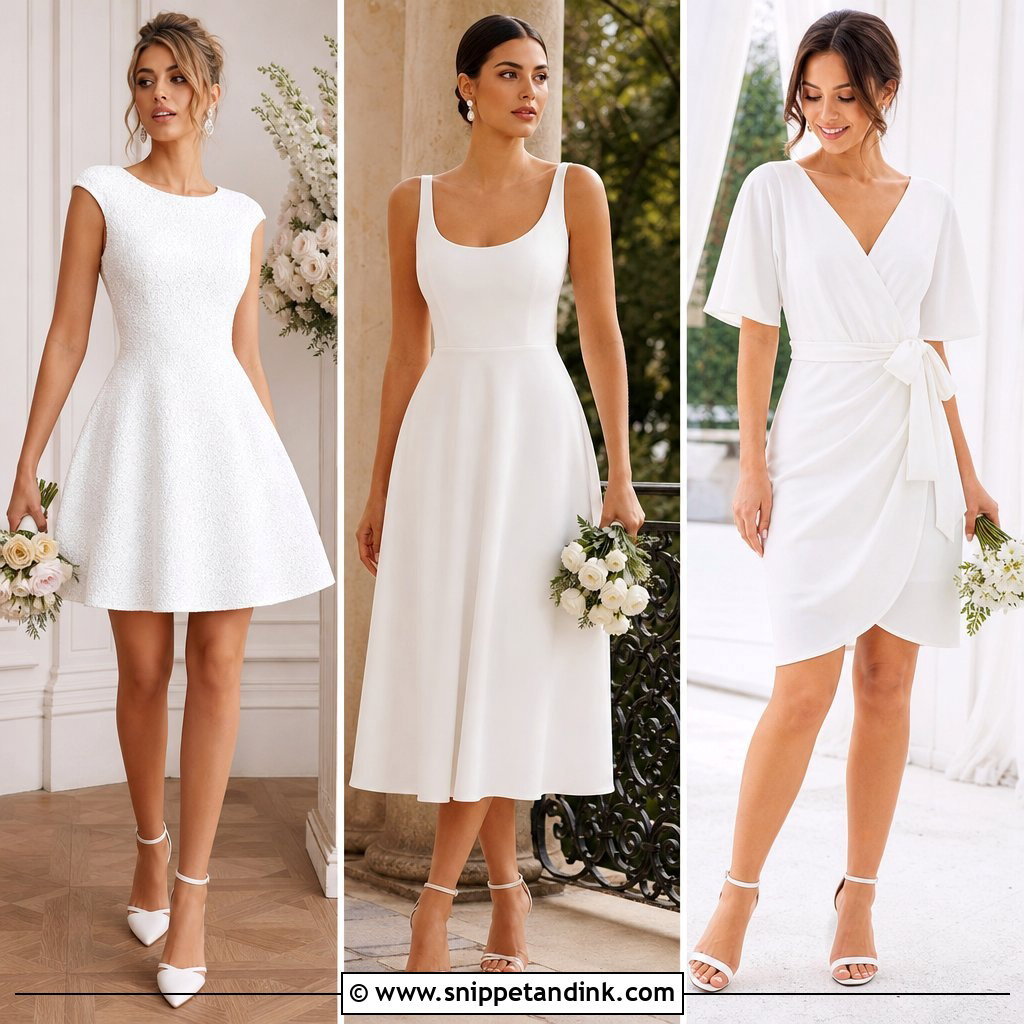
A cap-sleeve midi wedding dress is my favorite suggestion for a small civil ceremony. A softly fitted bodice, a defined waist and a hem between calf and ankle in matte crepe or silk faille give the shorter length enough body to feel special. Slingbacks, a small structured bag and pearl or silver earrings complete it, with a short veil, headband or simple bow. You can walk through a city in it. Since the hem puts your shoes on display, pick them early and alter the dress in the exact heel height. A midi hemmed for flats looks too long once you add even a small heel.
7. Scandinavian Lace Wedding Dress
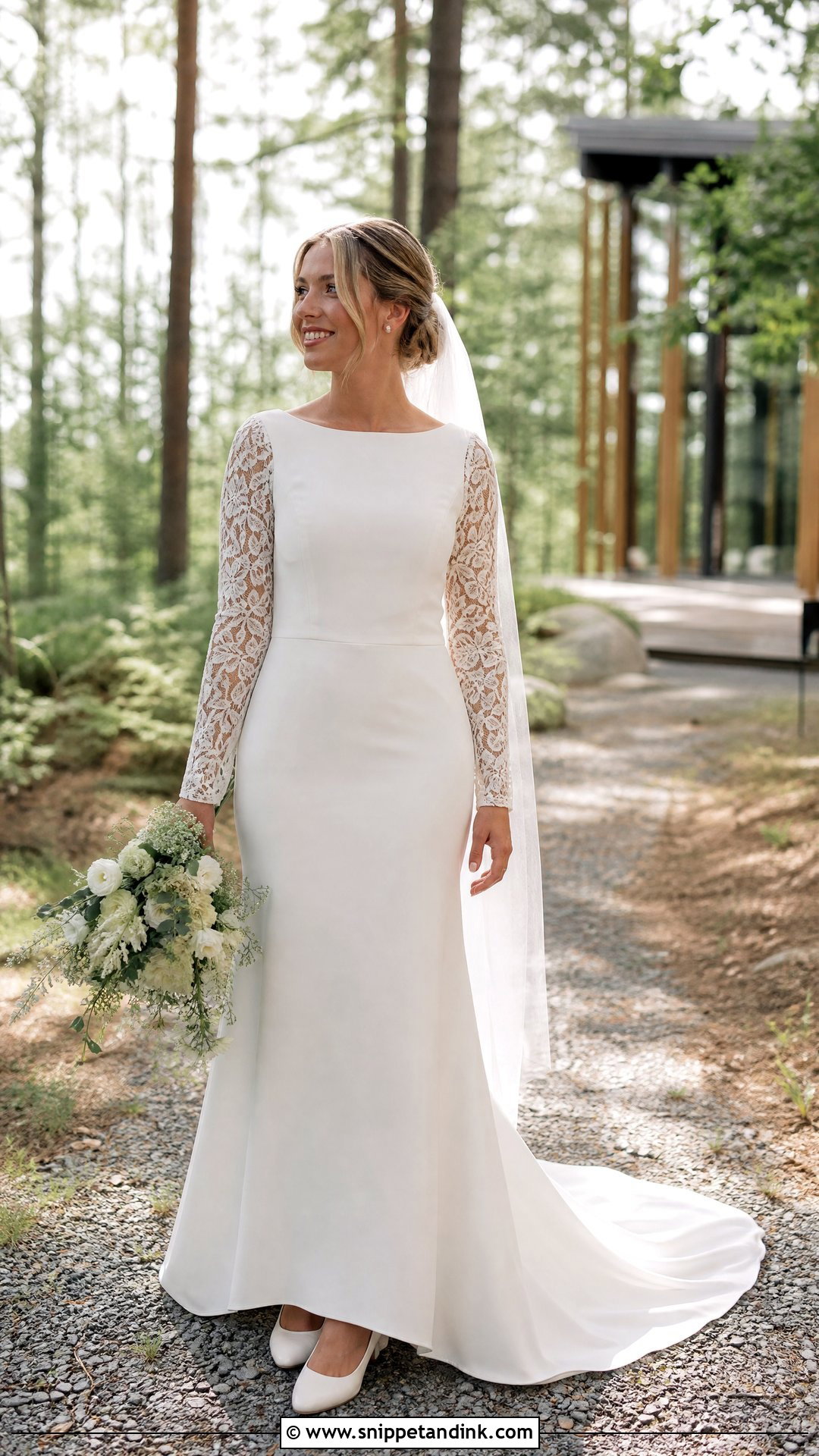
Lace feels Nordic when the pattern is open and graphic, and when there is less of it. A clean gown with sheer lace sleeves and a plain skirt, or a full lace column over soft ivory lining, shows the textile without beads or sequins. Plain leather pumps, tiny pearl studs, a light veil and waves or a loose bun keep it unfussy for woodland, coast or countryside. For more coverage, choose closely spaced motifs and a higher lining. The detail that tells you a lace dress is well made: at the seams, neckline and waist, the motifs should meet or be appliquéd across the join, not chopped in half.
8. Open Back Crepe Wedding Dress
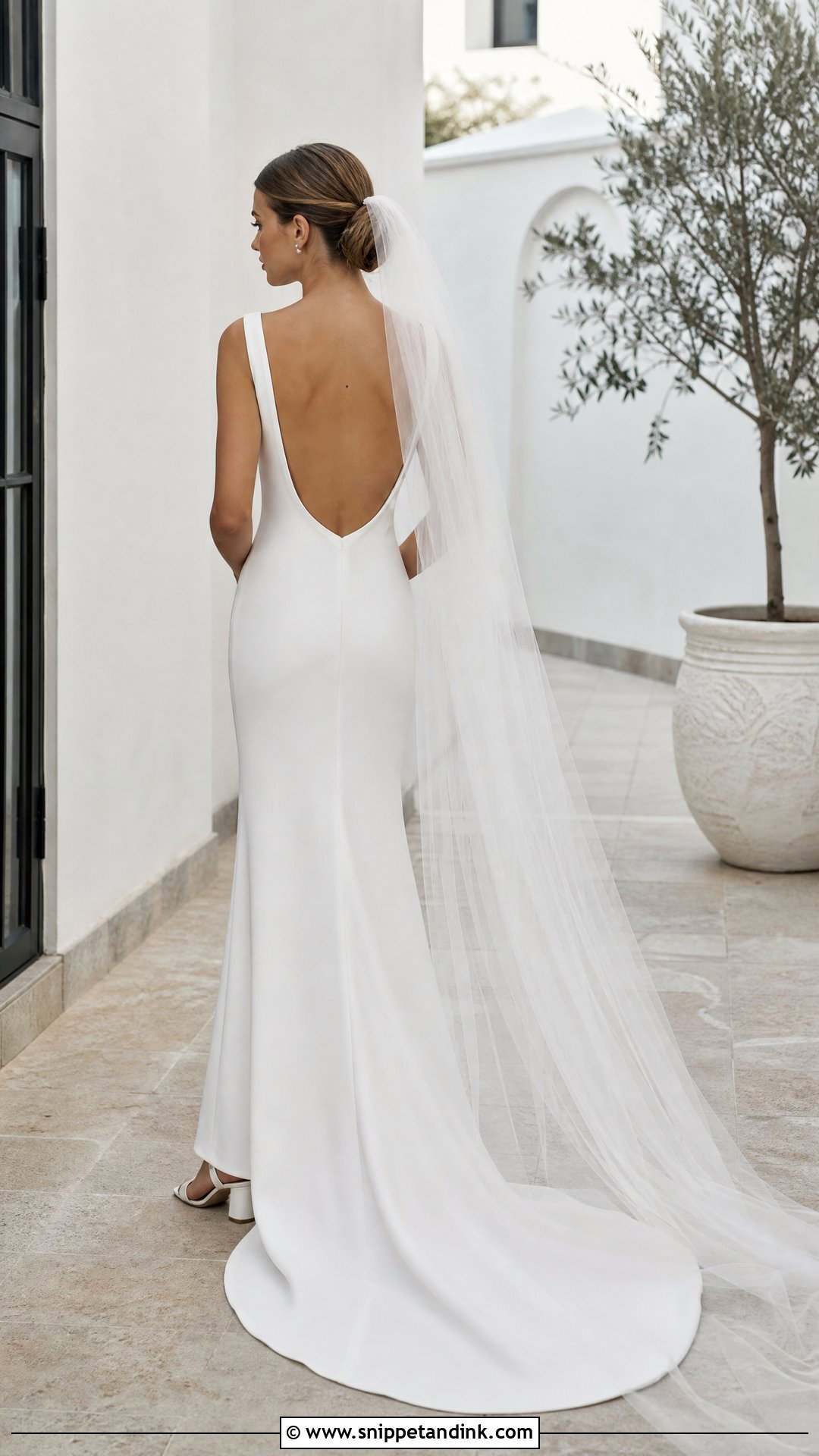
From the front, keep it calm: a bateau, scoop, or modest V-neckline. The back carries the design, dropping into a low curve, a narrow V or a soft cowl. Small earrings, a low bun and a veil set under the hair let it show. Low block heels handle stone paths, wooden floors and cobbles. An open back in crepe needs its support planned before you buy, so ask about built-in cups or adhesive options and how the alterations will handle them. The opening should lie flat standing and seated. If it bows outward when you sit, the back is cut too wide.
9. Two-Piece Scandinavian Wedding Dress
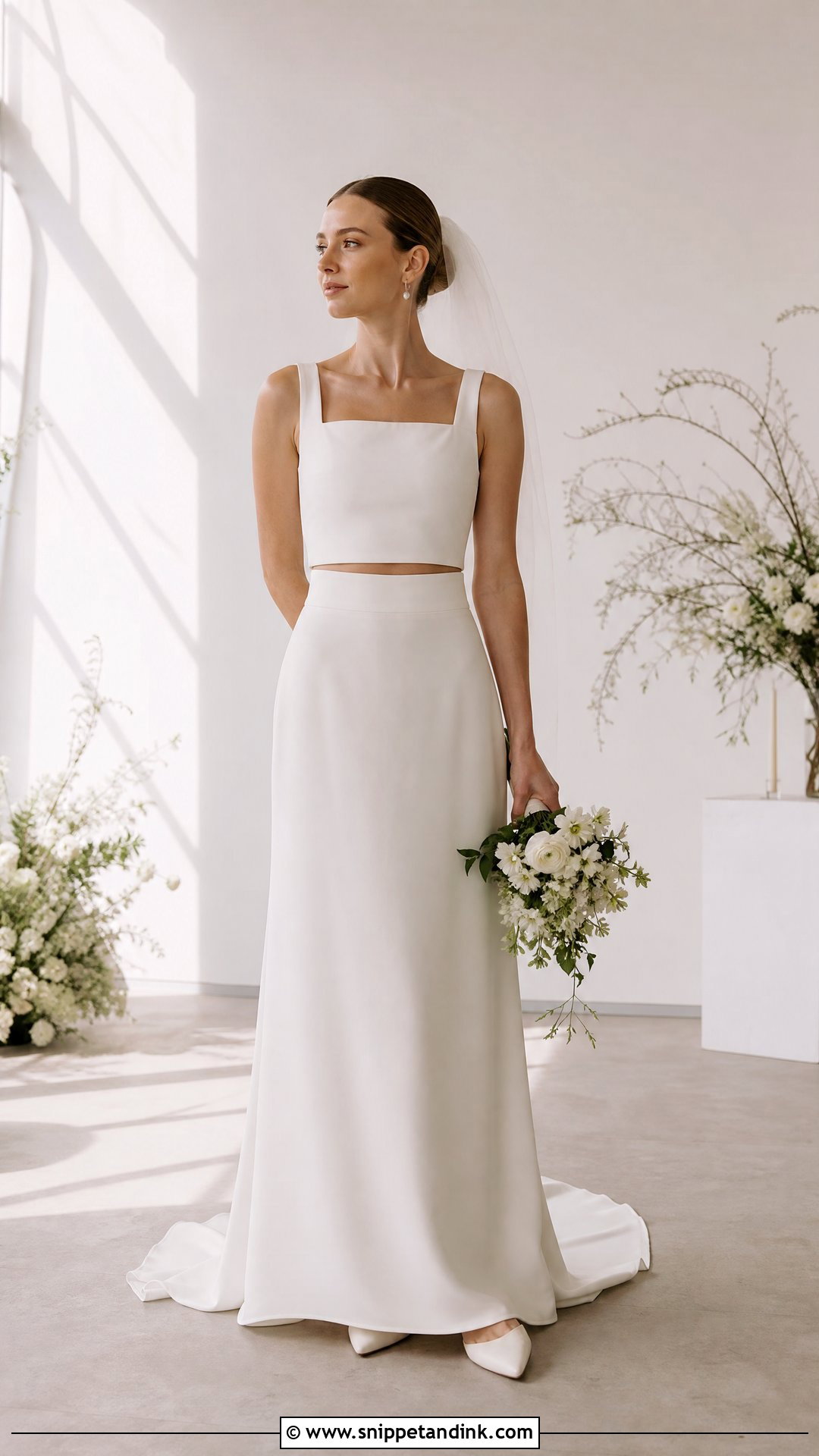
Separates are practical. A fitted silk or crepe top with a high-waisted floor-length skirt in the same ivory gives a clean ceremony outfit, while a cropped or sleeveless top feels more relaxed. Pointed flats, simple earrings and a plain veil finish it. Two pieces suit brides who wear different sizes on top and bottom, and both can be worn again. The trap is color. Two ivories from different makers almost never match, so compare the pieces side by side in daylight, checking undertone, texture and sheen, and make sure they meet at the waist without a gap unless you want one.
10. Long Sleeve Lace Column Wedding Dress
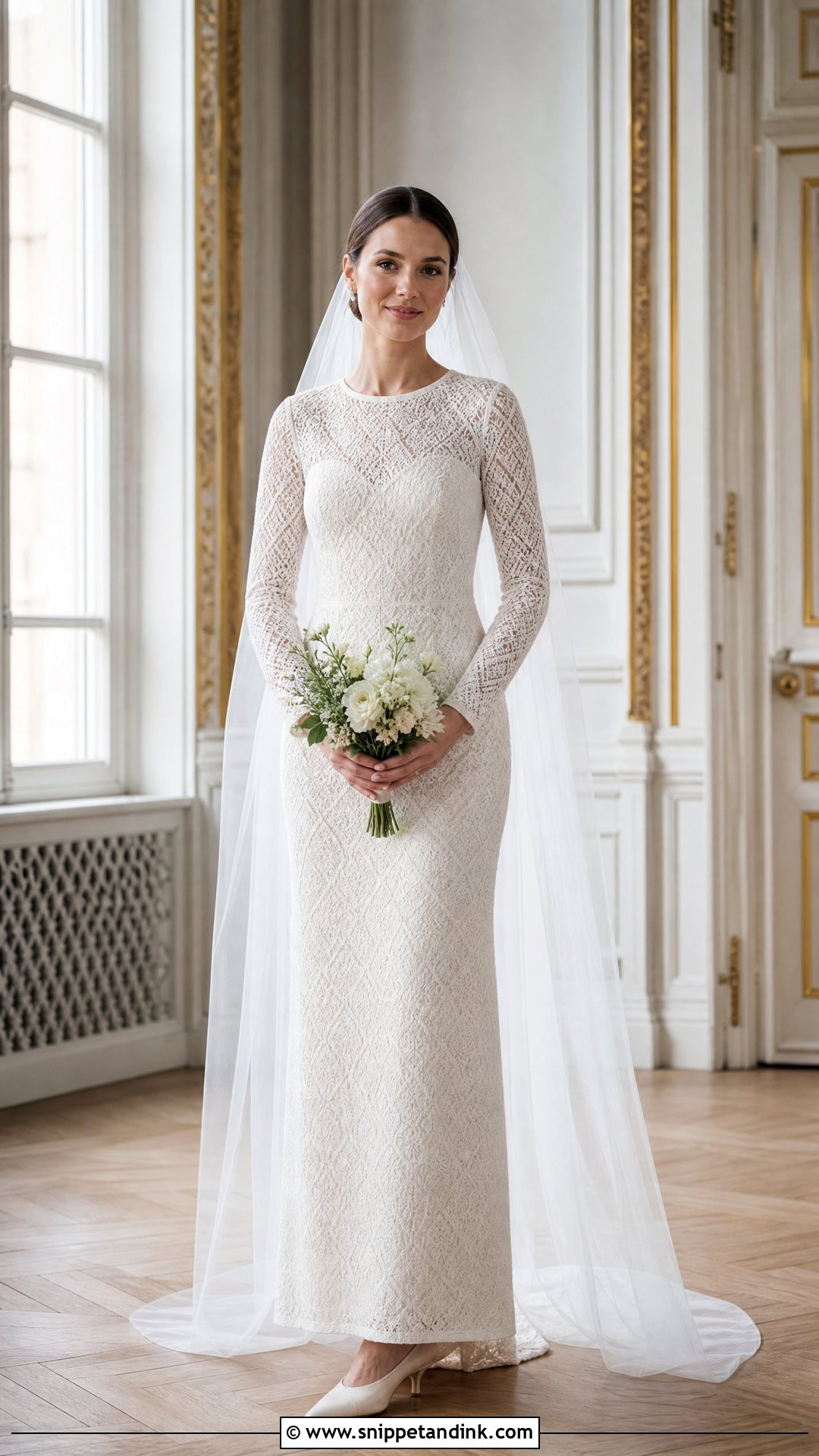
Long lace sleeves on a narrow column carry a hint of vintage. Pick a column that follows the body gently, fine botanical or geometric lace, a simple lining and almost no embellishment. Closed-toe kitten heels, a small bouquet, a center-parted bun and a plain tulle veil keep the lace in focus, for an autumn wedding, a historic room or an outdoor ceremony. A narrow column restricts your stride more than people expect. I have brides take a big step in the fitting room; if the hem pulls across the knees, a back slit or short train gives room.
11. Tea Length Satin Wedding Dress
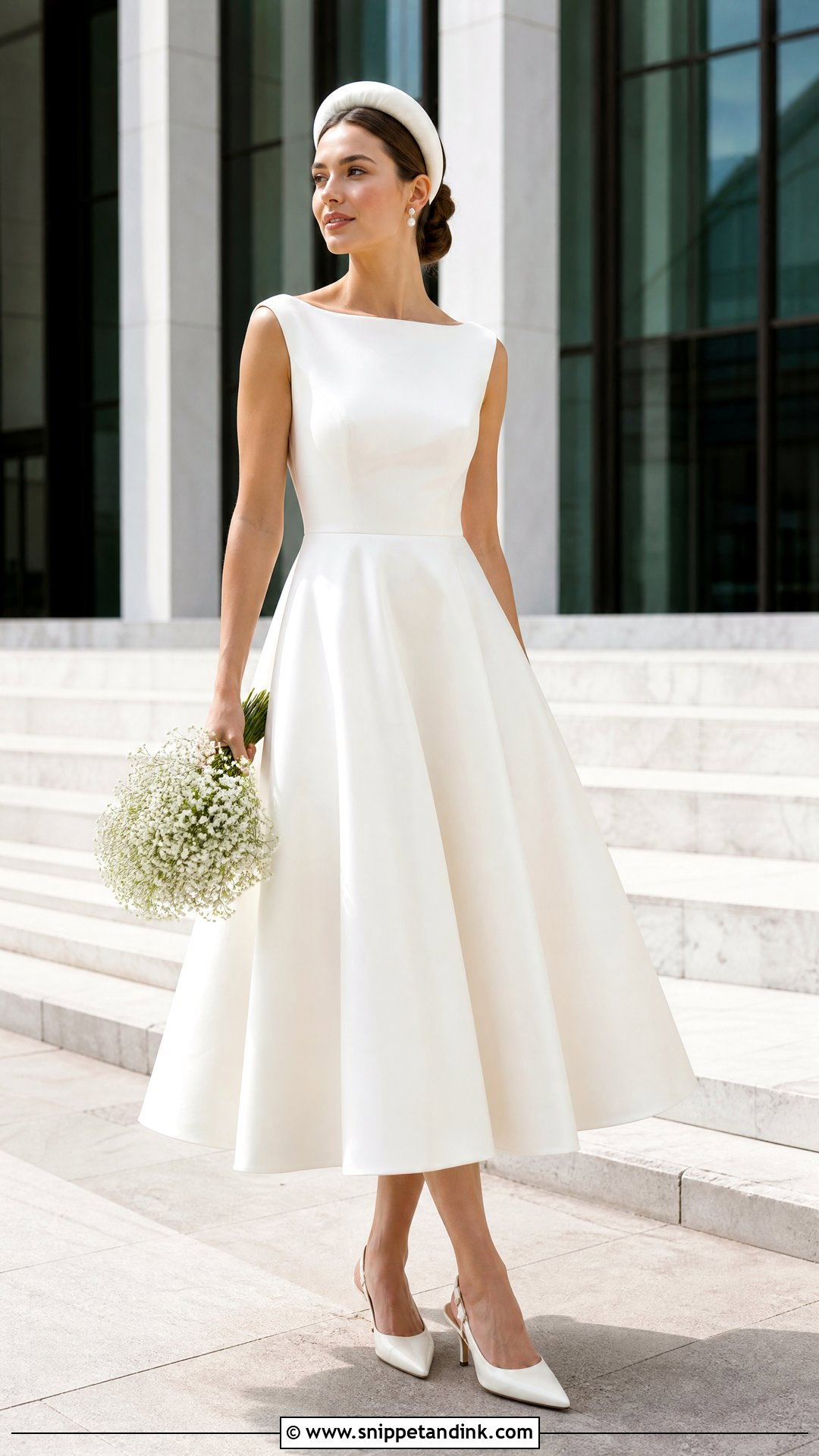
Tea length is the playful one. A fitted bodice, defined waist and soft flare ending below the knee with a bateau or scoop neck reads classic. Pointed slingbacks, sheer neutral tights in cooler weather and a compact bouquet suit it, and a short veil or sculptural headband fits the proportion better than a long veil. City halls, daytime weddings and restaurant receptions all work, and your shoes become part of the outfit. Hem length depends on your height and calf. Pin up two or three lengths in the fitting, in your actual shoes, and pick the one where the hem hits the narrowing part of the leg.
12. Winter Scandinavian Wedding Dress
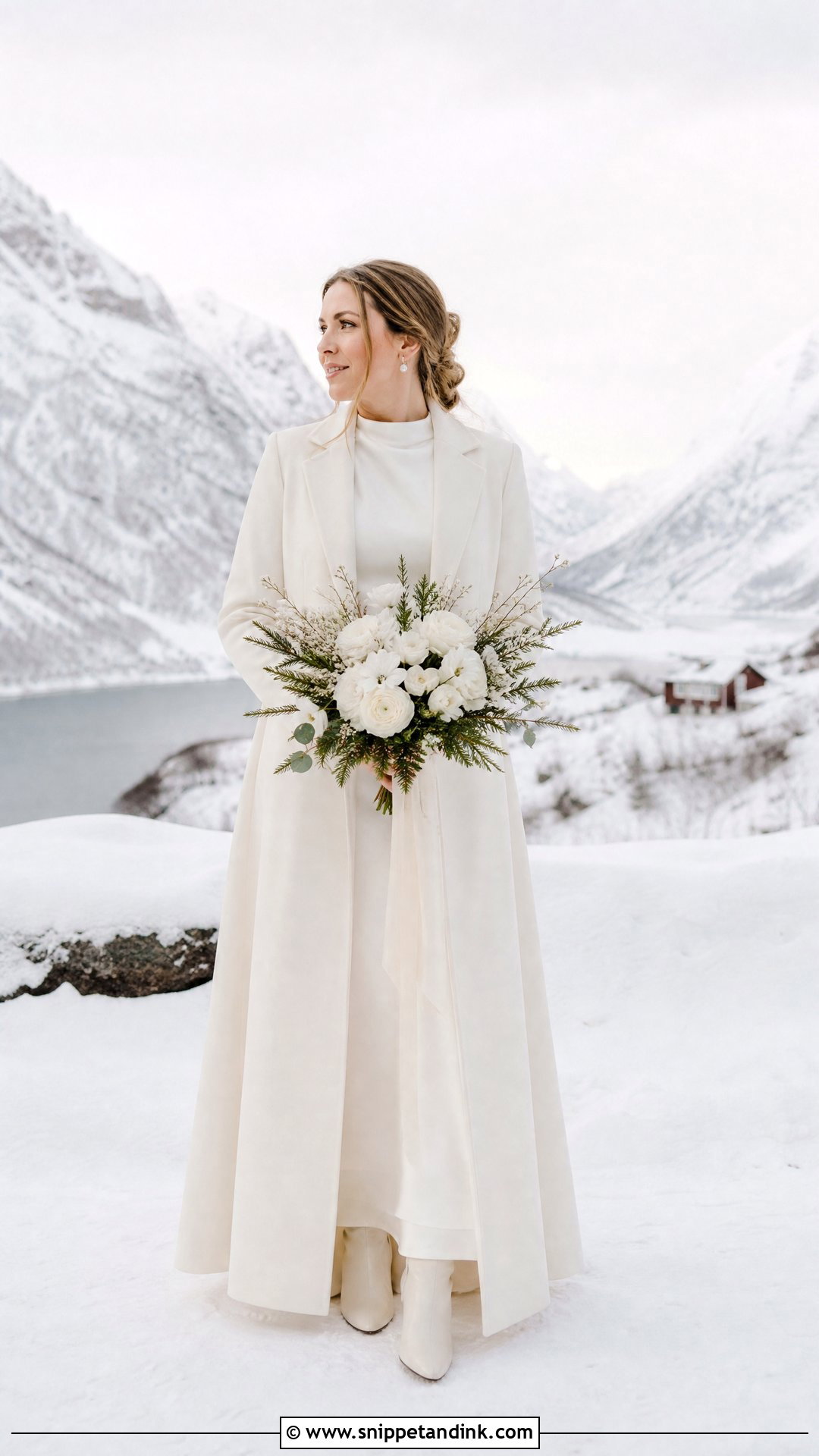
Snow needs warmth built in. Start with a long-sleeve ivory gown in heavy crepe, silk-wool or lined satin, with a high neck and full-length skirt. Add a tailored white coat, leather ankle boots and pearl earrings outside, then take the coat off indoors. White flowers with evergreen foliage suit the season without looking themed. For outdoor photos, thermal shorts, thin base layers and warm insoles make a real difference. The coat should cover most of the gown and close comfortably over it. Hold the coat against the dress in daylight too; a bright white coat makes an ivory gown look yellowed.
13. Puff Sleeve Organza Wedding Dress
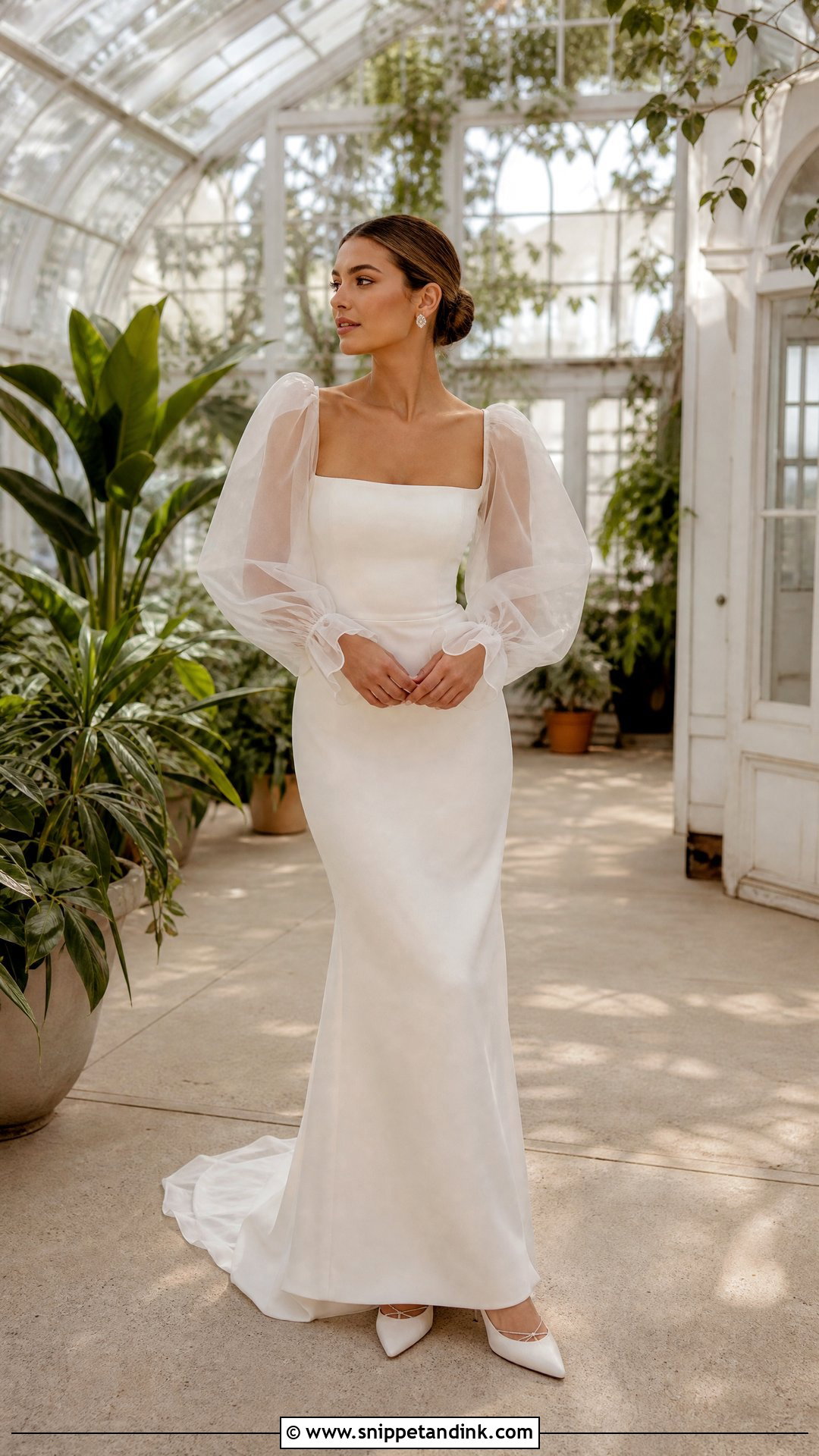
Sheer organza puffs give a streamlined dress some air. A plain crepe or satin column with detachable puff sleeves gathered lightly at the shoulder and wrist creates contrast without decoration. Slim heels, small crystal studs and a low bun complete it, and the plain veil and sleeves can come off together for a second look. Spring weddings, botanical venues and modern rooms suit it. Organza is crisp, so a puff that looks right on a hanger can look huge on a small frame. Test the elastic or fastenings by greeting guests and dancing in them.
14. Halter Neck Satin Wedding Dress
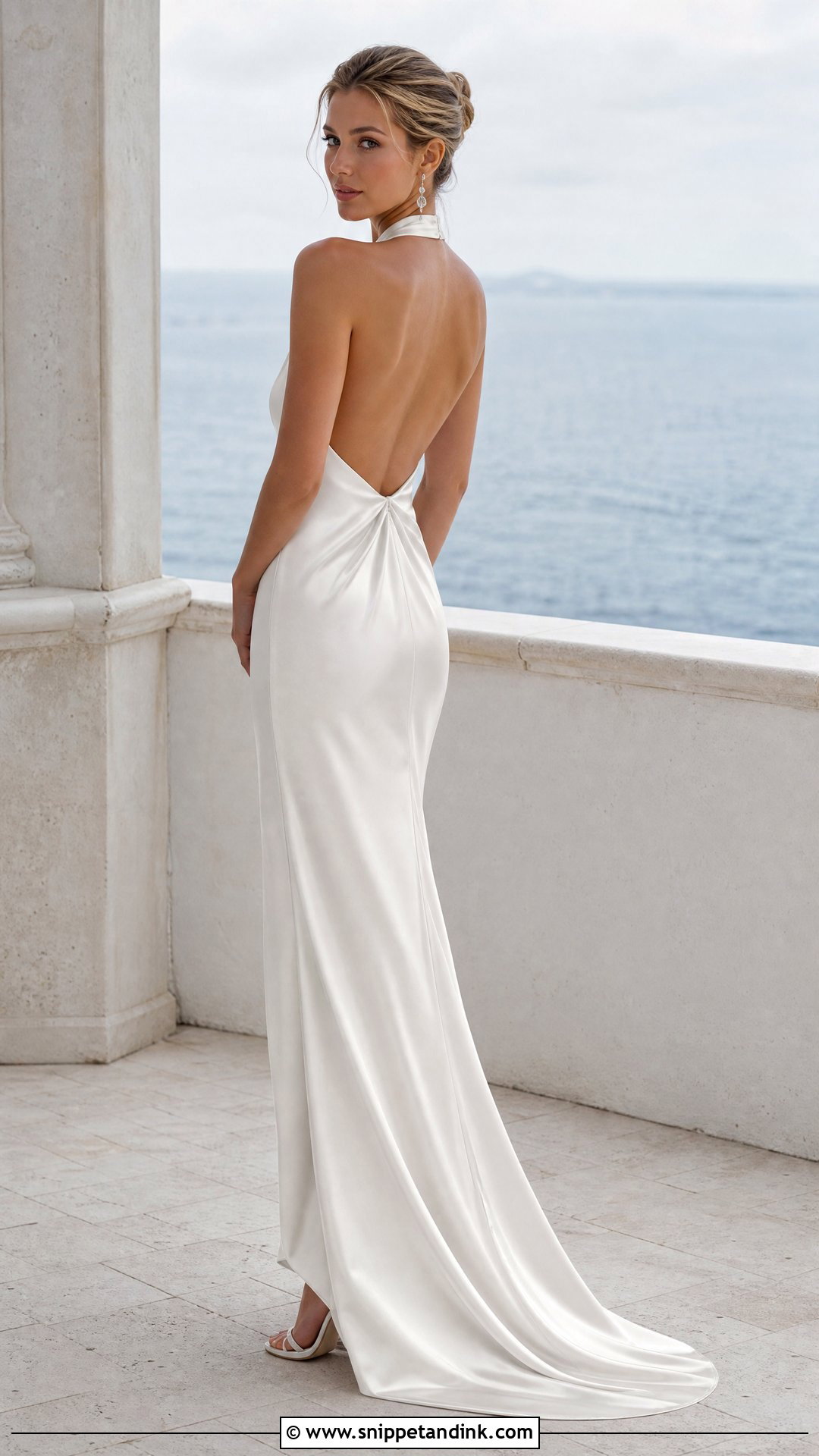
A halter-neck satin wedding dress has a confident shape. Soft draping at the neck frames the shoulders and runs into a clean column or slight A-line, with an open or partly open back. Drop earrings, a neat updo and simple strappy heels suit it; skip the necklace and keep the bouquet compact. Summer ceremonies and coastal or city venues fit well. Wear it for the whole appointment, not five minutes. A halter that relies on the neck tie to hold the bodice up gives many brides a sore neck by evening, so the support has to come from inside.
15. Drop Waist Scandinavian Wedding Dress
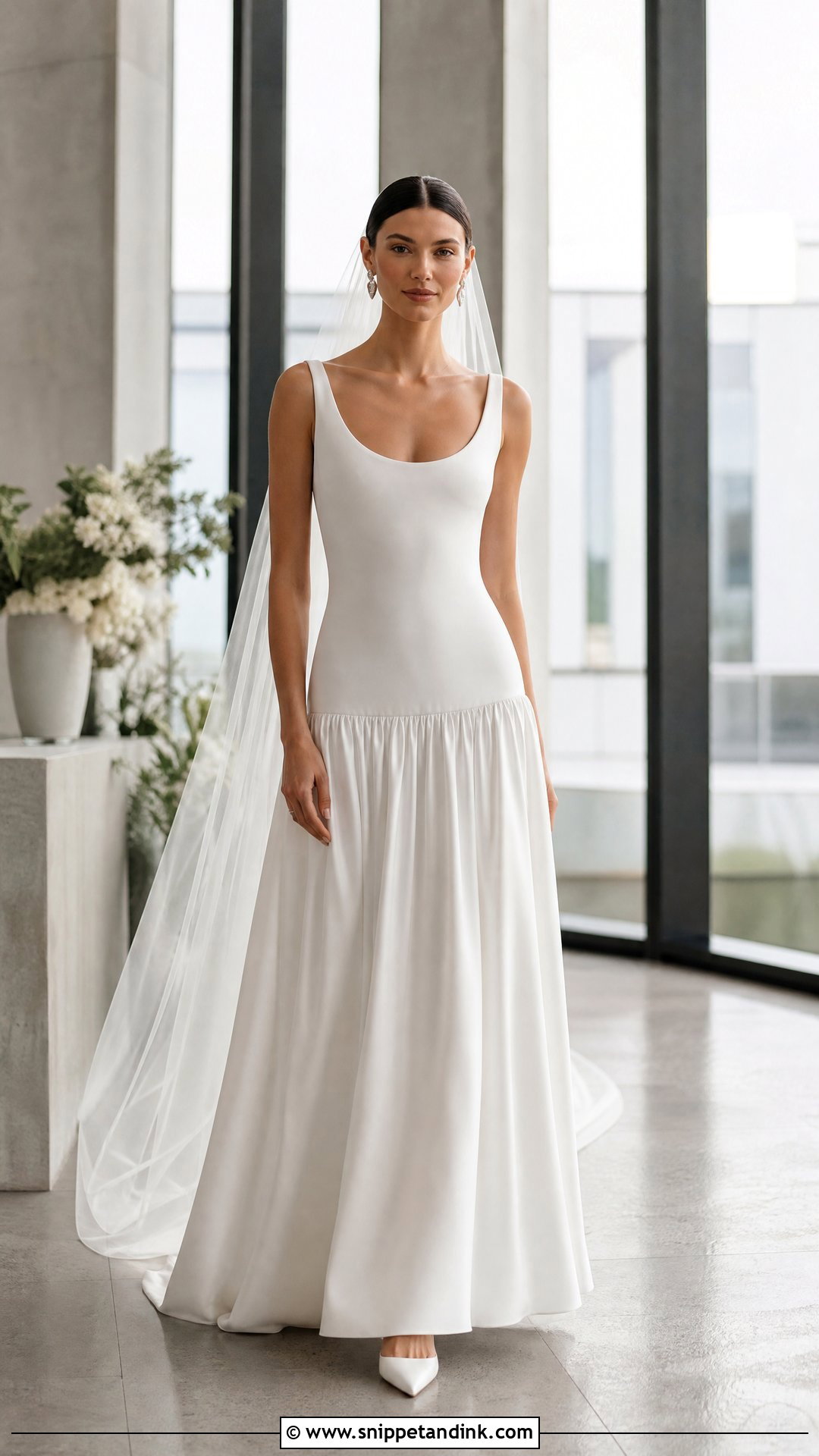
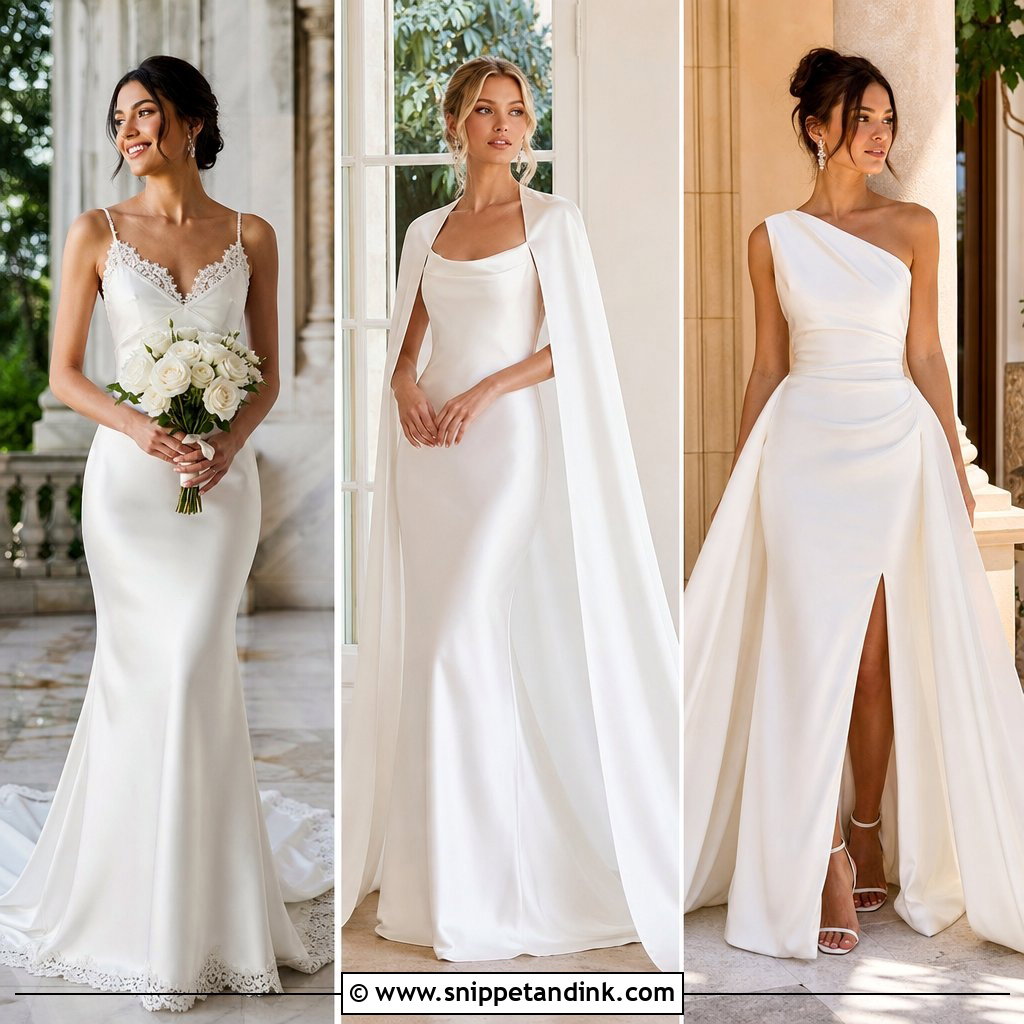
The drop waist lengthens the body and feels a bit fashion-forward. A simple bodice extends below the natural waist before meeting a soft satin or silk flare, with a scoop, square or strapless neckline. Pointed heels, silver earrings and a sheer veil on a smooth bun suit it, especially in an architectural venue. Because the seam sits low, it bunches when you sit if it is fitted wrong. Shorter torsos usually need a slightly raised drop, while tall brides can carry a longer bodice. This is one silhouette I would try on before ordering, never pick from a photo.
16. Basque Waist Satin Wedding Dress
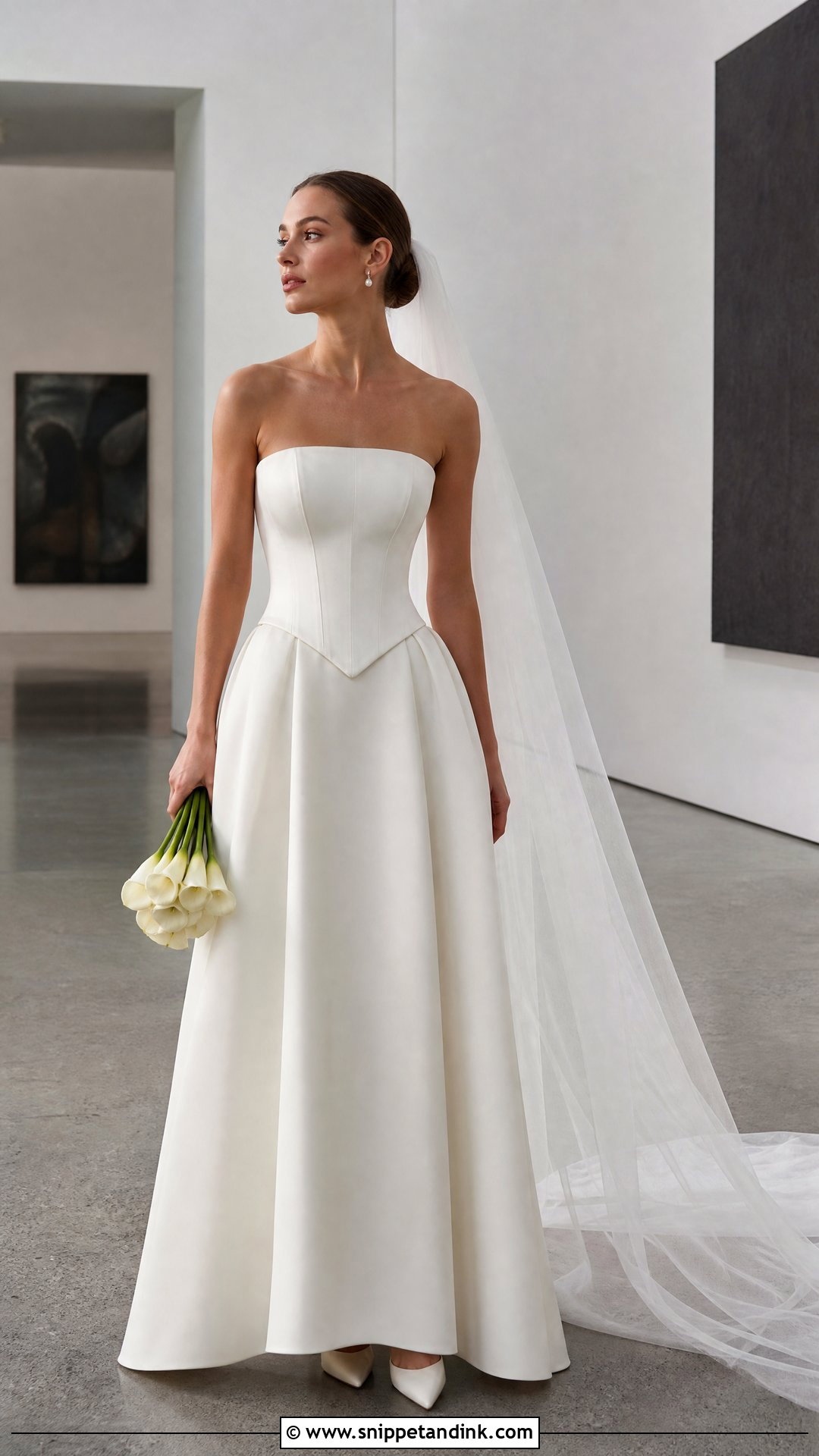
The basque waist points down at center front and gives a traditional silhouette a cleaner, modern line. A smooth strapless bodice or wide straps, little or no beading, and an A-line or full skirt let the construction show. Classic pumps, small pearls and a long plain veil complete it. The point must sit evenly at center and stay flat. I check it while the bride sits, walks and bends, because a firm bodice should support without pressing on the ribs, and a point that isn’t centered pulls the eye straight to it.
17. Minimalist Ball Gown Wedding Dress
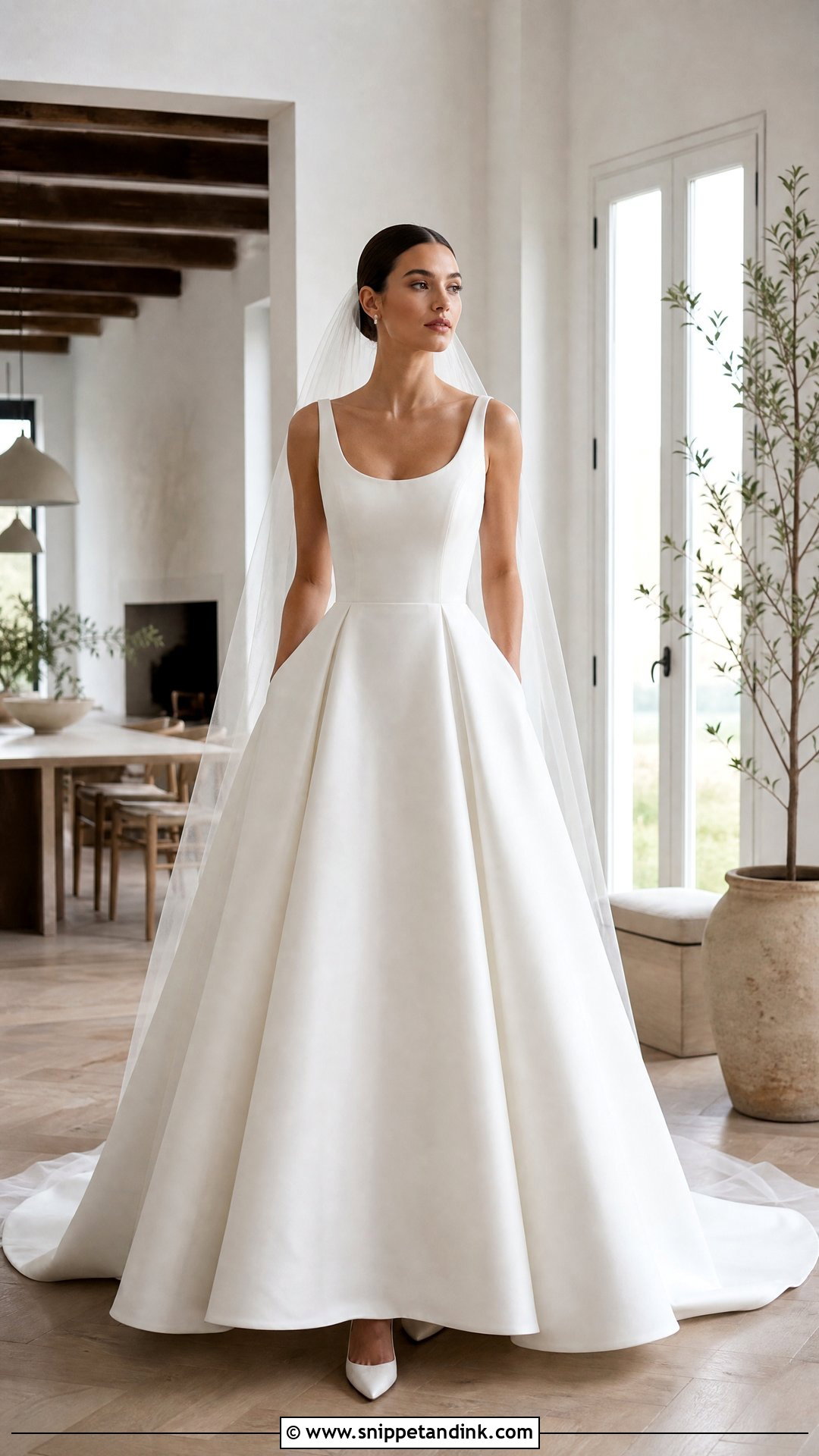
A plain ball gown makes its impact through proportion. A fitted bodice with a straight, scoop or soft curved neckline and a full skirt in matte satin or silk faille, with no heavy embroidery, is the whole design. Simple studs, pointed pumps, a long raw-edge veil and a sleek bun or ponytail keep it from turning ornate. Large modern venues, galleries and estates suit the scale. Volume has practical costs. Ask for fewer internal layers if you want to move freely, check that you fit through doors and into a chair, and confirm the bustle can hold the train securely.
18. Cape Sleeve Wedding Dress
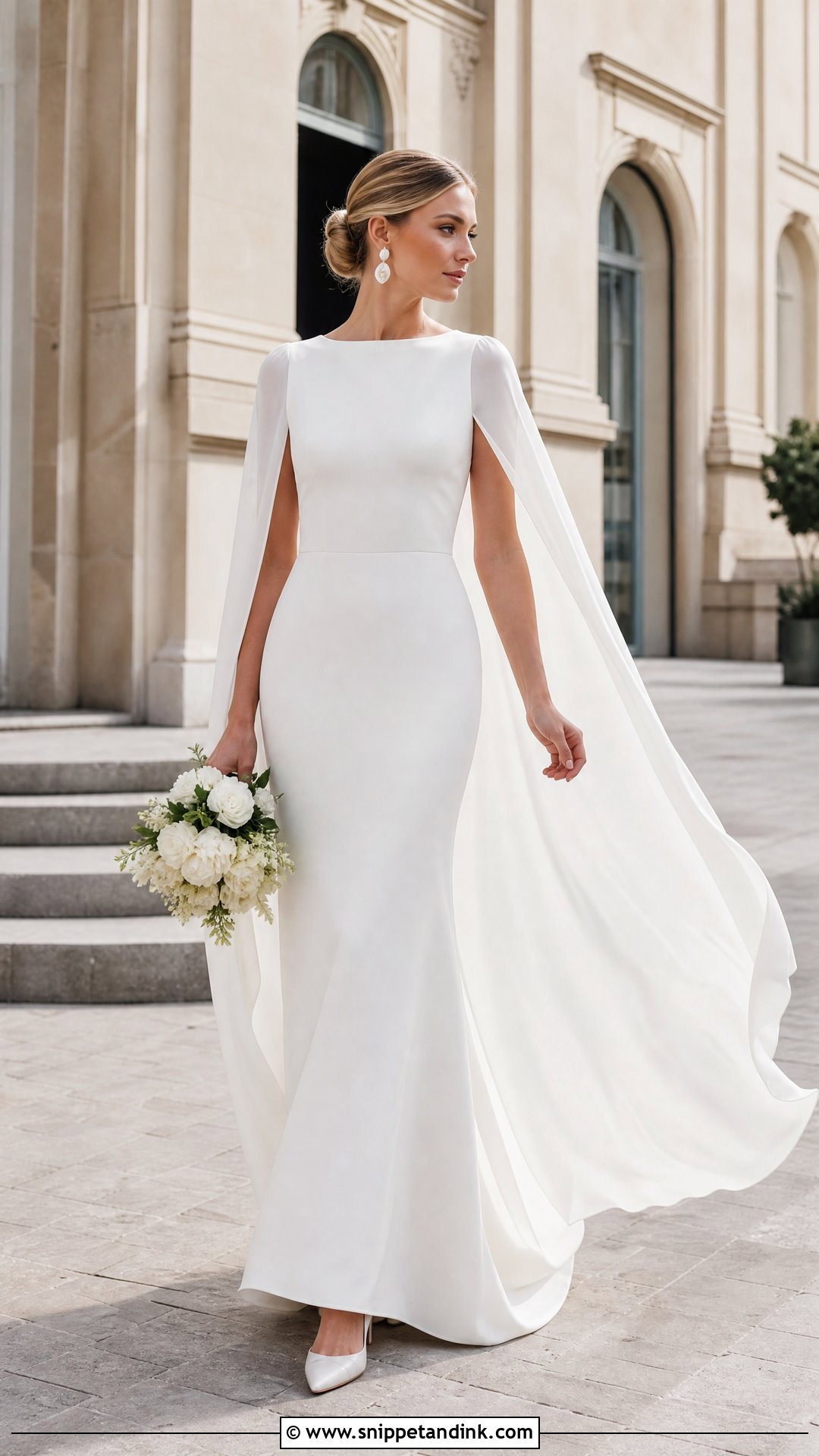
A cape gives movement and coverage while the gown underneath stays simple. Start with a slim crepe column or soft A-line and add an attached cape, or a detachable one in sheer chiffon or light satin. Low heels, sculptural earrings and a low bun complete it; a veil is optional, since the cape already moves behind you. Cool-weather ceremonies, formal city venues and breezy outdoor settings all suit it. Keep the cape lighter than the dress or it drags the shoulders back all day. On a detachable cape, check that the fastenings vanish once it’s off.
19. Icy Blue Scandinavian Wedding Dress
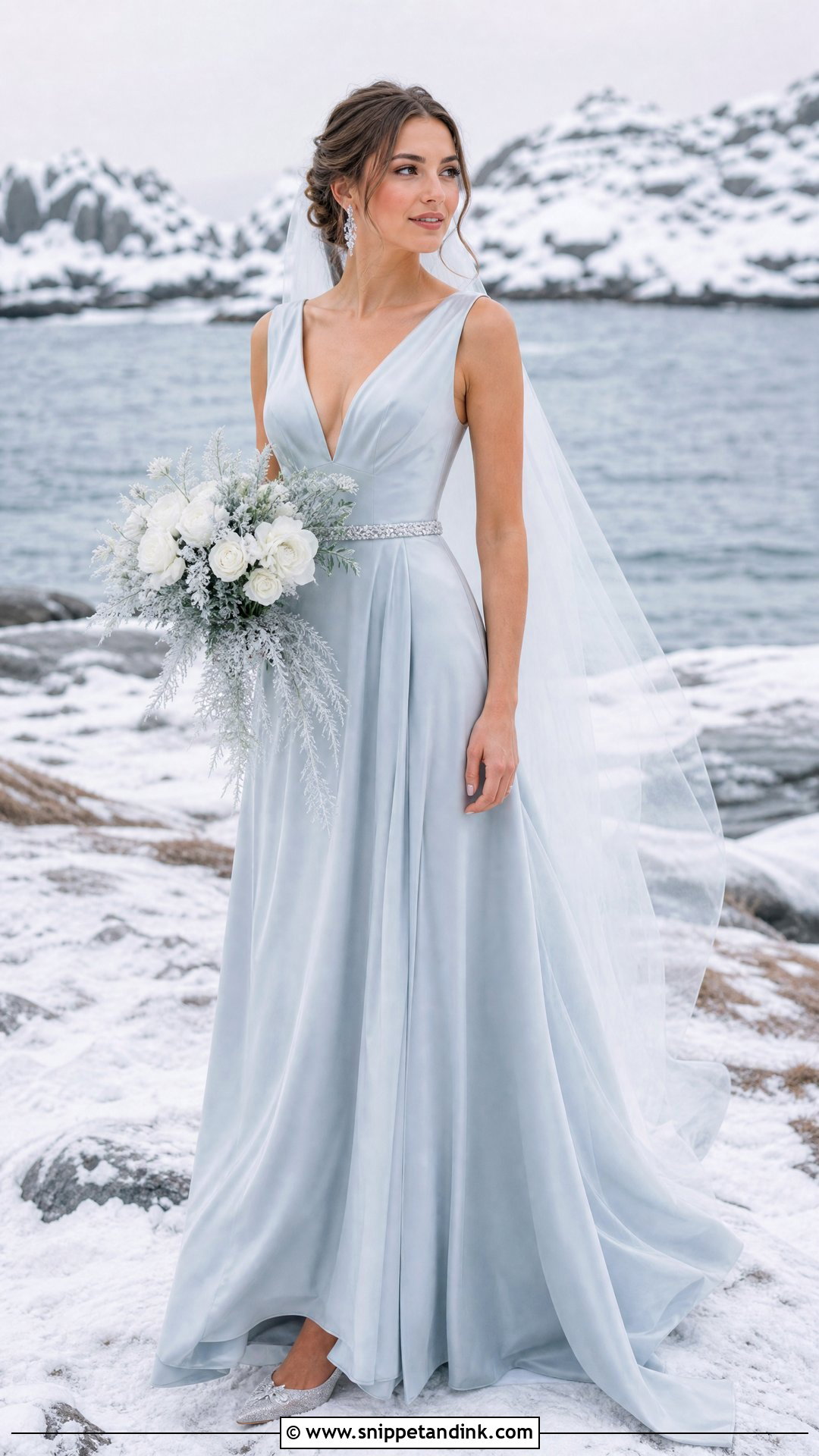
Pale blue echoes the cool light of a Nordic landscape. Choose a pale blue-gray silk gown with a simple neckline, defined waist and fluid skirt, in a shade soft enough to read bridal. Silver heels, clear crystal earrings and a sheer ivory or matching veil, plus white flowers and silvery greenery, keep the palette restrained. Winter and coastal weddings suit it. Pale blue shifts more than any other bridal color. Under warm indoor bulbs it can turn grey or even slightly green, so look at the fabric in daylight, indoors and in a phone photo before deciding. Keep makeup fresh and neutral.


20. Short Scandinavian Wedding Dress
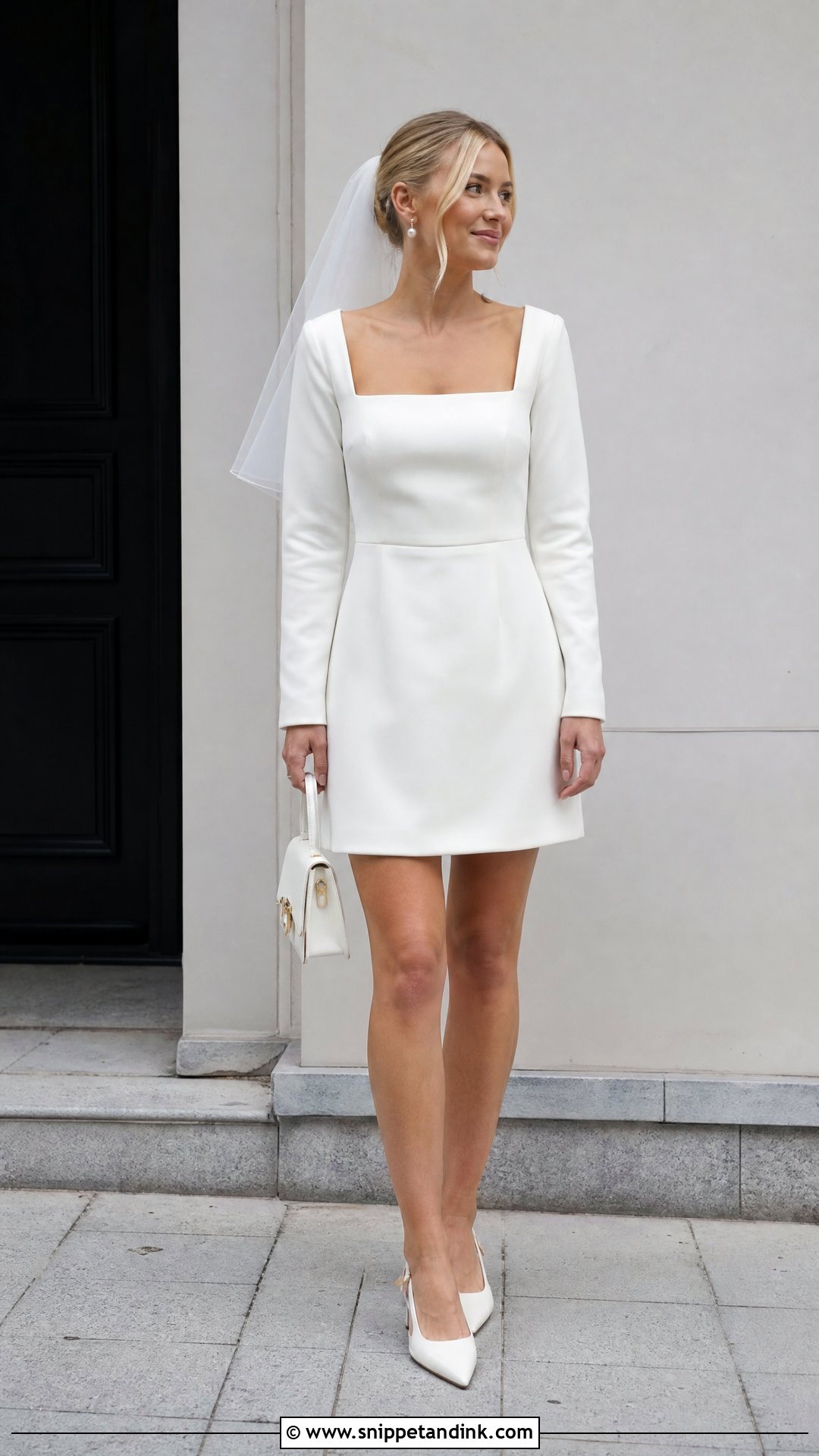
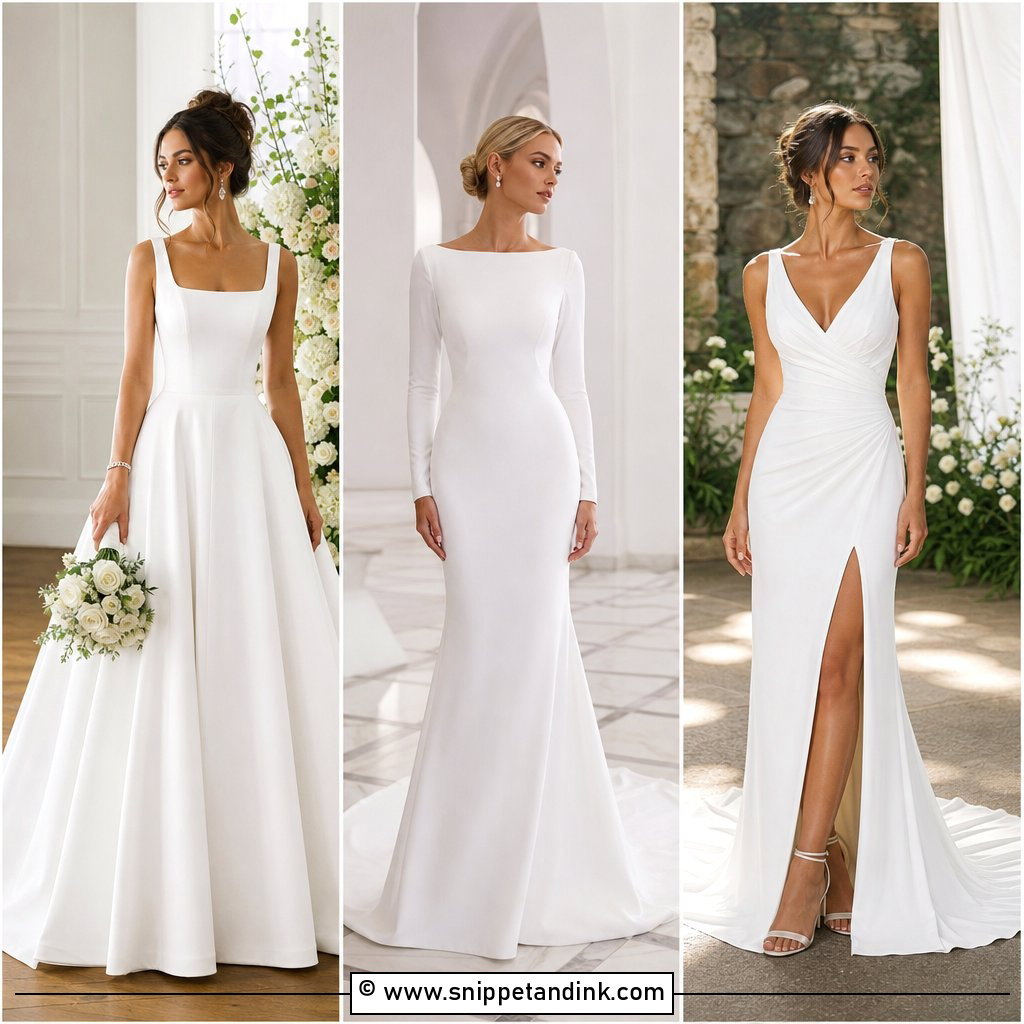
Short dresses work for a civil ceremony, a relaxed reception or a second outfit. A clean mini or above-knee shift with long sleeves, a high neck or a structured square neck keeps it refined, with low slingbacks, pearl earrings and a small top-handle bag. Sheer tights add coverage in cooler months, and a short veil or simple headband makes it clearly bridal. Choose substantial crepe, satin or textured jacquard, because thin fabric shows every crease after sitting. Sit down in the fitting room. A mini that rides up when you sit is cut too tight, and a slightly relaxed fit looks more current anyway.
Borrowing From Nordic Bridal Tradition Without Wearing a Costume
Many brides drawn to this look have Nordic family somewhere, and a small traditional detail can mean more than any trend. The trick is picking one and letting the dress stay modern around it.
- A bridal crown. Swedish brides historically wore a crown, sometimes of myrtle, and Norwegian bridal crowns were often silver with small dangling ornaments. A delicate metal or fresh myrtle circlet nods to it without looking like a museum piece.
- A silver brooch. In Norway, silver jewelry worn with the national dress is often handed down, and pinning an heirloom brooch at the neckline of a plain crepe dress works well.
- Coins in the shoes. A Swedish custom has the bride carry a silver coin from her father in one shoe and a gold coin from her mother in the other. Ask your shoemaker for a thin insole pocket so it doesn’t rub.
- Walking in together. In Sweden couples often walk down the aisle side by side, which changes the train length you need, since nobody walks behind you.
If you want to wear a full regional costume for part of the day, talk to the family member who owns it early. Old wool and embroidery may need cleaning or letting out, and that takes time.
What Makes a Plain Dress Look Expensive
Scandinavian bridal style rests on simplicity, comfort and a dress that still feels like you. A crepe column, a silk slip, a structured satin gown or a short dress can all carry it when the fabric is good and the tailoring is precise. Shoes, veils, coats, jewelry and hair should back the dress up, never compete with it. Romantic lace, soft sleeves, a hint of color and even real volume can still feel restrained. If you can move freely, forget what you are wearing for whole stretches of the day and still recognize yourself in the photos, you chose well.
You'll Like These Ideas:






Leave a Reply