
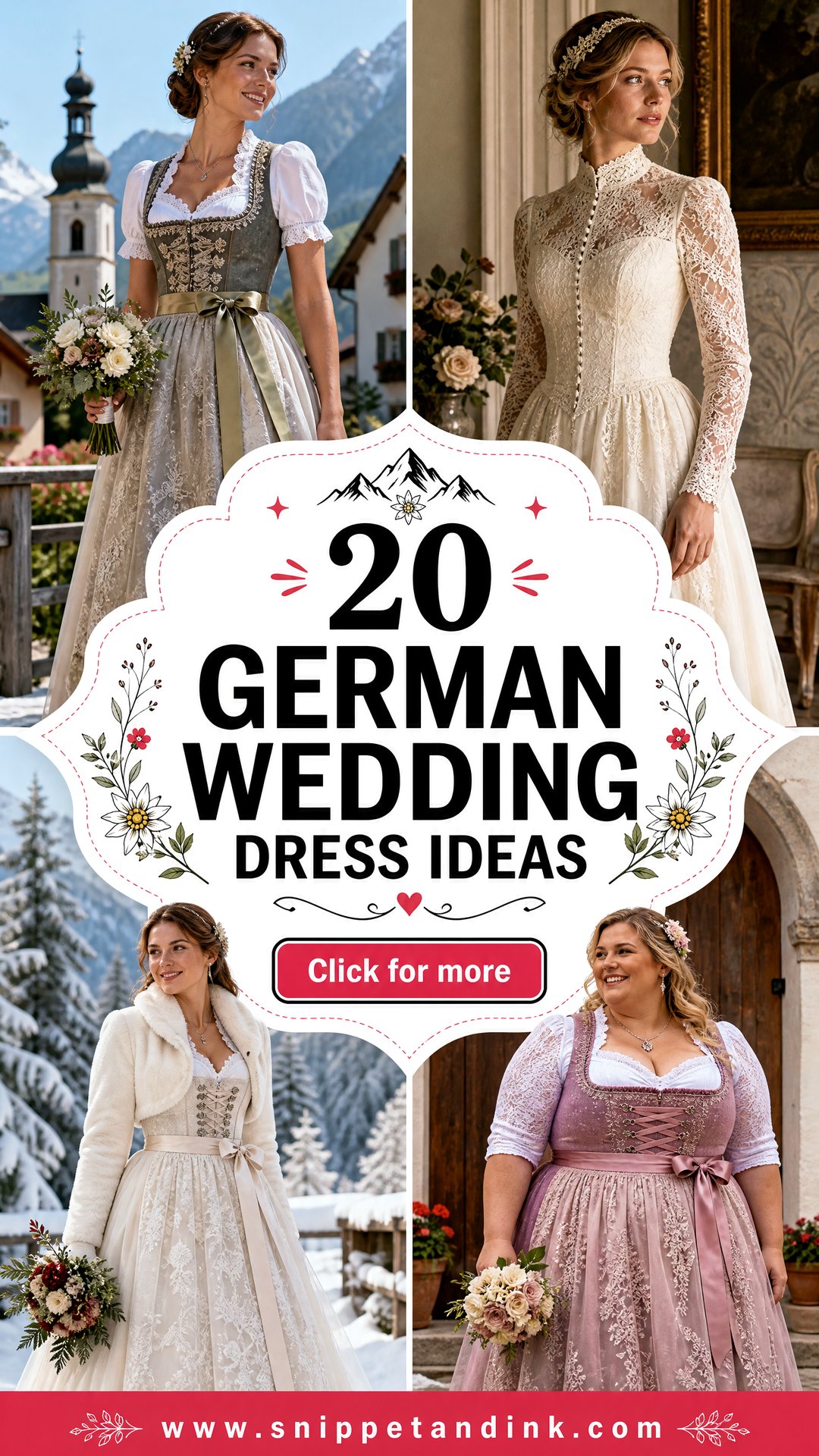
German brides don’t all wear dirndls. The dirndl belongs mainly to Bavaria and the south, and plenty of German weddings happen at a registry office in Hamburg or a castle in the Rhineland where a clean gown makes more sense. So the ideas below run from proper bridal dirndls to minimalist city dresses, vintage lace, and gowns cut for castles, forests and mountain lodges. I’ve styled each one head to toe, with shoes, jewelry, hair and a layer for the weather, because that’s where most outfits fall apart. Take the regional details you love and leave the rest; a little folk character sits well next to understated European elegance, and too much of it starts to look like Oktoberfest.
Standesamt, Church or Both? Dressing for Two Ceremonies
In Germany only the civil ceremony at the Standesamt makes a marriage legal, so many couples have two events: a short registry ceremony, sometimes days earlier, and a church service or a bigger celebration afterwards. That changes how I plan a bride’s wardrobe. The registry outfit is usually the one I keep simple, a midi dress or a bridal dirndl, because the room is small, the ceremony is brief and you’ll often walk straight out to a cafe or restaurant afterwards.
The second day is where the long gown, the veil and the train belong. If you only want one dress, choose something that works in both settings, like a midi with a removable overskirt or a dirndl with a long skirt, and change the hair and accessories between the two.
Where to tie the apron bow
Dirndl wearers in Bavaria read the apron bow. Tied on the left traditionally signals a single woman, and tied on the right signals one who is married or spoken for, so most brides tie theirs on the right. A bow tied at the center front is usually read as a young girl’s, and one at the back is associated with widows and serving staff. It’s a small thing, but older relatives will notice.
1. White Bridal Dirndl Wedding Dress
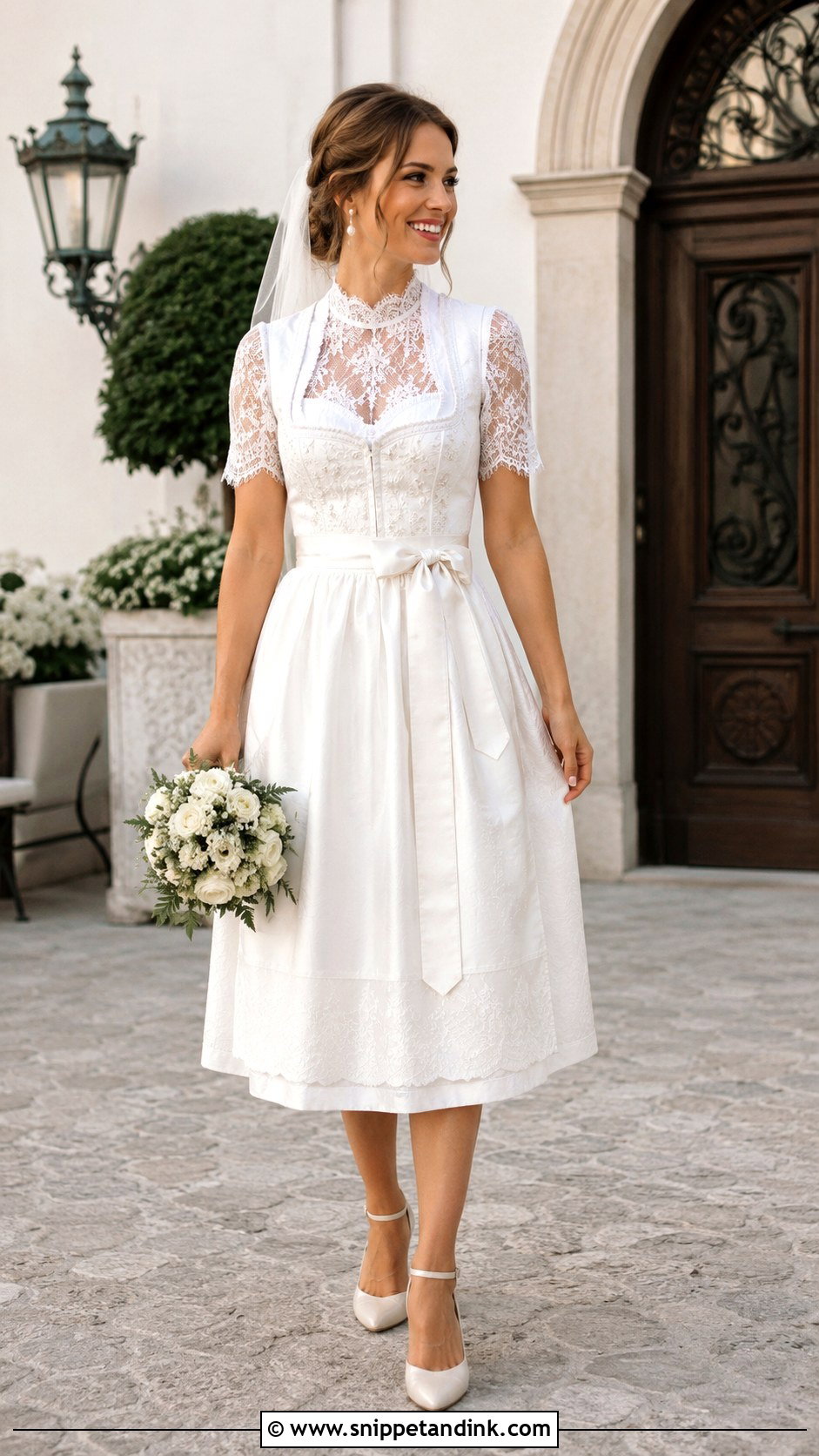
White dirndls for brides are cut differently from the festival versions: longer, finer cotton or silk, and a bodice that actually supports. I’d pick a midi or ankle-length skirt, a crisp white blouse, a finely embroidered apron, lace sleeves and pearl buttons down the bodice. The thing I check first is the bodice closure. Hooks or buttons should meet without pulling into little gaps, and if they don’t, the size is wrong no matter what the label says. Ivory block heels or embroidered flats, pearl drops, a small white bouquet with greenery, and a low braided bun with a short veil pinned underneath make it read clearly as a bride.
2. Ivory Lace Dirndl Wedding Dress
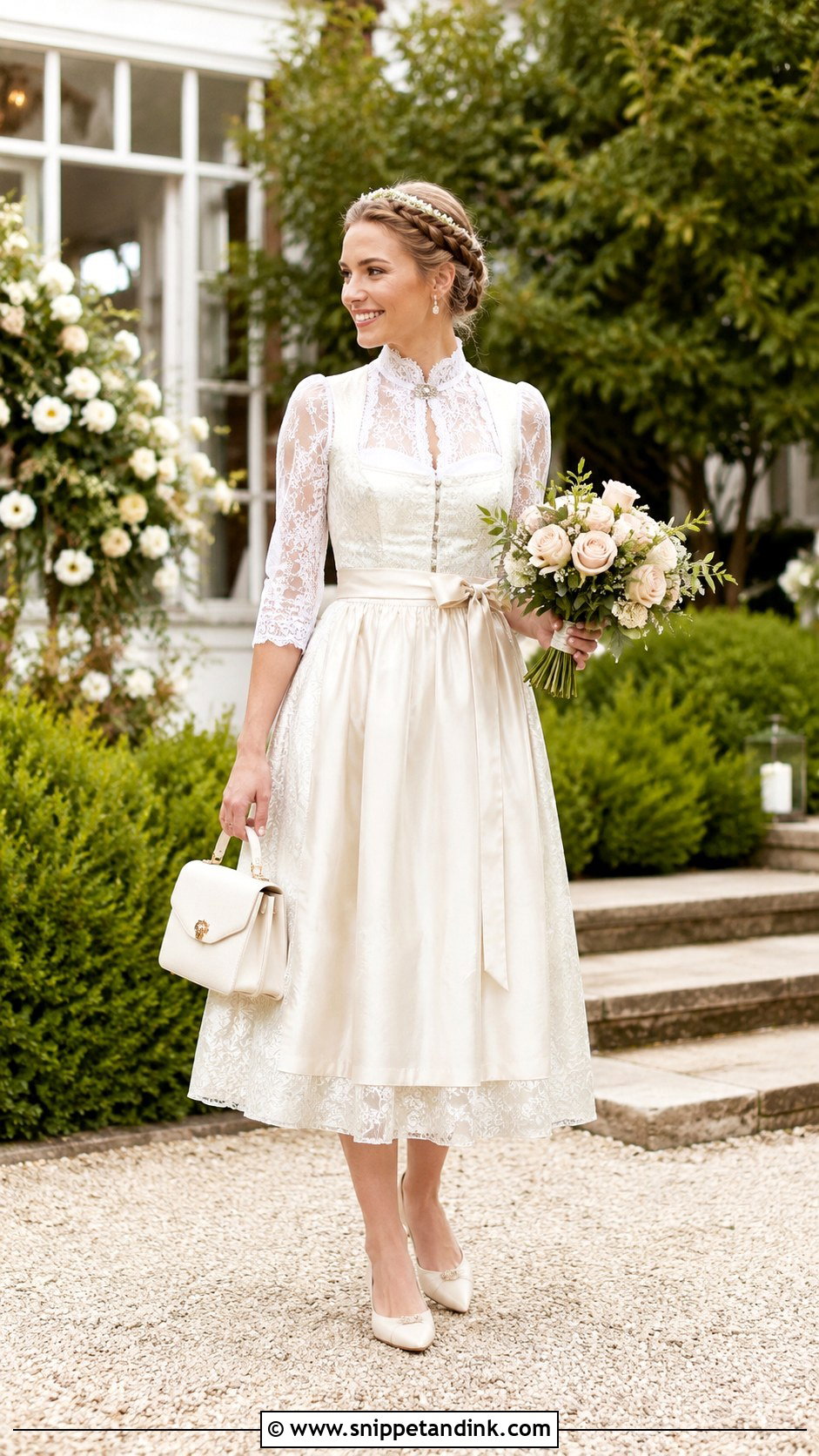
Ivory takes daylight more kindly than bright white, which matters with a dirndl because you’re usually photographed outdoors. Start with a fitted jacquard bodice over a high-neck lace blouse, then add a full midi skirt and a satin apron with a faint sheen. Keeping every layer in the ivory family lets the textures do the work. Watch the blouse, though: lace under a tight bodice can scratch along the armhole by evening, so try it on for an hour, not five minutes. Pointed cream flats handle garden paths and cobbles, and a loose braided crown with a few white blossoms, antique-style earrings and a small posy of roses and chamomile finish it.
3. Long Bavarian Wedding Dirndl
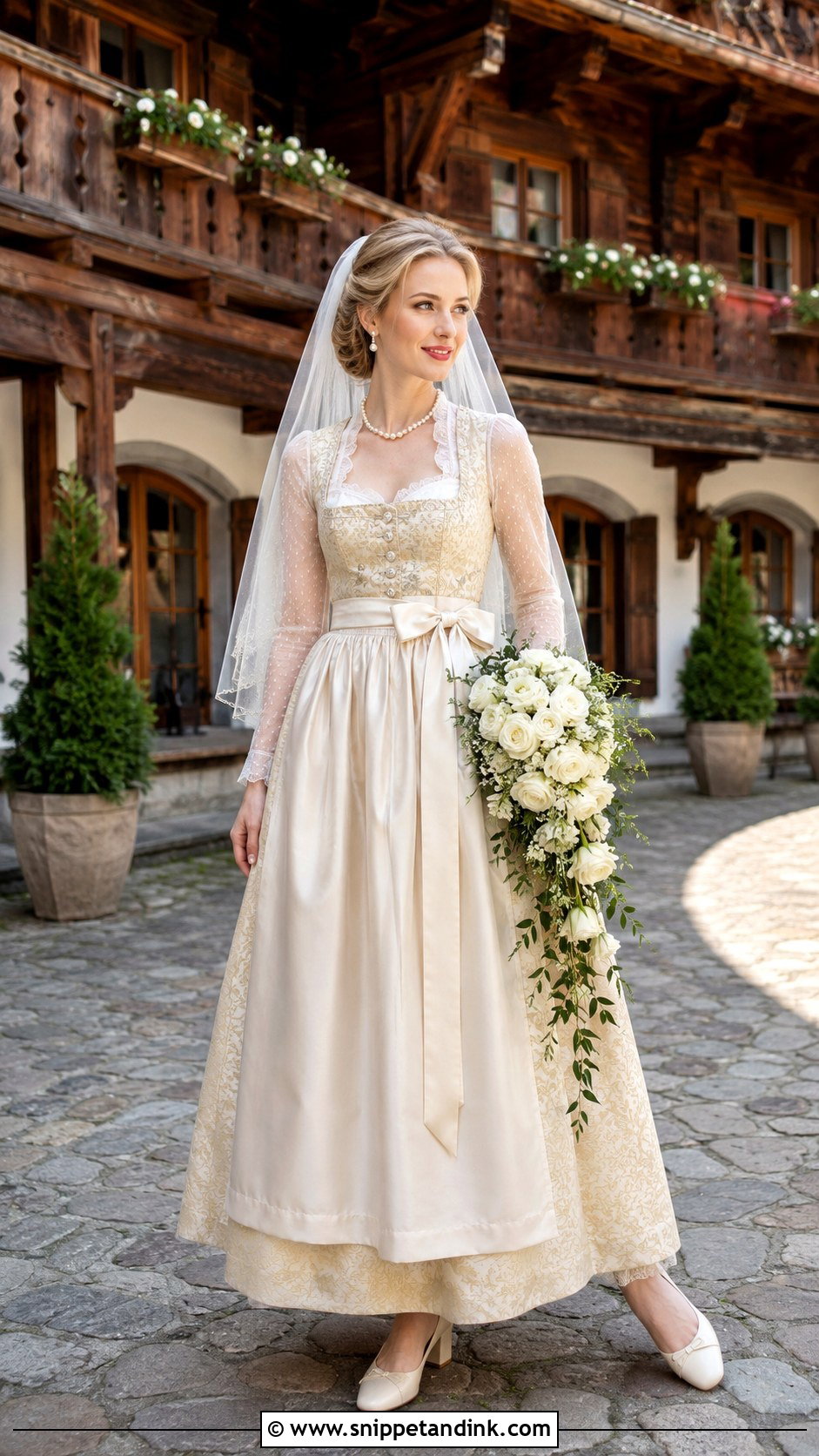
A full-length dirndl turns the outfit formal in one move. The skirt should skim the floor with gentle fullness; too much petticoat and you lose the line of the bodice. Cream brocade for the bodice, a sheer long-sleeve blouse and a silk apron one shade lighter give a quiet contrast. Long hems need stable shoes, so I’d go for closed-toe block heels and have the skirt hemmed while wearing them. A waist-length veil slips in beneath a smooth twisted bun and leaves the bodice detail visible. Carry a cascading bouquet of white roses, wildflowers and trailing greenery, and keep the jewelry to pearl earrings and one slim bracelet.
4. Blush Pink Bridal Dirndl Wedding Dress
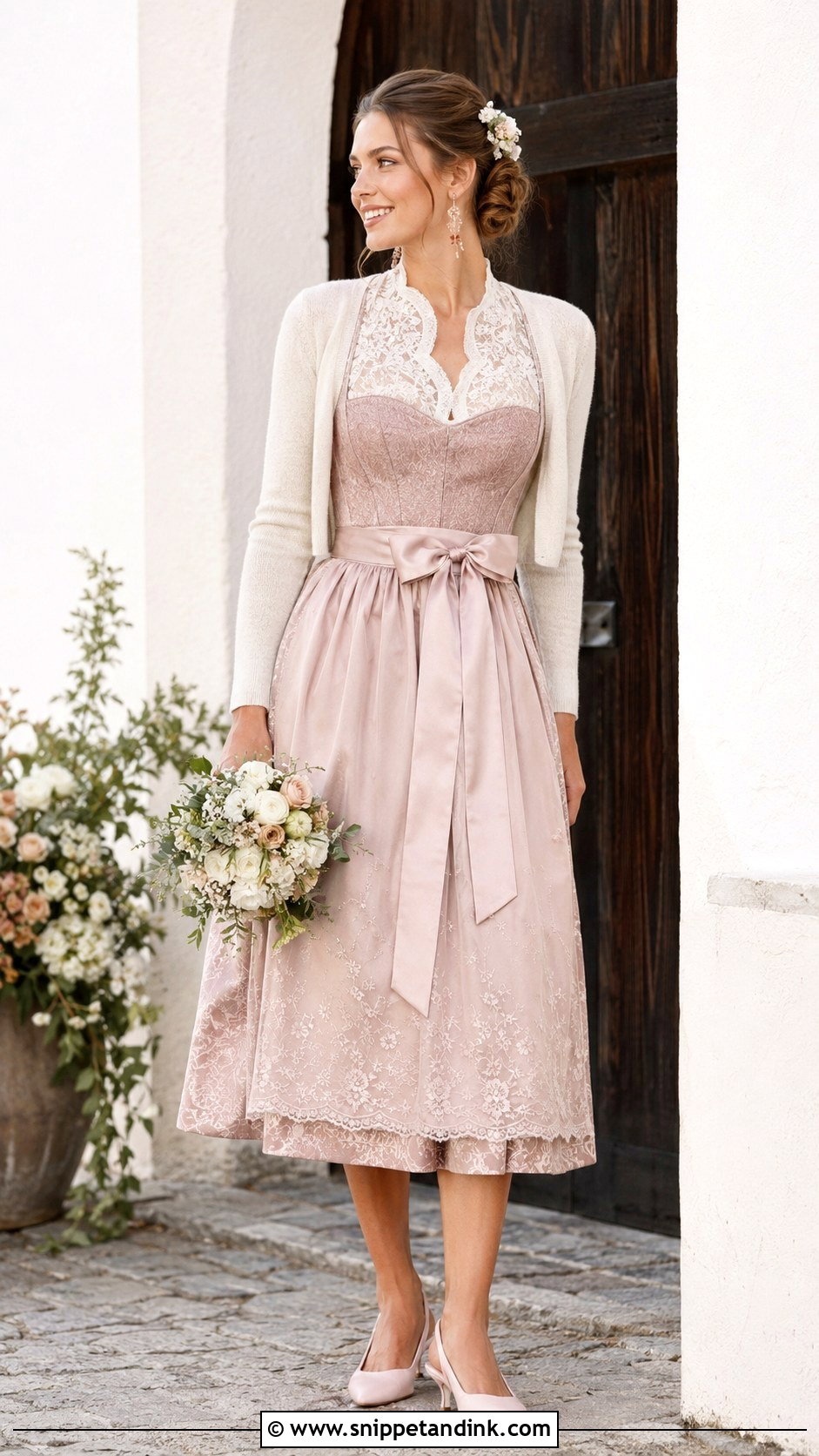
Blush is one of the easier colors for a bridal dirndl because the cream blouse keeps it from turning sugary. Choose a dusty pink dirndl with a cream lace blouse, a fitted sweetheart bodice and a tonal satin apron. A midi hem shows off pale pink slingbacks. I’d hold back on colored accessories and carry an ivory bouquet with only a few muted pink roses. Dusty pink shifts a lot between brands and dye lots, so if bridesmaids are matching you, order everything at the same time. Half-up waves with a floral comb, rose-gold earrings and a cropped cream cardigan for the evening suit a relaxed countryside party.
5. Sage Green German Wedding Dirndl
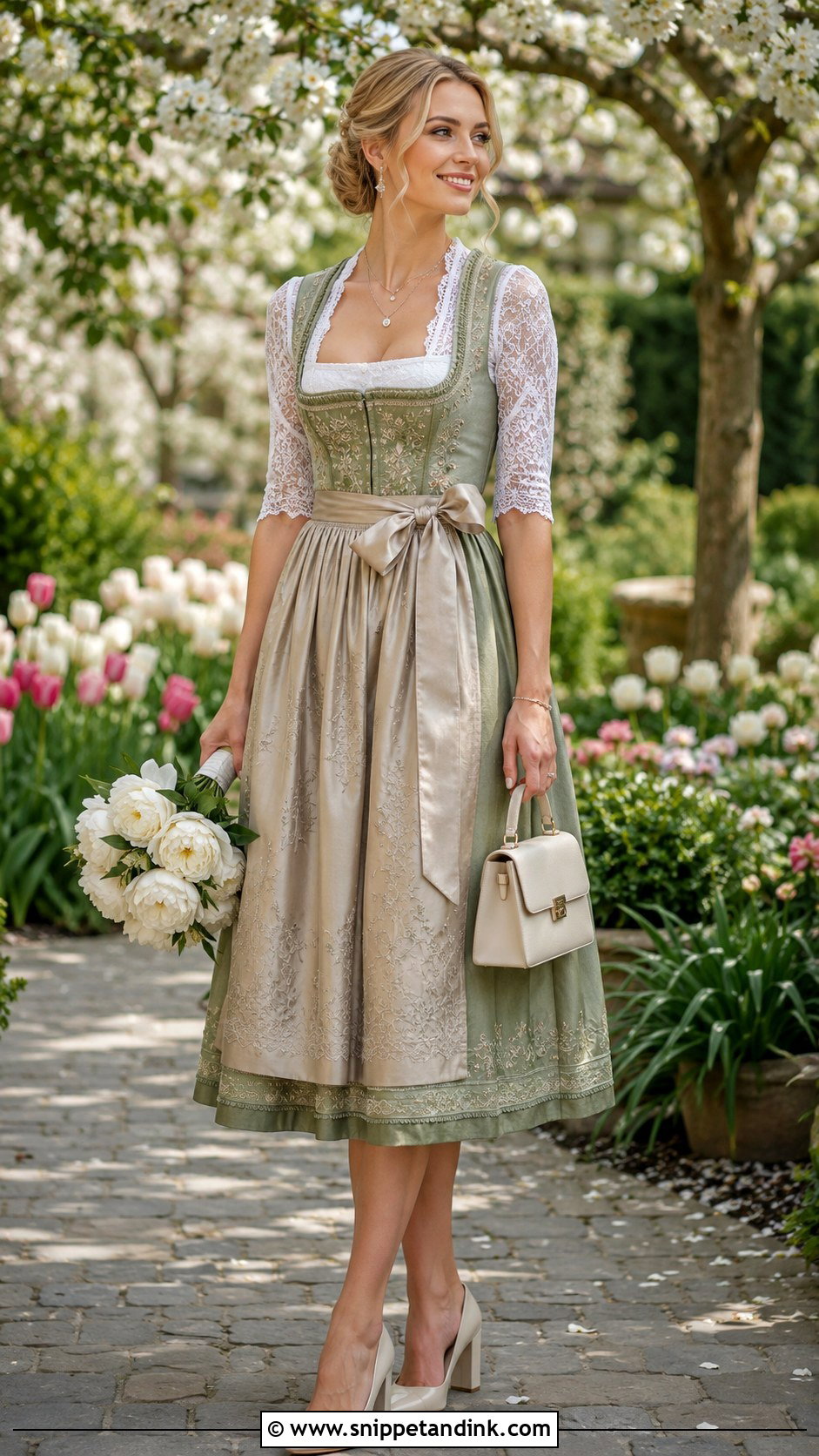
Sage green gives you color without shouting. Pair a muted green bodice and midi skirt with an ivory lace blouse and a pale champagne apron, and keep any botanical embroidery small. Green next to the face can drain some complexions, so I hold the fabric up under the chin in daylight before anyone orders it; if it greys you out, the ivory blouse with a high neck puts a lighter color between the two. Cream block heels, a structured mini bag in matching leather, a loose low bun with a plain gold comb, and a bouquet of white peonies and meadow flowers suit a spring garden.
6. Blue Bavarian Wedding Dirndl
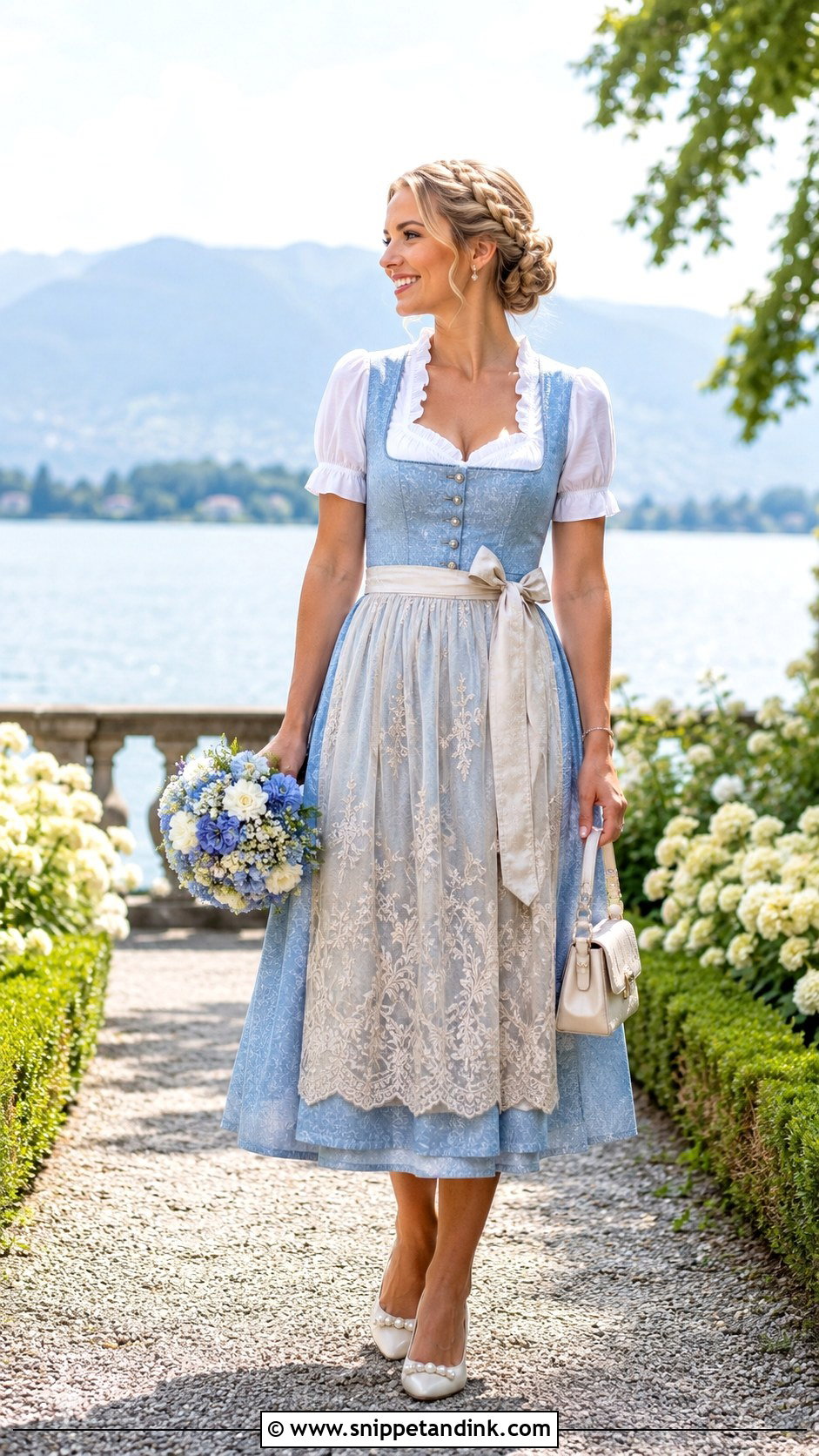
Powder blue is the closest thing to a classic Bavarian color, and it’s the easiest one to personalize. Look for a softly structured blue bodice, a full midi skirt and an ivory apron with fine embroidered edging over a white puff-sleeve blouse. Puff sleeves crush under a cardigan, so if the evening will be cool, plan a wrap rather than anything with sleeves. Pearl-colored low block pumps, a small ivory top-handle bag, a braided low bun with a few loose pieces, and a bouquet of white roses and blue delphiniums suit a lake or mountain village in summer. Small pearl earrings and a fine silver bracelet are enough.
7. Embroidered German Wedding Dress
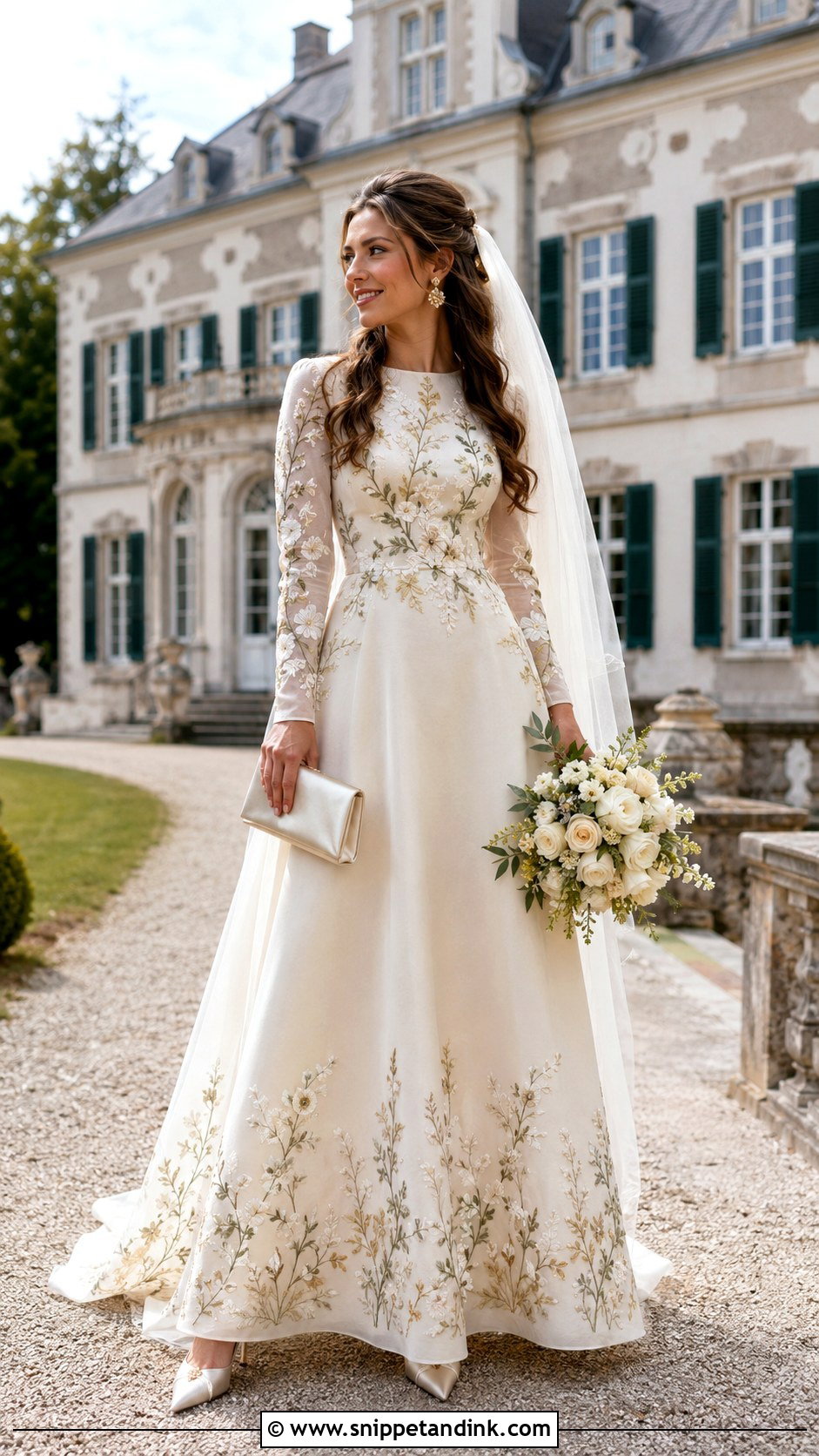
Embroidery is where a German gown can carry tradition without becoming a costume. Choose an ivory A-line dress with botanical stitching along the bodice, sleeves and hem in white, pale green and muted gold thread. Hand embroidery is stiffer than the fabric around it, so I check how the sleeve bends at the elbow; a heavily worked sleeve that won’t flex is uncomfortable by the first dance. Pointed ivory shoes, a small satin clutch and a plain fingertip veil let the stitching lead. Tiny gold earrings, half-up waves and a hand-tied bouquet of white flowers and herbs suit an old estate or farmhouse venue.
8. Modern German Civil Wedding Dress
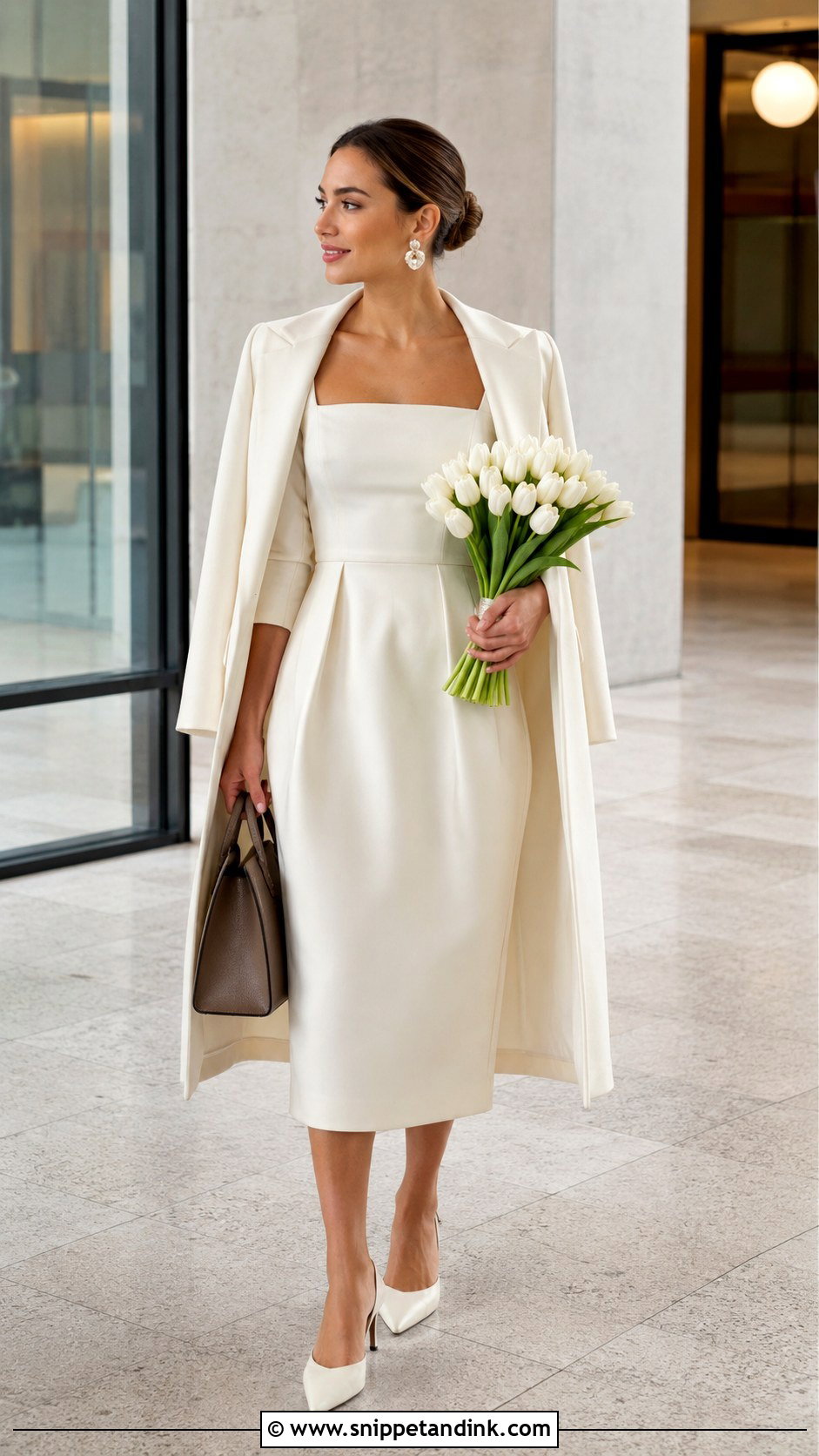
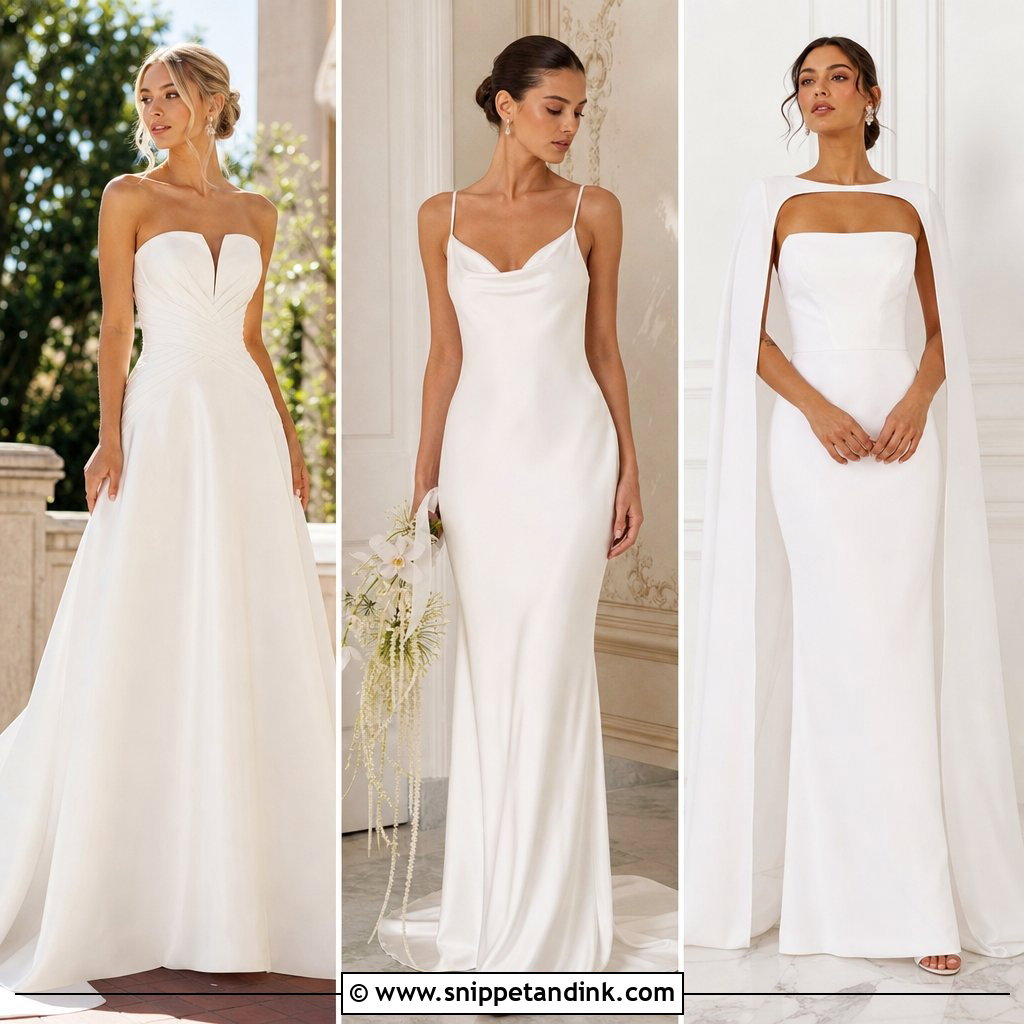
A German civil ceremony at the Standesamt is often short, small and held on a different day from any church service, and a clean midi dress suits it. I’d choose a structured ivory design with a square neckline, a defined waist and a softly flared skirt, with three-quarter sleeves or a tailored cape overlay for formality. Registry rooms are often small and brightly lit, so a structured fabric that doesn’t wrinkle while you sit through the reading is worth more than lace. Pointed slingbacks, a compact leather bag, pearl or sculptural gold earrings, a low polished bun, white tulips tied with ribbon, and a cream coat for a cool day are all it needs.
9. Minimalist German Wedding Dress
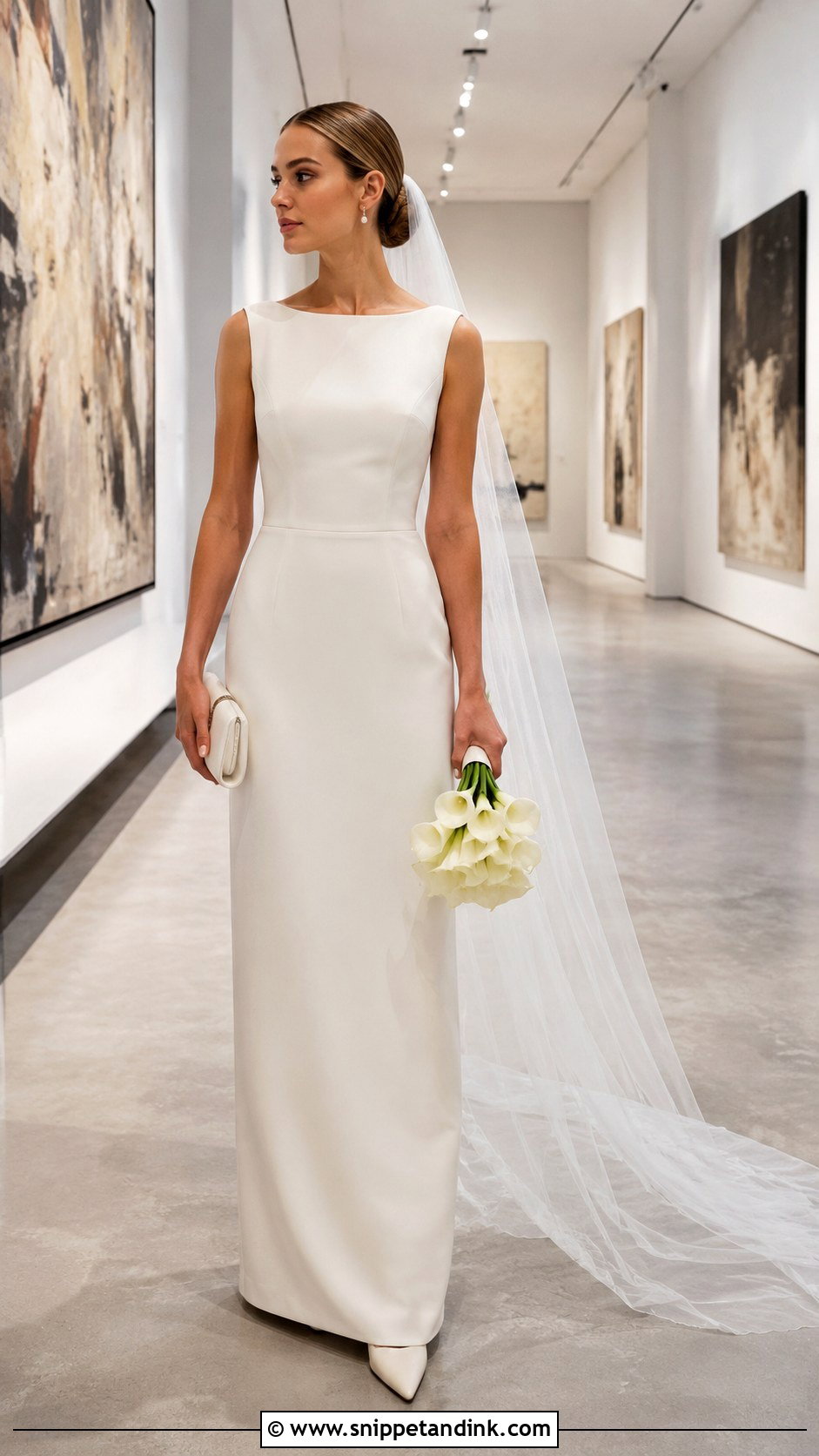
A minimalist gown lives or dies on its cut. Select a floor-length column dress with a bateau neckline, precise waist seams and a gently structured skirt, and leave off embellishment so the fabric and tailoring are visible. Plain fabric shows every pull, so fit through the hips has to be exact; any horizontal drag line under the seat means the dress needs letting out, not steaming. Sleek ivory pumps, a small satin clutch, a smooth low chignon and one strong accessory, pearl drops or a narrow metal cuff, keep it clean. A plain cathedral veil adds drama, and white calla lilies suit a gallery or modern hotel.
10. German Castle Wedding Dress
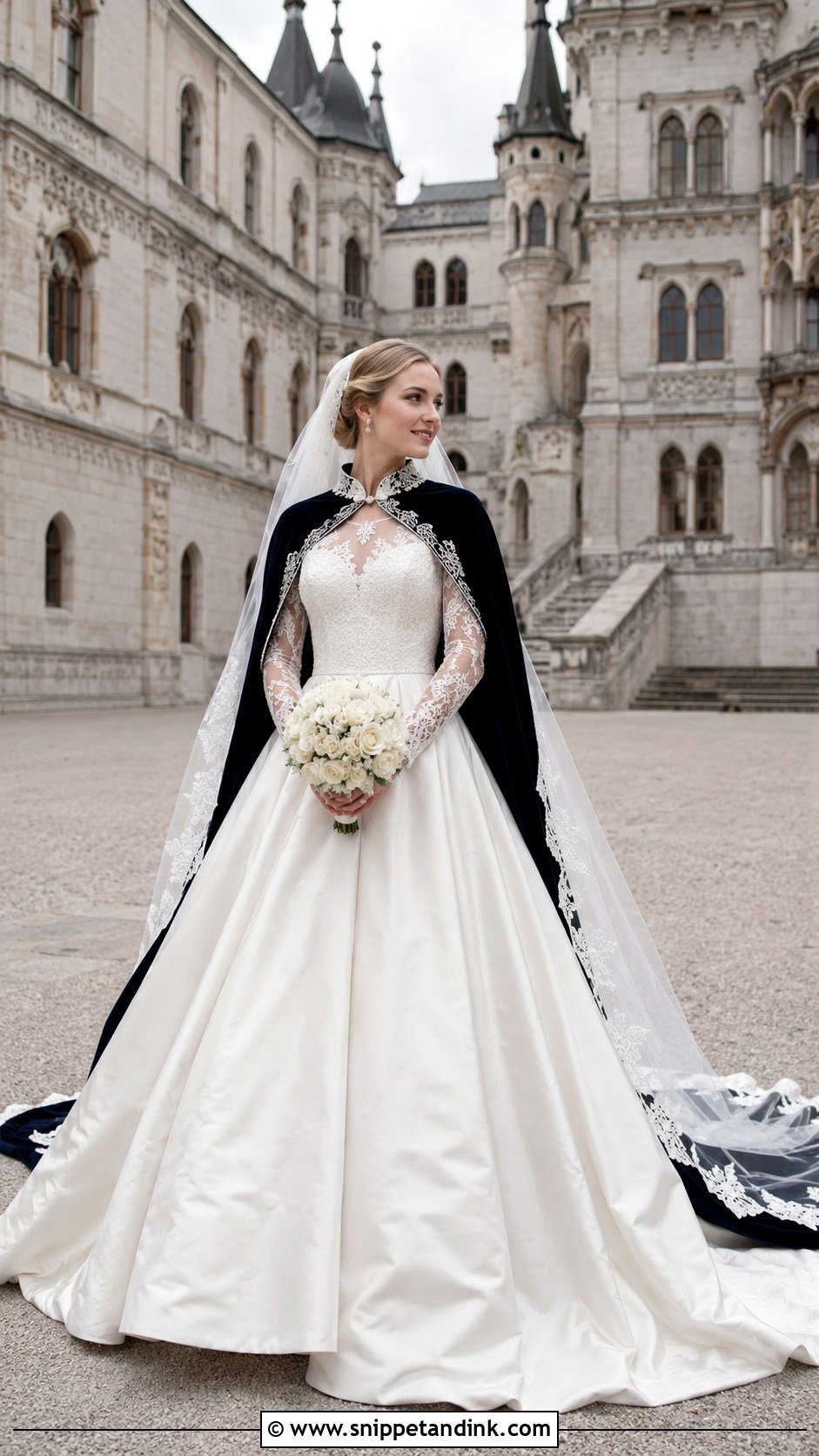
Castle rooms are large and stone courtyards swallow small details, so the dress needs a clear shape. An ivory ball gown with a fitted lace bodice, long sheer sleeves and a full satin skirt reads as formal without tipping into theater. Keep the train moderate. Staircases in old castles are often narrow and worn, and I always have the bride practice climbing them holding her skirt with one hand. Closed-toe satin heels, small crystal earrings, a long veil with a narrow lace edge, a structured low bun with a fine comb rather than a big crown, and a round bouquet of roses and ranunculus suit the scale. An ivory or pale gray velvet cape covers the cold photos.
11. German Forest Wedding Dress
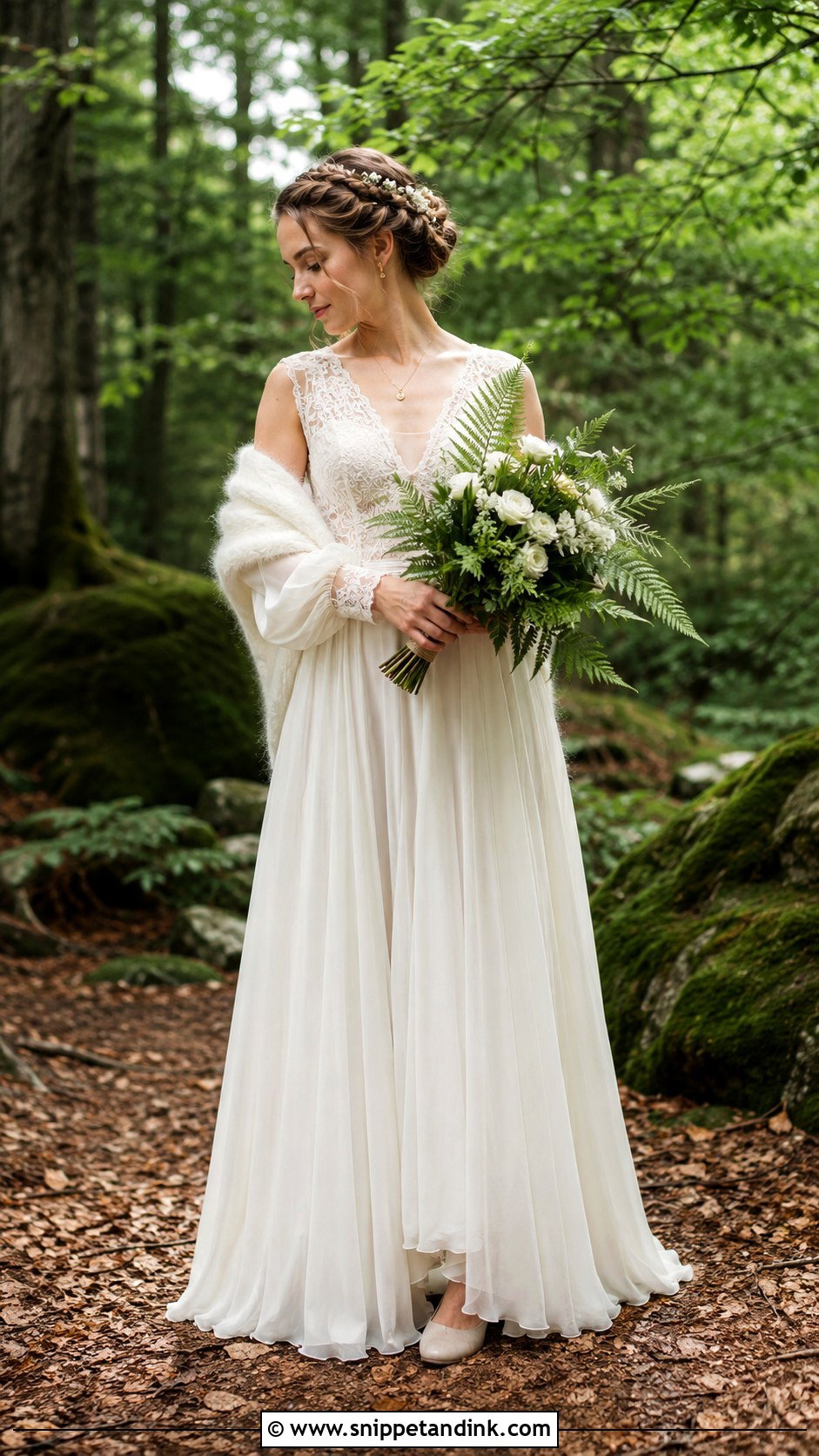
Woodland ceremonies are hard on hems. A German forest wedding dress works best with a chiffon skirt that floats, a fitted lace bodice and light bishop sleeves, in ivory or pale cream. Chiffon snags on brambles and picks up damp, so I’d keep the length just off the ground rather than pooling. Flat leather shoes or low block heels handle roots and soft soil. A loose braided updo with a few tiny white flowers, a relaxed bouquet of ferns and white roses, small gold hoops and a soft wool wrap for the temperature drop under the trees finish it.
12. German Mountain Wedding Dress
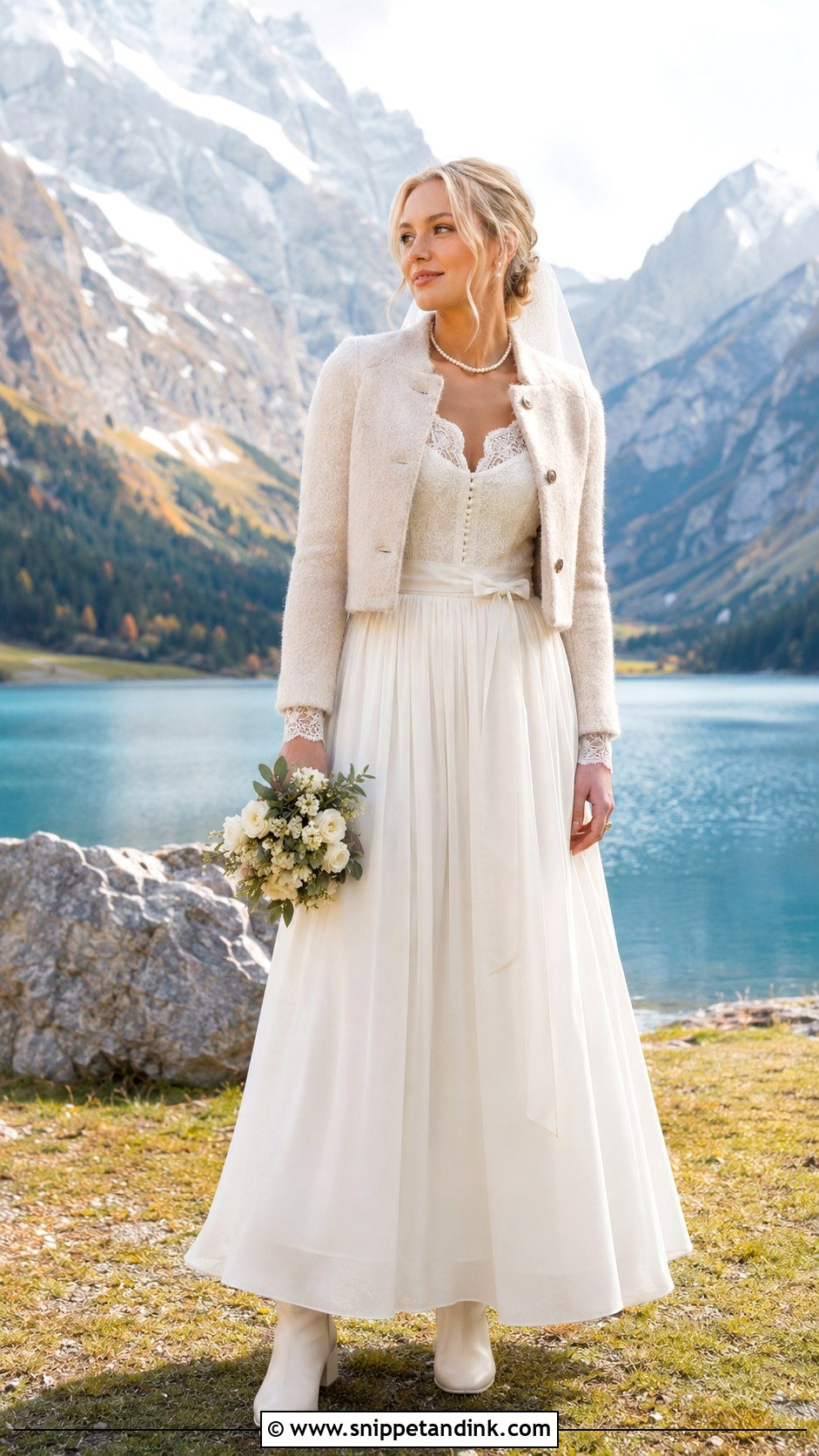
Mountains are about footing first. I’d choose an ankle-length ivory gown with a fitted bodice, a flowing skirt and long lace sleeves, because the shorter hem stays clean on paths and shows off cream ankle boots with a sturdy heel. A cropped ivory wool jacket adds warmth. Wind at altitude is the real enemy of hair and veil, so a braided bun is the safe choice and a short veil won’t wrap around your face on a ridge. Carry a compact bouquet with eucalyptus and small alpine-style blooms, and keep jewelry to pearl studs and a fine pendant for a scenic mountain ceremony or lodge reception.
13. Vintage German Lace Wedding Dress
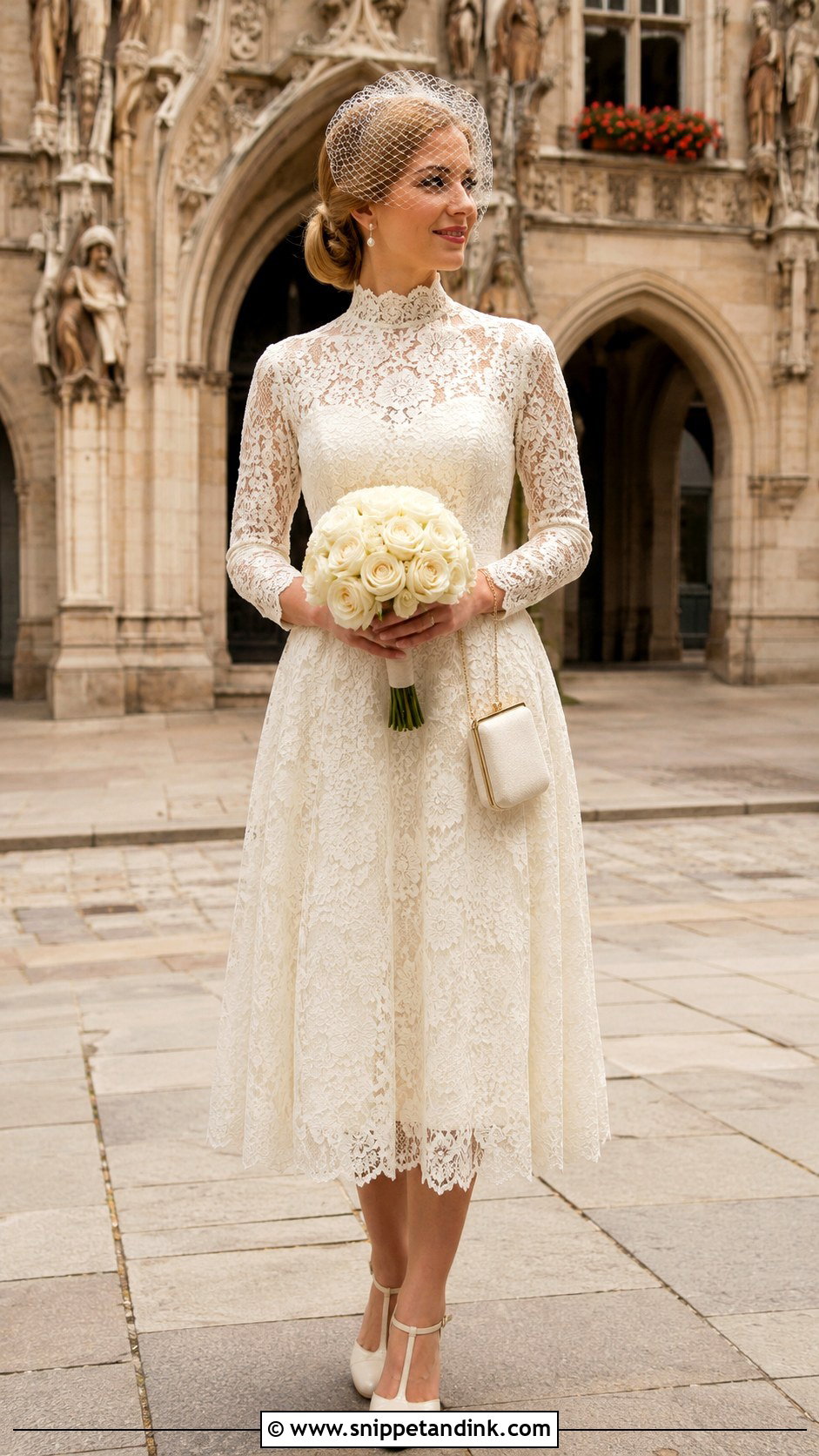
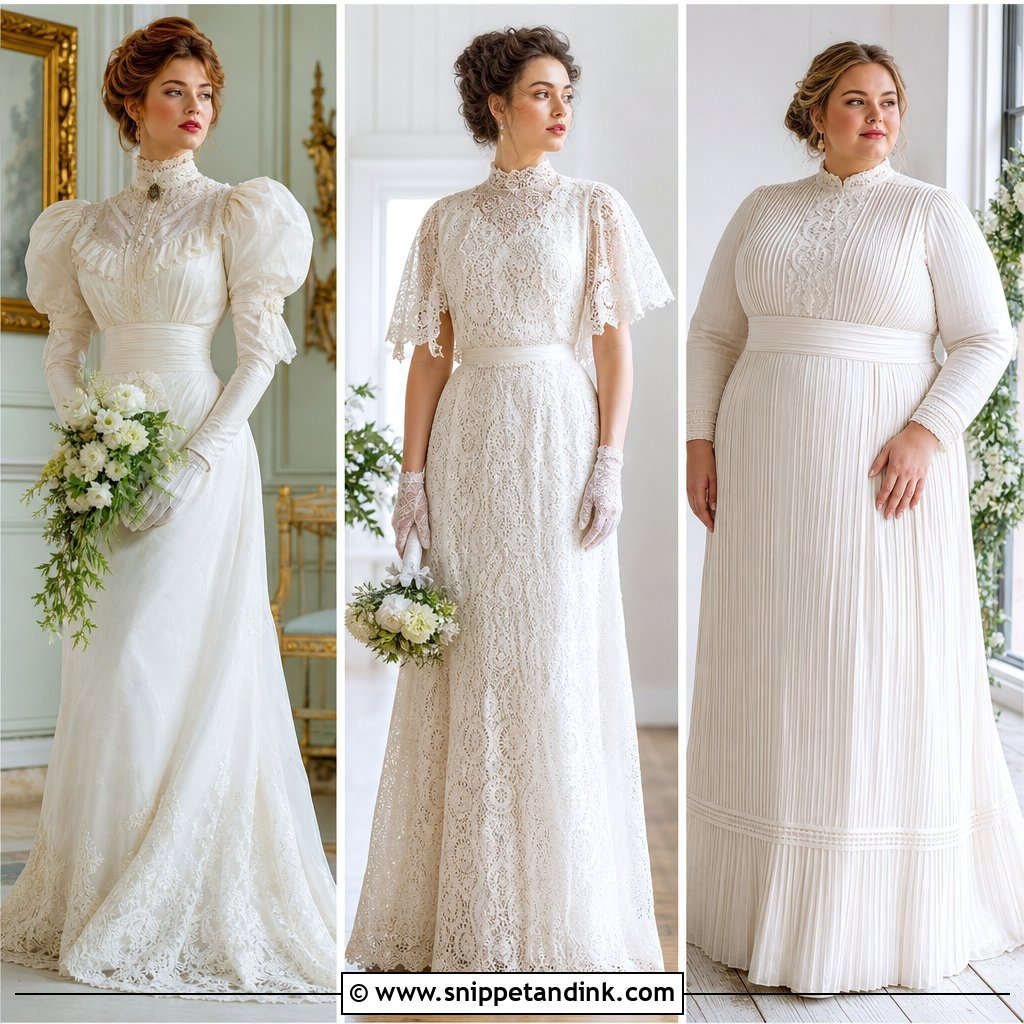
Vintage works when every piece points to the same decade. Begin with a tea-length ivory lace dress with a high neckline, fitted sleeves and a gently defined waist, then add cream T-strap heels or low Mary Janes. A birdcage veil pinned to a smooth side bun leaves the neckline clear. Real vintage lace can be fragile at the seams, so if the dress is genuinely old, have a seamstress reinforce the underarms and waist before any alterations start. Pearl earrings, a small framed clutch and a family brooch at the waist suit it, and the shorter length is easy for dancing in an old town hall.
14. Romantic German Tulle Wedding Dress
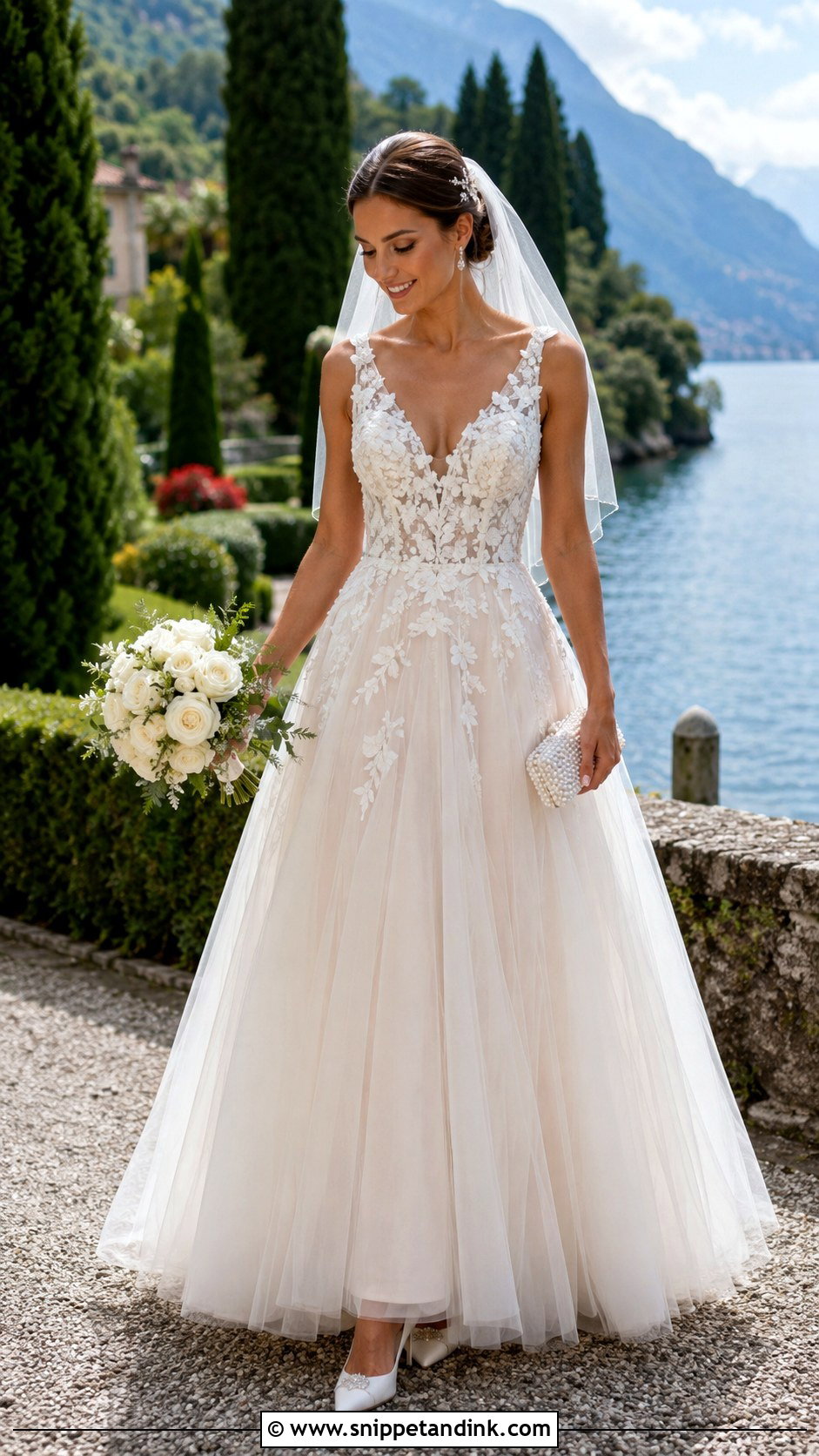
Tulle is the fabric for movement, and it’s also the fabric that flattens fastest in a car. Choose an A-line gown with a lightly structured bodice, floral appliqués and several airy skirt layers in soft ivory, which reads more natural on camera than optic white. Ride to the venue with the skirt lifted up over your lap rather than sat on, and the layers will spring back. Pointed satin heels, a small pearl clutch, loose waves gathered at the back with a floral comb, a fingertip veil that doesn’t hide the appliqués, and a bouquet of roses and sweet peas suit a garden or lakeside day.
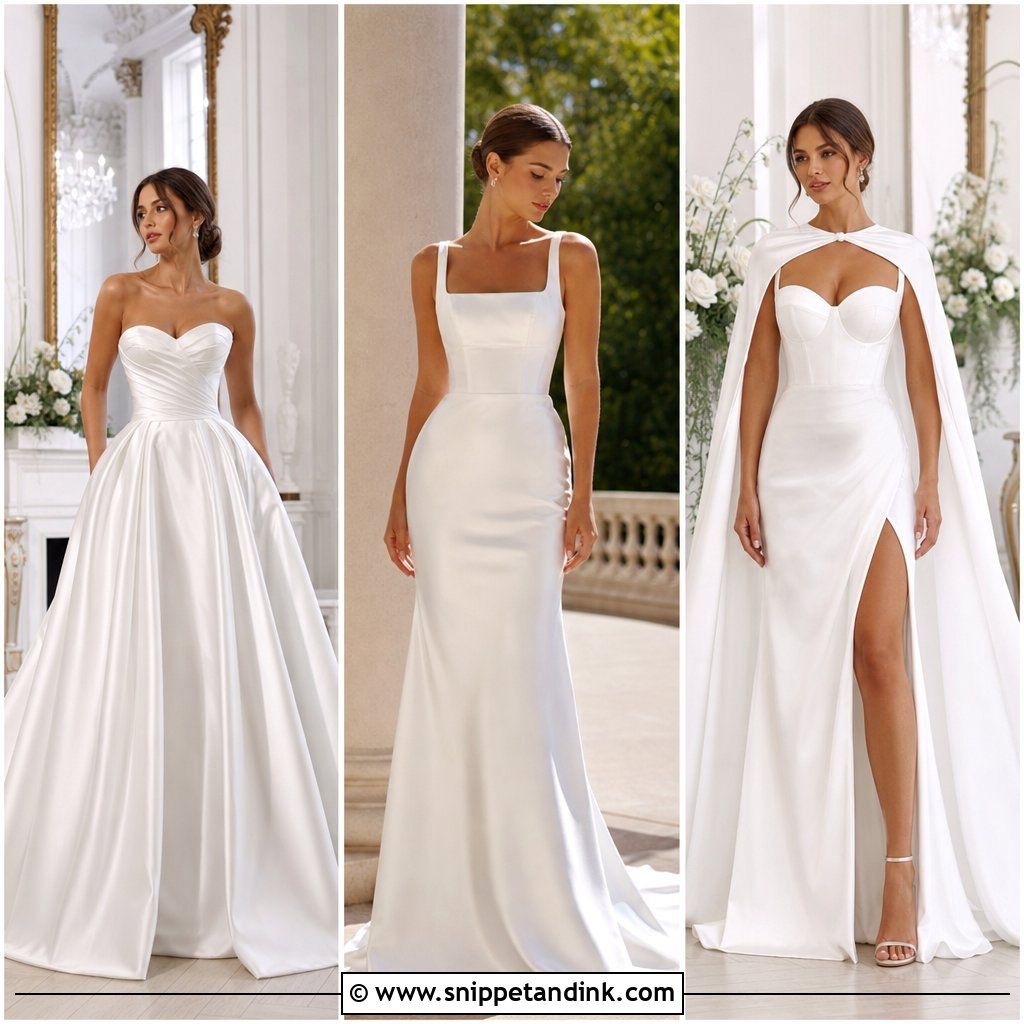
15. German Boho Wedding Dress
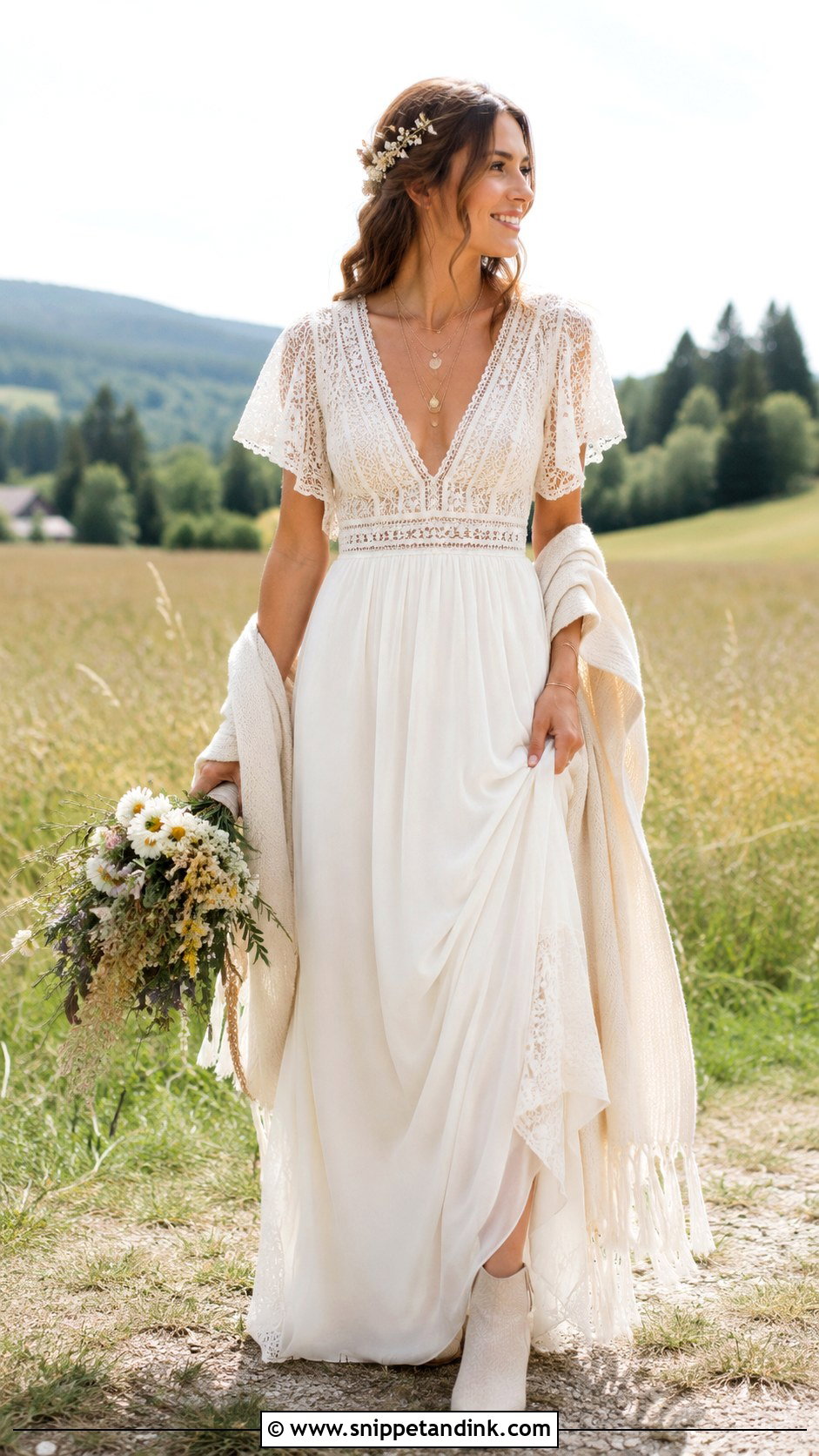
Boho still needs a plan. A relaxed German boho wedding dress could have a fitted crochet-lace bodice, flutter sleeves and a softly gathered skirt, with no long train if you’re outdoors. Crochet lace stretches under its own weight, so a well-made dress will have a stable lining or mesh behind the bodice; without one, the neckline sags by evening. Cream ankle boots or low suede heels, loose waves or a textured braid with a small floral comb, a bouquet of wildflowers and grasses, small gold earrings and an ivory shawl complete it.
16. Winter German Wedding Dress
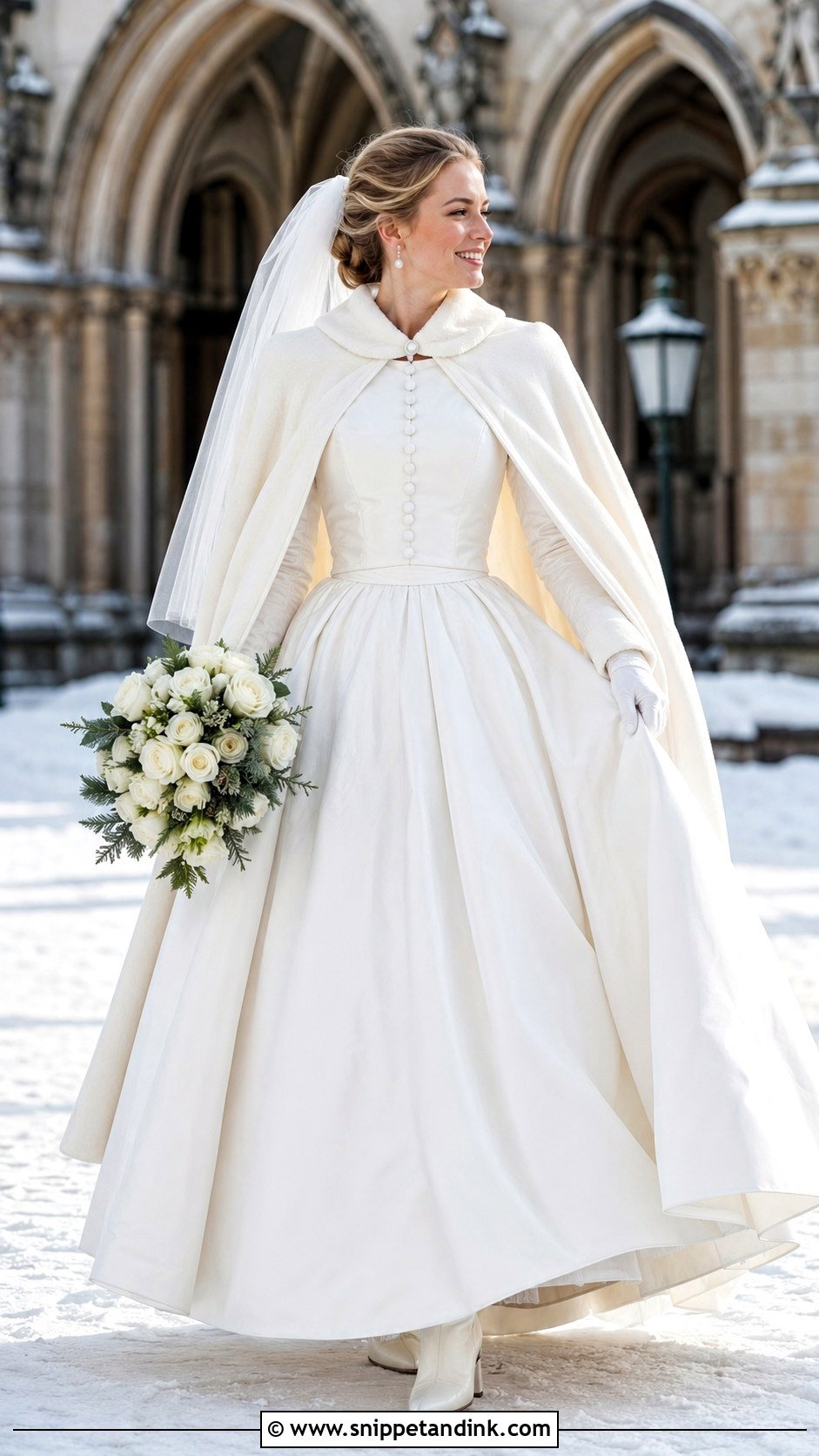
Winter is the season where layers make the look. Start with a long-sleeve satin gown with a fitted waist, a full skirt and covered buttons, and add an ivory wool cape or tailored coat that follows the same clean line. Satin and wool are different whites, so take a swatch of the dress when you buy the coat. Closed-toe block heels or white ankle boots, a polished low bun under a plain veil, pearl drops, smooth ivory gloves and a compact bouquet of white roses and evergreen keep it seasonal without any snowflake kitsch.
17. Summer German Wedding Dress
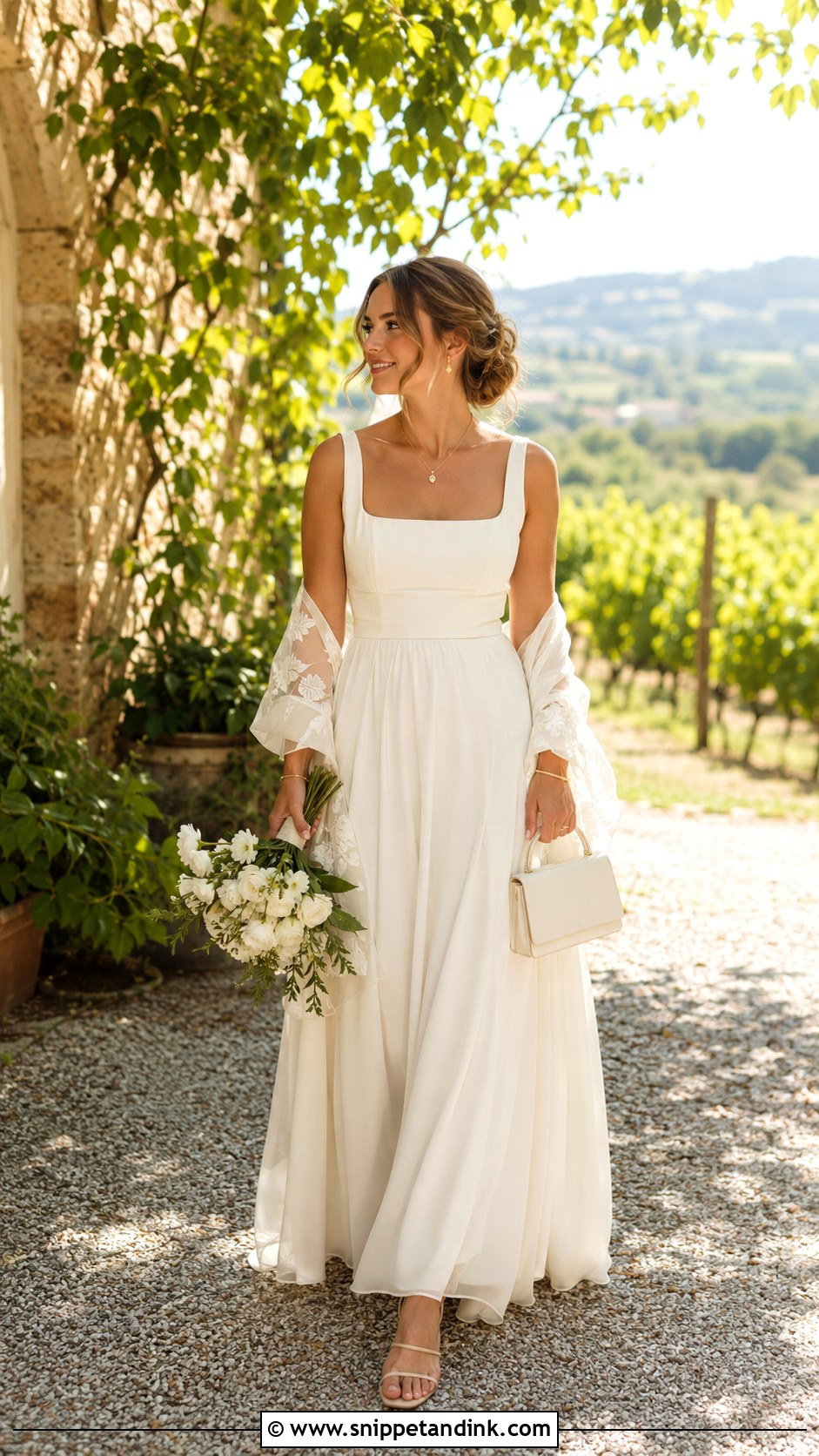
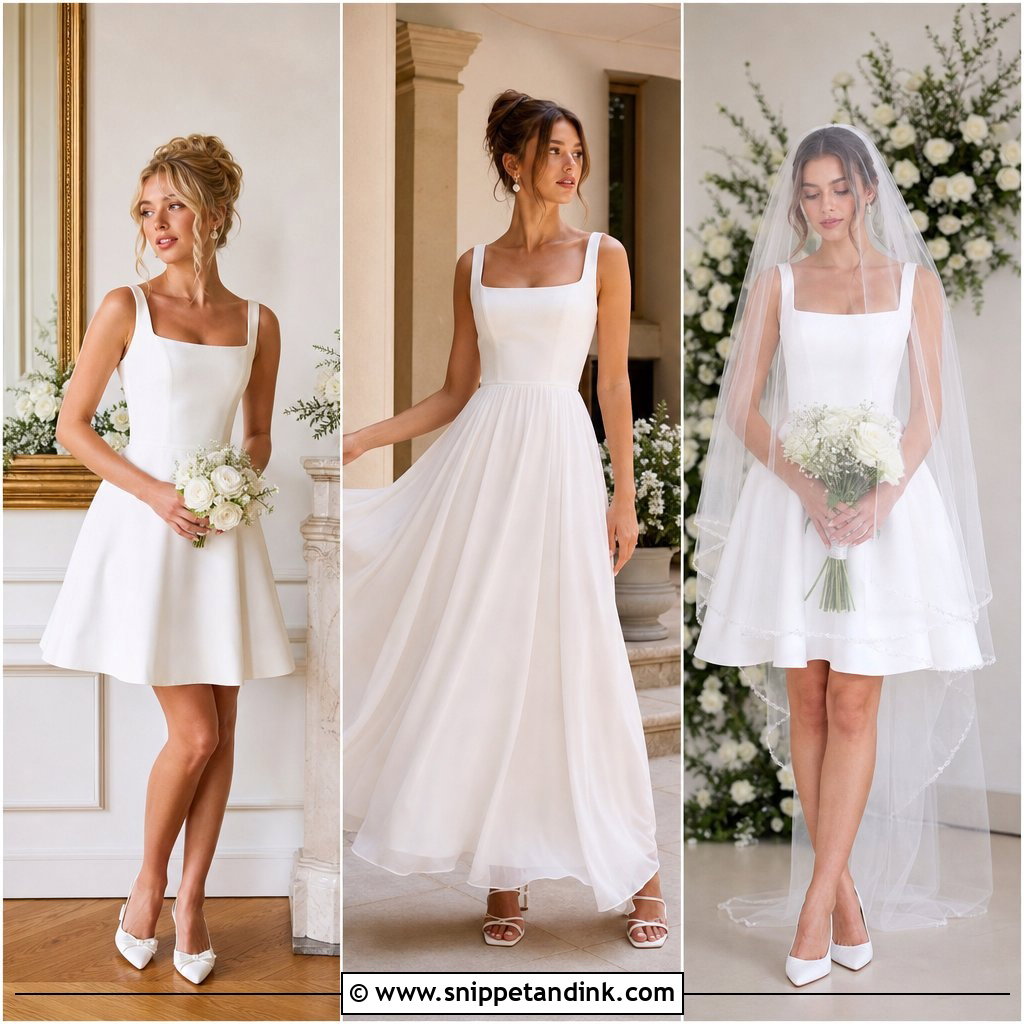
Heat changes what a dress can be. I’d select a sleeveless ivory gown with a fitted bodice, a square neckline and a flowing chiffon or silk skirt, with a slit or ankle-length hem so you can walk freely. Silk shows sweat marks quickly in the heat, so a lined bodice and a lighter ivory are safer than a fitted pale silk on a hot afternoon. Low strappy heels, a small woven bag, a soft updo to keep the neck cool, delicate gold earrings, a loose bouquet of garden flowers and chamomile, and a light embroidered wrap for after sunset suit a vineyard or lakeside party.
18. Plus Size German Wedding Dirndl
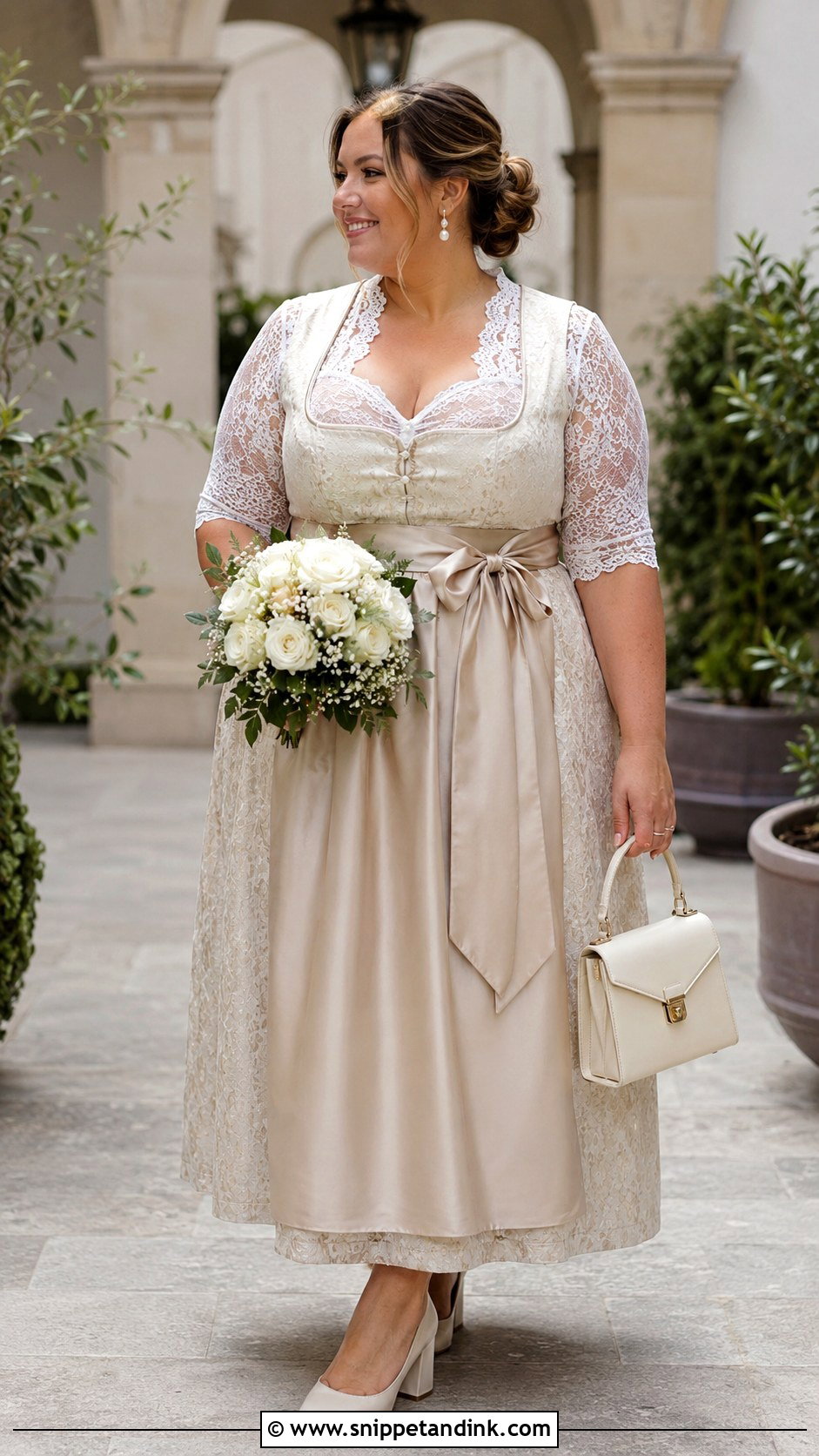
A well-made bridal dirndl is one of the most supportive outfits a curvy bride can wear, provided the bodice is built for her and not sized up from a standard pattern. Choose a midi or ankle-length design with a supportive bodice, a smooth waist and a skirt that falls without bulk, with an ivory lace blouse to the elbow and a champagne satin apron. Professional alterations matter more here than anywhere: the bodice should lift without pinching under the arm, and the blouse must sit flat beneath it. Wide-fit block heels or embellished flats, pearl earrings, a side braid or low textured bun and a medium bouquet of white roses finish it.
19. Mature German Bride Wedding Dress
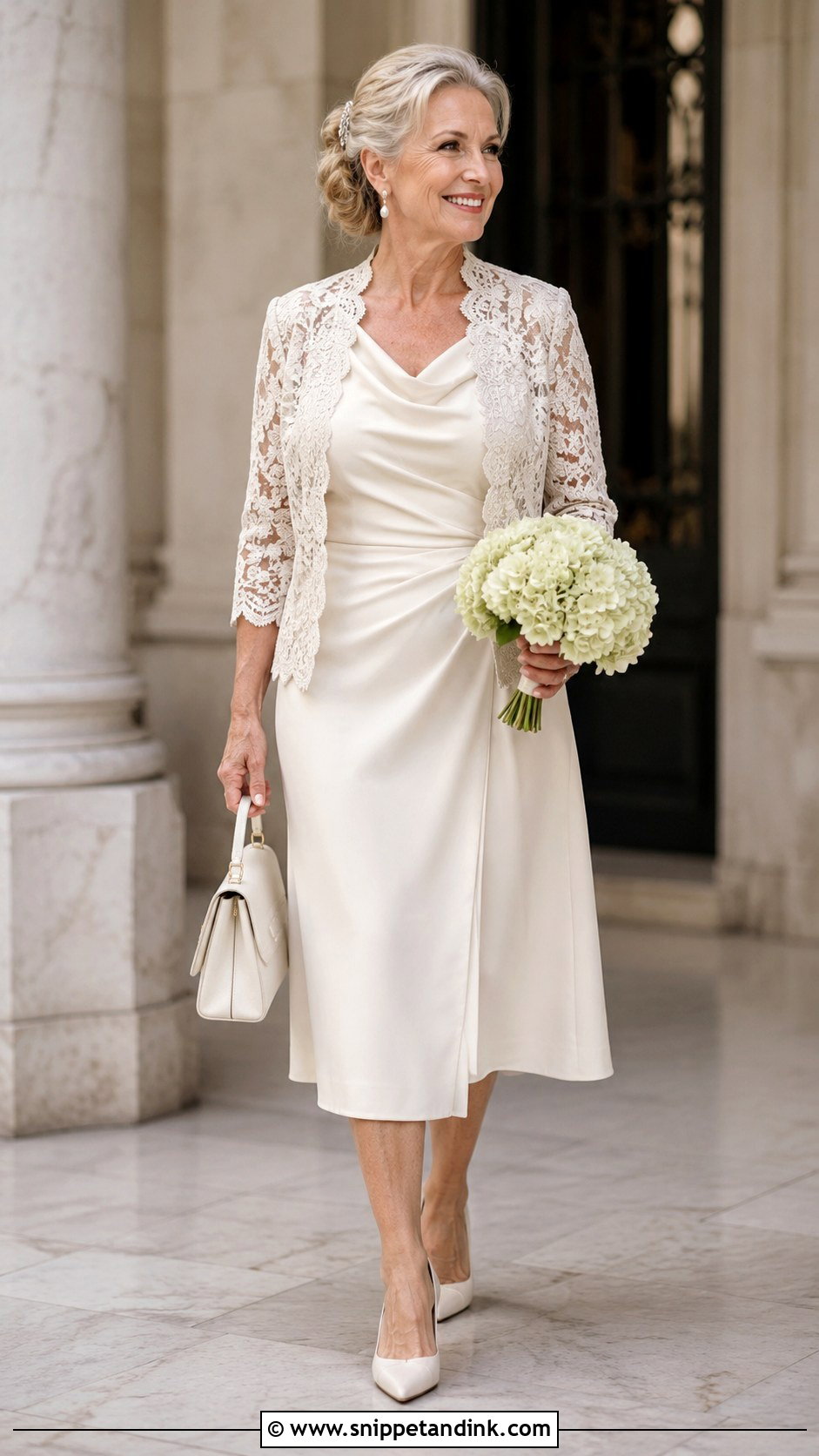
Comfort and tailoring do the heavy lifting for an older bride, and nobody should be telling you what your age allows. Consider an ivory midi dress with a softly draped neckline, three-quarter sleeves and a waist that’s defined but has some give. A lace jacket or tailored coat gives coverage for the ceremony and comes off for the party. Draped necklines shift when you move, so I tack the drape at the shoulder seam to stop it sliding. Low pointed pumps, a structured bag, pearl or gold earrings, a hairstyle you already like, a compact bouquet of roses and hydrangeas, and a small comb or fabric headpiece in place of a veil complete it.

20. Black And White German Wedding Dress
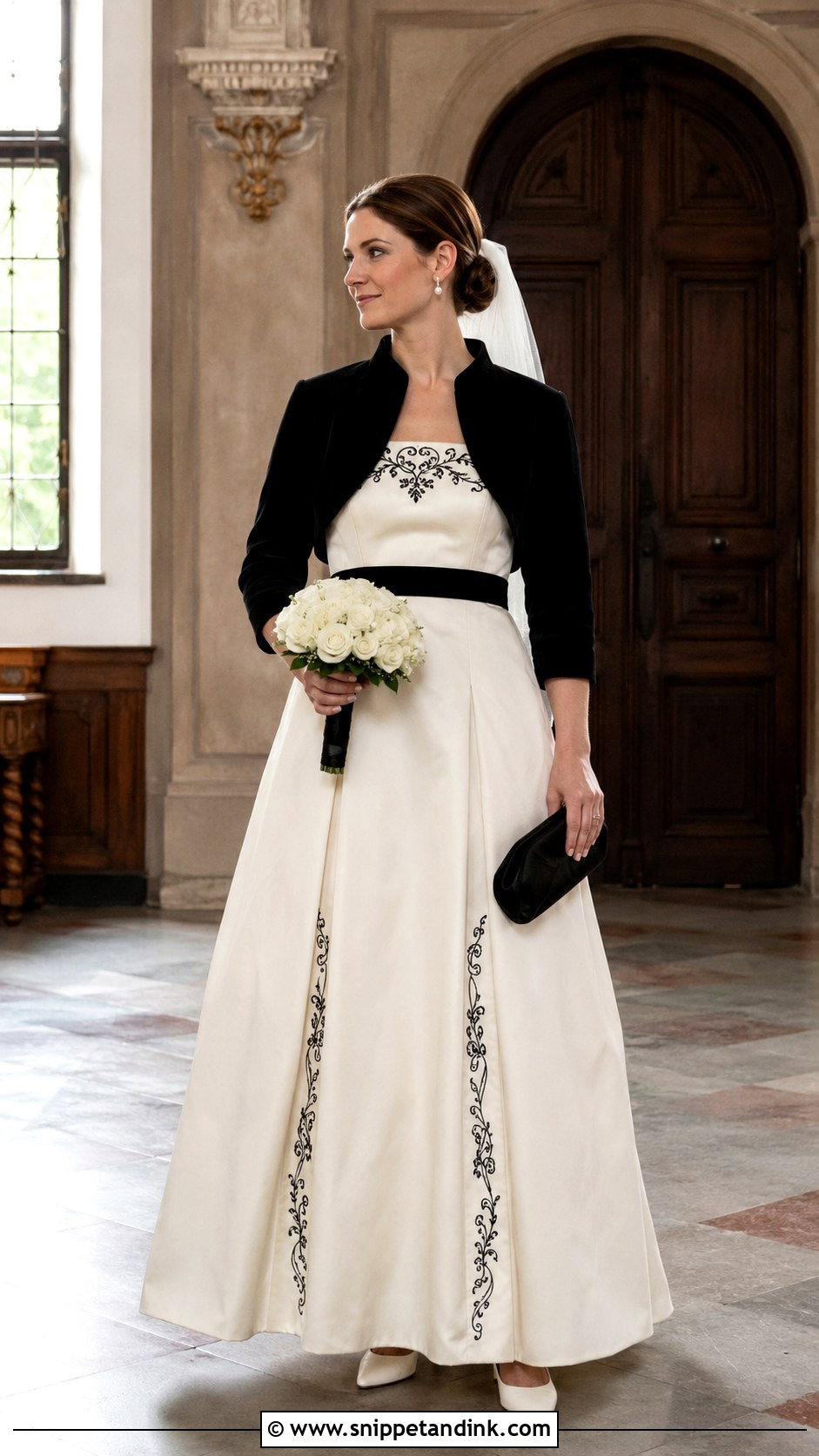
Black and white is a bold choice, and it needs discipline. Choose an ivory A-line gown with a black velvet waistband, dark embroidered bodice details or a removable black sash, and keep the black to controlled lines so the dress still reads as bridal. A removable sash is the version I suggest most, because you can see how your family reacts at the fitting before committing. Ivory pumps, a small black satin clutch, pearl earrings, a smooth low bun and a plain ivory veil keep it clean. Wrap the bouquet stems in narrow black ribbon, and add a cropped black velvet jacket for a cool evening at a manor or city venue.
How a Bridal Dirndl Should Fit Before You Pay for It
Festival dirndls are sold off the peg in standard sizes, and that’s fine for a beer tent. A bridal one is worn for twelve hours and photographed from every side, so it deserves a proper Trachten shop or a seamstress who knows the garment. These are the checks I run at every dirndl fitting:
- The bodice closes edge to edge with no gaping between hooks, buttons or lacing, and you can breathe deeply and sit without it biting under the arm.
- The blouse is cropped to end under the bust; a full-length blouse bunches under the bodice and shows lumps at the waist.
- The apron is just slightly shorter than the skirt, never longer, and its waistband sits exactly on the bodice seam.
- Skirt length is chosen deliberately: midi is the safe bridal length, floor-length is formal, and short festival lengths look out of place at a ceremony.
- Shoes are on during the hem fitting. A two-centimeter change in heel height is visible on a midi dirndl.
Give yourself time. A made-to-measure bridal dirndl from a good maker typically needs a few months, longer in the run-up to Oktoberfest, when every Trachten workroom in the south is busy.
How Much Bavaria Do You Want in the Dress?
Start with the room you’re getting married in and the outfit narrows itself. A white dirndl honors Bavarian roots, a minimalist gown suits a registry office, and castle gowns, embroidered dresses, forest looks and mountain outfits each solve a different setting. Adjust the color, sleeves and fabric to your body and the season. In my experience, good alterations do more for a dress than any trend, and the outfit holds together when the shoes, coat and bouquet all agree with it.
You'll Like These Ideas:








Leave a Reply