
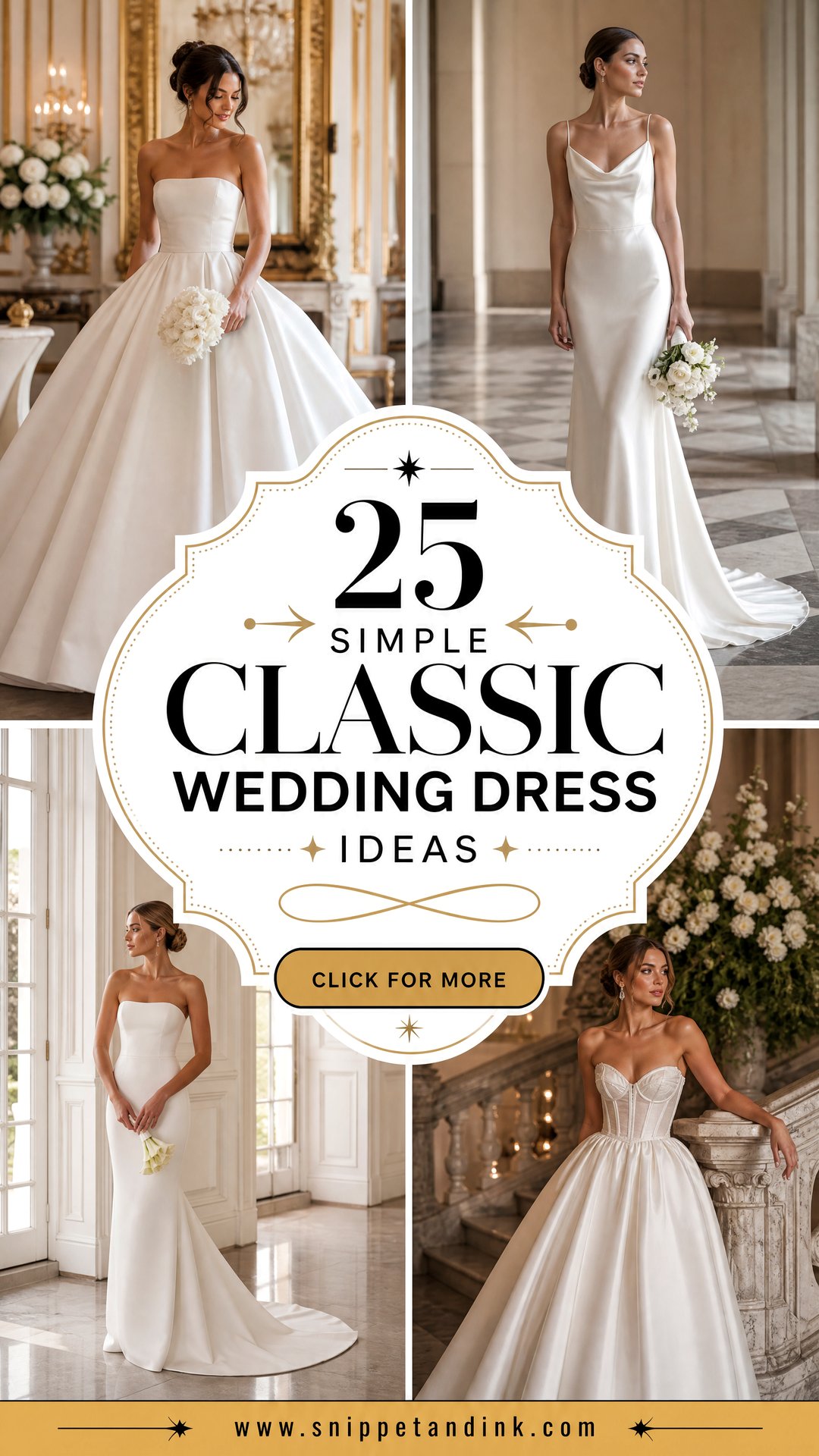
Classic dresses age well because they rely on fabric, line and proportion rather than whatever decoration is fashionable that year. When a bride tells me she wants something she’ll still like in her anniversary photos, I steer her toward satin A-lines, refined lace sleeves, strapless ball gowns, crepe sheaths and soft ivory shapes. The same plain gown can lean romantic, formal, modern or vintage depending on the neckline, veil, shoes, jewelry and flowers. Below are the simple classic wedding dresses I come back to most, and what I check on each before a bride commits.
Mikado, Crepe, Silk and Chiffon Under My Hands
With a plain classic dress, the fabric is the design, so I always have brides touch, crush and move each one at the salon. They behave very differently over a ten-hour day.
Holds a shape
Mikado and taffeta are stiff enough to stand away from the body, which is why ball gowns and structured A-lines use them. Mikado resists creasing well. Taffeta rustles when you walk, which some brides love and some don’t.
Follows the body
Crepe has a little stretch and a matte face, so it skims curves and shows undergarment lines. Silk satin and charmeuse drape beautifully but crease easily and mark with water.
Floats
Chiffon and tulle are light and cool, but they’re sheer in single layers and catch on rough surfaces.
My quick salon test: squeeze a corner of the fabric in your fist for ten seconds and let go. How it recovers is roughly how the skirt will look after the car ride and the ceremony.
1. Satin A Line Wedding Dress
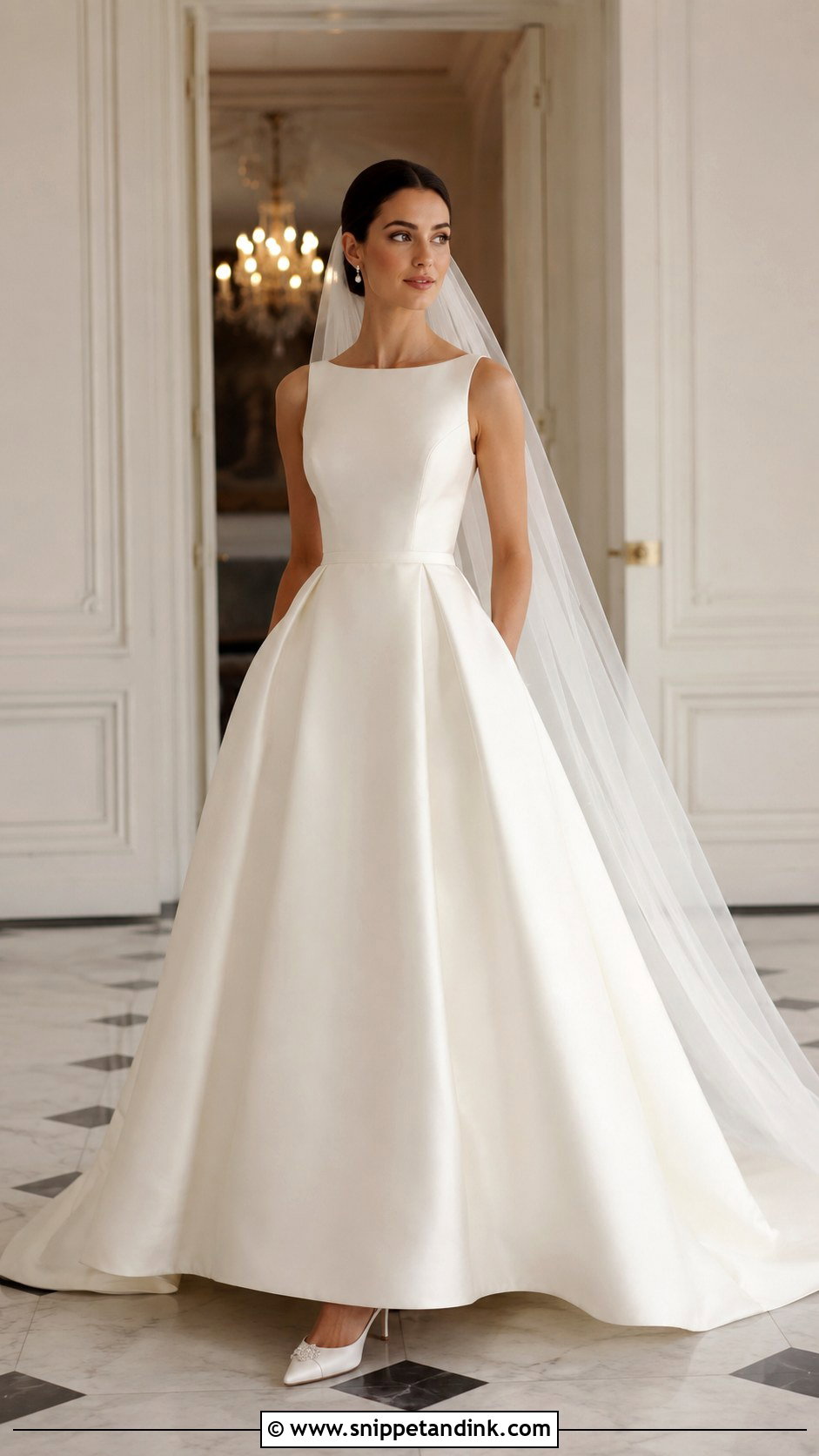
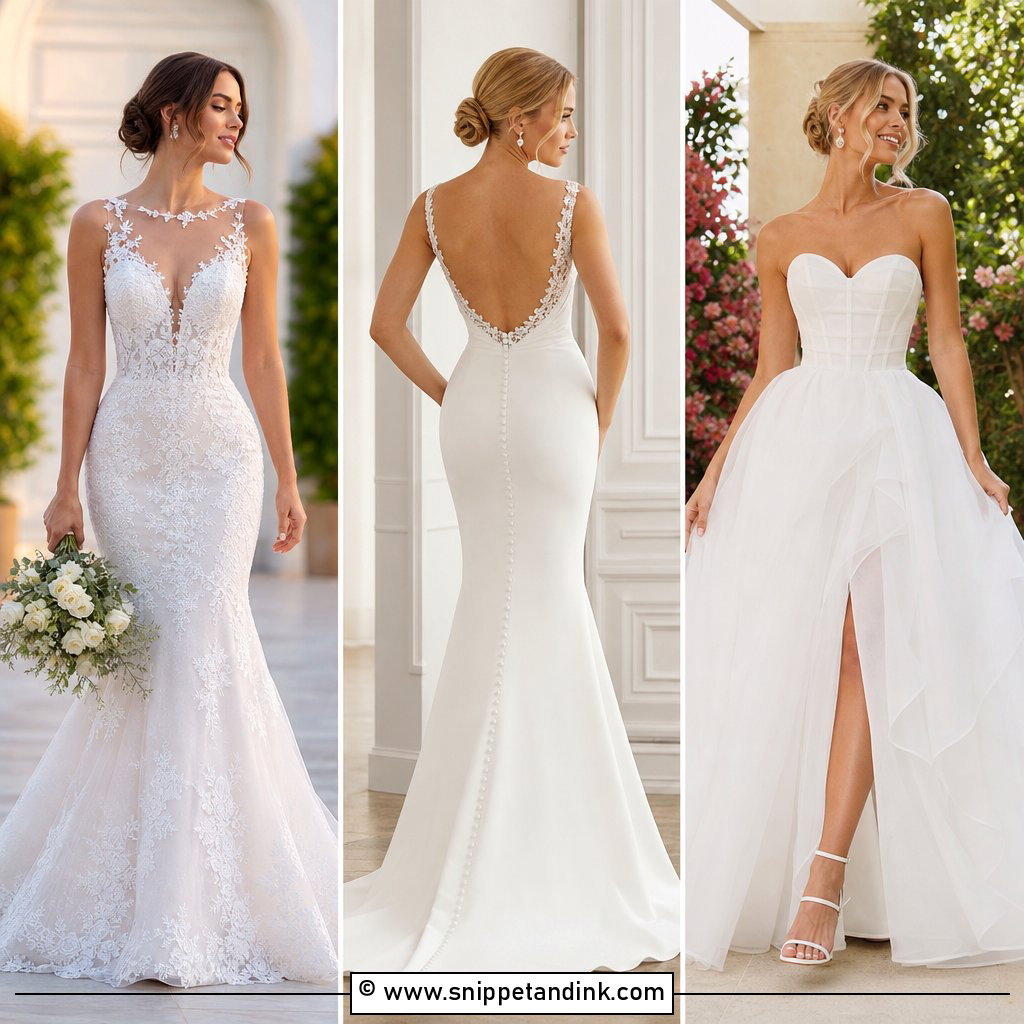
If I could only stock one shape, it would be the satin A-line. The fitted bodice shapes the waist and the skirt falls away from it, so it sits comfortably for hours and suits ballrooms, gardens, hotels and estates. Ivory or soft white satin catches light without glare. A square, scoop or strapless neckline keeps it clean. My first fitting check is the waist seam: it should sit exactly at your natural waist, or the skirt flares from the wrong place. Pearl earrings, a cathedral veil, pointed pumps and a small bouquet finish it.
2. Long Sleeve Lace Wedding Dress
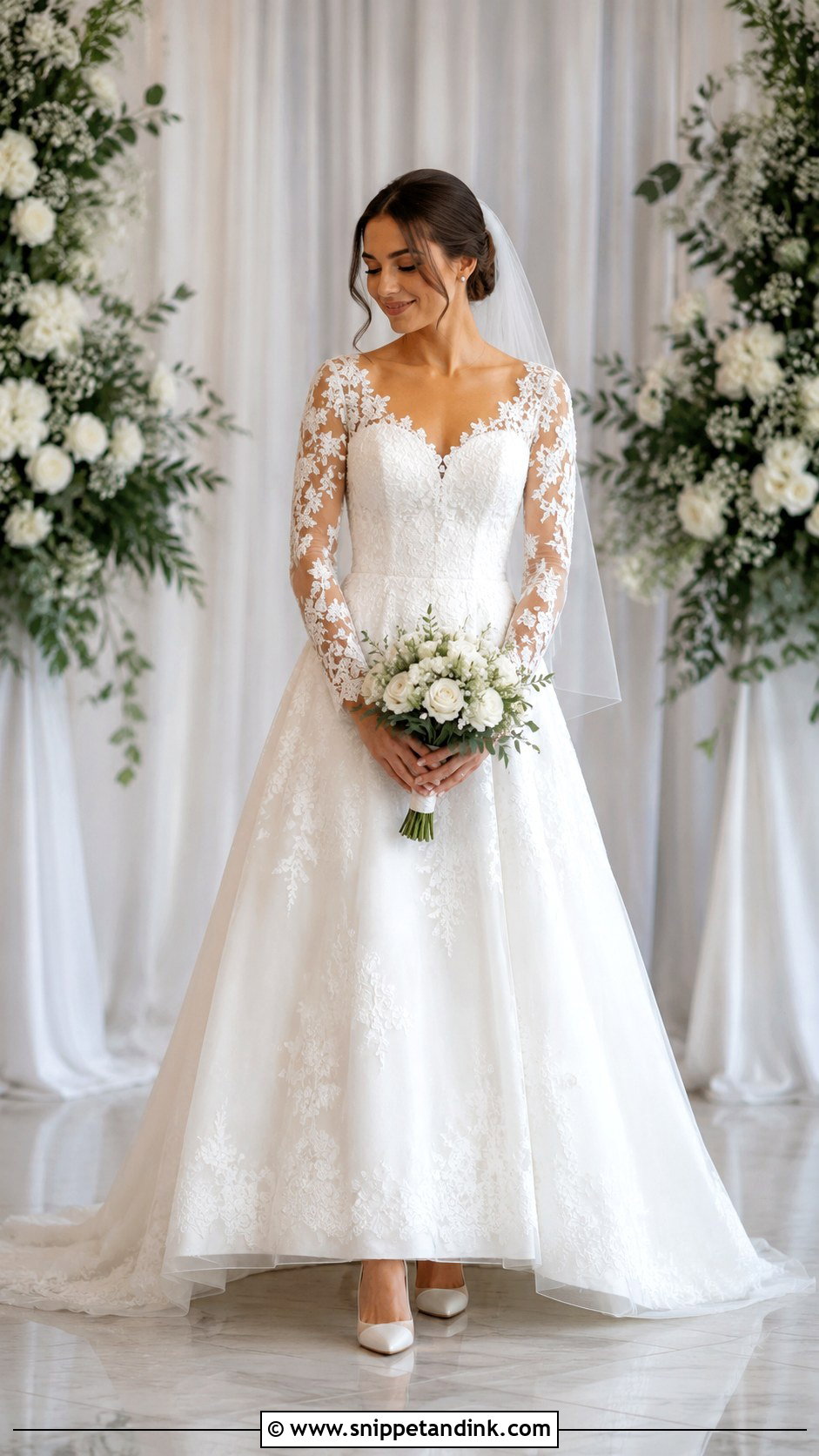
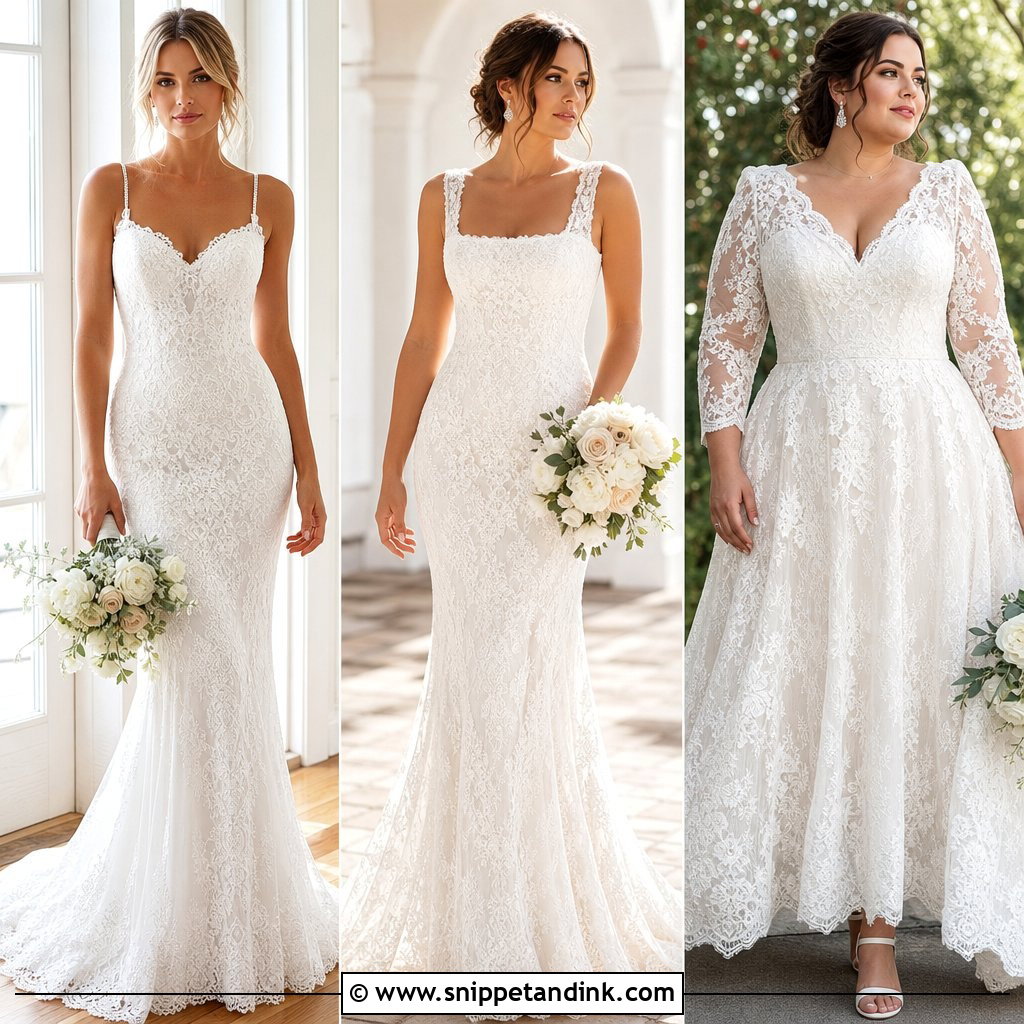
Lace sleeves are about the pattern scale. Fine, refined lace reads elegant in photos, while big appliqué motifs look heavy on a forearm. A fitted bodice with a gentle A-line or sheath skirt keeps the balance. Sheer sleeves look delicate; lined ones feel traditional and hide arm hair or tattoos if you want that. The armhole needs to let you raise your arms for a hug without lifting the bodice. Cooler seasons, historic venues and formal indoor ceremonies suit it, with a smooth low bun, pearl studs, satin heels and a simple veil.
3. Strapless Ball Gown Wedding Dress
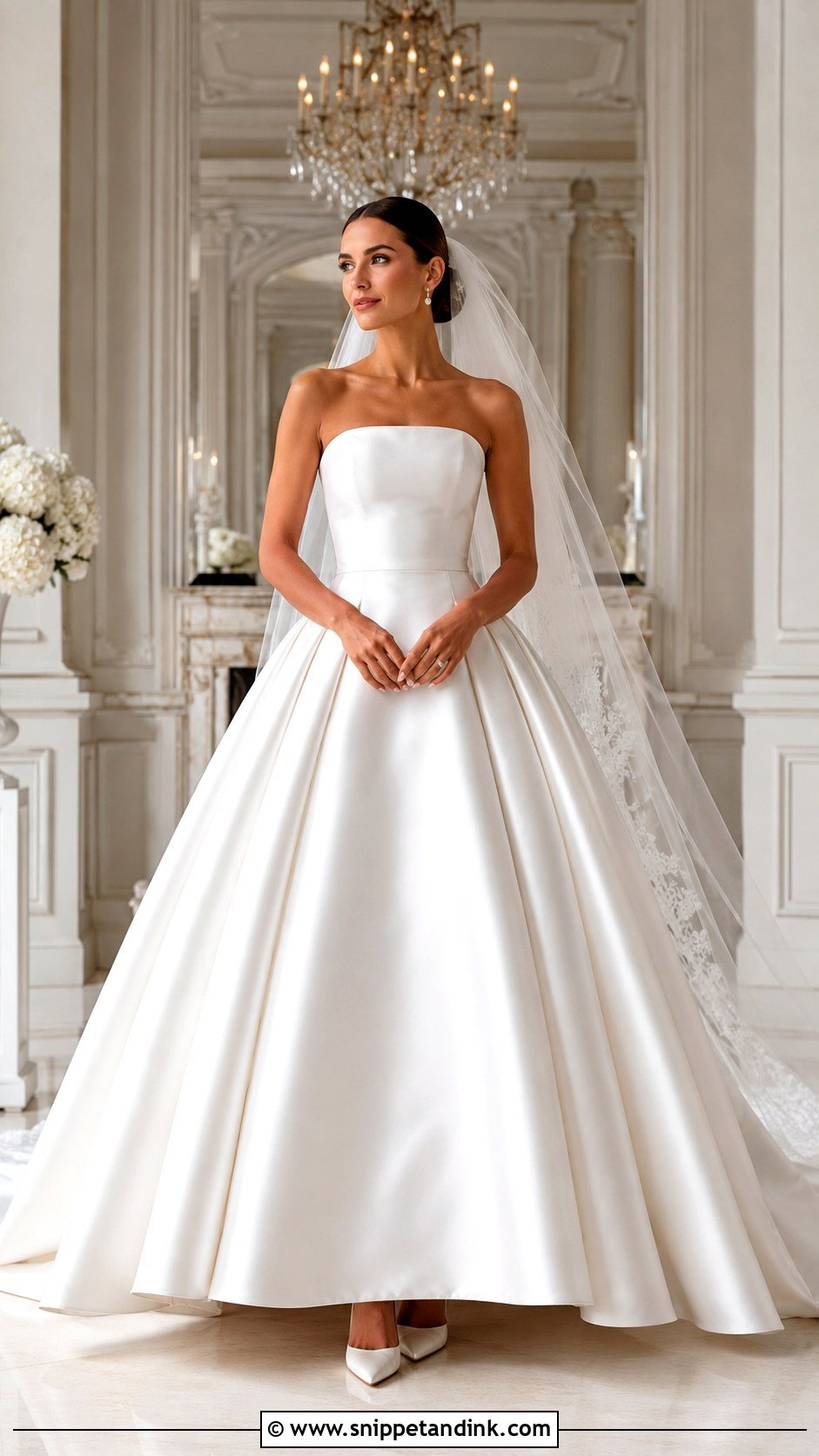
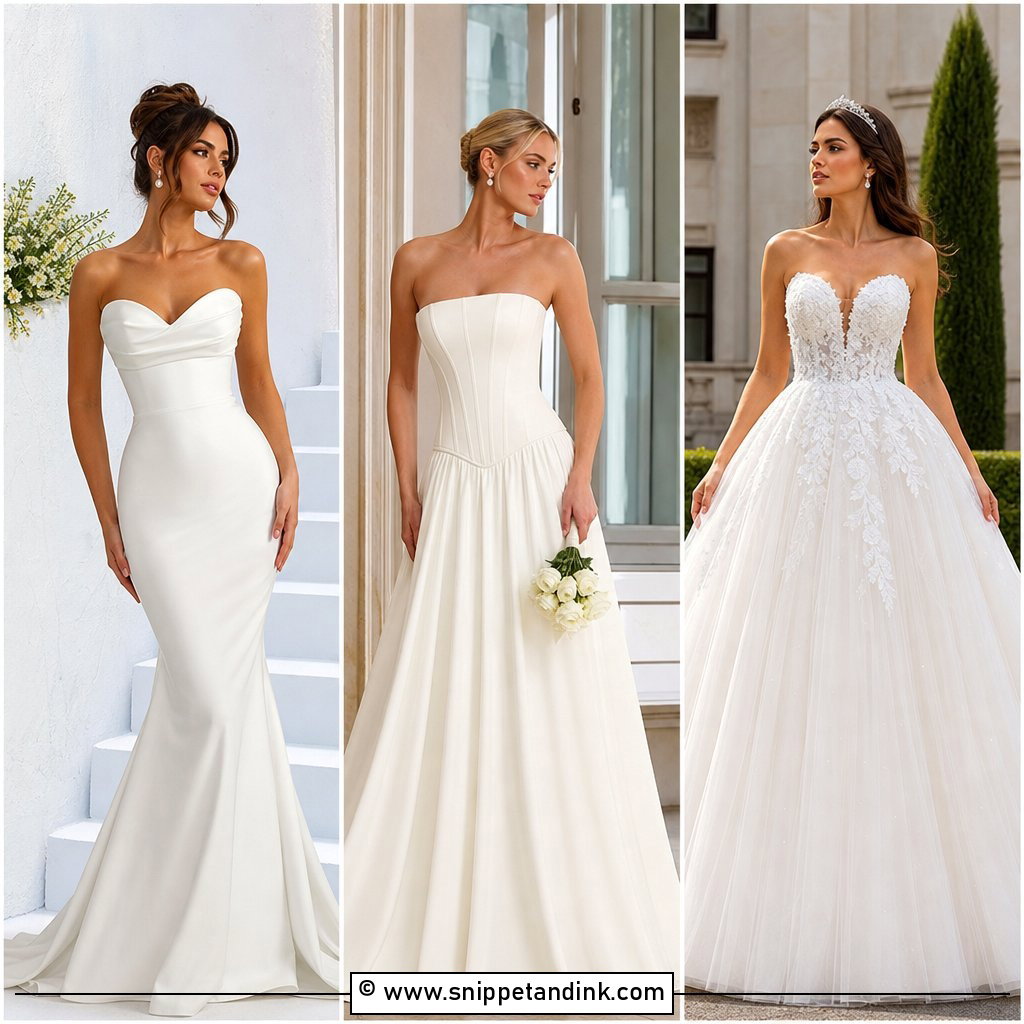
The strapless ball gown still makes the biggest entrance with the fewest extras. Plain satin, mikado or taffeta keeps it simple, and a softly structured bodice gives the support and smooth shape. Volume brings practical questions, though: can you fit through the venue doors, into the car, and into a toilet stall? I ask brides to picture each one. A long veil, delicate drop earrings and closed-toe heels refine it, and a small bouquet balances the skirt in large, formal venues.
4. Crepe Sheath Wedding Dress
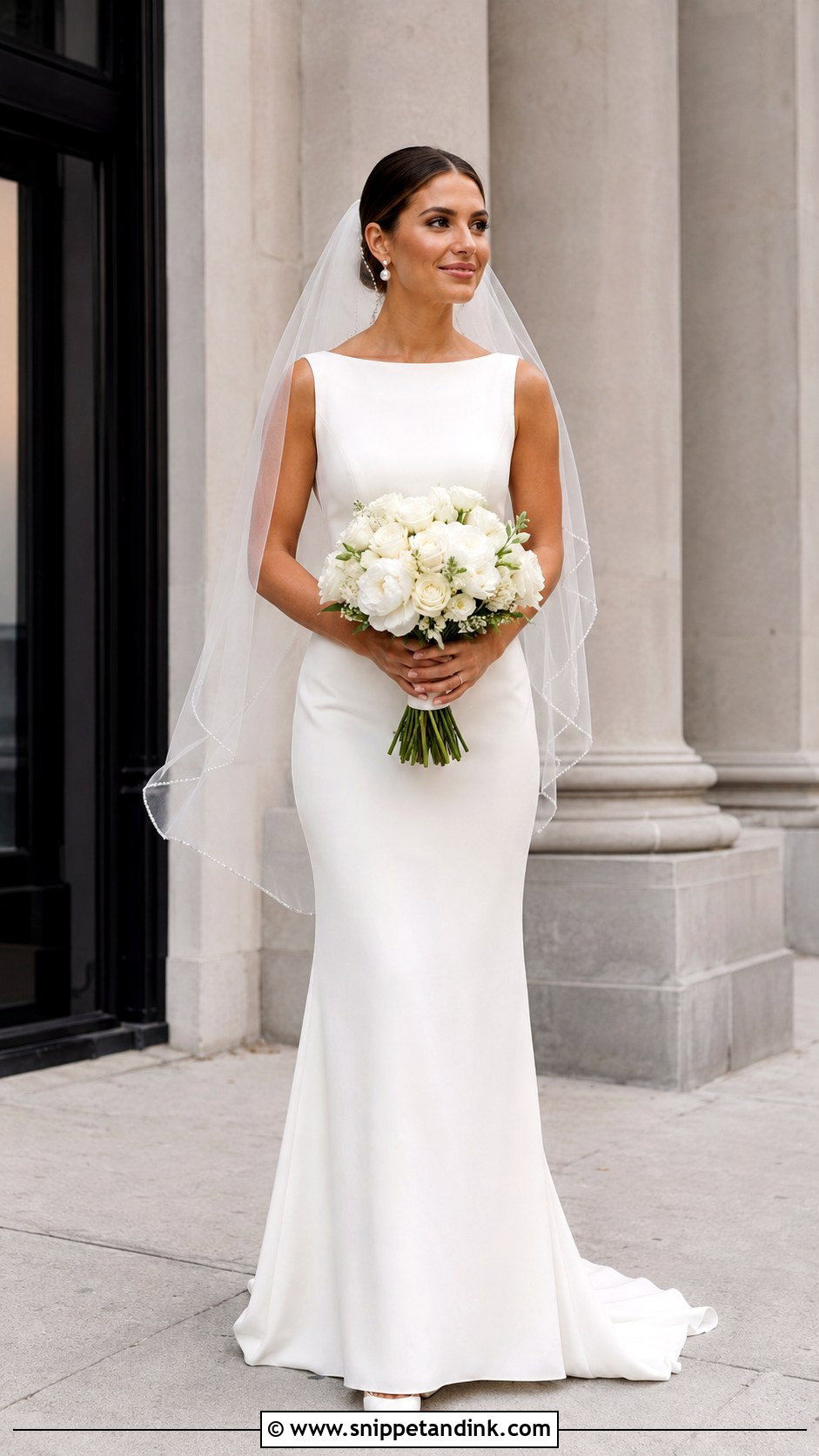
Crepe has a matte surface with a little stretch, so a crepe sheath wedding dress follows the body without the fullness of a ball gown. That stretch also shows what’s underneath, which is why I fit crepe sheaths with the final undergarments from the first appointment. A bateau or square neckline or a low back adds interest without clutter. A fingertip veil, pearl earrings, sleek heels and a structured bouquet suit city weddings and minimalist venues.
5. Silk Slip Wedding Dress
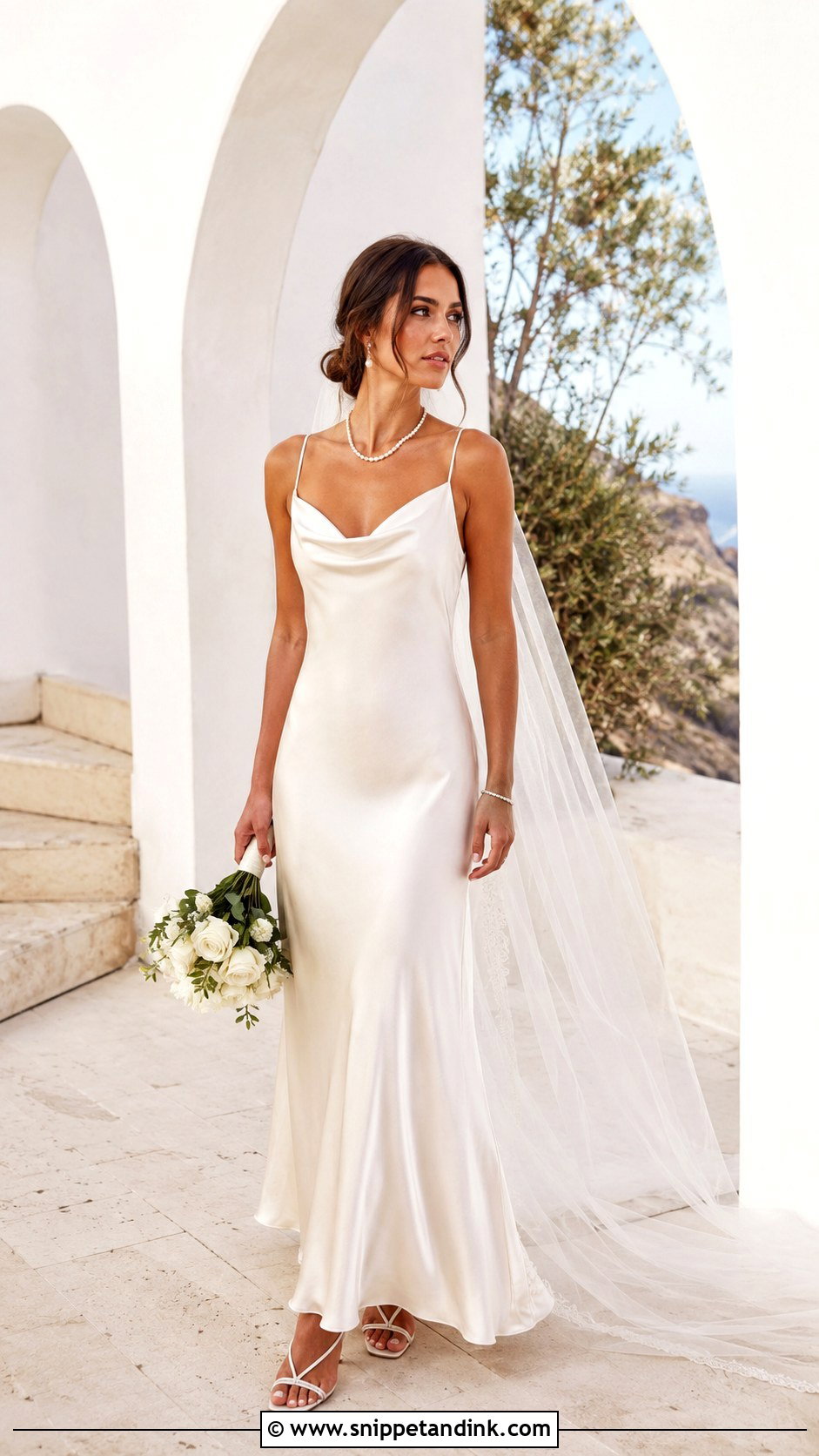
Silk drapes softly and moves with you, and good silk is what separates a bridal slip from a nightdress. A cowl, straight neckline or fine straps all work. Be warned that real silk creases quickly and water spots easily, so I keep a steamer in the getting-ready room and an umbrella nearby for an outdoor ceremony. Strappy heels, a sheer veil, pearl jewelry and a soft bouquet finish it for beaches, courthouses, destination weddings and modern receptions.
6. Square Neck Wedding Dress
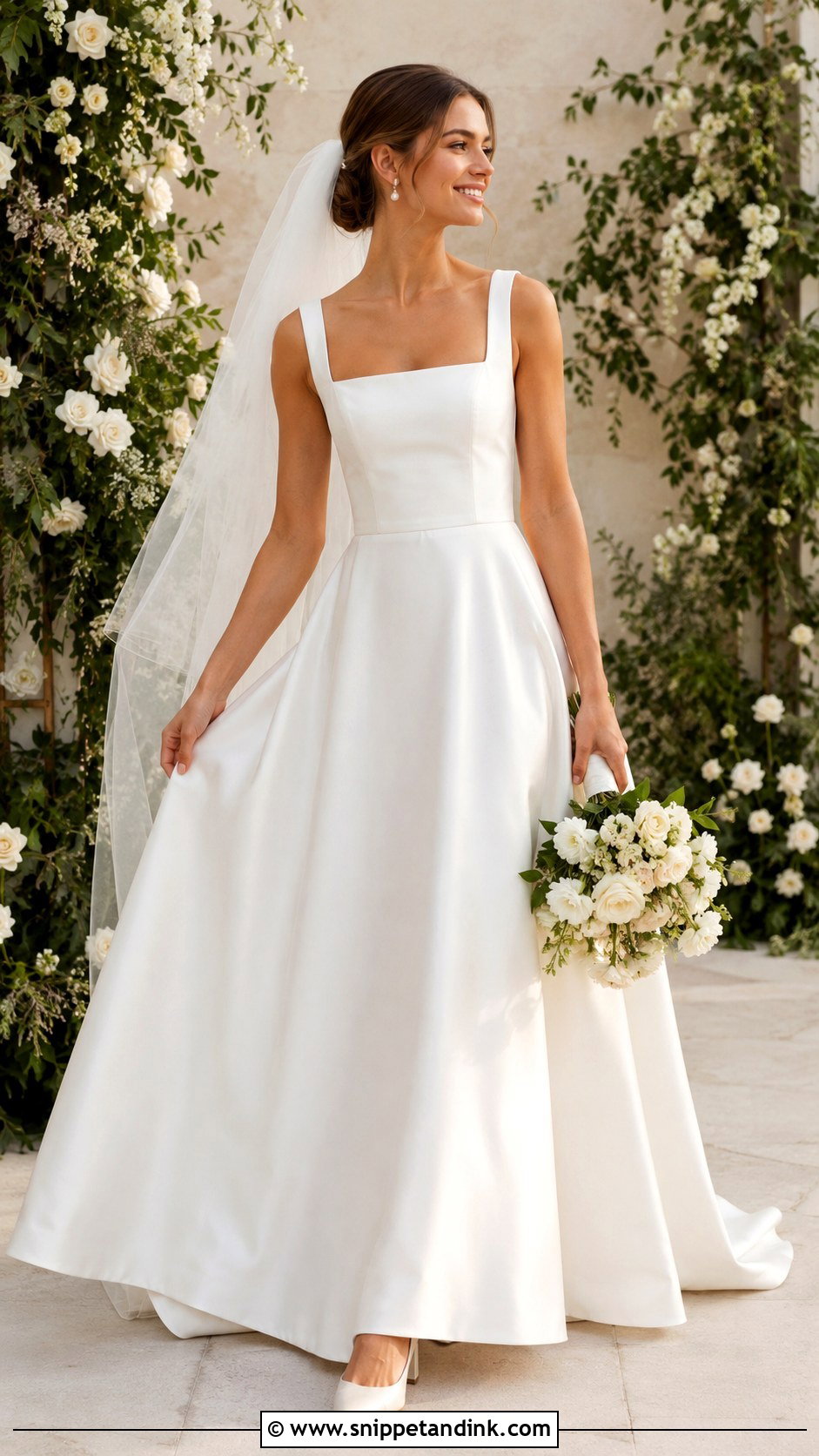
Square necks frame the collarbone with a clean architectural line, and they sit well on an A-line, slim sheath or fitted bodice with a soft train. Wider straps give support; thin ones look lighter. Satin, crepe or simple lace all work. I check the neckline corners with the bride seated, because on soft fabric they gape outward unless the edge is stabilized. A neat bun, pearl drop earrings, low block heels and a smooth veil complete it.
7. Off Shoulder Wedding Dress
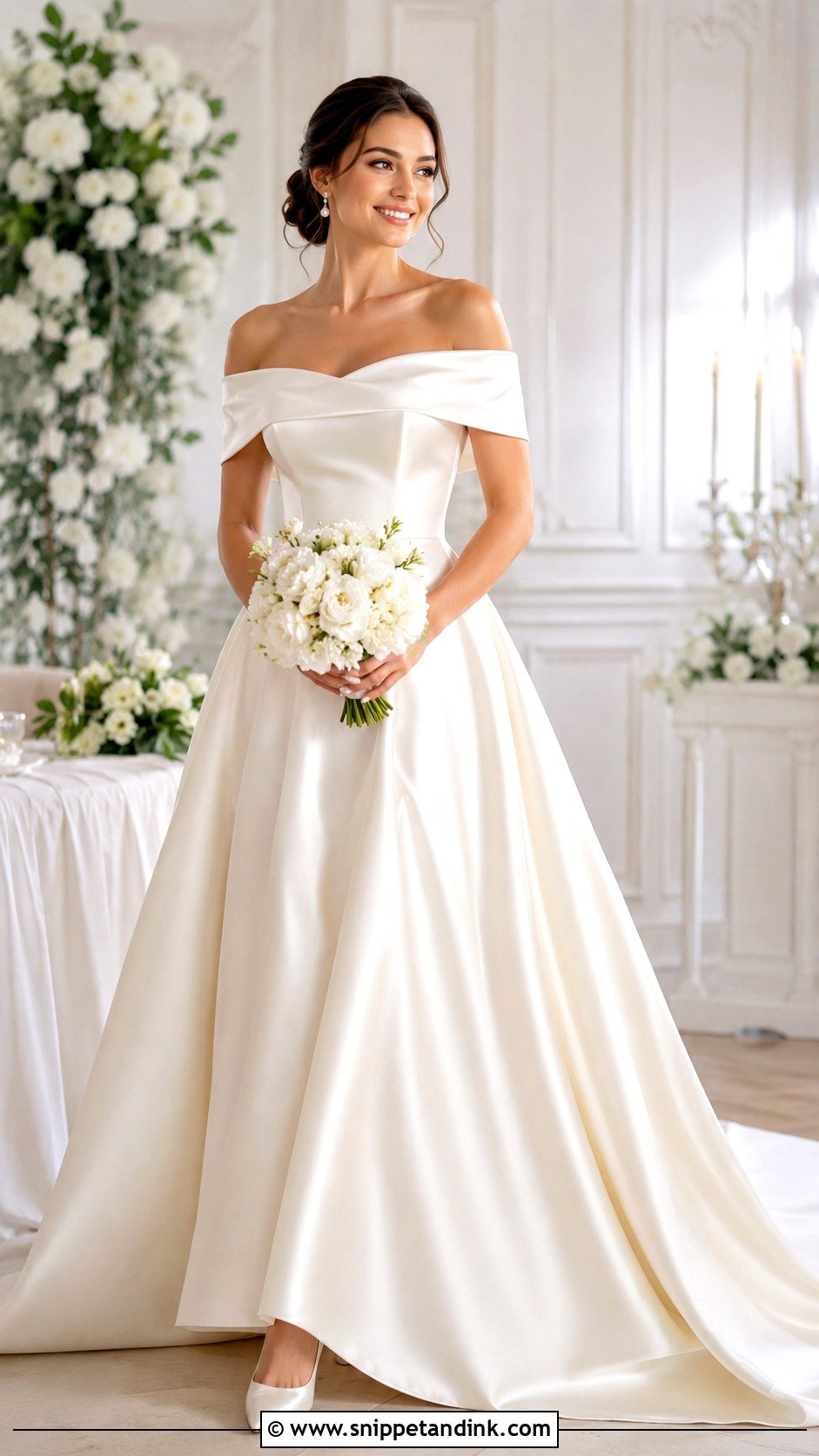
Off-the-shoulder gowns show the shoulders and collarbone softly. A fitted bodice with an A-line or gentle ball gown skirt keeps it traditional, in plain satin, mikado or crepe. The neckline band must be snug enough to stay down when you lift your arms; I test it with a mock hug at every fitting. Wear a delicate necklace or skip it for pearl earrings. Satin pumps, a smooth veil and a rounded bouquet finish it for indoor ceremonies, gardens and evening receptions.
8. High Neck Wedding Dress
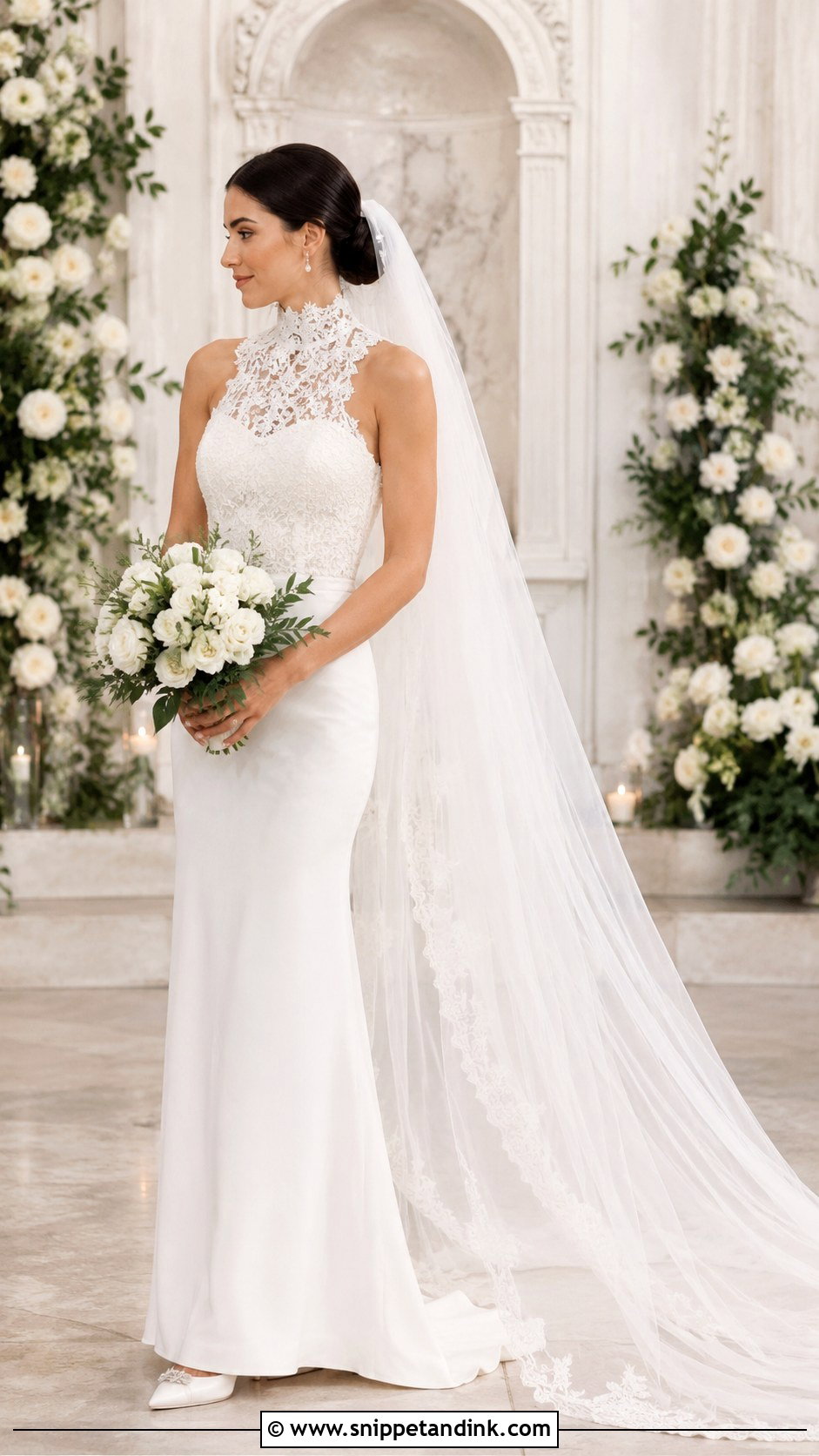
A high neck gives coverage with a graceful shape. A fitted bodice and slim skirt look modern; high-neck lace over an A-line feels traditional. Keep the fabric plain so the neckline leads. An updo keeps the neck and shoulders clean. My check: turn your head fully left and right in the fitting room; a collar cut too snug will rub by evening. Small earrings, classic heels and a long veil set low at the back complete it.
9. Bateau Neck Wedding Dress
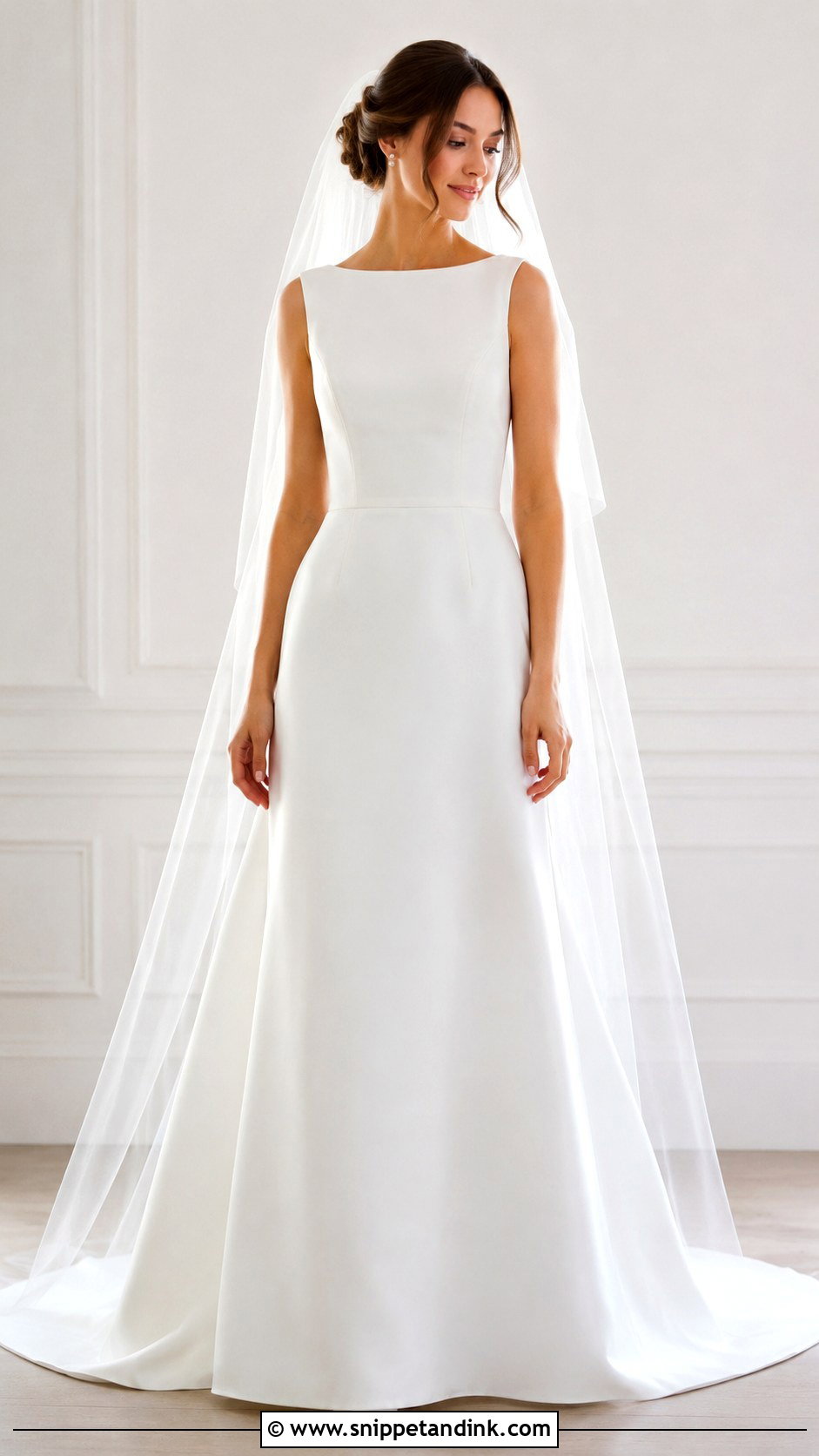
A bateau neck wedding dress runs straight across the collarbone, framing the face with a little coverage. It suits brides with fairly straight shoulders best; on sloping shoulders the neckline can slip outward, and a tailor may need to add a hidden strap. Satin, crepe or mikado on a sheath or A-line all work. Pearl studs, a low chignon, pointed heels and a simple veil are enough, since the neckline is already refined.
10. V Neck Wedding Dress
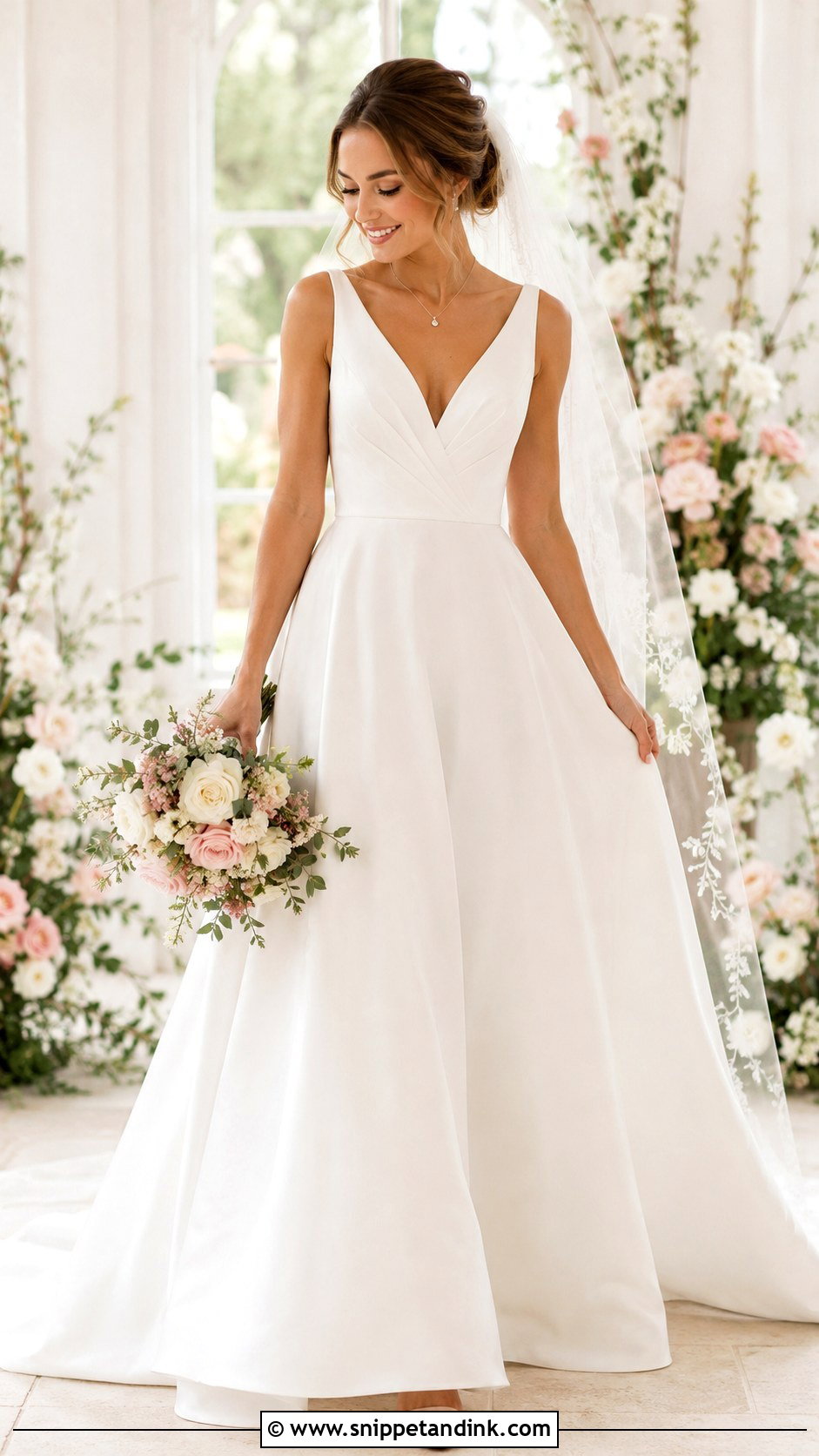
V-necks suit more figures than almost any other neckline I fit. A soft V feels modest; a deeper one modern. For a classic dress, choose a balanced depth with supportive straps over a clean skirt in satin, crepe, chiffon or lace. A deep V needs built-in support or fashion tape, so I have brides lean forward at the fitting as if signing something. A delicate pendant, soft waves, neutral heels and a light veil finish an A-line V-neck for most venues.
11. Tea Length Wedding Dress
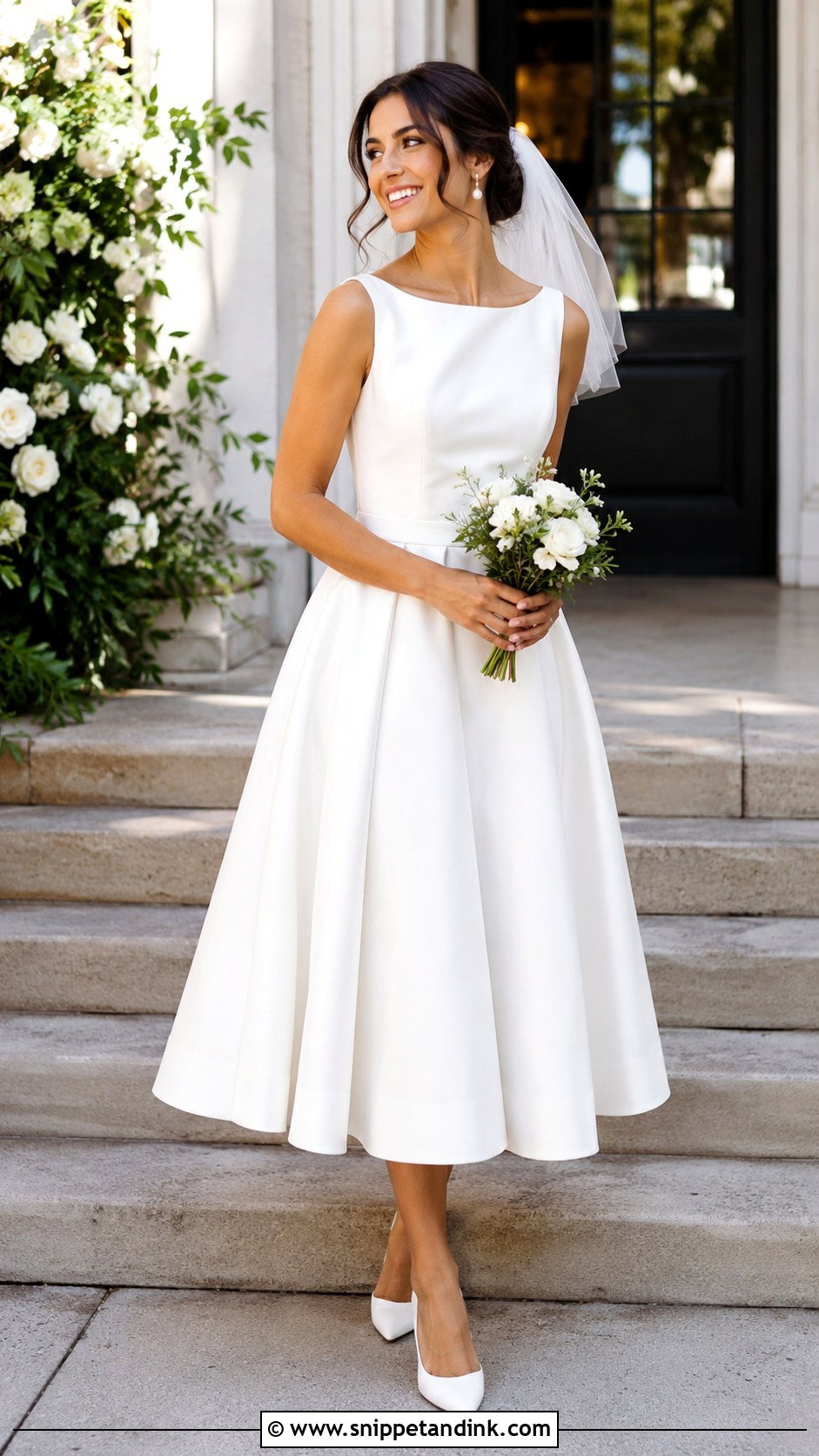
Tea length shows off your shoes and makes movement easy, with the hem falling between knee and ankle. Crisp satin, tulle, lace or organza holds a fitted bodice and flared skirt. Keep the accessories modern so it doesn’t tip into costume: one vintage note, not five. Pointed pumps, pearl earrings, a short veil and a small bouquet suit courthouses, gardens, brunch receptions and smaller weddings.
12. Simple Lace A Line Wedding Dress
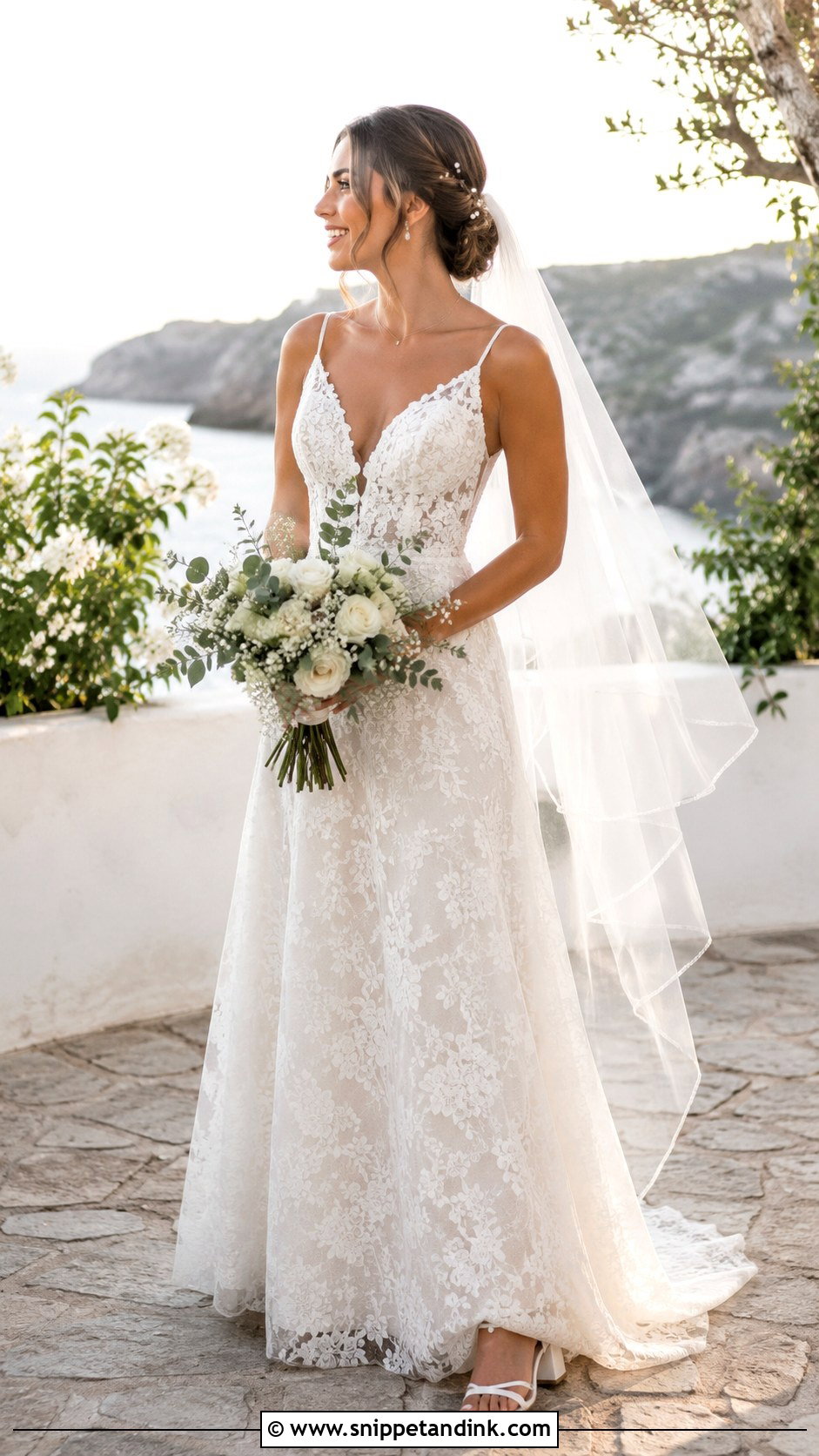
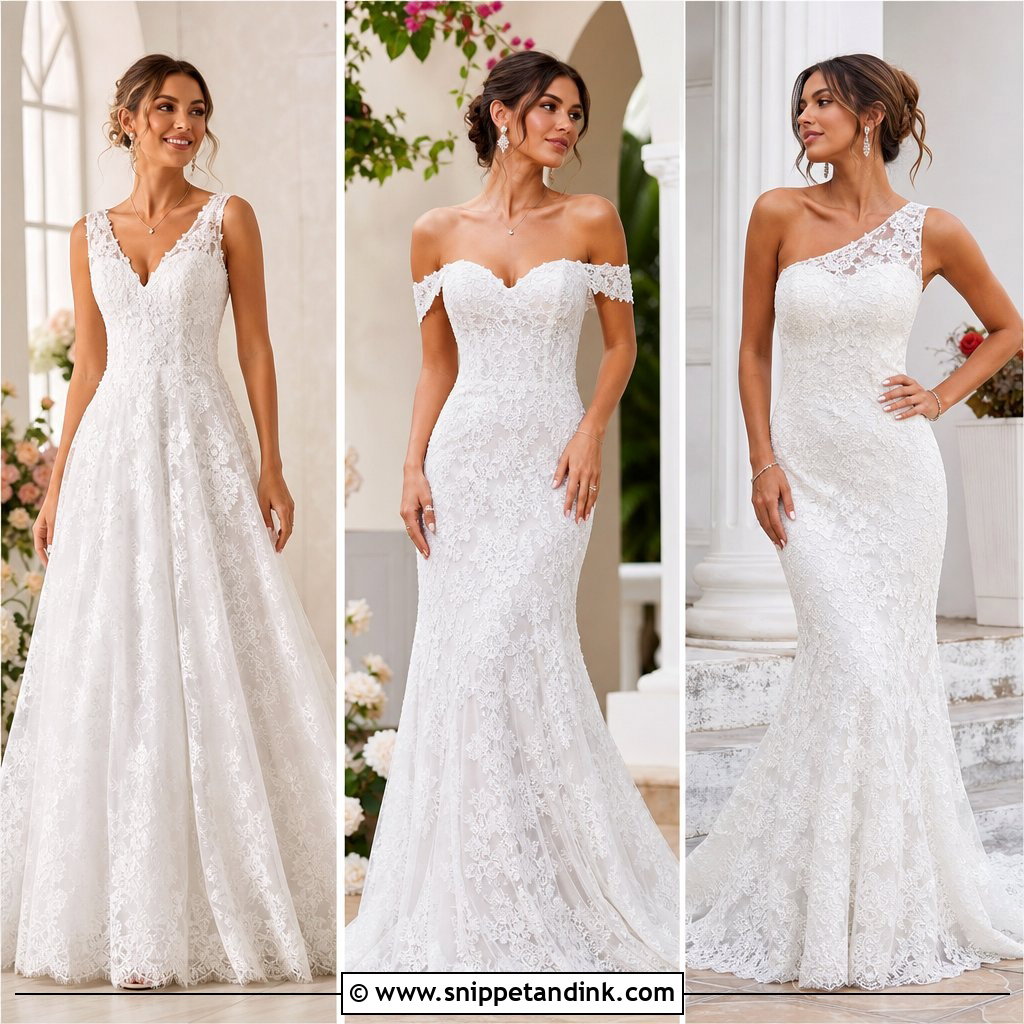
A lace A-line sits between minimal and detailed. The shape is comfortable and the lace adds texture, as long as it’s delicate floral lace, a scalloped edge or a lightly textured bodice rather than heavy sparkle. Lace snags on bouquet wire and some bracelets, so I wrap the bouquet stem fully in ribbon. A sheer veil, pearl hair pins, block heels and a bouquet with soft greenery suit outdoor ceremonies, traditional venues and formal receptions.
13. Plain Mikado Wedding Dress
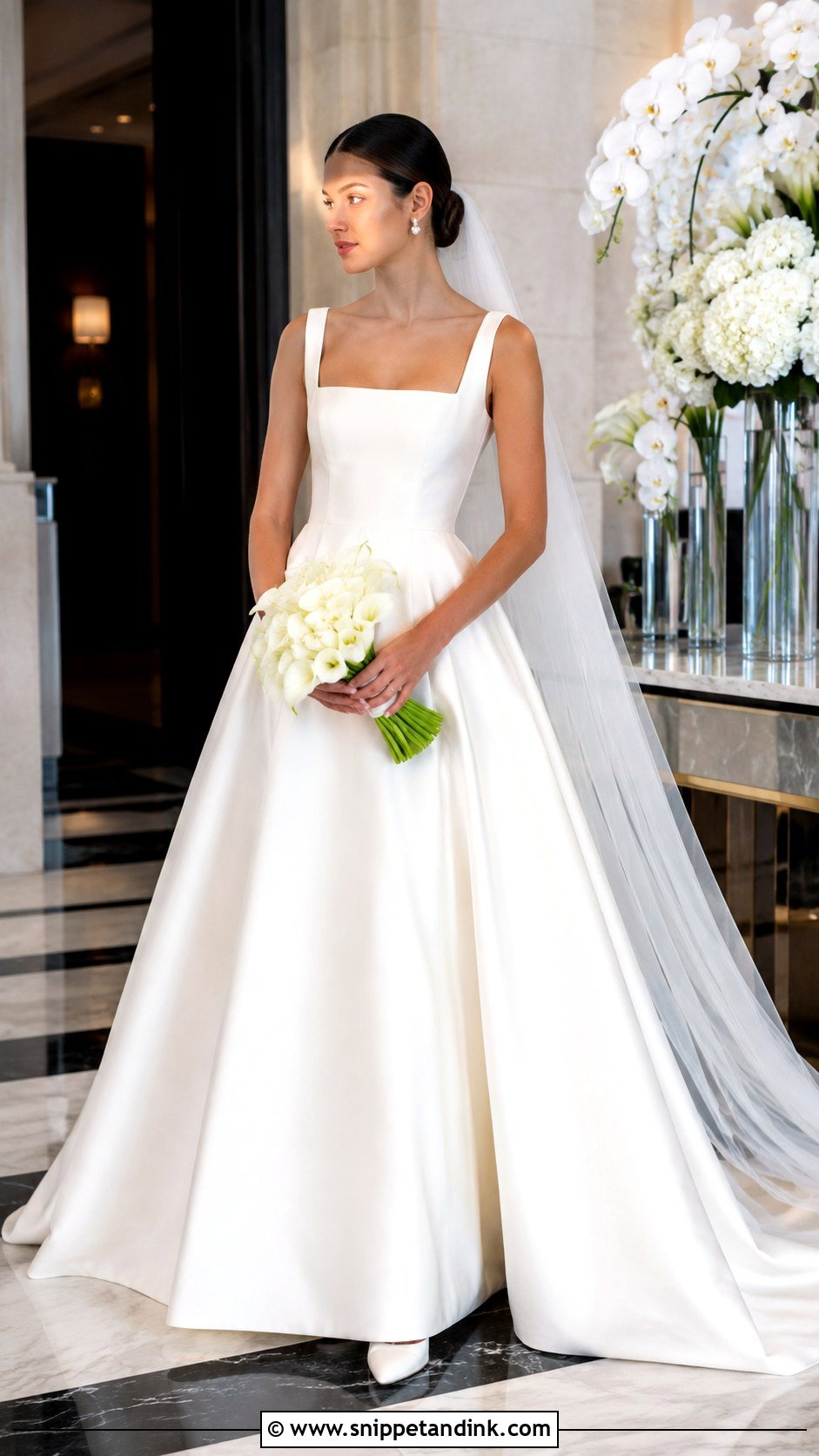
Mikado is heavier than satin with a faint texture, so a plain mikado wedding dress holds sharp shapes on its own: A-lines, ball gowns and fit-and-flares. Because the fabric looks rich, the dress needs almost no decoration. A strapless, square or bateau neckline looks especially crisp in it. The trade-off is warmth; mikado is a stiff, dense weave, so I’d think twice for a midsummer outdoor wedding. Pearl earrings, a sleek veil, satin pumps and a sculpted bouquet suit hotels, museums and evening celebrations.
14. Fit And Flare Wedding Dress
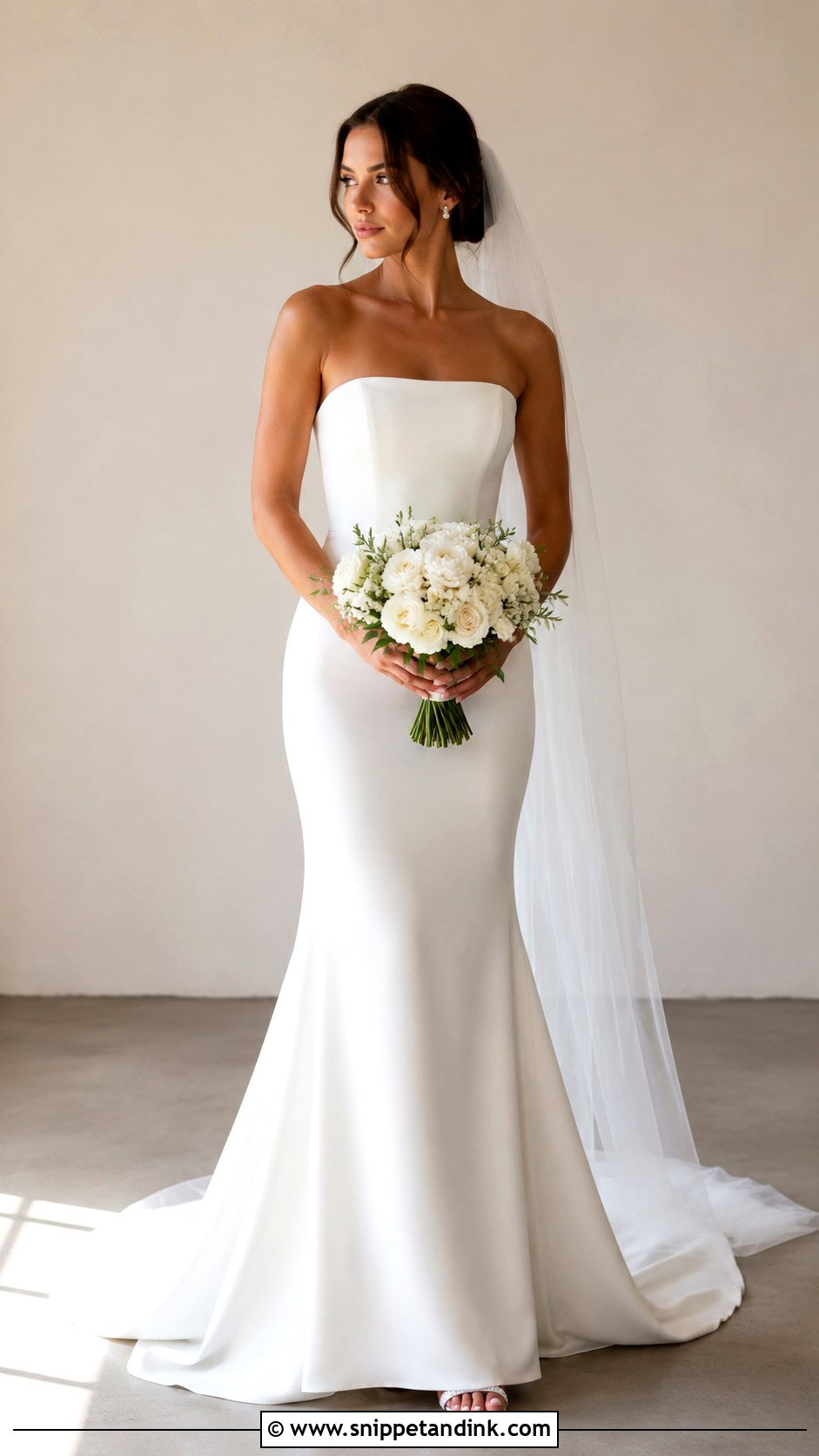
Fit-and-flare follows the bodice and hips, then opens below for movement, so it is easier to wear than a mermaid. In crepe it looks modern; in lace or satin, romantic. Strapless, V and off-shoulder necklines all suit it. I always have brides sit, then climb a step in it, to make sure the flare starts high enough to move. A long veil, simple earrings, elegant heels and a neat bouquet finish it.



15. Cap Sleeve Wedding Dress
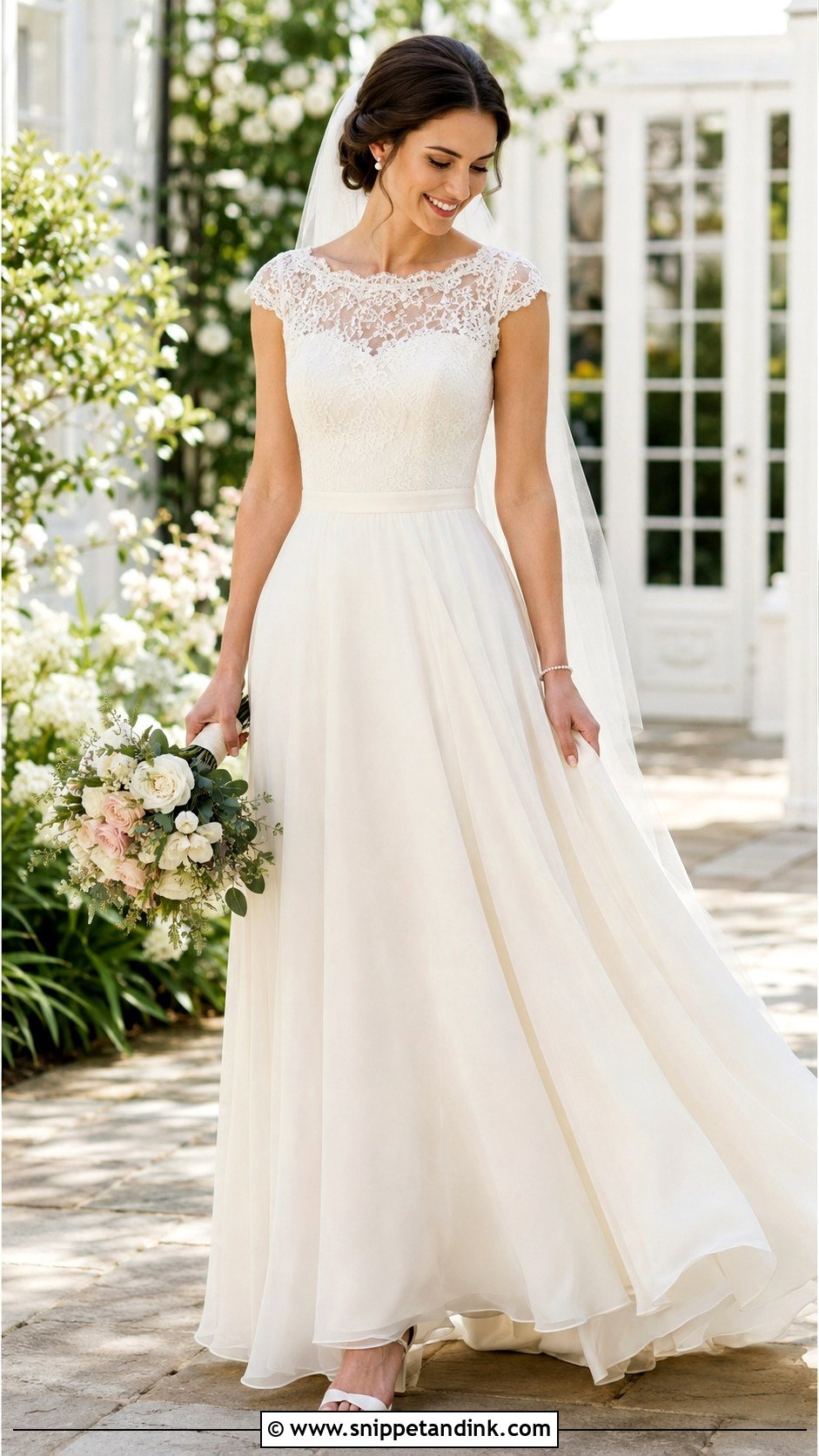
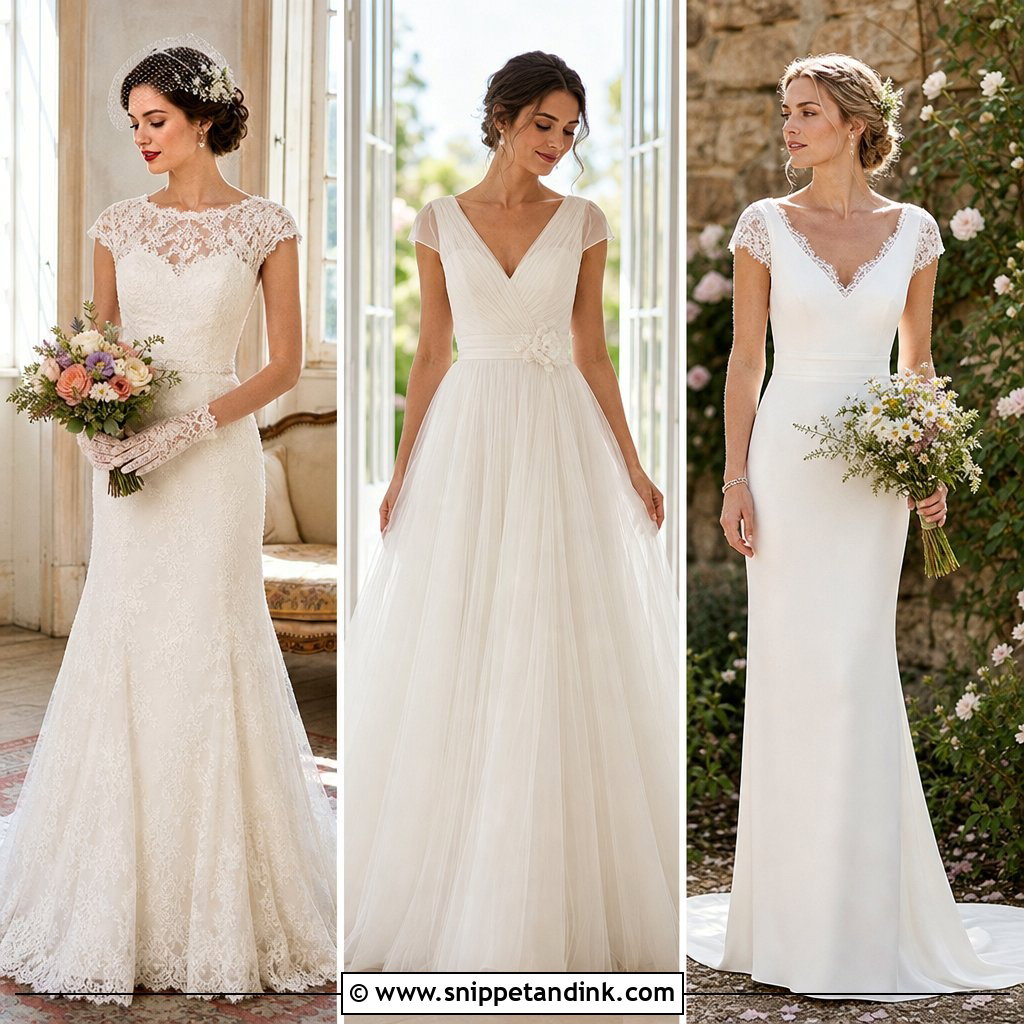
A cap sleeve wedding dress covers just the top of the shoulder and softens the neckline with a slight vintage feel. Lace, satin, chiffon and crepe all work, especially on a cap-sleeve bodice over an A-line skirt. Check that the cap doesn’t cut across the widest part of the upper arm; a slightly longer or shorter sleeve often looks better. Pearl studs, a simple bracelet, low heels and a soft veil suit daytime, garden and traditional weddings.
16. Simple Chiffon Wedding Dress
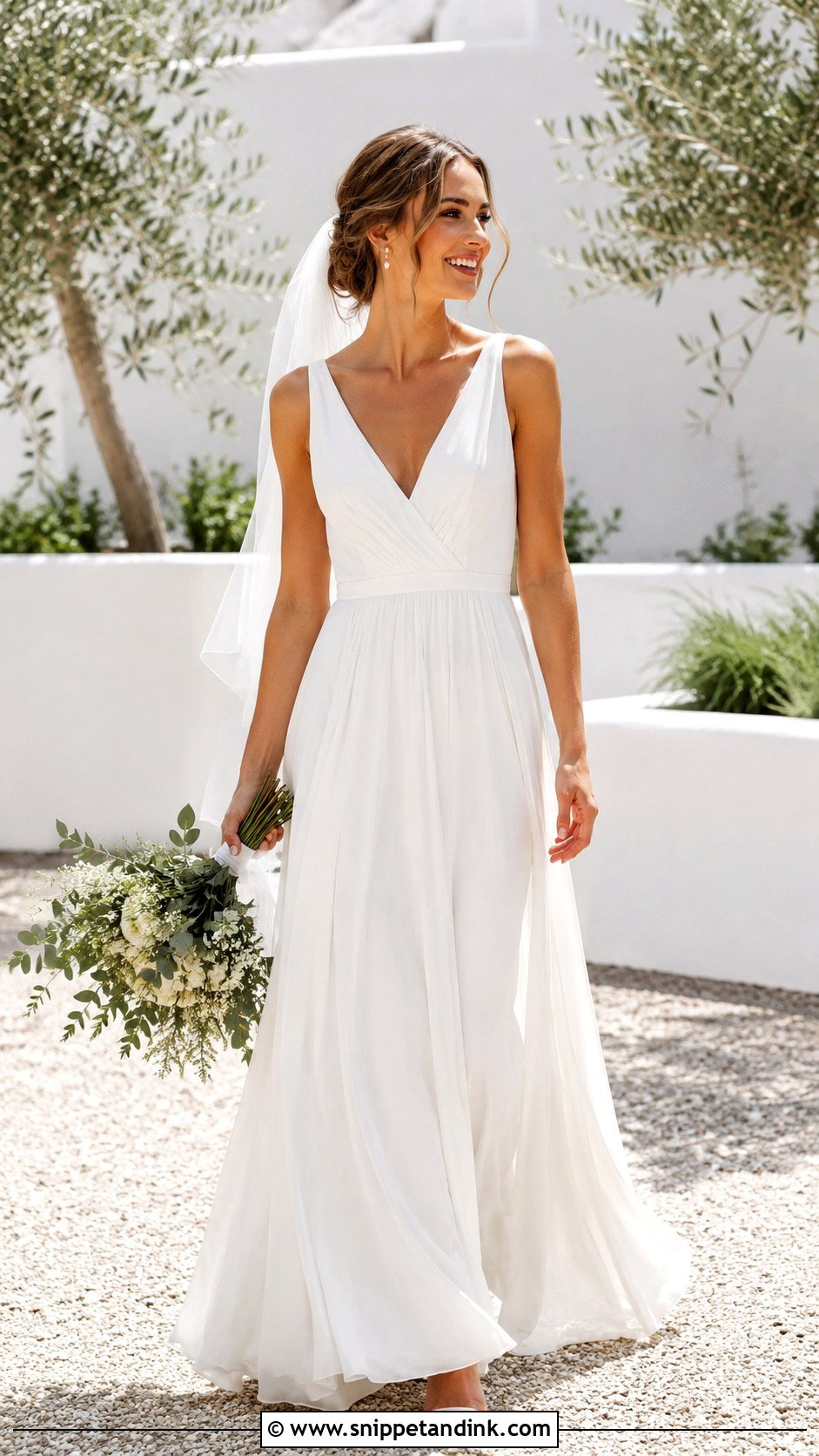
Chiffon is airy and drapes well over empire waists, A-line skirts and gentle V-necks, which is why it suits warm weather and beach ceremonies. It is also delicate: it frays at raw edges and snags on rough surfaces, so I’d keep it away from rough wood decking and brick walls during photos. Keep beading minimal and let soft pleats or a wrapped bodice give shape. Delicate sandals or low heels, small earrings, a sheer veil and a loose bouquet finish it.
17. Pearl Detail Wedding Dress
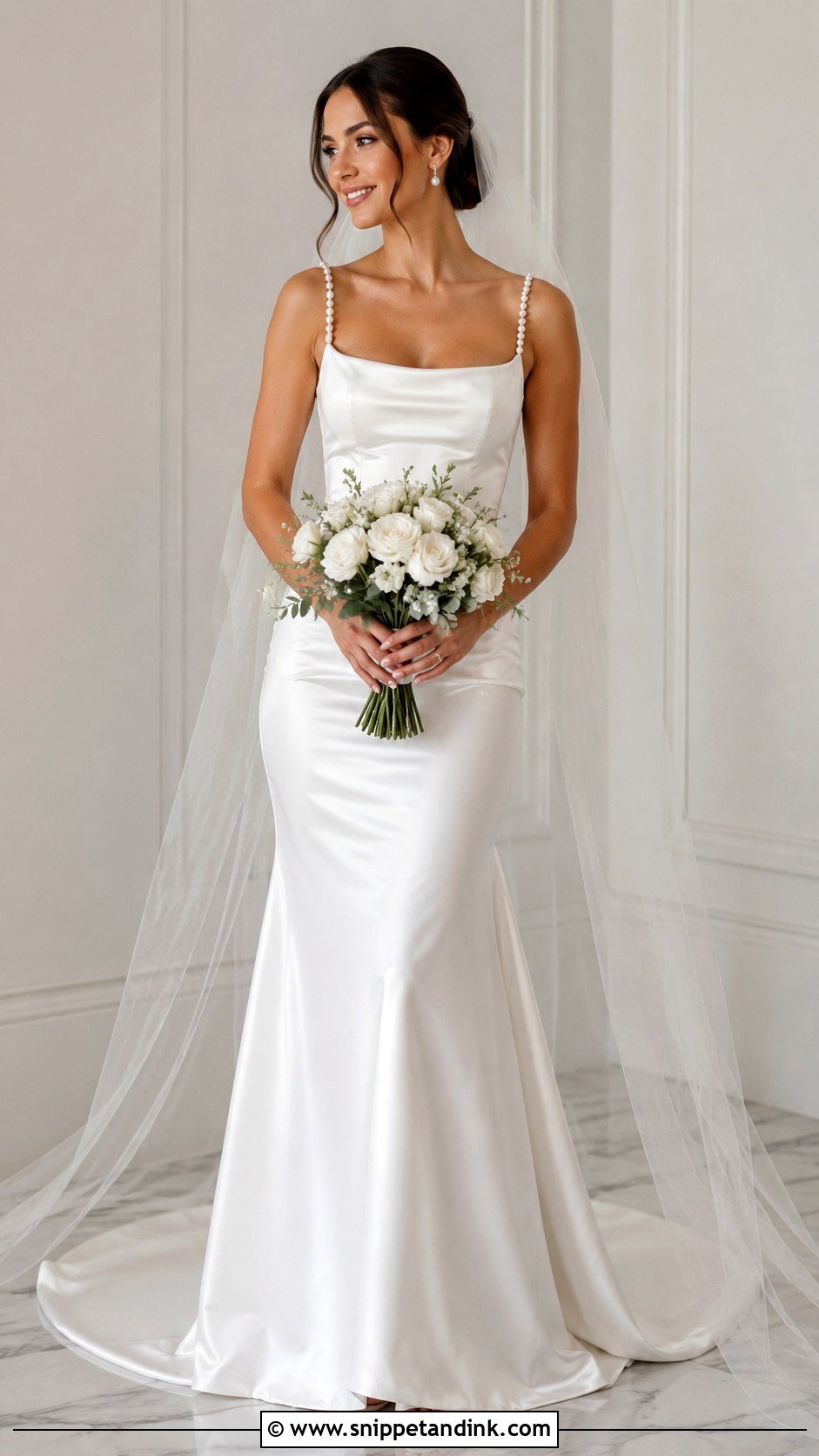
Pearls are softer than crystals and read bridal immediately. Use them once: along the neckline, on straps, as buttons or on the bodice, not all over. A satin sheath with pearl straps or an A-line with pearl buttons down the back looks right. I check how pearls are attached, since sewn pearls on a strap can rub the shoulder if they sit on the underside. Pearl earrings, satin heels and a clean veil keep it polished for formal venues.
18. Button Back Wedding Dress
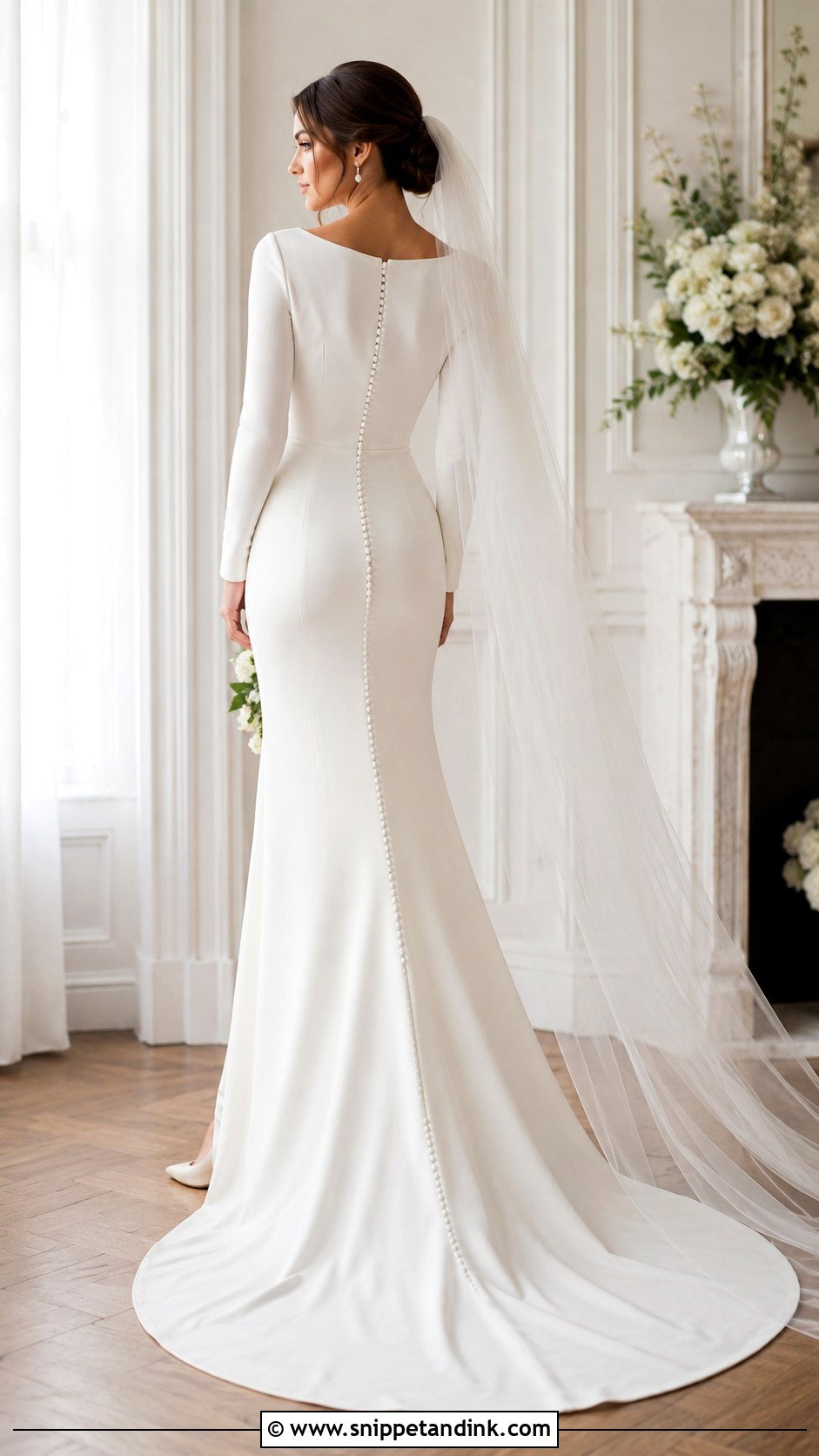
A button back wedding dress shows its detail when you turn around. Covered buttons suit satin, crepe, lace and mikado, especially with a long train, low back or fitted bodice. In practice, most button backs close with a hidden zip under the buttons or with elastic loops; real buttonholes take a long time to fasten, so ask which yours has and give your helper a crochet hook for loops. An updo, drop earrings, pointed heels and a sheer veil keep the front clean and the back memorable.
19. Simple Wedding Dress With Train
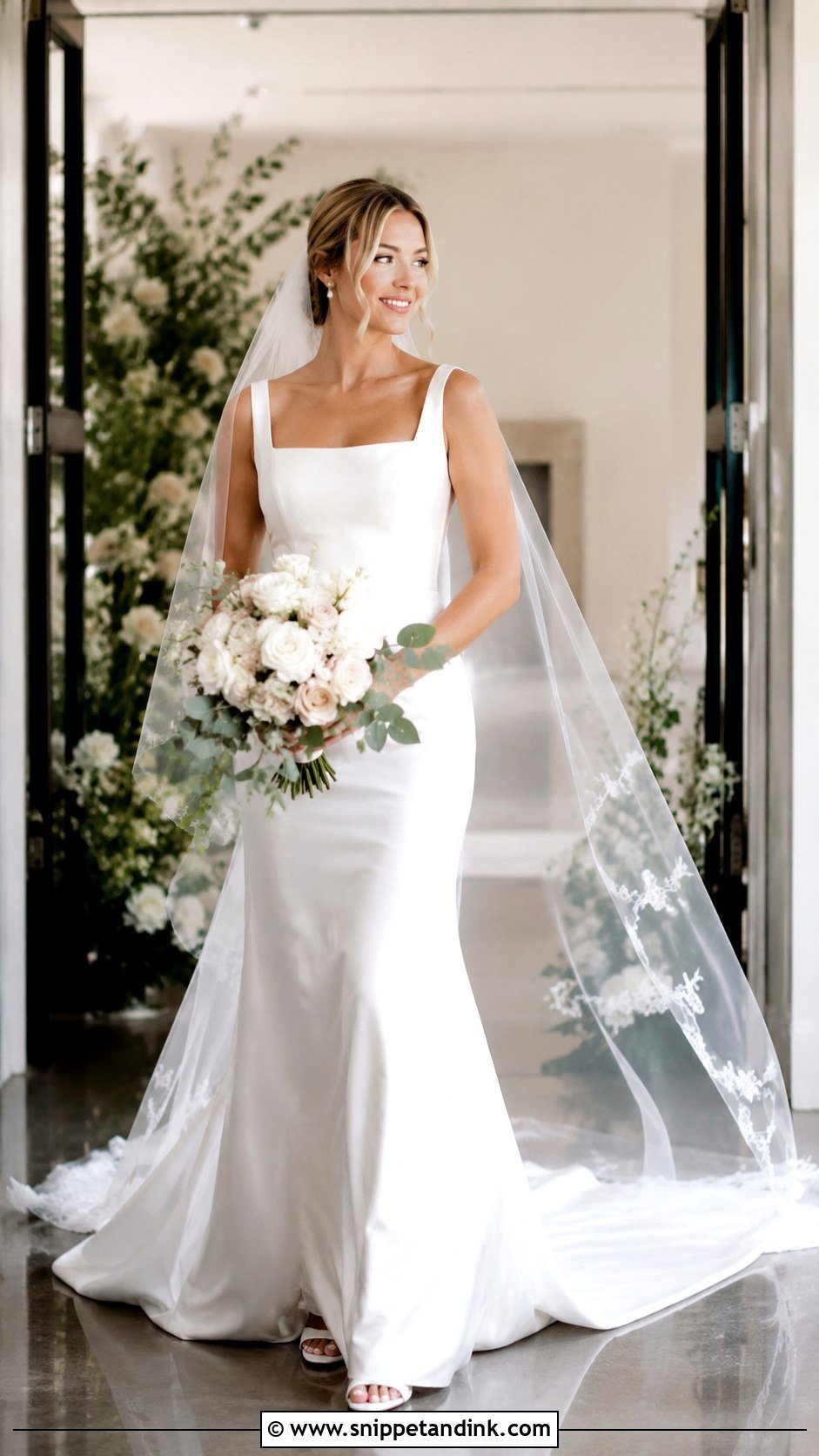
A train gives a bridal moment without decoration. Chapel length is the easiest to manage; anything longer feels more formal and needs a bustle for the reception. Satin, crepe and mikado fall smoothly into a train. I’d keep the neckline simple and the bodice fitted so the train leads. A cathedral veil adds softness, a shorter one looks modern. Practice walking and turning in it before the day, and ask whoever arranges the train at the altar to learn how it should lie.




20. Minimalist Strapless Wedding Dress
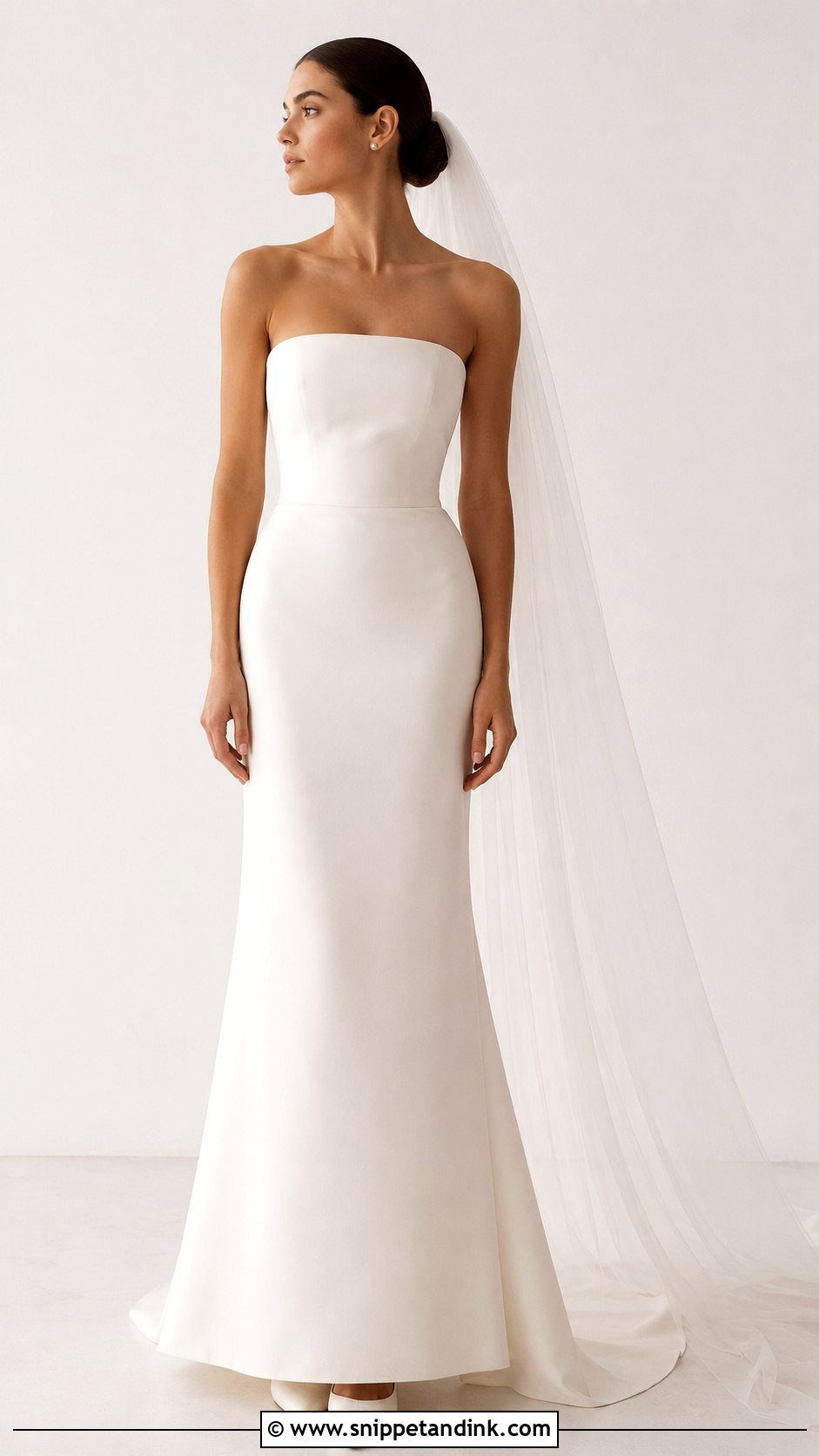
A strapless gown has to stay up by itself, so internal structure is the first thing I look at: boning, a waist stay and a bodice that doesn’t move when you raise your arms. A straight-across neckline looks sleek; a slight sweetheart, softer. Pair it with a fitted column, an A-line or a subtle ball gown skirt. Pearl studs, a smooth bun, satin heels and a long veil finish a look that is chic without feeling cold.
21. Simple Wedding Dress With Bow
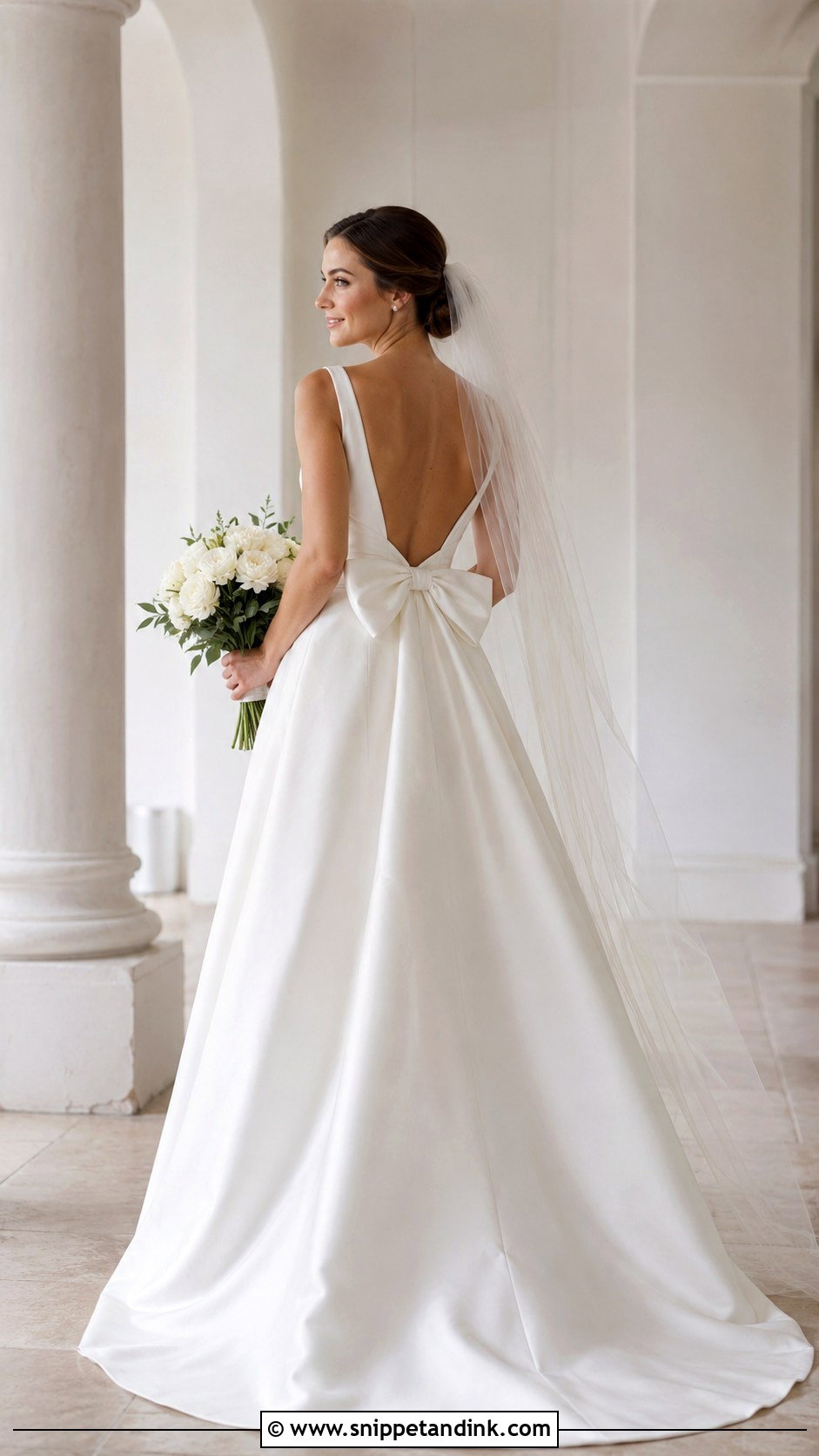
One bow in the right place is all a simple wedding dress with a bow needs. A bow at the back waist feels classic; a small shoulder bow feels sweet and modern. Satin and mikado hold a structured bow; soft fabrics droop without interfacing. A back bow also sits right where you lean against a chair, so I check it isn’t too bulky to sit comfortably. Plain heels, small earrings and a smooth veil let it stand out.
22. Short Sleeve Wedding Dress
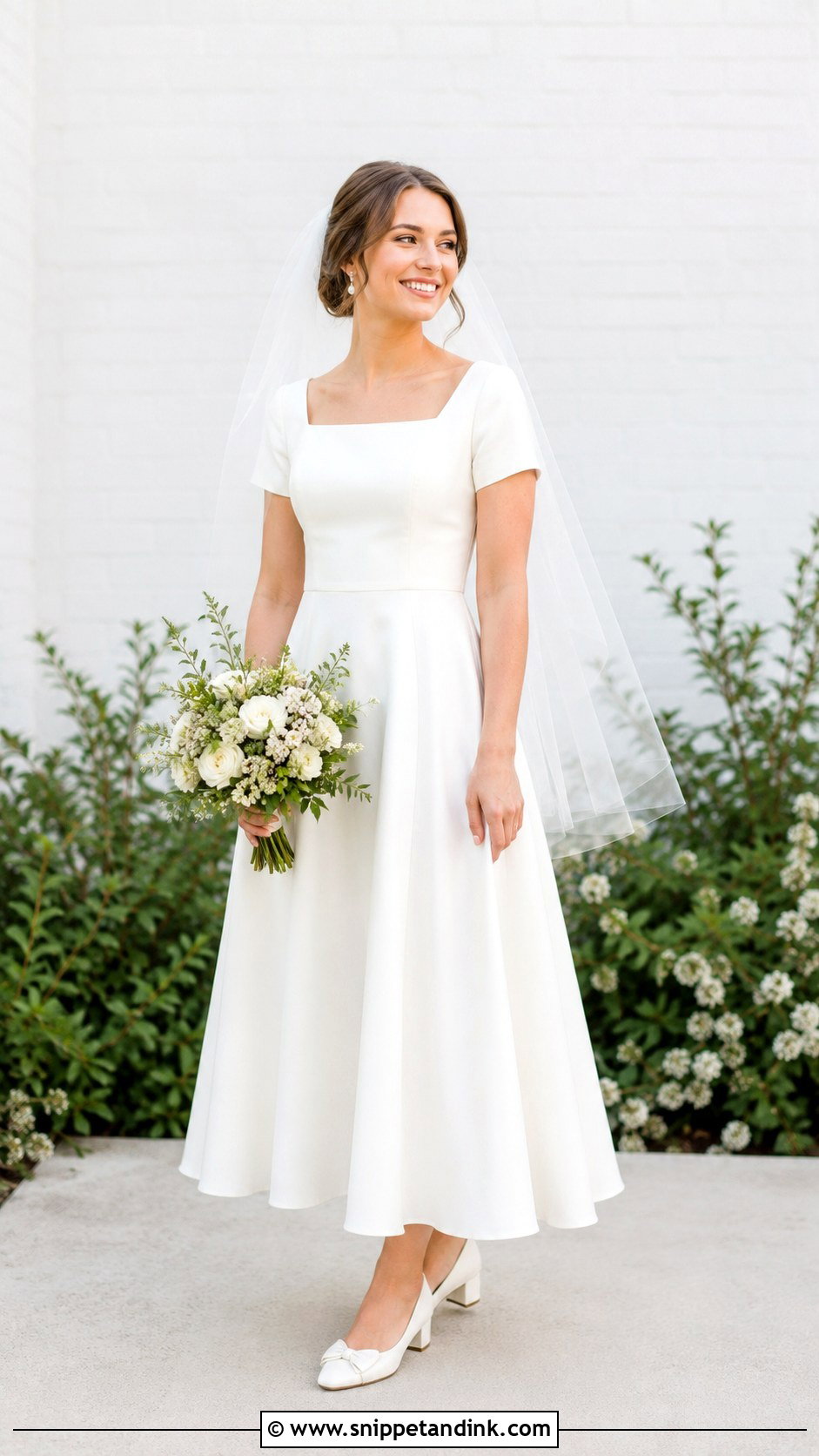
Short sleeves give comfort and a little coverage. They can be fitted, fluttery, lace or tailored, and a short-sleeve bodice over an A-line skirt always looks right. Fitted short sleeves need room to lift your arms, so I test with a reach overhead. Spring, daytime and relaxed venues suit it best. Pearl earrings, low block heels, a fingertip veil and a natural bouquet keep it light and practical.
23. Ivory Column Wedding Dress
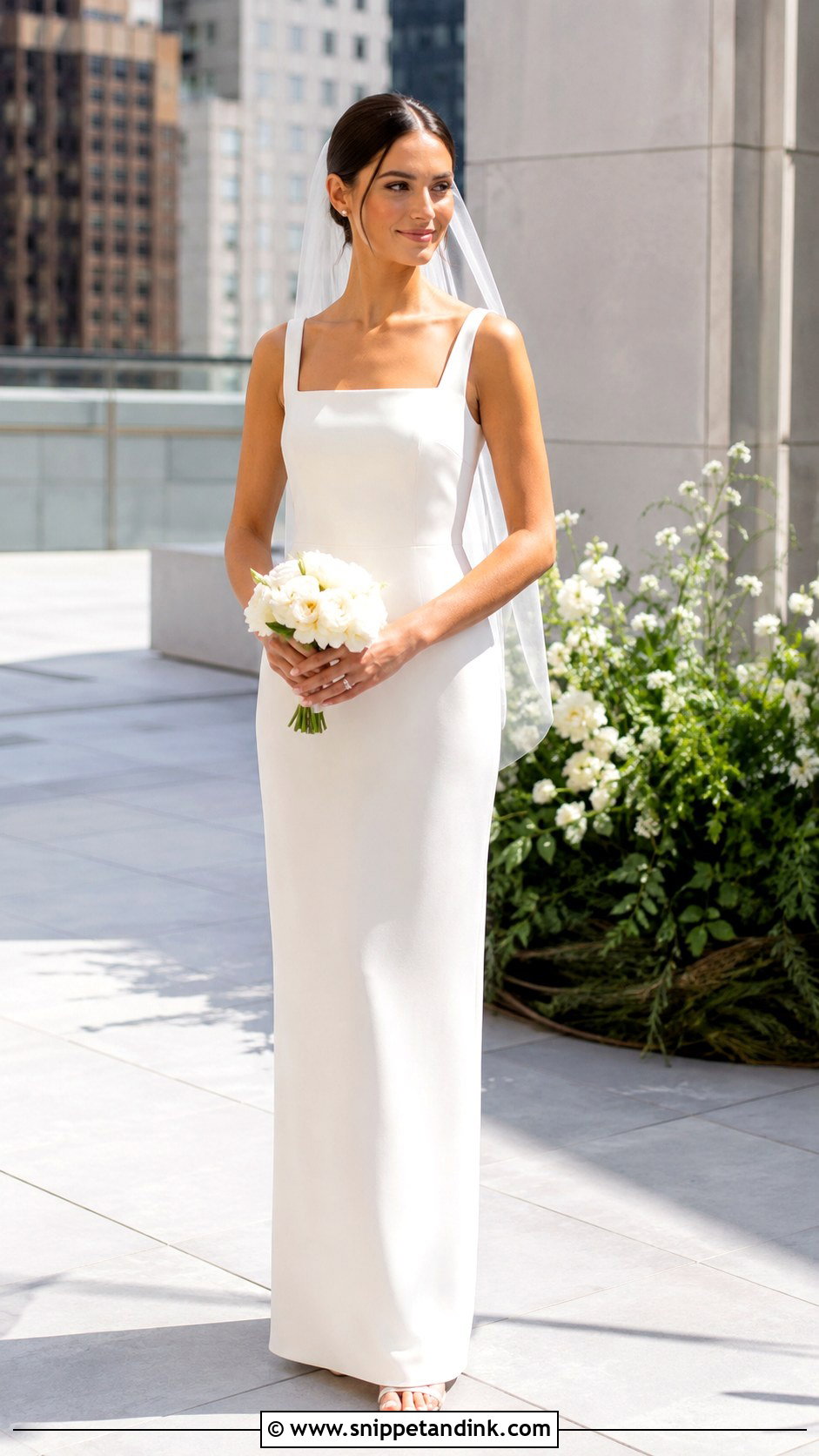
Ivory is warmer than bright white and flatters most skin tones I work with. A column falls straight from neckline to hem in a long, clean line, especially in crepe, silk or satin. A square, high or strapless neckline all work. Columns need a slit or kick pleat at the back to walk easily, which is the first thing I check. Slim heels, pearl or diamond-style studs and a simple veil suit modern venues, rooftops and intimate ceremonies.
24. Classic Corset Wedding Dress
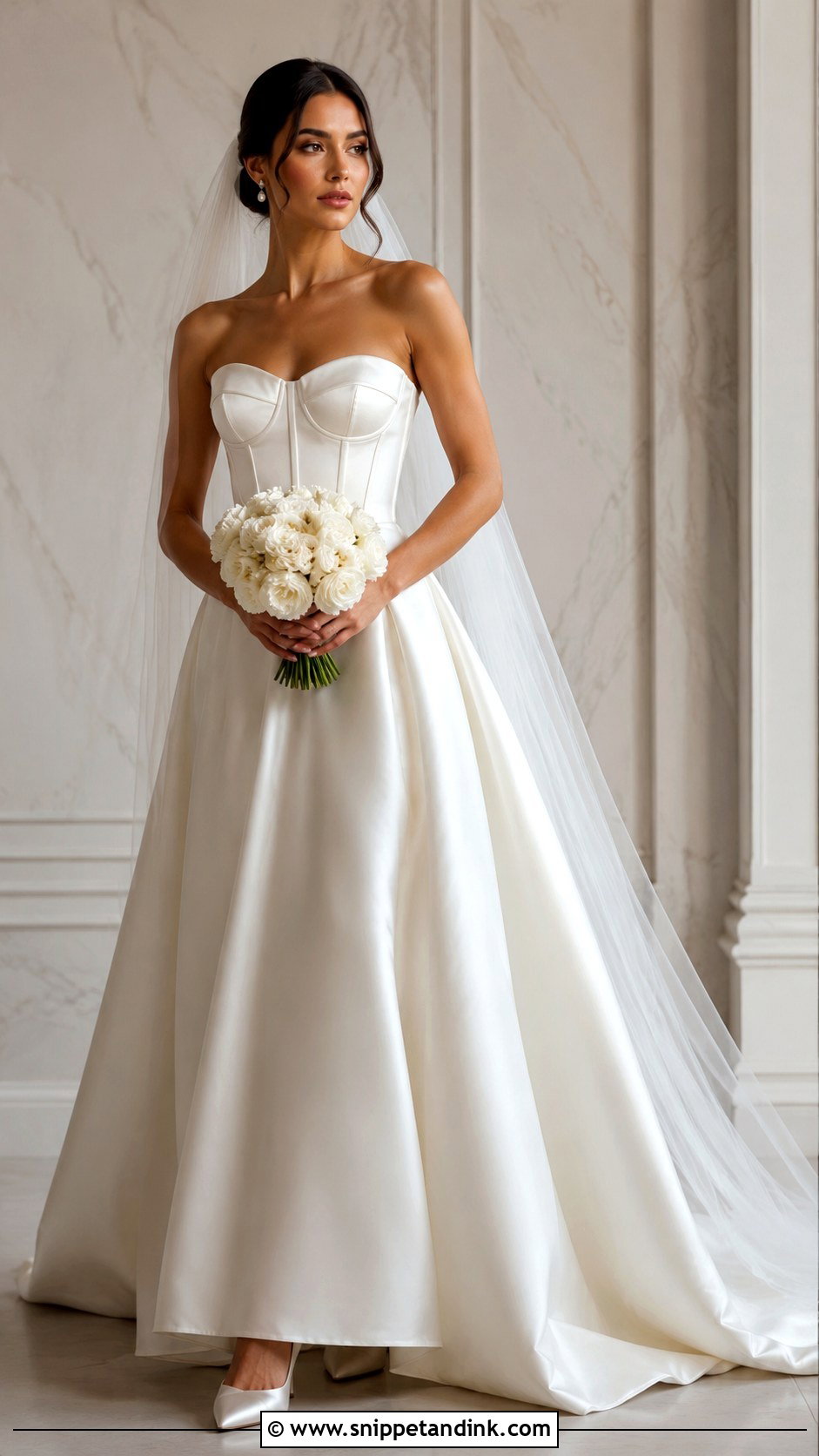
A corset bodice defines the waist and supports the gown. For a classic version, I prefer soft boning, smooth satin or simple lace, or a subtle basque waist, without heavy sheer panels or sparkle. Have it fitted seated as well as standing; a corset laced to stand can press hard at the ribs when you sit for dinner. A soft veil, pearl earrings, satin pumps and a neat bouquet finish it over an A-line or full skirt.



25. Simple Vintage Wedding Dress
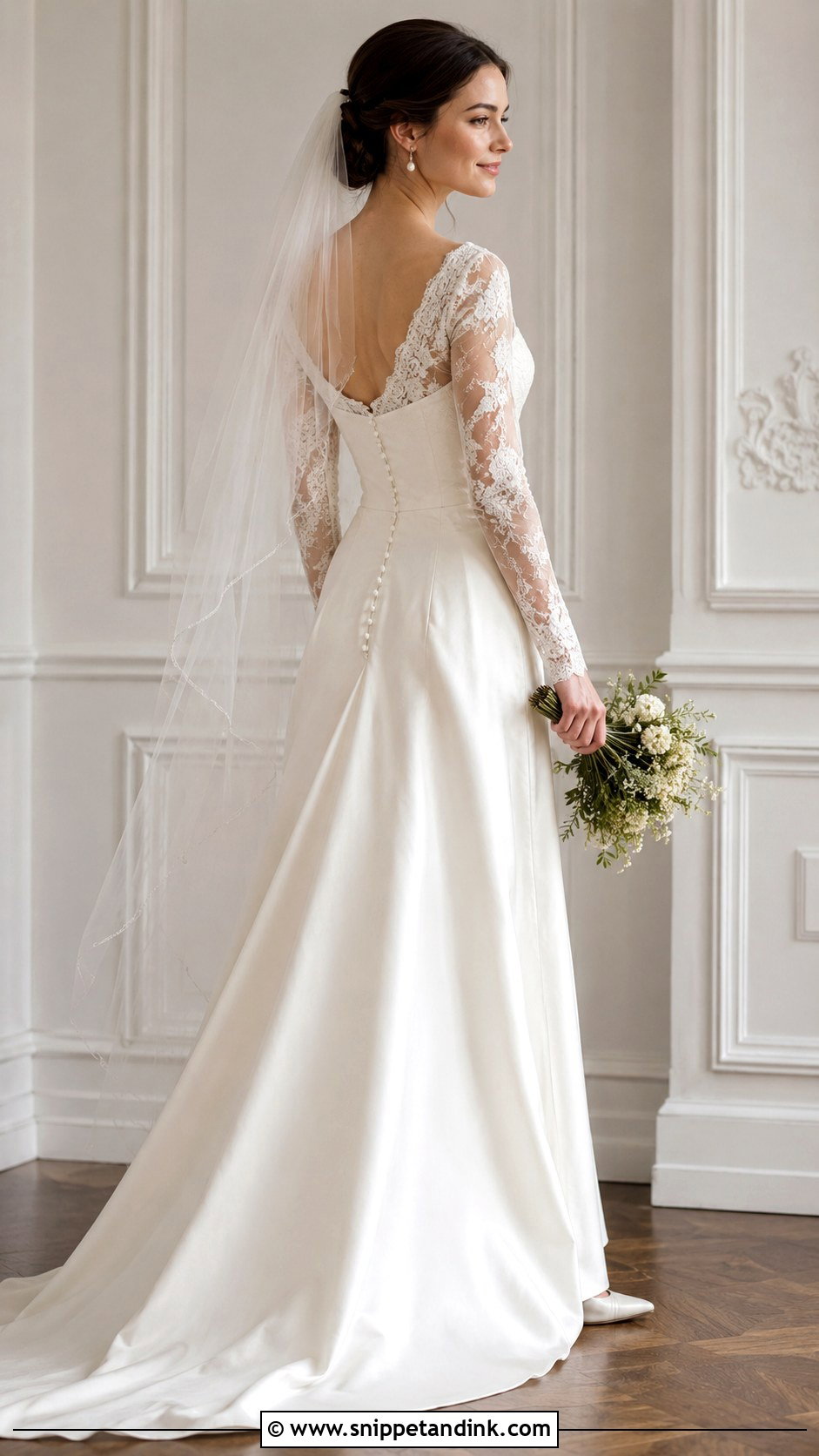
A vintage-inspired dress works when one element carries the era: lace sleeves, a tea-length skirt, satin buttons, a high neck or a slip shape. Pile on several and it looks costume-like. If you’re considering a genuine vintage gown, check the fabric at the underarms and along the seams, where older silk is most likely to have weakened. Soft ivory, delicate lace, pearl earrings, low heels, a short or long sheer veil and a simple bouquet keep it romantic.
Photos That Won’t Date and a Gown That Lasts
Look at wedding photos from any decade and the dresses that still look right are usually the plainer ones. What dates a photo is rarely the silhouette; it’s the trend detail of the moment, like a particular sparkle, a heavy color tint in the lace or a very specific sleeve. If a feature is everywhere this season, I’d keep it to an accessory you can change, such as earrings or a veil, rather than building it into the dress.
Keeping the dress afterward
- Get it professionally cleaned soon after the wedding, and tell the cleaner about invisible spills like champagne or sugary drinks, which can yellow later.
- Store it folded with acid-free tissue in an acid-free box or a breathable cotton bag, never sealed in plastic.
- Avoid hanging a heavy gown for years; the weight stretches the shoulders and bodice.
- Keep it somewhere dark, dry and at a steady temperature, not in an attic or basement.
- Take a look every year or two and refold it along different lines so creases don’t set.
Plain Fabric, Good Fit and One Detail
Classic bridal style doesn’t need to be complicated. A clean silhouette, good fabric and a few considered accessories carry a look from the ceremony to the last photo. Satin A-line, lace sleeves, crepe sheath, chiffon or a vintage detail, the right one is the one that feels true to you. Keep your venue, season and how much you’ll move in mind while shopping, and wear the dress that lets you feel calm and like yourself all day.
You'll Like These Ideas:











Leave a Reply