
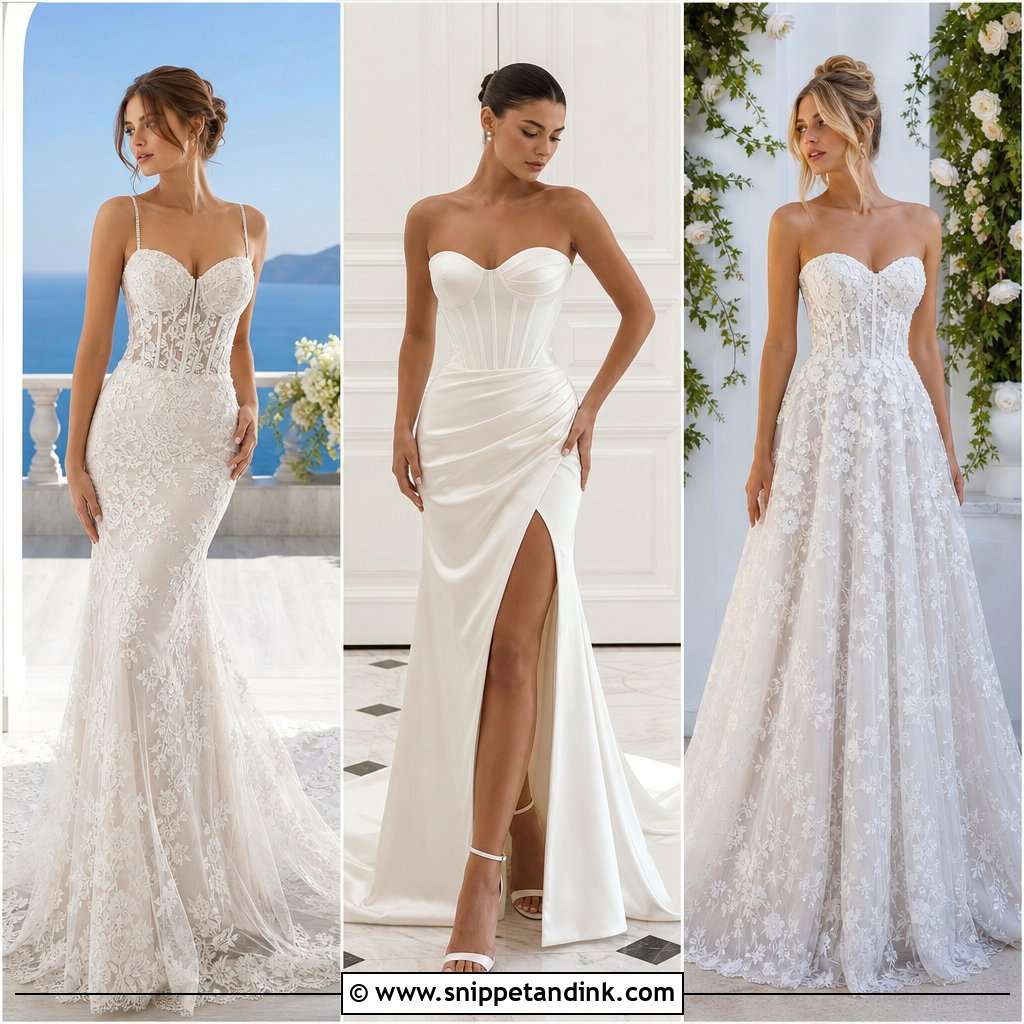
A fitted gown is honest. It shows the body, the seams and the quality of the tailoring, and that is exactly why brides who love it really love it. Within the category there is a lot of room: some gowns follow the body softly, some are built like a corset through the bodice, and some flare hard below the hips. Satin gives clean glamour, crepe is quieter and more modern, and lace, beading or floral appliqués add texture without hiding the shape. Corsetry, Basque waists, dropped waists and detachable layers are all being used to give close-fitting gowns more structure and flexibility. Below are twenty styled looks, and for each one I’ve added the fitting check I’d make before signing the order.
What Goes Under a Gown This Close to the Body?
With a fitted dress, the foundation garments are part of the fit. I ask brides to decide on them before the first alteration appointment, because a bra or shapewear bought afterward can change the measurements by enough to undo the work.
Cups, Bras and Shapewear
Many fitted gowns can have cups sewn directly into the bodice, which removes straps and bands altogether. For open backs and plunging fronts this is usually the cleanest answer. If you need more lift, a longline strapless bra works under most strapless and sweetheart bodices. Shapewear should be smooth, with no seams across the thigh, and as close to your skin tone as you can find. White underwear shows through ivory crepe and satin far more than nude does.
Bring Everything to the Fittings
Wear the exact pieces to every fitting, along with your wedding shoes. A change of heel height alters the hem, and a different bra alters the bust, so the seamstress needs the real thing to pin against.
1. Strapless Satin Fitted Wedding Gown
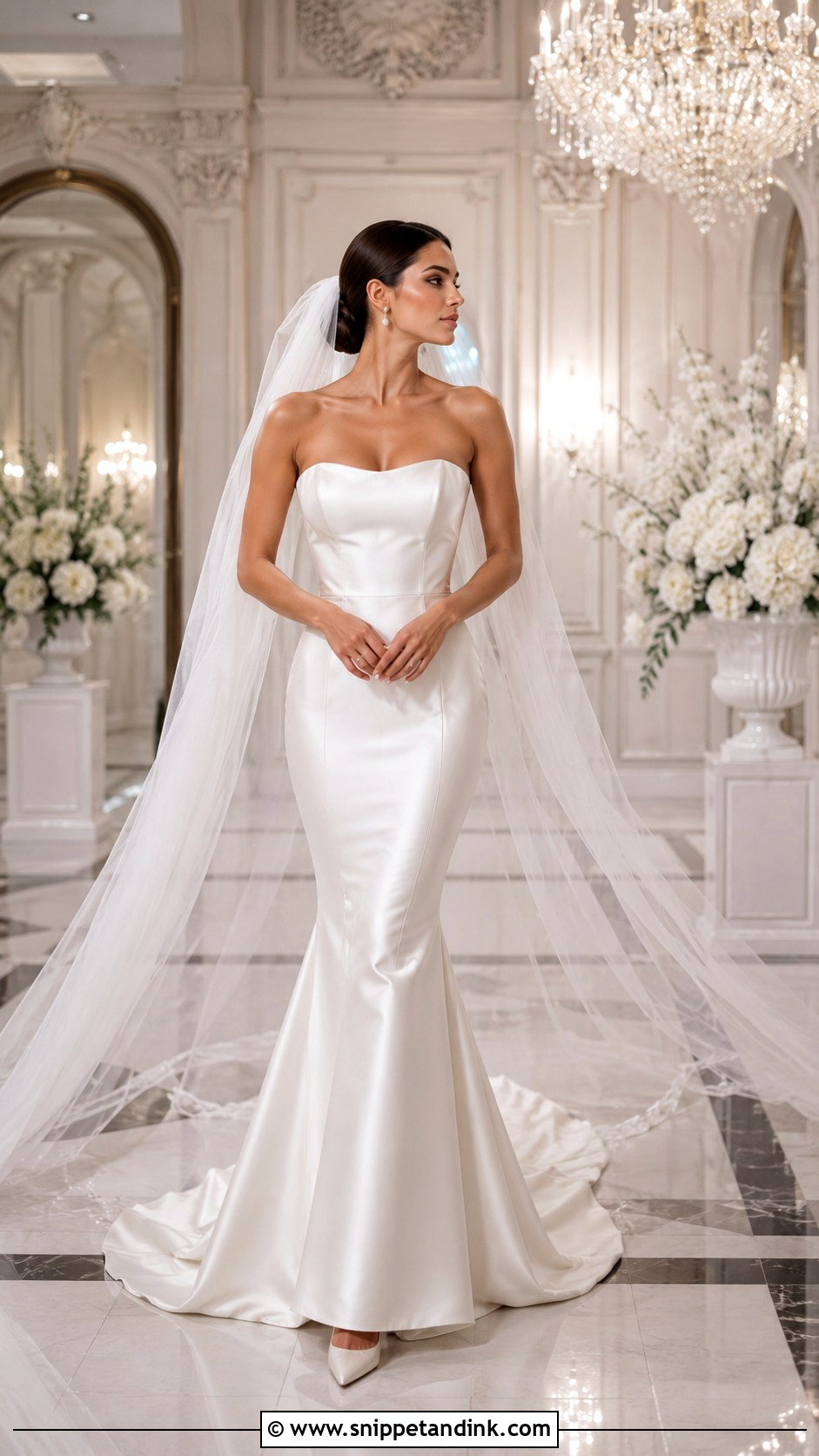
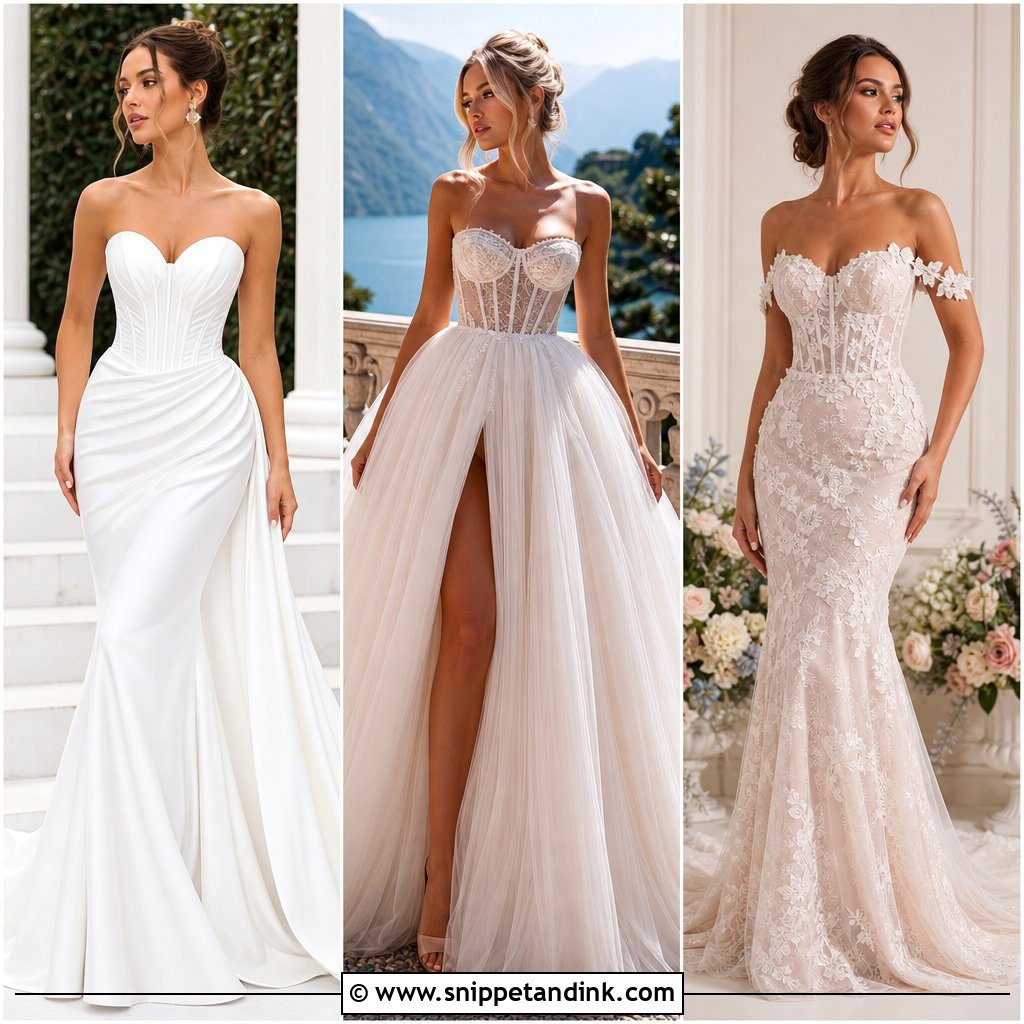
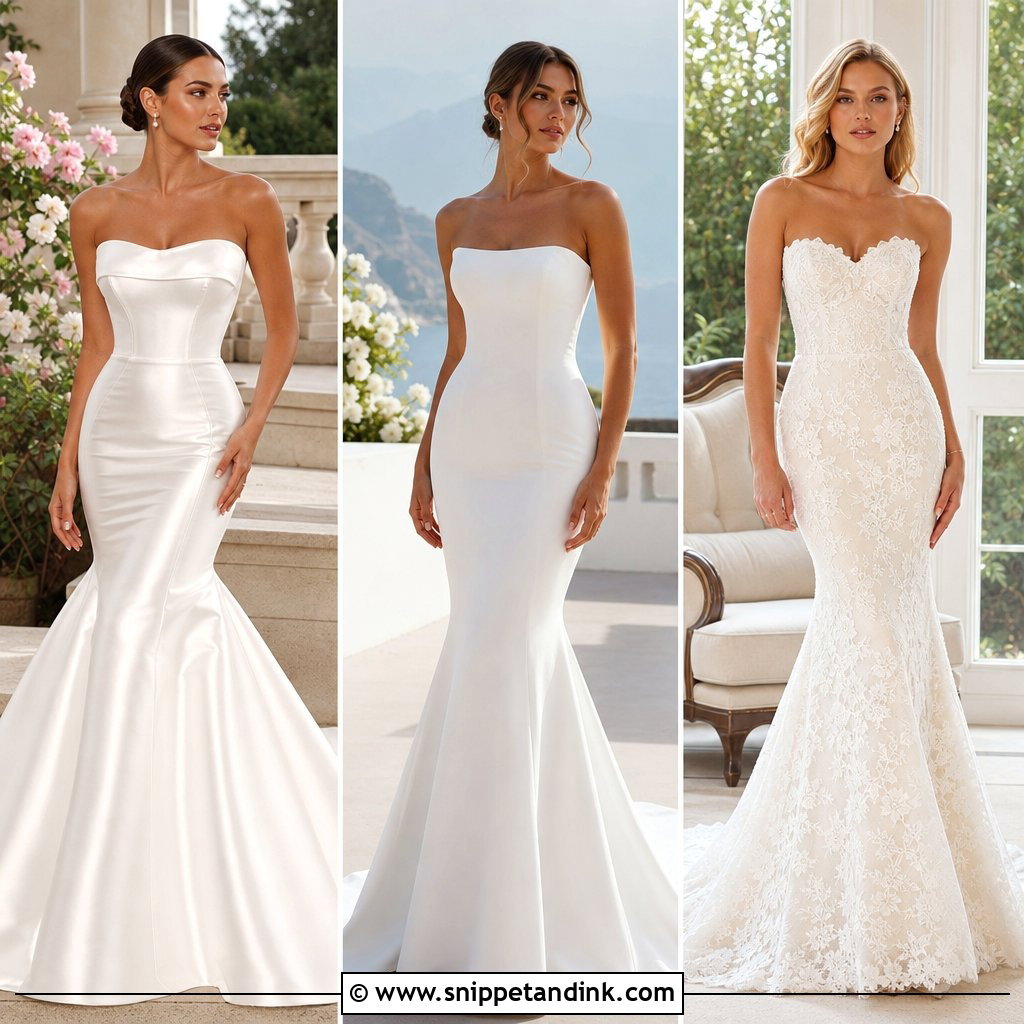
Strapless satin is the cleanest fitted look there is, and the hardest to fake. The bodice must hold itself up through internal boning and a snug waist, never by squeezing at the top edge. A trumpet skirt adds a controlled flare without bulk. Pointed ivory pumps, pearl drops and a structured mini bag for later suit it, with a sleek low bun and a cathedral veil for drama. At the fitting, sit down and raise both arms. If the top edge moves more than a finger’s width, the bodice needs taking in at the waist, not the bust.
2. Sweetheart Mermaid Fitted Wedding Gown
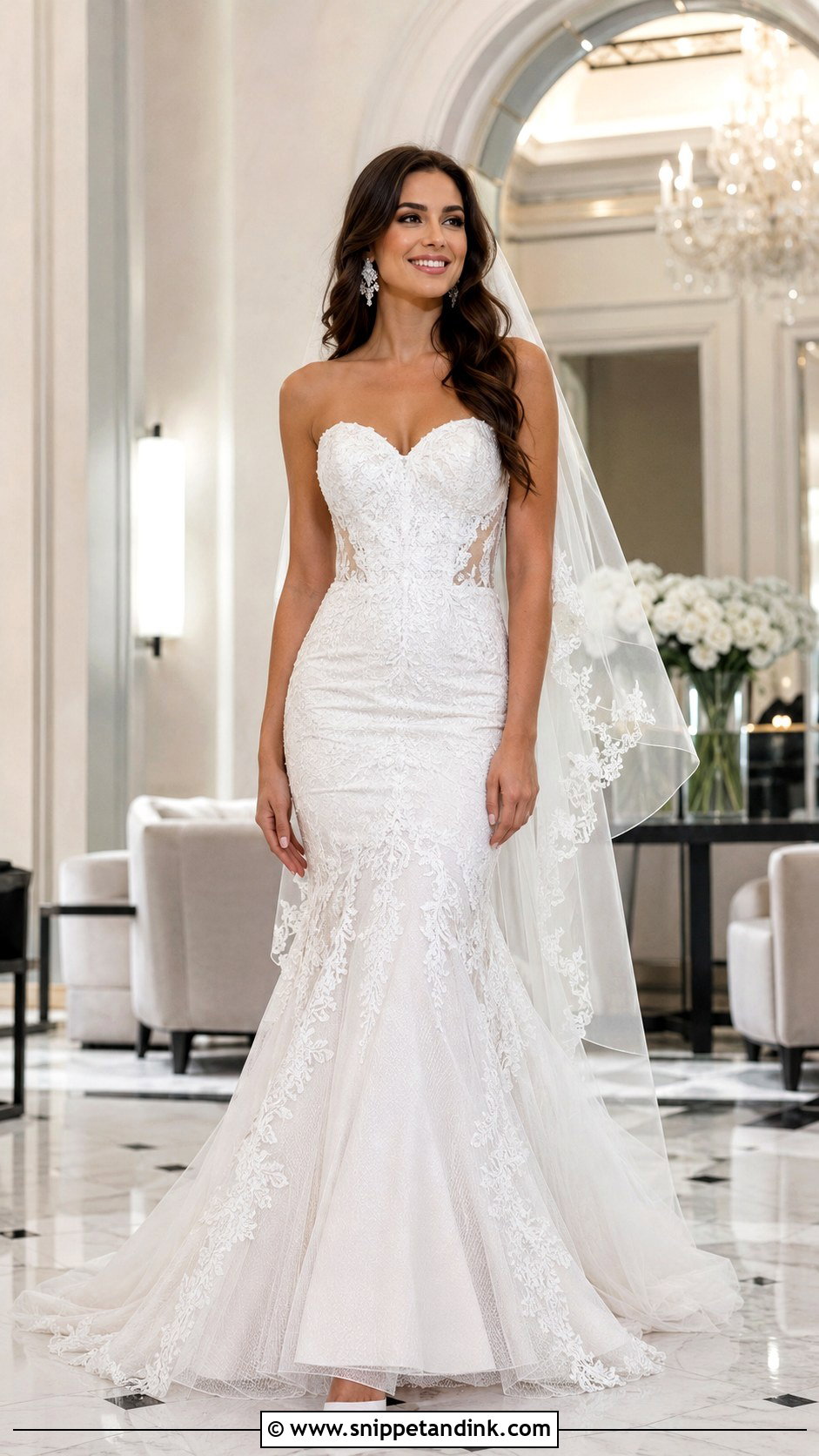
Mermaid gowns limit your stride, and I never let a bride buy one without walking the length of the shop and climbing a step. The sweetheart bodice follows the bust line and stays fitted through the waist, hips and upper thighs before the skirt opens near the knee. Lace panels or light ruching soften that transition. Crystal earrings, a fine tennis bracelet and closed-toe heels with enough height to keep the hem off the floor complete it, with a fingertip veil and polished waves. If you’re planning a lot of dancing, ask whether the flare can be raised a few inches during alterations; it often can.
3. Long Sleeve Lace Fitted Wedding Gown
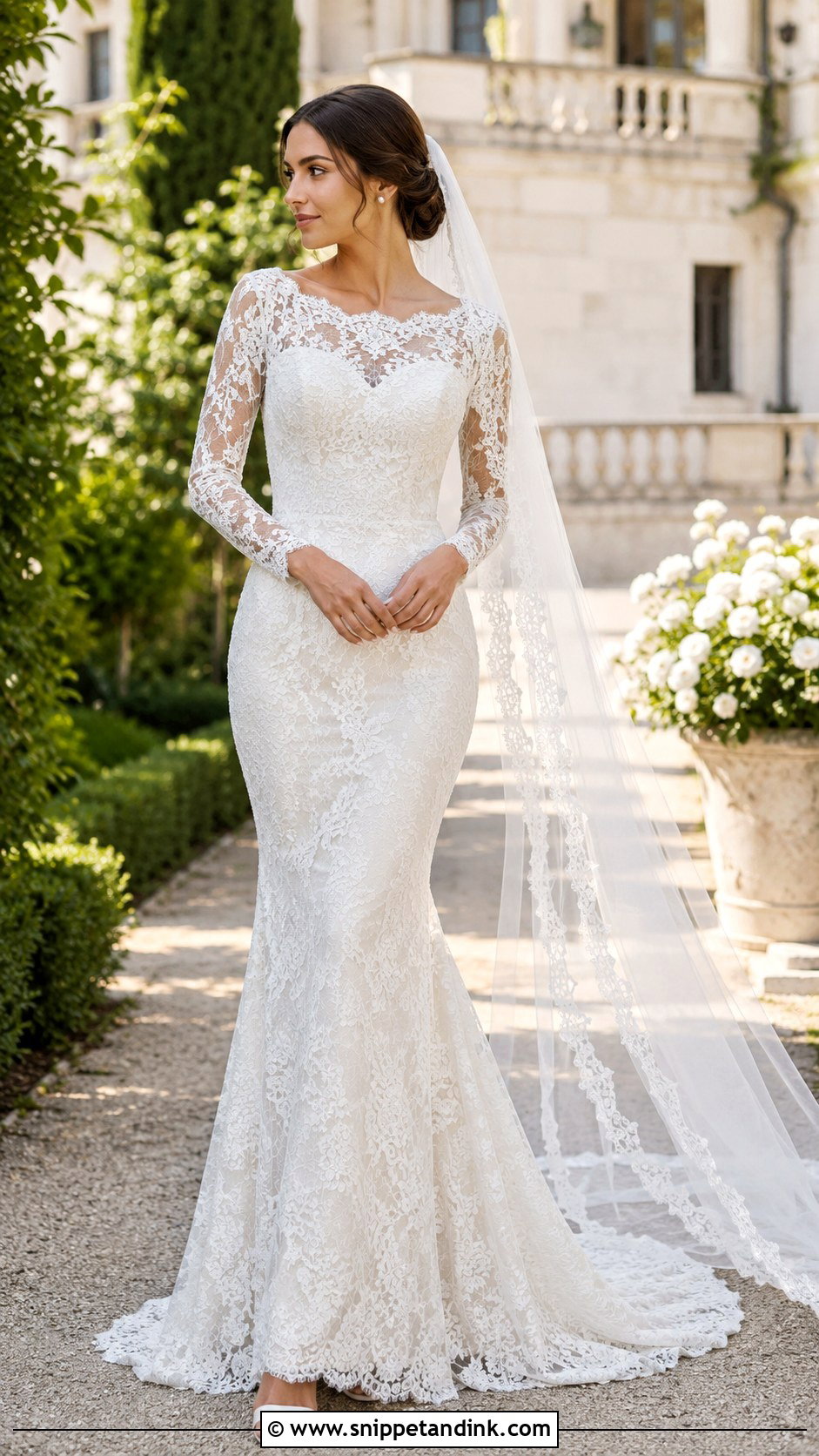
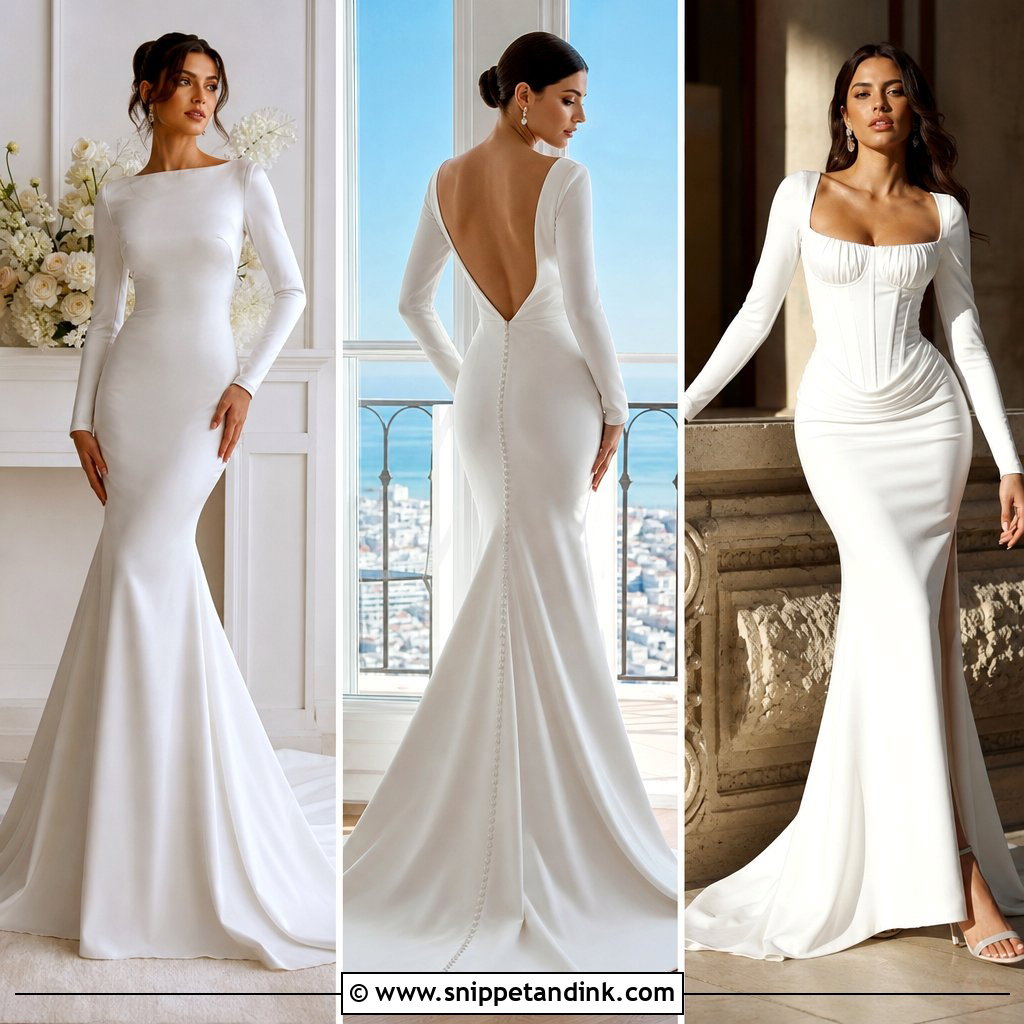
Lace sleeves give coverage without weight, as long as the armhole is cut high enough. A low armhole means the whole bodice lifts every time you raise your arm, and on a fitted gown that shows. Look for a supportive lined bodice and lace motifs placed evenly over both shoulders. A soft fit-and-flare skirt gives more walking room than a sharp mermaid. Pearl studs, a lace-edged veil and satin block heels coordinate quietly, with a neat chignon or soft half-up style. Have the tailor mark sleeve length with your arms both relaxed and lifted, since a sleeve that ends at the wrist bone while standing can ride halfway up the forearm when you hold a bouquet.
4. Square Neck Crepe Fitted Wedding Gown
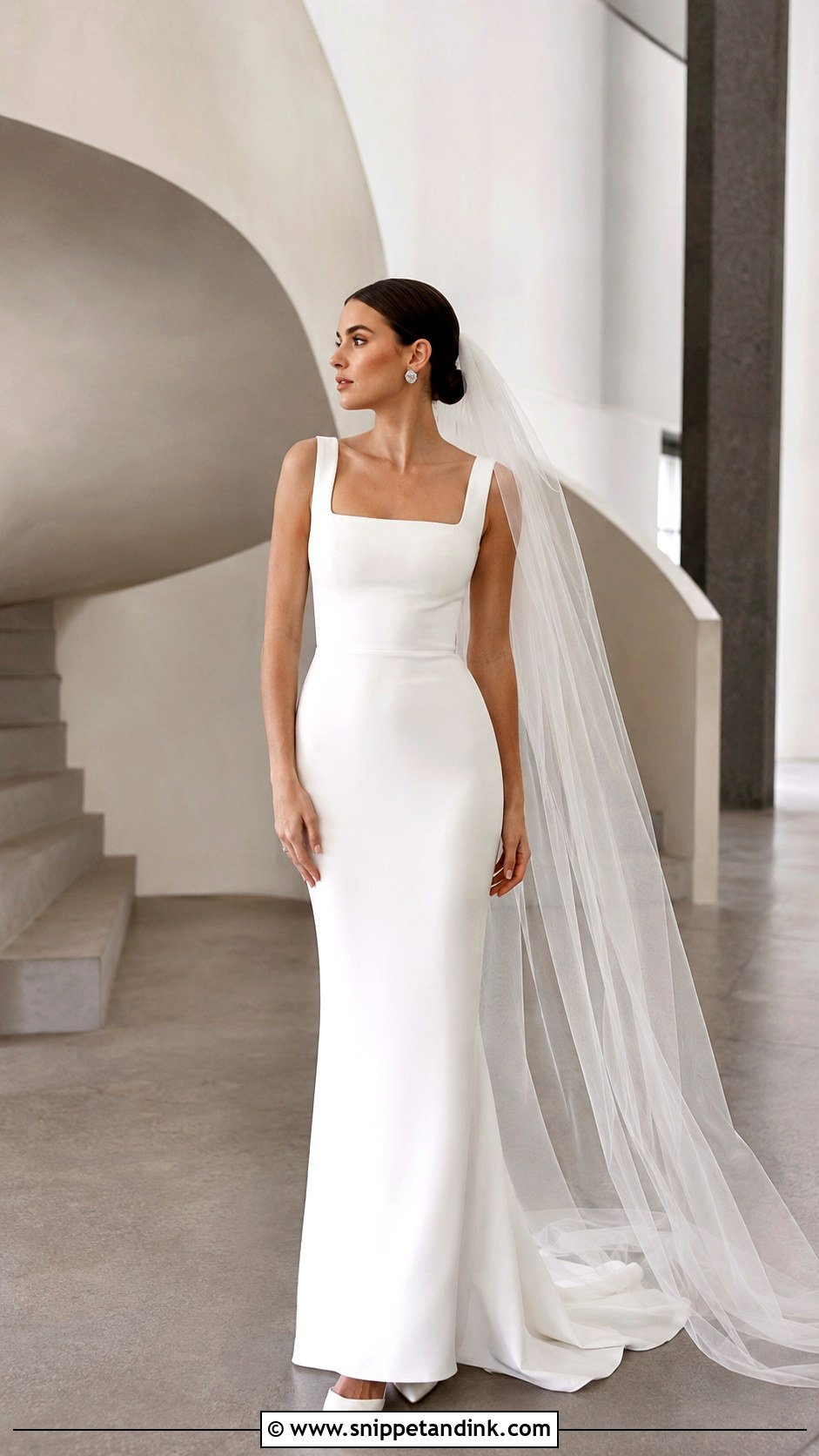
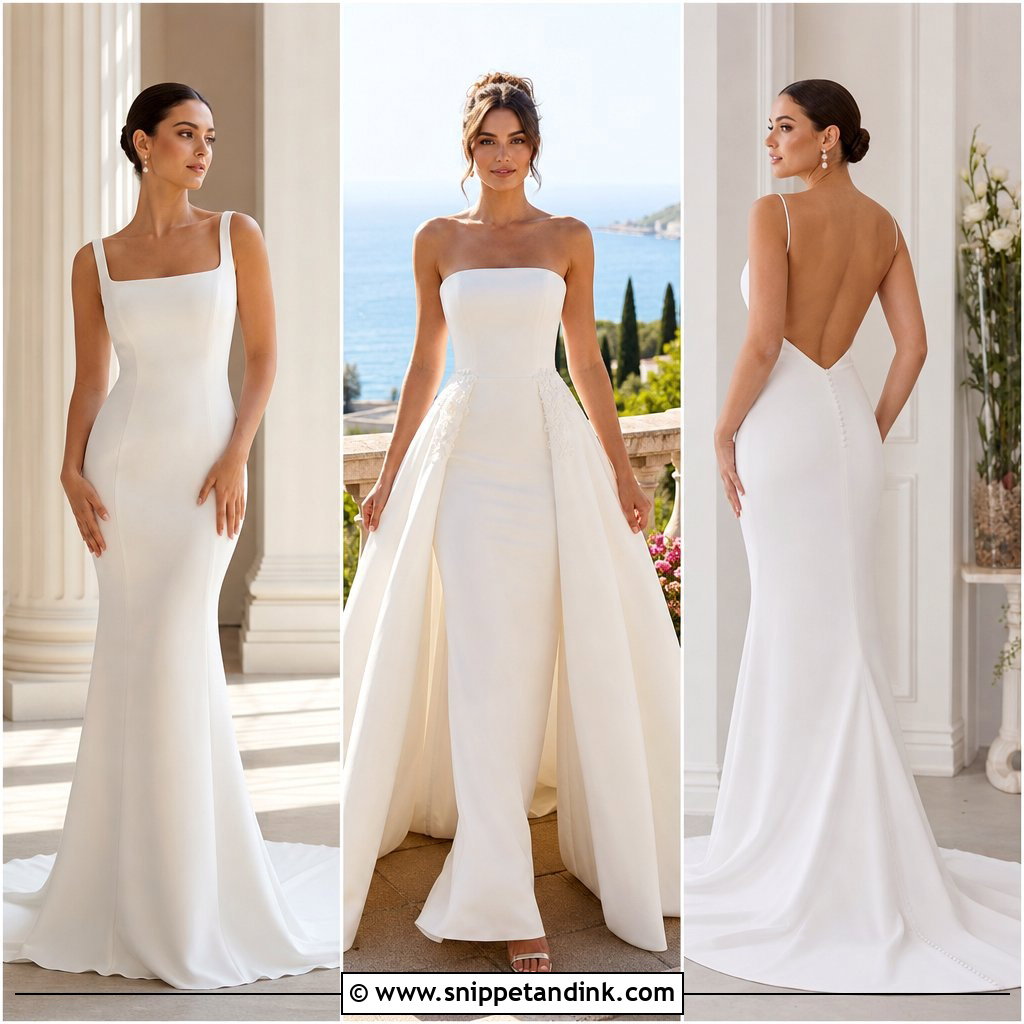
Square necklines suit fitted gowns because the straight line gives the structure something to echo. Matte crepe follows the body without the shine of satin and hides small creases from sitting. Wider straps and a defined waist carry the bodice, with a streamlined skirt releasing gently below the hips. Geometric earrings, pointed slingbacks and a sleek oval clutch keep it modern; a low twisted bun and a simple chapel veil finish it. Jewelry should stay minimal. A square neckline is one of the most current shapes in bridal right now, and it sits well on broad and narrow shoulders alike.
5. Off Shoulder Draped Fitted Wedding Gown
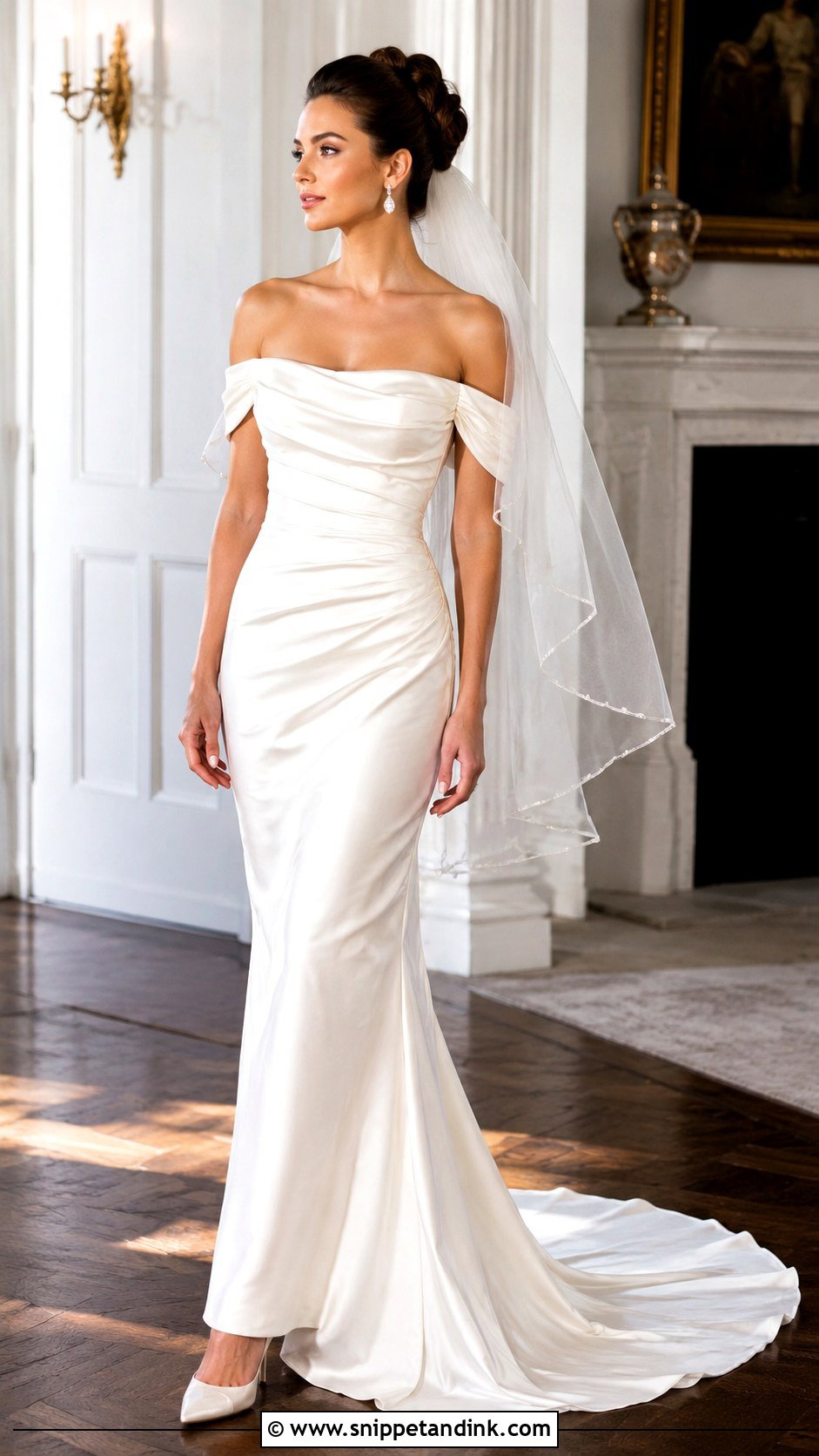
Draping is what keeps an off-the-shoulder fitted gown from looking rigid. Folded fabric across the neckline and diagonal gathers running to the waist soften the shape, but the drape is decoration. The internal bodice is what holds it up, so check that it has proper boning before falling for the folds. A satin or stretch-crepe skirt can follow the hips before opening into a short train. Teardrop earrings, a fine bracelet and comfortable ivory pumps suit it, with no necklace. Reach forward and up during fittings: the neckline should stay put without pinning your arms to your sides.
6. Halter Neck Fitted Wedding Gown
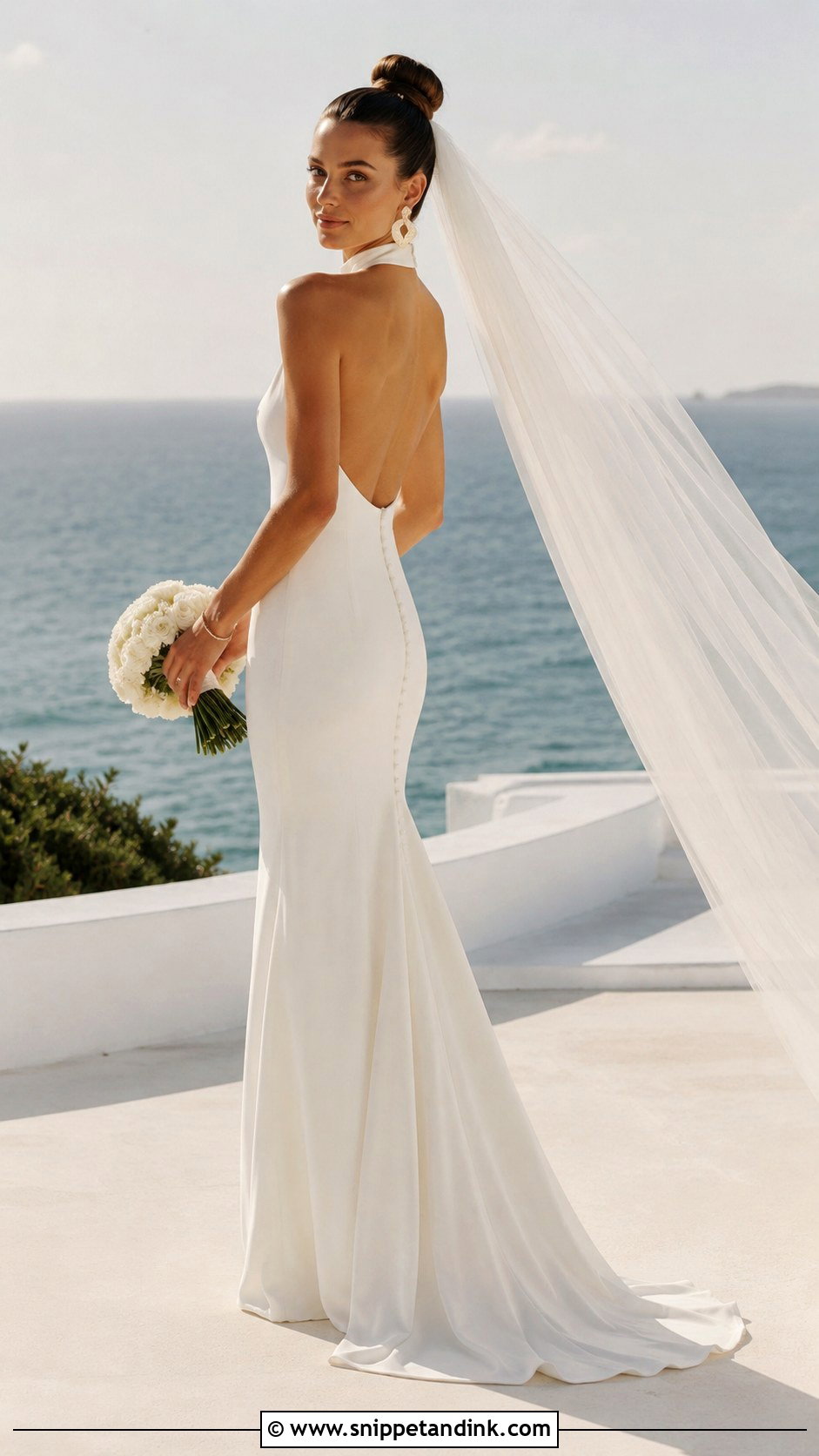
A halter draws one long line from the neck to the hem, which flatters tall and petite brides alike. The weight of the bodice hangs from the neck strap, though, so on a heavier fabric or a fuller bust it can ache by the evening. Fluid crepe, silk satin or lightweight jersey keep it light. A tailored waist and open back balance the high front. Sculptural earrings, metallic or ivory sandals and a slim bracelet suit it, with a high bun or sleek ponytail. Attach the veil below the hair so it doesn’t drag the halter backward. Ask whether the closure can be a hook and bar rather than a single button, which spreads the pressure.
7. High Neck Fitted Wedding Gown
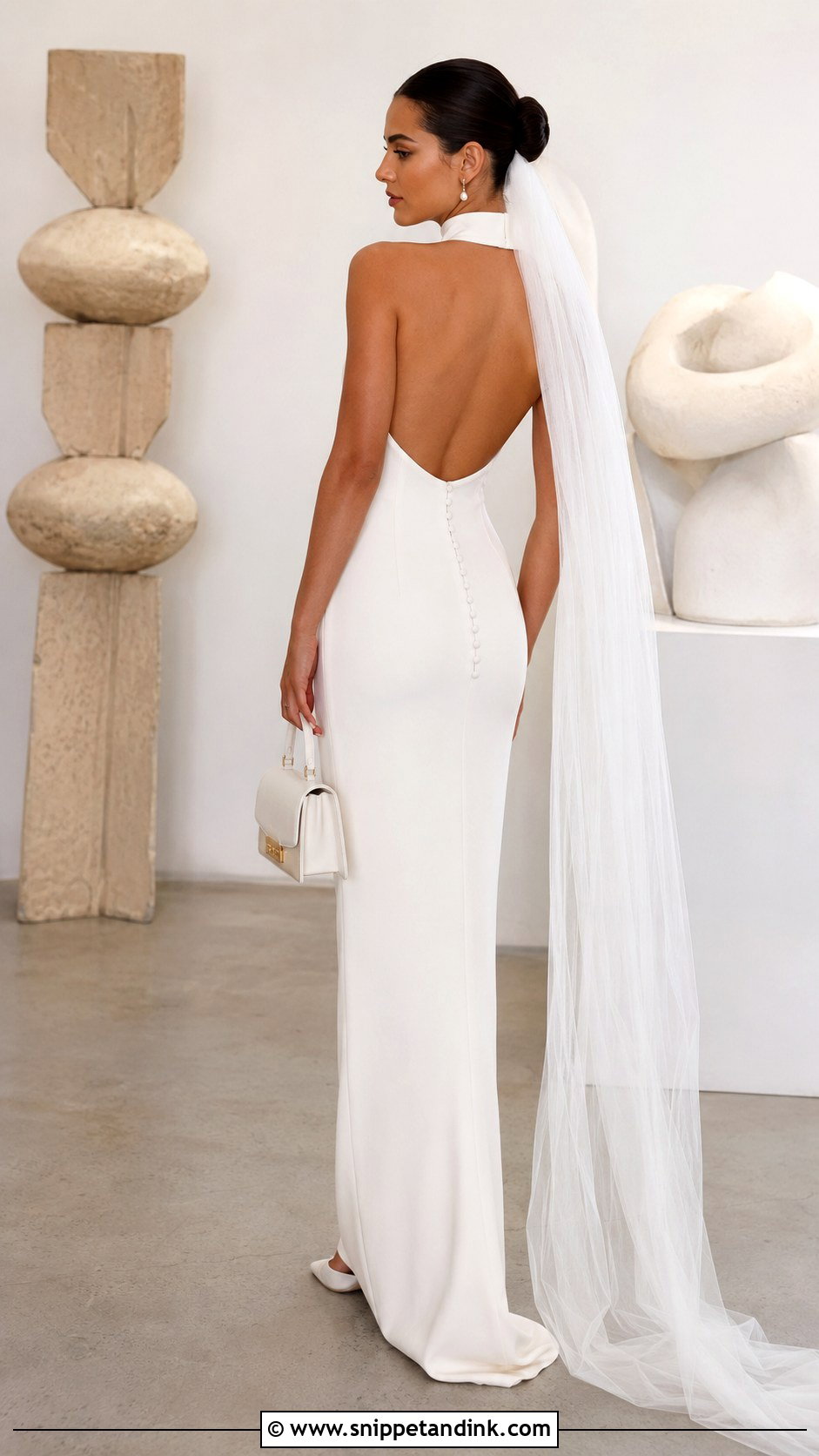
High necklines with a clean column skirt look poised and slightly fashion-led. Lace makes it romantic; plain crepe or satin sharpens it. Going sleeveless balances the covered neck, and a low open back stops the dress feeling too formal. Small pearl earrings, pointed pumps and a compact clutch are enough, with a smooth low bun and a veil secured underneath. The collar is the part I watch. Turn your head fully both ways and look down; it shouldn’t rub, fold or tighten. Better suited to cooler weather, since a high neck traps warmth.
8. Plunging V Neck Fitted Wedding Gown
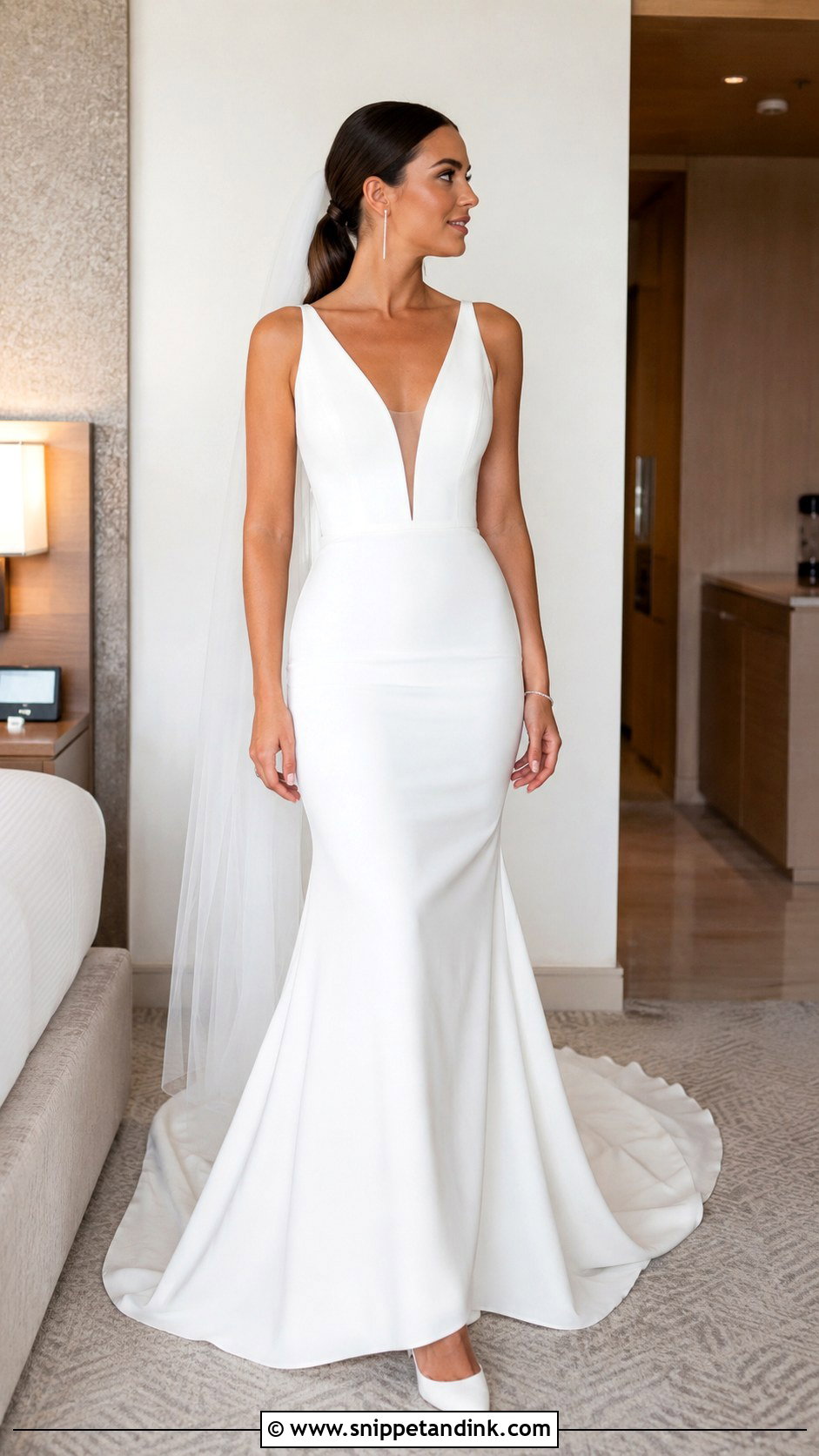
A plunging V-neck gown only works when the construction does the holding. Look for supportive side panels, internal cups or a discreet illusion insert, and a fitted waist with a softly flared skirt instead of extra embellishment. Linear earrings, a simple bracelet and pointed heels repeat the vertical line. Hair tucked behind the shoulders, in a sleek ponytail or loose waves, keeps the neckline clear, and a plain veil or a small comb is plenty. At the fitting, bend, sit and walk while someone checks coverage from the side. Fashion tape is a backup, not a fix for a bodice that doesn’t fit.
9. Scoop Neck Fitted Wedding Gown
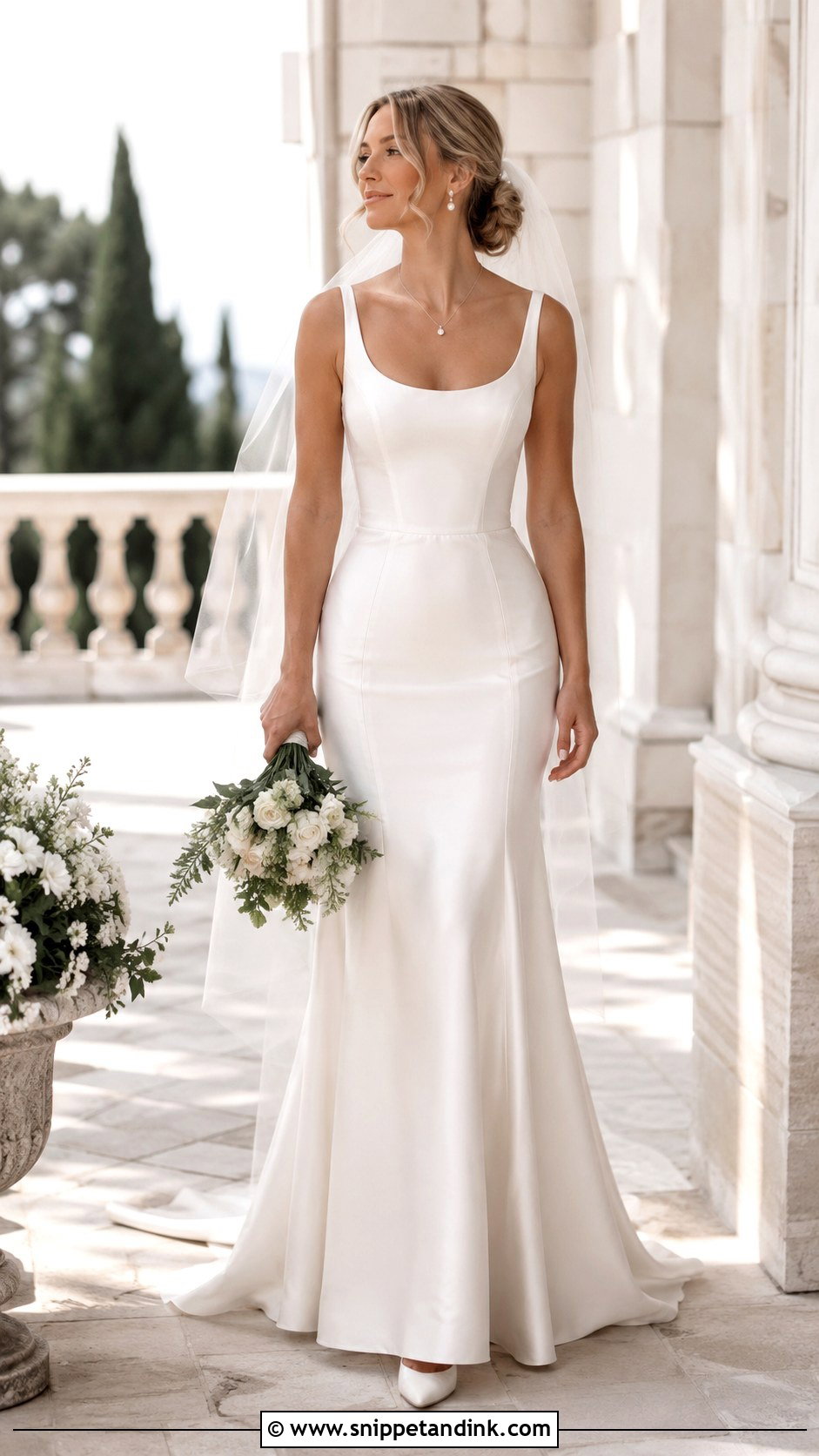
Scoop necks are the gentle option between a sharp V and strapless. A softly curved front, supportive straps and curved seams following the waist and hips make the gown comfortable for a long day. Silk satin looks classic; crepe is quieter. Pearl earrings, a fine pendant, closed-toe pumps and a medium-length veil complete it, with a softly waved low bun. It covers more of the collarbone area than most necklines here while still giving real support. Strap length is everything on a scoop. Too long and the neckline sags forward when you walk; a quarter-inch adjustment usually fixes it.
10. Corset Bodice Fitted Wedding Gown
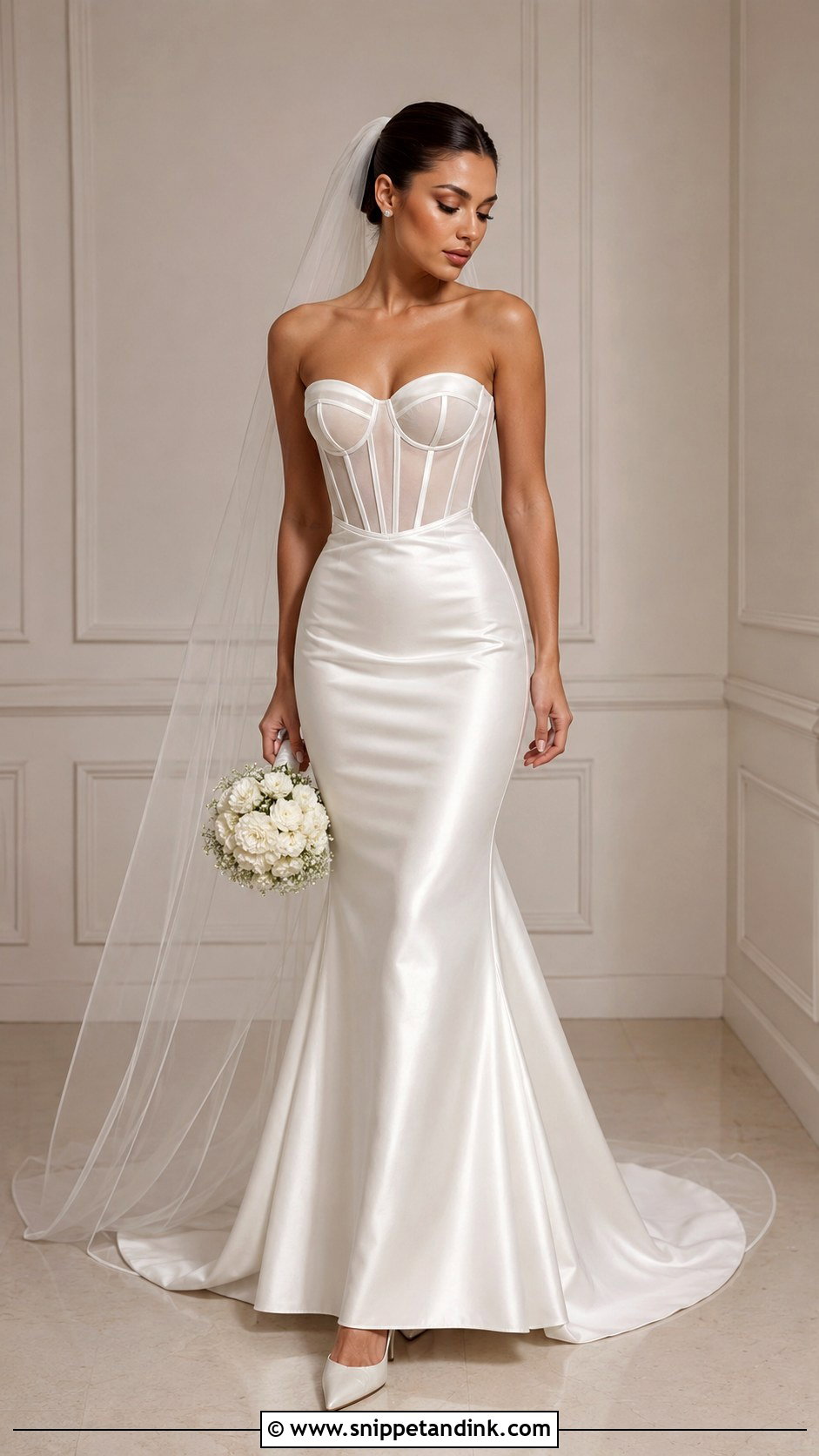
Visible corsetry gives definition and support in one. I look for well-placed boning, cups in proportion to the bust and a smooth line into the skirt. Exposed seams look contemporary; a lace overlay softens it. Crystal studs, satin pumps and a sheer veil that doesn’t hide the bodice suit it, with a neat updo and a small bouquet held low so the waist stays visible in photos. Long-line corsets and detachable corset pieces are both widely available now. Comfort decides it, though. You should be able to breathe deeply, sit down and eat a full dinner, and if you can’t do that in the fitting room, you won’t manage it at the reception.
11. Basque Waist Fitted Wedding Gown
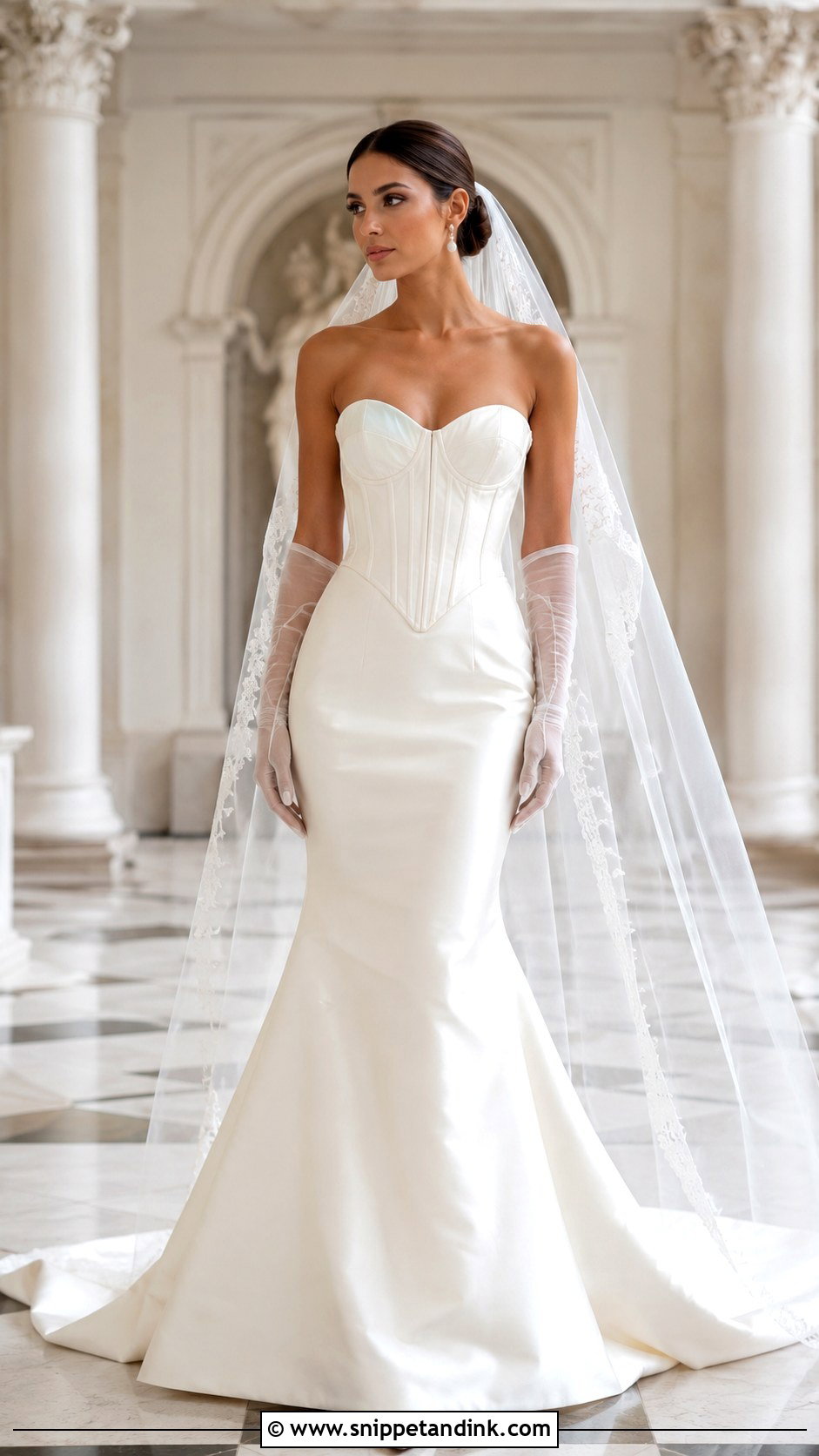
A Basque waist dips into a V below the natural waist, and the point of that V has to sit dead center or the whole gown looks lopsided. Pair it with a structured corset top in smooth satin or mikado, with curved seams through the hips. Mikado is stiffer than satin and holds the point sharply. Pearl drops, pointed pumps and a plain cathedral veil keep it refined, and a center-parted low bun echoes the symmetry. Long sheer gloves ending below the bodice add drama. It leans vintage and formal, and it needs careful alterations, since the V shifts when side seams are taken in.
12. Drop Waist Fitted Wedding Gown
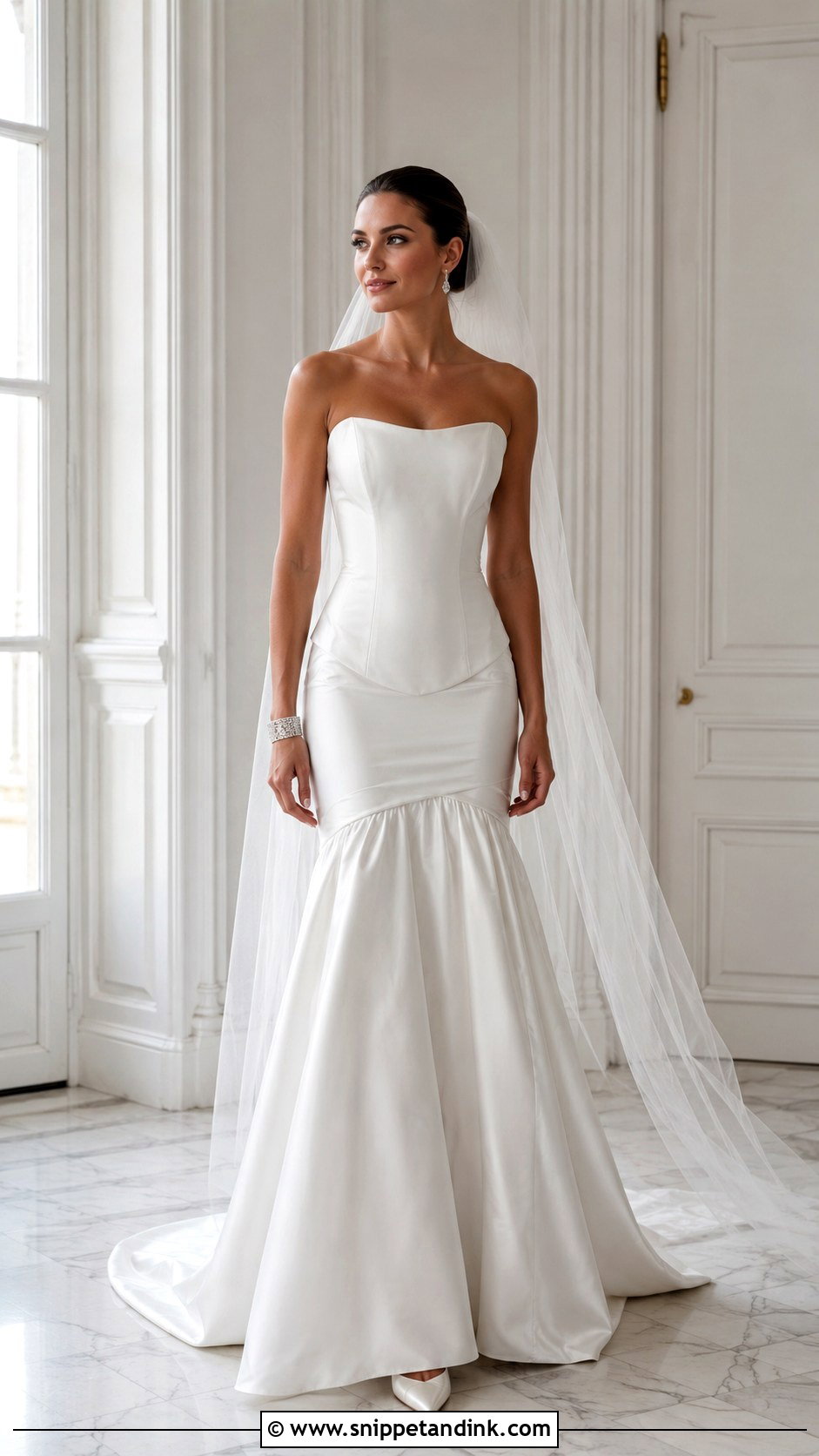
A dropped waist extends the bodice below the natural waistline, so the torso looks long before the skirt flares. In satin or crepe with a controlled trumpet skirt, it reads modern. A straight, scoop or softly pointed strapless neckline suits the long bodice. Slim earrings, a simple cuff and pointed heels, plus a long veil to soften the back. This is a shape that works best on brides with a shorter torso relative to their legs; on a long torso it can make the legs look short. Compare a few waist placements at appointments, because an inch either way changes the whole proportion.
13. Open Back Fitted Wedding Gown
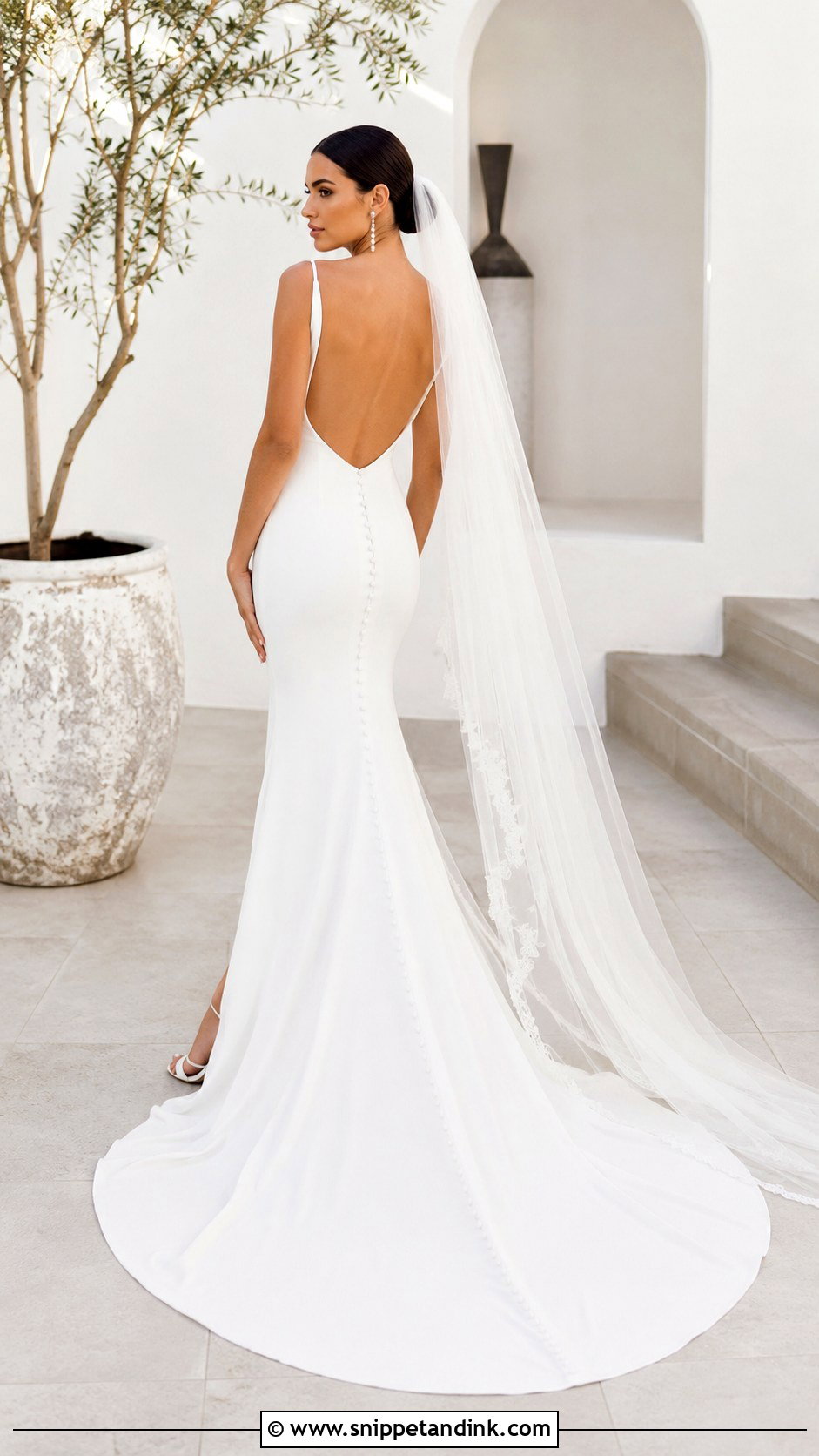
Open backs keep the front simple and save the drama for the walk out. A secure bodice with supportive side seams is essential, since with no fabric across the back, the sides carry all the tension. Buttons or lace edging frame the opening; a crepe fit-and-flare skirt and a short train keep the base calm. Drop earrings, a low-back bra or sewn-in cups and slingback heels suit it, with an updo or side-swept waves. A veil attached below the bun floats over the opening. Have a friend photograph your back at fittings. Gaping shows up far more clearly in a photo than in the mirror.
14. Pearl Beaded Fitted Wedding Gown
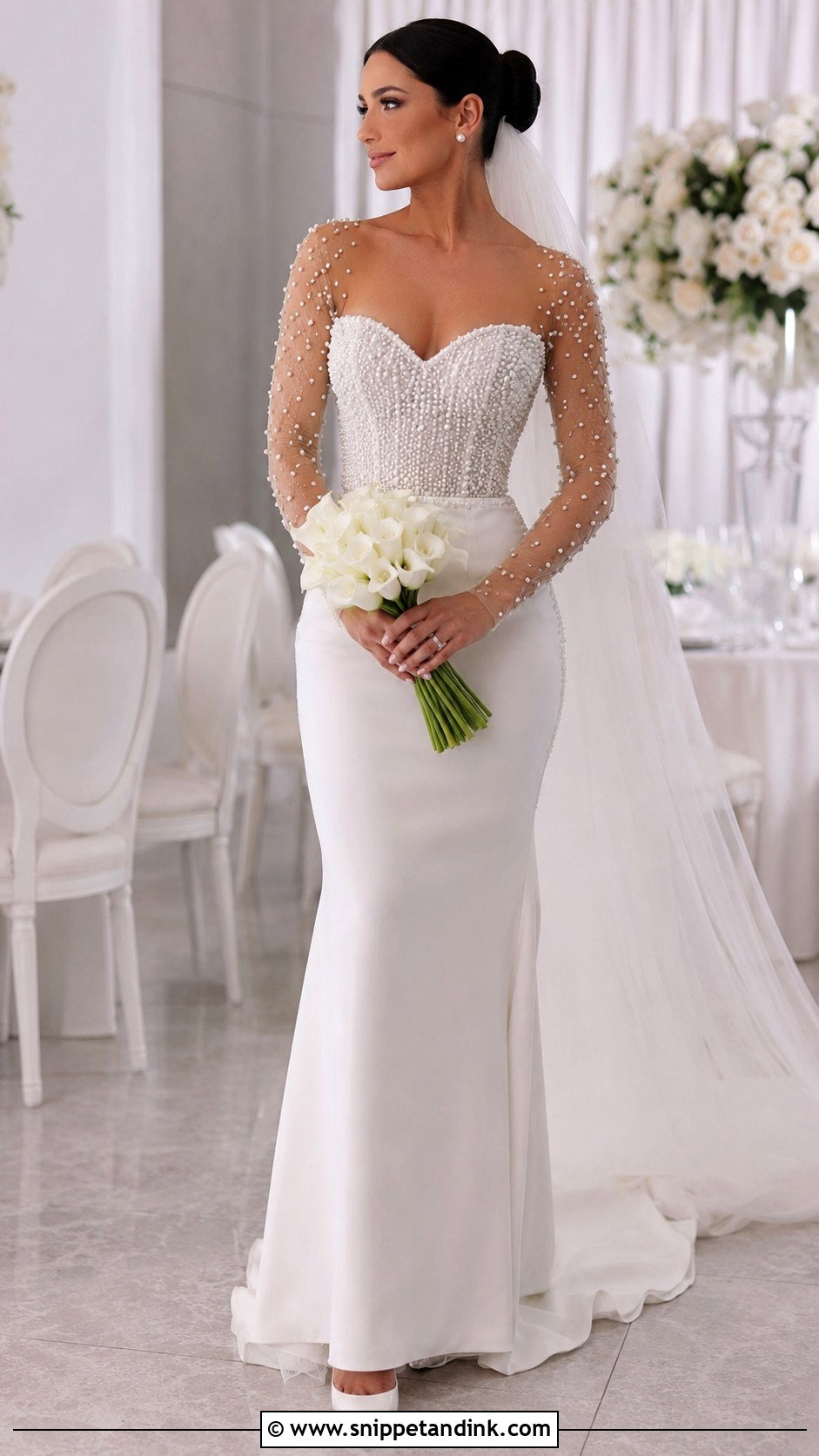
Scattered pearls add soft texture, and they look best concentrated in one place: sheer sleeves, a corset bodice or the top of a crepe skirt. Spread everywhere, they flatten into a pattern. Pearl studs, satin pumps and a plain tulle veil keep the theme quiet, with a sleek bun or Hollywood waves depending on formality and a simple white bouquet. Pearls catch on tulle, so drag the veil over the bodice in the shop and see whether it snags. Turn the bodice inside out too; knots from bead stitching scratch if the lining is thin.

15. Floral Applique Fitted Wedding Gown
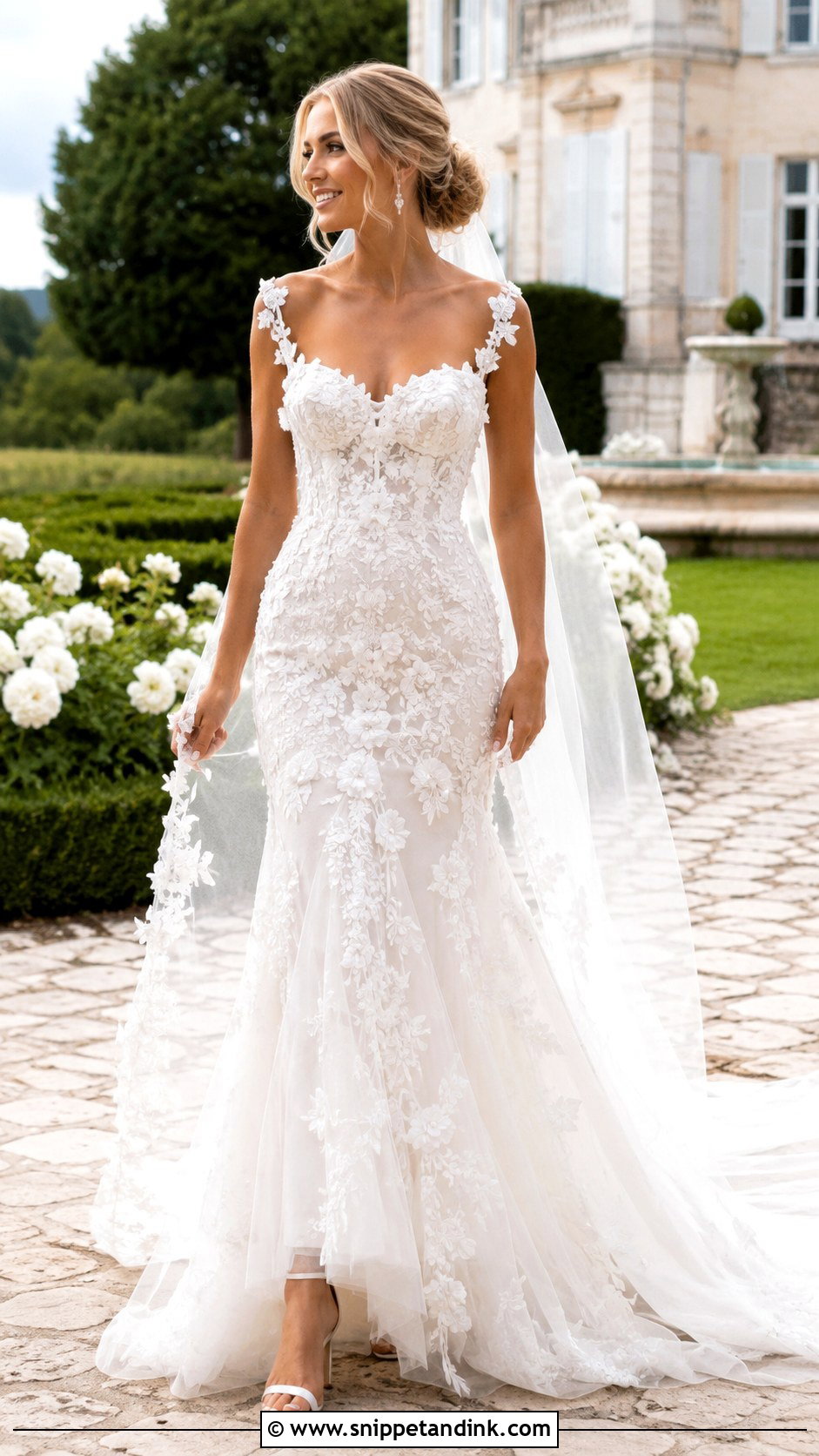
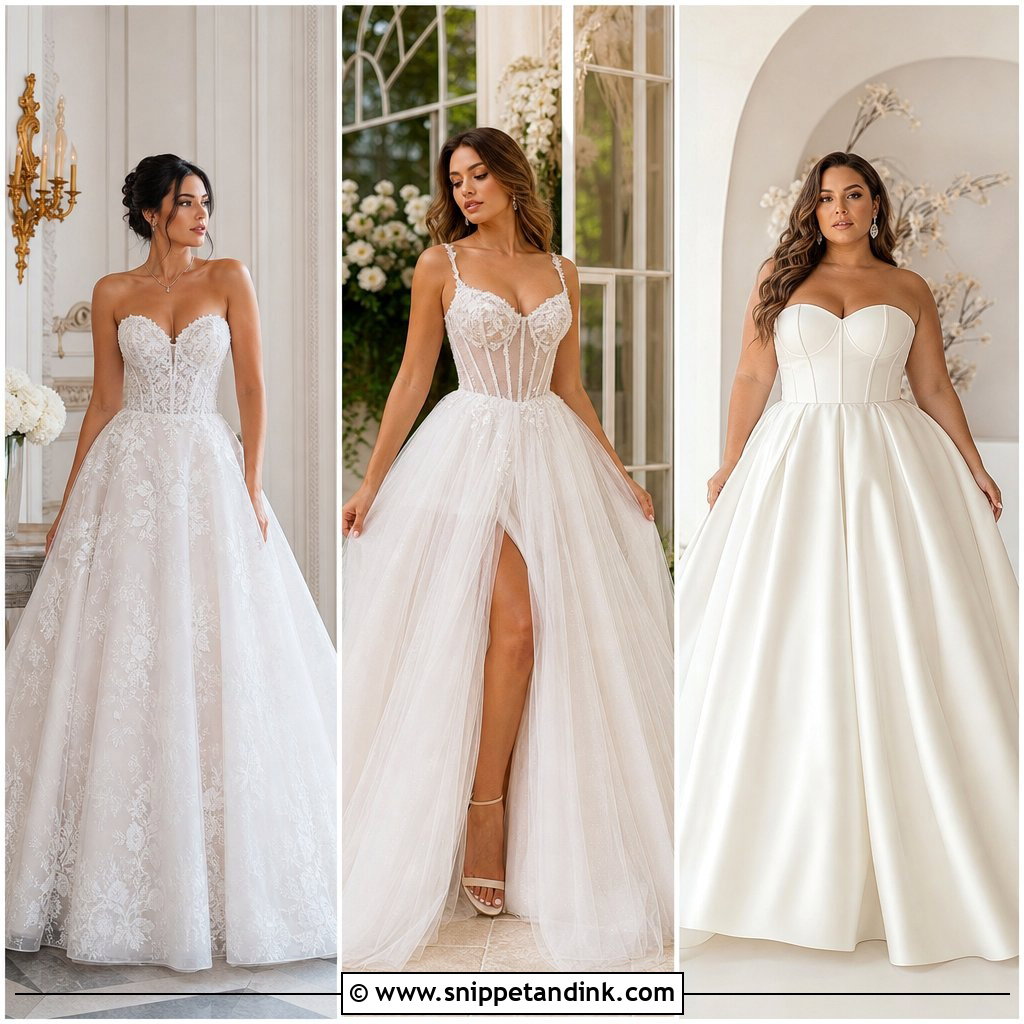
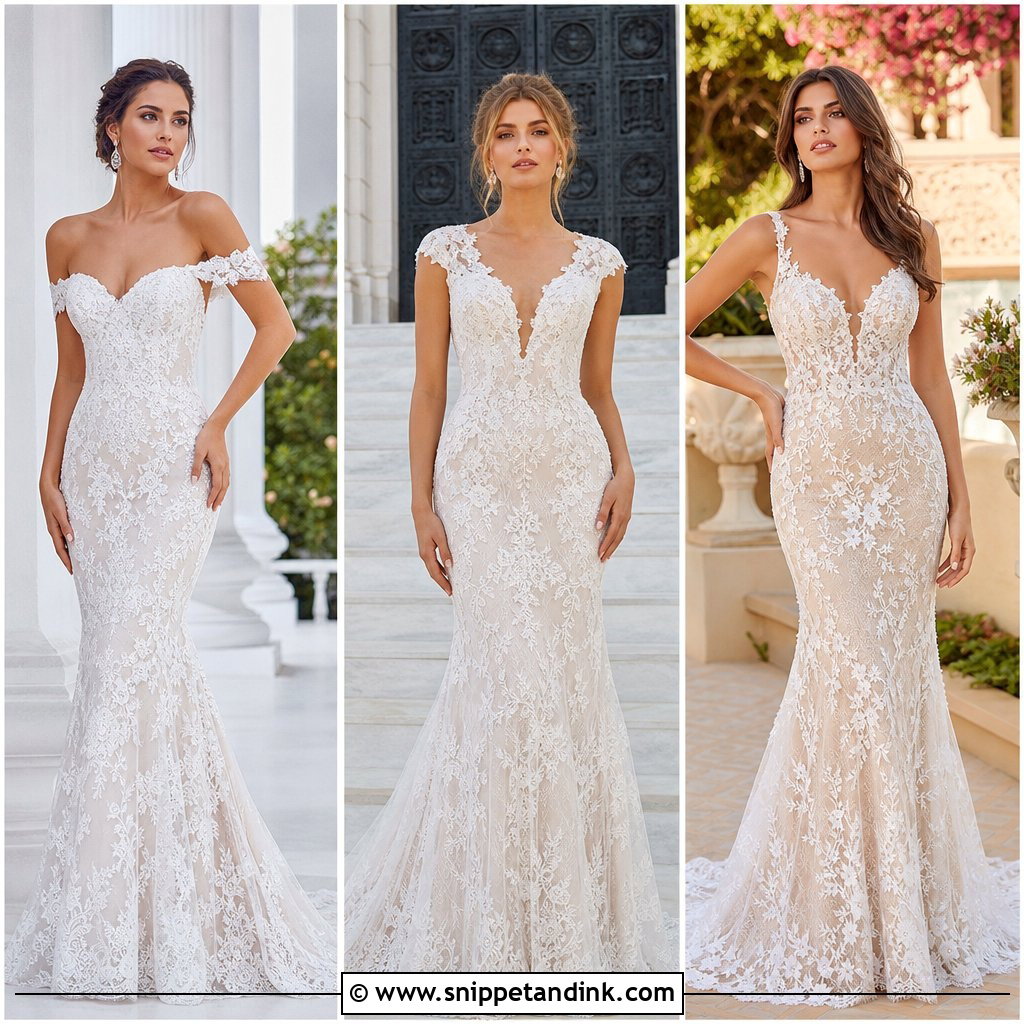
Flowers should follow the gown’s seams, waist or flare rather than land randomly. A nude lining makes the appliqués stand out against skin; an ivory lining gives softer contrast and more coverage, and the choice changes the look far more than people expect. Delicate drop earrings, ankle-strap heels and a plain veil edged with a few matching flowers suit it, with loose waves or a textured low bun. It belongs in a garden or a spring estate. Look at the appliqués close up and from across the room, because placement that looks balanced in a full-length photo can bunch at the bust in close portraits.
16. Minimal Slip Fitted Wedding Gown
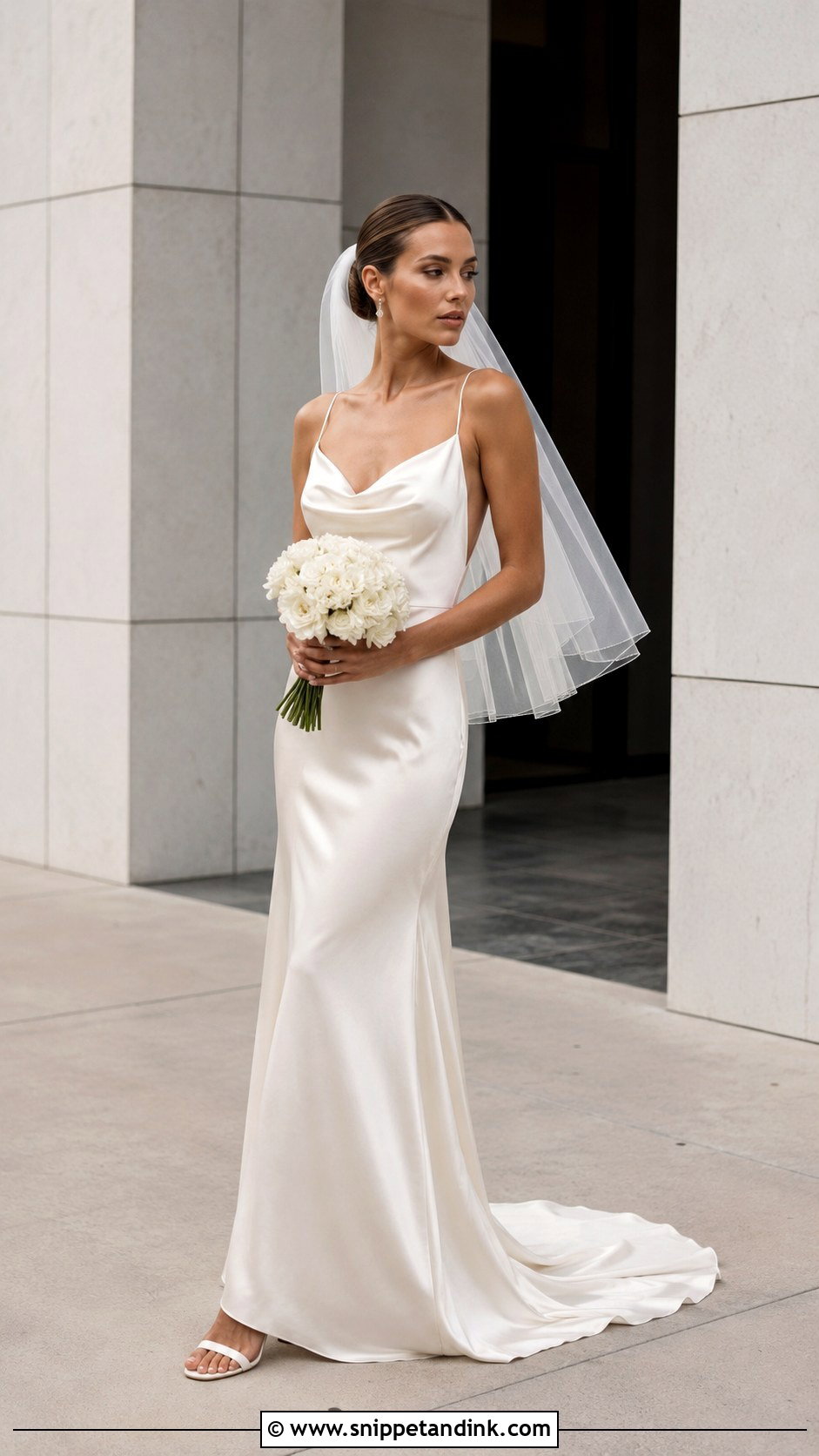
Slip gowns are the least structured way to wear a fitted silhouette, and the least forgiving. Silk or satin cut on the bias drapes and moves with the body, and it also shows every line underneath. A cowl, scoop or straight neckline with thin straps and a low back keeps it minimal. Modern drop earrings, sleek sandals and a shoulder-length veil suit it, with a smooth bun or soft waves. Bias-cut fabric stretches as it hangs, so the hem should be finished only after the dress has hung for a day or two. Smooth, skin-tone underwear and a silk wrap for the evening complete it.
17. Detachable Overskirt Fitted Wedding Gown
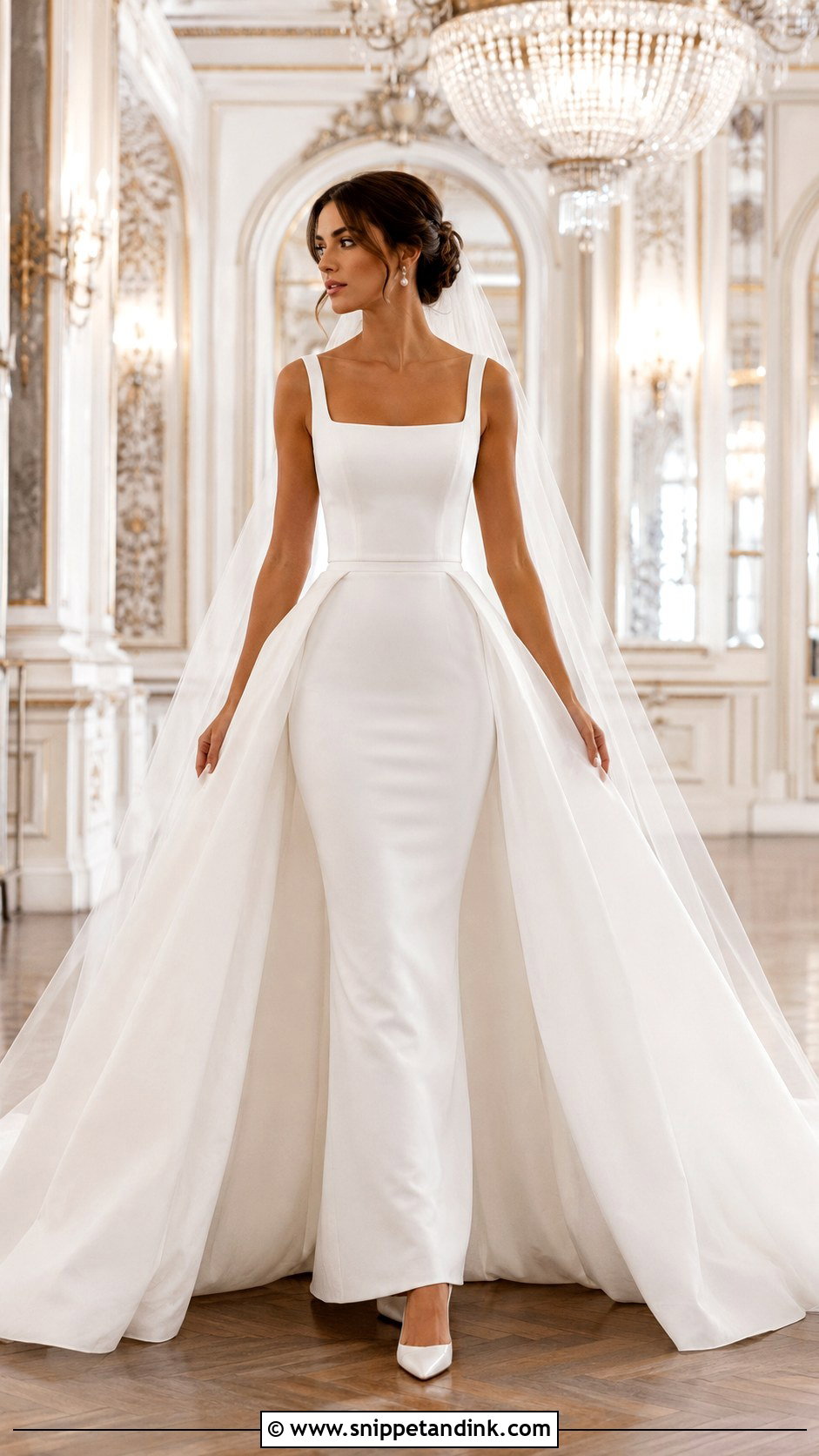
A detachable overskirt gives you two looks from one gown. Start with a streamlined crepe, satin or lace dress that is fully finished on its own, then add a tulle or organza overskirt for the ceremony with a waistband that blends into the dress. A long veil, pearl earrings and pointed pumps suit the formal version. For the reception, remove the overskirt and veil and add bolder earrings and a sparkly hair piece. Rehearse taking it off, and ask the tailor to place the hooks so they disappear once the layer is gone; exposed hooks on a sleek gown catch the light in every photo.
18. Cape Sleeve Fitted Wedding Gown
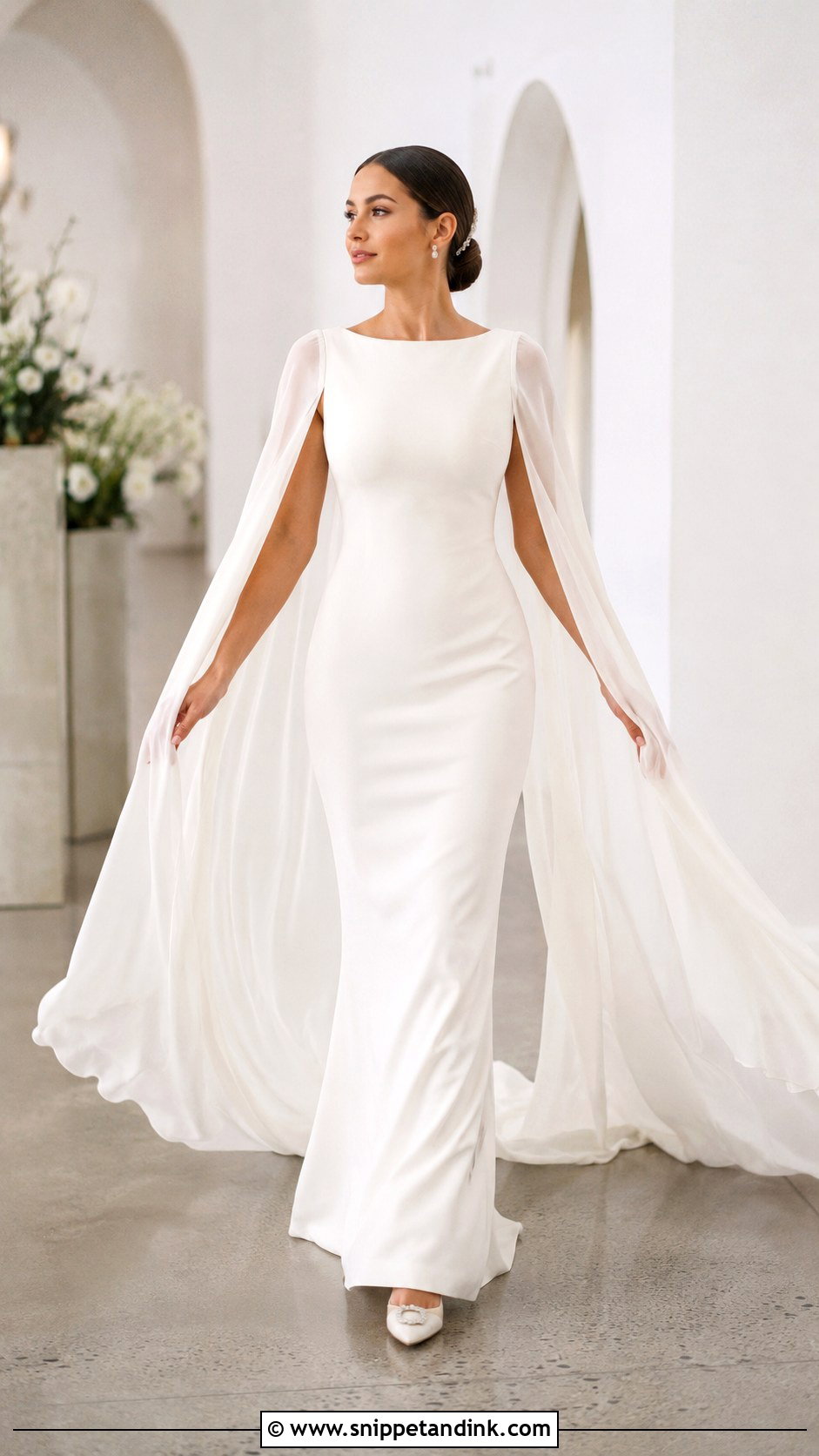
Cape sleeves add movement without changing the fitted body underneath. A plain crepe column or fit-and-flare dress with a detachable chiffon cape, split sleeves or draped shoulder panels keeps the shape defined while covering the arms. Small crystal earrings, pointed heels and a minimal hair comb suit it. Skip the veil if the cape trails behind you; two long layers fight each other. A sleek low bun keeps the shoulders clear. Chiffon capes act like sails outdoors, so walk outside in a breeze before the day, and make sure the fastening is easy to undo before dinner.
19. Plus Size Ruched Fitted Wedding Gown
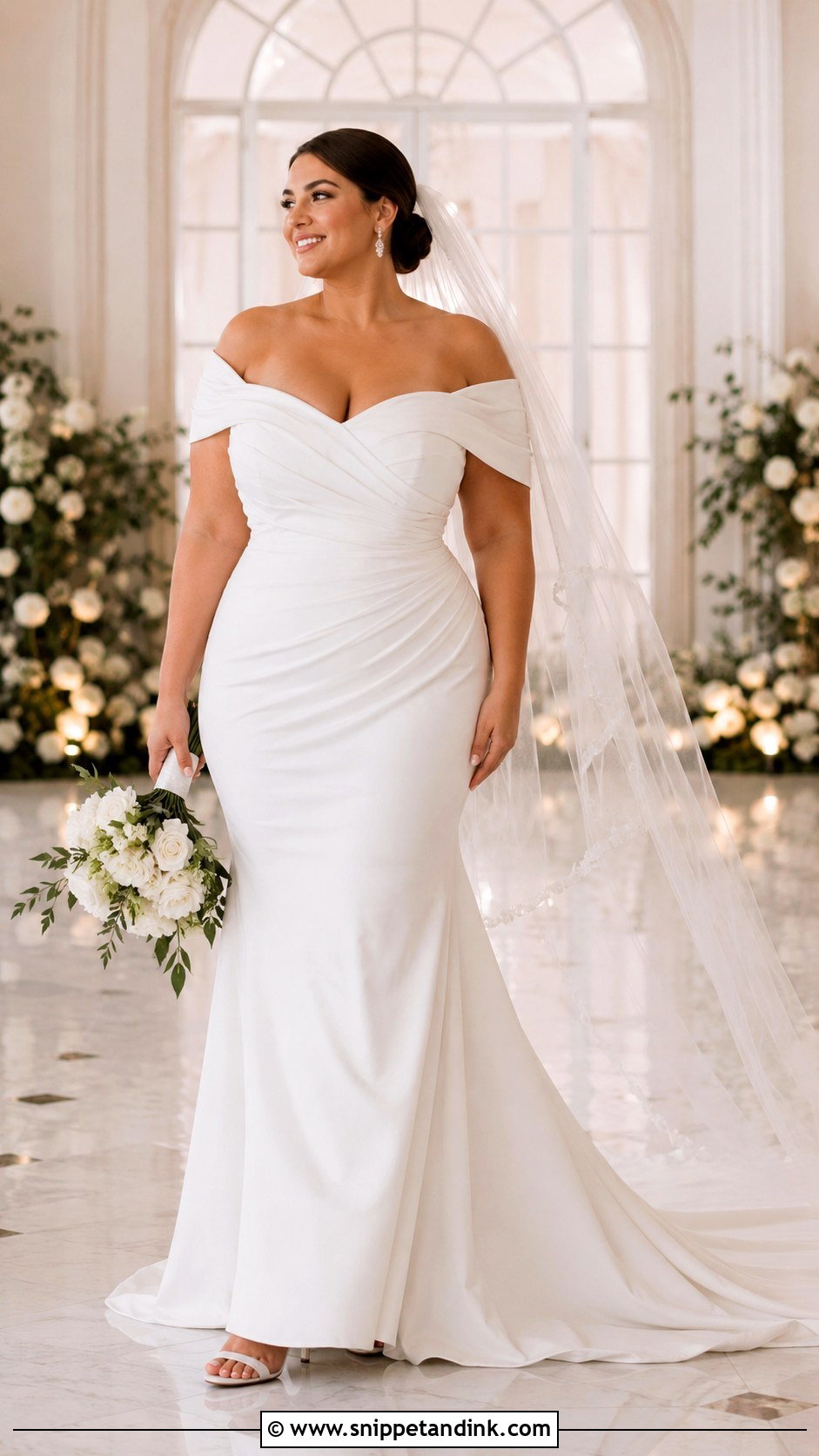
Ruching is a fitted gown’s best friend on a curvy body. Diagonal gathers across the bodice or waist, supported by internal boning and a smooth lining, give shape and a little give when you sit. The skirt, in stretch crepe or satin, should follow your curves without pulling into horizontal drag lines across the hips. Supportive block heels, drop earrings and a fingertip veil suit it, with an off-the-shoulder or sweetheart neckline and a low bun. There are no rules about which bodies can wear fitted gowns, only good and bad construction. Ask for a sample in your size, and have it tailored to your measurements, not a size chart.

20. Petite Trumpet Fitted Wedding Gown
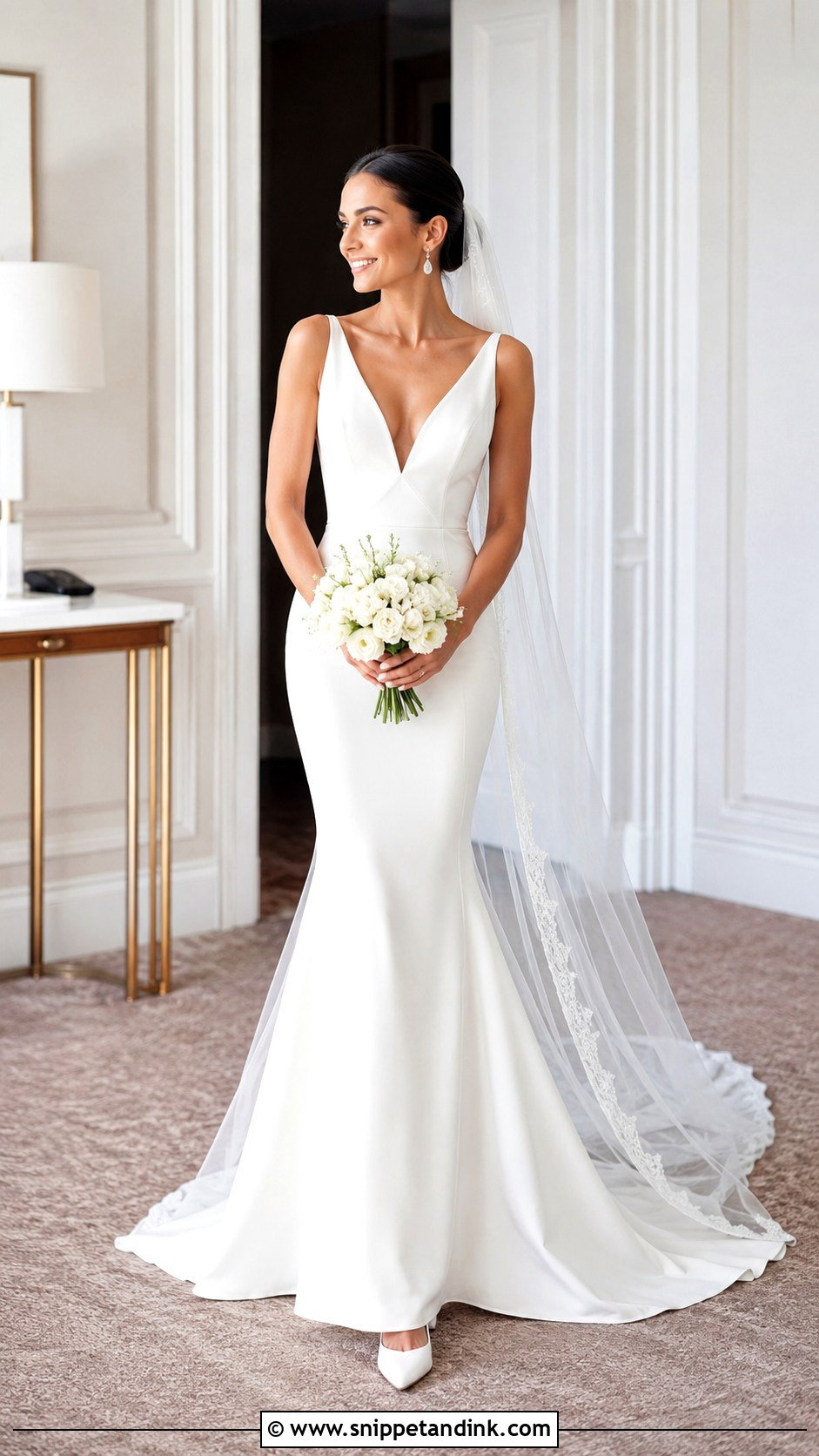
Proportion makes or breaks a petite trumpet gown. The bodice should fit closely without running far below the natural waist, and the flare should begin around mid-thigh rather than near the knee, where it cuts a shorter frame in half. A V-neck, scoop or narrow strapless neckline keeps the upper body open. Pointed heels, small drop earrings and a narrow chapel veil suit it, with hair up or swept back. Hold the bouquet low and small so it doesn’t hide the waist. Good petite alterations rebalance the whole gown, raising the flare and waist as well as shortening the hem and straps.
A Long Day in a Dress With No Spare Room
Fitted gowns look their best standing still, and a wedding day involves very little of that. A few small preparations make the hours in between much easier.
- Practice the bathroom routine with one bridesmaid before the day. In a mermaid or trumpet skirt, facing the cistern and gathering the skirt in front of you is far easier than the usual way.
- Sit sideways in the car with the skirt laid flat behind you, and stand up as soon as you arrive to let any creases drop.
- Eat something small before the ceremony. Tight bodices make large meals uncomfortable, so a few light bites through the day are kinder than one big dinner.
- Plan where you’ll sit at the reception. Low, soft sofas are hard to rise from gracefully in a close skirt; a firm chair is better.
- Keep a small kit with fashion tape, safety pins and a needle and thread in your gown color with someone you trust.
Decide How Much Structure You Want, Then Try Everything
One close-fitting silhouette can look minimal in plain crepe, romantic in floral lace, glamorous in beaded satin or dramatic with an overskirt. Start by deciding how much structure you want against how much movement you need. Then compare necklines, waist placements, fabrics and train lengths. Let accessories support the gown’s strongest feature, not compete with it. Above all, judge each dress while walking, sitting and dancing, not only standing still in front of the mirror. With good tailoring and a complete styling plan, a fitted gown stays comfortable from the vows to the last song.
You'll Like These Ideas:






Leave a Reply