
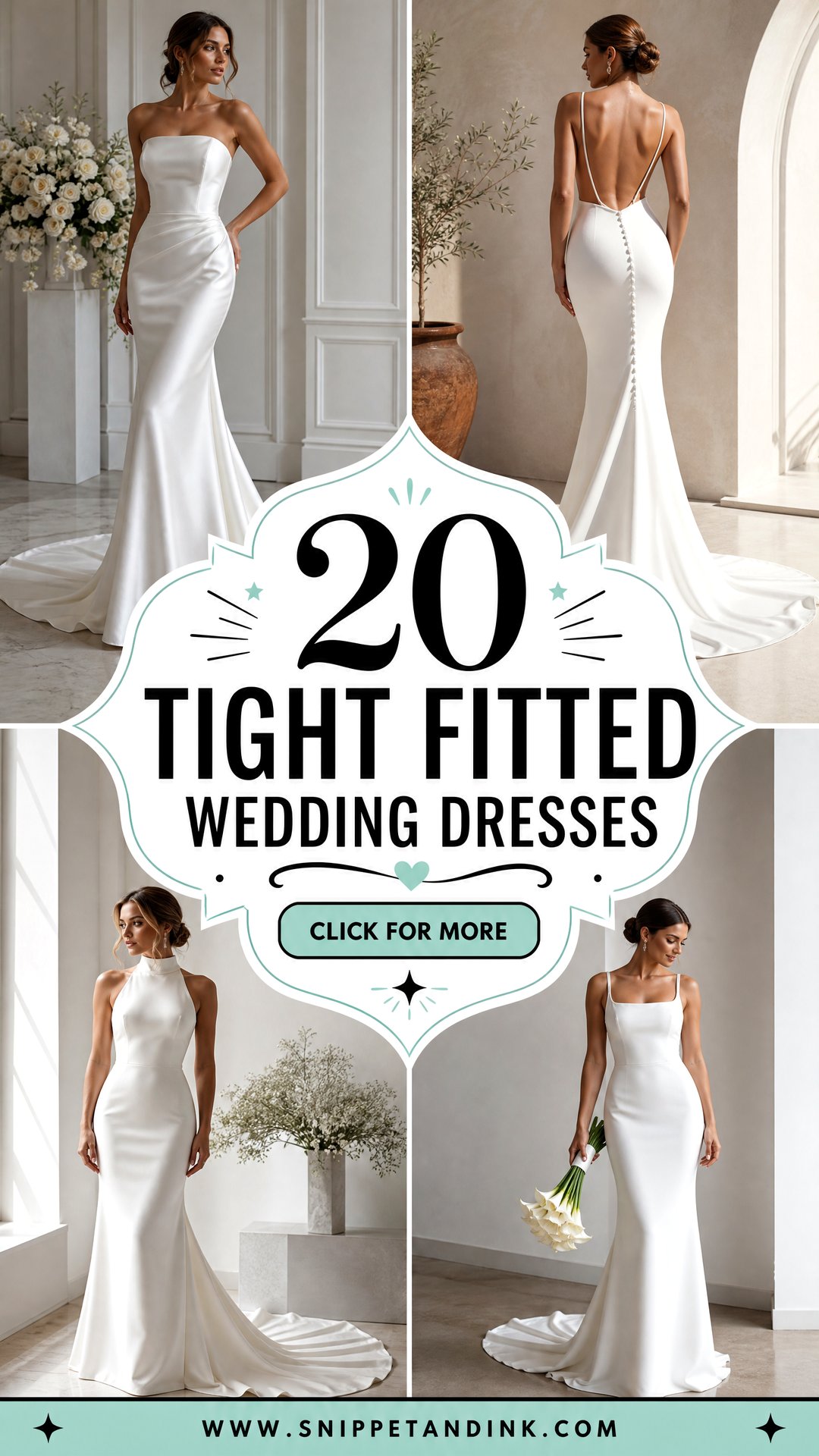
A close-fitting gown is the least forgiving thing a bride can wear and, when it’s cut right, the most flattering. Everything depends on what you can’t see in a photo: how heavy the fabric is, how much structure sits inside the bodice, where the seams fall and how good your seamstress is. I’ve zipped brides of every size into sheaths and mermaids, and the ones who looked best weren’t a particular shape. They were the ones whose dress held them up from the inside so nothing pulled. Below are twenty fitted styles, each with the detail I’d check before you commit to it.
Stretch Crepe, Rigid Satin and Why the Fabric Changes Your Size
Two gowns in the same size can fit completely differently once you’re in them, and fabric is usually why. Stretch crepe and lined stretch lace give a little as you breathe and sit, so a seamstress can cut them close. Duchess satin, mikado and most taffeta have almost no give. With those, the dress needs ease built in at the waist and hip, or you’ll feel it the moment you sit down to eat.
I order to the largest measurement, never the smallest. Taking a fitted gown in is routine work; letting it out depends on how much seam allowance the maker left, and on many designer gowns that’s very little.
How fittings usually run
- First fitting, roughly two to three months out: the big changes, side seams, bust and hem pinning.
- Second fitting: the shape is checked again with your real shoes and underwear, and the bustle is planned.
- Final fitting, two to three weeks before: small refinements only, and the person who’ll bustle you learns how.
Try not to change shoes or shapewear between fittings. A two-inch heel difference moves the hem and the flare point, and a new bodysuit can shift the waist by enough to undo good work.
1. Strapless Satin Fitted Wedding Dress
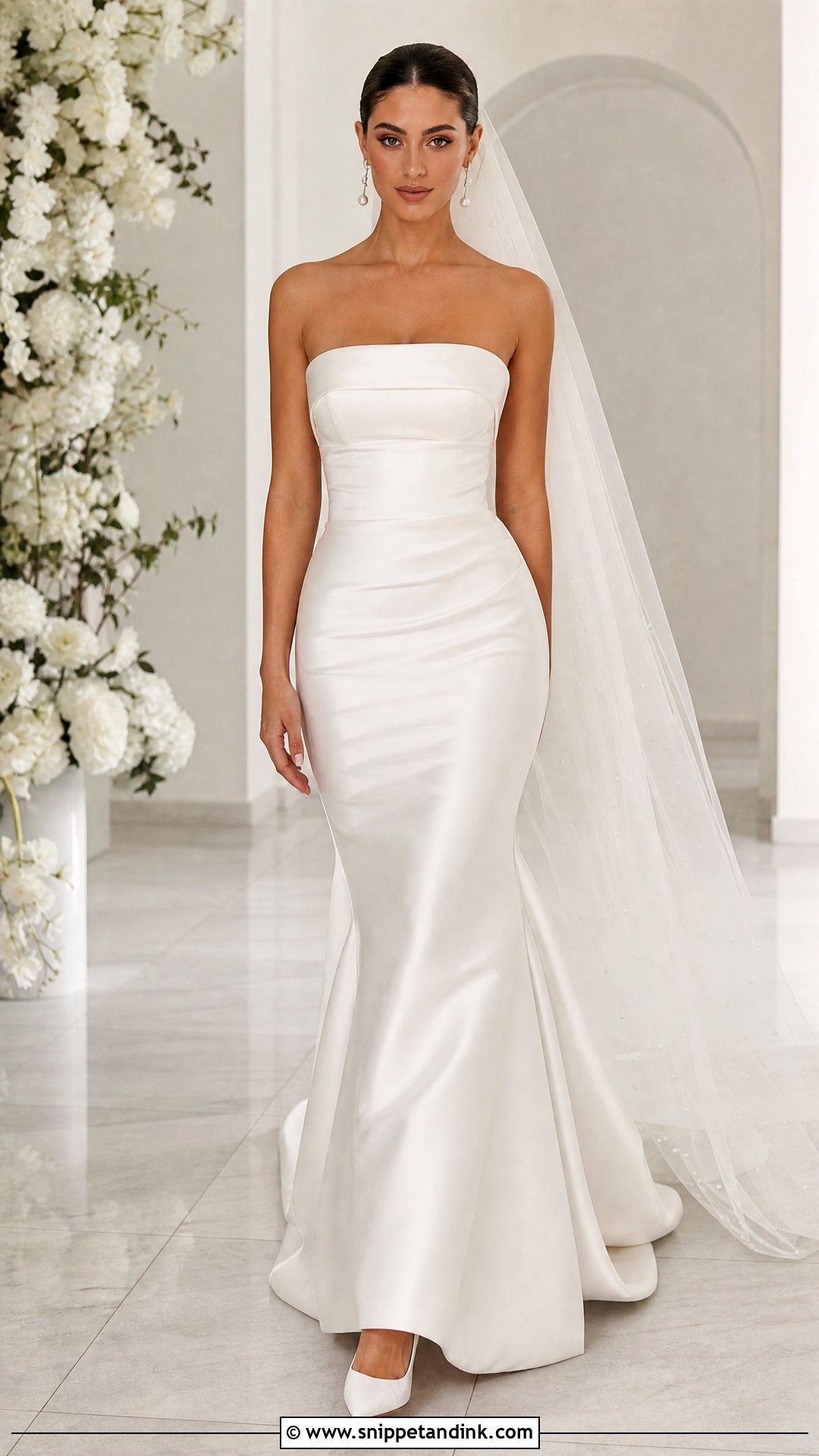
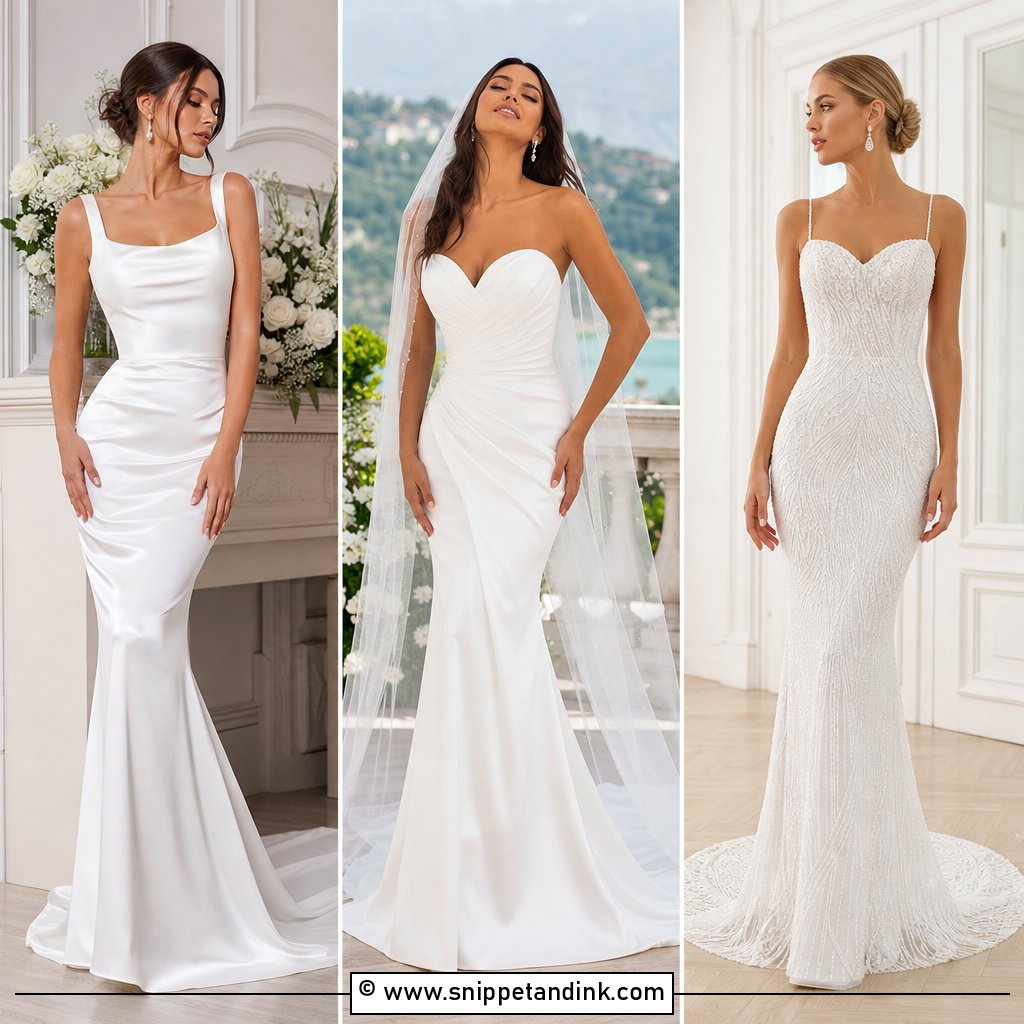
Strapless satin hides nothing, so I look at the inside before the outside. Ask to see the bodice turned out: you want boning in the side seams, molded cups and a waist stay, a grosgrain band that takes the strain so the zip doesn’t. Light ruching at the hip does real work here, because satin shows every ripple and gathers break up the surface. A gently flared hem walks far better than a narrow column. Pointed ivory pumps and pearl drops keep it clean, and a long sheer veil gives you ceremony drama. At your fitting, sit down and lift both arms above your head; if the neckline slips or the top edge bites into your skin, the bodice needs taking in, not a tighter zip.
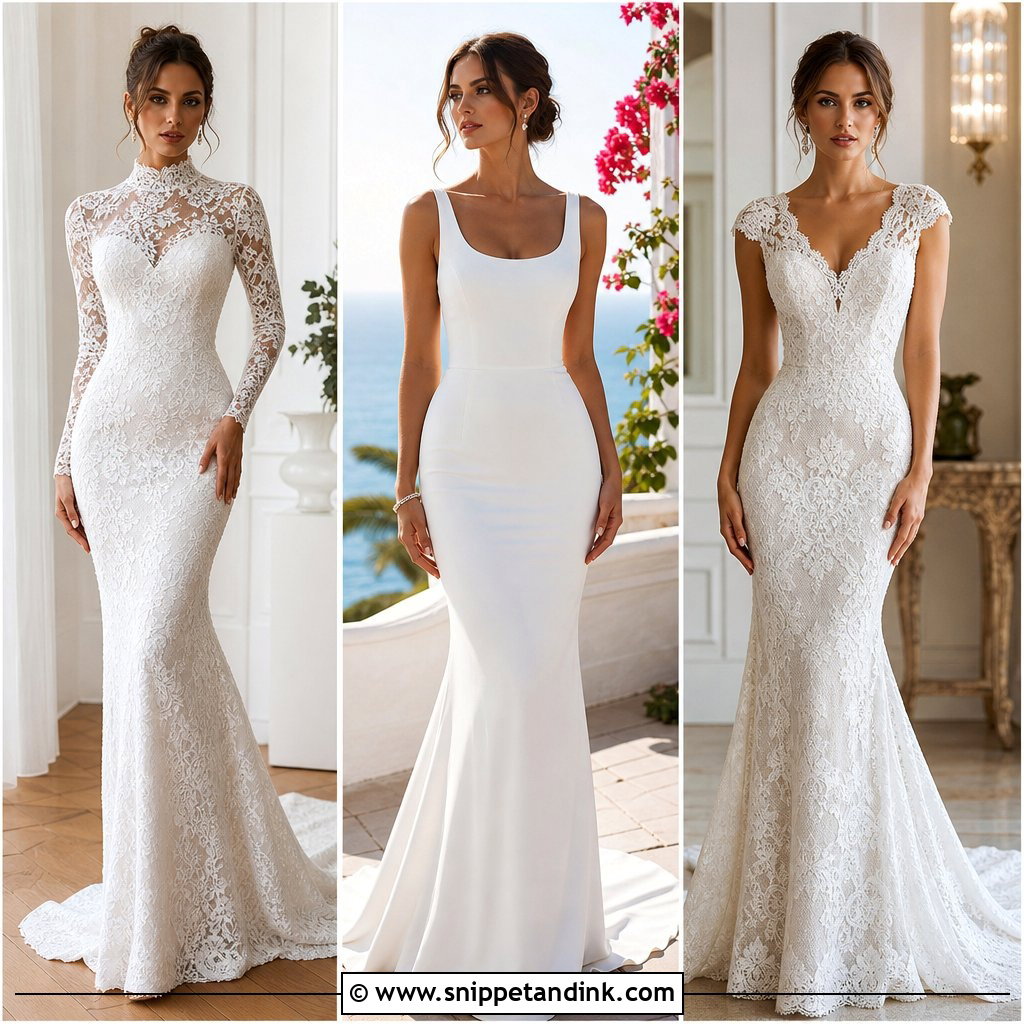
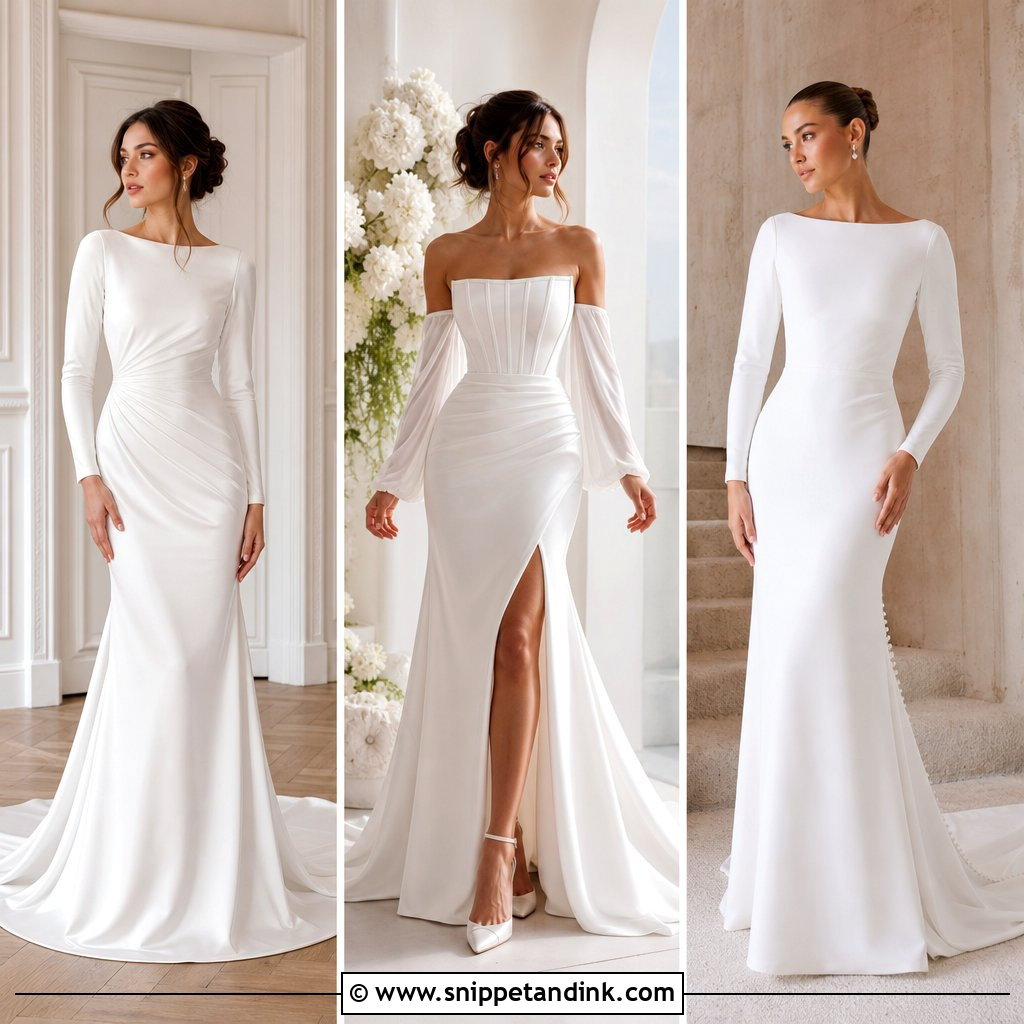
2. Long Sleeve Lace Fitted Wedding Dress
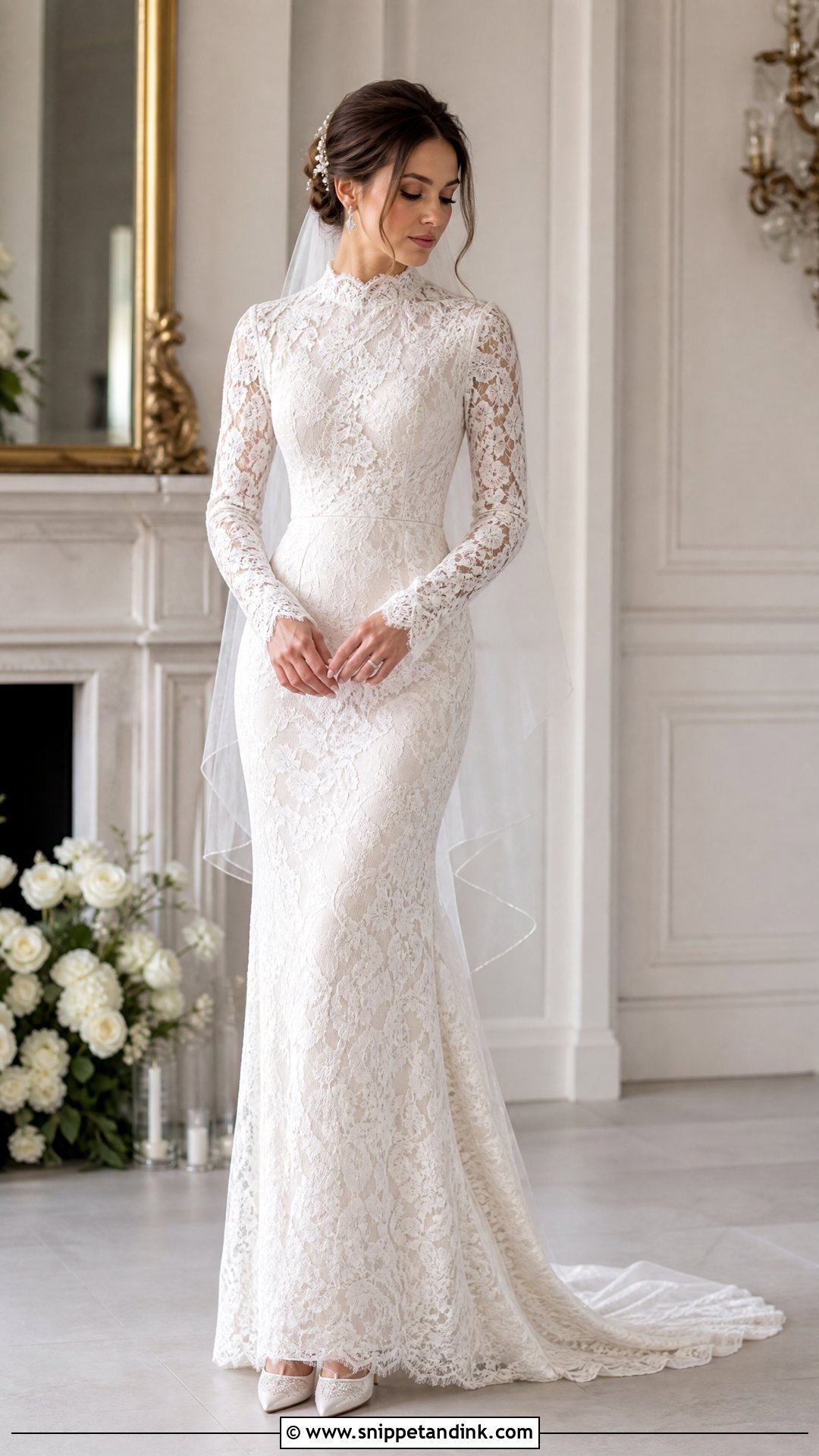
Lace sleeves are where fitted gowns most often go wrong. A sleeve cut close for the mirror can lock your elbow, and you’ll feel it the first time you hug your grandmother. Stretch lace over a flexible lining fixes most of that, and appliqués placed to follow the bodice rather than stacked on the hip keep the line flat. A nude underlayer makes the pattern read from the back of the room. I’d pair it with closed-toe heels, small crystal earrings and a low chignon with pearl pins, then a fingertip veil so the back stays visible. It’s my first suggestion for a cool-season or formal indoor wedding.
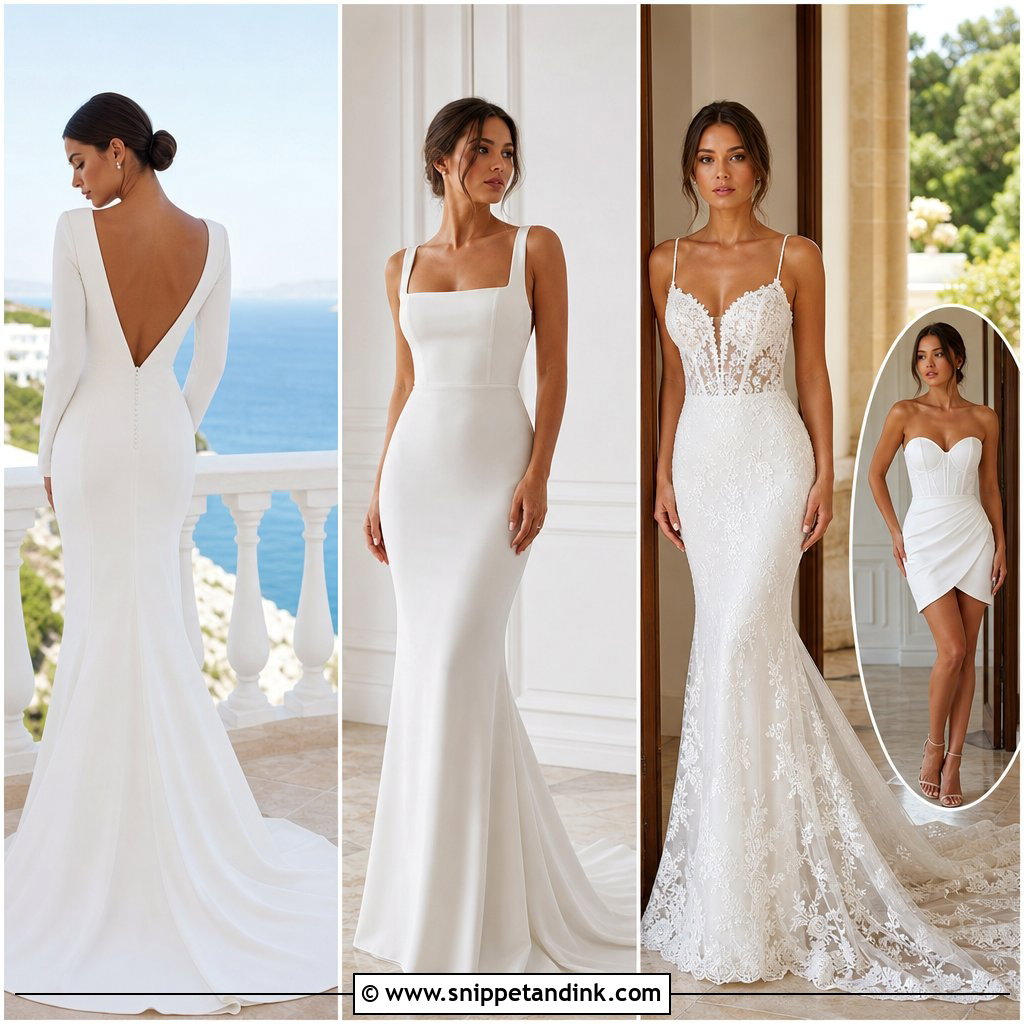
3. Square Neck Crepe Fitted Wedding Dress
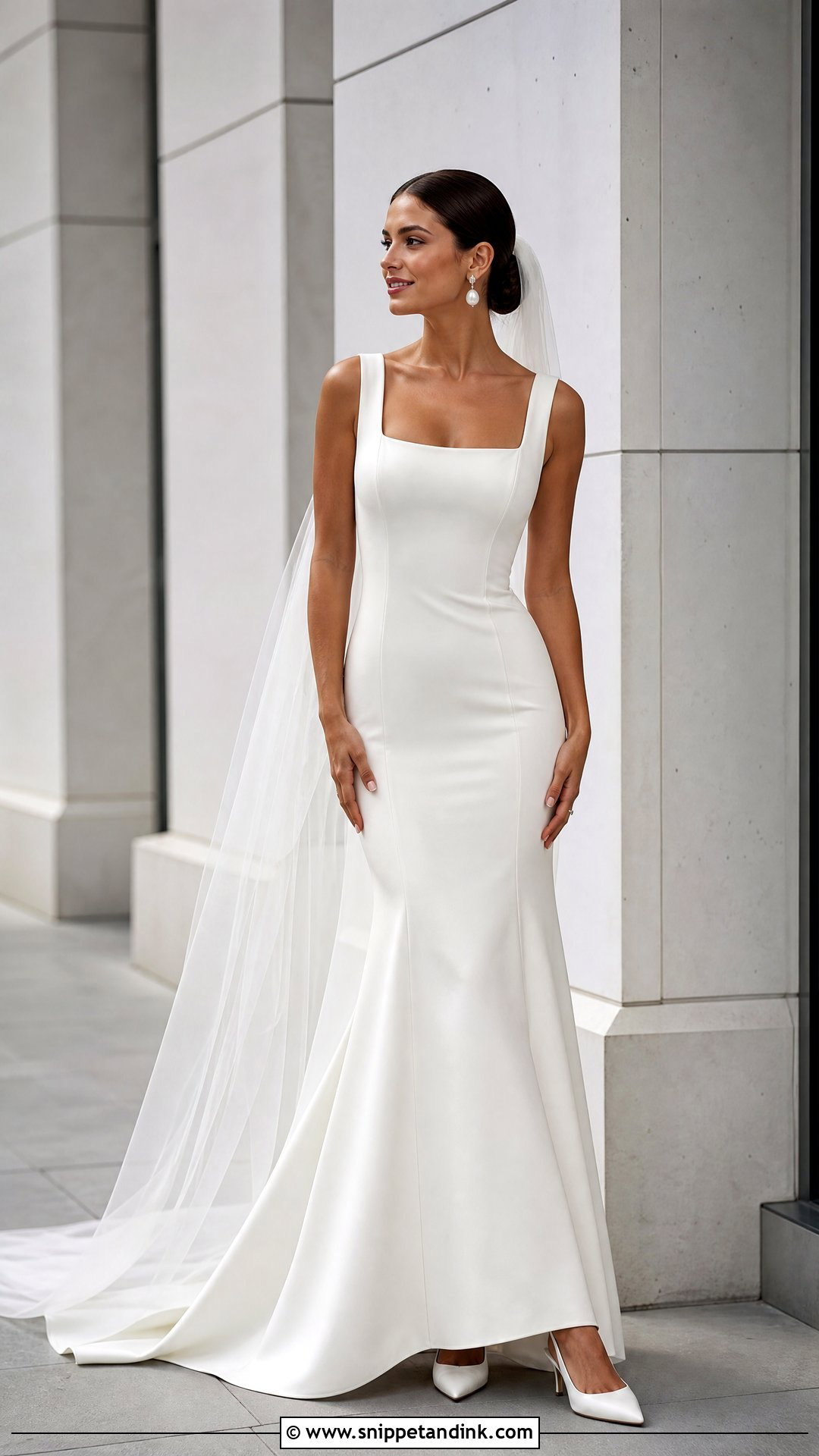
Crepe is honest fabric. A smooth crepe gown with a square neckline looks modern for years because there’s no trend detail to date it, but it also shows every crooked seam. Ask for a heavier crepe; the thin ones cling at the hip and twist at the side seams by evening. Wide straps and a fully lined bodice carry the support, and curved seams give you waist definition without boning showing through. Slingbacks, sculptural pearl earrings, a sleek bun and a chapel veil with a cut edge finish it. This is the dress where I’d pay for the best tailor you can find.
4. Sweetheart Mermaid Wedding Dress
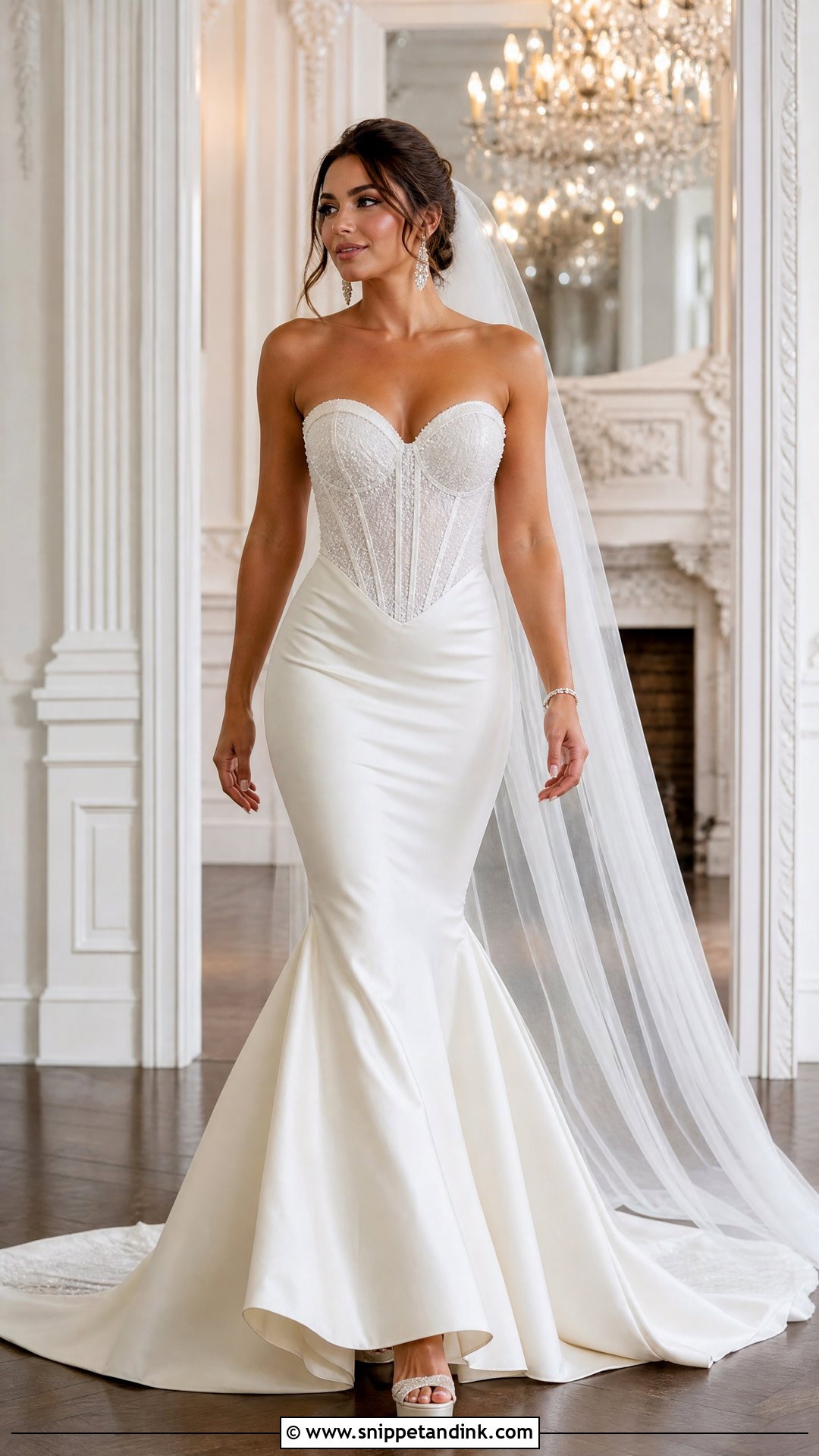
Where the flare starts decides whether you can walk in a mermaid. Set it too low and you’ll shuffle down the aisle; most brides are happier with the flare breaking just above the knee. A corseted sweetheart bodice gives lift, and stretch lining lets you take a real stride and sit for dinner. I always make a bride climb stairs at her fitting, because a church step or a stage riser is where a tight skirt shows its limits. Crystal drop earrings, a fine tennis bracelet and platform sandals under the skirt suit the glamour, and a soft tulle veil keeps it from looking stiff.
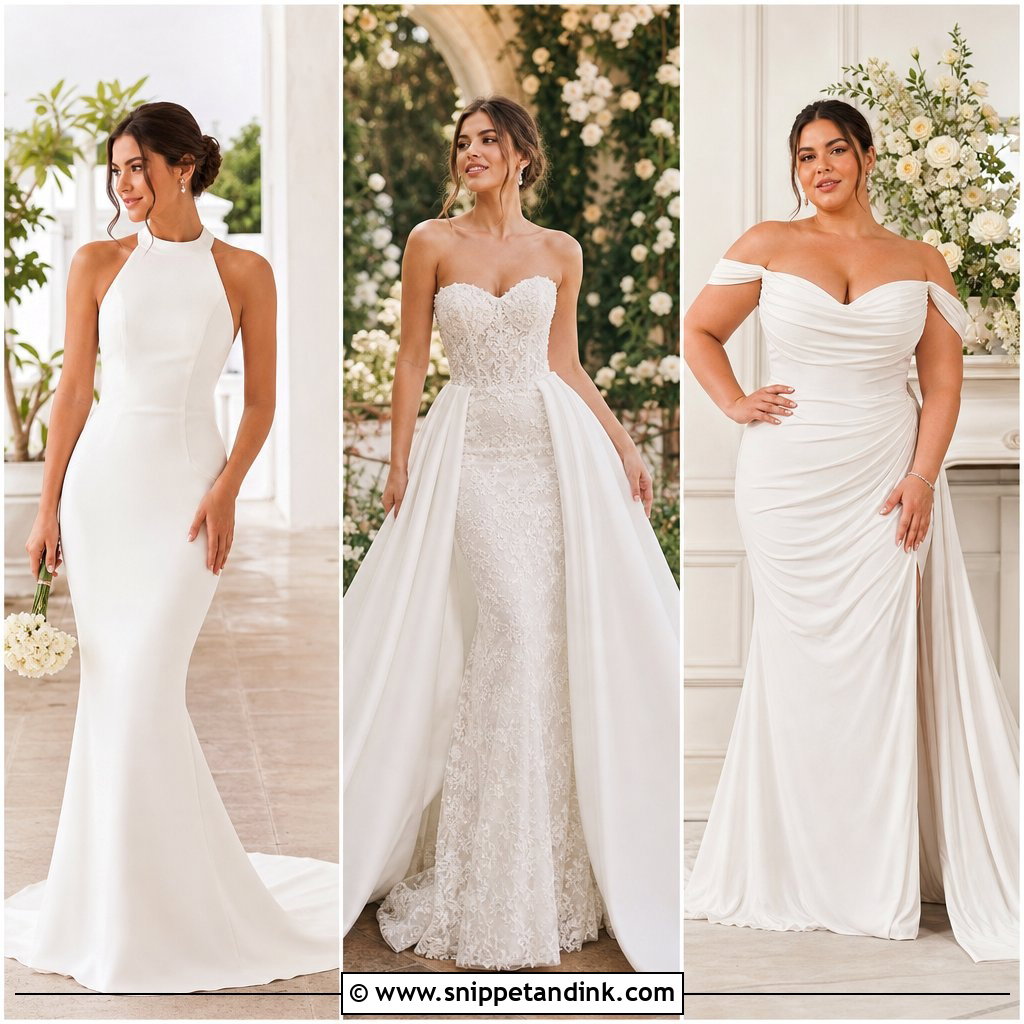
5. Off Shoulder Draped Fitted Wedding Dress
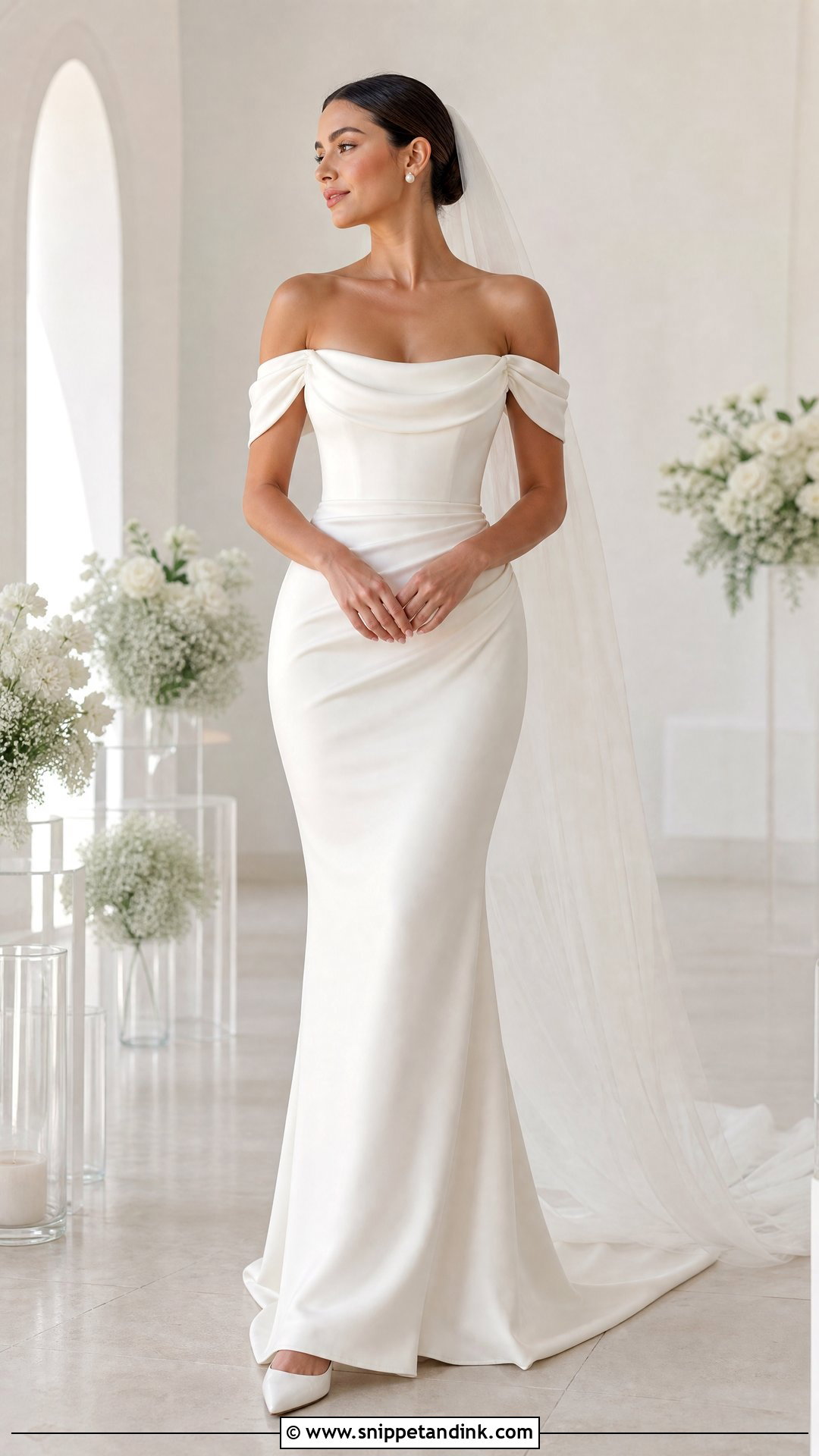
The problem I see with off-shoulder styles is the sleeve band sliding up every time the bride raises her arms, then sitting crooked in every reception photo. Hidden support in the bodice, ideally a silicone grip strip inside the band, stops that. Draping across the waist and hip is kind on a fitted gown; it adds dimension and softens any spot you’d rather not have outlined. Keep jewelry to pearl studs and leave the collarbones bare. A smooth updo with the veil attached beneath it preserves the shoulder line. Practice a hug at your fitting and watch whether the drape pulls tight across your back.
6. Halter Neck Fitted Wedding Dress
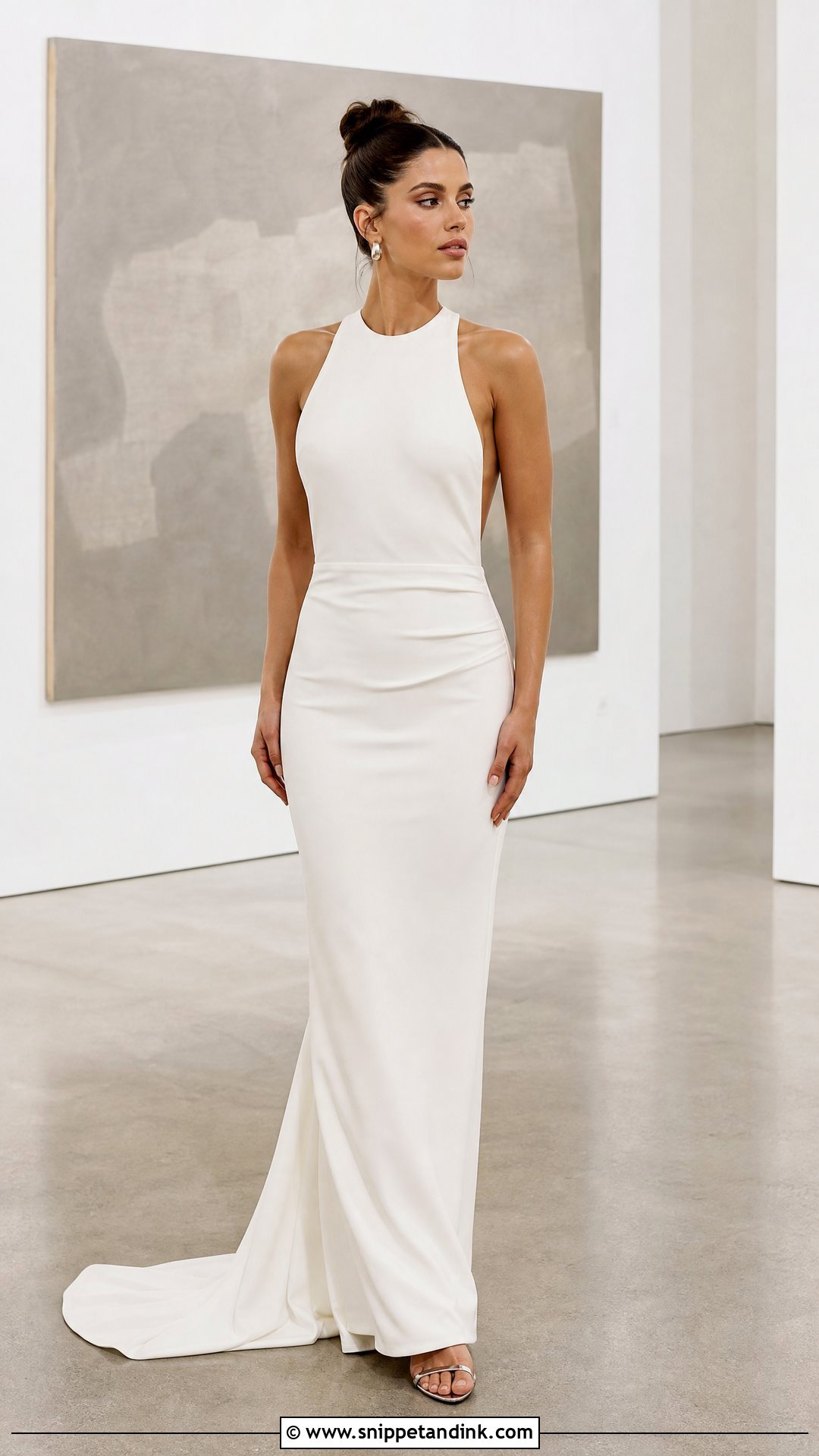
A halter draws the eye straight up and makes the torso look long, which is why it sits so well on a narrow crepe or satin skirt with a little flare at the back. My one warning: if the gown’s weight is hanging from the neck strap, you’ll have a headache by the speeches. Proper bodice support should carry the dress, with the halter just steadying it. Medium earrings, a slim bracelet, metallic sandals and a high bun or sleek ponytail show the neckline off. An open back adds interest behind you without fighting the front.
7. Scoop Neck Fitted Wedding Dress
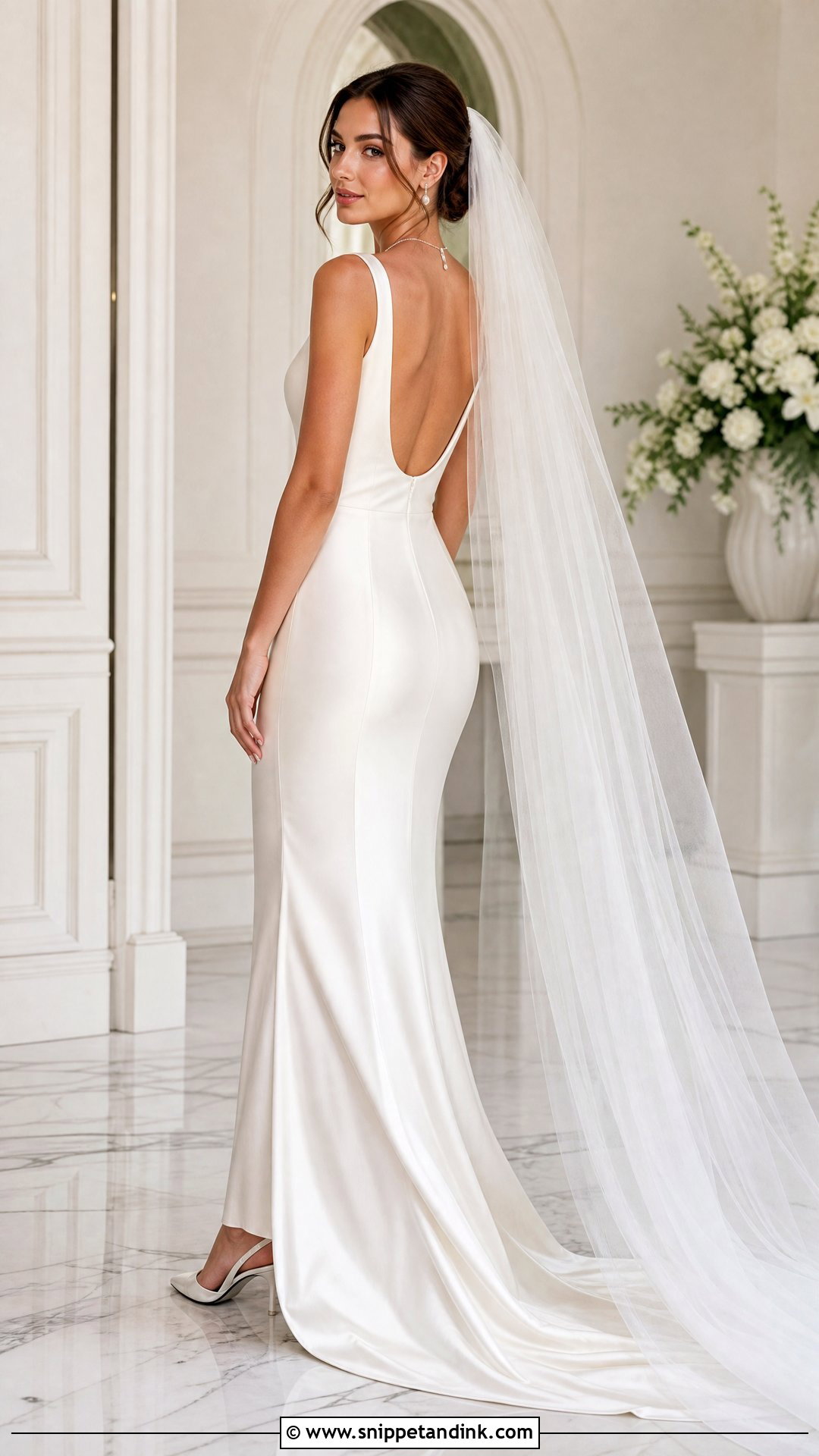
Scoop necks are quietly underrated. Paired with a close-fitting satin or crepe gown, the rounded line softens a body-con shape and works with nearly any bra you already own, which isn’t true of plunges or strapless cuts. Wide straps and curved princess seams keep the bodice balanced. A delicate pendant, pearl earrings and a sheer cathedral veil sit well with it, and soft waves or a half-up style repeat the curve. The spot I check is the underarm: scoops often gape there or leave a horizontal fold when you sit, and both are easy fixes if caught early.
8. V Neck Fitted Wedding Dress
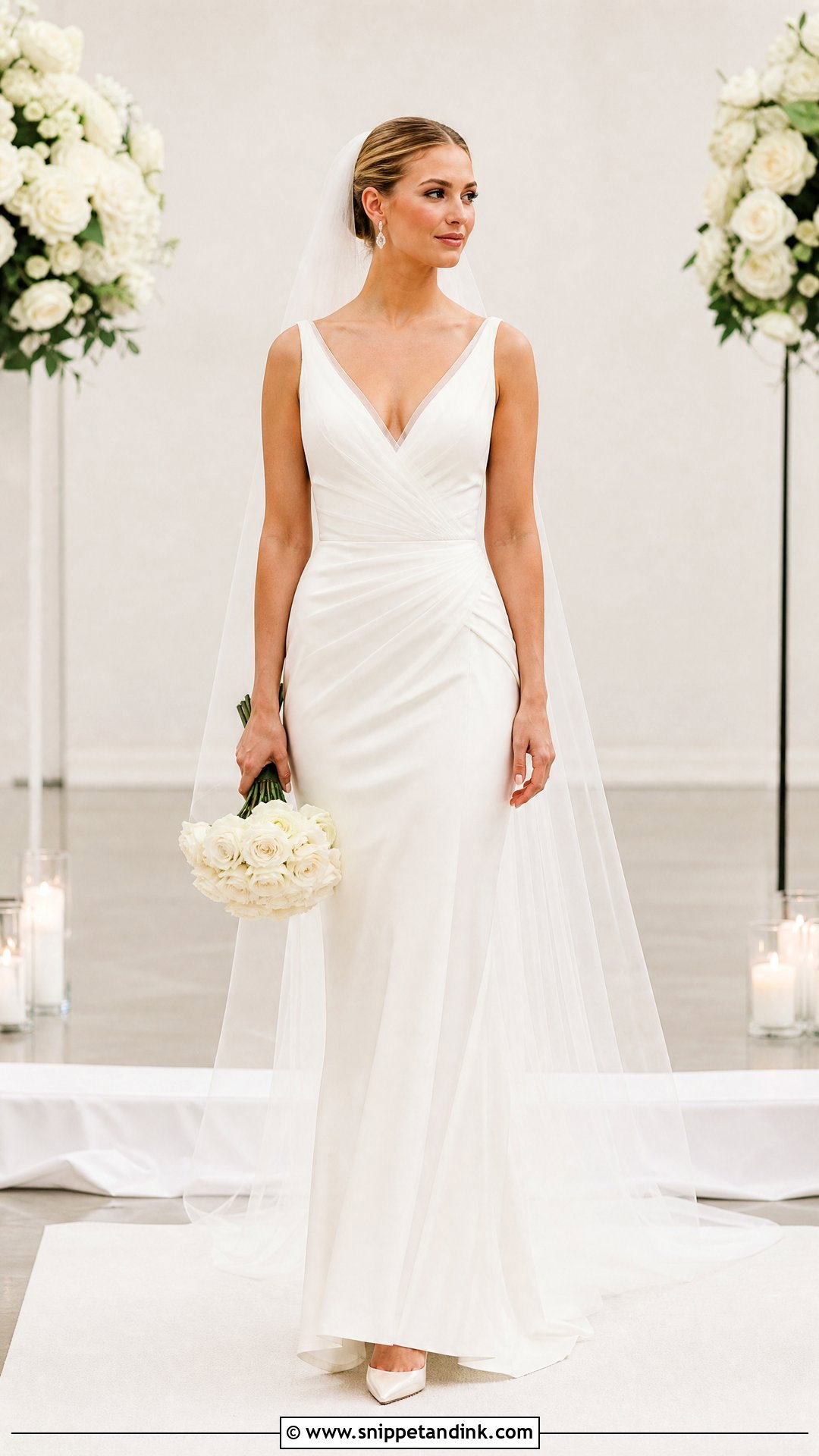
With a V neck, depth is a comfort question as much as a style one. Pick a depth you won’t spend the evening adjusting, and remember a church ceremony may call for a shallower line than the reception. Illusion mesh across the plunge gives stability without changing the look from a few feet away. A defined waistband or diagonal draping brings the eye to your waist before the skirt follows the hip. Slim drop earrings and pointed pumps are enough; skip the necklace if the neckline already carries lace or beading. Fashion tape is a backup. Tailoring should do the holding.
9. Corset Fitted Wedding Dress
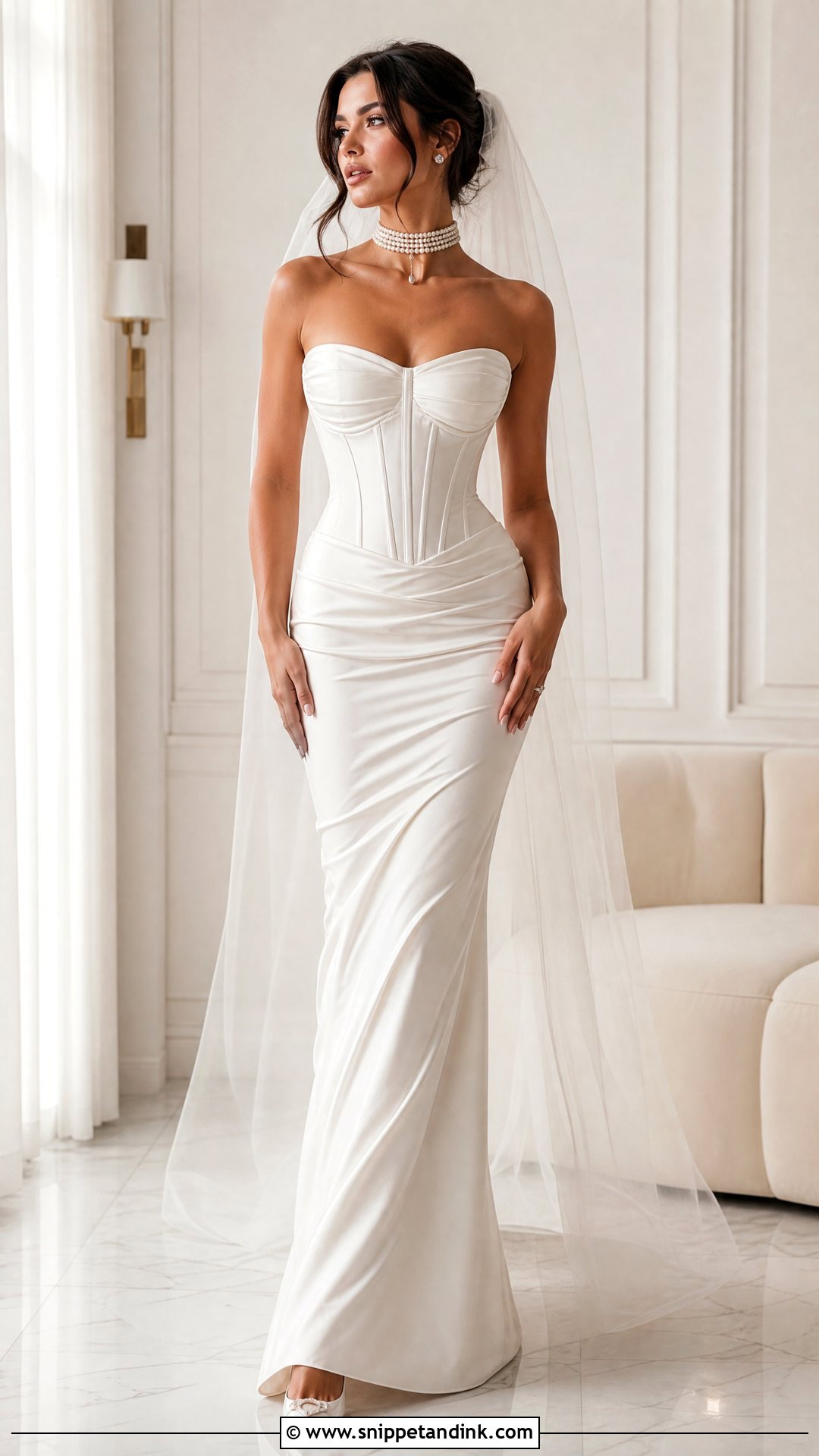
A visible corset is the most supportive fitted gown you can buy, and it doesn’t have to hurt. The bodice should be long enough to reach your natural waist, the cups sized to you rather than to the sample, and the boning flexible so you can bend to sign the register. Satin and mikado give a clean finish, lace or layered tulle a softer one. Pair it with sleek heels, a pearl choker or short necklace and simple studs; a sheer veil softens the strong lines. My rule at fittings is that you should be able to breathe deeply and eat a full plate. Support should be even all the way round, never crushed into one spot.
10. Basque Waist Fitted Wedding Dress
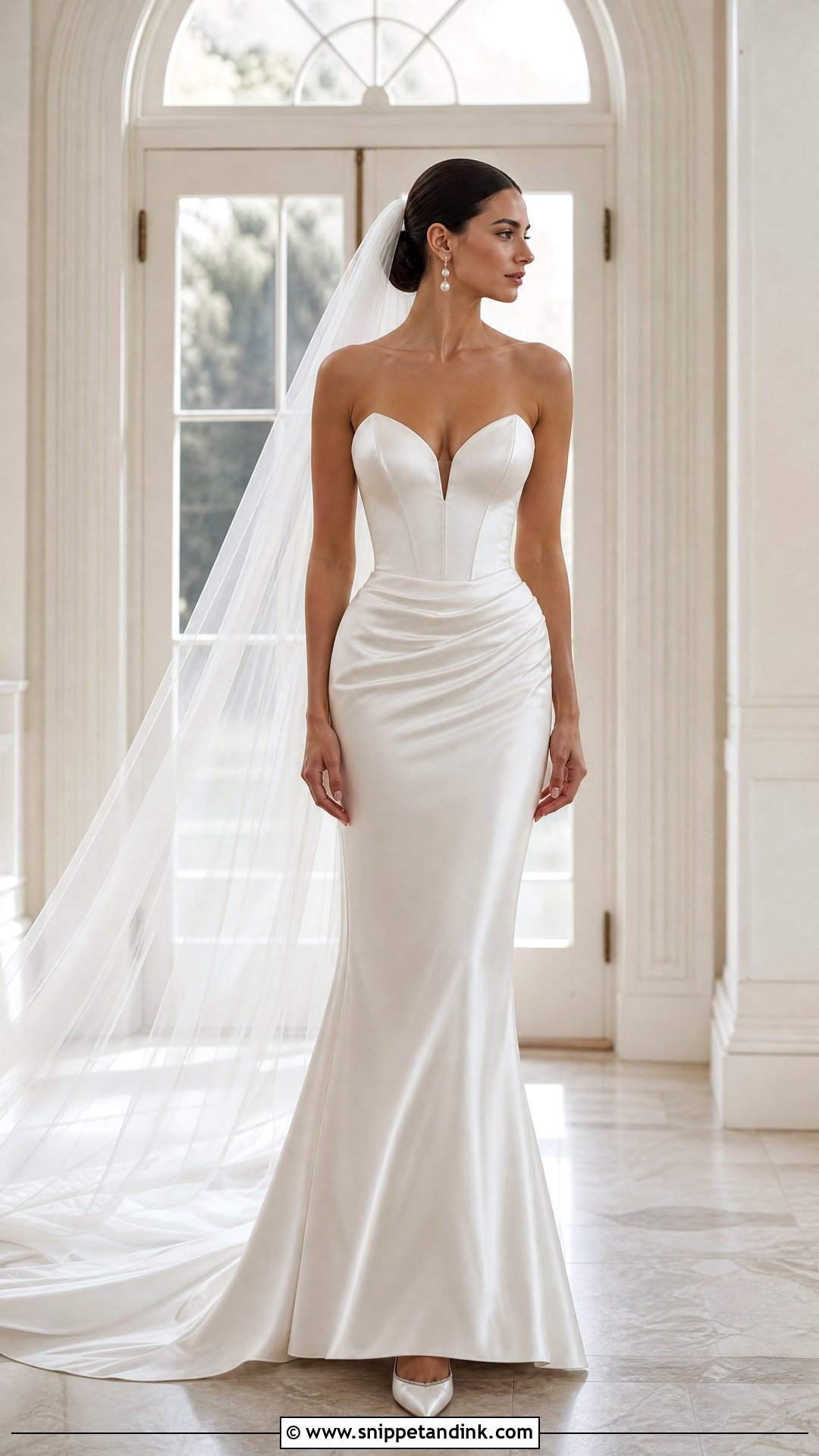
A basque waist dips to a point below the natural waist, which lengthens the torso and gives a fitted gown a sculpted front. It pairs best with a strapless or off-shoulder bodice and a skirt that stays close through the upper hip. Satin makes it regal; lace makes it gentler. The thing to watch is the point itself. On a bodice cut even slightly too long it buckles when you sit, so do a seated check at every fitting. Pearl drops, pointed heels, a low bun and a long veil with a plain border keep attention on that shape. Wear your wedding shoes to fittings so the hem and proportions are judged at your real height.
11. Open Back Fitted Wedding Dress
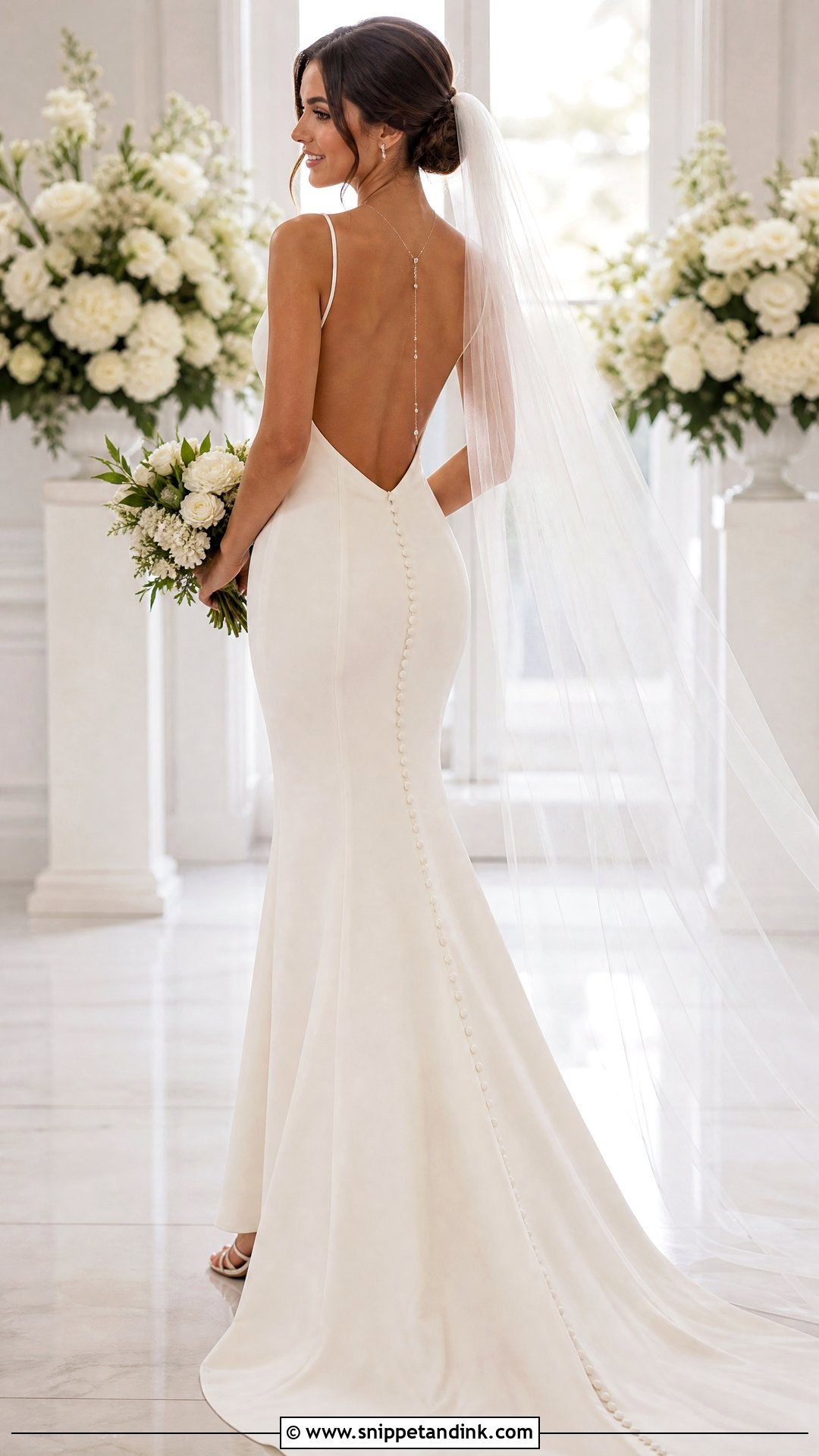
An open back is only as good as the bust support built into the front, because there’s nowhere to hide a bra strap. I’d insist on professionally fitted cups sewn into the bodice. The back itself might be a deep curve, narrow straps, lace edging or covered buttons above the skirt. Back-drop jewelry, small earrings and ivory sandals suit it, and placing the veil below an updo keeps the back on show once it’s lifted. Keep any body makeup transfer-resistant so it doesn’t mark the fabric. Turn around in the fitting room mirror while seated; that’s when the edges lift away from the skin.
12. High Neck Fitted Wedding Dress
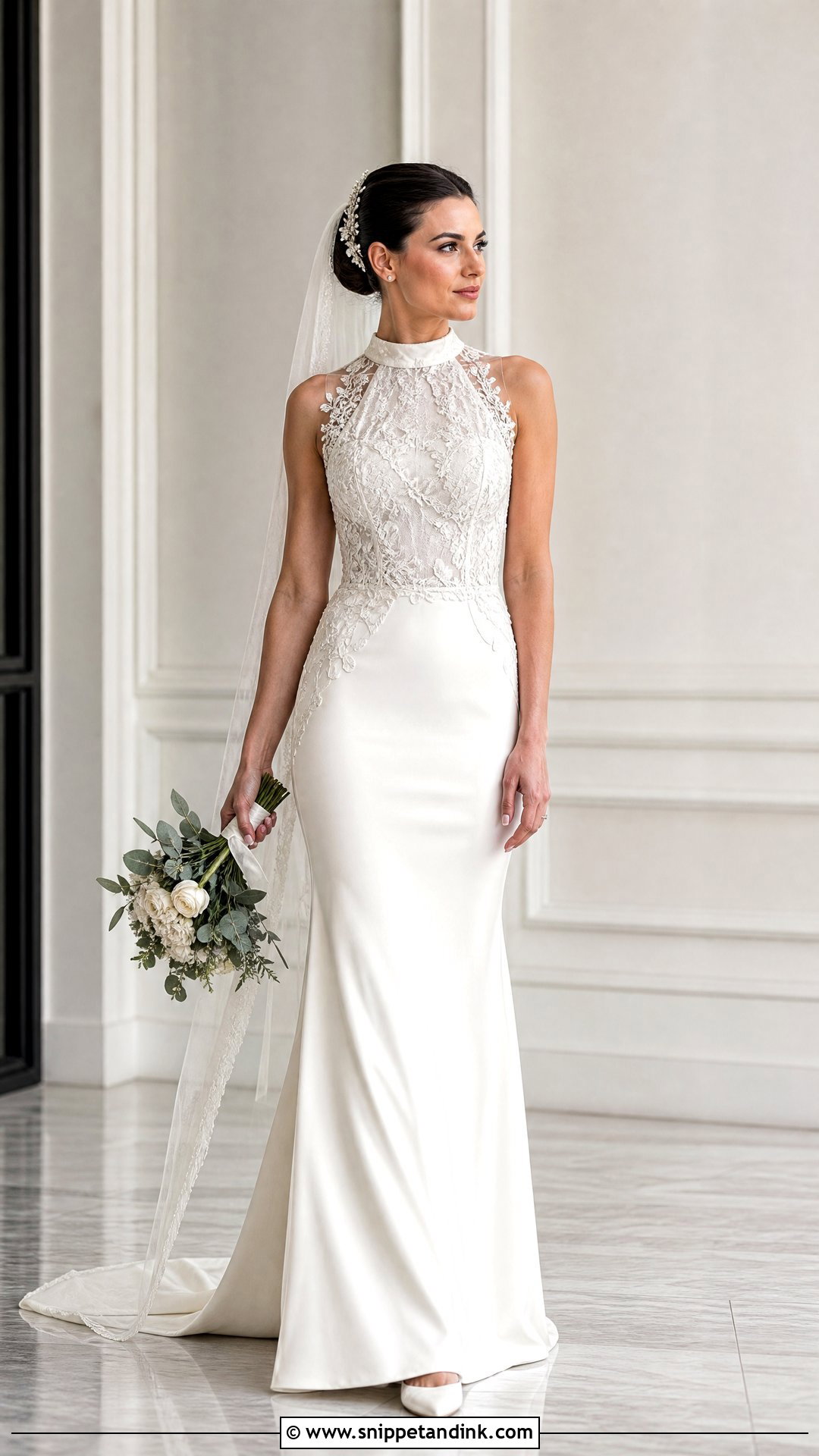
A high neck gives coverage and a long, upright line, but it’s the least forgiving neckline to alter. Lace reads romantic, crepe and satin read sharp. Sleeveless versions feel lighter, while fitted long sleeves add formality. Skip the necklace entirely and let pearl studs, a smooth bun and maybe a decorative comb do the work. A narrow veil attached beneath the hair avoids bulk at the shoulders. During alterations, turn your head fully and lift your arms; with low-stretch fabric, the neck and armholes are where you’ll feel pinched by the afternoon.
13. Pearl Beaded Fitted Wedding Dress
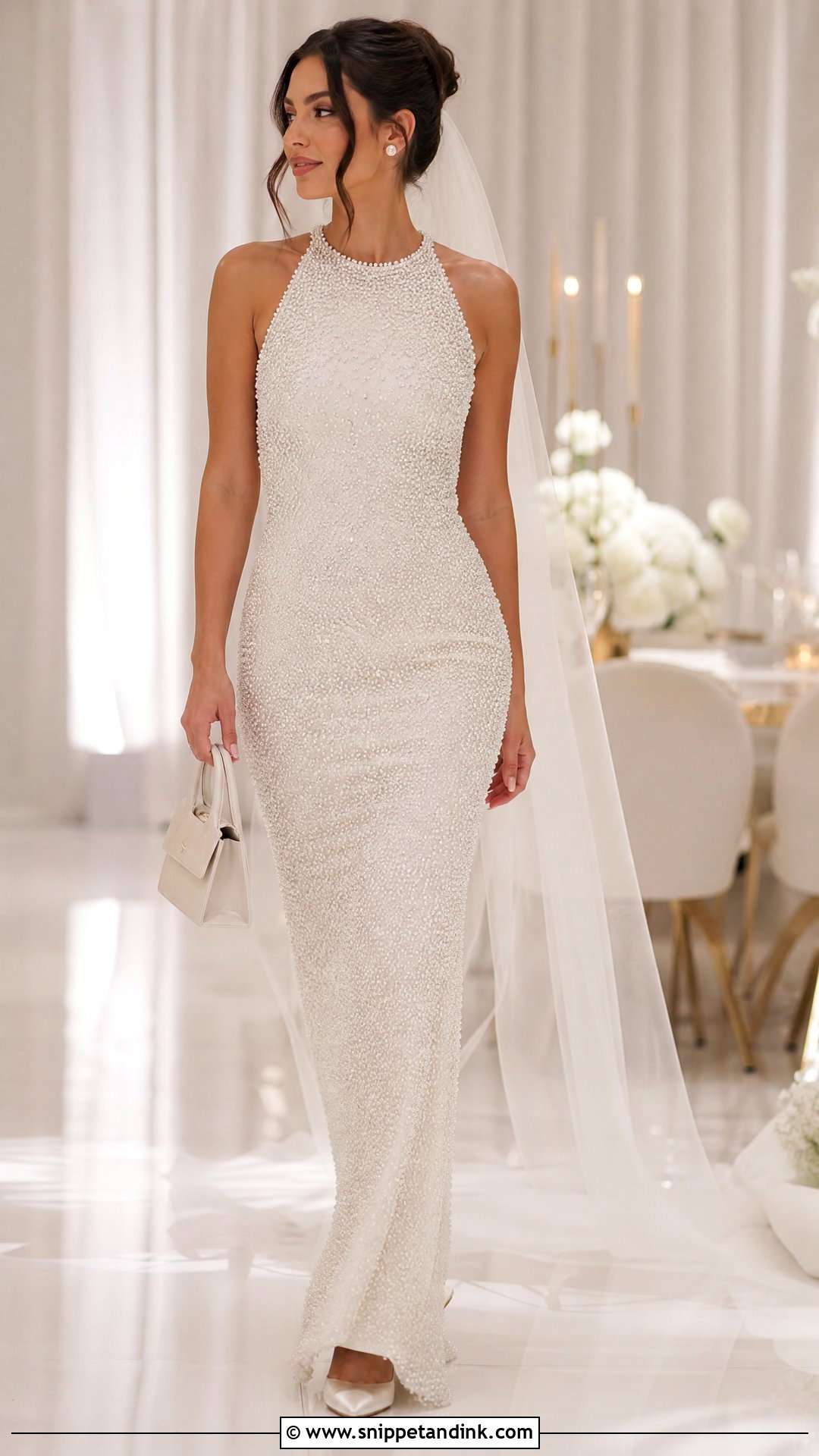
Pearl beading catches light softly, which is why I like it for brides who find crystals too loud. It may cover the whole gown or trace the neckline, waist and back. Beading adds real weight, though, so check that the lining is firm and the pearls are spread evenly, or the dress will drag down on one side. Seams matter too: when a tailor takes in a beaded gown, pearls have to be removed and stitched back by hand, so ask how they handle it before you book. Keep the rest quiet with pearl studs, a plain veil and satin pumps, and wear your hair up so loose strands don’t snag.
14. Floral Appliqué Fitted Wedding Dress
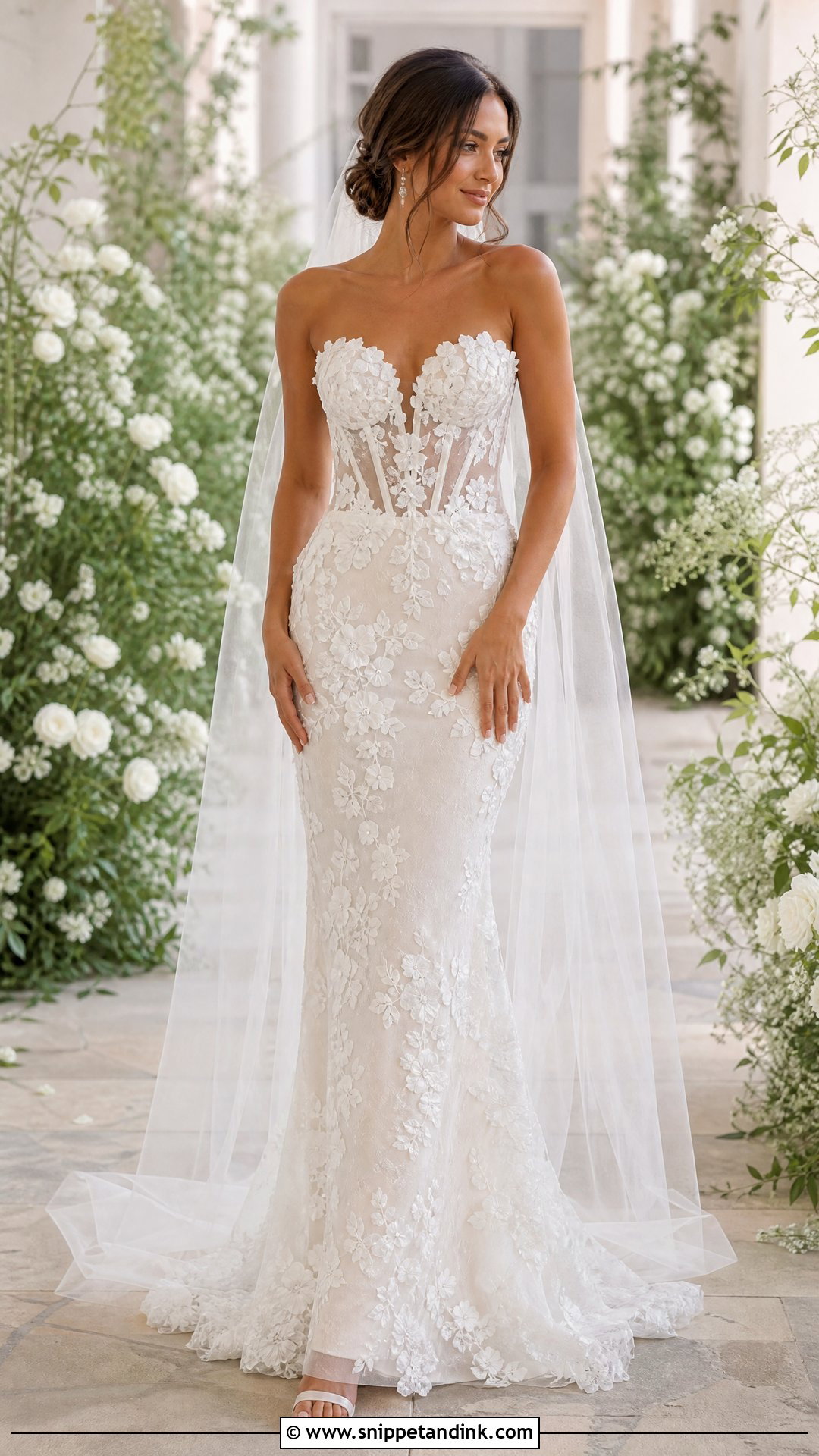
Floral appliqués add depth to a body-skimming silhouette, scattered over a sheer bodice or trailing down the skirt before fading at the hem. Matching them to the lining shade gives a subtle finish; a slightly contrasting underlayer makes every flower show. When the tailor takes in a side seam, appliqués that cross it must be lifted and reset, otherwise you get a thick cluster at the hip. A loose low bun, delicate earrings and a plain tulle veil let the surface do the talking, so leave the beaded bag at home.


15. Minimal Sheath Wedding Dress
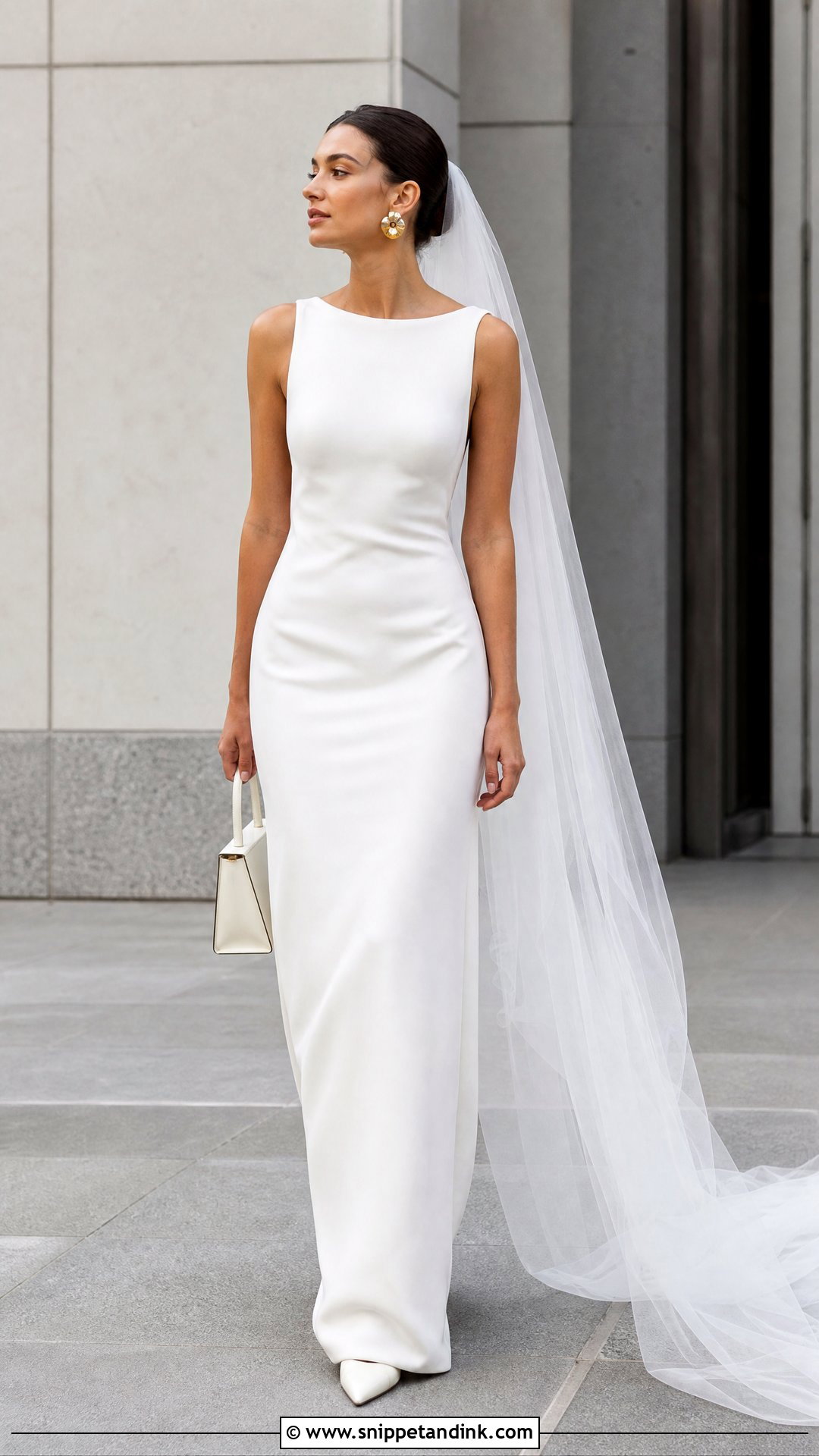
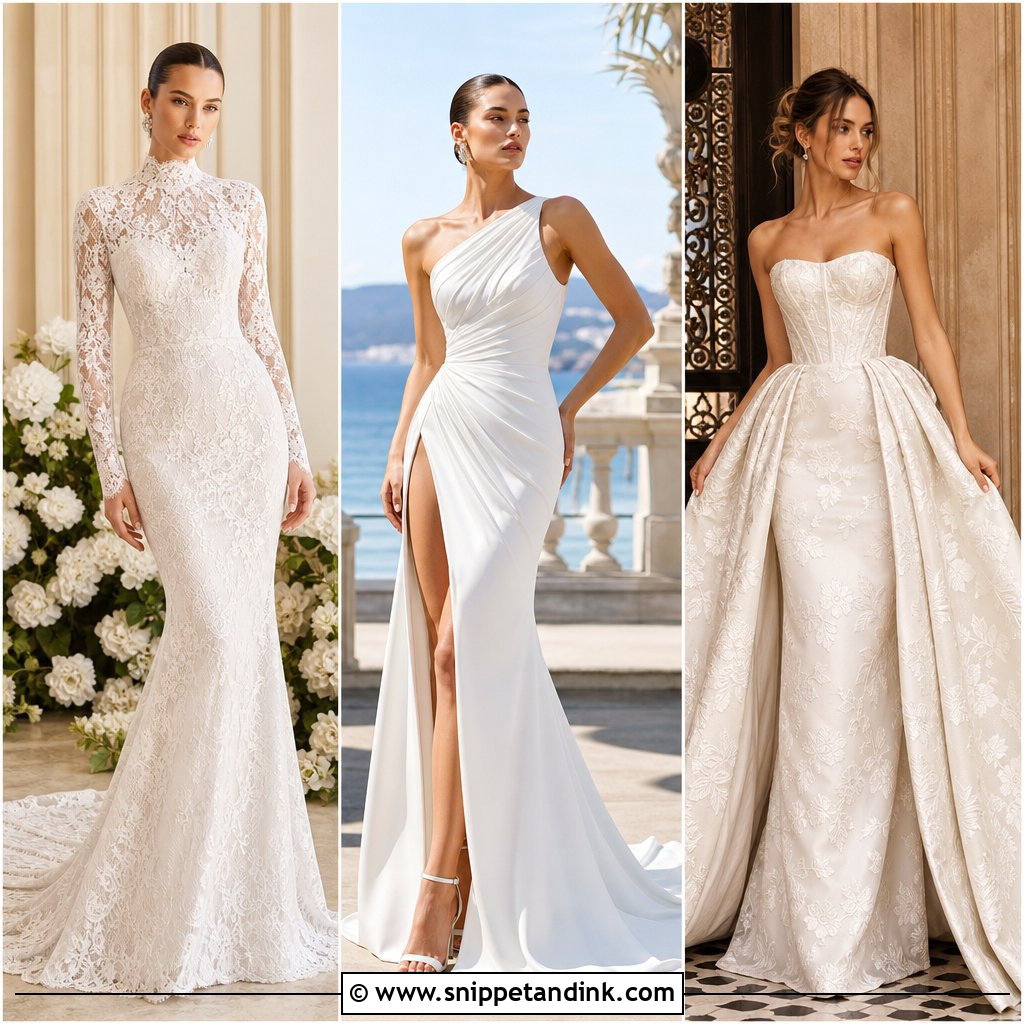
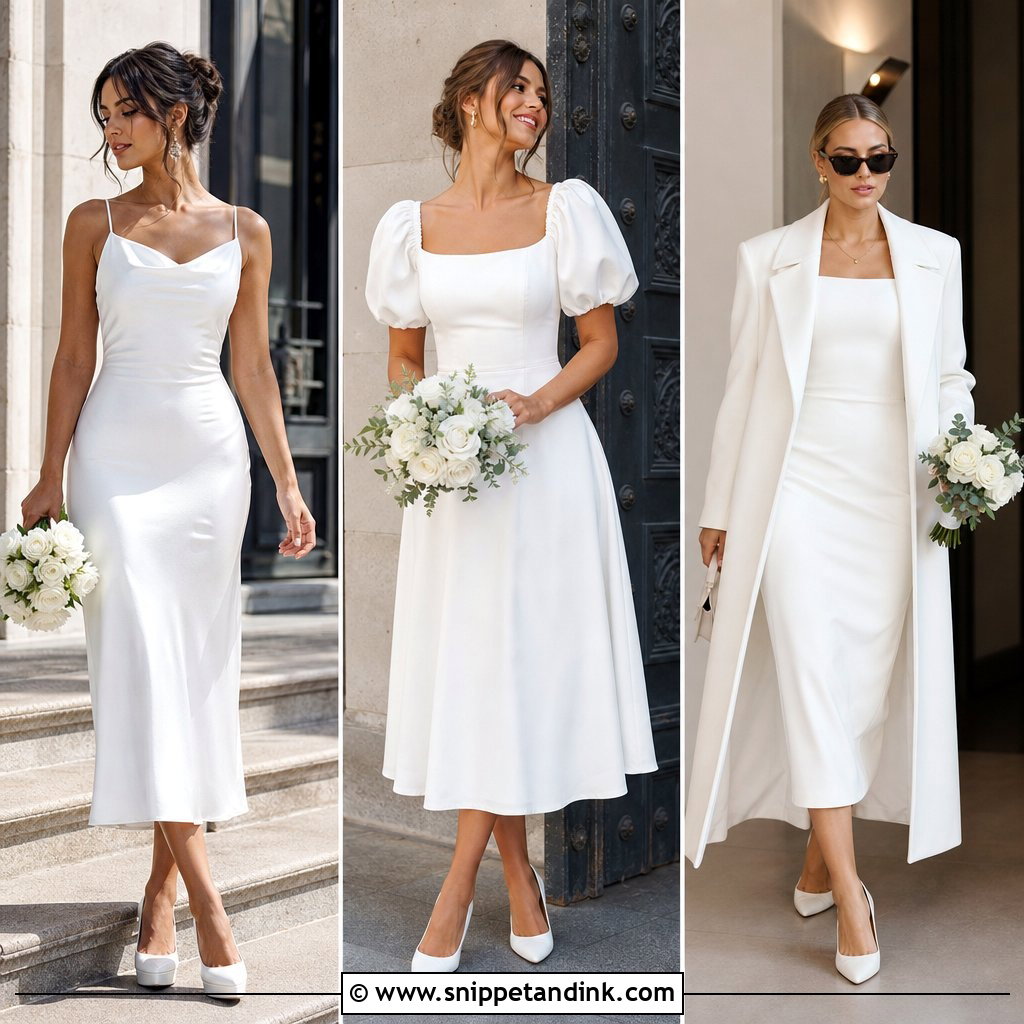
A minimal sheath wedding dress follows the body in a nearly straight line, with no flare to distract from the fit. That’s its charm and its risk. Substantial crepe, silk satin or a double-lined fabric hangs cleanly; anything thin will show your underwear and every fold. I’d suggest it for a courthouse, city or destination ceremony. A floor-length veil makes it formal and a birdcage veil keeps it compact. Side seams, hem and back darts make or break a sheath, and a professional press the day before matters more than with any other style. Leave enough room in the skirt to sit without the fabric riding up.
16. Lace Fit And Flare Wedding Dress
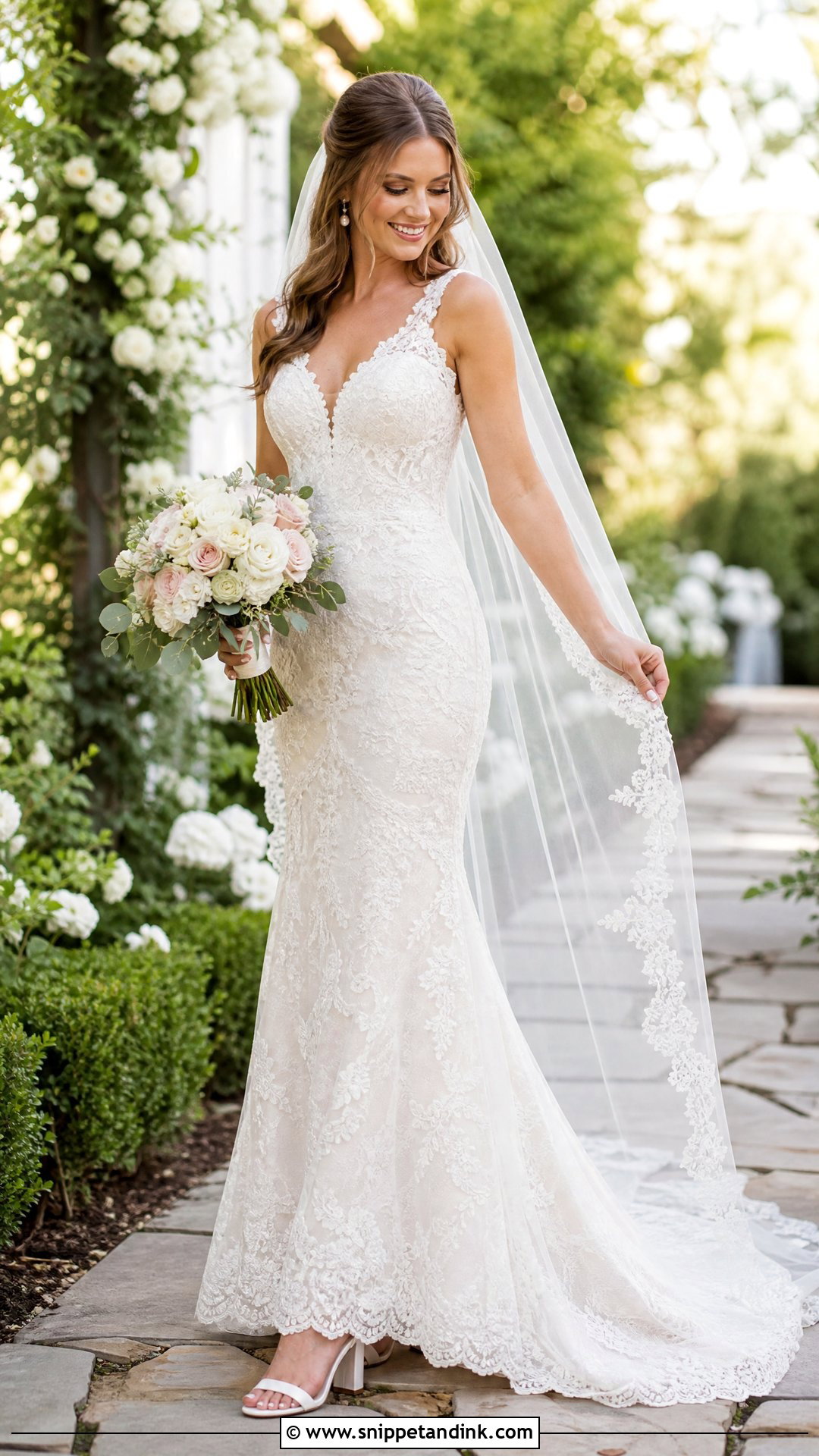
If you love a mermaid but want to dance, fit-and-flare is usually where I steer you. It follows your figure through the hip, then widens gradually, so the skirt moves with your stride instead of holding your knees together. It works in a garden and in a ballroom. Block heels, pearl earrings and a fingertip veil with a narrow lace edge suit it, and a half-up style keeps the neckline visible. Ask for flexible lining under the lace. The flare point should land where your natural step needs room, which your seamstress can judge by watching you walk.
17. Satin Fishtail Wedding Dress
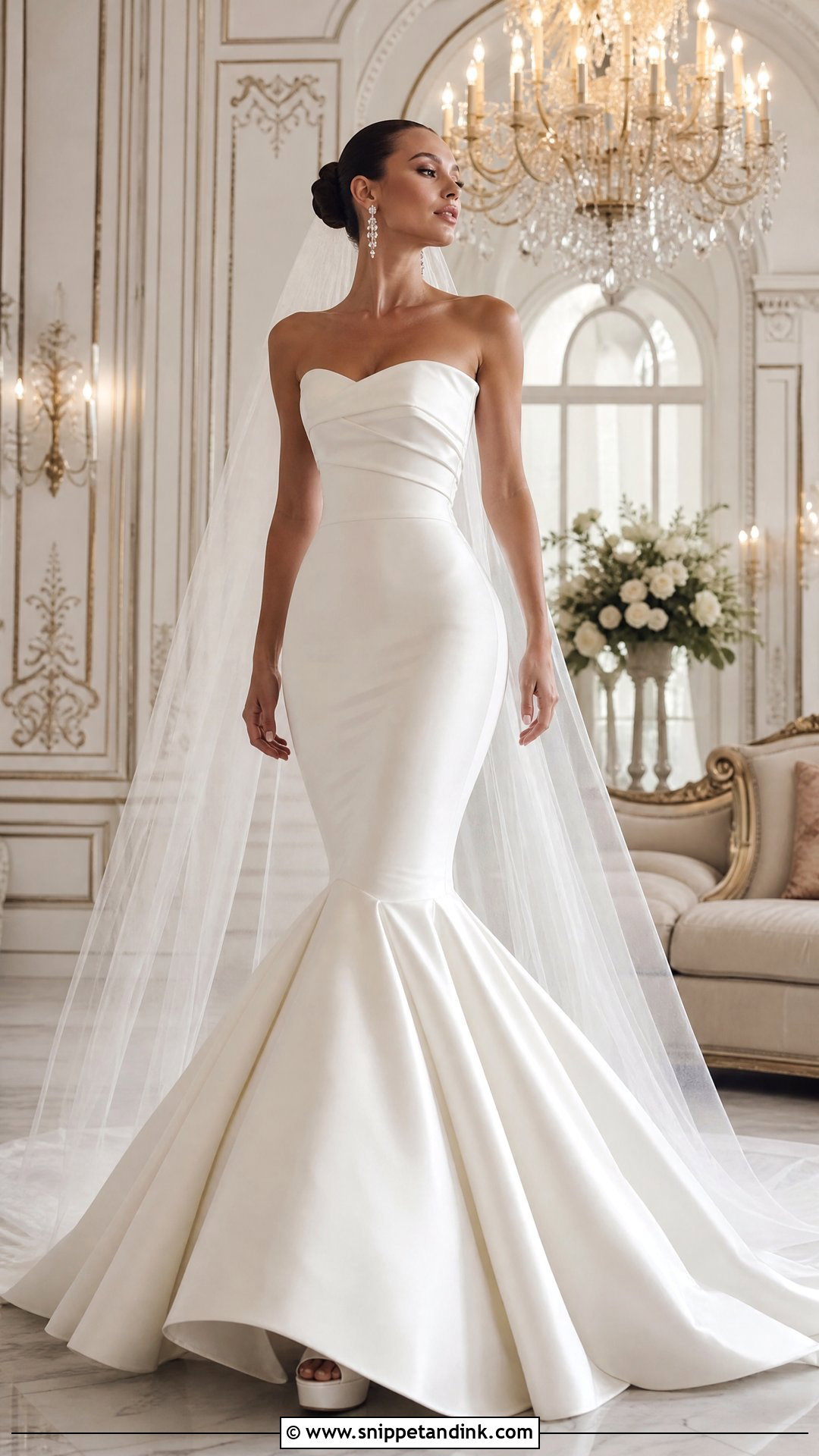
A fishtail keeps everything sleek up top and saves all its volume for the lower skirt, so satin shows it off well. With a structured strapless or square-neck bodice it’s dramatic. Since the train carries most of the fabric, ask how the bustle works before your final fitting; satin bustles with hooks hold better than ribbon ties on a heavy skirt. Crystal earrings, a polished bun, platform heels and a long sheer veil complete it. Walk the length of the shop in it twice. If your calves feel caught, the skirt needs letting out at the knee.
18. Detachable Overskirt Fitted Wedding Dress
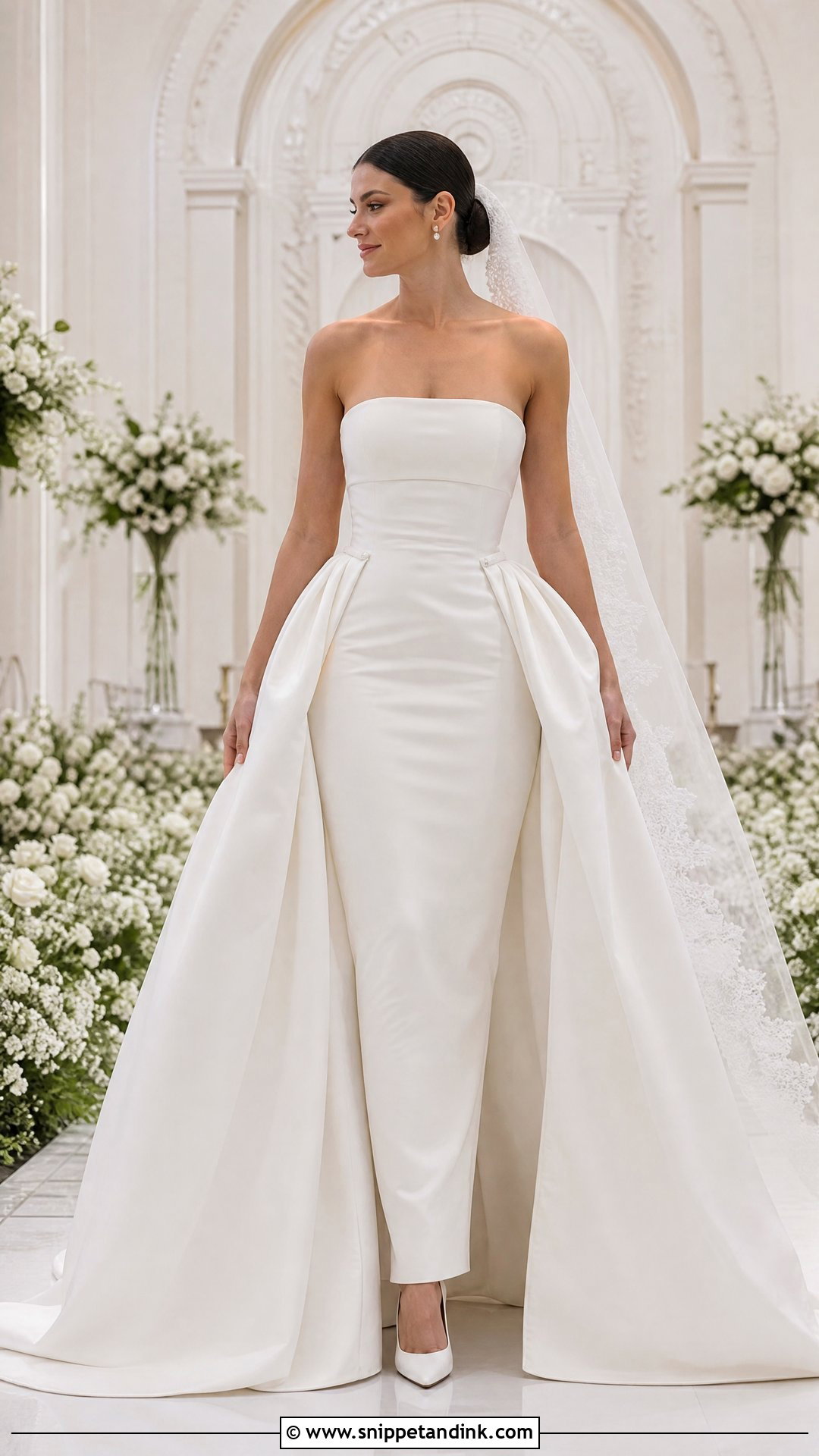
A detachable overskirt gives you a full ceremony silhouette and then a sleek sheath, mermaid or fit-and-flare underneath for the party. Look for a discreet waistband and hooks or snaps that lie flat, because buttons can leave a ridge on the dress below. Wear it with a cathedral veil and classic pumps for the ceremony, then swap to a hair comb and block heels later. Choose one person to learn the removal at your final fitting. Fumbling hands pull the fastenings, and satin creases fast once it’s balled up, so have a hanger and garment bag ready.
19. Cape Sleeve Fitted Wedding Dress
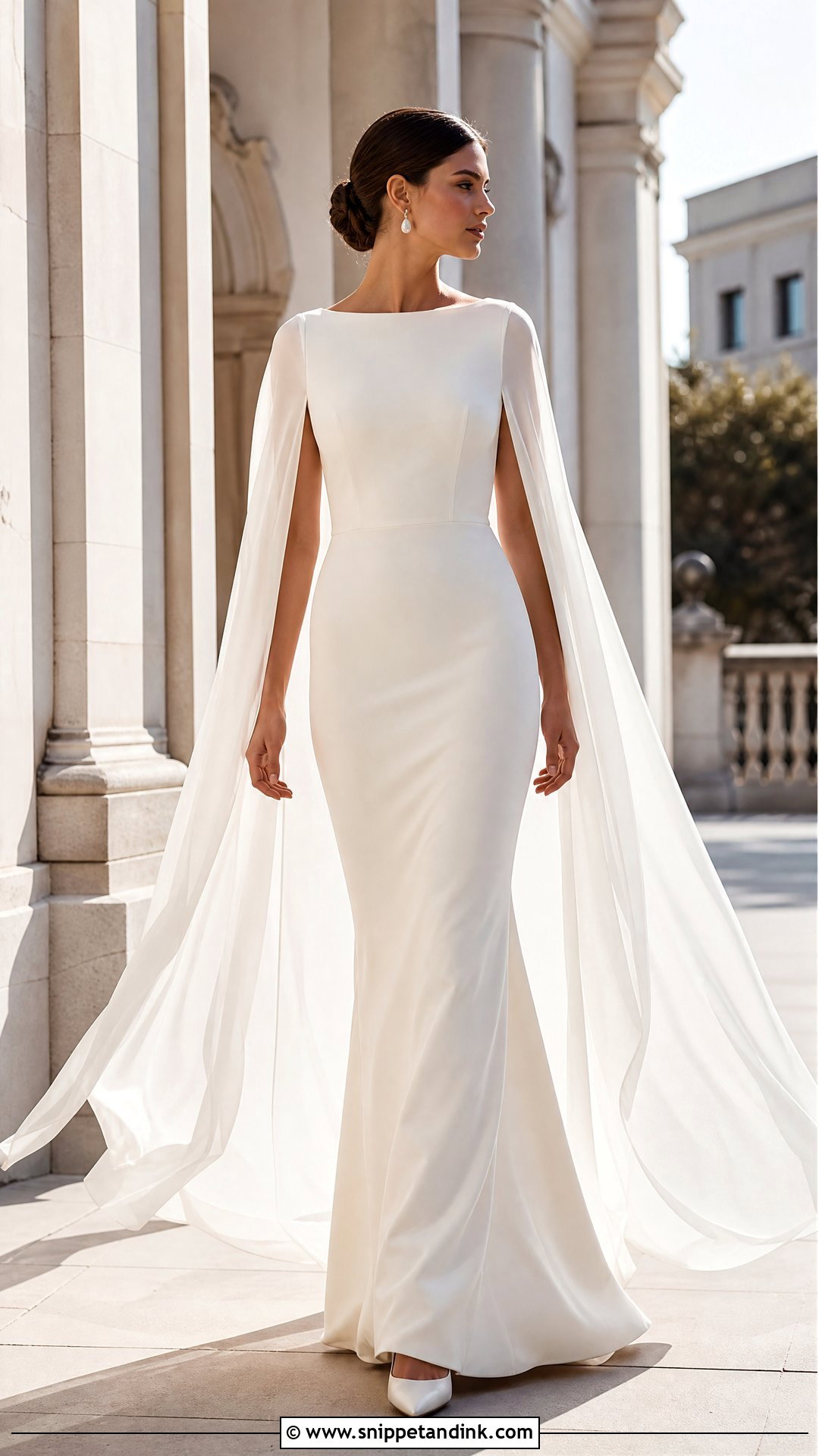
A bridal cape adds coverage and movement behind you without hiding the shape in front. A sheer shoulder cape, a floor-length chiffon one or a lace capelet can all work if the fabric relates to the gown. A crepe sheath or satin fit-and-flare makes the cleanest base. Often the cape replaces the veil; if you want both, keep the veil light. My check is the fastening at the shoulder, which should be secure without digging in. Make sure the cape ends clear of your train and shoes, or you’ll step on it during the first dance.

20. Short Fitted Reception Wedding Dress
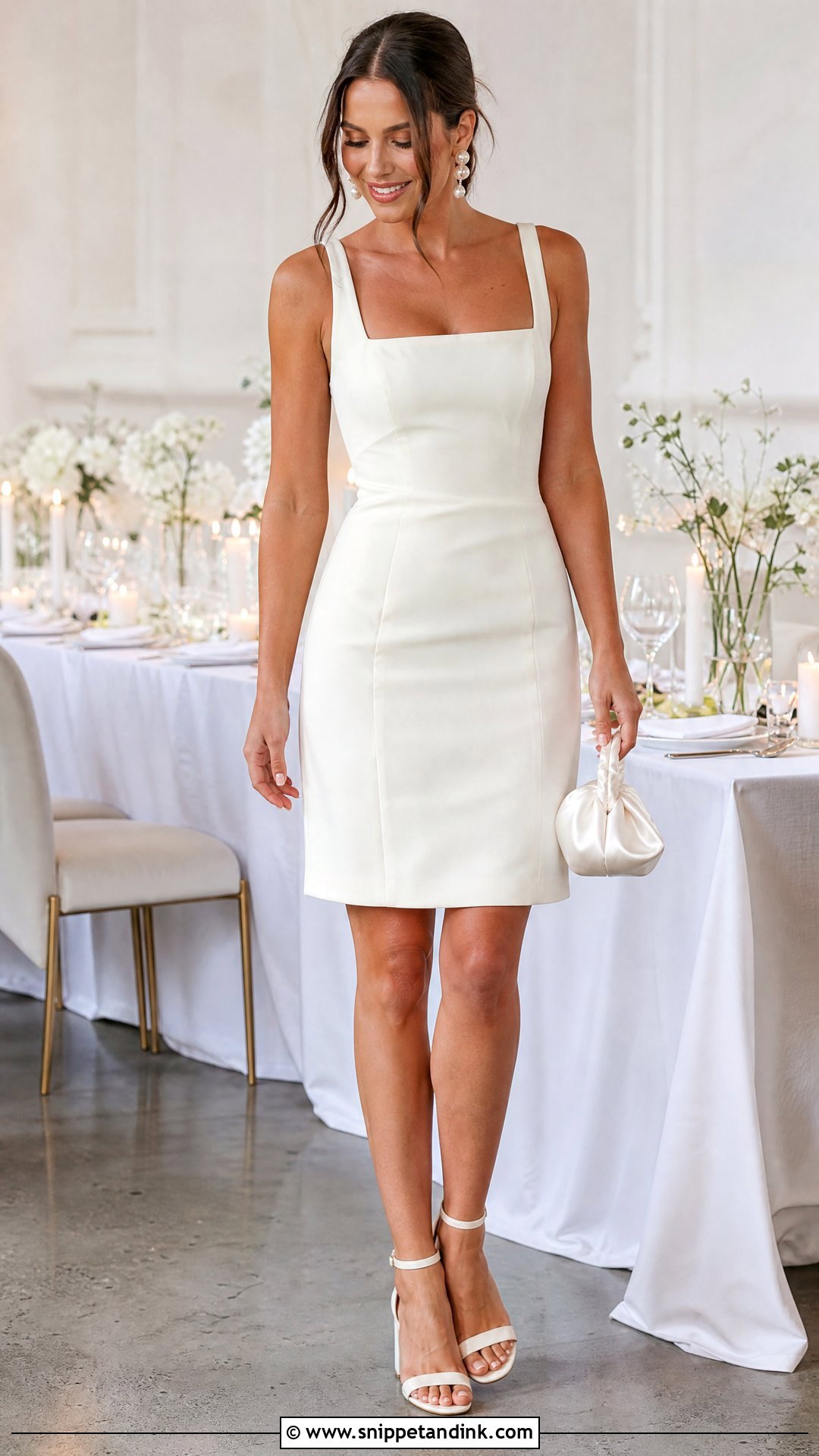
A short fitted wedding dress is the change I recommend most to brides in a heavy gown. A structured mini with a square neck, a pearl-covered knee-length style or a satin midi with a back slit all keep the bridal feeling through ivory tones and good fabric. Block heels, slingbacks or bridal flats save your feet, and statement earrings replace the veil. Test it seated and on the dance floor: short fitted hems ride up, and a slightly longer length with flexible lining is usually the wiser cut. Try it with the exact shoes you’ll wear.
Underwear Lines and Shapewear Under a Close-Cut Gown
Thin satin and crepe show the edge of anything underneath, especially under flash. I’d steer you toward bonded or laser-cut edges and a nude shade close to your skin rather than white, which glows through ivory fabric. Bring them to the first fitting so the gown is shaped around them.
Shapewear is optional. If the bodice is built well, many brides need nothing more than smooth briefs. When you do want it, go for light control and a size that doesn’t roll at the waist. Rolling bands make a visible ridge through a sheath, and firm compression gets uncomfortable fast in a warm room.
How a Tight Gown Feels by Hour Nine
Almost everyone swells slightly through a long day, particularly in heat, after a flight or after a salty dinner. A gown fitted to the millimetre at 10am can feel tight at 9pm. I ask seamstresses to leave the waist a touch kinder on fitted styles, and the bride rarely notices in the mirror.
- Sit through a full meal in your mind at the last fitting: lean forward, cross your legs, reach for a glass.
- Pack a small kit with fashion tape, safety pins, a needle threaded in ivory and blotting powder for the neckline.
- If your venue has a lot of stairs or uneven ground, practise on steps before the day and lift the skirt from the side seams, not the front.
Fit Is Decided at the Third Fitting, Not the First
Mermaid for drama, sheath for a clean line, fit-and-flare if you want to move: that’s the starting point, and lace, pearls, corsetry, capes or an overskirt make it yours. What decides whether you’ll love it at midnight is the construction inside and the alterations on top. Bring your wedding shoes and underwear to every fitting, sit, walk and lift your arms each time, and say so when something presses. A fitted gown should hold you, not squeeze you.
You'll Like These Ideas:





Leave a Reply