
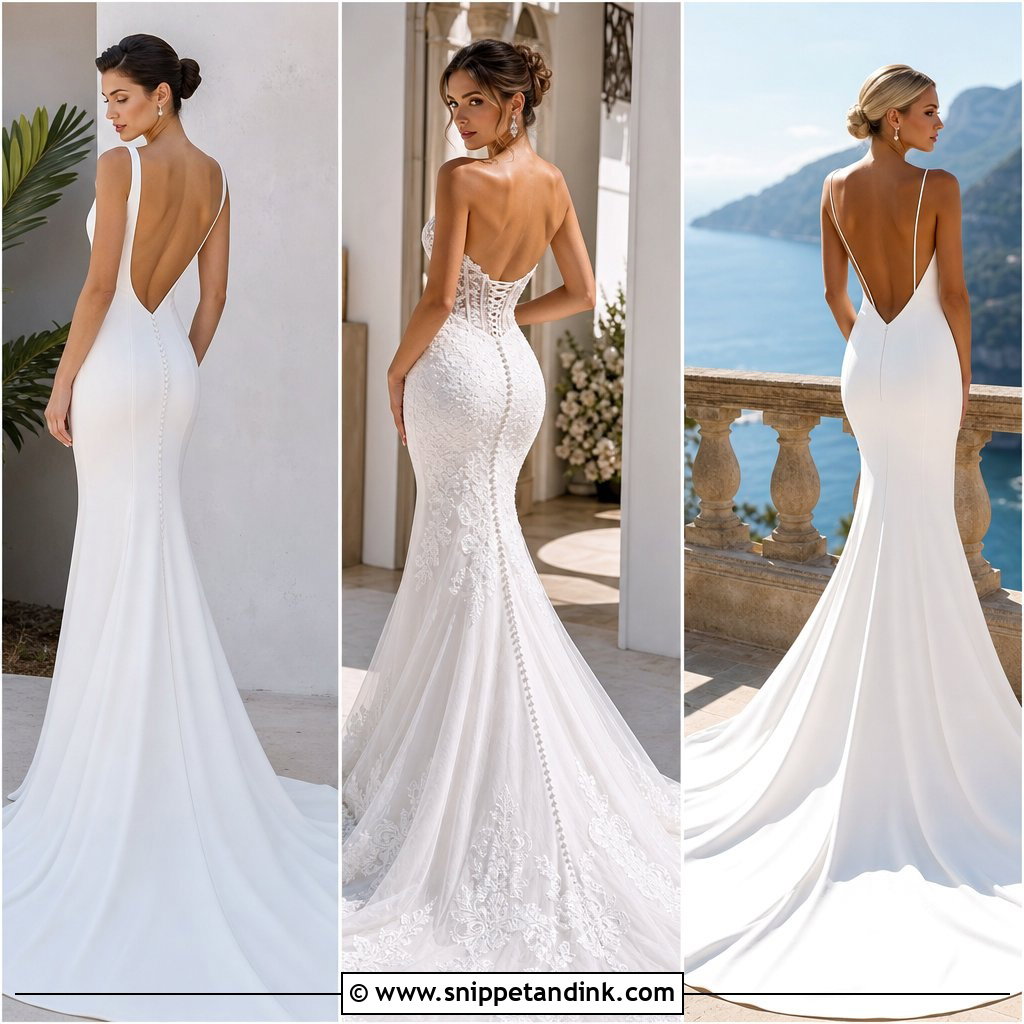
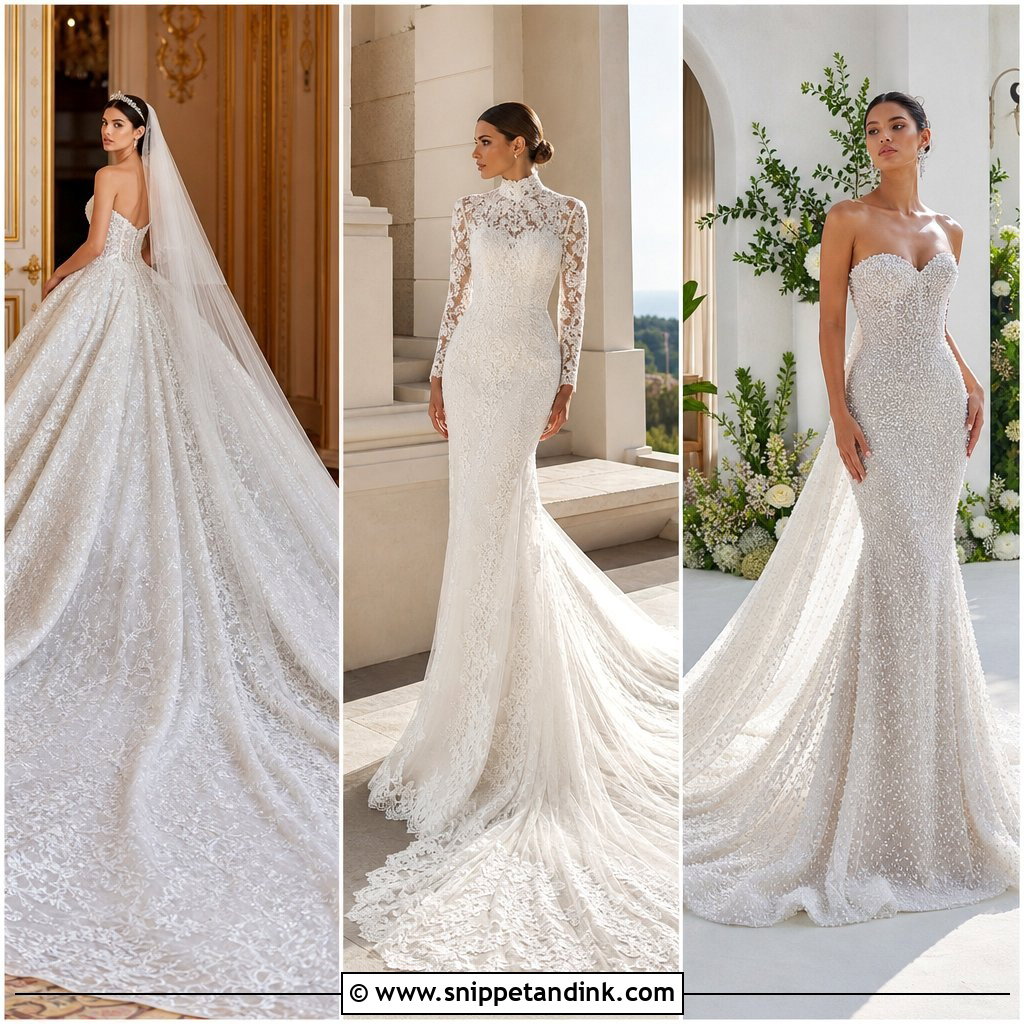
A close silhouette and a long train pull in opposite directions: one is all about the body, the other about everything behind it. Getting them to work together comes down to fabric weight, where the train starts and how far it has to travel. The gowns here run from plain crepe with a short sweep to lace mermaids with cathedral trains. Sweep trains usually extend less than a foot past the hem, while chapel and cathedral lengths add progressively more drama. In my fittings, the train conversation always starts with the venue floor and the walk to the altar, not with the photo on a bride’s phone. Each look below includes the veil, jewellery, shoes and bouquet I’d pair with it.
Sweep, Chapel or Cathedral Measured Against Your Aisle
Train names are used loosely, and measurements vary between designers, but this is roughly how I explain them at a first appointment. A sweep barely brushes the floor behind you. A court train extends about a foot past the hem. Chapel trains are longer, and cathedral trains add several more feet. Royal or monarch trains go beyond that and usually need a helper to move at all.
Before falling for a length, picture your actual route. A long train needs a wide aisle and enough room at the front for it to fan out in photos. Steps, gravel paths and a tight spiral staircase all turn a train into work. I also ask how far you’ll walk between the ceremony and the reception, because a long train drags across lawns and car parks and picks up whatever is on the ground.
- Narrow aisle or registry office: sweep or court.
- Garden or lawn: sweep or a short chapel, with a bustle.
- Grand church or ballroom with wide floors: chapel or cathedral.
- Beach: sweep only; sand weighs down and stains a long hem.
1. Fitted Crepe Wedding Dress With Sweep Train
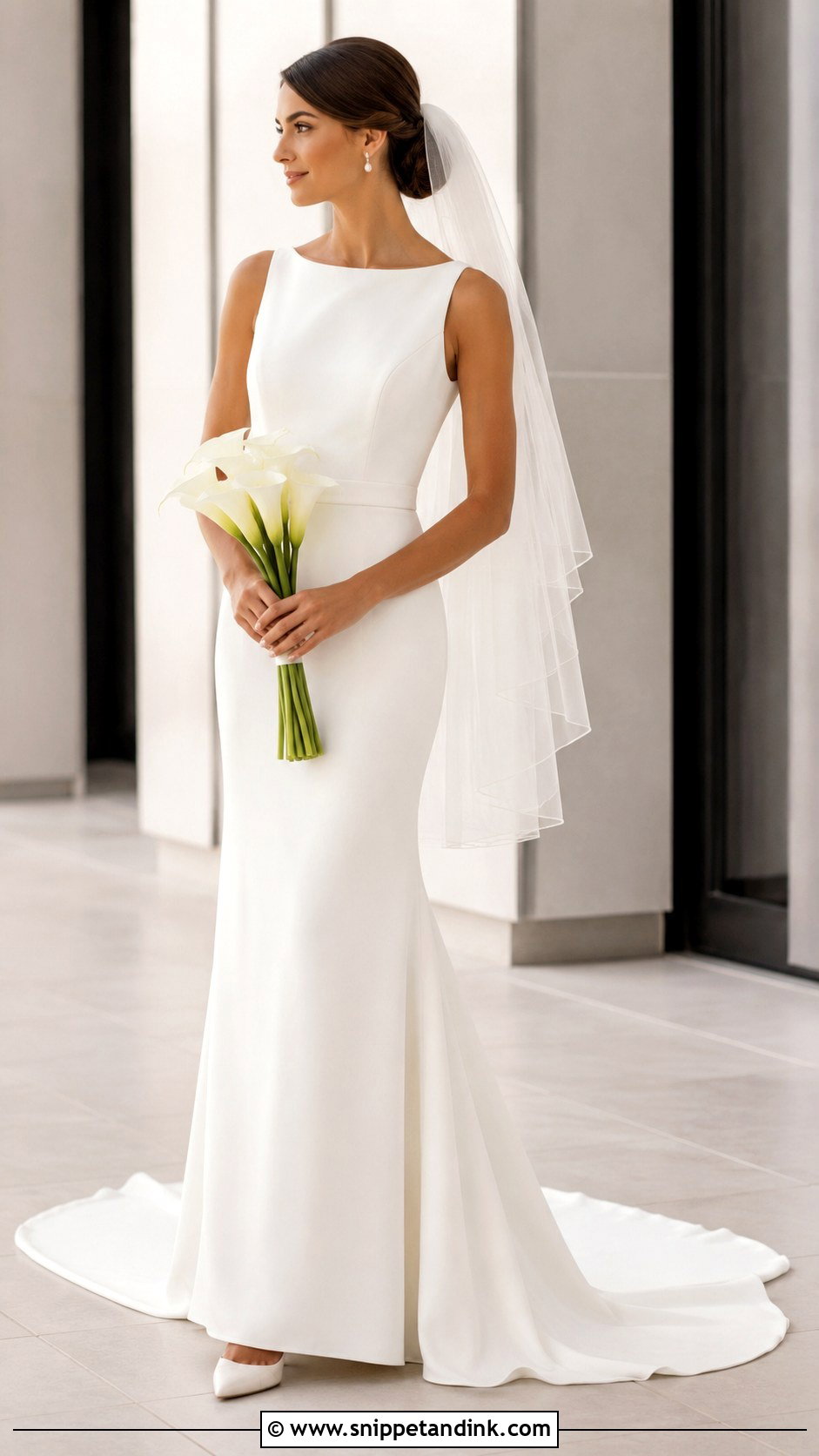
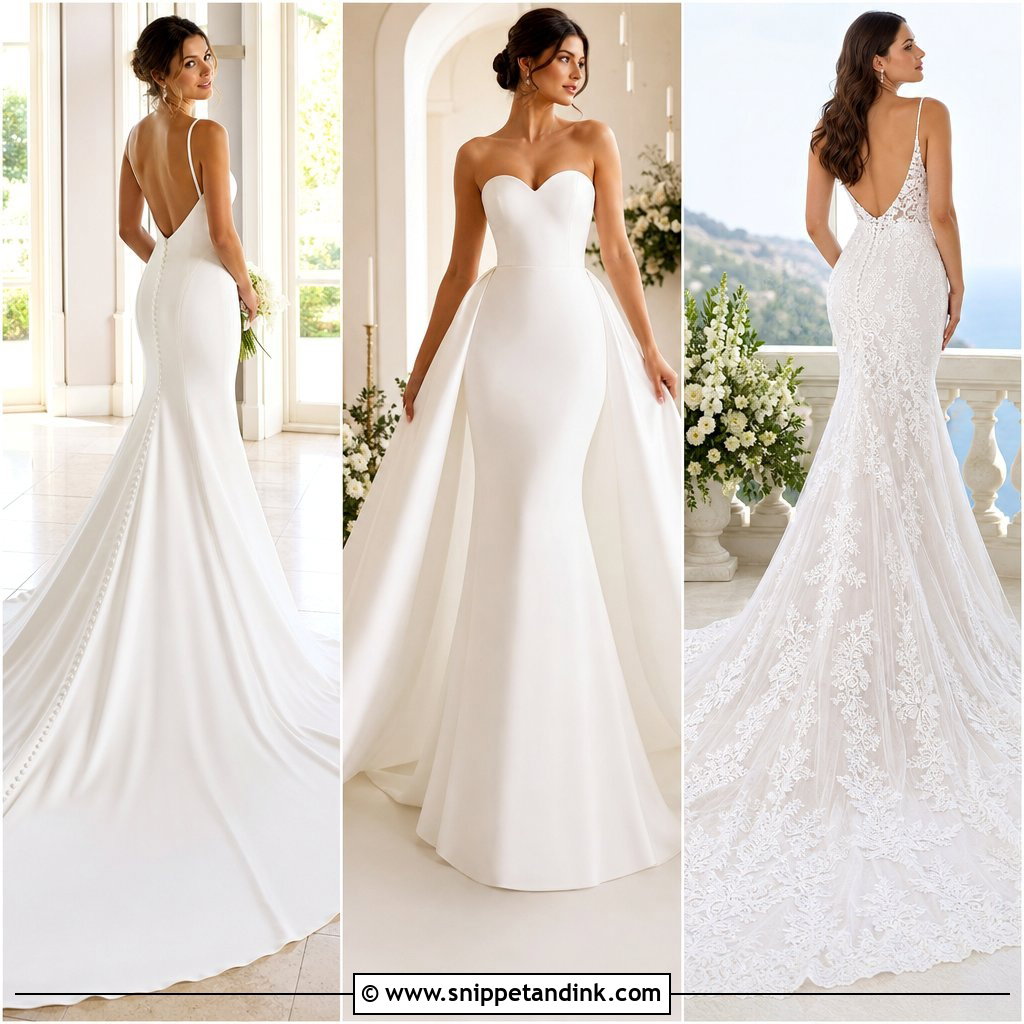
Crepe is matte and fluid, so a short sweep falls cleanly behind it without any fuss. I like this pairing when a bride wants something bridal but hates the idea of managing fabric all day; there’s nothing to bustle. The bodice needs structure and the skirt should follow the body without gripping. Pointed ivory heels, pearl drops and a low bun with a plain comb suit it, along with a single-tier fingertip veil that keeps the back visible. White roses or calla lilies in a compact bouquet finish it. It sits naturally in a hotel, rooftop or city venue.
2. Fitted Satin Wedding Dress With Court Train
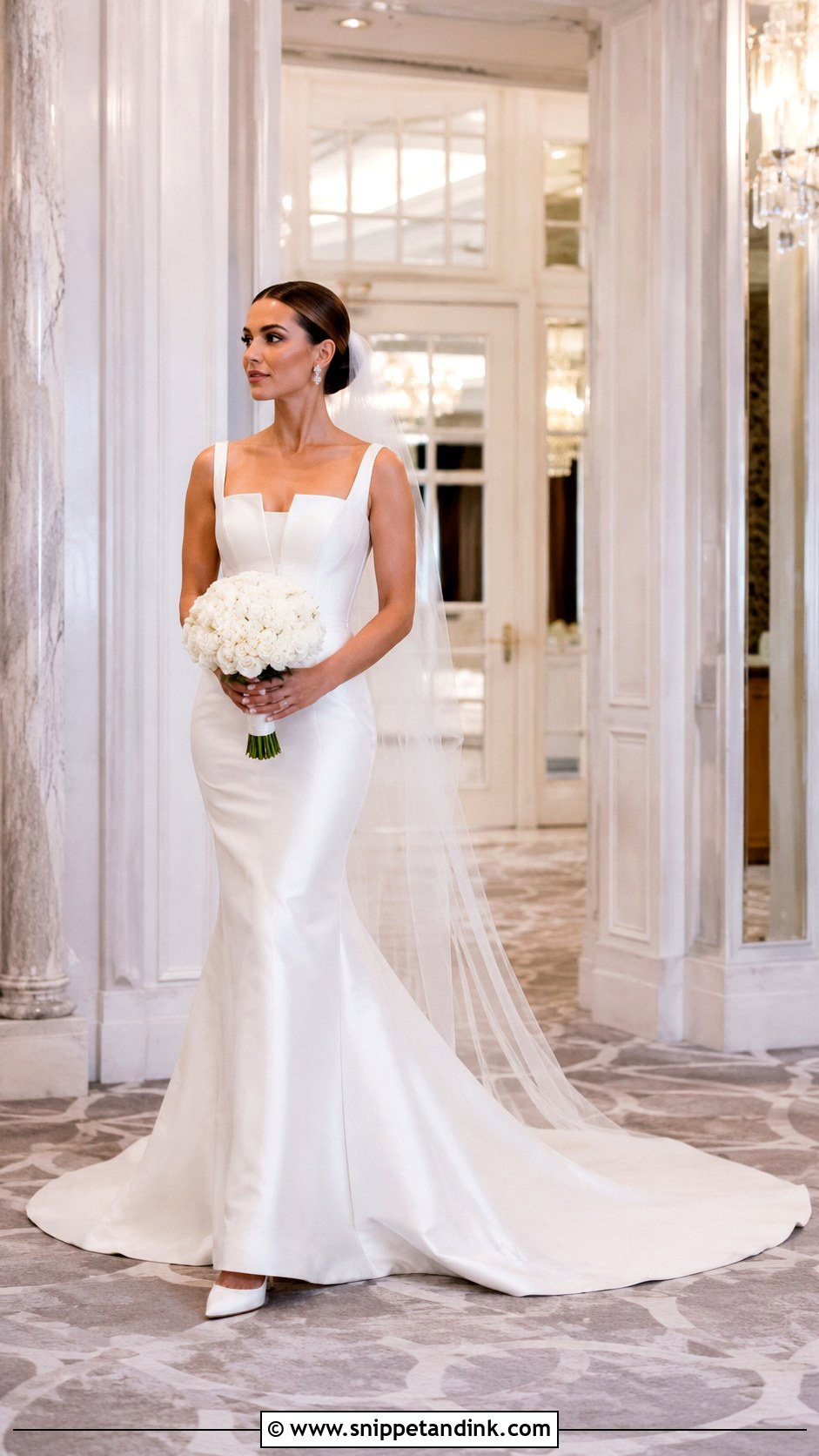
Satin reflects light, which means it also reflects every wrinkle and pull, so seaming through the bodice and hips is where the money goes. A court train extends noticeably behind you without the scale of a cathedral. Crystal studs, a sleek bun and a narrow satin-edged veil keep the look controlled, with closed-toe pumps and structured ivory roses. One thing I warn satin brides about: a court train picks up dust on a ballroom floor and shows it, so I have someone lift it for outdoor photos.
3. Fitted Lace Wedding Dress With Chapel Train
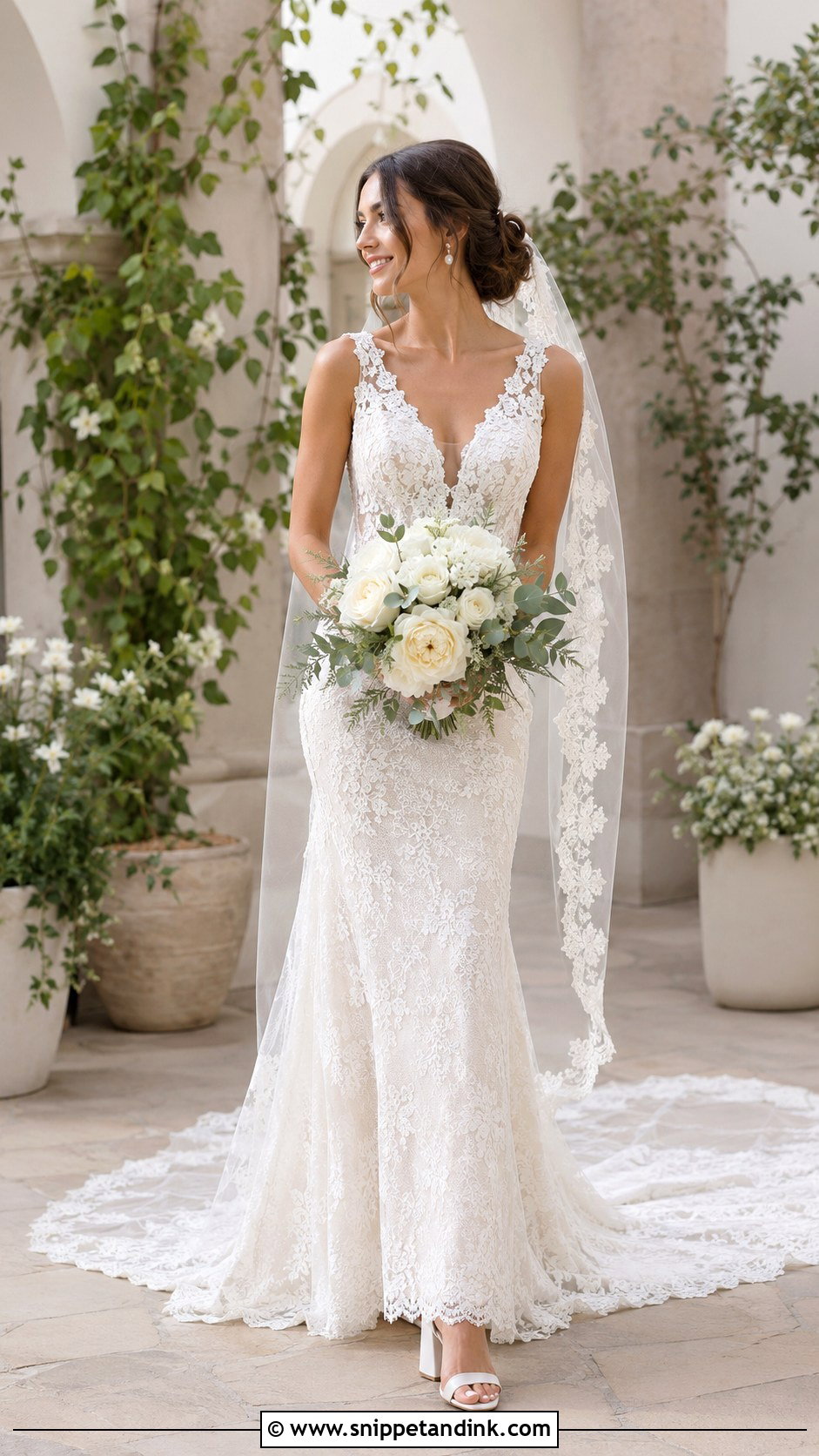
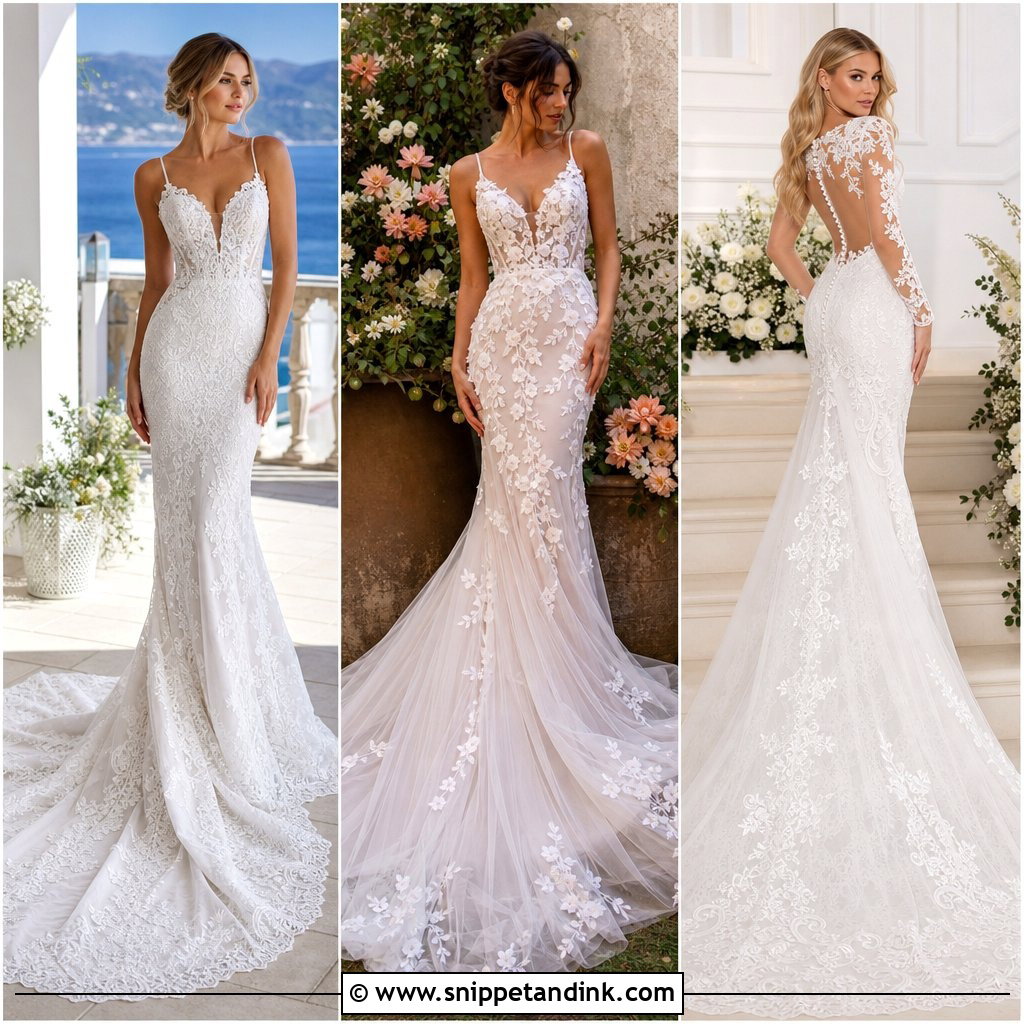
Lace carries well into a chapel-length train, which falls farther back than a sweep or court train and looks graceful from the back of the aisle. I prefer lace that thins out as it travels down, so the fitted shape doesn’t look heavy at the hips. Small drop earrings, a chapel veil with a narrow lace edge and block-heel sandals suit it, with a loose low bun to show the straps or illusion back. Garden roses and greenery soften it. On grass, lace trains snag less than tulle ones, but they still collect leaves, so plan to shake it out before photos.
4. Fitted Mermaid Wedding Dress With Cathedral Train
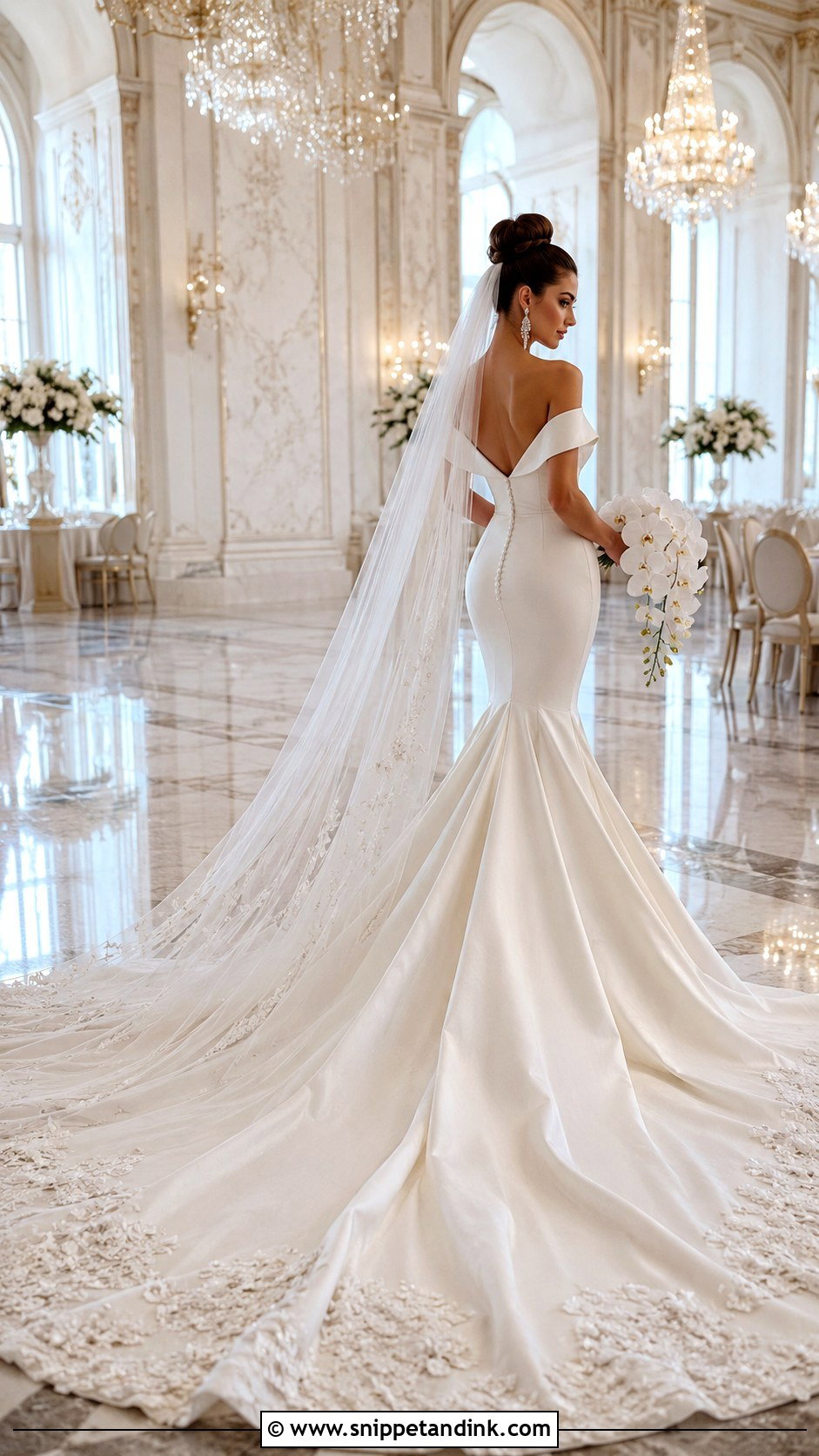
This is the biggest entrance on the list. The gown stays fitted through the bodice, waist, hips and upper thigh, then opens wide, and that flare is what lets a cathedral train move rather than drag. I’m strict about mobility with this one: you should be able to sit, walk and climb stairs during alterations, or the combination isn’t right. A long sheer veil, chandelier earrings, pointed pumps and a structured updo suit the scale, with orchids or long-stemmed callas. You need wide, smooth floors. A narrow church aisle or a spiral staircase will fight it the entire way.
5. Fitted Trumpet Wedding Dress With Lace Train
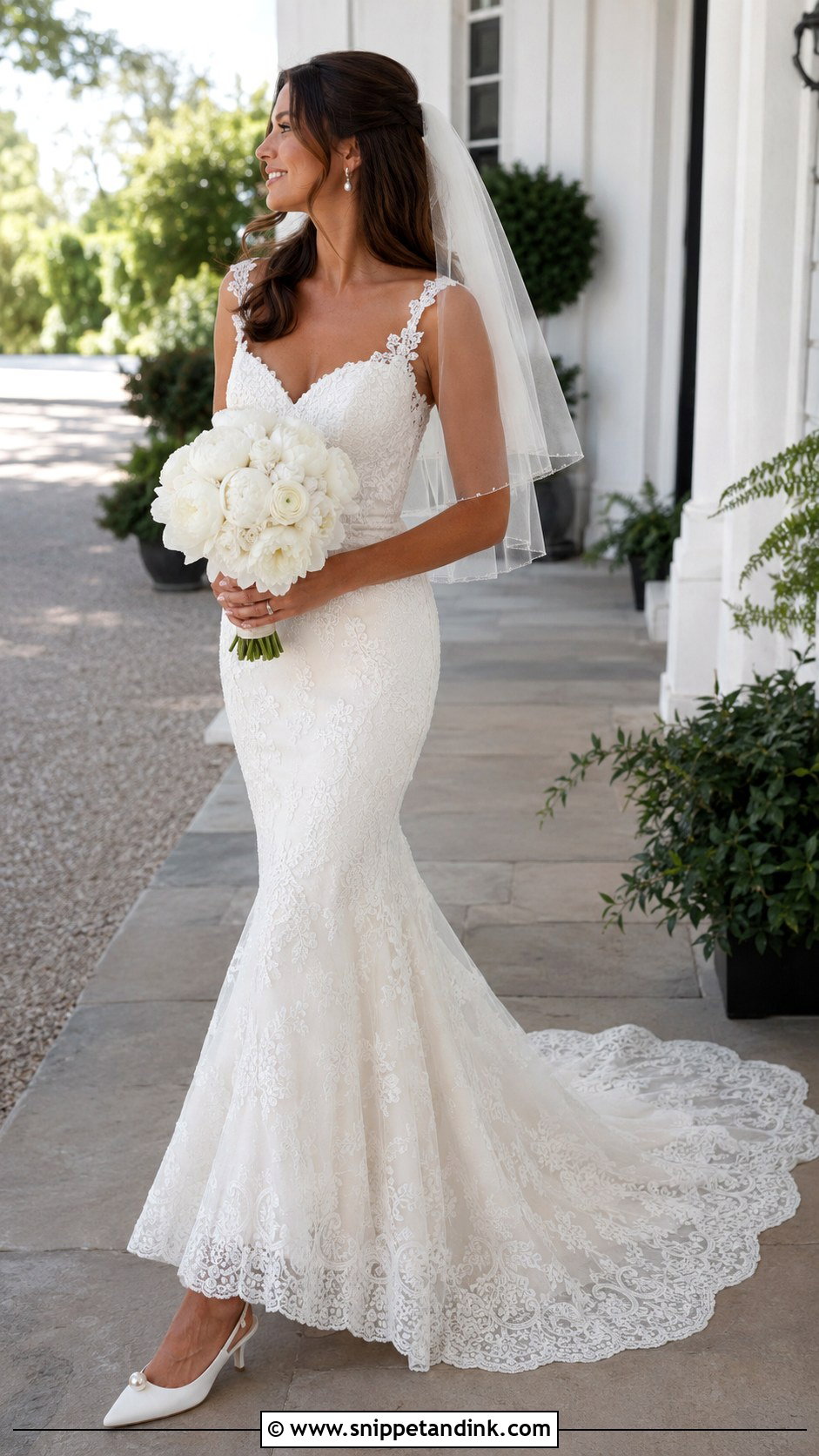
A trumpet gown is the gentler cousin of the mermaid. It widens higher, around the thigh, so walking is easier. A scalloped lace train echoes that gradual shape from behind. A lightly lined bodice keeps the lace pattern clear. Pearl earrings, an elbow-length veil and ivory slingbacks suit it; a half-up style keeps it romantic without hiding the back. Peonies, ranunculus and soft greenery finish it. I recommend the trumpet often to brides who loved a mermaid in photos but found it hard to move in at the fitting.
6. Fitted Strapless Wedding Dress With Detachable Train
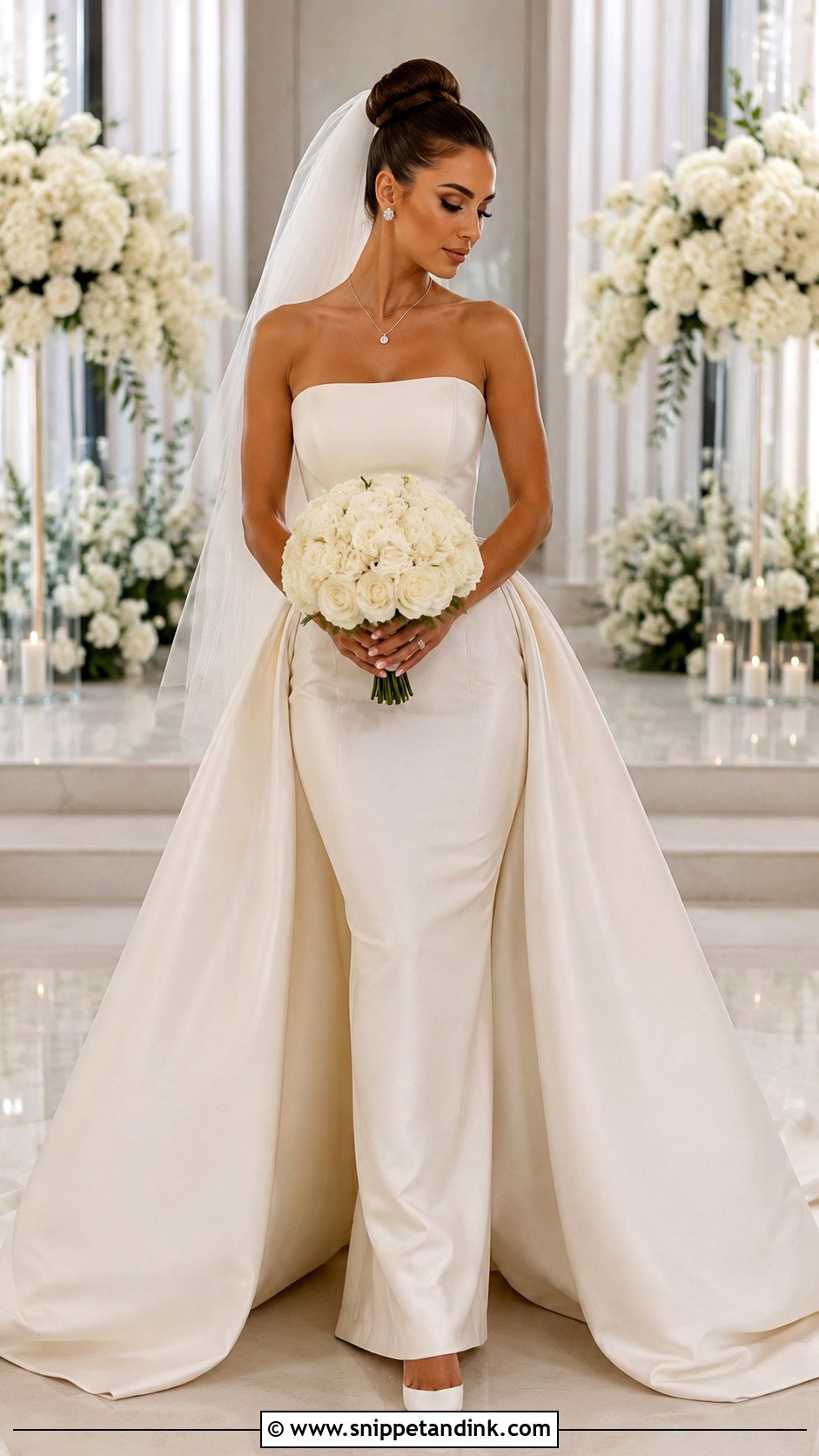
Two looks, one dress. The train goes on for the ceremony, then comes off before dinner to show the slimmer gown underneath. Detachable trains usually fasten at the waist or hips with hidden hooks, snaps or buttons, and I always test the attachment while the bride walks, because a poorly placed hook drags the waistline down at the back. A collarbone necklace, small crystal earrings and pointed satin heels suit it, with a polished bun and a medium veil. A rounded white bouquet balances the shape. It’s practical for a day that moves from formal to relaxed.
7. Fitted Off Shoulder Wedding Dress With Long Train
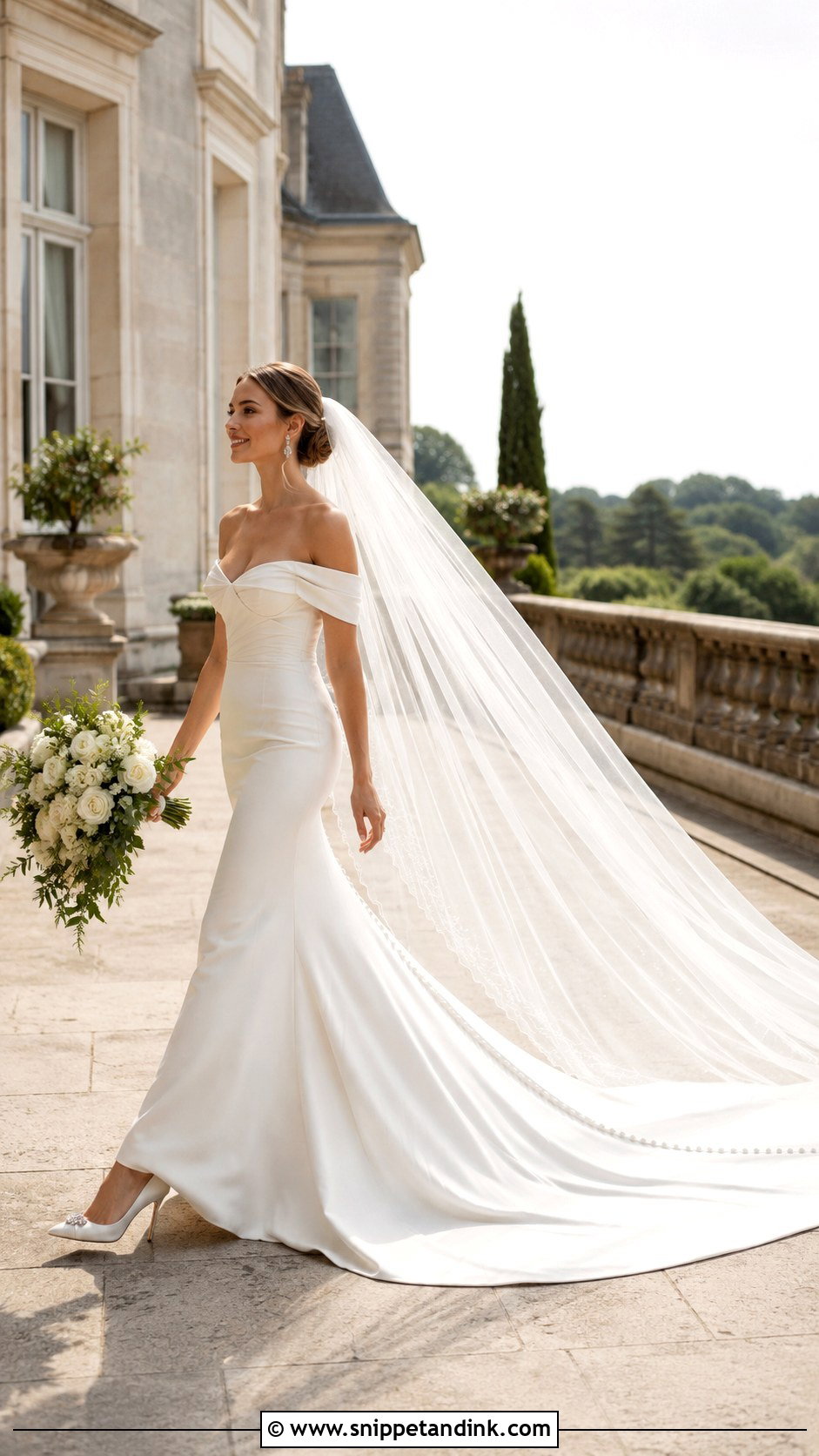
Off-the-shoulder sleeves soften the collarbone, and a long train gives the back the weight to balance them. The sleeves are the thing to watch. When they sit too tight across the upper arm, you can’t lift your bouquet higher than your waist. In fittings, lift your arms, hold a bouquet and sit to confirm the neckline stays put. Drop earrings, a low chignon and a plain cathedral veil set beneath the hair suit it, with pointed ivory heels and loose roses. A long train on a terrace or lawn will need someone to arrange it each time you stop.
8. Fitted Long Sleeve Wedding Dress With Train
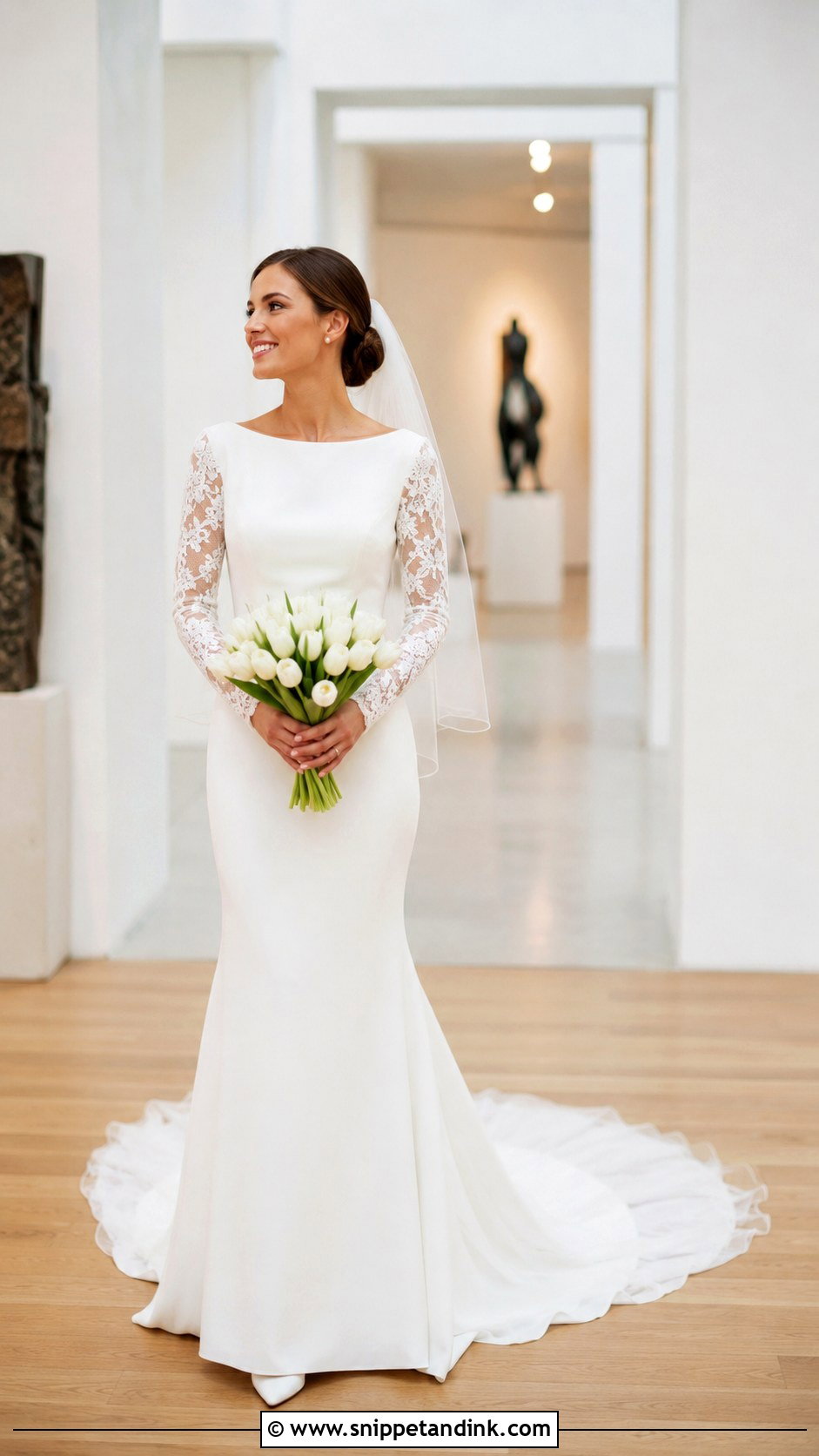
Long sleeves balance a fitted body and give the train something to answer at the front. Sheer lace feels lighter; lined crepe looks architectural. Cuffs should sit at the wrist, and the sleeve must let your shoulders and elbows move. Pearl studs, a fine hair comb and closed-toe ivory pumps keep it clean, with a low bun or sleek ponytail. White tulips or roses suit the line. I steer this look toward autumn and winter, since a lined sleeve and a heavy train together get warm in a summer venue.
9. Fitted Square Neck Wedding Dress With Train
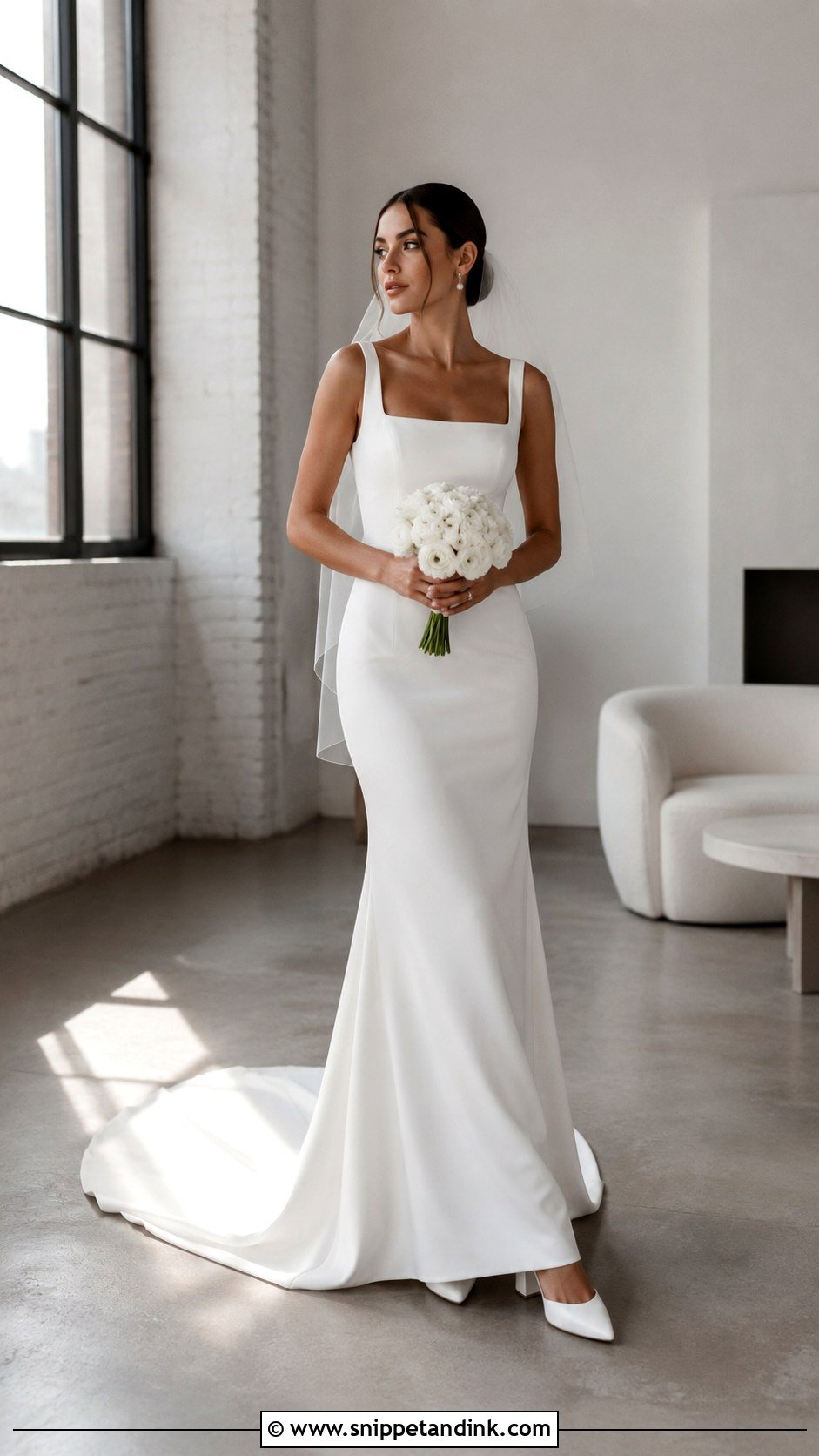
A square neckline gives a structured, modern frame, especially with wide straps and a chapel or court train. Its depth should feel secure when you bend; a square cut too low opens up the moment you lean forward to sign the register. Crepe, satin and Mikado suit the geometric shape, while light lace softens it. Pearl drops, a sleek updo and a plain tulle veil set low on the head finish it. Block-heel pumps are steadier on long days. A compact ranunculus bouquet keeps the clean feel going.
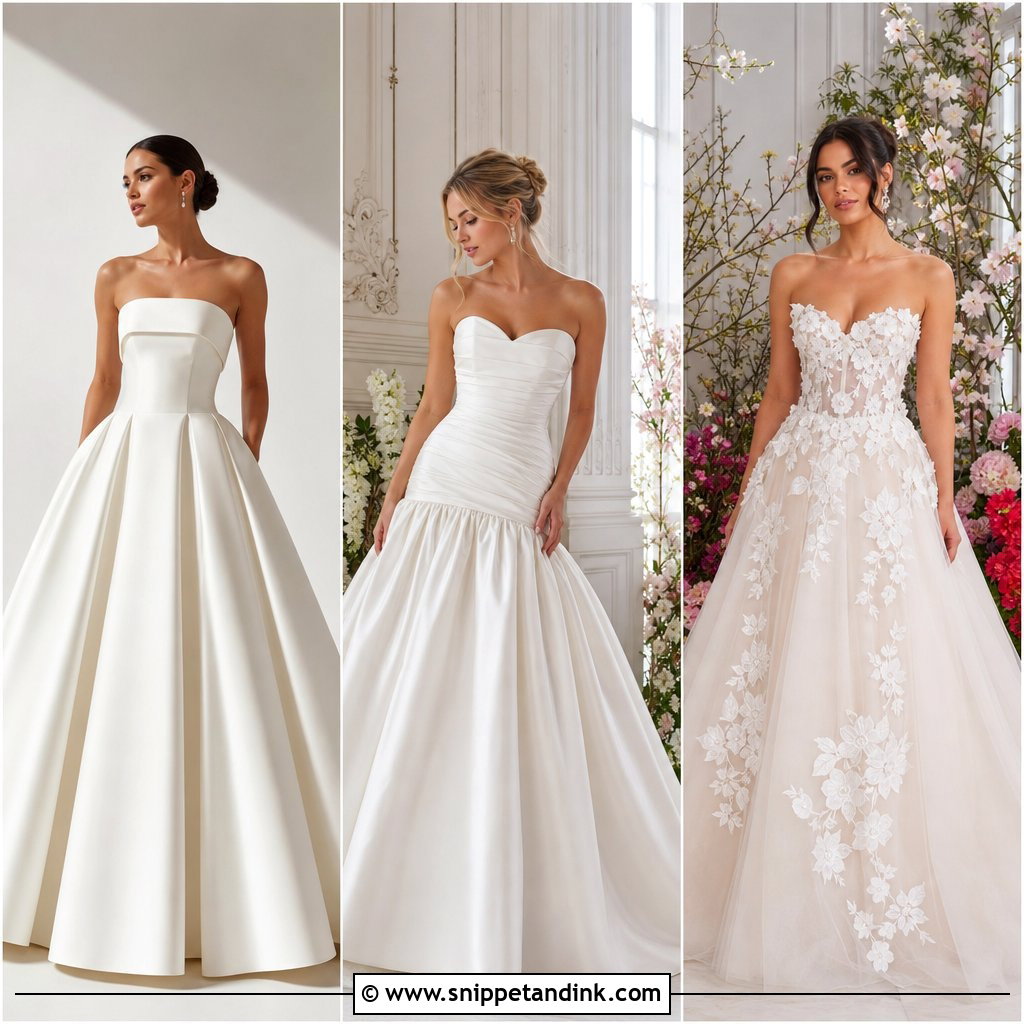
10. Fitted Sweetheart Wedding Dress With Train
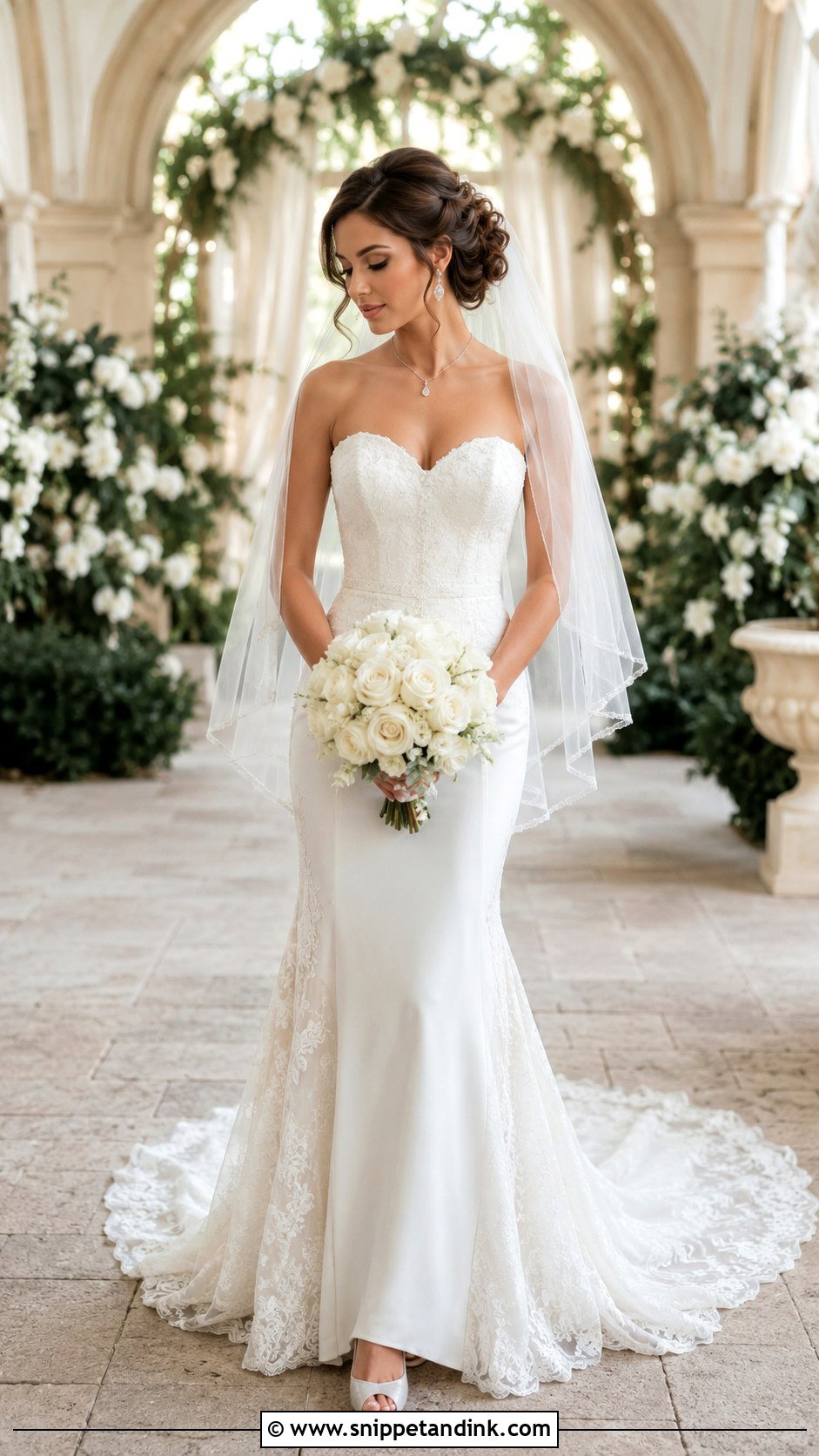
The sweetheart curve softens a fitted gown and pulls attention up toward the face. With a strapless bodice, secure boning and well-placed cups are non-negotiable. A chapel train adds classic drama without competing with the neckline. Lace, light beading or plain satin each change the finish. A fine pendant, crystal earrings and a softly waved updo suit it, along with an airy fingertip veil and ivory peep-toes. White roses with pale seasonal flowers finish it. It adapts to most venues, which is why I suggest it to brides still deciding.
11. Fitted High Neck Wedding Dress With Train
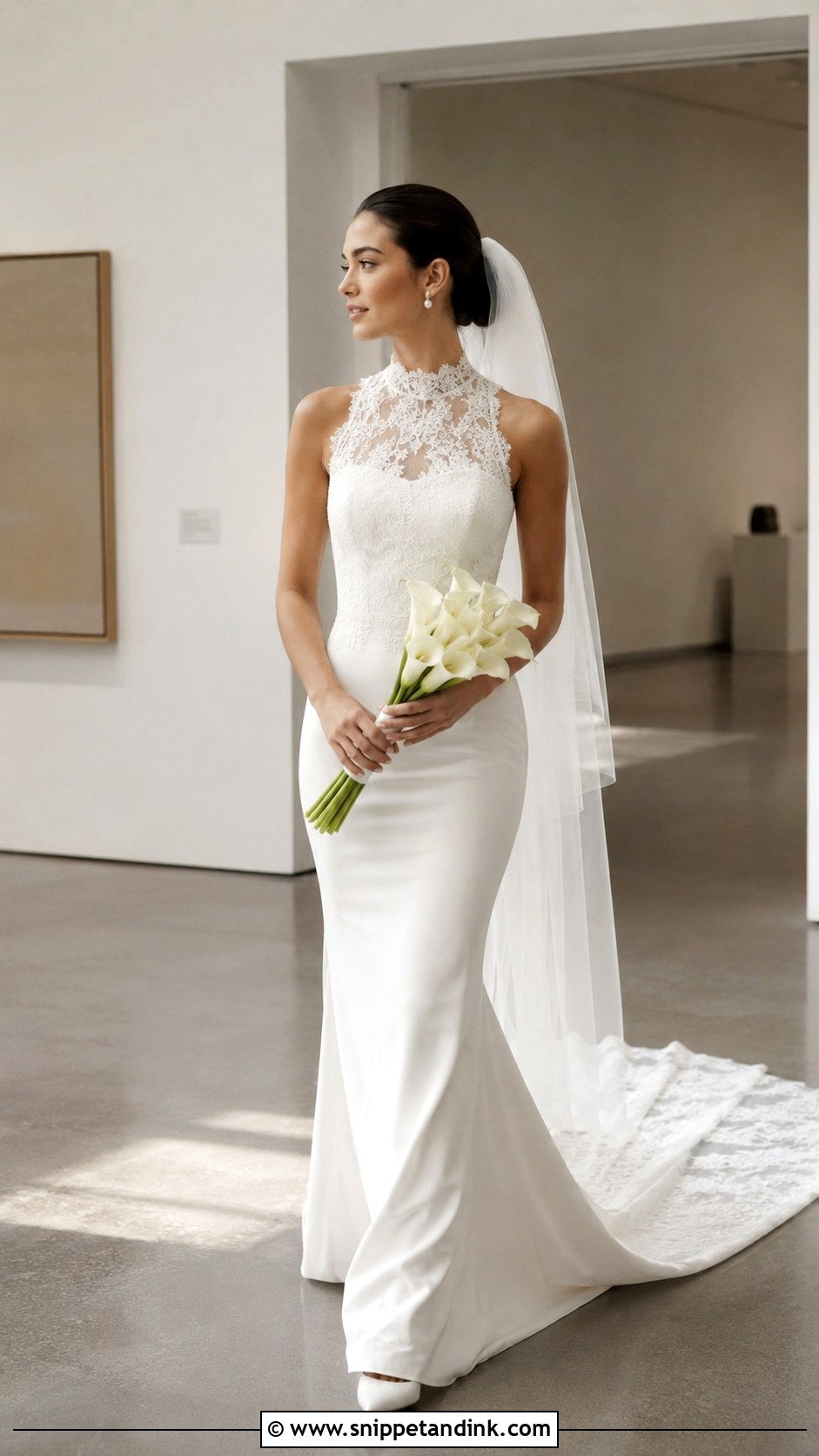
High necks feel composed and balance a body-conscious skirt well. Sheer lace keeps the top light; opaque crepe is sharper. Pair with a fitted skirt and chapel train. Skip the necklace and wear small diamond or pearl earrings, with a smooth bun so the neckline is fully visible. Closed-toe heels and a plain veil keep it refined; orchids or callas in a narrow bouquet match the line. In fittings I turn the bride’s head side to side, because a collar that sits even slightly high presses on the throat during the vows.
12. Fitted Backless Wedding Dress With Train
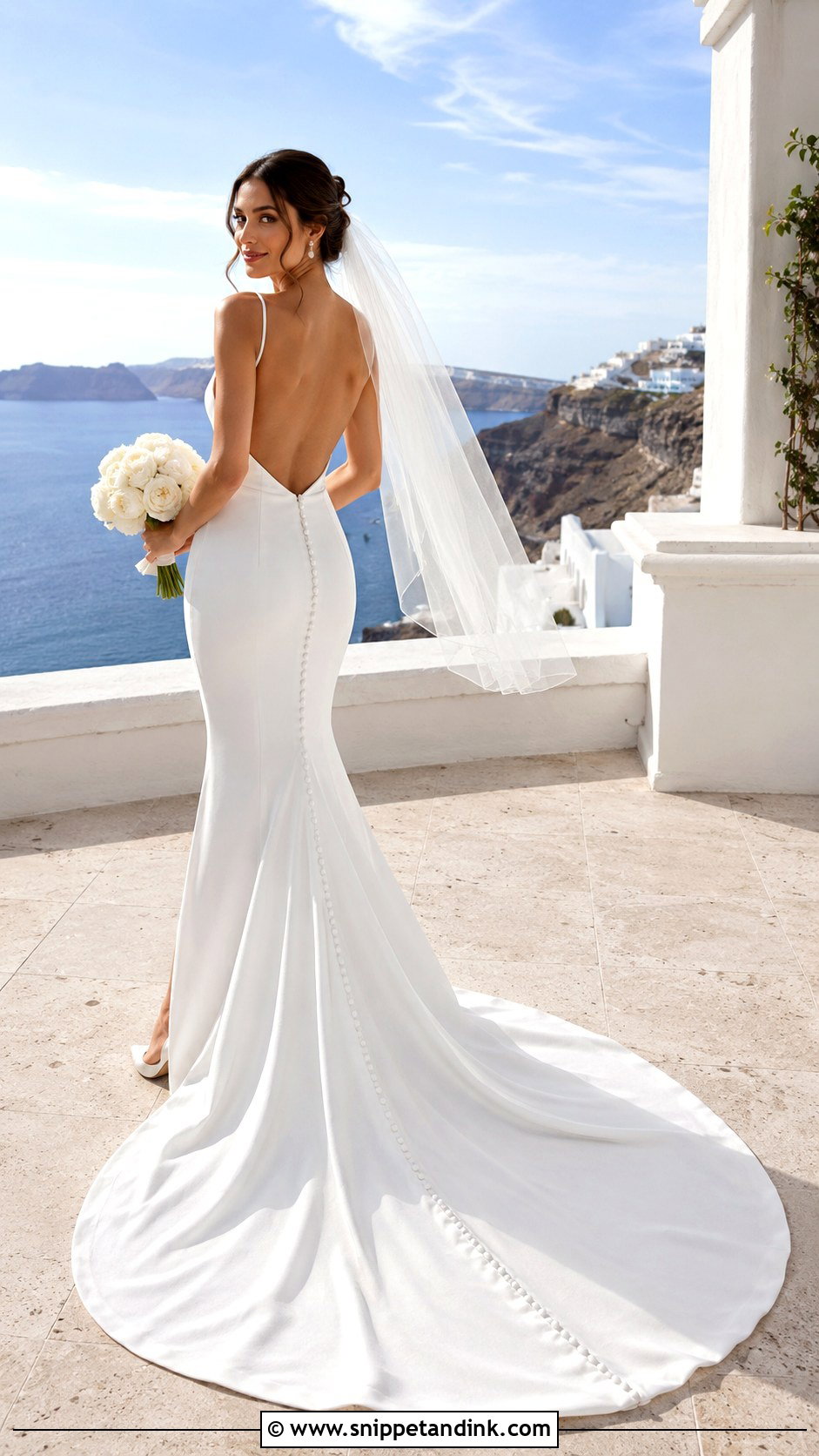
An open back gives the gown its drama without needing embellishment. Firm side panels and internal support keep the back edges flat against the skin, and buttons running from the lower back into the train make one long line. Wear your hair up or swept aside so the back isn’t hidden. A sheer veil works for the ceremony, then comes off for the reception to show the back. Pearl earrings, ivory heels and a simple bouquet complete it. Watch the bustle placement here; hooks for the bustle need to sit below the opening, not on bare skin.
13. Fitted Corset Wedding Dress With Train
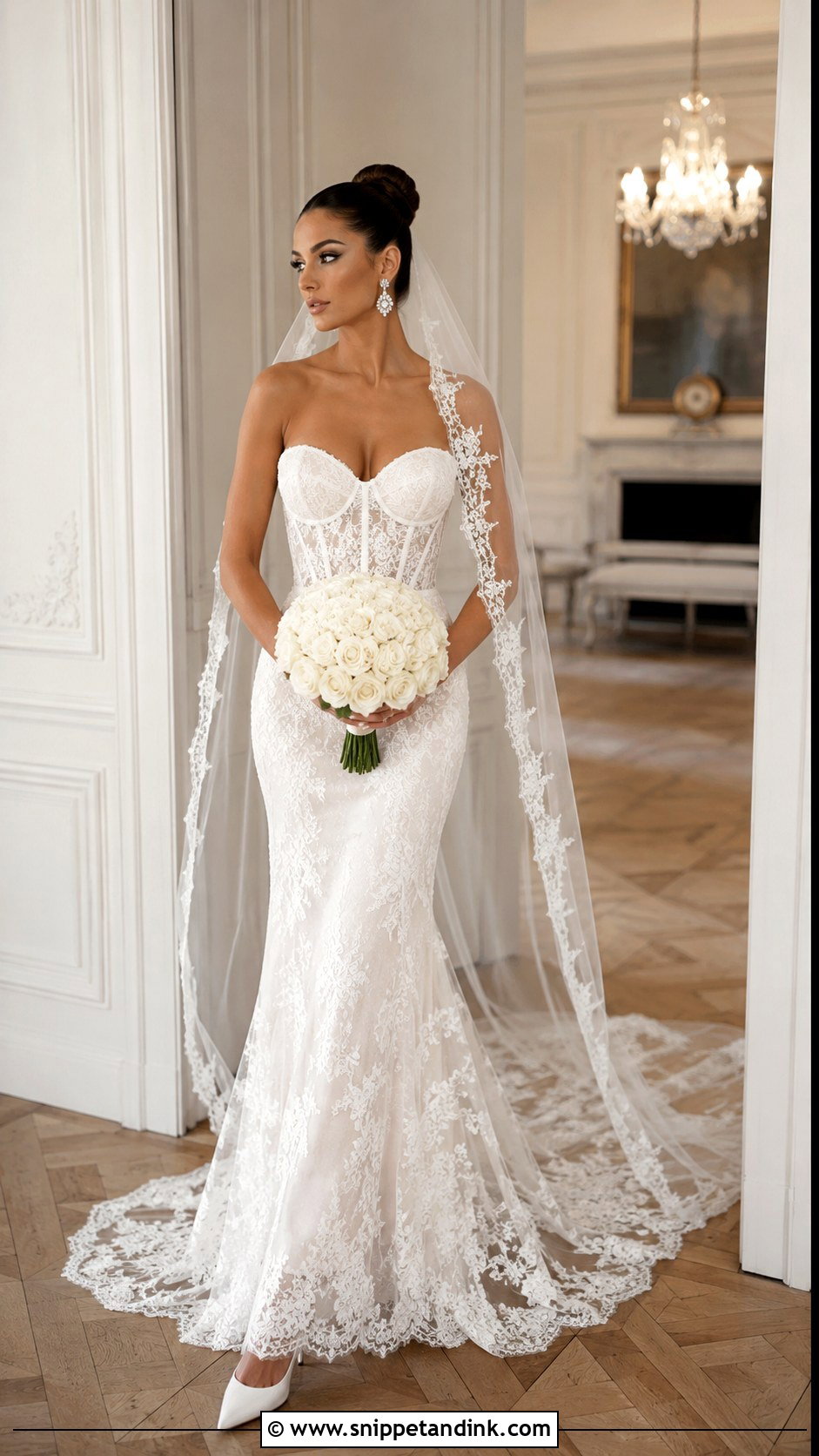
Corset bodices give a firm base for a fitted skirt. I look for smooth boning channels, balanced cups and a waist that joins the skirt cleanly. A lace or tulle chapel train softens the structure behind you. Supportive is the goal, not tight, so breathe deeply, sit and twist at every fitting. Crystal earrings, a fingertip veil and pointed satin pumps suit it, with a sleek bun or waves pinned off the neckline. Roses and ranunculus in a rounded bouquet keep it romantic. A heavy train pulls back on the waist, so the corset has to be anchored well.
14. Fitted Pearl Wedding Dress With Train
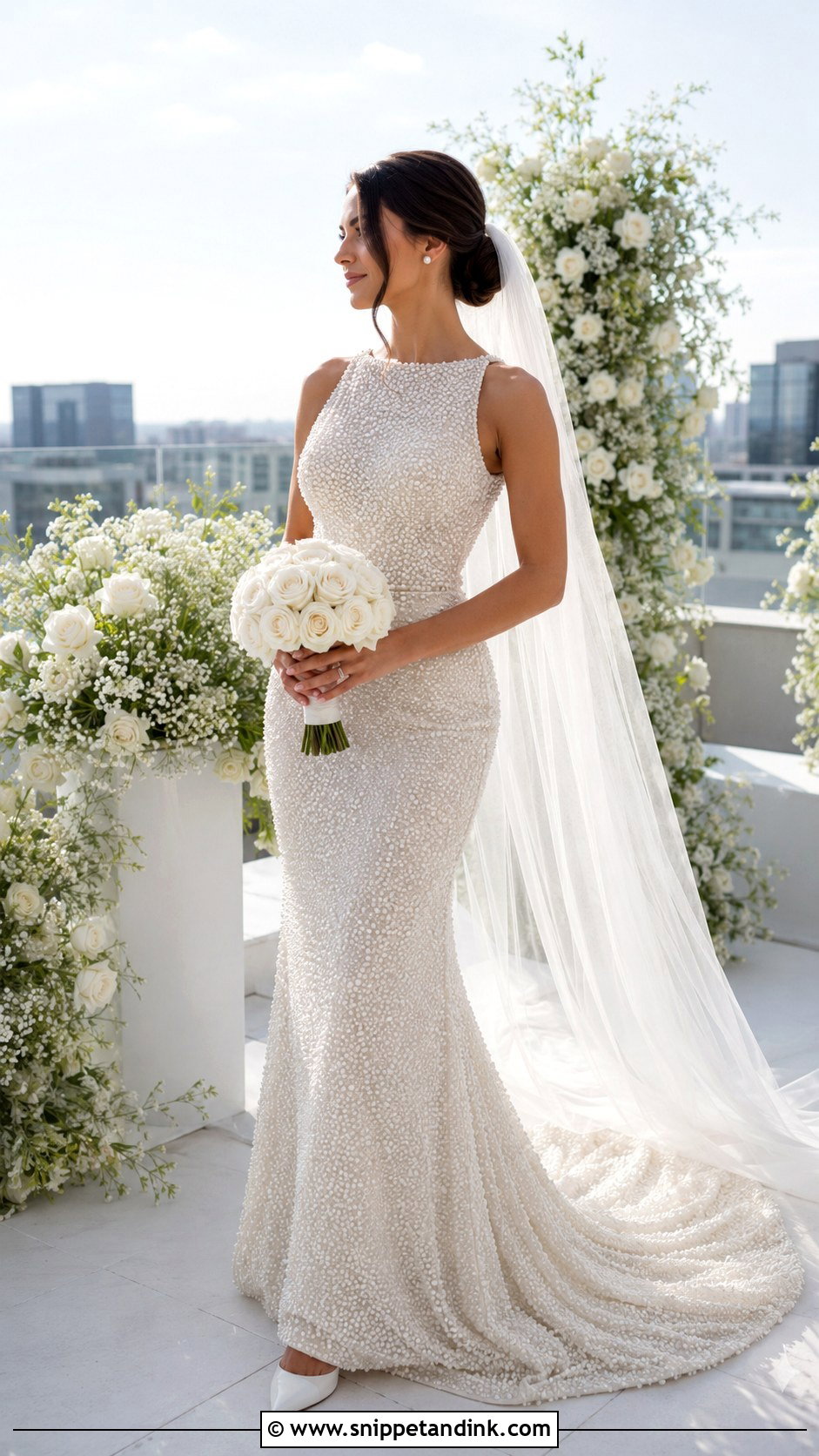
Pearls add texture that glows rather than sparkles, especially when they trail gradually into the train. Smaller pearls where you want subtlety, denser placement on the bodice or back. A sheer overlay keeps the embellishment light. Pearl studs, a clean tulle veil and satin pumps coordinate without looking matched, with a low twist and white roses. Pearls on a train get dragged across floors all day, so I check that each one is stitched individually rather than strung on a single thread, which unravels if it snaps.
15. Fitted Beaded Wedding Dress With Train
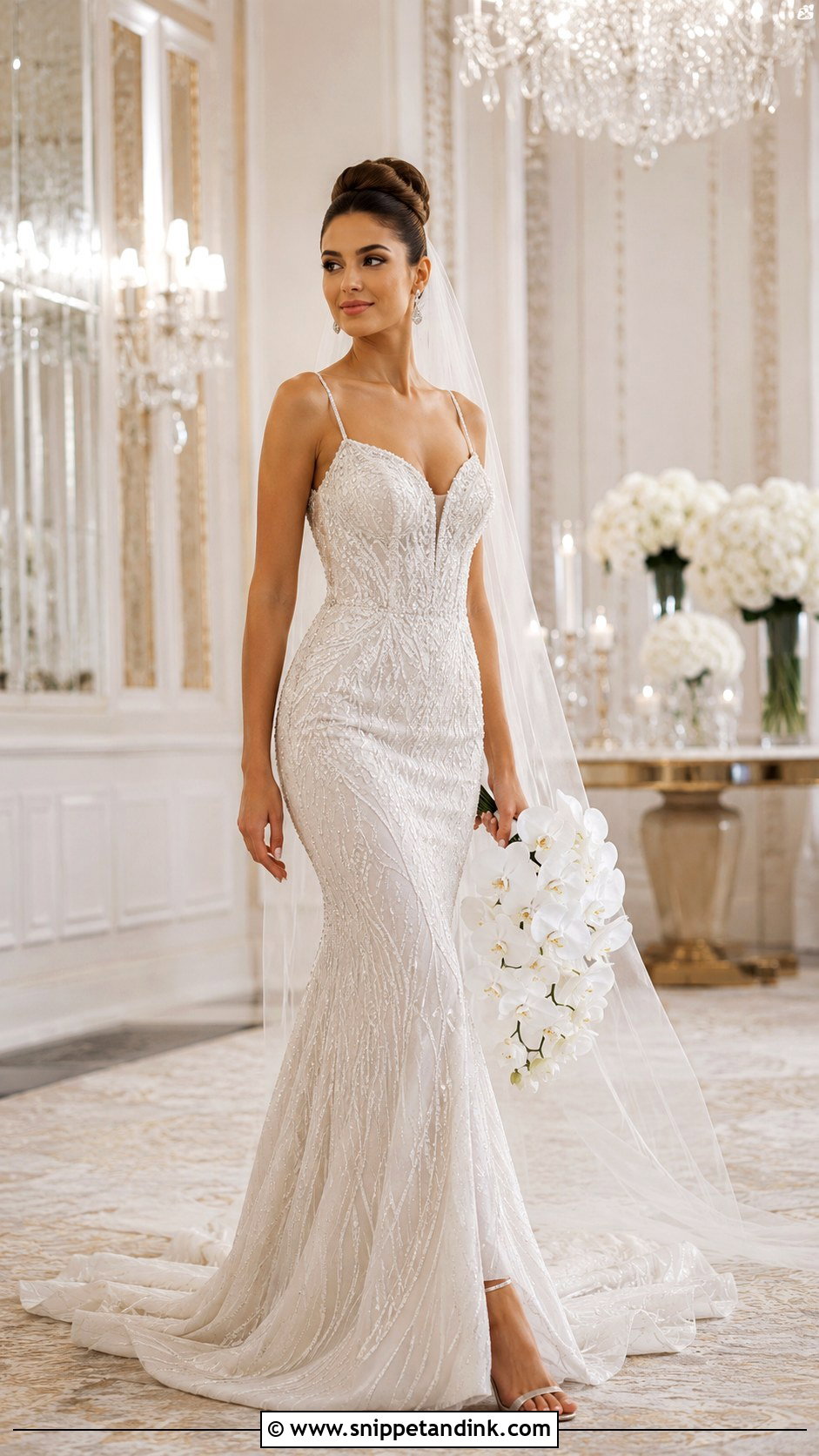
Beads catch light with every step, and the best beading follows the bodice down into the skirt instead of stopping hard at the waist. Keep the train lightly beaded; a heavily beaded train is surprisingly heavy to pull. Ask how the beads are attached and whether alterations need special handling, since a seamstress may have to remove and re-sew them at the seams. Crystal studs, metallic ivory heels and a plain veil keep the focus on the gown, with a polished updo and orchids. It looks its best under evening lighting.
16. Fitted Floral Applique Wedding Dress With Train
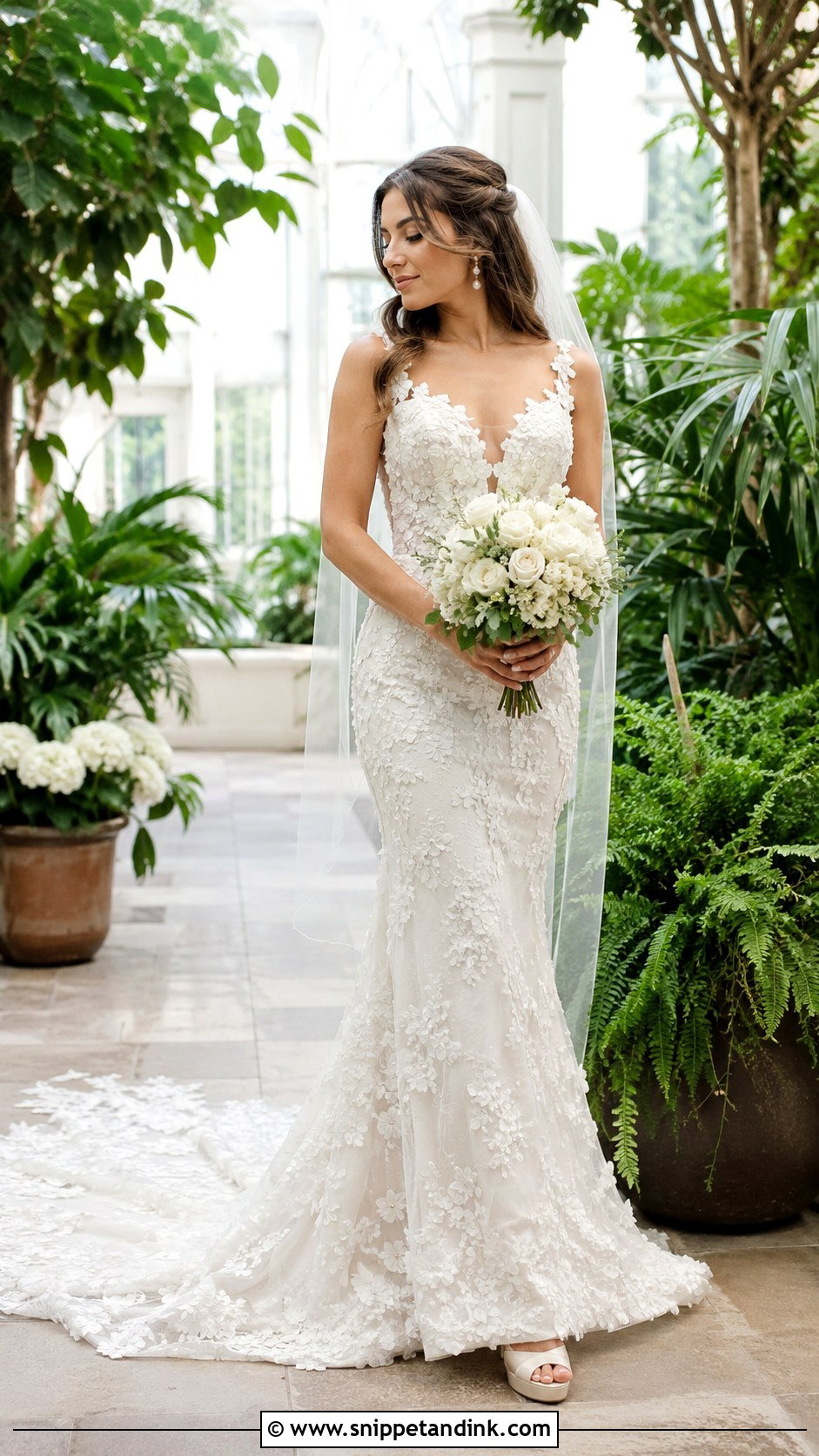
Floral appliqués give a fitted gown depth, and placement makes or breaks them. Flowers that follow the bodice, waist and hips before scattering across the train look intended; random placement looks like a sale gown. 3D petals already make a strong statement, so pair them with pearl earrings, ivory heels and a sheer veil with little or no edging. Soft waves or a half-up style suit the organic detail. A bouquet with restrained greenery should echo the gown, not copy it. It suits garden and conservatory weddings in spring and summer.
17. Fitted Mikado Wedding Dress With Train
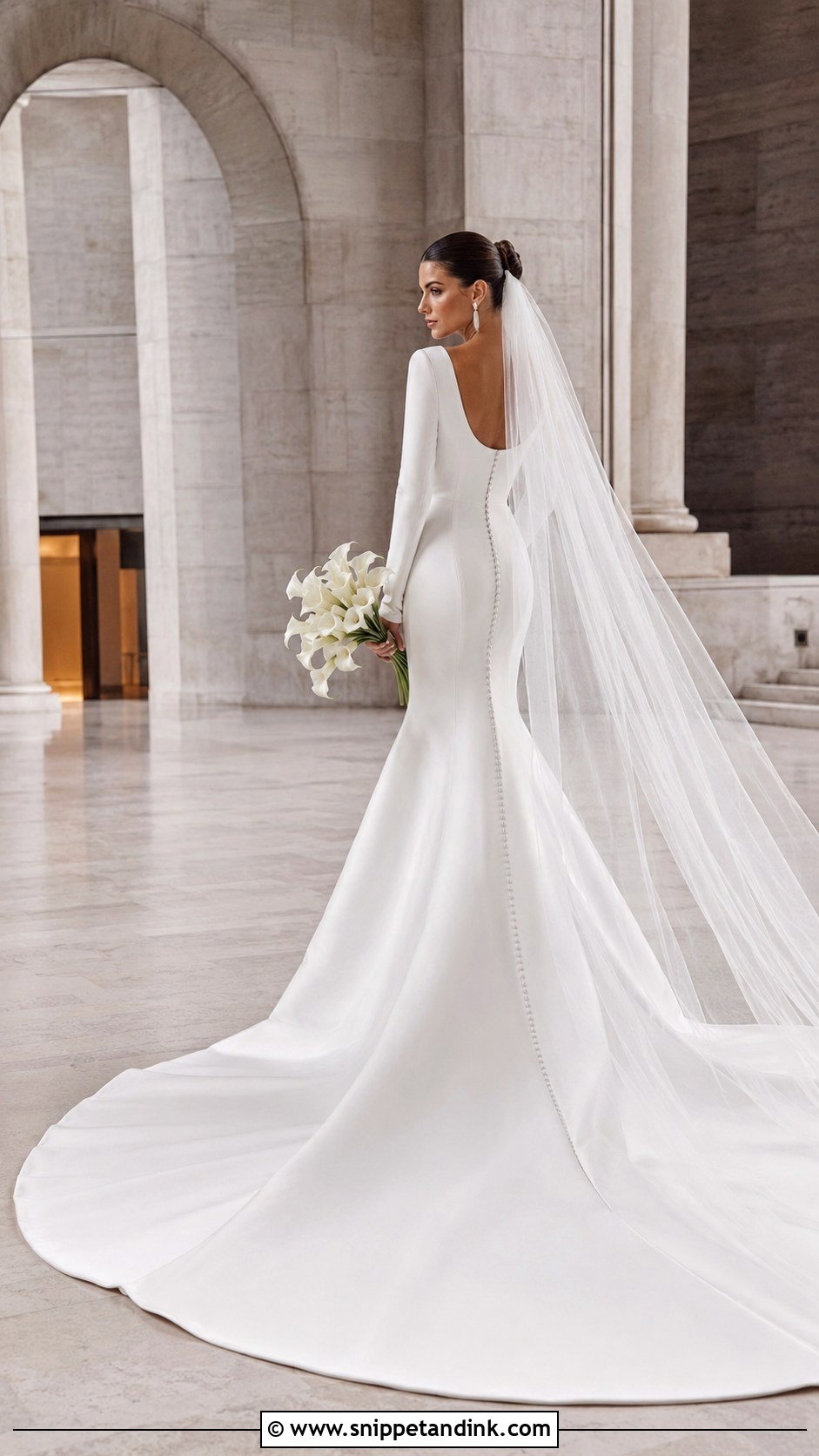
Mikado is a heavy silk or silk-blend with a slight sheen and real body, so it holds a strong shape with no decoration at all. It suits clean necklines, defined seams and a skirt that leads into a chapel or cathedral train. Covered buttons down the back are a classic finish. Sculptural earrings, pointed pumps and a plain cathedral veil suit it, with a neat bun and calla lilies. The weight is the trade-off. A Mikado cathedral train is noticeably heavier than tulle, and I’d only suggest it to brides who are comfortable pulling it across a large space.
18. Fitted Plus Size Wedding Dress With Train
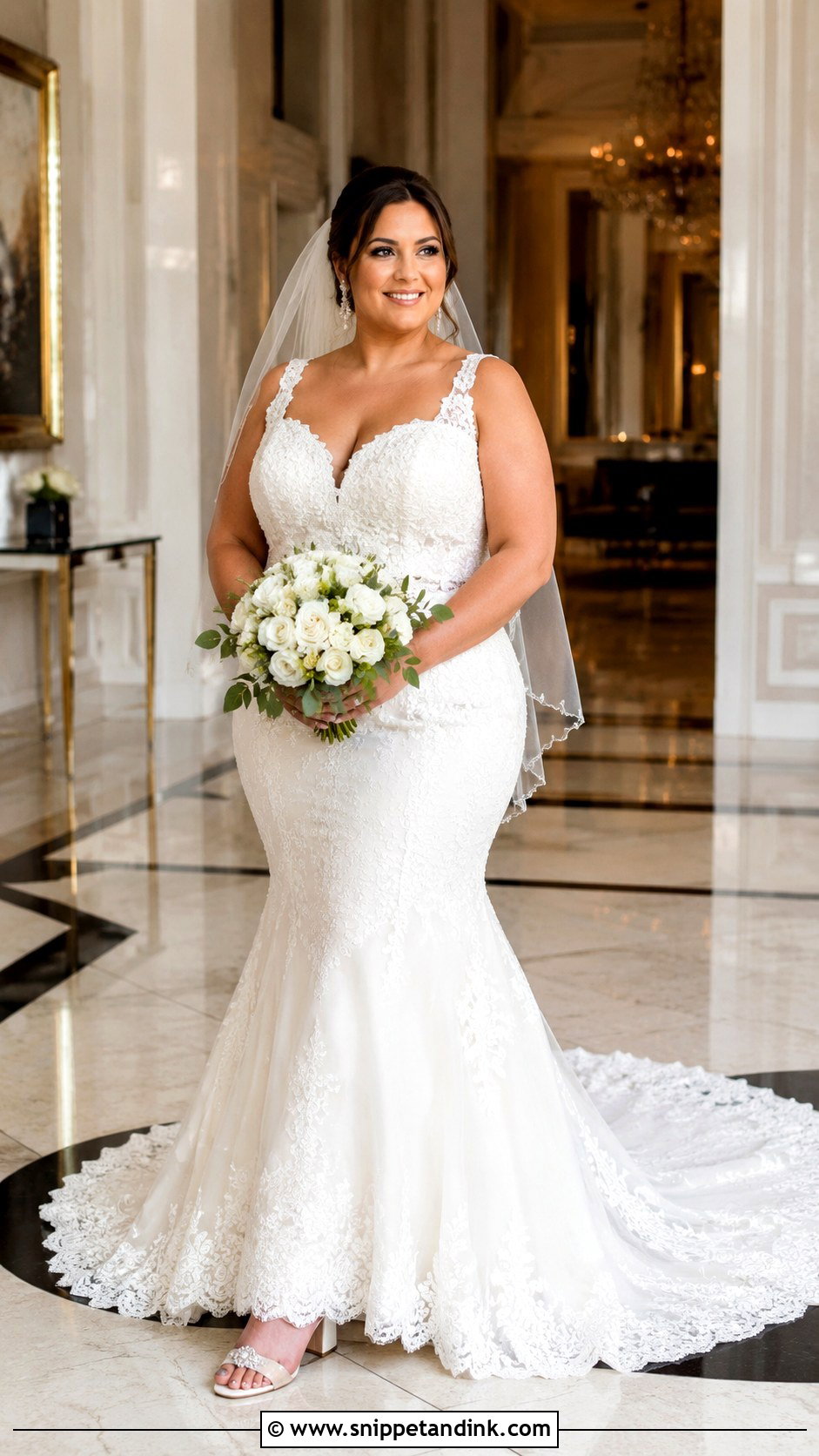
For curvier brides, the right fitted gown supports the body rather than just gripping it. I look for real construction through the bust, waist and hips: strategic seams, supportive straps, boning and good lining. A trumpet or soft mermaid skirt with a chapel train gives balance and movement. Block heels, drop earrings and a veil that doesn’t cover the back detail suit it. Choose a hairstyle that feels like you. A medium bouquet keeps proportions right. A long train adds weight at the back of the waist, so check the waist stay holds it without digging in.
19. Fitted Minimalist Wedding Dress With Overskirt Train
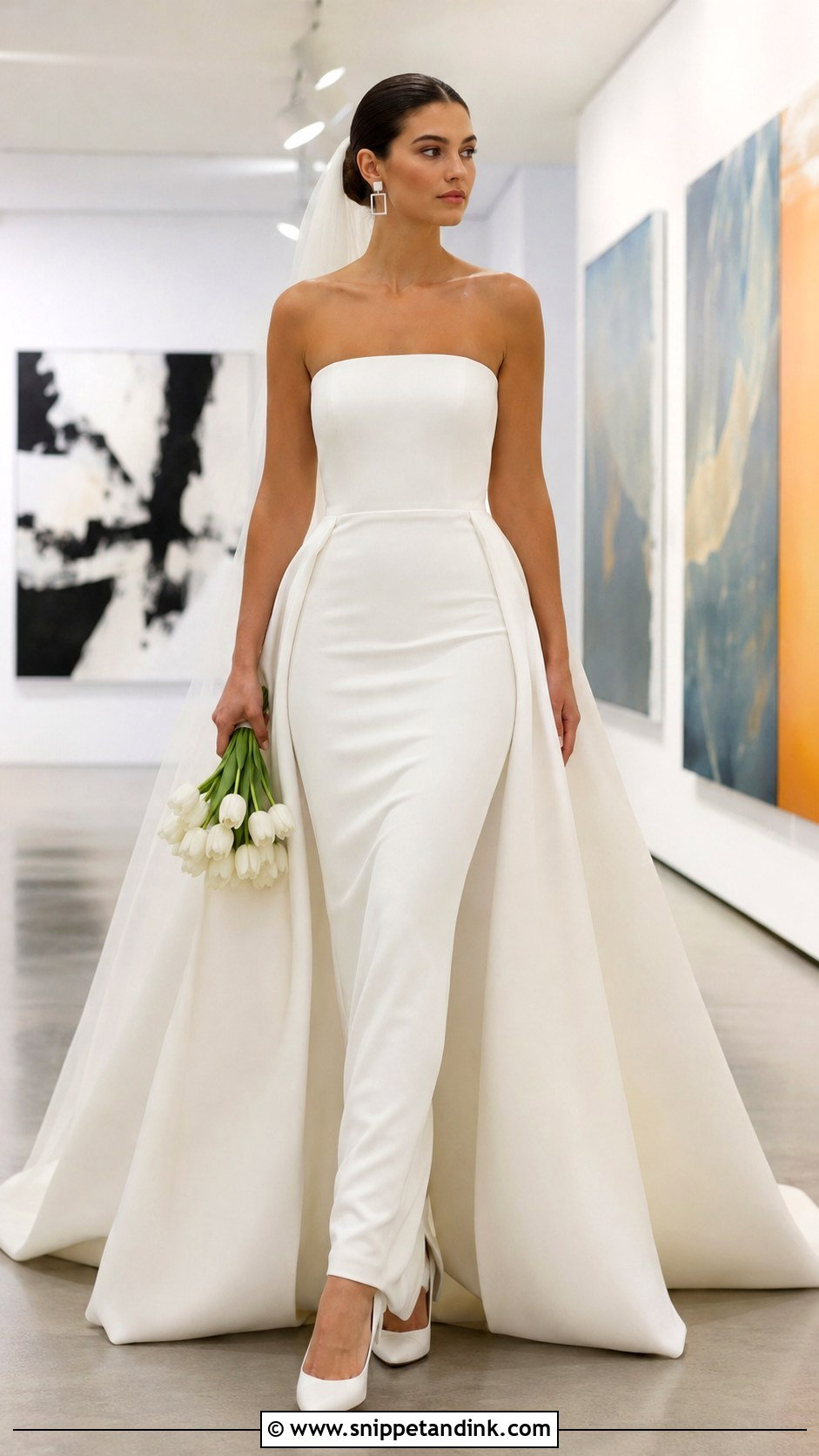
A detachable overskirt changes a plain fitted gown into a full ceremony look in moments. Tulle, organza, satin or matching crepe each give a different volume. The waistband should hide under a belt, seam or panel. After the ceremony and portraits, the overskirt comes off and you have a sleek dress for dancing. Geometric earrings, a smooth bun, pointed ivory heels and a plain veil suit it, with tulips or callas. Practise unhooking it with your helper, and bring a padded hanger so it isn’t dumped on a chair afterward.
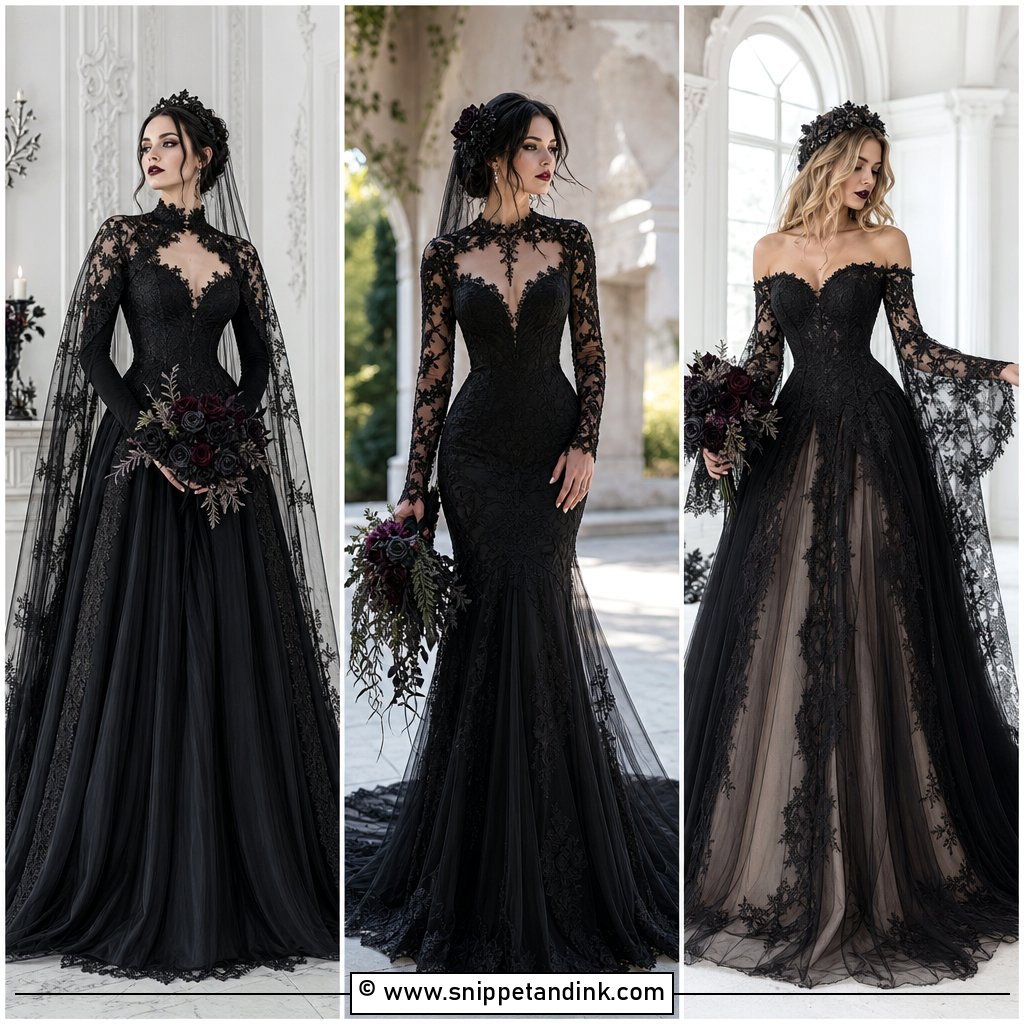
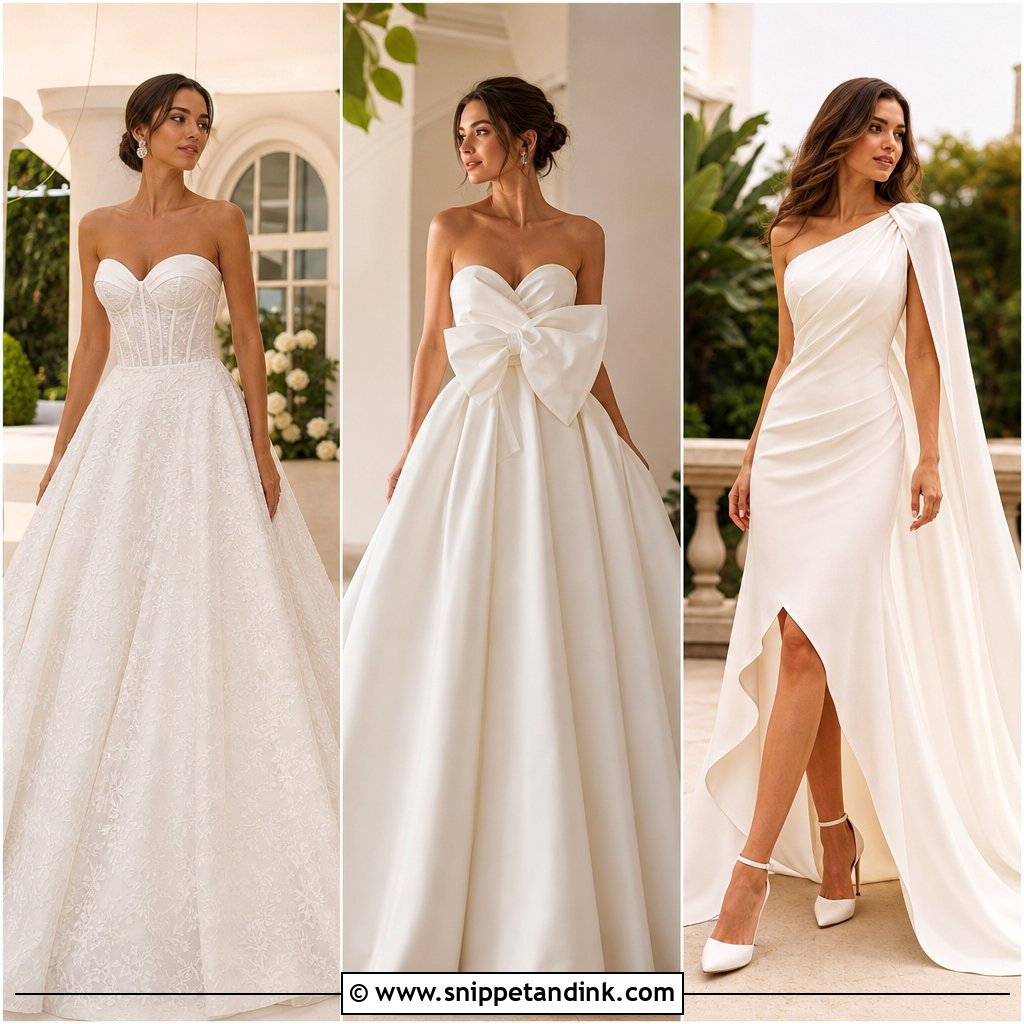

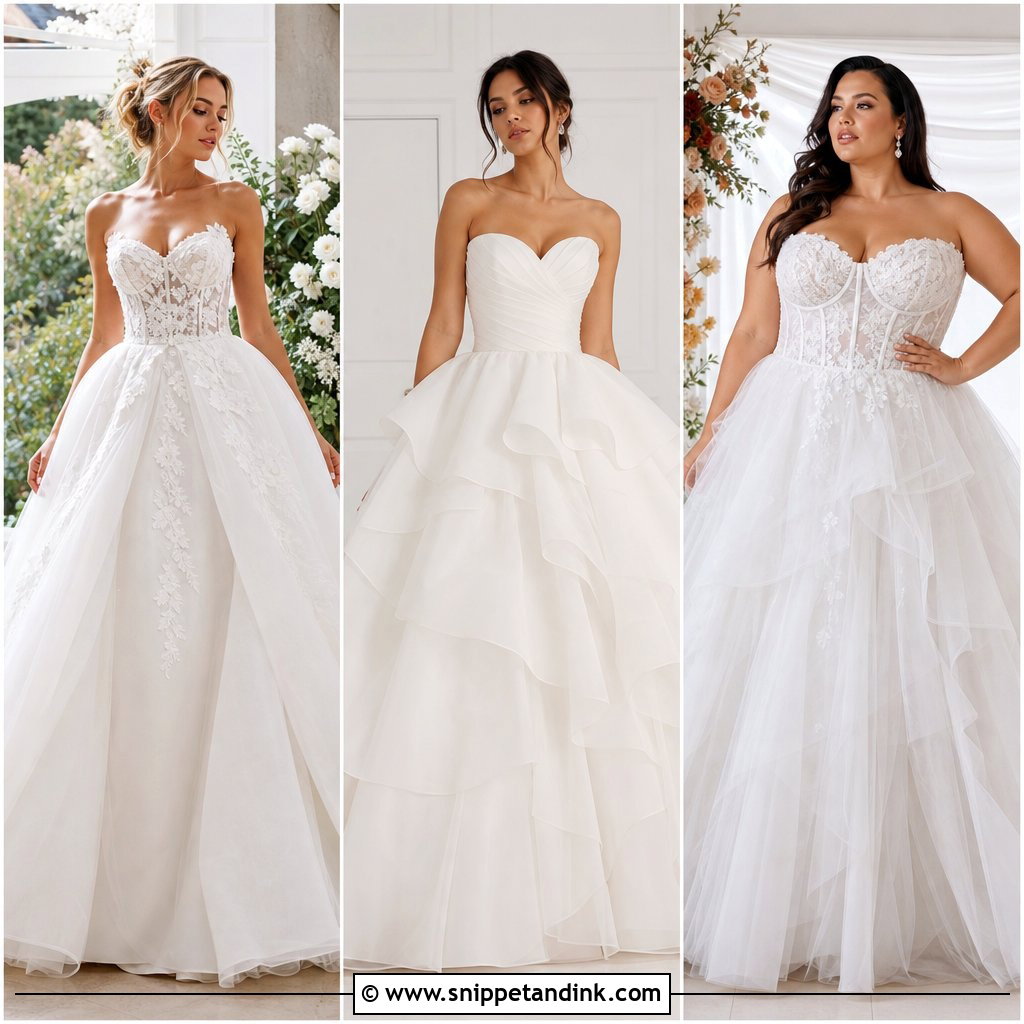

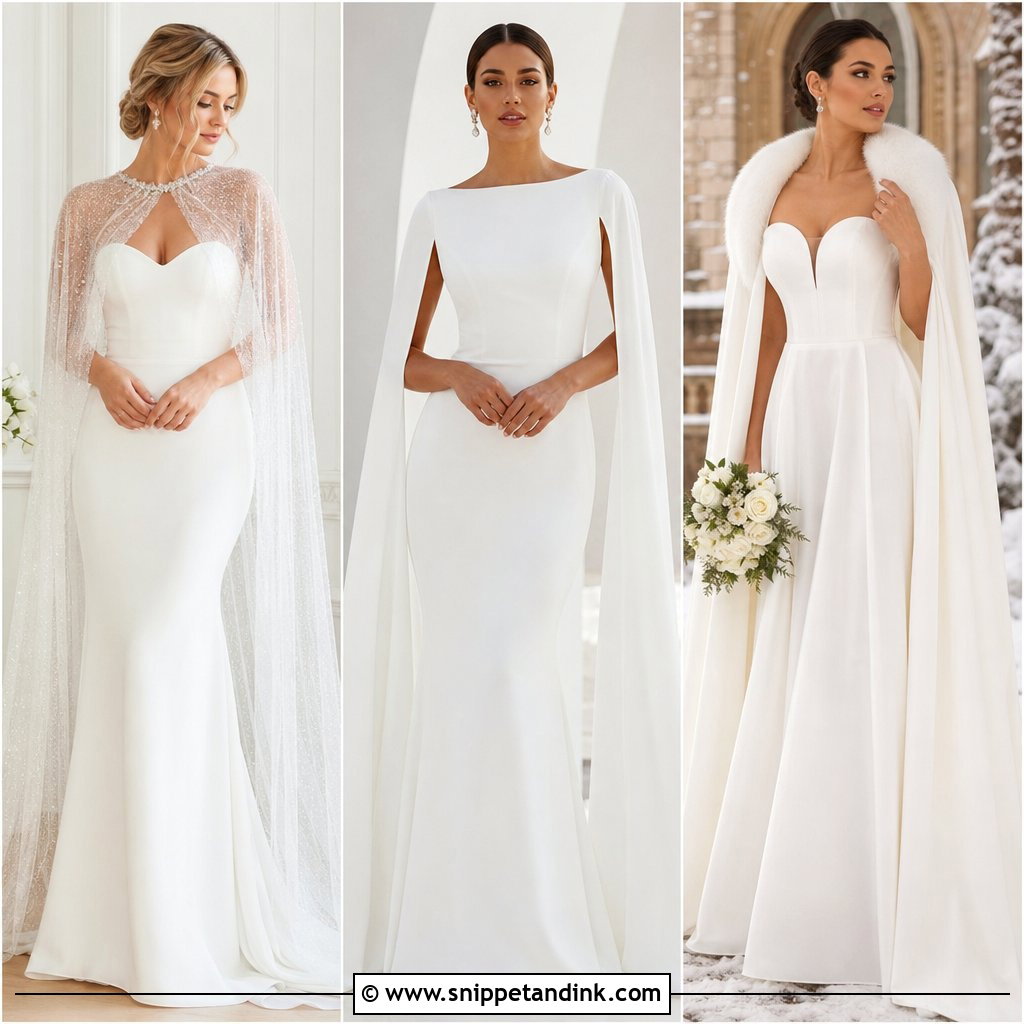
20. Fitted Wedding Dress With Watteau Train
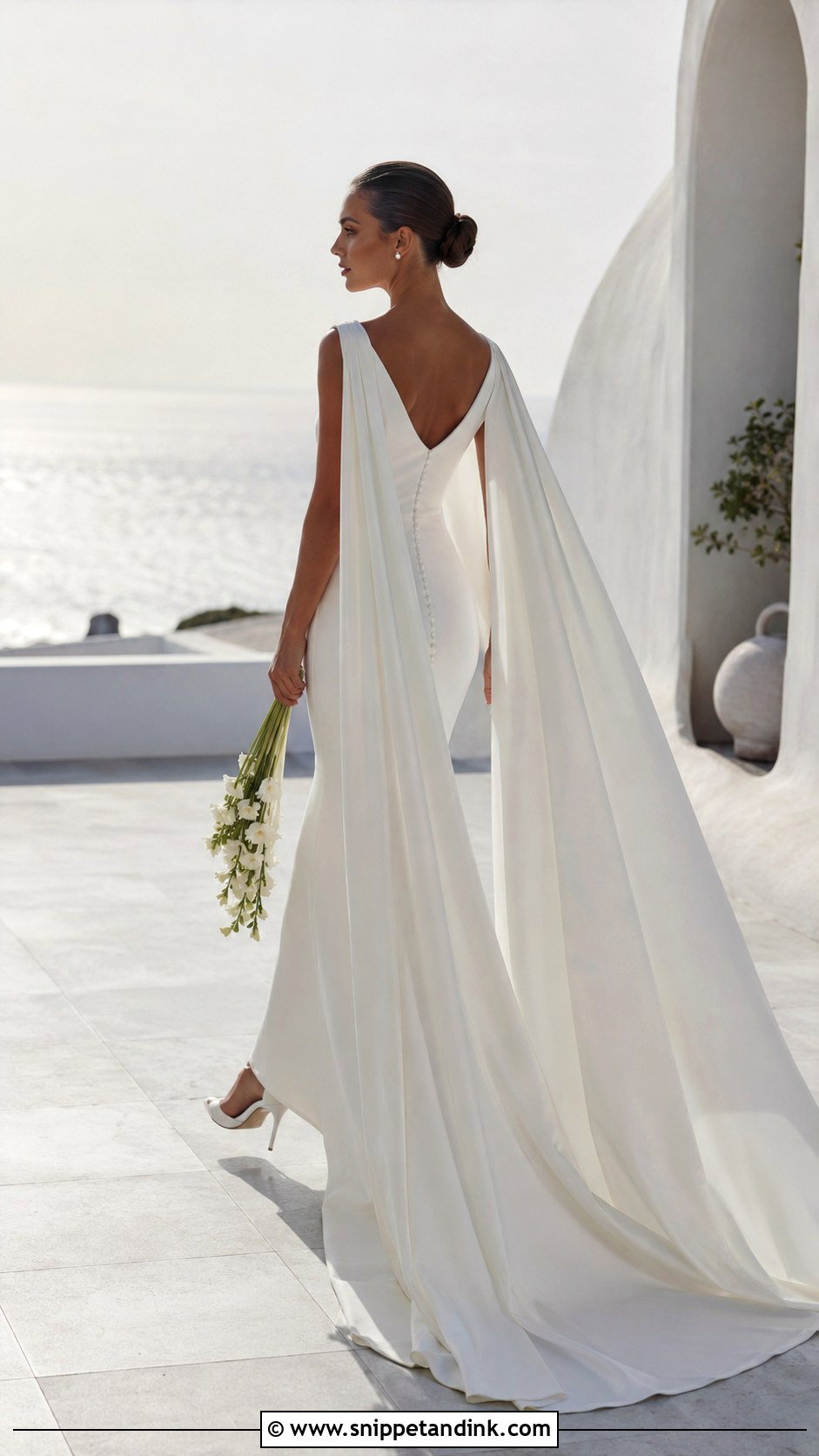
A Watteau train falls from the shoulders or upper back rather than the hem, so it moves behind you like a light cape while the fitted gown stays visible. Sheer tulle looks airy; light crepe is more structured. The attachment must sit smooth across the shoulders without pulling the neckline back, which is the fitting issue I see most with this style. Stud earrings, a sleek bun and pointed pumps keep it restrained, and many brides skip a veil because the train already frames the shoulders. On a breezy terrace, ask for small weights sewn into the hem.
French, American or Ballroom Bustle for a Slim Skirt
A bustle lifts the train off the floor for the reception, and the right type depends on the fabric. An American, or over, bustle hooks the train up onto the back of the skirt with a few points; it works well on lace and light tulle. A French, or under, bustle tucks the train underneath with ribbons, which suits satin and crepe because it leaves a smooth surface. A ballroom bustle lifts the train all the way round so the hem sits level, which is the neatest choice for fitted skirts but needs more tie points.
Ask your seamstress to colour-code or number the ribbons. In a dark reception room, a bridesmaid trying to match ribbon six to loop six without labels takes far longer than you’d think.
The Person Who Stands Behind You on the Aisle
Any train longer than a sweep needs someone looking after it. My advice is to choose one person, usually a bridesmaid, and walk them through the job at the final fitting. At the altar, she should straighten the train once you stop, then step away so she isn’t in the photos. After the ceremony, she lifts it for steps and bustles it before the first dance.
- Arrange the train after you stop at the altar.
- Gather it over one arm when you climb steps.
- Fold it toward you before you sit, never pull from the hem.
- Bustle it before dancing, then check the hem clears the floor.
How Much Train Can Your Venue Floor Handle?
A fitted gown with a train should look right from behind and still let you walk, sit and dance. The looks above cover minimalist crepe through to beaded and lace drama. Compare crepe, satin, lace, Mikado and beaded fabrics against your venue and the way you move. During alterations, think about the train’s weight, length, attachment and bustle as much as how it looks in the mirror. Practise moving in the full outfit with your shoes, veil and underwear. A short sweep or a cathedral length both work when the construction and tailoring are right.
You'll Like These Ideas:







Leave a Reply