
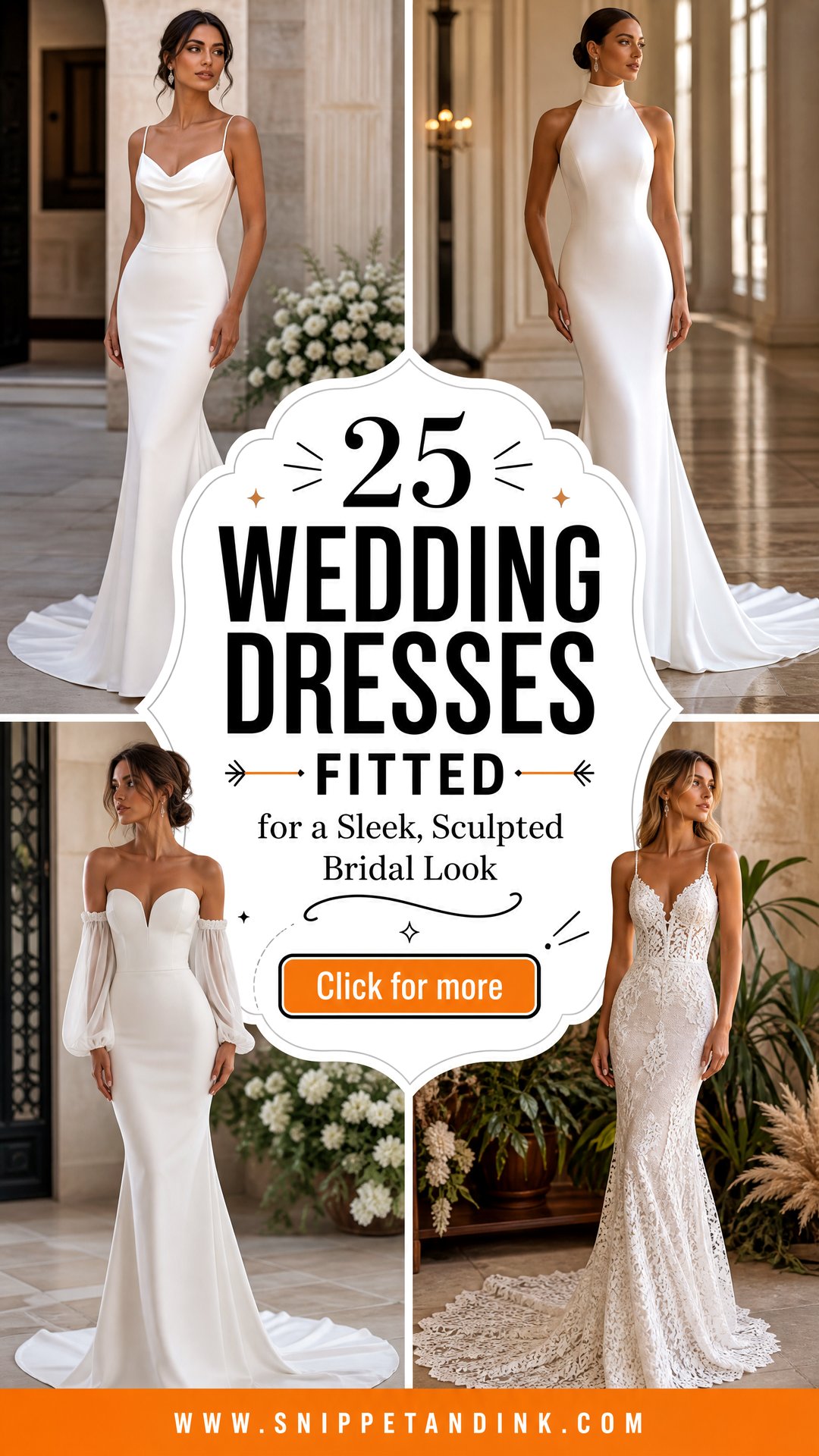
A fitted gown is the least forgiving silhouette I dress brides in, and also the one that pays back the most when it’s cut right. Sheaths, mermaids and fit-and-flare shapes all sit close through the body, so the fabric, the inner structure and the alterations do the work a full skirt would otherwise hide. Lately I’m seeing more sculpted bodices, clean satin, soft draping, corset boning and sleeves that unhook for the reception. The test I give every one of them is simple: can you walk, sit, hug your grandmother and climb into the car without the seams fighting you? The 25 styles below all pass that test when they’re fitted properly, and I’ve noted where each one tends to go wrong.
Six Moves I Ask Every Bride to Make in a Fitted Gown
Standing still in front of a three-way mirror tells you almost nothing about a close-cut dress. The day itself will ask you to walk, sit, climb steps and reach for people, and fitted silhouettes are where those movements show their limits first. At every try-on and fitting, I take brides through the same short routine.
- Walk ten steps at your normal pace, then turn. If a mermaid or trumpet makes you shorten your stride, the flare point needs checking.
- Sit in a hard chair for a full minute. Watch for the bodice digging under the ribs and the skirt riding up at the hips.
- Step up onto the fitting platform without lifting the skirt, the way you’d take an altar step.
- Raise both arms as if you’re hugging someone taller than you. Sleeves and off-shoulder bands show their limits here.
- Take a full breath and laugh. Boning that pinches now will hurt by evening.
- Lean forward as if signing the register, and check the neckline in the mirror while you do.
Failing one of these doesn’t make it the wrong dress. A flare point can be moved, a seam let out, a strap added. A gown that fails three of them before any alterations, though, usually means the size or the silhouette isn’t right for you.
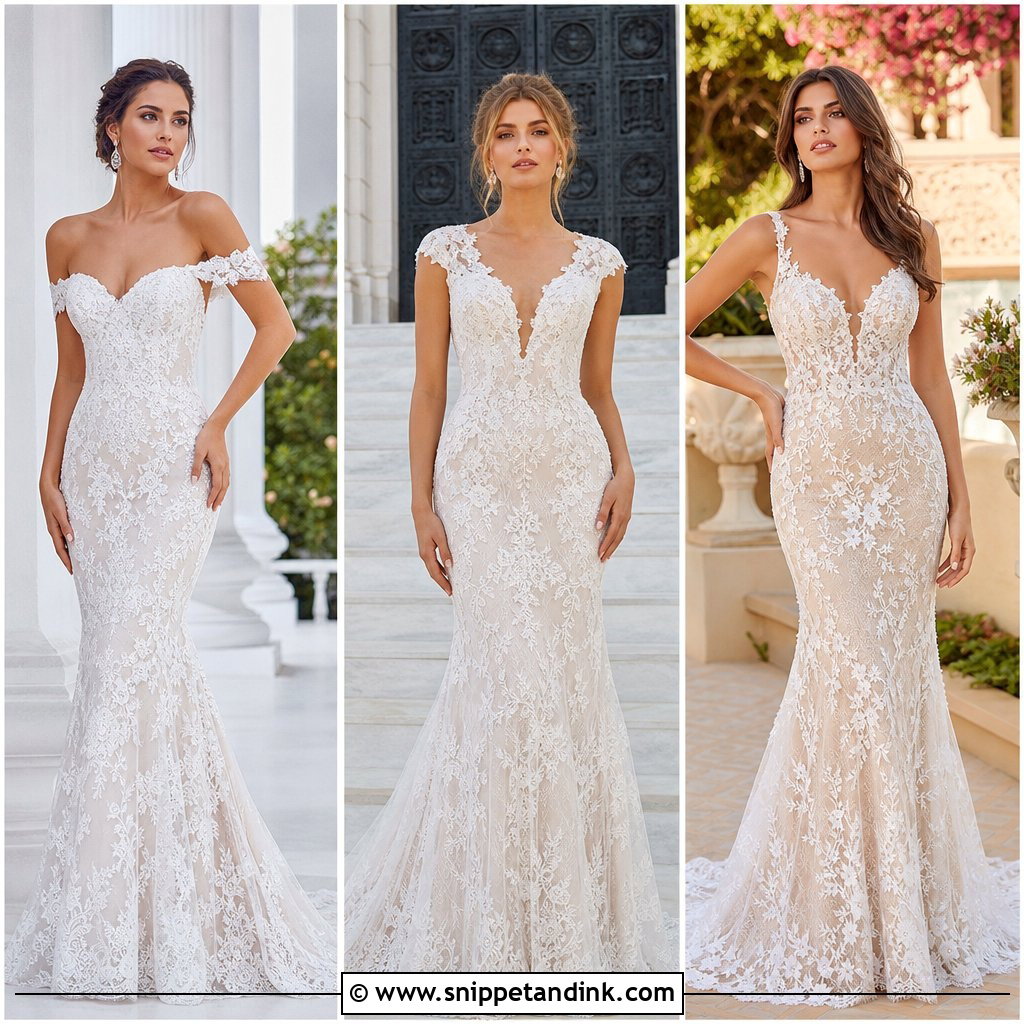
1. Fitted Lace Mermaid Wedding Dress
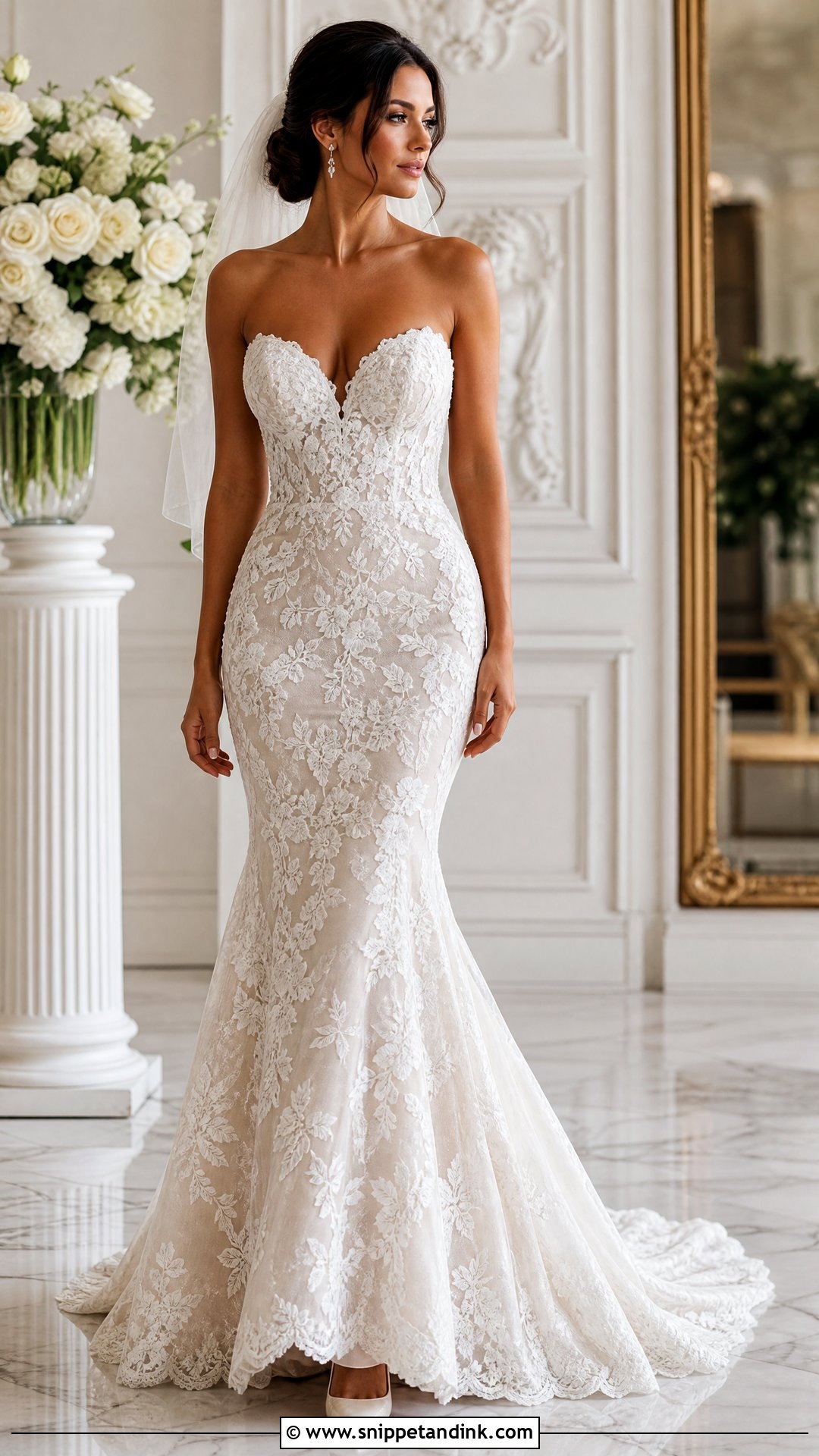
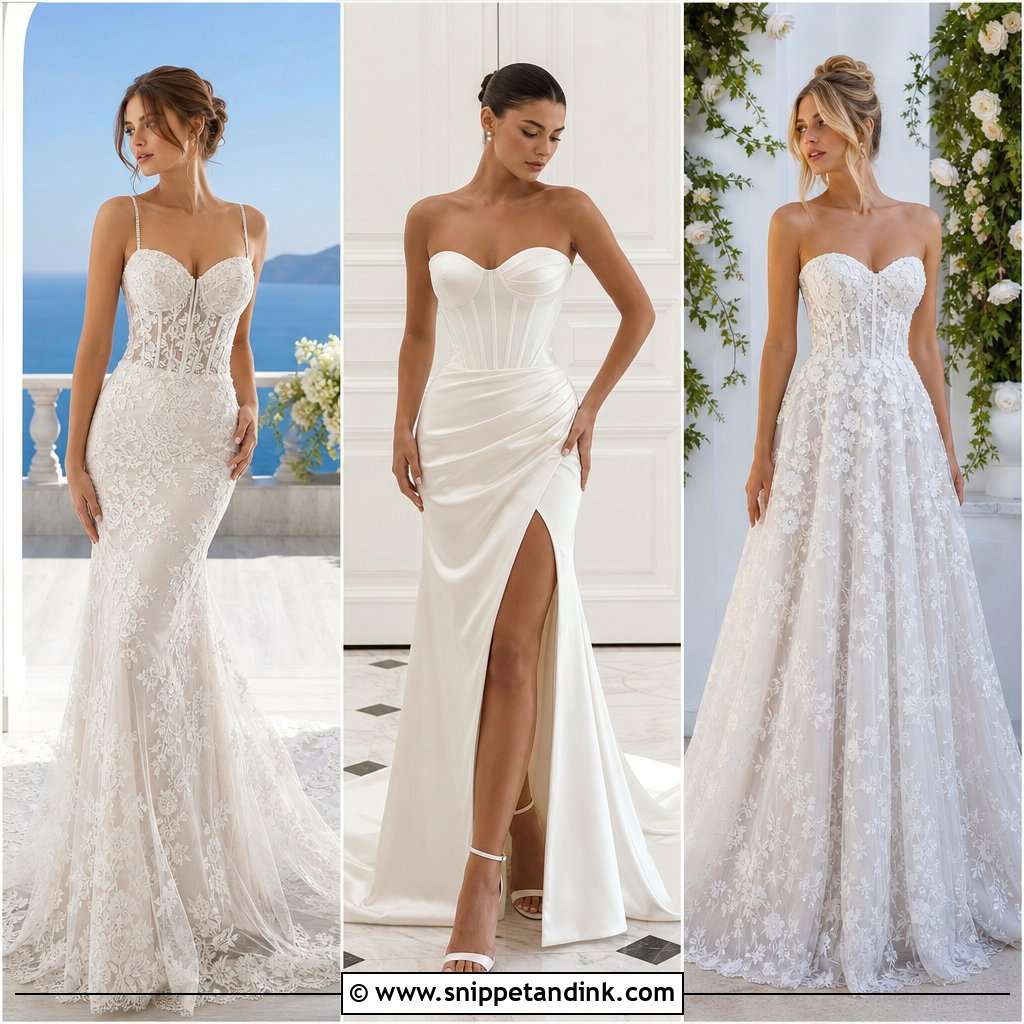
Lace is the friendliest fabric for a mermaid cut, because the motifs hide the small ripples that appear when you sit. The bodice follows the bust, waist, hips and thighs, then breaks at the knee, and that flare point is what I watch most closely at fittings: set it too high and the dress loses its shape, too low and you shuffle. Soft floral lace reads romantic; heavier embroidered lace suits a formal room. I pair it with a sweetheart or off-the-shoulder neckline to balance the volume below, then keep the rest quiet with pointed ivory heels, pearl drops and a plain veil. Ask for a stretch lining. It’s the difference between dancing and standing at the edge of the floor.
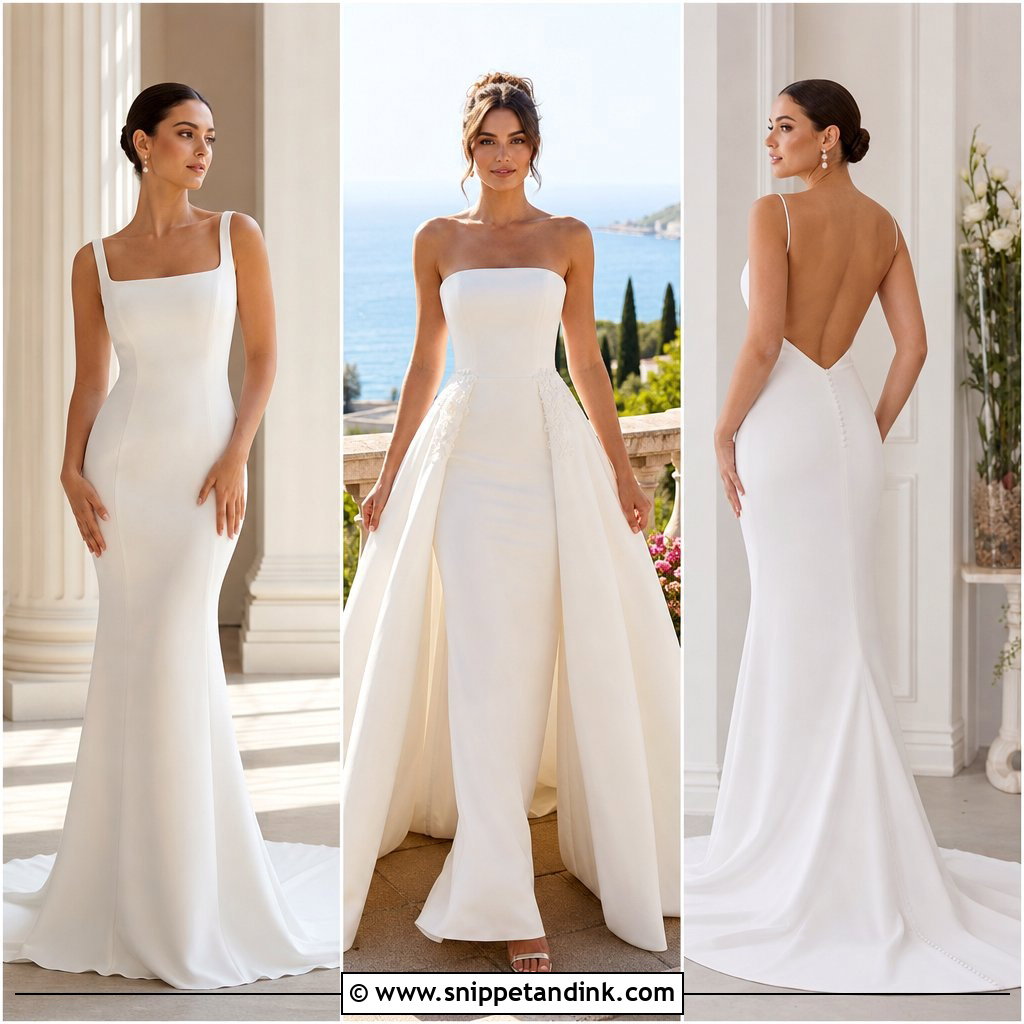
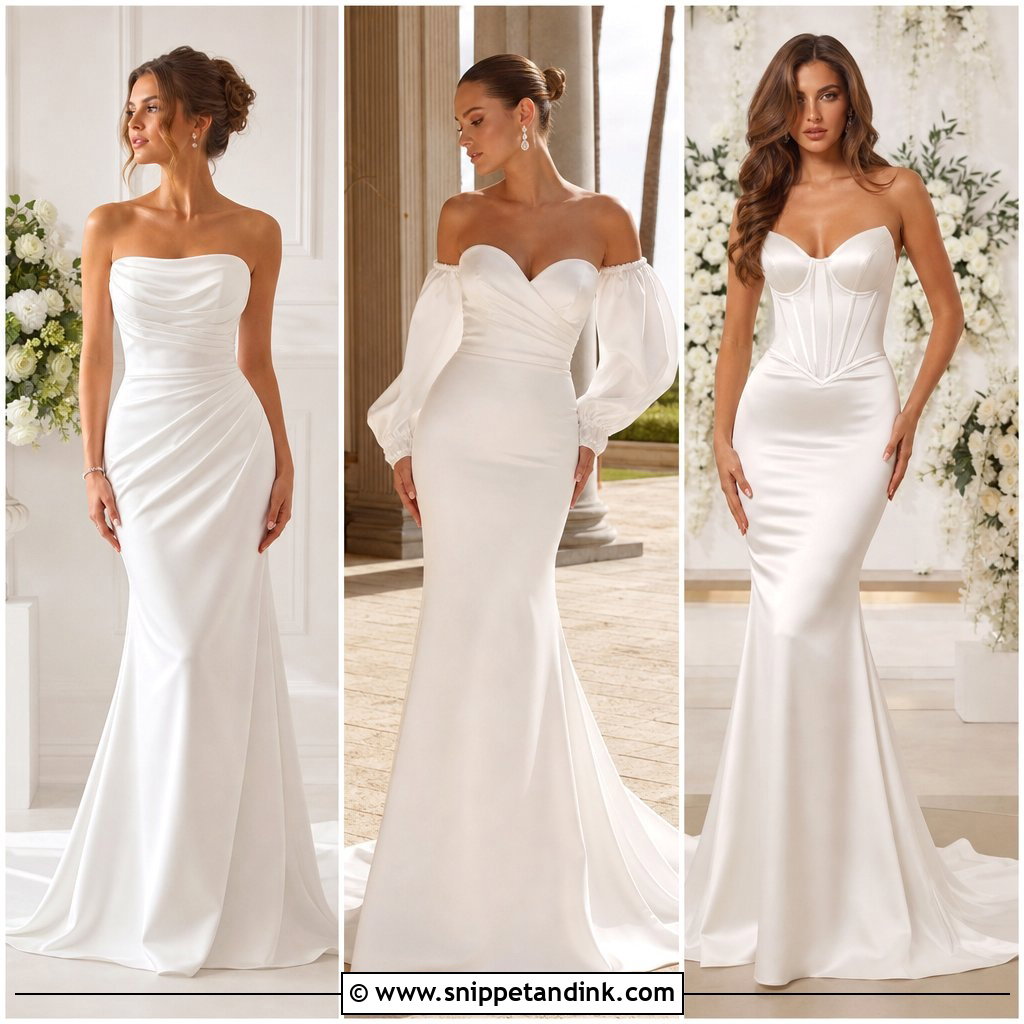
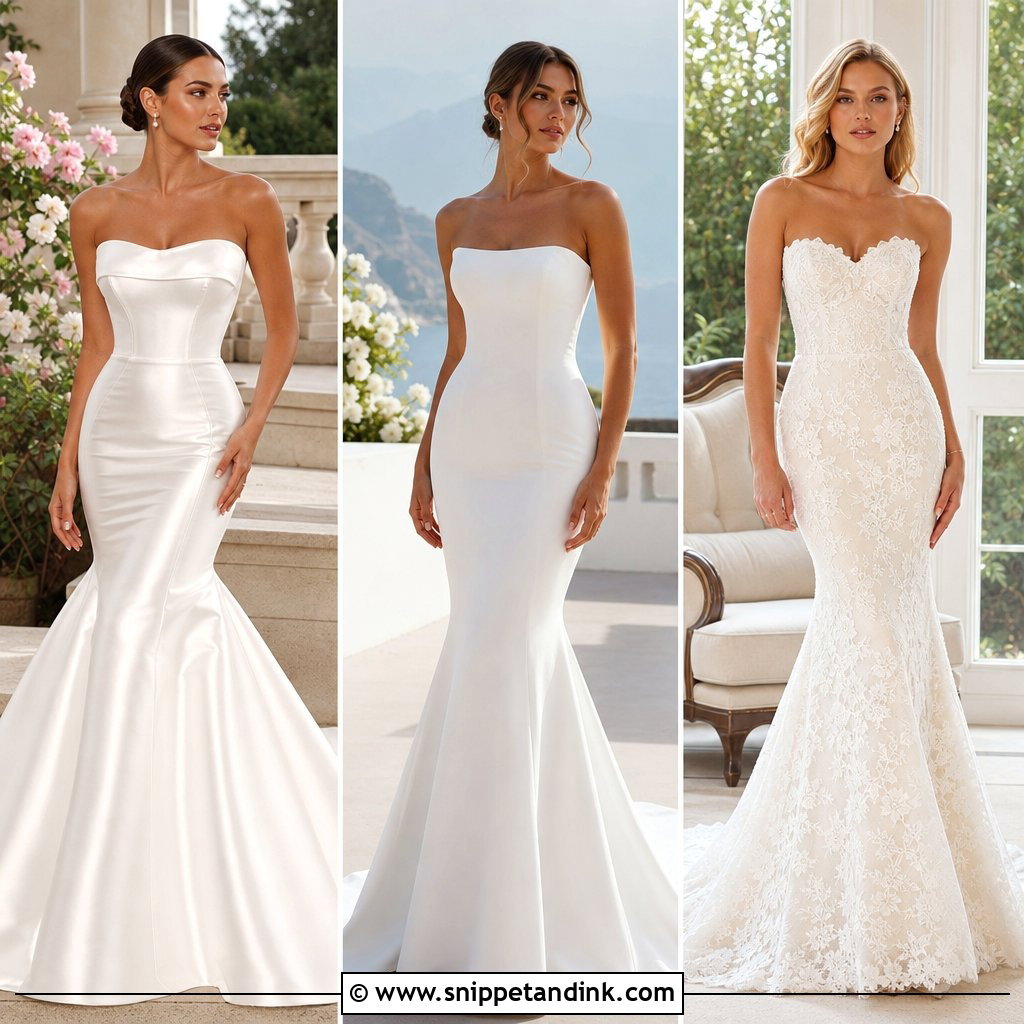
2. Fitted Satin Strapless Wedding Dress
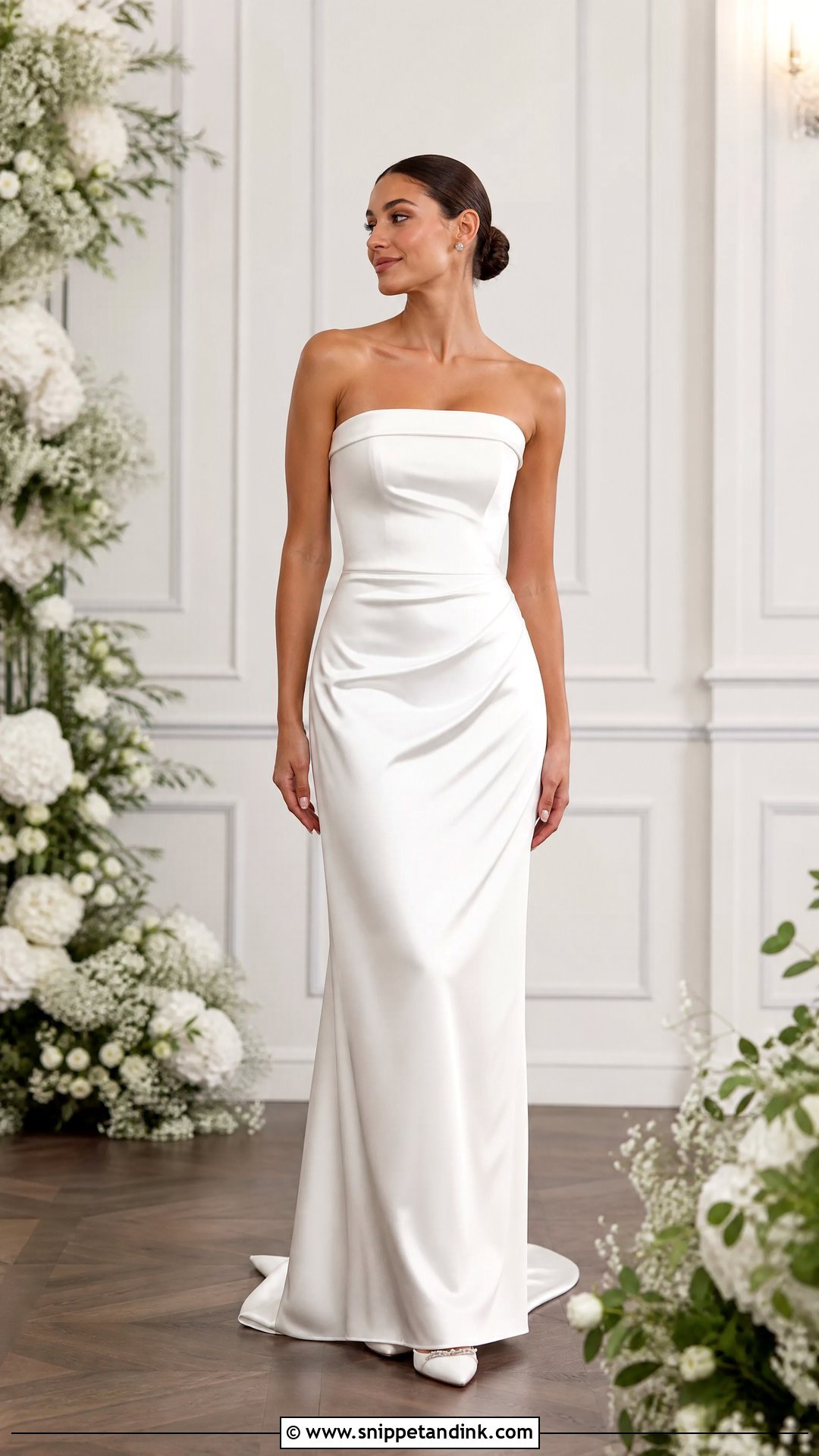
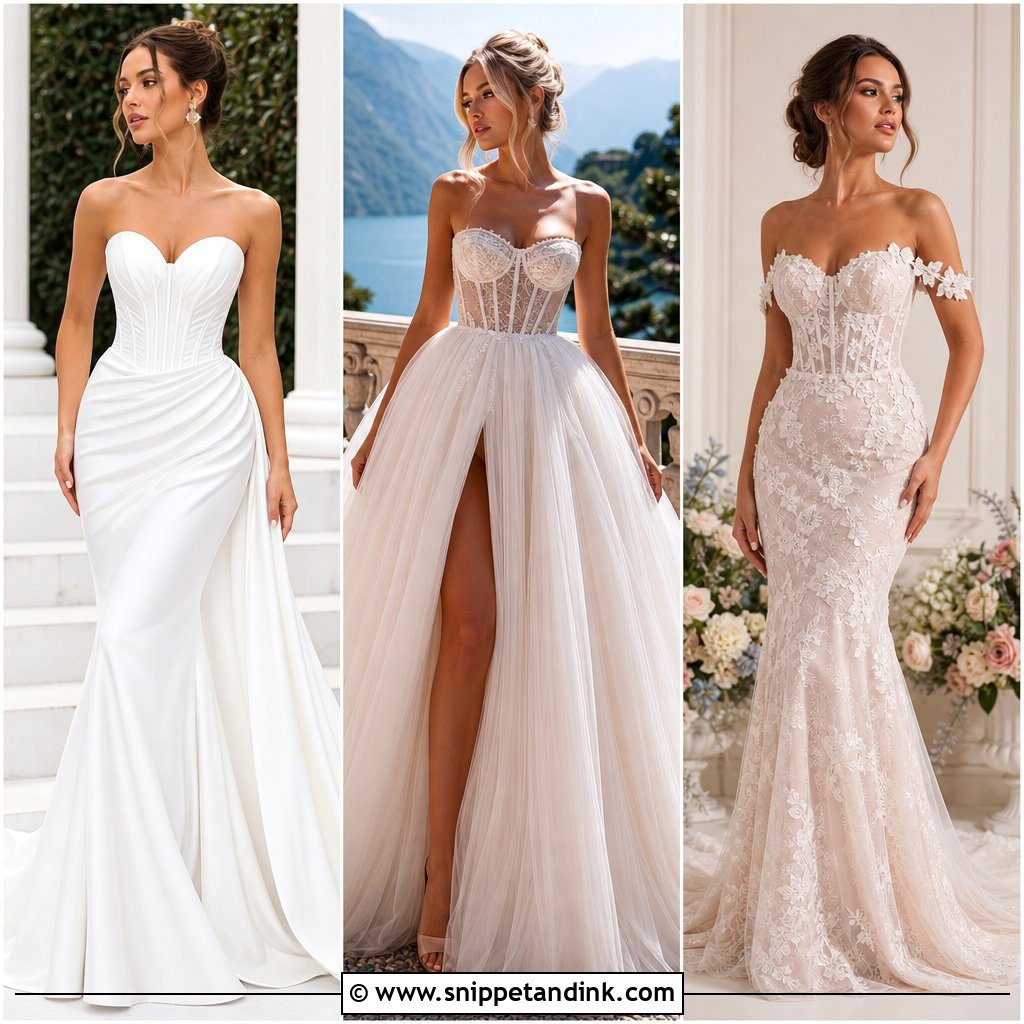
Satin shows everything, which is why I’m fussy about this one. With no lace to soften the line, any pull across the hips or wrinkle at the waist catches the light, so the boning and inner corset have to hold the bodice up on their own rather than relying on your bust. When that’s right, the result looks crisp and editorial. It suits formal venues and city receptions. I’d style it with a sleek low bun, crystal studs, pointed pumps and a small satin clutch, and bring a detachable wrap or long gloves if the ceremony asks for coverage. One warning: satin creases across the lap after a seated dinner, so plan your portraits before you sit.
3. Fitted Crepe Wedding Dress
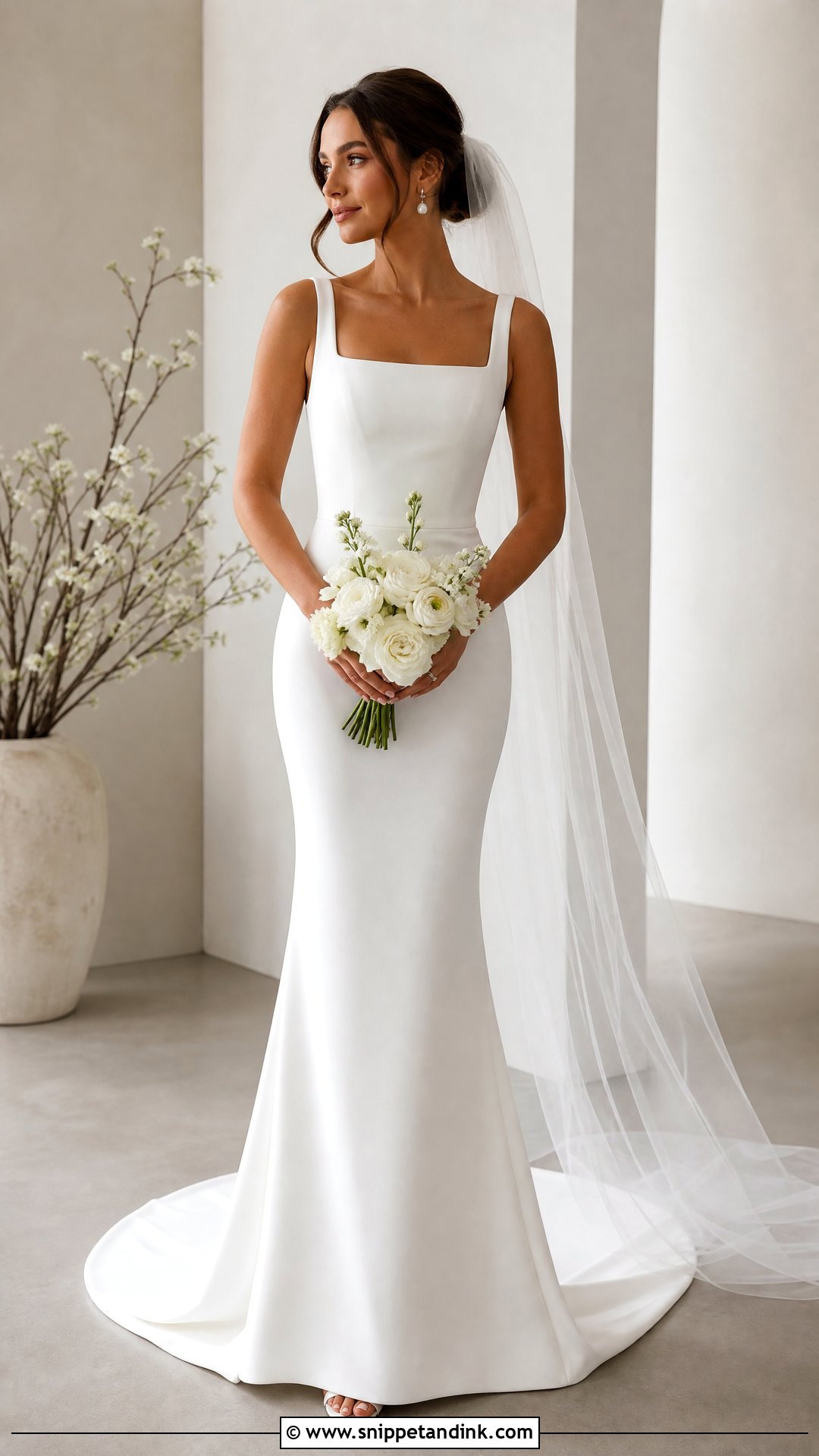
Crepe has a dry, matte surface and enough weight to skim the body rather than cling to it, which is why I reach for it when a bride wants clean lines with no shine. It sits well in sheath, trumpet and fit-and-flare shapes, and a square, bateau or long-sleeve neckline keeps it modern. The catch is that crepe reveals tailoring. Every dart and seam shows, so I only recommend it to brides ready to commit to proper alterations. Finish with pearl earrings, a smooth veil and minimal heels, and ask your seamstress to check the waist and hips while you’re seated as well as standing.
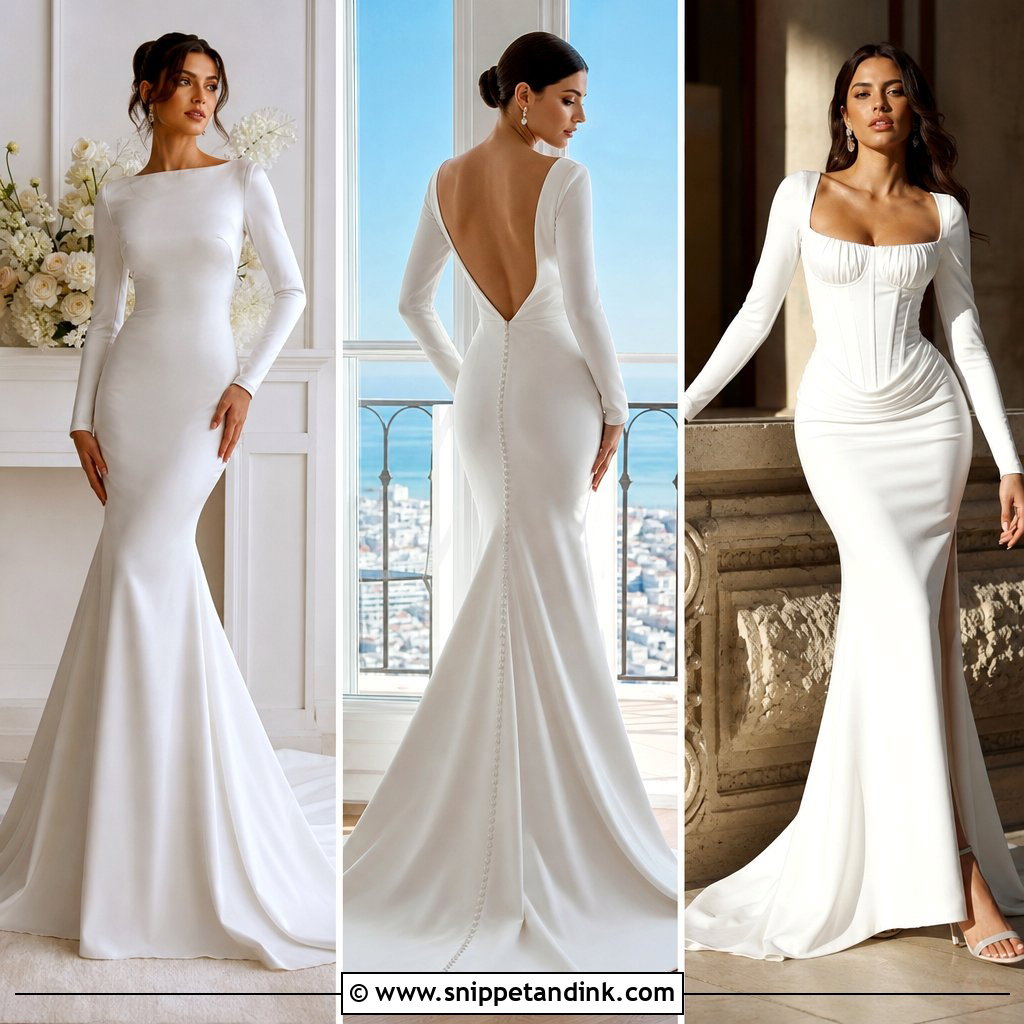
4. Fitted Long Sleeve Wedding Dress
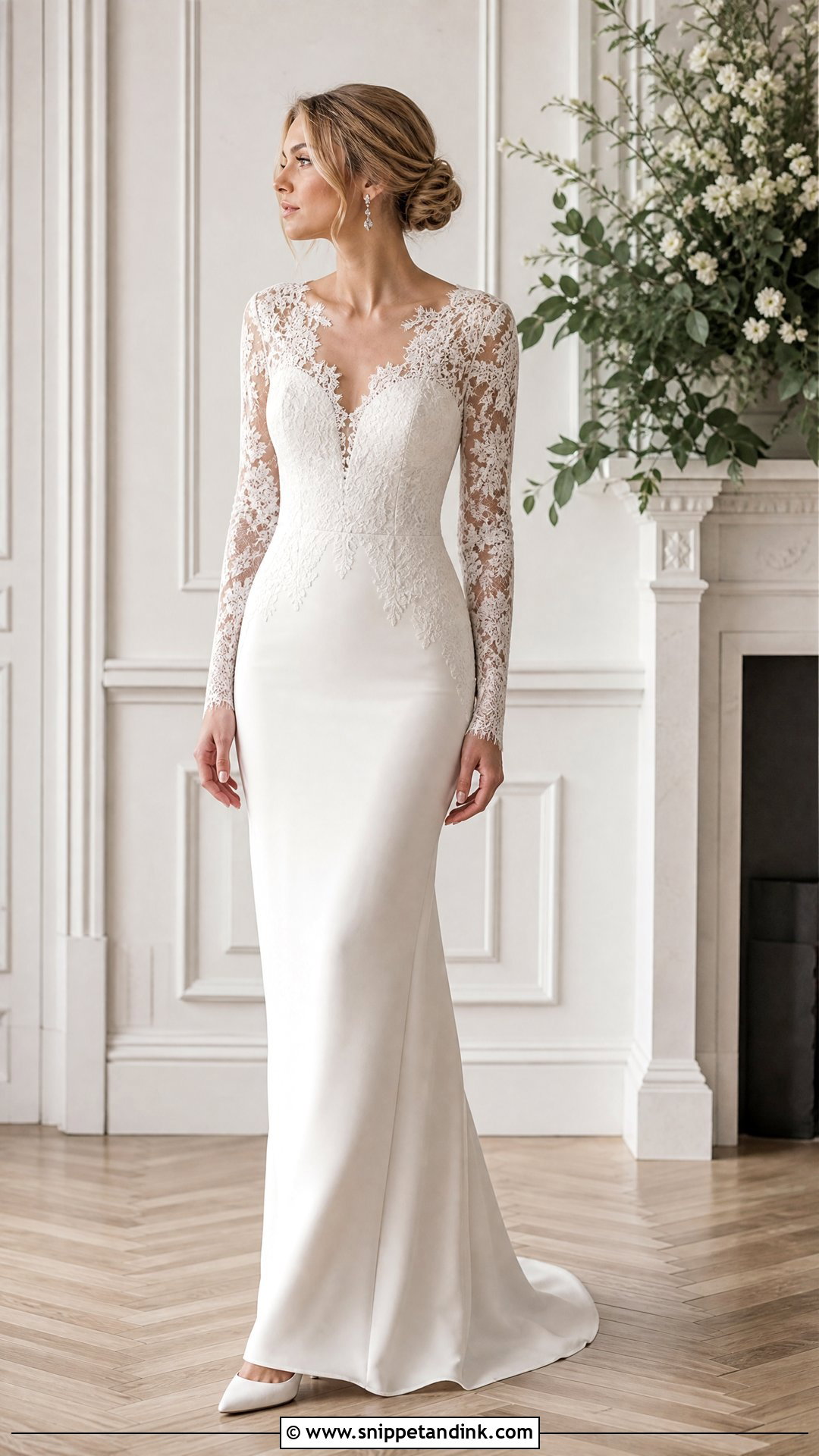
Sleeves change how much you can move, so I always have a bride lift her arms overhead and hug me at the first fitting. A fitted sleeve set too tight will ride up, or pull the bodice off the shoulder when you reach for someone. Lace sleeves feel softer and give a little; crepe or satin look sleeker but have almost no stretch. A high neck reads regal, while a deep V or illusion panel lightens the coverage. Pair it with closed-toe heels, small earrings and a low chignon, and leave the bracelets at home if the sleeves are detailed, because they snag lace at the cuff.
5. Fitted Off Shoulder Wedding Dress
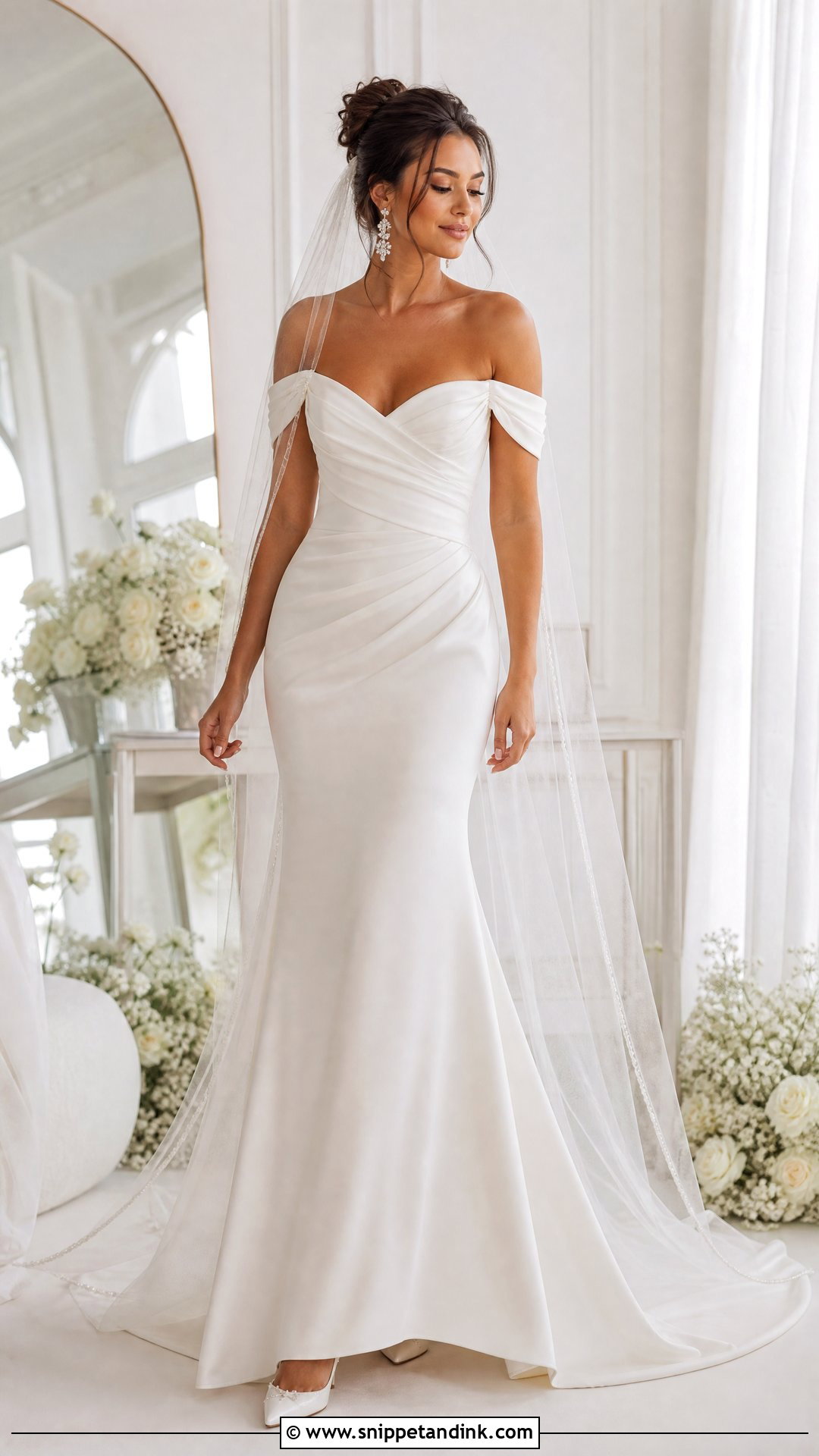
The off-shoulder line frames the collarbone, but it’s also the neckline that limits arm movement most. When the band sits on your upper arm, raising your hands above shoulder height drags the whole bodice with them. Lace, satin, crepe and mikado all work, and mikado holds the band’s shape best. I’d skip the necklace, wear statement earrings instead, and finish with a fingertip veil, soft waves and ivory heels. Try a slow first-dance hold at the fitting before you sign off on it.
6. Fitted Square Neck Wedding Dress
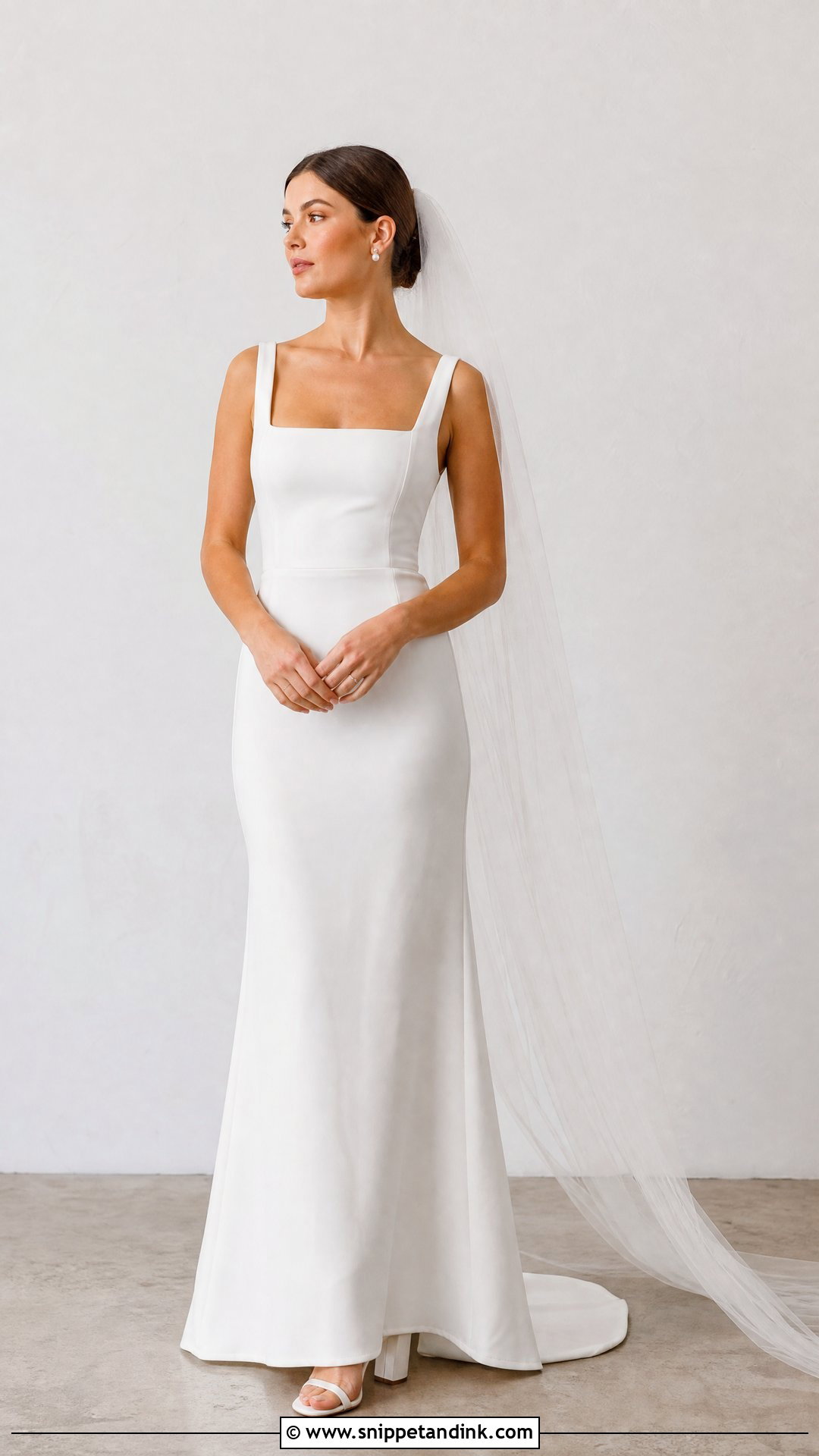
I often steer brides to a square neckline when they want a fitted dress that feels less revealing. The straight edge gives the upper body a structured frame and looks crisp in crepe, satin or stretch mikado. That edge depends on the straps, though. Thin ones tend to bow outward and let the corners gape, so go wider if you plan to dance. A smooth updo, pearl studs and block heels keep the outfit practical, and it sits well under a long veil since nothing at the neckline competes with the tulle.
7. Fitted Corset Wedding Dress
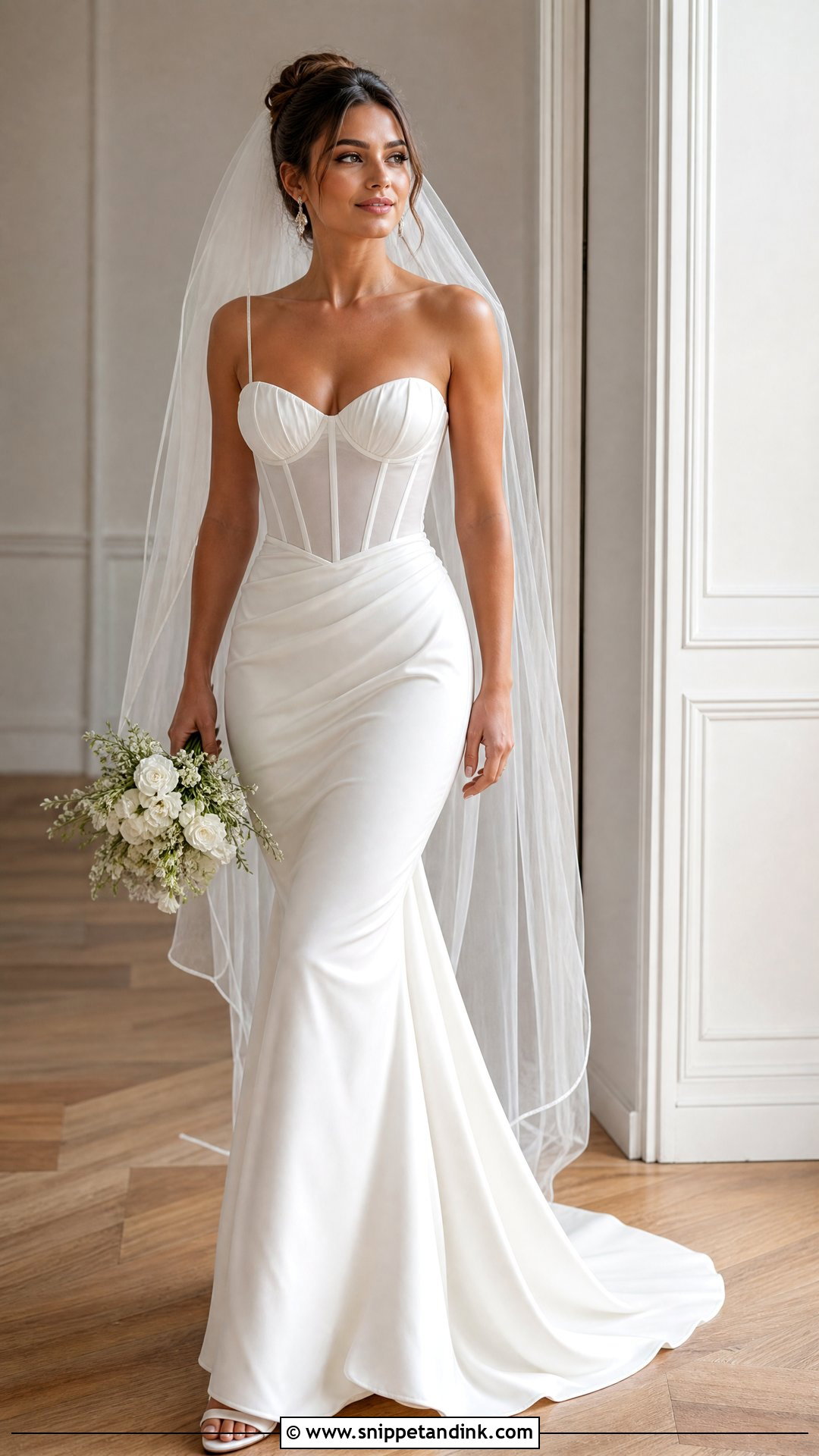
I talk every corset bride through one test: sit down, take a full breath and laugh. If the boning digs under the ribs when you do that, it will hurt by hour six. Corsets can show their boning on the outside or hide it in the lining for a smoother finish; lace looks softer, satin and crepe more modern. The structure is what lets a mermaid, trumpet or fit-and-flare skirt hang properly, so it’s worth getting right. Delicate earrings, a long veil and elegant heels are all it needs. Do your fittings in the same bra or no-bra setup you’ll wear on the day, because that changes where the boning lands.
8. Fitted Sheath Wedding Dress
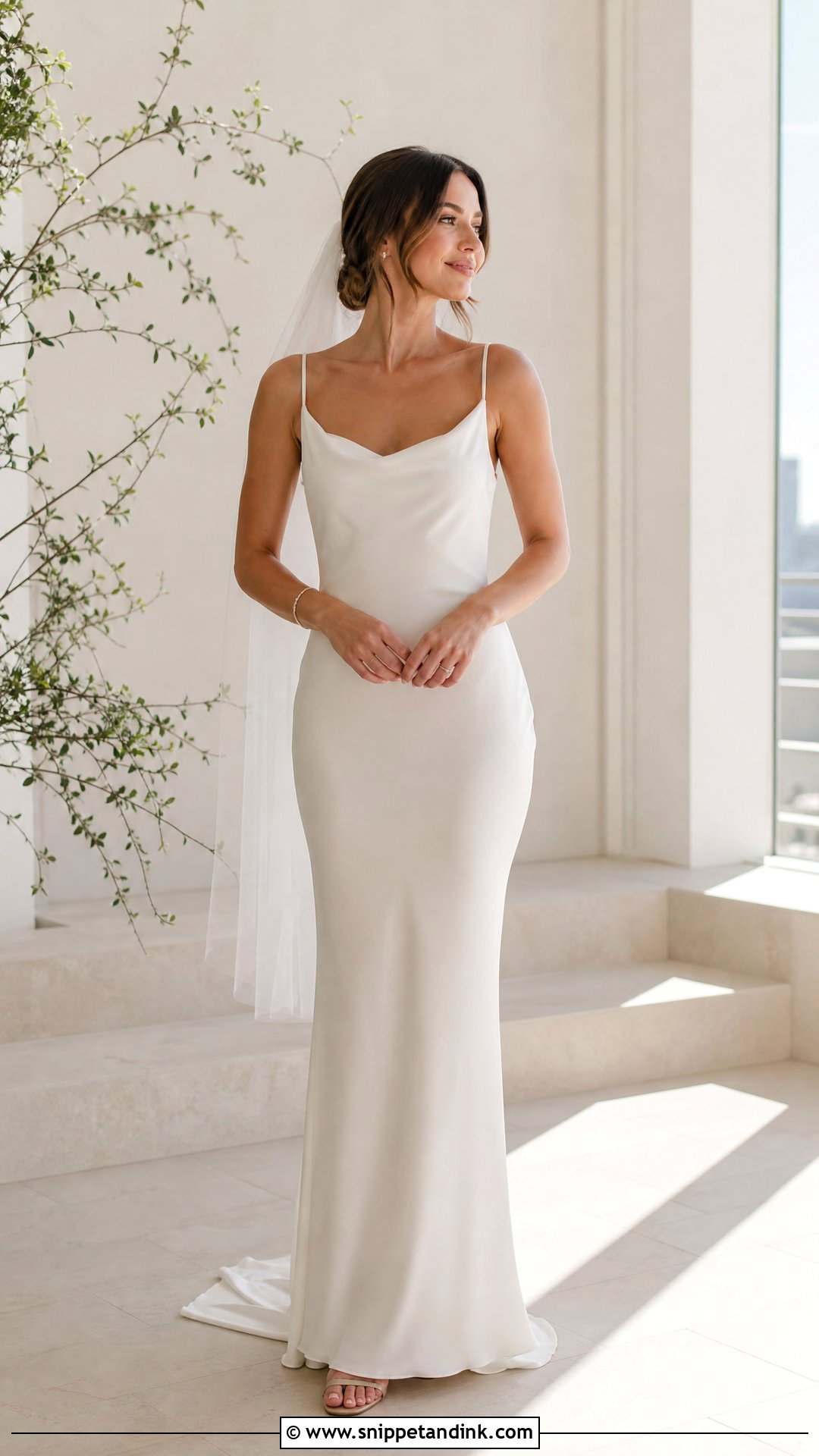
The sheath is the most wearable fitted shape I work with. It follows the body in a straighter line instead of flaring at the knee, so stairs, long walks and dancing are far easier than in a mermaid. Crepe, satin, silk and lace all suit it, and it sits comfortably at a beach, a garden, a courthouse or a modern reception. With no skirt volume to hide anything, underwear matters more here than in any other silhouette. Style it with barely-there heels, a soft veil and understated jewelry.
9. Fitted Trumpet Wedding Dress
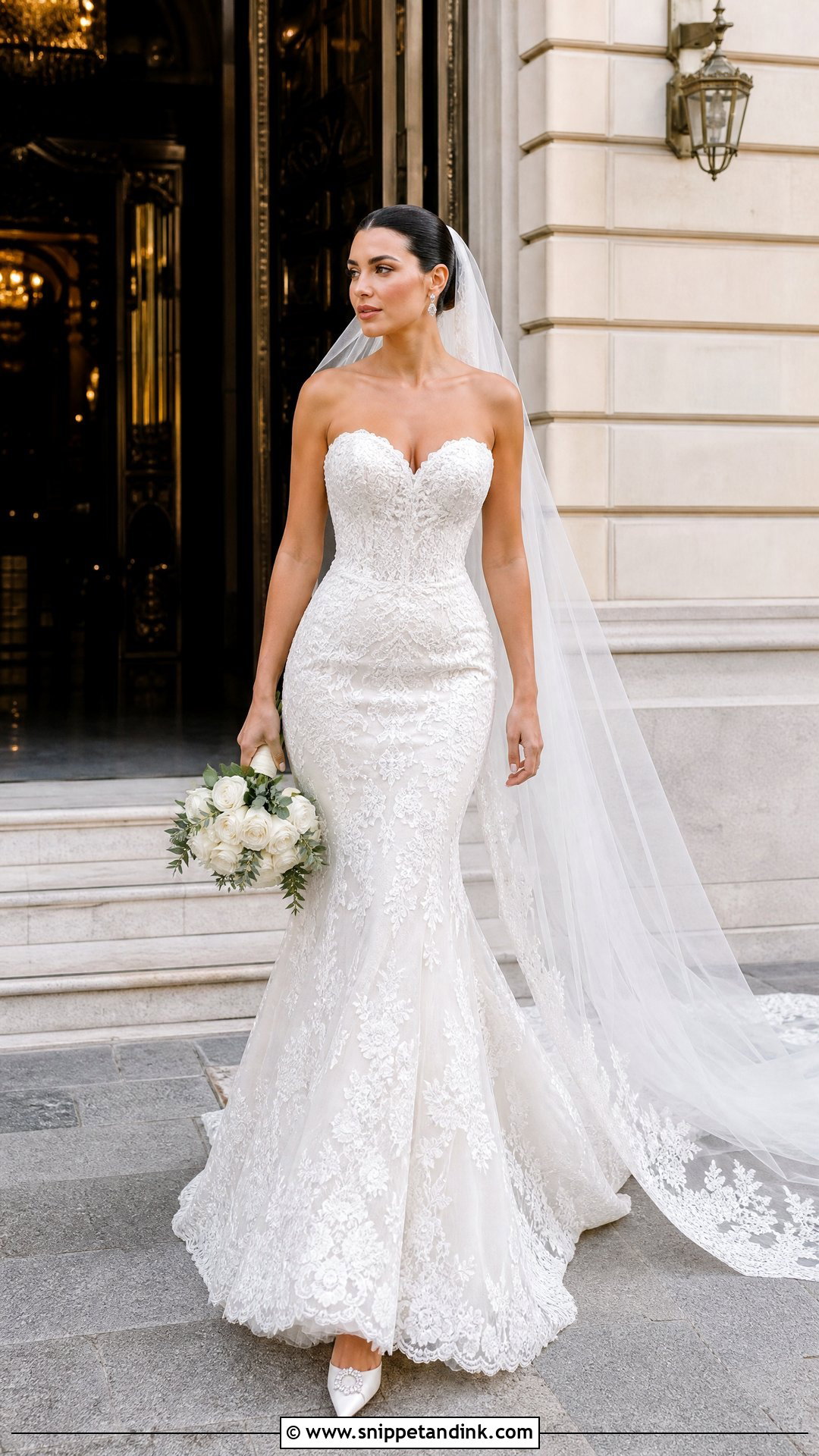
If a mermaid feels too restrictive, the trumpet is usually my answer. It hugs the bust, waist and hips, then starts to flare around mid-thigh, which leaves room for a natural stride while keeping the drama. Lace, satin, crepe and beaded fabric all work. For extra length through the body, look for vertical seams, a deep V or a smooth fabric with few breaks in the design. Pointed heels, a cathedral veil and simple earrings make it formal.
10. Fitted Beaded Wedding Dress
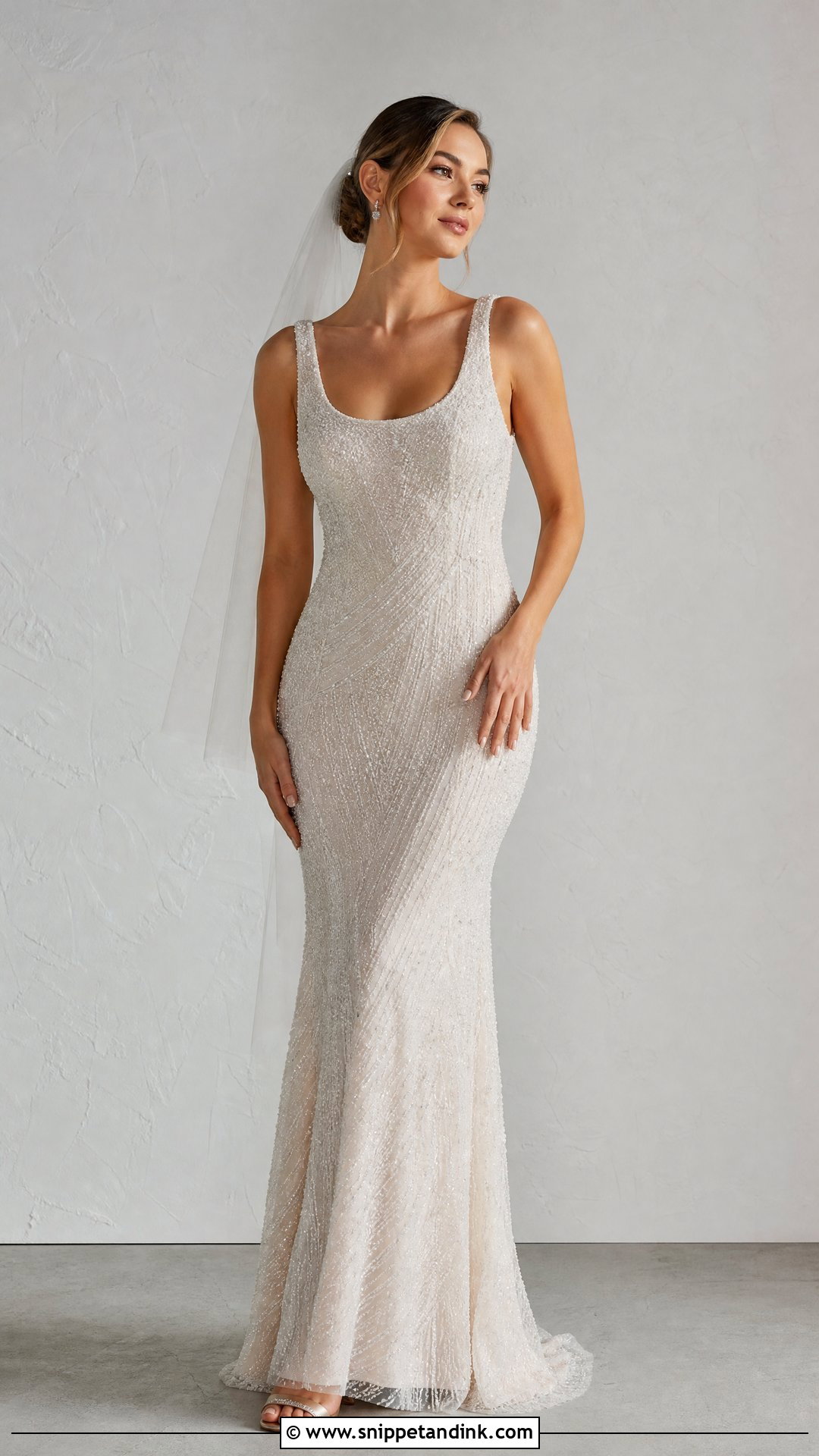
Beading catches light in a way photographers love, especially at evening and ballroom weddings, and it can trace the neckline, define the waist or cover the whole gown. What brides underestimate is the weight. A fully beaded fitted dress can pull on the shoulders and drag at the hem over a long day, so I ask a bride to wear it for ten minutes in the shop before deciding. Keep the accessories plain: metallic or ivory heels, small crystal earrings and a simple veil. Check the underarm seams too, where beads can scratch skin once you start dancing.
11. Fitted Backless Wedding Dress
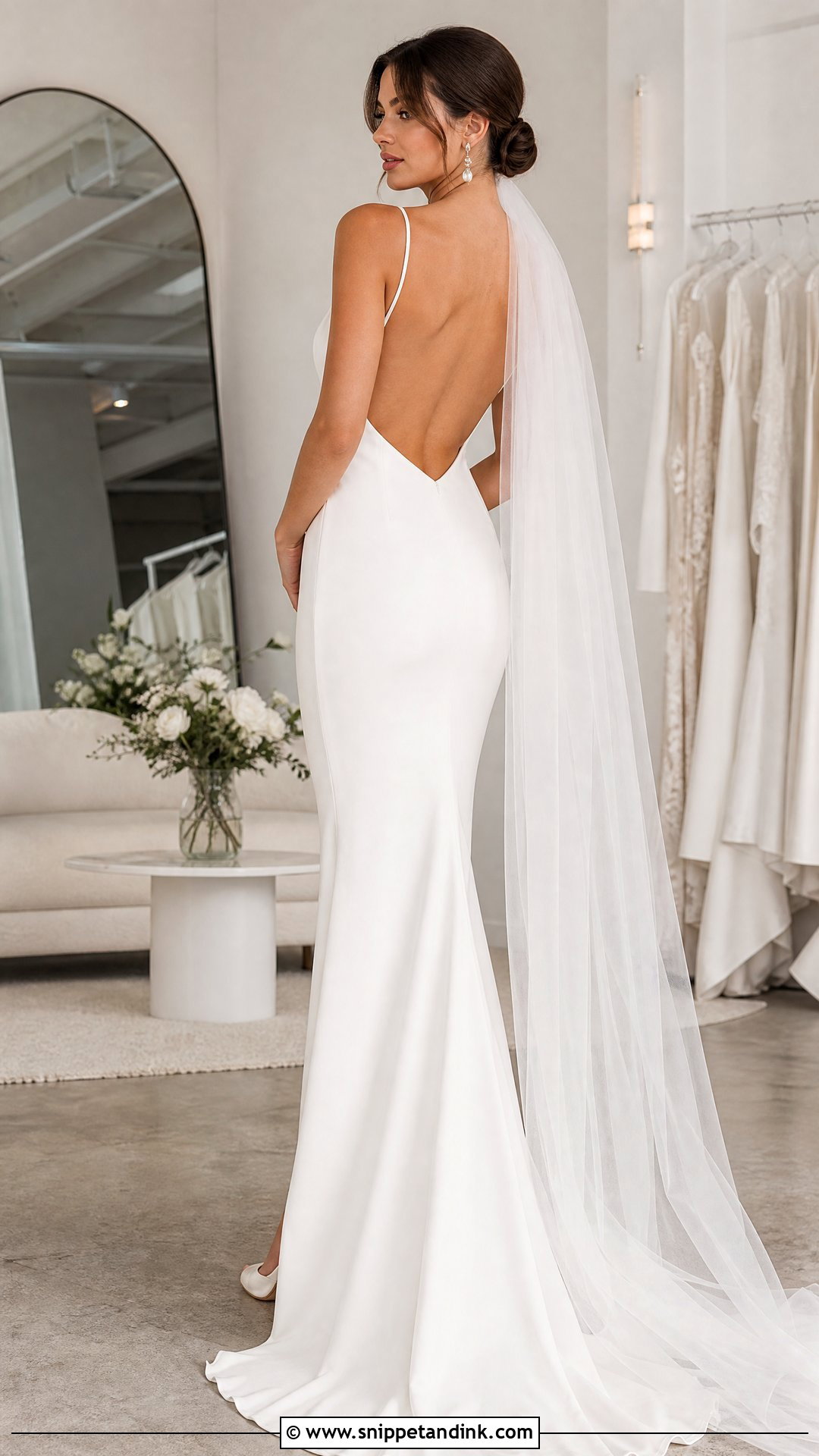
The open back is often the view guests see most during the ceremony, so it carries the dress as much as the front does. A fitted backless wedding dress works in crepe, satin, lace and silk, and pairs well with a sheath or fit-and-flare skirt. Support is the real question. I look for built-in cups or internal structure first and treat adhesive support as a backup, because tape can loosen with heat and hours of wear. Wear an updo or swept-back waves so the back stays visible, and choose a sheer veil that doesn’t hide it.
12. Fitted High Neck Wedding Dress
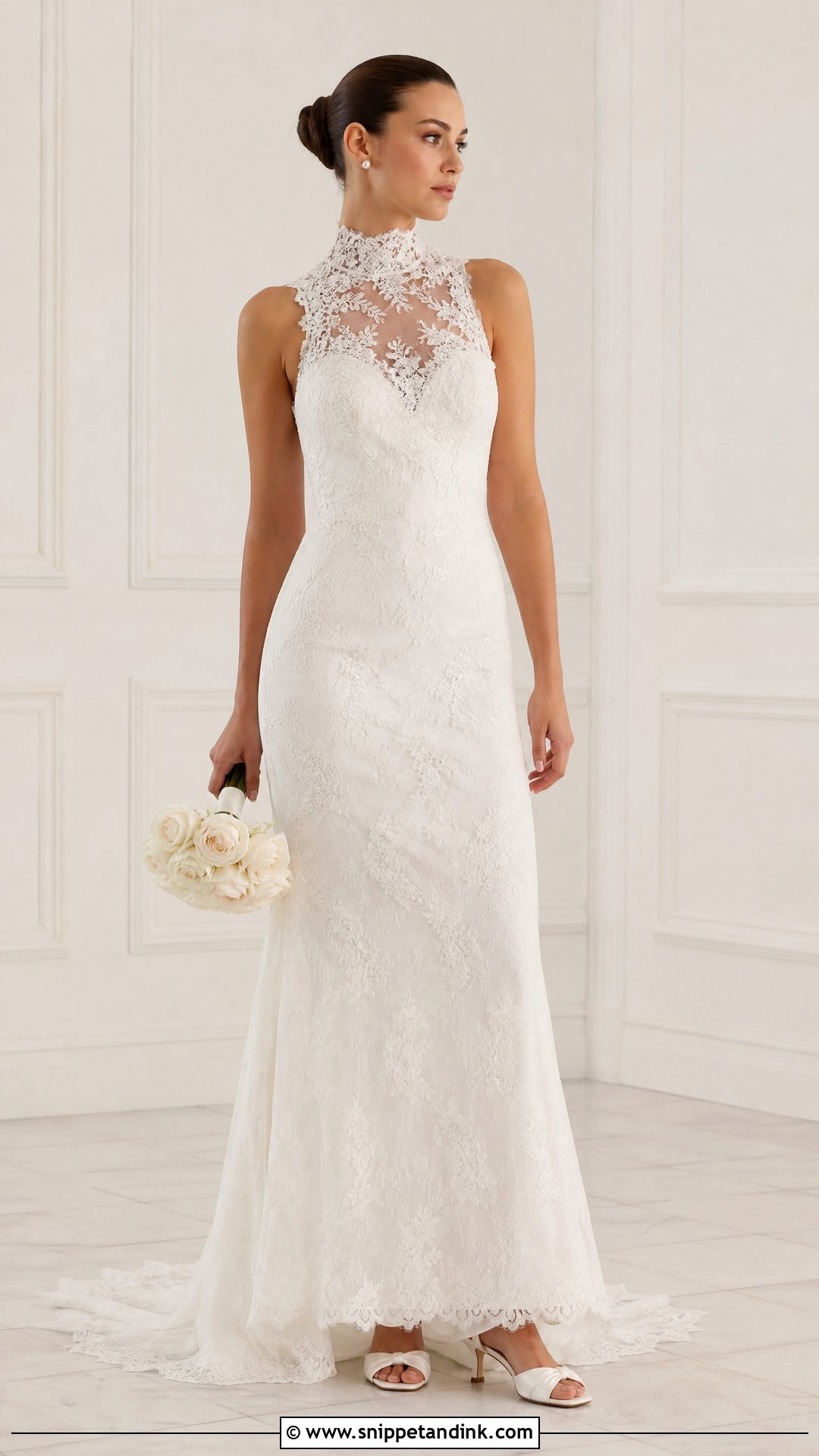
A high neckline frames the face and lets the fitted body do the shaping, so the gown never looks heavy despite the coverage. Lace versions lean vintage; crepe or satin look cleaner. The fit at the throat is the detail I check twice, since a collar that’s even slightly snug feels worse as the room warms up. It pairs with long, cap or no sleeves. Skip the necklace, choose pearl studs or refined drops, and finish with a sleek bun, a low heel and a long veil.
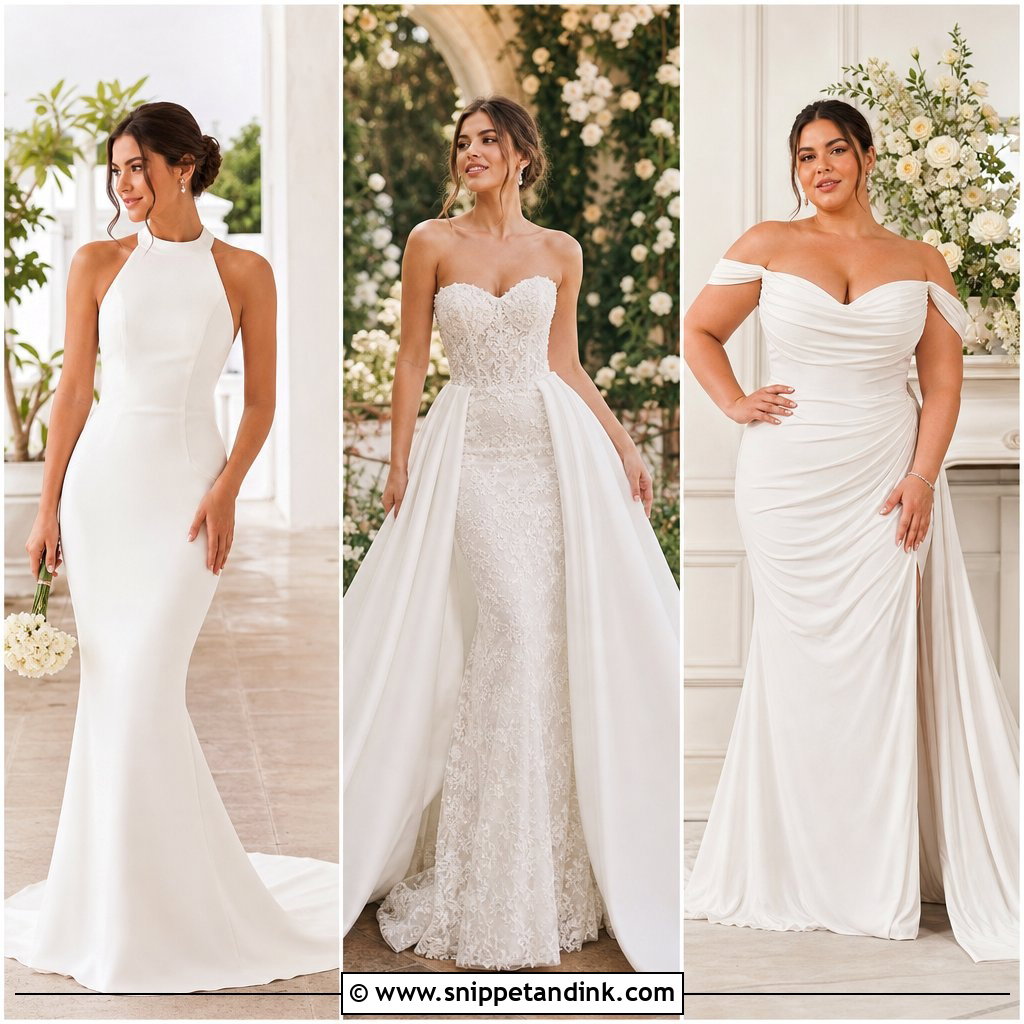
13. Fitted Halter Wedding Dress
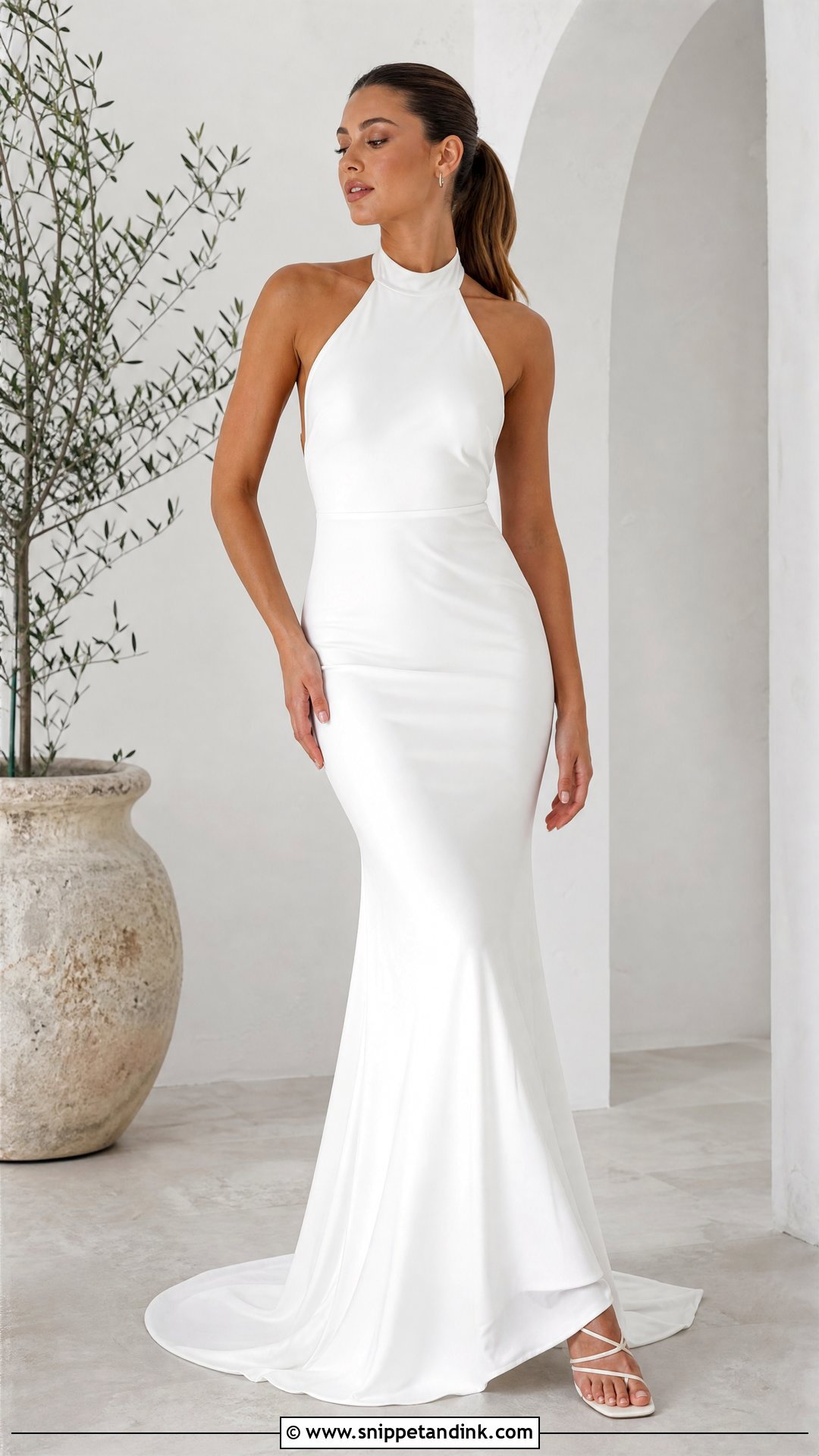
A halter draws the eye up through the shoulders and gives support without traditional straps. It reads minimal in crepe, glamorous in beading and softer in lace, and the fitted skirt balances the neckline into a clean hourglass effect. The weak point is the neck itself. A halter that carries the bodice’s weight from a single tie can ache by the reception, so I prefer versions with a back band or internal corset that shares the load. Earrings instead of a necklace, a smooth ponytail or low bun, and strappy heels are all it needs.
14. Fitted V Neck Wedding Dress
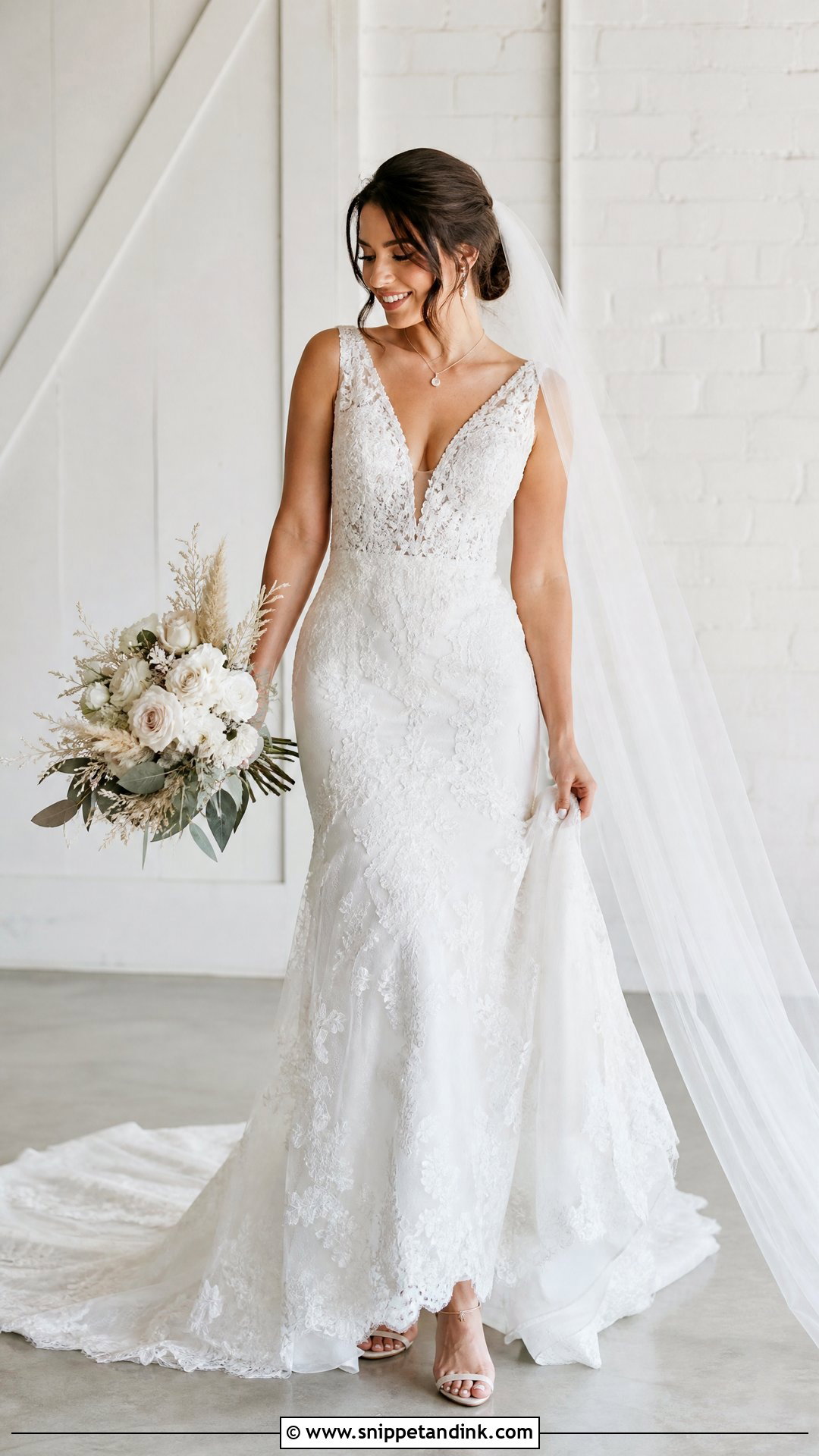
A V neckline pulls the eye vertically, which makes the whole silhouette look longer. Go deep for a bold look, or keep it shallow if you want something easier to wear for twelve hours. It sits well on fitted lace, crepe, satin and tulle-overlay gowns. My concern with a deep V is always movement, so I have a bride lean forward and hug before I approve it. If it shifts, built-in support or an illusion mesh insert fixes it without changing the look. A small pendant suits a plain neckline; lace or beading needs no necklace at all.
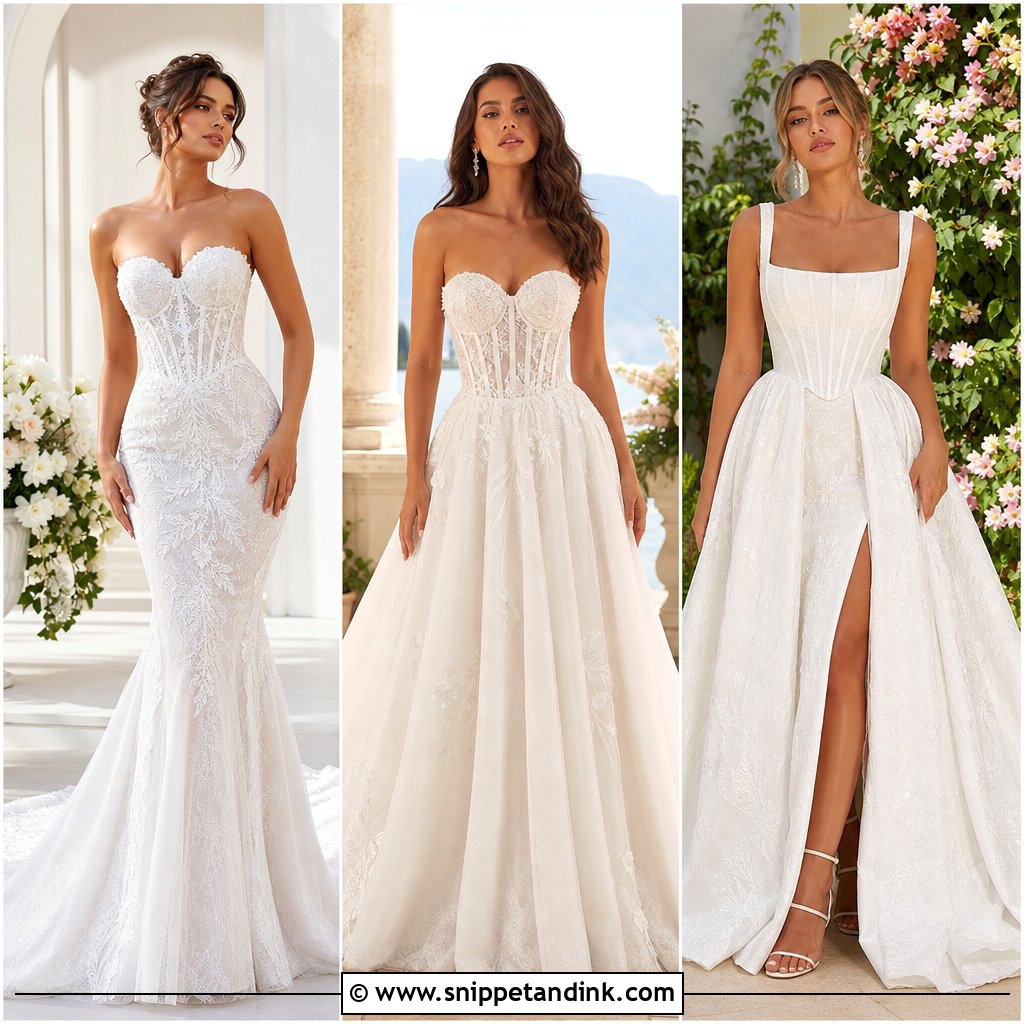
15. Fitted Wedding Dress With Detachable Sleeves
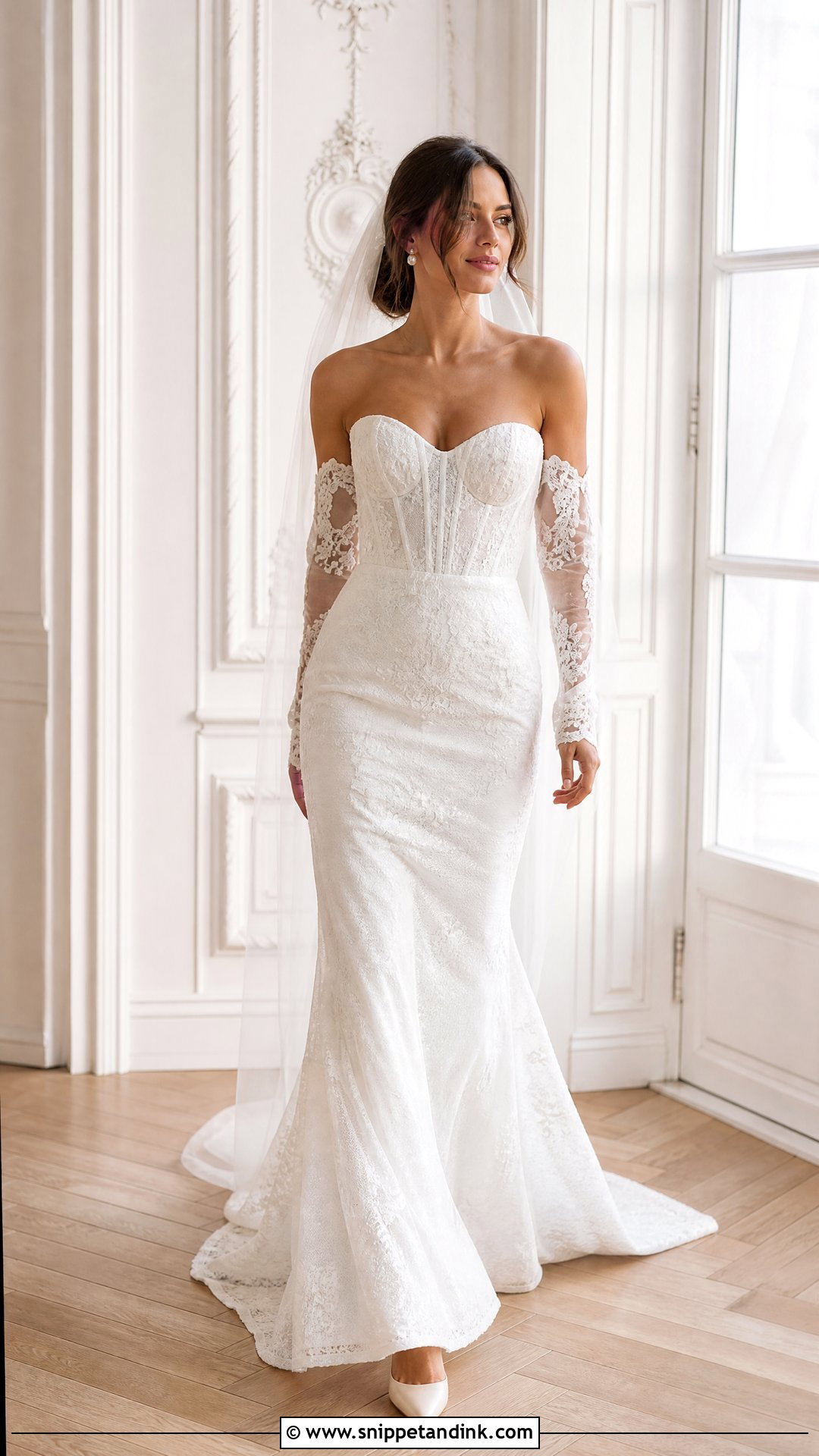
Two looks, one dress. Detachable sleeves let you stay covered for the ceremony, portraits or a cool evening, then strip back to a strapless, sweetheart or corset bodice for the reception. Lace sleeves feel romantic, satin or tulle more modern, and the fitted base keeps the silhouette clean either way. Most attach with hooks, snaps or tiny buttons at the bodice, so practice taking them off with whoever will help you on the day. Choose a veil that suits both versions, and keep jewelry simple so nothing catches on the sleeve edges.
16. Fitted Wedding Dress With Slit
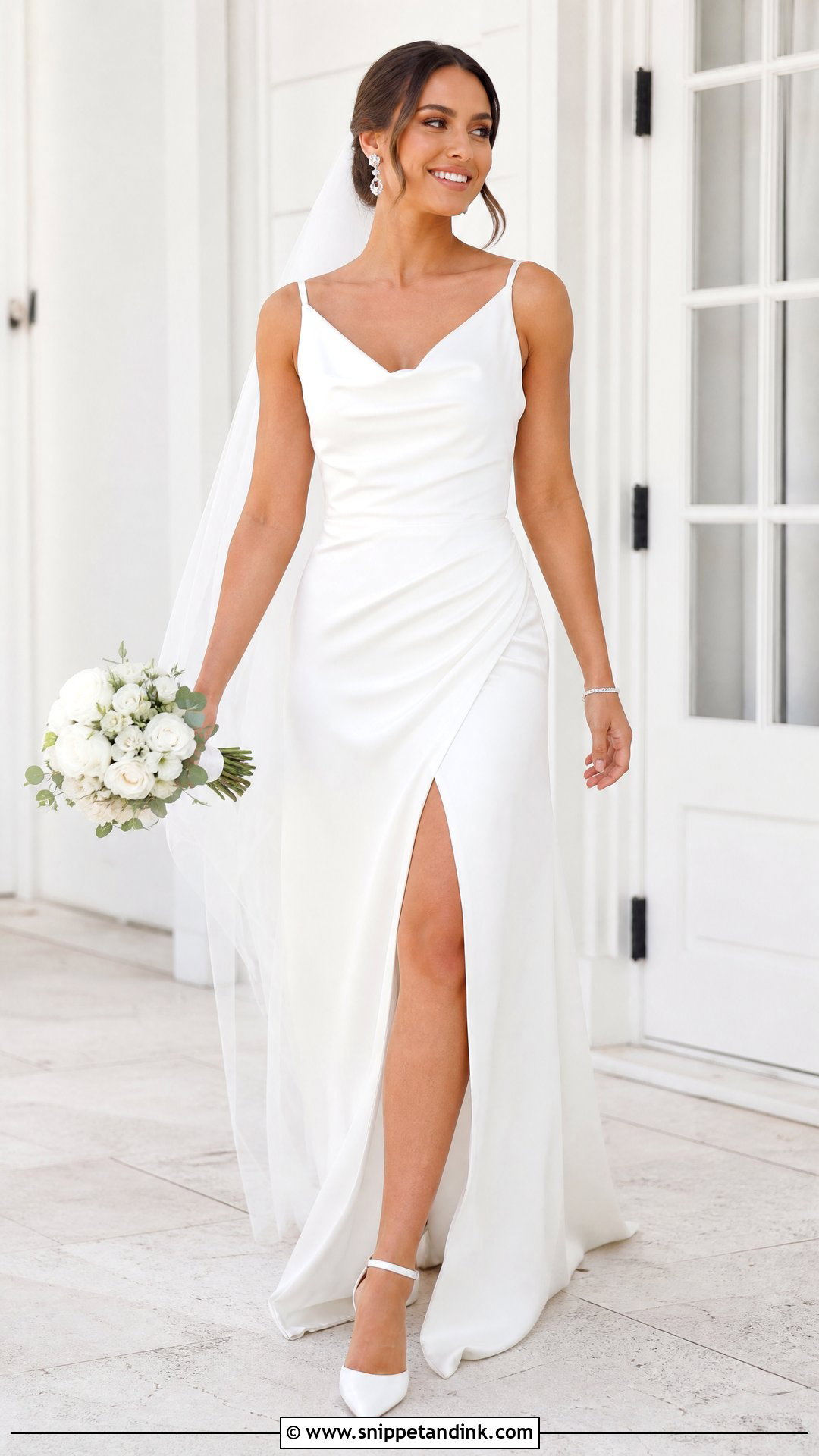
A slit is the most practical upgrade on a narrow fitted skirt, because it gives you a full stride without losing the sleek line. It can sit at the front or run up the side, depending on how much leg you’re comfortable showing, and it suits satin, crepe and minimal gowns best. At fittings I watch the slit while the bride walks. It should open naturally with each step and fall closed when she stands; if it pulls open across the hips, the skirt above it is too tight. Your shoes will show, so choose them with care, and keep the earrings, bracelet and veil simple.
17. Fitted Minimalist Wedding Dress
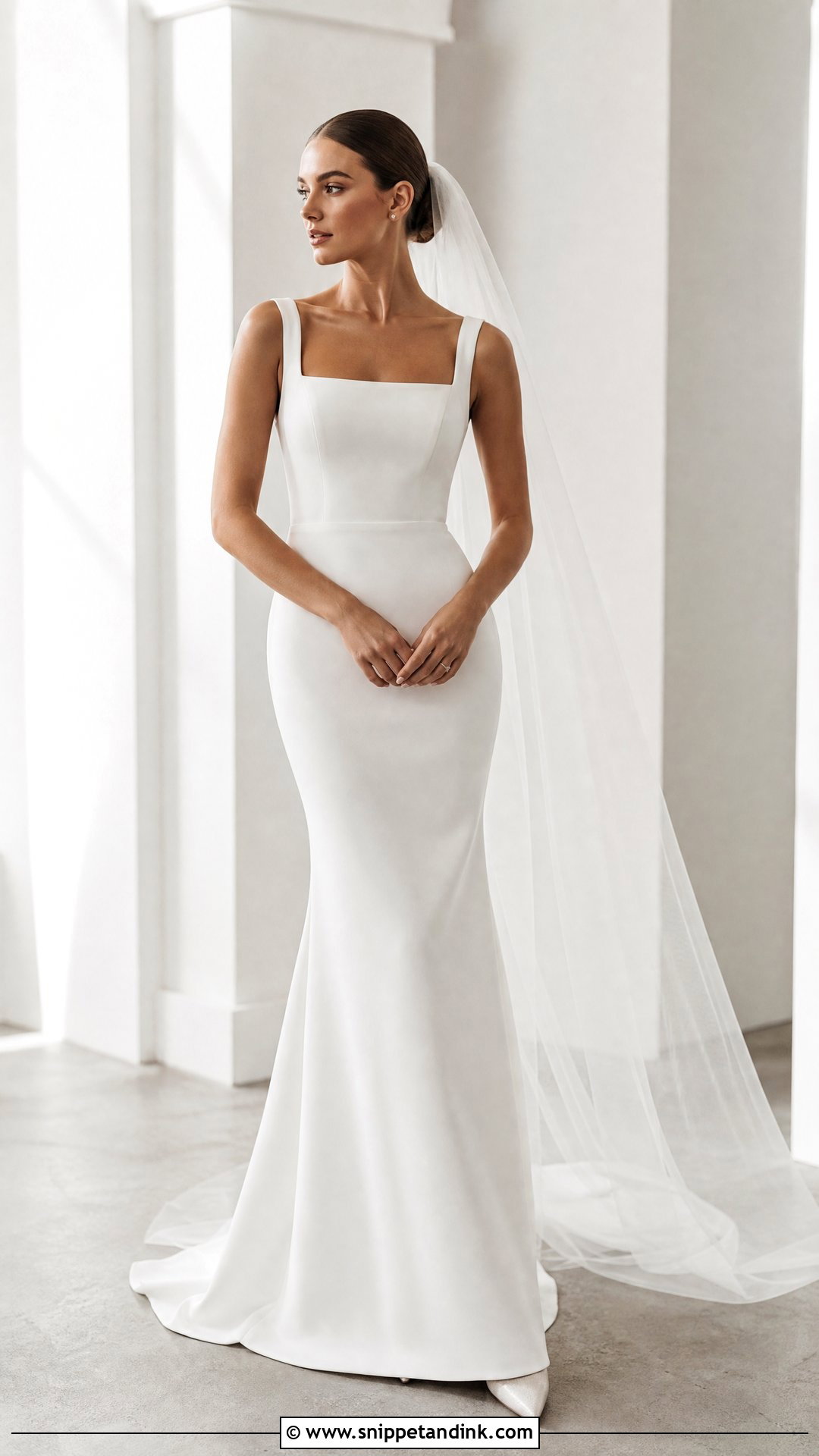
With no lace or sparkle to carry it, a minimalist gown is entirely about the cut and the cloth. A plain crepe sheath, satin trumpet or structured strapless dress looks sharp only when the tailoring is precise, because every small pull shows. This is the dress least likely to date in your photos. Style it with pearl studs, a sleek veil, pointed heels and a neat bun. If you want one standout detail, pick a square neckline, an open back or a long train, and let that single choice do the talking.
18. Fitted Boho Lace Wedding Dress
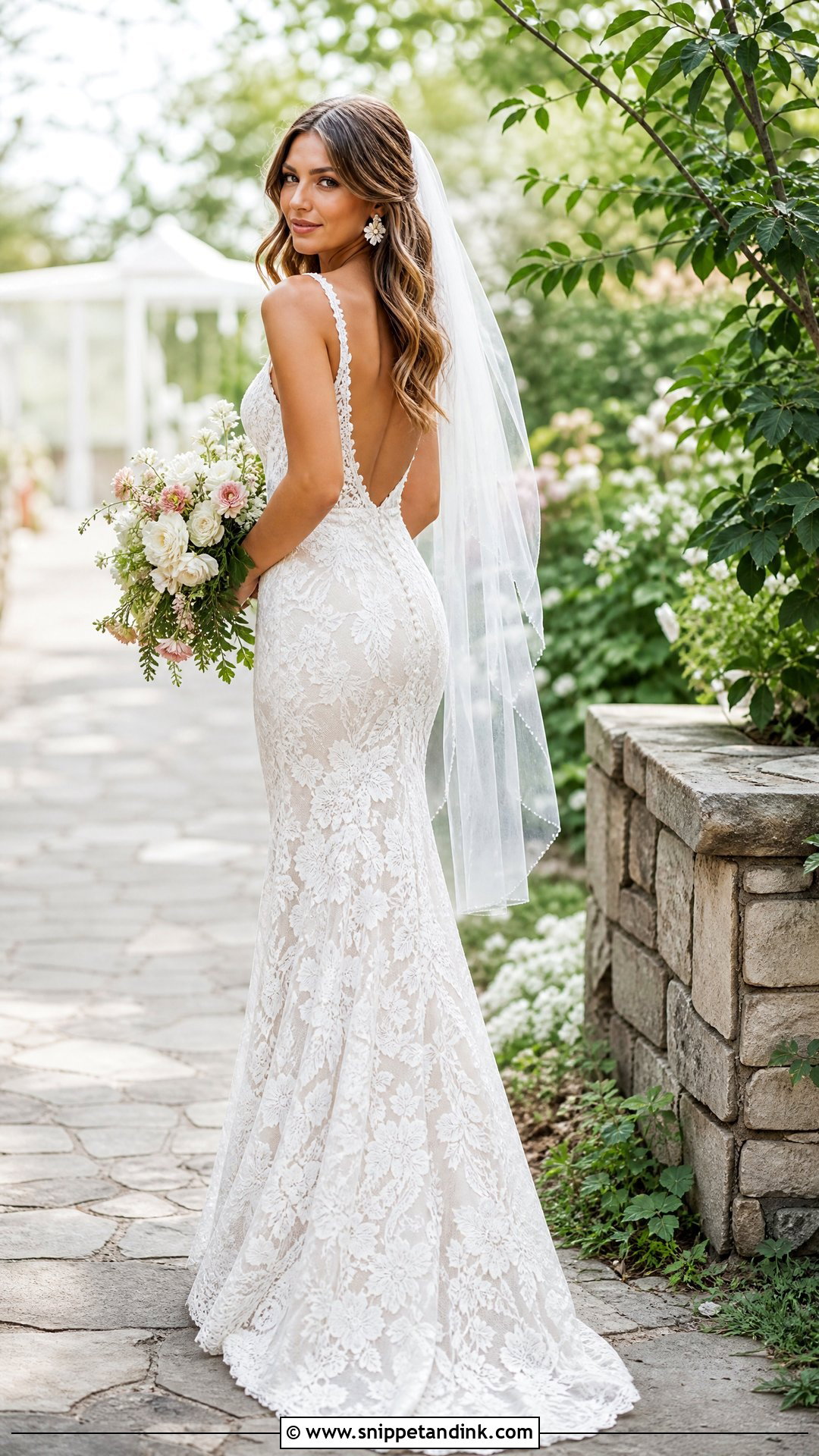
Boho lace needs a softer shape than a mermaid, so I usually point brides to a sheath or a gentle fit-and-flare that follows the body without stiffness. Look for floral lace, crochet-style texture, flutter sleeves or a low back. Loose waves, delicate earrings, block heels and a light veil keep it relaxed. On grass or sand, test your shoes outdoors first, since stilettos sink into lawns. Lace hems also pick up grass stains and burrs, so a bustle or a slightly shorter hem saves the dress for the reception.
19. Fitted Plus Size Wedding Dress
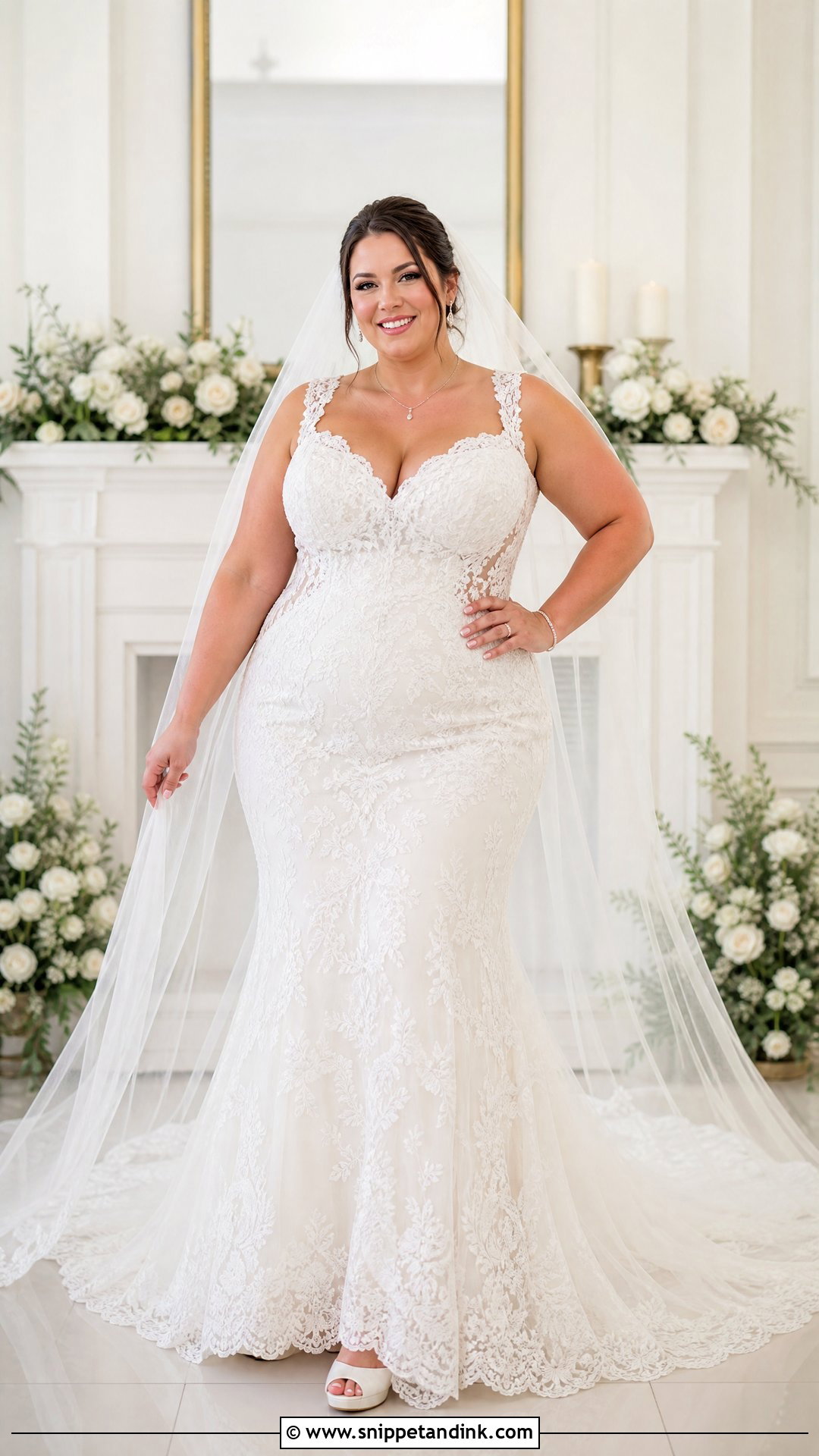
Structure is everything in a fitted plus size gown, and I look for it before I look at the lace. A supportive bodice, wider straps, stretch lining and seams that shape without squeezing let you move all day without adjusting. Fit-and-flare and trumpet cuts are often the most comfortable, because they define the waist and hips but release below the thigh. Lace, crepe and satin all work. Choose whichever neckline makes you feel most like yourself, then add supportive heels, balanced jewelry and a veil that matches the dress. The aim is to celebrate the body, never to hide it.

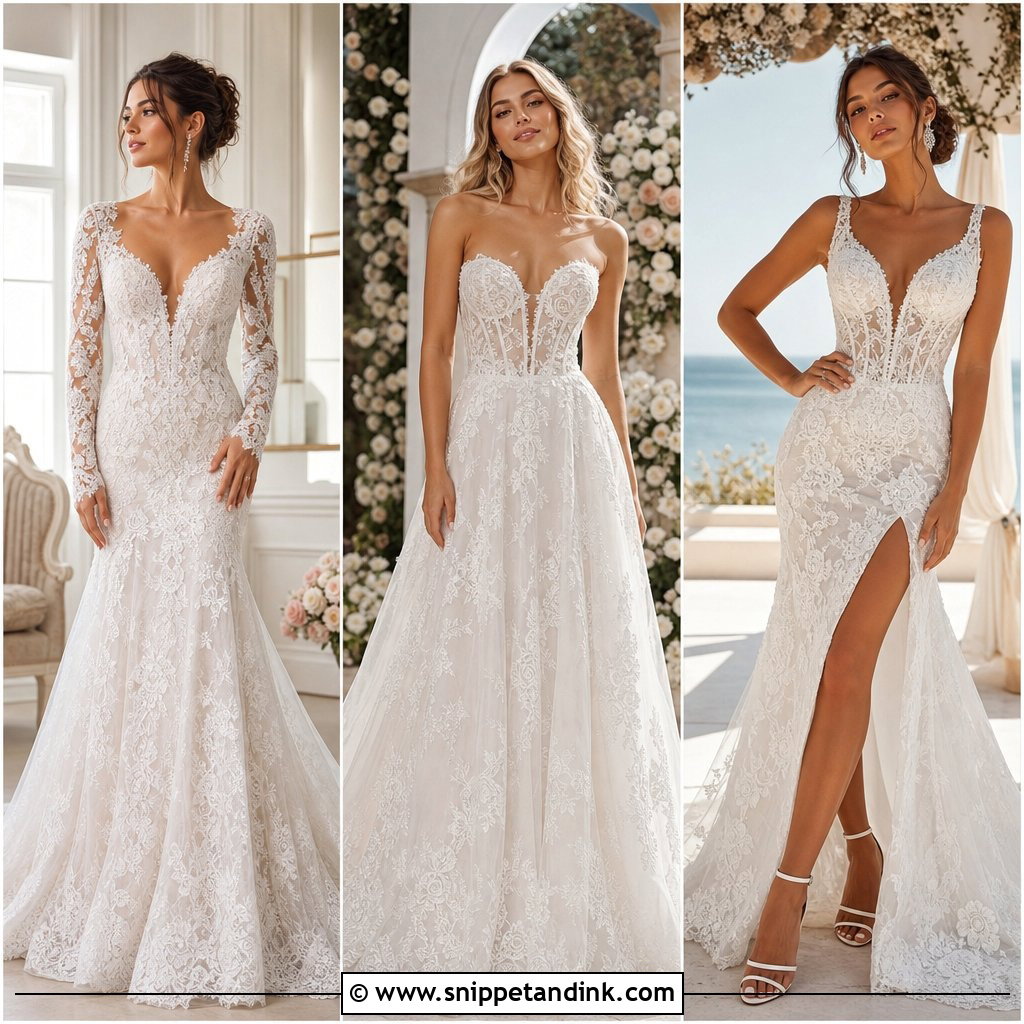

20. Fitted Petite Wedding Dress
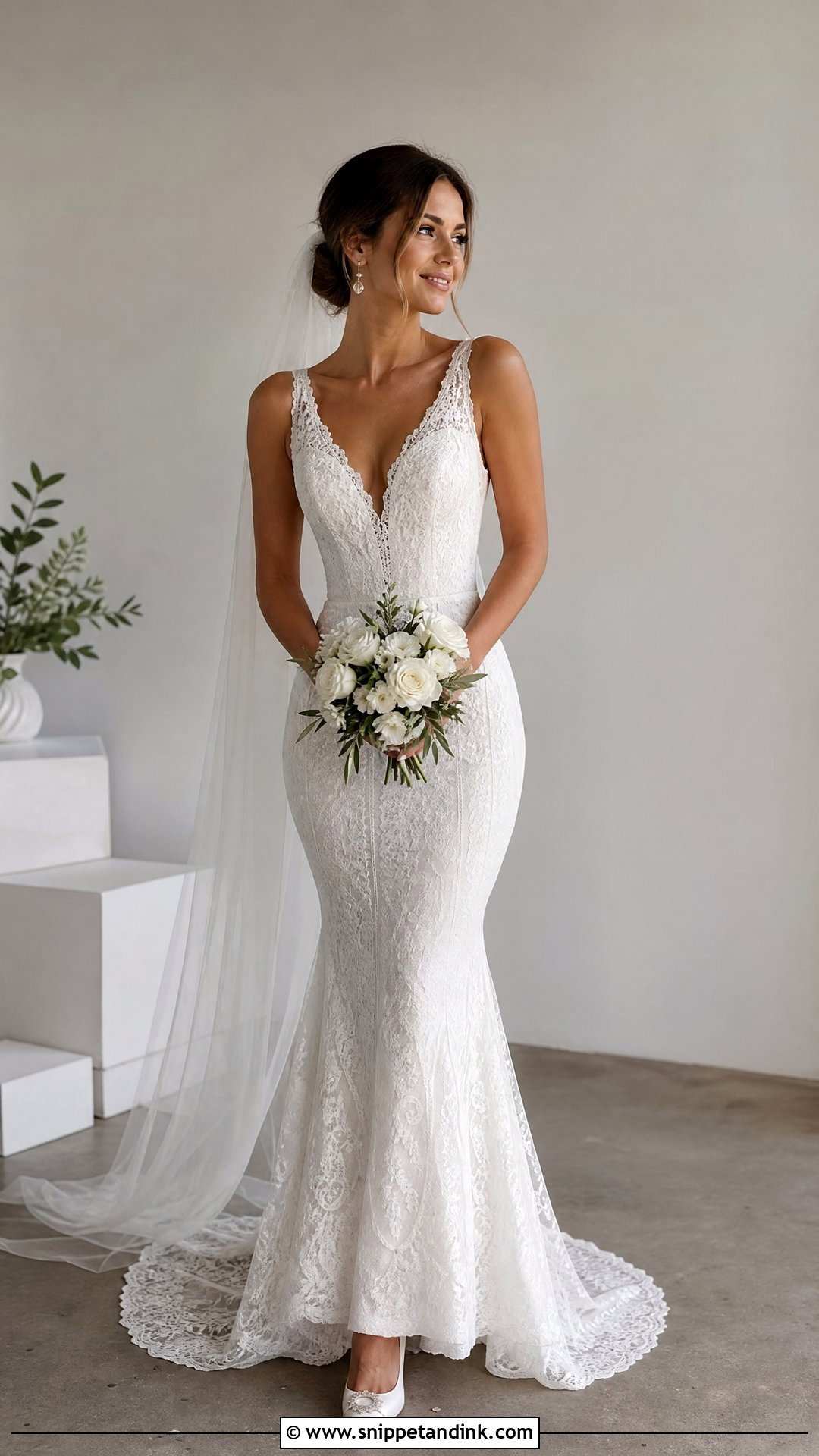
A fitted petite wedding dress has one job: lengthen the body without swallowing the frame. Sheath, trumpet and soft mermaid cuts keep the line narrow, while heavy fabric pooled at the hem makes you look shorter. A V neckline, vertical lace placement, a slightly raised waist seam or a simple train all help. The alterations that matter most are the hem, the waist position and, on a mermaid, the flare point, which often needs lifting so it sits at your knee rather than halfway down your calf.
21. Fitted Wedding Dress With Overskirt
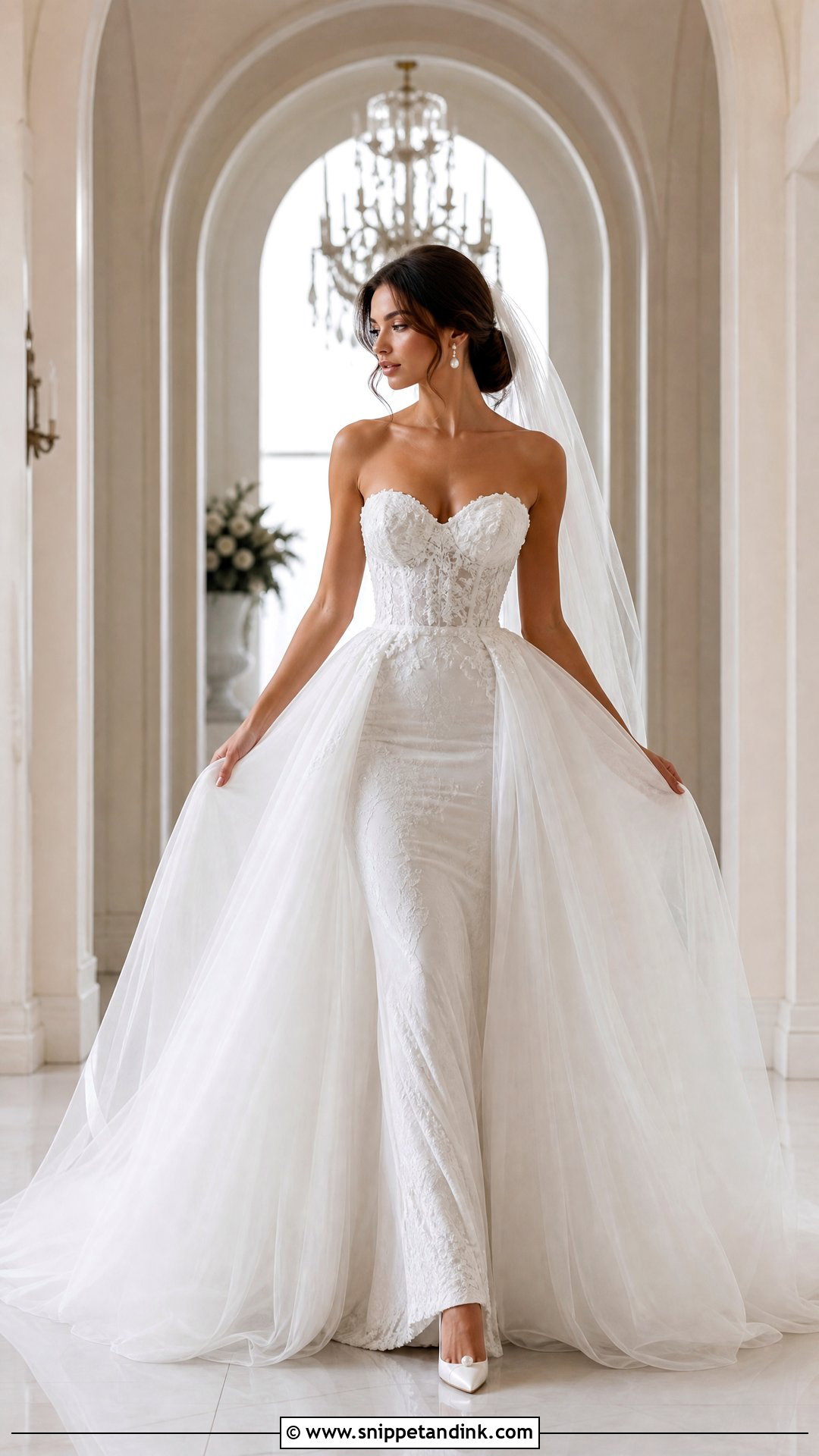
A fitted wedding dress with an overskirt gives you a grand ceremony entrance and a sleeker silhouette for dancing. The base can be a sheath, mermaid or trumpet, while the removable skirt adds volume: tulle for softness, satin for structure, lace for romance. Overskirts usually close with hooks or a hidden zip at the waist, and that join can show through a thin base fabric, so check it from the side in the mirror. Practice the removal with your helper at least once. It takes a few fiddly minutes the first time and much less after.
22. Fitted Tea Length Wedding Dress
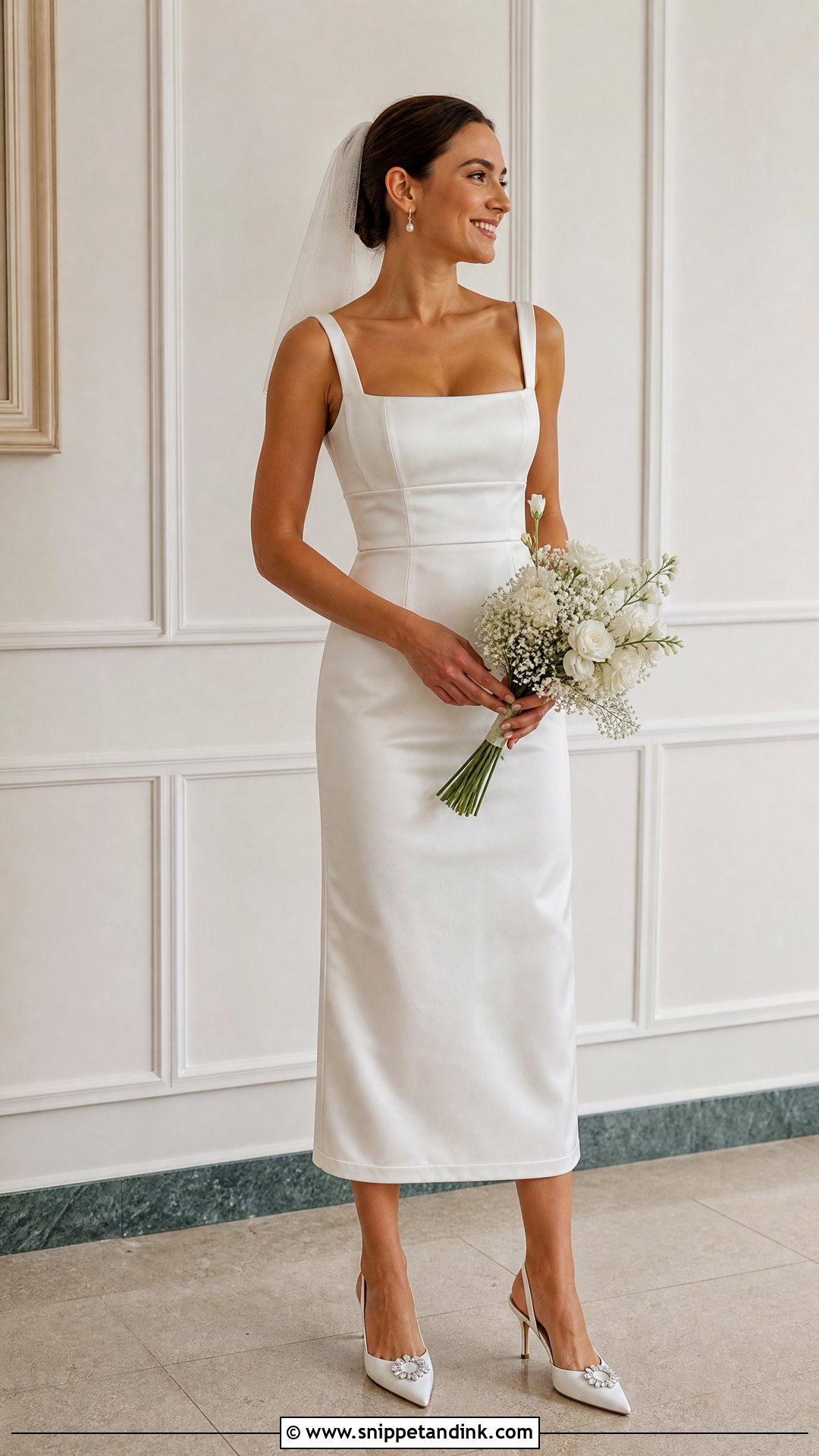
Tea length falls between the knee and the ankle, which makes it one of the easiest fitted styles to move in. It suits courthouse ceremonies, elopements and receptions, or anyone who wants something less traditional. A fitted bodice with a slim or softly flared skirt gives structure without weight, and satin, lace and crepe all work. The hem is the tricky part. It has to land at a flattering point on the leg, usually just below the widest part of the calf, so bring your exact shoes to every fitting. They’re on show, so pumps, slingbacks or embellished heels earn their place, with pearl earrings and a short veil or headband.
23. Fitted Short Wedding Dress
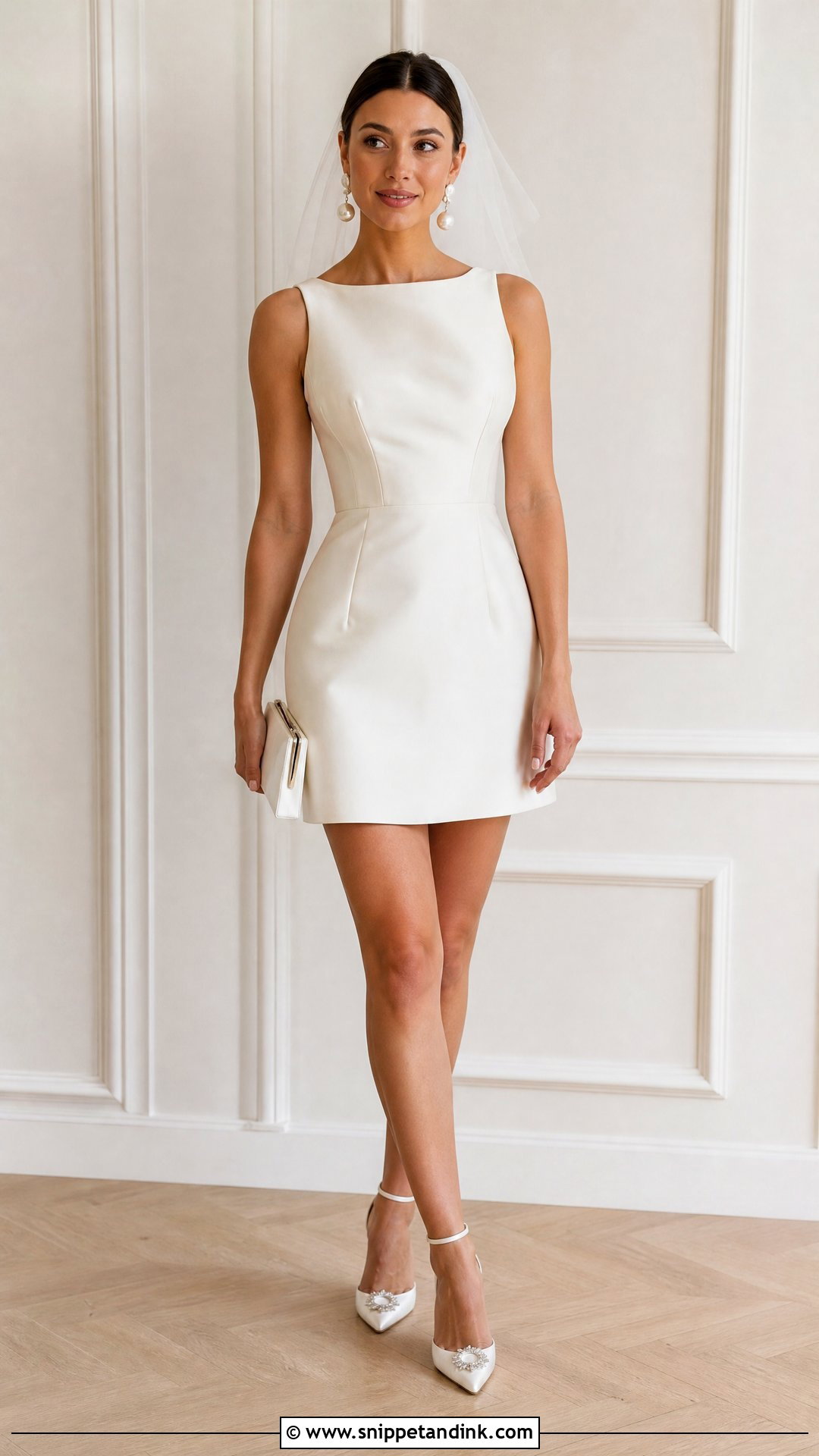
Short and fitted works for a civil ceremony, a reception change or an after-party, whether that’s a structured mini, knee-length lace or a tailored blazer dress. With so little skirt, the fit through the bust, waist and hips is the whole dress. I always check how the hem rides up when the bride sits, because a short skirt that’s tight across the hips will creep higher every time. Standout heels, pearl earrings, a small clutch and a short veil or bow make it read bridal.
24. Fitted Wedding Dress With Train
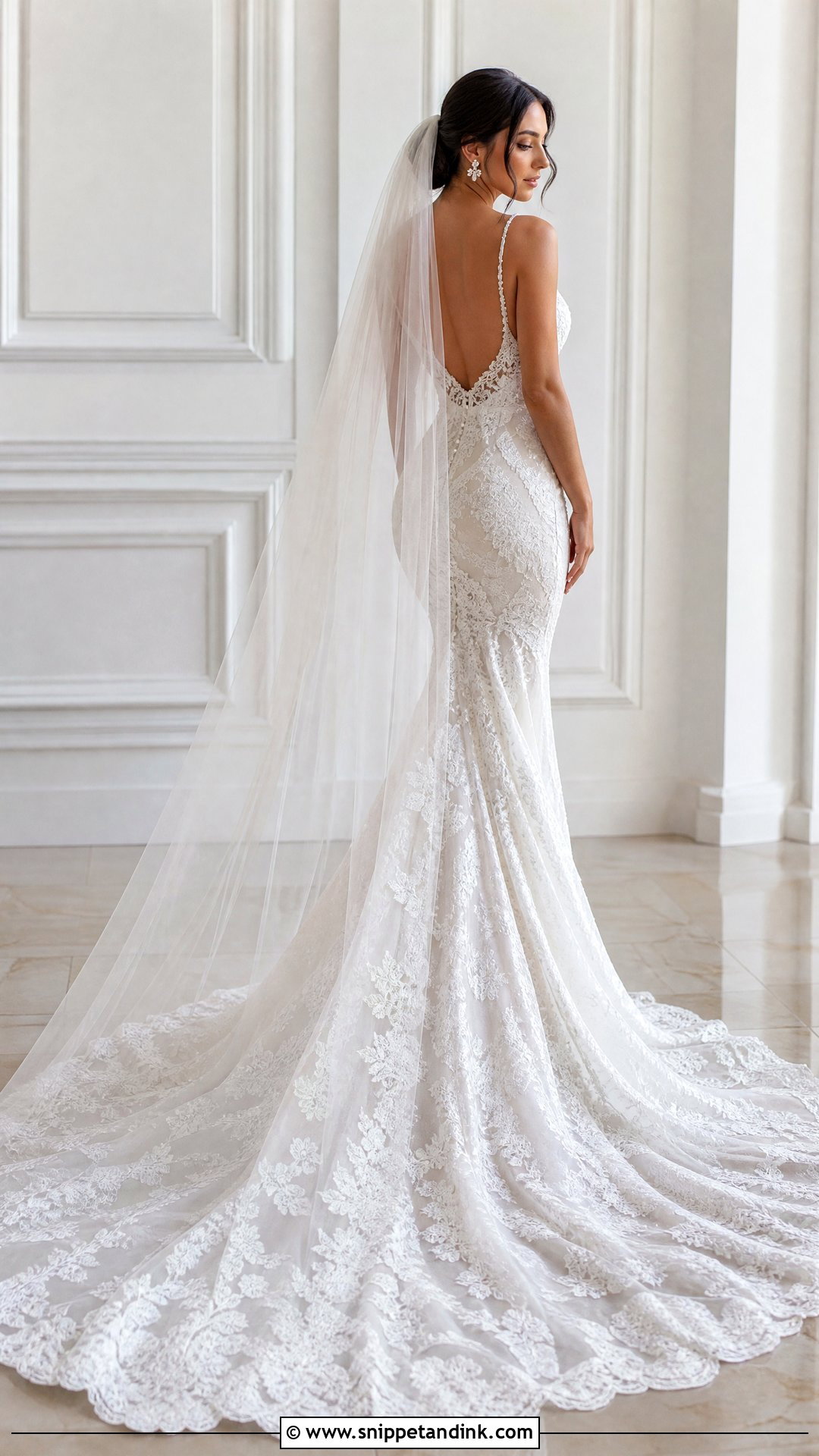
A fitted wedding dress with a train keeps the front close to the body and puts the drama behind you. A chapel train is manageable in most venues; a cathedral train is formal and needs an aisle with space. It works on lace mermaids, satin trumpets and crepe sheaths. Before you buy, ask how it bustles. A fitted skirt has little spare fabric to hide bustle points, so an over-bustle with many hooks can drag the line out of shape, while an under-bustle tends to look cleaner. Match the veil to the train length or let it extend slightly past it.
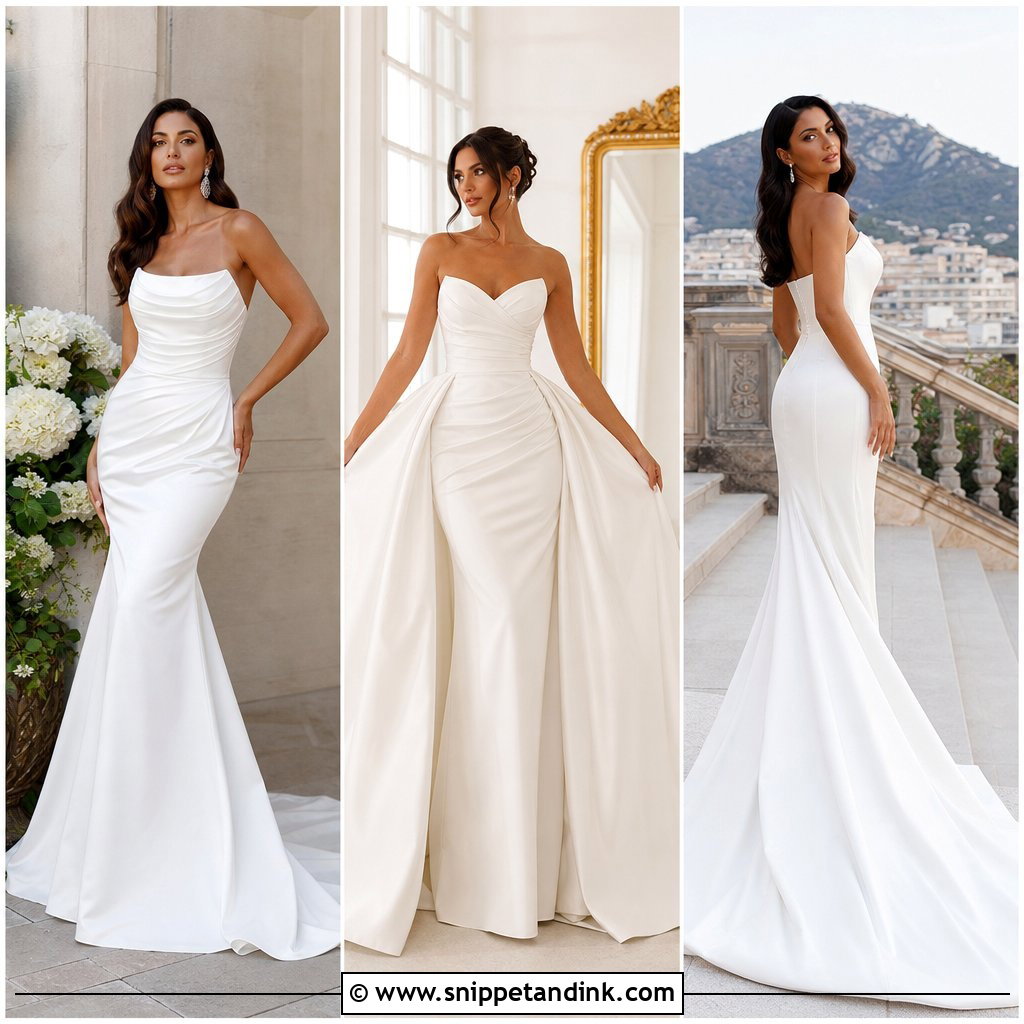
25. Fitted Blush Wedding Dress
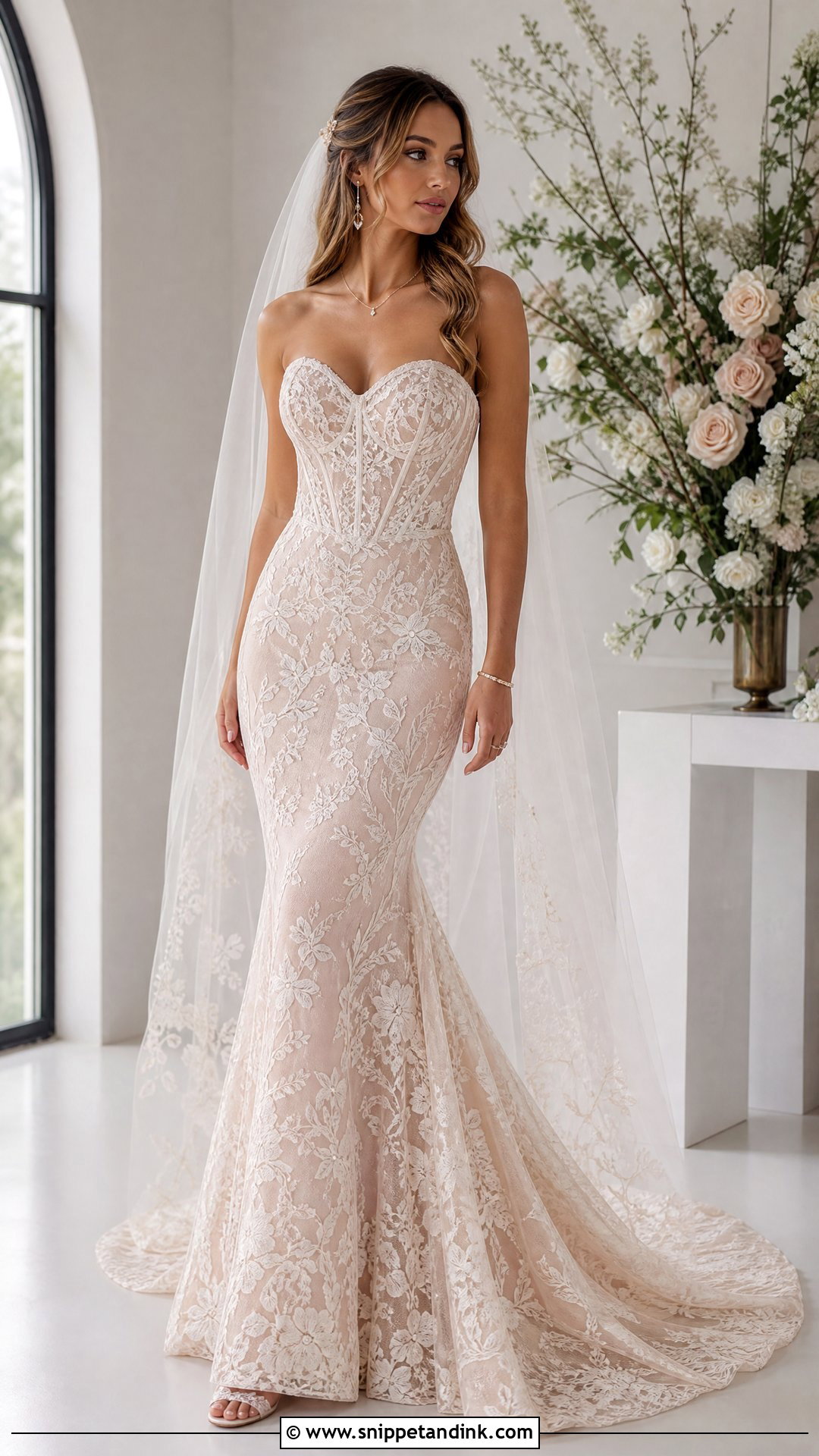
Blush, champagne, nude and pale rose all warm up lace, tulle, satin or beading. On a fitted gown the color sits right against the skin, so I always look at it next to the bride’s face in daylight, not just under shop lights. A shade too close to your skin tone can wash you out in photos, while one with a touch more depth reads warm. It’s pretty with floral lace, corset bodices and soft mermaid or trumpet skirts. Neutral heels, rose gold jewelry and a blush or ivory veil complete it.
How Many Fittings a Close-Cut Gown Needs, and When
Fitted gowns usually need more alteration work than full-skirted ones, because there’s no volume to absorb a small error. I’d plan for the first fitting about two to three months before the wedding, with two or three appointments in total and the last one roughly two weeks out. Seamstress calendars fill early in busy seasons, so book your slot when you order the dress.
What to bring to every appointment
- The exact shoes you’ll wear, since the hem is measured to that heel height.
- The bra, shapewear or adhesive support you’ve chosen, because each one moves the bodice.
- Your veil or headpiece, if it attaches near the back of the gown.
- The person who’ll dress you and bustle the train on the day, so they learn the hooks while there’s time.
Try not to start a big diet or training plan after the first fitting. A bodice that has been taken in can only be let out as far as the seam allowance allows, and some fabrics, satin especially, keep the marks of old needle holes.
Underwear Lines, Shapewear and the Daylight Test
Under a fitted gown, the wrong underwear is the first thing a camera finds. Laser-cut briefs with no edge stitching in a shade close to your skin tone disappear far better than white or ivory, which can glow through light crepe or satin. Light shapewear smooths the line, but anything that stops at mid-thigh leaves a ridge on a sheath or mermaid, so choose a length that ends below where the skirt grips.
Check the whole outfit near a window, then ask someone to photograph you with the flash on. Thin satin and crepe can turn nearly sheer under bright light, and testing is the only way to find out. If the lining is too light for your gown, a seamstress can often add a second layer.
A Close Fit Lives or Dies at the Seamstress
Every dress here, from crepe sheaths and lace mermaids to strapless satin, corsets, sleeves, slits, trains and overskirts, rests on the same few things: fabric, inner structure, the right underwear and careful alterations. Pick the silhouette that supports your body and suits your venue, then wear it at fittings exactly the way you’ll wear it on the day. If you can sit, breathe, hug and dance in it at the last fitting, it’s ready.
You'll Like These Ideas:










Leave a Reply