
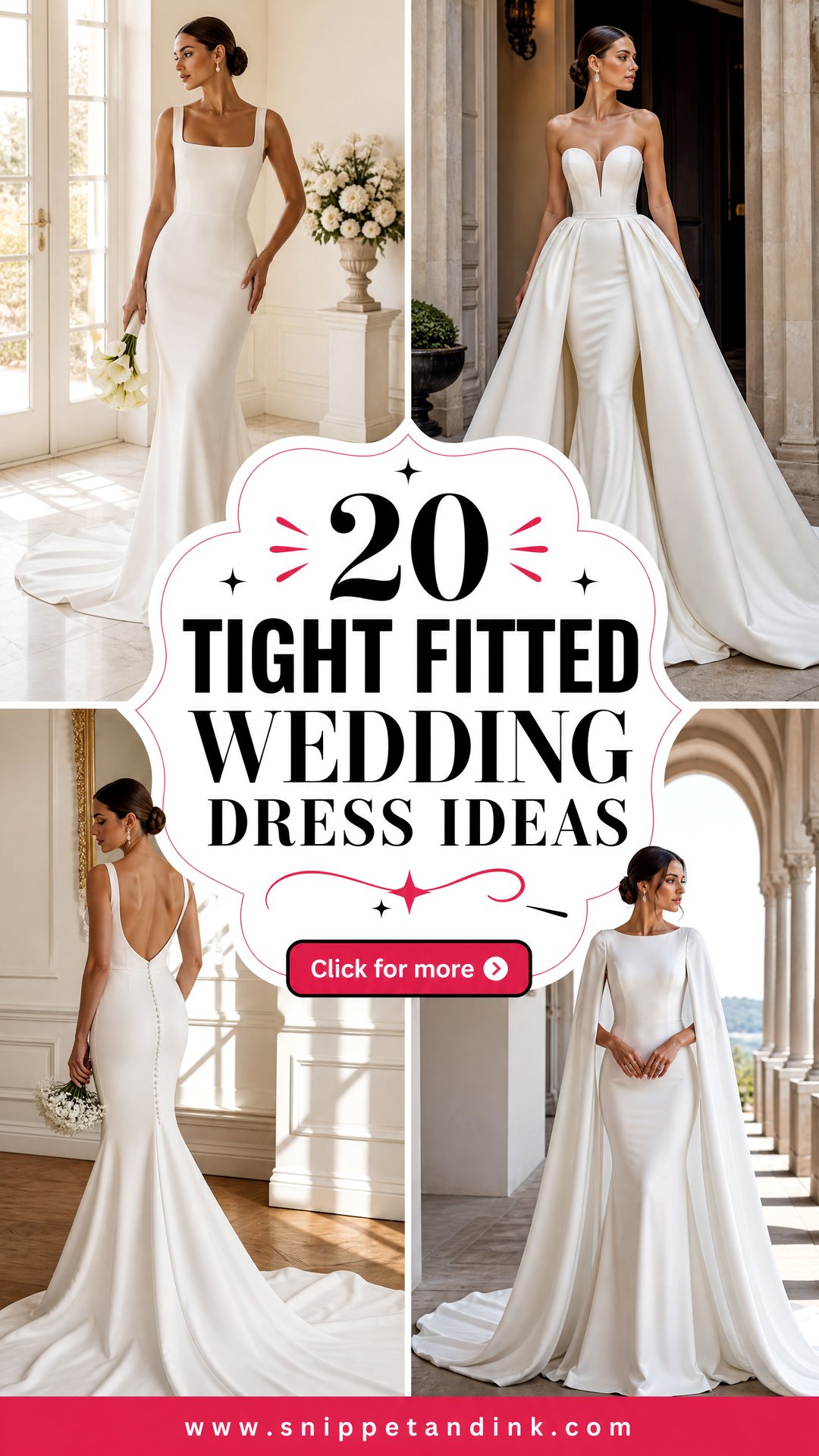
A close-fitting gown is the most honest dress in a bridal shop. It shows exactly how well it has been cut and altered, which is why it looks so good when the work is right. The looks below cover mermaid, trumpet, sheath, corset and fit-and-flare shapes in satin, crepe, lace and beadwork, and structured corsetry, longer bodices and Basque or dropped waists are showing up in many current collections. Trend matters less than whether you can sit, dance and breathe, so for each design I have noted what to check at the fitting along with the shoes, jewellery and hair.
The Layer Beneath Decides How Smooth a Fitted Gown Looks
With a close-cut dress, I treat the underwear as part of the fitting, not an afterthought. Every edge and seam beneath satin or crepe shows, and the wrong shapewear can roll at the waist halfway through dinner.
- Choose the foundation before the first fitting and wear it to every one after. Changing it later changes the measurements.
- Laser-cut or bonded edges in a shade close to your skin disappear best under thin fabric.
- Firm compression can push softness up or down rather than smoothing it. A light or medium hold usually looks better and stays put longer.
- Ask whether cups can be sewn into the gown. For strapless, backless or deep-plunge styles, this often gives more support than any separate bra.
Sit in the full outfit for at least ten minutes during a fitting. Rolling and creeping only show up after the fabric has warmed and moved.
1. Strapless Satin Fitted Wedding Dress
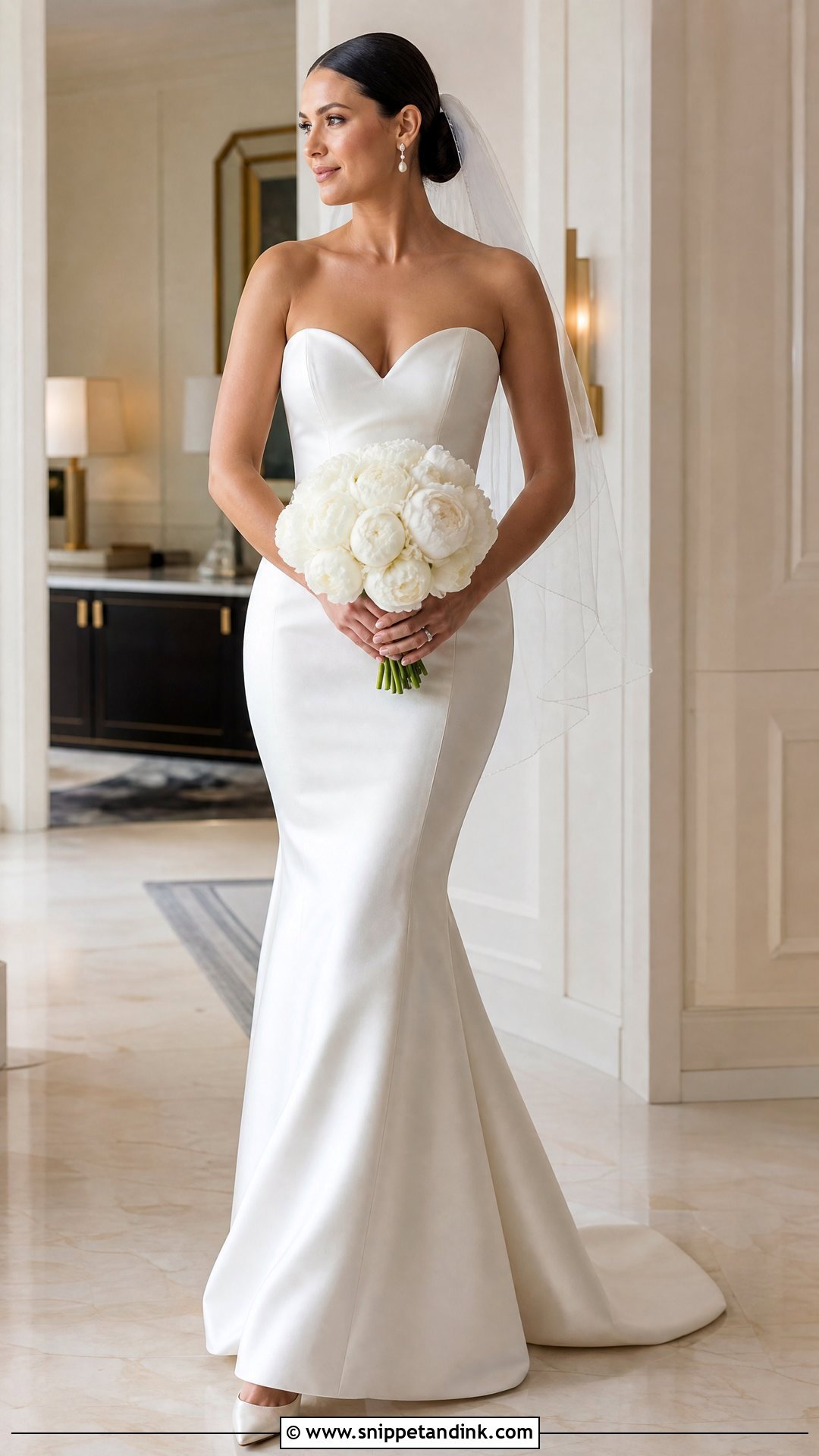
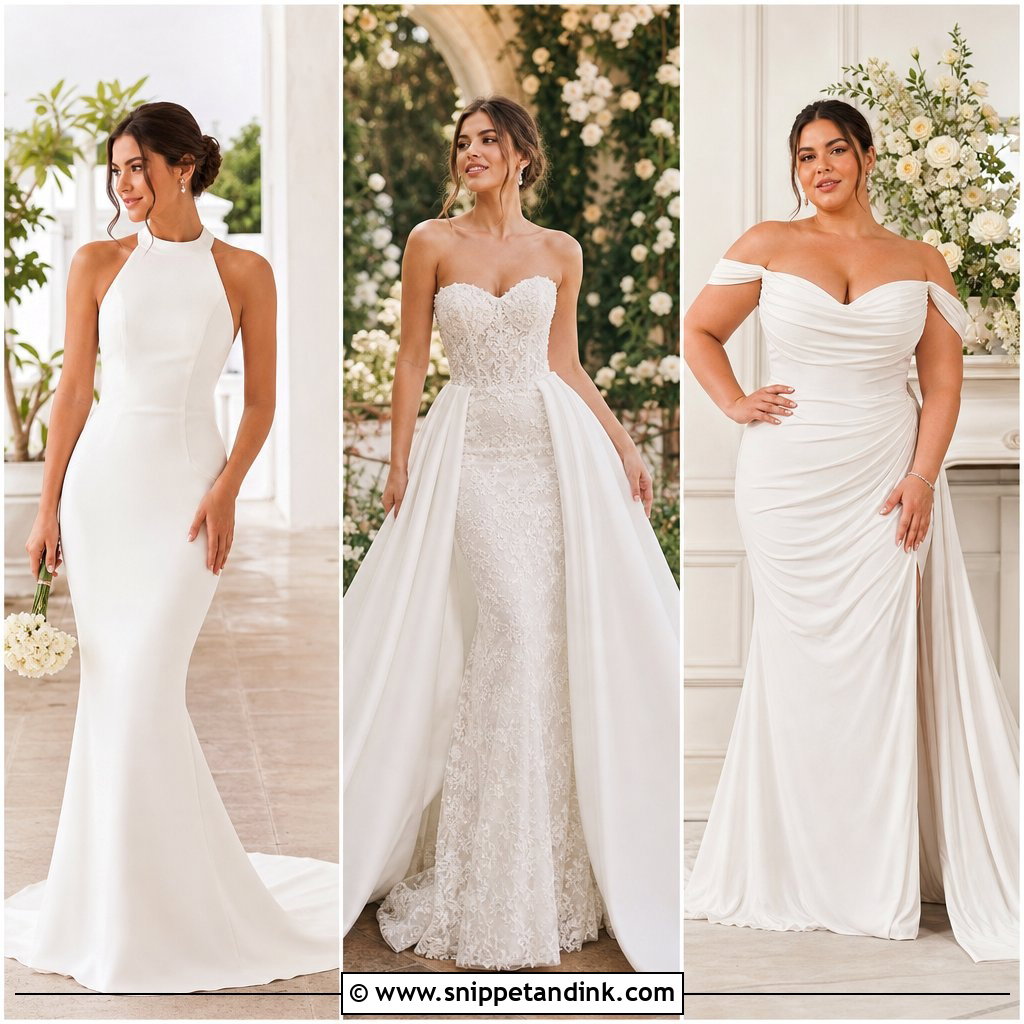
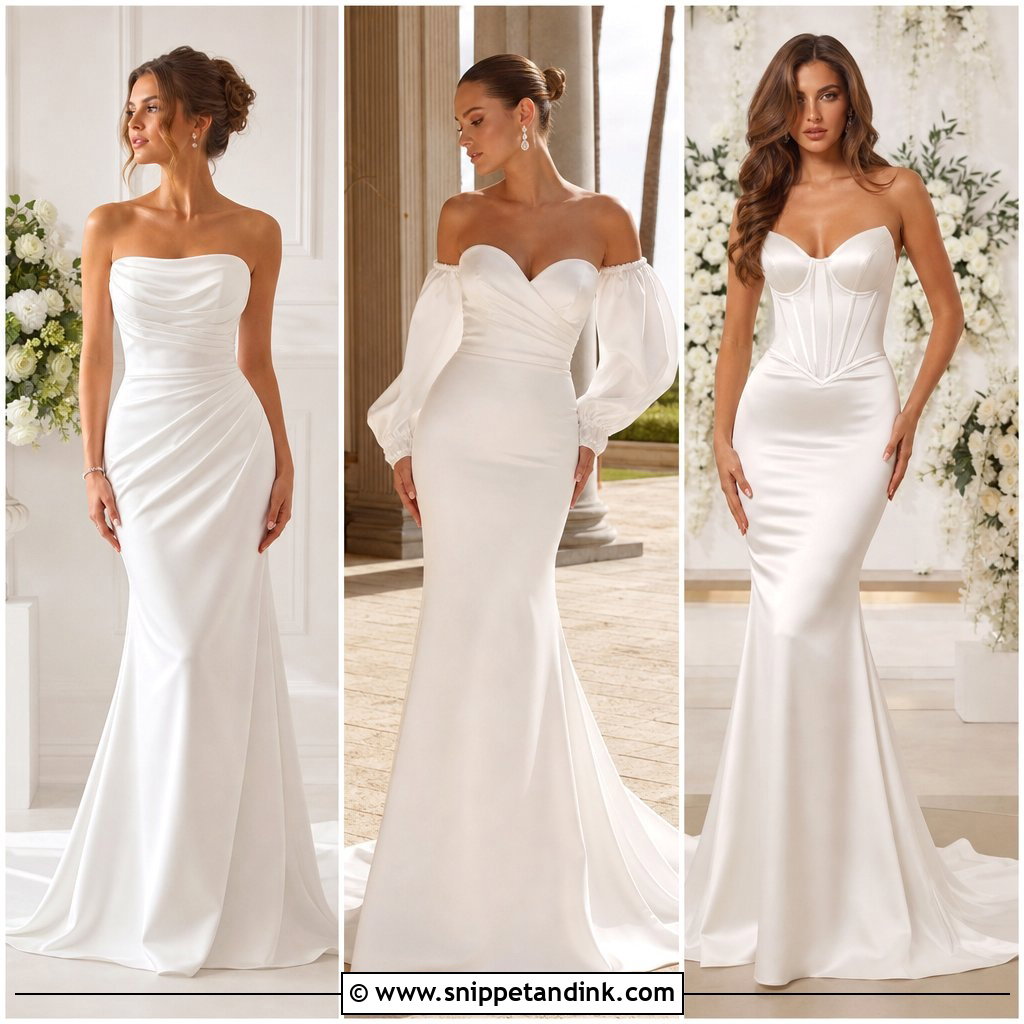
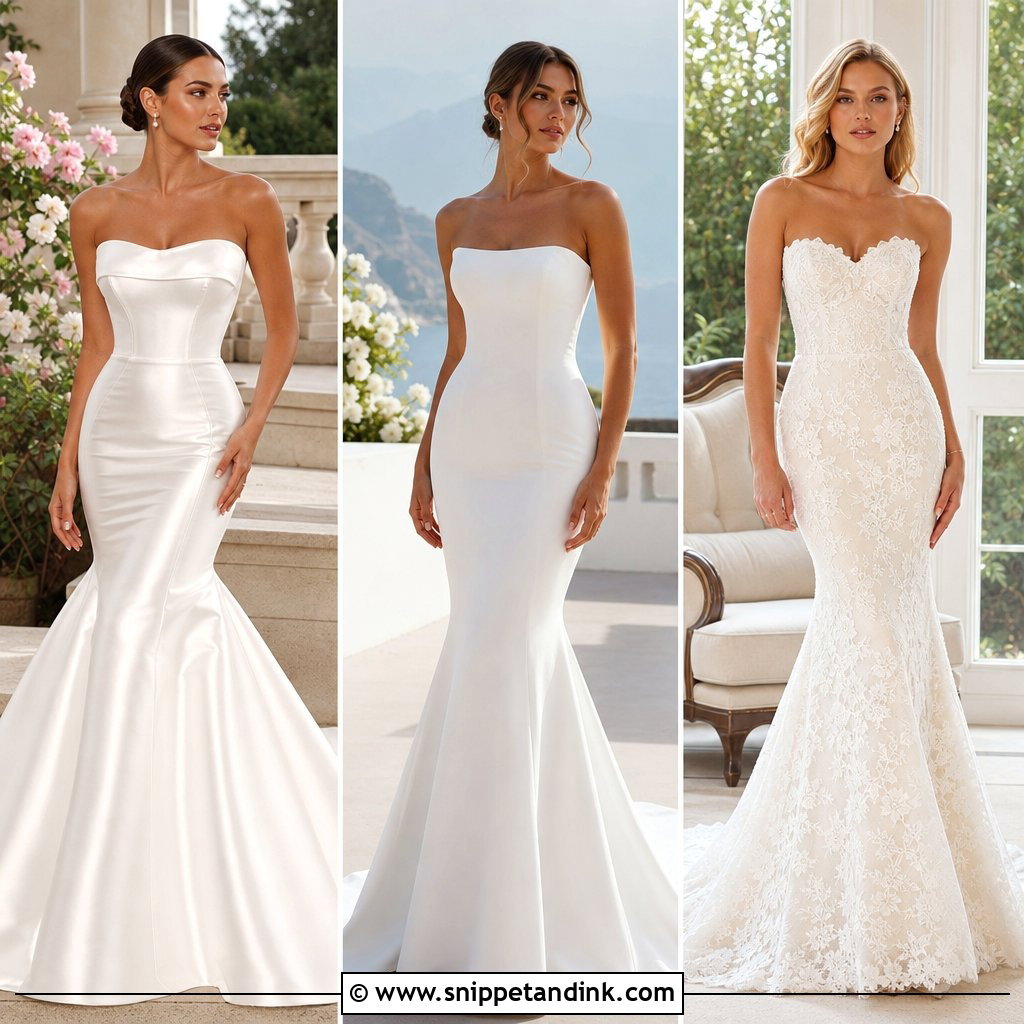
Satin shows every ripple, so a strapless satin mermaid needs real structure inside: boning, a built-in bustier and a softly curved neckline that grips. I’d steer most brides toward a flare that starts at or just above the knee, since an extremely low flare turns walking into shuffling. Pointed ivory pumps, pearl drops and a structured mini bag suit it, and a sleek low bun leaves the neckline clear under a fingertip veil. Ballrooms and galleries flatter its sheen. At alterations, sit, walk and raise both arms; the top edge should not move.
2. Long Sleeve Lace Fitted Wedding Dress
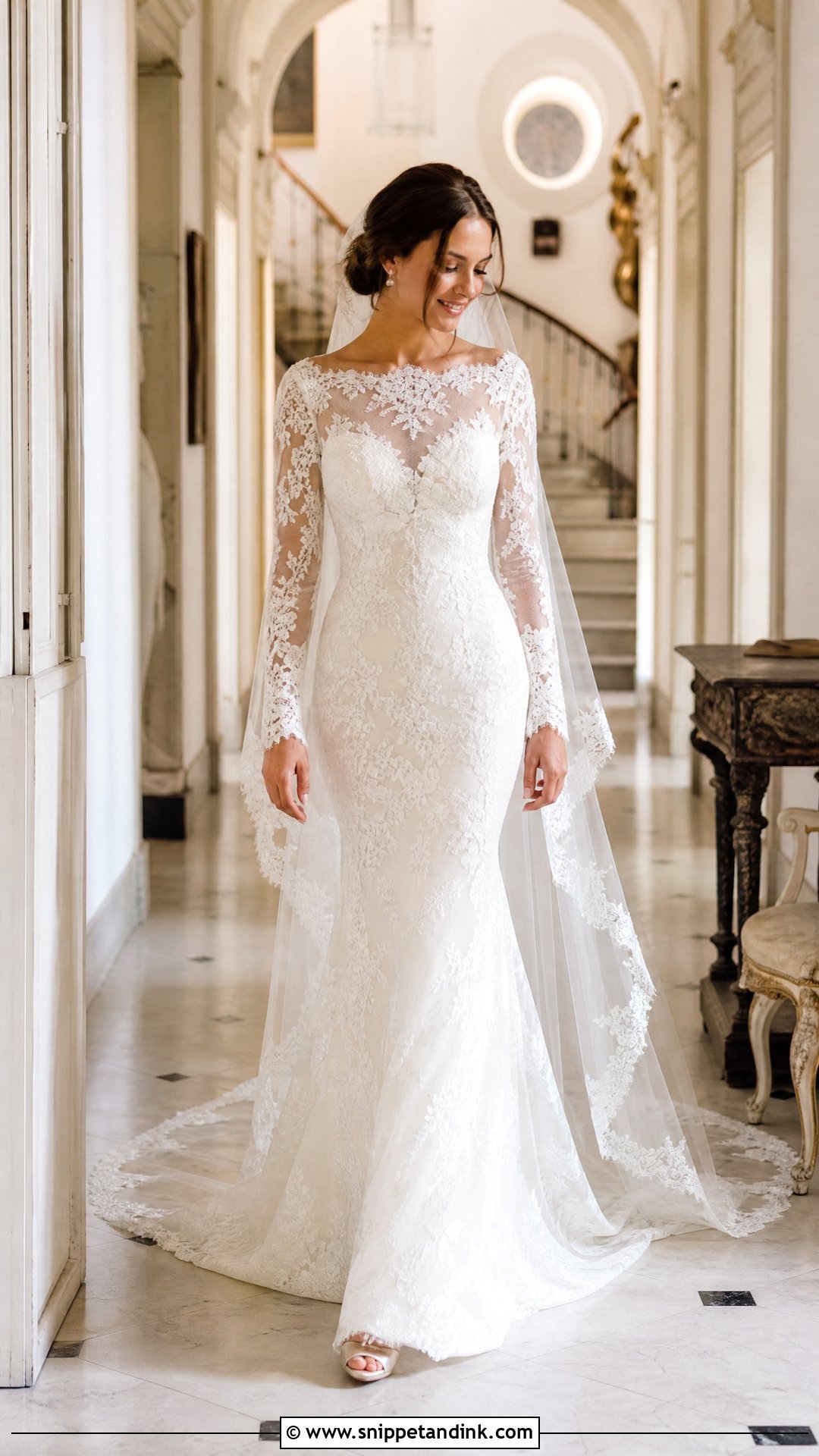
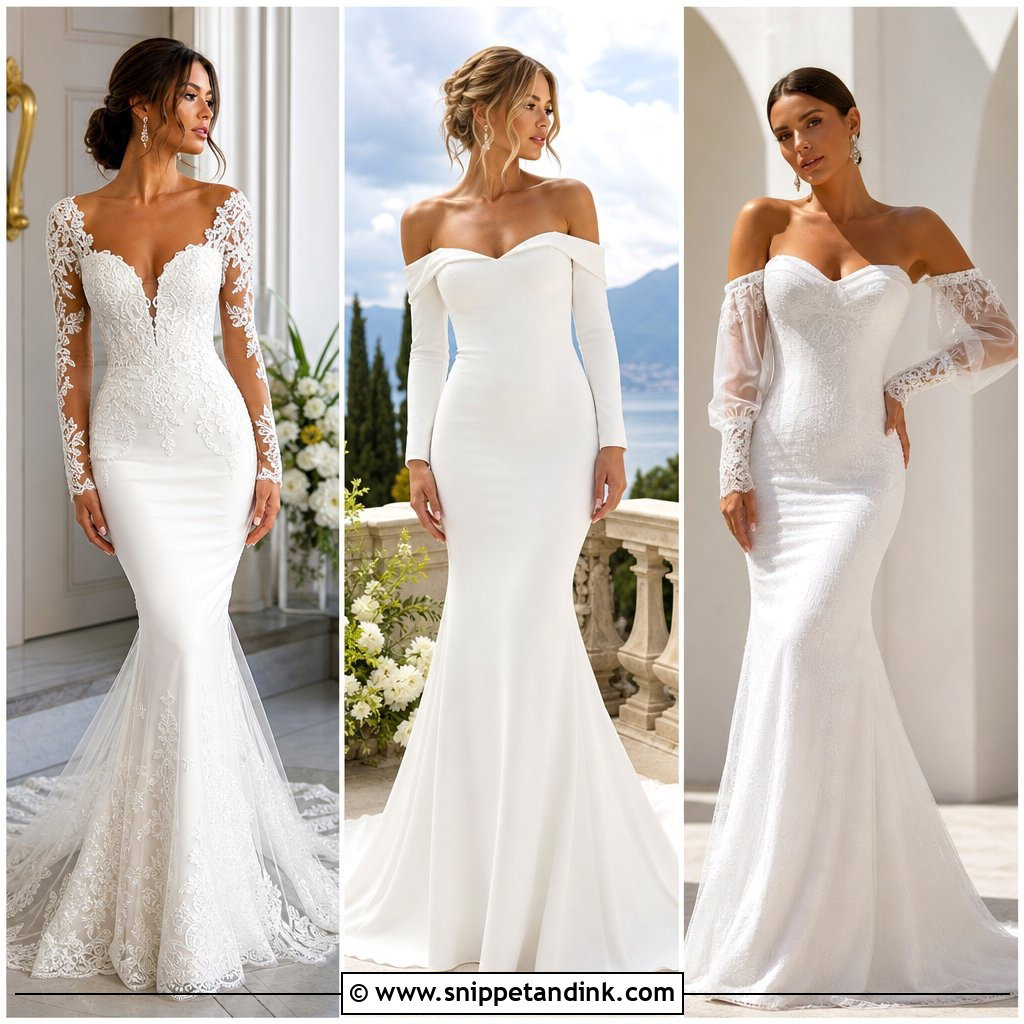
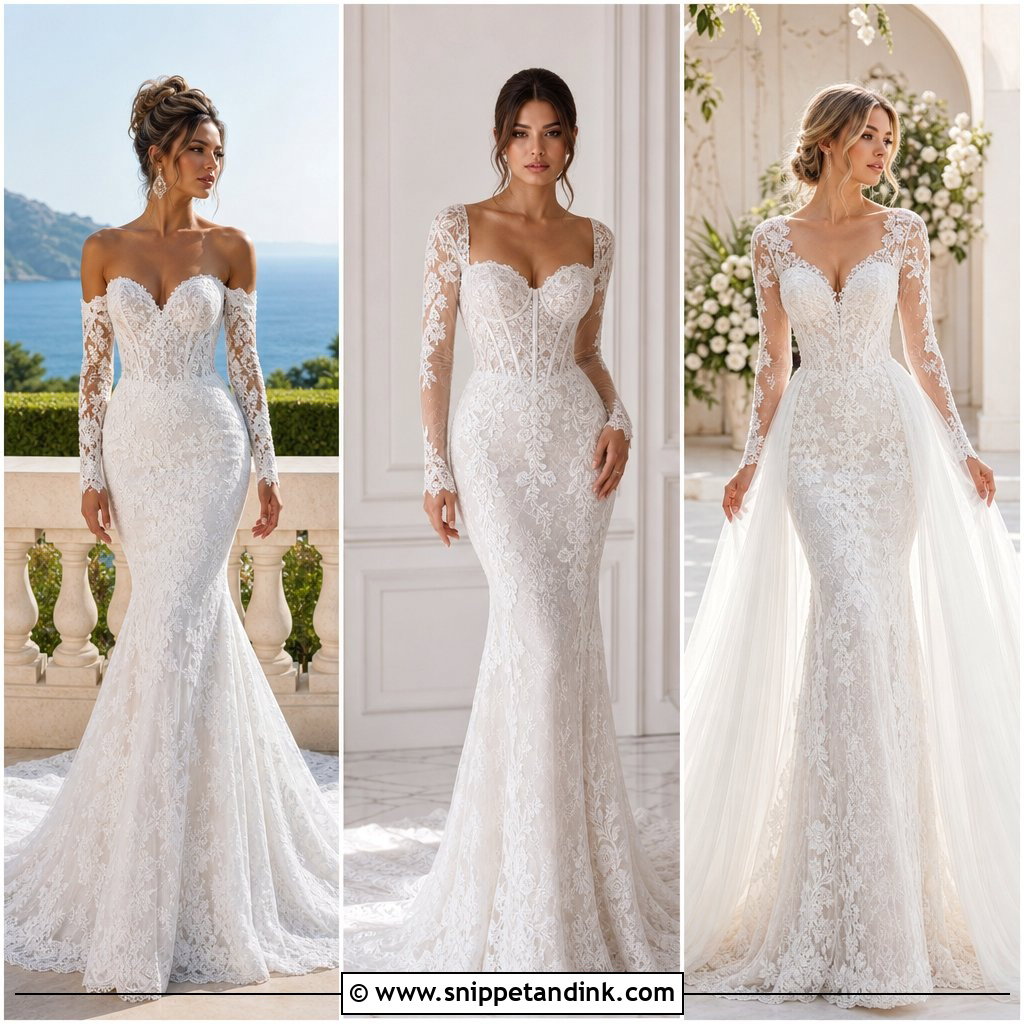
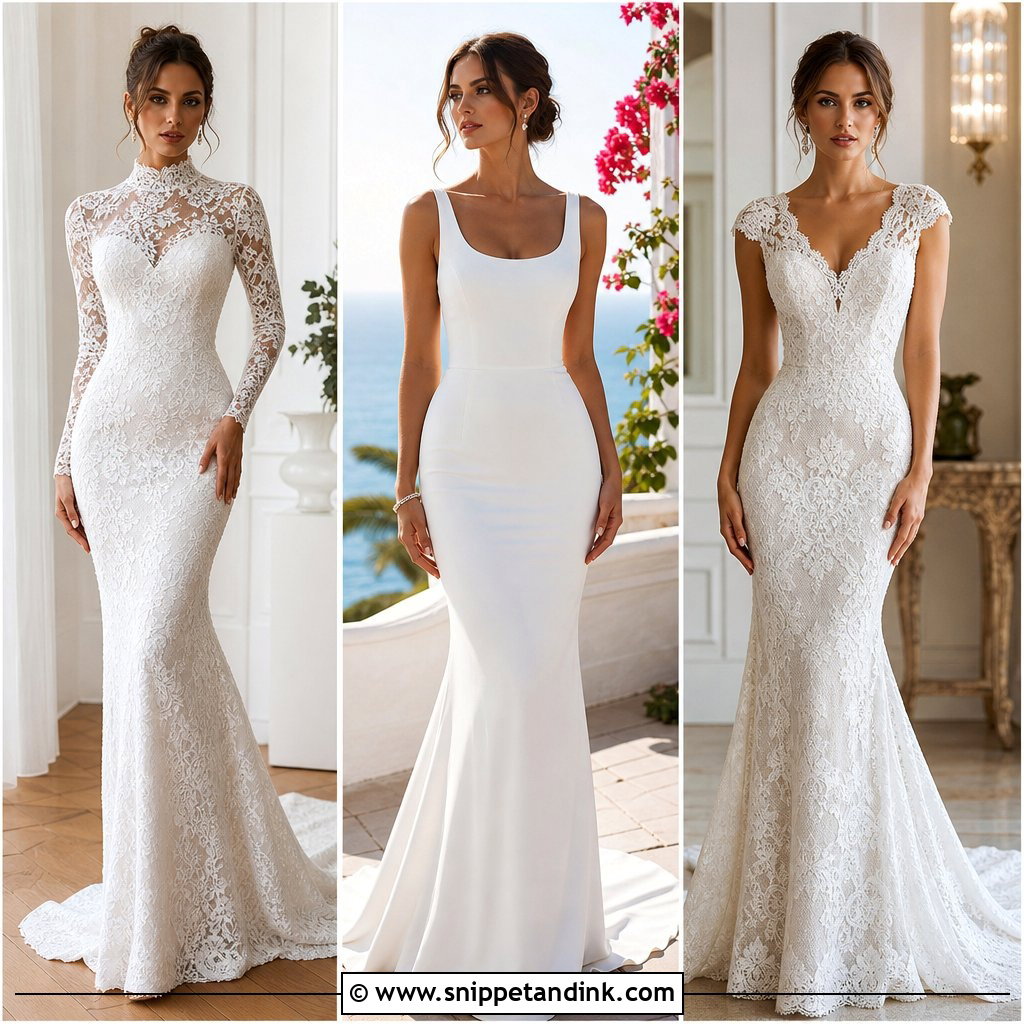
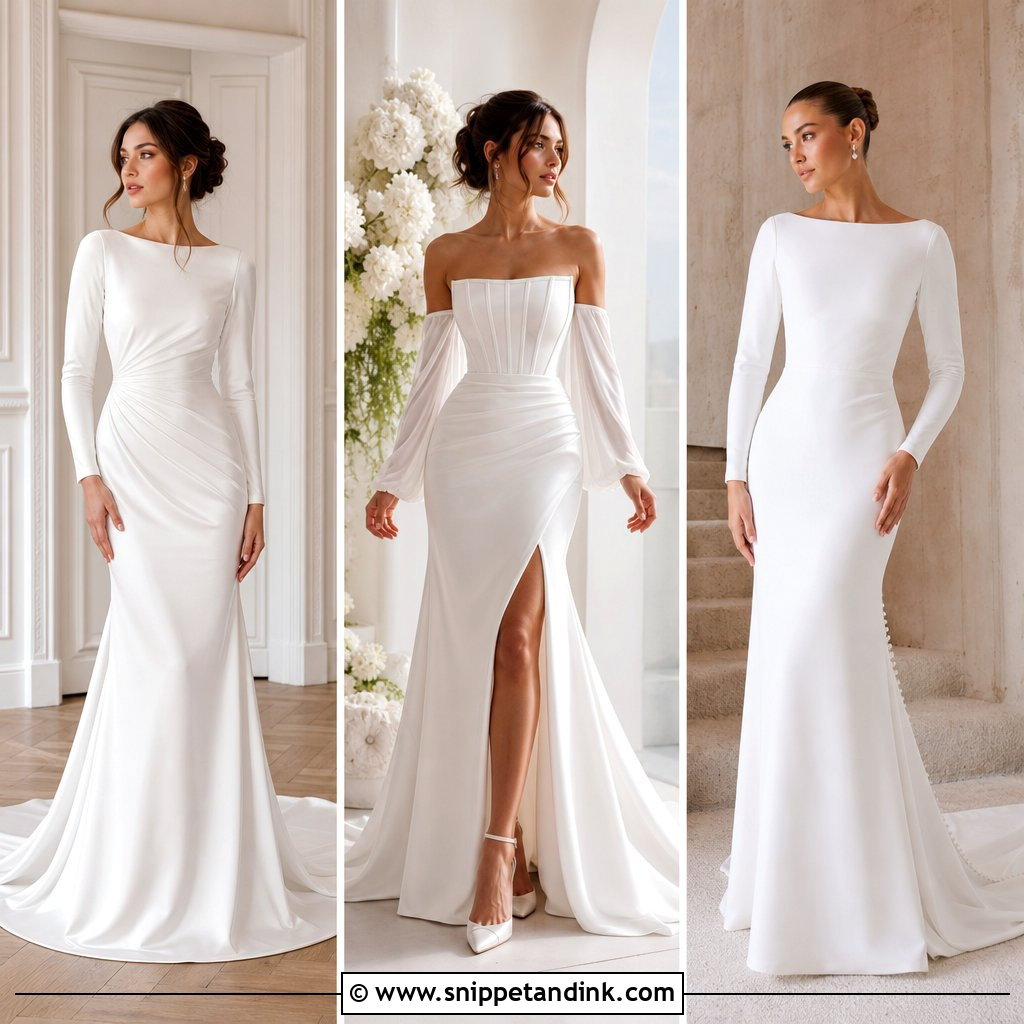
Stretch lace or carefully placed appliqués let a long-sleeve gown follow the body without the stiffness of rigid lace. A sweetheart lining under an illusion neckline gives coverage while the lace stays the focus. Fitted lace sleeves are the usual pinch point: bend your elbows, reach forward and lift your arms at every fitting, because a sleeve that feels fine standing can lock your arms at the cake table. Ivory slingbacks, small crystal studs and a lace-edged cathedral veil suit it, with a loose chignon. Bring a satin-lined wrap for cool evenings.
3. Square Neck Crepe Fitted Wedding Dress
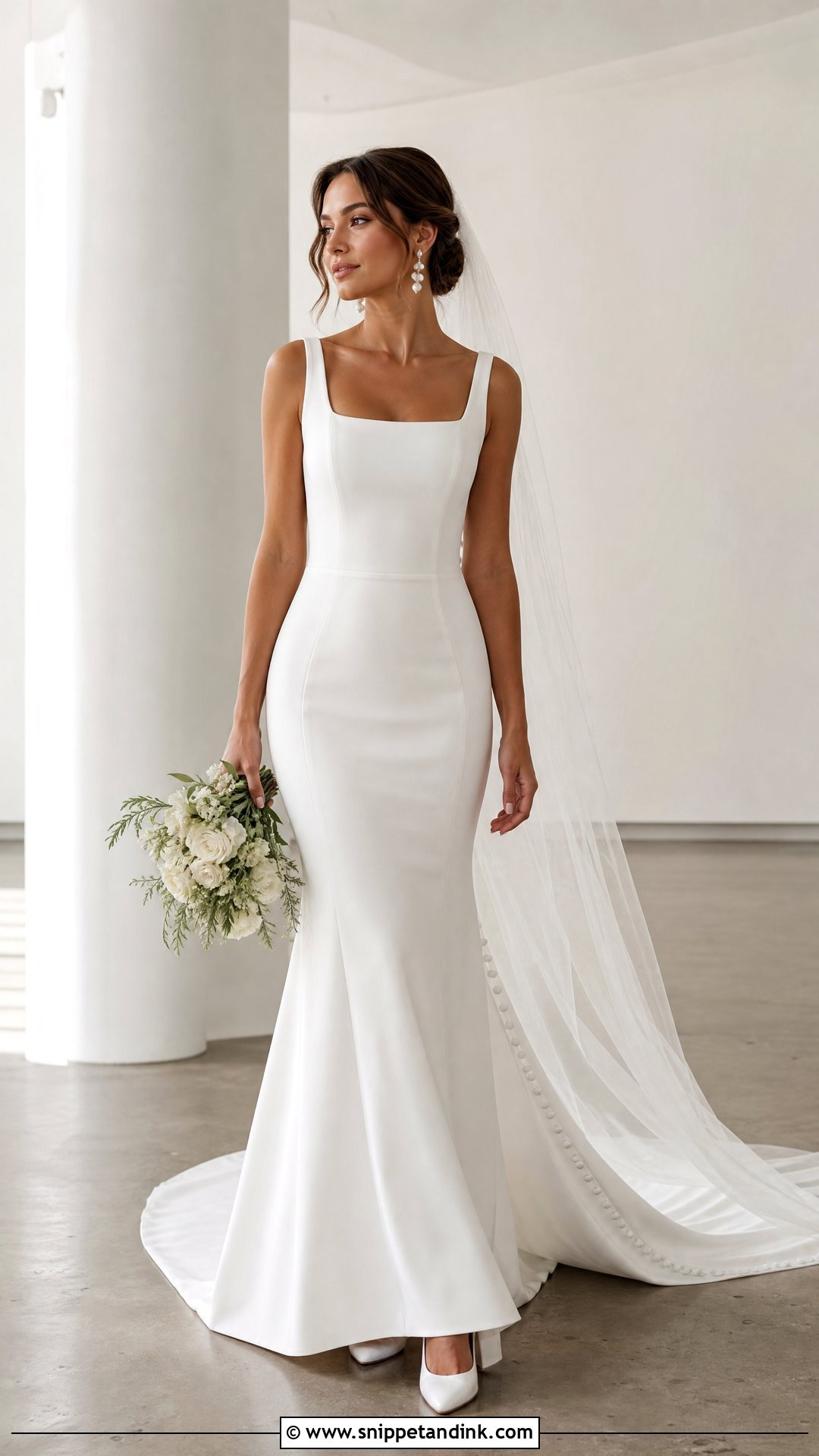
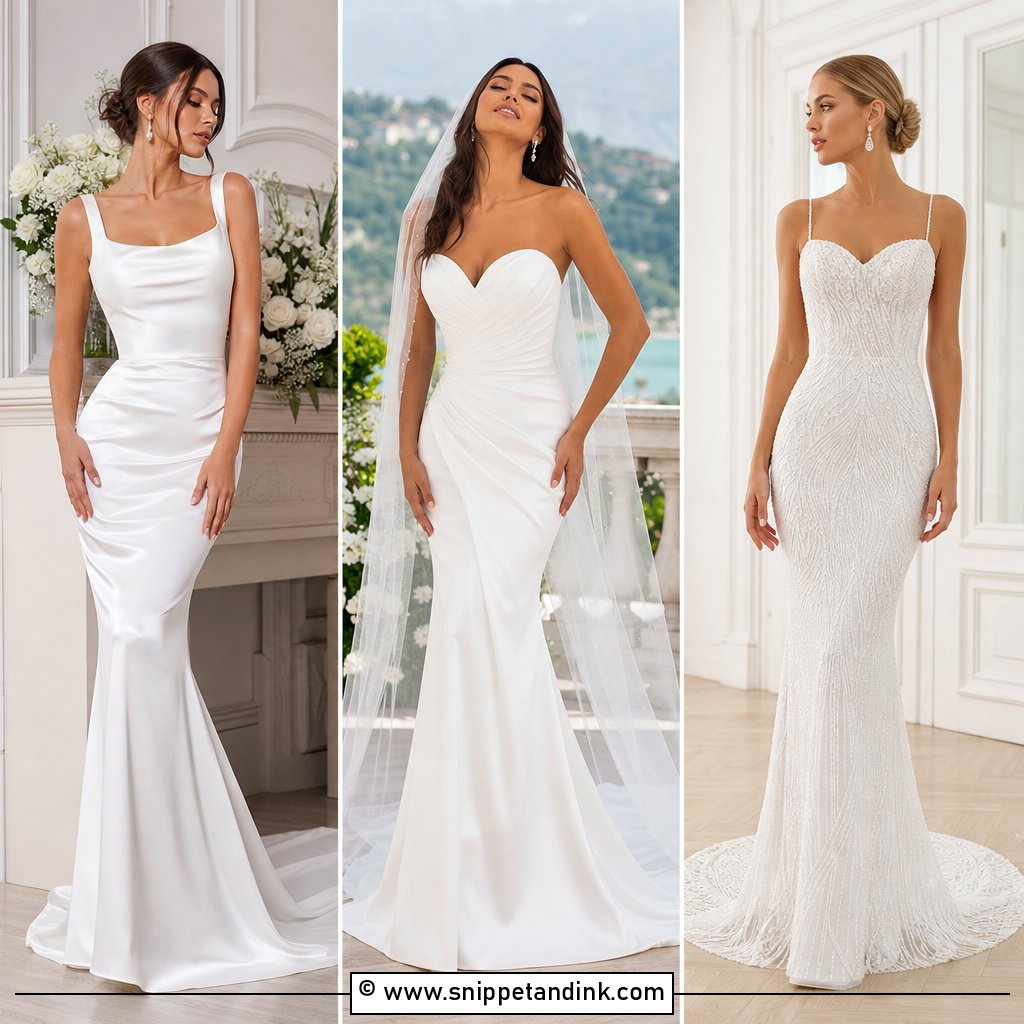
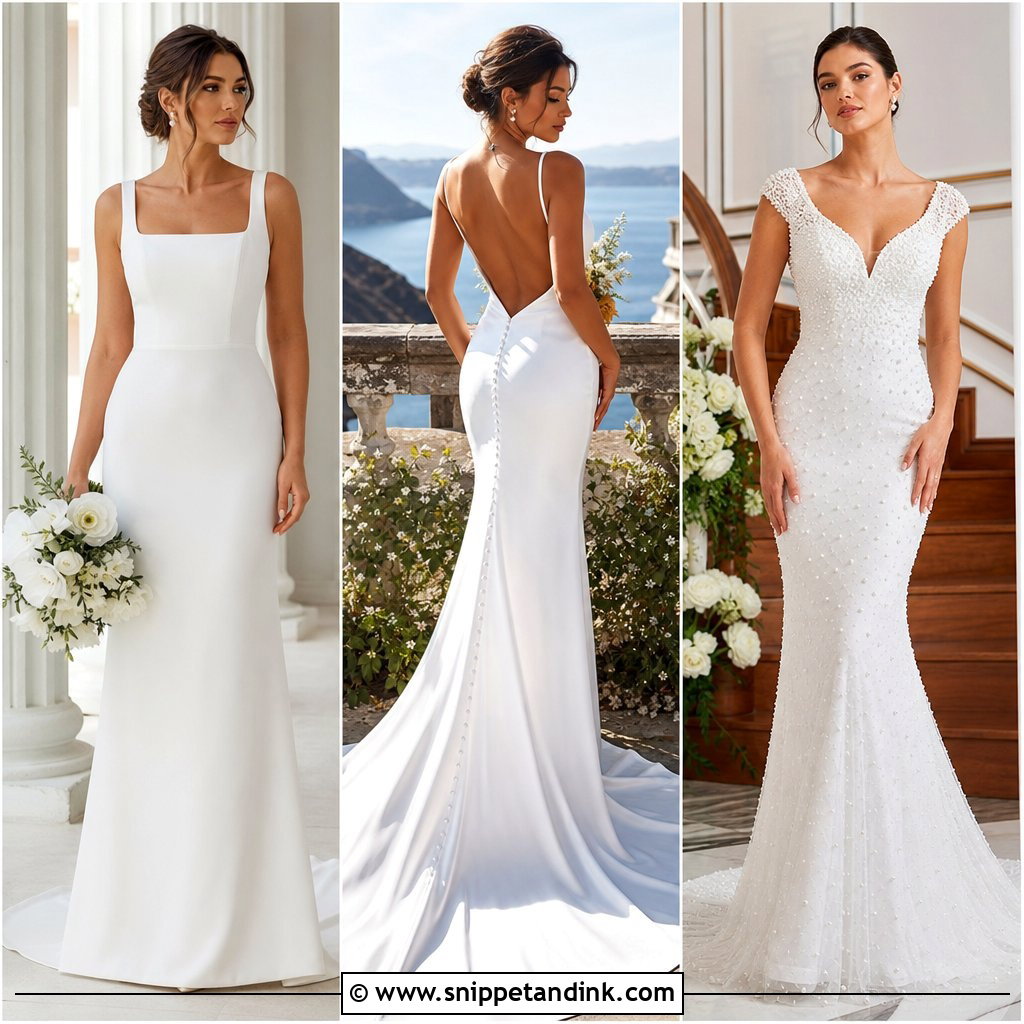
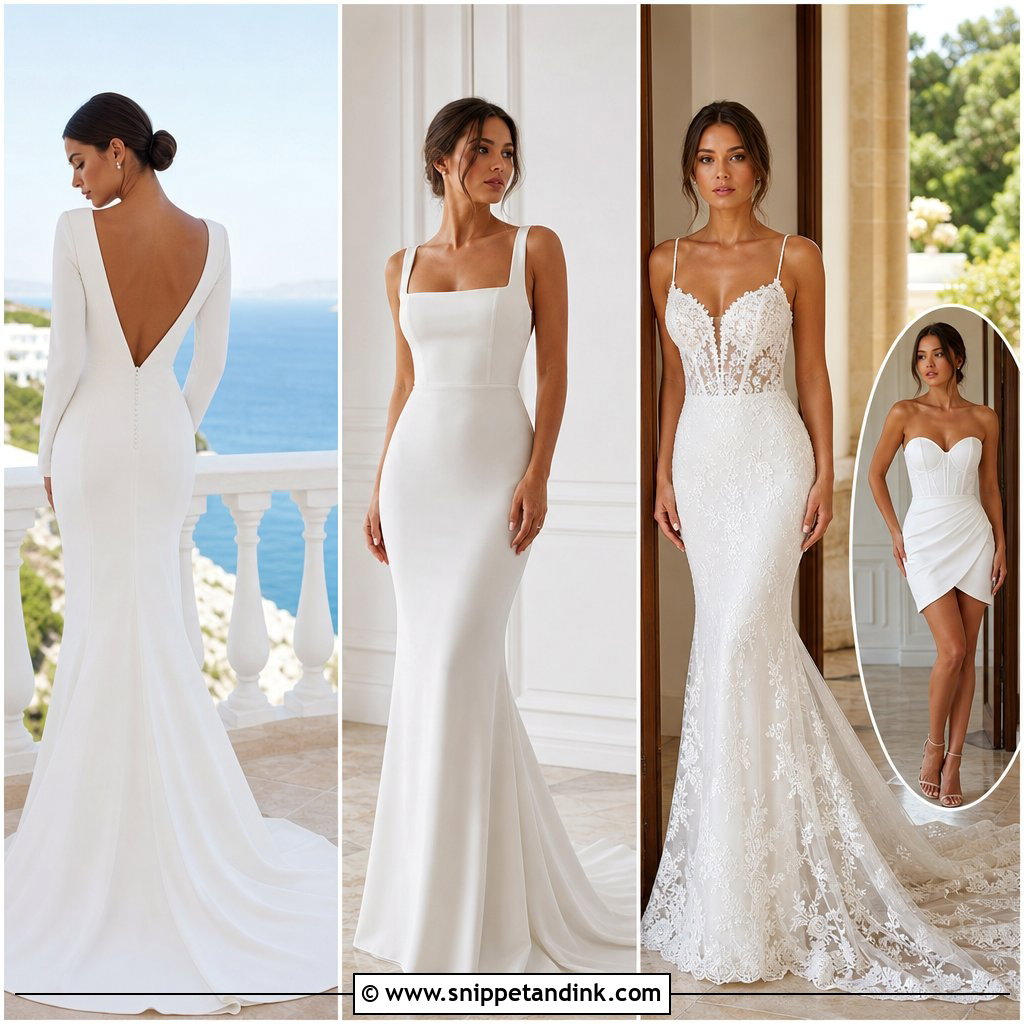
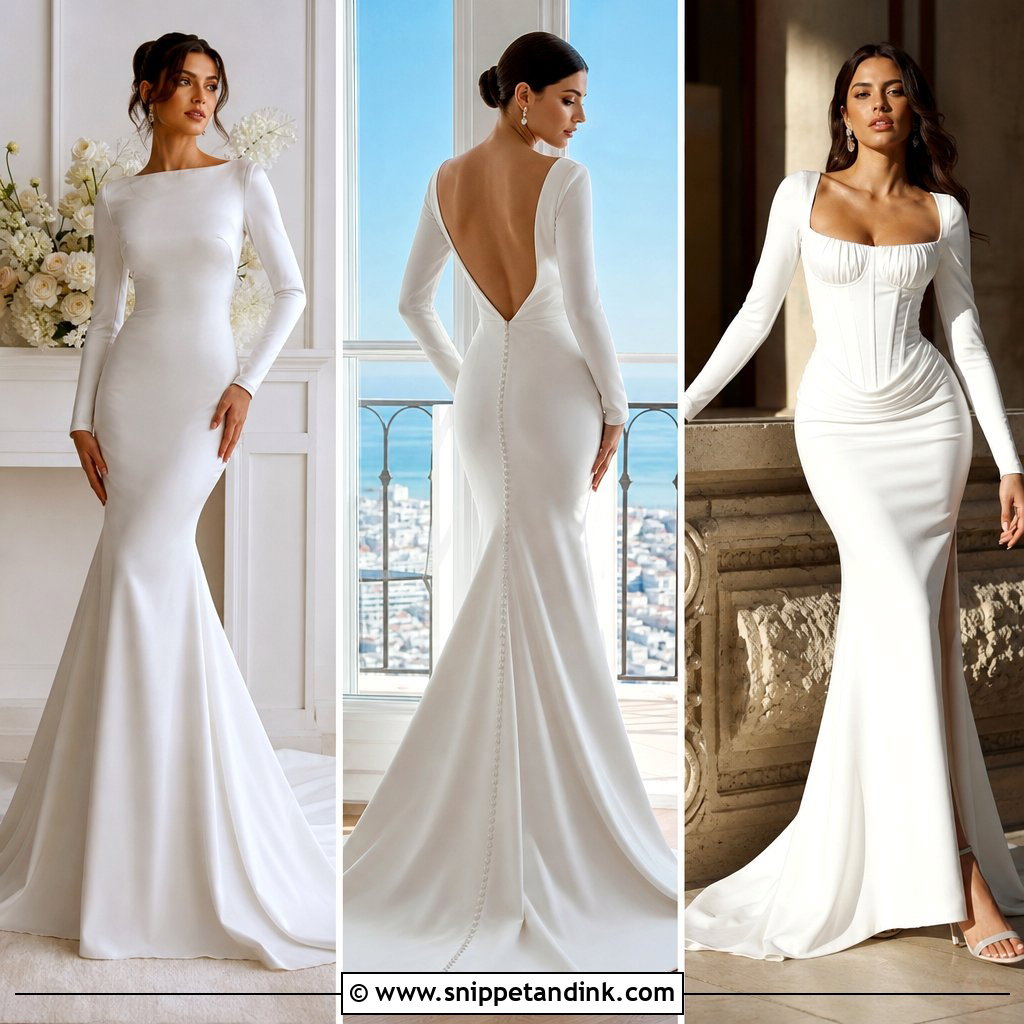
Crepe has no shine to hide behind, so the square neck and seams must be precise. The neckline frames the collarbone, and wide straps mean you can wear a normal supportive bra or longline, which most strapless fitted gowns don’t allow. I always pick medium-weight crepe over thin, which shows every line beneath. Closed-toe block heels, sculptural pearl earrings and a clean chapel veil complete it, with a centre-parted bun or soft waves. A row of fabric-covered buttons down the train adds detail without lace. Courthouses and minimalist rooms suit it.
4. Off The Shoulder Trumpet Wedding Dress
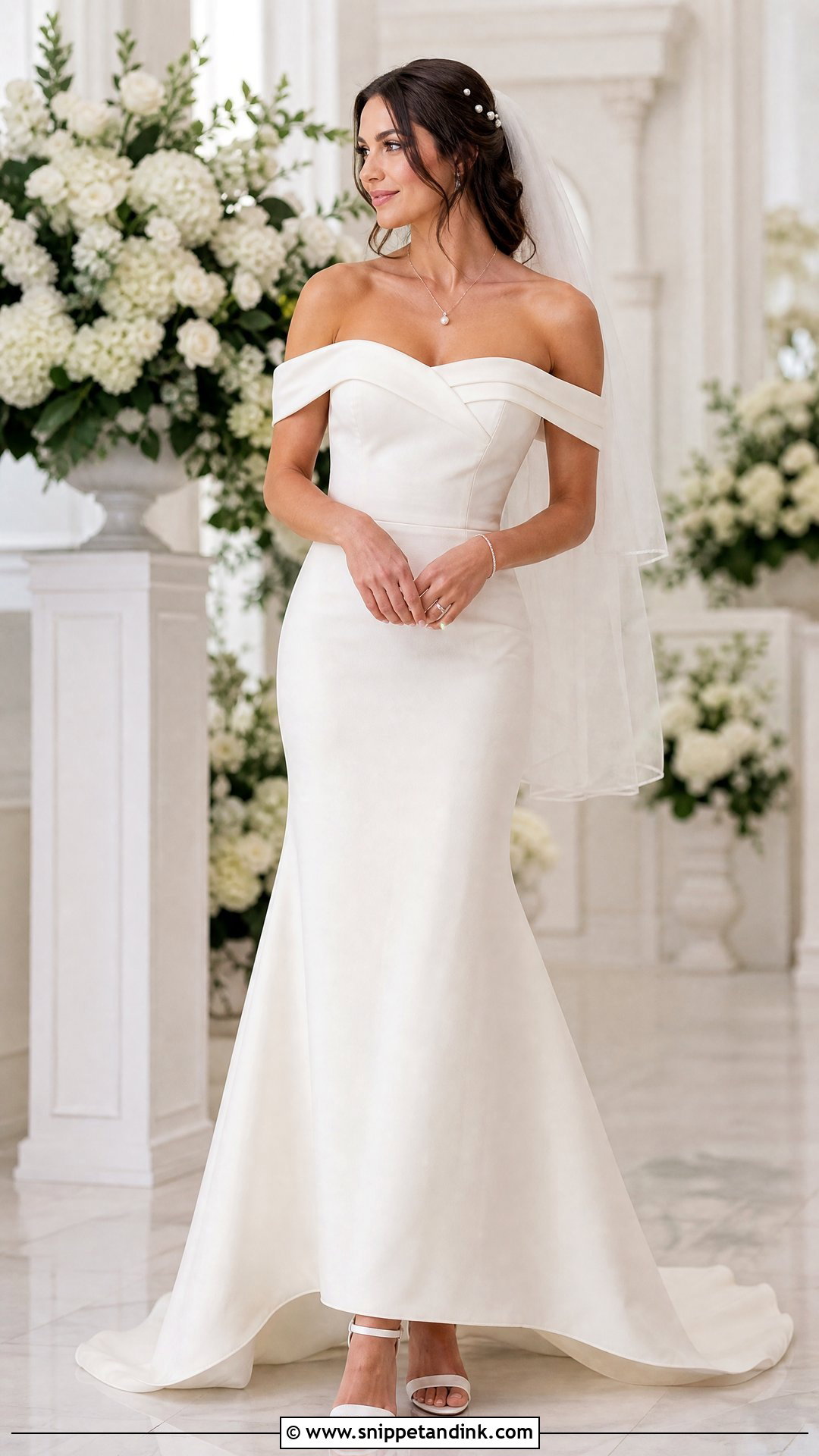
Trumpet versus mermaid comes down to where the skirt opens. The trumpet follows torso and hips and then flares gradually through the lower skirt, so you get a longer stride than with a sharp mermaid flare. Off-the-shoulder bands are the tricky part: they rest on the upper arm and slide down when you hug, unless the bodice has hidden elastic or a grip band holding it. Folded satin bands look clean; lace sleeves add texture. A delicate pendant, pearl hairpins and ankle-strap heels suit it, with a medium veil beneath a low bun.
5. Basque Waist Fitted Wedding Dress
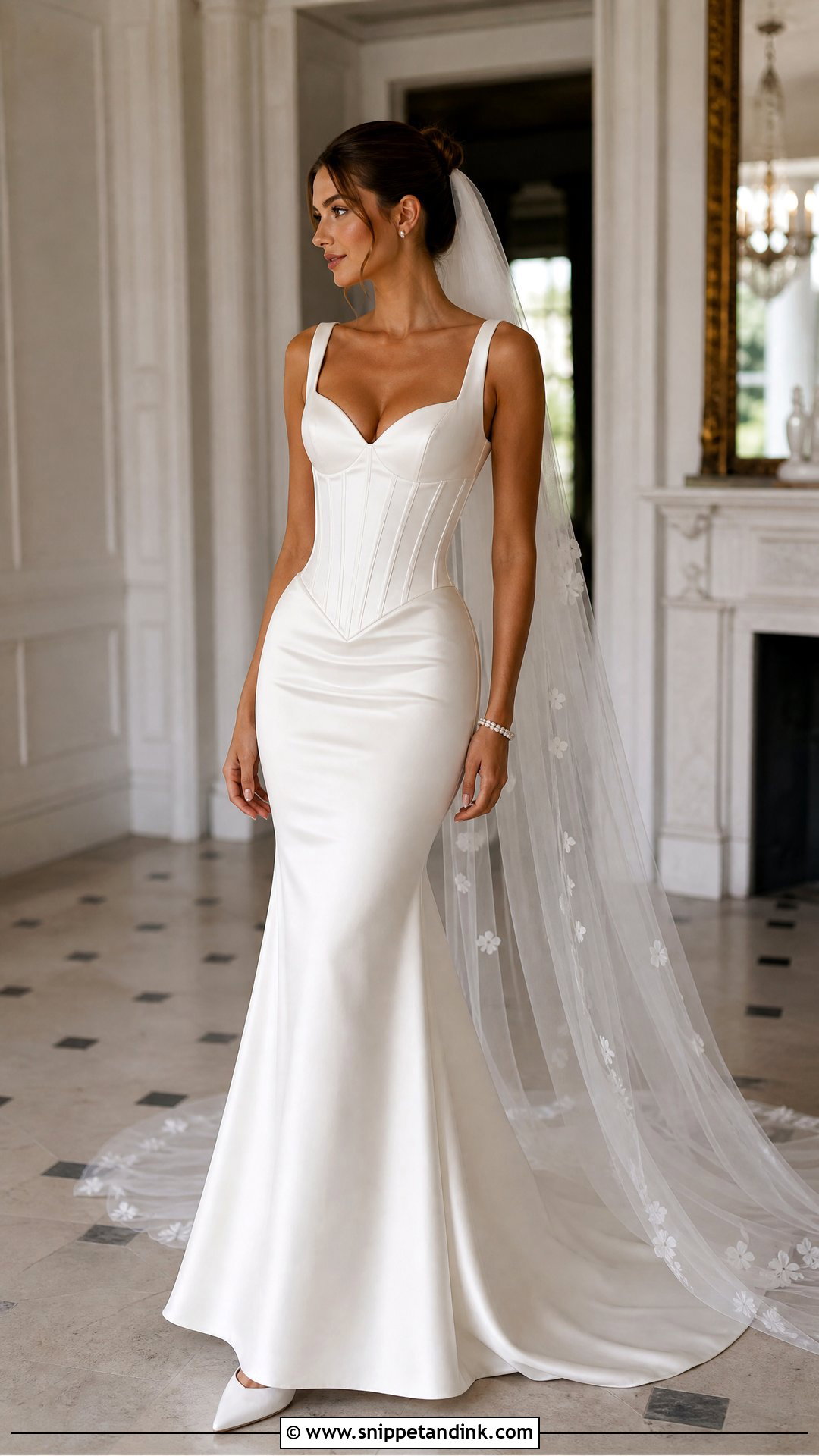
A Basque waist dips into a V or U below the natural waistline, which lengthens the bodice and draws the eye down into the skirt. It has been appearing again across new collections, in lace as well as smooth structured cloth. I’d keep it to a corseted satin with a narrow fit-and-flare skirt so the line stays sleek. Pointed pumps, a pearl bracelet, a simple drop veil and a polished updo let the waist lead. Sit down at the fitting and watch where the point lands: if it presses into the top of the thighs, the bodice needs shortening slightly.
6. Halter Neck Fitted Wedding Dress
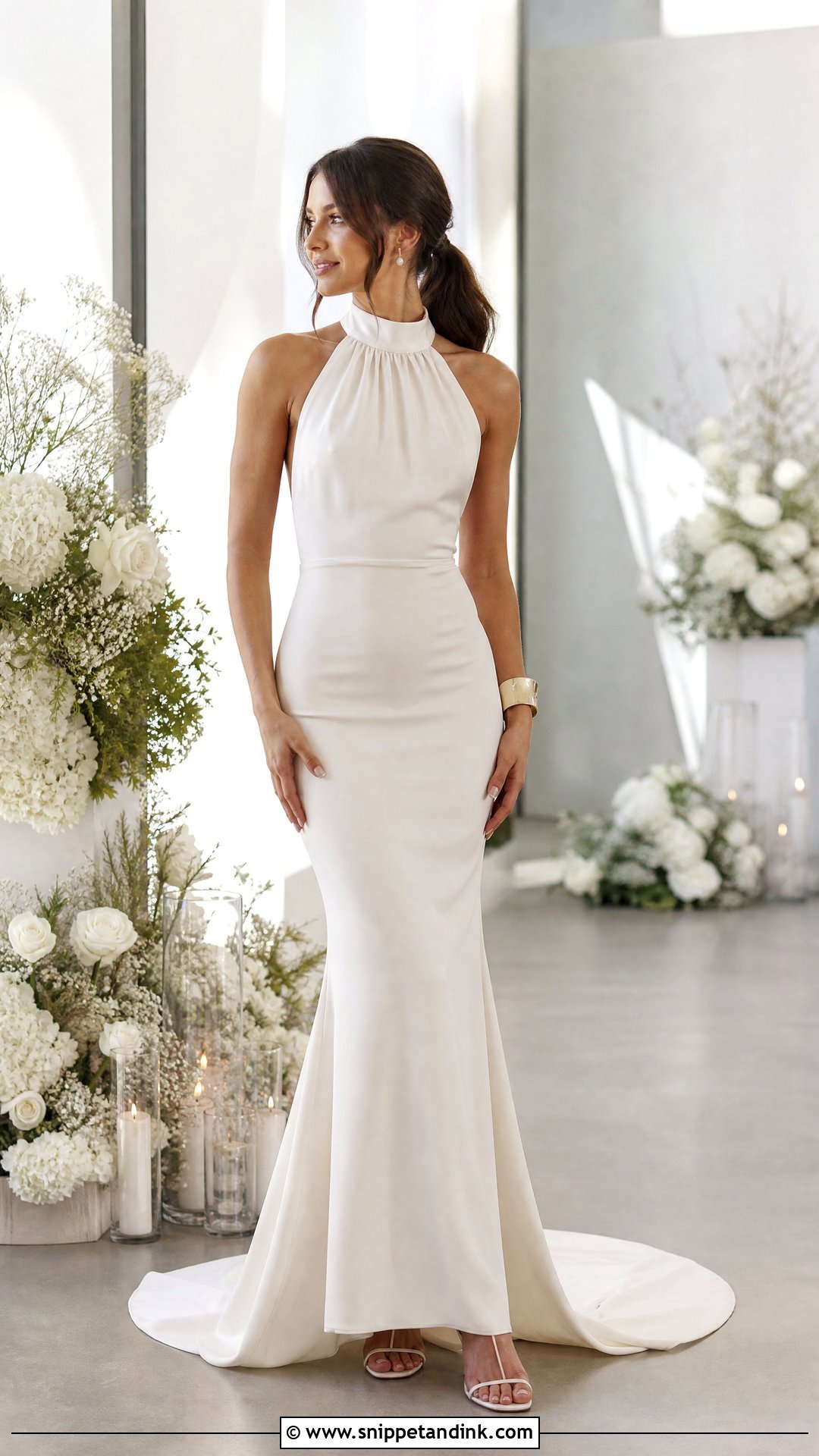
Halters carry a retro note, and they come in three main forms: a high gathered neck, a plunging front or a soft cowl. Choose crepe, satin, or stretch jersey with a substantial lining so it hangs cleanly. The thing I always check is the neck strap: a halter takes some of the gown’s weight on the back of the neck, and with a heavy skirt or train that turns into a headache by evening. Skip the necklace; wear small earrings, a cuff and strappy sandals. A low ponytail or swept-back bun shows the shoulders, and a long narrow veil suits the ceremony.
7. Beaded Illusion Fitted Wedding Dress
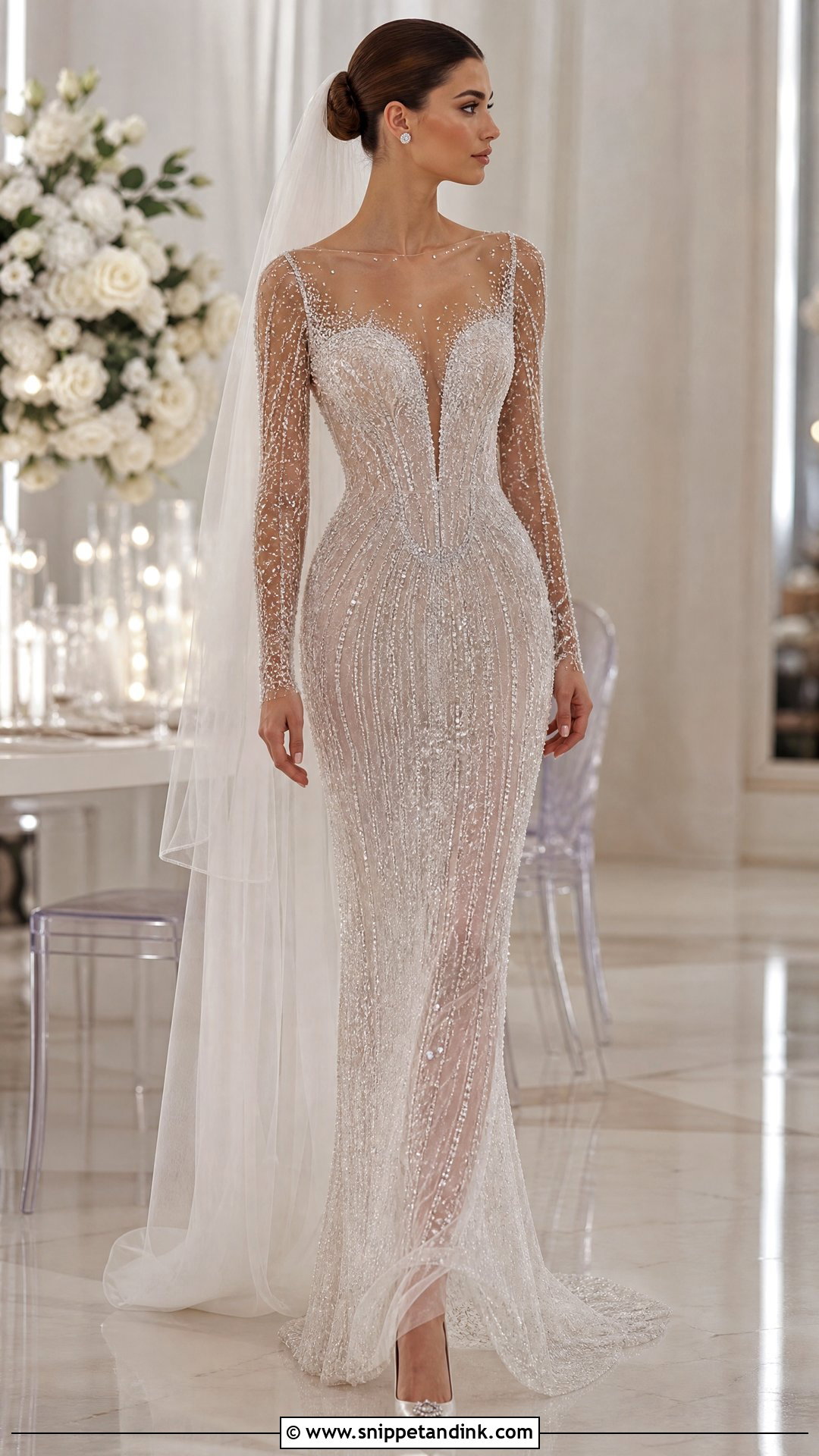
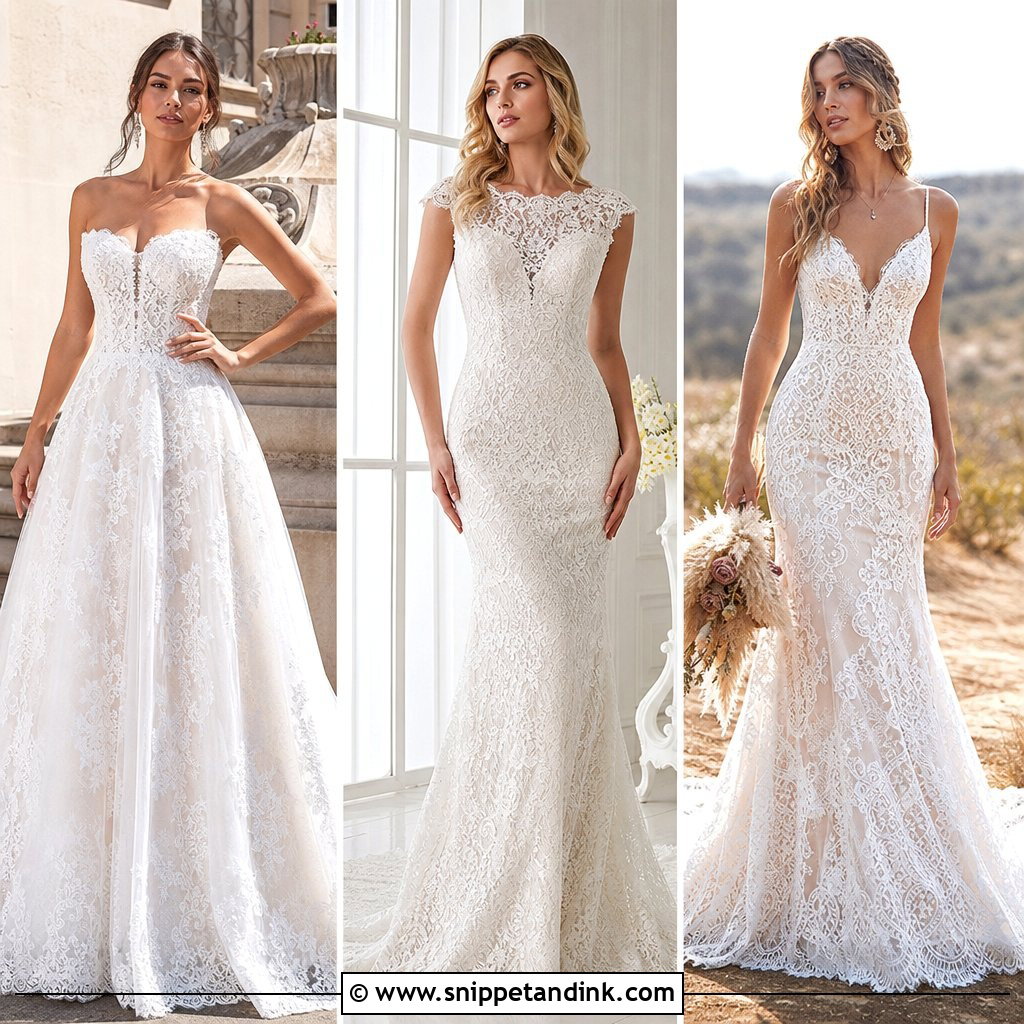
Beads and crystals on an illusion neckline look as if they float on skin. The mesh does the real work, so it must closely match your skin tone and lie flat around the neckline and armholes; mesh in the wrong shade looks like a grey band in photos. Understated crystal studs, metallic ivory pumps and a plain tulle veil keep the beadwork in charge. A smooth bun or brushed waves both suit it. See the gown under light similar to your venue’s, and check that the beading doesn’t catch the veil or chair fabric. Evening celebrations show it best.
8. Minimalist Scoop Neck Fitted Wedding Dress
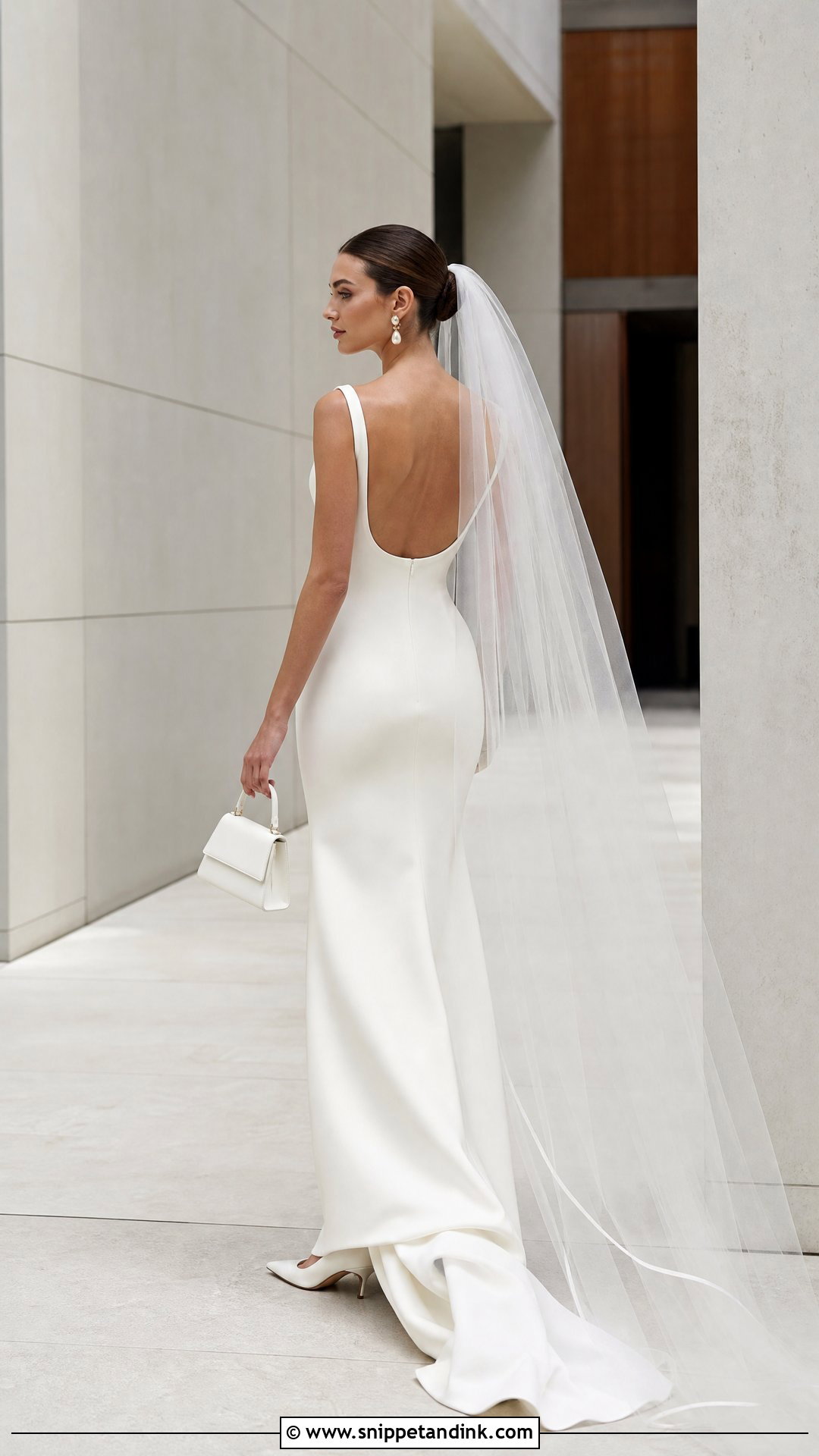
Quiet design depends on good fabric. A substantial stretch crepe with princess seams, a soft scoop neck and a secure low back keeps its shape all day, while thin crepe shows every seam and bump. The skirt stays narrow through the thighs and opens into a small sweep train. Pointed kitten heels, pearl and gold earrings and a structured top-handle bag suit it, with a sheer cathedral veil for movement. Wear the hair sleek or in a smooth blowout. Ask the tailor to assess hem, bust, waist, hip and bustle together, because on a plain dress one adjustment shifts the others.
9. High Neck Lace Fitted Wedding Dress
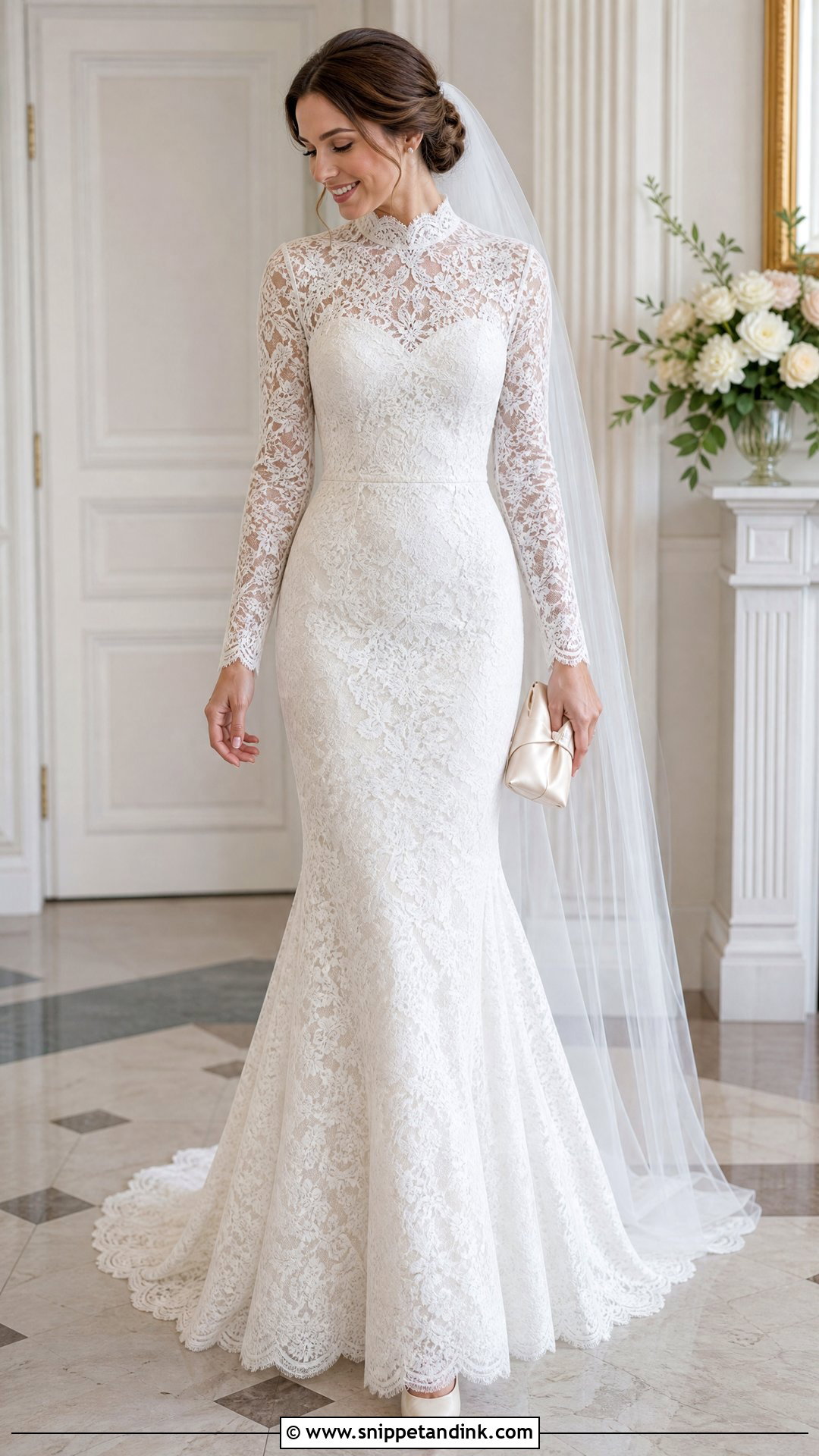
High-neck lace covers without hiding shape. A fitted sheath or gentle trumpet with a lined bodice, sheer lace sleeves and a scalloped neck suits autumn and winter, though breathable lace works in mild months too. Lace at the throat can scratch, so I ask brides to turn their head side to side at the fitting. A seamstress can back the collar with soft tulle or replace a rough edge without changing the look. Pearl studs, ivory pumps and a satin clutch are enough, and a plain chapel veil under a low twisted bun keeps the neckline clear.
10. Pearl Embellished Fitted Wedding Dress
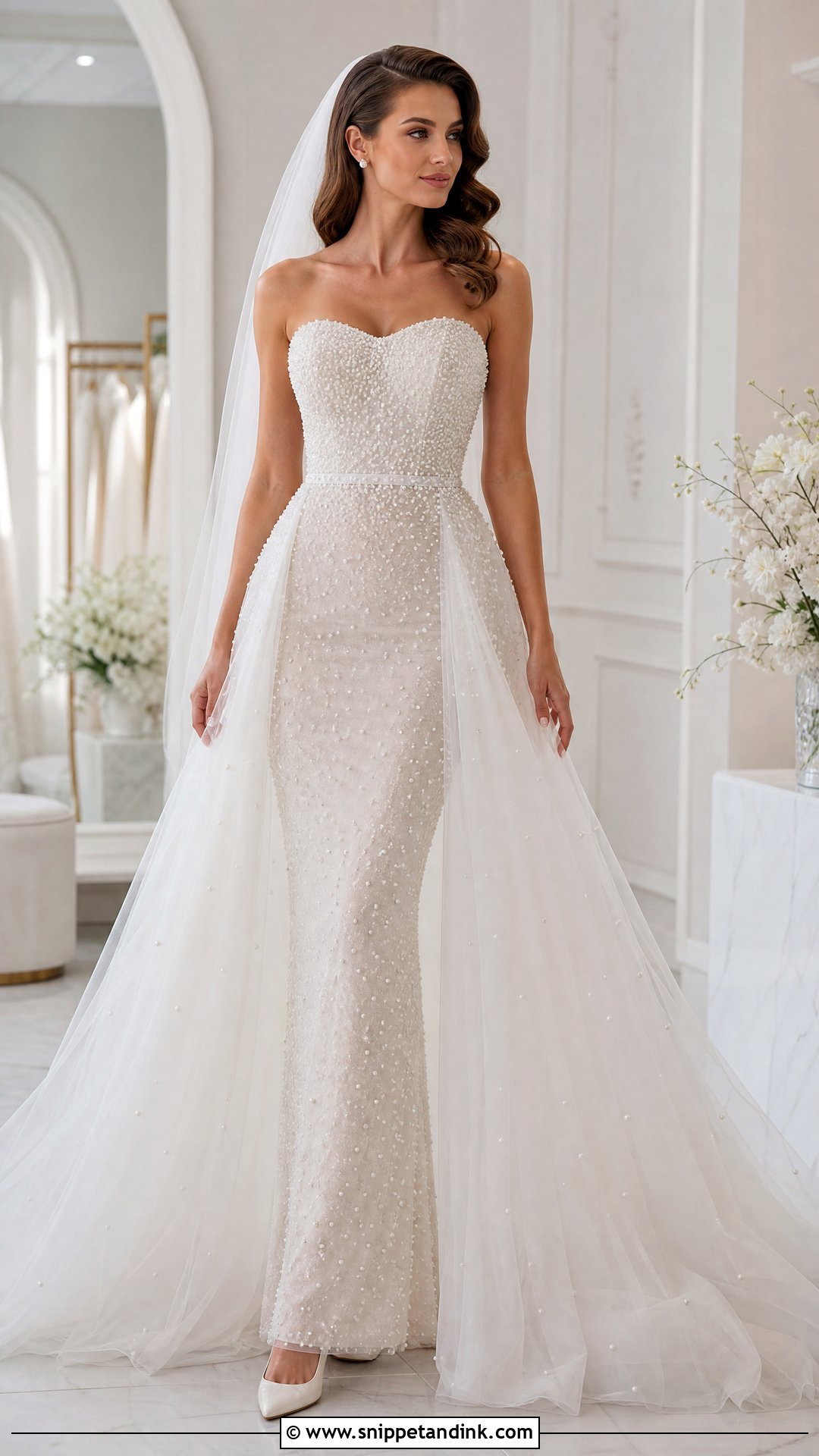
Pearls give texture with a softer glow than crystals. A fitted tulle or crepe gown can carry them across the bodice, sleeves, back or everywhere; dense pearl work means everything else should be plain. Smooth ivory pumps, tiny pearl studs and a single-layer veil with a cut edge stop anything snagging. Pearls sewn across the back or hips press into you when you sit on hard chairs, and repeated pressure loosens them, so try sitting on different surfaces at the fitting. A column with a removable pearl overskirt is a good alternative.
11. Draped Satin Fitted Wedding Dress
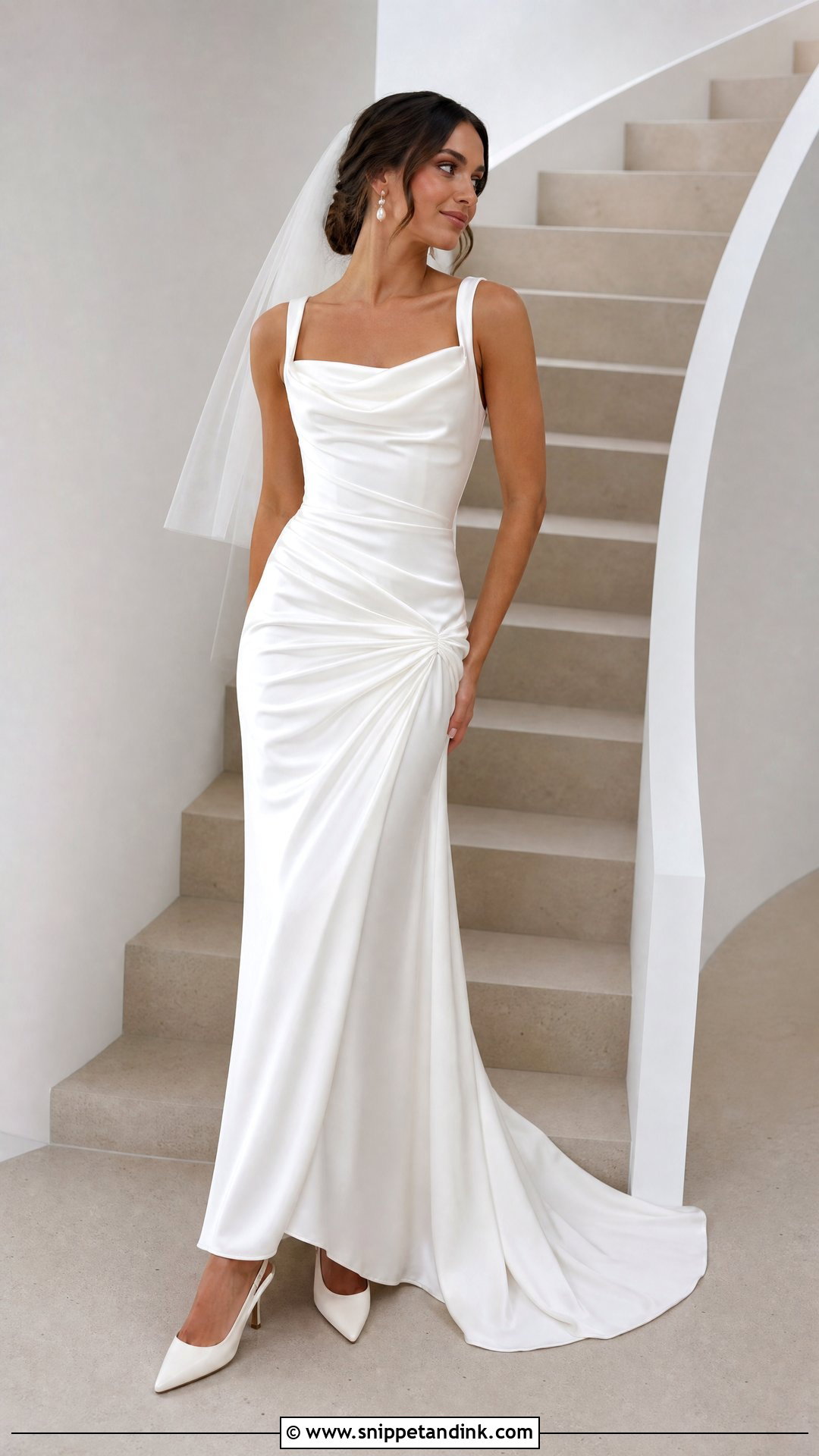
Draping helps satin forgive. Diagonal ruching across the waist, a gathered hip or a folded neckline break up the surface so the fabric doesn’t look rigid. Ruching has to be anchored to the lining at the right points or it twists when you sit, and poorly placed folds add bulk where you least want it. Check the folds standing and seated at every fitting. Pearl drops, pointed slingbacks and a light veil with minimal edging suit it. A low side bun echoes asymmetrical draping; smooth waves suit a symmetrical one. Keep the bouquet slim so it doesn’t cover the drape.
12. Corset Back Fitted Wedding Dress
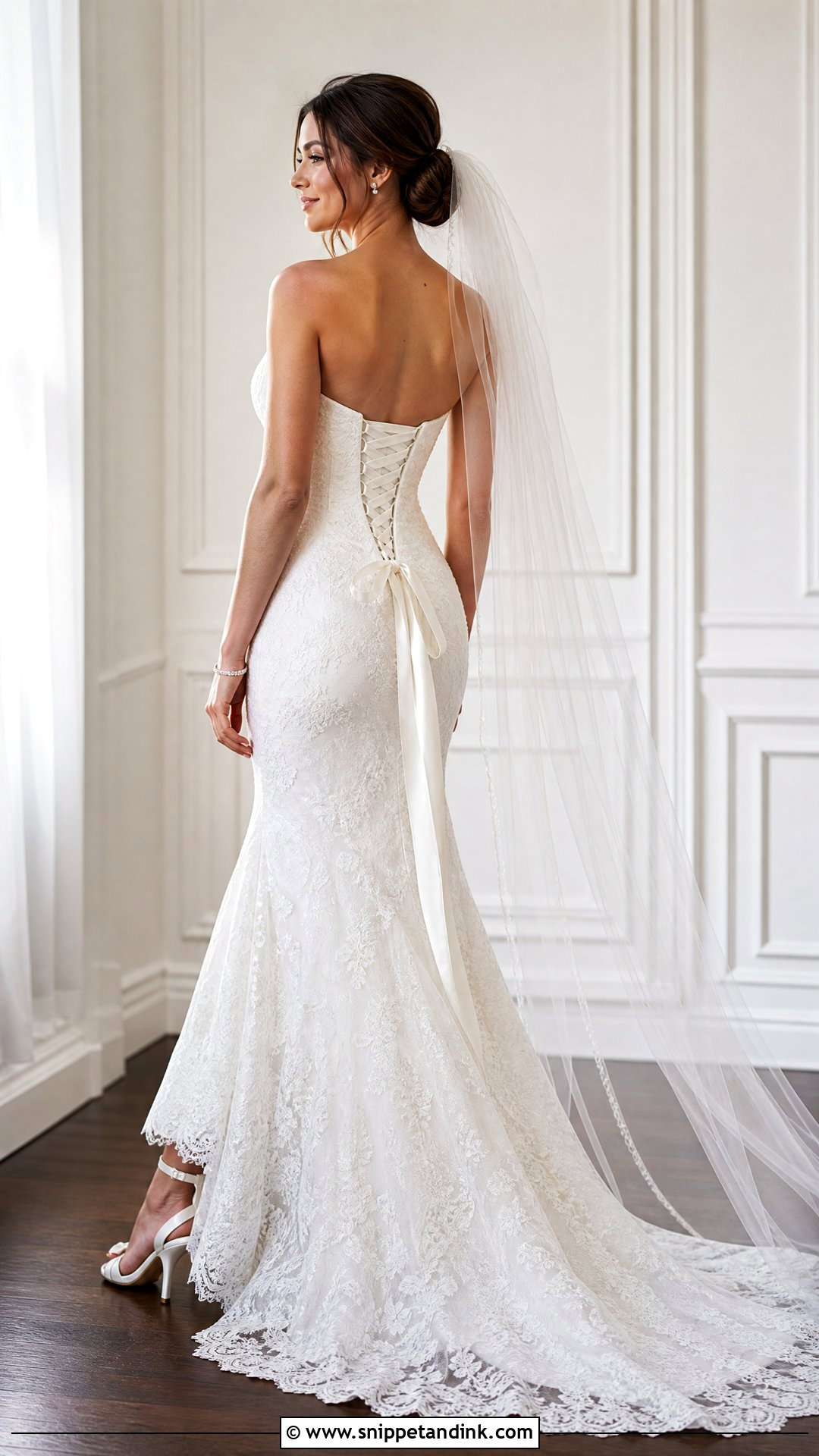
Lace-up backs allow some adjustment on the day, which is useful if your weight shifts in the final weeks, but they don’t replace proper fitting. The sweetheart bodice still needs internal boning to hold its shape. Pair it with a fitted lace or satin skirt and a medium train, ankle-strap heels, a delicate bracelet and a sheer veil above a low bun. Matching satin ribbon looks traditional; a wider ribbon makes the lacing a feature. I teach one bridesmaid how to lace it before the day, working from the top down and evening the tension, and make sure you can still breathe and eat.
13. Detachable Overskirt Fitted Wedding Dress
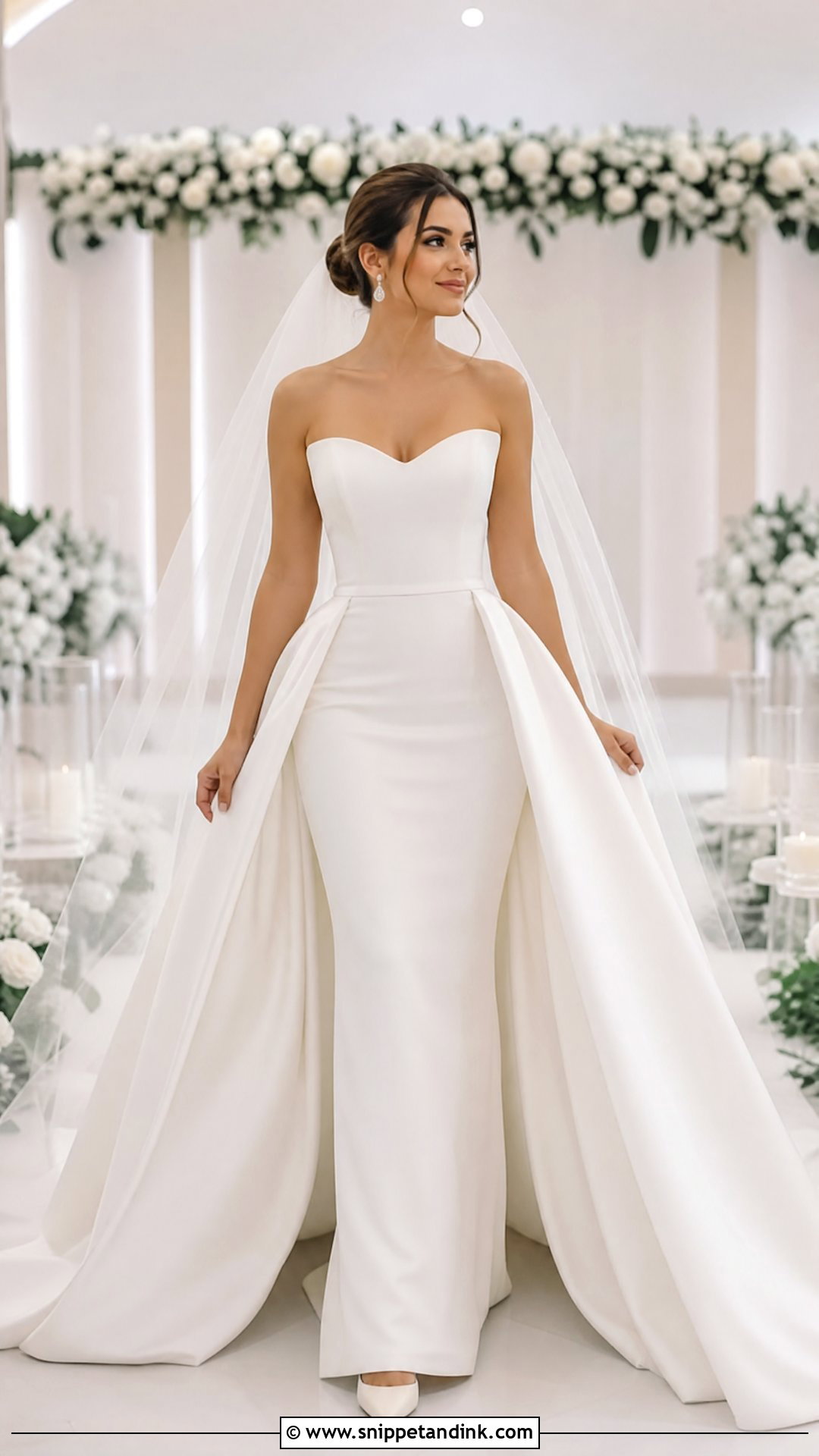
Two looks without a change of dress. A crepe or lace mermaid sits under a full satin, organza or tulle overskirt for the ceremony; after photos, the overskirt comes off to reveal the fitted shape for the evening. Comfortable pointed pumps, small drop earrings and a long veil that matches the overskirt’s volume suit it, with a polished updo. The overskirt waistband should hide inside the gown’s natural seams. Practise removing and refastening it, and decide who will look after it afterwards; a full skirt needs a hanger and somewhere safe to wait.
14. Plunging Neck Fitted Wedding Dress
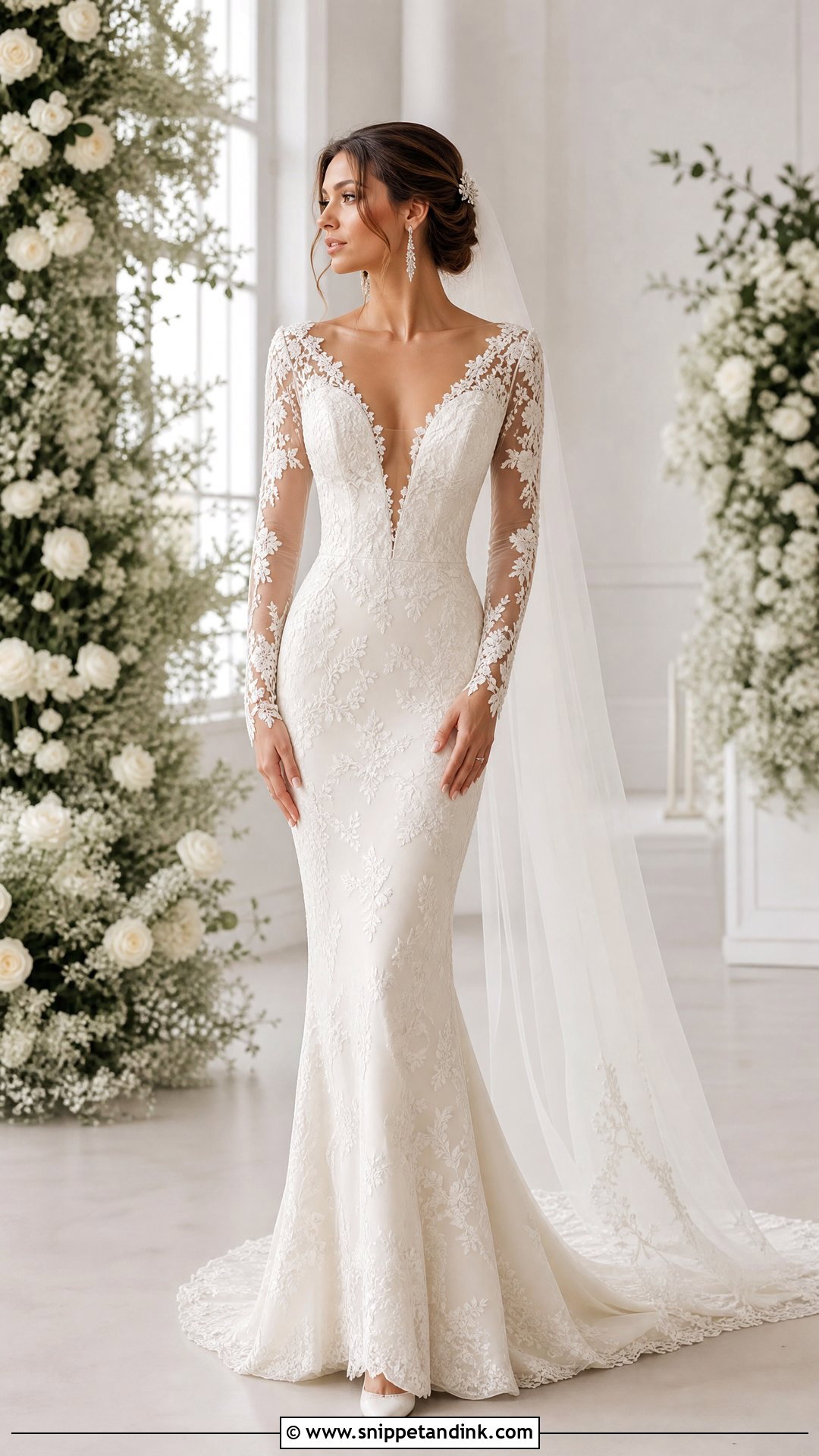
A plunging neckline needs construction you cannot see: illusion mesh, internal boning or lace appliqués placed to hold the edges. A narrow V with long sleeves and a wide plunge with thin straps feel very different, so try both before deciding. Fashion tape is a backup, not a structure. At the fitting, lean forward, hug someone and sit; if you see gaping, the edges need tightening. Drop earrings, a simple hair comb, closed heels and a plain chapel veil finish it, with no necklace.


15. One Shoulder Fitted Wedding Dress
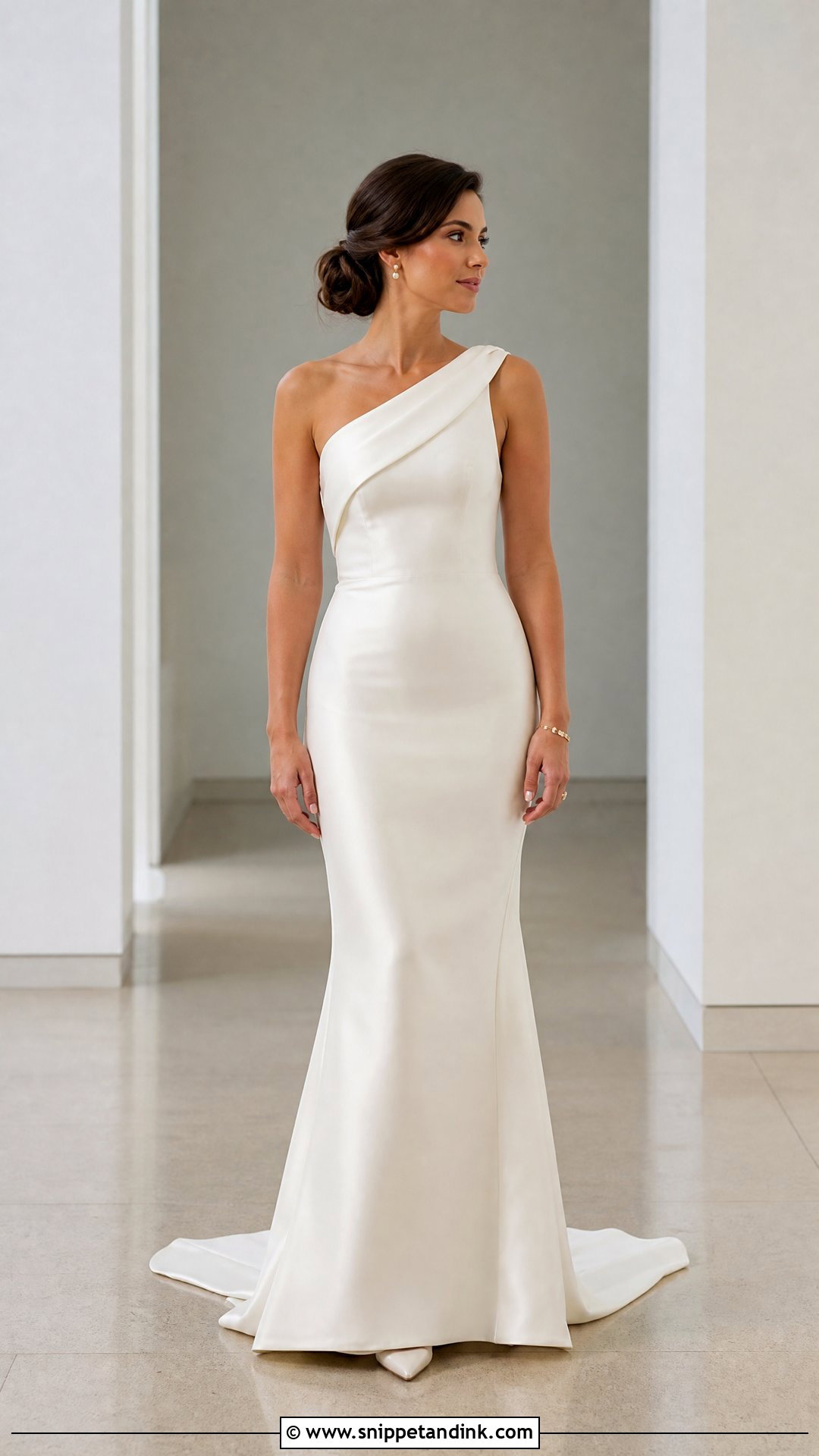
One strap carries the whole bodice, so the side seams and waist must sit level as you move. When I see the gown pull toward the strapped shoulder, I know the fit is off. Crepe or satin with a slim strap, a folded neckline, a draped sleeve or a small shoulder bow keeps the diagonal line clean; leave the opposite side bare. A single statement earring or two small studs, pointed heels and a narrow bracelet suit it, with a low side bun. A veil set behind the bun or a sculptural hairpin finishes the look.
16. Sweetheart Mermaid Wedding Dress
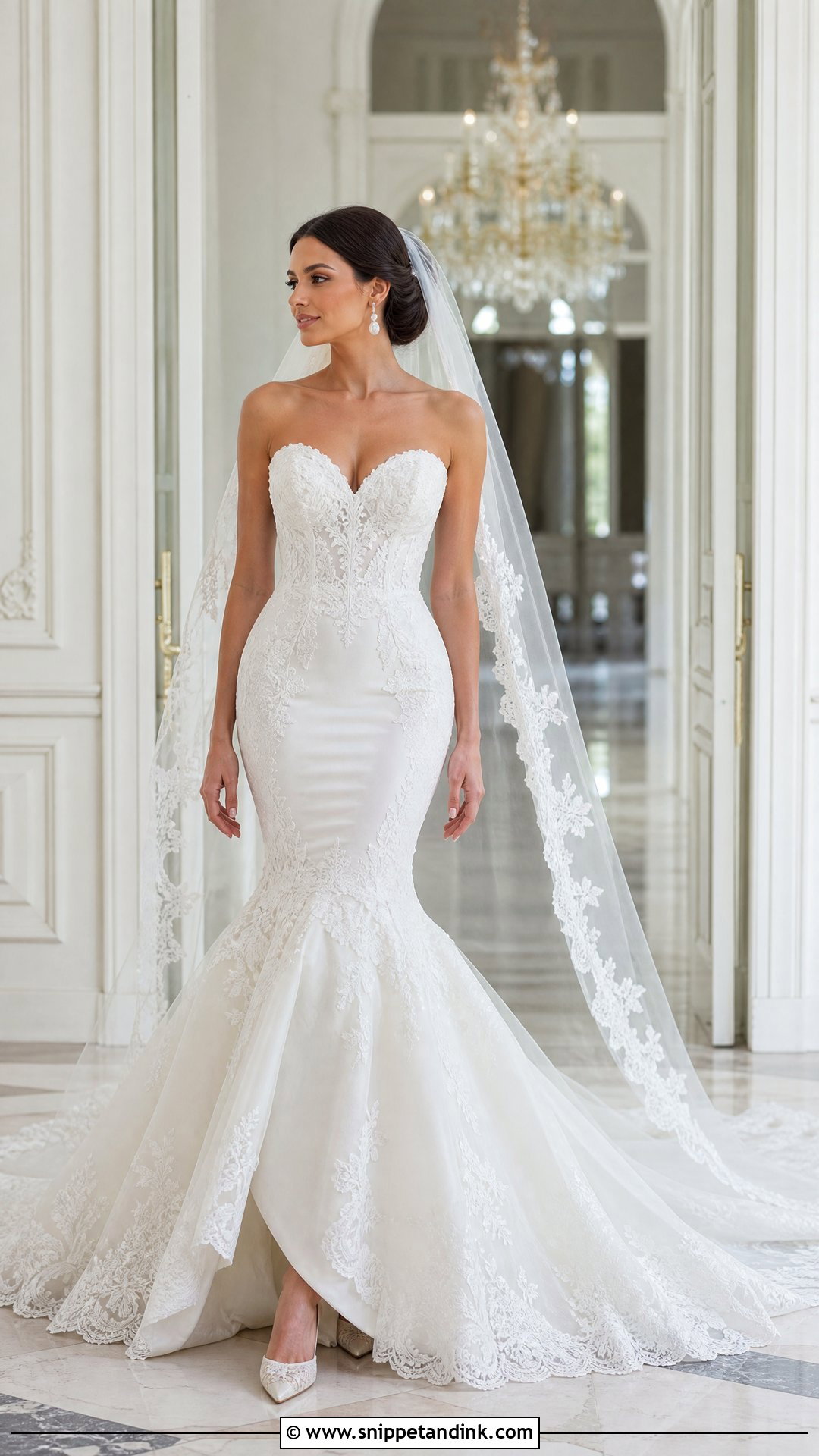
Sweetheart mermaid is the most traditionally dramatic shape here. The curve over the bust, close fit through torso, hips and thighs, then a flare near the knee make a strong outline. Lace appliqués soften it; plain Mikado or satin sharpens it. Pearl or crystal earrings, pointed ivory heels and a veil a little longer than the train suit it, with a classic chignon to hold the comb. Flare position is the main decision at alterations: lower gives more definition and shorter steps, slightly higher gives easier walking and dancing with almost the same silhouette.
17. Spaghetti Strap Fitted Wedding Dress
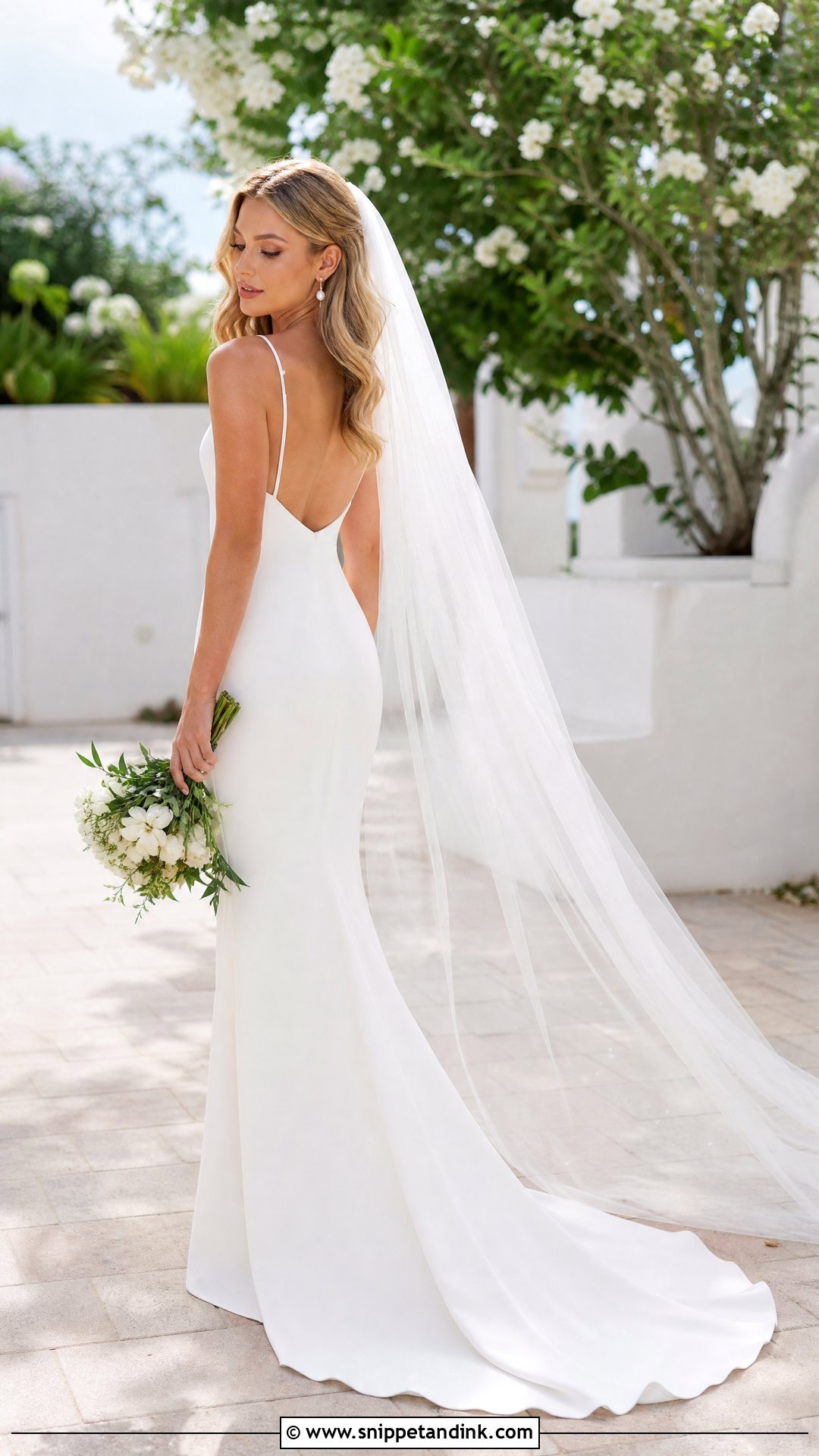
Thin straps look light, but they shouldn’t carry a fitted gown’s weight alone. On a stretch-crepe sheath, satin slip or lace fit-and-flare, ask whether the straps are reinforced or adjustable, and check where they’re attached if there’s a heavy skirt or train. Delicate sandals, small hoops or drops and a fingertip veil suit warm weather. Loose waves feel coastal, a neat bun more formal. For an open back, sewn-in cups or a low-back foundation give support without a visible band. The straps should neither dig in nor slip when you move.
18. Open Back Fitted Wedding Dress
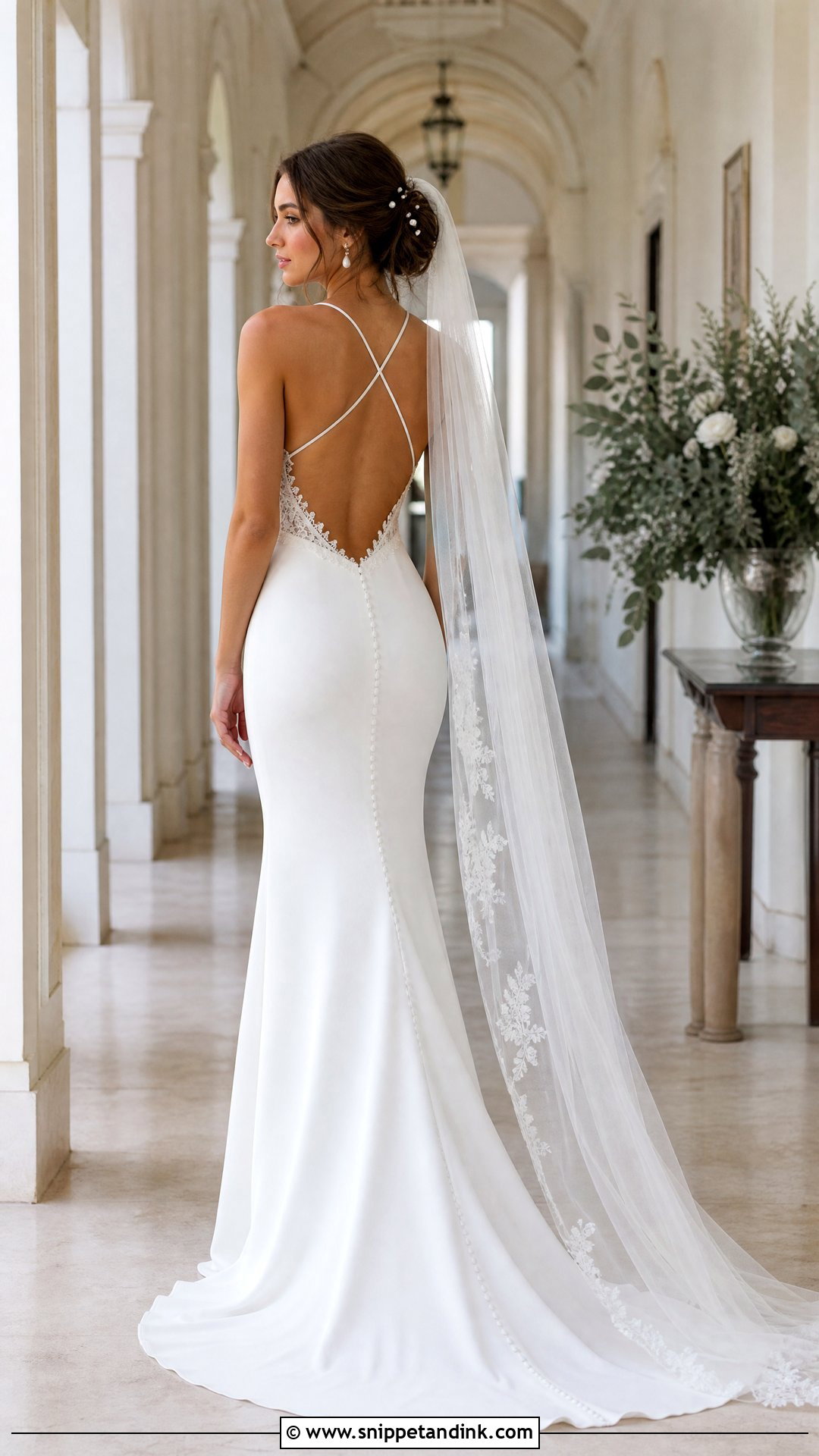
Guests watch your back for the whole ceremony, which makes an open back worth choosing carefully. Options run from a shallow scoop to a deep cut framed by lace, buttons or slim crossed straps. Bra support is the first question, since the opening changes how the bodice is built and what can go beneath it. Test it bending and sitting; the edges should lie flat, not gape or press in. Finish with pearl hairpins, drop earrings and heels visible under a narrow train. Wear hair up or to one side, and a sheer veil that comes off later.
19. Fitted Wedding Dress With Cape
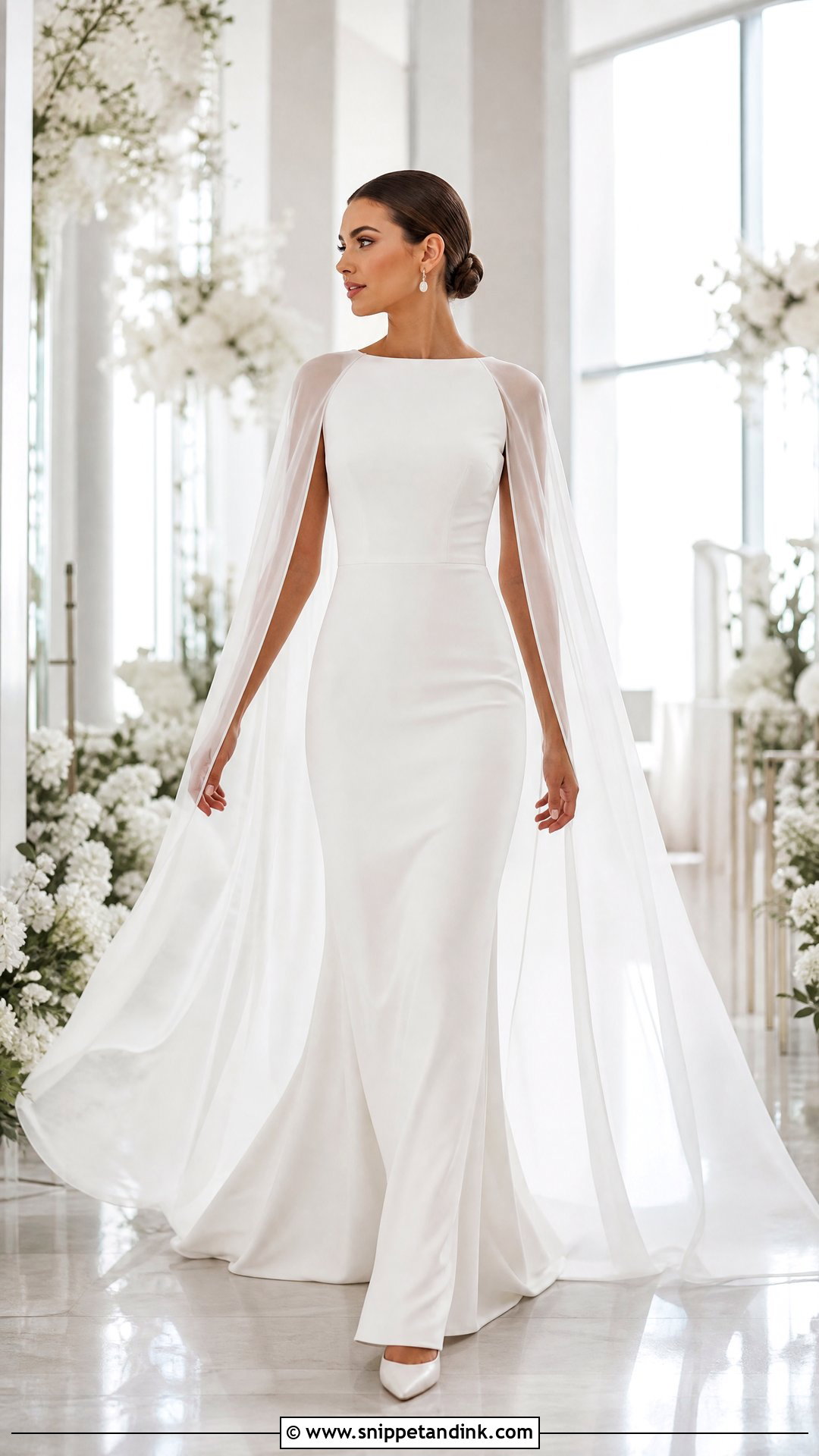
A cape gives a fitted gown movement and stands in for a veil. A plain crepe column with a sheer floor-length cape is one route; a lace trumpet with a shorter capelet matching its appliqués is another. Pointed pumps, understated earrings and a sleek low bun suit it; skip a big necklace if the cape fastens at the neck. The fastening should lie flat and not drag the gown backward when you walk. I’d have you practise removing it with your attendant, and check its behaviour outdoors, since wind and stairs catch a long cape quickly.
20. Fitted Wedding Dress With Bow
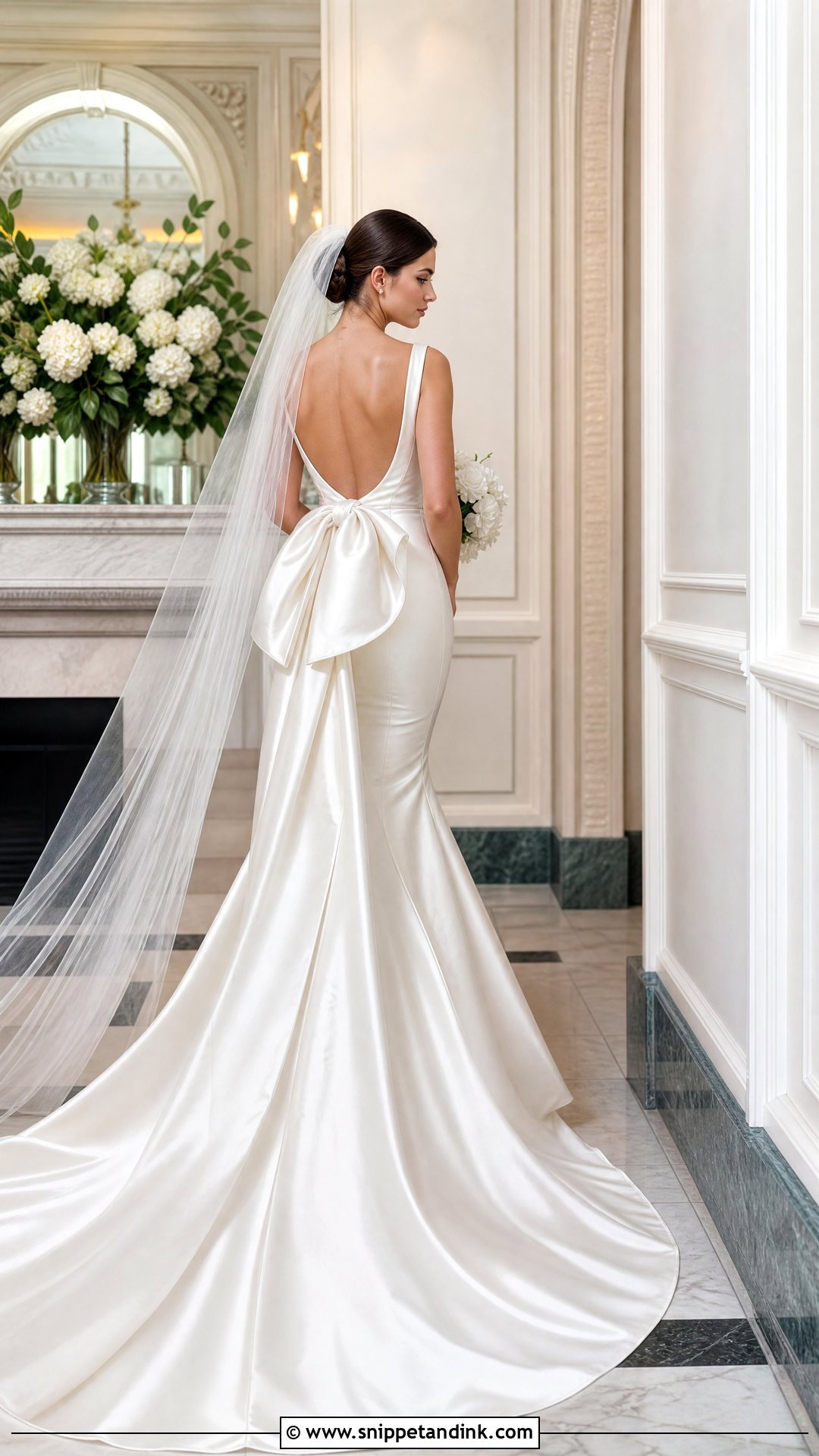
A bow softens the strict lines of a fitted dress, and its scale matters. A large bow needs interfacing inside to hold its loops; a small one can disappear into the fabric. The classic version is a satin mermaid with a detachable bow at the back just above the train. A shoulder bow gives a modern asymmetrical look, while a narrow waist bow is more traditional. Pointed ivory heels, pearl studs and a single-layer veil keep the rest controlled, with a low bun so the bow stays visible. Detach it before dancing.
Planning Alterations Around a Body That Changes
Fitted gowns have less room for error than A-lines. There is often only a small seam allowance to let out, so taking a dress in is easy and letting it out may not be possible. Weight, stress and training before the wedding all shift measurements, and a dress fitted perfectly three months ahead can feel tight or loose by the day.
- Order the size that fits your largest current measurement, then take it in.
- Book the final fitting one to two weeks before the wedding, close enough that little will change.
- Plan for heat. In warm weather hands and feet swell, so try the gown late in the day at least once.
- If you are travelling to the wedding, pack the dress in its bag as carry-on and arrange a pressing on arrival.
Car Seats, Stairs and Bathroom Trips in a Narrow Skirt
These are the moments nobody rehearses, so I walk brides through them at the last fitting. Getting into a car, sit down first on the edge of the seat and then swing both legs in together; stepping in leg first strains the seams of a mermaid. On stairs, gather the flare in one hand at the front and take each step sideways if the skirt is tight at the knee. For the bathroom, many brides find it easiest to face the cistern so the skirt can be gathered behind them, with a bridesmaid holding the train. Try all three in the gown before the day, not after.
A Close Fit Should Still Let You Dance
Fit is the whole story with a close-cut gown. Satin, lace, corsetry, crepe or beadwork can all look exceptional, but alterations make more difference here than in any other silhouette. Judge every shortlisted dress walking, sitting, hugging and dancing, not standing still in front of a mirror. Then add the shoes, jewellery, hair and veil or cape that show off its strongest feature. Trends are a starting point; the deciding factor should be whether the dress stays secure and lets you enjoy the whole celebration.
You'll Like These Ideas:






Leave a Reply