
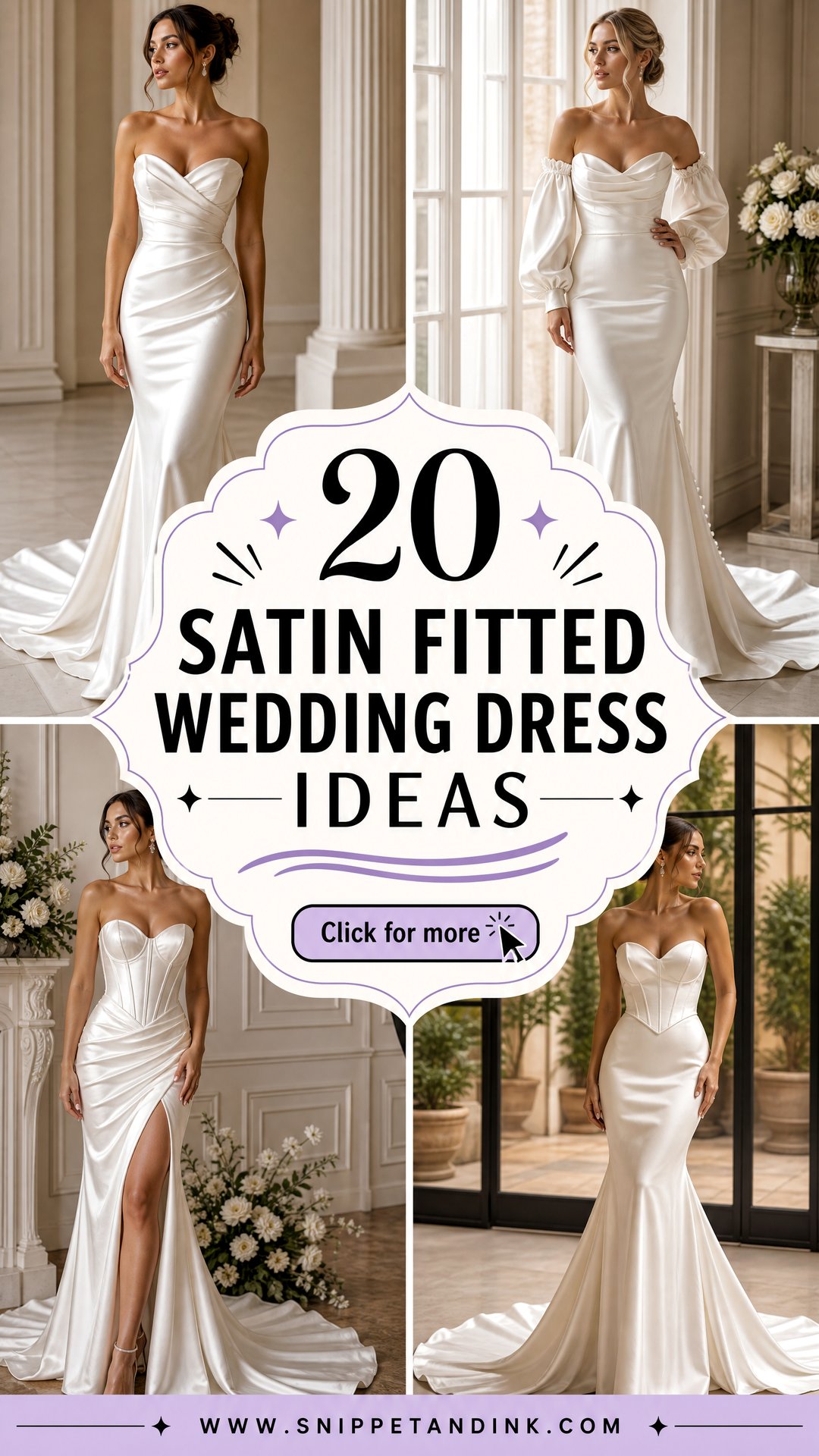
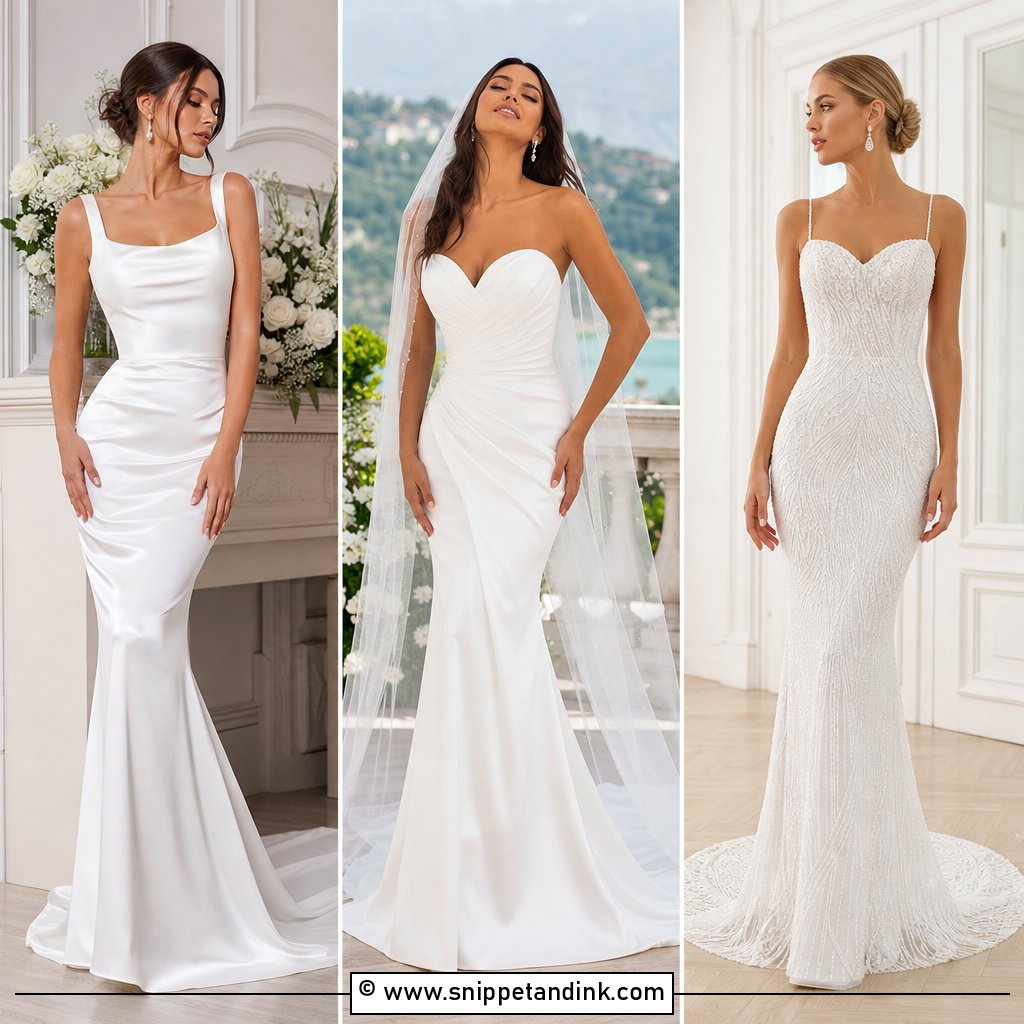
Fitted satin is a confident choice. There’s no volume to hide in, and the fabric picks up light along every curve and every seam. A satin fitted wedding dress can look plain on the hanger and transform once it’s tailored to you, which is why I treat the fit as the design. The twenty looks below run from simple sheaths to corseted mermaids, with sleeves, slits, bows and removable layers along the way. For each one I’ve noted what I’d pair with it and what I’d check at the fitting.
The Underwear Question Under Close-Cut Satin
Nothing exposes underwear like a fitted satin skirt. I’d sort this out before the first alteration appointment, because the seamstress pins the dress to whatever you’re wearing underneath.
- Choose bonded or laser-cut edges. Any elastic or lace trim shows as a ridge across the hip in side light.
- Match your skin tone, not the dress. White underwear can show through ivory satin; a nude shade close to your own disappears.
- Be careful with shapewear that stops mid-thigh. Its edge often creates a line exactly where a mermaid or sheath is tightest. A full slip or high-waisted short that goes past the knee, or no shapewear at all, is often smoother.
- Ask what’s already built in. Many fitted gowns have cups and a corset inside, and adding a bra on top only creates bulk.
Bring the actual pieces to every fitting, not similar ones. Even a different brand of the same style can change the fit at the waist by enough to matter.
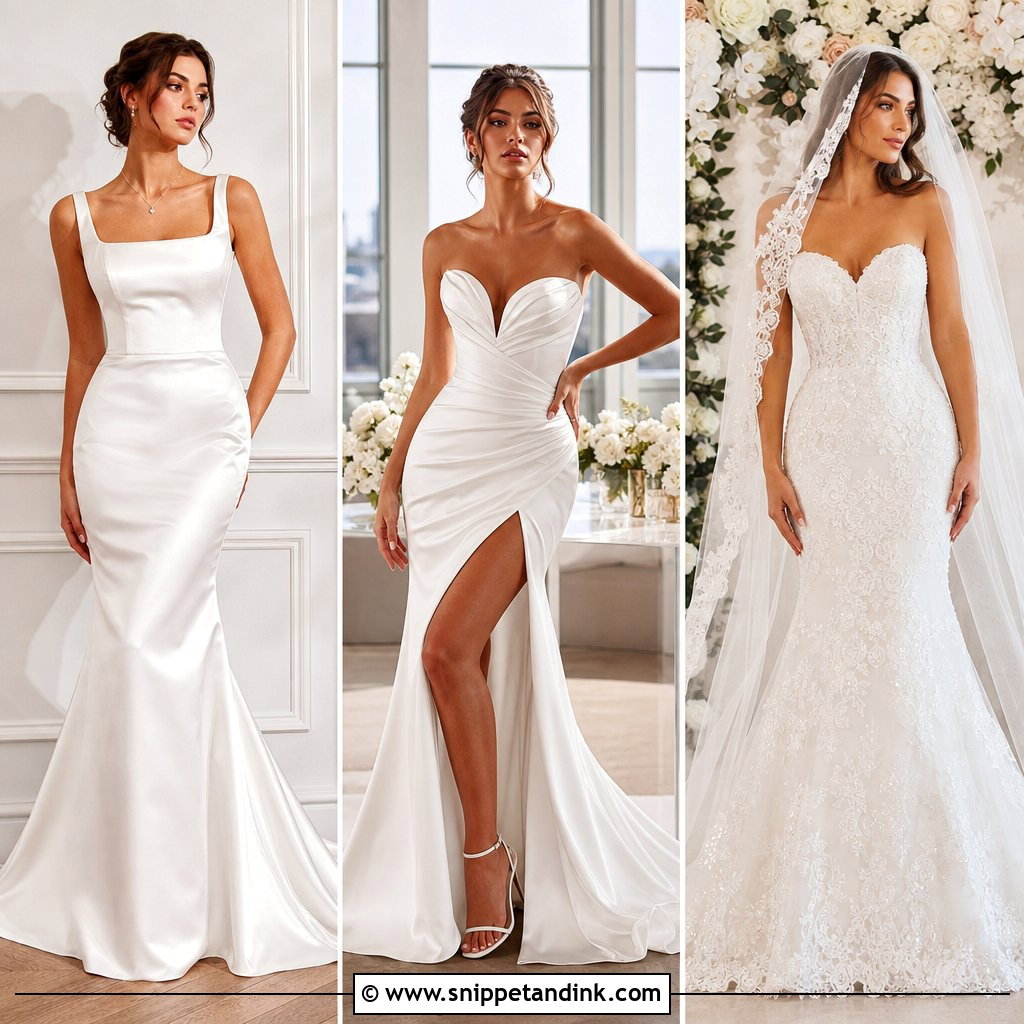
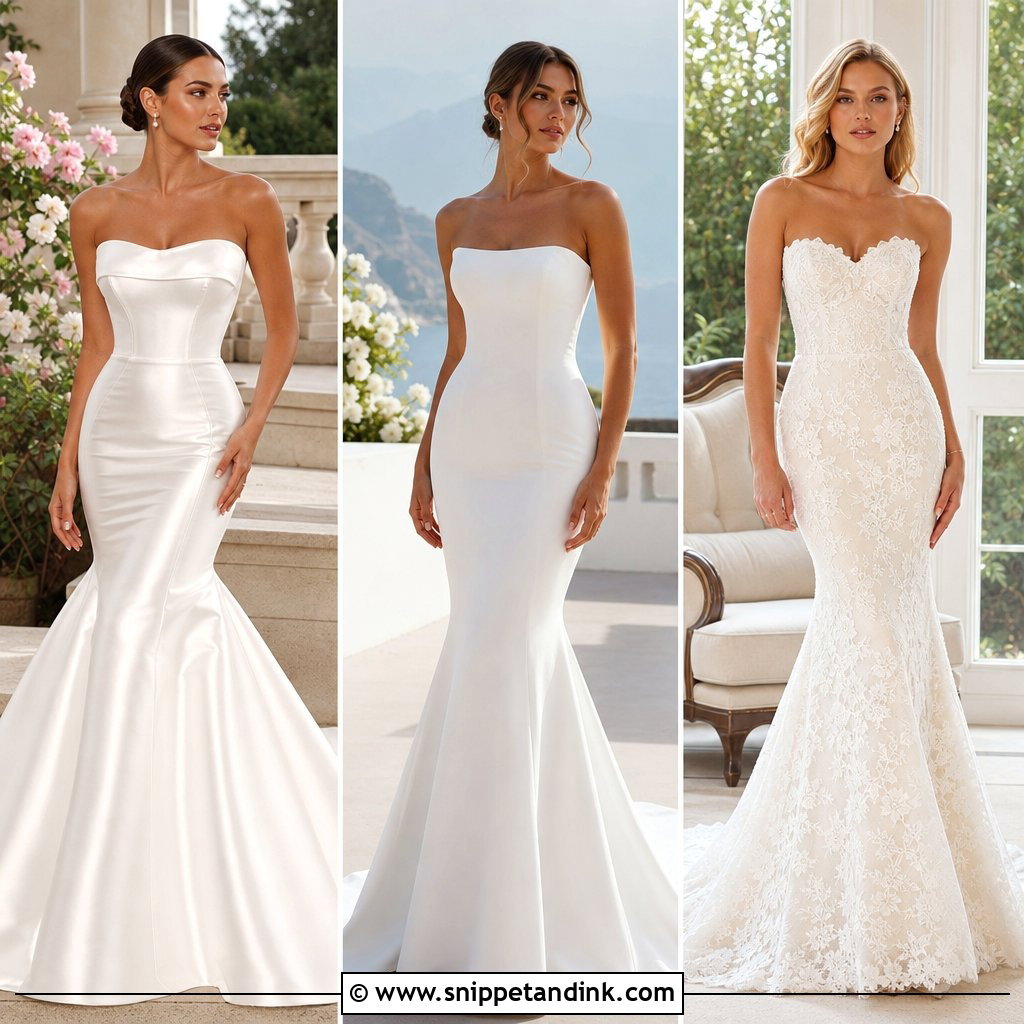
1. Strapless Satin Fitted Wedding Dress
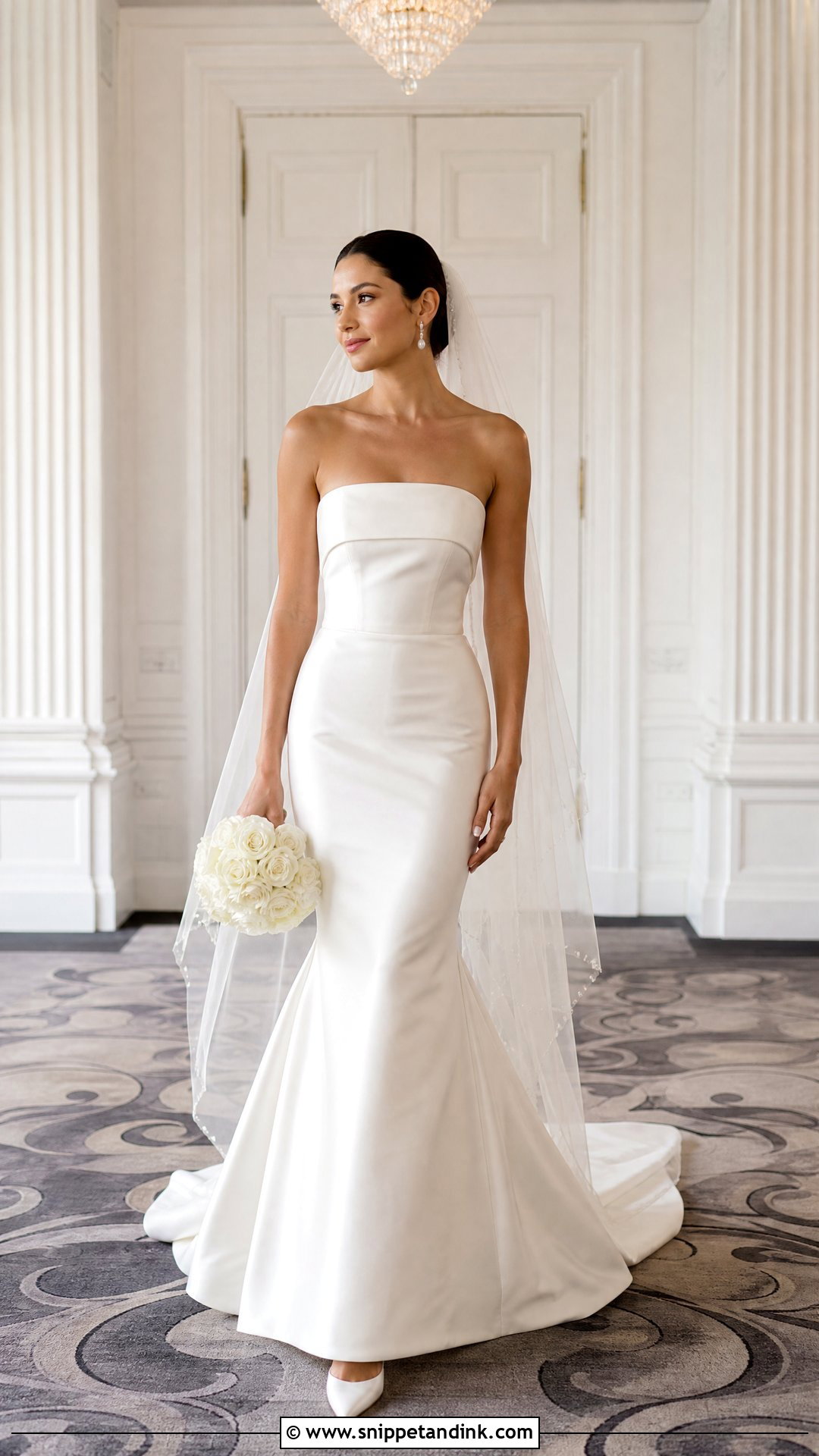
Strapless is where most brides start, and for good reason. Inner boning and a gently curved neckline hold you securely, and a skirt that flares below the thigh lets you move. Fit is the whole story: the top edge should sit flat against the skin without cutting in, and that usually takes a fitting or two. Small silicone grip tape sewn inside the top edge stops the bodice creeping down during the evening. A fingertip veil, pearl drops, pointed ivory pumps and a compact bouquet of white roses keep it clean.
2. Sweetheart Satin Fitted Wedding Dress
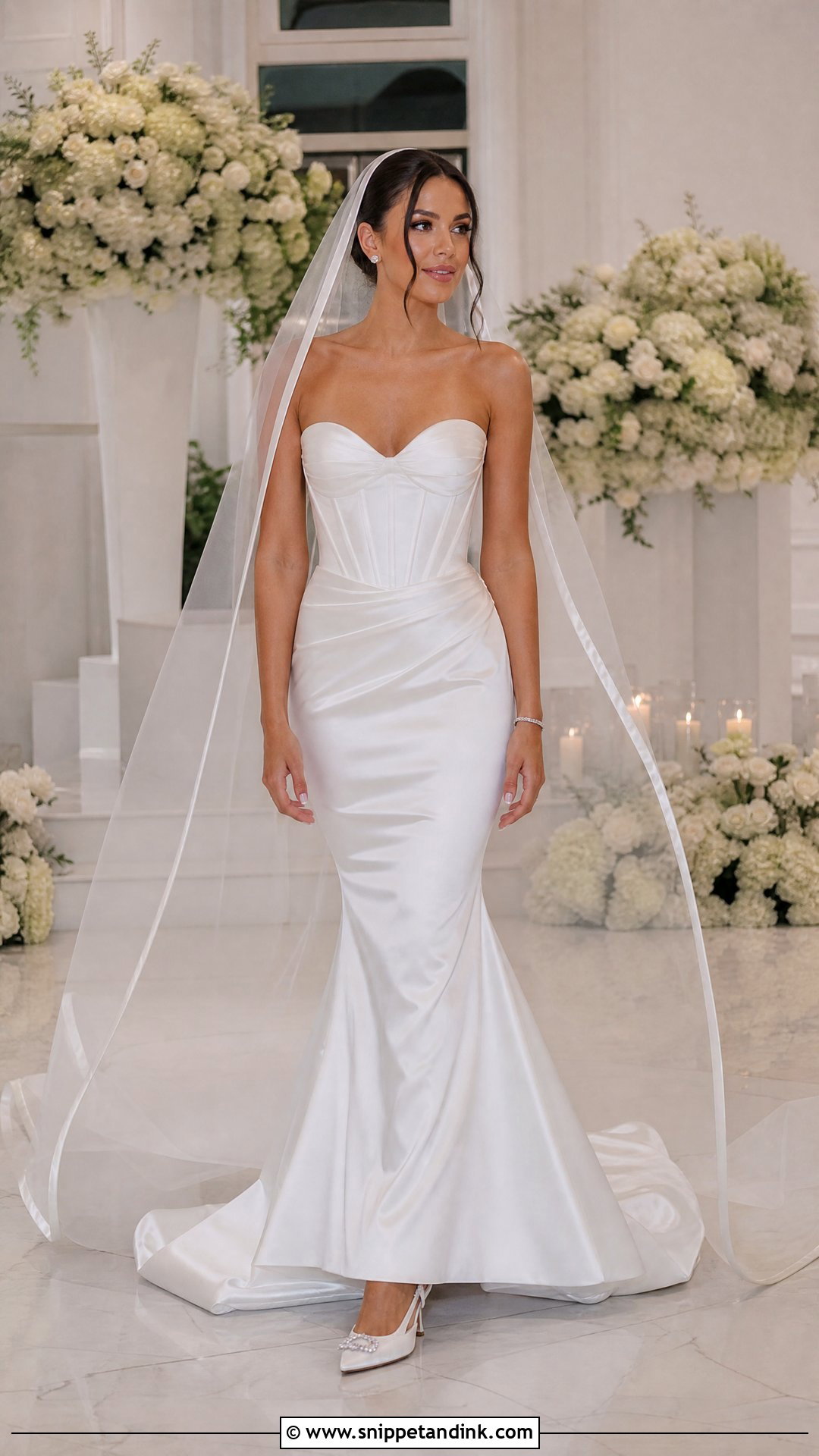
The sweetheart curve frames the collarbones so you don’t need a big necklace. Under it, a corset bodice should follow the waist and release into a fit-and-flare skirt; where that flare starts is worth deciding with your tailor, because a few centimetres higher or lower changes your proportions. Crystal studs, a thin tennis bracelet and satin slingbacks are plenty. A cathedral veil with a narrow satin edge adds ceremony length without fuss, and a small round bouquet with little greenery suits the curve.
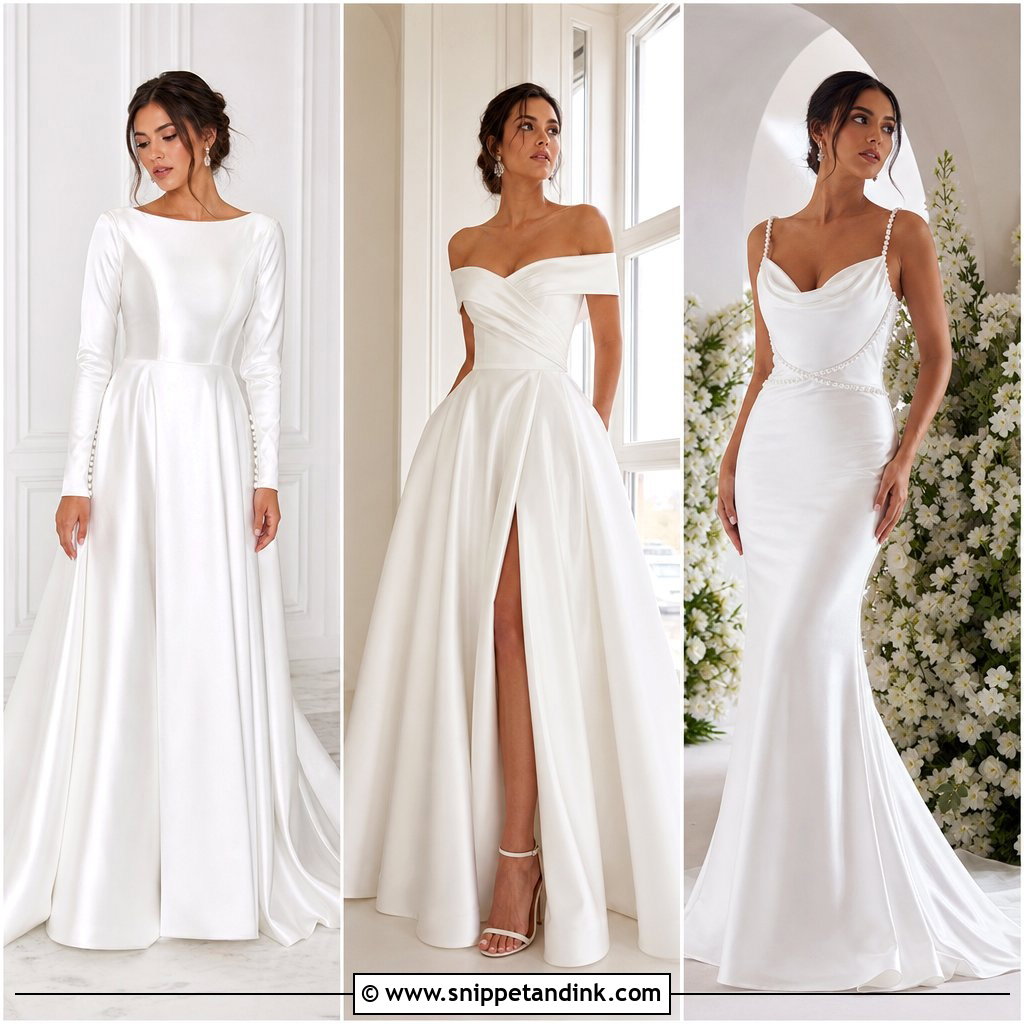
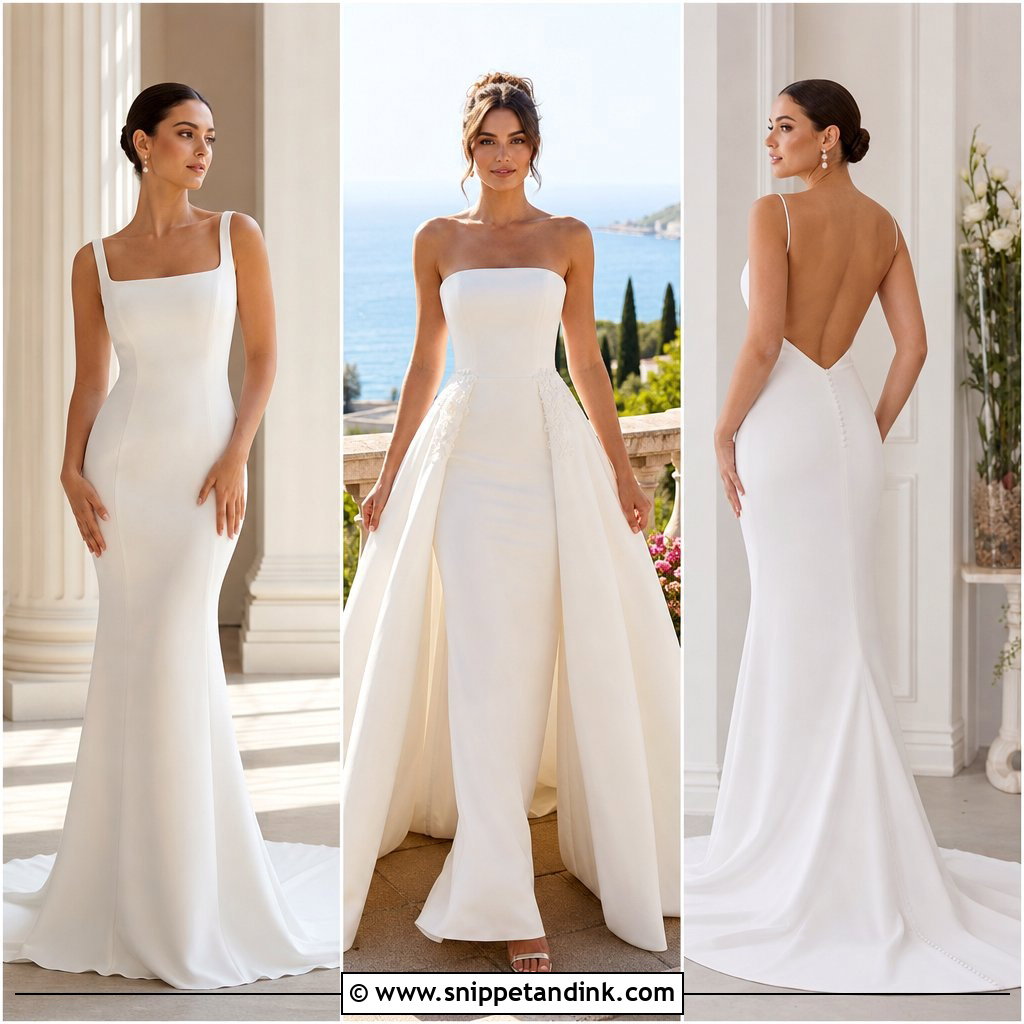
3. Square Neck Satin Fitted Wedding Dress
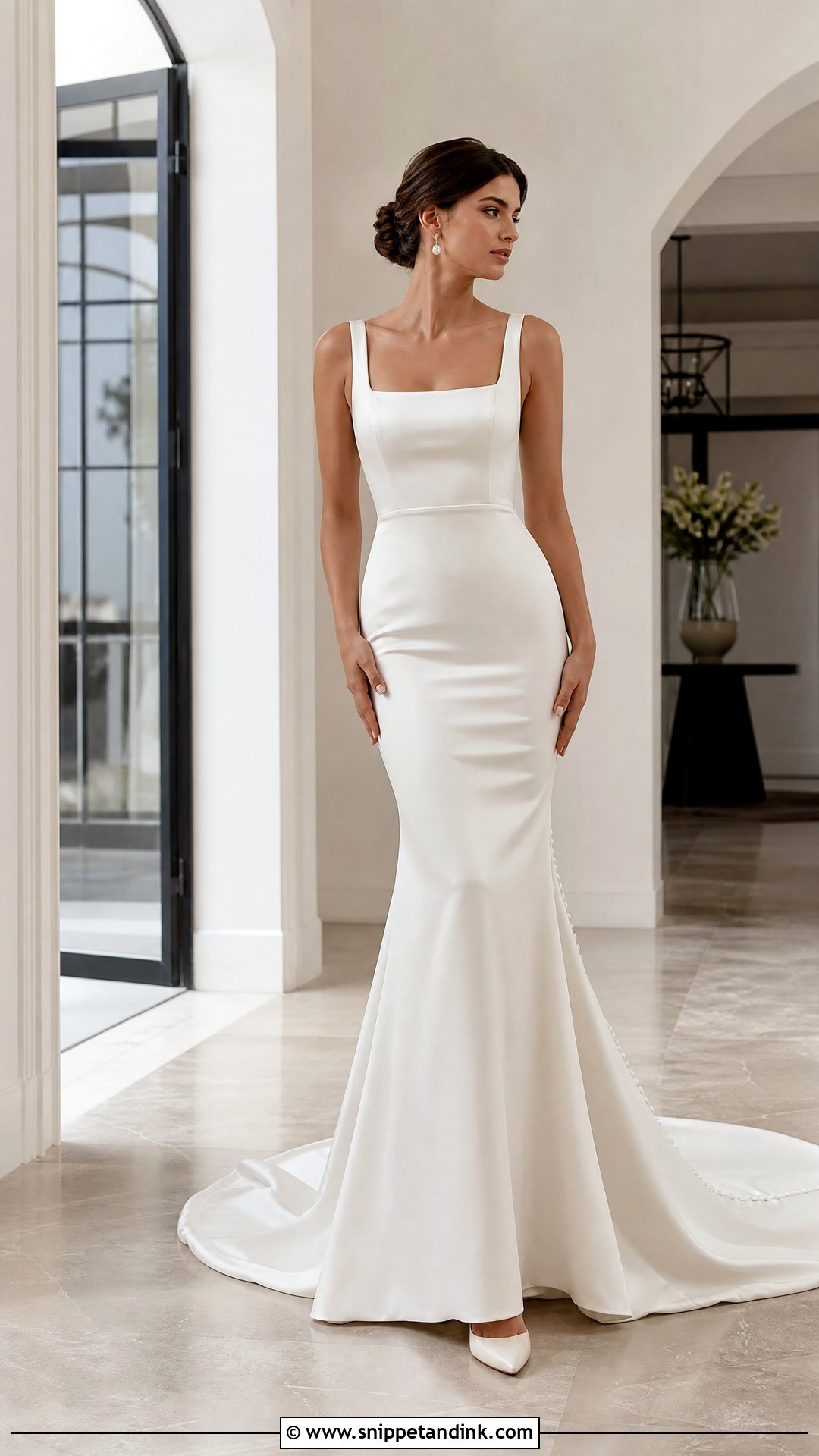
A square neck has a slight vintage feel and helps balance broader shoulders, especially with medium straps. I’d keep the line going with a defined waist, a fitted hip and a soft chapel train. In stiff satin the neckline can bow outward when you sit or reach, so check it in those positions at fittings. Pearl earrings, a low chignon, closed satin heels and a long plain veil suit it, and a bracelet or heirloom ring replaces a necklace. Museums, estates and minimalist venues all suit its angles.
4. Off-The-Shoulder Satin Fitted Wedding Dress
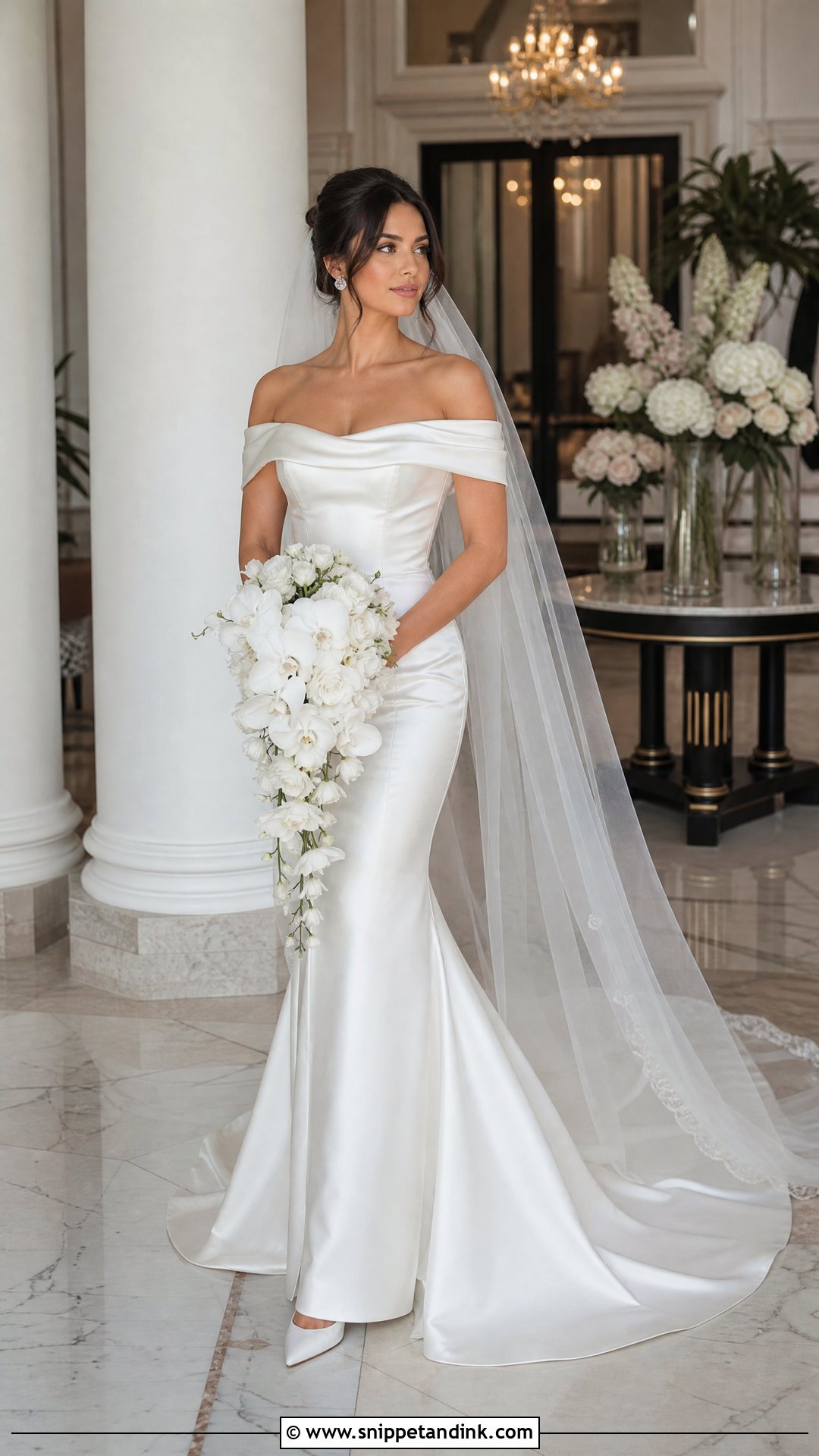
Off-the-shoulder bands frame the face and make portraits easy. The bodice must be built firmly enough to hold itself up, so the bands are decoration, not support. If they’re doing the work, you’ll feel them dig into your arms by the first dance. Lift your arms and hug someone during alterations. Swept-back hair, small diamond earrings and pointed pumps, plus a long veil pinned under the hairstyle. Detachable bands are worth asking about if you plan a lot of dancing.
5. Cowl Neck Satin Fitted Wedding Dress
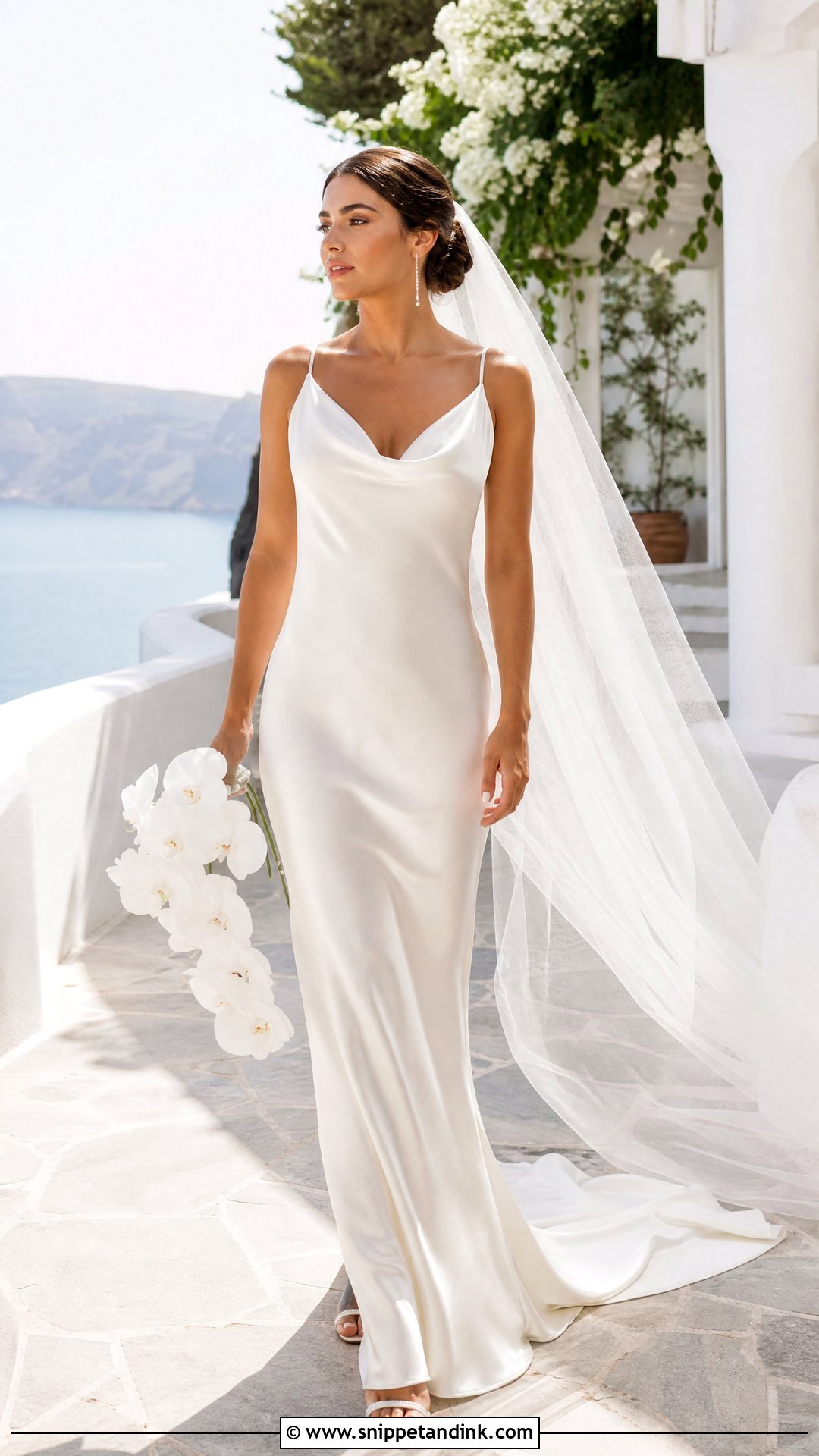
A cowl neck satin fitted wedding dress is usually cut on the bias, which makes it skim the body rather than grip it. Slim straps, a low back and a small train keep it light. Bias satin reacts to everything underneath, so I’d try your underwear options before alterations start, not after. A sleek bun, pearl threader earrings, minimal sandals and a lightweight chapel veil are all it needs. White orchids or calla lilies held loosely suit the drape, especially at a destination or small ceremony.
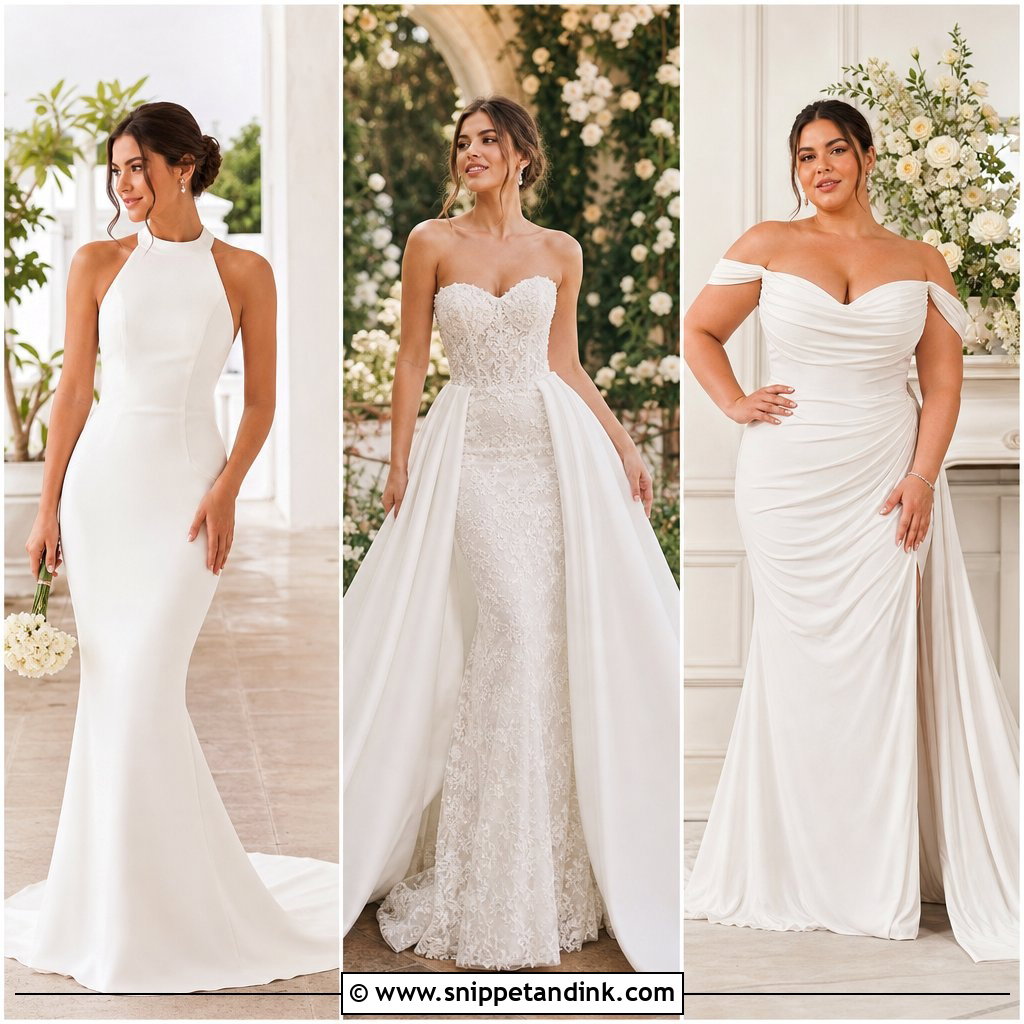
6. Halter Neck Satin Fitted Wedding Dress
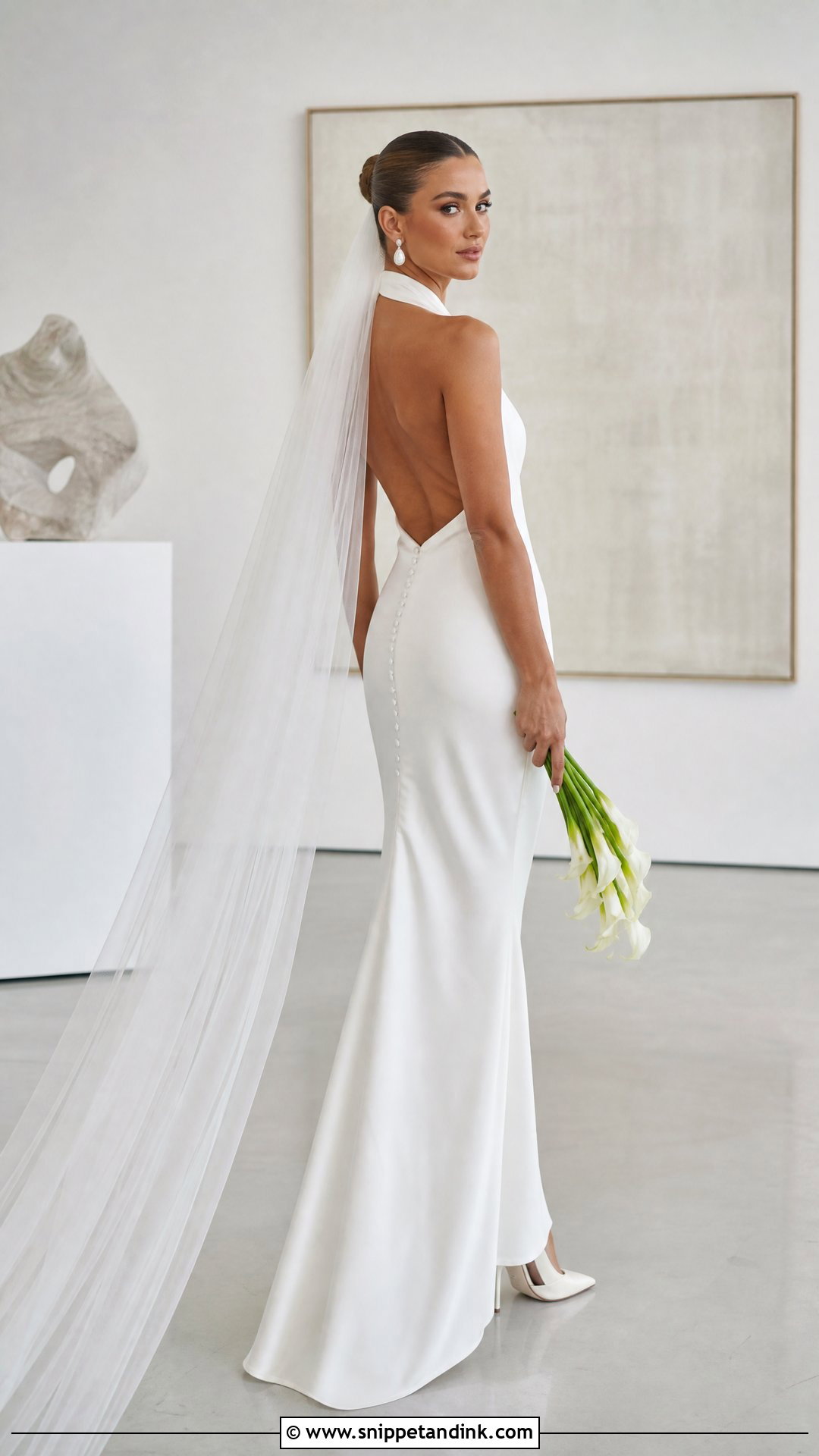
The halter makes the body look longer and shows off the shoulders and upper back. Over a fitted column or mermaid skirt, with covered buttons down the back, it looks polished without any trim. Before you commit, check two things: the strap shouldn’t pull at the neck, and the armholes should sit close enough that nothing shows from the side. Sculptural earrings, a neat bun and pointed pumps or ankle-strap sandals, no necklace. A cathedral veil pinned below the bun and narrow calla lilies echo the vertical line.
7. One-Shoulder Satin Fitted Wedding Dress
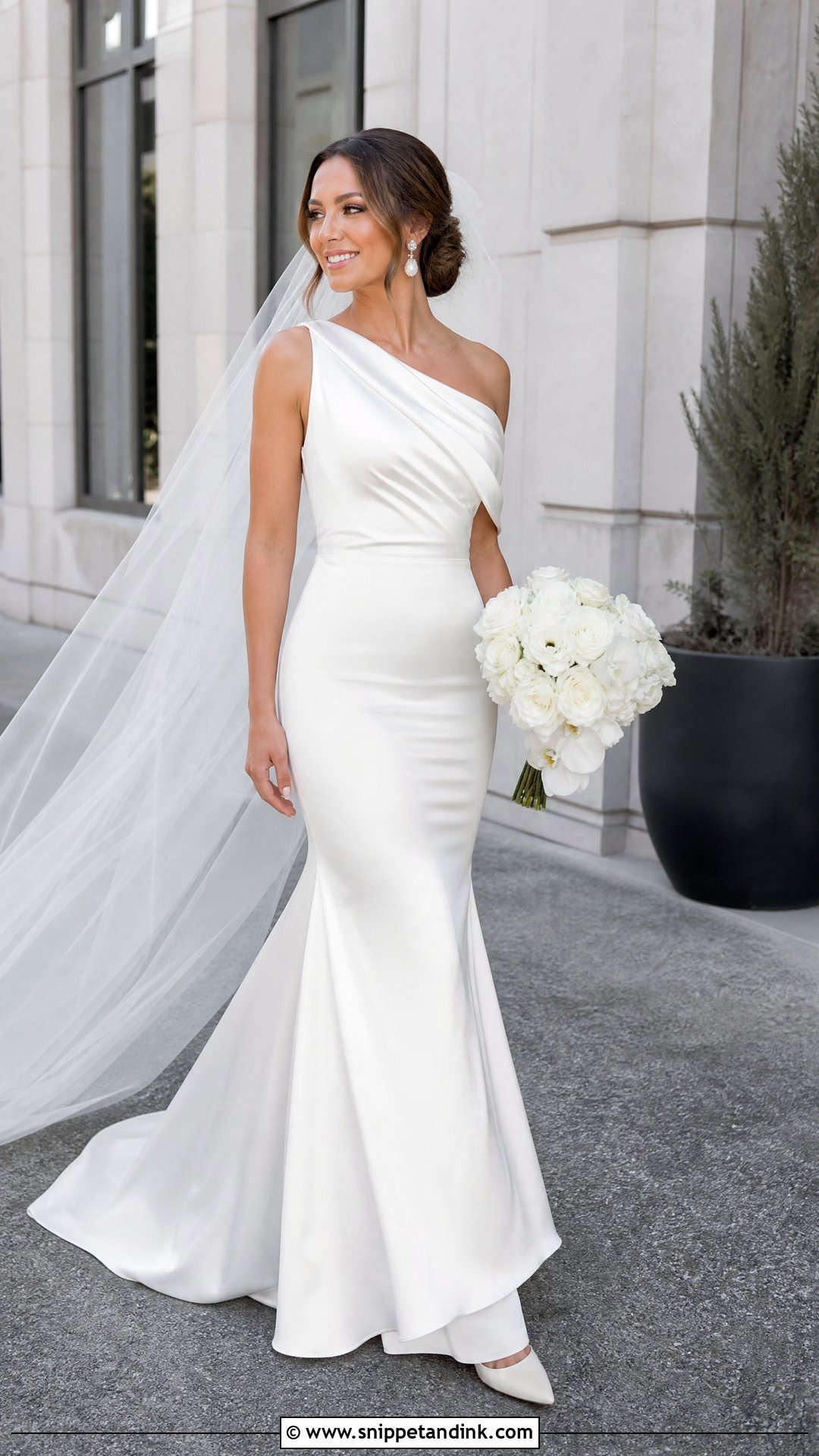
One shoulder gives the fitted shape an editorial edge. A draped strap or folded neckline is enough interest; keep the waist fitted and the mermaid skirt plain. A gown like this can twist slightly on the body as you walk, so I watch the bodice from behind at fittings to make sure it sits level. A side-parted bun, one statement earring or two small drops, and pointed ivory heels. Place the veil at the back of the head so it doesn’t cover the shoulder. Works especially well in galleries and city venues.
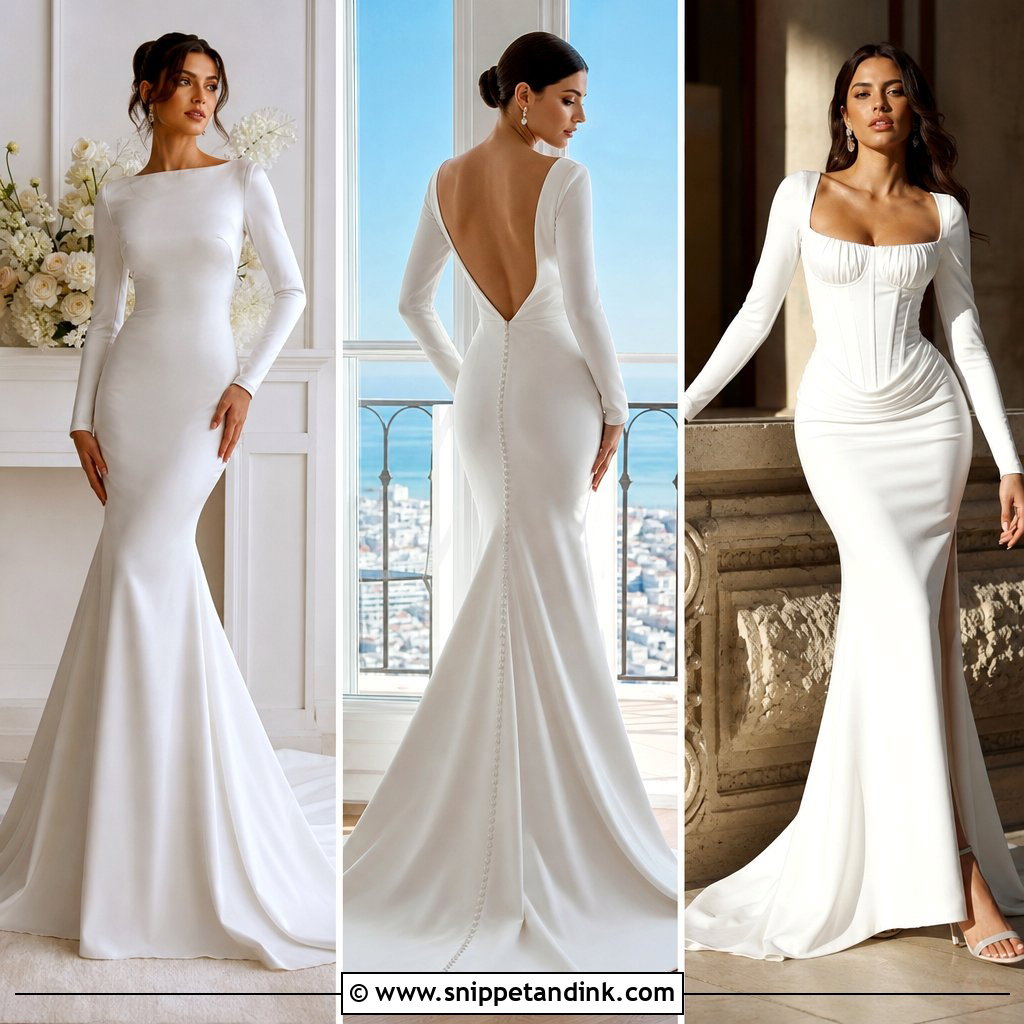
8. Long Sleeve Satin Fitted Wedding Dress
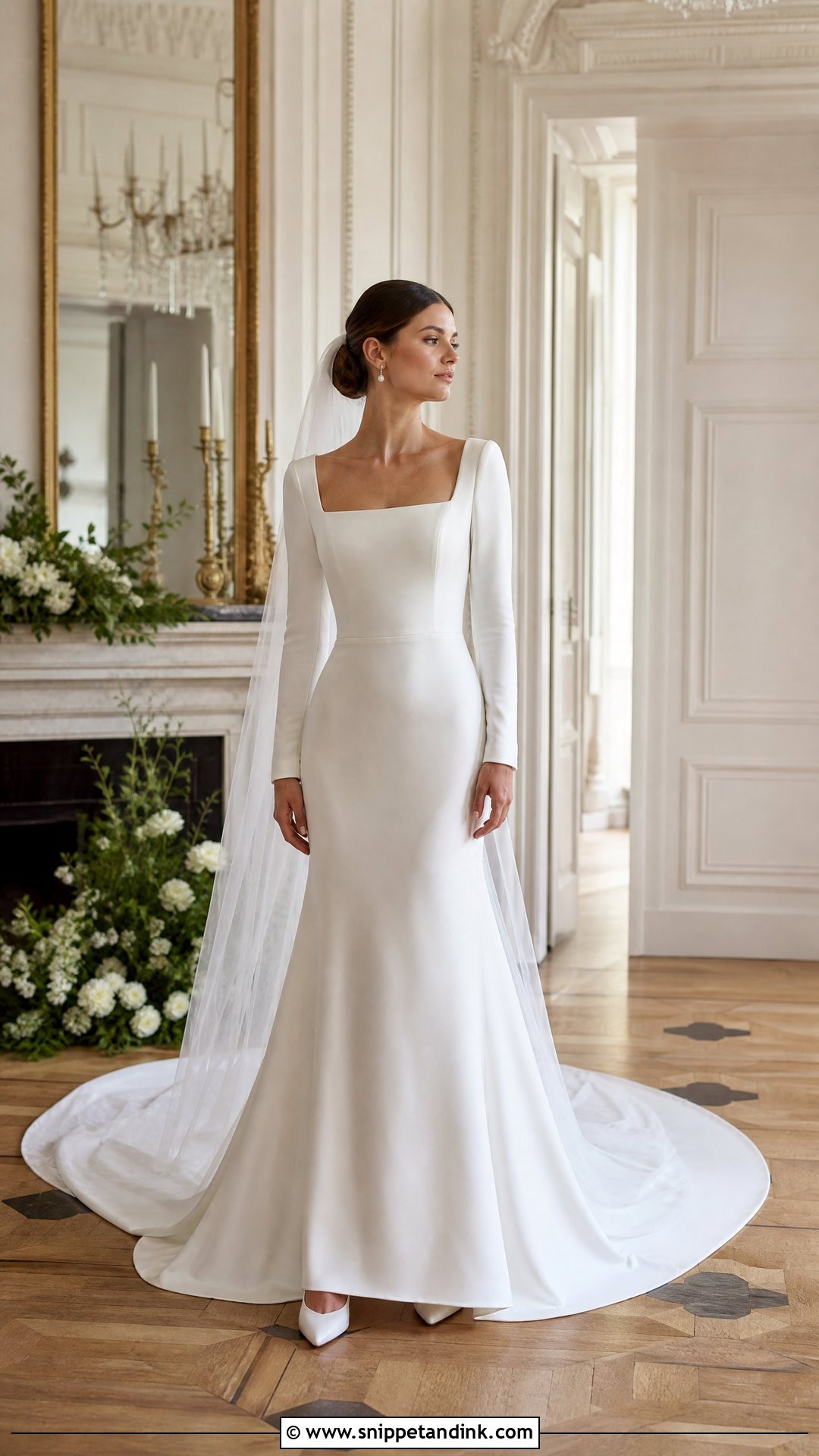
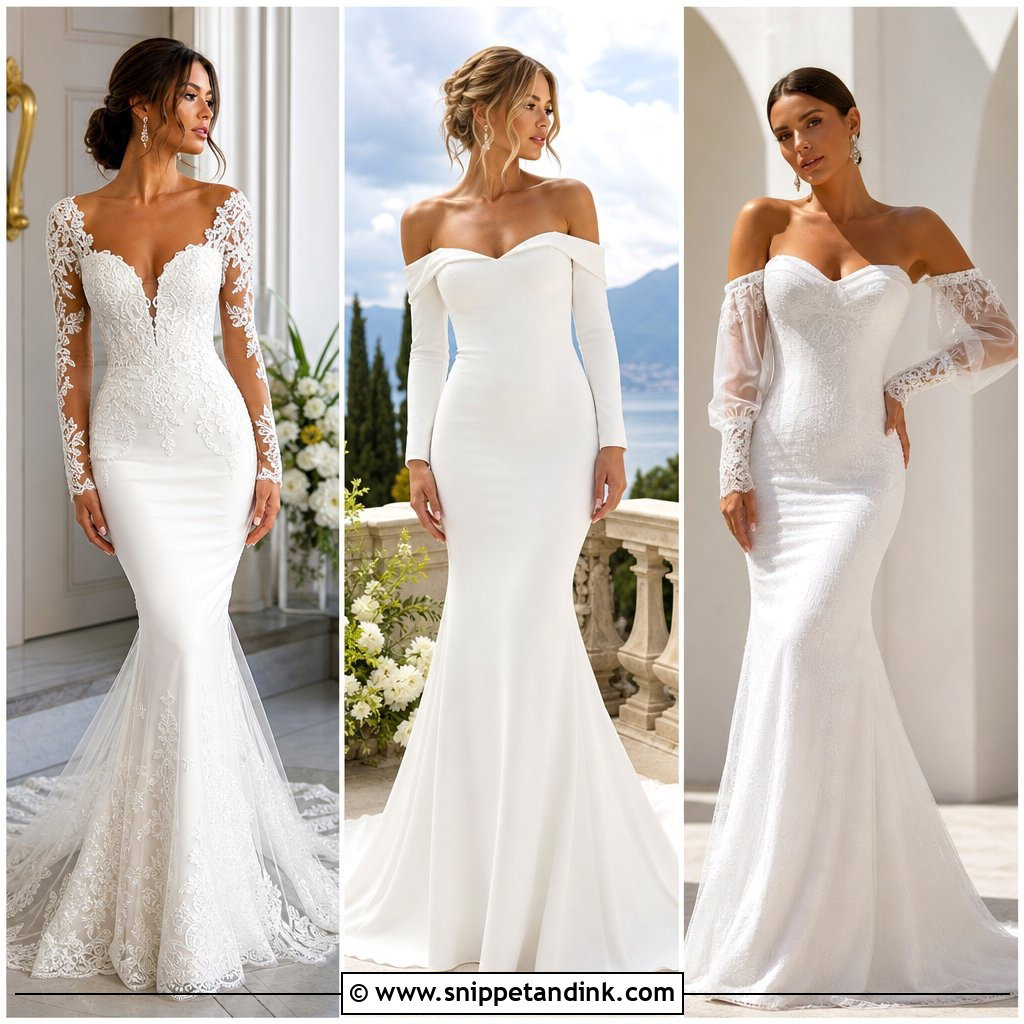
Long sleeves suit colder months and formal evenings, and they keep a defined line. Satin has less give than stretch fabric, so sleeve tailoring decides whether you can actually move. Bend your elbows, lift the bouquet and try a few dance steps before the final alteration. A bateau, square or soft scoop neckline balances the coverage, with a chapel train behind. Pearl earrings, a low bun, closed satin pumps, a long plain veil and white roses with winter greenery.
9. Satin Fitted Wedding Dress With Detachable Sleeves
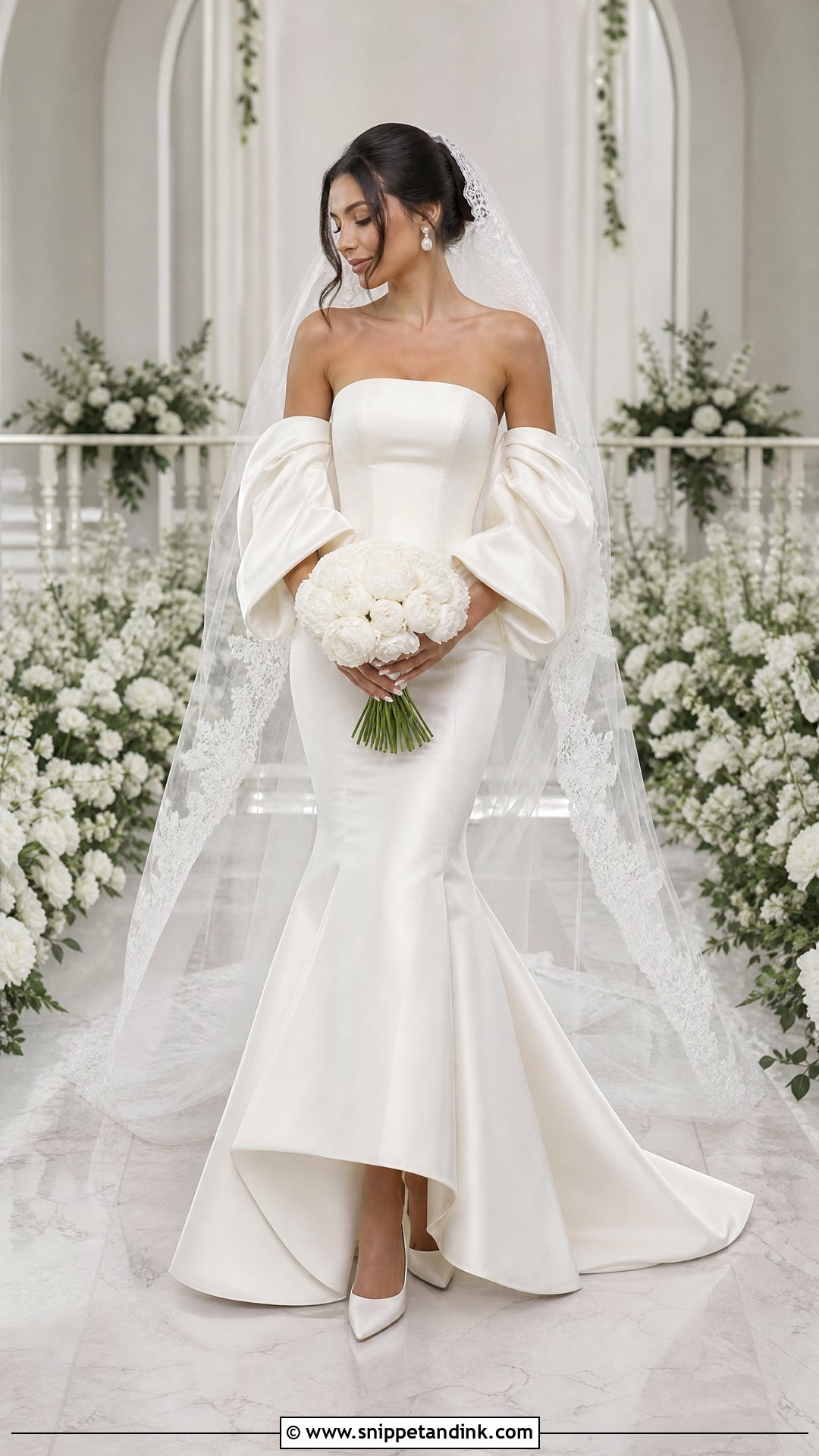
Removable sleeves give you two looks from one gown. Fitted satin sleeves, off-shoulder bands or airy removable bishop sleeves go over a strapless base for the ceremony, then come off for a freer reception. Fastenings are where this goes wrong: snaps, covered buttons or hidden loops should look tidy whether the sleeves are on or off. Have a bridesmaid practise removing them before the day. Cathedral veil, pearl drops and pointed pumps for the vows; a jewelled comb and block heels later.
10. Corset Satin Fitted Wedding Dress
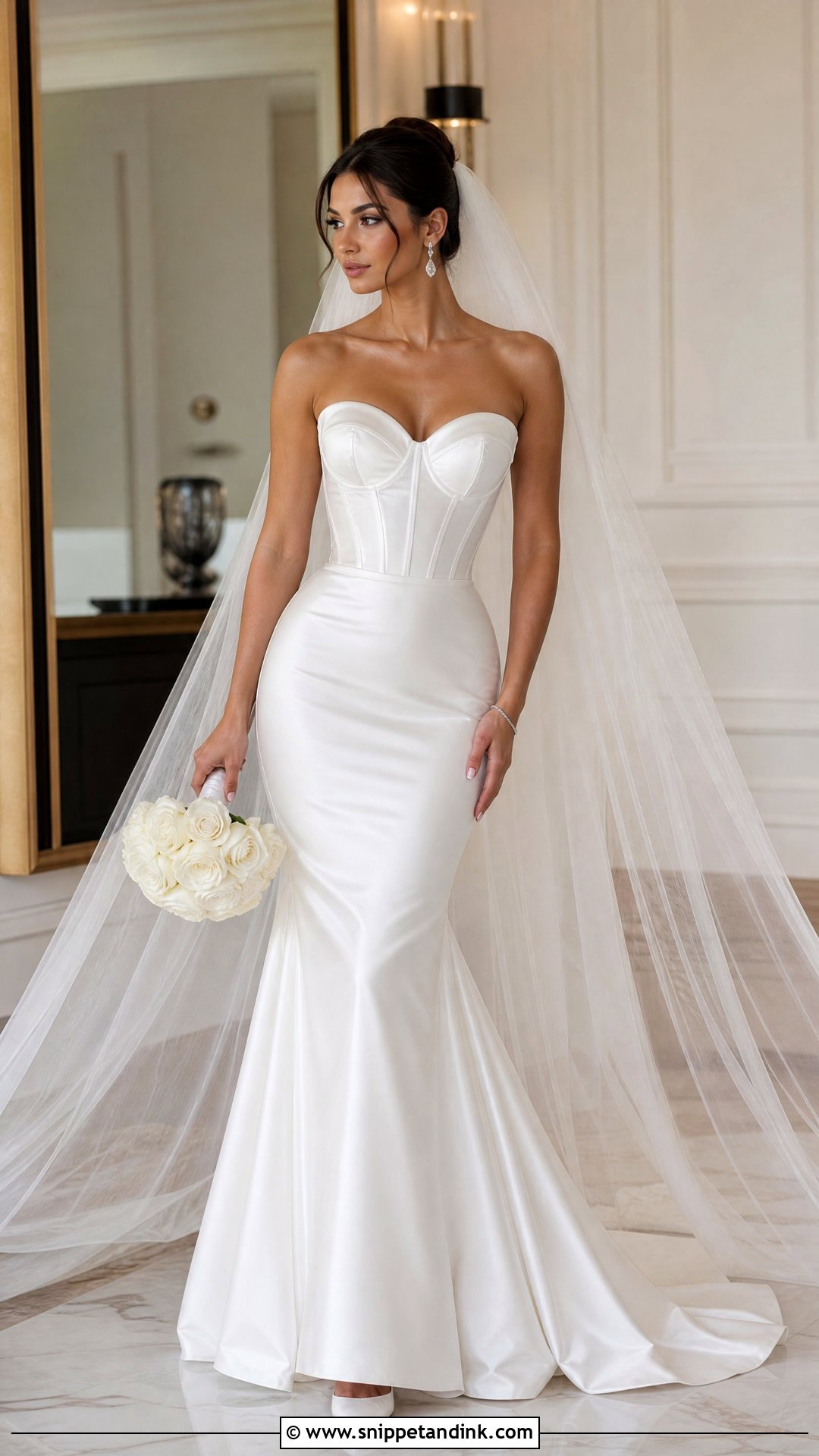
A corset defines the waist and adds visible structure, with well-placed boning, built-in cups and a straight or sweetheart neckline. The skirt stays close through the hip and opens into a soft mermaid flare. A corset should support you, not squeeze. At your fitting, sit, take a deep breath and walk up a few steps. If any of that is hard, it’s too tight. A sheer cathedral veil, delicate earrings, satin pumps and a low bun, with white roses and a few trailing stems.
11. Basque Waist Satin Fitted Wedding Dress
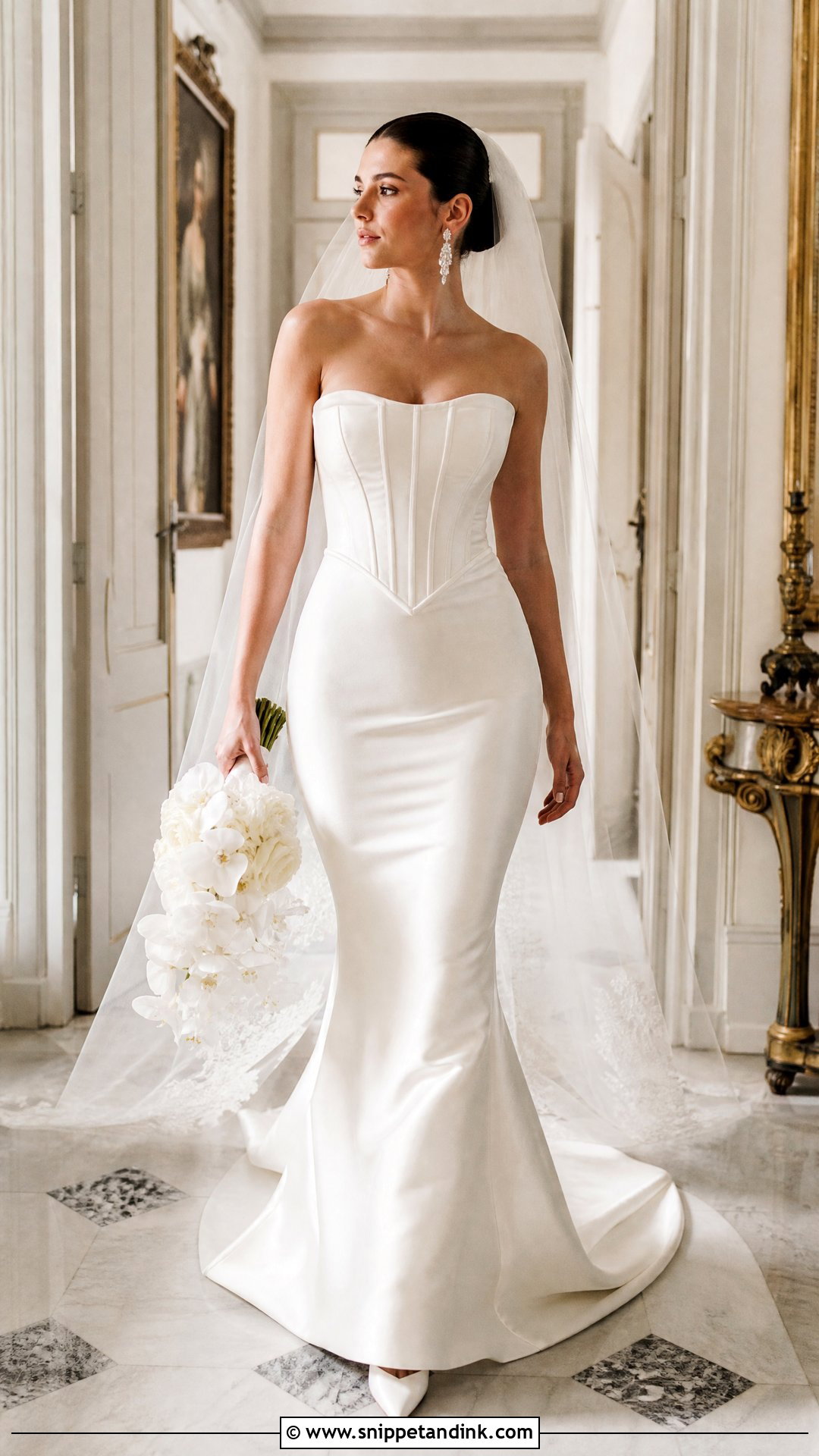
That pointed waistline lengthens the torso and pairs naturally with a corset and a skirt that hugs the hip before opening at the knee. The point itself is the fitting challenge: it should lie flat when you sit, not fold up or press into your stomach. Keep the neckline simple and skip any belt, which would break the point. Covered buttons down the back strengthen the vertical line. A long veil, crystal earrings, ivory pointed heels and a structured bouquet.
12. Draped Satin Fitted Wedding Dress
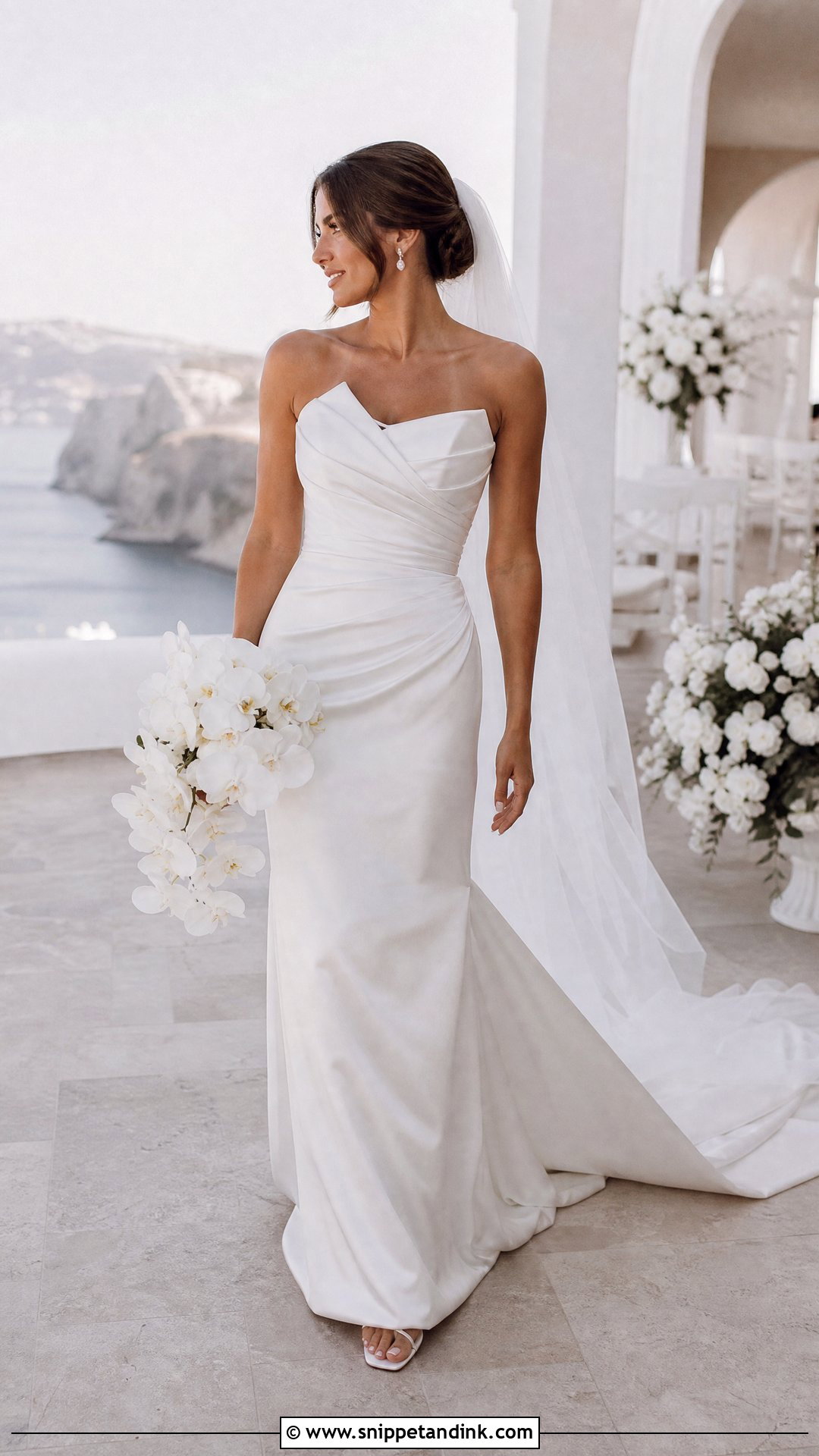
Draping can be kinder than plain satin through the waist and hip, since folds hide what a smooth surface reveals. Look for diagonal pleats across the bodice or gathers at the waist running into the skirt. The folds should look intentional; once they add bulk, the effect reverses, so compare front, side and back views at every fitting. A clean updo, small earrings, a plain veil, slim heels and white orchids. Bright natural light shows draping at its best.
13. High Slit Satin Fitted Wedding Dress
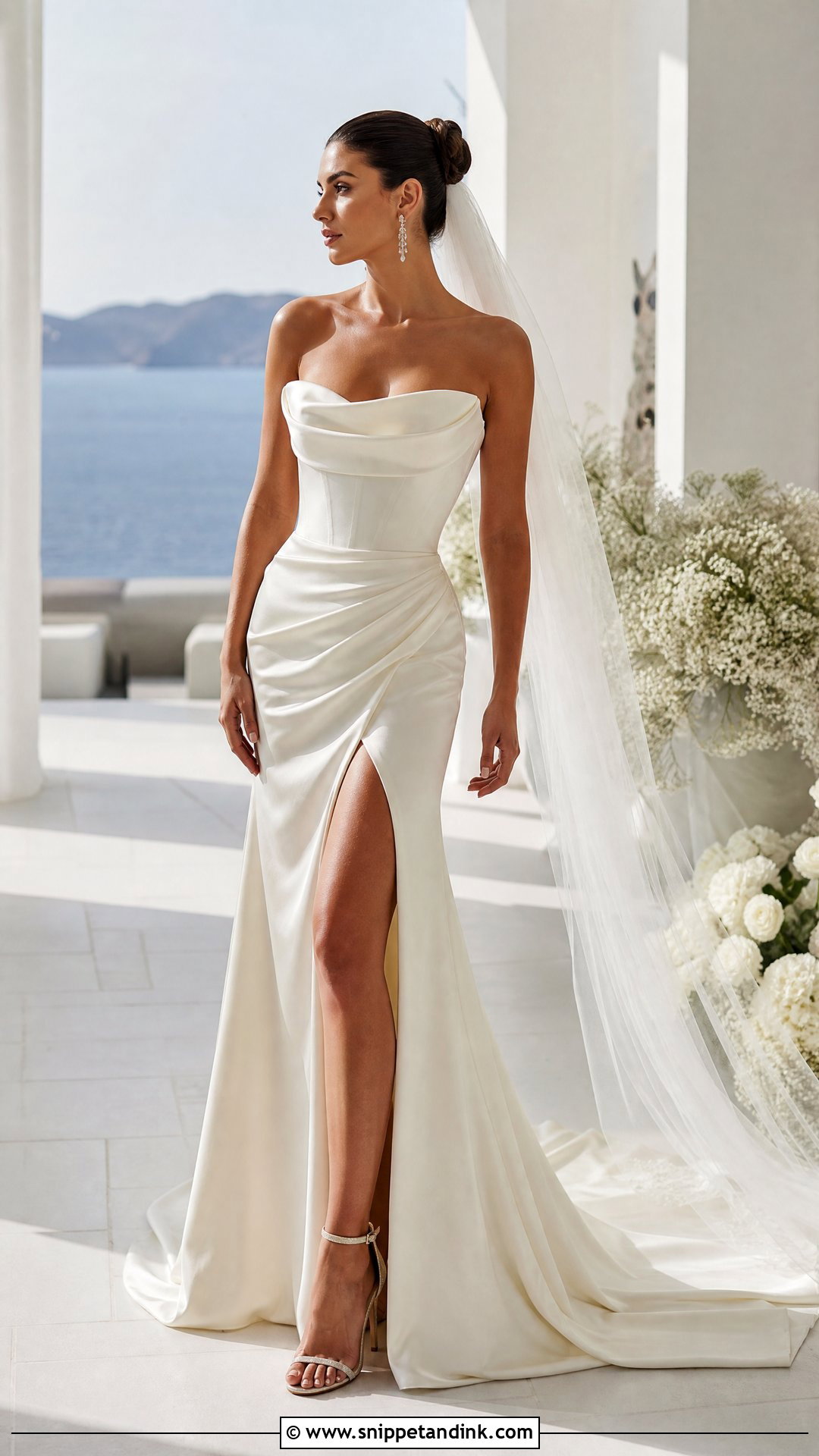
A slit gives the fitted shape far more freedom of movement. A high slit satin fitted wedding dress reads better with the opening placed along one thigh than at the centre front. Ask your tailor to reinforce the top of the slit, since that’s where stress tears satin on stairs. A modesty lining or a discreet snap helps if you’re unsure. Because the slit flashes the shoes with every step, choose pointed pumps or crystal ankle straps. Keep everything else quiet: drop earrings, a sleek bun, a light chapel veil.
14. Backless Satin Fitted Wedding Dress
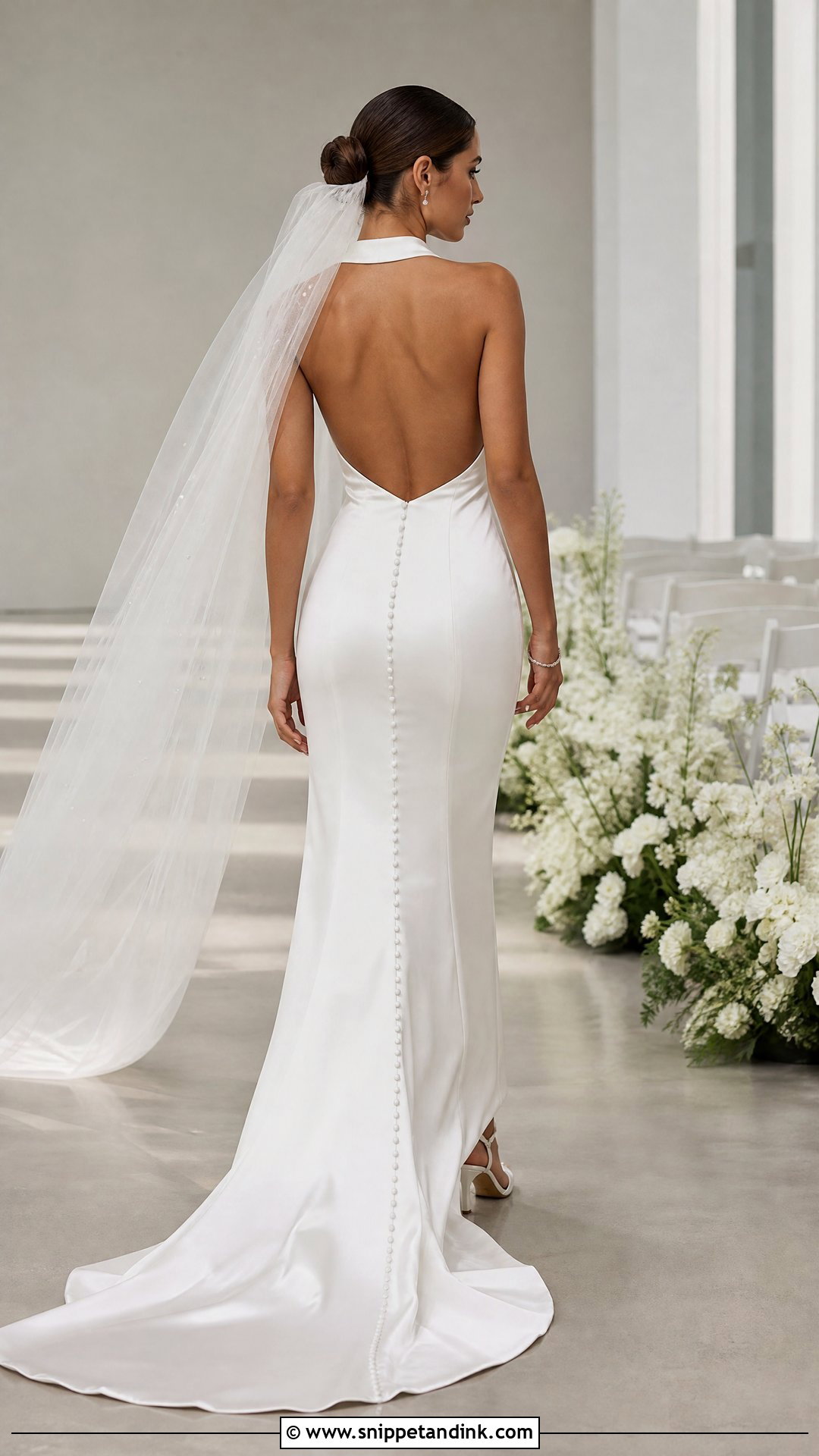
With a backless gown, the moment comes when you turn around. A high boat neck, slim straps or a cowl front balances the open back, and covered buttons can start below the opening and run into the train. Plan support early: built-in cups, internal boning or adhesive solutions fitted by someone who knows them. Then check the back edges while you move, since they can lift away from the skin when you reach forward. Low bun or side waves, small earrings, a bracelet, slingbacks, and a veil pinned beneath the hair.
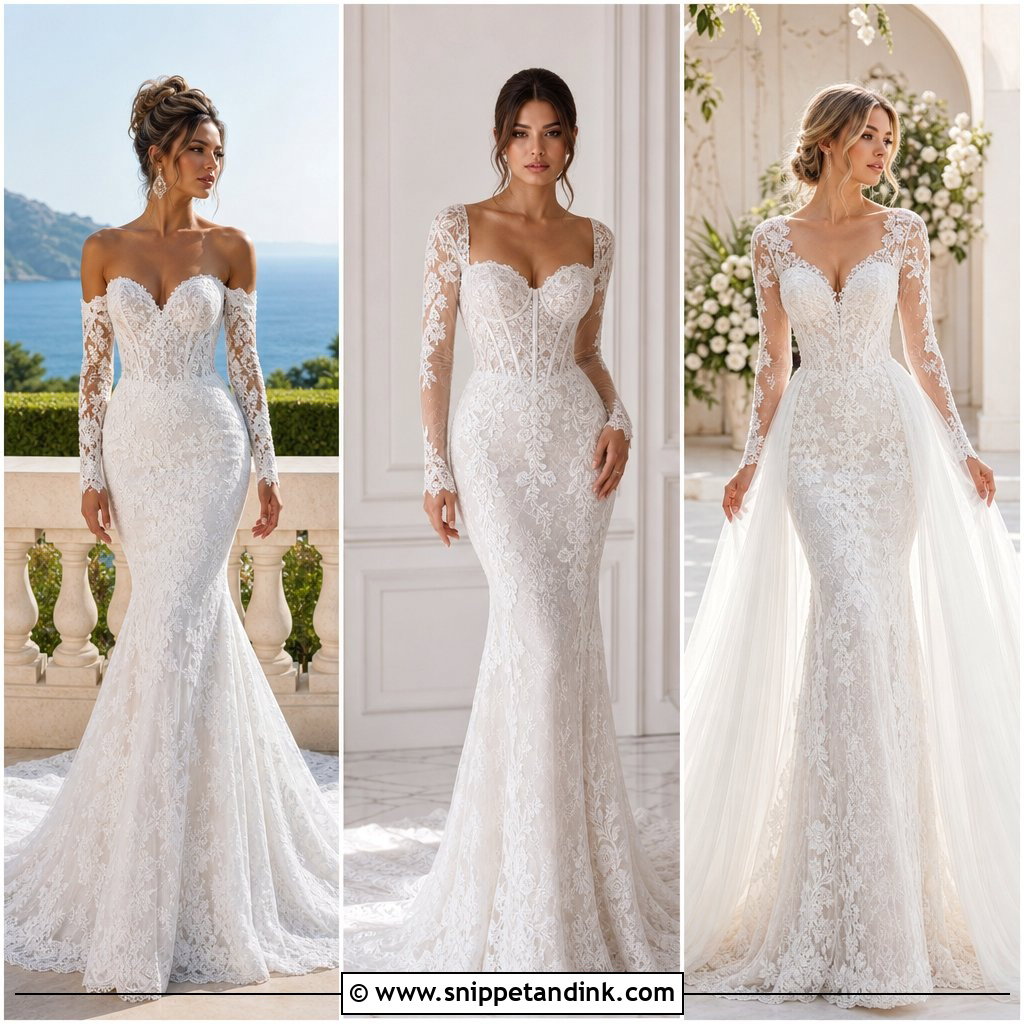
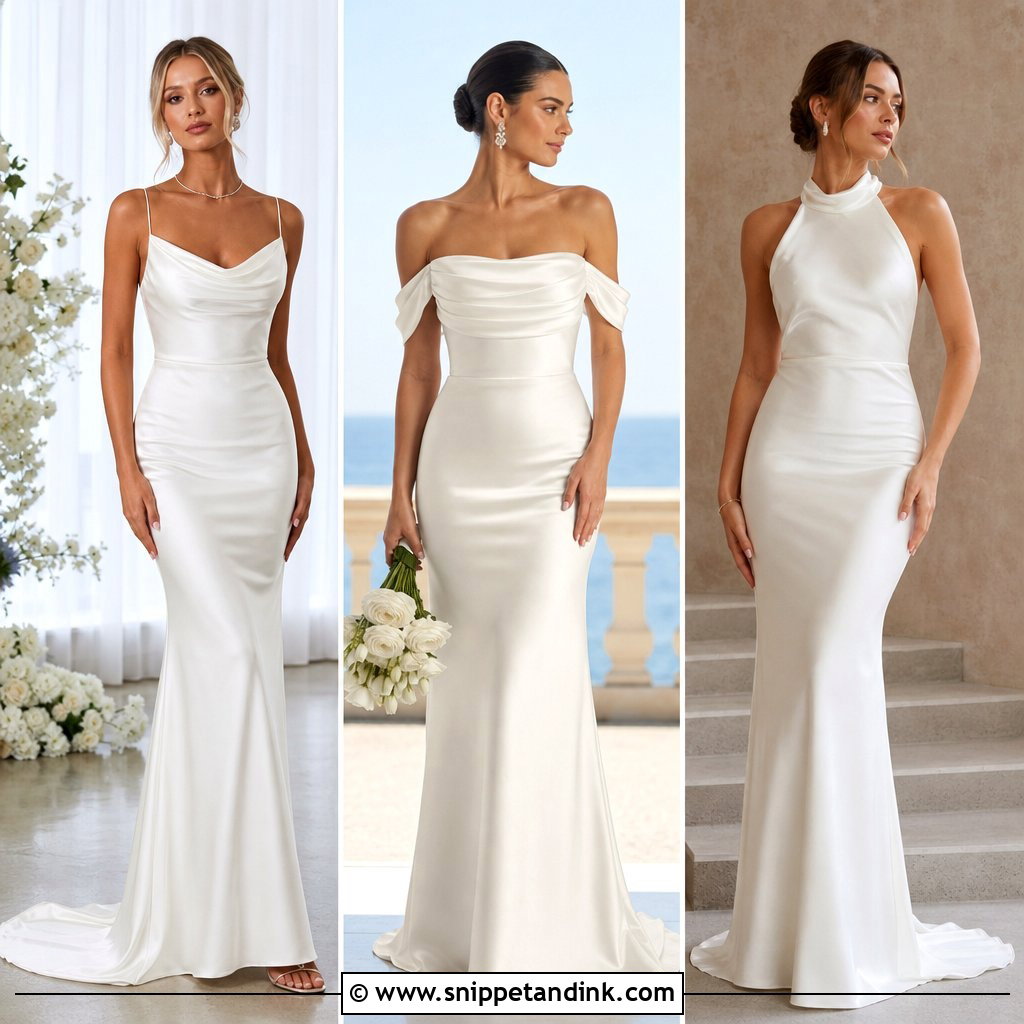
15. Satin Fitted Wedding Dress With Bow Back
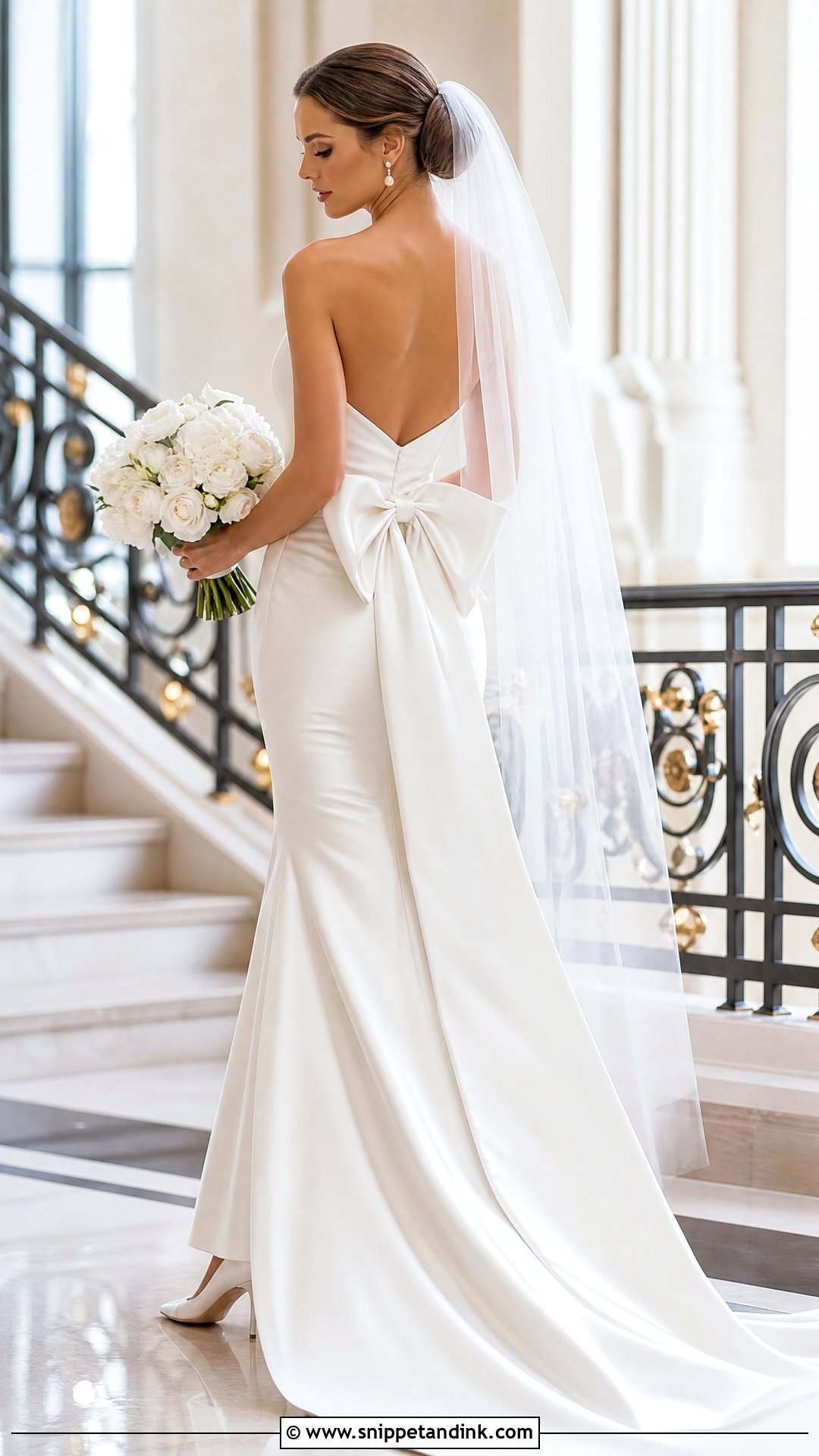
A bow is one clear statement on an otherwise sleek dress. Put it at the waist or lower back of a strapless or square-neck gown, and let long tails flow into the train for the processional. The attachment needs to carry the bow’s weight and lie flat; a sagging bow looks tired by the reception. Keep the front simple with pearl earrings, a smooth bun and classic pumps. A sheer veil should be light enough to show the bow, and after the ceremony I’d remove one or the other so the back isn’t crowded.
16. Satin Fitted Wedding Dress With Pearl Details
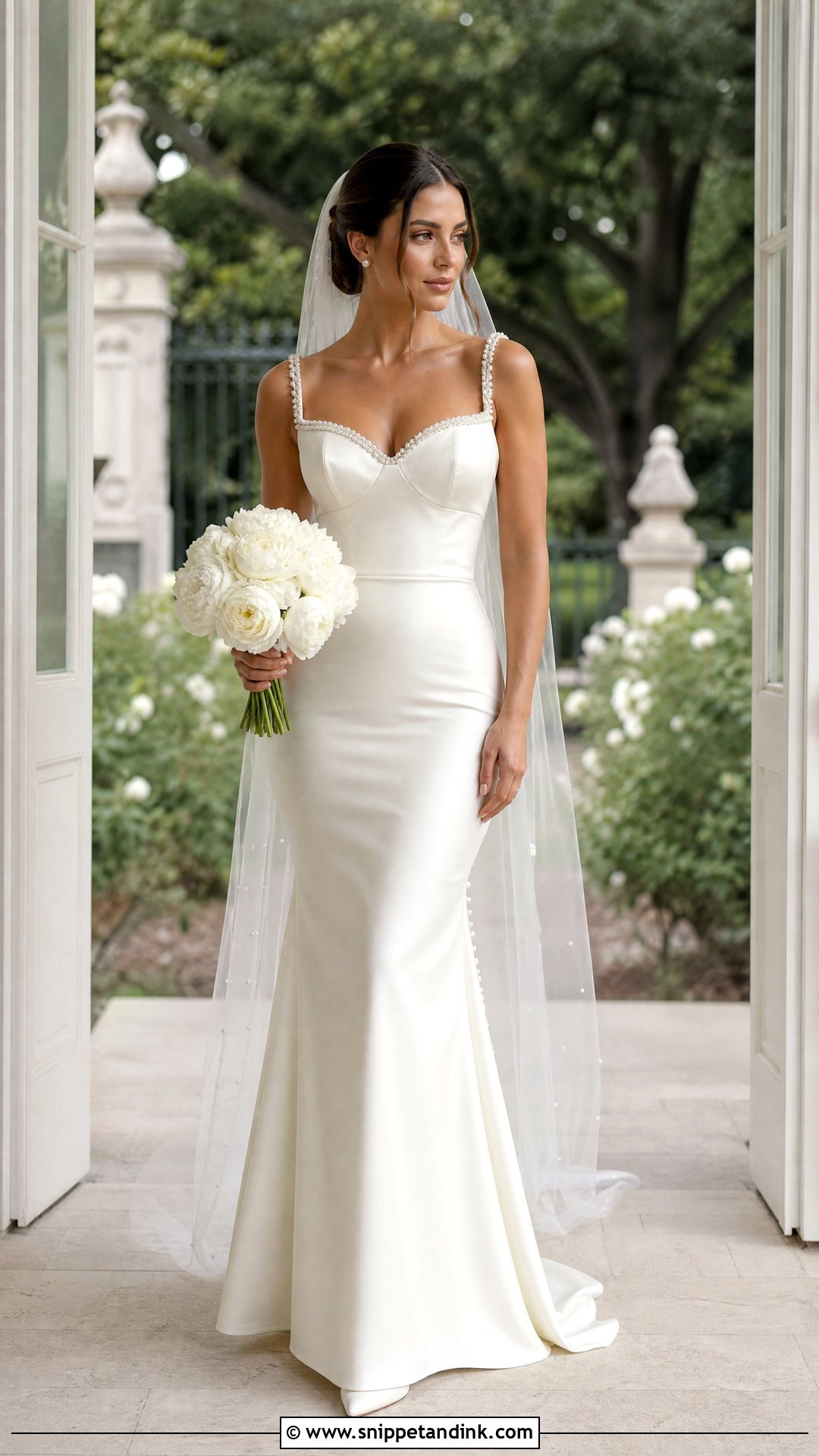
Pearls add texture without breaking up the fitted line: pearl-trimmed straps, a scattered neckline or a row of pearl buttons down the back. Leave most of the satin plain so its surface still leads. Run a hand over any raised pearls before buying, since they catch on veils and scratch inner arms. Pearl studs, a fingertip veil, pointed heels and a low bun with a few soft face-framing pieces. A small bouquet of white peonies or roses keeps the scale right.
17. Satin Fitted Wedding Dress With Overskirt
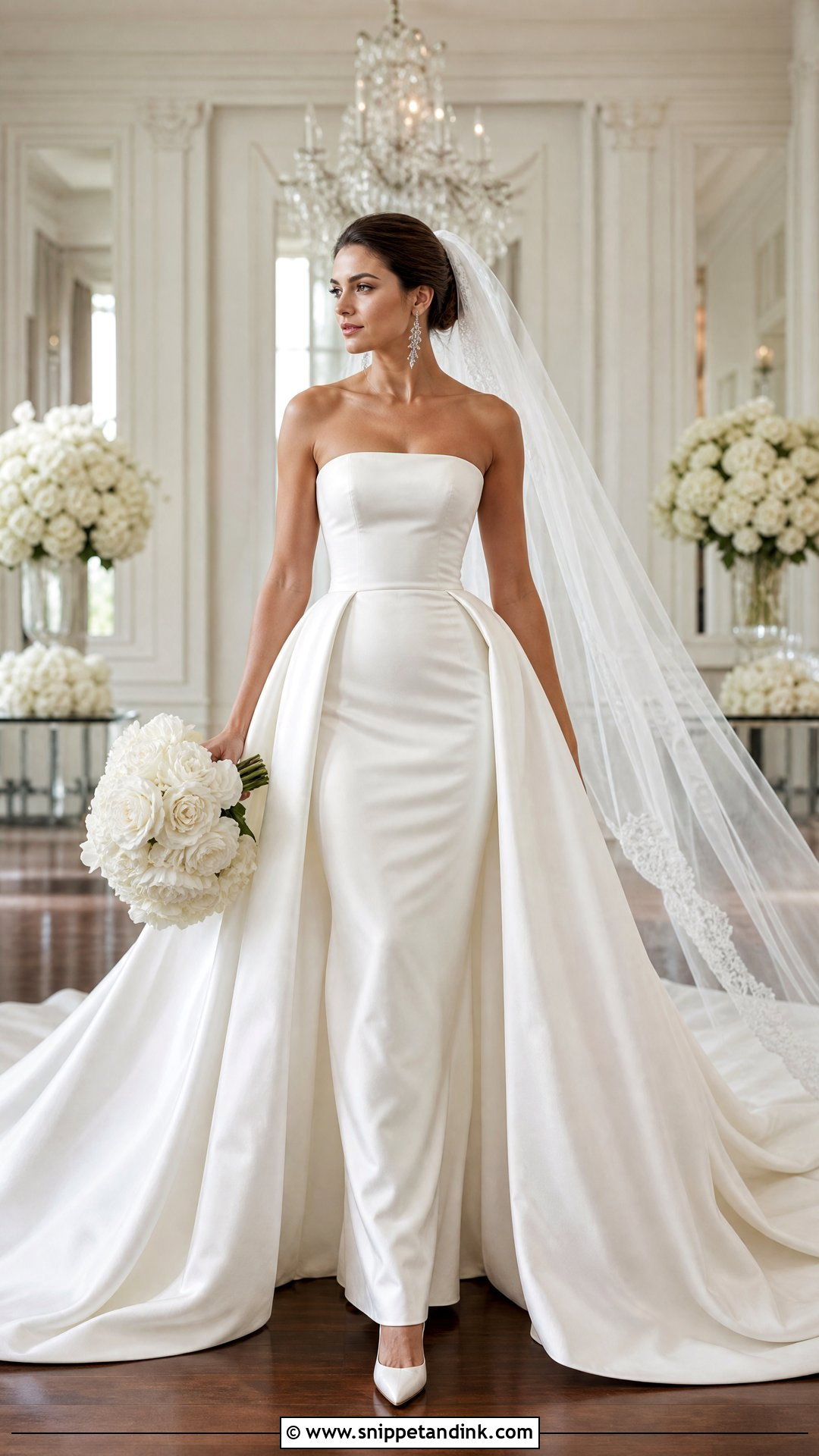
An overskirt turns a close-fitting gown into a full ceremony dress and back again. Start with a strapless, sweetheart or square-neck base and add a full satin overskirt at the waist for volume and a dramatic train. The waistband should disappear into the bodice without bulk, and the release should be quick enough that you aren’t missing your entrance. Cathedral veil, crystal earrings and pointed pumps first; smaller earrings or block heels after. It suits brides who can’t decide between grand and minimal.
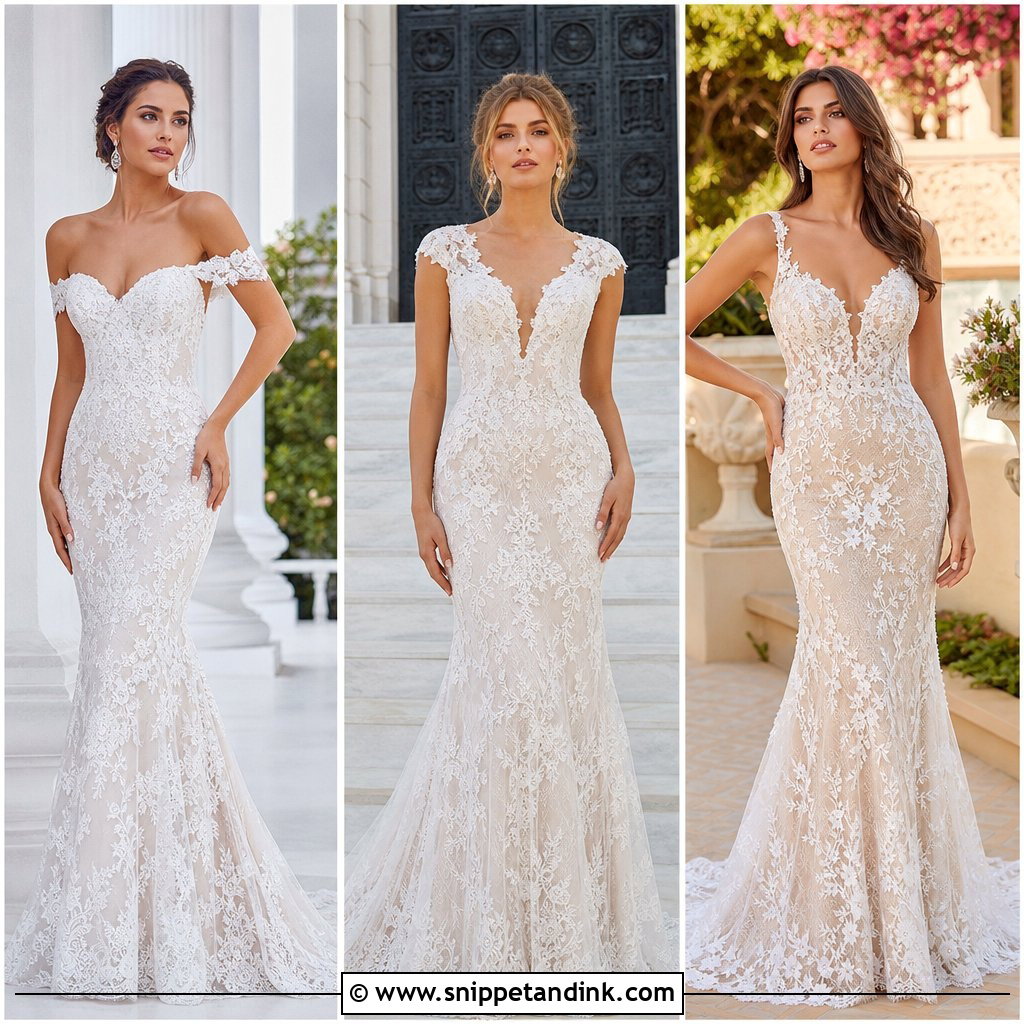
18. Satin Fitted Wedding Dress With Lace Accents
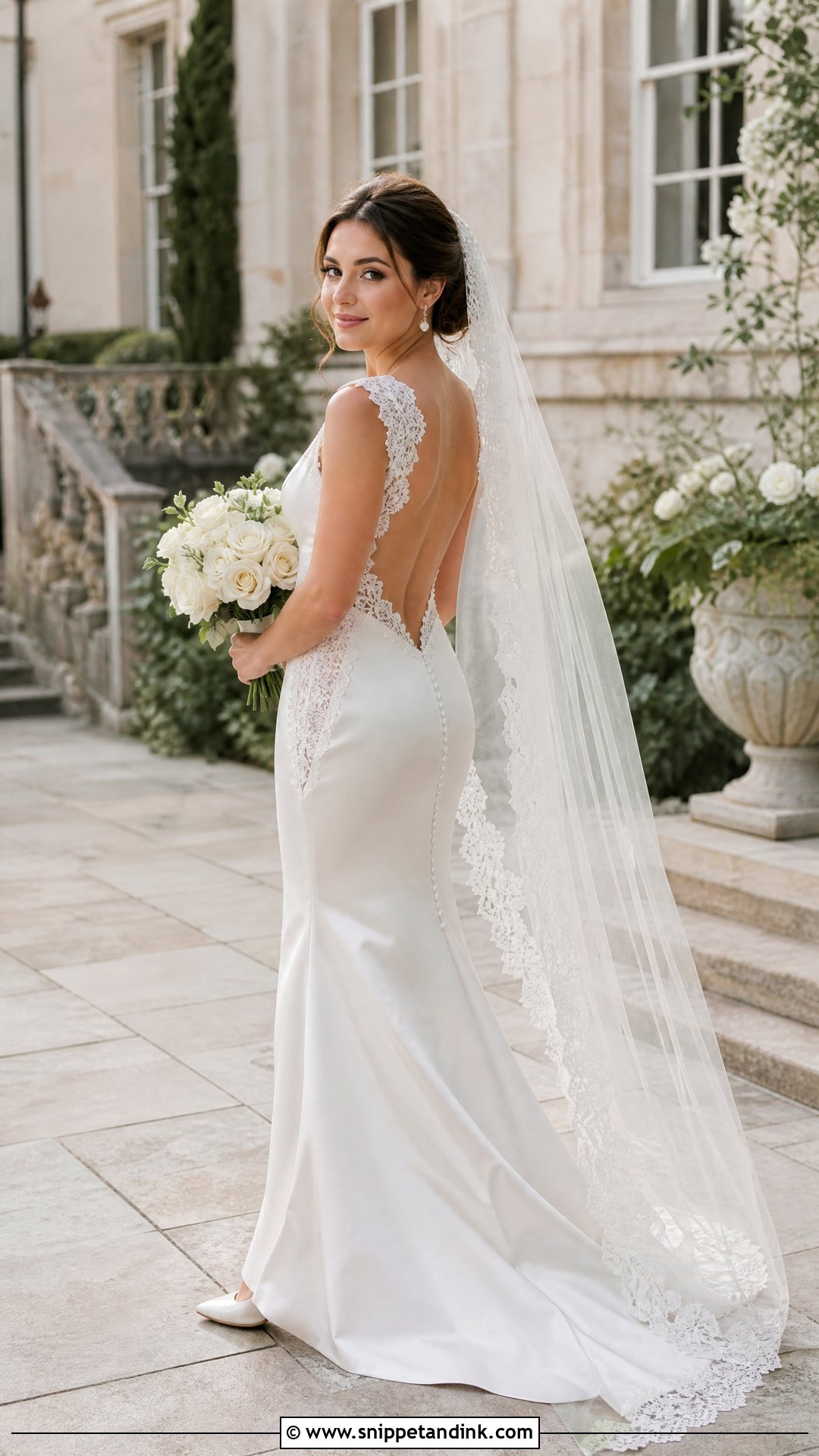
Lace accents at the neckline, side panels, sleeves or back soften the satin without hiding it. A fitted satin skirt with a small train gives the lace a smooth base. The thing I check every time is colour: bright white lace next to ivory satin can look like two different dresses, so view them together by a window and under indoor light. A lace-edged veil, pearl earrings, closed ivory heels and a tonal bouquet of roses and ranunculus. Gardens and historic estates suit it.
19. Minimalist Satin Fitted Wedding Dress
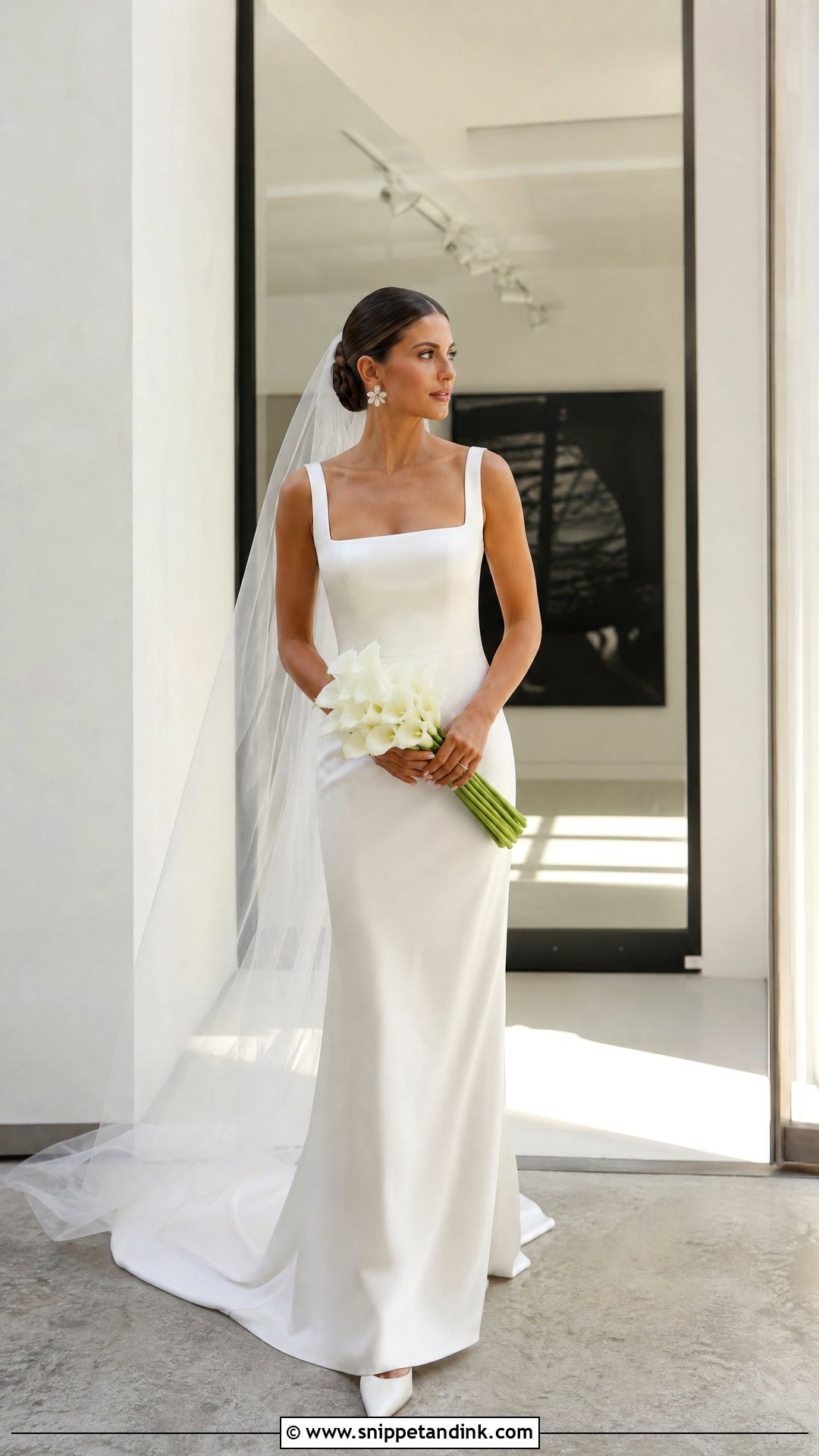
With almost no decoration, the fit carries everything. A simple scoop, square, or straight neckline, minimal seams and a column skirt with a gentle train. Hem length matters more than people think on a plain gown: get it set with your actual shoes so it skims the floor without catching. Sculptural earrings, a sleek bun, pointed pumps and a plain cathedral veil, plus a single-flower bouquet like calla lilies. Courthouses, rooftops and galleries suit it.
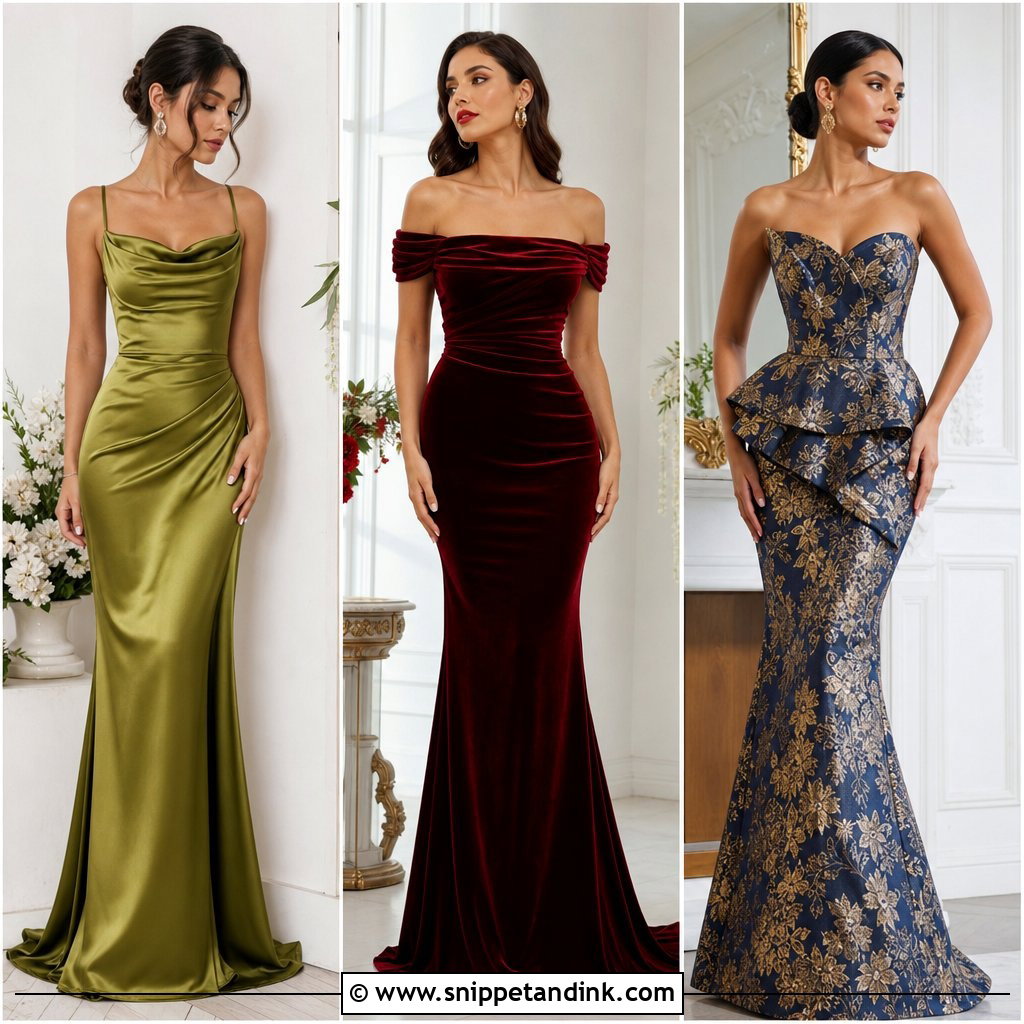

20. Champagne Satin Fitted Wedding Dress
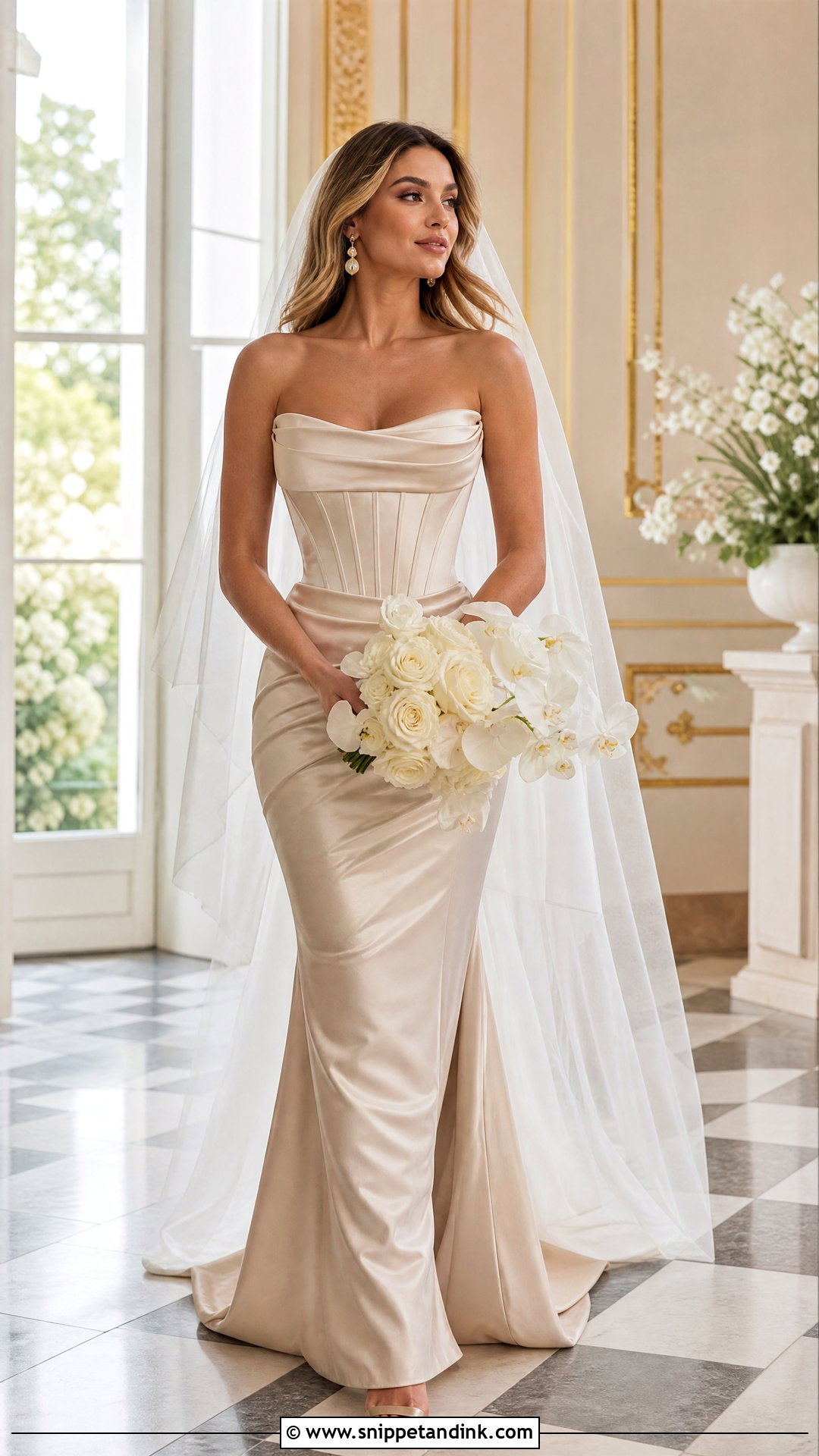
Champagne warms satin and deepens its glow, while still reading as bridal. A fitted corset or cowl-neck gown over a mermaid or column skirt shows the colour well. Shades vary a lot: some lean gold, others beige or blush, so compare them against your skin in daylight and indoors. Ask for swatches when choosing the veil and shoes, because an ivory veil next to the wrong champagne can look dingy. Neutral satin heels, gold or pearl earrings, and cream roses with white orchids.
How Many Fittings a Close-Cut Gown Needs, and When
Fitted satin takes more alteration time than a ball gown, because there’s no volume to absorb small changes. Timing varies between salons, but this is the rhythm I work to.
- Order early. Made-to-order gowns often take several months to arrive, so leave a comfortable margin before alterations need to begin.
- First fitting, roughly two to three months out. The big changes happen here: side seams, bodice, hem with your shoes.
- Second fitting, about a month later. Fine-tuning, the bustle, and any sewn-in cups or grip tape.
- Final fitting, one to two weeks before. Bring the person who’ll bustle you, and walk, sit and dance in the full look.
If your weight tends to change before big events, tell your seamstress rather than hoping it won’t. Taking in a fitted satin seam is straightforward; letting one out depends on how much seam allowance the maker left, and satin can show the old needle holes.
Heat and fitted satin
In a summer heatwave a close-cut satin dress is warm, and polyester satin traps heat more than silk does. Damp patches also show on satin more than on crepe. For a hot outdoor day, keep the ceremony in shade if you can and choose a lighter weight or a lined silk.
Fitted Satin Rewards Patience at the Alterations Stage
One fabric, many directions. Strapless and sweetheart necklines feel classic; corsets, Basque waists, slits, bows and removable layers push it more modern. Start with the silhouette and neckline you feel secure in, then build the veil, shoes, jewellery, bouquet and hair around it. Fitted satin shows every seam, so give your seamstress time and test the full look sitting, walking and moving your arms. A dress that photographs well and lets you dance until the last song is the one to choose.
You'll Like These Ideas:







Leave a Reply