
Black tie is the one dress code where I tell guests to go long. A floor-length gown is the safe answer, and what makes it a complete guest look is fabric, tailoring and restraint with accessories rather than more sparkle. Below are twenty gowns I’d send a client to a black-tie wedding in, from draped jersey and velvet to dark florals, with fit notes for petite, plus-size and pregnant guests. Check the season, the venue and any cultural customs first. Skip ivory and pale champagne unless the couple has asked for them, and pick shoes you can stand in for six hours.
Ordering a Black-Tie Gown Online With Time to Spare
Most of the gowns guests bring me were bought online, and most of the problems come from size charts and timing rather than the dress itself. Formal gowns are cut with less ease than everyday clothes, so your usual size is only a starting point.
Measure the way the brand measures
- Bust at the fullest point, wearing the bra you’ll wear with the gown.
- Natural waist, the narrowest part of your torso, not where your jeans sit.
- Hips at the widest point, usually lower than people think.
- Hollow to hem: from the dip at the base of your throat to the floor, in your wedding shoes. Many formal brands list this, and it tells you whether the gown will need shortening.
If your measurements fall across two sizes, order for the largest one. Taking a gown in is far easier than letting it out, and many have very little seam allowance.
Work backward from the wedding date
Allow for delivery, a try-on, a possible exchange and two to three weeks of alterations. For a gown from a made-to-order brand, that can mean shopping two to three months ahead. Read the return window before you buy, and keep the tags on until you’ve tried it with your shoes.
1. Black Satin Formal Wedding Dress
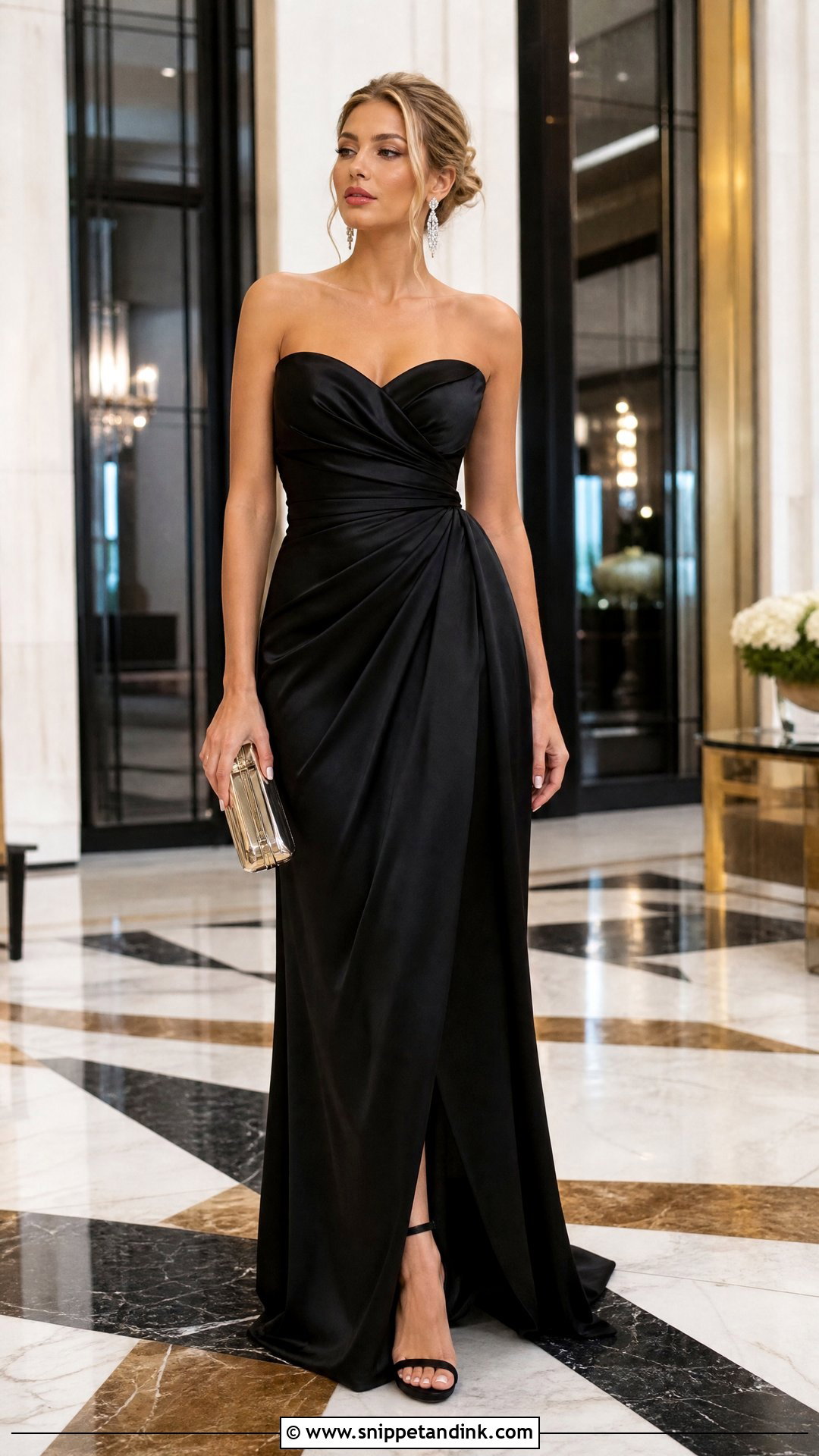
Black satin is the easiest black-tie gown to get right. A softly draped neckline, a defined waist and a fluid skirt are all it needs. Keep the jewelry clean: silver drops and a metallic clutch, with strappy black heels. Black is accepted at most modern weddings, but it should look like a party, so let the satin’s sheen and a bright earring carry that. A long evening coat covers the walk between car and venue.
2. Navy One-Shoulder Formal Wedding Dress
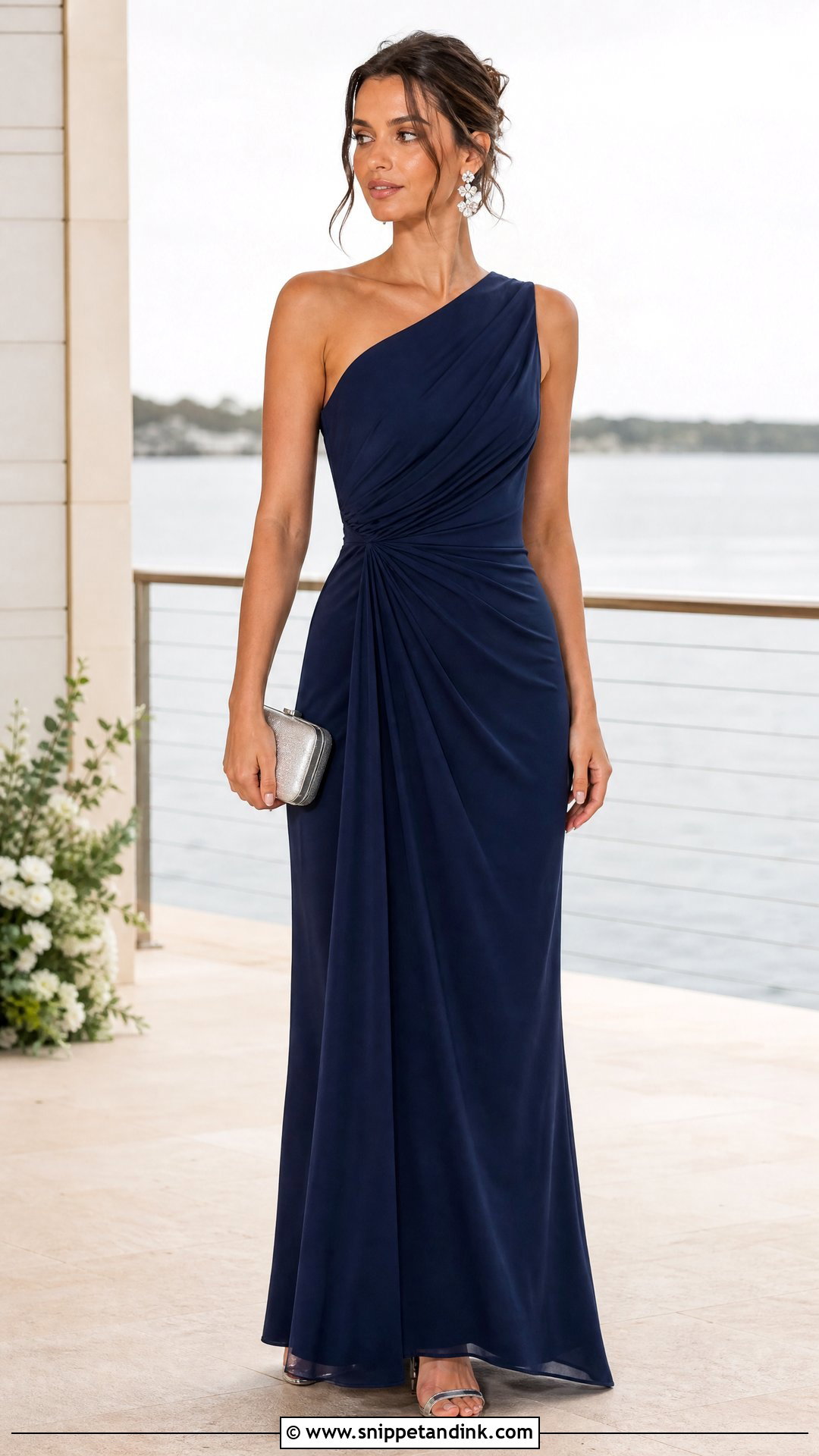
If black feels too severe, navy is the answer, and a one-shoulder cut with soft gathering at the waist gives it shape. I like stretch jersey here for guests who’ll be sitting through a long dinner; it doesn’t crease and moves with you. Check the single strap carries the bodice without slipping. Crystal earrings and a silver box clutch, no necklace. A smooth updo shows off the shoulder.
3. Emerald Velvet Formal Wedding Dress
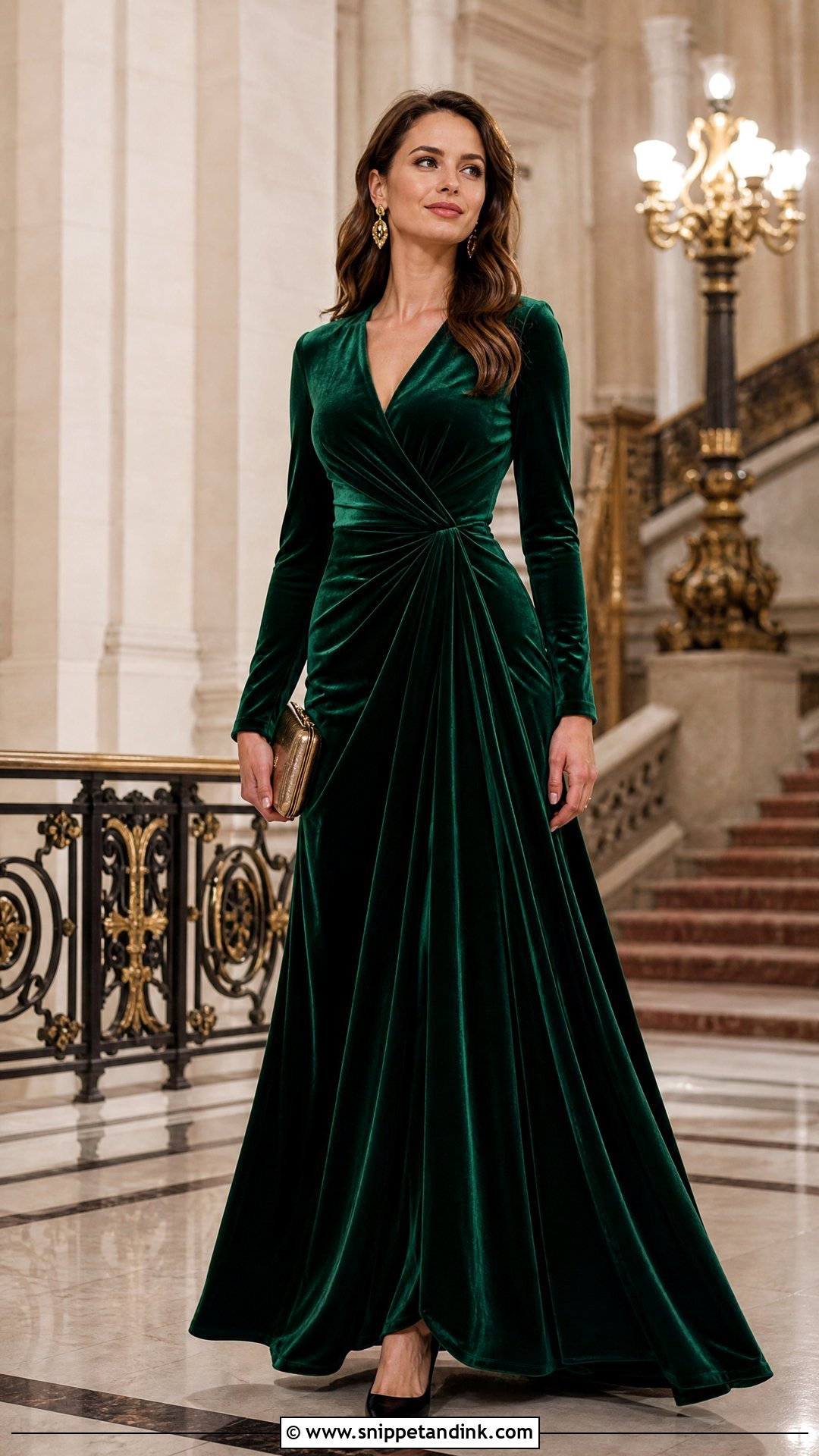
Emerald velvet is a winter gown that barely needs jewelry. A wrap bodice or clean square neckline with long sleeves looks rich under chandeliers. The thing I warn about is heat: velvet with a poor lining gets uncomfortable in a crowded ballroom, so look for a breathable lining and skip the extra layers once you’re inside. Gold earrings, a bronze clutch and neutral eyes with a berry-toned lip finish it.
4. Burgundy Long-Sleeve Formal Wedding Dress
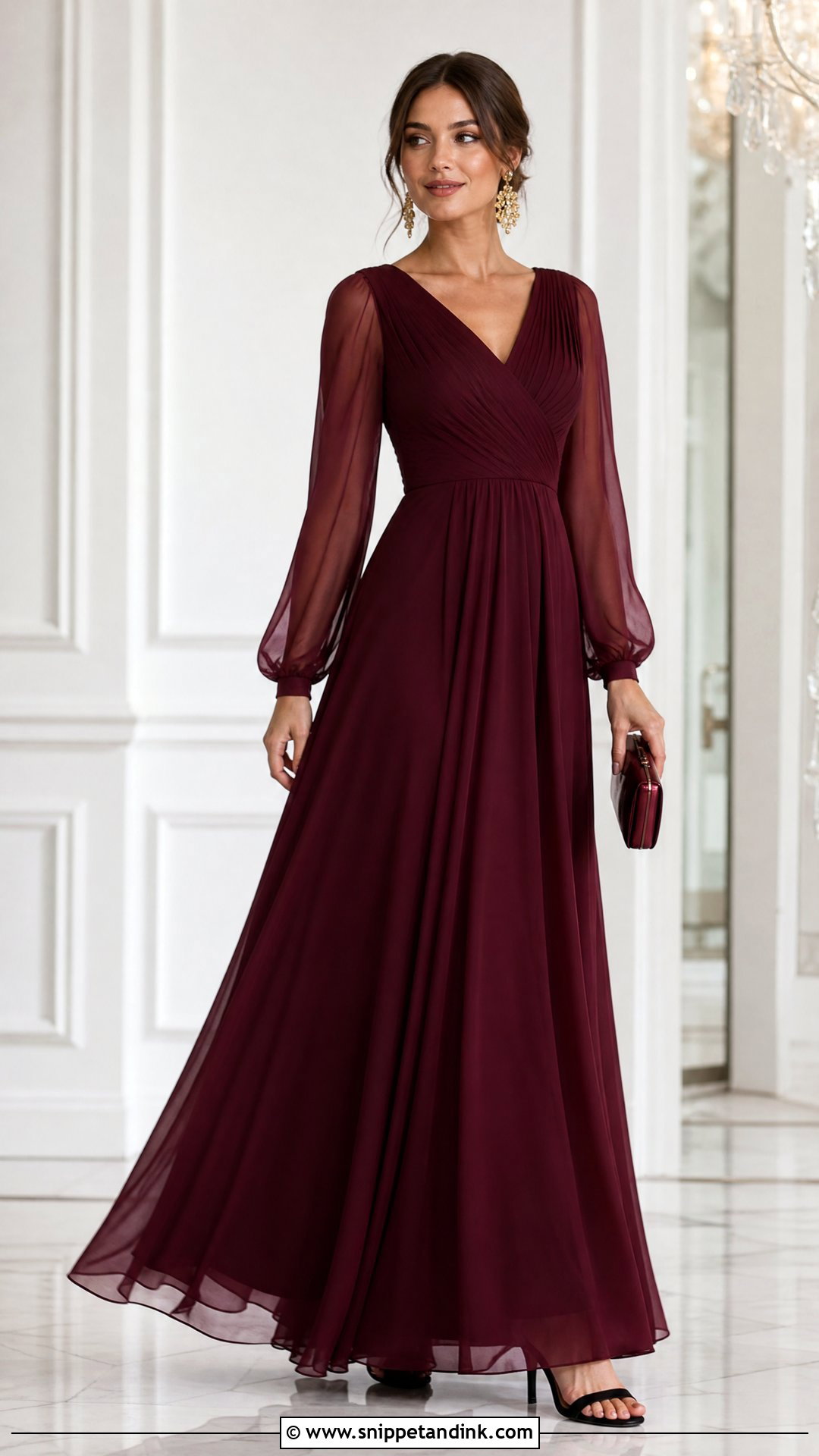
Long sleeves suit burgundy and the colder months. A fitted bodice with an A-line skirt gives definition and room to walk. The sleeve fabric changes the mood: chiffon feels lighter and airier, stretch crepe feels sleek and structured. With a high neckline, move the shine to a bracelet or ring. Gold statement earrings and a small satin clutch are enough for the rest.
5. Dusty Blue Chiffon Formal Wedding Dress
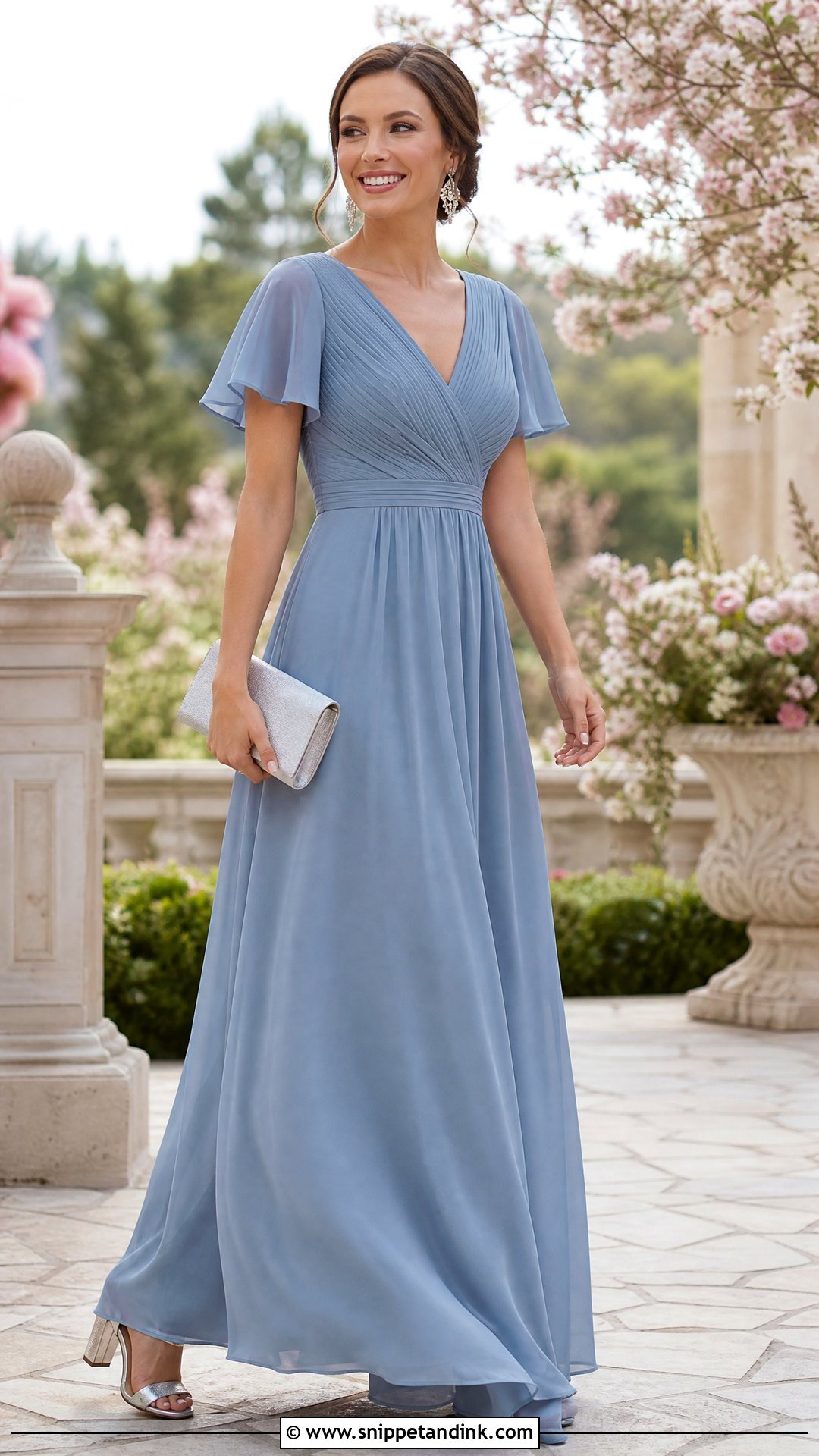
Chiffon in dusty blue is my pick for spring and summer black tie outdoors. Flutter sleeves and a soft empire waist keep it cool through a long reception. Grass and gravel ruin stilettos, so wear metallic block heels. Before you buy, photograph the dress in daylight with your phone’s flash on. Some dusty blues read almost white on camera, and you’ll only see it then.
6. Plum Draped Formal Wedding Dress
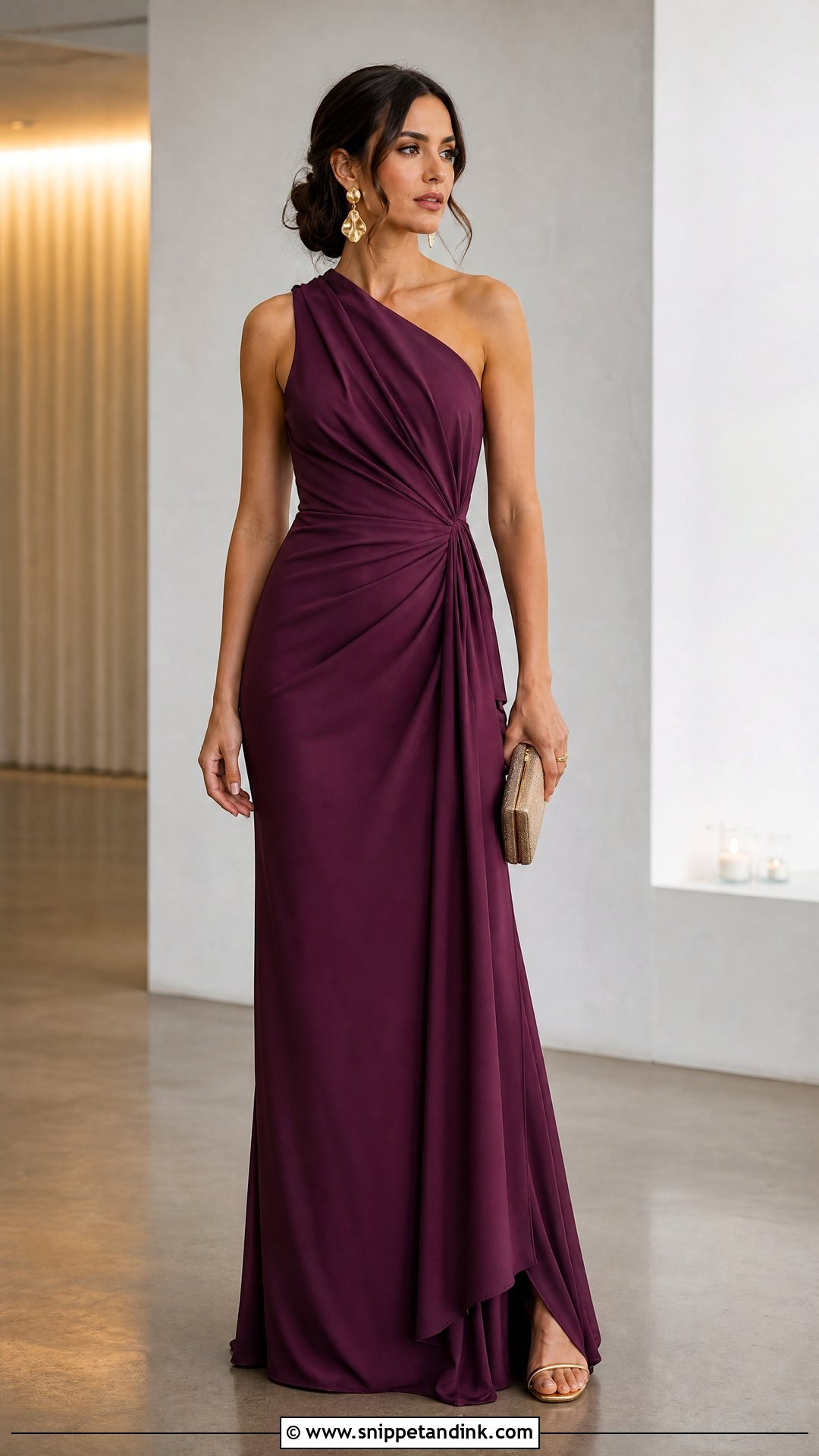
Draped gowns are kind to most figures because the gathers create shape without boning. Plum in matte jersey or crepe gives it evening depth. If the neckline is asymmetric, sweep your hair to the opposite side to balance it. Smoothing shapewear helps jersey fall cleanly over the hips, but choose a light control level; you’ll be eating and dancing in it.
7. Sage Green Pleated Formal Wedding Dress
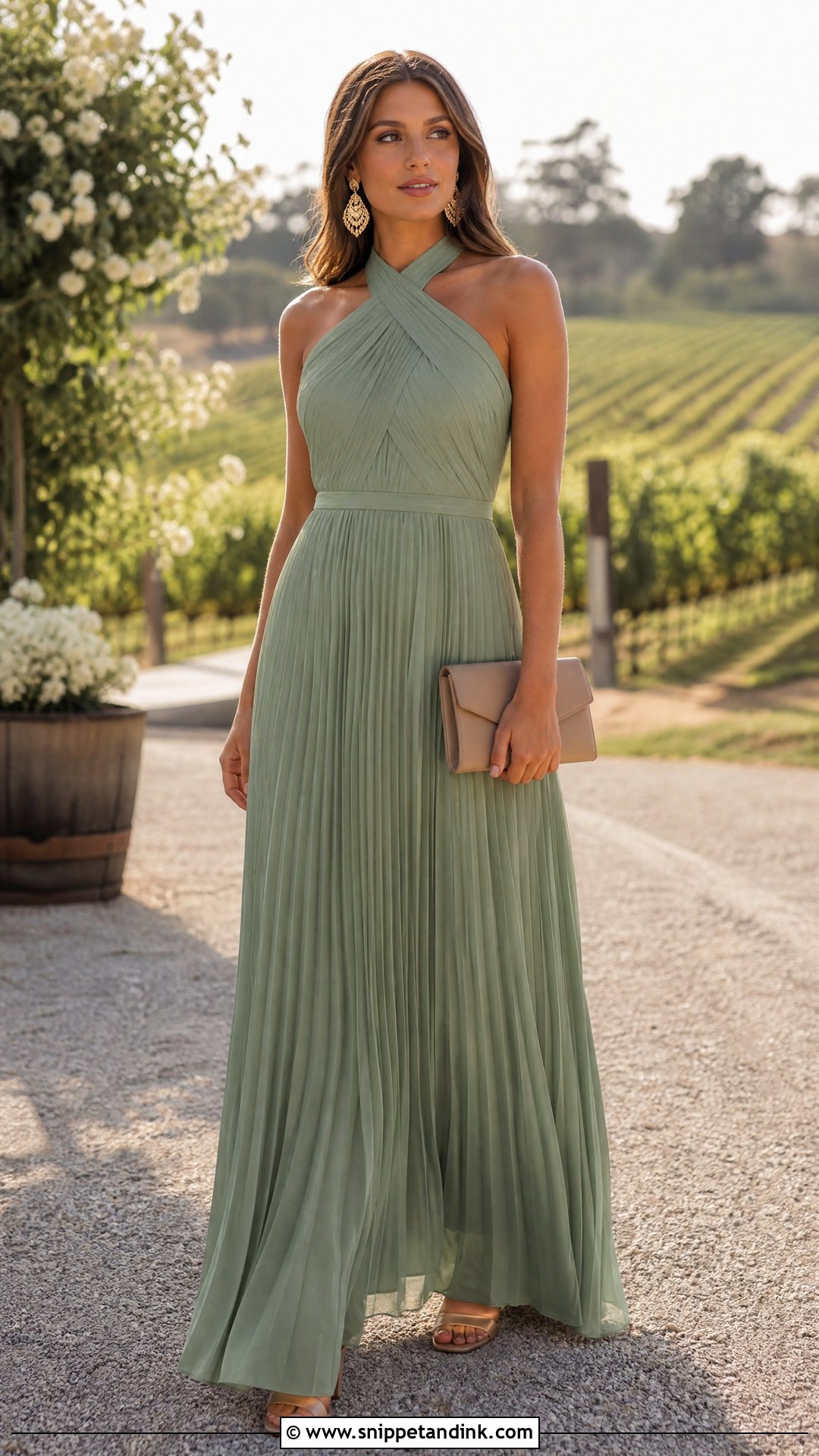
Fine pleats in sage chiffon suit a garden, vineyard, or estate wedding where a little breeze makes them move. A modest V-neck or soft halter keeps it formal. Pleated georgette creases along the folds if it’s packed tightly, so I hang it straight from the hanger to the car. Very pale sage can photograph white; go for a visibly green shade. Block-heel sandals and gold earrings complete it.
8. Cobalt Blue Halter Formal Wedding Dress
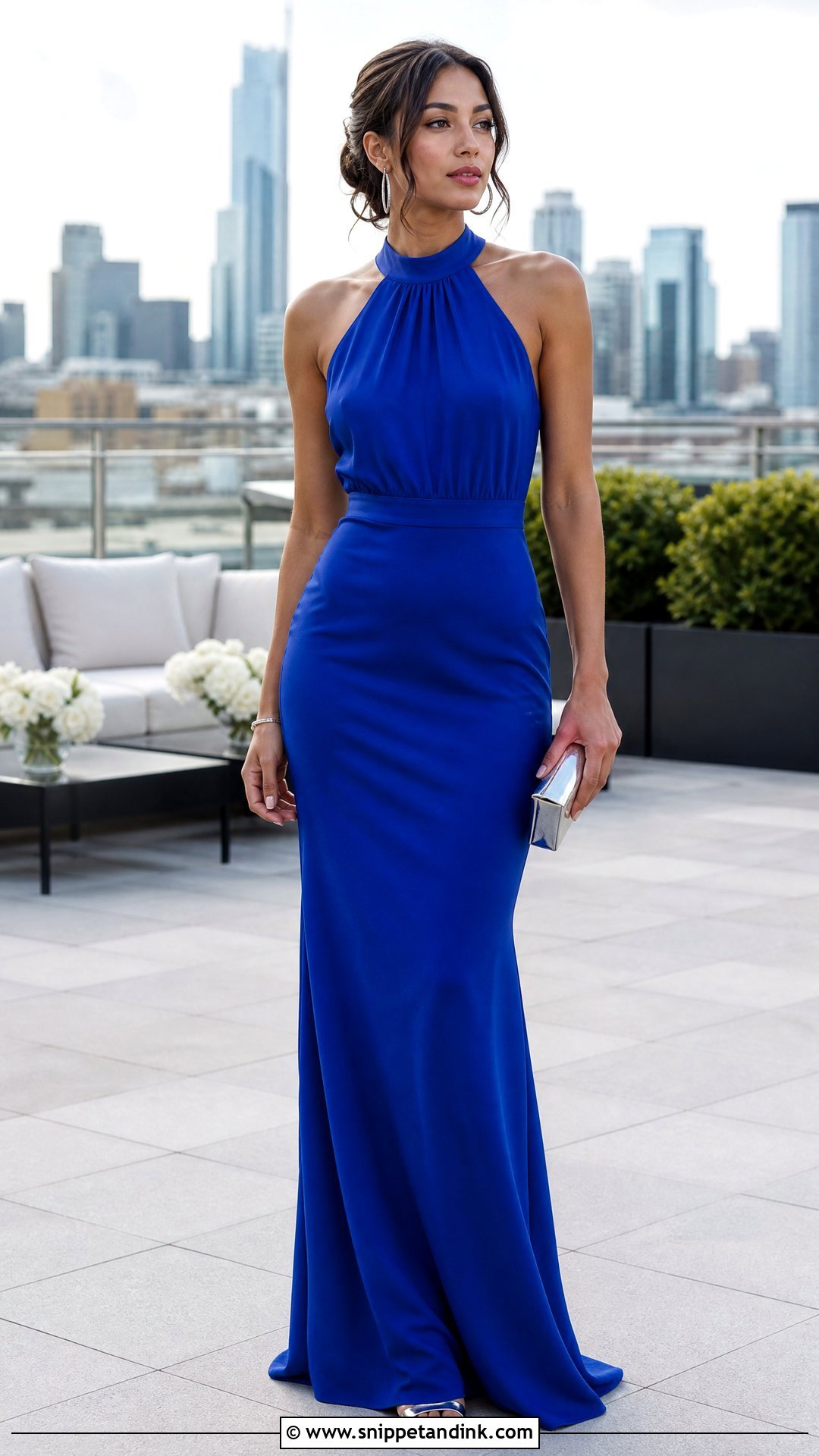
Cobalt is bold, and a streamlined halter lets the color speak. Silver hoops, a mirrored clutch and simple metallic sandals keep the rest quiet. With a halter, the hair needs to be up or tied back; long hair tangles in the neck strap and pulls it sideways. Rooftop receptions and modern hotels suit this one better than a historic chapel.
9. Black Lace-Sleeve Formal Wedding Dress
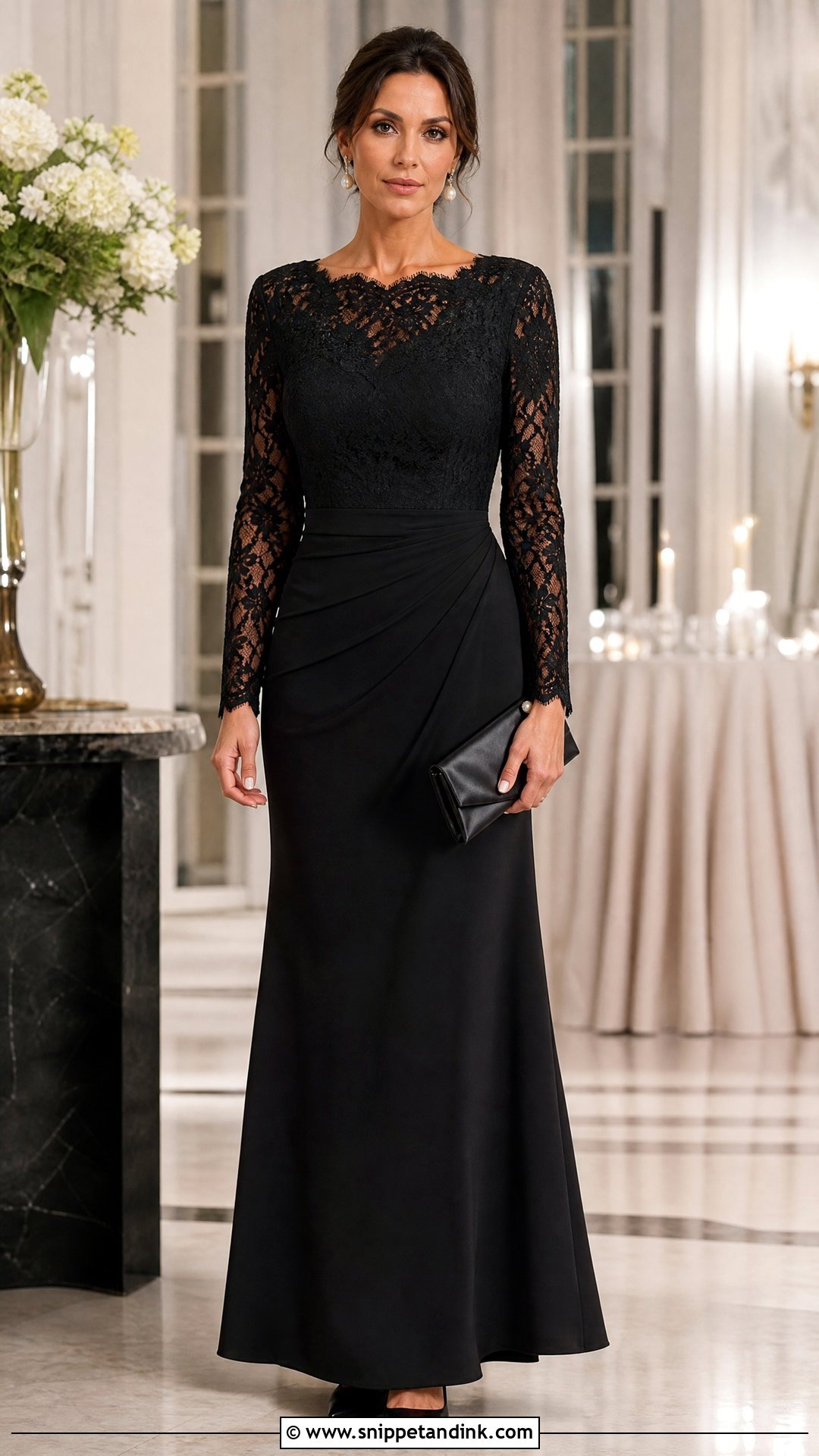
Lace sleeves on a black gown read refined when the lace is clean and lightly embellished, and bridal when it’s heavy and scalloped all over. Check the bodice is fully lined. For a conservative ceremony, look at the back as well as the neckline and sleeves; open backs catch people out. Pearl earrings, a satin clutch and pointed black pumps keep it classic, and it rewears easily with different jewelry.
10. Ruby Red Cape-Sleeve Formal Wedding Dress
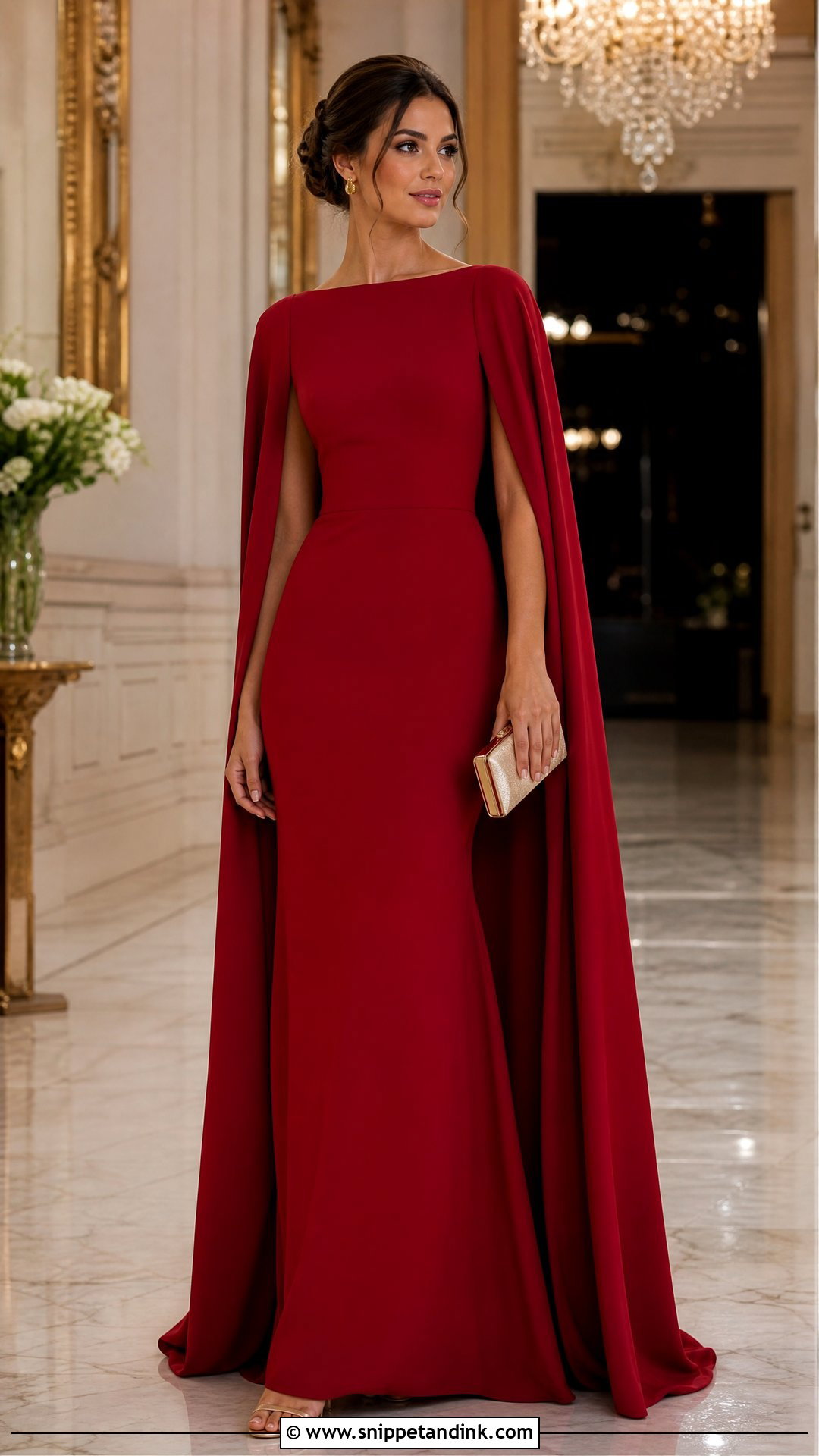
Ruby red with cape sleeves and a bateau neckline makes an entrance on its own, so the jewelry should be small. Crepe gives the capes a clean fall. In some cultures red is the bride’s color, so it’s worth a quick check with someone close to the couple before you wear it. When it’s welcome, it looks right in grand evening venues.
11. Teal Off-Shoulder Formal Wedding Dress
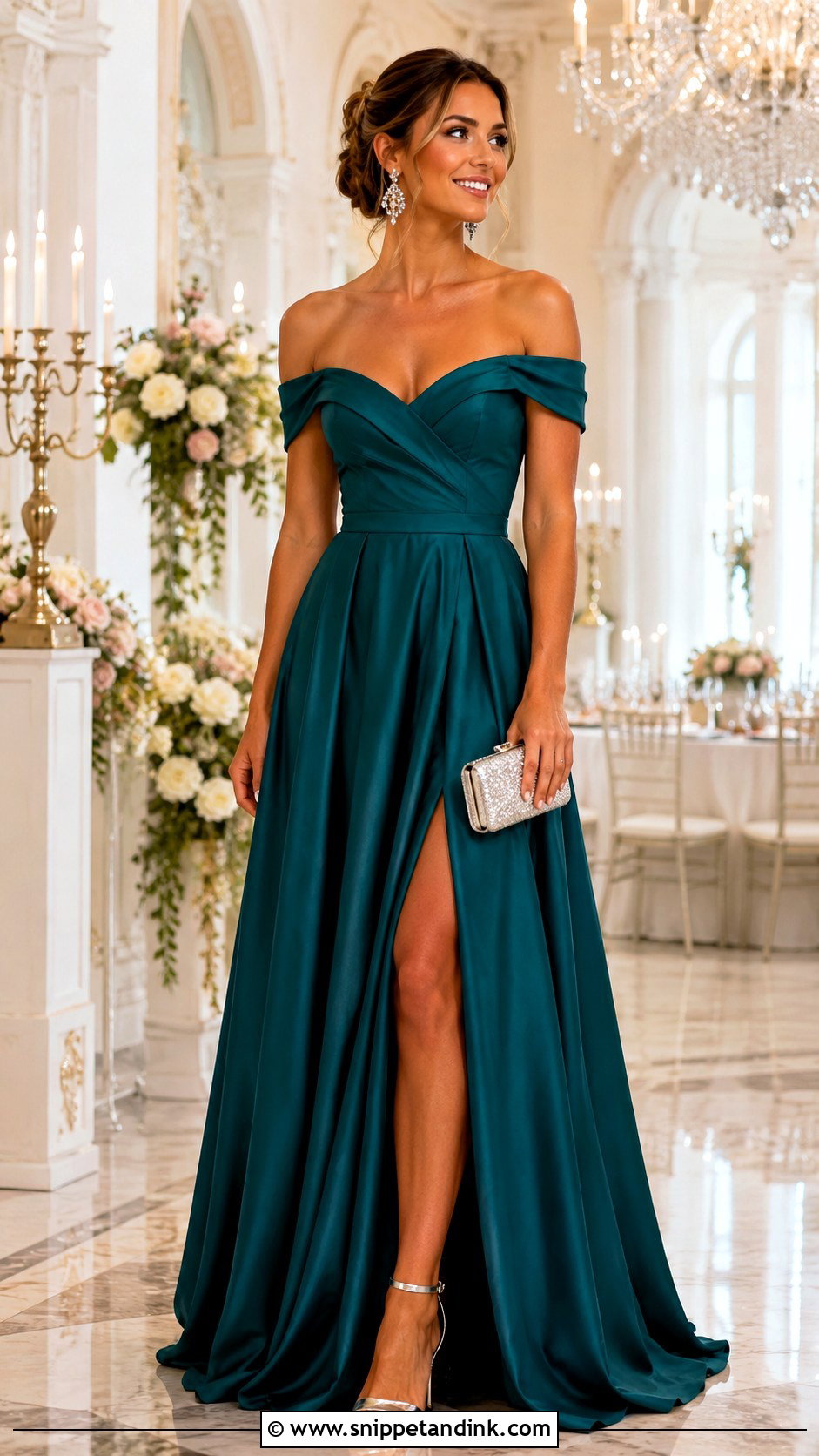
Teal works through the whole year, and an off-shoulder neckline with a structured bodice gives it a classic black-tie line. The neckline will move when you sit and dance unless it’s built to stay, so I look for internal boning or a silicone grip strip and use fashion tape as backup. Crystal earrings and silver heels suit it. A navy or charcoal wrap covers you on the walk in.
12. Chocolate Brown Column Formal Wedding Dress
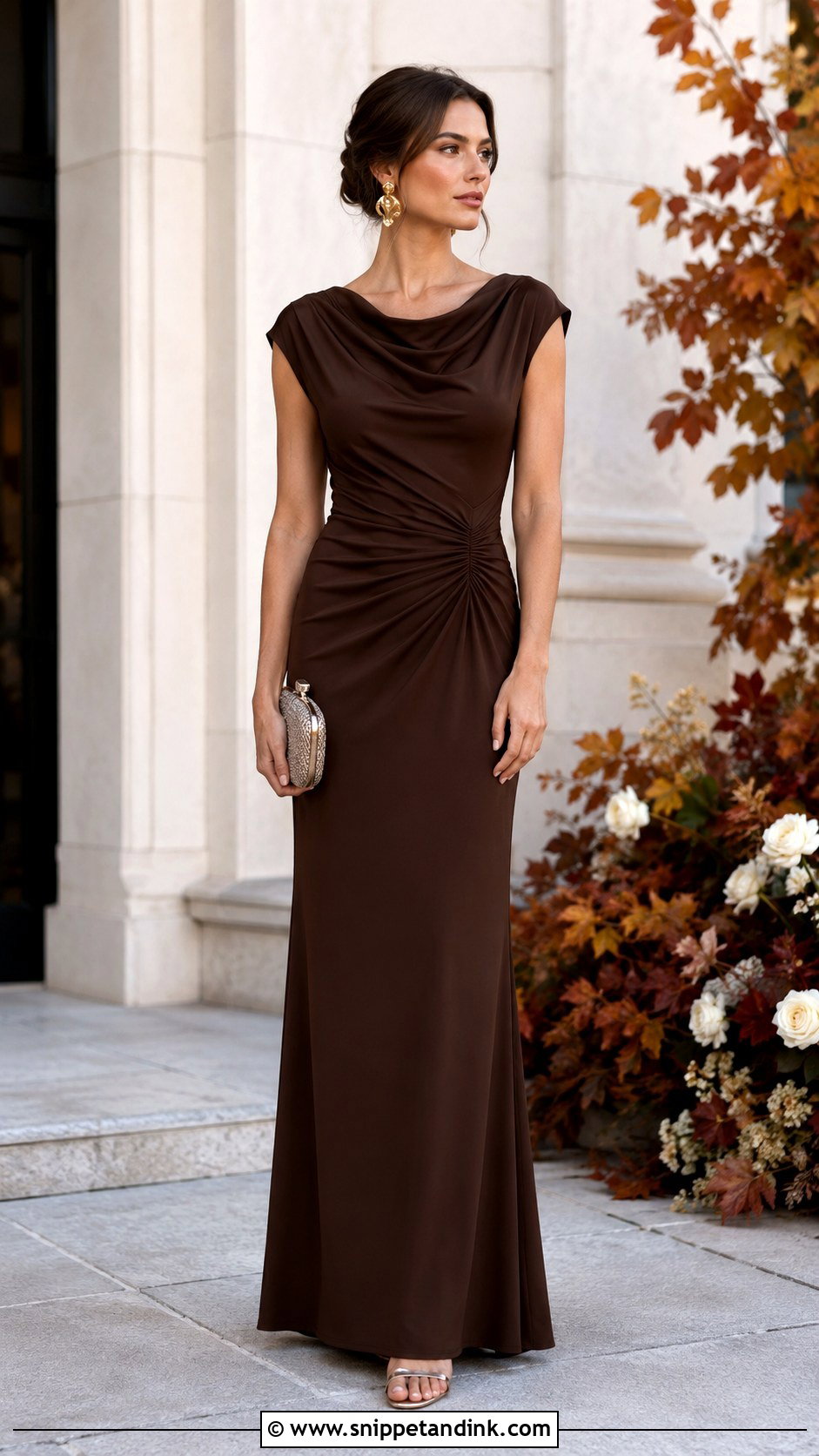
Chocolate brown is a quieter alternative to black that looks modern in satin or crepe. Column gowns with waist ruching or a draped neckline add some dimension. Sit down in the fitting room before you commit. A slim column that’s tight at the knee makes stairs and car seats awkward, and a small slit or a tailor letting out the lower seam solves it. Gold earrings and bronze heels warm the brown.
13. Mauve Wrap Formal Wedding Dress
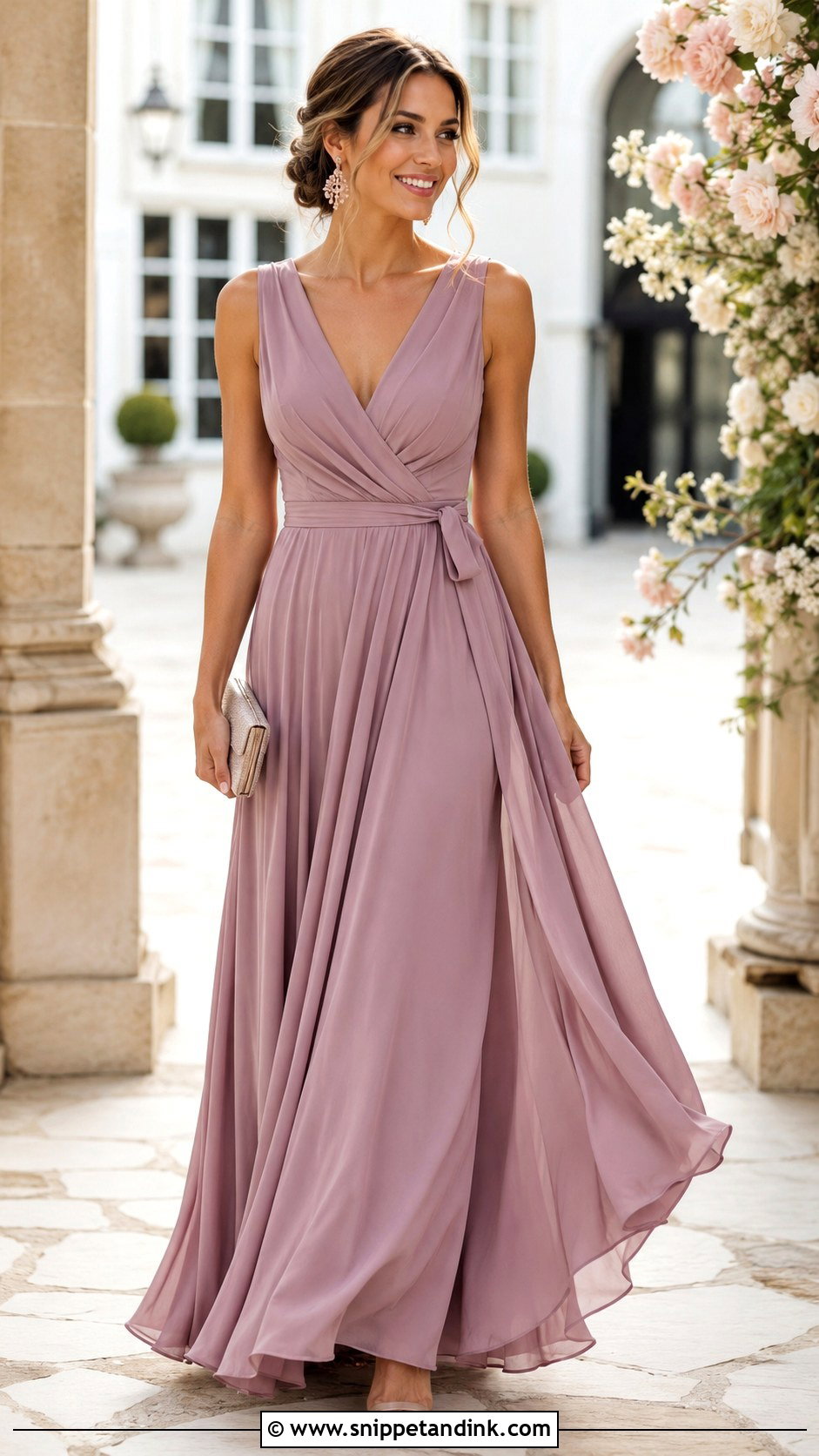
Wrap gowns adjust to your shape, which makes them useful when you’re between sizes. In mauve, chiffon moves softly while stretch crepe looks smoother and more structured. A secure crossover matters, so tape the inner edge if it gapes. Pale mauve can drift toward bridal in photos, so pick a saturated shade and check it under both daylight and warm indoor bulbs. Rose-gold earrings and a taupe clutch sit well with it.
14. Silver Sequin Formal Wedding Dress
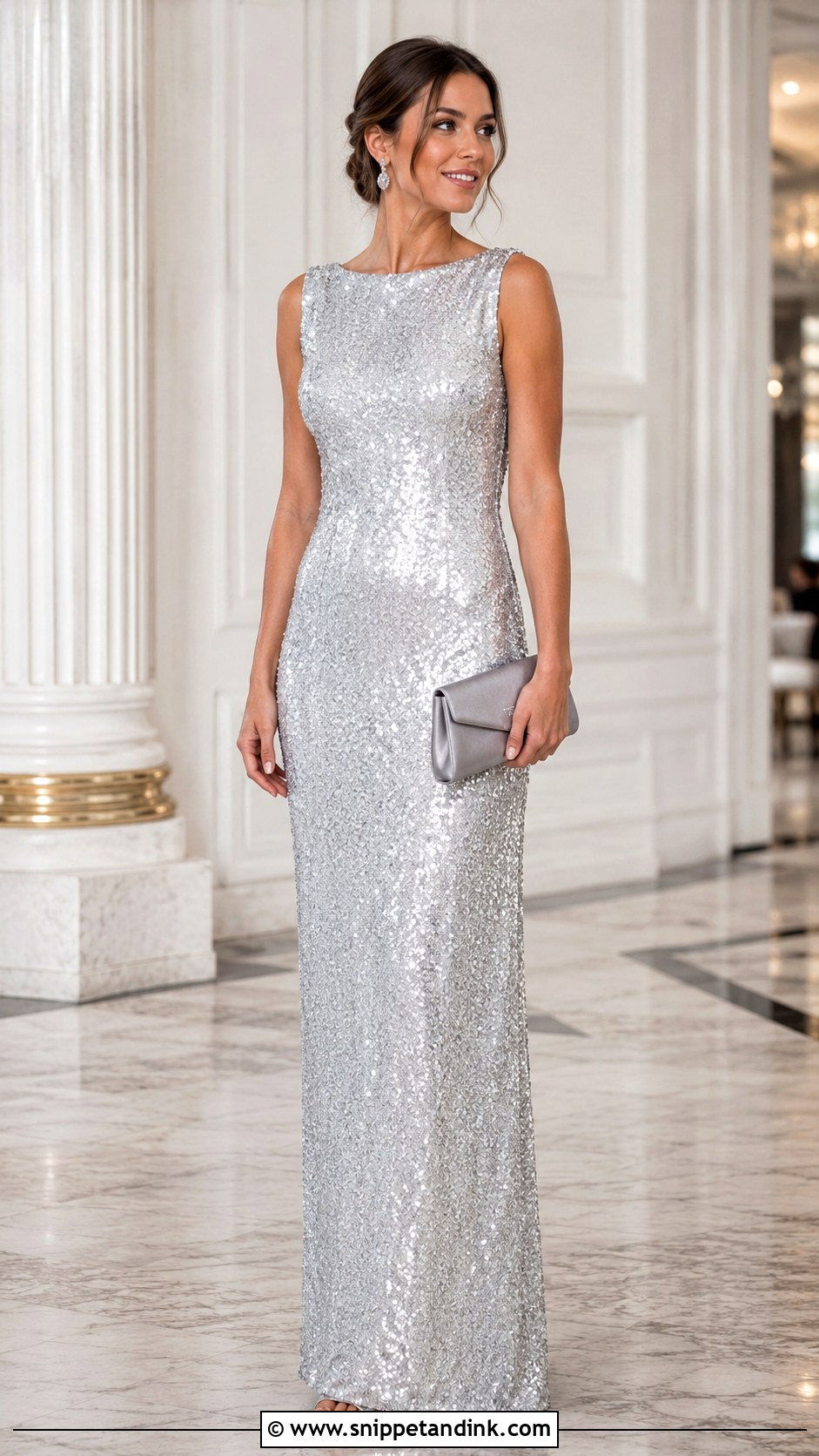
Silver sequins are right for a clearly glamorous evening wedding and wrong almost anywhere else. Small, evenly placed sequins on a column or gently flared gown look refined; oversized reflective discs look like a costume. Keep every accessory minimal, with a gray satin clutch and simple metallic sandals. Highly reflective fabric can pull focus in photos, so if the wedding feels understated, a darker sequin is the kinder choice.

15. Marigold Satin Formal Wedding Dress
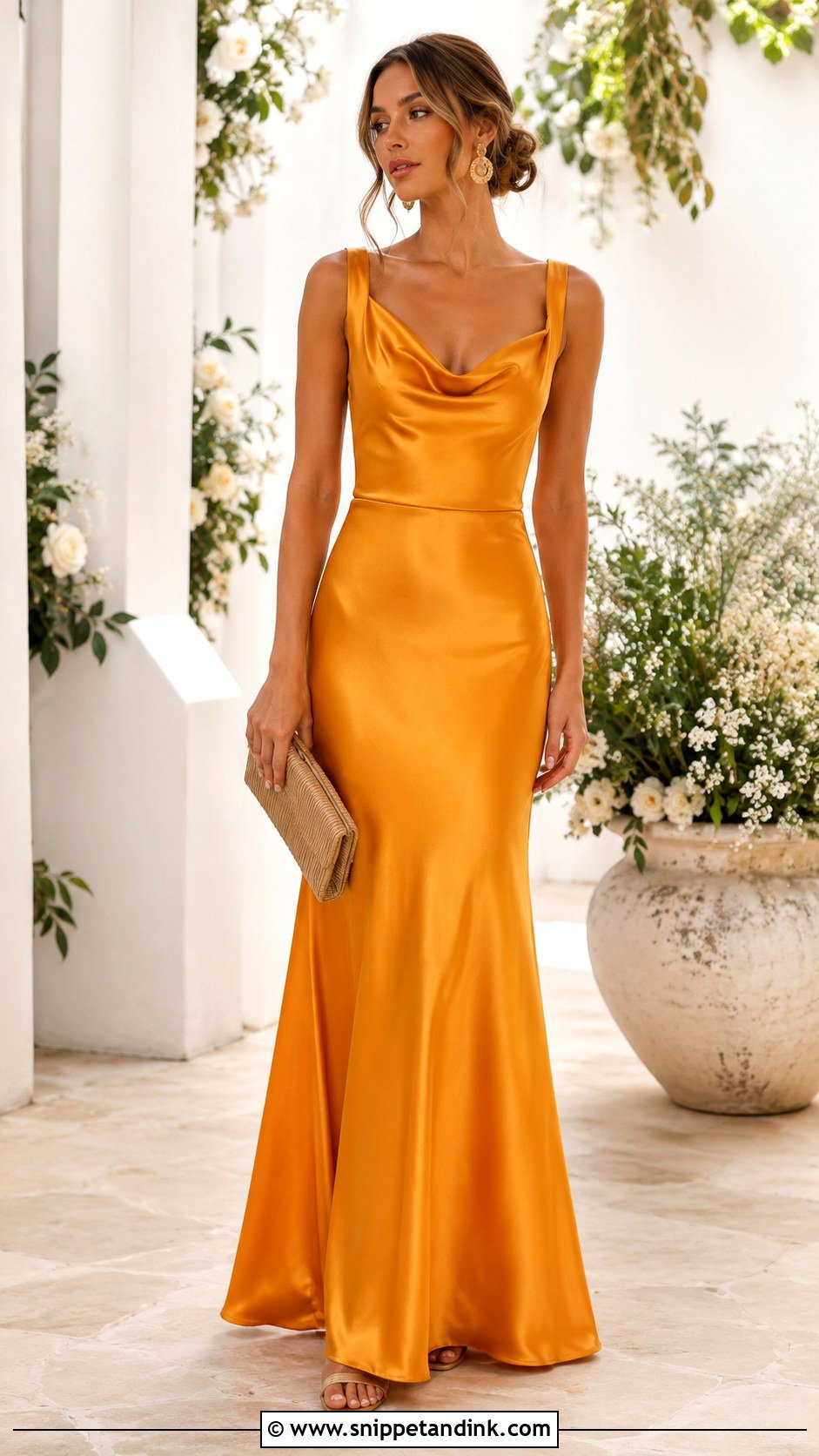
Marigold is warm and unexpected at a formal wedding. A satin gown with a cowl neckline and wide straps lets the color lead, and gold earrings with bronze sandals stay in the same warm family. Saturated yellow satin shows water spots, so carry a small umbrella if rain is possible. Destination and late-summer weddings suit it most, but check for a requested palette first, since it’s a noticeable color.
16. Plus-Size Empire-Waist Formal Wedding Dress
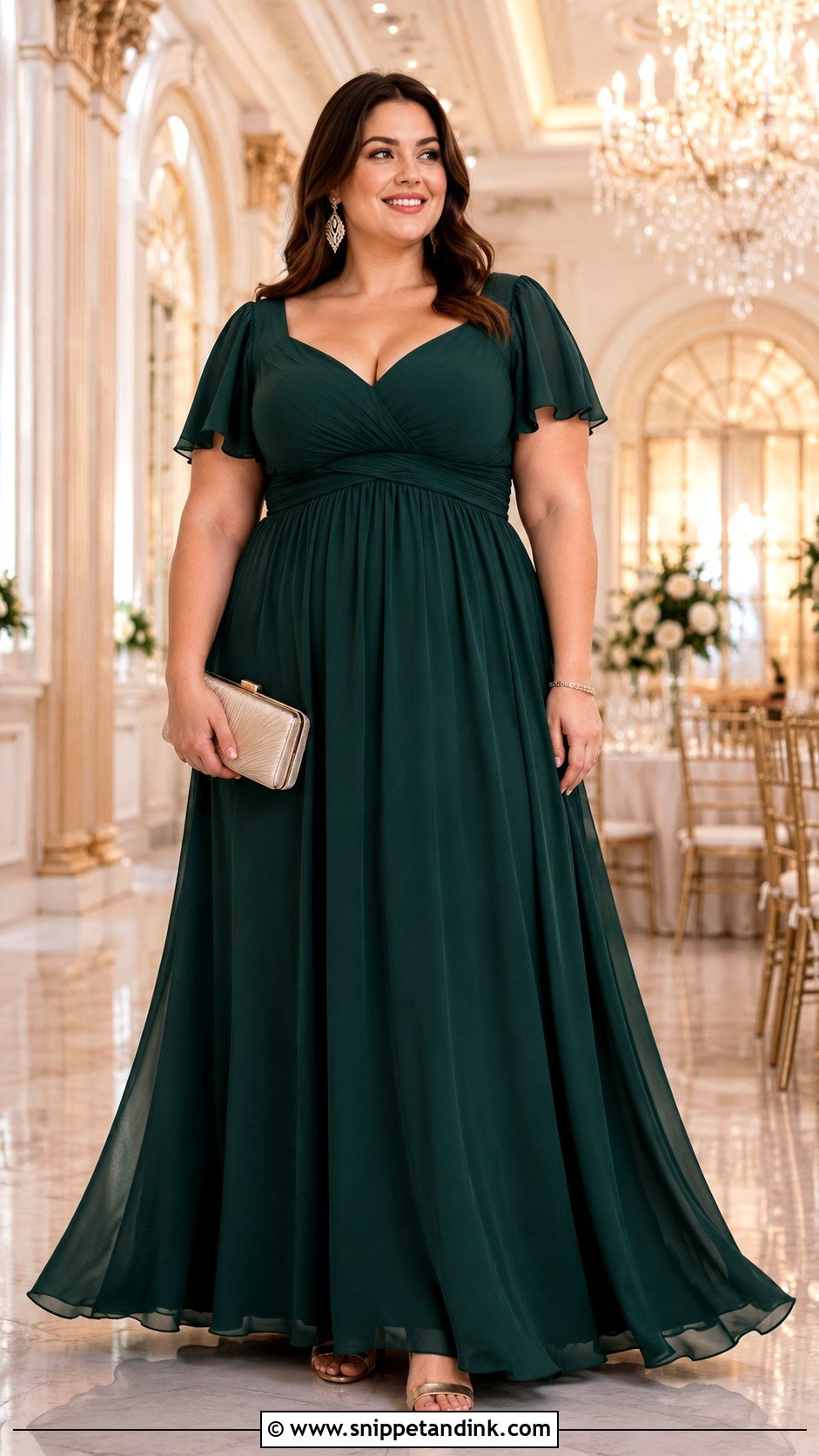
Fit at the bust and arms decides whether a gown works on a plus-size frame, more than the waistline does. An empire-waist gown with a supportive bodice, wide straps or sleeves and a chiffon skirt falling from beneath the bust gives comfort and movement. Check the lining, the zipper quality and room through the upper arm by hugging yourself in the mirror. Rich shades like raspberry, forest green or plum look polished, and a professional hem stops the skirt catching underfoot.
17. Petite A-Line Formal Wedding Dress
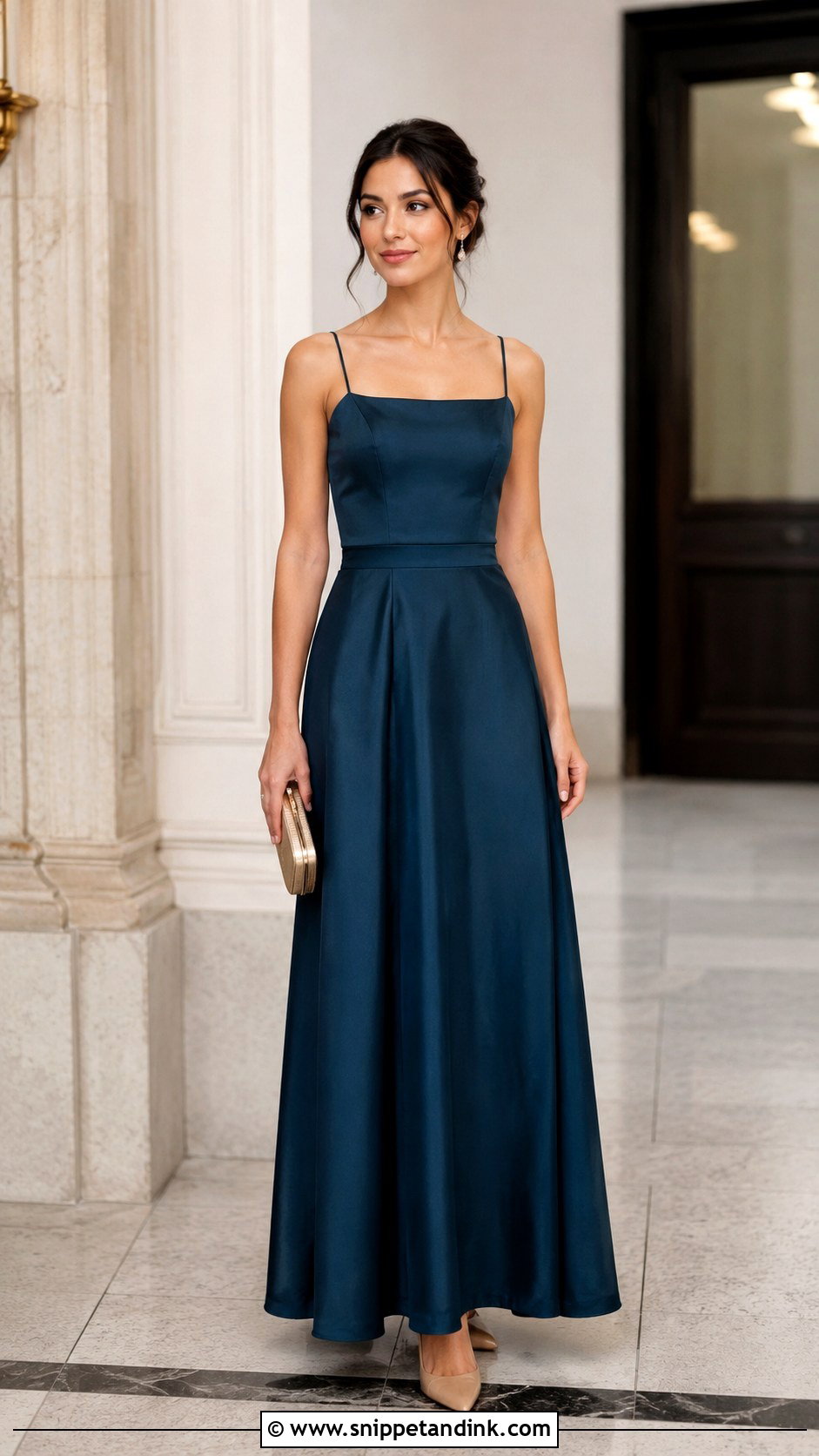
Floor length works on petite guests when the proportions are scaled down. A raised natural waist and a narrower A-line skirt add length without swamping a small frame. Large prints and bulky shoulders overwhelm; solids or small vertical patterns don’t. Book alterations early, because shortening a gown can mean moving lace, pleats or a slit, and that takes more than a quick hem.
18. High-Neck Modest Formal Wedding Dress
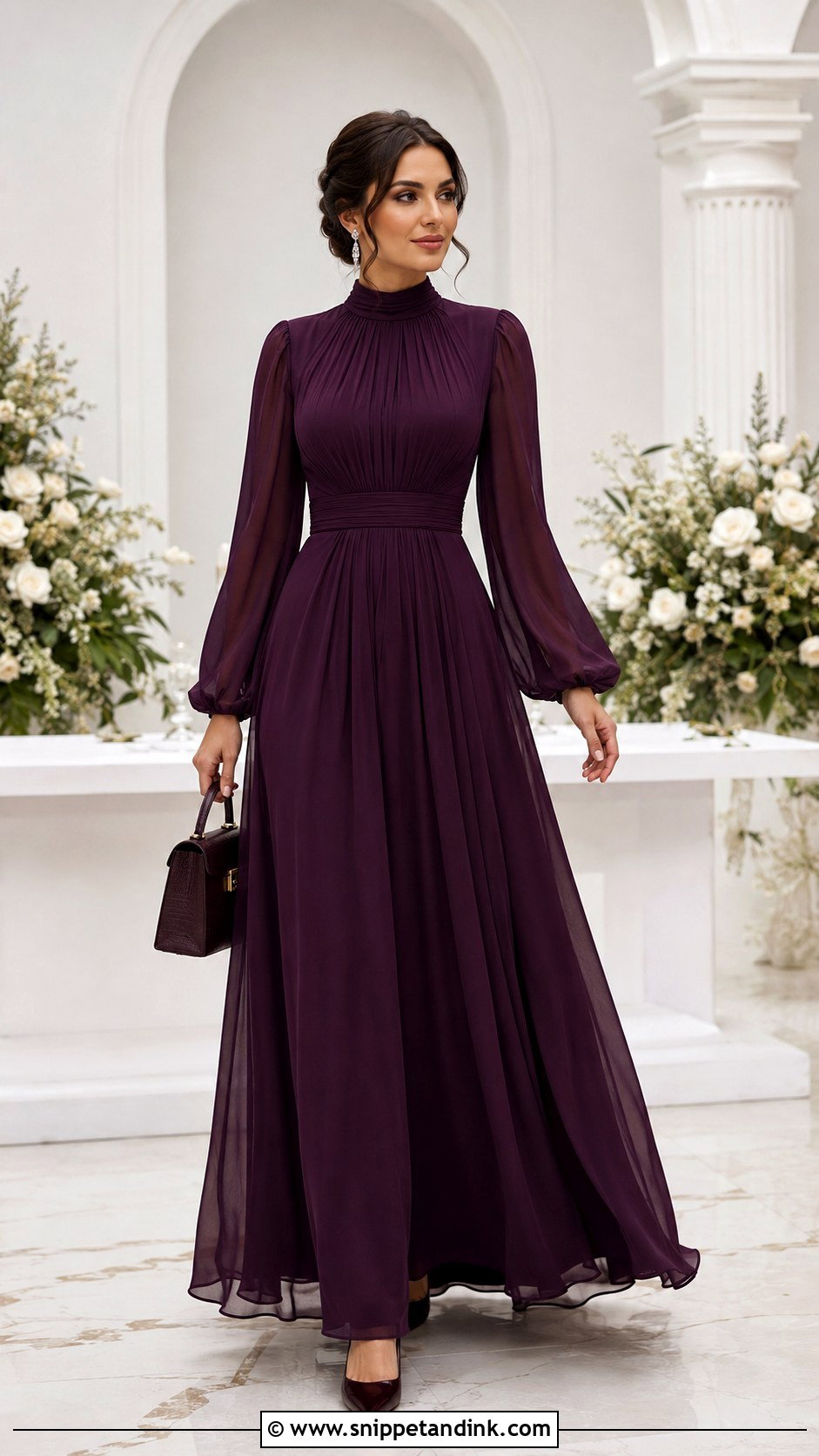
Modest gowns need a little more planning, because coverage rules differ by family, faith and venue. A high neck, long chiffon sleeves and a flowing skirt cover most requirements. Jewel tones like aubergine or forest green keep it evening-ready. Drop earrings and closed-toe pumps finish it, and a smooth low bun sits neatly under a head covering if you wear one. Ask ahead about specific expectations rather than guessing.
19. Maternity Formal Wedding Dress
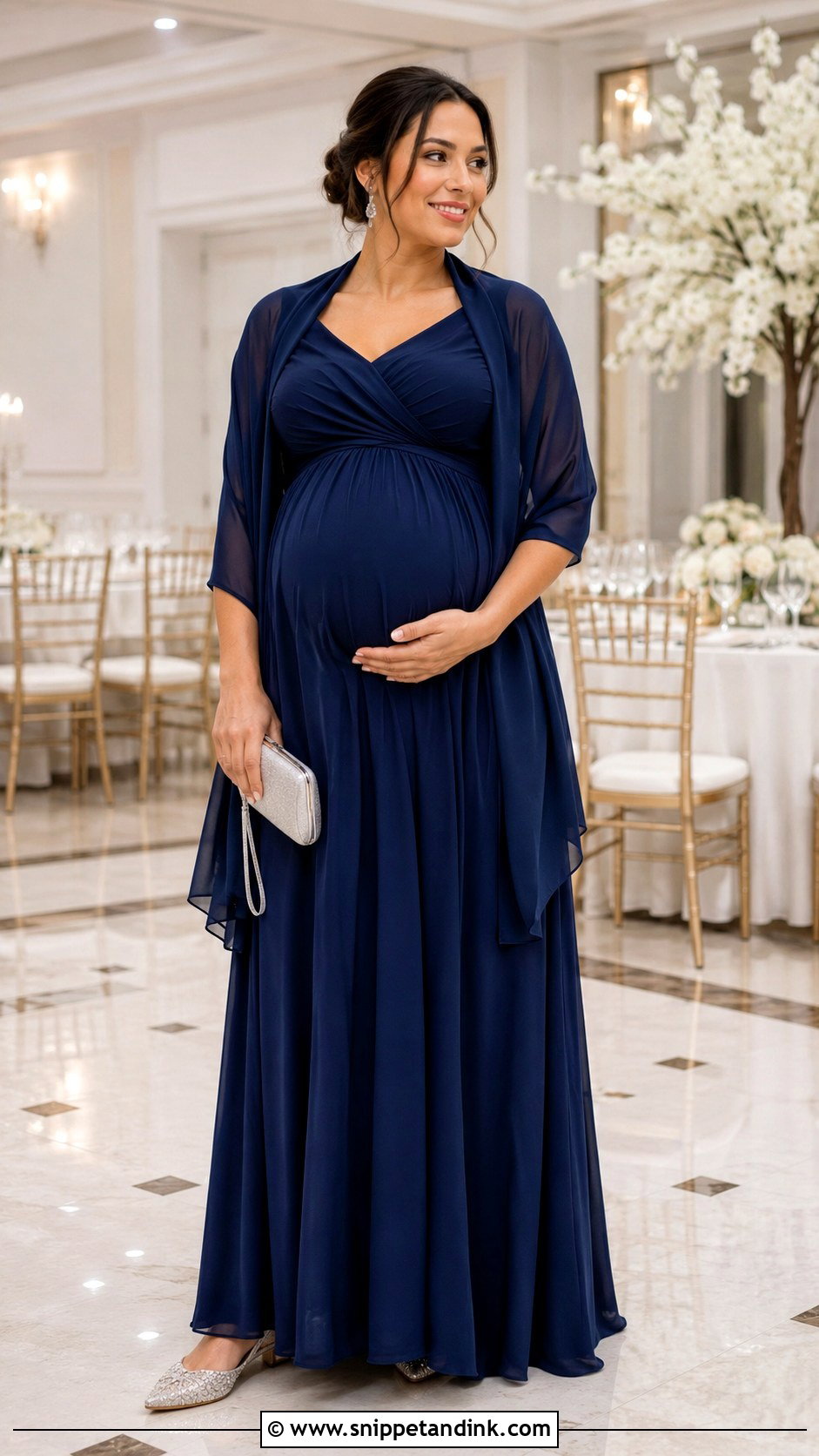
Pregnancy changes week by week, so I size a maternity gown for a formal wedding for the date of the wedding, not the day you shop. An empire waist with a stretch-lined bodice and a floor-length skirt gives room without losing shape. Jersey and stretch crepe are kindest. Skip heavy beading on the bodice, wear low block heels or embellished flats, and choose a seat near the aisle for easy restroom trips.
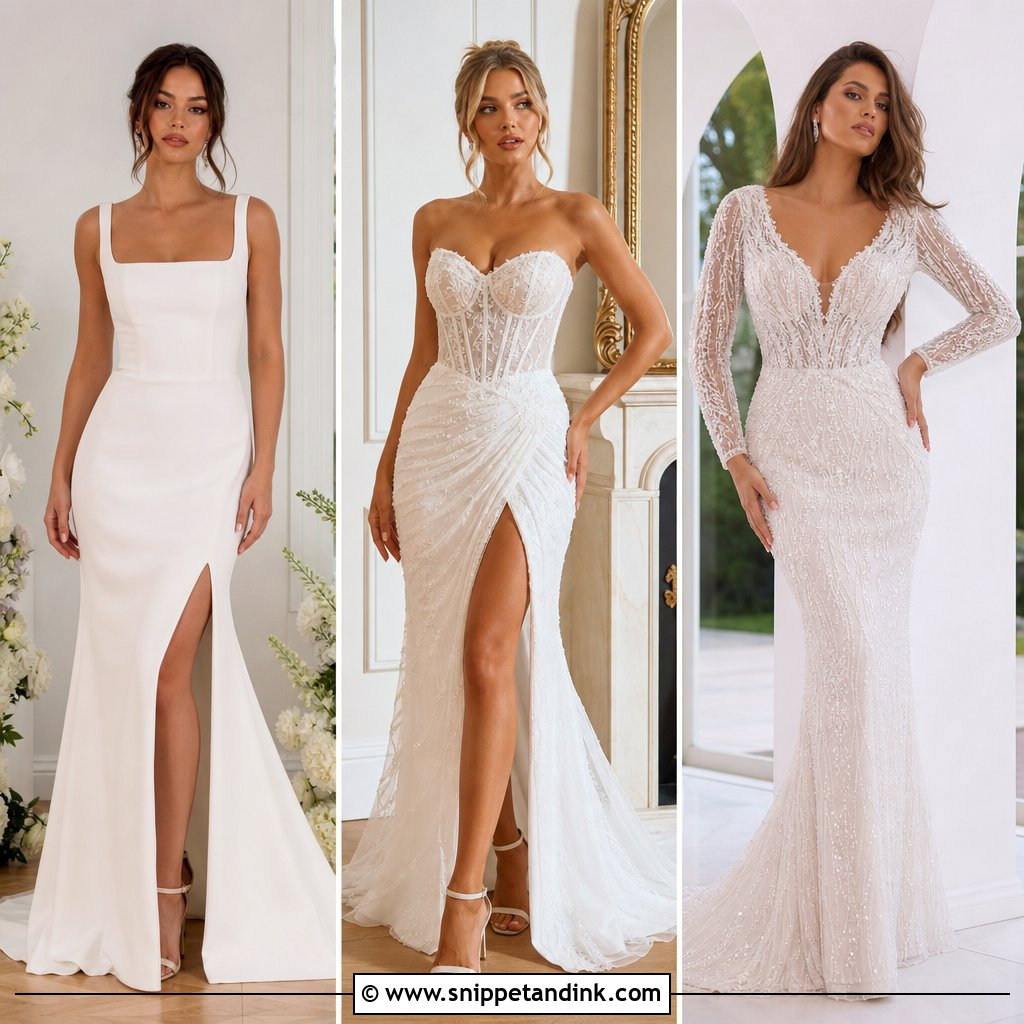
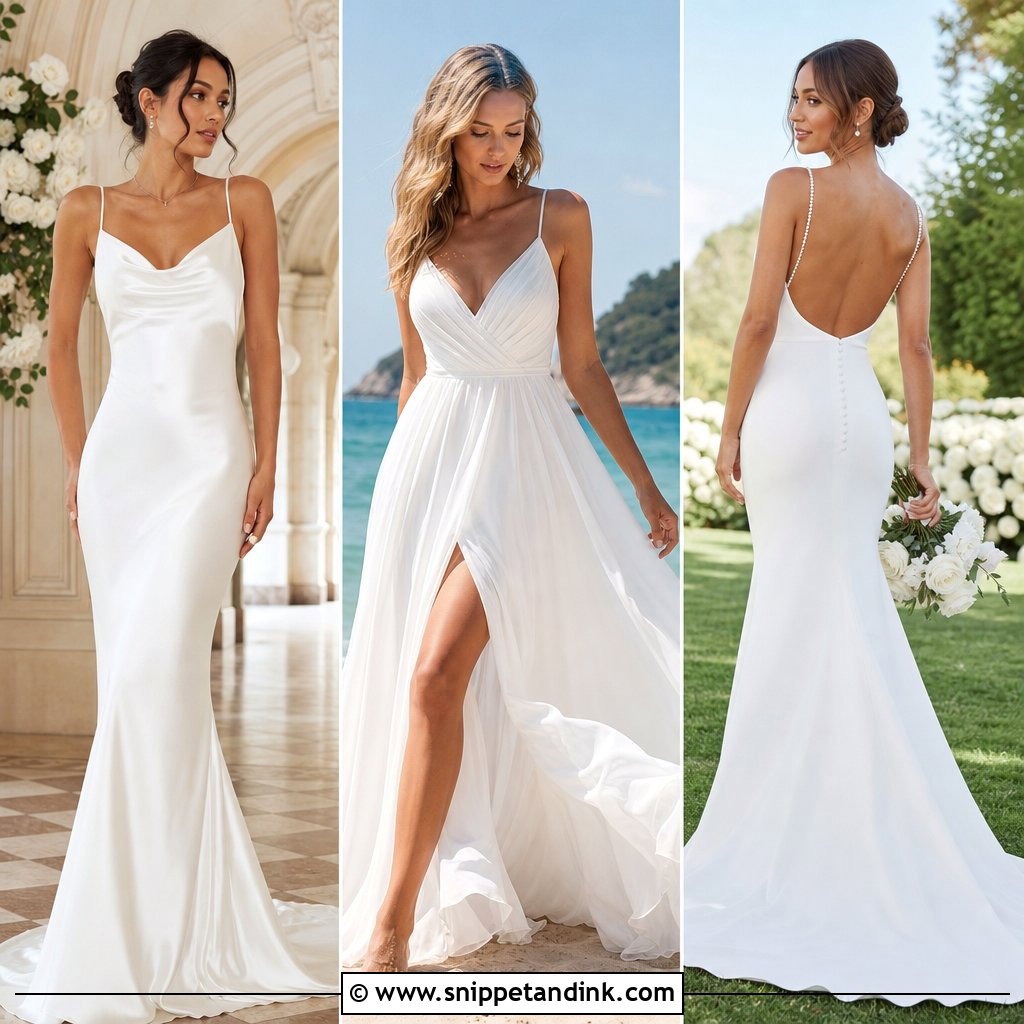
20. Floral Organza Formal Wedding Dress
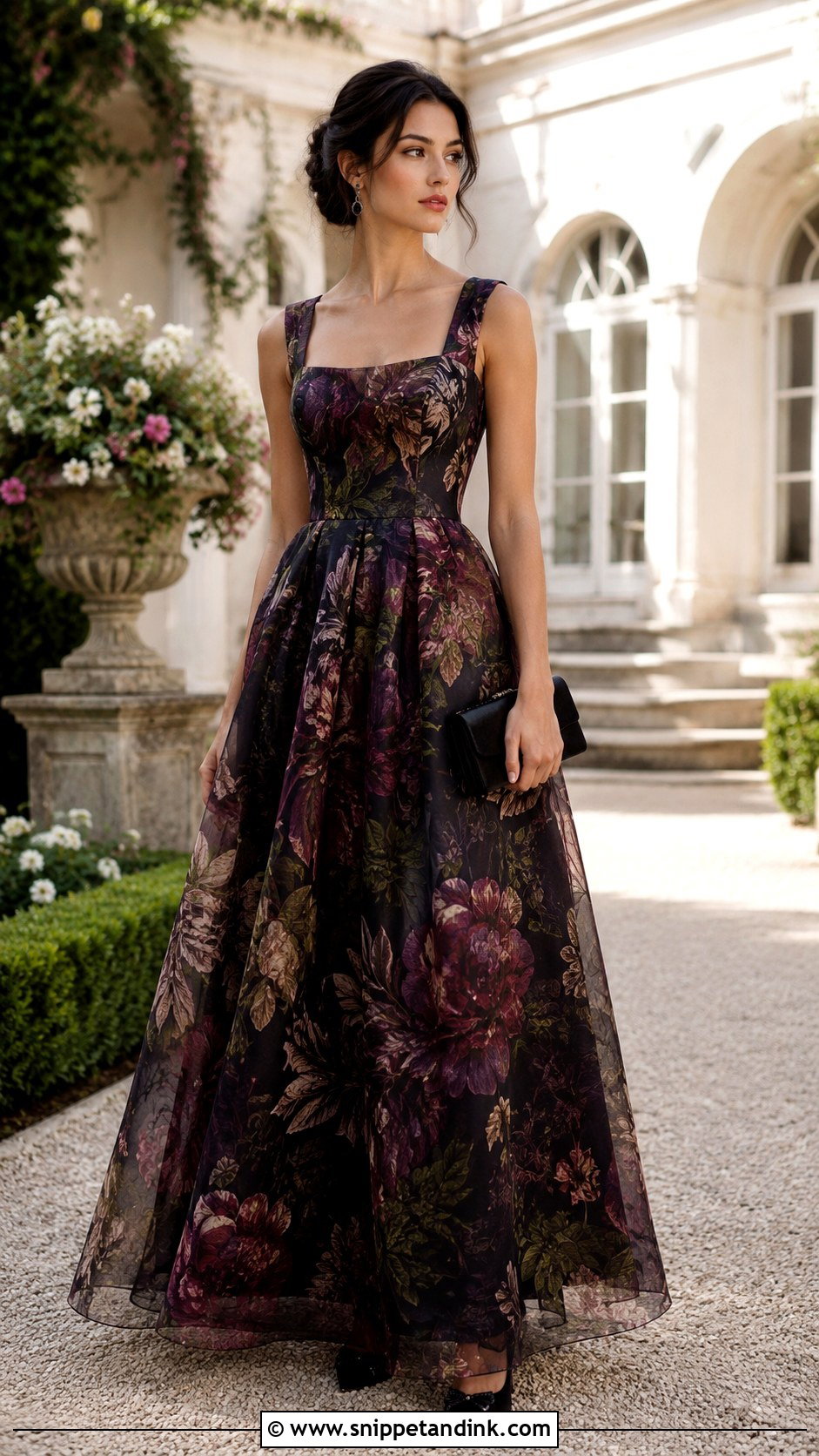
Dark floral organza brings pattern to formal attire without losing formality, as long as the ground is black, navy or a deep jewel and the flowers are medium-scale. Organza has crisp body that holds an A-line skirt out. It also creases sharply if crushed, so don’t sit on the back of the skirt in the car. Match your earrings to one secondary color in the print and keep everything else plain.
Should Your Gown Match Your Partner’s Tuxedo?
Couples arriving together at a black-tie wedding often ask me whether they should coordinate. A little, yes. Matching exactly tends to look like a uniform.
The simplest link is a pocket square or tie in a shade pulled from your gown, ideally one tone deeper so it doesn’t look borrowed from your hem. Classic black tie calls for a black bow tie, so at strict events I’d put the color in the pocket square only. Metals help too: if your jewelry is gold, his cufflinks and studs can be gold.
For photos, stand close and check that your colors don’t clash under warm lighting. Burgundy beside a navy tuxedo looks rich, while orange-red beside a midnight blue jacket can jar. When in doubt, a black tuxedo goes with every gown on this list.
Comfort Is What Makes a Black-Tie Gown Look Right
Start with the dress code, the season and the venue, and the field narrows quickly. A floor-length hem, a good fabric and a secure fit will make almost any suitable gown look deliberate. Try the whole outfit on at home, shoes and underwear included, at least two weeks before. Then sit, walk, eat a snack and dance a few steps. A gown you forget you’re wearing is the one people remember seeing you in.
You'll Like These Ideas:








Leave a Reply