
An older gown carries something new dresses can’t: the feeling that it has been somewhere before. When I work with a bride drawn to vintage, we usually move between three options, an authentic heirloom, a restored find, or a new dress with old-world details, and the styling changes with each. The looks below run from beaded Art Deco column gowns through lace sleeves, tea lengths and satin ball gowns to soft 1970s and clean 1990s shapes. For each one, I’ve added the fit and fabric points I’d check before saying yes.
Reworking a Mother’s or Grandmother’s Gown
Some of the most meaningful vintage dresses come from a family wardrobe. They rarely fit straight out of the box, and the styling often feels dated even when the dress itself is lovely. I’d take a few careful steps before any scissors come out.
First, have it assessed by a seamstress who works with older garments. She can tell you whether the fabric will take alterations, whether stains or yellowing might lift with specialist cleaning, and how much seam allowance is left to let out. Old silk can split along stitching lines, so some changes simply aren’t safe.
Then decide what to change. The common updates are removing or slimming big sleeves, lowering or reshaping a high neck, shortening the hem and taking off a heavy train. Ask the seamstress to keep everything she removes, wrapped and labelled, so the gown could be restored later if the family wishes.
If the dress can’t be worn, part of it still can. Lace from a bodice can edge a new veil, a sash can wrap the bouquet stems, and a panel can be sewn inside your own gown. That keeps the history without forcing a fit that won’t work.
1. 1920s Beaded Wedding Gown
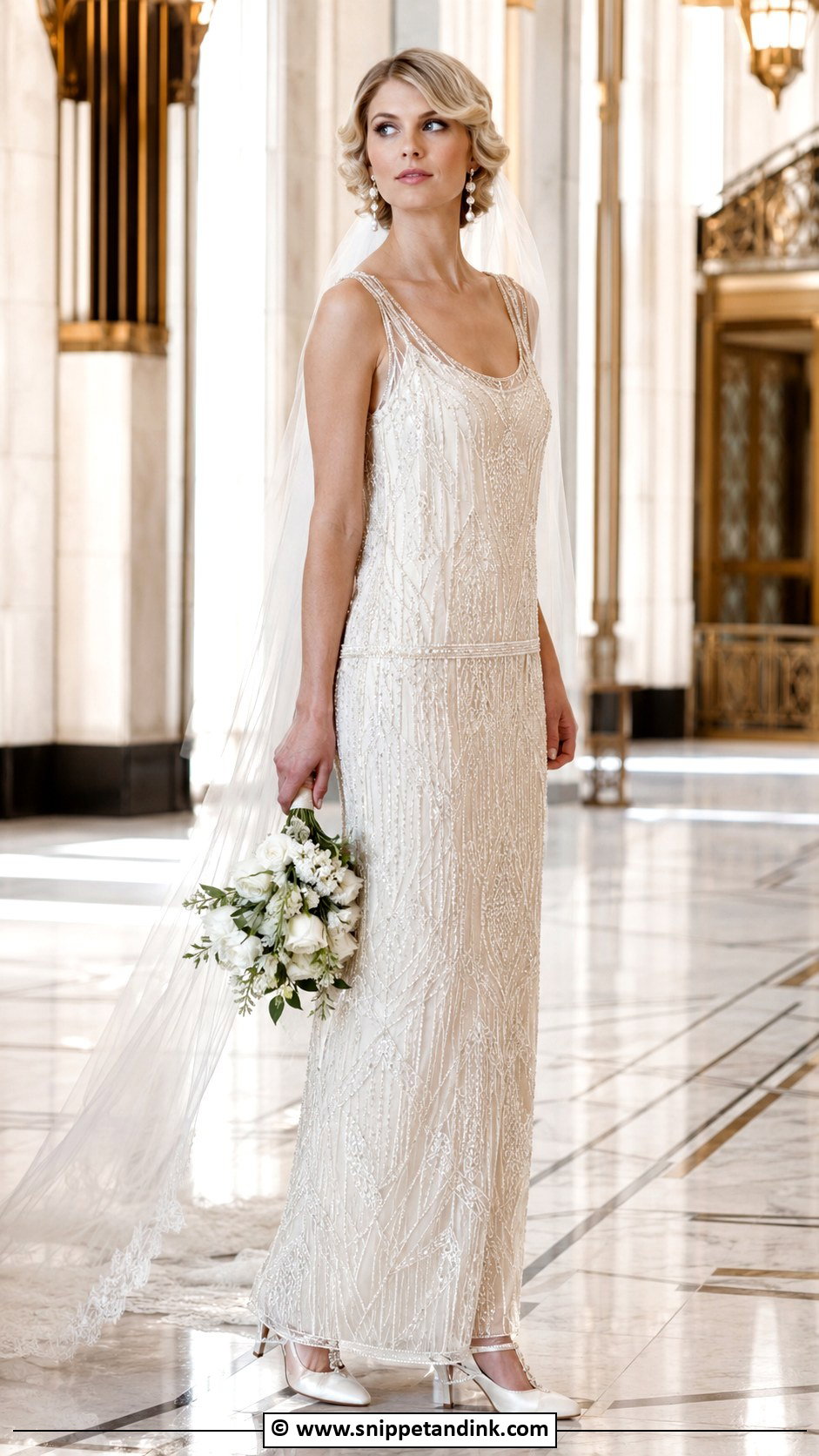
Twenties beadwork is meant to swing, so the gown hangs from the shoulders in a loose column, often with a slightly dropped waist and fine straps or sheer sleeves. Sitting is the thing to rehearse. Beads press into the backs of the thighs on hard chairs, and on antique gowns the threads can snap, so I bring a needle and matching thread on the day. A finger wave, pearl drops and satin heels finish it, and a long veil with light beading adds length without hiding the work. Ivory, champagne or soft silver look richest by candlelight.
2. 1930s Satin Wedding Gown
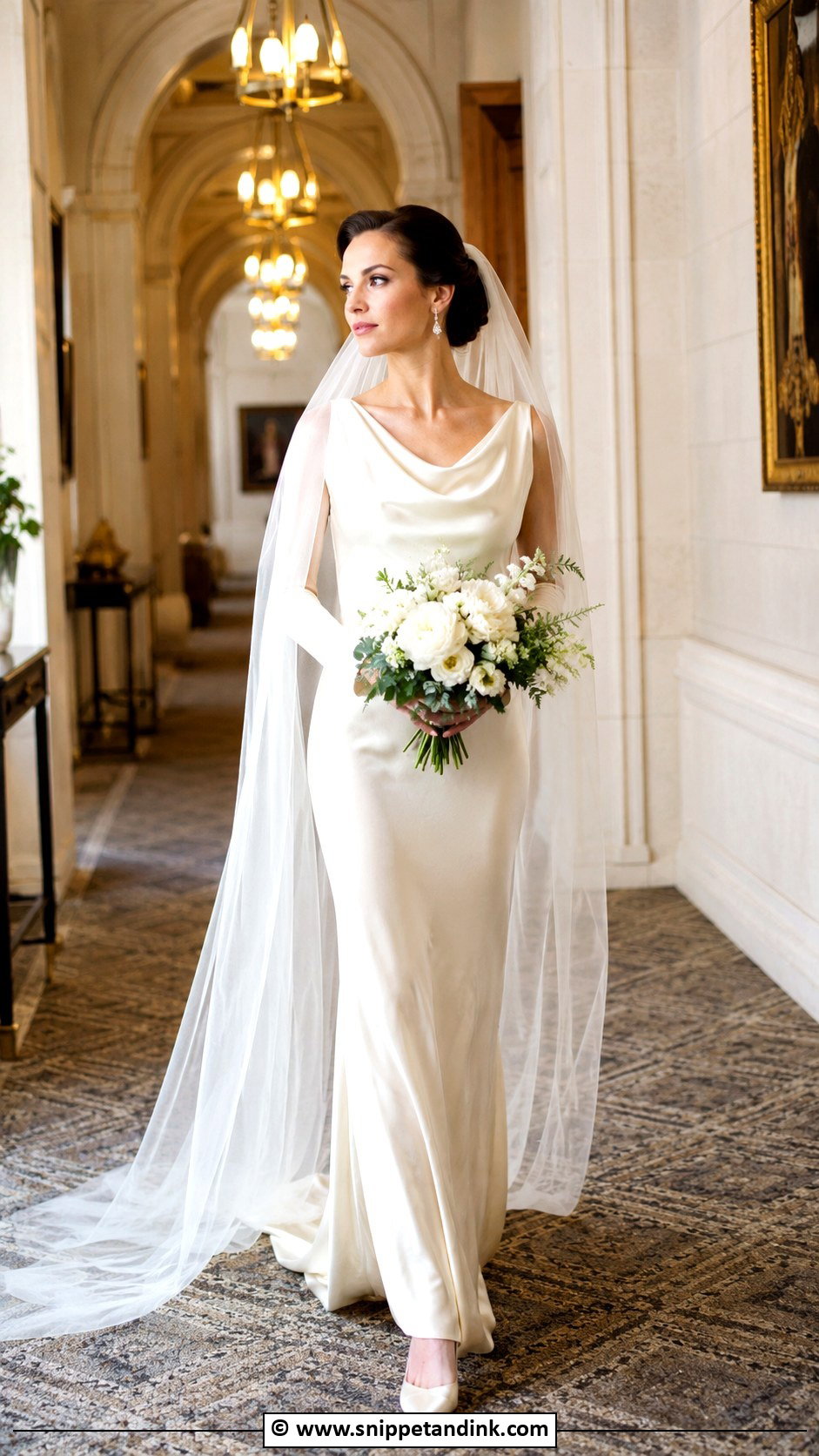
Bias-cut thirties satin skims the body and pours over the hips, which is why it still says old Hollywood. Many of these gowns have a low back, so the underwear question comes first: a low-back bodysuit or cups sewn into the dress, decided before the first fitting. A soft cowl, covered buttons or long sleeves add detail. Crystal earrings, a sleek veil and pointed satin pumps. A deep side part or soft waves suits the era.
3. 1940s Long Sleeve Wedding Gown
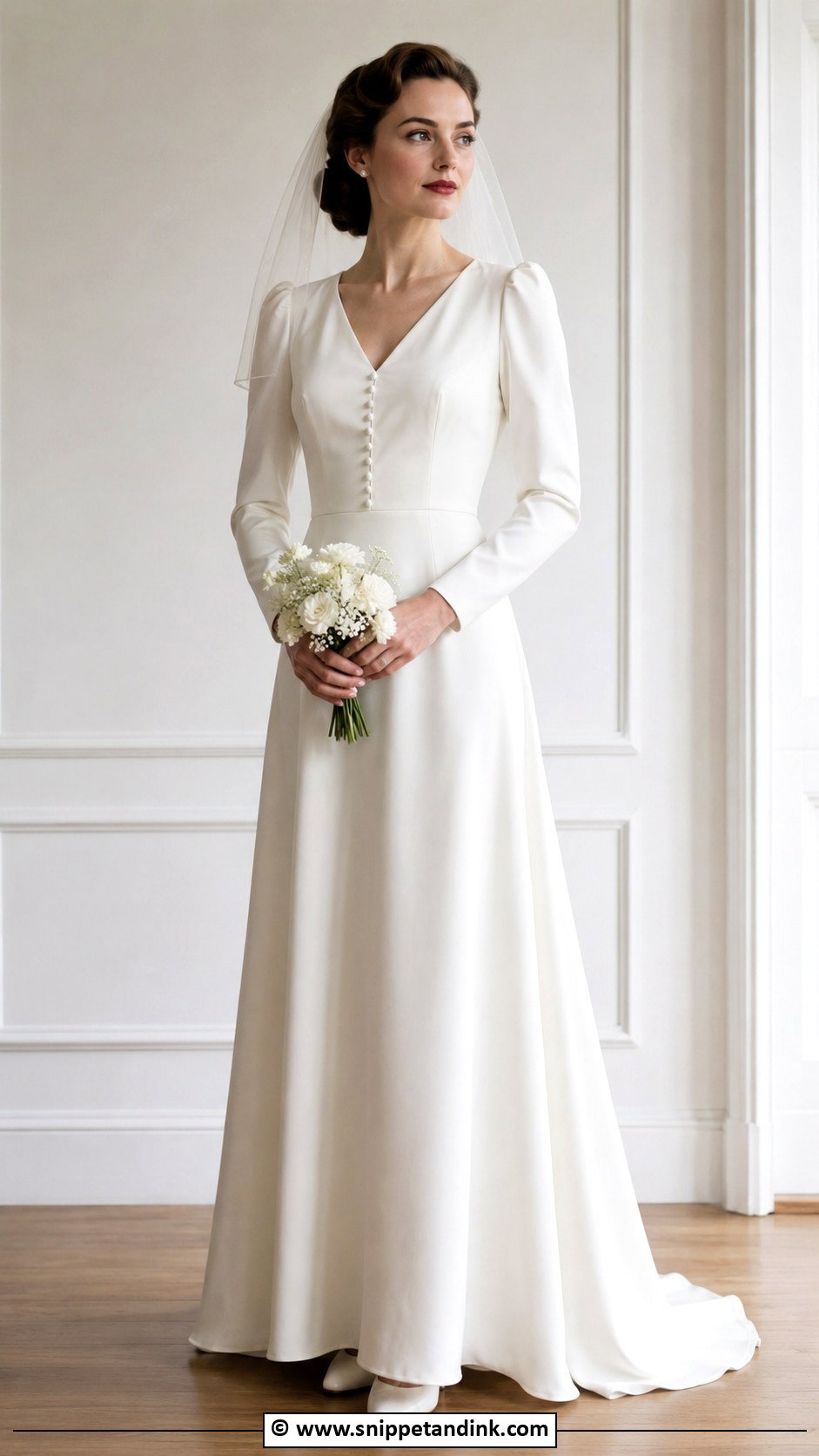
Forties gowns were practical and well cut: defined waists, soft shoulders and little decoration. A crepe or satin gown with long sleeves, a V-neck and a narrow A-line skirt flatters a wide range of figures because the V lengthens the neck and the skirt doesn’t add bulk. I’d watch the sleeve length; it should reach the wrist bone when your arms are bent, not just when they hang. A short veil, pearl studs and low block heels.
4. 1950s Tea Length Wedding Gown
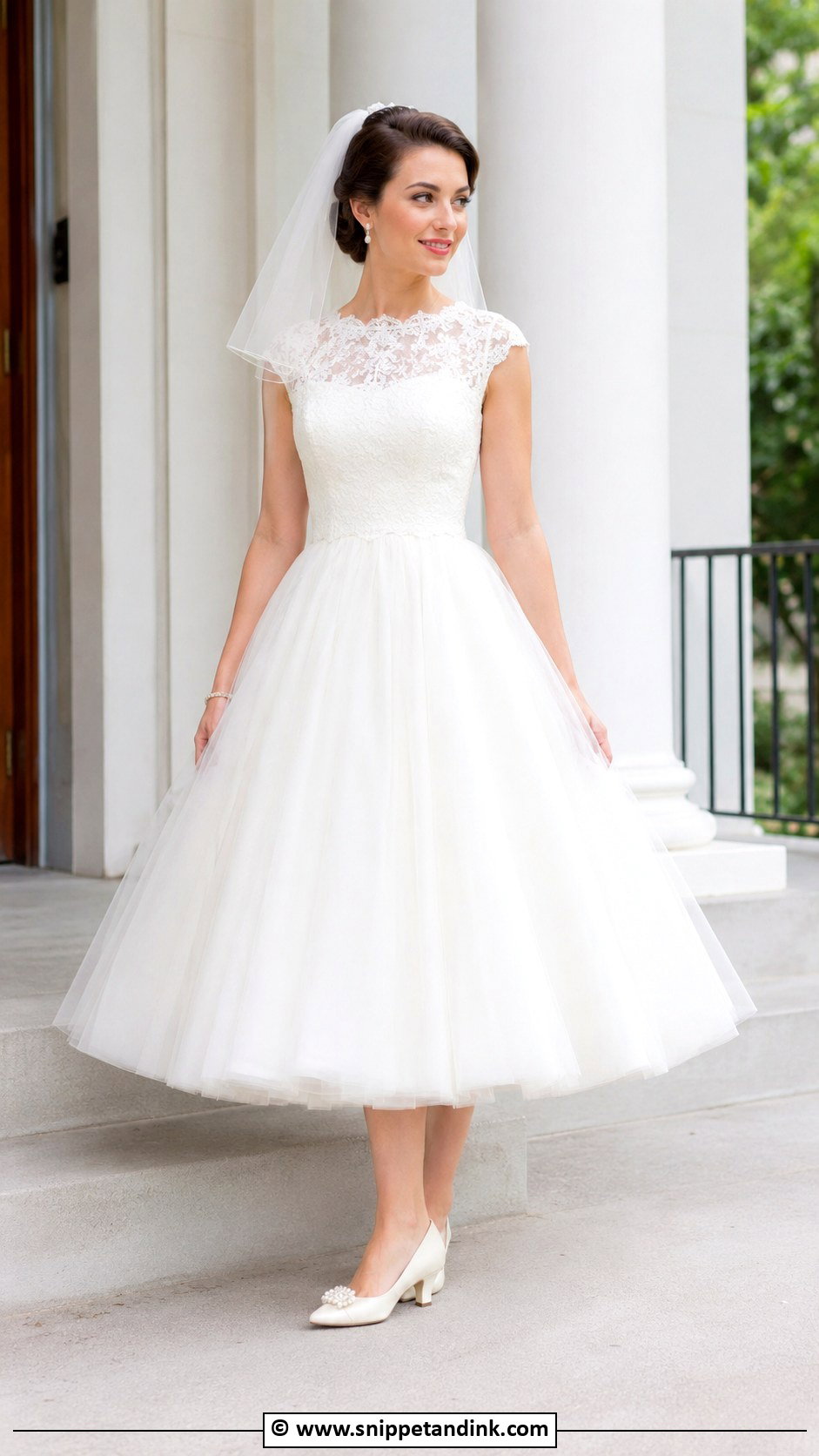
A 1950s tea length wedding gown has a fitted bodice, a nipped waist and a full skirt ending between knee and ankle. Shoes are on show, so kitten heels are the period-true choice and kind on the feet across a long day. Lace, satin, organza and tulle all suit the shape. The waist seam must sit exactly at your natural waist, otherwise the skirt balloons from the wrong place. A short veil and soft curls keep it light.
5. 1960s High Neck Wedding Gown
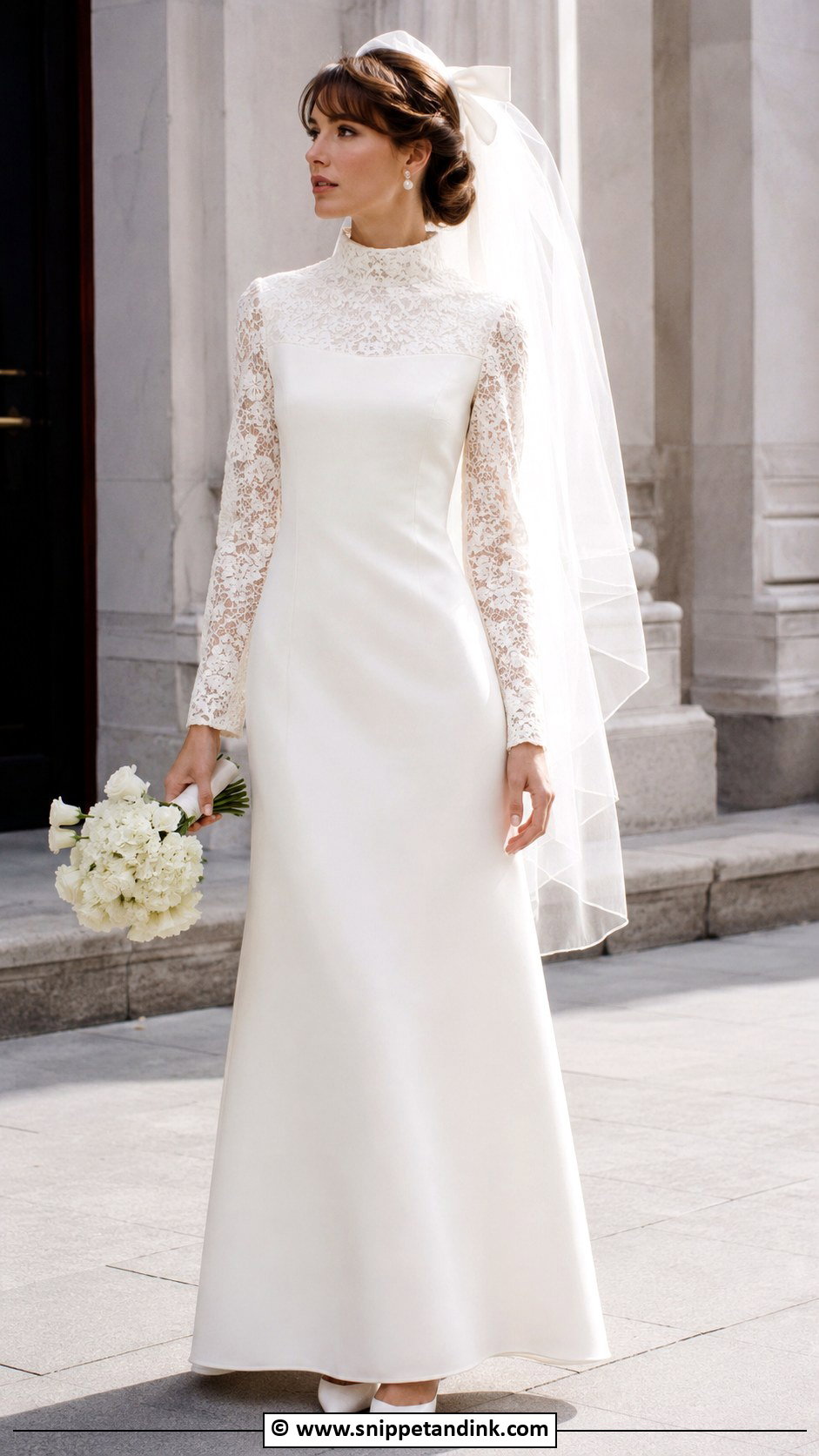
Sixties gowns are tidy and graphic: straight or gently A-line skirts, high necks, long sleeves and sometimes a crisp bow. The neckline is the focal point, so I keep earrings small, pearl buttons rather than drops, and the hair in a smooth updo with a little height at the crown. A short veil or a structured bow veil suits the period. Simple white heels and a small bouquet keep the neck clear.
6. 1970s Lace Sleeve Wedding Gown
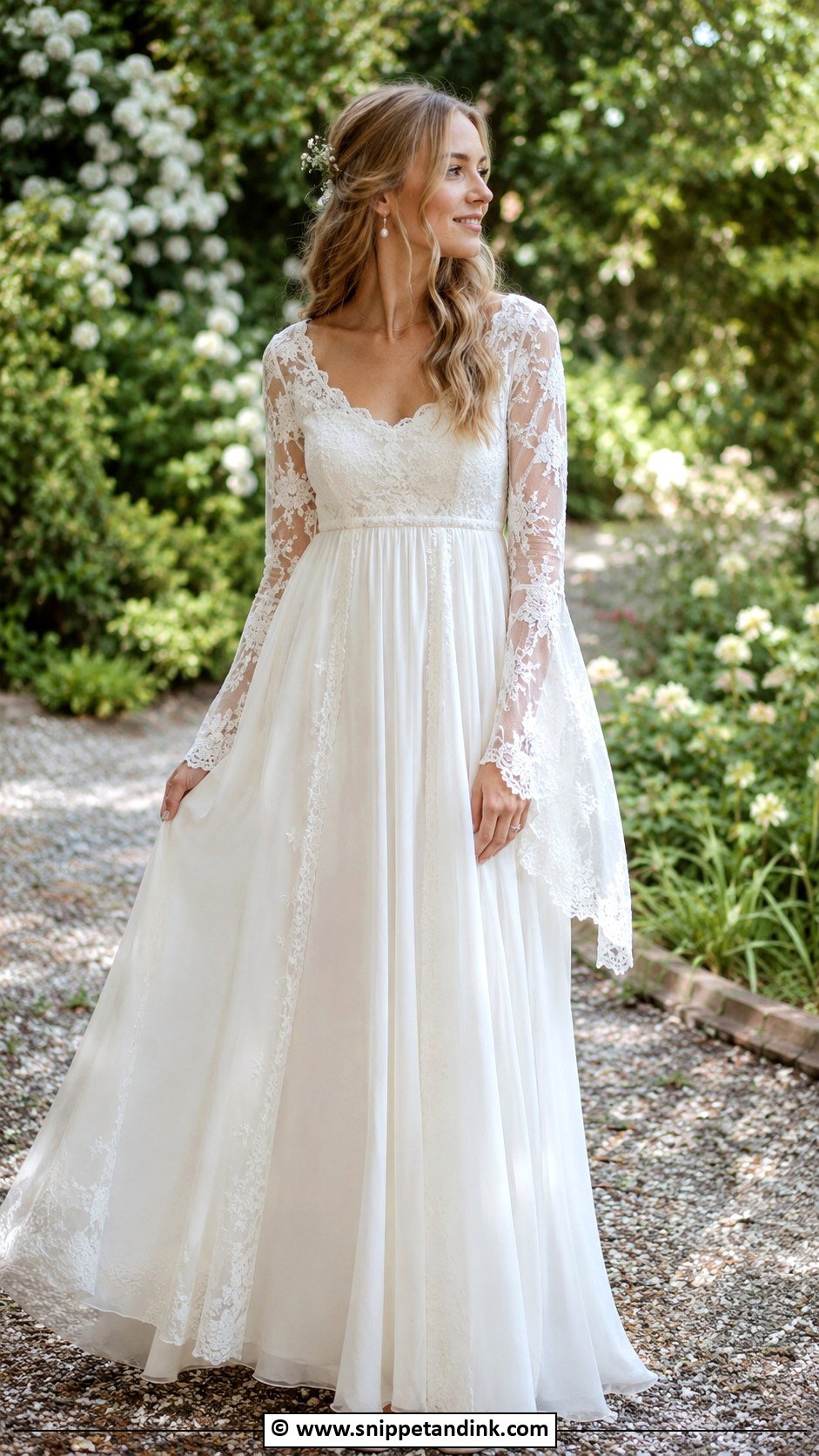
A 1970s lace sleeve wedding gown is loose and textured: long sheer sleeves, floral lace, empire waists and soft skirts. Sheer lace sleeves can be scratchy against the inner arm, so I check the lining before a bride commits to a ten-hour day in them. Loose waves, delicate earrings and sandals or low heels. A flower crown suits a casual outdoor party; a lace-trim veil keeps it more traditional.
7. 1980s Puff Sleeve Wedding Gown
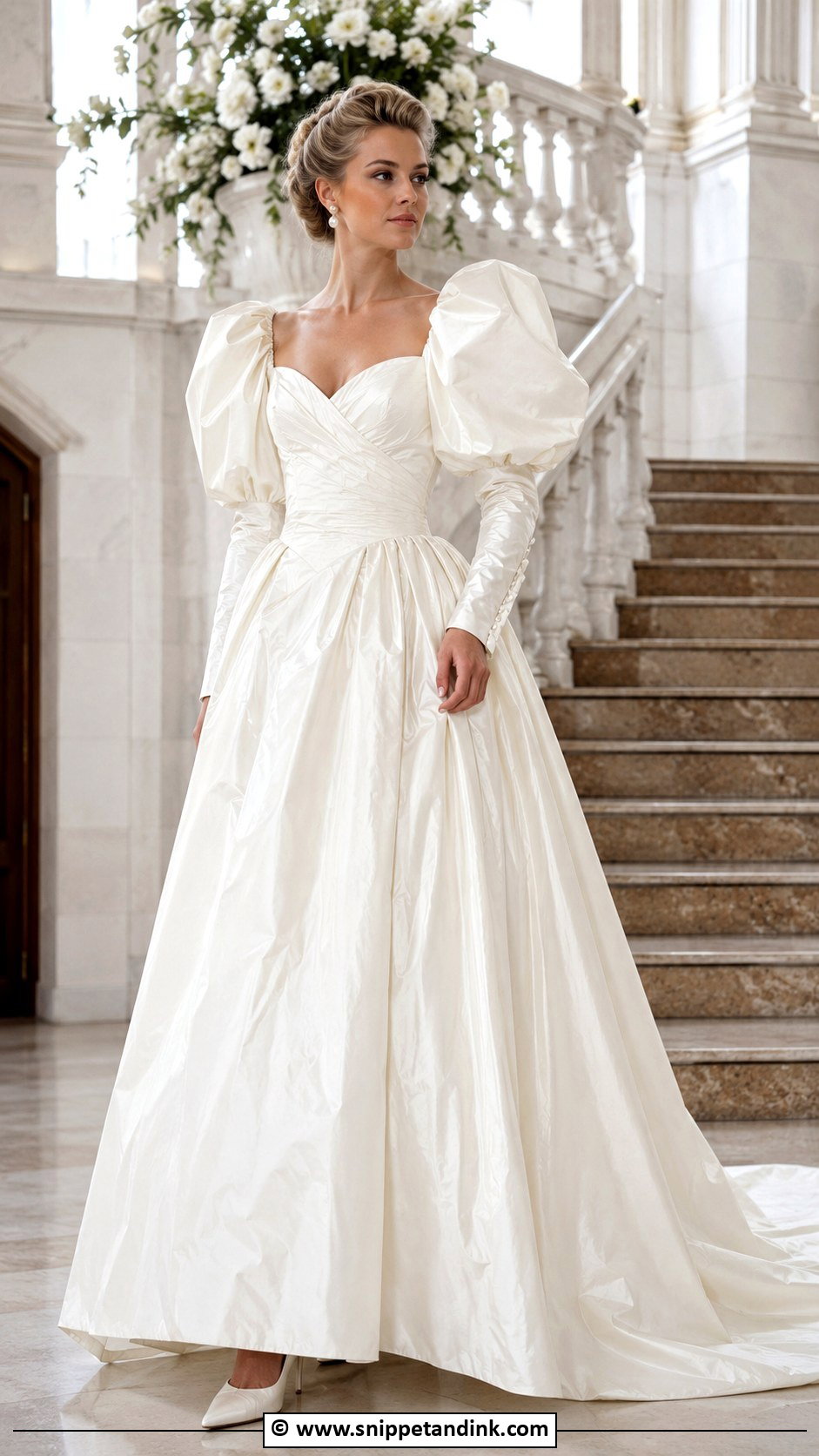
Eighties gowns went big everywhere at once: sleeves, skirts, bows and trains, often in taffeta. To wear the era now, I pick one strong feature and calm the rest. Taffeta is noisy and creases sharply, so steam it on the morning and keep the sleeves from being crushed in the car. Sleek hair, clean makeup and pearl earrings balance the volume. Large venues and grand staircases give the shape room.
8. 1990s Minimal Wedding Gown
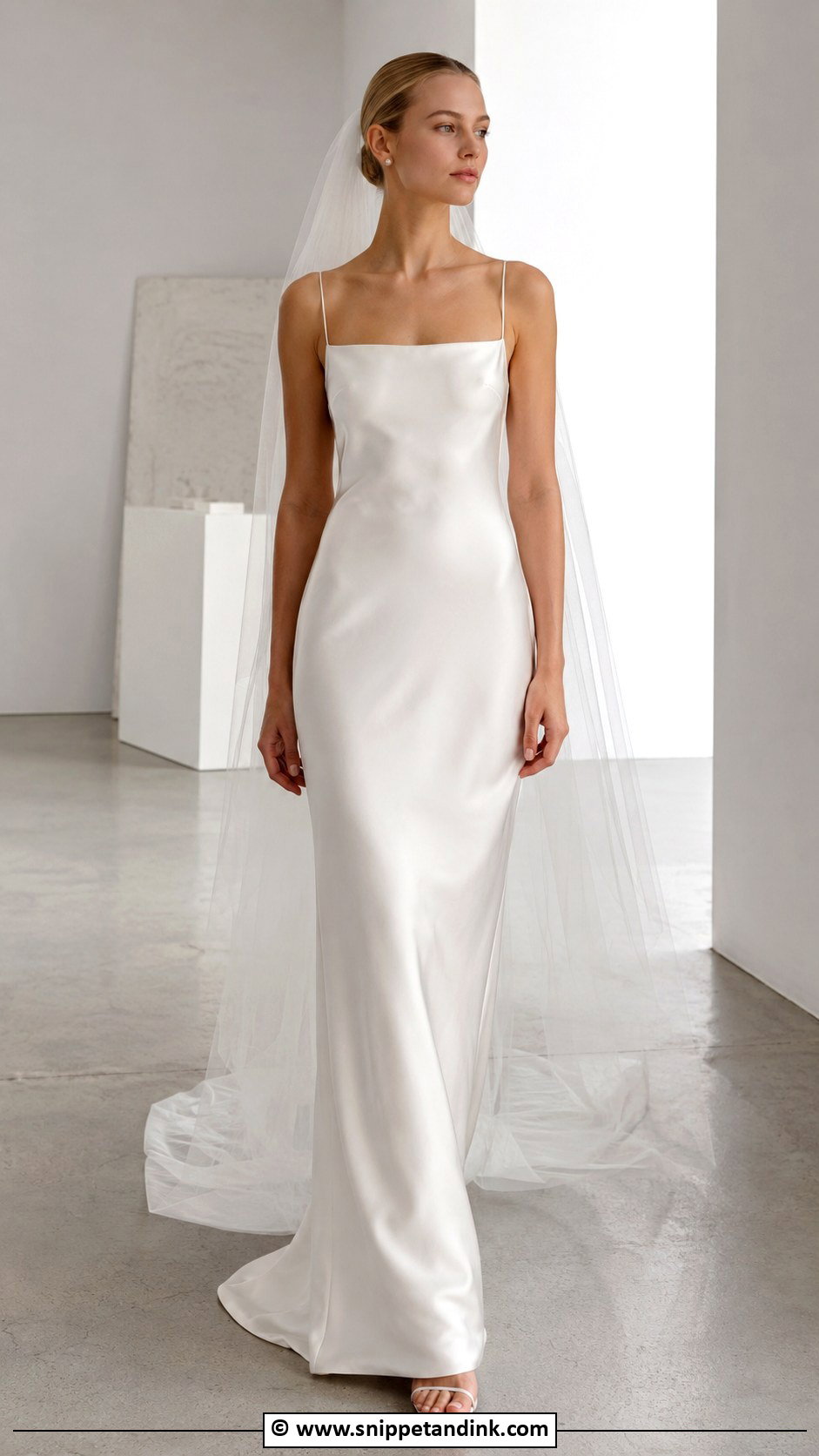
A 1990s minimal wedding gown is vintage through restraint: silk satin, crepe, slim straps, square necks and plain sheath shapes. With so little detail, fabric quality and fit carry everything; a cheap satin sheath shows every pull. Crepe is more forgiving than satin if you’re worried about clinging. Barely-there sandals, a smooth bun and a long plain veil. Pearl studs or a fine tennis bracelet if you want a touch more.
9. Edwardian Lace Wedding Gown
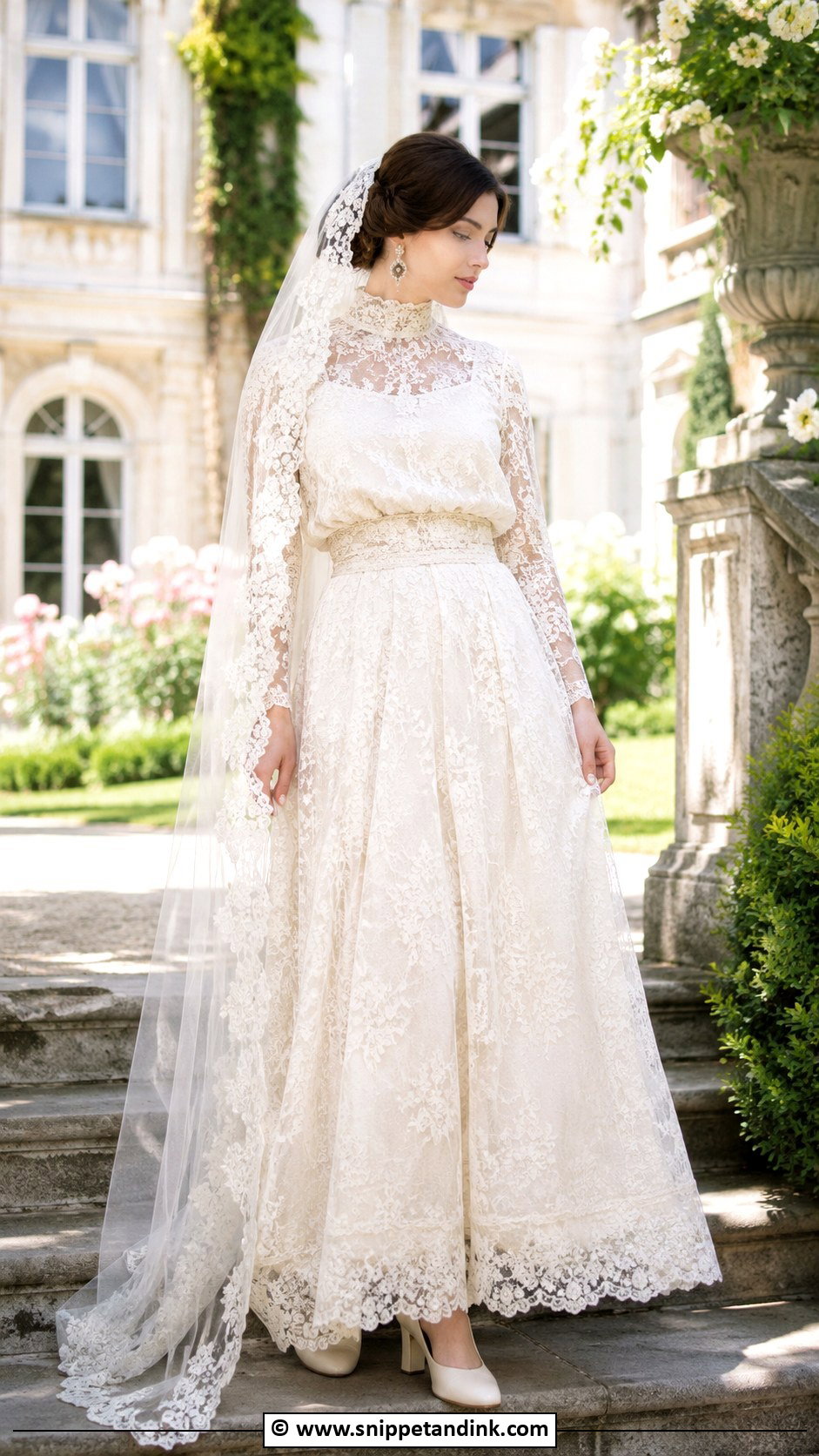
Edwardian bodices are often blouson, softly gathered and loose above a fitted waist, which gives the gown its relaxed, airy look. High necks, lace panels and long sleeves make it modest. On a true antique, the fine lace is the weak point, so I look at the neckline and cuffs in daylight before anything else. A lace veil, pinned curls or a low bun and soft ivory shoes. Keep jewellery subtle beside detailed lace.
10. Victorian Inspired Wedding Gown
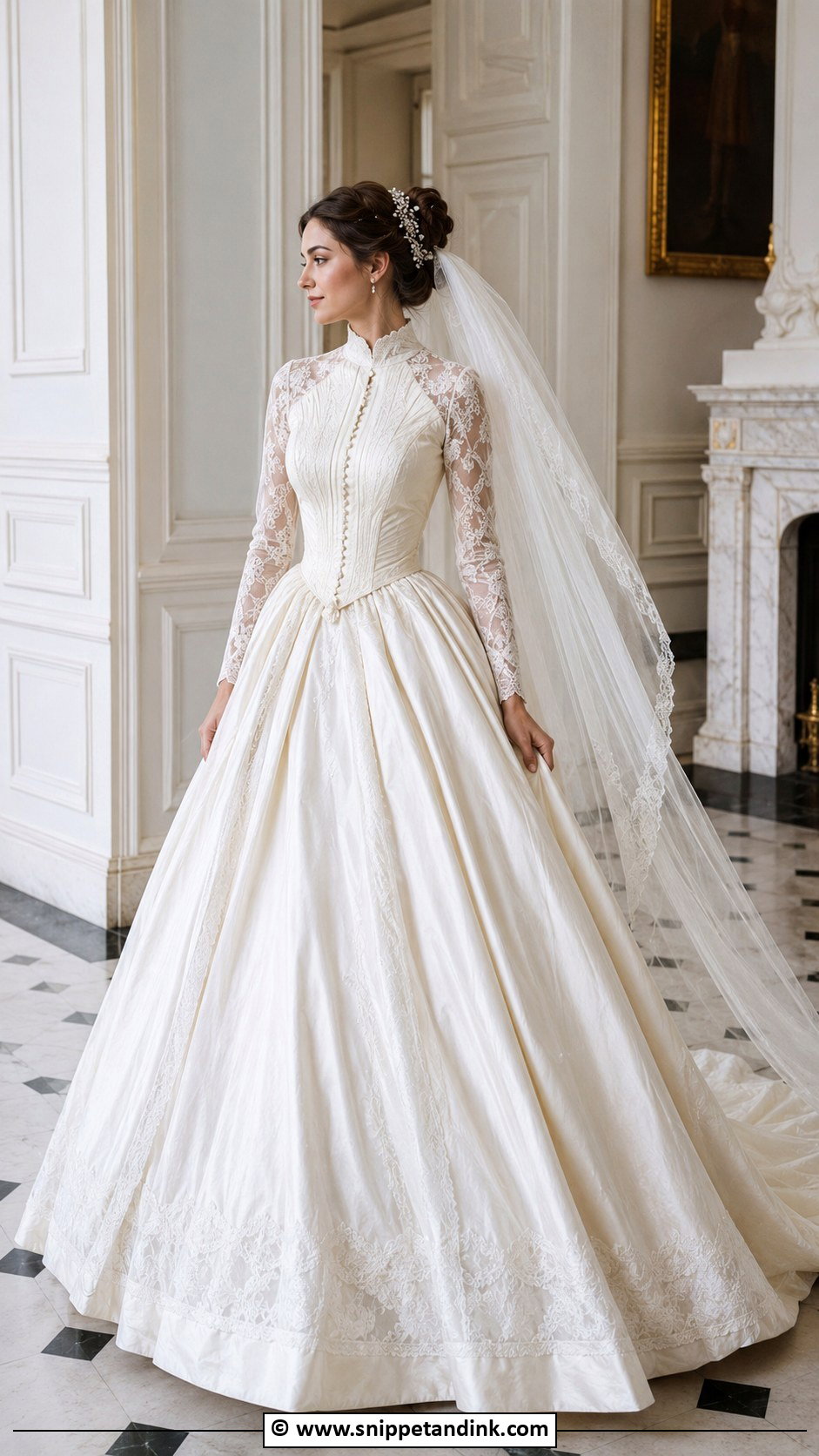
Victorian shapes bring structure: fitted bodices, high necks, long sleeves, corset shaping and full skirts. Making it in tulle, organza or crepe rather than heavy period fabrics keeps it wearable for a modern day. With so much going on in the dress, I’d stop at a long veil, pearl hairpins and classic heels. It sits naturally in buildings with history and in formal portraits.
11. Vintage Lace Ball Gown
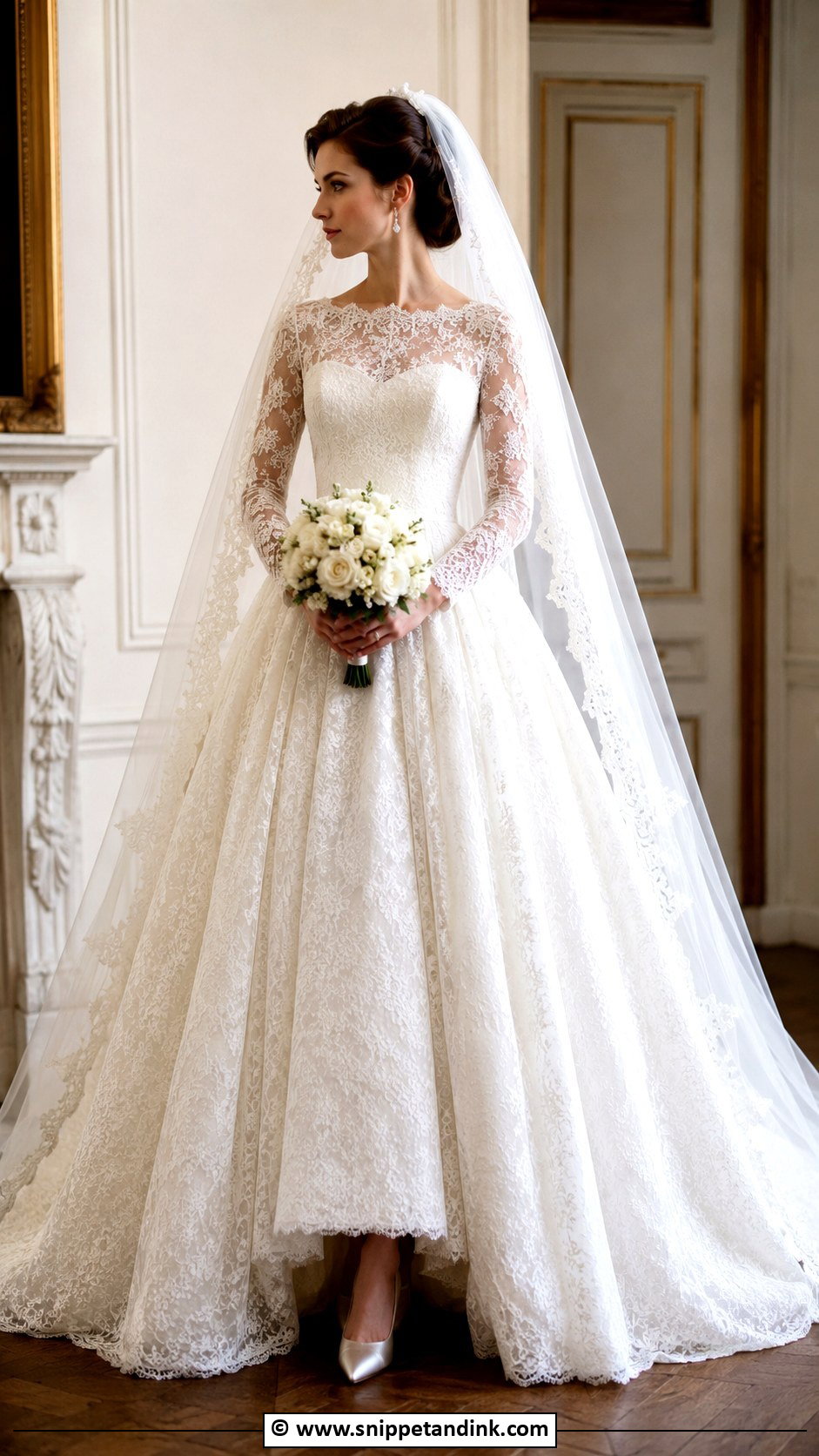
Lace over a full skirt gives the fairytale shape with real texture. A fitted bodice sets the waist; lace sleeves, an illusion neck or covered buttons push it toward vintage. With this much skirt, I’d keep the bouquet medium-sized so it doesn’t flatten the front, and hold it at the hip in photos. A cathedral veil, pearl earrings and satin pumps. Ask for a bustle that hooks under the lace so it doesn’t show.
12. Vintage Satin Ball Gown
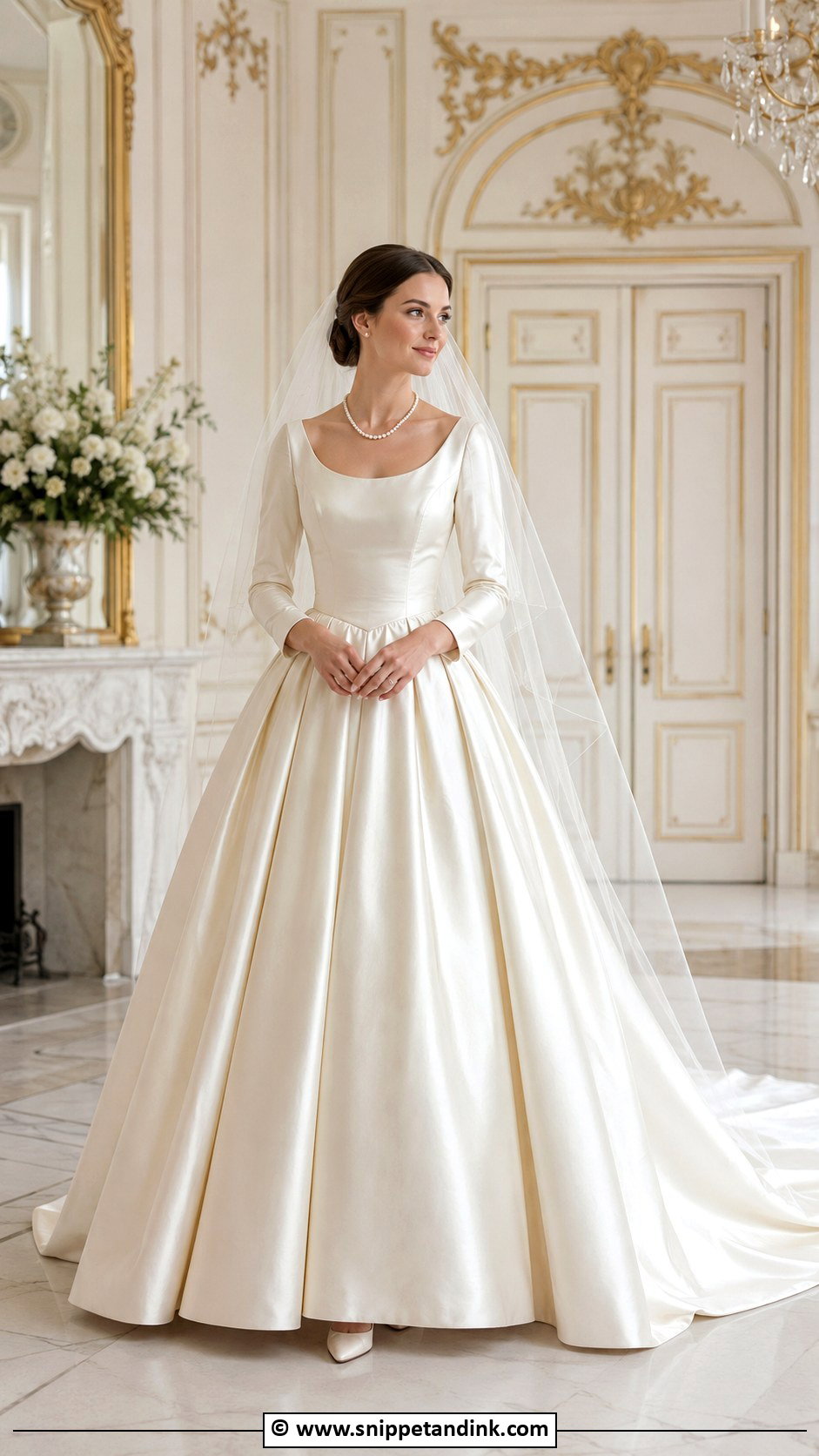
A vintage satin ball gown relies on the fabric’s weight and shine rather than decoration. A scoop or off-shoulder neck or a basque waist gives it period character. Heavy satin shows the seat creases after dinner, which is normal; a quick steam before evening portraits fixes it. A simple veil, a pearl necklace and closed-toe heels. It belongs in hotels, estates and evening ceremonies.
13. Vintage Chiffon Wedding Gown
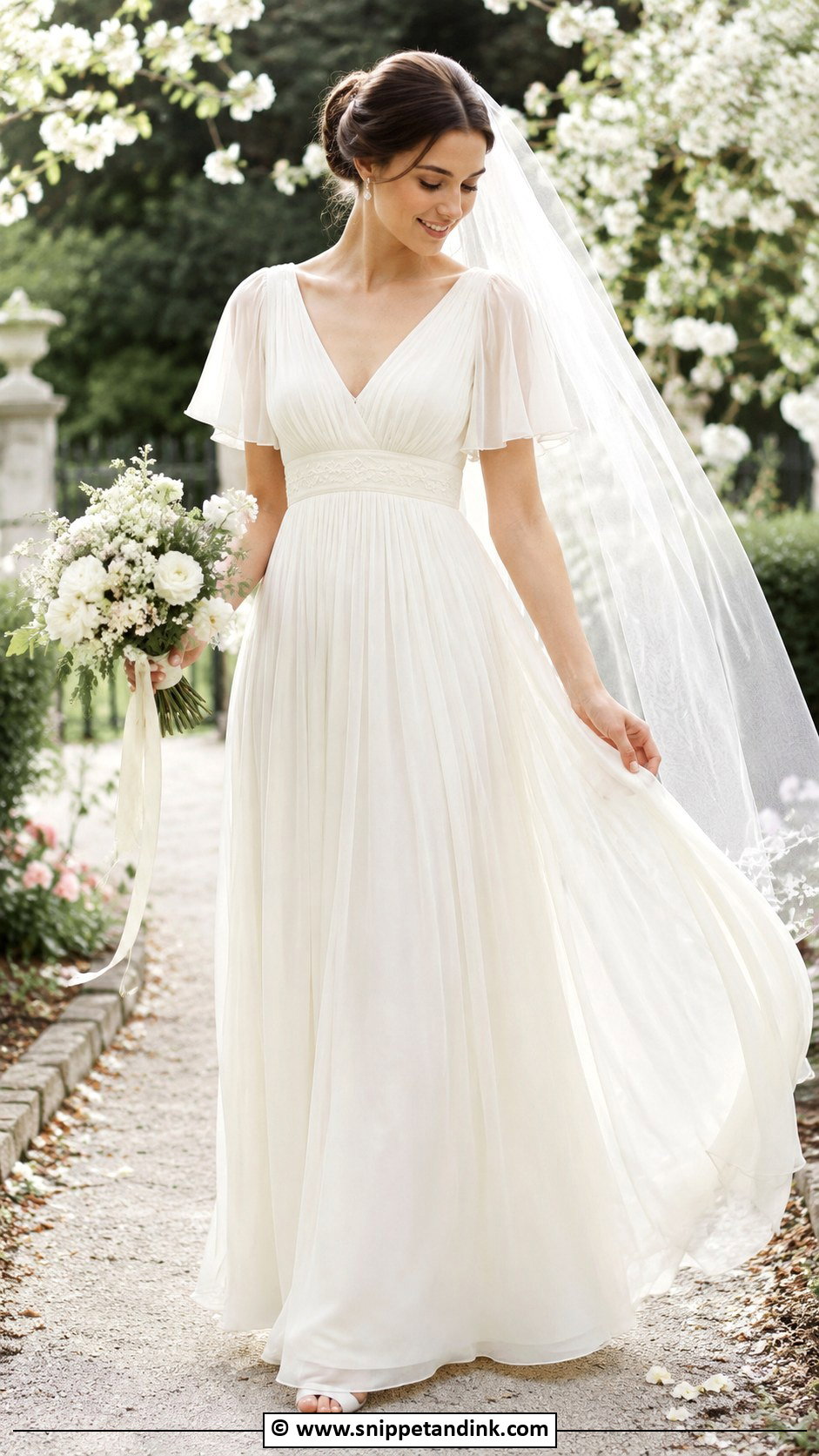
Chiffon is the lightest option on this list. It drapes into empire waists, flutter sleeves, fine pleats and flowing A-lines, and it skims rather than clings, which is why it suits so many shapes. It also frays and snags easily, so I check hems on vintage pieces. Dainty earrings, low heels and a light veil that moves with the dress. Warm-weather and outdoor weddings are where it shines.
14. Vintage Tulle Wedding Gown
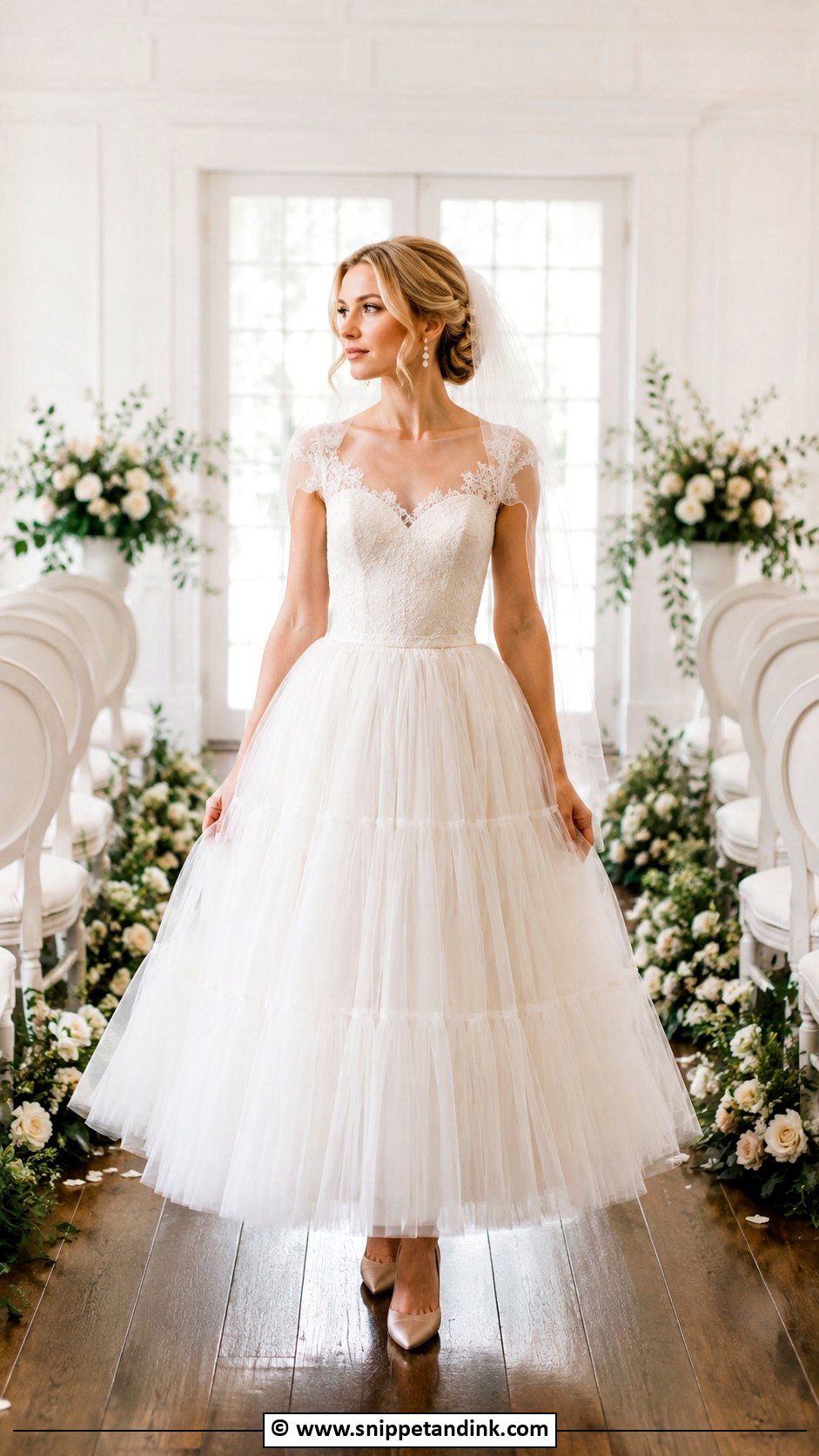
Layered tulle gives volume with almost no weight. Over a fitted bodice with lace appliqué, or cut as a ballerina skirt, it looks soft and romantic. Tea-length tulle reads 1950s; floor length is more formal. Tulle loses its crispness in humidity and can flatten by evening, so a petticoat underneath helps on a damp day. Satin heels, pearl earrings, a sheer veil and a neat, soft hairstyle.
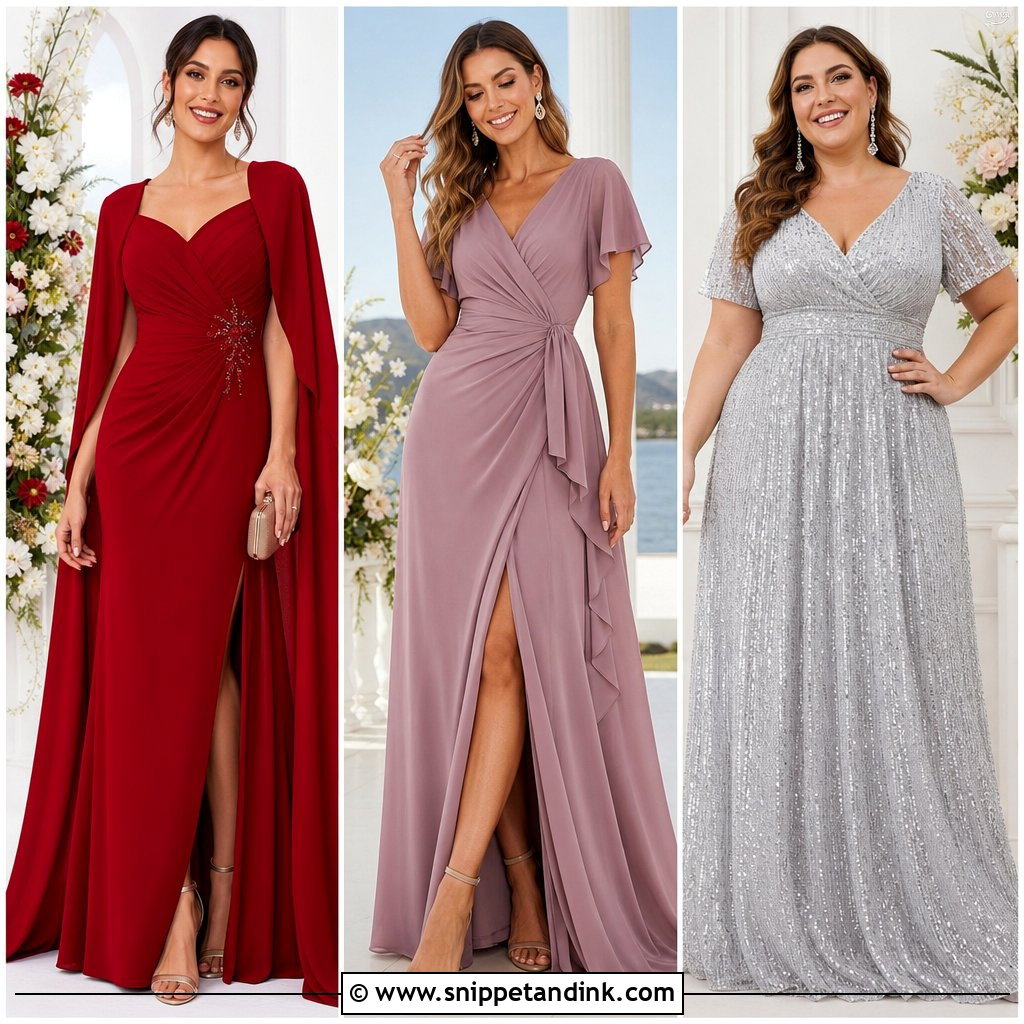
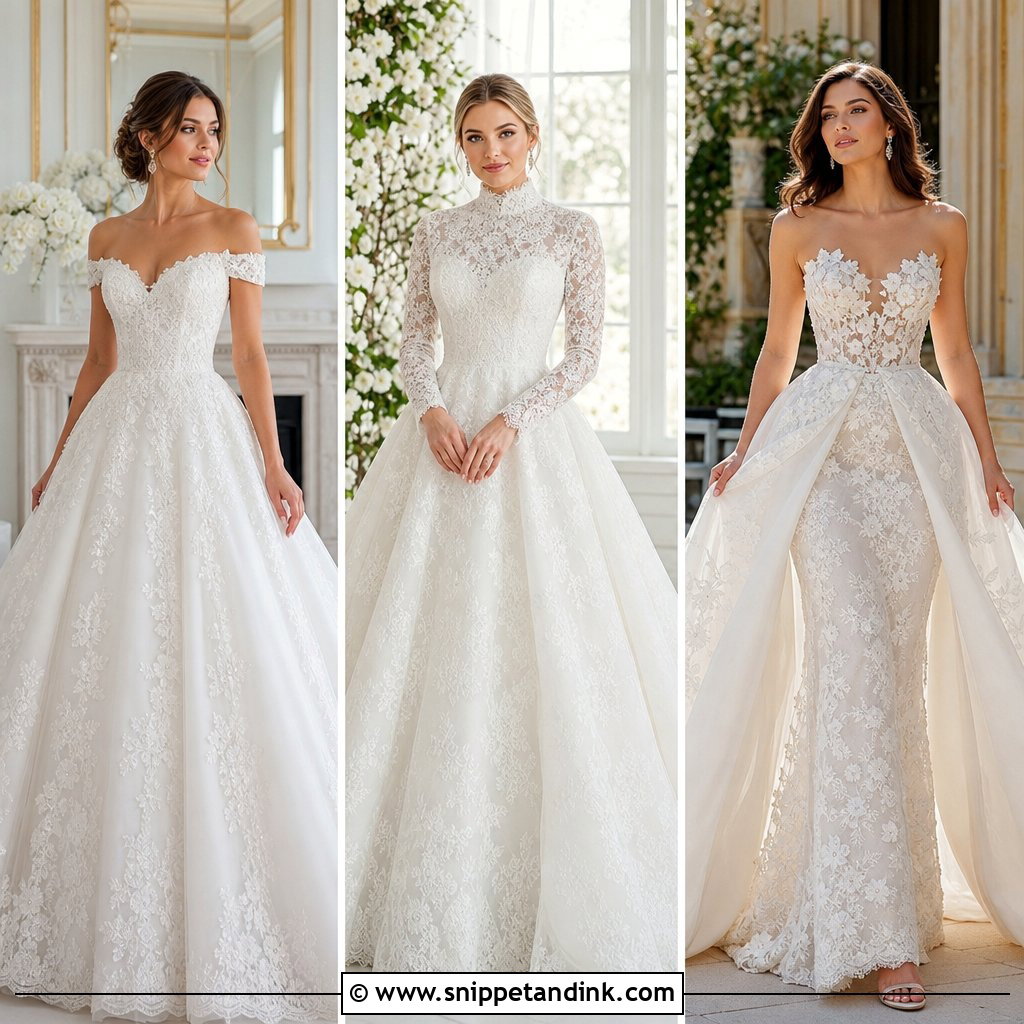
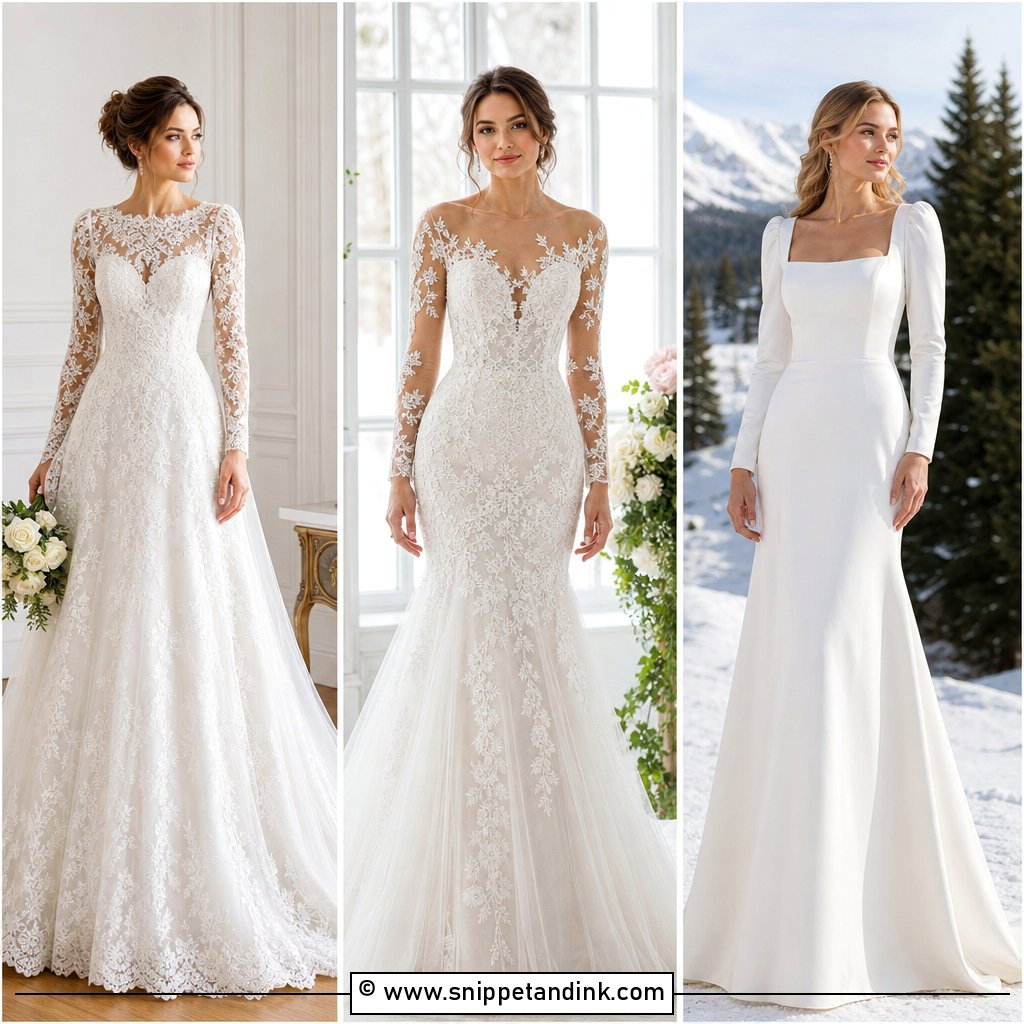
15. Vintage Off Shoulder Wedding Gown
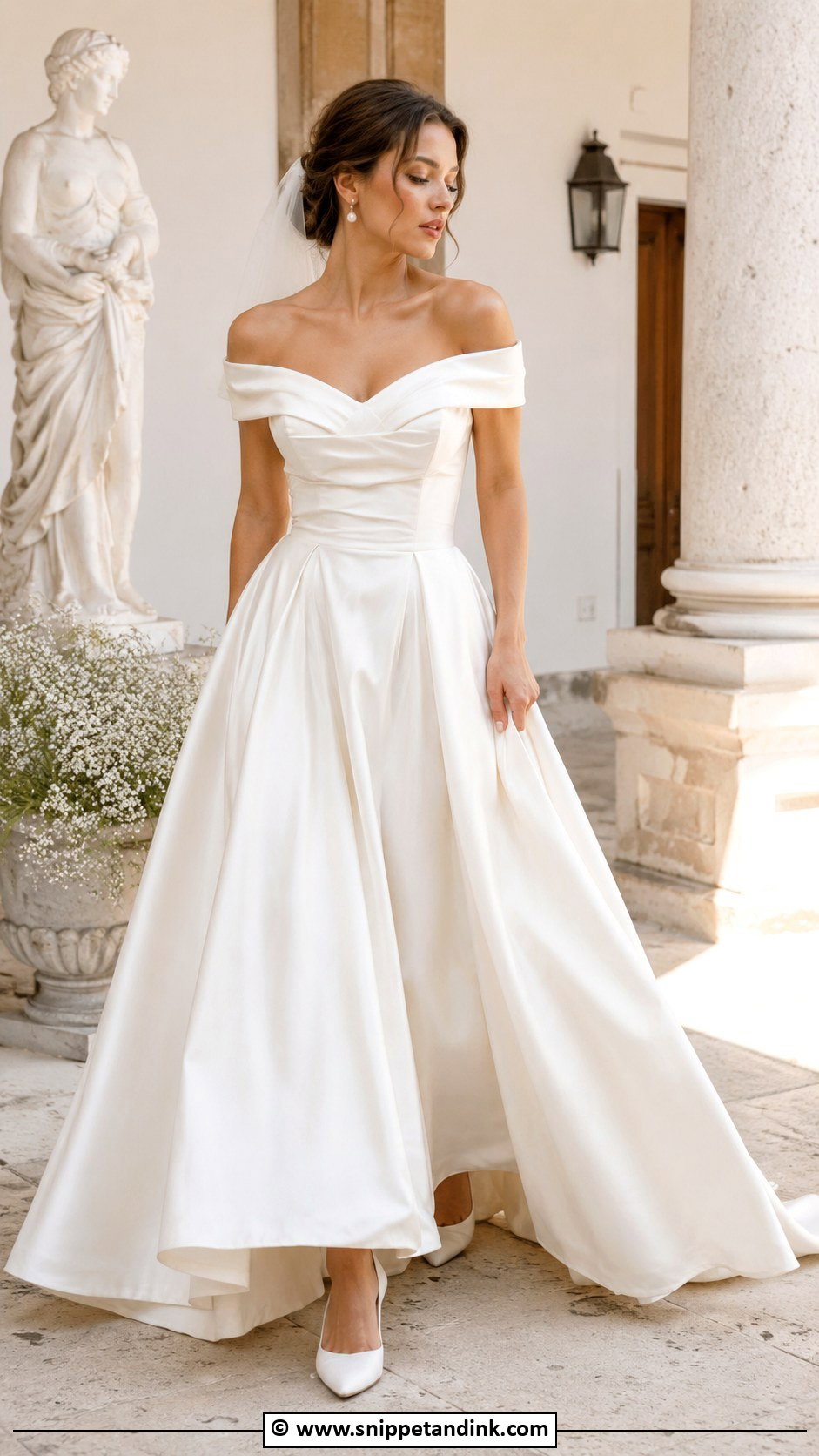
An off-shoulder neck shows the collarbones and gives more coverage than strapless. Lace, satin, tulle and crepe all work, on fitted gowns or full skirts. The band across the arms must allow movement; I have brides wave and hug in it at the fitting. A soft updo keeps the neckline clear, and long gloves add drama for a formal evening. Pearl earrings, a simple veil.
16. Vintage Cap Sleeve Wedding Gown
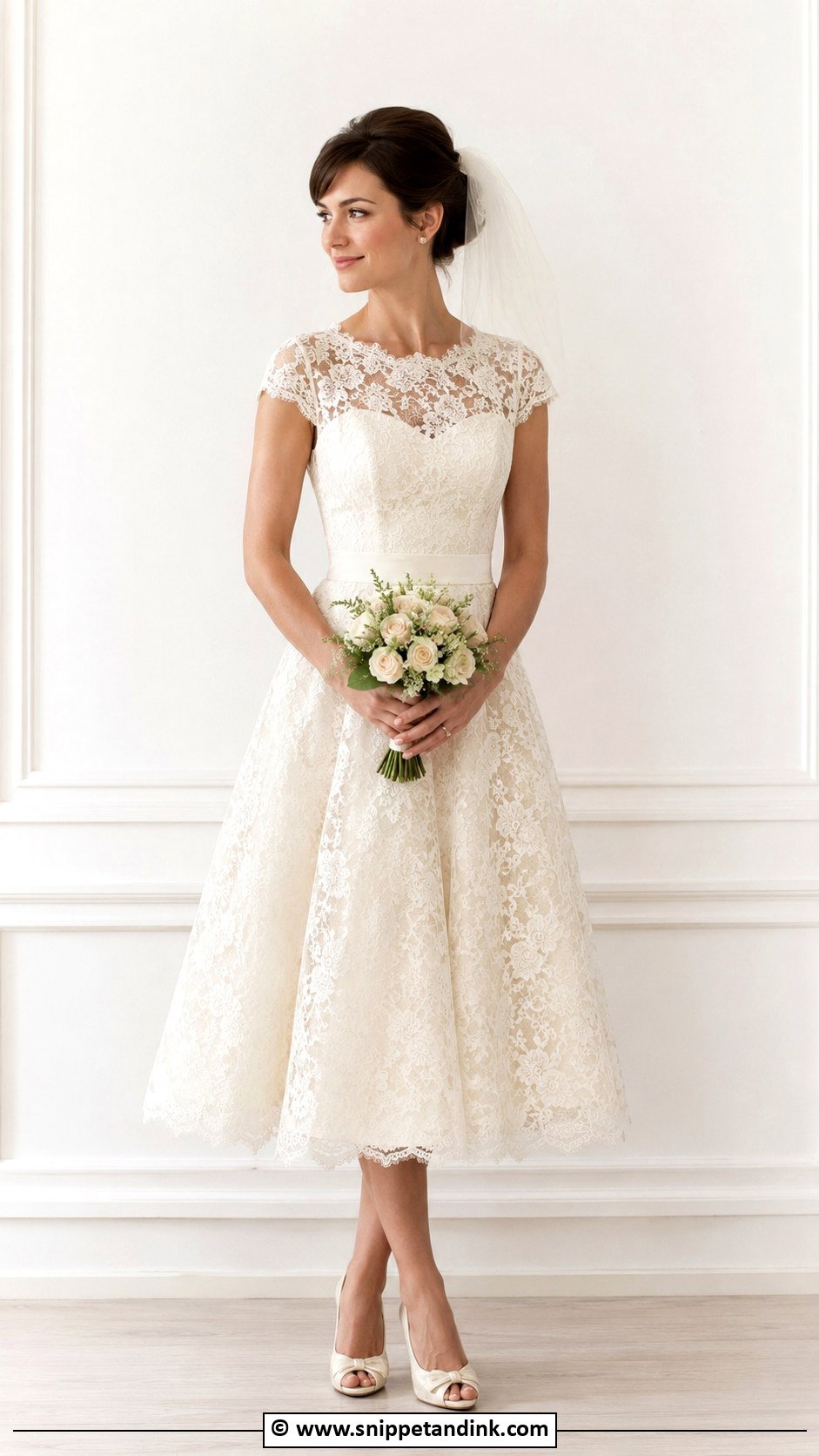
Cap sleeves give a little coverage at the shoulder without weight. They’re common on 1950s tea lengths, lace sheaths and classic A-lines, and they suit petite brides because the detail stays small. I check that the sleeve doesn’t cut into the upper arm when raised, since a tight cap sleeve leaves a mark and restricts hugging. A short veil, pearl studs, delicate heels and a fitted waist.
17. Vintage Drop Waist Wedding Gown
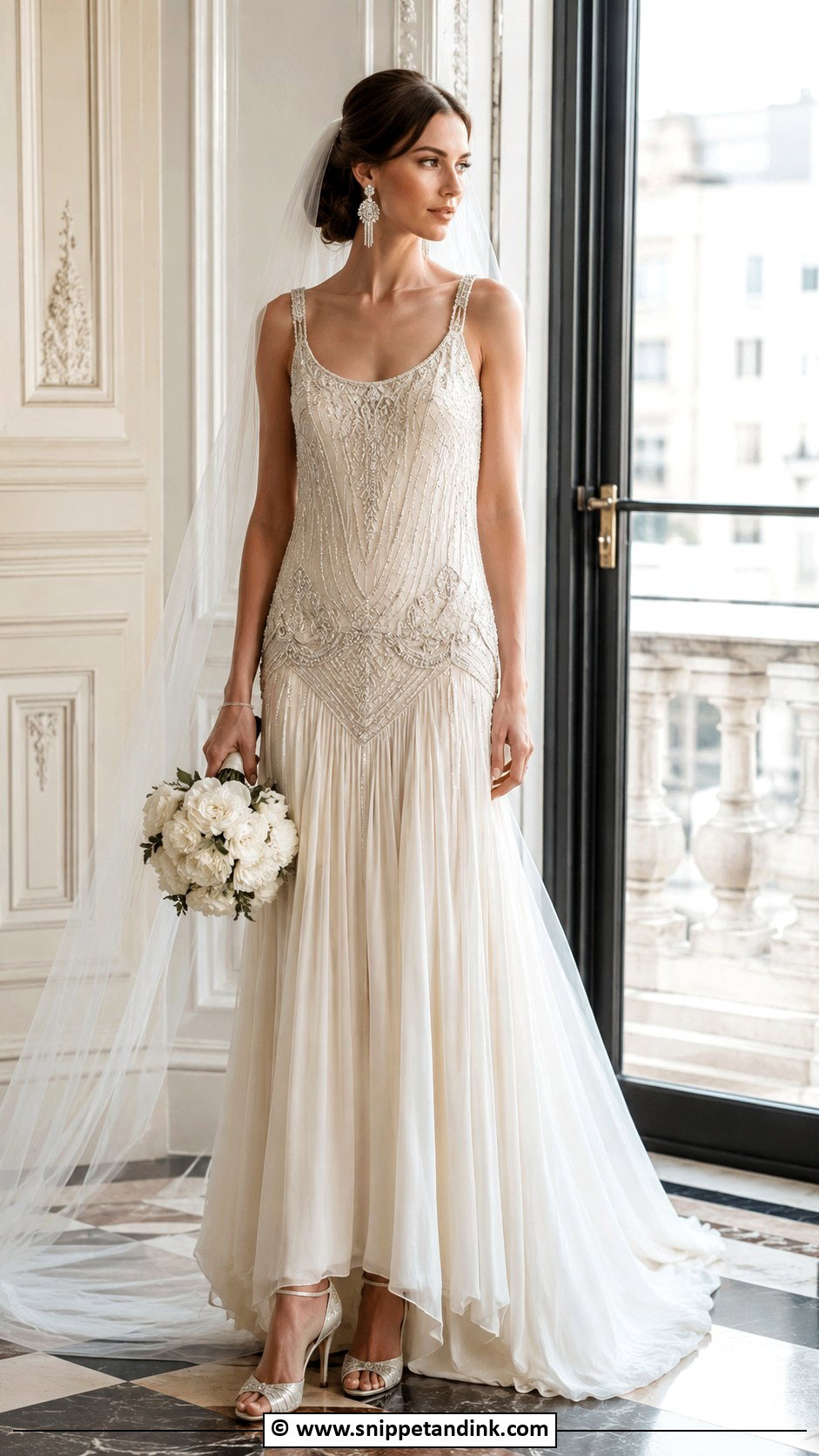
The drop waist belongs to the 1920s and early 1930s, sitting low on the hips for a long, lean line. It needs fabric that moves: beading, lace, soft satin or light tulle. On curvy hips, a seam right at the widest point adds width, so I’d place it a little higher or choose a softer, gathered drop. Art Deco earrings, a slim veil and period-style heels. It’s a less common choice, which makes it memorable.
18. Vintage Empire Waist Wedding Gown
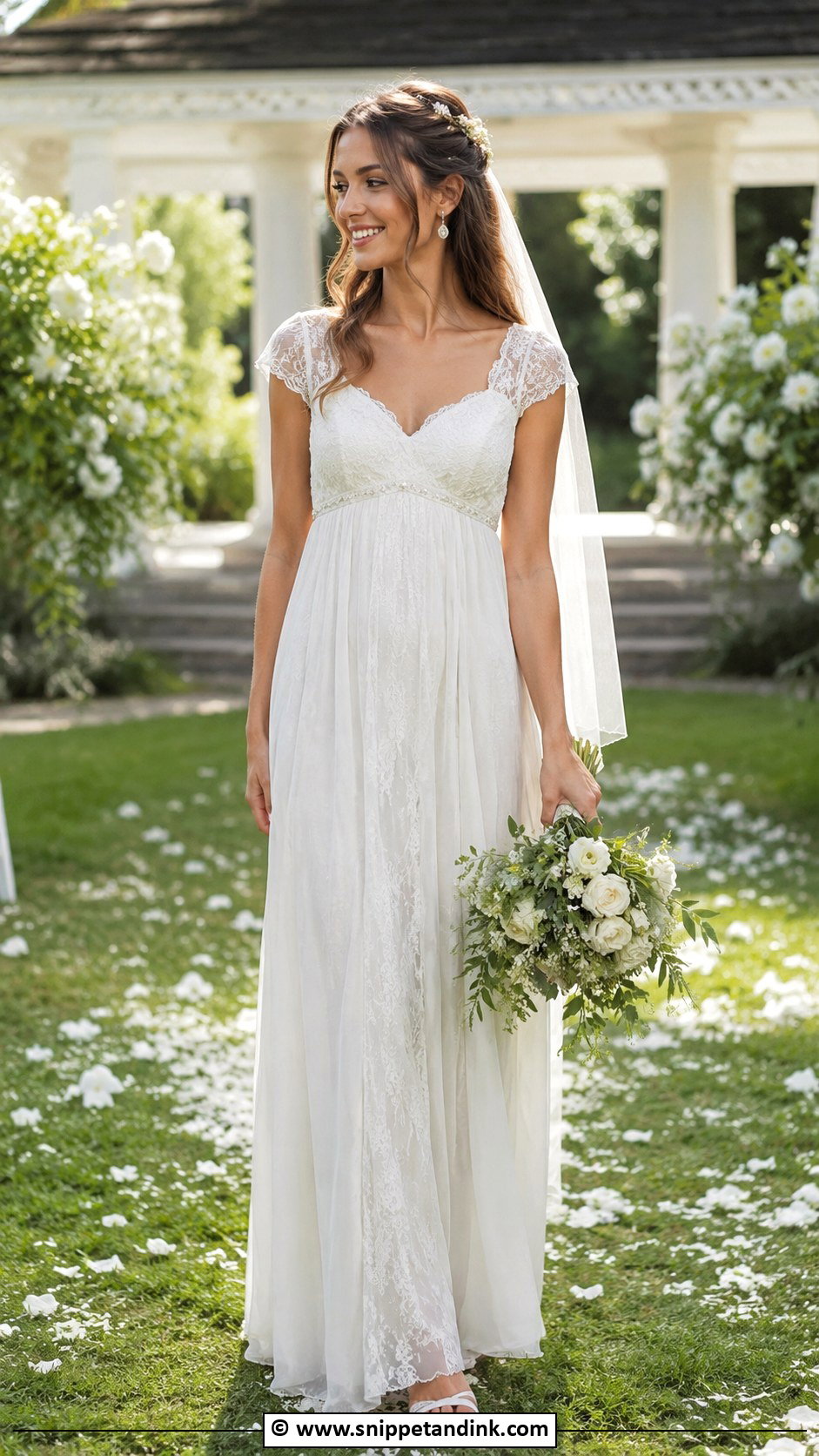
A vintage empire waist wedding gown has a seam just under the bust and a skirt that falls freely. It can lean 1970s bohemian or Regency depending on sleeves and neckline. Comfort is its strength: nothing presses at the waist after dinner, which is also why it’s popular with pregnant brides. Chiffon, lace or soft crepe; soft waves, delicate earrings and low heels or sandals.
19. Vintage Basque Waist Wedding Gown
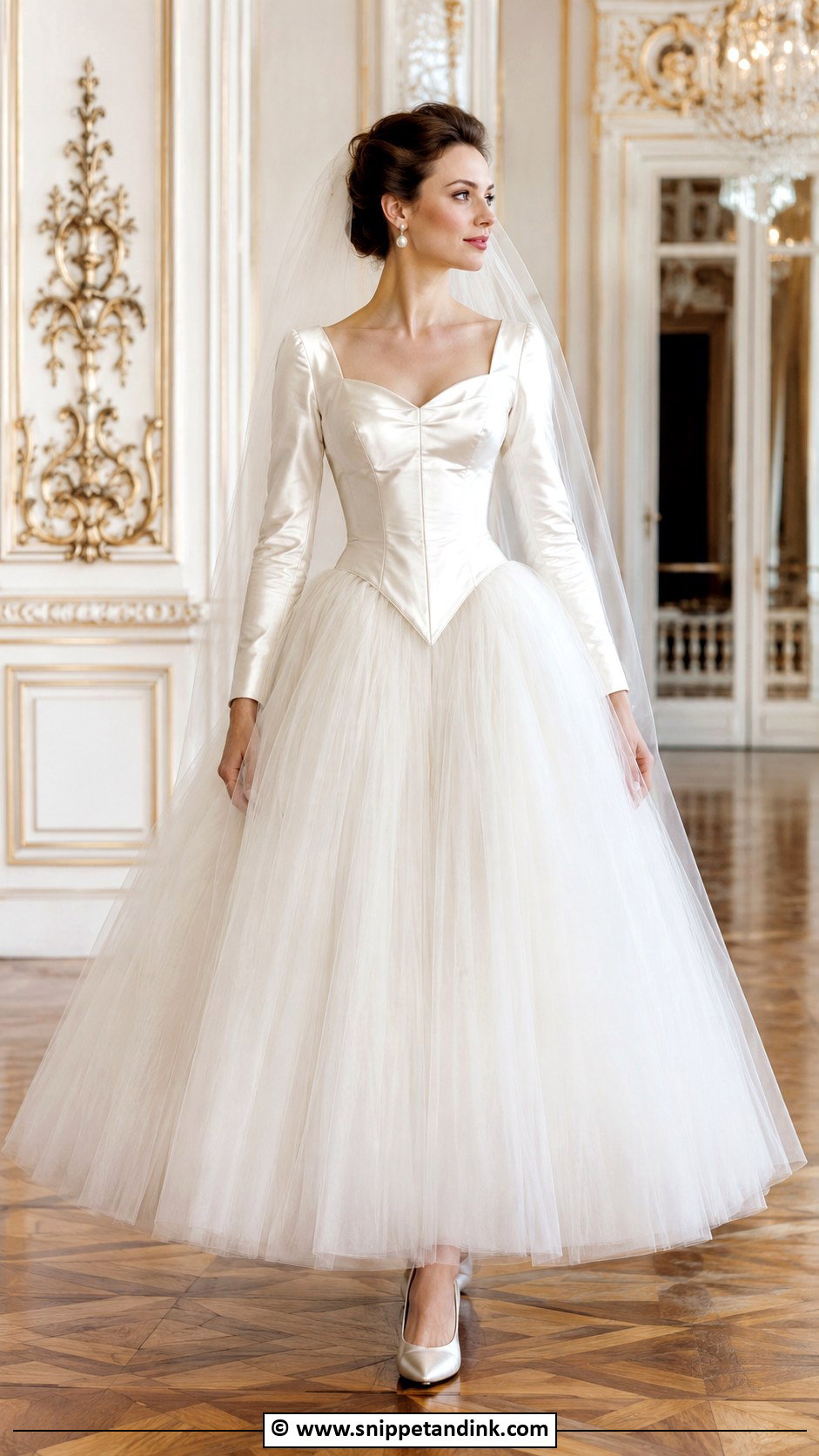
The basque waist dips to a point at the front, lengthening the torso and giving the skirt a dramatic start. It sits well with full skirts in satin, lace or tulle. Because the point draws the eye to the midline, it flatters short-waisted brides especially. Check that the point stays flat when you sit. A long veil, pearl earrings and classic heels; keep accessories refined, since the shape is already regal.
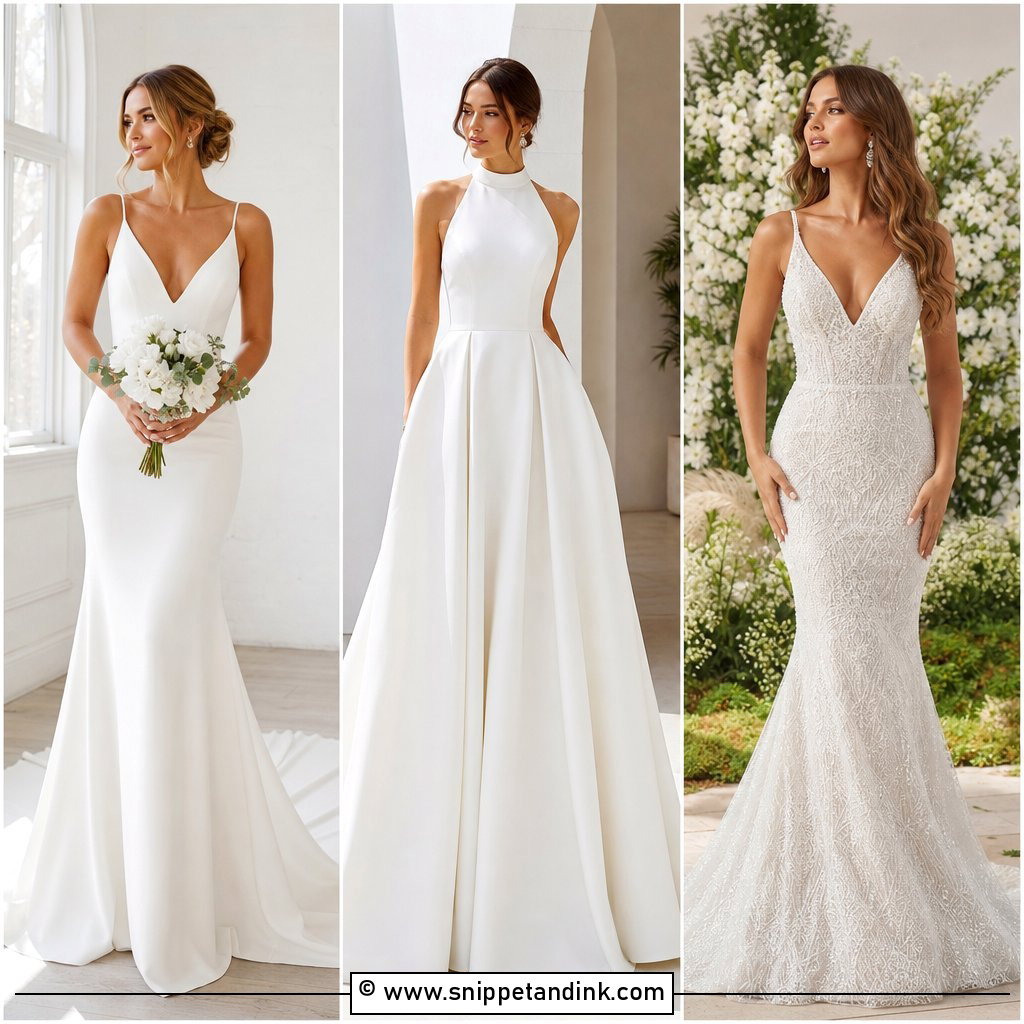
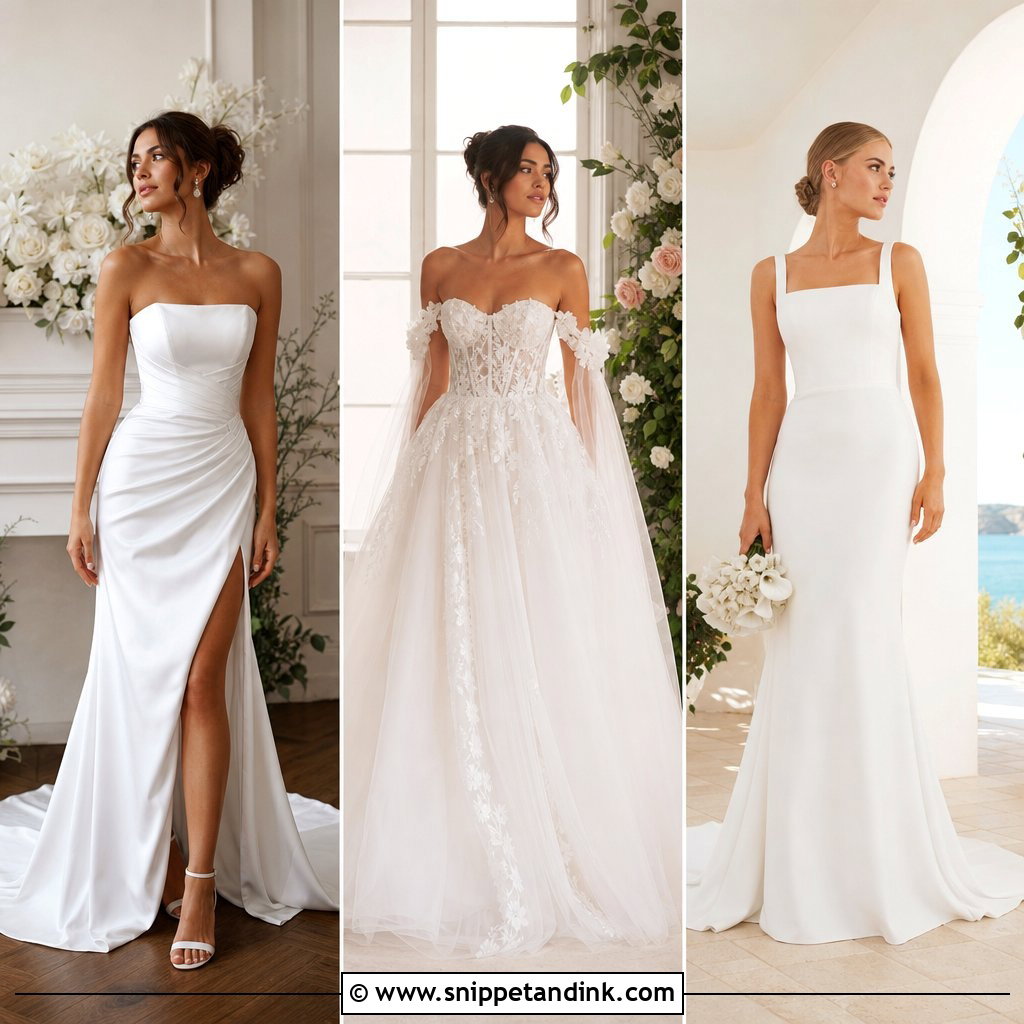
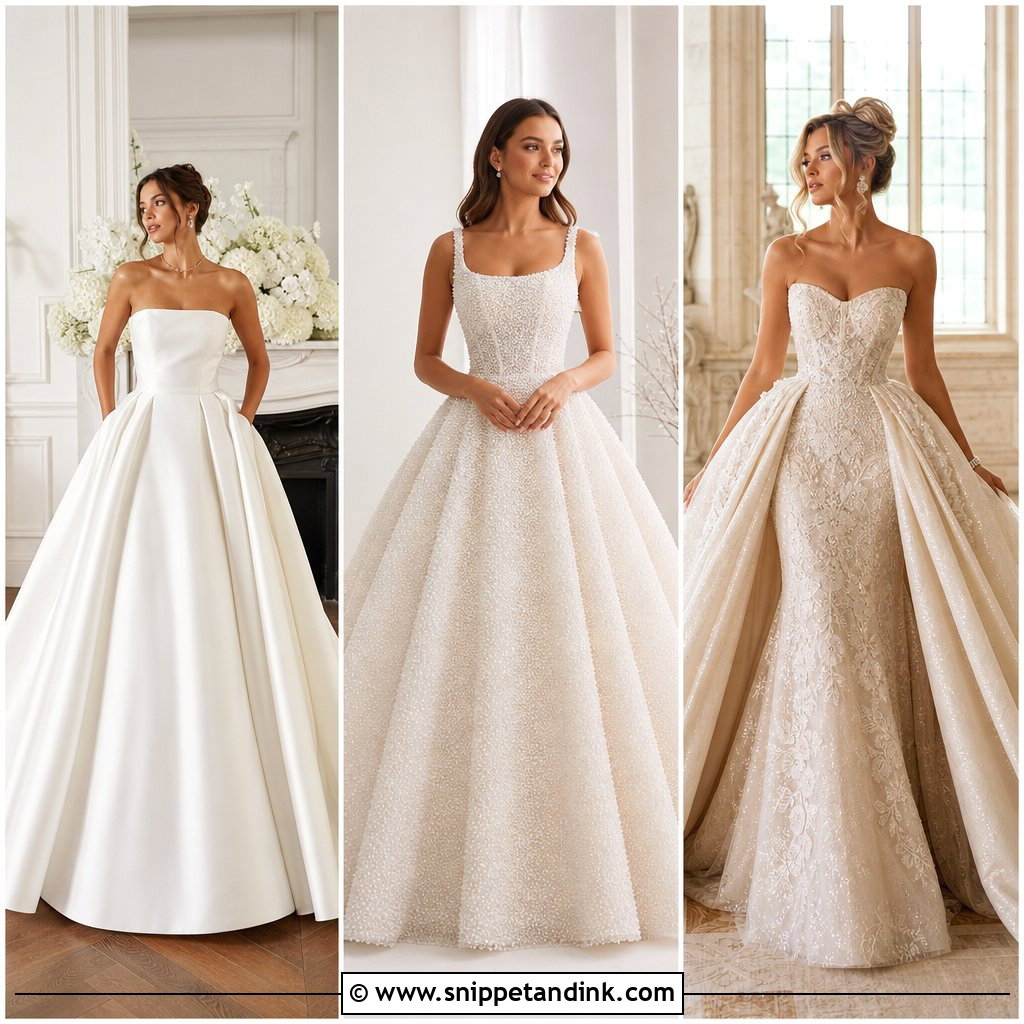
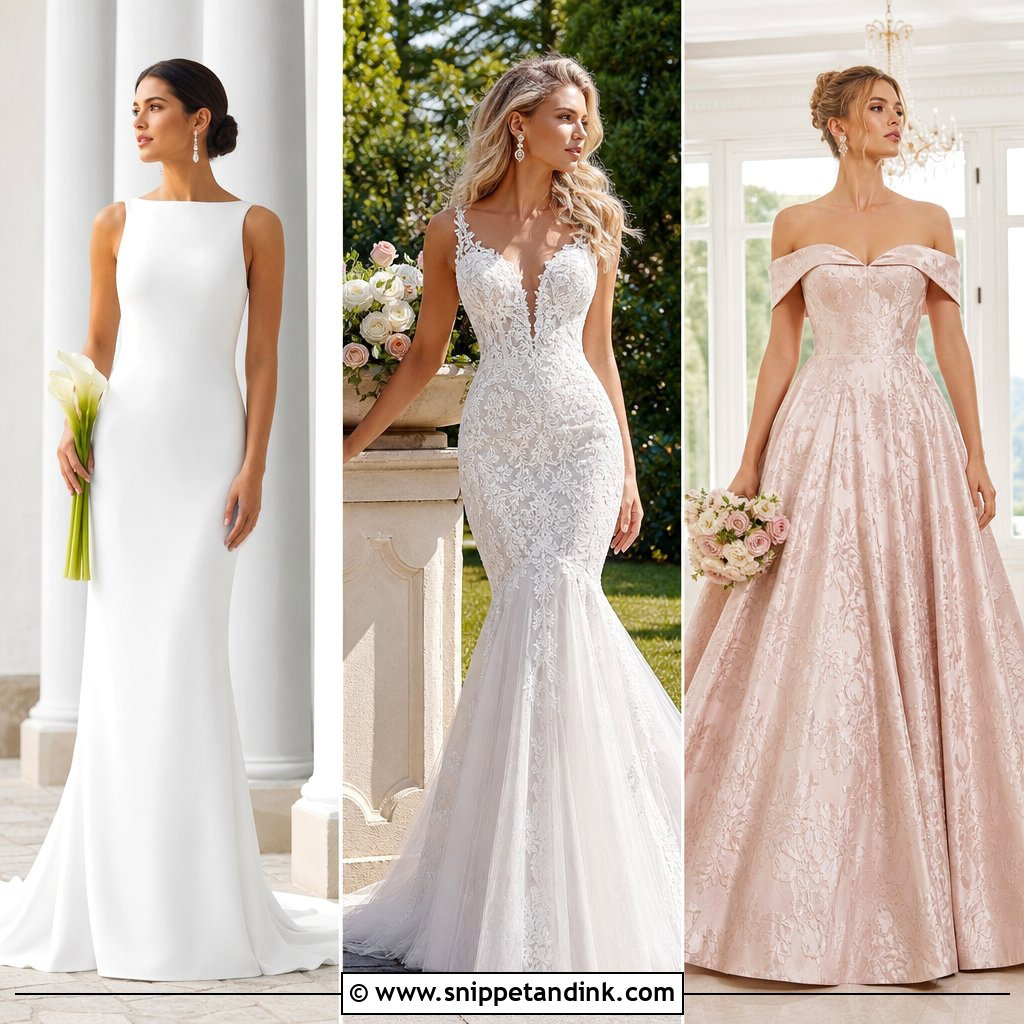

20. Vintage Corset Wedding Gown
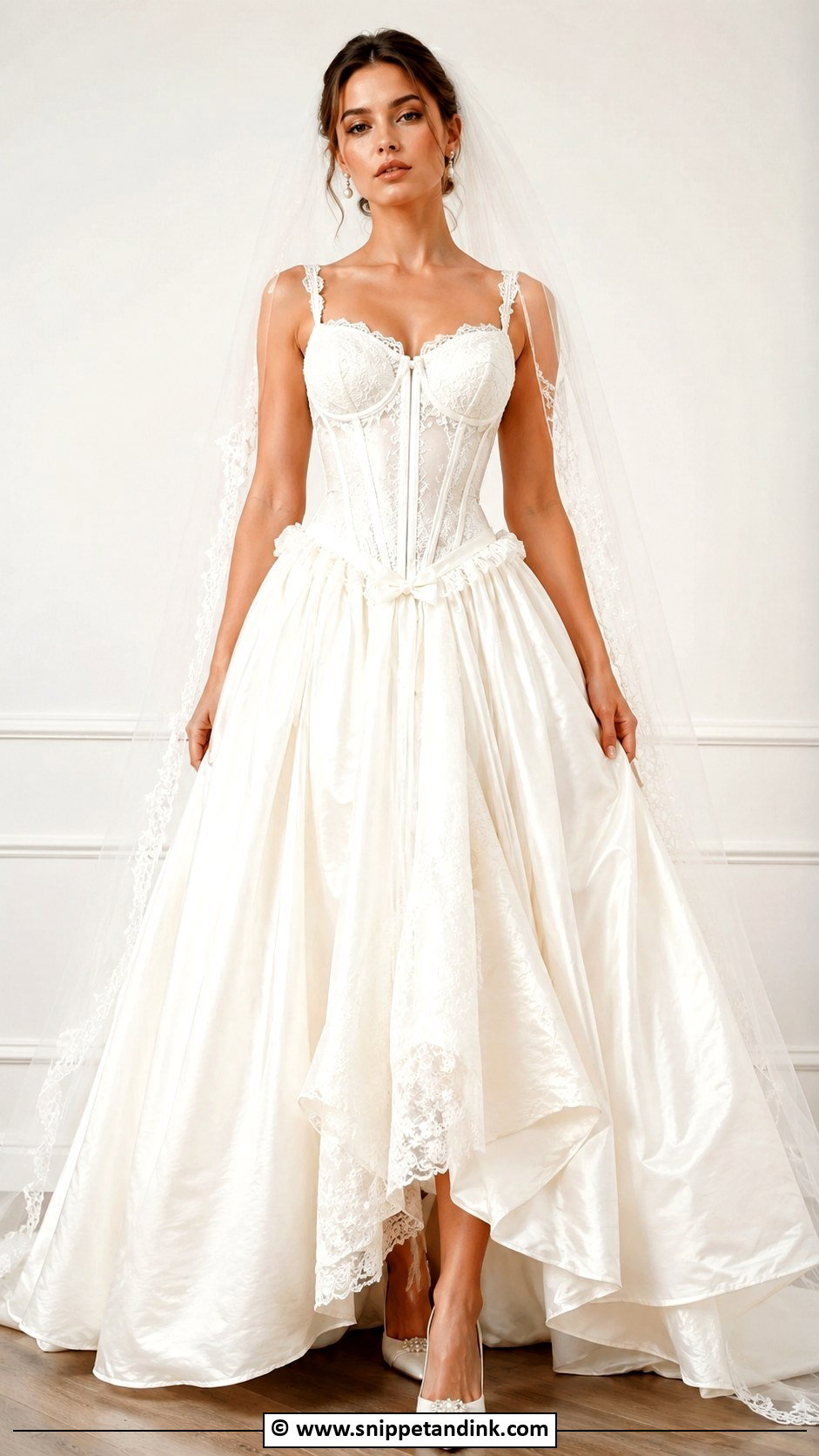
Corsetry can be visible, with lace-up backs and seam lines, or hidden as soft support inside a gown. Lace, satin, tulle and brocade all keep it bridal. With a full skirt it’s dramatic; with a slim skirt it’s modern. A good corset spreads pressure evenly, and I check the top edge for digging under the arms and the bottom edge for pressing into the hips when seated. A soft veil, pearl earrings and classic heels.
21. Vintage Pearl Wedding Gown
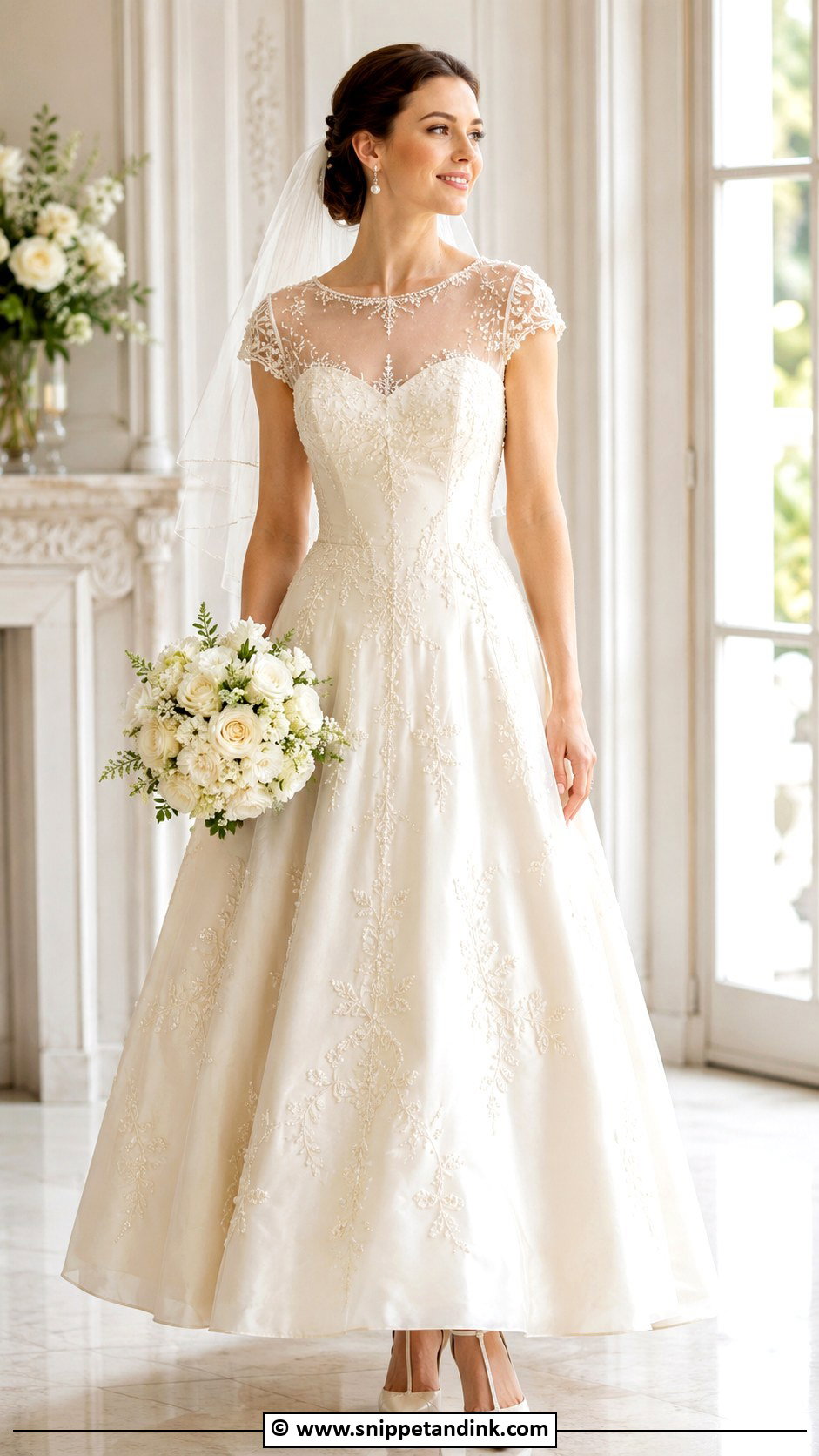
Pearls give a quieter shine than crystals: embroidery, scattered beads, buttons, neckline trim or sleeve details. On older gowns, glass or faux pearls can lose their coating at points of wear, so I look closely at cuffs and the waist. If the gown is heavily pearled, I skip the necklace. Pearl drops, satin heels and a simple veil. Ivory, cream and champagne bases make the pearls look warm.
22. Vintage Floral Lace Wedding Gown
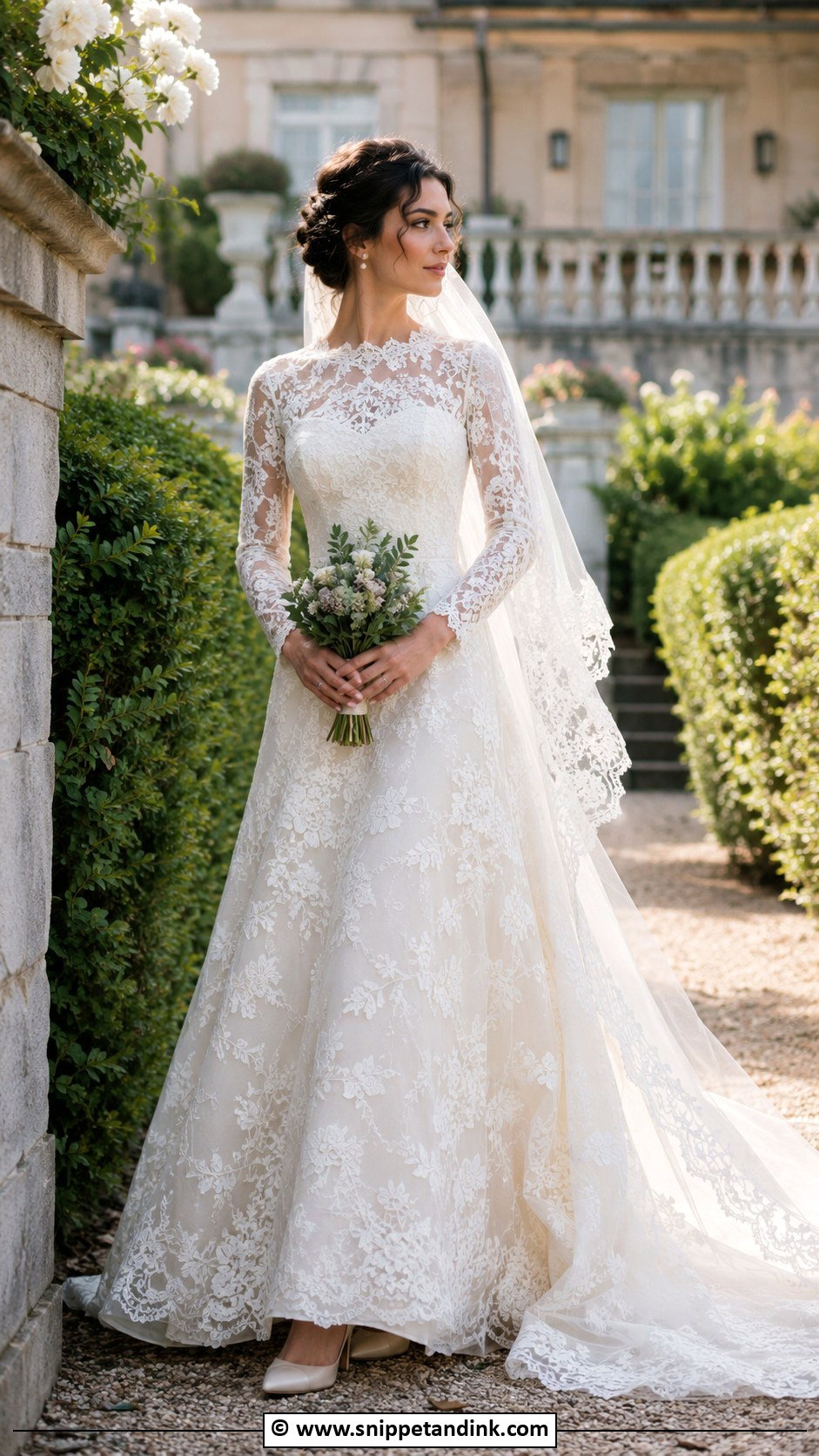
Floral lace changes character with its pattern and lining. Big open motifs on nude lining look bold; small dense florals on ivory look antique. A fitted bodice with an A-line skirt is the dependable shape, and long lace sleeves deepen the vintage feel. I keep the bouquet simple, often one or two types of bloom, so it doesn’t fight the lace. A lace-trim veil, pearls and soft ivory heels.
23. Vintage Champagne Wedding Gown
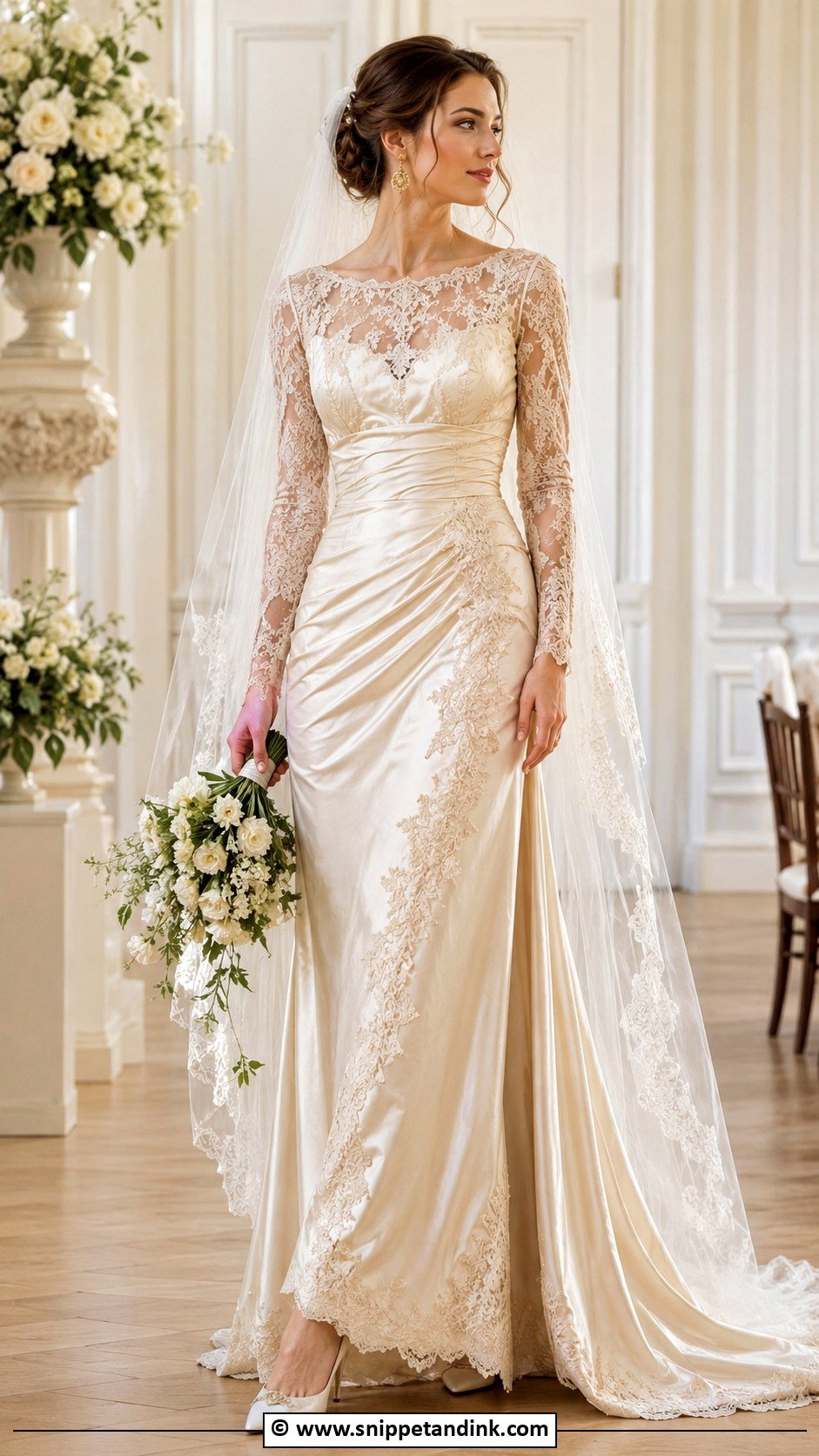
Champagne gives warmth where bright white can look stark, especially on warm or olive skin. Champagne satin, lace, tulle or crepe has an antique glow, and it pairs naturally with pearls and gold-toned jewellery. Match the veil carefully; a bright white veil over champagne makes the dress look dingy. A fitted sheath reads 1930s, a full skirt classic, lace sleeves traditional.
24. Vintage Courthouse Wedding Gown
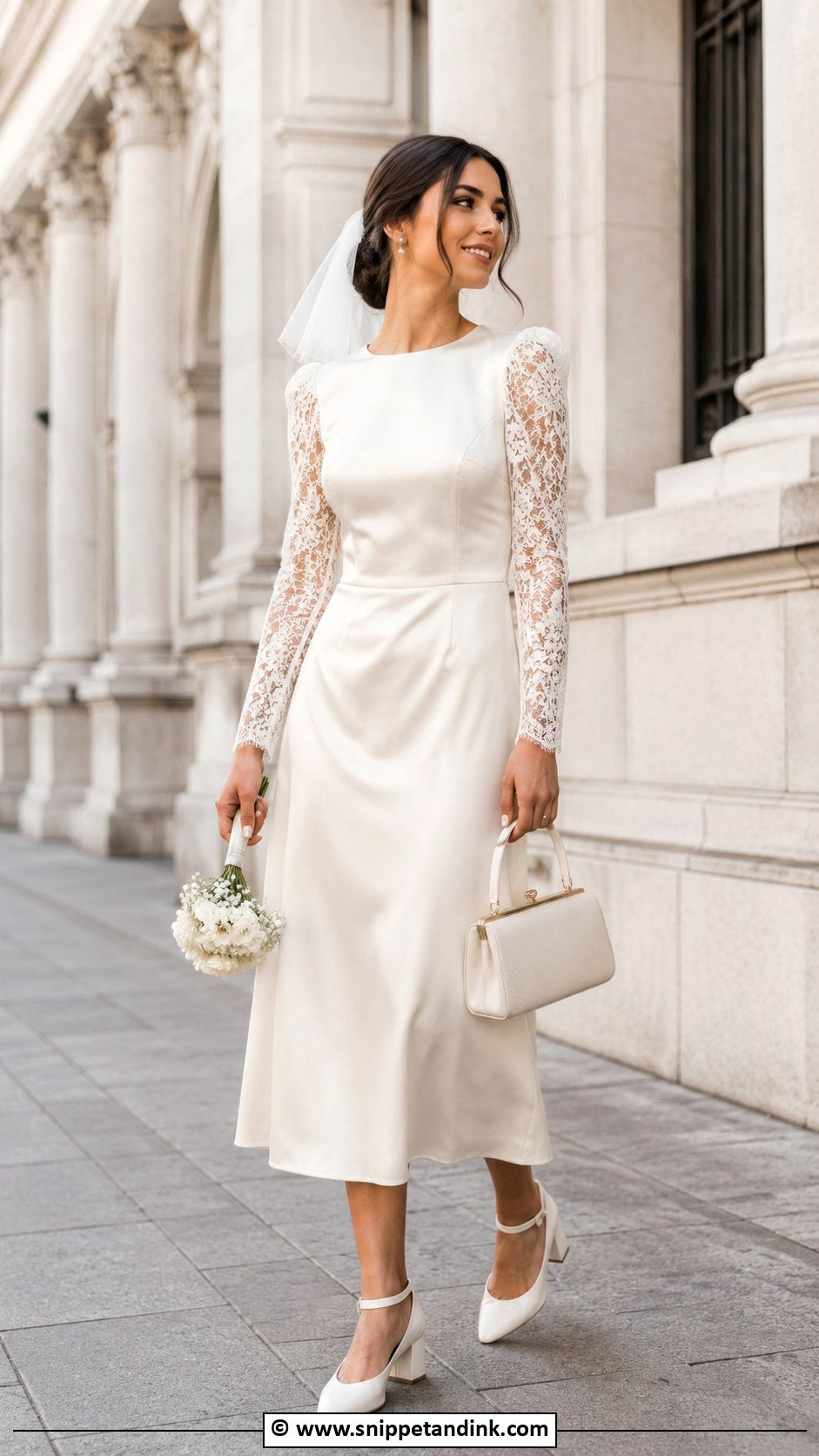
A civil ceremony calls for a dress that looks finished up close, because guests stand right beside you. Tea lengths, satin midis, lace sheaths and tailored suits all work. Block heels handle city pavements and courthouse steps. A small bouquet, pearl earrings and a short veil or bow, with a structured handbag to hold rings and paperwork. Choose fabric that recovers from sitting in a car.
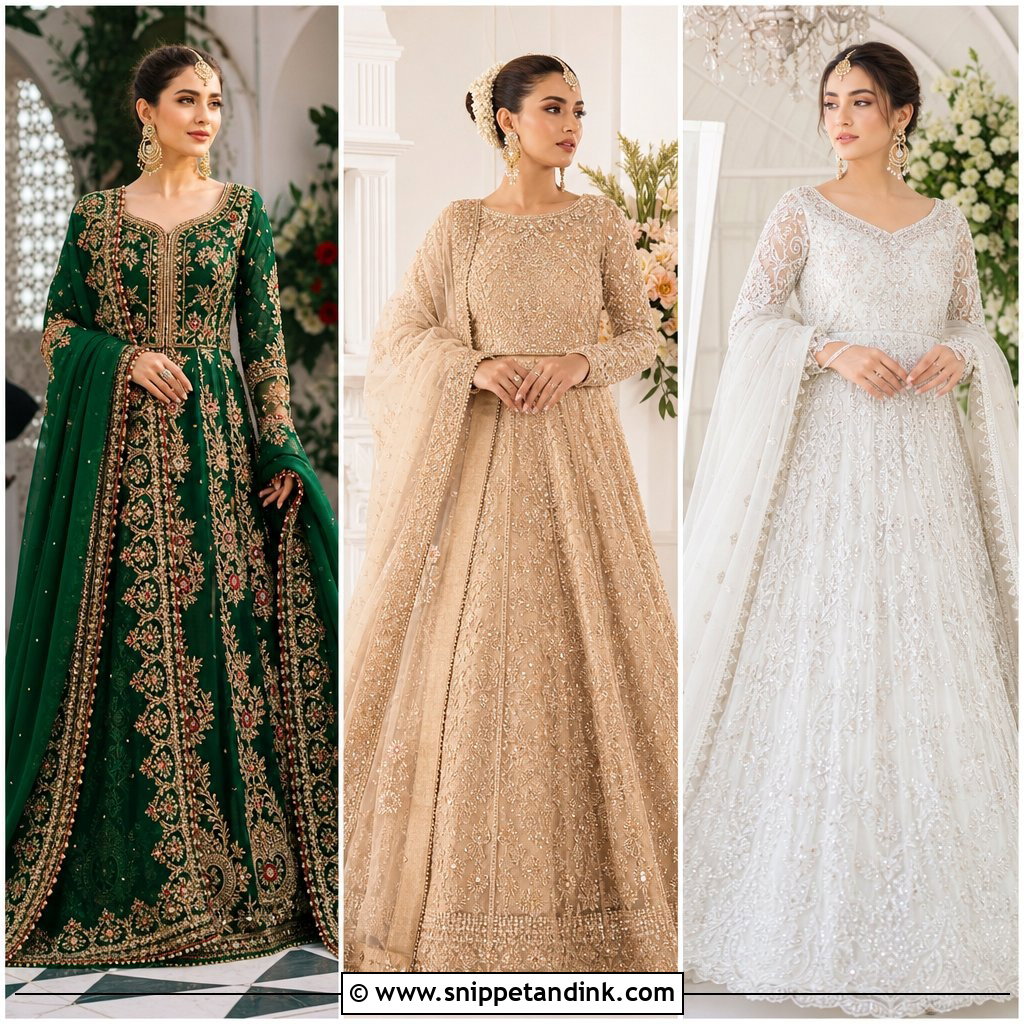

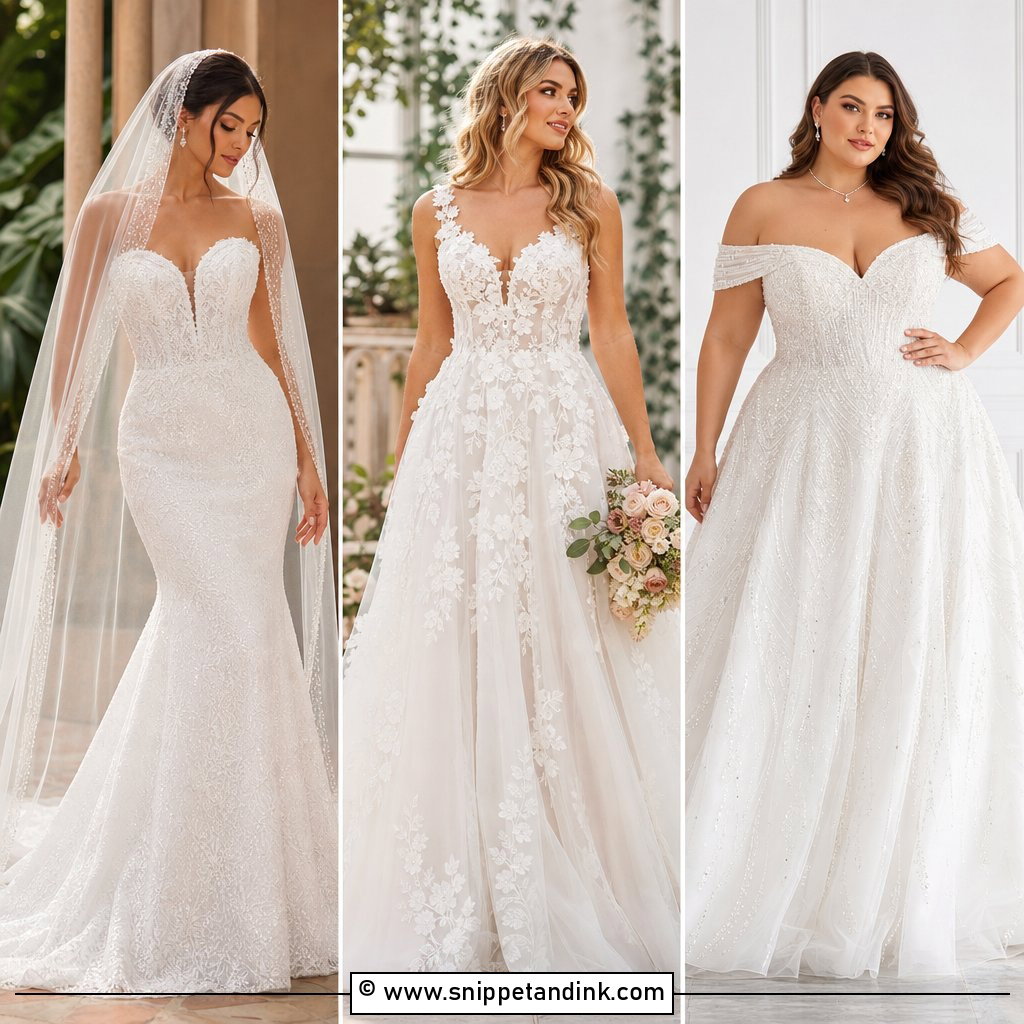


25. Vintage Boho Wedding Gown
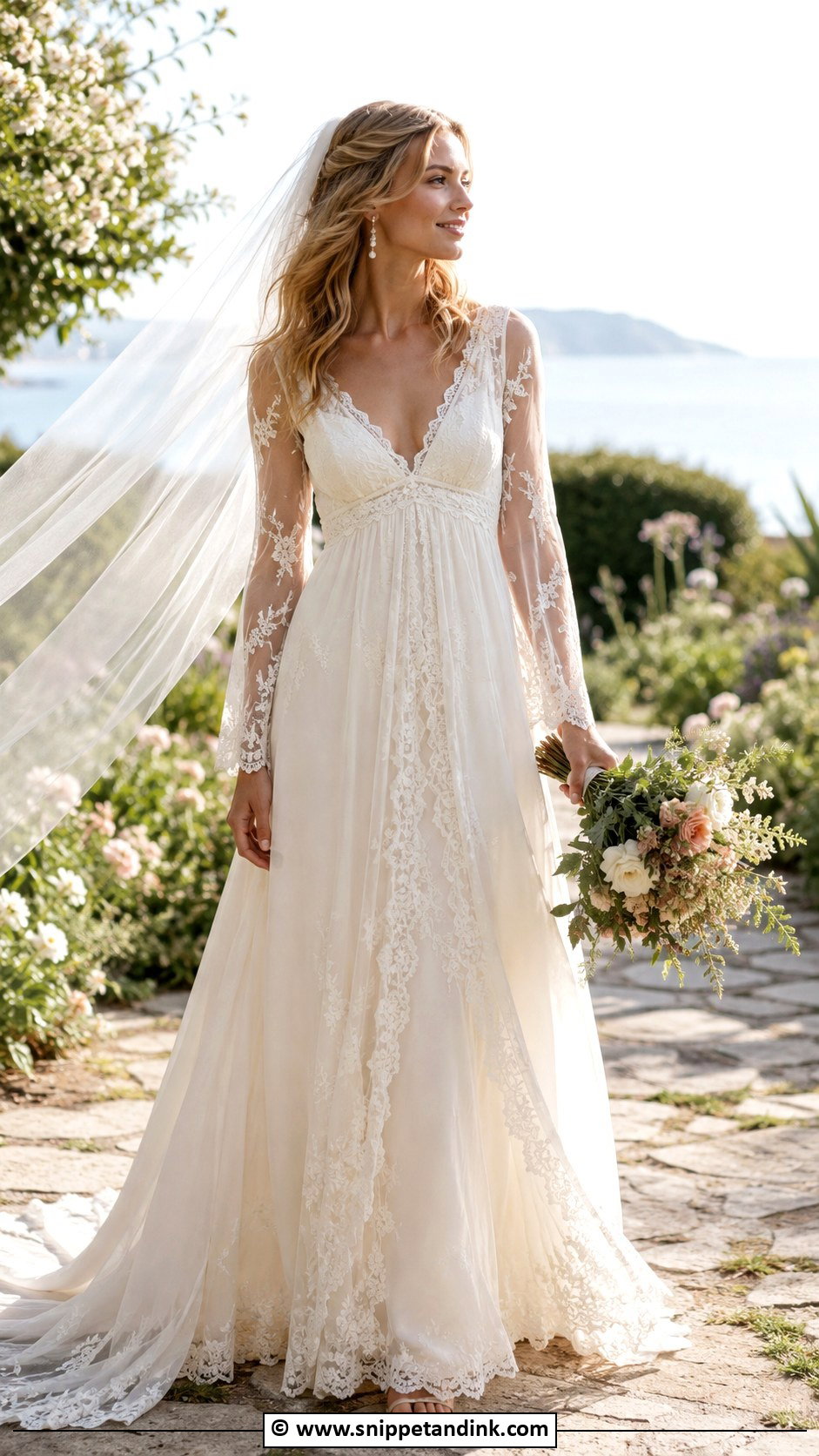
Boho vintage is loose and comfortable: lace sleeves, crochet details, flowing skirts, empire waists and open backs. An open back needs a plan for support, either built-in cups or a stick-on solution tested in heat. Loose waves, delicate earrings and sandals or low heels. A soft veil or floral pins; ivory or cream rather than white. Good fit keeps it bridal rather than beachwear.
Cleaning and Storing the Gown After the Last Dance
A dress that has already lasted decades can be ruined in a few months of poor storage. I’d get it to a specialist cleaner within a few weeks of the wedding. Spilled champagne, sweat and sugary drinks can dry invisibly, then turn brown over time, so even a dress that looks clean needs professional care.
- Store it in acid-free tissue inside an acid-free box or a breathable cotton bag, never in plastic, which traps moisture.
- Avoid lofts, garages and basements, where heat and damp swing through the year. A cupboard inside the house is better.
- Don’t hang heavy beaded or satin gowns by their straps for months. The weight stretches the shoulders; lay them flat or use the hanging tapes sewn into the waist.
- Pad folds with rolled tissue and refold every year or so, so creases don’t become permanent breaks in old fabric.
- Handle it with clean, dry hands, and keep perfume and hairspray off it.
If it’s going to be passed on again, put a note in the box with its age, any repairs and the cleaner’s details. Whoever opens it next will thank you.
Fit First, Era Second
A gown from another decade brings a story with it, but the decade is only half the decision. Twenties beading, fifties tea lengths, seventies lace and nineties minimalism each need the right fit, fabric and comfort to work over a whole day. Build the outfit from head to toe, wear shoes you can stand in, and leave time for a seamstress to make an older dress fully yours.
You'll Like These Ideas:









Leave a Reply