
Most brides who walk into an appointment unsure of what they want leave with an A-line on their shortlist. The reason is mechanical more than romantic: a bodice that follows the ribs and a skirt that starts to open at the natural waist hides very little and forgives a lot, so the gown moves when you walk instead of fighting you. Within that one shape there’s huge range, from plain satin and corseted bodices to lace, pearls and detachable sleeves. Below are 30 versions I’d happily pull for a client, each with what I notice when a bride actually puts it on: how the fabric sits, what it needs underneath, and who I’d steer toward something else.
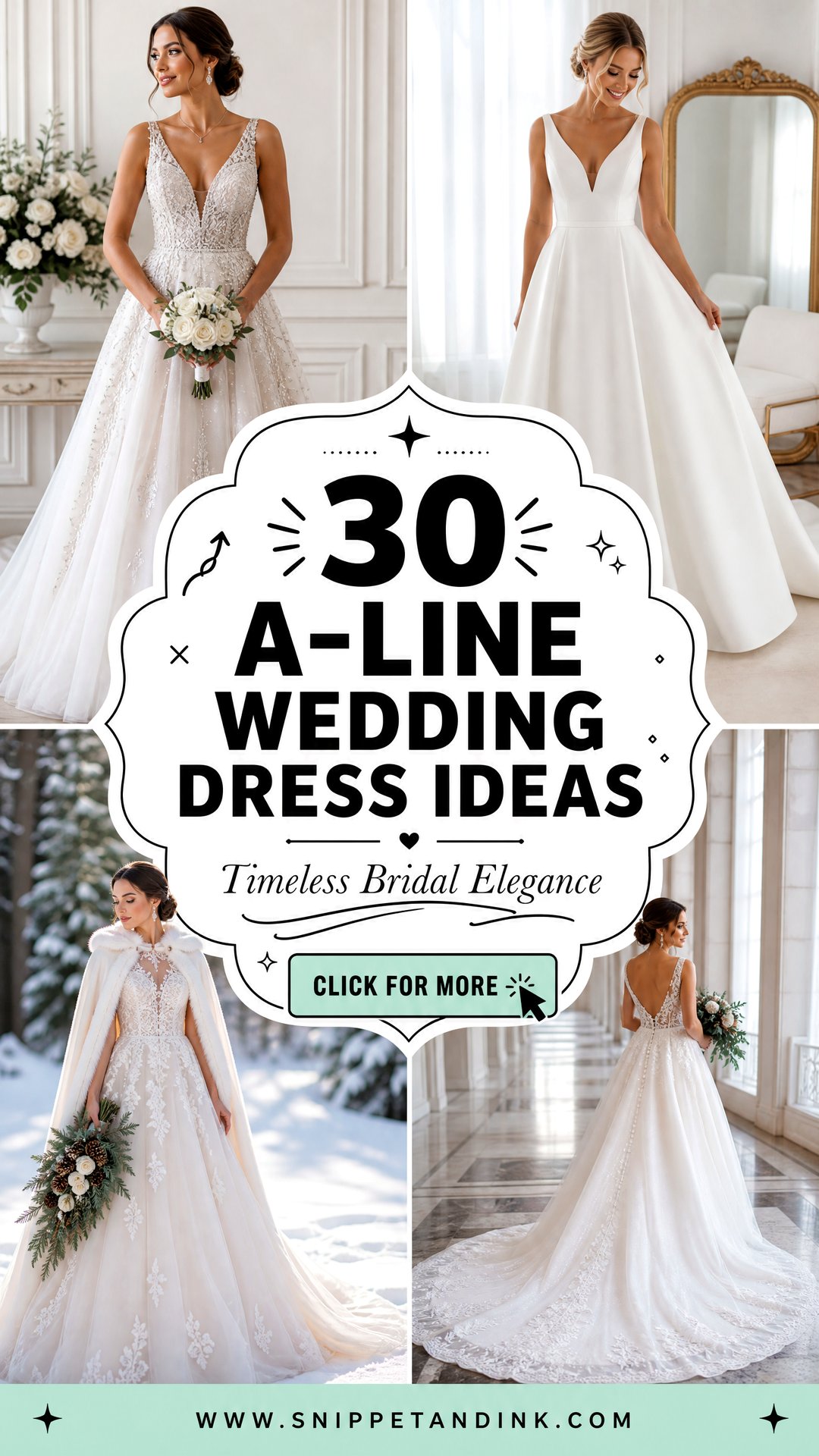
Where an A-Line Should Fit, Seam by Seam
An A-line looks simple, which is exactly why small fit problems show. When I check one on a bride, I start at the waist seam, not the neckline. It should sit at your natural waist, the narrowest point of your torso, or very slightly above it. Too low and the skirt starts flaring from the hip, which shortens your legs in photos. Too high and the bodice looks like it belongs to a smaller dress.
Then I work outward. These are the checks I run at every fitting:
- Bodice: you should be able to slide two fingers flat under the top edge, no more. Gaping at the side of the bust means the bodice needs taking in, not a tighter bra.
- Side seams: they should run straight down from the armpit. A seam that curves toward the front means the bodice is pulling.
- Back: look for horizontal wrinkles above the zip. They usually mean the back is too long for your torso.
- Hem: set it in your wedding shoes, with your undergarments on. The front should clear the floor by a few millimetres so you can walk without kicking it.
Most bridal alterations start around two to three months before the wedding, with two or three fittings and the final one about a week or two out. Bring your shoes and shapewear to every one. Changing either after the hem is cut is how brides end up tripping on the aisle.
1. Satin A-Line Wedding Dress
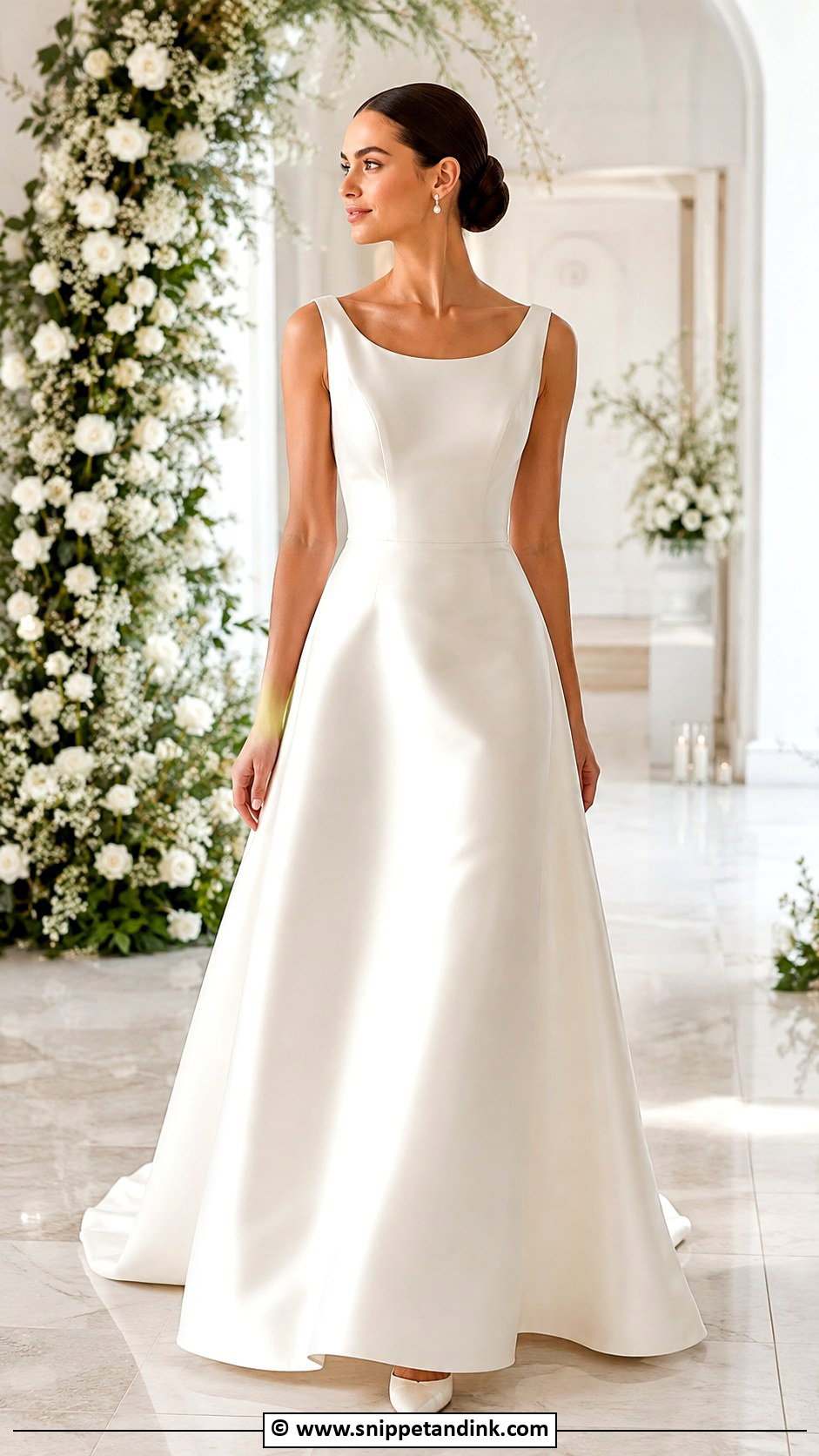
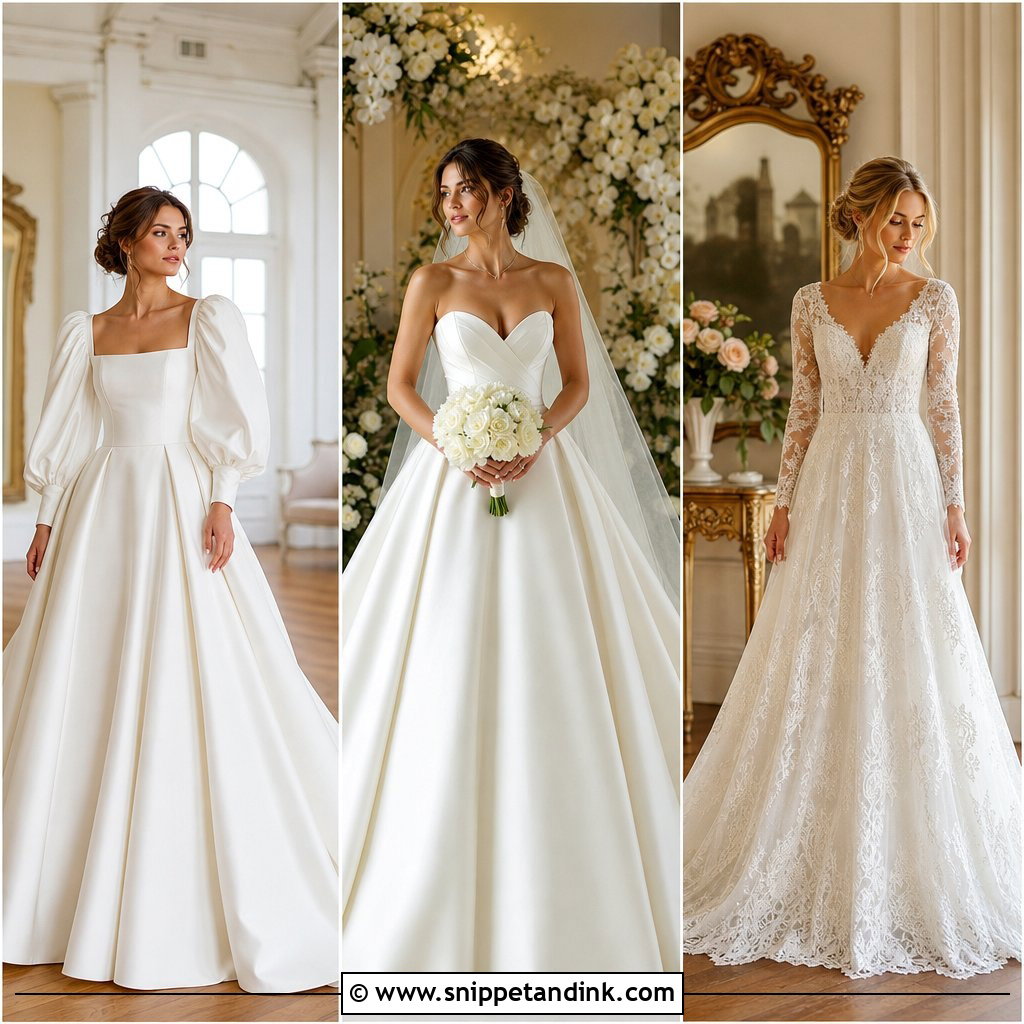
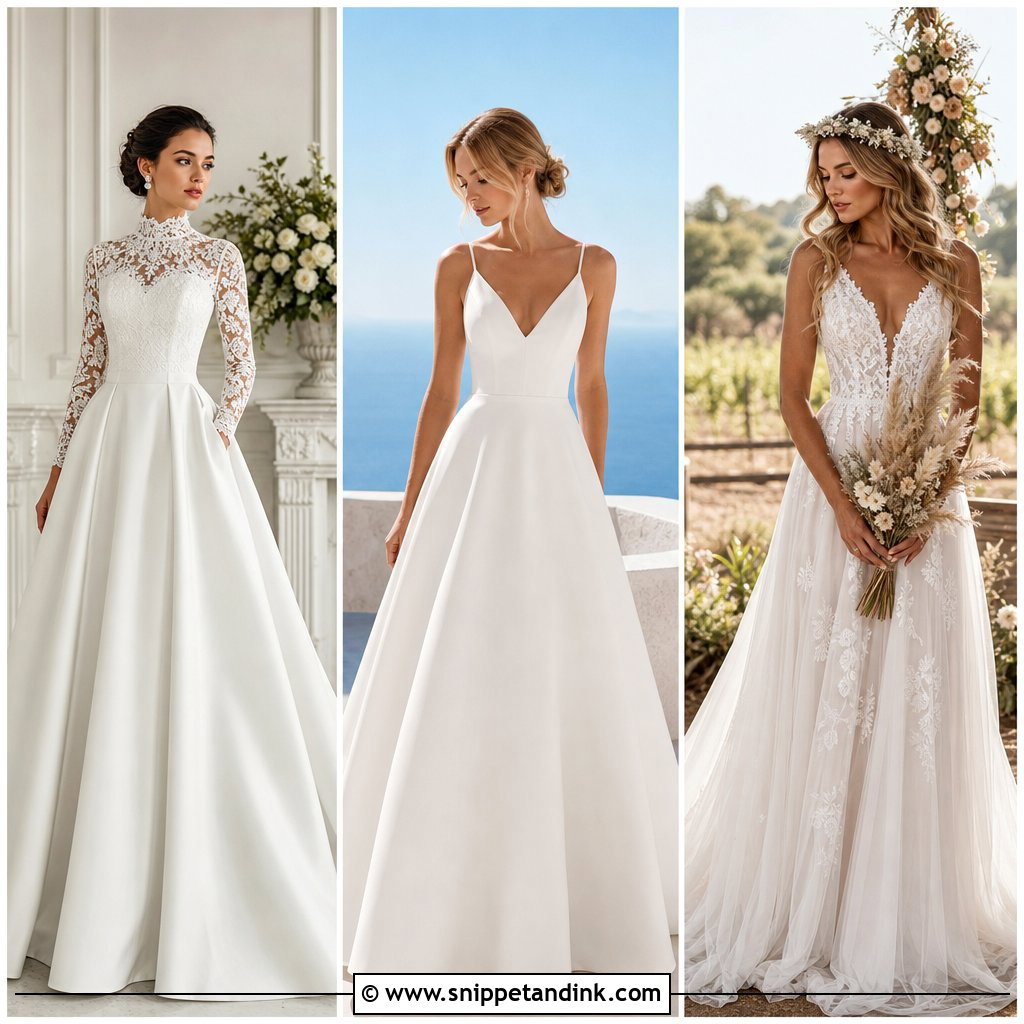
Satin is the fabric that shows the cut most honestly. There’s no lace to distract the eye, so the skirt has to fall cleanly from the waist seam, and any pull across the bodice shows as a ripple of light. A strapless, scoop, or square neckline keeps it modern. At fittings I always ask the bride to sit down, because satin creases across the lap and you want to know how heavy that crease is before the ceremony, not after. Covered buttons down the back or a soft train add drama without adding sparkle.
2. Lace A-Line Wedding Dress
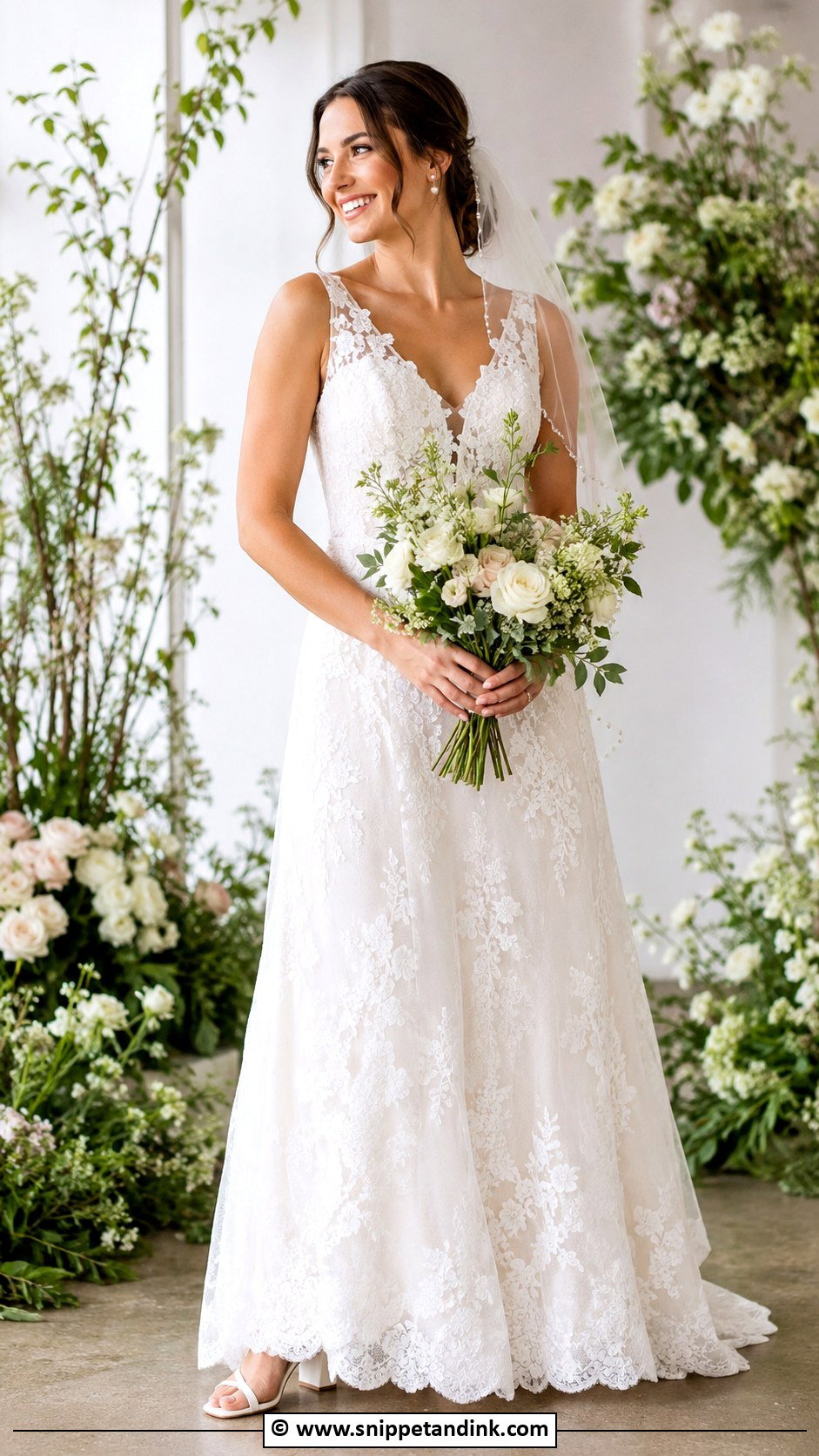
Lace weight decides everything here. Fine Chantilly drapes and almost disappears against the skin, while a bold botanical guipure stands off the body and reads from the back of the room. On an A-line I’d usually go lighter on the skirt and let the denser lace live on the bodice, otherwise the skirt can look stiff in motion. A lined bodice feels traditional; an illusion neckline softens it. Keep jewelry to small pearl studs and let a fingertip veil sit over the pattern rather than compete with it.
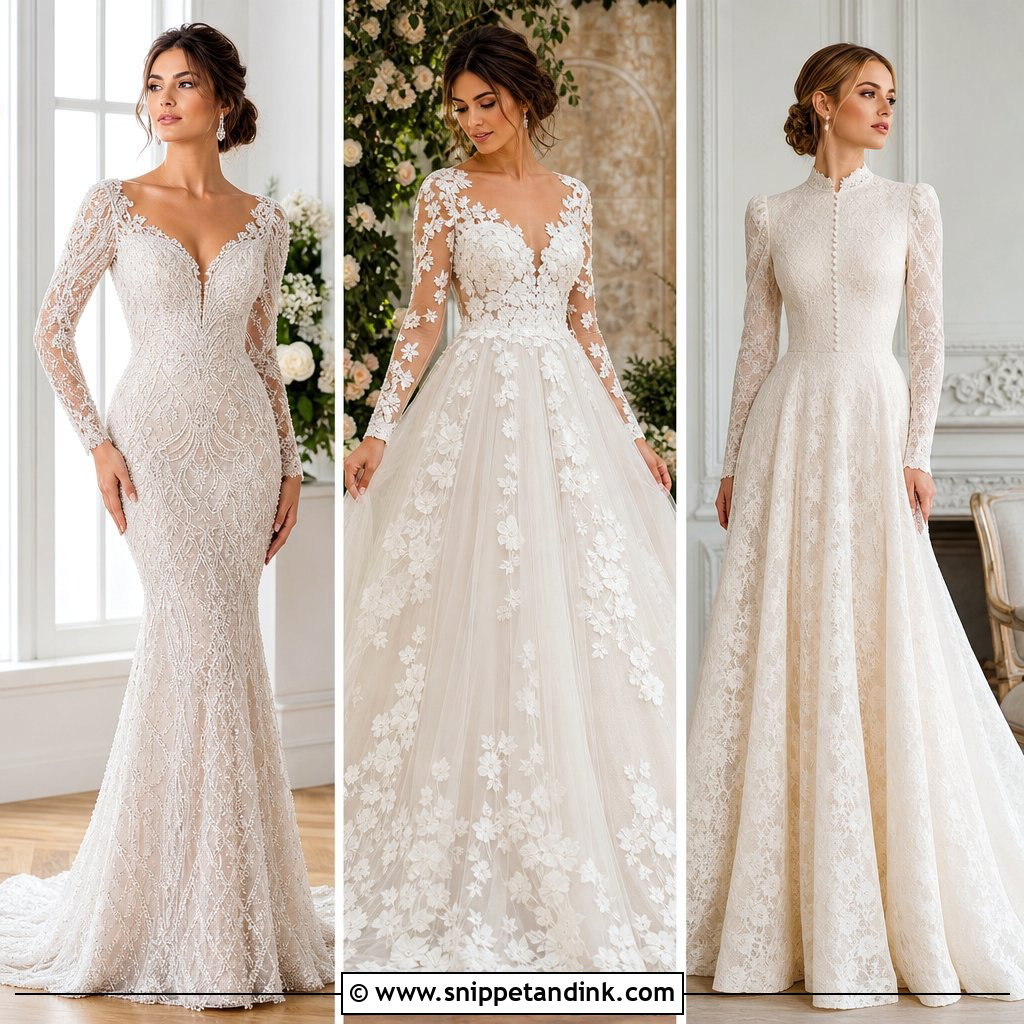
3. Long Sleeve A-Line Wedding Dress
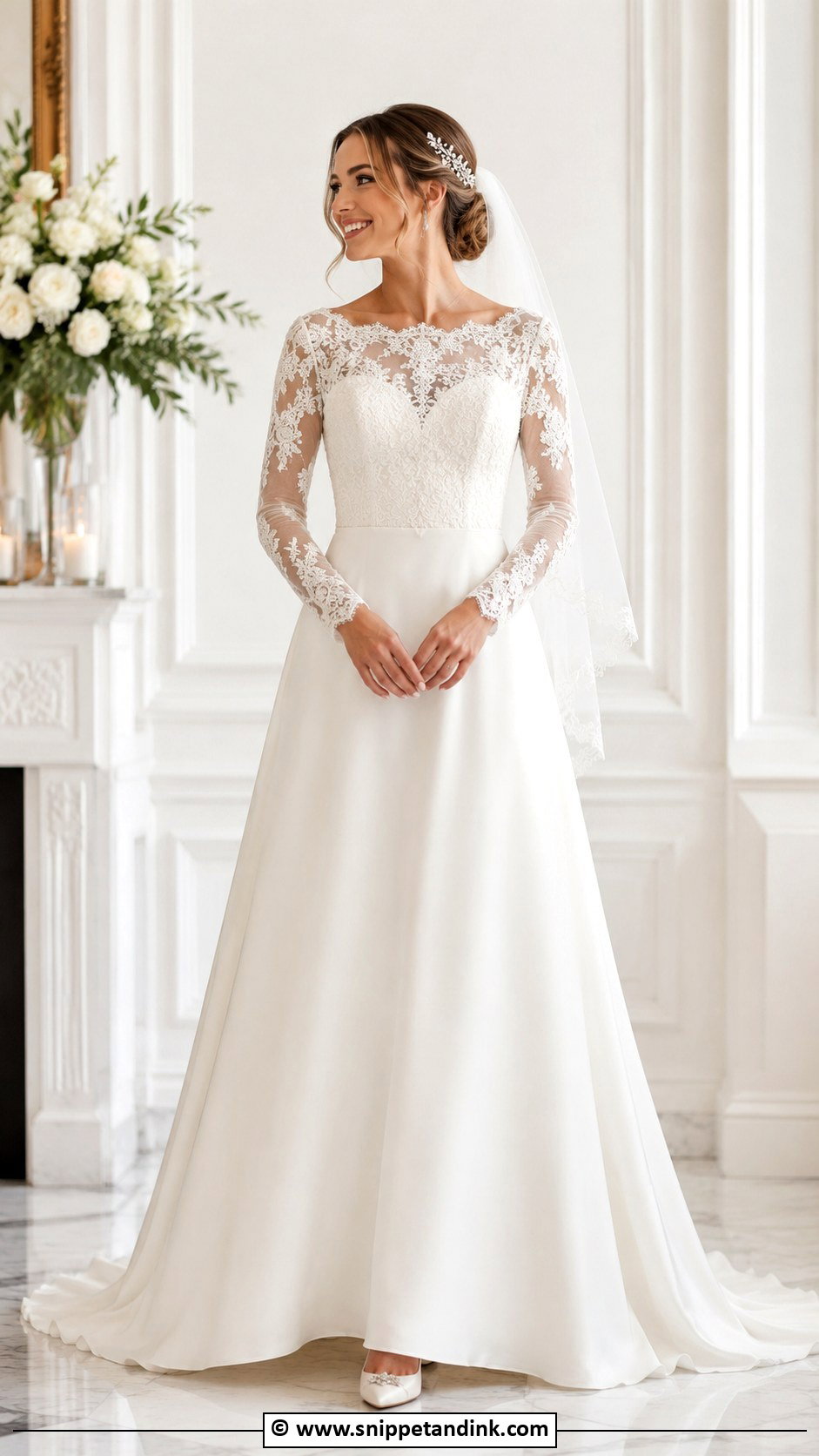
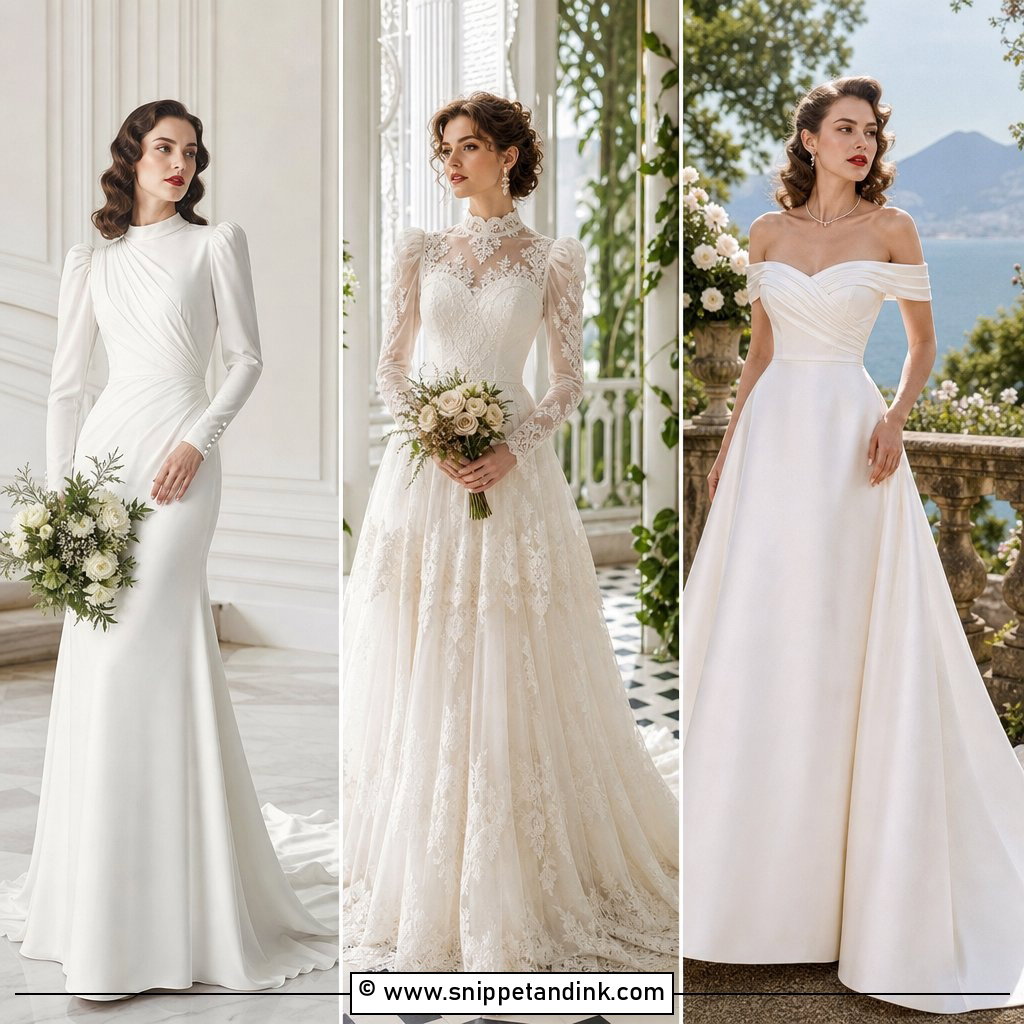
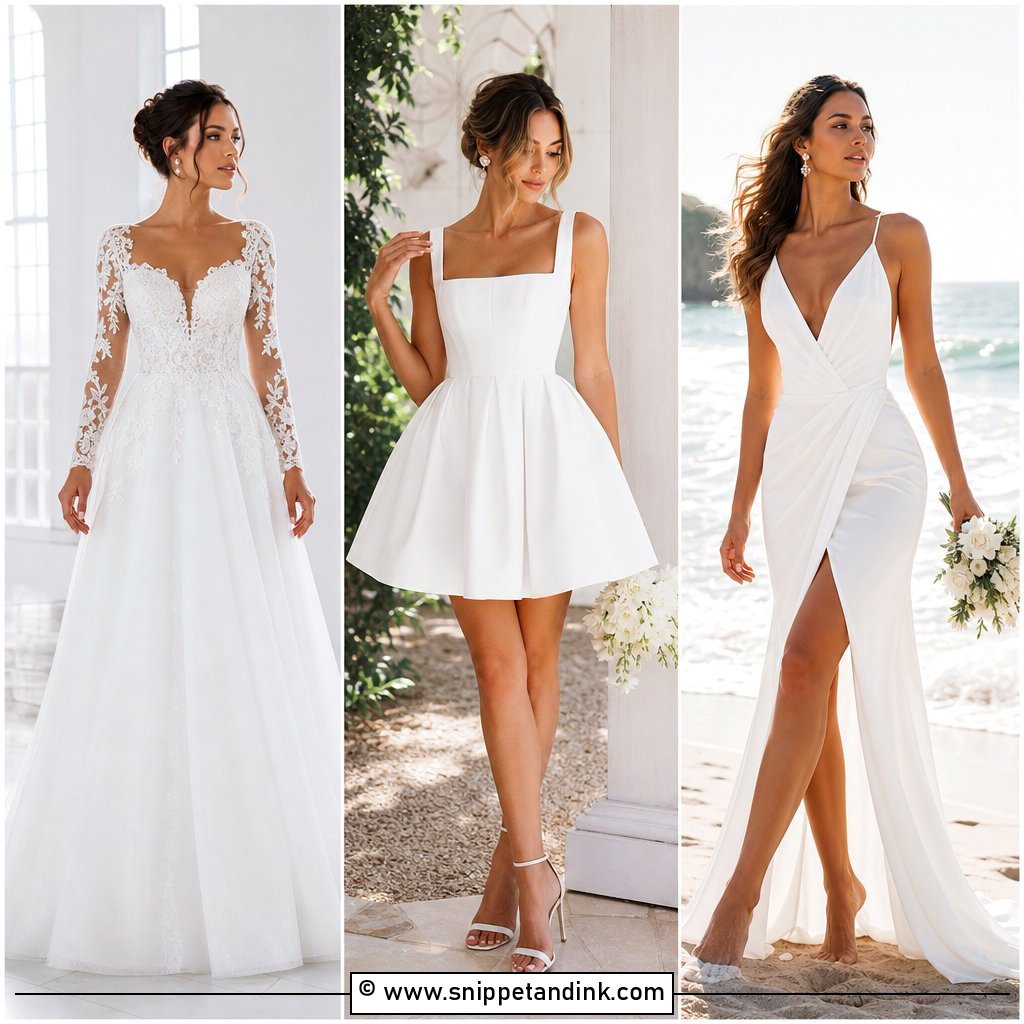
Sleeves change how a dress feels to wear more than how it looks. I always have a bride lift both arms and hug someone in a long sleeve sample, because a sleeve set too tight at the armhole will pull the whole bodice up when she reaches for her partner. Fitted lace and sheer tulle with appliqué both work; satin or crepe sleeves give a cleaner line. The A-line skirt keeps all that coverage from feeling heavy, which is why this is the combination I suggest most for autumn, winter and religious ceremonies with modesty requirements.
4. Off Shoulder A-Line Wedding Dress
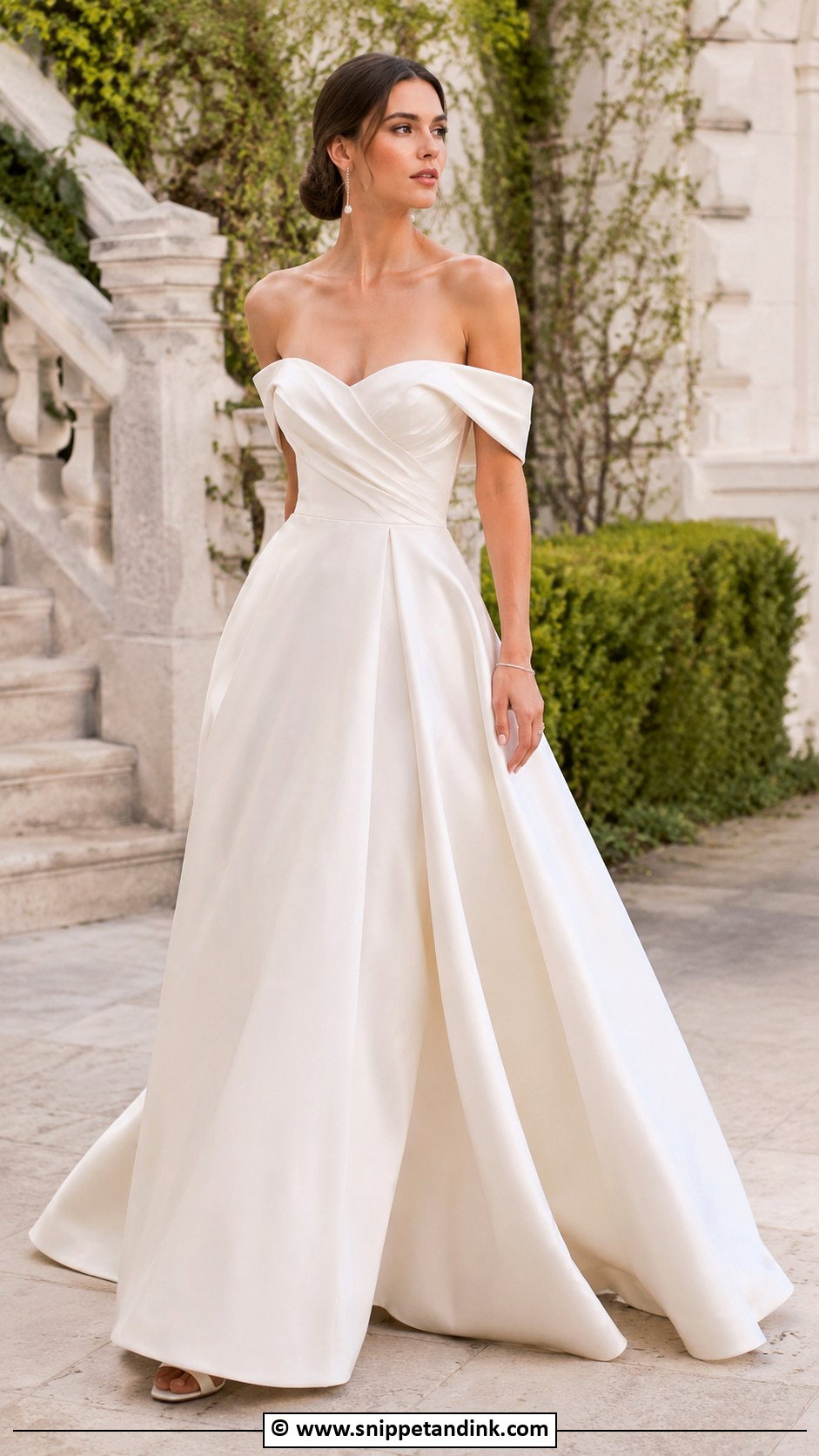
Off shoulder necklines live or die on how they’re anchored. If the band isn’t attached to a boned bodice, it slides down every time you raise your arms, and you spend the reception hitching it up. Draped satin, lace or tulle sleeves are all options. I put almost every off shoulder bride in an updo so the collarbone stays clear, and I talk her out of a necklace: drop earrings and the neckline itself do the work.
5. Square Neck A-Line Wedding Dress
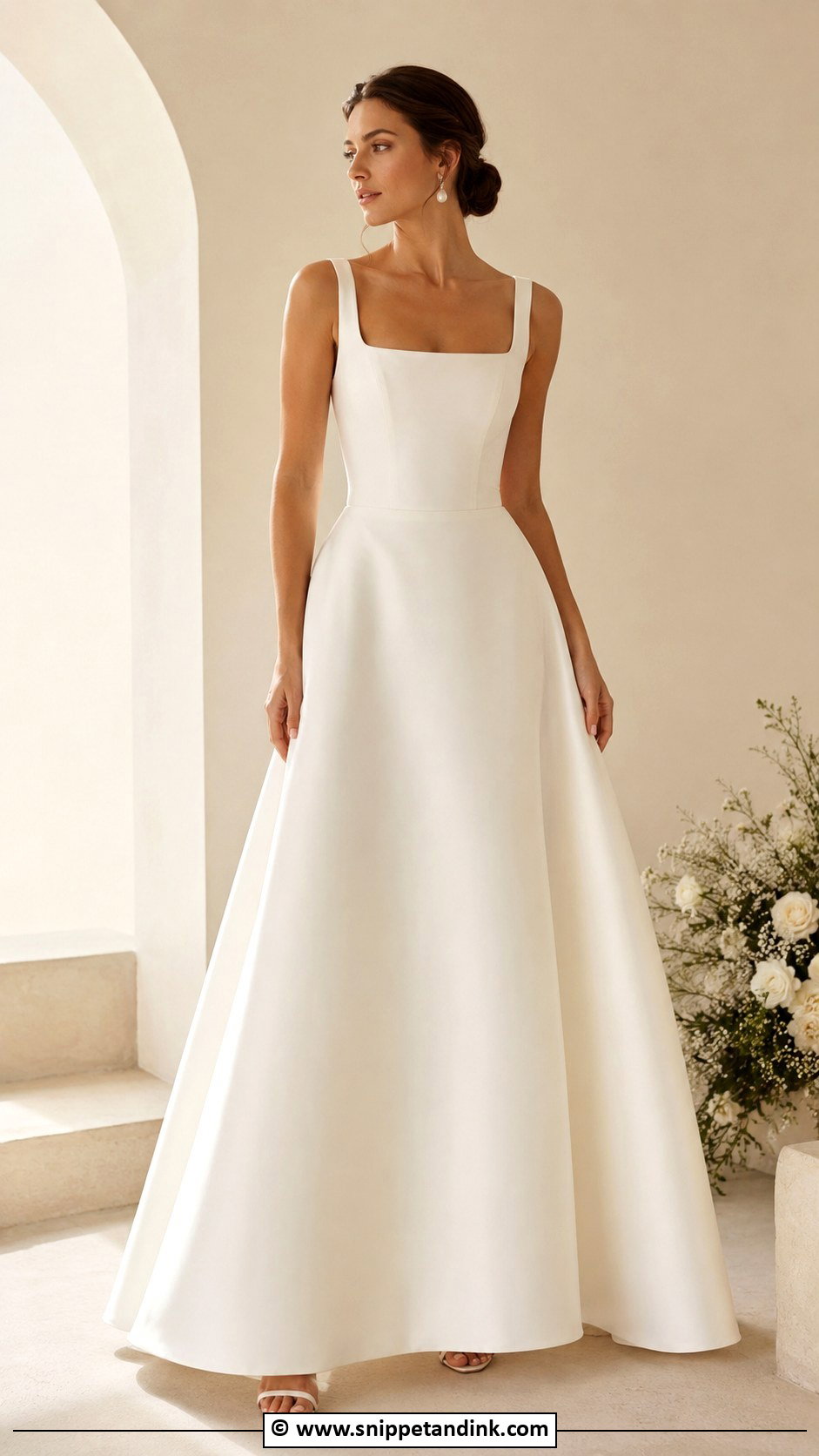
A square neck gives the bodice a clean frame from the front and the side, and it’s forgiving if you’re between bust sizes because the straight edge hides small gaps better than a sweetheart curve. It works with thin straps or long sleeves. Satin makes it sleek, floral appliqué makes it softer, and a corset-style bodice with exposed seams pushes it toward fashion. The one thing I check is strap width: very thin straps on a square neck can cut into the shoulder after a few hours, so I like them at least a finger wide.
6. V Neck A-Line Wedding Dress
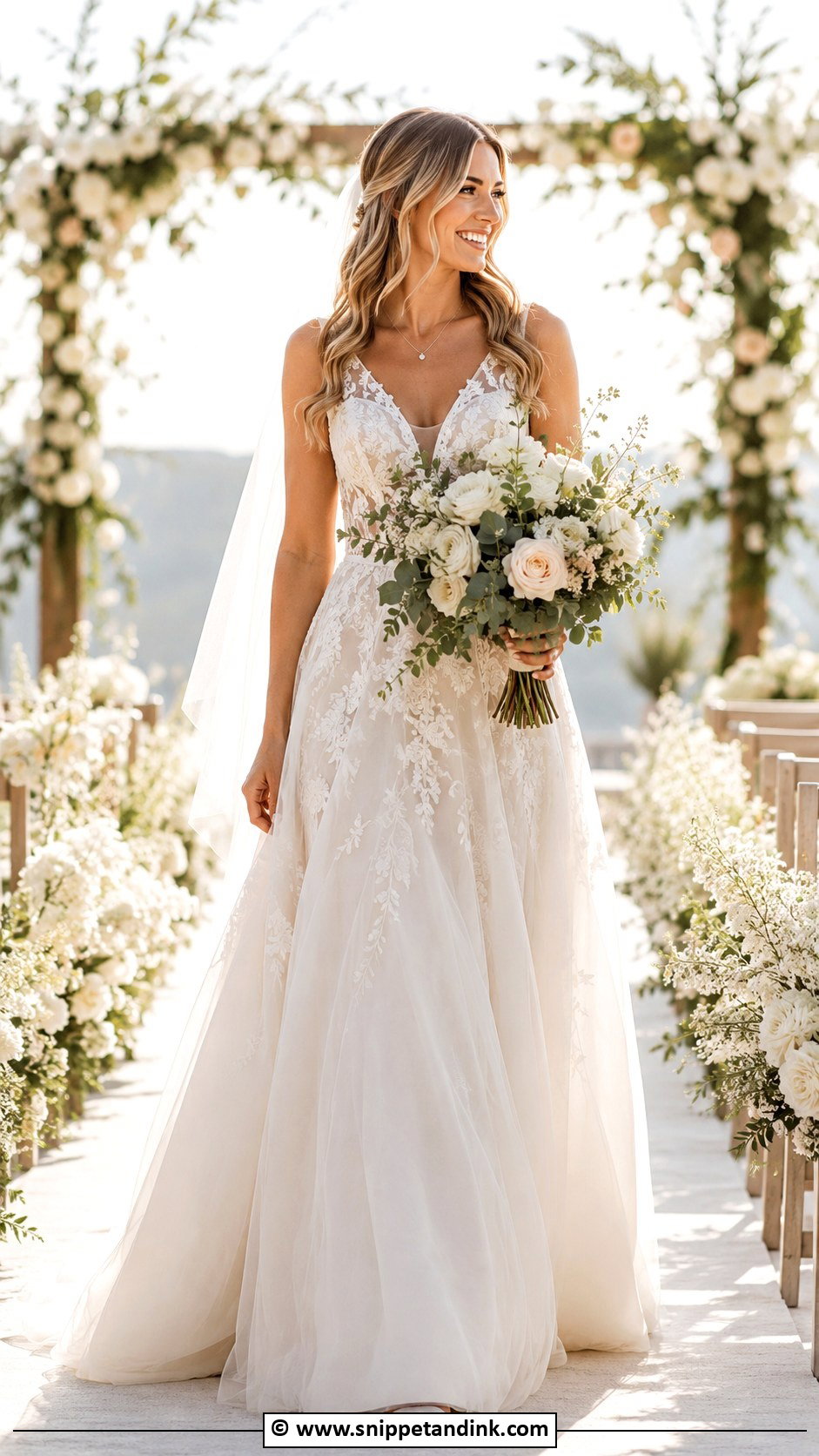
The V neck lengthens the upper body, which is why I reach for it with shorter-waisted brides. A soft V is comfortable all day. A deep V needs illusion mesh or very good internal structure, and I test it by having the bride lean forward as if signing the register. Lace, chiffon, satin and crepe all work. A small pendant and loose waves suit it, and if there’s a low back, choose a sheer veil so that detail still shows in the ceremony photos.
7. Strapless A-Line Wedding Dress
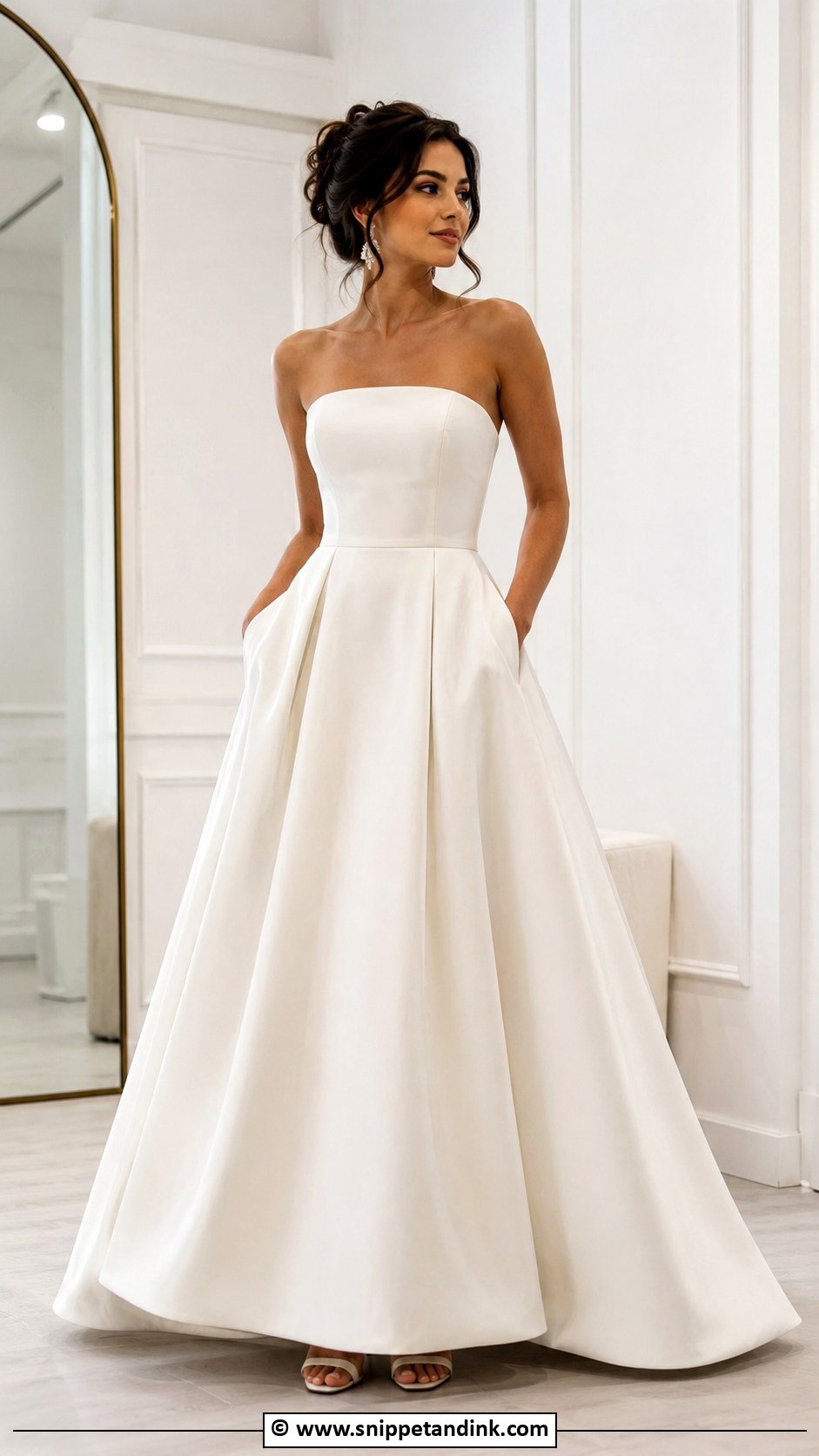
Strapless is a classic, but it’s also the style most dependent on construction. The bodice has to hold you without straps for twelve hours, so I look for boning, a waist stay inside and a fit snug enough that you can’t twist it with your hands. When that’s right, it shows off the shoulders and takes almost any veil length. Sweetheart feels romantic; straight across looks cleaner. If you want a change later, detachable sleeves or a scarf can sit over a strapless bodice without any alteration.
8. Corset A-Line Wedding Dress
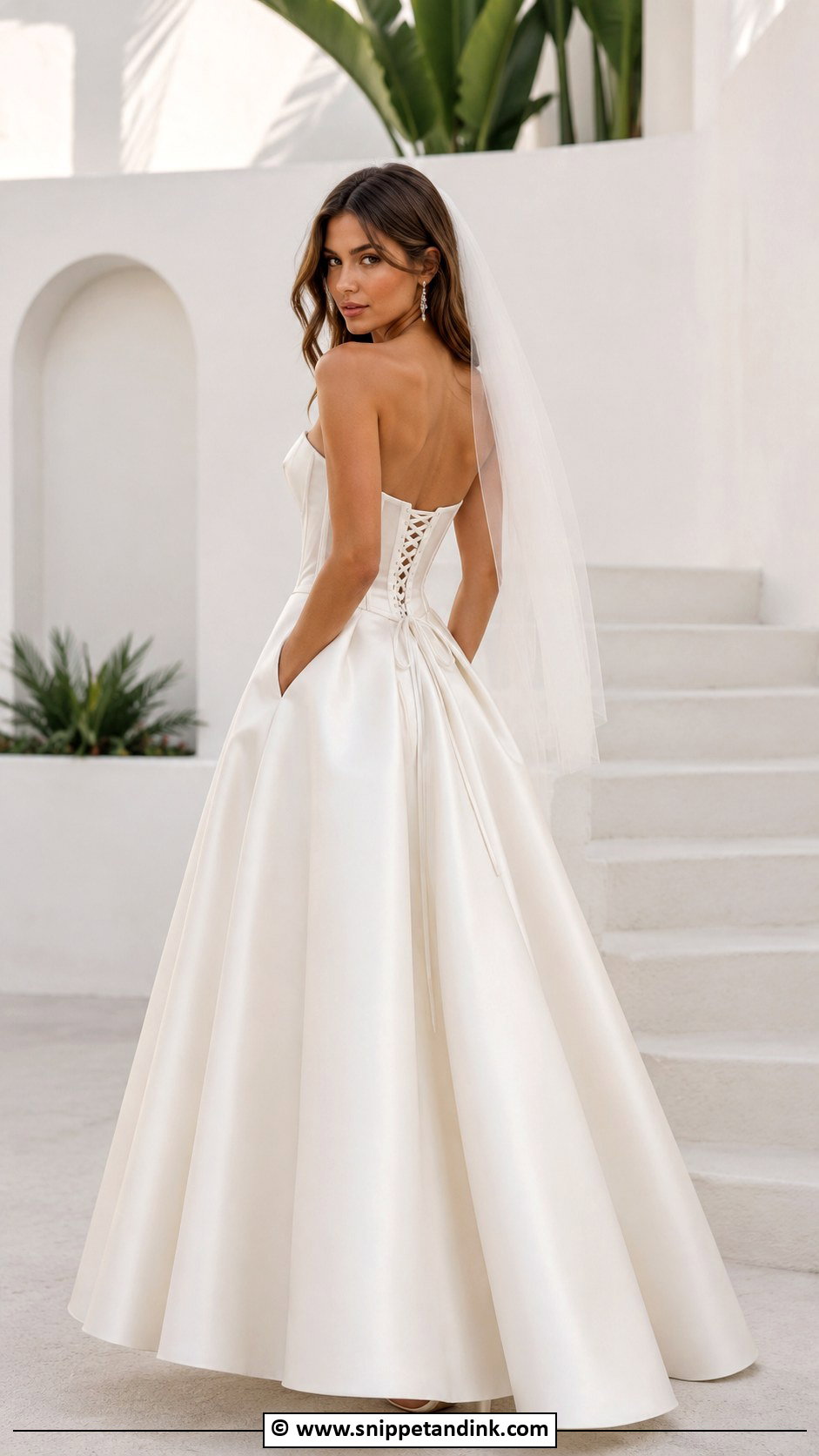
Corset bodices are having a long moment, and they suit the A-line because the waist definition hands off neatly to the skirt. Support can be hidden inside or shown through visible boning, lace-up backs and sheer panels. What I watch at fittings is breathing: sit down, eat a bite of something, take a deep breath. If the corset bites under the ribs while seated, it will be miserable by the speeches. Pair it with a skirt that’s full but not bulky so the waist reads clearly.
9. Tulle A-Line Wedding Dress
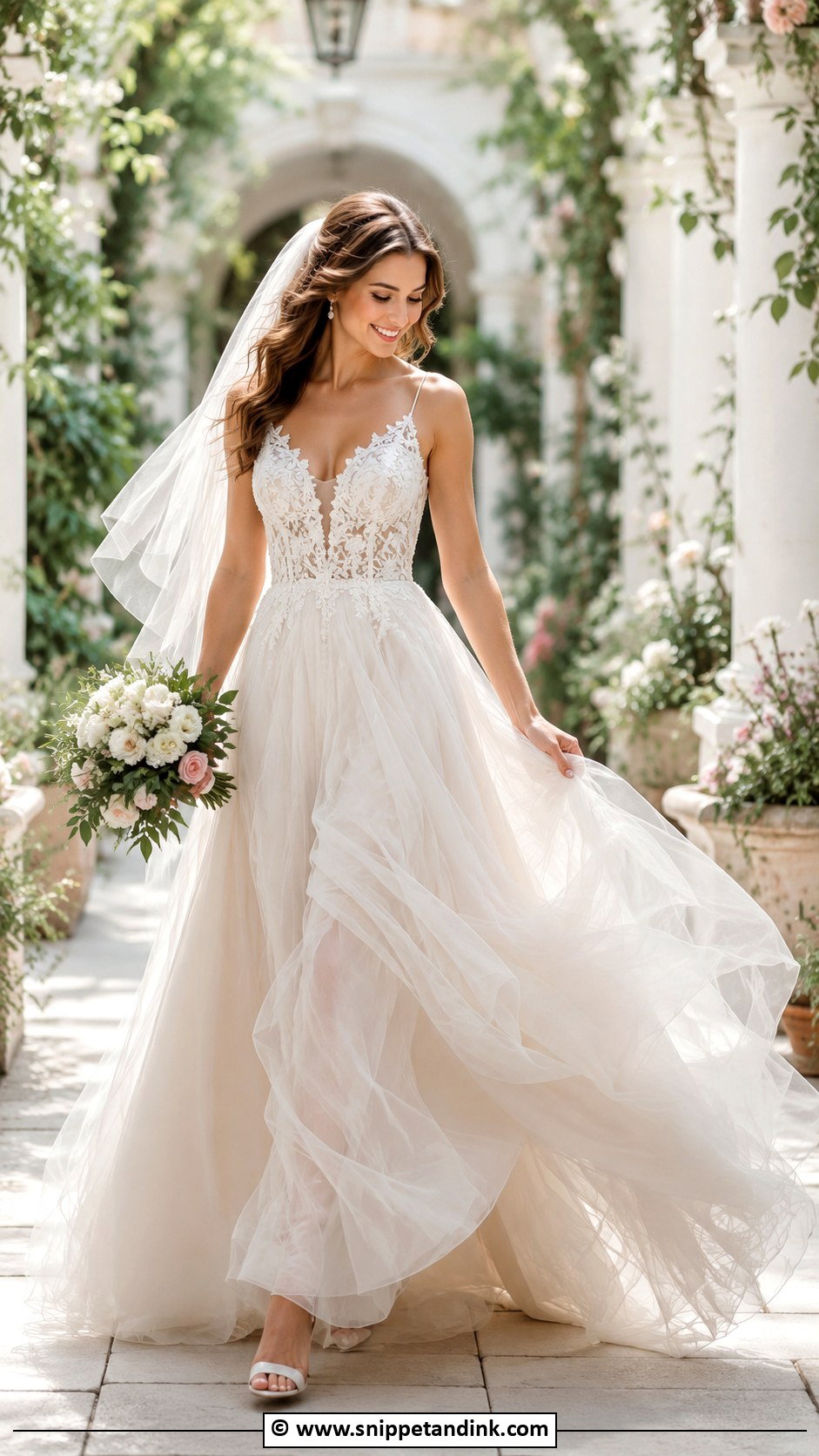
Tulle floats as you walk, and outdoors it catches light from behind in a way satin doesn’t. Several layers give volume without ball gown weight. The trade-off is that tulle snags on anything: stone steps, rough decking, a groomsman’s cufflink. I’d still choose it for a garden or open venue, but I’d keep a small pair of scissors and a clear nail varnish in the emergency kit for pulled threads. A fitted lace, satin or corset bodice gives it shape.
10. Crepe A-Line Wedding Dress
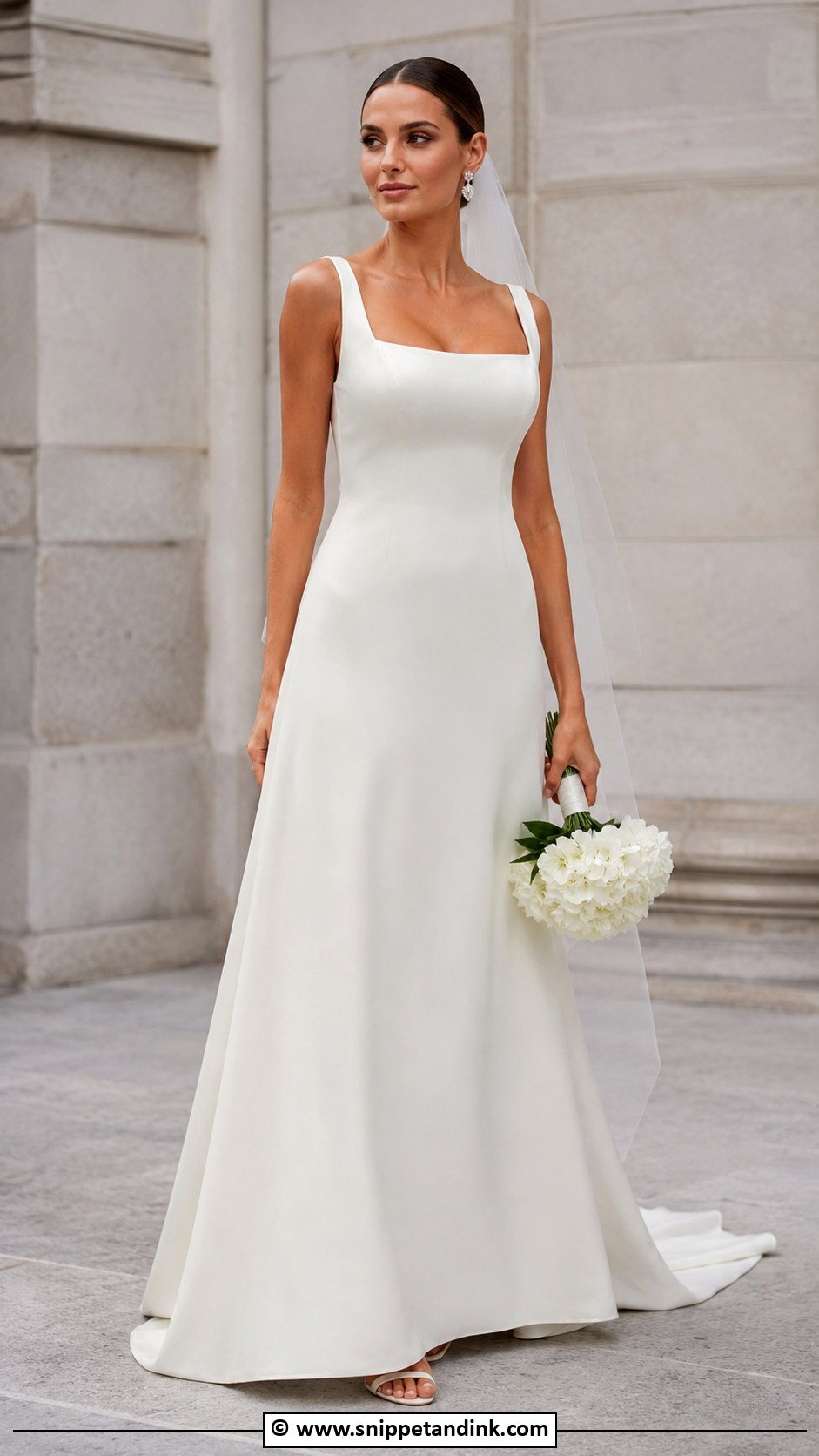
Crepe has a matte, dense finish that photographs like quiet money. Because it has little shine, every seam shows, so the tailoring has to be precise; a slightly puckered side seam that you’d never see on lace is obvious on crepe. Square, bateau, V or long sleeve necklines all suit it. I steer brides with a lot of curves toward a heavier crepe with some stretch, because lightweight crepe can cling over the hip before the skirt opens. Sculptural earrings and a clean veil finish it.
11. Mikado A-Line Wedding Dress
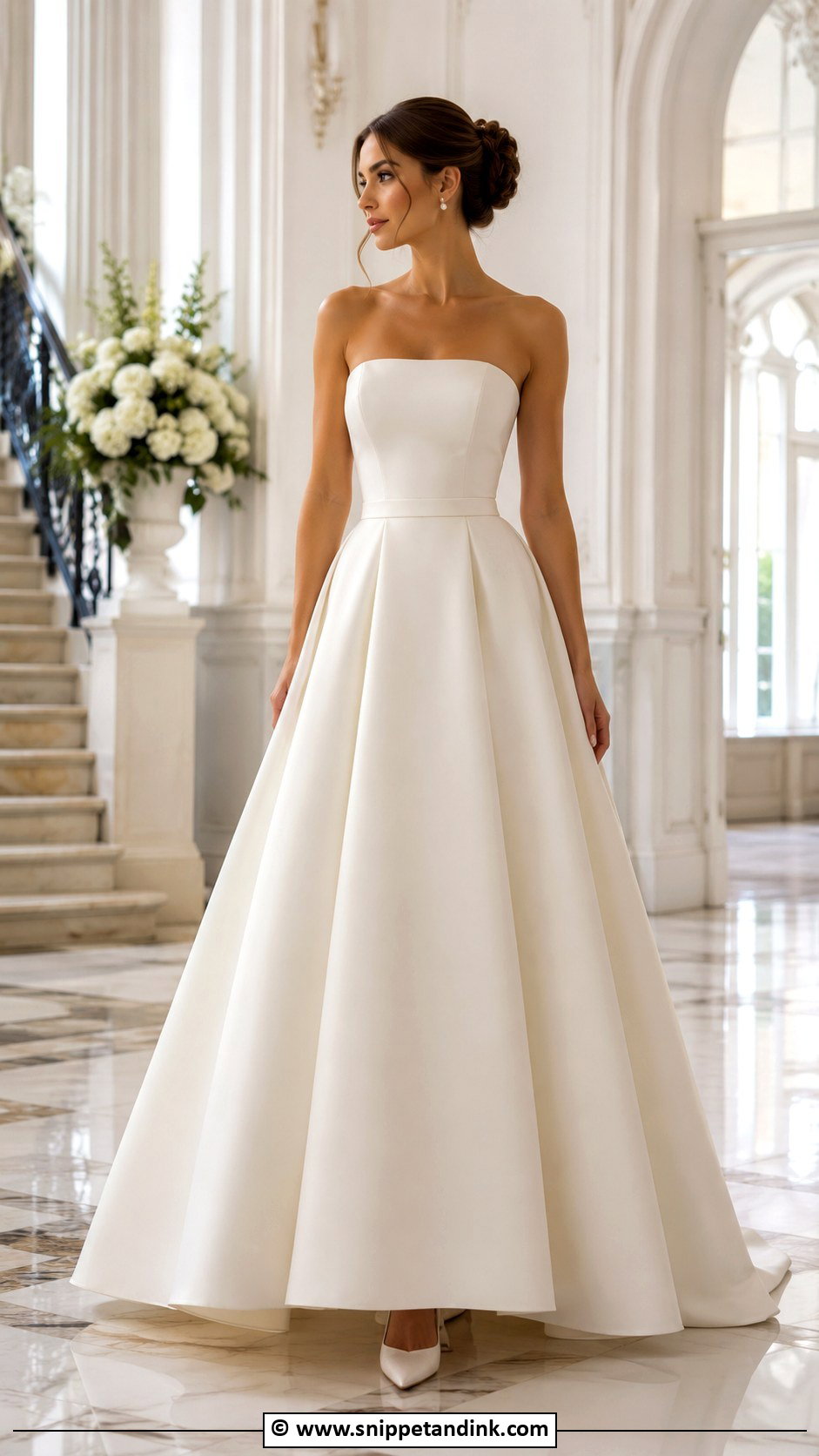
A Mikado A-line wedding dress holds its shape on its own, which is why it looks so crisp. The fabric is heavy enough to stand away from the body and create a smooth, sculpted skirt with real presence. Be aware that Mikado creases sharply rather than softly, so a long car ride needs the skirt spread out, not bunched. Strapless, square or bateau necklines suit it, and a bow, covered buttons or a basque waist is all the decoration it needs. Satin pumps, pearl earrings and a polished updo keep the attention on the fabric.
12. Chiffon A-Line Wedding Dress
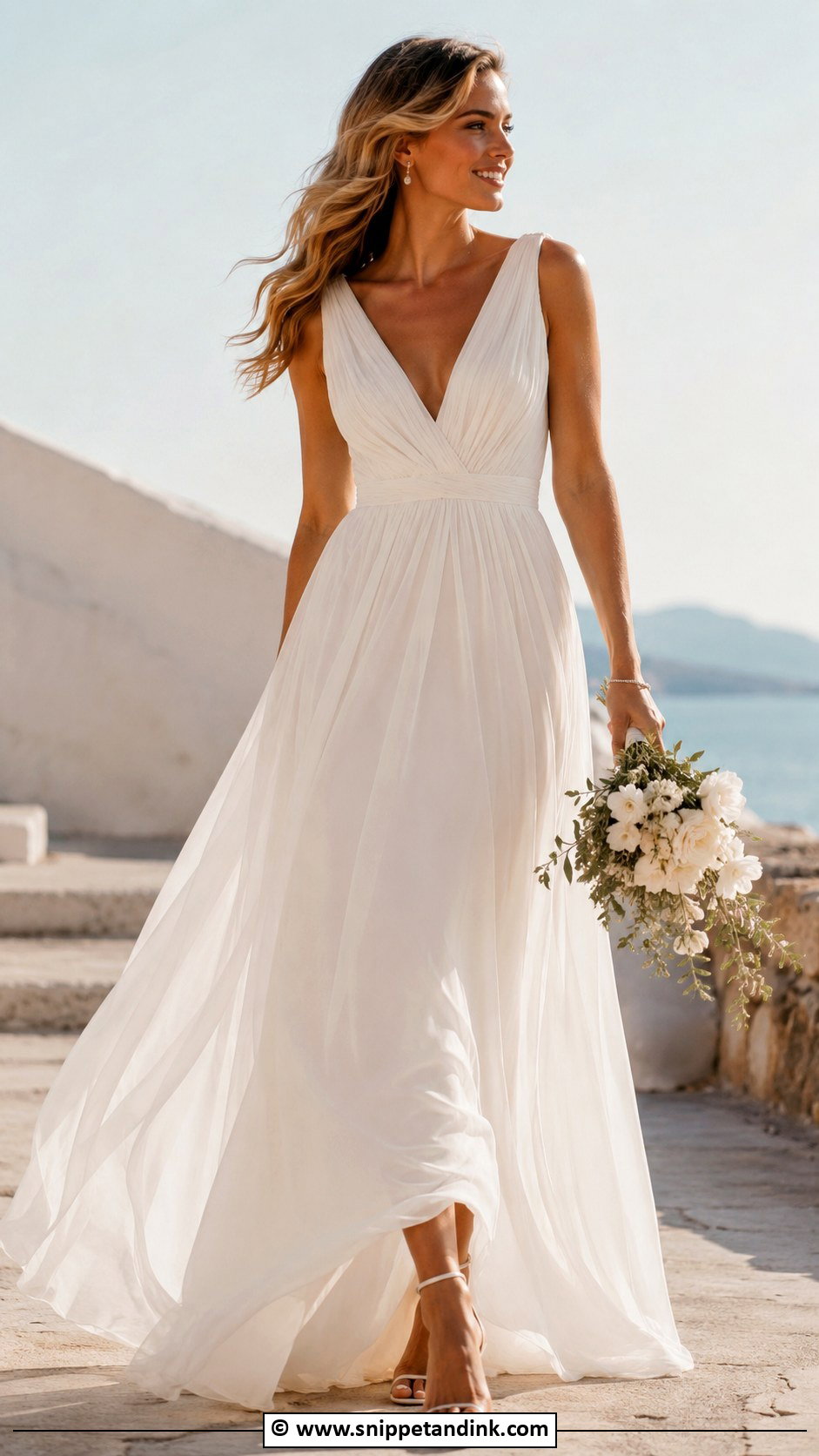
Chiffon is the fabric I recommend most for heat. It’s light, breathes, and the skirt falls close to the body rather than standing away from it. A chiffon A-line gown suits a V neck, flutter sleeve, halter or gathered bodice. It wrinkles easily and shows water spots, so I tell brides to keep a hand steamer at the venue. Strappy heels or sandals, soft waves and small earrings complete it; a sheer veil or floral pin keeps it from feeling too formal.
13. Beaded A-Line Wedding Dress
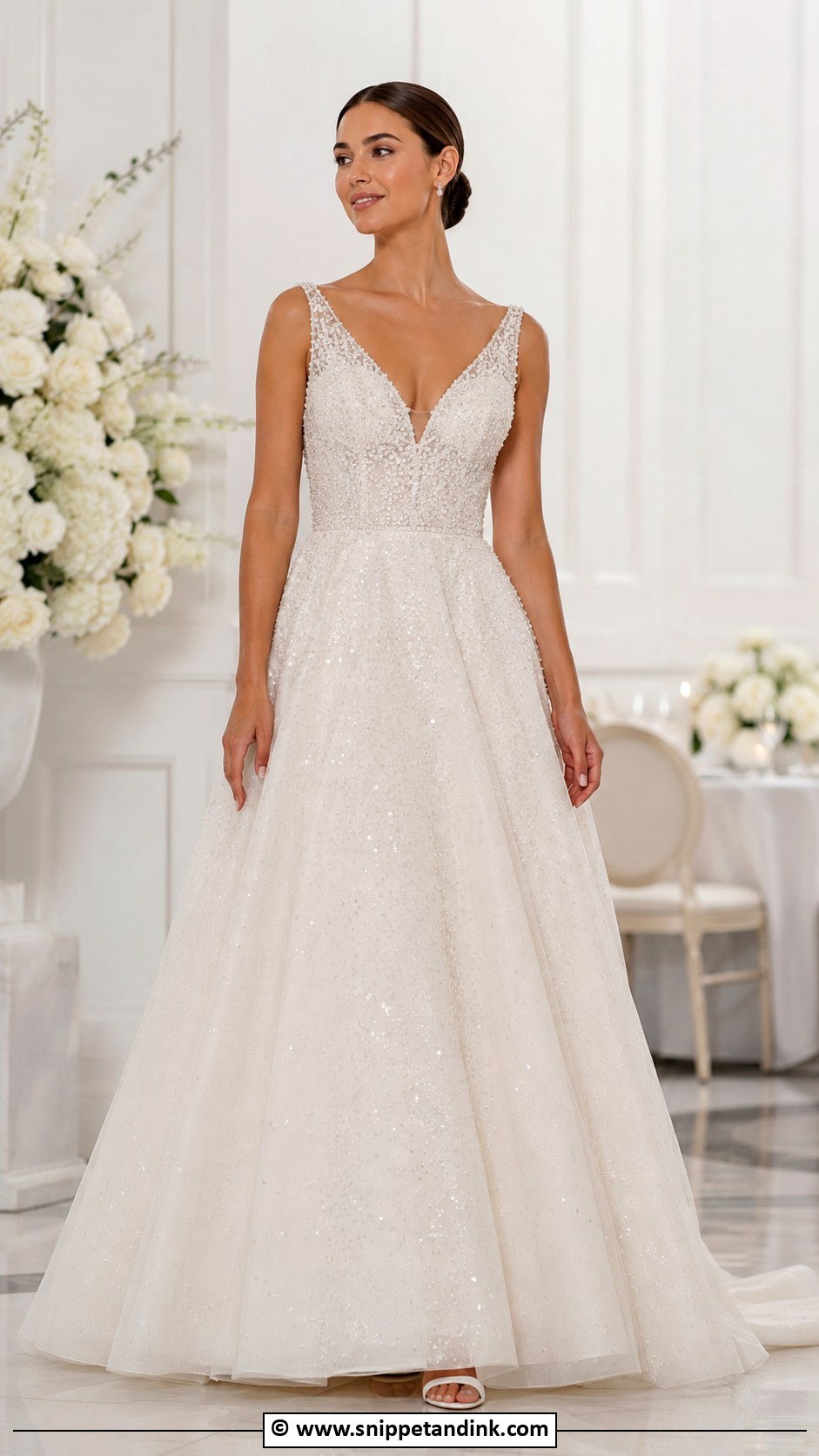
Beading is where I slow brides down. Placement matters more than quantity: beading along the bodice seams can define the waist, while scattered shimmer across the skirt only comes alive under warm evening light. Pearl reads classic, crystal reads glamorous, tonal embroidery barely shows until you’re close. Heavily beaded bodices can weigh a surprising amount and drag on thin straps, so I check whether the dress needs extra support. Keep everything else simple: clean heels, small earrings, sleek hair.
14. Floral A-Line Wedding Dress
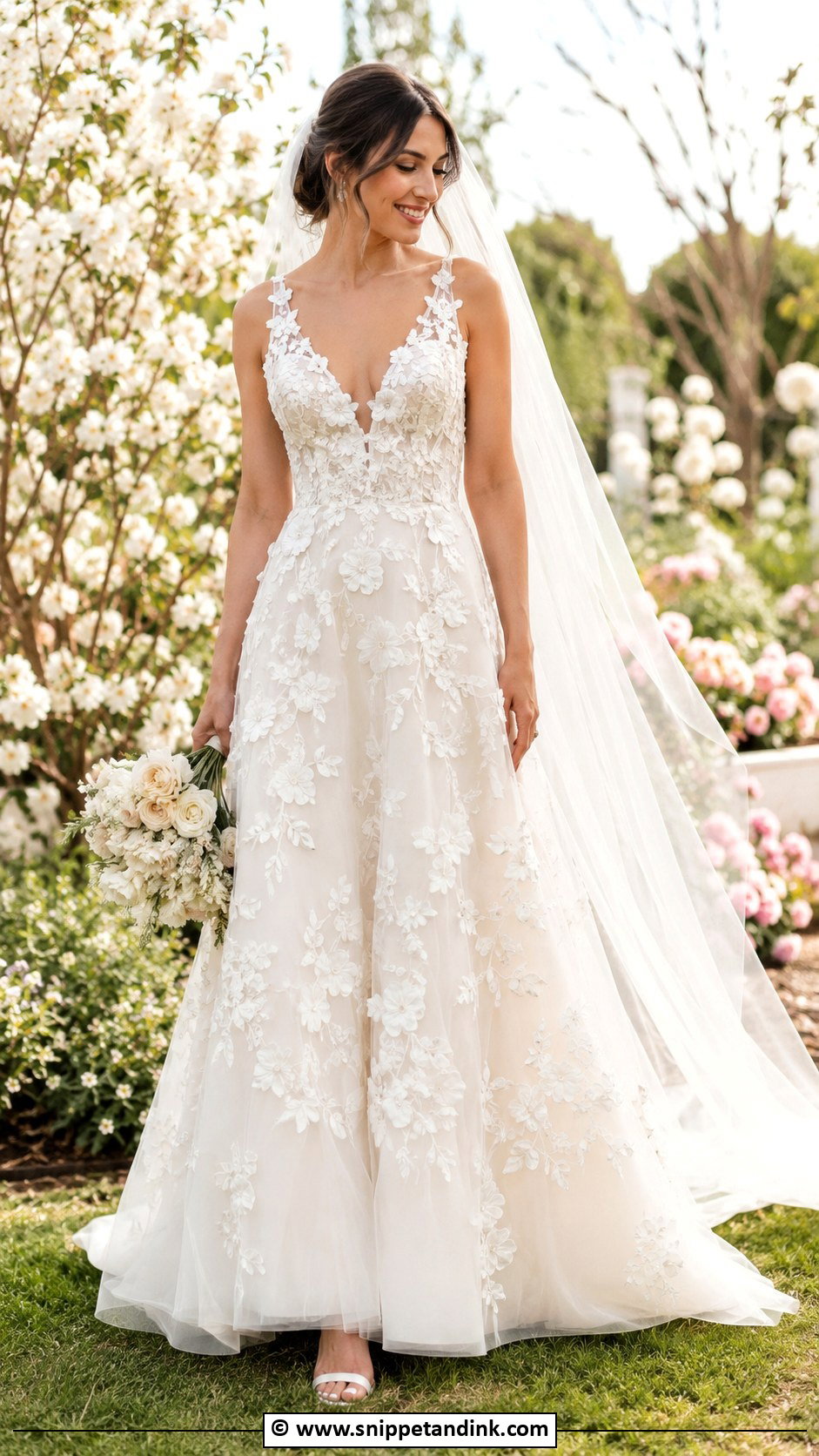
Floral appliqués can sit on the bodice, trail down the skirt or cover the whole gown. White-on-white is classic; blush, champagne or pastel embroidery is more personal. When the florals are three-dimensional, I check the back of the bride’s arms at the fitting, because raised petals at the side seam can rub the skin raw by evening. The A-line keeps even bold floral work balanced. Simple heels, a soft veil and natural makeup let the dress lead, and it suits spring weddings and outdoor ceremonies especially.


15. Minimal A-Line Wedding Dress
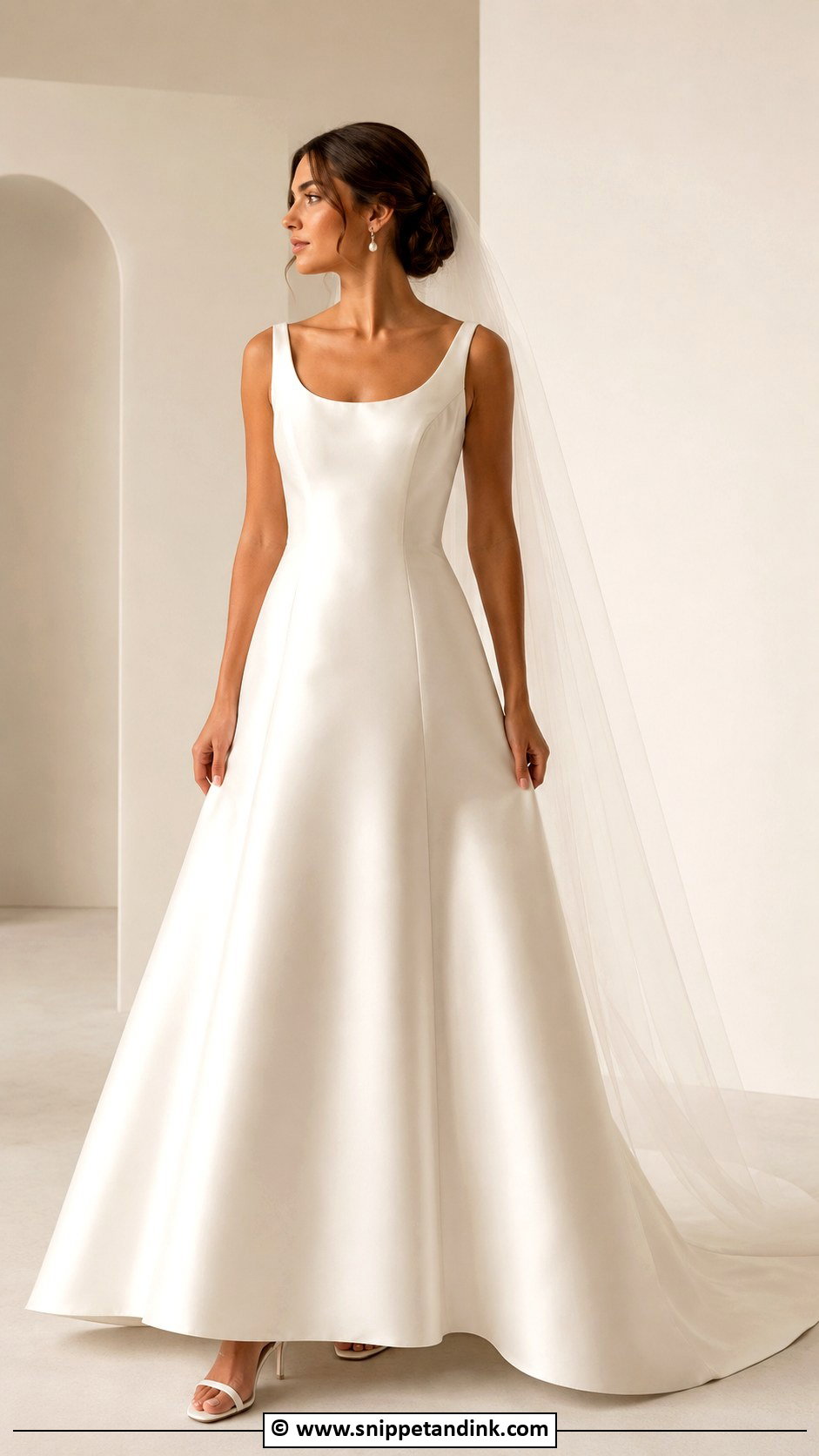
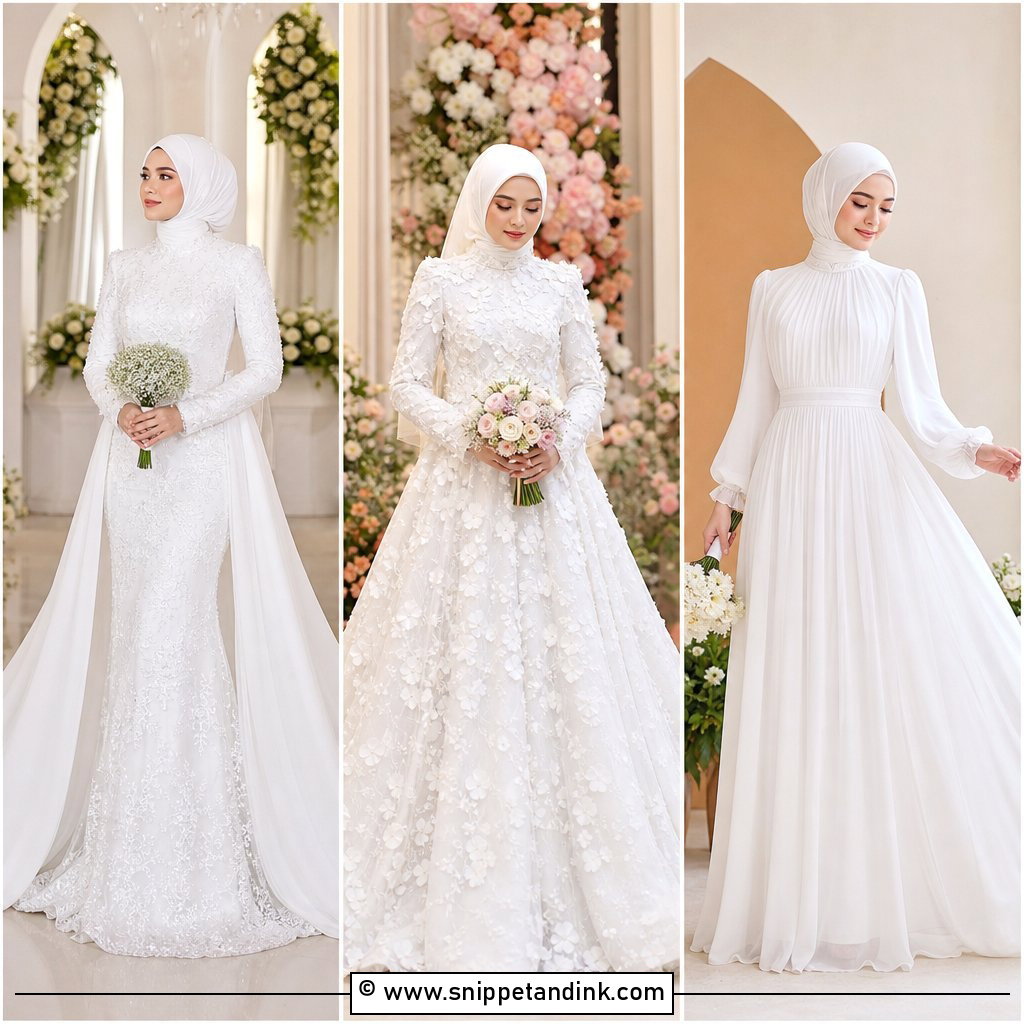
With nothing to hide behind, a minimal gown is judged entirely on fit and fabric. Satin, crepe or Mikado give it structure. Here I’d spend the alterations budget on the details nobody notices consciously: a hem that skims the floor in your actual shoes, side seams that sit perfectly straight. A square, scoop or strapless bodice keeps it modern. It also leaves room to personalize with a cathedral veil, gloves or a sculptural bouquet, and it’s the version I see brides still loving years later.
16. Boho A-Line Wedding Dress
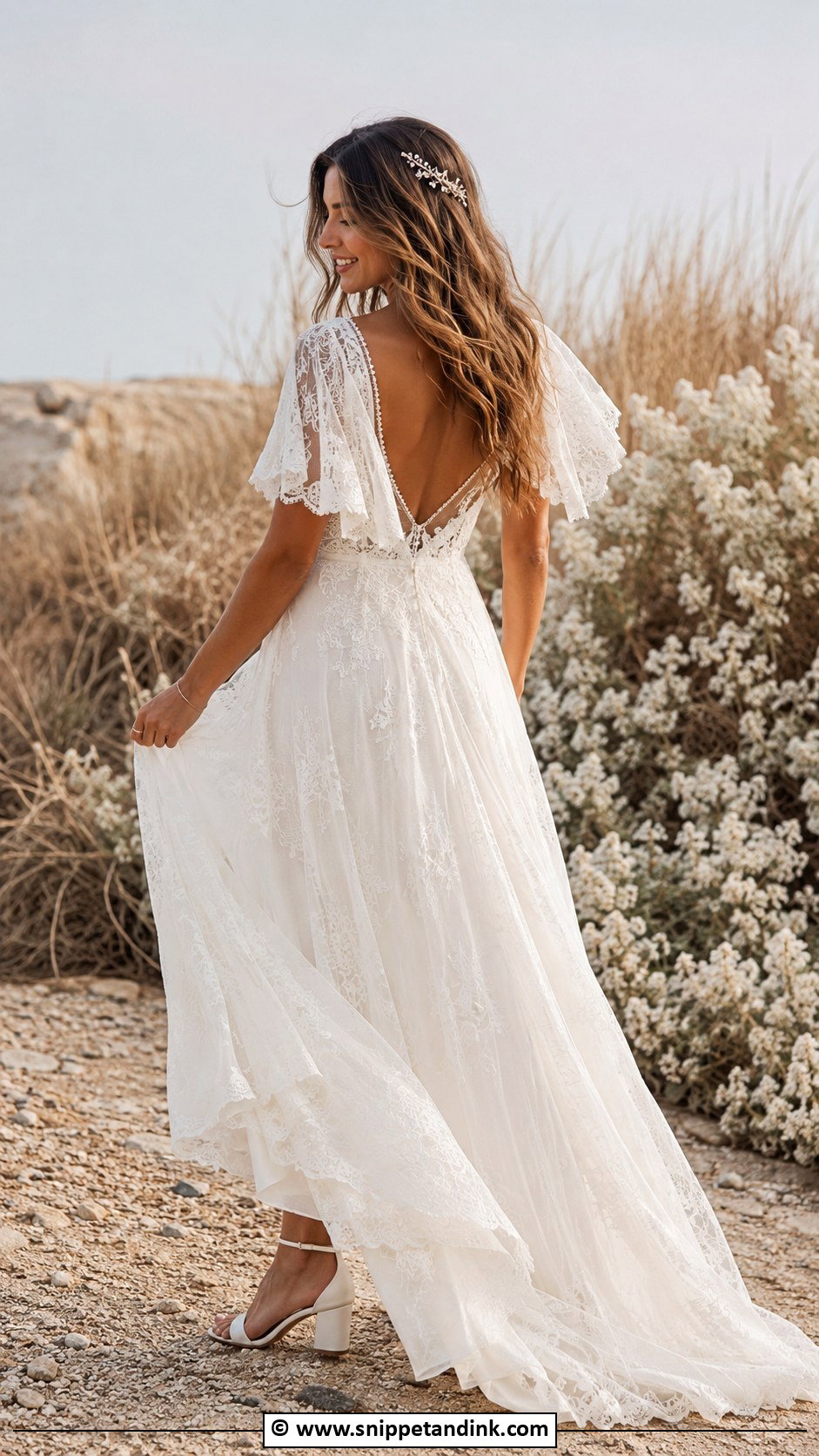
Boho A-lines are all about texture: soft lace, chiffon, light tulle, crochet details, flutter sleeves. The skirt moves freely, which suits desert venues and relaxed outdoor celebrations. A V neck, open back or long sheer sleeve adds to the ease. My caution is the hem: unlined lace and crochet skirts pick up grass stains and dust quickly, so if the ceremony is on a field, ask about a slightly shorter front hem or a horsehair band to lift it. Loose waves, block heels or sandals and a flower pin suit it better than heavy jewelry.
17. Vintage A-Line Wedding Dress
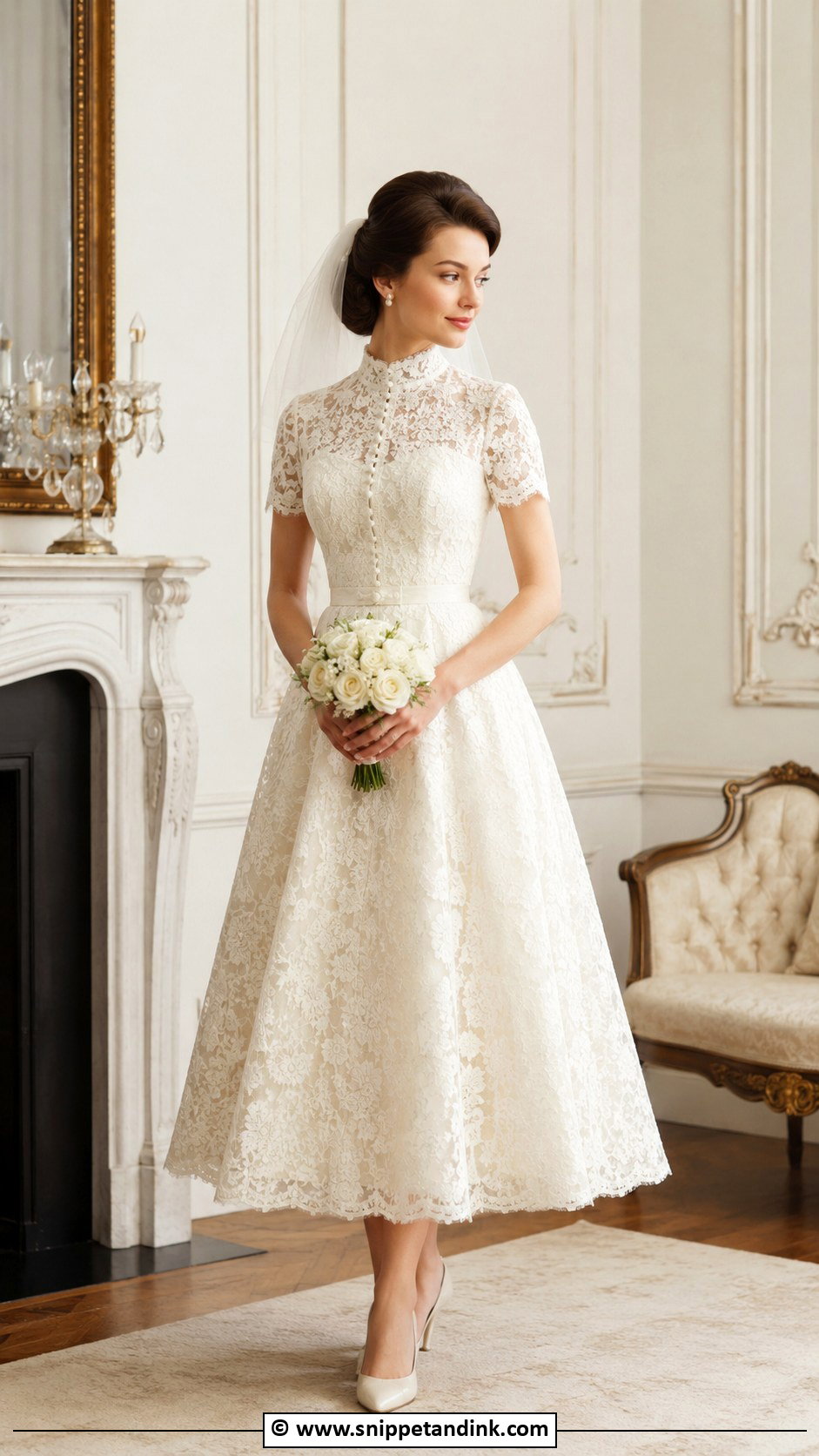
Vintage details make sense on an A-line because the shape was already the default for much of the last century. Look for high necklines, lace sleeves, covered buttons, tea length, brocade texture or delicate embroidery. A 1950s shorter skirt, a 1970s lace sleeve and old Hollywood satin are three very different moods. If it’s a genuine vintage gown, I’d have a specialist check the seams and fabric strength before any alterations, since old lace can split at the stress points. Pearl earrings, classic pumps and a soft low bun suit it.
18. Modern A-Line Wedding Dress
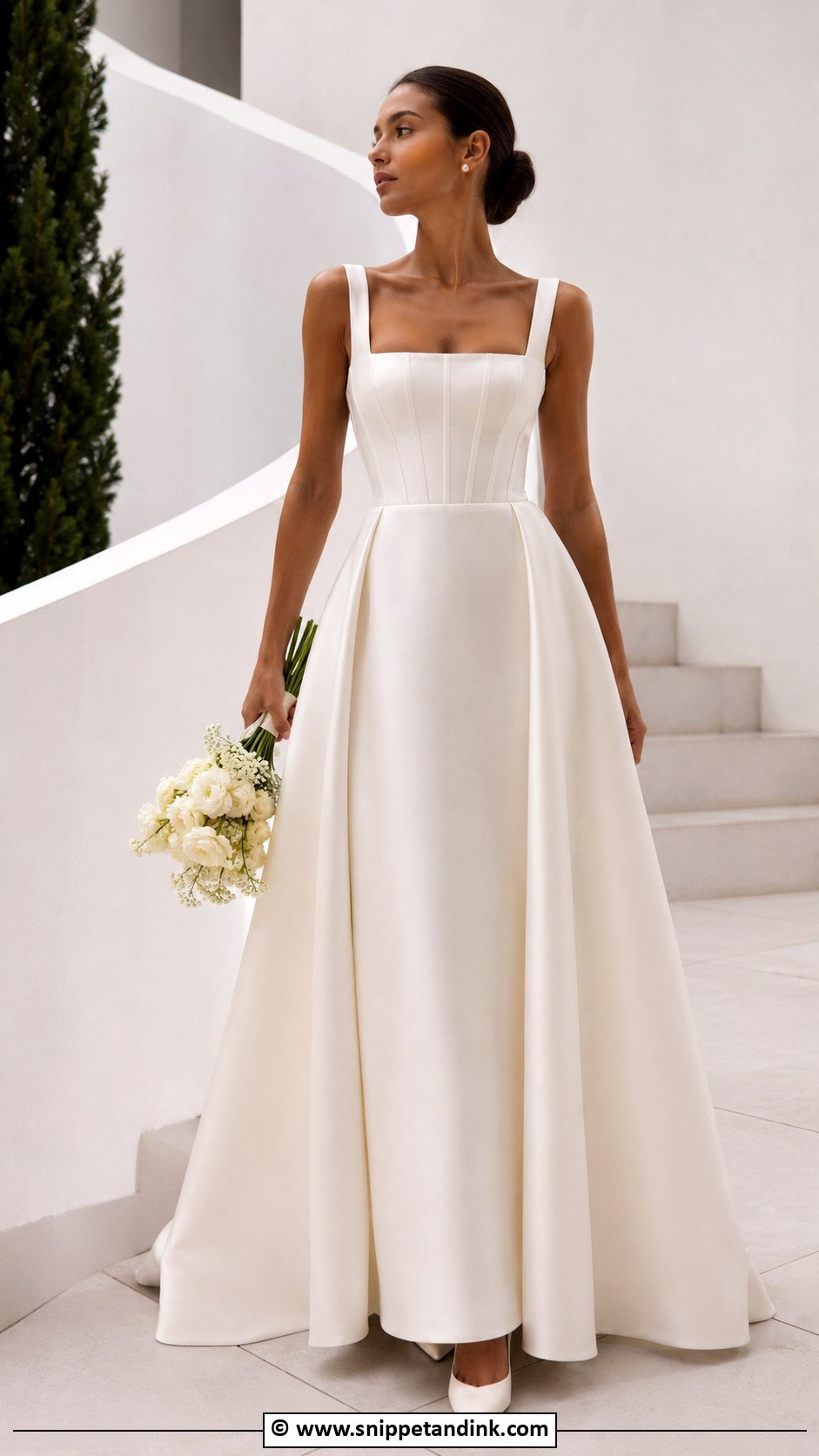
Modern here means structure and restraint: square necklines, corset seams, basque waists, sculptural folds, smooth satin with almost no decoration. The A-line skirt keeps it bridal. It fits city venues, galleries and rooftops. Accessories should be sharp and few, like pointed heels, pearl studs and a sleek bun. If you want a stronger statement, an oversized bow or architectural neckline does it without adding sparkle.
19. Princess A-Line Wedding Dress
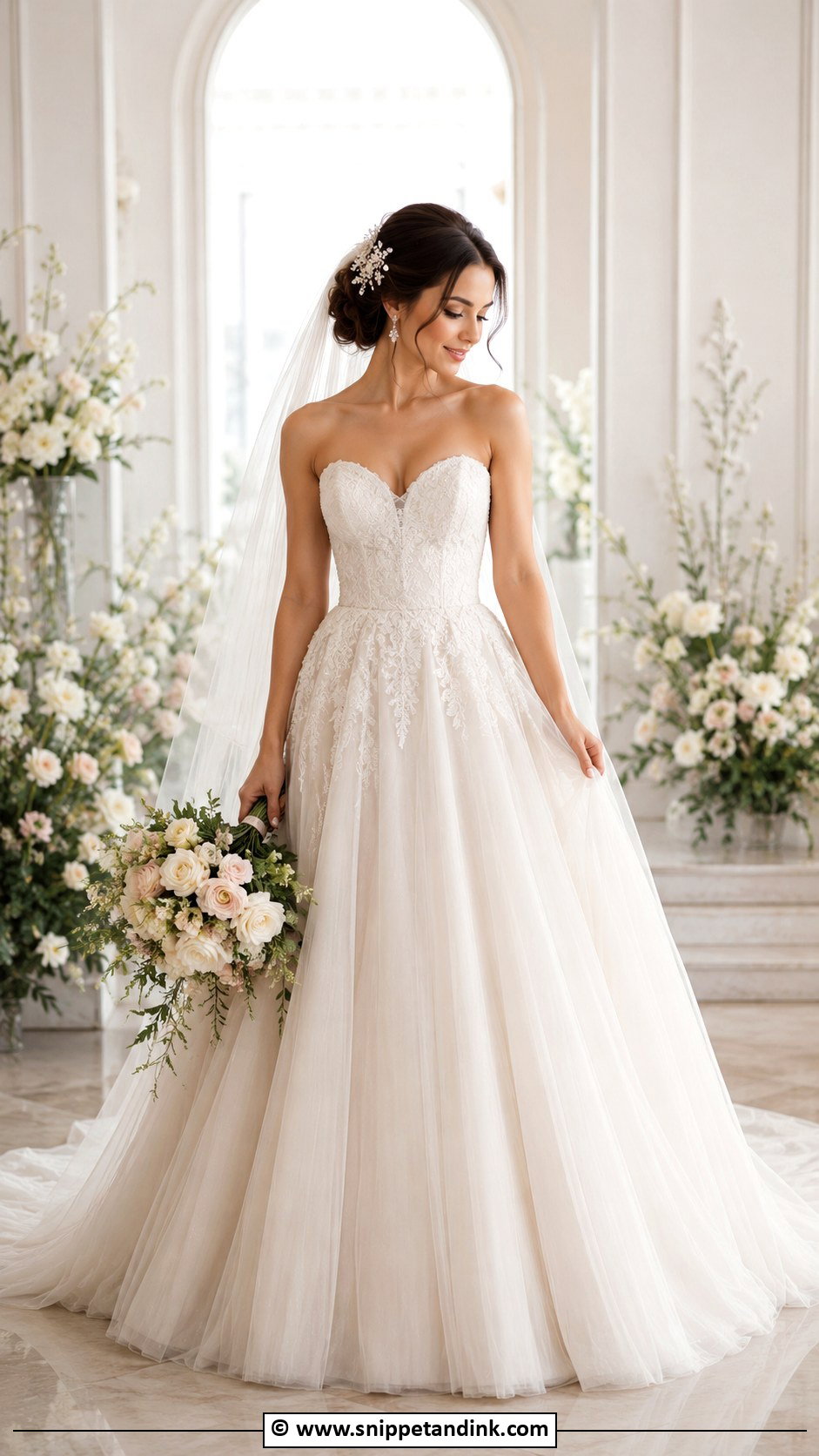
This is the fairytale shape without the weight of a full ball gown. The bodice is fitted and the skirt opens with soft volume, usually built from several layers of tulle or organza over a lining. What I warn brides about is the petticoat: some princess skirts get their volume from a hoop or stiff crinoline that makes sitting and car rides awkward, while others use soft layered tulle that collapses gently when you sit. Ask which one you’re getting. Sweetheart or off shoulder necklines suit it, and a long veil makes the ceremony more formal.
20. Simple A-Line Wedding Dress
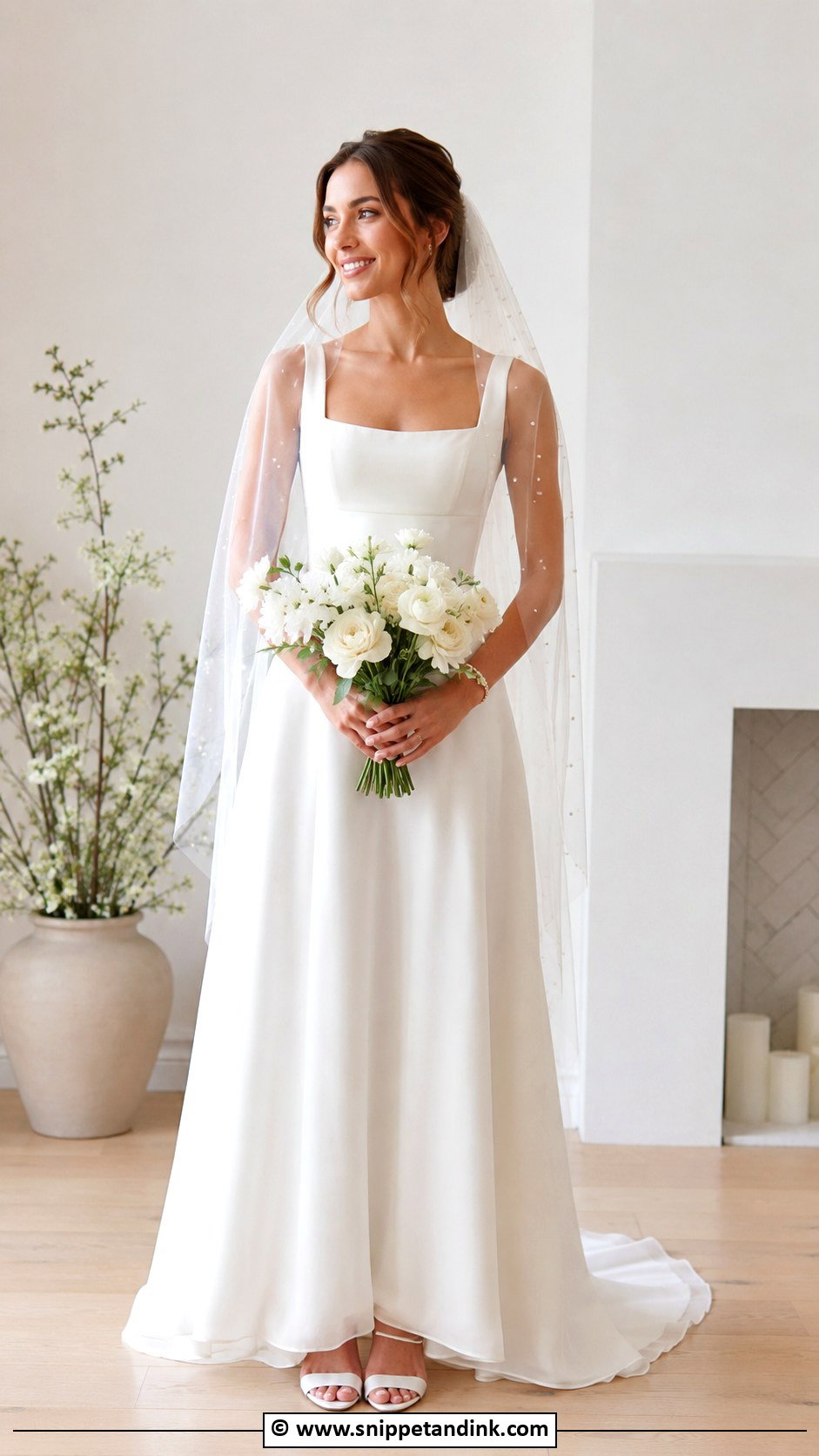
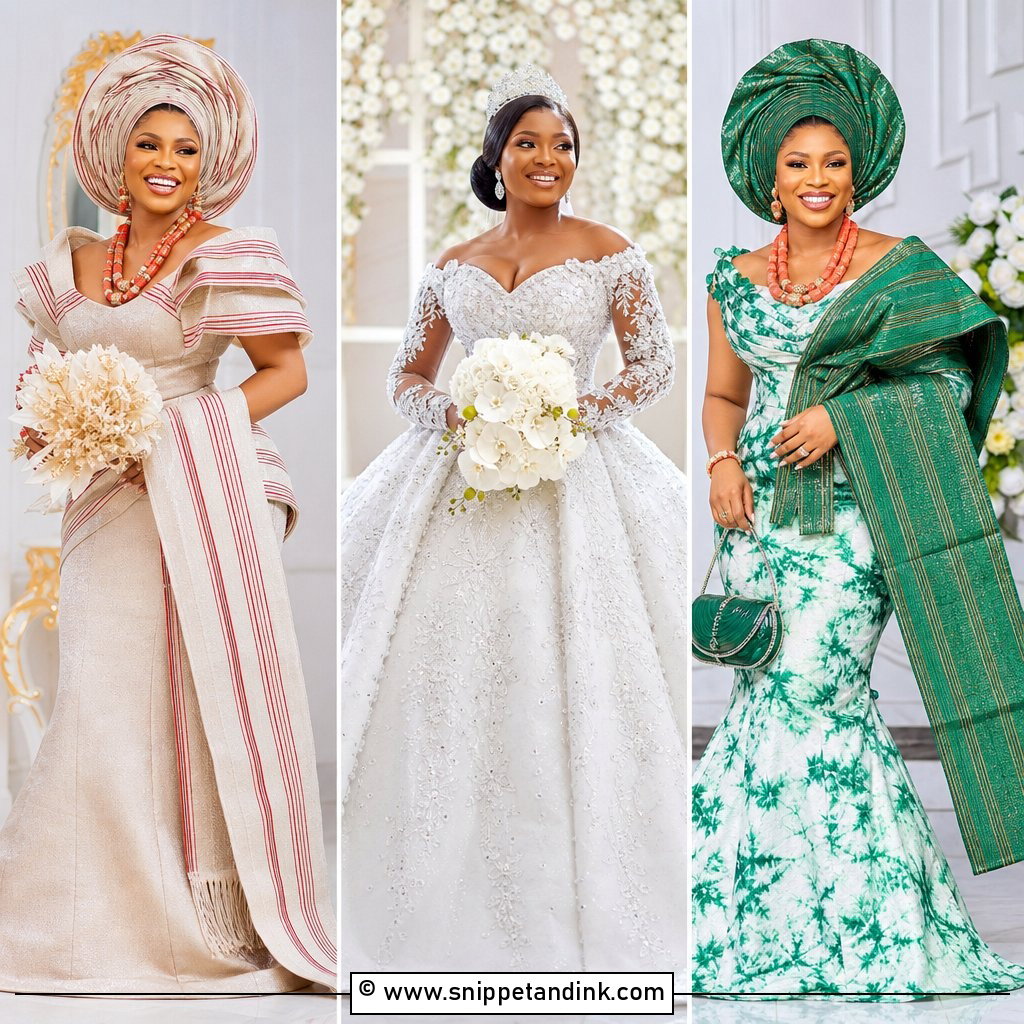
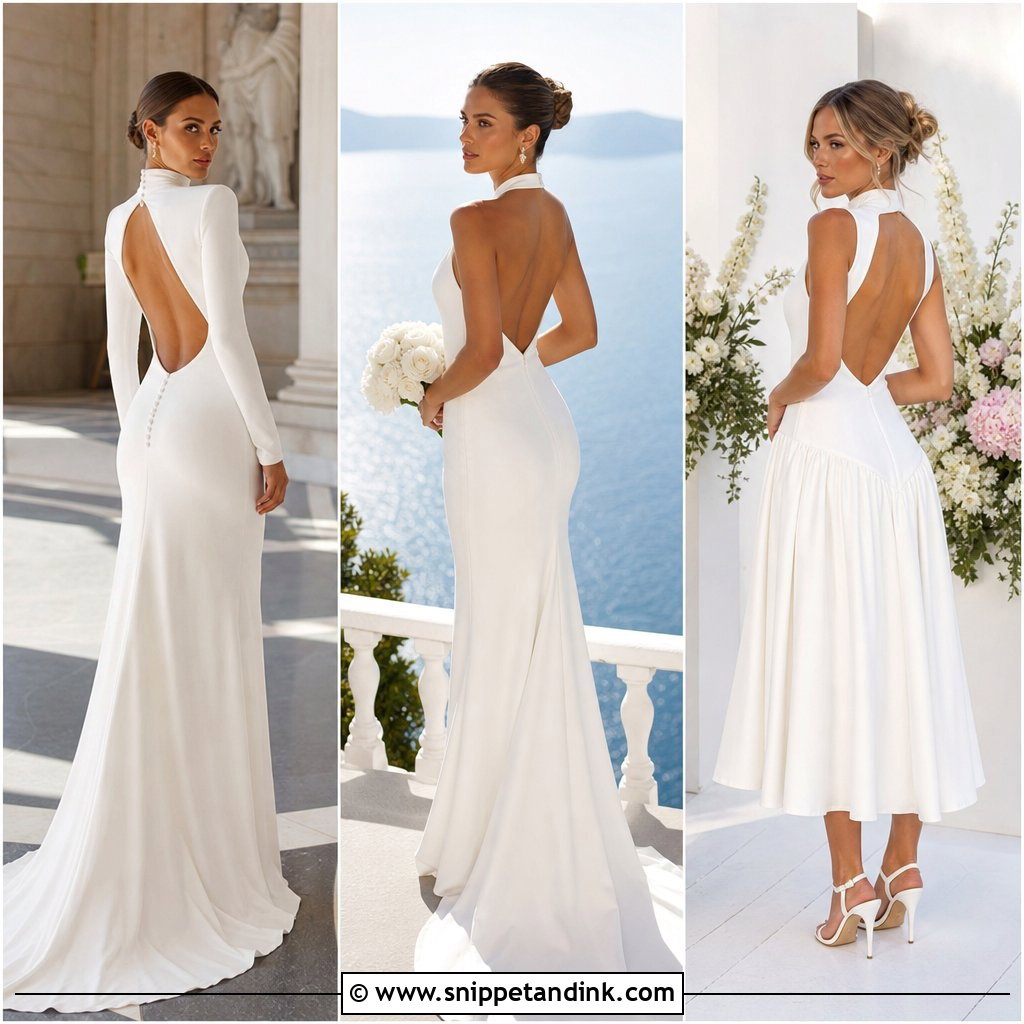
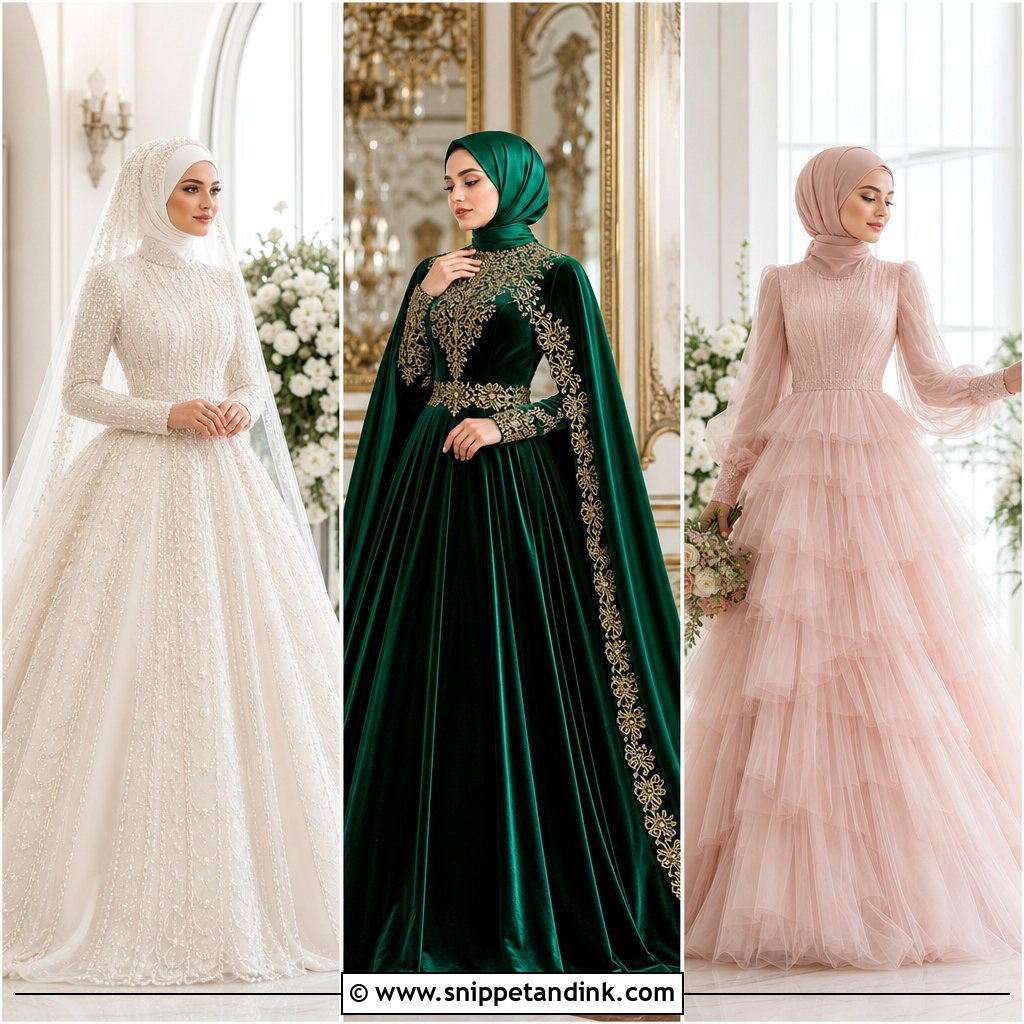
A simple A-line gives you the most freedom, which can feel like a lot of decisions. The bodice may be plain and the trim minimal, but the right fit makes it look considered. Satin, chiffon and crepe all work. I usually suggest picking one place to add interest, a pearl veil, bold earrings or a textured bouquet, rather than layering several. It suits intimate weddings and destination events, and it travels better than most because there’s nothing to crush or snag.
21. Plus Size A-Line Wedding Dress
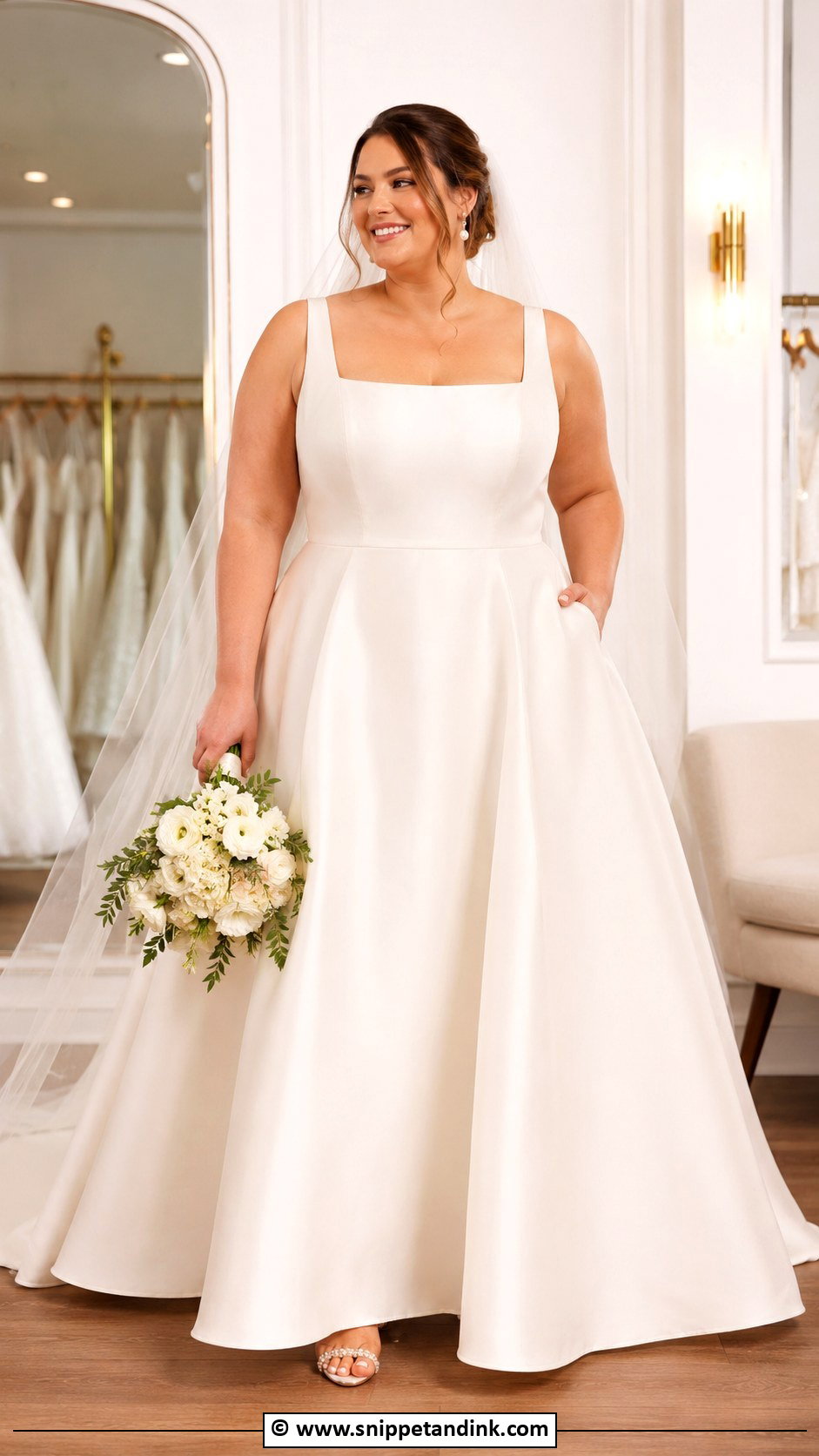
A plus size A-line wedding dress works because it defines the waist and moves freely over the hips. Structure inside the bodice matters far more than coverage: a corset back, wide straps, square or V neckline. At the first fitting I always ask brides to bring the exact bra or shapewear they’ll wear, because changing underpinnings later shifts every measurement. Satin and Mikado give a smooth finish; lace and tulle bring softness. Don’t settle for the gown that feels safe. Pick the one you keep turning back to in the mirror, then tailor it until it feels secure.
22. Petite A-Line Wedding Dress
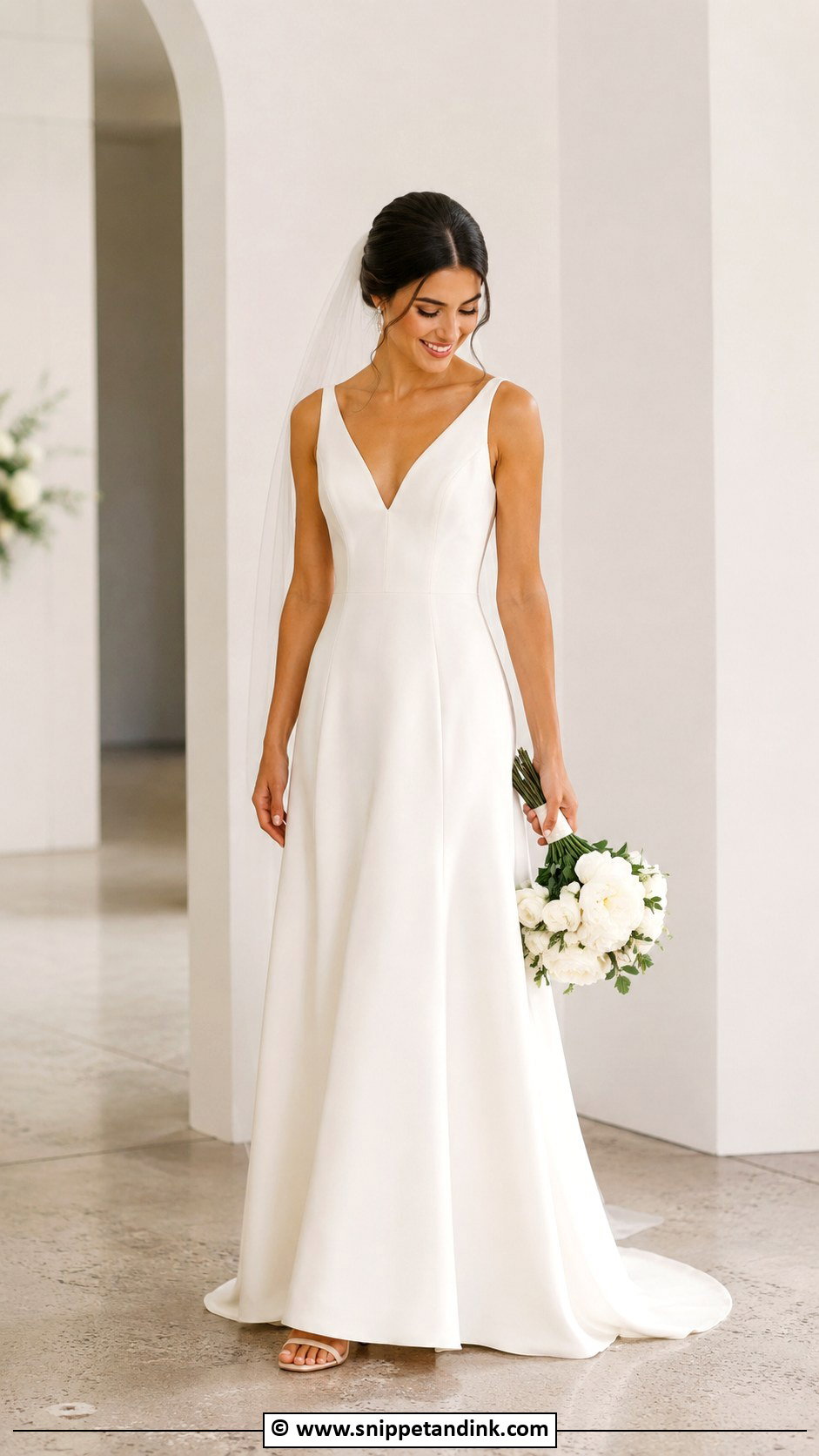
On a petite frame, the problem is usually volume, not length. A skirt that flares gently looks proportional; layered tulle can swallow a smaller bride. V necklines, vertical seams, narrow straps and a slightly raised waist seam all draw the eye upward. Chiffon, tulle, crepe and soft satin are good choices. Hemming is the big alteration, and on a lace hem it’s more work than people expect because the lace edge often has to be removed and reattached. If you love a train, choose a short sweep so you’re not towing fabric.
23. Beach A-Line Wedding Dress
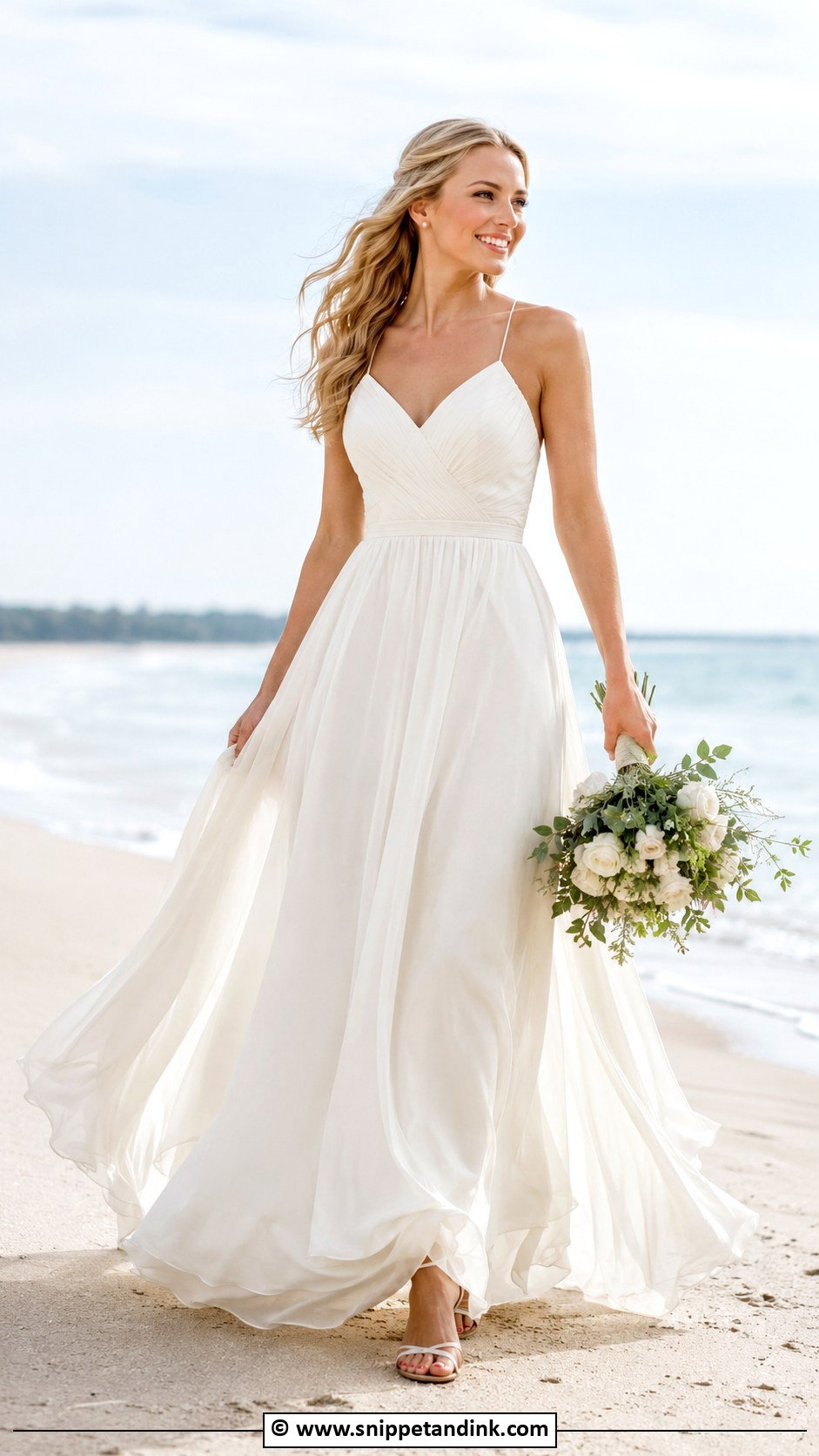
Sand changes everything about how a dress behaves. Chiffon, organza, soft tulle and lightweight crepe move in the breeze and dry quickly if a wave catches the hem. A sleeveless V neck, halter, spaghetti strap bodice or flutter sleeve keeps it relaxed. I’d skip a long train and stiff fabrics: they drag sand into the hem and get heavy. Hem the dress a touch shorter than usual if you’ll be barefoot, since you lose the height of a heel. Bridal sandals, pearl studs and a short veil complete it.
24. Garden A-Line Wedding Dress
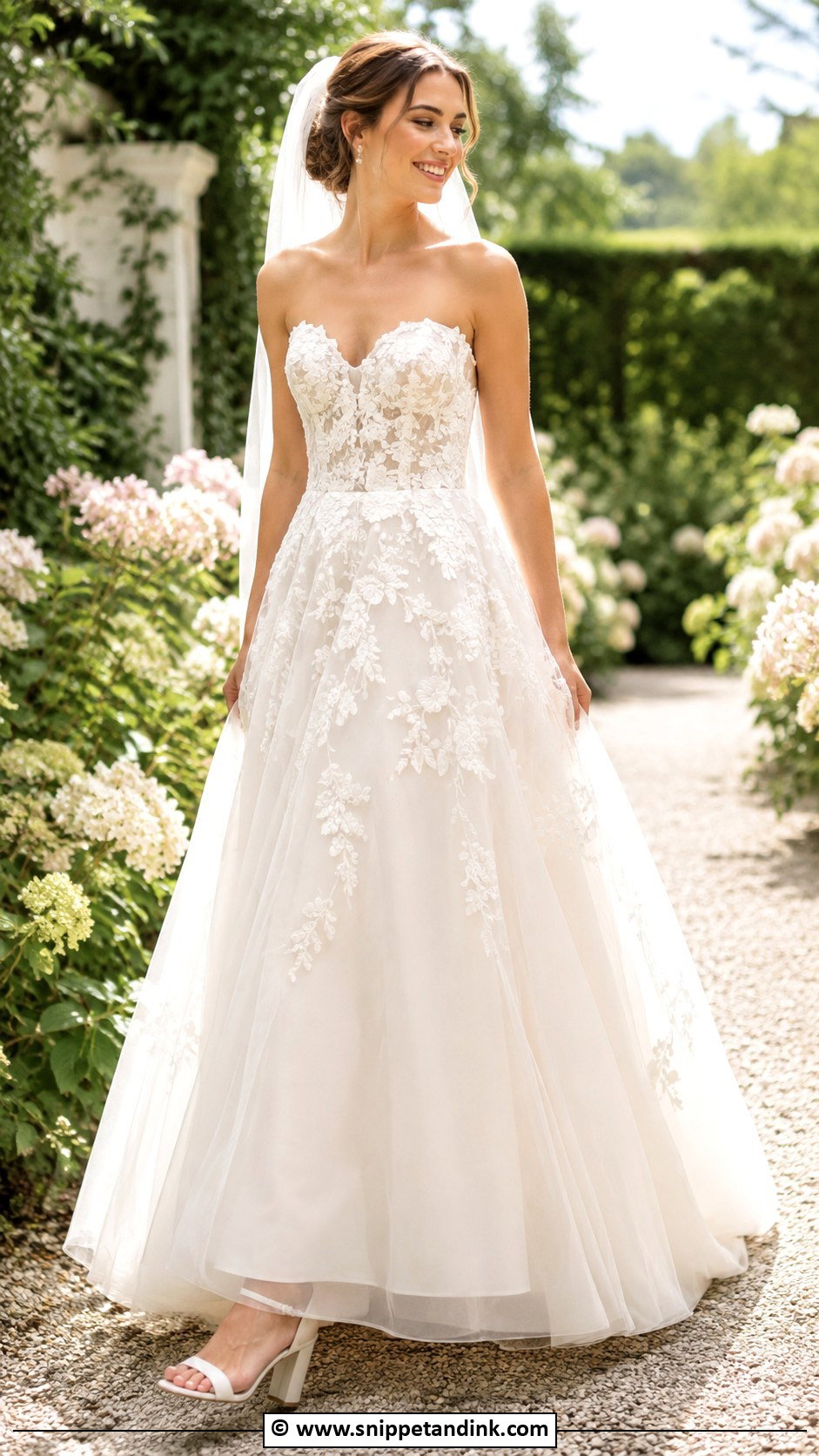
For a garden, I look for fabrics that feel at home outdoors: floral lace, 3D appliqués, embroidered vines, airy tulle. The skirt gives you room to walk across grass and paths. Heels sink into lawns, so I’d plan on block heels or wedges and have them on at the final fitting so the hem is set to the right height. A sweetheart, off shoulder or sheer sleeve suits the setting. Small earrings and a delicate veil are enough; heavy, formal accessories look out of place among greenery.


25. Winter A-Line Wedding Dress
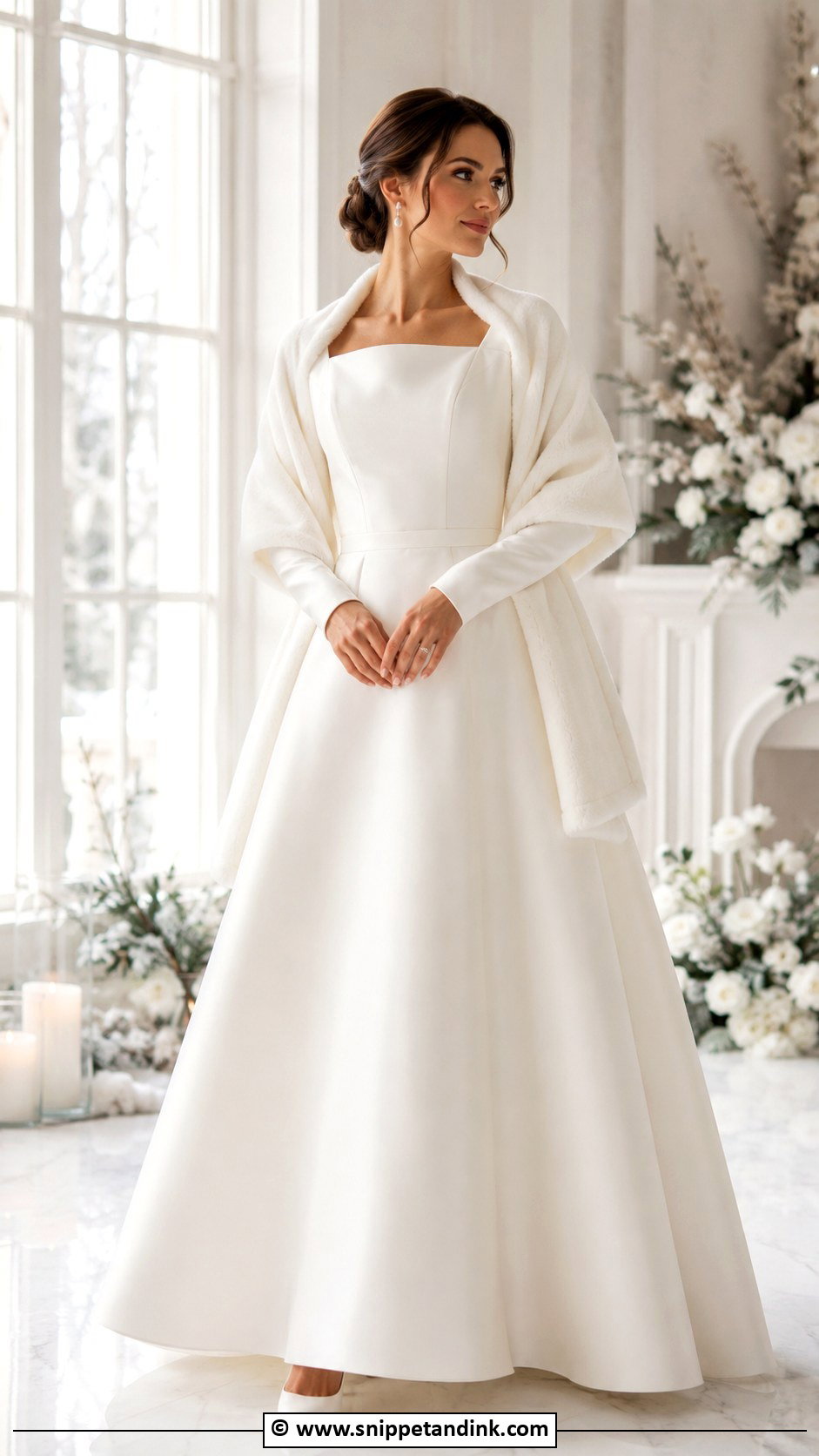
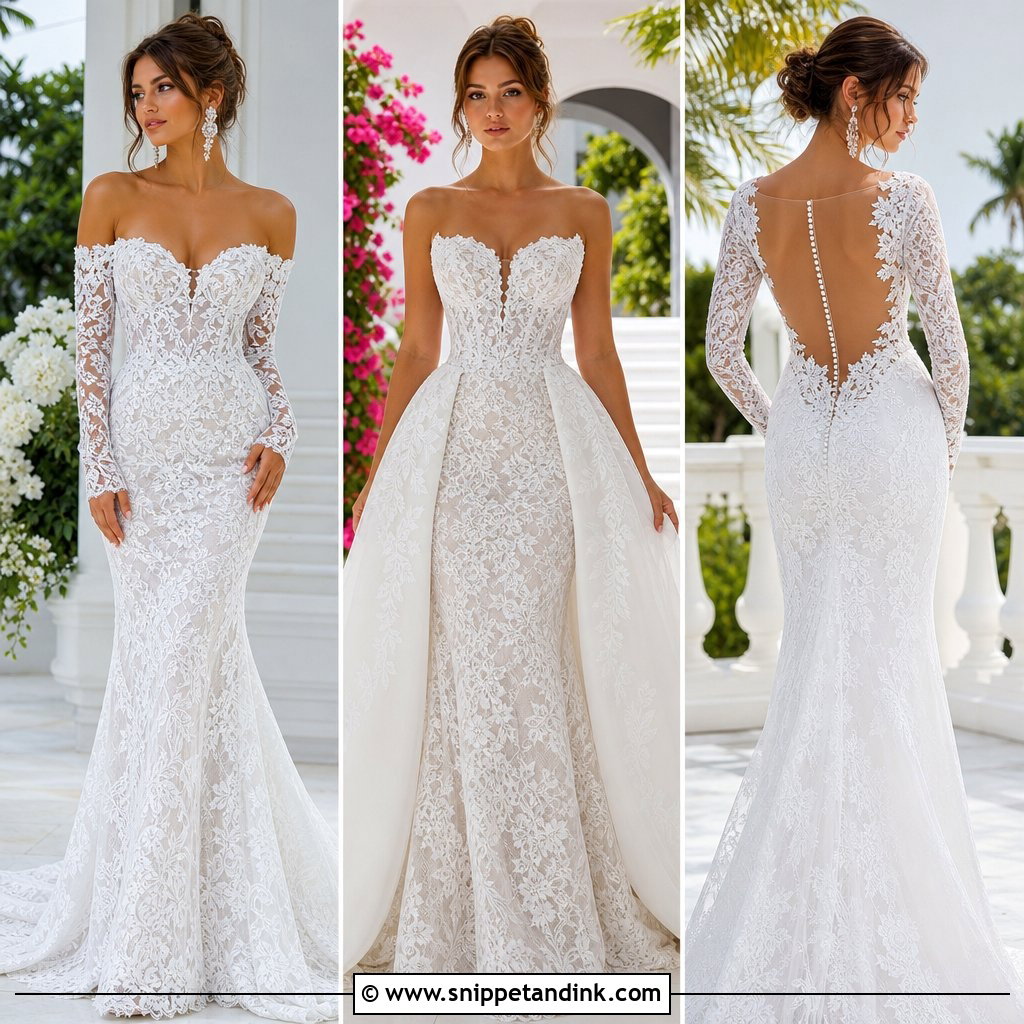
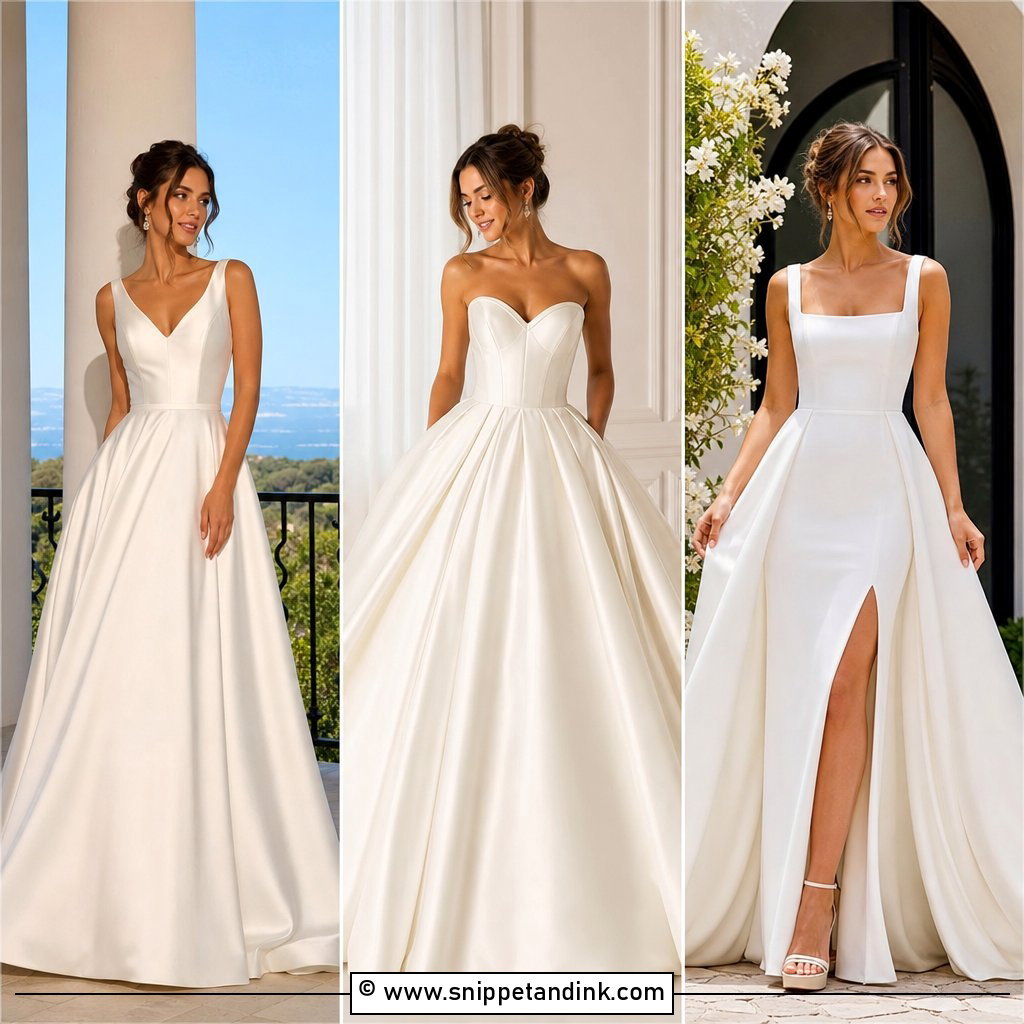
Winter is the one season where I push brides toward heavier fabric. Long sleeves, satin, Mikado, crepe and denser lace hold up to cold and look rich in low, warm light. A high neck, square neck or off shoulder sleeve can shape the mood. Add closed-toe heels, pearl earrings and a tailored coat or wrap for outdoor photos, and fit the coat over the dress before the day so the bodice doesn’t crush. A long veil looks dramatic against bare trees or snow. Keep embellishment subtle so it feels seasonal, not themed.
26. Summer A-Line Wedding Dress
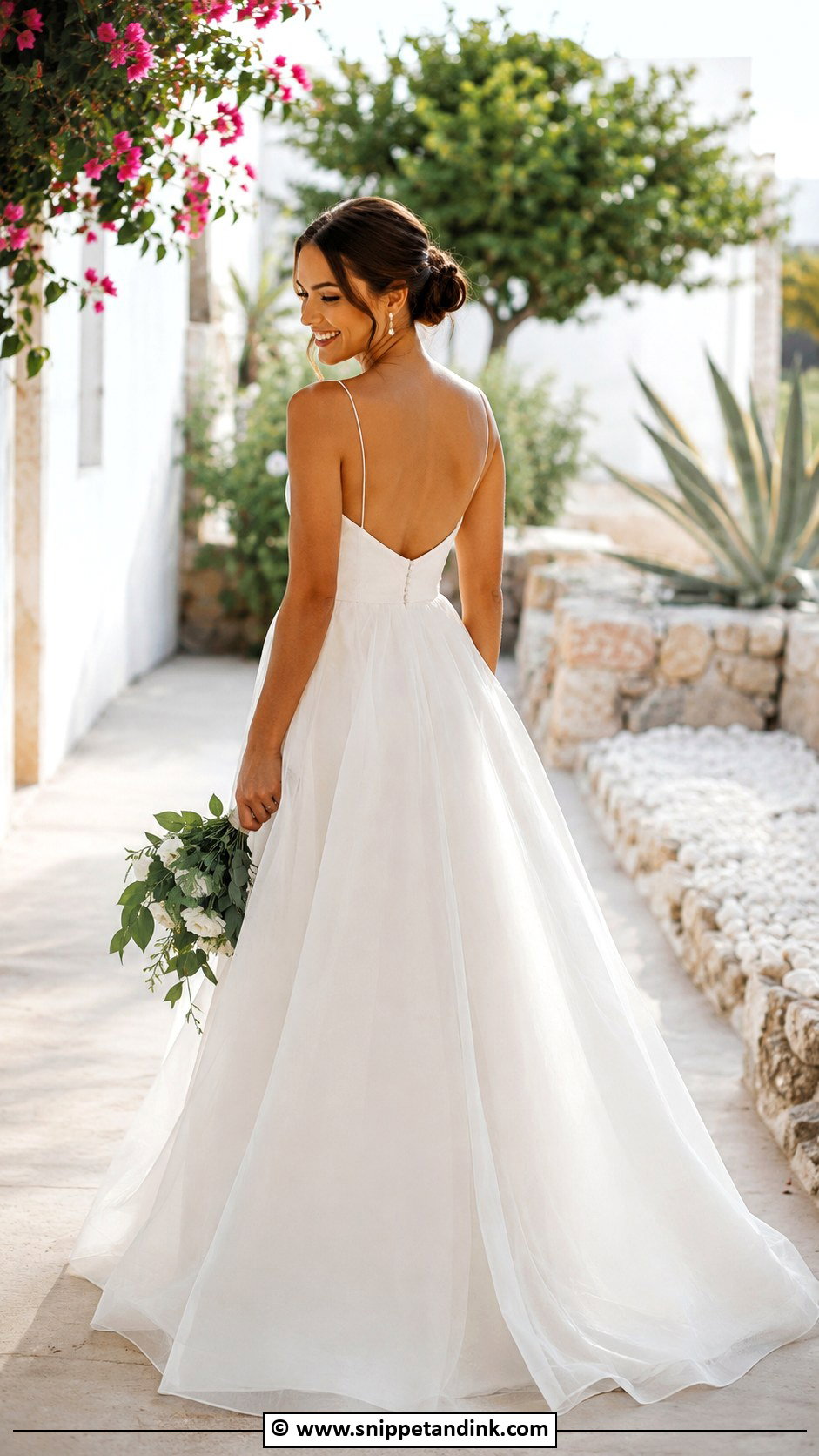
Heat is hard on a bride, so this is a practical choice first. Chiffon, organza, soft tulle and breathable crepe are kinder than heavy satin outdoors, and a lining in cotton or a natural blend helps more than people expect. Sleeveless bodices, thin straps, square necks or low backs feel fresh. The skirt doesn’t cling, which matters in humidity. Wear comfortable sandals or slim heels, keep makeup light and hair up off your neck. A short veil or just a comb is enough.
27. A-Line Wedding Dress With Bow
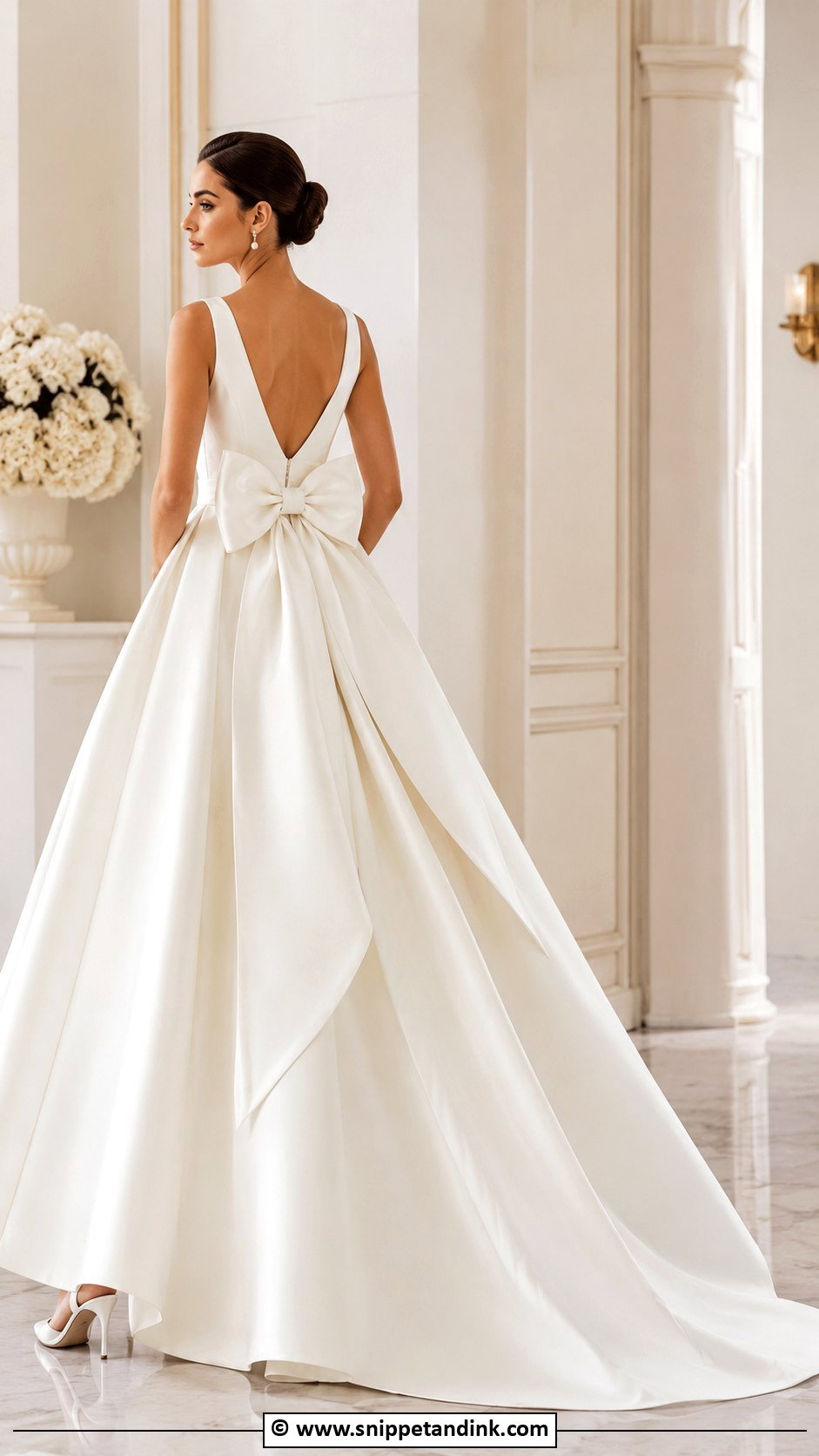
A bow adds personality without covering the gown in decoration. At the back it feels classic; at the waist it’s more fashion-led. Oversized bows need stiff, clean fabric like satin or Mikado to hold their loops, and soft bows on lace, tulle or organza can droop after hours of sitting against a chair back. I check how a back bow behaves when the bride sits, because some get crushed flat. Keep earrings and hair neat so the bow stays the one detail people remember.
28. A-Line Wedding Dress With Slit
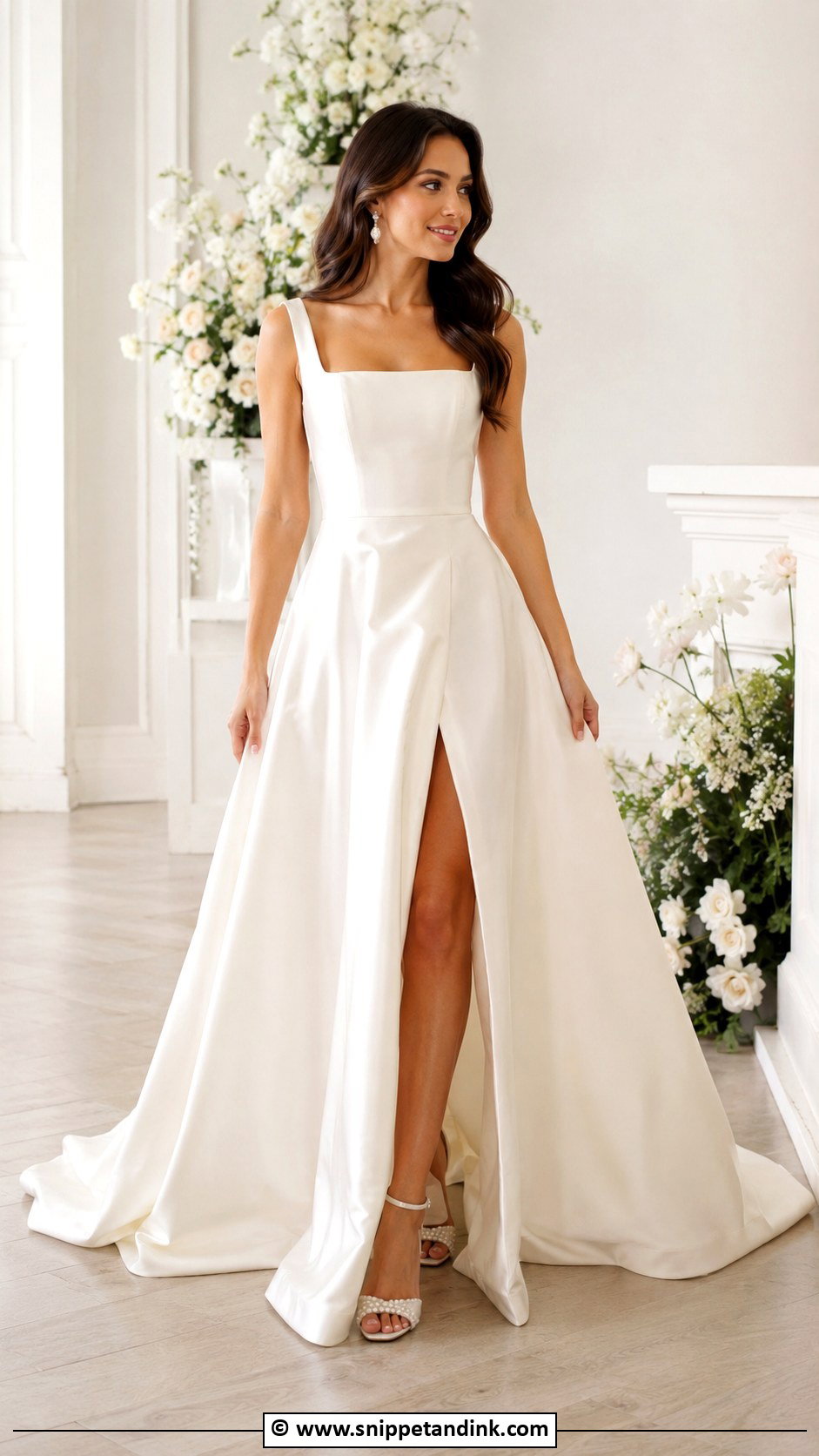
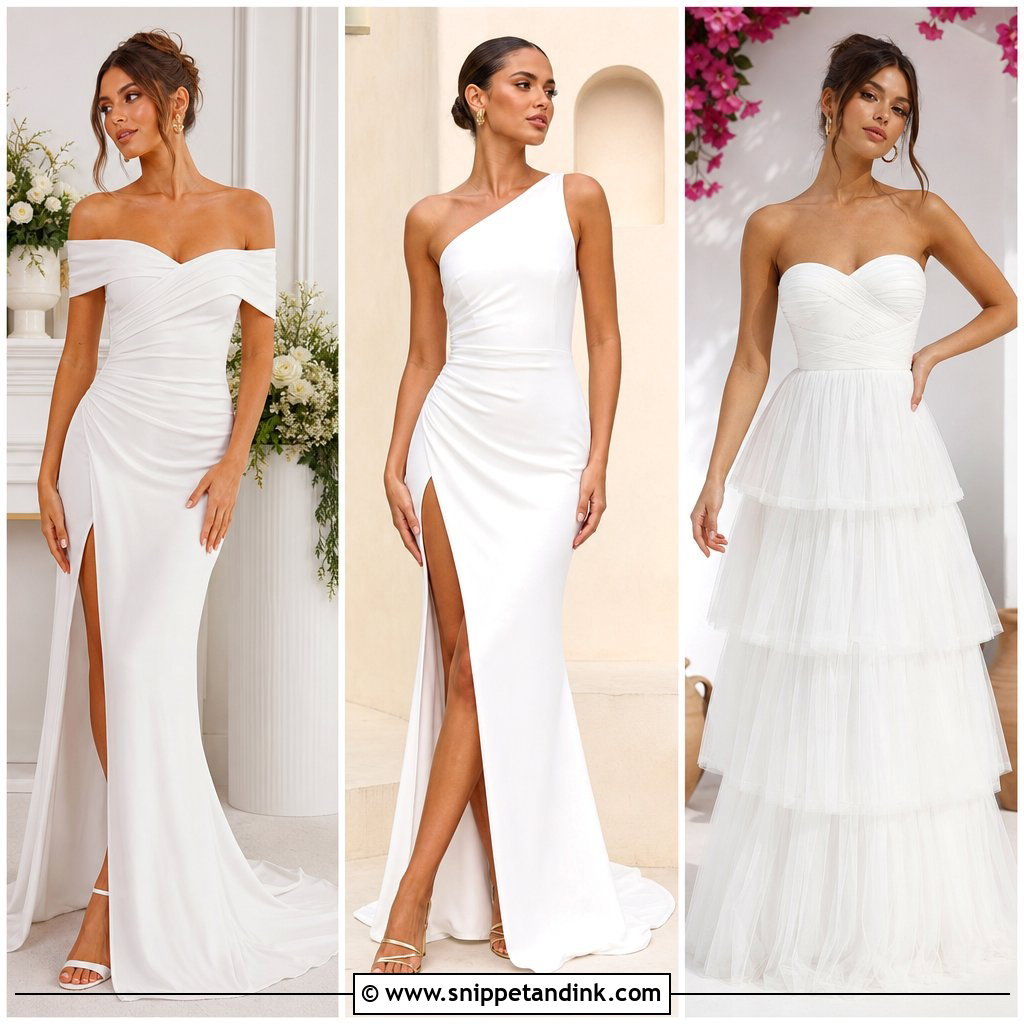
A slit adds movement and a modern edge while the silhouette stays graceful. It can be subtle and only show when you walk, or higher and more visible. It works with satin, crepe, chiffon and clean tulle. I always test a slit on stairs and when seated, since a slit that looks modest standing can open much further when you sit. Pair it with a secure bodice like a square neck or corset top. Your shoes will be seen, so choose them as carefully as the earrings.
29. A-Line Wedding Dress With Train
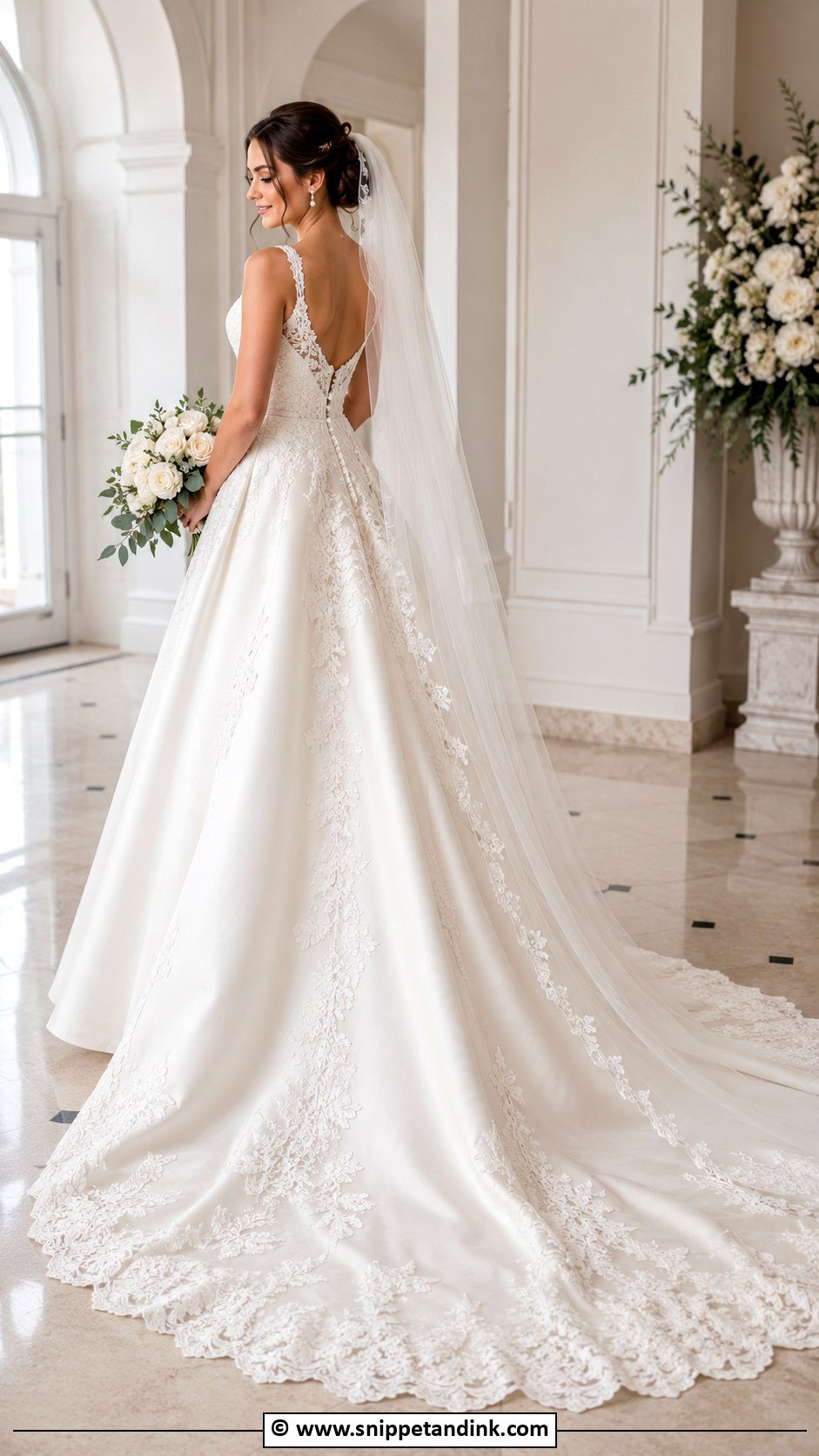
A train turns ceremony photos into something formal. A sweep train is easy to manage; a chapel train is more traditional and needs a bustle you’ve actually practiced. Lace trains read romantic, satin clean, tulle soft. Make sure someone in your party has learned the bustle at the final fitting, because a tailor’s quick demonstration is easy to forget at 9 p.m. Choose a veil that ends just past the train or well short of it so the two don’t fight.
30. A-Line Wedding Dress With Detachable Sleeves
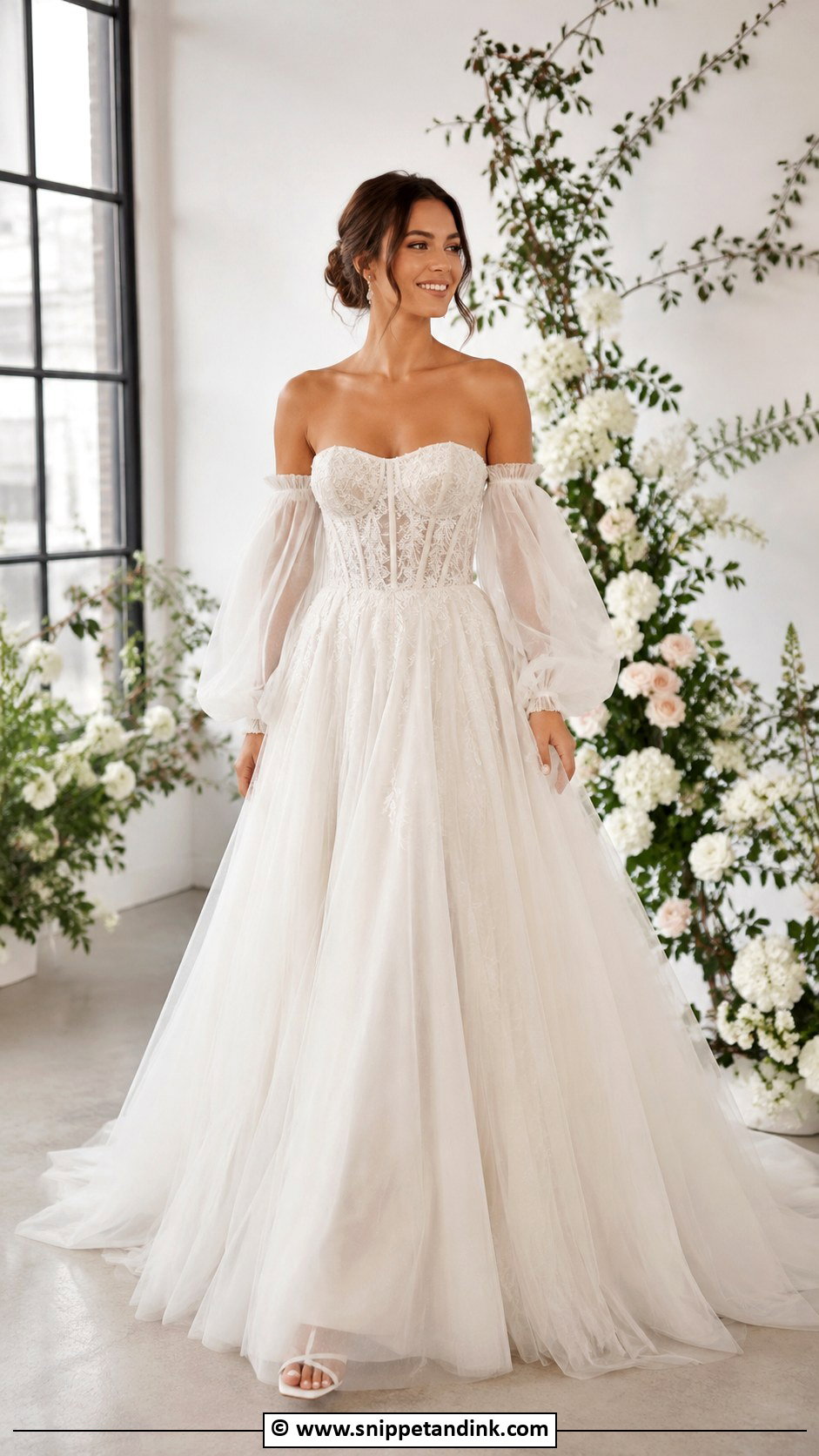
Detachable sleeves give you two dresses for the price of one alteration. Wear them for the ceremony, take them off for dancing. Puff sleeves feel playful, fitted lace looks classic, draped off shoulder sleeves soften the neckline. They work with satin, tulle, lace and corset bodices. Ask how they attach before you buy: hidden snaps are quick, while tiny buttons or hooks need a second pair of hands. Pick earrings that suit both versions, and keep the hair off the neckline.
Steaming, Bustling and Storing the Gown Afterwards
The fabric you choose decides how much care the dress needs around the wedding, and it’s worth knowing before you buy.
The morning of the wedding
Hang the gown from its internal loops, not the straps, the night before so the skirt can drop. Tulle and chiffon relax quickly with a hand steamer held a few centimetres away. Satin and Mikado are fussier: steam from the inside of the skirt where possible, keep the steamer moving, and never let water drip onto the face of the fabric, because satin can water-mark. Crepe usually just needs to hang.
Which bustle suits which skirt
An over bustle lifts the train with hooks and loops onto the back of the skirt and suits lighter fabrics and lace. An under bustle, sometimes called French, tucks the train beneath with ribbon ties, which is kinder to satin because no hooks pierce the surface. A ballroom bustle hides the train evenly around the waist so the dress looks floor length again. Ask your seamstress which she recommends for your fabric, and get the person who will do it on the day to practise twice.
After the last dance
Have the dress professionally cleaned within a few weeks. Champagne and sugary drinks can dry invisibly and then turn yellow-brown months later. Store it folded in acid-free tissue inside a breathable box, somewhere cool and dark. Plastic garment bags trap moisture and can yellow white fabric, and hanging a heavy gown for years stretches the shoulders.
Sit, Walk and Reach Before You Say Yes
The A-line keeps coming back because it gives shape and comfort without asking you to choose between them. Satin, lace, tulle, crepe, floral appliqué, long sleeves, corset bodices, minimal finishes: there’s a version for every venue on this list. Treat these 30 ideas as a starting point, then judge each gown on fit, fabric and how it feels when you sit, walk and lift your arms. The one that passes all three is the one to buy.
You'll Like These Ideas:








Leave a Reply