
A floor-length gown is still what most brides picture, and it’s the category where small decisions show the most. Fabric weight, hem length and how the skirt behaves when you sit change how a long dress looks far more than any trend does. Right now I’m seeing plenty of clean satin, basque waists, bows, detachable trains and very plain columns, alongside the A-lines, ball gowns and mermaids that never really leave. Below are thirty long silhouettes and fabrics, each with what I’d pair it with and what I’d check at the fitting.
Order Dates, Fittings and the Shoes You Hem To
Most bridal salons order a gown from the designer after you choose it, and production usually takes several months, often four to six and sometimes longer for heavily embellished styles. Then come the alterations. Long dresses nearly always need a hem, and many need the bodice taken in too. I’d allow two or three fittings, starting roughly two to three months before the wedding.
The single thing I ask every bride to settle before the first fitting is her shoes. The hem is set to the exact heel height, and switching from a three-inch heel to flats later leaves the front of the skirt dragging on the floor. Bring the shoes, the underwear and, if possible, the veil.
- First fitting: overall fit, bodice and hem pinned in your wedding shoes.
- Second fitting: check the corrections, practise sitting, walking and stairs.
- Final fitting: learn the bustle and bring the person who’ll do it on the day.
1. Long Satin Wedding Dress
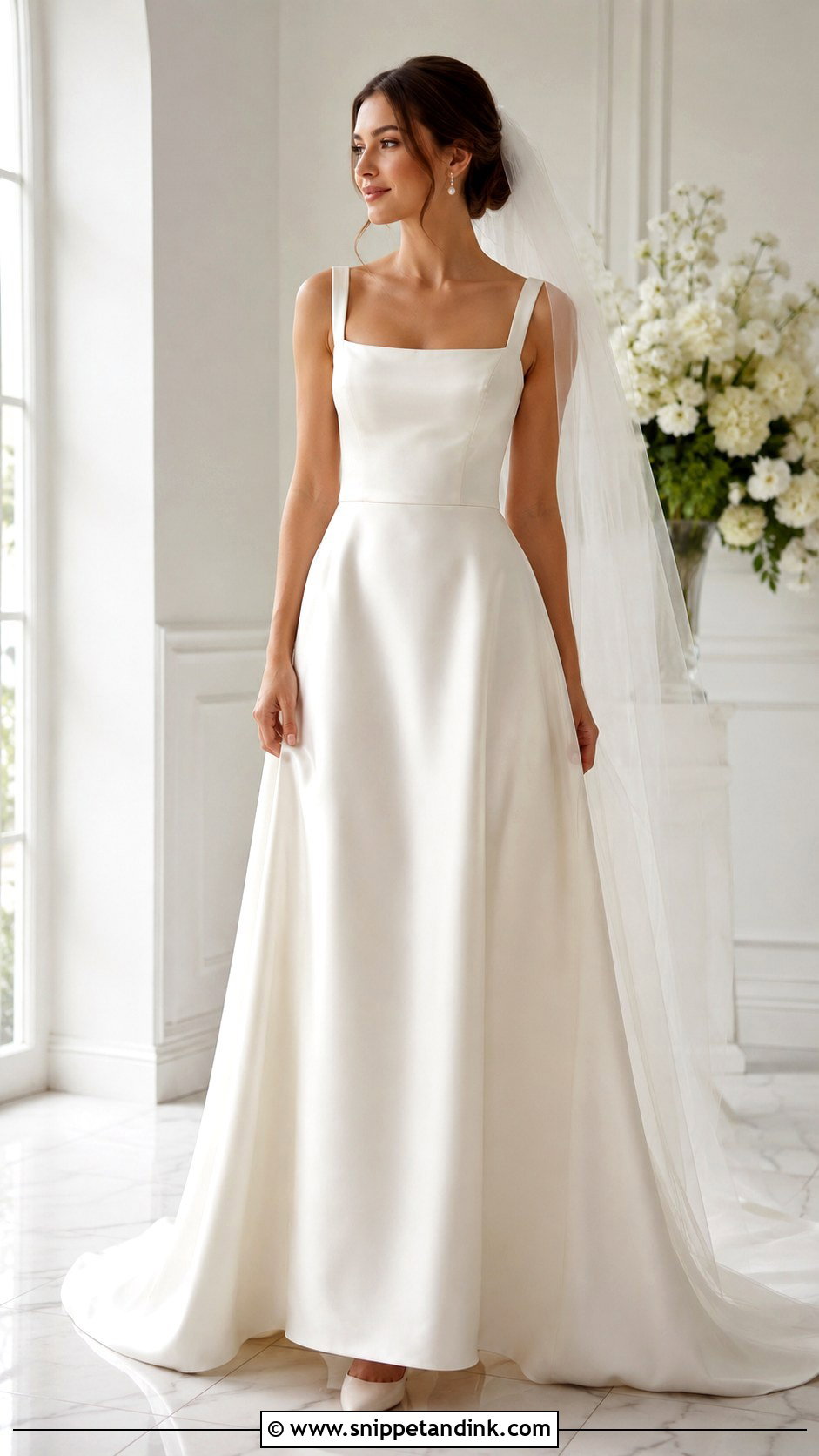
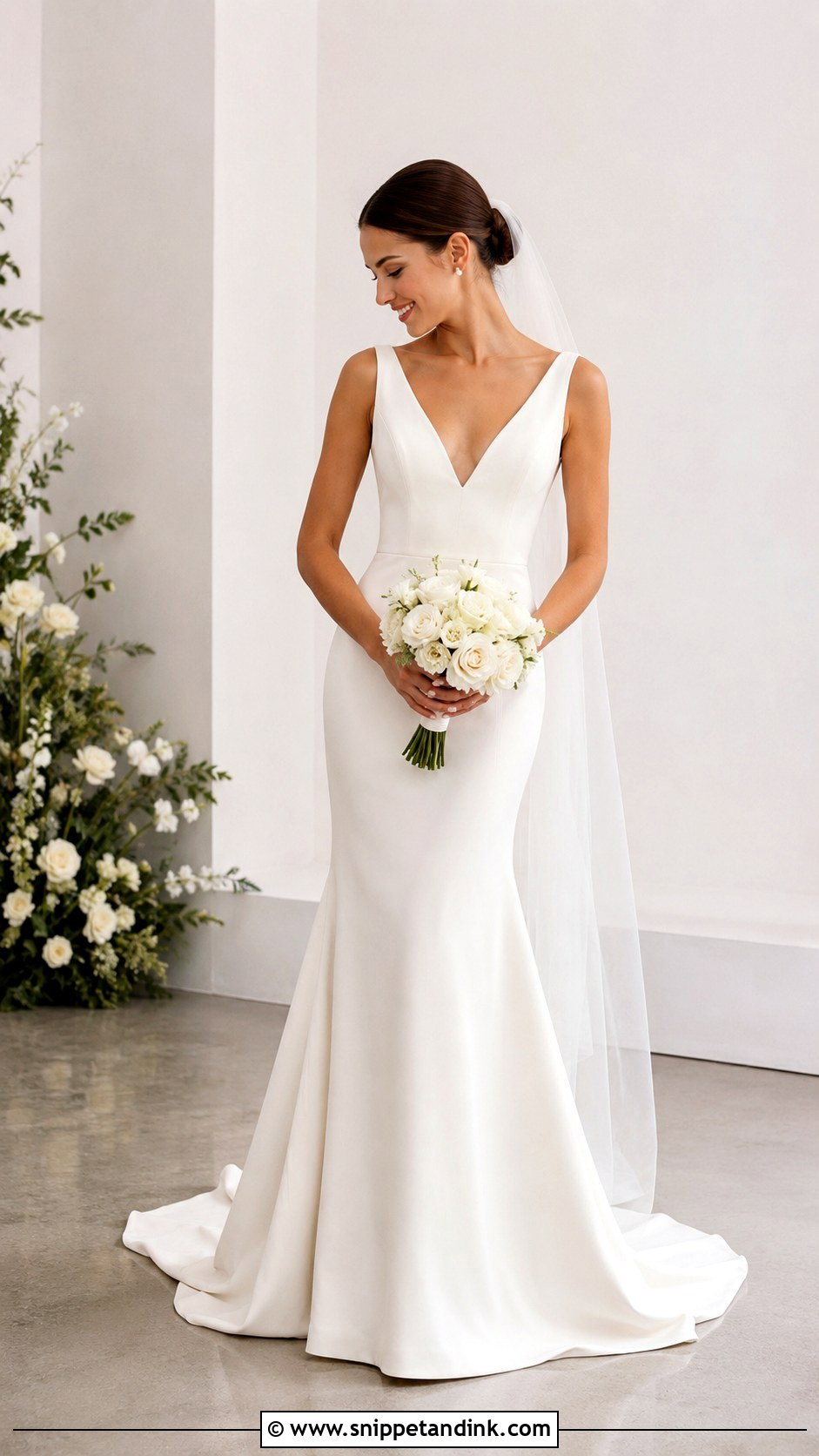
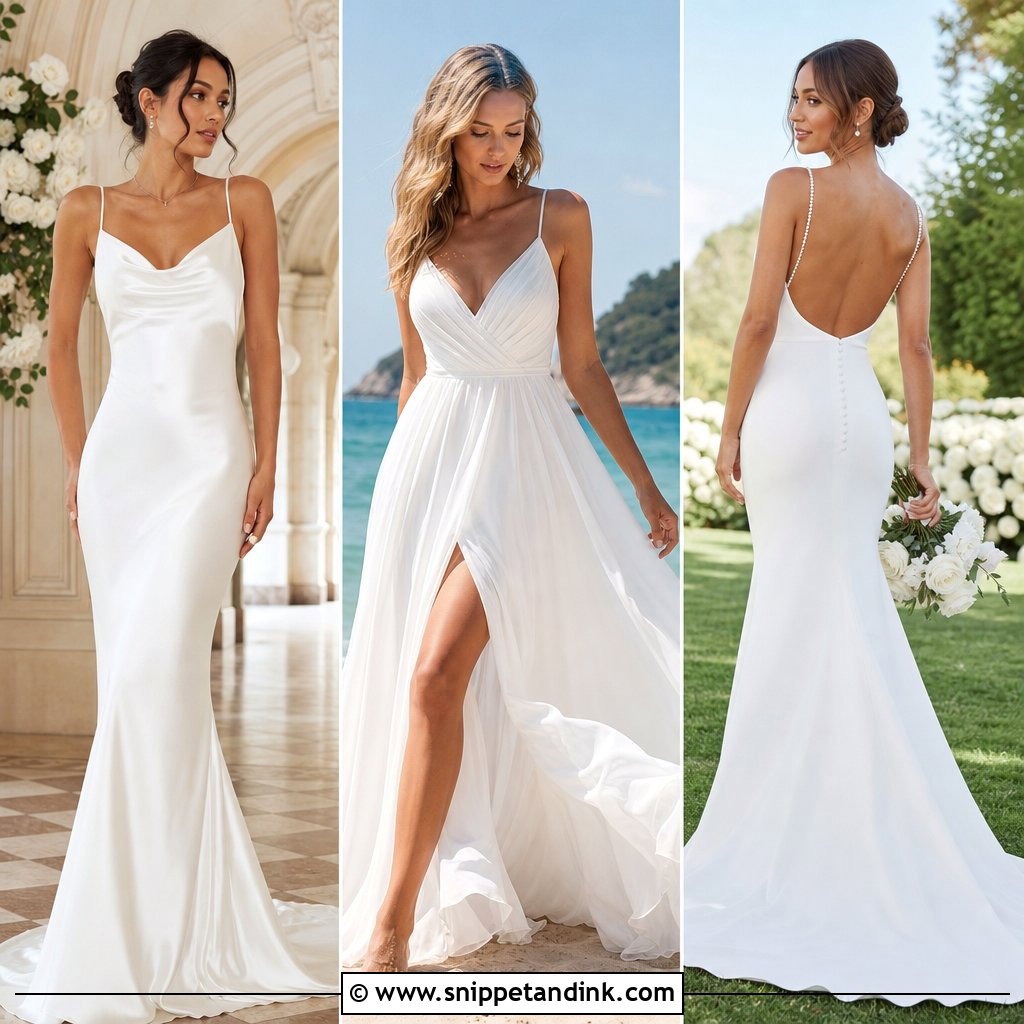
Satin is the fabric I’d pick for an indoor venue with warm lighting, because it reflects light softly and photographs as a smooth, solid shape. The flip side is that it shows everything underneath. Underwear with no visible edges and a well-fitted bodice matter more here than with lace. A structured bodice, a soft A-line or a sleek column all suit it. I’d pair it with pointed satin heels, pearl drops and a low bun, plus a chapel veil.
2. Long Lace Wedding Dress
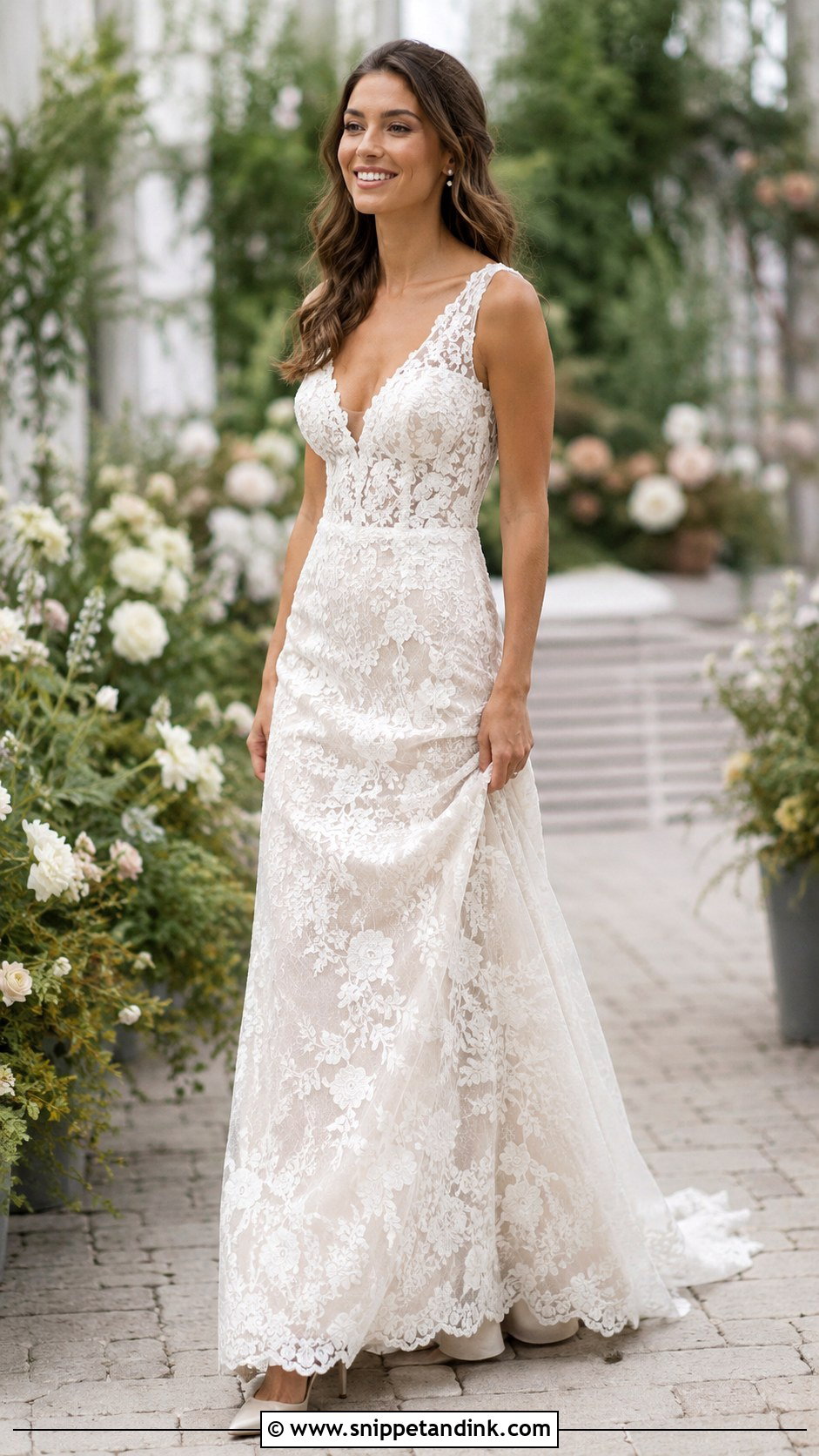
Lace suits a garden or estate wedding, and it’s more forgiving than satin: the pattern hides small creases and the odd mark from a long day outdoors. Look closely at the lace itself. Delicate floral appliqué reads vintage; widely spaced graphic lace looks newer. An allover lace sheath leans retro, a lace bodice over a soft skirt leans romantic. If the lace is busy, I keep the veil plain, with ivory heels and small pearl studs.
3. Long Sleeve Wedding Dress
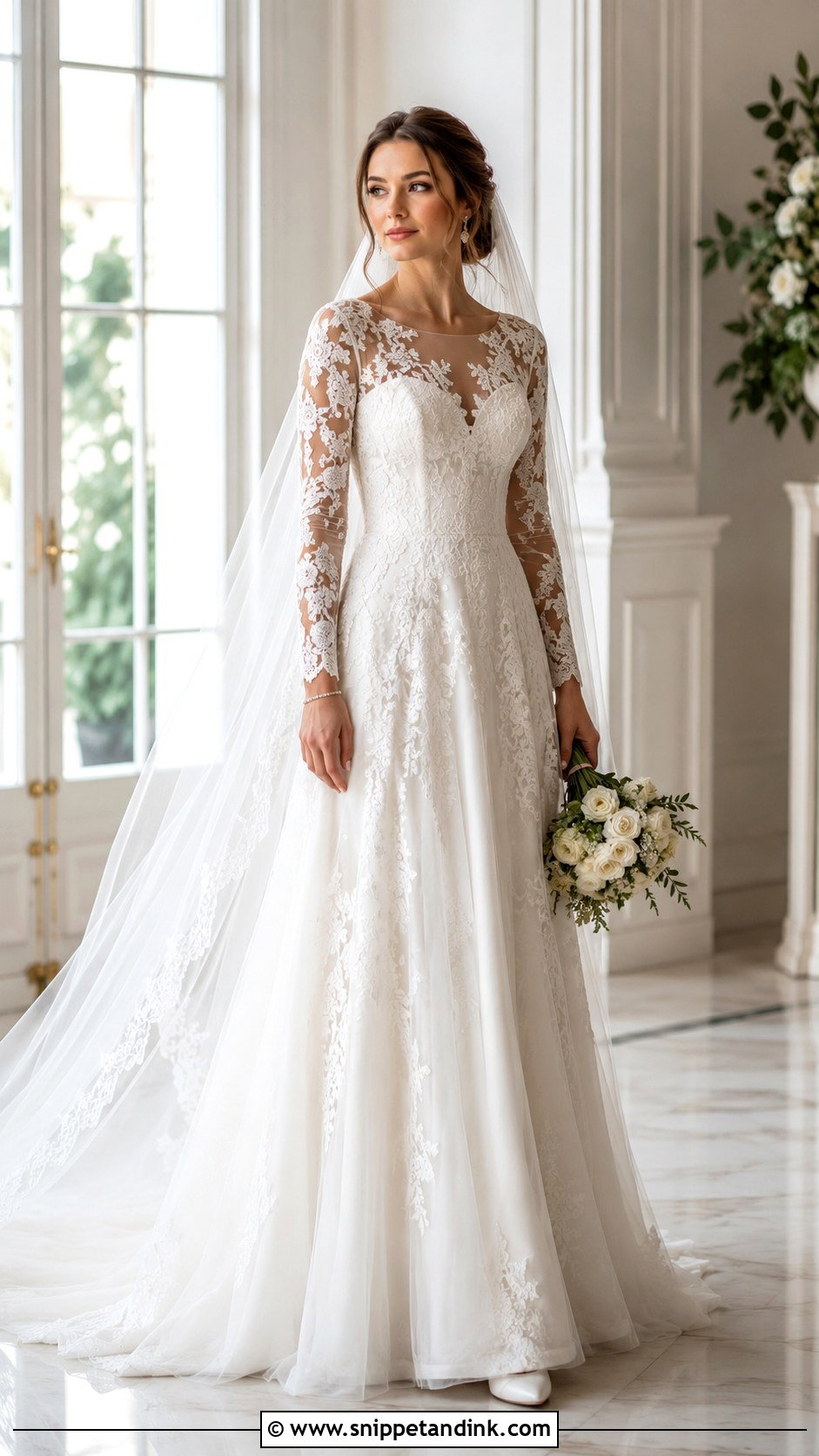
Sleeves change the whole season of a dress. On a long sleeve wedding dress for autumn or winter I’d go for crepe or satin sleeves, which look clean and keep you warm; in spring, sheer illusion lace feels lighter. The fitting check I never skip is lifting both arms above the head. If the bodice rides up or the sleeve pulls at the armhole, you won’t be able to hug anyone comfortably. Pair it with closed-toe heels and a soft updo.
4. Long Mermaid Wedding Dress
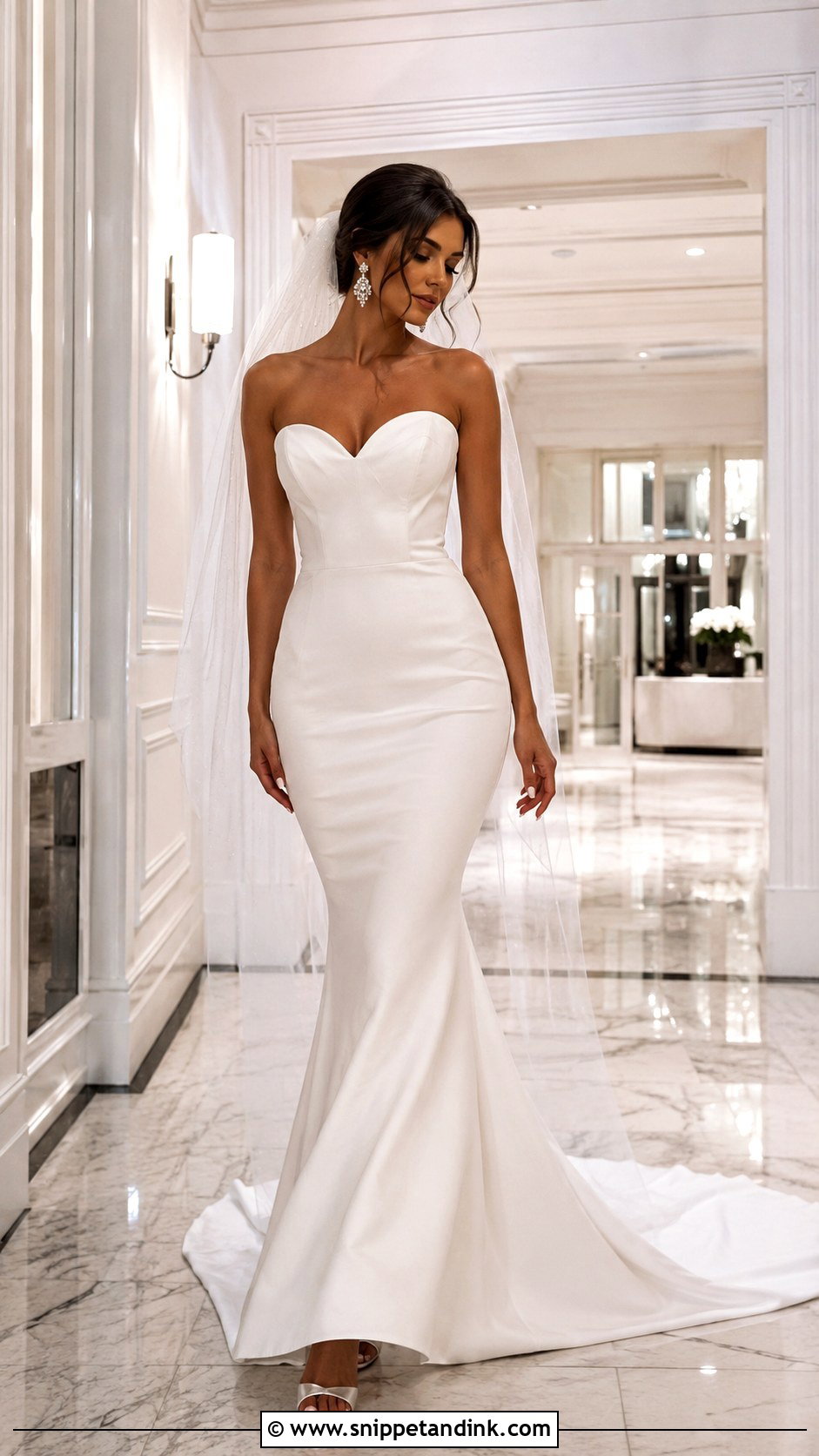
Mermaids are the gowns I’m most careful with at fittings. The shape hugs the bodice, waist and hips and only flares at the knee or below, so the flare point decides whether you can walk, climb steps and sit. A flare just above the knee is more dramatic; one a few inches lower is more practical. Stretch crepe moves best, lace softens it, satin adds shine. Heels help the skirt hang correctly, and the hem should be set in those exact shoes.
5. Long A Line Wedding Dress
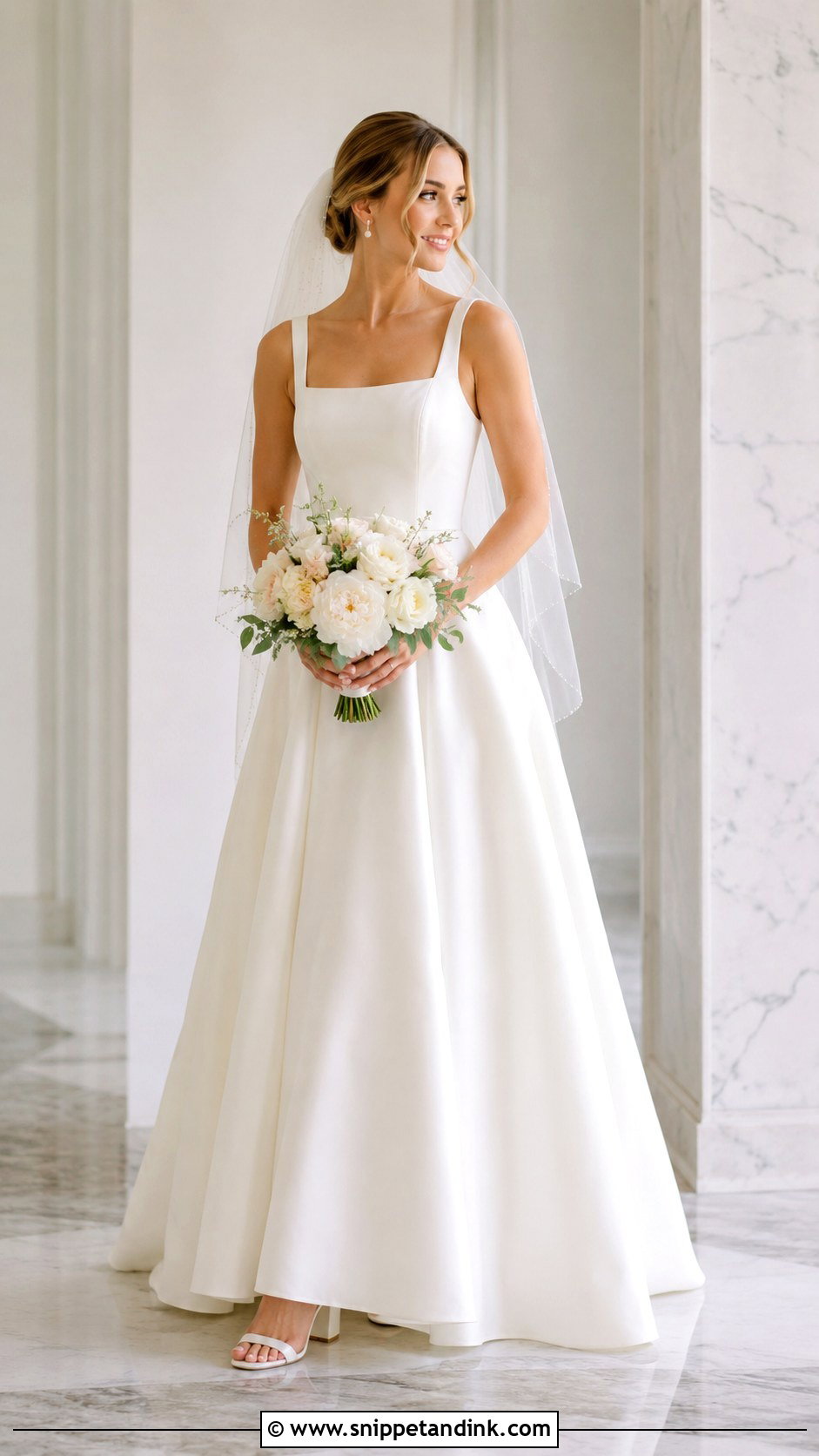
If you’re unsure, start with an A-line. It defines the waist, skims the hips and moves without the bulk of a ball gown, which is why it suits most body types and most venues. The neckline does the real styling: a sweetheart reads classic, a square reads modern, a V lengthens. Ivory block heels, a fingertip veil and a small bouquet with greenery keep it simple, and you can sit, walk and dance in it without a second thought.
6. Long Ball Gown Wedding Dress
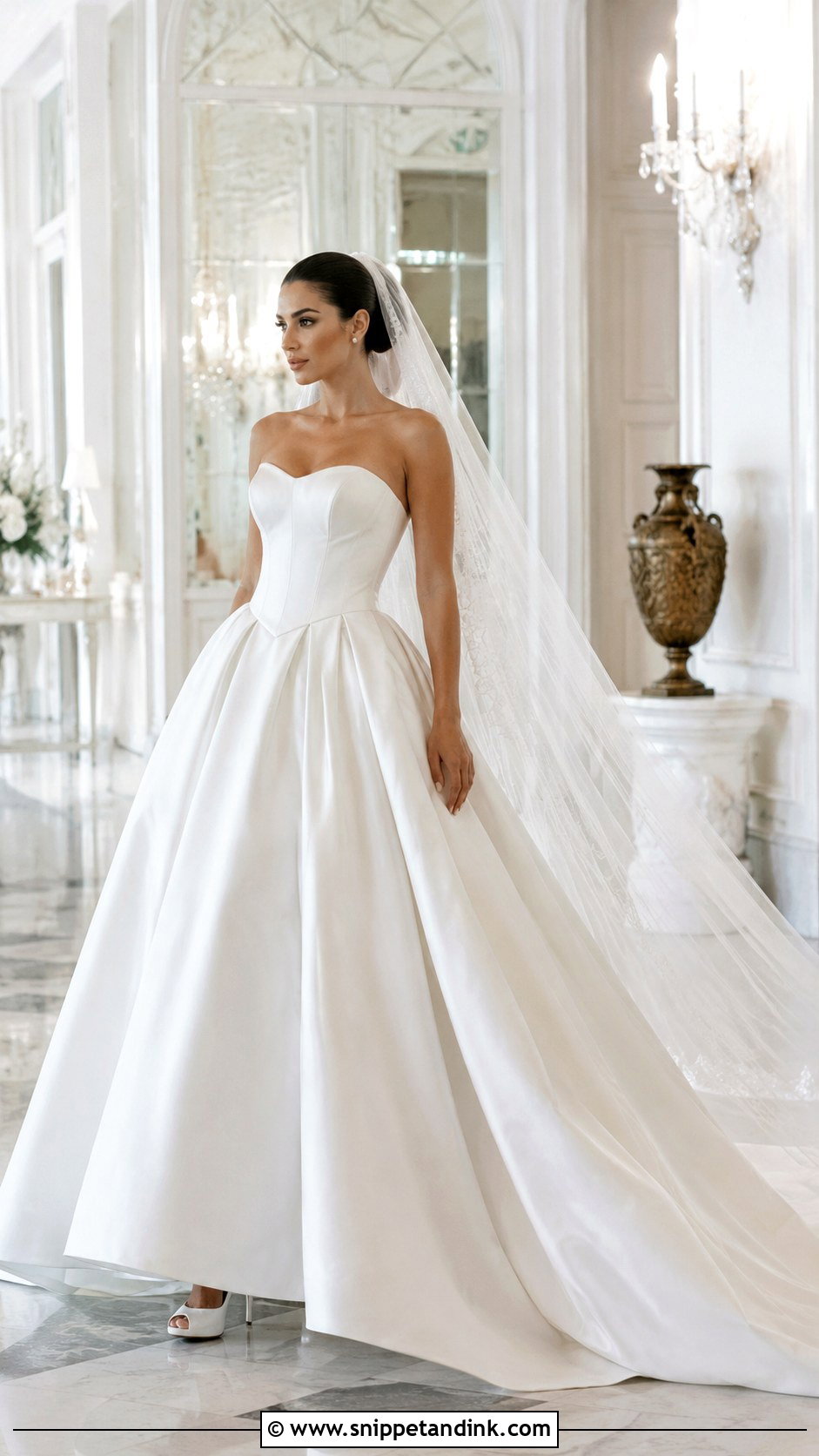
Ball gowns need space. In a small room the skirt swallows the bride and everyone around her, so I’d only suggest one for a ballroom or a large venue. Mikado and satin give a structured, sculpted skirt; organza and tulle are lighter and float more. Ask how many layers and how much petticoat are inside, because that weight sits on your waist all day. Platform heels help with the hem, and a cathedral veil plus a neat updo balance the volume.
7. Long Off Shoulder Wedding Dress
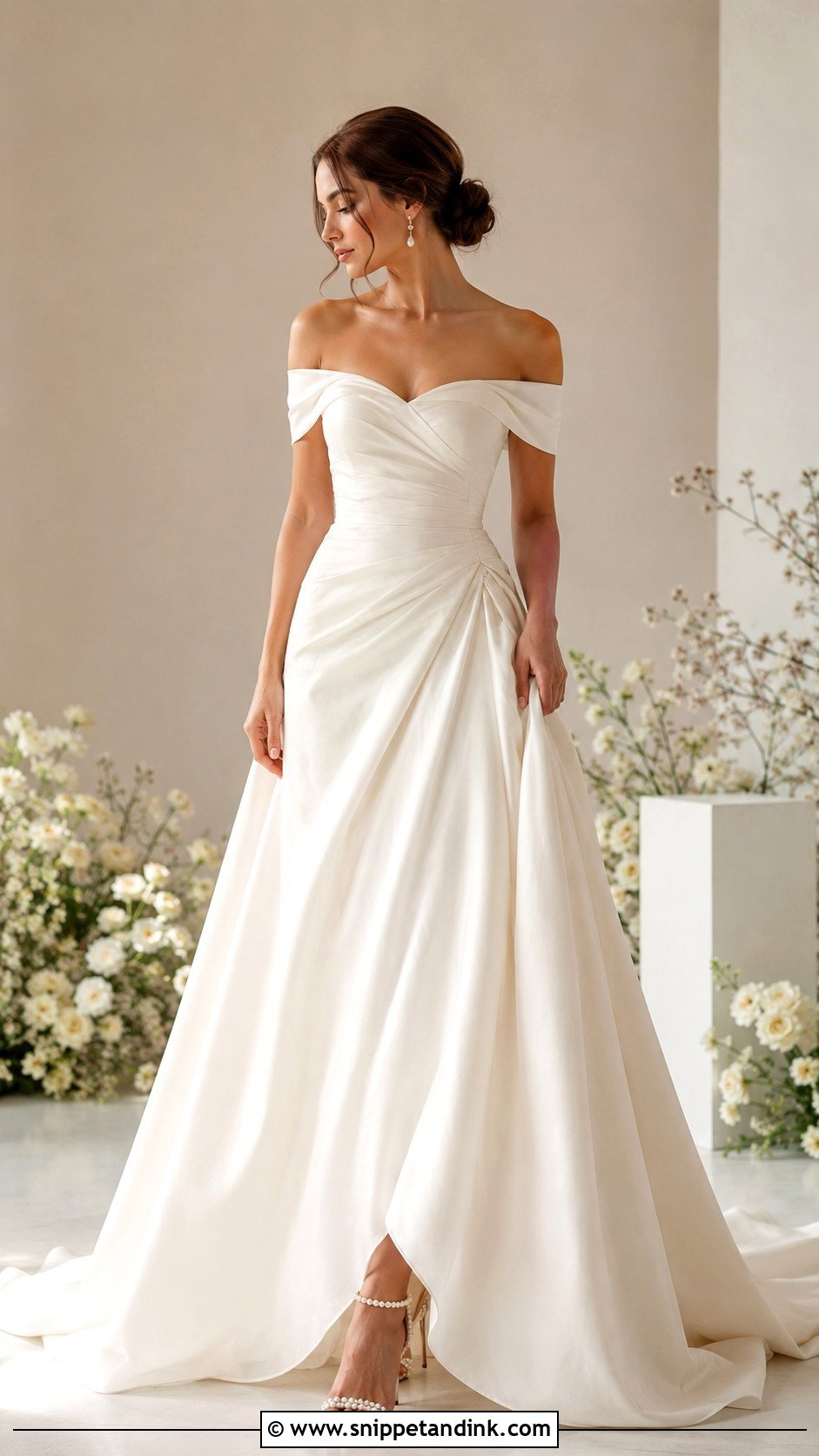
Off-the-shoulder necklines show the collarbones and shoulders, and they have one practical problem: the bands slip when you raise your arms. I ask for a hidden elastic or silicone grip inside the band and check that you can lift a glass and hug without hiking the dress up. Satin, crepe, lace and tulle all work, over an A-line or mermaid skirt. Keep the neck open with drop earrings and a low chignon.
8. Long Strapless Wedding Dress
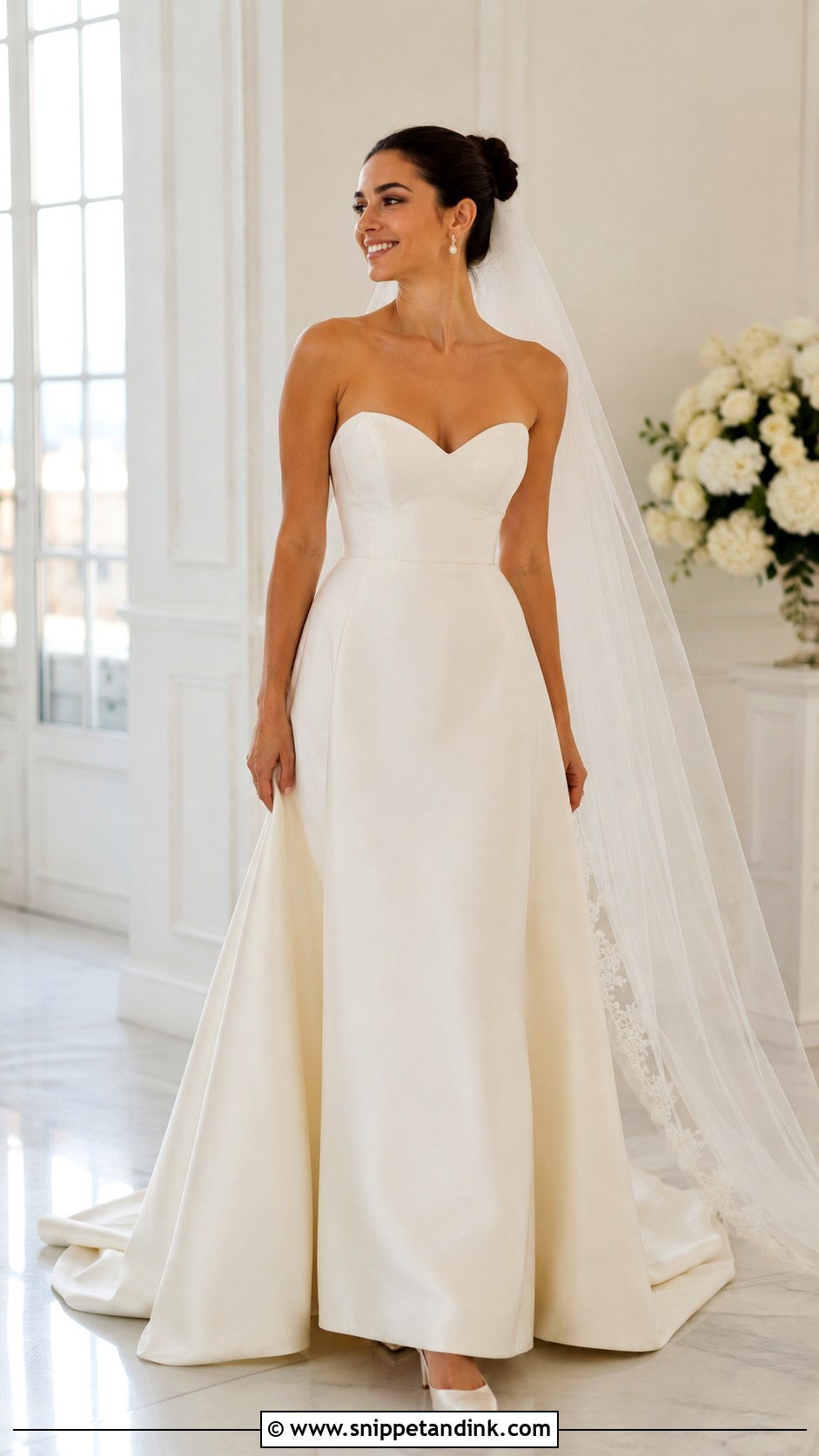
A strapless gown is clean and easy to accessorise, but it lives or dies on the bodice. Boning and an inner corset or waist stay should hold the dress up on their own; if you find yourself tugging at the top during the fitting, it needs taking in. A straight-across neckline looks modern, a sweetheart softer. Detachable sleeves or a bridal scarf give you a second look for the reception, and a long veil and smooth bun suit the aisle.
9. Long Square Neck Wedding Dress
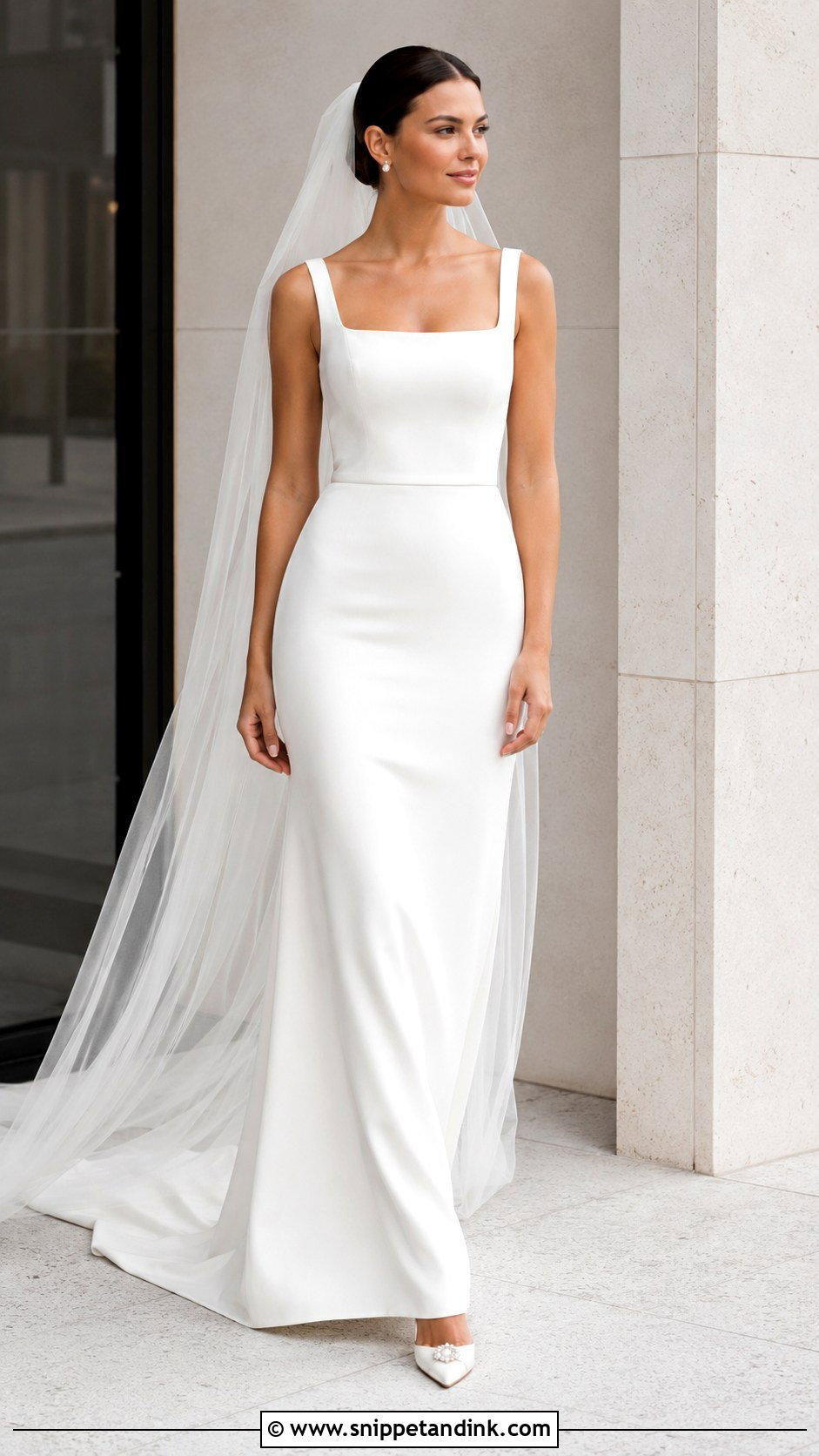
Square necks give the upper body structure without any plunge. They work with fitted sleeves, wide straps or no sleeves at all, and they flatter a broad range of bust sizes when the corners are placed correctly. I check that the corners sit level and don’t gape forward when the bride bends. Crepe looks minimalist here, satin softer. Wear pearl studs and a low bun so nothing hides the neckline.
10. Long V Neck Wedding Dress
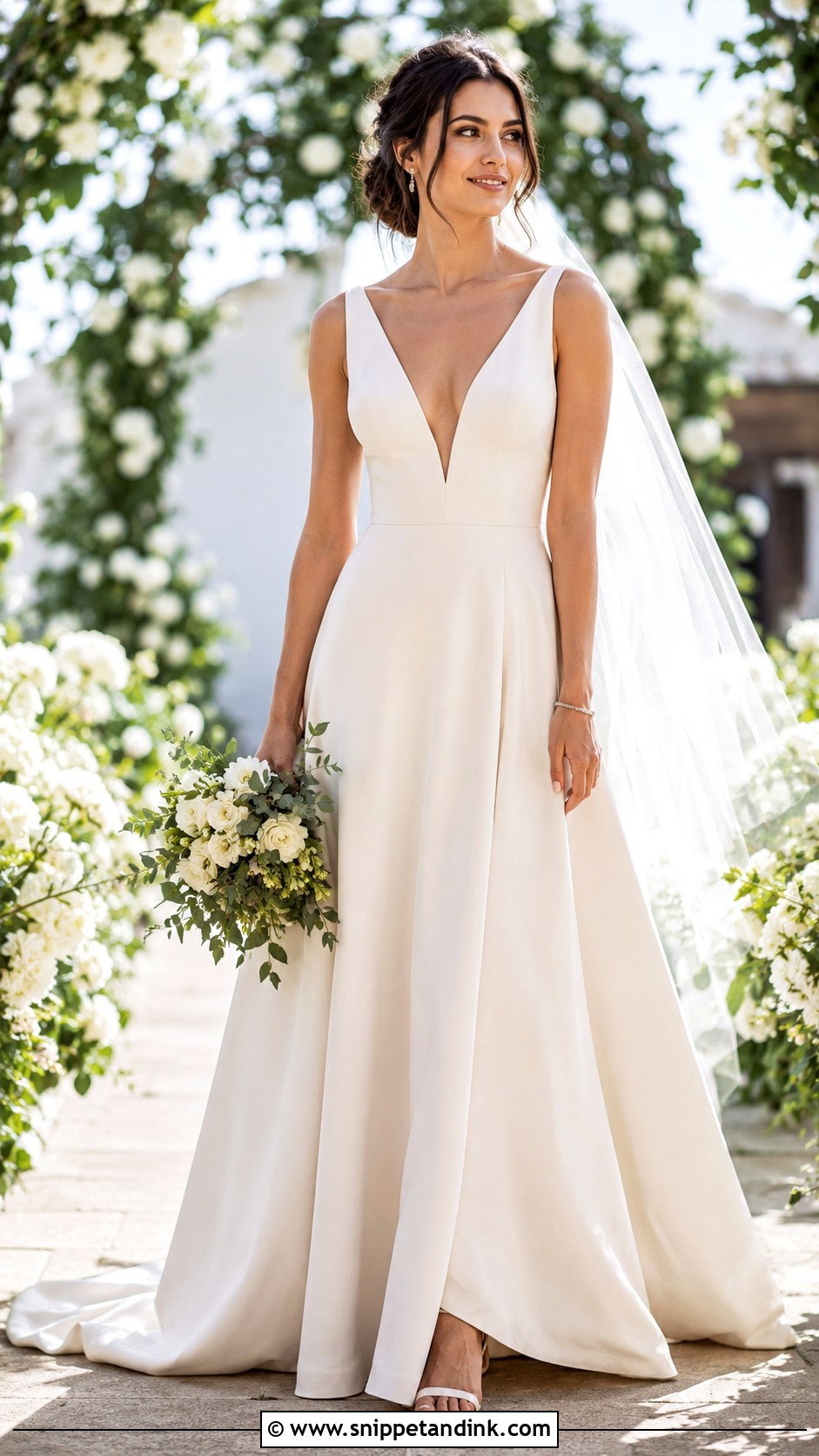
A V-neck draws the eye down and lengthens the torso, so it’s a good choice for petite brides who want to look taller. Depth is personal. I pin a deep V at the fitting and have the bride lean forward and sit; if anything shifts, we add a mesh panel or raise the point. Lace reads romantic, crepe modern, satin dramatic. An A-line skirt gives movement, a sheath looks sleeker, and delicate earrings are enough.
11. Long High Neck Wedding Dress
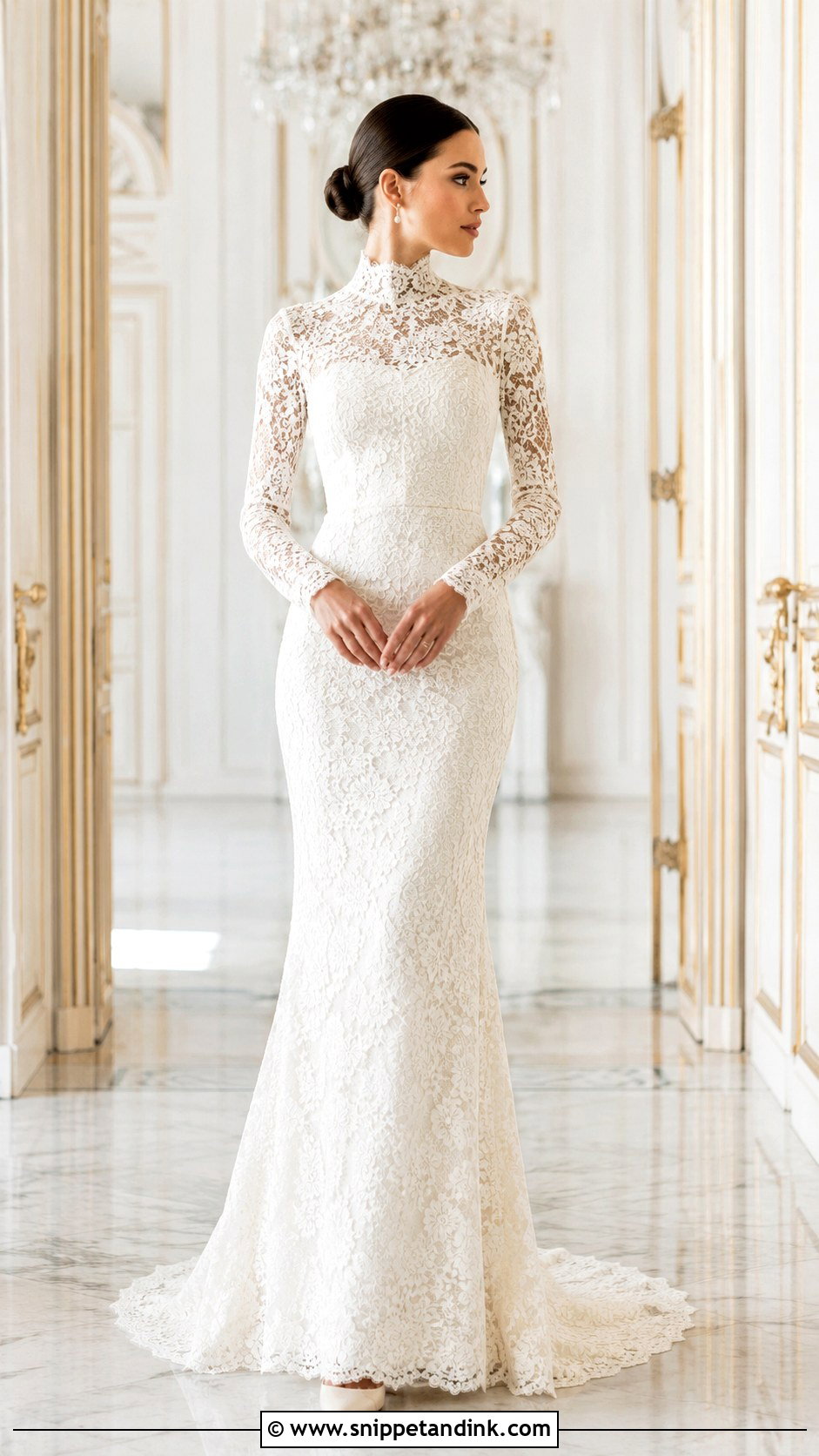
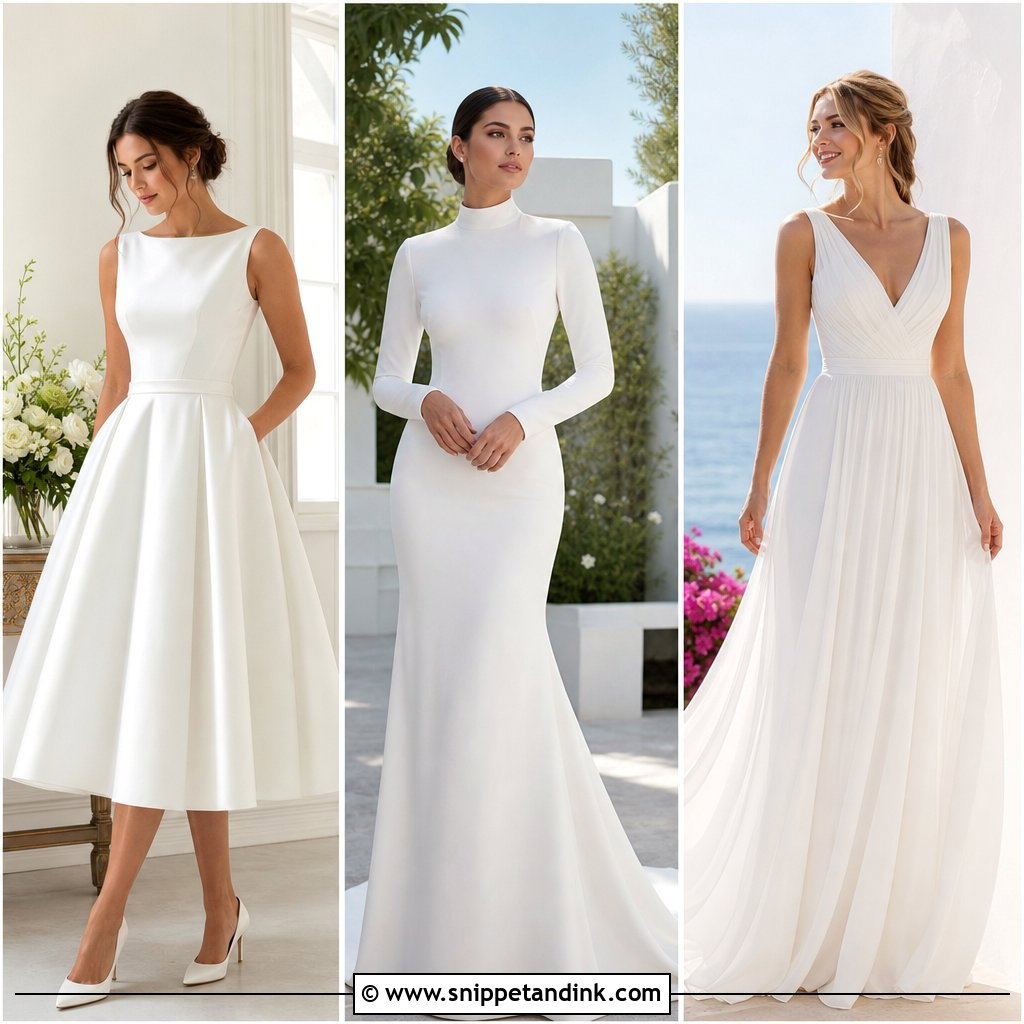
High necks frame the face and suit cooler seasons, formal venues and brides who want more coverage. They also show every bit of jewellery as clutter, so I skip necklaces entirely and go with small earrings. Lace, satin and crepe all hold a clean high collar. A fitted sleeve looks classic; sleeveless with a high neck looks more modern. Check that the collar closes without pressing on your throat when you turn your head. A long veil worn behind the shoulders balances it.
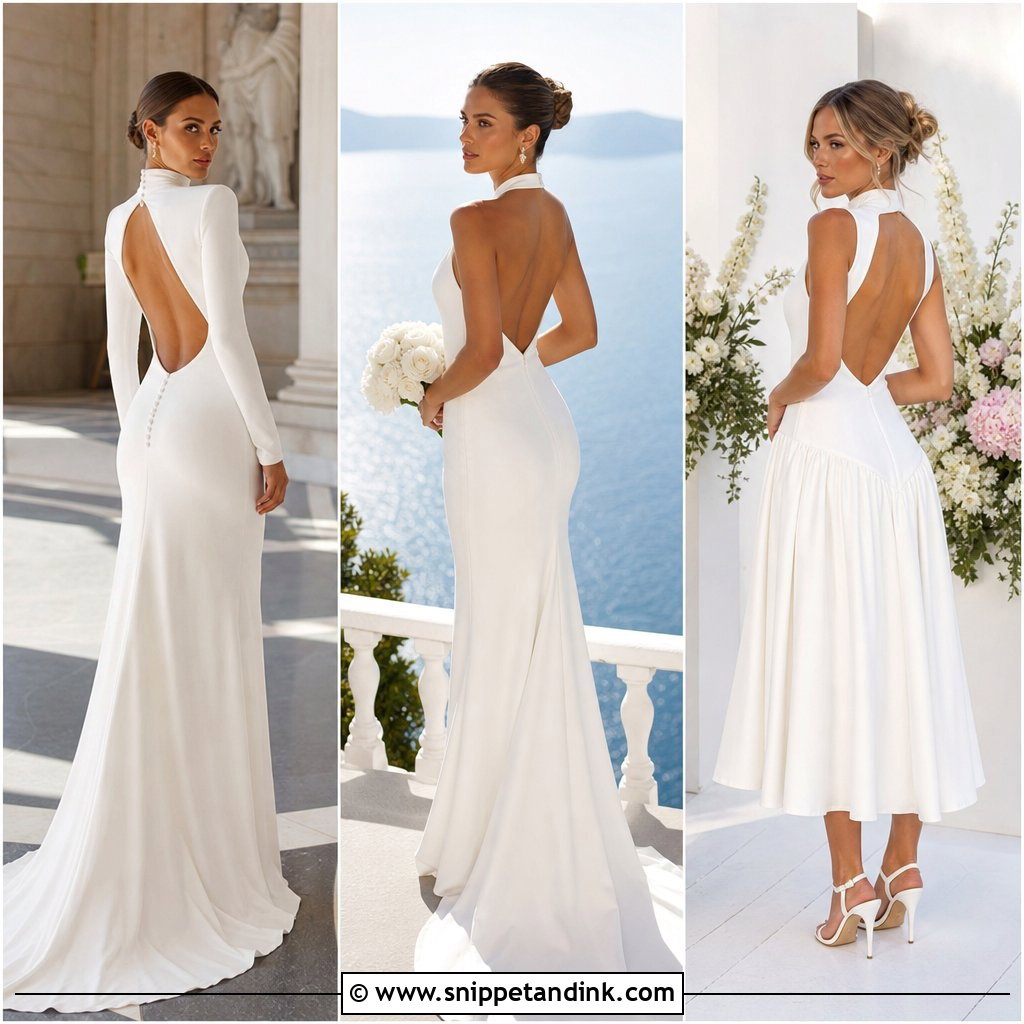
12. Long Backless Wedding Dress
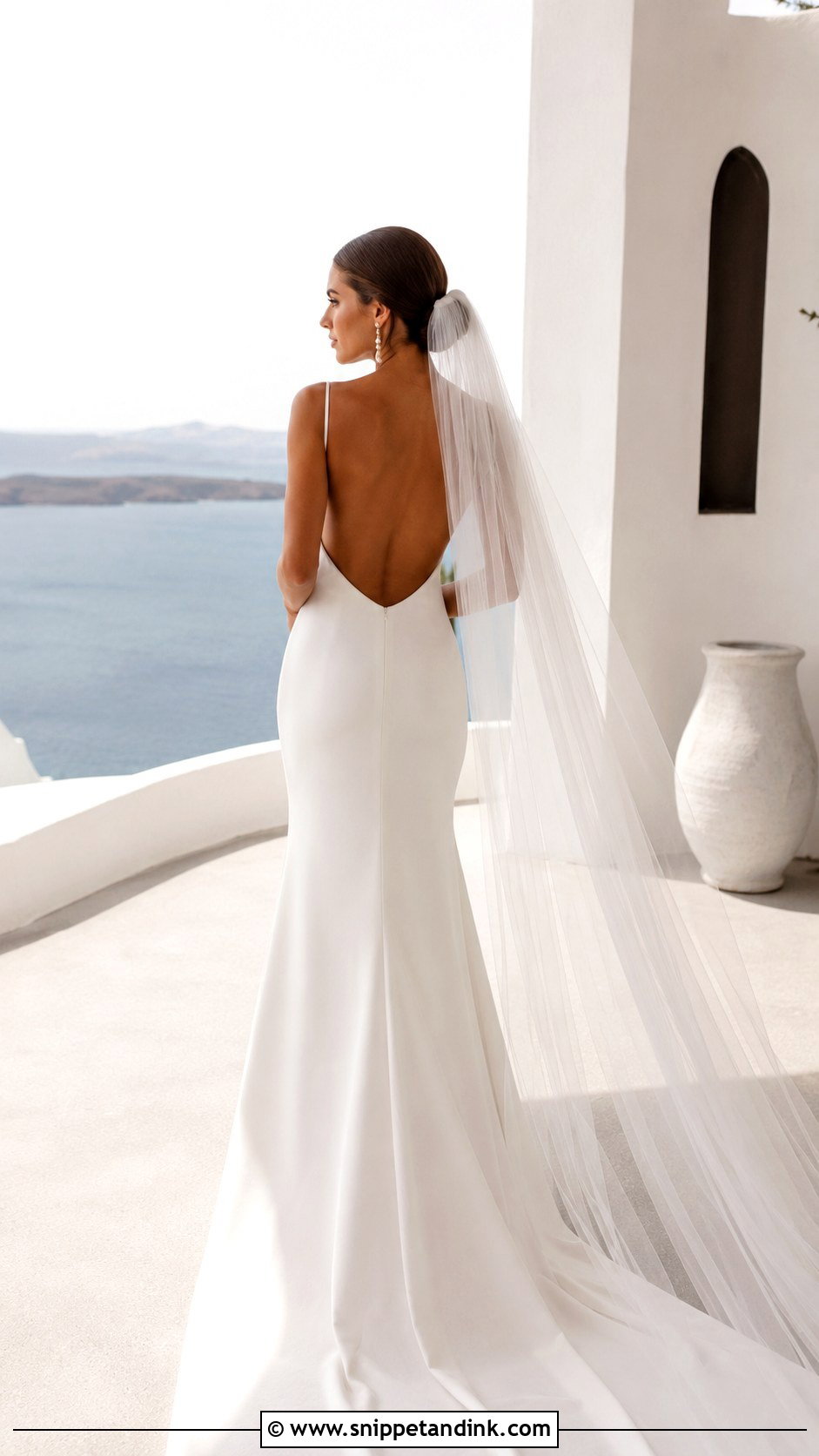
A backless gown only works with enough structure at the front to stay put, so the bodice usually relies on internal boning, a waist stay and a cleverly cut side seam. Turn and raise both arms at the fitting; if the sides gape, the shape isn’t right yet. Satin, crepe and lace all suit an open back. A low bun or side-swept waves keep the back visible. A removable veil lets the guests see the back at the reception.
13. Long Minimalist Wedding Dress
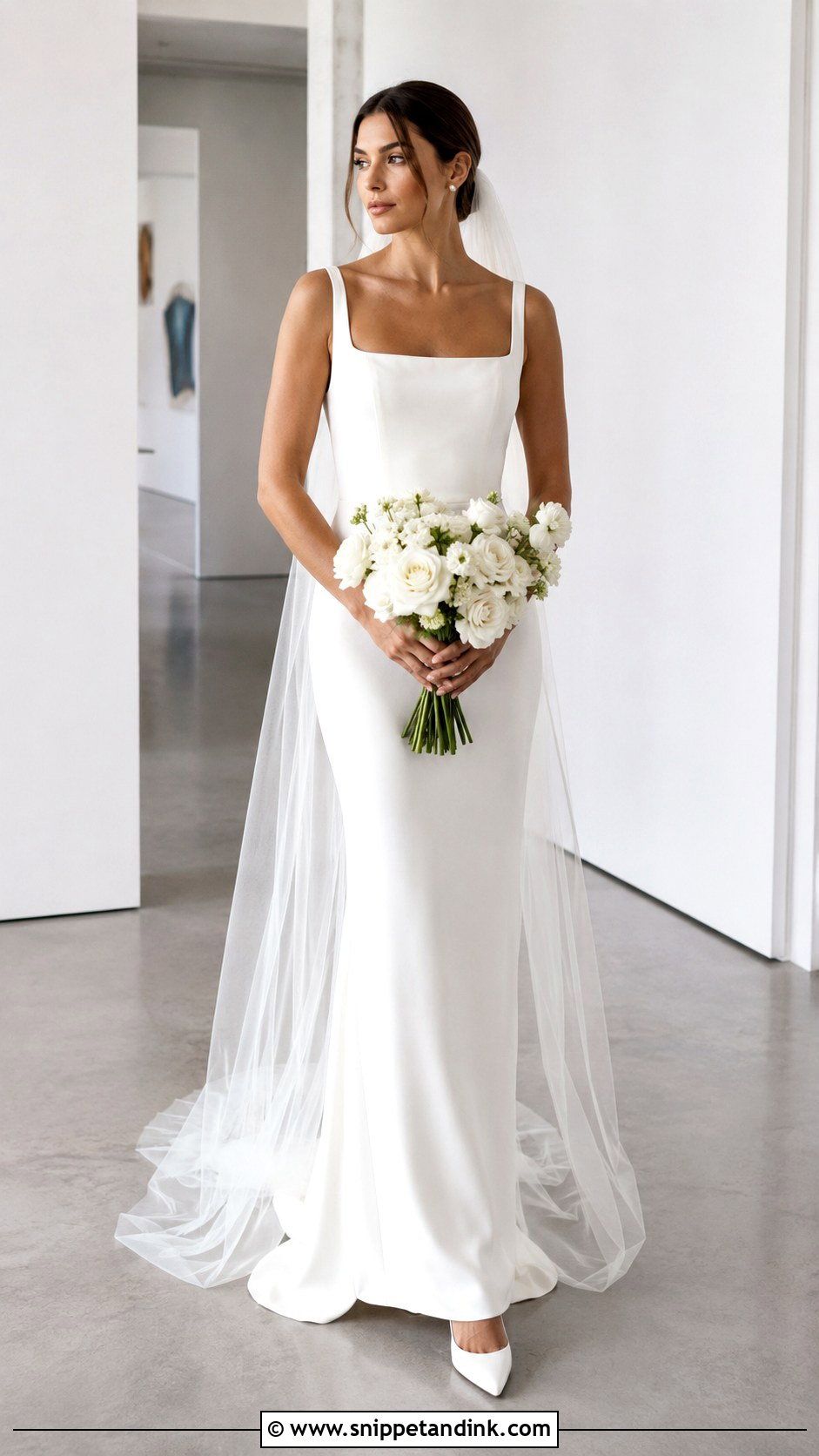
Minimal gowns hide nothing, which surprises a lot of brides. With no lace or beading, every seam, dimple and uneven hem is visible, so the tailoring budget matters as much as the dress itself. Crepe, satin or mikado with a simple neckline is the starting point. I’d add sleek heels, pearl studs, a neat bun and a plain cathedral veil. It suits a city wedding, a gallery or a courthouse, and it won’t date in photos.
14. Long Boho Wedding Dress
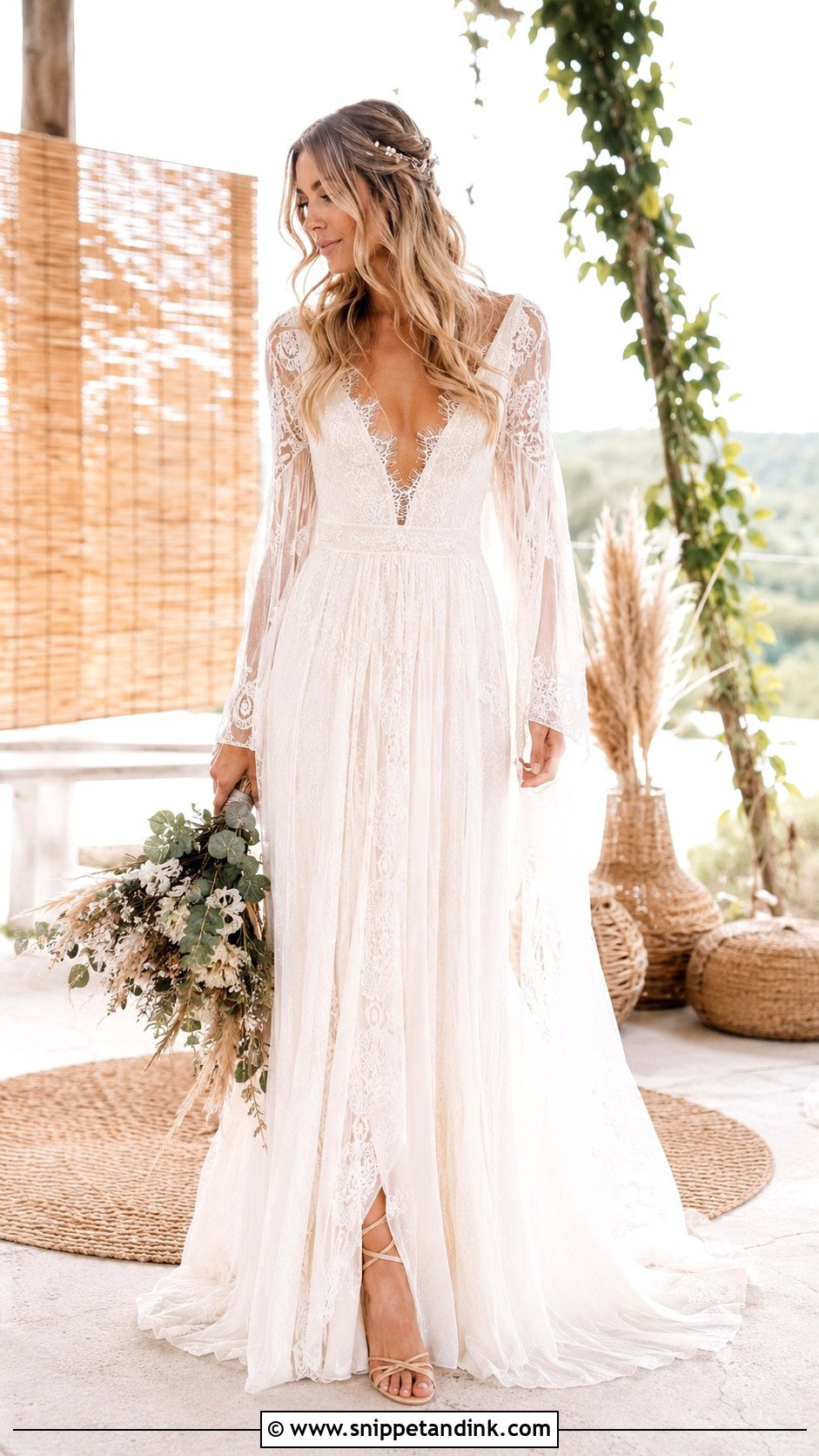
Boho is about movement: soft lace, flowing skirts, bell sleeves and texture rather than structure. It belongs outdoors, on a beach, in the desert, in a garden or a barn. The fabric to watch is cheap chiffon lining, which clings in heat, so look for a breathable cotton or silk-blend lining. Sandals, low block heels or bridal boots depending on the ground. Loose waves, delicate pins and a wildflower bouquet, with a light veil or a sheer cape.
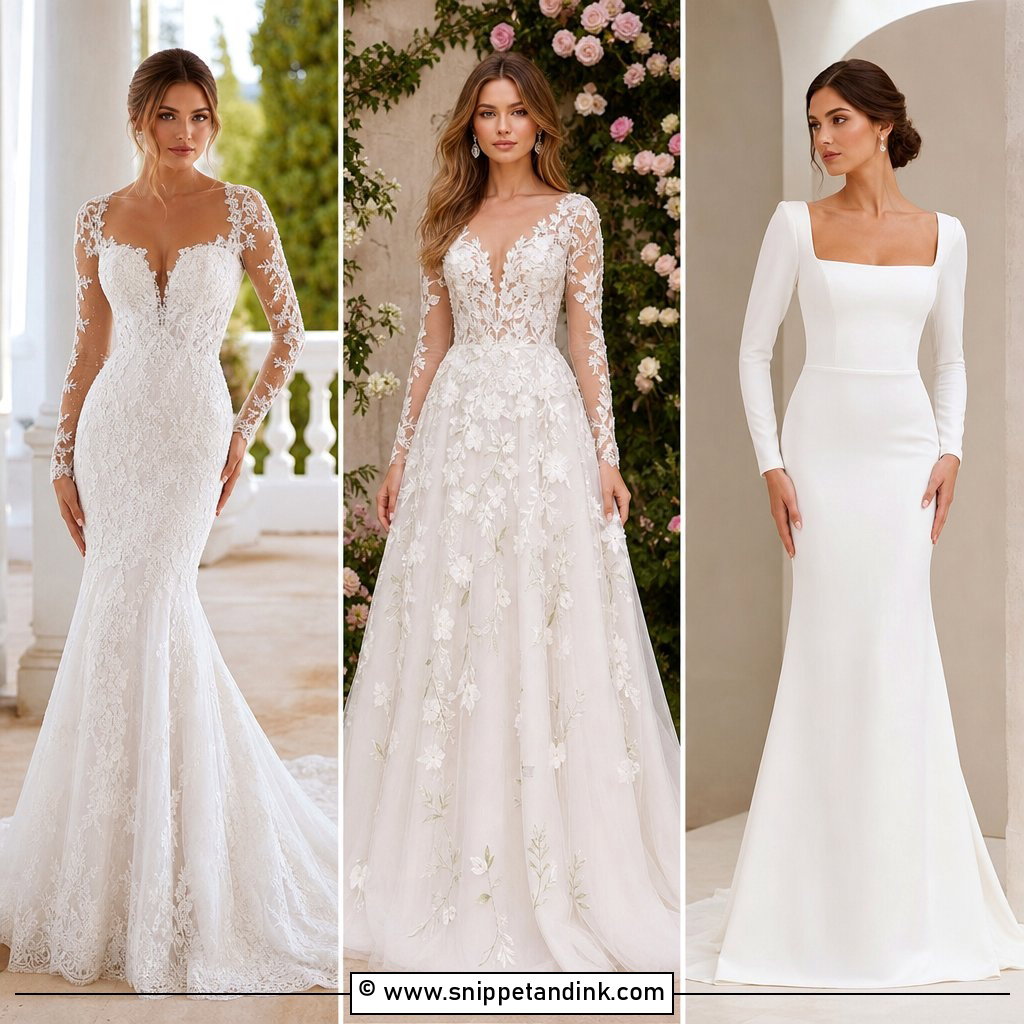


15. Long Beach Wedding Dress
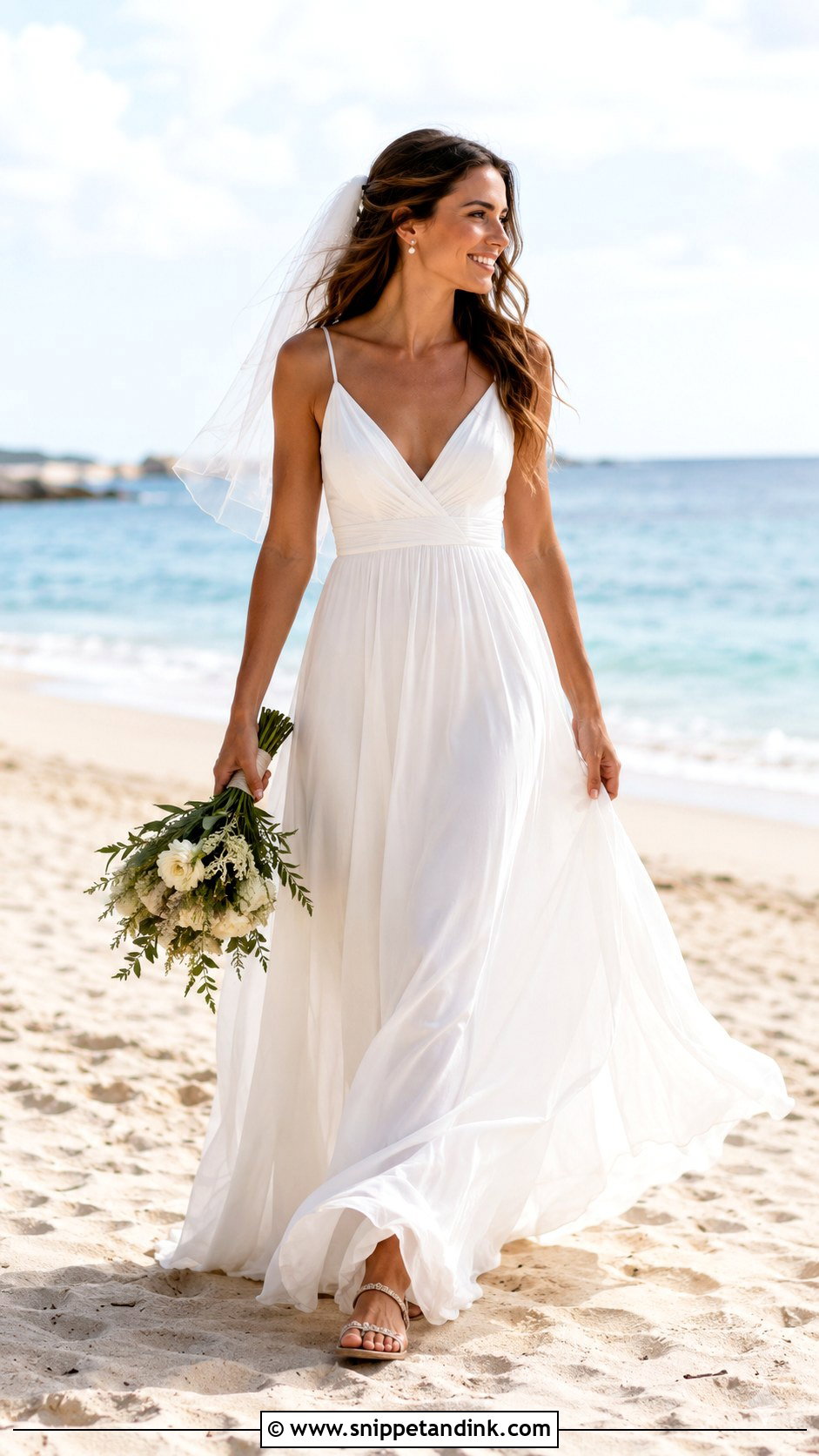
Sand and wind decide this one. A long beach wedding dress should be light enough to lift off the sand, which is why I steer brides to chiffon, soft tulle, light crepe or lace and away from satin and heavy trains. Hem it an inch or so shorter than you would for a hard floor so it doesn’t drag wet sand. Flat sandals or barefoot sandals, loose hair, small earrings, and a short veil or hair scarf that won’t wrap around your face.
16. Long Garden Wedding Dress
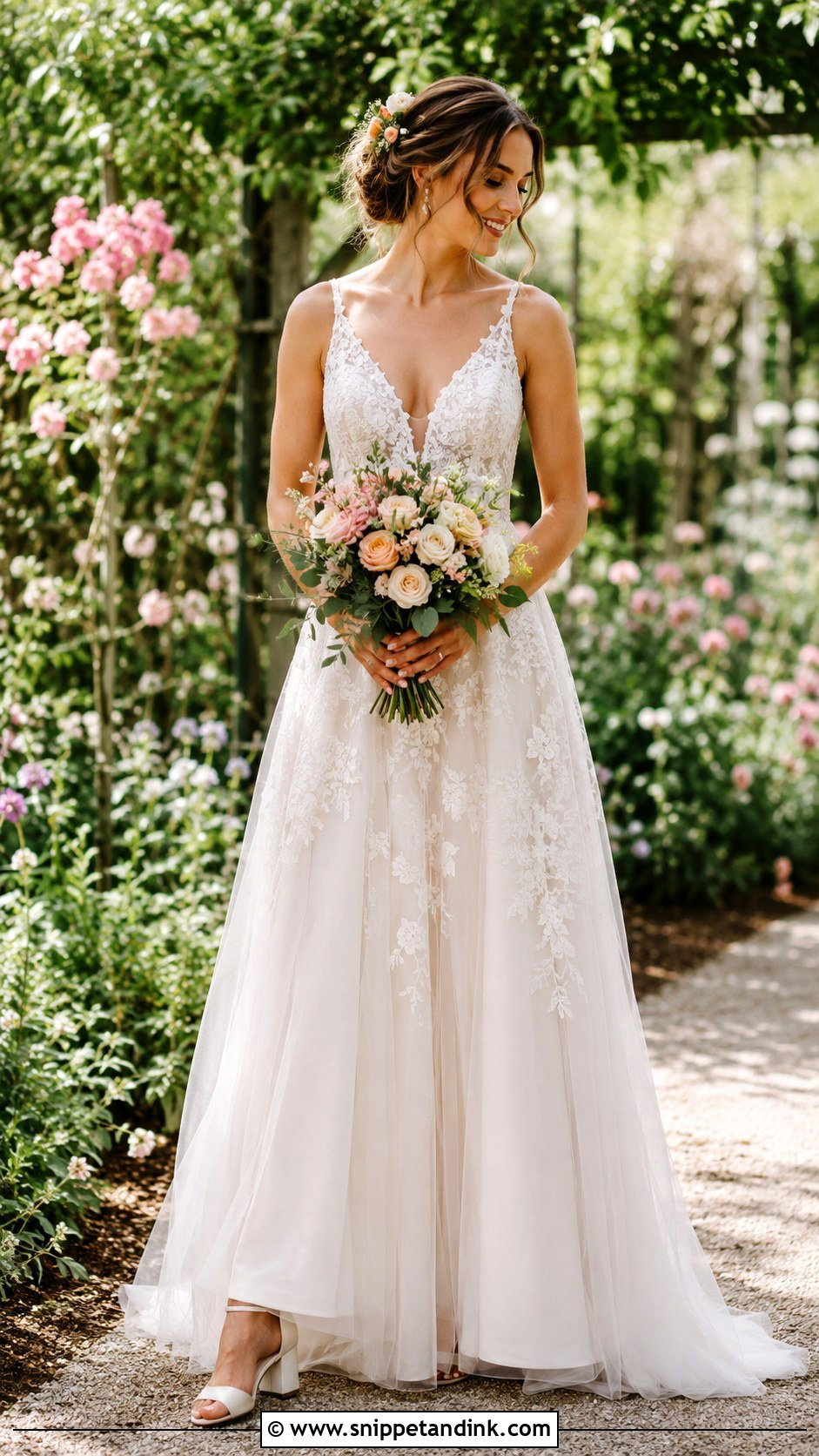
Grass is hard on hems and heels. For a garden ceremony I’d go for an A-line or fit-and-flare that clears the ground, with block heels or wedges that won’t sink. Floral lace, soft tulle, embroidery and light layers all look right outdoors. Ask your seamstress for a horsehair braid or a slightly firmer hem facing, so the skirt keeps its shape on uneven ground. Add floral pins, soft curls and a seasonal bouquet.
17. Long Cathedral Train Wedding Dress
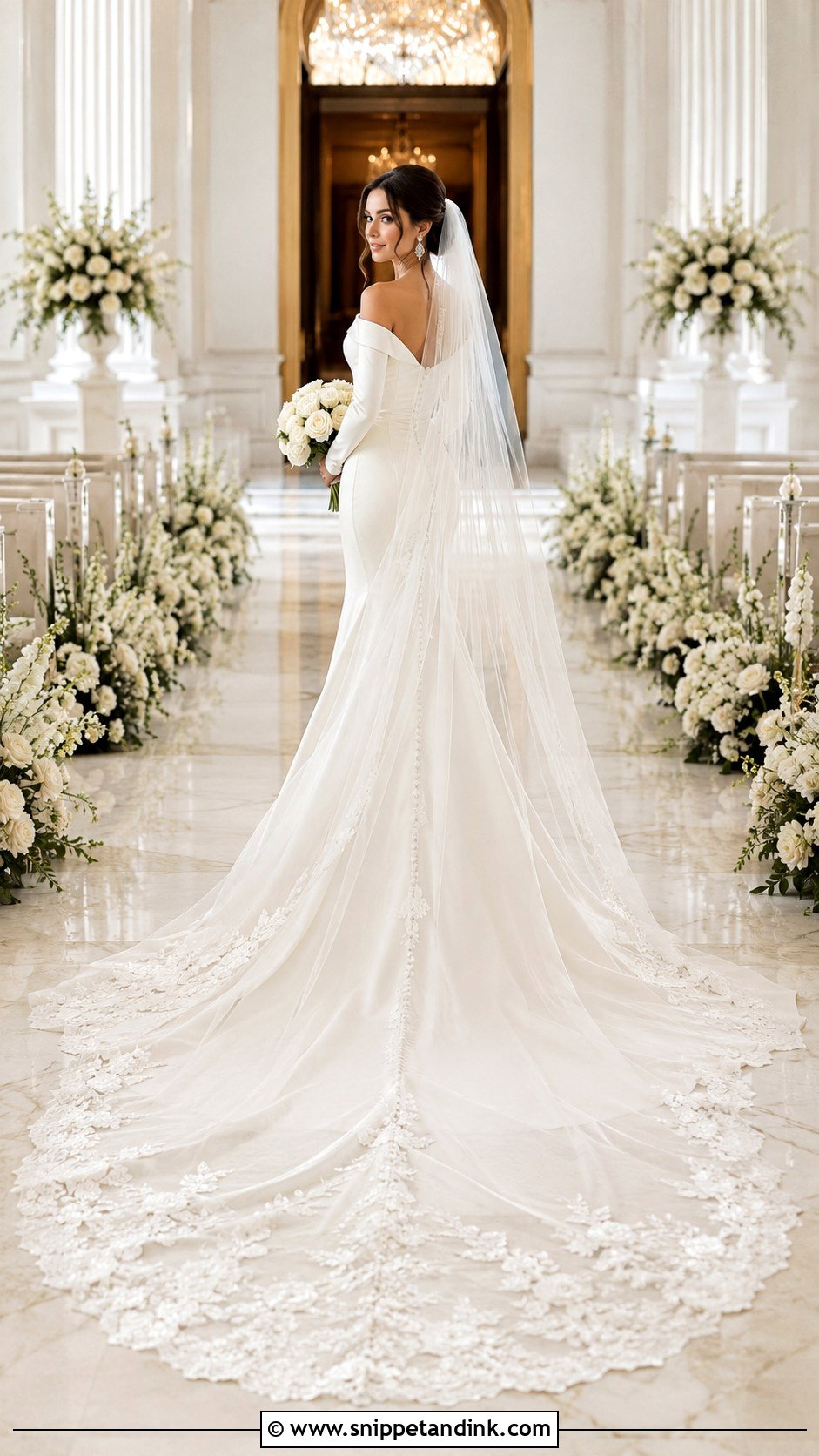
A cathedral train stretches well past the feet, and it needs a wide aisle or a staircase to make sense. It also needs a plan for the rest of the day. I always confirm the bustle style and who will do it before the wedding, because a train this long can’t be carried through a reception. Satin, lace and mikado hold the shape. A fitted bodice balances all that fabric behind you, so keep the accessories refined: classic heels, a long veil, one pair of earrings.
18. Long Detachable Train Wedding Dress
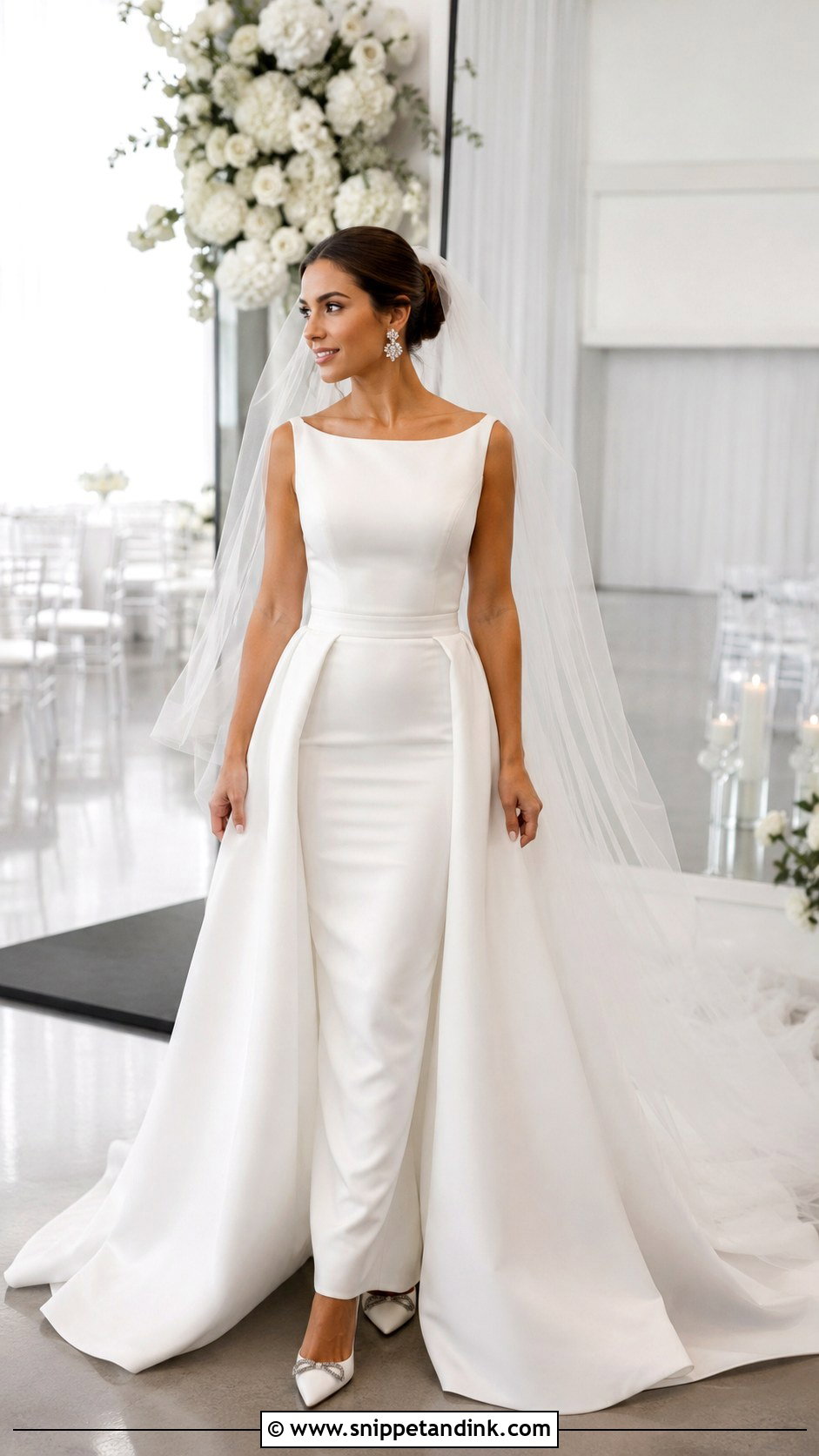
A detachable train wedding dress solves the bustle problem completely: the train attaches at the waist, back or shoulders, and once the portraits are done it comes off to reveal a sheath, mermaid or simple A-line. Ask how it fastens. Hooks and snaps are quick; buttons take time and a second pair of hands. Pair the ceremony look with a long veil, sleek heels and statement earrings, and you’ve got two outfits for the price of one gown.
19. Long Basque Waist Wedding Dress
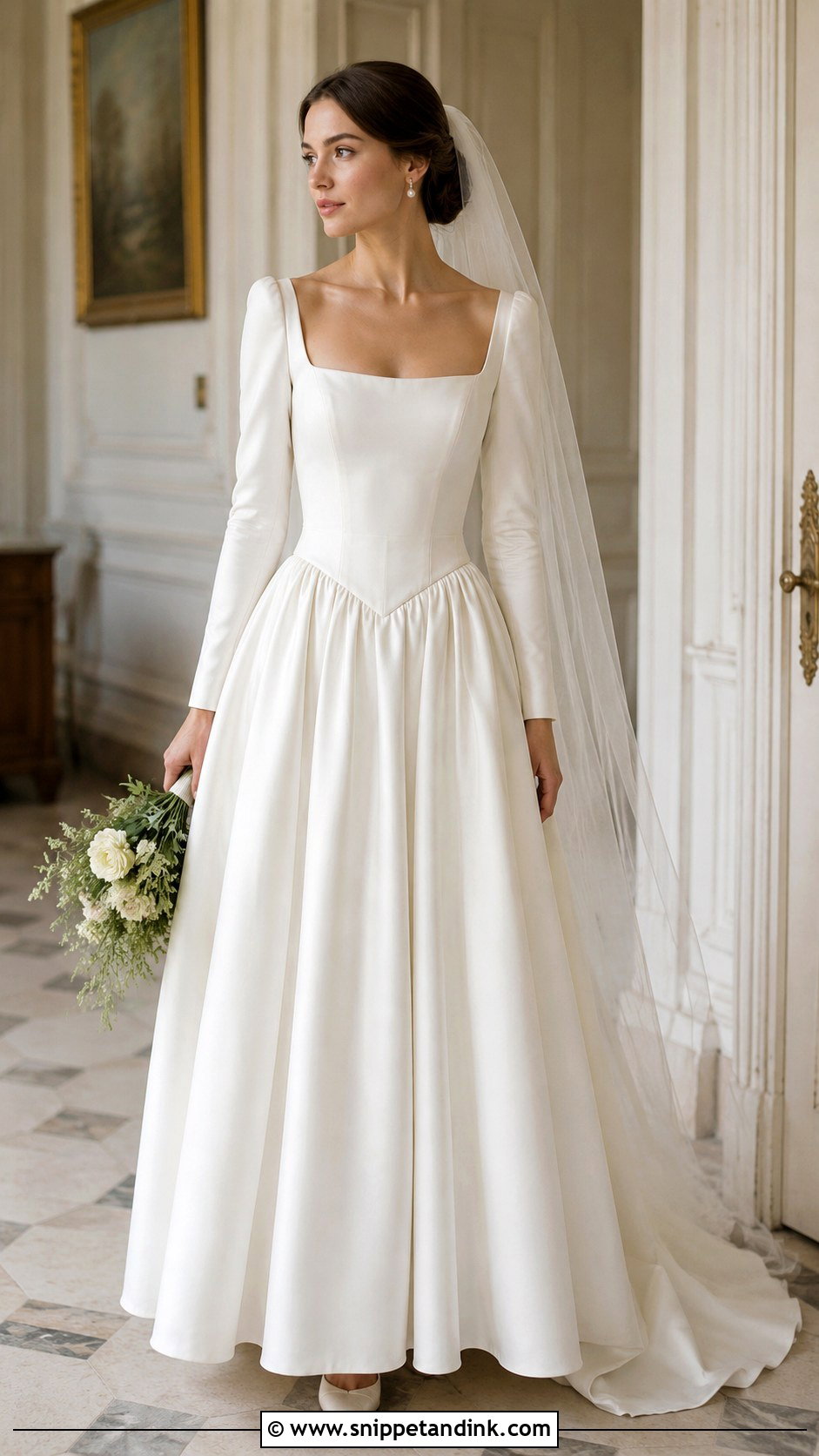
A basque waist dips into a V or curved point below the natural waist, which lengthens the torso and gives a full skirt a very defined starting point. It needs exact tailoring. If the point sits too low on a short torso, it shortens the legs instead. Tulle, satin or lace skirts all suit it. Let the waistline stand out by keeping everything else plain: classic pumps, pearl earrings and a simple veil, with a soft updo or half-up style.


20. Long Drop Waist Wedding Dress
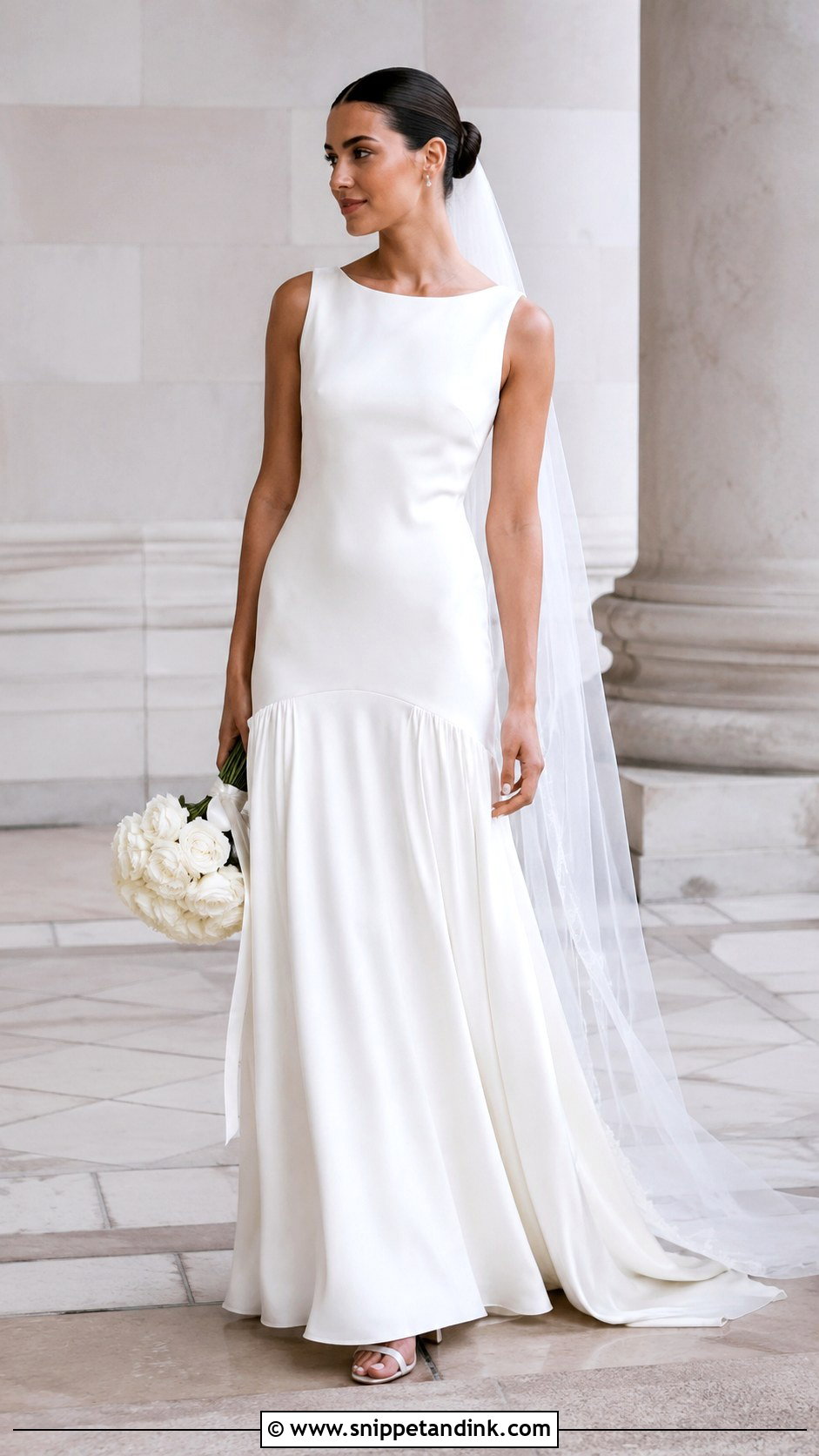
Drop waists start the skirt lower on the hips, which creates a long, sleek line through the body. They look modern in clean fabrics or with a soft sculptural detail. The catch is proportion: on a short-waisted bride, a drop waist can make the legs look shorter, so I’d try one on before ordering. Supportive tailoring keeps it smooth. Narrow heels, a simple veil, minimal jewellery and a sleek hairstyle continue the vertical line.
21. Long Corset Wedding Dress
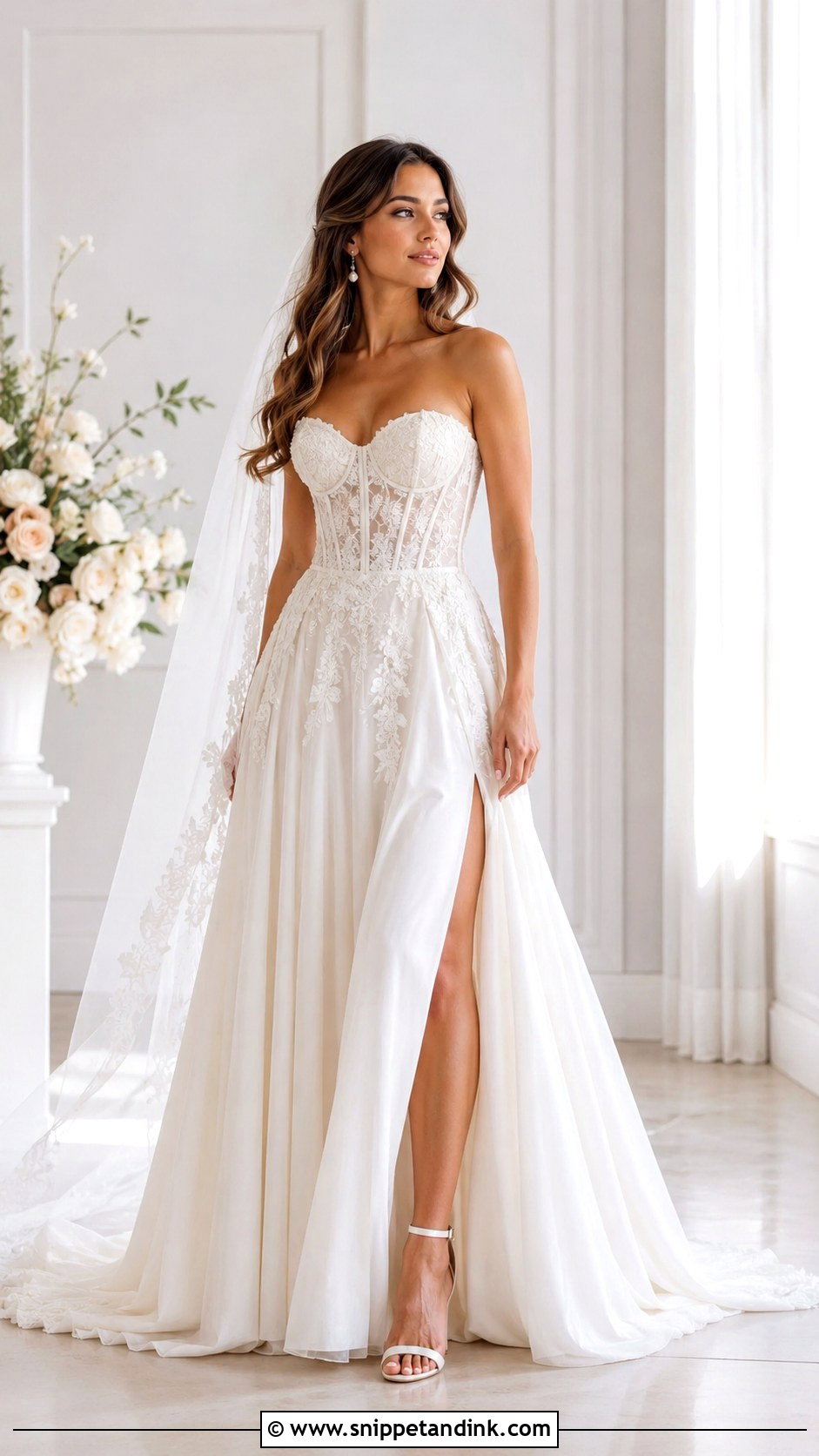
A corset bodice gives shape and support, and modern versions run from sheer lace to structured satin. Sheer corsets look delicate but show the boning channels, so check you like how those lines look in daylight. Fit should support, never restrict. I ask the bride to sit for ten minutes at the fitting and eat a small snack, because a corset that’s comfortable standing can dig in once you sit down. Heeled sandals, a soft veil, and a low bun or waves.
22. Long Pearl Wedding Dress
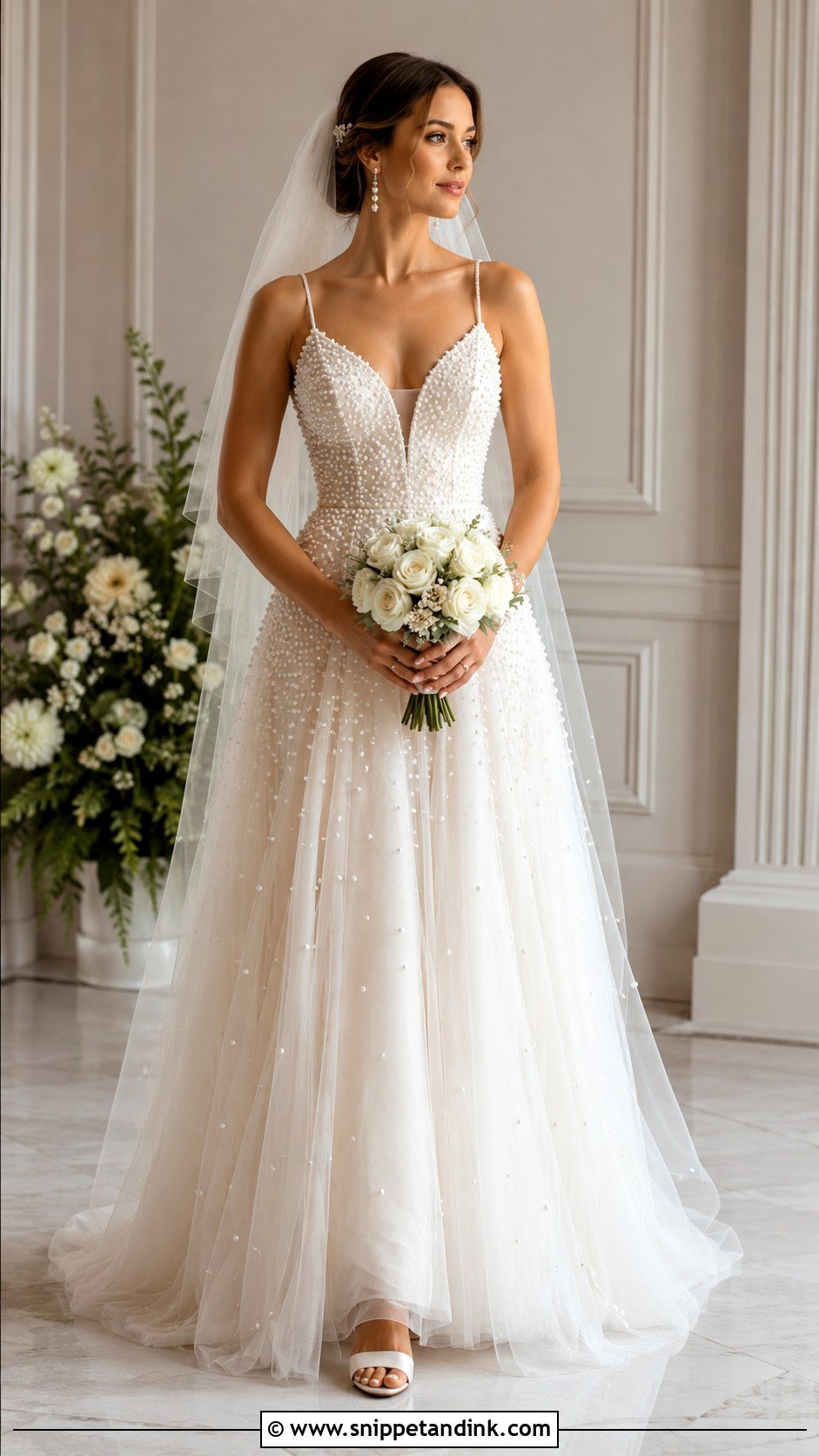
Pearls give a soft glow rather than the sharp sparkle of crystals, and they can be scattered, run along the straps, trim the neckline or cover the whole gown. They’re heavier than sequins, so a fully pearled skirt pulls on a light tulle base; I’d check that the base fabric is strong enough. Coordinate the accessories: pearl earrings, ivory heels and a plain veil. Keep the hair neat so the pearlwork reads.
23. Long Beaded Wedding Dress
Beading adds texture and shine, from fine delicate lines to heavy patterning. It also adds weight, and beaded sheaths can feel surprisingly heavy by evening, so try one on for longer than five minutes. A beaded bodice over a soft skirt is lighter and easier to wear. With this much detail, I keep shoes and jewellery simple and the hair polished. It suits evening weddings, hotels and receptions with a formal dress code.
24. Long Floral Applique Wedding Dress
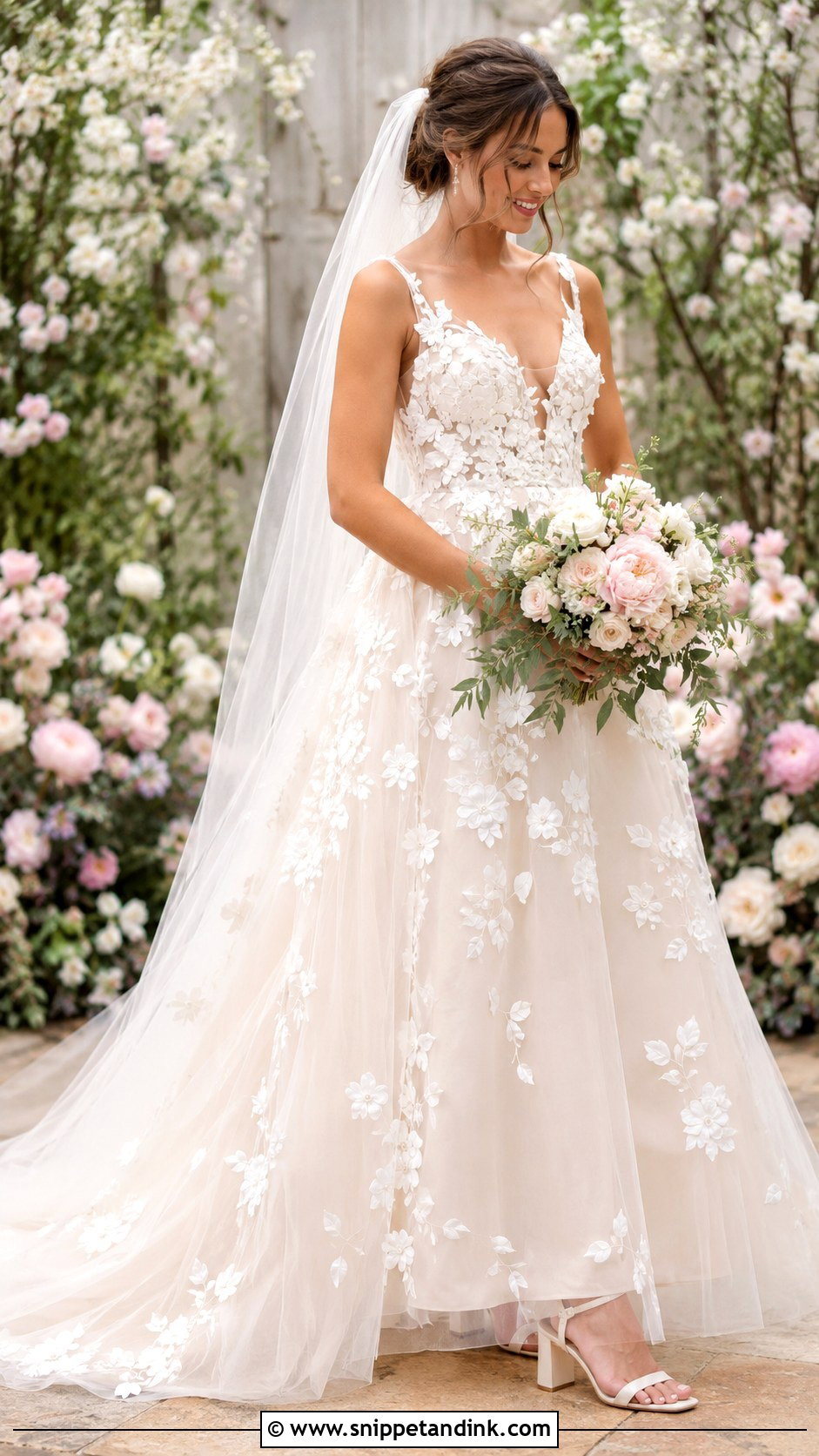
Floral appliqué gives a gown dimension. The flowers can sit on the bodice, trail down the skirt or cover everything. On light tulle or organza they look airy; on a heavier base they look more sculpted. Appliqués are hand-tacked on, so ask that loose edges be secured before the day, because a petal catching on a bracelet can pull. Block heels, delicate earrings and a bouquet that echoes the gown, with a plain veil.

25. Long Tulle Wedding Dress
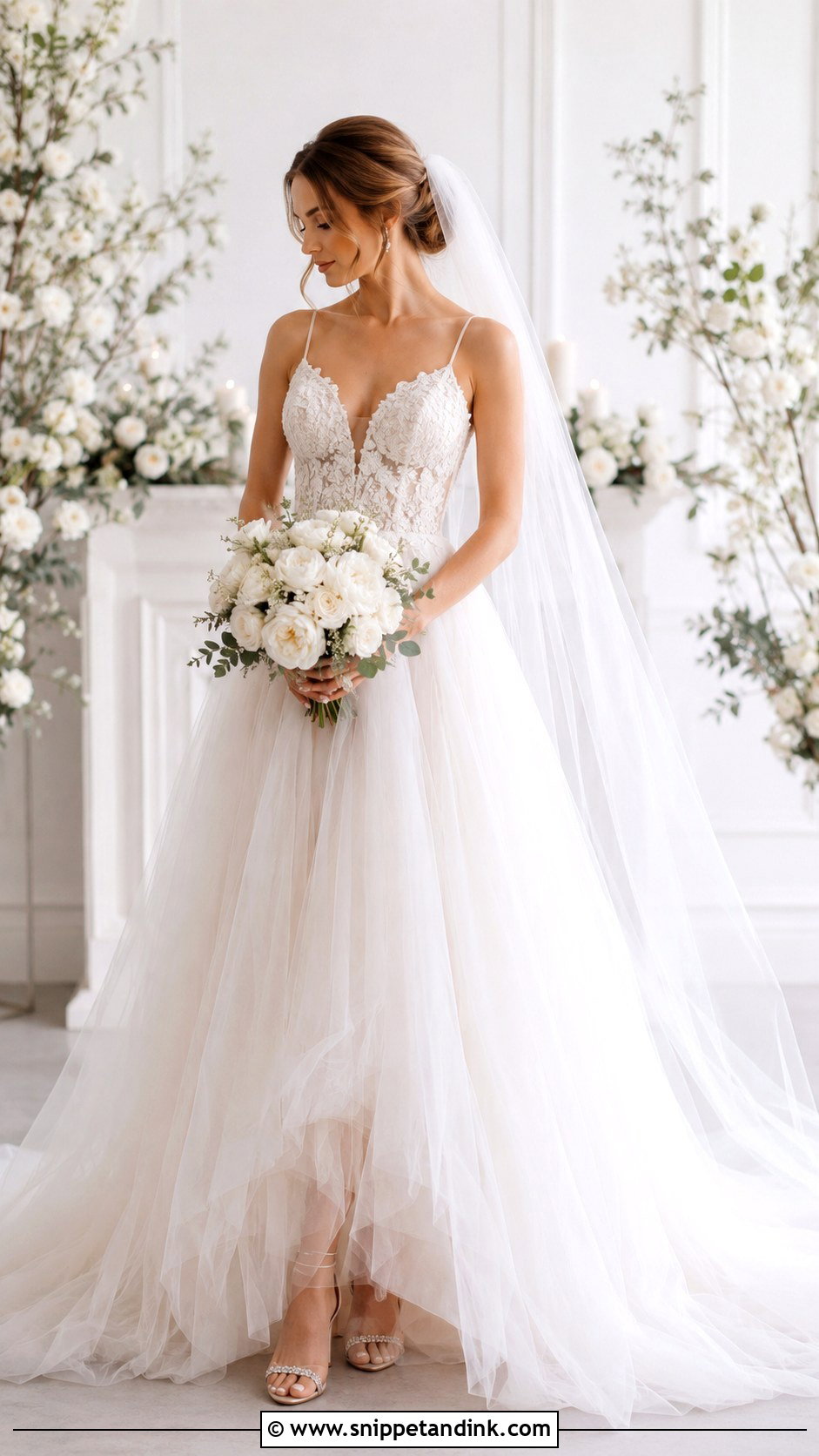
Tulle floats. It can be a single soft layer or many layers for volume, and it suits A-lines, ball gowns and soft skirts with fitted bodices. It also snags easily on rough edges, Velcro and jewellery, so I’d keep chunky bracelets off. If the tulle carries sparkle or appliqué, the rest of the styling should stay quiet: delicate heels, small earrings and a veil as soft as the skirt.
26. Long Chiffon Wedding Dress
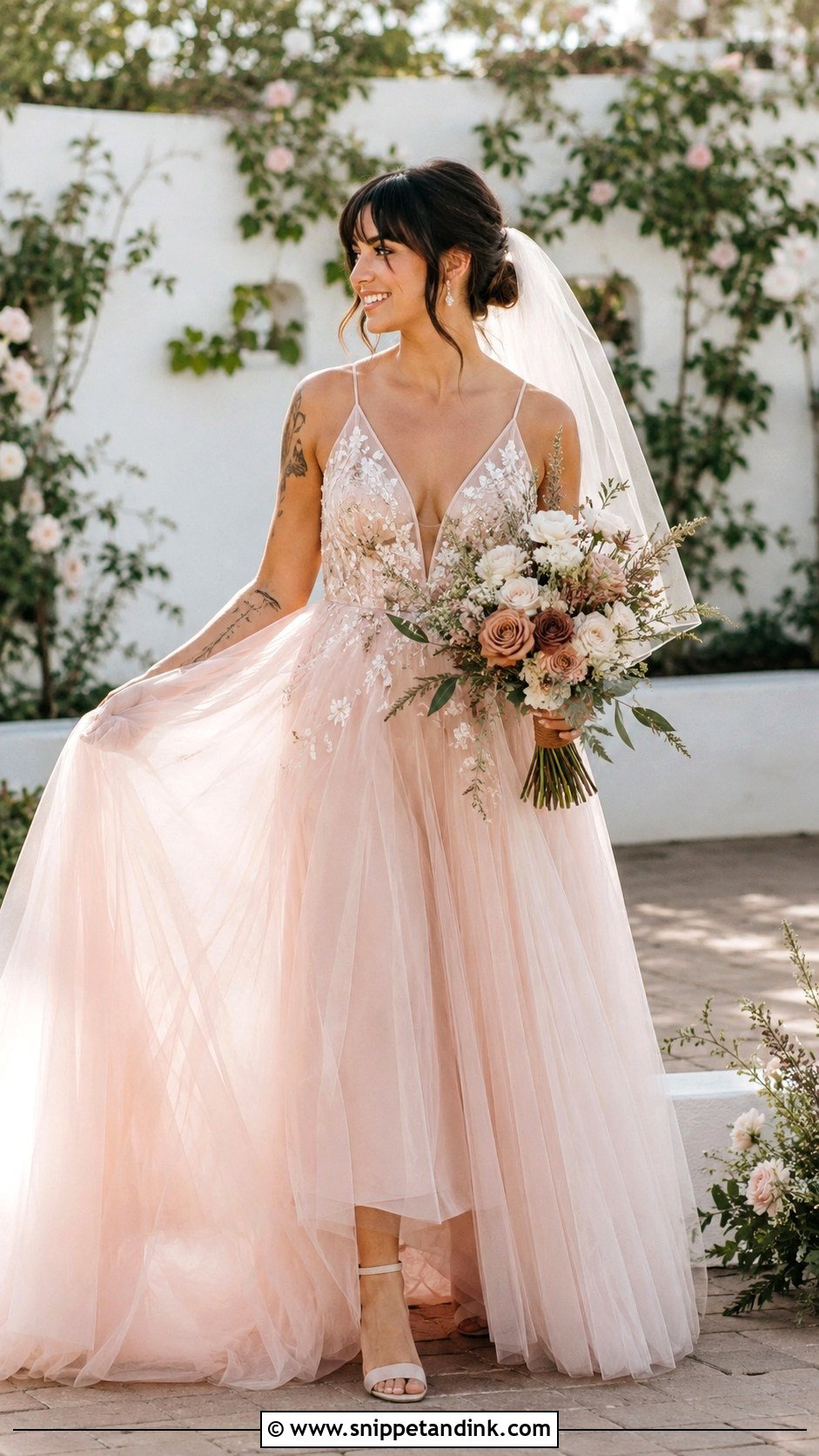
Chiffon is the warm-weather fabric. It’s light, it breathes and it moves in the faintest breeze, so it suits beach, garden and destination ceremonies. It can look limp if the gown has only one layer, so I look for at least two layers of chiffon in the skirt. A V-neck, flutter sleeves or an empire waist keep it soft. Low heels, flats or wedges depending on the ground, with delicate earrings and natural hair.
27. Long Crepe Wedding Dress
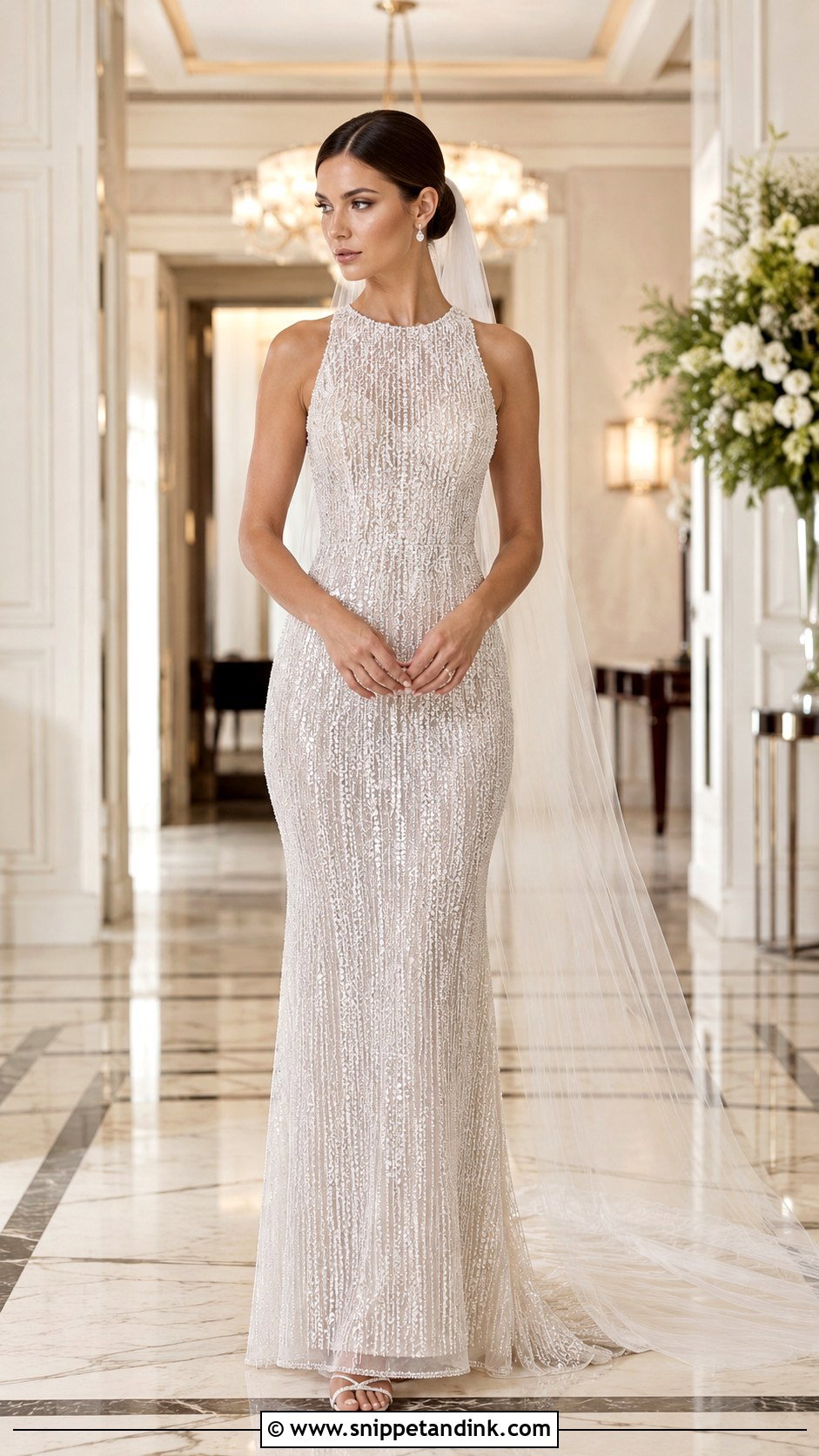
Crepe follows the body without shine, and its weight gives a clean line on sheaths, fit-and-flare and minimal A-lines. Because it’s plain, tailoring is everything: a crepe gown that’s slightly too tight shows every line underneath. Choose one that skims and lets you move. Sleek heels, pearl studs and a low bun suit it. A plain veil or a detachable cape adds interest without breaking the modern look.
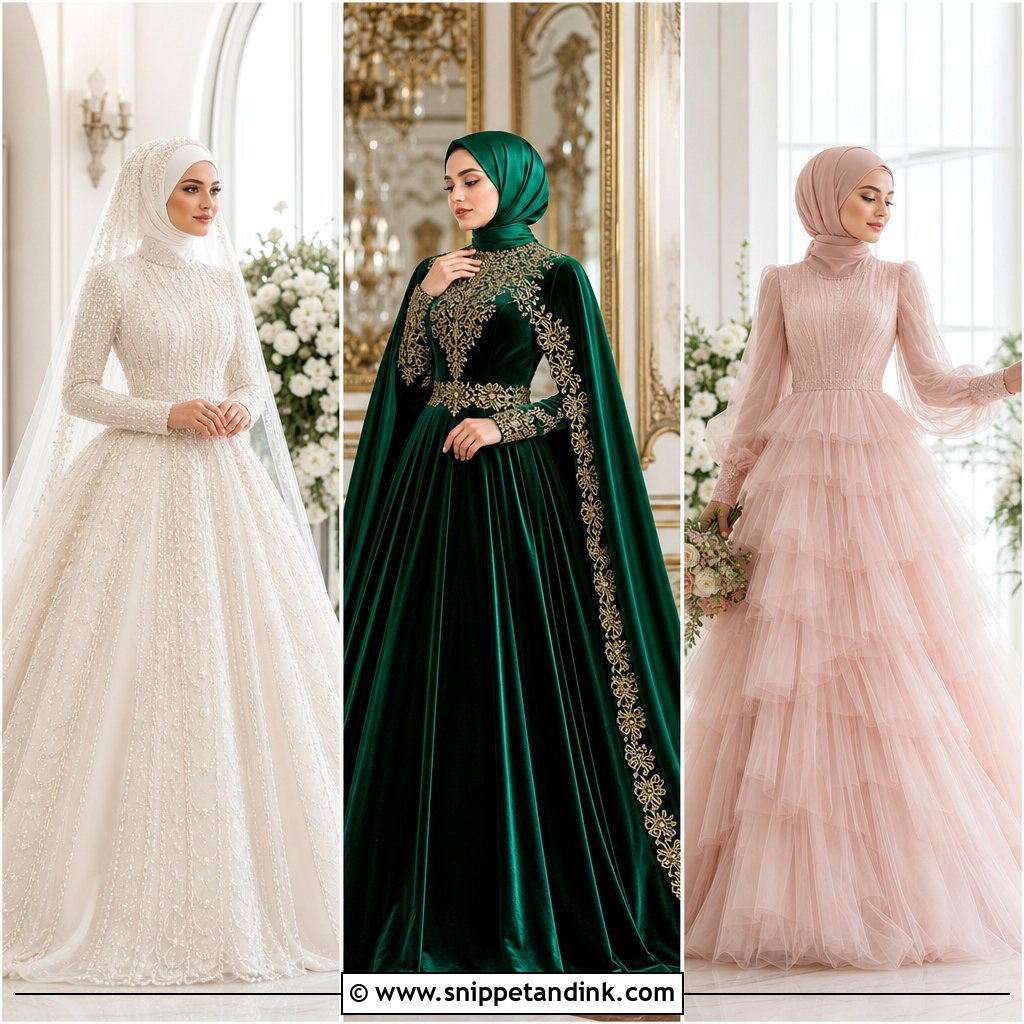
28. Long Colored Wedding Dress
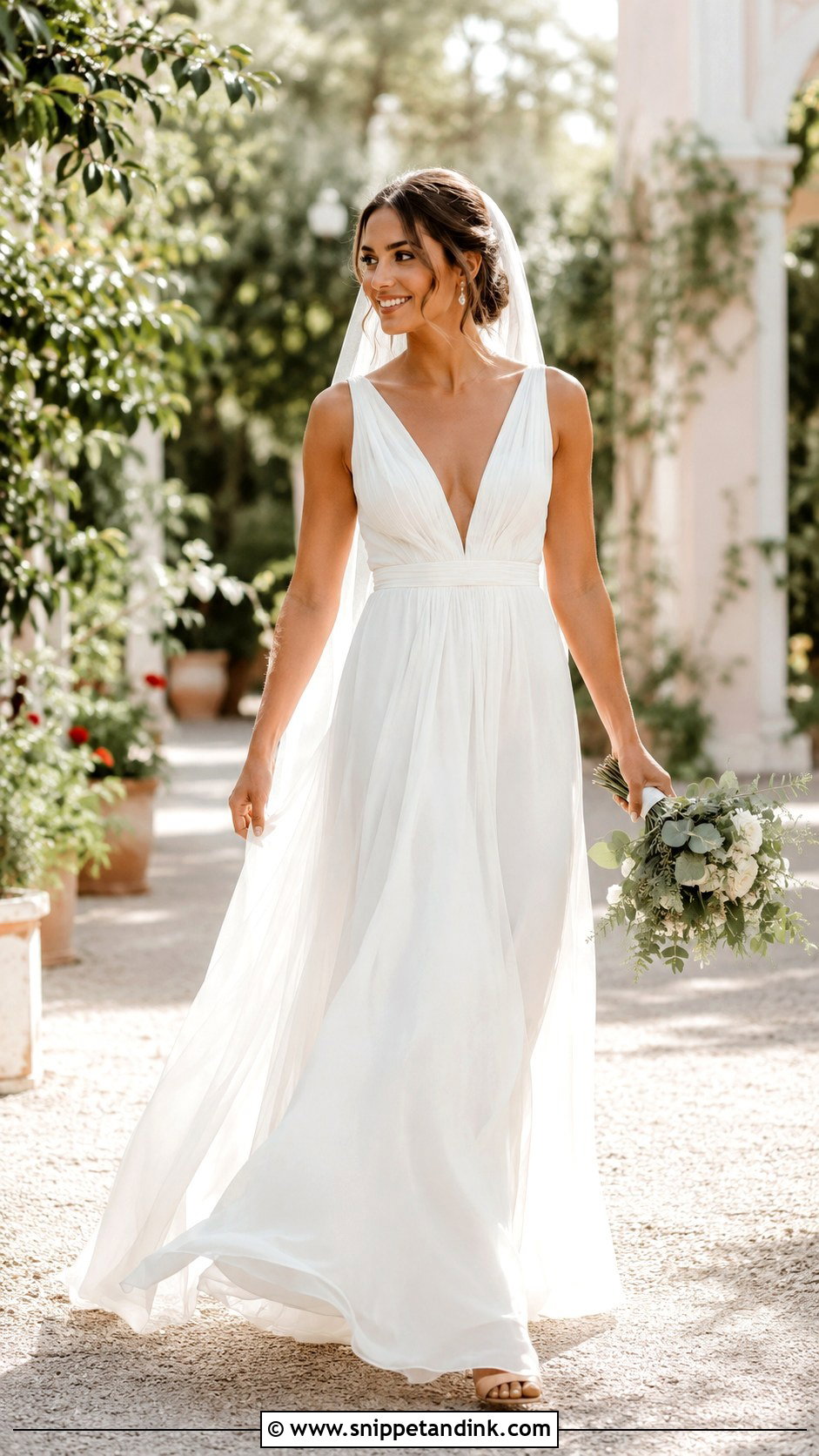
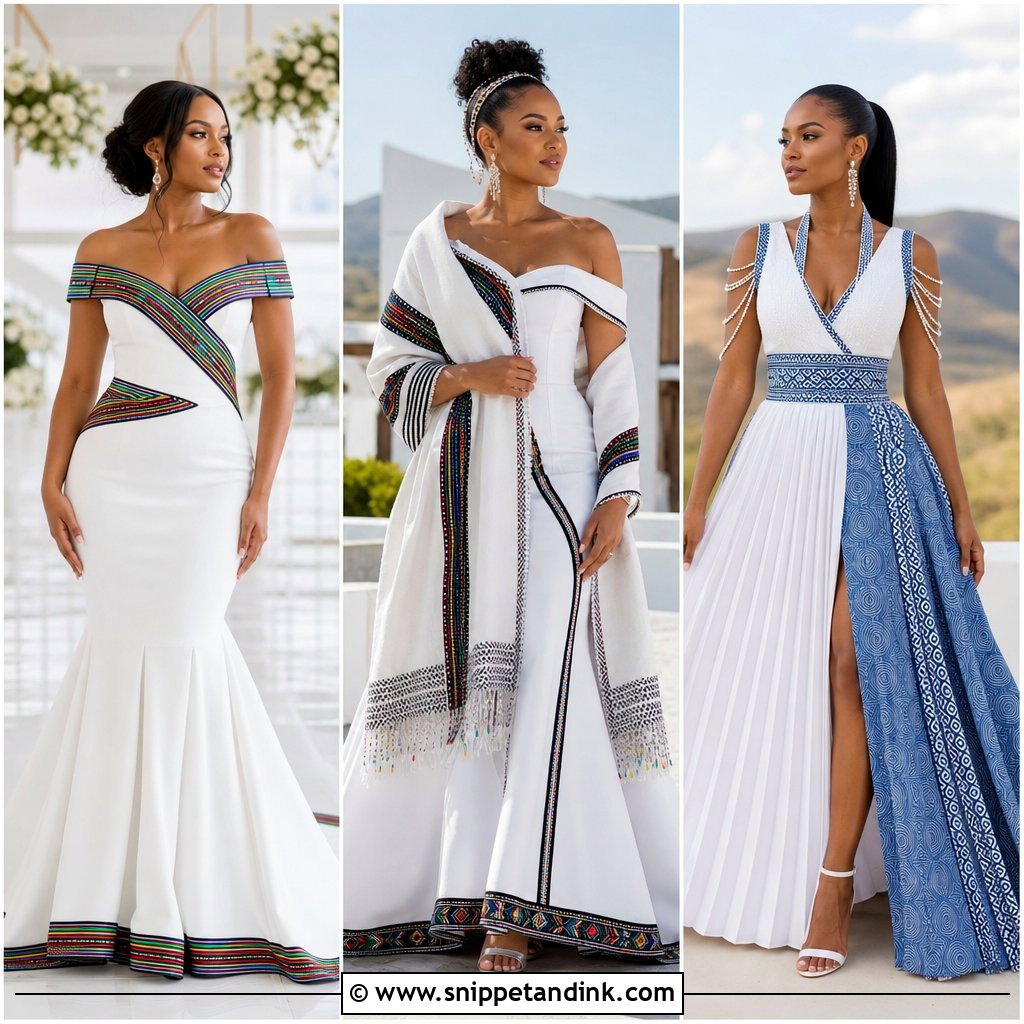
Colour reads more personal than white, and the soft shades are the easiest to wear: blush, champagne, blue-grey, pale gold and lavender. Hold the colour against your face in daylight before deciding, because some of these shades can make skin look sallow. Colour can come through the lining, the embroidery, the tulle layers or the whole fabric. Neutral heels and simple jewellery keep the shade the focus, with an ivory or matching veil.
29. Long Plus Size Wedding Dress
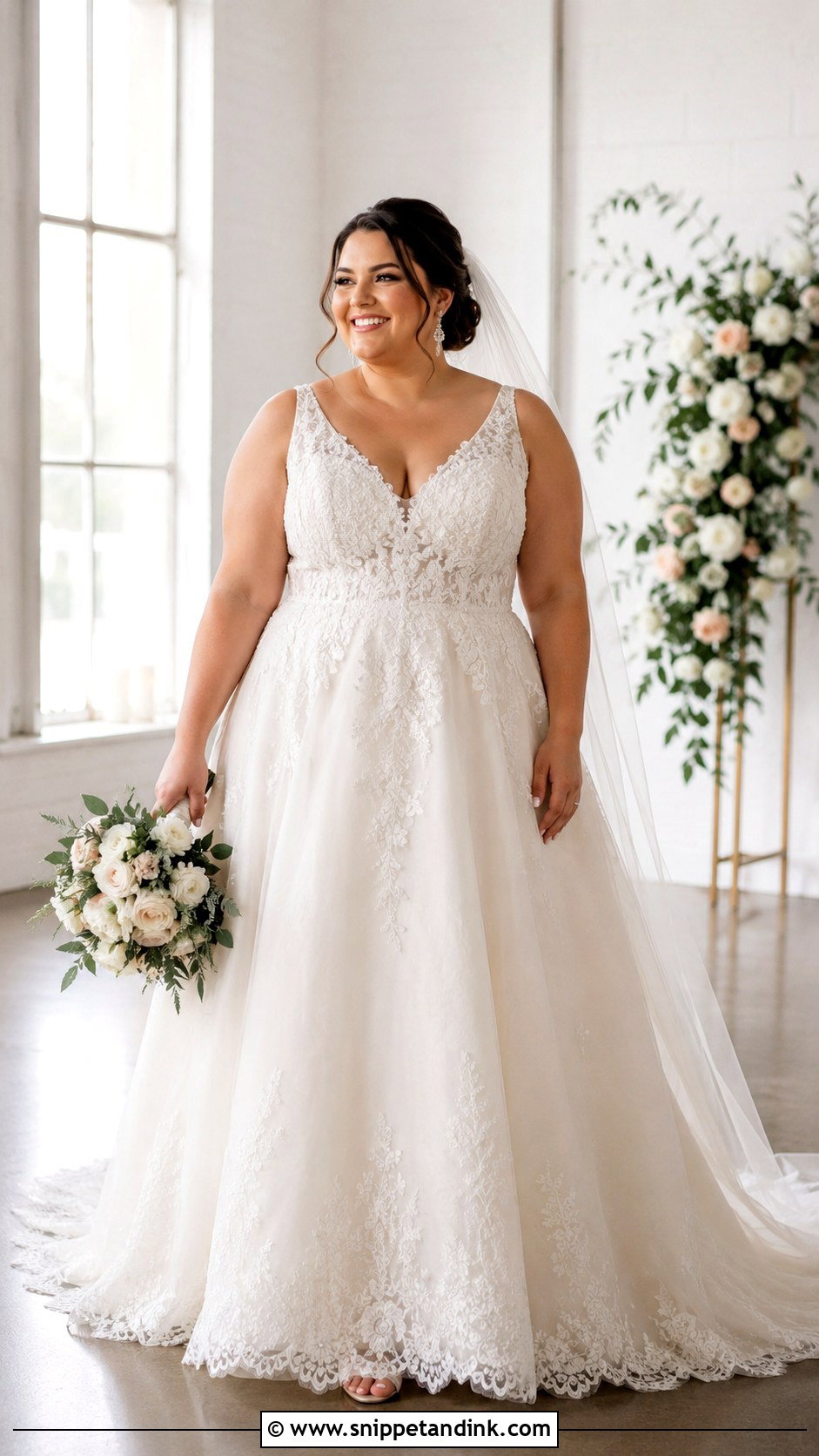
A long plus size wedding dress should start with construction, not silhouette. I look for strong lining, a bodice with boning that supports without digging in, and seams that sit flat. After that, any shape can work: A-line, ball gown, mermaid, sheath or empire waist. Supportive underwear matters as much as the dress, so bring it to every fitting. Comfortable heels, earrings you love and a veil matched to the gown’s level of detail.
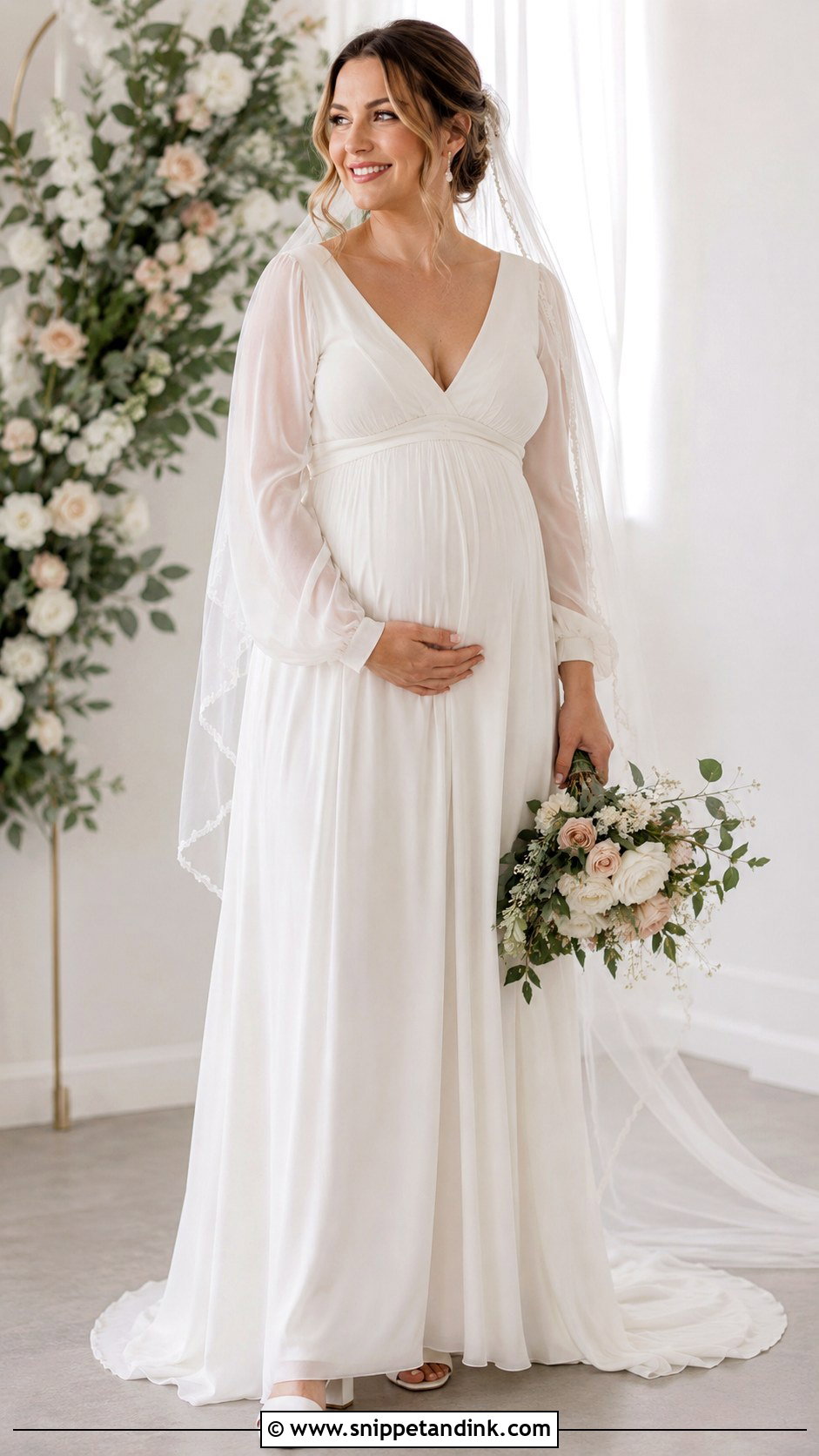
30. Long Maternity Wedding Dress
A long maternity wedding dress has to accommodate a body that’s still changing, so I schedule the final fitting as close to the date as possible, often within the last two weeks. Empire waists, flowing A-lines, stretch crepe, chiffon and soft tulle all give room. Avoid stiff waistlines that press in. Low block heels, cushioned sandals or flats, delicate earrings, a light veil and a small bouquet.
Should the Train Be Bustled, Detached or Swapped Out?
Every long gown with a train needs a reception plan. Even a short sweep train gets stepped on once the dancing starts. There are three routes, and the right one depends on the fabric and how much you want to change.
Over bustle
The train is lifted and hooked to buttons at the back of the waist, creating soft drapes. It suits lace and tulle, and it’s quick to do. On heavy satin it can pull the back of the dress down if there aren’t enough attachment points.
Under bustle
Sometimes called a French bustle, the train is tucked under and tied with numbered ribbons. It looks tidy on satin and crepe and suits ball gowns. It takes longer to fasten, so teach a bridesmaid or your mum at the final fitting, not on the day.
A detachable train or a second dress
If the train is very long or very heavy, I’d rather see it come off entirely or see the bride change into a lighter reception dress. Either way, plan when it happens: straight after the portraits works for most timelines, before the first dance at the latest.
A Long Gown Is Only as Good as Its Hem
A long dress becomes a whole look only once the shoes, veil, hair and accessories are decided around it. Venue, season and comfort should narrow the shape; fabric sets the mood, with satin polished, lace romantic, crepe modern and tulle soft. Sleeves, trains, necklines and waistlines then do the fine-tuning. Above all, pick a gown you can move, breathe and sit in, and get the hem and fit right. That’s what people notice.
You'll Like These Ideas:






Leave a Reply