
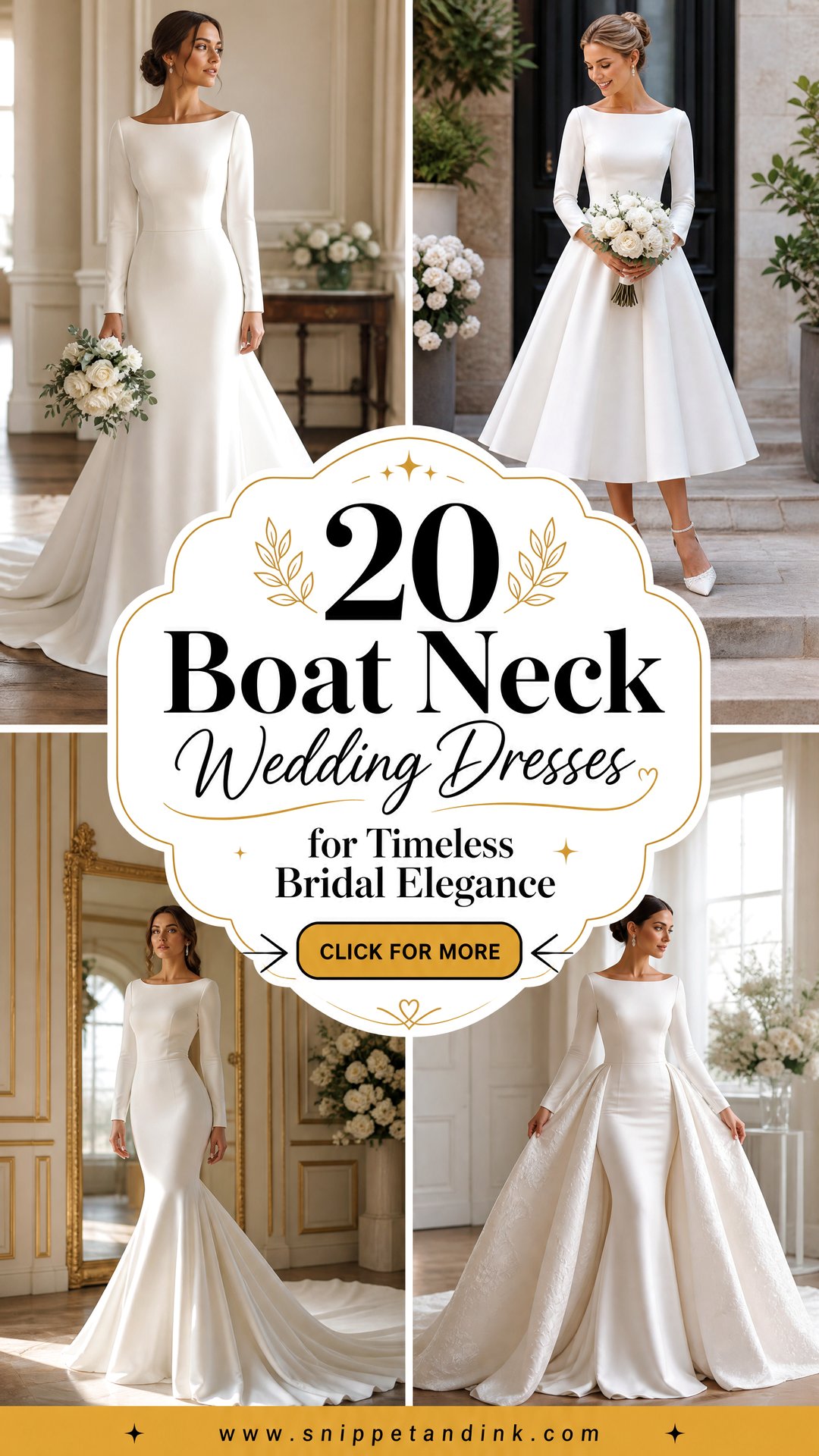
A boat neckline is the one I reach for when a bride wants coverage but still wants her collarbones to do some of the work. Also called bateau or Sabrina necklines, these cuts run almost straight across the collarbone and out toward the shoulder points, so the face gets a clean horizontal frame. I’ve put this neckline on sleek crepe columns and on heavy Mikado ball gowns, and it behaves differently on each. It takes lace, satin, chiffon, beading, sleeves, open backs and detachable layers without complaint. What decides the right version for you is shoulder width, the venue and how much structure you can tolerate for a full day. Below are 20 boat neck gowns, each with the accessories and fitting checks I’d pair with it.
Reading a Bateau Line Against Your Own Shoulders
The first thing I do when a bride steps into a boat neck is stand behind her and look at where the neckline ends. On most bodies it should finish a little inside the shoulder point, the bony knob at the top of the arm. Cut wider than that and it slides off the shoulder the moment you move. Cut narrower and it looks like a crew neck that wandered.
Narrow or sloping shoulders
A very wide bateau slips on sloped shoulders because there’s nothing for it to rest against. Ask for a slightly curved neckline, a cap sleeve, or a cut that sits a touch closer to the neck. A strip of silicone gripper elastic sewn inside each shoulder seam also helps it stay put.
Broad shoulders
A broad frame suits the straighter, wider versions, which repeat the shoulder line instead of fighting it. I’d avoid heavy beading right at the shoulder points, where it only adds width, and keep the embellishment centred on the bodice.
A shorter neck or a fuller bust
Because a boat neck covers the upper chest, on a full bust it can read as one solid block from chin to waist. A neckline that dips slightly at the centre, a clearly defined waist and hair worn up all open that space again. Shorter necks do best with an updo and a neckline resting on the collarbone rather than above it.
Whatever your build, I run three quick mirror checks before anything gets pinned:
- Arms raised overhead: the neckline shouldn’t lift away from the collarbone.
- Arms forward as if hugging someone: no gap should open at the back of the neck.
- Seated on a hard chair: the front shouldn’t buckle into a ripple below the collarbones.
1. Satin A-Line Boat Neck Wedding Dress
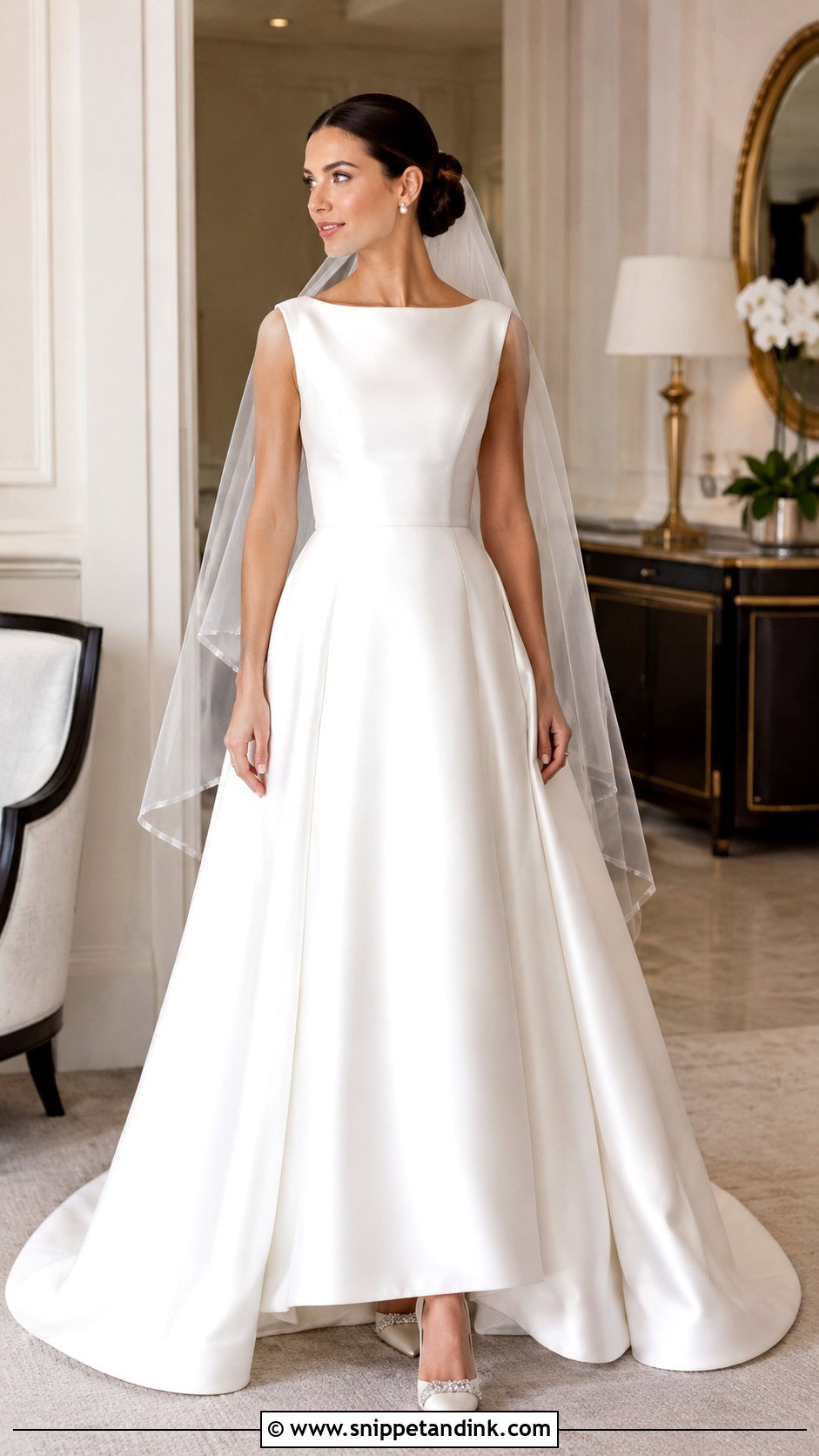
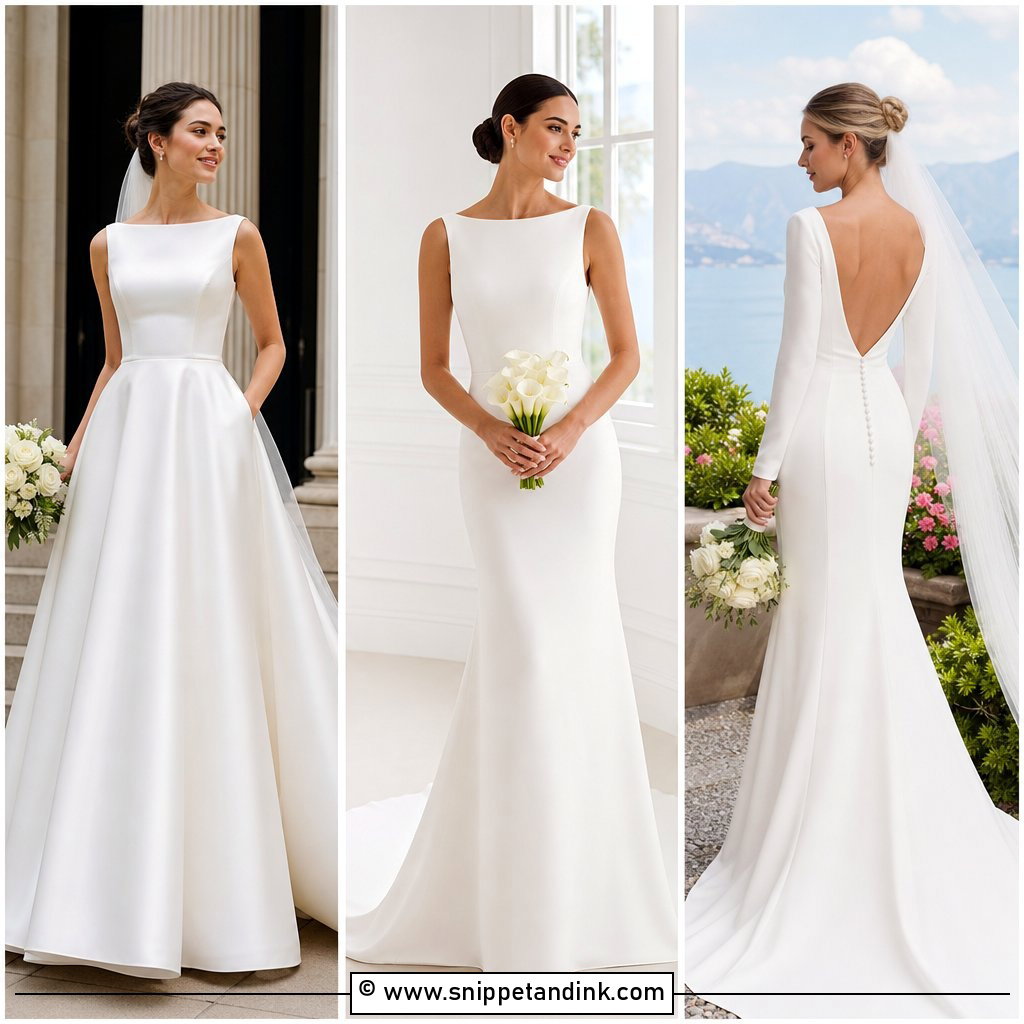
Satin with a boat neck is the combination I show first to a bride who says she wants something classic and nothing beaded. A fitted bodice that defines the waist, then a softly structured skirt, is all it needs; satin carries the light, so the plain shape still reads as formal. I’d style it with pearl studs, a low chignon, pointed ivory pumps and a fingertip veil with a narrow satin edge, plus a small bouquet so the seams stay the focus. Hotel ballrooms and traditional indoor ceremonies suit it. Satin does hold every crease from sitting, so expect a wrinkled lap in candid photos after the car ride. At the fitting, raise both arms: the neckline should stay flat on the collarbones and not ride up.
2. Long Sleeve Crepe Boat Neck Wedding Dress
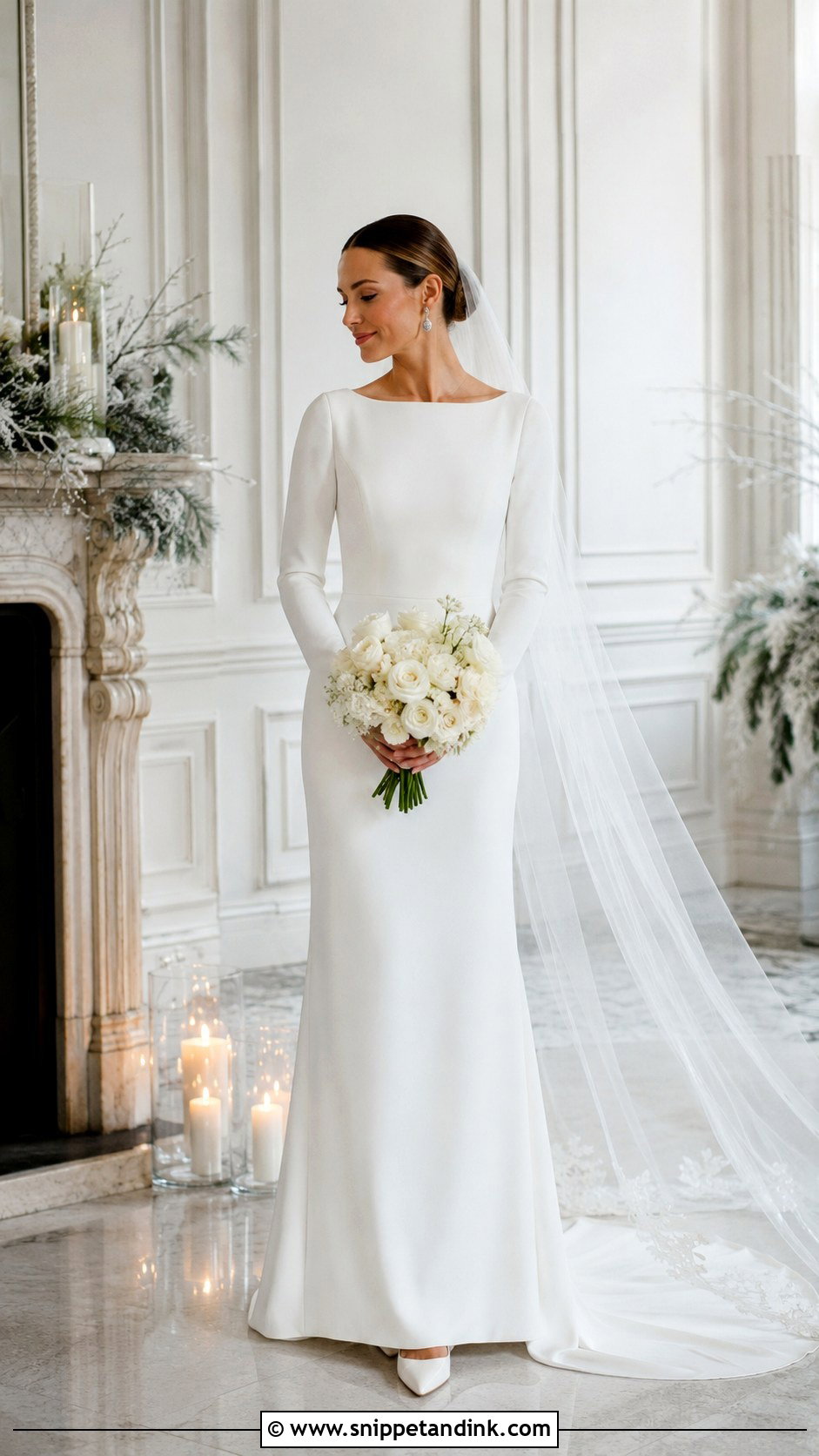
Stretch crepe with long sleeves is my answer for a fall or winter ceremony where the bride is cold before she’s nervous. The weight of the crepe matters more than the label. A thin crepe shows every seam and undergarment line, while a substantial one skims the body without clinging. Keep the skirt to a fitted column or a gentle fit-and-flare so the sleeves don’t make the whole shape feel heavy. Crystal drops, closed-toe pumps and a cathedral veil give the ceremony some drama, and with the neck and arms both covered, I keep hair to a neat bun or a smooth ponytail so the top half doesn’t look crowded. Have your tailor set the cuffs at the wrist bone with your elbows bent, because a sleeve measured with straight arms creeps up the forearm the moment you hold a bouquet.
3. Lace A-Line Boat Neck Wedding Dress
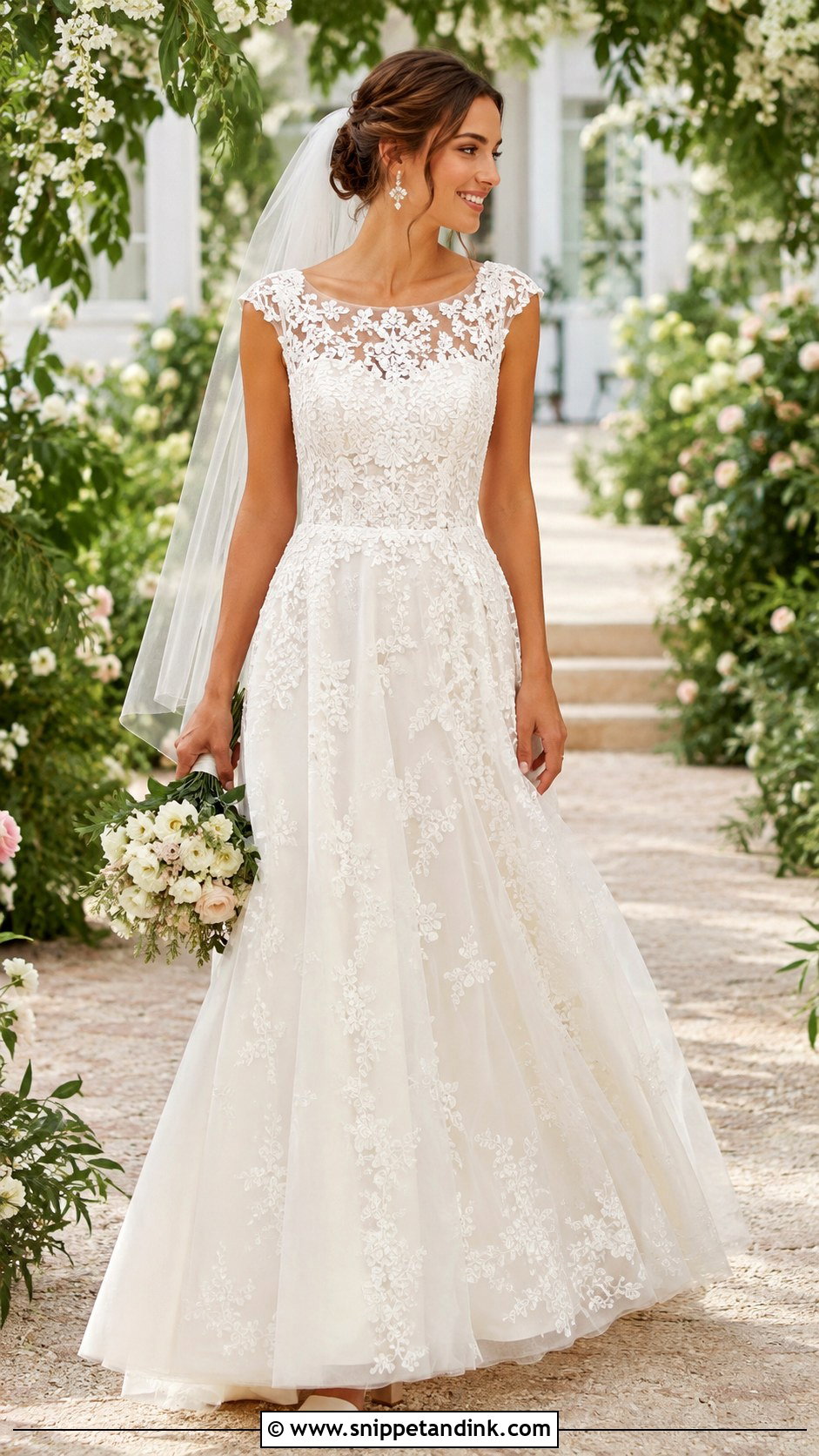
Lace takes the stiffness out of a bateau neckline. On an A-line, I like the lace dense across the bodice and thinning out as it falls onto the skirt, with a plain lining underneath so the appliqués read clearly instead of blurring into busy texture. A softly twisted updo, small floral earrings, ivory block heels and a plain tulle veil are enough. Skip the heavy necklace; between the wide neckline and the pattern, there’s no room for it. Garden venues and historic homes suit this one. If lace alone doesn’t give you enough support, ask for a lined bodice with built-in cups, which a good seamstress can add without them showing through the overlay.
4. Mikado Ball Gown Boat Neck Wedding Dress
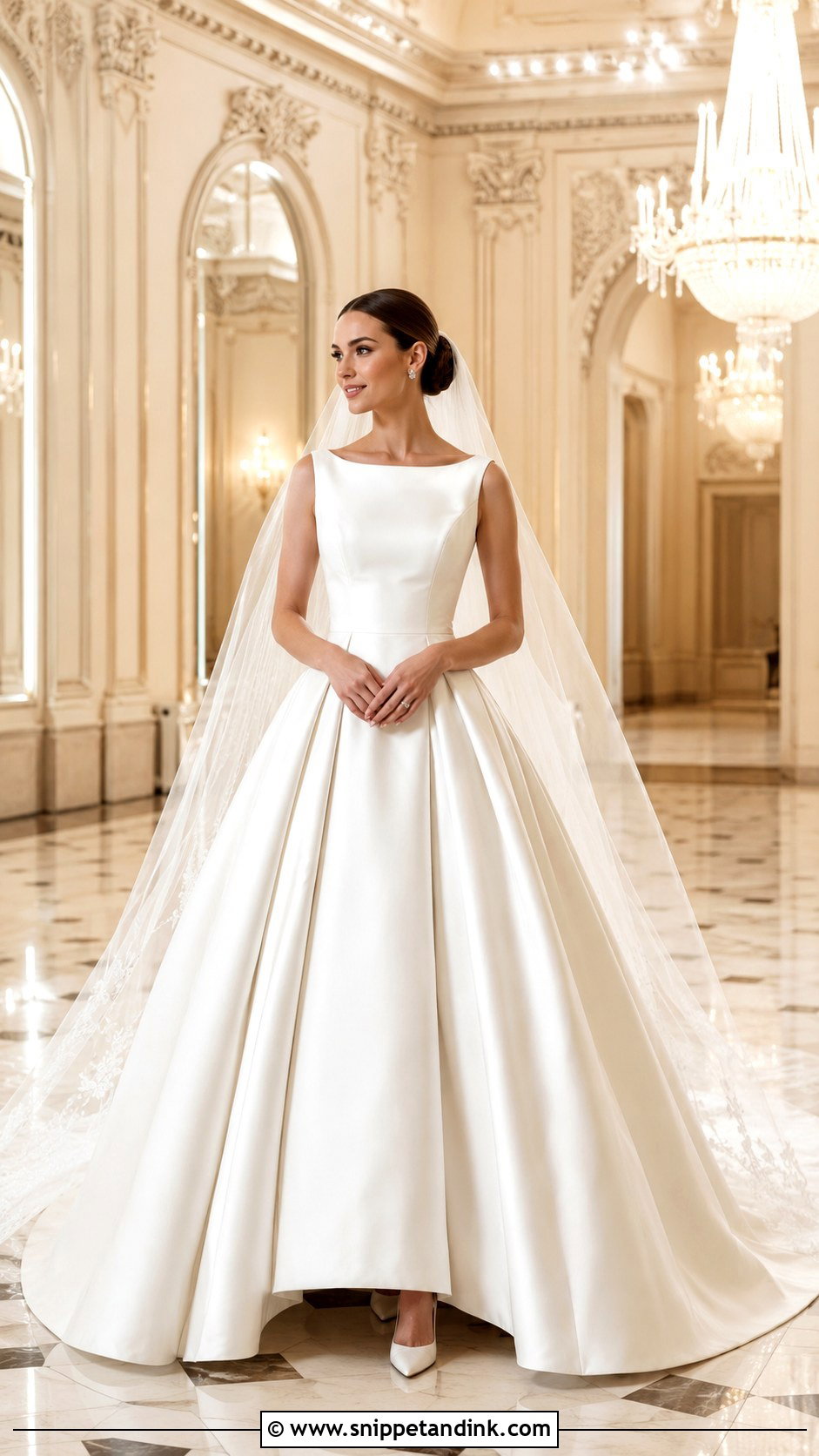
Few things make an entrance like a boat neckline over a full Mikado skirt. Mikado is a heavy silk or silk-blend fabric with enough body to hold pleats and sculpted folds on its own, which is why it suits a ball gown and why it photographs with such clean shadows. A defined waistband or basque-style seam gives the eye a clear break between the fitted bodice and the volume below. Pair it with a cathedral veil, crystal studs, satin pumps, a sleek bun and a structured bouquet. The trade-off is weight. By the reception, a big Mikado skirt can feel like carrying a duvet, so I make brides sit, walk and turn in it before the hem and bustle points are signed off.
5. Backless Boat Neck Wedding Dress
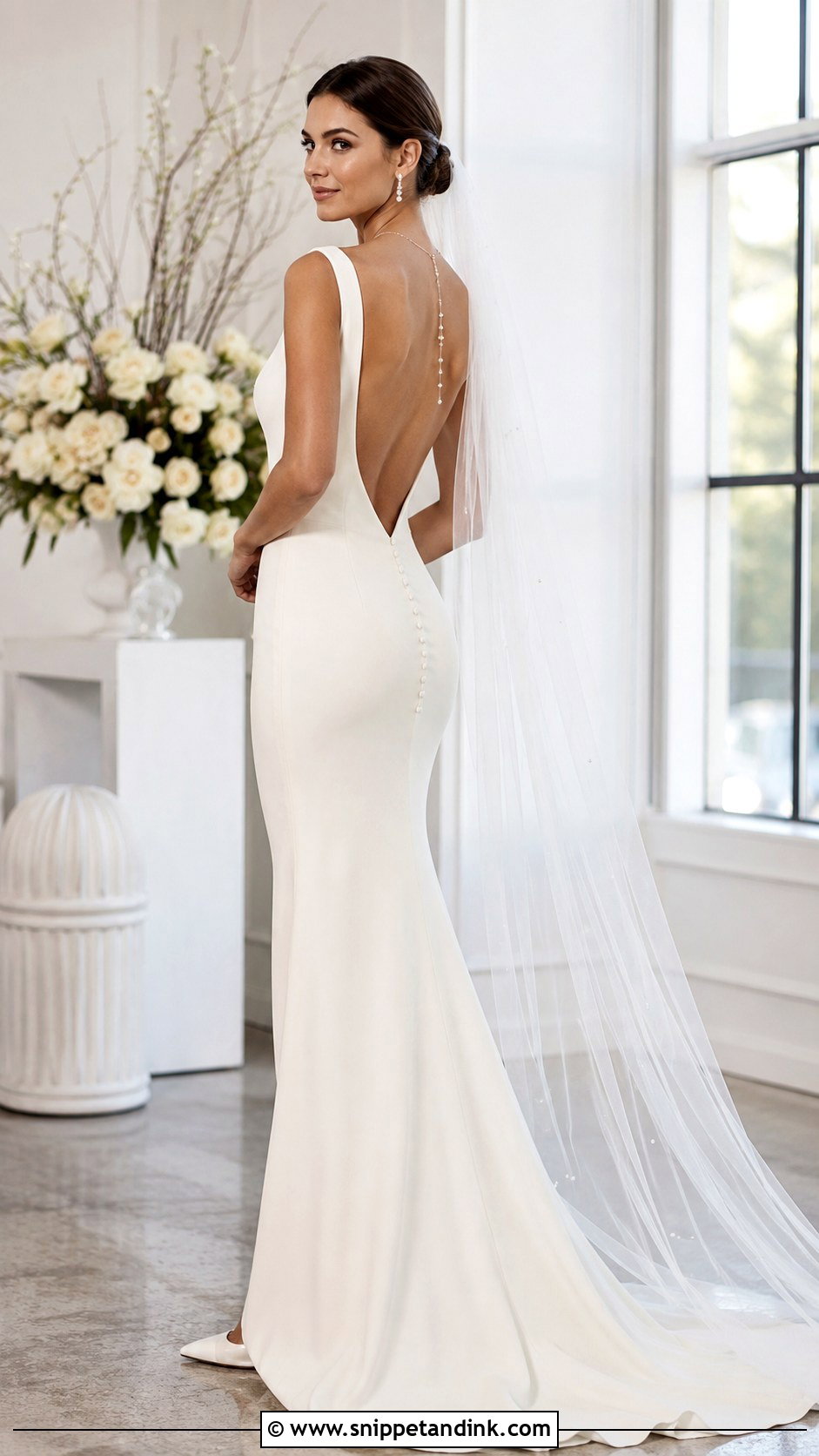
A high front with an open back is a contrast I love, because guests only see it once you’ve walked past them. The engineering is all in the shoulders: with no fabric across the back, the neckline is held up by the shoulder seams alone, so they need to be cut close and firm in crepe or satin. Style it with a low bun, delicate back jewelry, drop earrings, pointed pumps and a sheer veil that shows the back instead of covering it. A standard bra won’t work here; adhesive cups or cups sewn into the bodice are the practical route. Walk and sit in it at alterations. If the neckline gets dragged backward or gaps open at the shoulders, it’s the back that needs taking in, not the front.
6. Tea Length Boat Neck Wedding Dress
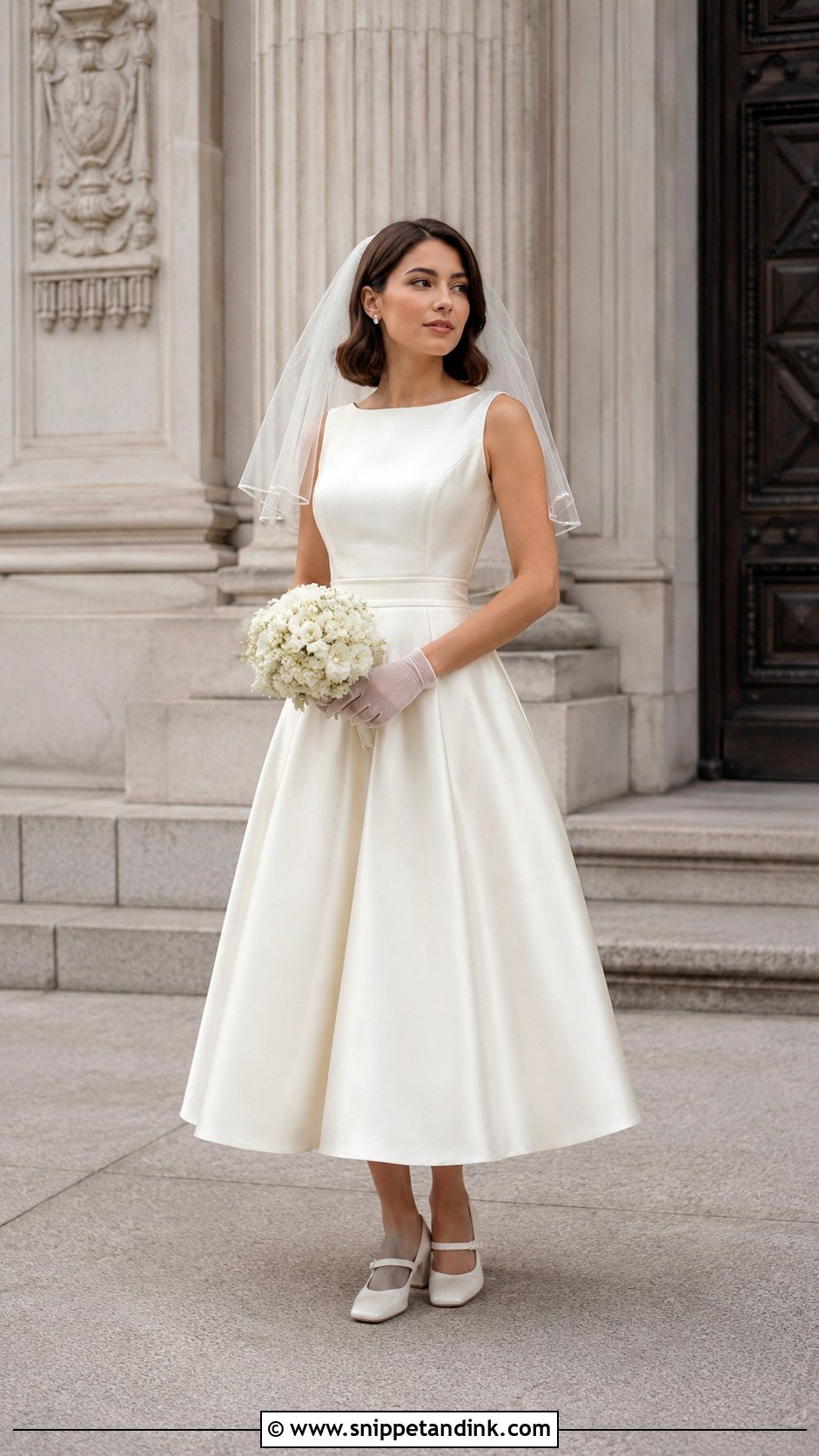
A tea-length hem gives the boat neckline some playful vintage character. I look for a fitted bodice, a defined waist and a skirt that stops somewhere between knee and ankle, in satin, organza or a structured lace that holds its shape at that shorter length. Your shoes are on show all day, so they deserve real thought; pointed slingbacks, embellished pumps and bridal Mary Janes all sit well with it. Pearl earrings, short gloves and a birdcage or shoulder-length veil finish the retro mood for a courthouse ceremony, a garden wedding or a small party. Hem it while wearing the actual shoes. A small change in heel height moves the hemline enough to change where the leg appears to start.
7. Mermaid Boat Neck Wedding Dress
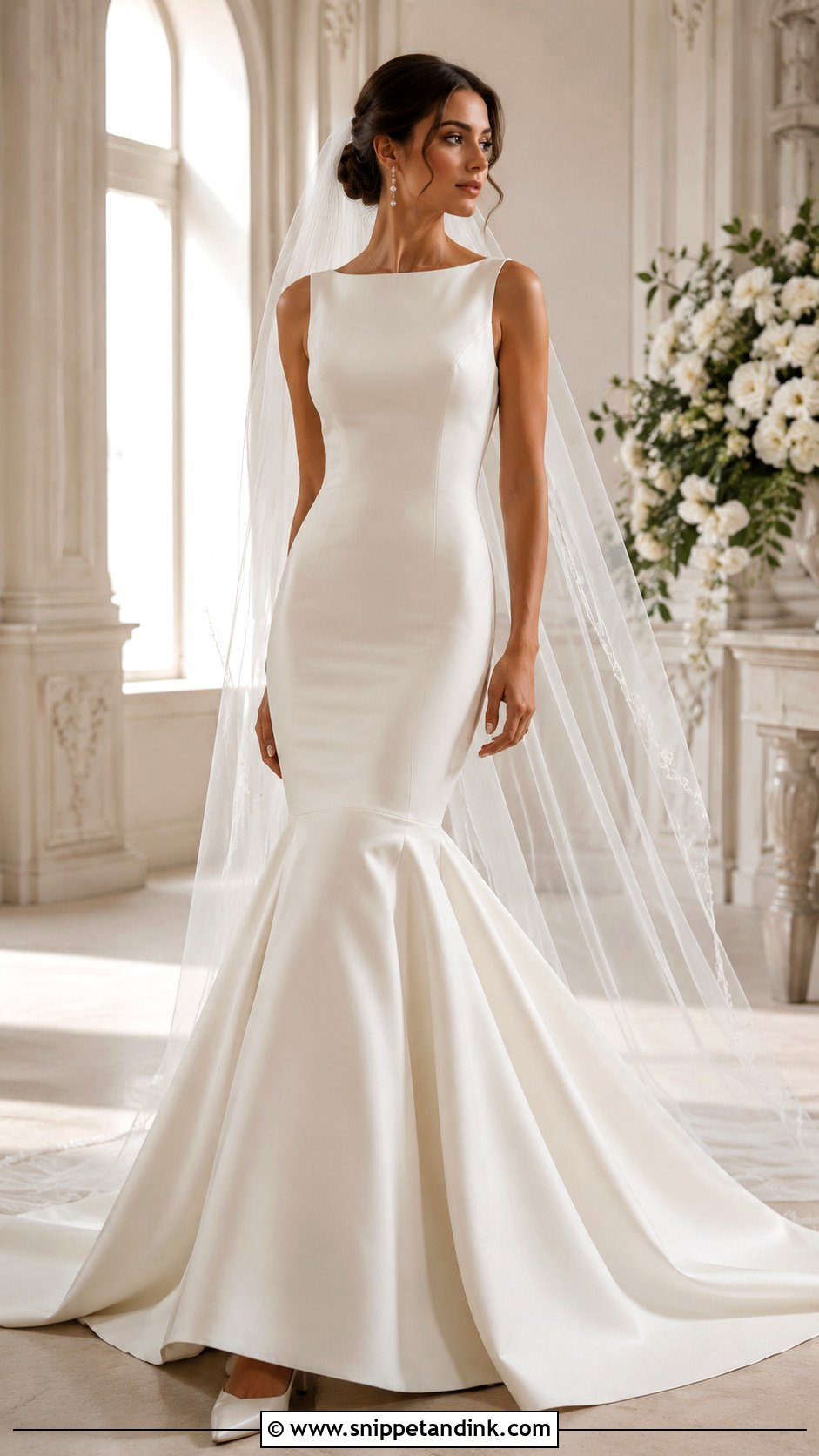
Mermaid is the boat neckline at its most glamorous: modest on top, sculpted through the hips. The fit runs close through bodice, waist and hips before flaring around the knee. Stretch crepe gives a clean modern line, and lace softens it. A polished updo, long earrings, a chapel veil and a slightly elongated bouquet echo the vertical shape. What I watch at fittings is where the flare starts. Set it too low, with the skirt tight past the knee, and you’ll be shuffling down the aisle and struggling with the steps up to the head table. Practice sitting and taking stairs. Good internal structure holds the shape, but too much boning turns a mermaid into a corset you can’t eat dinner in.
8. Cap Sleeve Boat Neck Wedding Dress
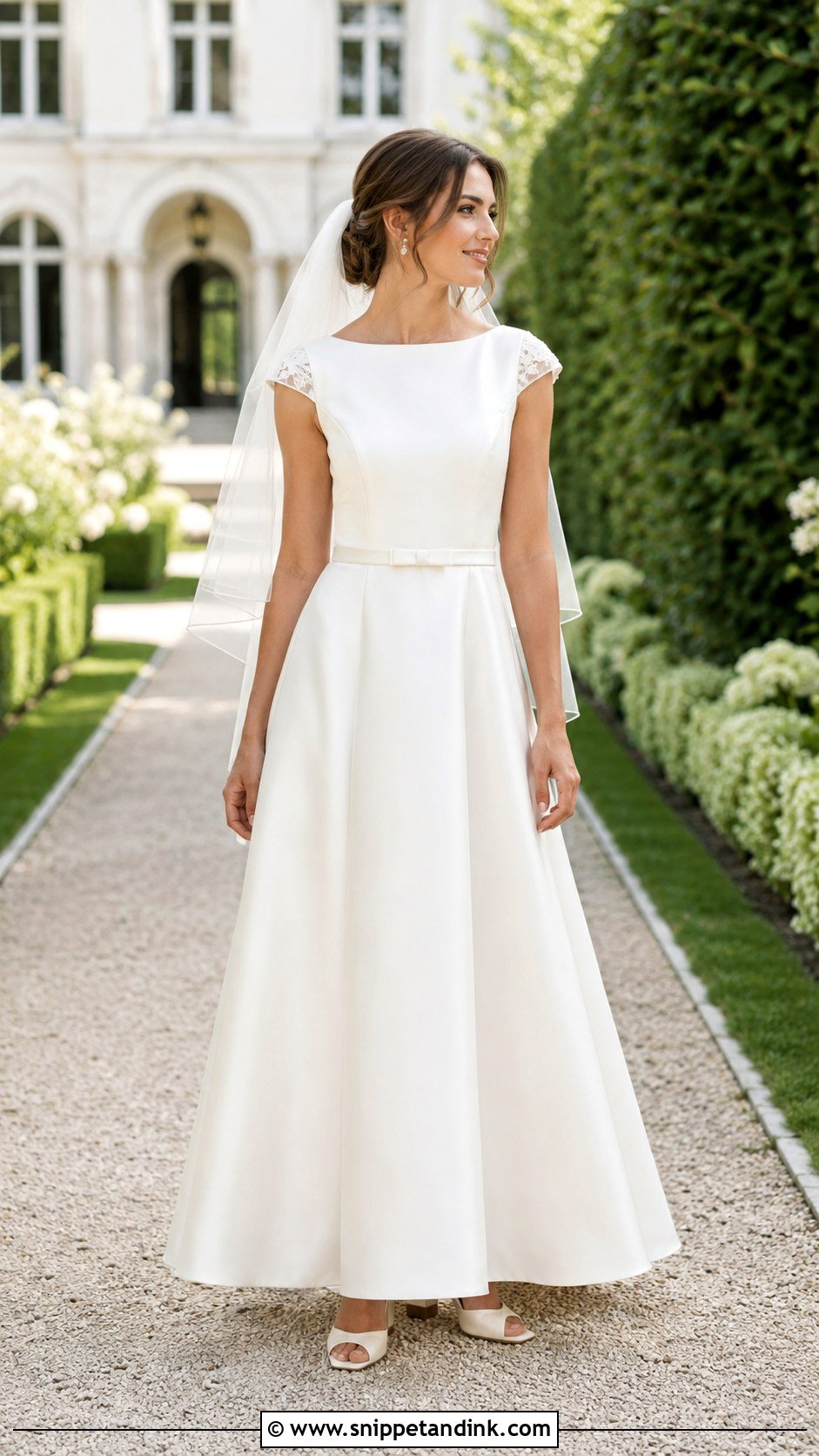
Cap sleeves carry the wide neckline a little further out, so collarbone and shoulder read as one continuous line. Clean satin keeps it minimal; lace cap sleeves add a bit of softness. On an A-line or softly fitted gown, I’d add a loose low bun, small earrings, a sheer fingertip veil and low block heels. A narrow belt can define the waist, but only in a matching fabric, otherwise it looks like an afterthought. The fitting problem with cap sleeves is the armhole edge. If it bites into the upper arm, you’ll have a red line by evening, so I have brides raise and roll their shoulders while I watch whether the neckline lifts with them.
9. Chiffon Boat Neck Wedding Dress
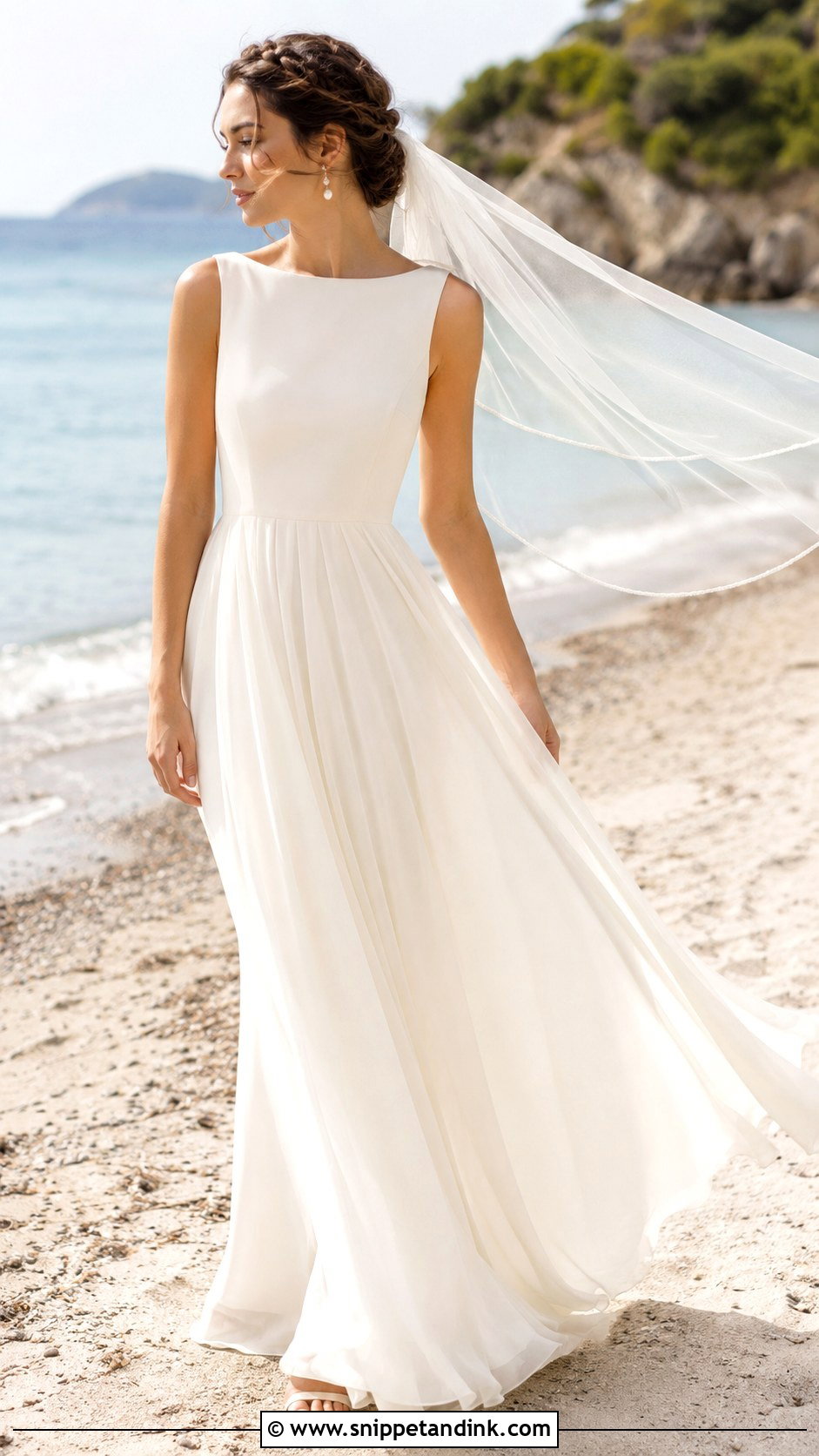
Chiffon is the fabric I suggest for outdoor ceremonies where you want the skirt to move. A lightly fitted boat neck bodice keeps the top half neat while an A-line or empire skirt does the floating. Soft flutter sleeves add movement, although sleeveless is cleaner. Delicate sandals, pearl drops, a loose braided updo, a light veil and a natural bouquet keep everything in proportion for a beach, garden or destination wedding. Chiffon’s weakness is wind and sun. One gust lifts the skirt, and strong backlight shows the legs through a thin lining, so test it outdoors and check the opacity before the final hem.
10. Beaded Boat Neck Wedding Dress
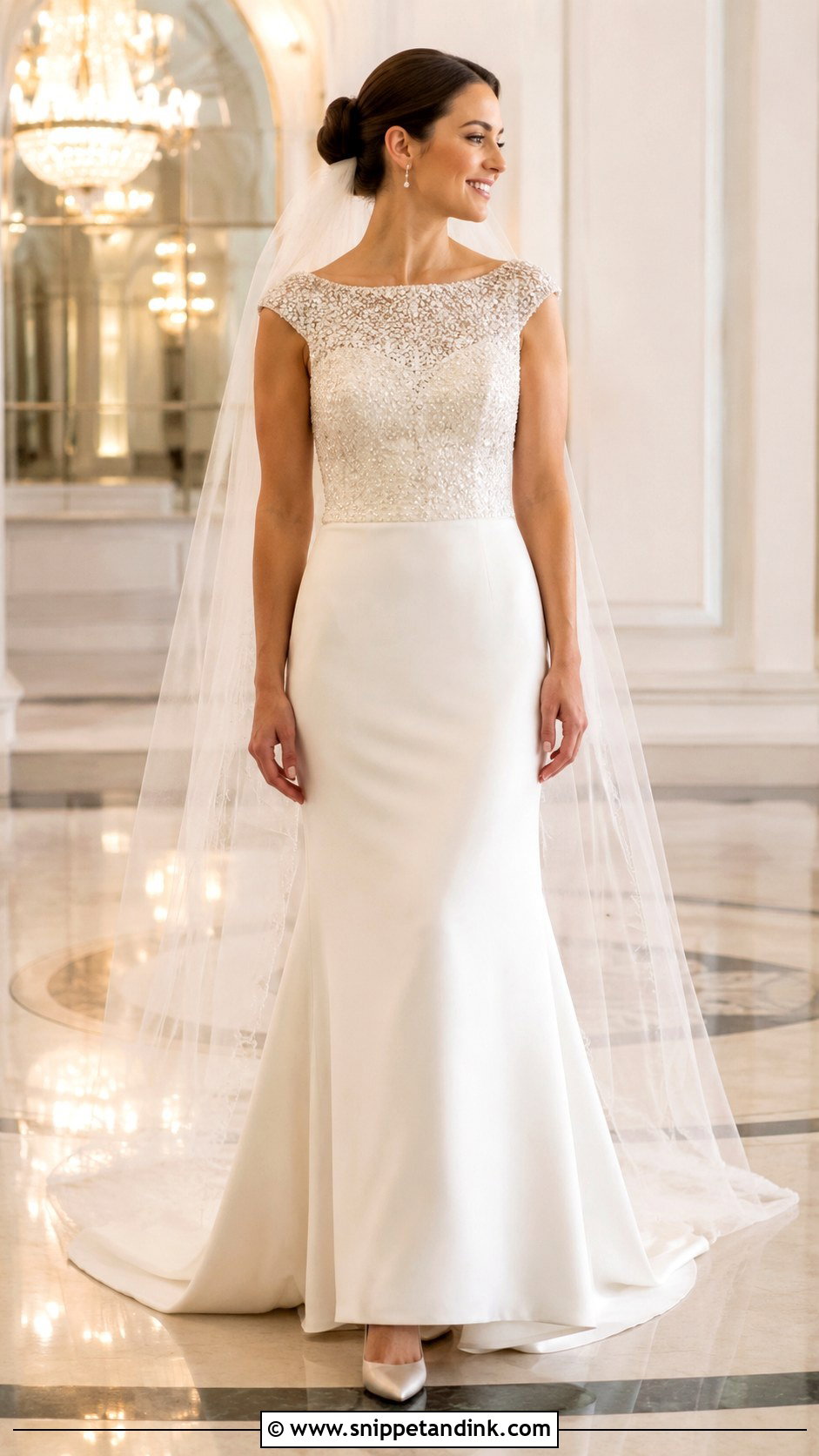
Beadwork at the neckline sends the eye straight to the face and collarbones, which is the point. I prefer the heaviest beading across the bodice, thinning out through the skirt; a fully beaded gown starts to look like armour. A fitted sheath, soft A-line or trumpet all carry it. Keep the rest quiet: understated earrings, smooth satin shoes, a neat bun, a plain tulle veil, and no necklace unless the beadwork is minimal. Beading adds real weight, so wear it through a long fitting rather than a quick try-on. Ask about the underarm finishing too, because beads along the side seam will rub the inner arm raw after hours of hugging.
11. Pearl Boat Neck Wedding Dress
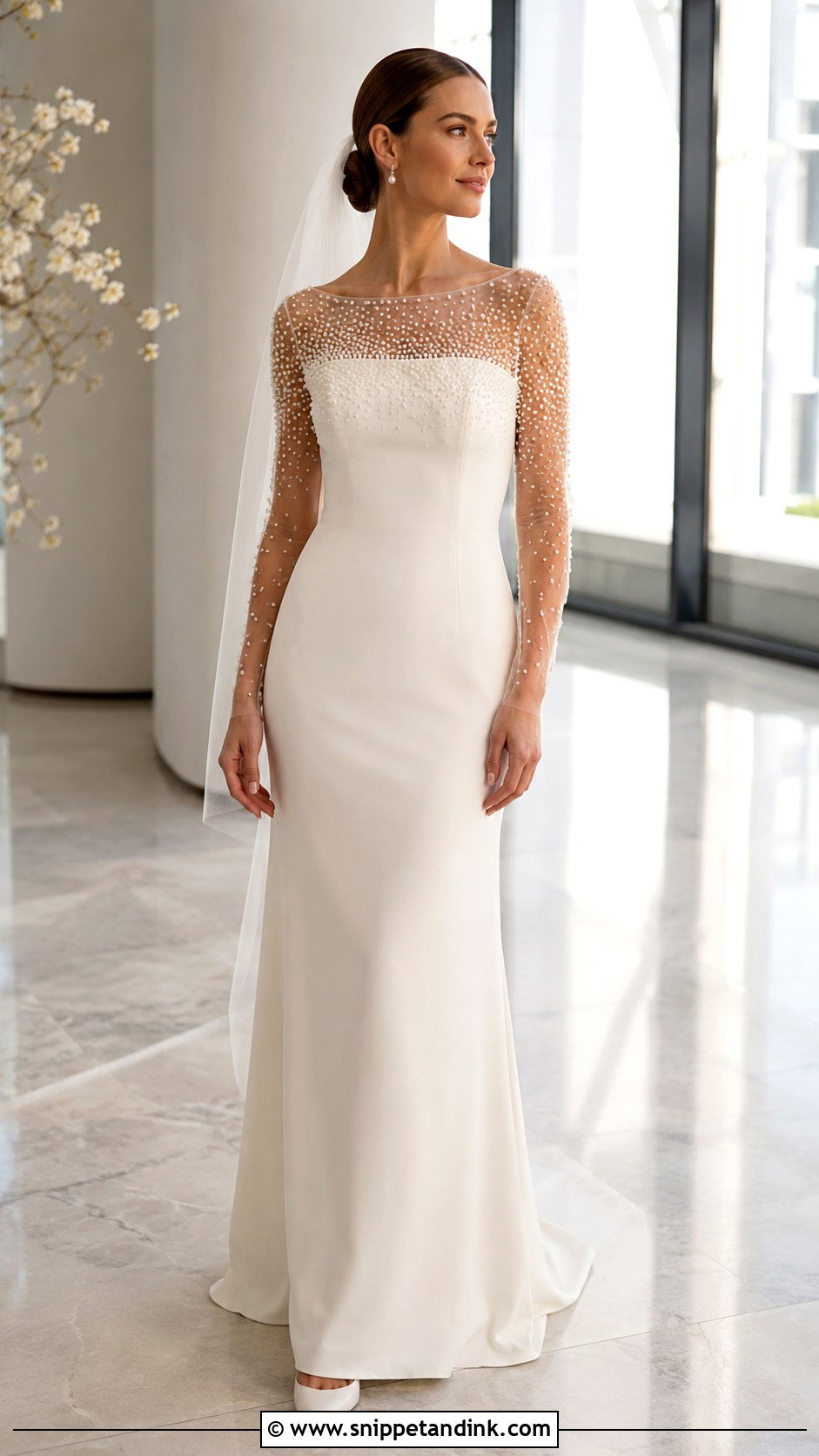
Pearls give a boat neck texture without the sparkle of crystal. They might be scattered over sheer sleeves, lined along the neckline or spread across the whole bodice. I’d keep the skirt simple in crepe, satin or tulle, then add pearl earrings, ivory pumps, a low chignon and an unembellished veil for an indoor or evening wedding. A pearl-edged veil can work if the dress itself is restrained, but three or four pearl elements together start to look like a matching set from a catalogue. Check every pearl near the underarm and wrist. A loose thread there catches on veil tulle, and a snag pulled mid-ceremony is hard to hide.
12. Illusion Lace Boat Neck Wedding Dress
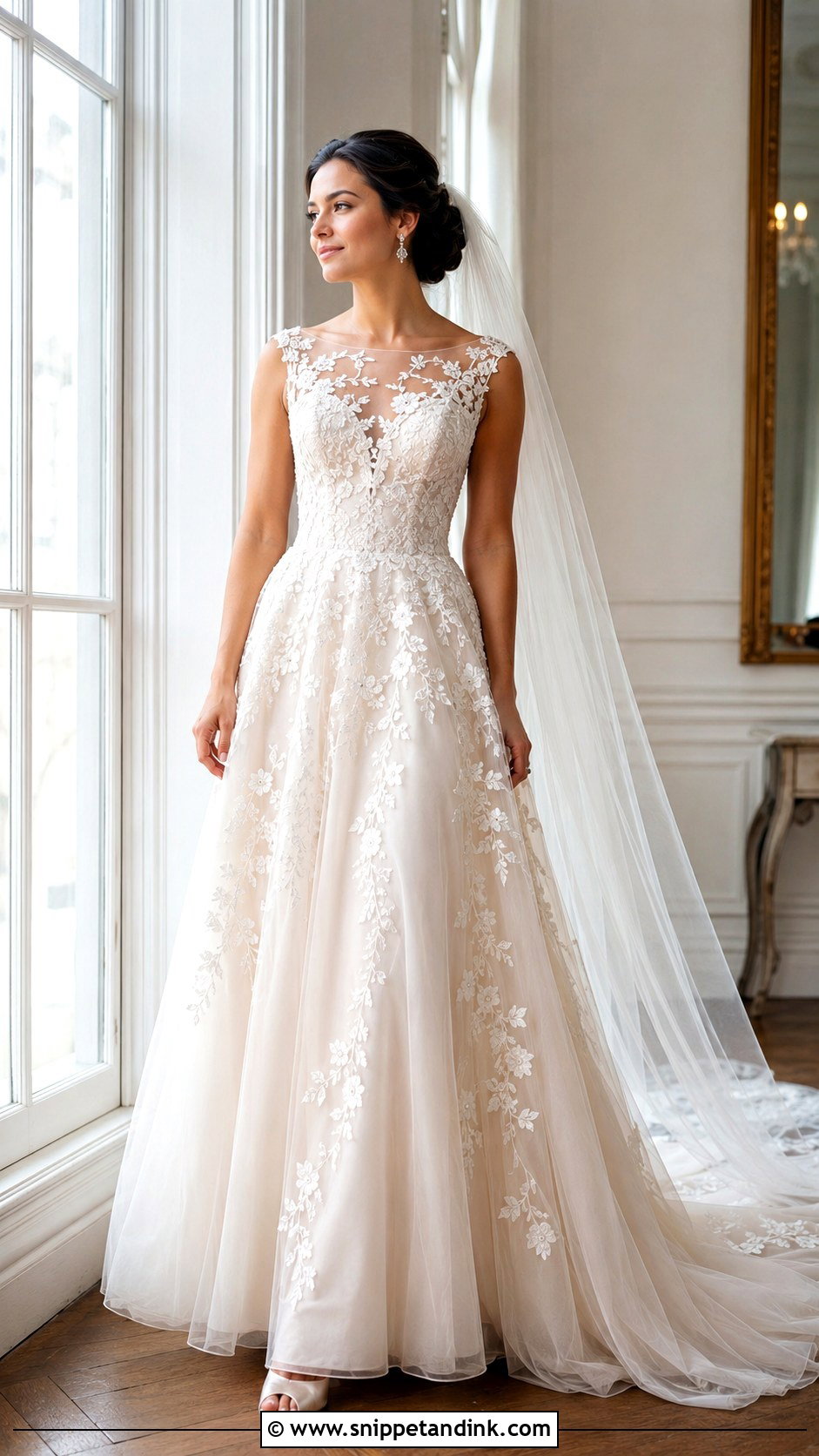
An illusion boat neckline uses sheer tulle so the lace appliqués look as if they’re floating on bare skin, which gives coverage that still feels light. Match the tulle to your skin tone as closely as you can; the wrong shade draws a visible line across the chest. An A-line skirt, a fitted lace bodice and covered buttons go with a classic updo, small crystal earrings, satin heels and a chapel veil. Makeup is the hazard. Foundation and body bronzer transfer into mesh and leave a tidemark, so I have brides step into the dress before any body makeup goes on the shoulders. Check the neckline in daylight and in photos: the tulle should lie flat with no wrinkle or visible edge at the shoulder.
13. Minimalist Column Boat Neck Wedding Dress
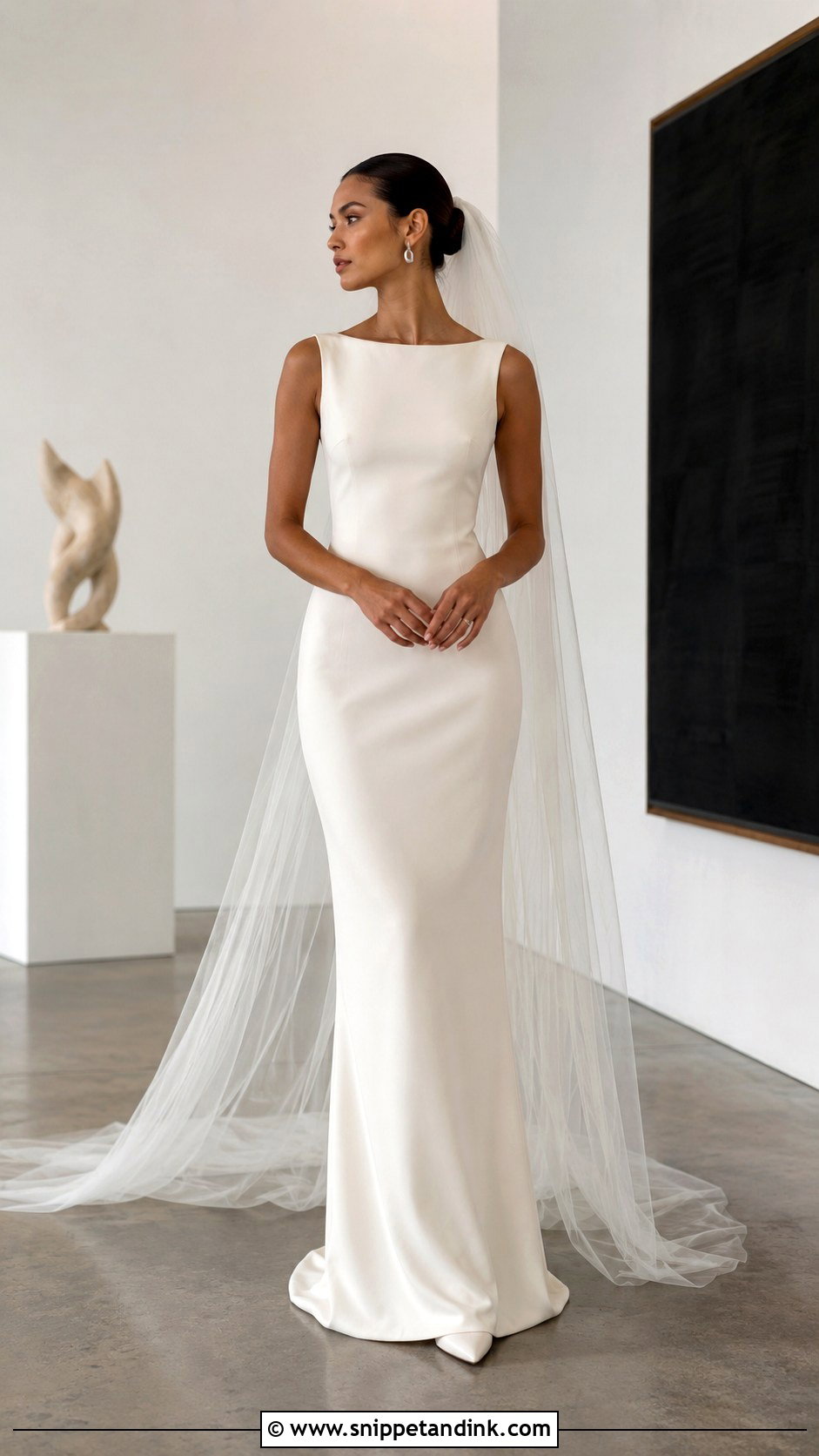
A column dress has nowhere to hide, which is exactly why it looks confident when it’s done well. Smooth crepe or matte satin, a narrow skirt, precise seams and a boat neckline that follows the collarbones. I’d let one detail carry the interest, maybe a low back or a row of covered buttons. Sculptural earrings, a sleek bun, pointed pumps, a simple cathedral veil and a compact bouquet keep the line long, and contemporary venues, galleries and modern hotels are its natural home. Tailoring is everything with this little fabric, since one puckered seam shows from across the room. Look at the fall from front, back and both sides in a three-way mirror before you approve it.
14. Basque Waist Boat Neck Wedding Dress
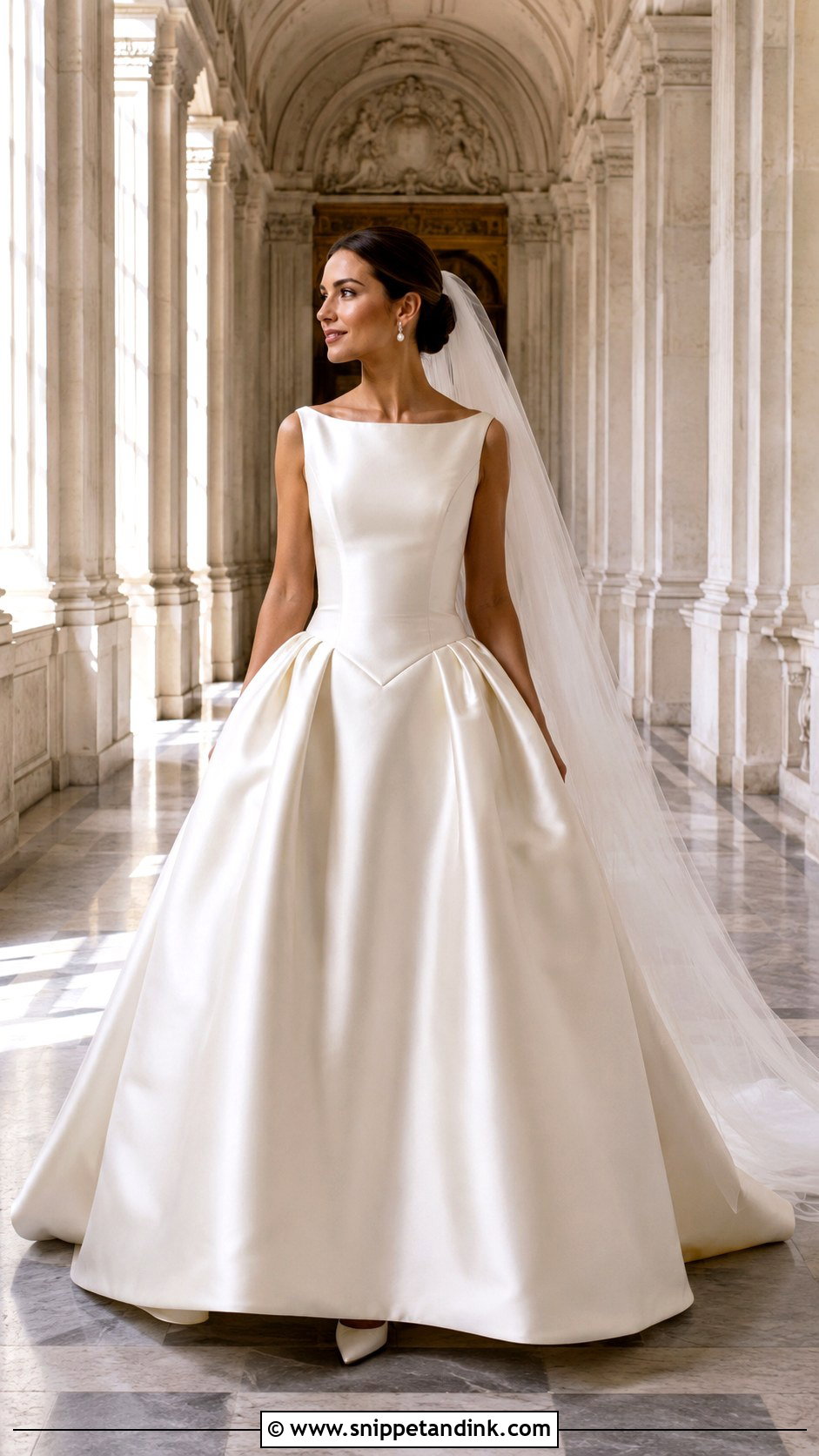
A basque waist dips into a point at the front seam, which lengthens the torso before the skirt opens out. With a boat neckline above it, the result is structured and slightly vintage without tipping into costume. I like it in satin or Mikado because they hold the point crisply; softer fabrics let it wilt into a curve. A clean bun, pearl drops, pointed pumps and a long veil finish it. Placement of that point is the whole game. Too high and it cuts the torso short, too low and it digs into your stomach when you sit, so have your tailor check it while you stand, walk and sit.

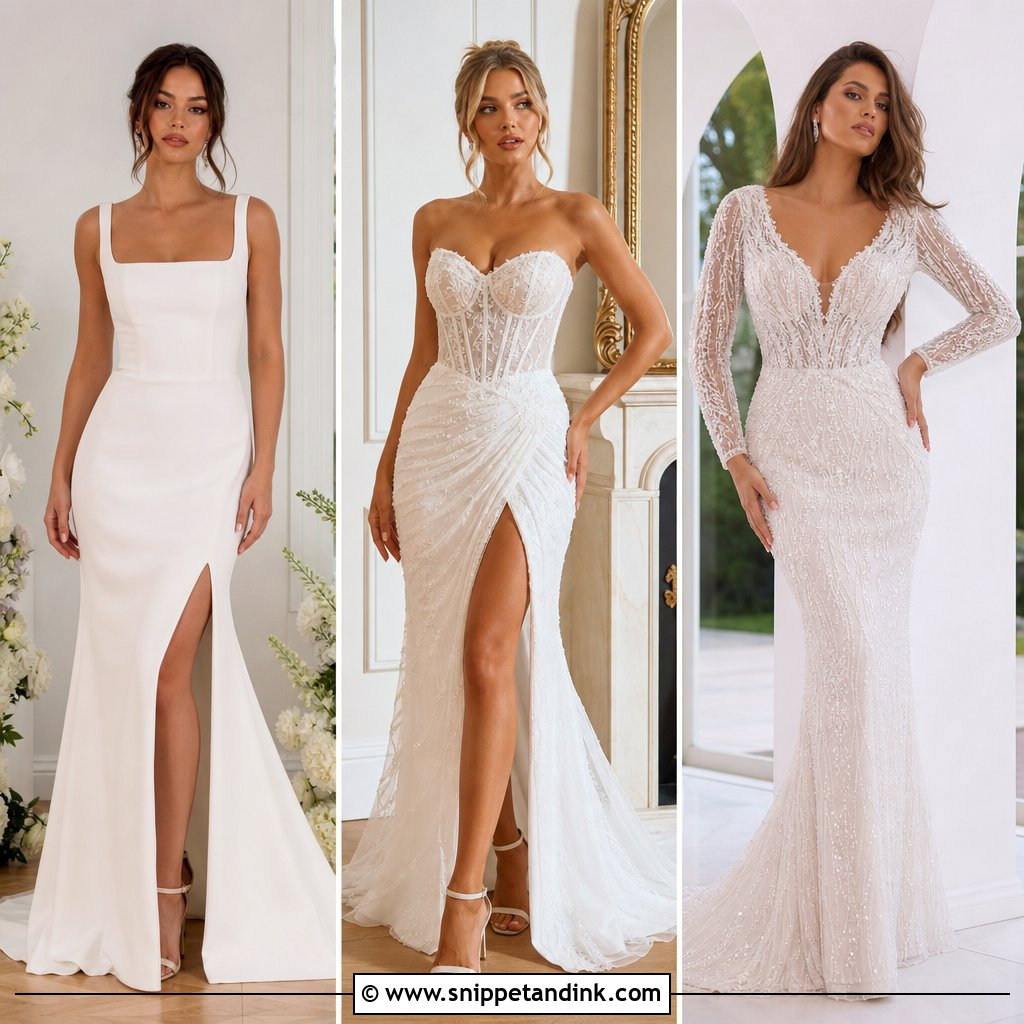
15. Detachable Overskirt Boat Neck Wedding Dress
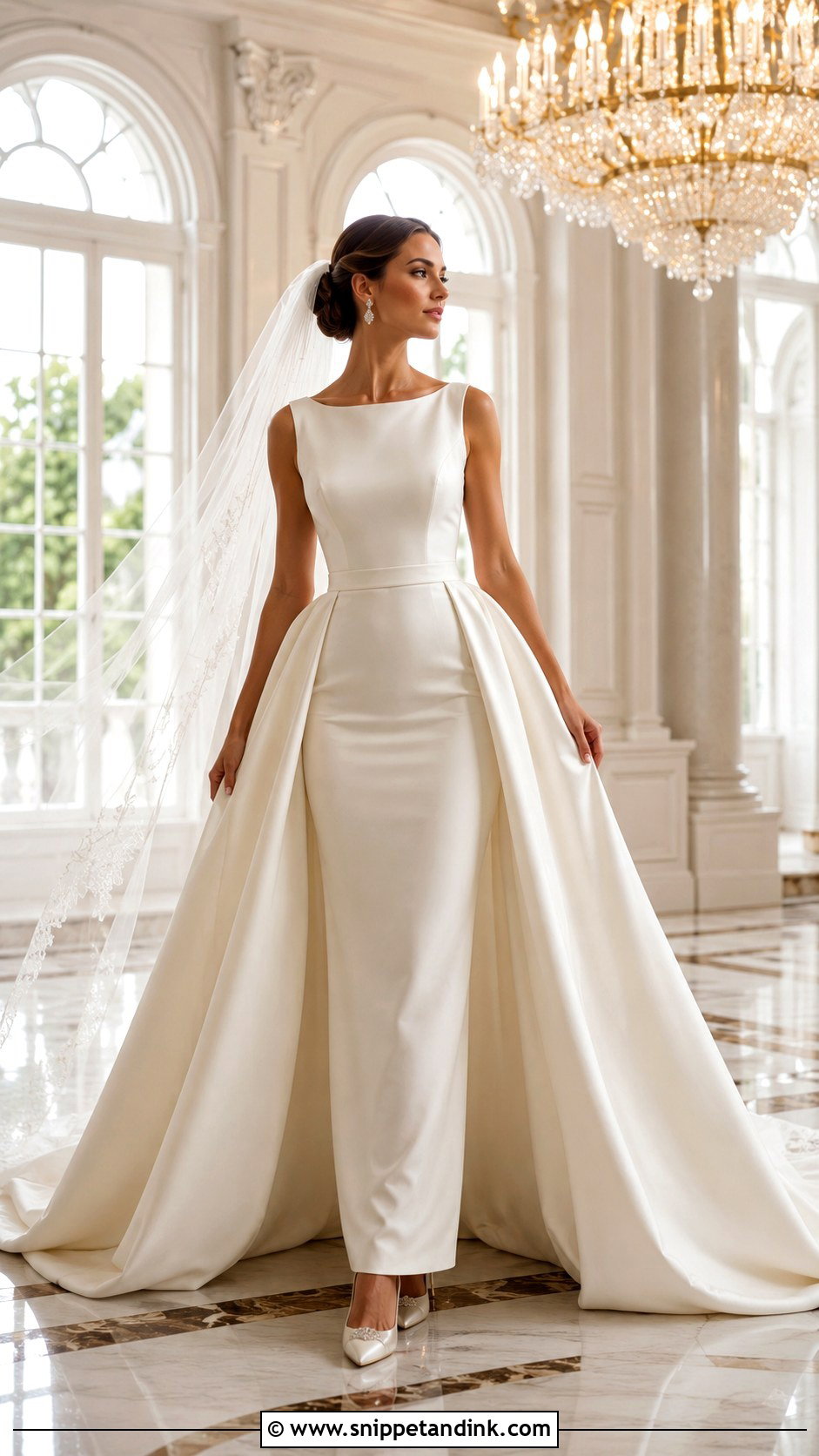
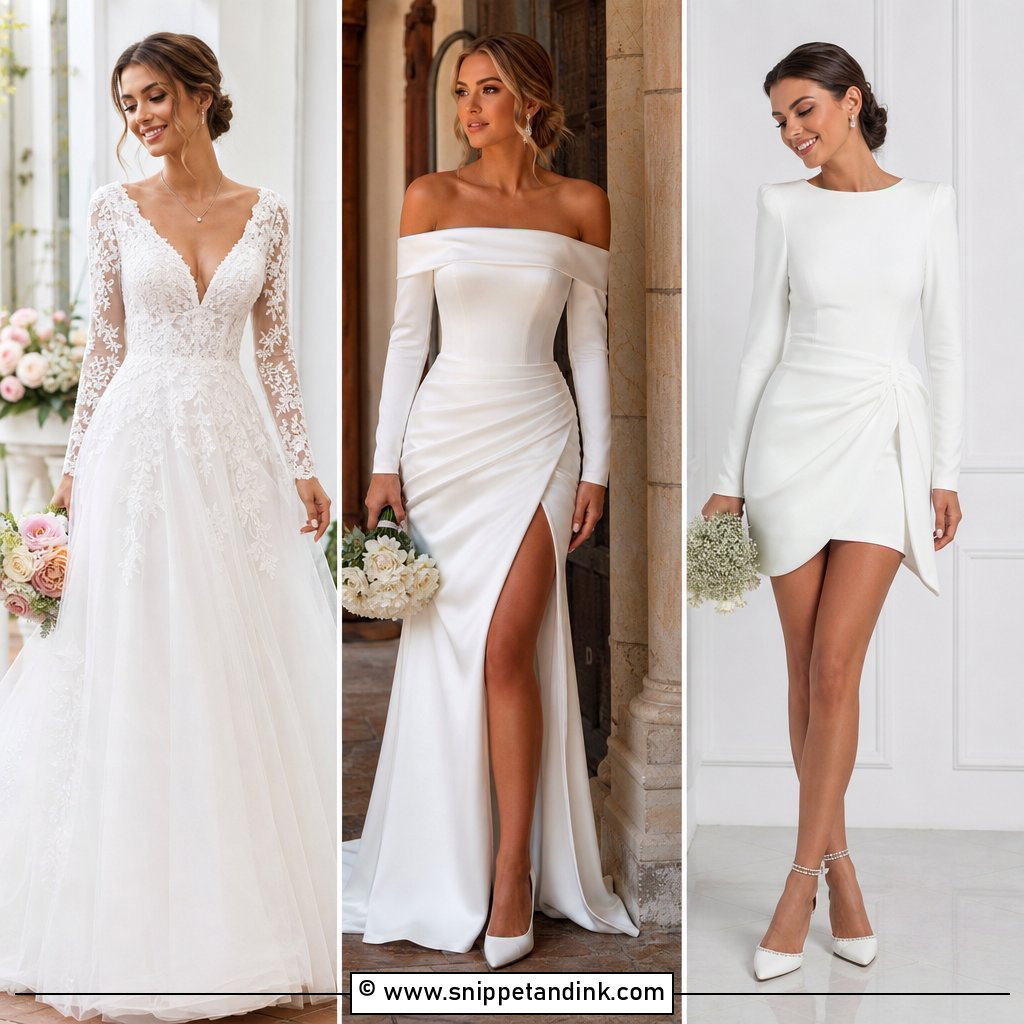
A detachable overskirt turns one boat neck gown into two outfits. Start the ceremony in a fitted column, sheath or mermaid dress under a full satin or organza overskirt, then take the outer layer off for dancing. With the skirt on, wear a cathedral veil, statement earrings and formal pumps; afterwards, switch to a shorter veil or a hair comb and block heels. The hooks or snaps should stay hidden in both versions. I insist on one practice run with whoever will help you change, because fumbling with a waistband in a venue bathroom eats into the reception. Make sure the extra fabric doesn’t drag the neckline down, squeeze the waist or block the original bustle.
16. Modest Boat Neck Wedding Dress
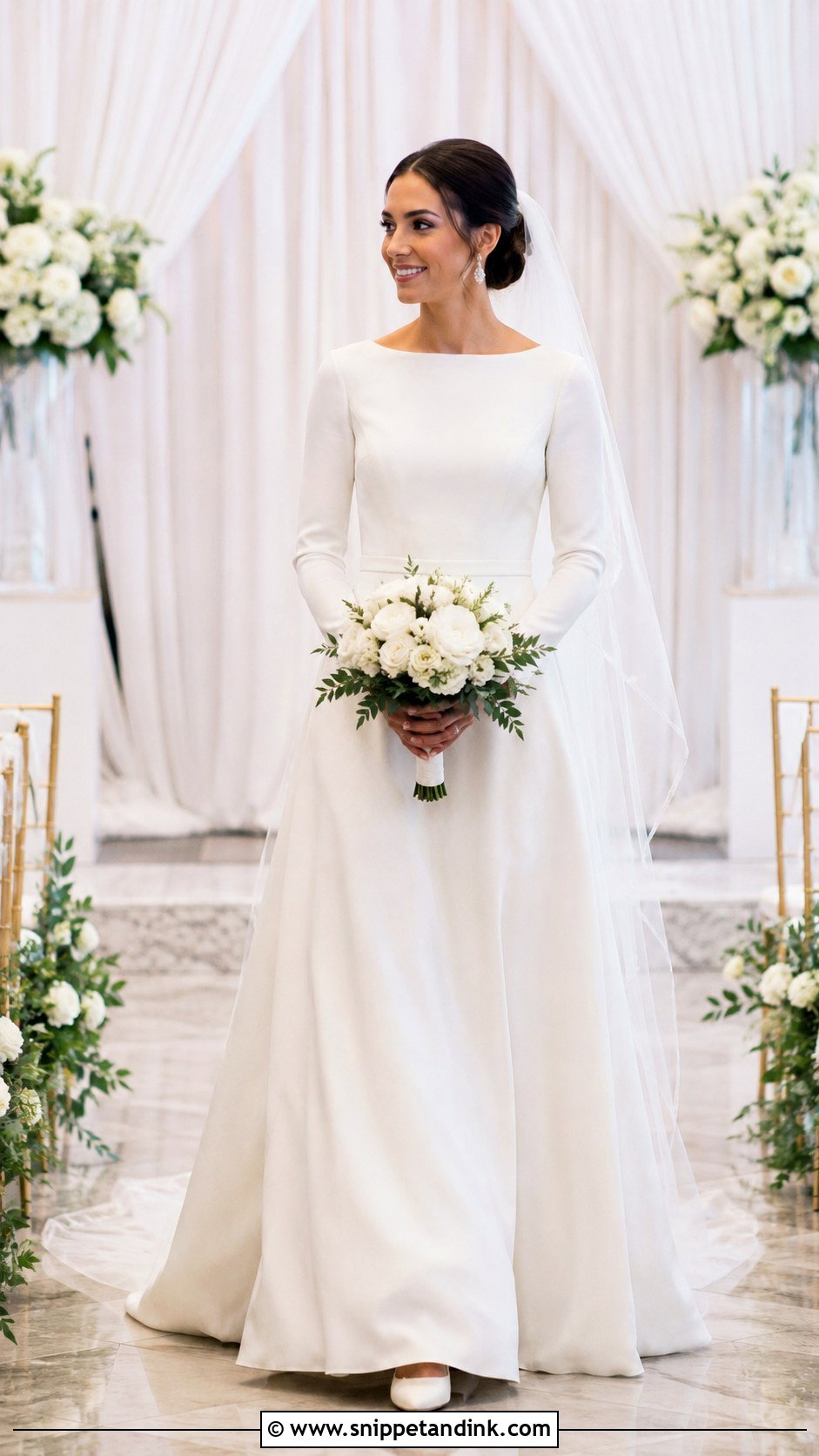
Because a boat neckline already sits high, it’s an easy starting point for a modest gown. Add long sleeves, a fully lined bodice and an A-line or ball gown skirt; crepe looks contemporary, while lace and satin lean traditional. Closed-toe heels, drop earrings, a polished updo and a long veil complete it, and buttons or cuff details add interest without showing skin. Coverage shouldn’t mean a collar pressing on your throat, though. The neckline belongs on the collarbones, not climbing toward the neck. I check modest gowns under bright light and with a phone flash, because some linings that look opaque in the shop go sheer in flash photography.
17. Plus Size A-Line Boat Neck Wedding Dress
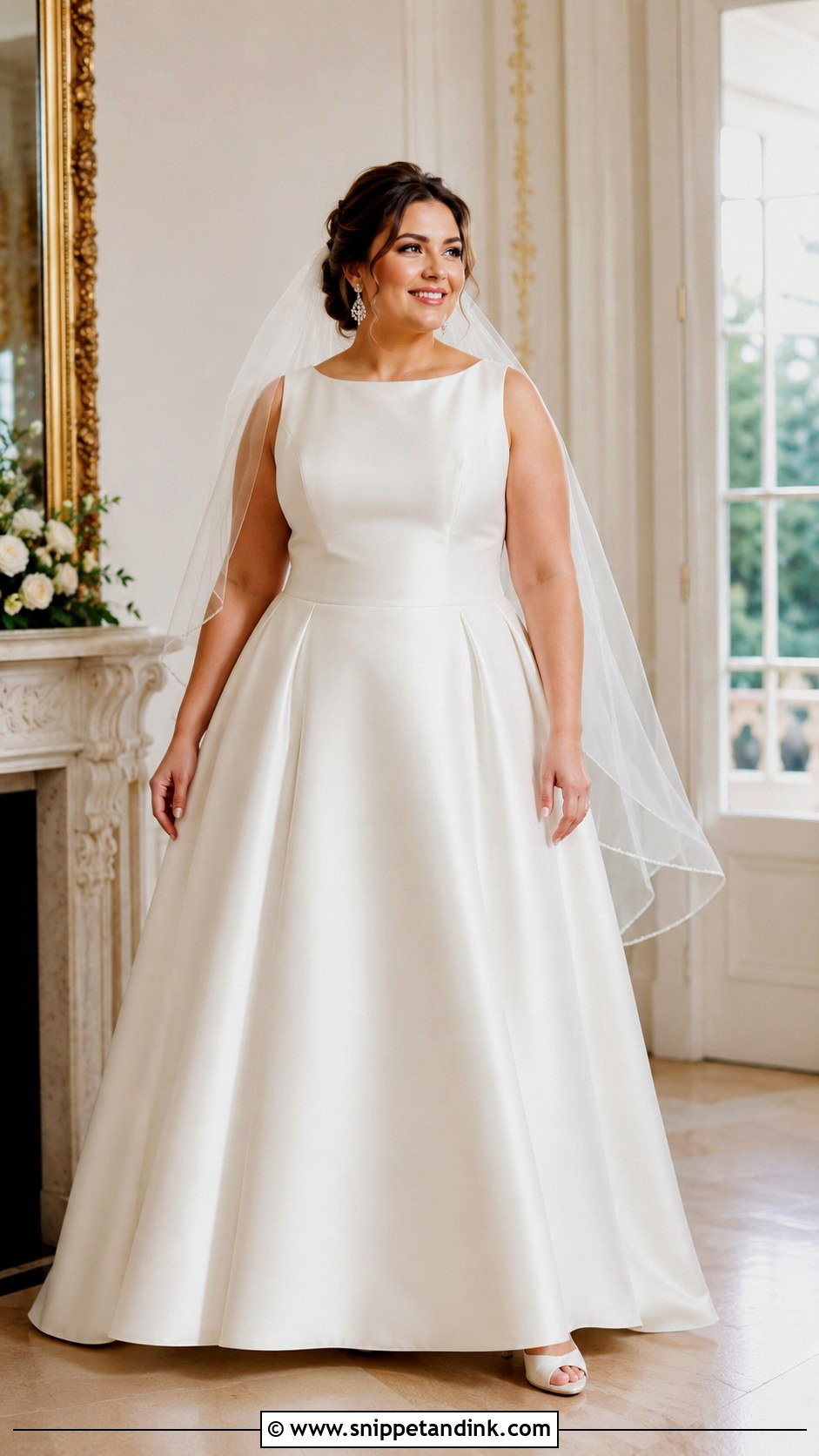
A well-built A-line gives support and movement at any size, and the build is what I check first. Look for internal boning, secure cups, smooth lining and seams that follow your actual shape rather than a size chart. The skirt should move away from the waist without adding bulk at the hip. Block heels, statement earrings, a fingertip veil and a raised updo finish it. The neckline should frame the collarbones without pressing into the shoulders or showing a bra edge. I ignore body-shape rules here and have brides try two or three fabrics and constructions side by side. Sit, walk, lift your arms and take photos before deciding whether the support is enough.
18. Petite Sheath Boat Neck Wedding Dress
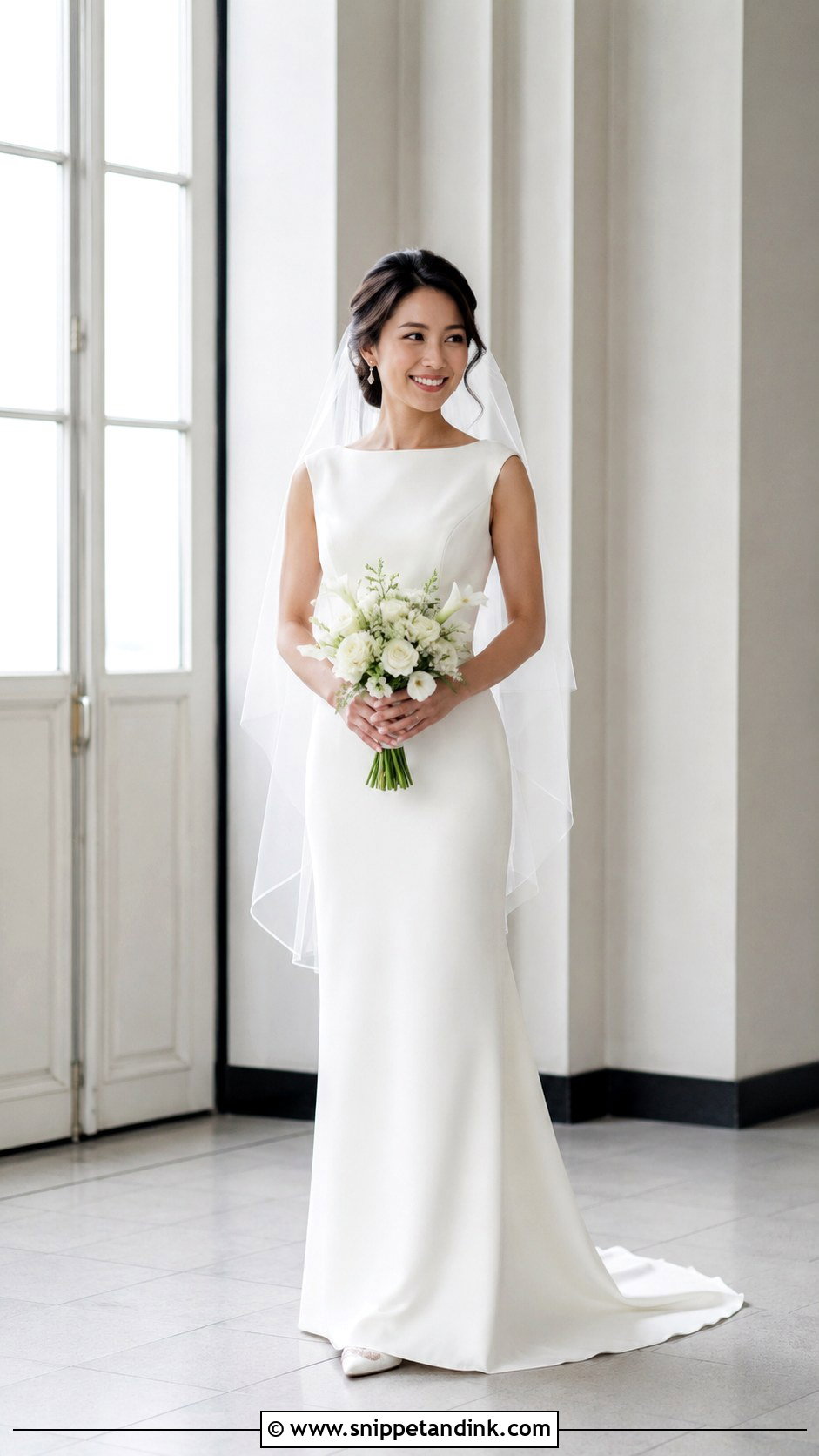
A sheath keeps a long, unbroken line on a petite frame. I’d choose a boat neckline with a subtle curve over a very wide opening, which can swamp narrow shoulders, then a fitted waist and slim skirt in lightweight crepe or satin. Pointed pumps, delicate earrings, a compact bouquet and a veil that doesn’t overpower the dress keep things in scale. A low back or short train adds interest without volume. Petite sizing only gets you partway. Taking a standard sample up from the hem often leaves the waist and hip shaping sitting too low, so confirm the waist, hips, neckline and train all line up with your own body.
19. Vintage Lace Boat Neck Wedding Dress
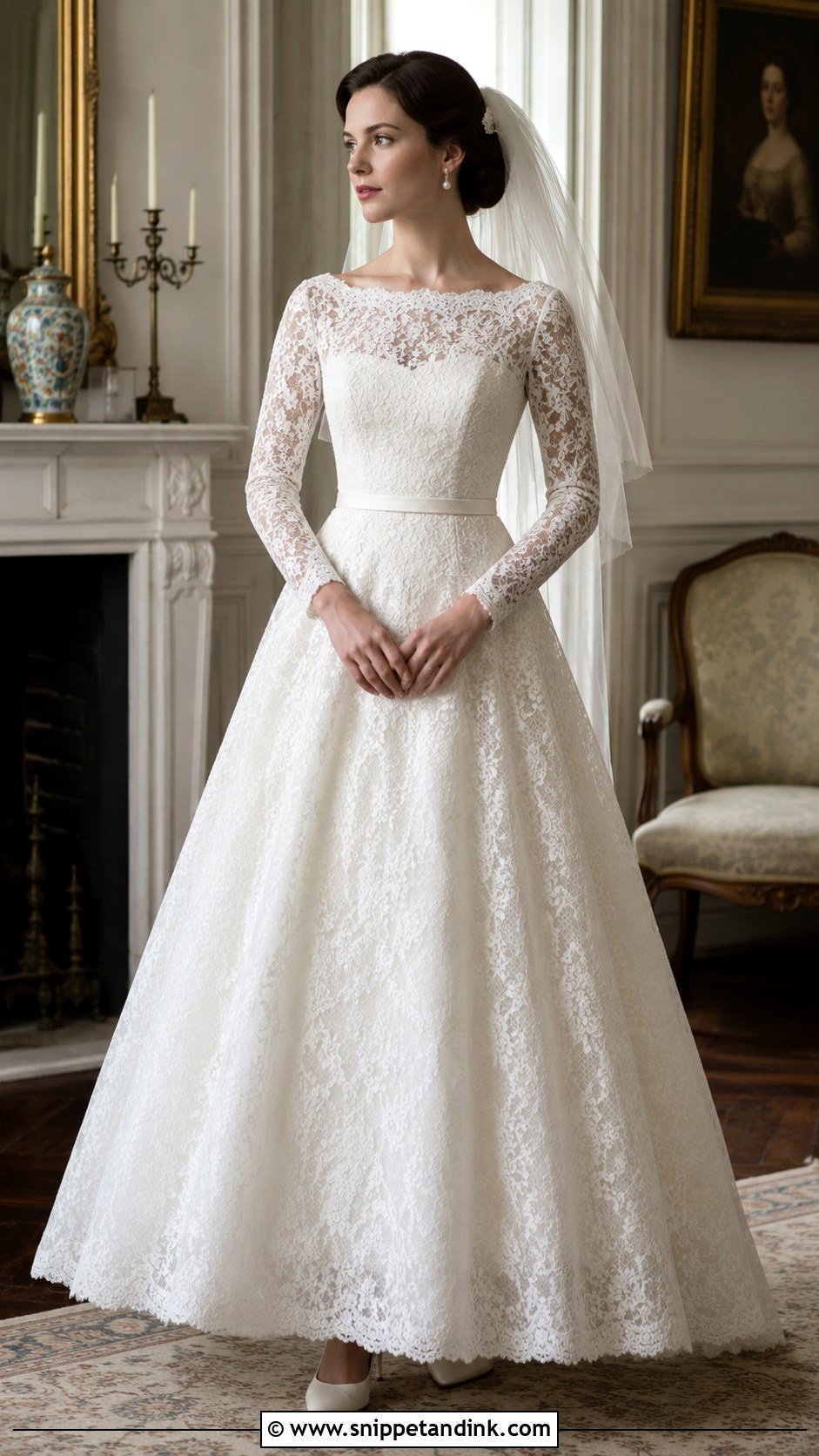
The wide, collarbone-skimming boat neck recalls mid-century bridal shapes, so vintage styling feels natural here rather than forced. Lace sleeves, a fitted waist, scalloped edges, covered buttons and either a tea-length or full A-line skirt carry the mood. Pearl earrings, classic pumps, a smooth chignon and a short veil are enough; add more and it tips into costume. If the gown is genuinely old, have the seams, zipper, lining and lace examined before anyone starts altering. Aged silk and lace can split along a seam under stress, and I’d much rather a specialist reinforce it first than have it tear at the bustle halfway through the reception.
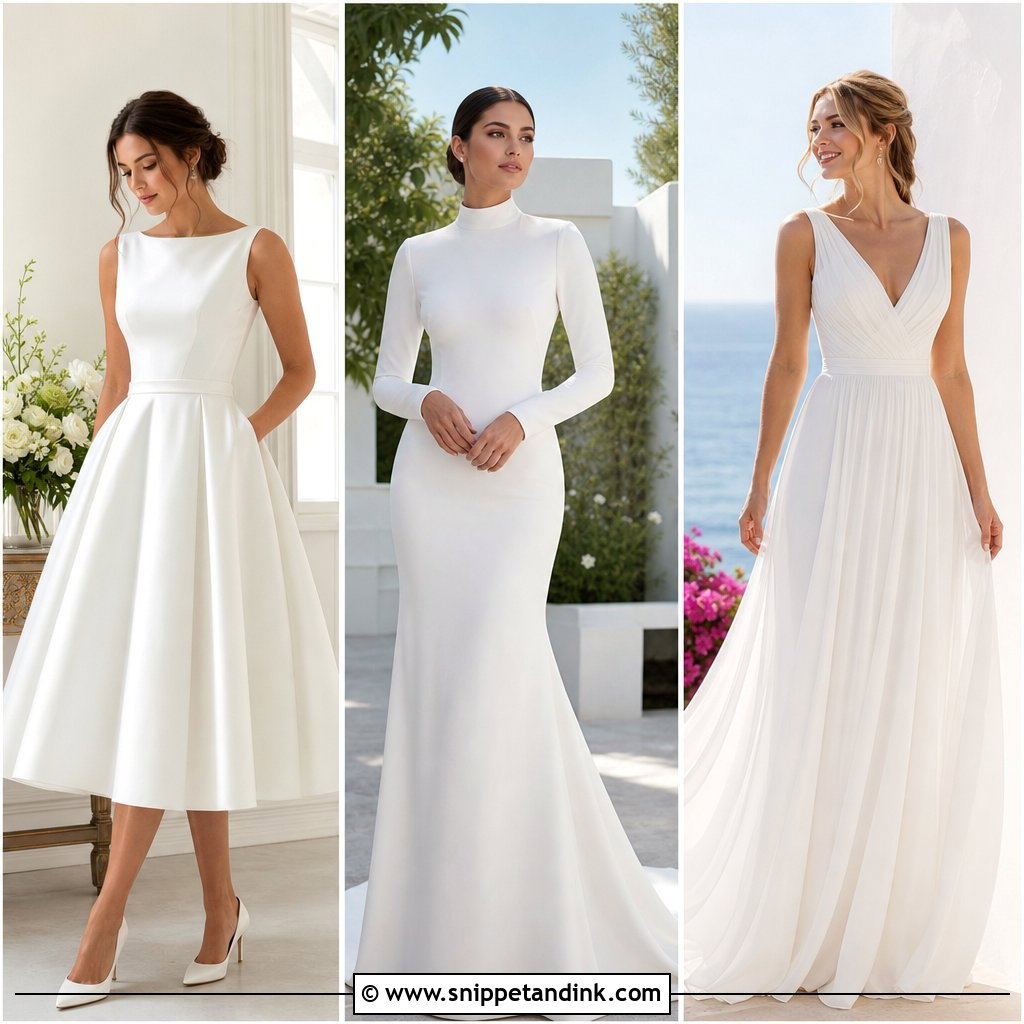
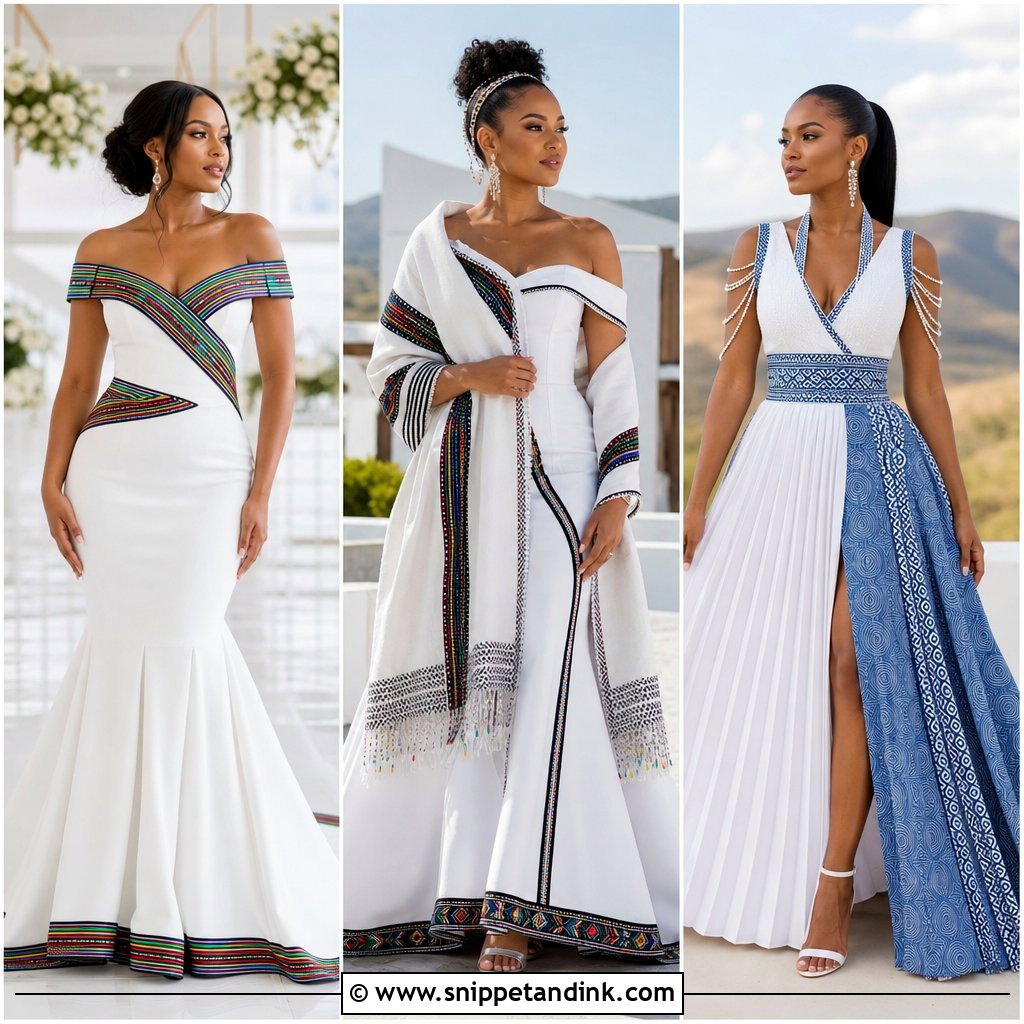

20. Short Boat Neck Reception Wedding Dress
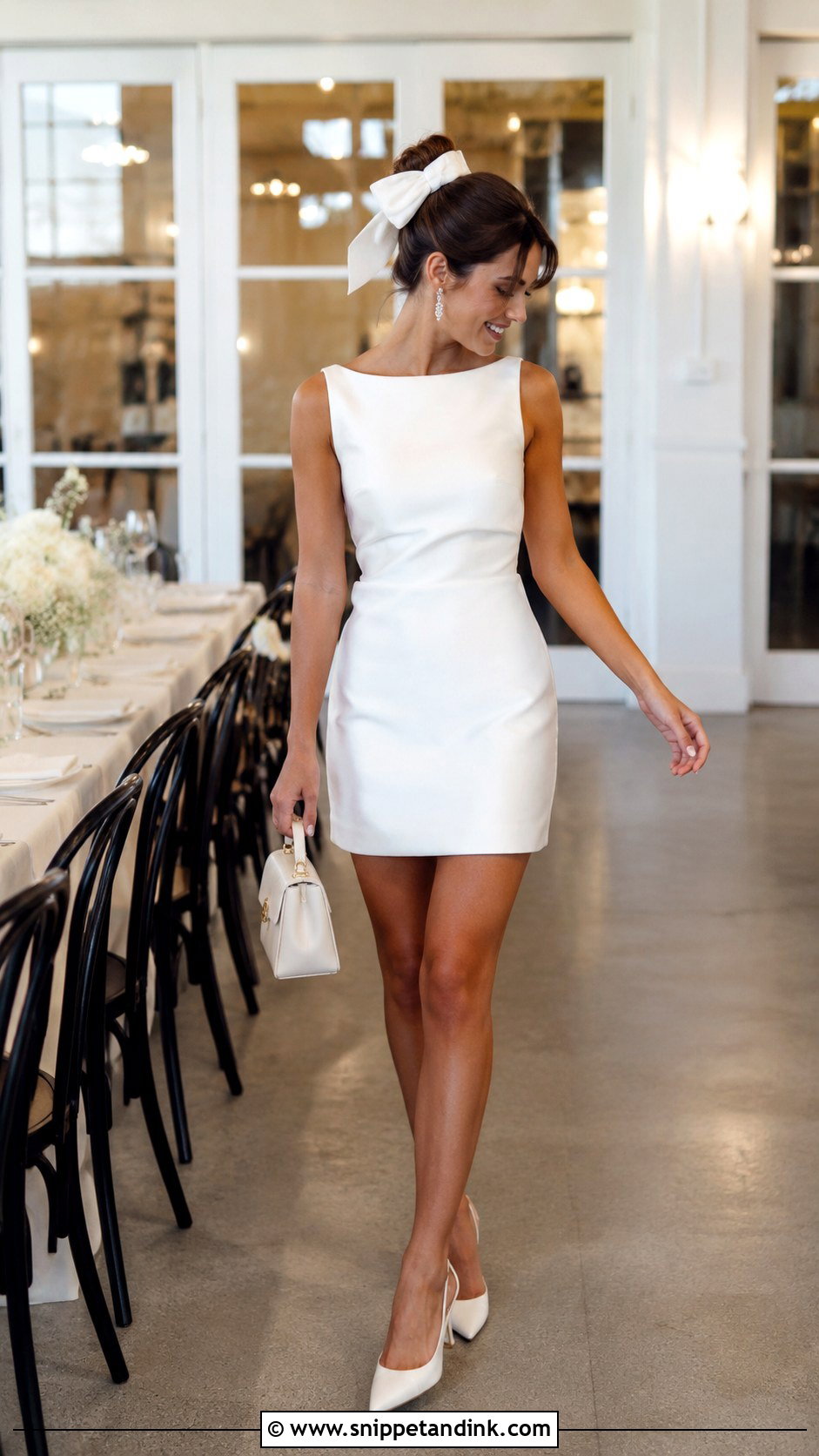
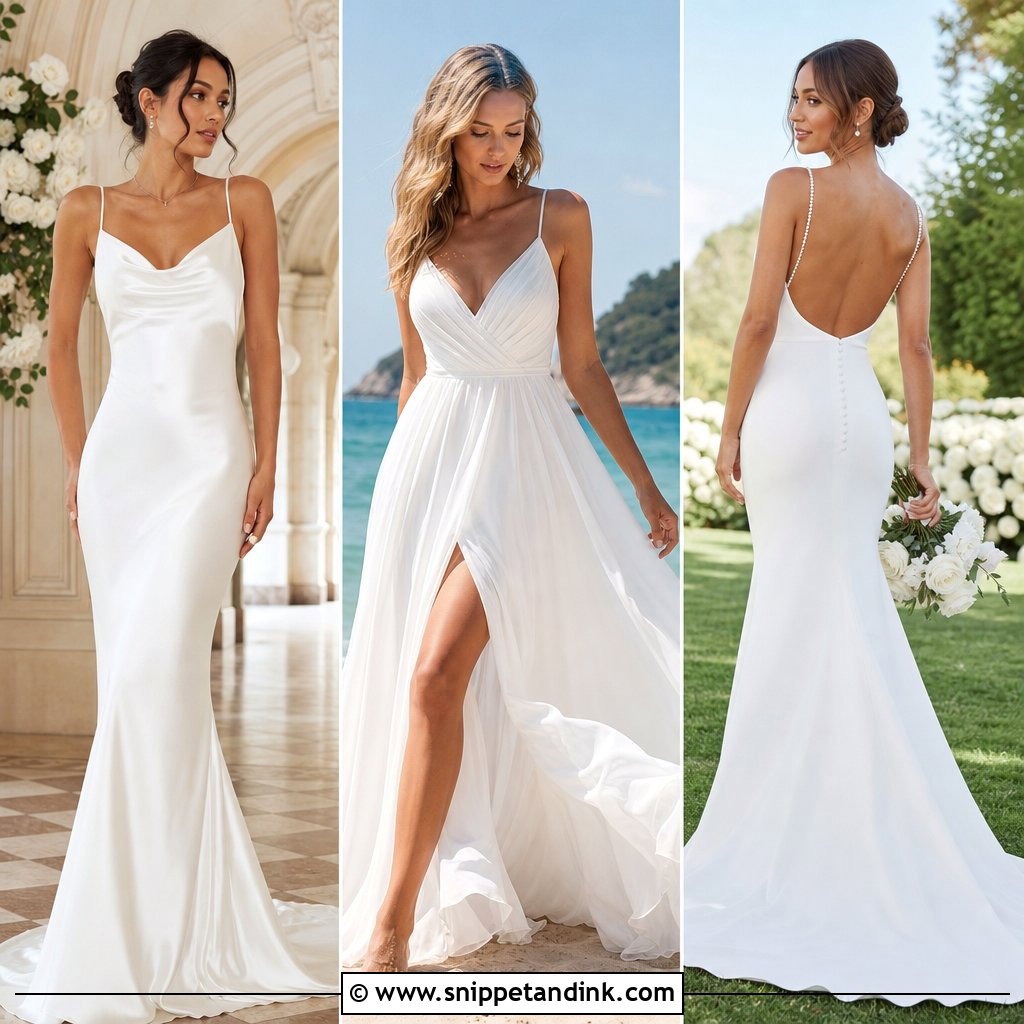
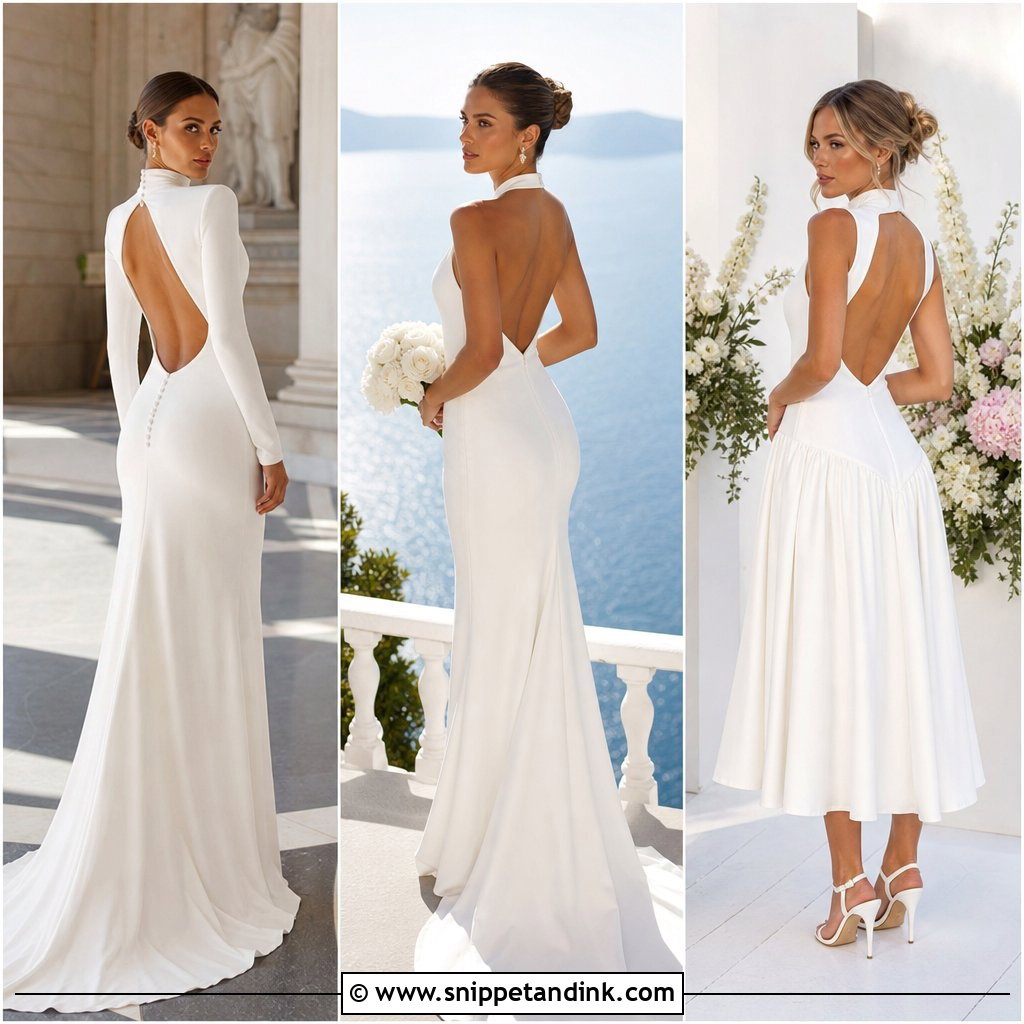
A short boat neck wedding dress makes a sharp second look for the reception or the send-off. A fitted mini, a tailored shift or a flared knee-length cut in satin, crepe or embellished fabric all work, and the high neckline balances the short hem so it still reads as bridal rather than party wear. Comfortable slingbacks, crystal earrings, a small structured bag and a bow or comb in the hair finish it. If you’ll dance, test the skirt with a few spins and a deep bend, since a mini that’s fine standing can ride up badly. I’d tie it to the ceremony gown through one shared detail like the shoes or the jewelry. And if you’d rather not buy a second dress at all, a detachable train or overskirt on the main gown gets you most of the way there.
Bra Straps, Stay Tape and Other Boat Neck Logistics
Almost every bra strap shows in a boat neck, because the neckline sits exactly where straps cross the shoulder. Most brides end up with one of three setups, and I’d settle it at the first fitting rather than the last, since it changes how the bodice is taken in.
- Cups sewn into the bodice. The most secure option, because nothing moves independently of the dress. Wear a well-fitting strapless bra the day your seamstress pins them so she has the right shape to work from.
- A long-line strapless bra. Good under fitted gowns with enough boning to stop it rolling at the top edge, but an open back rules it out.
- Adhesive cups. Light and invisible under low backs, but their grip weakens with heat and sweat, so I keep them for cooler venues and shorter days.
If the neckline drifts by mid-afternoon
A neckline creeping toward one shoulder is usually a fit issue, not a faulty dress. A seamstress can lift the shoulder seams slightly, run stay tape along the neckline edge so it can’t stretch, or hide gripper elastic inside. Stretch crepe gives more over a long day than satin does, so on crepe I ask for stay tape as standard.
Keep two small safety pins and a few lingerie strap clips in whoever is carrying your emergency kit. If a seam does give, a pin placed inside the shoulder seam holds the neckline level through the photos, and nobody sees it.
A Neckline That Stays Put Until the Last Dance
Boat necks work on crepe columns and Mikado ball gowns alike because the line across the collarbones is clean enough to carry sleeves, open backs, lace, pearls and beading on top of it. What decides the right one for you is construction, not a body-shape chart. The dress has to stay put while you walk, sit, hug relatives and lift your arms on the dance floor. Bring your real shoes and undergarments to every alteration, and look at the whole outfit in daylight and in photos before the final fitting. Get the shoulders right and the rest follows.
You'll Like These Ideas:






Leave a Reply