
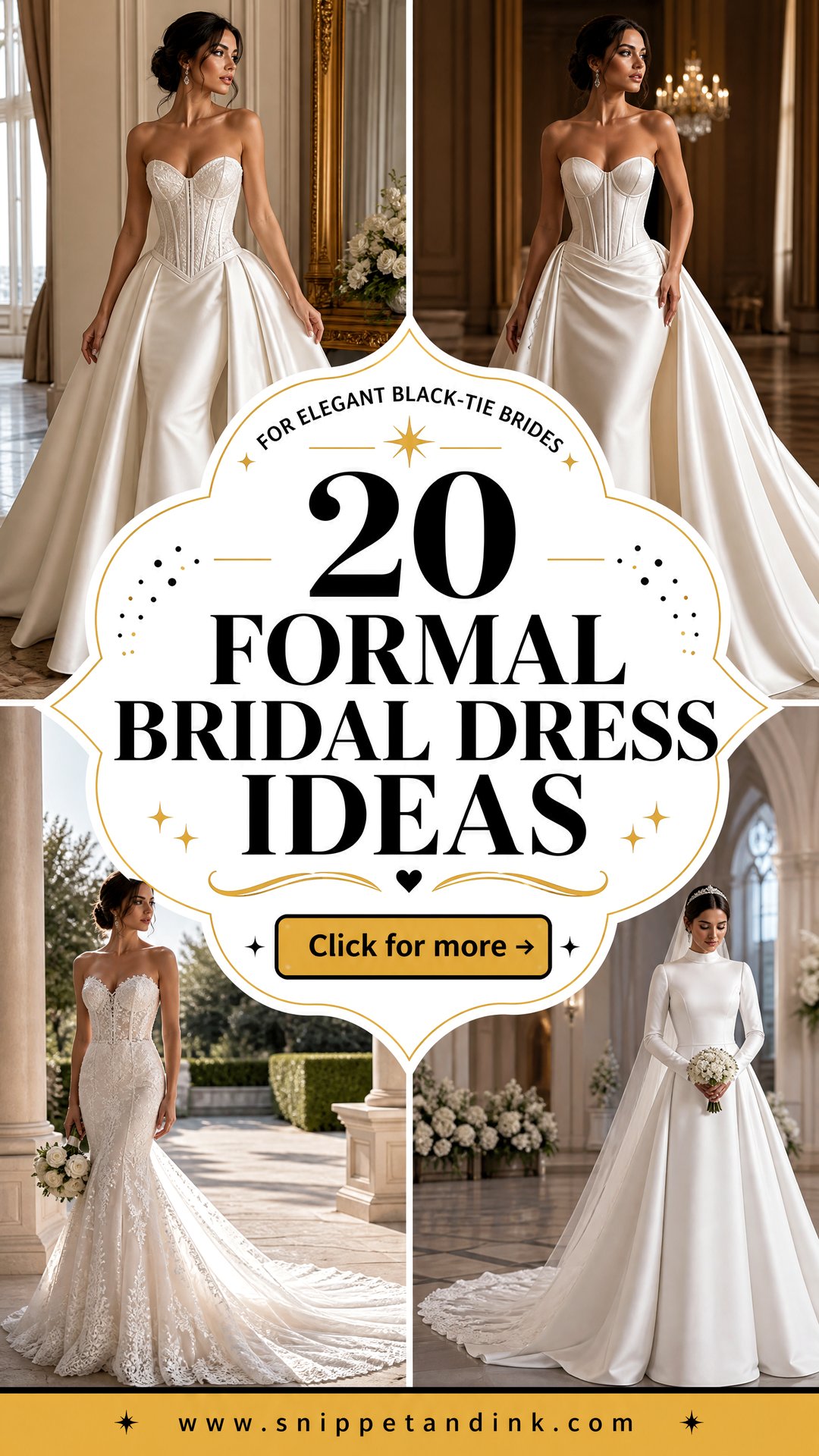
Picture the whole look, not only the dress, and the decision gets easier. I’ve built twenty formal looks here, from classic ball gowns and sleek columns to romantic lace, sculpted corsets and convertible designs, and each comes with its veil, shoes, jewelry, hair and the kind of room it suits. Black tie raises the bar on fabric and construction more than on decoration, because a formal gown has to hold its shape for hours under strong lighting. Ivory is still the default, with champagne, pearl and soft blush as quieter alternatives. Grand ballroom, hotel or formal garden, there’s a match for each setting below.
Duchess, Mikado, Faille or Taffeta? How Formal Fabrics Behave
Formal gowns lean on fabric more than decoration, so it pays to know what each one does before you’re standing in a fitting room.
- Duchess satin: heavy, smooth and lustrous. It holds a full skirt well, but it’s warm and shows creases where you sit.
- Mikado: a dense weave, traditionally silk and often a blend today, with a crisp hand and soft sheen. My first choice for pleats, bows and structured shapes.
- Silk faille: a fine horizontal rib with less shine than satin. It takes tailoring well and looks quietly formal, especially in daylight.
- Taffeta: crisp and light, rustles as you move and holds volume. It creases sharply, so plan a professional steam on the morning.
- Silk crepe: matte and fluid, following the body closely. It shows every seam and every line underneath.
Ask to feel each one and to sit in a sample. Weight counts as well. A heavily structured gown can wear you out by the last dance, so notice how you feel after twenty minutes in it, not two.
1. Satin Ball Gown Formal Bridal Dress
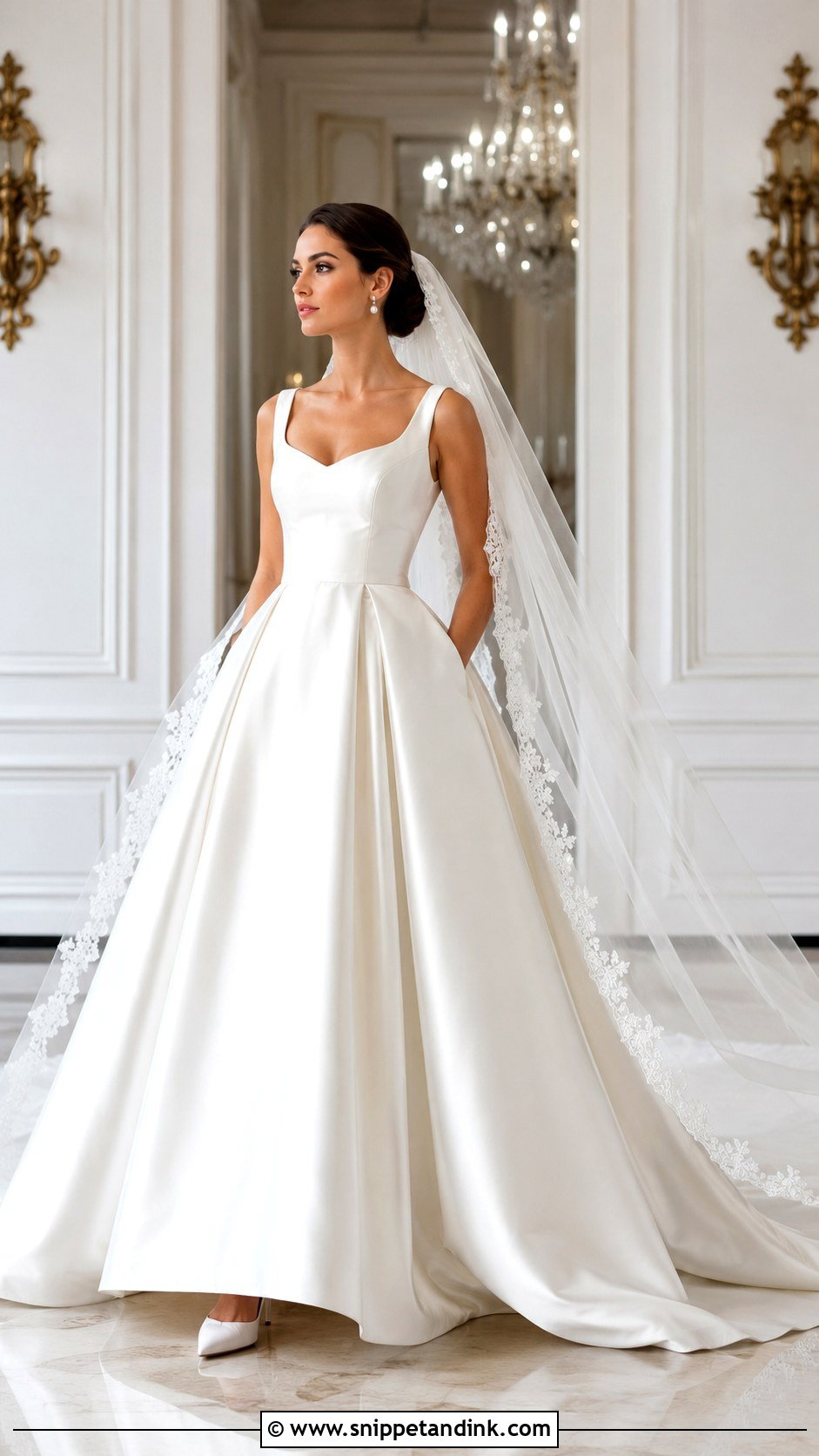
A grand entrance doesn’t need beading if the satin is good enough. Duchess satin has the weight to hold a full skirt out on its own, so a fitted bodice with a softly curved neckline can stay plain. Pockets hidden in the side seams are worth asking for; you’ll use them all night. A cathedral veil edged in narrow satin ribbon matches the fabric’s finish, with pearl drop earrings, a low chignon and pointed ivory pumps. This skirt needs space, so it belongs in a ballroom or large hotel room. Hem it in your ceremony shoes, because a ball gown that drags at the front is the easiest way to trip on the aisle.
2. Basque Waist Formal Bridal Dress
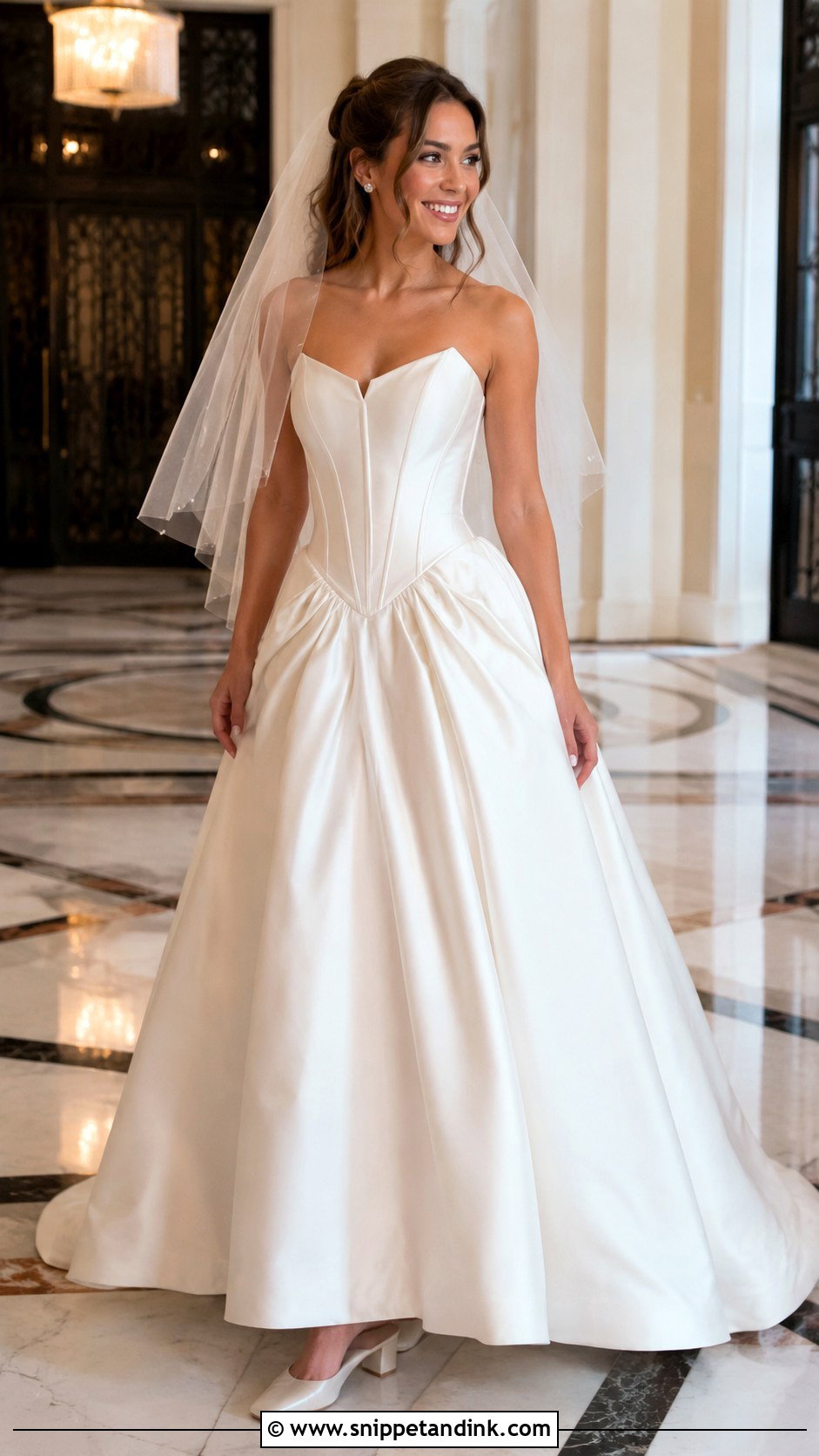
The V point of a Basque waist carries the eye straight into a full skirt, and on a ball gown it’s one of the most flattering lines I know. Pair it with a corseted bodice with supportive boning, covered buttons and light draping, over a gathered silk or satin skirt. Gathers add bulk at the waist seam, so in a heavier fabric they need to be kept fine or the point disappears. A fingertip veil, crystal studs and satin pumps on a comfortable block heel go with a softly waved half-up style. It reads historical without tipping into costume. At alterations, sit, walk and raise your arms; the point should stay put without digging in.
3. Long Sleeve Lace Formal Bridal Dress
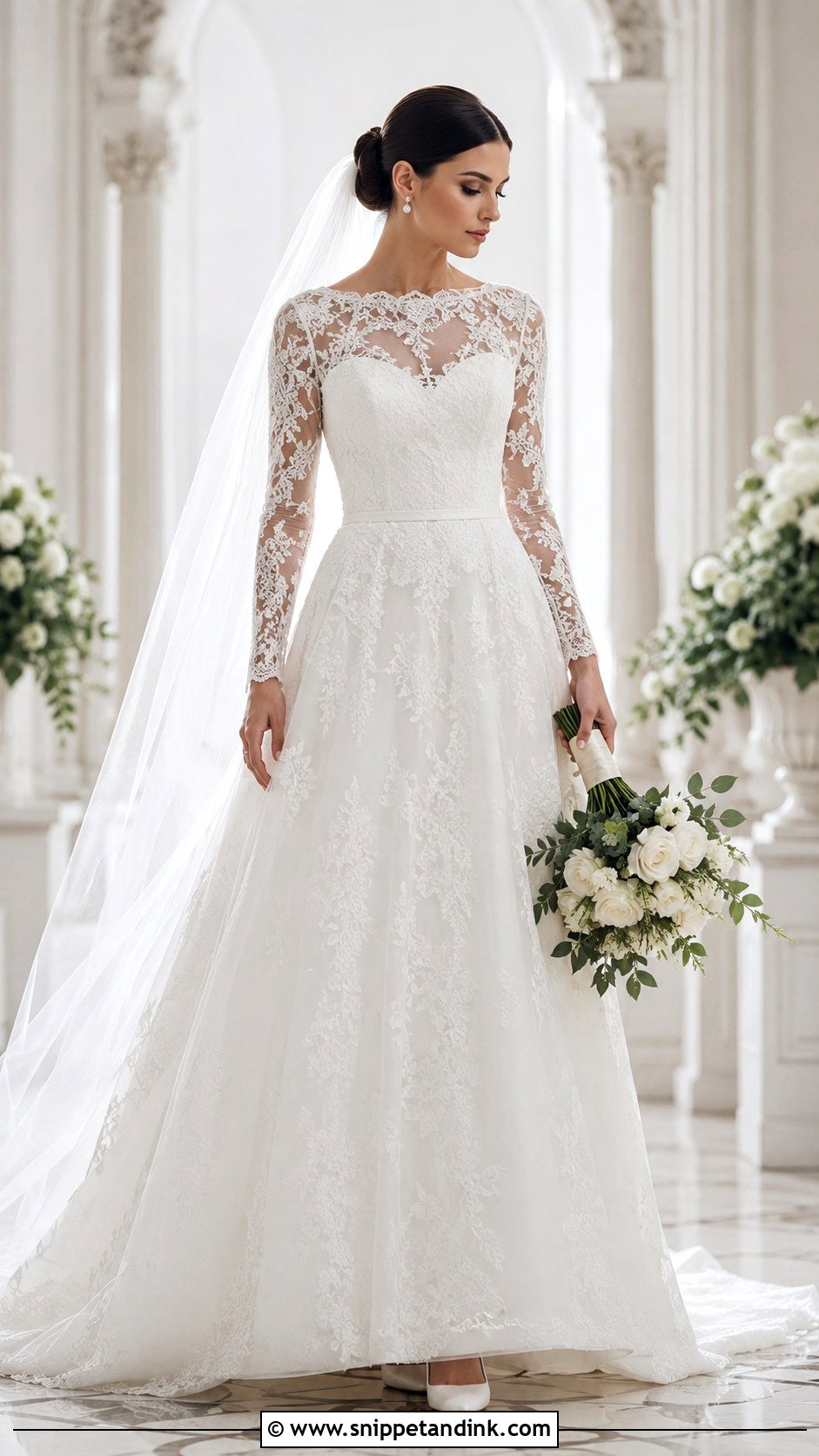
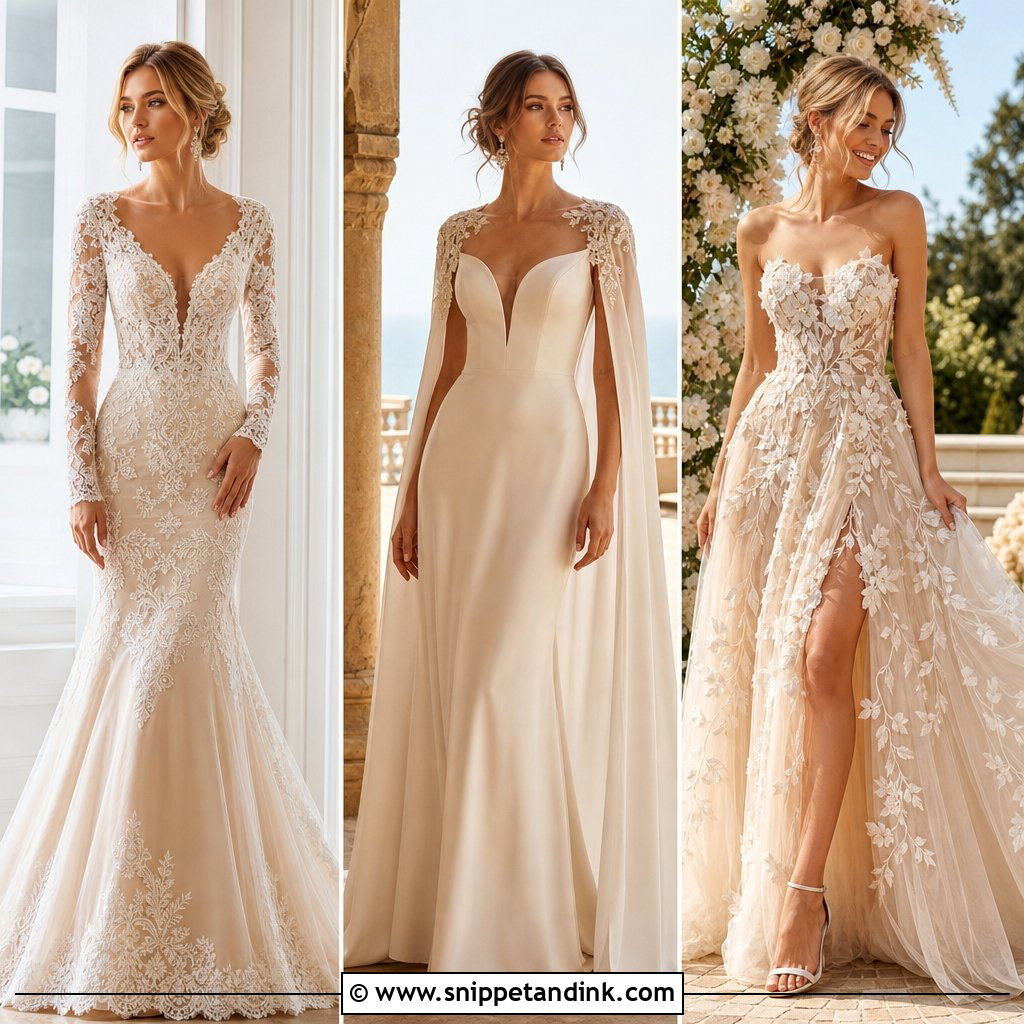
Lace sleeves at a black-tie wedding look polished and handle a cold church well. I’d pair a lightly lined bodice and illusion sleeves with a flowing A-line, which keeps all that lace from looking heavy. Floral or vine motifs read clearly in photos, especially when they drift onto the skirt. Keep the veil plain tulle, and add closed-toe satin heels, small pearl earrings and a smooth low bun. The cuffs are the detail I fuss over. Tiny covered buttons at the wrist look refined, but the cuff still has to let you turn your hand for the ring. For winter travel, wear a tailored ivory coat over the top.
4. Square Neck A-Line Formal Bridal Dress
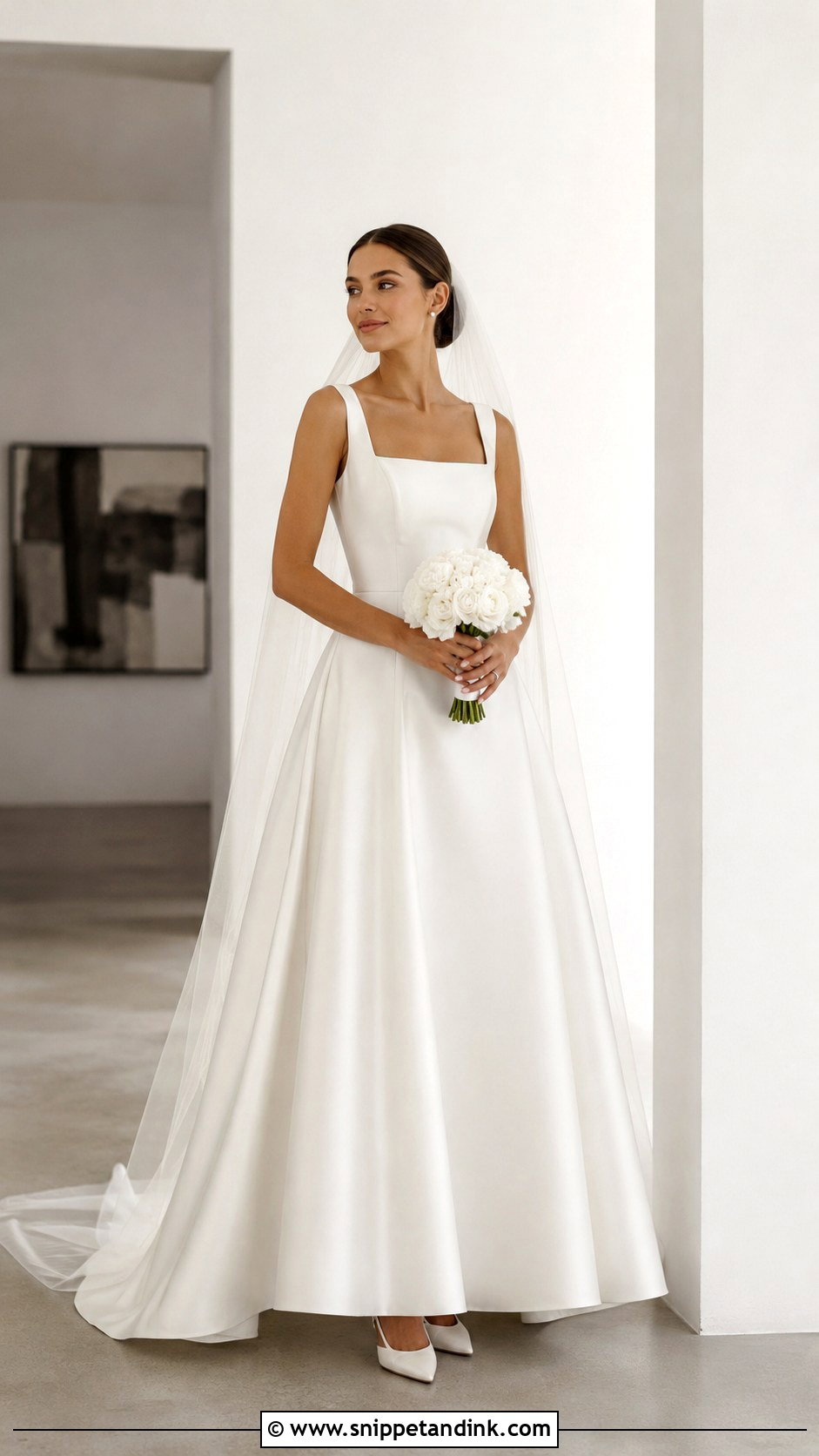
Silk faille, matte satin or structured crepe let a square neck do its job without beading. Look for wide straps, a seamed supportive bodice and a skirt falling from the natural waist. Faille, with its fine horizontal rib, has more body than crepe and less shine than satin, which suits a formal daytime ceremony. A chapel veil, pearl-and-diamond studs and pointed slingbacks complete it. A center-parted bun or sleek twist leaves room for a fine pendant, and the bouquet can stay to white flowers and greenery. Plain designs show every strap that sits slightly off, so allow time for tailoring there.
5. Off-the-Shoulder Formal Bridal Dress
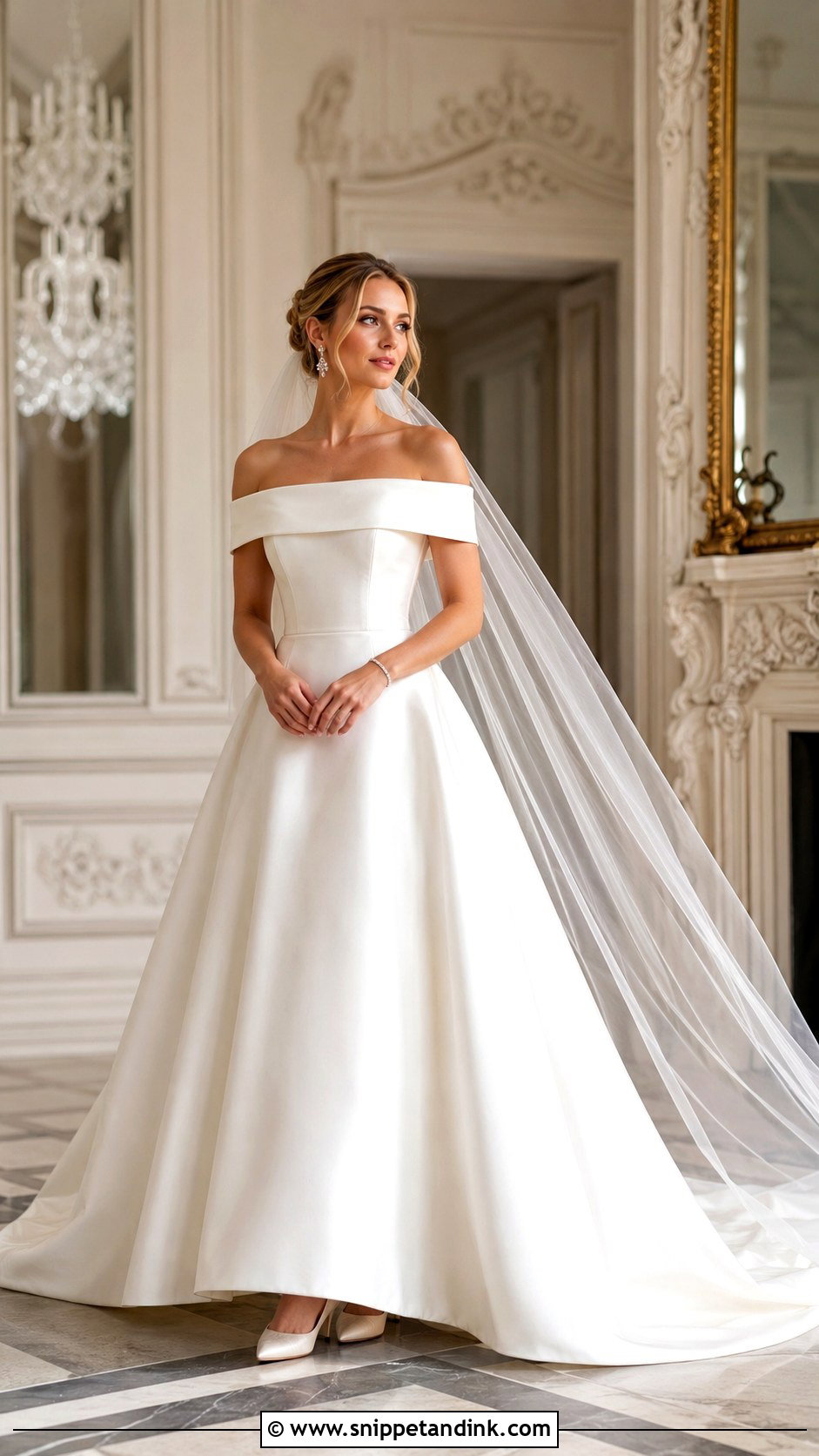
Fold-over satin at the neckline is the most formal way to wear off-the-shoulder, and it only works on a supportive internal corset. A full A-line skirt balances the open neckline. Set a sheer cathedral veil beneath a polished bun, and add crystal drop earrings and closed-toe ivory heels. Skip the necklace. A slim tennis bracelet or a family piece is a better place for sparkle. Hug, sit and walk before final alterations, since the sleeves must stay up without pinning your arms down. Ornate ballrooms and historic estates suit it best.
6. Strapless Corset Formal Bridal Dress
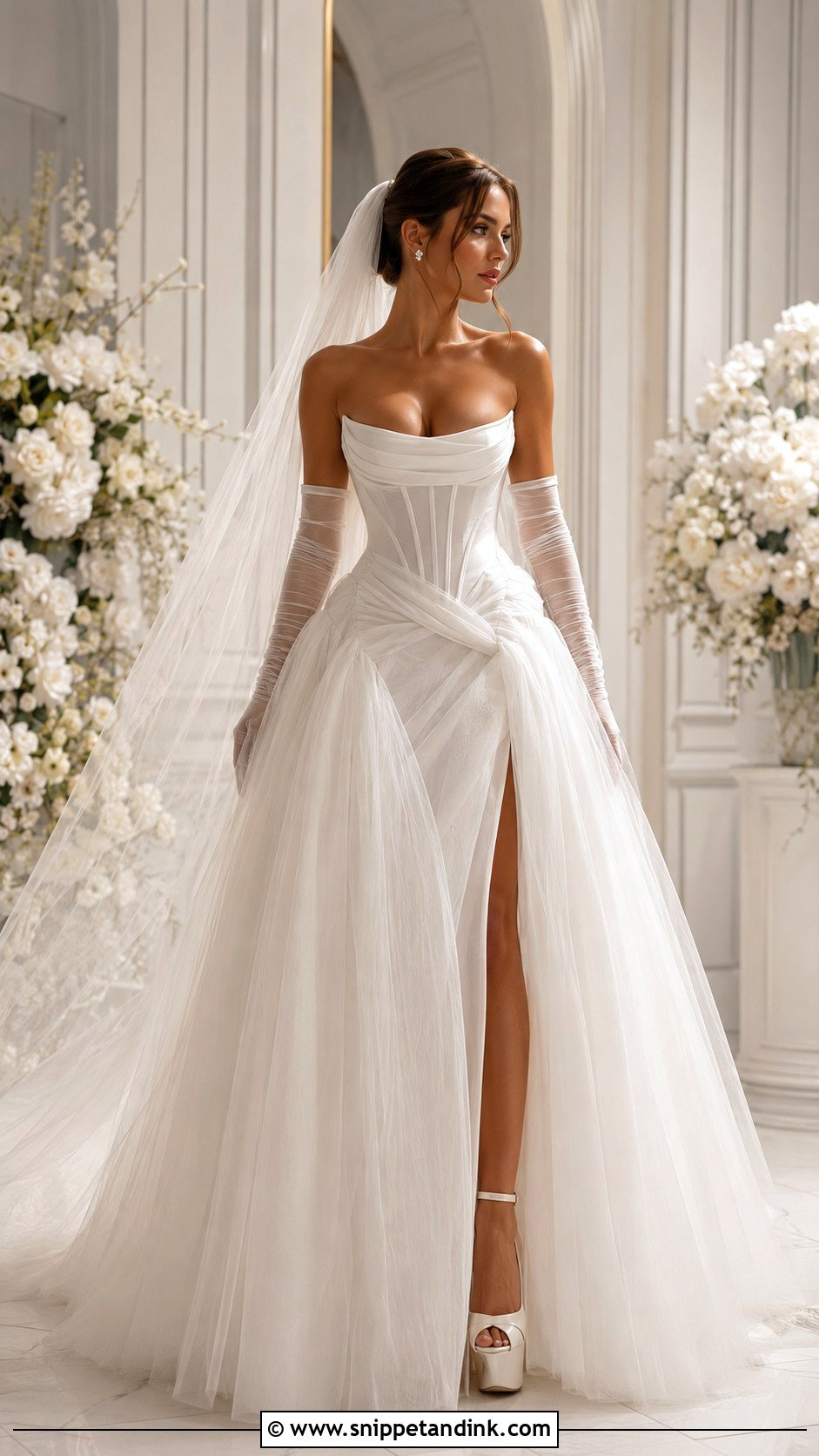
Strapless corsets are all about the inside: built-in cups and a firm waist stay should hold the gown, not a bodice laced painfully tight. Vertical seaming, a soft scoop neckline and a lace-up or precisely fitted back look sharp. Tulle softens the skirt, structured satin sharpens it. Long opera gloves add ceremony coverage, and a dramatic veil gives height behind the shoulders. Wear crystal studs, ivory platform heels and a smooth updo, with detachable sleeves as an option for the ceremony. If the top edge needs hitching up after a few steps, the fit isn’t finished.
7. High Neck Crepe Formal Bridal Dress
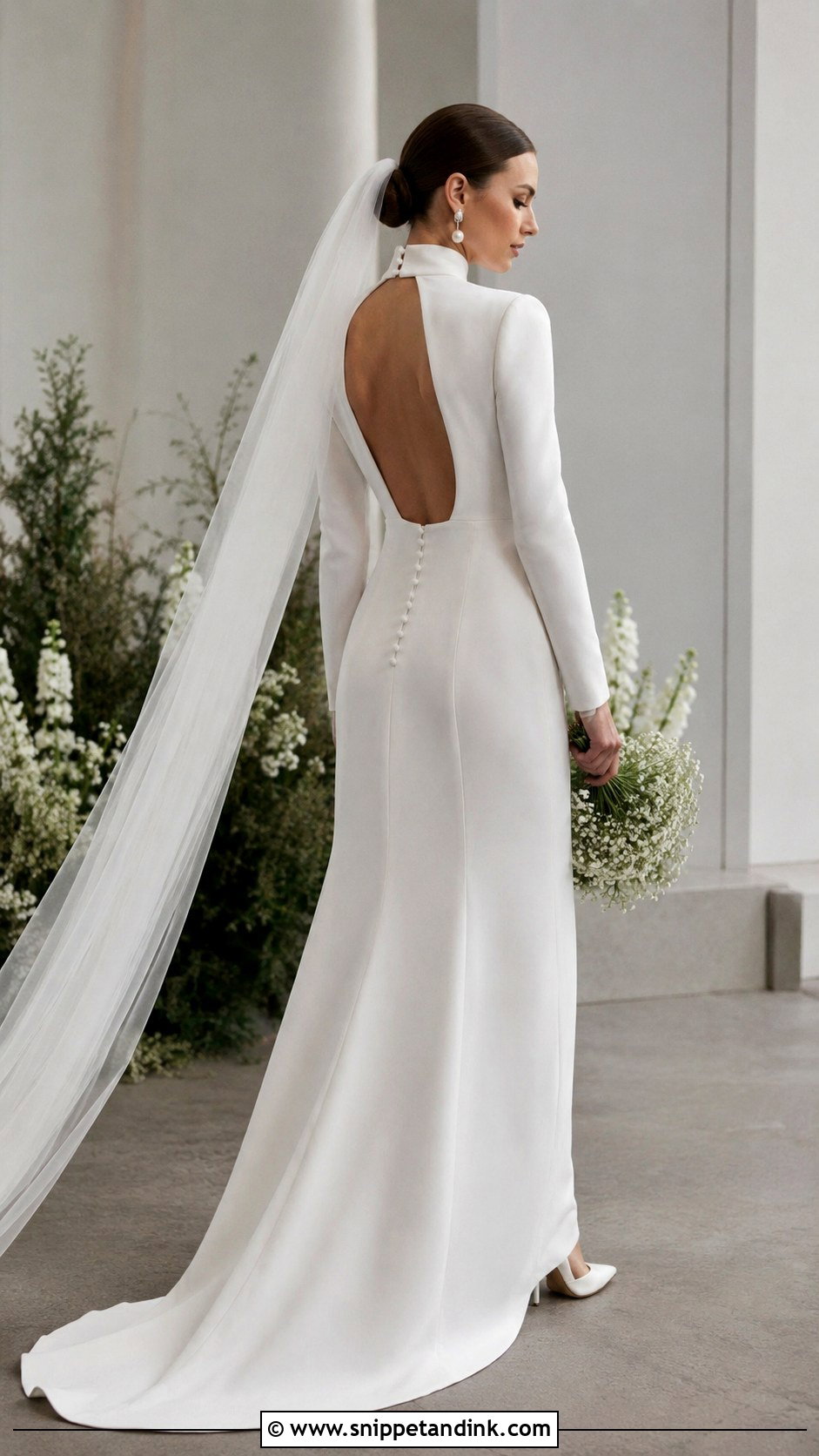
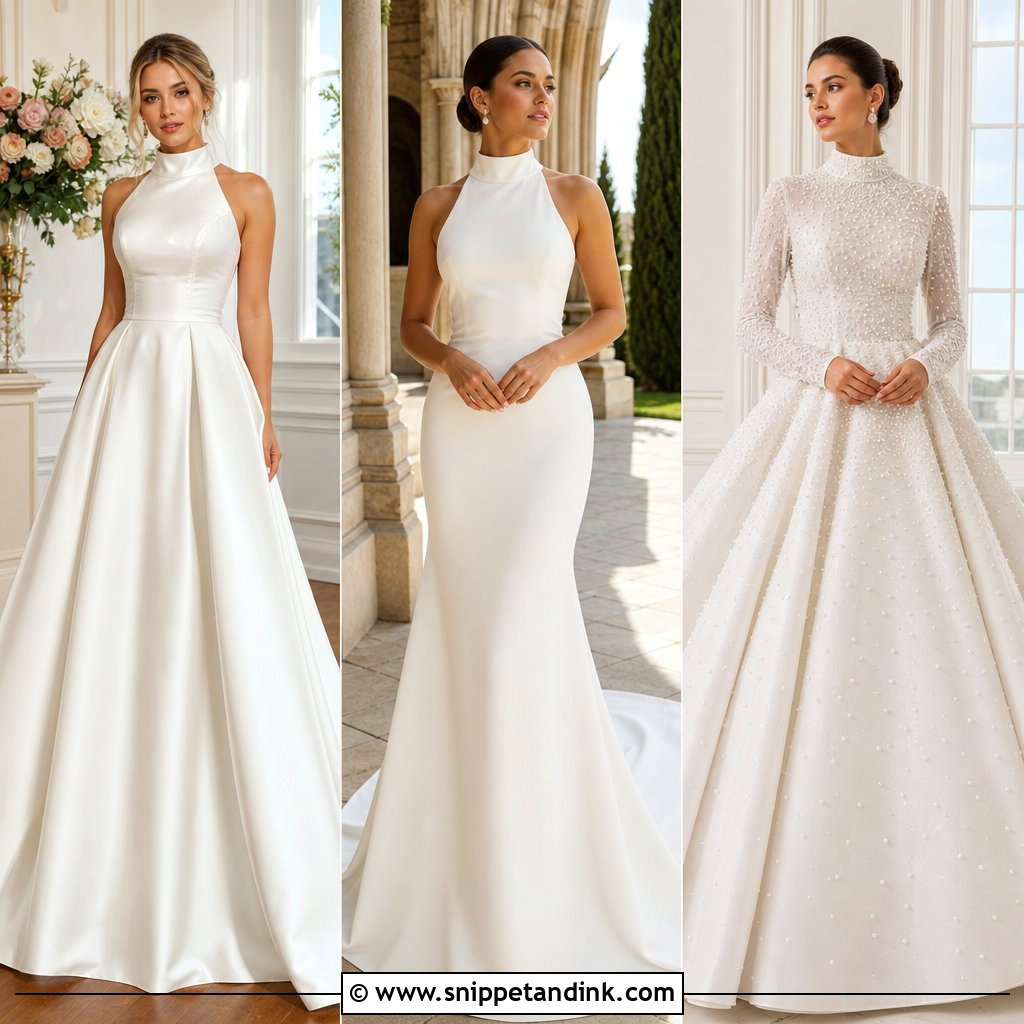
High neck, plain crepe, nothing extra: this is formal minimalism, and it relies entirely on lining and cut. A fitted bodice with long sleeves or a halter shape runs into a column or gentle fit-and-flare skirt, and a low back or covered buttons add interest without touching the clean front. A sleek bun, sculptural pearl earrings and pointed pumps suit it. Set the long plain veil below the bun so the collar stays clear, and keep the bouquet compact. Crepe follows the body closely, so smooth undergarments and supportive cups aren’t optional.
8. One-Shoulder Formal Bridal Dress
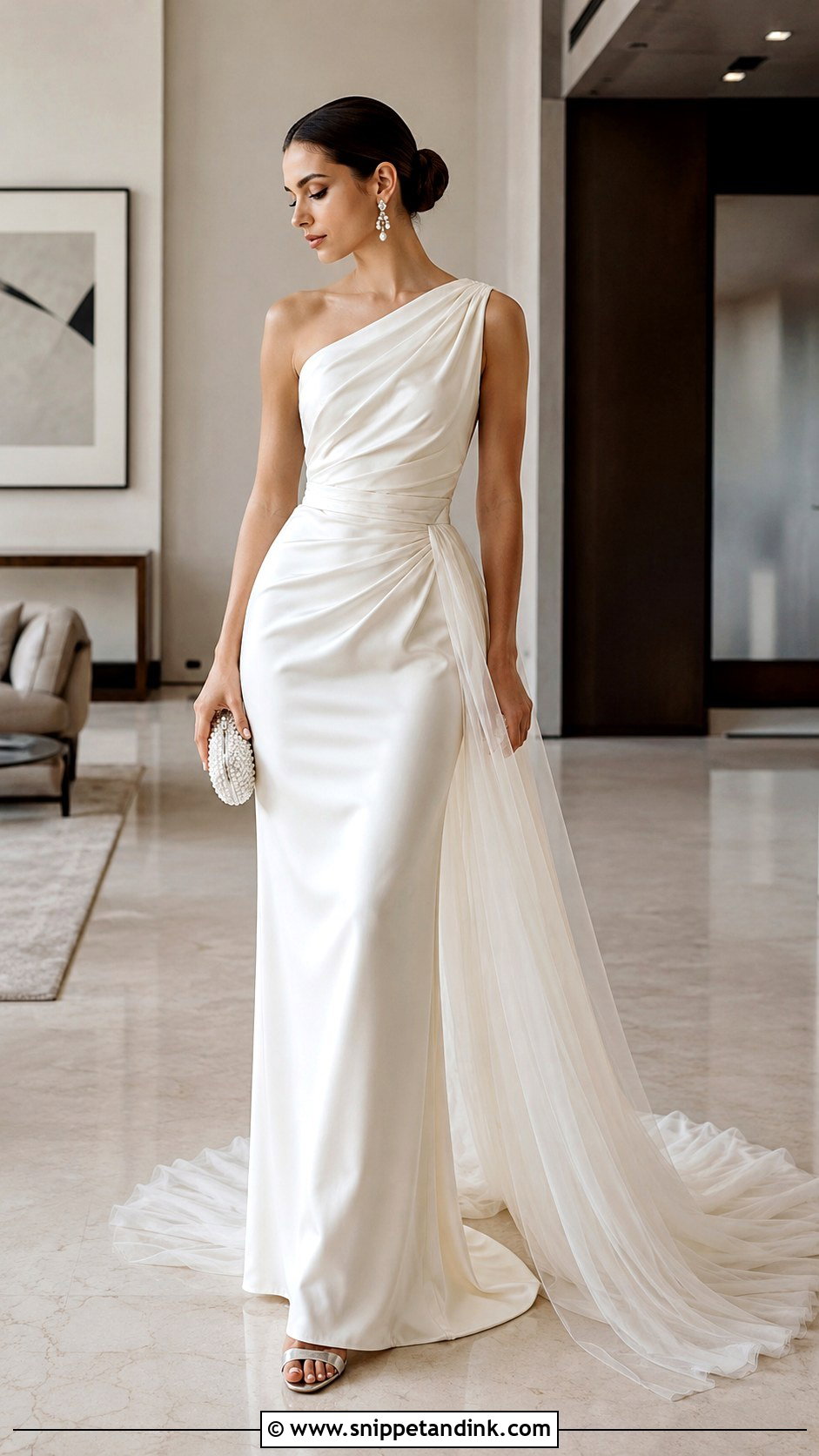
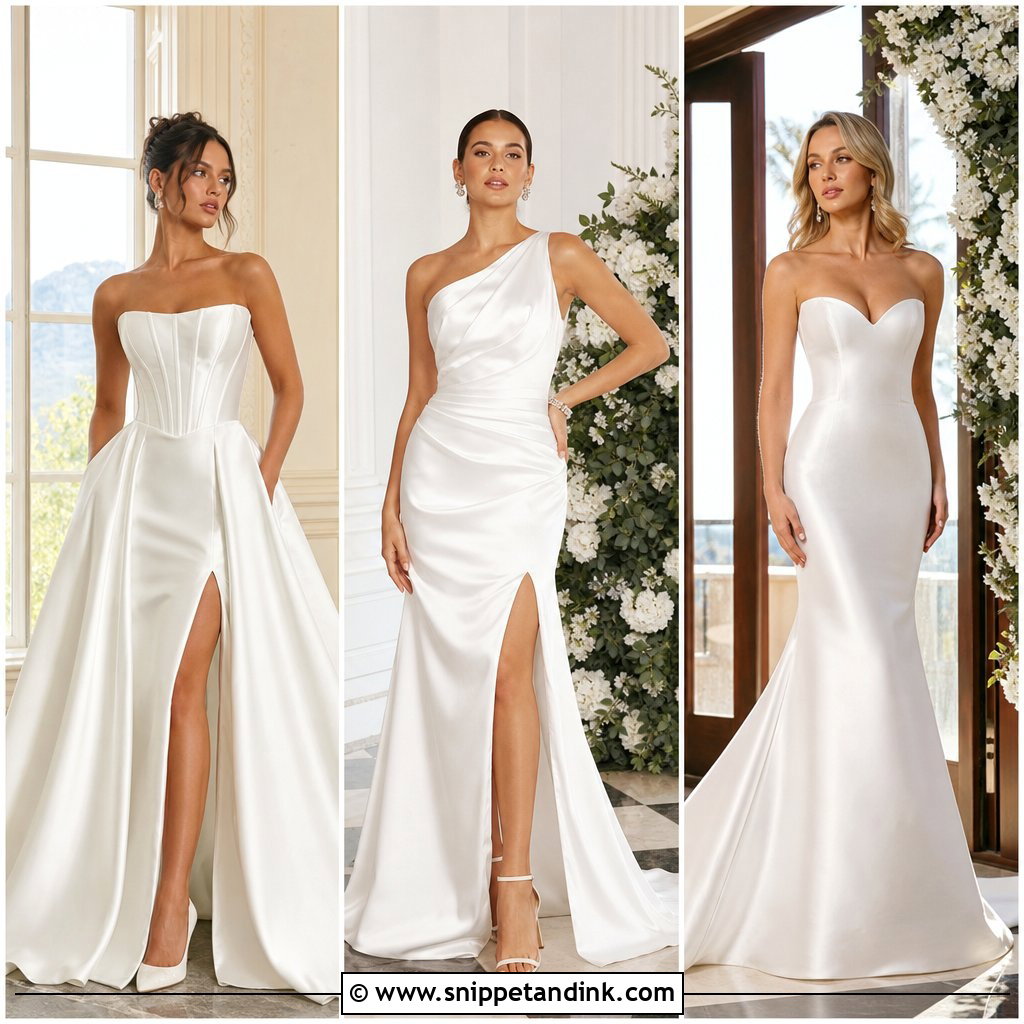
One-shoulder gowns look modern in a black-tie room, but the strap has to share the load evenly. If it pulls the neckline sideways at the fitting, it’ll be worse by midnight. Structured satin or crepe with gentle draping across the bodice works; a column feels sleek, while an A-line adds ceremony drama. Sweep a low bun toward the bare shoulder, and wear studs or a single statement earring instead of a necklace. Metallic ivory sandals, a small pearl clutch and a detachable tulle train complete it. A long veil fights the asymmetry, so I’d use a shoulder-length blusher or a simple comb.
9. Pearl Beaded Formal Bridal Dress
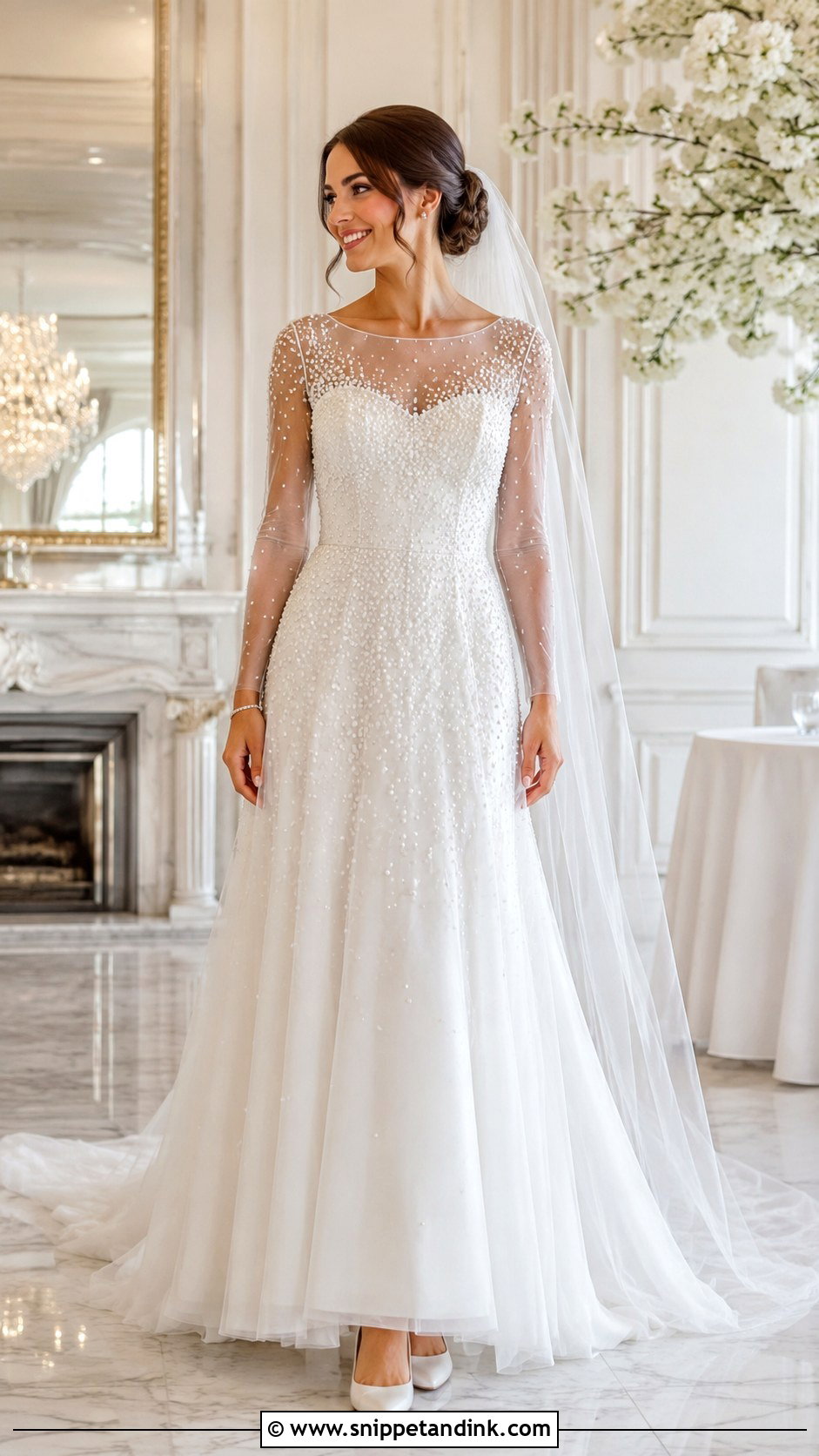
Pearls give a soft glow instead of crystal sparkle, which suits candlelit rooms. Scatter them across a fitted bodice, sheer sleeves or an illusion neckline and let them fade into the skirt. Pearl studs, a slim bracelet, satin pumps and a plain fingertip veil are enough; anything more competes. Wear a low textured bun with a few face-framing pieces. Ivory lining keeps it classic, while champagne lining makes the pearls stand out. Check the underarms and waist for beads that rub. A bustle matters even more here, because a beaded train gets heavy by the reception.
10. Cathedral Train Formal Bridal Dress
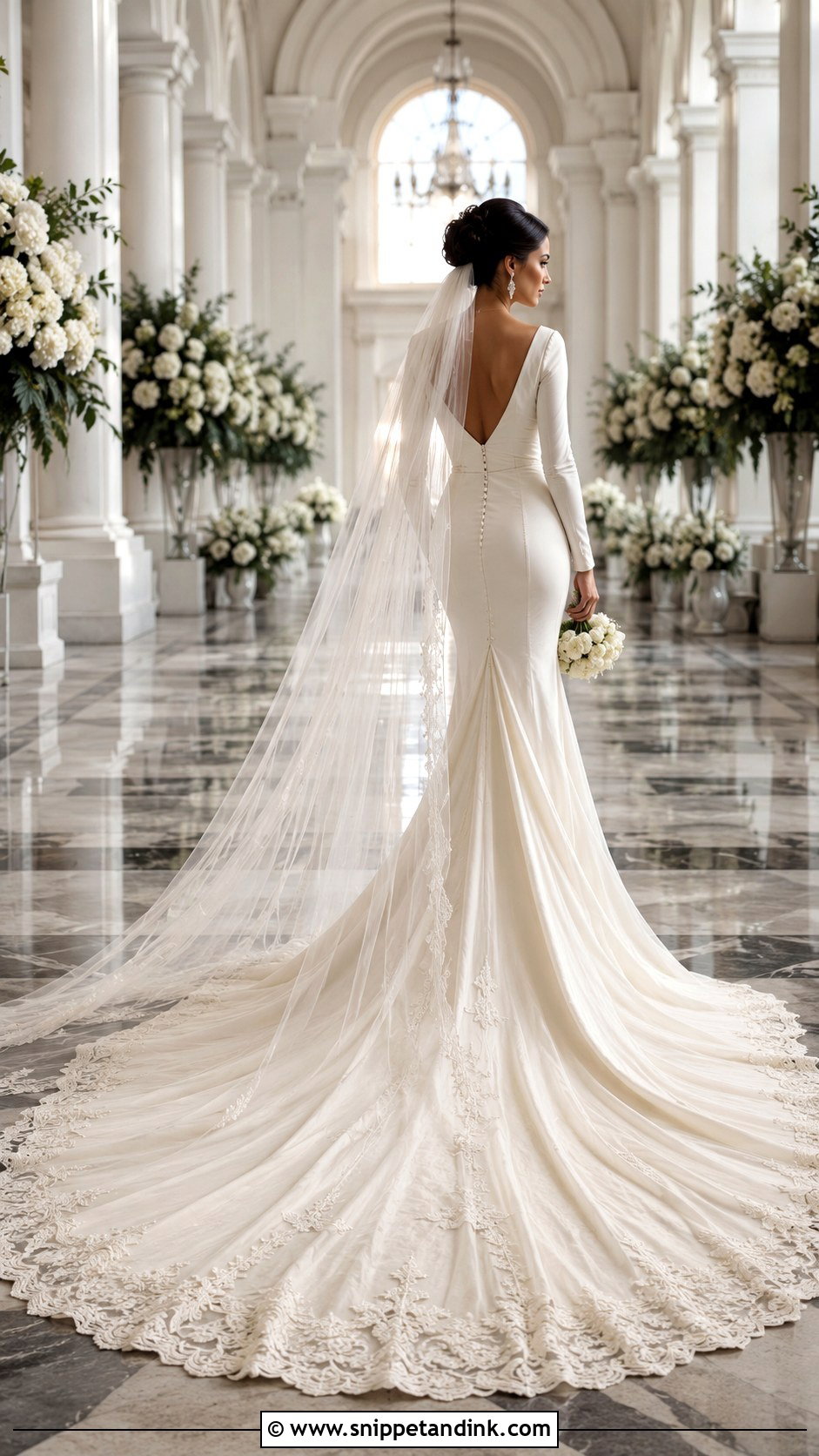
A cathedral train is the most formal choice on this list, and it asks something of the venue: a long, wide aisle and space to spread it for photographs. Clean satin, lace or fitted crepe can all carry it. Layer a cathedral veil that extends slightly past the train. Keep the front simple, with comfortable closed-toe heels and a hem clearing the floor, plus a structured updo, delicate earrings and a compact bouquet. Assign someone to arrange the train just before the processional and again at the altar. After portraits, a secure bustle makes it practical.
11. Cape Sleeve Formal Bridal Dress
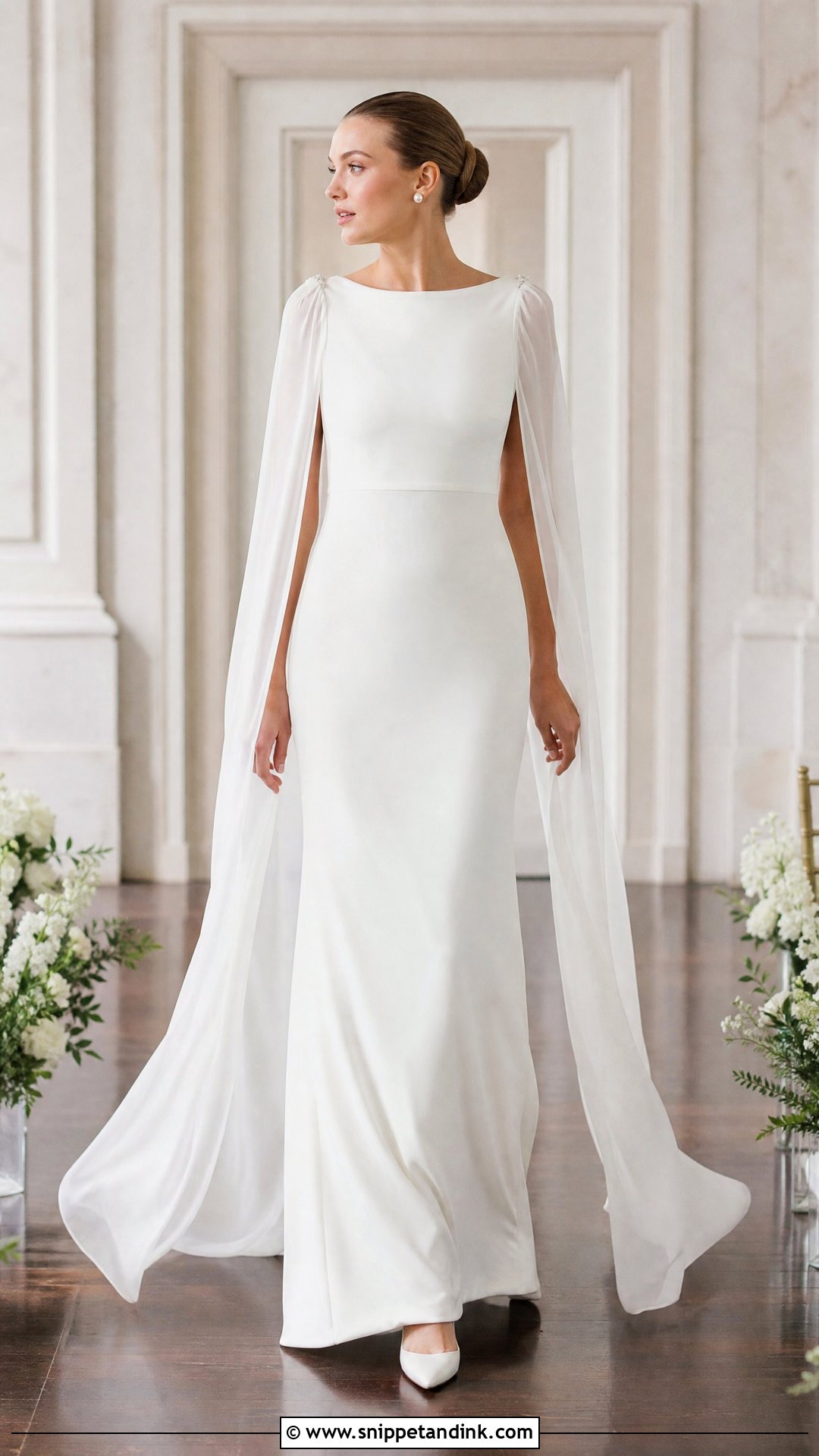
Cape sleeves can stand in for a veil and give movement without a heavy train. Choose a column, sheath or simple A-line with a light chiffon cape attached at the shoulders. Floor-length panels feel dramatic down the aisle, and shorter ones give lighter coverage. Weight is the catch: a cape that’s too heavy pulls the neckline back and makes you stand stiffly, so chiffon or georgette is safer than satin. A sleek bun, pearl studs, pointed satin pumps and no necklace suit it. If you still want a veil, wear a plain fingertip length that comes off after the ceremony.
12. Mikado Silk Formal Bridal Dress
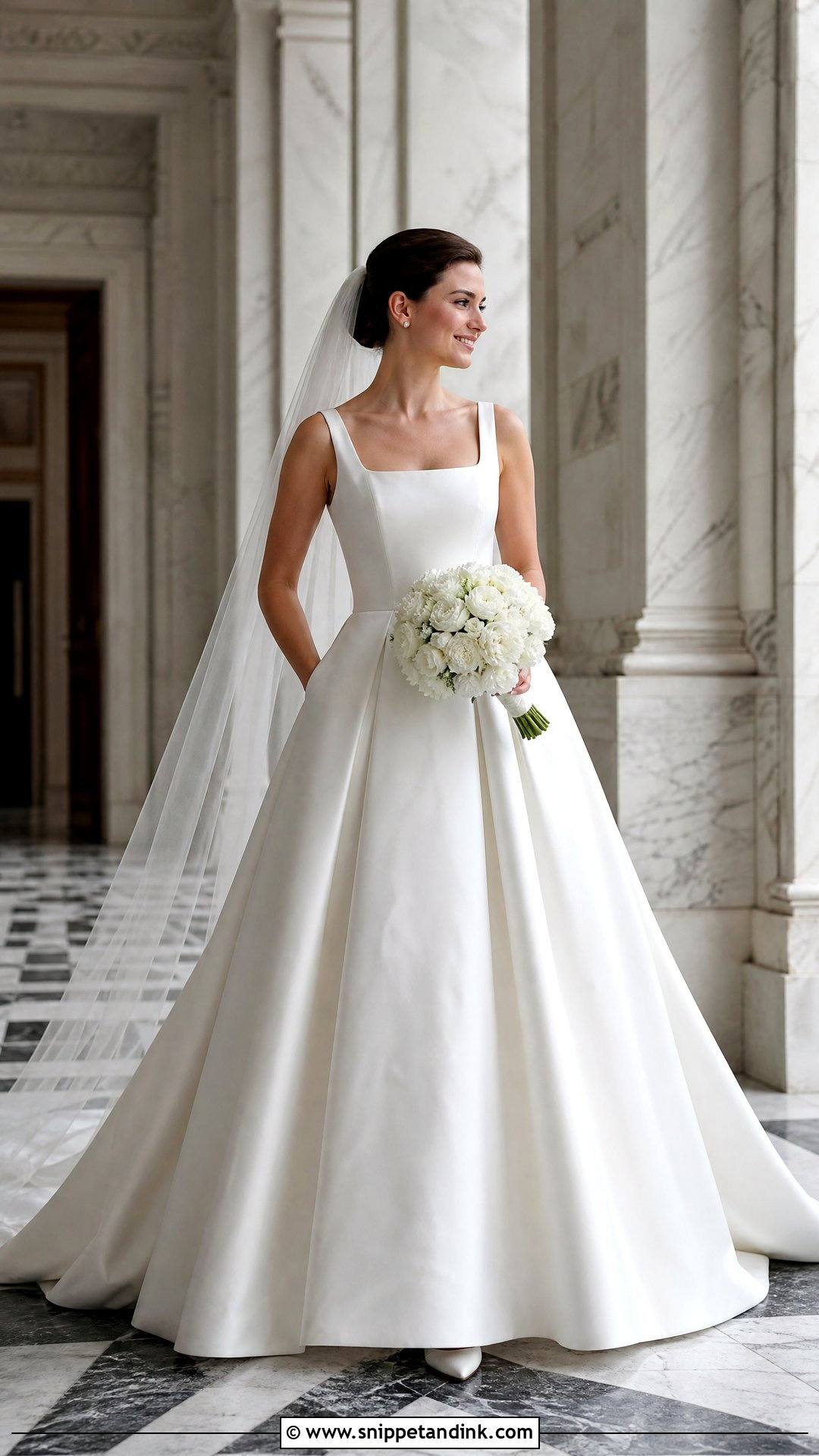
Mikado is the fabric I picture for a truly formal wedding. It’s crisp, heavy enough to hold architecture and has a soft sheen. Pair a fitted bodice with a bateau, square or strapless neckline and a box-pleated ball gown skirt, where the fabric holds every fold. Add a simple cathedral veil, pearl button earrings, satin pumps on a stable heel and a smooth French twist. A small rounded white bouquet suits it better than loose greenery. Mikado is stiff, so sit in it before committing, because the waistband can bite. Hidden pockets and a good bustle make it easier to live in.
13. Floral Appliqué Formal Bridal Dress
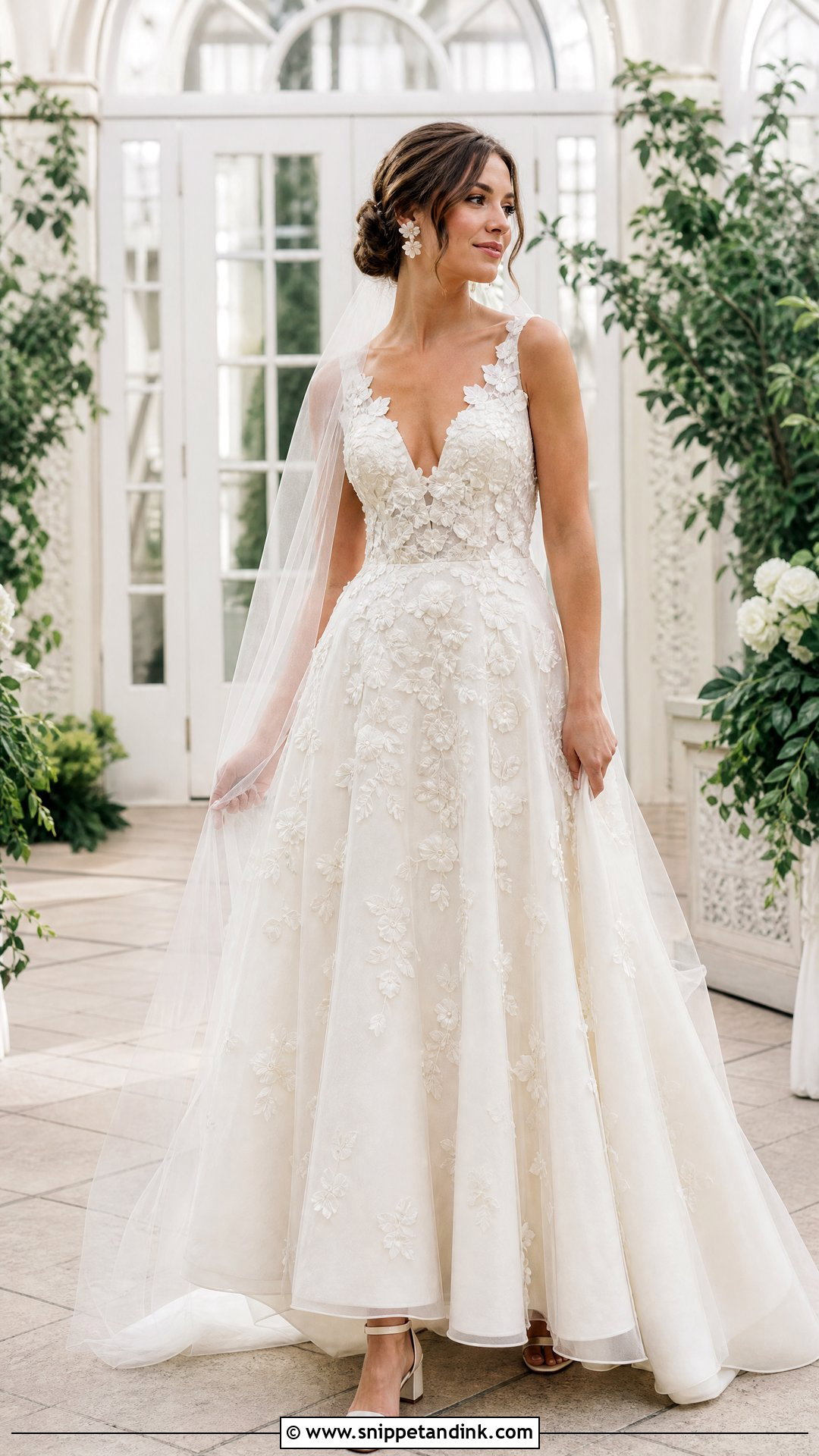
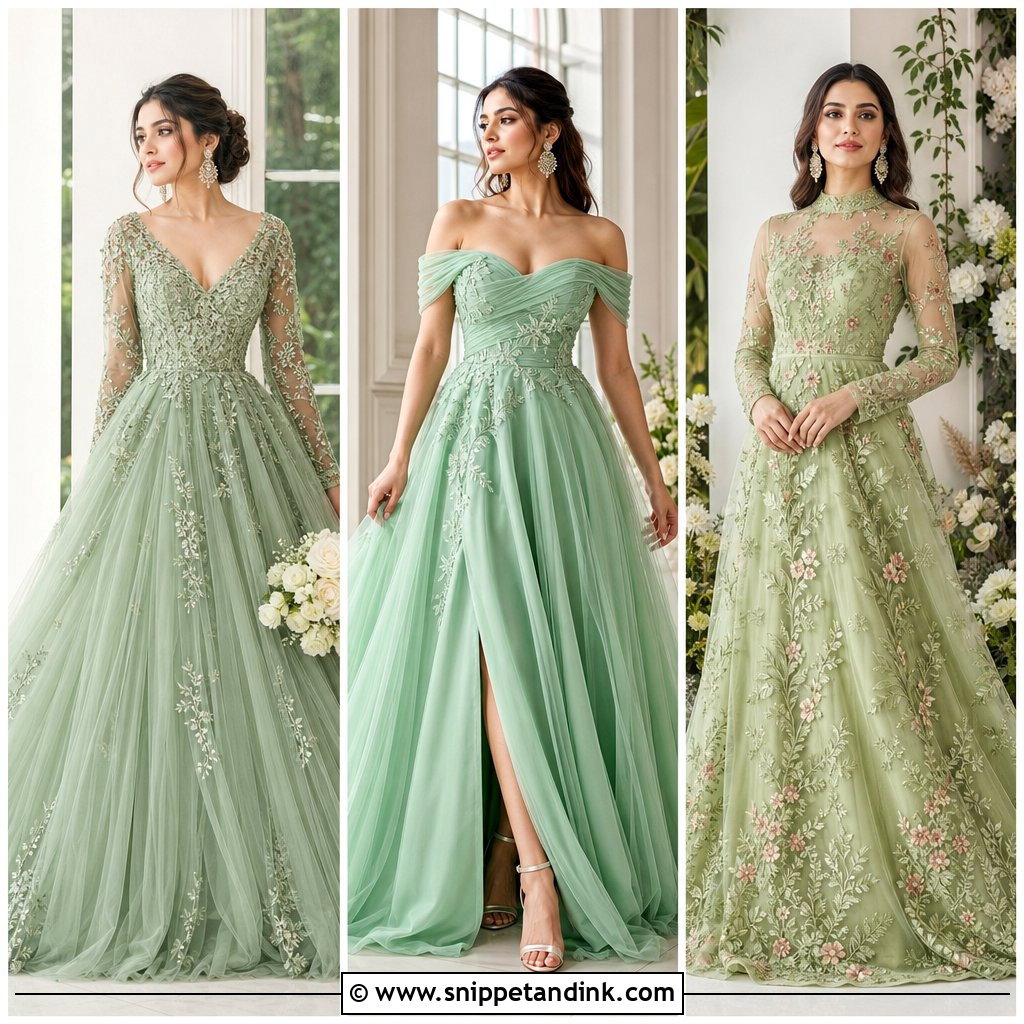
Dimensional appliqué gives romance without an all-over print. Concentrate the embroidered flowers on the bodice and let them scatter down an A-line or ball gown skirt. Ivory on ivory is subtle; pale blush or soft green thread brings in color. A plain tulle veil, delicate floral earrings and ivory ankle-strap heels go with a loose low bun and a small comb, and the bouquet should stay simple. Big appliqués add visual volume wherever they cluster, so check them at the bust, waist and hips during alterations and have any badly placed ones moved.
14. Drop Waist Formal Bridal Dress
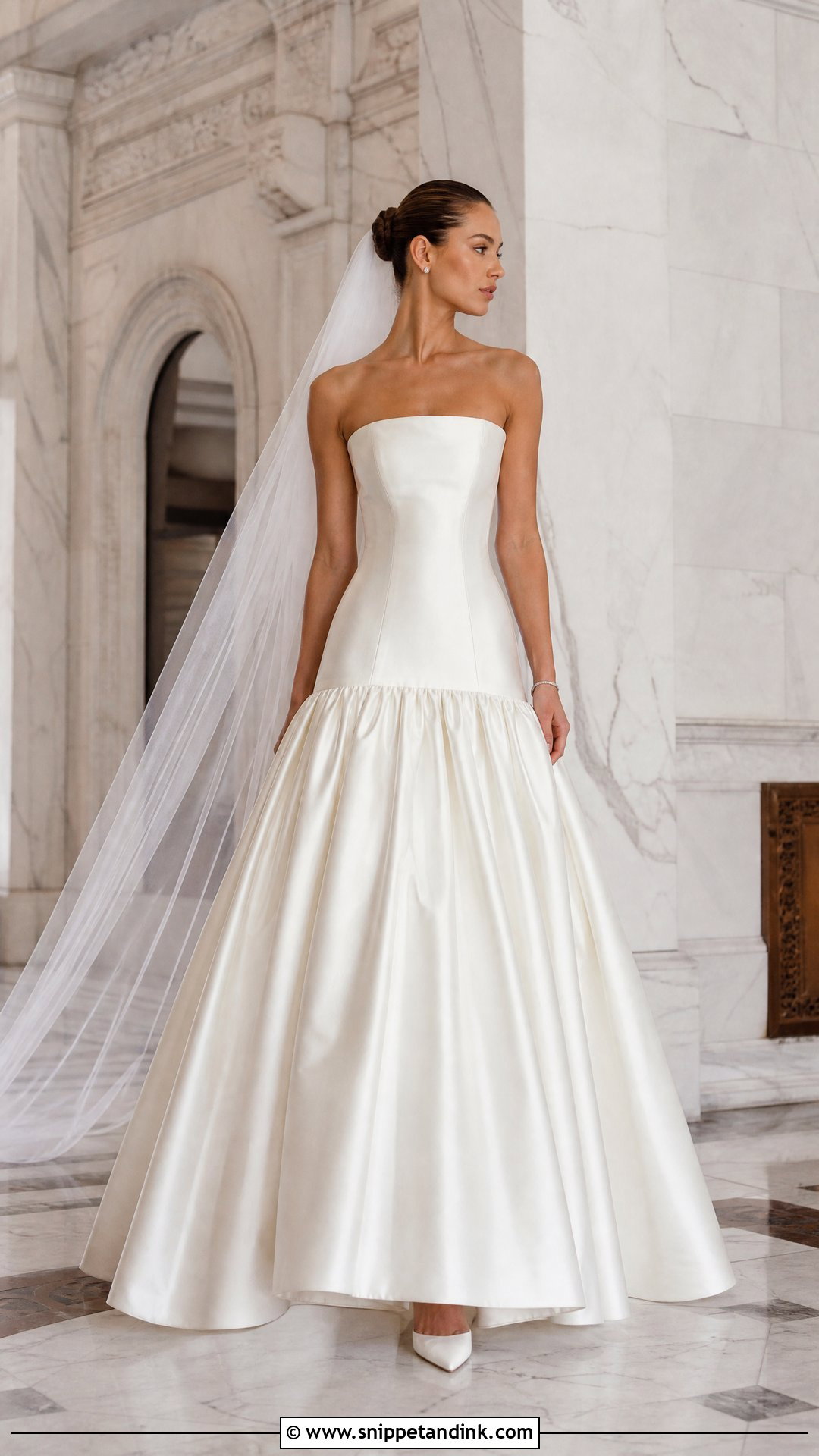
A drop waist lengthens the torso before the skirt opens, and taffeta or satin gives it formal crispness. The bodice runs below the natural waist on curved seams. Taffeta rustles and holds pleats well, but it creases readily, so plan a steam. Go for a gathered or pleated skirt, a long veil, diamond or crystal studs, pointed pumps and a polished bun, with a narrow bracelet for shine. Sit for several minutes at the fitting. A low seam that presses into your hips becomes miserable by dinner, and it should sit where your proportions need it, not where the pattern put it.

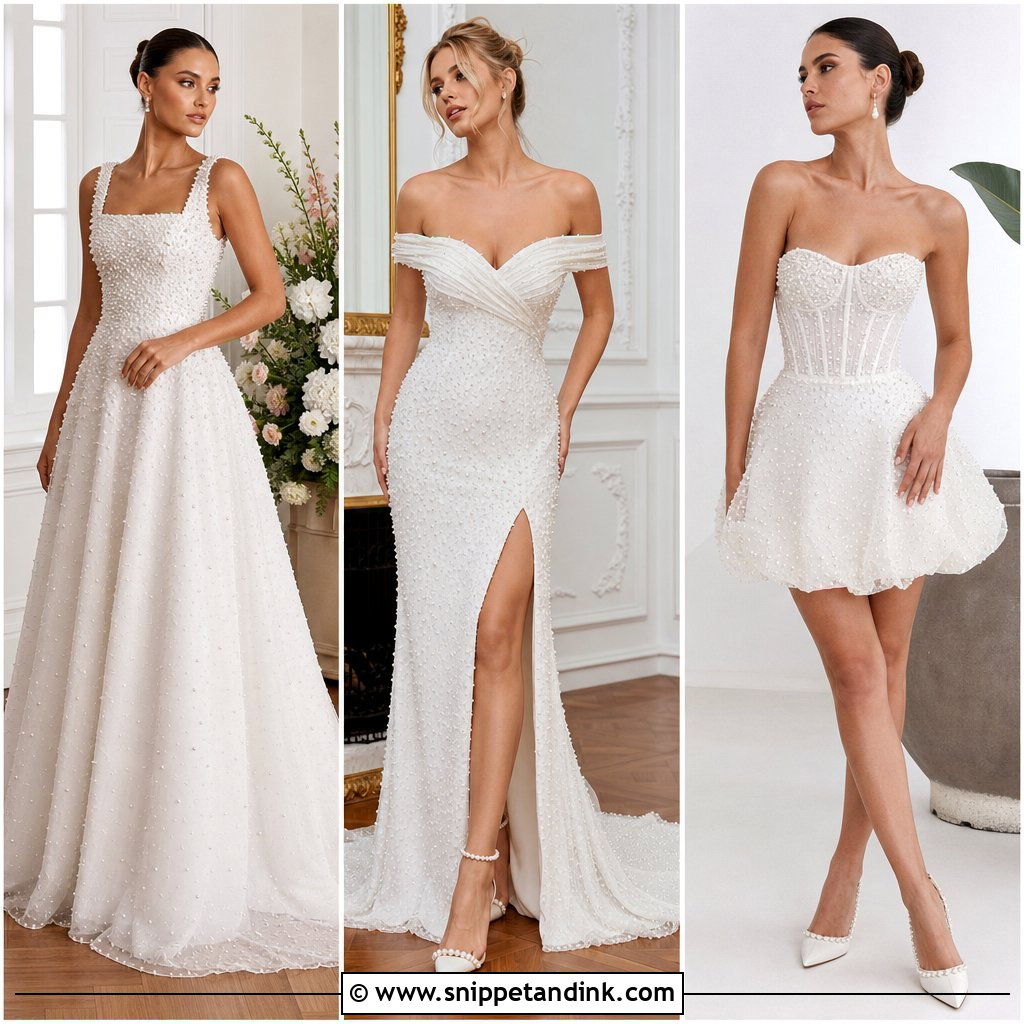
15. Minimalist Column Formal Bridal Dress
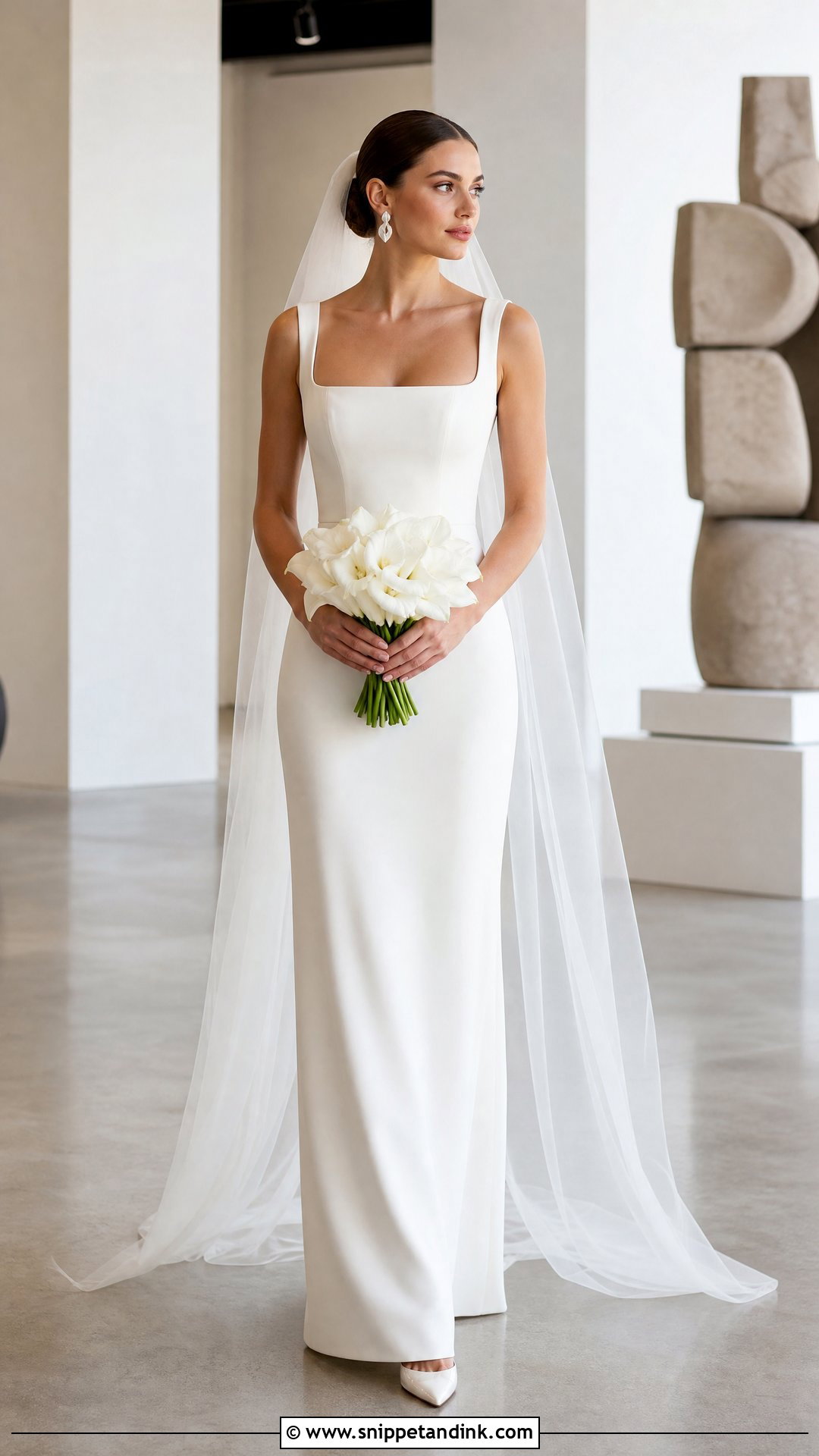
A column with no decoration can be the most powerful dress in a black-tie room. Think silk crepe, heavy satin or double-faced fabric, with a smooth neckline and clean vertical seams. A square, bateau or softly draped cowl neckline adds character. A long plain veil, sculptural earrings, pointed heels, a sleek low bun and a structured white bouquet suit it. Want more drama for the ceremony? Add a detachable overskirt or cape. With nothing to hide behind, fabric quality and tailoring decide it, and the dress should skim rather than pull or twist.
16. Fit-and-Flare Formal Bridal Dress
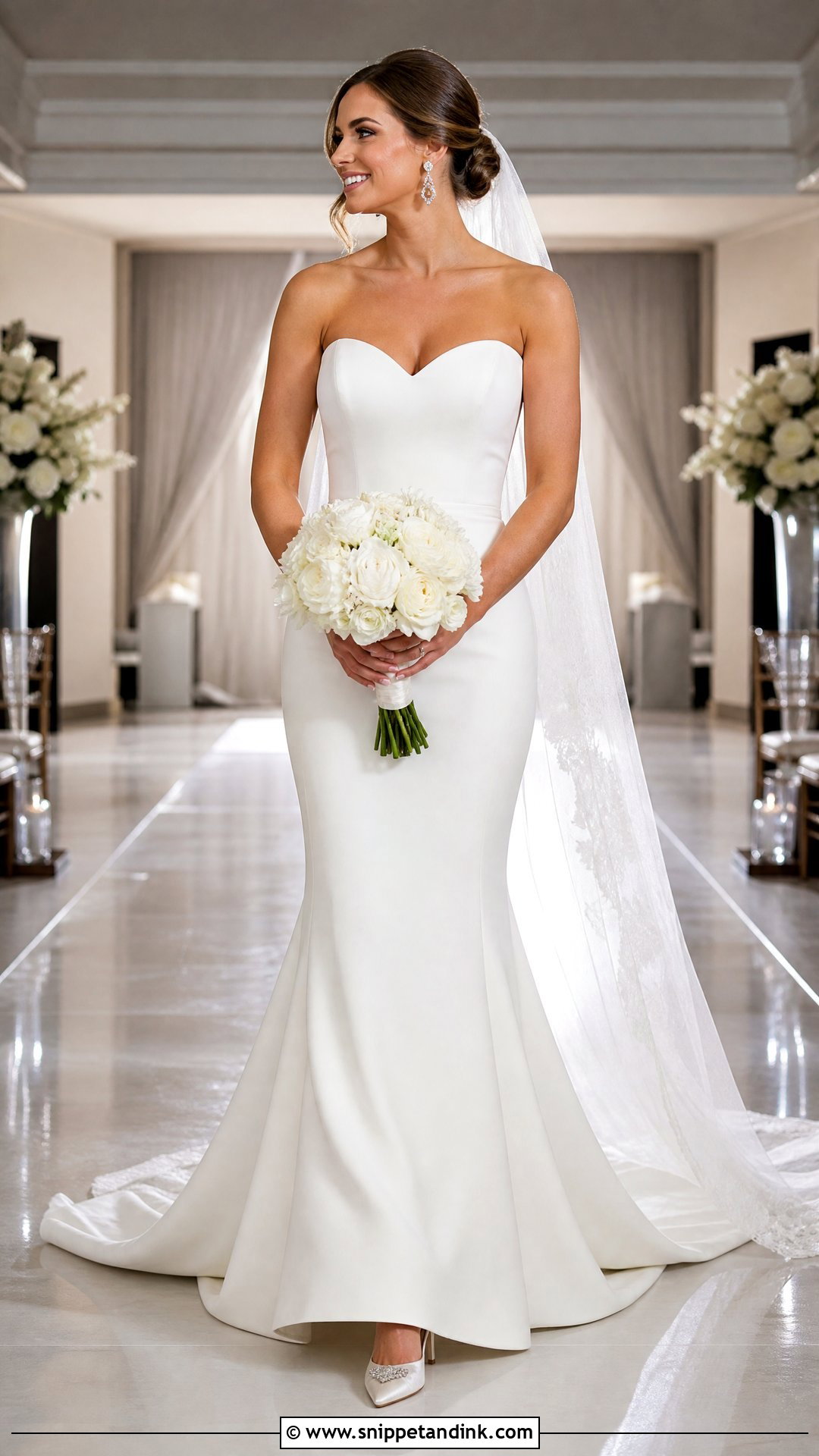
Fit and flare is the formal shape I suggest to brides who want curves but dread a tight mermaid knee. Supportive crepe, satin or lace keeps the line smooth through the bodice and hips. A sweetheart neckline softens it, while a square or bateau neckline cleans it up. A chapel veil, crystal drops, pointed ivory heels and a side-parted low bun with a comb or pins complete it. Check that the flare point lets you walk and sit without strain. This shape can bustle awkwardly, so ask the seamstress for her plan early. Detachable off-the-shoulder sleeves or a light overskirt add ceremony impact.
17. Detachable Overskirt Formal Bridal Dress
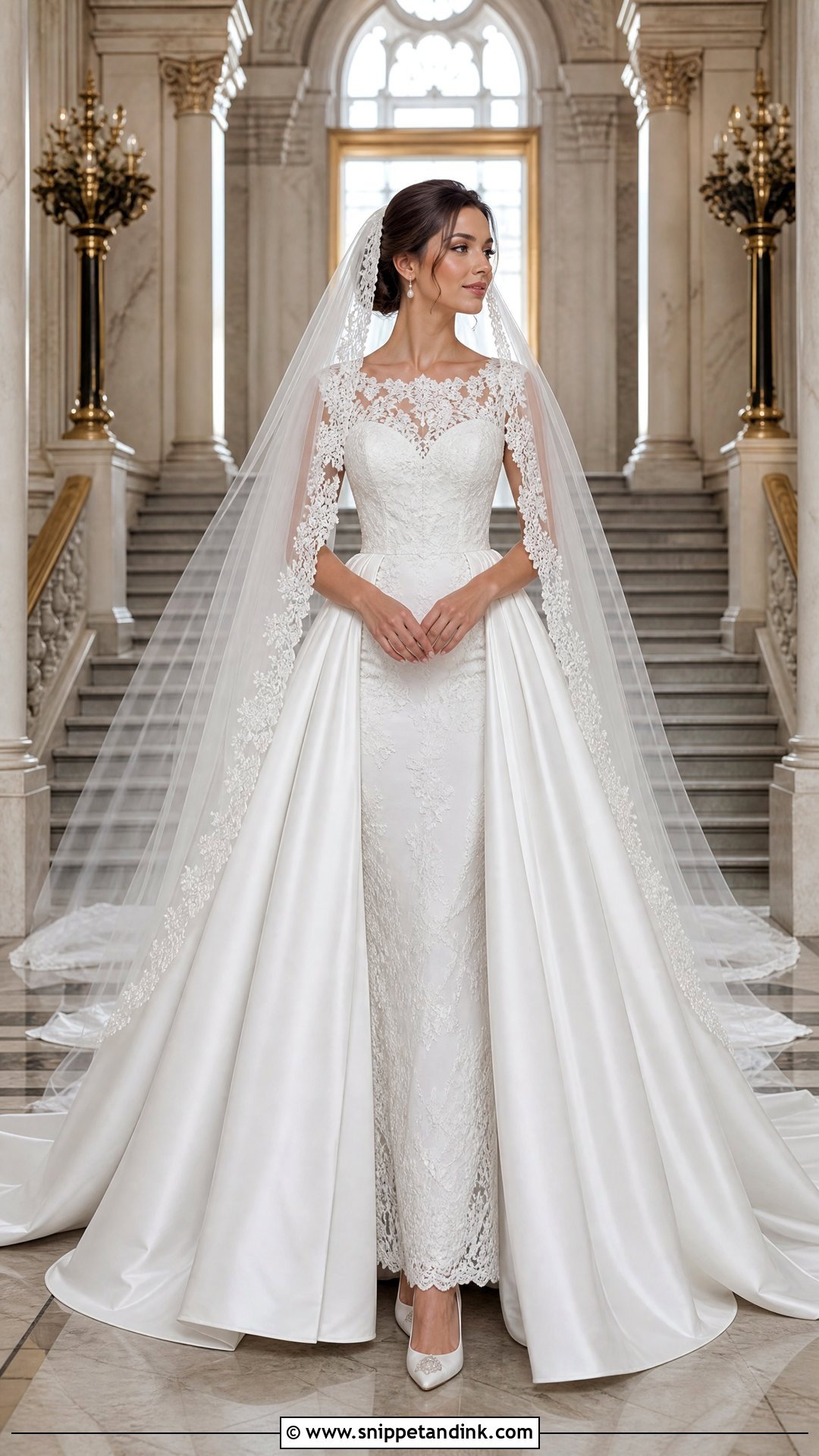
An overskirt turns a fitted column or fit-and-flare into a ball gown for the ceremony and back again for the party. Choose a base gown in crepe, lace or smooth satin, with the overskirt set at the natural waist and finished in a sweeping train. The waistband is where cheaper versions show themselves, so it must lie flat and blend in. A cathedral veil, pearl earrings and closed-toe satin pumps suit the ceremony; afterward, switch to statement earrings or a shorter veil. Practice the change so one helper can do it quickly without tearing fabric.
18. Bow Back Formal Bridal Dress
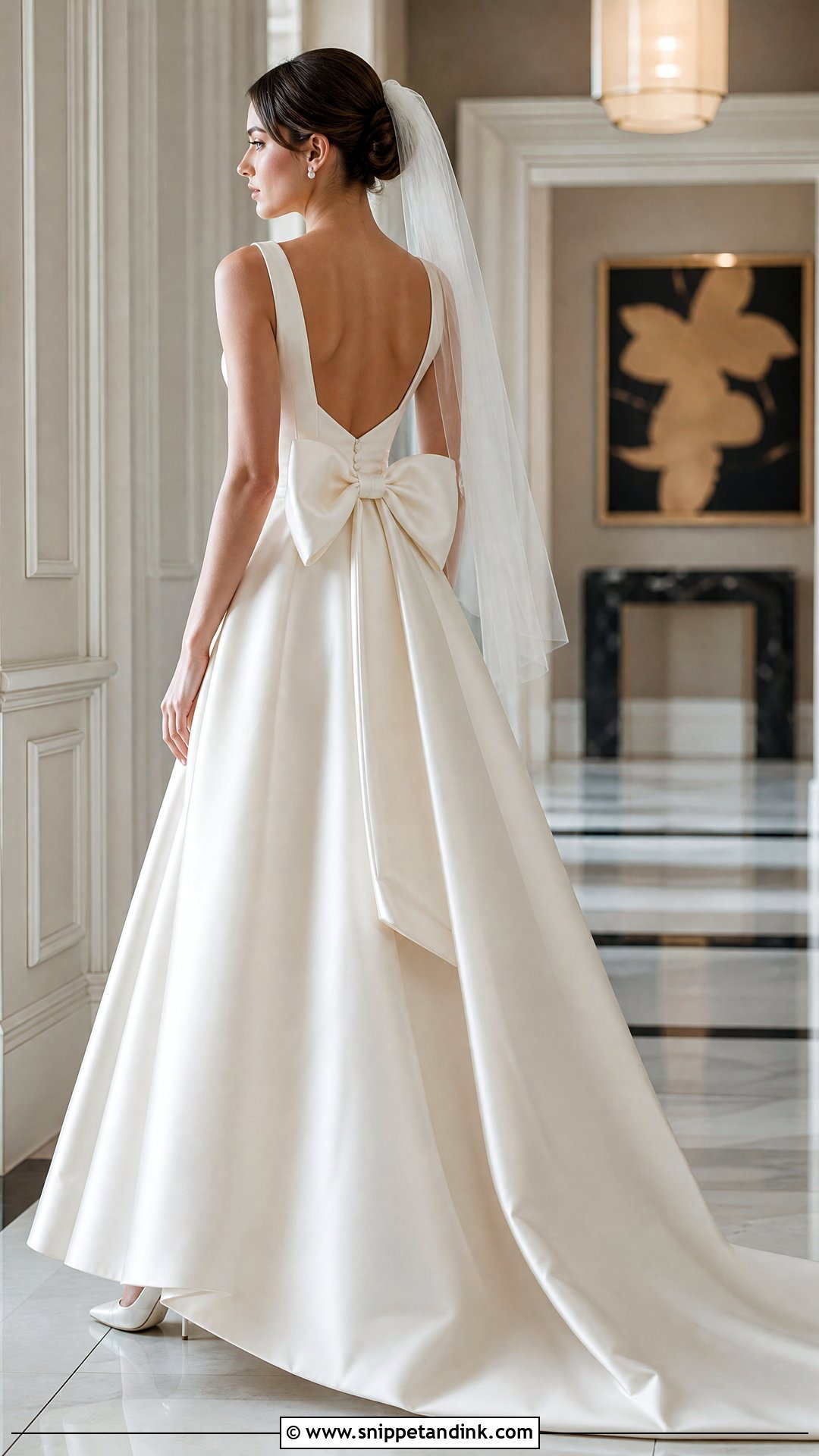
A big bow at the back is pure formality, and it’s the detail guests stare at for the whole ceremony. Choose strapless or square-neck satin with a fitted bodice and full A-line skirt, and set the bow at the waist for balance or lower on the train for drama. Large satin bows collapse unless they’re interfaced or tacked to hold their loops, so check that before you buy. A sheer veil, pearl studs, pointed pumps and hair worn up keep the back on show. A detachable bow gives a cleaner reception look; make sure the tails stay clear of the bustle.
19. Champagne Formal Bridal Dress
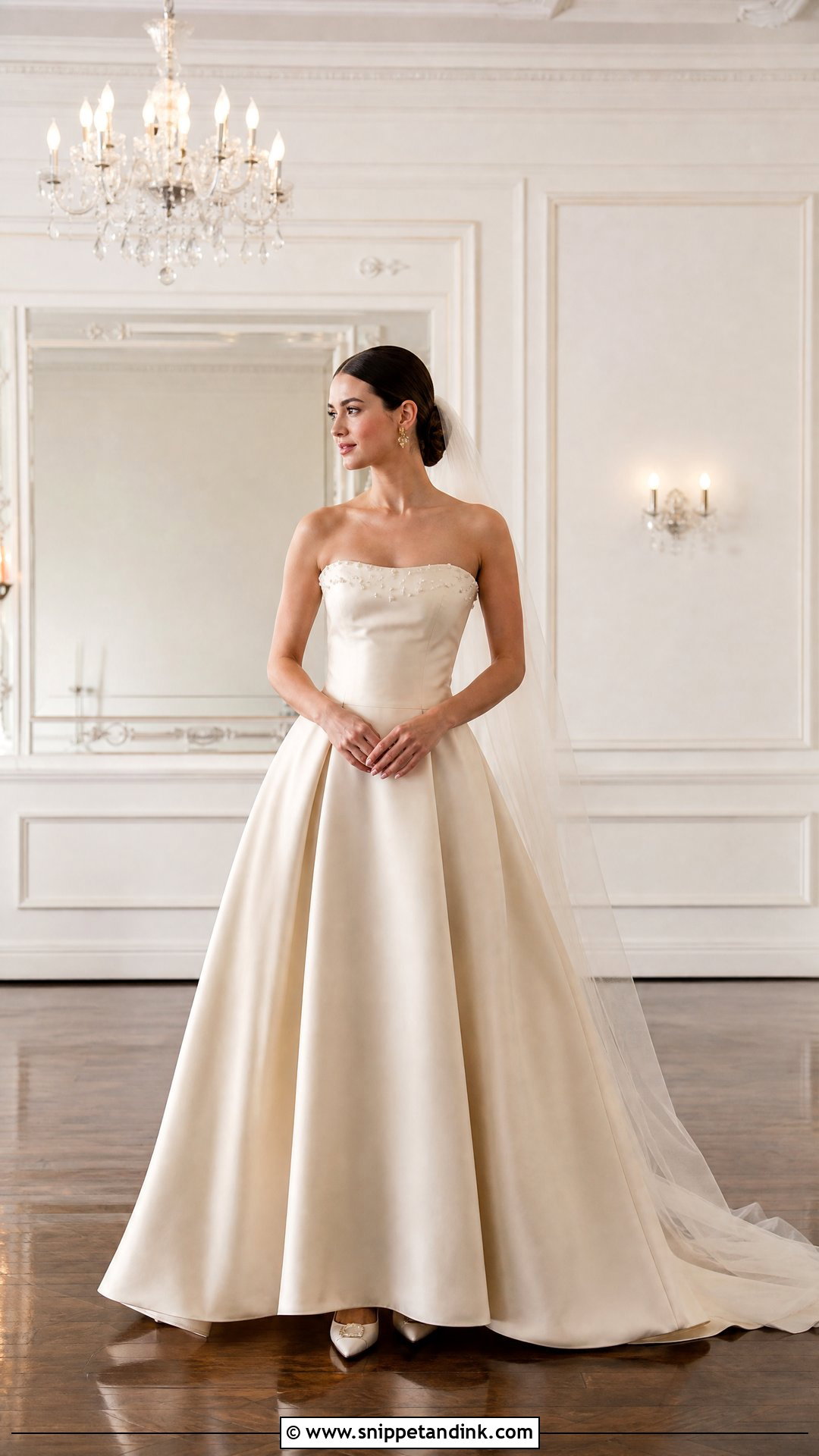
Champagne warms up under evening light, sometimes more than you expect. Satin, layered tulle or lace over a champagne lining works with a fitted bodice, A-line skirt and pearl or crystal accents. Ivory heels, a sheer ivory veil and gold-toned earrings suit it, with a soft bun and neutral makeup. Compare the gown in daylight and under warm indoor bulbs before deciding, since undertones shift. Bring your veil and accessories to the fitting, too. An ivory veil against a champagne gown can look intentional or like a mismatch, and only a side-by-side tells you which.
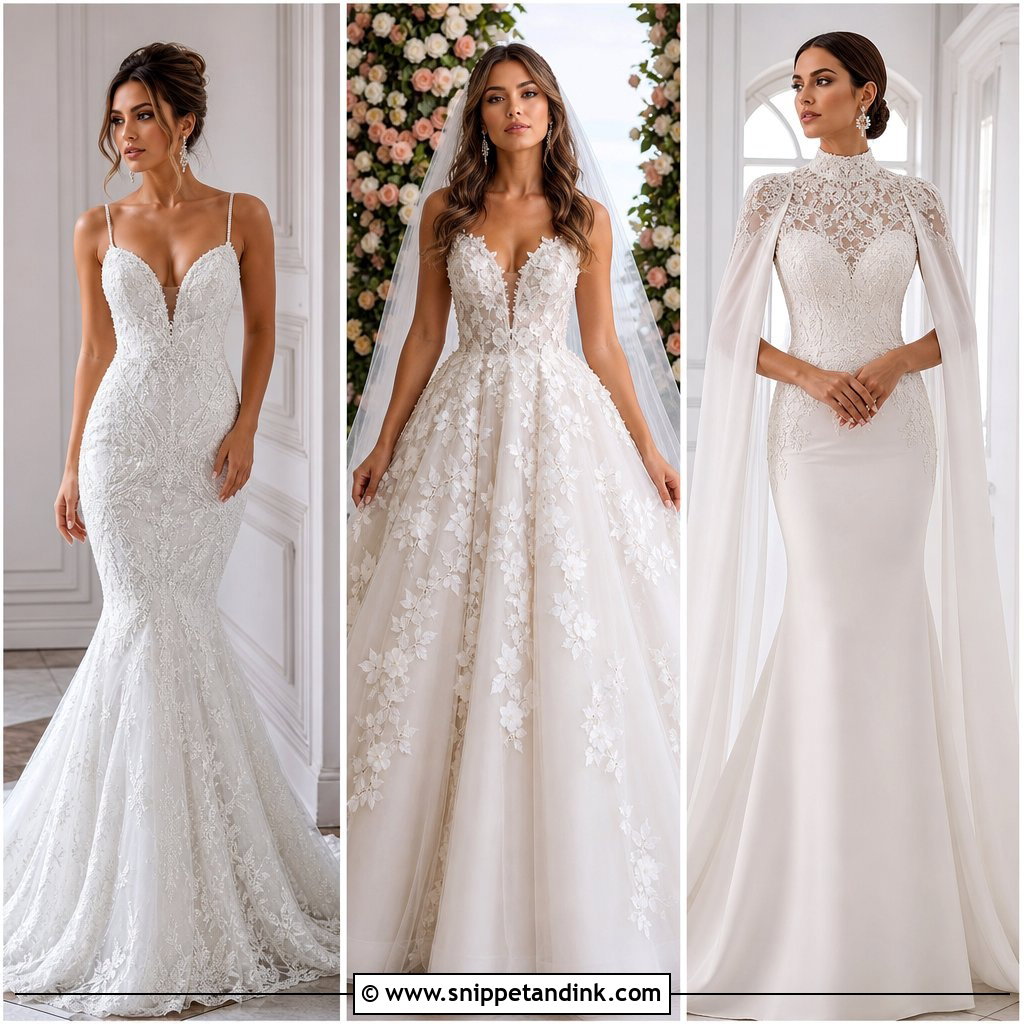

20. Modest Formal Bridal Dress
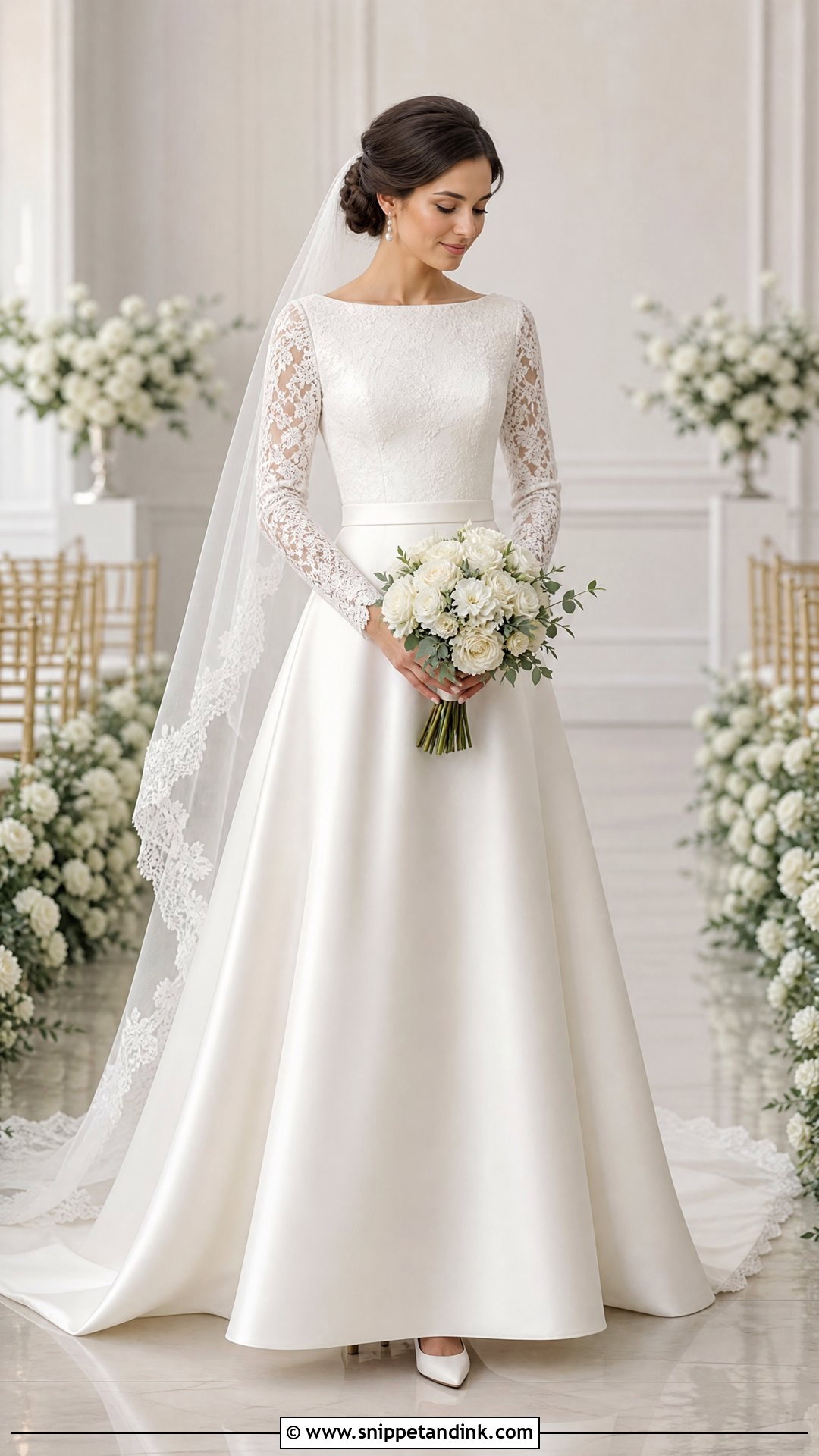
Generous coverage and black-tie formality sit together comfortably. Look for an opaque lined bodice, a high or bateau neckline and full-length sleeves shaped neatly at the wrist, with a defined waist and A-line skirt. Satin gives a clean finish and lace sleeves add texture, while covered buttons down the sleeves and back give quiet detail. A chapel veil, pearl drops, closed-toe pumps and a low chignon complete it. If you want more coverage, ask for custom lining at alterations rather than wearing a separate layer, which shifts underneath during the ceremony.
Matching the Gown to a Black-Tie Room
Black tie is an evening dress code, so the gown has to work under warm, low light and next to a partner in a tuxedo.
Light and color
Candles and warm bulbs push ivory toward cream and champagne toward gold. Bright white holds its color best but can look stark against warm skin. Look at swatches under warm light, not only in the salon’s daylight.
Scale and the aisle
Ask the venue how long and wide the aisle is. A cathedral train on a full ball gown needs room to turn at the front, and in a narrow chapel aisle a chapel-length train usually looks better proportioned.
Gloves and the ring
Opera gloves look right at black tie, but the ring goes on a bare hand. Either slip off the left glove before the vows and pass it to your maid of honor, or choose gloves with an opening at the ring finger. Rehearse whichever you pick.
Next to the tuxedo
Hold your fabric against your partner’s shirt. A crisp white shirt can make a soft ivory gown look yellowish beside it in photos, and an ivory shirt or a whiter gown fixes that.
Dressing the Whole Evening, Not Just the Aisle
Impact matters at black tie, but so do comfort, support and meaning. Start with a silhouette that feels natural when you walk and sit, then add a veil, shoes, jewelry, hair and bouquet that support the gown. Structured satin brings grandeur, lace brings texture and crepe keeps things modern. Detachable sleeves, capes, bows and overskirts let one gown work twice. Book alterations with time to spare and try every piece together before the day. Treat these looks as a starting point and build the one that still looks like you.
You'll Like These Ideas:



Leave a Reply