
If a bride walks into an appointment unsure what she wants, the first dress I pull is almost always an A-line. The fitted bodice and a skirt that widens gradually from the waist suit more bodies and more venues than any other shape, from a beach to a ballroom. It also takes on whatever character the fabric and neckline give it: plain satin looks modern, lace looks romantic, a corset bodice looks current. Below are thirty versions of the silhouette, each styled as a full outfit, with notes on fit, fabric and the things I’d check before you say yes.
Is It Really an A-Line? Telling the Silhouettes Apart in the Fitting Room
Bridal shops use the term loosely, and a dress labelled A-line can behave very differently from the next one. Before you fall for a label, I’d look at where the skirt starts to widen.
- True A-line: fitted through the bodice, widening gradually from the natural waist in a straight diagonal line to the hem.
- Princess line: the same shape, but built with vertical seams running from shoulder or bust to hem, so there is no waist seam at all. It’s very forgiving on a longer torso.
- Fit and flare: fitted past the waist and over the hips, flaring around mid-thigh. Closer to a trumpet than an A-line.
- Ball gown: fitted bodice, but the skirt bursts out at the waist with much more volume, usually supported by layers or a petticoat.
The difference matters because it changes how you sit, walk and dance. A true A-line lets you climb stairs and get into a car without help. A fit and flare doesn’t. If comfort over a long day is a priority, I’d stick to the first two.
When you try them on, walk across the room and sit in a chair. The dress you can move in will feel right in a way the mirror alone won’t tell you.
1. Simple Satin A-Line Wedding Dress
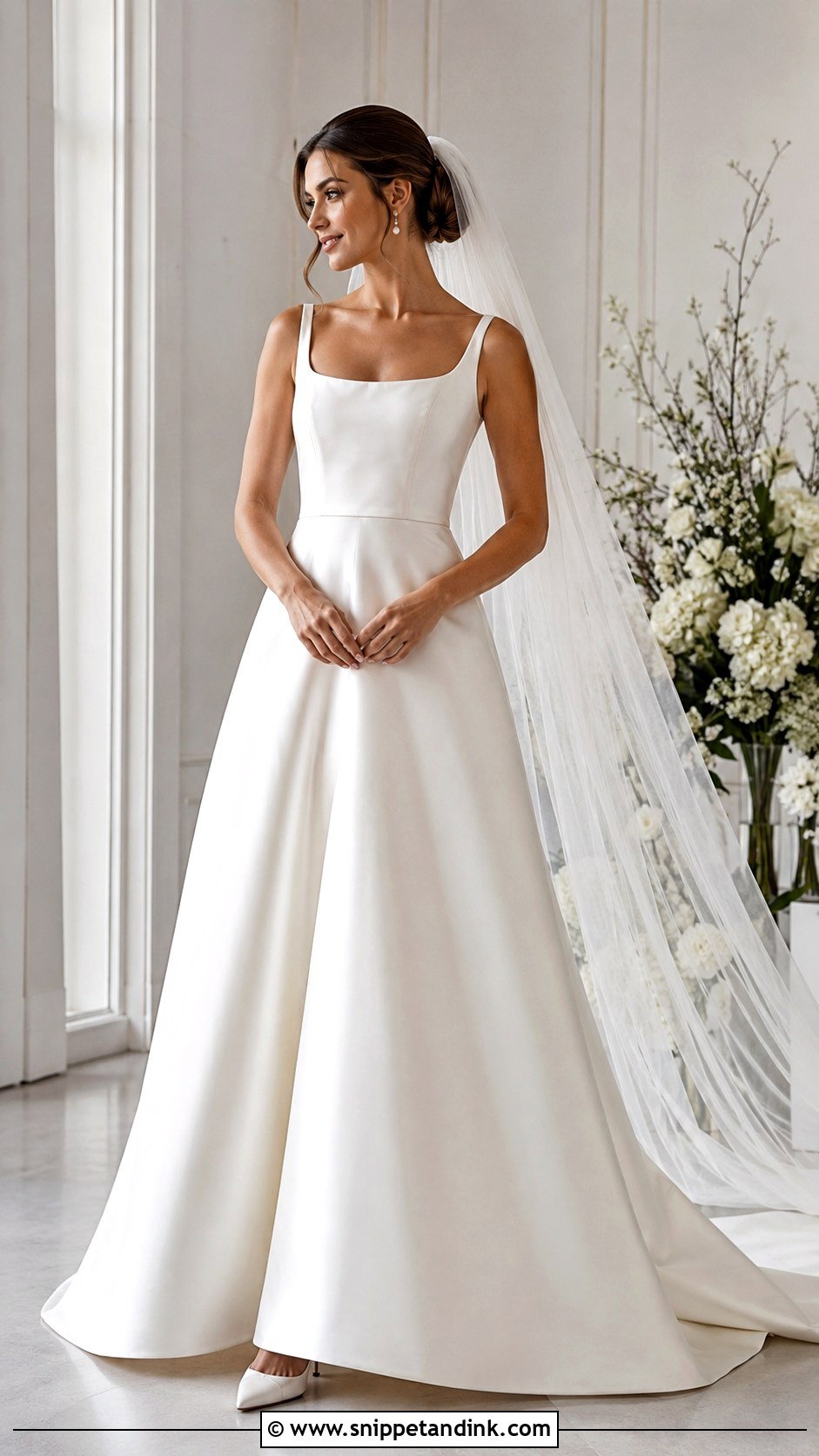
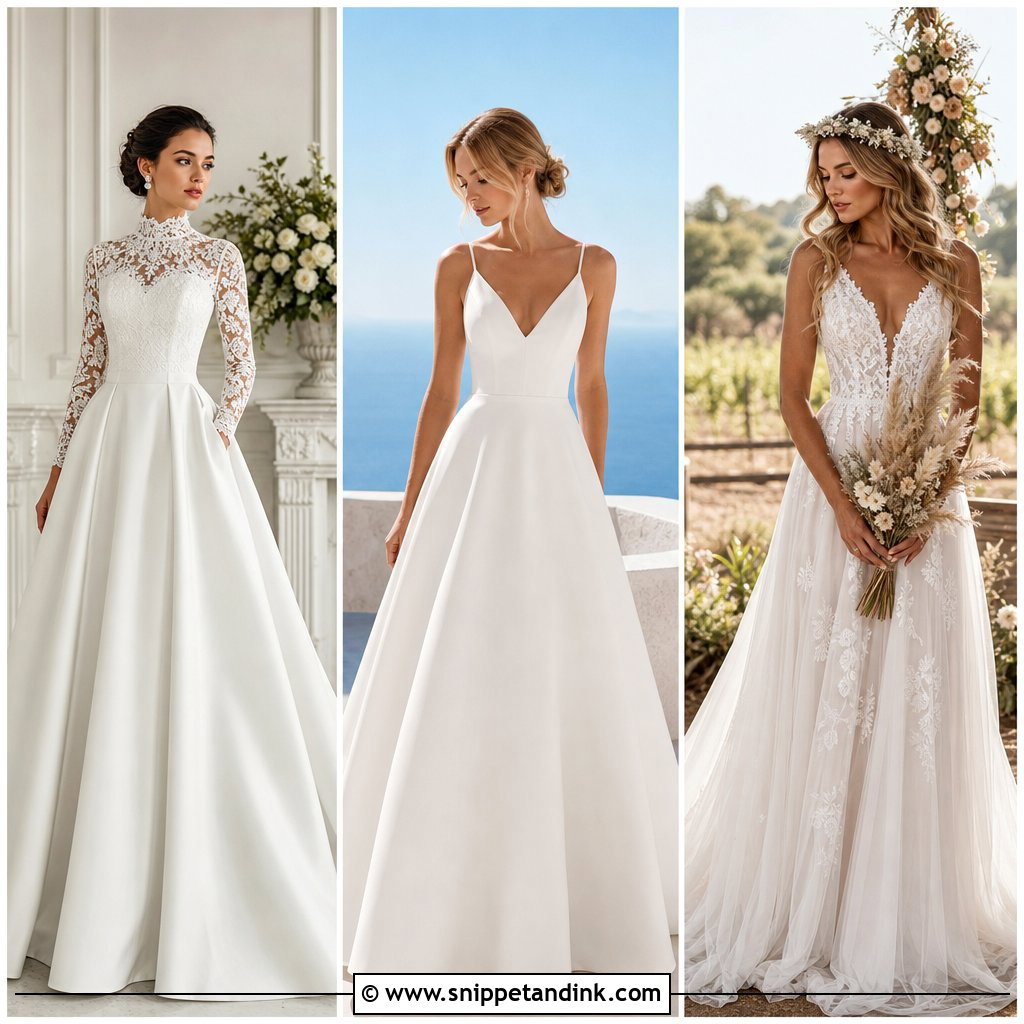
Plain satin is the version I’d show a bride who says she wants nothing fussy. The fabric does the work: it has a soft glow, and a structured bodice keeps it crisp. Because there’s no lace or beading to hide behind, the fit has to be exact, and satin shows every pull at the seams. Princess seams or a slim waistband give a little extra shape if you want it. A plain cathedral veil, pearl drops and a bouquet of white roses or ranunculus keep the satin as the focus.
2. Lace A-Line Wedding Dress
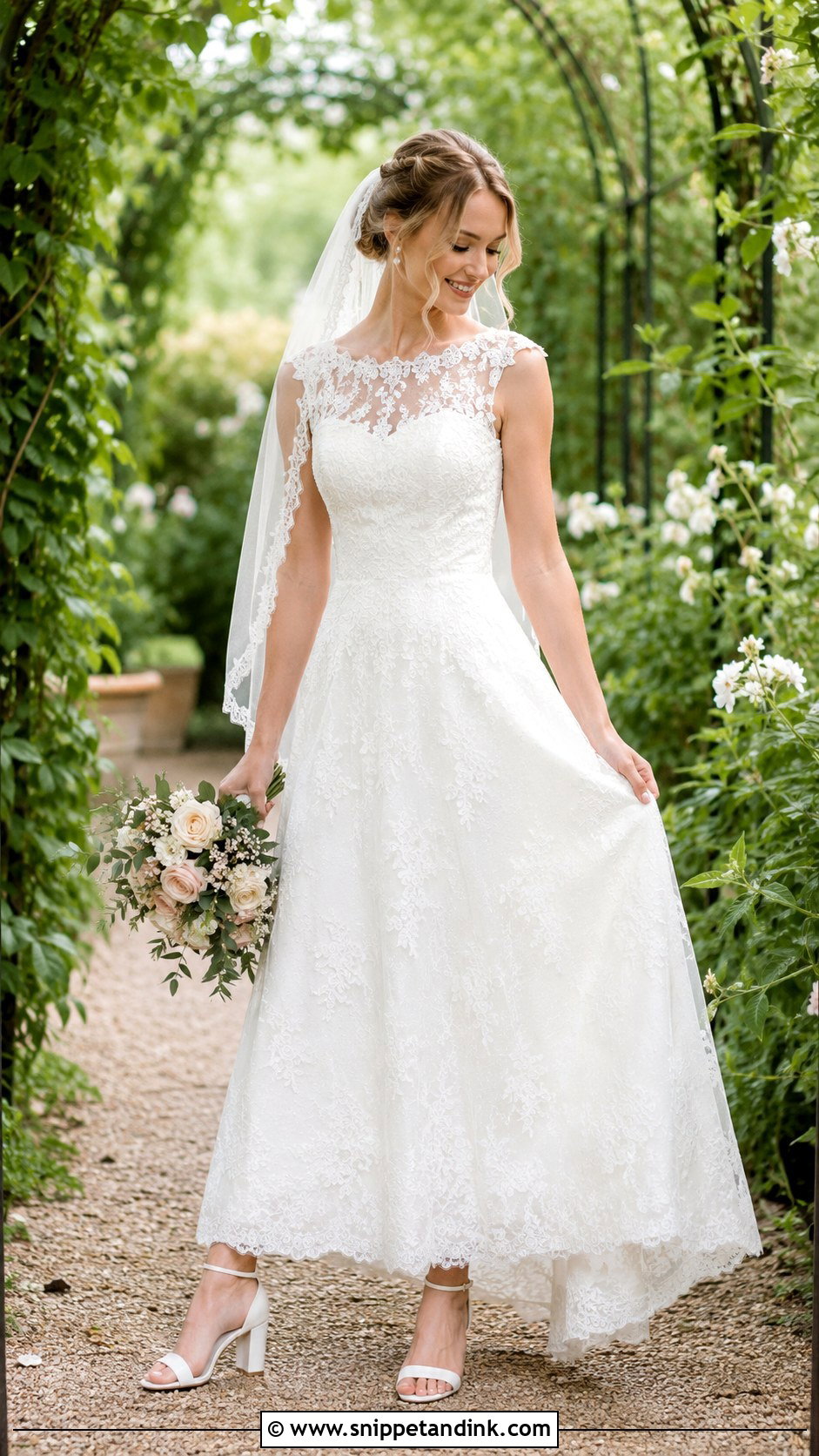
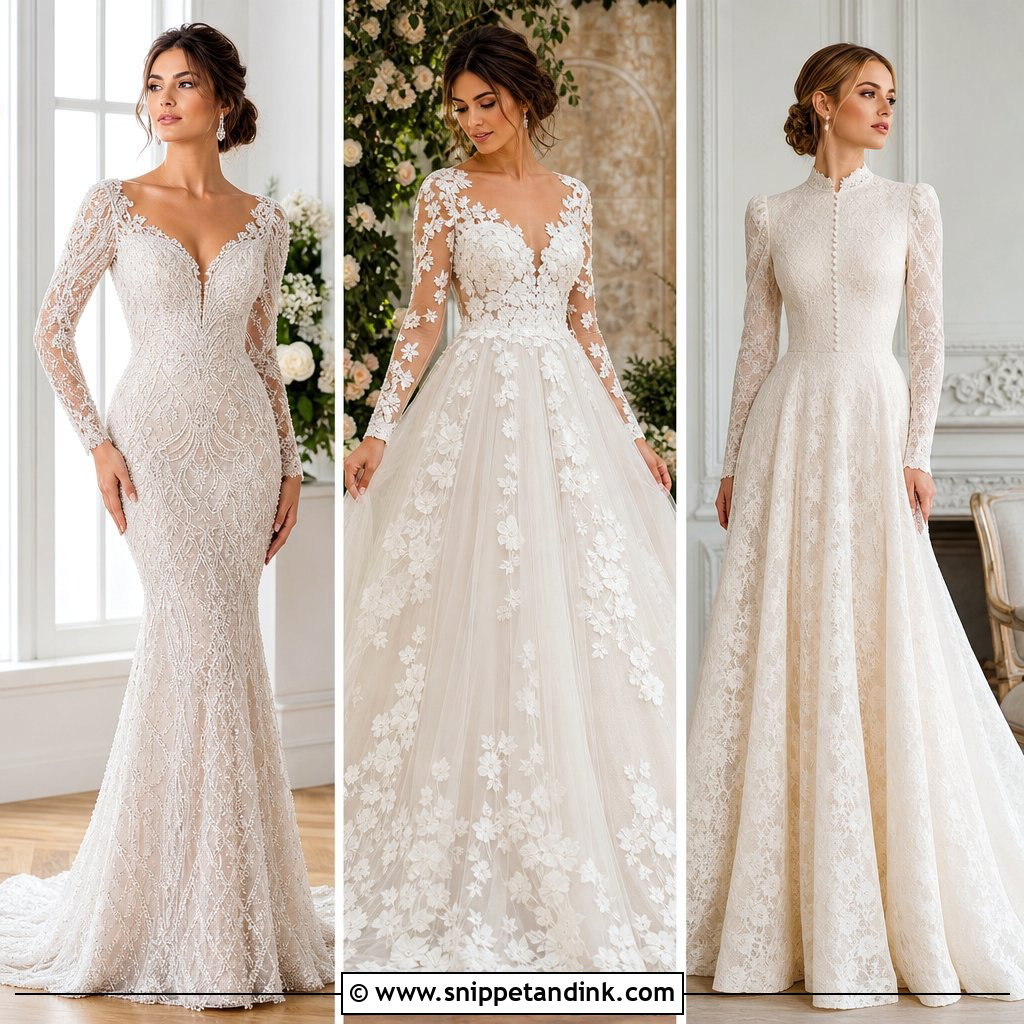
Lace softens the A-line without changing its shape, which is why it’s such a reliable combination. A fingertip veil, pearl studs and a soft updo give a classic outfit. If you lean vintage, look at long lace sleeves, a scalloped neckline or a lace-edged train. One thing I always check is how the lace is placed at the seams; on a well-made gown the motifs are matched or appliquéd across the seam so you can’t see where panels join. Keep accessories small, since lace is detail enough.
3. Long Sleeve A-Line Wedding Dress
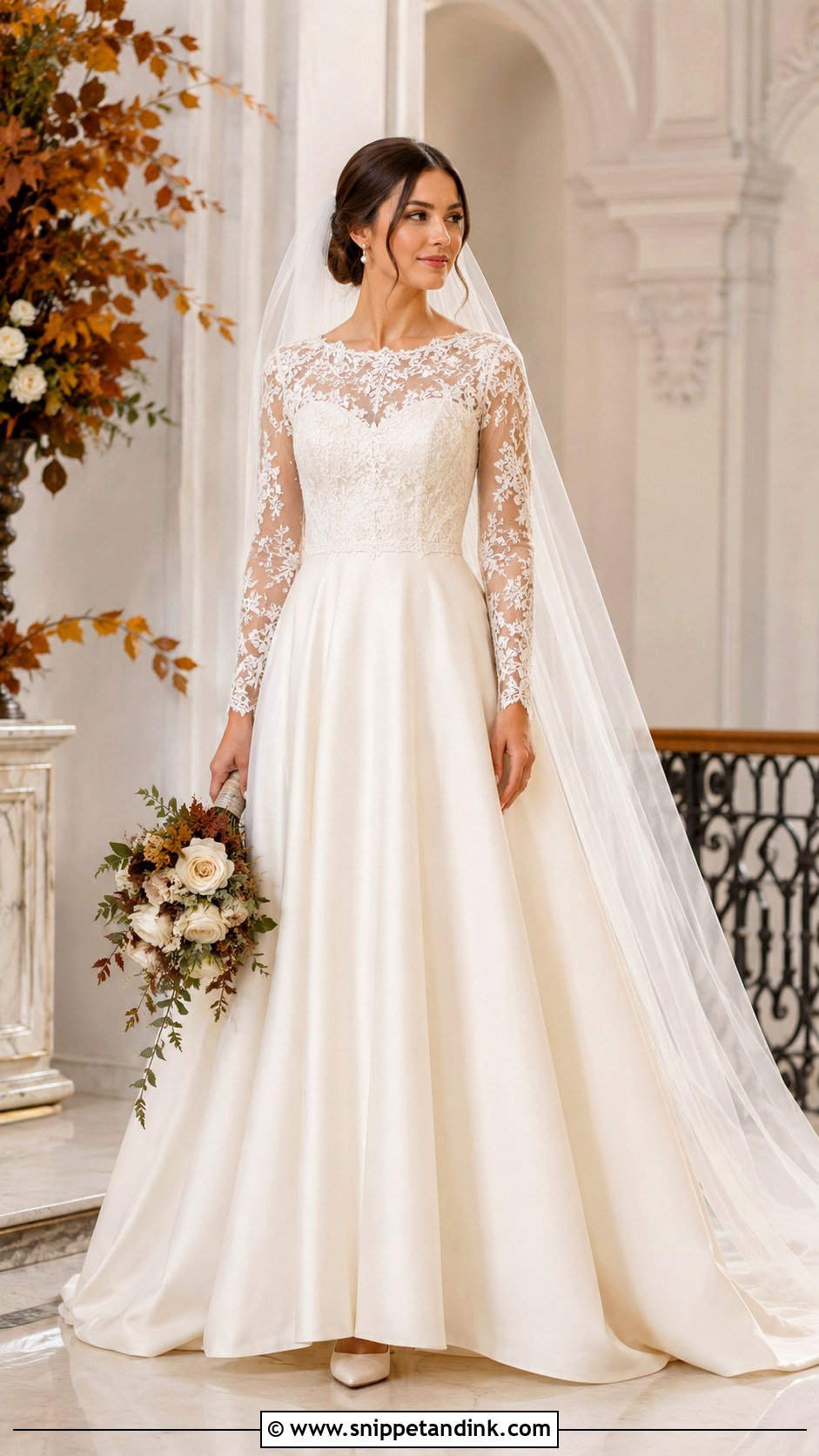
Sleeves change how an A-line feels more than any other detail. Sheer lace sleeves read romantic; crepe or satin read clean and modern. They’re a natural choice for autumn, winter and formal venues, though illusion sleeves are light enough for spring. The fit check I never skip: raise your arms above your head. Fitted sleeves that are cut too narrow at the armhole lift the whole bodice, and you’ll feel it every time you hug someone. A narrow belt can define the waist if the bodice is plain.
4. Off Shoulder A-Line Wedding Dress
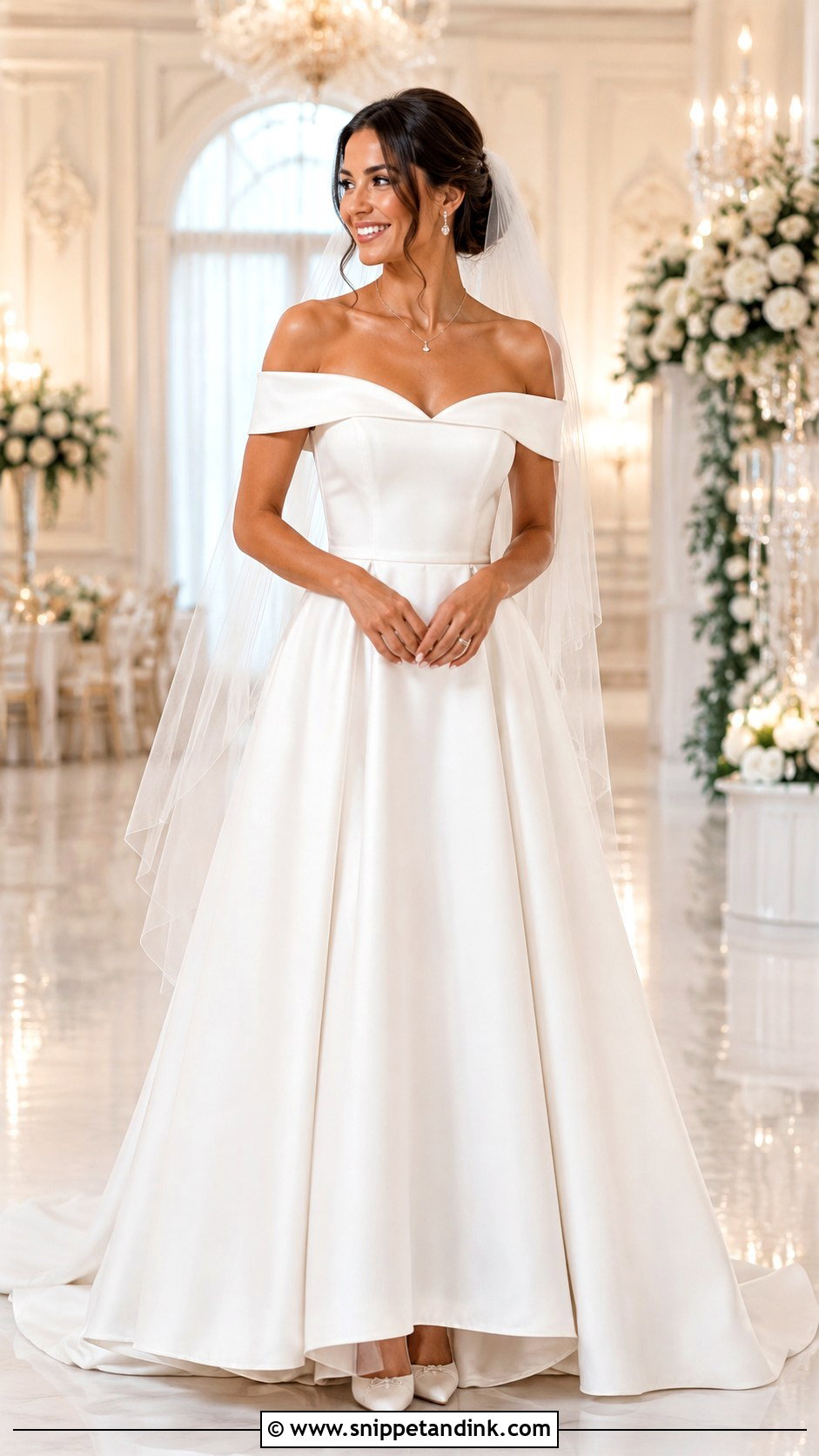
An off-shoulder neckline frames the collarbone without revealing much, so it suits brides who want something romantic but not bare. A structured bodice and flowing skirt keep it balanced. The engineering matters: the band across the arms needs internal support, or it slides down every time you raise your arms. I test that by asking the bride to hold her bouquet up and then hug me. A folded satin neckline adds drama; a sheer veil and loose greenery bouquet soften it.
5. Strapless A-Line Wedding Dress
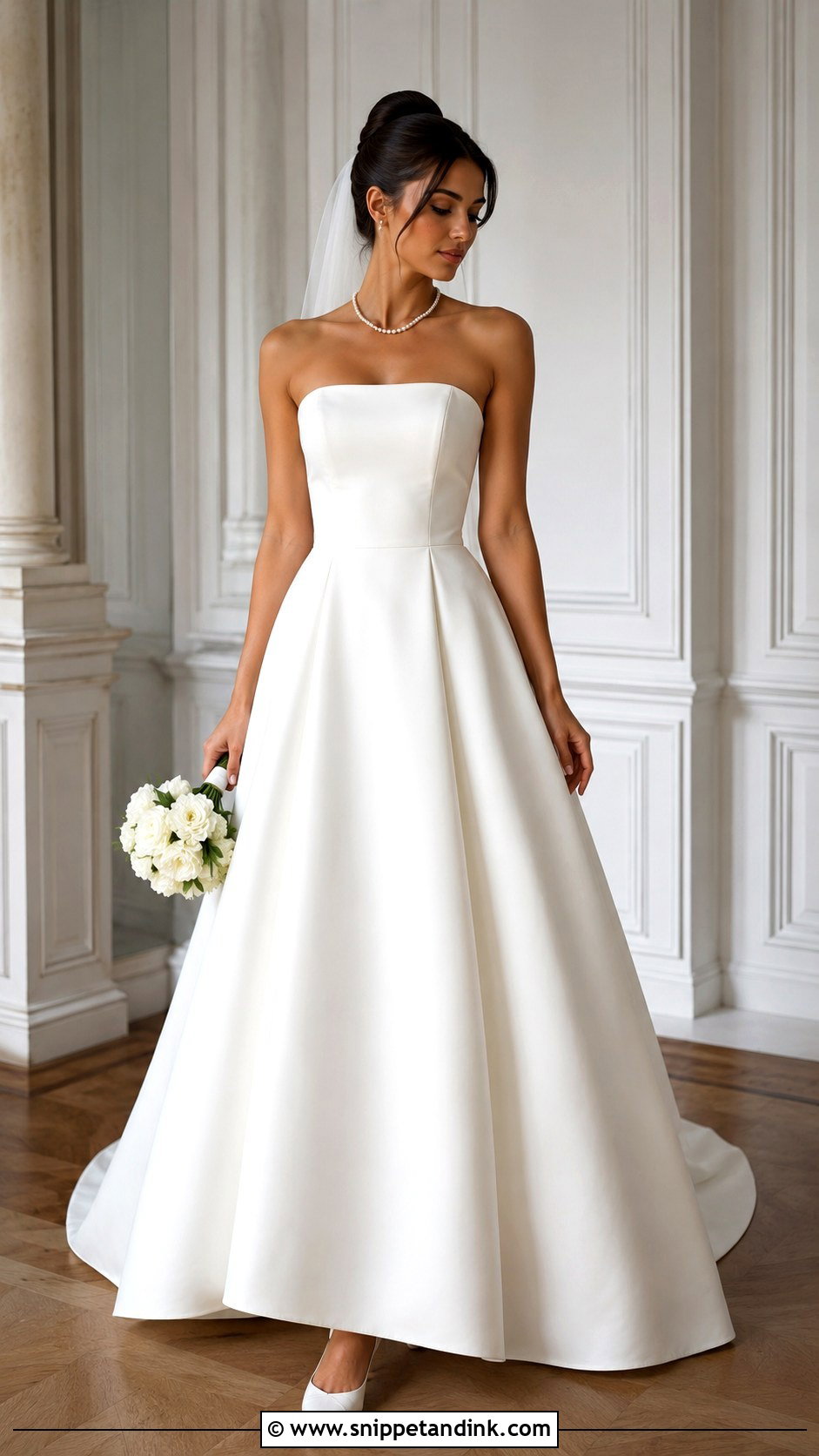
A strapless A-line wedding dress shows the shoulders while the skirt stays easy to wear. What makes or breaks it is the bodice. Without good boning and a properly fitted band, a strapless dress slips through the day and you spend the evening pulling it up. I’d book the bodice fitting with the exact bra or no bra you’ll wear on the day. Plain mikado looks modern; lace and tulle look romantic. A detachable bolero or sheer cape adds ceremony coverage if you need it.
6. Square Neck A-Line Wedding Dress
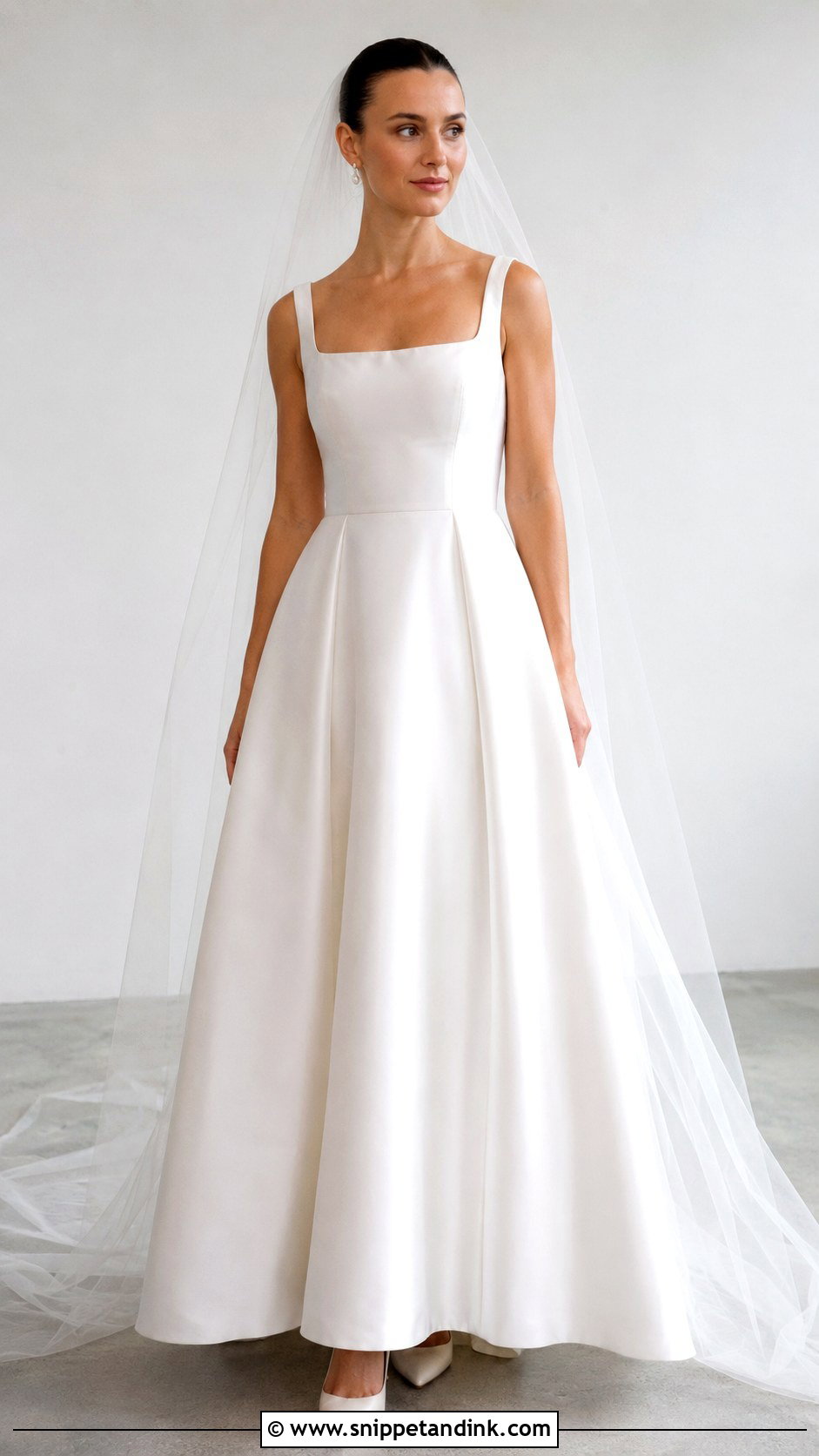
Square necklines are having a moment, but they’ve lasted because they flatter. The straight line opens the chest without baring much skin, and the A-line skirt keeps the rest soft. Satin or crepe suit a city wedding; lace and tulle suit a garden. The neckline gives a long veil room to stand out, since there’s no detail competing at the front. Check the corners at a fitting; on a gown that’s slightly too big, they gape when you lean forward.
7. V Neck A-Line Wedding Dress
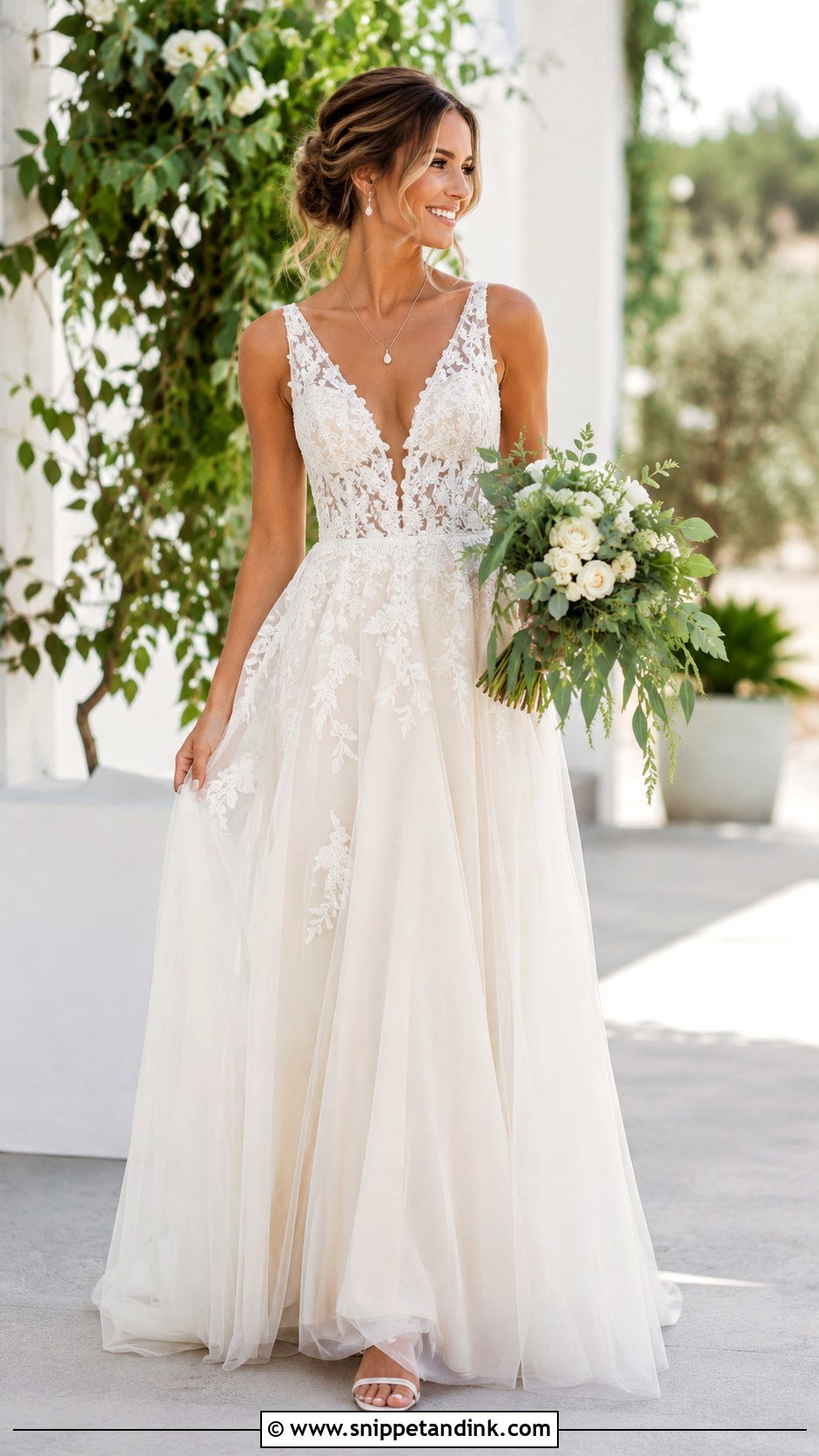
V-necks lengthen the upper body and draw a vertical line, which helps shorter brides and those with a fuller bust. The depth is adjustable: an illusion panel fills a deep plunge for a ceremony that requires coverage, while a deeper V reads more dramatic. If the bodice has lace or beading, I keep jewelry simple; if it’s plain, a pearl hairpiece or embroidered veil adds interest. Fashion tape along the edge of a deep V keeps it in place through hugs and dancing.
8. Corset A-Line Wedding Dress
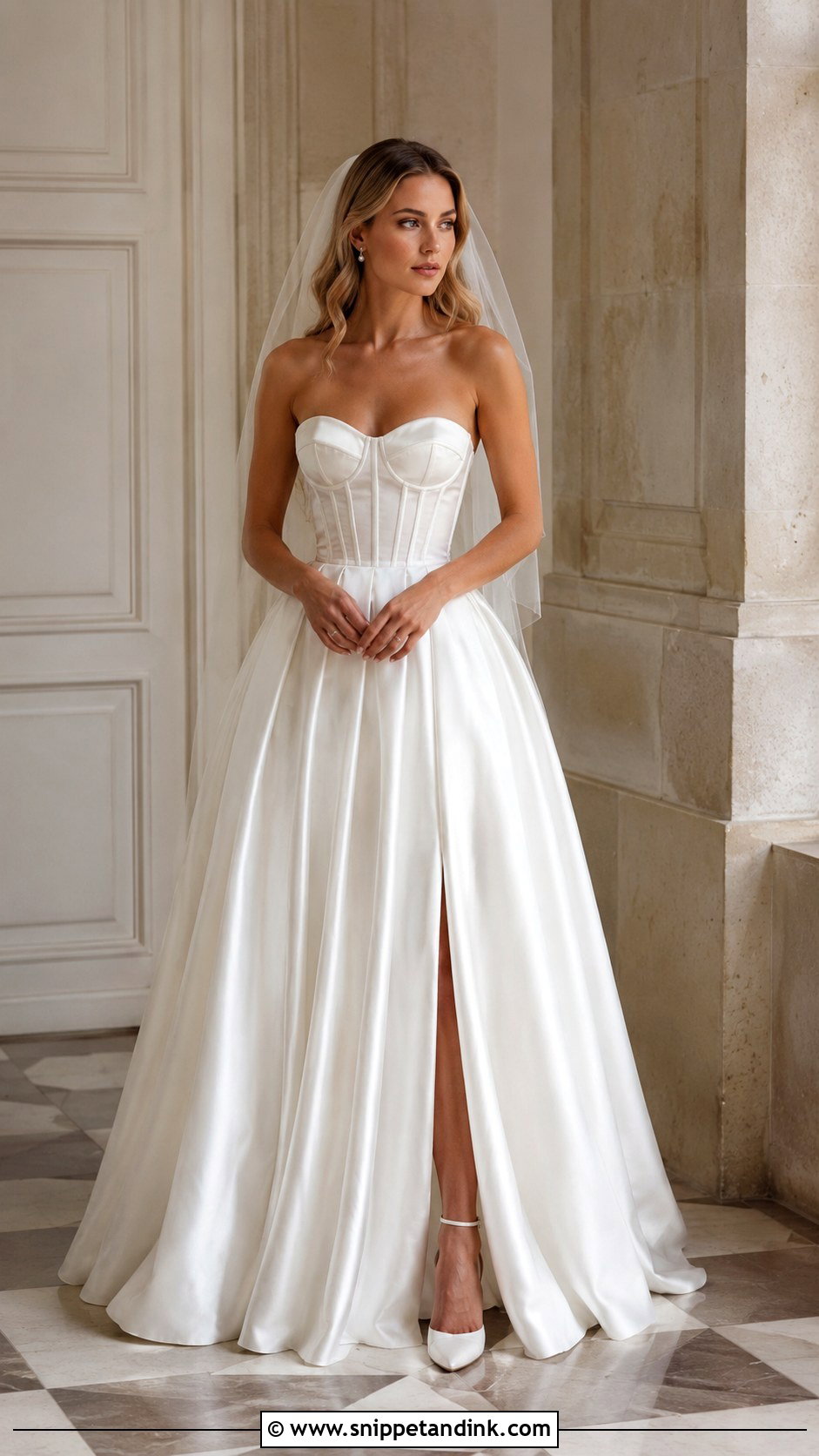
Corset bodices are the most-requested detail I see right now, and the A-line skirt makes them wearable. The bodice defines the waist; the skirt keeps you comfortable below it. Visible seams look fashion-led; covered boning looks classic. Here’s the honest part: a corset has to be fitted by someone who knows corsetry. Too tight and you can’t eat or breathe comfortably; too loose and the boning pokes out. The goal is support you forget about after the first hour.
9. Basque Waist A-Line Wedding Dress
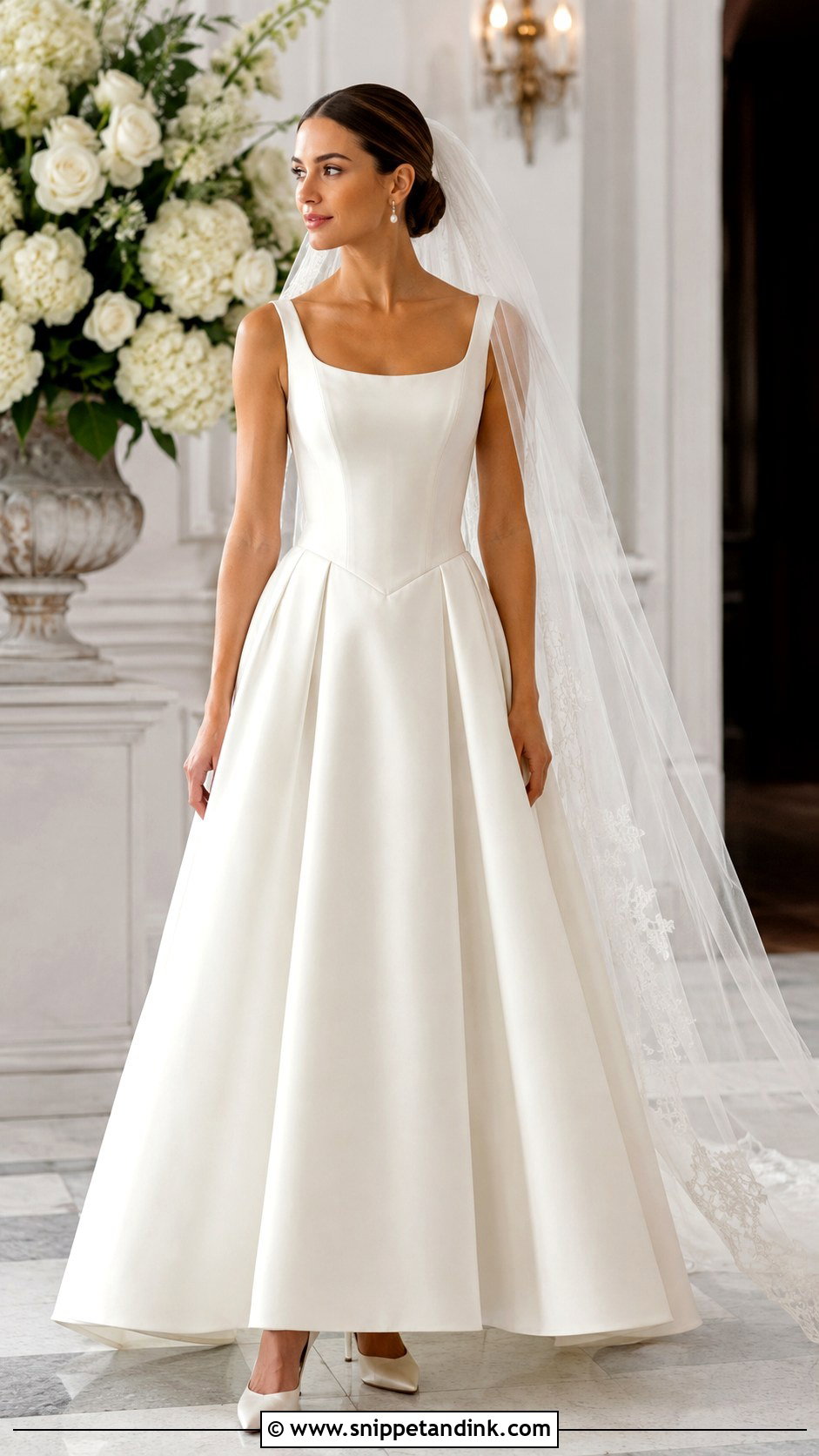
A basque waist dips into a soft V below the natural waist, which lengthens the torso and makes the skirt look longer. It has an old-world feel, especially in satin, brocade or lace. Because the waistline itself is the feature, I’d never put a belt on it. The point of the V should sit at the centre of your body; if it drifts to one side, it’s an alterations fix. Pearl earrings, a smooth bun and a long veil keep the look classic.
10. Tulle A-Line Wedding Dress
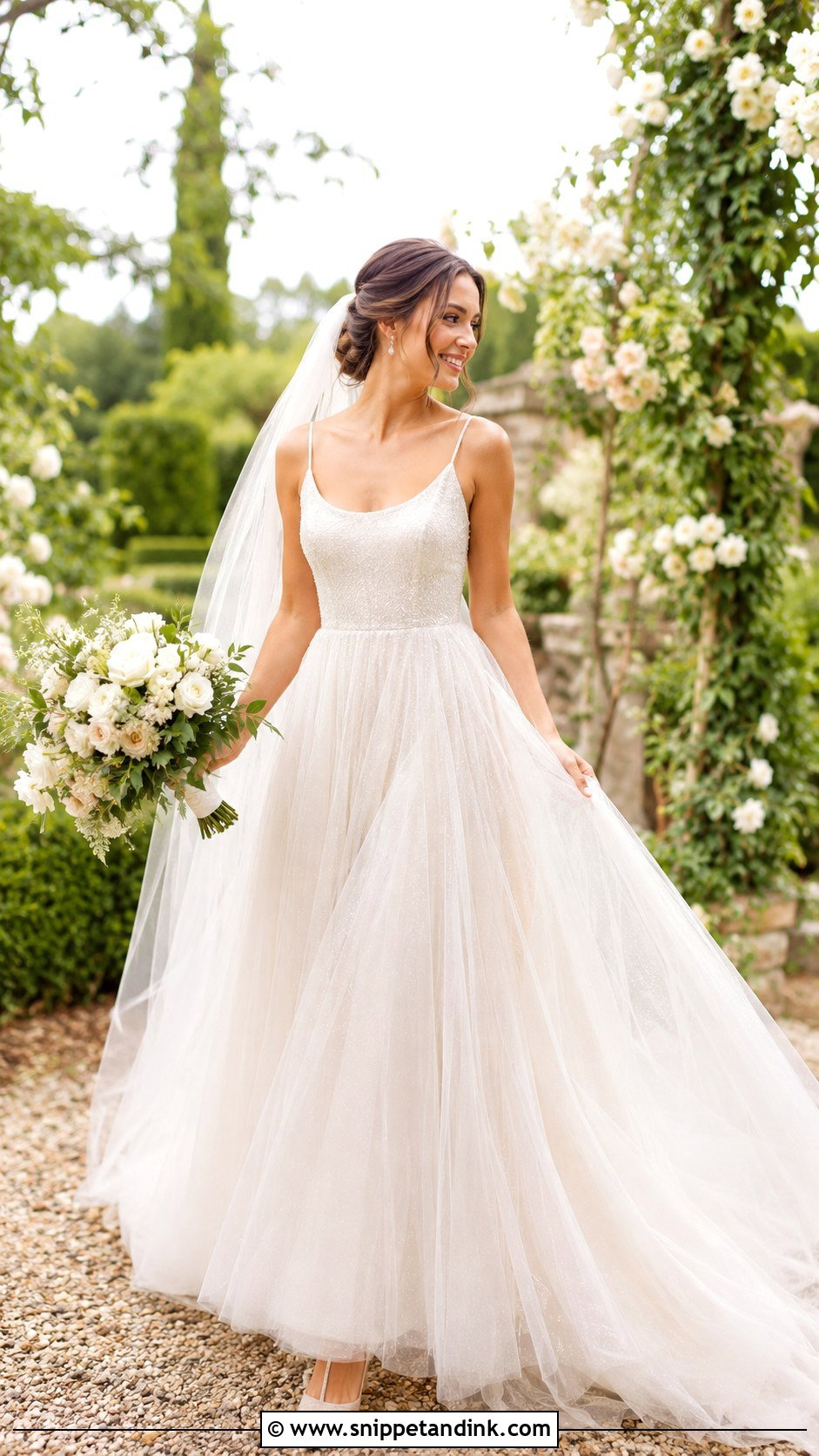
Tulle gives volume without weight, so this is the A-line for a bride who wants the feel of a ball gown without carrying one. Layers move as you walk and look soft in outdoor photos. Subtle shimmer or tiny floral appliqués make it dreamier; plain tulle with a structured bodice looks cleaner. Tulle catches on everything, though: bracelets, rough stones, shoe buckles. I always check that the shoe has no hooks or straps that will snag the hem layers.
11. Chiffon A-Line Wedding Dress
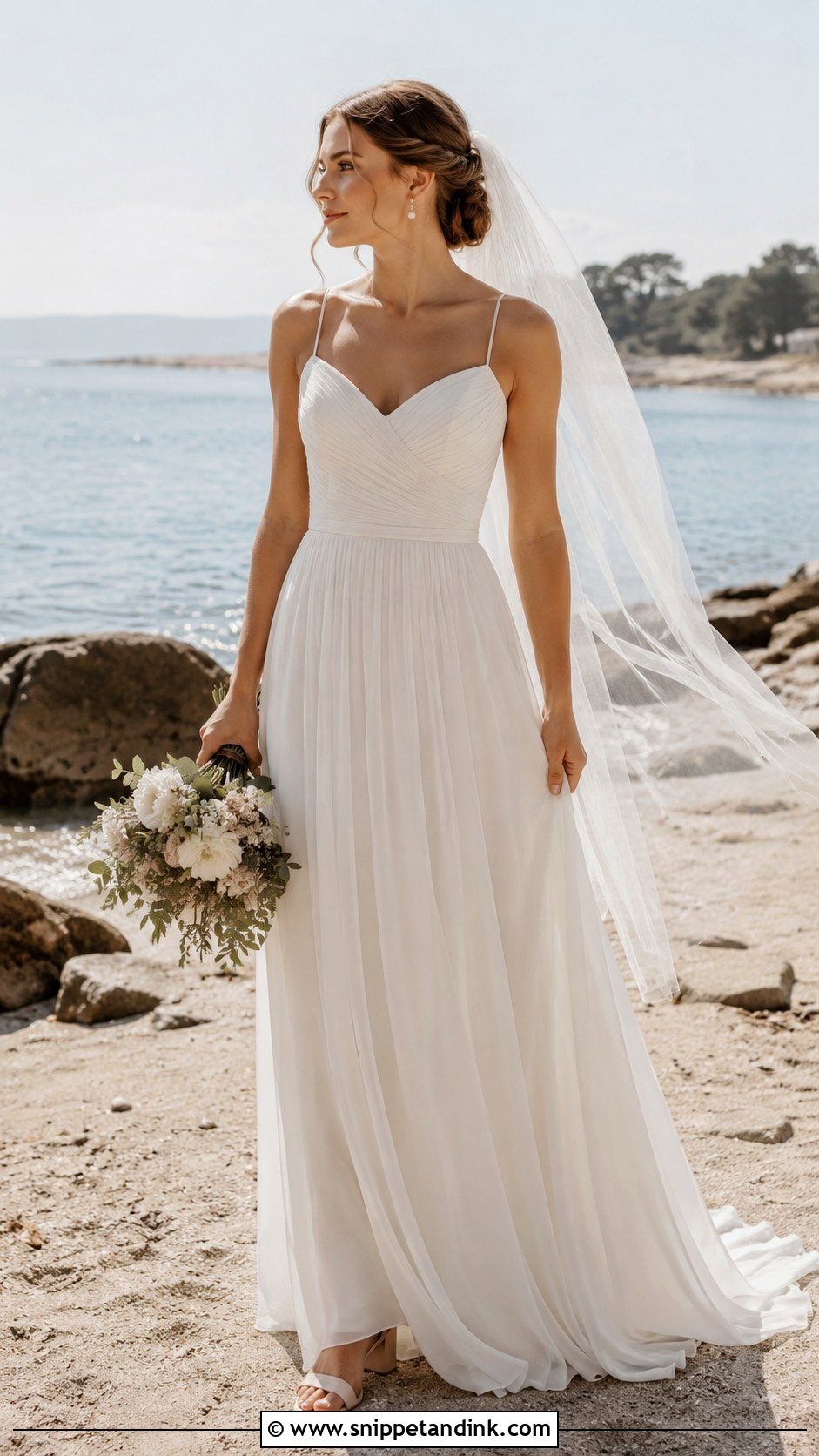
Chiffon is the warm-weather A-line. It moves easily and weighs far less than satin or mikado, so you’re still comfortable at the end of a long day. It looks especially good with a V-neck, flutter sleeves or a ruched bodice. The trade-off is that chiffon wrinkles if you sit for a long time, and it shows water marks, so I’d keep it away from fountains and sprinklers. Low block heels and a natural bouquet suit it, and so does a loose hairstyle.
12. Crepe A-Line Wedding Dress
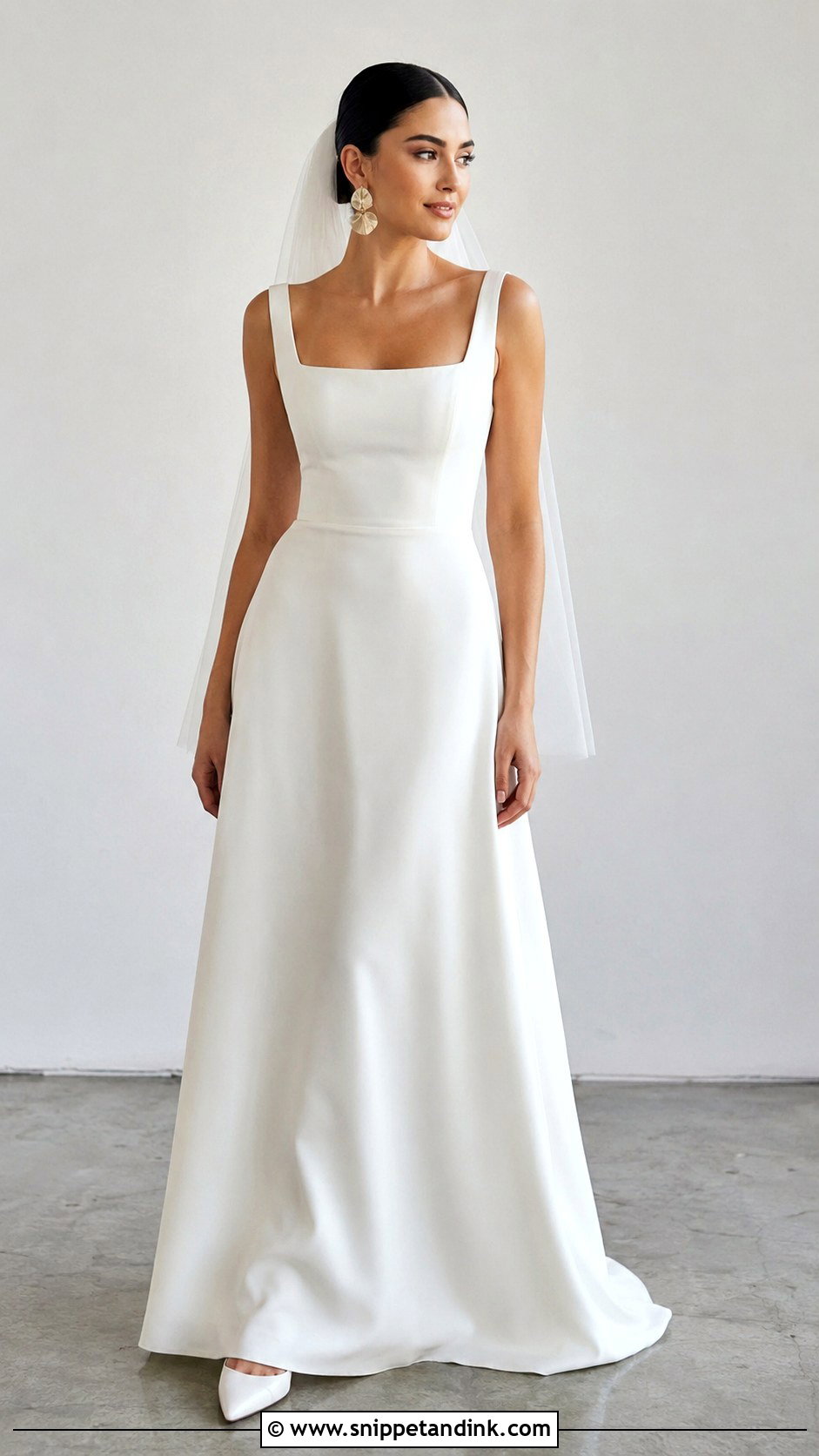
Crepe drapes more softly than satin and has almost no shine, so the dress looks modern and the focus moves to the cut. Square necklines, long sleeves and simple straps all suit it. Crepe is unforgiving, though. It shows every line of underwear and every pull at a seam, so I ask brides to bring their smoothest undergarments to every fitting. Sculptural earrings and a plain veil keep it clean for a city wedding or a courthouse ceremony.
13. Mikado A-Line Wedding Dress
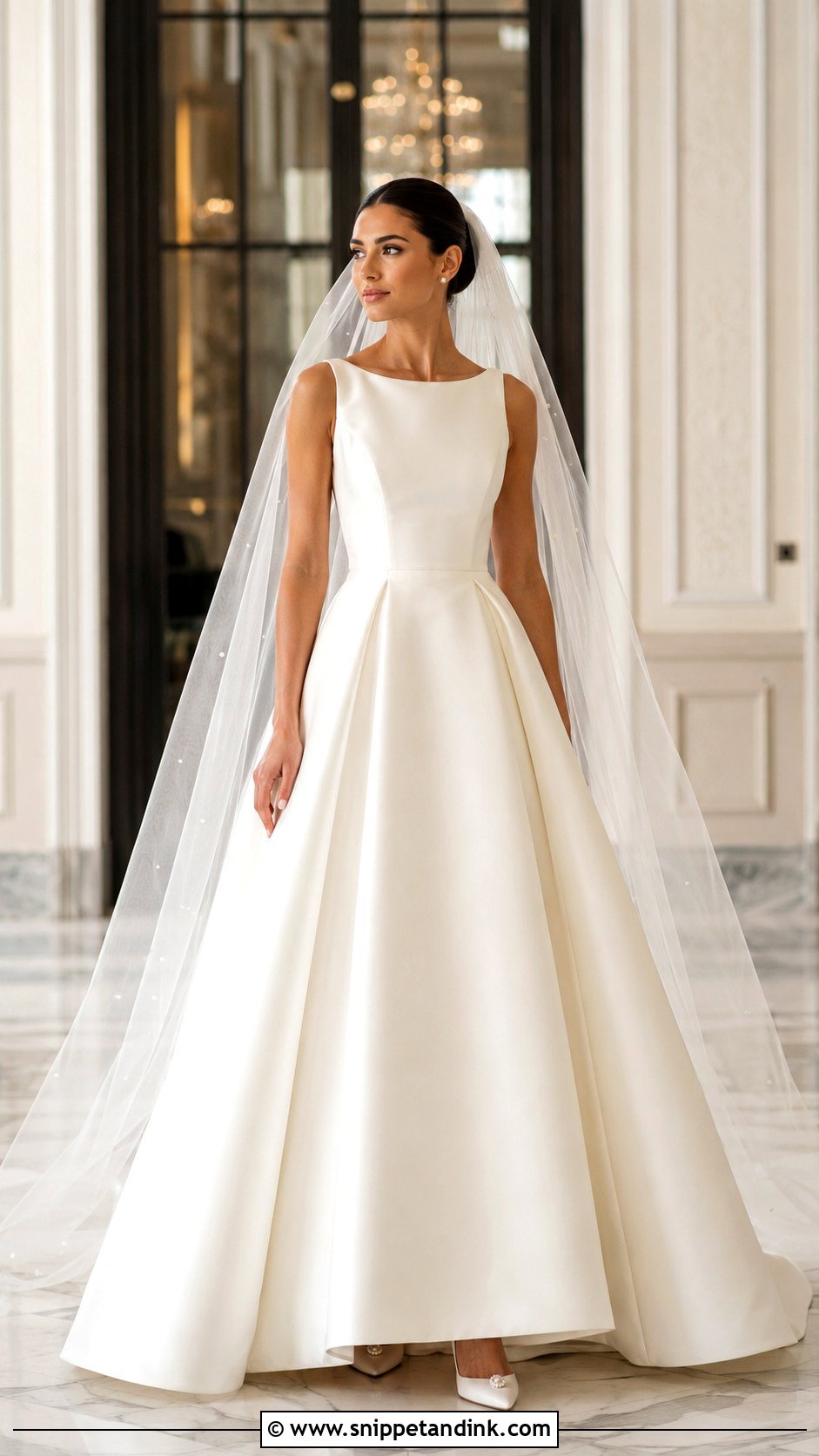
Mikado is a heavy, crisp silk blend that holds whatever shape it’s cut into: clean pleats, folded necklines, an architectural bodice. It looks right in hotel ballrooms, museums and evening weddings. Because the fabric has so much presence, it needs no beading at all. Weight is the trade-off: a full mikado skirt is heavier than tulle, so I’d wear the dress for an hour at a fitting before committing. A cathedral veil and a structured bouquet suit it.
14. Beaded A-Line Wedding Dress
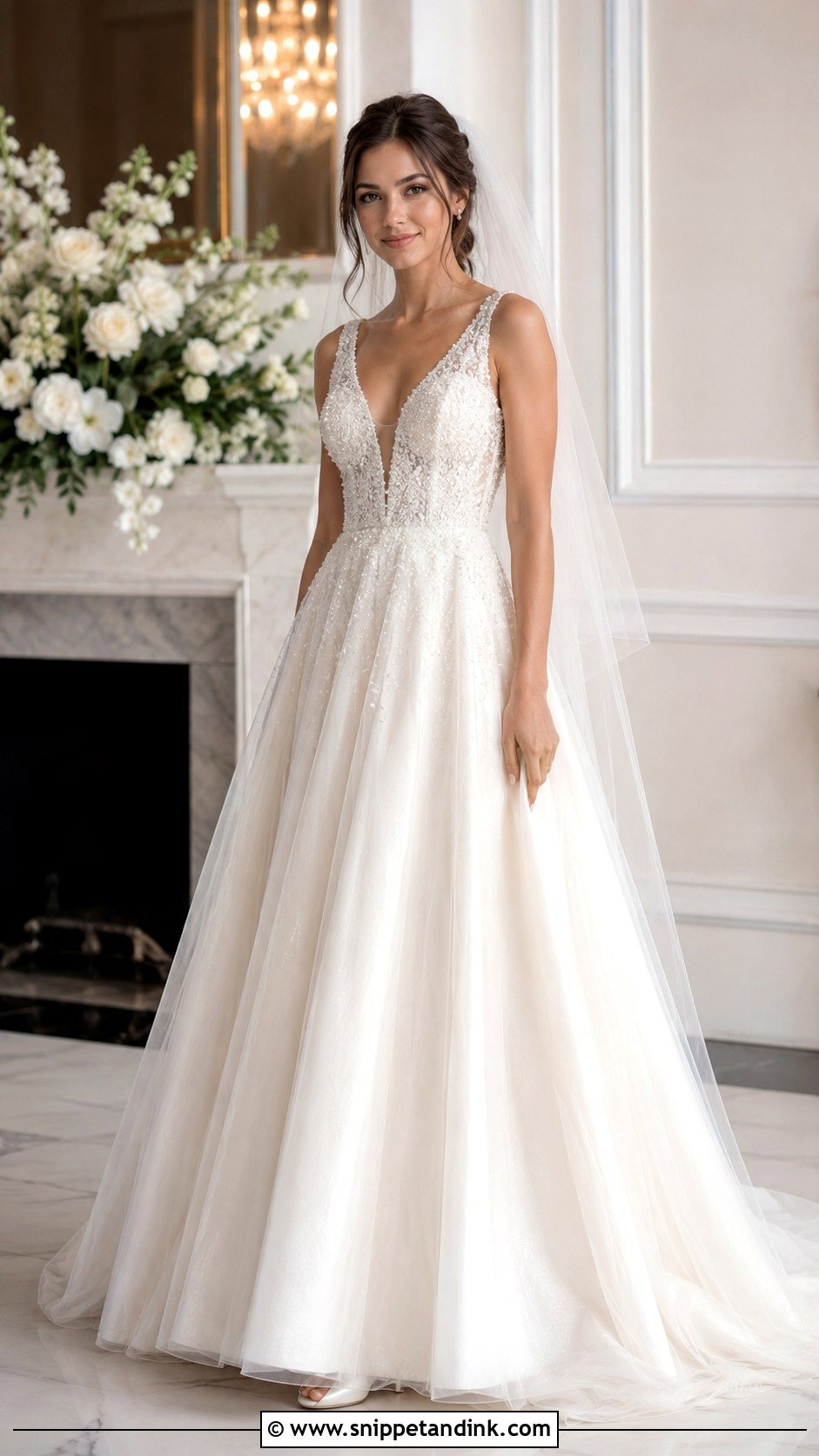
Beading adds sparkle, and the A-line keeps it from looking heavy. Fine beadwork can sit on the bodice, the sleeves or across the skirt. It catches candlelight and low reception lighting in a way plain fabric can’t. Watch for two things at fittings: weight, since heavy beading pulls on delicate fabric, and roughness, since beads on the inner arm can rub the skin raw over a day. Pearl beading or clear crystals give a quieter shine. Skip the necklace.
15. Floral A-Line Wedding Dress
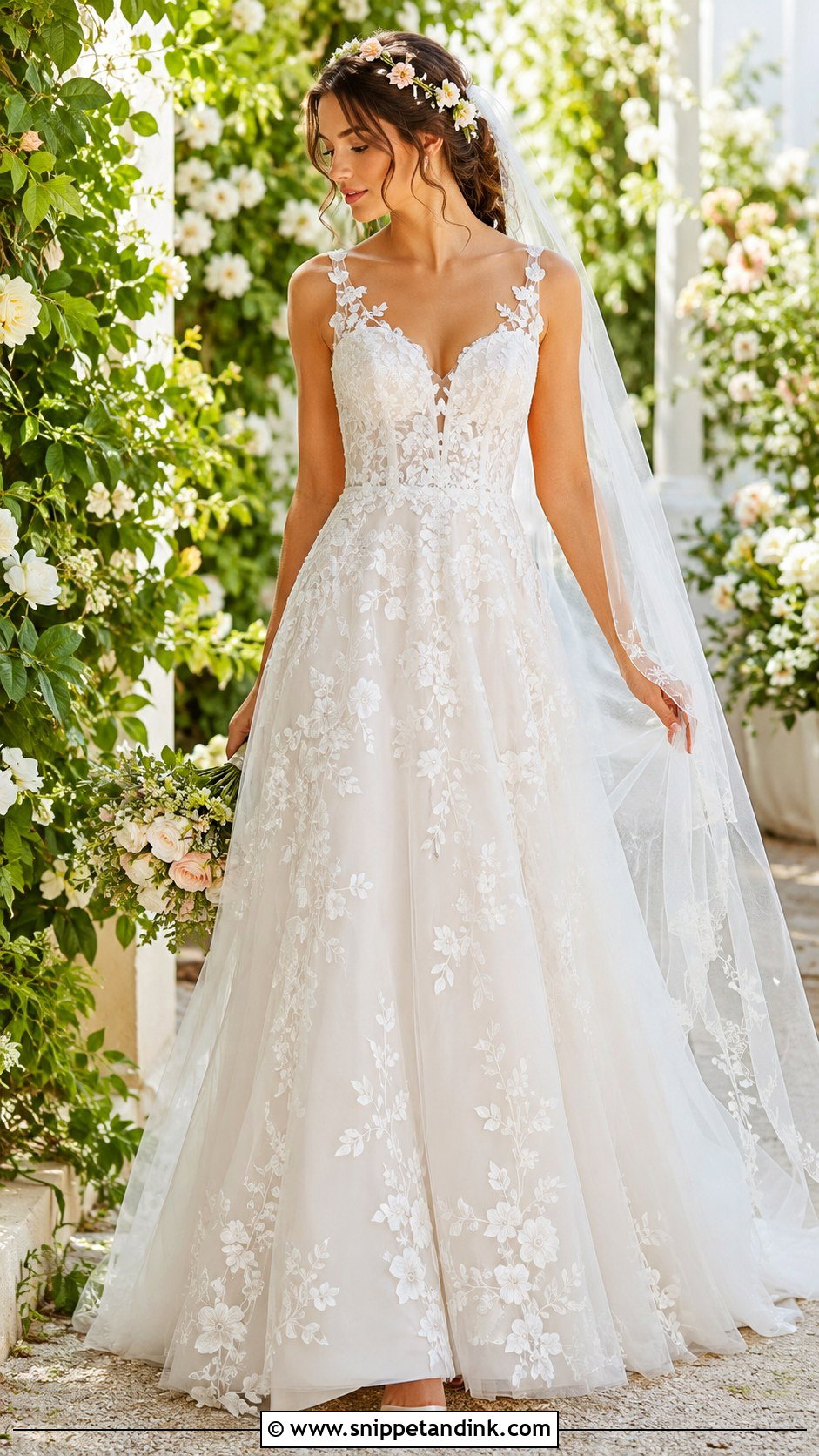
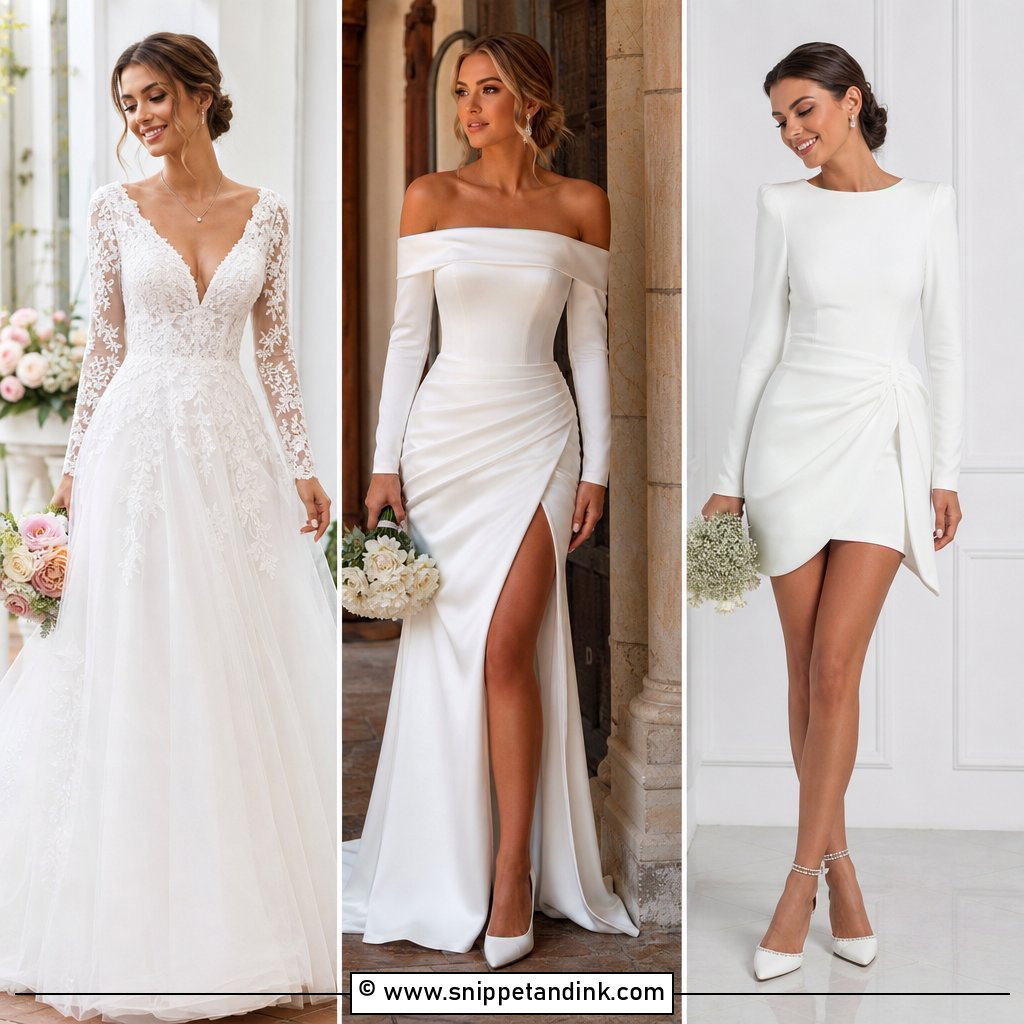
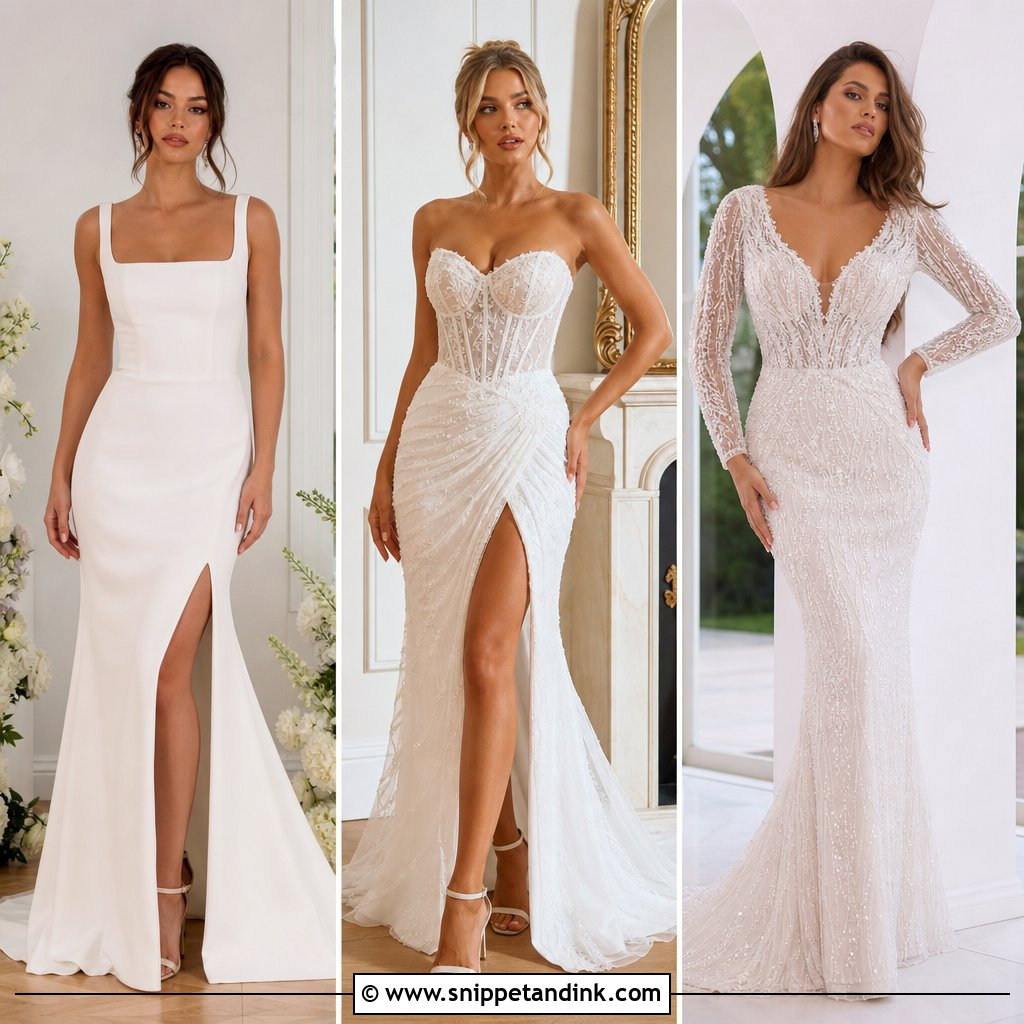
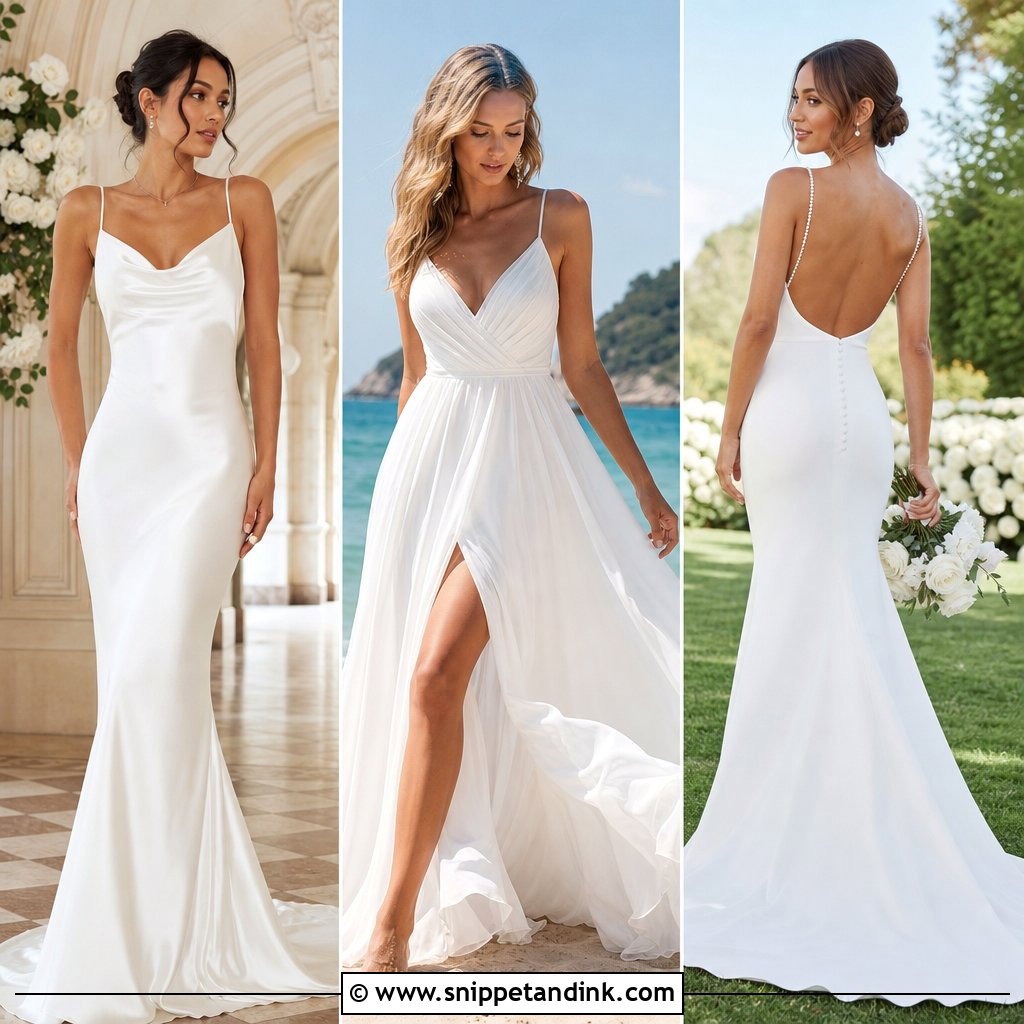
Florals can be lace, embroidery, appliqué or a soft tone-on-tone pattern, and each feels different. Oversized appliqués on a clean base look modern; fine lace flowers look classic. I’d keep the veil plain so it doesn’t hide the detail, and coordinate the bouquet with the dress rather than copying it. Garden weddings, spring ceremonies and outdoor venues suit the mood. Floral hair pins are a nice echo, but only one or two.
16. 3D Floral A-Line Wedding Dress
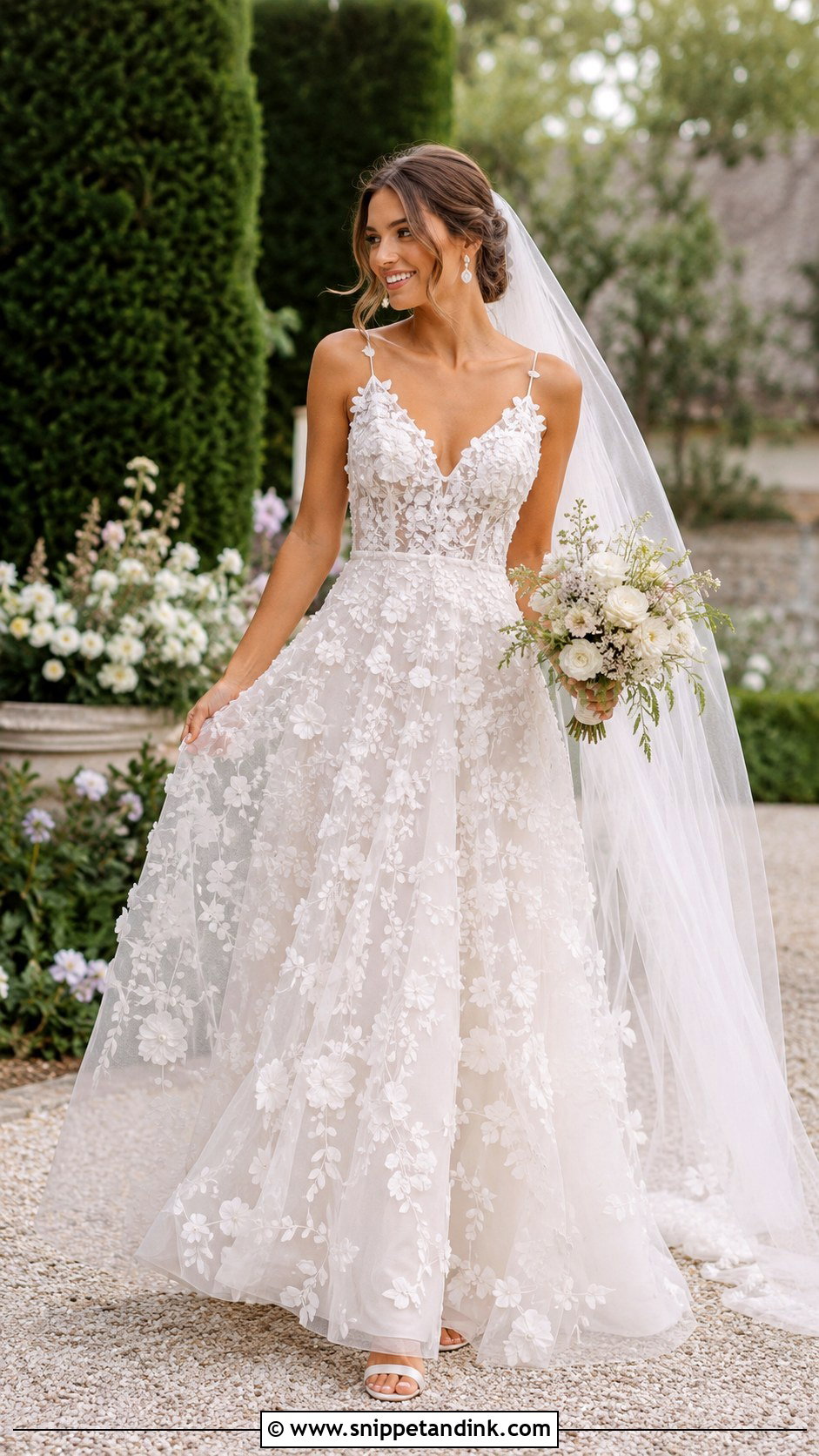
Raised petals and 3D appliqués add texture that flat lace can’t. On tulle or organza skirts they catch light and cast small shadows, which looks good in natural light. The petals do flatten when you sit, so I check how they recover after a seated fitting. If they stay crushed, the dress may need a quick steam before the reception. Avoid big necklaces and hair accessories; the dress already has plenty going on.
17. Pearl A-Line Wedding Dress
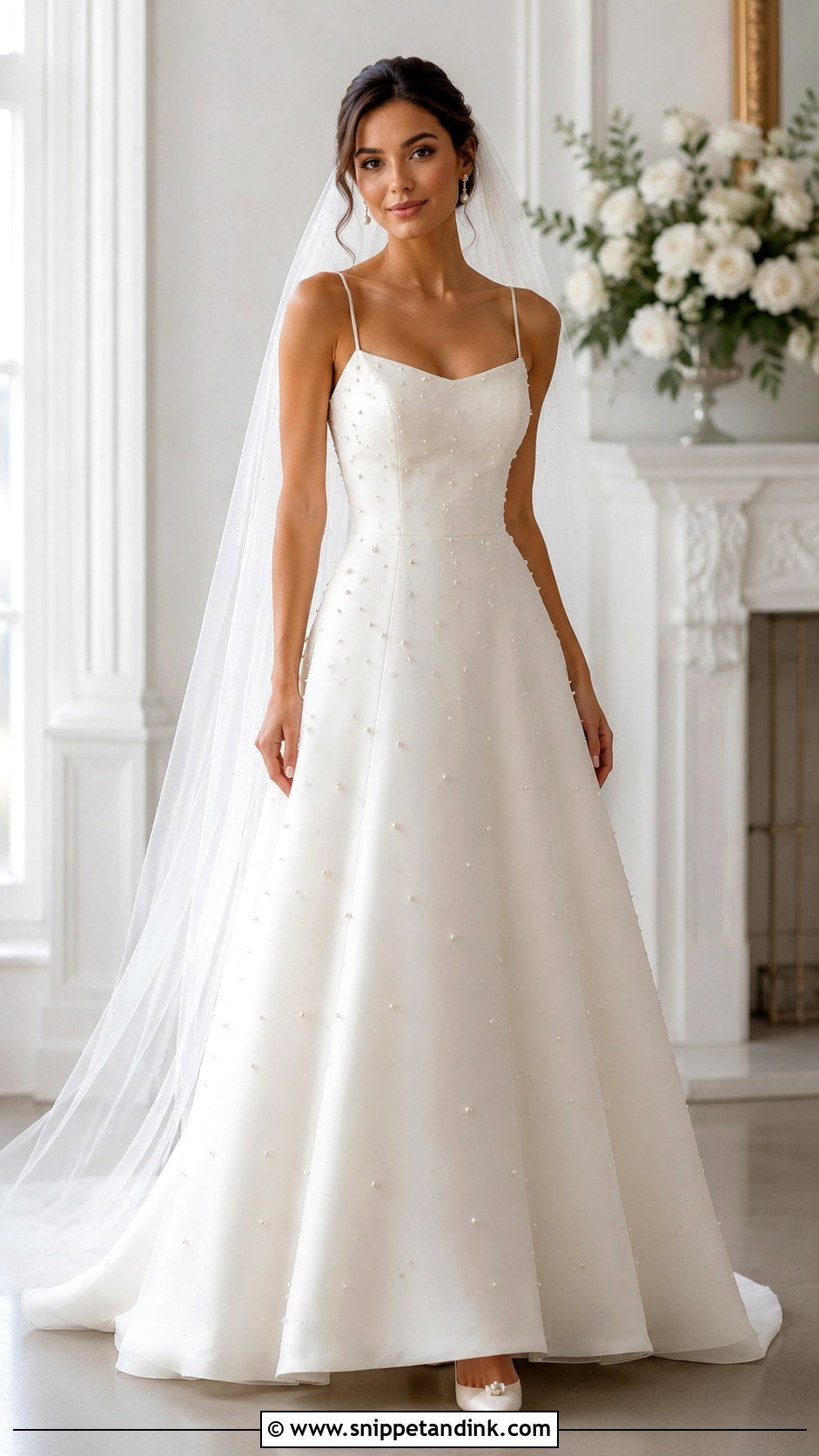
Pearls can be scattered across tulle, set along the bodice or used as tiny accents on sleeves and straps. If the whole dress is covered, skip a pearl necklace, or the look tips into costume. Pearl buttons down the back or a pearl-trimmed neckline give a quieter version. I always ask whether pearls are sewn or glued, since glued pearls tend to come off on a day of hugging, and whether the seamstress can replace them if one falls.
18. Bow A-Line Wedding Dress
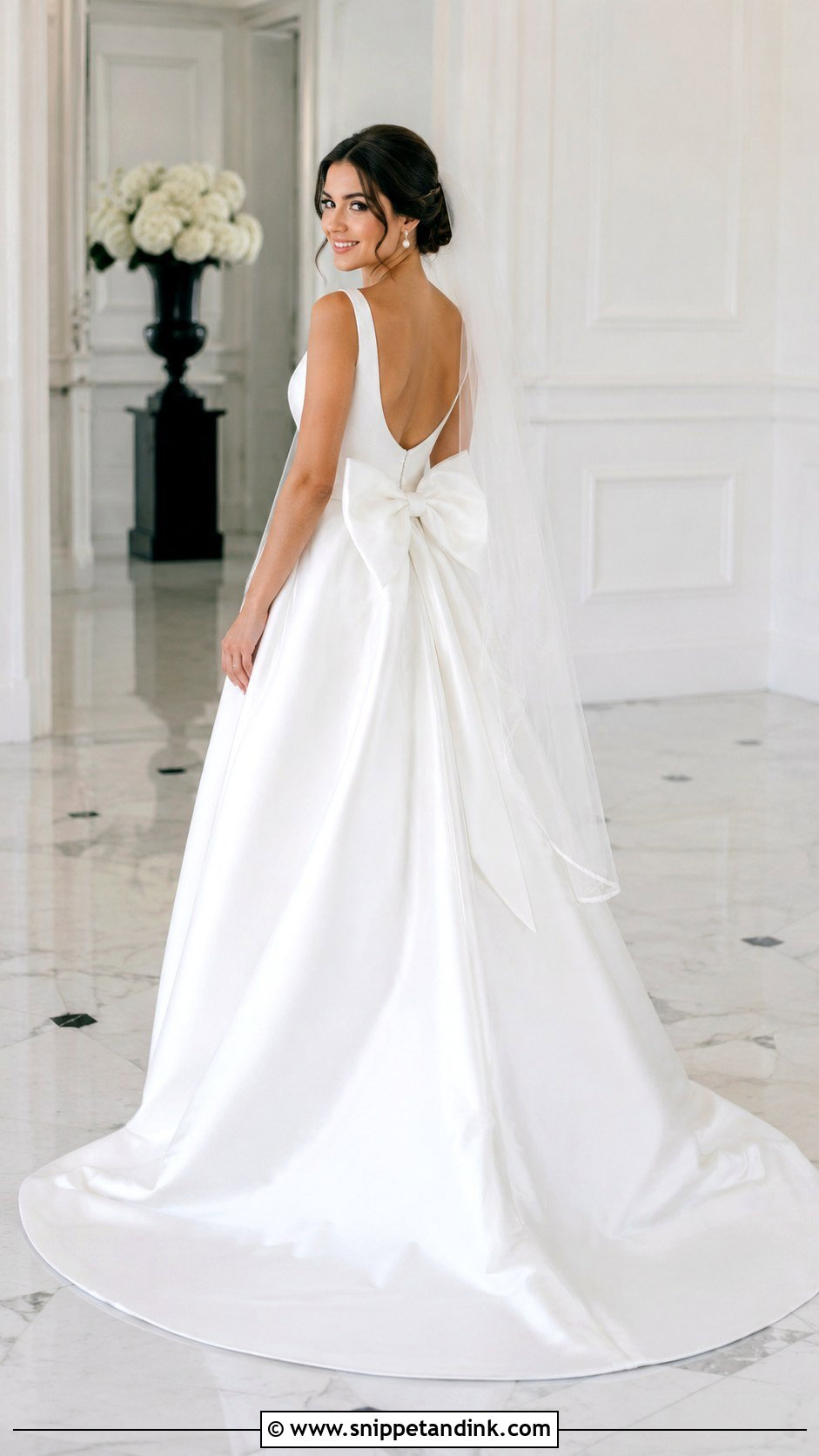
A bow A-line wedding dress has one strong focal point, and placement decides what kind of bow it is. At the back waist it shows during the ceremony, when guests see you from behind. On the shoulder or neckline it frames the face. Satin bows look elegant; organza bows look lighter. Size matters too: a small bow reads refined, a large one is a fashion statement. Keep the rest of the styling plain so the bow does its job.
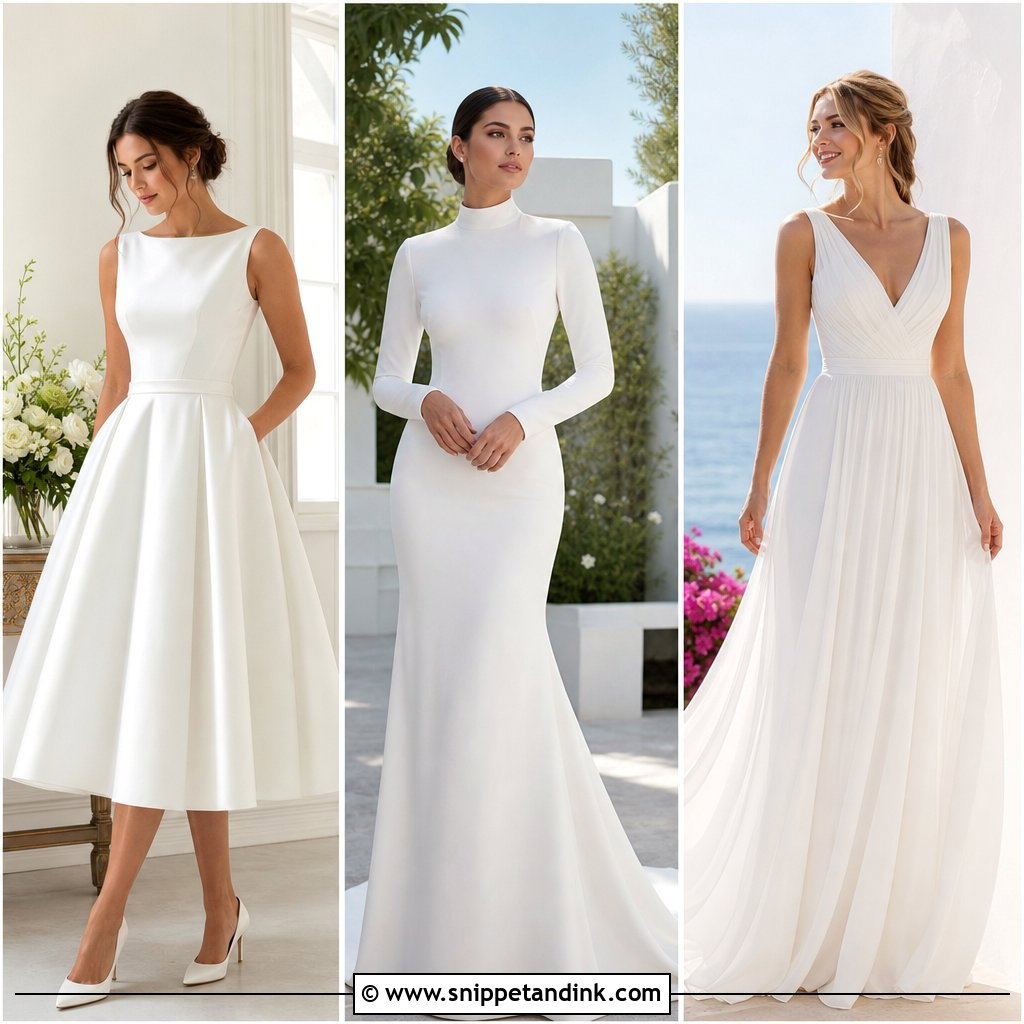
19. High Neck A-Line Wedding Dress
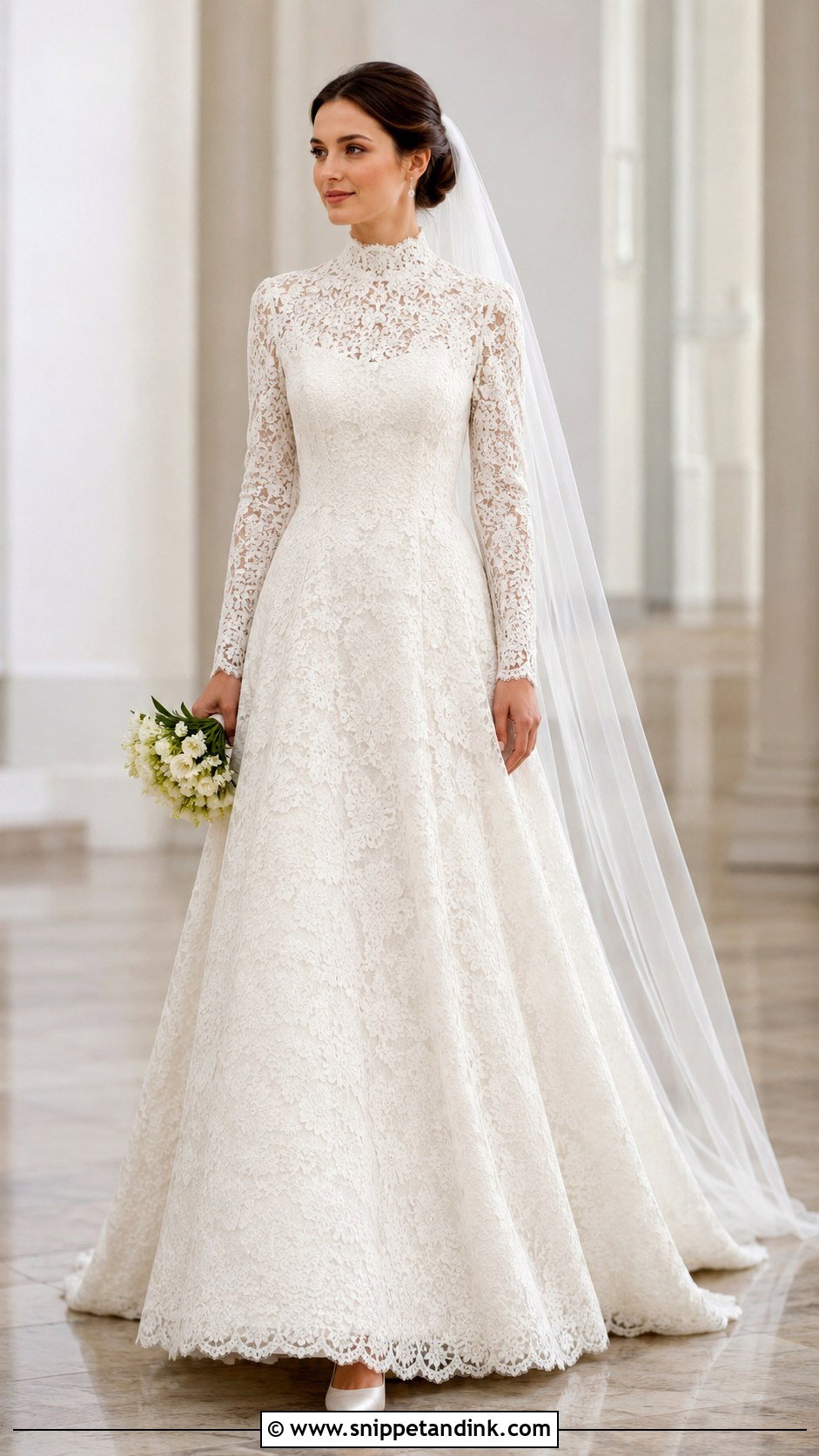
A high neck gives coverage and looks modern at the same time. Lace versions are romantic; satin or crepe versions are clean. The A-line skirt keeps the overall look soft instead of severe. Skip necklaces entirely and pick earrings or a hair accessory instead. Wear your hair up, because a high neckline disappears under loose hair. I’d also test the collar while sitting and turning your head; a stiff high neck that’s slightly tight becomes uncomfortable after a few hours.
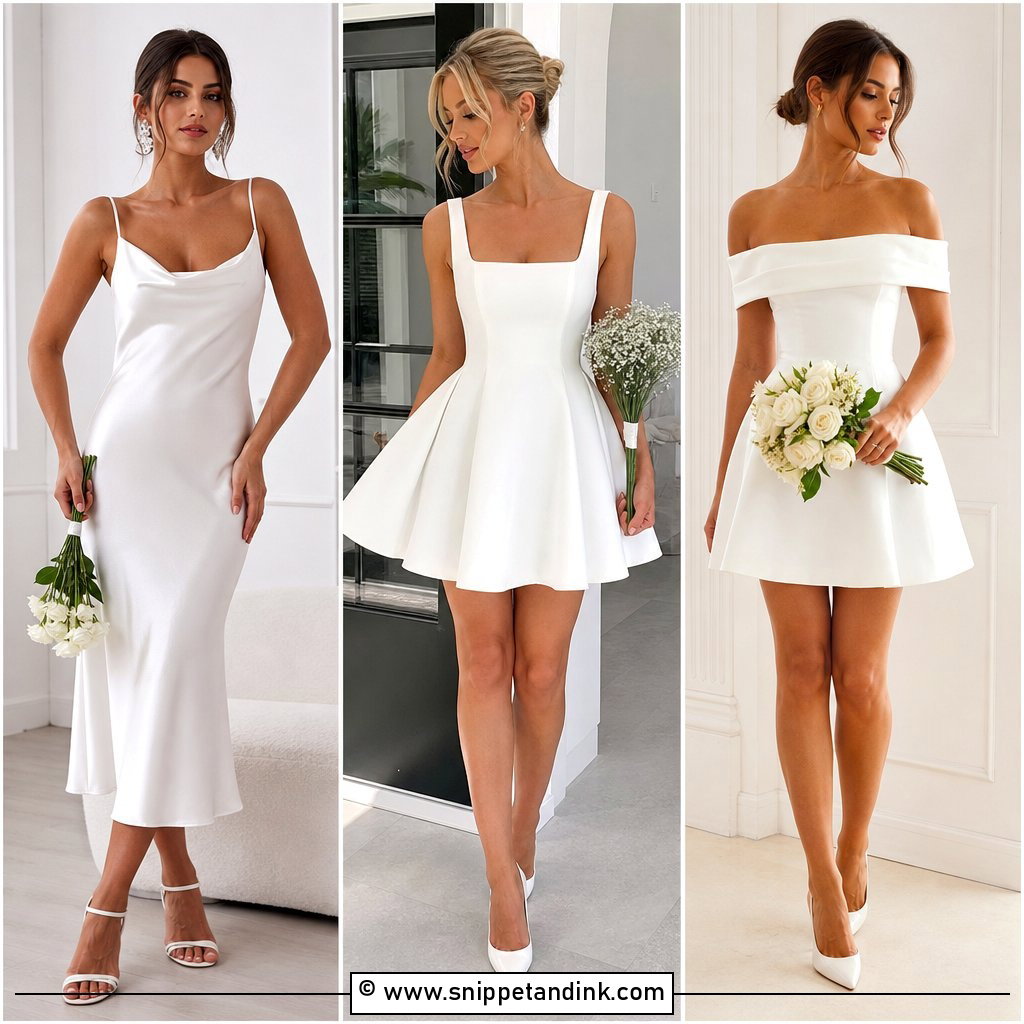


20. Halter A-Line Wedding Dress
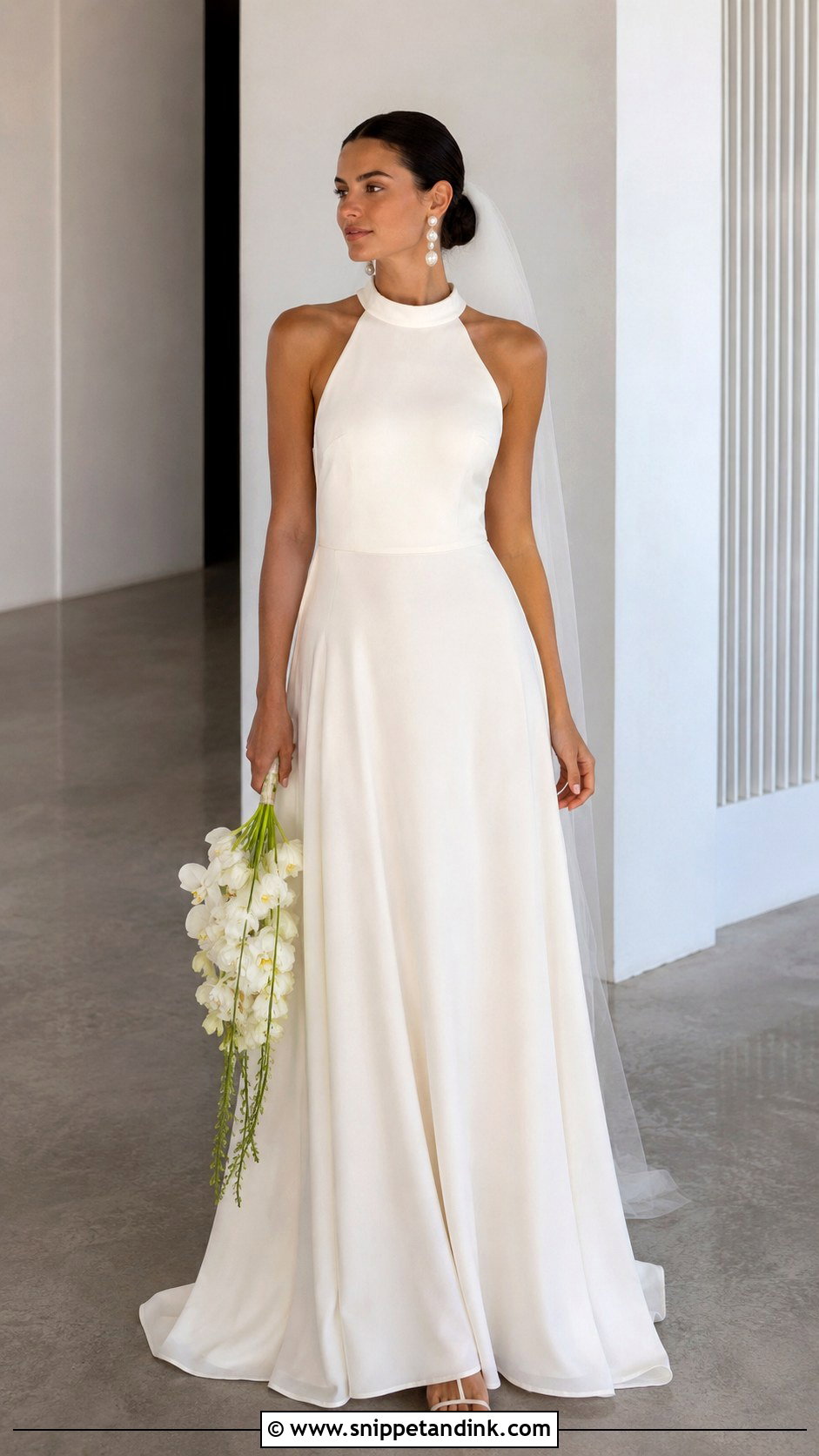
Halter necklines show the shoulders and back with a clean, modern line. In satin they look sleek; in chiffon or lace they look softer. Because the halter strap carries the bodice from the neck, a heavy dress can pull on the back of the neck by the evening, so I’d check the weight. Skip the necklace and place the veil low on the head so it doesn’t interfere with the halter tie. Summer weddings, beach venues and modern ceremonies suit it.
21. Spaghetti Strap A-Line Wedding Dress
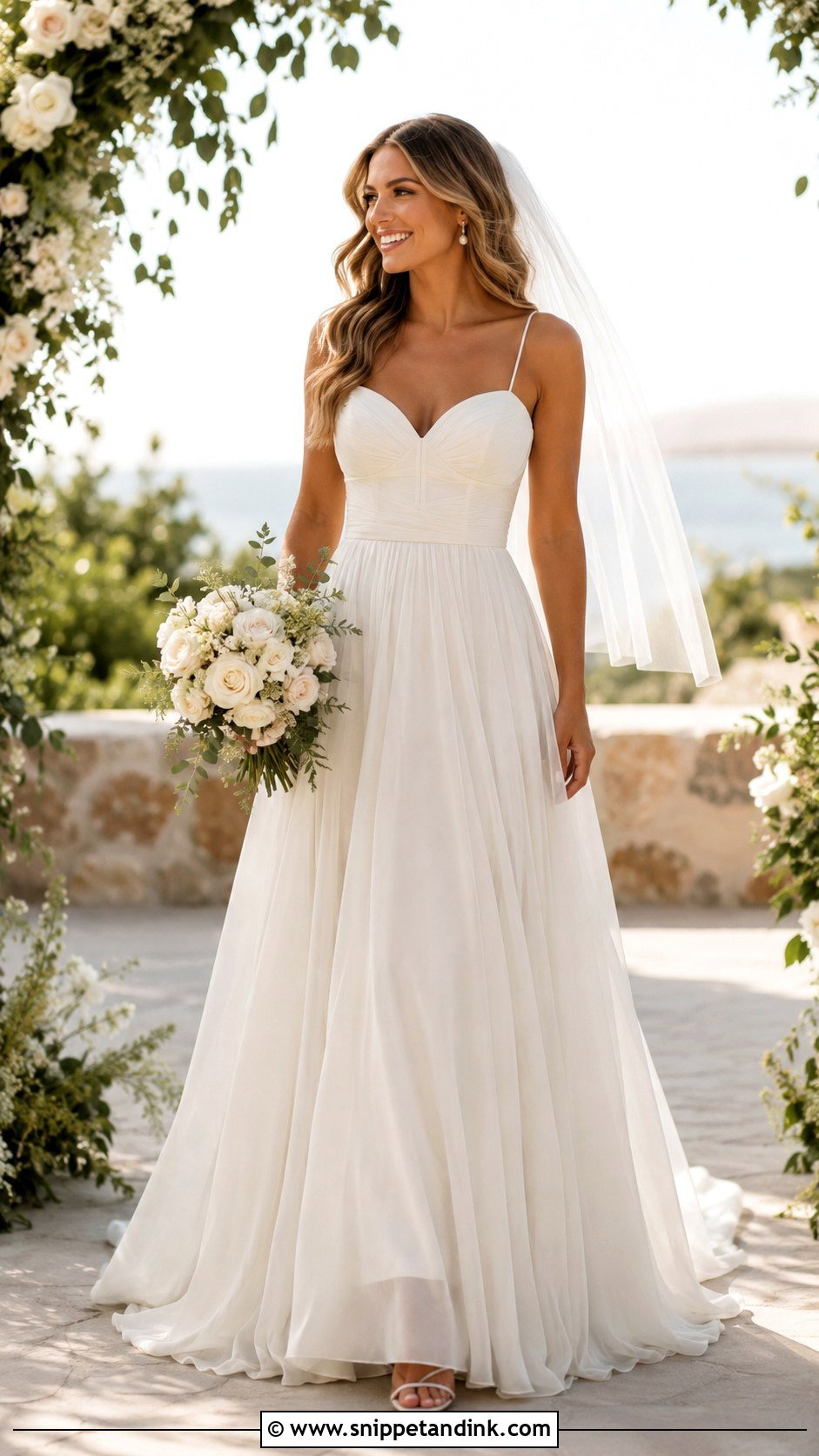
A spaghetti strap A-line wedding dress looks light and delicate, and it’s the most comfortable option on this list in hot weather. Thin straps rarely do any real work, so I look for a structured bodice hidden underneath that holds the dress up on its own. Satin gives a clean finish; lace or tulle softer. Strappy sandals and loose waves suit a warm wedding. If you need coverage for the ceremony, add a sheer cape or detachable sleeves.
22. Cap Sleeve A-Line Wedding Dress
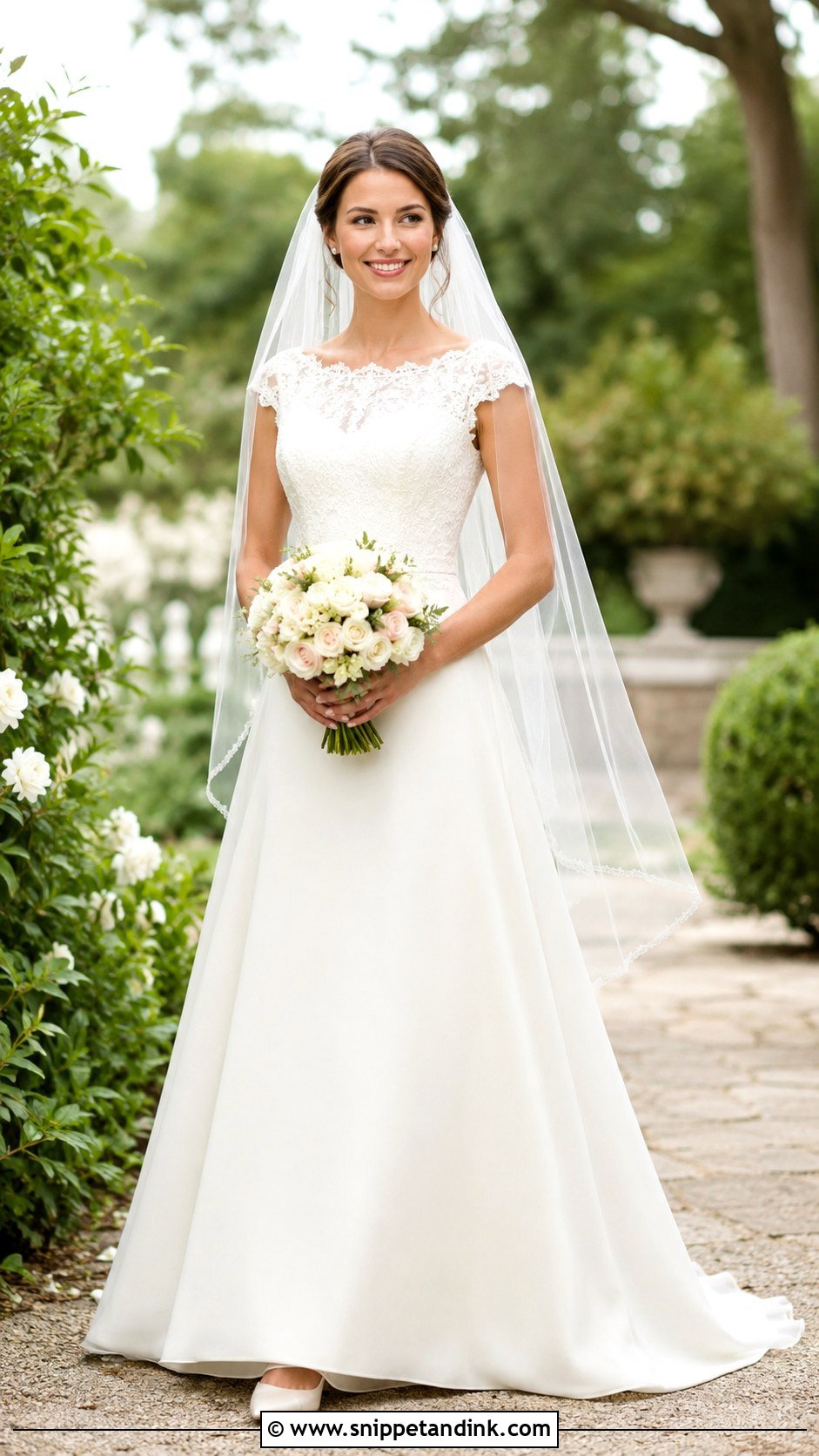
Cap sleeves sit between sleeveless and full sleeves: a little shoulder coverage, no weight on the arms. Lace cap sleeves look classic; satin ones look more structured. The common problem is a cap sleeve cut too tight, which restricts the arm when you lift your bouquet or hug. Raise your arms at the fitting and see if the sleeve digs in. A fingertip veil and a low bun suit the look, and so do traditional ceremonies.
23. Tea Length A-Line Wedding Dress
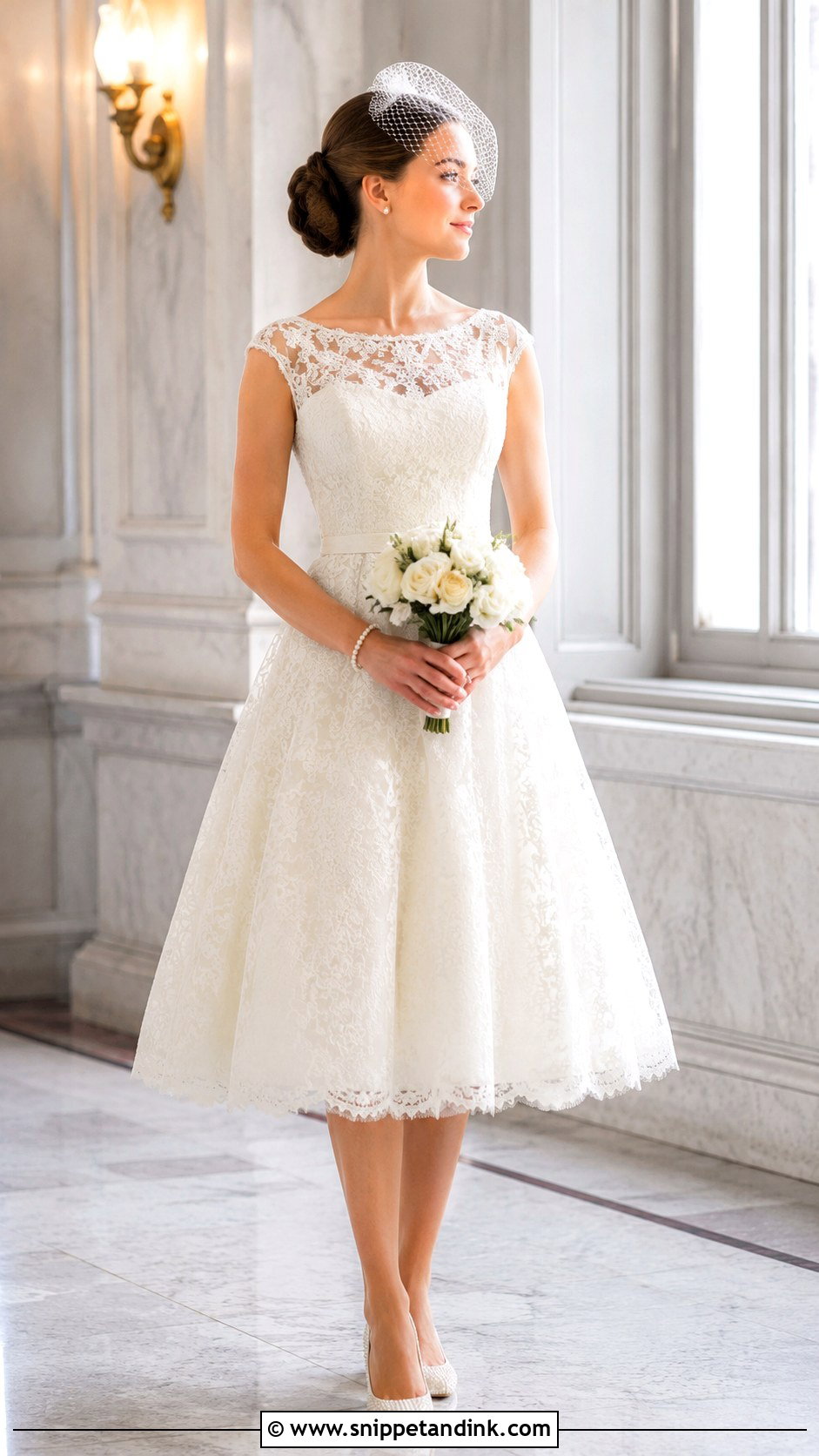
A tea length A-line wedding dress shows the shoes, which makes the shoes part of the outfit: pearl pumps, satin block heels or smart bridal flats. A birdcage veil and a neat bun lean into the vintage feel. Hem placement is everything. The hem should hit the narrowest part of the calf, or a point between the knee and ankle that flatters you; a few centimetres higher or lower changes the whole proportion. Courthouse weddings and brunch receptions suit it.
24. Short A-Line Wedding Dress
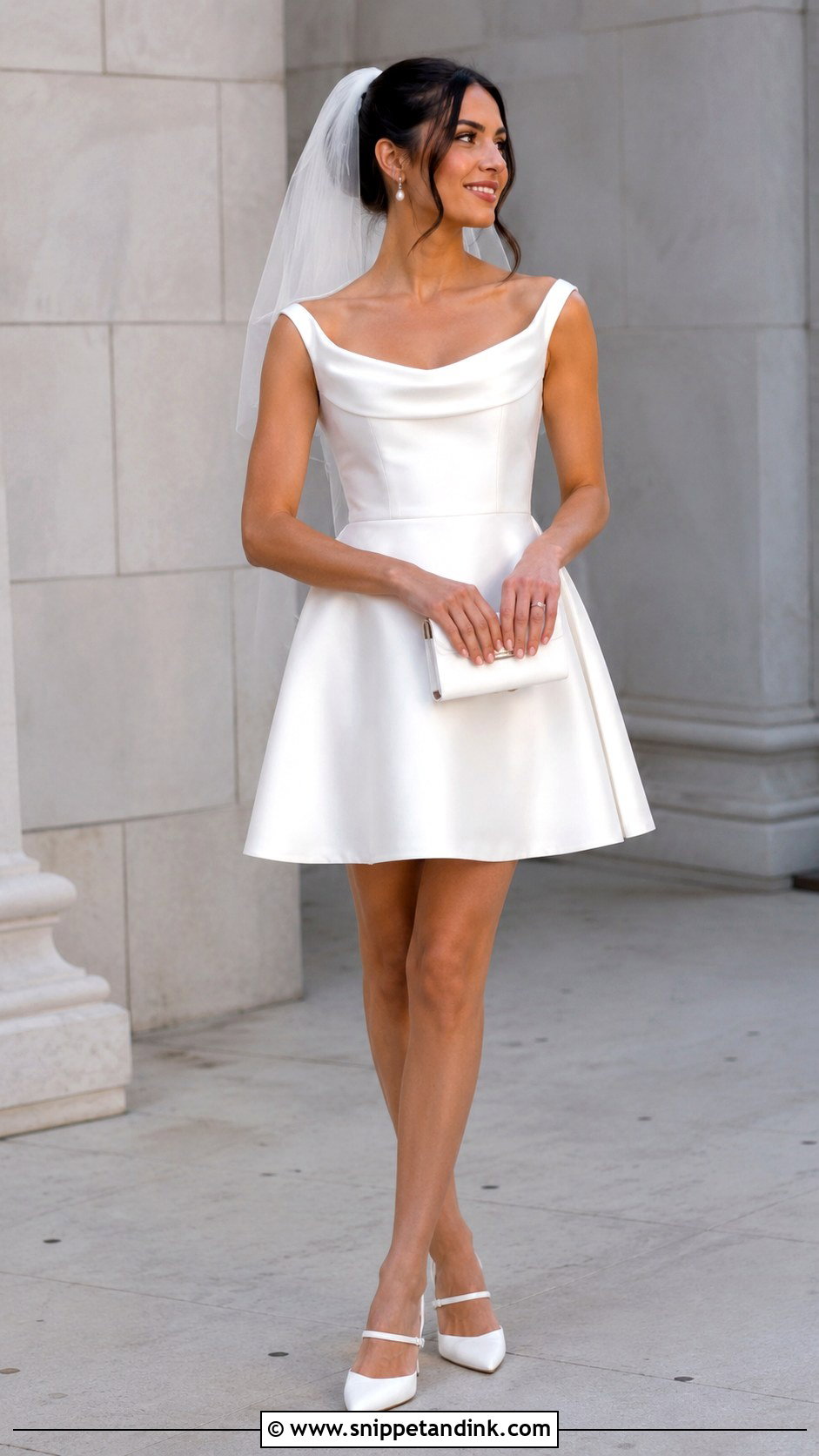
A short A-line wedding dress is my usual suggestion for courthouses, elopements, second looks and warm-climate weddings. It’s bridal, but you can move. Slingbacks, pearl earrings, a mini veil and a structured clutch finish it. Satin is sleek; lace or organza is romantic. A short dress needs one special detail to stop it looking like a party dress: a bow, pearl buttons or a sculpted neckline. Check the length while sitting, since short A-lines ride up more than you expect.


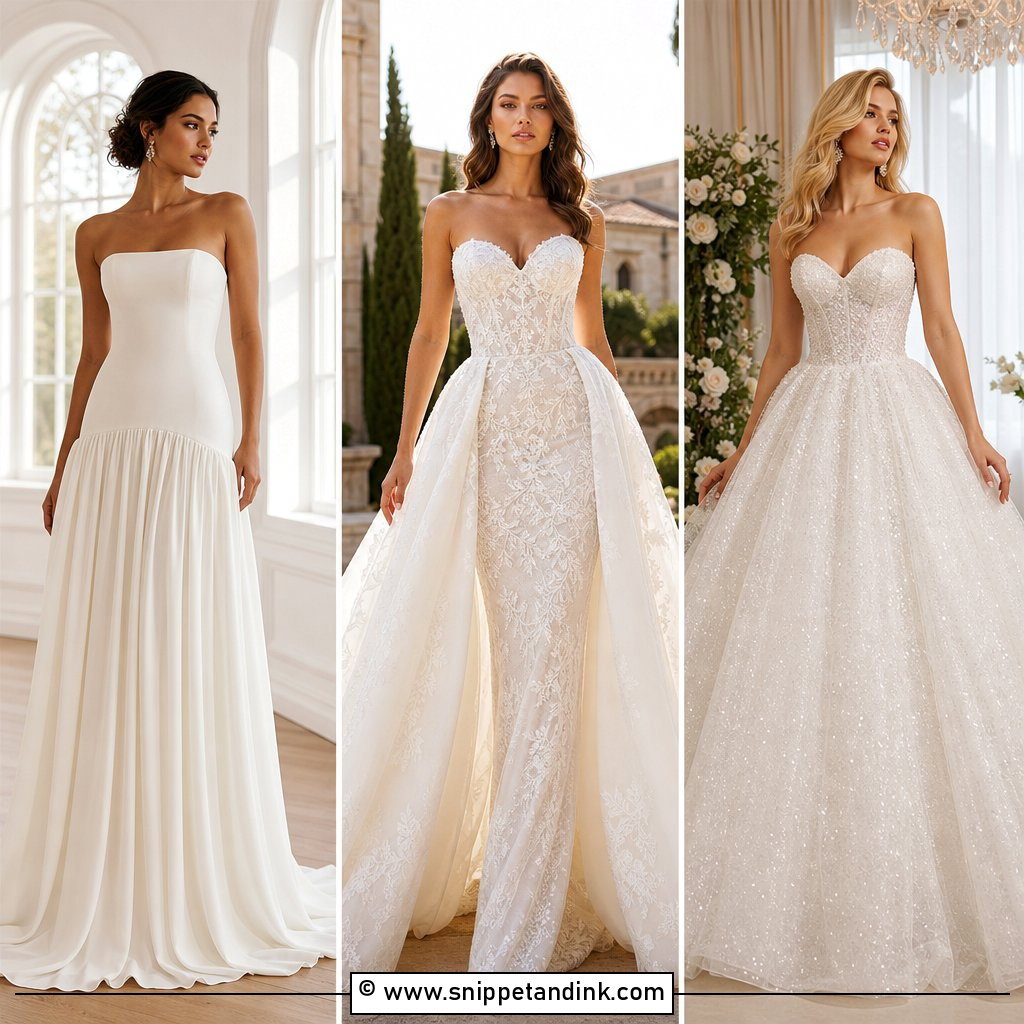
25. Detachable Train A-Line Wedding Dress
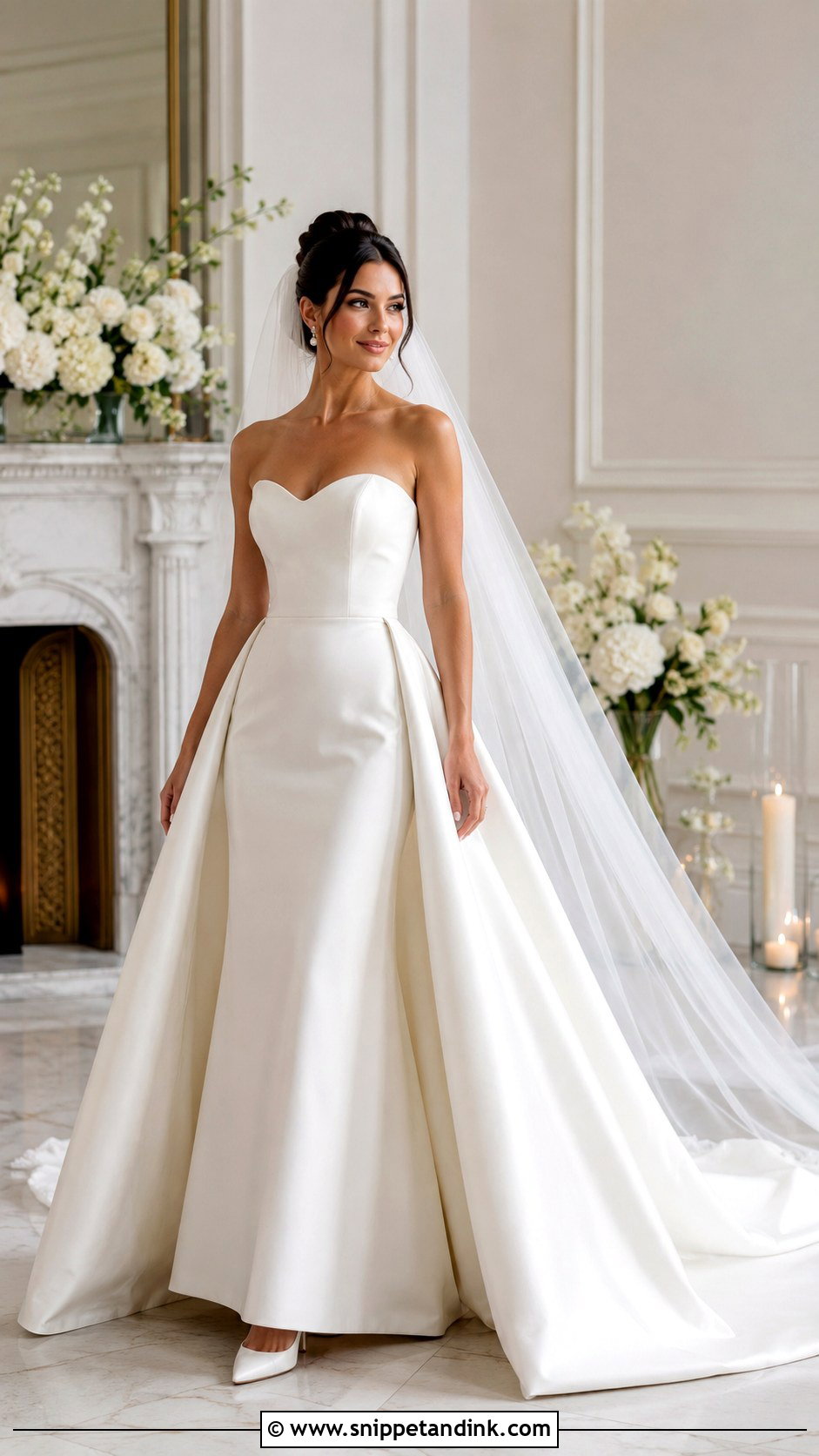
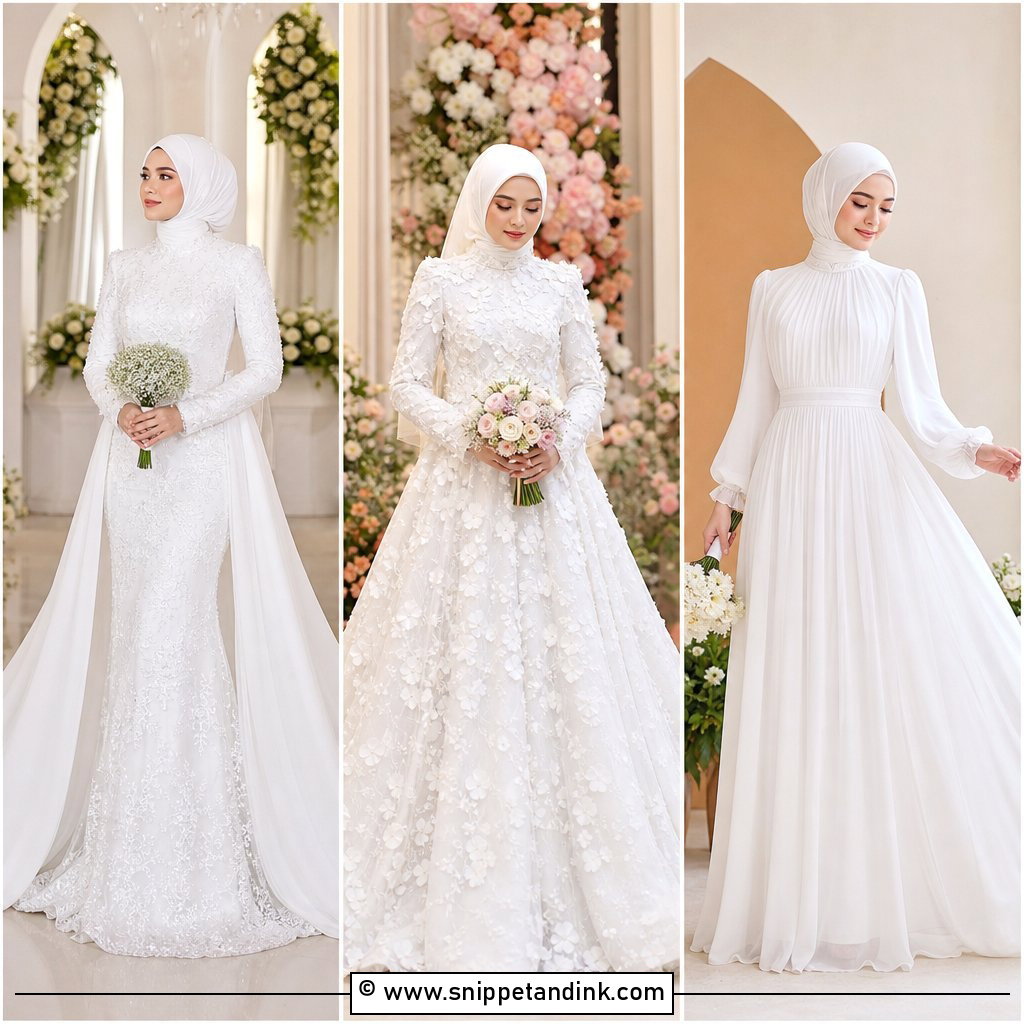
A detachable train gives you the formal entrance and then lets you walk freely for the rest of the day. It’s a good alternative to a bustle, which can be fiddly on a long train. The attachment should be invisible when fastened and simple to undo, usually hooks or buttons hidden at the waist. I’d make sure whoever helps you has practised removing it once at the final fitting. The base dress needs to look finished without the train, so try it on both ways.
26. Detachable Sleeve A-Line Wedding Dress
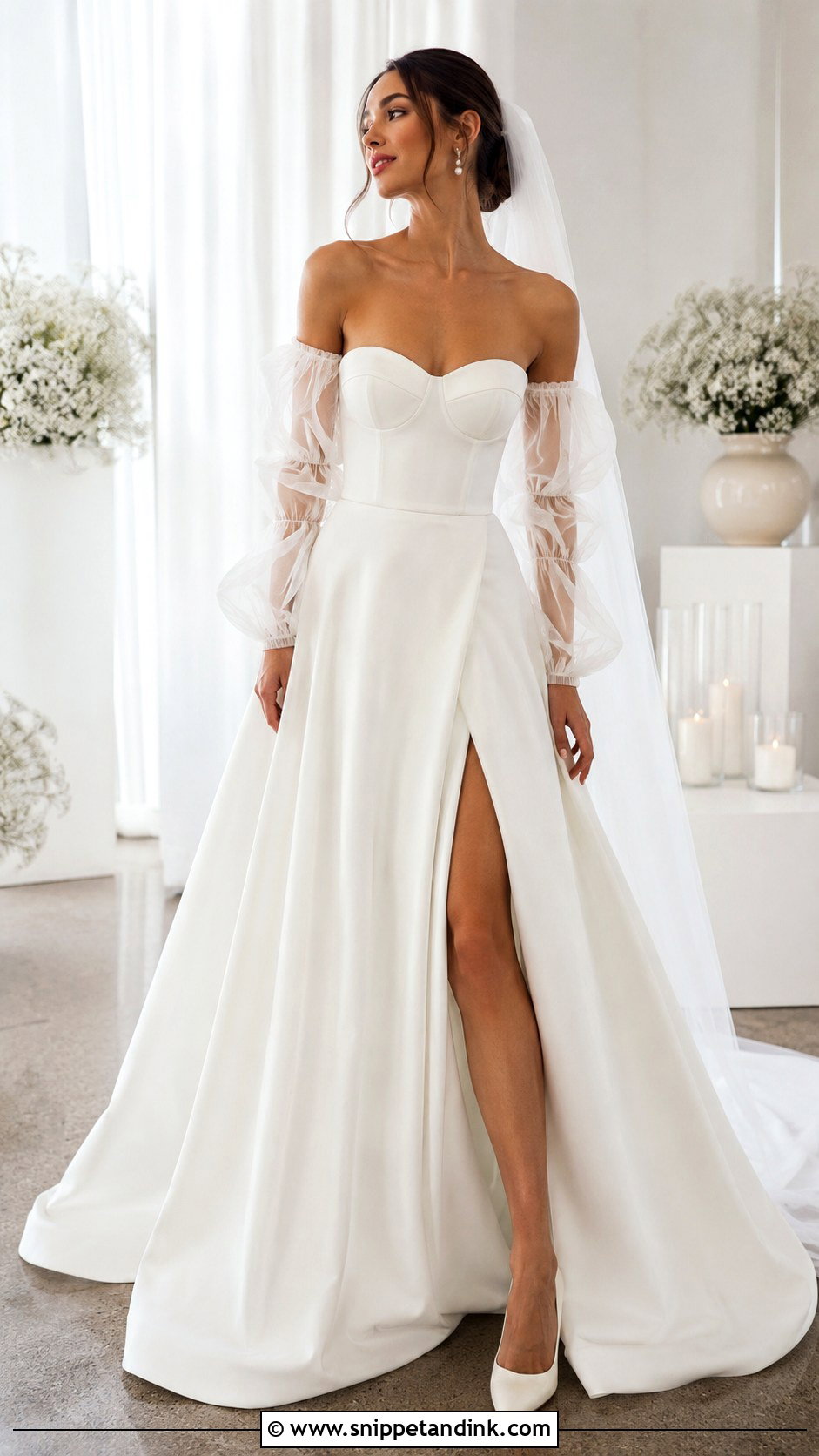
Detachable sleeves let you wear one dress two ways without buying a second gown. Puff sleeves look fashion-led, lace sleeves classic, sheer sleeves soft. The join is the critical part: sleeves fixed with small hooks inside the bodice edge look built in, while sleeves held on by elastic alone tend to slide down. Have them fitted alongside the dress, not added later. Remove them for dancing, when you’ll be glad of the freedom.
27. Minimal A-Line Wedding Dress
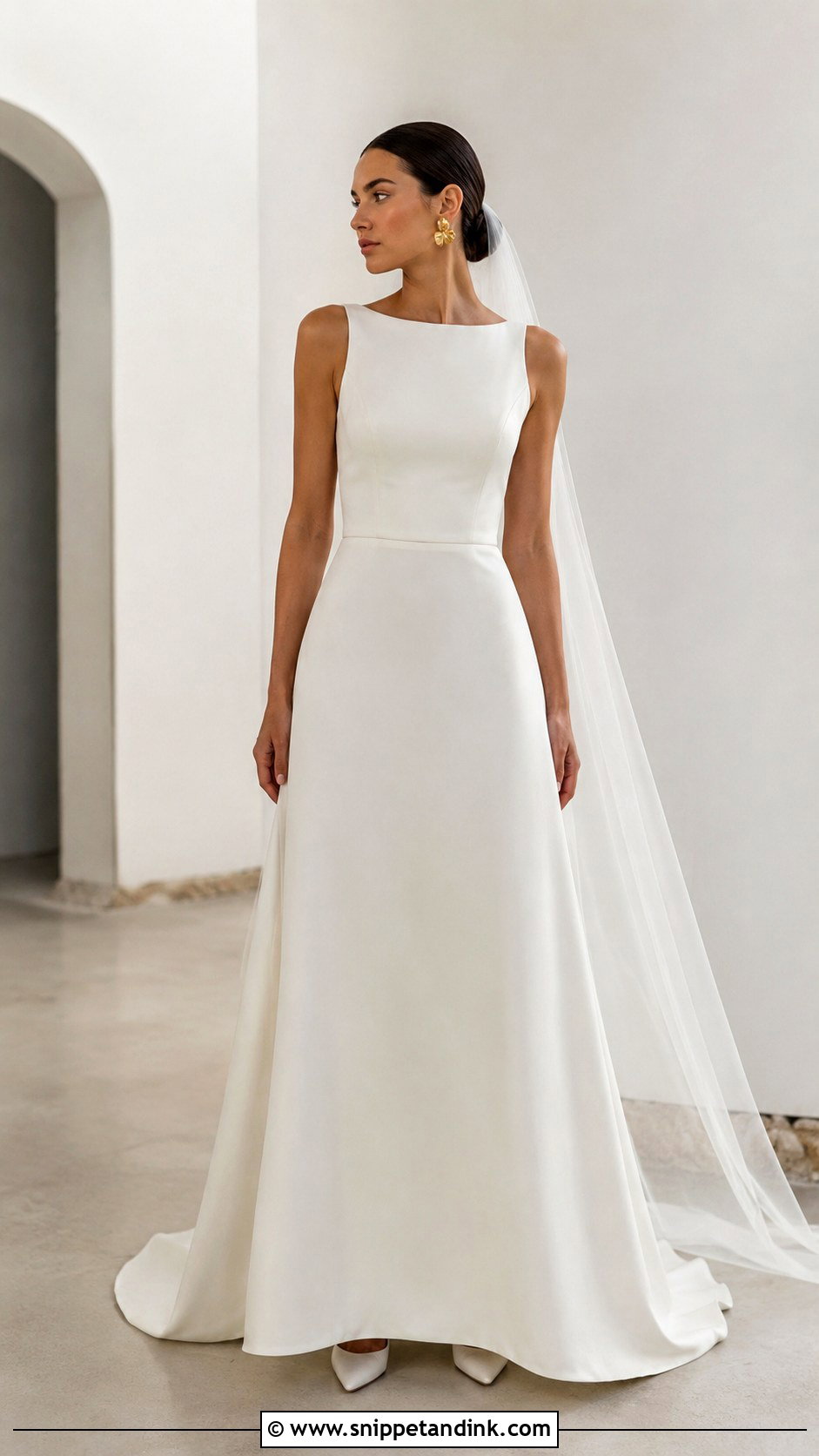
When there’s no lace, beading or detail, the fabric and fit are all that’s left, so I’d spend money on both. Satin, crepe and mikado hold the clean A-line shape best. A minimal gown needs alterations that leave no puckers or pulls, which is why I recommend a seamstress who works with bridal fabrics. Sculptural earrings, pointed heels and a plain veil suit modern venues, city halls and galleries. Natural makeup keeps the whole look consistent.
28. Boho A-Line Wedding Dress
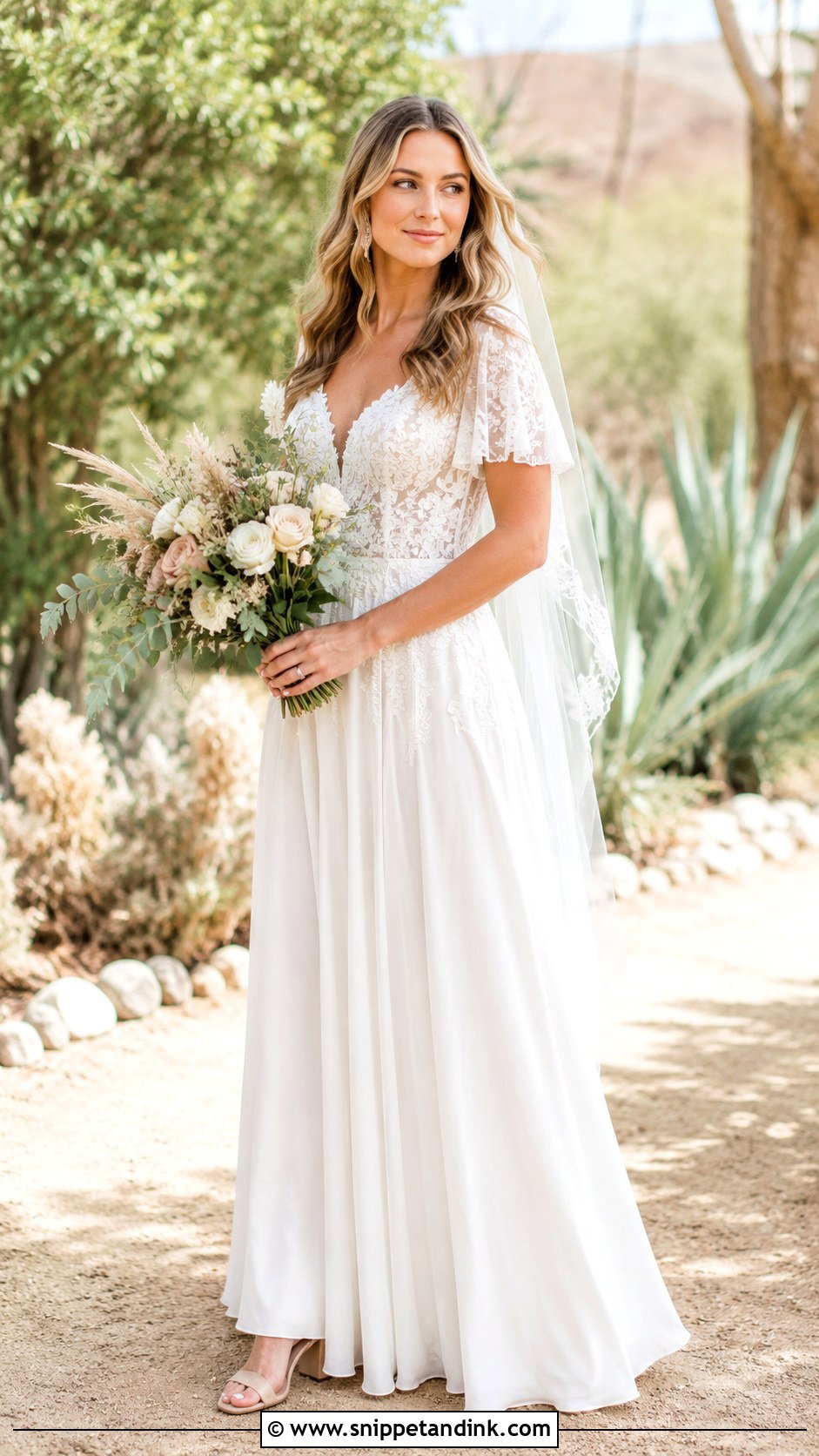
Boho A-lines are about fabric and movement: soft lace, flowing chiffon, flutter sleeves, open backs, gentle embroidery. The A-line gives the look some structure; the fabrics keep it relaxed. Loose waves, delicate earrings and block heels or sandals suit outdoor weddings, desert venues and gardens. Go for a light veil, since a heavy cathedral veil fights the mood. Open backs need the right undergarments, so sort those before the first fitting.
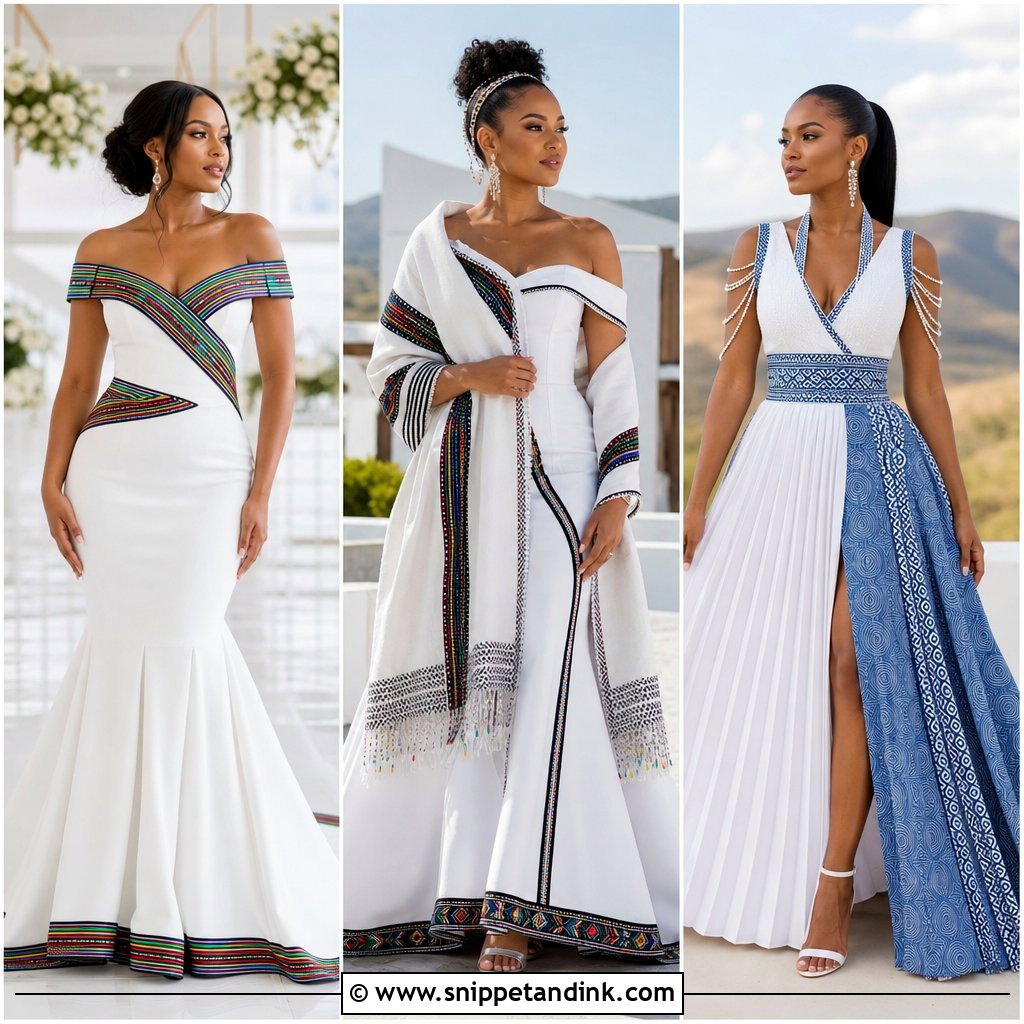
29. Modest A-Line Wedding Dress
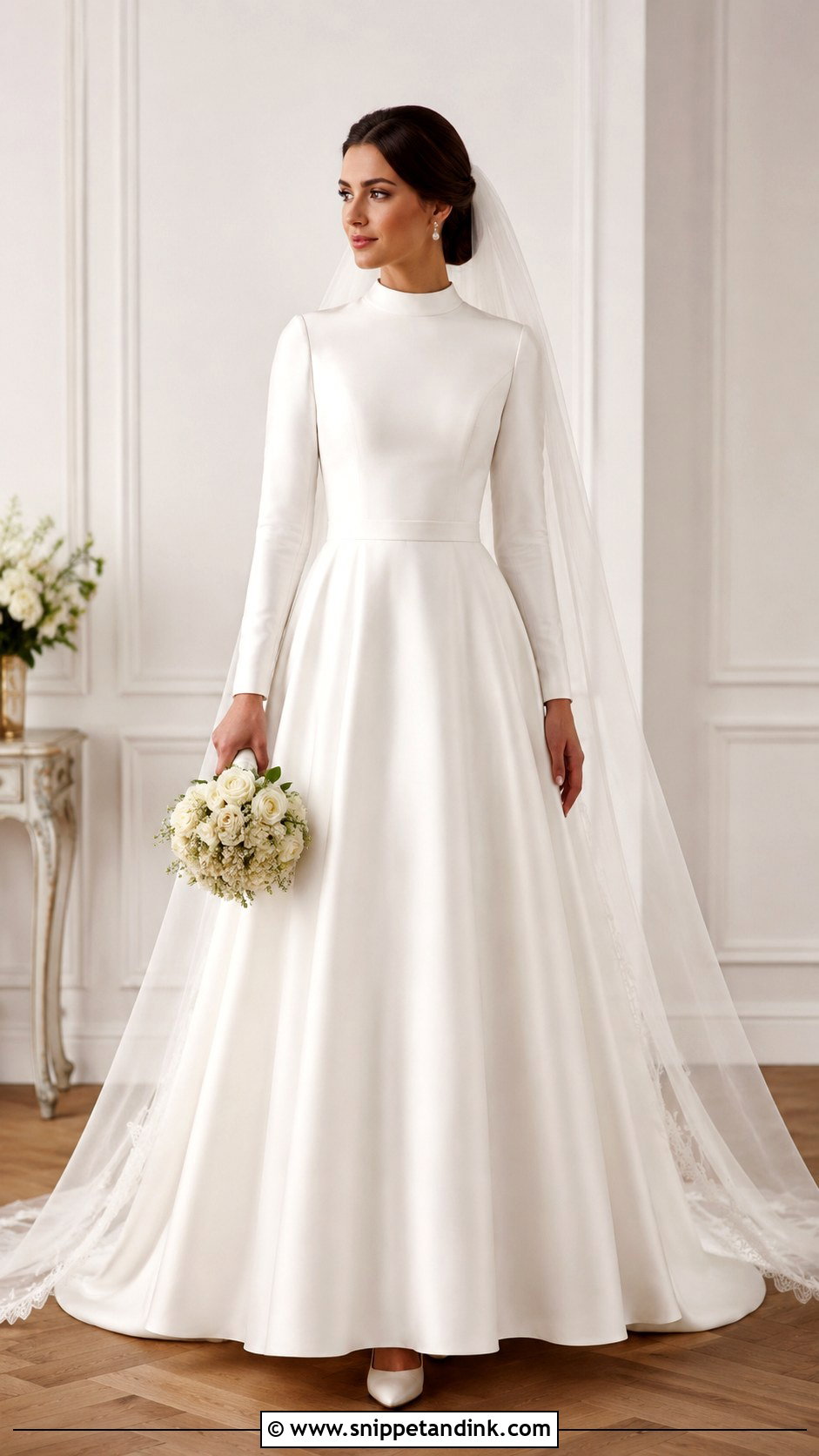
Modest A-lines work beautifully because the silhouette gives shape without needing to be tight. High necklines, long sleeves, lined bodices and full coverage are all easy to add. Lace is romantic; crepe or satin is clean. The fitting should focus on a defined waist and sleeves that let you move, so the dress feels tailored rather than heavy. If you’re adding a veil over the hair for the ceremony, plan its placement with the hairstylist so it sits securely.
30. Plus Size A-Line Wedding Dress
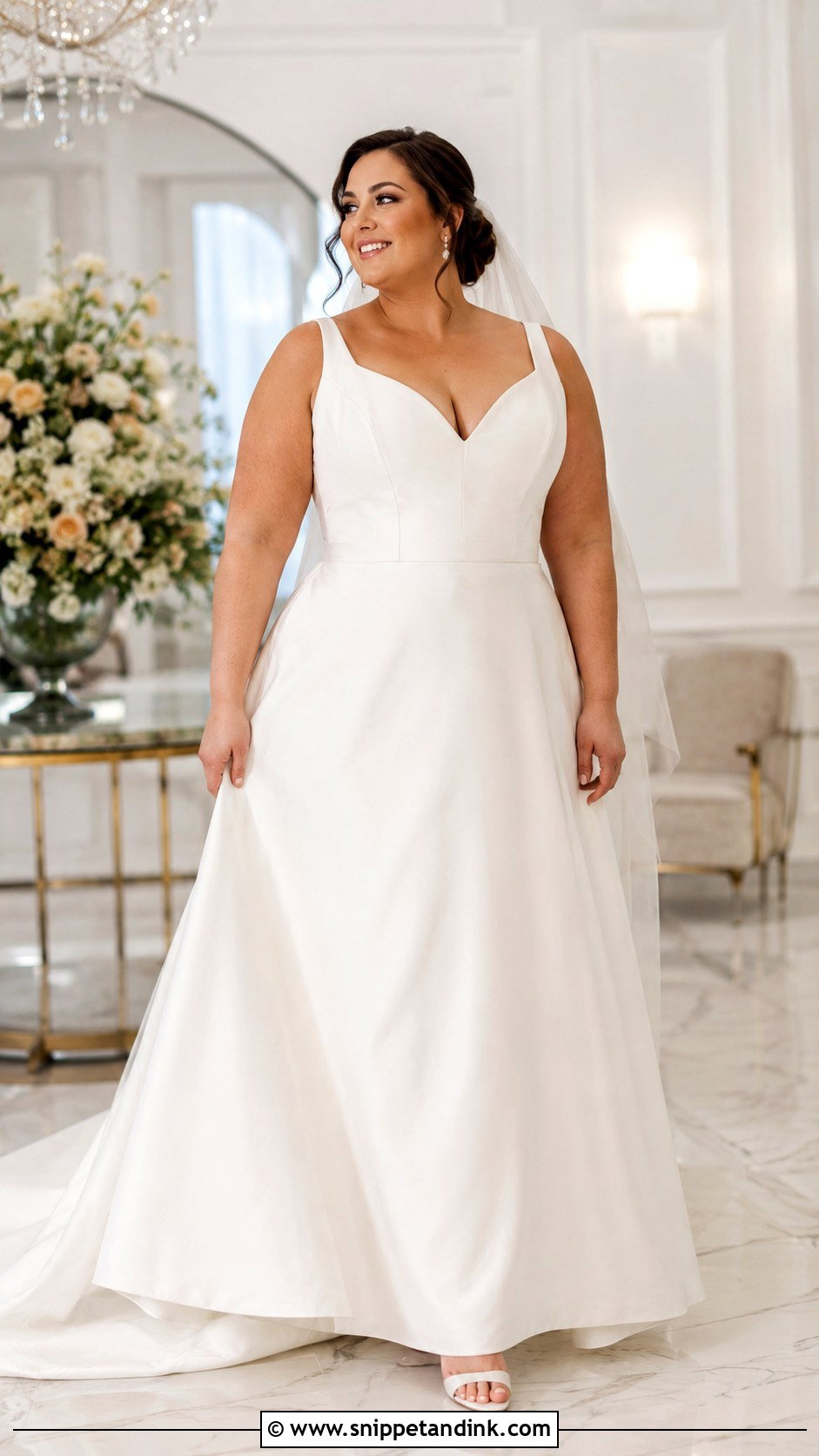
The A-line is one of the shapes I recommend most often to curvier brides, because it supports the bodice and skims the hips instead of clinging. Look for strong internal structure, straps or sleeves you’re comfortable in, and fabric with enough weight to fall rather than cling. Supportive undergarments should be chosen before the first fitting, as they change the measurements. The aim isn’t to hide your figure; it’s a dress that fits so well you stop thinking about it.
The Alterations Calendar for an A-Line Gown
Made-to-order wedding dresses usually take several months to arrive, and alterations need time on top of that. Lead times vary by designer, so check with your shop, but this is the rough rhythm I plan around.
- Order the dress early enough to allow for production and delivery plus two to three months of alterations.
- First fitting about two to three months before the wedding: bring your actual shoes and undergarments. The hem length is set by the shoes, so changing shoes later means re-hemming.
- Second fitting: the bodice is adjusted, straps and sleeves fixed, and the bustle planned.
- Final fitting a couple of weeks before: check everything, learn the bustle, and bring whoever will help you on the day.
Bustling the train
Most A-lines with a train need a bustle so you can dance. An over bustle lifts the train up and hooks it to the back of the dress; an under or French bustle tucks it underneath with ribbons. Tulle and chiffon usually suit an over bustle, while heavier satin often looks neater with an under bustle. Ask your seamstress which suits your fabric, and practise it until your helper can do it in a couple of minutes.
If your weight changes much between fittings, tell your seamstress. A-line bodices are fitted closely, and a gap of even a small amount at the bust or waist shows.
One Silhouette, Thirty Different Brides
The A-line stays a dependable choice because it changes character so easily with fabric and detail. Satin, lace, tulle, chiffon, pearls, bows, sleeves and detachable trains all give it a different mood. When you narrow down your options, start with the neckline, the fabric and how much detail you want, then think about venue, season and comfort. Accessories should support the dress rather than compete with it. And whatever you pick, give the fitting process the time it needs.
You'll Like These Ideas:







Leave a Reply