
A simple gown is harder to get right than a decorated one. With no lace or beading to draw the eye, the fabric, the cut and the fit are all anyone sees, so small mistakes show. That’s also why plain dresses tend to look so good when they work. Below are the clean silhouettes I dress brides in most, from a fitted sheath to a full ball gown, each styled with shoes, veil and jewellery for a formal ceremony, a courthouse, a beach or a small gathering. I’ve noted which suit petite, plus-size, tall, curvy, modest and maternity brides, and what to check at fittings in satin, crepe, chiffon, silk and Mikado.
Judging Fabric Quality When There’s No Lace to Distract You
On a simple gown, the fabric does all the work. Cheap and expensive satin can look similar on a hanger, but they behave very differently on the body and on camera. In a shop, I check a few things before a bride even tries a dress on.
- Crush a corner of the skirt in your hand for a few seconds. Good crepe and Mikado spring back; thin polyester satin keeps the crease.
- Hold the fabric up to a light. If you can see your hand clearly through a single layer, it will need a solid lining.
- Look at the seams inside. Clean, flat seams and a finished lining mean the gown will lie smoothly; puckered seams show through plain fabric.
- Check the colour in daylight. Ivory, champagne and white shift a lot between shop lighting and a window.
Matte fabrics like crepe forgive more in photos than shiny satin, which reflects light on every bump and seam. If you love satin, plan for a perfect fit.
1. Satin A-Line Bridal Dress
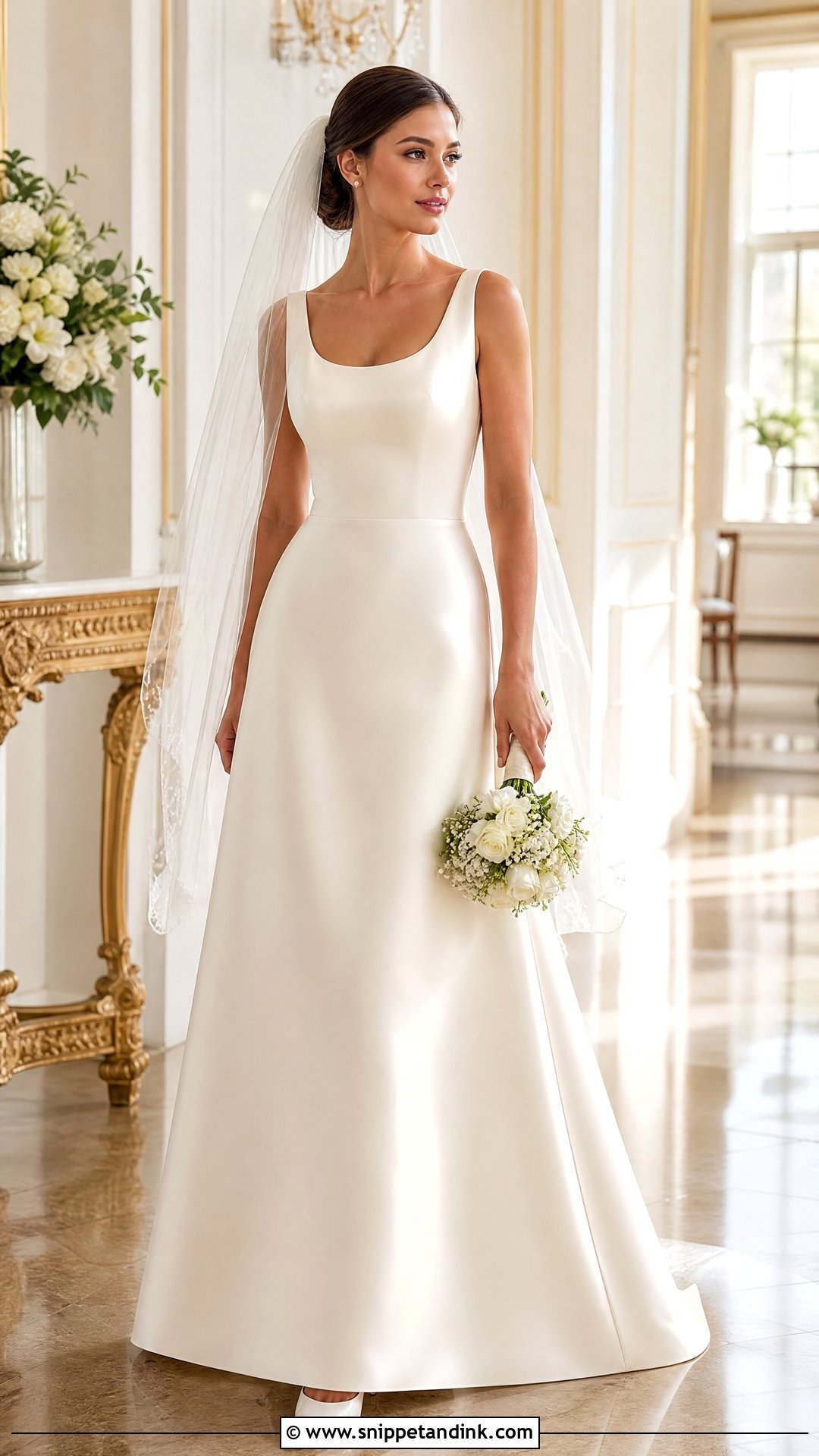
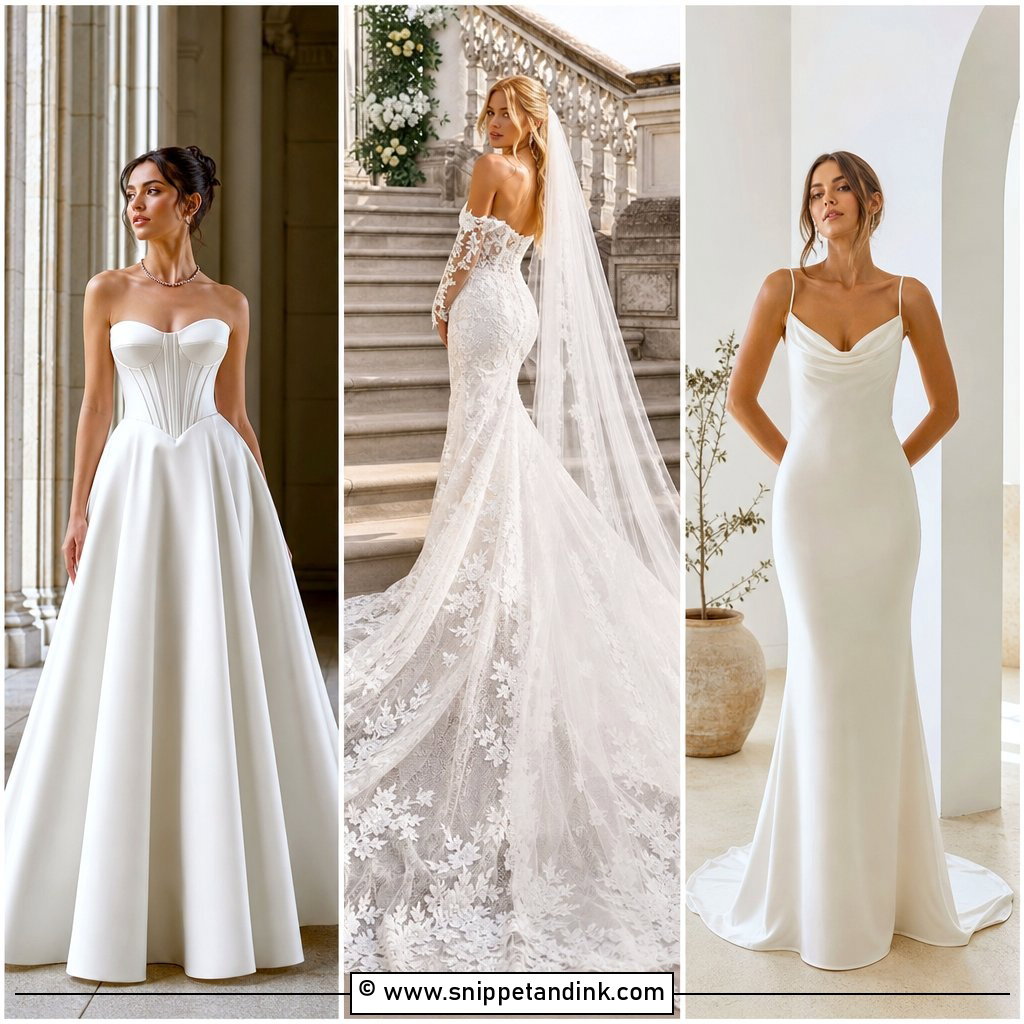
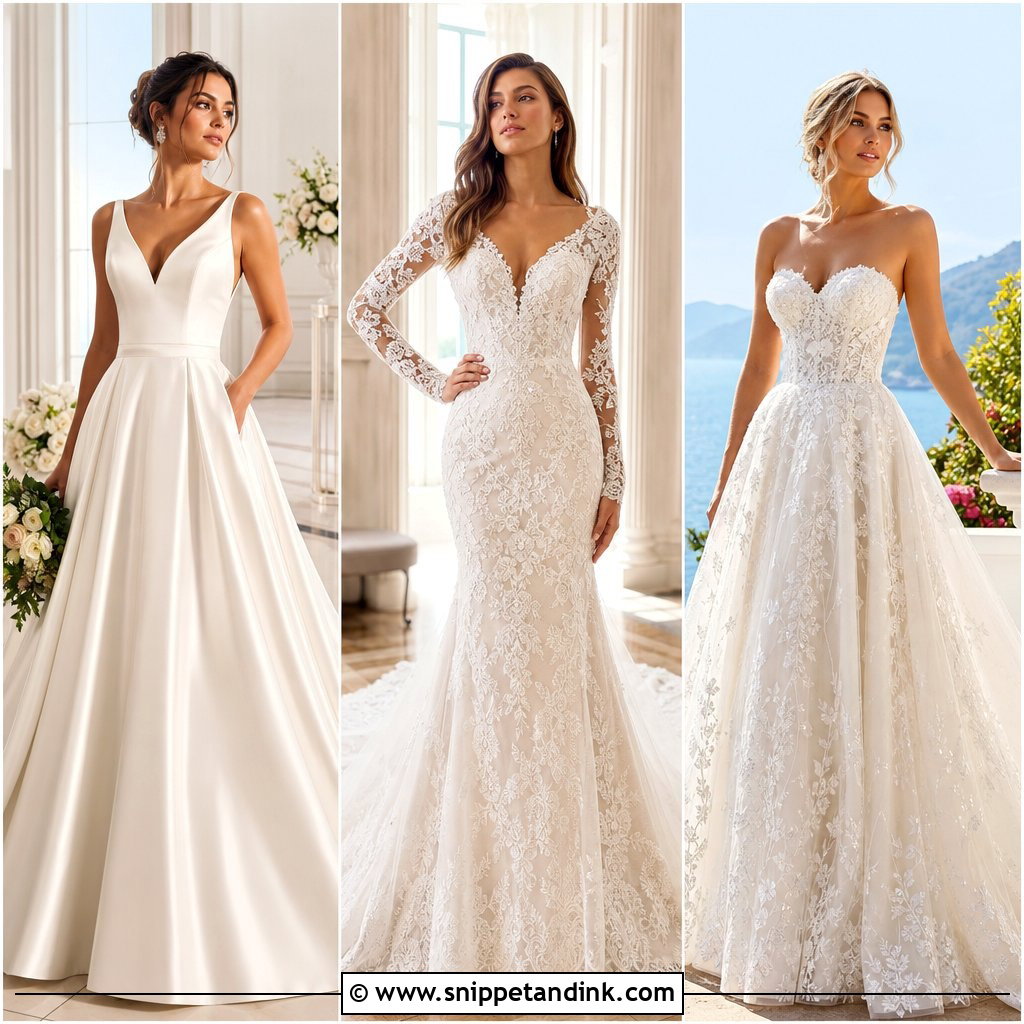
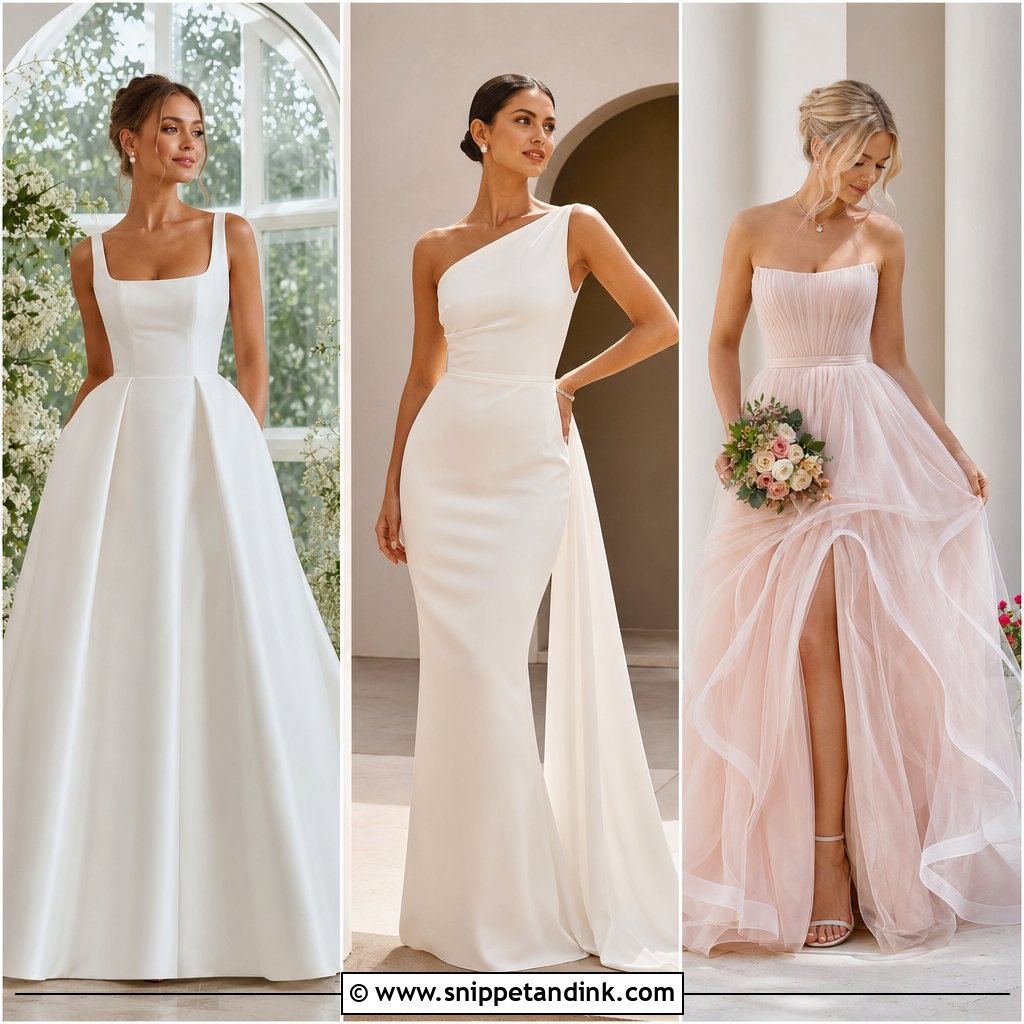
Satin A-lines are the shape I suggest when a bride wants classic without fuss. The fitted bodice defines the top, and the skirt falls past the hips without bulk, which gives a long, balanced line on most figures. Ivory satin with a scoop or V neck and minimal seams, a fingertip veil, pointed pumps and pearl studs is all it needs. A narrow satin belt adds definition if you want it. Satin shows every crease, so book a professional steam close to the day and keep the gown hung, never folded, until then.
2. Square Neck Crepe Bridal Dress
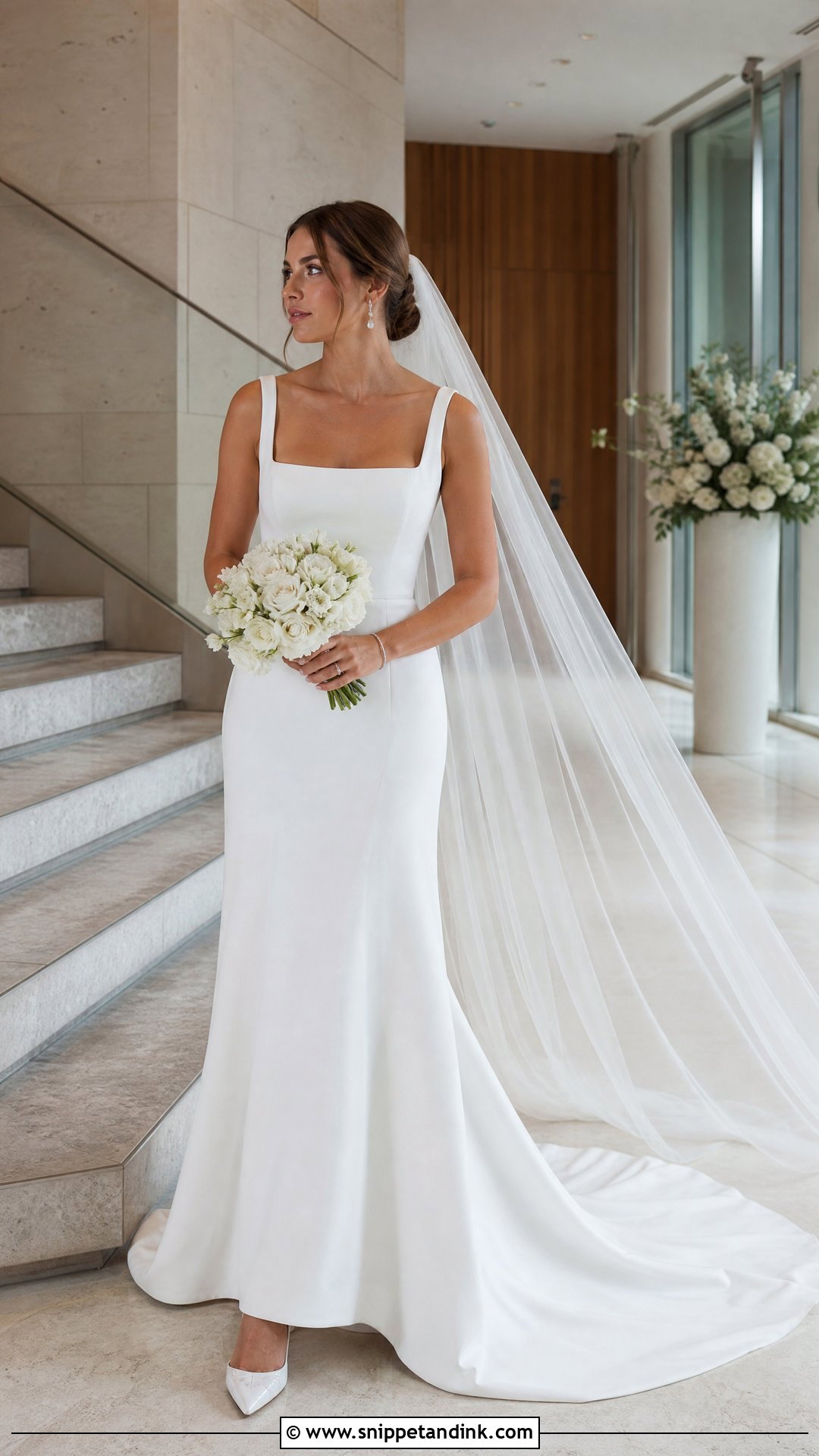
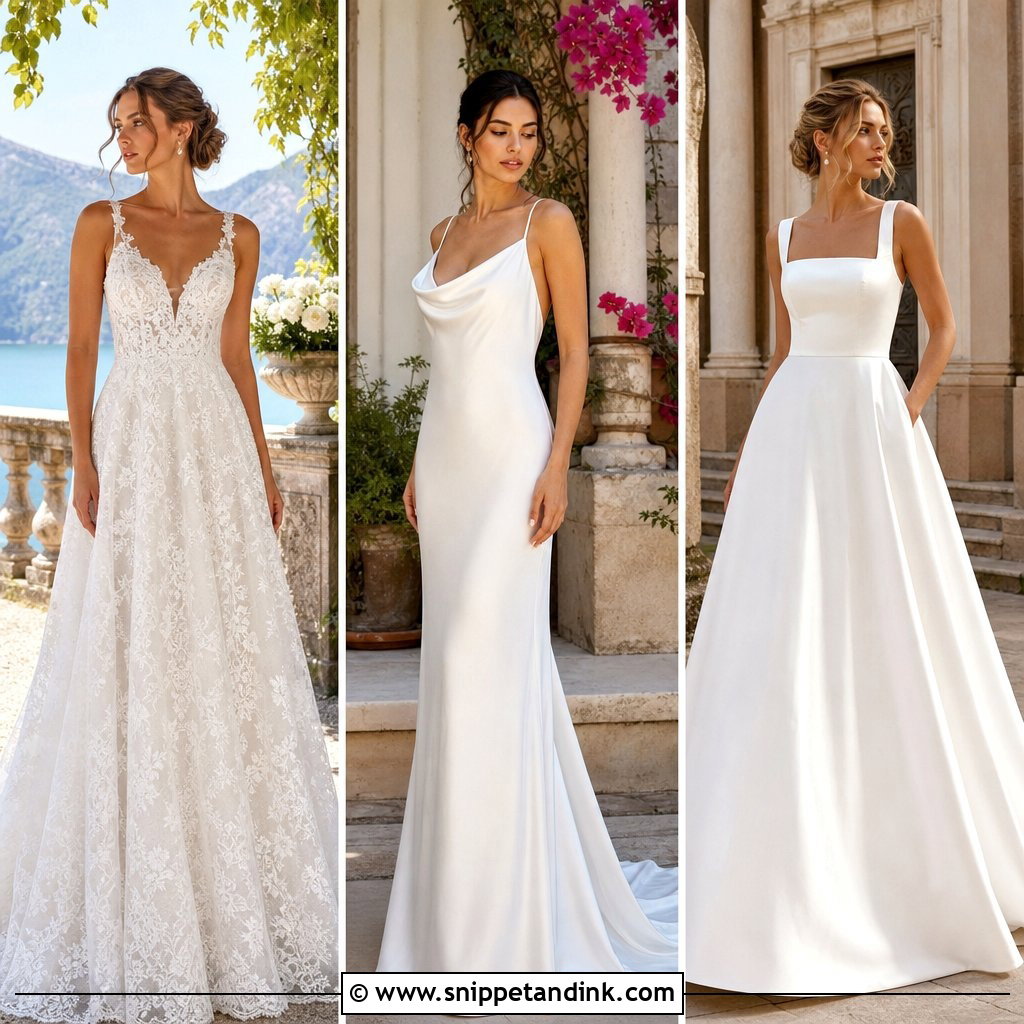
Crepe and a square neck suit each other because crepe’s matte finish keeps the straight lines crisp. The open neckline frames the collarbone, and the wide straps support far better than spaghetti straps. A fitted bodice and soft flare give shape without volume. Low bun, small drops, a single-layer cathedral veil and slingbacks keep it sleek. Fuller busts should ask for reinforced straps and internal corsetry. Square corners need to sit level, so book alterations early and check the neckline in a three-way mirror.
3. Strapless Column Bridal Dress
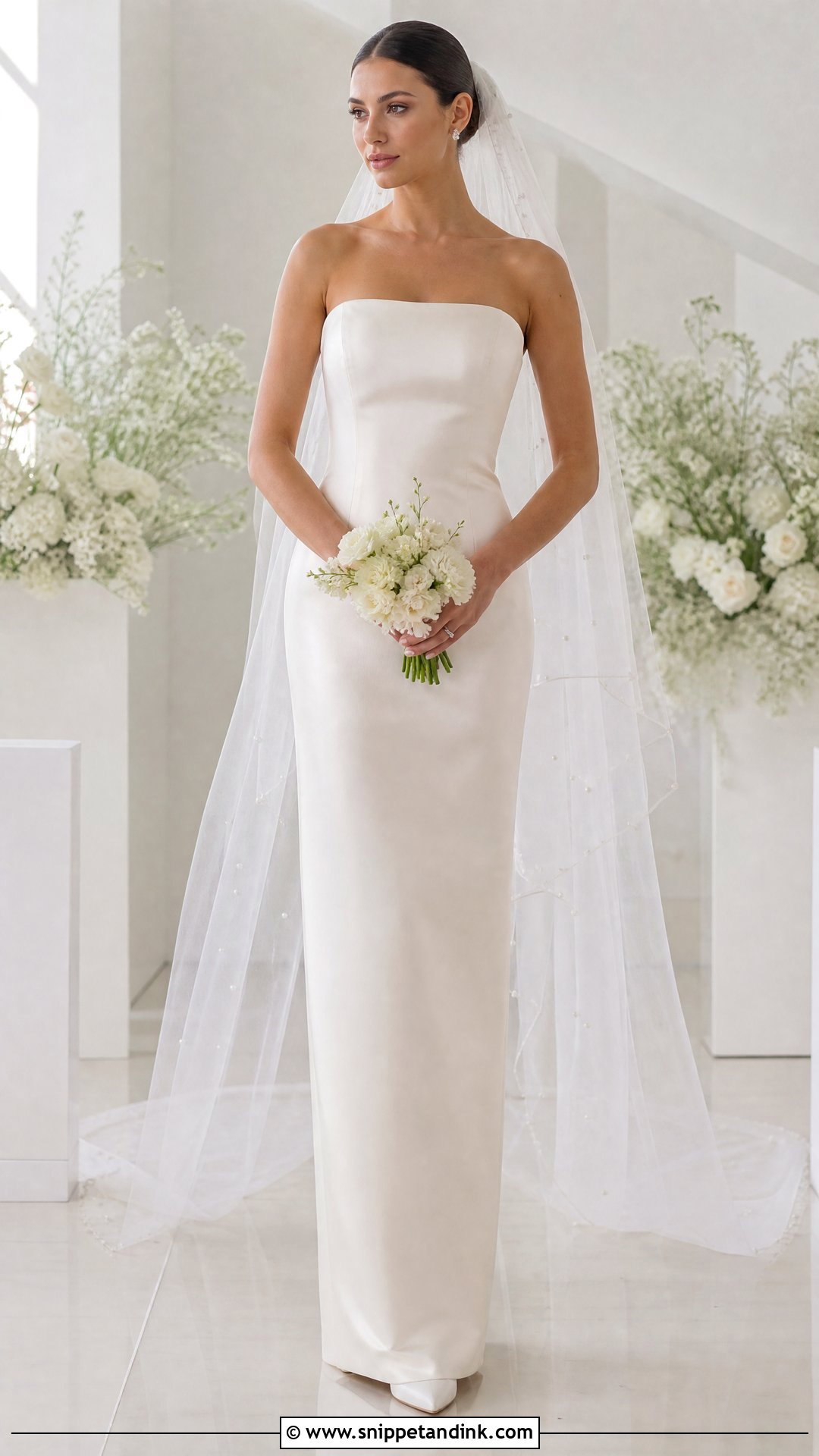
A strapless column is pure line, and it only works if the fabric has enough weight. Satin, Mikado and structured crepe all hold the shape; lightweight crepe clings. The skirt should skim the body, not grip it, or you’ll struggle to sit and walk. The bodice’s internal boning carries the whole gown, so it needs proper alteration, not a quick take-in at the sides. At fittings, raise your arms and twist; if it slips now, it’ll slip at the reception. A sheer chapel veil, crystal studs and a removable wrap for later complete it.
4. Long Sleeve Crepe Bridal Dress
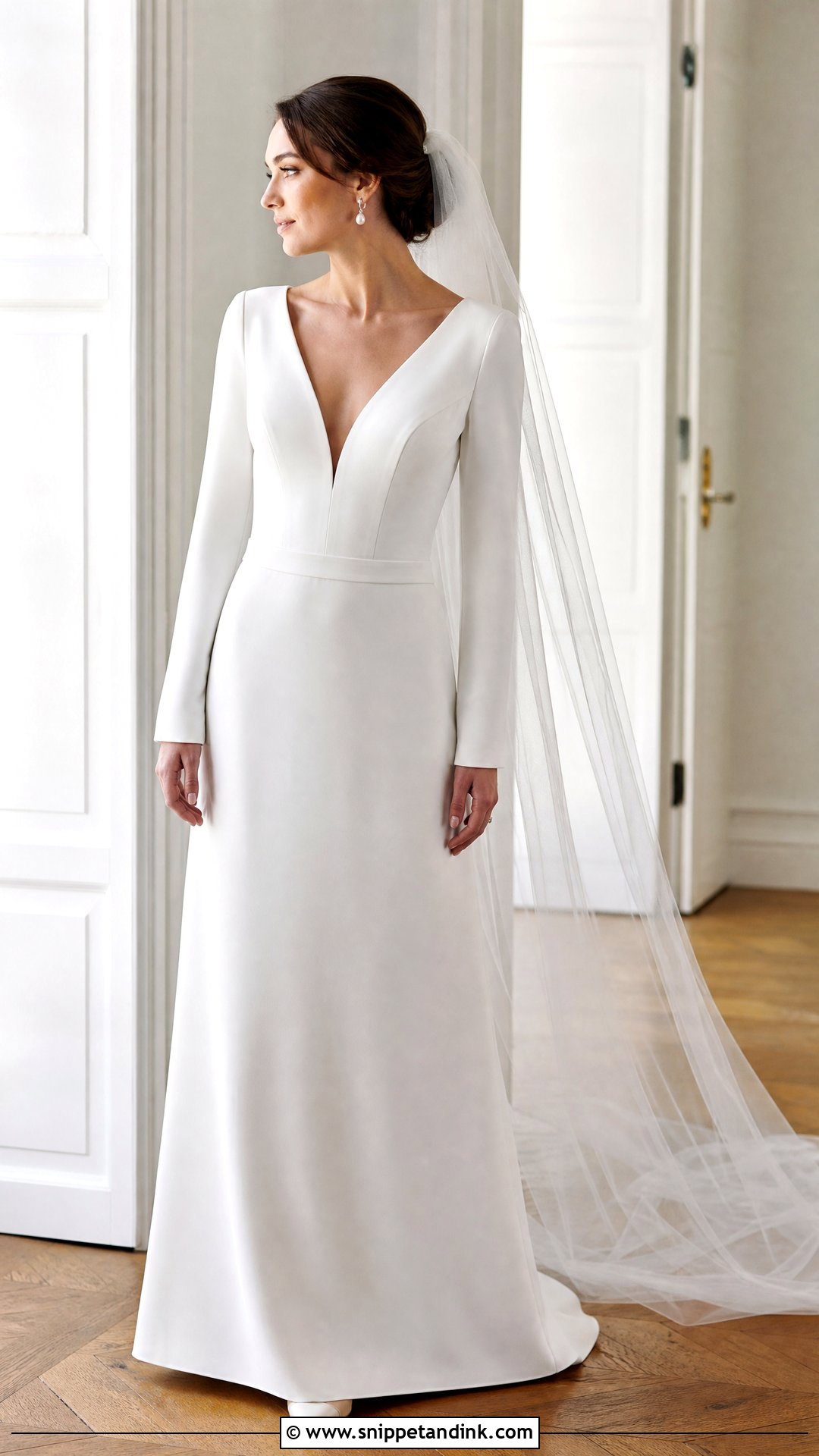
Long crepe sleeves give coverage without the stiffness of satin. Crepe has a little give, but ask for some stretch at the elbows anyway so you can hug and raise a glass easily. A shallow V or round neck balances the coverage and frames the face. A chapel veil tucked under a low bun, pearl earrings, a simple comb and pointed heels finish it. This gown suits cooler seasons and formal indoor venues. Watch for pulling across the shoulders at fittings, and ask for a lightweight lining so it breathes through a long day.
5. Silk Slip Bridal Dress
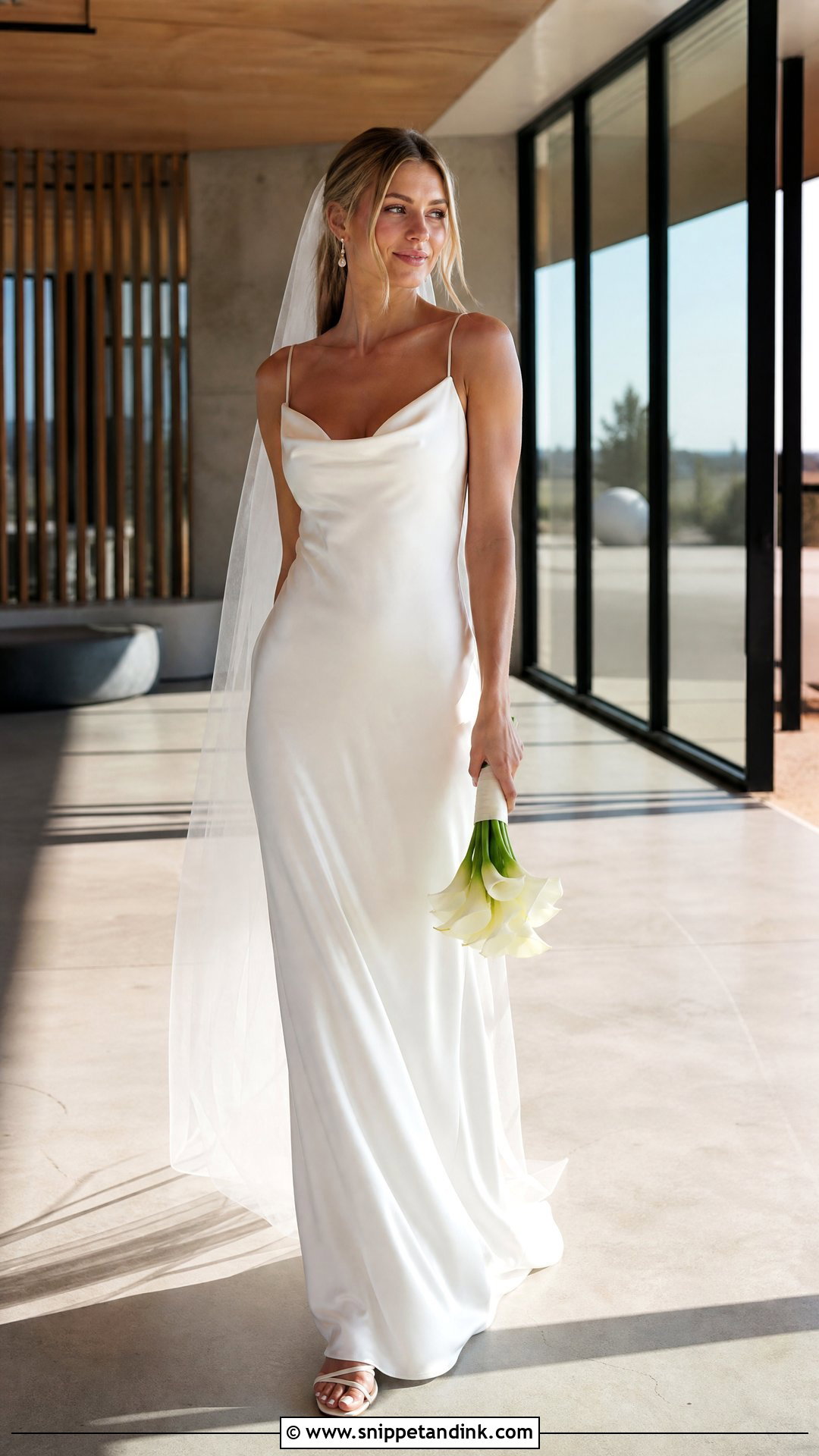
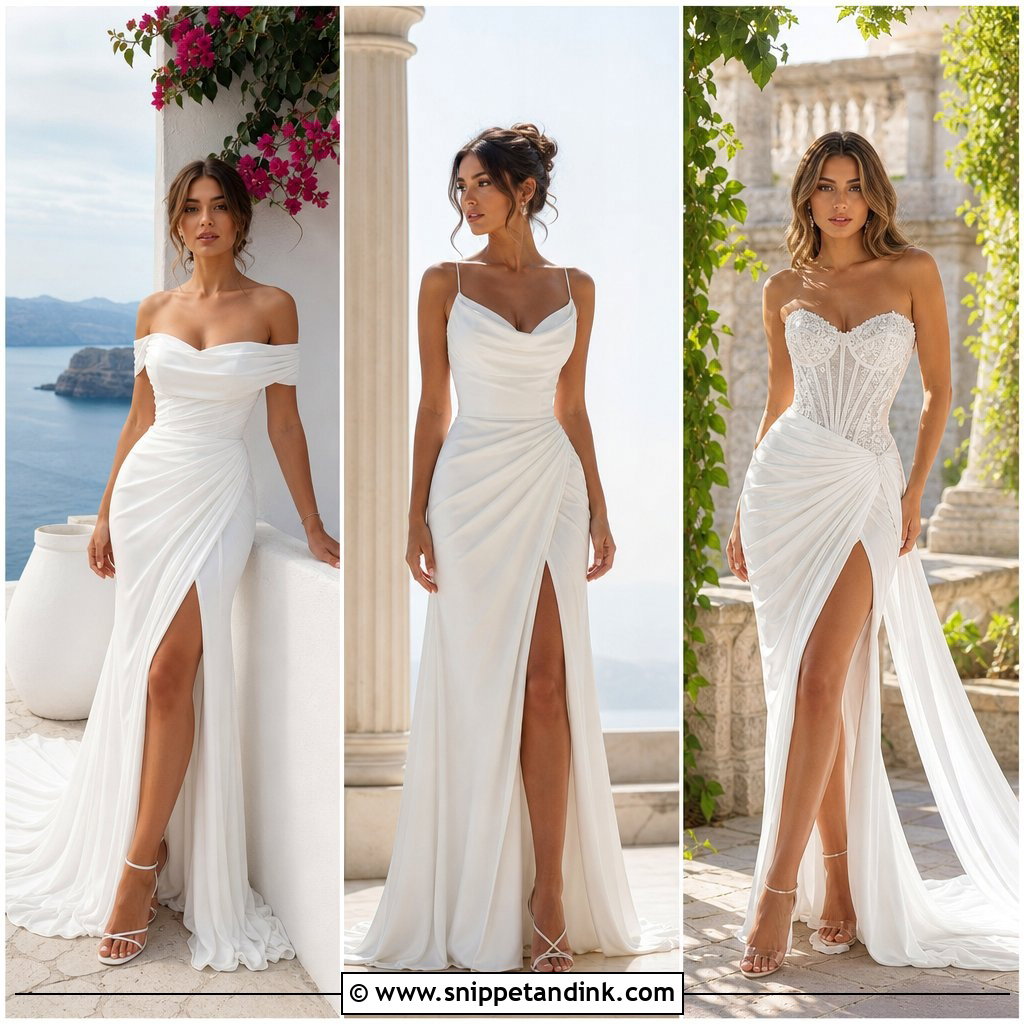
Silk slips are all about the fabric falling right. A bias-cut skirt follows the body, a soft drape at the neckline and narrow straps keep it light. Bias silk shows everything beneath, so smooth, invisible underwear isn’t optional. Silk also marks with water and sweat, so keep a steamer nearby and ask about a lining. Delicate drops, strappy heels and a raw-edge veil suit it, with a small bouquet of callas or white roses and a silk shawl for cover.
6. Off Shoulder Satin Bridal Dress
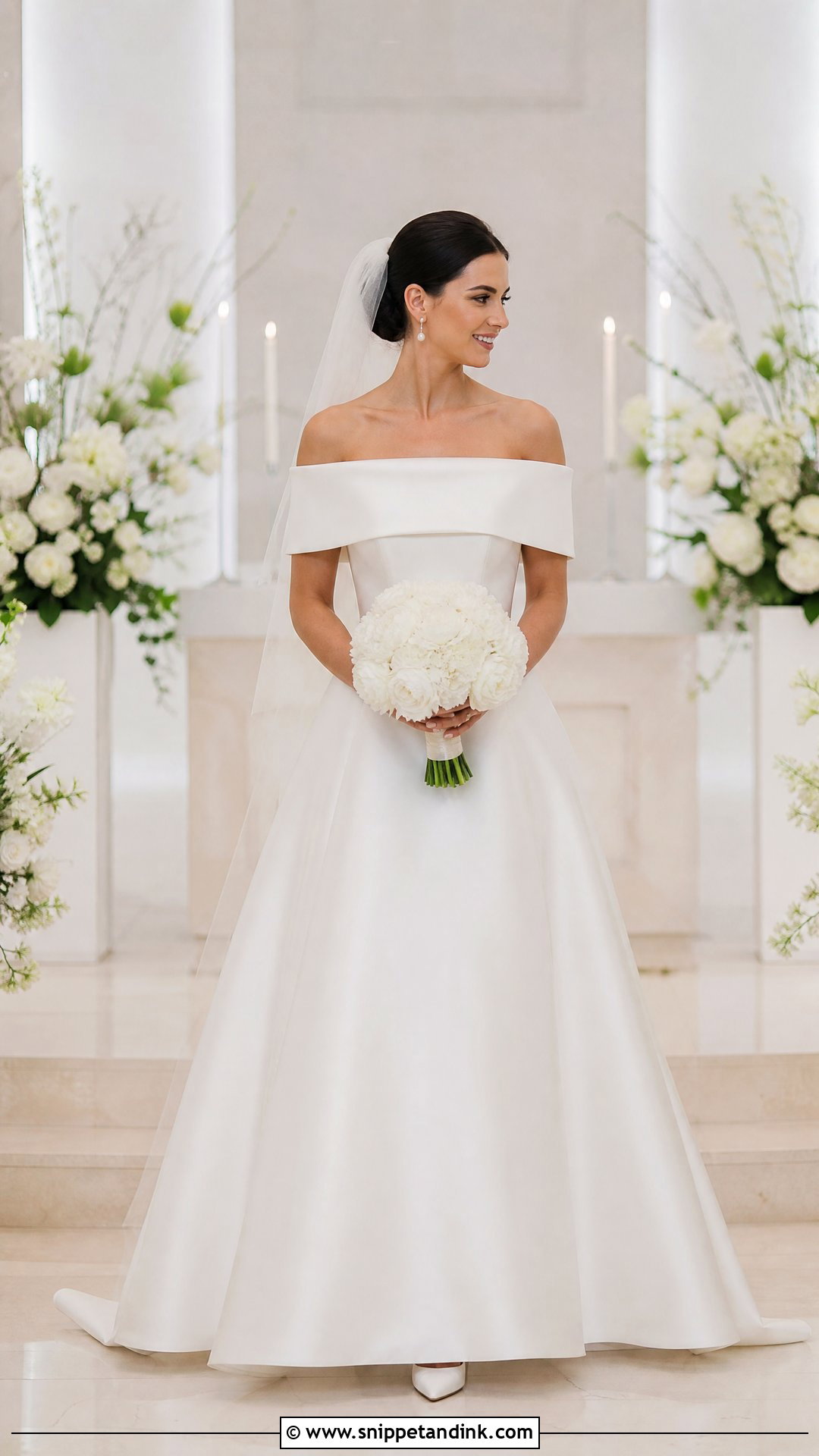
An off-shoulder satin neckline needs engineering to stay put. The folded band should be attached to a structured bodice so it holds around the upper arms instead of riding up. An A-line or softly fitted skirt balances the open shoulders. Skip the necklace; the neckline is the feature. Chignon, pearl drops, a medium veil set low and pointed pumps finish it. At fittings, sit, hug and lift your arms slightly. Also plan the bustle; the train needs to be lifted after the ceremony photos.
7. Tea Length Bridal Dress
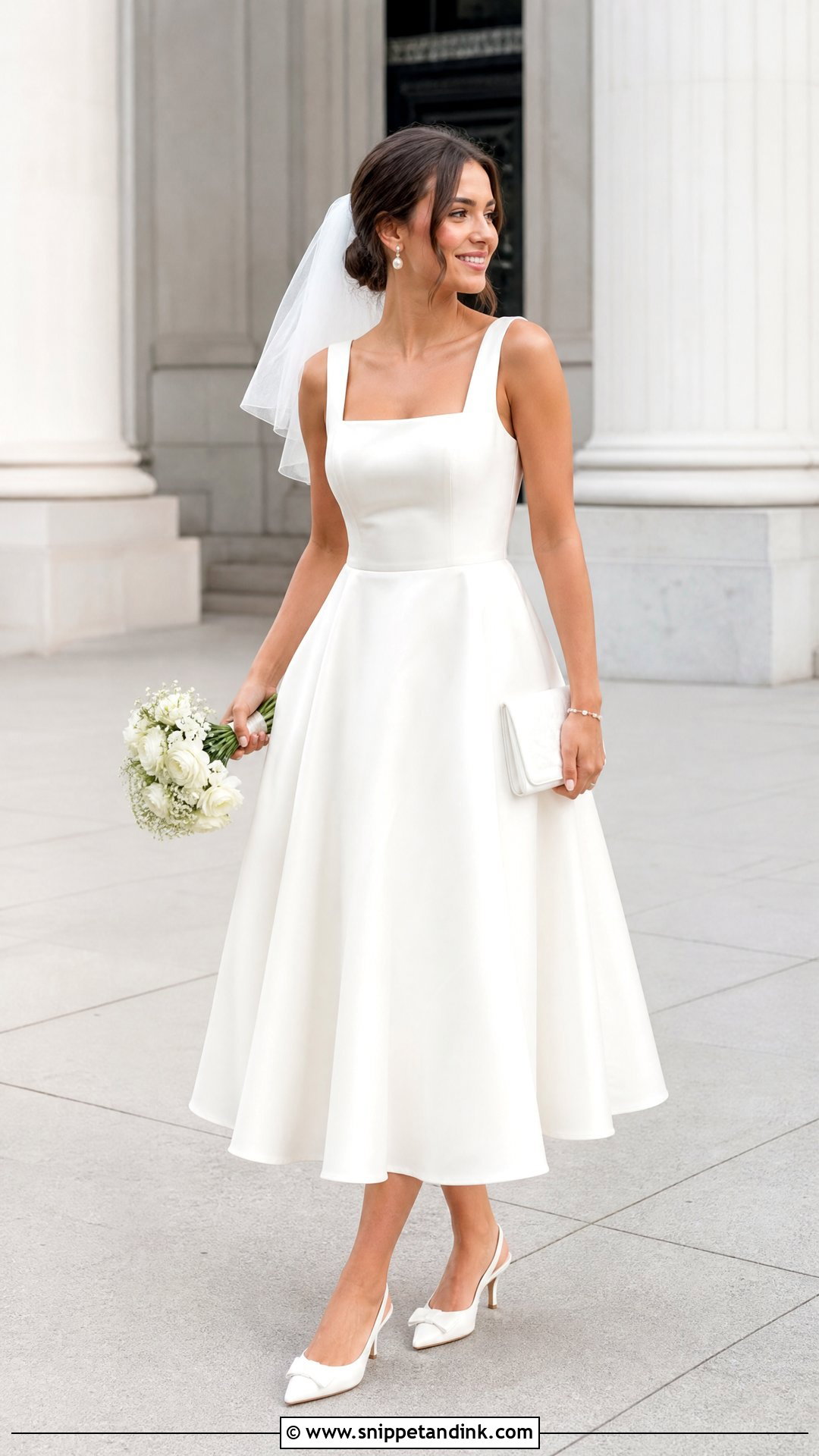
Tea length suits courthouse ceremonies, gardens and smaller weddings, and it puts your shoes on show. A fitted bodice and softly structured A-line skirt keep the shape classic; a square neck or wider straps make it more modern. Slingbacks, pearl earrings, a short veil and a white clutch complete it. Hem placement matters more here than on a long gown. Ending at the widest part of the calf shortens the leg, so the tailor should find the point just below it. Wear shoes you can stand in all day, with clean soles.
8. High Neck Bridal Dress
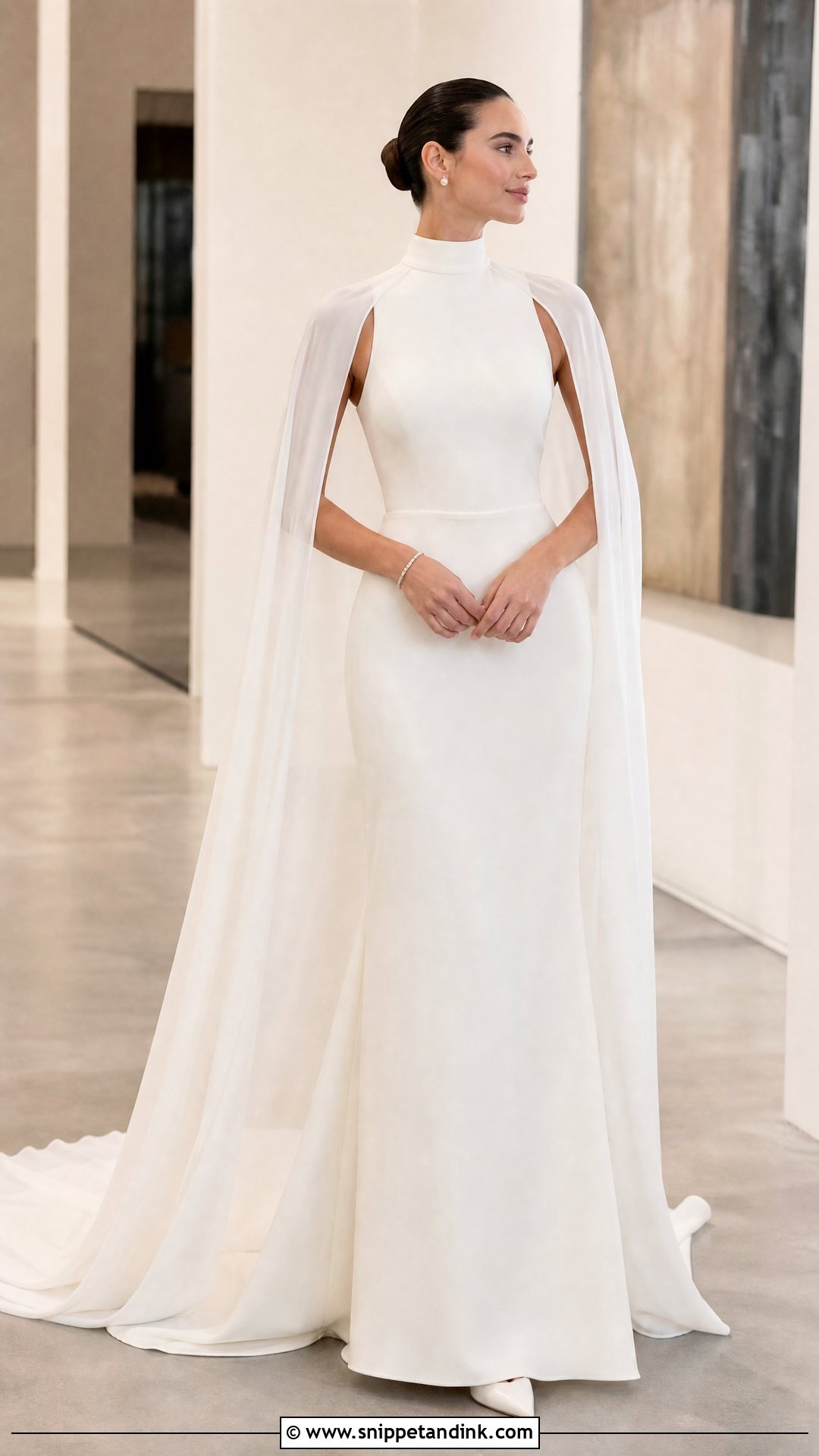
A high-neck bridal gown in smooth crepe or satin looks modern when the rest stays simple: sleeveless bodice, narrow A-line or column skirt. Hair goes up or back. A cape veil from the shoulders keeps the neckline clear better than a traditional veil. With a shorter neck, a full collar can look cramped; a slightly lowered mock neck opens it up. Check that the collar doesn’t rub or fold, and that the shoulders are altered so fabric doesn’t gather across the upper chest.
9. Cowl Neck Sheath Bridal Dress
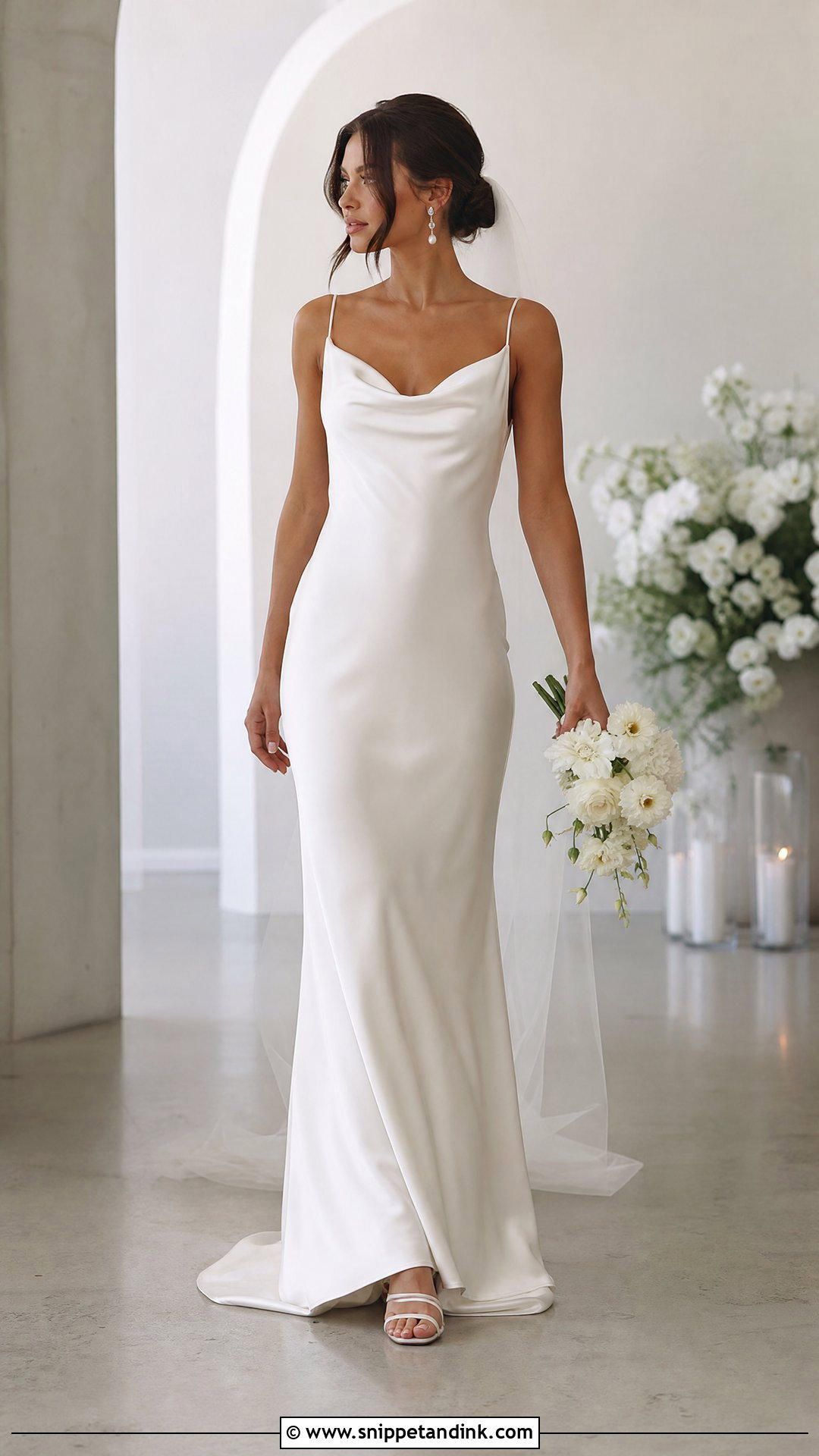
The cowl’s soft folds are the only detail on this sheath, so the fabric has to drape rather than stand stiff. Silk, satin or light crepe all work. A fitted sheath skirt suits modern venues and destination weddings. Pair it with fine drops, a low twisted bun, strappy sandals and a sheer fingertip veil. Cowls gape when you lean forward, which is exactly what you do when signing the register or hugging a short relative. Ask for discreet internal tacking or use fashion tape, and check the skirt gives you room to walk.
10. Bateau Neck A-Line Bridal Dress
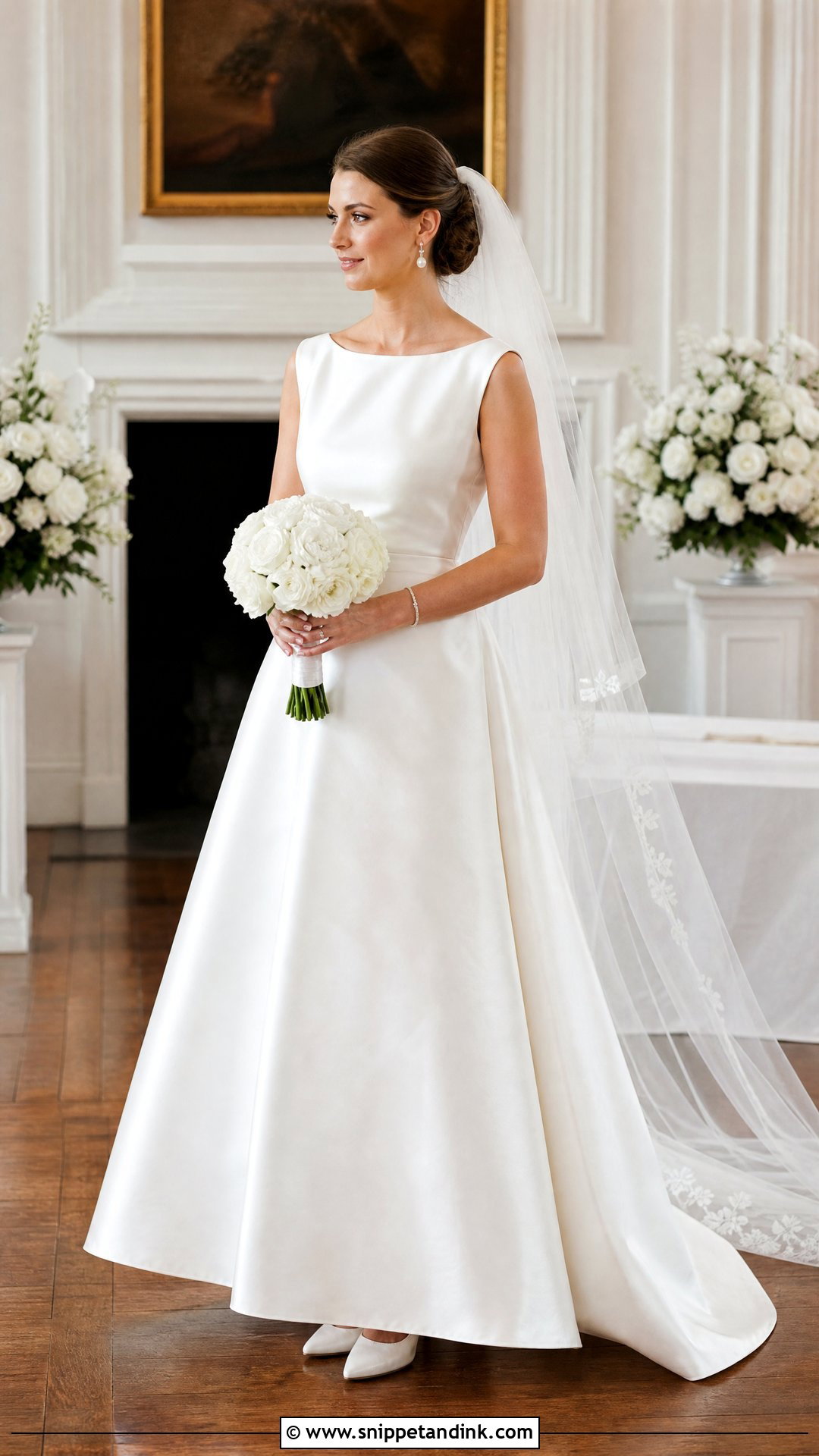
A bateau-neck A-line gown runs the neckline from shoulder to shoulder along the collarbone, covering the chest while framing the face. Smooth satin, crepe or Mikado with a fitted waist and plain skirt is the classic version. A low bun and pearls suit it, with a cathedral veil for formal ceremonies or a shorter one for relaxed ones. A perfectly straight bateau can make broad shoulders look broader, so a slight curve in the neckline helps. Pressing, hemming and seam placement all show on a plain gown.
11. Chiffon Empire Waist Bridal Dress
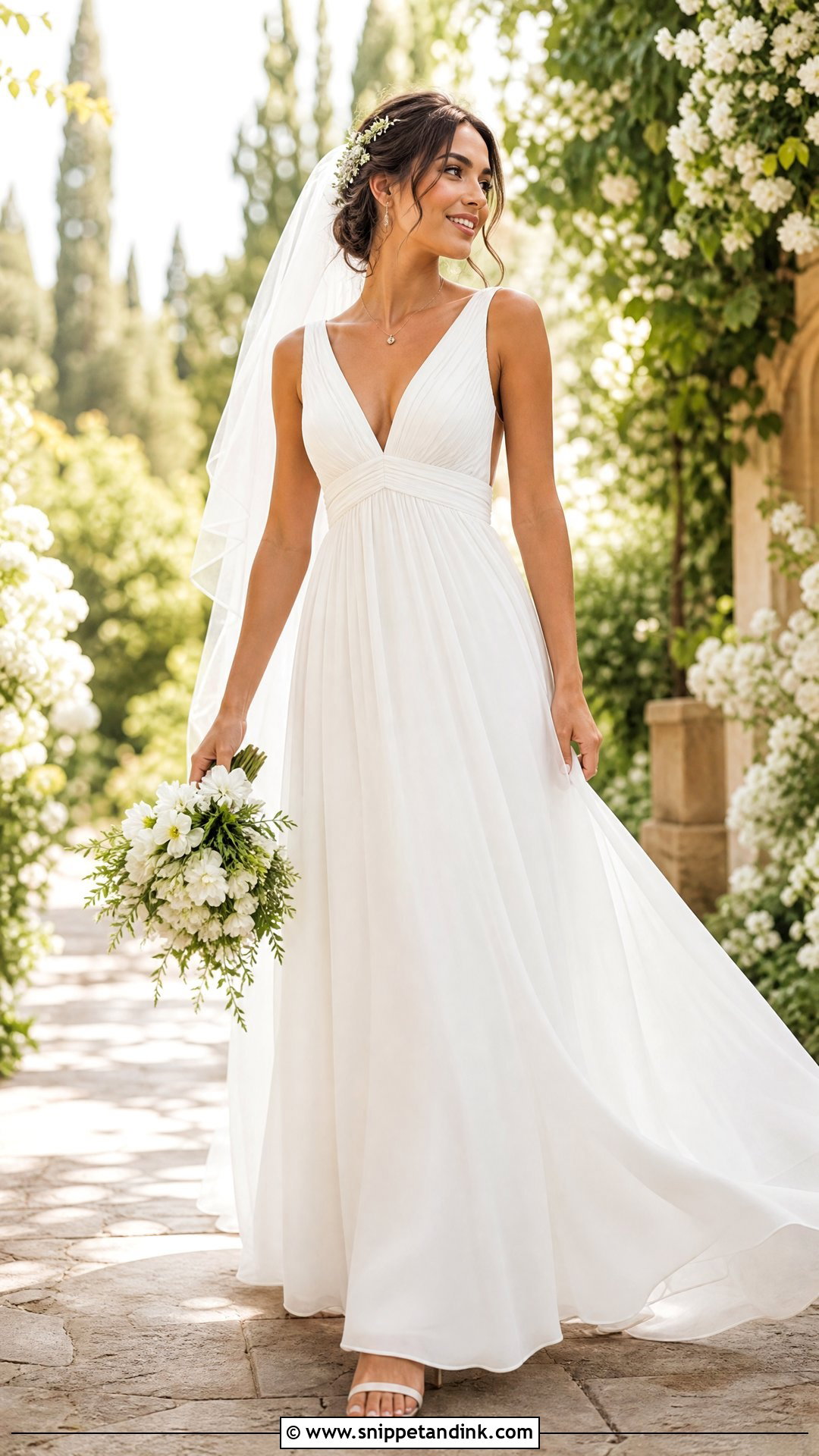
Chiffon and an empire waist are an easy pairing for a warm outdoor wedding. The seam sits just below the bust, so nothing presses on the waist or hips, and the skirt moves in the breeze. Choose a V or gathered scoop neck with wide straps for support. Chiffon is sheer and very light, so it needs an opaque, breathable lining and enough weight in the hem to stop it blowing up. The hem should just clear the ground in your shoes. Block-heel sandals and a floral hairpiece suit it, and a wrist loop helps with the skirt.
12. Scoop Neck Mikado Bridal Dress
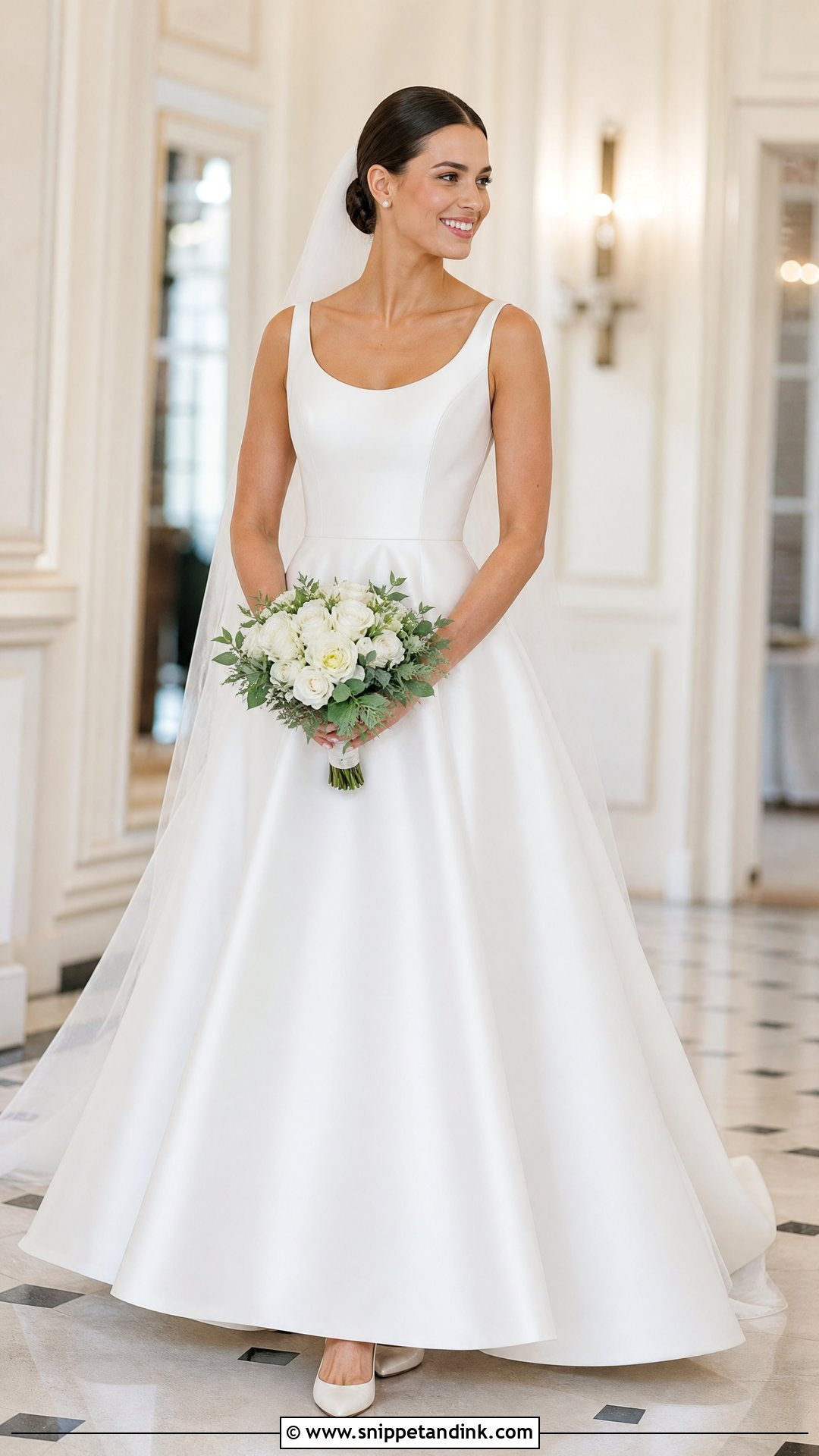
Mikado is crisp, slightly stiff and holds its shape without decoration, which makes a scoop-neck Mikado gown an easy way to get presence without lace. It suits an A-line or a restrained ball gown. A sleeveless bodice with broad straps and few visible seams looks cleanest. Pearl studs, a smooth bun, ivory pumps and a plain chapel veil finish it. If there are pockets, keep them for light items; heavy keys or a phone pull the skirt out of shape. Check the scoop lies flat and the waist seam sits at your natural waist.
13. Basque Waist Ball Gown Bridal Dress
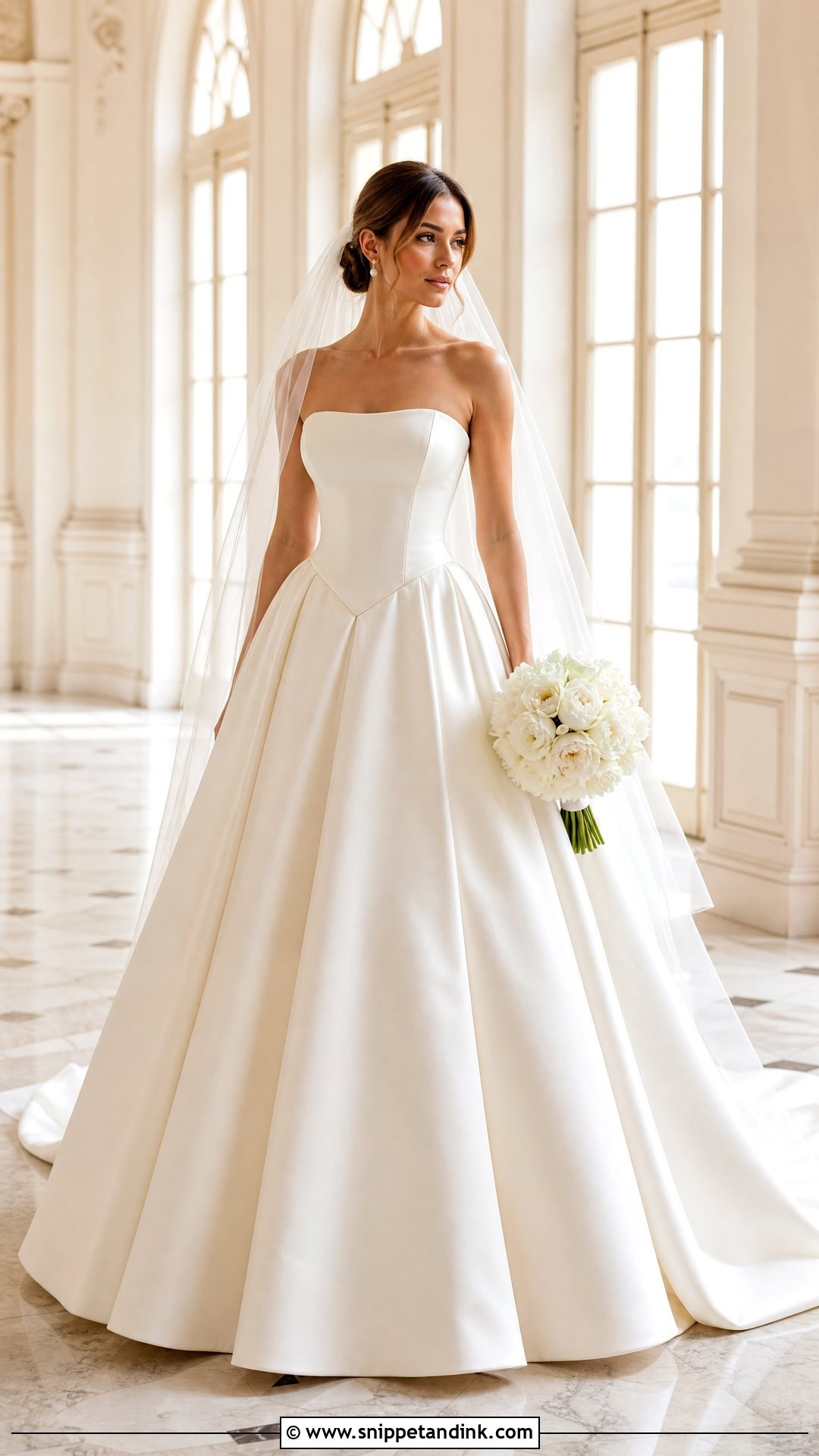
The basque point dips below the natural waist into a soft V before the skirt opens, and on a plain satin or Mikado ball gown that shape is the whole design. It needs careful fitting. The point should follow your body without pinching at the hip, and a shorter torso usually suits a shallower dip. Ask about skirt weight, petticoats and bustle placement before you buy, because a full skirt in heavy Mikado gets tiring. Pearl earrings, a single-layer veil and a structured bouquet keep it formal.
14. One Shoulder Bridal Dress
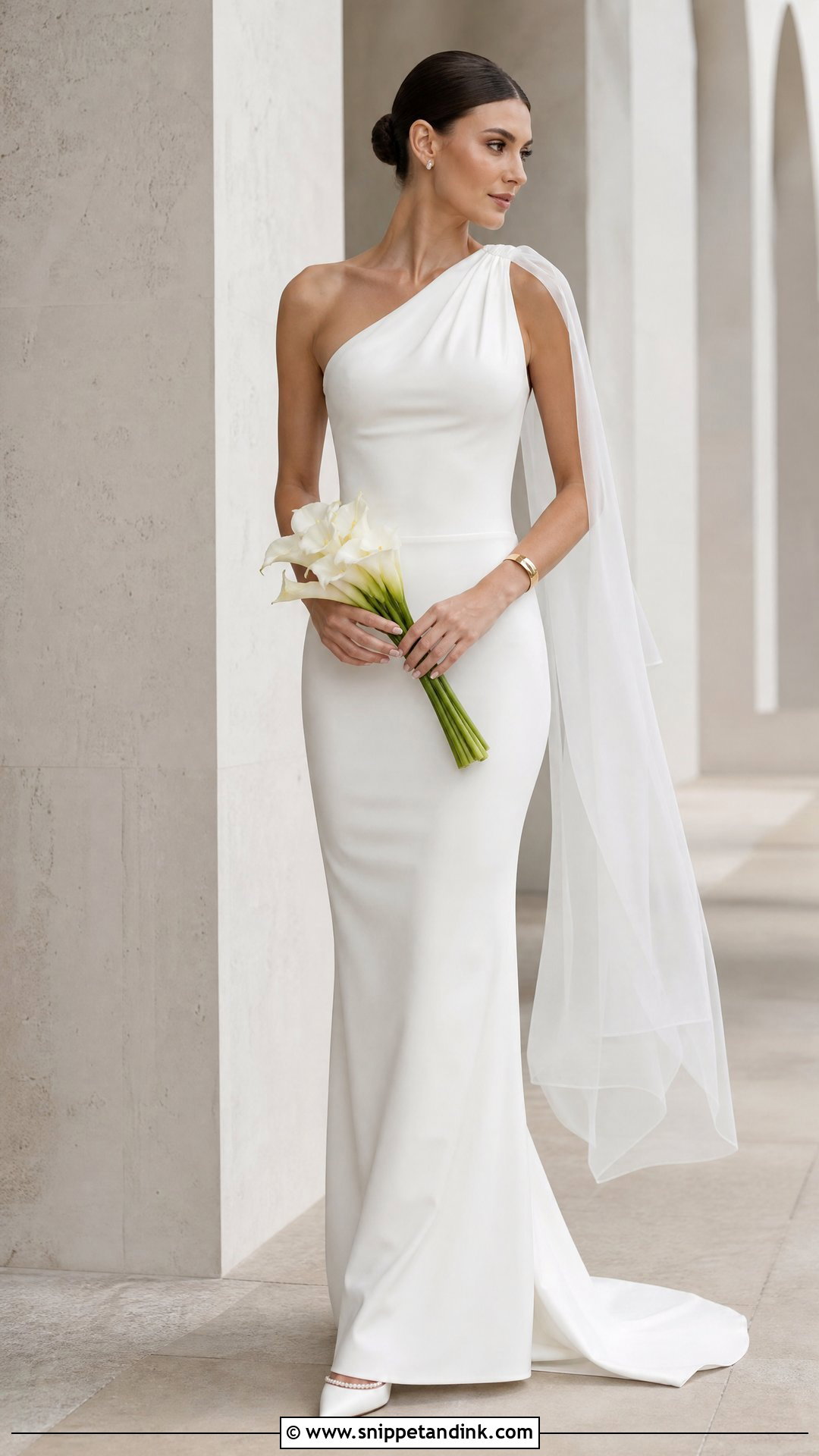
One shoulder gives a plain gown a strong diagonal line without any decoration. Smooth crepe or satin works with an A-line, sheath or column skirt. The bodice must lie flat against the chest; any ripple along the diagonal edge is very visible. Skip the necklace, wear a cuff on the bare-shoulder side, and keep the hair in a low bun. The single strap carries more weight than two would, so check it doesn’t dig in, and ask for hidden inner support if you’ll be dancing a lot.
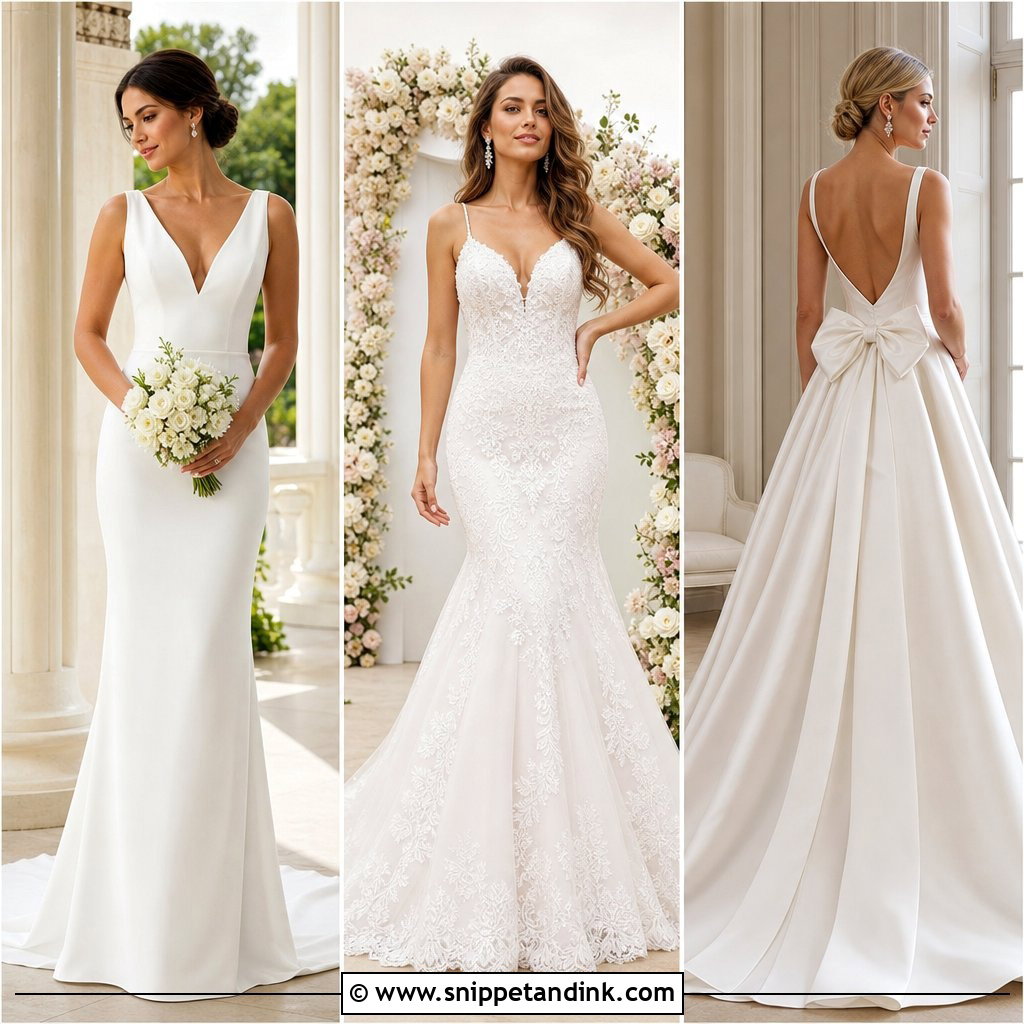


15. Halter Neck Bridal Dress
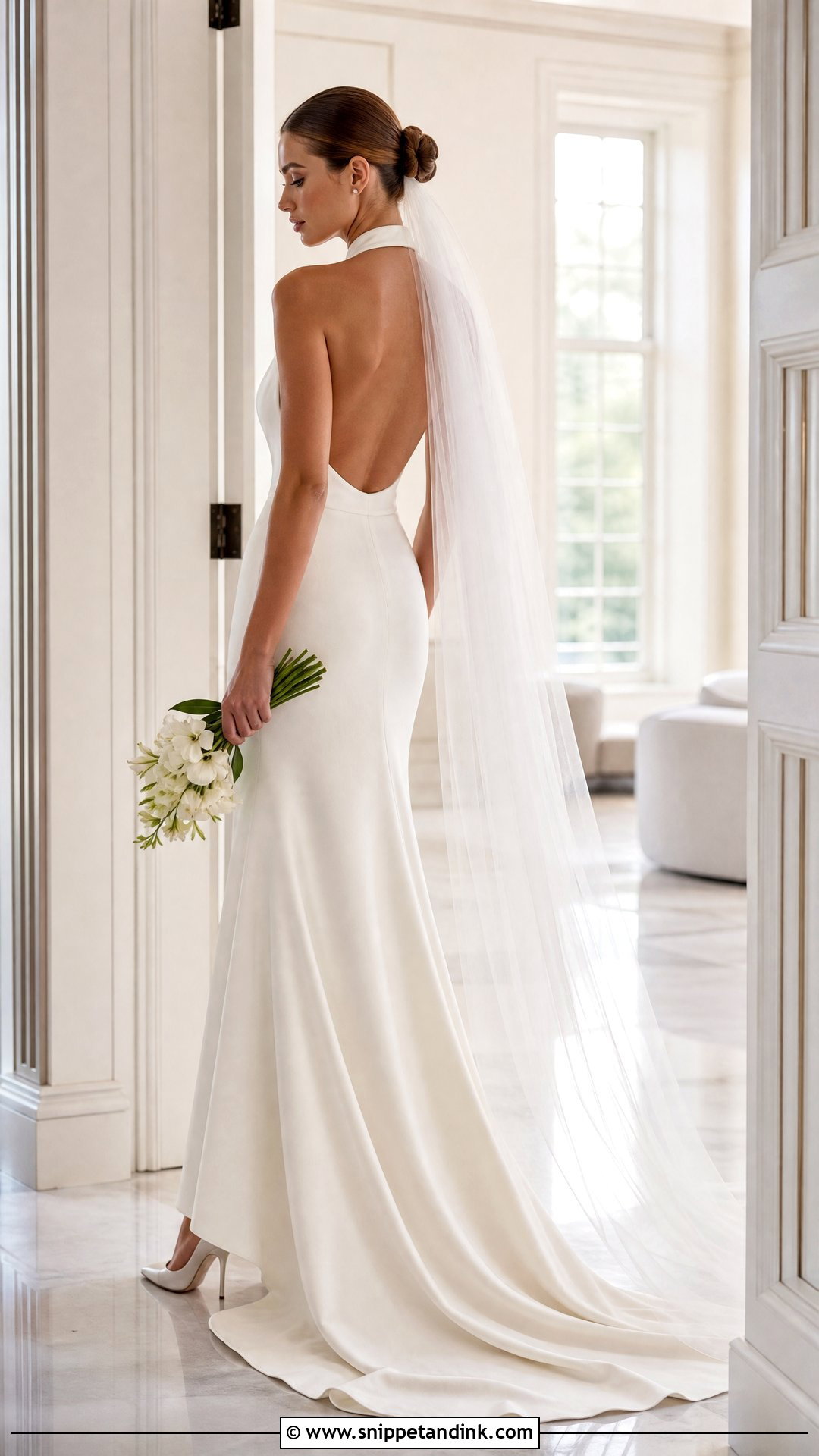
Halters draw the eye to the shoulders and give a long line through the upper body. A high halter with a fitted crepe skirt is sleek; a gathered satin halter with an A-line is softer. The back can be open, but the neck and bust still need secure support. Hair up, stud earrings, no necklace. The neck strap is the thing I test hardest at fittings. Too much tension feels fine for ten minutes and gives you a headache after four hours. Also check the underarm doesn’t gape.
16. Cap Sleeve Bridal Dress
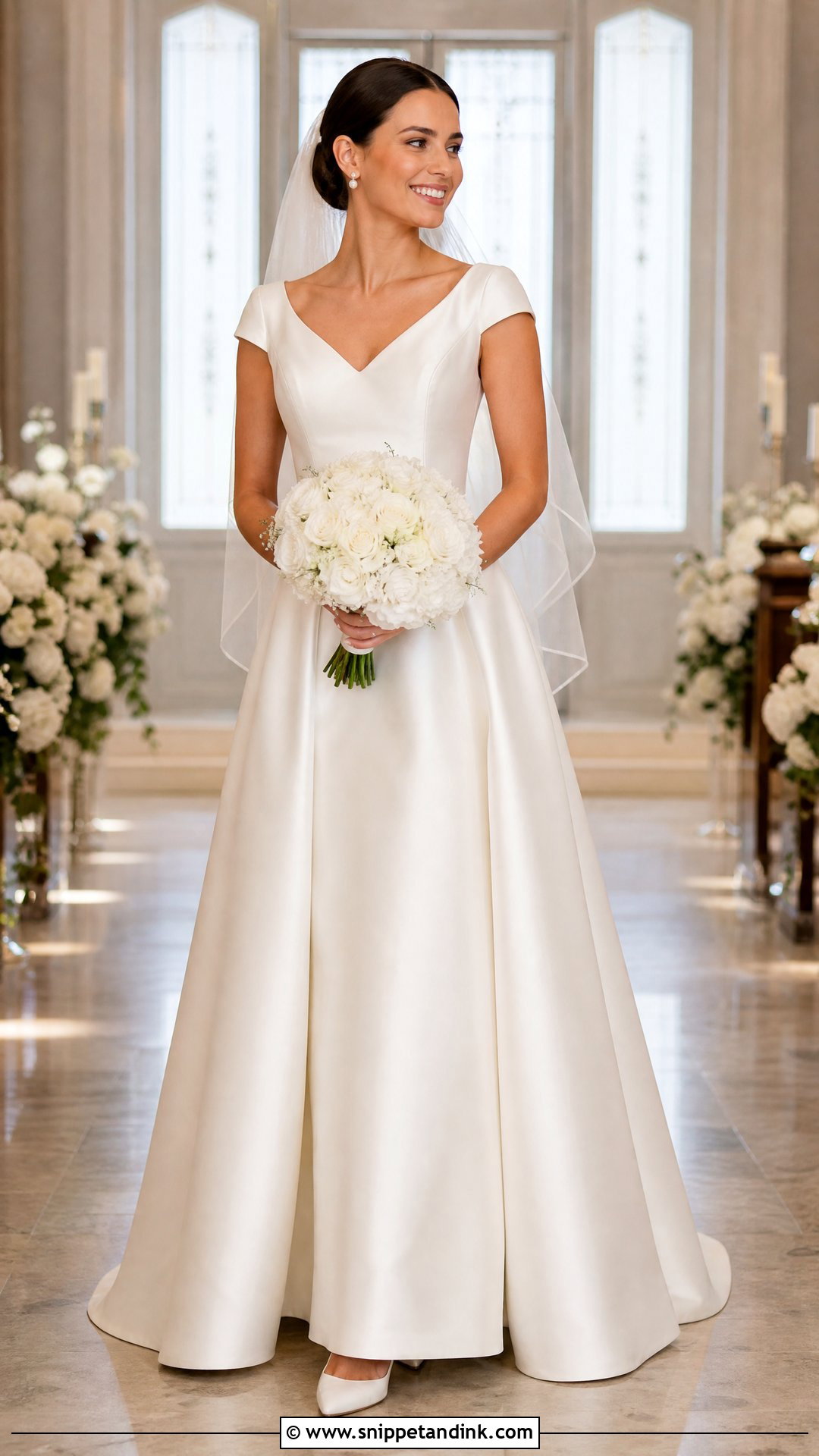
Cap sleeves add a little shoulder coverage and a traditional feel. Plain crepe, satin or silk keeps it simple. A fitted bodice and flowing A-line skirt suit many figures. A fingertip veil, pearl earrings and a low chignon complete it. Fit the sleeve point carefully; a cap sleeve set too far in pulls across the upper bodice and restricts your arms. A curved V or modest scoop neck balances the coverage.
17. V Neck Chiffon Bridal Dress
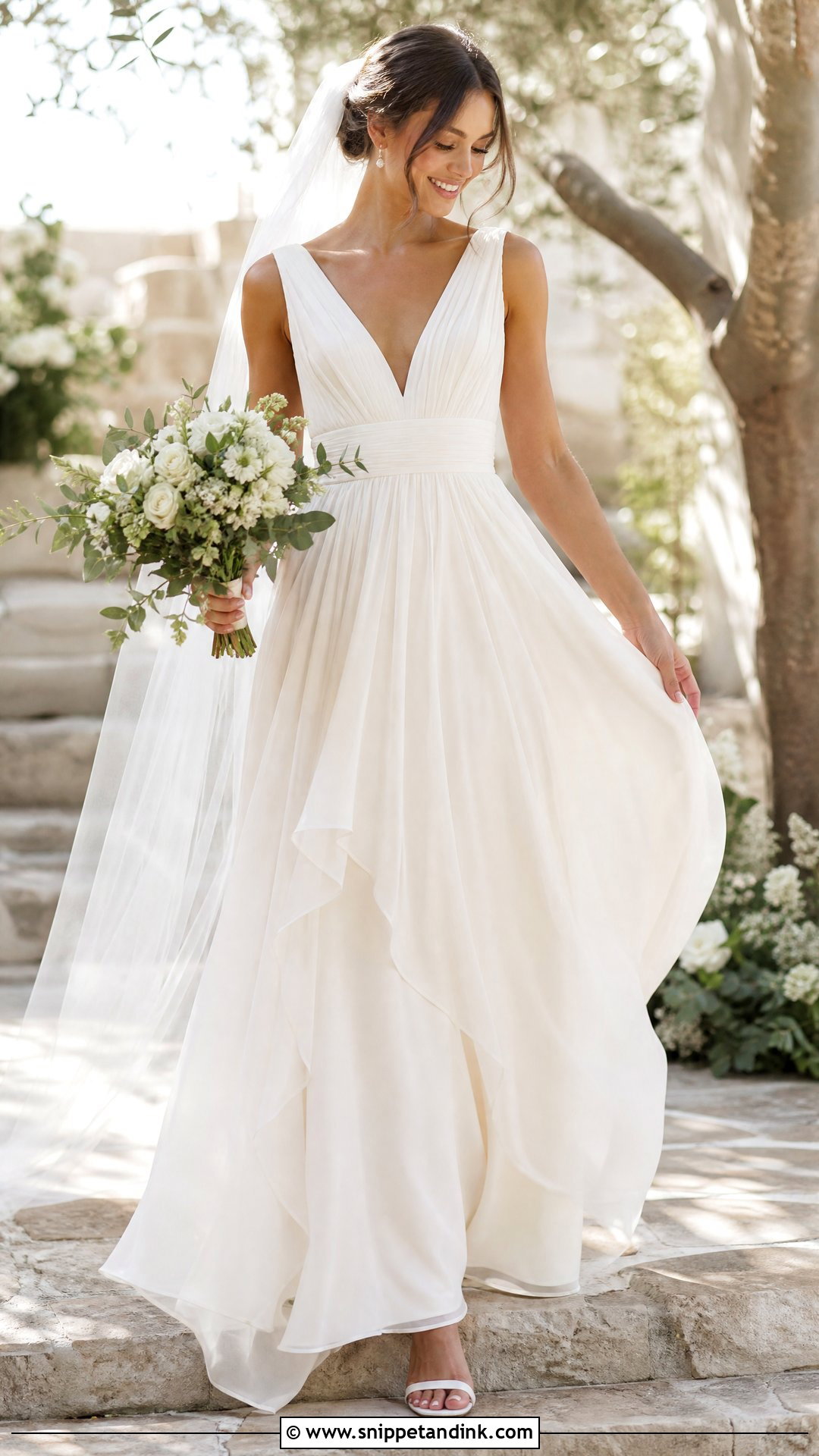
V-neck chiffon is soft and easy to move in. The V gives vertical definition, and the gathered waist and flowing A-line skirt are comfortable all day. Wider straps add support or modesty. A fully lined bodice keeps the fabric secure and opaque. Adjust the V depth at alterations; what feels fine standing can feel deep when you bend. The lining must be shortened slightly more than the chiffon so it never peeks out. Block-heel sandals, loose waves and a natural bouquet in white and green suit it.
18. Minimalist Mermaid Bridal Dress
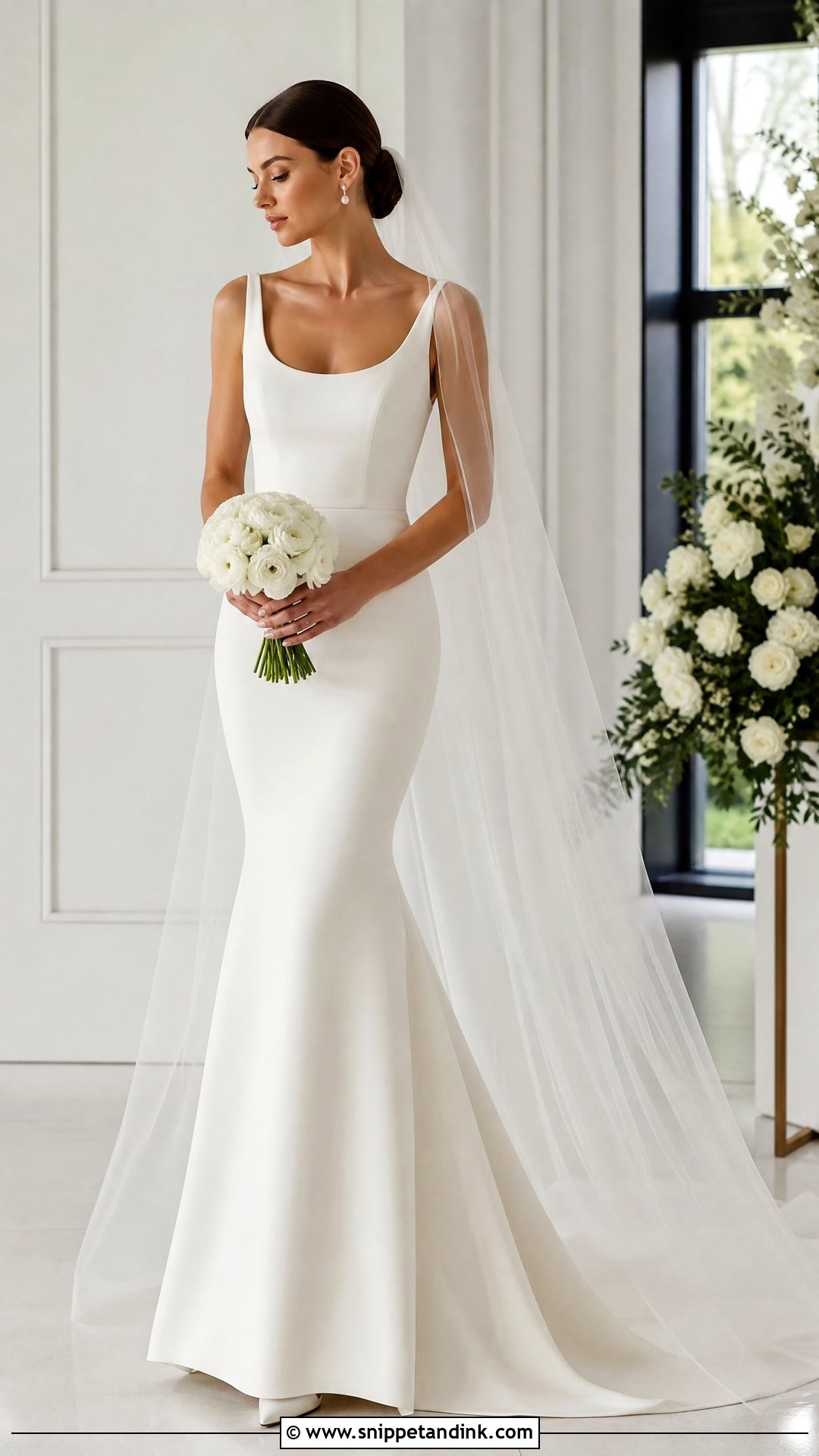
A plain mermaid gets its drama from the fit alone. Smooth crepe follows the body with a clean matte finish. The gown fits through bodice, waist and hips before widening at the knee. Practise sitting and taking full steps at fittings; if the flare starts too low, you’ll shuffle. Ask the tailor to check seams from front, sides and back, because any twist in a fitted skirt is obvious. Shapewear can smooth the line if you want it. A low bun, pearl drops and a compact bouquet keep the shape visible.
19. Modest Satin Bridal Dress
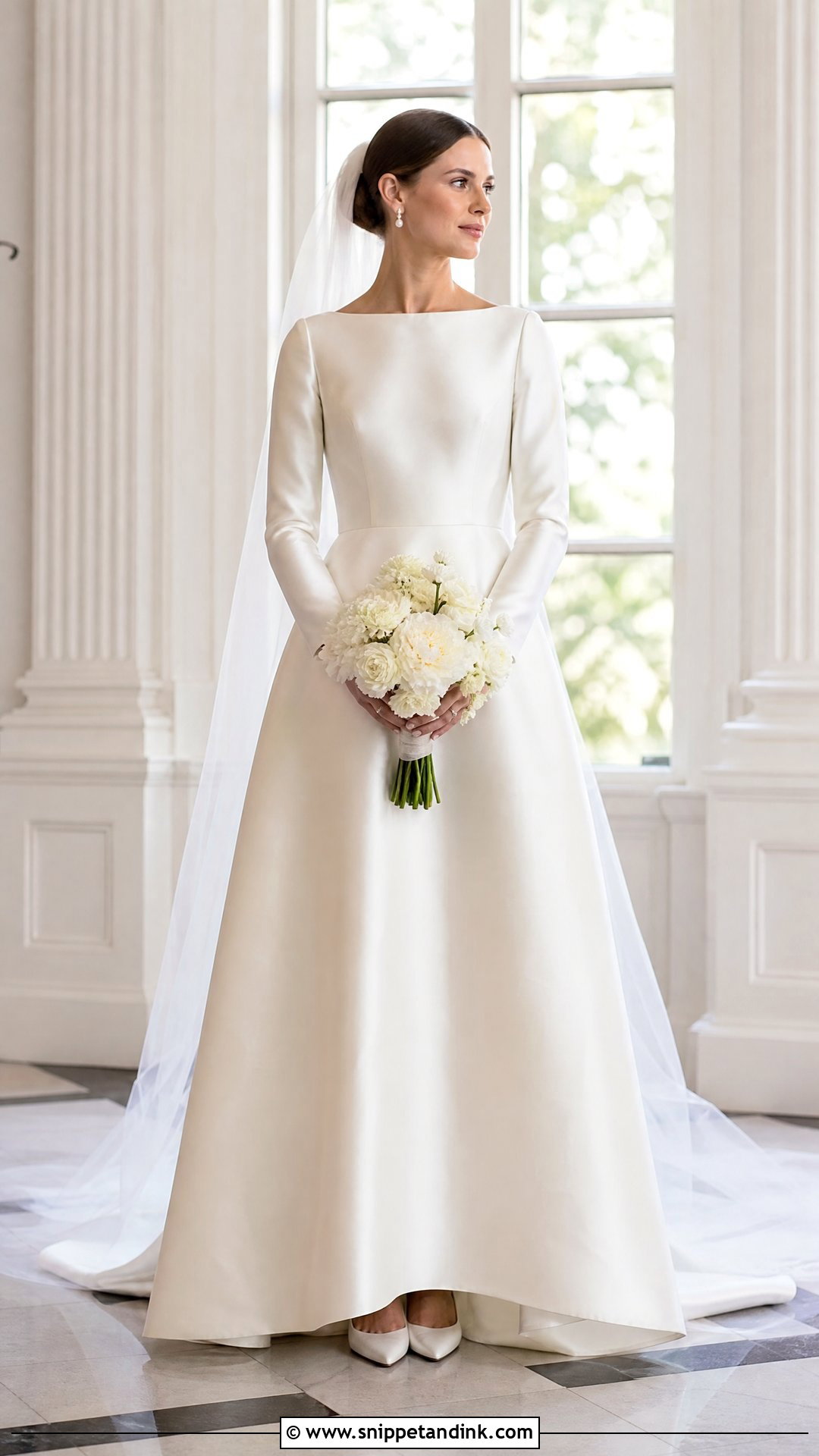
Full coverage in satin can look light rather than heavy if the satin is medium-weight and the lining smooth. Long sleeves, a rounded or bateau neckline, a defined natural waist and an A-line skirt give a balanced shape. Fabric-covered buttons down the back add quiet detail. A plain cathedral veil adds length. Undecorated satin shows every seam, so tailoring decides how this gown looks. Check cuffs, shoulder seams, hem and waist placement carefully at each fitting.


20. Courthouse Midi Bridal Dress
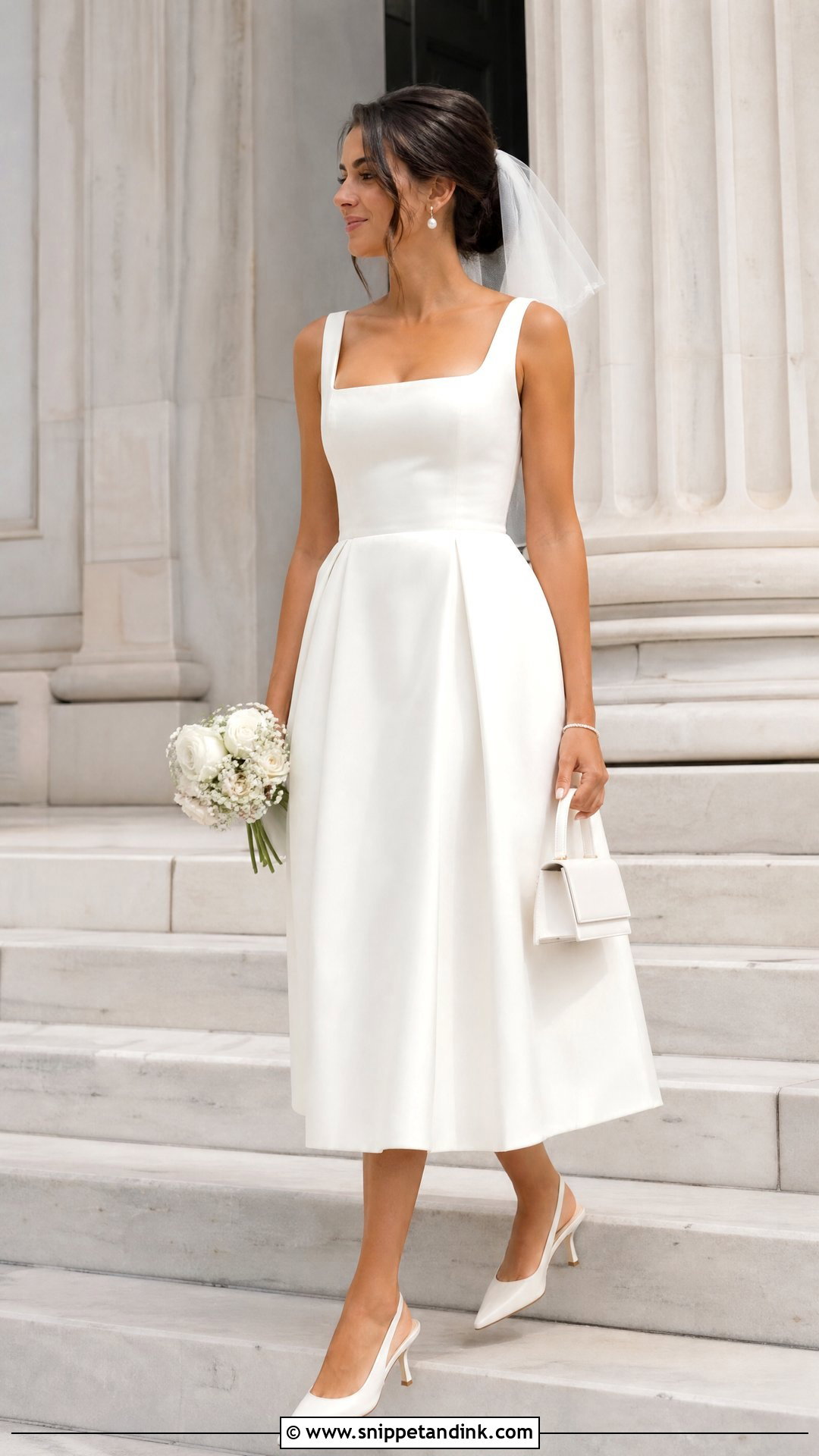
For a civil ceremony, a courthouse midi dress looks polished in city photos without the bulk of a long gown. A structured ivory dress with a square neck, defined waist and hem below the knee works. Sheath is sleeker, a soft flare moves more. Slingbacks, a top-handle bag, pearl earrings and a short veil or hair bow make it clearly bridal. A tailored ivory coat adds cover in cold weather. Courthouses mean stairs and walking between places, so test the hem on steps, and make sure the bag holds your documents.
21. Beach Sheath Bridal Dress
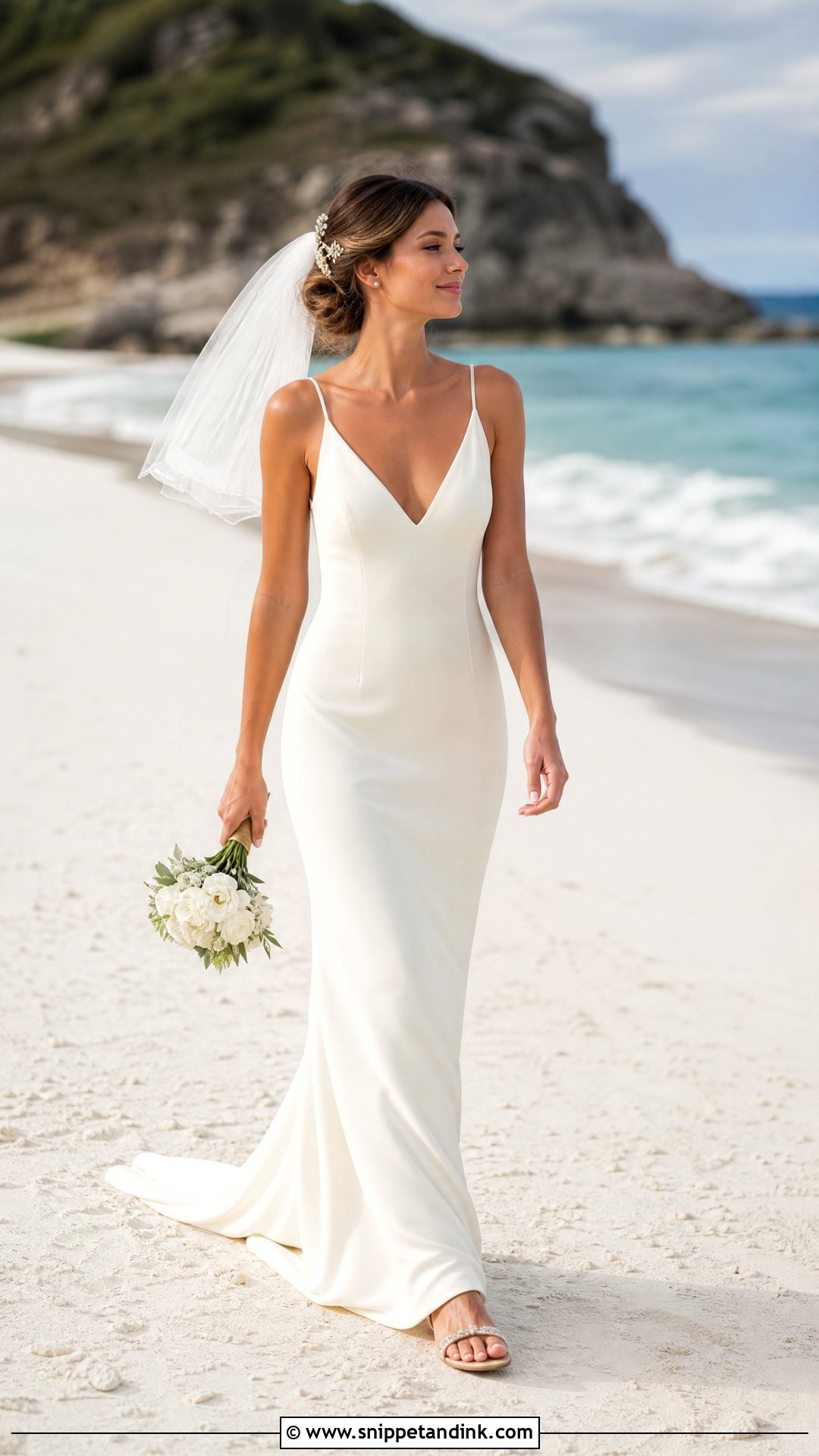
A beach ceremony needs a dress that won’t drag or blow about, and a light sheath does both. Breathable crepe, chiffon or silk with a simple V and a narrow train is ideal. Line it; bright sun turns unlined pale fabric see-through. Long veils whip around in sea breeze, so I’d go for a short veil or a sheer shoulder cape pinned firmly. Keep the hem off the sand, fitted in the exact sandals you’ll wear. Pearl studs, a hair comb, a loose low bun and a small bouquet are enough.
22. Plus Size A-Line Bridal Dress
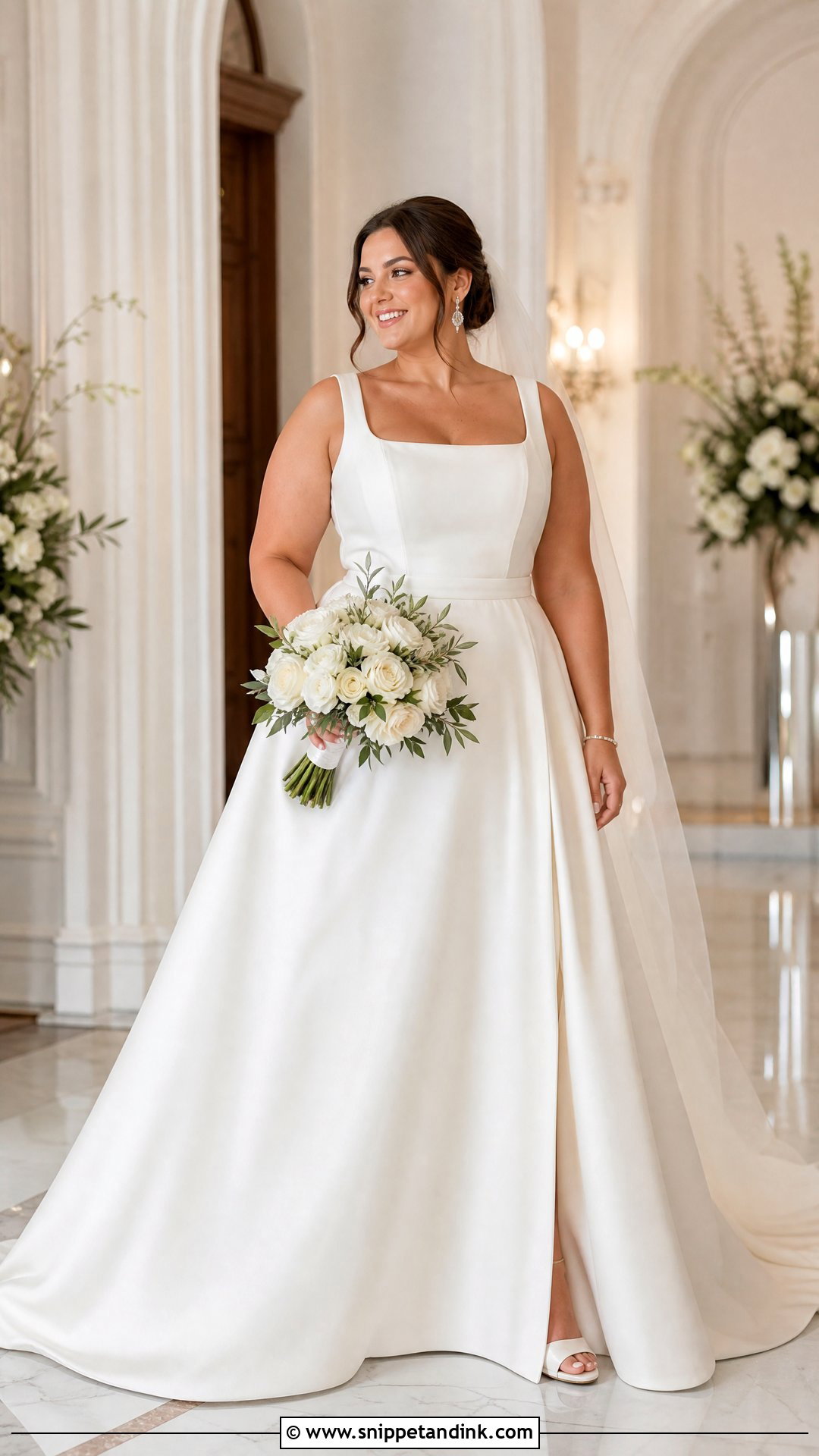
For plus-size brides, construction matters more than style. A structured bodice with wide straps, built-in cups and internal boning gives real support. A V or square neck frames the face, and a natural waist and flowing skirt create balanced proportions. Crepe, satin or Mikado depending on how much structure you want. Order for your largest measurement and tailor the rest; the size label is irrelevant. Ask about reinforced closures, bust support, a comfortable lining and a bustle that’s easy to fasten. Supportive block heels and a chapel veil complete it.
23. Petite Column Bridal Dress
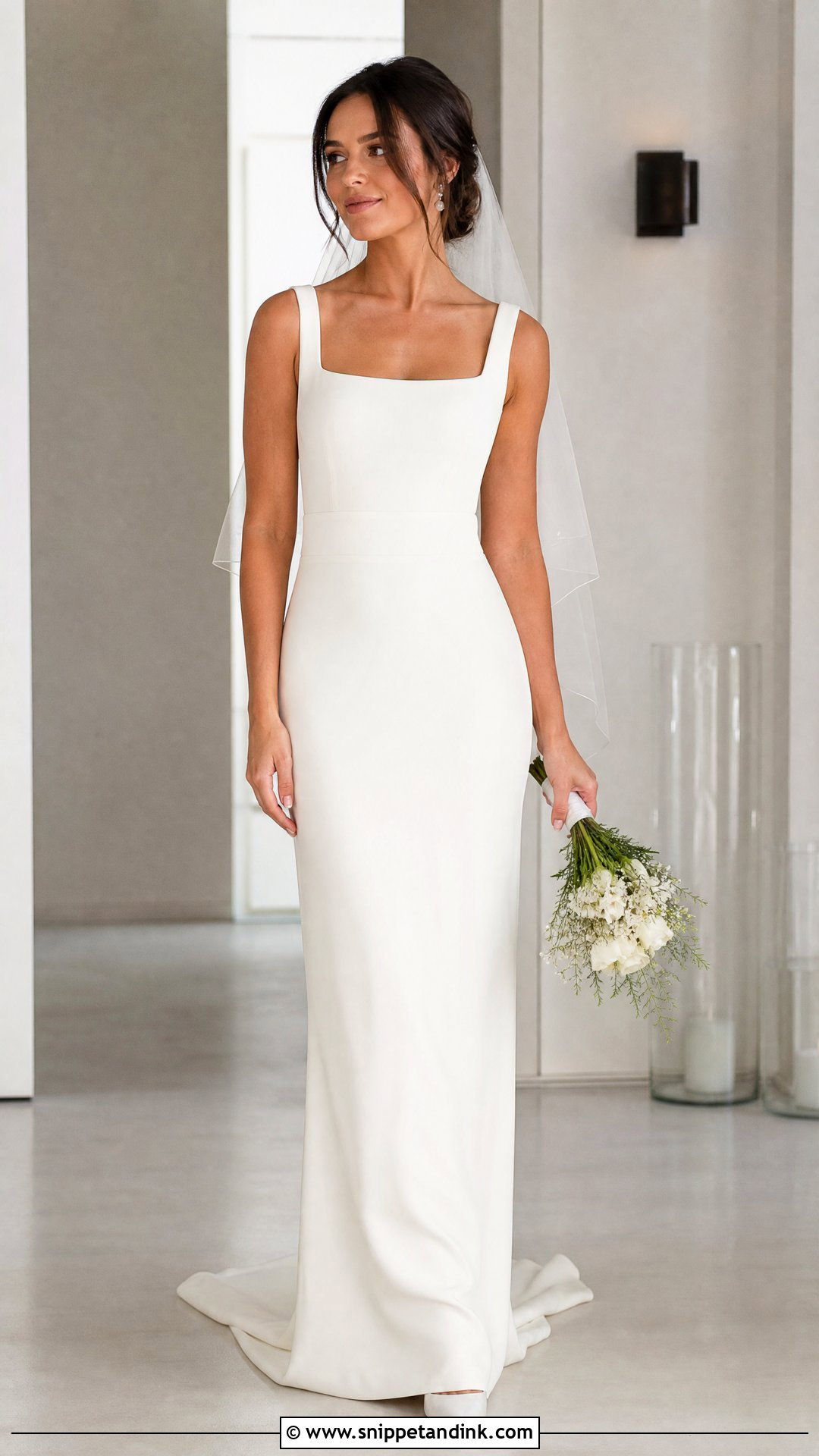
On a petite frame, a column keeps the line unbroken from shoulder to floor, which visually adds height. A raised or natural waist, few horizontal seams and a skirt that skims the body work best. Avoid a long train; it swamps a small frame. Pointed heels, fine earrings and a fingertip veil under a smooth bun keep it narrow. Petite alterations usually go beyond hemming. Bodice length, strap placement, waist position and skirt proportion may all need adjusting, so bring your wedding shoes to every fitting.
24. Maternity Empire Waist Bridal Dress
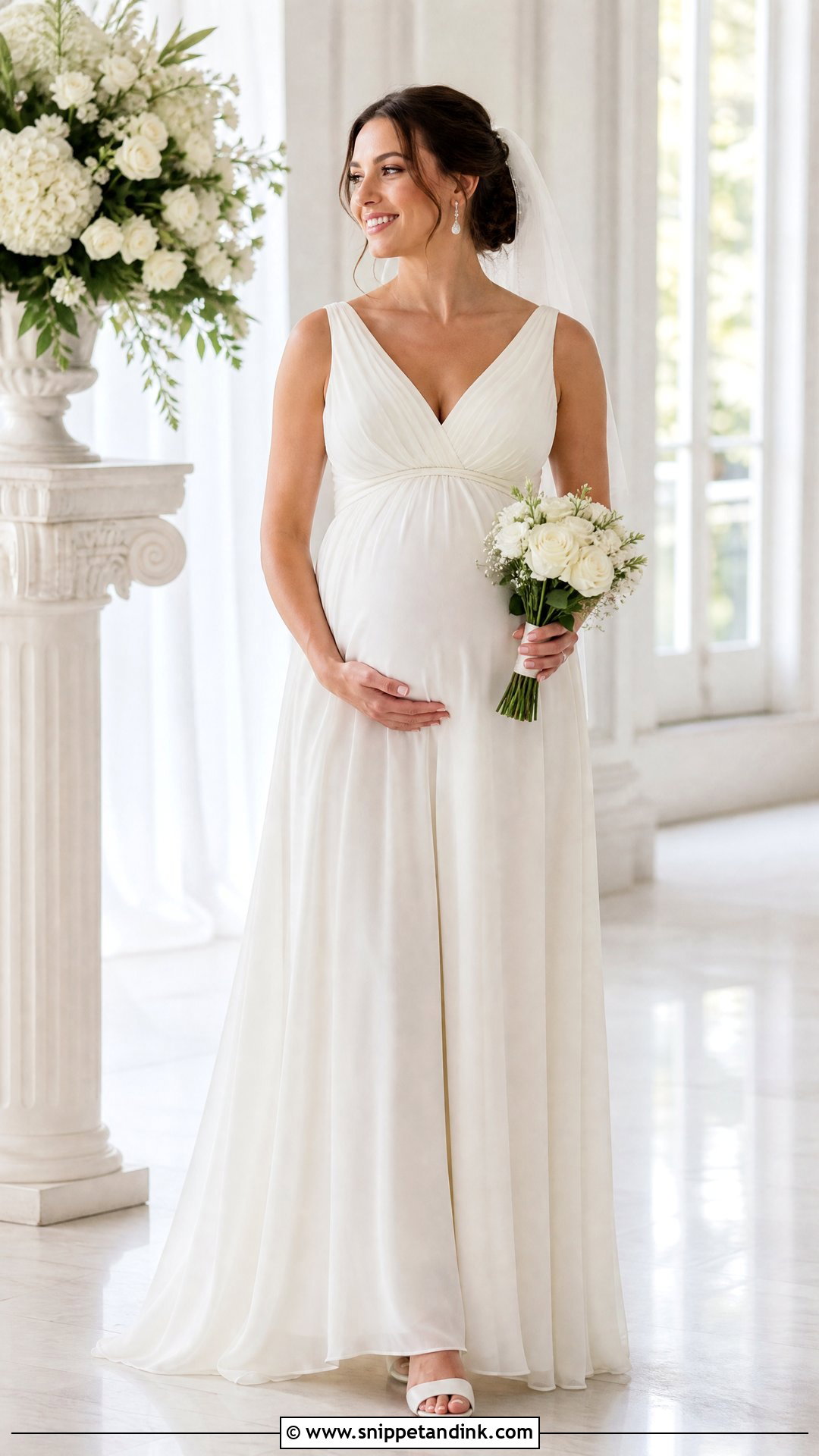
An empire waist is the obvious maternity shape because the bodice fits above the bump and the skirt falls freely beneath. A maternity empire-waist gown in stretch chiffon, soft crepe or jersey with a smooth lining and little internal boning stays comfortable. A V neck with supportive straps balances it. Low block heels or flats and a short veil on a soft updo keep things light. Bodies change week to week, so schedule the final alteration as close to the wedding as your tailor allows, and measure the hem over the bump in your chosen shoes.



25. Reception Mini Bridal Dress
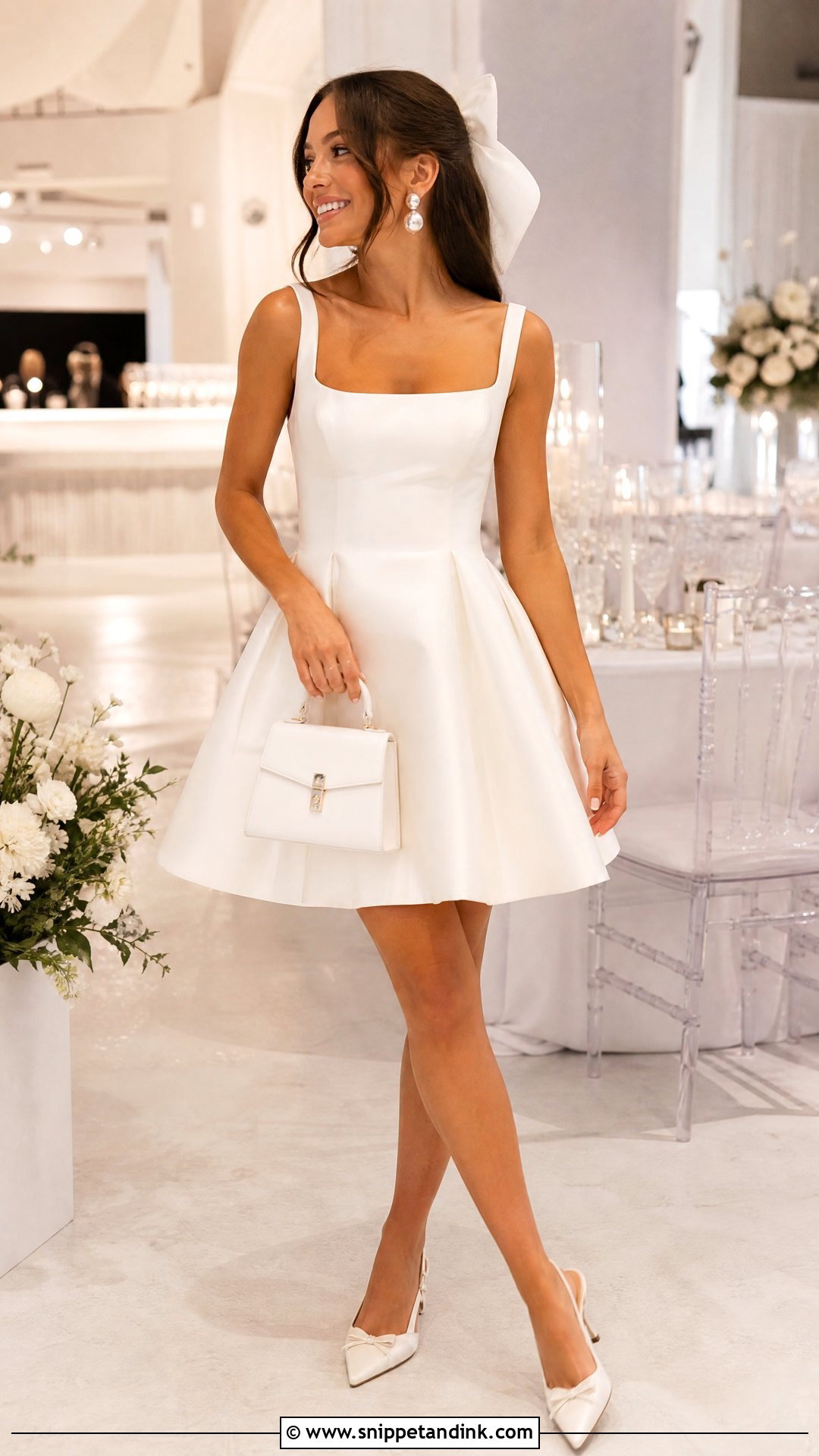
A mini works as a reception dress, a second look or an informal ceremony outfit. A structured A-line, tailored sheath or long-sleeve shift in satin or crepe stays polished. The hem should be short enough to feel festive but long enough to sit in without worry. Slingbacks, pearl earrings, a top-handle bag and a short veil or big bow keep it bridal. If you’ll be dancing, wear cushioned shoes and consider built-in shorts or a smooth lining. One detail is plenty; the short length is already the statement.
The Underwear Question Nobody Mentions Until the Fitting
Plain fabric shows what’s underneath. Lace and beading hide a strap line or a seam; satin and silk advertise it. Sort this out before your first alteration appointment, because the gown will be fitted around whatever you wear that day.
Bras and built-in cups
Many simple gowns can have cups sewn in, which removes bra straps from the equation. Ask about it at your first fitting rather than the last.
Shapewear and seams
Choose laser-cut, edge-free pieces in a shade close to your skin, not white, which shows through ivory. Avoid anything with a hard edge at the thigh under a slip or sheath. Try the gown on in daylight with your exact underwear before the final fitting, and look from behind as well as from the front.
If the gown has an open or low back, a backless adhesive bra or a plunge bra fitted with a low-back converter strap usually works better than going without. Test whichever you choose through a full evening at home first, since adhesive can loosen with heat and dancing.
Plain Fabric, Precise Fit and Nothing to Hide Behind
A gown doesn’t need beading, heavy lace or volume to feel bridal. Good fabric, careful proportions and precise tailoring give even the simplest dress presence. The styles above cover fitted, flowing, modest, short, structured and light options for different bodies and settings. When you compare gowns, look at how the neckline frames your face, where the waist sits and whether you can move in the skirt. Try each one in shoes and underwear like those you’ll wear on the day. Then choose accessories that support the dress, and stop there.
You'll Like These Ideas:







Leave a Reply