
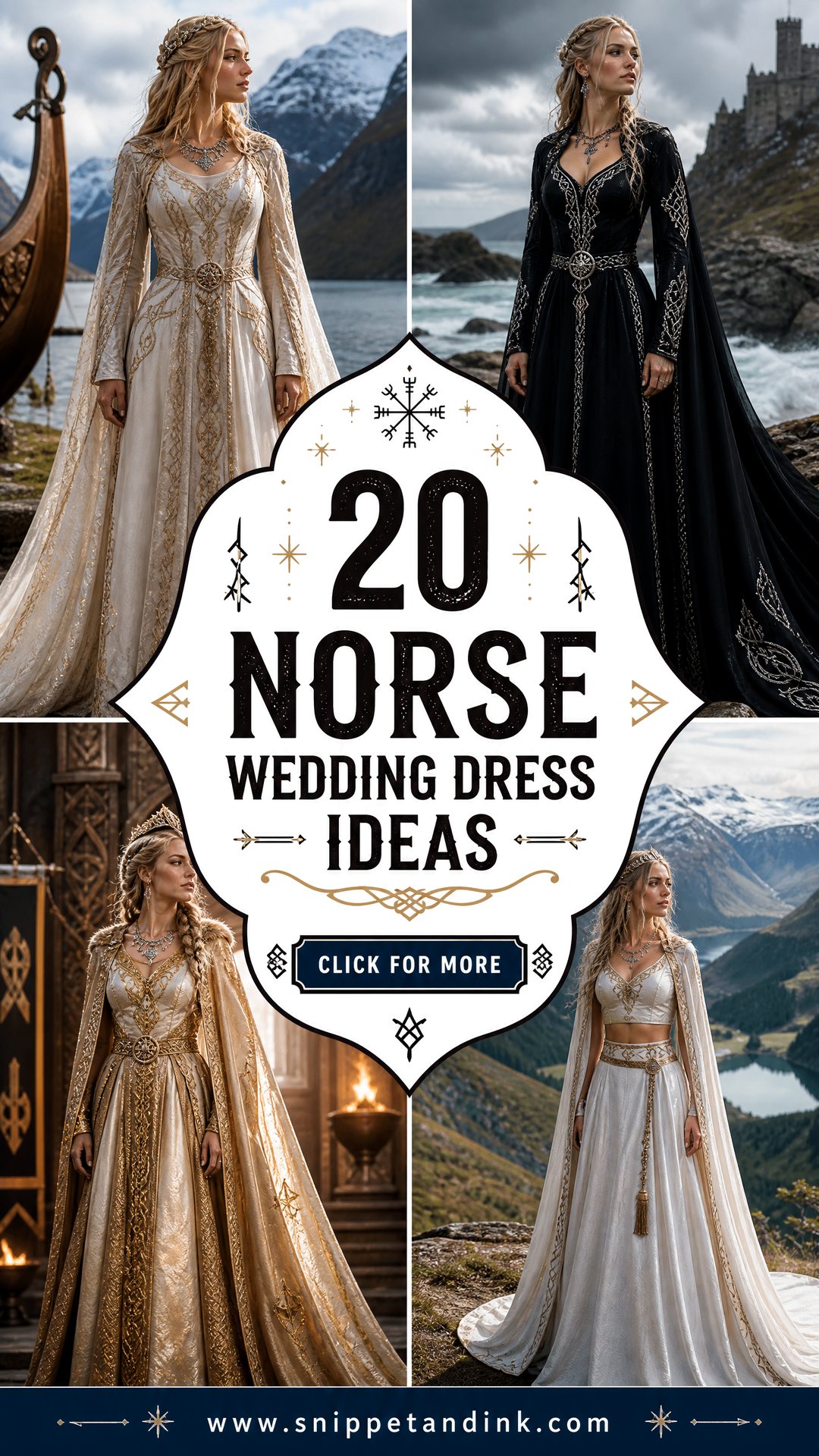
A Norse wedding dress usually starts from pieces linked to Viking Age women’s clothing: a linen shift, a wool overdress, a pair of shoulder brooches, a bead strand and a cloak for the weather. What actually survives of those textiles is fragmentary, so most gowns sold as “Viking” are interpretations rather than reconstructions. I see that as freedom, not a problem. When I style a Norse bride, I start with the venue and the climate, then build out from fabric, belt and braid, because those three details carry the theme far more than any single gown. The twenty outfits below run from near-historical to openly fantasy, each styled head to toe.
How Historical Do You Want to Look?
The first conversation I have with a Norse bride isn’t about color. It’s about where she sits on a line from reenactment to fantasy, because that one decision rules out half the options before we look at a single gown.
- Historically informed: wool and linen, an apron dress or simple shift, oval brooches, a tablet-woven belt. Expect plain shapes and no corsetry. This suits handfastings and venues with a heritage feel.
- Romantic medieval: a recognisable bridal gown with Norse details added, such as embroidered borders, a leather belt, a cloak and braids. This is where most of my brides land.
- Fantasy: leather bodices, fur collars, metal arm cuffs. It’s fun and dramatic, but call it fantasy so no knowledgeable guest is left correcting you at the bar.
Once you know your lane, mixing pieces between lanes is fine. The outfits that look off to me are the ones that pile up every Viking signal at once: fur, leather, horns, runes and armor on one body.
1. Ivory Linen Norse Wedding Dress
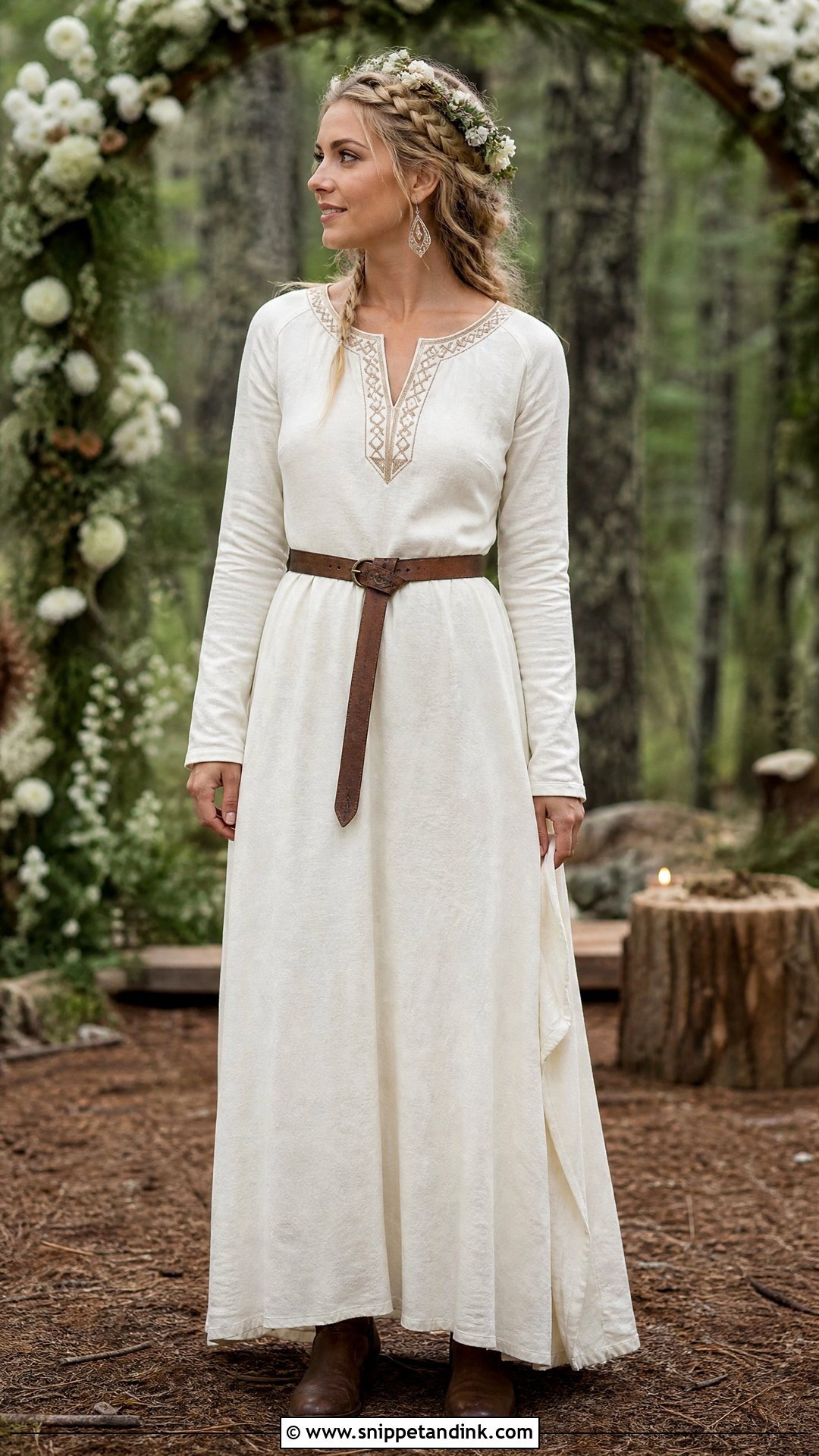
Ivory linen is the easiest starting point, and the one I suggest most to brides who are unsure how far into the theme they want to go. A floor-length dress with a softly fitted bodice, full skirt and long tapered sleeves, plus narrow geometric embroidery at the neckline and cuffs, already reads as Norse. A brown leather belt with a hammered buckle gives the shape structure; flat ankle boots, a small belt pouch and silver drops finish it, with a loose braided crown and a few small white flowers. Be honest with yourself about creasing. Linen wrinkles the moment you sit in the car, and I’d rather a bride embrace that soft rumple than fight it with a steamer all day. In warm weather it breathes better than almost anything else on this list.
2. Wool Apron Norse Wedding Dress
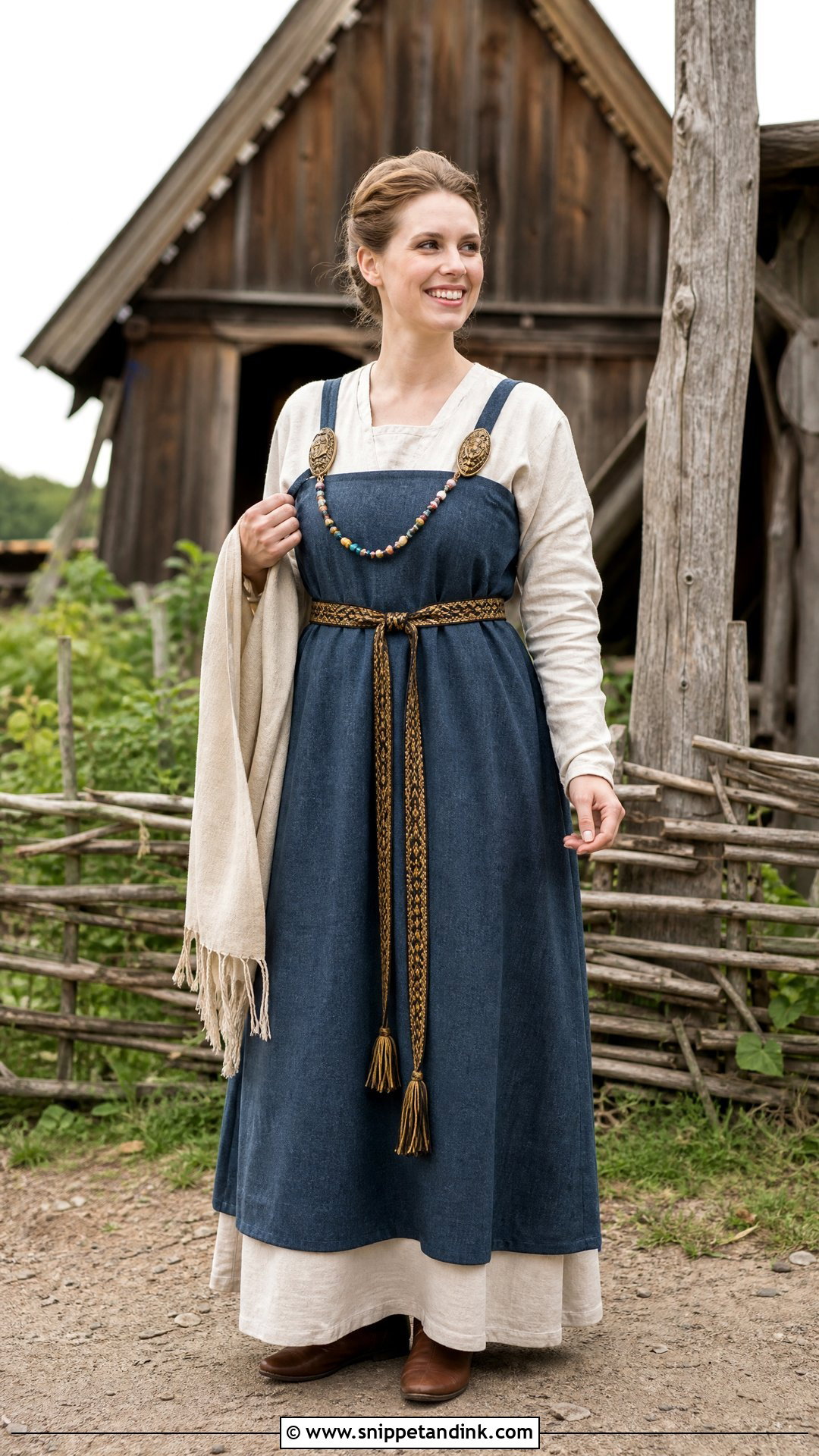
This is the most historically grounded outfit here: a wool apron dress layered over a long linen shift. Most interpretations show a strapped overdress fastened with oval brooches, though how it was cut and how widely it was worn is still argued over, so nobody can promise you an exact copy. Pick a muted blue, rust or olive overdress with an off-white underlayer, and join two bronze brooches with a short strand of glass beads. A woven tablet belt, leather shoes and a light shawl complete it. The thing I check first is brooch weight. Heavy cast brooches drag the straps forward on light wool, so I ask for a small reinforcing patch stitched behind each strap loop. Keep makeup fresh, because this look is about cloth, not glamour.
3. Forest Green Norse Wedding Dress
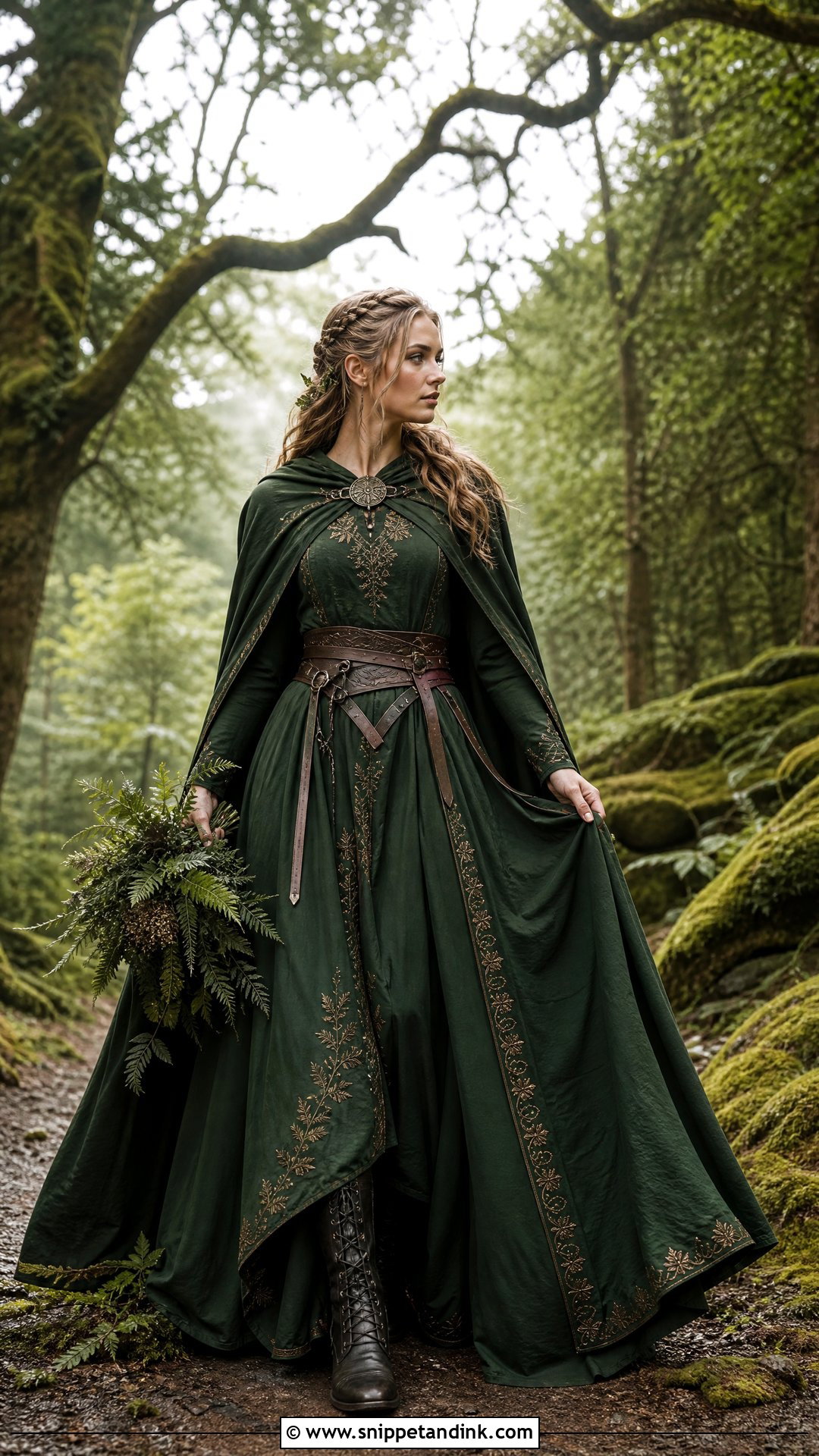
Forest green suits a woodland ceremony because it sits in the same family as the setting instead of competing with it. Look for a full-length gown with a fitted waist, square neckline and flowing sleeves, with gold or bronze embroidery at the neckline, waist and hem. A slim leather belt, dark lace-up boots and a structured cloak on a round brooch carry it outdoors. One caution from fittings: very deep greens can drain fair skin near the face, so if you’re pale I’d keep a cream shift or embroidered band showing at the neckline. A braided half-up style with fern or tiny cream flowers, bronze earrings and a simple pendant keep the sparkle low. Against pine and moss, the gown holds its own without looking costumed.
4. Burgundy Norse Wedding Dress
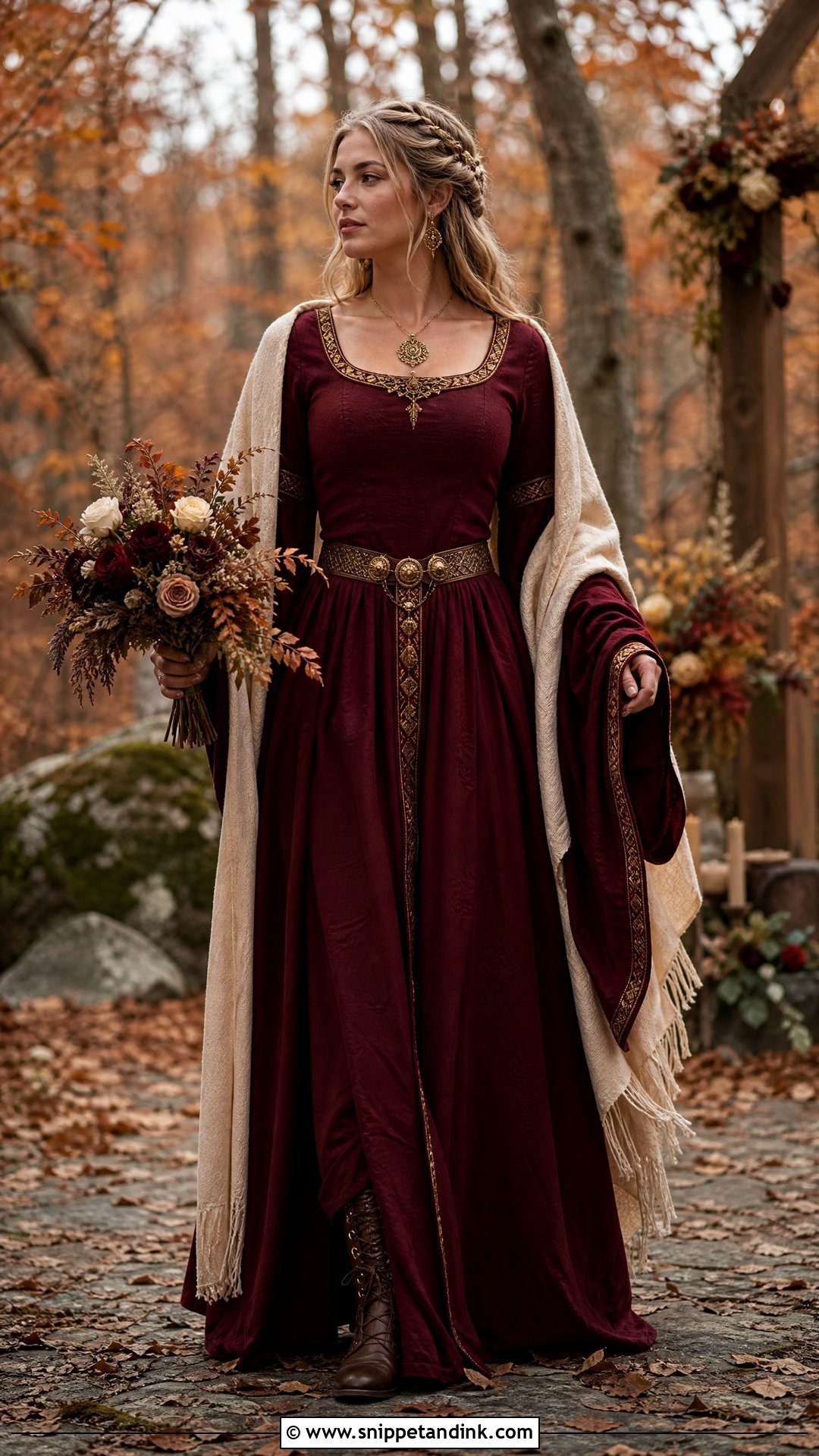
Burgundy gives you a ceremonial color that isn’t white, and it’s my usual suggestion for autumn. Choose a long dress with a structured bodice, a gently gathered skirt and wide medieval-style sleeves, framed with antique gold embroidery at the neckline and cuffs and a matching gold belt. Brown boots, a small velvet pouch and bronze jewelry with dark red stones finish it, with a thick side braid or braided updo keeping the bodice details visible. Wide sleeves need a quick test before you commit: hold your arms out as if signing the register and see whether the cuff drags across the table. A cream shawl lightens the palette for daytime and pairs well with copper leaves and dark wood.
5. Blue Norse Wedding Dress
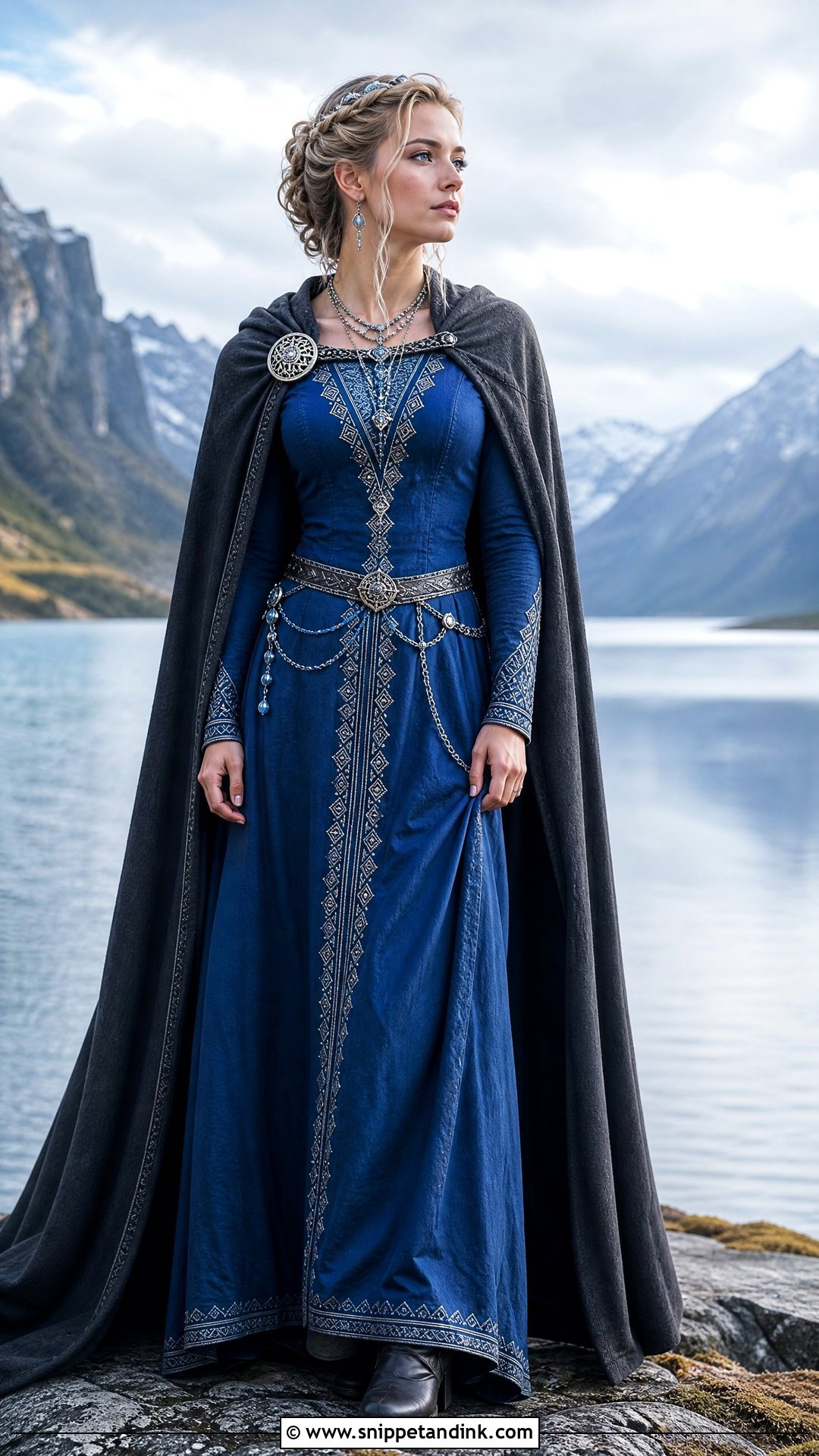
Deep blue looks regal and reads as cool and northern in photographs. Sapphire, slate or a dark fjord blue all work in a long skirt with fitted sleeves, with silver geometric embroidery running down the neckline and front seams to draw the eye vertically. A silver chain belt, a pewter brooch and a pale blue bead necklace bring light back into the darker cloth. I always put brides in grey leather flats or low boots for this one, because the lakes and rocky shorelines it suits are uneven underfoot. Add a charcoal cloak for cold days. A smooth braided bun finished with a delicate silver circlet keeps the whole outfit tidy.
6. White Bell Sleeve Norse Wedding Dress
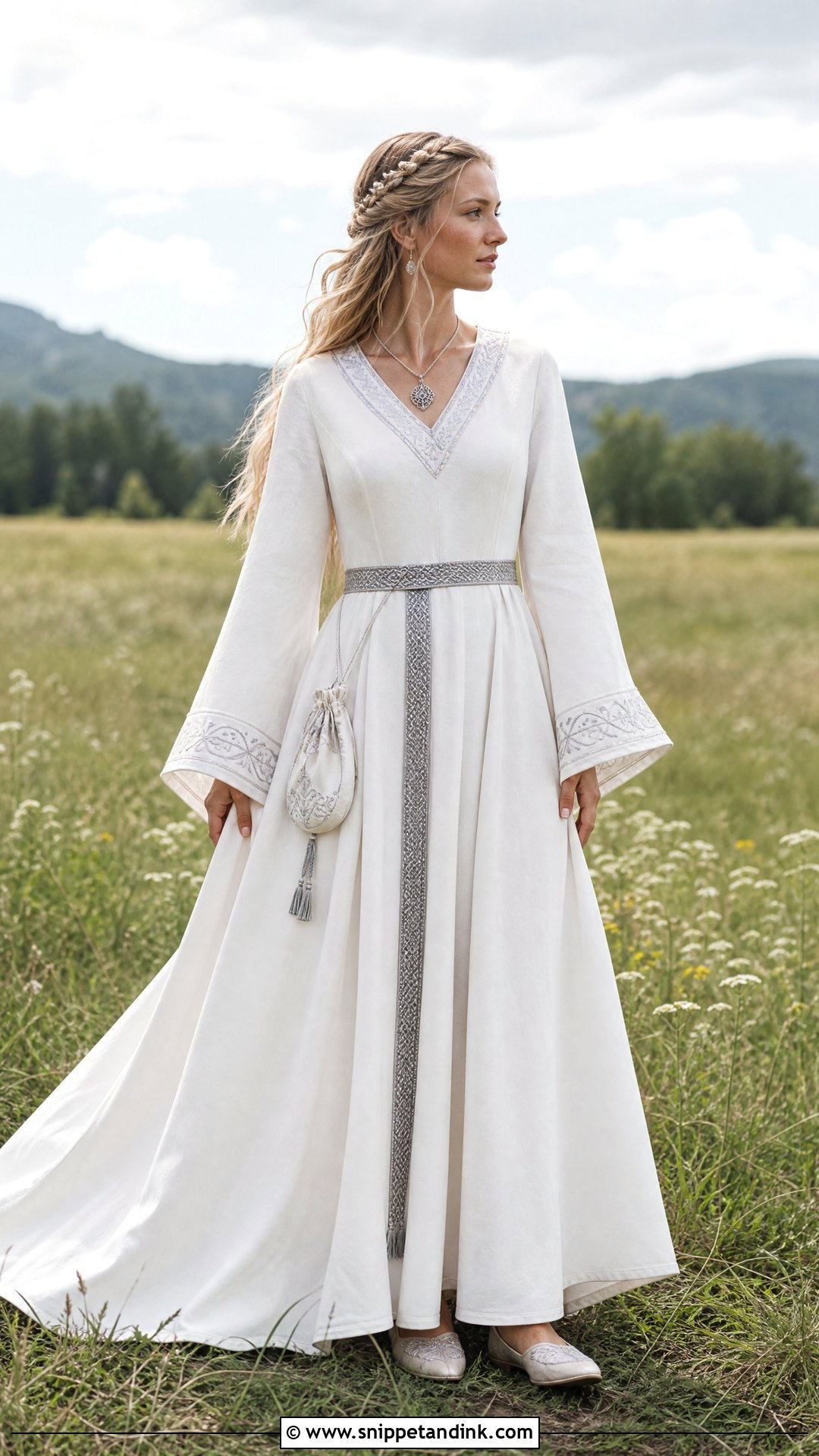
Bell sleeves give a white gown its medieval shape while keeping it light enough for a long day. Start with a softly fitted dress, a modest V-neck, a defined waist and a full skirt. The detail I fuss over is where the flare begins: sleeves that widen below the elbow move well, while sleeves that balloon from the shoulder swamp the frame and catch on everything. Silver embroidery at the cuffs and neckline, a pale grey woven belt, pointed leather flats, a silver pendant and a small embroidered pouch complete it. A loose half-up braid with a few pearl pins is enough. Of all twenty, this is the one I’d hand to a bride who wants a themed wedding but is nervous about looking like she’s in costume.
7. Fur Cloak Norse Wedding Dress
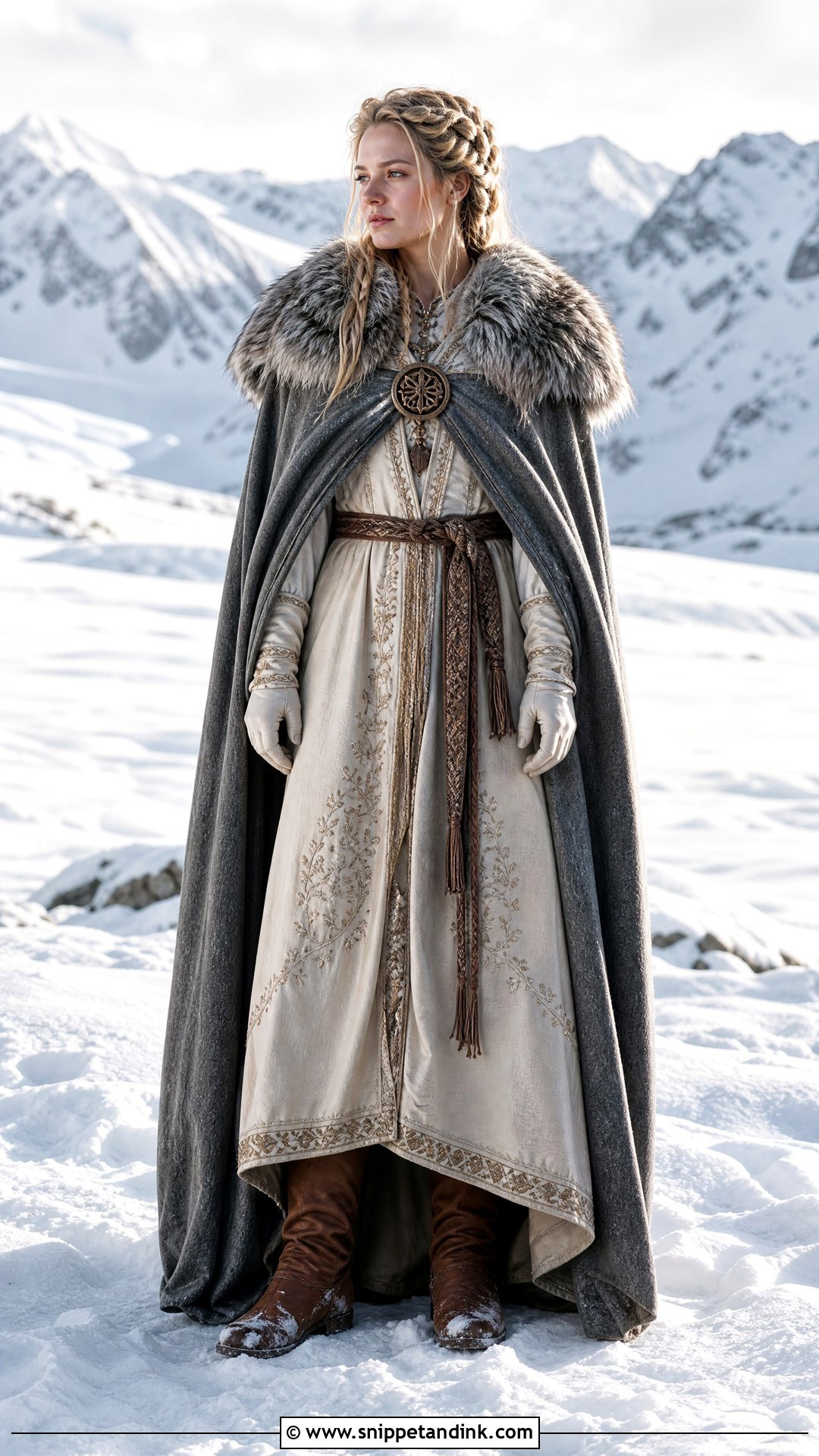
When snow or mountain wind is part of the plan, a dramatic cloak changes the whole outfit. I’d start with a long cream gown, fitted sleeves and gold embroidered trim, then add a floor-length grey or brown cloak with faux-fur edging at the shoulders, fastened with a large antique-style brooch. Insulated boots, textured gloves and a woven belt with a pouch handle the cold. Scale matters with faux fur: a narrow, dense trim looks like a garment, while a huge fluffy collar swallows the neck and fills the frame in close portraits. A crown braid stays put in wind and sits above the cloak line, where it can still be seen.
8. Embroidered Norse Wedding Dress
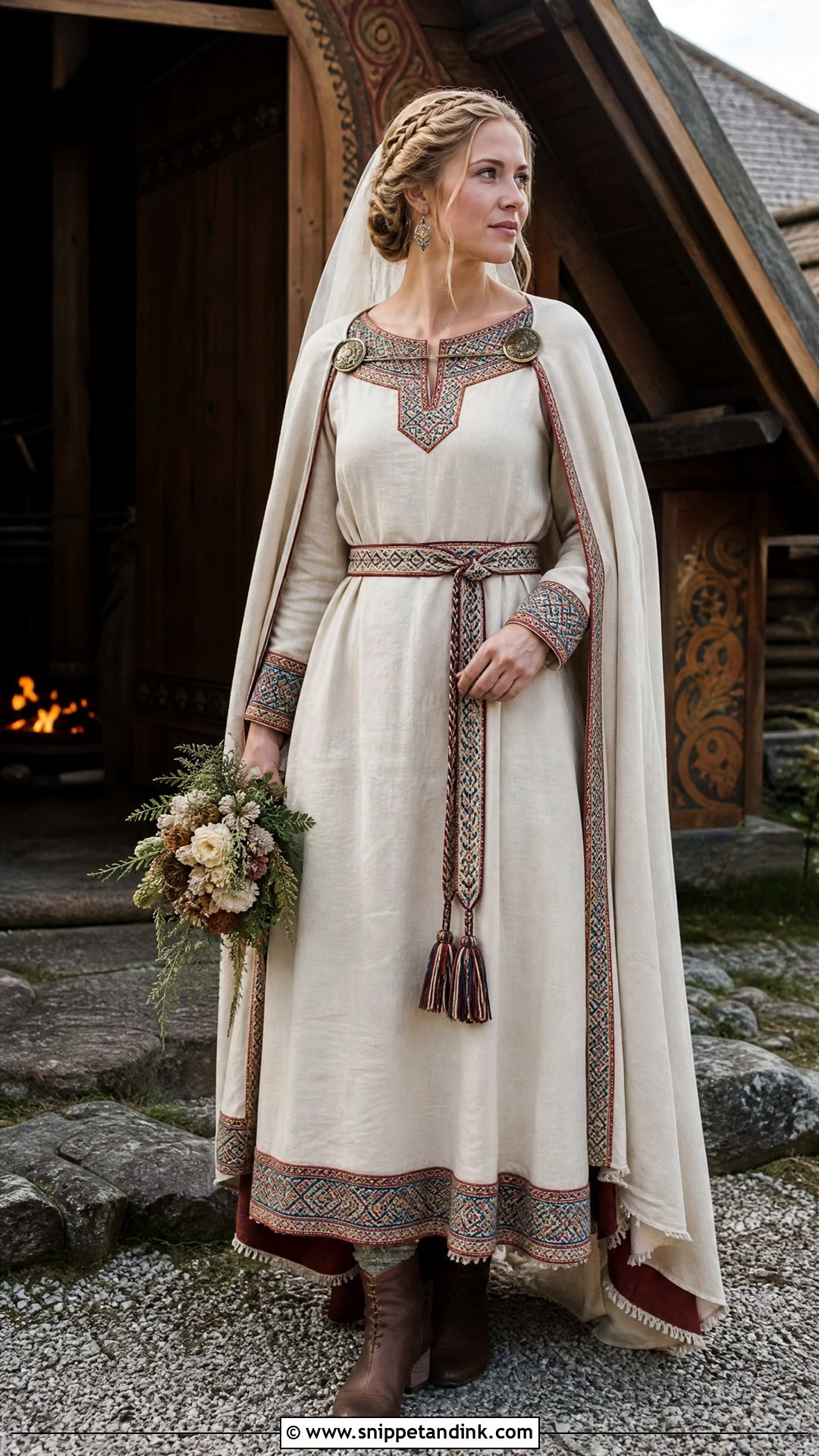
Embroidery is what makes a plain linen or soft wool dress feel personal. Put decorative bands at the neckline, cuffs, waist and hem, using Nordic-style geometric patterns in rust, gold, blue or green. Resist covering the whole gown. Concentrated borders look cleaner, and a hand embroiderer can only finish so much before your date, so borders are also the realistic choice. A braided textile belt, brown ankle boots, bronze earrings and a matching cloak pin complete the outfit, and a low braided bun keeps the neckline in view. If you want runes or symbols stitched in, read up on their meanings first; a few have been misused in modern contexts, and guests may recognize them.
9. Leather Bodice Norse Wedding Dress
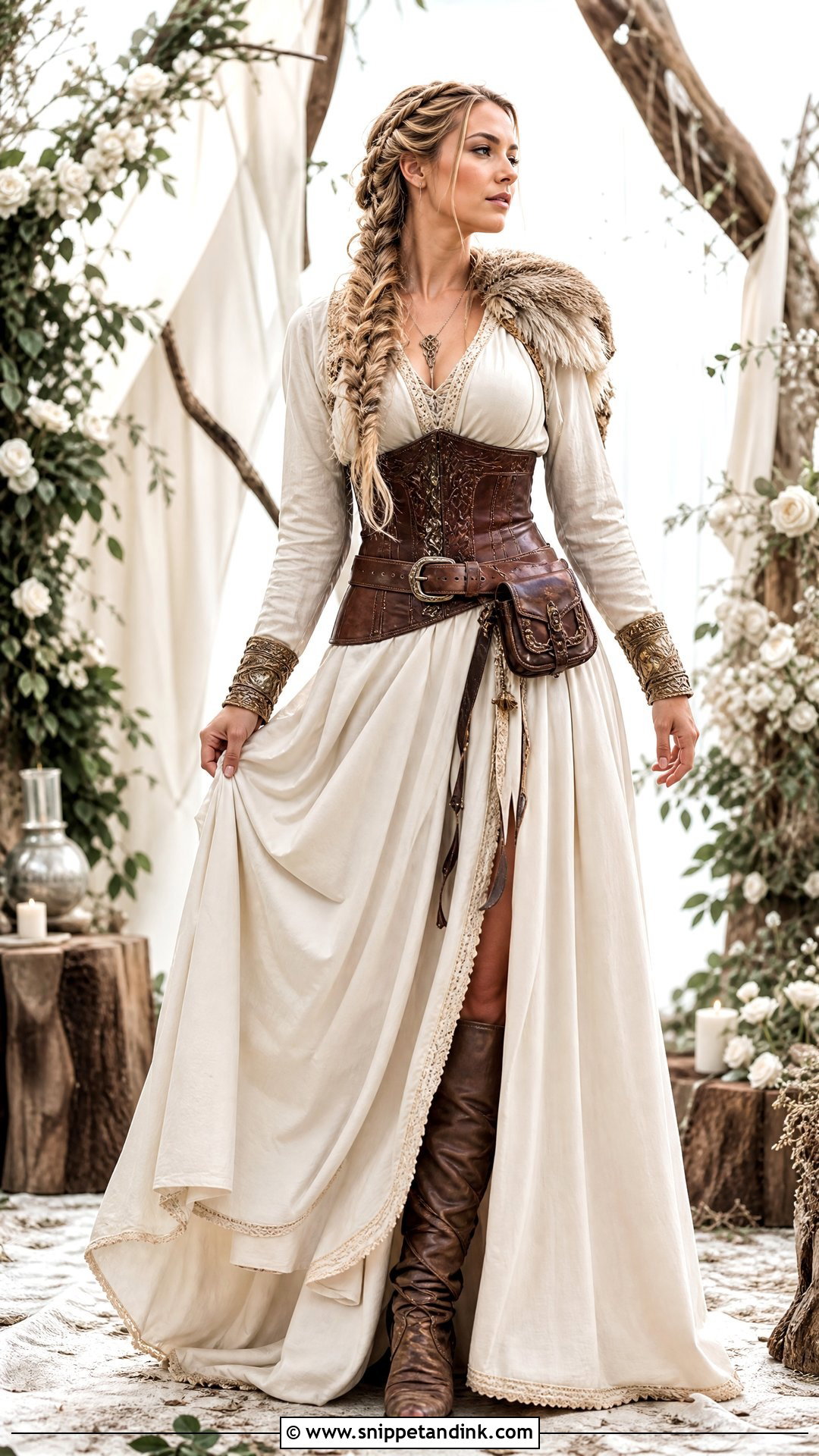
A leather bodice is a fantasy choice, not a historical one, and I say that plainly to brides before they order. Layer a fitted brown or black leather waist cincher over a cream long-sleeved gown with a full skirt. Clean panels and simple lacing beat heavy buckles and hardware, and a softly pointed waistline gives definition. Matching boots, a belt pouch, bronze arm cuffs and a textured shoulder wrap finish it, with a long fishtail braid to soften the structure. Sit in the bodice for twenty minutes at your fitting. Real leather doesn’t stretch like fabric, and a cincher that feels fine standing can dig into the ribs once you’re seated at dinner.
10. Shieldmaiden Norse Wedding Dress
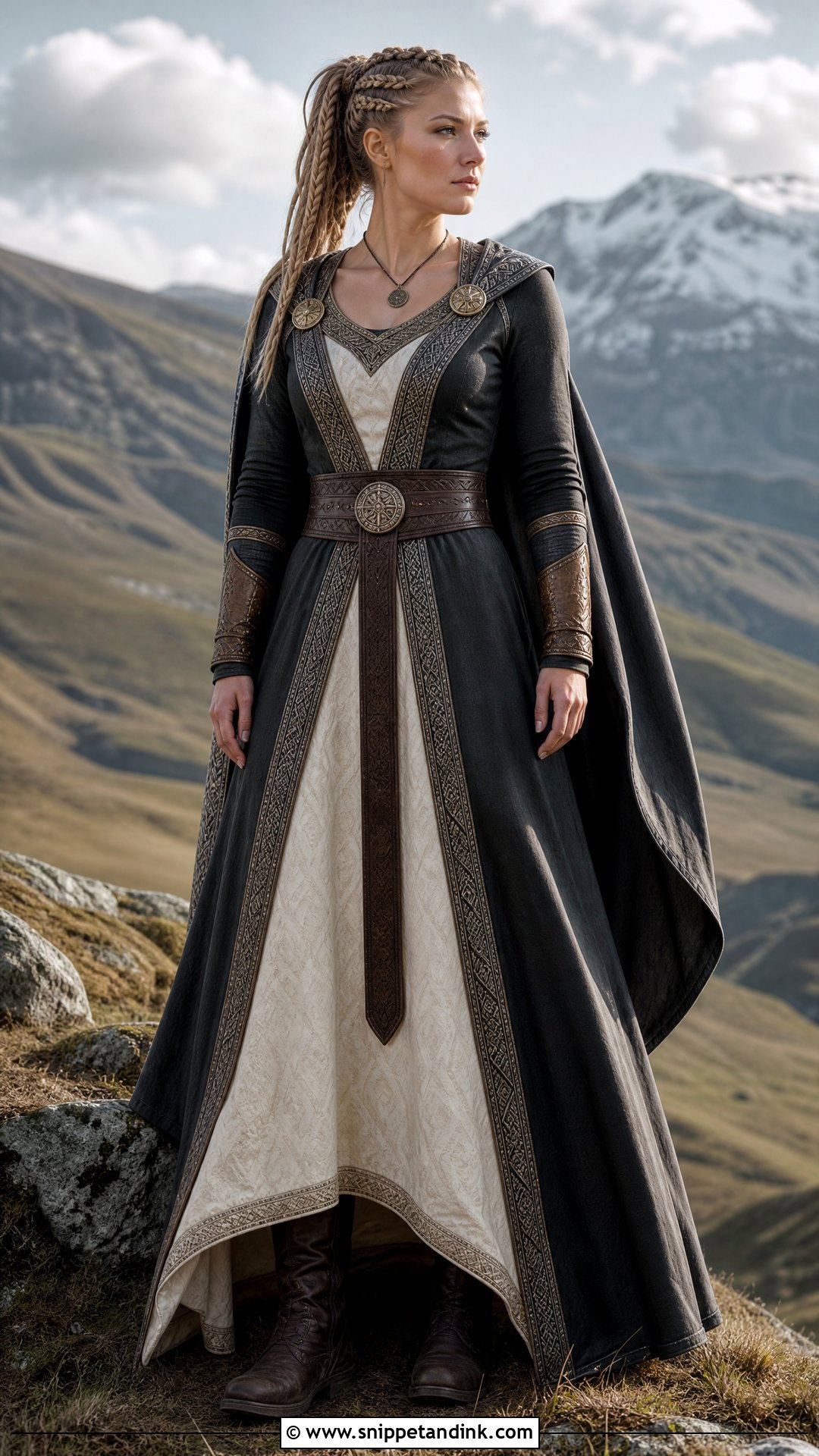
Shieldmaiden styling is about strength, not battle kit. Start with a charcoal, ivory or muted green gown with a fitted bodice, practical long sleeves and a sweeping skirt, then add a broad embossed leather belt and short decorative shoulder panels. Tall lace-up boots can stay mostly hidden under the hem. I keep weapons and armor out of the outfit entirely; bronze cuffs, a round cloak brooch and a simple pendant say the same thing without making the photos look like a reenactment battlefield. Gather several neat braids into a low ponytail, keep the makeup soft and carry a small greenery bouquet so it still reads as a wedding.
11. Boho Norse Wedding Dress
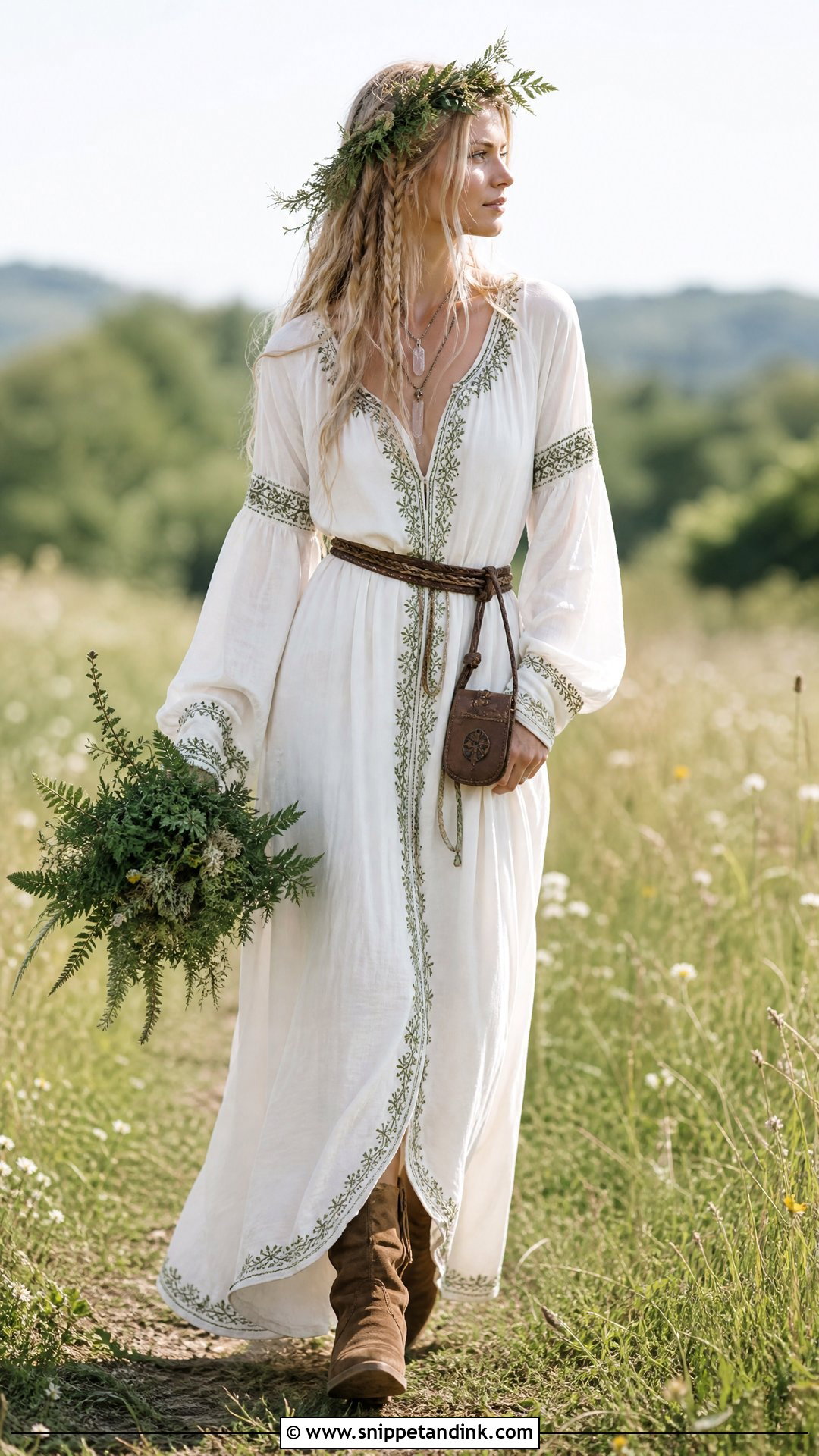
Boho Norse works best in a meadow, where the loose shapes and light fabric make sense. Choose an off-white dress with a flowing skirt, a lightly gathered waist and loose sleeves, with subtle embroidery in tan, sage or muted gold. Wear a narrow braided belt, flat suede boots and a small leather pouch without fringe, and layer a few fine metal necklaces instead of one heavy piece. Loose waves with two small side braids and a greenery crown, plus an unstructured bouquet of grasses and ferns, keep it relaxed. Suede boots are the weak point if the ground is damp, so I’d spray them with a water repellent a few days before. This one handles walking, dancing and a long day outdoors.
12. Plus Size Norse Wedding Dress
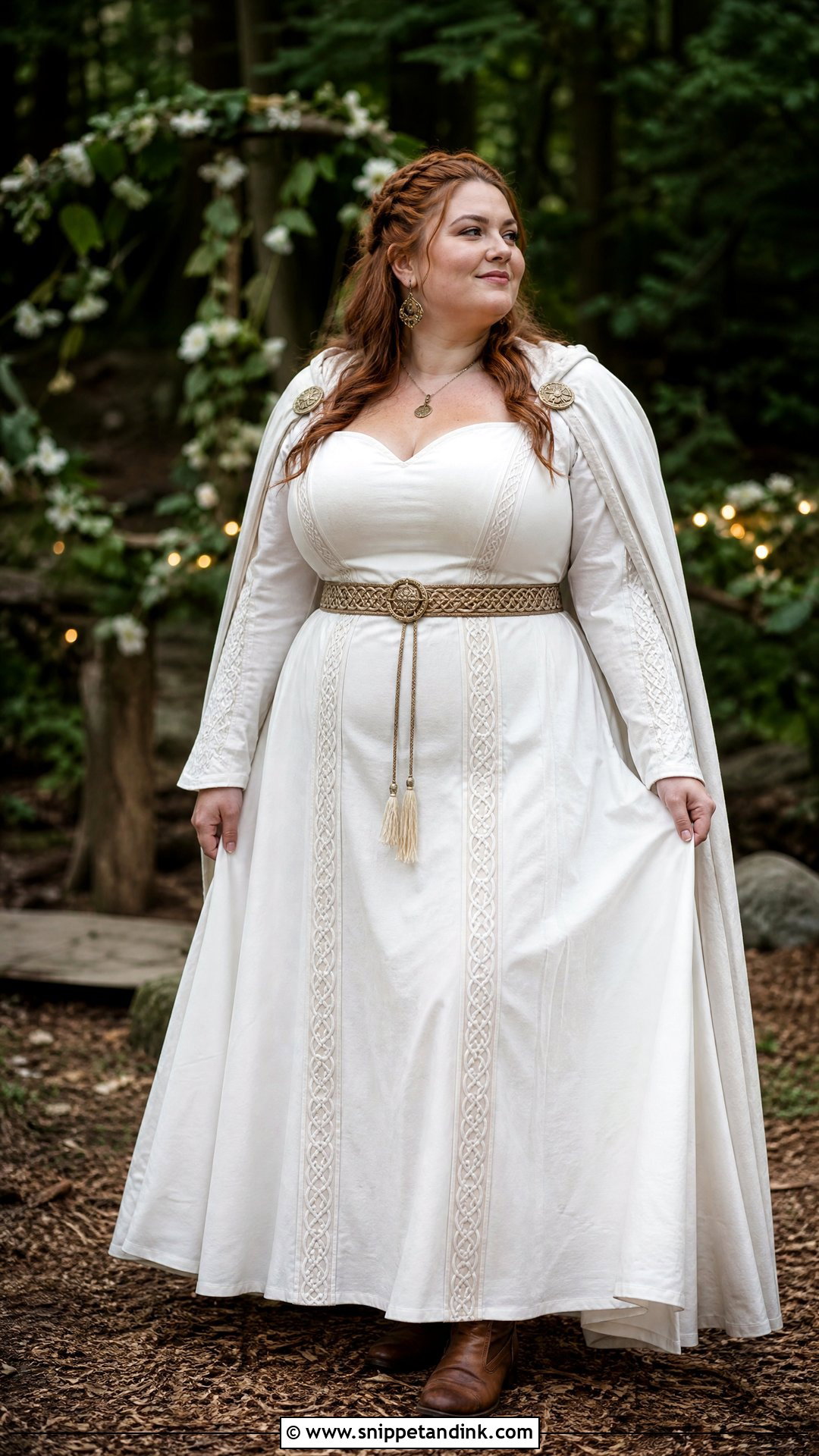
A plus-size Norse gown needs real structure, not extra fabric thrown over the body. I look for a supportive fitted bodice, a raised natural waist and a smooth A-line skirt, with a square or softly curved neckline and long sleeves for balance. Vertical embroidered bands lengthen the line, and a medium-width leather or woven belt defines the waist without cutting in. Stable low-heeled boots, a light cloak, bronze earrings and a pendant sitting above the neckline finish it. Most of the success here happens at alterations. Ask your seamstress to fit the shoulders, bust and upper arm separately, because Norse sleeves are often cut narrow and that’s the first place an off-the-rack dress pulls. A braided half-up style keeps the shape open.
13. Lace Norse Wedding Dress
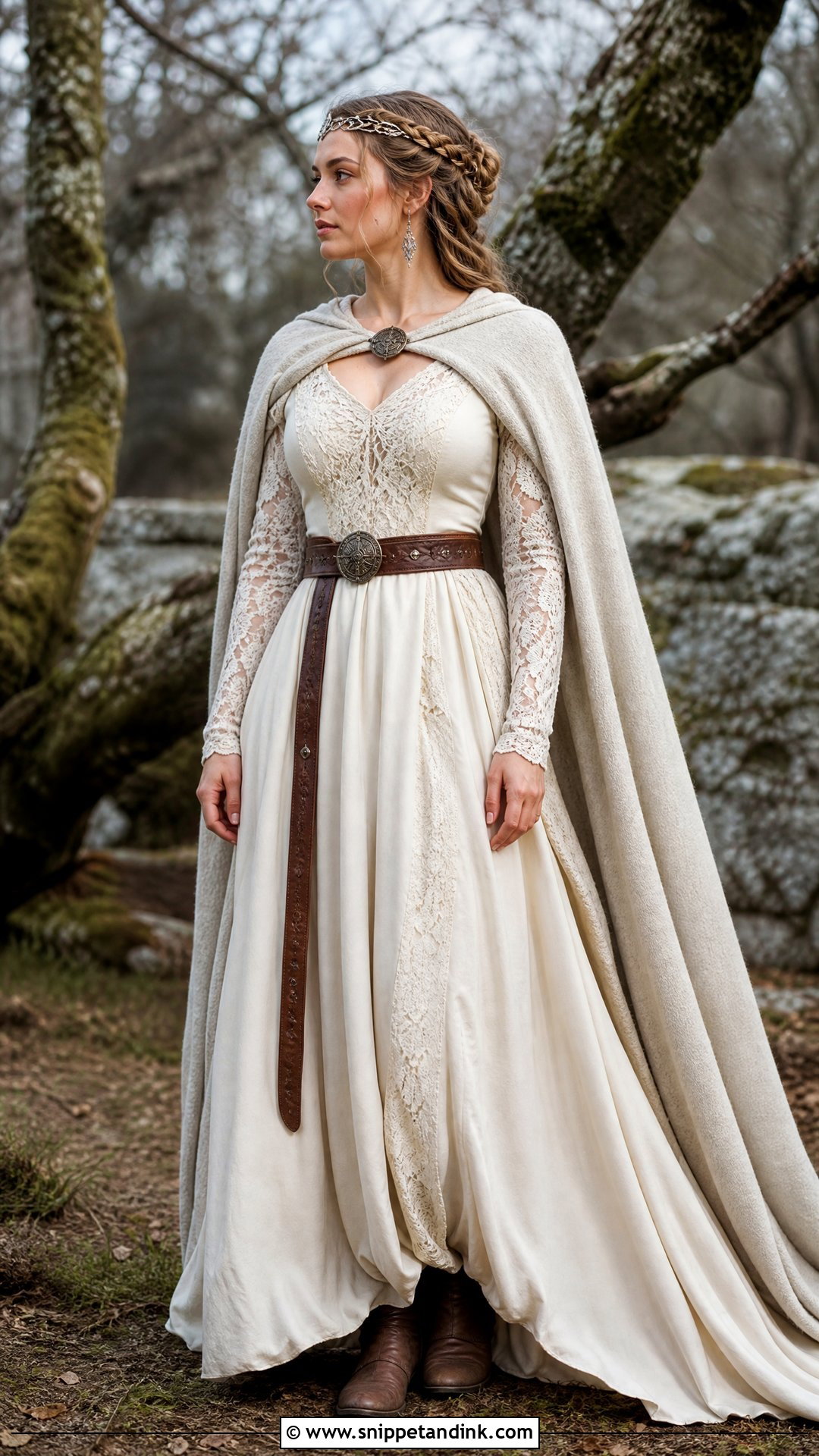
Lace softens the Norse look as long as rustic accessories pull it back toward the theme. Pick an ivory gown with a solid lining, long lace sleeves and a flowing chiffon or crepe skirt, and skip glitter or sheer panels if you want it grounded. A brown leather belt with an antique silver buckle, flat boots and a simple wool cloak for outdoor pictures do that work, with a silver circlet and small drops for shine. One practical note: wool cloaks snag fine lace at the shoulder, so I line that area of the cloak or pin a strip of silk under the brooch. A loose crown braid shows off the lace neckline. It suits a woodland or Scandinavian-inspired mood without leaving classic bridal details behind.
14. Winter Norse Wedding Dress
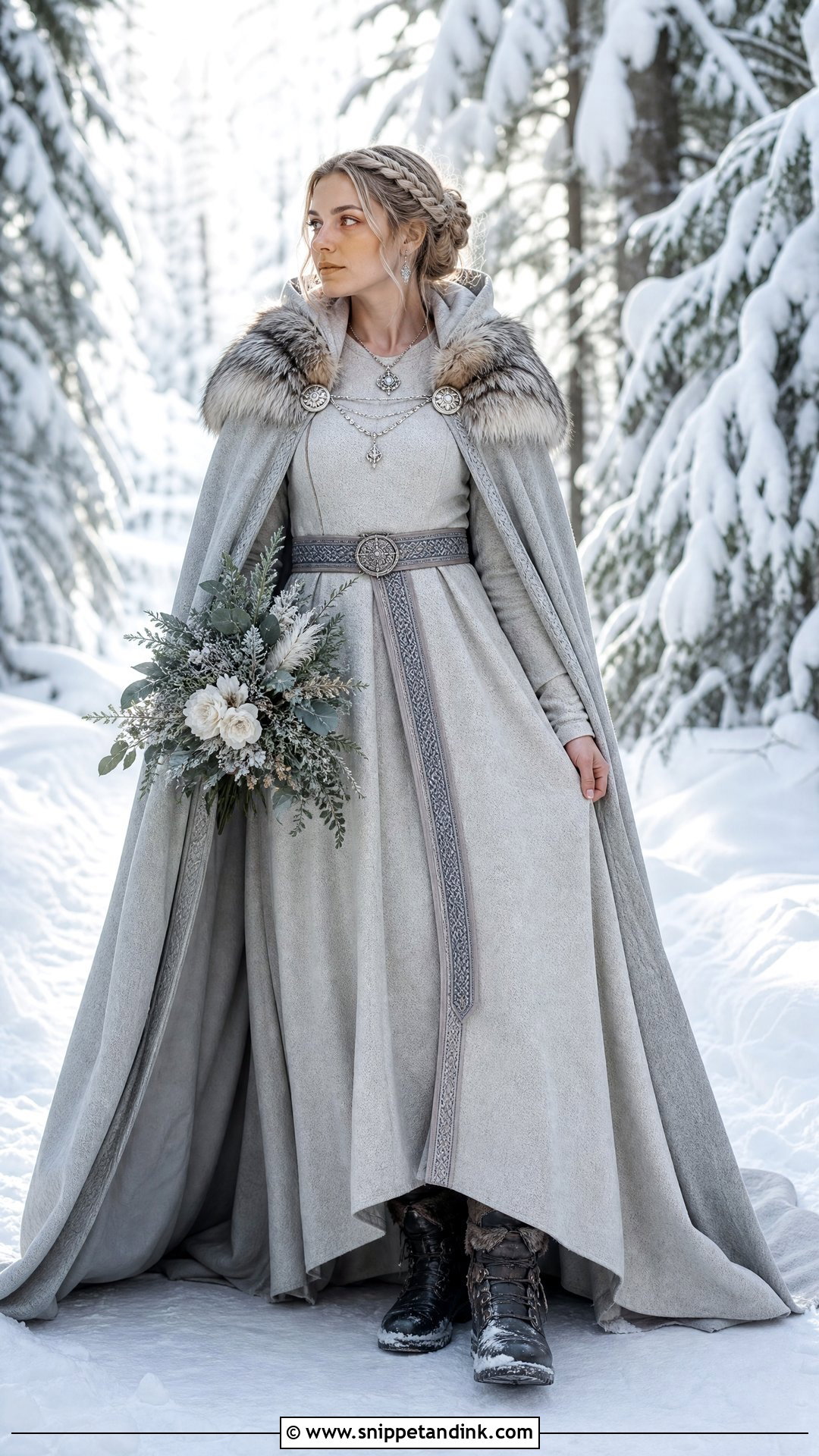
Warmth has to be built into every layer of a winter Norse outfit, because a cloak alone won’t hold up through an outdoor ceremony and a photo walk. Begin with a long-sleeved wool-blend gown in ivory, silver grey or deep blue, then add a full-length lined cloak, faux-fur shoulder trim, thermal tights and insulated boots under the skirt. A wide woven belt stops the layers looking bulky. Silver brooches and cool-toned stones echo the snow, and a metal circlet on a braided updo holds well under a hood between shots. I tuck disposable hand warmers into a muff or lined pouch; cold hands show in photos as red knuckles long before you feel them.
15. Summer Norse Wedding Dress
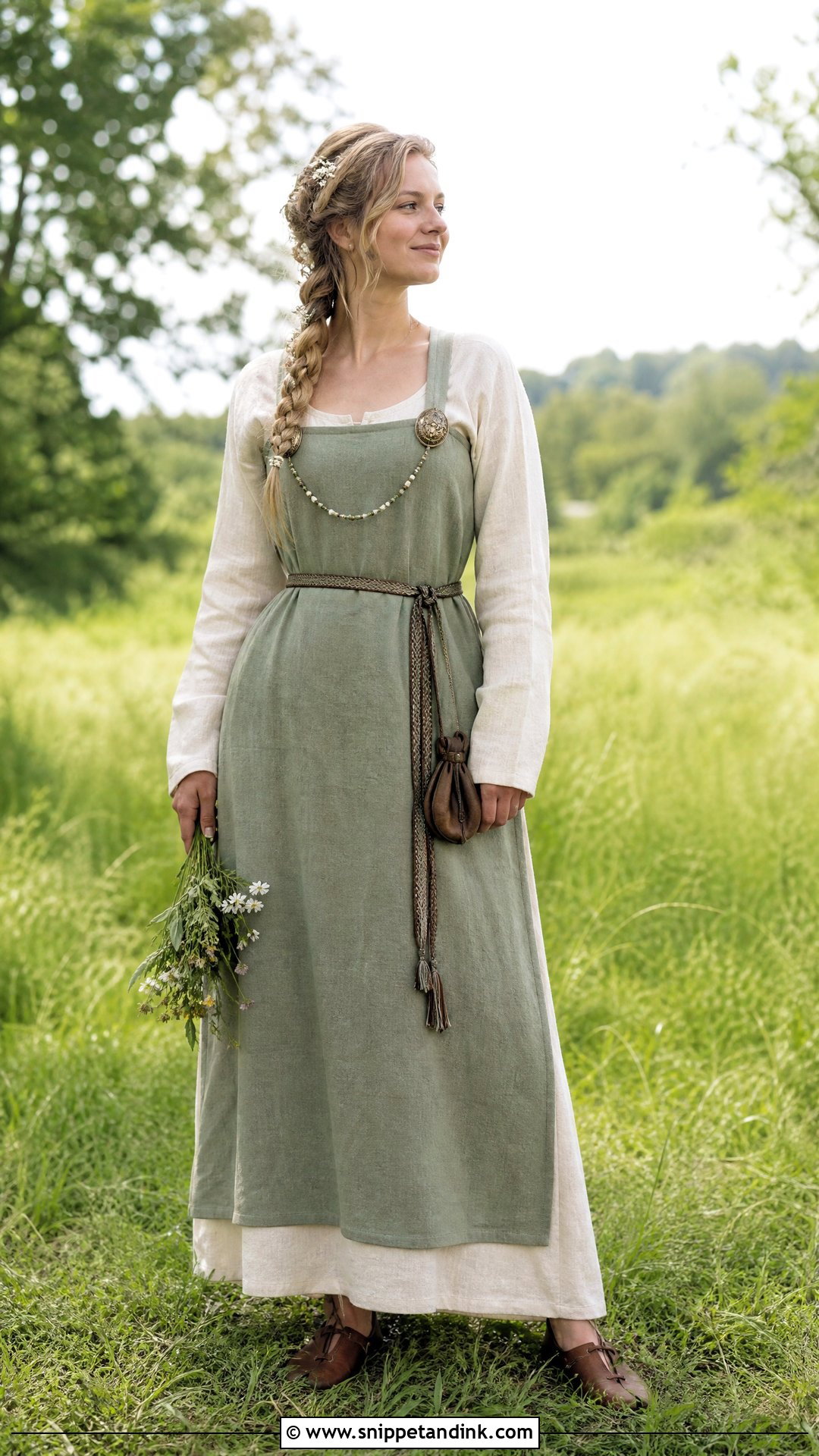
Summer calls for the layered Norse silhouette with almost no weight. A sleeveless or short-sleeved linen overdress over a thin ivory shift, in sage, dusty blue or natural flax, stays fresh in the heat. Fasten the straps with small bronze brooches, hang a fine bead strand between them, and finish with a narrow woven belt, breathable leather flats and a compact crossbody pouch. A loose braid with seasonal flowers on one side is enough for the hair. Leave the cloak, the heavy wool and the big jewelry at home. Real flowers wilt fast against a warm neck, so I ask the florist for hardy small blooms and pin them in after the ceremony portraits rather than at breakfast.
16. Black Norse Wedding Dress
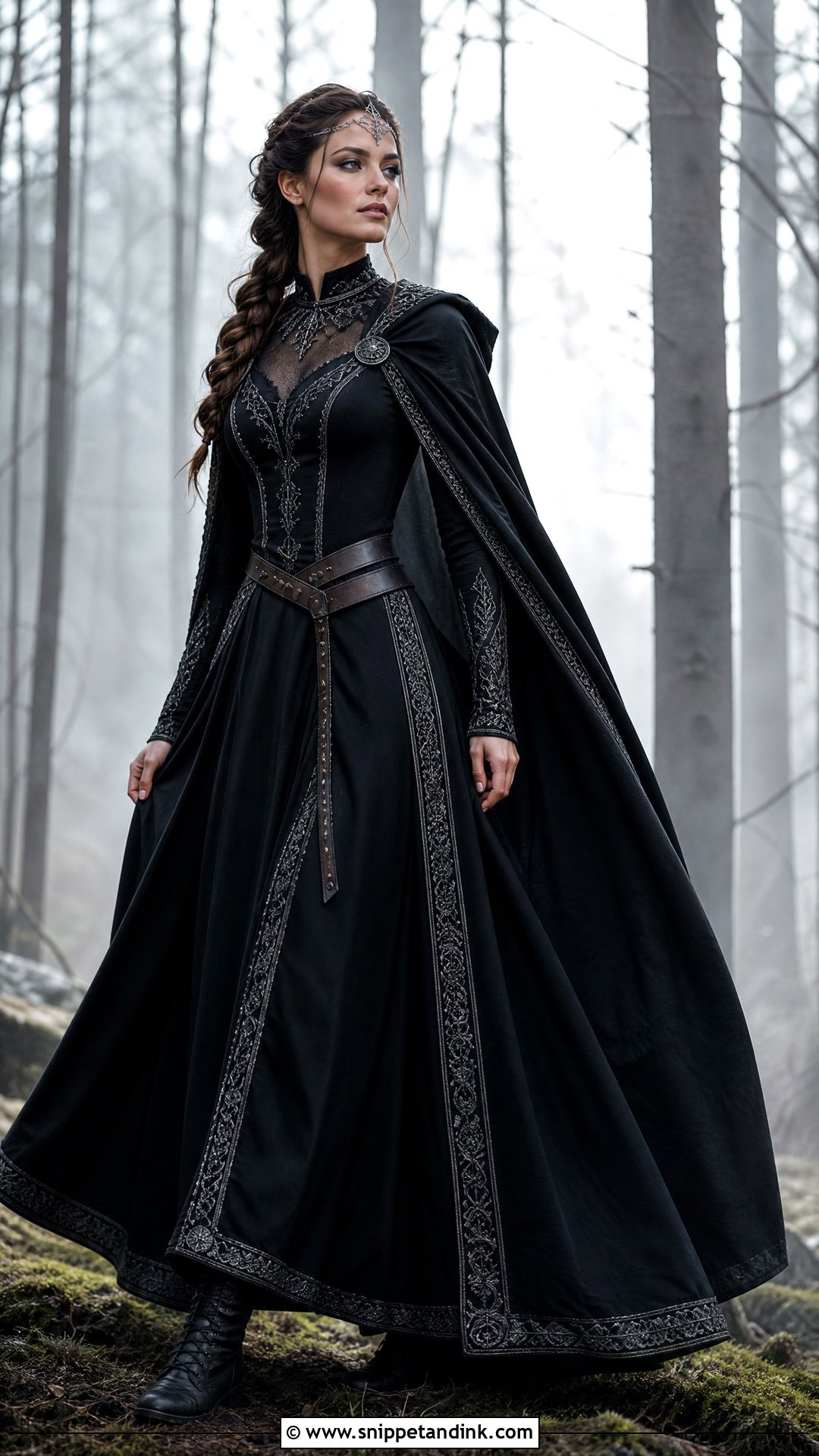
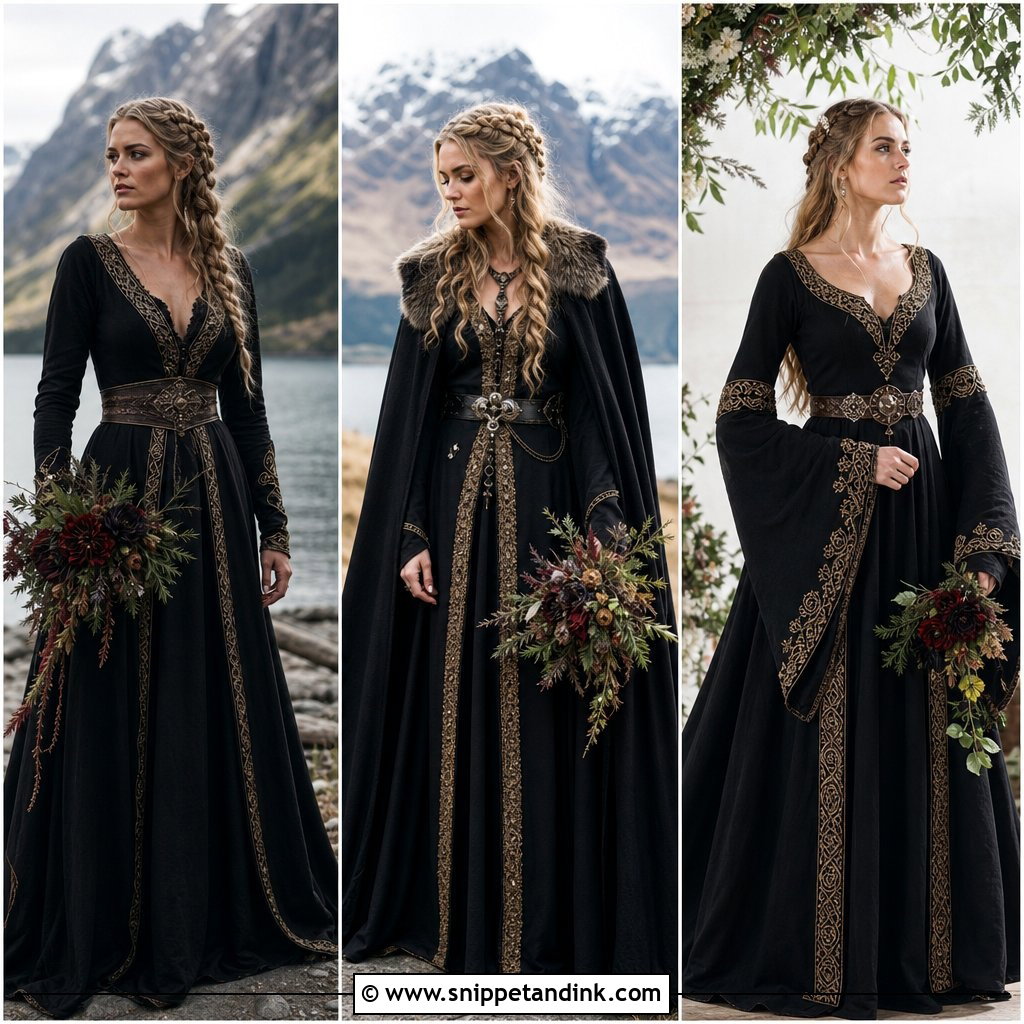
Black is a dramatic choice for an evening hall or a cold forest ceremony, and it’s harder to get right than it looks. I insist on matte fabric, linen, velvet or crepe, because shiny black turns into flat glare under flash. A long fitted bodice, full skirt and narrow sleeves keep the line clean, and silver or pewter embroidery at the neckline and cuffs keeps those details visible. A dark brown belt, black lace-up boots and a charcoal cloak complete it, while silver earrings, a polished circlet and luminous makeup bring light back to the face. A long braided ponytail adds movement. If head-to-toe black feels heavy, a pale gray underdress or silver belt panel gives the outfit depth.
17. Gold Norse Wedding Dress
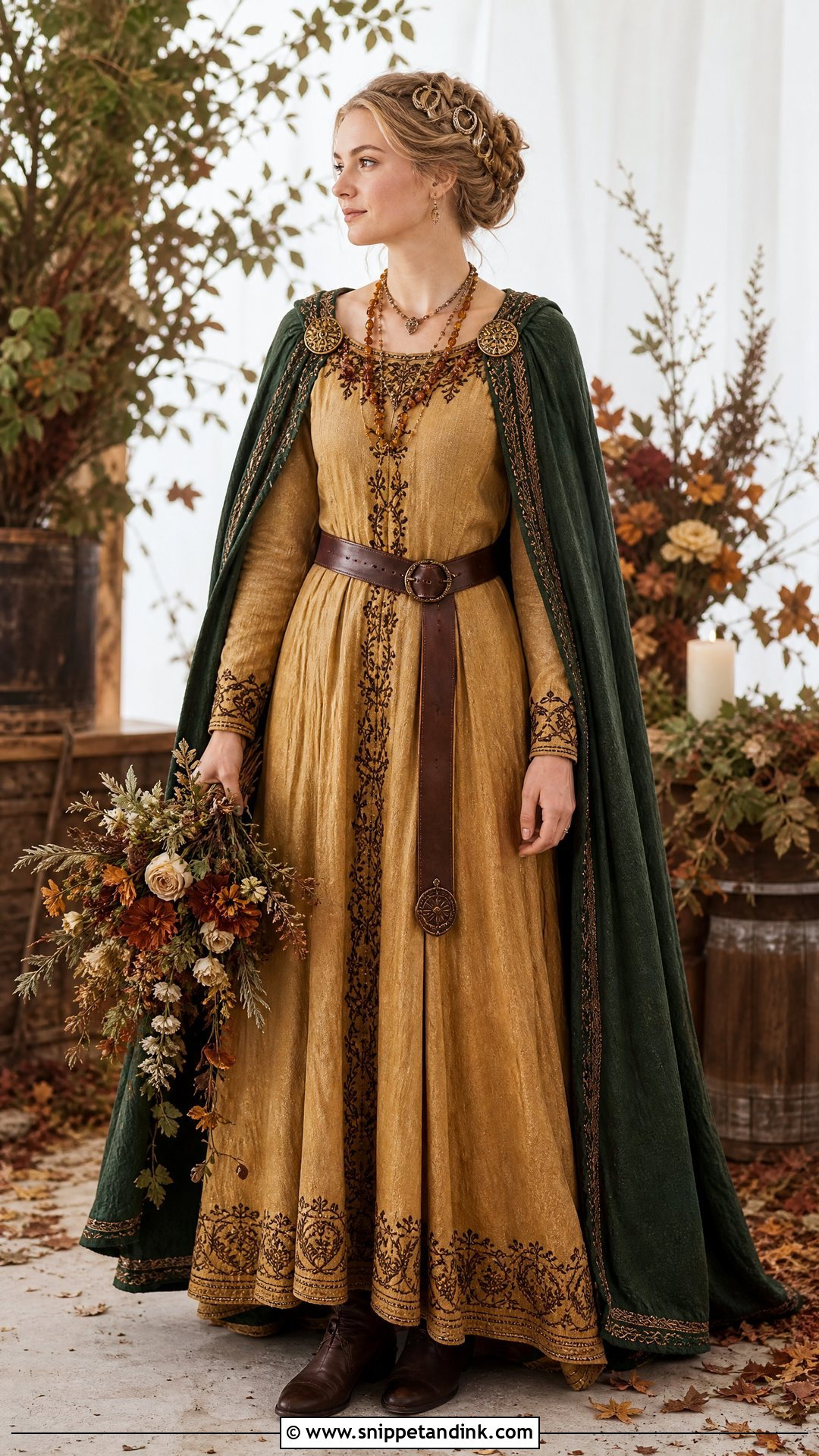
Muted gold brings warmth without tipping into costume, provided the cloth is antique gold, honey, ochre or soft bronze rather than bright metallic lamé. A long dress with a fitted upper body and gently pleated skirt is the base, with dark brown embroidery at the neckline and a leather belt to calm the palette. Bronze brooches, amber-colored beads, brown boots and a deep green cloak build it out, and a braided bun with a few metal hair rings finishes the head. Gold is fussy about light. It looks rich by candlelight and in autumn sun, but under cool white LED it can turn yellowish, so I check the venue lighting before recommending it. Keep the accessories aged and textured.
18. Hooded Norse Wedding Dress
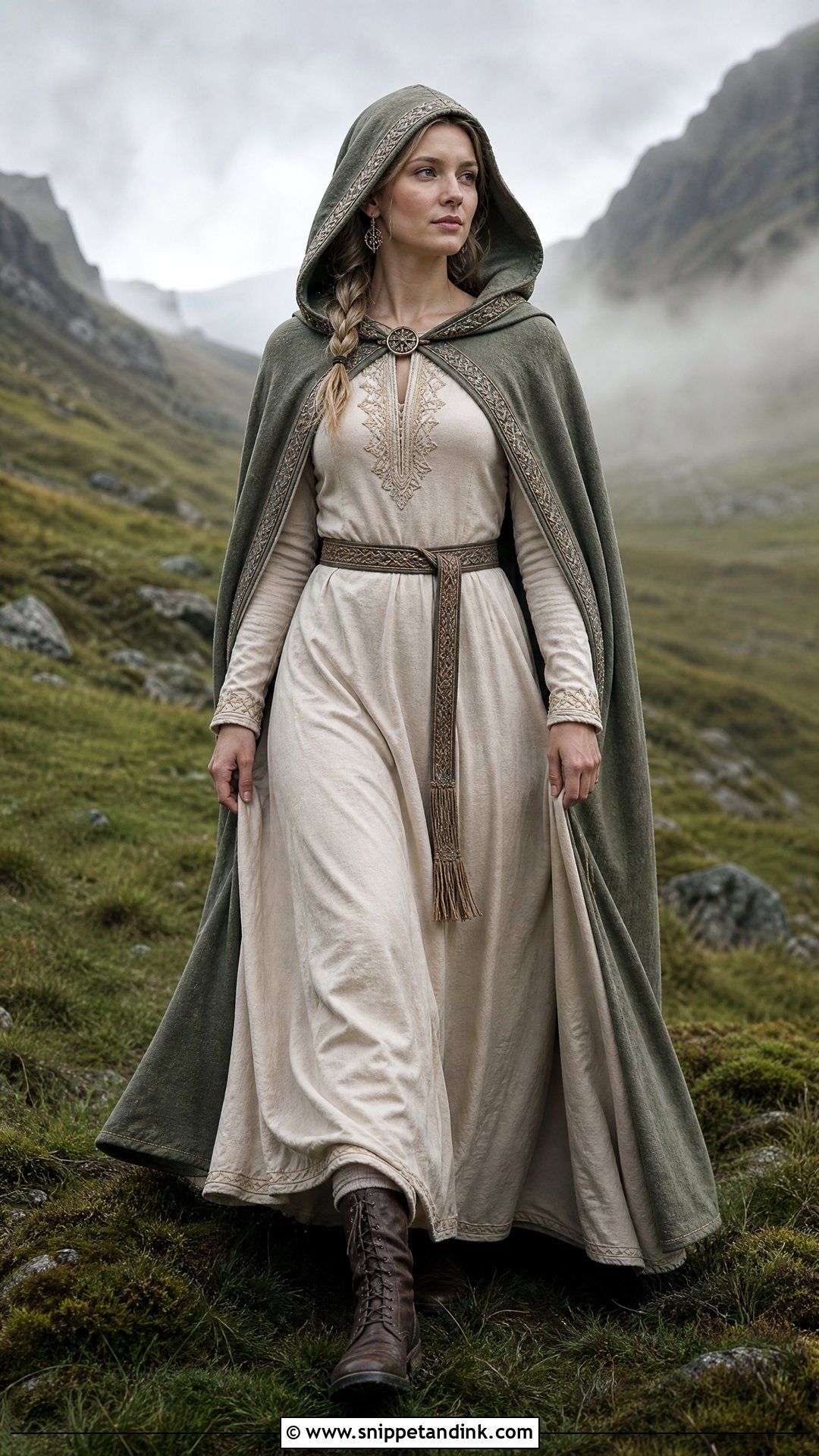
A hooded cloak brings movement and a bit of mystery, and it’s genuinely useful when the weather turns. Wear it over a long ivory, grey or green gown with fitted sleeves and a simple embroidered neckline, fastened with a round brooch at the collarbone. Length is the detail I measure most carefully: ankle length in the shoes you’ll wear, never touching the ground, or the hem collects mud and leaves on a forest path. Leather boots, a woven waist belt and small metal earrings are enough. A low braid sits comfortably under the hood, while a high bun pushes the hood back and ruins its shape.
19. Two Piece Norse Wedding Dress
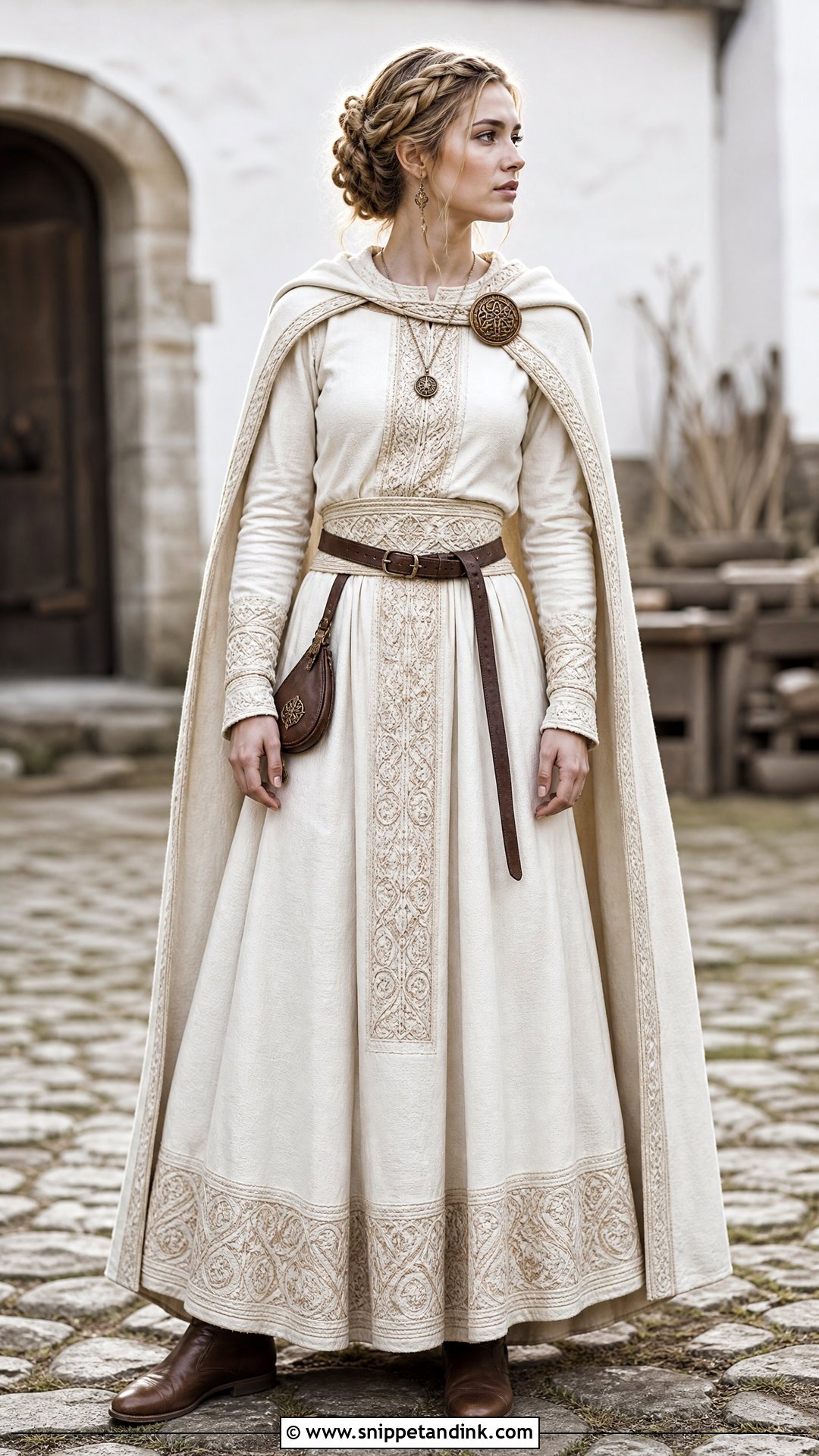
Separates are the practical answer for a bride whose top and bottom are different sizes, and I recommend them more often than people expect. Pair a fitted embroidered blouse with a full floor-length skirt in matching ivory or a complementary earth tone, with long sleeves and a modest neckline for a historical feel. A wide waistband smooths the join, a narrow leather belt sits over it, and ankle boots plus a shoulder cloak on a bronze brooch complete the look. A small pouch hides lip balm and tissues. At the fitting, raise your arms overhead: if the blouse rises off the waistband, ask for an extra inch of length or a hidden hook that anchors it to the skirt. Both pieces can be worn again later.

20. Modern Minimalist Norse Wedding Dress
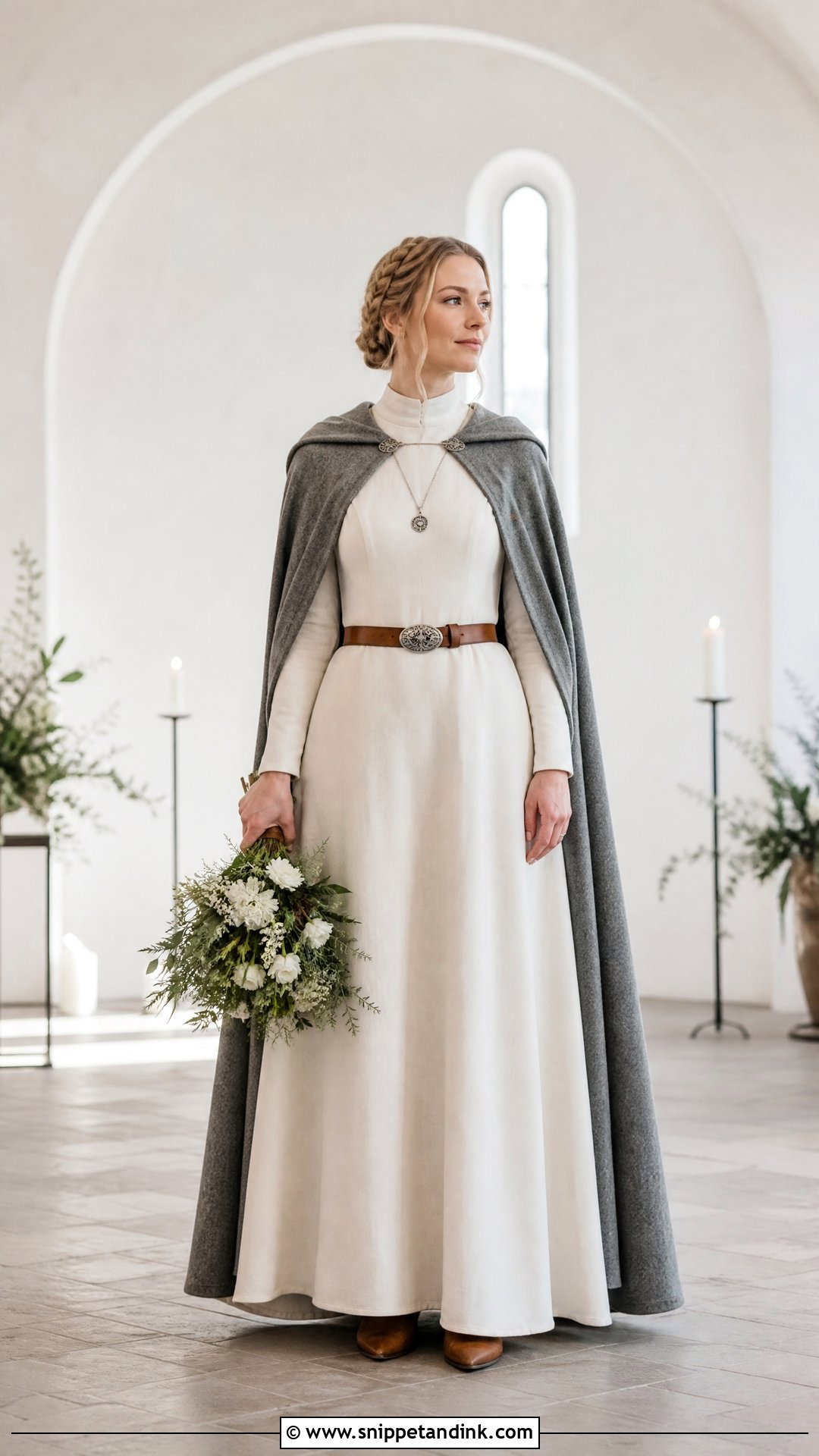
Minimal Norse relies on cut, not decoration. A floor-length ivory gown with a high rounded neckline, fitted long sleeves and a softly flared skirt, plus a simple brown belt with one hammered silver buckle, is the whole idea. Flat pointed boots and a structured wool cloak continue the restraint, with a single silver pendant and small matching earrings. The crown braid becomes the strongest themed detail, so I’d spend time on it at the hair trial. With so little ornament, tailoring shows everything; a sleeve that’s a centimetre too long or a waist sitting slightly low is far more visible here than on an embroidered gown. It suits a modern venue or an intimate elopement.
Ordering a Handmade Norse Gown Early Enough
Many of the best Norse dresses come from small makers rather than bridal shops: independent seamstresses, reenactment tailors and hand embroiderers. They usually work alone or in tiny teams, so their calendars fill months ahead, and hand embroidery is slow by nature. As a rough guide I’d make first contact eight to twelve months before the wedding for a fully custom piece, and allow extra time if the maker is overseas and shipping or customs are involved. Lead times vary a great deal between makers, so ask each one directly.
When you write to a maker, send your measurements, the venue and month, a few reference pictures, and which parts matter most to you. Ask whether they offer a mock-up fitting, how alterations work if you’re far away, and when the final payment is due. If a maker can’t give clear answers to those questions, I’d keep looking.
Wool, Linen and Bronze After Ten Hours
Natural fibres behave differently from polyester bridal satin, and it helps to know what you’re signing up for before the morning itself.
- Linen creases quickly and stays creased. Steam it the night before, hang it full length, and accept that it will soften through the day.
- Wool can itch against bare skin. A linen or cotton shift underneath is both the historical layer and the comfortable one.
- Brass and bronze can leave a greenish mark on skin and pale fabric when it gets damp. A coat of clear lacquer on the backs of brooches and buckles prevents most of it.
- Layered outfits take longer to put on. Allow at least thirty minutes for dressing, and have one helper who has practised the brooch and belt order with you.
Pack a small kit as well: safety pins, a spare brooch pin, a lint roller for wool, and a cloth to wipe mud from boot toes before the portraits.
Fabric, Weather and Your Own Version of the North
Most of these outfits come back to the same few parts: a flowing shape, natural-looking cloth, sensible layers and accessories you can actually use. Decide first how literal you want to be, historically informed, romantic medieval or open fantasy, because that answer settles the fabric, color, embroidery and jewelry. From there, let the venue and climate decide whether you need wool and a cloak or linen and bare arms. A good Norse bridal outfit should look like one person dressed with intent, and it should let you walk, sit, eat and hug people all day without adjusting anything.
You'll Like These Ideas:



Leave a Reply