
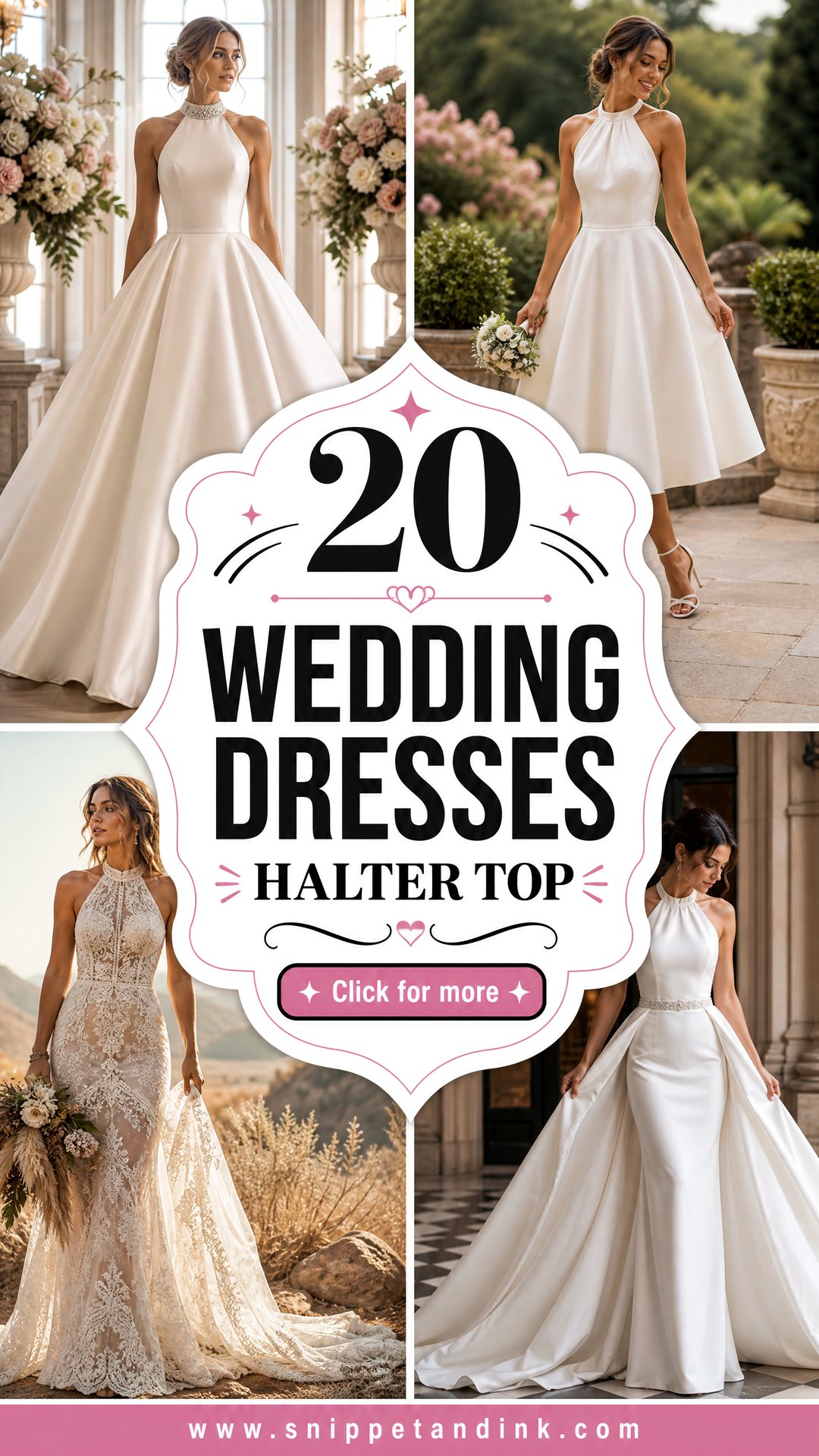
A halter neckline wraps around the neck and leaves the shoulders bare, and in a fitting room it changes a bride’s posture almost instantly. People stand taller in one. Below you’ll find satin, crepe, lace and chiffon versions, from full ball gowns down to a mini for a civil ceremony, each with notes on shoes, jewelry, veils and alterations. Because the neckline already frames the face, I keep accessories spare on nearly every halter I style. The real work is building the rest of the outfit so it doesn’t fight that line.
Where a Halter Should Take Its Weight
A halter is only comfortable when the neck strap is the least important part of the support. The bodice should do the lifting through cups, boning and a waist stay, and the strap simply keeps the neckline in place. When that balance is off, brides describe the same thing by mid-afternoon: a dull ache across the back of the neck and the tops of the shoulders.
Closures, and how each behaves
- Tie closures adjust easily but loosen over the day, and a bow knot under an updo can press into the back of the head. Ask for a hidden hook beneath the tie as backup.
- Hook-and-eye or clasp closures stay put and lie flatter under a low bun.
- Button loops look refined at the nape but need a second pair of hands, so decide in advance who fastens them.
Strap width for your frame
Halters flatter broad and athletic shoulders especially well, because the angled straps cut in toward the neck and show off the shoulder line. On narrow or sloping shoulders I prefer a medium strap that sits a little wider at the base. With a full bust, choose wide straps and built-in cups over a thin string halter.
As for what goes underneath, a convertible bra worn halter-style suits some closed-back gowns, but its straps nearly always show on an open back. Sewn-in cups are the cleanest answer, and most bridal seamstresses can add them.
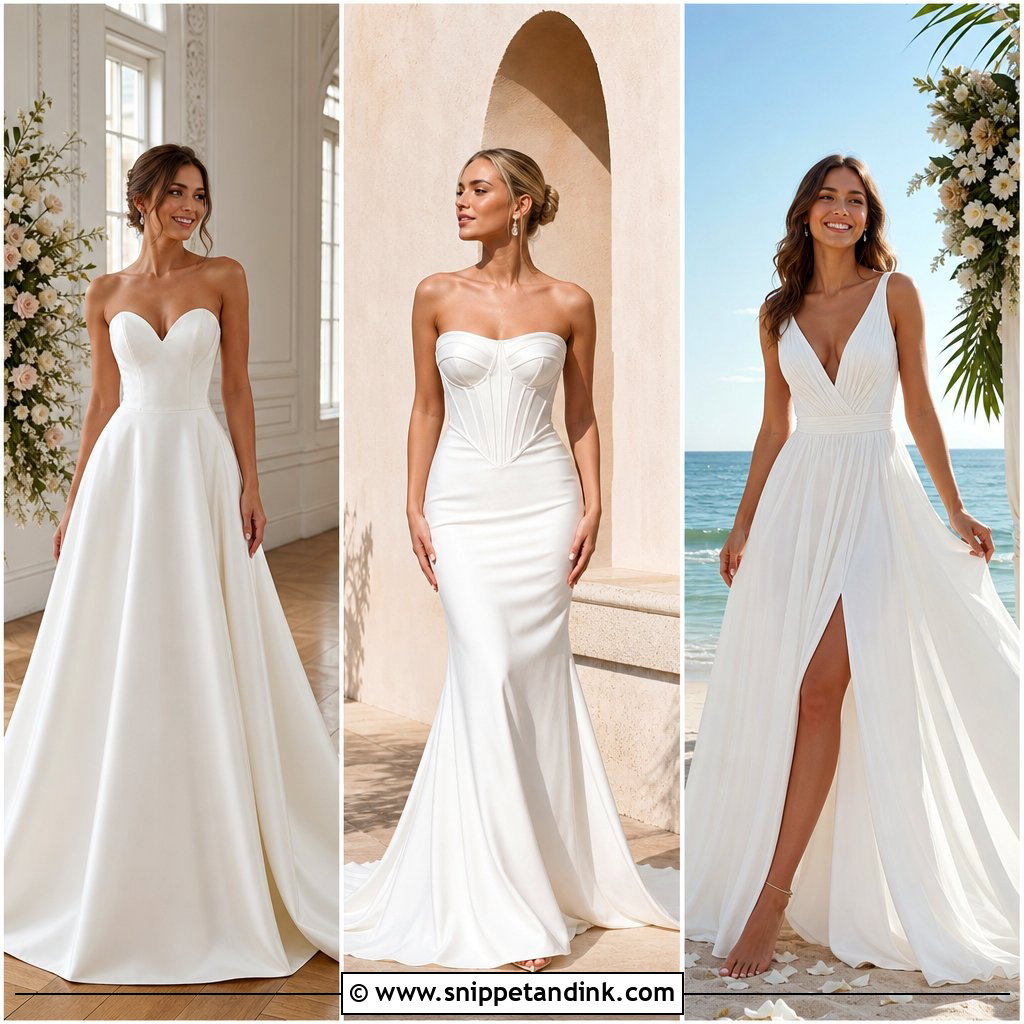
1. Satin A-Line Halter Wedding Dress
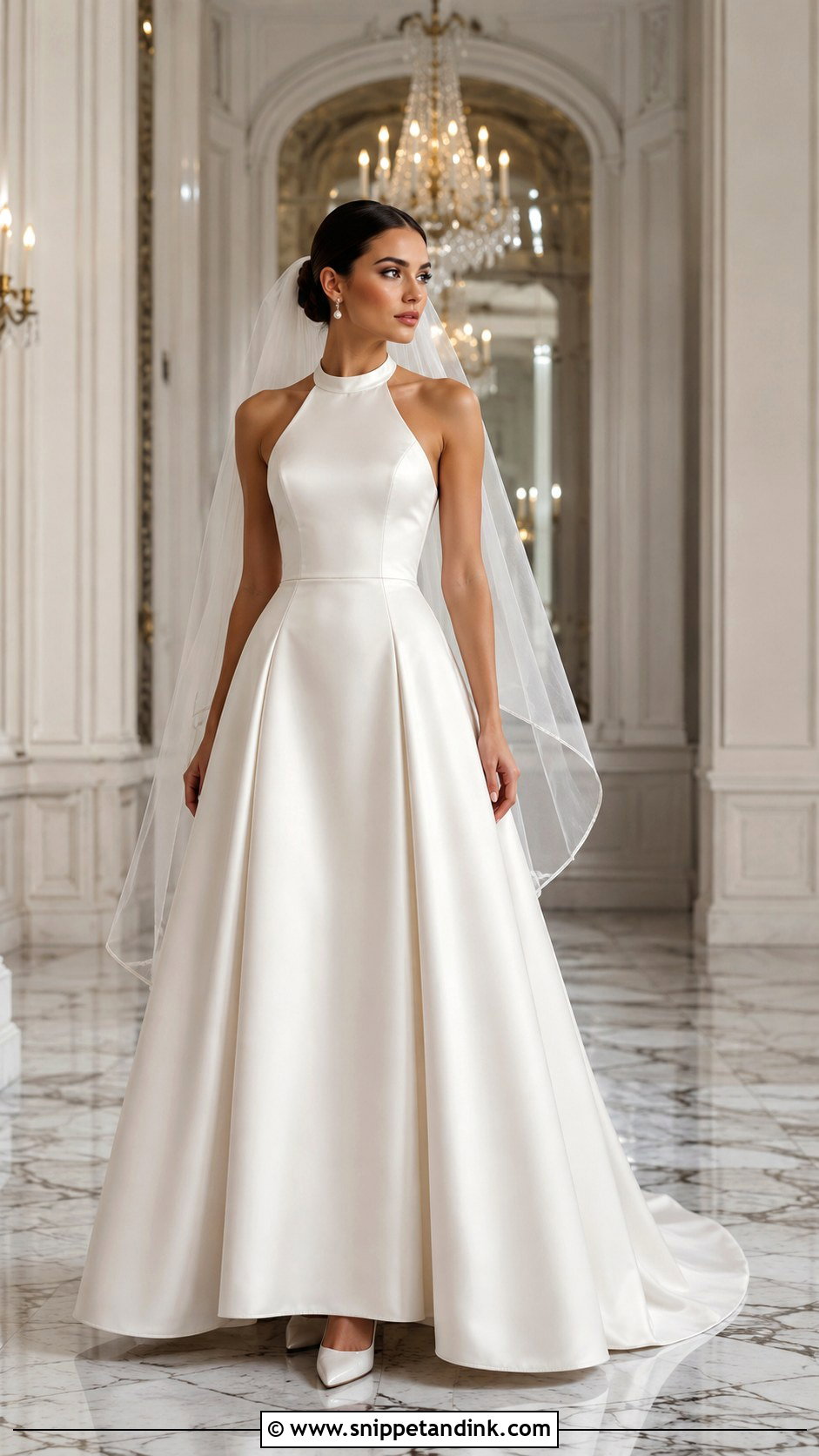
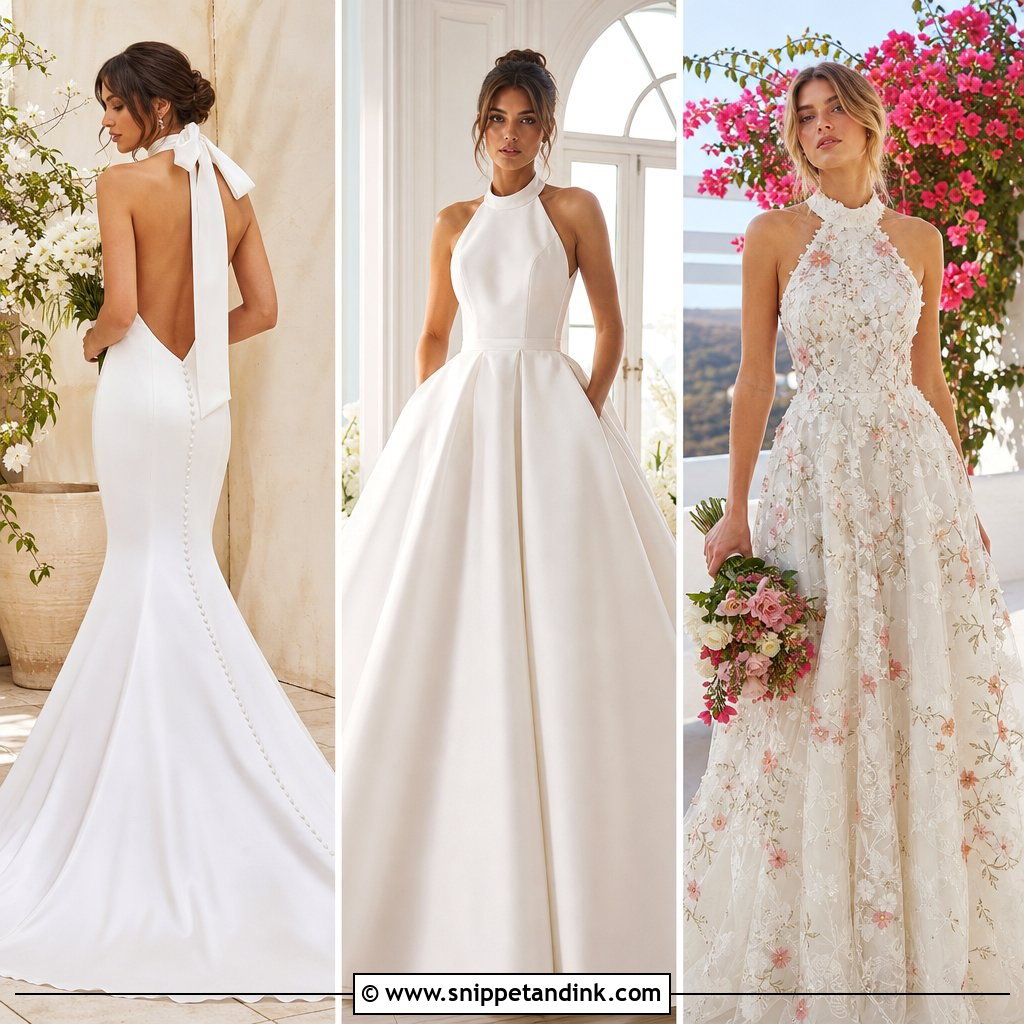
Start here if you want the most classic version. Structured satin holds the A-line skirt away from the hips and gives a formal finish that suits a ballroom or hotel. I’d leave the necklace off entirely, because a halter strap and a chain at the same neck compete. Pearl drops, pointed ivory pumps, a low bun and a fingertip veil are all it needs. The fitting detail that matters is the closure: if the bodice is even slightly long, the halter pulls back against your nape all evening.
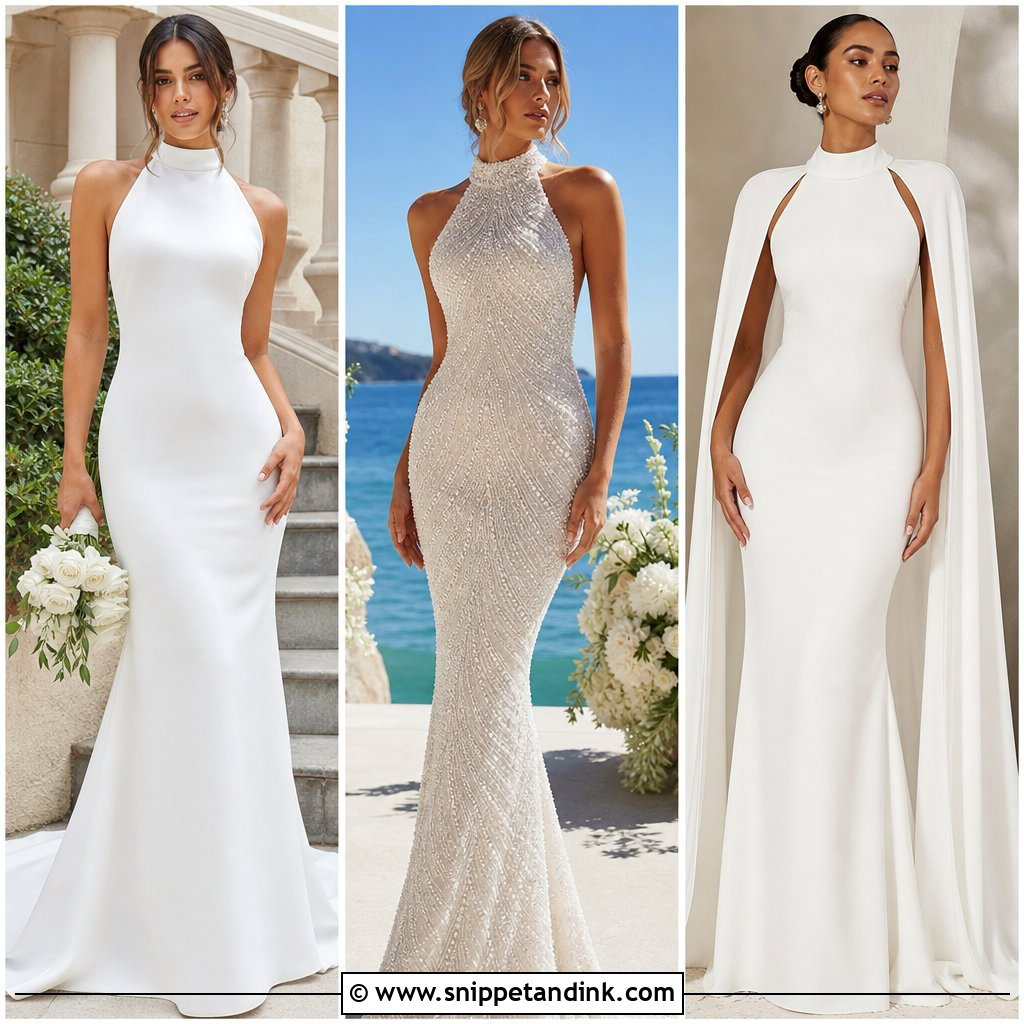
2. Crepe Sheath Halter Wedding Dress
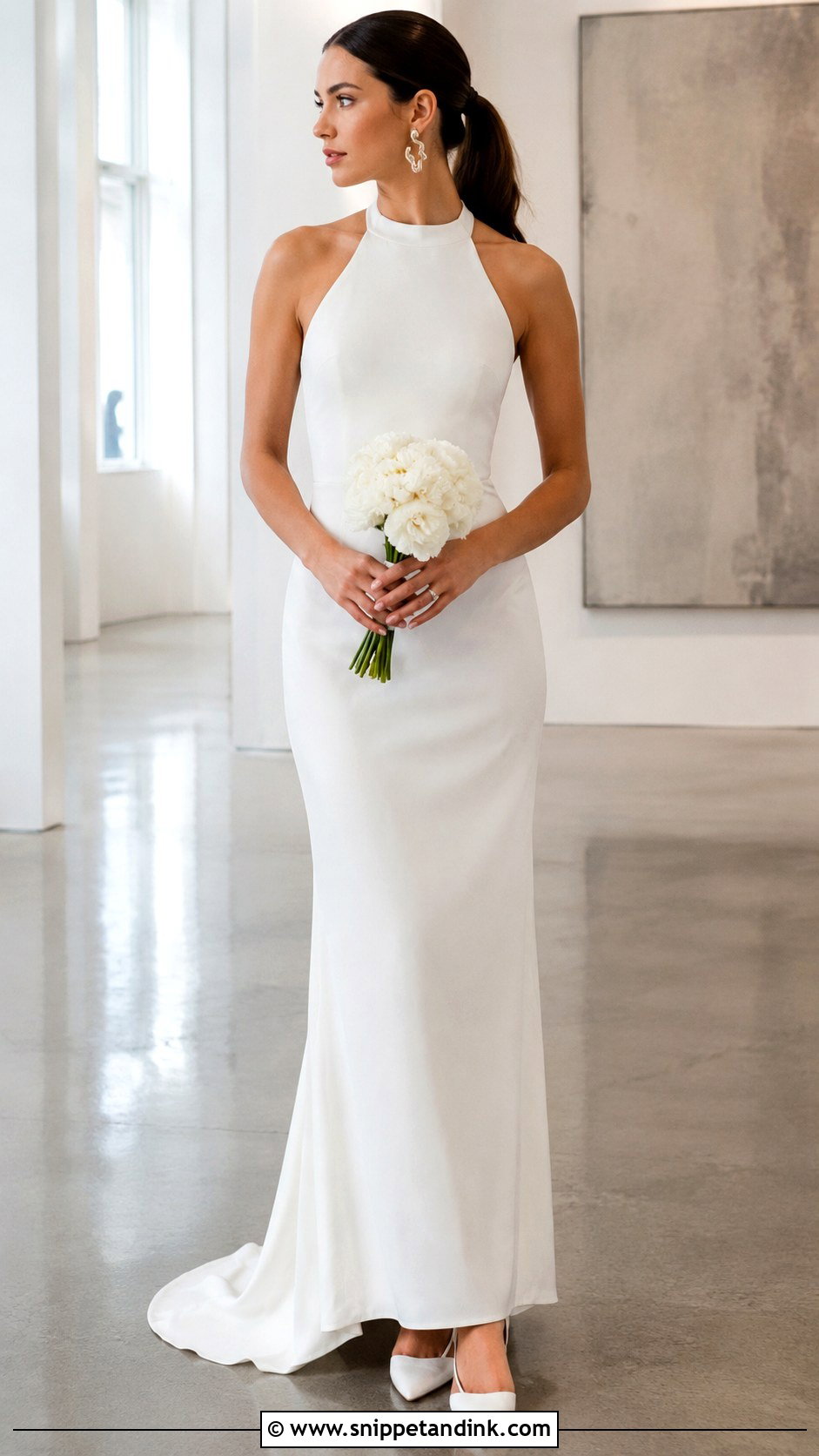
Crepe has none of satin’s shine, which is why a crepe sheath halter wedding dress looks so at home in a gallery or city venue. Princess seams do the shaping. I usually suggest a wider halter strap on a sheath, since a thin one can look stringy against a body-skimming column. Slingbacks, sculptural earrings and a polished ponytail keep the line sleek. A sheath gives you less leg room than an A-line, so walk, sit and climb a flight of stairs before you settle the hem and heel height. Light shapewear helps crepe lie flat, as long as you can still breathe at dinner.
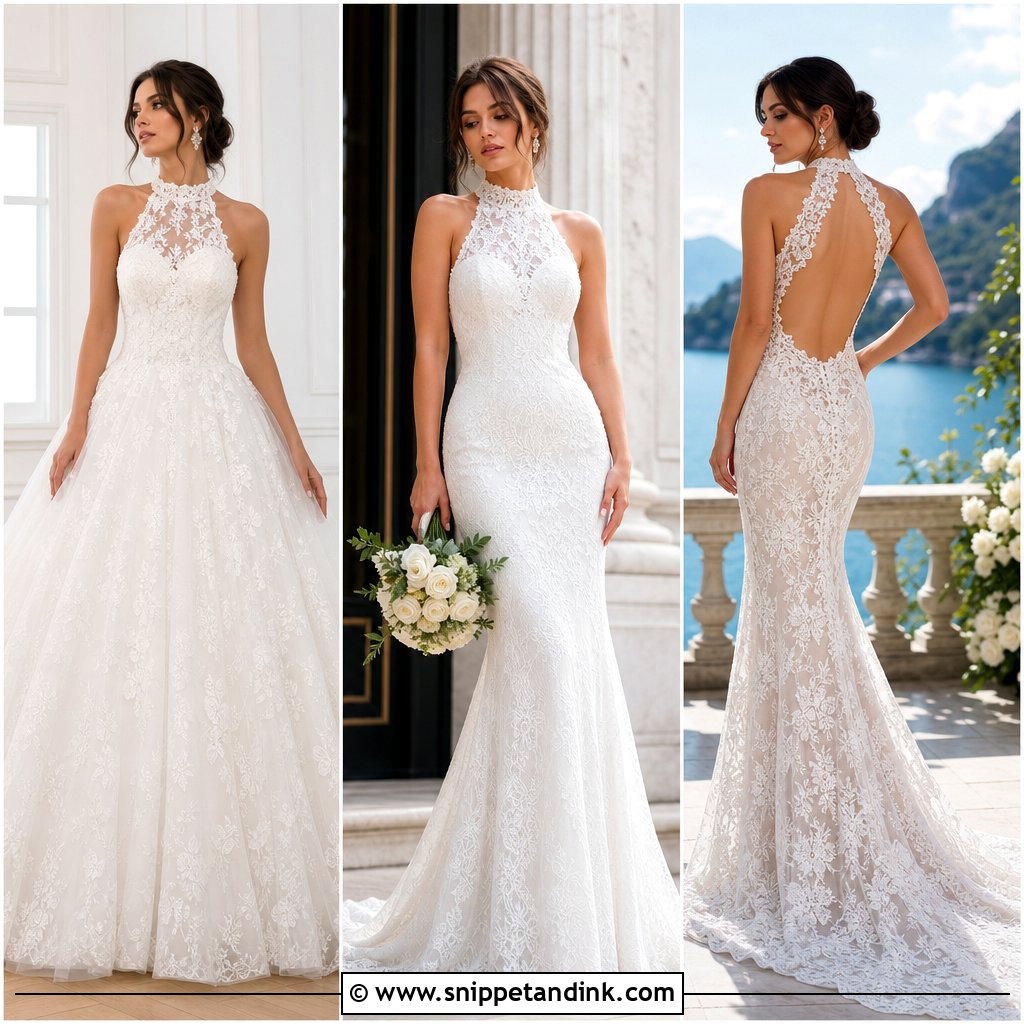
3. Lace Mermaid Halter Wedding Dress
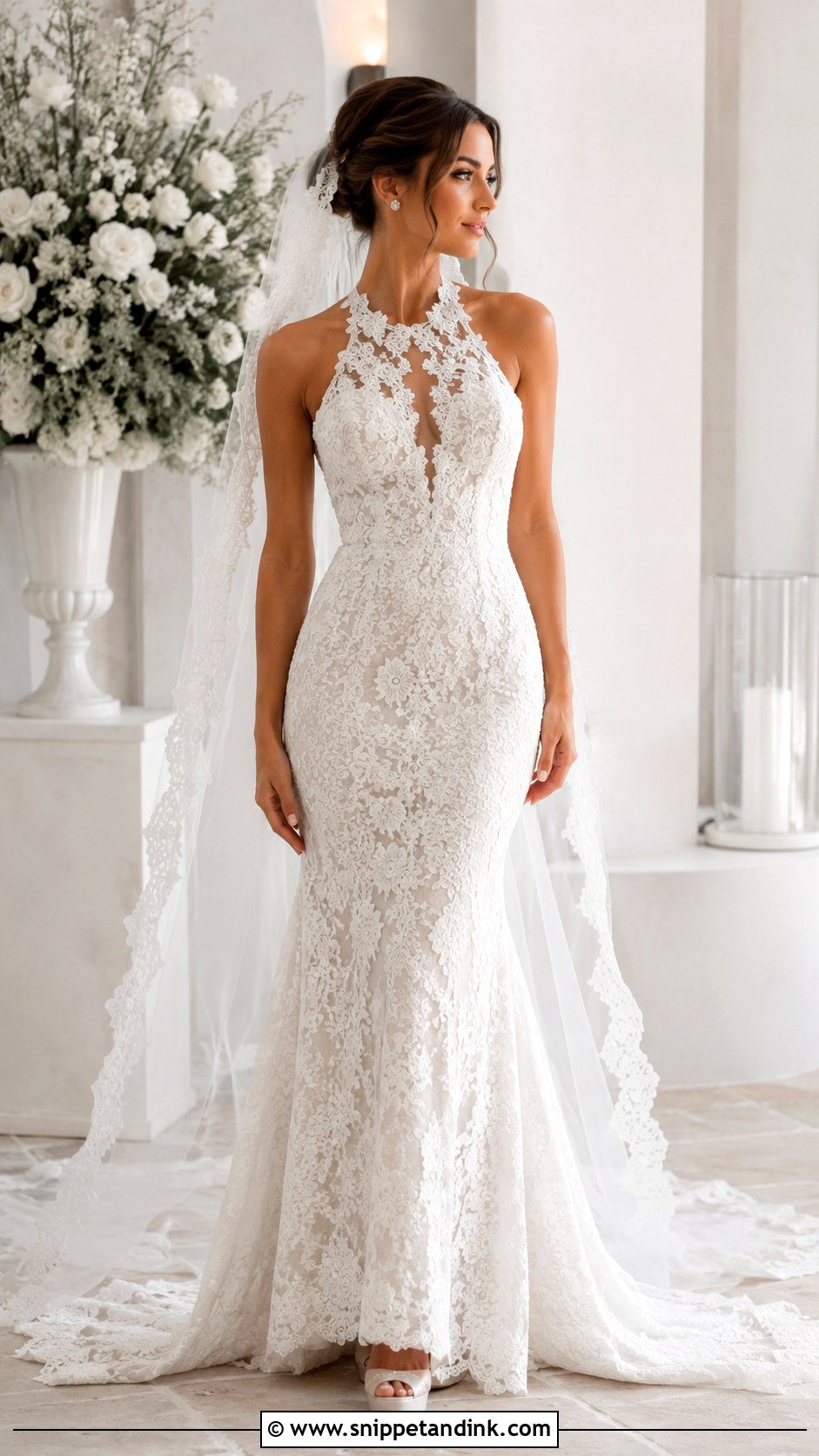
Lace mermaids live or die on lace placement. The motifs should follow the body and finish neatly at the seams, not stop abruptly across the thigh, and that’s the first thing I look at on the hanger. A partly lined bodice gives depth while keeping coverage comfortable. I’d seriously consider platform bridal sandals with this one: a fitted skirt shortens your stride, and a stable platform stops you tipping forward. Crystal studs and a lace-edged veil finish it. If you can’t take a full step, ask for the flare to be raised slightly. You keep the shape and gain movement.
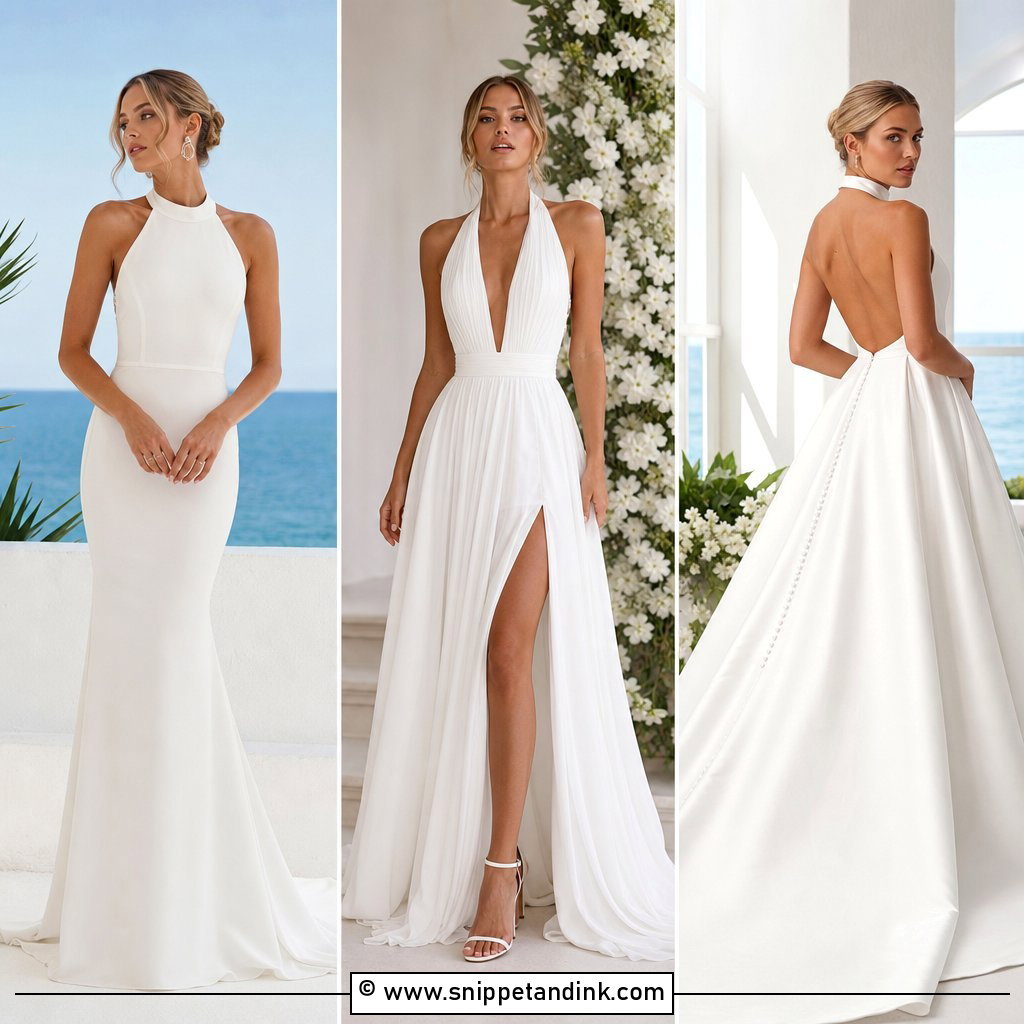
4. Chiffon Beach Halter Wedding Dress
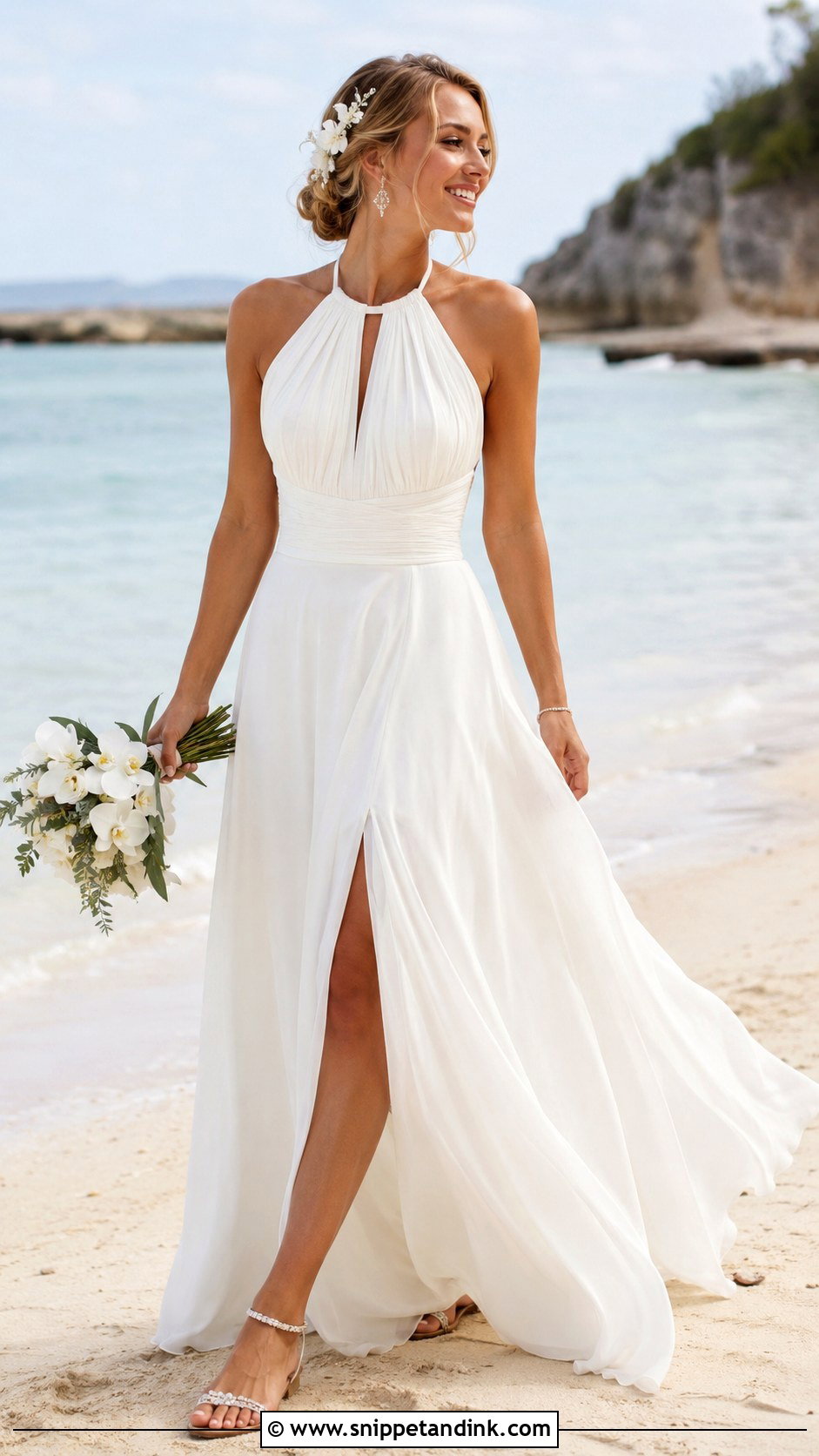
Sand and chiffon get along; sand and a long train don’t. On a beach I’d choose a short sweep train or none, with an A-line or gathered skirt that won’t cling in damp sea air, over a lined halter bodice. Wind is the real enemy of a veil by the water, so a floral comb is often the calmer option. Embellished flat sandals, a braided updo and small earrings are enough. Hem the dress in the sandals you’ll actually wear, and ask for a wrist loop sewn into the skirt so you can lift it as you walk near the waterline.
5. High-Neck Halter Ball Gown Wedding Dress
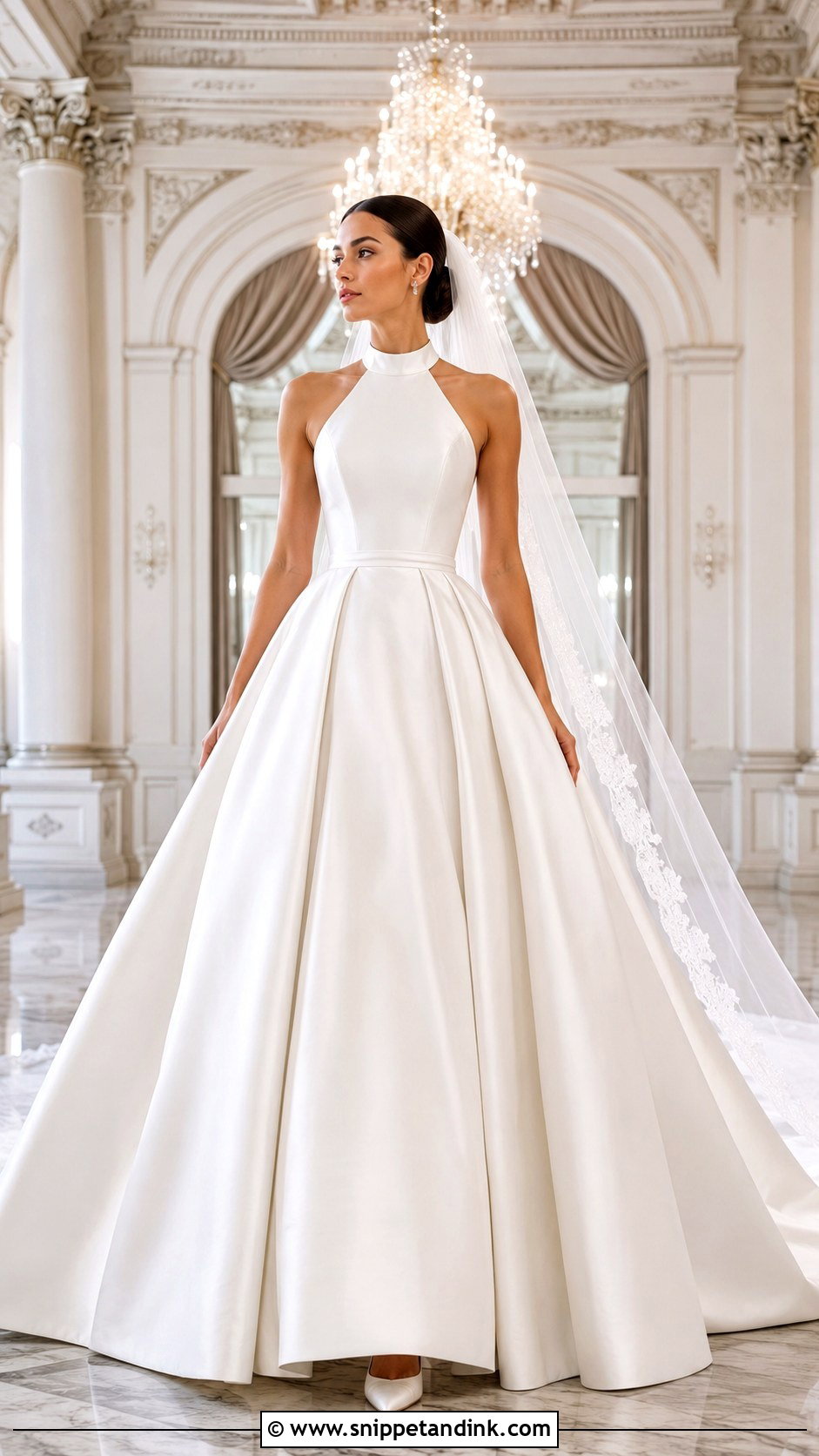
This one surprises people. A high halter on a full ball gown gives as much drama as any strapless style, with far more coverage. Satin, mikado and structured taffeta hold the volume well. The engineering question is who carries the weight: a ball gown skirt is heavy, and if the bodice lacks proper cups, boning and a waist stay, all of it hangs from the strap at your neck. By the reception that’s a headache. Keep the bouquet medium-sized, the earrings small and the updo smooth. A cathedral veil adds formality, though a bow or detailed back can look better left bare.
6. Keyhole Halter Fit-And-Flare Wedding Dress
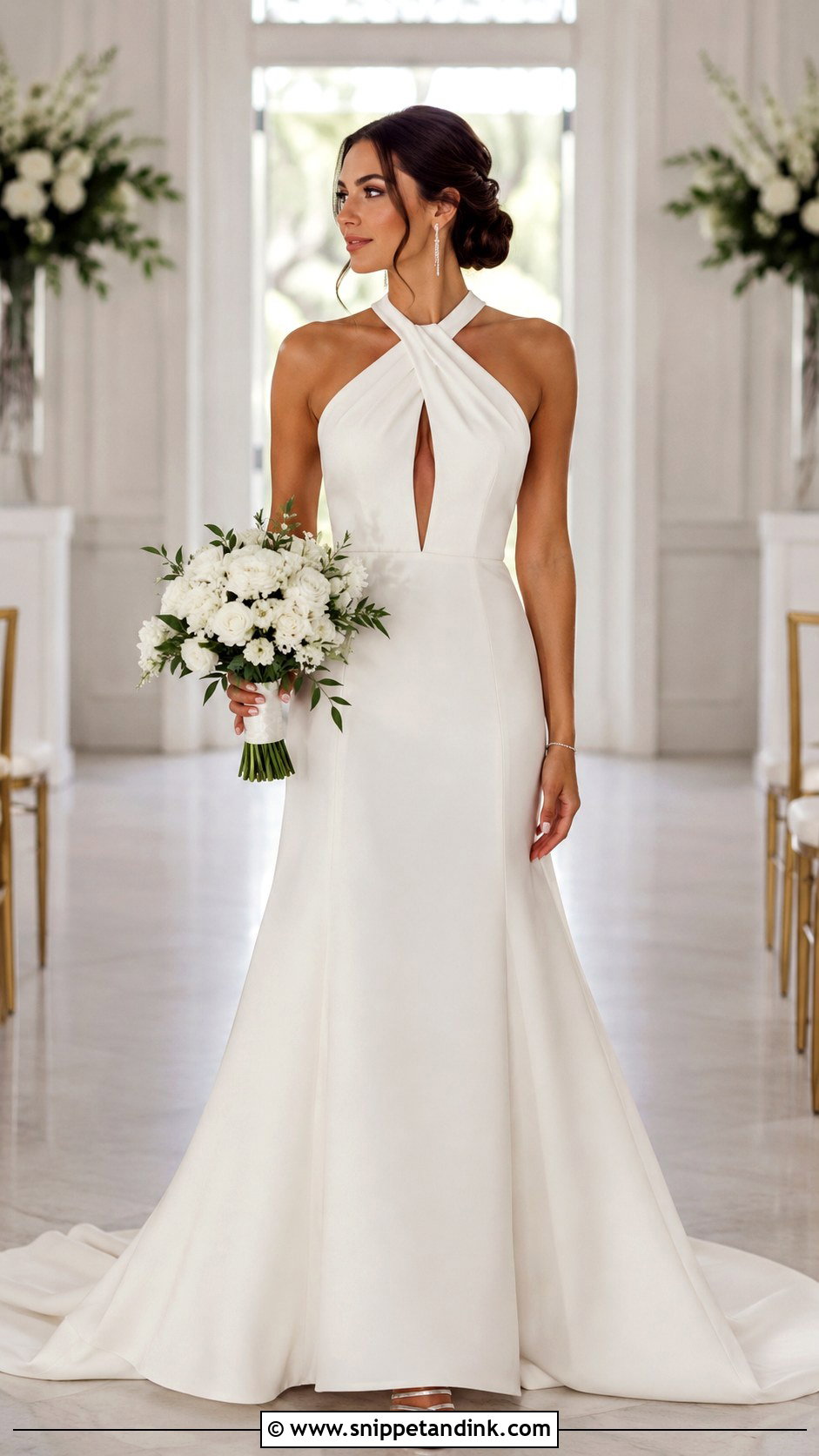
A keyhole gives the bodice one point of interest without any beading. Openings range from a narrow slit to something much more revealing, so if the designer offers options, try more than one. The fit-and-flare skirt widens earlier than a mermaid, which means easier walking. I’ll use fashion tape to keep keyhole edges flat on the day, but if they gape at the fitting, the fix is tailoring, not tape, and a tailor can also add illusion mesh to close the opening a little. Linear earrings, metallic sandals and a low textured bun suit it.
7. Open-Back Satin Halter Wedding Dress
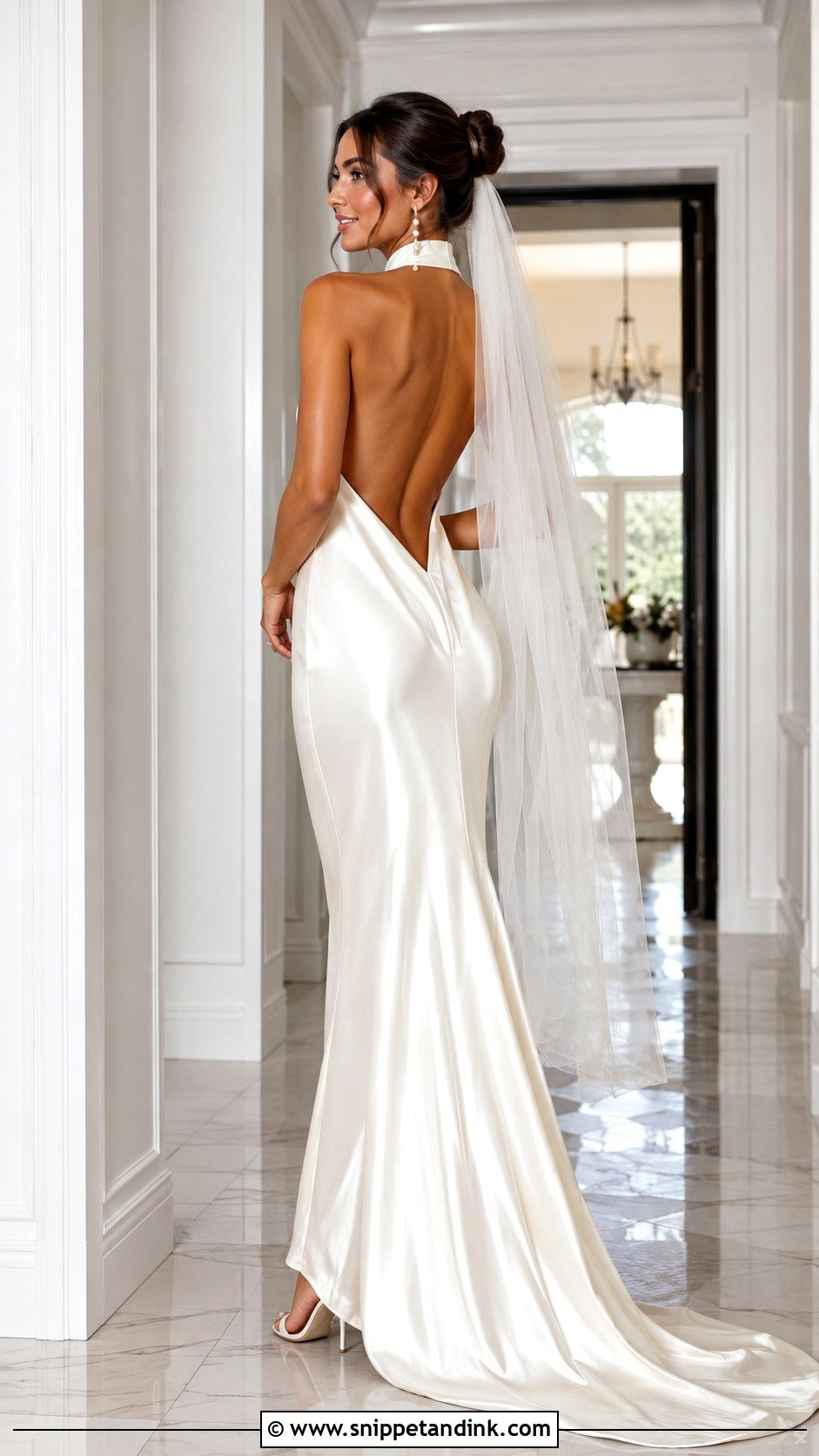
From the front this gown can look almost plain. The low back is the reveal, and remember that guests see your back for most of the vows. Silk satin, charmeuse and heavier bridal satin each drape and catch light differently, so ask to see them side by side. A normal bra won’t work here; look for built-in cups, a supportive lining or professionally fitted adhesive cups. Wear the long veil for the ceremony and take it off for the reception so the back is actually seen. The neck closure should lie flat without creasing the satin across your shoulder blades.
8. Beaded Illusion Halter Wedding Dress
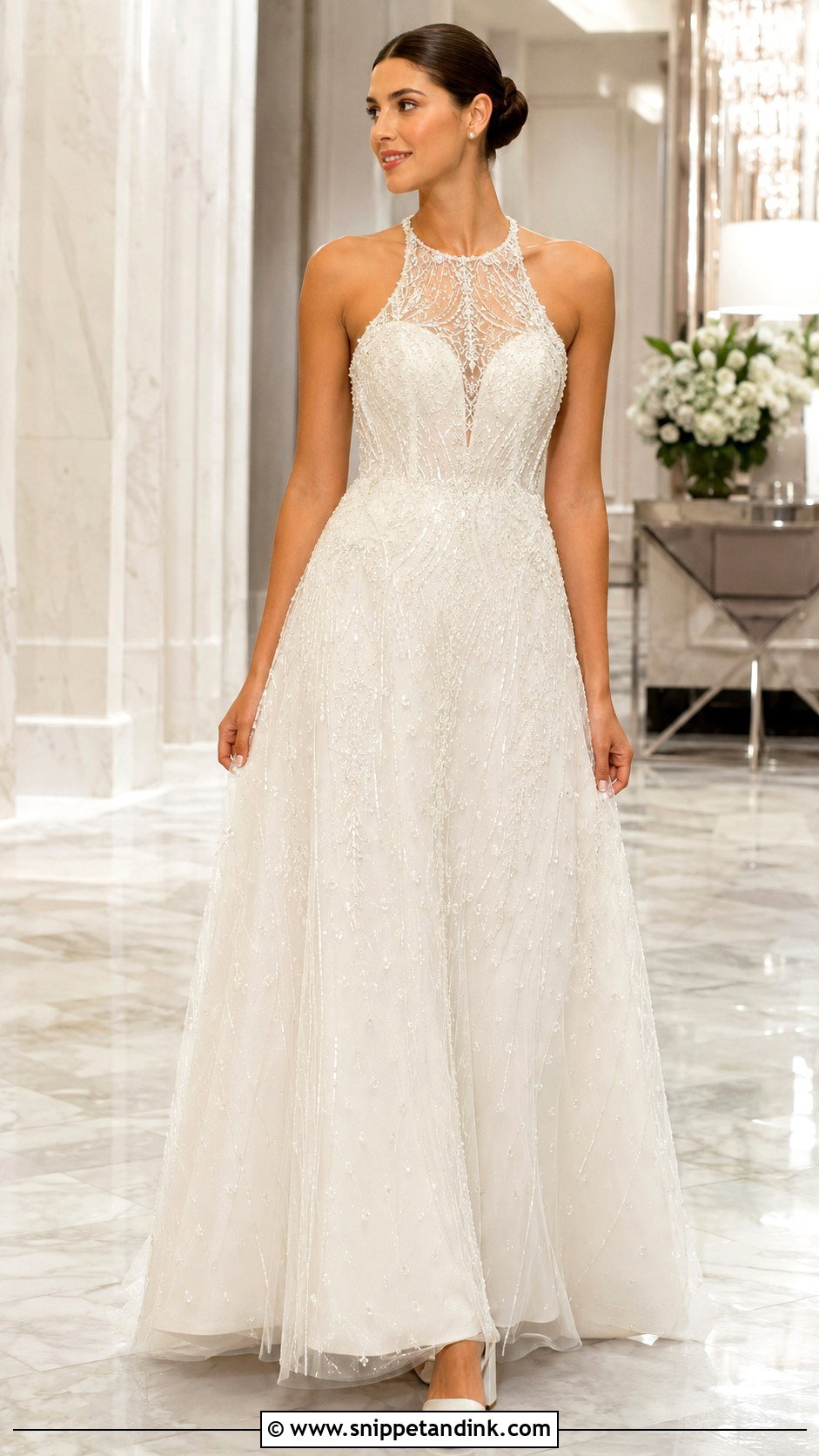
Beads sewn onto skin-tone mesh look as if they’re floating, and they catch candlelight in a way plain fabric can’t, which is why I steer this dress toward evening receptions. Beading is heavy, though. The bodice should be anchored at the waist so none of that weight hangs from your neck. Check the mesh color in daylight against your skin, because a mismatched mesh shows up as a grey or pink band in photos. Studs, a smooth bun and a plain veil are plenty. Store it flat or fully supported so the mesh doesn’t stretch under the beads.
9. Minimalist Silk Halter Wedding Dress
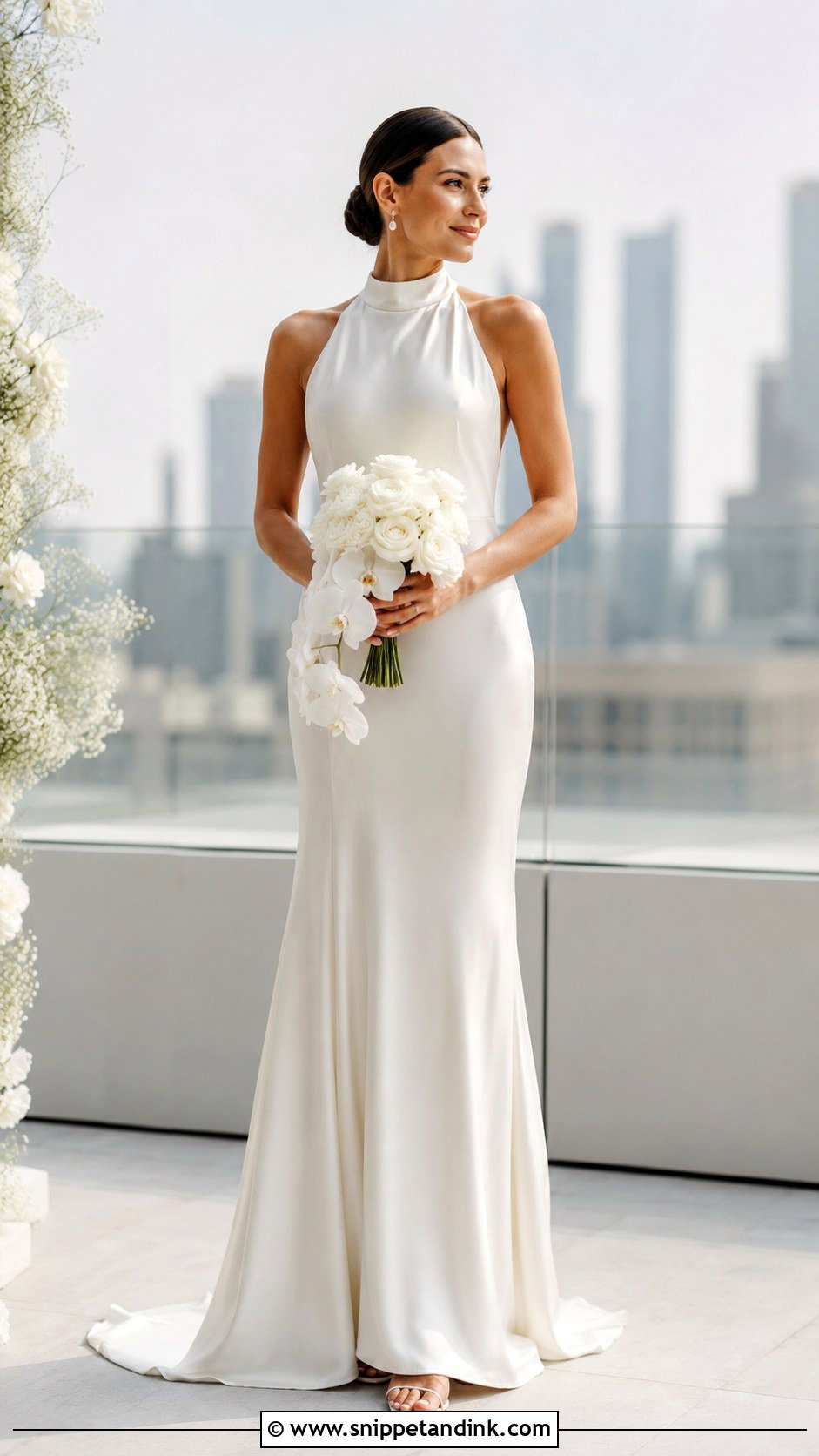
Fluid silk shows every flaw in construction, and every line underneath it. On an unembellished dress the seams and the waist shaping are the design, so I look closely at how they’re finished. Silk also creases faster than heavier satins. Have the gown professionally steamed and hung properly the day before, and test your underwear under bright light. Pearl earrings, slim heels and a single-variety bouquet keep it clean.
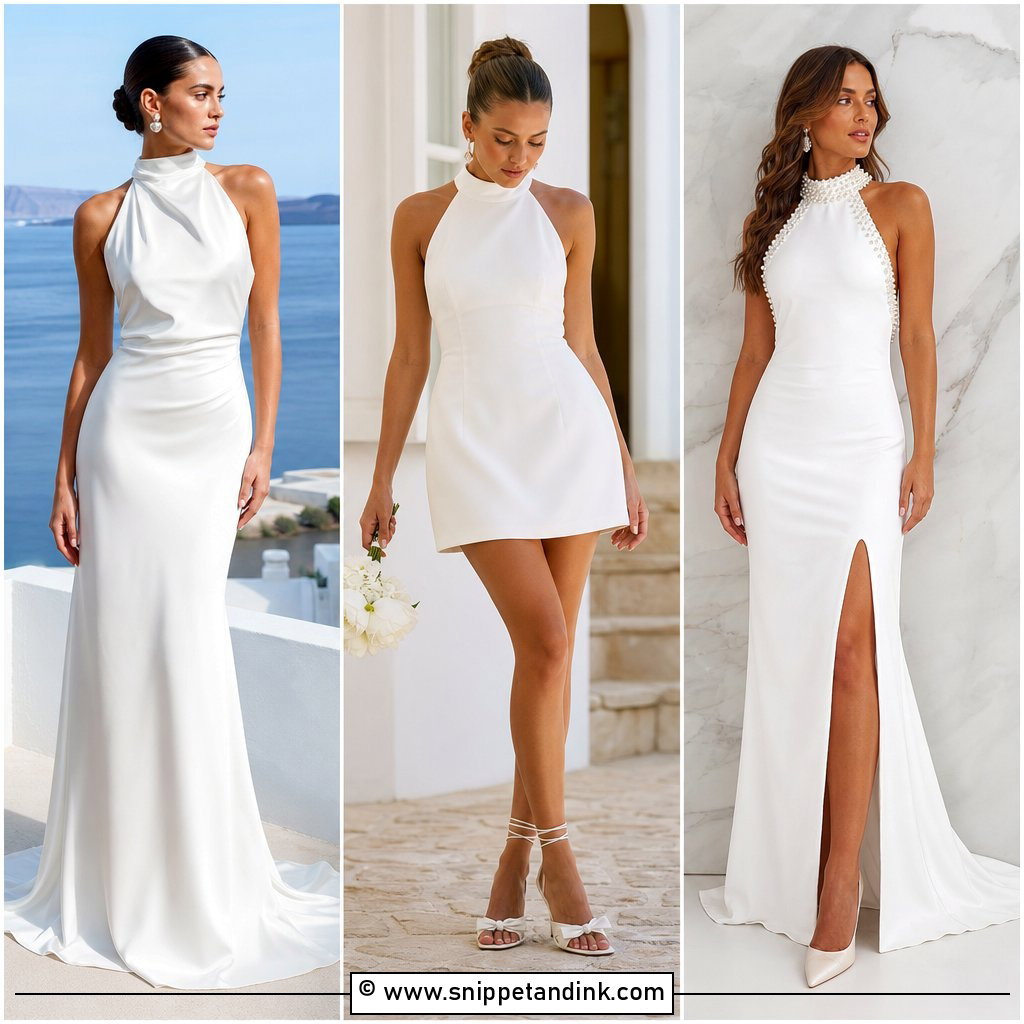
10. Tea-Length Halter Wedding Dress
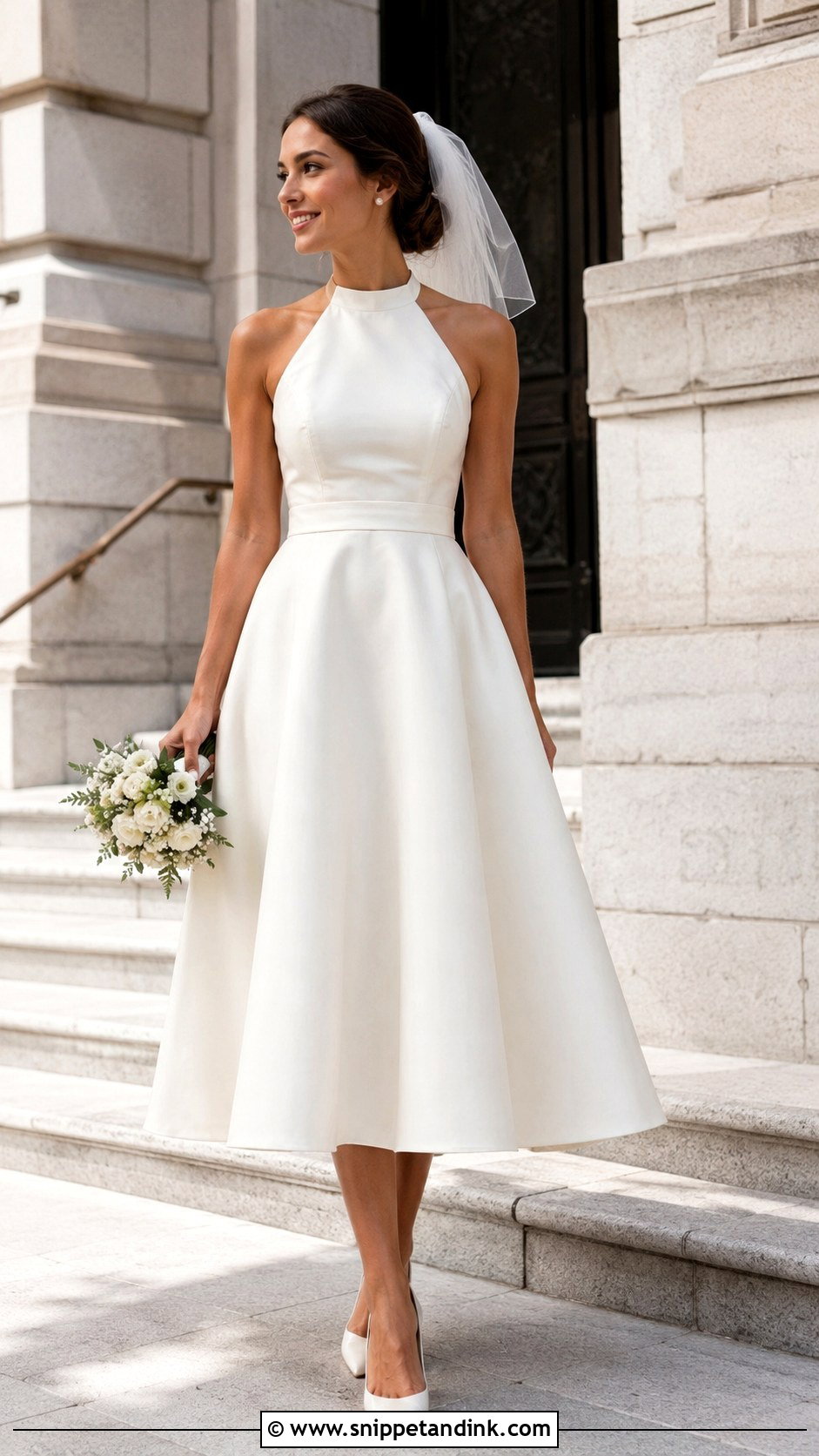
Shorter hems change what people look at, and a tea-length halter sends attention straight to the neckline and the shoes. That makes it a natural fit for a courthouse ceremony or a daytime party. A fitted waist and gently flared skirt read vintage without tipping into costume. Pointed pumps polish it; block-heel sandals are kinder over a long day. I try two or three hem lengths at the fitting with the real shoes on, because an inch higher or lower on the calf changes the whole proportion. Keep the bouquet compact and the veil short.
11. Halter Mini Wedding Dress
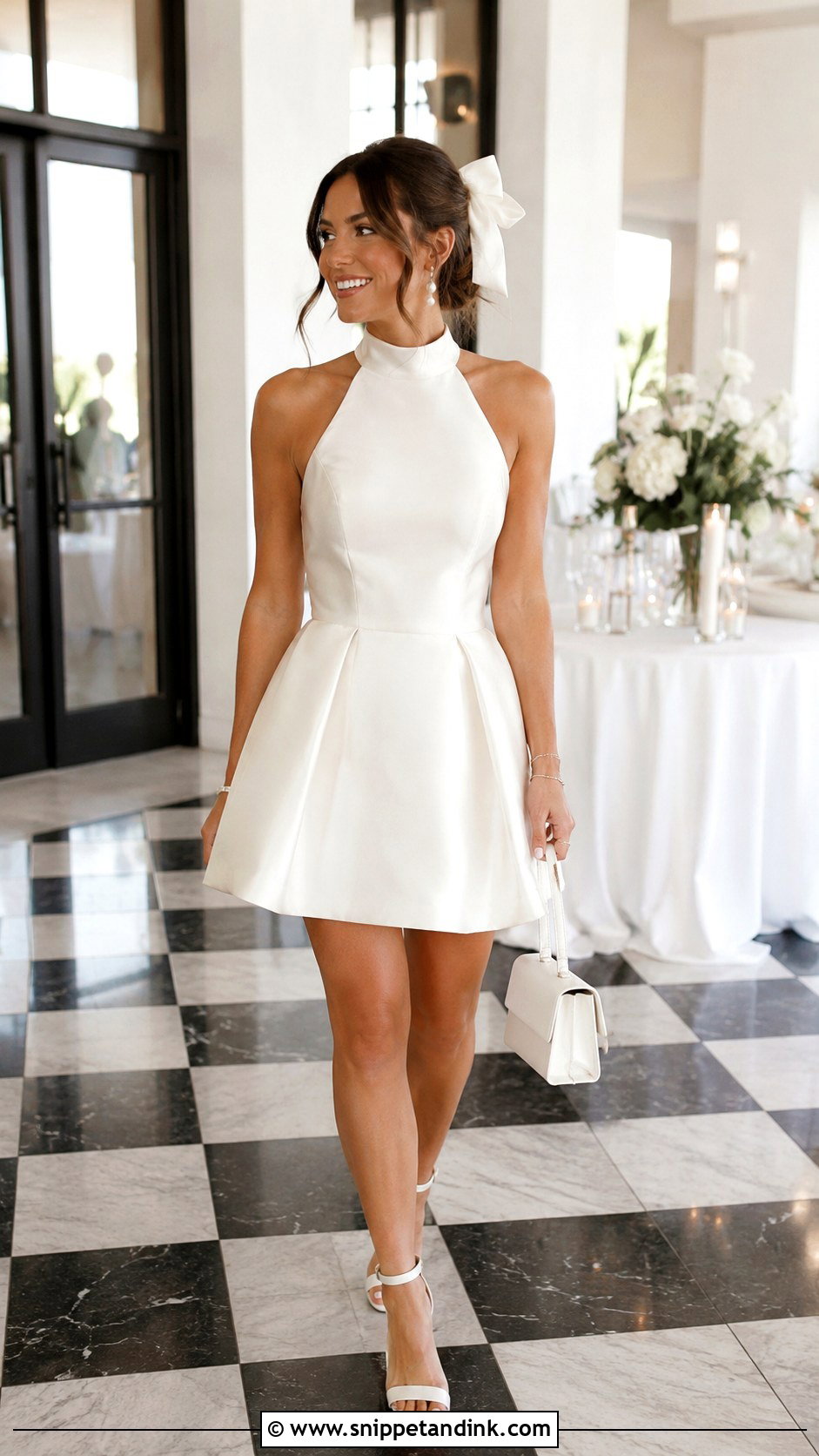
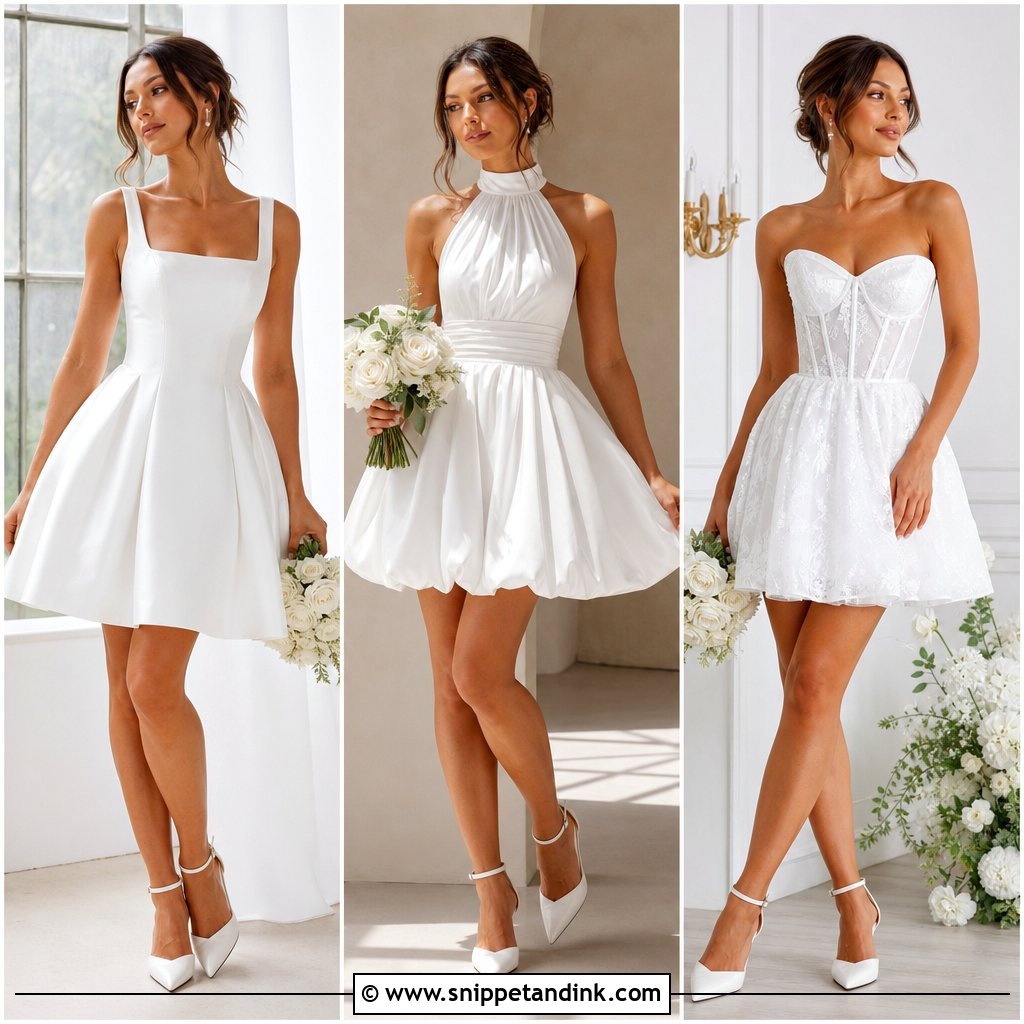
A halter mini wedding dress is my usual suggestion for a civil ceremony or an evening outfit change. Structure keeps it bridal, so look for a firm bodice in satin, crepe or something embellished. Sit, dance and raise your arms at the fitting; a hem that’s fine standing can ride up a long way once you’re seated. Built-in shorts or a slip help. Ankle-strap heels, pearl earrings and a short veil or oversized bow finish it, and if the evening turns cool, an ivory blazer worn open still shows the neckline.
12. Plus-Size A-Line Halter Wedding Dress
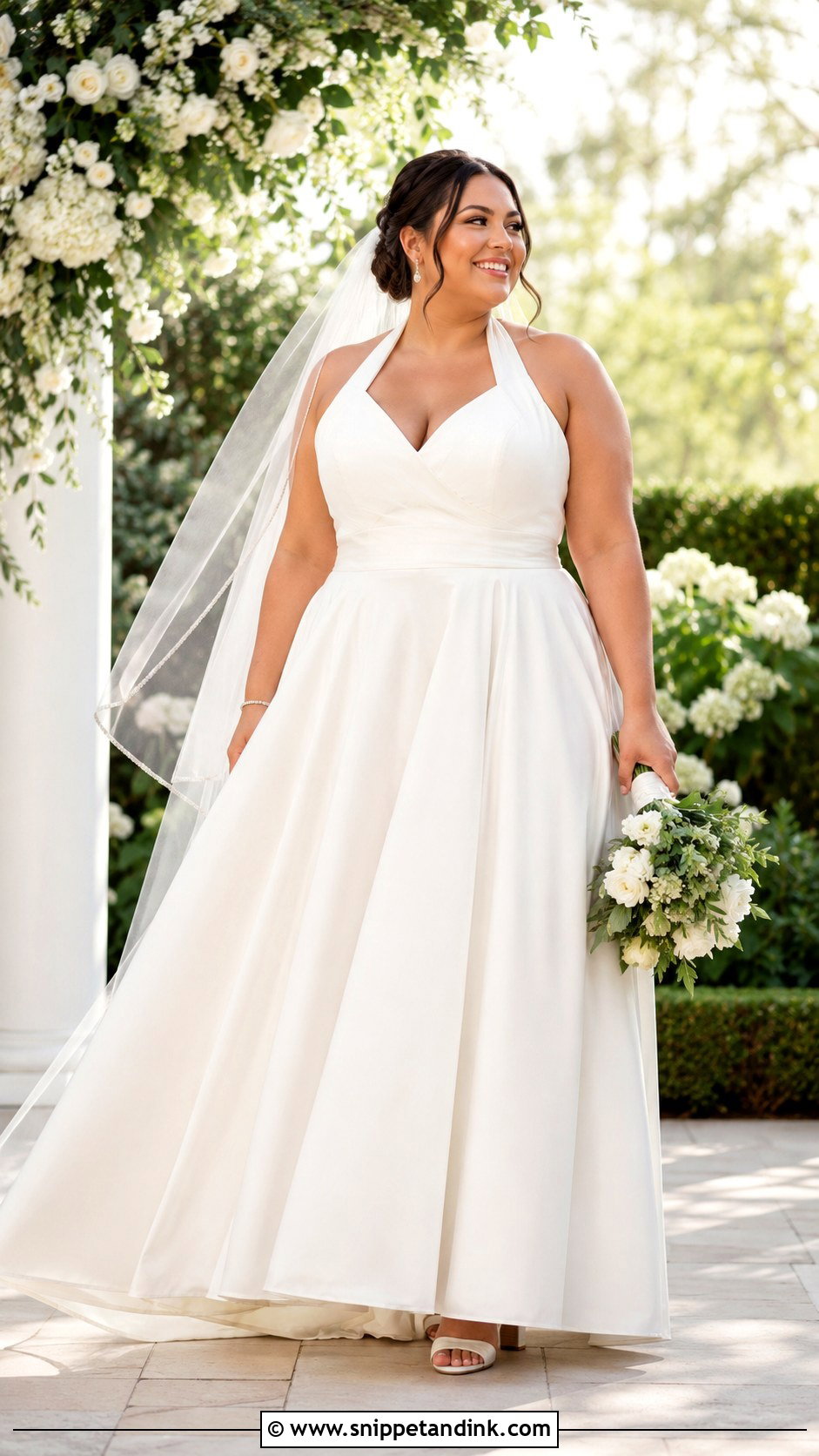
On a fuller bust I want three things from a halter: wide straps, structured cups and a firm waistband, so support is spread around the bodice instead of concentrated on the back of the neck. Get that right and the neckline gives great definition, with the A-line skirt moving easily over the hips. Soft pleating or diagonal draping at the waist adds shape. Ignore the size label, because bridal sizes run differently from everyday ones and alterations should fit the gown to your real measurements. Before approving the final fitting, bend, dance and check the neck strap from the side.
13. Petite Column Halter Wedding Dress
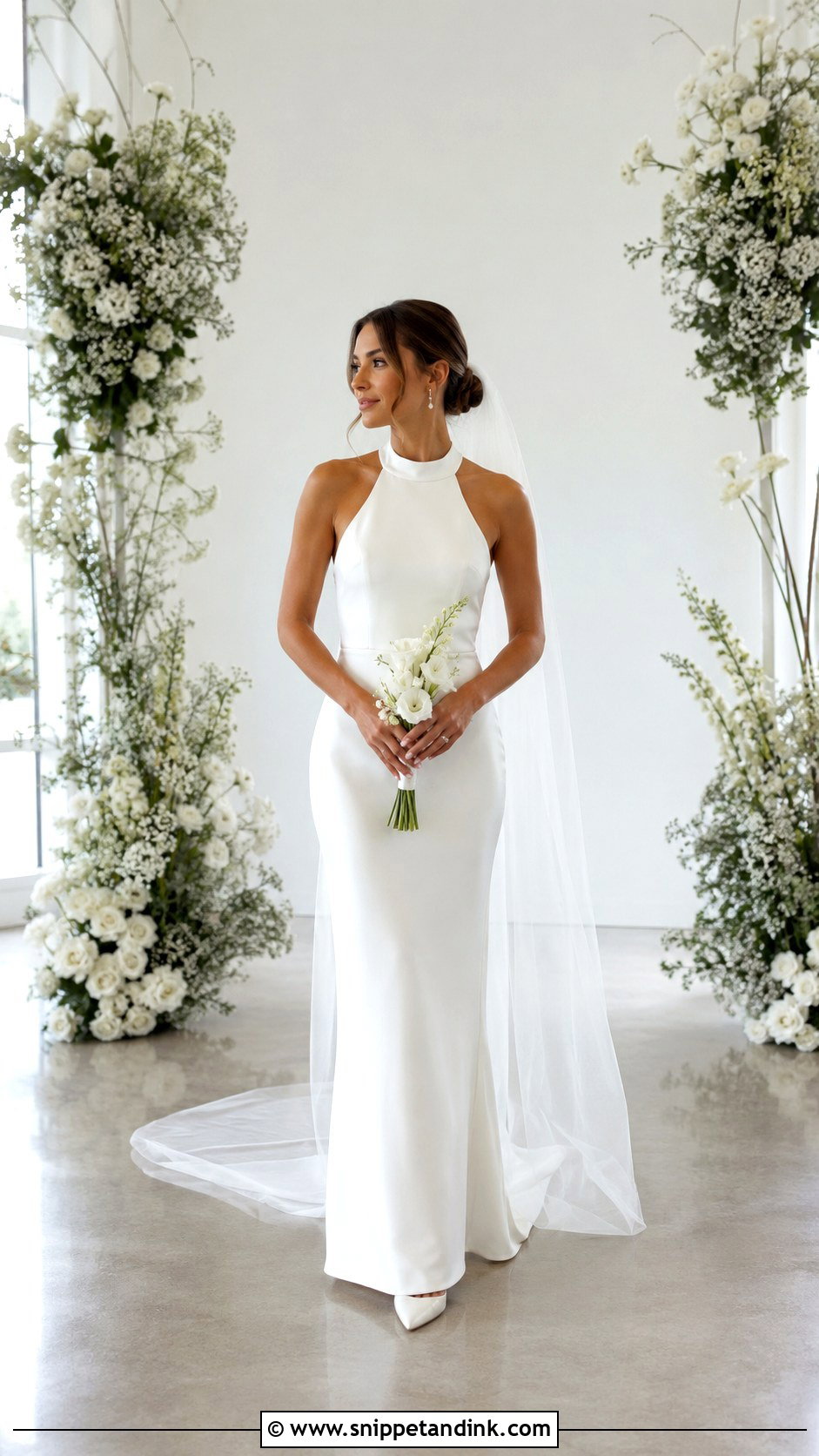
A column is the easiest silhouette for a petite bride to look taller in, since nothing interrupts the line. Halter width matters more than you’d think. A very wide strap can overpower narrow shoulders, so I lean toward narrow or medium. Excess fabric shortens you, which is why controlled draping and close tailoring come first. Shoes near the gown’s color and a narrow bouquet keep the vertical effect, and a long veil that falls straight adds length. Petite alterations rarely stop at the hem; the waist seam, strap length and hip placement often need moving too, or the neckline ends up sitting too low.
14. Boho Lace Halter Wedding Dress
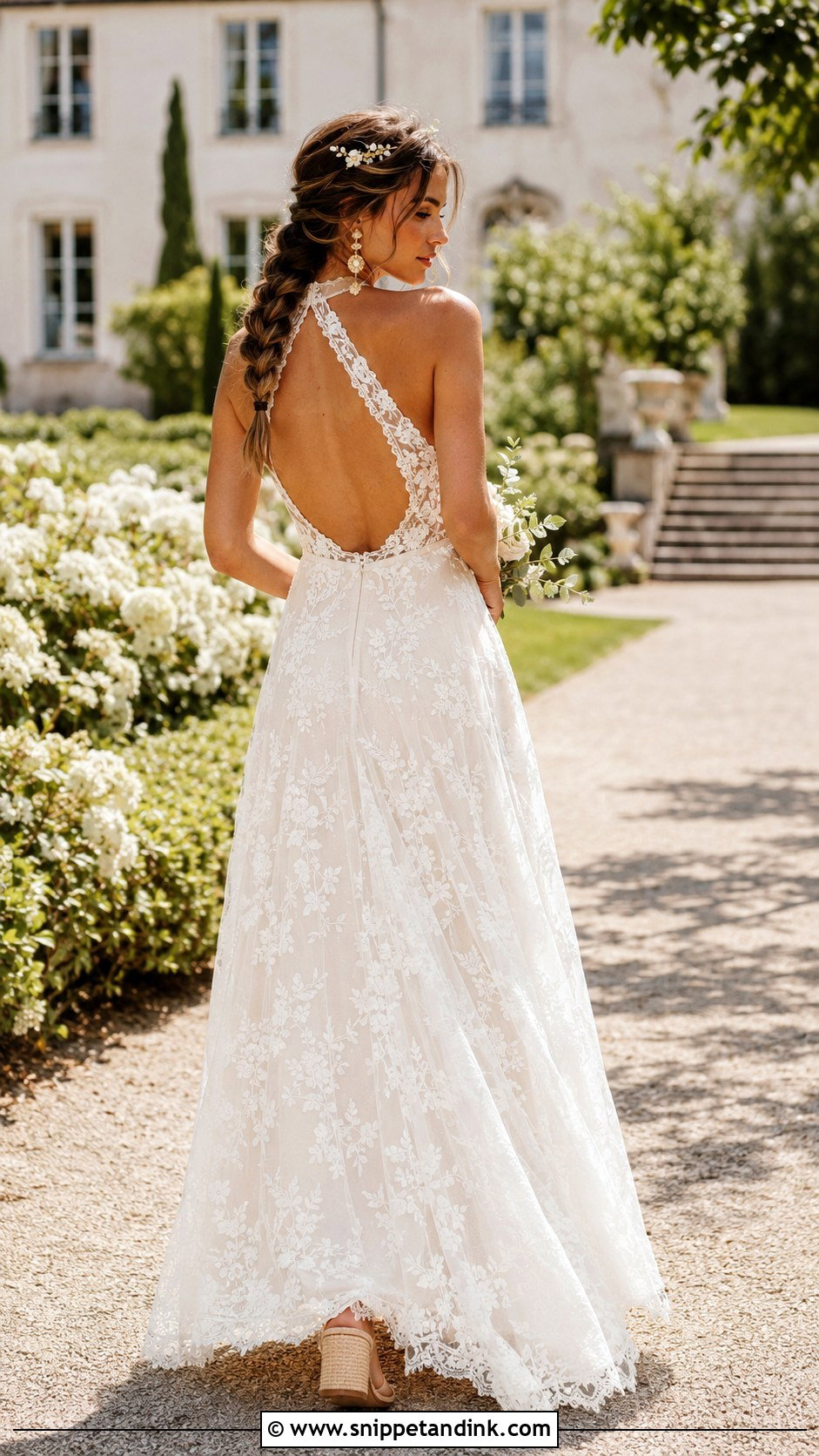
Crochet-style lace and botanical motifs look at home outdoors, and over an easy A-line or column skirt this one suits a garden or rustic estate. I’d limit the accessories to one or two pieces. The lace is already doing the talking, and piling on hair vines, stacked bracelets and fringed shoes tips it into fancy dress. Woven sandals and a loose braid are enough. Run a finger along the inside of the neck strap: unfinished trim scratches after a few warm hours, and a seamstress can line it with soft tulle.
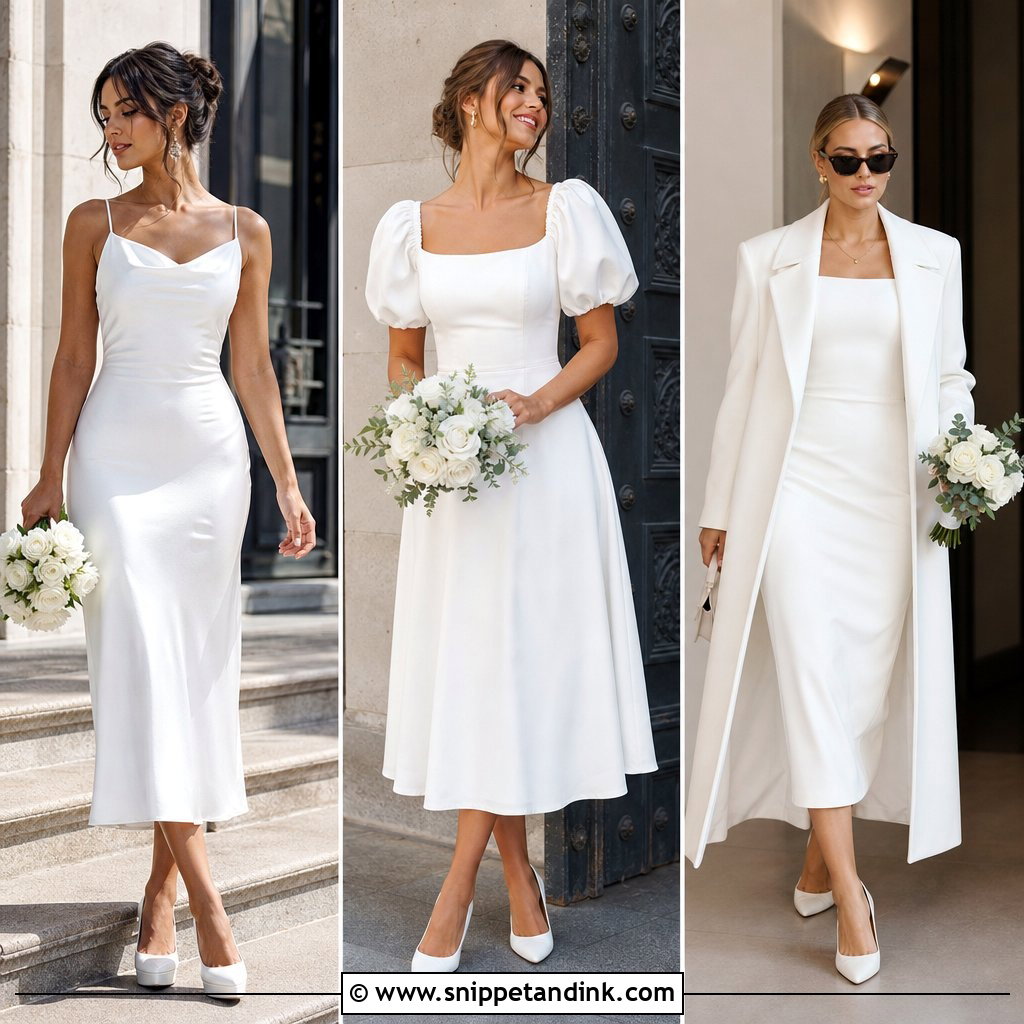

15. Vintage-Inspired Halter Wedding Dress
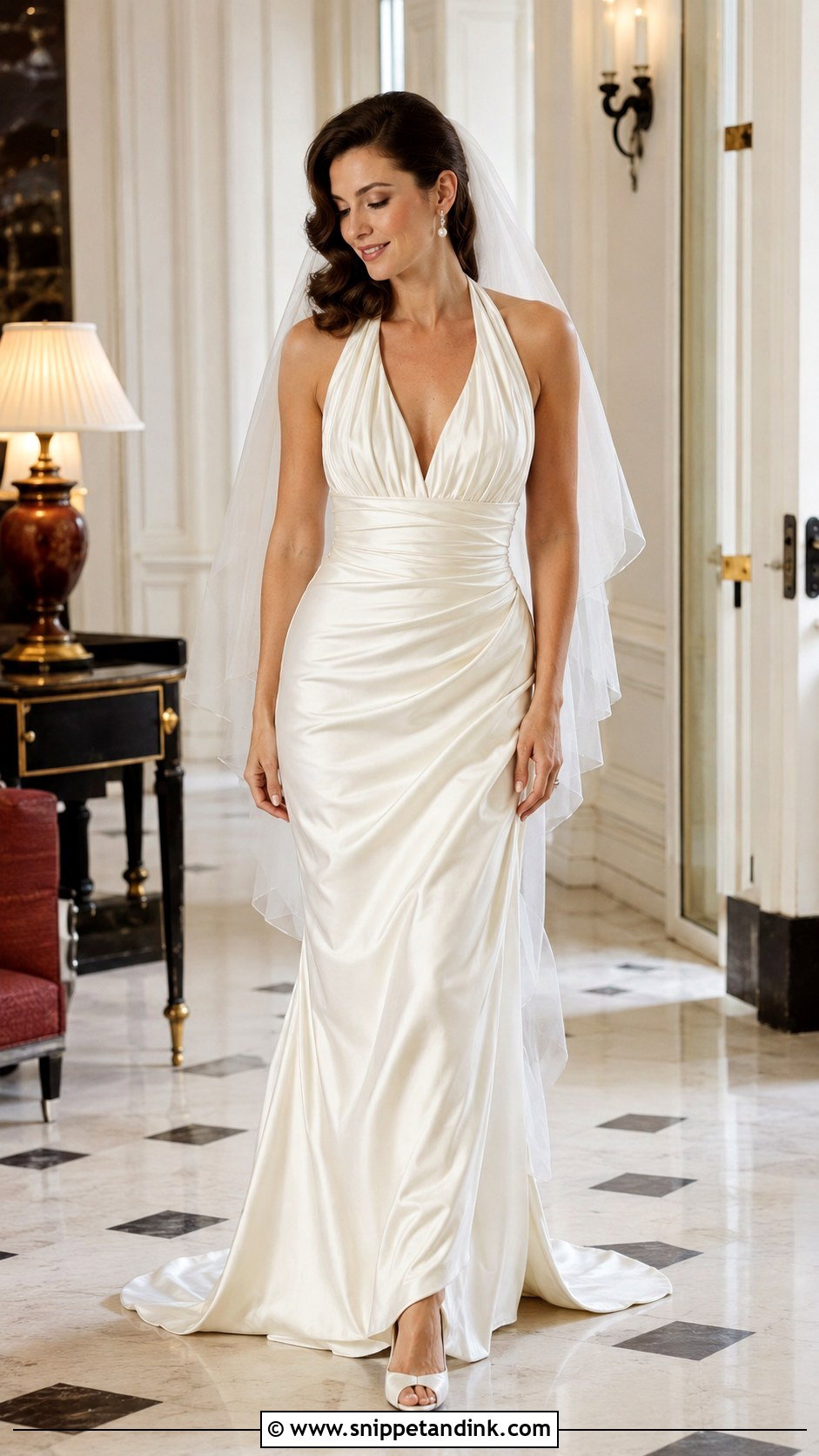
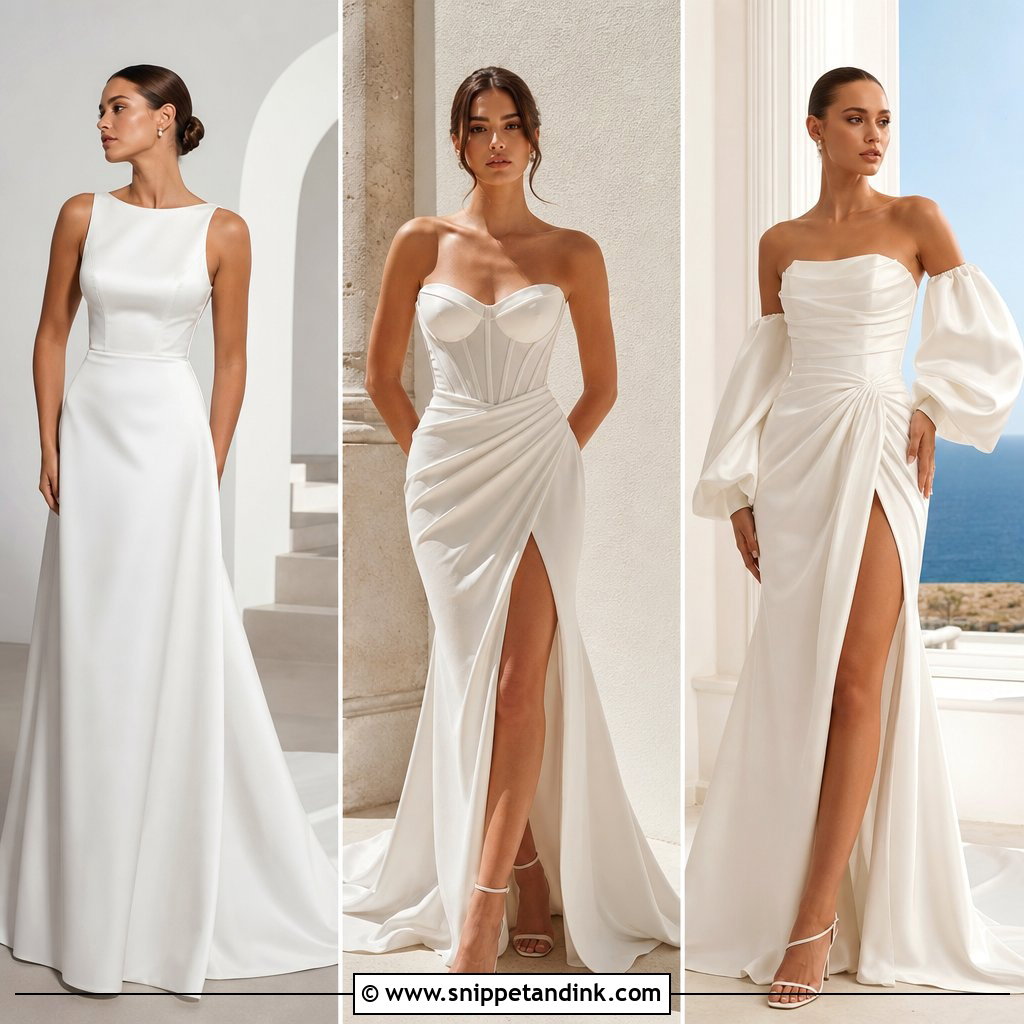
Pick one decade. A softly gathered neckline points to mid-century glamour, while bias-cut satin with a low back is pure 1930s. Combine the two with finger waves and a birdcage veil and it starts to read as costume. Ivory or champagne fabric gives a gently aged tone. A birdcage veil suits a shorter hem, a plain chapel veil a floor-length one. Many vintage-style cuts have very little inner structure, so before you buy special underwear, ask the tailor whether cups or a waist stay can be added.
16. Pearl Halter Wedding Dress
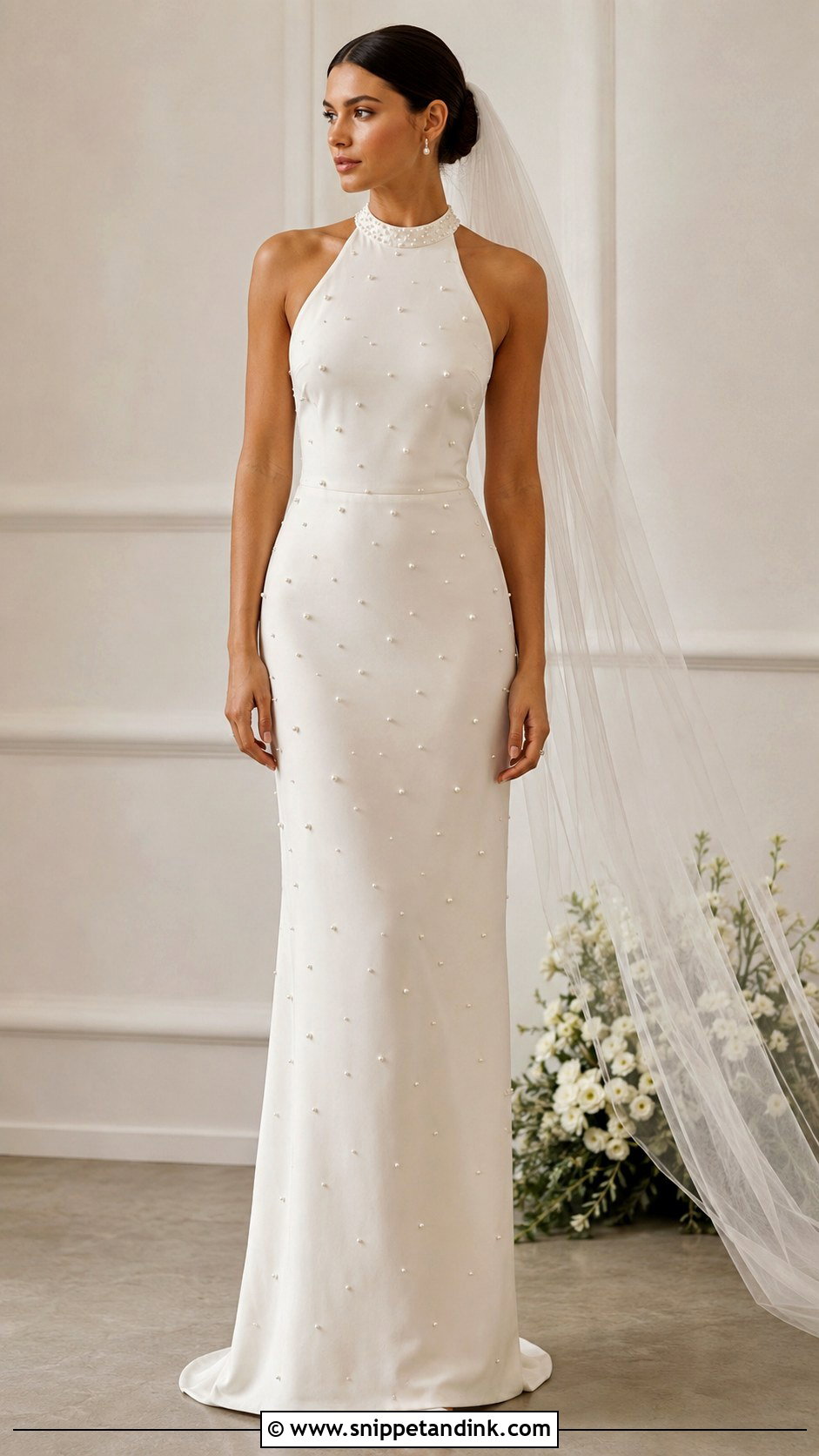
Pearls glow where crystals flash, which gives this dress a quieter kind of detail. Scattered on mesh or crepe they look modern; concentrated around the neckline they frame the face. A column or A-line keeps the texture visible. I’d skip a pearl necklace outright, since it crowds the halter and makes the outfit look too matched. Small pearl earrings, a low bun and a plain tulle veil are enough. Check the stitching near the armholes and neck closure, where pearls take the most friction, and keep bracelets with sharp edges well away from the mesh.
17. Basque-Waist Halter Wedding Dress
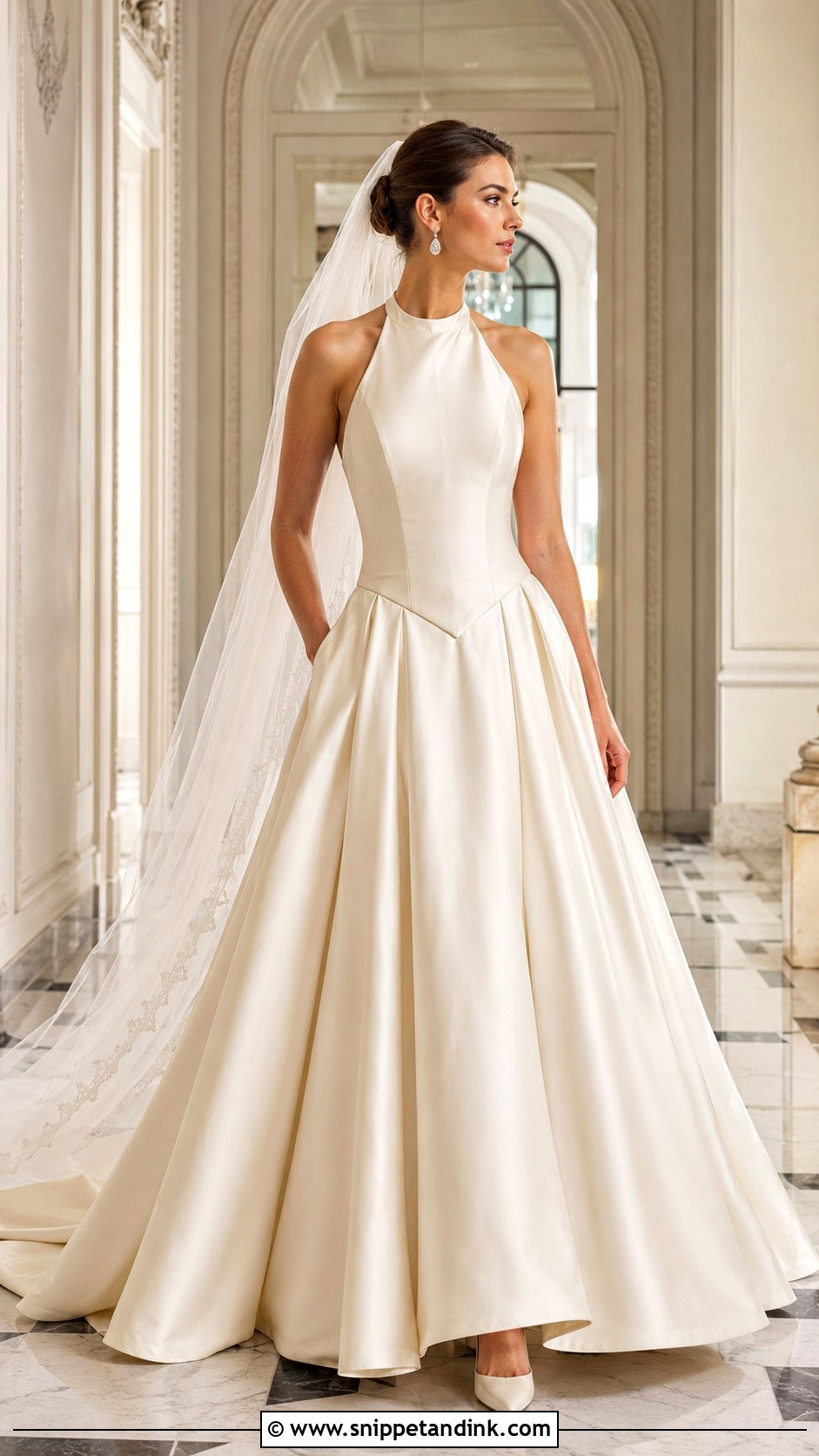
The point of a basque-waist halter wedding dress dips just below the waist into the skirt, so the torso looks longer before the A-line or ball gown opens out. Satin and mikado sharpen that architectural line; lace softens it. Symmetry is everything, because a point even slightly off center makes the dress look twisted. Ask the tailor to check it seated as well as standing, since a bodice that’s too long or rigid presses into the stomach once you sit down to dinner. A chapel veil and a neat updo keep the shoulders and waist on show.
18. Halter Wedding Dress With Detachable Overskirt
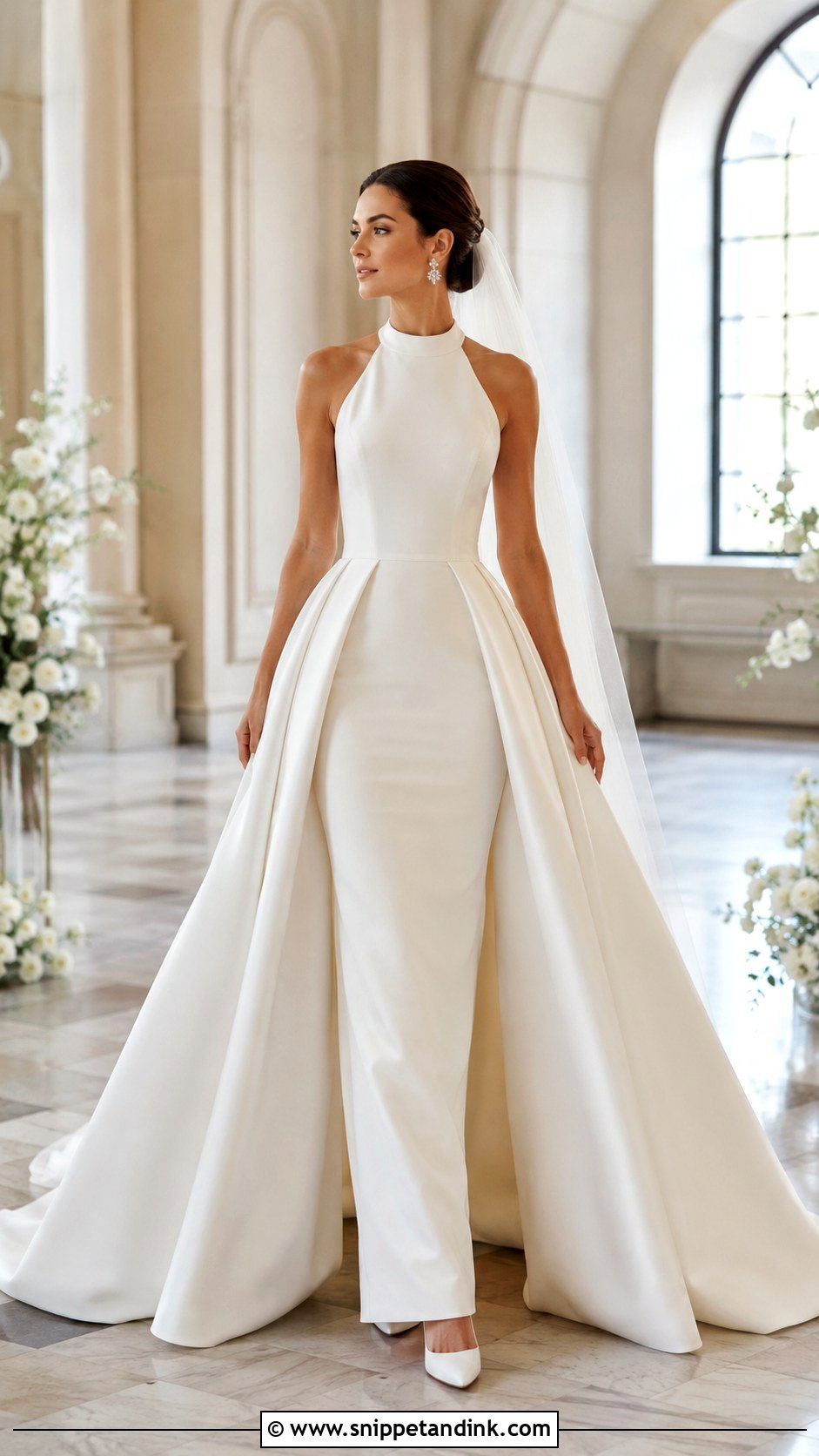
Two looks, one dress. The overskirt gives volume for the ceremony, then comes off to leave a crepe sheath, satin column or fitted lace gown for dancing. The attachment should be invisible at the waist and hold firm while you walk. After the change, swapping to statement earrings or a hairpiece makes the second look feel deliberate. Practice detaching it with whoever will help, and decide in advance where the removed skirt goes; a train crumpled over a chair in the bridal suite is how it gets stained.
19. Cowl-Neck Halter Wedding Dress
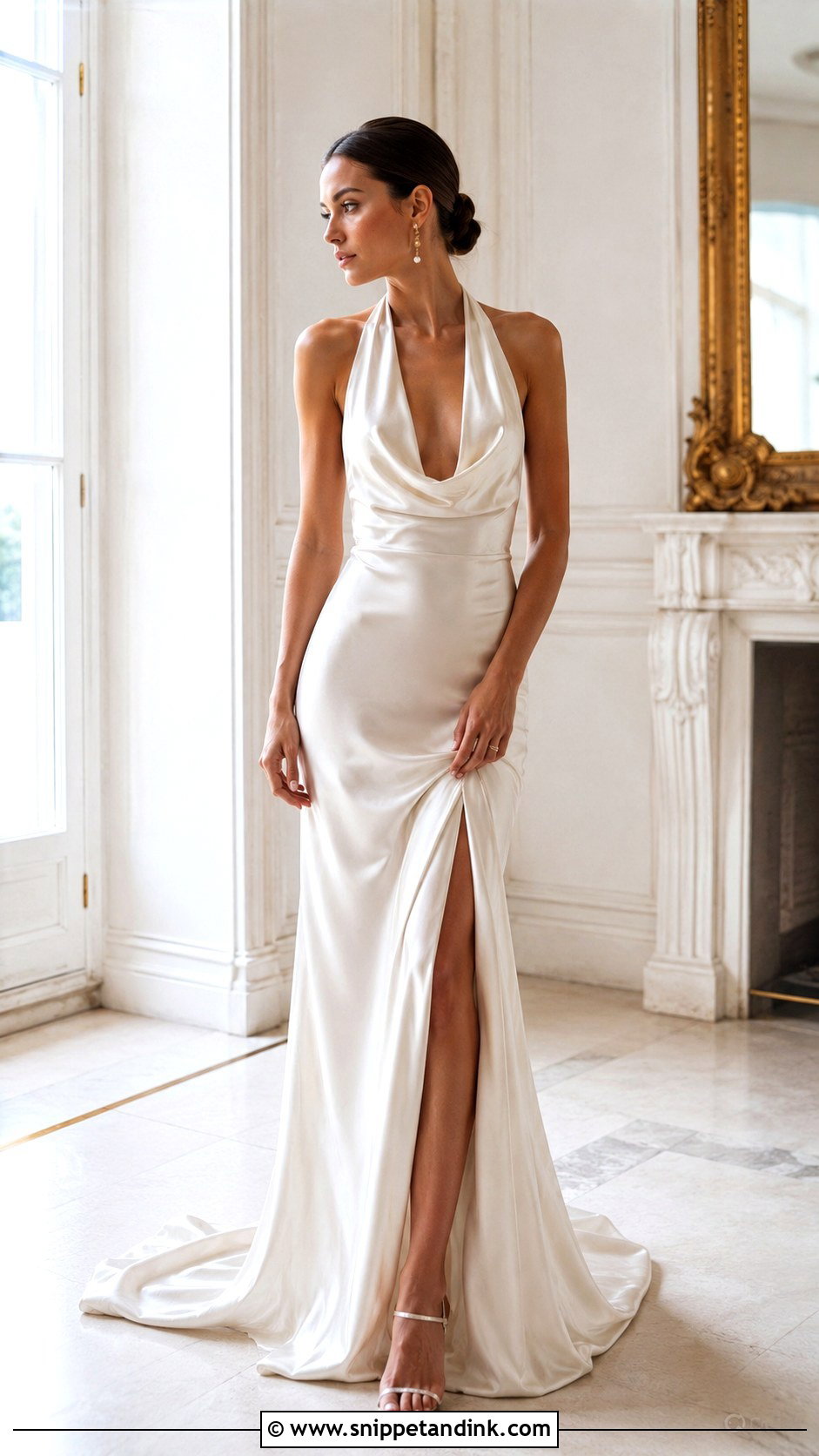
A cowl softens a halter by folding fabric loosely at the neck, and it only works in fluid fabrics like silk satin, charmeuse and similar weights. The folds should fall on purpose. When they collapse or gape, the fix is small: a hidden weight sewn into the cowl, a few tacking stitches or a strip of fashion tape. I test coverage by having the bride lean forward as if signing the register. No necklace with a cowl, ever. And choose smooth, edge-free underwear, because lightweight satin shows every line.
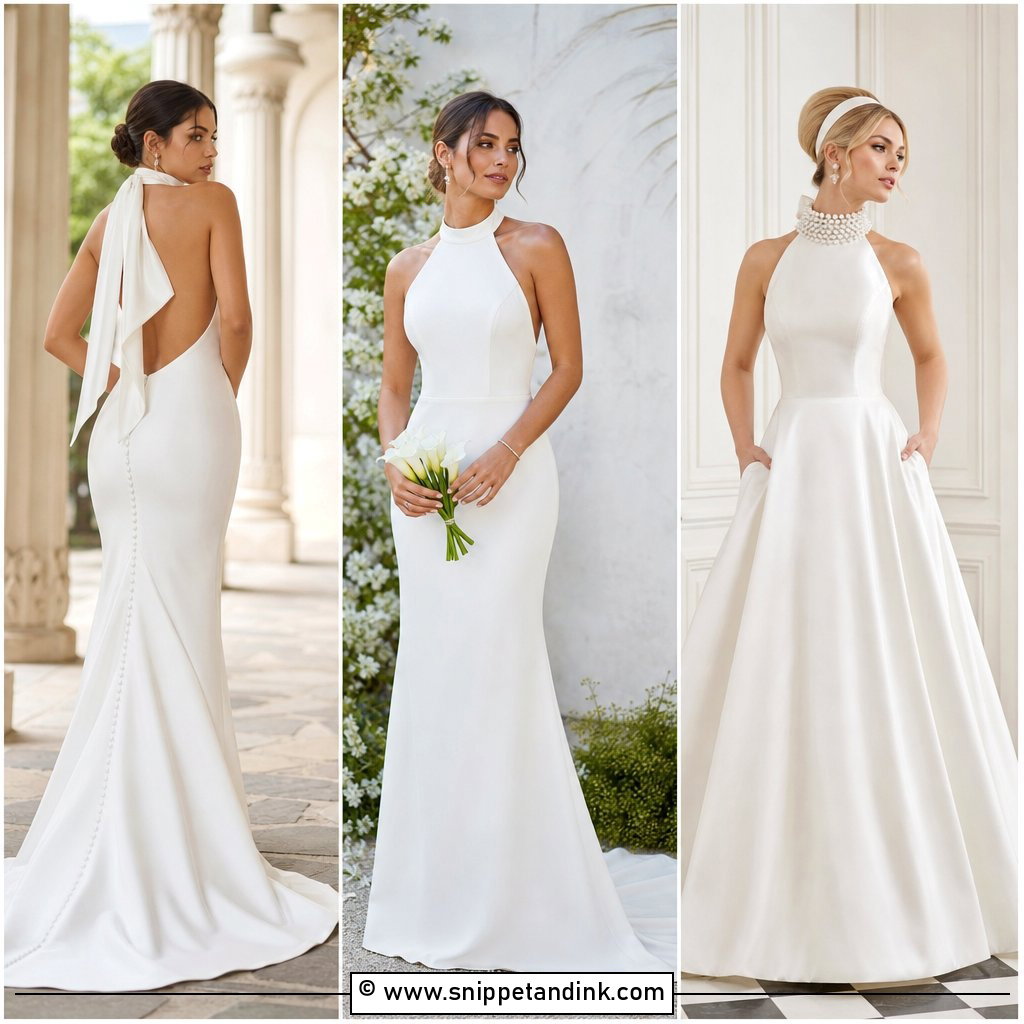
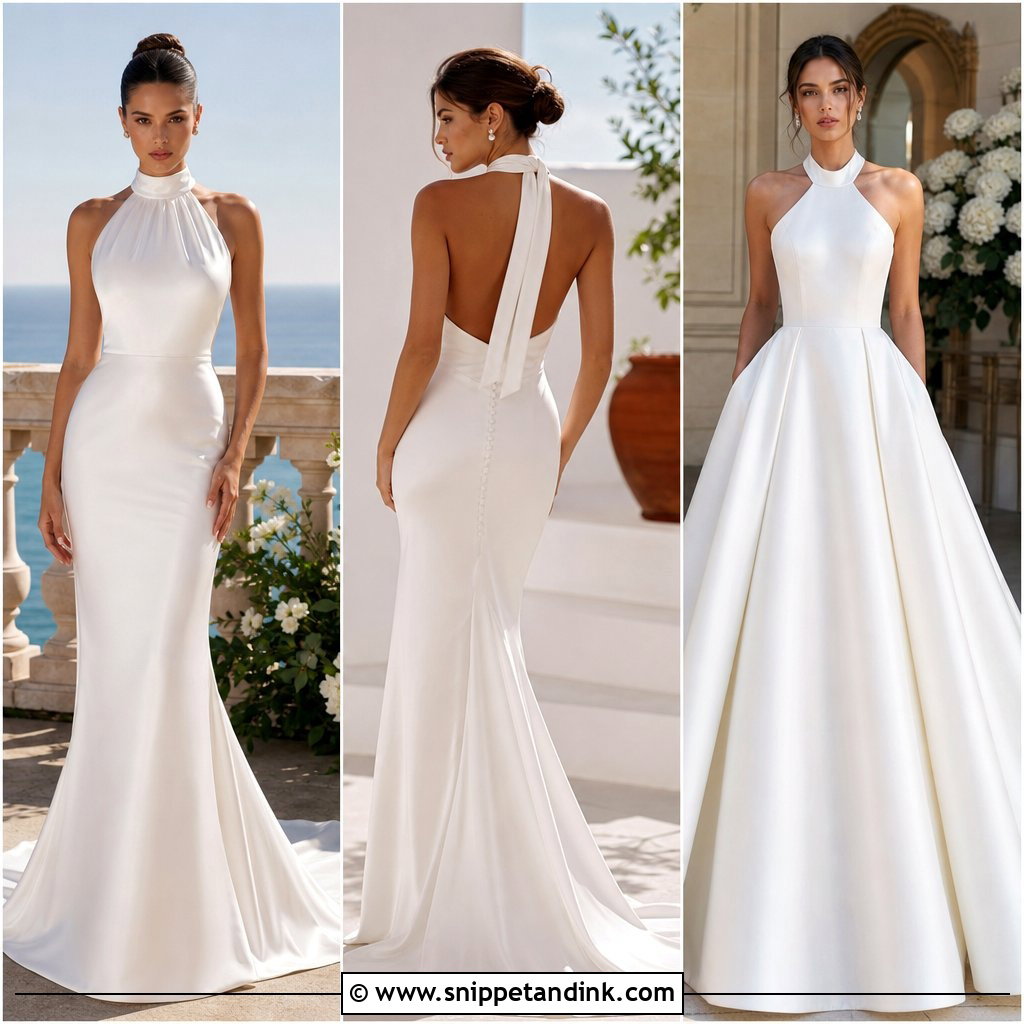


20. Floral Appliqué Halter Wedding Dress
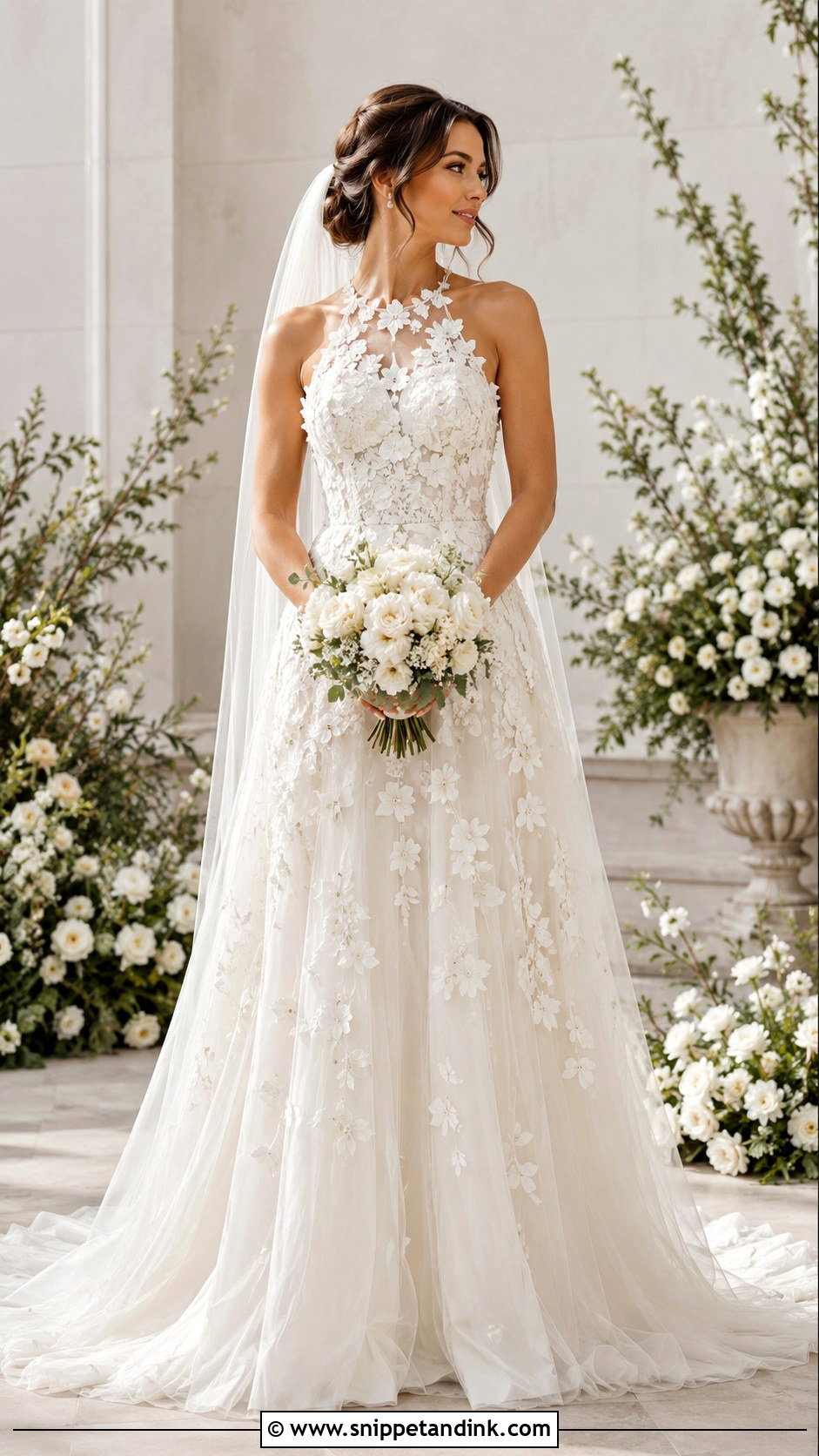
Scale is the decision. Small appliqué flowers feel delicate, oversized ones look more fashion-led, and scattered from the waist into an A-line or ball gown skirt they draw the eye down the dress. Keep the veil plain tulle and the hair in a soft bun so the motifs near the neckline stay visible. Coordinate the bouquet with the mood of the gown rather than copying its flowers. Appliqués at the neck and armholes can have rough edges underneath, and your tailor can reposition or back those so they don’t rub through dinner and dancing.
Tan Lines, Body Makeup and an Ivory Neck Strap
Bare shoulders show whatever the summer left behind. If you spend time outdoors in the months before the wedding, wear strapless or halter tops in the sun so any tan line follows the dress instead of a racerback. A spray tan should go on a couple of days ahead so it settles and stops transferring, and book a test session well before that to check the shade.
Body makeup and tanner both rub onto the inside of a neck strap, and ivory satin is very hard to clean once marked. Set any shoulder makeup with powder, let sunscreen absorb fully before dressing, and step into the gown rather than pulling it over your head. I also ask the hairstylist to finish before the dress goes on, so hairspray never lands on silk.
Hair and veil around the closure
Hair worn fully down hides the closure and the shoulders, which is most of the reason to wear a halter. A low bun or half-up style shows the neckline off. Place the veil comb above the closure so it can’t snag on a hook or press on a tie knot during the ceremony.
Does a Halter Suit Your Shoulders?
A halter should feel as though it sits on your shoulders, not as though it hangs from your neck. Choose the silhouette that fits your venue and level of formality, then judge the strap width, the inner support, the back and how the skirt moves. Shoes and undergarments come to every fitting. Keep jewelry restrained, skip the necklace, and let the shoulders carry the look. In satin, crepe, chiffon or lace, the same test applies: wear it for half an hour at the final fitting and notice whether you’ve forgotten about the strap.
You'll Like These Ideas:






Leave a Reply