
The French approach to a wedding dress is less about adding and more about taking away. Fewer crystals, better fabric, a fit that looks made for one body. Silk crepe, fine lace, relaxed separates, short civil-ceremony dresses and softly boned bodices all belong to that idea. Plan for the setting first: a city ceremony, a château celebration, a garden or the coast will each change the fabric weight and shoe height you can live with. I’d also put more thought into the neckline and the tailoring than into the trims, because on a plain dress those are what everyone sees. Below are twenty complete looks, each with the shoes, veil and hair that suit it.
Where the Money Goes in a Plain French Dress
Brides are often surprised that a dress with no beading can cost as much as one covered in it. The budget goes into the fabric and the fitting. A good silk crepe or satin is expensive by the meter, and a simple cut gives the seamstress nowhere to hide a mistake, so alterations tend to take more appointments, not fewer.
Before you shop, I’d sort out three things.
- How many looks you need. French couples often marry legally at the town hall and celebrate later, and many brides wear a short dress or suit for the first part and a gown for the second. You can borrow that idea for a city registry ceremony followed by a party.
- What the fabric will face. Silk crepe in strong sun shows sweat marks; heavy satin on a hot day is hard work. Lighter crepe, chiffon or organza handle summer better.
- How much alteration time you have. A minimal dress usually needs three fittings. Start them early enough that the last one is no closer than two or three weeks before the wedding.
1. Minimalist French Silk Crepe Wedding Dress
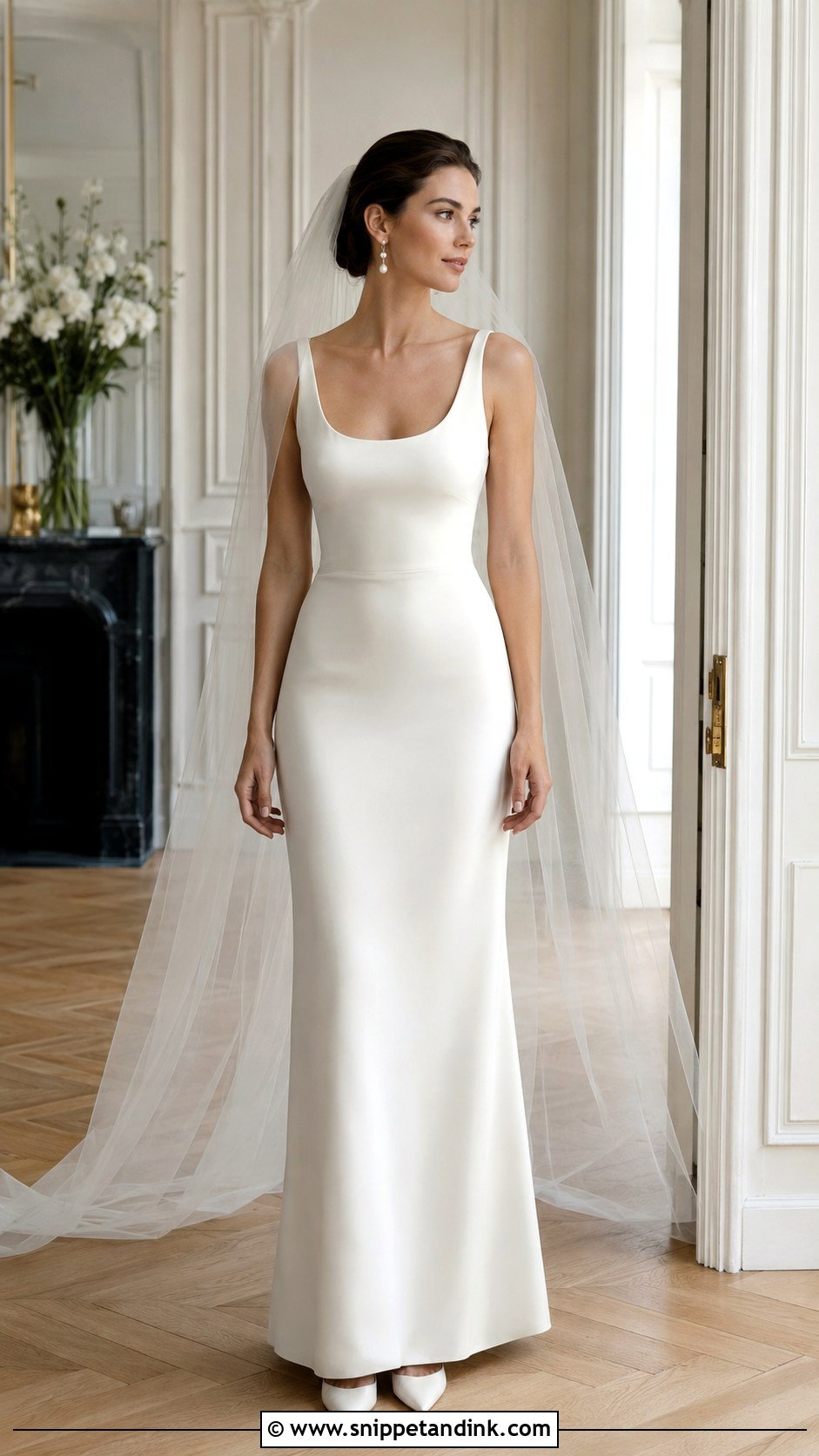
Silk crepe is the purest version of this style, and it is the least forgiving. It has a matte, slightly grainy surface that skims the body, which means it also shows a visible panty line, a bra edge or a seam that pulls by a few millimeters. I always ask brides to bring their final underwear to the first fitting for this dress, not the last. A scoop neck with fine straps or short sleeves, a low back with covered buttons, and a sheer fingertip veil keep it bridal. Ivory pointed pumps, pearl drops and a low chignon with a few loose pieces suit a city venue or a small restaurant reception.
2. French Lace Long Sleeve Wedding Dress
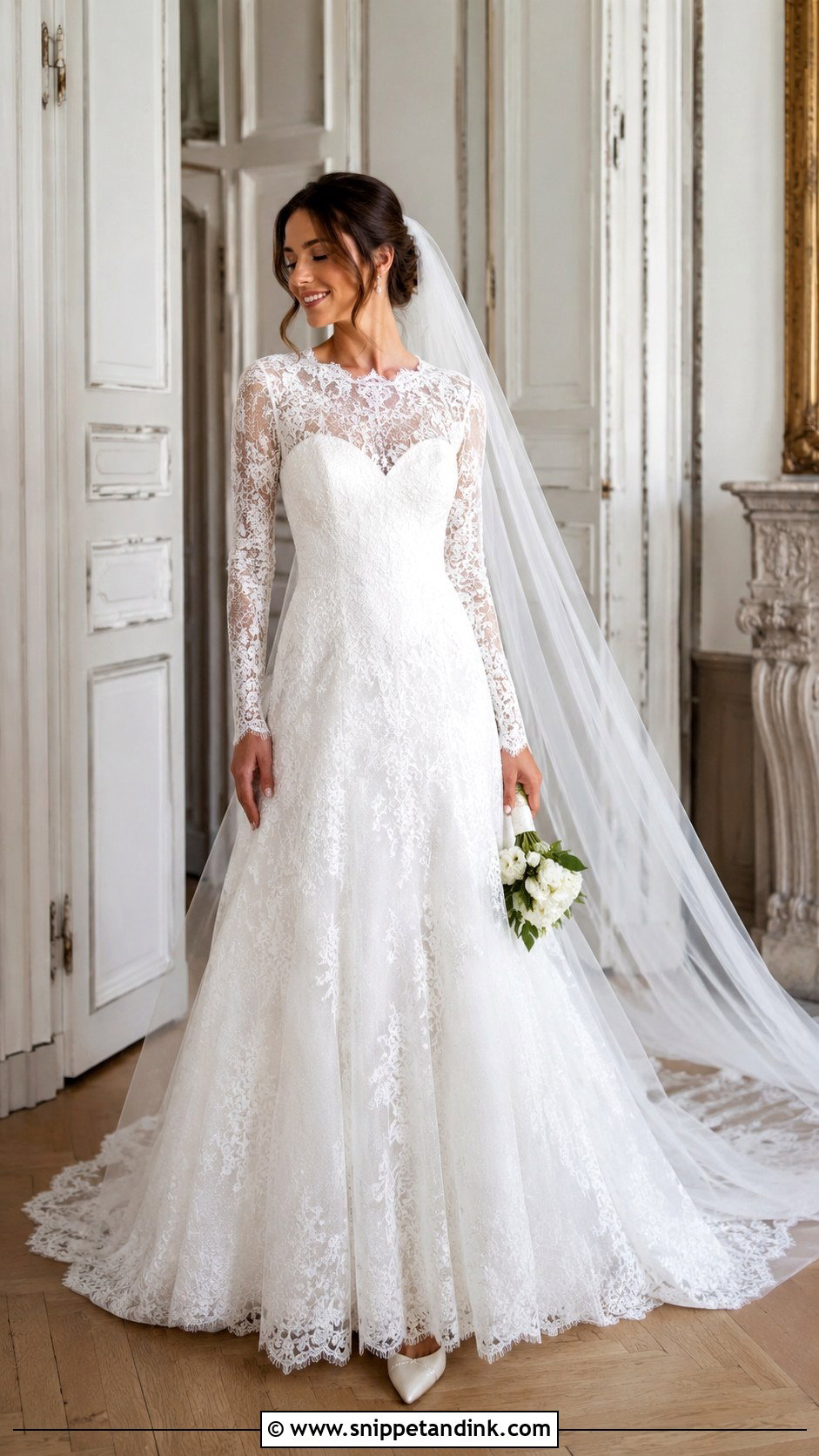
Long lace sleeves are where fit problems hide. Fine floral lace over an ivory lining looks delicate on the hanger, but if the sleeve is cut close you won’t be able to lift your arms for the first dance or to hug anyone. At a fitting, reach forward as if for a hug and up as if waving. An A-line or gently fitted skirt balances the busy fabric, and covered buttons down the back add detail without crystals. Pointed satin heels, pearl studs and a plain cathedral veil let the lace carry it. If you want more coverage, ask for a lined bodice and opaque sleeves. It belongs in cooler months and formal gardens.
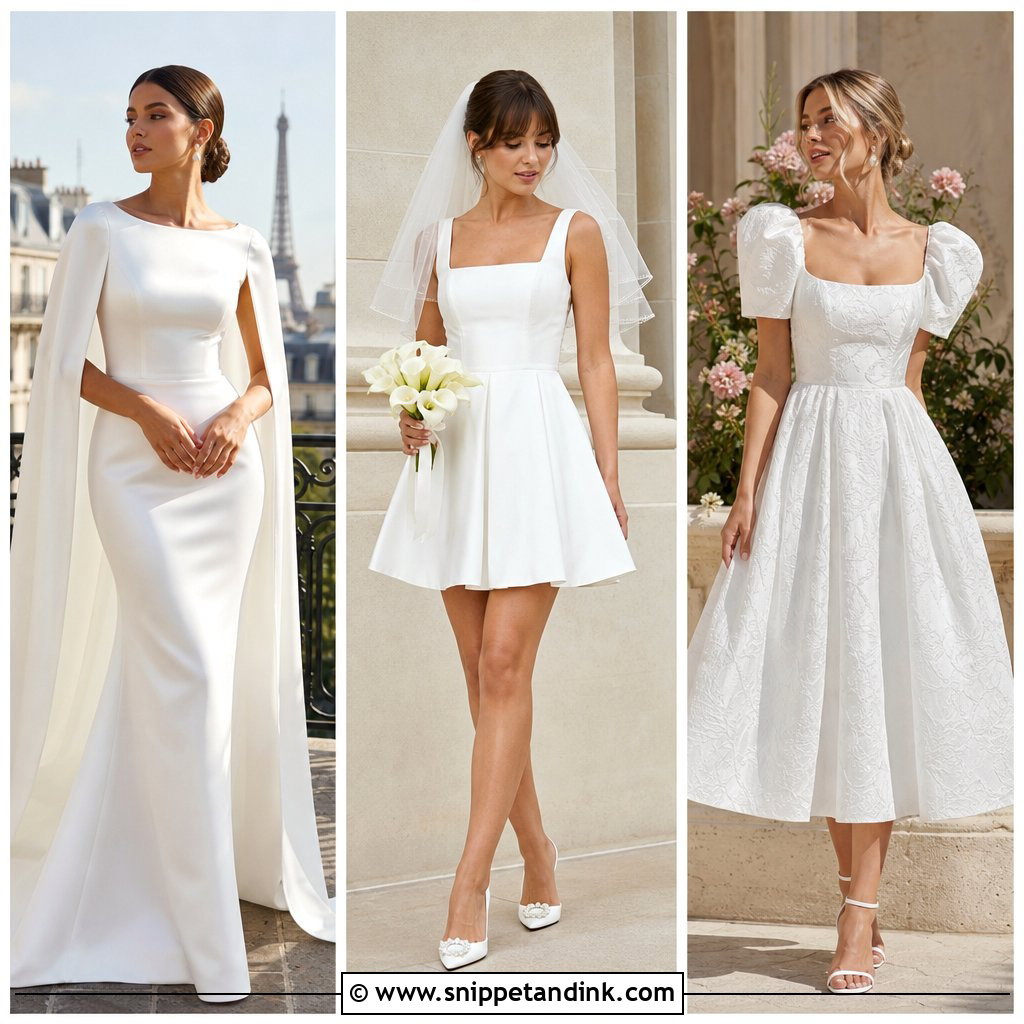
3. French Bateau Neck Wedding Dress
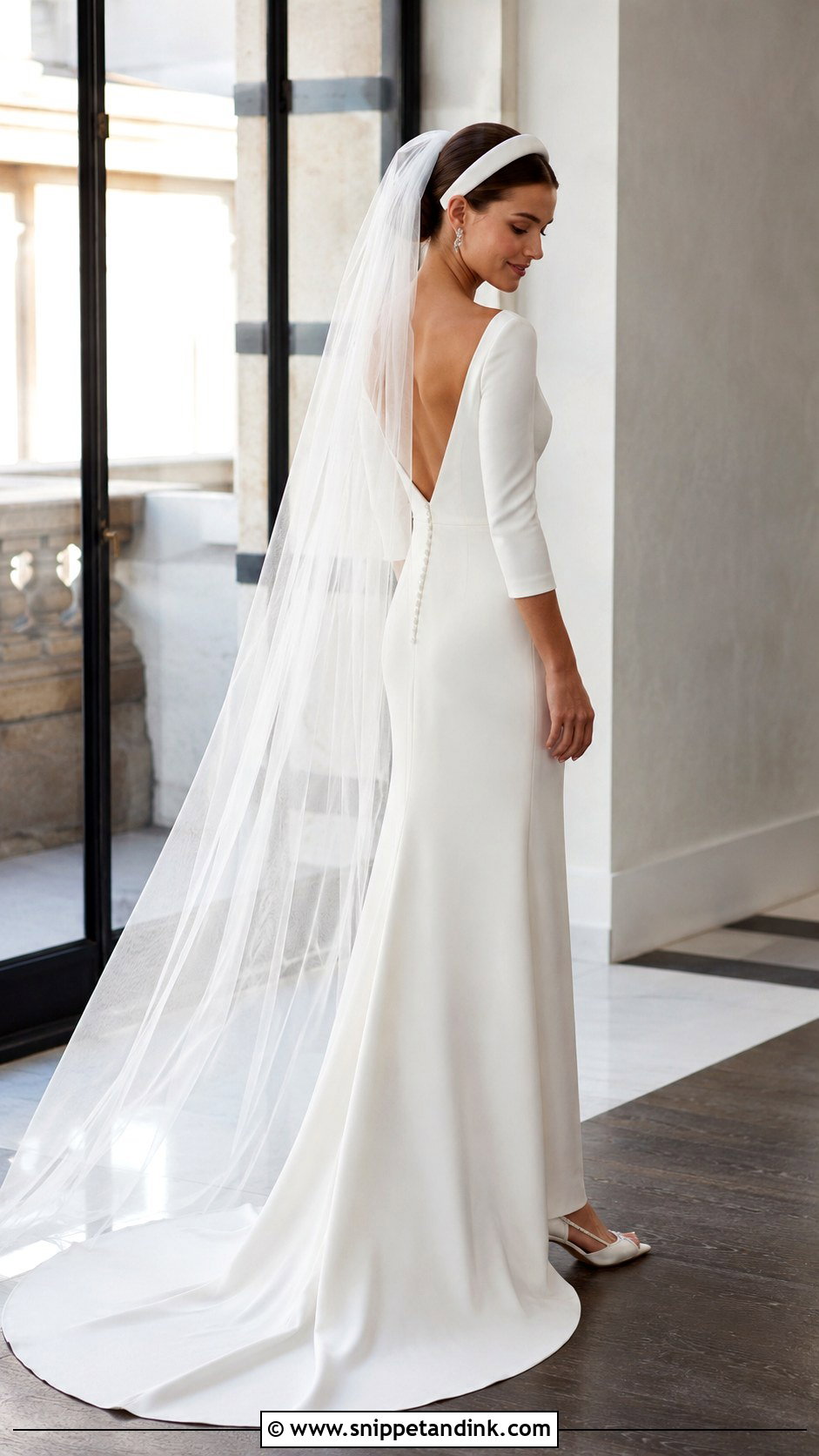
The bateau neckline runs almost straight from shoulder to shoulder, framing the collarbones while covering more than a plunge or strapless bodice would. It’s one of the most flattering lines on brides with narrow or sloped shoulders, because it adds width. On very broad shoulders I’d usually suggest something else. A fitted crepe column, satin A-line or slim three-quarter sleeve all suit it, and a low V-back stops it looking severe. Skip the necklace. Slingback heels, small crystal earrings, a narrow satin headband and a chapel veil tucked under a smooth bun keep the front clean.
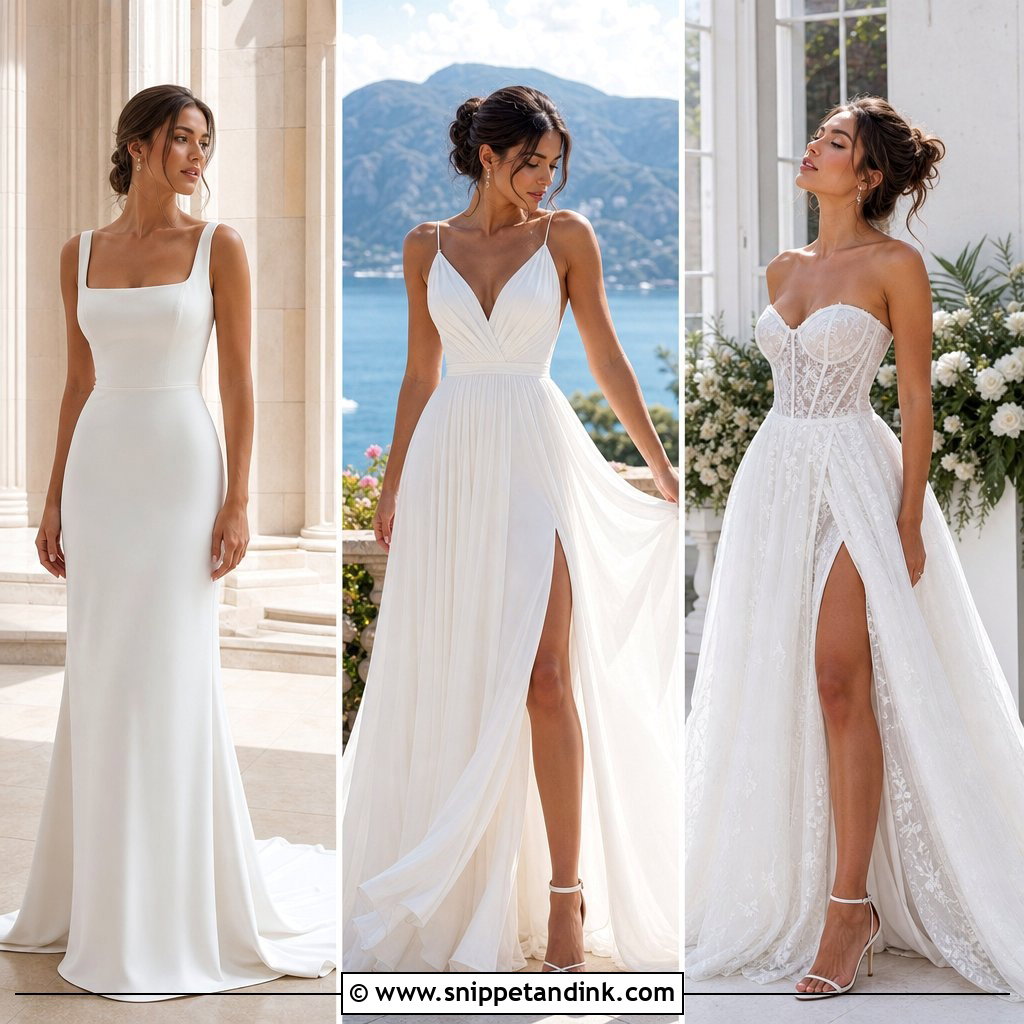
4. French Square Neck Wedding Dress
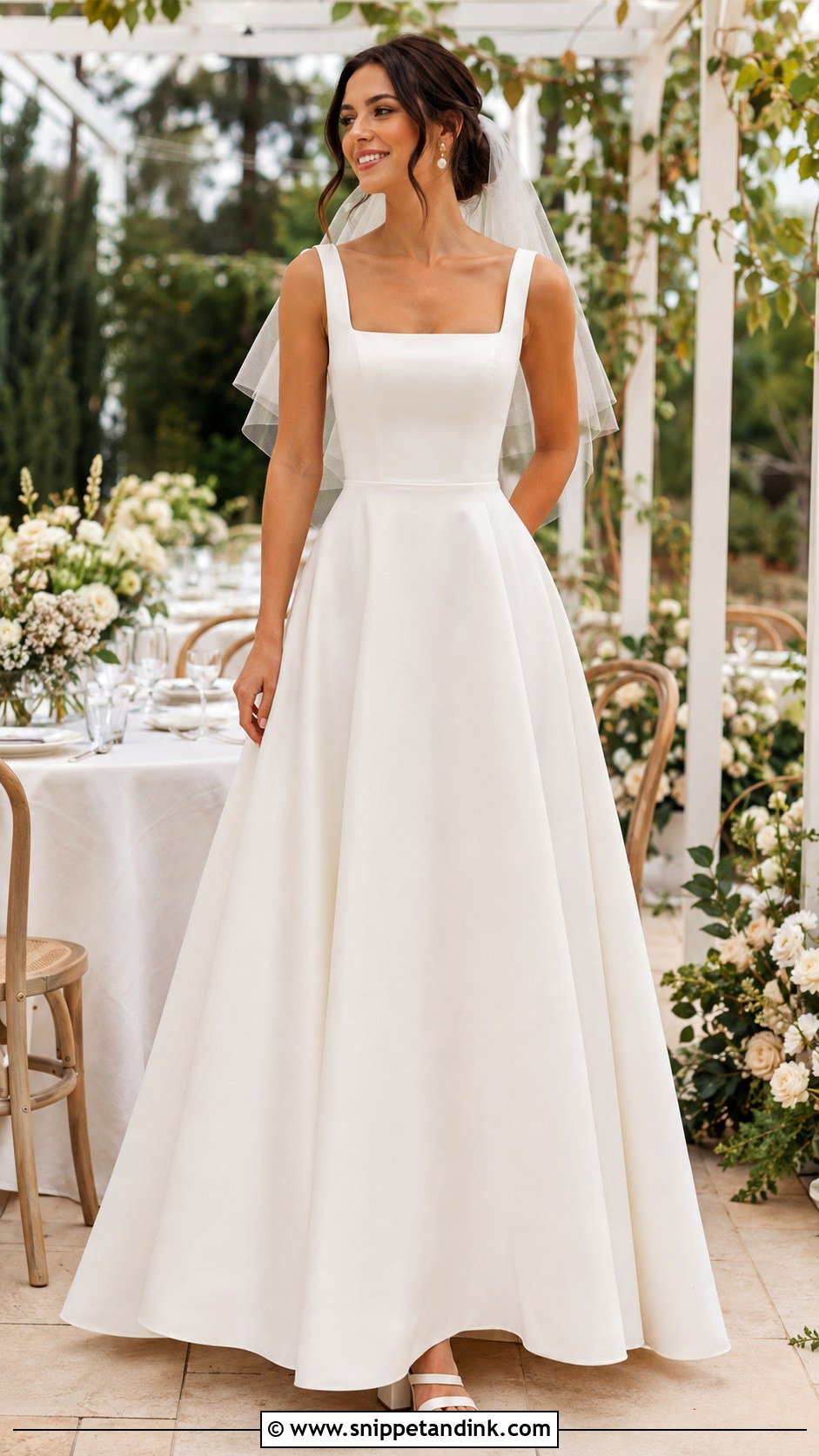
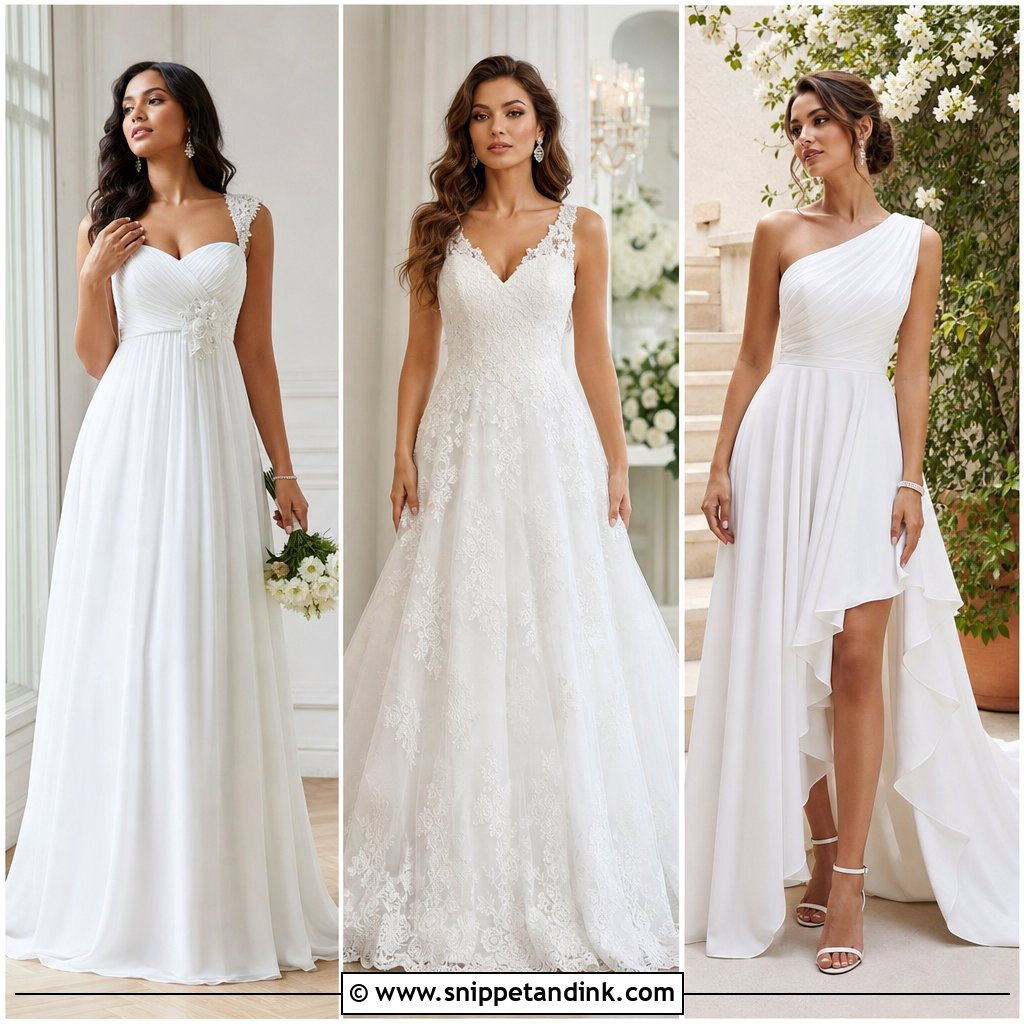
Square necklines give the shoulders a clear frame and pull the eye up to the face. The width of the straps matters more than people think: too narrow and the square looks lost, too wide and it reads like a sundress. On a silk satin gown with a fitted waist and A-line skirt, I look for straps about two fingers wide. Brides who need support should ask for internal boning or a light corset rather than relying on the straps. Block-heel sandals, a short tulle veil, pearl-and-gold earrings and a sleek low bun suit it, and a matching cropped satin jacket covers the shoulders for an evening ceremony.
5. French Off Shoulder Satin Wedding Dress
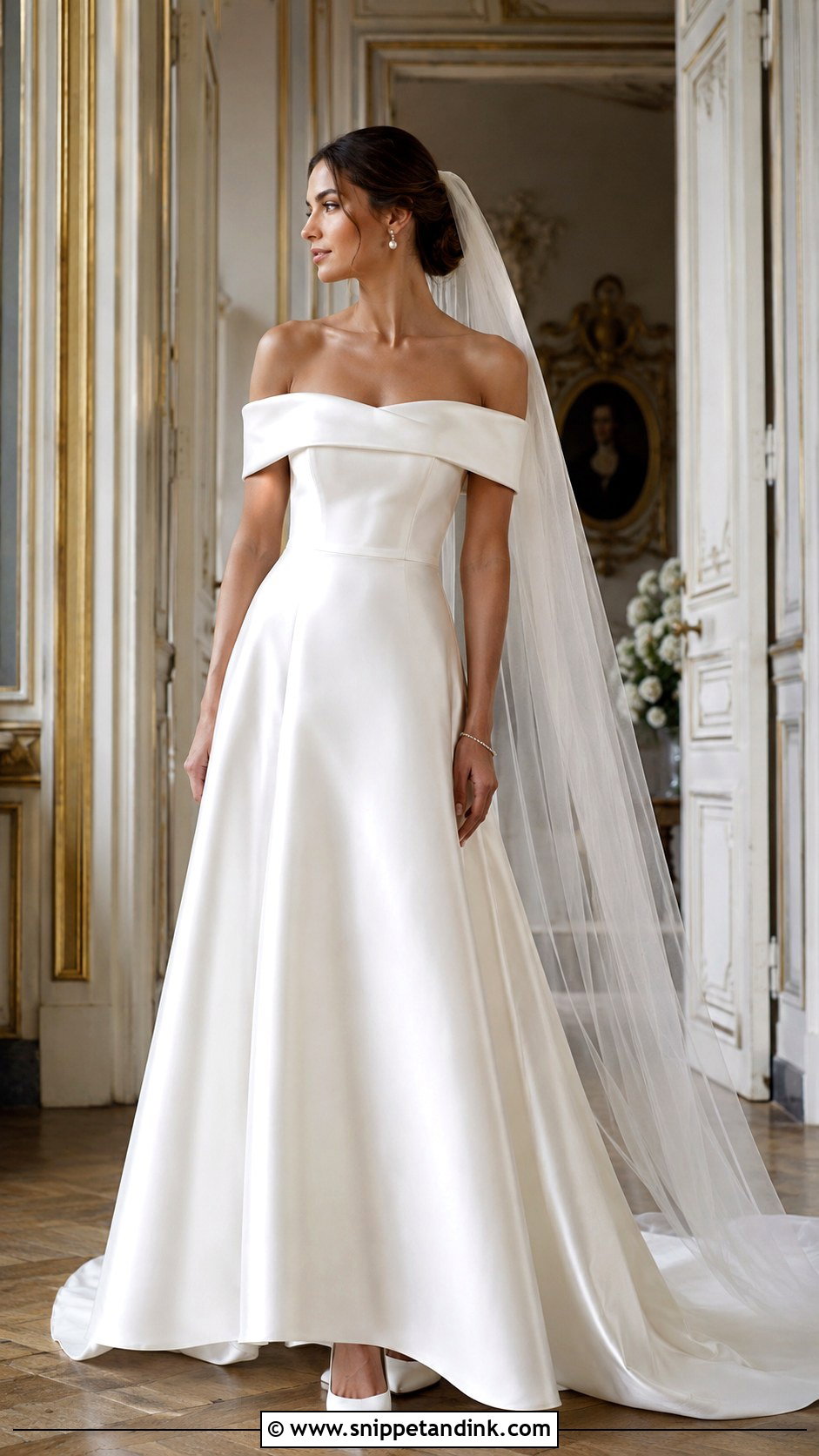
Folded off-the-shoulder necklines are kinder to wear than sleeves that pin the arms down. A cuff of satin rests across the upper arm and lets you move. The catch is that this cuff has to be tailored to your exact shoulder width, and it needs either a stay or discreet interior support so it doesn’t creep. A fitted bodice and fluid A-line skirt keep it walkable. Closed satin pumps, a fine tennis bracelet, small pearls and a long plain veil are enough, with a low twisted bun that leaves the shoulders bare. Historic venues and evening ceremonies suit it best.
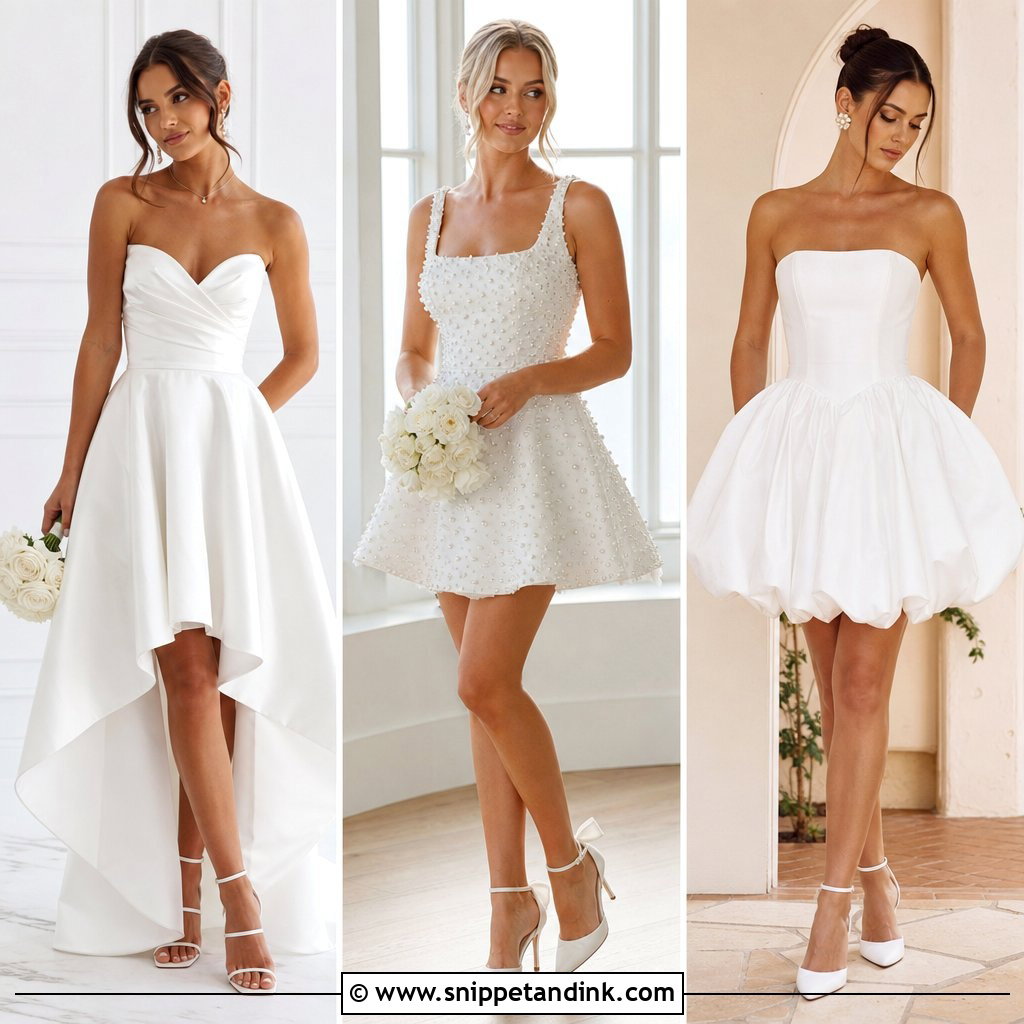
6. French Corset Basque Waist Wedding Dress
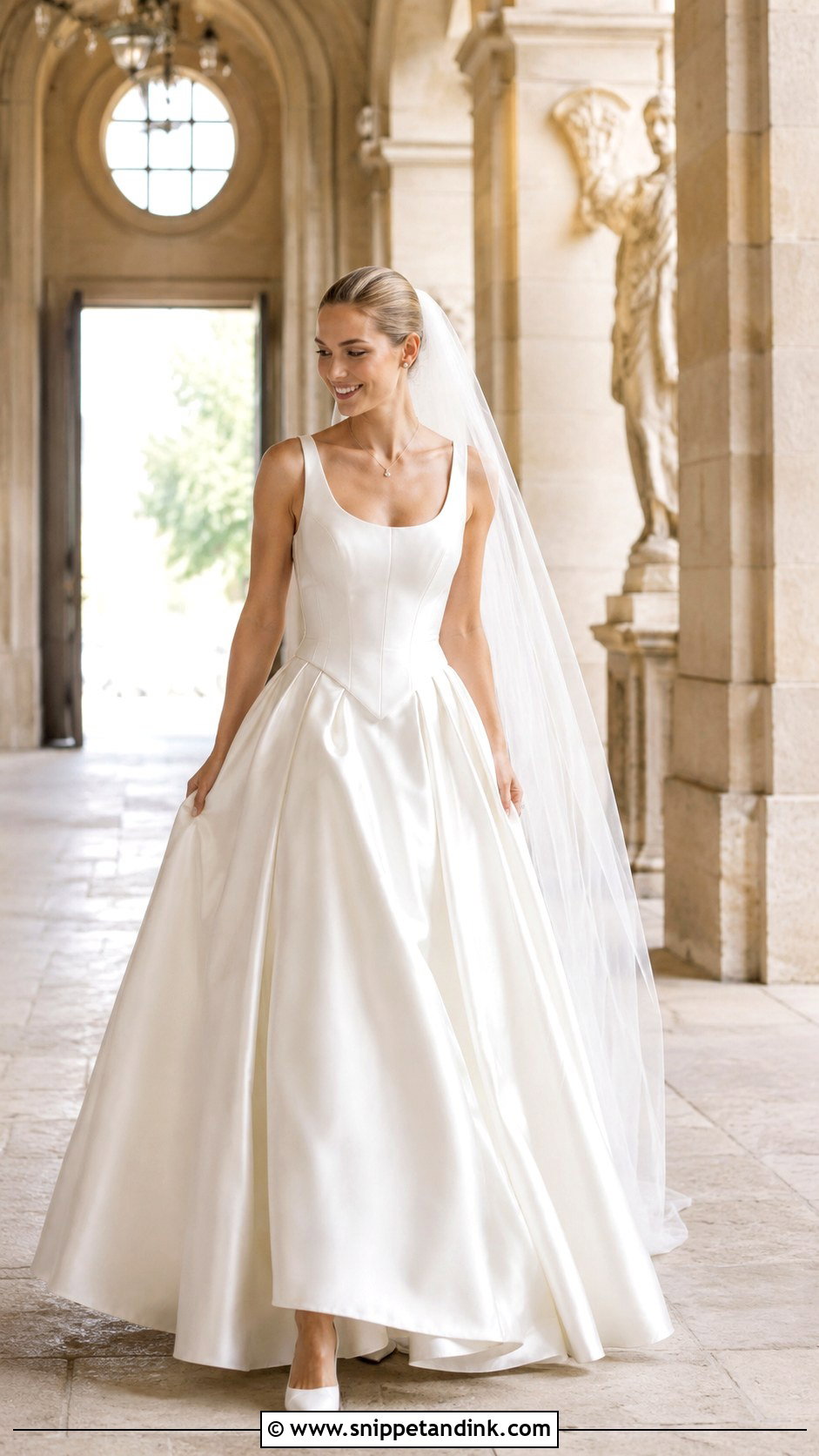
The basque waist dips into a point below the natural waistline, which lengthens the torso and gives the bodice its shape. It’s a strong silhouette, and it takes careful fitting. If the point is set too low it digs into your hips when you sit; too high and the line looks short. I check it seated as well as standing. A full skirt in satin, tulle or silk faille balances the structure, and a straight or soft scoop neckline keeps it clean. Almond-toe pumps, a fine pendant, a long plain veil and a polished bun belong in a ballroom or château.
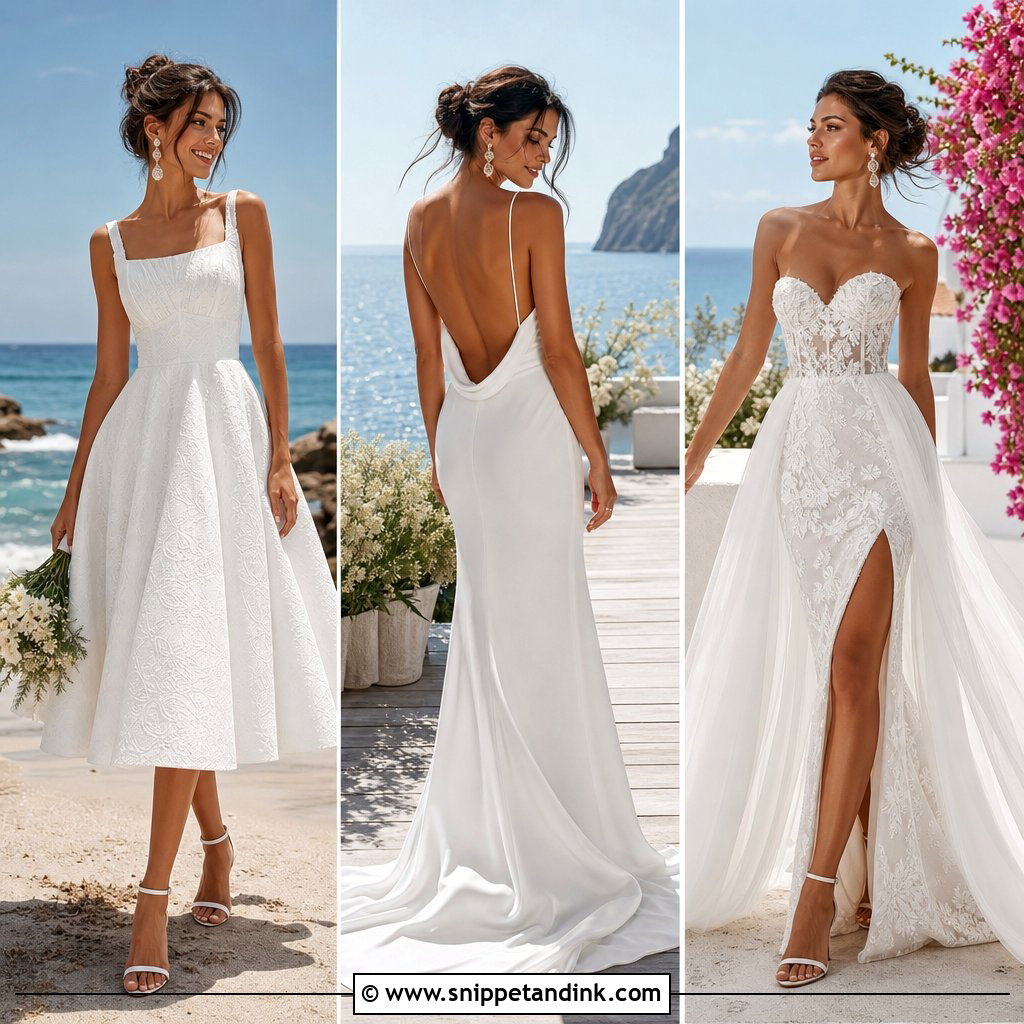
7. French Silk Slip Wedding Dress
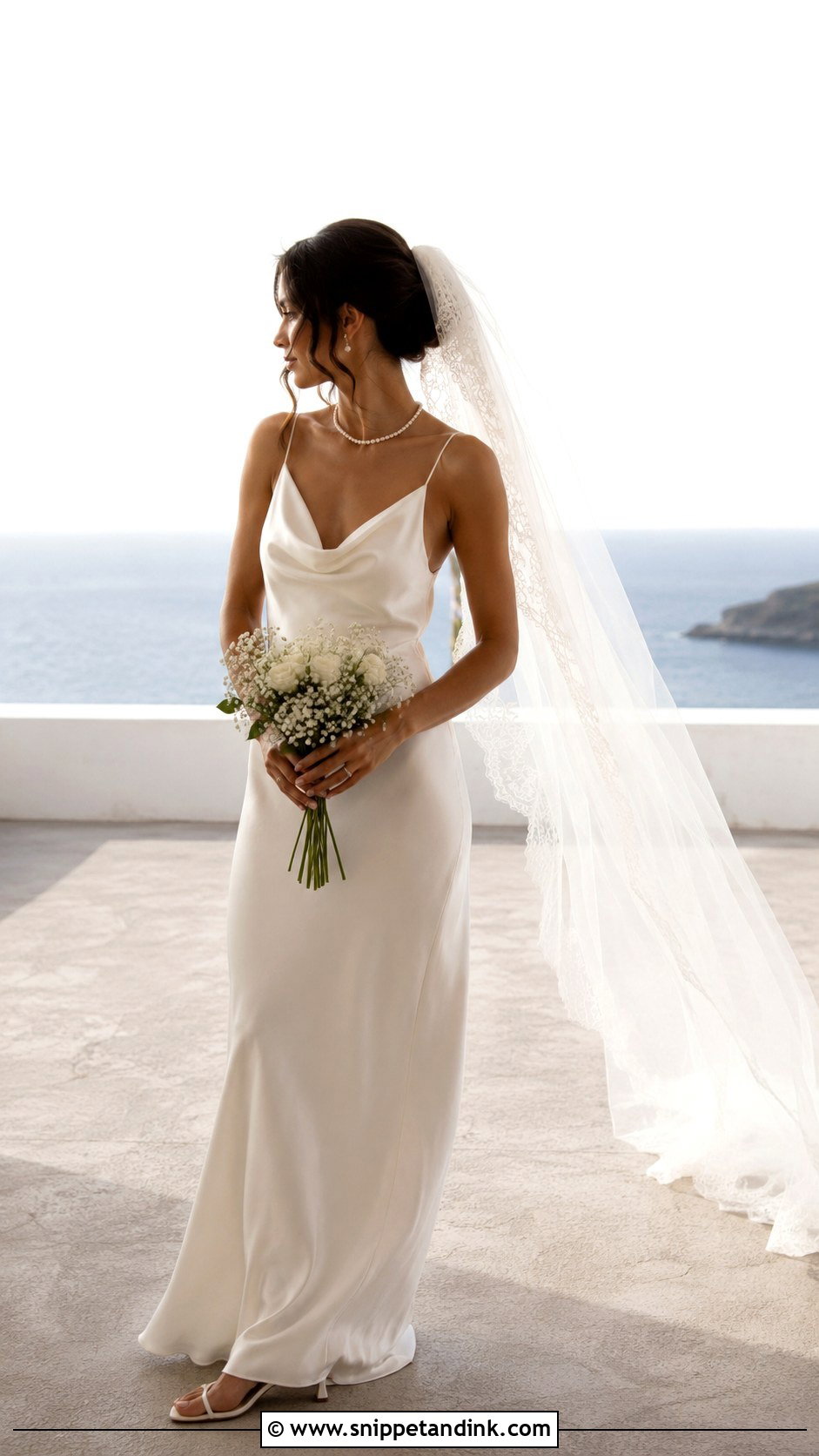
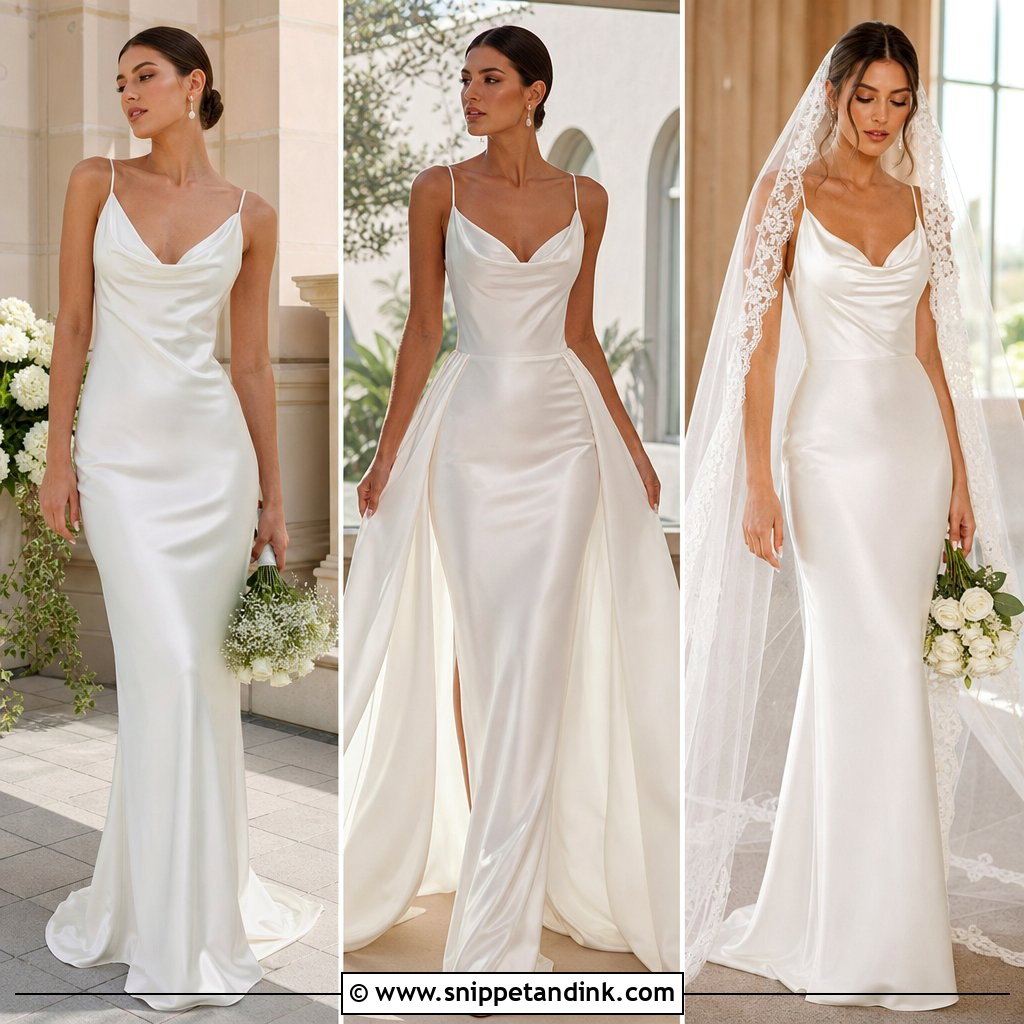
A bias-cut silk slip dress is cut diagonally across the grain, which is why it drapes and moves the way it does. It also means the fabric stretches and clings at the hip. Size it with some ease there, not close to the body. Look for a soft cowl neck, slim straps and a low back or small train for ceremony weight. Kitten-heel slingbacks, a fine pearl necklace and a lace-trimmed veil suit it. For more coverage, layer a sheer long-sleeve top underneath or a light silk cape for the ceremony. Smooth, edge-free underwear in a shade close to your skin, not ivory, is the only option. Save it for warm weather and modern venues.
8. French Tea Length Wedding Dress
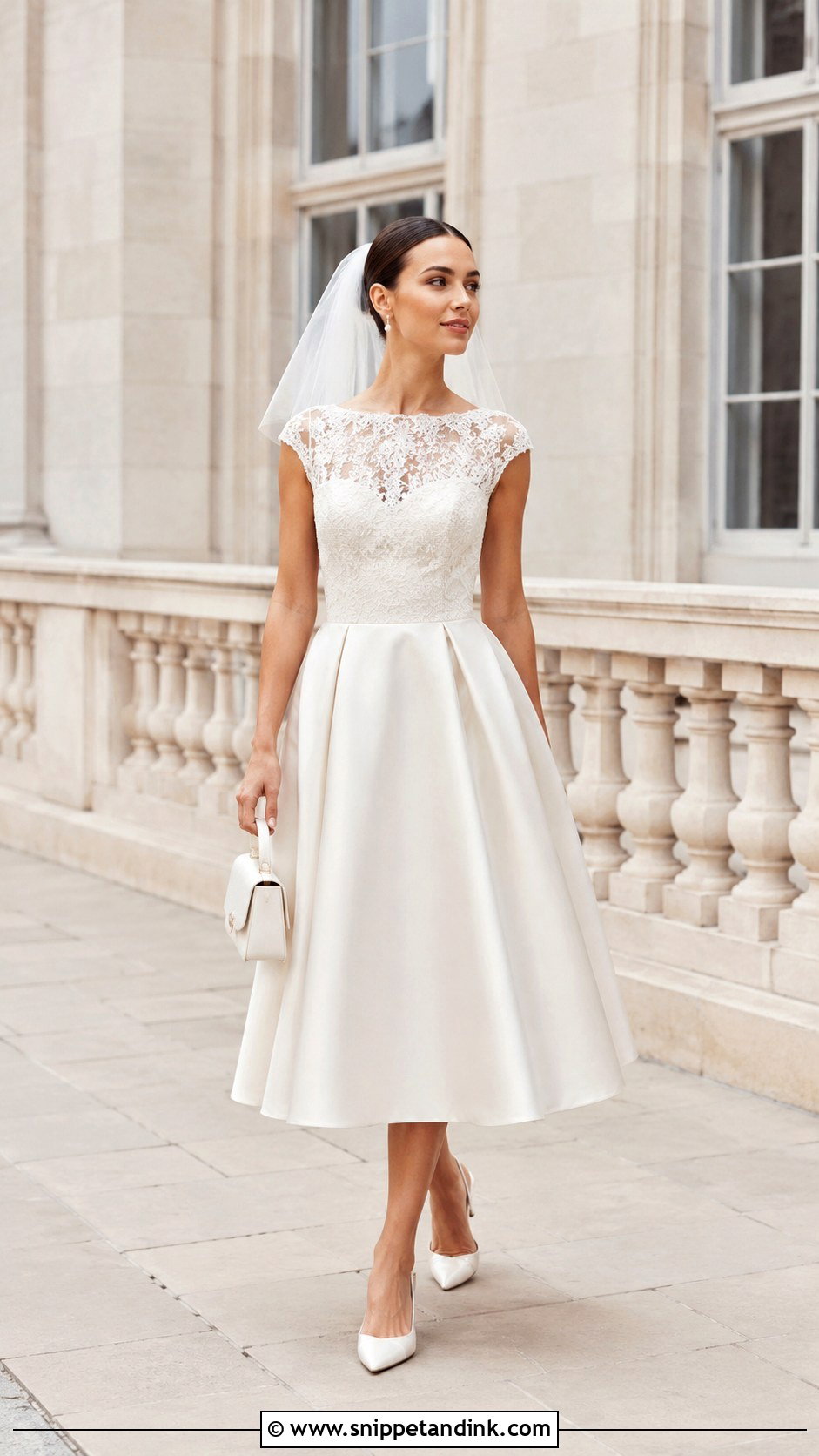
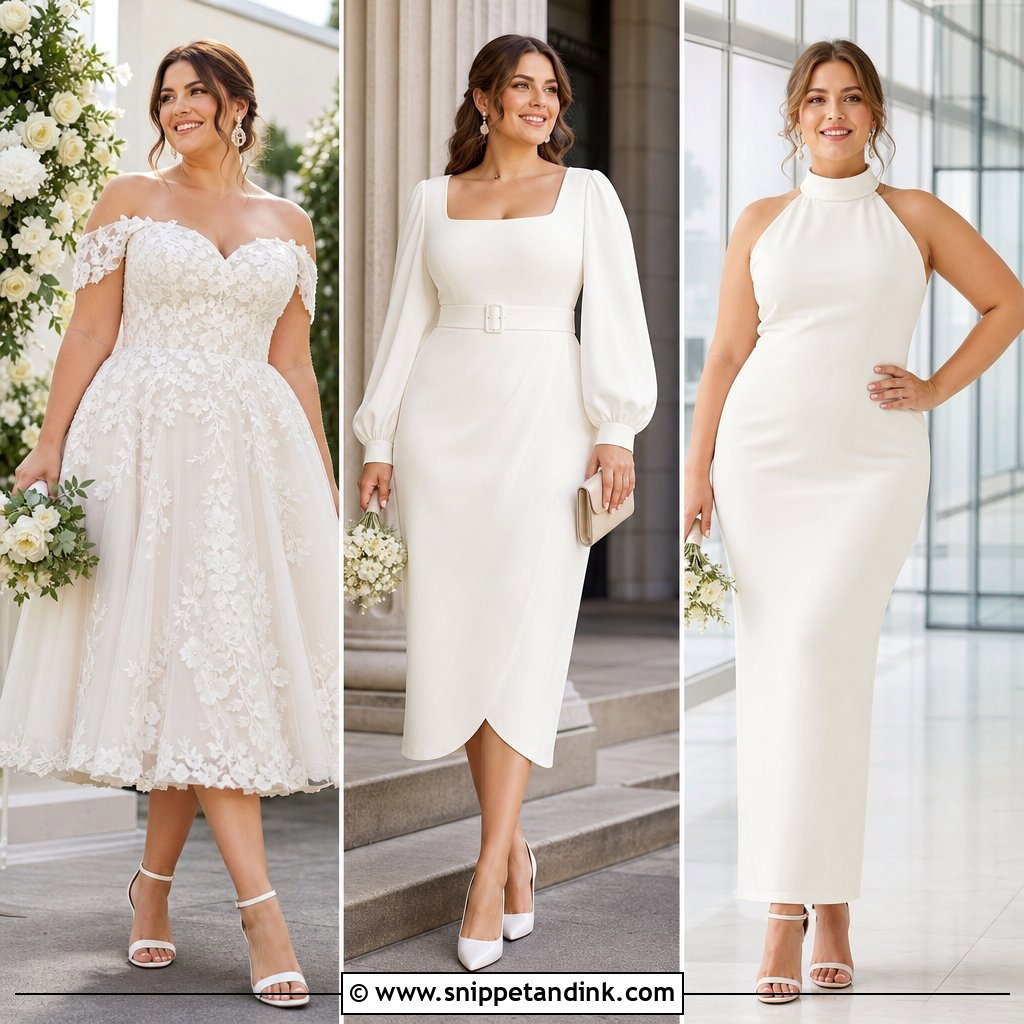
Tea length lands between the lower calf and the ankle, and the right point depends on your height and your shoes. On a petite bride, a hem just below the calf keeps the leg long; set too low, it chops the leg in half. I always pin the hem with the exact shoes on. A fitted lace bodice and a satin or organza skirt with some flare give that mid-century French feel. Slingback pumps, pearl earrings, and a short veil or small hair bow complete it, with a top-handle bag for portraits. It moves freely, which makes it a good pick for city ceremonies and daytime parties.
9. French Mini Wedding Dress
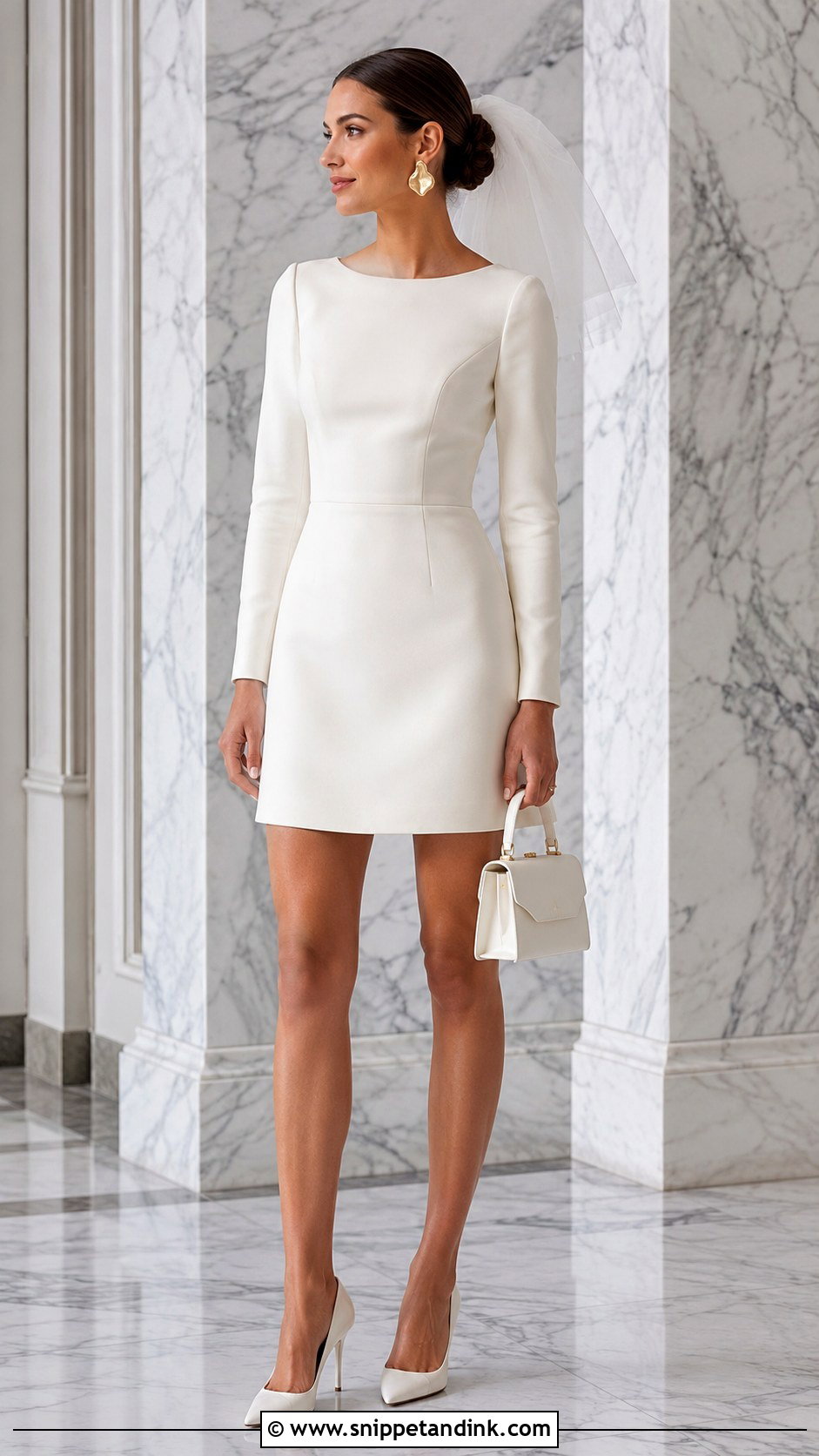
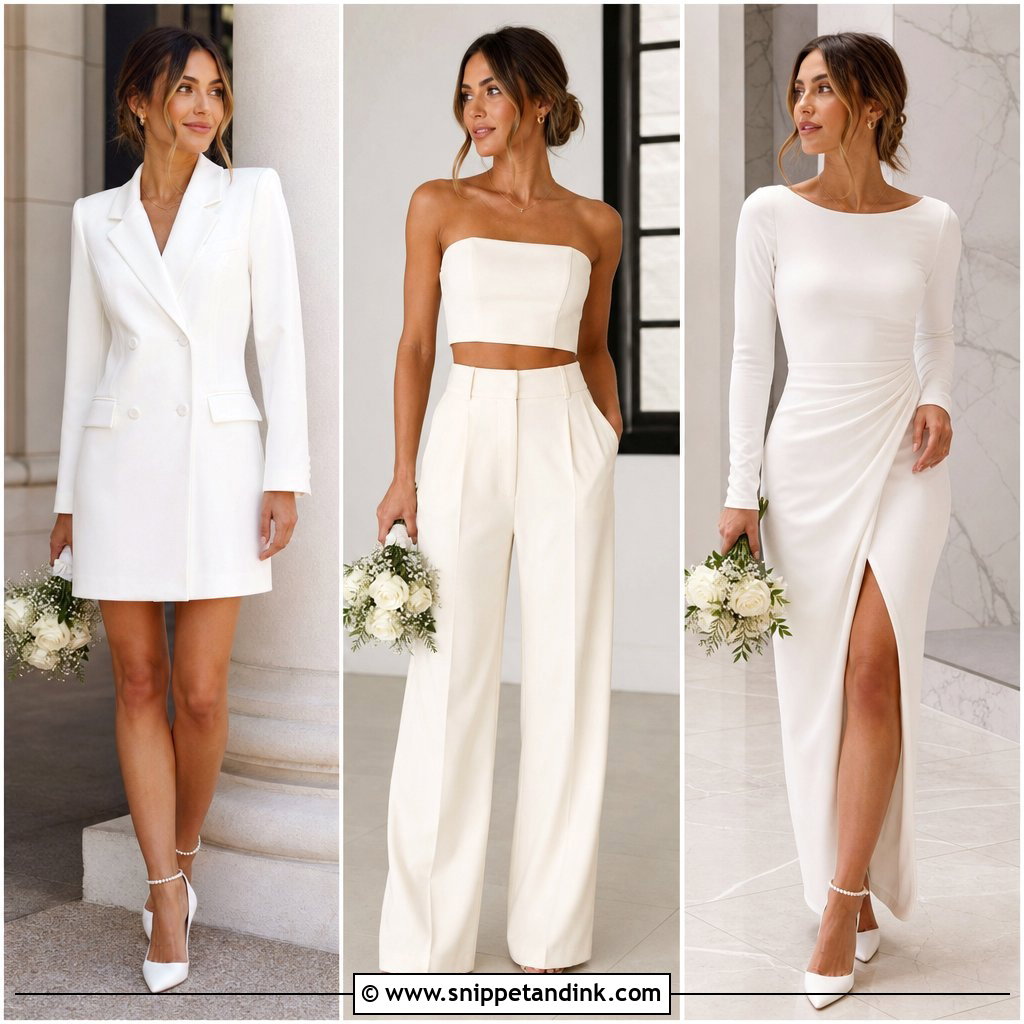
In France, the legal ceremony happens at the town hall, and many brides wear something short there and change into a gown later. A tailored mini fits that tradition. Choose a clean shift, fitted blazer dress or structured A-line in ivory crepe, satin or jacquard. Long sleeves balance the hemline, and a square or bateau neck keeps it formal. Sit in it before your final alteration; minis ride up more than you expect on low chairs. Pointed pumps, sheer tights in cool weather, a short veil, sculptural earrings and a sleek bun finish it.
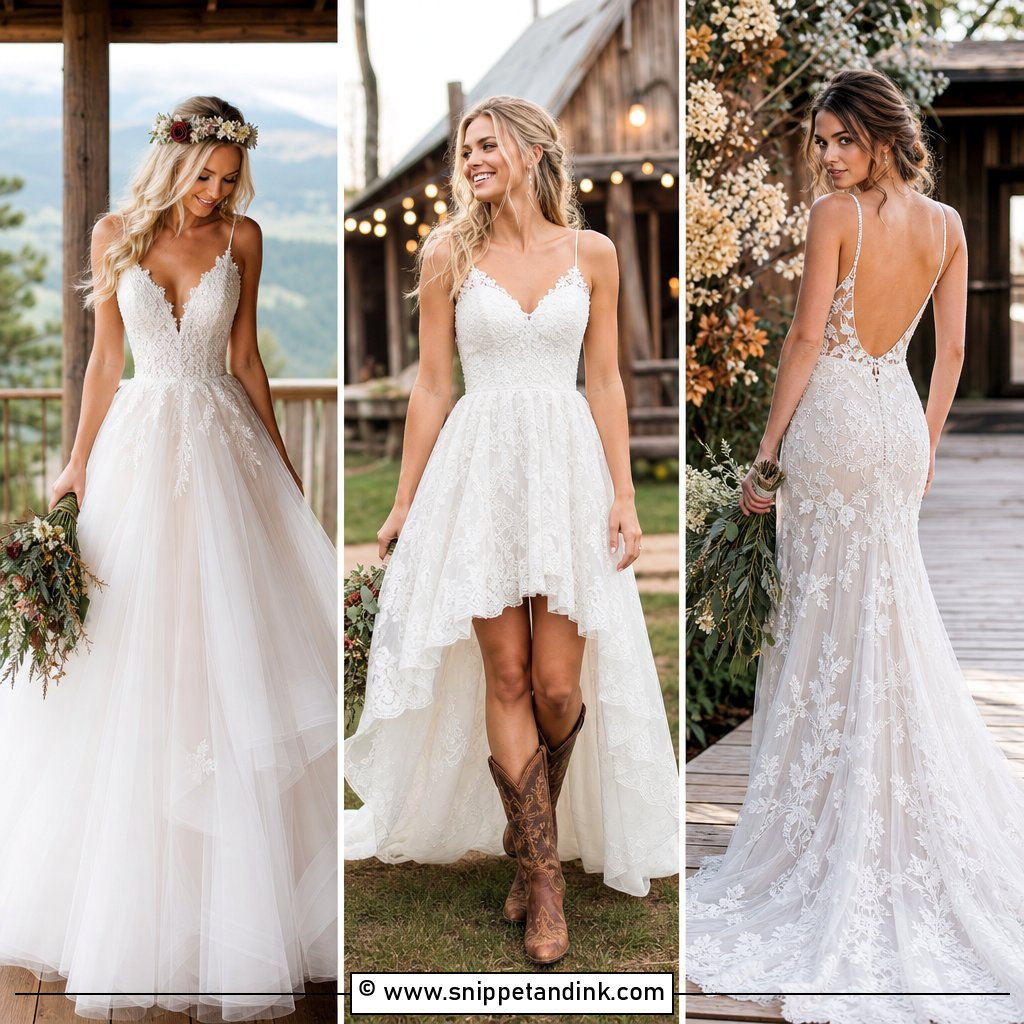
10. French Boho Lace Wedding Dress
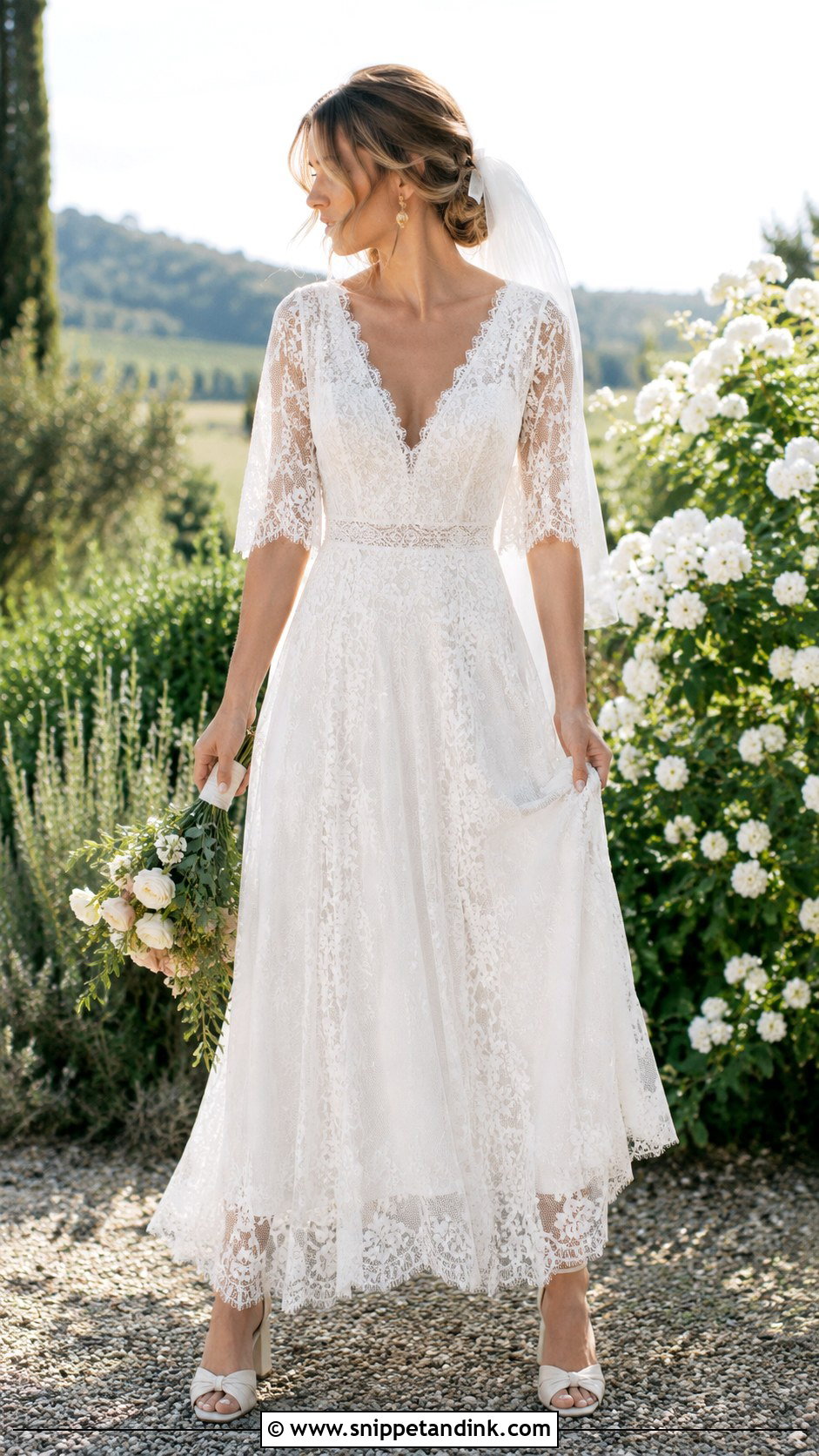
Lightweight lace with an organic floral pattern belongs outdoors, in countryside gardens and orchards where heavier fabric would wilt in the heat. The weight of the lace is the thing to check: a fine lace moves in a breeze, while a stiff, heavily corded one sits like armor. Bell sleeves, a soft V-neck or an open back keep the bohemian feeling without tipping into costume. Low block-heel sandals stay steady on grass. Pair fine gold earrings with a ribbon through loosely pinned hair and a plain tulle veil. One meaningful necklace or heirloom bracelet is plenty. Spring through early fall is its season.
11. French High Neck Lace Wedding Dress
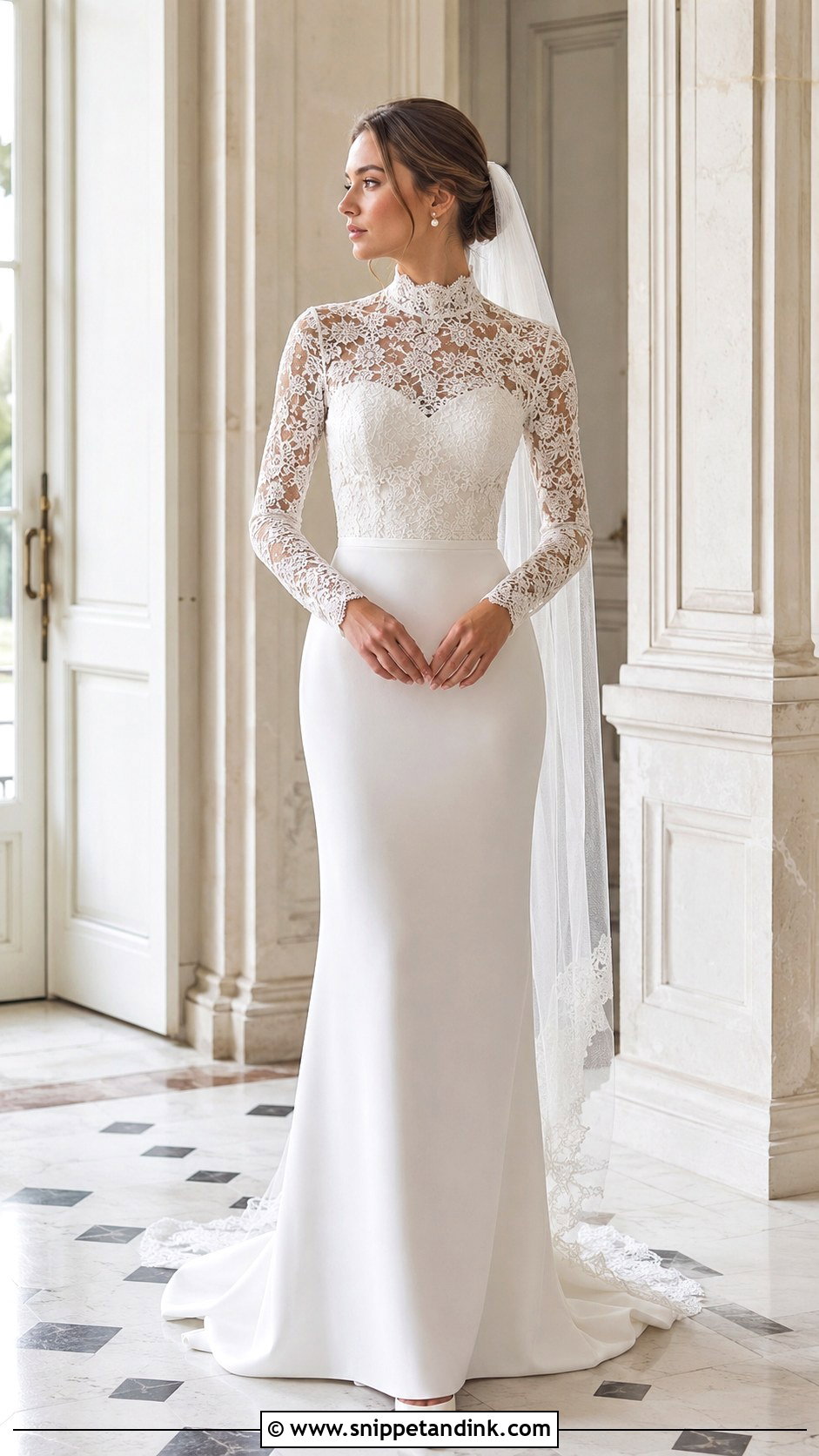
High-neck lace covers the throat completely, so the collar has to fit precisely. A collar that is a little tight rubs by the evening; a little loose and it gapes when you turn your head. During alterations, turn and nod a few times in the mirror. Balance the covered top with a clean crepe skirt or soft tulle, and add a keyhole or open back for lightness. The veil goes under the hairstyle so it doesn’t drag on the lace, and a low bun keeps hair from catching on the scalloped edge. Skip the necklace; a slim bracelet is enough. It suits cooler weather and formal indoor ceremonies.
12. French Backless Crepe Wedding Dress
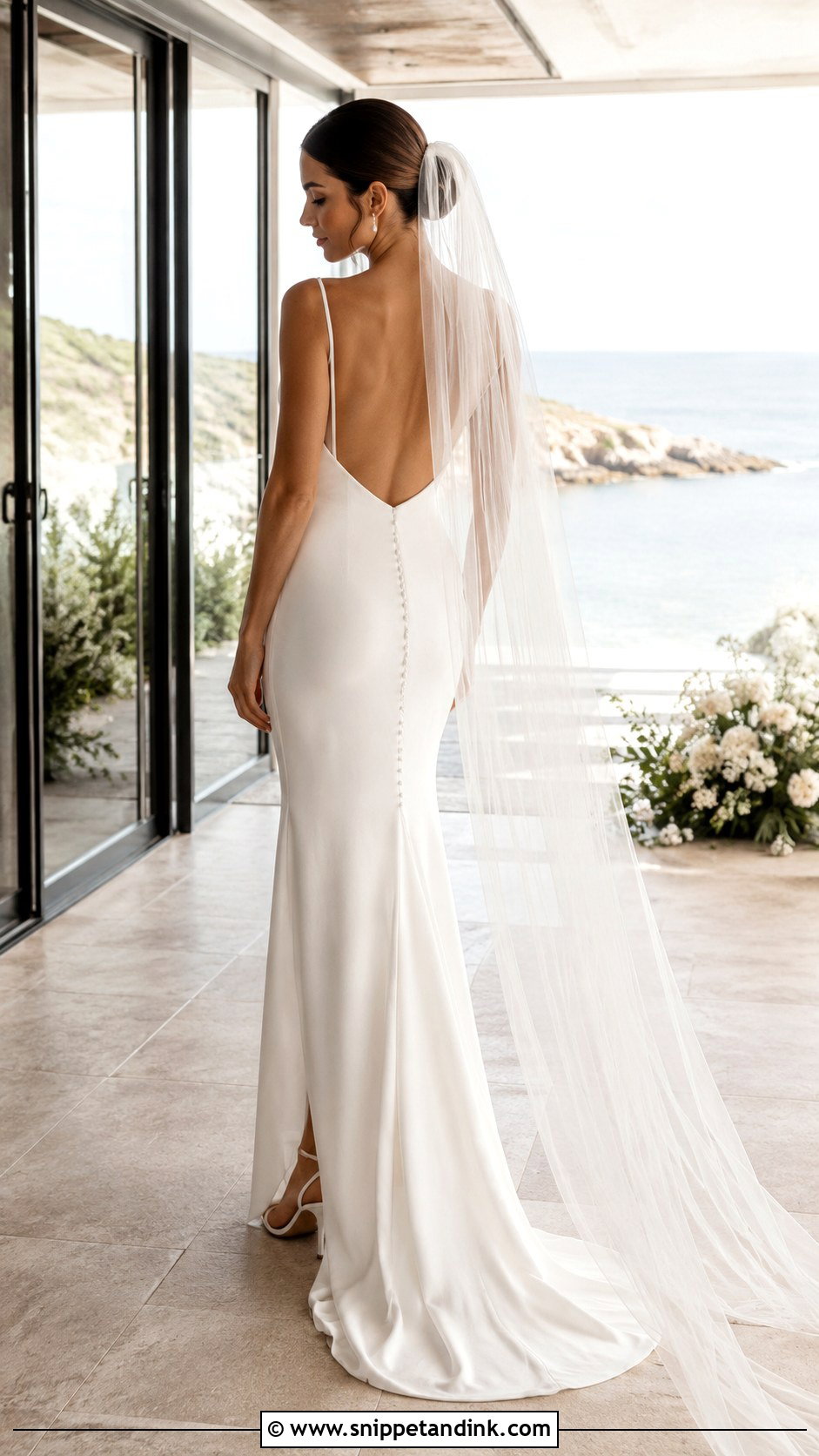
From the front, a backless crepe gown looks almost plain; the drama is all in what the guests see during the processional. That open back gives you nowhere to hide support, so I settle the bra solution before the first fitting, whether that’s built-in cups, adhesive or a low-back longline. Secure shoulder straps are essential. Covered buttons or a soft cowl at the back add detail without sparkle. Minimal drop earrings, ivory slingbacks and a long sheer veil under a smooth bun work well. A light wrap is useful between locations, and it suits coastal venues and modern architecture.
13. French Puff Sleeve Wedding Dress
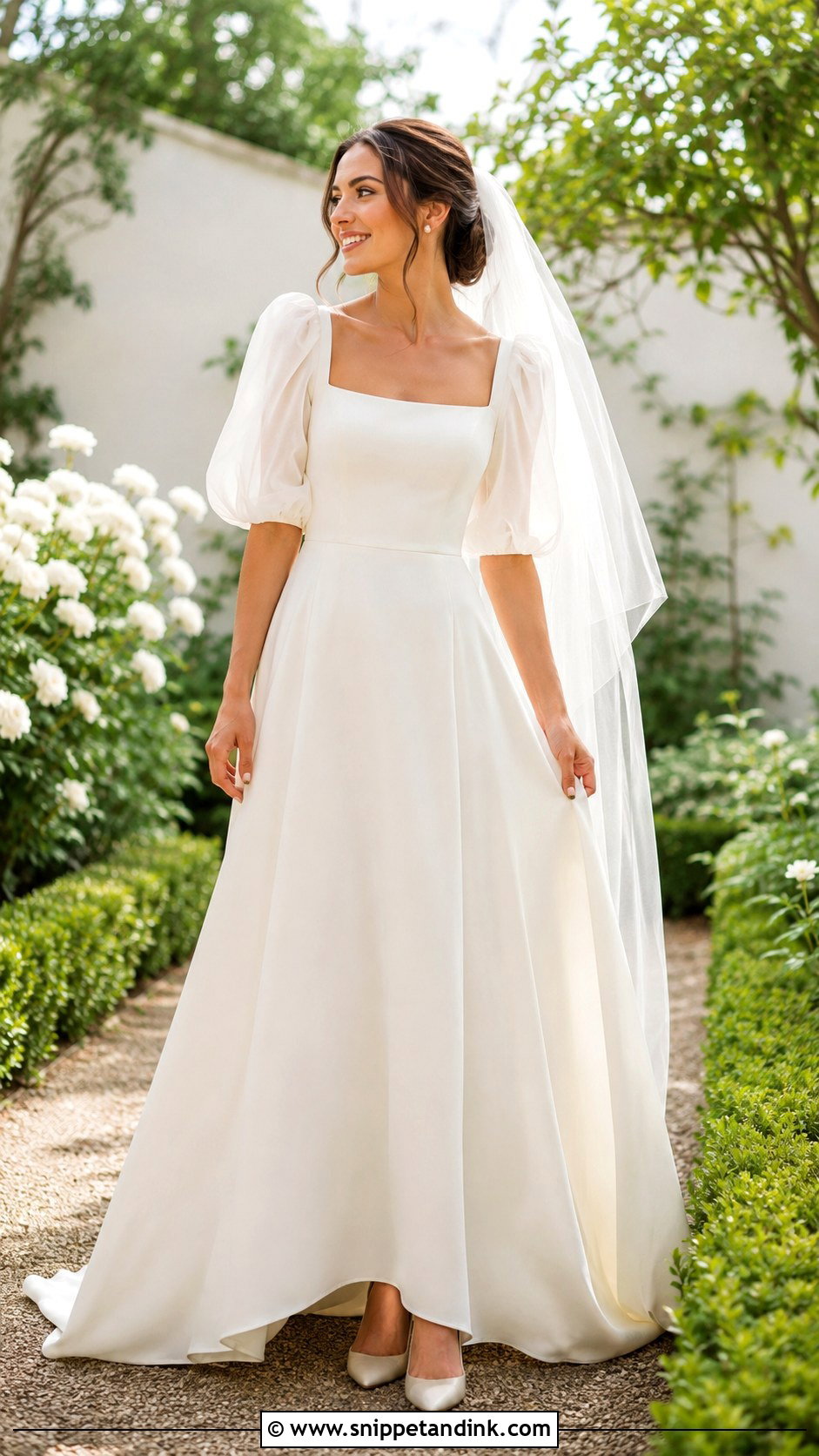
Puff sleeves hold their volume only if the fabric has body. Sheer organza and dotted tulle keep their shape all day; soft chiffon collapses by the afternoon. Pair them with a fitted crepe bodice and A-line skirt, or ask for detachable sleeves so you have two looks. Proportion matters. On a petite frame, a small puff looks charming and a large one swallows the shoulders, while taller brides can carry longer, fuller sleeves. Pearl studs, classic pumps, a plain fingertip veil and a relaxed low knot balance the volume. Spring gardens and bright indoor rooms suit it.
14. French Drop Waist Wedding Dress
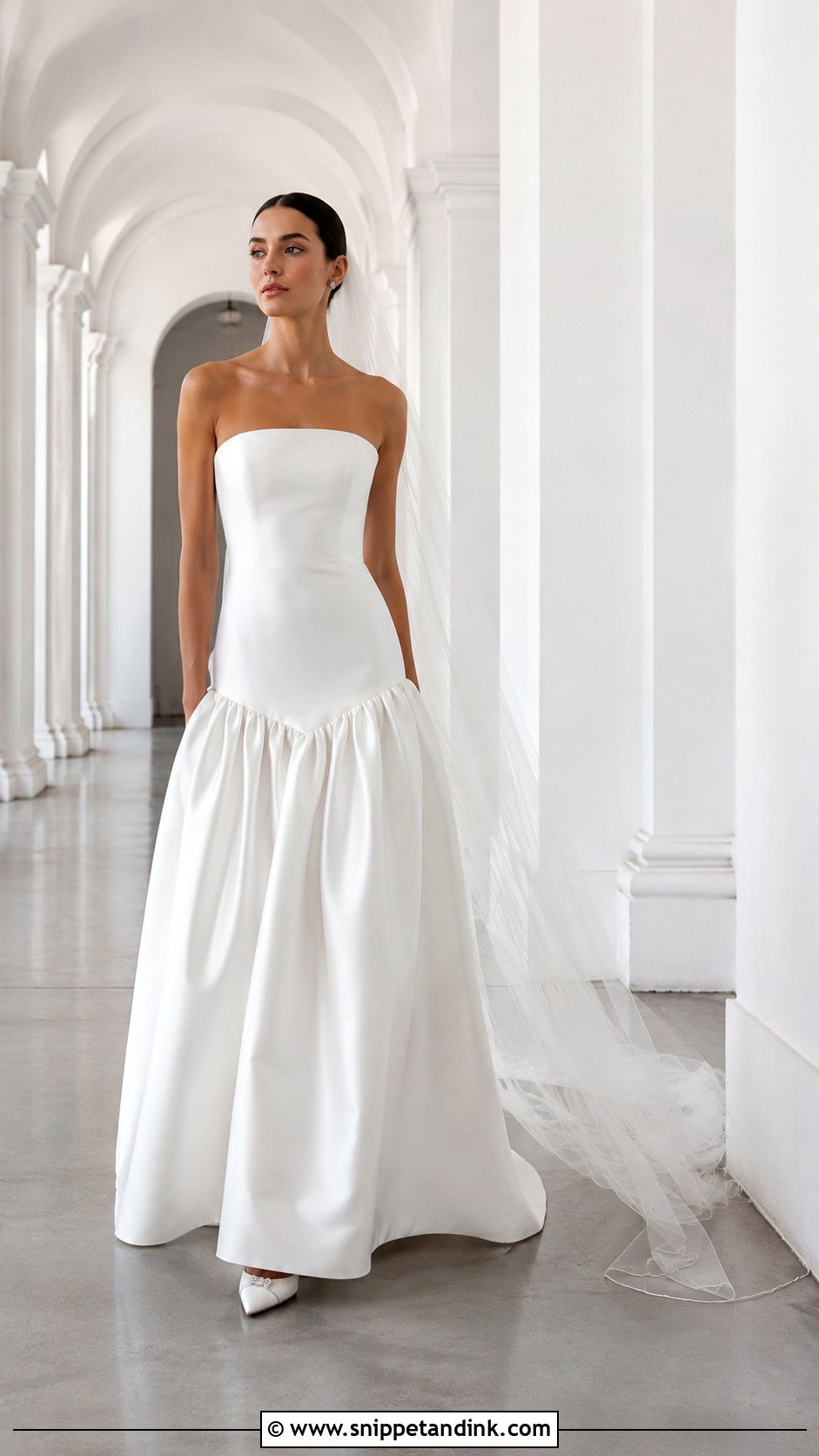
A drop waist moves the seam down to the upper hip, creating a long torso before the skirt opens. The honest trade-off: it suits straight and slim figures easily, and on curvier hips the seam needs skilled tailoring or it pulls and bunches when you sit. Matte satin, silk faille or structured crepe with almost no surface decoration keep the focus on the proportion. A straight neckline or slim straps keep the top quiet. Pointed pumps, crystal studs, a long raw-edge veil and a sleek bun or polished bob suit it, a nod to vintage eveningwear.
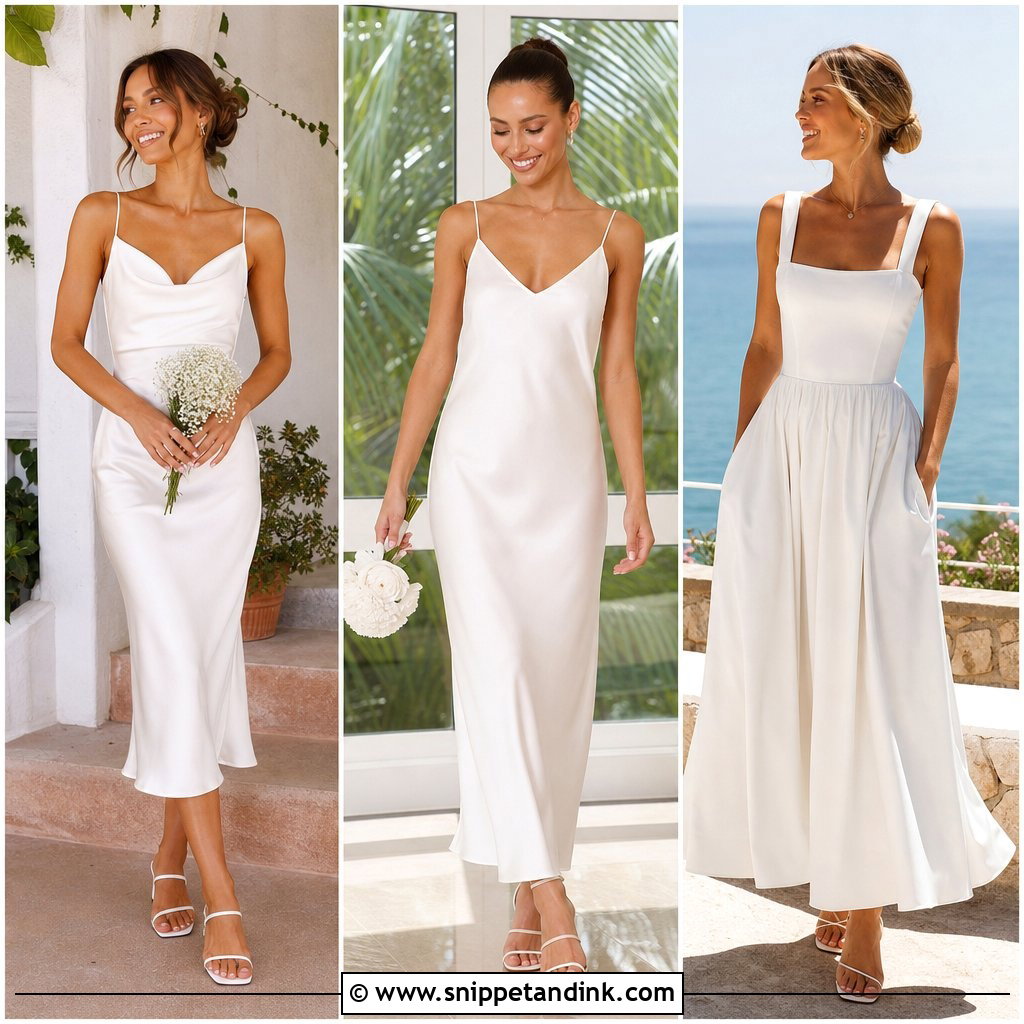
15. French Empire Waist Chiffon Wedding Dress
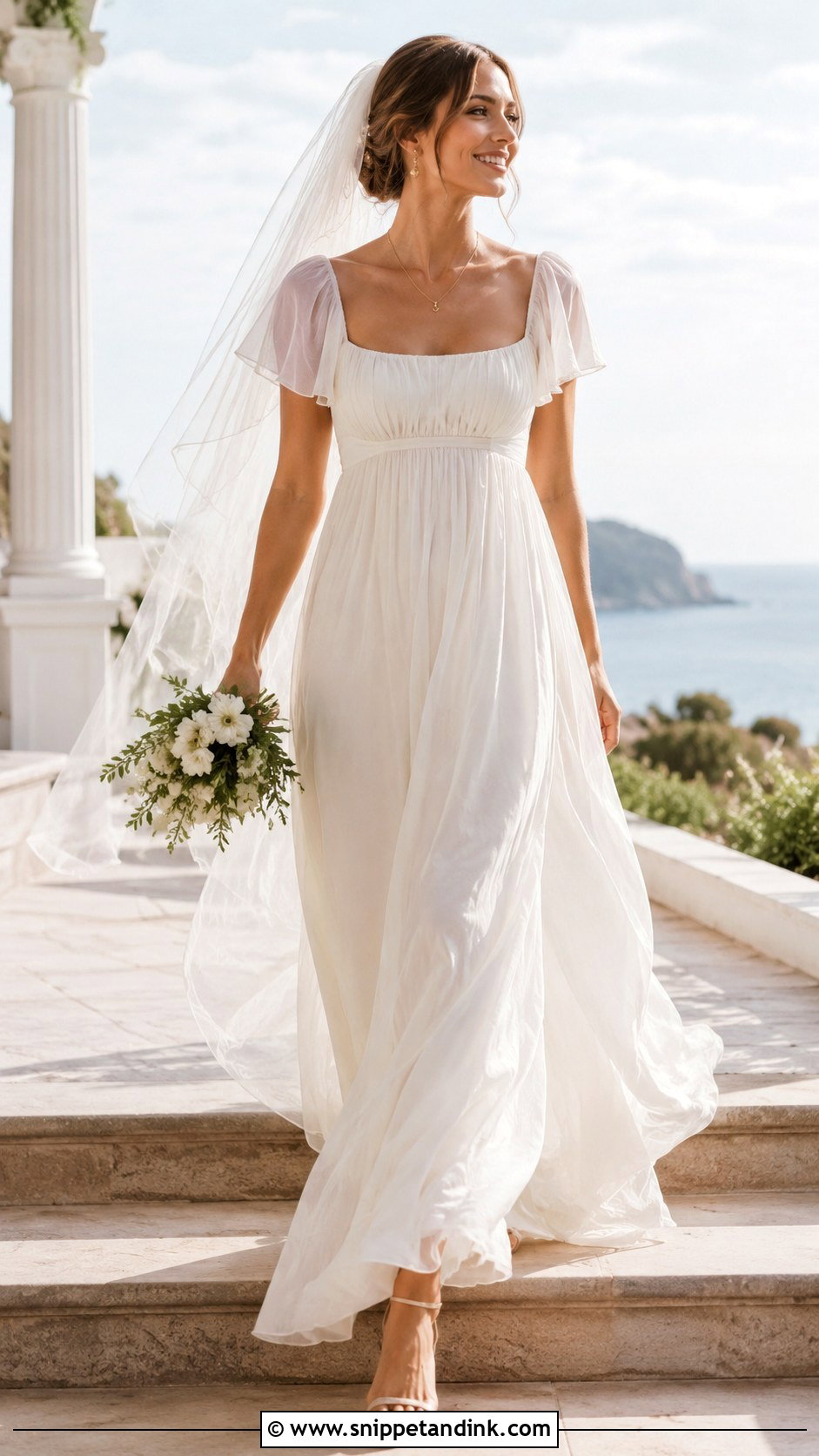
The empire waist sits just under the bust, and the skirt falls from there without touching the waist or hips at all. That makes it one of the coolest, most comfortable cuts for a summer day. A lightly gathered bodice with wider straps, flutter sleeves or a soft square neck works with chiffon’s movement. Too many skirt layers kill that, so I keep it to one or two. Ivory low-heel sandals, fine gold earrings and a barely visible pendant are enough. A chapel veil adds formality; a short one makes it more relaxed. Loose waves pinned back suit gardens and coastal venues.
16. French Cape Sleeve Wedding Dress
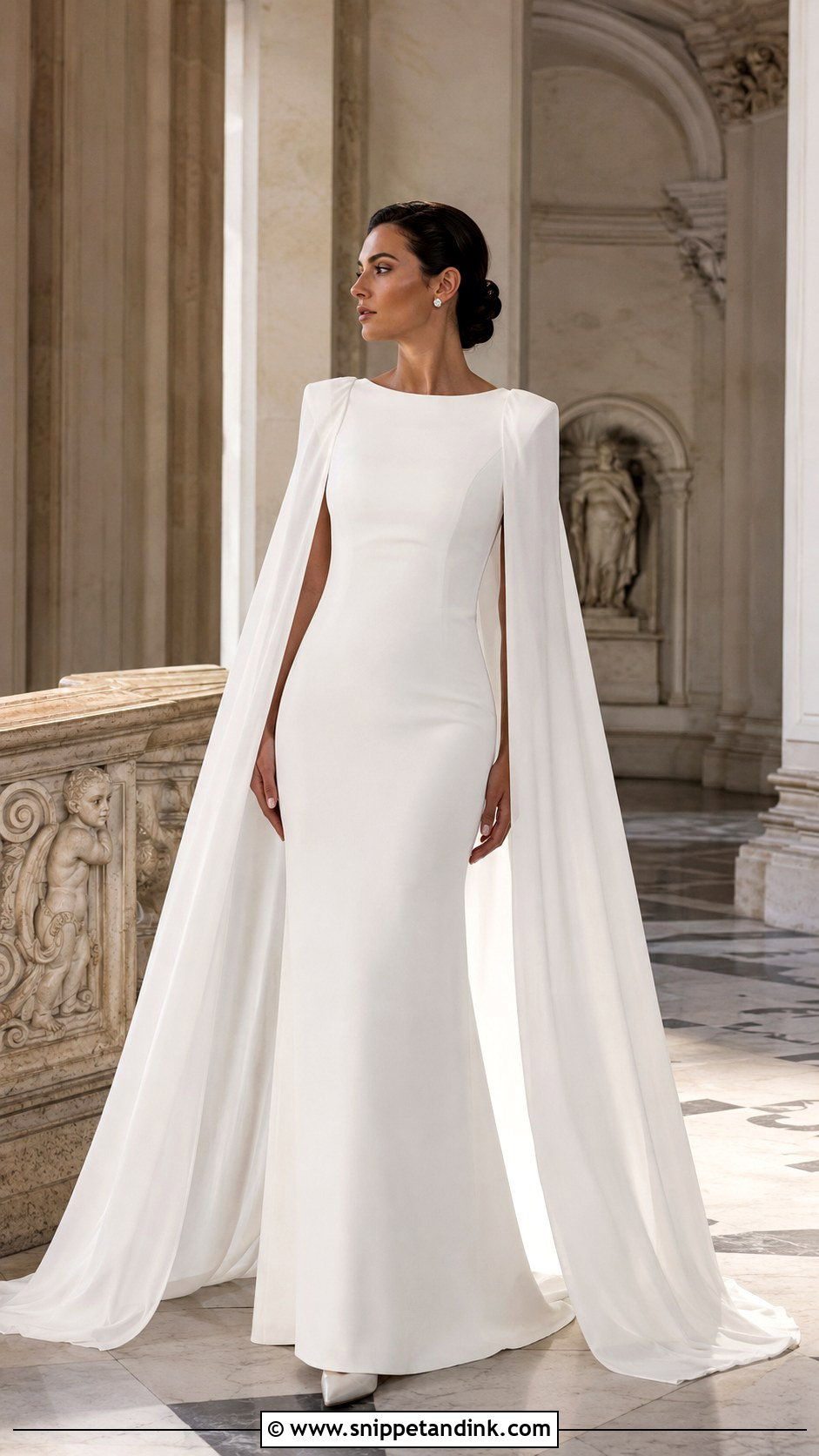
A cape attached at the shoulders or neckline turns a simple column or A-line into a dramatic outfit with coverage. Chiffon floats when you walk; matching crepe gives a sharper, more architectural line. Most of the time I’d let the cape replace the veil, because two sheer layers around the shoulders compete. If you want both, choose a narrow veil with no lace edge. Walk and sit in it at a fitting: a floor-length cape catches under chairs and gets stepped on. Pointed pumps, diamond studs and a smooth low bun complete it, and it suits cool seasons and grand historic rooms.
17. French Floral Appliqué Wedding Dress
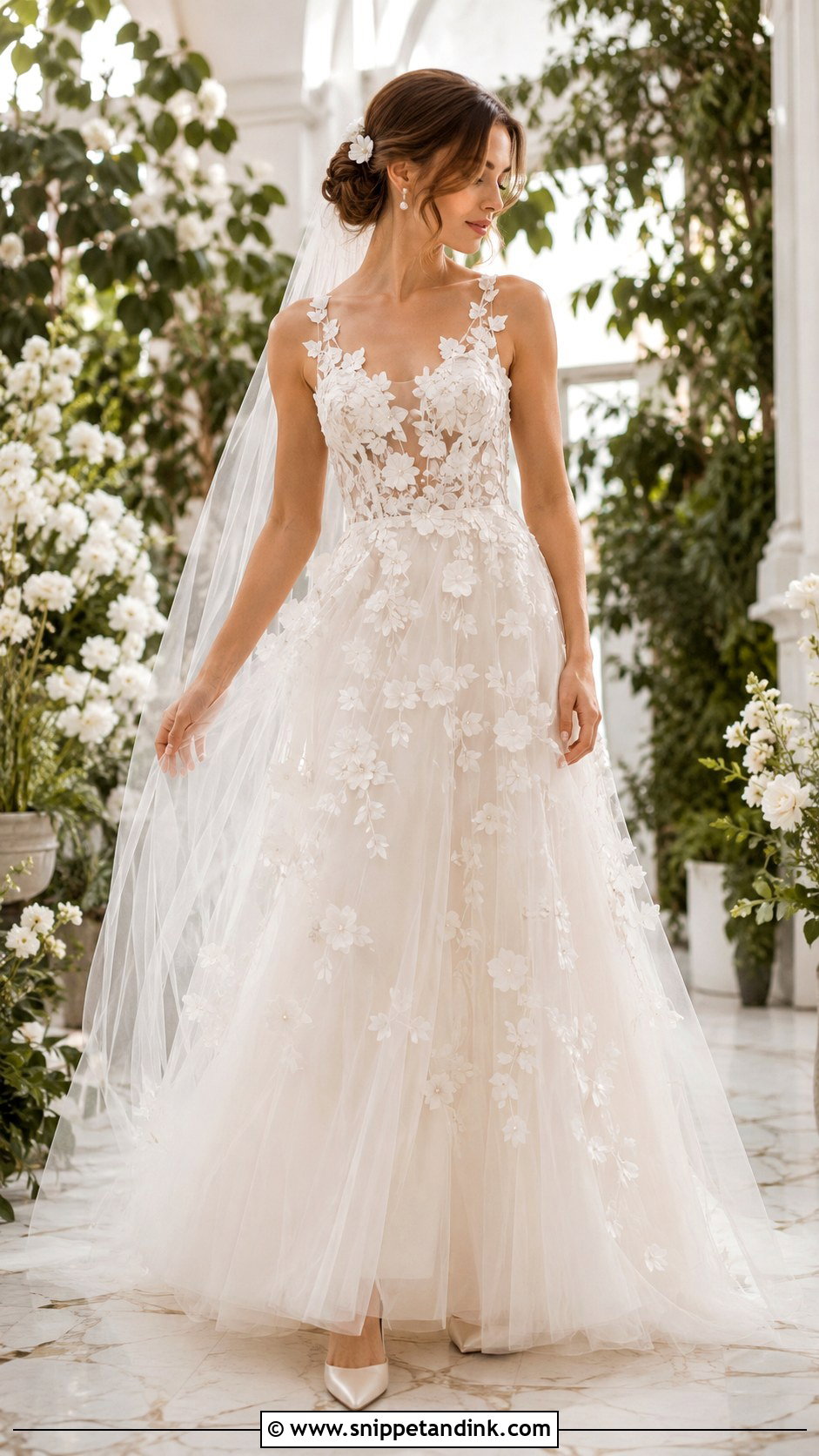
Floral appliqués are small fabric flowers stitched onto the dress by hand or machine, and they add texture without crystals. On a sheer bodice and tulle skirt, look for denser placement near the waist and a lighter scatter toward the hem. That gives the skirt direction instead of a polka-dot effect. Tone-on-tone ivory flowers are quieter than contrast colors. Because 3D flowers can snag on a lace veil, choose a plain one that extends past the train. Simple satin pumps, tiny pearls, a loose bun with one floral pin and a modest bouquet keep it from feeling busy in a countryside or botanical setting.
18. French Jacquard Ball Gown Wedding Dress
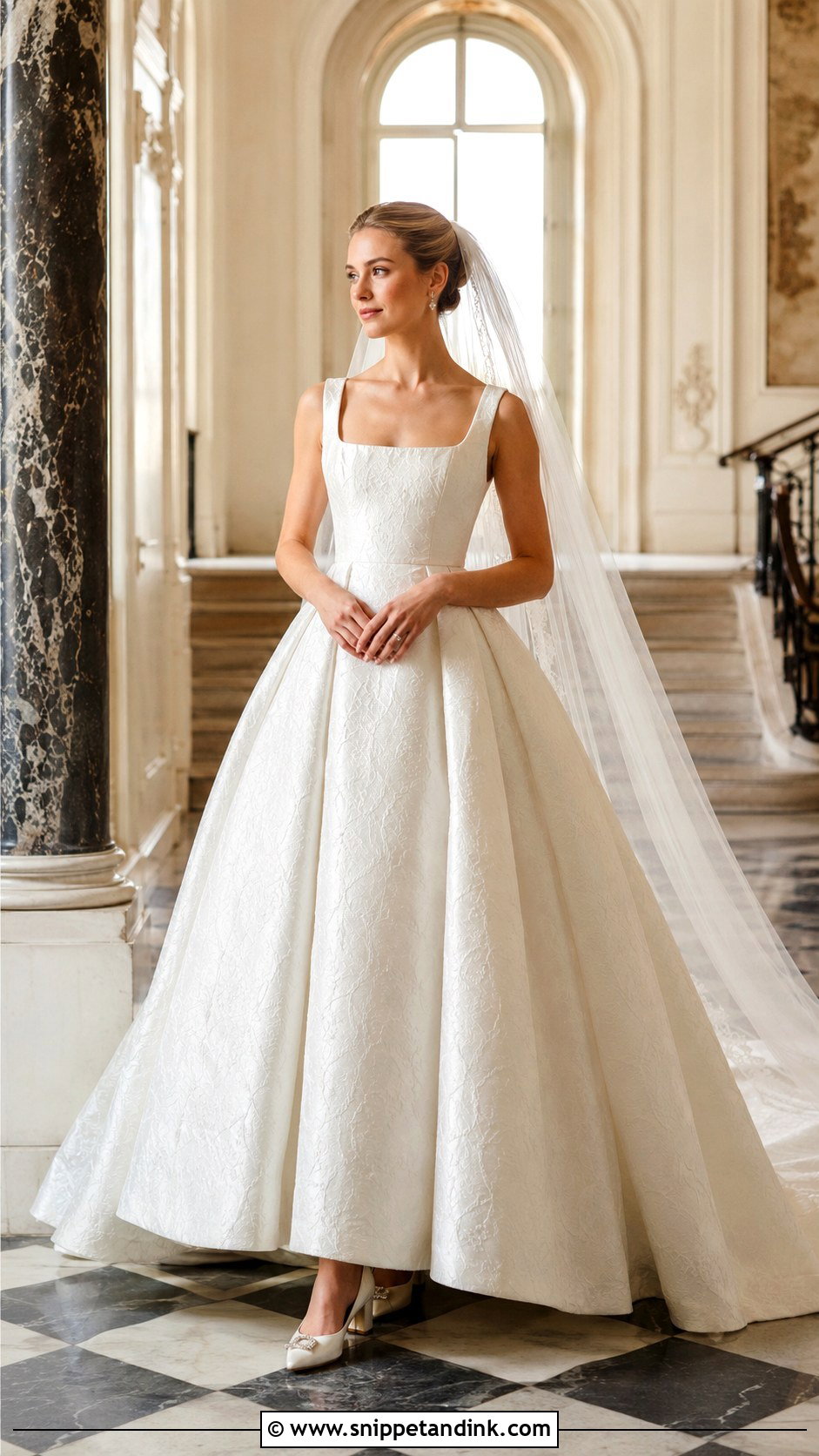
Jacquard has the pattern woven into the fabric rather than printed or embroidered on top, so a ball gown in it looks grand without glitter. It is also heavy. A full jacquard skirt with deep pleats can weigh enough that you’ll feel it by the evening, which is why I like supportive block-heel pumps with it and hidden pockets. Look for a subtle ivory floral or vine weave, a structured bodice, and a strapless scoop, square neck or short sleeve. Pearl drops, a clean-edged cathedral veil and an updo keep it from looking busy in a grand interior or large estate.
19. French Column Wedding Dress With Scarf
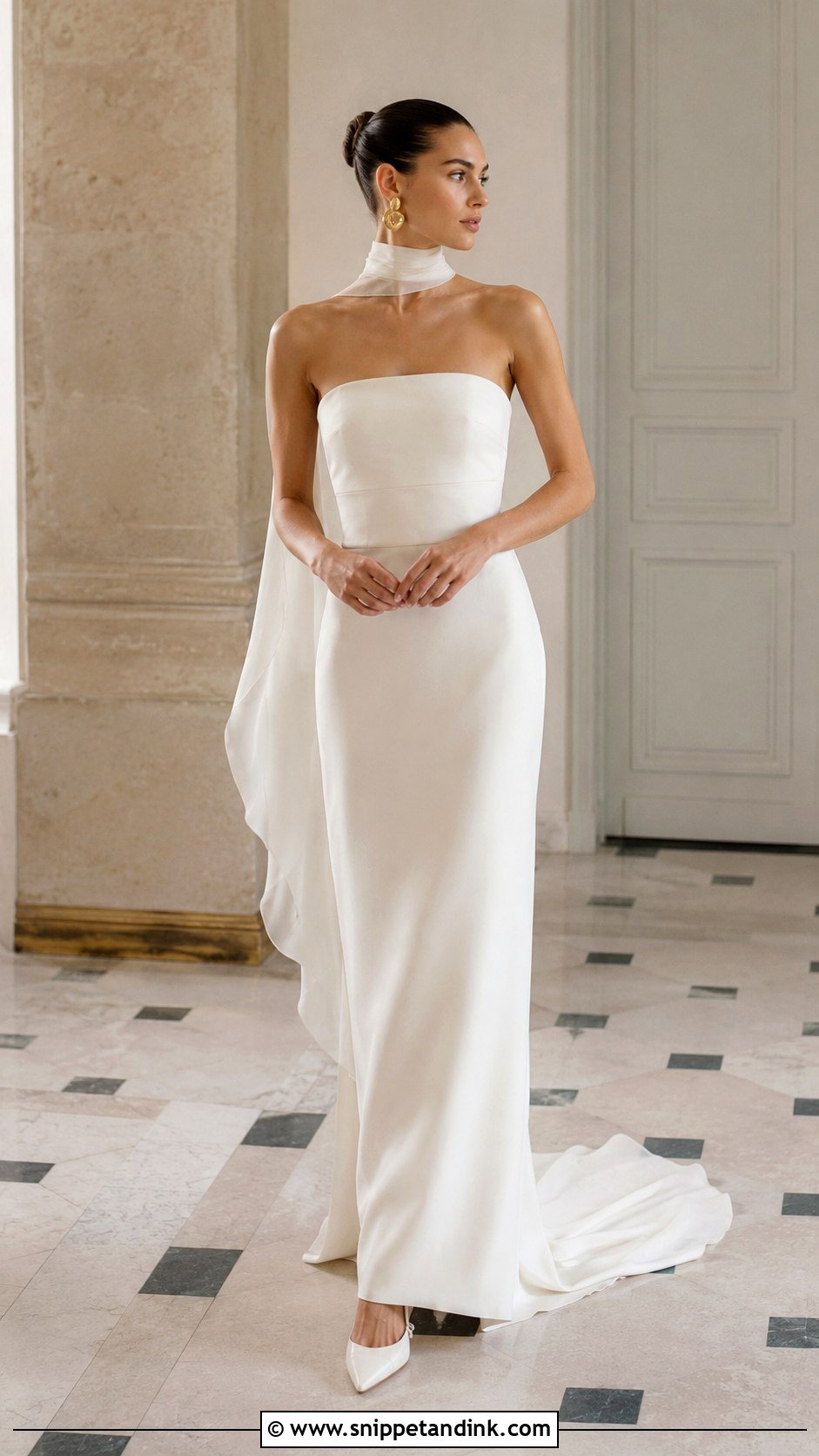
A narrow chiffon scarf is a very Parisian touch, and it does the job a veil would otherwise do. Start with a strapless or sleeveless crepe column with a small train, then drape the scarf around the neck with the ends falling down the back, or loosely over the shoulders. It will slide on satin, so I secure it with a tiny pin or a stitch at the back of the neckline. Skip the veil or choose a short one. Pointed slingbacks, sculptural gold earrings, a smooth clutch and a sleek bun suit city venues and evening receptions.



20. French Wedding Dress With Removable Overskirt
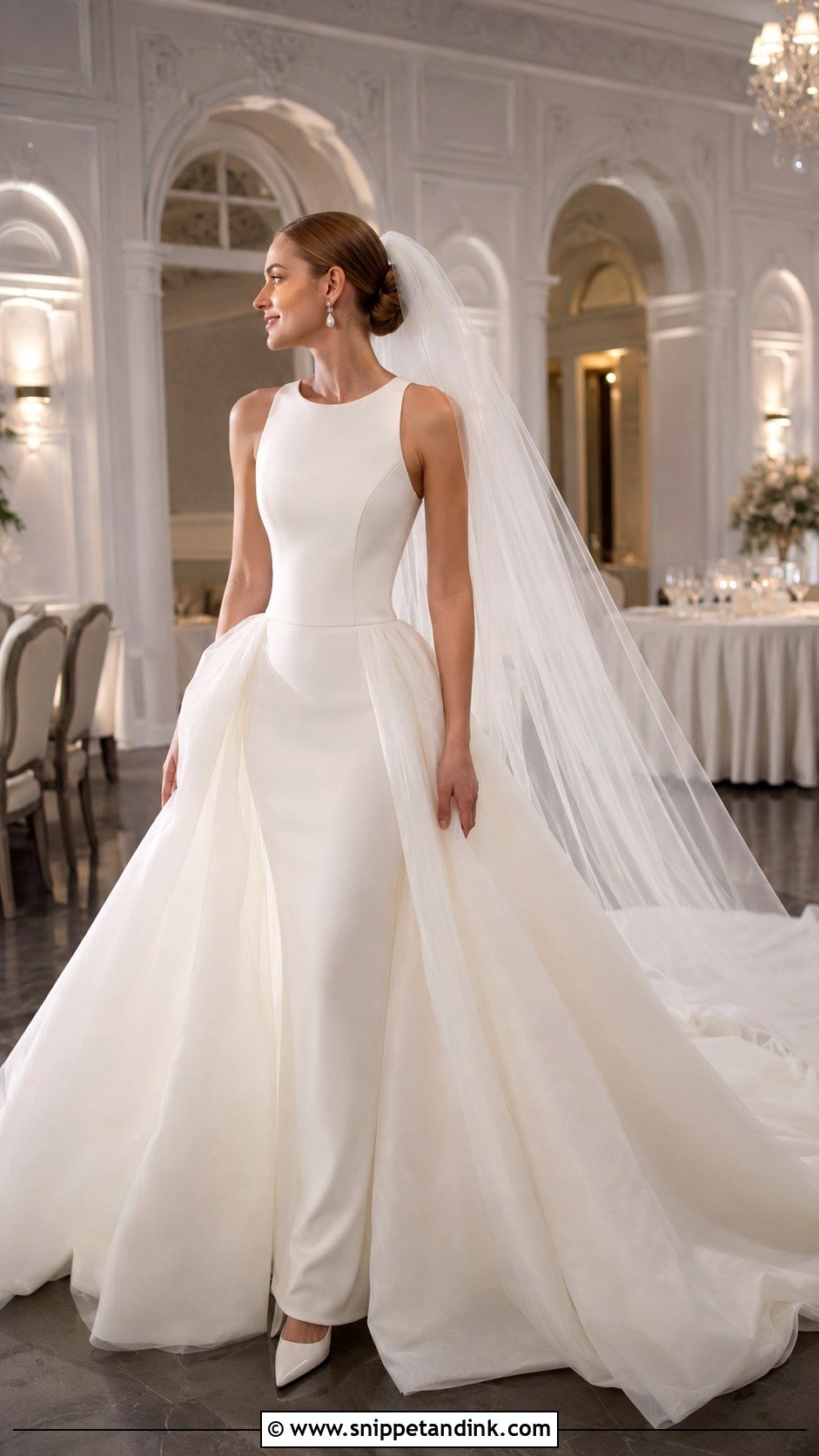
A removable overskirt gives you two dresses from one fitting schedule. The base is usually a fitted crepe or lace column; the overskirt, in satin or organza, adds volume and a train for the ceremony and comes off for the dancing. The fastening is where these succeed or fail. Ask for hidden hooks or snaps rather than a visible belt, and practice taking it off with whoever will help you on the day. Pointed pumps, pearl earrings and a long plain veil suit the ceremony version; a shorter veil, hair bow or bolder earrings change the evening look.
Silk, Satin and Crepe on the Wedding Day Itself
Plain fabrics are honest. They show every crease, splash and pressure mark, so a little planning saves the photos.
Steaming and creases
Have the dress steamed the morning of the wedding, from the inside and at a distance, never with an iron directly on silk. In the car, sit on the back of the skirt and spread the train over your lap rather than sitting on it all bunched. Satin creases where it’s folded; crepe recovers much better.
Water and drinks
A drop of water on silk can dry to a ring. If it happens, blot gently with a dry white cloth and leave it; rubbing makes it worse. Champagne and white wine look invisible at first, but the sugar in them can yellow over months, so point out any spills to the cleaner.
After the wedding
Get the dress professionally cleaned within a few weeks rather than leaving it in a bag. Store it flat or folded in acid-free tissue inside a breathable box, away from light. Plastic garment bags trap moisture, and hanging a heavy skirt for years stretches the shoulders out of shape.
How Much Detail a French Dress Really Needs
A French-inspired dress rests on fit, fabric and a few accessories chosen on purpose, not on how much detail you can add. Lace sleeves for romance, a silk column for simplicity, a basque corset for shape; a mini, a scarf, a cape or an overskirt let you change the look through the day. Think about your venue, season and how you dress every other day of the year. Book alterations with your final shoes and underwear in hand, then walk, sit and reach in the finished dress before you sign off on it. If it still looks like you at the end of that, you’ve got the right one.
You'll Like These Ideas:



Leave a Reply